Being Austria’s second-largest city, the sights in Graz can be seen within one full day. We started our day by visiting the Schlossberg in the morning and joined a guided tour of the city in the afternoon to understand more about the city. Like the other cities in Austria we have visited so far, Graz also offers a city card that covers all attractions and transportation within the city. The Graz card costs €30 for 24 hours, €39 for 48 hours, and €44 for 72 hours. However, we did not get the Graz card for this trip as the cost of the attractions we will be visiting is less than the cost of the card.



Murinsel: The Shell on the River
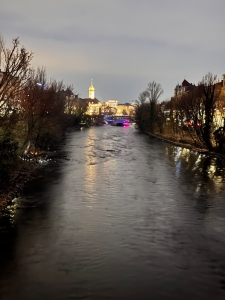
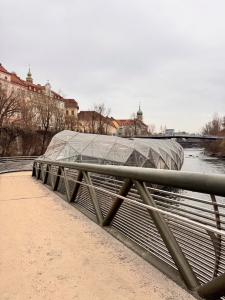
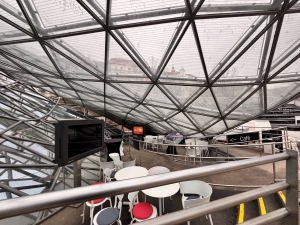
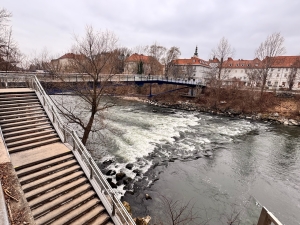
Most of the attractions in Graz lie east of River Mur, the river that divides the city into the old town and the modern town. As our hotel is west of River Mur, we had to cross the river to visit the sights in Altstadt. Several bridges along the river link the old and the new, and Murinsel is one of them. Murinsel is a landmark in the middle of River Mur, taking the form of a shell linked by footbridges. As it was near our hotel, we crossed the River Mur via the Murinsel and took the opportunity to visit this site. There doesn’t seem to be anything happening on the bridge. We saw a cafe and an amphitheatre, but the cafe was closed (it felt like it was abandoned). As the Murinsel sits near the water level of River Mur, looking out into the river, it feels as though we are directly on the river’s water.




Schlossberg: Above the Roofs of Graz
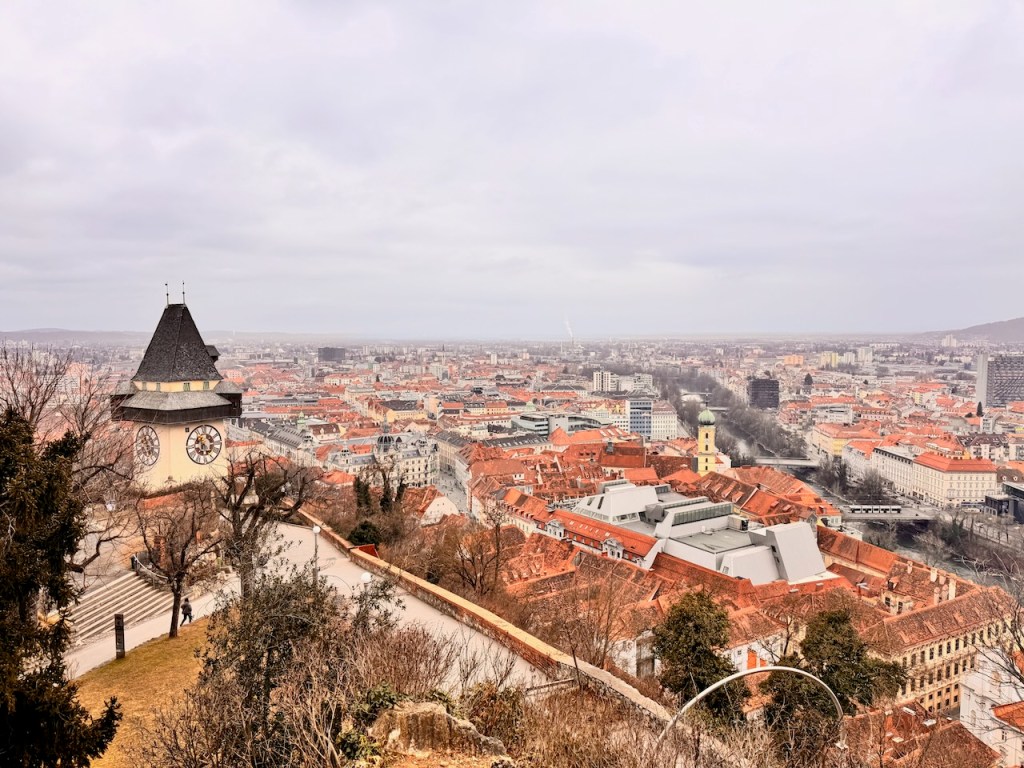
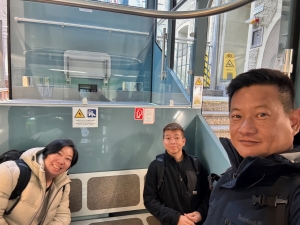
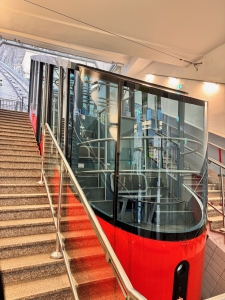
While Salzburg has Festung Hohensalzburg, Graz was watched over by the Schlossberg over 1,000 years ago when a small fortress was built on this hill. One cannot miss Schlossberg, the hill with the clock tower that dominates the city’s skyline. There are several ways to get to the top of Schlossberg: funicular, walking or using the lift. We took the funicular up Schlossberg. The ticketing was a little different from the other funiculars we have taken. Instead of charging per use on the funicular, the ticket goes by the hour, including all public transport in Graz. There are only two options for the ticket: €3.10 for one hour or €6.80 for 24 hours. We got the 24-hour ticket, as we wouldn’t want to drag our luggage 15 mins from our hotel to the train station tomorrow. We appreciate the staff’s patience in explaining the different pricing to us when selling the tickets (she was also the funicular operator). She also mentioned that the tram line stopped in front of the funicular station, which was free, even without tickets. The ride on the funicular took about 2 min.

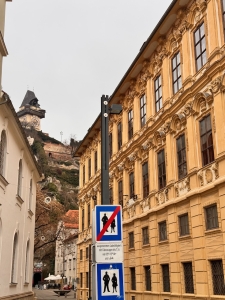



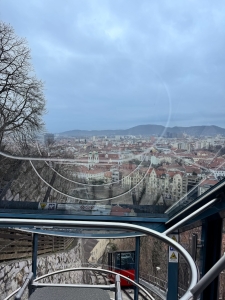
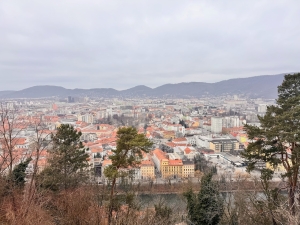
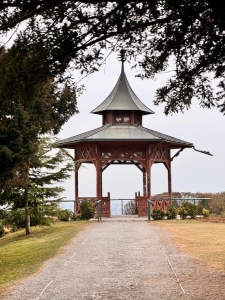
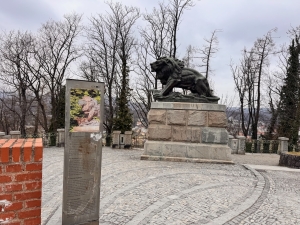
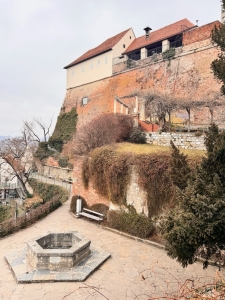
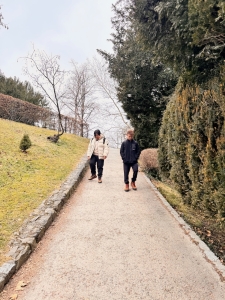
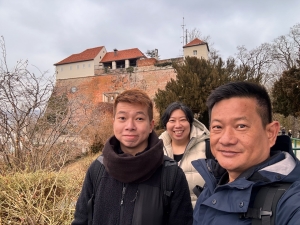
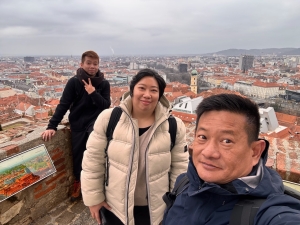
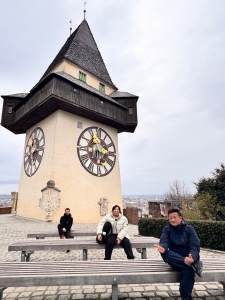
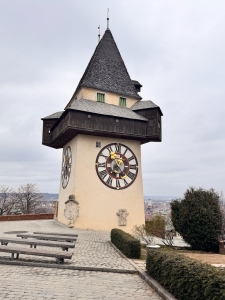
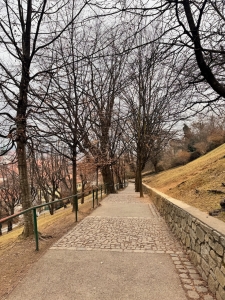
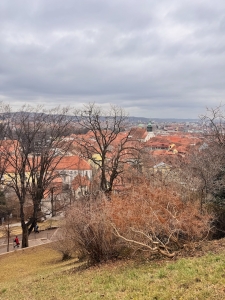
The sights on Schlossberg are very close to each other. We originally allocated the entire morning to visit the sites but finished seeing them all in 1 hour. We skipped the Graz museum, as we thought it did not make sense to pay for the museum to see four cannons. Exiting the funicular station, we first saw the Bell Tower, home to the city’s famous 5-ton bell. We did not see the bell as this four-storey tall white tower that greets visitors coming up the hill was locked during our visit (not sure if it will ever be accessible). We followed the footpath and came to the Hacker Lion, a stone lion on the western part of the hill. The lion was installed here to honour the commander who led a handful of soldiers to defend Graz Fortress against the French invaders. The viewpoint at the Hacker Lion treated us to the “modern” part of the city. After the Hacker Lion, we walked along the path and came to the Chinese Pavilion, a shelter with vaguely Chinese architecture. There was nothing much here besides a resting point, but we could see the Clock Tower and Turkish Well from here. Our final site on Schlossberg was the Clock Tower, the symbol of Graz and the oldest building in the city. The Clock Tower was built as part of the fortification of the fortress in 1265, possibly serving as a watch tower. The tower was given its clock function in 1569 and also served as a fire alarm tower in 1645. The clock today still retains its medieval structure with a wooden corridor perched near its roof and the golden clock arms look as if they were polished every day. The view of the old town from the Clock Tower terrace was magnificent. We could see the City Hall and standing tall amongst the buildings from here. We originally planned to take the world’s tallest underground slide down to the Altstadt. However, the entrance was to be shut, and Google suggested that the slide only open at 1 pm during winter. No way we were sitting around for 2 hours to wait for the slide to open, so we opted to walk down the hill from the Clock Tower side.







Graz Historic Centre Walking Tour: Getting to Know Graz from Our Guide
Graz Tourism organised a two-hour Historic Centre Walking Tour of Graz, in English and German, at 2.30 pm daily. The tour costs €16 per adult and is covered under the Graz Card (tours can be booked here). This tour took us to the important landmarks in Altstadt, and the guide’s explanations gave us a good understanding of these sights in the city. As there was some time before the start of our tour, we headed into the city centre for lunch and had a leisure stroll of the city after picking up our tickets from the Graz Tourism Information Centre.





Landhaus Courtyard and Schlossberg – Houses of Power Now and Then
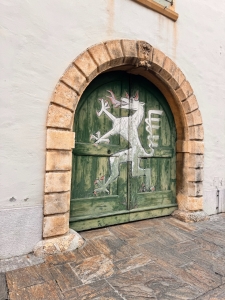
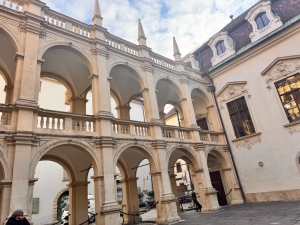
We met our guide at 2.30 pm at the Graz Tourism Information Centre. Our tour started from the Landhaus Courtyard behind the Graz Tourism Information Centre. Our guide directed our attention to a painting of a white dragon on a green wooden door in the courtyard. She explained this is the symbol of Styria, and Graz is the second largest city by population in Austria, after Vienna. She then guided us to the architectural style we saw in the courtyard behind us. Graz is very close to Italy, so we would find mostly Roman-influenced architecture in the buildings there. We were also told the Graz Parliament was housed in one of the buildings we see in the courtyard.


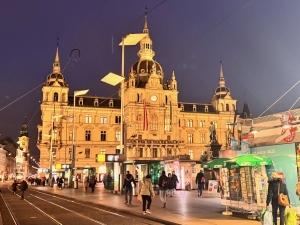
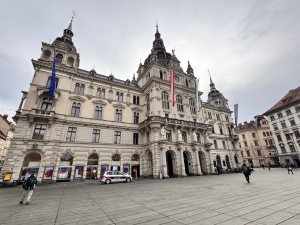
We were brought round the corner to the main square of Graz, in front of the City Hall, a large baroque-style building that one cannot miss. Looking towards Schlossberg, our guide narrated how there was a fortress up Schlossberg and how this fortress defended the city of Graz. For centuries, no one managed to conquer the fortress. Even Napoleon failed to conquer the fortress with 4,000 soldiers, which 800 men defended. The fortress was destroyed due to a condition in a peace treaty signed with Napleon when he captured Austria. Our guide then jokingly said the fortress was not destroyed in war but in peace. Today, we do not see the fortress any more.


Painted House and Glockenspiel – Houses of the Citizens
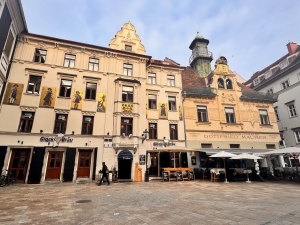
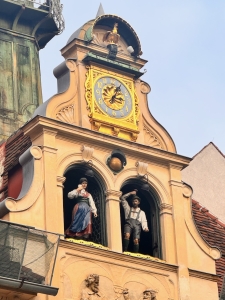
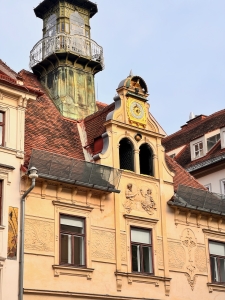
After the story of the fortress and looking at the City Hall in the main square, we were brought in front of the Painted House. Our guide told us this is one of the few houses in Graz with a painted facade. Our attention was drawn to a man with wooden sticks on a black horse, who was supposed to be Zeus. Our guide said that originally, thunderbolts were painted in his hand. However, during a restoration in ancient times, the painter couldn’t make out who the man was and painted a bunch of wooden sticks, replacing the thunderbolts on Zeus’s hands, which is how Zeus got wooden sticks instead. An interesting story. We winded through a few small streets and arrived at our next stop – Glockenspiel. We were in time to watch the clock performance. When the clock struck (it would strike at 11 am, 3 pm and 6 pm), the windows opened to reveal two wooden carved figures in traditional Austrian clothing dancing. Our guide told us this clock was made by a merchant who owned a booze shop in medieval times as a marketing tool to attract the locals’ attention to his shop to buy booze. After watching the figures dancing, we thought it was the end, but our guide again brought our attention to the golden chicken above the two figures. We saw the chicken flap its wings. Our guide then told us this is done to call the two figures “home”. Indeed, after flapping wings, the two figures retreated into the window, and the doors closed. Pointing to the green tower behind the clock, our guide told us the music we heard came from the tower and that different songs would be played at different times of the year. We would have missed these small details if not for our guide.


Graz Cathedral – The Royal Cathedral
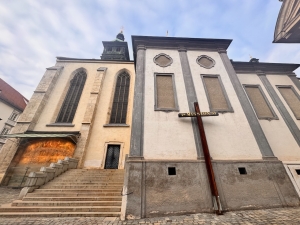
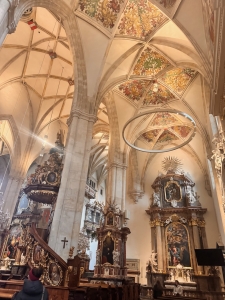
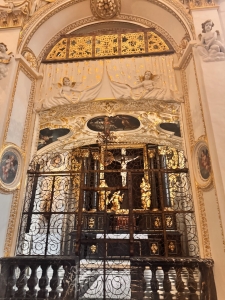
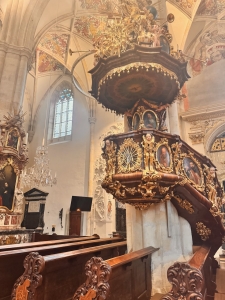
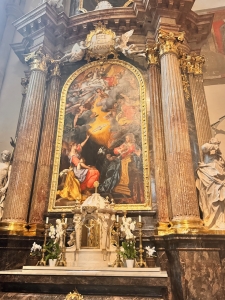
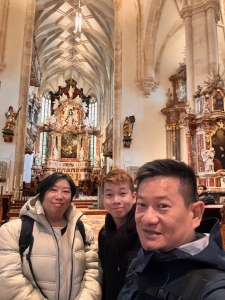
Our walking tour continued to the Mausoleum of Emperor Ferdinand and the Graz Cathedral. Our guide told us that Emperor Ferdinand, the ruler of Austria in the 1800s, was called to Vienna to take over the throne when his uncle passed on. The Emperor wanted to be buried in Graz and built this mausoleum for himself. Today, Ferdinand was the only Emperor in Austria with his own tomb instead of burying together with the other royalties. It is a shame that the mausoleum was not open to the public during our visit, and we can only see the green roof of the mausoleum popping out of the surrounding buildings. Our attention was then turned to the cathedral next door. The Graz Cathedral was built as a court church for the dukes and looked plain from the outside, other than the colourful fresco on the wall next to its entrance. Our guide told us that this cathedral was built with a Gothic style of architecture similar to what we would see in Notre Dame in Paris. We were then given some time to look around the cathedral. The cathedral looked grand and elegant on the inside, a stark contrast to its facade. The ceilings of the cathedral were painted with flowers, and pillars were donned with dark brown wooden staircases ornated with gold. Stained glass panels were used in every window opening.





Double Spiral – The Unique Staircase
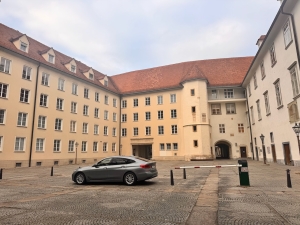
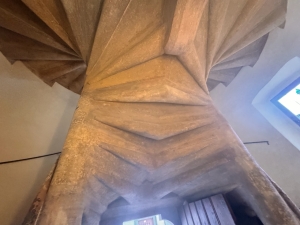
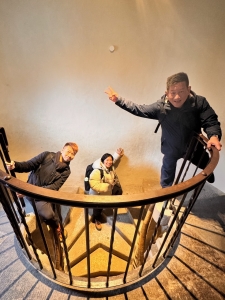
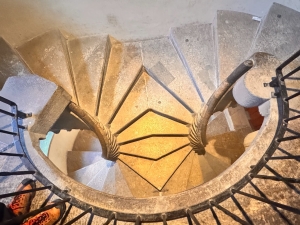
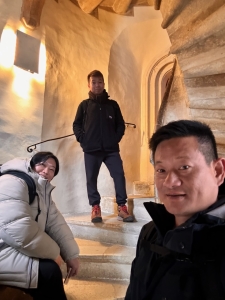
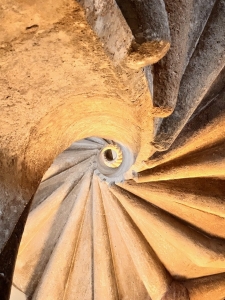
Exiting the Graz Cathedral, we took a short walk opposite the road to our next stop, the Graz castle. Unlike most palaces we have seen on this trip or any other European building, the Graz Castle looked like any other building. It can be mistaken for a normal office building as there are no guards standing outside, nor is it barricaded. Our guide told us this castle was where the dukes ruled Graz from; today, it is the office of the Mayor of Graz. We spotted a glassed-up panel and were told this was the original artwork since the castle was built. No one knows what this panel is used for and what it symbolises. The whole point of coming to this castle was the double spiral staircase. This unique structure comprises two spiral staircases that meet in the middle before every floor. Our attention was brought to the pillar, which our guide told us only the ground floor set of stairs has a pillar, and the rest of the levels do not have pillars. We spent some time walking up the staircase and taking pictures of it.




The Streets of Graz
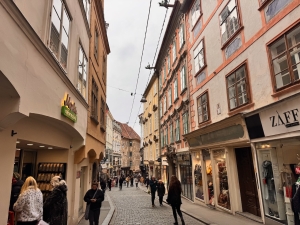
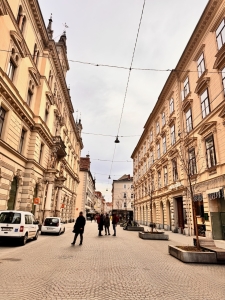
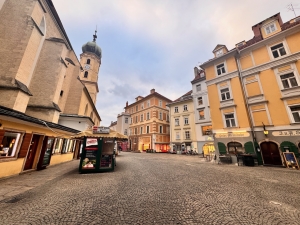
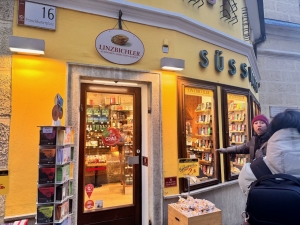
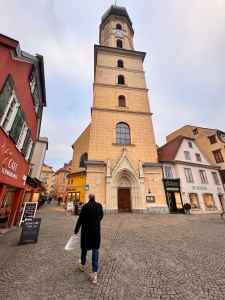
After the double spiral staircase, we walked towards the Mur River through the oldest street in Graz. Covered with cobblestones and medieval-looking buildings, this street reminds me of Italy. We spotted a bakery with an elaborate wooden facade and a double-headed eagle crest hanging above the main entrance. Our guide told us this bakery was visited by one of the emperors of Austria once, and since then, they were qualified to use the “Hof” title in the shop name. She recommended that we try out the bread from the shop. Our guide pointed out some of her favourite shops and eateries along the street as we walked past them.




Our last stop on the tour was a bridge over River Mur. Here, our guide explained that the area we had been walking in was the old town, and the district across River Mur was the new town. In medieval times, the river was used as a defence mechanism. The duke protected people living in the old town, while the area across the bridge was left to their own defences. As such, that was where the poorer people stayed. As a result, it was filled with red-light districts with poorer living conditions. In an attempt to change the image of the new town, the government pumped in money and developed arts and culture in this new area. Most of the art museums are found in the new area. This is where our tour of the old town ended, and we bid our guide farewell. After the tour, we returned to the shops that our guide mentioned to do some shopping before returning to the hotel early. We had an early train to catch up tomorrow to our final destination for the trip – Vienna.