Austria Day 10 (17 Jan 25): Vienna – Guided Tour of Parliament Austria and Stephansplatz Shopping

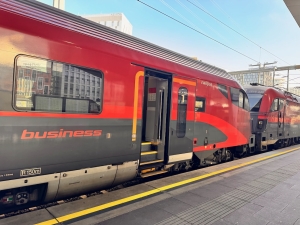
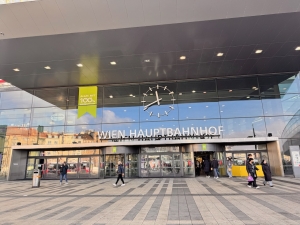
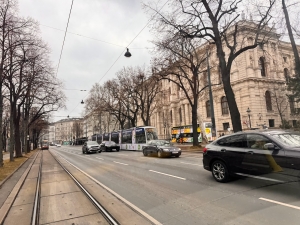
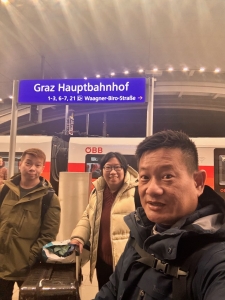
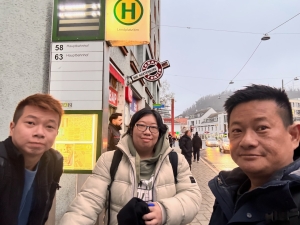
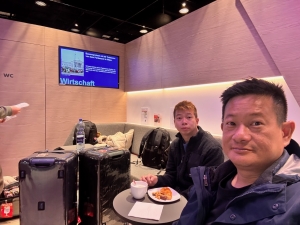
We booked the 8 am train from Graz to Vienna today so that we would have the afternoon to visit the sites in Vienna. Despite the walk from the hotel to Graz Hauptbahnhof being a short 15-minute walk, dragging our luggage through the streets of Graz was not a pleasant experience due to the occasional presence of gravel on the street (plus we were a little lazy). We opted to take the bus to the train station instead, which was the main reason for getting the 24-hour transport ticket yesterday. The bus ride from our hotel to the train station took us about 5 mins (vs the 15 mins on foot). On reaching Graz Hauptbahnhof, we made our way to the OBB lounge to have some light breakfast before heading to our platform for our 3-hour train ride to Vienna, the capital of Austria. It was nearly noon when we arrived at Wien Hauptbahnhof, and we transferred to the local tram to our hotel. Fortunately, the hotel allowed us early check-in, and we could start exploring Vienna sights after settling down.
Parliament Austria: A Guided Tour of the House of Power

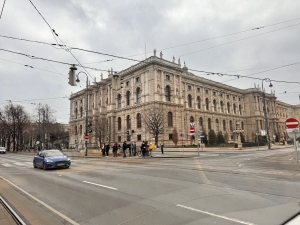
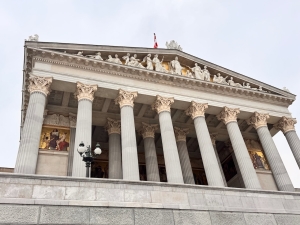
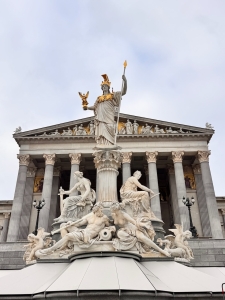
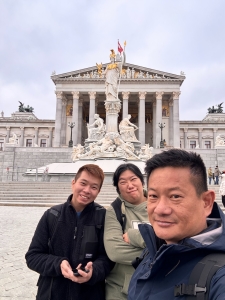
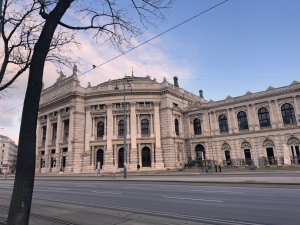
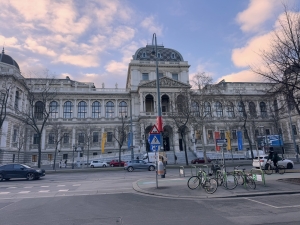
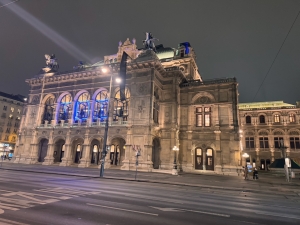
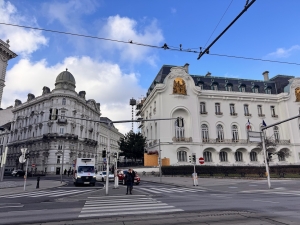
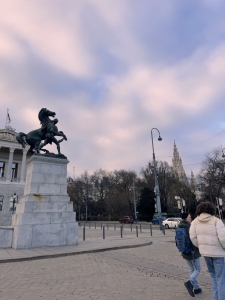
Parliament Austria is one of Vienna’s landmarks in the Innere Stadt, together with other landmarks such as the Austria State Opera and Hofburg Palace. Parliament Austria conducts several complimentary 55 minutes in English and German daily (click here for the various tours in Parliament Austria). Going on the guided tour would be a unique experience and give us a good understanding of the history and political scene in the country. Getting to Parliament Austria was easy, as the building sits on the  Ringstraße in the first district, and most trams would stop by Parliament Austria. The tram stop we alighted was directly opposite the Greek-inspired Parliament Austria. A statue of Athena, an appropriate symbol for a place where laws are made and important decisions are taken, stood guard in front of Parliament Austria. The golden parts on her crown and part of her dress stood out from the white marble she was carved from, giving her an authoritative yet elegant look. After a few pictures of the beautiful building, we headed inside the building for our guided tour.
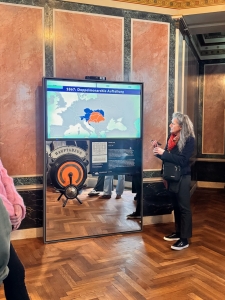
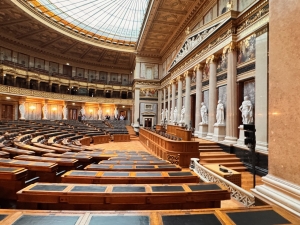
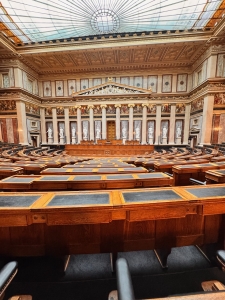
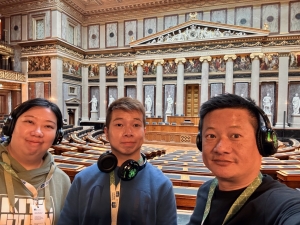
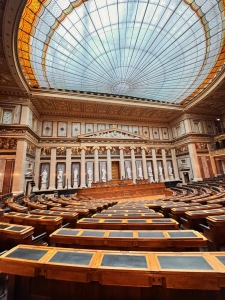
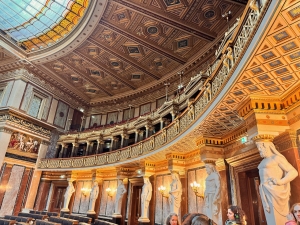
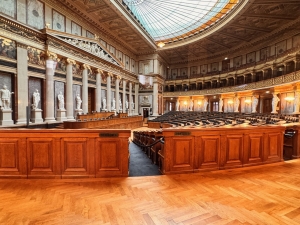
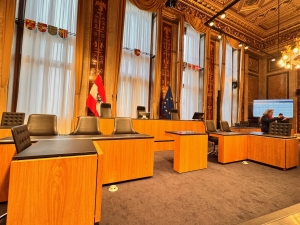
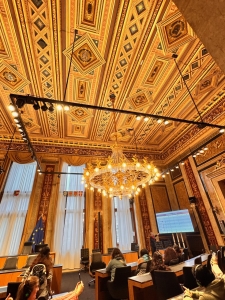
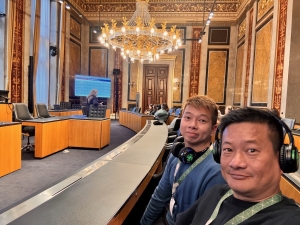
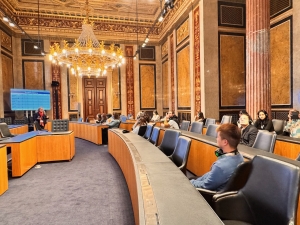
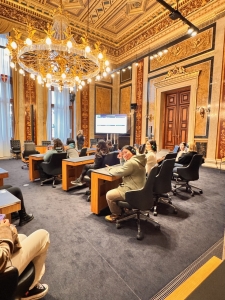
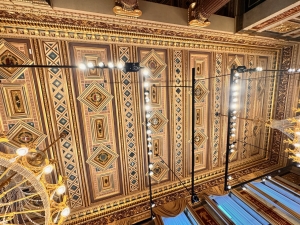
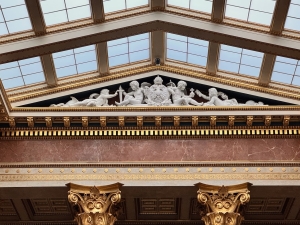
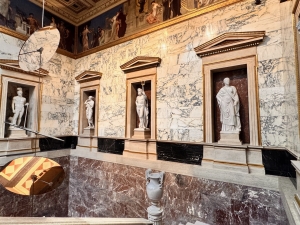
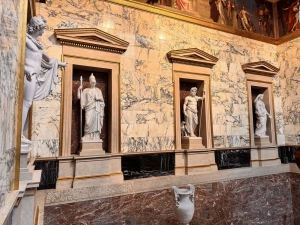
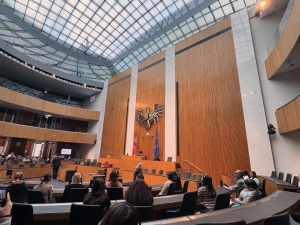
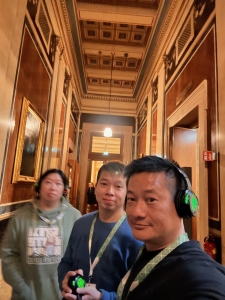
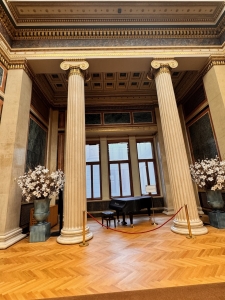
The Parliament Austria tour started with an introduction to the history of the Austrian Parliament on the first floor, where the Federal Assembly Hall is. We were told of how the political system in Austria transformed from monarchy to democracy and the Parliament’s representation of the different Austrian states. We did not pay too much attention to the narration as we were captivated by the Federal Assembly Hall behind the enclosed door. After the narration, we were brought to the hall we looked into a while ago. The Federal Assembly Hall hosts joint sessions of the two houses and presidential inaugurations. The semi-circular hall has a row of Roman columns and statues housed under a Greek-inspired roof as the backdrop of the main table. There are frescos painted on a gold background under the triangular roof-like structure. A large glass adorned the hall’s ceiling, allowing natural lights in. At the back of the hall was a row of alternating male and female statues seemingly holding up the second level of the hall. After being introduced to the Assembly Hall, we were brought to another room down the corridor, the Federal Council Chamber, which is used as the Federal Council meeting room. After we took our seats in the room (where Austrian politicians sit during meetings), our guide explained the purpose of this room and the composition of the parties within the Austrian Parliament. This chamber has a marble interior with two large Romanesque chandeliers hanging from the ceiling. The coat of arms of the nine Austrian states was painted across the ceiling.
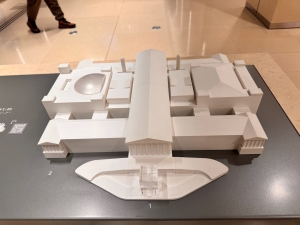
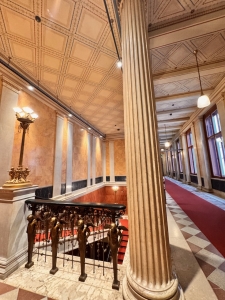
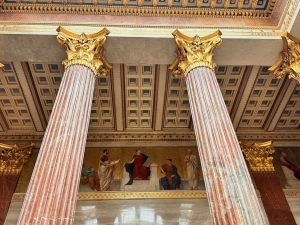
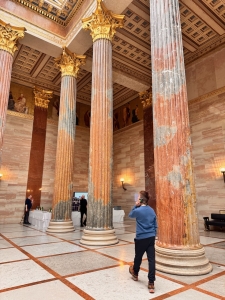
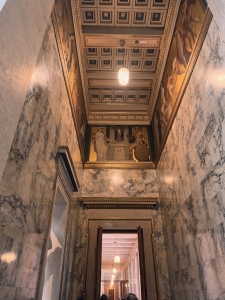
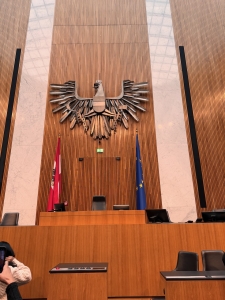
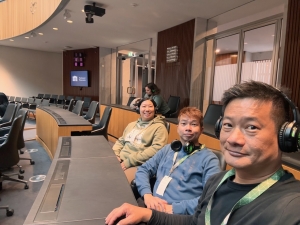
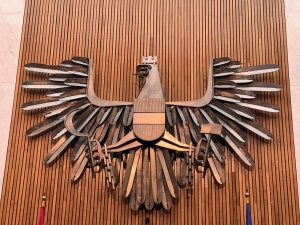
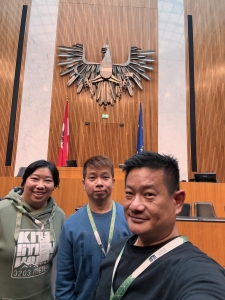
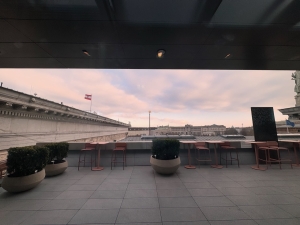
Our next destination on the Parliament Austria tour was the Colonnaded Hall through an antechamber, the Upper Vestibule. The Colonnaded Hall is a large hall with 24 marble pillars, topped with a glass roof, and is used as a venue for receptions. Through the Colonnaded Hall, we arrived at the Atrium, which connects to the main entrance to the Colonnaded Hall. There are two staircases on each side of the Atrium that link to the lower floors of the building. The left staircase (from the main door) is installed with statues of Zeus and four other Greek gods, while the right staircase has the statue of Posiden and four other Greek gods. From the opulent marbled tiles to these statues, the Atrium looked like an art museum. Through the Atrium and one corridor later, we arrived at the tour’s final stop – the National Council Chamber. This three-level chamber holds meetings of the National Council, and members of the public can sit in for these meetings. A large metallic Coat of Arms of Austria is hanging by the wall in front of the chamber. At the end of the tour, our guide encouraged us to take pictures at the speaker’s table in the centre of the room. Before the tour officially ended, our guide invited us to explore the parliament building. As we were a little hungry, we headed to the cafe on the top floor of the building to look for lunch. However, the cafe here only serves pastries and not proper meals, so we headed out of the building to look for lunch. The tour was interesting and unique, and definitely worth a visit.
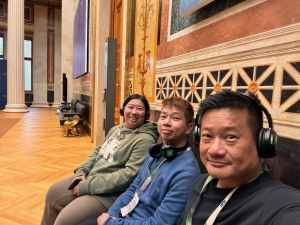
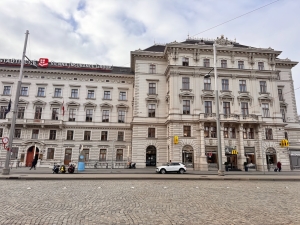
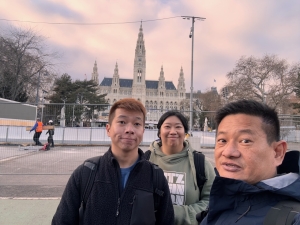
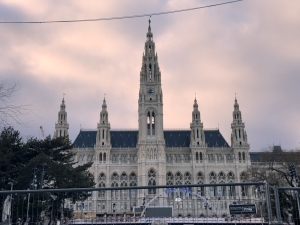
After the tour, we had the option of visiting St Charle’s church and then Naschmarkt. However, based on what we were told in Innsbruck, shops in Austria usually close on Sundays and close early on Saturdays. As we did not want to miss out on the shopping in Vienna, we swapped things around and went shopping in Graben near Stephansplatz. From Parliament, we took a bus to Graben. As we walked towards the bus stop, we walked by the Vienna City Hall, next to the Parliament Austria. The neo-gothic building houses the office of the Mayor of Vienna and the city council’s chambers. The City Hall also conducts a complimentary tour of the building on weekdays, and the tickets are distributed at 10 am on site (we cannot book through their webpage). According to my correspondence with the City Hall, I was told that all tickets are usually distributed by 10.30 am. We only arrived in Vienna at 11 pm, so we missed the chance to go for the tour. There is a square in front of the City Hall, where Christmas markets are usually held. However, the Rathuasplatz was out of bounds during our visit. We can only take pictures outside the fenced-up area with the City Hall in the distance.
Shopping in Stephansplatz

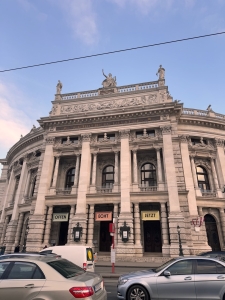
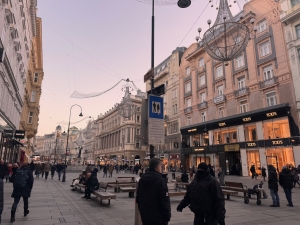
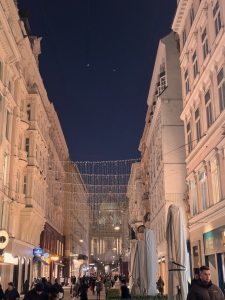
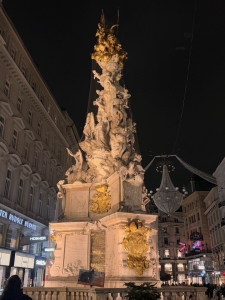
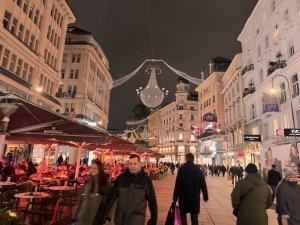
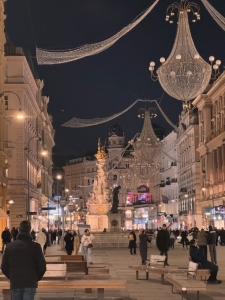
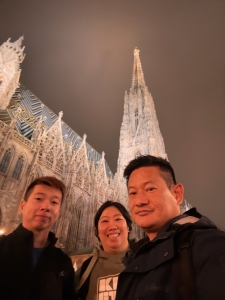
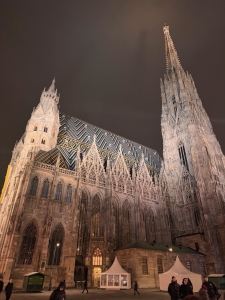
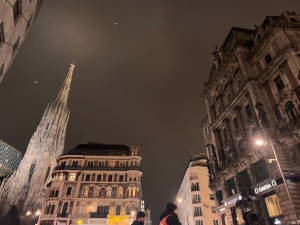
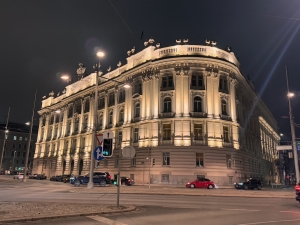
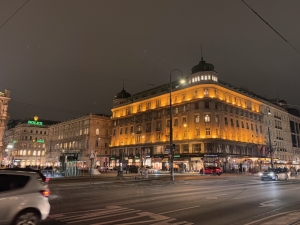
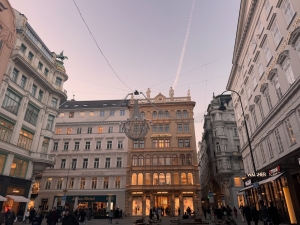
We spent the rest of the day shopping in Graben. Other than luxury brands, most of the international brands would set up shop in Graben. There are small alleys that branched out from Graben that are worth exploring. After doing some shopping, we headed to the main square of St Stephan’s Cathedral to take a look at the cathedral at night. She was sitting in the middle of the square, with lights casting on her, likened to a superstar standing on the stage. St Stephan’s Cathedral looked grand from the outside. The shops in the buildings next to the cathedral are mainly restaurants and souvenir shops. We returned to the hotel (via the subway U-bahn) to leave our stuff and headed nearby our hotel for dinner.

Austria Day 8 (15 Jan 25): Zell am See -Schmittenhöhe: Snowshoe Hike in the Mountain; Onward to Our Next Destination: Graz

While planning this trip, I looked for things to do in Zell am See besides visiting the Top of Salzburg. On the Kaprun website, I chanced upon a snowshoe hike on Schmittenhöhe. When I searched further, I learned the mountain was just in Zell am See’s backyard. We had never tried snowshoe hiking before, so we had to do this in Zell am See.

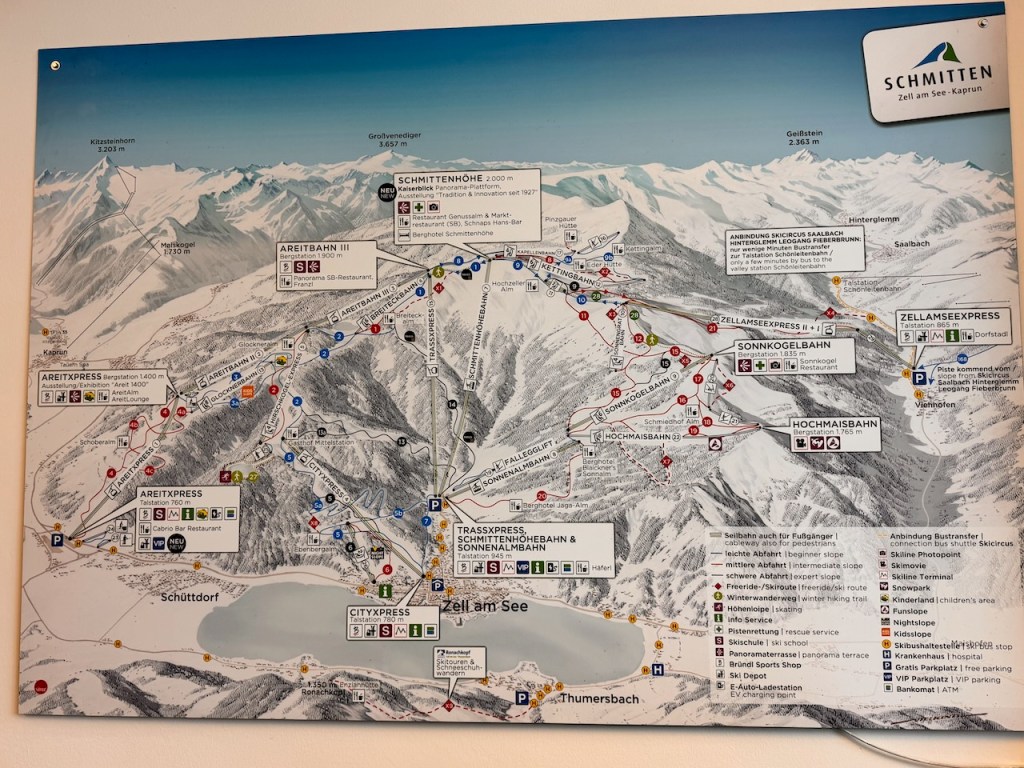
Map of Schmittenhöhe

Getting to Schmittenhöhe Valley Station

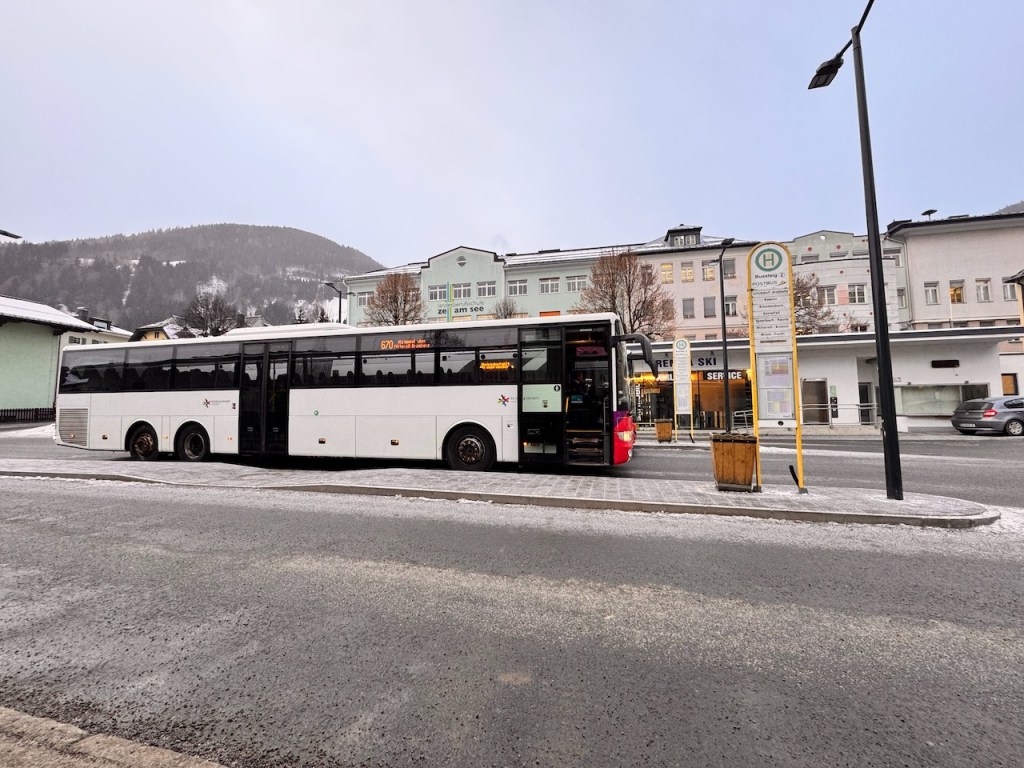
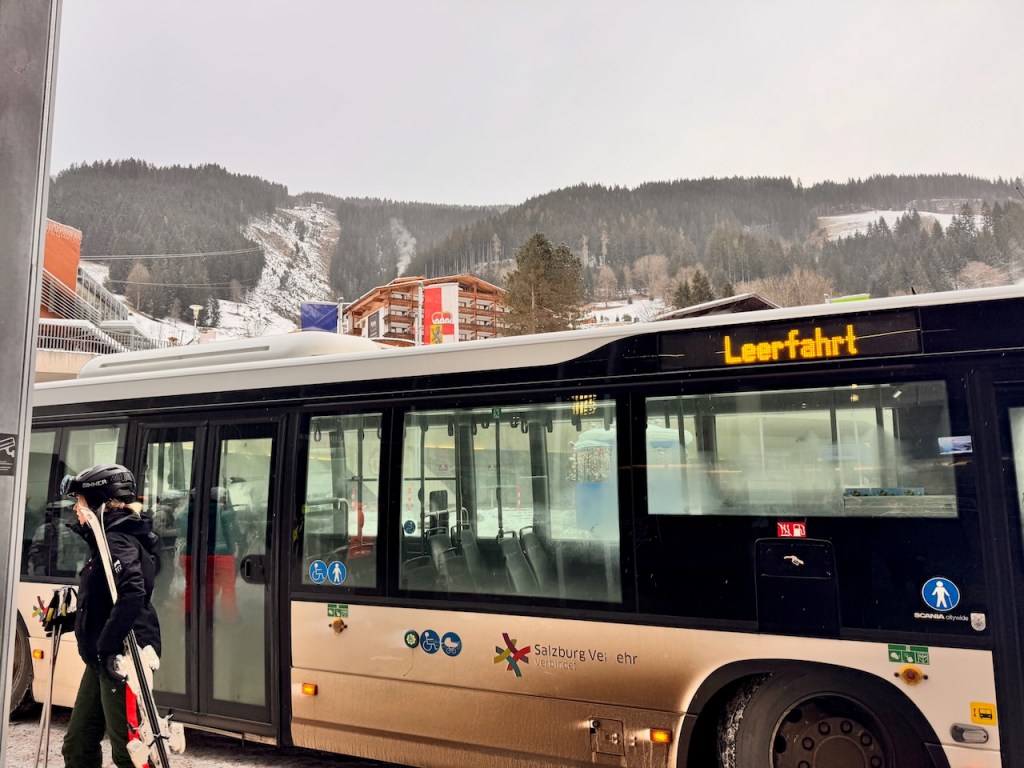
As we only have slightly more than half a day remaining in Zell am See, we checked out our accommodation and left our luggage at the reception without incurring additional charges. The meeting point for the snowshoe hike was at the InfoCenter at Schmittenhöhe Valley Station. We could walk uphill for about 30 minutes to get to our meeting point or catch a 15-minute bus ride from Postplatz. As we are expected to hike for at least 2 hours, I figured the bus option is better. We headed to Postplatz and caught Bus #71, which comes every hour.
Snowshoe Hike on Schmittenhöhe

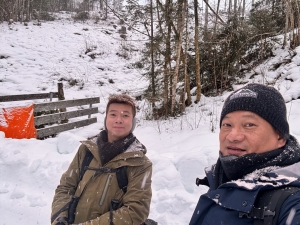
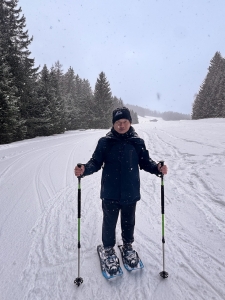
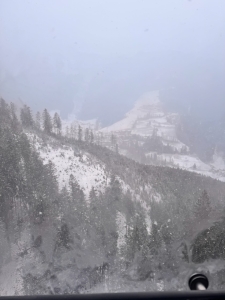
The snowshoe hike is a complimentary 4-hour guided tour scheduled every Wednesday on Schmittenhöhe during winter (bookings for the snowshoe hike can be made here). The meet-up is at 9 am at the base station of Schmittenhöhebahn. Although the hike was free, we had to pay €6 to rent snowshoes and walking sticks. On top of the snowshoe rental, we had to pay for the cable car ride. However, as the route of the hike might change depending on the weather (like what we have experienced), it is recommended to purchase cable car tickets only after meeting up with the guide. Some of the group members bought tickets to the top of Schmittenhöhe (costs €32.50), but due to the changes in the plan, we only had to purchase the CityXpress tickets (costs €22.50). Our guide advised us on which tickets we should purchase. Our snowshoe hike was originally supposed to start from the summit of Schmittenhöhe at 2,000m above sea level, where we would hike through the high-altitude promenade to Sonnkogel at 1,835m above sea level. From Sonnkogel, the hike will continue to Schrambachkopf and back to Sonnkogel. However, the snowing this morning made the trip dangerous. The guide changed the route to a safer route that took us to Plettsaukopf Reservoir at 1,328m.
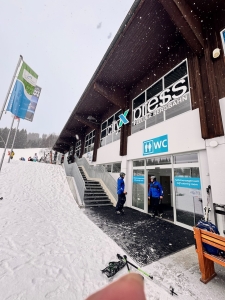
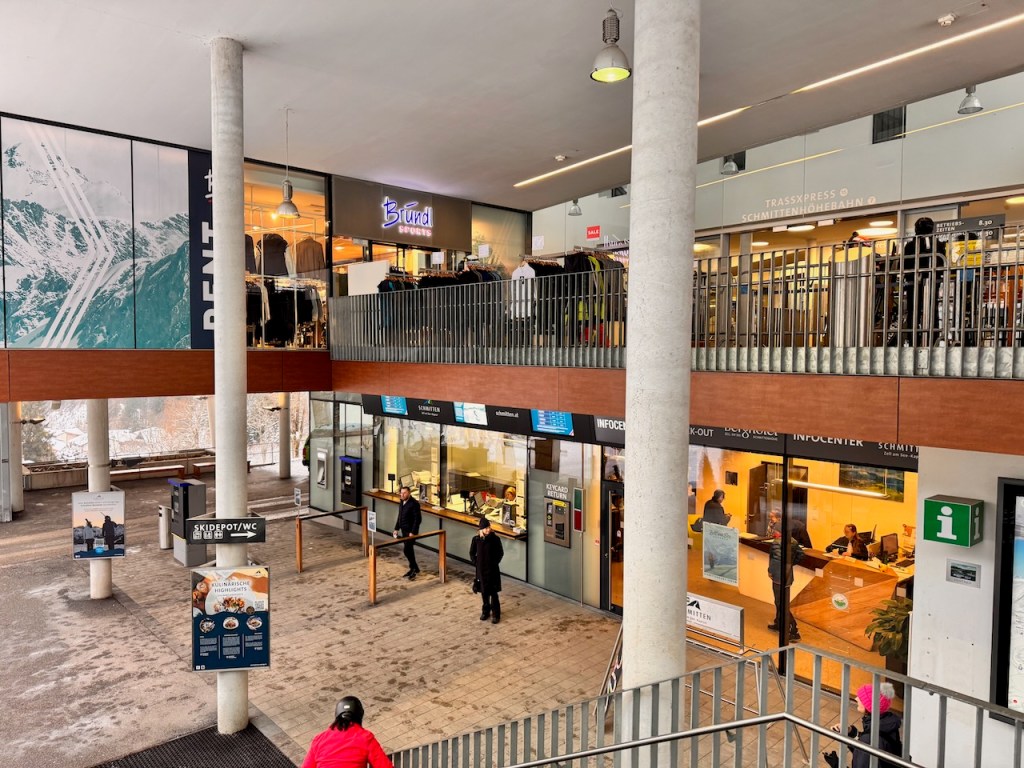
We met up our guide and the rest of the team members in the Schmittenhöhe Valley Station InfoCentre

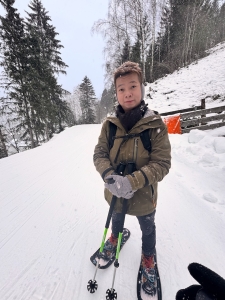
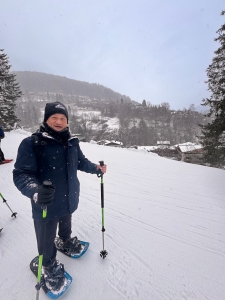
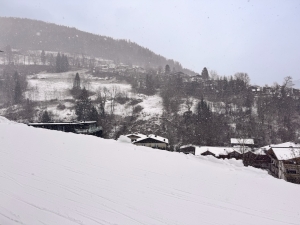
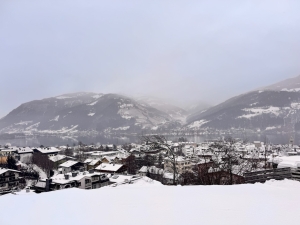
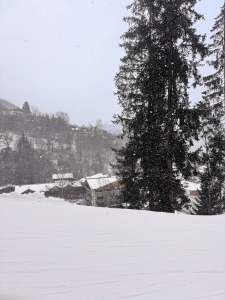
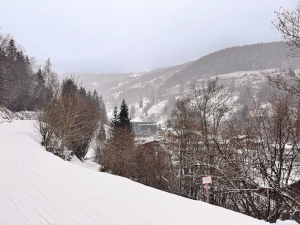
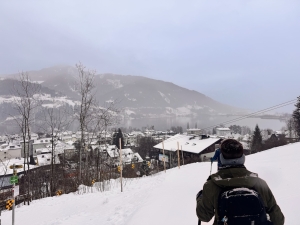
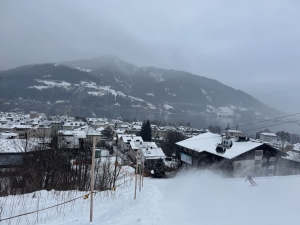
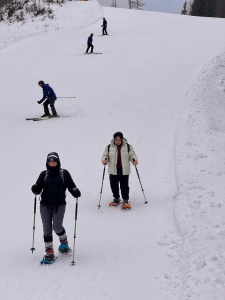
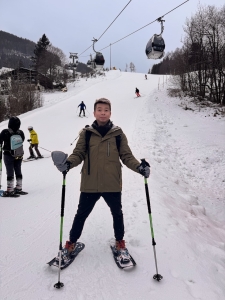
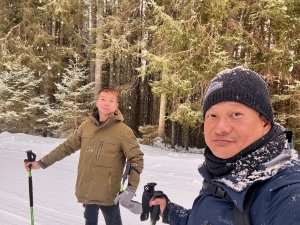
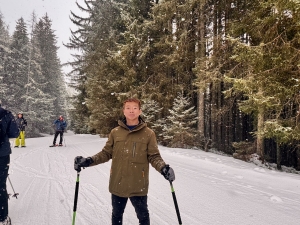
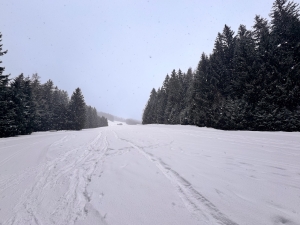
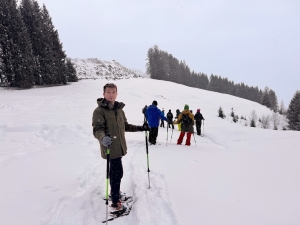
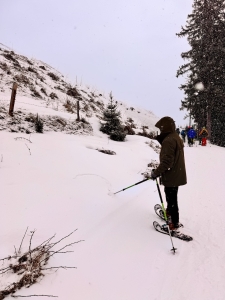
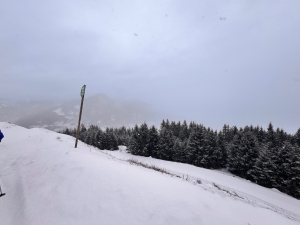
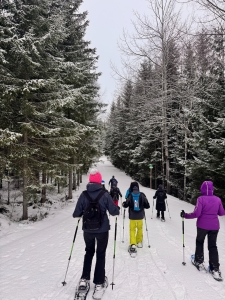
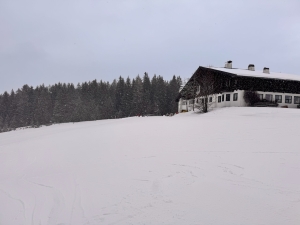
After meeting up with our guide and the rest of the team members, our guide brought us to the back of the InfoCentre to collect our snowshoes. He also taught us how to wear and walk with the snowshoes on. After everyone had collected their shoes, our snowshoe hike commenced. The first part of the hike was relatively easy, we hiked on one of the gentle ski slopes from the Schmittenhöhe InfoCentre Valley station to the CityXpress station. The terrain for the first 45-minute hike was fairly flat with a slight downslope, which was a great way for us to get used to walking on the snowshoes. Along the way, we saw houses and some mountains from a distance on the left side, as well as forests on the mountain’s slopes on the right side of the trail. We came to a steep slope, and the CityXpress car cable station was in front of us. Our guide instructed us on how to descend the slope safely using our snowshoes and walking poles. The initial few steps were challenging, with the nagging fear of the slopes being a tad too steep looming in our minds. We treaded each step carefully and started to get the hang of it after a few more steps. We learned to trust the snowshoes and use the poles to help us descend the slope.

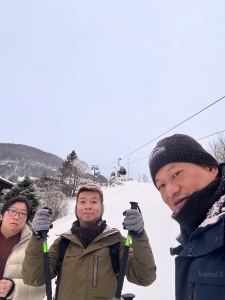
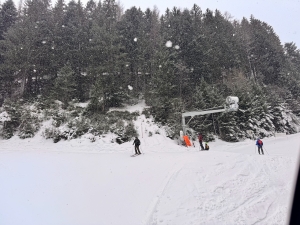
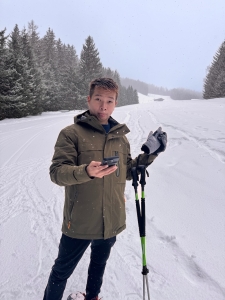
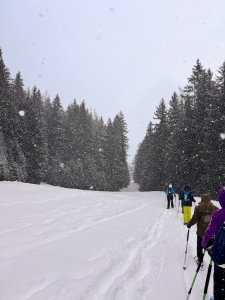
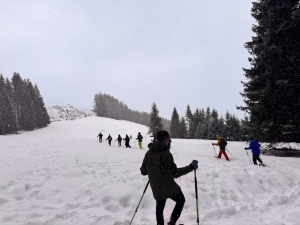
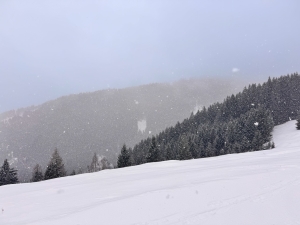
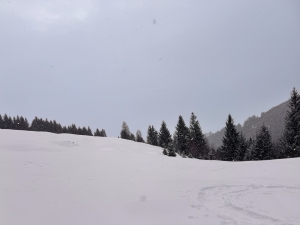
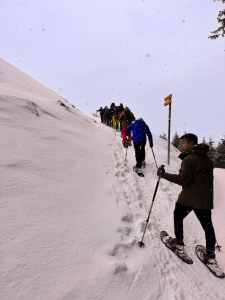
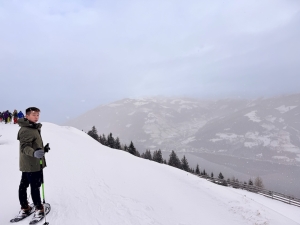
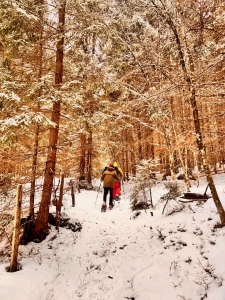
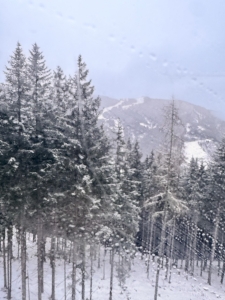
We took the CityXpress cable car up to 1,325m above sea level to its peak station, Gasthof Mittlestation. One of my friends felt tired after the initial walk; she opted out of the second part of the hike and rested in a restaurant at Gasthof Mittlestation. After a short toilet break, we continued our hike to the Plettsaukopf Reservoir. For the next 1½ hours, we ventured into the wilderness part of the mountain where no one would ski. After leaving the station, our guide instructed us to form one line, with those with high-cut boots to take the front. This was the part where the snow was deep, and our feet would sink into the snow with every step we took. Along the way, we walked in an open area where pine tree forests lined up at the side of the mountain slope not too far from us. It was especially fun to hike in the snowy weather.

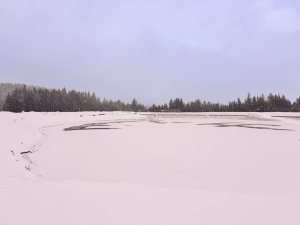
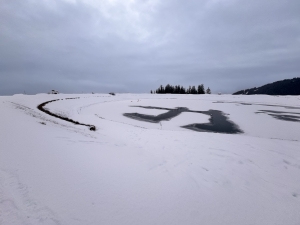
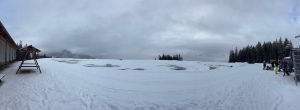
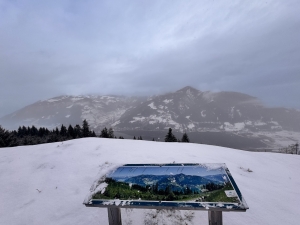
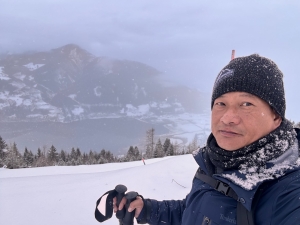
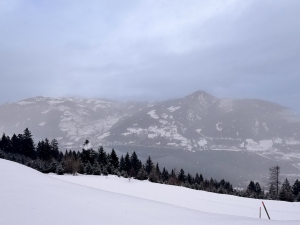
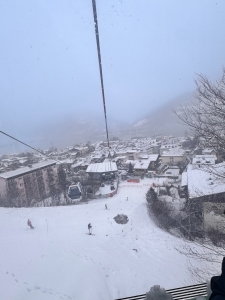
Our guide led the group up a small slope on the left of our trail. On top of the trail was Plettsaukopf Reservoir. According to our guide, this reservoir, now frozen as we saw it, was a favourite playground for the locals during summer. As we circumvented the reservoir, we were treated to a view of Lake Zell and the mountains behind it. I can imagine people coming here in spring or summer for the view. After a 10-minute break, we continued our walk back to the cable car station. Instead of taking the same route that we came from, our guide led us back through the forest. He brought us to a dead tree trunk in the forest and pointed out the mushrooms that grew out of the log. Along the way, our guide pointed out a set of footprints, saying the foxes called the forest home. Soon, we arrived back at Gasthof Mittlestation. This is where our guide announced that the hike had officially ended. We were given two options to return to Schmittenhöhe InfoCenter: take the CityXpress back and take a bus, or hike for another 1½ to 2 hours downslope. Considering our time would be tight if we went with the hike back, and my friend who rested in the restaurant was done with the hike, we chose the easier option back to the InfoCentre while the rest of the group opted for the walk back. We bid farewell to the group and took the CityXpress back to the base station. Though the snowshoe hike was short, I thought it was a good experience. We also got some views, though not as great as those we might have seen if we hiked from the summit.

After returning our snowshoes, we had about 2 hours before our train for Graz departed. As we wanted to get some jackets that we had not managed to buy from Kaprun Centre yesterday, we took a cab to Kaprun. We arrived at the shop in Kaprun in under 20 minutes and got the stuff we came for. The friendly staff at the store helped us call a cab, and while waiting, the staff gave us some coupons and encouraged us to have a complimentary drink at the terrace level of the shop while waiting for our cab. During our ride back to Zell am See, we requested the cab driver to drive us to our accommodation to collect our luggage and then to Zell am See Bahnhof for our train. We reached Zell am See train station at 2 pm, about 15 minutes before our train called into the station. We wouldn’t have made it for our train if we had taken the bus instead.

Onward to Graz – Austria’s Second Largest City

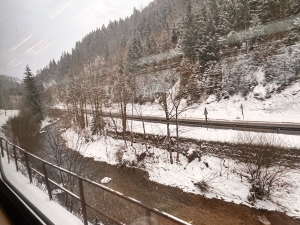
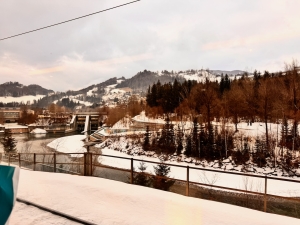
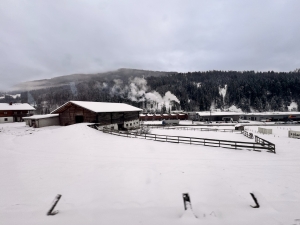
Soon, our train pulled into Zell am See Bahnhof. We spent the next 4 hours on the train to Graz, had lunch in the dining car and watched the beautiful Austrian countryside zip past us. It was 6.20 pm when we arrived at Graz Hauptbahnhof, and it took us 15 minutes to walk from the train station to our hotel. I did not plan to do anything in Graz tonight other than look for a place to dine, as most of the attractions and shops would have closed when we settled in our hotel. After spending the past few days in small towns, we felt Graz was much livelier, and there seemed to be a lot more going on here. We looked for supermarkets to stock up for breakfast along the way to our hotel. Fortunately, there are four supermarkets just below our hotel. After checking in and settling down, we headed to the supermarket before they closed (at 7 pm) to stock up on our drinks and breakfast. As it was late, we settled for dinner in a nearby restaurant.