[Airline Review] – Singapore Airlines A350 – 900 (SQ331) – Business Class, CDG – SIN (8 Jan 24)

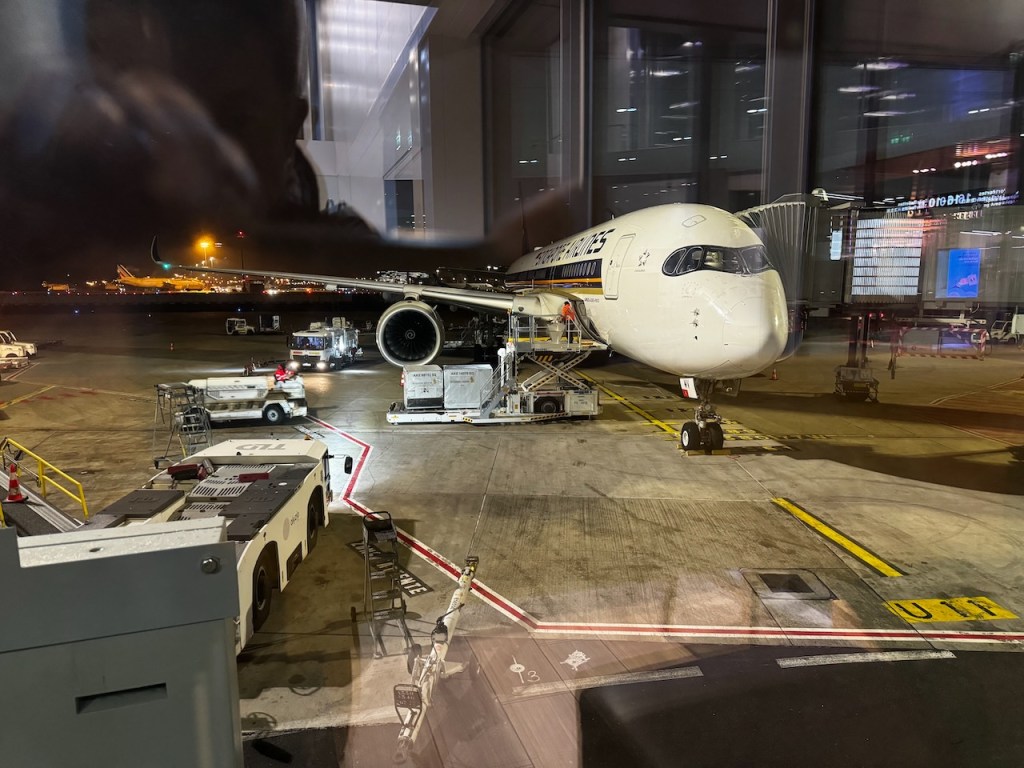
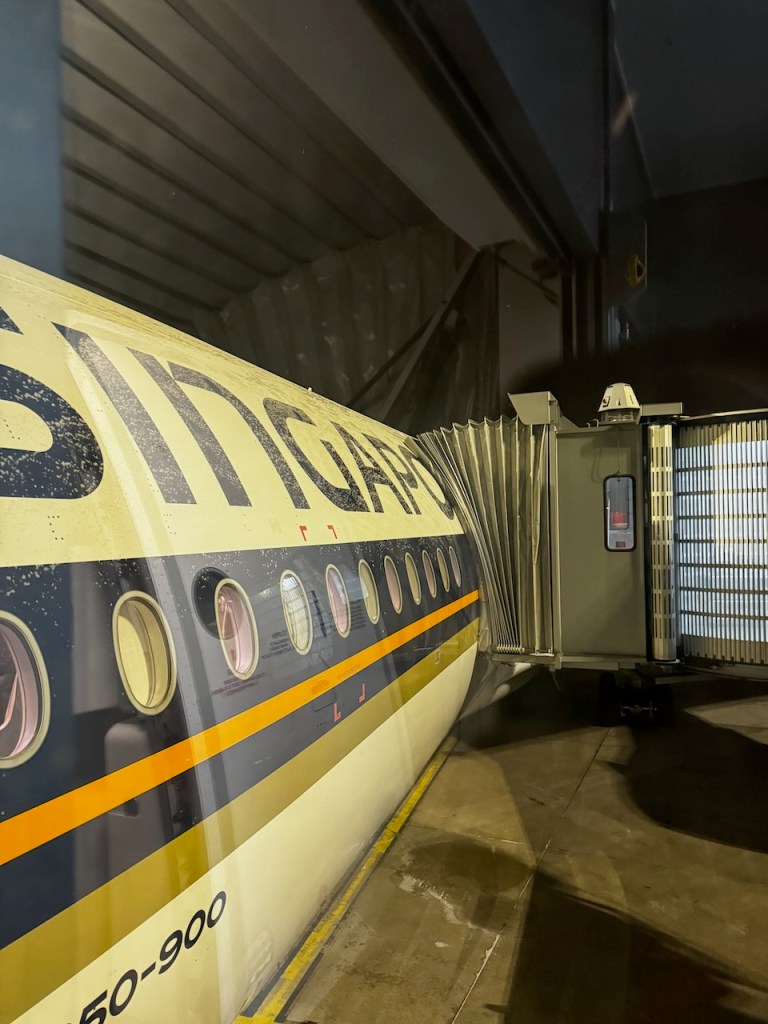
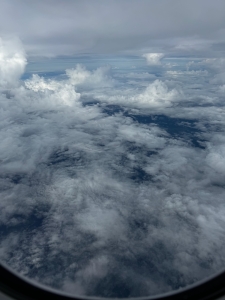
The Singapore Airlines A350-900 Long Haul Version flying us from CDG to SIN tonight

At the Airport

Check-in

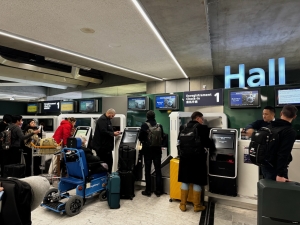
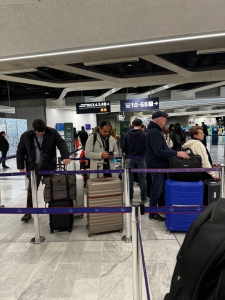
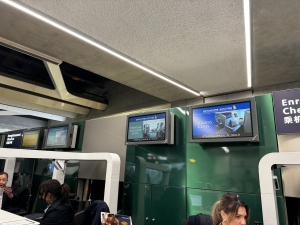
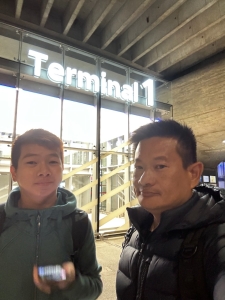
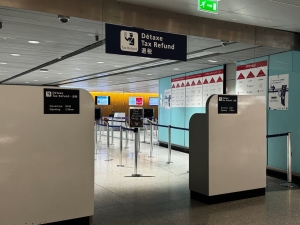
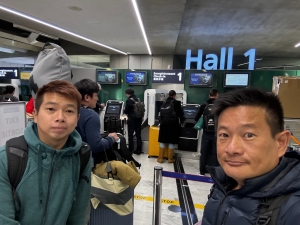
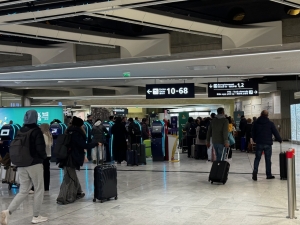
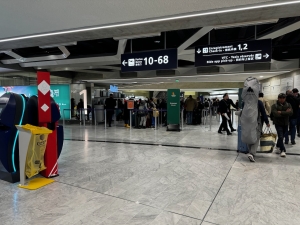
Singapore Airlines departs from Paris Charles de Gaulle Airport from Terminal 1. All check-in counters in Paris Charles de Gaulle Airport are on level 3 of the terminal. Singapore Airlines check-in counters are located in Hall 1, with six counters serving the airlines. Two counters were assigned for bag drop, which I assume serves passengers who had checked in with the self-check-in kiosks in the terminal. One counter each serving passengers travelling in Economy and Premium Economy Class. I assume the Premium Economy counter would serve Economy Class passengers when no one is in the queue. The last two counters served Business Class passengers. The Parisian Airport guards the Business Class queue very tightly. We saw two airport staff standing at the beginning of the line, ensuring only Business Class passengers were allowed into the queue. The ground staff checking us in was very friendly and efficient. She processed welcomed us and processed our check-in efficiently. She also briefed us on the lounge we could go to and gave us directions on how to get there. She also reminded us that we should go to the gate near Hall 3 for fast-track immigration and security clearance at Access Lane No. 1.
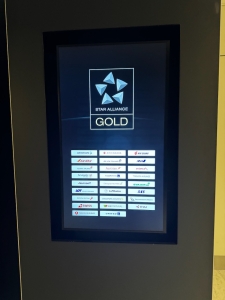
Star Alliance Lounge

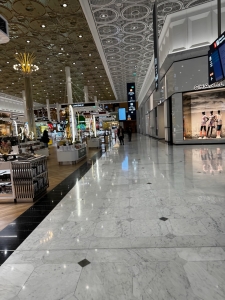
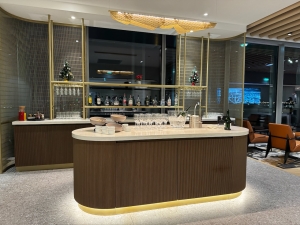
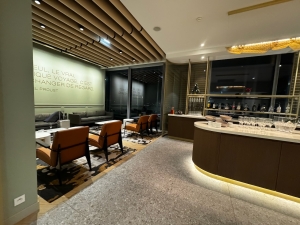
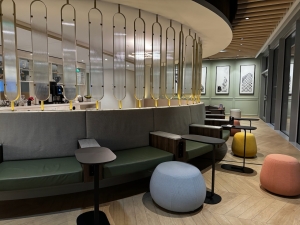
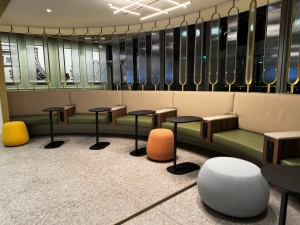
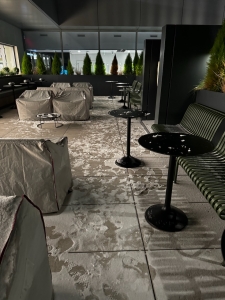
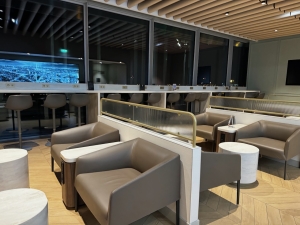
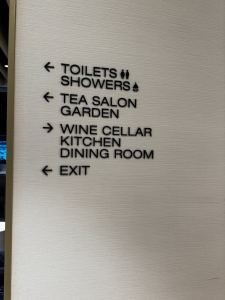
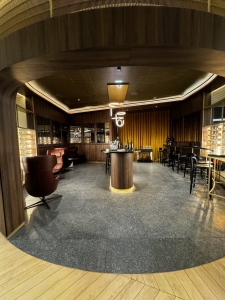
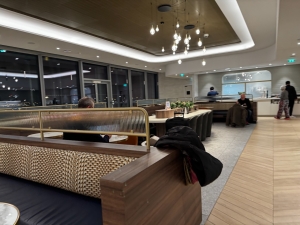
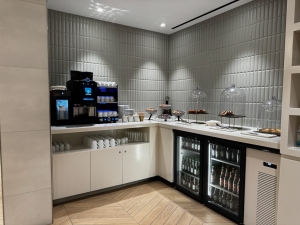
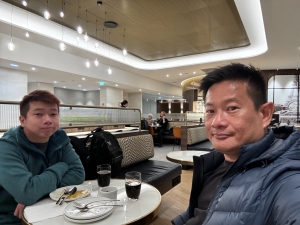
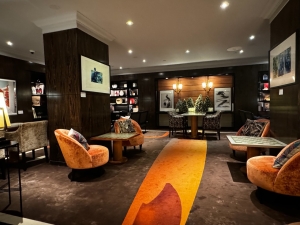
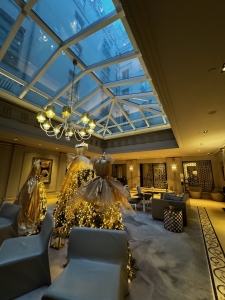
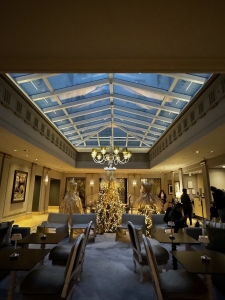
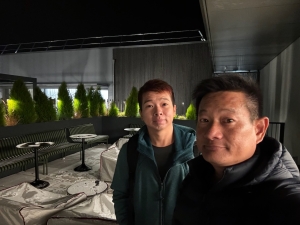
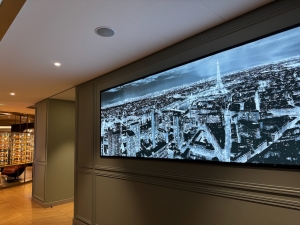
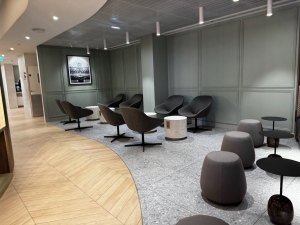
There are two Star Alliance Lounges at Paris Charles de Gaulle Terminal 1. The older lounge is assigned to those travelling within the Schengen zone, and a newer one was just opened in Oct 2023 for passengers travelling outside the Schengen zone. The new lounge is located after the security clearance on level 3 of the terminal building. The new Star Alliance Lounge feels airy and open, thanks to the floor-to-ceiling window that faces the tarmac. The wooden parque flooring matches the white marble entrance, giving it a posh look. The Star Alliance lounge has three distinct areas: the lounge area, the dining area, and the work area. The lounging area occupies a bulk of the floor space in the lounge, occupying the centre of the lounge. We were greeted by a bar counter from the main entrance serving cocktails and alcoholic drinks. This is the start of the lounging area, where we spotted some couches and armchairs dotted around this area, perfect for larger groups to sit together and chill. Behind the cocktail bar are lounging seats catering for solo travellers that face the tarmac.
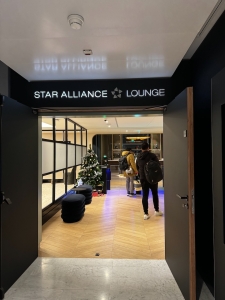
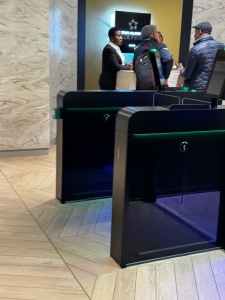
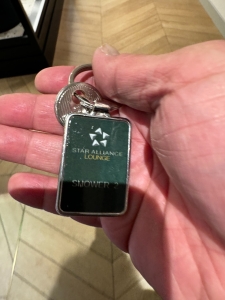
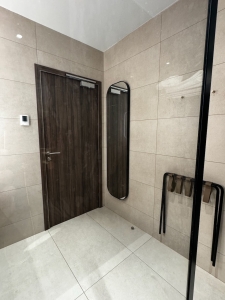
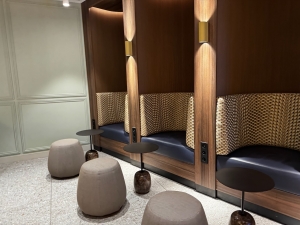
To the left of the entrance to the lounge, a bright area houses the first dining area. Behind this dining area is the outdoor terrace. Opposite the dining area is quieter, catering to passengers who want to catch some rest between flights, where single-seat armchairs with ottomans are fitted facing the tarmac. The high-partitioned tables, high-back chairs here, and the two workspace cubicles provide passengers privacy to do their work or engage in video conferencing. Pass the work area in the Star Alliance Lounge, tucked in one corner is the toilet and four shower rooms. To use the shower facilities, we are required to surrender our boarding pass in exchange for a key at the reception. The black marble walls and the shower room’s light brown sink counter area gave it a clean and chic look. Despite being a semi-open shower stall, I did not find water splashing out of the wet area of the shower room.
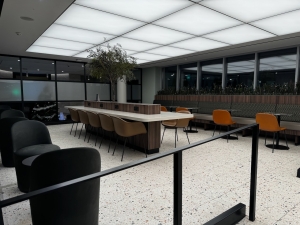
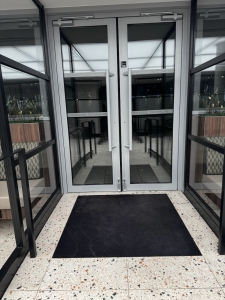
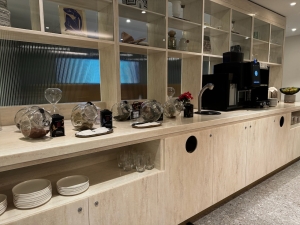
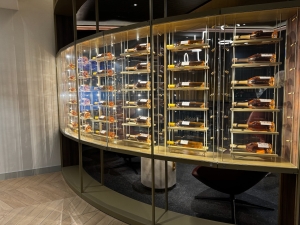
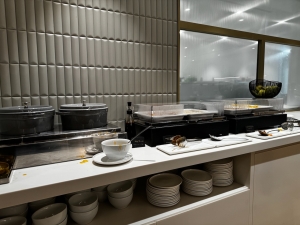
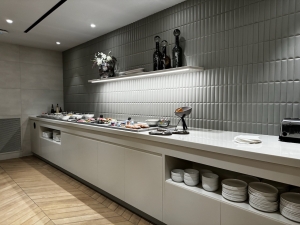
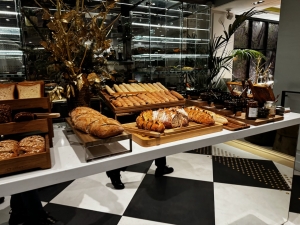
The main dining area is located to the right of the entrance to the lounge. Before hitting the main dining area, I passed a wine room stocked with wines displayed on the glass window to the semi-open bar. Passengers are welcome to taste the wine inside this bar. There is restaurant-style table seating that seats two pax per table next to the buffet area in the main dining area. Those in a larger group can opt to use the long table in the centre of the buffet area. For a lounge, I’d say the food selection is quite substantial. We were treated to 11 choices in the warm food area, which were topped up regularly. There is a separate salad bar in the cold food area where we found yoghurt and desserts. The Star Alliance Lounge also has a bread counter with a drinks station stocked with limited bread choices.
The Aircraft

Singapore Airlines used to deploy their A380-800 to Paris. Since the pandemic, the airlines only deployed their Long Haul A350-900 to Paris.
The Cabin

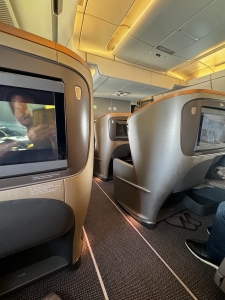
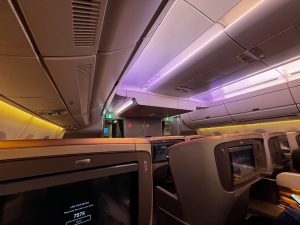
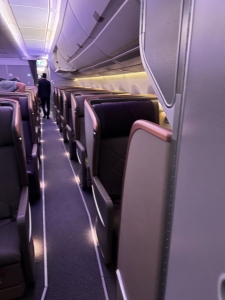
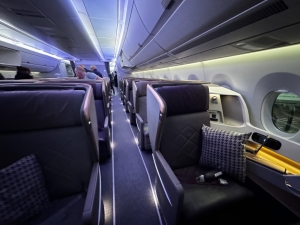
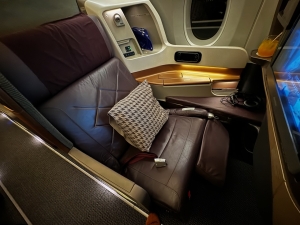
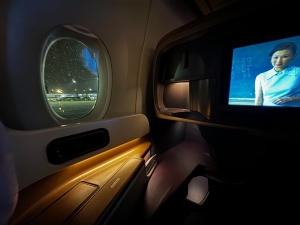
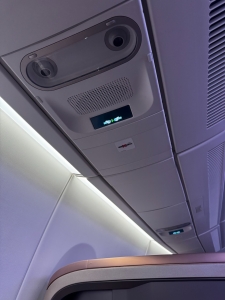
Singapore Airlines A350-900 has 253 seats, 42 in Business Class, 24 Premium Economy seats and 187 Economy cabins. The 42 seats in Business Class are further split into 26 seats in the forward Business Class cabin and another 16 in the smaller aft Business Class cabin. The ambience in the Business Class cabin felt cosy and calming. Singapore Airlines employs earthy tones in their Business Class seat and carpeting. The use of lilac-coloured lighting combined with soft, warm yellow lighting enhances the feel of calmness in the cabin.
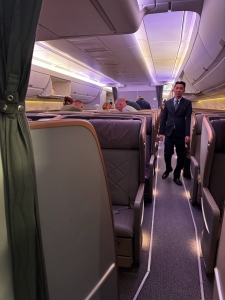
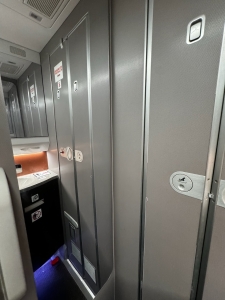
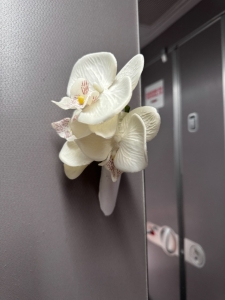
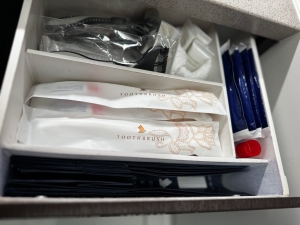
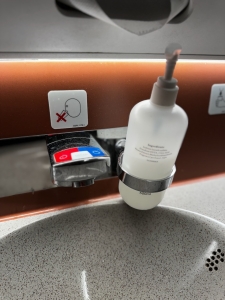
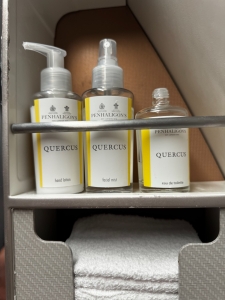
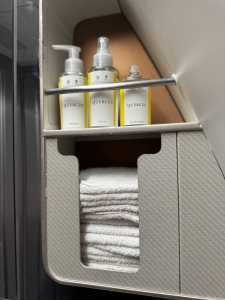
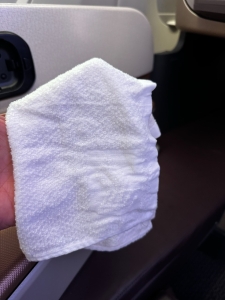
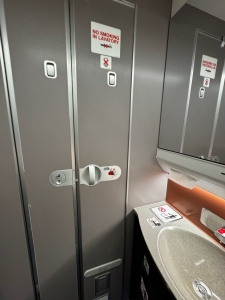
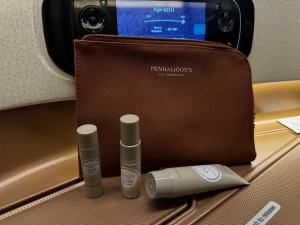
There are three lavatories in the Business Class cabin: one up front behind the cockpit and two between the two Business Class cabins. The lavatories were also decorated with an earthy tone of dark brown in the sink cabinets and sand colour in the walls. The Business Class lavatories onboard Singapore Airlines A350-900 feel classy and spacious with the combination of the colour theme and the abundance of mirrors. The lavatories are very well stocked with amenities such as dental and shaving kits in the drawers and Penhaligon’s eau de toilette, facial mists and hand lotion. Other than paper towels and soft tissues, Singapore Airlines also stocked its Business Class lavatories with cloth handkerchiefs, which is uncommon on other airlines.
The Seat

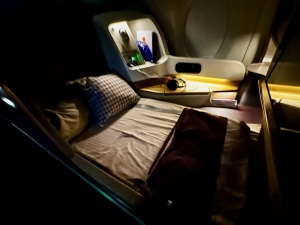
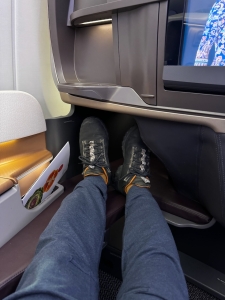
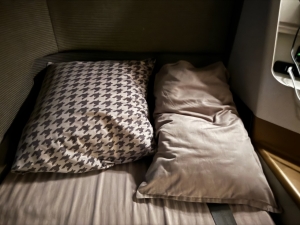
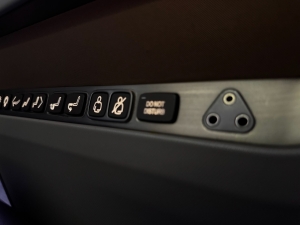
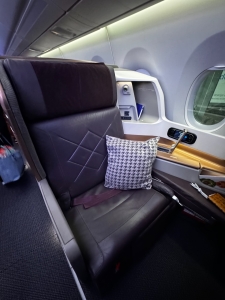
The seats onboard Singapore Airlines A350-900 are arranged in a 1-2-1 configuration. These controversial seats have a pitch of 60″ and measure 28″ wide. The seat onboard Singapore Airlines A350-900 is very comfortable, thanks to the generous width and the thick cushioning. They are one of the widest seats one can get in the sky. There are technically three modes the Singapore Airlines Business Class seats can be converted to, but the seat controls on the armrest are only programmed for the upright mode for take-off/landing and the lounge mode. The upright mode was supposed to be the most uncomfortable as it entails sitting up straight; however, the thick padding and the ultra-wide seats made up for the uncomfortable sitting position. The lounge mode is my favourite mode. In this mode, I was able to recline the seat to a position that allowed me to relax. Other than the preset position, the seat controls allowed me to adjust the angle of the recline and how much I wanted the calf rest to pop up. I find the lounge mode best when watching movies or dining. The third mode, the full flatbed mode, requires cabin crew to flip the seat. Passengers will sleep on the back of the seat while in this mode. The comfort level of sleep is very personal: while some had complained about how hard the back is, I find the firmness acceptable and comfortable (or maybe I was too tired). I was able to get a good 6 hours of sleep onboard. The other thing that passengers usually complain about is the Lazy-Z seat design. This requires passengers to sleep at a certain angle to fit their feet into the cubby hole. As a side sleeper, I was not too bothered by the sleeping angle. The big pillow placed on the seat waiting for passengers when we boarded the aircraft was comfortable to sleep in. In addition, when converted to bed mode, passengers are given a smaller firm pillow.
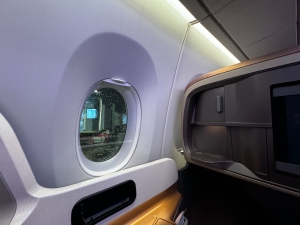
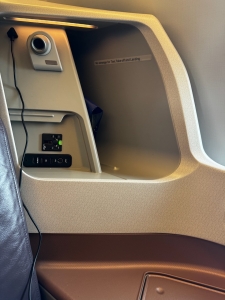
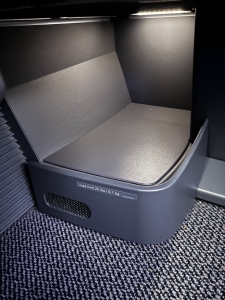
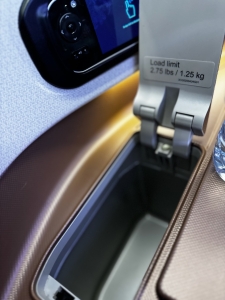
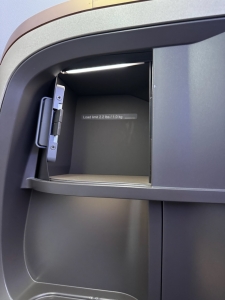
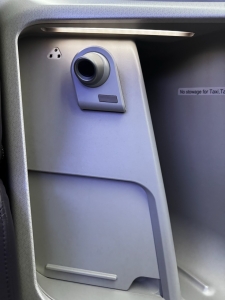
I like the generous storage space on the Singapore Airlines A350-900 long-haul Business Class seats. A small cabinet in front of the seat has a sliding door large enough for passengers to stow tablets. The sliding door prevents the items from falling off during take-off/landing and turbulence. There is another open shelf next to the seat for passengers to stow flat items for easy access. However, as this cubby was not fitted with a door, passengers are required to keep this cabinet empty during take-off/landing. On top of these, there is yet another cubby with a cover by the window that was fairly deep for passengers to stow small items. I use this cubby to stow my passport and phone when not charging. There is sufficient space under the footrest for passengers to place my carry-on.
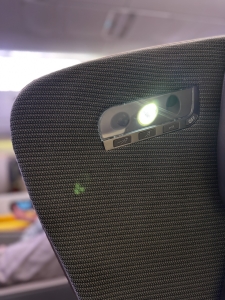
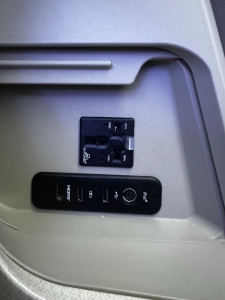
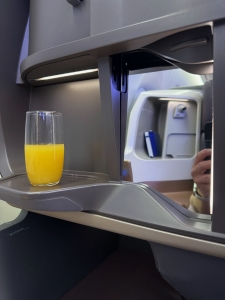
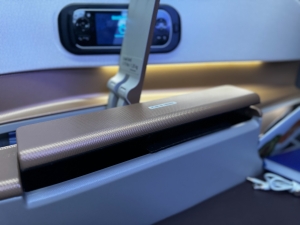
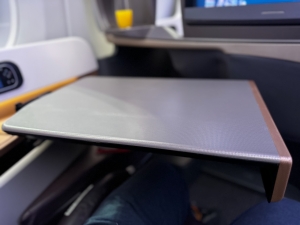
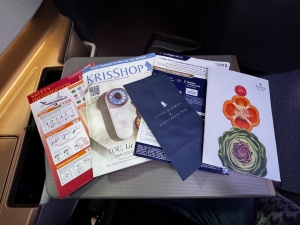
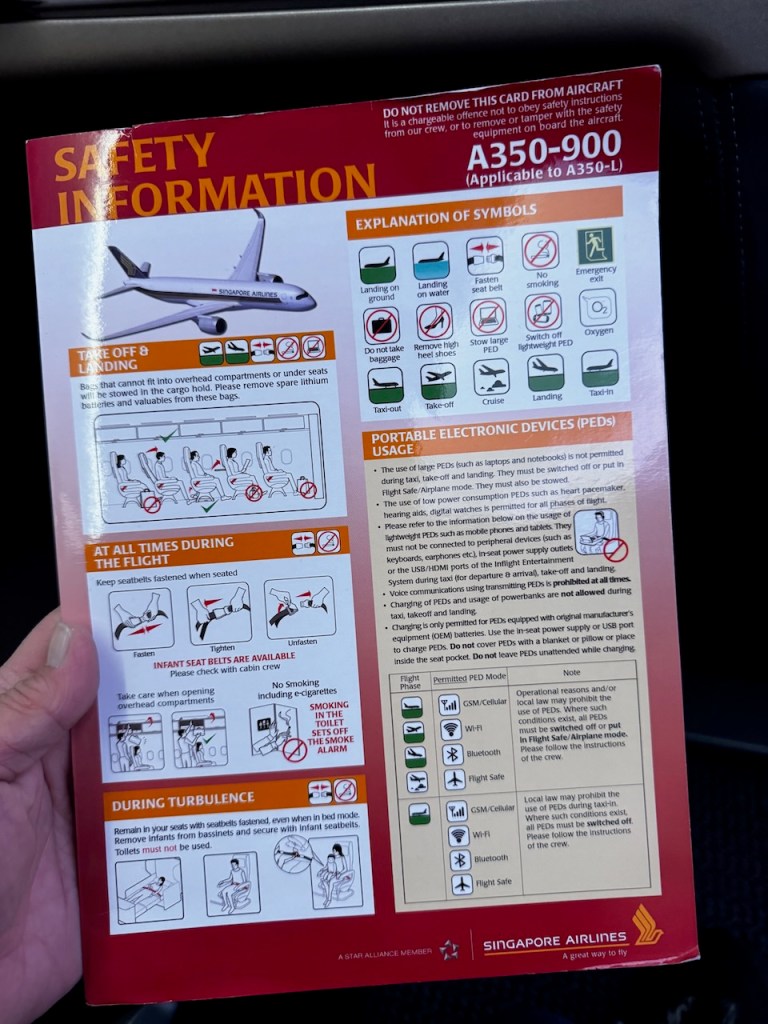
On top of the overhead reading light fitted on the ceiling of the aircraft, there is one on the right of the seat, next to the window. This reading light is perfect when the seat is in upright or lounge mode. Another set of reading lights is fitted on the aisle side of the seat. This reading light provides illumination when the seat is in bed mode. Singapore Airlines fitted one power outlet and a USB-A charging port in the cubby hole next to the seat, allowing passengers to charge their lifestyle devices. The seat table, stored in the inner armrest when unused, was sizeable and sturdy. The table can be swivelled to allow access to the seat even when deployed. I like how Singapore Airlines fitted a smaller cocktail table under the cabinet in front of the seat. This ledge allowed passengers to place their drinks without needing to deploy the large seat table. The seat pocket is found in the inside armrest, containing the menu, in-flight magazines and safety card.
Inflight Entertainment

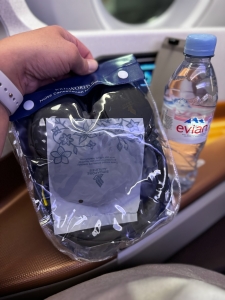
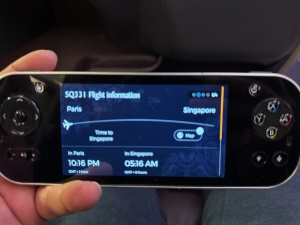
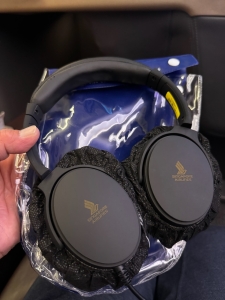
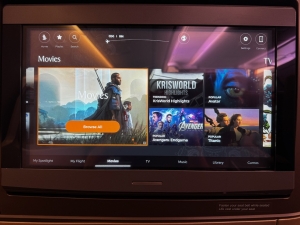
Each Business Class seat onboard the A350-900 long haul variant of the aircraft is fitted with a generous 18″ personal TV. The large TV screen makes watching movies very comfortable and gives me a mini theatre feel, especially when the cabin lights are dimmed. The TV screen does not have touchscreen functions, so accessing inflight entertainment solely relies on the IFE controller, which resembles a handheld gaming console. We could use the touchscreen function on the controller or the analogue buttons to access entertainment onboard. Singapore Airlines provides noise-cancelling headphones to its Business Class passengers. The headphones were so efficient in blocking out sound that I had to remove them when speaking to the cabin crew. There are two headphone jacks on each Business Class seat, one next to the seat in the cubby to be used when the seat is in the lounge or upright mode, and another next to the seat controls by the armrest for passengers to use when in bed mode. Singapore Airlines’ entertainment system – KrisWorld, is loaded with many entertainment options, from the latest Hollywood blockbuster to TV shows to games that make the 14-hour flight time feel short. KrisWorld’s menu was well-designed, and the entertainment options were well-categorised and easy to navigate. Singapore Airlines offers free unlimited Wi-Fi onboard for its business class passengers and KrisFlyer members travelling in economy class. The Wi-Fi onboard was stable but capable of scrolling and posting on social media. Passengers wanting to stream videos from YouTube will find the speed of streaming challenging.
Meal Service

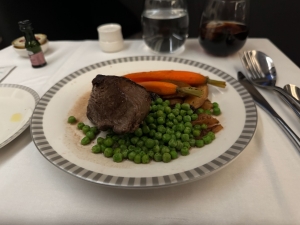
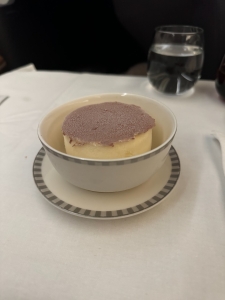
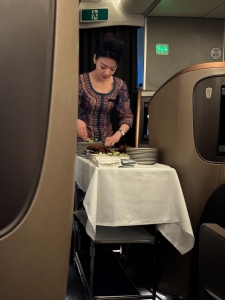
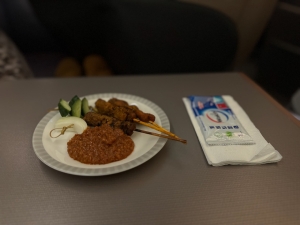
For this red-eye flight, Singapore Airlines served dinner and breakfast. Singapore Airlines has a book-the-cook service for flights departing Paris, but the choices were not as extensive as those with Singapore departures. The meal service started about 30 mins into the flight, and the cabin crew laid the table for passengers in Business Class. The cabin crew pushed a trolley down the aisle serving Singapore Airlines’s signature Chicken Satay. The chicken satay was tender and flavourful. I could taste the smokiness of the BBQ flavour on the satays. The accompanying peanut sauce was a tad too dry and not spicy. I guess Singapore Airlines modified the sauce to suit international travellers who do not take spicy food. The appetiser round followed after the satay service, where Parma Ham and Duck Foie Gras were served. The Foie Gras was tasty and complemented well with the saltiness of the Parma Ham. However, the meal went downhill after the appetiser round. For the main course, we were given the choice of beef fillet, chicken noodles soup, roasted lamb Shoulder, or Thai-style fried rice with seafood. I opted for the Beef Fillet as it had an “exclusively created” logo on the menu. The beef was a disappointment; it was chewy and severely undercooked. I had a hard time cutting through and biting the beef. The only thing that was tasty in the main course was the Ratte potatoes. I gave up after having two bites. For the dessert, I opted for Souffle Grand Marnier. My impression of souffle was soft and fluffy. However, the souffle was hard as a rock. I also gave up eating after having two bites.

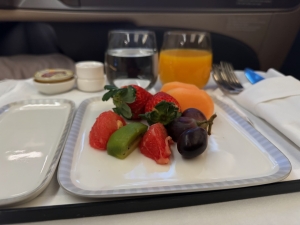
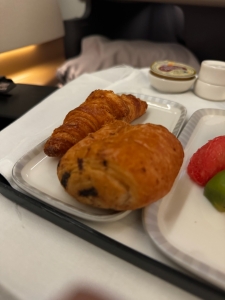
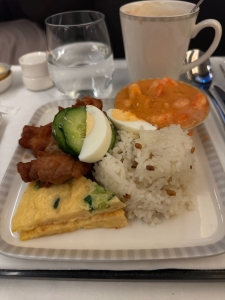
Breakfast service begins about 2 hours before landing. The breakfast service began with a fruit platter of grapes, tangerines, strawberries and honeydew. I only ate the honeydew, which was sweet and juicy. A cabin crew came by and offered a choice from the bread basket. I went for the croissant and au pain chocolate. The breads were tasty and fluffy. I used the book-the-cook service for the main course and opted for Nasi Uduk, a coconut-flavoured rice served with spicy sambal prawns, fried chicken and spring onion omelette. The Nasi Uduk was another disappointment; I could hardly taste any coconut flavour in the rice, which was soggy. The fried chicken was not crispy and tasted like it had been left in the fridge for days. The only saving grace was the prawns, but despite indicating as spicy, I did not taste any spiciness in the prawns.
Service

Service onboard was impeccable, as always. We were warmly welcomed by the cabin crew and were escorted to our seats during boarding. We were addressed by our last name, which made the service personal. I was well taken care of by Gwen throughout the flight, who went around the aisle welcoming and introducing every passenger in her area of responsibility during boarding. Gwen was very diligent in carrying out her duties, constantly patrolling the cabin to check if any passengers required anything. She also volunteered to convert my seat into bed mode and even made up the bed so I could get some sleep after dinner. She would always check if I needed any drinks. I raised the issue of the beef with Gwen; she immediately checked to see if I wanted anything else from the menu. Gwen came across as being very personable and caring. The other cabin crew I had the opportunity to interact with was the Inflight Manager, Shee Lee. She was standing by the door welcoming every Business Class passenger during boarding. Shee Lee was very knowledgeable and displayed great leadership in leading her crew. She was also seen leaning in to help her crew when they were overwhelmed so that passengers did not have to wait longer than they should. Shee Lee was brilliant in conversations. She gave me a good insight into the life of a cabin crew. She even gave me recommendations and tips on travelling in Paris for me to consider the next time I return to Paris.
Afterthought

The Business Class seats onboard Singapore Airlines A350-900 long haul variant are controversial products. Some passengers complained about the comfort when sleeping in bed mode, and others complained about the troublesome process of converting from sitting to sleeping mode. I find the seat to be comfortable both in seat and bed mode. I like the wide seating design, which contributed to my being able to grab rest for 6 hours in flight. The service was impeccable onboard, from boarding to deplaneing. The cabin crew came across as personable and was always ready to ensure passengers had a good time flying with the airline. The food served onboard was terrible. The beef was undercooked, and the dessert was too hard to eat. Even the book-the-cook meal was a disappointment.

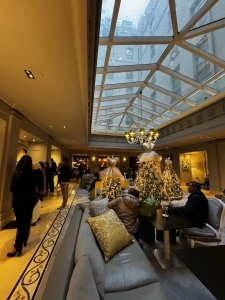
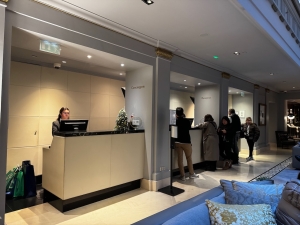
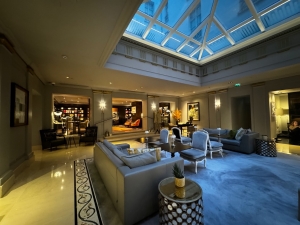
[Accommodation Review] – Sofitel Paris Le Faubourg (Duplex Prestige Suite), Paris, France (4 – 8 Jan 24)

Sofitel Paris La Faubourg is the flagship Sofitel in Paris. Since I wrote about the location and service in my previous post (read about it here), I will focus on the Duplex Prestige Suite instead. Compared to the Collection Suite, I liked this Duplex Prestige Suite that we were moved into on the third day of our stay with the hotel. There are only two Duplex Prestige Suites in Sofitel Paris La Faubourg.

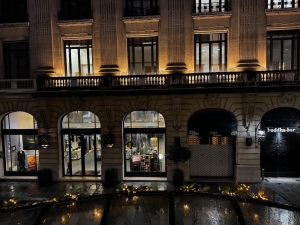
Facade of Sofitel Paris Le Faubourg

The Duplex Prestige Suite

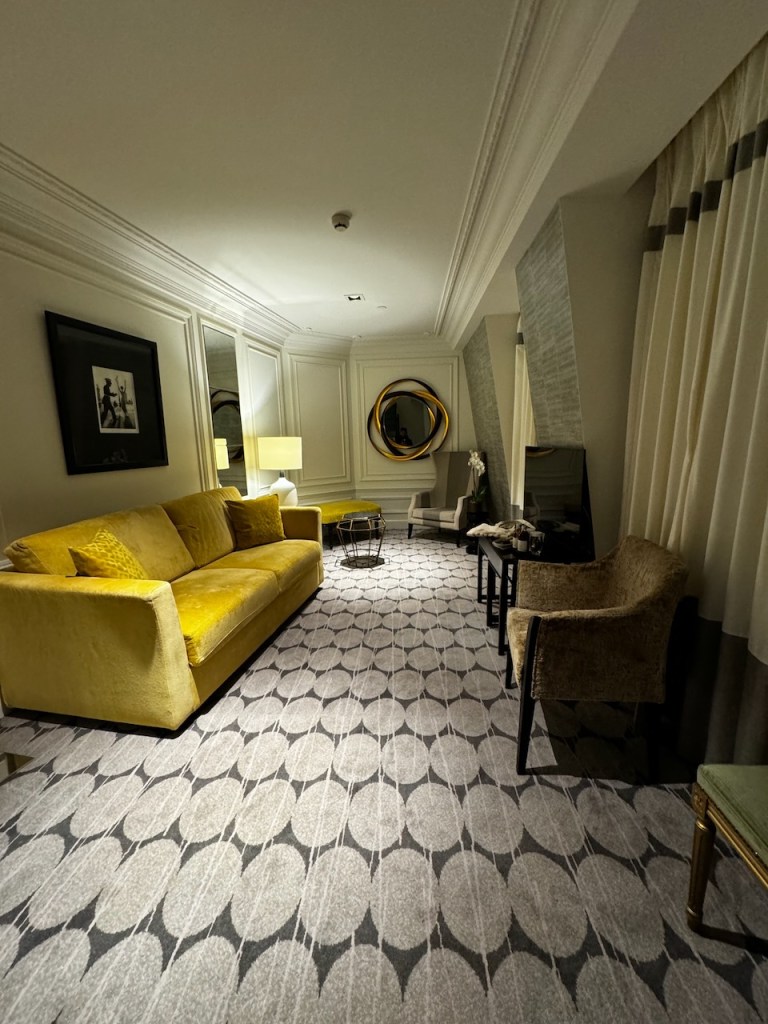
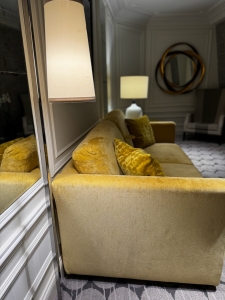
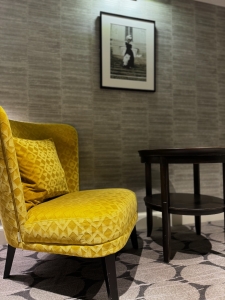
The Duplex Prestige Suite in Sofitel Paris La Faubourg feels more like a Parisian apartment. The two-level duplex suite has a total floor area of 45m2. Employing a mainly yellow theme, the Duplex Prestige Suite is comfortable and elegant. The living room and powder room are on the lower level, while an open study, bedroom, and bathroom are on the upper level.

Entryway

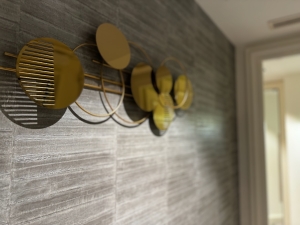
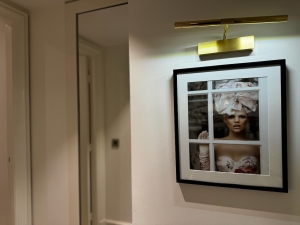
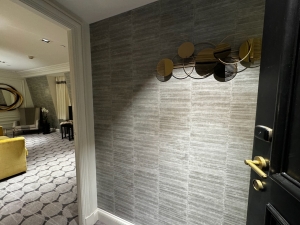
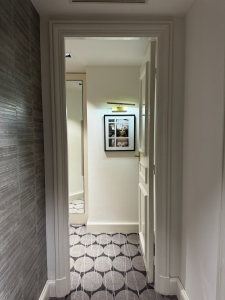
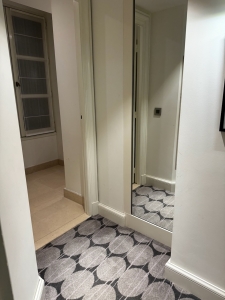
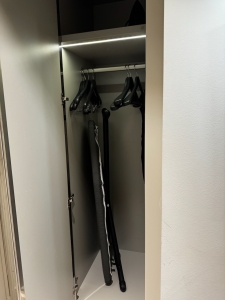
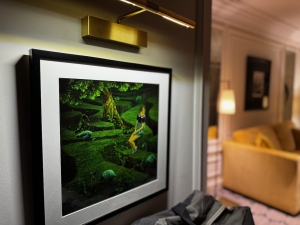
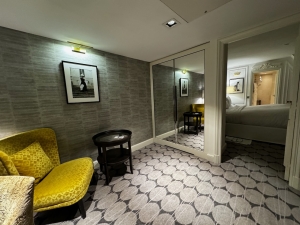
The Duplex Prestige Suite felt homely. The decoration in the entryway is minimalistic, with only a gold-plated artwork mounted onto the entryway’s wall against a velvet wall. There are no furnishings in the entryway, which I thought was a good choice as it would clutter up the entryway. There are two doors on either side of the entryway. The door to the right leads to the powder room, while the one on the left leads to the living room and the rest of the space in the Duplex Prestige Suite. I like how the hotel fits a small wardrobe on the right of the entryway, which was useful for hanging my jacket. Fitting a full-length mirror on the door of this wardrobe was a smart idea, as this allowed us to ensure we were smartly dressed before leaving the hotel.

Powder Room

The powder room sits further into the right side of the entryway, past the wardrobe. It is rather sizeable and fitted with a toilet and a sink. The brightly lit powder room is laid with blue wall tiles facing a set of French balconies, providing us with the convenience of using the toilet without needing to go upstairs. Despite being a secondary toilet, Sofitel Paris La Faubourg still provides the essential bathroom amenities in the powder room.

Living Room

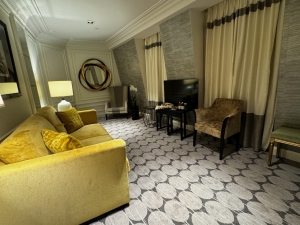
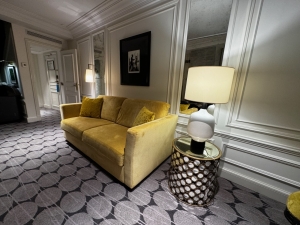
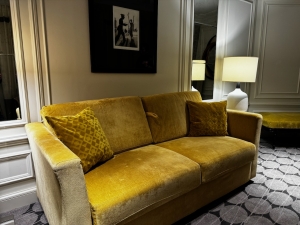
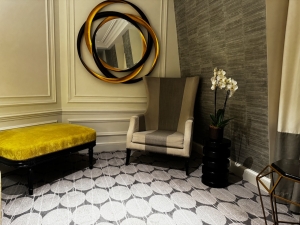
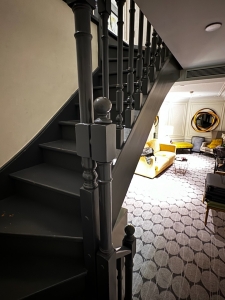
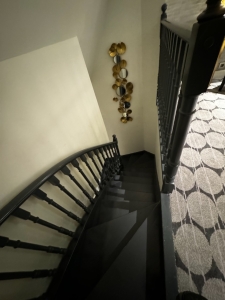
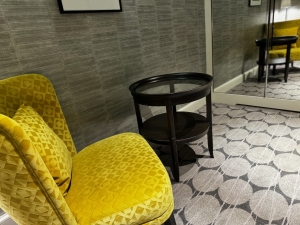
The living room of the Duplex Prestige Suite was adorned in a white and gold theme, giving it a luxurious yet cosy feel. The elongated living room occupies most of the space on the lower level of the Duplex Prestige Suite. I like how Sofitel Paris La Faubourg furnished the living room with plentiful sitting spaces, allowing the suite’s occupants to invite guests for a small gathering. The yellow couch in the centre of the living room, which can seat up to four adults, could also be converted into a bed. Tucked at the end of the living room are another velvet stool and a high-back armchair, which provide additional seating space. The mirror at the end of the living room, with a patterned round gold frame, exudes a sense of elegance, and the placement of a vase with real flowers gives the living a residential vibe. Both the velvet stool and the armchair were cushiony and comfortable to sit on. There are a couple more seats in the living room near the dark brown wooden staircase. The armchair beside the TV console, alongside the green velvet stool, provided even more sitting space in the suite. Sofitel Paris La Faubourg furnished a side table on one side of the yellow couch with a huge lamp, which not only enhances the cosiness of the living room but also makes this part of the room feel less empty. We did not find any coffee table in the suite’s living room. Instead, we saw a small table at the side of the TV console and used it mainly as a coffee table. I thought not having a coffee table here made sense. Due to the elongated layout of the living room, having a coffee table would make the living room feel cluttered.

The living room in the Duplex Prestige Suite

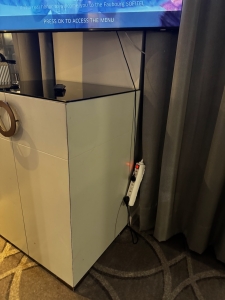
A large 42″ flat-screen TV sits on a console opposite the yellow couch in the living room. There is limited space on the TV console, which looks like two square tables pushed together to form the console. We were not able to use the TV console to stow any items. The entertainment options were limited, like the TV in the Collection Suite, where we stayed for the first two nights. There is quite a large selection of channels on TV; however, most of these are in French, and there are few English channels. We mostly ended up watching China channels when we were in the suite.

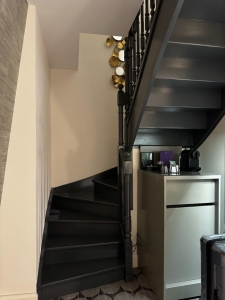
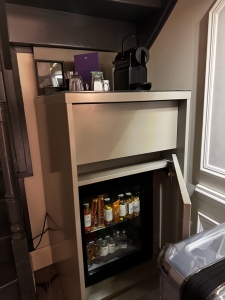
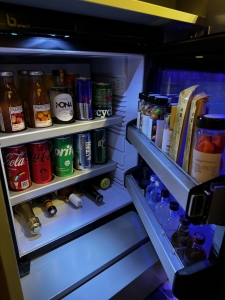
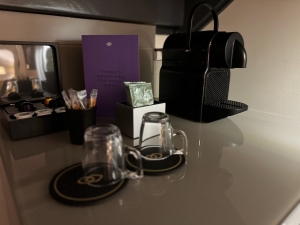
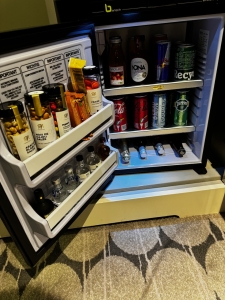
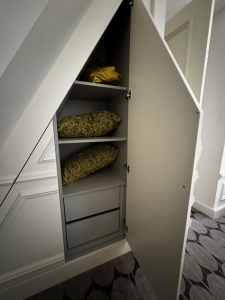
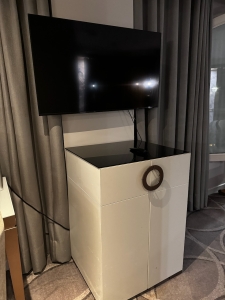
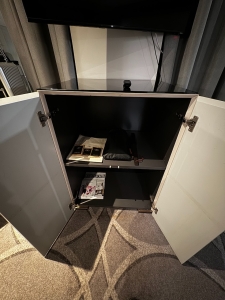
The hotel was clever in fitting the minibar under the stairs, maximising the useable space in the living room. The hotel provided a Nespresso coffee machine and some tea bags on the top shelve of the two-tiered grey cabinet. The drawer houses more glasses and champagne flutes, while the fully stocked mini-fridge is well hidden in the bottommost cabinet. It was weird that Sofitel Paris La Faubourg did not include an electric kettle (we had to request one).

The Antechamber on the Upper Level

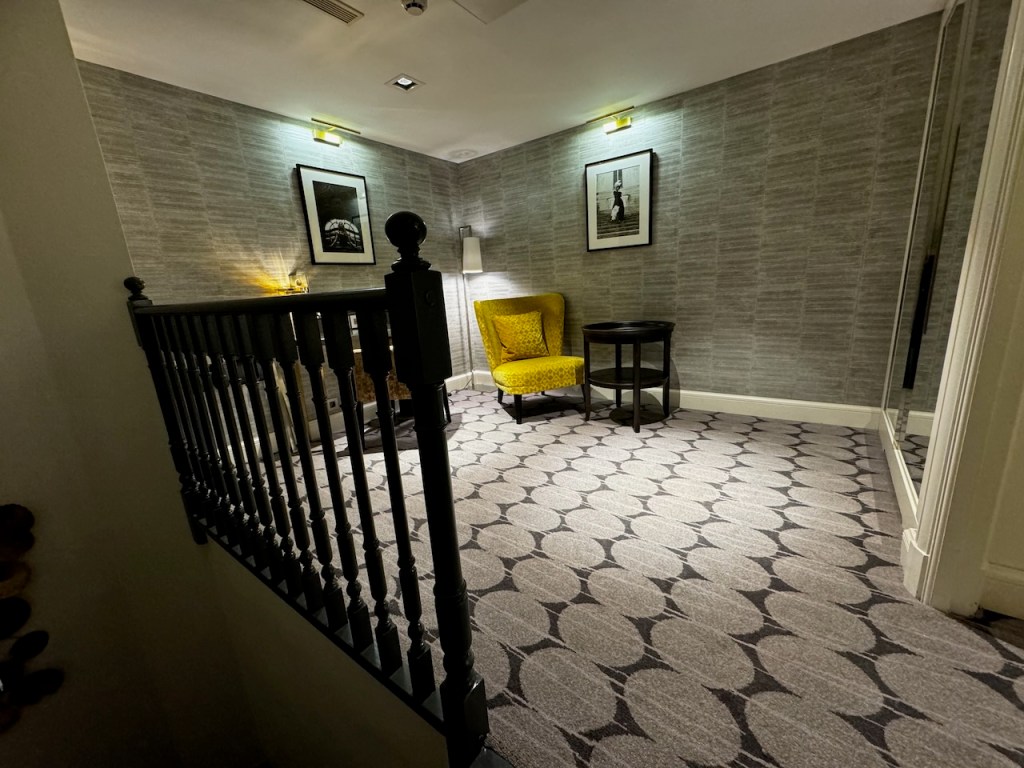
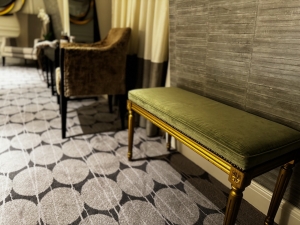
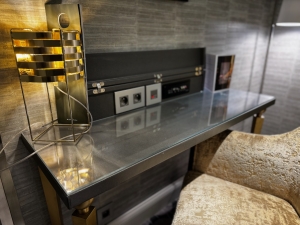
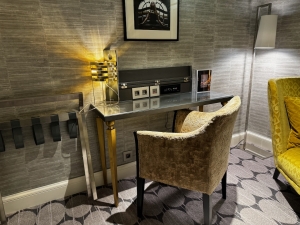
Climbing up the staircase to the second level of the Duplex Prestige Suite, we came to an open space. I regard this space as the open study in the suite. The cosy and elegant design on the lower floor was also apparent on the suite’s second floor. A work desk was tucked by the wall, which created much space in this part of the suite. The glass-top work desk is of a decent size, sufficient for one to lay their laptops on for work. I like how the hotel included power sockets here, making it convenient for occupants to keep their devices juiced up while working. The velvet sand colour chair was comfortable to sit for long periods for one to work. A luxurious-looking and comfortable armchair with a side table sits in the corner of this area, next to the work desk. I used this chair to place my backpack on, but other than that, this corner is a great spot for guests to sit on, reading a book.

The antechamber, which I regard as an open study

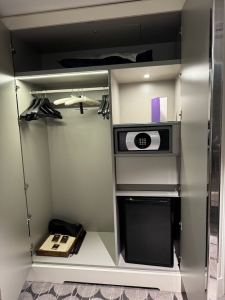
The main wardrobe in the Duplex Prestige Suite is also found in this antechamber area. The hotel dedicated a large wardrobe space for hanging clothing, which we found sufficient space to hang our one week’s clothing. The right side of the wardrobe featured shelving space, allowing us to place smaller clothing items or our shopping. We found the in-room safe nicely hidden in the wardrobe. I was surprised to find another mini fridge hiding in the wardrobe on the upper level and a drawer storing the same glassware as in the minibar on the lower level.

Bedroom

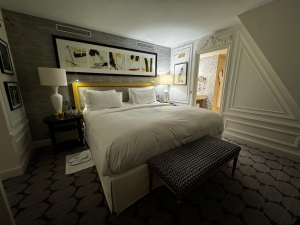
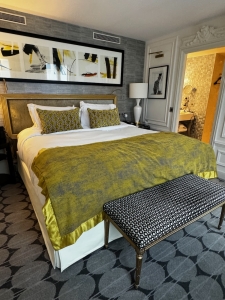
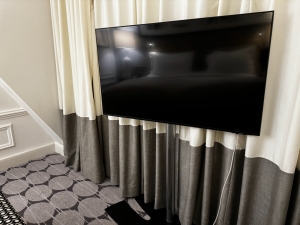
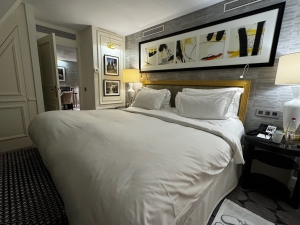
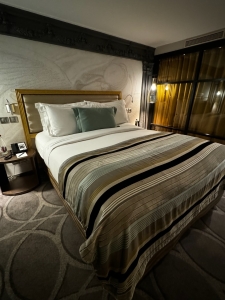
The bedroom in the Duplex Prestige Suite exudes a cosy and comfortable feel. The slanted inward ceiling in the bedroom makes one feel like sleeping in an attic, which enhances the cosiness of the bedroom. In the middle of the bedroom rests the king bed, which has excellent sleep quality and leaves me feeling fresh every morning. The hotel provides no pillow menu, and the pillows provided were too soft for my liking. On either side of the bed sits a couple of bedside tables, which gave us sufficient space to charge our mobile phones from the power socket installed on the walls above the table. At the end of the bed was a bed-end bench, which allowed us to sit and watch the TV without messing up the bed. Given the space in the bedroom, I thought placing the TV on a stand instead of a TV console was a good idea as it made the bedroom look less cluttered. There is another wardrobe fitted into the walls, which gives us additional space to stow our things.

Bathroom

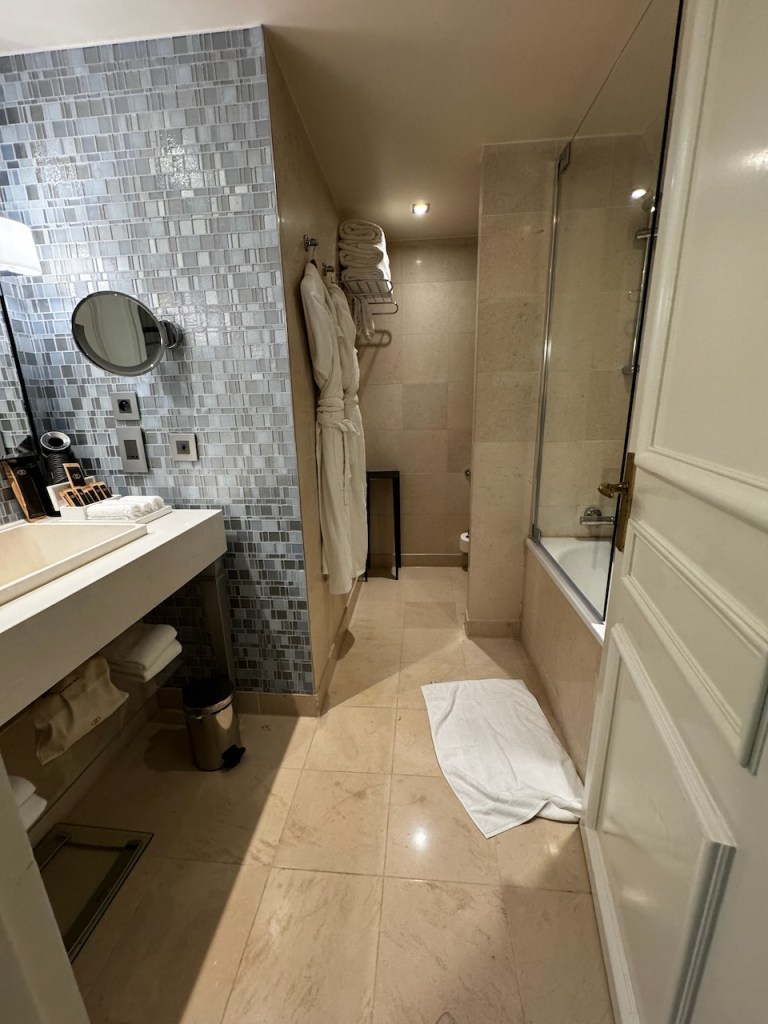
The bathroom in the Duplex Prestige Suite sits at the end of the bedroom on the second level of the suite. The decor was a departure from what we had seen in the rest of the suite, but the bathroom was no less luxurious. I was not too fond of the sink in the bathroom, as it afforded us limited space to place our toiletries. We had to move things around, like playing a game of Tetris, to fit our travel-size toiletries. The sink area employed the same blue tiles on the wall as those in the powder room on the suite’s lower level. A bathtub sits across from the sink, sufficiently sized for me to enjoy a soak. Due to space constraints, Sofitel Paris La Faubourg fitted a bath/shower combination in the bathroom. The bathroom in the Duplex Prestige Suite is only fitted with a regular shower head. Taller guests might find showering in the bath a tad claustrophobic due to the structure of the building; the wall where the bathtub was placed slants inwards. I like how the hotel designed a partial wall and placed the toilet behind it to create some form of privacy, given the space allotted to the bathroom.

The bathroom in the Duplex Prestige Suite

Overall

I loved the Duplex Prestige Suite in Sofitel Paris La Faubourg. The suite emits a homely feel and feels comfortable and luxurious. I like the split-level design, where the sleeping and entertainment areas are very well segregated. The open study area is comfortable and very tastefully designed. The bedroom felt cosy, and the sleep quality on the king bed was superb. I would return to stay in the Duplex Prestige Suite the next time I return to Paris.

[Accommodation Review] – Sofitel Paris Le Faubourg (Collection Suite), Paris, France (2 – 4 Jan 24)

Sofitel Paris Le Faubourg facade

Location

Sofitel Paris Le Faubourg is the flagship Sofitel in Paris. The hotel is situated on the right bank of Paris in the 8th arrondissement, within walking distance to Place de la Concorde. The nearest metro station, Concorde, is about a 3-minute from the hotel. There are several lines that run through Concorde station, which greatly aids in exploring Paris. The nearest RER station is about a 10-minute walk, across from the Pont Alexandre III, giving those staying in Sofitel Paris Le Faubourg the convenience of visiting the sites in greater Paris (such as Versailles and Paris Disney). The hotel is within walking distance of luxury boutiques in the neighbourhood, with big brands like Hermes, Chanel, and Gucci within a 5-minute walk from the hotel. Regarding eateries, we noticed the restaurants near the hotel are rather upscale, and few are budget-friendly restaurants nearby. There is a supermarket and a McDonald’s next to it, about 8 min walk from the hotel, in the direction of Eglise de la Madeleine.

The Collection Suite

We stayed in the Collection Suite for the first two nights, one category higher than the entry-level Junior Suite in Sofitel Paris Le Faubourg. The suite we were assigned was the worst Collection Suite in the hotel. During check-in, we were told not all Collection Suites have the same layout. The Collection Suite has a total floor area of 36㎡; the only thing I like about this Collection Suite that we were assigned was the elegant vibe with the use of a dark grey colour tone.

Entryway

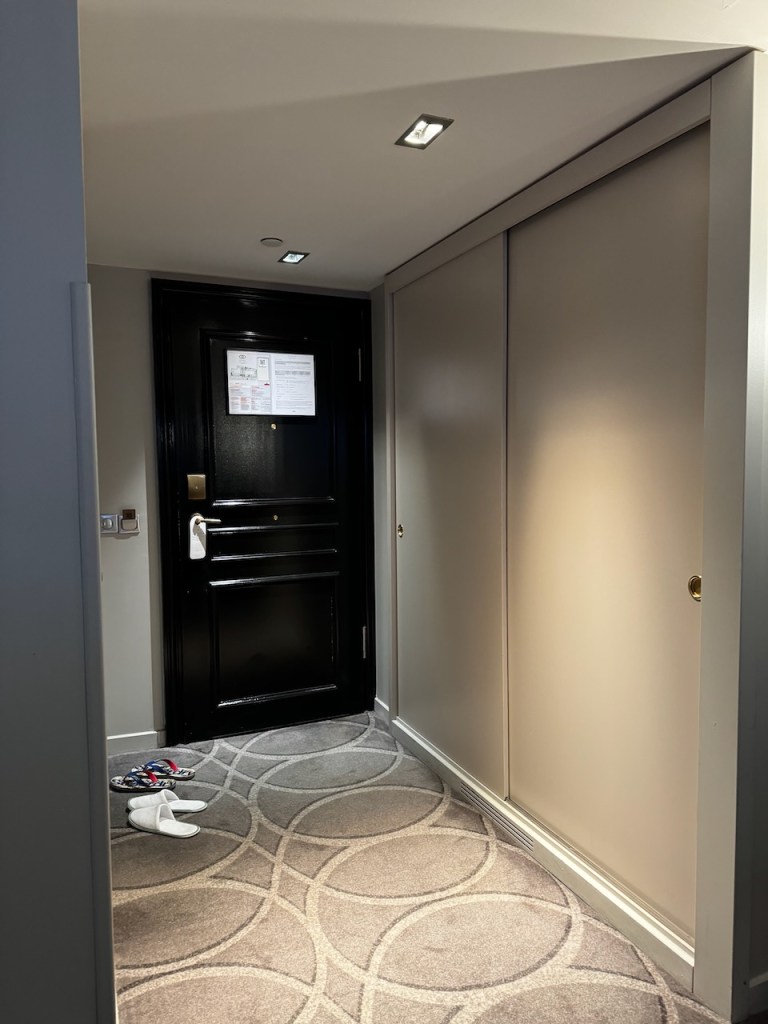
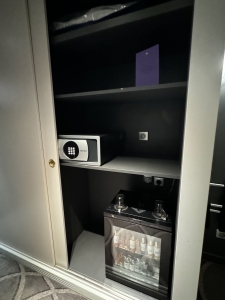
The entryway in the Collection Suite at Sofitel Paris Le Faubourg emits a strong luxury vibe to its occupants. Here is where we found the only wardrobe in the suite, sitting next to the main door. I find the wardrobe space limited, with only one door panel for guests to hang our clothing. Another single-panel door is next to the wardrobe, with a four-tier shelving. However, only one tier of the four tiers was useable for storage as the hotel uses the other three shelves to stow the in-room safe, mini-fridge, and extra pillows. I also find placing the wardrobe at the entryway inconvenient, as the bathroom is only accessible via the bedroom of the Collection Suite.

The entryway in the Collection Suite

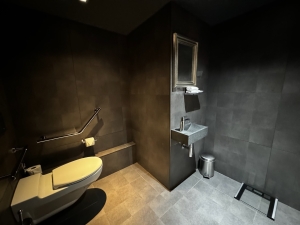
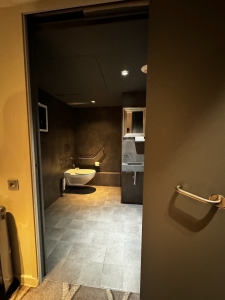
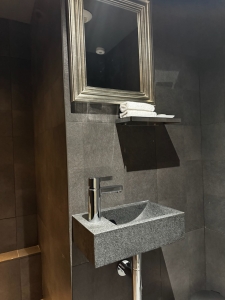
We found the only toilet in the Collection Suite opposite the wardrobe by the entryway. In some hotels, this would be a powder room, but due to the design of this Collection Suite that we were assigned, there are no toilet facilities in the bathroom. The toilet is simply furnished with a toilet bowl and a small sink and is not connected to the bathroom. I thought the space allocated to the toilet was too big.

Living Room

The living room in the Collection Suite

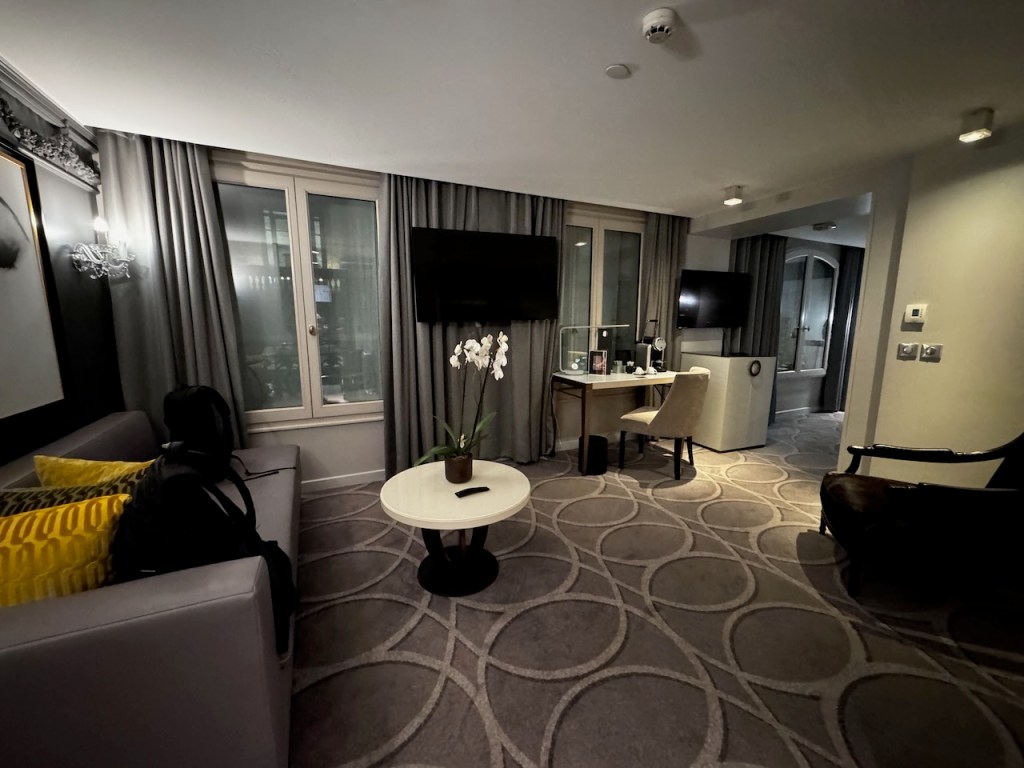
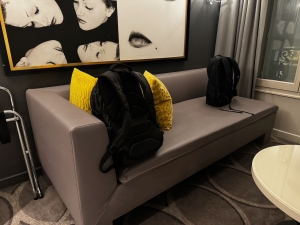
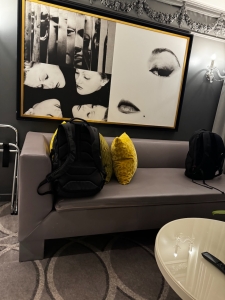
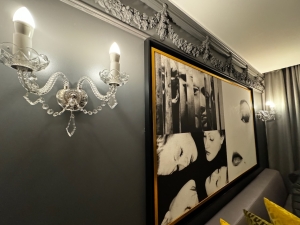
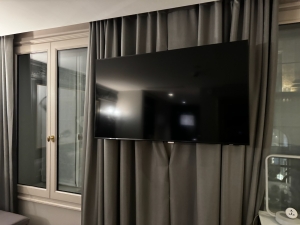
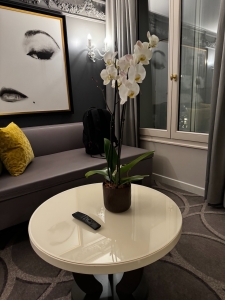
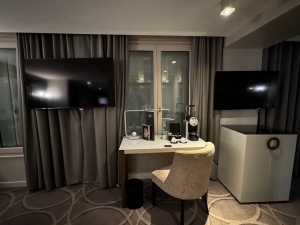
Walking past the wardrobe, we arrived at the Living Room. I’d say the Living Room was beautifully designed. The patterned cornice ceiling, glass candle-designed wall lamps, and the painting chosen to decorate the Living Room give it a chic and luxurious feel. A comfortable grey colour two-seater couch was furnished, sitting in one corner of the Living Room. The colour chosen for this couch was consistent with the Collection Suite’s overall colour scheme. The use of a white round coffee table adorned with a vase of a single white orchid enhances the room’s aesthetics. The colour scheme, while a little dark, makes one feel comfortable. We could see the two TVs mounted on the wall from the entrance of the Collection Suite in Sofitel Paris Le Faubourg. The bigger one was meant for guests to watch while spending their time in the living room, and the smaller TV could be swivelled to face the bed in the bedroom. Despite having numerous channels on the TV, I find limited English channel entertainment options on the TV.

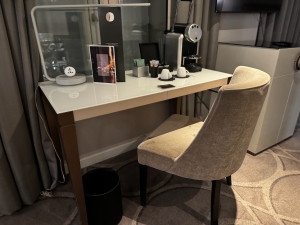
Tucked by the wall between the two large windows in the Living Room was a work desk, which seemed to double up as a mini bar area. The desk was great for guests to do some work. However, placing a coffee machine and the capsule box here took up half the space on the desk. The LED light on the work desk was elegant, but in our suite, the light was not working. I also found a lack of power outlets at the work desk, inconveniencing guests who wanted to work on their laptops.

An armchair is in the corner of the suite opposite the work desk. The fur-covered dark brown armchair was very comfortable and provided another sitting space in the Living Room. We mainly used this armchair to place our bags. A single shelving cabinet was wedged between the gap that serves as a partition between the bedroom and the Living Room. This two-tiered cabinet felt like an afterthought in the design of the suite. We welcome additional storage space around the Collection Suite, as storage was limited. The storage space afforded by this cabinet vastly increases the number of things we can put away, but placing a cabinet between the bedroom and the living room felt out of place.

Bedroom

The bedroom is separated from the living room using a partial wall. There are no doors between the two rooms in this Collection Suite at Sofitel Paris Le Faubourg. The bedroom emits a cosy and luxurious vibe. The King bed in the centre of the bedroom was very comfortable to sleep in, leaving me feeling recharged every night. However, I find the pillows provided by the hotel a tad too soft for my liking. The hotel does not provide any pillow menu to suit the needs of different guests. Like most hotels, Sofitel Paris Le Faubourg fitted two bedside tables on both sides of the bed. The wooden bedside table offers little storage space. There is just sufficient space for us to charge our mobile phone sockets fitted onto the walls by the tables. Fortunately, the hotel fitted a hanging lamp on both sides above the bedside table to free up usable space on these tables. Besides the bedside tables, there isn’t any other storage space in the bedroom, seemingly suggesting the hotel opted for form over factor. A smaller TV is mounted on the wall above the cabinet, with the same channel options as that in the living room. Due to the lack of a door to separate the living room from the bedroom, the sound from the TV in the living room flows to the bedroom. As much as I did not like the layout design of the bedroom, I thought the bedroom felt cosy and comfortable.

Bathroom

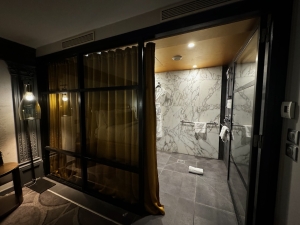
The bathroom in the Collection Suite we were assigned is another disappointment. Despite feeling spacious, there is no bathtub in the bathroom. The hotel staff told us that this was the only Collection Suite not fitted with a bathtub and toilet in the bathroom. When I was shown the bathroom, I had serious concerns about water flowing into the bedroom. The bathroom had a large area dedicated to the shower with a drainage hole in the centre. The hotel only fitted a regular showerhead in the bathroom. There was a small sink countertop cluttered with amenities, leaving us with no space to place our toiletries. The bathroom is separated from the bedroom with a see-through glass panel and door. Fortunately, the hotel fitted a gold-coloured curtain inside the bathroom. There are still some areas that I like about the bathroom. The use of marble and a dark grey theme was consistent with the theme of the entire suite. I also like the heated towel rack that was fitted in the bathroom, allowing our towels to dry when hung overnight. But caution had to be exercised with the towel rack as it can get hot.
Service

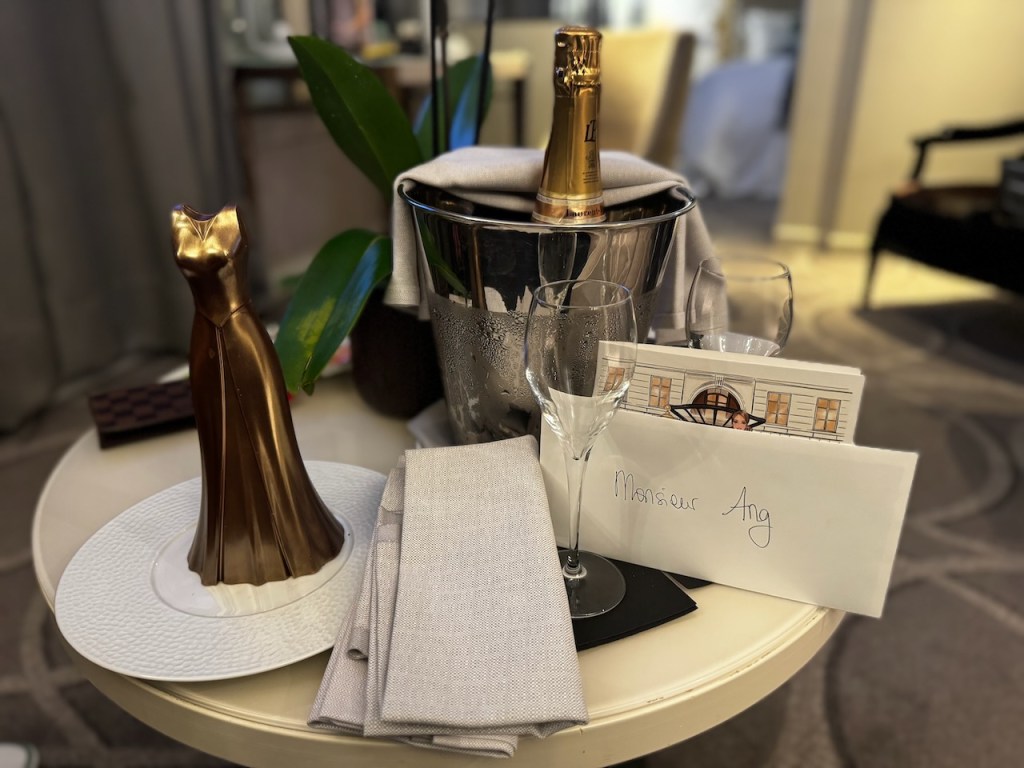
Welcome amenities provided by the Hotel

The service was generally good at Sofitel Paris Le Faubourg. Alex warmly welcomed us at the door when we entered the hotel. Alex would always greet us warmly without fail whenever we walked past him. He made us feel welcome and at home. The staff at the reception were equally friendly. They were always seen with a smile and had their Bonjours whenever we approached them. The lady who checked us in was very helpful. When she learned that we were disappointed with the assigned second floor, I could see she was trying very hard to check the availabilities of the Collection Suite on other floors. I saw her checking with other colleagues and going through the system to check available rooms. Understandably, her hands were tied as the suites in the hotel were fully booked at the time of our arrival. The customer care team provided the best service of all. They knew how disappointed we were with the Collection Suite we were assigned from the moment we were shown our suite. The team would constantly check in with us daily via WhatsApp chat on how we found the suite. Knowing we were disappointed with the suite, the team upgraded us to the Duplex Prestige Suite (worlds apart from this Collection Suite) when it became available. The team was always responsive when we faced issues with the rooms.

However, not all the staff were as welcoming and provided good service. The black sheep of the lot was this Asian porter by the main door, who was always seen to ignore our presence. He was only seen to be friendly to Caucasian guests. We had never seen him smiling at us or acknowledging our presence whenever we walked past him, let alone greeting us. He was always seen avoiding eye contact with us.

Hotel Facilities

Gym

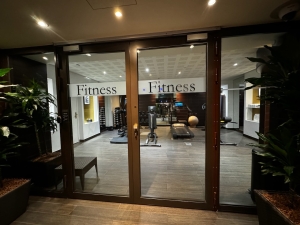
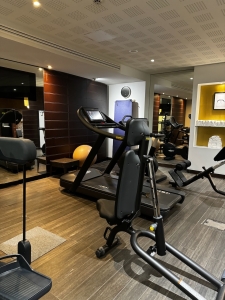
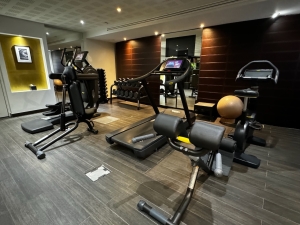
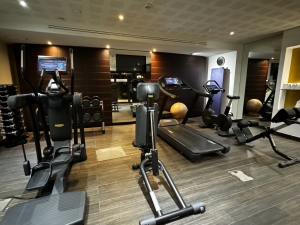
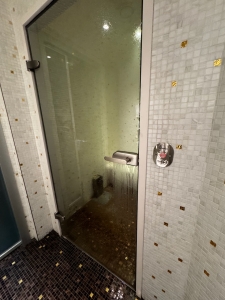
Sofitel Paris Le Faubourg has a small gym in the basement, accessible via the stairs by the main entrance or the lift between the hotel and the bar. The gym is sparsely equipped with only four exercise machines, all dedicated to cardio workouts. It also has a free-weight area for guests to do simple weight exercises. We also found a steam room in the changing room inside the gym. The gym in the hotel only allows guests to do some light exercises.

Breakfast

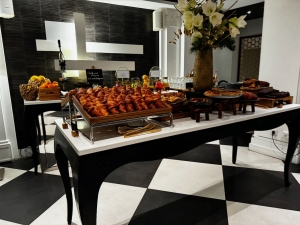
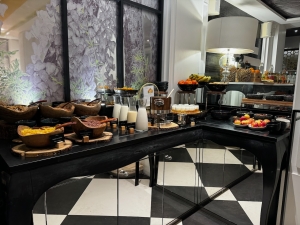
Breakfast in Sofitel Paris Le Faubourg was served in the restaurant next to the reception. There are quite a few options for breakfast. I particularly like the croissants served in the restaurant; they are crispy on the outside and fluffy on the inside. Other than cold cuts and salads, there are some hot items in the buffet area. We did not see any egg stations in the restaurant; rather, orders for eggs were made by the restaurant’s waiting staff. I thought the breakfast was delicious enough to fill one’s stomach to start the day.

Overall

Despite being in a great location, well connected and having tons of shopping at its doorstep, I was not too fond of the Collection Suite assigned to us. When we were escorted to the suite, we were informed by the staff that the other Collection Suite was larger, and the toilet was found inside the bathroom, which is also fitted with a bathtub. Apart from the poorly designed suite with many inconveniences, the lower floor (just above the main entrance to the hotel) made it the worst Collection Suite in the entire hotel. Assigning them to their highest-tiered member went to show how little the hotel regard its members.

Paris Day 7 (8 Jan 24): From the 1st to the 8th Arrondissement – The Mona Lisa in the Louvre; Walking in Tuileries Gardens and Champs Elysees; Au Revoir Paris

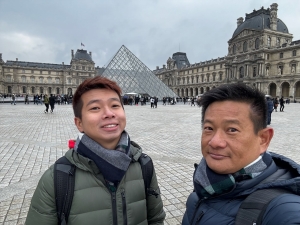
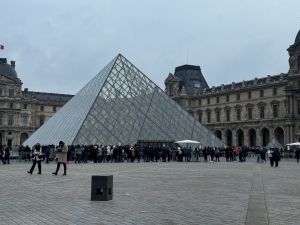
Since our flight back home departs at 10 p.m., we had the whole day to cover the last few sites we had not managed to see for the past six days in Paris. We visited the Louvre in the morning and strolled past the Tuileries Garden while on our way to Champs Elysees. We departed for the airport at 5.30 p.m. for our flight back home.

The Louvre – The Glass Pyramid where Mona Lisa Calls Home

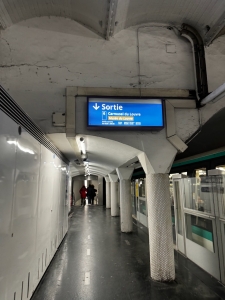
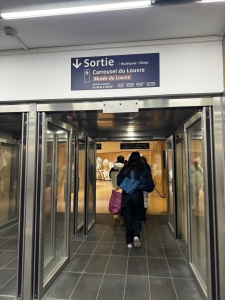
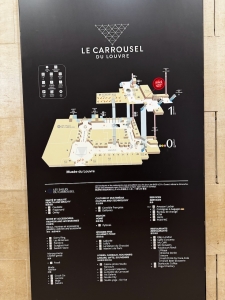
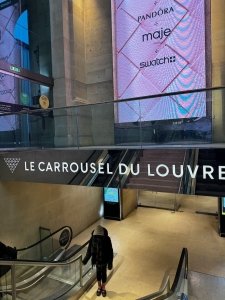
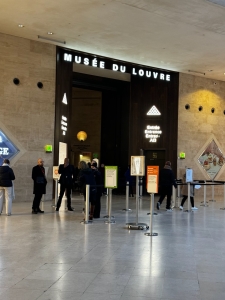
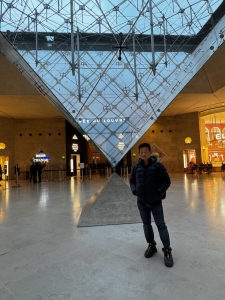
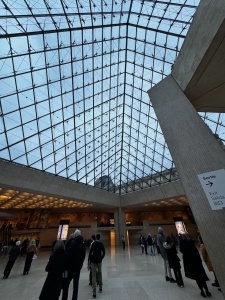
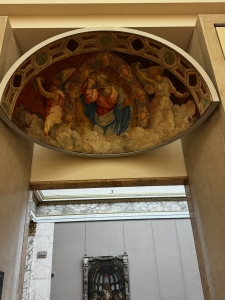
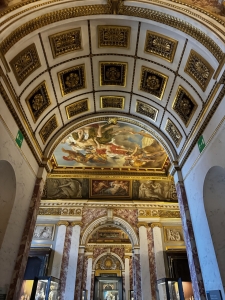
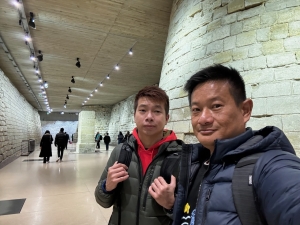
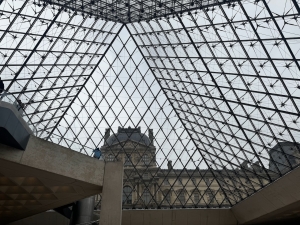
We initially did not plan to visit the Louvre as we were not museum people, nor did we appreciate paintings, and visiting the Louvre for the sake of looking at the Mona Lisa would only sound silly. However, during our trip to Egypt, we learned that most original Egyptian antiquities were displayed in the Louvre. Visiting the Louvre (we only booked the tickets one week before our trip to Paris while in Egypt) made sense as there was more to see than the Mona Lisa and some paintings. There are several entrances to the Louvre. When I did some research before my trip, I learned that the main entrance at the glass pyramid was always crowded. Someone recommended the side entrance – The Carrousel entrance for a thinner crowd. To get to the Carrousel side entrance, we took the metro to Palais Royal-Musée du Louvre station and followed the signs to the Carrousel du Louvre exit (exit 6). There weren’t many people at this entrance, so I’m not sure if it was due to the day of the time (we arrived at the entrance around 9.30 a.m.), and we got into the museum grounds almost immediately. Coming from the underground entrance, we saw the bottom part of the glass pyramid. We could take pictures with the inverted pyramid without too many people crowding around. One tip on visiting the Louvre is to have the ticket printed out. As there are three wings to the museum, Sully, Richelieu, and Denon Wings, we were required to scan our tickets to enter each wing.

Denon Wing – the Home of Mona Lisa

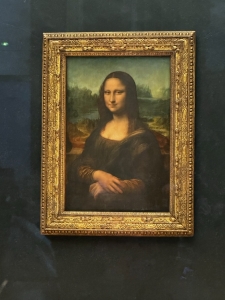
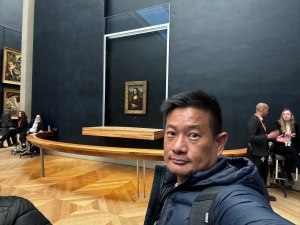
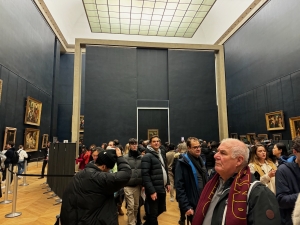
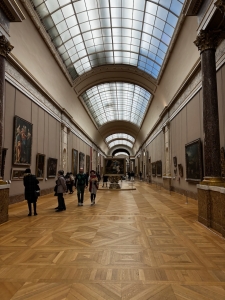
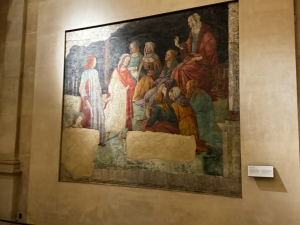
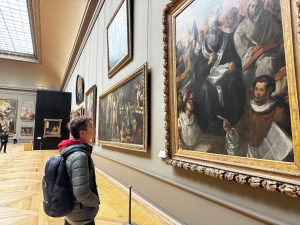
Our strategy in visiting the Louvre was to head straight to the Mona Lisa painting as we expected a crowd in front of the masterpiece by Leonardo da Vinci later in the day. Mona Lisa is located on level 1 in the Denon Wing, which is to the right when coming in from the Carrousel entrance. There are signs that lead visitors to the Mona Lisa. We were lucky as the crowd had not been built up. We were able to get a front-row view of the Mona Lisa. The painting was a little small, and we could only view it from a distance. As I do not know how to appreciate art, we were only here to take those “I was here” pictures with the painting. As we were leaving the room where the Mona Lisa was housed, we saw more people flowing into the room, wanting to take a picture with the famous Da Vinci painting. We left the Mona Lisa and roamed around the level in Denon Wing, where the Mona Lisa was housed. This part of the Denon Wing housed mainly paintings, with battle scenes and holy figures.

Sully Wing – Recollecting our Egyptian Trip

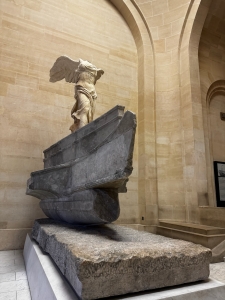
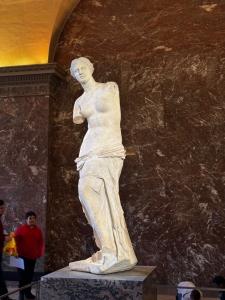
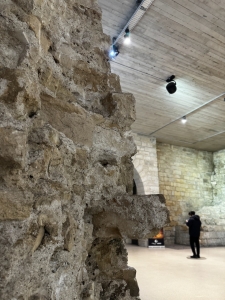
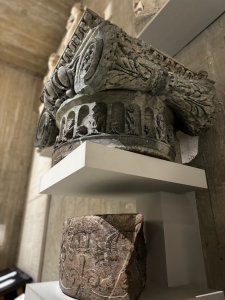
We headed for the Sully Wing next, retracing our steps back to the entrance of Denon Wing. The Sully Wing is situated straight ahead from the Carrousel entrance. This wing houses the Egyptian Antiquities collections that drove us to the Louvre. We headed to the Greek Antiquities sections to see the Venus de Milo sculpture. Not understanding the statue’s significance, we left after taking some pictures. As we headed for the Egyptian Antiquities Gallery, we came to an open space with some stone structures. Unknowingly, we have entered the exhibits’ “History of the Louvre” section. This is where we can see the original stone walls of the Louvre from when it was a palace. There is nothing much here other than some signs providing a brief history of the Louvre and some remaining columns of the Louvre.

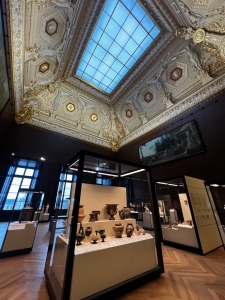
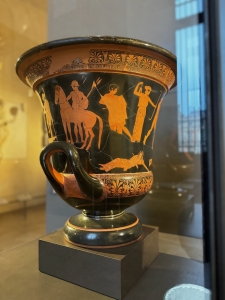
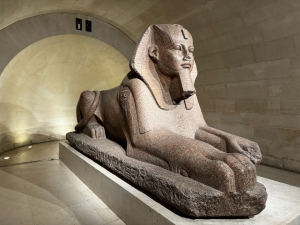
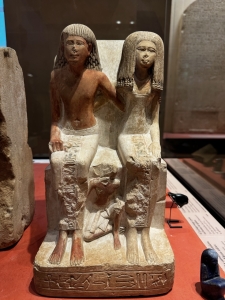
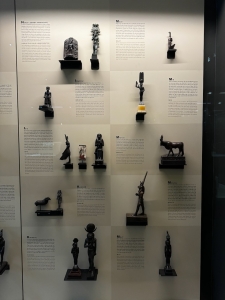
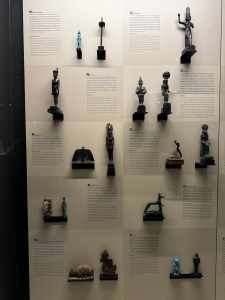
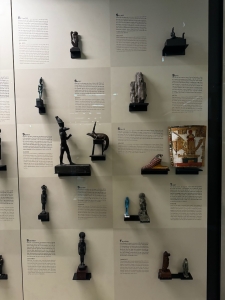
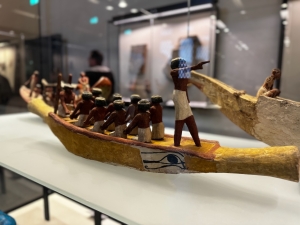
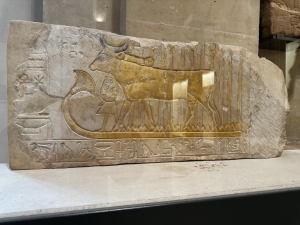
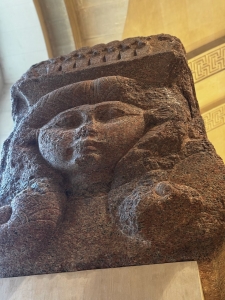
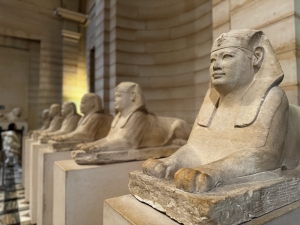
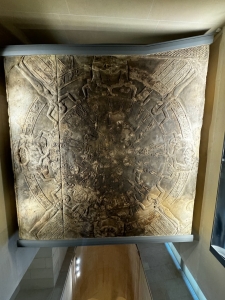
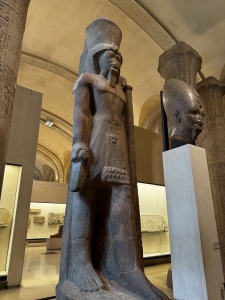
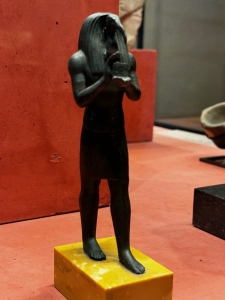
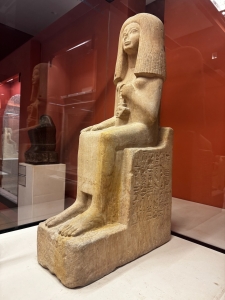
Entering the Egyptian Antiquities section, we were welcomed by a well-preserved sphinx sitting in an annexe by the entrance. Most of the signs explaining the exhibits in the Sully Wing were in French, which made it very difficult for us to understand the significance (and we were too lazy to use Google Translate). The Egyptian Antiquities Gallery has an extensive collection of well-preserved relics from ancient Egypt. Having come from Egypt just before our trip to Paris, we were able to resonate with most of the exhibits here. As we were walking around the Egyptian Antiquities, I spotted an interesting wall encased in glass cabinets displaying the more well-known Egyptian Gods. Here, we could see how these Gods, whom we heard our tour director mention throughout the trip, look in human and animal forms. The other exhibit I was looking for was the original Zodiac calendar taken from Hathor Temple in Dendera. For such a significant item, I was quite surprised that it was installed in an inconspicuous corner of the Egyptian Antiquities gallery. The calendar was in great condition, and we could see the carvings clearly on the artefact despite its having survived for 5,000 years.

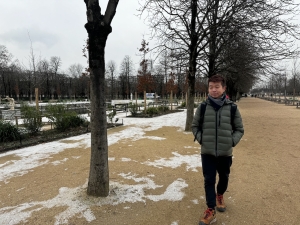
There were simply too many things to see in the Egyptian Antiquities gallery alone, and we were exhausted after seeing only half of it. We saw what we came to see and left the Louvre at 11:30 a.m. When we came out of the museum, we were pleasantly surprised to find it snowing in Paris. According to the staff at our hotel, it hasn’t been snowing in Paris for the past three years.

From the Louvre to Champs Elysees – Walking in Snowy Paris

Tuileries Garden – The Park in Front of the Louvre

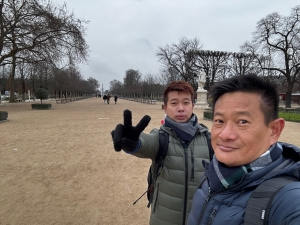
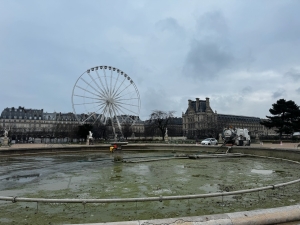
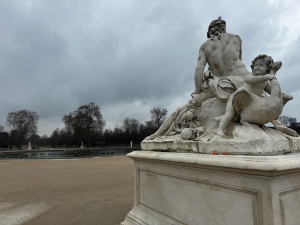
We did not plan to visit the Tuileries Garden, which is wedged between the Louvre and Place de la Concorde near our hotel. Since we still had a few hours before leaving our hotel for the airport to catch our flight back home, my friend wanted to return to the Louis Vuitton flagship store in Champs Elysees to get a bag. We could take a metro to Champs Elysees but wanted to walk in the snow. To get to Champs Elysees from the Louvre, we walked through Tuileries Garden. Like the gardens we visited, the main thoroughfare of Tuileries Garden was laid with brown gravel. The middle part of the garden was bare with no plantations, giving us a good view of the Arc de Triomphe and the obelisk in Place de la Concorde. A huge fountain occupies the centre of the Tuileries Garden. Like many fountains we have seen, the fountain feature was not turned on. There were chairs randomly placed around the large fountain for people to sit and enjoy the scenery.

Strolling in the Champs Elysees Neighbourhood

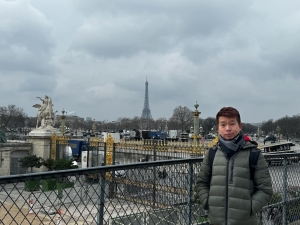
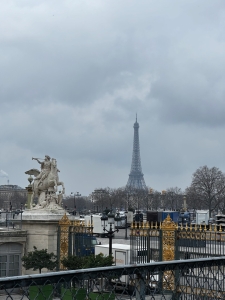
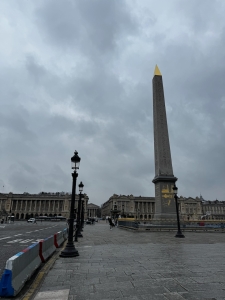
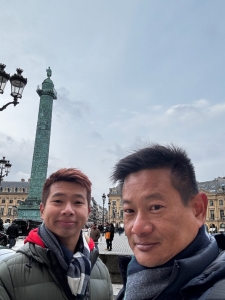
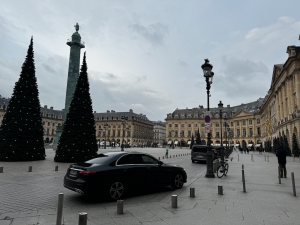
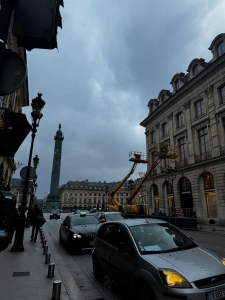
At the end of the Tuileries Garden, we arrived at the ever-familiar Place de la Concorde, where the obelisk from Luxor called home permanently. Along the way to Champs Elysees, we also walked past the Champs Elysees Gardens near our hotel. From these gardens, trees were planted on both sides of the road leading to the Arc de Triomphe. It did not take us long to walk to Champs Elysees from Tuileries Garden. After lunch, we went to the LV store and then returned to the hotel to prepare to leave for the airport. As we had some time left, we strolled on the shopping streets near our hotel. We saw this green bronze column yesterday at the Place Vendôme near our hotel and went to check it out. The square where the Vendôme Column sits in the centre, with the statue of Napoleon standing at the top, was filled with luxury boutiques and the opulent Ritz Paris hotel. With the buildings surrounding the column, leaving the centre part open, the Place Vendôme feels spacious. We returned to our hotel after visiting Place Vendôme to do some final packing before heading to the airport.

Au revoir, Paris

We checked out of our hotel at around 5.30 p.m. when our ride to the airport arrived. The journey to Paris Charles de Gaulle Airport from our hotel in the 8th arrondissement took about 1 hour. There were hardly any traffic jams along the way despite being the evening peak period. This would be our final hours in the City of Lights. Paris is a large city with lots of things to see and do. Despite spending one week in the city, we did not cover all the attractions. We found the Parisians were friendly and not as rude as what we read online. The city felt safe, and my initial worries about pickpockets and scammers were unfounded. We enjoyed the city and will return, maybe minus some of the attractions we visited during this trip. I thought having the Navigo weekly pass was very useful and a cost-effective way to travel around the city and the suburbs. Despite starting our trip on Tuesday, we already recovered the cost of the weekly pass during our week-long stay in Paris. Having the Navigo card saves us the hassle of getting tickets for public transportation, and we just had to hop on and off metros, funiculars and buses. We used the RATP official app to navigate around the city. The app showed us the options of getting from point A to B and even showed which exit we should take for the attractions we were going to. I thought the RATP app was better than Google Maps for navigating the city. We enjoyed our trip to Paris and may, in a few years, plan another trip to France, except this time, we will be travelling around France, not just Paris.

Paris Day 6 (7 Jan 24): The 8th Arrondissement: Relaxing Day Walking Around our Hotel

It is an uneventful day today. We originally booked a day trip to the Loire Valley, visiting the Chateaus in the nearby provinces to Paris. We cancelled the trip as the meeting time for the tour is at 7 a.m. We had to wake up as early as 5 a.m. to make it in time. We cancelled the trip two days ago because we wanted our last few days to relax. We took a break today, sleeping in and hitting for breakfast at the hotel.

Shopping around our Hotel and a Surpised Find

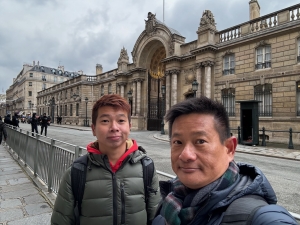
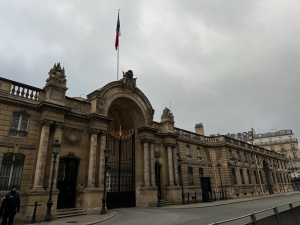
We spent the rest of the day strolling in the shopping strip near our hotel and picking up things we had missed out on or considered buying. Shopping in luxury boutiques can be quite time-consuming, as we must wait for someone to assist us. Fortunately, we met a nice, friendly staff member at Chanel today. Not only could we “jump the queue”, she was very patient and took the effort to show us the pieces my friend wanted to buy. We returned to our room several times to leave our shopping bags and head out. Walking along the streets near our hotel in the 8th arrondissement, we came across a street that police officers guarded. Curious, I approached one of the police officers and asked what building they were guarding. Instead of chasing us away, the friendly policeman told us that it was the residence of the French President. Wow, we were staying in the same neighbourhood as the President of France!

Back to Ave des Champ Elysees

We headed back to Ave des Champ Elysees in the evening for dinner. The concierge at our hotel recommended a restaurant at Ave des Champ Elysees, which had received good reviews from guests and even helped us make reservations. Instead of taking the metro, we figured we would stroll along the avenue to the restaurant since it was our last night in Paris today. The stroll took us through Jardin du Champ Elysees and past Petit Palais. Both sides of the Ave des Champs Elysees were planted with trees, fitted with LED lighting, beautifying the entire stretch of the avenue. Occasionally, we would see the Eiffel Tower peeking behind the buildings. We made it to the restaurant ahead of our reservation time. Nonetheless, the staff at the restaurant welcomed us. The service was excellent, and the food was tasty and flavourful. We enjoyed our last dinner in Paris. After dinner, we did window shopping in the still-open shops at this hour and returned to the hotel on foot. We returned to the hotel early as we had to pack our luggage for our flight home tomorrow.

Paris Day 5 (6 Jan 24): Trip to Western Paris, The 5th & 4th Arrondissement – Excursion to Versailles; Strolling along the Streets in Latin Quarter; Glimpse of the Notre Dame de Paris

Versailles is highly recommended to anyone visiting Paris for the first time. As the Chateau was relatively large, we opted for a guided tour of Versailles so we would not be lost in the numerous artworks within the Chateau. We planned to visit Versailles in the morning and spent the afternoon checking out the Latin Quarters in the 5th arrondissement. While waiting for our dinner cruise along the Seine River, we wandered into the edge of La Marais in the 4th arrondissement. We ended our day with a bad experience on the dinner cruise.
Versailles – The Chateau Behind the Golden Gate

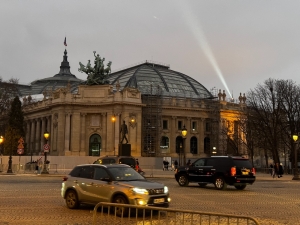
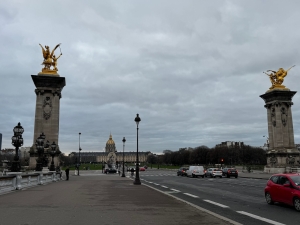
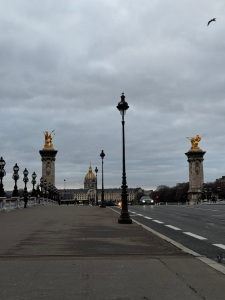
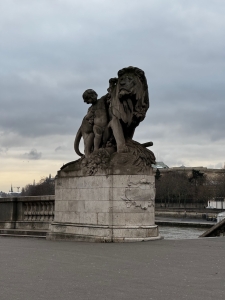
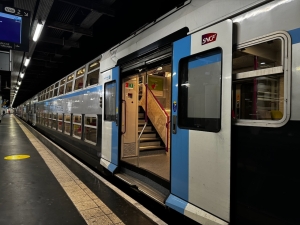
We had an early start as our meeting time with the tour group was 10.45 am in front of Versailles. The metro station where we would catch the RER to Versailles was about a 15-minute walk from our hotel. On the way, we walked past the Grand Palais and onto Pont Alexandre III. Pont Alexandre III is one of the many bridges across the Seine River. The bridge is adorned with golden statues, and we got a great view of the Eiffel Tower from it. As we were rushing to catch the 9.45 am train, we did not have the time to stay and admire the artwork installed on the bridge or the scenic view that the bridge offers. We arrived at the RER station and found that we just missed the train. The RER does not run as frequently as the metro, and we had to wait about 20 minutes for the next train. We managed to catch the 10.05 am train, which meant we had to rush when we reached Gare de Versailles Chateau station.

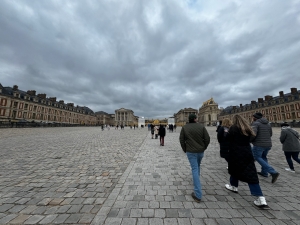
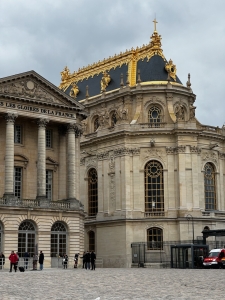
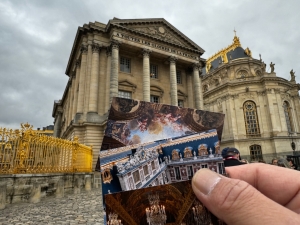
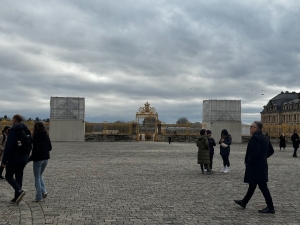
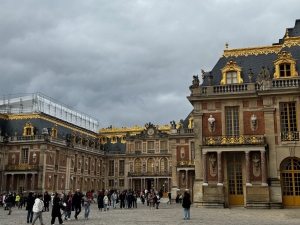
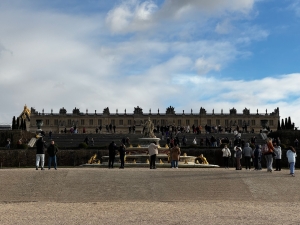
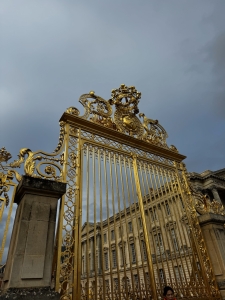
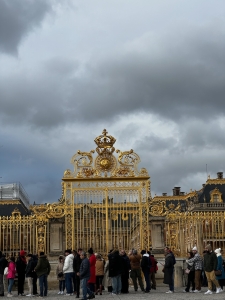
We made it just in time for the meeting. Versailles looked like a huge estate with many, many rooms sitting majestically behind a golden gate. The golden cap on the roof captivated my attention. A large empty square (now filled with tourists) sits at the front of the central building of the Chateau, where the rest of the rooms seem to branch out.

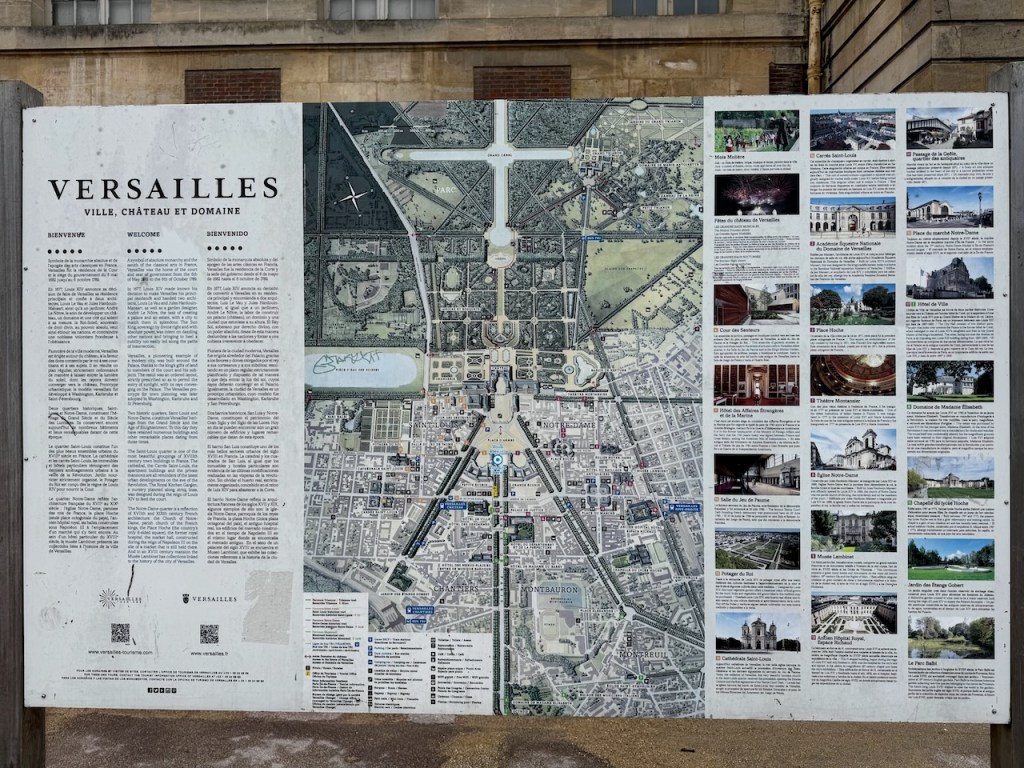
Map of Versailles

The Interior of Versailles – Touring the Apartments

Our guide led us to the (empty) queue line, where we were given immediate access to the Chateau. On the grounds of Versailles, our guide brought our attention to the golden roof caps and explained these caps were made of gold plating, not solid gold. He then directed our attention to the large square in front of Versailles. According to our guide, this square is made of marble and is the original courtyard of the palace. Our guide then gave us time to take pictures of the Marble Courtyard. Our tour officially started with our guide taking us to the second level of the Chateau.

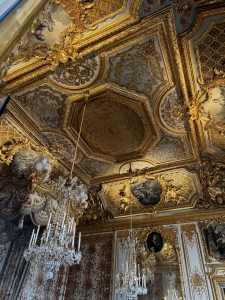
This part of the tour consists of us going through rooms and rooms in the central part of the main building of Versailles. We walked past the first room, the Hercules Salon, and were led to a room with an opening. This is the Royal Chapel. We were only allowed to view the chapel from the outside. Peeking from outside, we could see the intricate artwork on the chapel’s ceiling, which reminds me of the Sistine Chapel we visited in Vatican City. The gold colour in the painting contrasted with the white background, and the large amount of natural light let in through the windows near the ceiling gave it a clean and pure look. The gold on the painting, the organ, and the sculpture on the far end gave it a royal look. It is a shame that we were not able to enter the chapel.

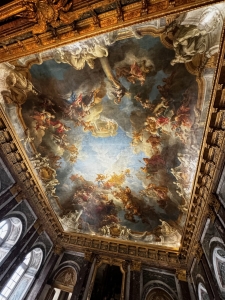
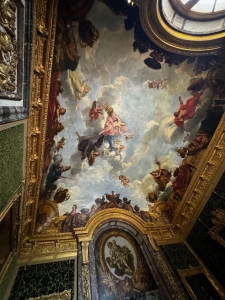
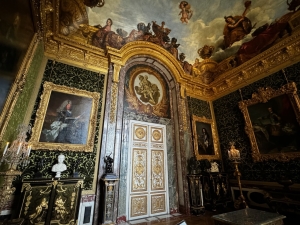
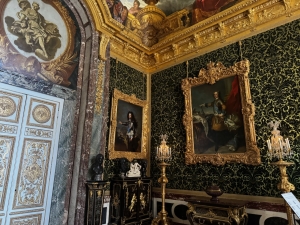
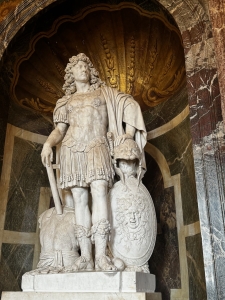
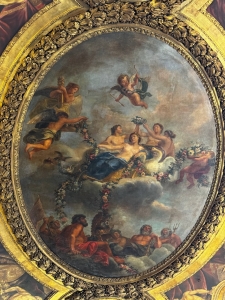
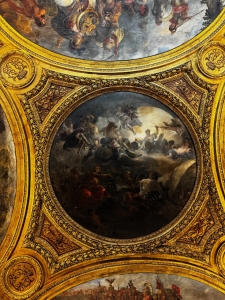
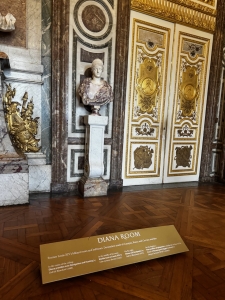
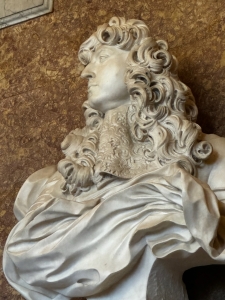
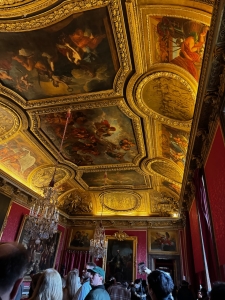
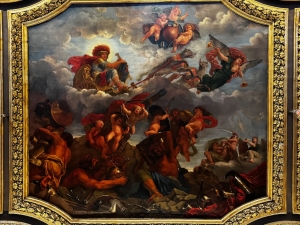
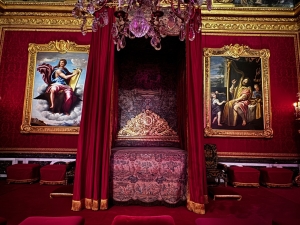
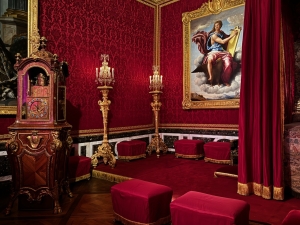
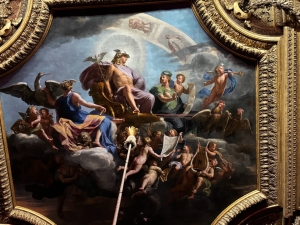
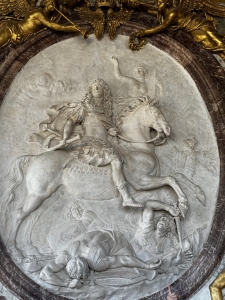
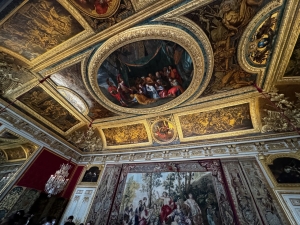
After the Royal Chapel, we would walk past several rooms, each with different colours painted on their walls and differentiated by the frescos on the ceiling. These apartments before the Hall of Mirrors were named after Greek gods, where the room that was named after a particular god had their image painted on the ceiling. Such as, in the Hercules Salon, we saw a scene of Hercules visiting his father, Zeus, painted on the ceiling of the salon. Most of these rooms were large empty spaces used either as a ballroom or a social space where Louis XIV used to entertain guests. These rooms had a common feature: their ceilings were adorned with gold-plated trimmings and crystal chandeliers, giving them a luxurious and opulent look. Some rooms had statues of Louis XIV, such as the Venus Salon, where we saw a life-size statue of Louis XIV dressed in his war tunic and his bust in the Diana Salon. Of these rooms we visited, we saw a bed in the velvet red Mercury Salon. The red velvet colour and the golden trimming on the ceiling gave this room a very cosy vibe. Our guide told us this was not the actual bedroom where Louis XIV slept. This room was a temporary bedroom used by his grandson before he travelled back to Spain. We passed two more rooms before reaching the Hall of Mirrors.

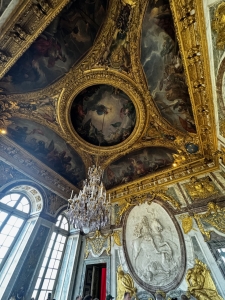
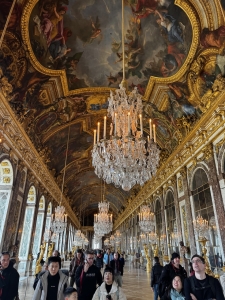
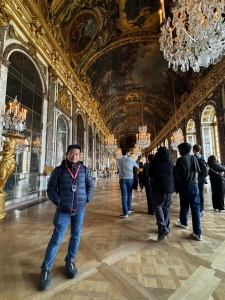
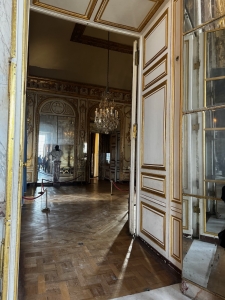
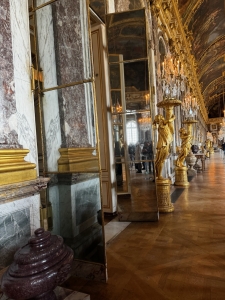
Many people who came to Versailles agreed that the Hall of Mirrors was the highlight of the Chateau. The Hall of Mirrors has mirrors decked out on the walls on the inner side of the hall. The other side of the hall is built with floor-to-ceiling window panels that look out into the gardens, giving it an indoor-outdoor look and allowing plentiful natural light in. Together with the mirrors, this made the Hall of Mirrors look very bright and airy. The Hall of Mirrors is also painted with bright-coloured frescos on the ceiling with numerous crystal chandeliers hanging from it, illuminating the hall at night. The gold trimming on the ceilings enhances the elegance of the hall and, at the same time, gives it a royalty vibe. Our guide brought our attention to an open doorway, sealed off to visitors in the middle of the Hall of Mirrors, where we could see another empty hallway. He explained beyond this hallway lies the King’s chambers. We couldn’t see any traces of the chamber from the hall. Our guide also told us the best photo spot would be the other end of the hall, where most visitors would rush off to see the other parts of the Chateau.

Passing the hall of mirrors, we visited four other rooms. Like most of the rooms we went through, these rooms were empty, mainly used by Louis XIV as a social space and decked with artworks and beautifully painted frescos on the ceiling, except for the second room after the Hall of Mirrors, where we saw a bed sitting by the wall in the centre of the room. This room was the Queen’s Chamber, with white walls filled with red and pink floral prints. The gold-plated ceilings and two chandeliers gave the chamber a royalty feel. After the four rooms, we were led down to the Chateau’s ground floor, where our guided tour of the Versailles ended. Our guide reminded us that our ticket includes access to the gardens. Having toured the apartments in the Versailles, I thought the palace was a little disappointing. The parts that are opened to the public are the rooms we have walked past, representing a small part of the palace. Most of the palace, including the King’s chambers or offices, were not open to the public. The paintings and frescos in the Versailles, though they were beautifully painted, were not as impressive as the ones we saw in the Vatican Museum and the Sistine Chapel in Vatican City.

Green Behind the Versailles

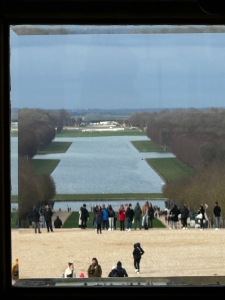
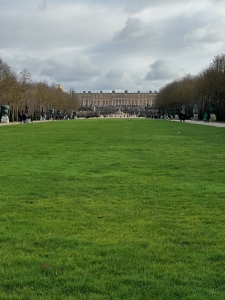
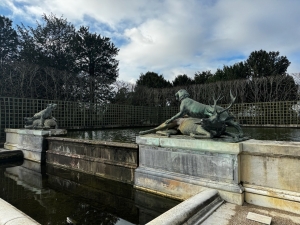
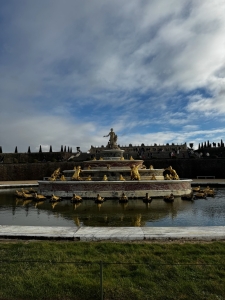
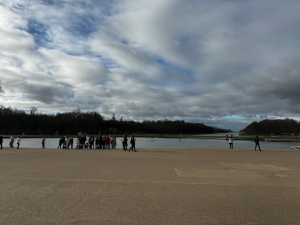
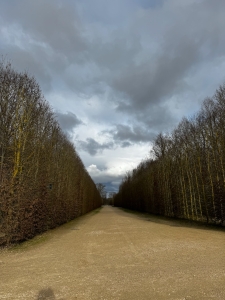
Besides the main building with the apartments in Versailles, the palace grounds also have a huge green landscape behind the main building. The greenery space, covering 800 hectares, comprises the Gardens, the Estate of Trianon, and the Park. Exiting the main building in Versailles, we came to the palace gardens. We were expecting someone to check out tickets for the Gardens of Versailles entrance, but we saw a large passageway under the main building leading to the open garden. This garden is the starting point for the greenery space behind Versailles. Covered with brown gravel paths, the Gardens of Versailles is split into two levels. The upper terrace has two large ponds, each adorned with numerous bronze statues, which can be seen from the Hall of Mirrors. We spotted some water features at the edge of the upper level, decorated with bronze statues of dogs, wolves, and deer. The water feature was not turned on during our visit. The lower part of the Gardens of Versailles stretches to the Grand Canal in the Park. Despite being the smallest area in the entire estate, this part of the gardens is still fairly large. It took us about 15 minutes to walk the entire garden length at the lower terrace. A large four-tiered fountain adorned with gold-plated statues welcomes visitors to the lower terrace of the Gardens. The fountain was also not turned on at the time of our visit. We took a stroll down towards the Grand Canal, and on the way, we saw “forests” of some sort on either side of the gardens. There seem to be some mazes and cafes situated in this green space, which was planted with trees in an orderly manner. At the end of the Gardens, we spotted another pond. I like how there are benches facing the pond and the Grand Canal at this spot for visitors to rest or relax and take in the grand view of this greenery space.

We did not visit the other two parts, the Park and the Estate of Trianon, in the greenery space behind Versailles. We figured it would probably take another half a day to visit them. The Park stretches as far as our eyes could see. The Grand Canal signifies the Park of Versailles as the Park’s centrepiece. The Grand Canal is this large pond with a cross design in the park’s centre. There seemed to be more greenery on either side of the Grand Canal, which would take us a long time to visit them. From where we were, there seemed to be fewer visitors to this part of the Versailles. We couldn’t see the Estate of Trianon from the border between the Gardens and the Park. According to the official Versailles website, the estate lies to the right of the Grand Canal. We were worried we might not make it in time for our dinner cruise and visit the Latin Quarters, so we left the Versailles after walking to the edge of the Gardens of Versailles.

The 5th Arrondissement – The Charming Latin Quarter

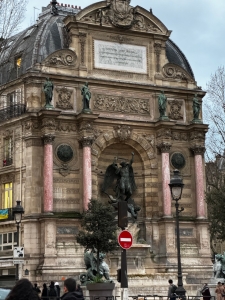
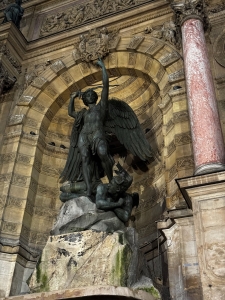
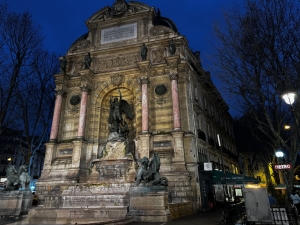
Getting to the Latin Quarter from Versailles was very easy. The RER C service runs straight from Versailles station to the nearest station in the Latin Quarter. As it was around lunchtime, the first thing in order was to hunt for lunch in the Latin quarter. We chanced upon a restaurant, which seemed to be run by three personable elderly French gentlemen. The decor of the restaurant has a nautical theme. The food was delicious, and the pricing was inexpensive. We had a great time having lunch at this restaurant. There do not seem to be a lot of tourist sites in the Latin Quarter. We mainly saw restaurants populating the small alleys in the 5th arrondissement, and the shopping options were thin. All we could do was walk around admiring the beautiful French architectural style buildings with their iconic six-storey characteristics, the bold roof structure and French balconies adorning almost all the window panels on these buildings. We saw the Fontaine Saint Michel, which has a statue of the archangel Micheal raising his sword. As there was still some daylight, we crossed the Seine River to visit the Notre Dame de Paris.
Into the 4th Arrondissement for Notre Dame

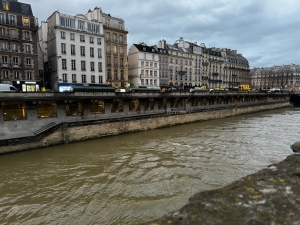
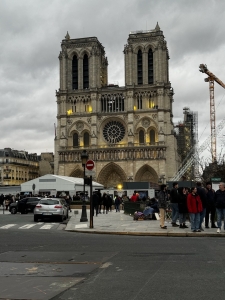
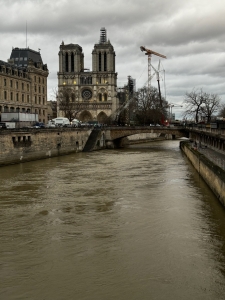
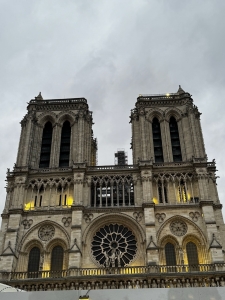
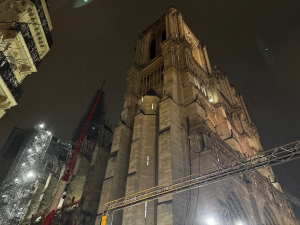
At the time of our planning for this trip, we already knew that the Cathedral of Notre-Dame de Paris would not be opened for visitors yet. The unfortunate event at the cathedral rendered it closed for years for restoration. Walking along the Seine River on the Islands in the 4th arrondissement towards the cathedral, we could see the scaffolding on the top level of the cathedral from afar, where repair work is still taking place. The Notre Dame was as impressive from afar as it is up close. At the front of the cathedral, we could see panels barricading the cathedral off to the public for work to be done on the cathedral. A makeshift flight of stairs is installed in front of the cathedral so visitors can sit around and admire the Gothic-style cathedral. The iconic twin-towered facade of the church was still stunting despite being “hurt”. The cathedral still stands majestically awaiting repairs to be completed to welcome visitors once again. There was nothing much more we could do here. After taking pictures of the cathedral, we returned to the 5th arrondissement via the Petit Pont – Cardinal Lustiger in front of the Notre Dame.
Transversing Between 4th & 5th Arrondissement

We had about 3 hours to kill before our dinner cruise, we explored the 5th arrondissement further. We walked one block over to Pont Saint-Michel on the 5th arrondissement side of the river through a street filled with restaurants. My friend and I were just strolling in the 5th arrondissement without any agenda of what to see here. We spotted an old structure, Thermes de Cluny – an ancient bath complex and archaeological site guarded by iron gates not far from the Pon Saint-Michel. The buildings along this main road are mainly filled with theatres, supermarkets and second-hand bookstores. This part of the Latine Quarter felt more like a neighbourhood area where the locals went around in their daily activities. We did not venture far into the rest of the Latin Quarter. Near the river, we went up close to the Fontaine Saint Michel. The fountain was not turned on at the time of our visit, and it seemed to be added to the end of a building that a restaurant and some residential premises mainly occupy. The two bronze gryphons flanked on both sides of the sculpture brought might to the archangel St Micheal.

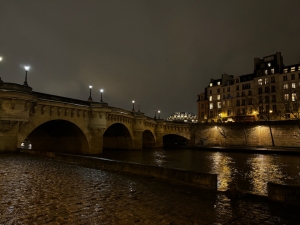
At this point, we still had 2 hours to spare. We headed to Pont Neuf and crossed the Seine into the edge of the 4th arrondissement. This part of the city is filled with budget-friendly boutiques and departmental stores, making it feel like a shopping district. Along the road, we spotted a single tower at the edge of the road. The Saint-Jacques was the only remaining part of a 16th-century church destroyed during the French Revolution. With only 30 minutes, we started returning to the dinner cruise pier along the Seine River. We opted to walk along the street outside Hôtel de Ville towards the Seine, which led us back to Notre-Dame de Paris. Compared to a few hours ago, the crowd at the cathedral was thinner. We took the opportunity to take more pictures with Notre Dame de Paris before crossing the Petit Pont-Cardinal Lustiger back to the 5th arrondissement. Making our way to the pier for our dinner cruise, we walked along the banks of the river. This part of the 5th arrondissement felt so peaceful due to the absence of people, making strolling along the river banks pleasant.
The Unpleasant Dinner Cruise

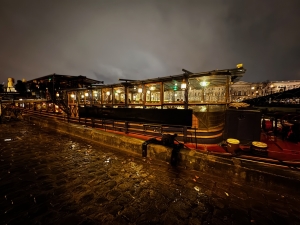
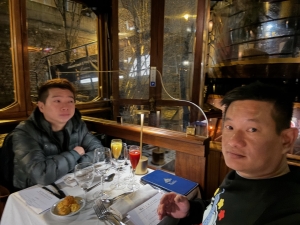
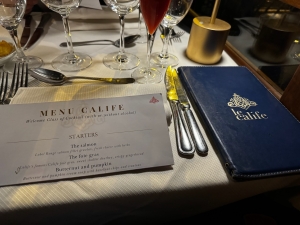
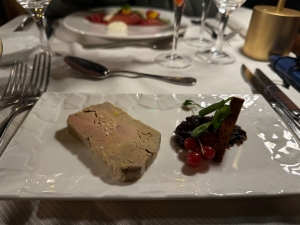
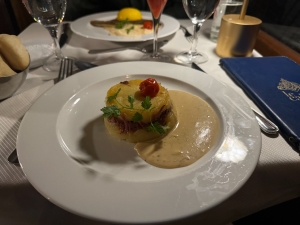
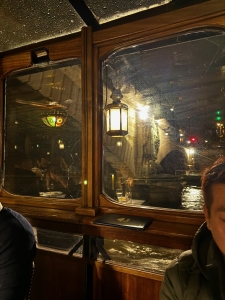
When planning this trip, I came across numerous recommendations that a dinner cruise along the Seine was a must when visiting Paris. There are several operators providing dinner cruises on the Seine River. During my research, La Calife, the river dining cruise, came highly recommended for its food and service onboard. Despite being a little more expensive than other operators, we opted for La Calife as we wanted a good time during our trip. We boarded the riverboat and were seated in a very bad location. This was a bad start for our cruise, and things went downhill. We were served by an Asian waiter who was rude and obnoxious. We witnessed him addressing our caucasian counterparts as Sir/Mdm, but he never used the same term to address us and simply addressed us as “you”. The same staff did not bother placing our food on our table but passed the plate to us. This was a different treatment from our Caucasian counterparts, where he would squeeze through the tight spots and make an effort to lay the food on their tables. Our experience was destroyed by the waiter even before the boat slipped off. The food was good on board, but the service was terrible. Every single minute of interaction with the server was torture.

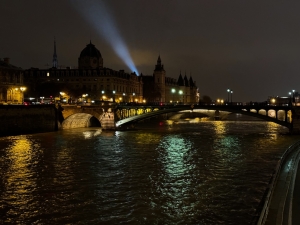
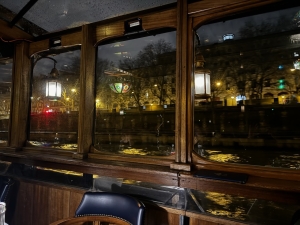
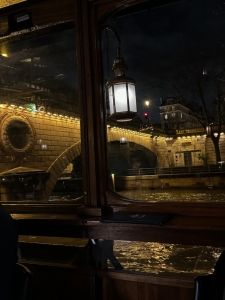
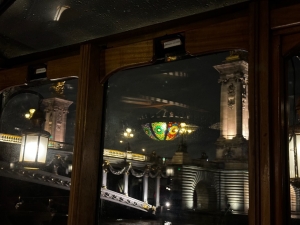
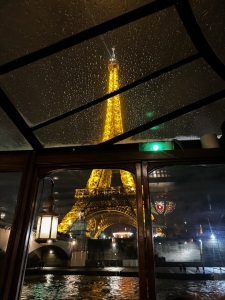
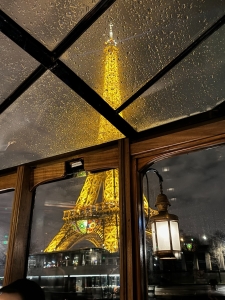
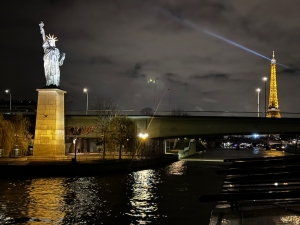
Due to the spot we were sitting in, we did not get to enjoy the view along the Seine River. The cruise sailed down the Seine River from near Pont du Arts in the 5th arrondissement to the 15th arrondissement, passing the Eiffel Tower in the 8th arrondissement. We merely saw some buildings along the river and passed under some bridges. The highlight would have been the light show at the Eiffel Tower, which we could only see when standing on the outdoor part of the boat. The boat made a U-turn at the 15th arrondissement, near an island with the Statue of Liberty. We passed by the Eiffel Tower in time to see it glitter. We really did not enjoy the cruise and can’t wait for it to end soon. The moment we hit the docks, we disembarked without looking back or thanking anyone. After all, why bother to thank them for the mistreatment? For the price we paid for a dinner cruise on La Calife, it was definitely not worth the buck!
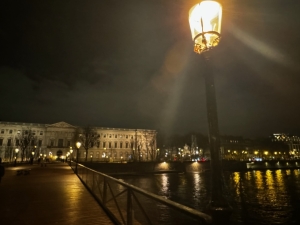
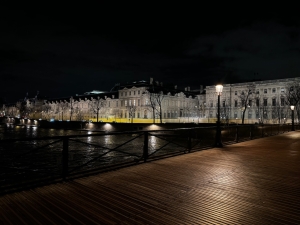
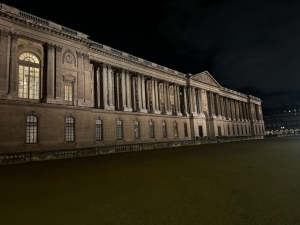
Our night was spoilt by the cruise. Having no mood for any more sightseeing, we crossed the Pont du Arts towards the Louvre for the metro station. The Pont Du Arts is a pedestrian bridge that is laid with wooden flooring. I would have to say that at this hour, the Pont du Arts feels very tranquil, with scenic views of the Louvre by the Seine River. We only stayed here momentarily to take some pictures and continued our way to catch the metro back to our hotel.

Paris Day 4 (5 Jan 24): The 18th, 9th, & 8th Arrondissement: Montmartre – From the Magnificent Sacre Coeur to Moulin Rouge; Viewing Paris from the Roof of Arc de Triomphe

The original plan for today was to visit the sights in the 9th arrondissement, specifically the Palais Garnier, and catch the sunset at the neighbouring 18th arrondissement. Considering that Montmartre in the 18th arrondissement was a huge district, we made some last-minute changes in our plan to visit the Montmartre first and end of the day with a visit to the Arc de Triomphe that we missed out on Day 1.

Montmartre – The Charming 18th Arrondissement

I chanced upon a series of videos done up by Paris Top Tips that not only gave a very plan for visiting the various arrondissements in Paris, but Alan, the content creator, also took the effort to map the attractions out in his videos on Google map making it very easy for us to follow. Montmartre is a big district, and we followed Alan’s recommendations when visiting the area (click here for a link to his video on Montmartre). We were religious in following the recommended route that Alan had posted in his video. Still, somehow, we got lost after Sacre Coeur and ended up walking where our feet took us. We started our Montmartre discovery at the Lamarck – Caulaincourt metro station. Coming out from the station, our first stop was finding a breakfast place. We chanced upon a bakery and popped in for a simple breakfast. Though the owner could only speak French, somehow, we could communicate (by pointing out which bread we wanted). The shopkeepers were very friendly, and the croissants were fluffy and crispy. We had a satisfying breakfast.

The recommended route we found on the Paris Top Tip YouTube channel

The Houses and Statues of Montmartre

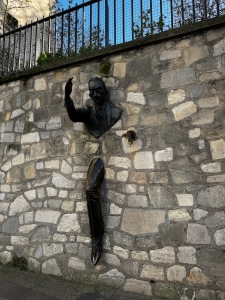
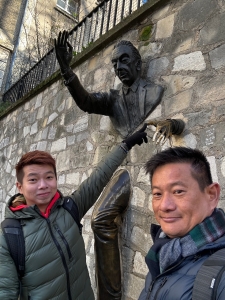
Our first stop of the day is Villa Léandre. Walking in Montmartre is very relaxing, and we could see the hilly terrain of this arrondissement. It did not take us long to walk to Villa Léandre. Villa Léandre sits on a dead-end street, comprising rows of houses with a distinct architectural style from the houses opposite it. Instead of the standard five storeys, Villa Léandre only has two to three storeys. I thought Villa Léandre was quite boring. Other than a few houses, there is nothing much to see here. Looking at the Google map, our next stop, the Passe-Muraille, is merely 5 minutes away. The Passe-Muraille is a bronze statue of a man walking through the wall. We could see his head, upper body, both hands and a leg poking out of the wall, and the rest of his body seemed to be stuck inside the wall. This statue pays homage to a French novel where a man could pass through walls but found himself stuck mid-stride when he lost his power.

The next site we visited was the Beheaded Statue of St Denis. The statue is rather inconspicuous from the outside and sits in a small garden with a wooden entrance. We wouldn’t have found it if not for Google Maps. There is a pit in front of the statue, which was supposed to be a fountain. There wasn’t any water in this pit during our visit. The statue depicts a man holding his head in front of his body. Legend has it that St Denis was the first Bishop of Paris and was beheaded by a Roman Governor. St Denis walked 6km with his head in his arms and came to the fountain in this spot to clean his head. The garden here is very peaceful and a great spot for anyone to rest their feet while exploring Montmartre. Next up was Buste de Dalida, about a 2-minute walk from the Beheaded Statue of St Denis. Dalida was a French artist who had a house in Montmartre. To commemorate her, the city of Paris erected a bust of Dalida here. My first impression is that her bust seems to be “molested” by visitors in that her boobs are shiny. Perhaps visitors regard rubbing her boobs with a good-luck connotation.

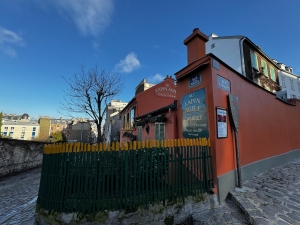
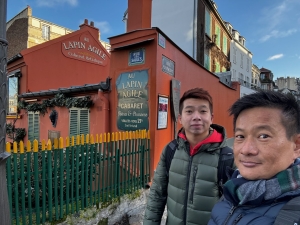
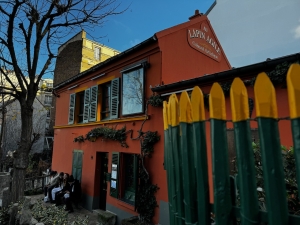
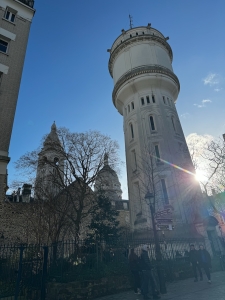
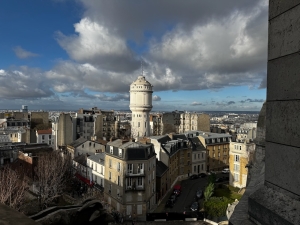
From the Buste de Dalida, our next stop – La Maison Rose, was just a straight ahead following the path. This pink facade restaurant is famous for its unique petit corner-house look and food. Many visitors to Montmartre would drop by for an Instagram photo of this cute little building. Right around the corner, about a 2-minute walk, we arrived at Au Lapin Agile. The distinctive bright orange two-storey petit building in Montmartre is Paris’s oldest cabaret bar. The cabaret bar only operates at night on certain days of the week. After taking pictures of the building, we headed to our next stop, the Sacre Coeur. Walking towards the basilica, we saw this medical tower-looking structure. Initially, I thought this tower was a watch tower, but this tower is a functional water tower. As there wasn’t much to see here as the tower was locked, we continued our walk towards the Basilica of Sacre Coeur. There are some souvenir shops selling inexpensive souvenirs on either side of the street that lead us towards the basilica. We spent some time picking out souvenirs before continuing to the basilica.

The Grand Sacre Coeur

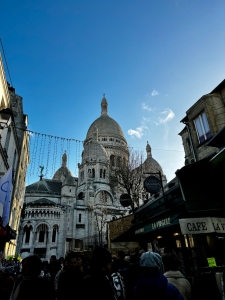
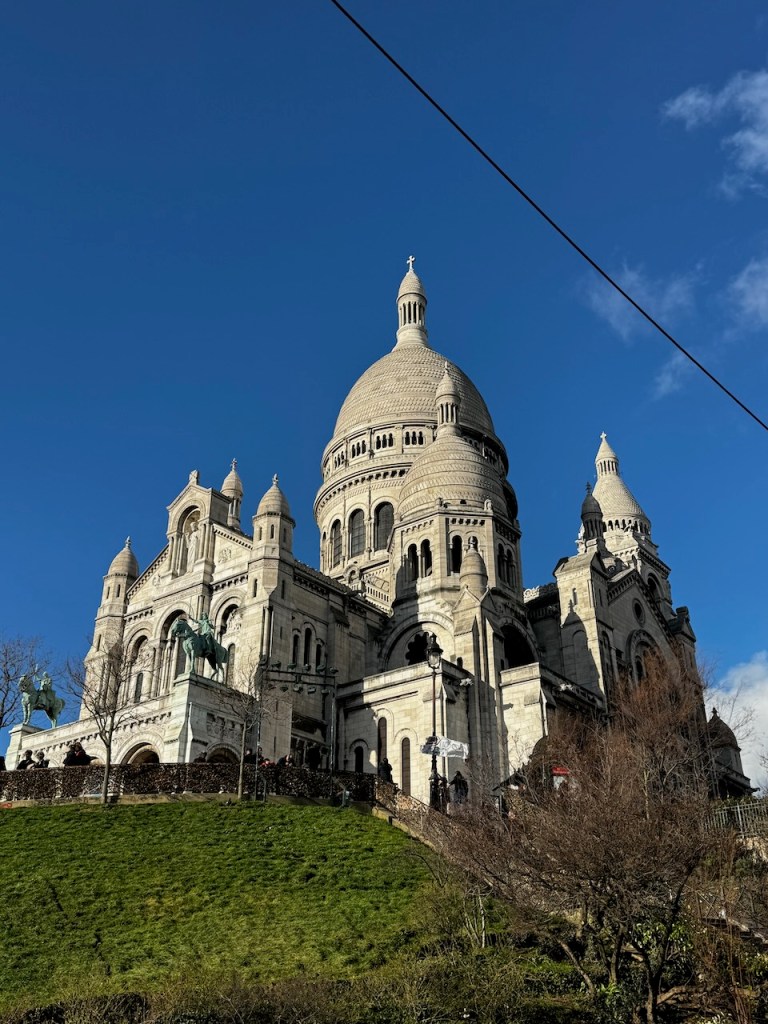
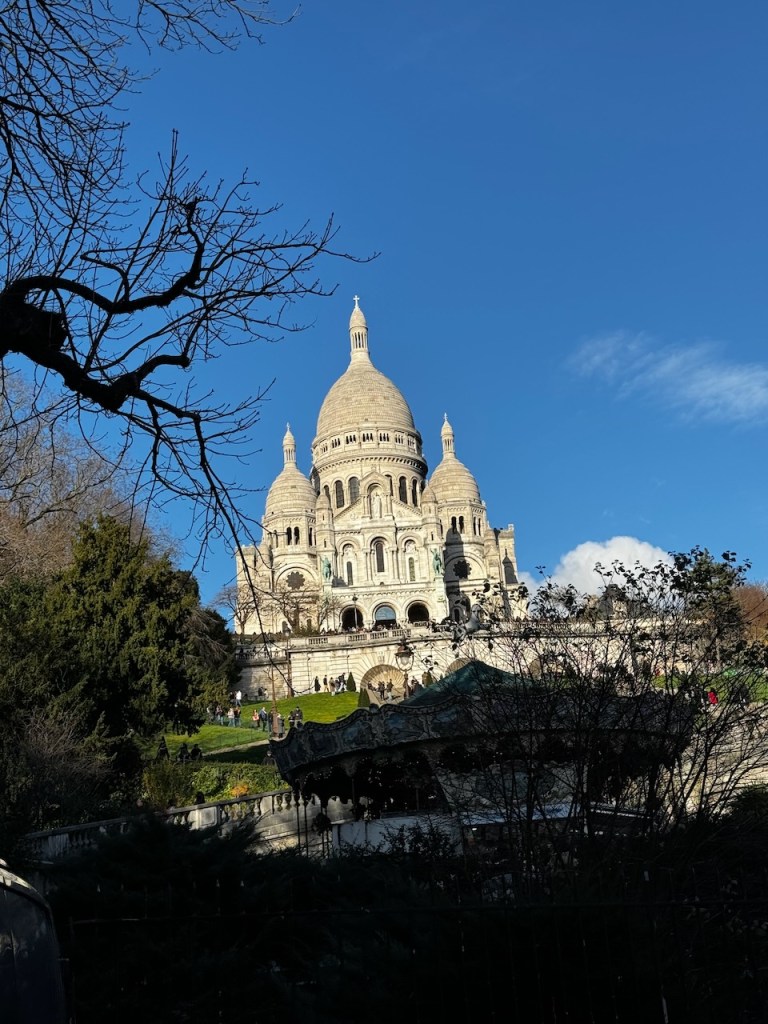
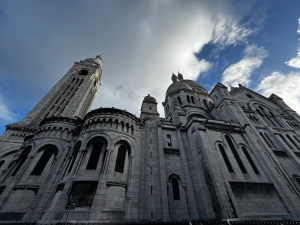
The Basilica of Sacre Coeur is a Roman Catholic church dedicated to the sacred heart of Jesus. The building style of the church reminded me of the Vatican City, but on a smaller scale. Nonetheless, the church still looks very grand. Sitting on a hill overlooking Paris made me feel that the basilica was protecting the city. It was free to enter the church, all we had to do was join the queue for bag inspection. The queue was not long when we arrived at Sacre Coeur, and we were in the church in about 3 minutes.

Inside the Basilica of Sacre Coeur

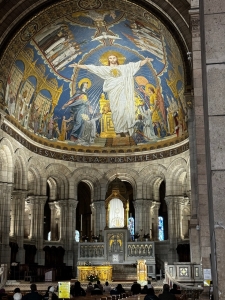
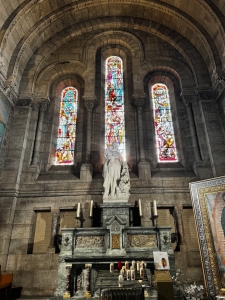
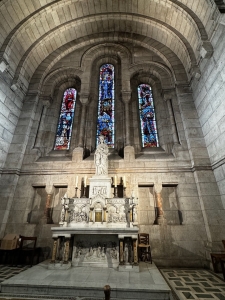
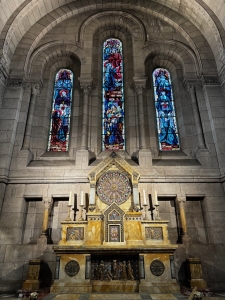
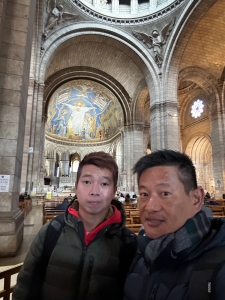
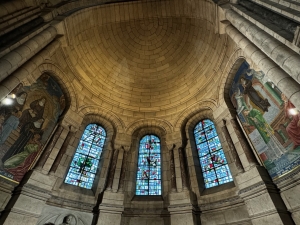
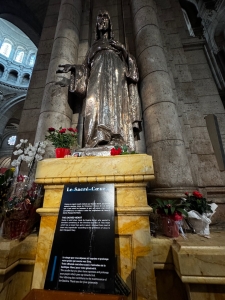
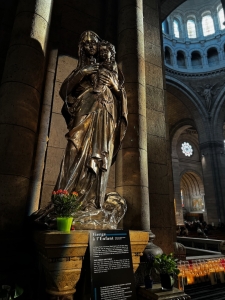
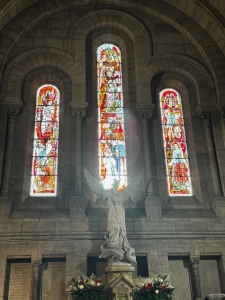
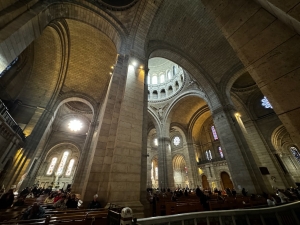
The church was large and could accommodate the huge number of people visiting. The centre part of the church was cordoned off for visitors coming here for prayers. Grand but dark was my first impression of the interior of the basilica. The darkness did not give off a grim sensation but emitted a comfortable and peaceful feel. The first thing that caught my eye was the large mosaic fresco of Jesus dressed in white with his arms opened and a golden heart in front of him, welcoming visitors to the basilica. There are several small chapels at the sides of the interior of the basilica. As we were walking around the basilica, we saw numerous stained glass windows beautifully depicting various characters in the bible. They are especially beautiful when the rays of sunlight shine through them, casting a colourful shadow on the basilica’s interior. Several colourful mosaic frescos adorned the walls and dome ceilings of Sacre Couer, some in gold-coloured tiles depicting scenes from the bible. These frescos not only brighten the basilica’s interior but are also artistically and tastefully done. We also spotted several sculptures around the interior of Sacre Couer. The one that caught my attention is the solid silver sculpture of Jesus. The sculpture captured his kindness and acceptance of everyone with his hand gesture of invitation.

Climbing to the Dome of Sacre Coeur

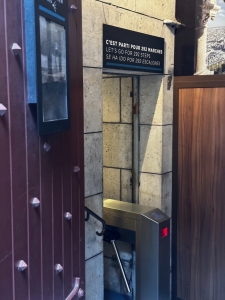
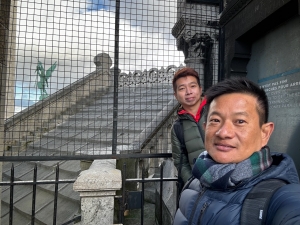
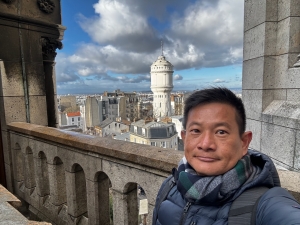
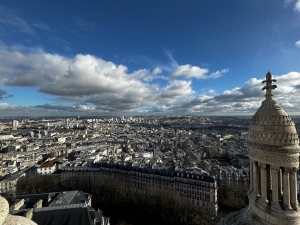
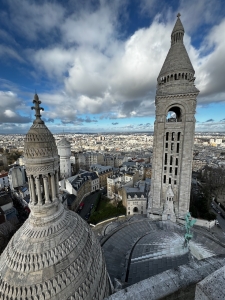
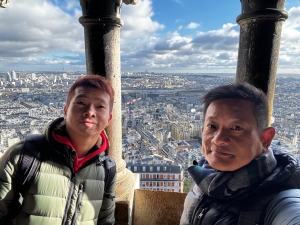
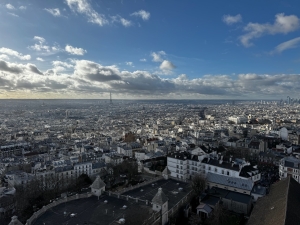
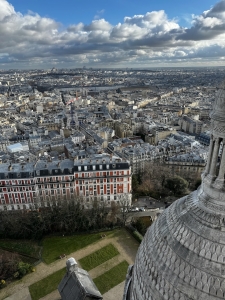
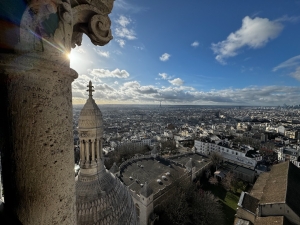
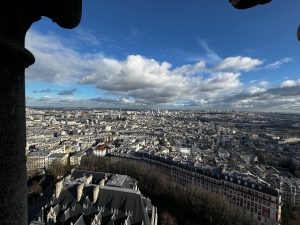
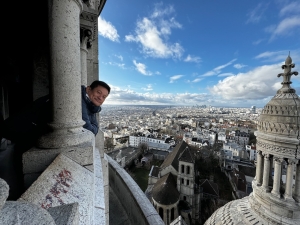
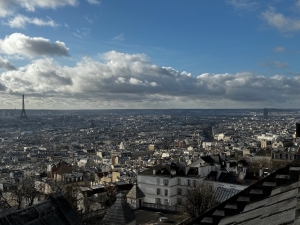
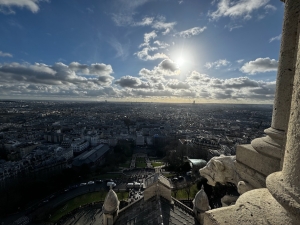
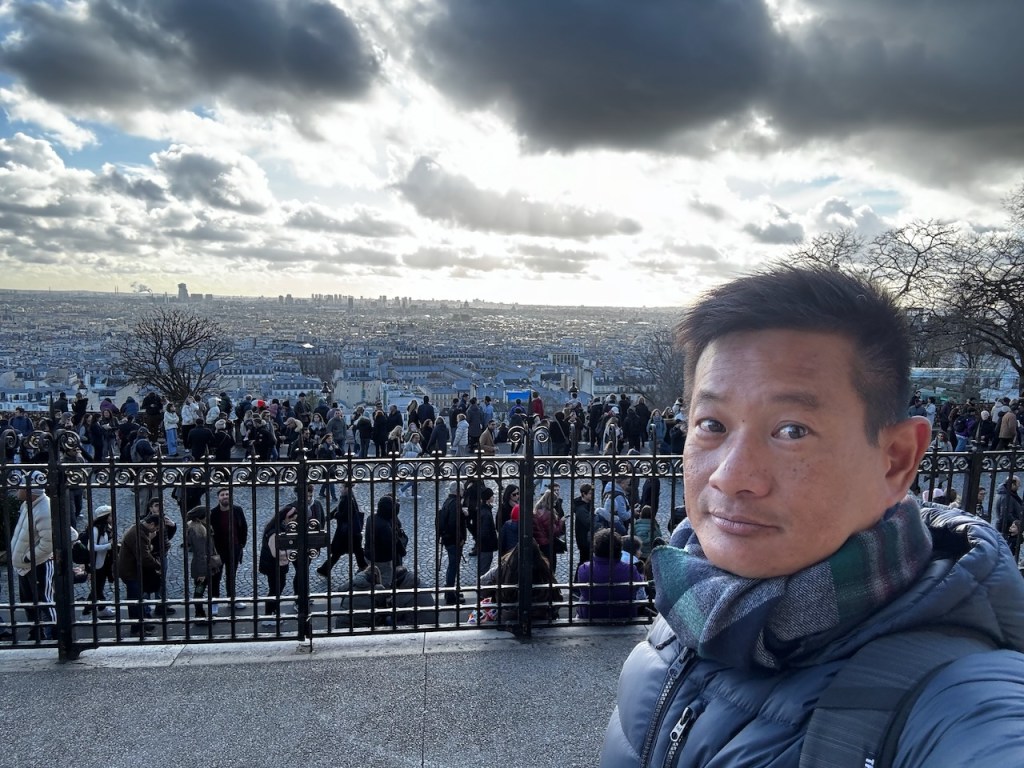
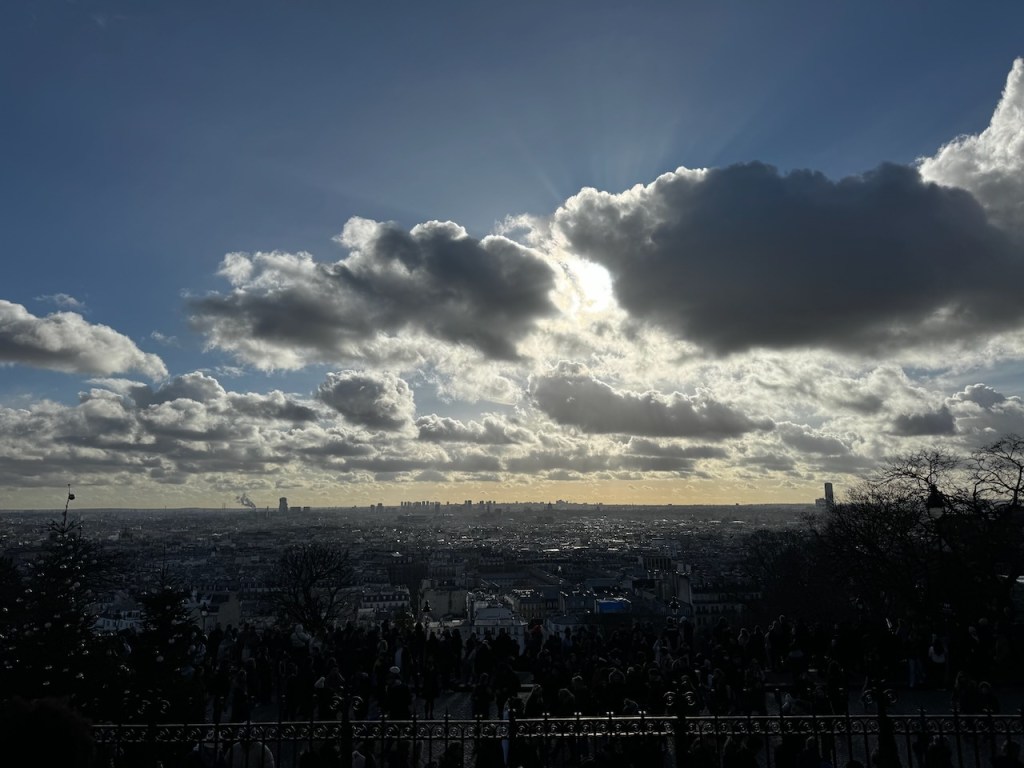
We saw a sign that said “Panasonic view of Paris” as we walked into the church, pointing to the way up the basilica dome. Entrance to the dome climb can only be bought at the venue, costing €8 per adult to scale up the 292 steps to the top of the basilica. The climb to the top consisted of a series of narrow stone spiral staircases that seemingly went on with no end. Occasionally, a small window would pop out to give us a good idea of how high we were and a guesstimation of how long more to go. At the end of the climb, we were rewarded with a magnificent view of Paris at the top of the dome. It was worth each one of the 292 steps we climbed. We were on a higher elevation than the terrace at the bottom of the the basilica, which gave us a better unobstructed view of the City of Lights. Not only were we able to see Paris in front of the basilica, but we were also able to see the city behind Sacre Couer. What I feel the top of the dome brings is the lesser crowd. We did not have to wait for our turn for a picture with Paris as the backdrop, nor would we need to worry about other visitors photobombing our shot.

The Shopping Arcades in the 9th Arrondissement – Getting Lost in Montmartre

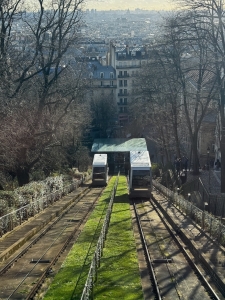
After visiting the Sacre Coeur, we followed Alan’s instructions in his video and took the Funicular down to the base of the hill on which the basilica was built. The funicular is chargeable, and we could use our Navigo weekly pass to ride it for free. The streets at the base station were filled with shops, restaurants and cafes. As we were hungry, we found a Thai restaurant near the funicular base station and settled for our lunch there. The level of spiciness was the kind that we were used to. The food was tasty and, more importantly, spicy. After lunch, we wanted to continue our hunt for the sites in Montmartre. This is when things went wrong, and we got terribly lost. We wanted to visit the Wall of Love in Montmartre and followed the Google Maps instructions. I must have keyed in the wrong landmark, and little did we know, we unknowingly drifted into the 9th Arrondissement.

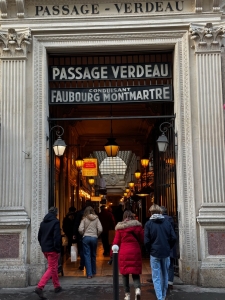
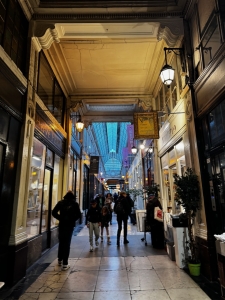
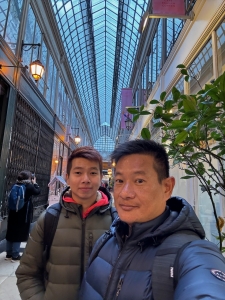
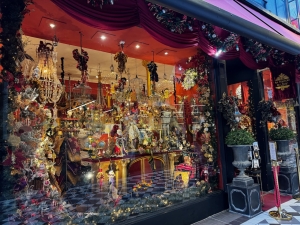
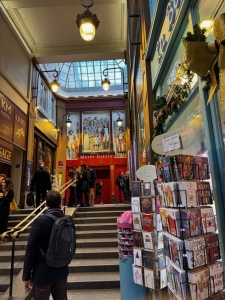
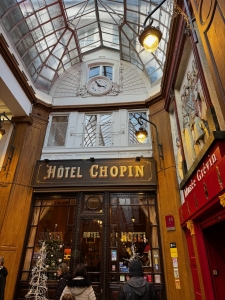
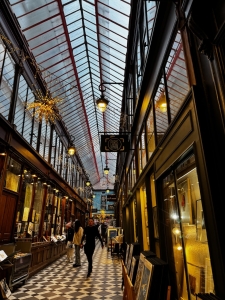
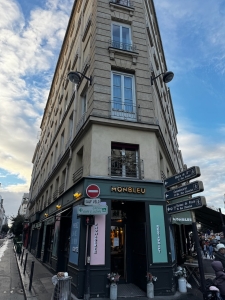
Google Maps lead us through a covered shopping arcade. These covered shopping arcades were built for the locals to take shortcuts and shelter from the rain and mud while shopping. The two Passages we went through in the 9th arrondissement were built in 1847. We walked through Passage Verdeau first, which felt like time stopped here. The decor screams of the 1960s with its white marble flooring and wooden doors. The high glass ceiling lets in natural light, illuminating the Passage and giving it a very artistic flare. Shop in Passage Verdeau mainly sells antiques and paintings, with a shop selling comics from the ’50s. Passage Verdeau is rather short, we were through it in 2 mins (partly because we were glancing into the the shops). Across the street from Passage Verdeau was Passage Jouffroy, which has an even more retro vibe. Passage Jouffroy is decked with mosaic black and white tiles on the floor and similar wooden doors in the shops. This Passage mostly houses cafes, bookstores and art galleries. There is even a hotel in Passage Jouffroy.

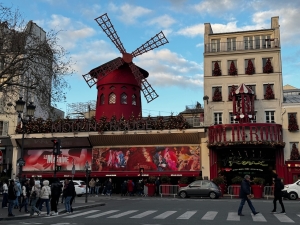
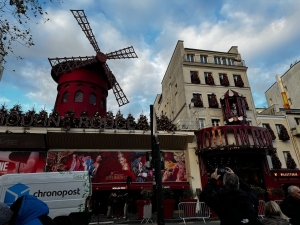
I consulted Google Maps again after we walked through Passage Verdeau and Passage Jouffroy into the main street. This is when I realised we were very far off course. We then decided to take a bus back to Abbesses Metro station and make it to the Wall of Love near the Sacre Coeur funicular. Alighting from the bus, we got lost again and gave up the idea of going to the wall. We immediately got the directions for Moulin Rouge, the famed red building with a windmill on top. Moulin Rouge today is a theatre with live dance shows. I reckoned the best photo spot for Moulin Rouge is right outside the Starbucks opposite the theatre.

The Landmark in the 8th Arrondissement – Arc De Triomphe

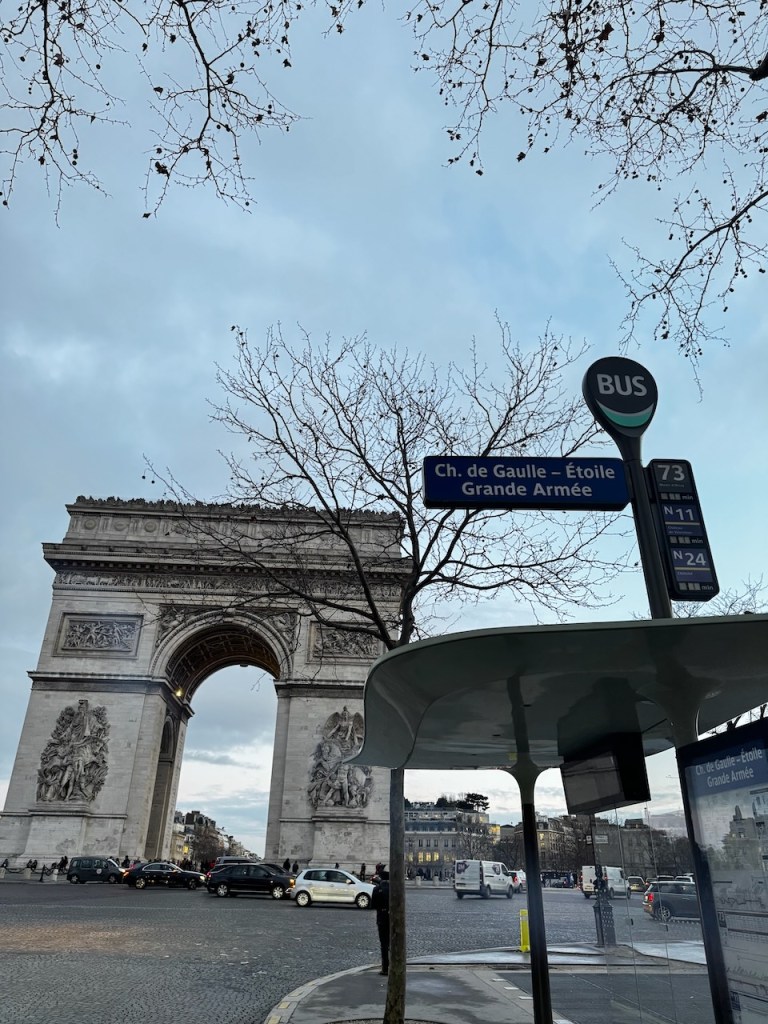
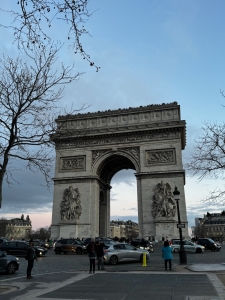
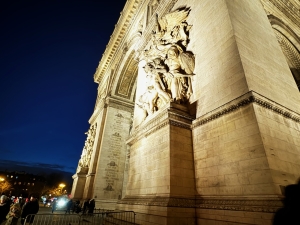
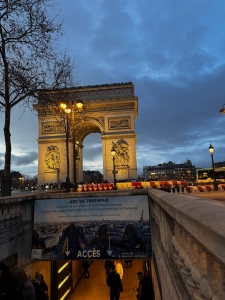
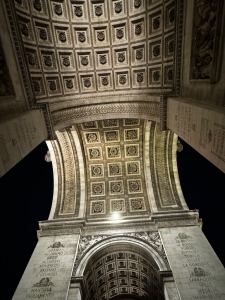
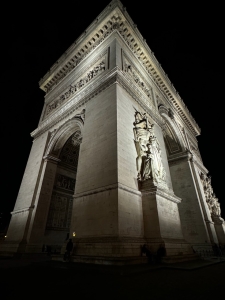
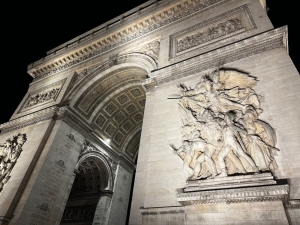
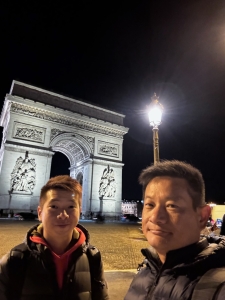
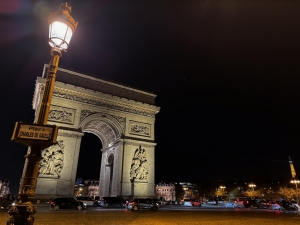
Leaving the 18th arrondissement, we returned to the 8th arrondissement to the Arc de Triomphe. One of the things I wanted to do here was climb to the top of the Arc de Triomphe, as I didn’t want just to take pictures of the arc. As I researched for this Paris trip, I learnt that the top of the arc offers a spectacular view of the city of Paris. Unlike the Eiffel Tower, where tickets to the summit were limited, I did not think tickets to the top of the Arc de Triomphe would be sold out. We waited about 20 mins in a queue to purchase our tickets. To get to the ticketing booth, we followed the signs in the tunnels that said “Arc de Triomphe”. After getting our tickets, we emerged from the tunnel and were right under the arch. From here, we could see the sculptures on the walls of the arc.

The Arc de Triomphe in the 8th arrondissement

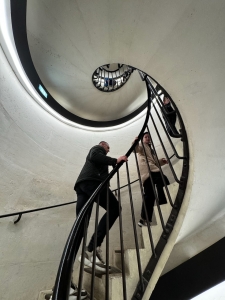
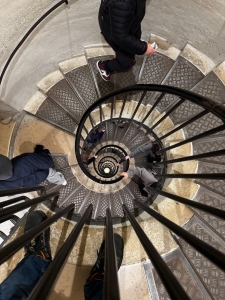
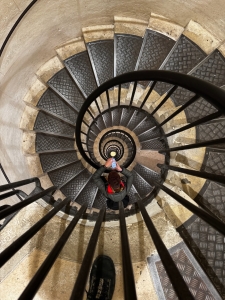
We joined another queue for security checks to enter the arch for our climb to the top. The initial 284 steps were done on a spiral staircase that snakes up the Arc de Triomphe. The end of the spiral staircase led us to its attic, with exhibits about the arch and a gift shop. A TV panel in the centre of the attic streams activities directly under the arc, making it look like a glass being fitted here. From the attic, we took another 46 steps to the roof of the Arc de Triomphe.

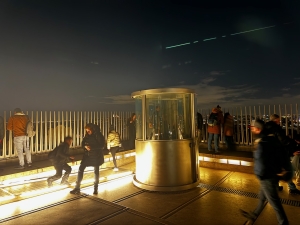
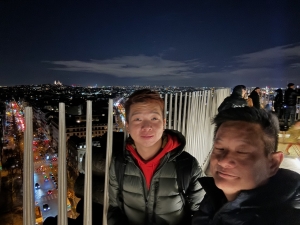
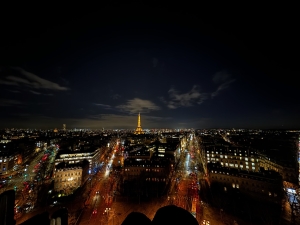
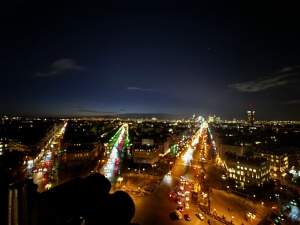
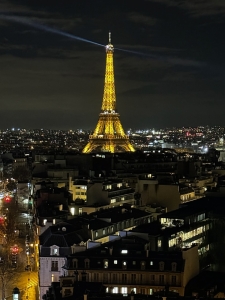
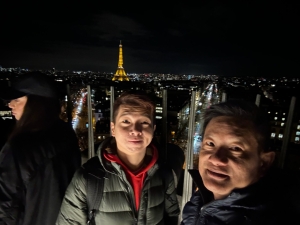
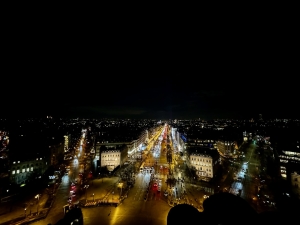
We were soon rewarded with views of the roads that seemed to converge into the Arc de Triomphe and the night view of Paris. The view was stunning, seeing how the roads came through the arc, making it feel as if the arc was the centre of Paris. We could see the Eiffel Tower in her yellow nightgown, standing proudly amongst the buildings in Paris.

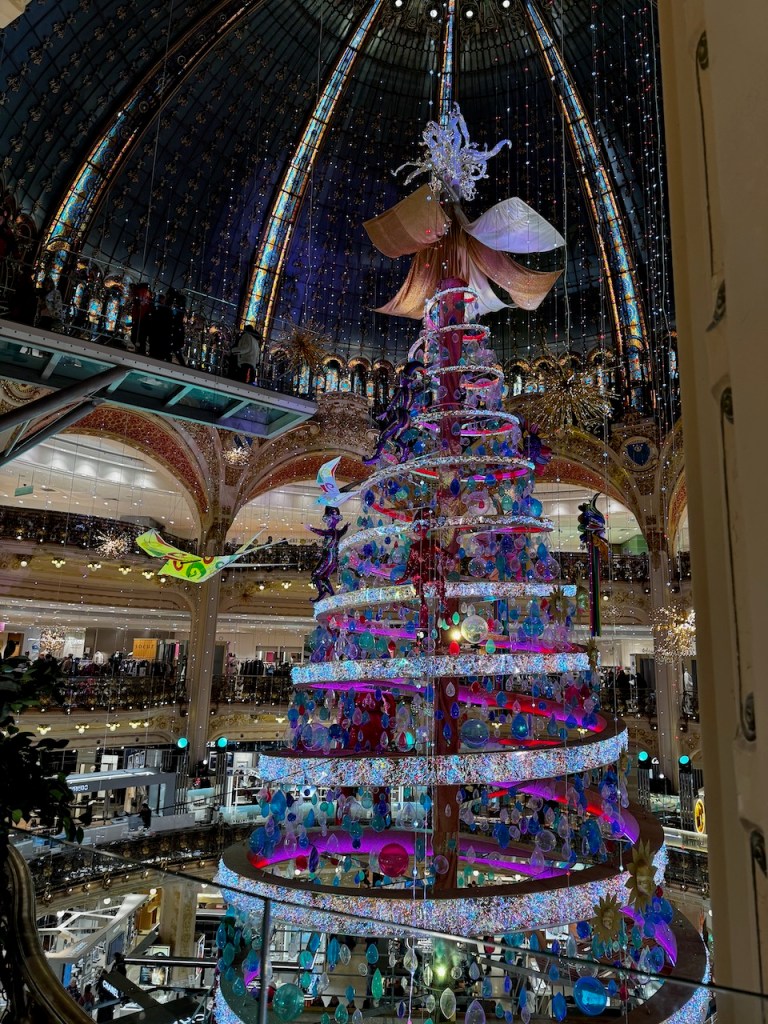
After taking our fair share of pictures, we headed back down to the bottom of the arch to take more pictures of the Arc de Triomphe up close. Looking at the time, we figured we still had 1 hour before the rooftop of Galeries LaFayette closed. When we arrived at the department store, we were told that the rooftop closes 30 minutes before the store’s closing time. Seeing that there is not much we can do here, we left Galeries LaFayette and hunted for dinner. The restaurants we walked past seemed either expensive or crowded. We ended up buying McDonald’s back to the hotel. We rested early tonight as we would need to wake up early the next day for our guided tour of the Versailles.

The only thing we could see at Galeries Lafayette was this Christmas tree since the rooftop was closed.

Paris Day 3 (4 Jan 24): The 6th & 7th Arrondissement – The Historic Church & Spacious Garden of the 6th; A Detour to the Pantheon; and The Iconic Eiffel Tower

Today is the highlight of my Paris trip. I finally got to visit the Eiffel Tower, a monument that has fascinated me since I was young. Since the 6th arrondissement is just “next door” to the 7th, I planned for us to occupy our morning with the 6th arrondissement. I used the Paris Insider Guide for the sights we could see in the 6th arrondissement for my planning.

The 6th Arrondissement: The Historic Church and the Garden in St Germain de Prés

We started our day by taking the metro from Concorde to Rue du Bac station. Coming out of the underground station, we spotted a restaurant with red yawning with the words Le Saint Germain written on it. This is where we settled our breakfast. The staff at the restaurant were welcoming and friendly; he knew we couldn’t understand French and gave us an English menu. The food did not take not take too long to arrive. I ordered a baguette and croissant set, and my friend ordered an egg croissant. We also ordered Nutella crepe to share. The croissant was fluffy and delicious even when it was plain. After a hearty breakfast, we started our sightseeing in the 6th Arrondissement.

Strolling on the Streets of St Germain de Prés

We followed the directions on Google Maps for the Church of St Germain de Prés. Perhaps it was still early; we did not see many people on the streets, and the traffic was quite thin. We enjoyed the lovely morning tranquil stroll on the streets of St Germain, admiring the Parisian-style building structures. The Parisian buildings are not more than 6 storeys high, and all come with some form of balconies. They lined up the street like soldiers in a tight formation, giving Paris a unique skyline. As we were walking, we came across a small patch of land with the words Tarass-Chevtchenko Square. This square is an open space annexed to a church that seems to be built with sandstone bricks. It is refreshing to find a small open space in the city where people can relax.

Church of St Germain des Prés

The Church of St Germain des Prés is one block from Tarass-Chevtchenko Square. The church is characterised by a brick-built bell tower that stands taller than the surrounding buildings. We saw some parts of the church facade being covered up, suggesting restoration works were ongoing. We thought this part of the church was closed and tried to walk around to see if there were any alternate entrances but found none. As we were about to give up, we saw some tourists leaving the church. We went to the door they came from, where an elderly gentleman was sitting by it, who signalled to us that it was the entrance.

The Church of St Germain des Prés has an elongated layout, and from its entrance, we can see the entire church and its altar. Hanging high on the far end of the church, behind the altar, are three stained glass panels with Jesus depicted in the centre. The interior of the Church of St Germain des Prés was vastly different from its exterior, while its exterior was covered with one colour, the interior was colourful and vibrant. The bright blue-coloured roof and the many paintings on the walls, complemented by colourful stained glass windows, give the church life. The windows high above the church walls let in natural light, contributing to the bright interior feel. Walking into this church gave me a very comfortable feel. The side exterior of the Church of St Germain des Prés looks like the Cathédrale Notre-Dame de Paris, with its walls and vaults supported by a row of flying buttresses.

Luxembourg Garden

Map of Luxembourg Garden

The Luxembourg Gardens are about ten minutes from the Church of St Germain des Prés. We arrived at the garden parameters and were met with a single-dome building that seemed to be heavily guarded by policemen. This building was the Palais du Luxembourg, which was originally built as a royal residence. In the 1940s, the palace was designated as the French Senate until today. No wonder there is heavy guarding at the entrances of this building. We took a right and skirted around the parameter and found the entrance to the garden.

From this entrance, the Luxembourg Garden in winter was dominated by shades of brown colour and trees with branches without leaves. The garden was mainly laid with brown gravel (and, in some parts, muddy), with patches of greenery in parts of the garden. There are plenty of benches and chairs around the Luxembourg Garden, which the locals and travellers can use to relax and take in the tranquillity the Luxembourg Garden offers. A little further away from the entrance, we saw the back side Palais du Luxembourg, sitting on the northern end of the garden. Topped with grey roofs, the sandstone-coloured palace blends in very well with its surroundings. There are more benches and chairs in front of the palace for visitors to rest with a view of the gardens or the palace. The palace sits on slightly higher ground, having a commanding view of a large octagonal pond and a vast open space. There are numerous statues of Saints and former French queens surrounding the pond. These statues not only beautifully adorned this part of the garden, but they also gave this part of the garden an artistic flare.

Detouring to the 5th Arrondissement – Admiring the Art in the Magnificent Pantheon

Visiting the Pantheon in the 5th arrondissement was not part of our plan today, as I wanted to leave it to the day when we visited the 5th arrondissement. However, Google Maps suggested the Pantheon was near the Eastern exit of the Luxembourg Gardens. We decided to head for the Pantheon instead of coming back another day. From the east exit of Luxembourg Gardens, it only took us 9 mins to walk to the Pantheon. One cannot miss the Patheon’s unique rectangular base and cylindrical upper floors topped with a grey dome. We attempted to visit the Pantheon in Rome twice but did not get to enter; thus, we were determined to visit the Pantheon in Paris. As we did not pre-book the tickets, we had to queue to buy the tickets. Fortunately, the queue for the tickets was not awfully long. We waited about 15 mins for our turn to buy our tickets.

The Pantheon is large and bright due to its high ceiling design and large windows on the top of the building, allowing a good amount of natural light. Visitors can only gain access to two levels in the Pantheon: the ground level and the underground level. The ceiling of the Pantheon is adorned with intricate floral engravings done in a way that occupies the empty spaces but does not clutter the ceiling. The ground level is filled with art pieces from paintings to sculptures, with the paintings placed on the walls and along the parameters of the Pantheon, while the sculptures are housed in the four corners of the centre of the building. We also saw some paintings under some of the domes and on the wall high up near the ceiling of the Pantheon, as well as a large painting of a war scene and Jesus looking down adorned on the wall towards the back.

We found two spiral staircases leading to the Pantheon’s underground section next to the large war scene painting. The underground level of the Pantheon is a crypt with coffins of famous people in France. There are quite a few coffins, with some chambers dedicated to one coffin and yet some others with several coffins. For the uninitiated (like us), we did not find anything else interesting on the lower floor of the Pantheon. We headed back up to the upper floor of the Pantheon, and on our way out, we saw a large circular area cordoned off to visitors in the centre of the upper floor. There is a pendulum that hangs from the centre dome, occupying this large area.

The 7th Arrondissement: The Iron Lady of Paris – The Iconic Eiffel Tower

After a quick bite, it was time to head to the highlight of our trip—the iconic Eiffel Tower. As I was researching about visiting the Eiffel Tower, many advised visiting the Champ de Mars for a less crowded view of the Iron Lady. We took the metro from Cardinal Lemoine station in the 5th arrondissement near the Pantheon to La Motte – Picquet Grenelle station in the 7th arrondissement. The walk from the metro station to Champ de Mars took around 5 minutes.

Champ de Mars

As we are walking towards Champ de Mars, we can see the Eiffel Tower peeking over the roofs of the buildings in the neighbourhood. Champ de Mars is the open garden in front of the Eiffel Tower in the 7th Arrondissement. The walkable areas of the garden are covered with brown gravel and grass patches in the centre that were out of bounds to visitors. There are avenues between the grass patches, enabling visitors to take pictures of the magnificent tower in the centre amidst the grass patches. We found many photo spots here in Champ de Mars to take pictures with the Eiffel Tower. And the best thing is, it is not crowded here at Champ de Mars. While the walk of the entire length of Champ de Mars took merely 15 minutes, we ended up spending about 1 hour here at Champ de Mars taking photos of the iconic Eiffel Tower at different angles.

The Iconic Eiffel Tower

Our booking for the Eiffel Tower was at 4.30 pm. We booked the tickets to the summit of the tower on their official website (click here for the official Eiffel Tower website) two months before our scheduled date of visit. We had to go through two security checks going up the tower: one at the entrance to the grounds of the Eiffel Tower and another before the lift up to the tower. There are separate queues for those with tickets at both checkpoints, and the ticketed queue is shorter than those who bought the ticket on the spot. Despite being in a shorter queue, the queues moved very slowly. It took us 10 mins to clear the first security check. Seeing the tower from afar and up close felt very different. From under the tower, the Eiffel Tower looks huge. We could see the lattice patterns that were used for the construction of the tower, which seems like a complex ecosystem of spiderwebs. Looking up from the dead centre of the tower feels like peeping up some lady’s skirt. We could see the hole on the first floor and some glass walkways up there. I told my friend we should definitely walk on these glass walkways.

The Second Floor of the Tower

The second security check queue took us 30 minutes to clear. As we were queuing for the second checkpoint at the tower’s base, I spotted a sign at the ticketing office stating the top floor was closed. I was a little worried at this point. Does that mean we paid extra for the summit for nothing? Why was the summit closed? I told my friend we should enjoy the attraction even if the summit were closed. Soon, it was our turn to take the lift up the majestic Eiffel Tower. We skipped the first floor and went straight to the second floor. The second floor was crowded! We headed to the side of the tower and were treated to a wonderful view of the entire city of Paris. The city seemed to stretch on and on till the horizon, and the buildings that we were walking by looked like model buildings. We could clearly see how the city of Paris was planned. We managed to spot the landmarks we visited and would be visiting from the tower’s second floor. On one side of the tower, we could see the entire Champ de Mars that we had just walked by, and on another, we could see the Pont d’Iéna that would bring travellers across the Seine River and the fountain in front of Place du Trocadero. Standing here looking at the view of Paris gave me a liberating sensation.

The Summit of the Iron Lady

We headed up to the mezzanine floor and saw a sign for the summit. Without hesitation, we joined the queue. This was when I realised the sign on the ground floor we saw earlier was referring to the summit tickets being sold out for the day. I told my friend that, luckily, we had bought our tickets online before coming to the Eiffel Tower, or else we would have missed the chance to visit the pinnacle of the tower. The queue to the summit moved relatively fast, probably due to the limited number of visitors who could visit the top of the tower. We snag a good spot in the lift, enabling us to see the buildings below getting even smaller as we scale up from the 115m tall second floor to the 276m tall summit. There are two levels at the summit of the Eiffel Tower; the lift stops at the enclosed indoor part of the tower. Here, we could see even further and see how small the buildings were. We walked one round in the indoor part of the tower and headed up to the open area of the summit.

The outdoor area of the summit is the highest point of the Eiffel Tower, opened to visitors. The views here were similar to the indoor part of the summit floor. As the sky was turning dark, we saw how the City of Lights gradually illuminated. The winter chilly wind was strong up here. There was a side of the summit with significantly more people, as this side was the less windy side. To avoid the crowd, we spent most of the time up here on the windier side, with fewer people. As the sky got darker, the more we saw Paris being illuminated by the street lights. The view here was excellent!! As we walked around the summit floor’s open level, we saw a small enclosed space. This is Gustave Eiffel’s office. We spent the rest of the time here, transversing down to the enclosed area to get ourselves warm and head up again to see the view of the city. As it got darker, we took the lift to the second floor to take more pictures. Here is where we saw the tower sparkle at night. I must admit, seeing it sparkle on the tower was not impressive, all we saw were lights going on and off on the sides of the tower.

Watching the Iron Lady Sparkle

As it was getting dark (it was only 6 pm), we decided to get back down to the ground floor. We waited around 30 minutes before our turn to take the lift down. On our way down, we thought of visiting the first floor. But seeing no one was getting out, we forego the idea, as we were not too sure if we would be able to get a spot in the lift going down. Once we reached the ground floor, we went around looking for a good spot to take pictures with the tower. We were fortunate to see the Iron Lady sparkle at ground zero. The light show was tastefully done. We left the Tower grounds and headed towards the Seine River, where I thought I saw a place with what seemed like restaurants by the river.

The hourly Eiffel Tower light show

The Night Markets by Seine River

As we were getting a little peckish, we walked towards the Seine River, where I thought I had seen a restaurant when we were at the tower. We did not see any eateries here, but we were surprised to see a night market. We went in to check out what’s on offer here. It was a market full of people, probably those of us who just finished visiting the Eiffel Tower. The market sells mostly locally made products, and to our surprise, there were stalls selling street food. The stall owners were very friendly and welcoming and even encouraged us to sample the food they were selling. As we were feeling hungry, we got a plate of curry chicken. Though not as spicy as we would like, the chicken was flavourful and delicious. The food felt very hearty, and we welcomed the warm food amid a cold winter night. There were tables in the middle of the night market where we could have our meal. We explored the market after eating. The market wasn’t that large, and we could cover the entire market in 30 mins.

Exiting the market, we headed for Trocadéro via the Pont d’Iéna, where we found it to be a great photo spot. We could get the Seine River and the Eiffel Tower in one shot. We also spotted several tourists standing in the middle of the road, trying to take pictures with the tower. No wonder the Parisians are irritated by tourists. Who can blame them? I would be irritated, too, if I were driving along the bridge. Whilst at the bridge, we saw the Iron Lady sparkle again. It never gets old seeing the light show on the Eiffel Tower. As we were walking towards Trocadero, we chanced another small food store on the grounds of Aquarium de Paris. This is a simple container-sized food stand selling finger food and hot beverages. It was freezing, and we got some hot drinks. There are fire pits to keep us warm while we stare at the Eiffel Tower from afar. It wasn’t terribly crowded at the time we were there. We enjoyed the relaxing ambience here, sipping our hot beverages while getting a great view of the Eiffel Tower.

Place du Trocadero

Our last stop of the day was a visit to Place du Trocadero, and our purpose of visiting here, like many others, was to find a good spot to take pictures with the Eiffel Tower. Usually, visitors will crowd around the esplanade at Trocadero for a picture. While this spot aligned the tower to the centre of the boulevard, it is always crowded with visitors. I saw recommendations for taking pictures at the stairs that lead from the fountain to the esplanade to avoid the crowd. We went to this spot, and it wasn’t as crowded as what people had said on the internet. This is a great alternate spot for photo taking to avoid the crowd. We headed up the esplanade for a view of the Eiffel Tower and were able to find a spot that placed the tower in the centre of the fountain with no people. Perhaps the time of the day makes a difference. We were at the Esplanade at about 8.30 am, where most of the crowd had already left or were still having dinner. After our fair share of pictures, we returned to the hotel. The metro line at Trocadero station does not link directly to our hotel; we had the option of changing to another line or changing to a bus. We opted for the bus ride; after all, we had been taking the metro.