The original plan for today was to visit the sights in the 9th arrondissement, specifically the Palais Garnier, and catch the sunset at the neighbouring 18th arrondissement. Considering that Montmartre in the 18th arrondissement was a huge district, we made some last-minute changes in our plan to visit the Montmartre first and end of the day with a visit to the Arc de Triomphe that we missed out on Day 1.
Montmartre – The Charming 18th Arrondissement
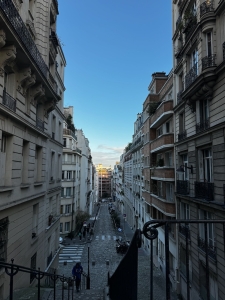
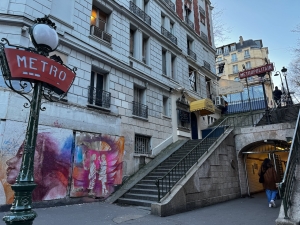
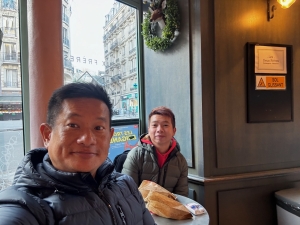
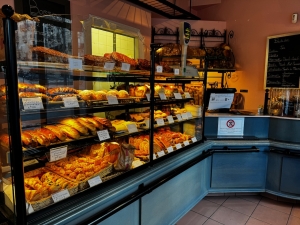
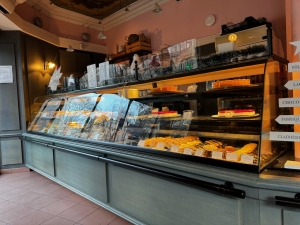
I chanced upon a series of videos done up by Paris Top Tips that not only gave a very plan for visiting the various arrondissements in Paris, but Alan, the content creator, also took the effort to map the attractions out in his videos on Google map making it very easy for us to follow. Montmartre is a big district, and we followed Alan’s recommendations when visiting the area (click here for a link to his video on Montmartre). We were religious in following the recommended route that Alan had posted in his video. Still, somehow, we got lost after Sacre Coeur and ended up walking where our feet took us. We started our Montmartre discovery at the Lamarck – Caulaincourt metro station. Coming out from the station, our first stop was finding a breakfast place. We chanced upon a bakery and popped in for a simple breakfast. Though the owner could only speak French, somehow, we could communicate (by pointing out which bread we wanted). The shopkeepers were very friendly, and the croissants were fluffy and crispy. We had a satisfying breakfast.


The Houses and Statues of Montmartre
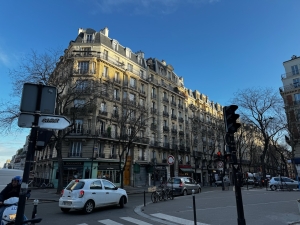
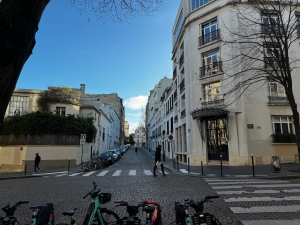
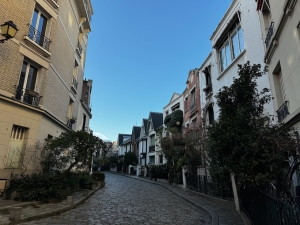
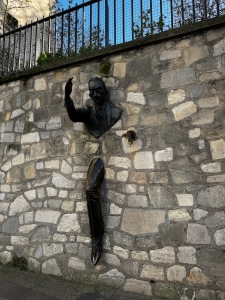
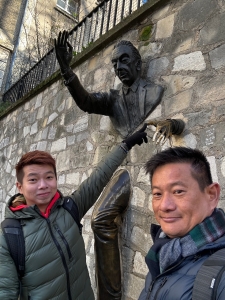
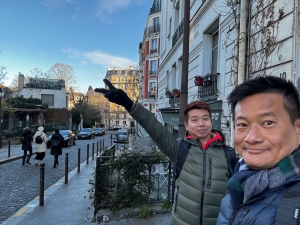
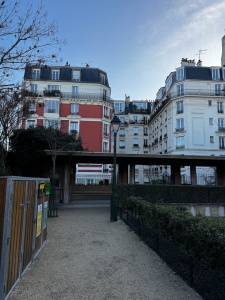
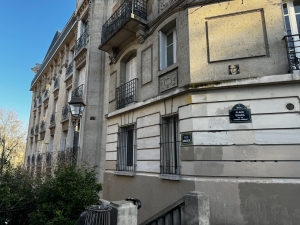
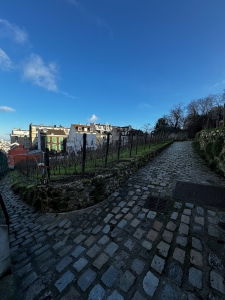
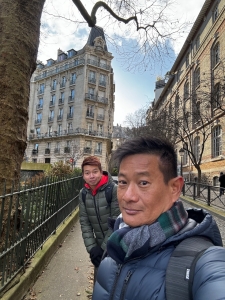
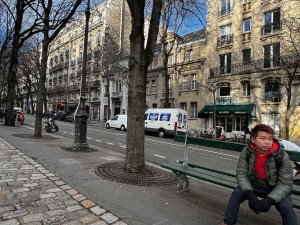
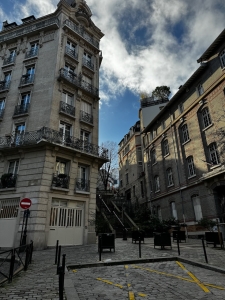
Our first stop of the day is Villa Léandre. Walking in Montmartre is very relaxing, and we could see the hilly terrain of this arrondissement. It did not take us long to walk to Villa Léandre. Villa Léandre sits on a dead-end street, comprising rows of houses with a distinct architectural style from the houses opposite it. Instead of the standard five storeys, Villa Léandre only has two to three storeys. I thought Villa Léandre was quite boring. Other than a few houses, there is nothing much to see here. Looking at the Google map, our next stop, the Passe-Muraille, is merely 5 minutes away. The Passe-Muraille is a bronze statue of a man walking through the wall. We could see his head, upper body, both hands and a leg poking out of the wall, and the rest of his body seemed to be stuck inside the wall. This statue pays homage to a French novel where a man could pass through walls but found himself stuck mid-stride when he lost his power.
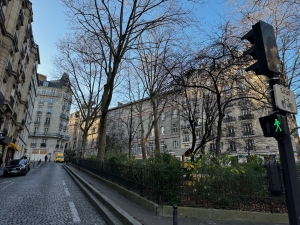
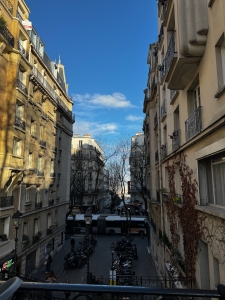

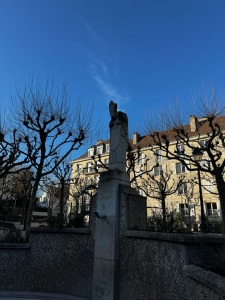
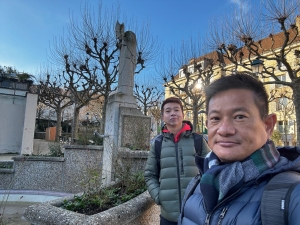
The next site we visited was the Beheaded Statue of St Denis. The statue is rather inconspicuous from the outside and sits in a small garden with a wooden entrance. We wouldn’t have found it if not for Google Maps. There is a pit in front of the statue, which was supposed to be a fountain. There wasn’t any water in this pit during our visit. The statue depicts a man holding his head in front of his body. Legend has it that St Denis was the first Bishop of Paris and was beheaded by a Roman Governor. St Denis walked 6km with his head in his arms and came to the fountain in this spot to clean his head. The garden here is very peaceful and a great spot for anyone to rest their feet while exploring Montmartre. Next up was Buste de Dalida, about a 2-minute walk from the Beheaded Statue of St Denis. Dalida was a French artist who had a house in Montmartre. To commemorate her, the city of Paris erected a bust of Dalida here. My first impression is that her bust seems to be “molested” by visitors in that her boobs are shiny. Perhaps visitors regard rubbing her boobs with a good-luck connotation.


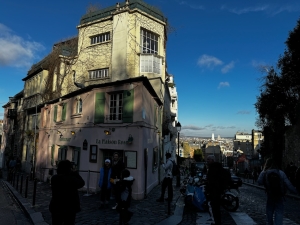
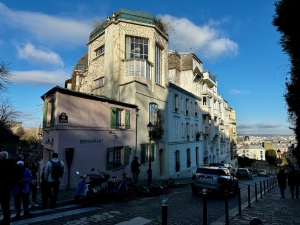
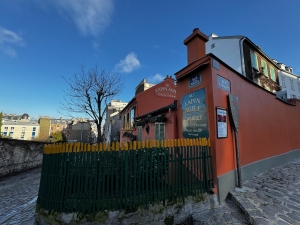
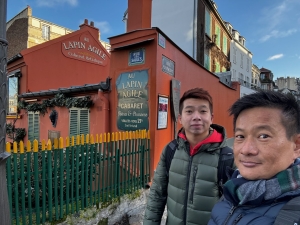
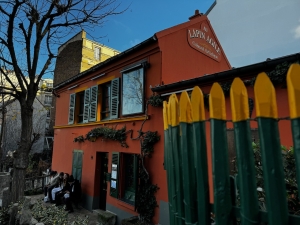
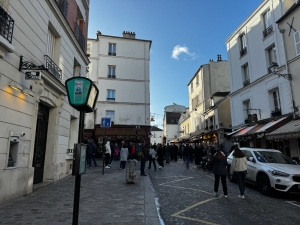
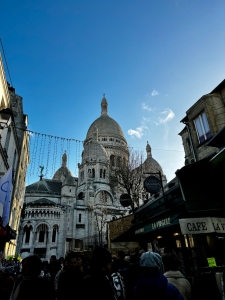
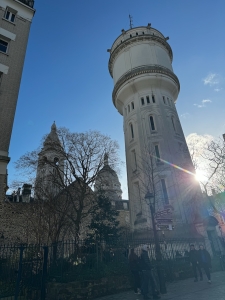
From the Buste de Dalida, our next stop – La Maison Rose, was just a straight ahead following the path. This pink facade restaurant is famous for its unique petit corner-house look and food. Many visitors to Montmartre would drop by for an Instagram photo of this cute little building. Right around the corner, about a 2-minute walk, we arrived at Au Lapin Agile. The distinctive bright orange two-storey petit building in Montmartre is Paris’s oldest cabaret bar. The cabaret bar only operates at night on certain days of the week. After taking pictures of the building, we headed to our next stop, the Sacre Coeur. Walking towards the basilica, we saw this medical tower-looking structure. Initially, I thought this tower was a watch tower, but this tower is a functional water tower. As there wasn’t much to see here as the tower was locked, we continued our walk towards the Basilica of Sacre Coeur. There are some souvenir shops selling inexpensive souvenirs on either side of the street that lead us towards the basilica. We spent some time picking out souvenirs before continuing to the basilica.

The Grand Sacre Coeur
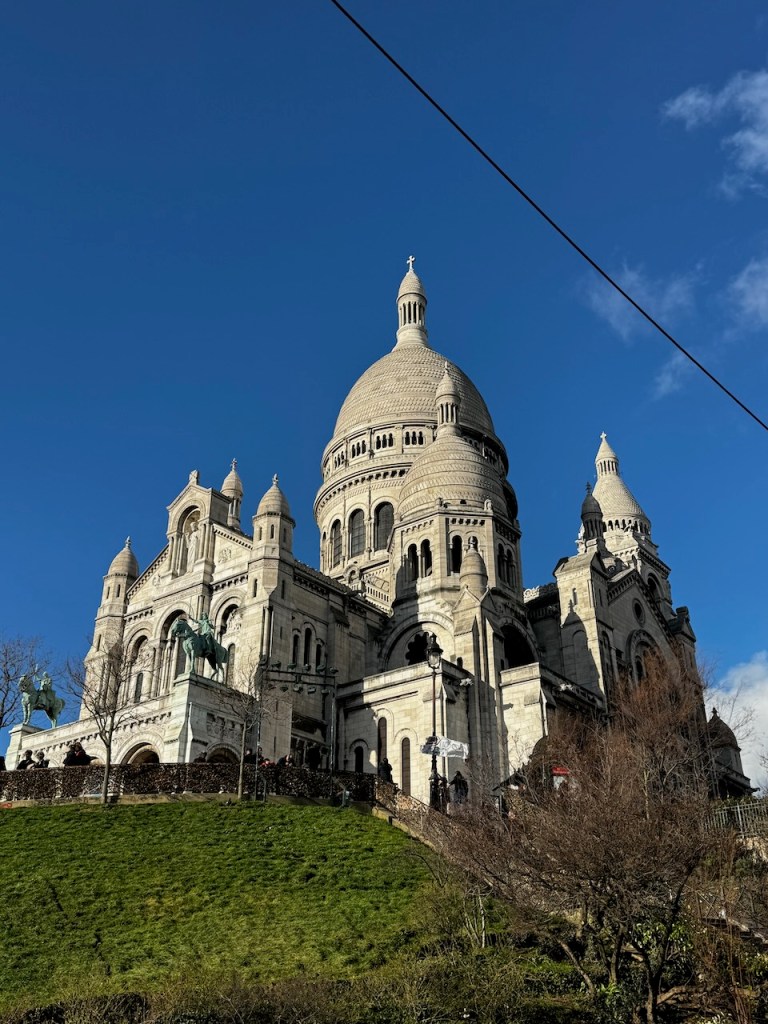
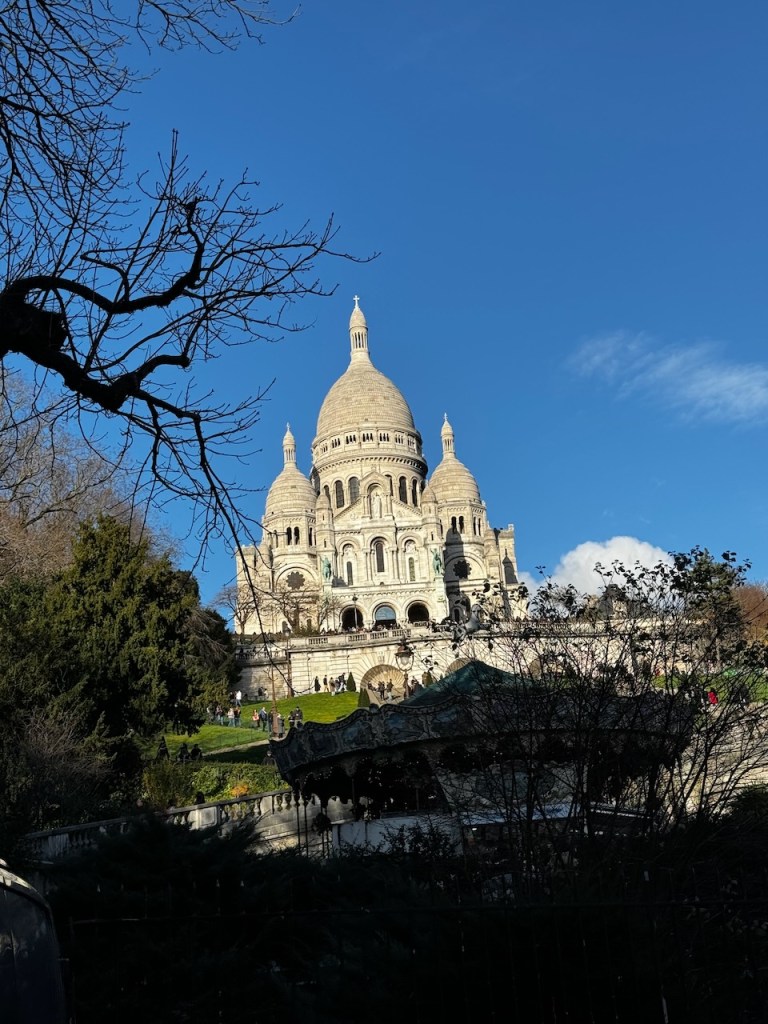
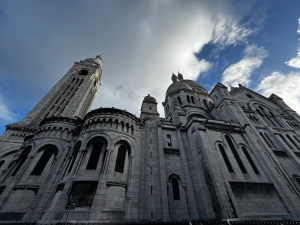
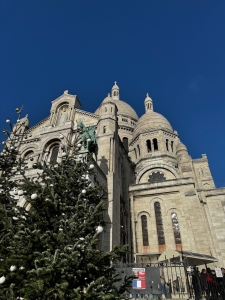
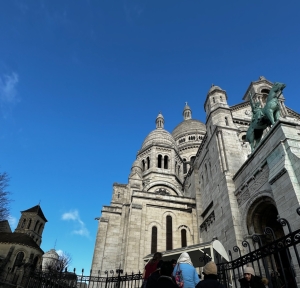
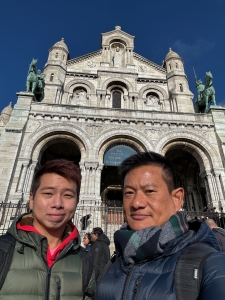
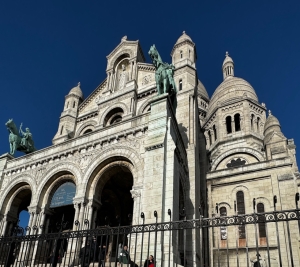
The Basilica of Sacre Coeur is a Roman Catholic church dedicated to the sacred heart of Jesus. The building style of the church reminded me of the Vatican City, but on a smaller scale. Nonetheless, the church still looks very grand. Sitting on a hill overlooking Paris made me feel that the basilica was protecting the city. It was free to enter the church, all we had to do was join the queue for bag inspection. The queue was not long when we arrived at Sacre Coeur, and we were in the church in about 3 minutes.
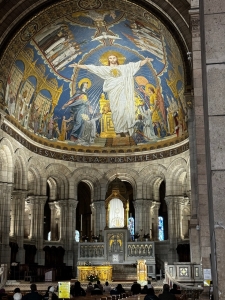
Inside the Basilica of Sacre Coeur
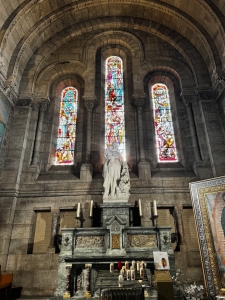
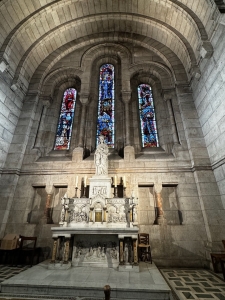
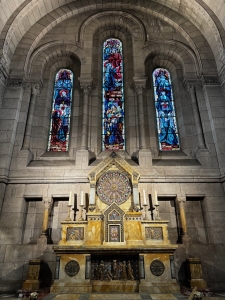
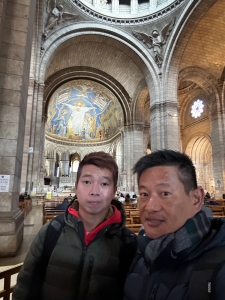
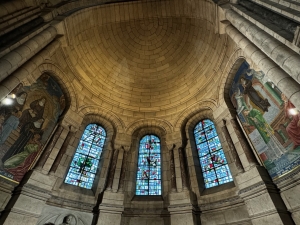
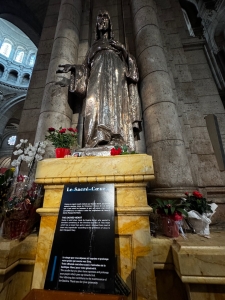
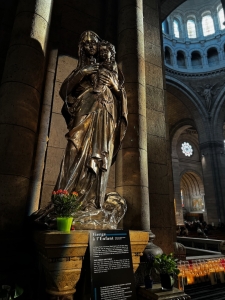
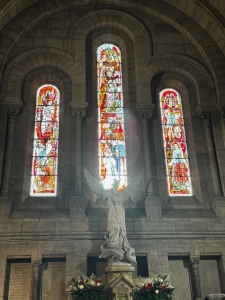
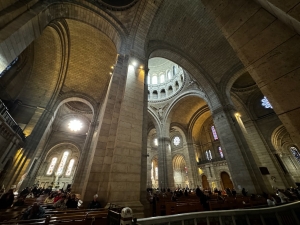
The church was large and could accommodate the huge number of people visiting. The centre part of the church was cordoned off for visitors coming here for prayers. Grand but dark was my first impression of the interior of the basilica. The darkness did not give off a grim sensation but emitted a comfortable and peaceful feel. The first thing that caught my eye was the large mosaic fresco of Jesus dressed in white with his arms opened and a golden heart in front of him, welcoming visitors to the basilica. There are several small chapels at the sides of the interior of the basilica. As we were walking around the basilica, we saw numerous stained glass windows beautifully depicting various characters in the bible. They are especially beautiful when the rays of sunlight shine through them, casting a colourful shadow on the basilica’s interior. Several colourful mosaic frescos adorned the walls and dome ceilings of Sacre Couer, some in gold-coloured tiles depicting scenes from the bible. These frescos not only brighten the basilica’s interior but are also artistically and tastefully done. We also spotted several sculptures around the interior of Sacre Couer. The one that caught my attention is the solid silver sculpture of Jesus. The sculpture captured his kindness and acceptance of everyone with his hand gesture of invitation.



Climbing to the Dome of Sacre Coeur
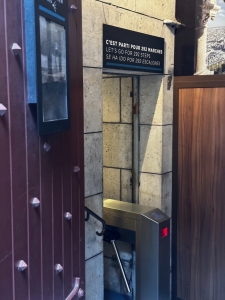
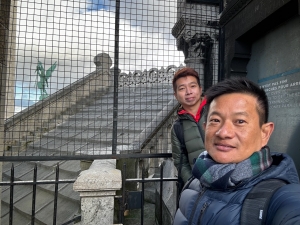
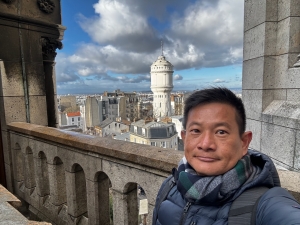
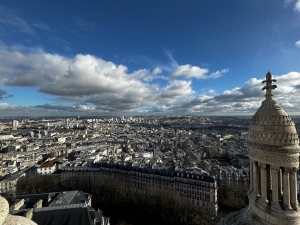
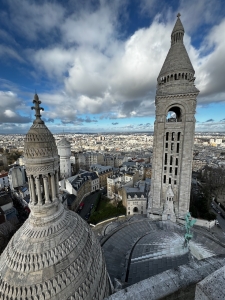
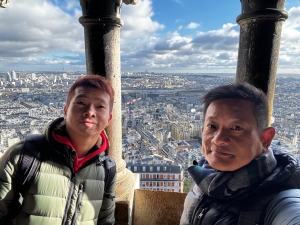
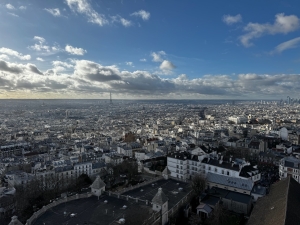
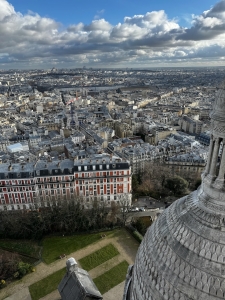
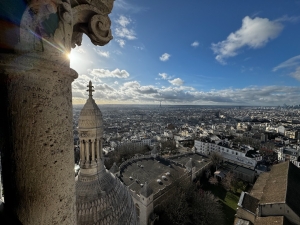
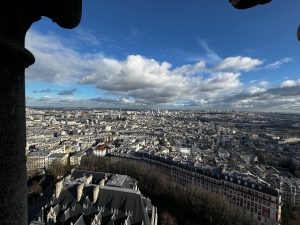
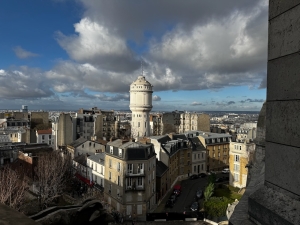
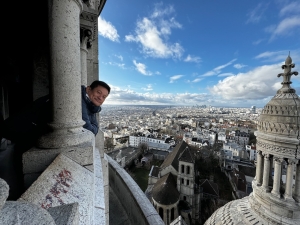
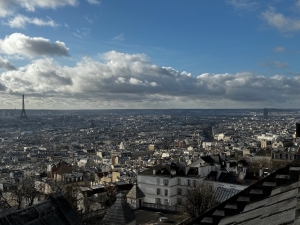
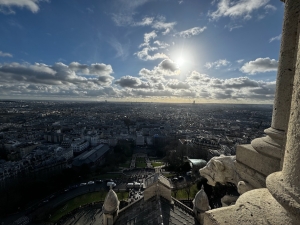
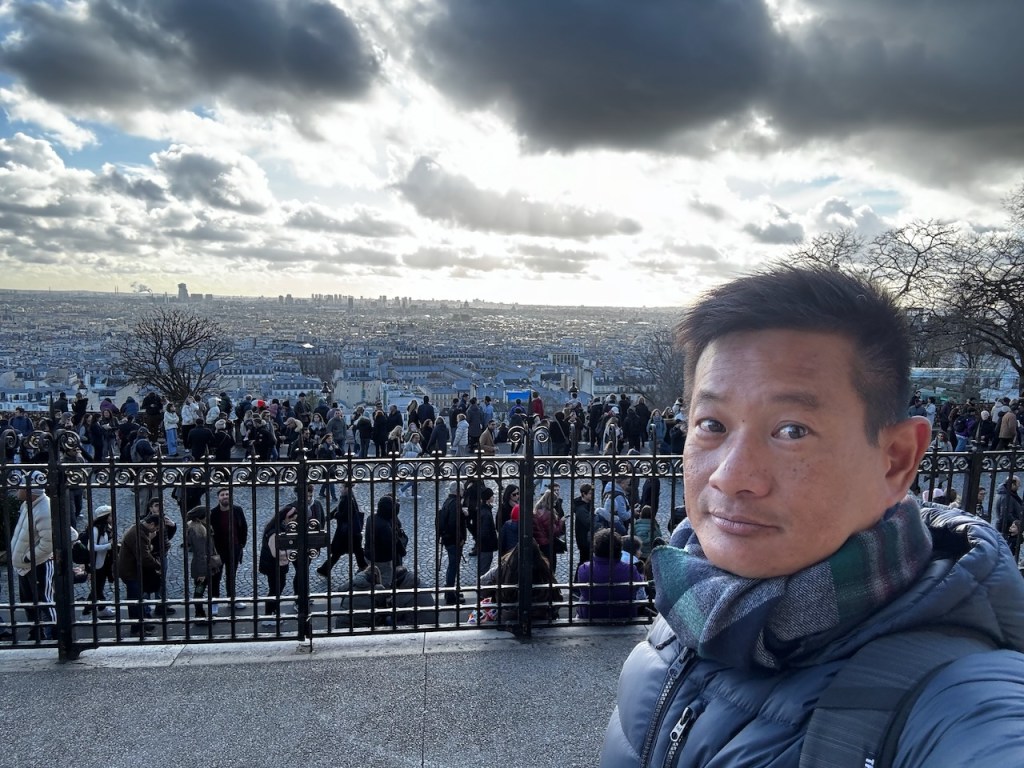
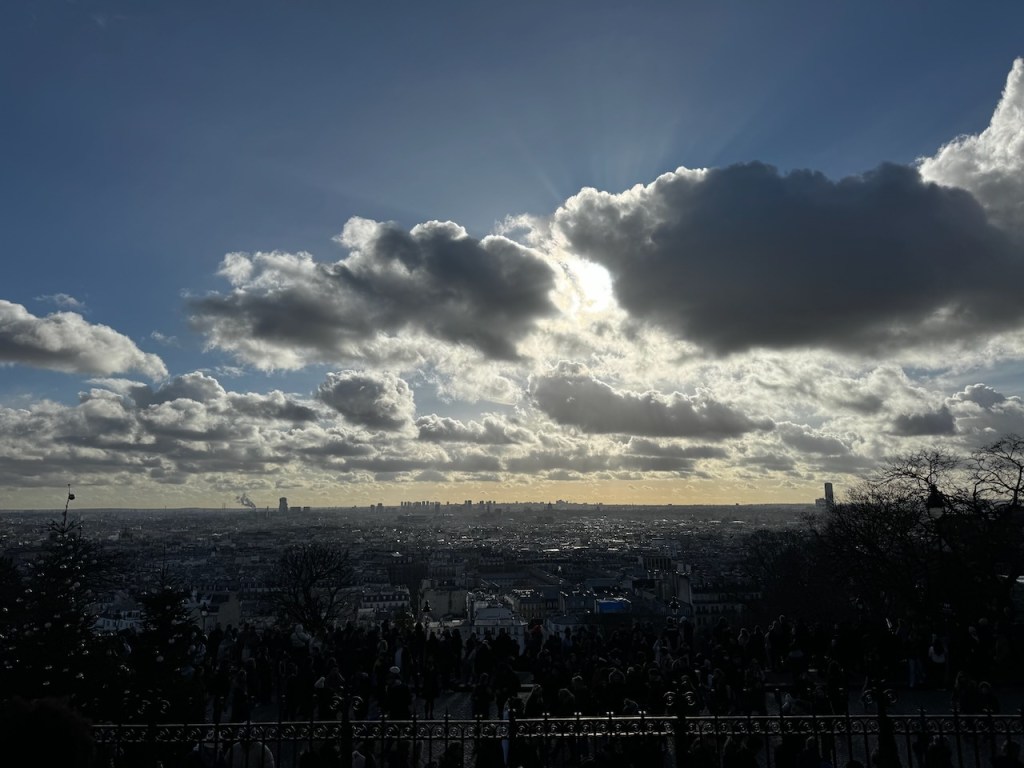
We saw a sign that said “Panasonic view of Paris” as we walked into the church, pointing to the way up the basilica dome. Entrance to the dome climb can only be bought at the venue, costing €8 per adult to scale up the 292 steps to the top of the basilica. The climb to the top consisted of a series of narrow stone spiral staircases that seemingly went on with no end. Occasionally, a small window would pop out to give us a good idea of how high we were and a guesstimation of how long more to go. At the end of the climb, we were rewarded with a magnificent view of Paris at the top of the dome. It was worth each one of the 292 steps we climbed. We were on a higher elevation than the terrace at the bottom of the the basilica, which gave us a better unobstructed view of the City of Lights. Not only were we able to see Paris in front of the basilica, but we were also able to see the city behind Sacre Couer. What I feel the top of the dome brings is the lesser crowd. We did not have to wait for our turn for a picture with Paris as the backdrop, nor would we need to worry about other visitors photobombing our shot.




The Shopping Arcades in the 9th Arrondissement – Getting Lost in Montmartre
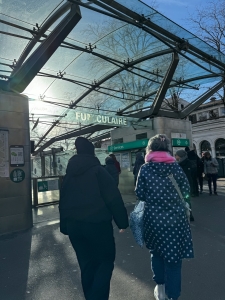
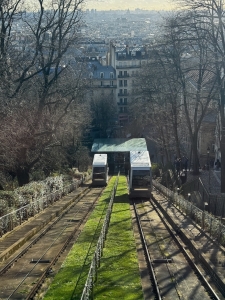
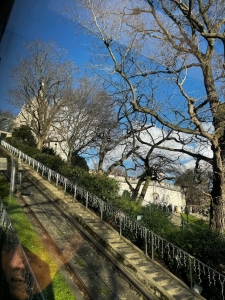
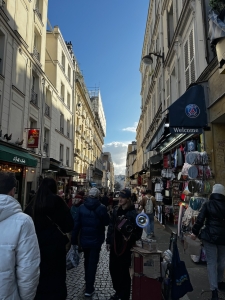
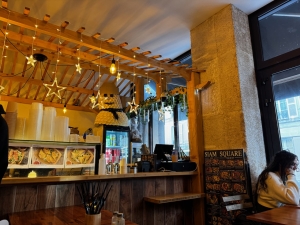
After visiting the Sacre Coeur, we followed Alan’s instructions in his video and took the Funicular down to the base of the hill on which the basilica was built. The funicular is chargeable, and we could use our Navigo weekly pass to ride it for free. The streets at the base station were filled with shops, restaurants and cafes. As we were hungry, we found a Thai restaurant near the funicular base station and settled for our lunch there. The level of spiciness was the kind that we were used to. The food was tasty and, more importantly, spicy. After lunch, we wanted to continue our hunt for the sites in Montmartre. This is when things went wrong, and we got terribly lost. We wanted to visit the Wall of Love in Montmartre and followed the Google Maps instructions. I must have keyed in the wrong landmark, and little did we know, we unknowingly drifted into the 9th Arrondissement.

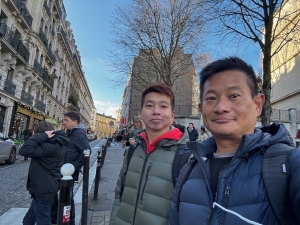
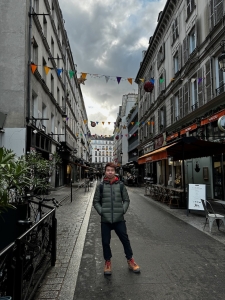
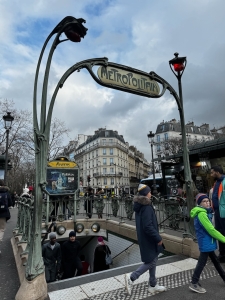

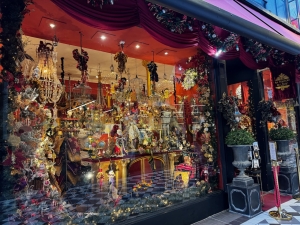
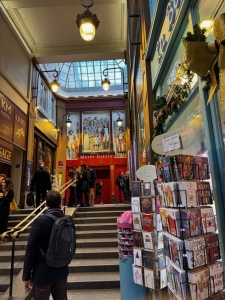
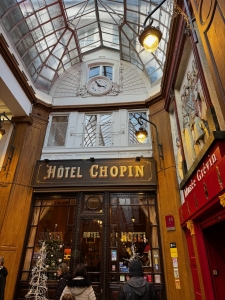
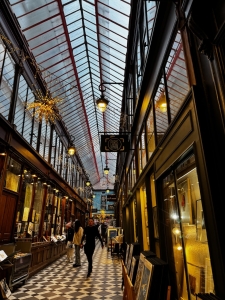
Google Maps lead us through a covered shopping arcade. These covered shopping arcades were built for the locals to take shortcuts and shelter from the rain and mud while shopping. The two Passages we went through in the 9th arrondissement were built in 1847. We walked through Passage Verdeau first, which felt like time stopped here. The decor screams of the 1960s with its white marble flooring and wooden doors. The high glass ceiling lets in natural light, illuminating the Passage and giving it a very artistic flare. Shop in Passage Verdeau mainly sells antiques and paintings, with a shop selling comics from the ’50s. Passage Verdeau is rather short, we were through it in 2 mins (partly because we were glancing into the the shops). Across the street from Passage Verdeau was Passage Jouffroy, which has an even more retro vibe. Passage Jouffroy is decked with mosaic black and white tiles on the floor and similar wooden doors in the shops. This Passage mostly houses cafes, bookstores and art galleries. There is even a hotel in Passage Jouffroy.
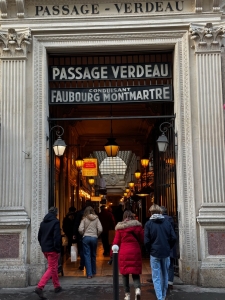
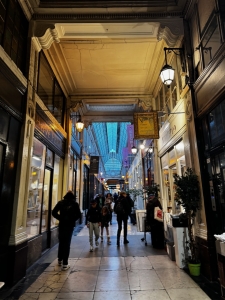
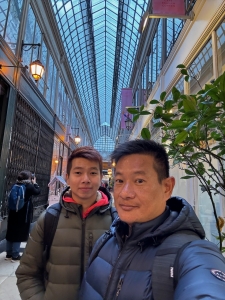



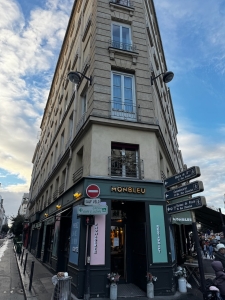
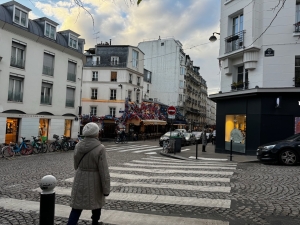
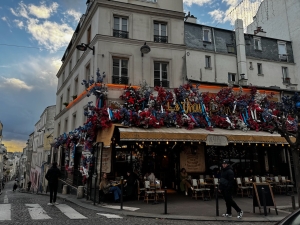
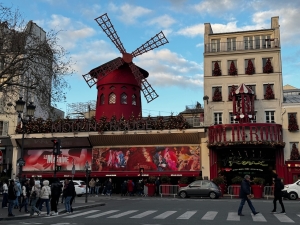
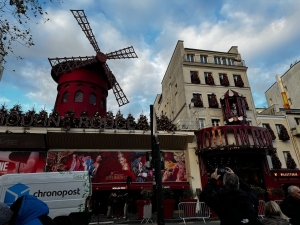
I consulted Google Maps again after we walked through Passage Verdeau and Passage Jouffroy into the main street. This is when I realised we were very far off course. We then decided to take a bus back to Abbesses Metro station and make it to the Wall of Love near the Sacre Coeur funicular. Alighting from the bus, we got lost again and gave up the idea of going to the wall. We immediately got the directions for Moulin Rouge, the famed red building with a windmill on top. Moulin Rouge today is a theatre with live dance shows. I reckoned the best photo spot for Moulin Rouge is right outside the Starbucks opposite the theatre.


The Landmark in the 8th Arrondissement – Arc De Triomphe
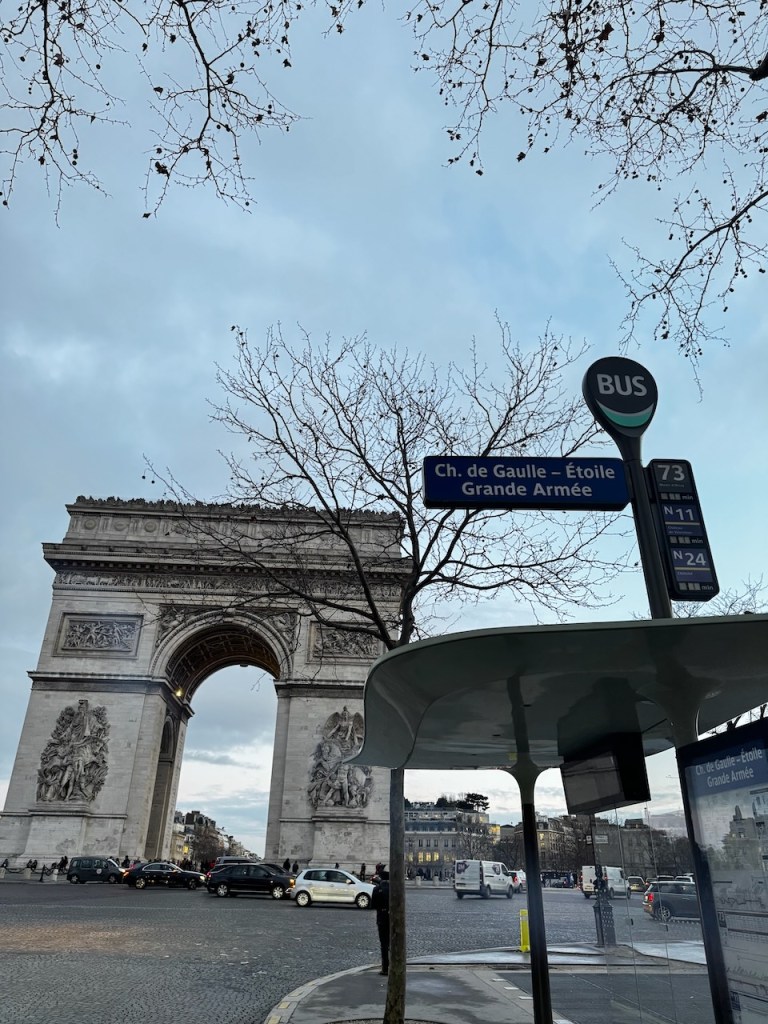
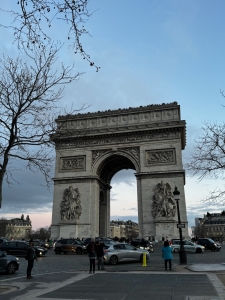
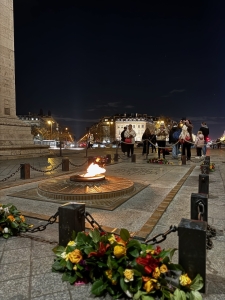
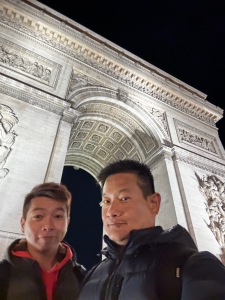
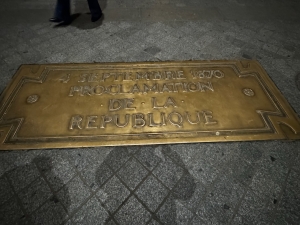
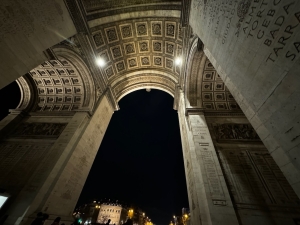
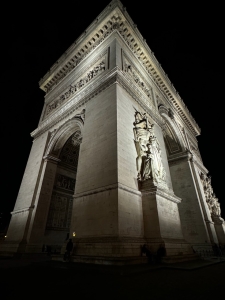
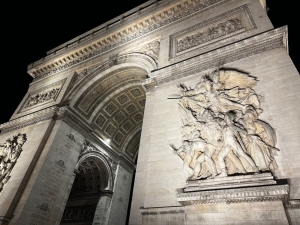
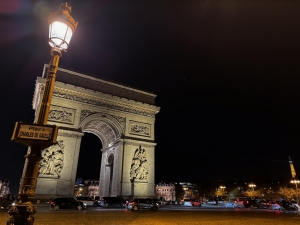
Leaving the 18th arrondissement, we returned to the 8th arrondissement to the Arc de Triomphe. One of the things I wanted to do here was climb to the top of the Arc de Triomphe, as I didn’t want just to take pictures of the arc. As I researched for this Paris trip, I learnt that the top of the arc offers a spectacular view of the city of Paris. Unlike the Eiffel Tower, where tickets to the summit were limited, I did not think tickets to the top of the Arc de Triomphe would be sold out. We waited about 20 mins in a queue to purchase our tickets. To get to the ticketing booth, we followed the signs in the tunnels that said “Arc de Triomphe”. After getting our tickets, we emerged from the tunnel and were right under the arch. From here, we could see the sculptures on the walls of the arc.

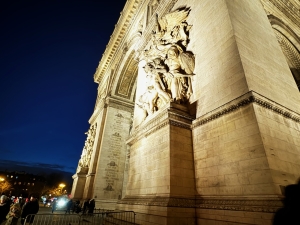
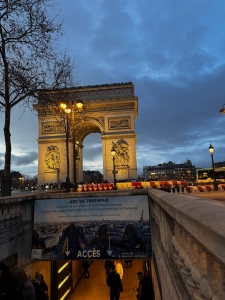


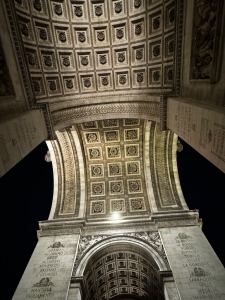
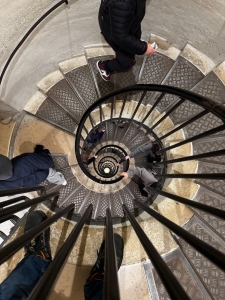
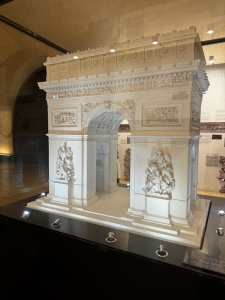
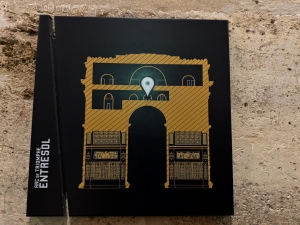
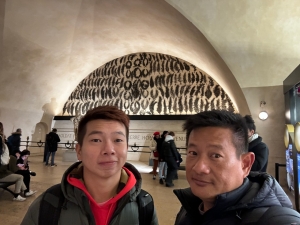
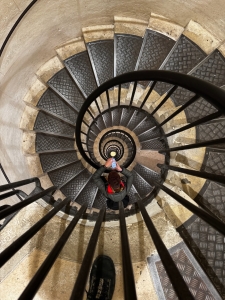
We joined another queue for security checks to enter the arch for our climb to the top. The initial 284 steps were done on a spiral staircase that snakes up the Arc de Triomphe. The end of the spiral staircase led us to its attic, with exhibits about the arch and a gift shop. A TV panel in the centre of the attic streams activities directly under the arc, making it look like a glass being fitted here. From the attic, we took another 46 steps to the roof of the Arc de Triomphe.
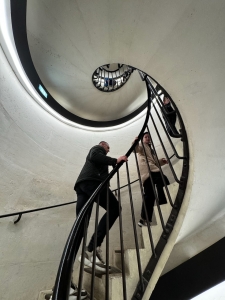



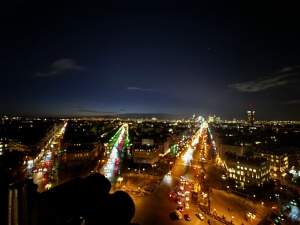
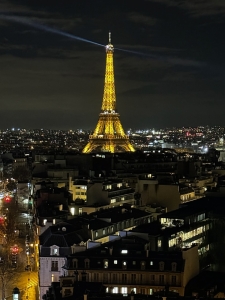
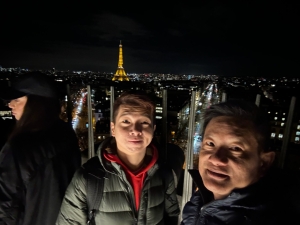
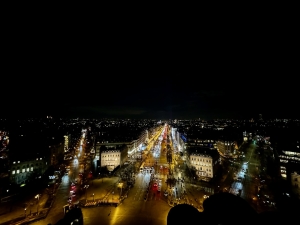
We were soon rewarded with views of the roads that seemed to converge into the Arc de Triomphe and the night view of Paris. The view was stunning, seeing how the roads came through the arc, making it feel as if the arc was the centre of Paris. We could see the Eiffel Tower in her yellow nightgown, standing proudly amongst the buildings in Paris.
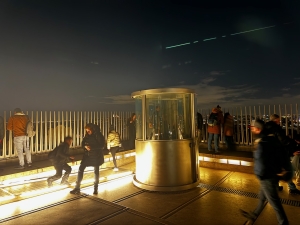
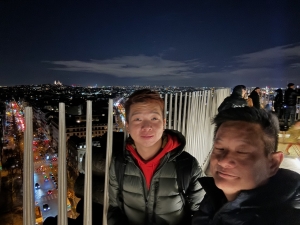
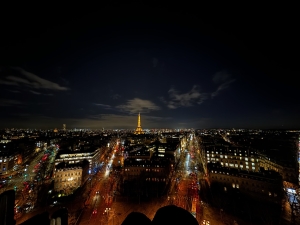

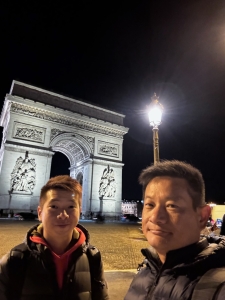
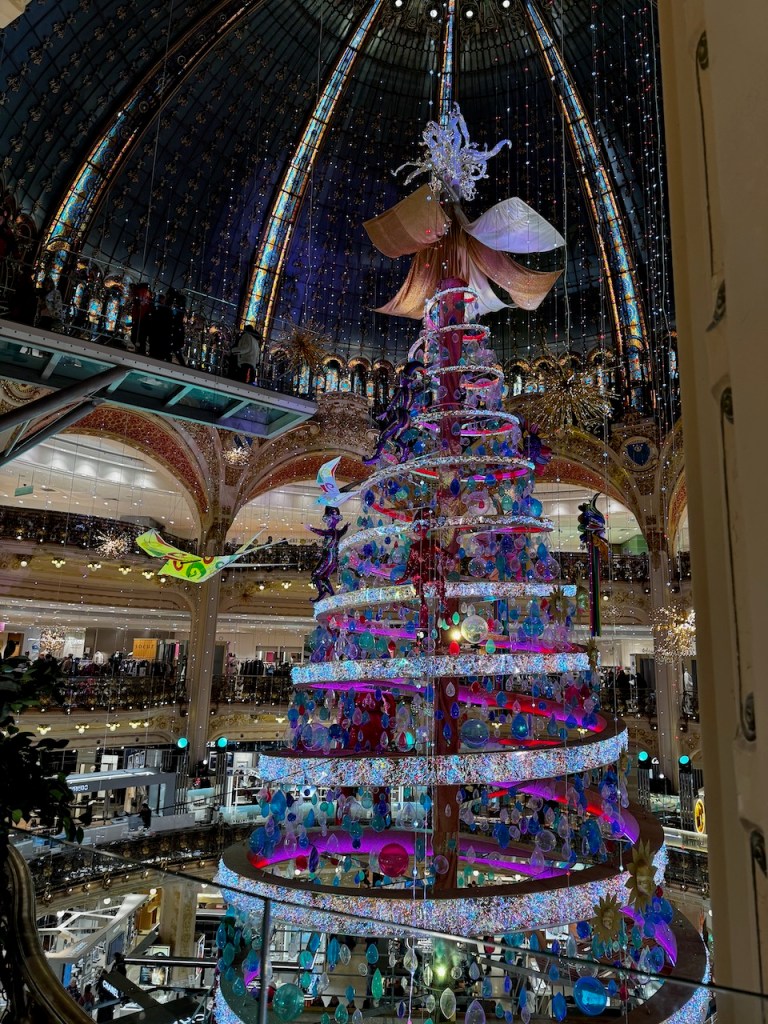
After taking our fair share of pictures, we headed back down to the bottom of the arch to take more pictures of the Arc de Triomphe up close. Looking at the time, we figured we still had 1 hour before the rooftop of Galeries LaFayette closed. When we arrived at the department store, we were told that the rooftop closes 30 minutes before the store’s closing time. Seeing that there is not much we can do here, we left Galeries LaFayette and hunted for dinner. The restaurants we walked past seemed either expensive or crowded. We ended up buying McDonald’s back to the hotel. We rested early tonight as we would need to wake up early the next day for our guided tour of the Versailles.
Once again, a lot in one day. I also love walking around Montmartre as its traditional architecture has been preserved due to its success as a tourist destination, this is how other districts on the outskirts of Paris looked before urbanisation united them with other districts.