Visiting the Marble Mountains is a must for anyone coming to Da Nang for the first time. Most tours I have found online combine Marble Mountain with My Son or Hoi An. Besides the Marble Mountains, I also wanted to visit Hai Van Pass, where we would see the Peninsular. However, very few tours combine these two sights in one day. I managed to find one tour operator, Explore My Vietnam, that combines these two sights in one day at a reasonable price.
Marble Mountains – Water Mountain of The Five Elemental Mountains
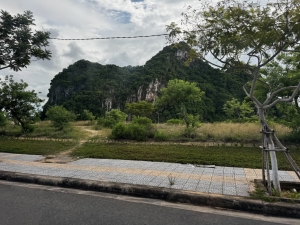
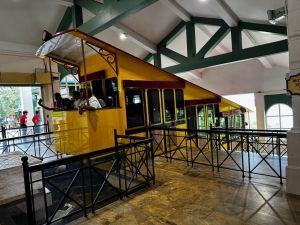
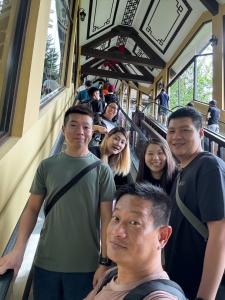
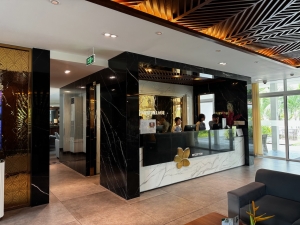
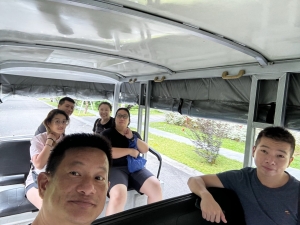
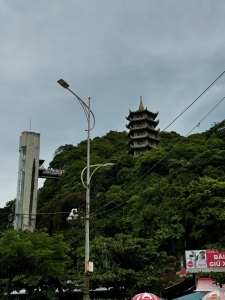
We met our guide at the main entrance of our resort, who brought us to the Marble Mountains, about a 15-minute drive from our resort. Having passed the Marble Mountains several times over the last few days, we are finally visiting this iconic sight of Da Nang. The Marble Mountains is a group of five marble and limestone hills, each representing an element of Water, Fire, Earth, Wood and Metal. Standing 105m tall, the Water Mountain is the biggest and the most beautiful. We started our Water Mountain from the eastern side of the hill, where an elevator system sits, saving us the climb of 150 steps. We exited the elevator at the top, followed the well-paved pathway and arrived at our first stop – Xa Loi Tower. Xa Loi Tower is a seven-storey stone pagoda visible from the base of the hill. The pagoda has a small surface area, and despite having 200 stone statues in the pagoda, we only saw one statue of Buddha installed in it. There was little to see at the Xa Loi Tower.




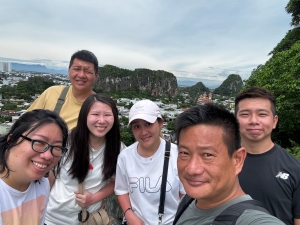
Linh Ung Pagoda
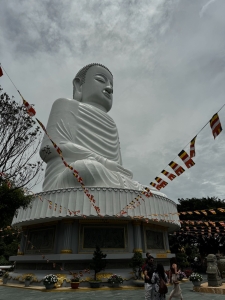
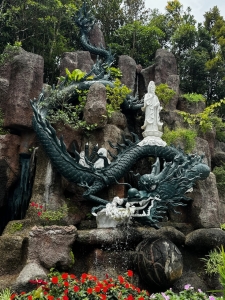
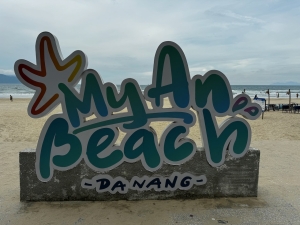
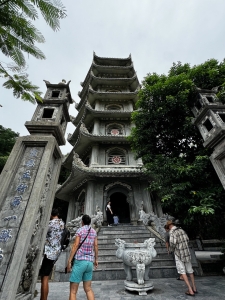
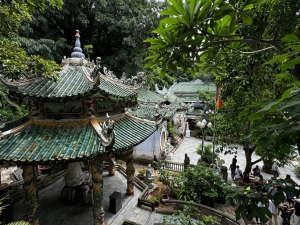
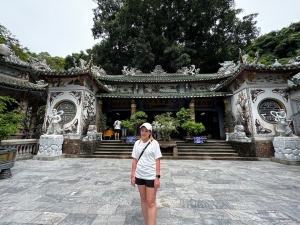
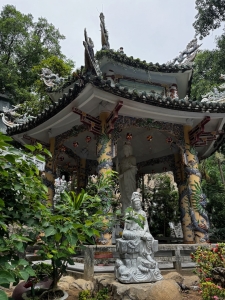
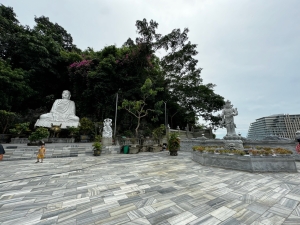
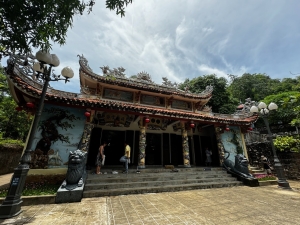
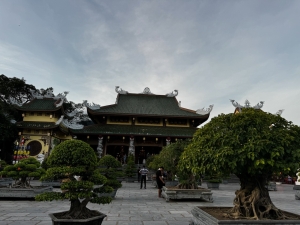
Following the pathway, we came to a crossroads and took the pathway to Linh Ung Pagoda. Rather than an actual towering pagoda, Linh Ung Pagoda is a huge compound with a temple building and a pavilion beside it. The main temple building has distinct Chinese architecture and is covered in white topped with green roofs. Despite its plain colour scheme, the carvings on Linh Ung Pagoda were intricate. There were three buddha stations installed Inside the temple. In front of the temple is a large open deck, where we found a huge marble Buddha statue sitting at the side of the deck. The view of the My Khe Beach area was amazing from this deck, where visitors could get a great photo shot of the beach area. The Pavilion beside the main temple houses a large statue of the Goddess of Mercy (or Lady Buddha, as the locals termed it). We left Linh Ung Pagoda after praying to the Buddha statues here.
Tang Chon Cave
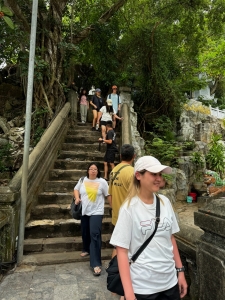
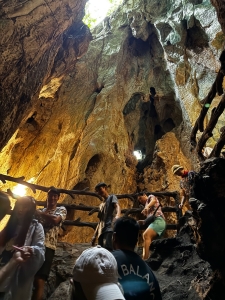
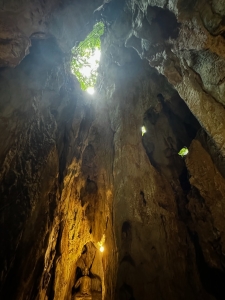
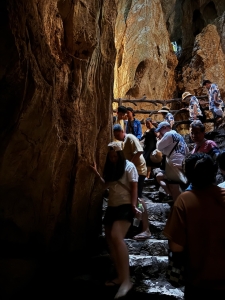
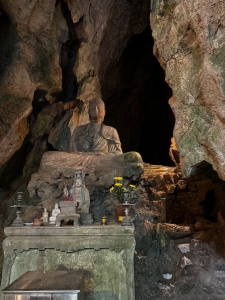
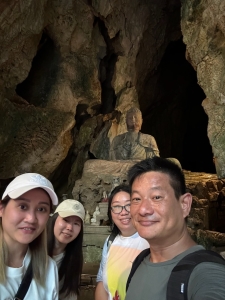
Tracing back from where we came from, we saw a sign that pointed to Tang Chon Cave. The cave is situated on top of a series of staircases. Tang Chon Cave is one of the smaller caves at the top of the Water Mountain. The path that we followed led us to the cave entrance that seems to have collapsed over the years. There is one flight of stairs inside the cave that leads us to the innermost part of the cave. This staircase creates a bottleneck where everyone congregates, with people going up and coming out from the inner cave. Despite not being a large cave, we spent most of our time here waiting for our turn to use the staircase. There are two Buddha statues inside the cave: a statue of a Buddha, sitting cross-legged with his eye closed in a meditation stance placed in one corner of the cave, and another statue of a standing Buddha at the other corner.



Heaven Gate
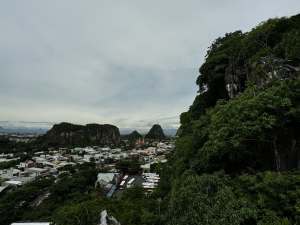
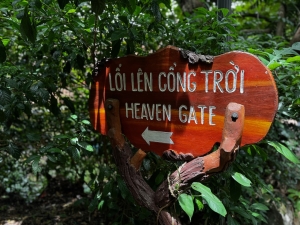
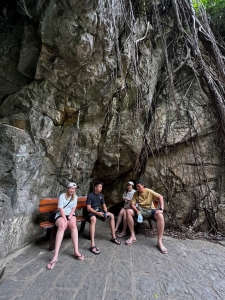
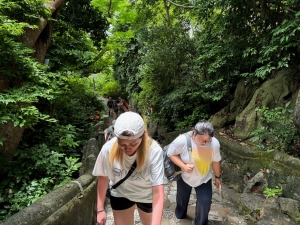
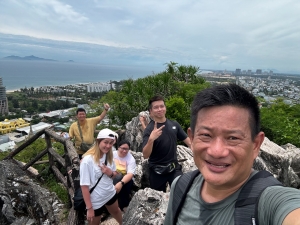
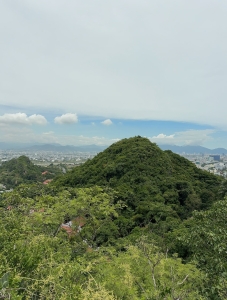
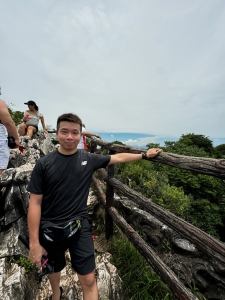
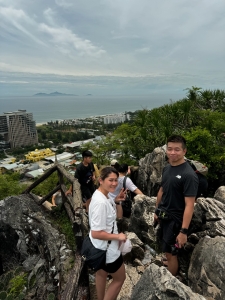
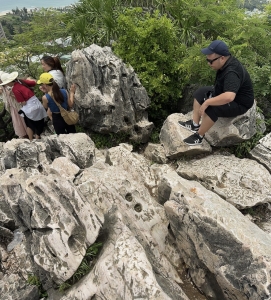
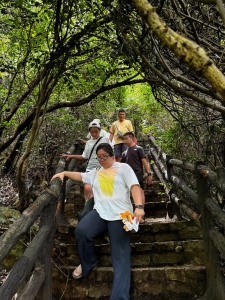
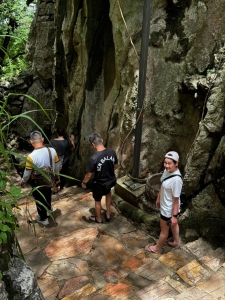
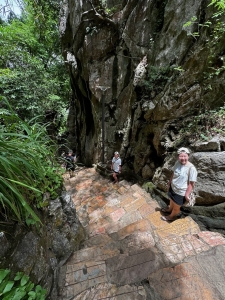
As Tang Chon Cave sits at the dead end, we traced our steps back to Ling Ung Pagoda and took the other path from the crossroad. Along the way, we saw another large cave that seemed to be packed with visitors. Thinking that we would pass by this cave again on our way back, we continued our walk on the path with a sign that said “Heaven Gate”. Thinking that this sign would lead us to the highest peak on Water Mountain, we followed the path this sign pointed to. The initial climb to the Heaven Gate was easy as it was well-paved with stairs that seemed to go on forever. Suddenly, we were met with a rugged natural staircase that seemed to suggest work on the staircase had stopped. Climbing up this set of rugged natural stairways was a tad more challenging. We had to negotiate with people coming down from the top while trying to find balance on whatever flat surface we could step on. Some of the steps were waist height tall, which would be torturous for people with knee issues. Fortunately, these rugged steps were only a short flight. Soon, we find ourselves on the top of the steps. We were treated to more unobstructed views of the sea and parts of the nearby peaks that form the Marble Mountains. The area at the top was rather small, and we had to balance finding whatever flat surface could accommodate our feet while negotiating with the crowd gathering at this small viewing spot. As people were coming up, we made our way down after taking some pictures. Back from where we came from, we took a short rest at a large resting area in the middle of the Water Mountain before continuing our walk to the last cave.




Huyen Khong Cave
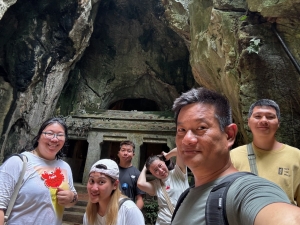
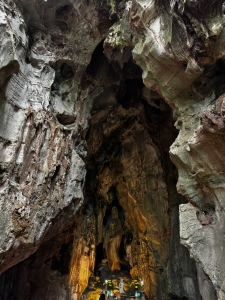
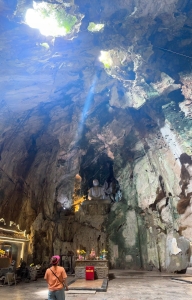
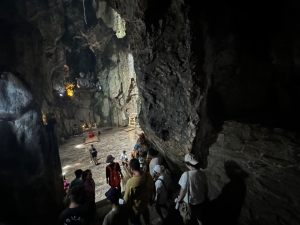
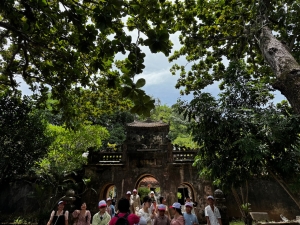
After our short rest, we followed the pathway to our next stop, Huyen Khong Cave, the largest cave in the Water Mountain. The entrance to Huyen Khong Cave is decorated with a well-carved stone archway., which led us to the cave entrance after a short walk. Huyen Khong Cave looked different from the other caves we have seen. Apart from its significantly large size, the flooring in Huyen Khong Cave was decked in deliberately polished marble, creating a flat surface. Sitting high on the cave walls was a Buddha statue in a meditation posture, blessing visitors who made it to this cave. Due to its sheer size, Huyen Khong Cave felt rather empty, with a couple of smaller shrines on both sides of the Buddha. The natural hole on the cave roof lets in rays of sunlight, giving it a mystical vibe. Despite its large size, there is not much going on inside this cave. Looking at the time, we realised we had spent almost 2 hours on Water Mountain. As we were a little behind time, we followed our guide’s instructions and made it to the staircase that marked Gate 1 to meet our guide at the base of the hill.






Tham Thai Pagoda and our way down
Gate No. 1 was a short walk from Huyen Khong Cave. Along the way, we passed by Tham Thai Pagoda. This so-called pagoda is a smaller temple building similar to the Linh Ung Pagoda. Unlike Linh Ung Pagoda, Tham Thai Pagoda is more colourful, decked in light blue, orange and green roofs. As this is a smaller temple, we did not enter the temple and made our way towards Gate No.1 at the base of the stairs. The way down was much easier as the 150-step staircase was well maintained. It took us 10 minutes to walk down the stairs, where we met up with our guide and continued our tour to Hai Van Pass.
The Breathtaking Hai Van Pass
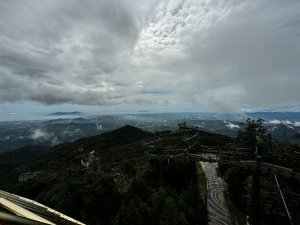
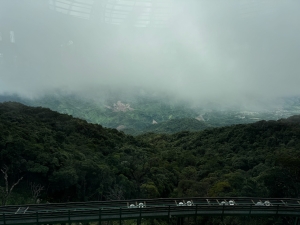
Hai Van Pass is a mountainous road that rose to almost 500m up the mountains between Da Nang and Hue City. However, this mountainous road was less used after the construction of the Hai Van tunnel, which cut the journey by more than 1 hour. Today, Hai Van Pass is mainly used by tourists who want to get scenic views of the bay areas of Central Vietnam. As the road winds up the mountain, our guide stopped at a scenic point where we got a beautiful view of an unspoiled beach and the islands near Da Nang. It felt very tranquil here, with no crowd on the roads, the beach, or ships plying on this part of the bay. From the side we were on, we could see some low clouds brushing the mountain’s peak that we would be driving up. And this is just the beginning of the gorgeous view that awaits us further up the pass.


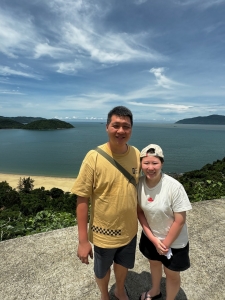


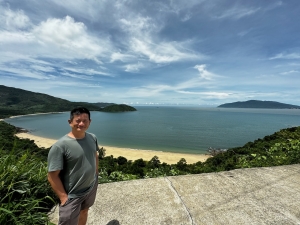
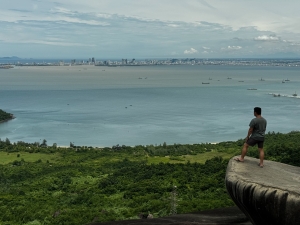
After a few pictures, we continued to drive up the mountain. As we were being driven up the windy roads, our guide pulled over in front of a cafe. This is our second stop on Hai Van Pass, where we stopped for a coffee break. Rather than calling it a coffee break, our guide wanted to show us the views from this cafe. As he ordered our drinks, our guide encouraged us to walk down the steps onto a rock that jags out into the air for some nice pictures. Taken from a correct angle, it felt that the rock was hanging out into the air. We could see Da Nang City and My Khe Beach sitting across the bay from here. Standing on the rock, looking out into the bay, gave us a sense of liberation.




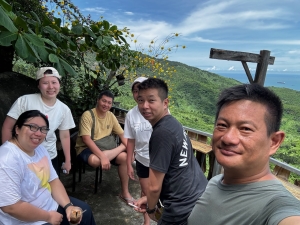
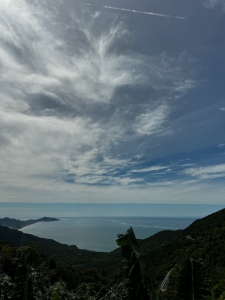
We continued our drive up Hai Van Pass after a cooling iced Vietnamese coffee. Our next stop on Hai Van Pass was another cafe. Our guide told us this is the highest point of the Hai Van Pass road, and from here on, the road winds down to sea level. At this cafe, we were treated to the views of Lang Co Bay, sitting on the other side of the mountain. The cafe has a private lookout that extends into the air. While we could see the Bay Area and the part of Vietnam stretching to Hanoi in the North, I thought the views here weren’t as great. Due to the vegetation and the shape of the terrain, we can only see part of the bay and the sea. After resting and enjoying another cool drink, we descended Hai Van Pass towards Lang Co Bay.




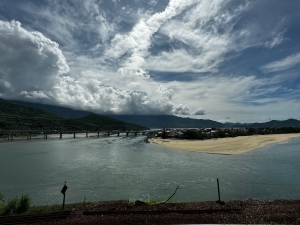
On our way to the Lang Co Bay area, our guide made a brief stop near the base of the Hai Van Pass when he observed we were taking some pictures in the car. The body of water in front of our eye, protected by a natural sandbar, forms the lagoon of Lang Co. Our guide mentioned that the locals stay by the lagoon and farm oysters in it. From this viewpoint, we caught the picturesque view of the mountains seemingly guarding the lagoon and a bridge that ran across the lagoon. Our guide told us this bridge leads to the Hai Van Pass Tunnel, the route we would take when we return to Da Nang later in the day. After taking our fair share of pictures, our guide drove us to a seafood restaurant by the beach, where we had a sumptuous and fresh seafood lunch.


Thac Do Stream – The Secret Waterfall
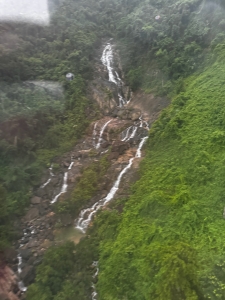
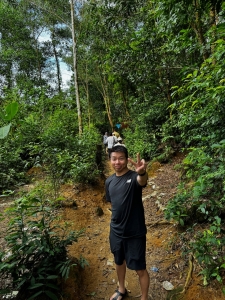
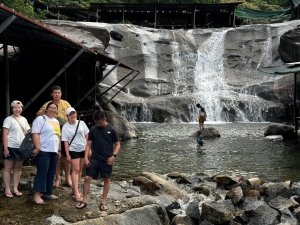
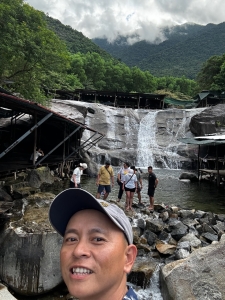
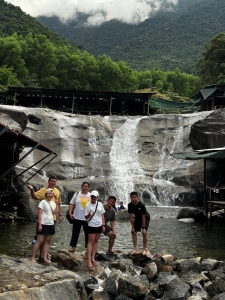
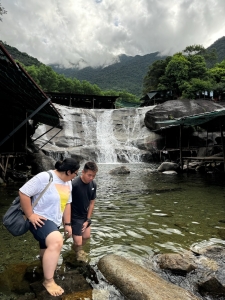
After lunch, we drove on a narrow road next to the lagoon, where we could see oyster farms. The coastal road soon turned into forest roads and a single-lane gravel road leading us into a small town. After we had parked the car, our guide led us through a small forest road on foot, and after about 3 minutes of walking, we arrived at Thac Do Stream. At the end of Thac Do Stream sits a small waterfall, the waterfall was so secluded that only locals know of its existence. The natural wall (due to the terrain formation), no taller than 3 storeys high, with streams of water rushing down from the higher terrain. There is a shallow waterhole in front of the wall where we saw some children swimming. I like the tranquillity here as few people are around. Listening to the water flow gushing down the waterfall and the occasional laughter of children playing in the cooling water hole, immediately a sense of relaxation ensued. We left the secret waterfall after taking some pictures.




Our Bonus Stop – Linh Ung Pagoda: Home of the Lady Buddha Statue
Our day trip was supposed to end at 3.30 pm, but we left the waterfall at 4.20 pm. Thinking that we would be driven back to Da Nang (I had requested our guide to drop us off at Da Nang City), our guide suddenly turned to me and told me he would bring us to the Lady Buddha Statue. This was a pleasant surprise, as this stop was not on our itinerary.
Lady Buddha
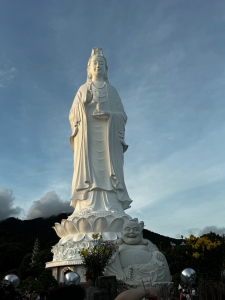
Standing in front of the 67m marble Lady Buddha Statue, the peaceful and benevolent nature of the Lady Buddha was very well captured on her face. The Lady Buddha looked like she was watching over visitors who came here to pray to her, ensuring we were protected. Our guide told us Da Nang used to be hit by typhoons before the statue was built. Miracles happened after the statue was built, and several times, typhoons died down when they neared the statue. The locals believed the mystical powers of the Lady Buddha protected the city from typhoons. As the Lady Buddha was situated near the coastal line, we found a viewpoint in front of the statue that offered us a stunning view of Da Nang Bay and the city. It is especially beautiful during dusk when the purple sky matches the night lighting around the Linh Ung Pagoda.


Main temple
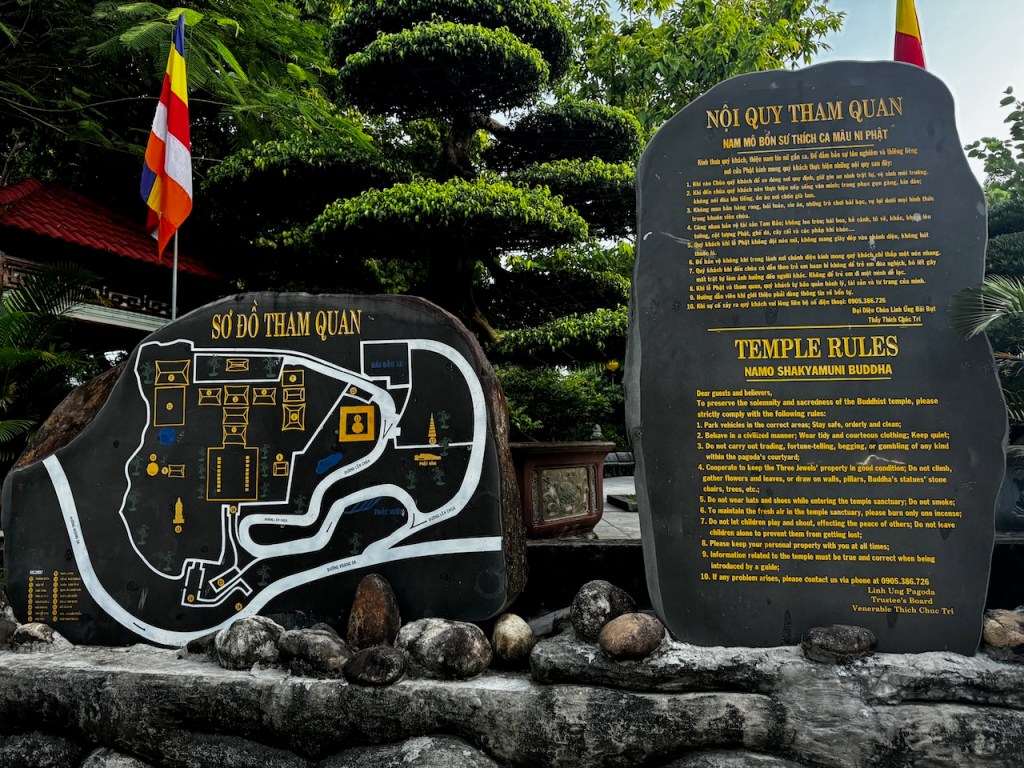
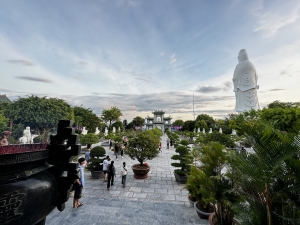
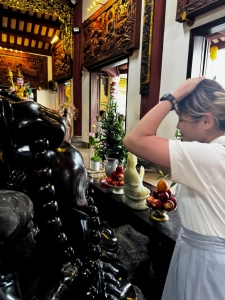
After offering our prayers to the Lady Buddha, we walked past a stone gate and came to the main temple of Linh Ung Pagoda. 18 stone Arhats, disciples of Buddha were installed in the large main square in front of the Main Temple. Each statue has life-like expressions as though they are protecting visitors who walk past this square from evil. Our guide told us the Smiling Buddha installed in the Main Temple was especially efficacious and encouraged us to rub his tummy for good luck. We would not say no to good luck. The Main Temple is home to the Buddha in the centre of the temple, with the Goddess of Mercy on his right and the Manjushri Bodhisattva on his left. The temple exudes a sense of serenity and calm.



Reclining Buddha and Xa Loi Pagoda
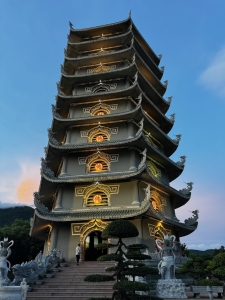
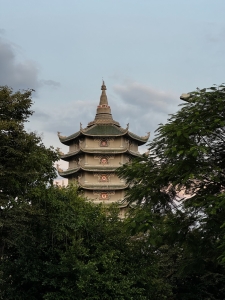
Our last stop in Linh Ung Pagoda was Reclining Buddha, a stone’s throw away from the Main Temple. The 48m long marble Reclining Buddha, though smaller than the Lady Buddha statue, was still impressive. The stone masons capture the peaceful expression of the Buddha as he enters his final resting position after achieving enlightenment. Standing behind the Reclining Buddha is the 9-storey olive-coloured Xa Loi Pagoda. As it was approaching closing time, we only visited the ground floor of the pagoda to pray to yet another Laughing Buddha inside the ground floor of the Pagoda.



Spending the Evening in Da Nang City
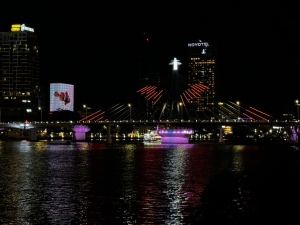
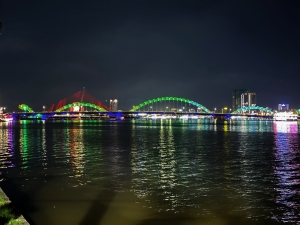
Linh Ung Pagoda was our last stop on this private day trip. We got our guide to drop us off at VinPlaza Mall, the largest shopping mall in Da Nang. After spending a day in the scorching Vietnamese sun, we wanted to cool ourselves off and spent the evening in the air-conditioned mall. Despite being the largest shopping mall in the city, I thought the shops were a tad limited. The mall only has 4 levels, with restaurants occupying the top floor. We spent a fair bit of time shopping in the supermarket on level 2. After shopping, we wanted to spend the night watching the Fire and Water show on the Dragon Bridge, one of the few tourist attractions in Da Nang City. We walked to Han River at around 8.15 pm and waited by the bank for the show. As 9 pm came by, there was no show on the bridge. Upon checking with our resort hostess, we were informed the show was cancelled due to the demise of the Vietnamese Party Chief. Seeing that there was nothing much we could do in Da Nang City, plus we had a long day visiting the sites, we returned to our resort to rest.