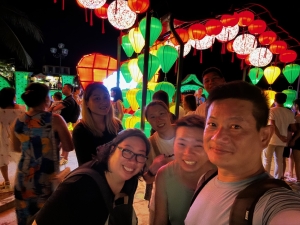
I originally left this day empty to relax around the resort and enjoy the beach. However, while planning this trip, I found many web pages recommending visiting Hoi An. People visit Da Nang to visit the ancient port city of Hoi An or the Imperial Palace of Hue. Comparing the two sights, I thought Hoi An had more to see, so we visited Hoi An.
Relaxing Day in the Resort
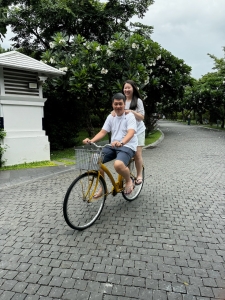
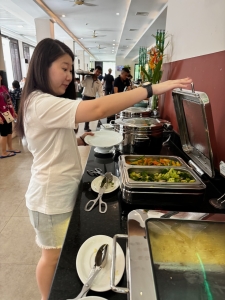
As our tour only started at 3 pm, we spent the morning relaxing around the resort. Today’s aim was to start our day slightly later, relax in our private swimming pool, and perhaps head to the beach. We borrowed the bicycles the resort made available to guests to ride for breakfast. After a hearty breakfast at the resort restaurant, we found that five of the six borrowed bicycles were missing. We managed to recover three bicycles, leaving some of us having to return to our villa on foot. As we were about to walk to our villa, a resort staff member driving a buggy offered to give us a lift back. They promptly gave us three other bicycles after informing the Kid’s Club staff of our stolen bicycles. We spent the next 45 minutes riding around the resort on our bikes to digest our breakfast.



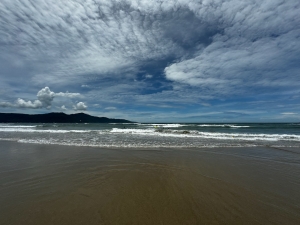
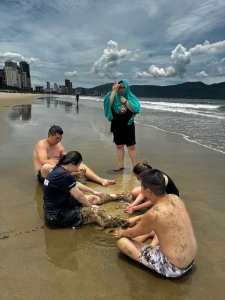
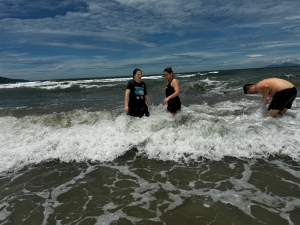
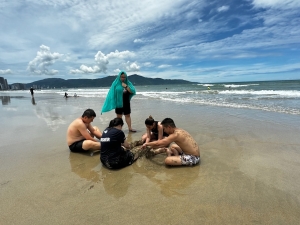
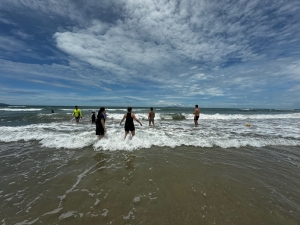
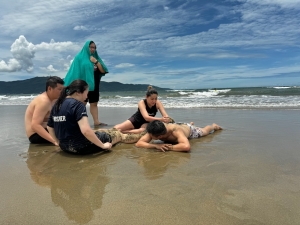
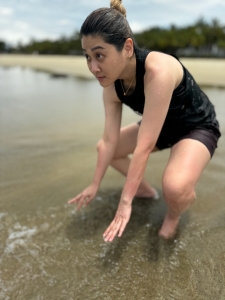
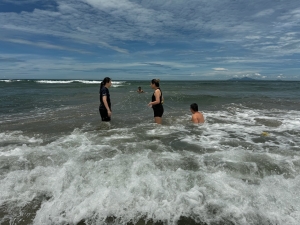
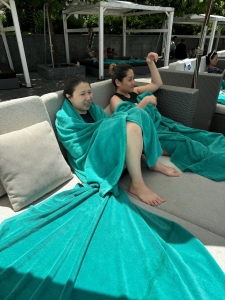
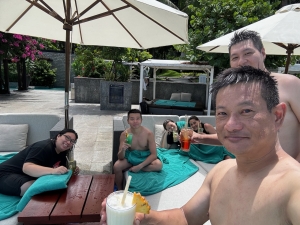
The waters in our private pool and the sunny weather proved too tempting for us to sit around our villa. We spent some time playing in the pool, enjoying the weather and the warm waters of our pool to cool us off. Dipping in our pool, looking out into the fine white sand and the gentle waves on My Khe Beach in front of our villa, we headed for the beach to have fun. As this part of My Khe Beach is privately owned by the resort, there weren’t many people at the beach. The fine sands of the beach made walking on it very comfortable. The resort provided some beach-related activities we could do, such as beach volleyball, beach soccer and even beach badminton. But before we borrowed the items from the manned counter by the beach, we headed into the sea off My Khe Beach. The warm seawater and the occasionally pounding waves made swimming very comfortable. We were well assured that we would swim safely in the sea as the resort had a lifeguard to watch out for our safety at the beach. We also spent some time playing beach volleyball. After some beach volleyball games, we headed to the resort’s main swimming pool to redeem our welcome drink and relax by the pool. Time seems to pass by quickly as we were relaxing, we headed back to our villa to wash up for our evening trip to Hoi An.






Cam Thanh Village – Home of Palm Forest
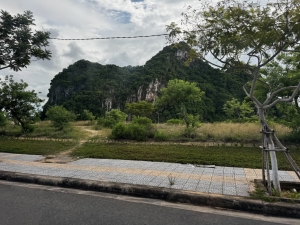
We met our guide at the resort’s front gate (this is the one other thing I like about the resort; they took security very seriously and would not let anyone other than guests into the premises of the resort). The plan for today was to ride on the iconic Basket Boat in Cam Thanh Village before heading to the ancient city of Hoi An. It took us about a 30-minute drive from our resort to Cam Thanh Village. The Basket Boats were believed to date back to the French Colonial era when the French levied taxes on fishing boats. The Vietnamese fishermen could not afford these taxes, so they designed circular woven baskets used as boats for fishing. When we arrived at Cam Thanh Village, our guide informed us due to the low tide, we could only board the Basket Boats further into the village. He arranged motorcycles to give us a lift to the inner landing point.


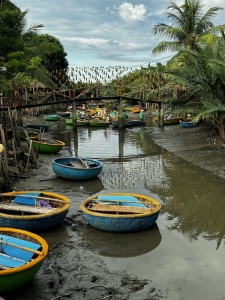
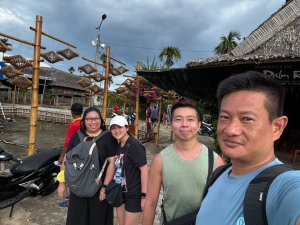
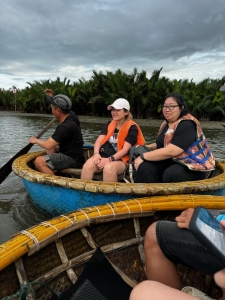
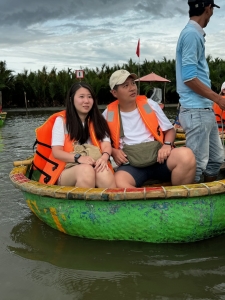
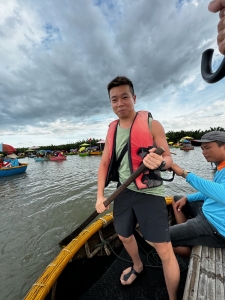
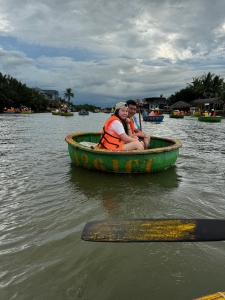
We saw many Basket Boats ferrying tourists rowing on the stream at this landing point. Stepping into the Basket Boat, it felt a little unstable at first. However, the skilful coxswain assured us that they were in control of the boat. Sitting in the Basket Boat, we rowed down a palm forest lined up on both sides of the stream. These palm trees were brought down from the Mekong Delta about 200 years ago. Its ability to protect the coast from erosion and strong waves encouraged the locals to plant more palm trees. The palm tree forest here once sheltered Vietnamese troops from shelling and raids during the Vietnam War. The initial excitement of riding on the Basket Boat quickly dissipated. I guess our coxswain felt we were a little bored and started to do the Basket Boat dance. This dance involves the coxswain skillfully turning the Basket Boat on the spot, using centrifugal forces and balance to keep the boat steady while spinning with us on it simultaneously. The experience was fun and exciting.


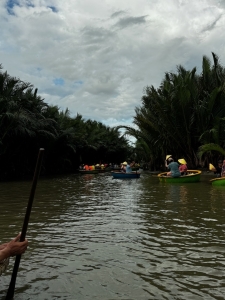
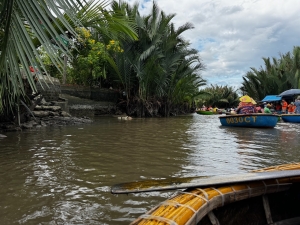
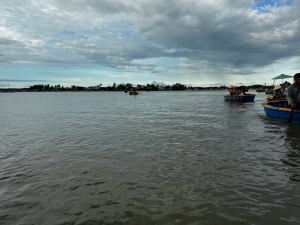
We continued our boat ride down the stream, and soon, we were out of the Palm forest and in a fairly open river. We met up with our friends on the other two boats. This is where the ride gets a little touristy. Our boat coxswains paddled all three boats to a bigger basket boat moored in the river with huge Karaoke sound boxes. We were made to listen to them singing popular Chinese songs from Mainland China (they must have thought we were from China), seemingly waiting for us to tip the singer. We thought this was more of a tourist trap and did not bother to tip the singer. After 5 minutes, they seemed to realise we were not tipping (or maybe due to time), and we were paddled back to the landing point. We met our guide and headed for Hoi An.


Spending the Evening in Hoi An
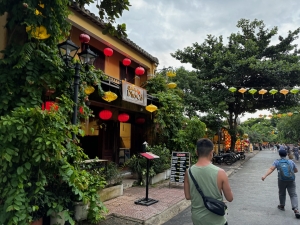
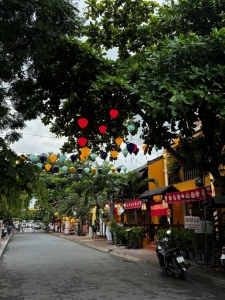
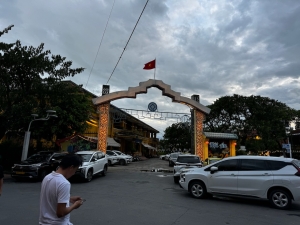
The ancient port town of Hoi An was about a 20-minute drive from Cam Thanh Village. Hoi An dates back to the 16th century, when it was the busiest trade port in Southeast Asia for shipping between China, Japan, and Western nations. Due to the narrow channels, bigger ships would anchor off the coast, and the goods were transported via smaller boats to be disembarked at Hoi An. The town reflects a fusion of local and foreign cultures (mainly Chinese and Japanese with later European influences), as witnessed in the buildings around the town. Our guide informed us that the Japanese Covered Bridge segregates the Chinese and Japanese areas in the town. The buildings in Hoi An are painted mostly in yellow, and most are two storeys tall. Today, most of these buildings have been converted into shops.



Best Coffee in Hoi An – Coconut Coffee of Cong Cafe
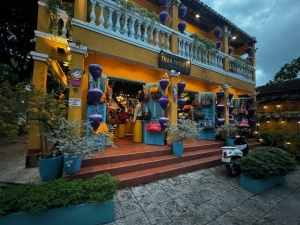
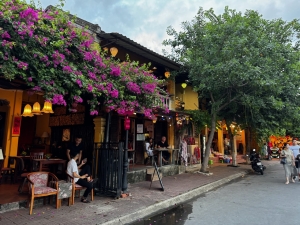
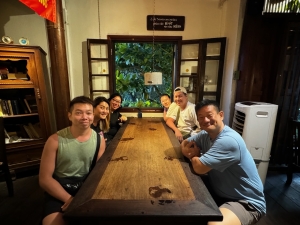
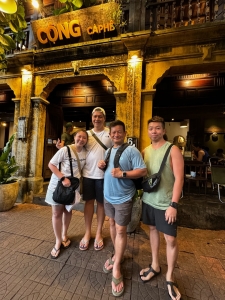
We started our evening in Hoi An with a Vietnamese Coffee. Our guide brought us to Cong Cafe, the most famous cafe. Our guide said the cafe was converted from a wealthy family house. There are hints of its former form around in the cafe. Our guide urged us to try the Coconut Milk ice-blended coffee, which he claims to be the best he had drank. True to his words, the coffee was very aromatic, and the taste of coconut was not overpowering. We enjoyed the coffee and the cafe’s atmosphere, occasionally looking out into the busy street of Hoi An from the window seat our guide had picked for us. After our coffee, our tour of Hoi An began.


Japanese Culture Gallery
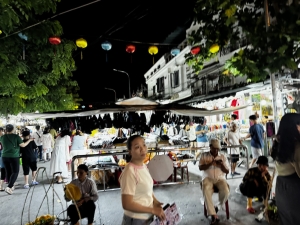
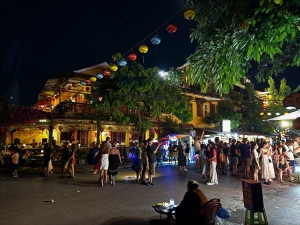
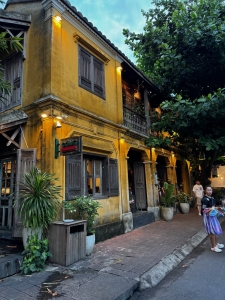
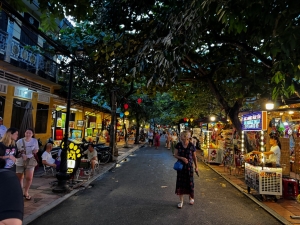
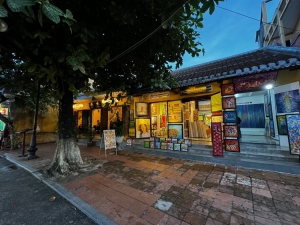
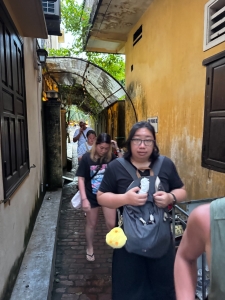
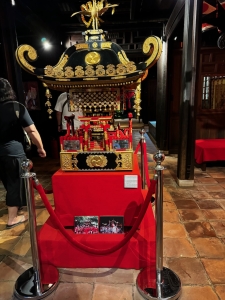
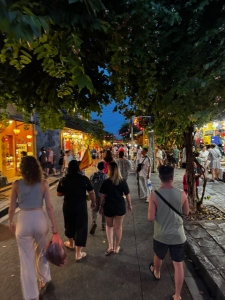
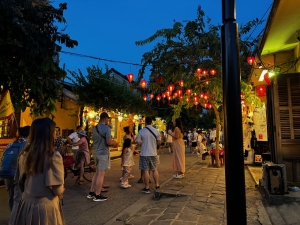
Having purchased the tickets (which might be the tickets for the lantern release), our guide walked us on the streets of Hoi An towards our next destination in Hoi An. The streets of Hoi An look colourful despite only having one uniform yellow colour painted on the buildings. The lighting and the many red lanterns made Hoi An look very vibrant. The town is bustling with tourists roaming the streets, some just walking past while others were looking at the goods the shops were selling. We were led through a small alley to a plain-looking wooden house, which stood out from the other buildings we had seen in Hoi An. This is the Japanese Culture Gallery, modelled after the traditional Japanese architecture style. The first floor of the house was proportionally higher than the second level. The gallery displayed Japanese artefacts that gave us an idea of how the Japanese lived in Hoi An back in the day. Our guide led us to the second floor, which seemed to be some sleeping quarters of the house owners, with tatami mats in most of the rooms. The balcony, facing the facade of the building, gave us a different perspective of the streets of Hoi An. I thought this gallery was interesting but not a must-visit spot for those visiting Hoi An, but it gave us a break from the crowded street of Hoi An.




One of the icons of Hoi An is the Japanese-covered bridge. This bridge was built based on the Japanese architectural style but with Chinese elements in its decor. In addition to marrying the Japanese and Chinese cultures, the bridge also links the Japanese and Chinese Quarters in Hoi An. The bridge was so significant to the Vietnamese heritage that it was printed on the back of the 20,000 bill of the Vietnamese Dong that our guide showed. It was unfortunate that the bridge was under preservation at the time of our visit, and we were not able to cross it and see it up close.



Lantern Releasing on Hoai River
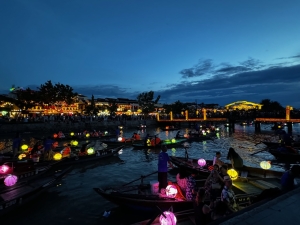
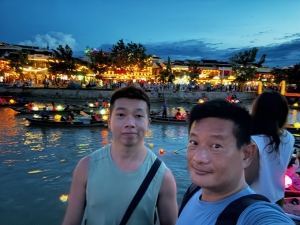
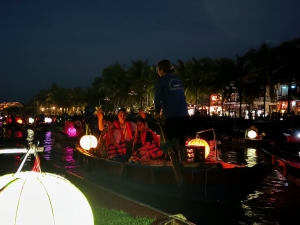
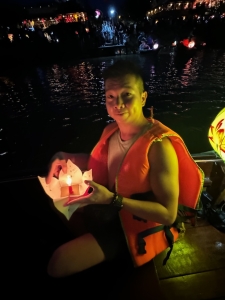
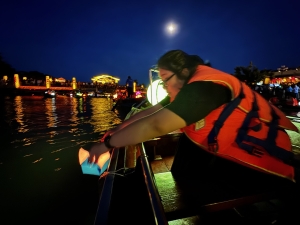
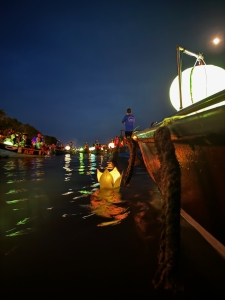
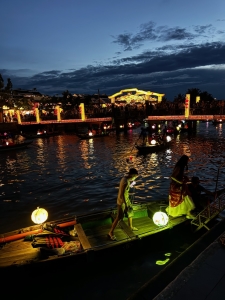
Since we were near Hoai River, the main river used to transport goods from the bigger trading ships to be unloaded in Vietnam, our guide led us to the next itinerary on the list, Lantern Release on the river. The Vietnamese light lanterns are used for good fortune, wealth, joy, and health, and they are seen in almost every building in Hoi An. The locals also release lanterns on the river to make wishes. There seems to be a long queue at the river bank for releasing lanterns. We saw many boats paddling on the river with tourists releasing lanterns. Fortunately, the queue moved fairly quickly. As we were queuing, our guide taught us how to release the paper lanterns on the river. After embarking on the boat, the boatmen paddled us to the middle of the river and told us to write our wishes onto the lanterns. He leisurely paddled his boat so we could release our lanterns safely while avoiding contact with the nearby boats. After releasing our lanterns, our boatsman took us on a 30-minute boat ride on the Hoai River. I’d say releasing lanterns on the river felt touristy; however, I enjoyed the leisure cruise along the river. We were treated to the night view of Hoi An from the river.





Dinner in Hoi An
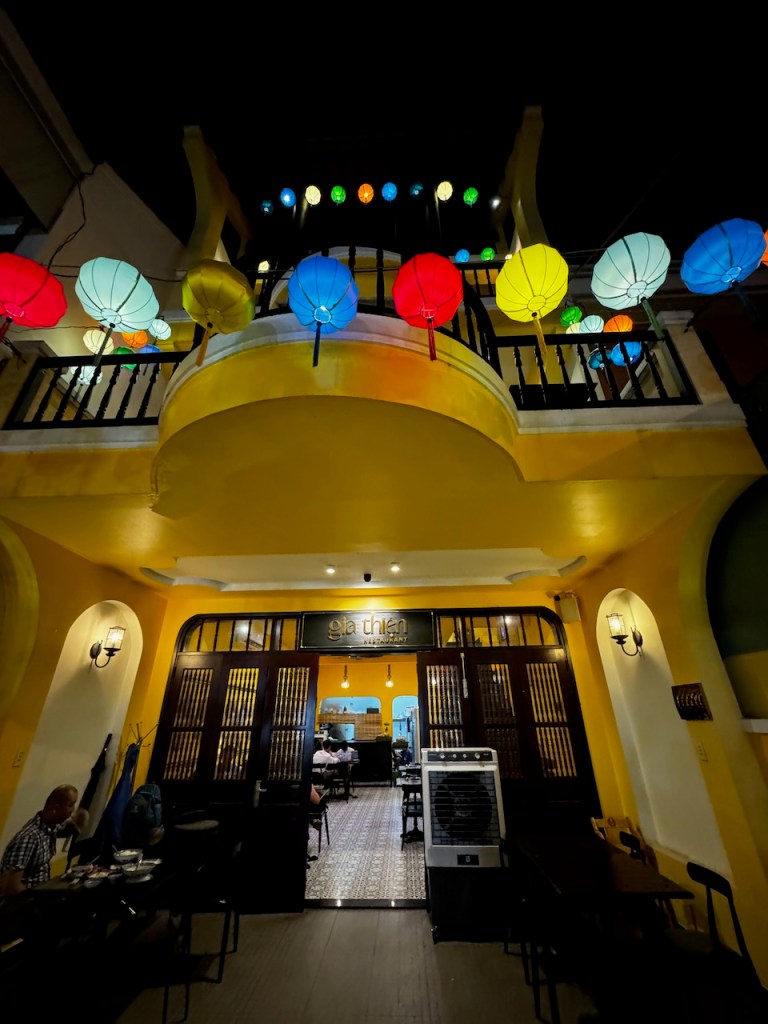
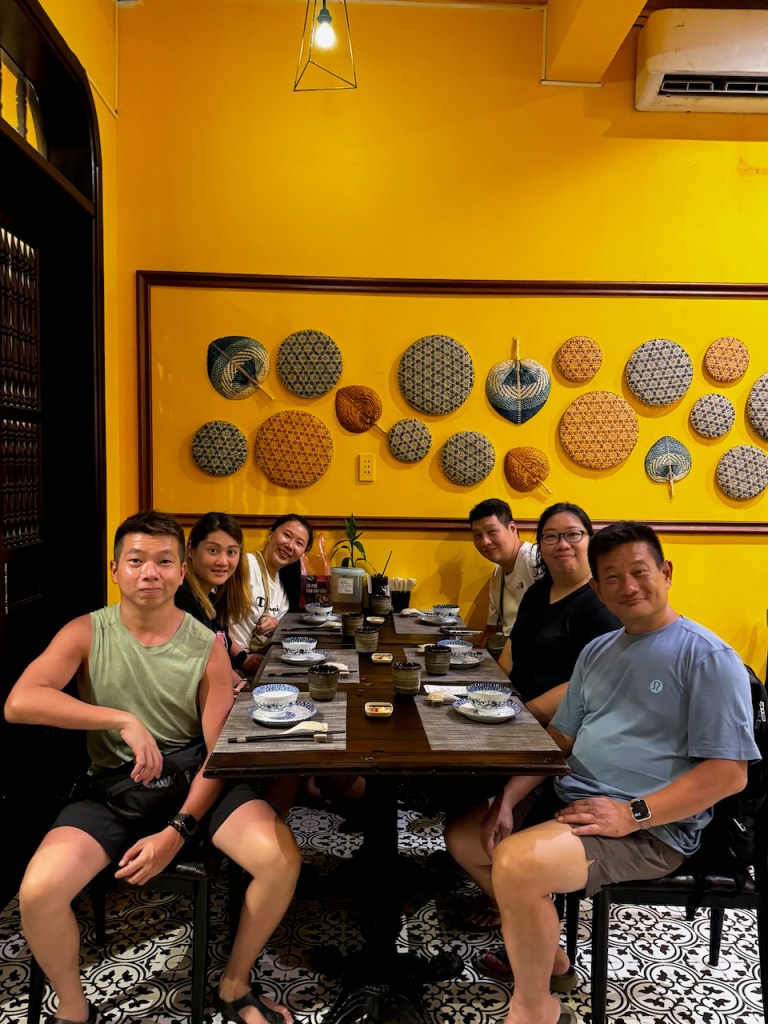
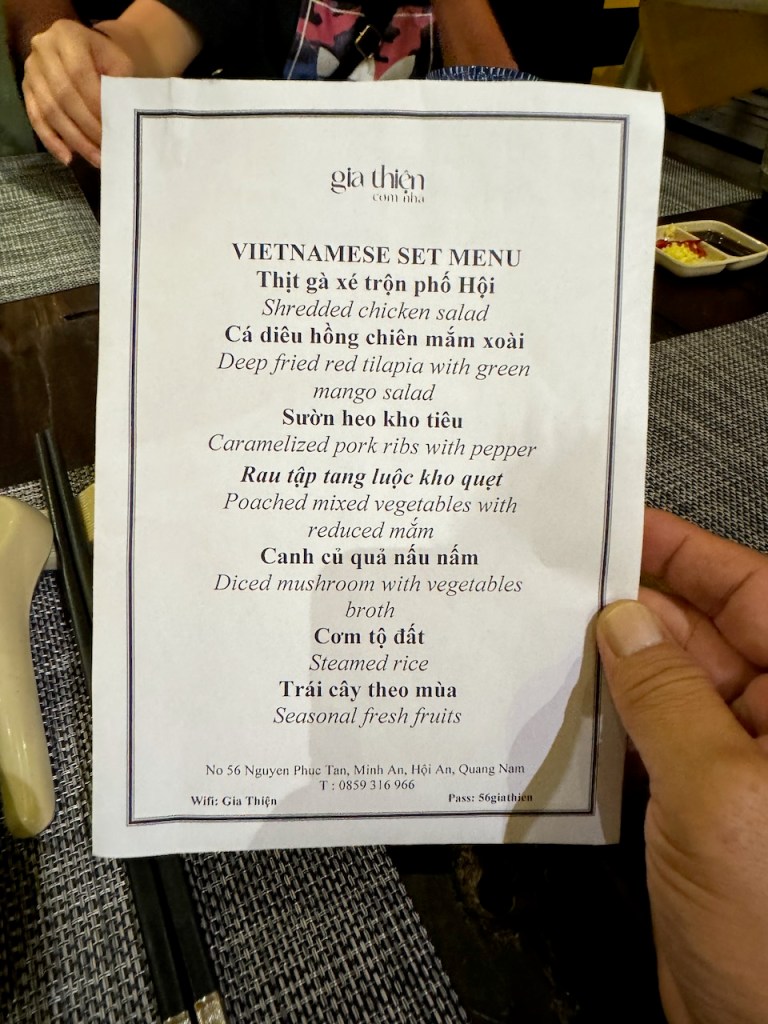
After alighting from the boat, we met up with our guide, who asked if we wanted to have dinner or head to the night market first. We opted for dinner as we were a little hungry. We were led to a quieter part of Hoi An, away from the main streets and the river banks where most tourists would loiter, to a restaurant for dinner. The dinner was simple Vietnamese food, which was delicious and homely. The staff at the restaurant introduced us to the food on the set menu, and like clockwork, the food was served very quickly.
Hoi An Night Market
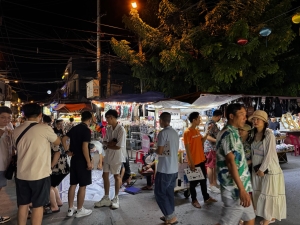
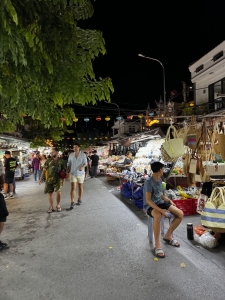
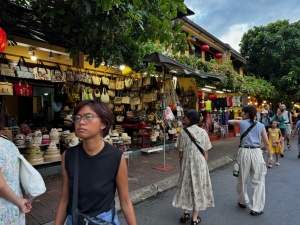
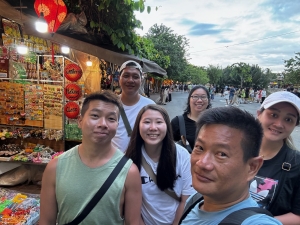
After the hearty dinner, our guide brought us to Hoi An Night Market. This is a small stretch of the street selling souvenirs and foodstuff. There was a crowd at the market when we arrived. Most of the time, we tried to get past people walking along the night market. I thought this market was underwhelming and was no different from those we saw in Bangkok. We spent the next 10 minutes browsing through the stalls in the night market before meeting up with our guide for our return trip to our Villa. We did not like the programme today. The Basket Boat ride, while interesting, felt very touristy. I’m not too fond of the part where we were made to listen to the karaoke singing to get tips. Hoi An felt touristy and crowded with tourists. While the buildings retained their original facade, most were converted to shops and restaurants. The night market was not particularly exciting. Hoi An just felt overcrowded.