We visited the first mountain of our trip, Mt. Stoos, today. Going up the mountain on the world’s steepest funicular and coming down the mountain on another cable that would take us to another town near Luzern, where we took a cruise on Lake Luzern back to the city. We spent the afternoon exploring Luzern Altstadt and finished up our day with a visit to the Lion monument.
Snow Day on Mt. Stoos
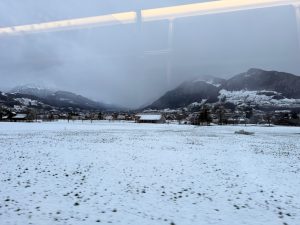
Getting to the Stoosbahn from Luzern was very straightforward. We took a 40-minute train ride to Schwyz station, followed by a 20 min bus ride on Bus #501 from the bus stop at the side of the station. The bus ride to Stoosbahn was very frequent and timed with the arrival of the trains from Luzern. The total travel time took us about 1½ hours. All transportation, including the funicular and cable car rides, is included in our 2-day CHF120 Tell Pass regional card (Half-Fare Card does not give us additional discounts for the pass).




Stoosbahn – The Steepest Funicular on Earth
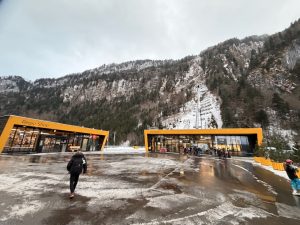
The purpose of coming to Mt. Stoos is to take the world’s steepest funicular, with an inclination of up to 47.7°. The Stoosbahn valley station is just steps away from the bus stop; one will not be able to miss the two bright yellow rimmed glass cubes sitting at the bottom of the mountain. If confused, just follow the crowd as we did. All the people who alighted at this stop come for the Stoosbahn. With our digital Tell Pass at hand, we approached the ticketing counter and were issued a card to access all the rides in Mt. Stoos. The Stoosbahn runs every 30 mins up and down the mountain. The Stoosbahn consists of four circular dome carriages, with the carriage nearest to the entrance of the valley station (eventually the bottommost carriage when the Stoosbahn scales up the mountain) being the one with the best view. As we climb up the mountain, the circular carriages will stack on top of each other according to the gradient of the tracks. What is fascinating is that we remain upright all the time without feeling how much the funicular has tilted.




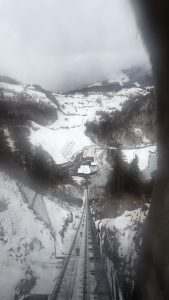
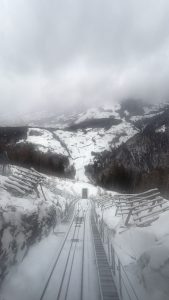
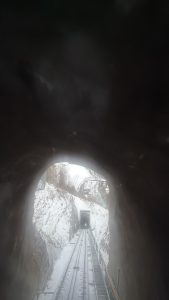
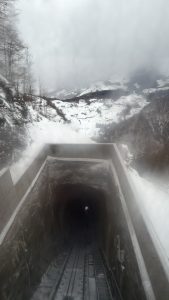
As the funicular pulled out of the station, the first thing that greeted us was the frozen River Muota below. At this point, the gradient was still quite gentle, almost level to the ground. As soon as we crossed the frozen river, the gradient quickly tilted to about 20°. But we did not feel any changes in the gradient inside the funicular due to the incredible engineering of the funicular. Soon, we came into the first of the three tunnels that the funicular would pass through. Coming out of the first tunnel, the view of the Stoosbahn gave way to a white, icy mountain cliffside. The distance between the first and second tunnel was not far; we were already entering the second tunnel before the first one left our sight. Emerging from the second tunnel, the Stoosbahn reaches a maximum steepness of 47.7°, and we began to see the neighbouring mountains standing mightily before our eyes. The third tunnel is the longest of all three tunnels. Coming out of the third tunnel, the Stoosbahn started to level to around 10° gradient and eventually levelled up to flatness as we were approaching the peak station. Amazingly, the Stoosbahn brought us up 744m on the surface of the mountain in merely 6 minutes. What an engineering marvel!



Stoos Village – Going Round and Round in the Village
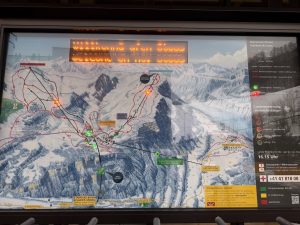
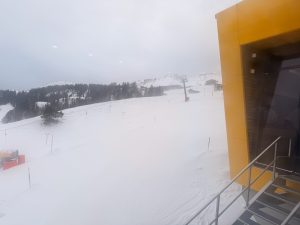
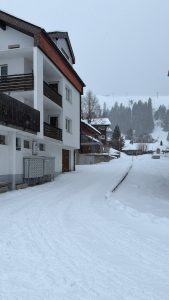
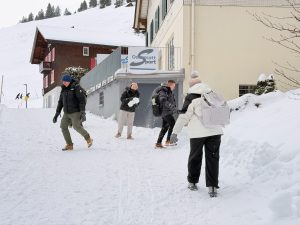
Coming out of the Stoosbahn peak station, we arrived at the Stoos village nestled about 1,300m up Mt. Stoos in the Alpine landscape of Central Switzerland. Stoos Village is the heart and centre of all activities on Mt. Stoos, where most amenities like restaurants, ski rentals, convenient shops and holiday chalets are located within mere steps from the Stoosbahn station. There is even a hotel next to the funicular station. Stoos Village is also home to numerous ski slopes for all levels of skiers. We originally planned to do a short hike at the top of Fronalpstock peak at 1,900m and reach the viewpoint where we would get a view of Lake Luzern below. After which, we would sledge down 500m in height from the peak to the middle station for a few runs. The first order of things is to find the chairlift that would bring us to the top of Fronalpstock. As we were walking around, looking for the chairlift, we were also playing in the snow. It was snowing, and we were excited to see snow (we came from a country that never snows). We had fun walking in the snowy trails, throwing snowballs at each other and admiring the snowy scenery that was so rare for us to see. In fact, we did not realise that we kept walking up and down the same path from the Stoosbahn station to where we thought the chairlift to Fronalpstock was. After spending some time walking up and down the same path, we decided to seek some directions from the ski rental. We were fortunate to have met a very friendly and welcoming lady at the ski rental. She told us that the chairlifts to Fronalpstock are not operational today due to the strong winds, but recommended that we go to the Snow Fun Park for some sledging.
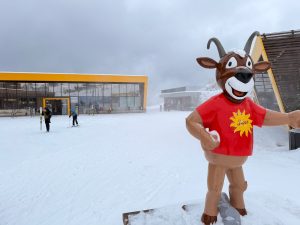
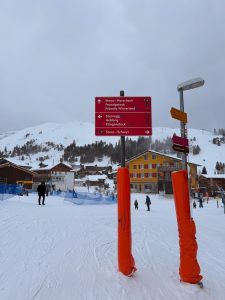
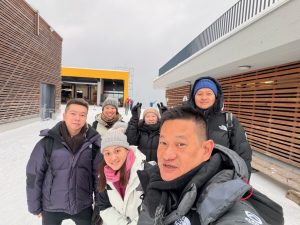


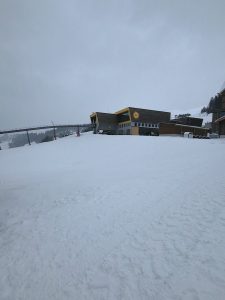
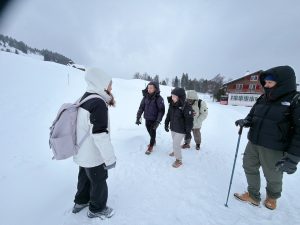

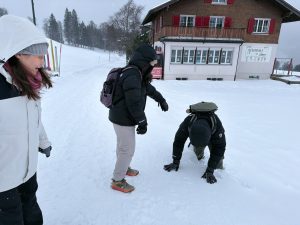

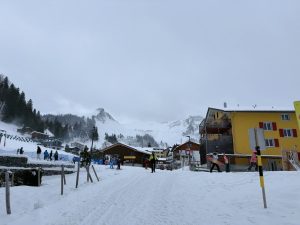
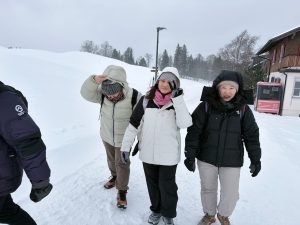

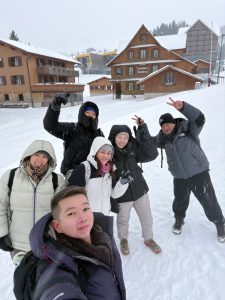

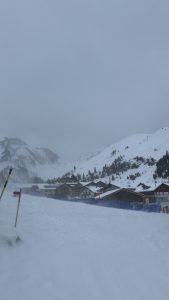
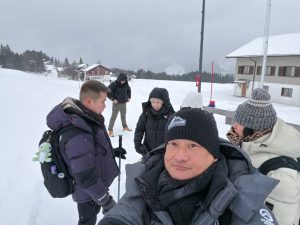

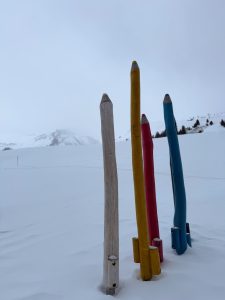

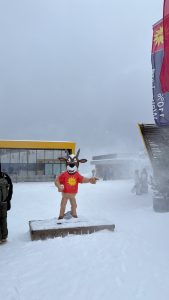

From Stoosbahns station, we seem to spot a “shortcut” to the Snow Fun Park. Little did we know the so-called shortcut had our legs sink into calf-deep snow and down a short snowy slope. We barely had any experience walking in snow (the last experience we had walking in snow was from our Austrian trip one year ago), and bashed through the thick snowy grounds, using houses in between and footprints that others had left behind to guide us to the Snow Fun Park. It took us about 20 minutes to reach the Snow Fun Park. Here we saw a few people playing sledging, and that really got our hopes up. As we were walking around to see where to rent a sledge (we did not want to walk all the way back to the ski rental by the Stoosbahn station), we spotted the chairlifts to Fronalpstock, and we actually saw people getting onto them. This means that we get to resume our plan. As we walked closer, a staff member at the chairlift approached us and smashed our hopes. He told us that the chairlift is only operational to the middle station and closed to the top station due to the winds. Seeing that there was nothing we could do, we resumed looking for a place to rent a sledge. We found a shop further down the path, but the only shopkeeper was busy helping two customers with their skis. As we were hungry, we headed for lunch and to return to the rental sledges later.

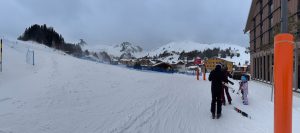





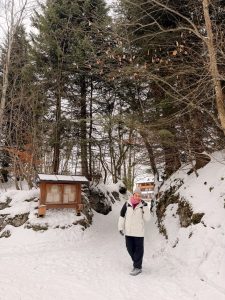
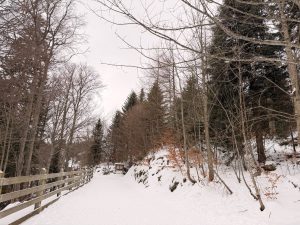
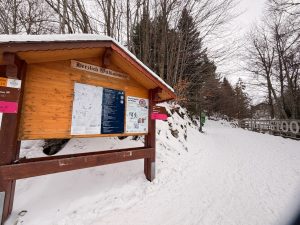
After lunch, we attempted to return to the shop, but the shopkeeper was again busy with yet another set of customers. As it was about time for us to descend the mountain to catch the ferry back to Luzern, we walked further down the path to the Morschach cableway station. This part of Stoos Village felt tranquil as it saw little footfall. We used the time while waiting for the cable car to explore this part of Stoos Village. The snow-covered forest and a cliffside with a viewpoint that gave us a partial view of Lake Luzern made this part of the Stoos Village feel magical and tranquil. There was no laughter and shouting of the people sledging and skiing; all we heard was the sound of our feet squashing onto the snow below. The snowy weather added a little more magic to this area. Soon it was time for us take the Morschach cableway down to the valley station.








Cruising Lake Luzern: An Alternate Way of Travelling to Luzern
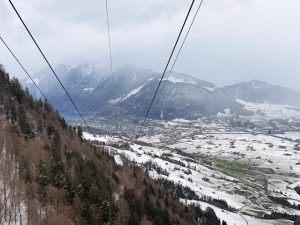
To return to Luzern, we could either backtrack and take the Stoosbahn and train option or take the cable car and ferry options. One of the activities to do in Luzern is to take a cruise on Lake Luzern. To maximise our experience (and the Tell Pass value), I planned for us to take the cruise back to Luzern. To get to the cruise pier, we took the Morschach cableway from Stoos Village (a 25 min walk from the Stoosbahn peak station), and changed to Bus #504 at the Morschach cableway valley station to Brunnen See Schiffstation. From there, the pier is a 3 min walk across the road. As the bus drove around the windy mountain road to the shore of Lake Luzern, we were treated to stunning views of the lake. I saw a boat coming into Brunnen and commented to my friends that this might be the ferry that we would be taking.


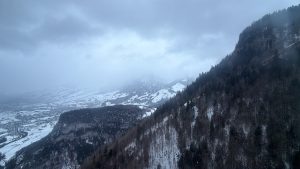
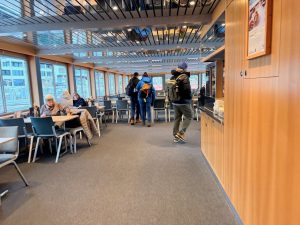
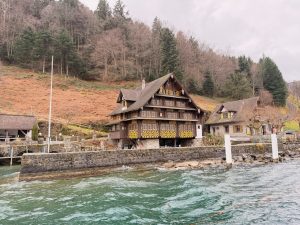
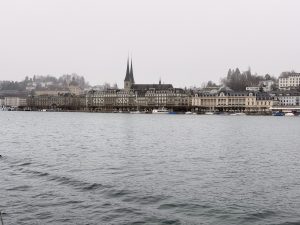
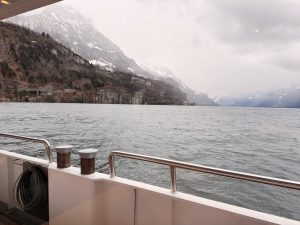
We were pleasantly surprised that the Swiss timed their public transport with perfect precision to the next transport. We made it in time to catch the ferry back to Luzern. With our Tell Pass at hand, we merely show our QR code to the ferry staff at the pier. The ferry ride back to Luzern took around 1½ hours. As the ferry slowly made its way on Lake Luzern, we saw dramatic mountains that merged into the lake, making them look like we were cruising in fjords. Cruising on Lake Luzern truly made us realise how large the lake is; we felt like a dwarf walking amongst the giants. The cruise stopped by a few other piers to pick up and disembark passengers. We occasionally head out to the outdoor decks to enjoy the breeze and the snow falling from the sky. I thought this cruise option also gave us some time to relax and recharge for the exploration of Luzern Altstadt later. As the cruise was nearing Luzern, the shallower depth of this part of the lake allowed us to see through to the lake floor.





Luzern Altstadt: Walking into History
We originally wanted to join the complementary city tour of Luzern. However, the tour starts at 11 pm, which would mess up our plans for today. Thus, we opted to explore the old town on our own.
Jesuitenkirche – The first Baroque Church in Luzern
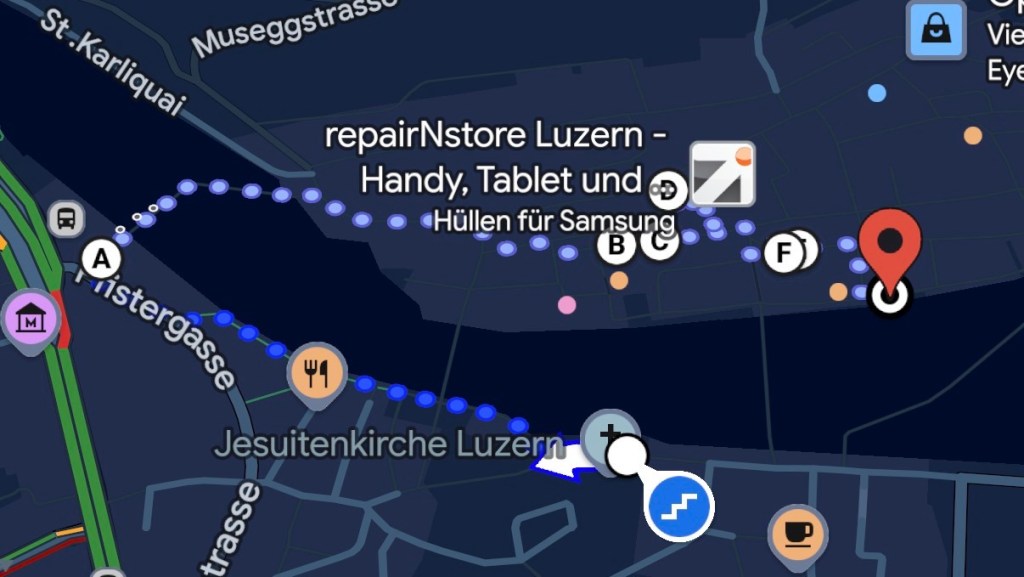
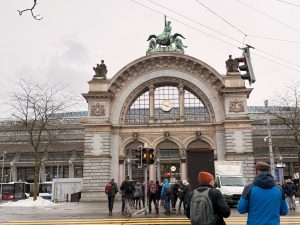
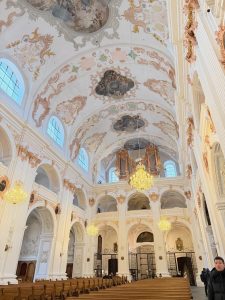
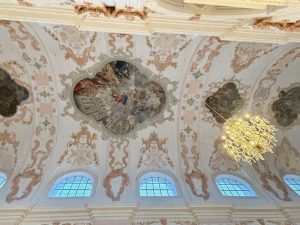
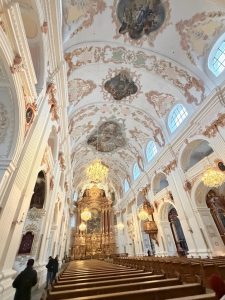
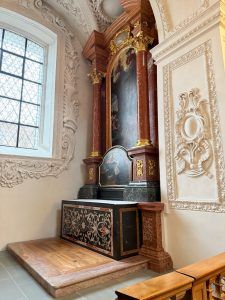
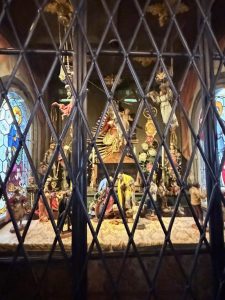
As the Jesuitenkirche is only very close to the ferry pier, it made sense for us to start our city walk from the church. The Jesuitenkirche was completed in 1677 and was originally intended to function as a college. However, as construction started, it was decided to build it into a church instead. With the two green-domed towers built beside the central building, one cannot miss the Jesuitenkirche when walking around Luzern Bahnhof or the Altstadt. Do not be deceived by the plain facade of the church; the beauty of the church lies in its interior. Instead of sitting in an elaborate square with a large foreyard, the church sits quietly on the riverside with a small church front real estate. Entering the church, we were immediately wowed by the complex and intricate baroque decor from the ceiling to the walls to the high altar. Other than the frescos painted on the white ceiling, what caught my eye was the intricate floral patterns that beautified the ceiling. The touch of the crystal chandeliers hanging from the ceiling gave it an elegant look. The walls of the church are predominantly white, which makes the church look clean and pure. At the end of the church sits the high altar. With marble columns and tiles and the gold trimmings, the high altar looked dignified. The painting of the Virgin Mary and Baby Jesus coming from the heavens to save people from their sufferings was vividly painted.



Spreuerbrücke – The Younger Brother of the Chapel Bridge
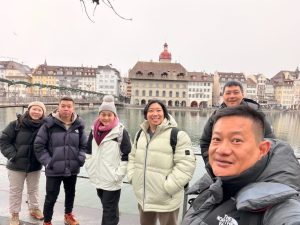
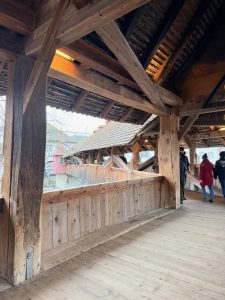
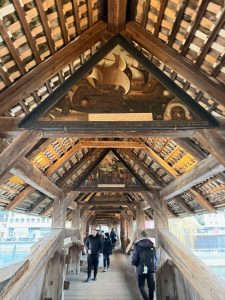
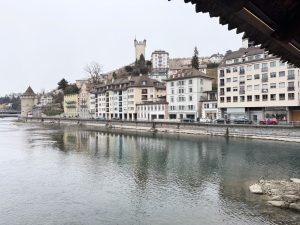
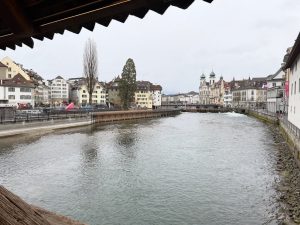
We left the church and walked along the riverbank, past the medieval riverside houses that are now mostly shops and restaurants, and we came to the Spreuerbrücke. Unlike the bigger Chapel Bridge, Spreuerbrücke receives little attention. The smaller wooden bridge was constructed in the 13th century to connect the mill on the right of the River Reuss to the mills in the middle of the river. The bridge only connected to the Altstadt on the left bank in 1408. Walking on Spreuerbrücke, we could see the resemblance to the Chapel Bridge. Similar to the bigger Chapel Bridge, Spreuerbrücke also has painted panels on the inner triangular frames of the roof and features a smaller tower at the side. Unlike the Chapel Bridge, this tower is connected to the bridge instead of rising from the riverbed. There are wooden benches on Spreuerbrücke for pedestrians to rest or sit and absorb the tranquillity that this part of the town brings. Crossing the Spreuerbrücke is a smaller bridge; our starting point, Luzern Altstadt, is at the other end of the bridge.


Luzern Altstadt – The Painted Buildings that Tell a Story
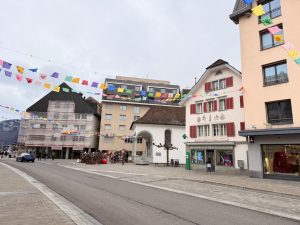
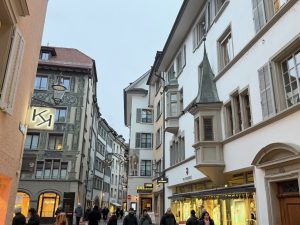
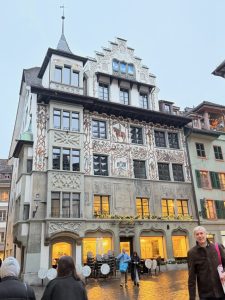
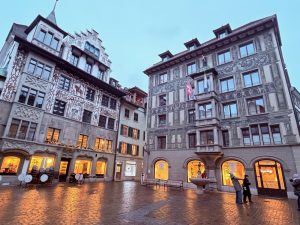
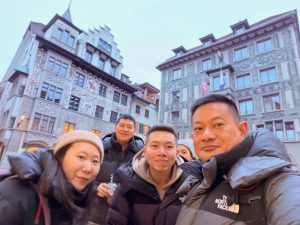
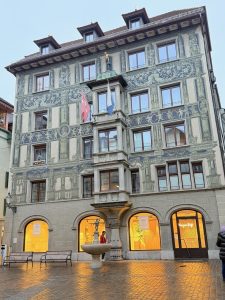
One of the highlights of Luzern Altstadt is the paintings on the walls of some of the medieval buildings. These murals recount stories of the city’s past, culture, trade traditions, and legends. They also served as advertisements for the former guild houses or commemorated important historical events. Entering the old town from Spreuerbrücke, we arrived at Mühlenplatz. This is where we saw one of the many painted houses. As this part of the old town is close to the mill, the painting on the buildings depicts mills in action. Walking on the cobblestone grounds of the Altstadt reminded us of the time we were in Italy. We were keeping a lookout for the murals on the walls of the buildings, other than looking into what the shops around had to offer. Not long after, we arrived at Weinmarkt. This part of the city has been the city’s food market, operating on Tuesdays and Saturdays, and it is also the venue for Christmas markets. The buildings around Weinmarkt were once guild halls, such as the Hotel des Balances, which had paintings of hunters. Sitting in the centre of Weinmarkt is the fountain Weinmarkt-Brunnen. The buildings around here feature the painting of the biblical feast of Canaan.

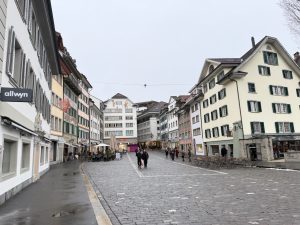
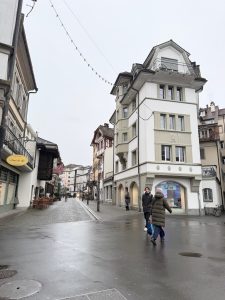
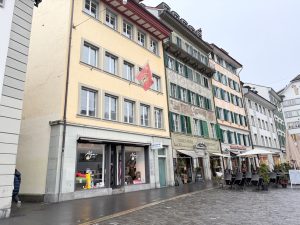


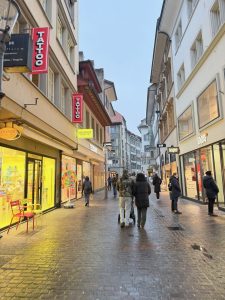


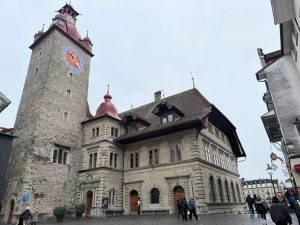
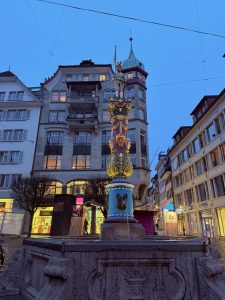
Our feet led us to the Rathaus Stadt Luzern, between the river and Weinmarkt. One cannot miss this old stone building with an attached clock tower. As we were walking around Luzern Altstadt, looking out for the next mural on the wall, we unknowingly came to Hirschenplatz. There are two buildings with paintings here, with one depicting the Battle of Dornach, and the other is merely an advertisement mural selling jewellery. Our walk through the old town ended with a visit to Fritschibrunnen, a colourful 12th-century fountain decorated with carnival friezes and masks. Luzern old town is very compact and can be completed in 2 hours at most. After our walk through Luzern Altstadt, we took a bus near our hotel for dinner. After all, our final destination is next to our hotel.



Lion Monument
After dinner, we walked to the Lion Monument, our last sight of the day. The Lion Monument depicts a lion lying on the ground with a shield beside it. The monument is carved into the side of the cliff to commemorate the Swiss guardsmen who died defending the country during the French Revolution. Usually, there would be a fountain in front of the monument, but it was dry during our visit due to maintenance work. We headed back to our hotel to rest for the night after visiting the Lion Monument, after all, we have our second of the six mountains that we will be going on this trip.