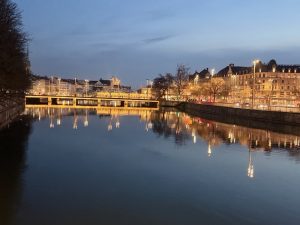
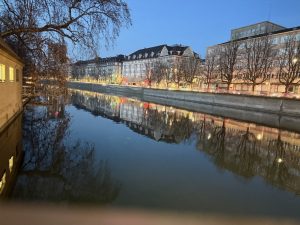
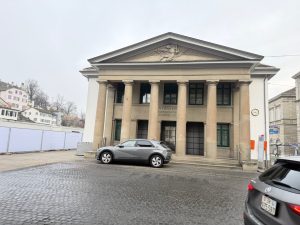
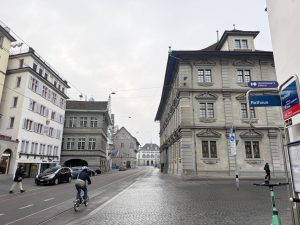
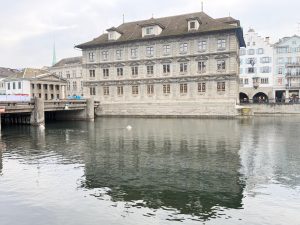
We dedicated today to exploring the sights within Zurich City and shopping, since most shops will be closed tomorrow on Sundays. We started the day walking to the Zurich City Hall, wanting to collect the City Keys for the Secret Door walking tour. To our dismay, the City Hall seemed closed when we arrived at around 9 am. We tried walking around the building, thinking there might be another entrance around the corner. After a while, we saw a sign in the main door informing us that the City Hall is closed on weekends. What a pity! We were not able to do the Zurich City Secret Door self-guided walking tour, which is a unique way to see the city. Seeing there was nothing else we could do about the situation, we proceeded on our walking tour around the Old Town of Zurich.
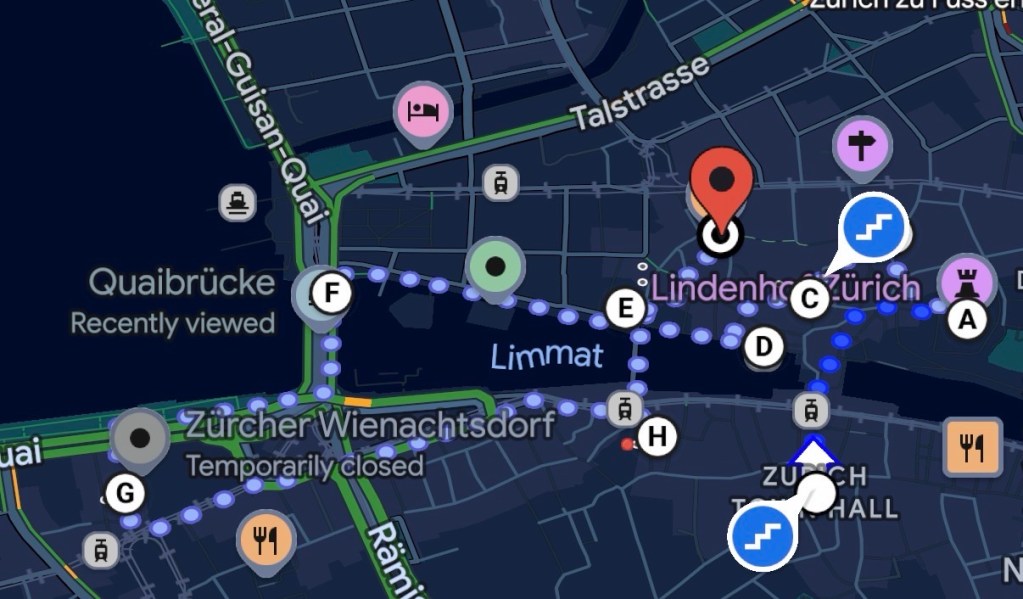
Zurich Old Town Walk: Walking into History
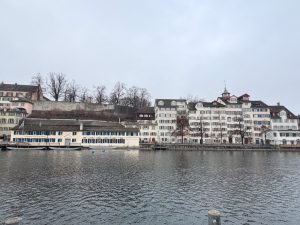
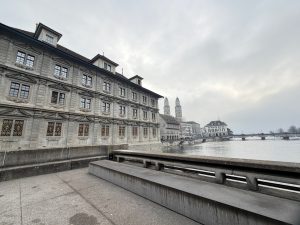
Zurich city centre is lined with buildings from the medieval period. The Limmat River that runs through the heart of the city creates a picturesque waterfront promenade with medieval buildings on both sides of its bank. Since we were already at the City Hall, we crossed the Limmat River via the Rathausbrücke and headed to our first spot, Lindenhof.




Lindenhof – The Balcony of Zurich
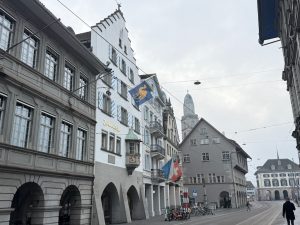
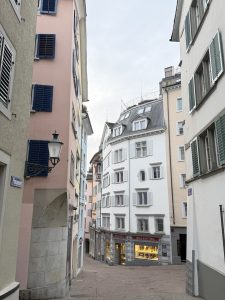
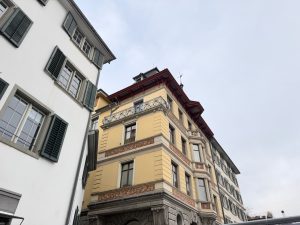
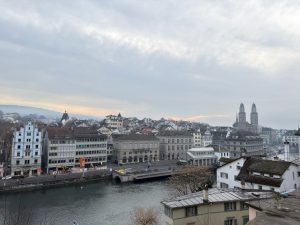
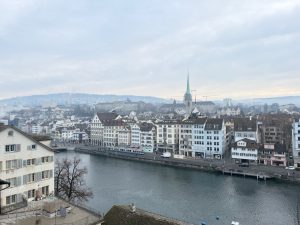
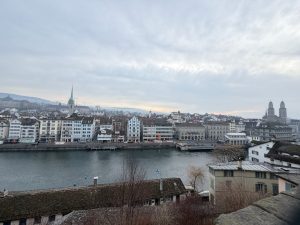
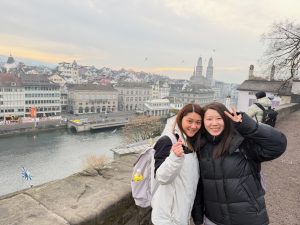
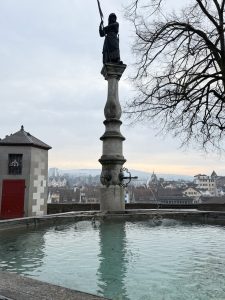
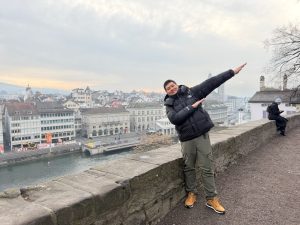
Lindenhof is perched on a small hill across the bridge from City Hall. We passed by some of the medieval buildings that turned into shops as we were walking up the slope to Lindenhof. Despite being a “preview” of the old town building structure, walking in this part of the town felt timeless and tranquil. It took us only 5 minutes to walk to the Lindenhof from the City Hall. Lindenhof, like the Münsterplattform in Bern, is an open space which saw numerous historical events, such as a home for a Roman Fort in the 4th century and a palace where the grandson of Charlemagne built in the 9th century. We came to Lindenhof for the view. Despite the limited views here, due to the shorter elevation, we were still able to see Altstadt Zurich and the Grossmünster church sitting on the banks of the Limmat River from Lindenhof. I thought this place gave us a very good preview of the city.
Augustinegrasse – The Shopping Street with Medieval Houses
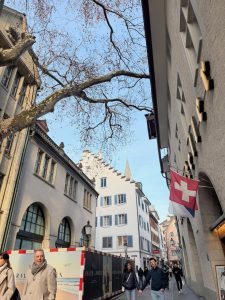
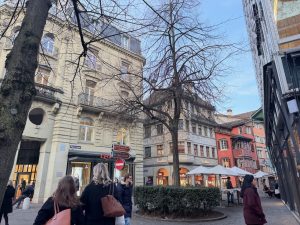
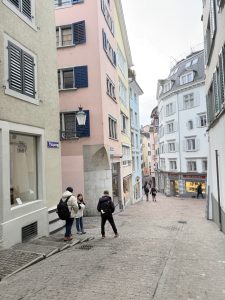
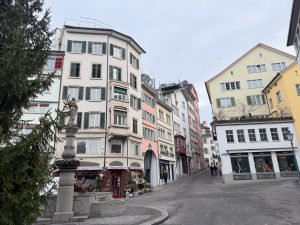
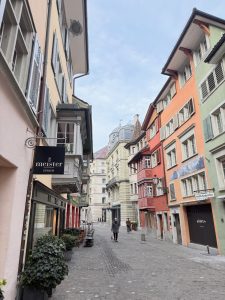
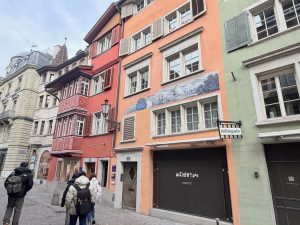
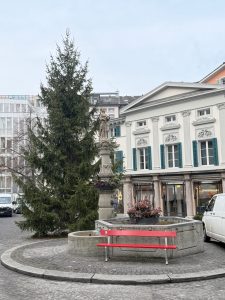
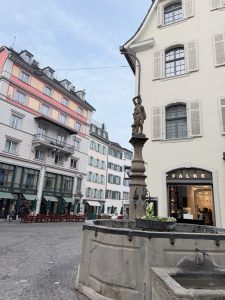
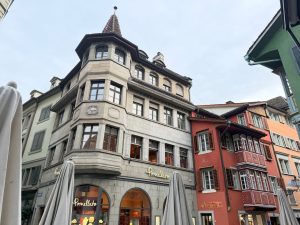
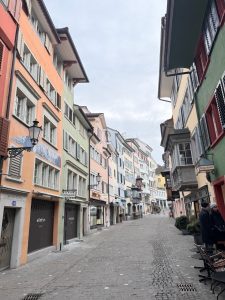
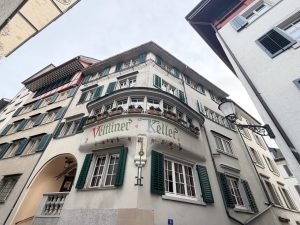
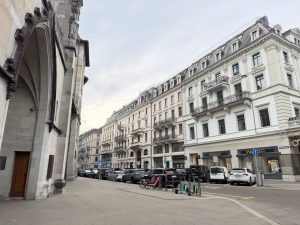
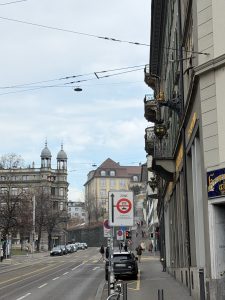
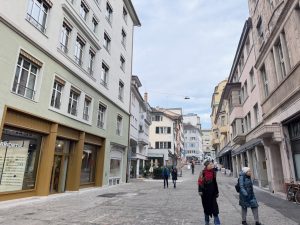
Augustinegrasse is home to the older medieval buildings where shops call home today. Unlike the medieval times, the buildings on Augustinegrasse are brightly painted, sitting side by side with no gaps between the buildings. It is the irregular building style and roofs that make Augustinegrasse charming to visit. Occasionally, we could see reminiscence of the olden days through the refurbished balconies popping out from the facade of these buildings, or the old signs that still hang on the walls of the buildings facing Augustinegrasse. The street led us to an open piazza, where our next destination awaited us.


Kirche St. Peter – The Church with Many Functions
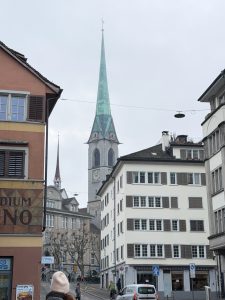
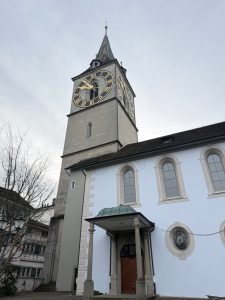
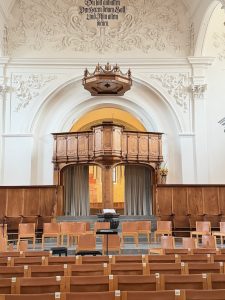
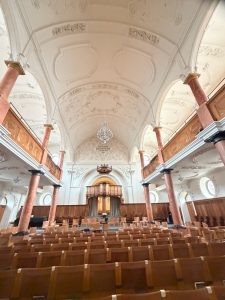
One cannot miss Kirche St. Peter in this part of the city. With its commanding clock tower adorned with golden-plated numbers and clock hands and its white church building, Kirche St. Peter sat atop a small hill. Like most of the churches we have seen in Switzerland so far, Kirche St. Peter has a simple facade on the outside. Entrance to the church is located opposite the clock tower, on the other end of the building. The interior of the church is equally plain. There are no outlandish frescoes painted on the walls or the ceiling. Instead, they are plastered with floral patterns, which give the white interior a refined look. The mahogany coloured pillars that supported the second storey of the church and the natural wood coloured panels on the parapet of the second level brought just sufficient colour into the church without sacrificing the pure look of the interior. Unlike most churches we seen, Kirche St. Peter does not have a high altar; in its place is a rostrum on a balcony that faces the main church floor for the pastor to deliver the service. The church felt peaceful, partly due to the white interior and partly due to the lack of crowd at the time of our visit. We stayed in the church momentarily to enjoy the tranquillity it brought.

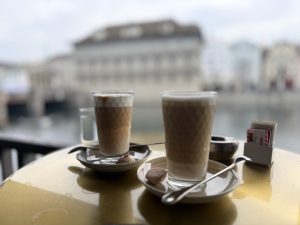
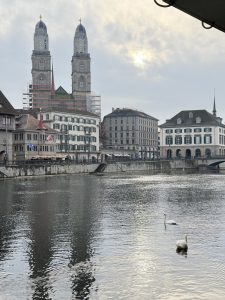
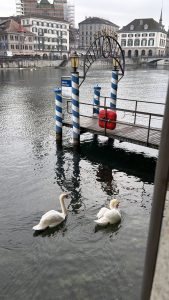
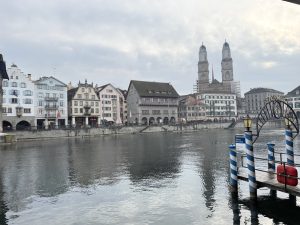
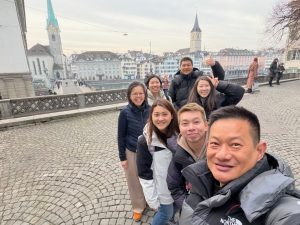
Exiting Kirche St. Peter, we walked along the left bank of the Limmat River towards our next destination, the Fraumünster. We felt we needed a caffeine boost this morning, so we settled into a riverfront seating area of a cafe along the bank. We took some time to enjoy sipping our cafe latte in the outdoors while watching the swans and ducks swimming in the Limmat River, going about their daily lives. With the picturesque Altstadt on the right bank of the Limmat River and the twin-towered Grossmünster in front of our eyes, we certainly had a relaxing time enjoying the peace the city exudes.

Fraumünster – One of the Big Twos in Zurich
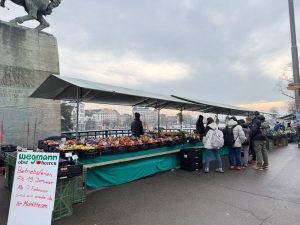
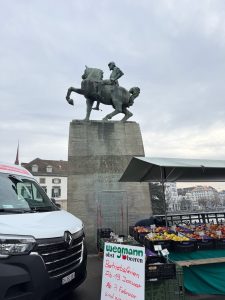
After our caffeine boost on the riverfront, we continued our Zurich city walk along the left bank of the Limmat River towards the Fraumünster. Just when we reached Fraumünster, my friends were attracted to the farmers’ market right by the Münsterbrücke, the bridge that linked both the Fraumünster and Grossmünster. The produce looked fresh, and the friendly stall owners welcomed us to their stalls and patiently introduced their produce to us. Striking up a conversation with the farmers, we were informed that this market only opened on Saturdays from 6 am to noon. Seeing we would have time to return to the market after visiting Fraumünster, we headed to the church before returning to the market to purchase a packet of freshly squeezed apple juice.
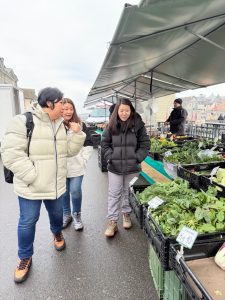
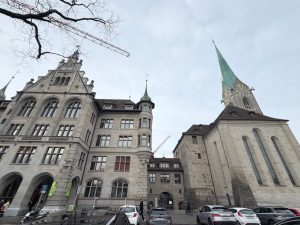
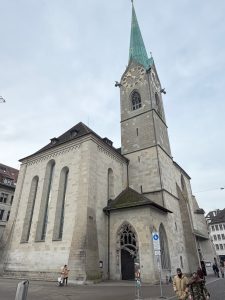
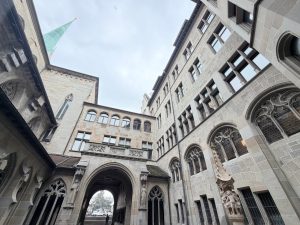
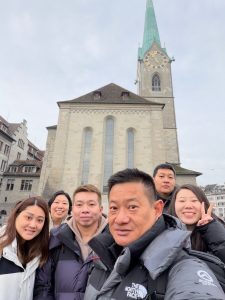
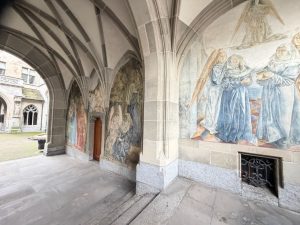
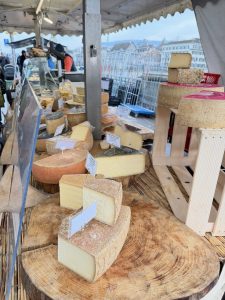
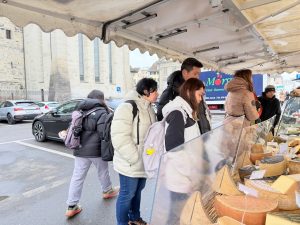
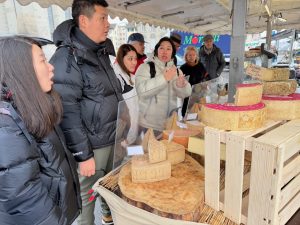
Fraumünster is one of the four churches in Zurich and is one of the two most recognisable churches in the city. With its massive and stone facade and a lone tall clock tower, the Fraumünster sits on the left bank ofthe Limmat River. Entry to the 99th-centurychurch is located on the Main Street that runs parallel to the Limmat River. As we reached the entrance of the church, we saw a sign stating a CHF5 entry fee for the church. Knowing that we will only stay in the church for less than 5 minutes, we decided to skip visiting the church. As we were walking on Main Street, we spotted an open gate to the side of the church that seemed open to the public without any charges. Locals also used this courtyard as a thoroughfare between the Limmat River and the Main Street. We entered the side courtyard of the church, where we spotted several murals painted on the walls. Like the locals, we also used the courtyard to access the riverbanks. As we were walking to our next stop for a view of Lake Zurich, my friends were drawn to a small crowd in front of the cheese stall in the farmers’ market. Don’t let the modest stall deceive you; the cheese stalls have a wide range of cheeses for my friends to choose from. Despite the little English the stall keeper spoke, she was friendly and welcoming and was generous in the sample portion of the cheese she was selling. My friends sampled some of the cheeses that we saw most locals buy. They eventually bought the truffle cheese.



Kopf Hoch Zürichsee – The Lake Lookout
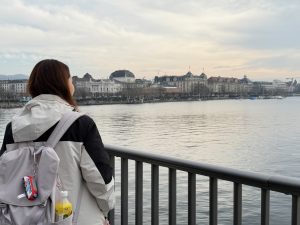
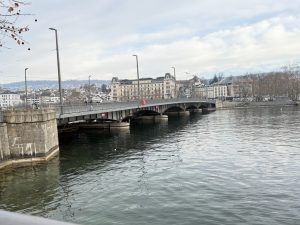
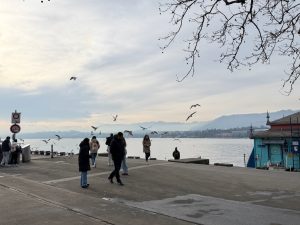
We continued our Zurich city walk after my friends happily had their cheese stock from the farmers’ market. As we were heading towards the Lake Zurich viewpoint, we walked past the outdoor swimming pool. In summer, this would be where the locals come for a cool dip in the lake waters. But in winter, this structure just lies dormant, awaiting the seasons to change to welcome locals to enjoy the lake waters again. Kopf Hoch Zürichsee is an open area at the edge of the city that gives us stunning views of Lake Zurich. At the viewpoint, we could only see part of the lake (due to its massiveness) with the Swiss Alps and the nearby mountains on one side and the southern part of the city adorned by Romanesque buildings occupying the front row to the lake on the other side. We spotted some rowers practising rowing in the winter and how the ferries and water buses ply through Lake Zurich. We did not stay here for too long and crossed the Quaibrücke, the southernmost bridge across the Limmat River to the opera house.



Opernhaus Zurich – The City’s Heart of Arts
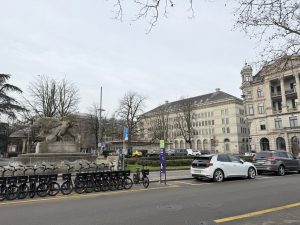
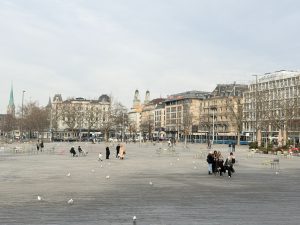
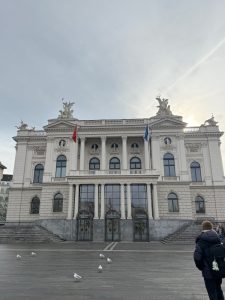
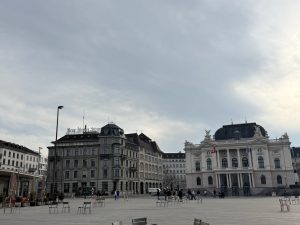
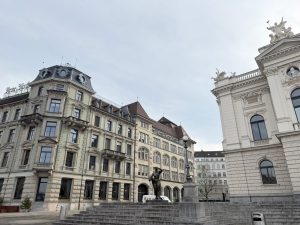
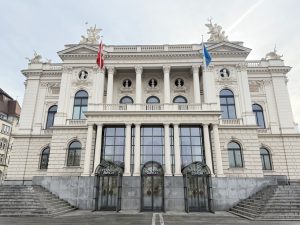
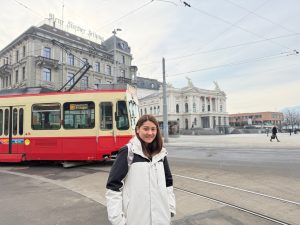
We walked along the lakefront to the square in front of Opernhaus Zurich. The Sechseläutenplatz is the largest square in Zurich and is traditionally used for spring celebrations in April. Sechseläutenplatz is the best place to view the Opernhaus Zurich (and there is a free public toilet here). The Sechseläutenplatz is a great place to soak up the European vibe with the Neoclassical architecture style of the Opernhaus Zurich and the neighbouring NZZ building, which was the city’s largest newspaper publishing house. Opernhaus Zurich is Zurich’s first permanent theatre, built in 1834, and was on this very spot where the Opernhaus Zurich sits. The former building was burnt down in 1890. Several iterations of the opera house were built between 1890 and 1964, with the current building being the permanent fixture of the City’s main performing space. The facade of Opernhaus Zurich is adorned with the busts of famous artists who performed in this very house. Sitting on the top of the building were sculptures of angels with various musical instruments celebrating music and the arts. We approached the entrance of Opernhaus Zurich to check if we could enter the opera house and view its interior, but the doors to the house were closed, and the signs that pointed us to the entrance of the house ended up nowhere. We gave up and headed to our next stop in Zurich.

Grossmünster – The Church with Twin Towers
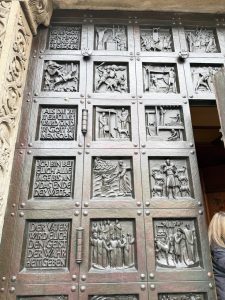
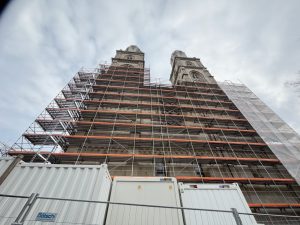
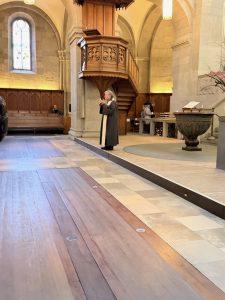
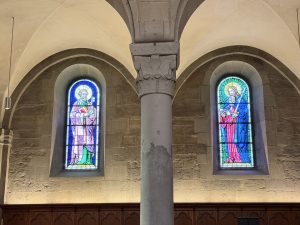
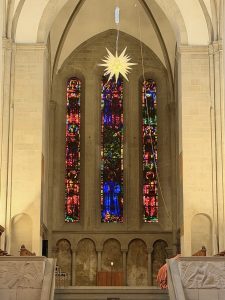
Leaving Sechseläutenplatz, it took us 7 mins on foot to arrive at the Grossmünster, which is one of the two iconic churches in Zurich with its distinct twin towers. Nestled on the right bank of the Limmat River, Grossmünster sits atop a small hill opposite Fraumünster. The Romanesque structured Grossmünster was first constructed in 1100 and inaugurated in 1220. We were unsure if the church was open, as there were some scaffolds around the church. However, our worries were unfounded as we eventually found the entrance to the church at the back of the church. Unlike the Fraumünster, Grossmünster was free to enter. The interior of the church looks plain and simple. Like most of the churches here in Switzerland, there is no high altar in the church; a rostrum and an elevated platform were used instead, where sermons were delivered. The most striking features of Grossmünster’s interior gotta be the huge stained glass windows behind the rostrum, featuring nine characters (we were unsure who these nine figures were).



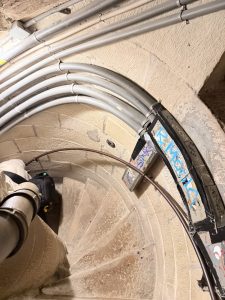
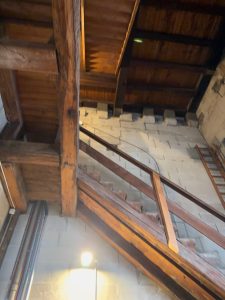
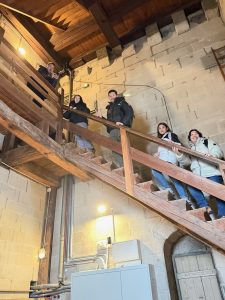
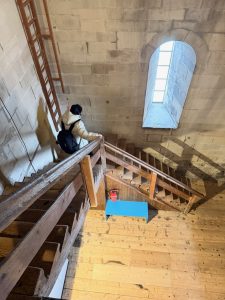
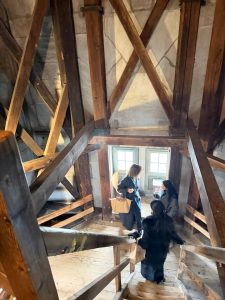
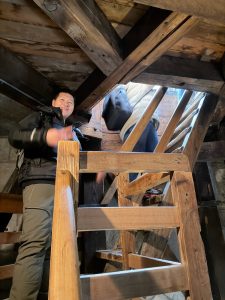
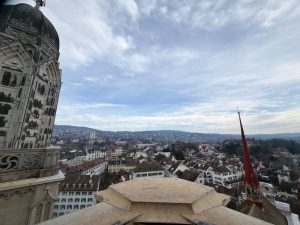
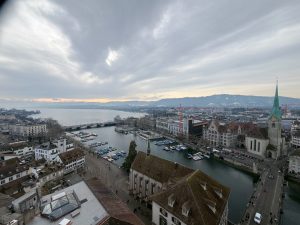
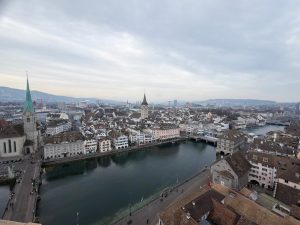
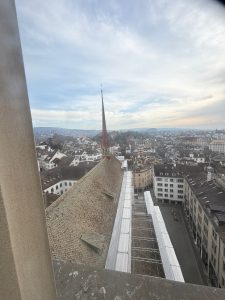
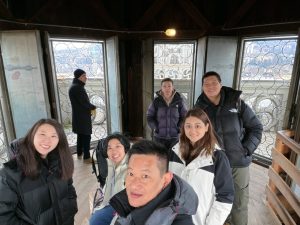
The biggest draw of us coming to Grossmünster was to climb up one of the two towers (entrance costs CHF5 and can be bought at the base of the tower). The 187 steps, 50m tower climb started with a steep and narrow spiral stone staircase that took us halfway up the tower, with the rest of the climb on wooden (and wider) staircases. I was initially deliberating whether the views from the top of the 50m tower were worth it, as the outdoor patio was closed to the public. However, my concerns dissipated when we reached the viewing platform on the tower. Here we were treated with amazing 360° views of the city. At the front, we could clearly see how the Limmat River divides the city into two and how it connects Lake Zurich to the city centre. At the back of the tower, we could see the right bank Altstadt and the surrounding hills. The views here were worth the CHF5 and the 187 steps climb. I personally liked the view of the riverside. After descending the tower, we chatted with the Malaysian female staff member at the ticketing counter, who generously shared with us the history of the church and places she thought were worth visiting around Zurich. Initially, we were torn between visiting Rhine Falls and Uetliberg, where one offers views of a majestic waterfall and the other offers views of the city and Lake Zurich. She convinced us that the Rhine Falls was a better visit. Before leaving the church, she recommended us to lunch at Zeughauskeller, a restaurant nearby famous for its affordable and good local food (she even brought us out of the church and pointed out the directions for us to go). We were originally planning to visit the Hirshen Platz and Predigerkirche, but as we were engrossed with our chat with the staff in Grossmünster, we found that we already missed our lunch and abandoned our last two stops on the list. Instead, we headed to the restaurant that the church staff recommended.

Lunch at Zeughauskeller
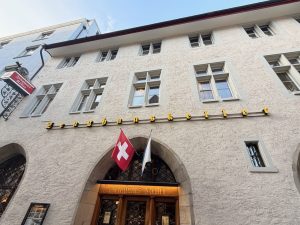
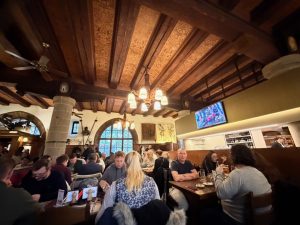
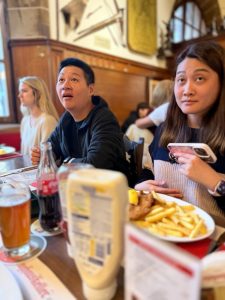
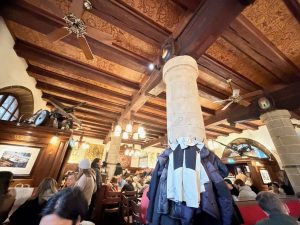
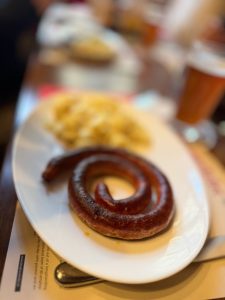
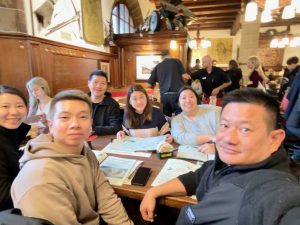
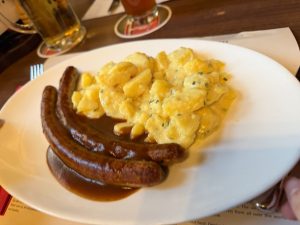
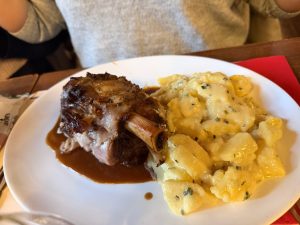
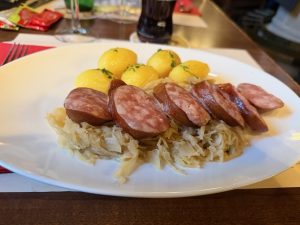
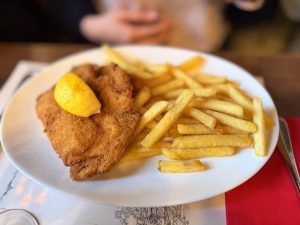
It only took us 7 mins to walk from Grossmünster to Zeughauskeller. The restaurant, housed in a 15th-century armoury, has been around since 1926 and is a popular spot for locals and tourists for beer and food. As we were at the restaurant during off-peak hours, we only had to wait for 5 minutes before being seated (it can take up to 1 hour during peak period). Despite being off-peak hours, Zeughauskeller is still packed with patrons gathering and feasting. The vibe in the restaurant felt like a medieval tavern, partly thanks to the decor and partly due to the liveliness. Like what the staff at the church mentioned, food was reasonably priced (at CHF30 tops) and came in big portions. The food was good, really good,d and the staff were very friendly.

Bahnhofstrasse – The Shopping Street in Zurich
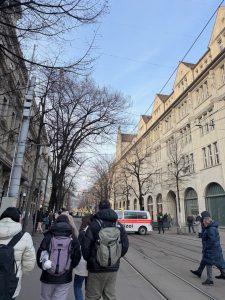
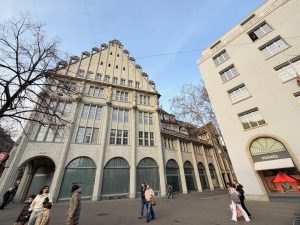
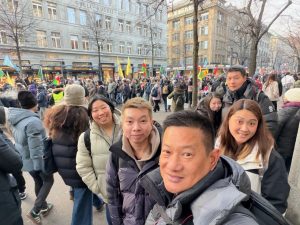
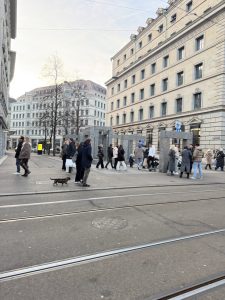
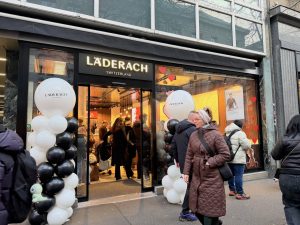
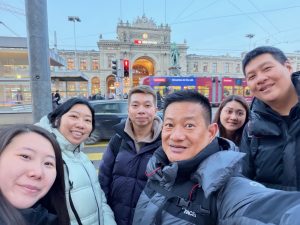
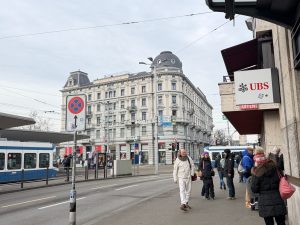
Like most European cities, shops in Zurich do not open on Sundays. So we used the rest of the afternoon to shop in the city. Bahnhofstrasse is the main shopping street in Zurich, stretching 1.4km from Zurich Hauptbahnhof to Lake Zurich, where many shops, ranging from luxury boutiques to small cafes, set up business. We saw a peaceful protest ongoing the moment we arrived at the Bahnhofstrasse, where police blocked off the street. As shopping in Switzerland is expensive, we mostly did window shopping on the Bahnhofstrasse. We did buy some Läderach from one of the few outlets on the Bahnhofstrasse. We ended our day at Zurich Hauptbahnhof, where my friend got her final Grand Tour passport stamp from the train station. We also managed to get some tips for our visits tomorrow and our 24-hour local transport ticket (ZVV) from the tourist information, which would cover our trip to the Lindt Chocolate Museum and the Rhine Falls.