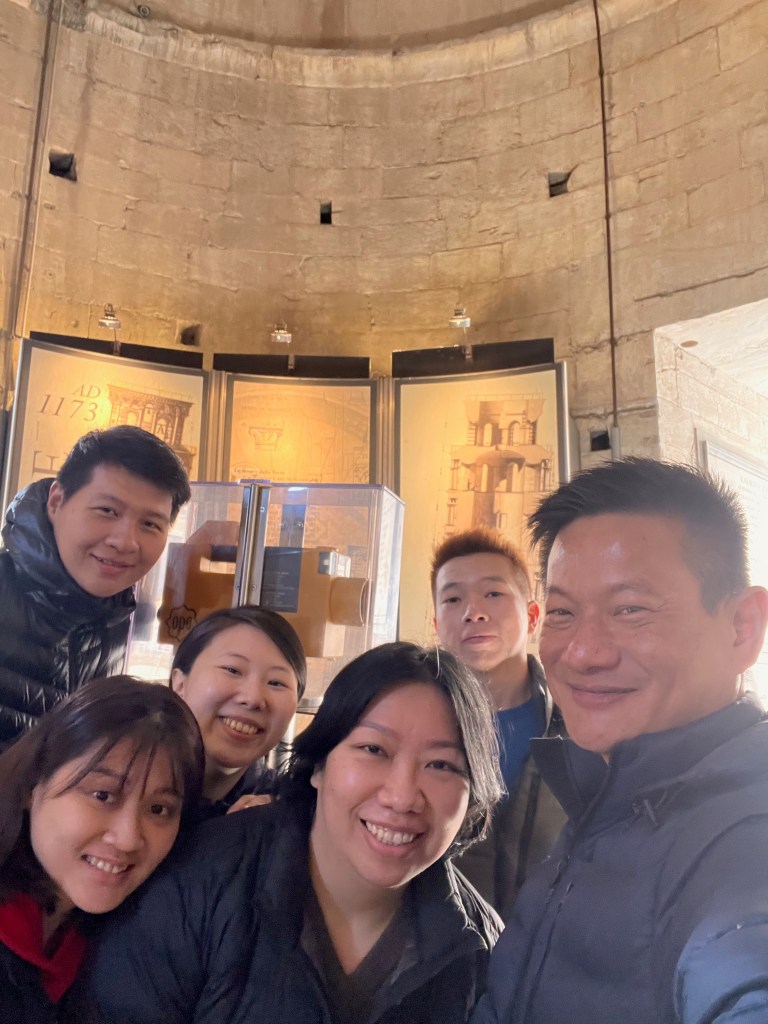
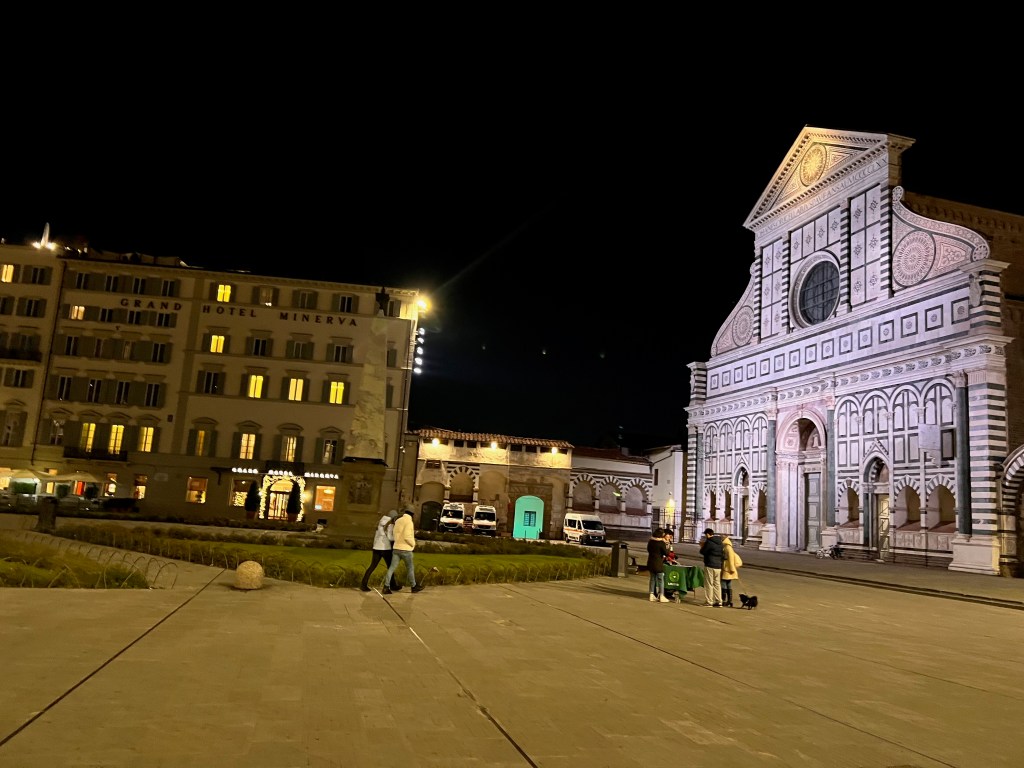
Italy Day 7 (2 Dec 22) – Icons of Florence: Statue of David and Duomo, & First Look at Rome, The Eternal City

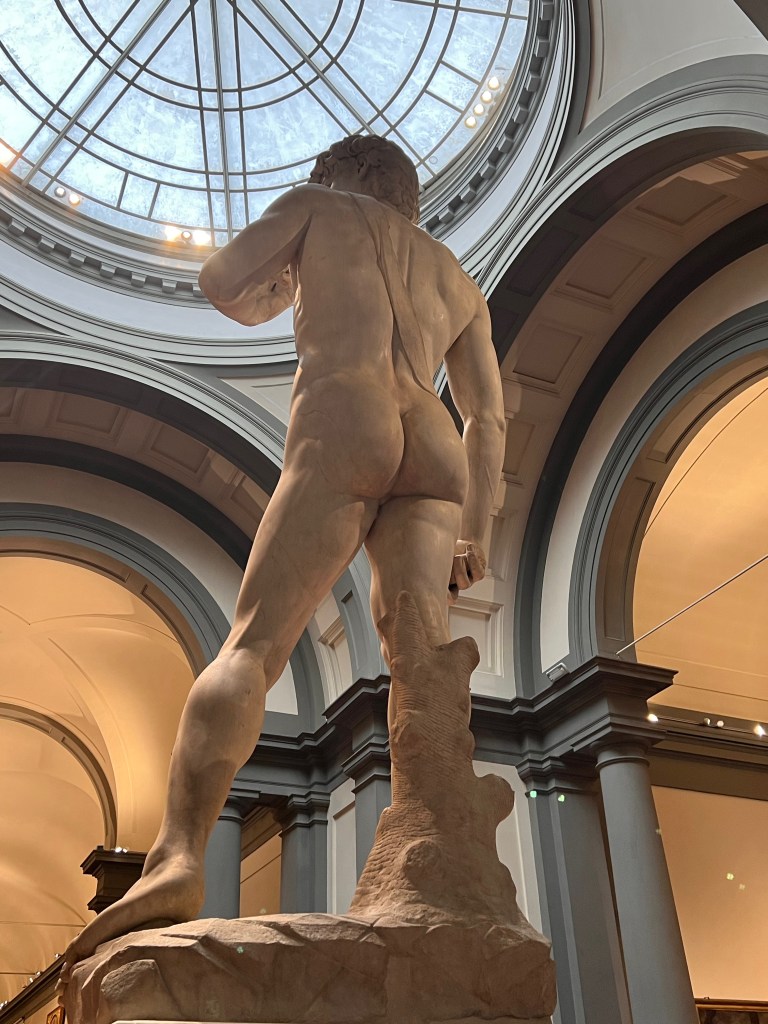
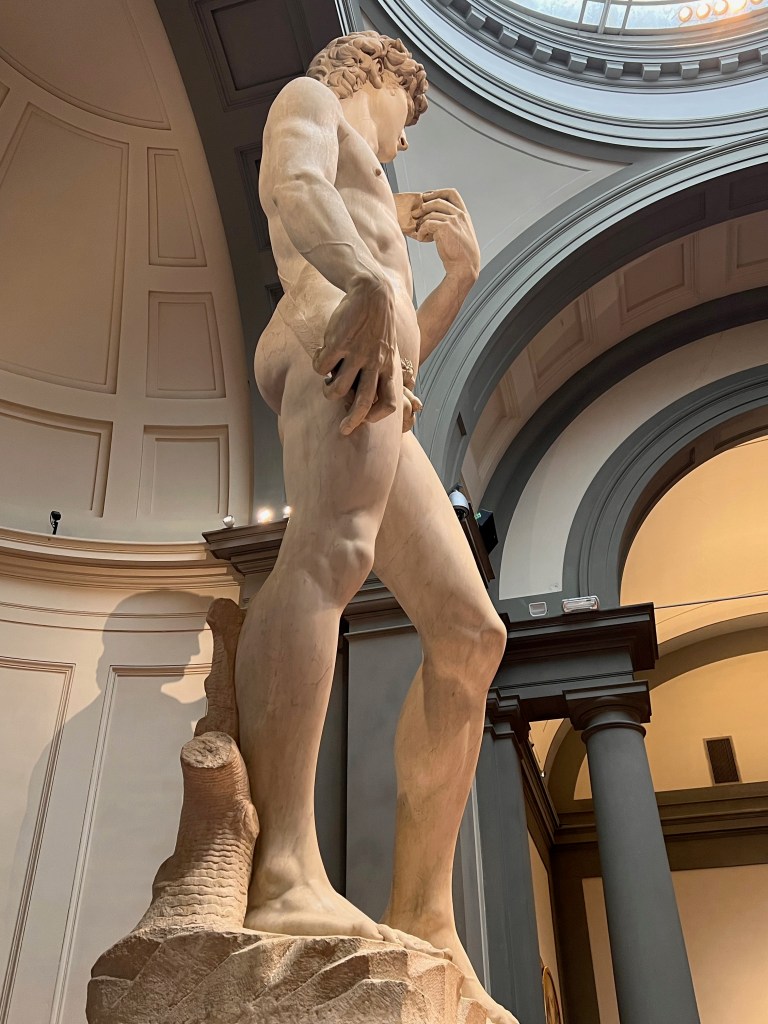
Michangelo’s David in Galleria dell’Accademia

We kept the itinerary very light today as we had a train to catch at 4 pm to Rome. We did not plan to visit many art museums for this Italian trip as we were not artistically inclined. However, since coming to a country that produces several renowned artists such as Leonardo, Michelangelo, Raphael, Donatello, etc. Since Florence is the birthplace of the renaissance and if there is one art museum we are visiting, the Galleria dell’Accademia would be the one. Galleria dell’Accademia is home to the renowned Michelangelo’s David. It also houses other sculptures by Michelangelo and an extensive collection of paintings by Florentine artists, mostly from 1300–1600. We booked an early slot at 9 am to maximise the time we had in Florence (you can access the official website of the Galleria here). Galleria dell’Accademia is very close to the Florence hotel we were putting up. As we were walking to the Galleria, Google Maps led us to a plain 2-storey building. On top of an entrance reads Galleria dell’Accademia di Firenze. I am surprised for housing a masterpiece; the museum facade looks very simple. A line was already forming at the gallery entrance despite the early timing. Most of the visitors were students who seemed to be on excursions. Staff at the entrance directed us to the ticket office opposite to redeem our tickets.

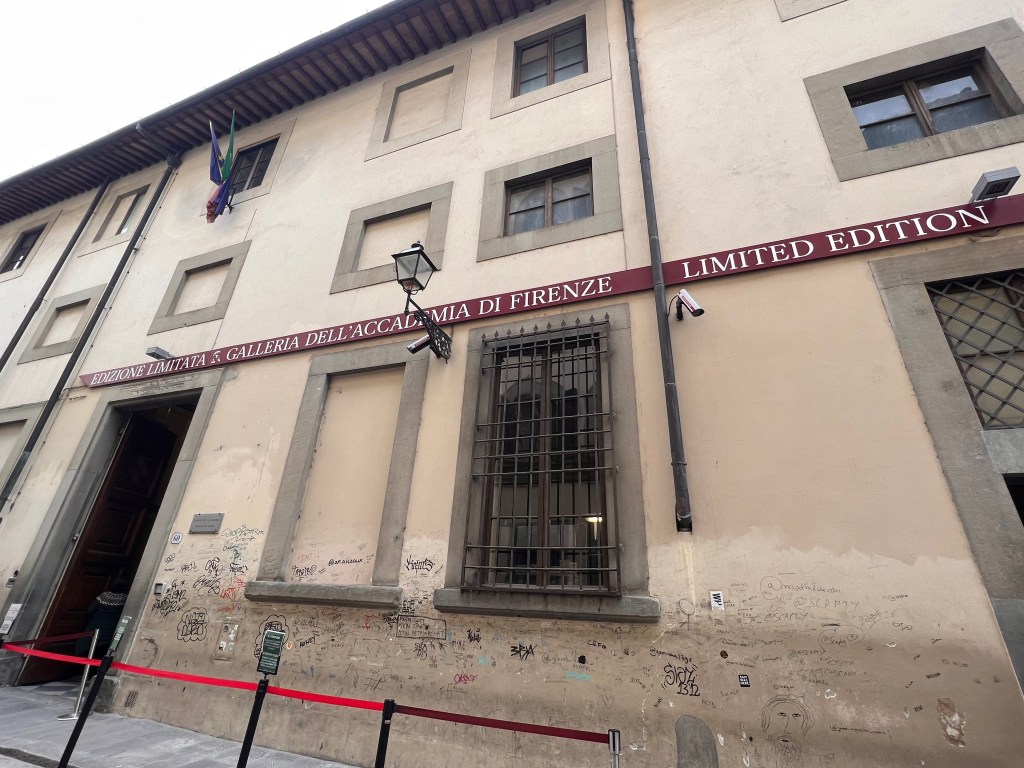
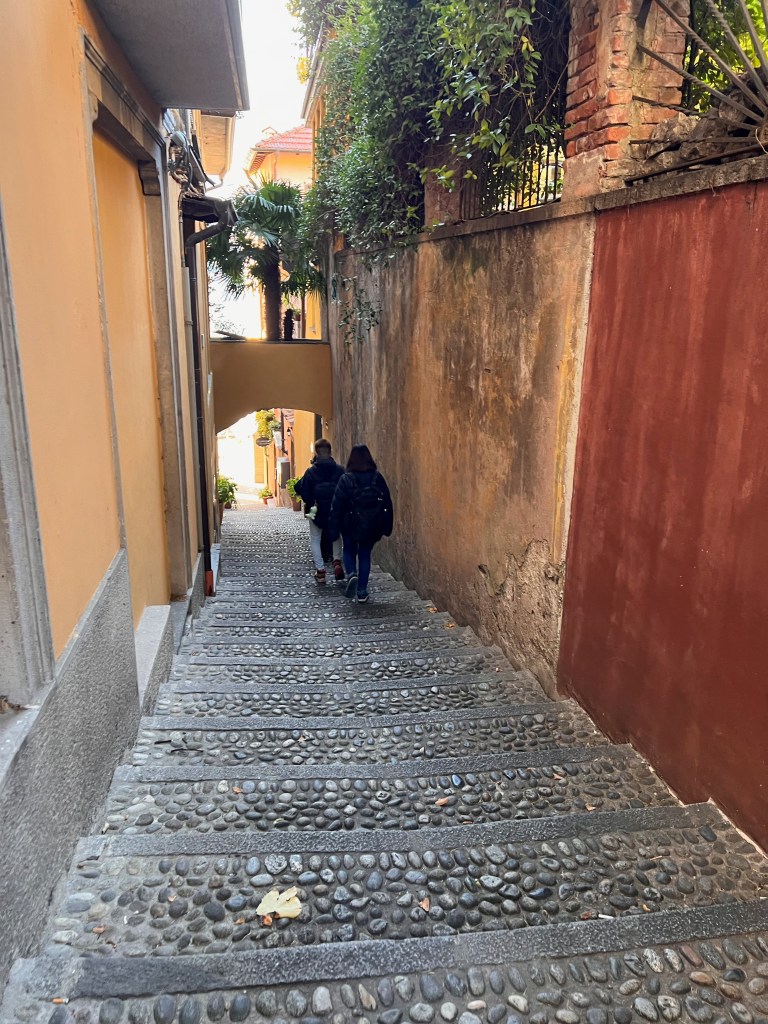
Galleria dell’Accademia is located in this alley.
The facade of Galleria dell’Accademia is very plain.

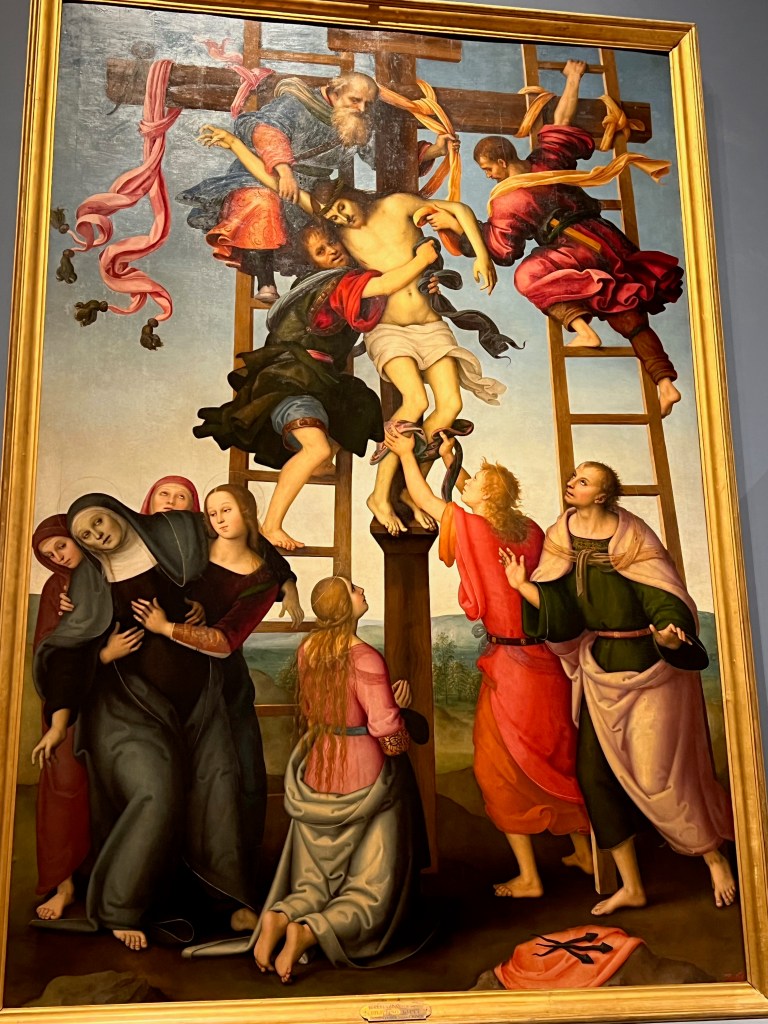
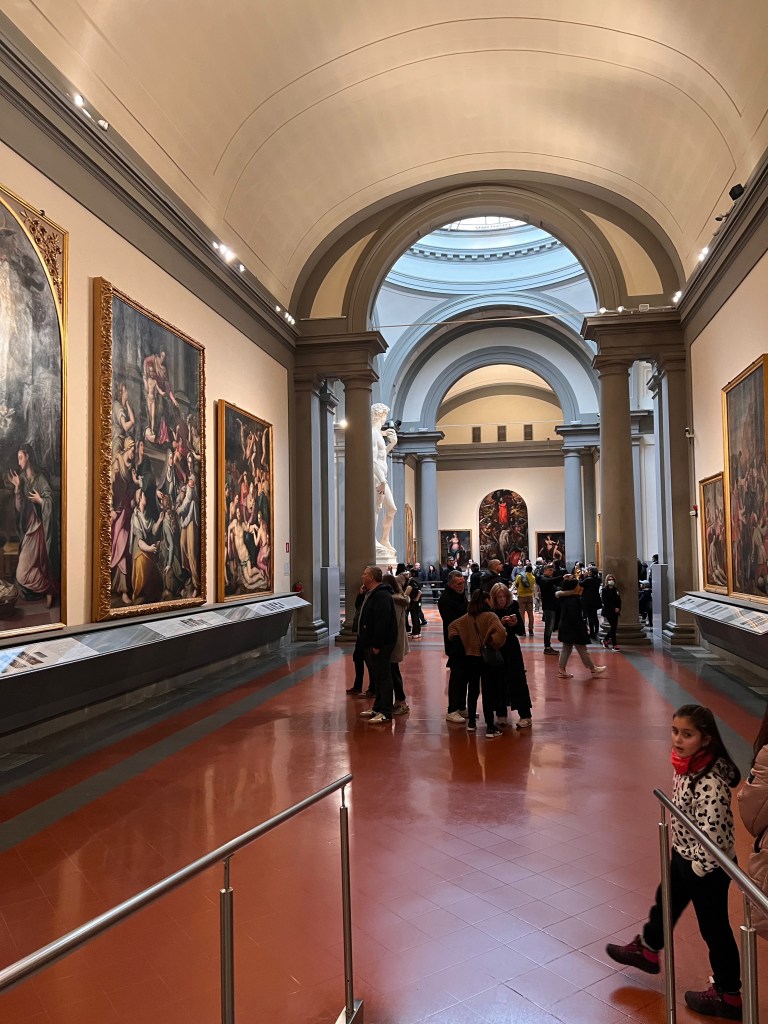
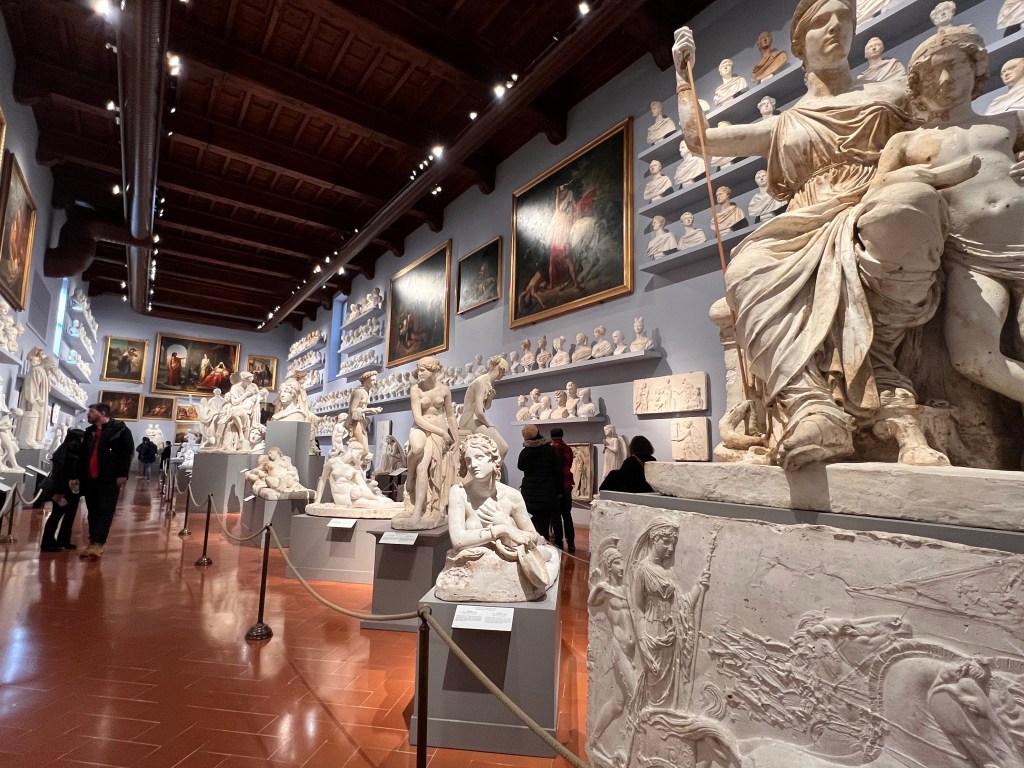
After getting our tickets, we had to go through x-ray machines and metal detectors before being admitted to the gallery. Entering the gallery, a large sculpture – Rape of the Sabine Women, occupies the centre of the gallery, conveying an antiquity scene of a Roman man abducting a Sabine woman from the neighbouring town as another man crouches under his feet. In addition, there are paintings of Christ, mainly after his crucifixion, painted on wood displayed on the gallery’s walls. After pretending to appreciate the art pieces, we headed to the centrepiece of Galleria dell’Accademia – Michelangelo’s sculpture David. The David sculpture was placed at the end of a hall with paintings and sculptures under a glass dome roof. Legend states that David was created from an abandoned marble used to build the Duomo. There are more rooms displaying paintings and sculptures to the left of David. After walking into these rooms, we returned to David’s sculpture. Like most visitors to Galleria dell’Accademia, we mainly came here for the David sculpture. It did not take long for us to feel bored in Galleria dell’Accademia.

Statue of David in Galleria dell’Accademia

Return to Cattedrale di Santa Maria del Fiore

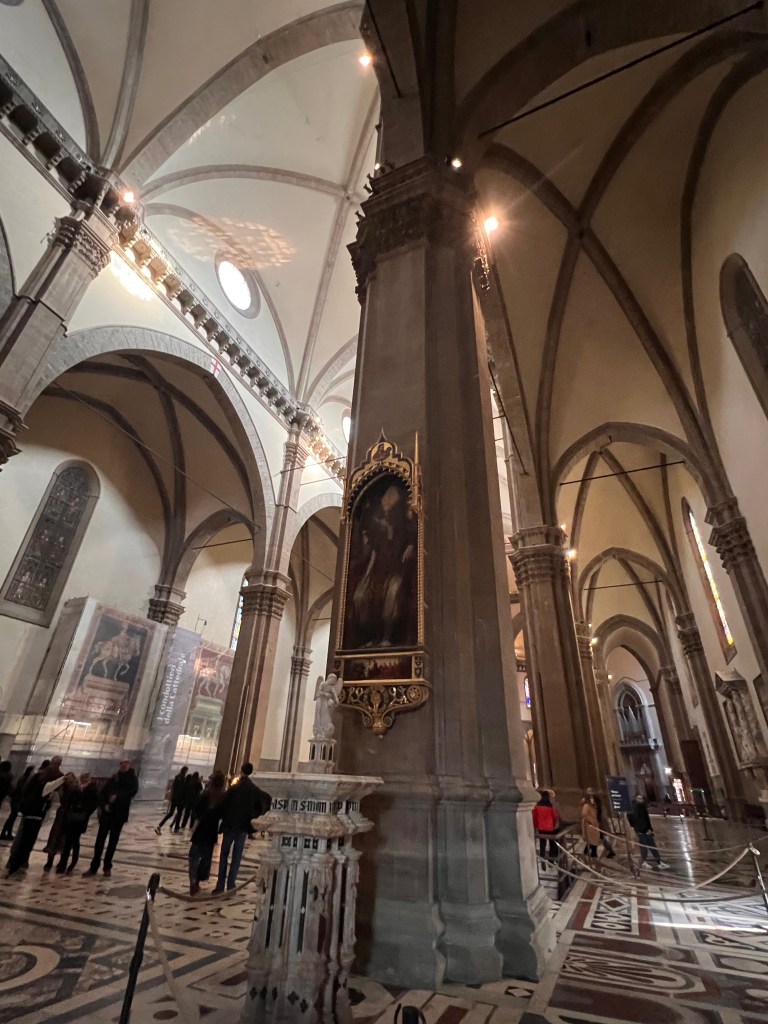
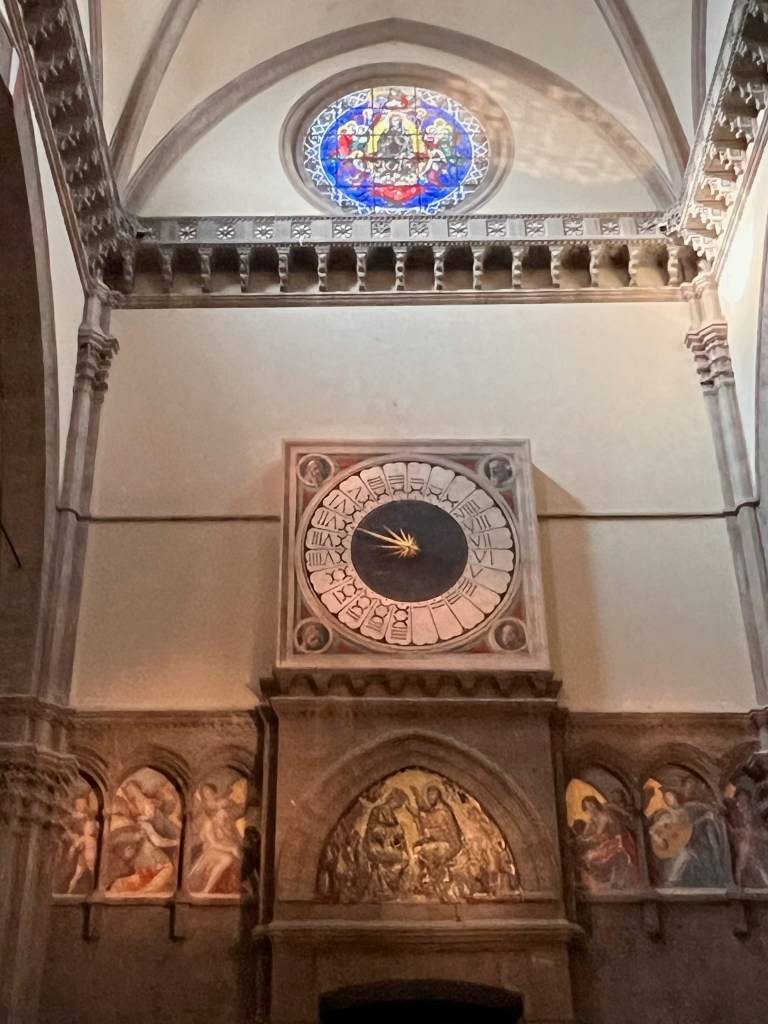
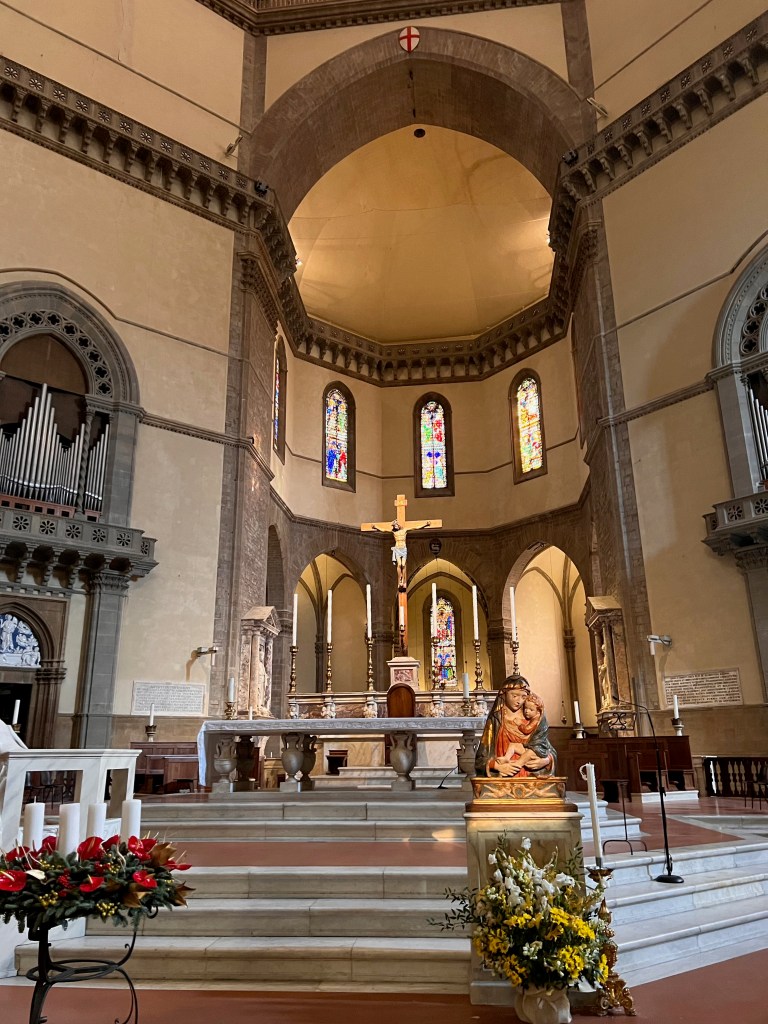
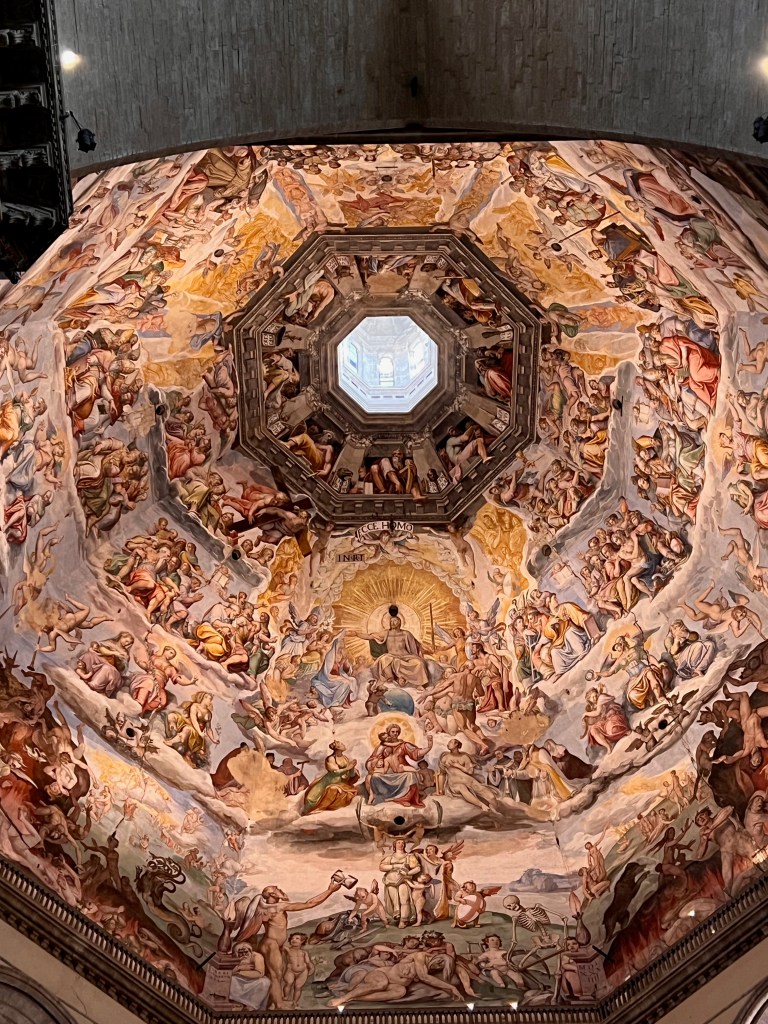
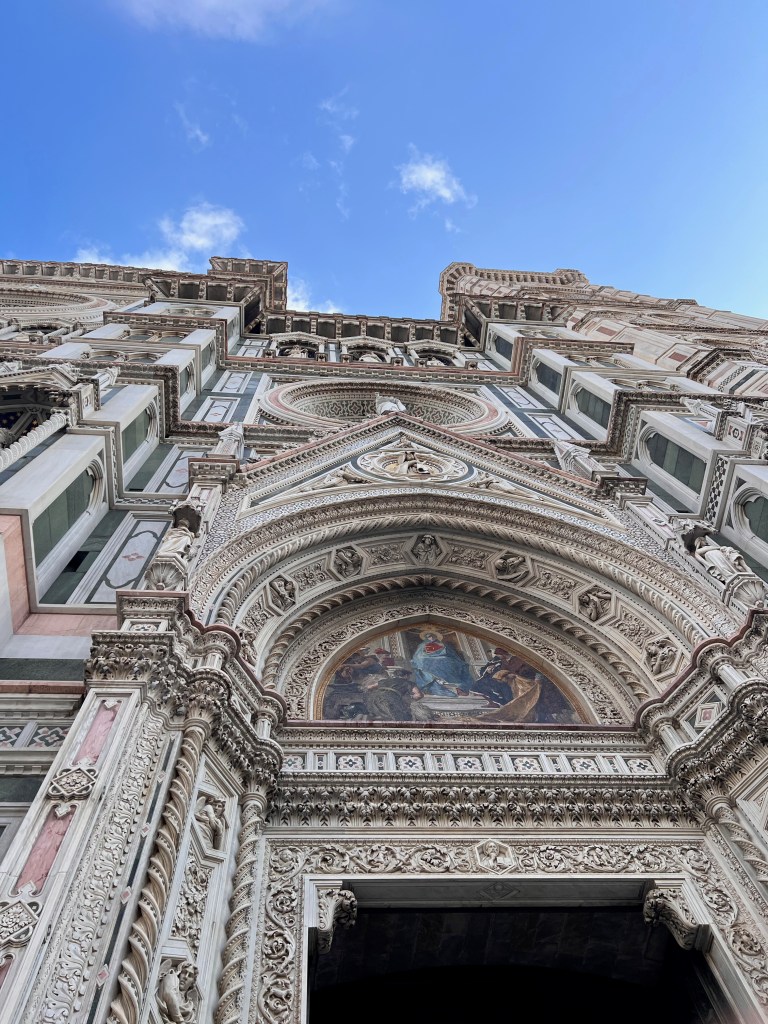
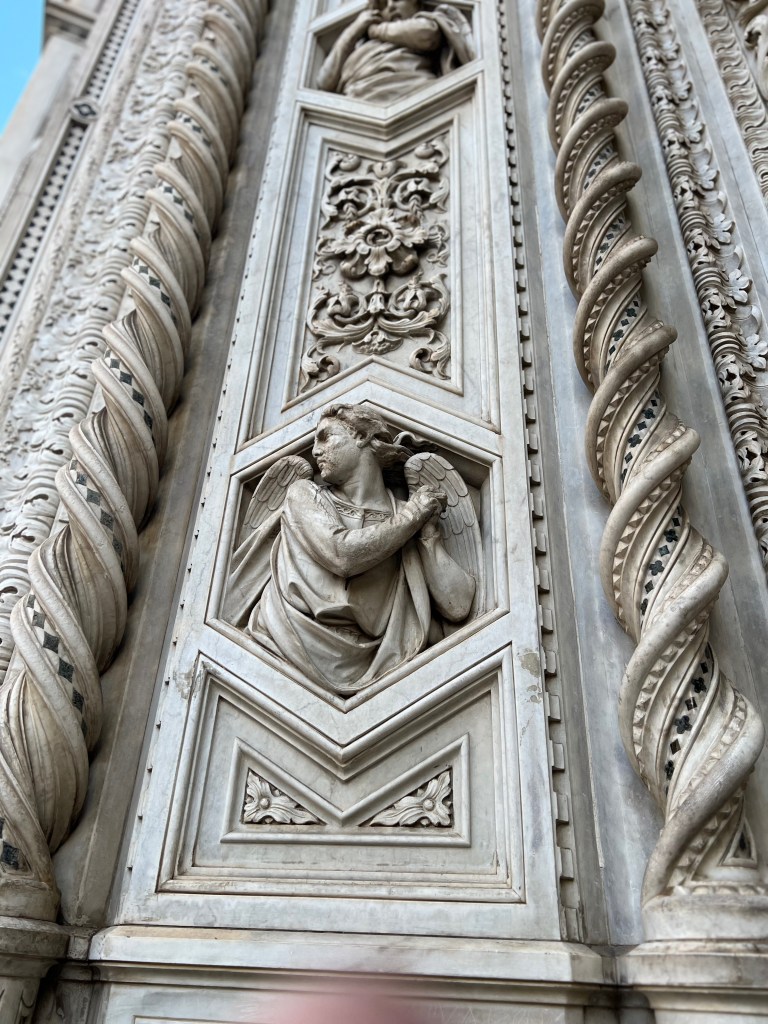
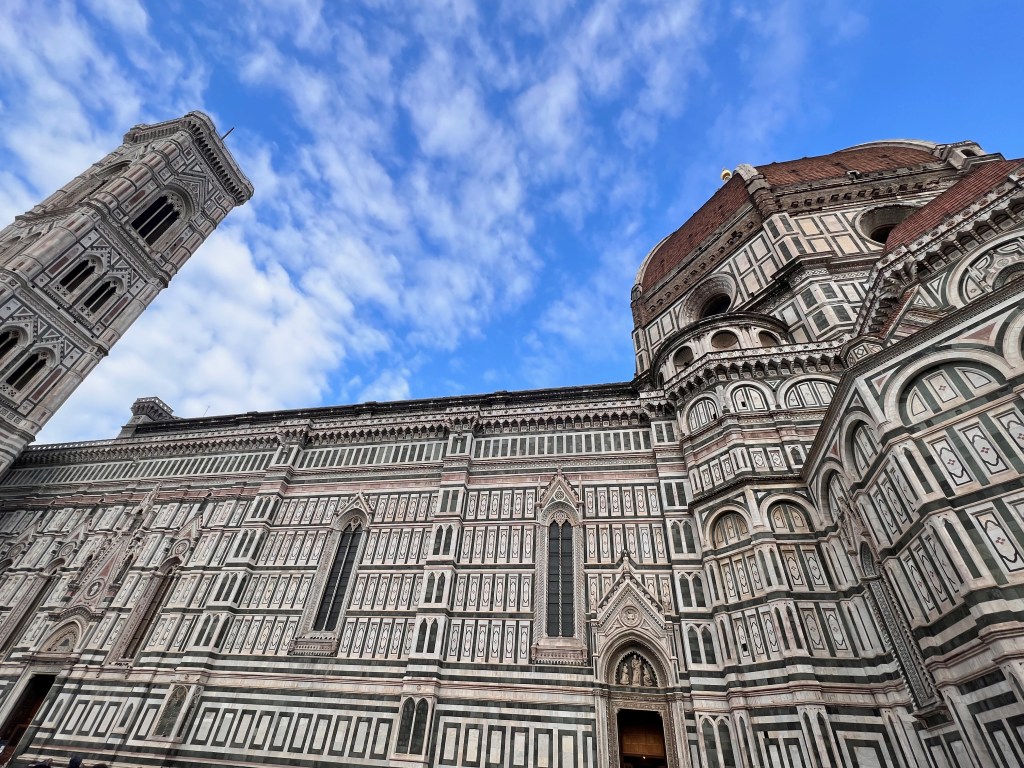
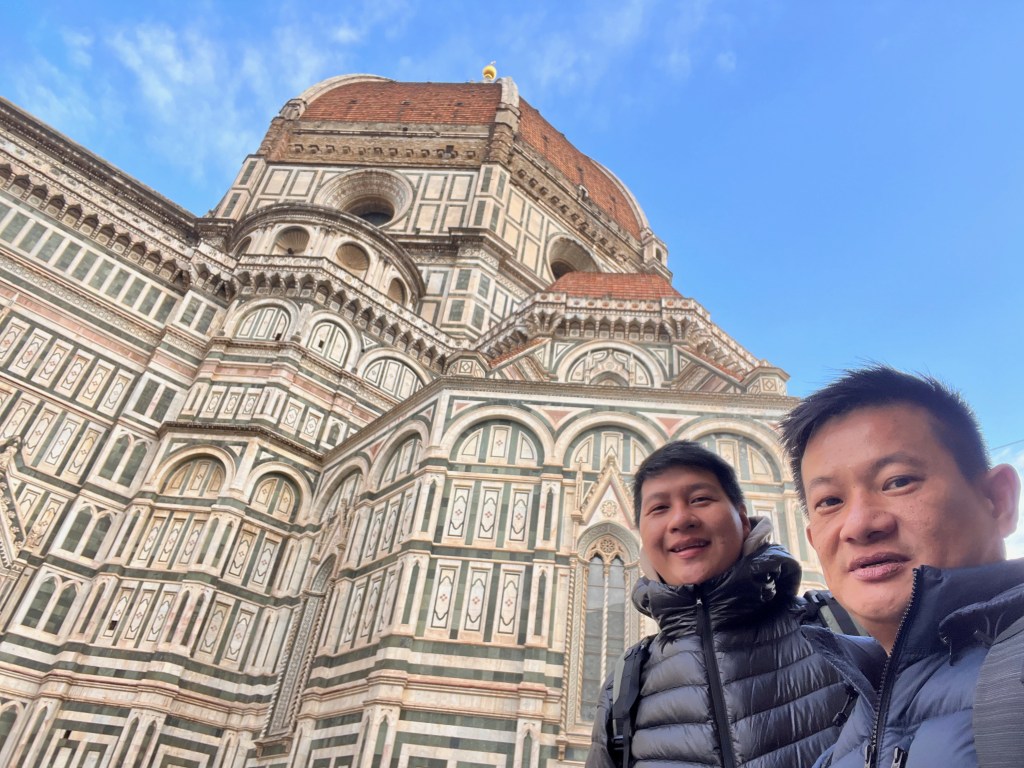
We headed to the Duomo after exiting Galleria dell’Accademia. The Duomo is straight ahead from the street where the gallery is located, about 7 mins walk. We could see more intricate carvings on the facade of the Duomo in the day. Unlike the Duomo in Milan, the carvings on Cattedrale di Santa Maria del Fiore are smaller and carved into the frames of the windows and doors, reminding me of the carvings on the Taj Mahal. Entry to the Duomo is free. The Duomo’s interior looks simpler than that of Pisa or Milan, decked in white marble without over-the-top carvings. The high ceiling in the Duomo makes the already spacious interior appear larger. As we walked towards the main altar of the Duomo, situated towards the rear, a view of the awe-inspiring Dome that stands out in the Florentine skyline came into our view. The fresco of The Last Judgement by Giorgio Vasari looks impressive and brings sophistication to the Dome. Several pictures later, we exited the Duomo via the side door.

Cattedrale di Santa Maria del Fiore in Florence

Last Judgement under the dome of Cattedrale di Santa Maria del Fiore

The Duomo’s side door led us to the square with entrance to the Campanile to the left and the Dome to the right. We thought we could get a great bird’s eye view of Florence from 15m Campanile. However, the 463 steps with no elevator options put us off. We turned to the iconic Dome of the Duomo and wanted to climb to the top of the Dome. My friend and I checked out the pricing of the tickets at the ticketing booth opposite the exit of the Duomo. We were put off by the €‎30 price tag, which included entrance to the Campanile and the crypt. There are no ticketing options for dome visits only. As we only wanted the Dome, we thought paying €‎30 for only one sight was not worth the price. We abandoned the idea.

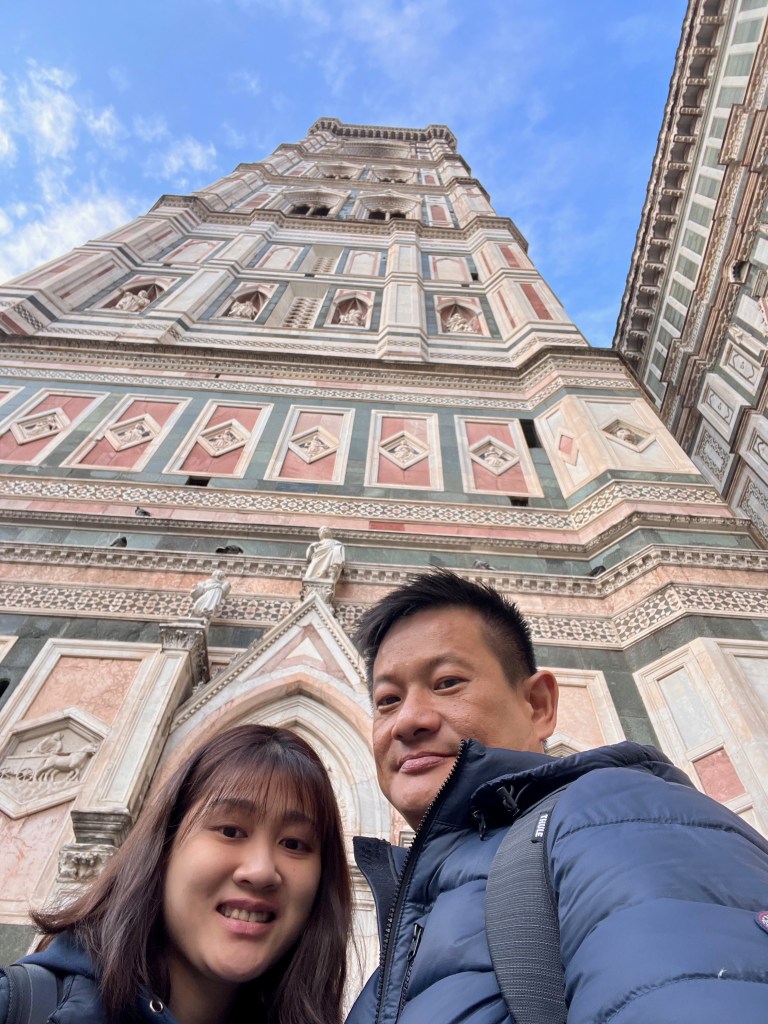
Cattedrale di Santa Maria del Fiore with the dome and Campanile

We spent the rest of the afternoon shopping around Florence. We originally planned to visit Ponte Vecchio in the day and Piazzale Michangelo for a view of the city of Florence. As we were caught up with shopping, we did not have enough time for either of these sights. We had to watch our time when we shopped as we needed to check out of the hotel by 3 pm and head to the train station for our 4 pm train to Rome.

Exploring Rome, The Eternal City, at Night

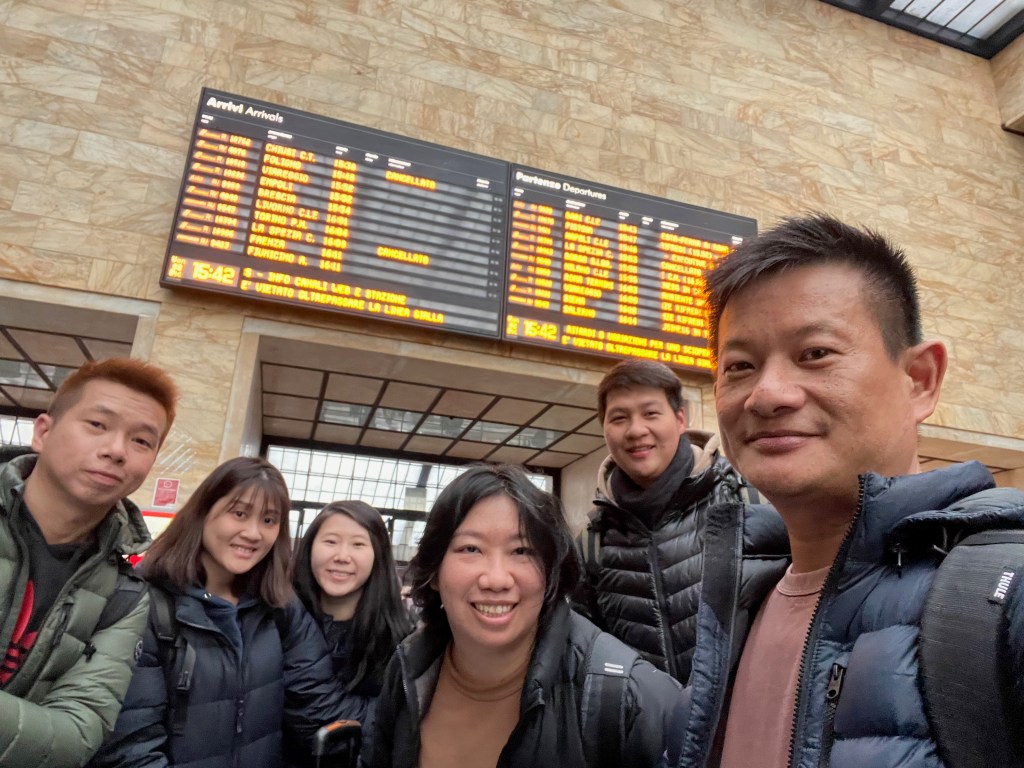
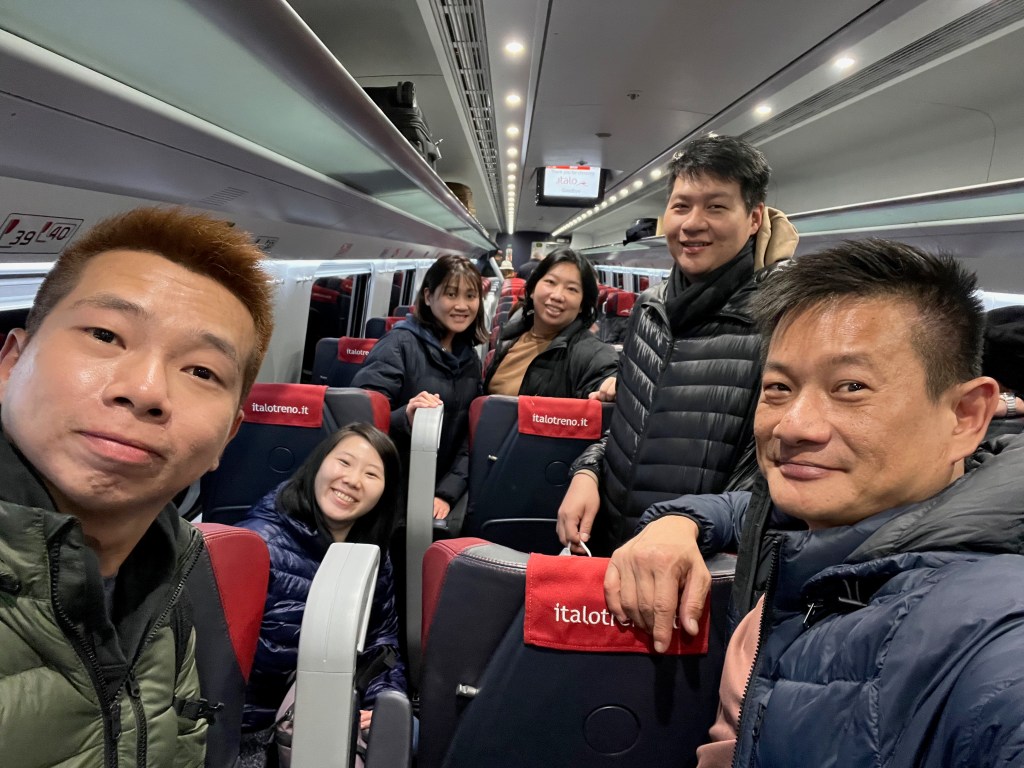
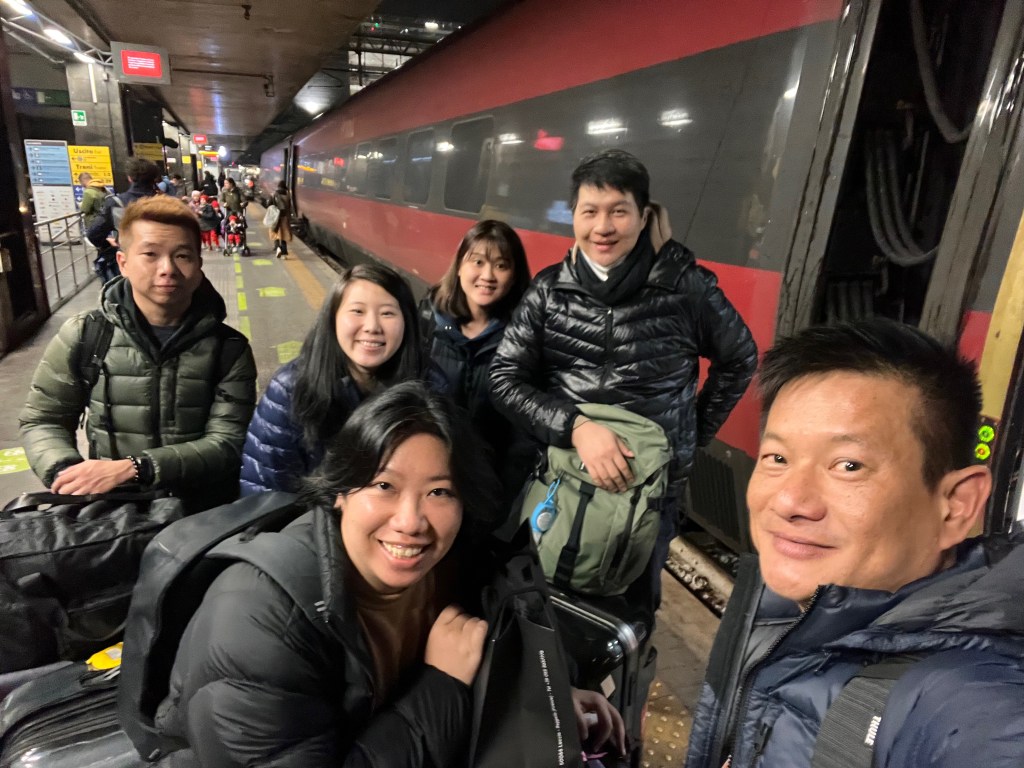
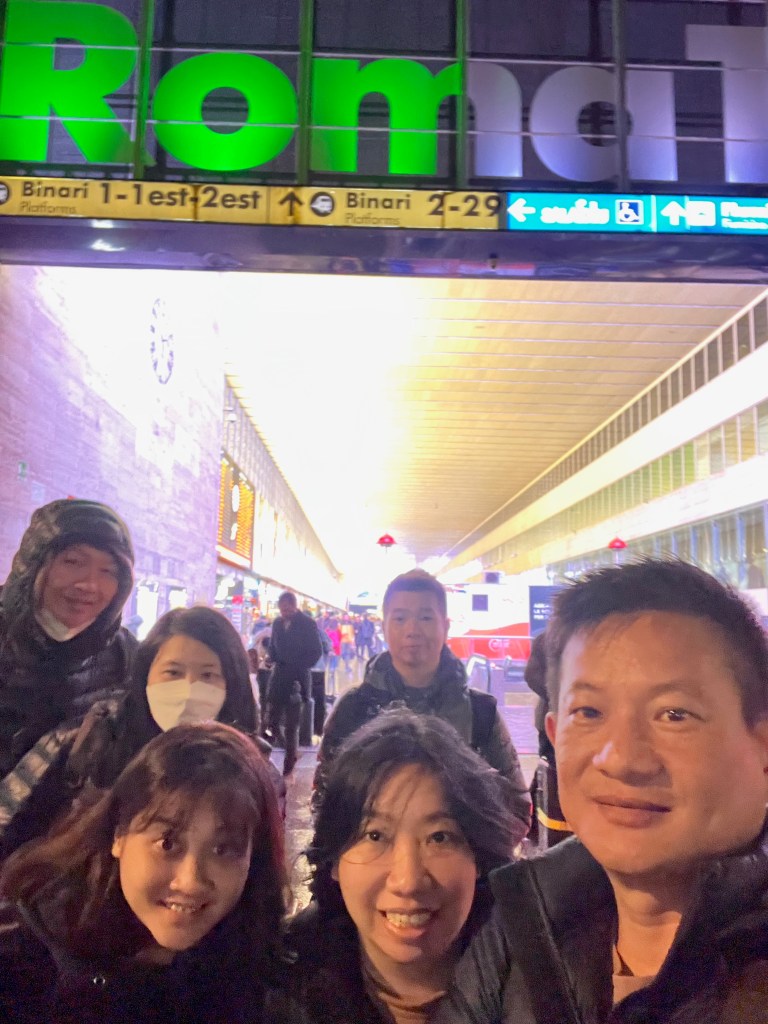
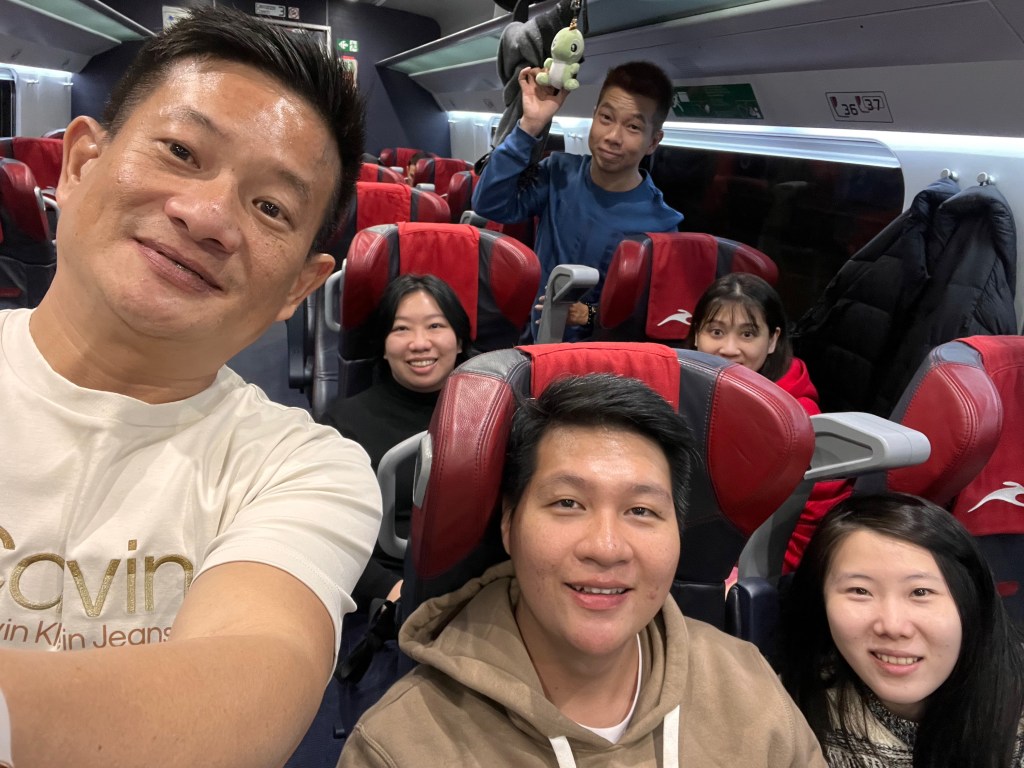
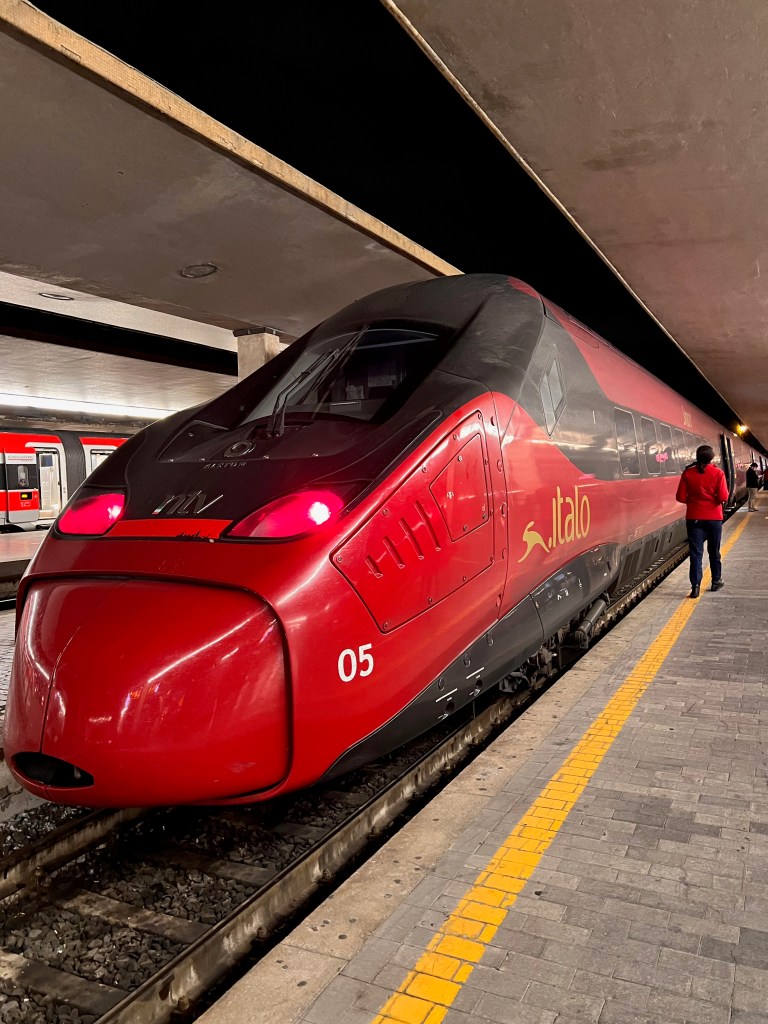
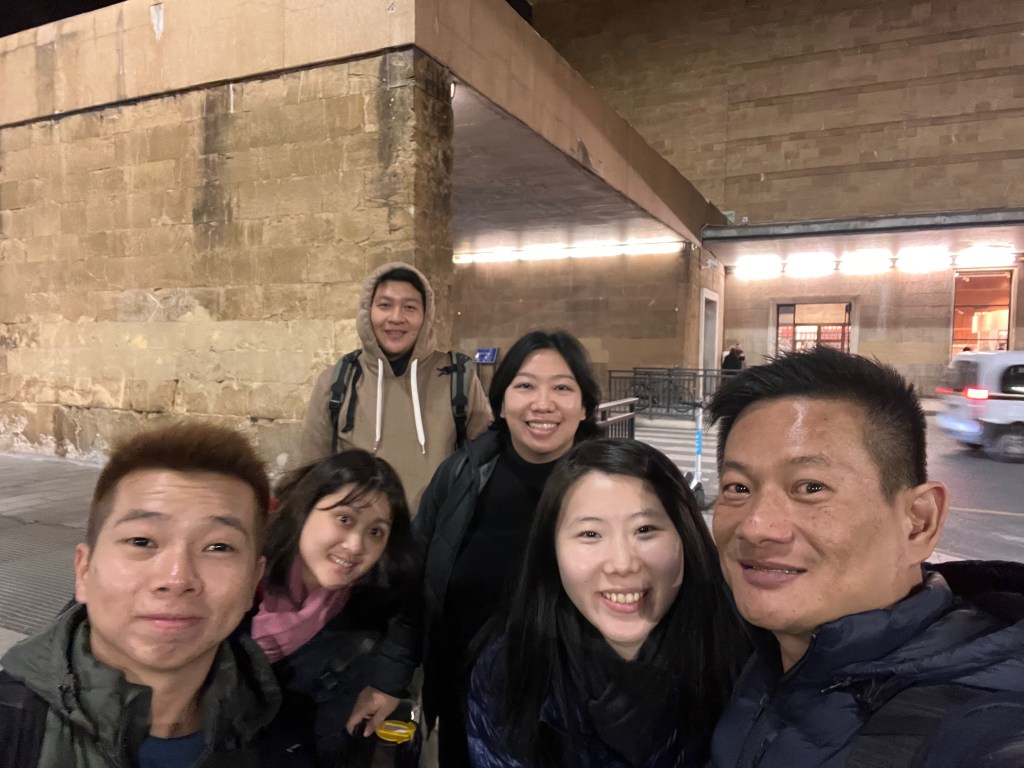
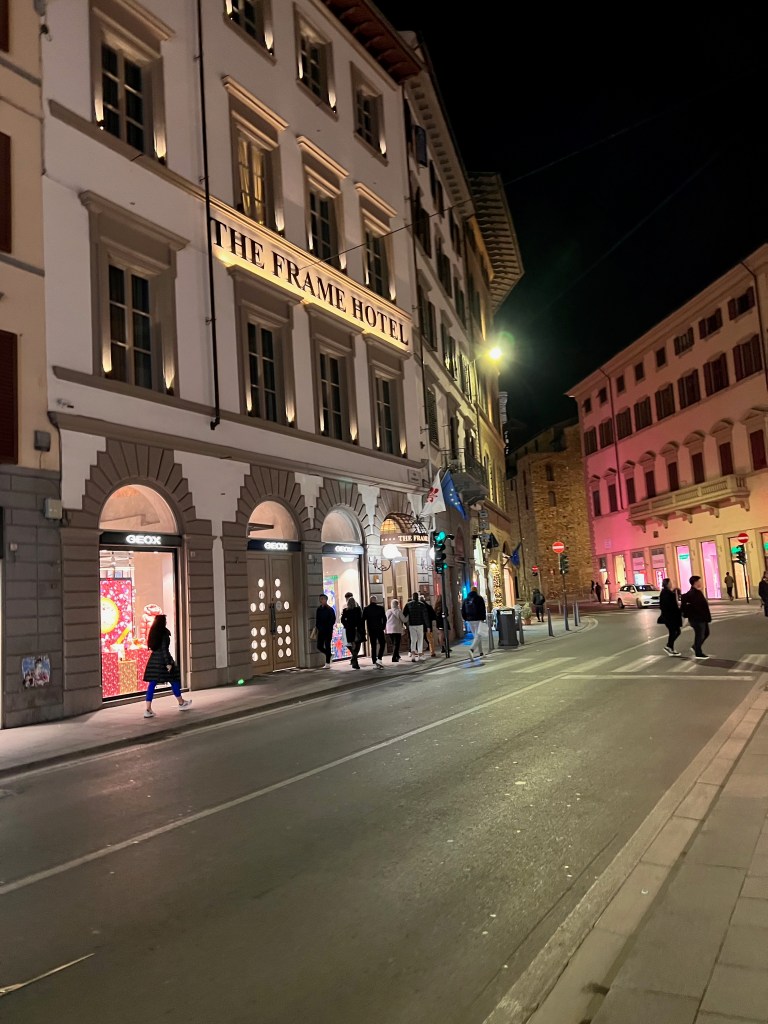
We made it back in time to the hotel and completed our check-out. The walk from our hotel to Firenze Santa Maria Novella Station took less than 10 mins, and we made it in time for our train to Rome. The train ride to Rome took 1 hr 15 mins. It was already dark by the time we arrived at Roma Termini Station. We followed the crowd and made it to the side exit to the station. It started to drizzle by the time we exited the station. We thought leaving Roma Termini Station from the main entrance felt safer as it was brighter. Without our luggage, it would take us about 15 mins by foot to reach our hotel. It took us about 30 mins to reach as the Roman streets are not exactly luggage friendly. The bumpy roads made it challenging for us to drag our luggage. We settled down a little after check-in at our hotel before heading out since the night was still young.

Arrival in Rome

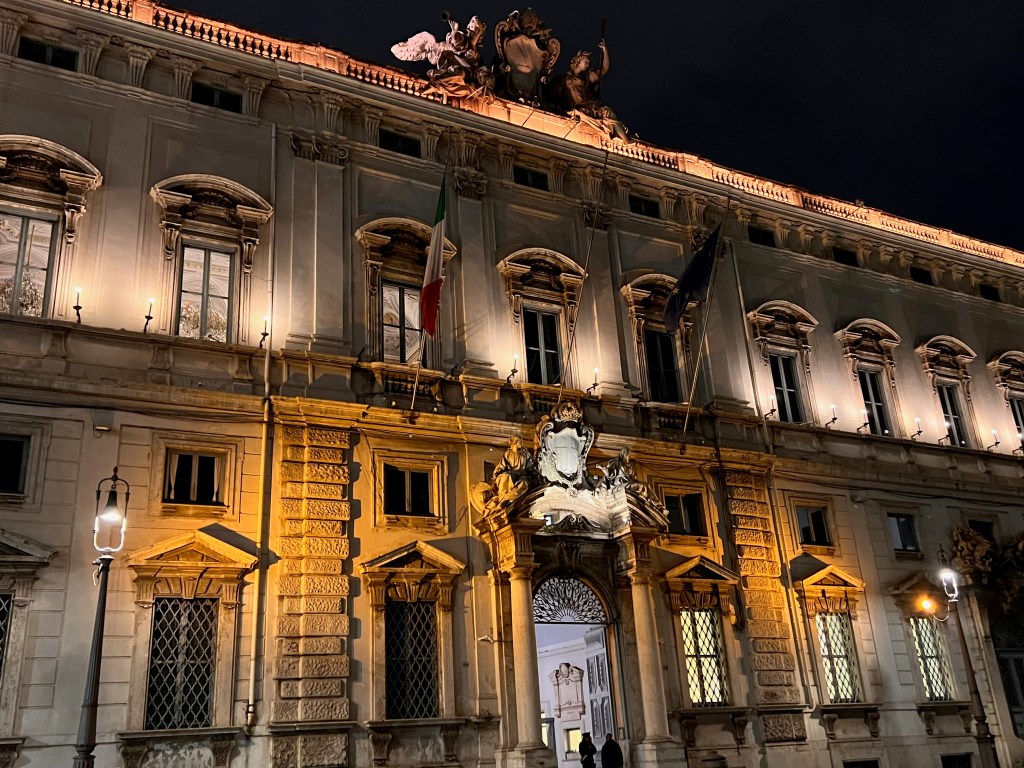
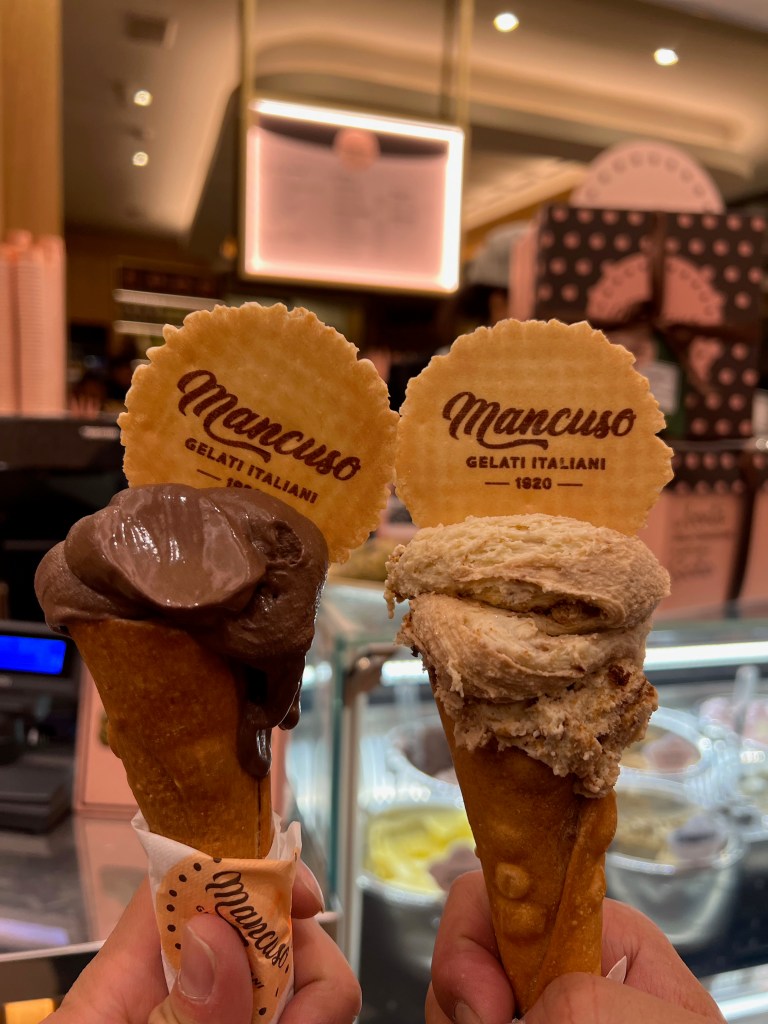
Our first destination in Rome is Trevi Fountain. I read that Trevi Fountain is best visited at night as the fountain would look nicer with its lighting and would be less crowded at night. Using our trusty Google Maps, we started to navigate to Trevi Fountain. As we were walking from our hotel, the suggestion from Google Maps was a little confusing. The app brought us to a hill with a tunnel that seemed to make just for vehicular usage. At this point, I did not think too much about it and led my friends to ascend the staircase by the side of the tunnel. I guess Google Maps was not smart enough to detect elevation changes and continued suggesting that we walk straight into what seemed to be a police station. We were a little wary about the proposed route and attempted to walk around it. After about 3 mins walk, we came to an Egyptian obelisk monument flanked by statues of a man and a horse on both sides. We have stumbled upon Fontana di Monte Cavallo and Piazza del Quirinale, where the residence of the Italian President sits. We did not know the importance of this piazza and the building when we were there (I only realised that building was the Quirinal Palace when I wrote this blog entry). We assumed it might be the Italian Police HQ as it seemed to be heavily guarded. The hill we were on was the Quirinal Hill, the highest of the seven hills of Rome. Google Maps pointed us towards a staircase, where the Trevi Fountain sits right around the corner. We chanced upon a gelateria on our way to Trevi Fountain and stopped for some gelatos.

We stumbled on the Piazza del Quirinale.

Piazza del Quirinale at night

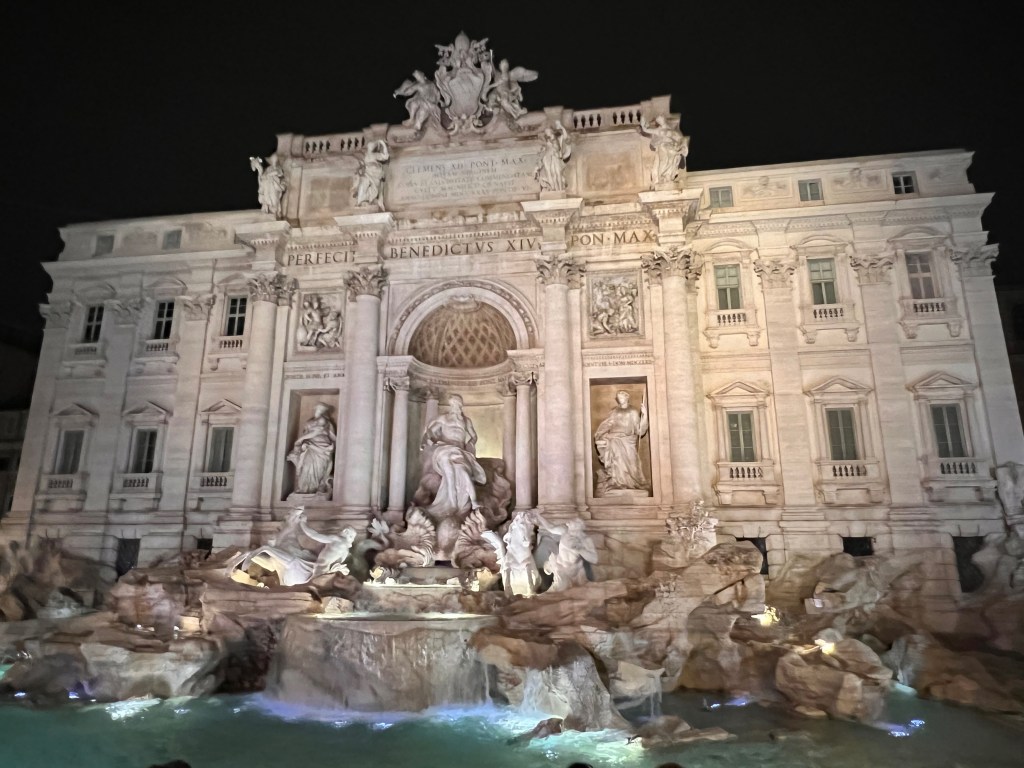
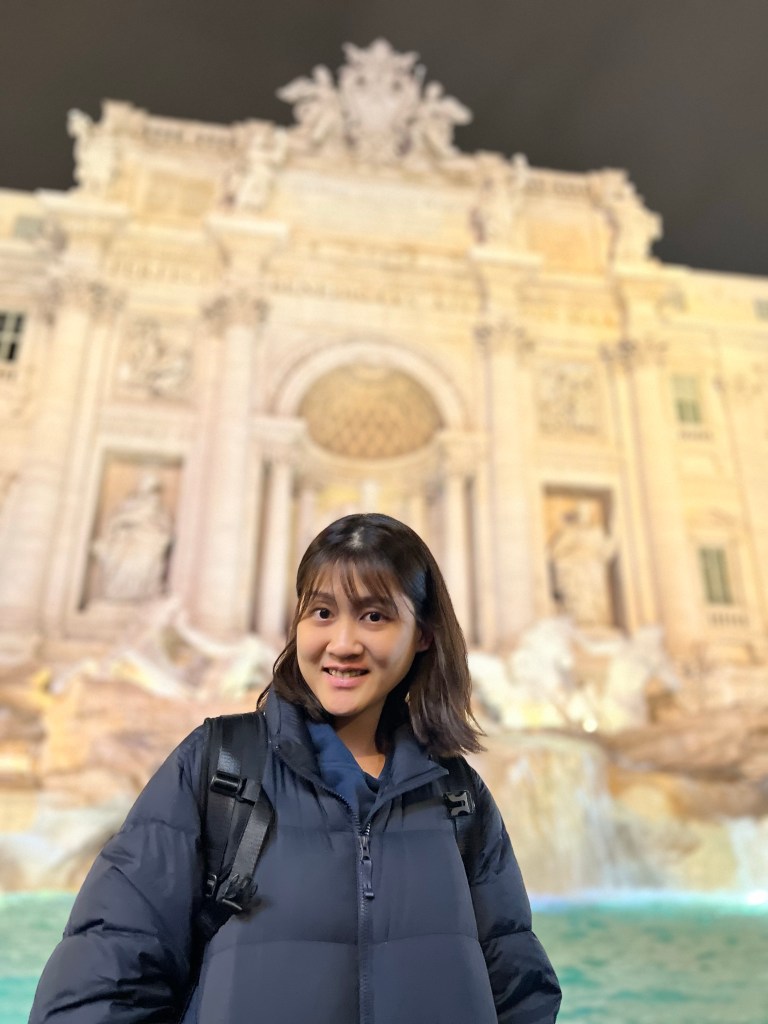
One gelato later, we headed for Trevi Fountain. About 5 mins walk, the Trevi Fountain is right before our eyes. There was a small crowd at Trevi Fountain; we could take photos with the fountain without any photo bombers. The fountain was impressive and looked much grander when illuminated by night light. We can clearly see Neptune’s statue pulled to the sea on his shell-shaped chariot pulled by two winged horses and tritons in the centre arch.

Trevi Fountain at night is beautiful.

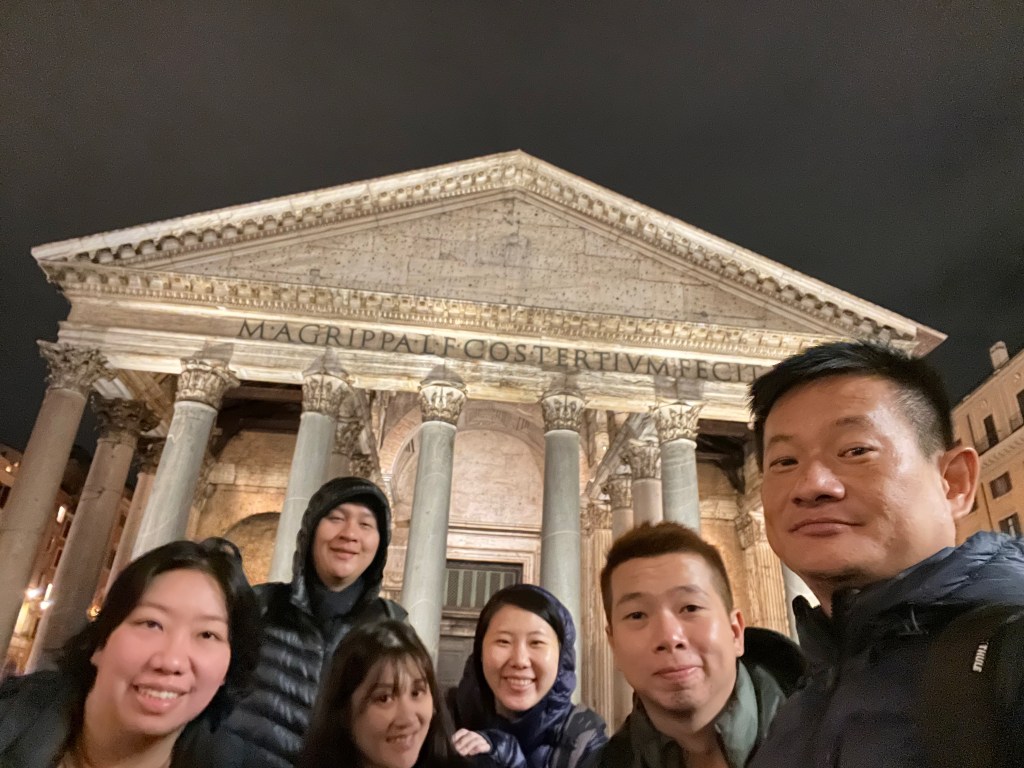
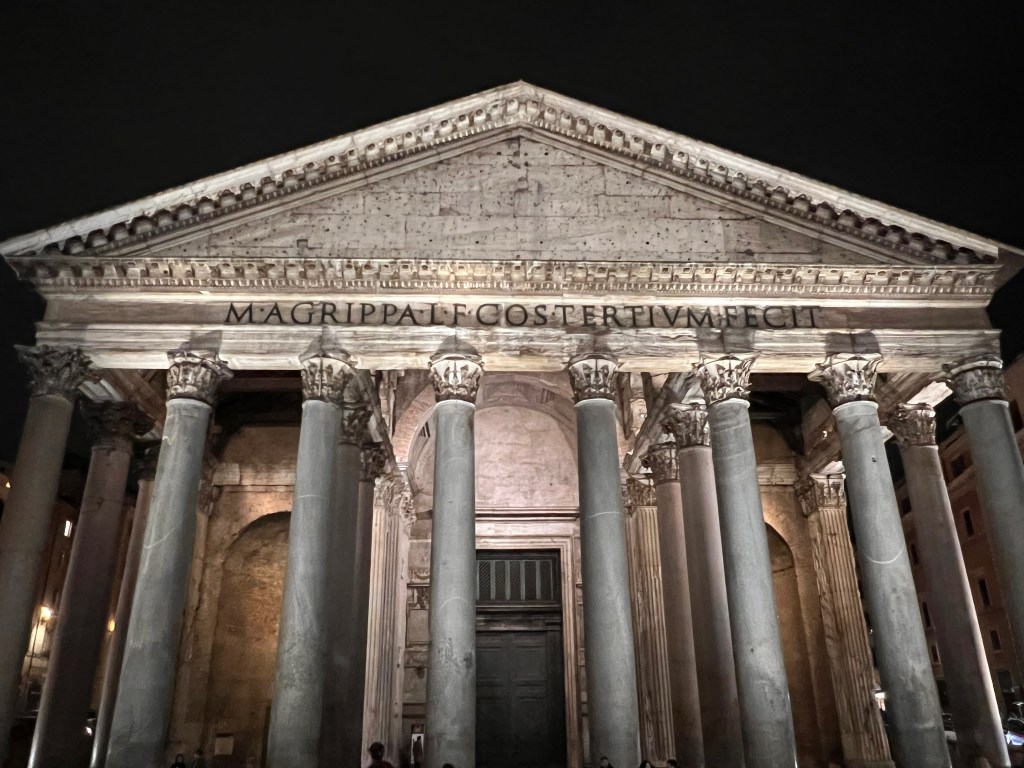
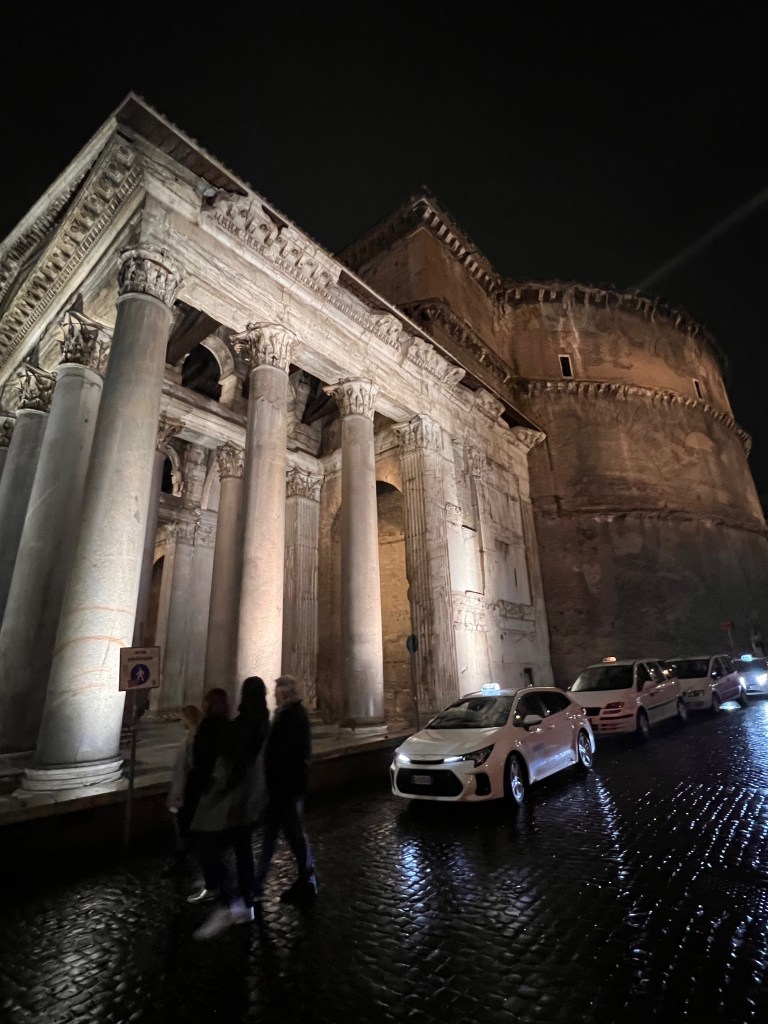
After Trevi Fountain, we headed to the Pantheon. The plan was to visit the exterior of the Roman temple turned catholic church tonight and return to see the interior. We felt peckish during our commute to the Pantheon and settled our dinner in one of the restaurants that looked authentic Italian. True enough, we were the only foreigners around in the restaurant. The restaurant staff spoke very little English, which confirms the restaurant’s non-touristy nature. After dinner, we continued our journey to the Pantheon. The Pantheon is famed for its record for being the world’s largest unreinforced concrete dome for almost 2000 years. We couldn’t really make out the dome from the exterior but saw the large granite columns in the front of the building as the Pantheon was closed when we visited. Nonetheless, we were still impressed with the state of its conventional temple front, which was unique in Roman architecture, after 2000 years. The whole facade of the temple looked ancient yet very well preserved. Well, I guess we have to come back another day to visit the Pantheon, and hopefully, it will not be too crowded when we return.

Wefie at a random church on our way to Pantheon

We stopped by for dinner on our way to Pantheon.

Pantheon at night

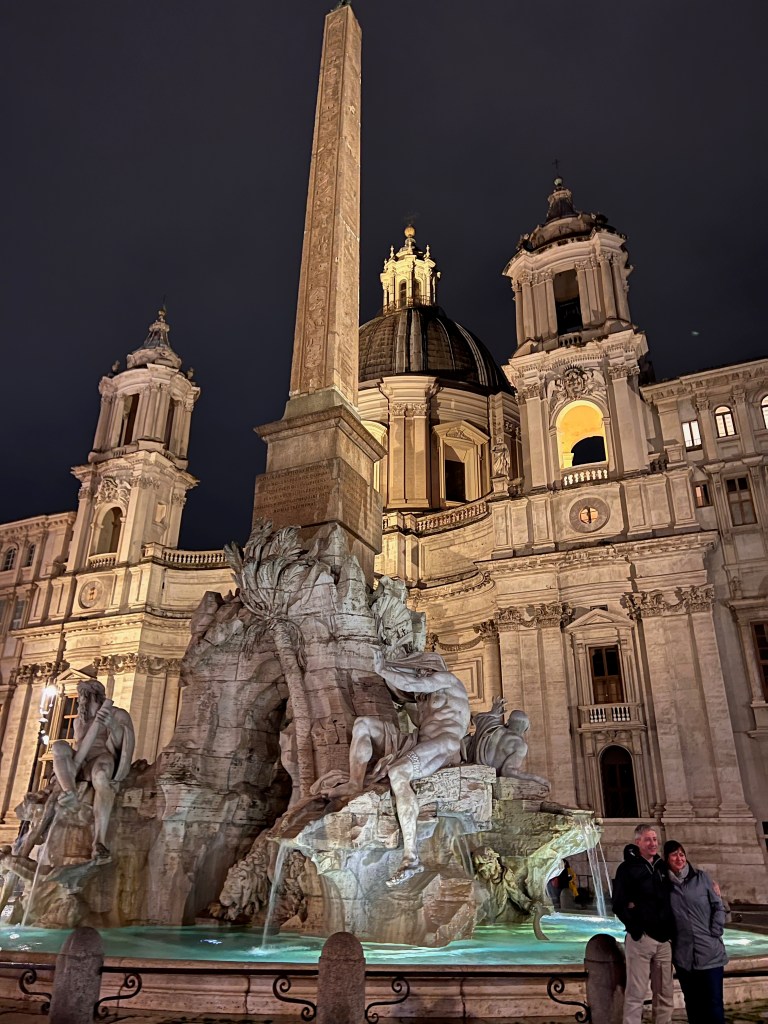
We headed to our final destination for the night – Piazza Navona. Piazza Navona is one of the most beautiful squares in Rome. We headed straight to the most prominent feature in the elongated square – La Fontana dei Quattro Fiumi. The fountain’s centre is an obelisk, relocated from the Circus of Maxentius. Under the obelisk were four statues representing the four rivers of the four continents of Asia, Africa, Europe and South America. Behind the fountain was the Church of Sant’Agnese in Agone, built in baroque style, providing the fountain with an impressive backdrop. The usually lively piazza seemed to have fallen into slumber, as there weren’t many people around. We did not stay here for long, so we returned to the hotel to rest for the night after taking some pictures. Along the way back, we spotted Capitoline Hill, which we did not try to detour as we will be visiting tomorrow after our Colosseum tour.

La Fontana dei Quattro Fiumi at Piazza Navona at night

Italy Day 6 (1 Dec 22) – The Square of Miracle Pisa: Climbing the Leaning Tower & the Pisan Romanesque Cathedral

Making Our Way to The Square of Miracles Pisa

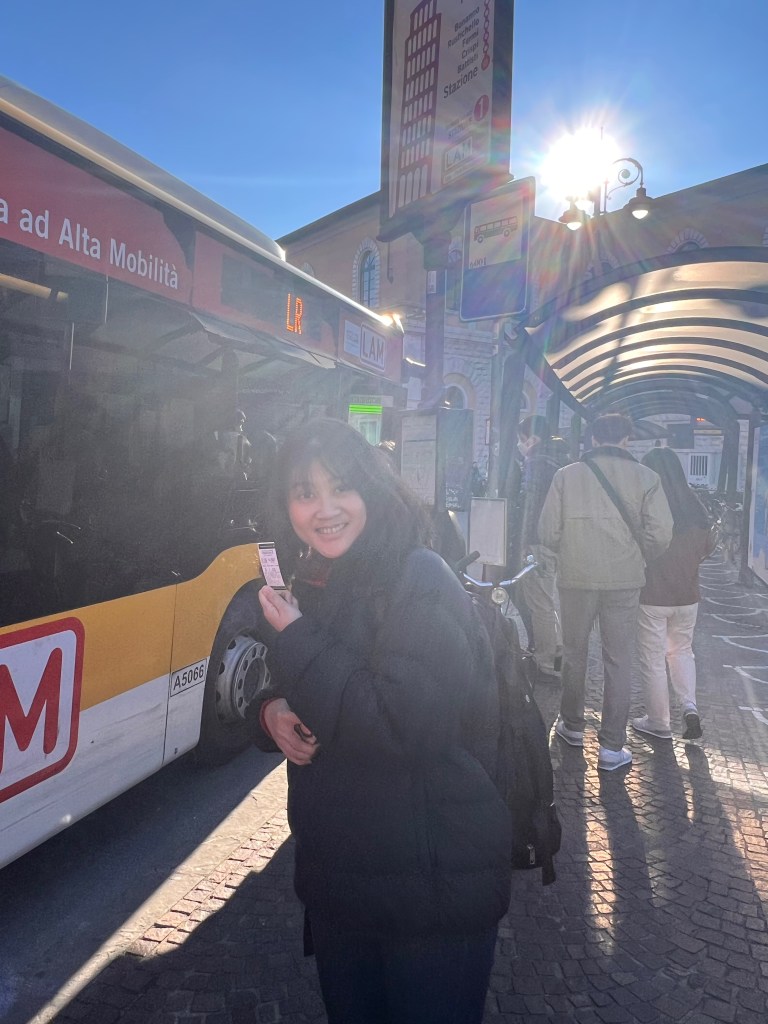
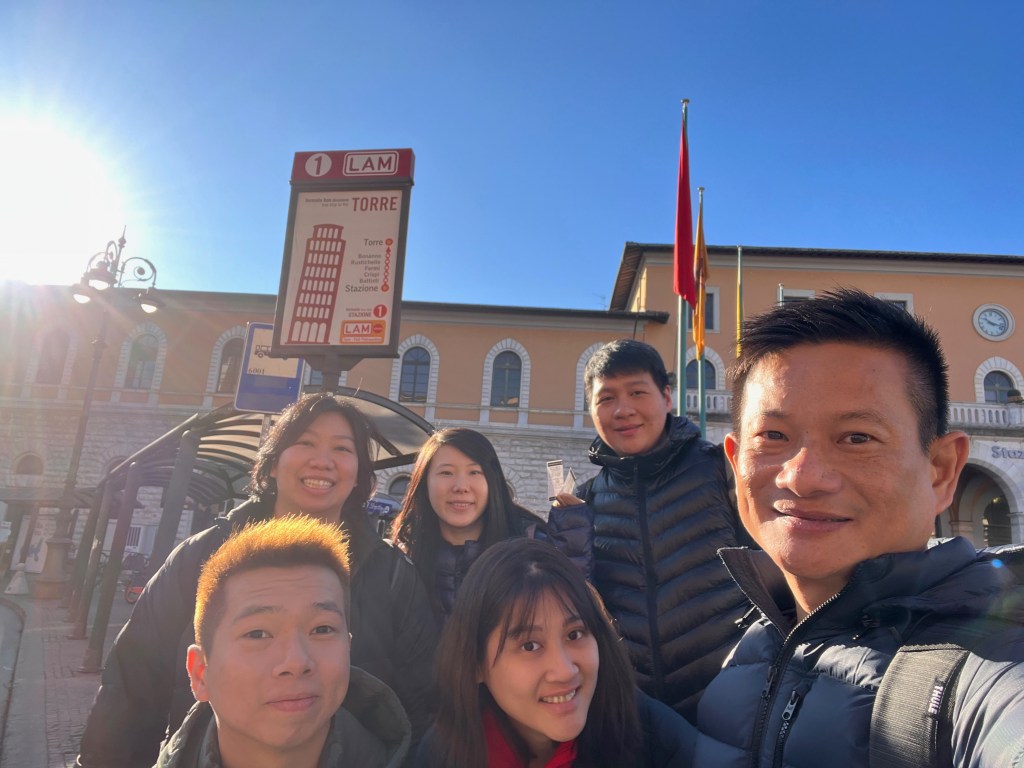
We pre-booked tickets for the 10.30 am slot climb to the top of the Leaning Tower of Pisa. It will take us 1 hr by train from Florence to Pisa and another 30 mins if we walk from Pisa Centrale Station to Campo dei Miracoli in Pisa or Square of Miracles. We got on the 8.53 am train and reached Pisa around 1 hr later. With less than 1 hr to spare, we gave up the idea of walking and took the bus to the Leaning Tower of Pisa instead. Tickets for the bus can be bought from a ticketing machine next to the bus stops. There are four bus stops outside Pisa Centrale station, and the bus leaving for the leaning tower (LAM ROSSA) leaves from Stop #1, the one nearest to the train station. The bus ride to Campo dei Miracoli took 15 mins. One will not miss the stop as this is where most of the passengers alight. There is a short 2 min walk from the bus stop to the Campo dei Miracoli grounds. Entrance to Campo dei Miracoli grounds is free, but the entrance to the Leaning Tower of Pisa and the museums are chargeable.

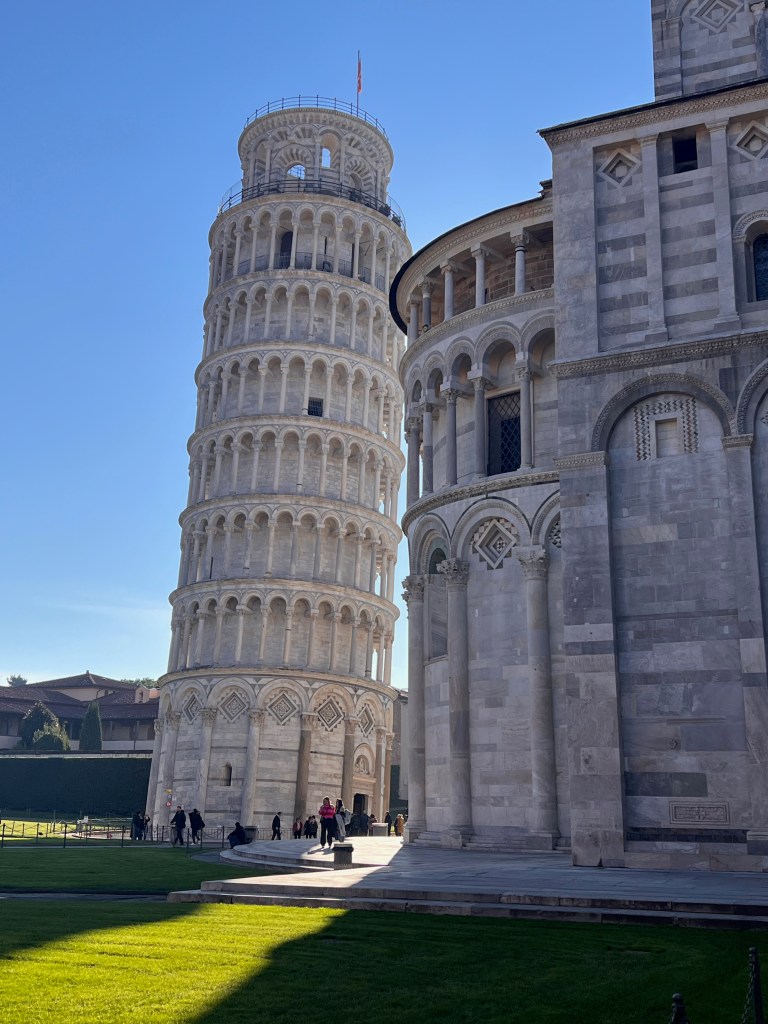
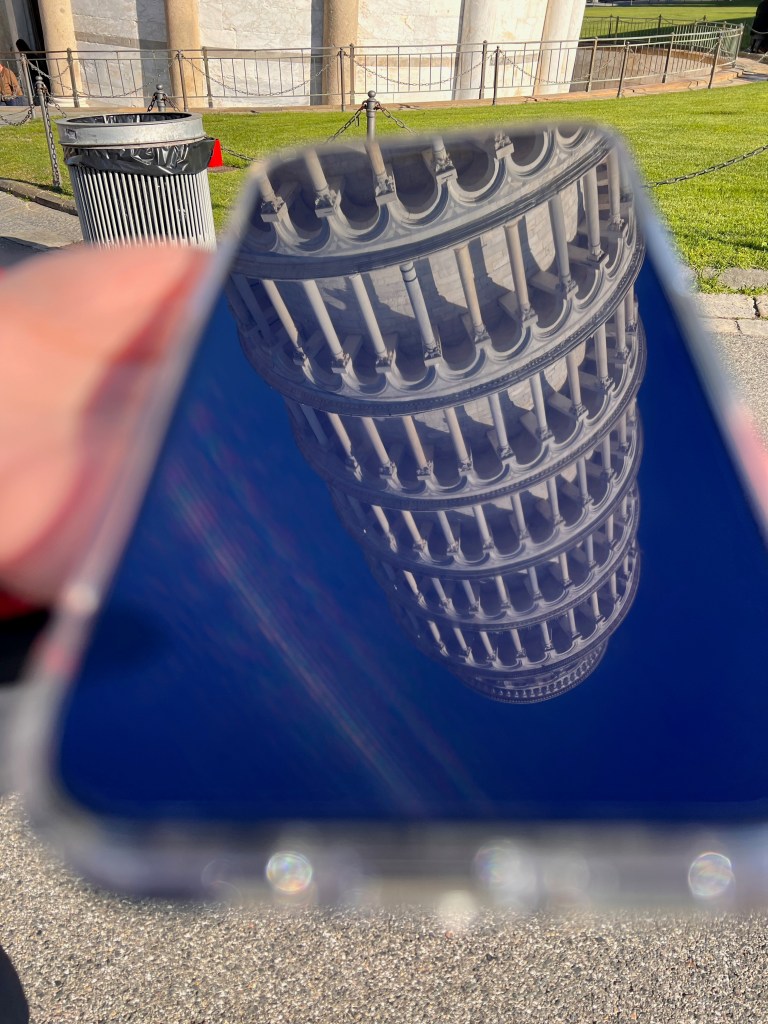
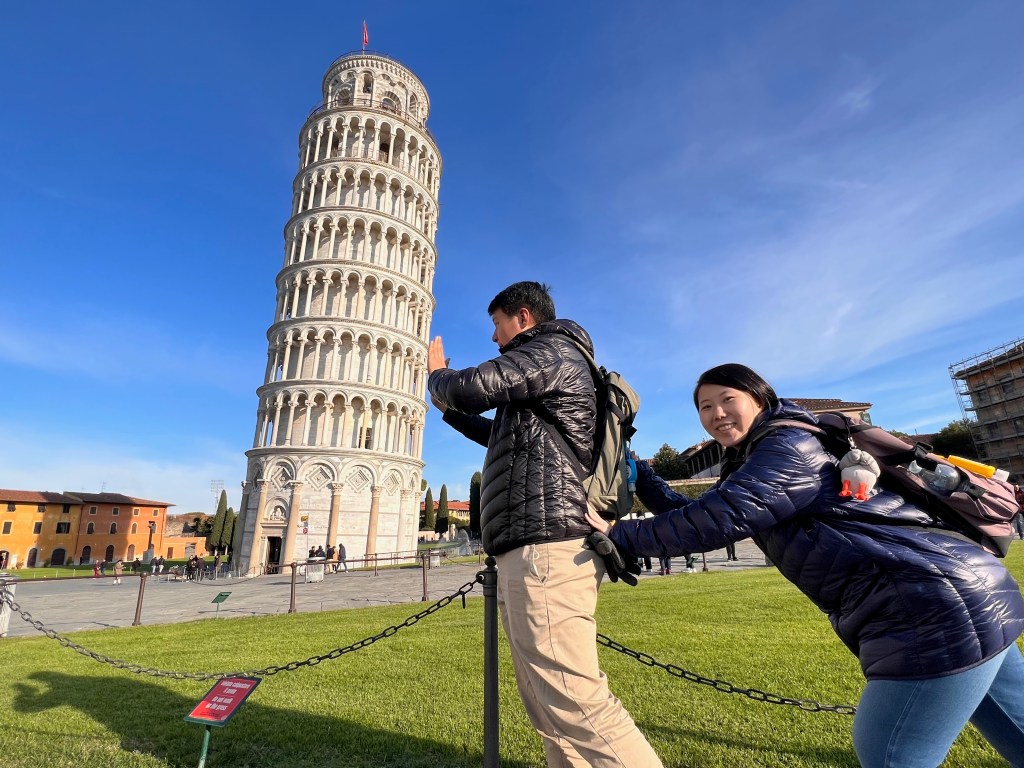
Leaning Tower of Pisa in Square of Miracles

Taking wefie at Square of Miracles while waiting for the ladies

Climbing the Leaning Tower of Pisa

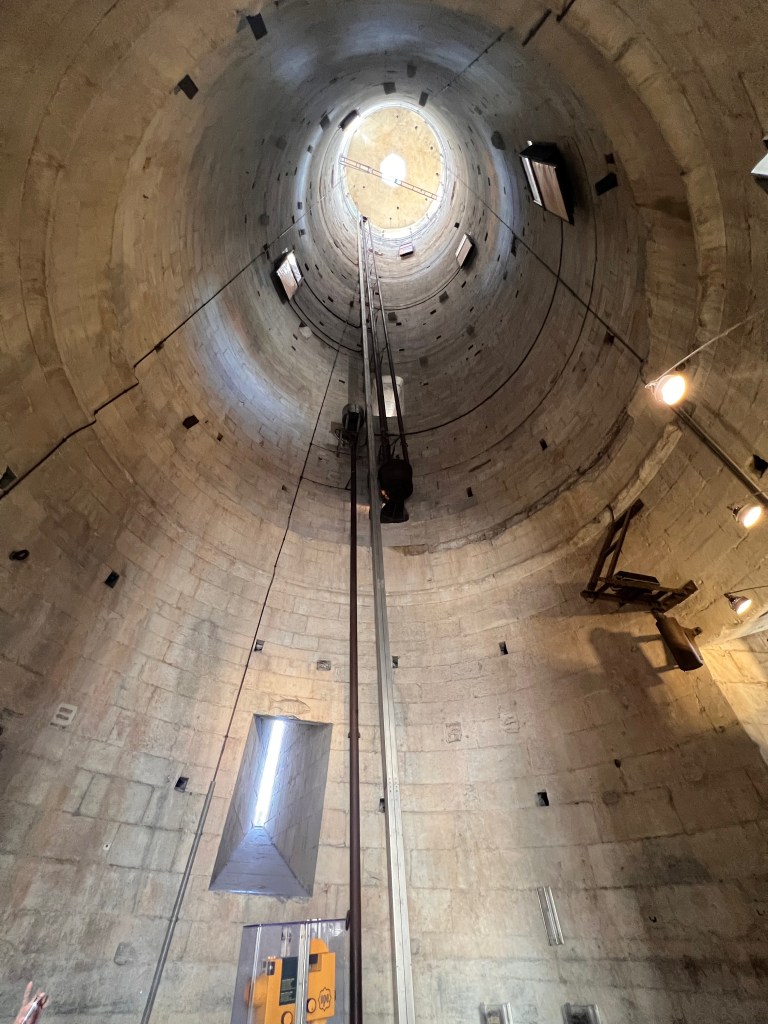
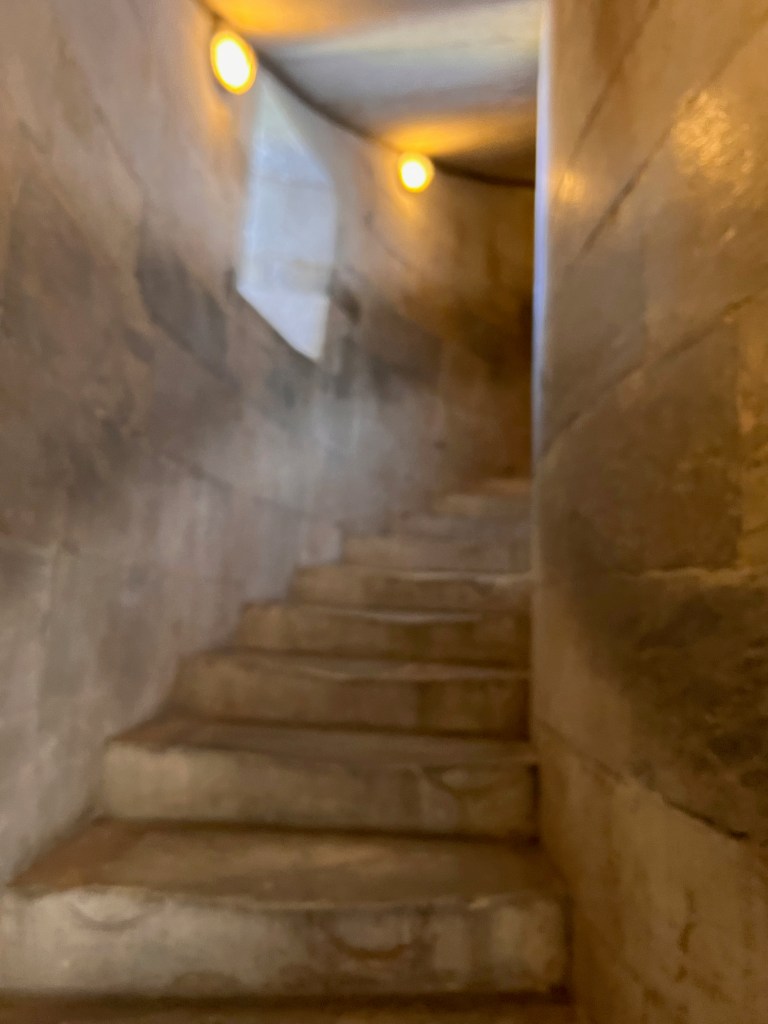
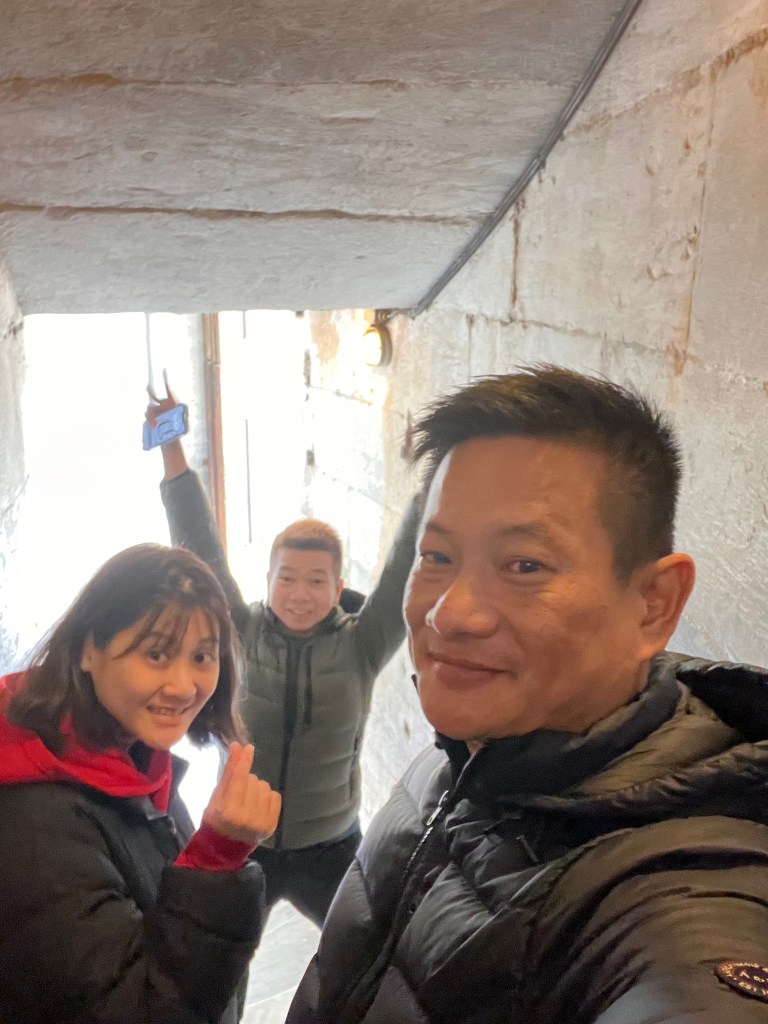
We arrived at the Leaning Tower of Pisa about 10 mins late than our scheduled time and headed to the tower to check with the staff if we were still allowed to climb the tower. The staff gave us the green light and informed us to immediately head to the cloakroom to deposit our bags and return to the tower. All visitors climbing the tower are to deposit their bags at the cloakroom, about 2 mins walk from the tower. After depositing our bags, we proceeded to climb the tower. We could feel the lean of the tower the moment we entered the ground floor, as though there was a force pulling us to one side. The top of the tower is accessible via a spiral staircase. As we were climbing up the 294 steps made of marble to the 8th floor of the tower, we could feel the gravity pulling us to one side of the tower, at times to the centre, and towards the outer wall of the stairwell. We can see the indentation on the steps caused by centuries of visitors climbing stairs. The main spiral staircase stops at level 7 of the tower, which we thought was the top of the tower. As we walked around this level, we spotted another spiral staircase built around a single pillar. This staircase led us to the tower’s top floor, where the tower’s bells were installed.

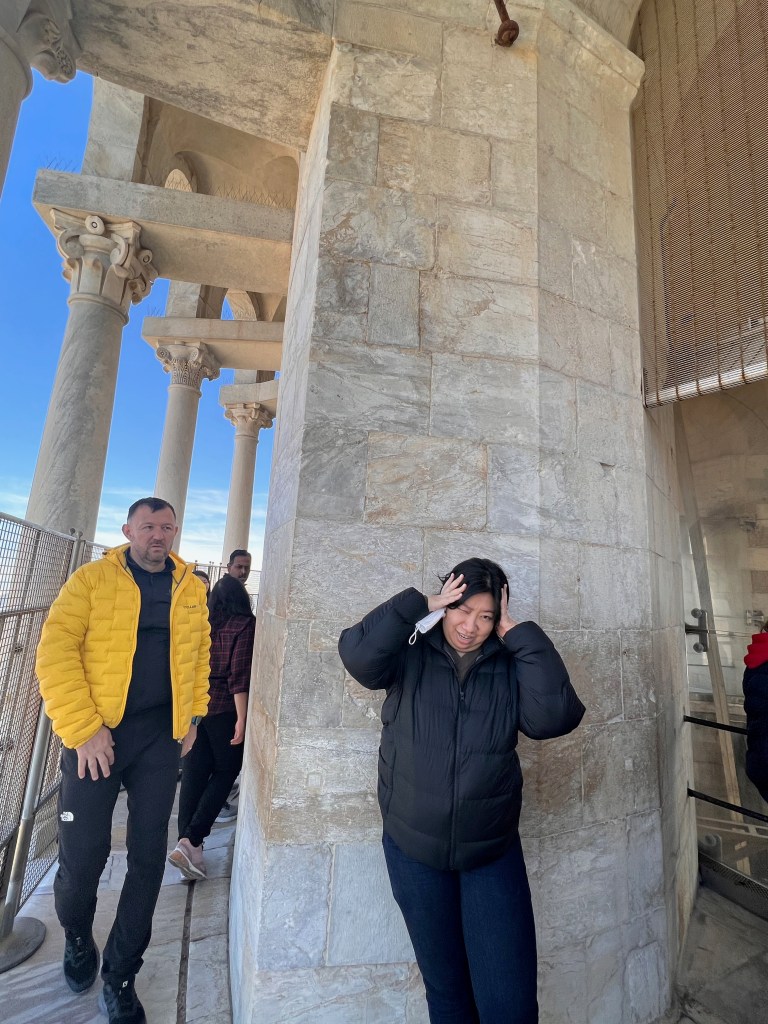
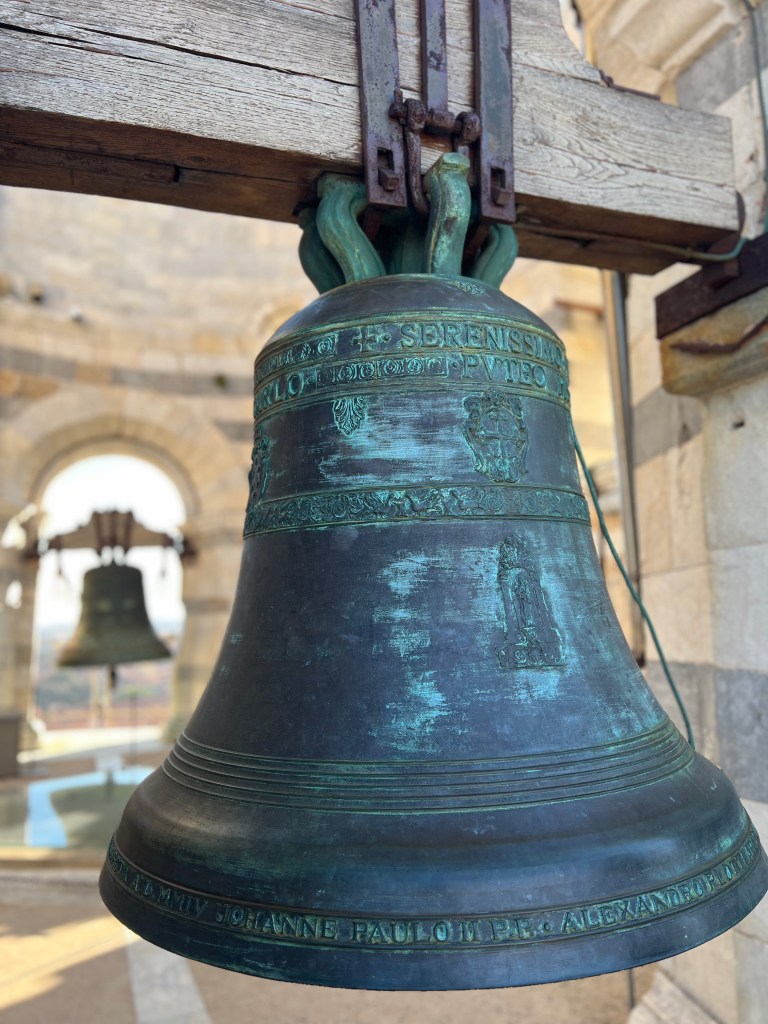
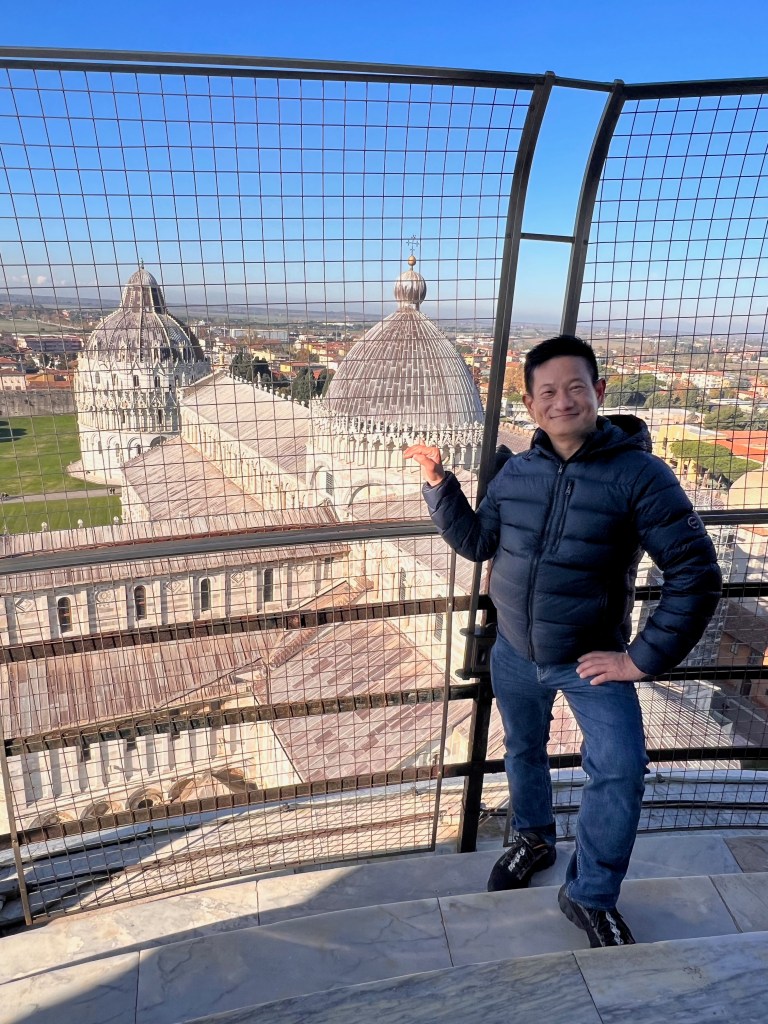
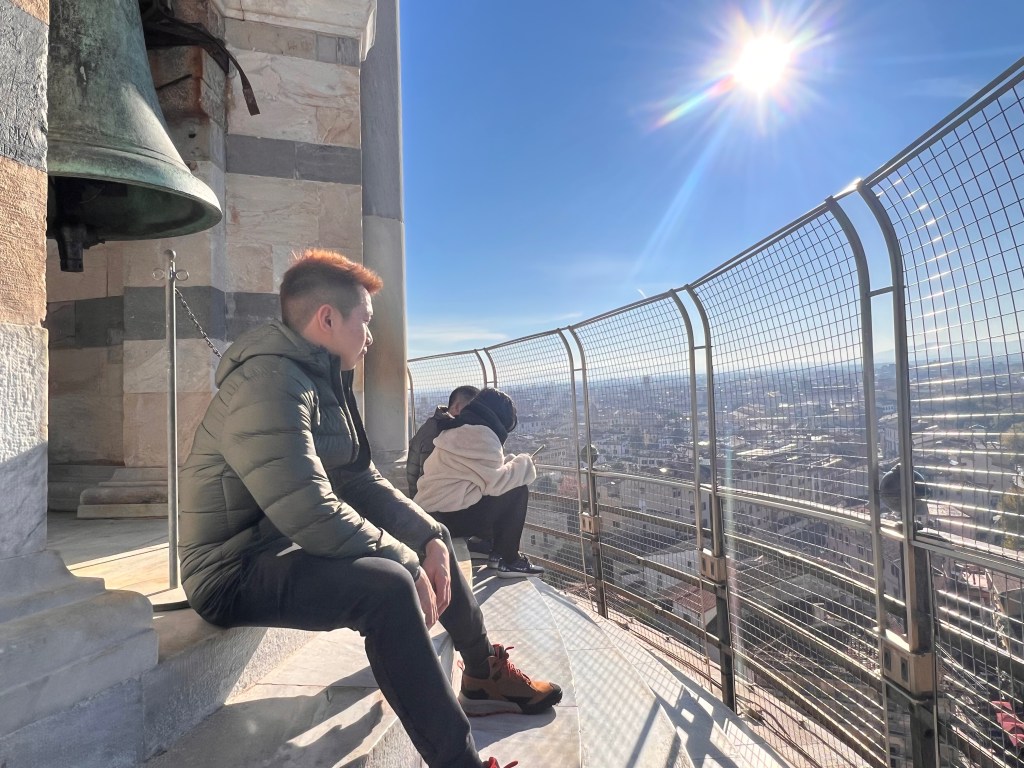
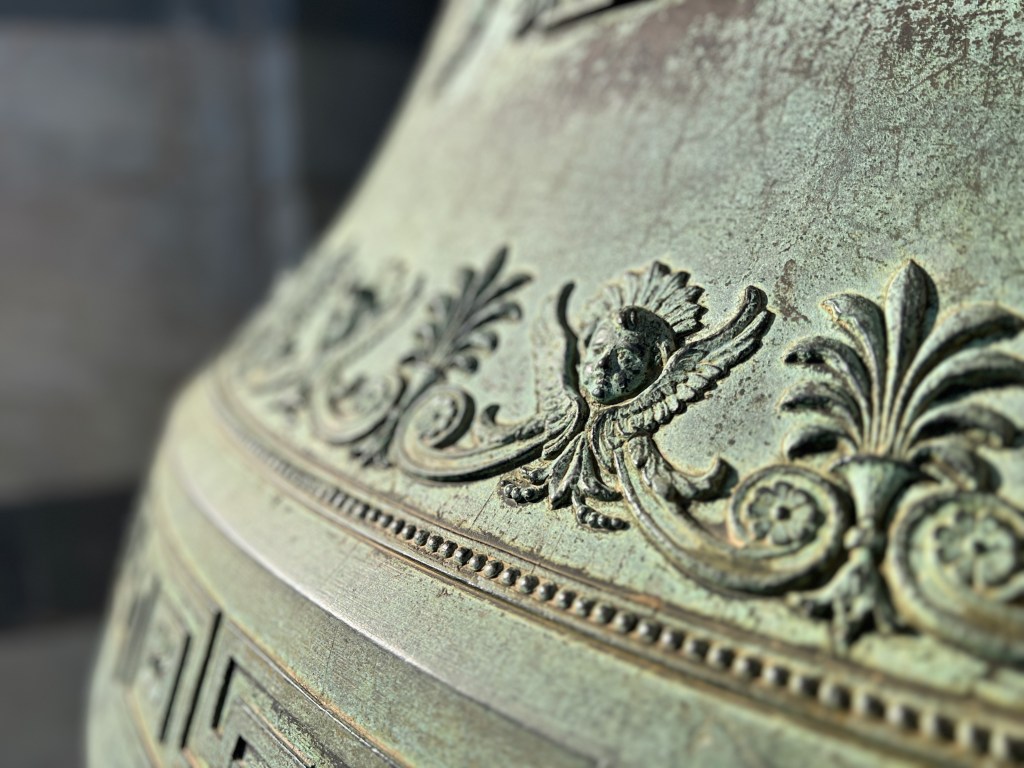
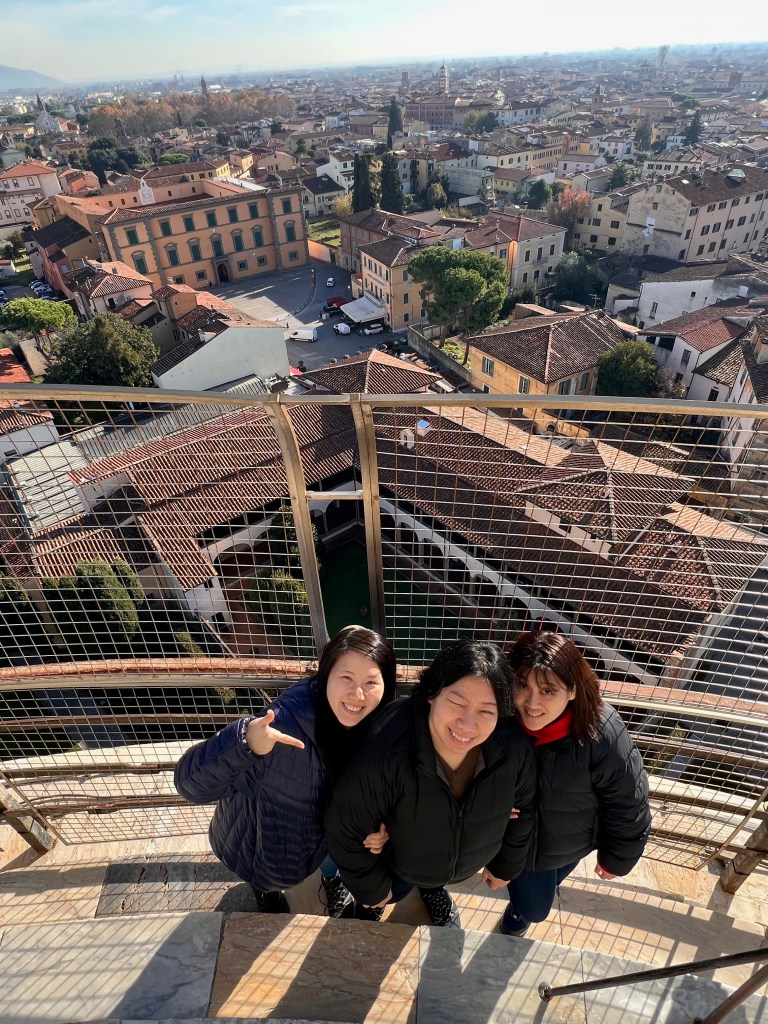
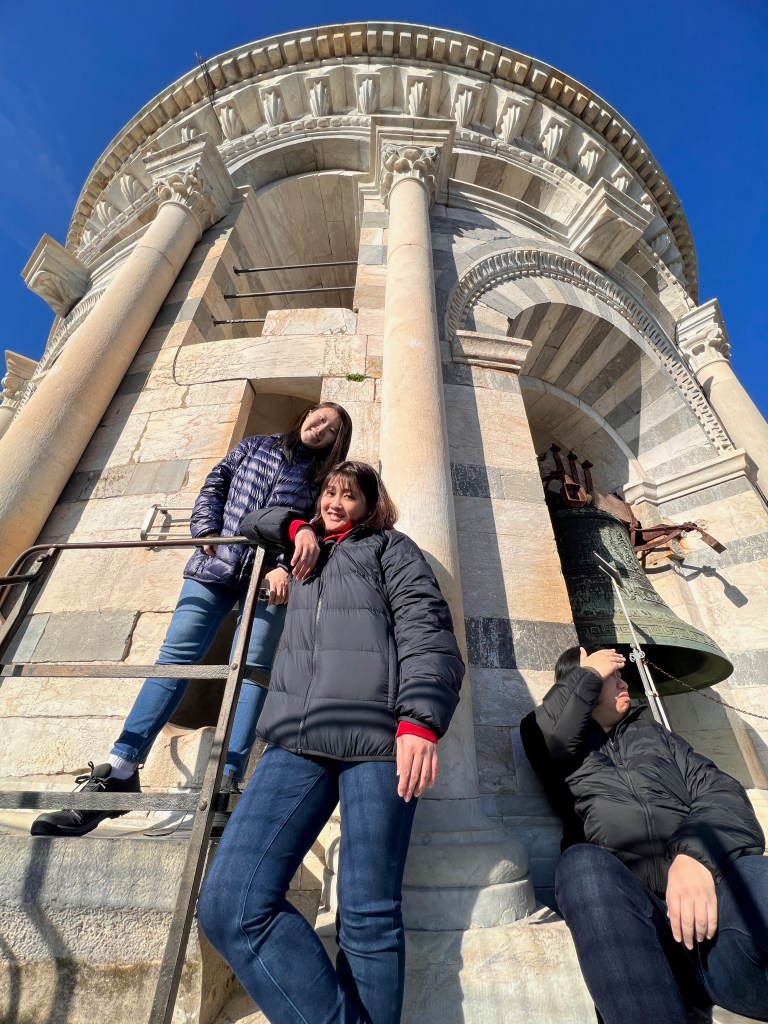
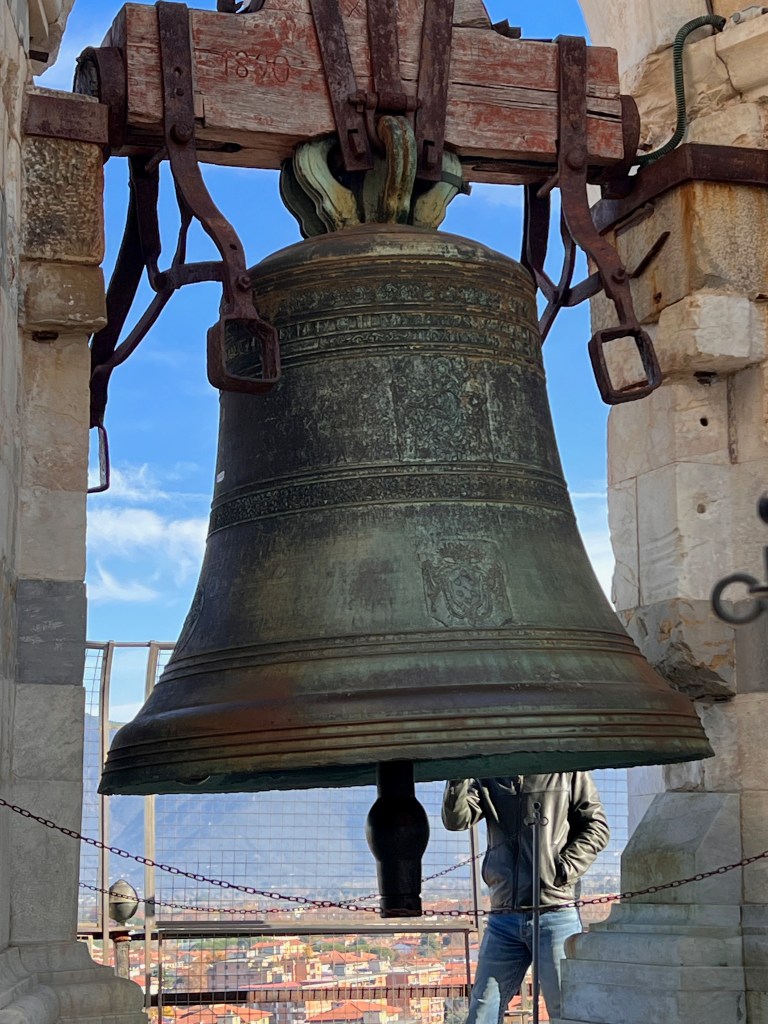
We did not feel any lean on the tower’s top floor; perhaps we got used to the lean, or maybe we were occupied marvelling at the views from the top. We could see the whole Square of Miracles and the horizon from the top. On one side of the tower, we could see the entirety of the Cathedral next to the Leaning Tower. The view was amazing, and we felt a sense of zen. I like the feeling of being up here on the top of the Leaning Tower of Pisa, the feeling of the Pisan breeze blowing and gentle rays of sunlight casting on our faces, making sitting around on the steps of the top floor very comfortable. At times we wandered around exploring the seven bells installed at the top of the tower if we were not busy taking pictures. As I walked around the tower’s top floor, I noticed a small spiral staircase, closed off to the general public, that seemingly would lead us to another level of the tower. We got some very good shots of the tower’s surroundings and top from these staircases. We were lazing around, enjoying this comfortable feel the tower brought us, an announcement in Italian suddenly came on, followed by 12 strikes on the bells. Looking at our watches, it is already noon. We realised we were up here for around 1½ hours. Usually, visitors are only allowed 35 mins on the top of the tower. Perhaps due to the low season, the timing was not strictly enforced. As much as we wanted to stay here longer, we were soon hit by hunger. We proceeded down the tower and headed to the McDonald’s just outside the Square of Miracles for lunch.

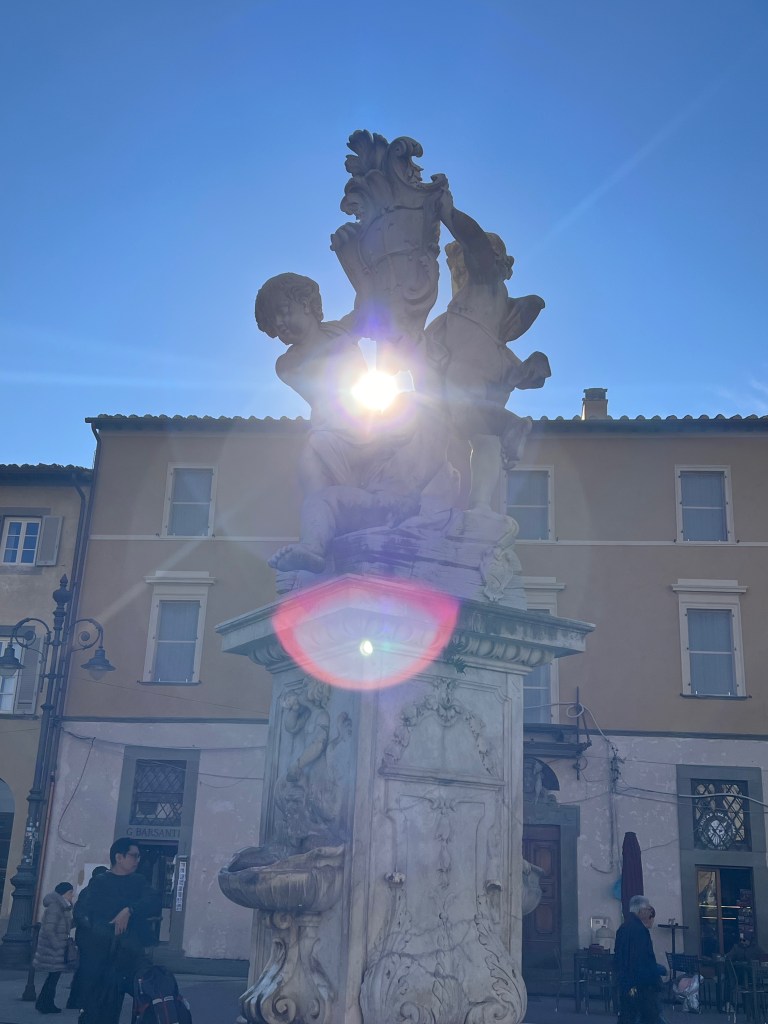
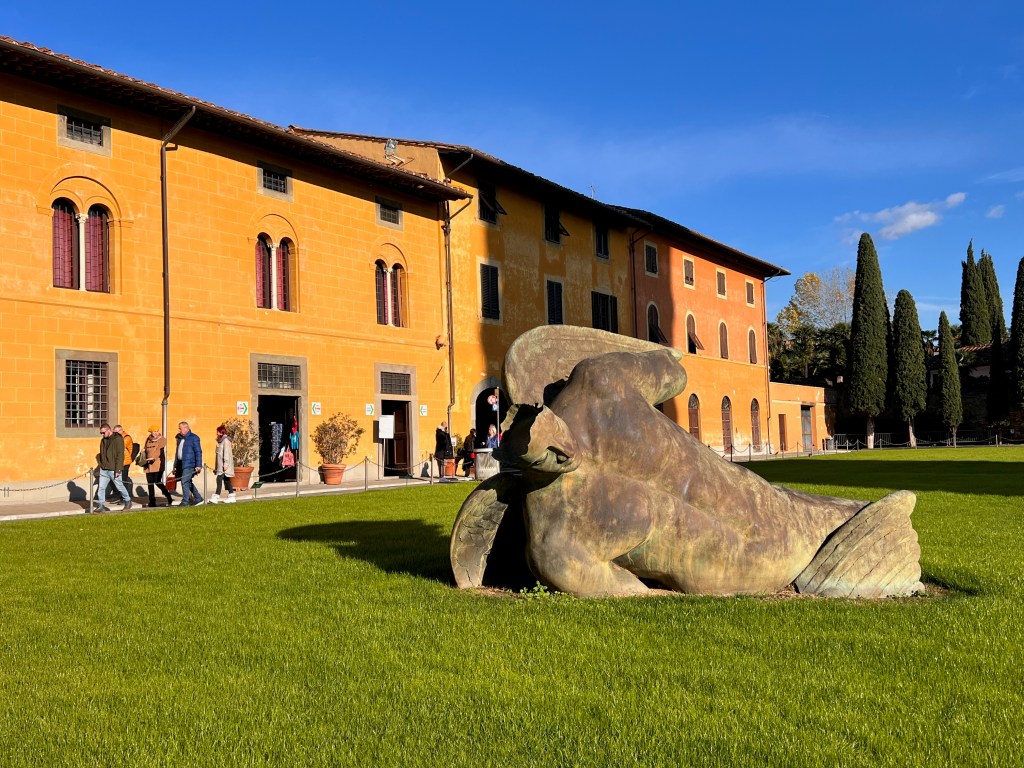
A statue in the Square of Miracles

The Magnificent Pisa Cathedral

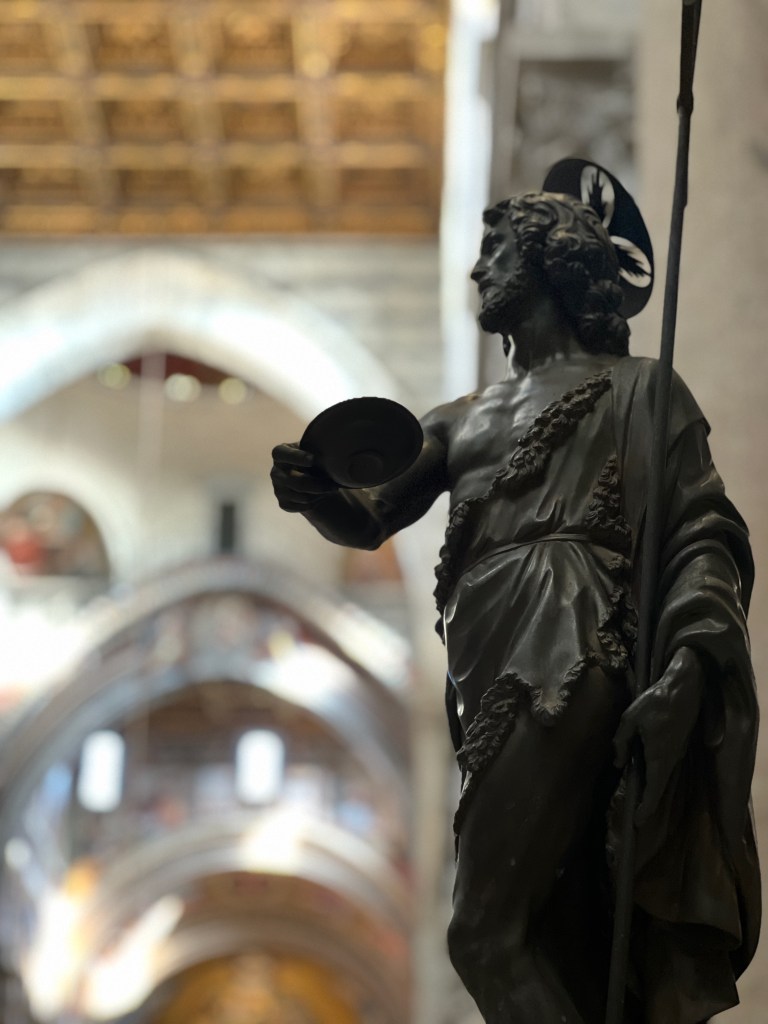
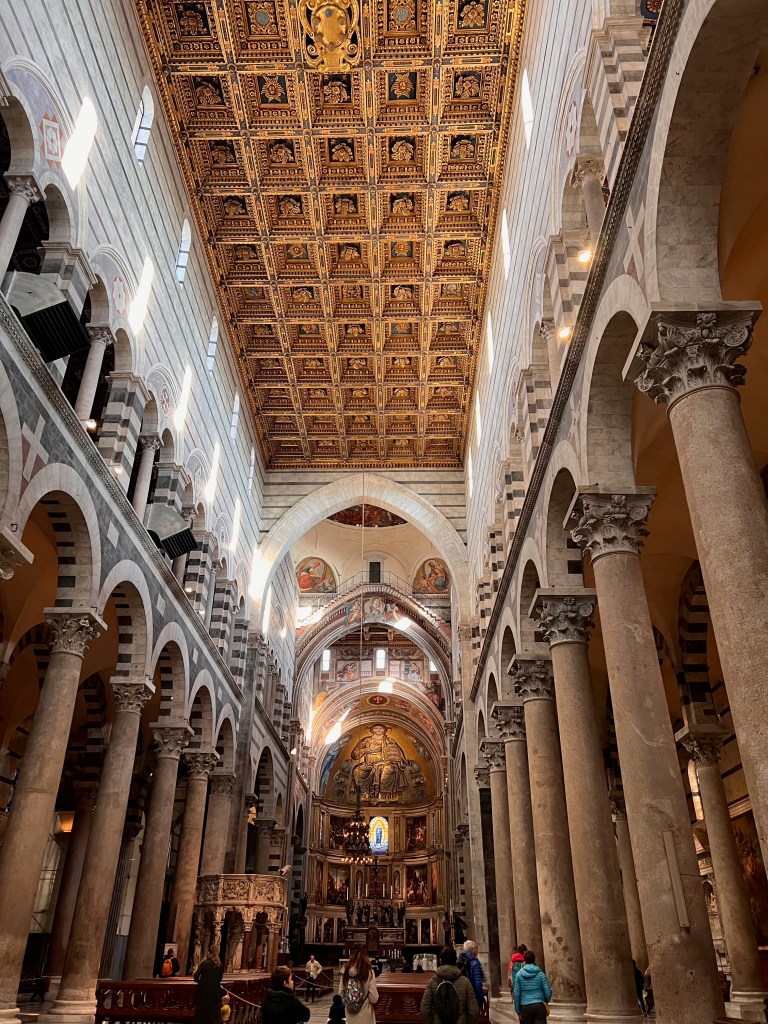
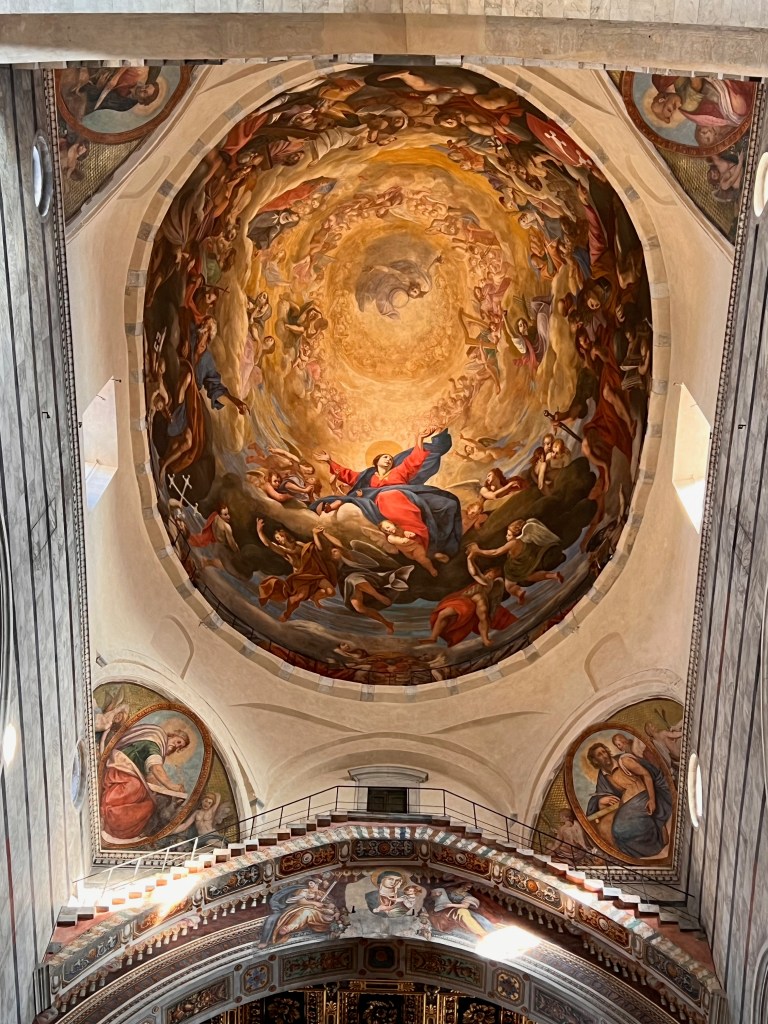
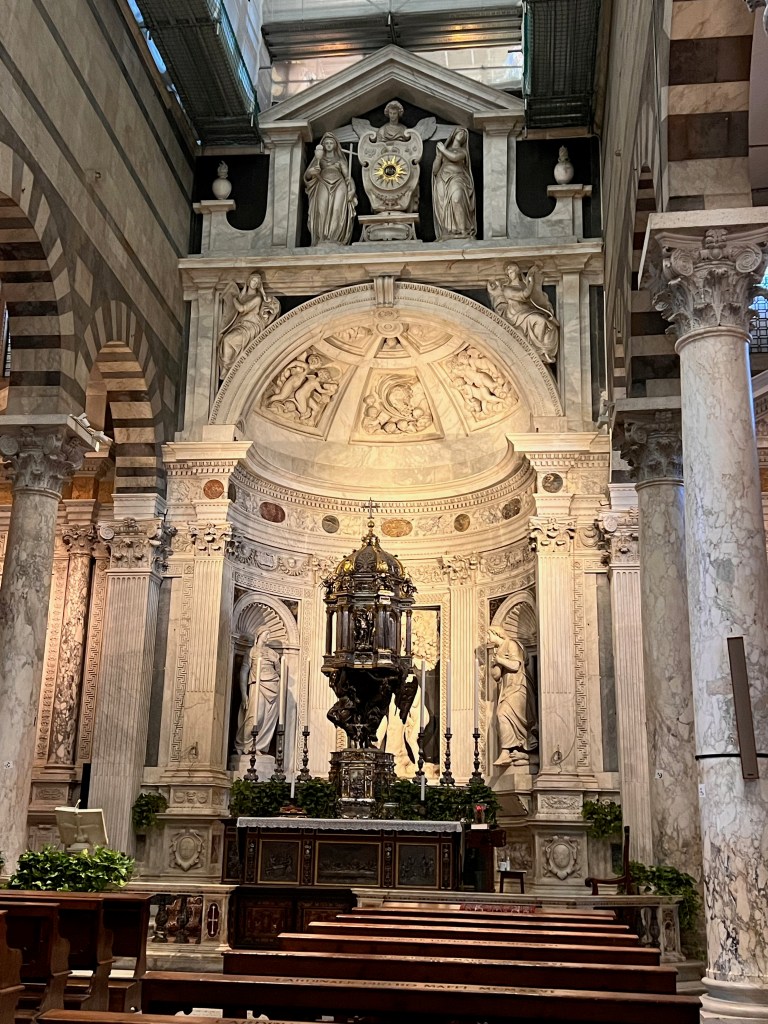
After lunch, we headed back into the Square of Miracles, took our bags from the cloakroom and headed into the Pisa Cathedral. Entrance to the Cathedral is free. Those without tickets to the Tower can obtain tickets from the ticketing counter beside the cloakroom. Passing through the huge bronze door, we were awed by the sheer size and the grandeur of the Pisa Cathedral. The centre part of the Cathedral is flanked by two rows of monolithic columns that lead visitors’ attention to the altar installed at the end of the Cathedral. These columns support what seems to be a mezzanine level, connected using arches and reminiscent of an ancient Roman aqueduct. The high ceiling of the Cathedral is beautifully ornated with flower carvings decked out in gold colour, illuminating a sense of elegance. Numerous huge paintings are hanging on both sides of the walls of the Cathedral. In addition, several statues were displayed inside the Cathedral alongside a pavilion with intricate carvings. We left the Cathedral after taking some photos.

Faced of Pisa Cathedral

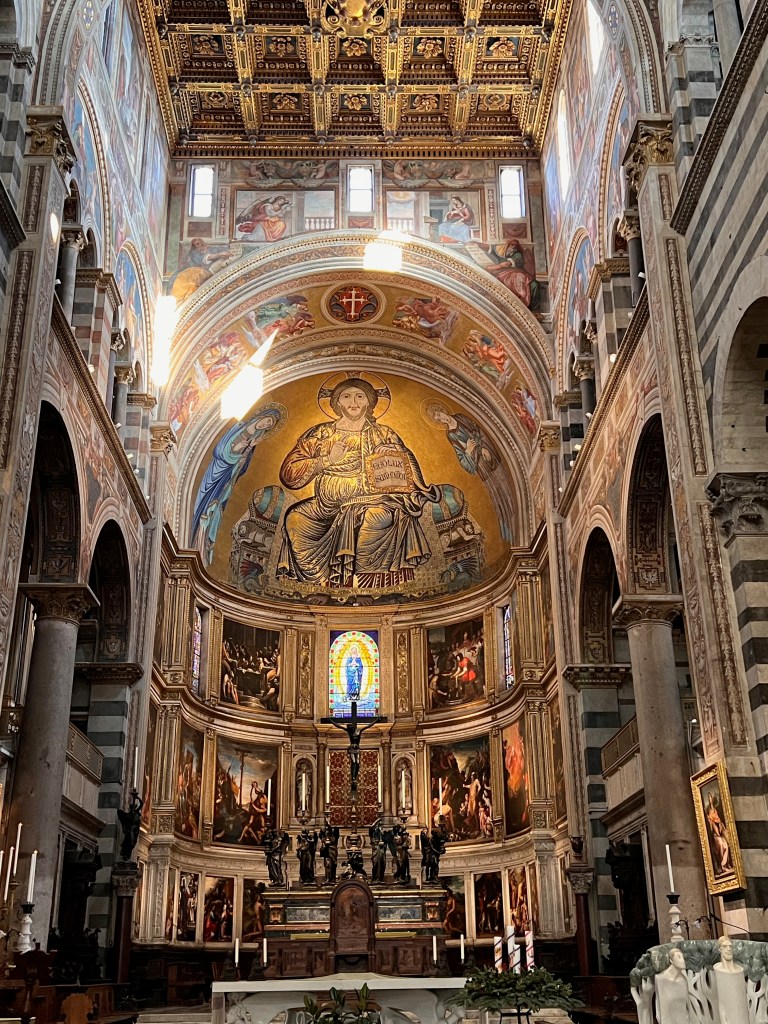
The main altar of Pisa Cathedral

The Little Church by Arno River

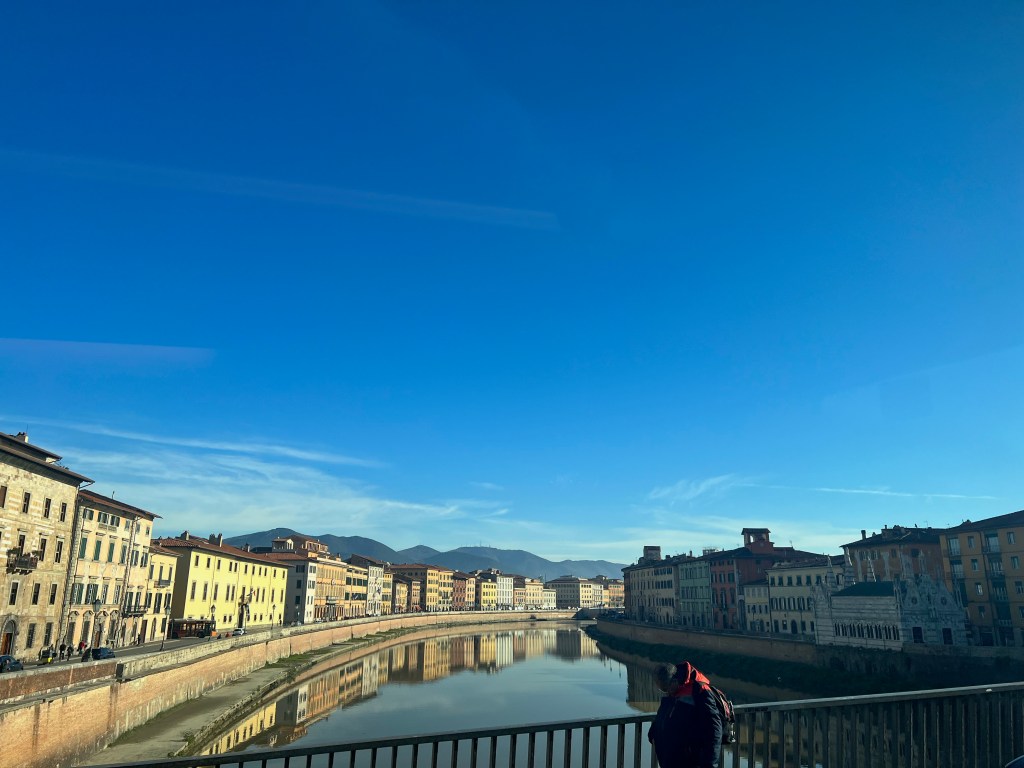
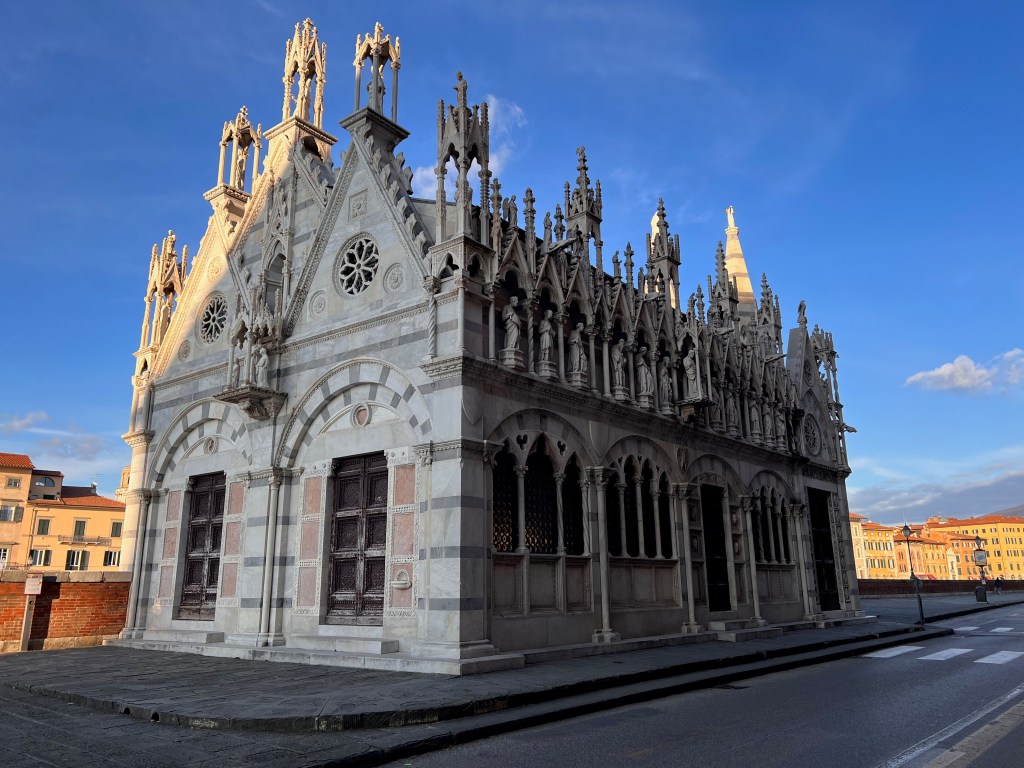
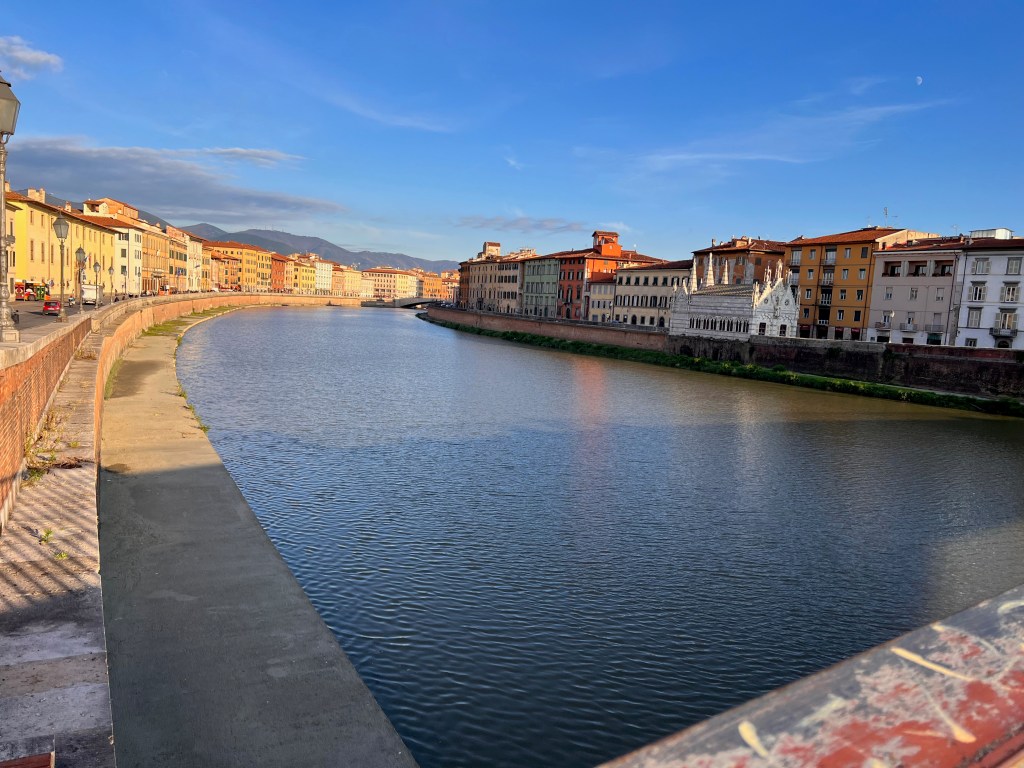
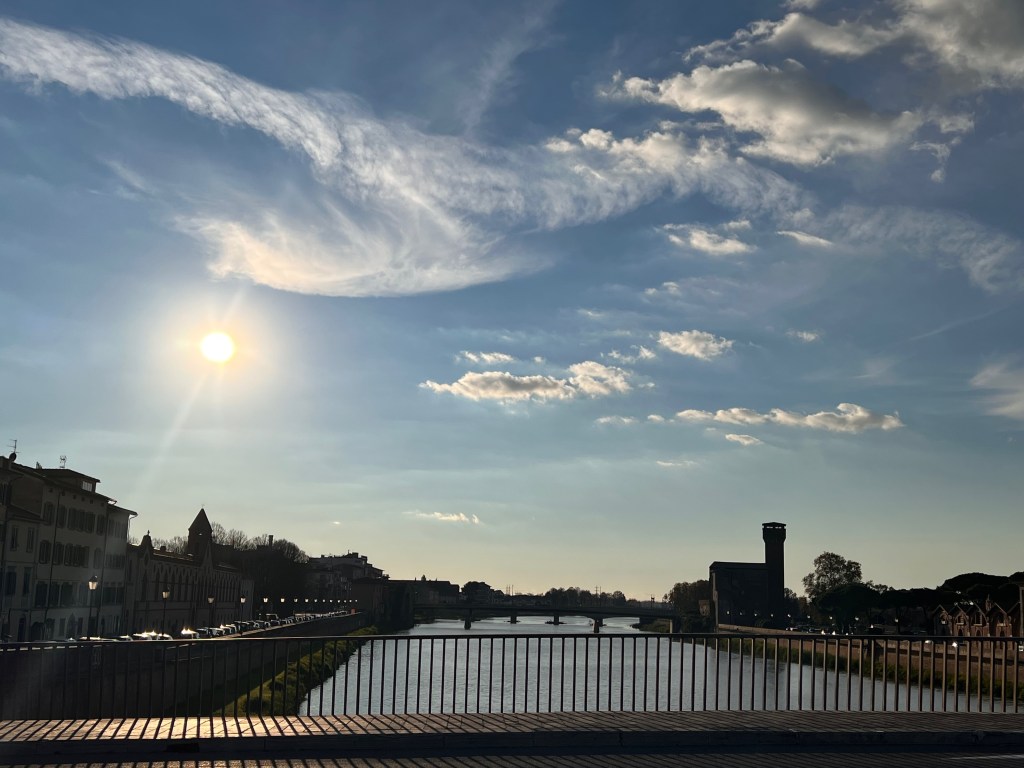
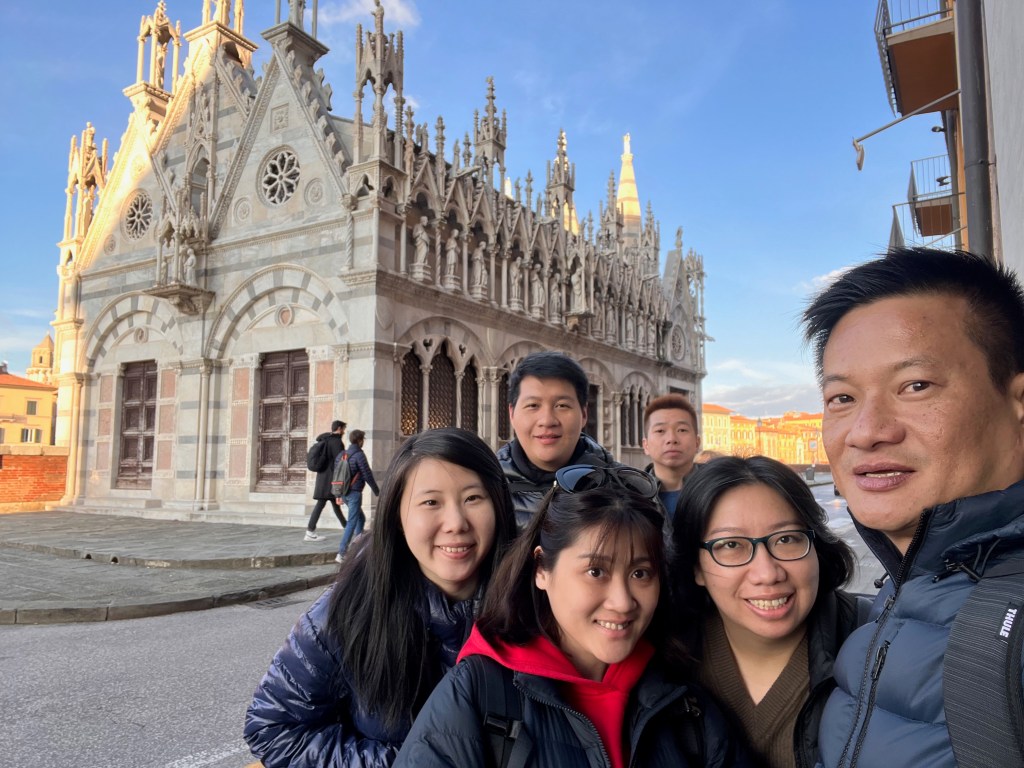
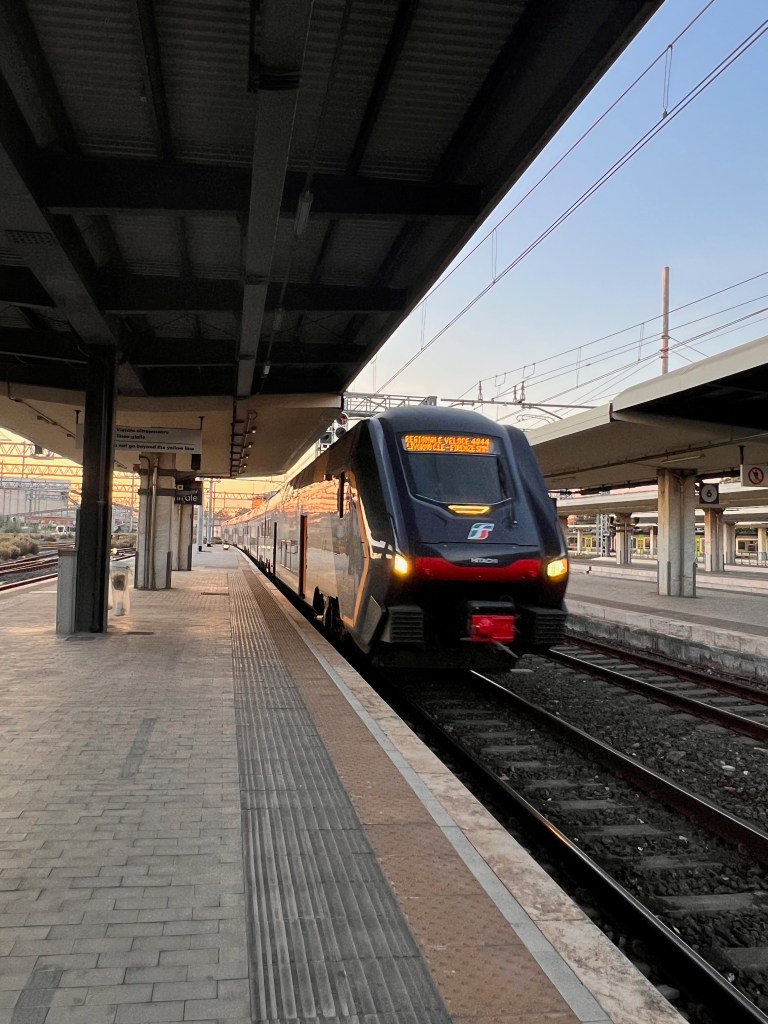
After exiting the Cathedral, we were pretty done with Square of Miracles as our tickets did not include entry to the Baptistery, the Camposanto or the Opera Museum. We decided to walk back to Pisa Centrale train station to visit Santa Maria della Spina, the smallest church in Pisa. After walking for 15 mins, we reached the bridge across the Arno River and spotted Santa Maria della Spina. This tiny church was initially built for seamen coming here to pray for a safe return. The statues ornated on the facade and the church roof reminded me of those found in Duomo di Milano. We did not enter the church and continued our walk towards the train station after taking some pictures. Another 15 mins later, we arrived at the train station. As we had some time before the next train, we stopped by a cafe opposite the train station for coffee and rested. Perhaps it was the cafe’s ambience, or maybe the warmth accorded to us by the very friendly barista; we stayed there longer than we had planned. By the time we reached the train station (which is just across the road), the 4.01 pm train we wanted to take had already left the station. We took the next express train at 4.32 pm for Florence.

The small Santa Maria della Spina by Arno River
Wefie with Santa Maria della Spina

We reached Florence at around 5.30 pm. We went back to the Chinese restaurant for dinner. I planned to visit Piazzale Michelangelo after dinner for sunset. As it was past sunset and we were tired, we forwent visiting the Piazzale. After dinner, a couple of my friends and I took a night stroll in Florence, nearby our hotel. Florence seemed more lively tonight compared to the yesternight. There were more people and more activity on the streets. We did not wander around much and returned to the hotel to rest.

Italy Day 5 (30 Nov 22) – Shopping at The Mall Firenze Outlet

Making Our Way to The Mall

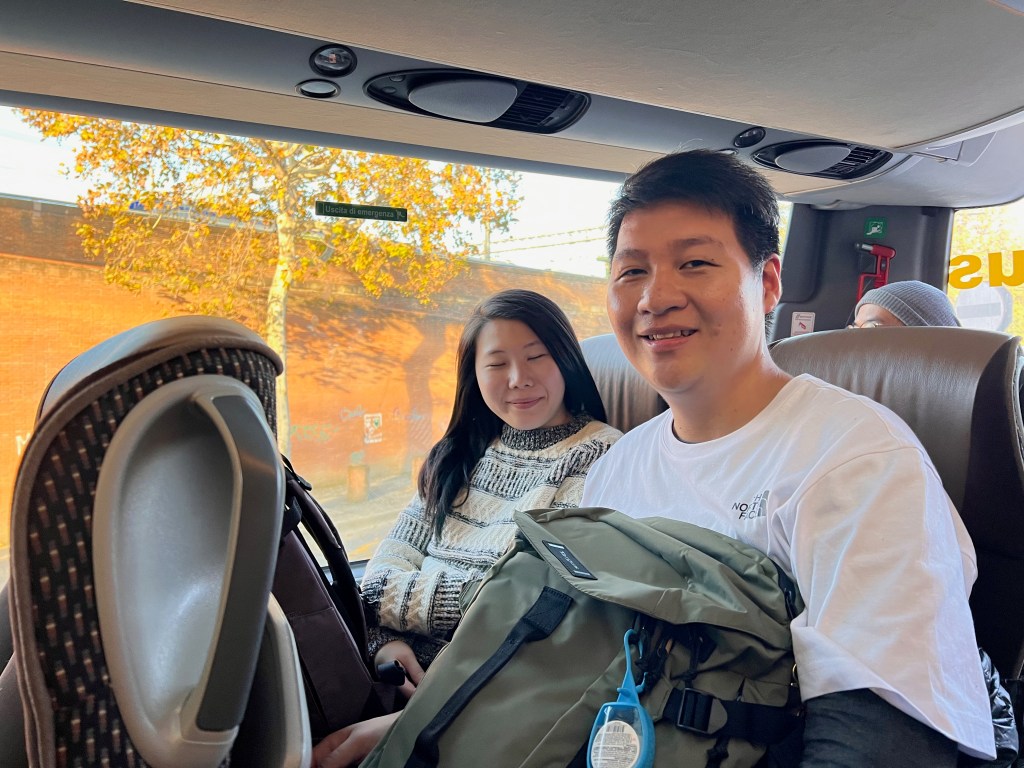
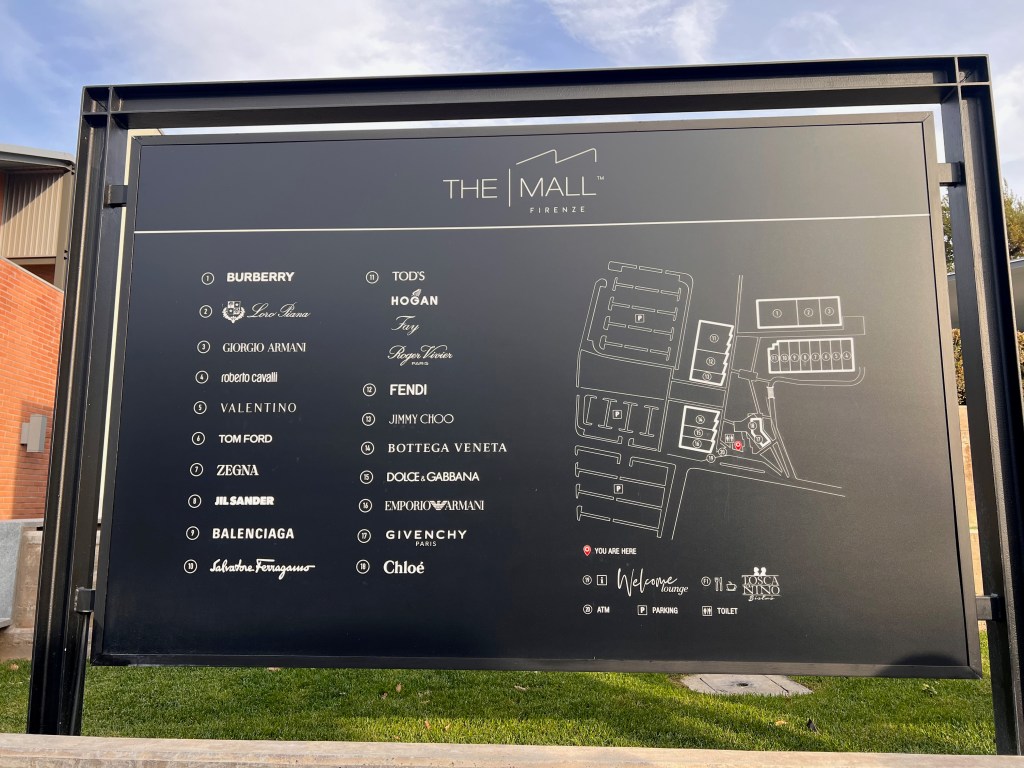
Today was pretty uneventful as we dedicated the whole of today to retail therapy at the outlet mall. There are several outlet malls in Italy. However, the one that was highly recommended by my friends who have been to Italy is located near Florence. I searched online and found The Mall Firenze houses major luxury brands such as Burberry, Ferragamo and Versace, among a list of luxury brands. However, not part of The Mall Firenze, other brands like Prada and Gucci are located within a few minutes, a walk from The Mall Firenze. There are direct bus services connecting Florence to The Mall Firenze. Tickets can be booked on the official website of The Mall Firenze (accessible here). The direct bus service to The Mall Firenze is located slightly outside the city, next to Firenze Santa Maria Novella Station. As we wanted to maximise our time in the outlet mall, we booked the first bus (8.50 am) to The Mall Firenze and the last bus back (7.20 pm). We headed to the bus terminal after breakfast at the hotel. As we left slightly later than planned, we almost missed the bus. Fortunately, we made it in time for our bus to The Mall. The bus ride to The Mall Firenze took about 50 mins.

Boarding the bus that took us to The Mall Firenze

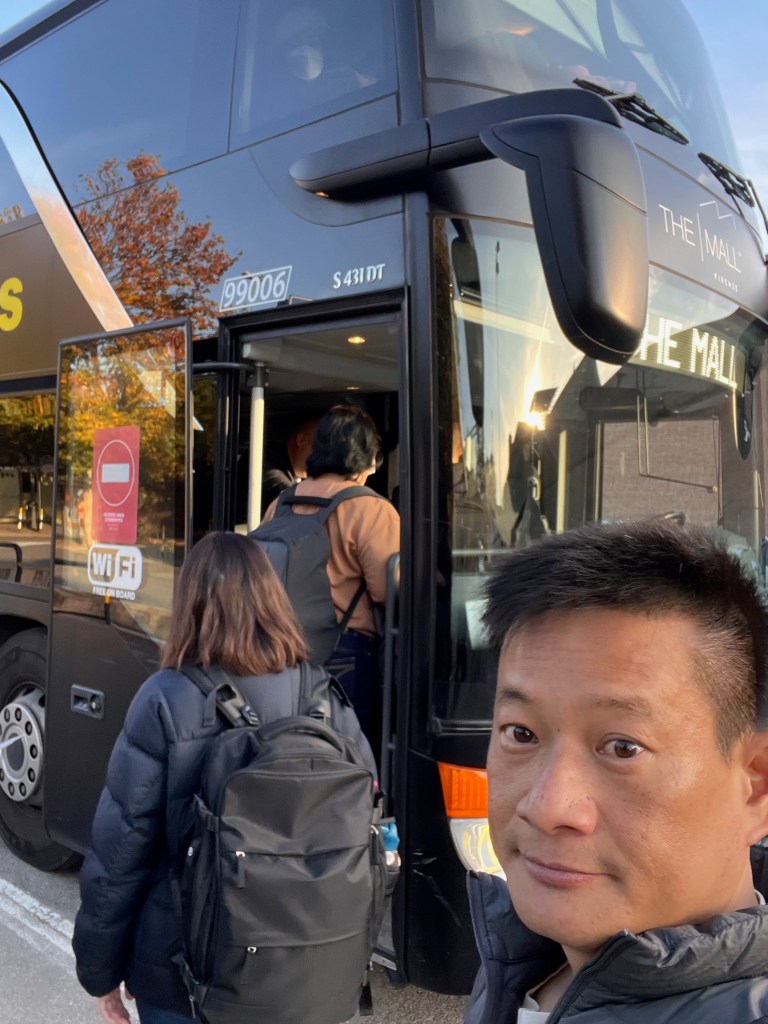
Taking a wefie with the bus that we took to The Mall Firenze

And the Shopping Begins

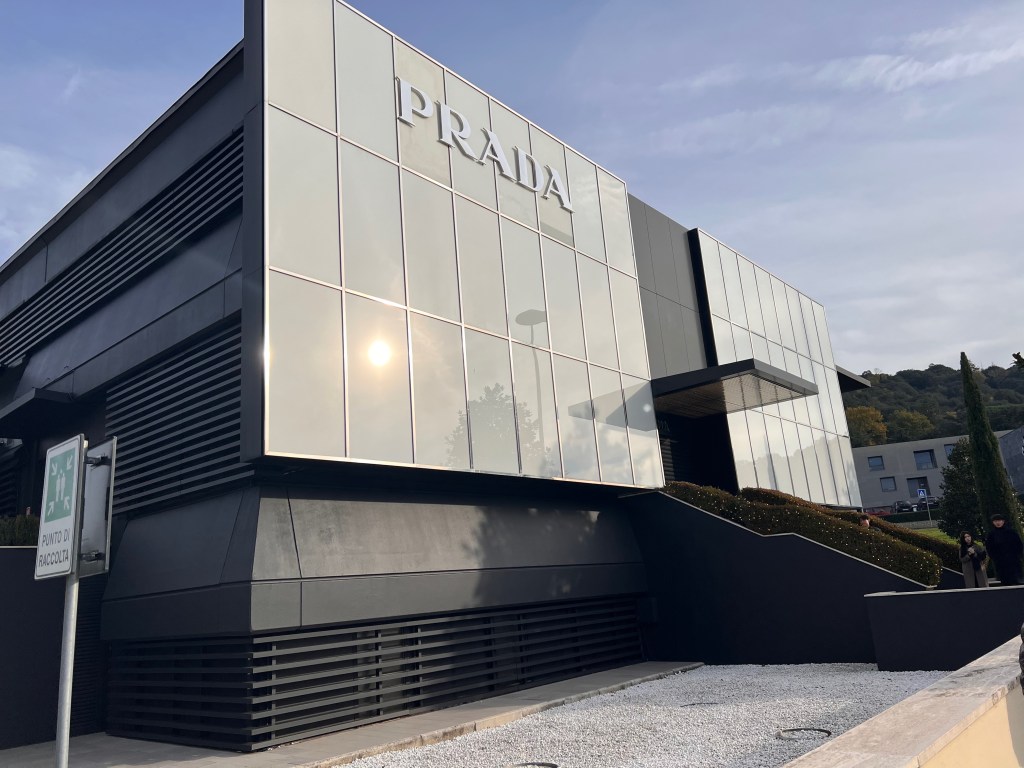
We arrived at The Mall Firenze just before the shops opened for business. I thought taking the first bus was a good idea as there weren’t many people taking the bus nor would there be a crowd in the shops. We did a scan for the shops and their locations upon reaching The Mall and came out with a shopping plan. We would visit the shops further away from The Mall, followed by those within The premises of The Mall. Shops in The Mall Firenze open at 10 am. We visited Prada and CK and found some excellent bargains. By lunchtime, we had visited about 50% of the shops. Generally, we were pretty disappointed with the goods on sale in the shops. We found that most shops, such as Balenciaga and Ferragamo, have a very small shopfront. Consequently, the goods on sale were very limited. Some brands occupy larger retail space, such as Burberry and Gucci. However, we did not find anything worth purchasing at Burberry, while Gucci sells mostly full-price items. There is only one cafeteria at The Mall selling food. However, the

We were the first batch of shoppers at The Mall Firenze

Wefie outside one of the shops in The Mall Firenze
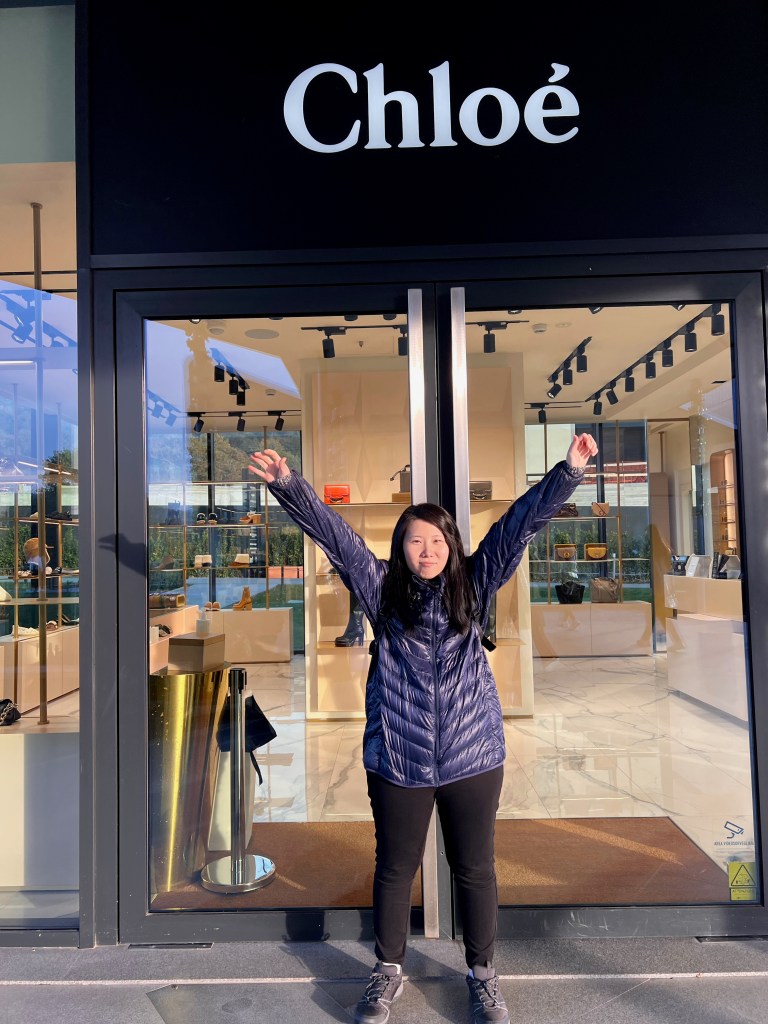
My friend Chloe in front of the shop Chloe

Foreign shoppers outside the EU can obtain early tax refunds of up to €999.50 from the Tax-Free Lounge at The Mall. We wanted to eliminate unnecessary wait at the airport when we left Italy and went to the Tax-Free Lounge to obtain an early Tax refund. The process was straightforward. All of us got our early tax refund within 20 mins. After sorting out our tax refund, we decided to check out Versace, located below the Tax-Free Lounge and outside the bus pick-up point. We managed to get some good deals on Versace. After Versace, we took the 7.20 pm bus, headed back to Florence, and had dinner at a Chinese restaurant opposite our hotel. Afterwhich we rested early today as we would be visiting Pisa the next day.

Italy Day 4 (29 Nov 22) – Venice by Boat: A Different Perspective of the City of Water & Night Stroll in Florence: The Birth Place of Renaissance Art

Venice by Water

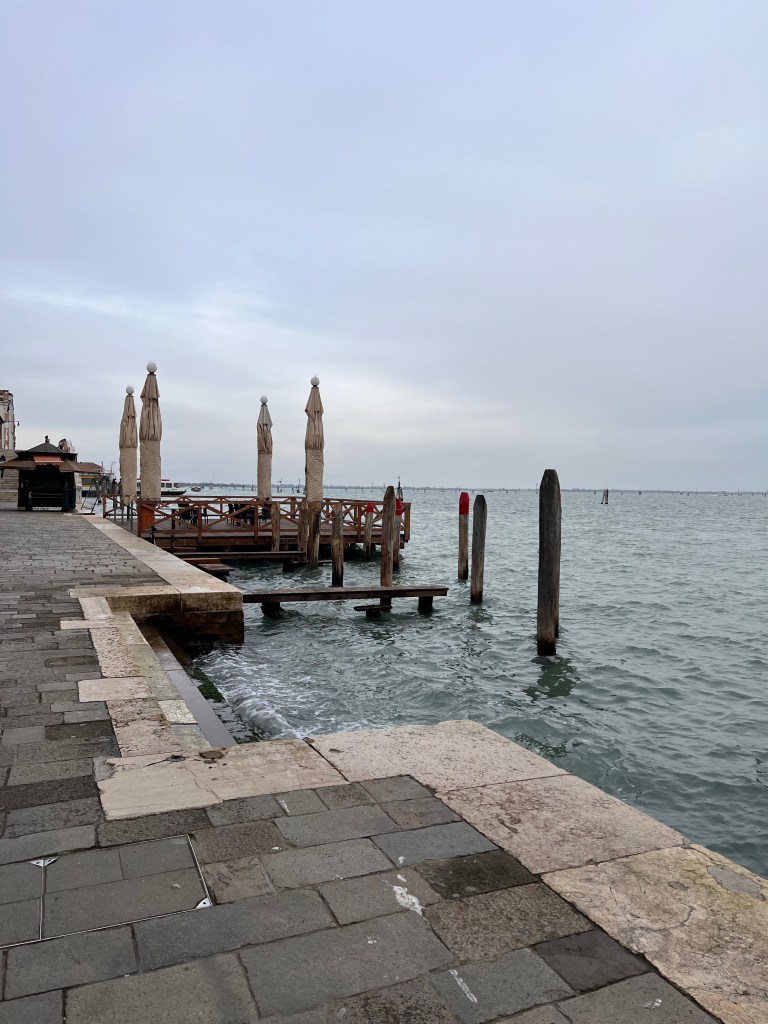
Our plans for today took a 180° turn from what we originally planned. We wanted to visit Dorsoduro and the San Marco regions, followed by a lunch on Venice’s southern part of the shoreline. Our little escapade yesterday unintentionally covered these places and churches we wanted to visit. So we had to swap things around and visit the sights we were meant to visit yesterday. The flexibility of customising our plans is what I like about free and easy travel (amongst other things).

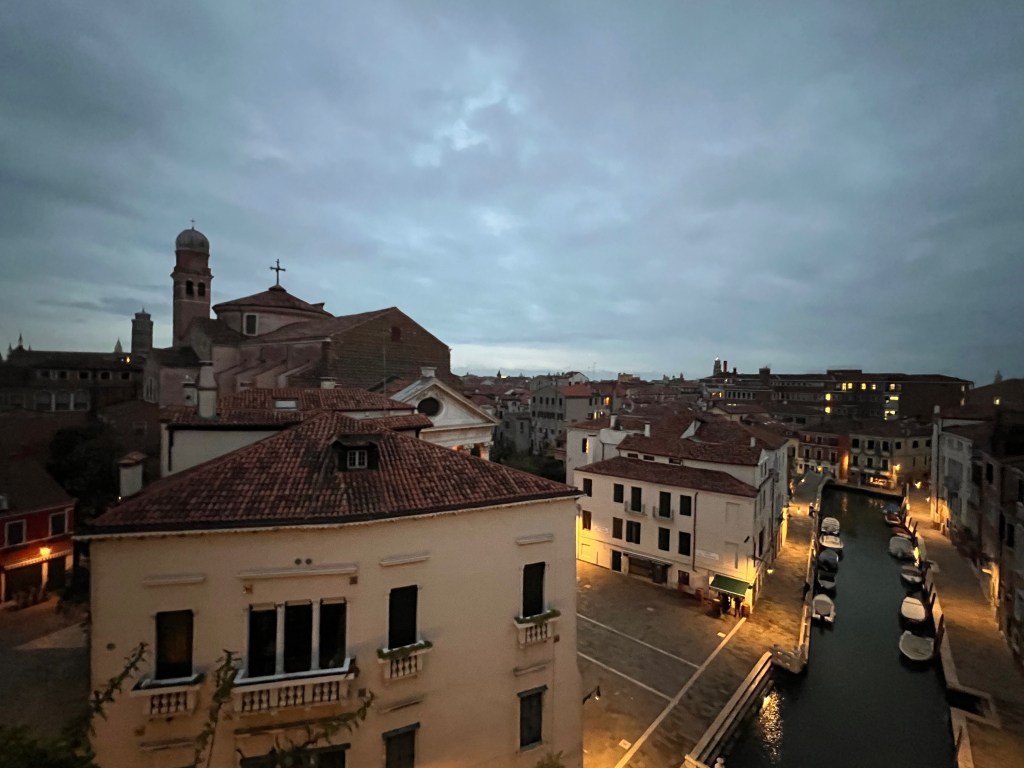
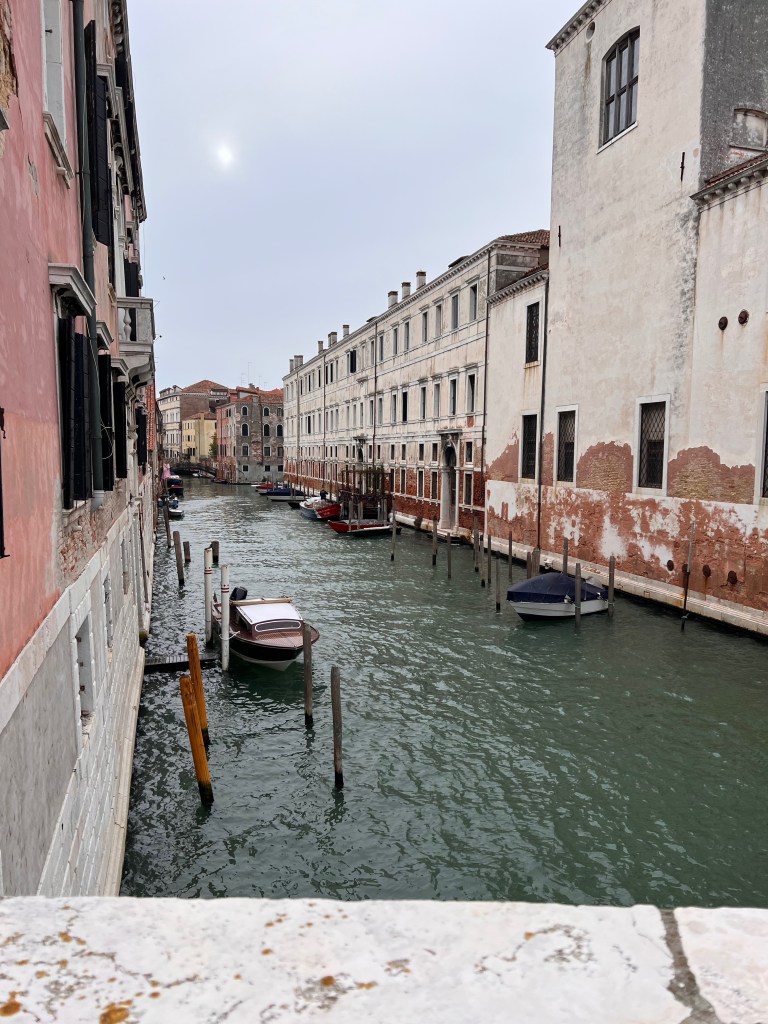
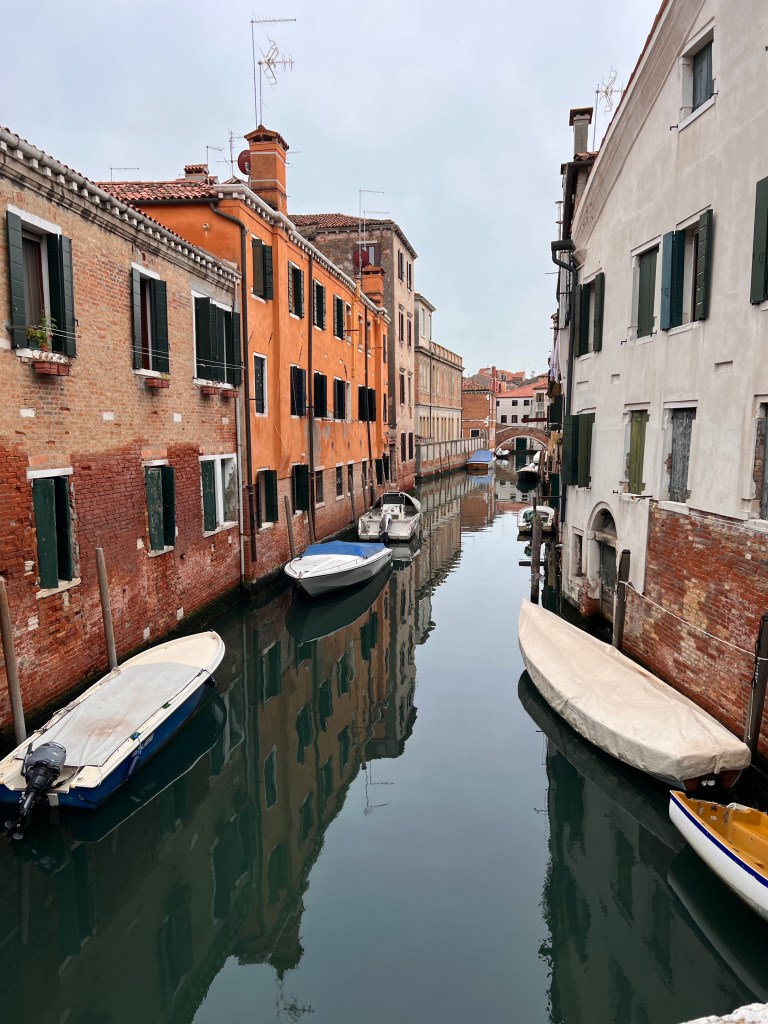
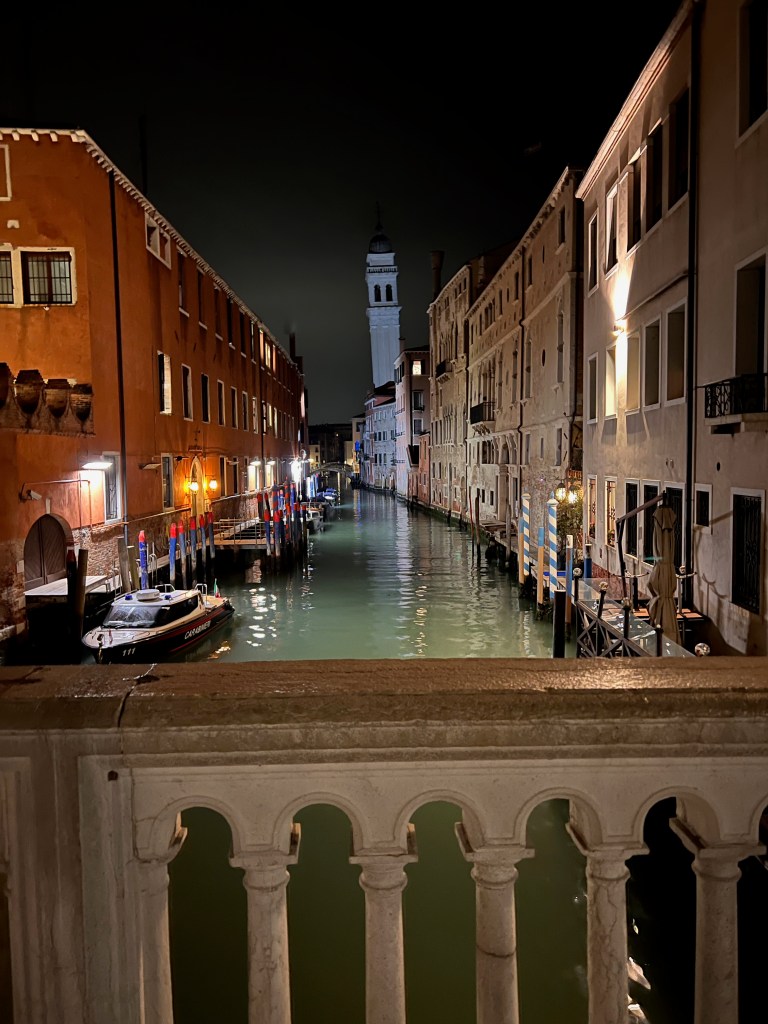
Waking up to a peaceful Venetian morning

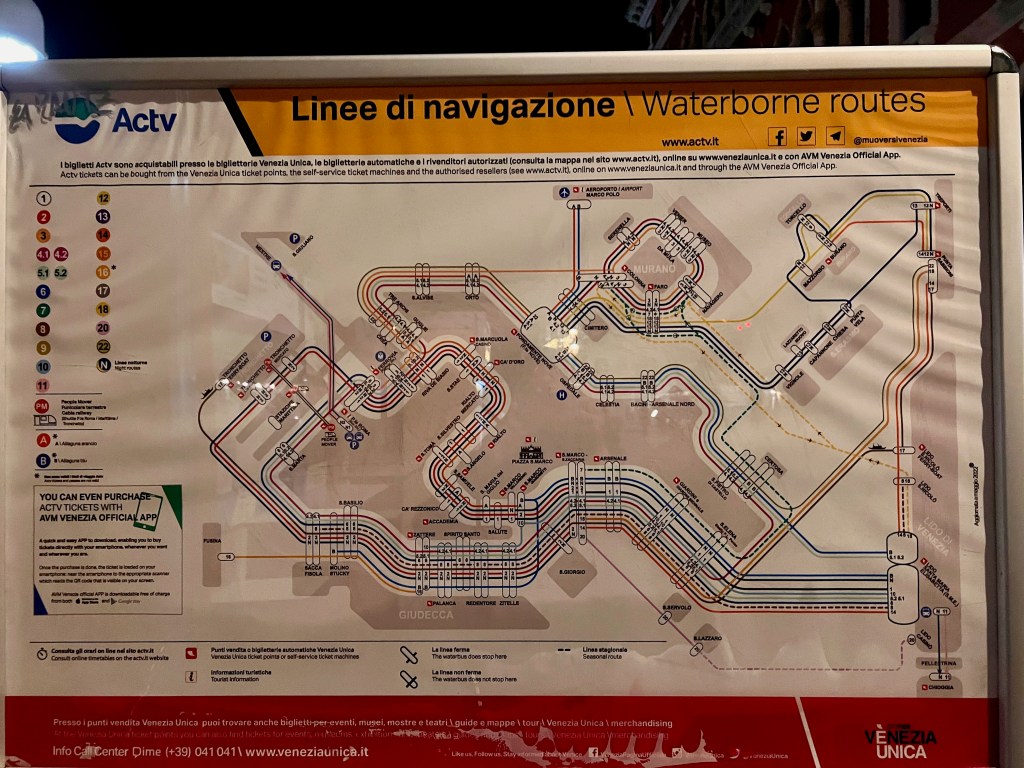
We planned to take a Venetian water bus (Vaporetto) to Piazza San Marco, and the nearest Vaporetto stop is just one bridge away from our hotel. We did some simple maths when getting the tickets and concluded getting a 24-hour day pass made more economical sense as we planned to travel from sight to sight using Vaporetto. A single trip costs €9.50, which only allows us to travel up to 75 mins, while a day pass costs €25, allowing us to travel multiple times within 24 hours. Granted, we at most have 12 hours in Venice before our train to Florence in the afternoon, but we still thought it is more economical to get the day pass.

Route map of the Vaporetto plying throughout Venice

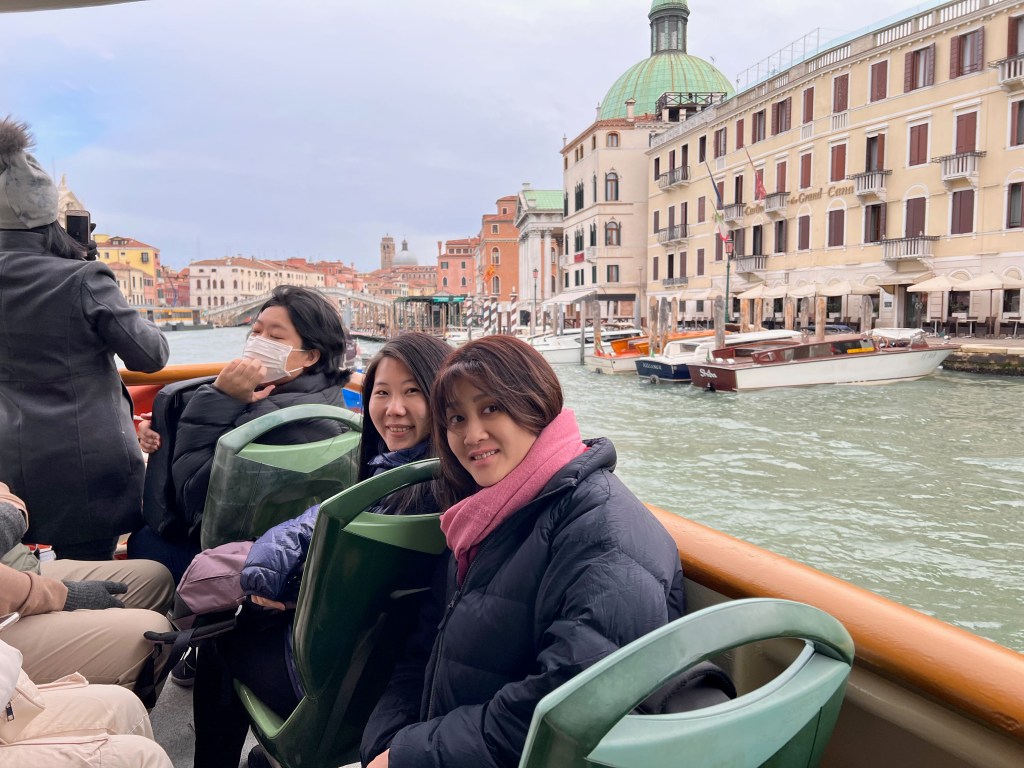
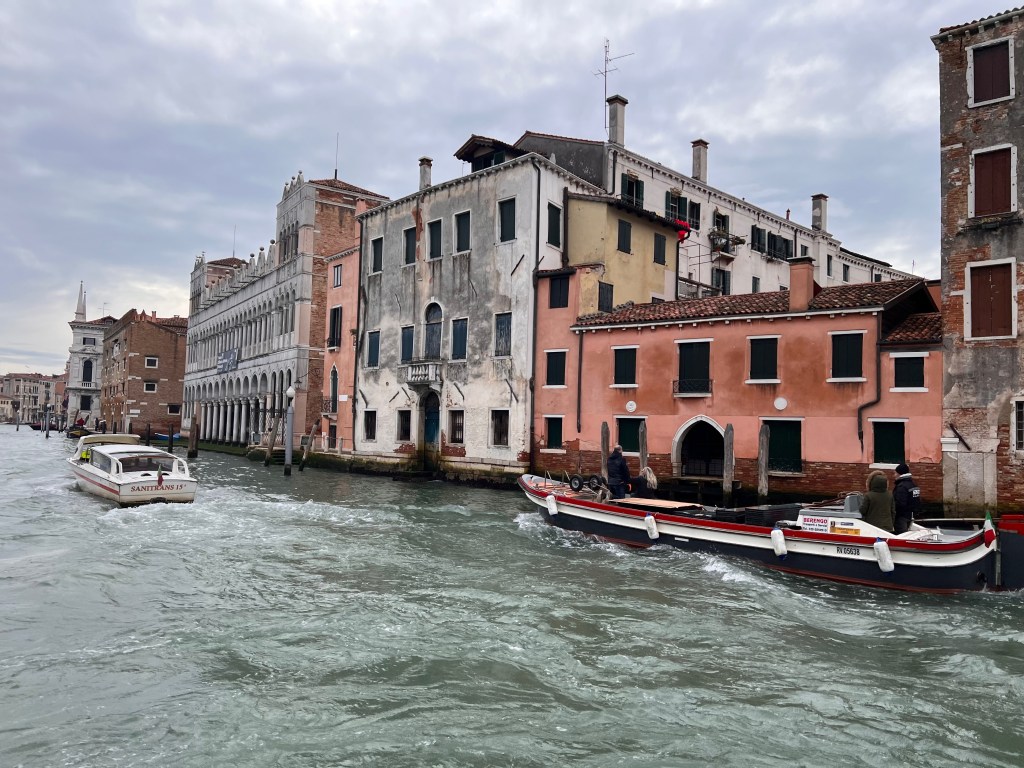
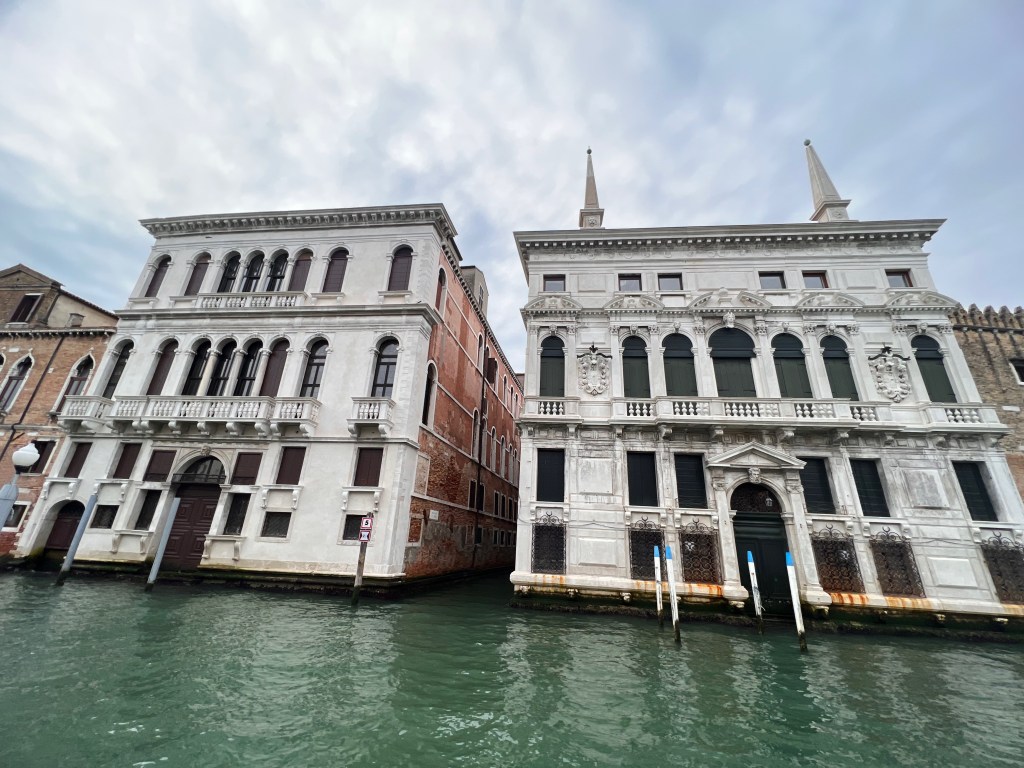
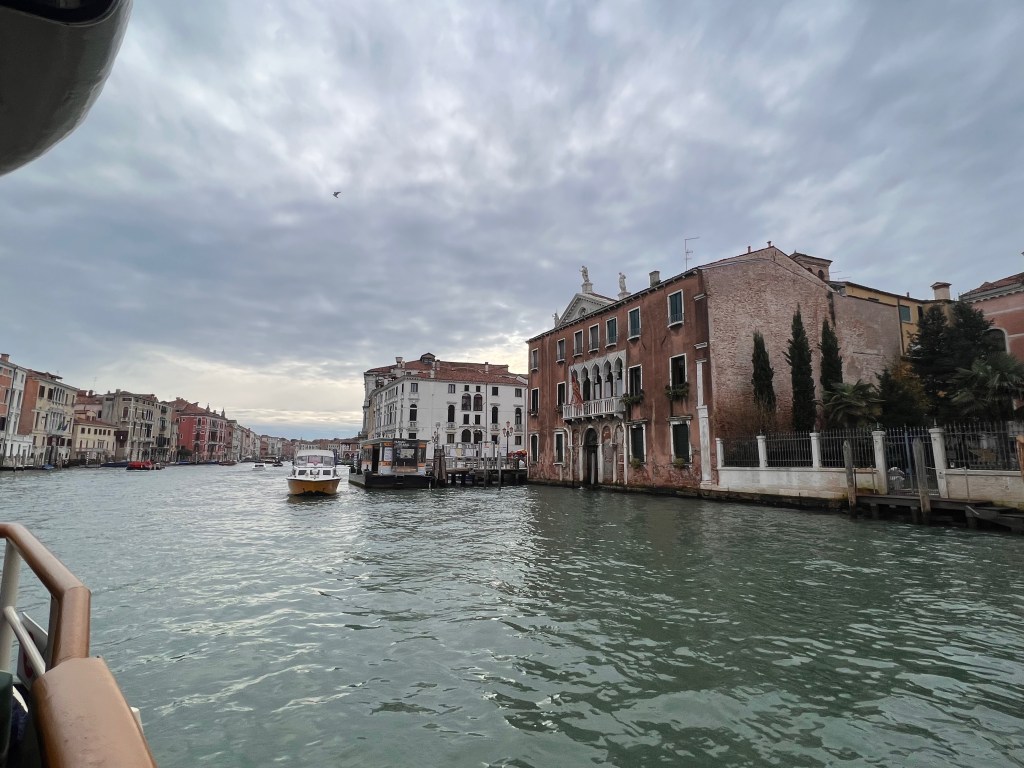
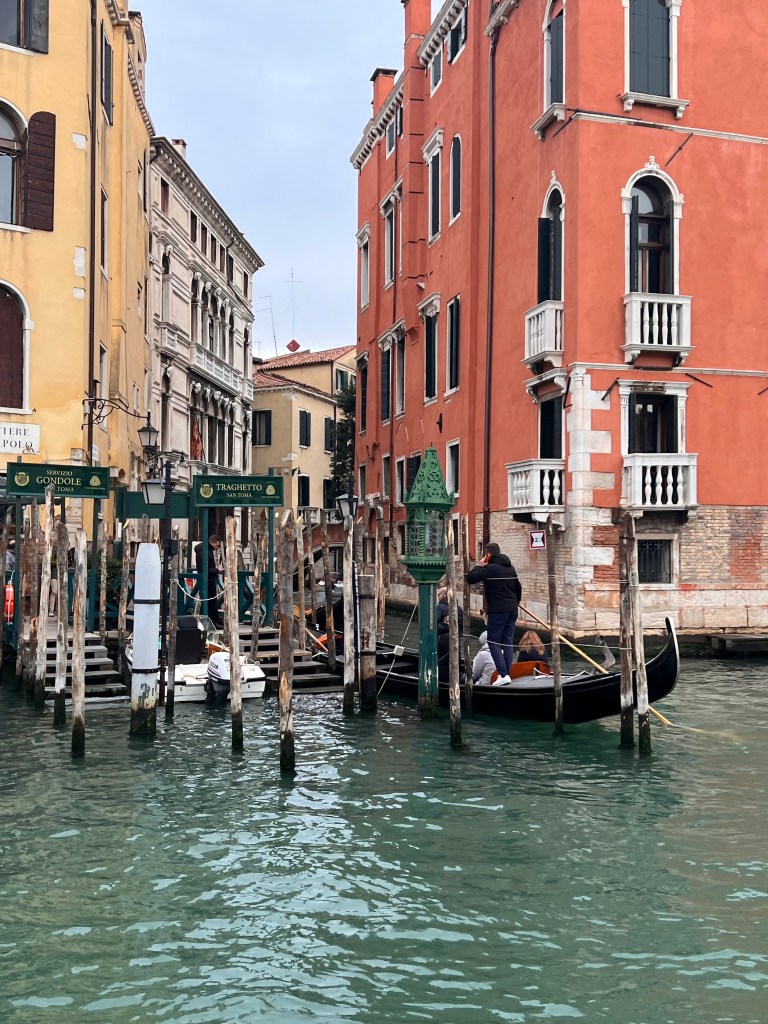
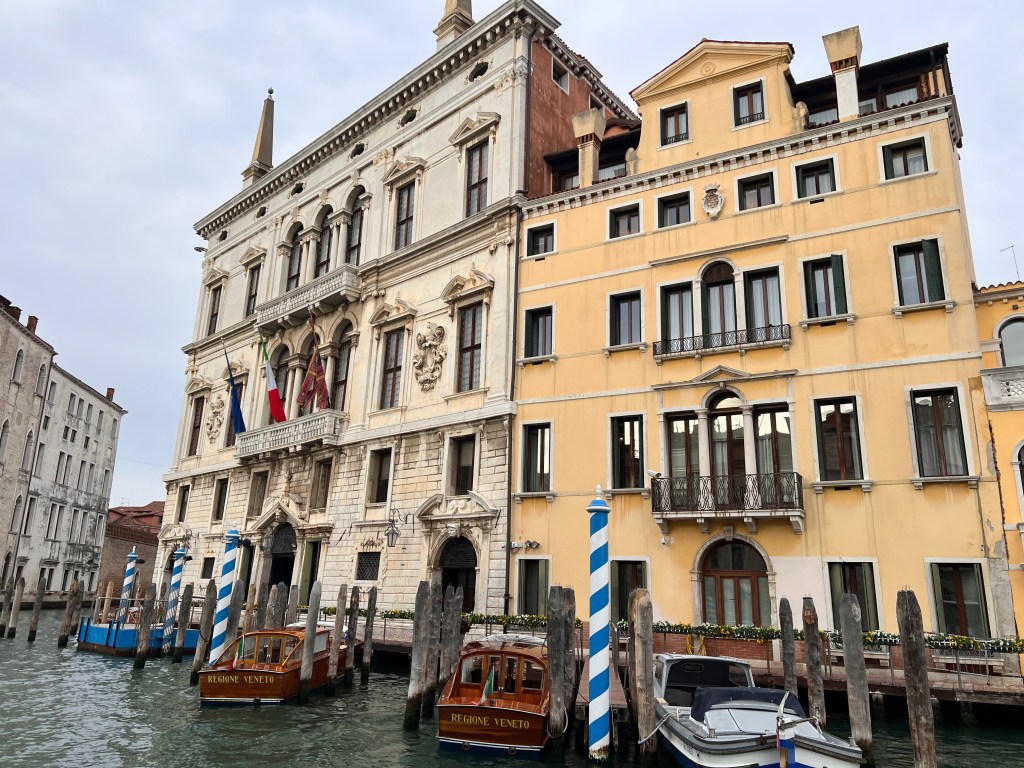
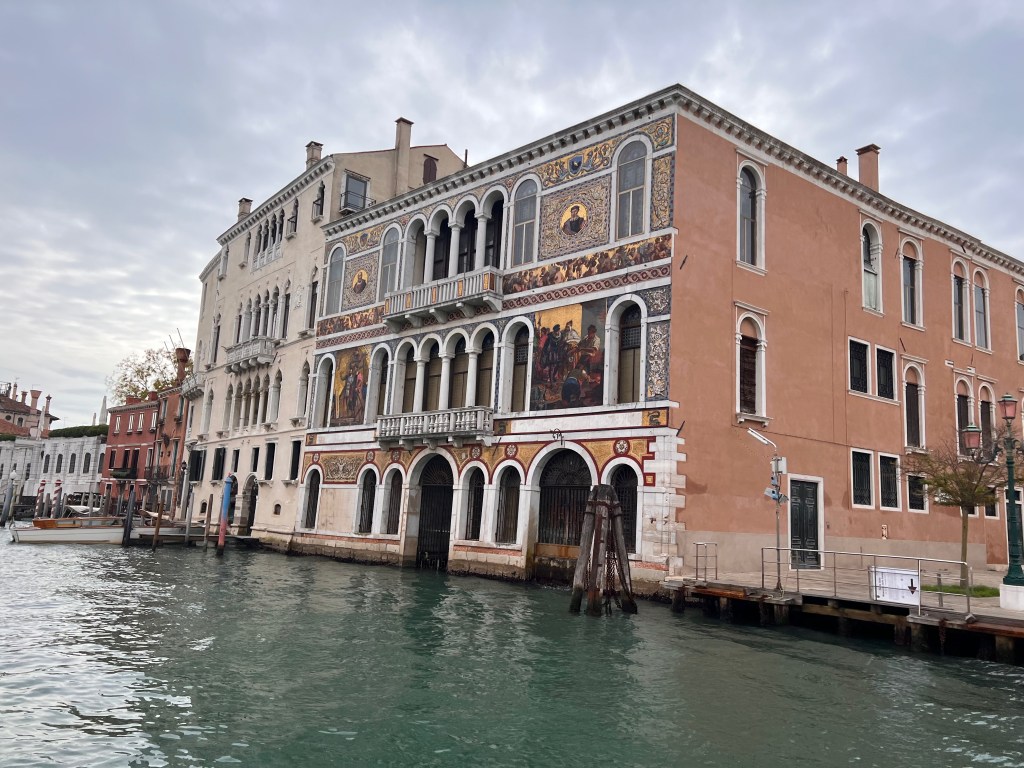
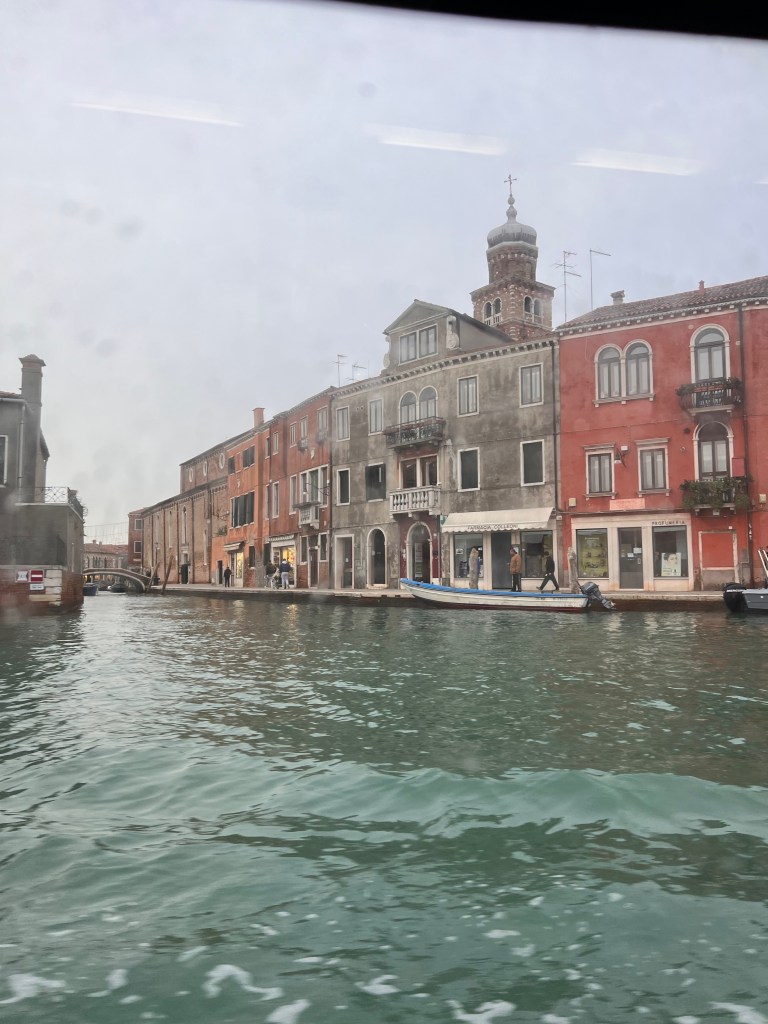
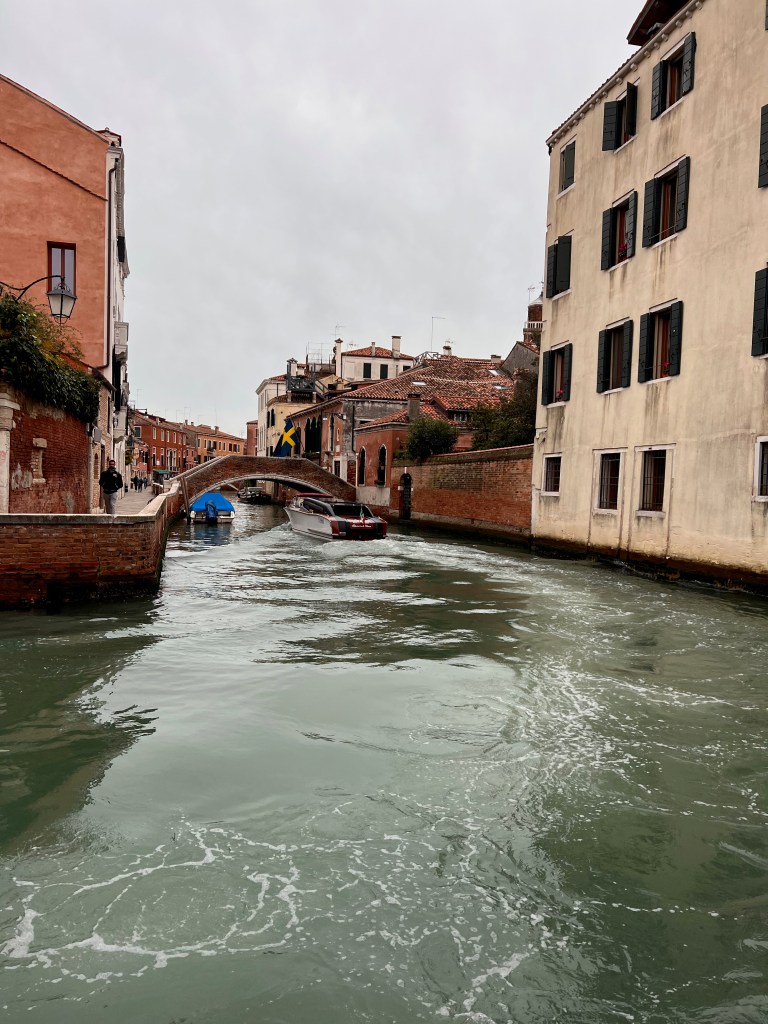
Taking a Vaporetto is like riding on a bus, there are fixed stops where the boat stops to drop off or pick up commuters. To get to Piazza San Marco, we took service #2, which plied the entire Grand Canal. I would say seeing Venice on land and from the canals feels different. I thought taking the Vaporetto gave us a more “Venetian” feel. Buildings that we saw on land look different from seeing them on the canals, as though these buildings are built to have their front facing the canal, showcasing the intricate architectural styles and grandeur for people to see from the canal. As the Vaporetto plies through the Grand Canal, some buildings look familiar and some not so. All the buildings have some docks on the ground floor for their owner or visitors to alight from their private boats. We saw Venetians going about their daily life as the Vaporetto moved us through the Grand Canal. We soon arrived at our stop San Marco – San Zaccaria.

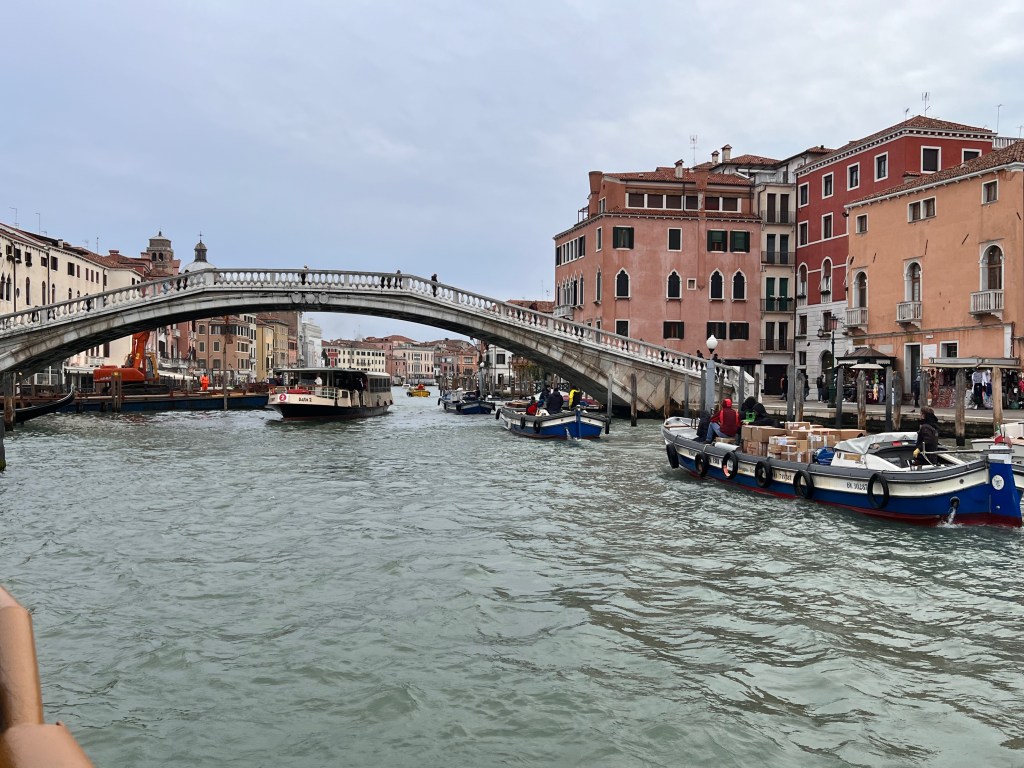
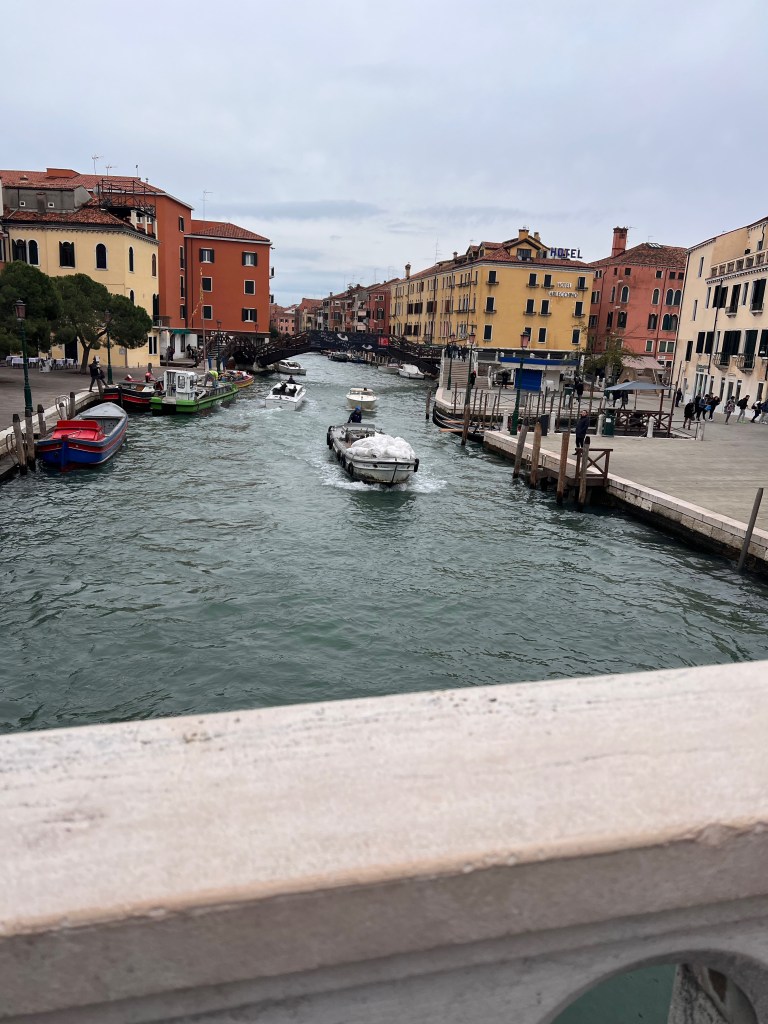
Ponte degli Scaizi near the train station, one of the four bridges that cross the Grand Canal

We spotted a market along the Grand Canal.

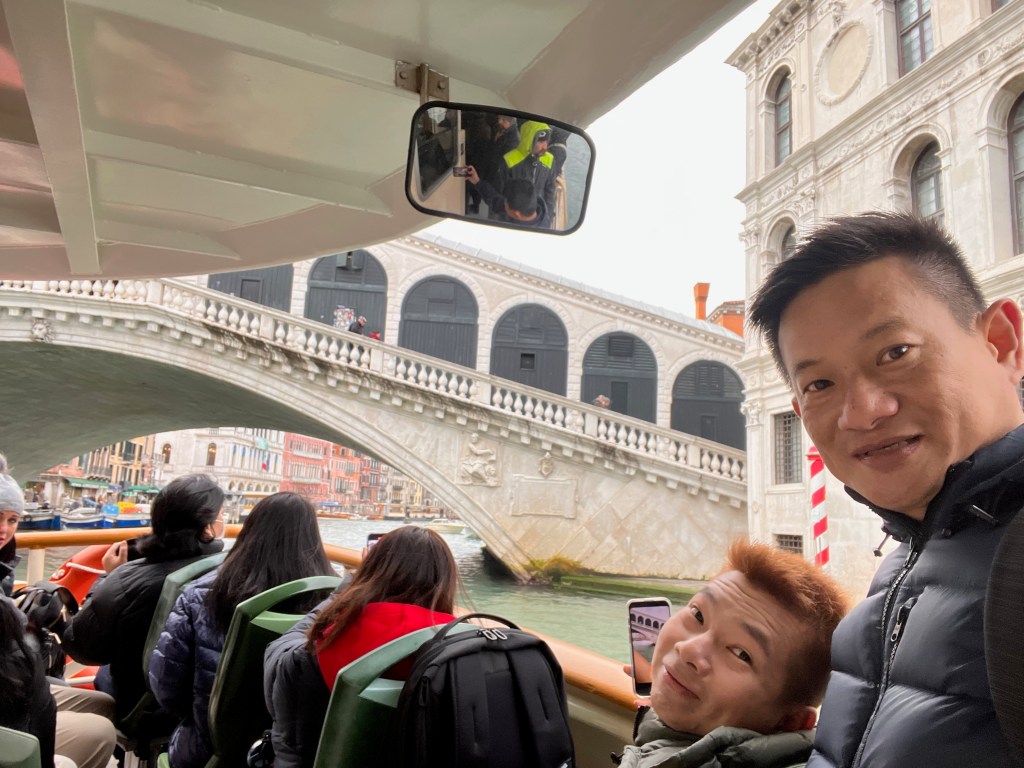
Riding on the Vaporetto offered us a full view of Ponte Rialto.

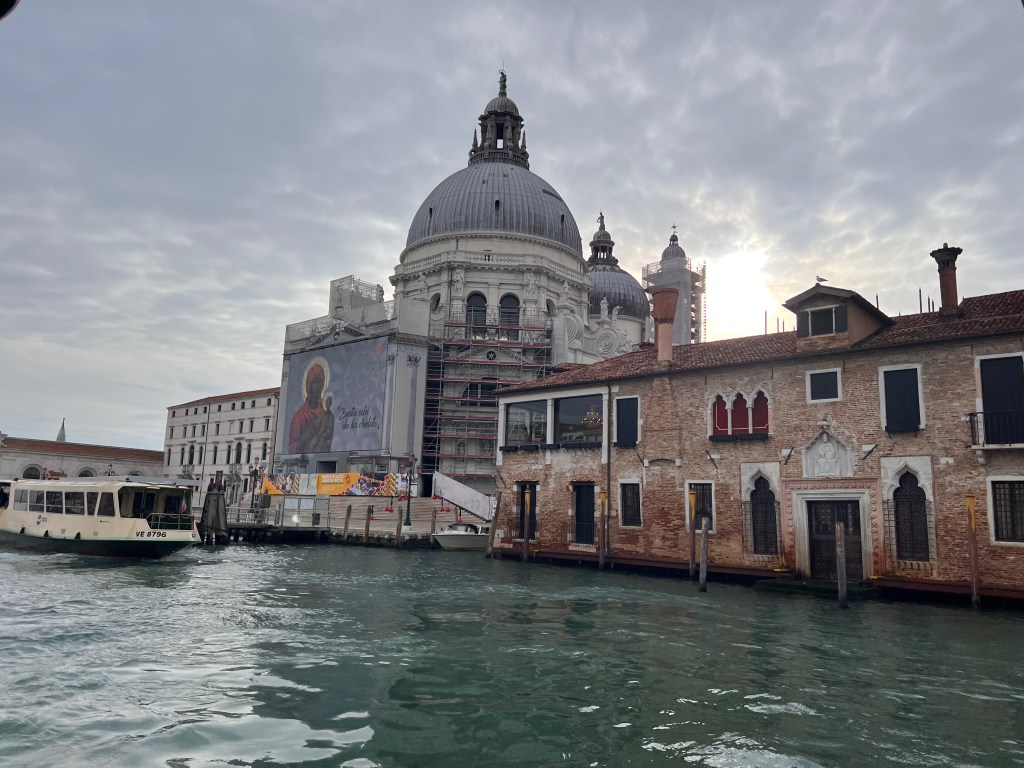
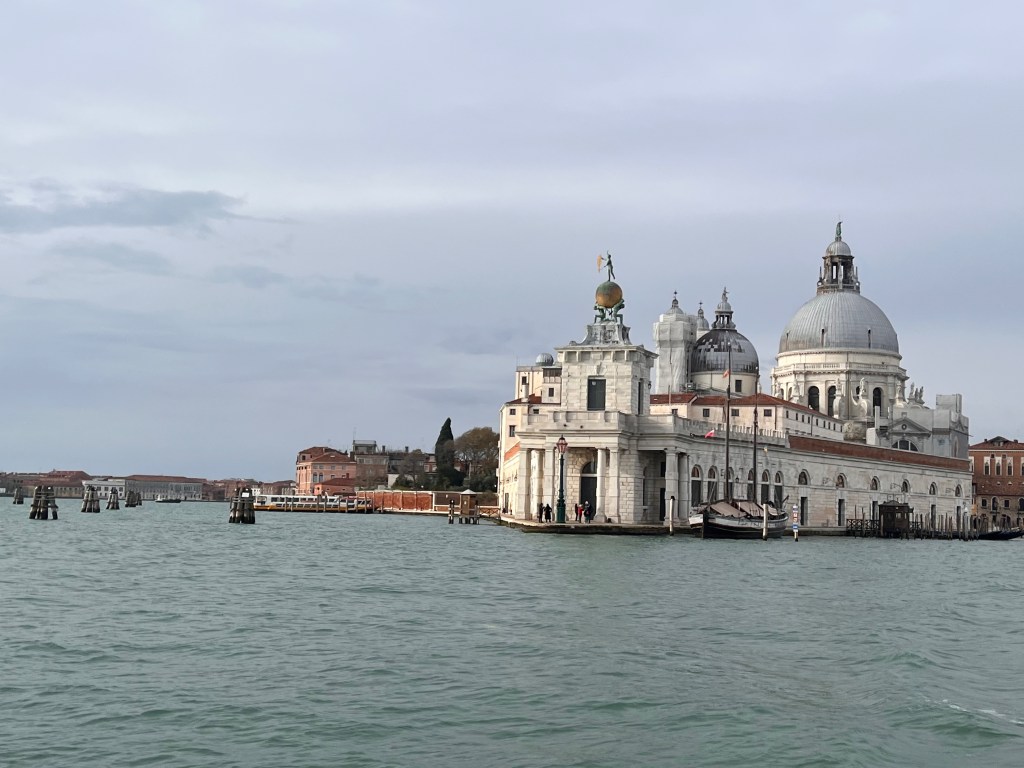
Basilica di Santa Maria della Salute looks closed for restoration works.

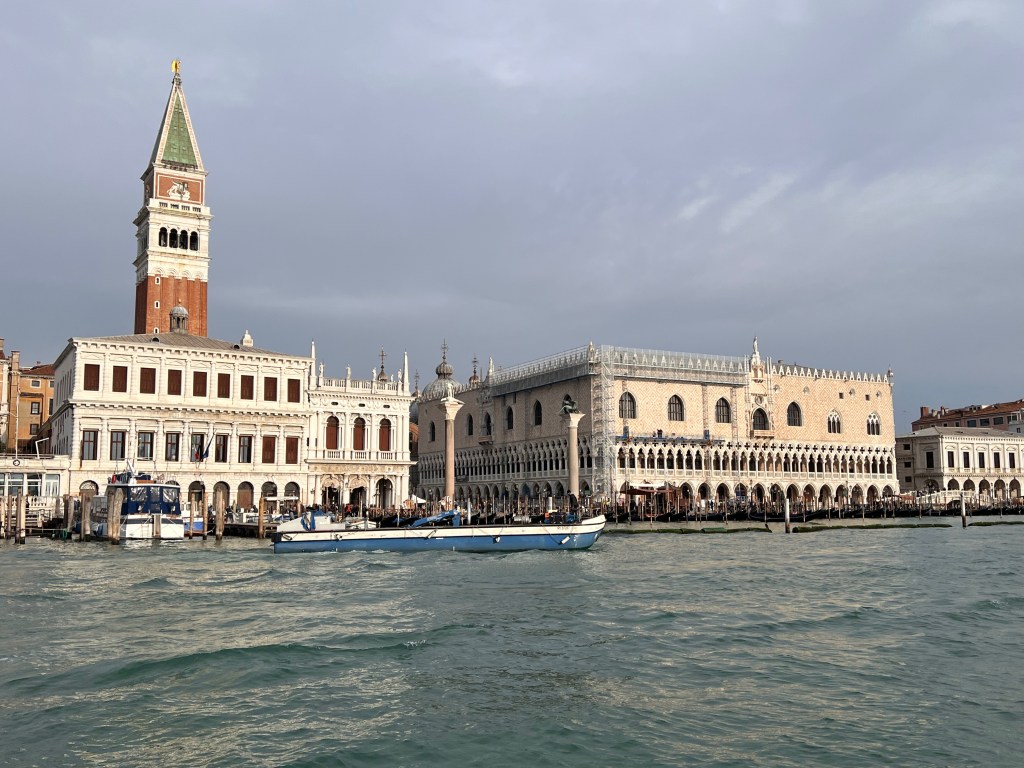
San Marco Campanile and Doge’s Palace seen from the Grand Canal

Back to Piazza San Marco

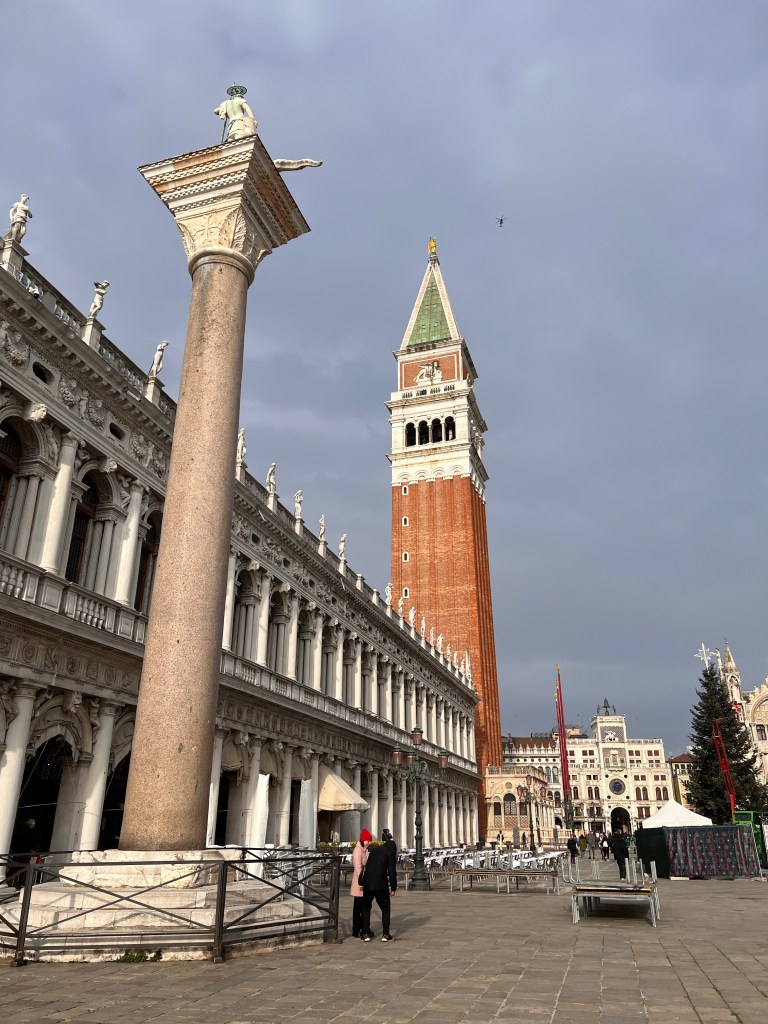
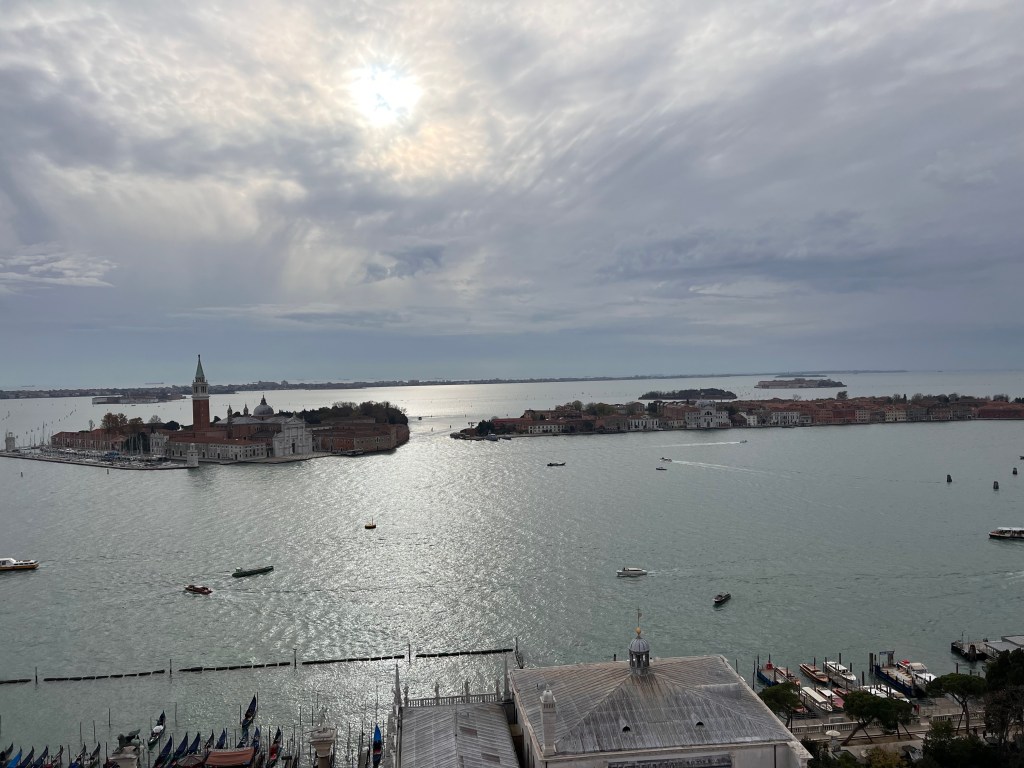
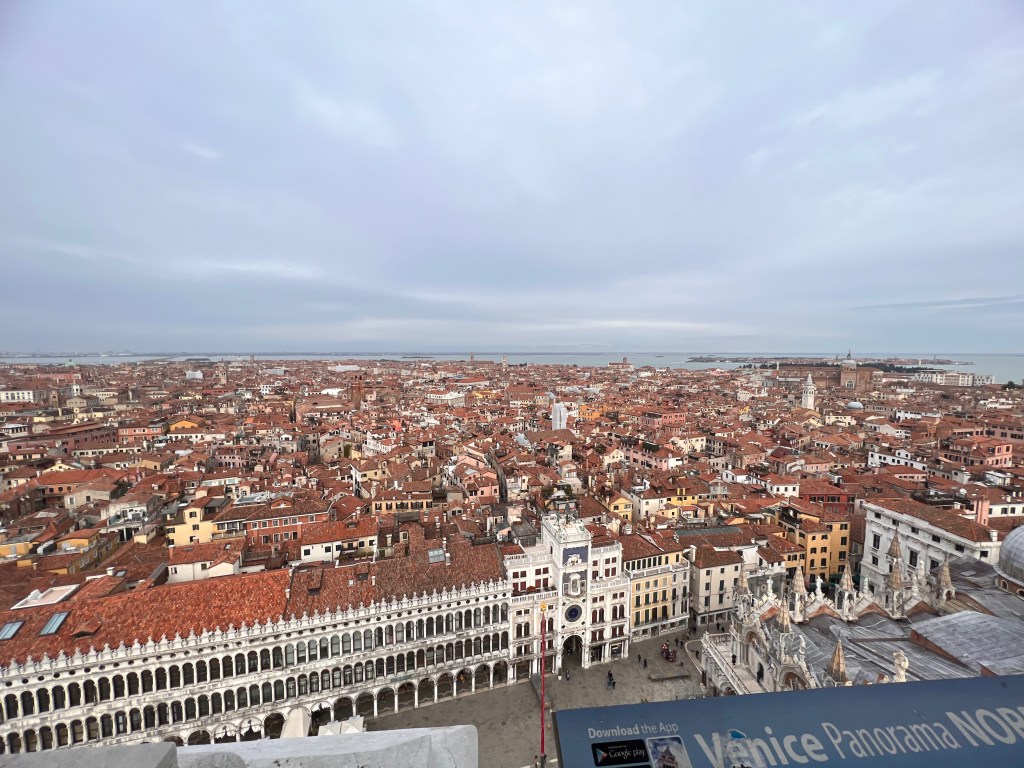
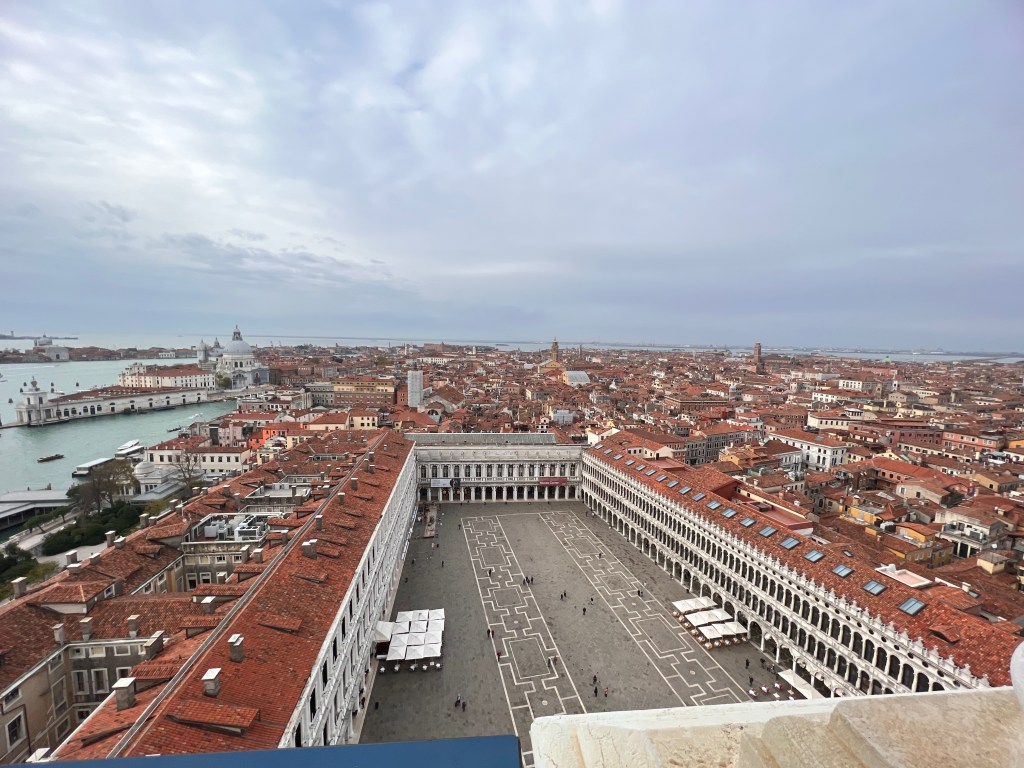
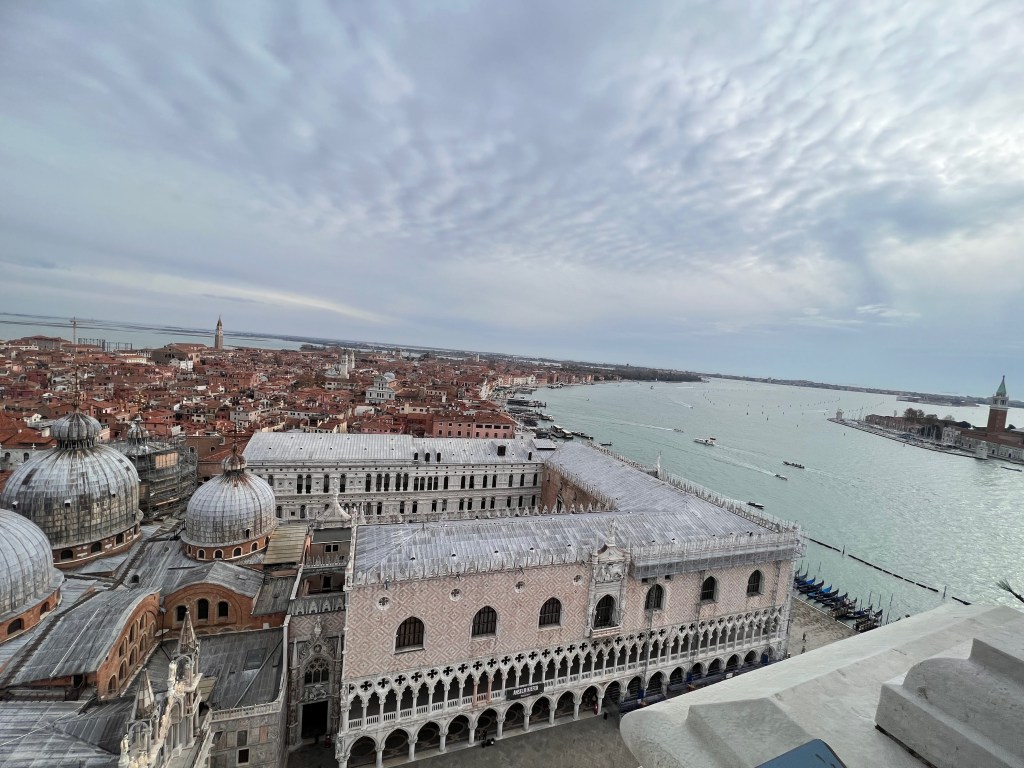
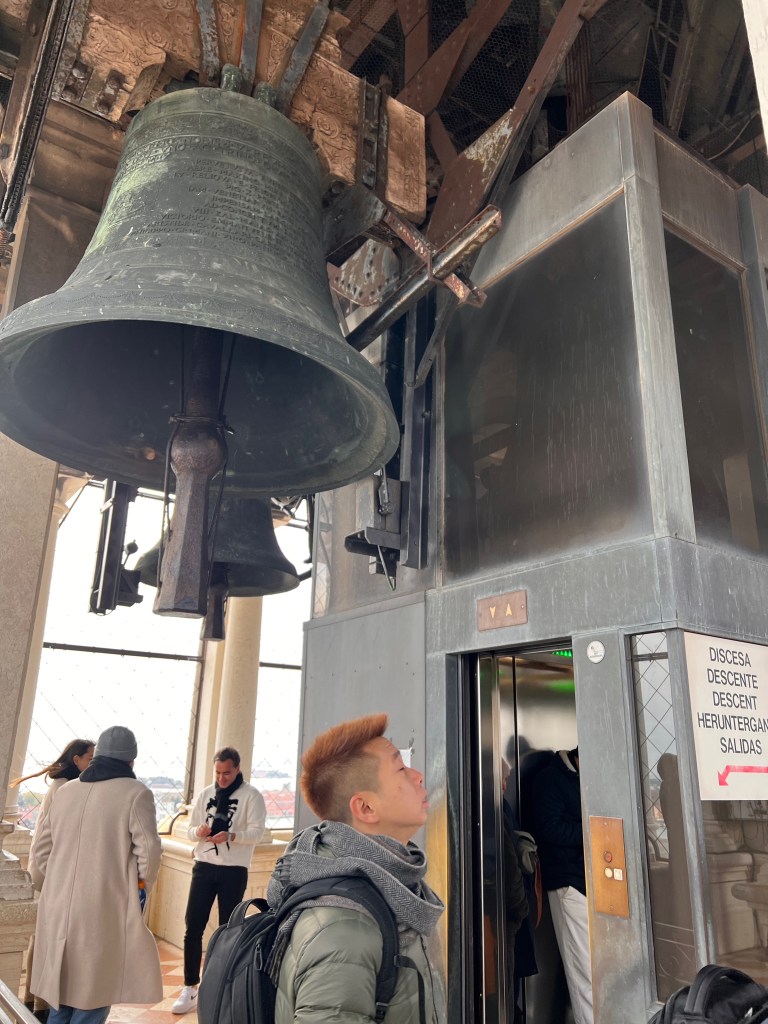
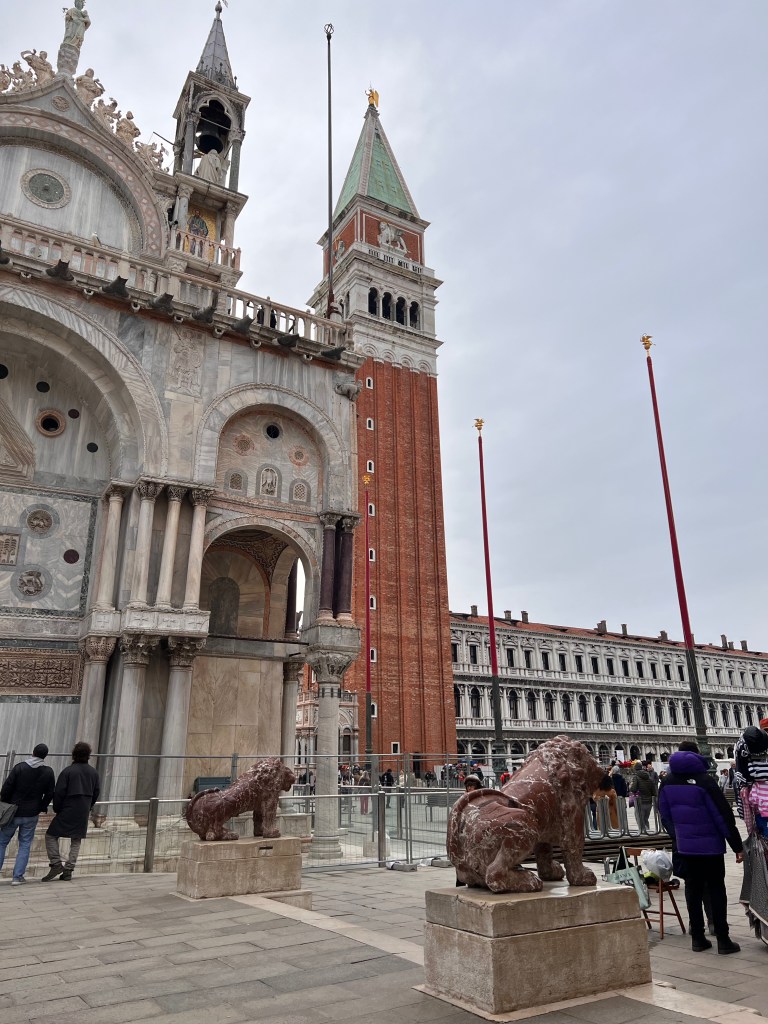
No visit to Venice would be complete without visiting Piazza San Marco, the city’s main public square. The piazza is home to Venice’s three most famous landmarks – Basilica di San Marco, Doge’s Palace and San Marco Campanile. Our first stop of the day was to ascend to San Marco Campanile, which serves as the bell tower for Basilica di San Marco. Standing at 99m, the campanile is the tallest structure in Venice. Pre-booking tickets was unnecessary as we travelled to Venice during the low season. There was no queue for the campanile when we arrived at the bell tower. Entrance to the campanile costs €12, which includes elevator access to the top of the tower. At the top, we were treated to a bird’s eye view of Venice and the lagoon. We could see a sea of red-tiled roofs compactly built next to each other to maximise whatever little space on the floating city of Venice, and occasionally grey domes and bell towers sparsely prop up to the sky. The little canals we crossed yesterday were hardly visible from the campanile. On the south side of the tower, we could see small islands sprouting out in the lagoon. From here, we could also see the entire Piazza San Marco. The top of the campanile is home to a set of five bronze bells hanging on blocks of thick wood, reinforced by rusting metallic frames. The number of people allowed up to the top of the campanile was tightly controlled, so it did not feel crowded. Visiting the campanile for a 360° view of Venice is highly recommended.

San Marco Campanile here we come

We spent 30 mins at the top of the bell tower and headed down. As we had not had breakfast, we ventured into the alleys near the piazza in search of breakfast. Some croissants and sandwiches later, we headed back into the piazza, wanting to visit Basilica di San Marco. As we walked towards the basilica, a queue for the basilica formed. After about 2 mins of standing at the back of the line, which did not seem to move, my friends and I thought entering the basilica was a waste of time. We did not intend to visit Doge’s palace as we spotted scaffolding on one side of the palace, thinking they might be closed for restoration works. At this point, we headed across the lagoon to our next destination.

View of the islands south of Venice from San Marco Campanile

Across the Venetian Lagoon to San Giorgio Maggiore

San Giorgio Maggiore is our next stop today, an island opposite Piazza San Marco which houses Chiesa San Giorgio Maggiore. This church is one of the most pictured buildings in Venice as it is one of the domed buildings visitors would see across the lagoon from Piazza San Marco. We hopped onto Service #2 again to cross the lagoon. The ride to San Giorgio Maggiore gave us a great view of Piazza San Marco from afar. As we were walking out of the Vaporetto stop, one of my friends spotted a poster with some colourful buildings and asked if we would be going there. At this point, I had to make some last-minute changes to include Burano in the list of places we will visit today. I planned to visit Murano for their famous blow glass, and with this new input, we will include a visit to both Murano and Burano. However, we had to keep our check-out and train timing in mind as we were scheduled to leave Venice for Florence later in the afternoon.

Facade of Chiesa San Giorgio Maggiore

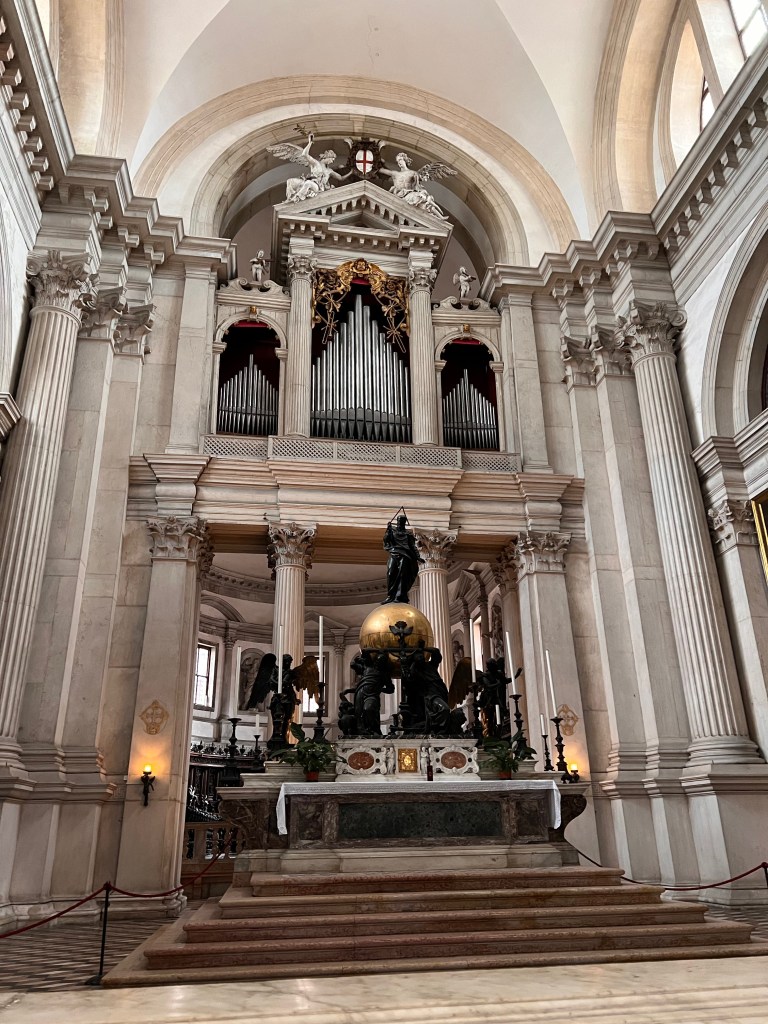
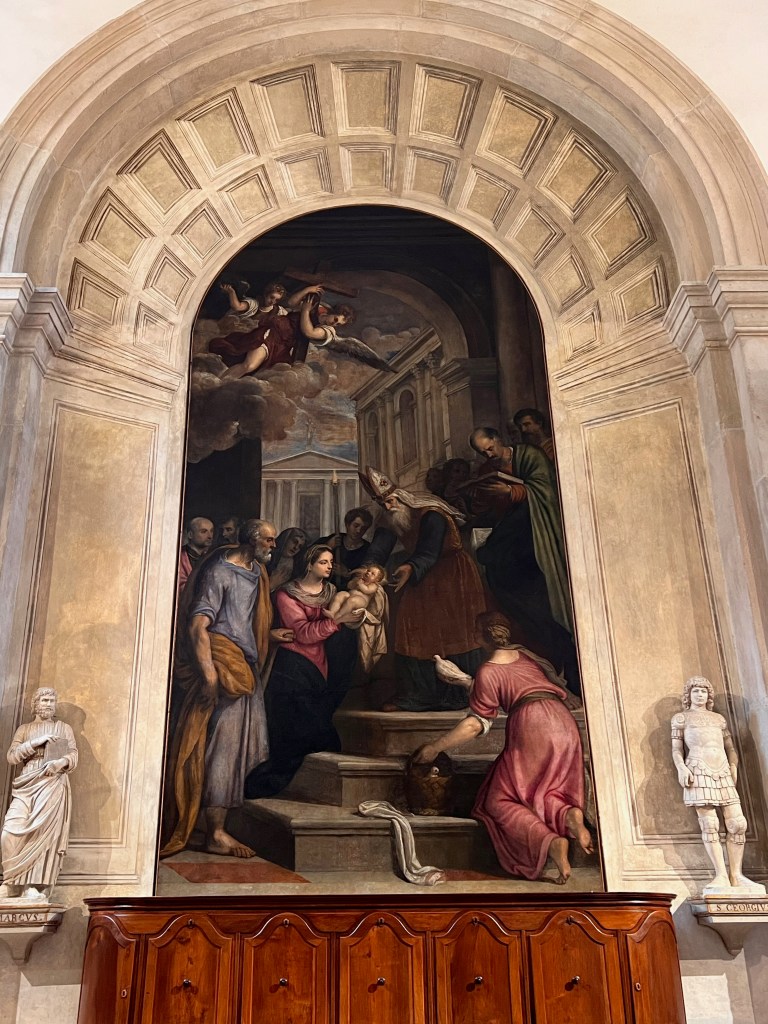
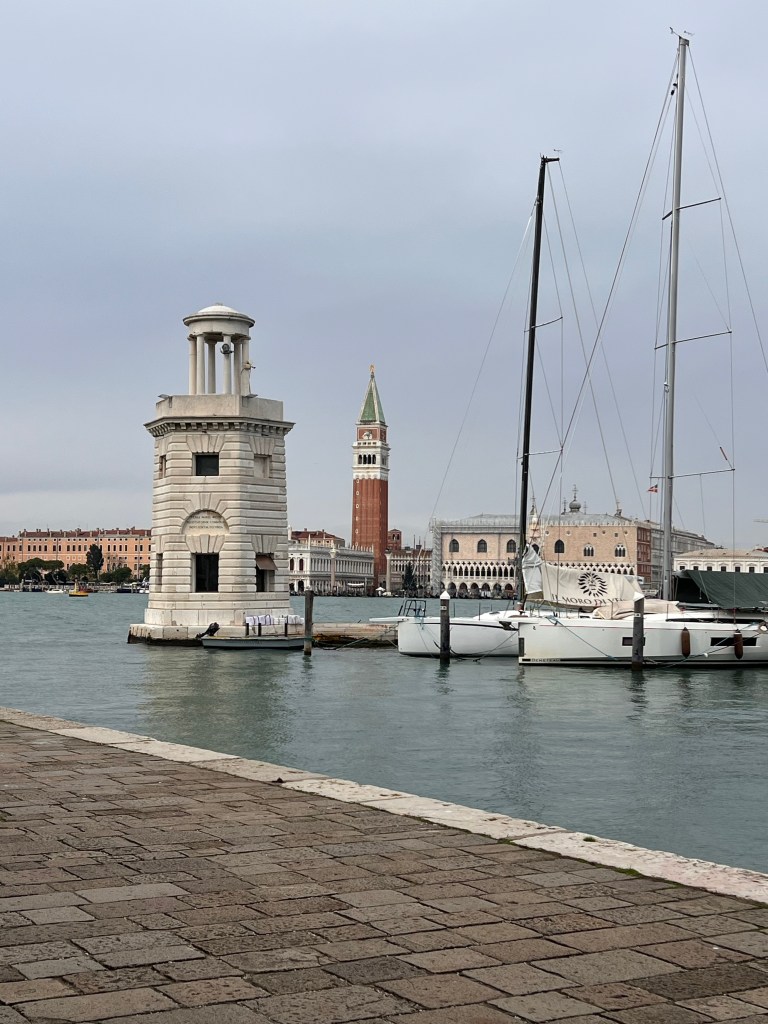
Chiesa San Giorgio Maggiore is mainly brick built with a facade cast in white marble. A statue of Christ stands on the top of the front entrance to the church. The church’s interior looks bright and airy, thanks to the high ceiling and windows near the dome that allow plentiful sunlight. The church is a perfect spot to get away from the crowd in Venice, as we did not see a lot of people visiting the church. There seems to be some art exhibition ongoing at the church. A high metallic sculpture hangs in the middle of the church. Perhaps it is my non-artistic nature, and I find the sculpture an eye-sore to the church’s otherwise simple yet elegant interior. We ventured into a small room by the side of the main church, where we found more art pieces on display. Following what was marked to be the path to guide visitors to the church, we spotted a sign to the bell tower. Entrance to the bell tower costs €8, which we did not even bother to consider going up the tower as we had just been to San Marco Campanile earlier. Instead, we headed back into the church and ended up in front of the main altar. The main altar consists of a copper globe supported by four bronze Evangelists with God the Father standing on top. Passing the altar, we wandered outside the church. This is where we spotted an opened gate and assumed this was the way out. As we walked towards the gate, a staff member called and told us this area was out of bounds to visitors. We explained we were exiting the church and heading towards the pier. The friendly staff then escorted us out of the church. As we were waiting for the next Vaporetto to take us back to Piazza San Marco, we saw the beautiful view of Piazza San Marco offered by San Giorgio Maggiore.

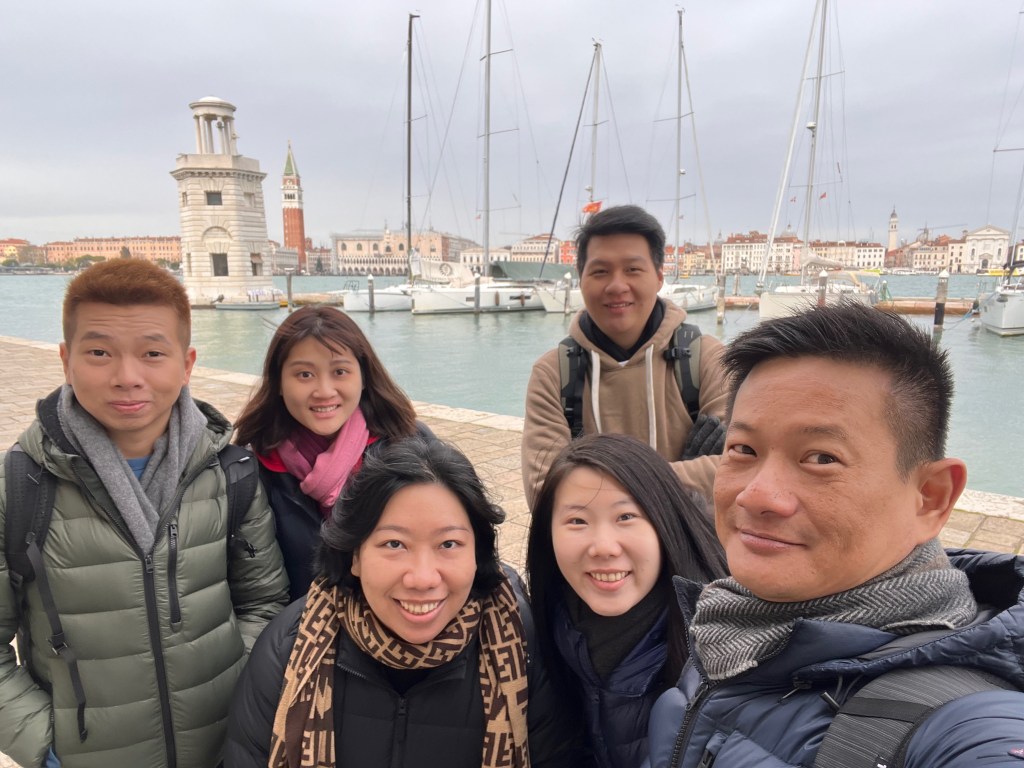
Wefie at San Giorgio Maggiore before we leave the island

Burano: Island of Colourful Buildings

Our next stop is Murano and Burano. To get to these islands from Piazza San Marco, we needed to take Service #4.1 or #4.2 and change to Service #12 at Fondamente Nove. We felt a little hungry when we arrived at Fondamente Nove and headed into the only cafe by the pier to take away some food for lunch. As we walked towards the pier that Service #12 stopped by, I noted the time and told my friends we had to change our plan again. It was already 1.30 pm, and we were supposed to return to our hotel by 4 pm. The boat ride to Burano took longer than we anticipated, and we decided to visit Burano first, and if time permitted, we would stop by Murano. The ride to Burano took 15 mins. When we arrived at Burano, we decided to give Murano a miss, given the little time we had left. At the same time, we noted the timing of the next Vaporetto leaving Burano. We had to catch the next boat leaving Burano. If not, we would miss our train to Florence. We only had 45 mins for Burano.

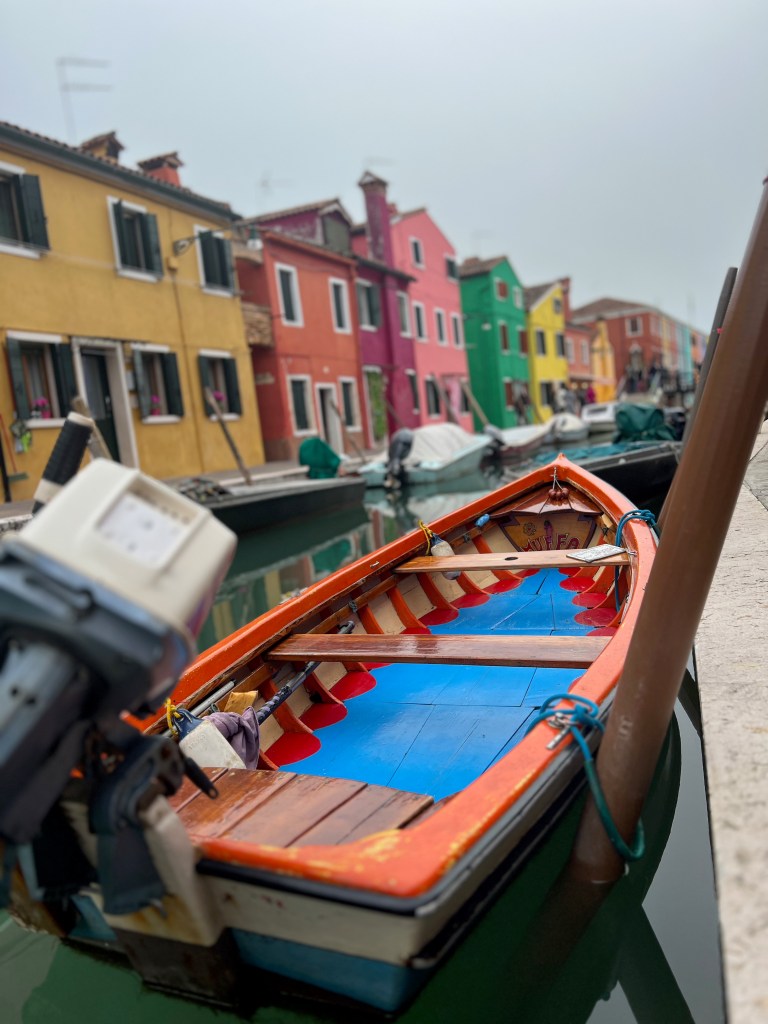
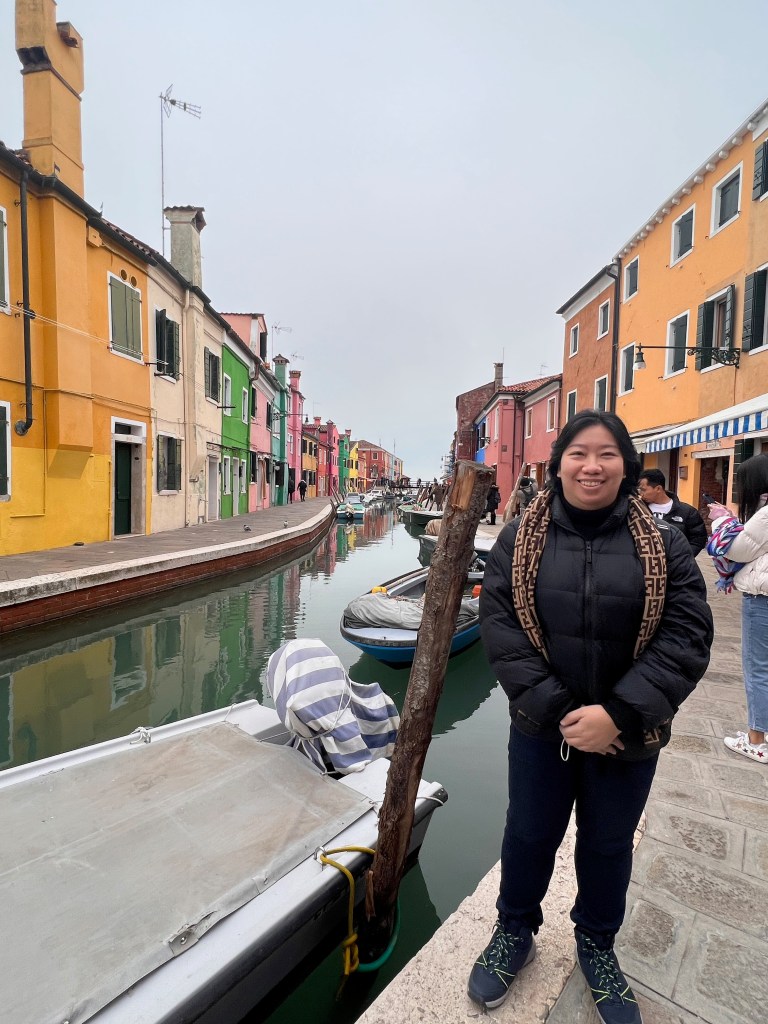
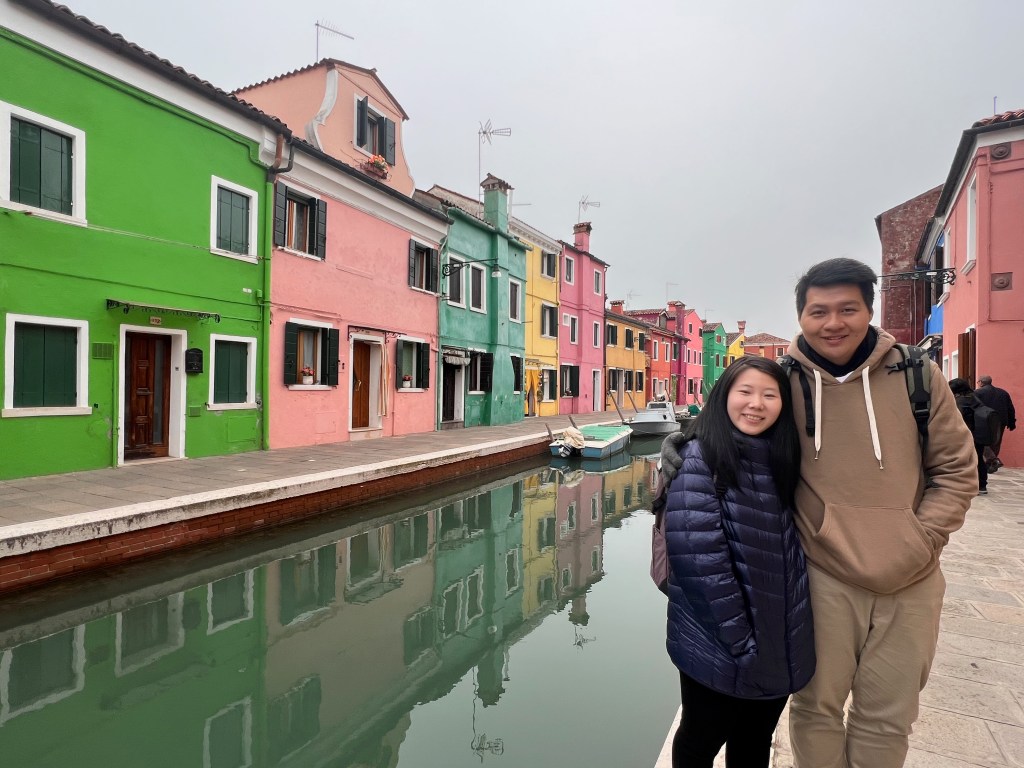
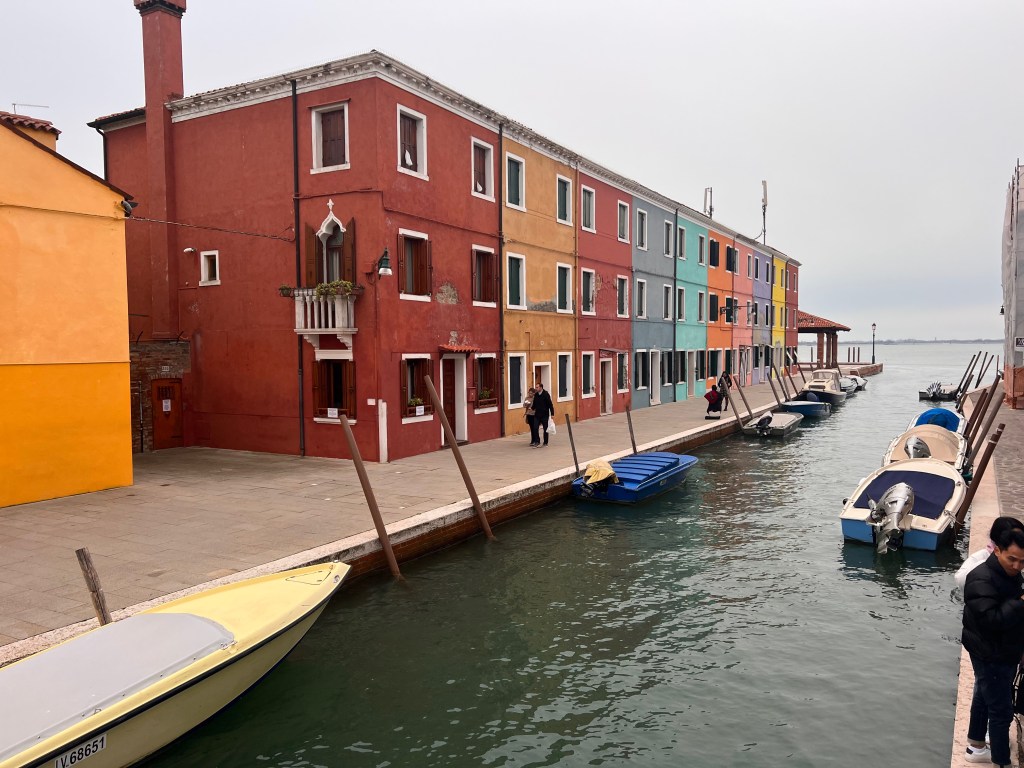
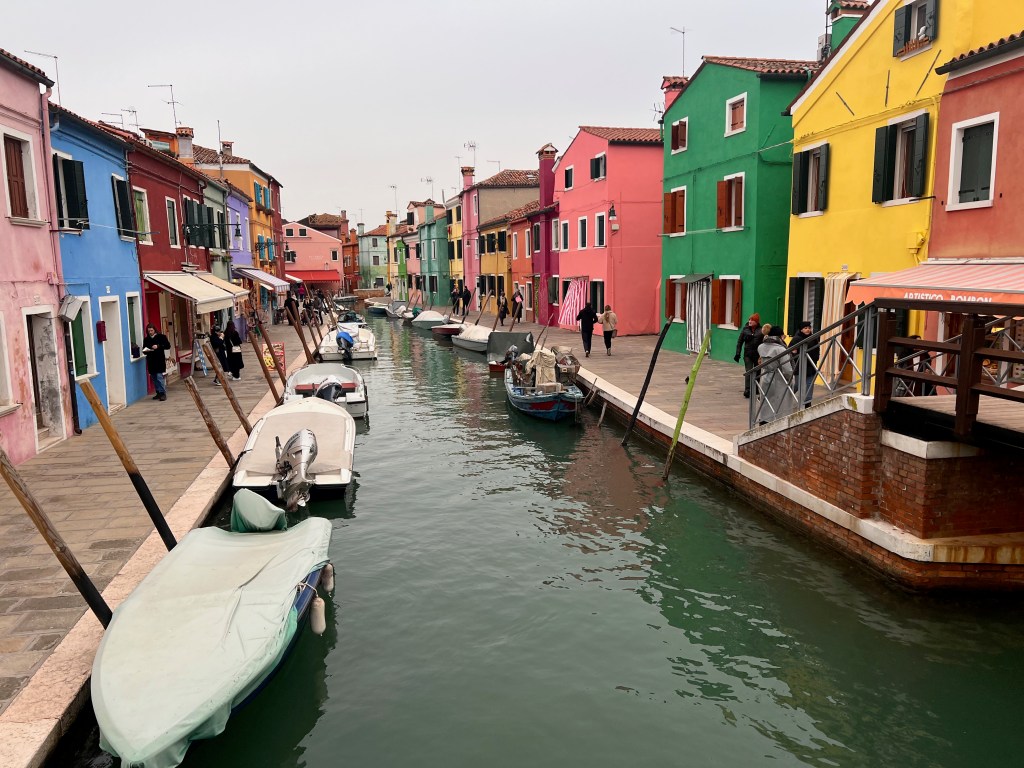
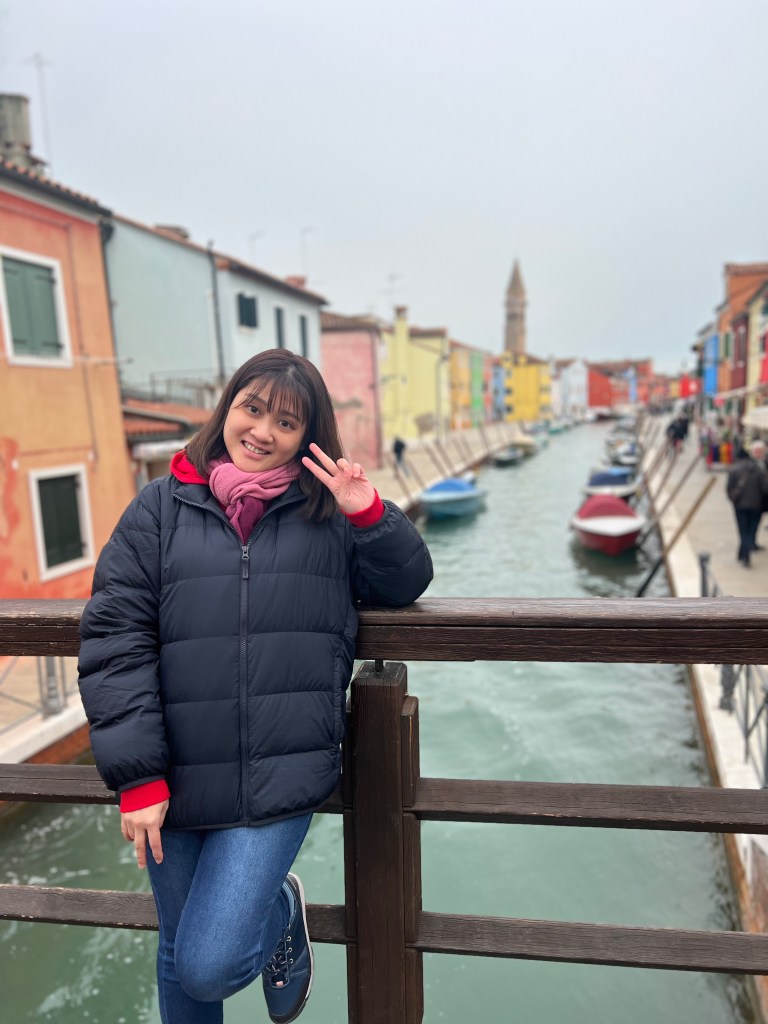
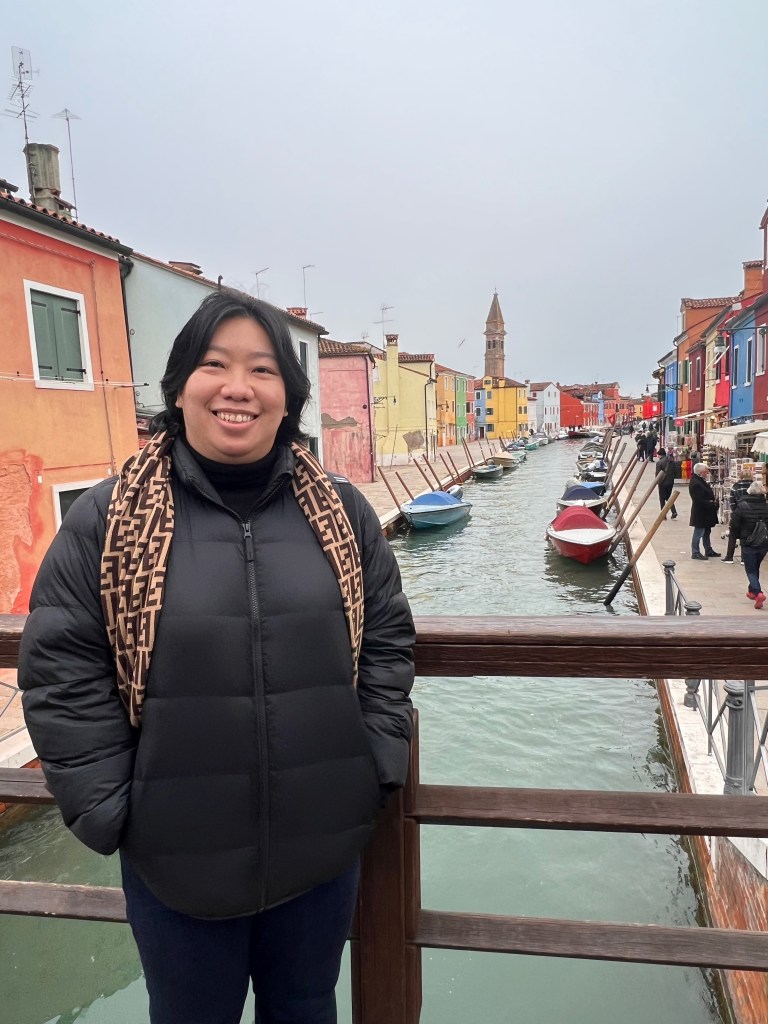
To get to the colour houses on Burano, we walked along the street from the pier that leads into the island (follow the crowd when in doubt as visitors mainly come for the colourful houses). There was a small crowd visiting Burano, but overall, it did not feel crowded. As we followed the crowd into the town, a short walk later, the colourful houses lining a canal immediately came into our sight. The presence of the canals on Burano, cutting the island into smaller islets, makes this place feels like a mini Venice minus the crowd. We walked along the canal, taking pictures along the way, and reached a bridge that seemed to be at the end of the island. We spotted a bell tower that seemed to lean slightly to one side. However, the lean was not apparent when we saw it in Burano but was more apparent in pictures. We did not venture further from the bridge as we had to catch the next Vaporetto. We crossed the wooden bridge and walked back towards the pier. Along the way, we saw more shops that were open for visitors to buy souvenirs. We made it to the pier with 5 mins to spare before the next Vaporetto arrived. To get back to our hotel near Venezia St. Lucia train station, we alighted at Murano and changed to Service #4.1. The ride back to Venice took about 30 mins. We made it just in time to check out and immediately rushed to the train station. Luckily, our hotel is just two bridges away from the train station. We managed to get to the train station with some time to pack some pizzas for our train ride to Florence, the third city of our trip.

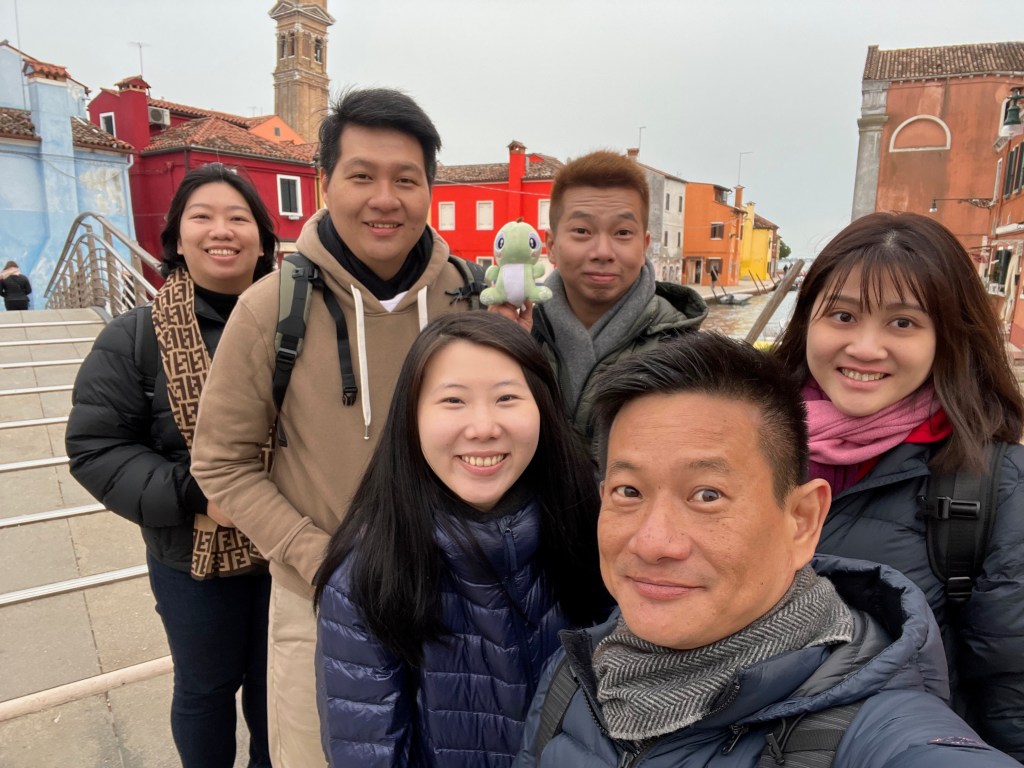
My friends by the canal with the colour houses in Burano

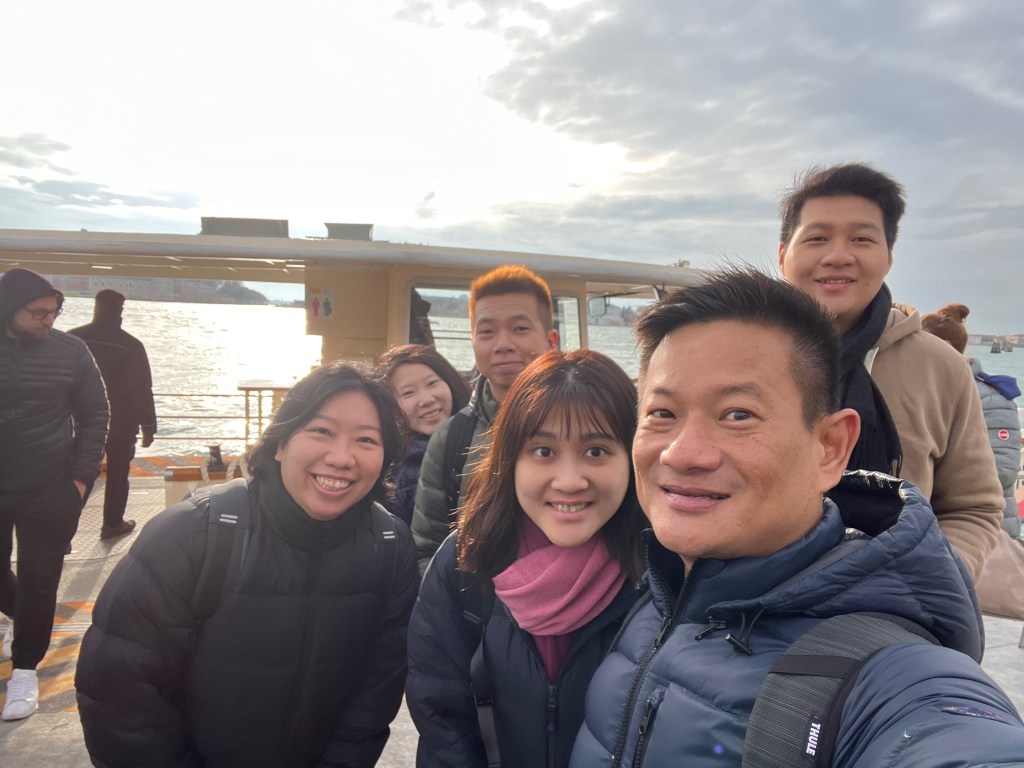
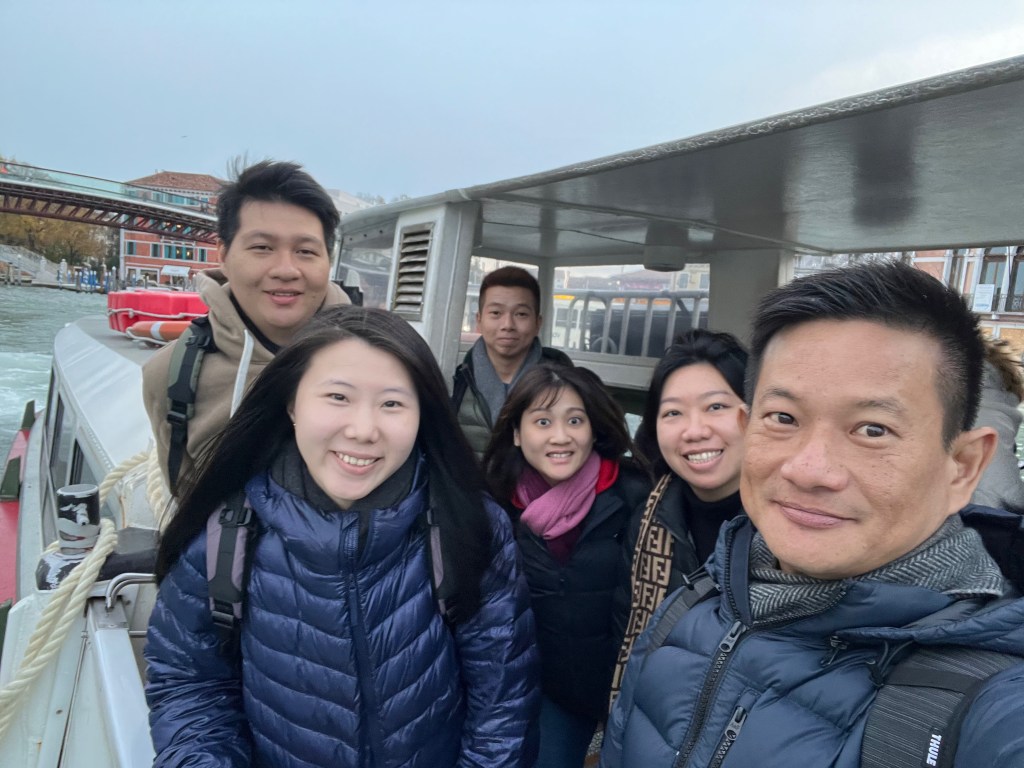
Taking a quick wefie at the end of our Vaporetto ride in Venice

Night Stroll in Florence: The Birth Place of Renaissance Art

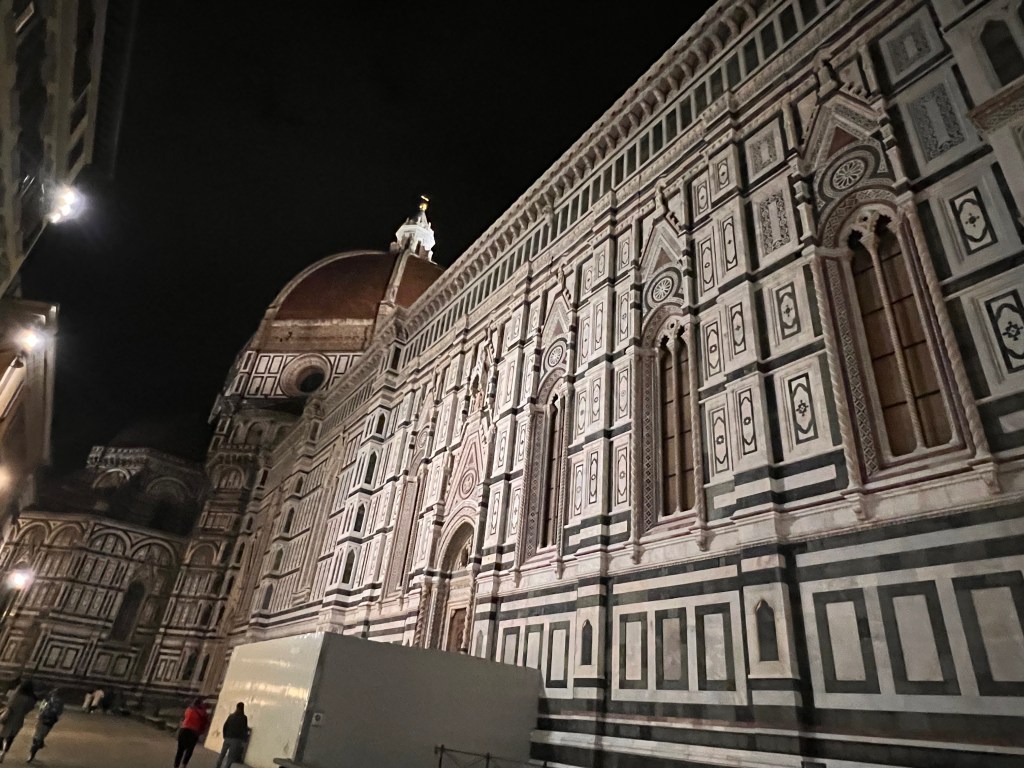
The high-speed train ride from Venice to Florence took around 2 hrs. It was already dark when we reached Florence (it was only 7.30 pm). Since the night was still young, we headed out to explore Florence after checking into our hotel and settling in our rooms. Florence is a very walkable city with everything being very close to each other. We made our way to the Piazza del Duomo, which the Cattedrale di Santa Maria del Fiore calls home. The Duomo looks plain at first glance compared to Duomo di Milano. There weren’t any carvings, nor was it decked out with intricate statues like the Duomo in Milan. The whole facade of the cathedral looks 2D, like some cardboard cut out. As we walked closer to the Duomo, we could see the whole facade of the Duomo decked out in white marble. 13 statues lined up on top of the main entrance to the Duomo. As the Duomo was closed when we visited, we only managed to snap some pictures of its exterior.

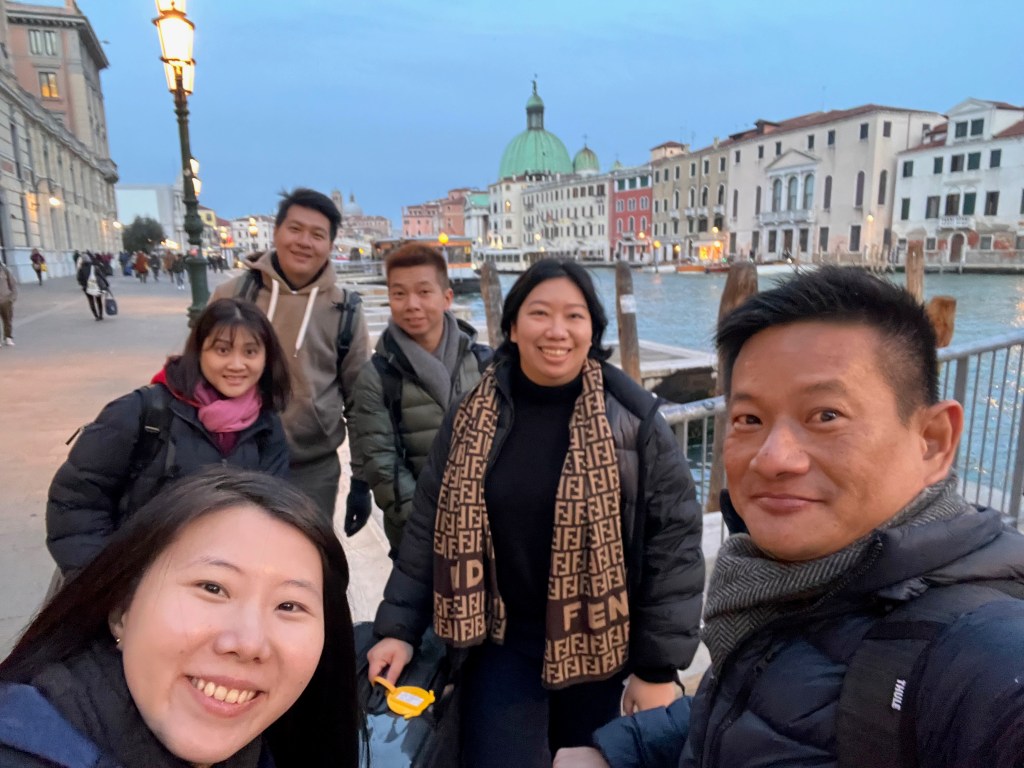
Taking our last wefie in Venice before we head to Florence

Cattedrale di Santa Maria del Fiore at night

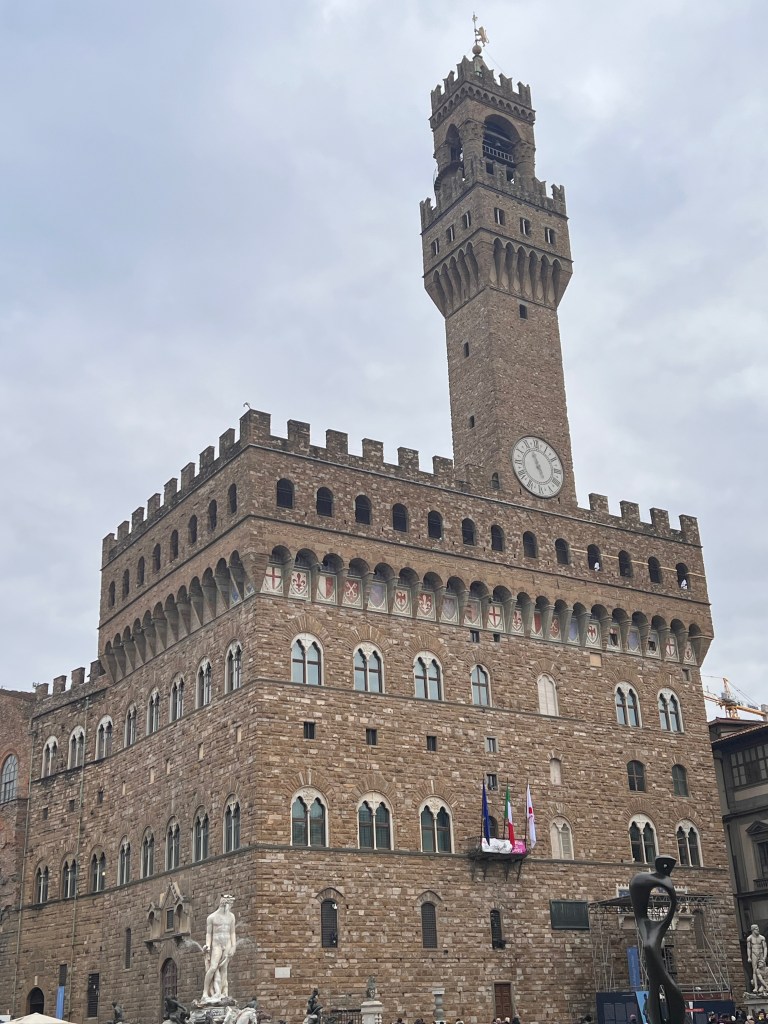
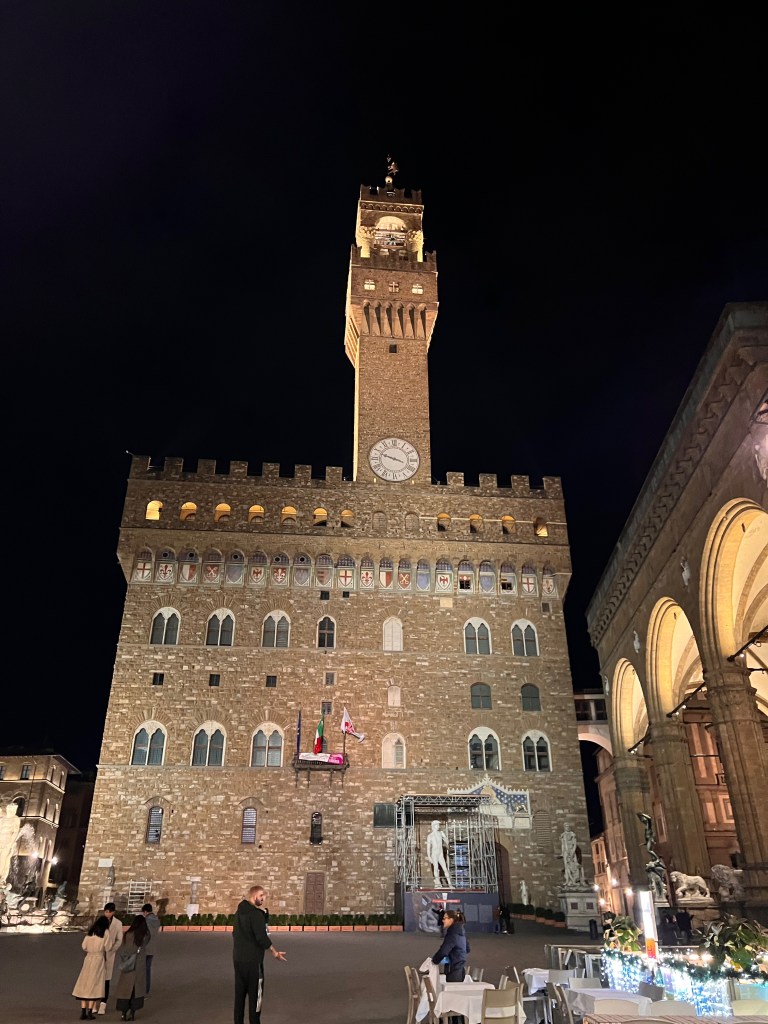
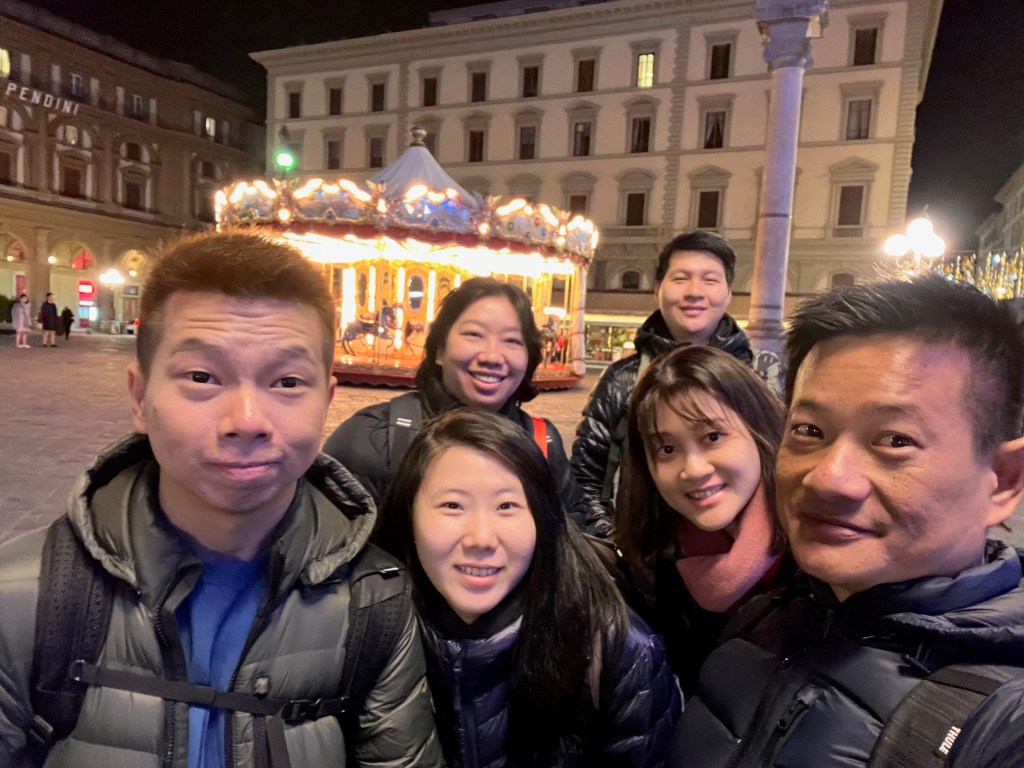
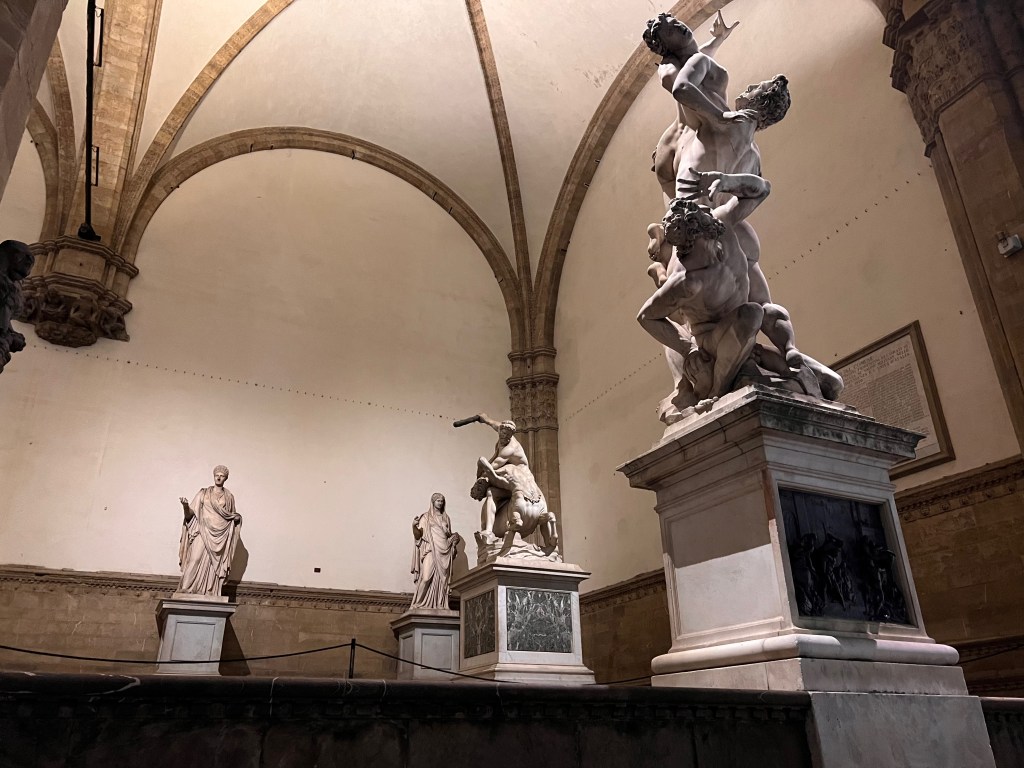
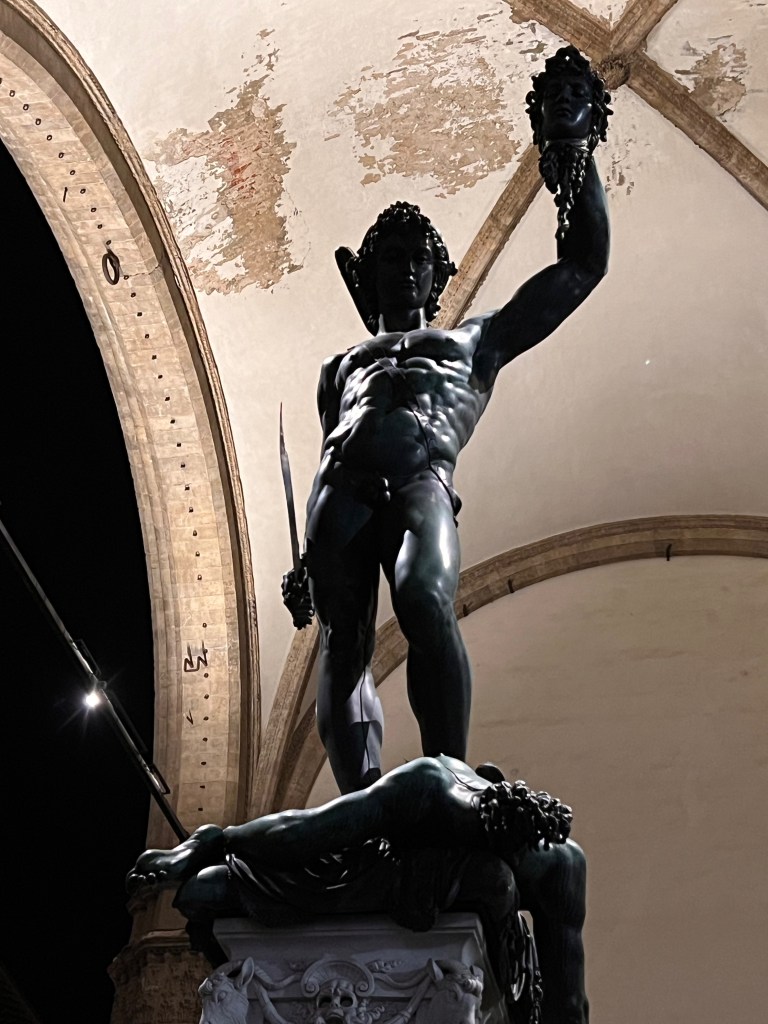
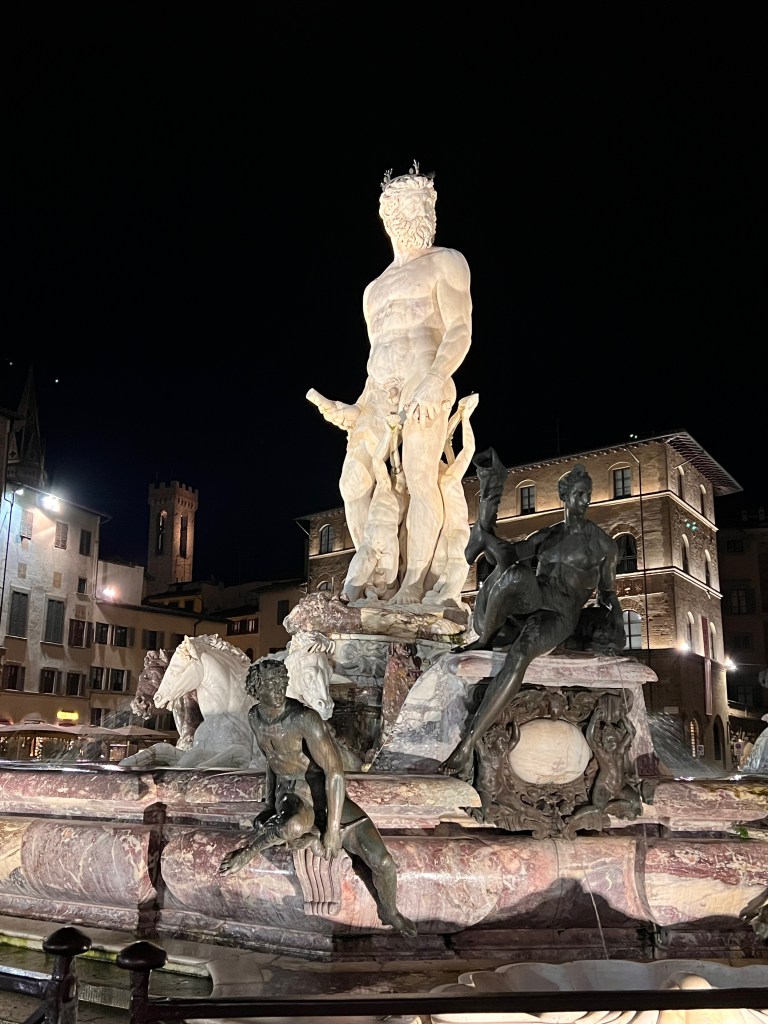
Our next stop is Ponte Vecchio. As we were walking towards Ponte Vecchio, we made a detour to Piazza della Signoria, one of the places we wanted to visit in Florence. There are a bunch of sculptures under an open aired building and a replica of the statue of David in the Piazza in front of a castle-looking building with a tall tower sticking out from the centre of the building. This replica is standing in the exact location that the actual statue of David occupied for centuries before it was moved to its current location in Galleria dell’Accademia. This castle-looking building is the Palazzo Vecchio, the town hall of Florence.
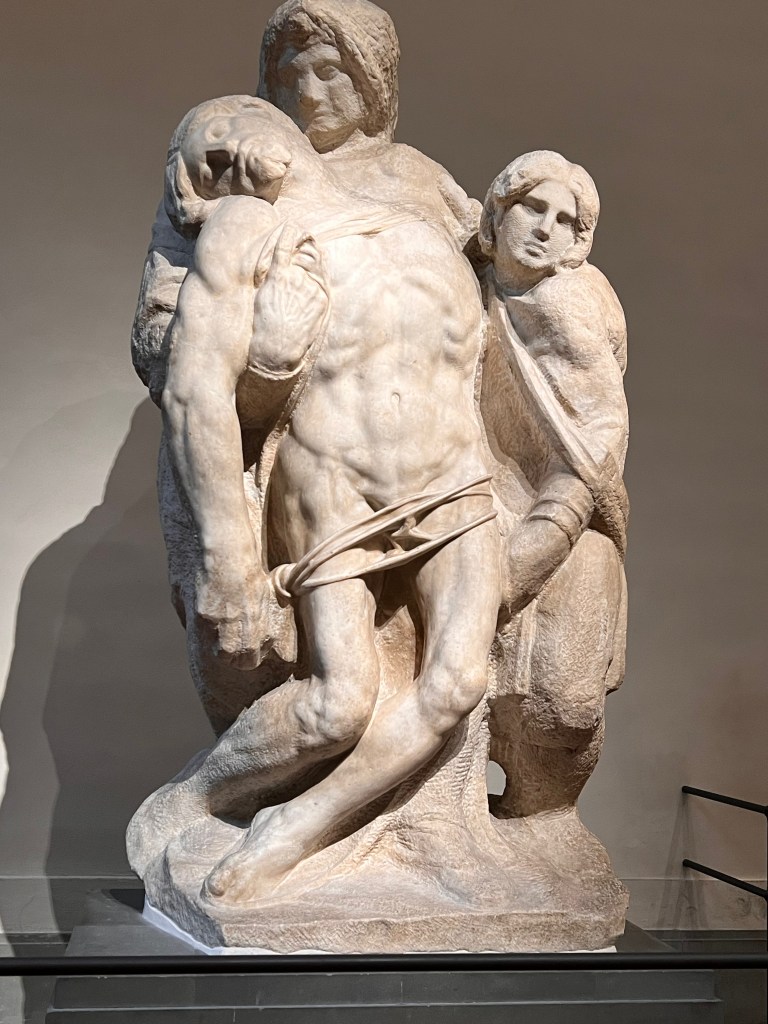
Palazzo Vecchio in Piazza della Signoria

Taking a wefie in front of Loggia dei Lanzi

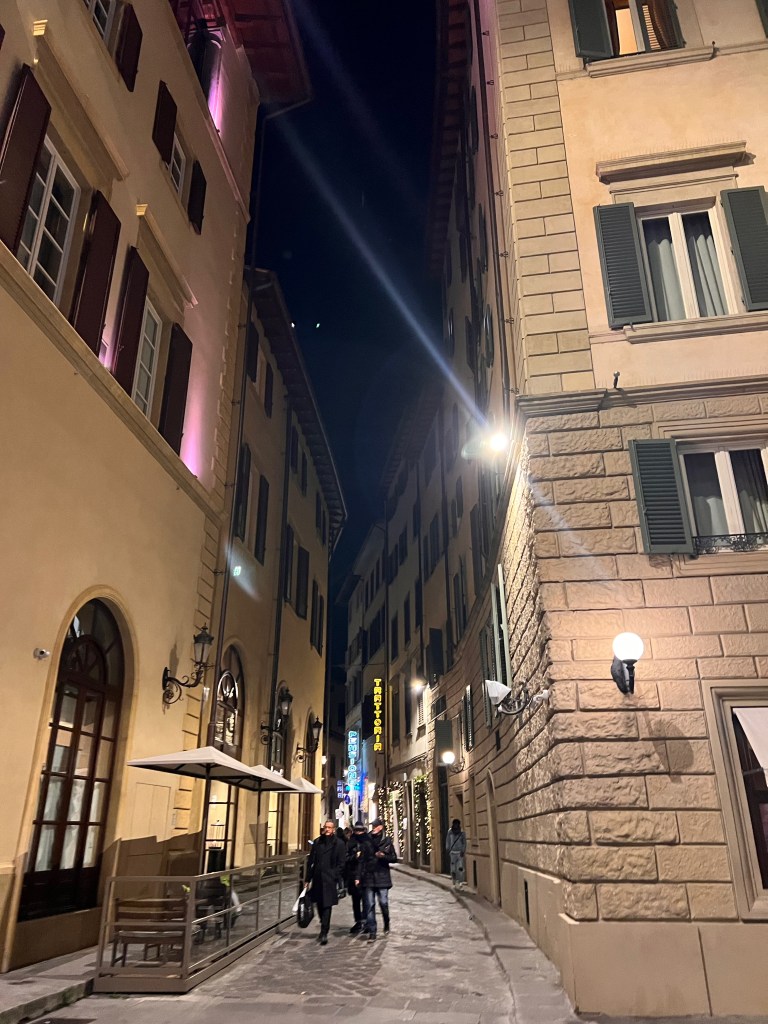
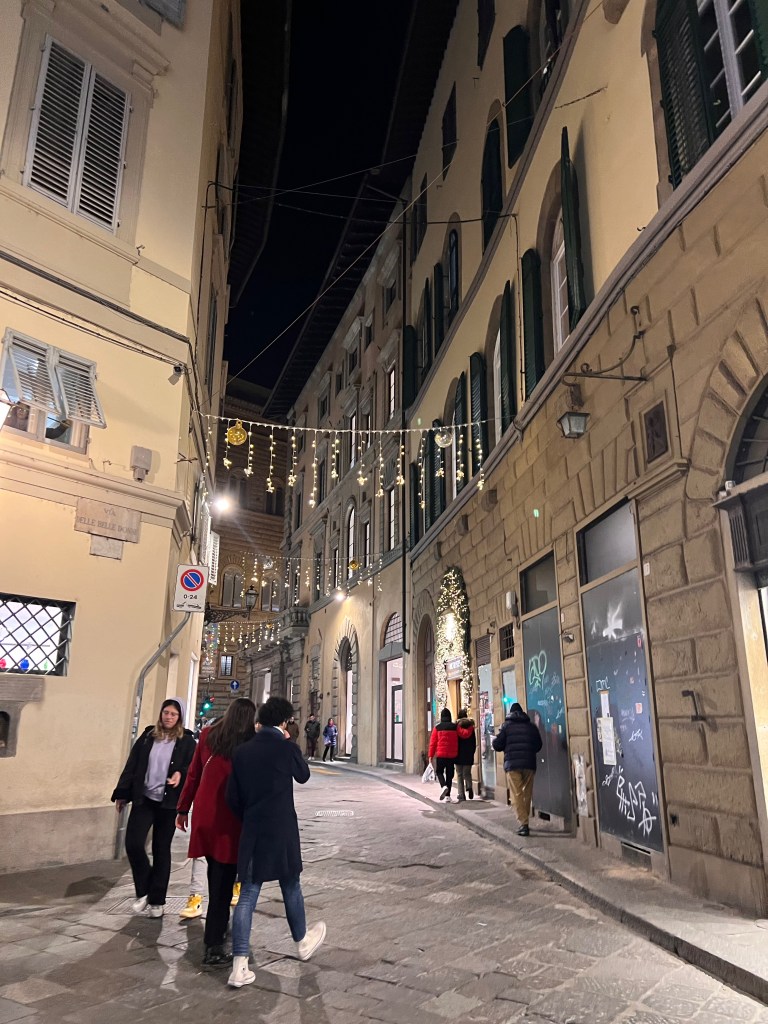
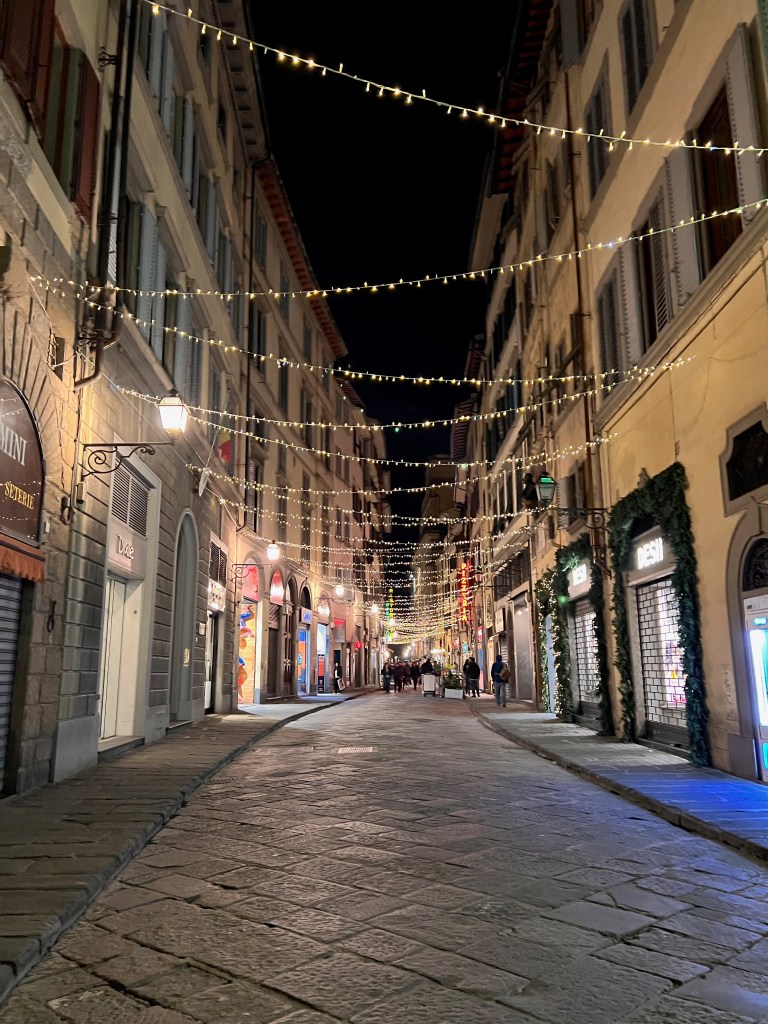
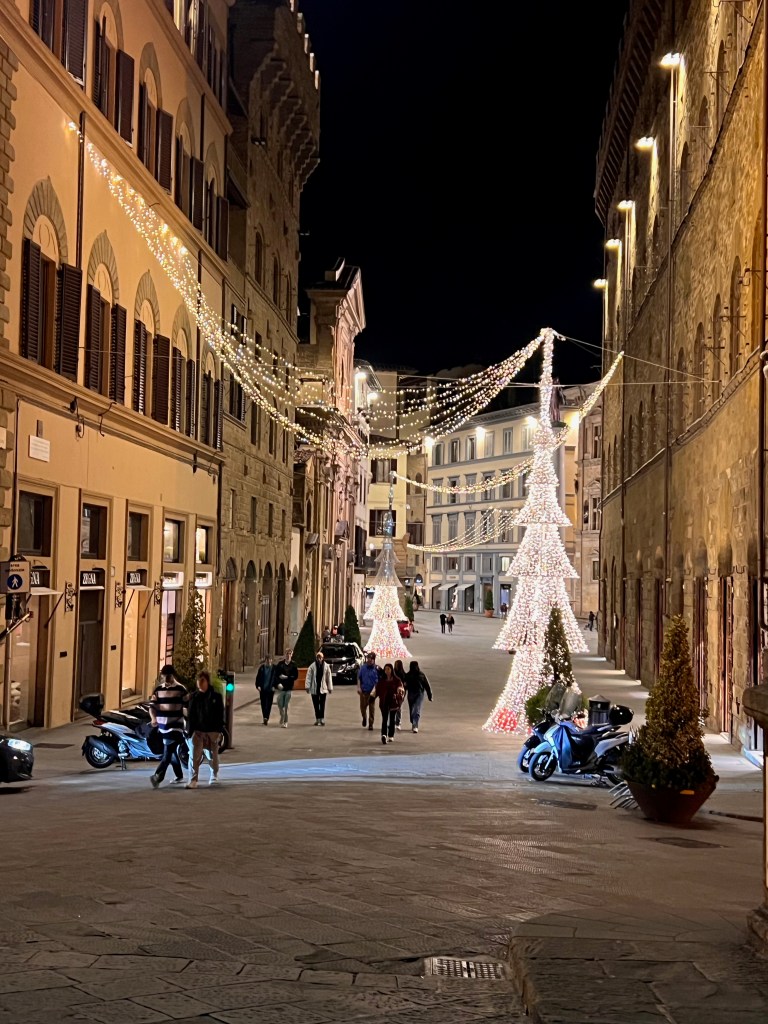
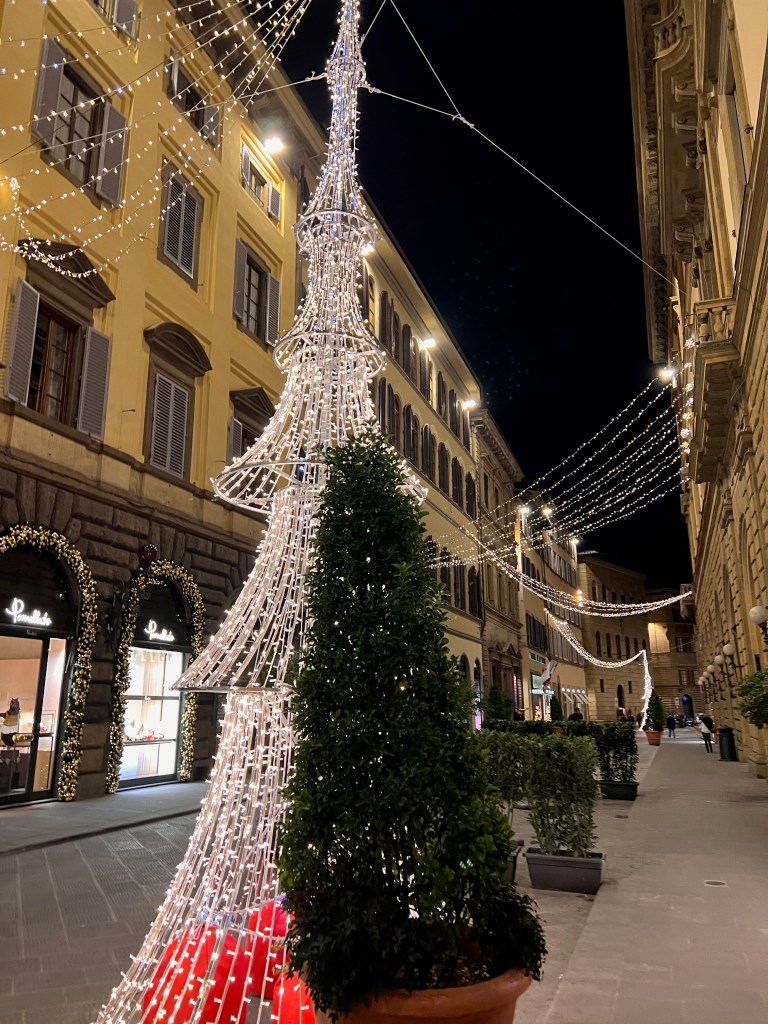
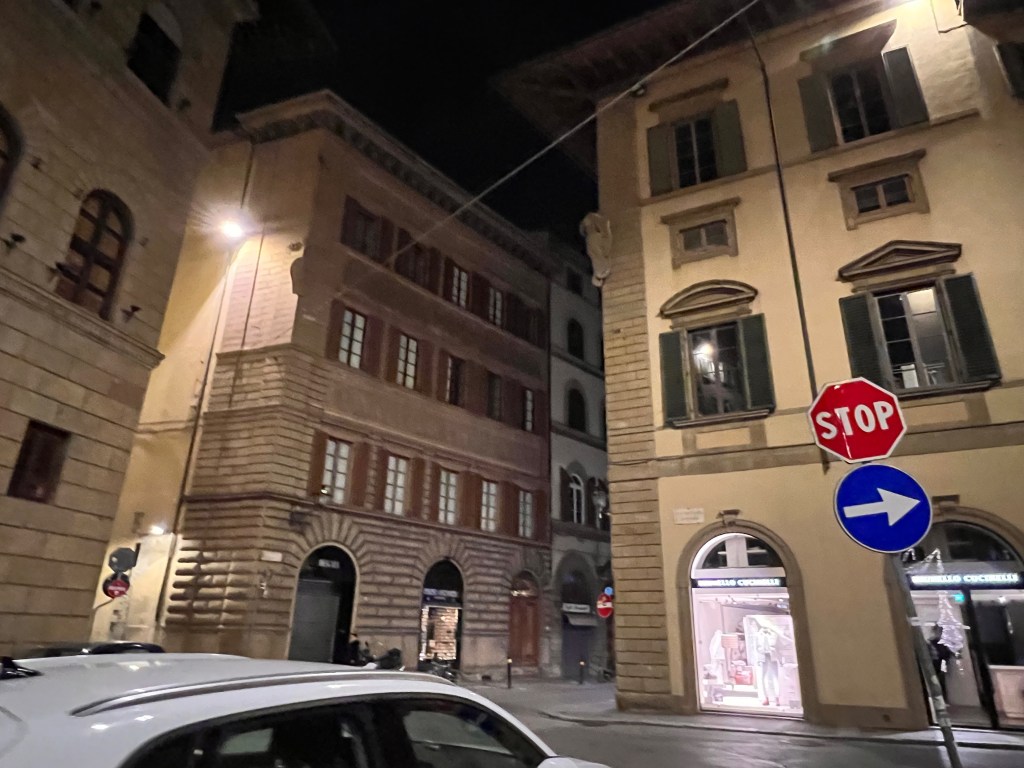
Quiet Florentine street

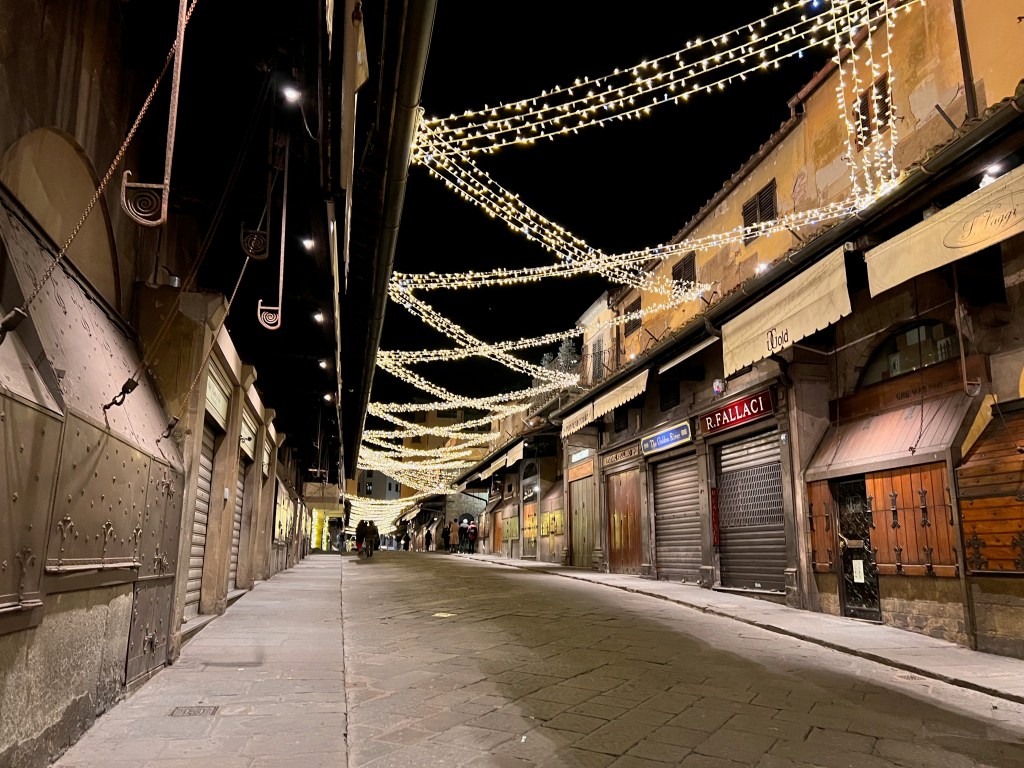
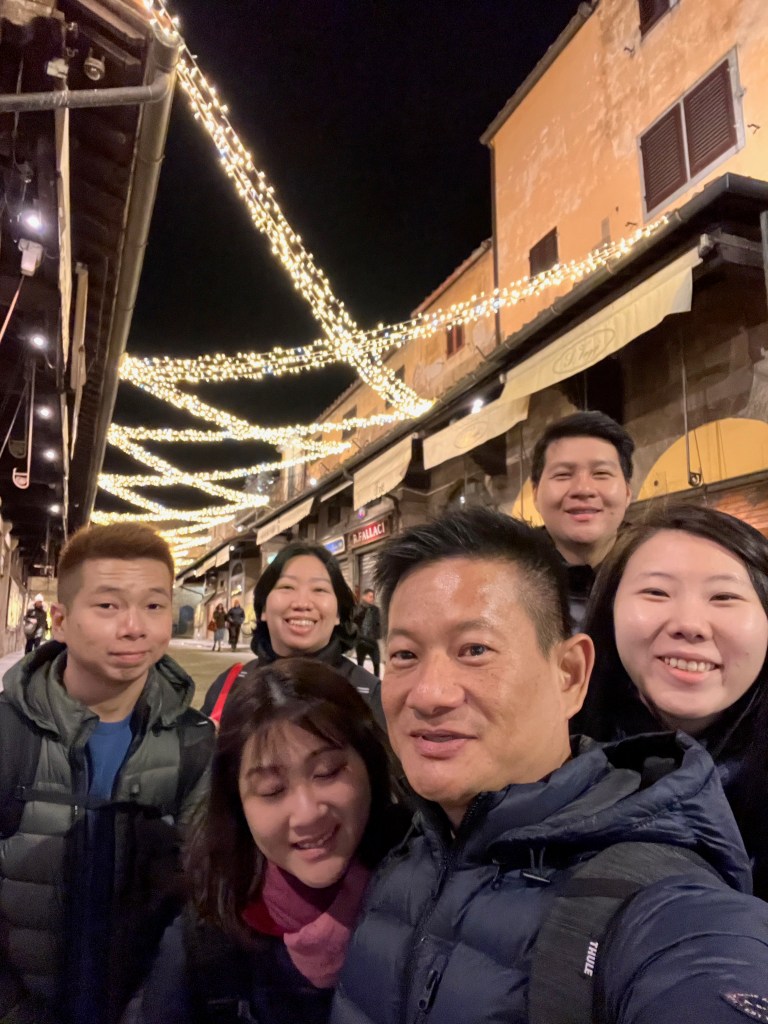
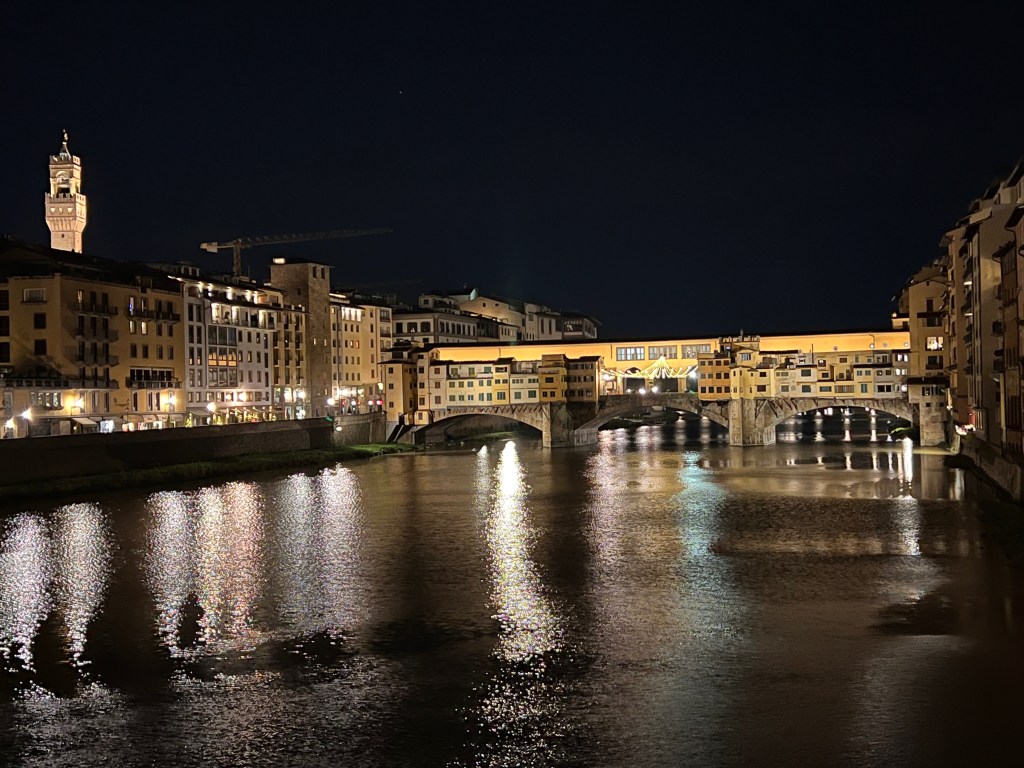
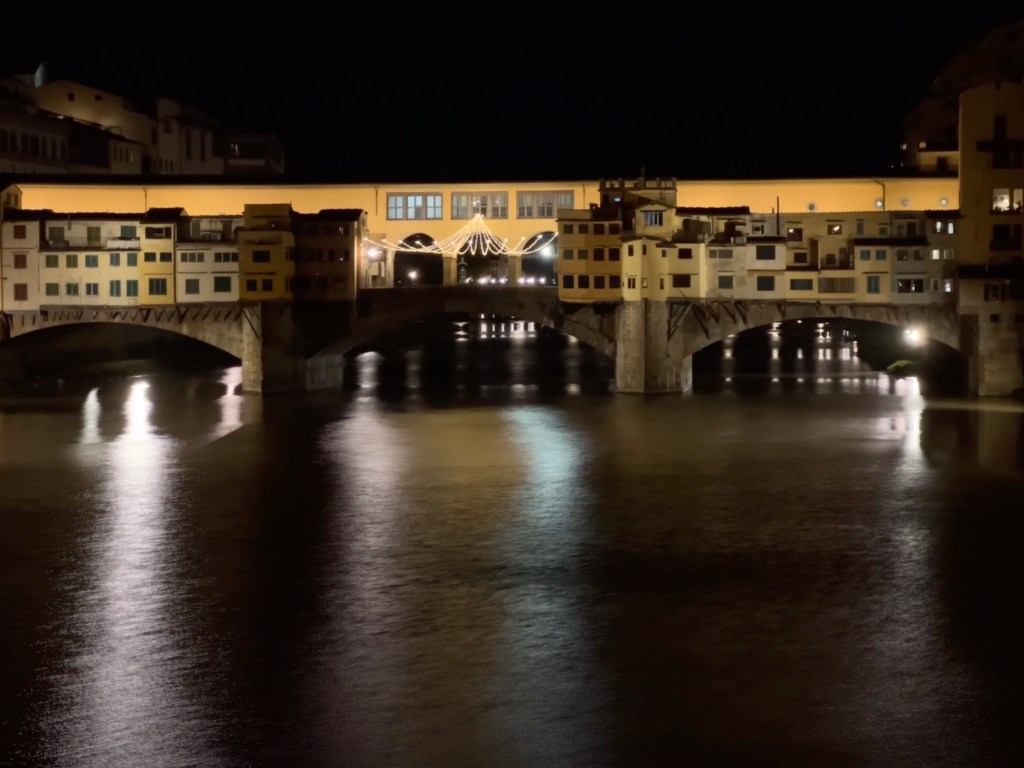
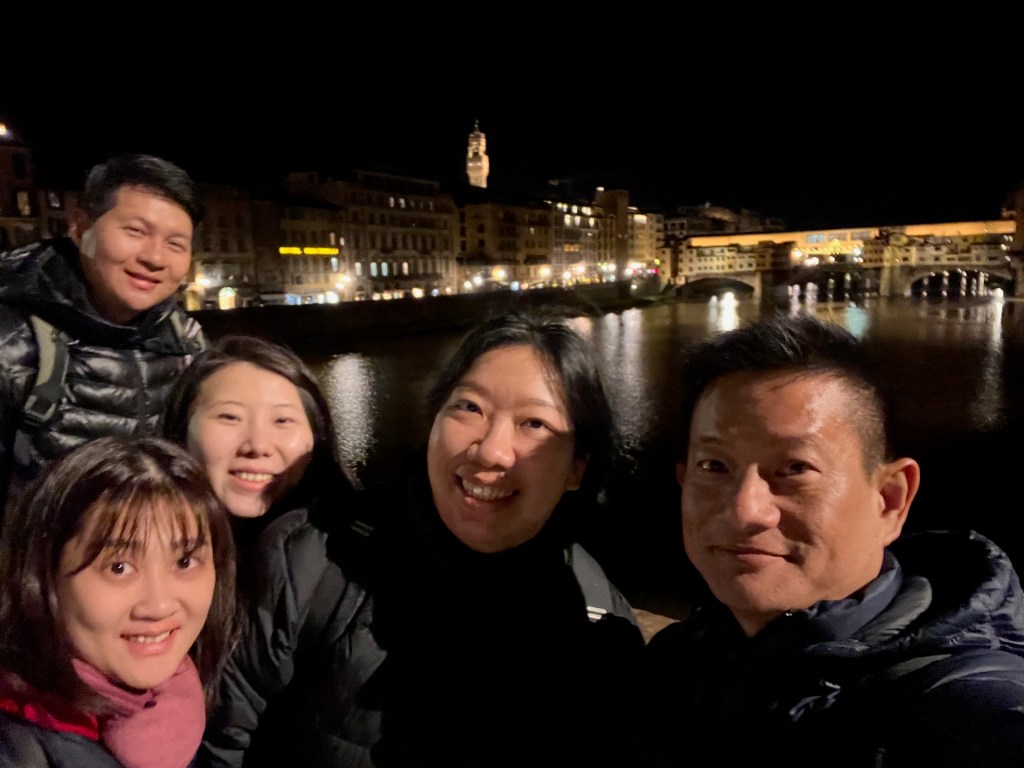
We continued our walk towards Ponte Vecchio after snapping some pictures in Piazza della Signoria, which was about another 7 mins walk. Ponte Vecchio is a medieval stone arch bridge built over the Arno River. It is the only bridge in Florence spared from destruction during World War II. There are shops on either side of the bridge, occupied by jewellers, art dealers, and souvenir sellers today. Ponte Vecchio still exudes old-world charm with the two-piece wooden doors of the shops, which look like something from medieval times. Shops on Ponte Vecchio were closed when we arrived, and there wasn’t anyone else coming to this bridge, which made the walk across the bridge very tranquil. The best place to get shots of the entire Ponte Vecchio was from the next bridge further down. We headed to Ponte Santa Trinita to take night shots of the Ponte Vecchio. From this bridge, we managed to capture Ponte Vecchio and the tower of Palazzo Vecchio soaring into the Florentine skyline. After a few more shots of Ponte Vecchio, we returned to the hotel to rest for the night and recharge our energy for tomorrow’s shopping day.

Ponte Vecchio from Ponte Santa Trinita

Italy Day 3 (28 Nov 22) – Navigating through the Streets of Venice – The City of Water

Towards The City of Water – Venice

Today marks the day of our travel to the second Italian city in our ambitious Italian trip. We are heading to Venice, the City of Water. Venice was founded in the 5th century, and the city was built on over 118 small islands in the Adriatic Sea. Venice became a major maritime power in the 10th century. It is no secret that Venice relies on a series of waterways and canals, which gave the city its unique characteristics.

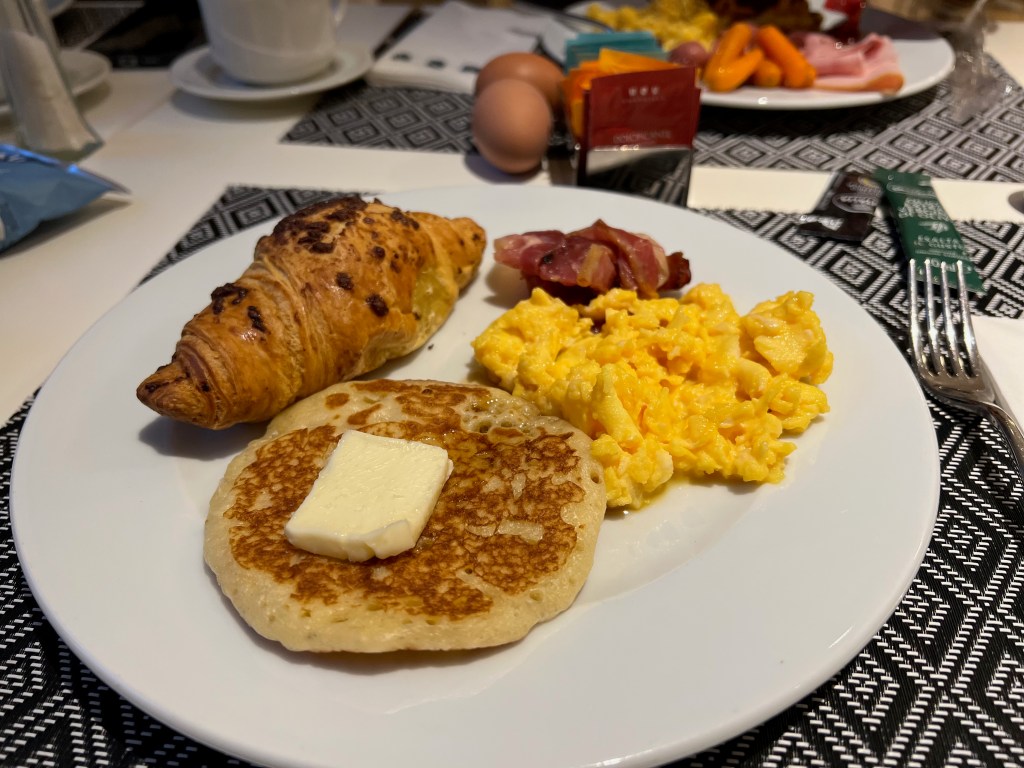
We started our day early today. We booked the 9.35 am train leaving Milan Central Station to Venice St Lucia Station to maximise our time in Venice. Two train stations contain the word “Venice” or Venezia in Italian. The Venezia Mestre is the station outside Venice Island, while the Venezia St Lucia. After a hearty breakfast at the hotel, we made our way to Milan Central Station, which was only 7 mins from the hotel we were staying in (compared to the 30 mins to navigate around the first day we arrived). We arrived at the platform early for our first Italian interstate high-speed train ride. Two main train companies providing high-speed rail service in Italy: Trenitalia and Italo. The former is a state-run company, and the latter a private company. In terms of pricing, I found Italo to be slightly cheaper than Trenitalia, plus they serve small snacks and drinks onboard for first-class passengers. However, regarding seat comfort, Trenitalia looks more comfortable (from the pictures I saw online). The train ride from Milan Central Station to Venezia St Lucia took 2½ hours.

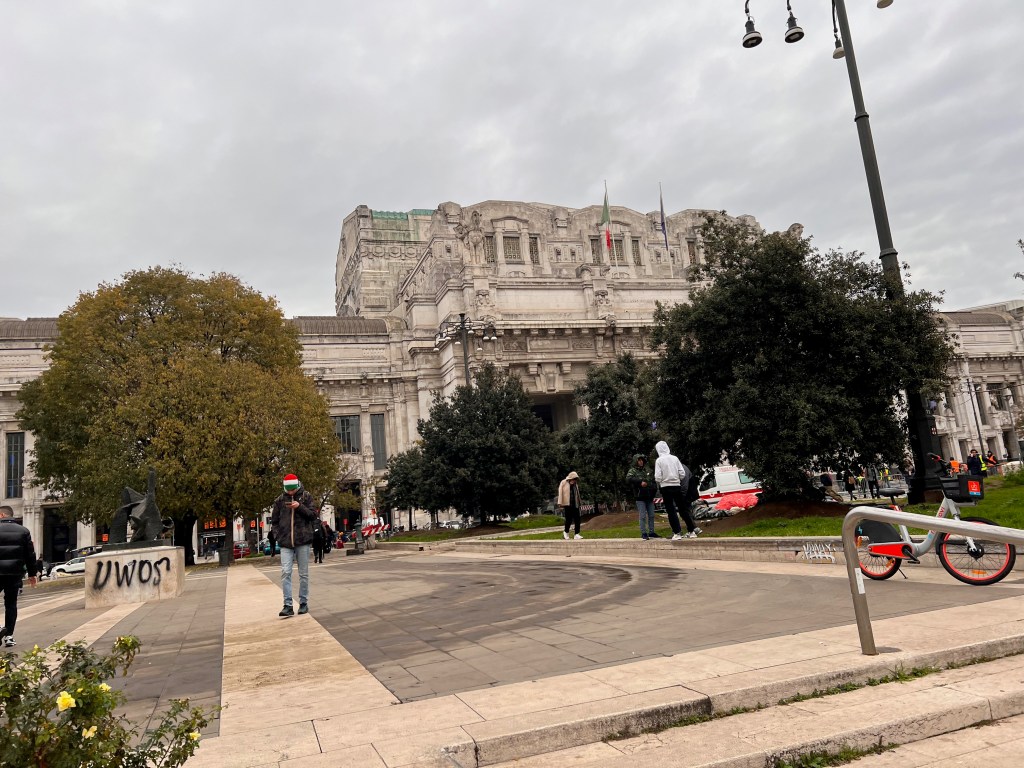
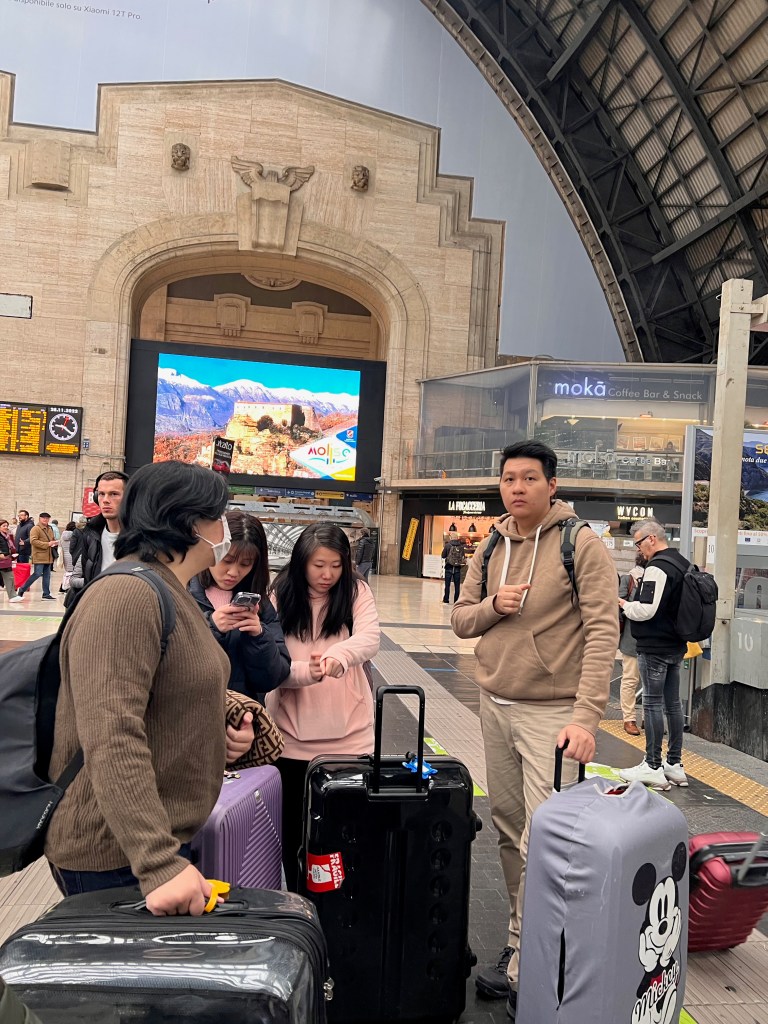
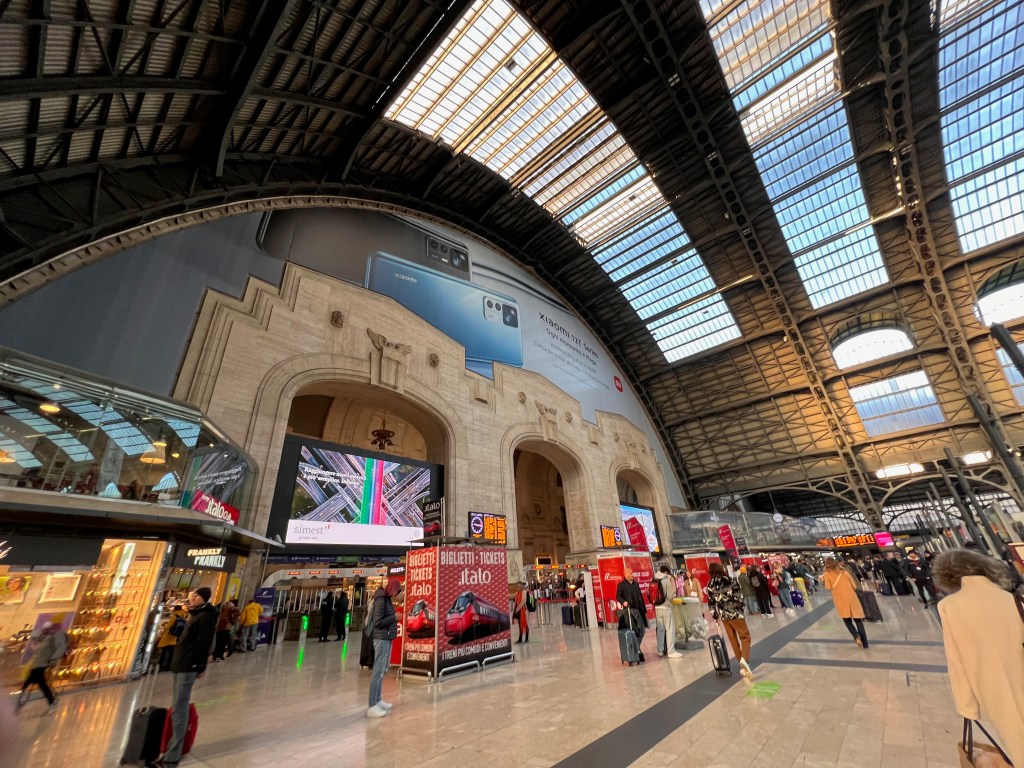
The last time we come to Milan Central Station

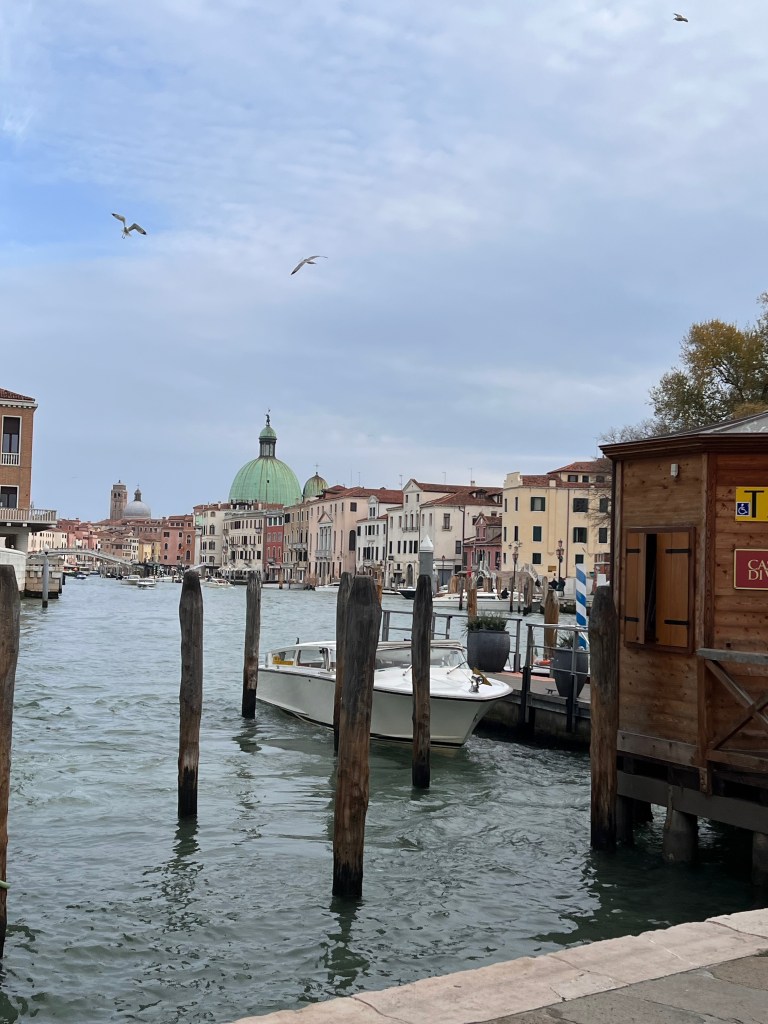
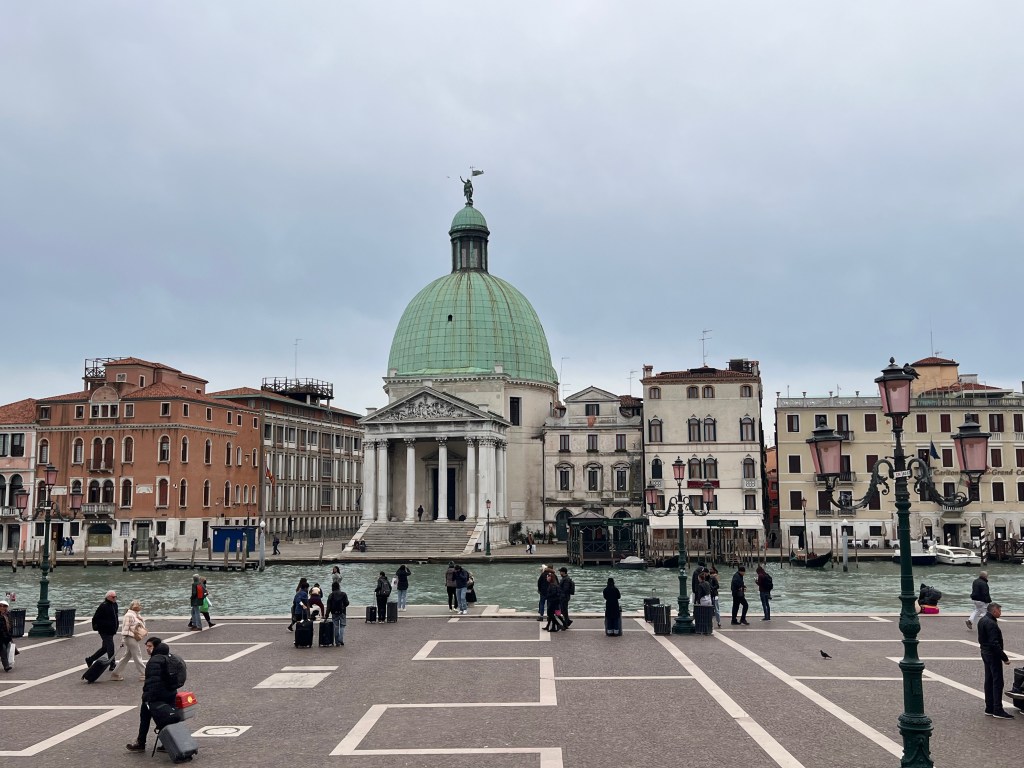
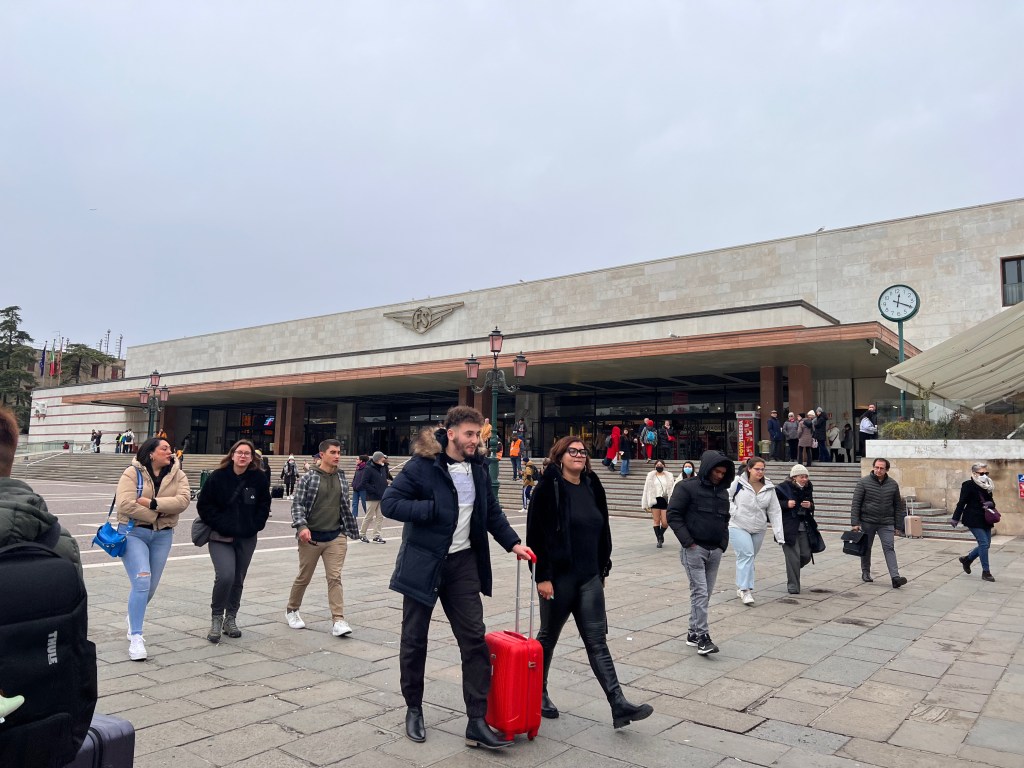
We arrived at Venezia St. Lucia Train Station, the entrance to the City of Water, on time at 12.20 pm. As we were walking out of the station, a large green-domed building sitting right across the
Grand Canal was the first thing we saw. No one can miss this 18th-century church with its enormous green dome and Neoclassical architecture. This church has somewhat become the face of Venice. As we were walking around taking pictures and at the same time walking towards our hotel, we were greeted by porters asking if we required a porter service to transport our luggage to our hotel. Well, since our hotel is one bridge away (the Venetians gives direction using the bridges as a landmark) and is a mere 5 mins walk from the train station, we declined any porter services.

Our first look at Venice

Our hotel lies right across Ponte della Costituzione, one of the four bridges across the Grand Canal. This stone alternating with tempered glass bridge is the newest bridge to be installed across the Grand Canal. Moving our luggage up the Ponte della Costituzione was challenging as there were no ramps, meaning we had to drag our luggage step by step. Luckily the steps are pretty wide and shallow. Crossing the bridge, I started to use Google Maps to navigate to our hotel. This is when I found Google Maps to be unreliable. The app kept directing us to go in circles and indicated our hotel was right in the middle of the bus terminus in the middle of Piazzale Roma. After walking in circles for 10 mins, I decided to use another map app – Movit, which directed us across another smaller bridge (luckily, the Venetians installed a ramp on the bridge) to our hotel. We made it to our hotel and checked into the beautiful Hotel Papadopoli.

Getting Lost in the Venetian Labyrinth

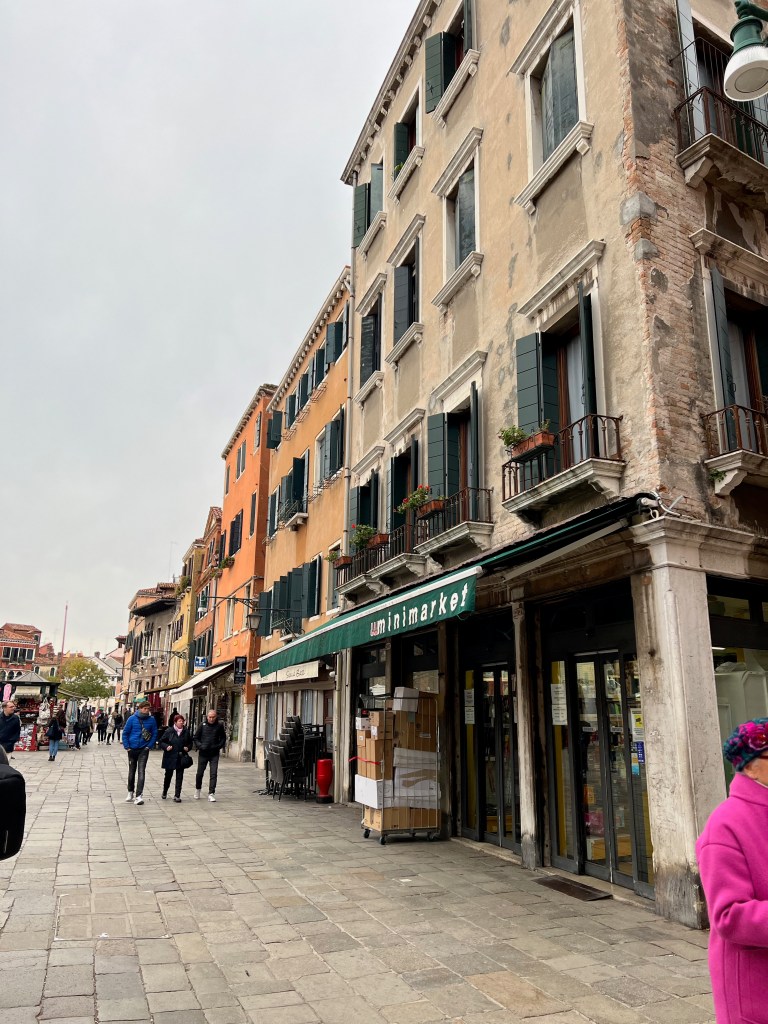
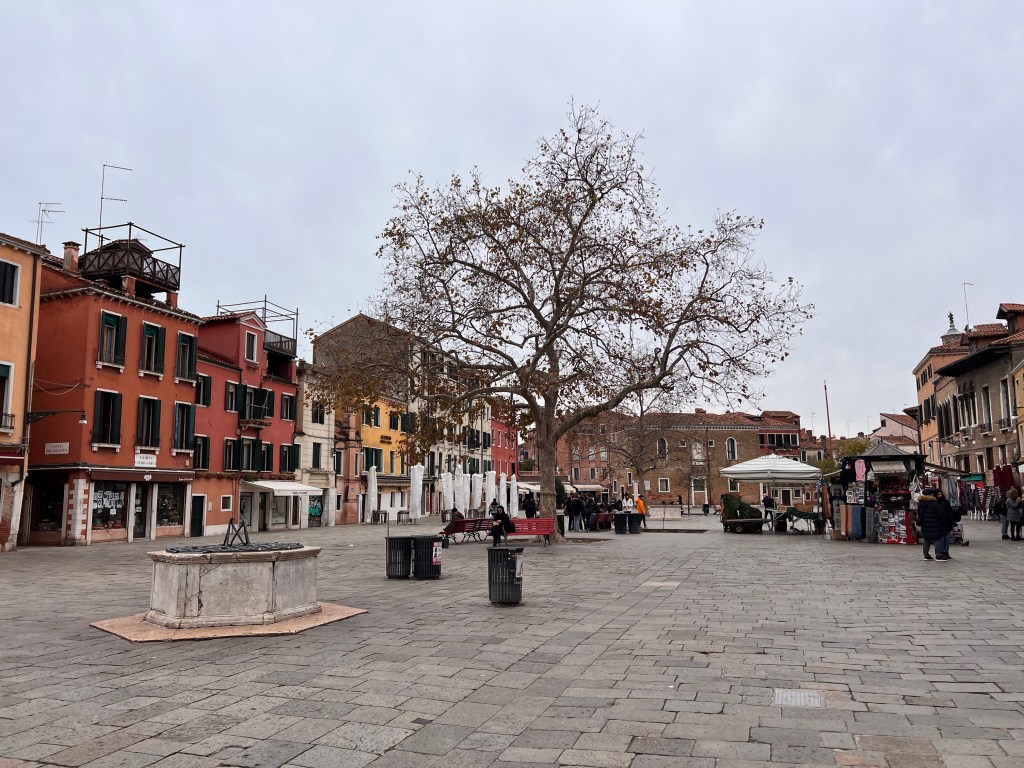
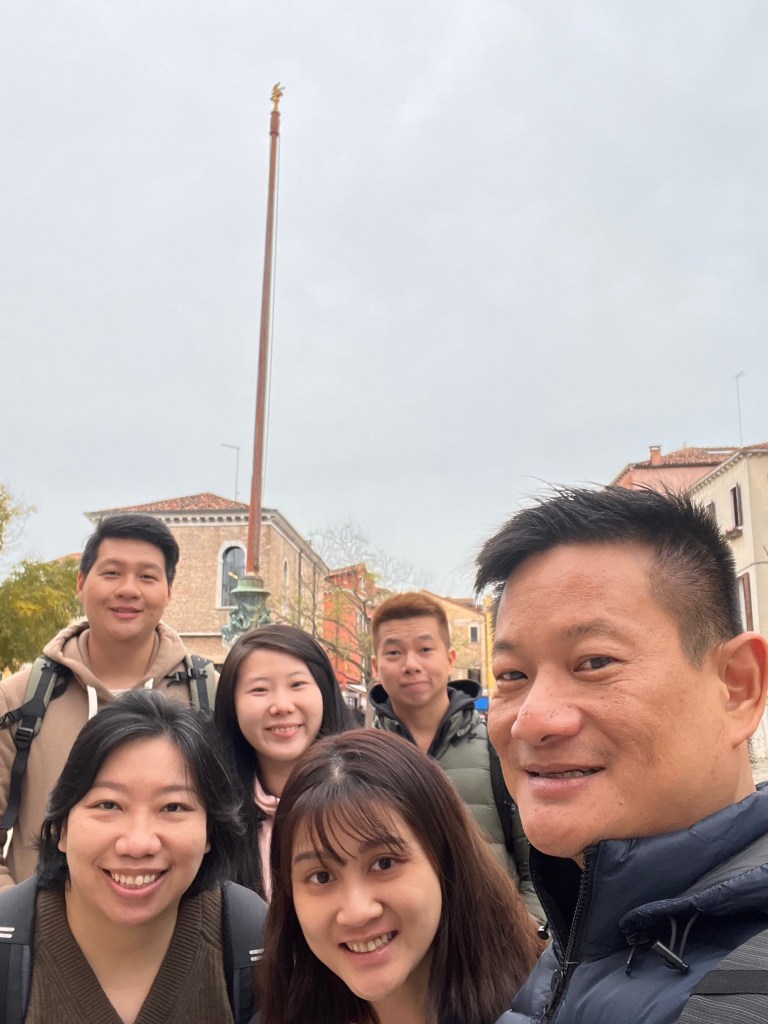
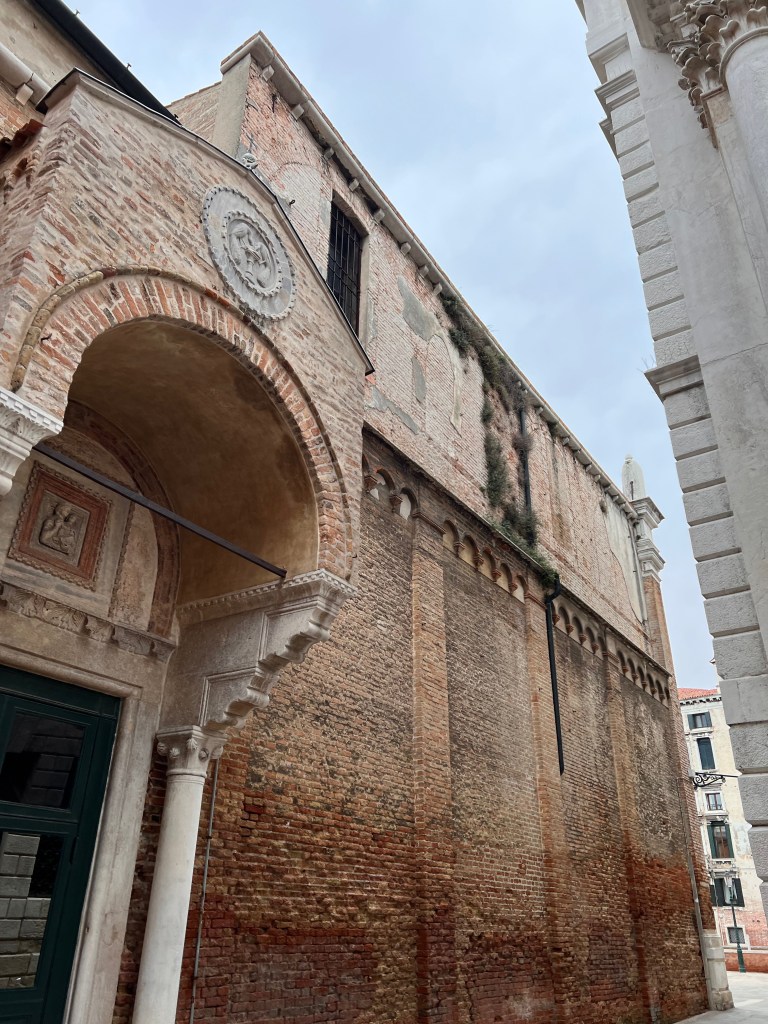
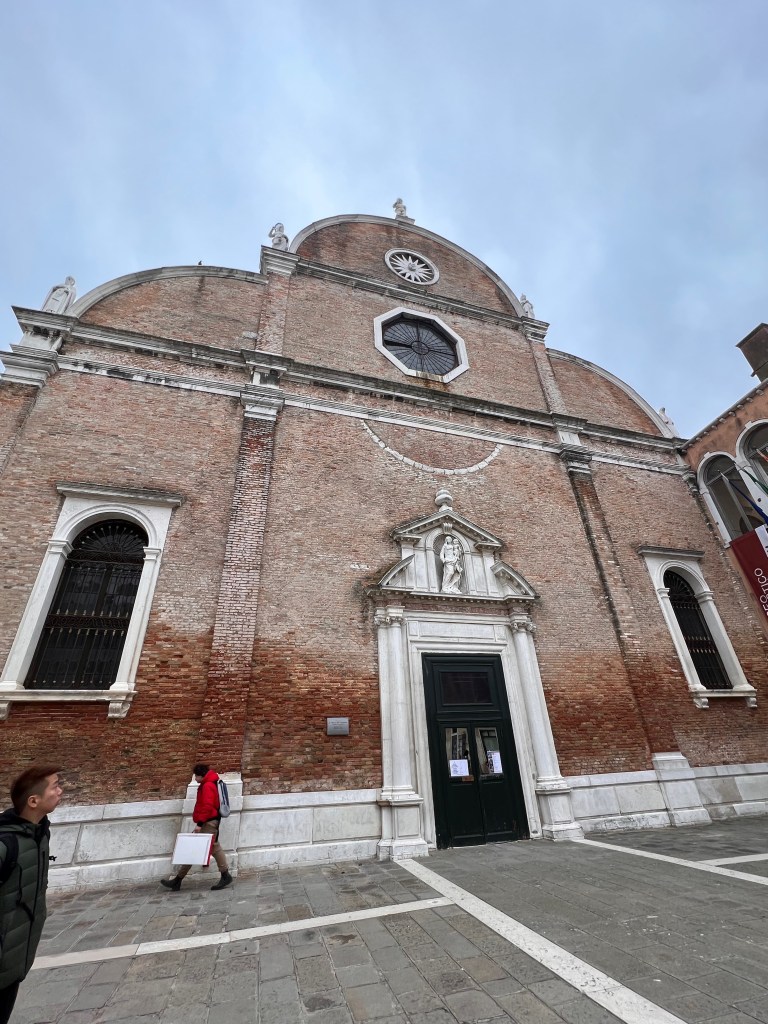
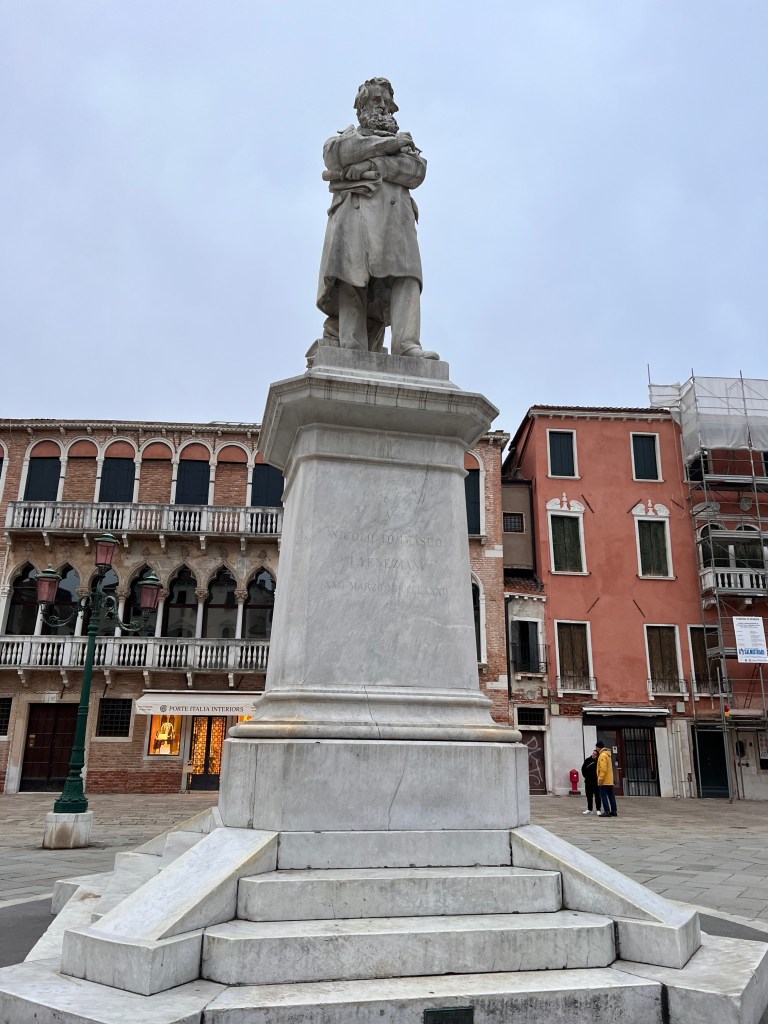
After settling into our rooms and rested for 30 mins, we started our exploration of Venice. The plan today was to visit the big three sights in Piazza San Marco: Doge’s Palace, St Mark’s Basilica, and St Mark’s Bell Tower, followed by a rooftop visit in Fondaco dei Tedeschi (DFS Venice and Ponte di Rialto. We started walking across a bridge where we could see a bell tower afar; this bell tower became our leading mark as we thought this was the Bell Tower in Piazza San Marco. Next, we walked along the canal, crossing any bridges that we thought might lead us to the bell tower we saw on the balcony of our hotel room. A few bridges later, we arrived at Campo San Pantalon, landmarked by Chiesa di San Pantalon. This brick-built church is one of the few churches in Venice to be characterised by an unfinished facade. The unassuming church is dedicated to San Pantalon, a saint of midwives and co-patron saint of doctors who practised medicine free of charge. We did not stay here for long as this looked like a small church. We walk across the bridge in front of Chiesa di San Pantalon. The narrow street opens up to a huge square, and little did we realise we had arrived at Campo Santa Margherita. Rows of shops and restaurants surround the piazza. A lone withered tree occupied the centre of the Campo Santa Margherita, and a little north from the tree rests an unmarked monument (or this might be a flag pole). Few shops remained open around the sleepy Campo Santa Margherita, partly could be due to the off-peak tourist season. Further down Campo Santa Margherita, we came to another brick-built church – Santa Maria dei Carmini. Santa Maria dei Carmini appears larger than Chiesa di San Pantalon and is decked with a marble entryway with a statue of Madonna and Child. We did not enter this church as it looked closed.

Getting ready to explore Venice

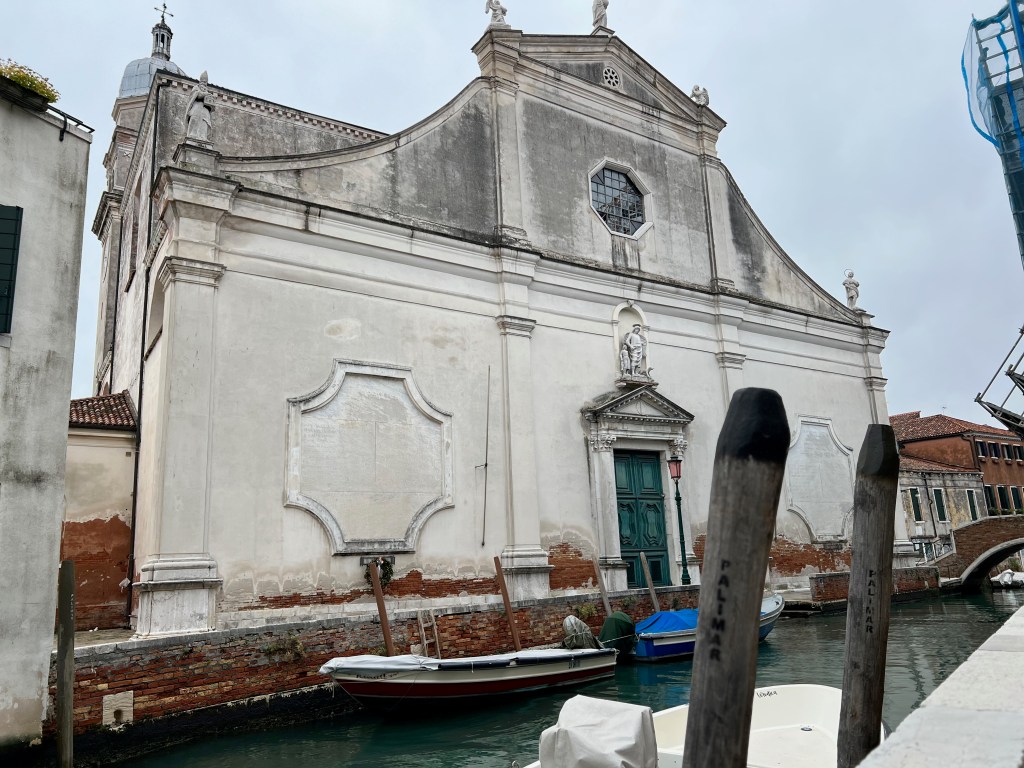
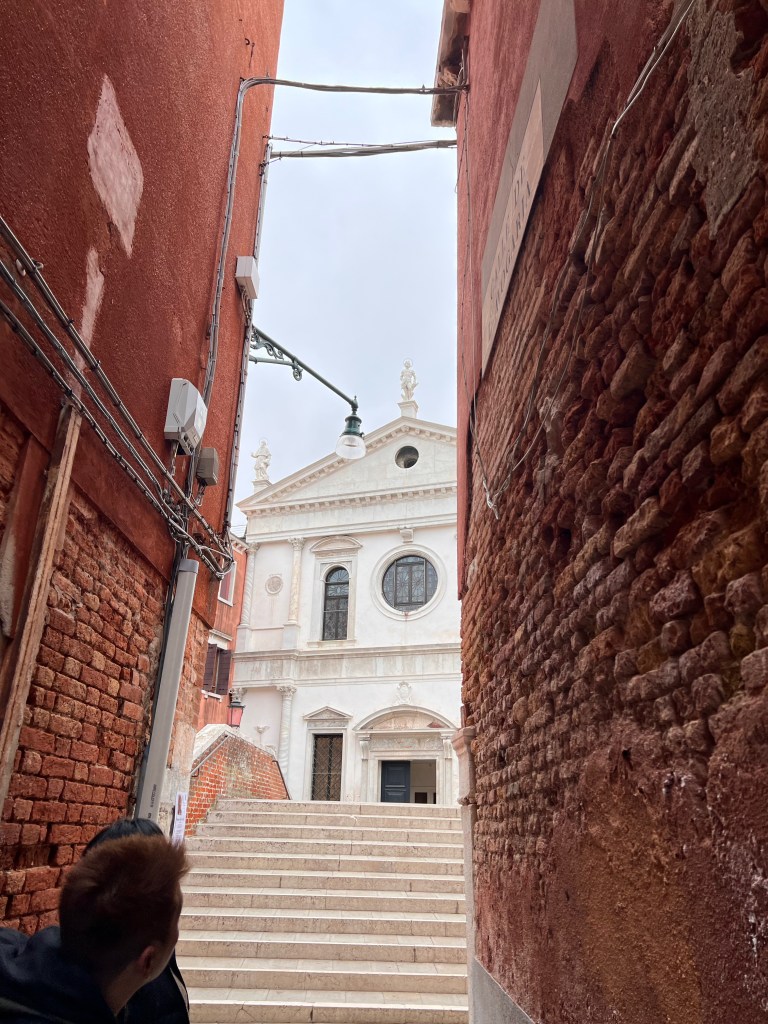
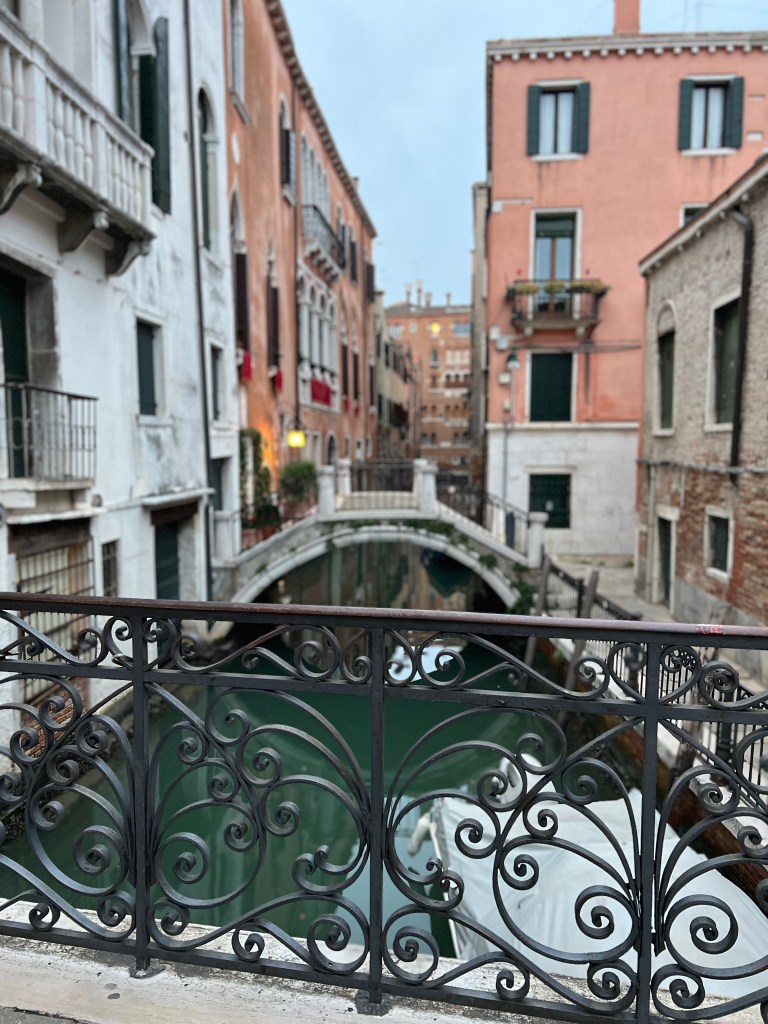
We crossed another bridge to the other side of the canal as we walked along the canals, not knowing where we were (I intentionally put away my Google Maps for once and tried to “get lost” in Venice). We spotted Chiesa dell’Angelo Raffaele as we were walking along the canal. As the church is on the other side of the canal, we did not even attempt to find a bridge to enter. We continued our walk along the canal, past some narrow alleys and into what seemed to be residential areas. There is no one else walking on the streets except for us. As we were walking, we spotted a car park! This is the first time I have seen any cars in Venice (other than the bus terminus at Piazza Roma). At this point, I gave up wandering around and started to whip out my phone and Google for “DFS Venice, ” our destination today. At this point, I realised we were in the southwestern part of Venice, where no tourists visit. We followed the recommendation given by Google Maps and walked along the southern coastline of Venice. We soon found ourselves on the grounds of the University of Venice. After our toilet break at the university, we continued our journey towards DFS. Some small alleys are so narrow that only one person can walk at any time. A few minutes walk later; we found ourselves in front of a small church: Chiesa di San Sebastiano. The white marble facade church is rather plain, with a figure of St. Sebastian wounded by arrows at the top of the church. This church looks small and uninteresting. We continued our walk towards DFS Venice.

We spotted Chiesa dell’Angelo Raffaele across the canal

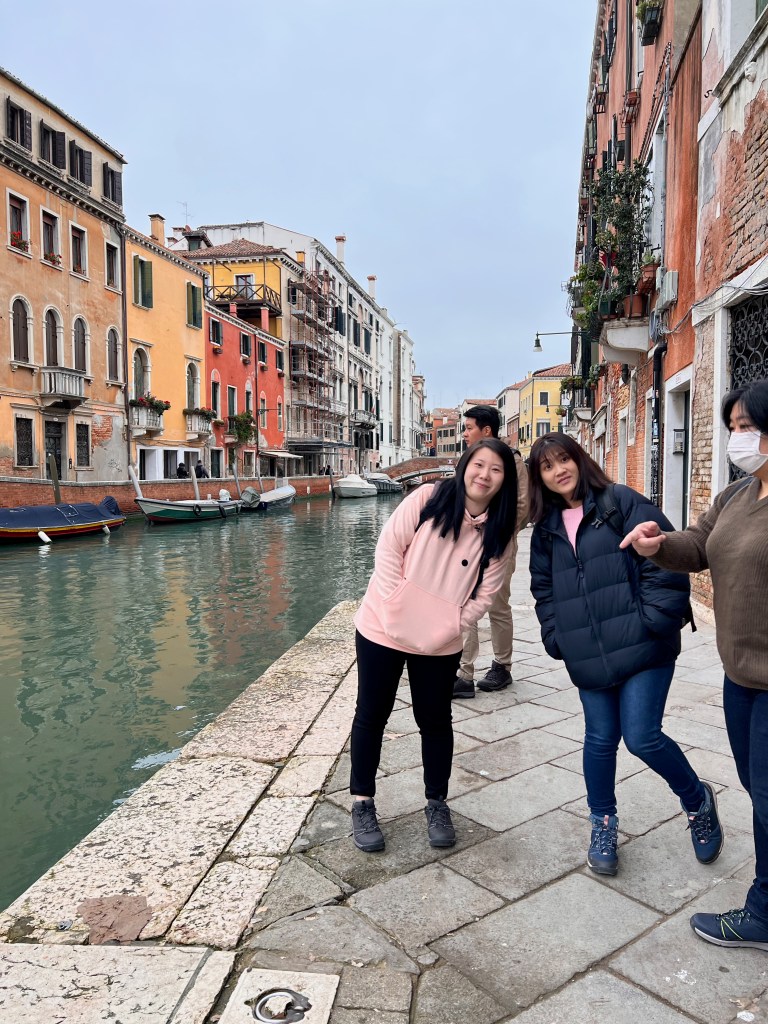
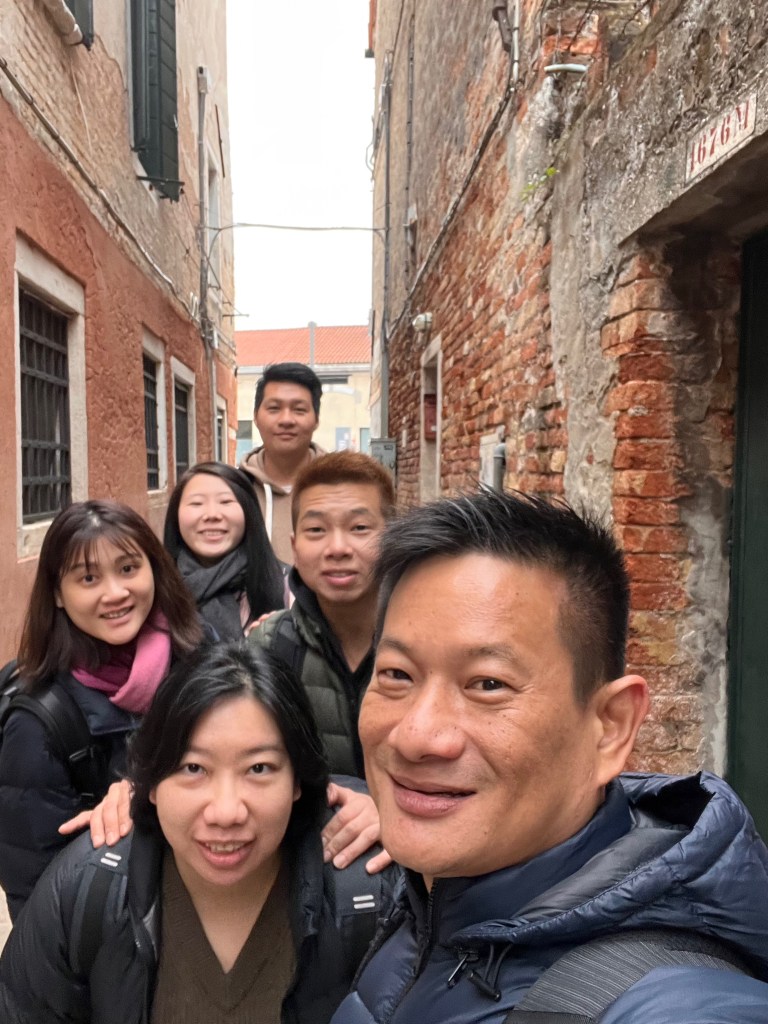
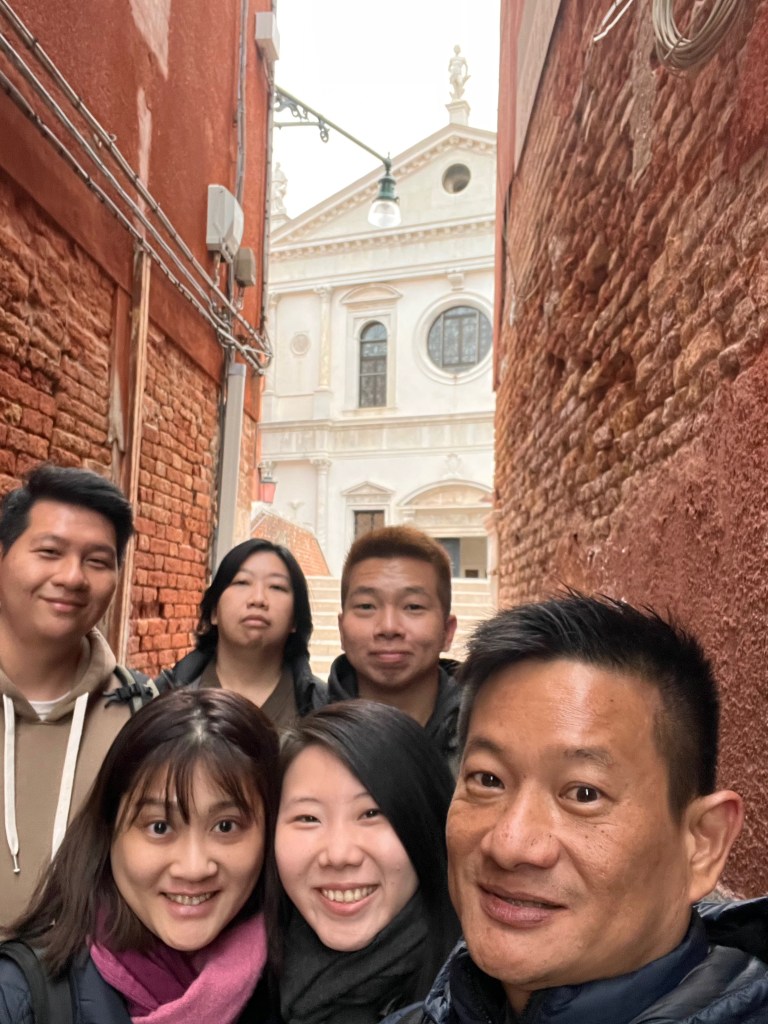
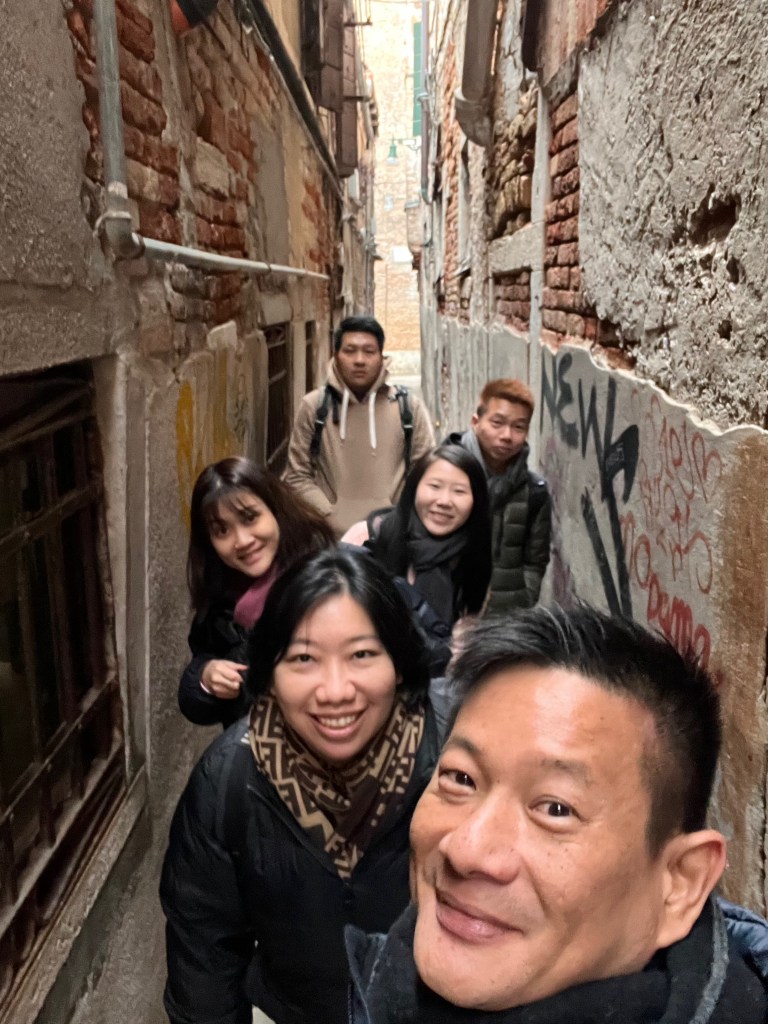
Wefie in a narrow alley somewhere in Venice

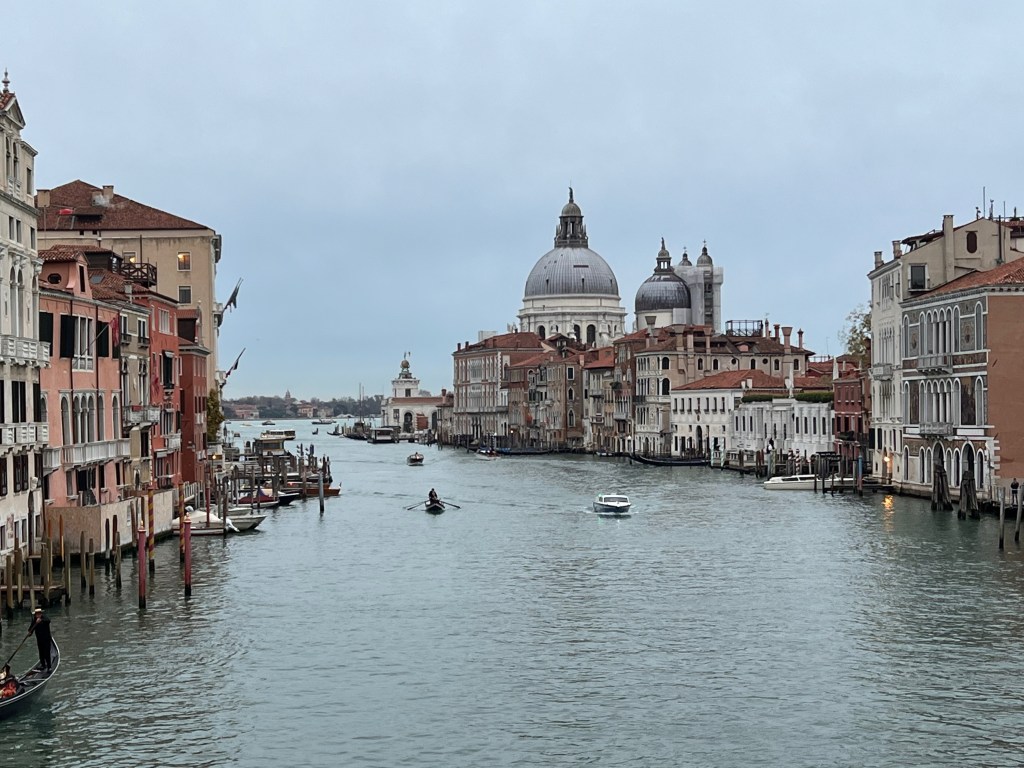
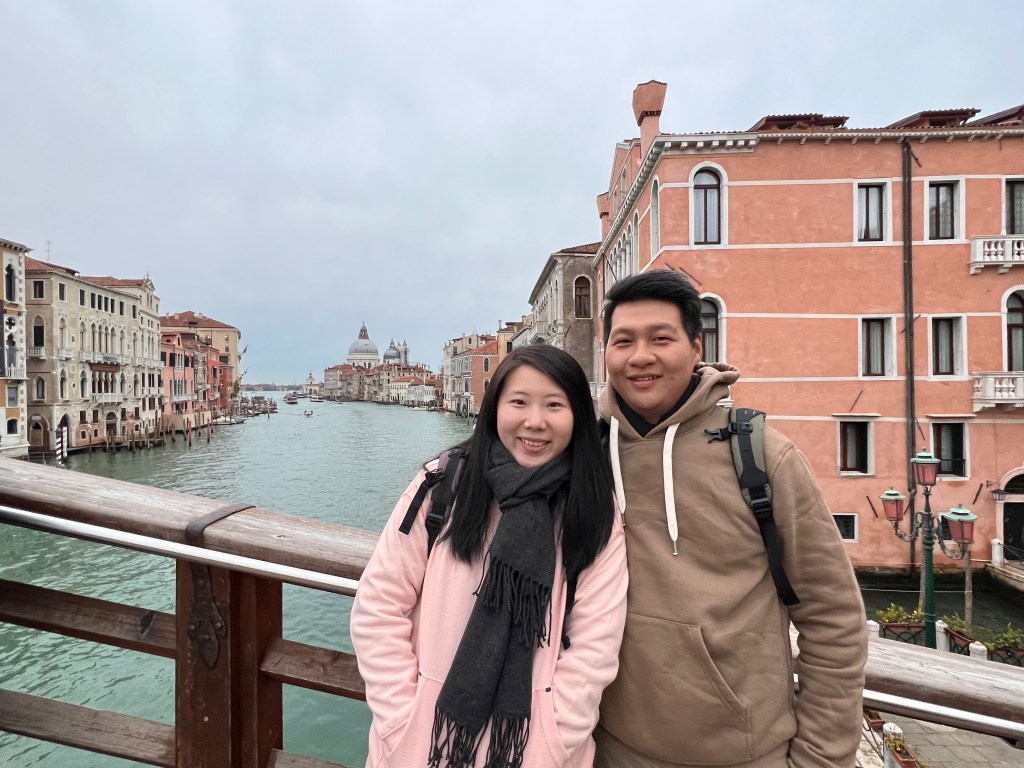
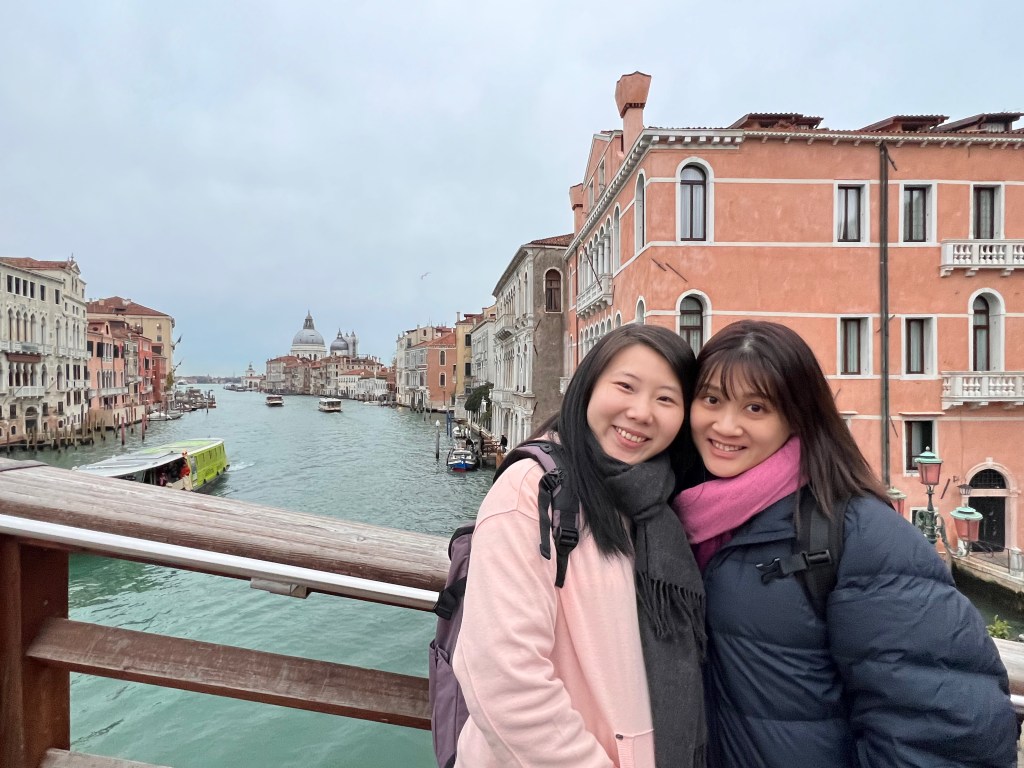
A few bridges later, the small alleys we had been passing through for the entire after were replaced with more canals. Small canals merged to become bigger canals. Soon we arrived at a wooden bridge built across a big canal. This is where I realised we were back at the Grand Canal. This wooden bridge, Ponte dell Accademia, is one of the four bridges that span the Grand Canal cross near the southern end of the Grand Canal. The bridge is named after the Accademia galleries. Standing on the bridge, we spotted a huge building sitting by the mouth of the Grand Canal, with huge grey domes. The Basilica di Santa Maria della Salute is one of the icons in Venice. Ponte dell Accademia offered us one of the great classic views of Venice that was captured in many photos and films on Venice. After taking pictures, we continued our walk to Fondaco dei Tedeschi. Two piazzas later, we arrived at our destination.

View of the Basilica di Santa Maria della Salute along the Grand Canal from Ponte dell Accademia

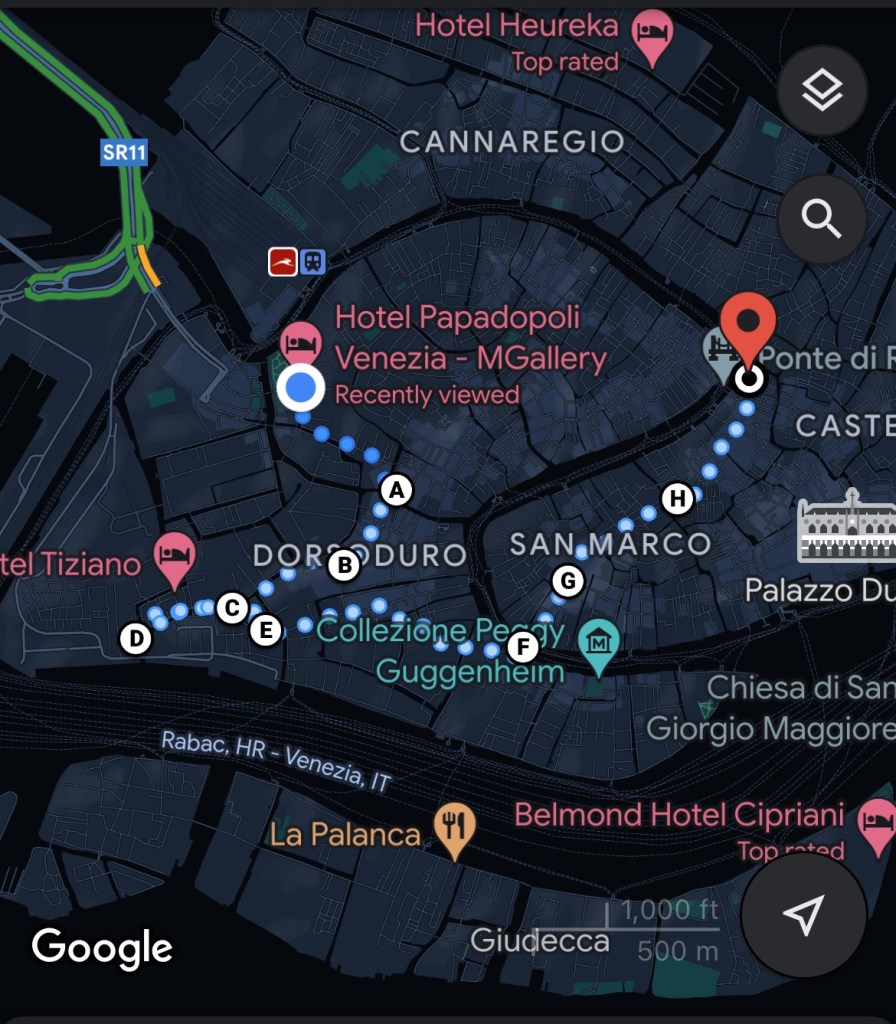
The route we took today

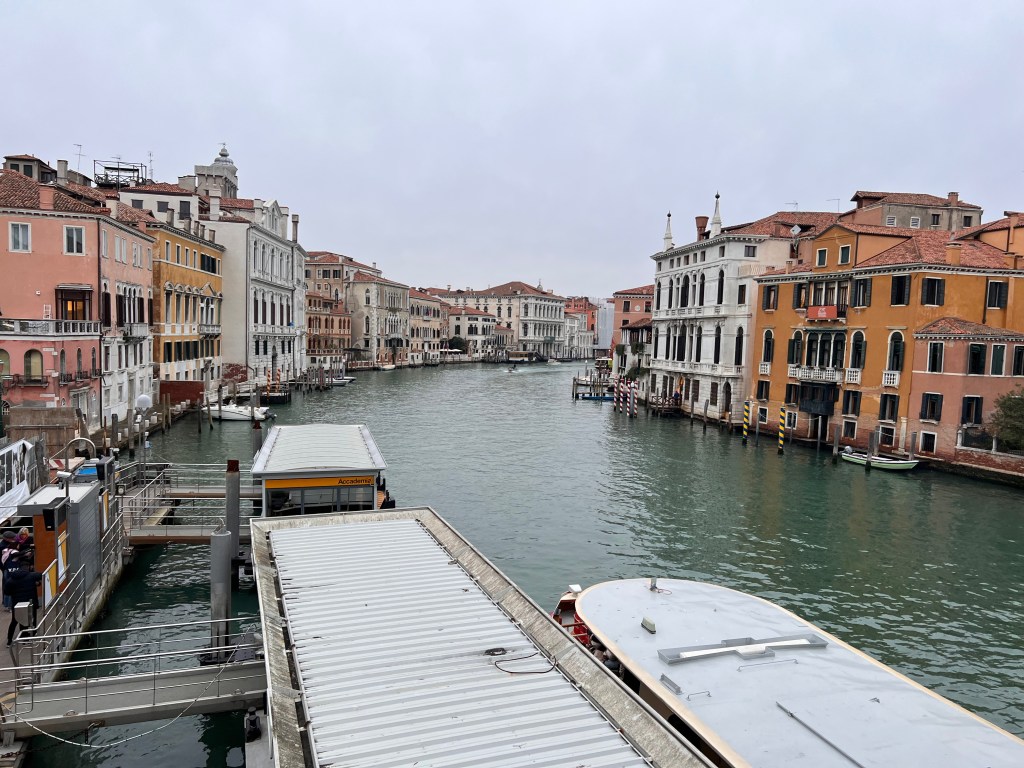
The View of Grand Canal

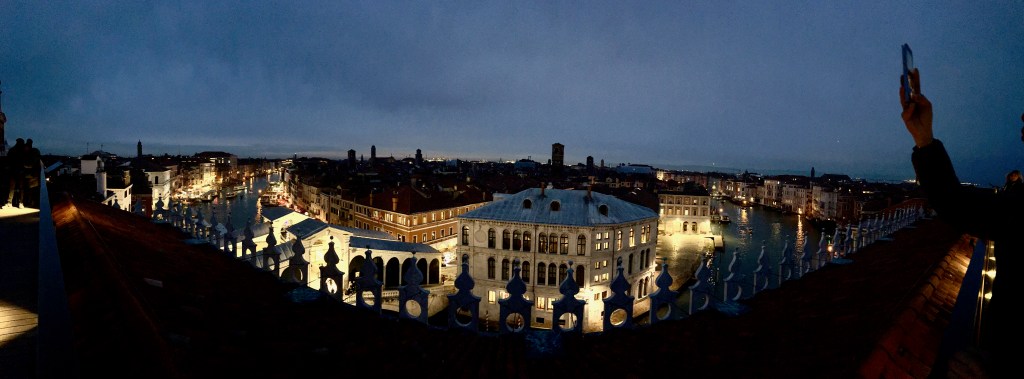
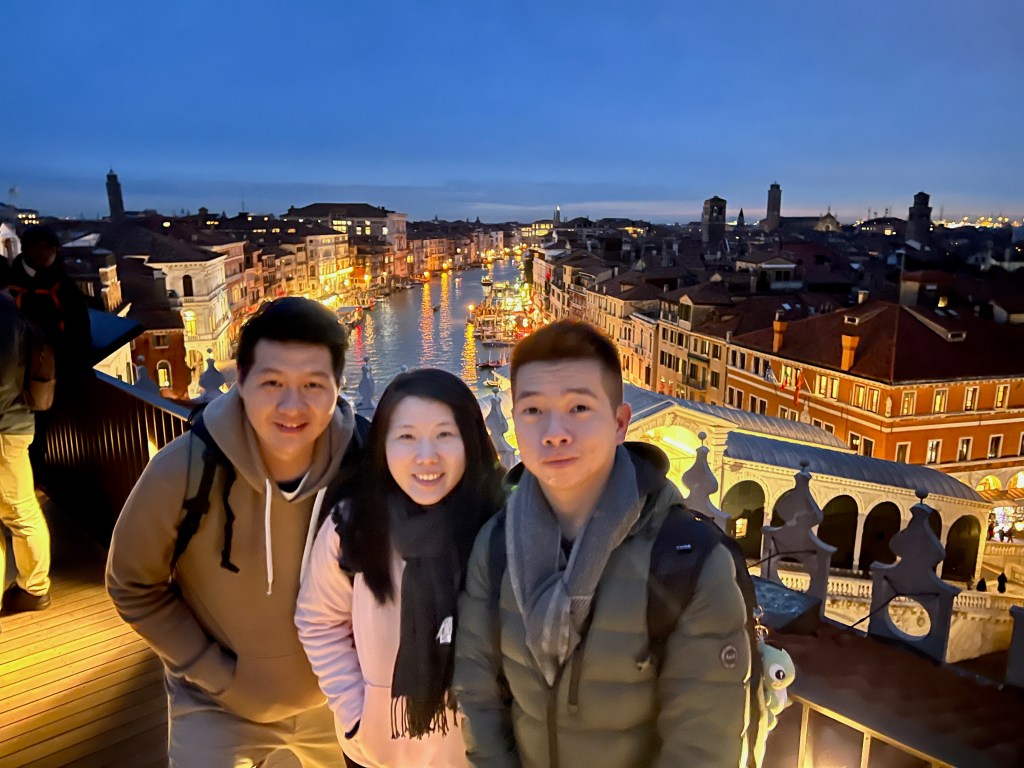
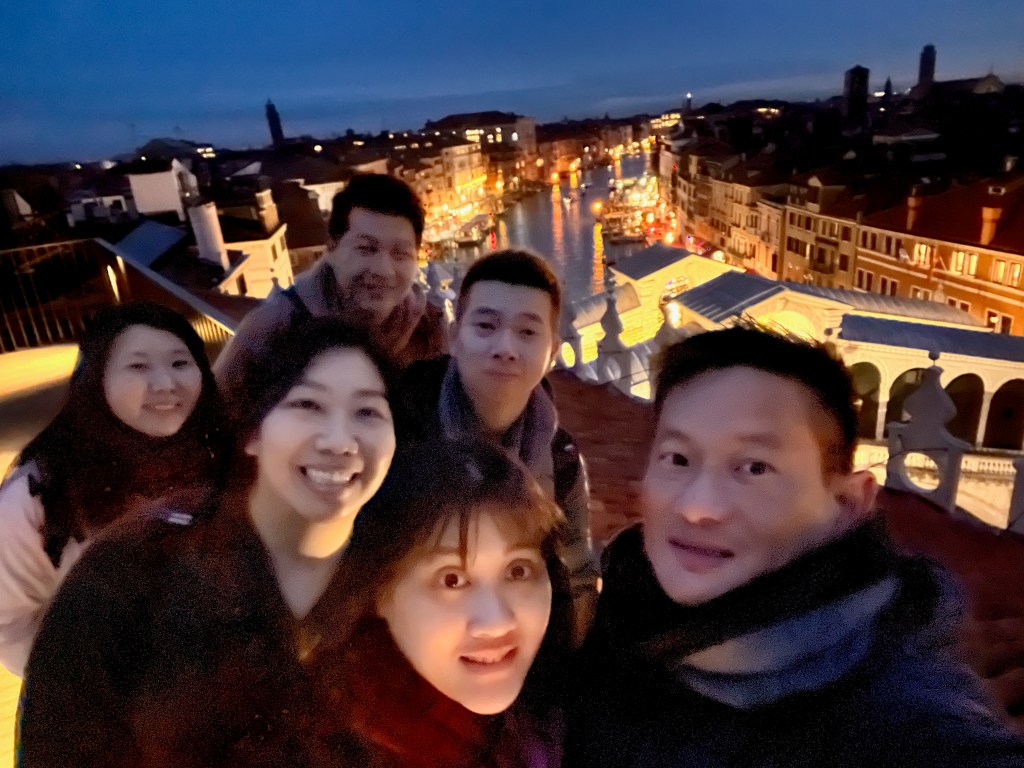
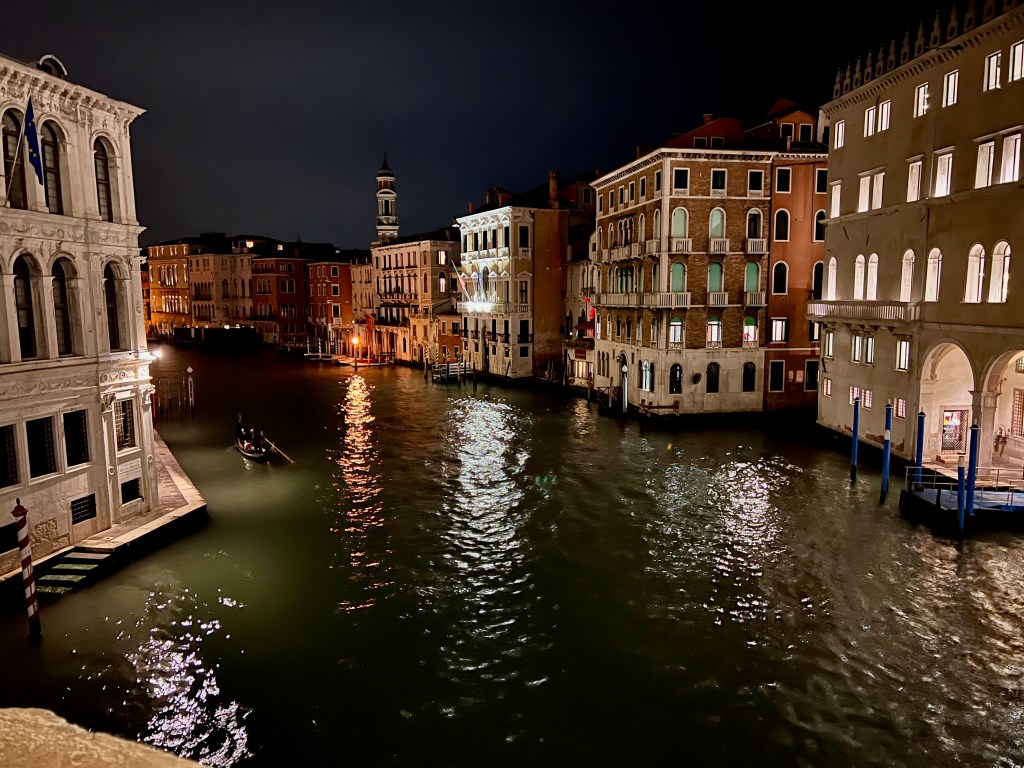
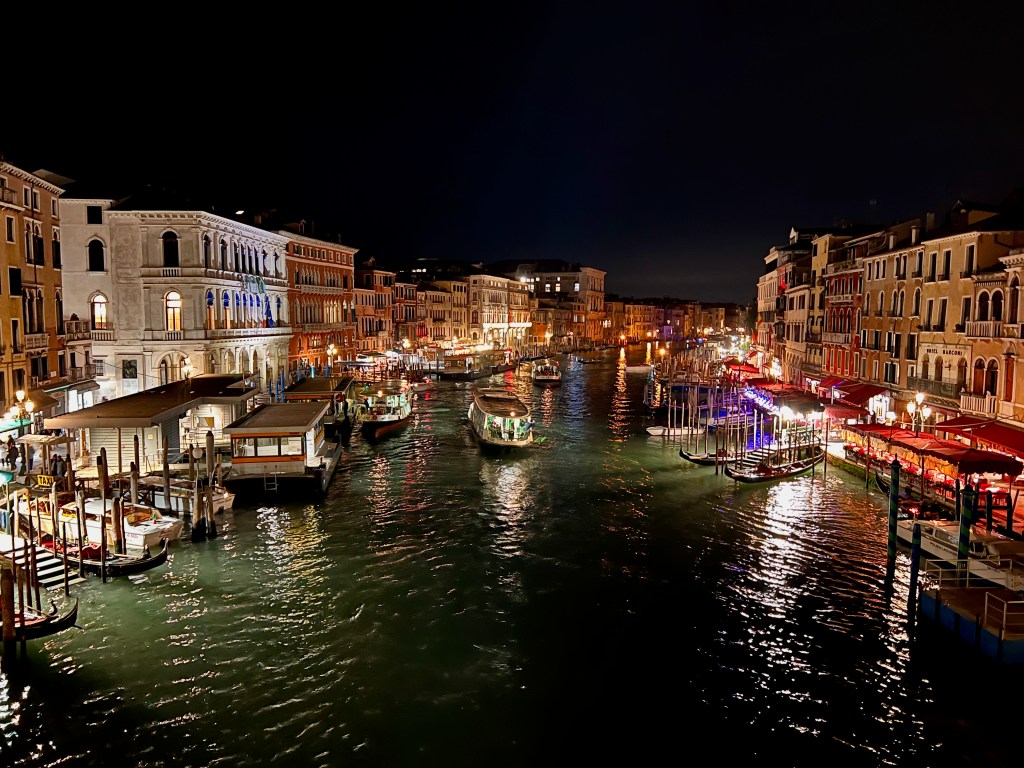
The reason we were adamant about setting Fondaco dei Tedeschi as our destination today despite getting lost in the Labyrinth of the Venetian streets is for the booking of the terrace visit at Fondaco dei Tedeschi. During my research for top sights in Venice, several content creators recommended coming to the rooftop terrace of Fondaco dei Tedeschi, which offered visitors a panoramic view of the Grand Canal. The visit to the rooftop terrace is free of charge and can only be made through their website in advance (you can book here). I booked our timeslot at 5.15 pm and arrived at Fondaco dei Tedeschi at 4.45 pm. We walked around the departmental store before heading up to the terrace. We reached the terrace at 5 pm. Fortunately, the staff was able to admit us to the rooftop terrace. Access to the rooftop terrace is tightly controlled by the staff member who looks more like a bouncer. From the rooftop, we could see St Mark’s Bell Tower and the iconic stretch of the Grand Canal. It is a pity that it was already dark during our visit. I can imagine we would get a beautiful view from the terrace if we came during sunset. After a few photos later, we decided to get dinner.

Panoramic view of the Grand Canal from the rooftop terrace of Fondaco dei Tedeschi

Night Stroll Along San Marco Waterfront

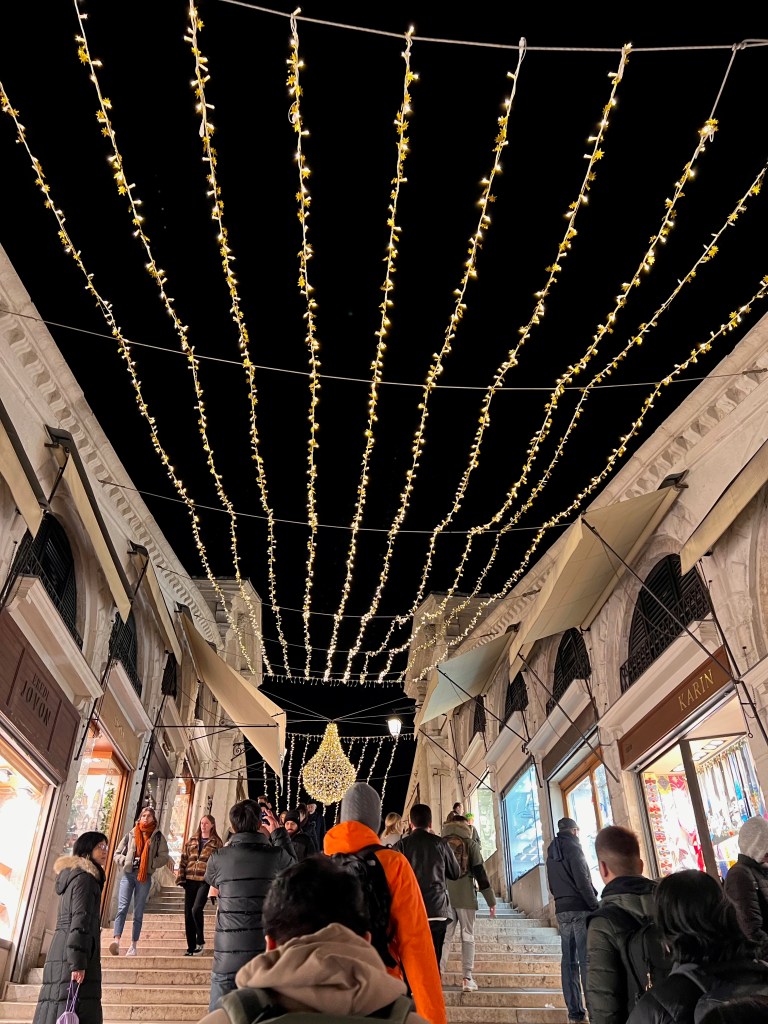
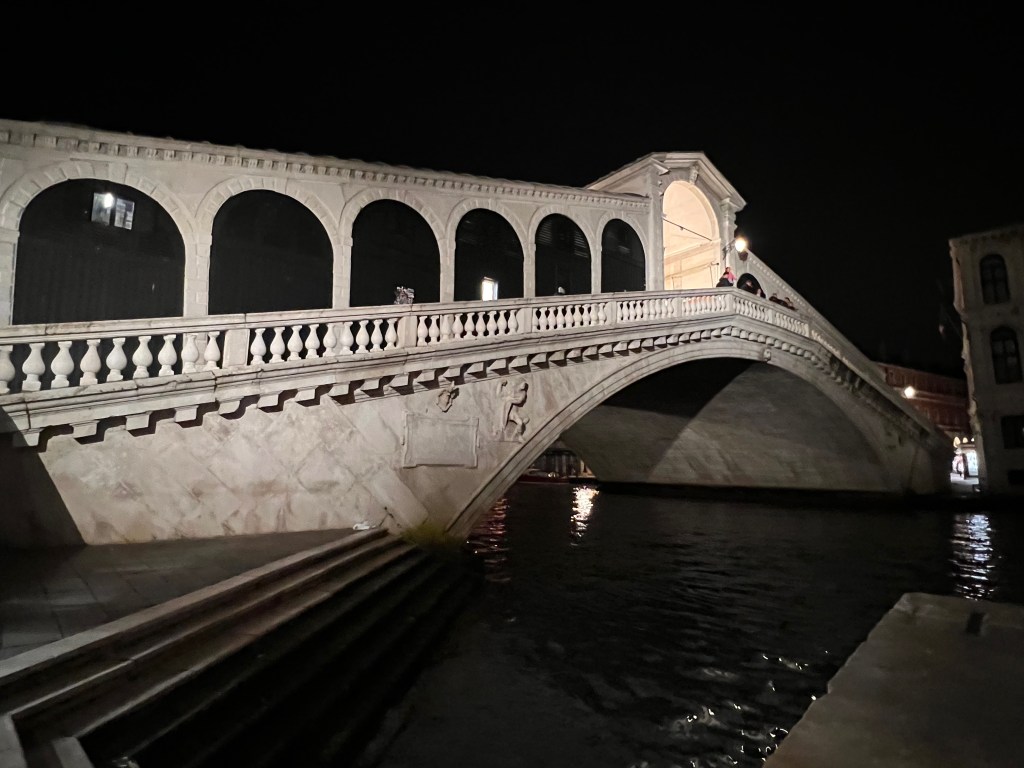
Before we ventured back into the Venetian Labyrinth to search for dinner, we stopped by Ponte di Rialto, next to Fondaco dei Tedeschi. No visit to Venice will be complete without visiting the iconic Ponte di Rialto. Anyone who has not been to Venice can recognise the bridge immediately. The 400-year-old bridge is the oldest of all four bridges across the Grand Canal. Ponte di Rialto is built with stone, unlike the other two bridges we have crossed today. There are stores on either side of the bridge.

The iconic Rialto Bridge

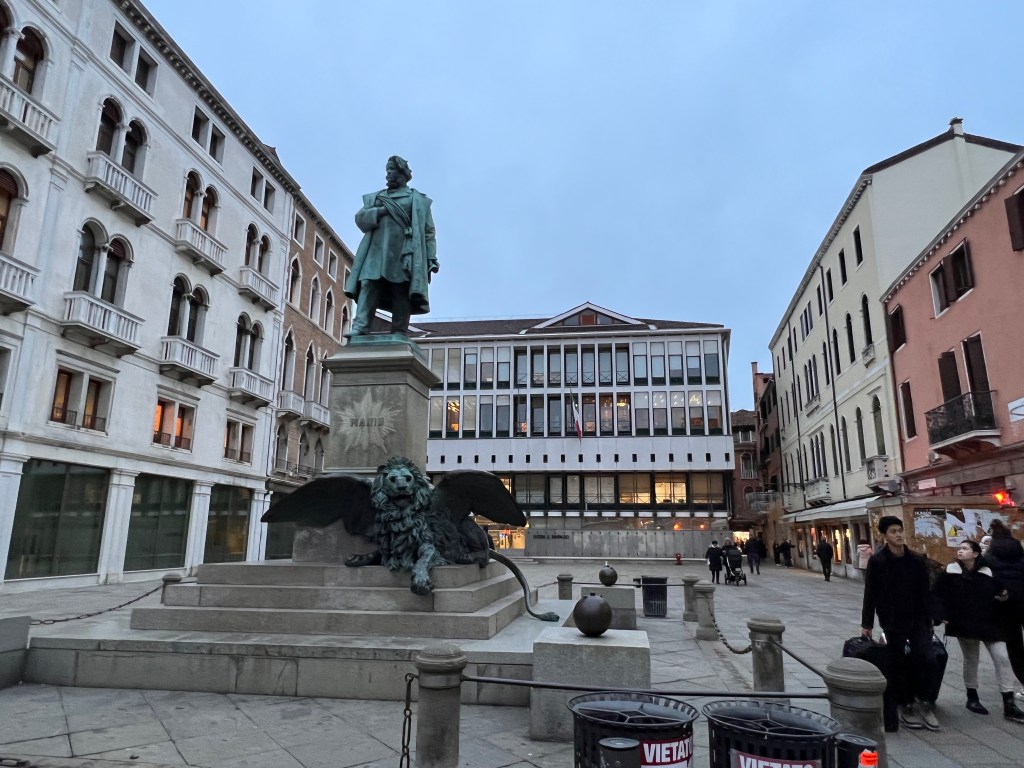
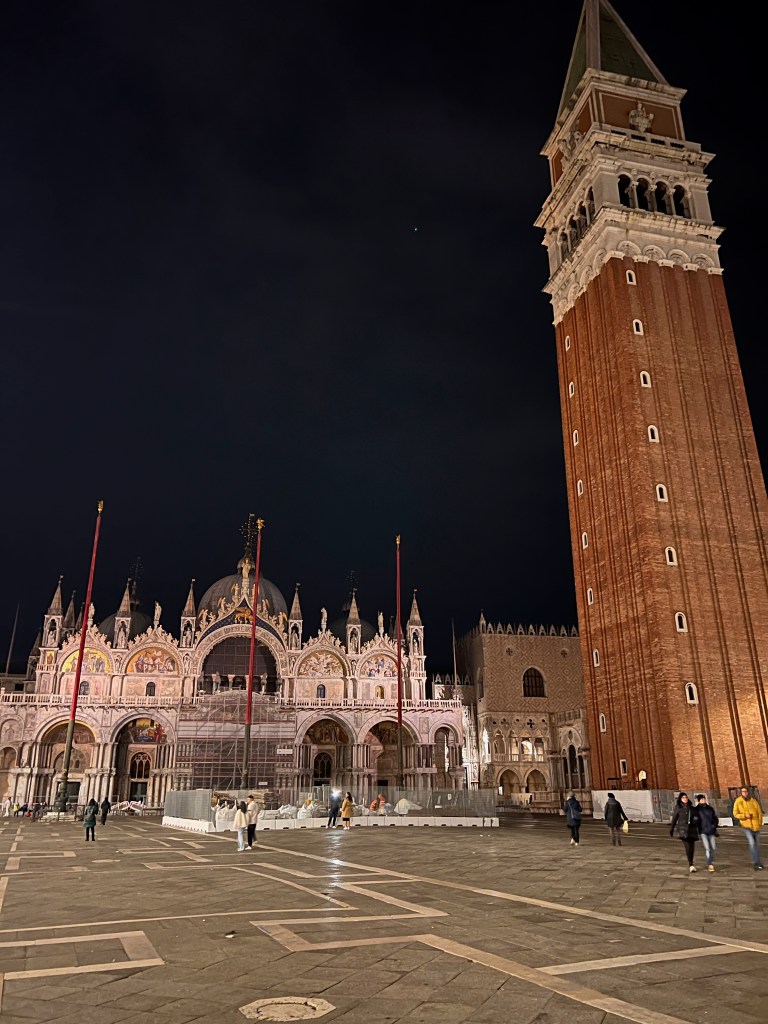
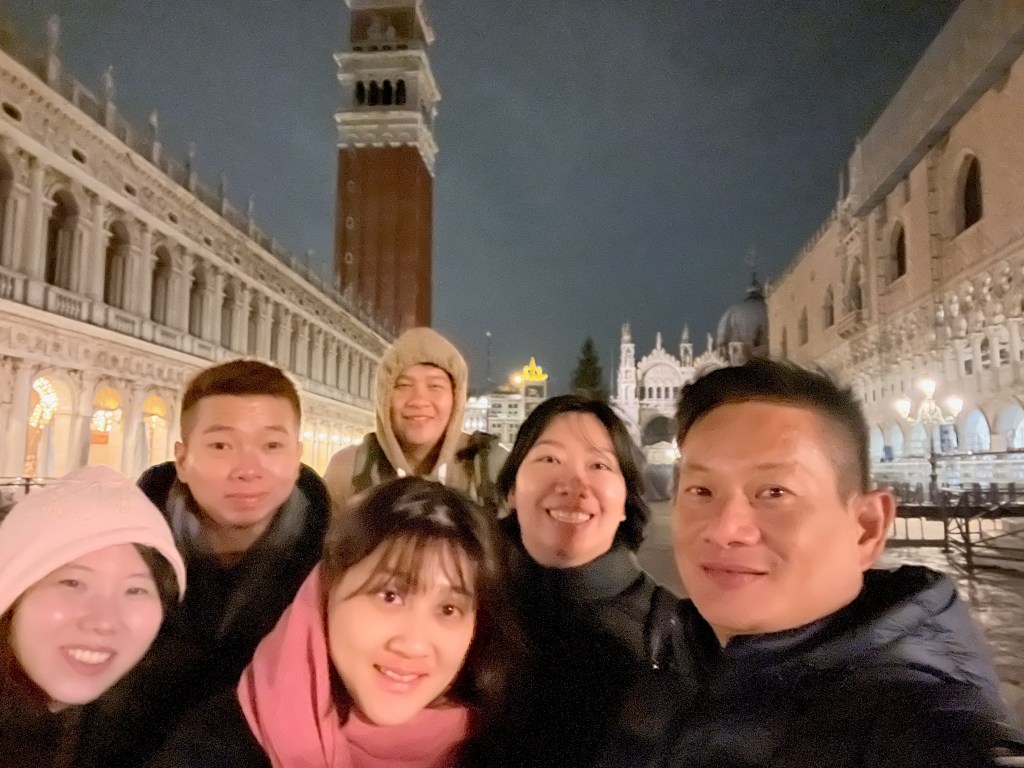
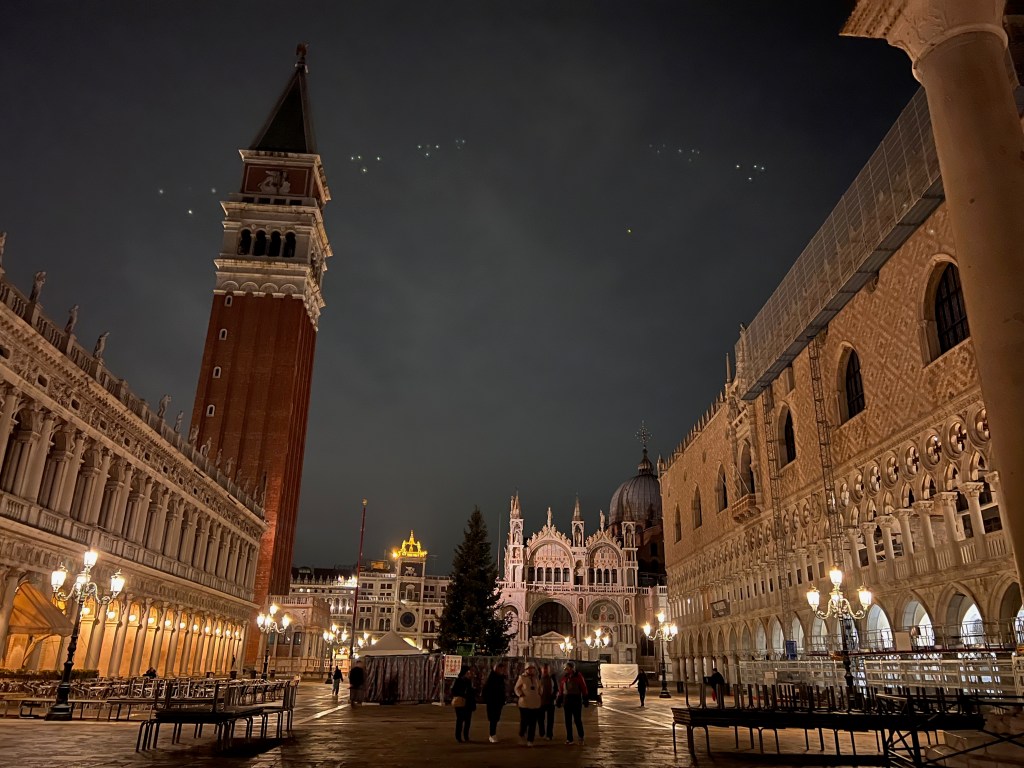
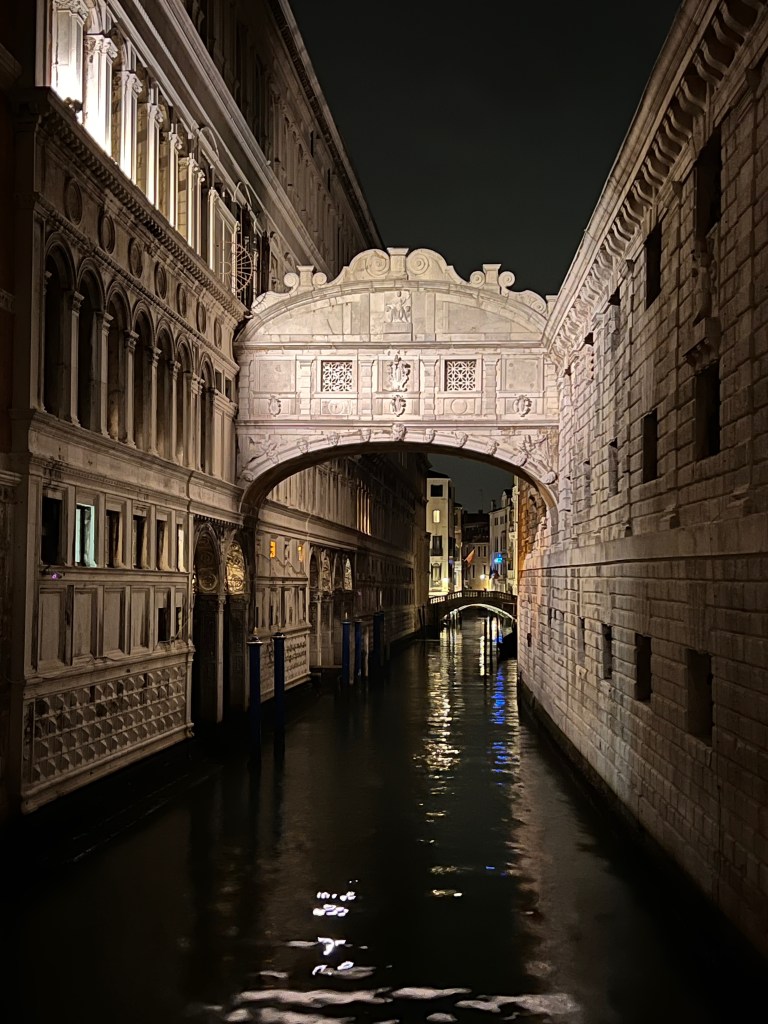
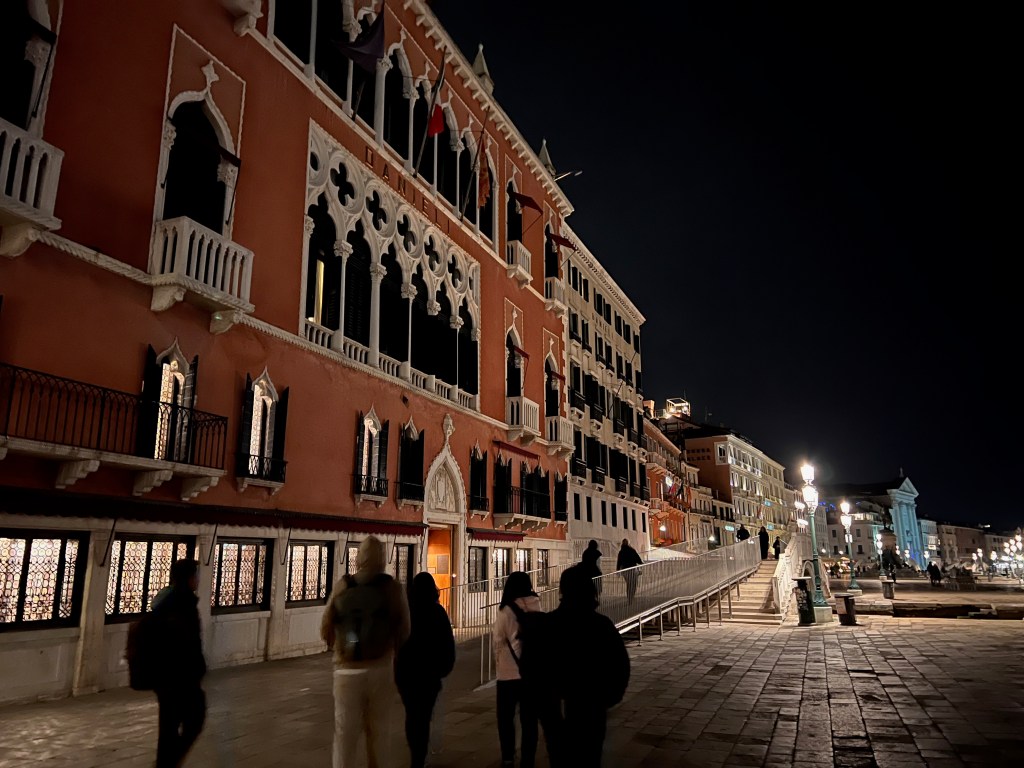
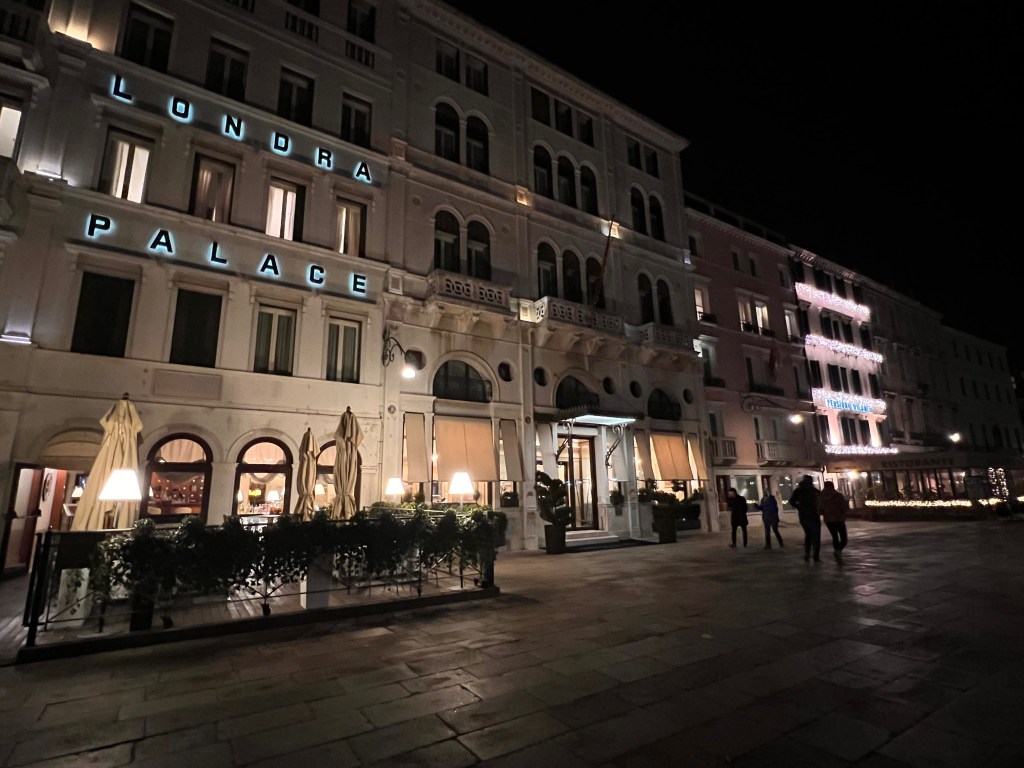
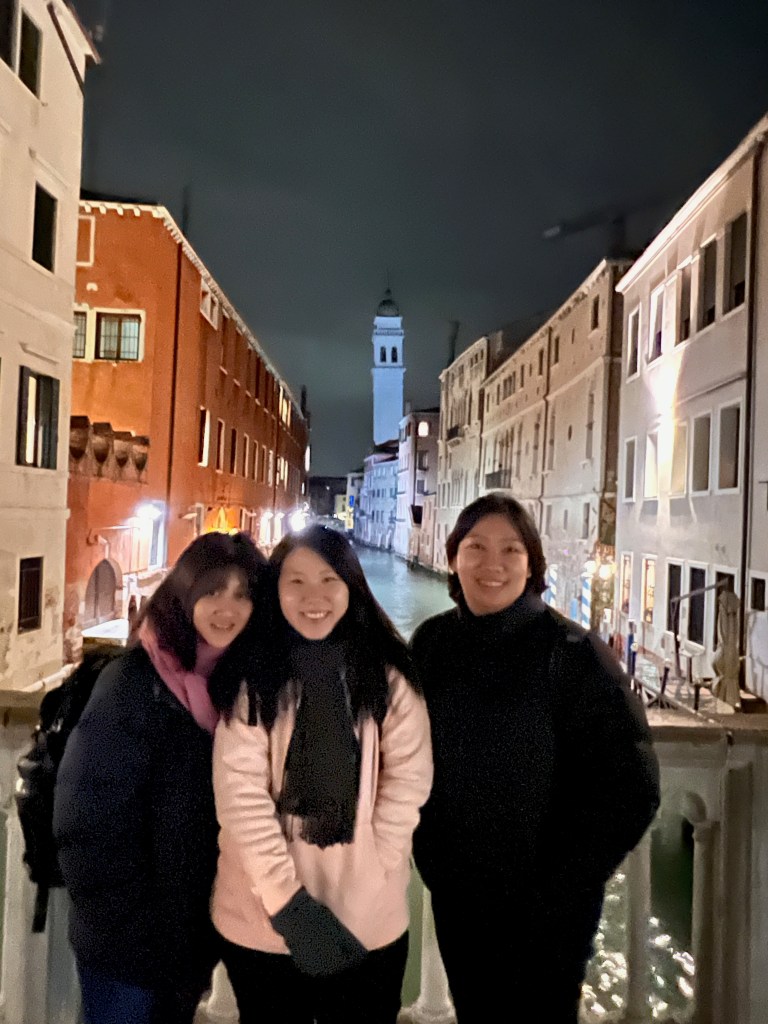
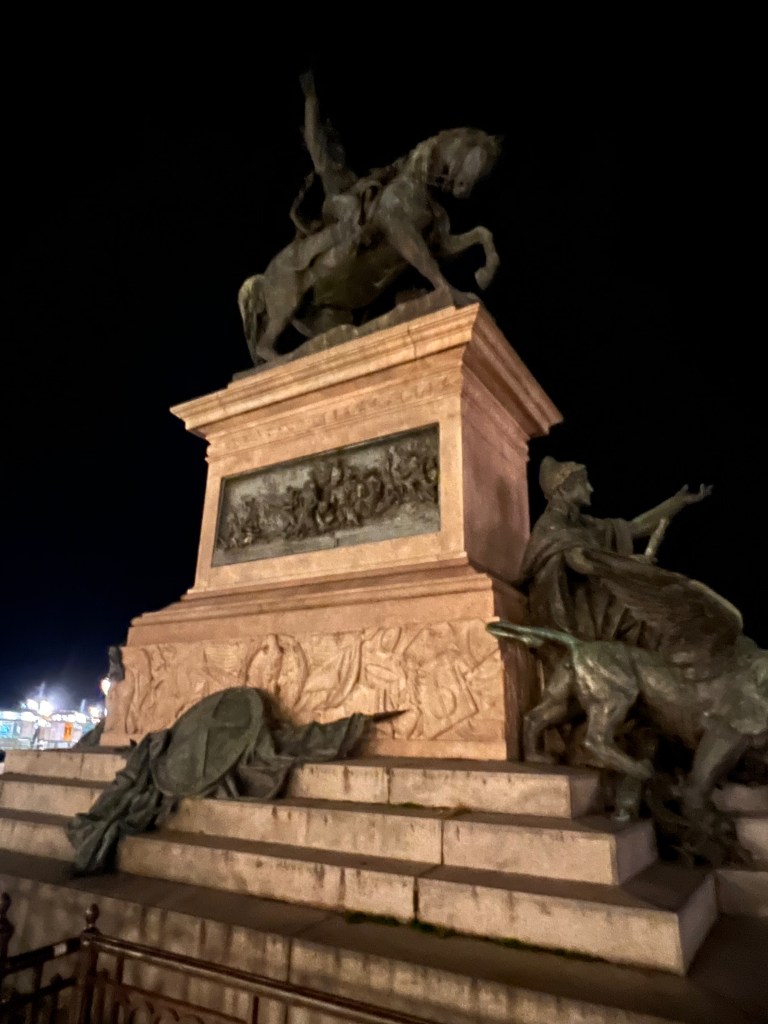
We continued to wander in the Venetian streets in search of dinner and settled in a restaurant that looked rustic and authentic. We took a night stroll along the southern coast of Venice after dinner, as the night was still young. We made our way to Piazza San Marco, home of famous Venetian sights like San Marco Basilica, Doge Palace and Campanile di San Marco. Piazza San Marco was very quiet when we were there due to the low travel season. As we walked along the shore, past Doge’s Palace, we came across the Bridge of Sighs. The enclosed white limestone bridge with windows made of stone bars that pass over the Rio di Palazzo connects the new prison to the interrogation rooms in the Doge’s Palace. Legend has it that the bridge is named as such as prisoners would sigh when they see through the stone windows to the outside world for one last time being as they are being escorted to their prison to serve their sentence. As we walked further ]away from Piazza San Marco, we spotted a bronze statue sitting by the shoreline. This bronze statue is the Monument to Victor Emmanuel II, dedicated to the first King of unified Italy. Strolling on the southern shore at night offered us a view of the islands and buildings across the Venetian Lagoon. The buildings were beautifully illuminated and great places to take some night shots. As it was getting cold, we returned to the hotel to rest for the night.

We had dinner at a restaurant that seemed to be patronised by locals.

The three landmarks at Piazza San Marco – San Marco Basilica, San Marco Campanile and Doge’s Palace

Bridge of Sighs in Venice next to Doge’s Palace

Italy Day 2 (27 Nov 22) – Lake Como: The Picturesque Milano Backyard

Planning to Lake Como

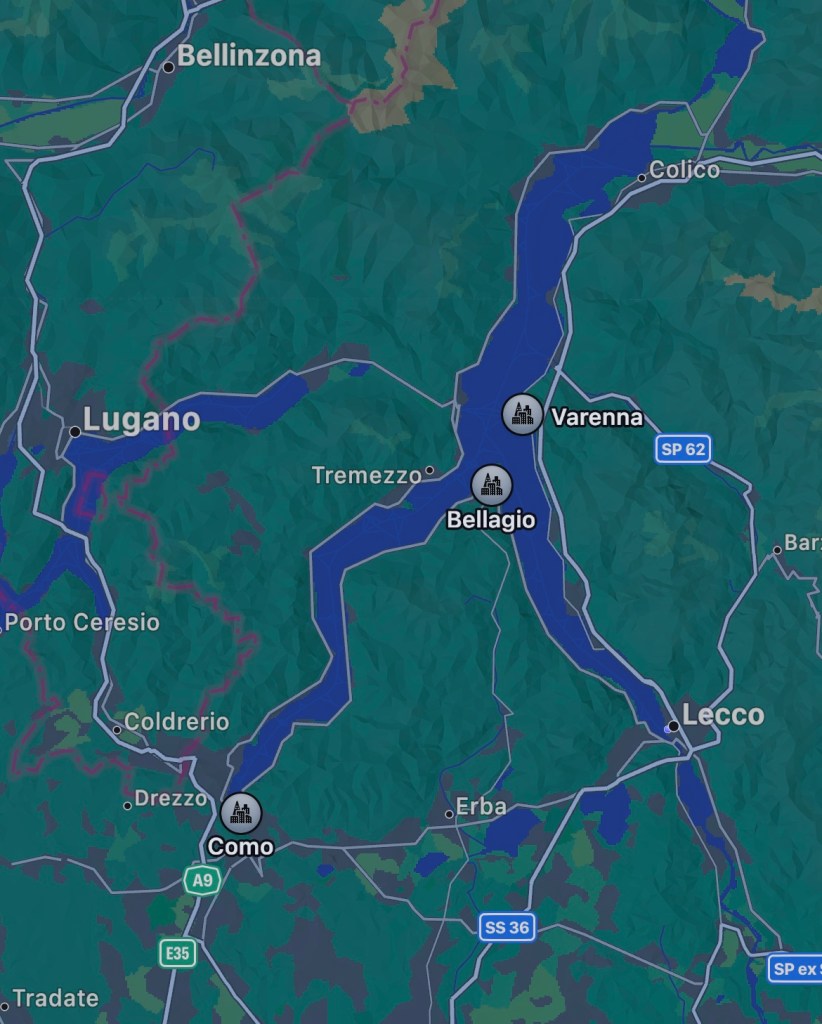
When planning the attractions in Milan, I chanced upon several Youtube videos about travels to Lake Como. The stunting views of the mountains seemingly watching over the tranquil lake and the characteristic colourful houses sitting by the lake shore make this a picturesque place a must to visit. There are several towns around Lake Como, but impossible to see everything within one day. Hence I had to be very targeted on what we wanted to see. From the YouTube videos I watched, Varenna, Bellagio, Como and Brunate are the most popular towns around Lake Como. So we started from Varenna, the furthest from Milan, and worked our way to Como, the nearest to Milan. We also wanted to watch the sunset over Lake Como at the viewpoint in Brunate.

Getting to Lake Como

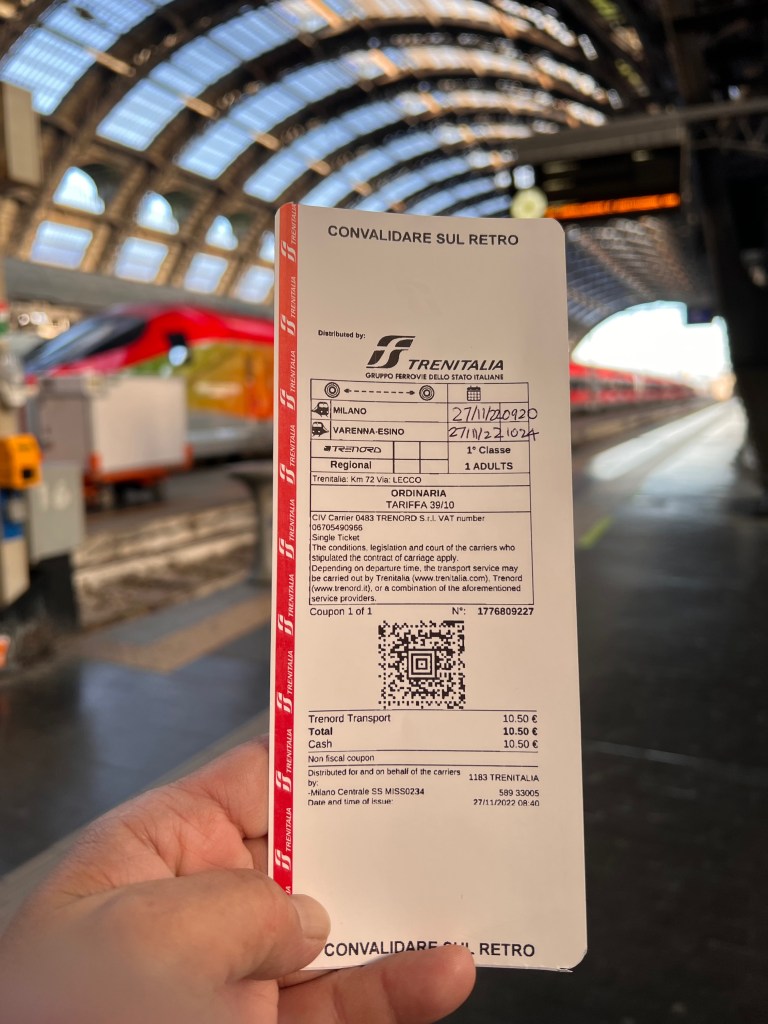
Lake Como lies north of Milan, and the towns around Lake Como are easily accessible by regional trains serviced by Trenitalia with hourly departures, so it is not necessary to pre-book train tickets. Getting the train tickets from the train station was very easy; we had to pop by the ticketing machine, select our destination (Varenna-Esino), and we got our tickets in no time. There are two classes of seats onboard the train to Varenna. 2nd class costs €7.10, while 1st class costs €10.50. We initially thought the price difference wasn’t great and went for 1st class, thinking it would be more comfortable. Upon boarding the train, we found no differences in the seats between 1st and 2nd class; the only difference is the yellow handle on the seats that marks it as 1st class seating. We ended up sitting (this service is free seating) in a less crowded 2nd Class carriage. We thought getting 1st class tickets for this trip was a waste of money. The train ride from Milan Central station to Varenna-Esino station took 1 hour.

Varenna

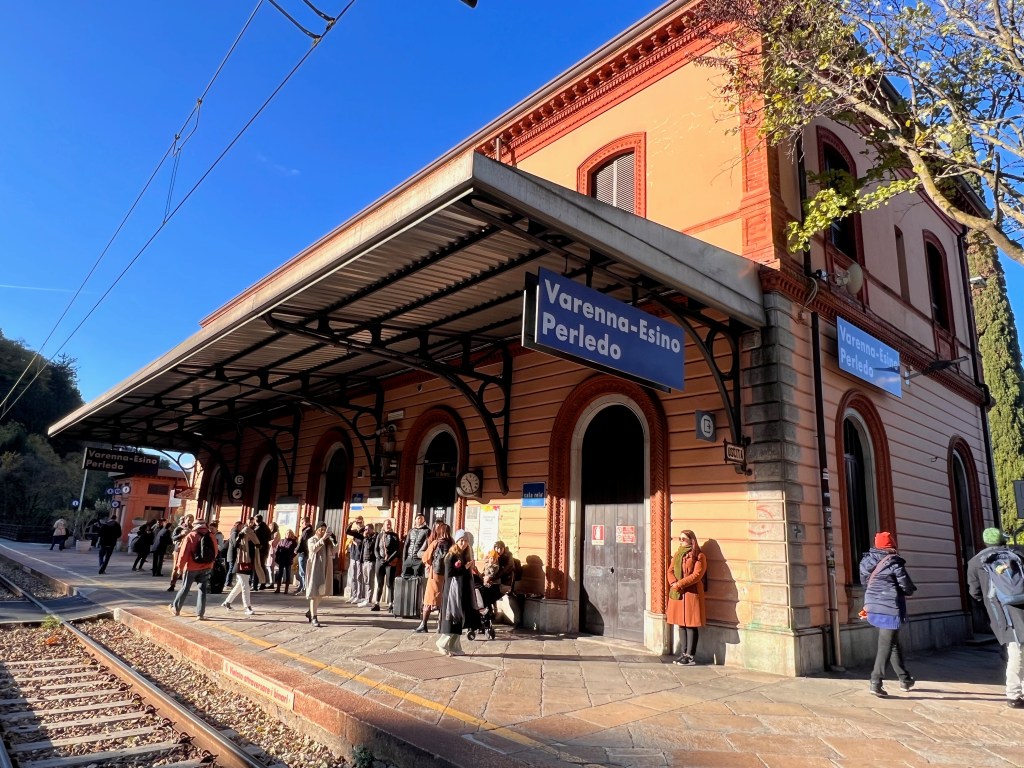
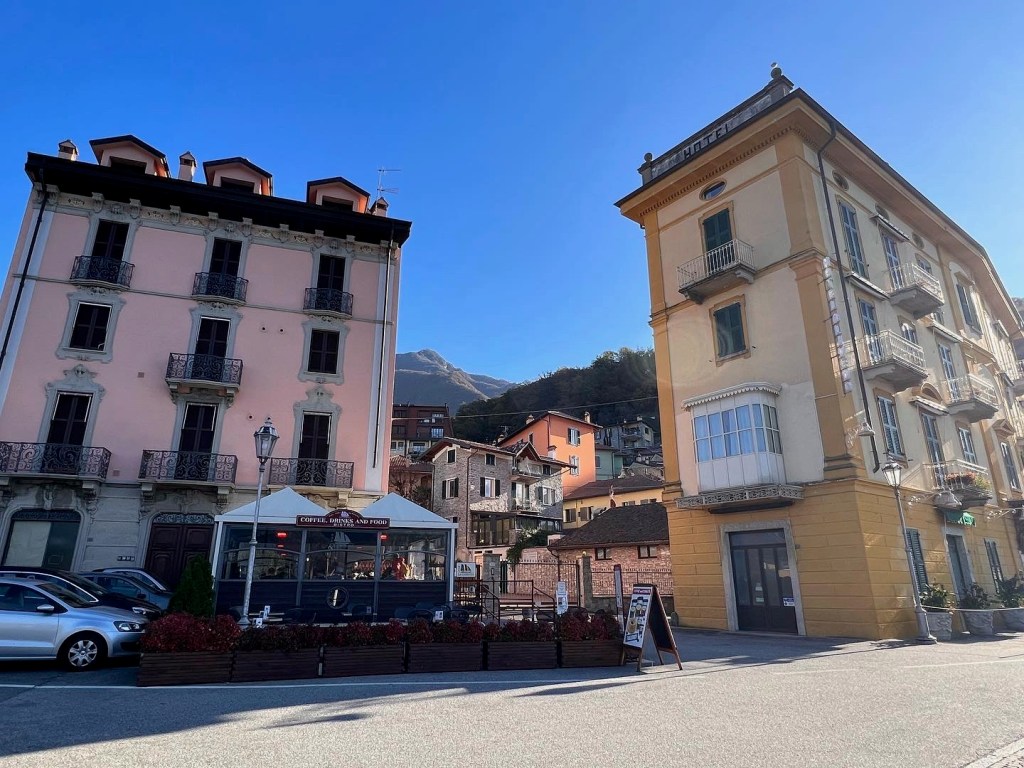
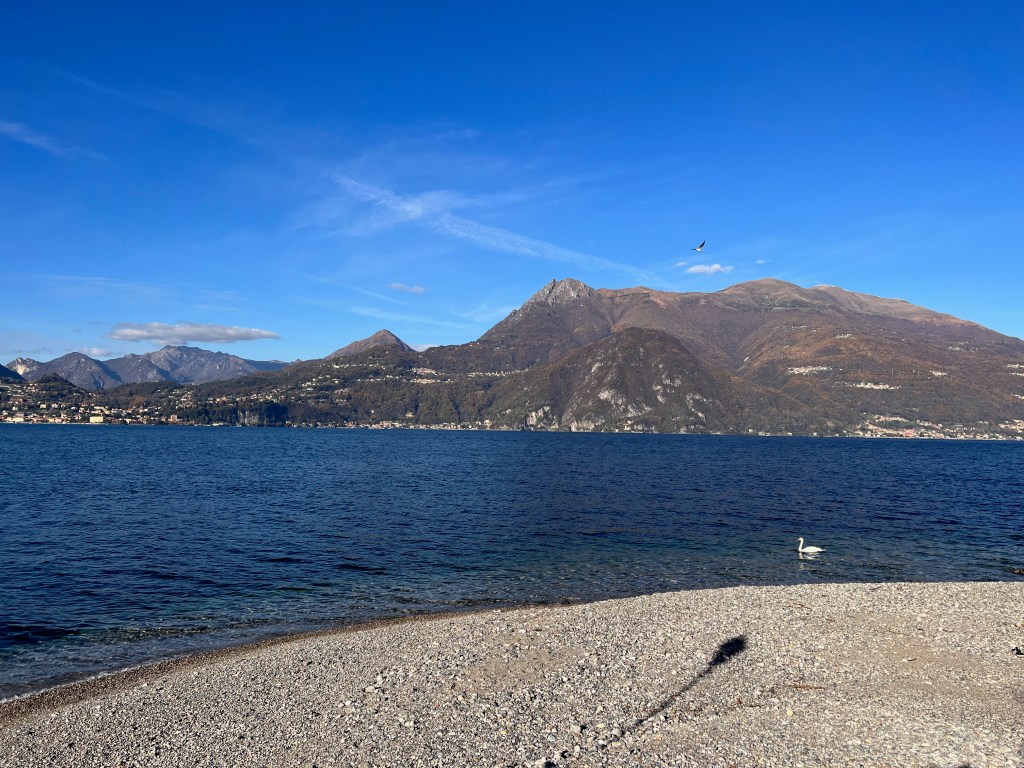
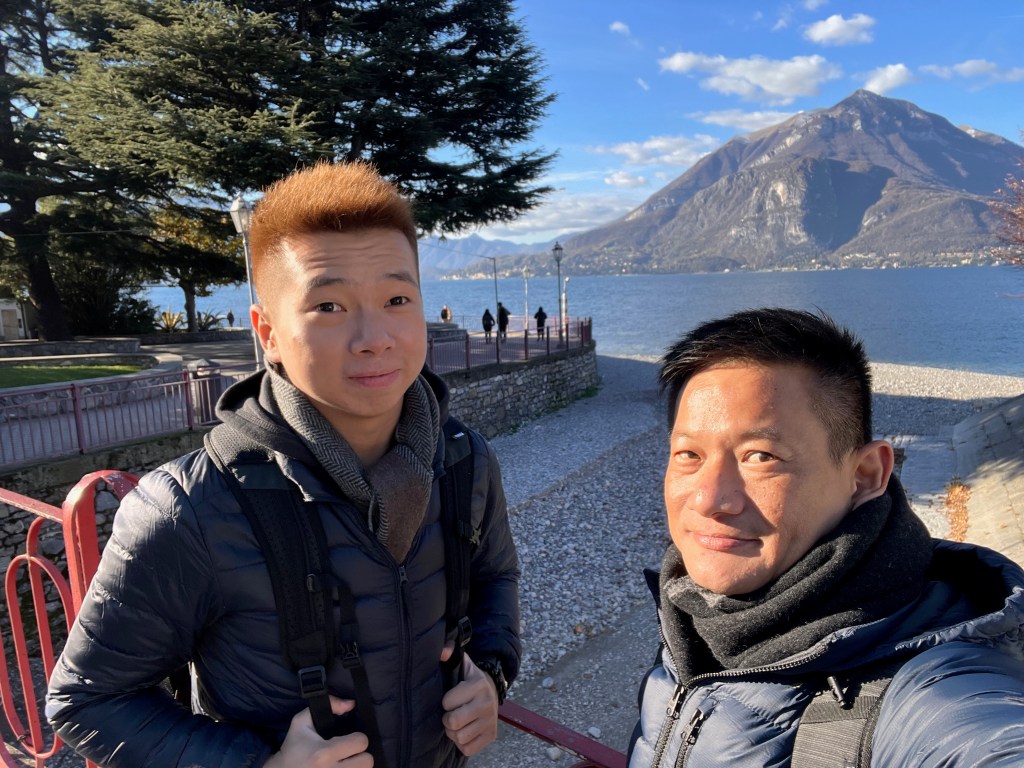
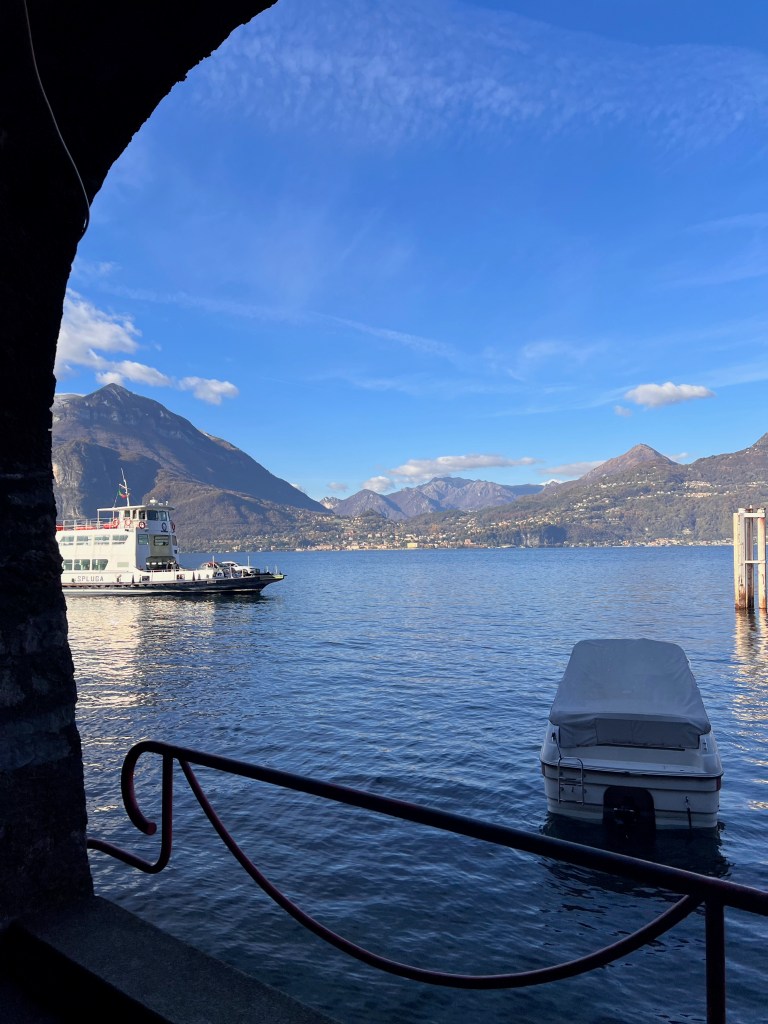
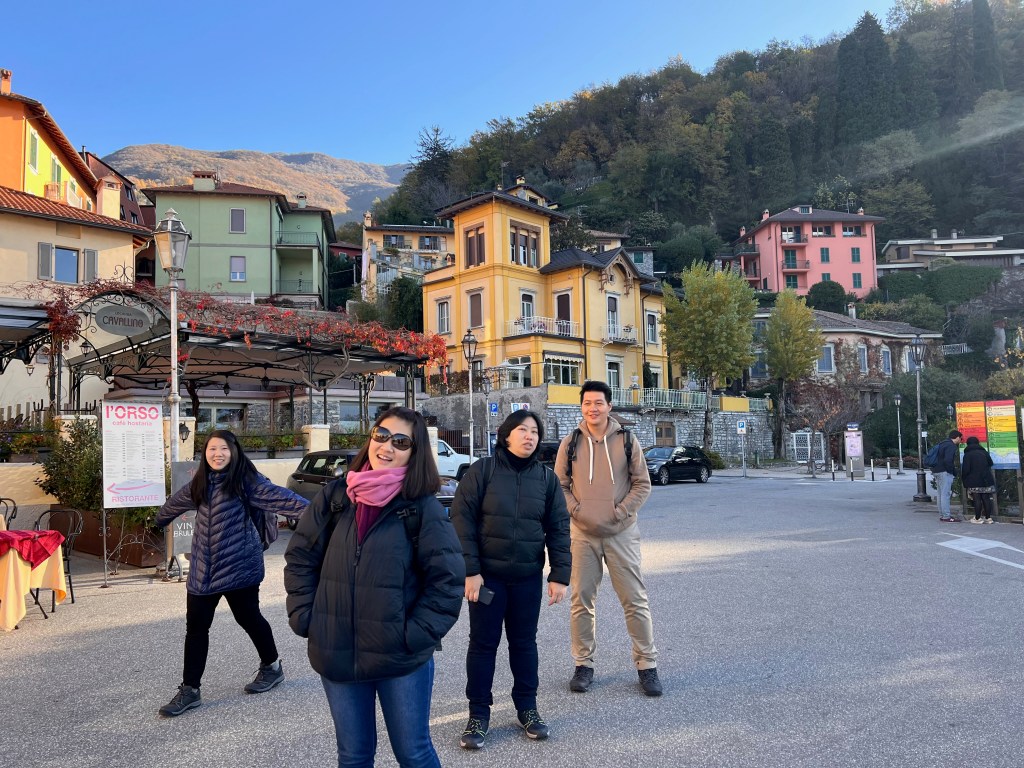
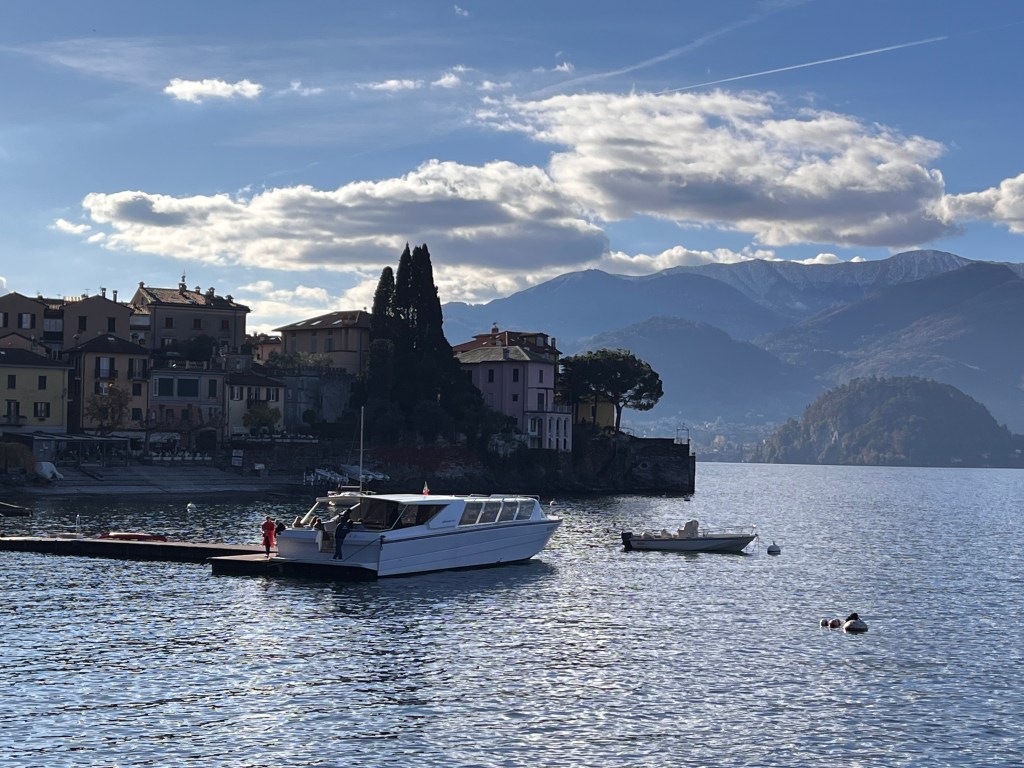
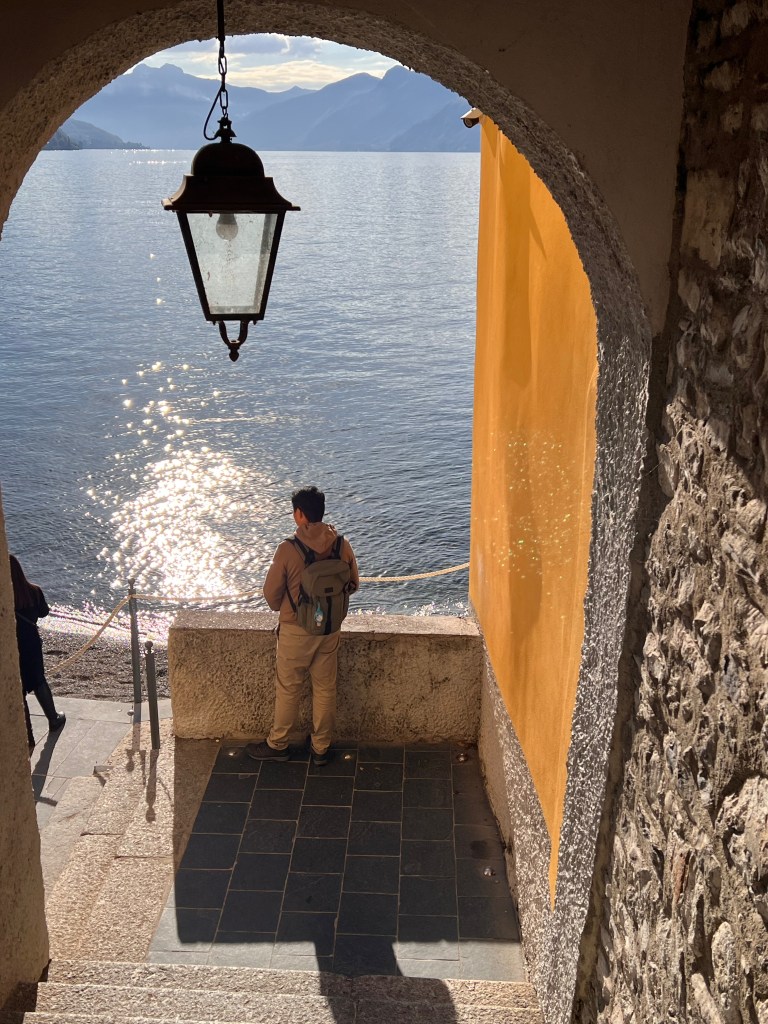
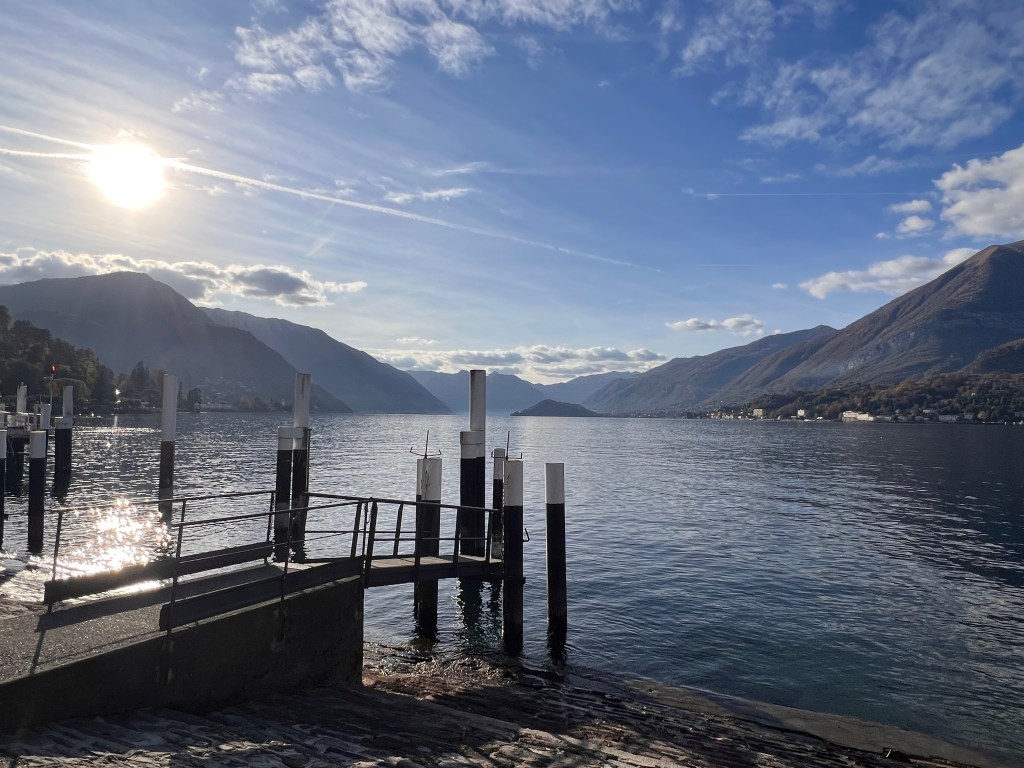
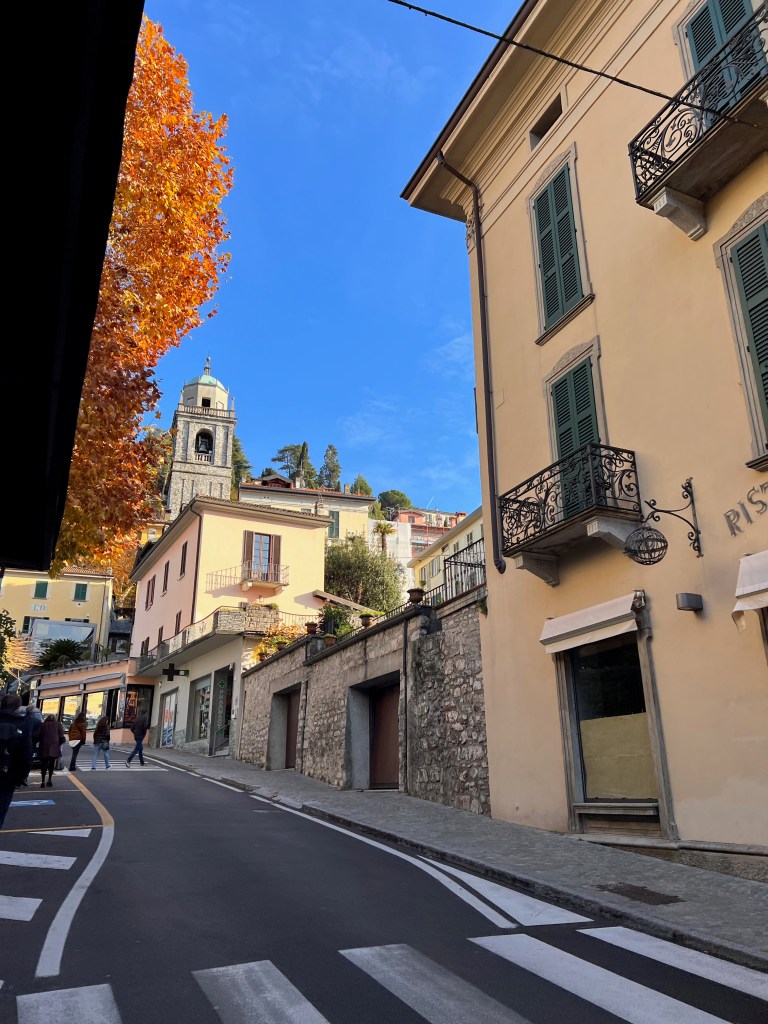
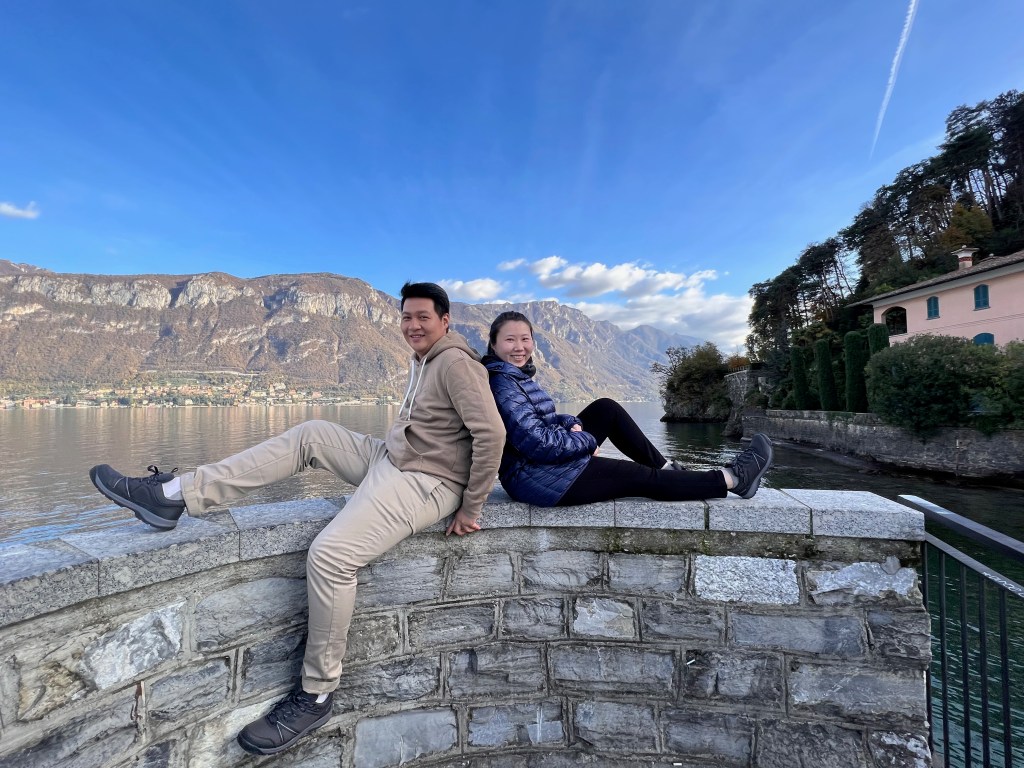
We alighted at Varenna-Esino station and were guided by well-marked signs towards the lakeside. After about 5 minutes of walking, passing by buildings decked in light pink and bright yellow, we came to the shore of Lake Como. Before our eyes were stunning views of mountain ranges, some even snow-capped, across the massive Lake Como. My friends and I wasted no time and kept ourselves busy taking selfies, wefies and pictures of the beautiful Lake Como scene. Then, we strolled along the coastline, taking in the tranquillity of the lake and the beautiful scenery before our eyes towards Greenway di Patriarchi. About 5 minutes later, we arrived at the ferry station. This is where we would return later for our ferry ride across the lake to our next destination in Lake Como.

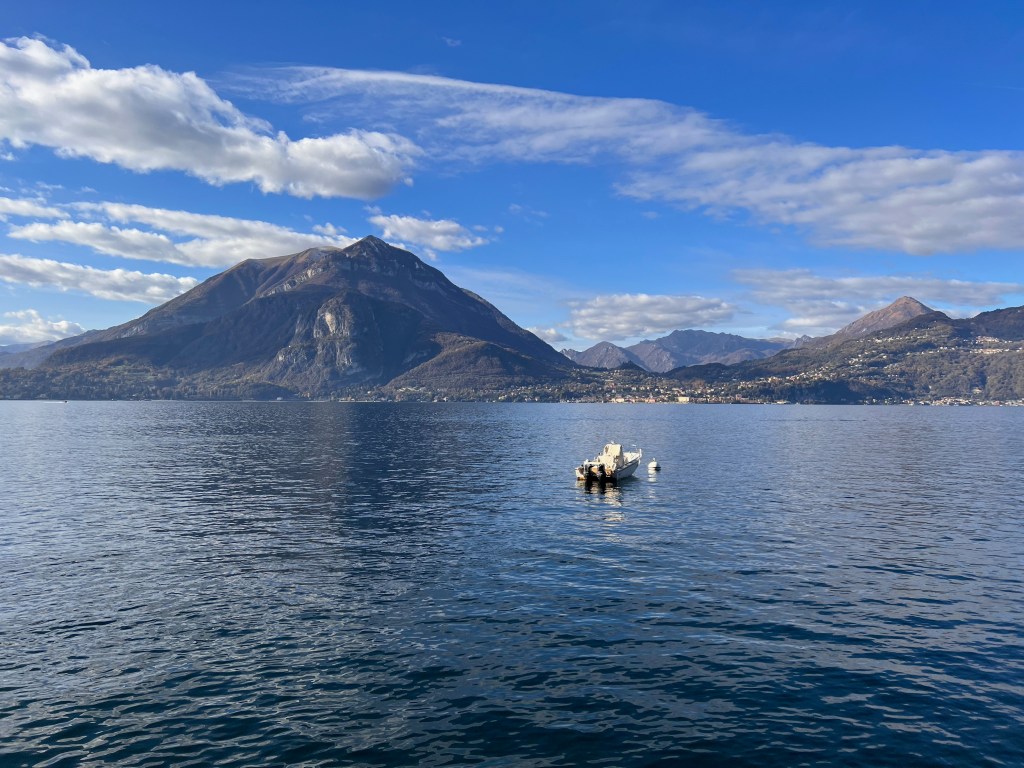
Lake Como from Varenna

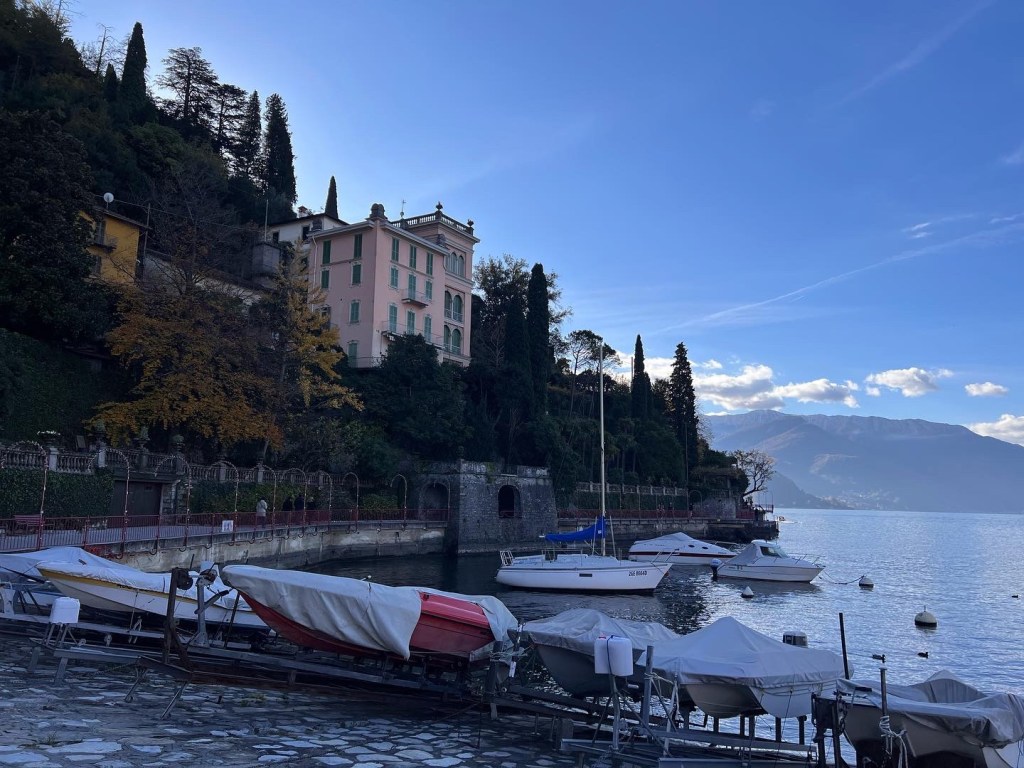
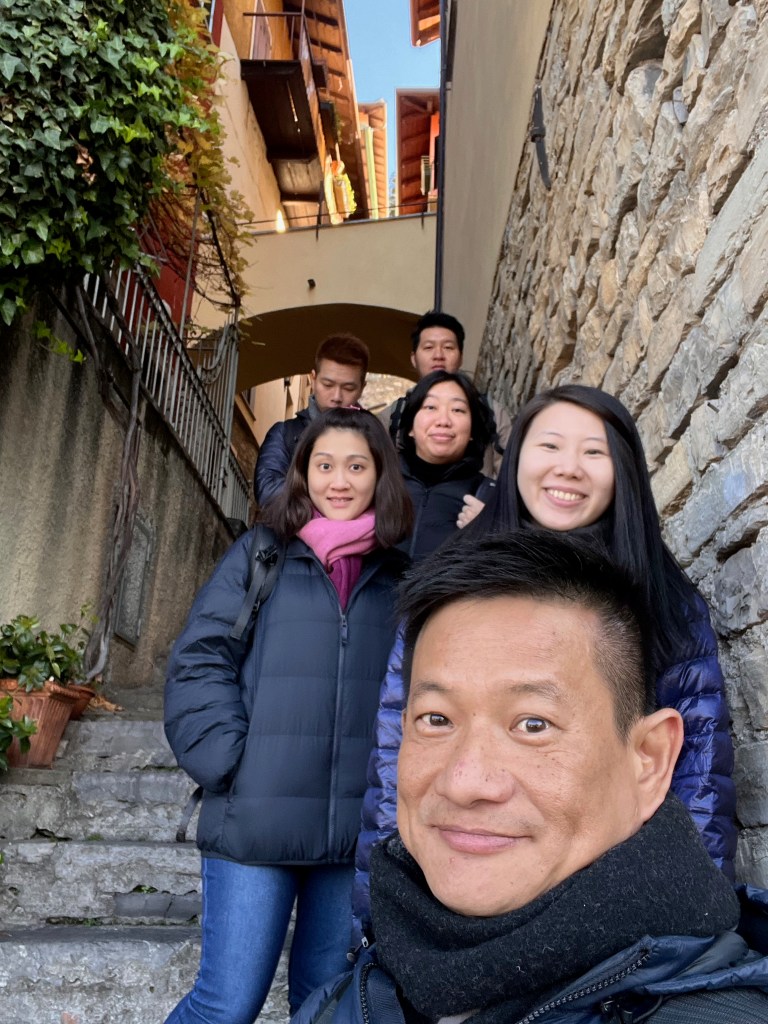
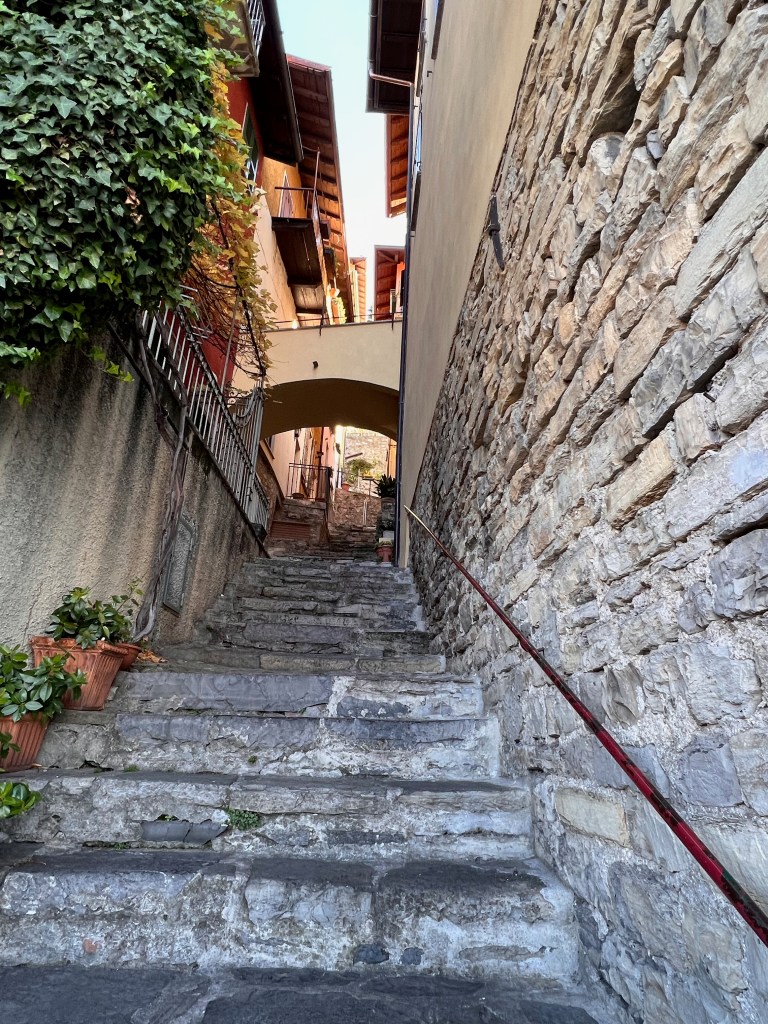
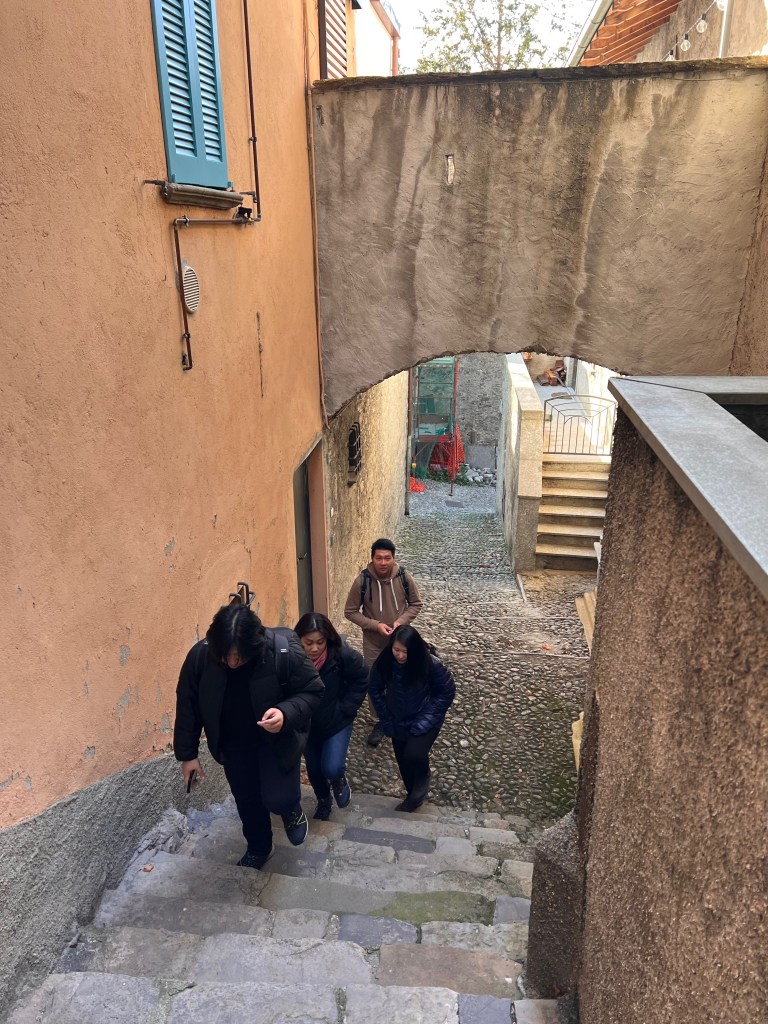
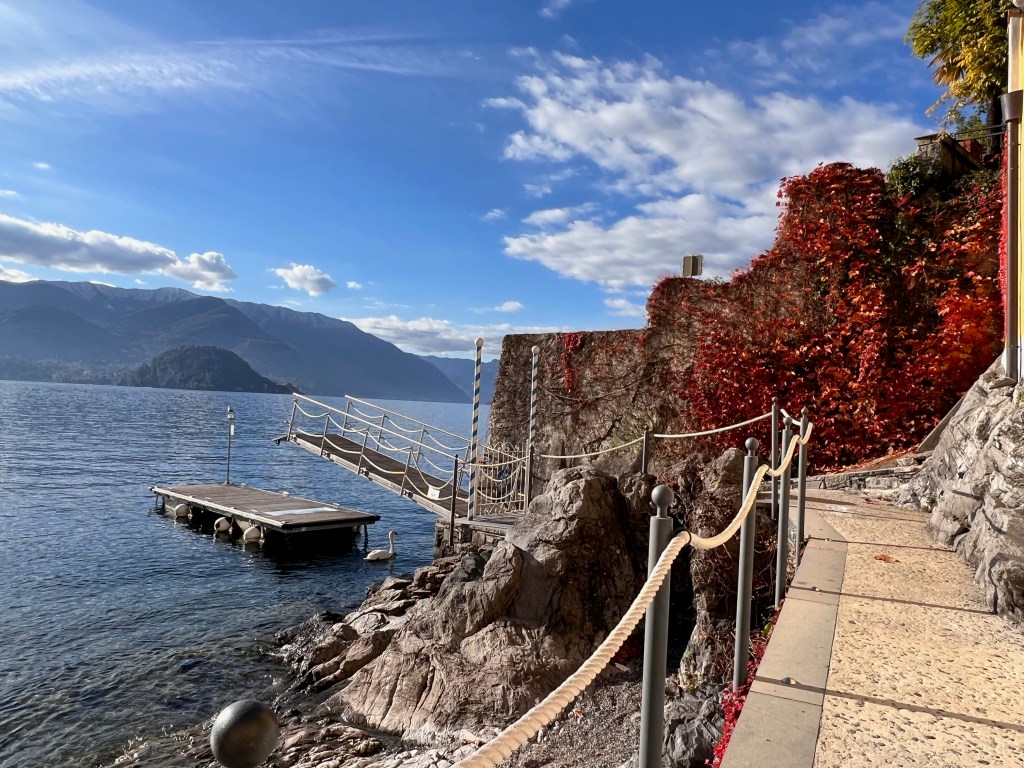
We continued our early morning stroll along the coast and arrived at Passerella sul lago, also known affectionately as the Lover’s way. This walkway offers visitors an unobstructed view of the lake and the houses by the lake. We did not see many visitors during our visit, which also gave us great photo-op chances. We chanced upon a small playground equipped with a slide and a strategically placed swing to face Lake Como. One of my friends immediately hopped onto the swing and admired the tranquil scenery before her eyes. Pass the swing, we spotted a marina of some sort, and there do not to be any more pavements that would lead us further. So we made a U-turn and headed inland towards Cheisea di San Giorgio. As we walked past some shops, we passed by earlier and took a gelato break (partly to use their toilet). One gelato later, we continued our walk towards the church. We took the staircase beside the gelateria, hoping it would lead us to where we wanted to go. Walking along the walkways between buildings was very pleasant. At times, Google Maps led us back towards the lake, which gave us a different perspective of Varenna and Lake Como.

Varenna is dotted with colourful buildings.

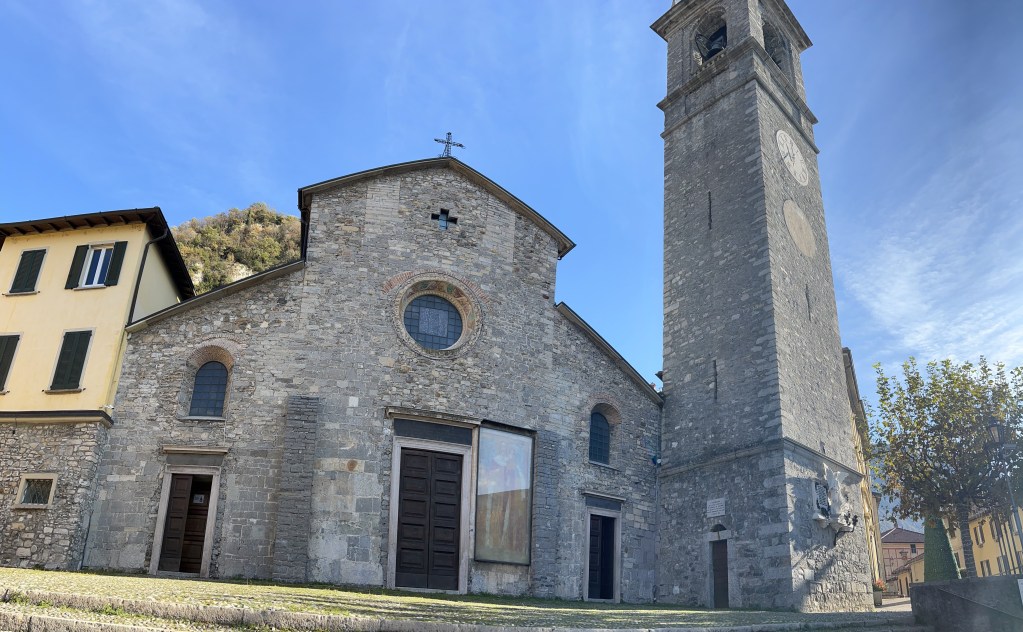
After some more ups and downs through the snaking pathway, the pavement suddenly opens up to a bigger road. We walked along the road and spotted Cheisea di San Giorgio. The grey stone facade of the church gave it a medieval look. A simple hut-shaped building accompanied by a small bell tower, this 700-year-old church exudes a rustic charm. This is the only church in Varenna (we did not see any other churches along the way). We did not enter the church as the oversized wooden main doors were closed during our visit. At this point, my friends asked where we were heading next. I had plans to visit Castello di Vezio which would offer us some great views of Lake Como and Varenna. However, Google Maps suggested the castle was temporarily closed. We decided not to risk investing extra time walking to the castle and finding it closed. Instead, we headed back to the ferry station and prepared to head to the next village in Lake Como. It took us another 15 minutes of walking to reach the ferry station. After getting our tickets, the friendly staff informed us that the next ferry to Bellagio would only leave in the next hour. Since we had some time to kill, we decided to have lunch in a restaurant next to the ferry station.
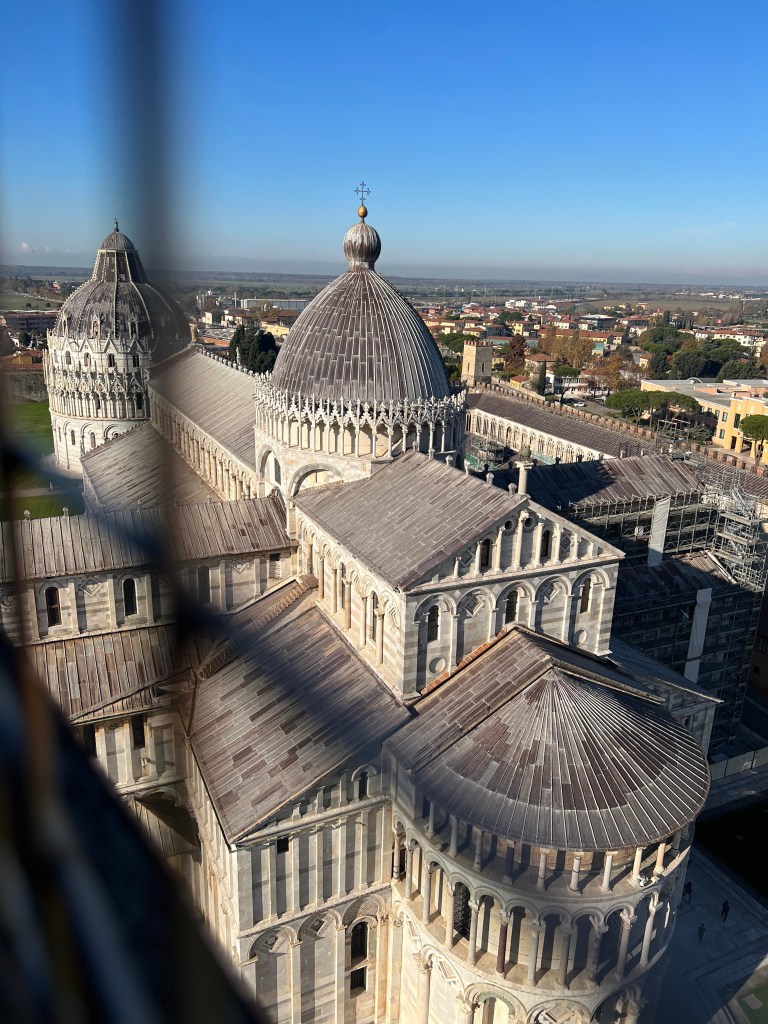
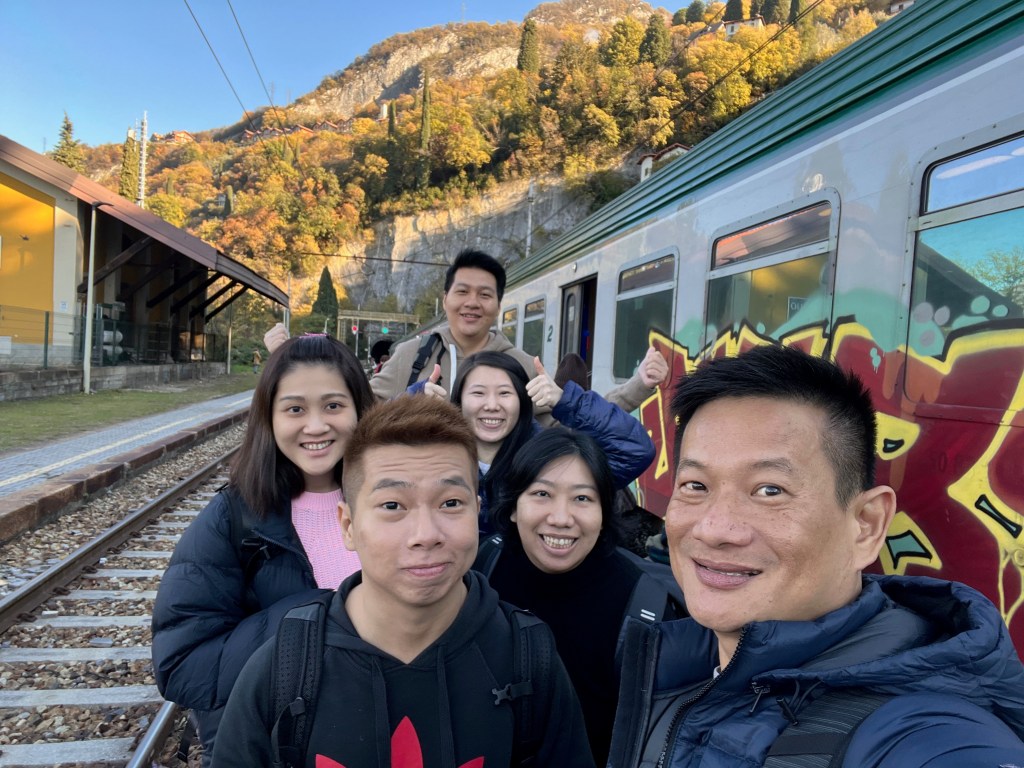
Wefie with Lake Como in Varenna

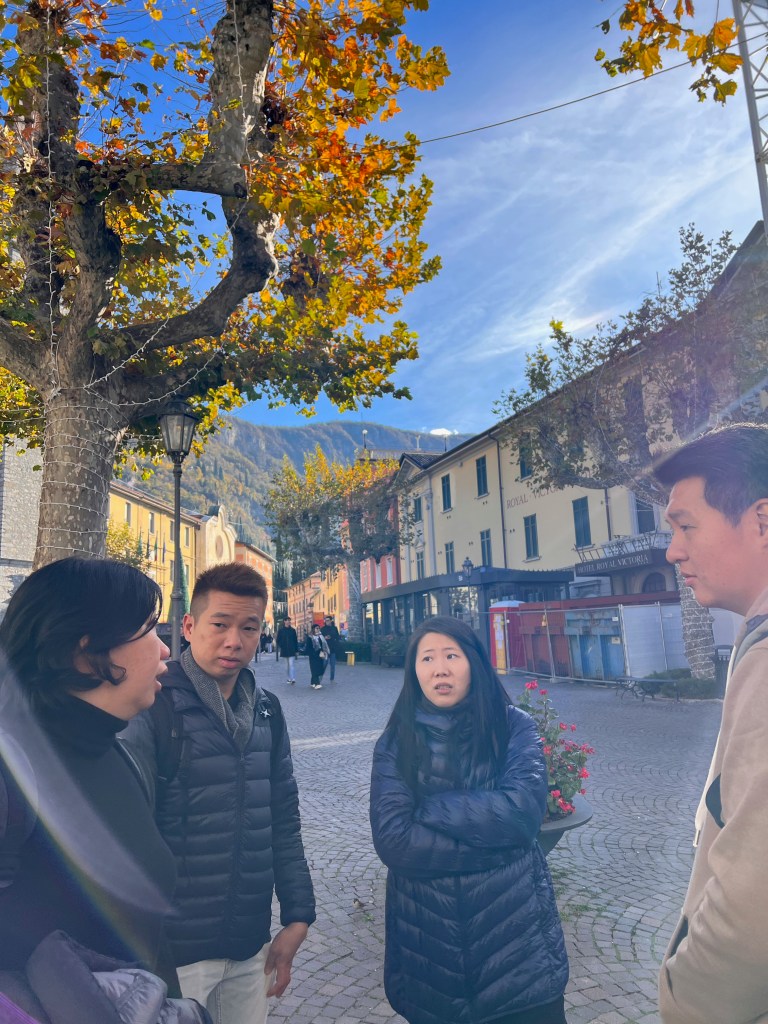
Meeting or gossiping in the town centre of Varenna.

Bellagio

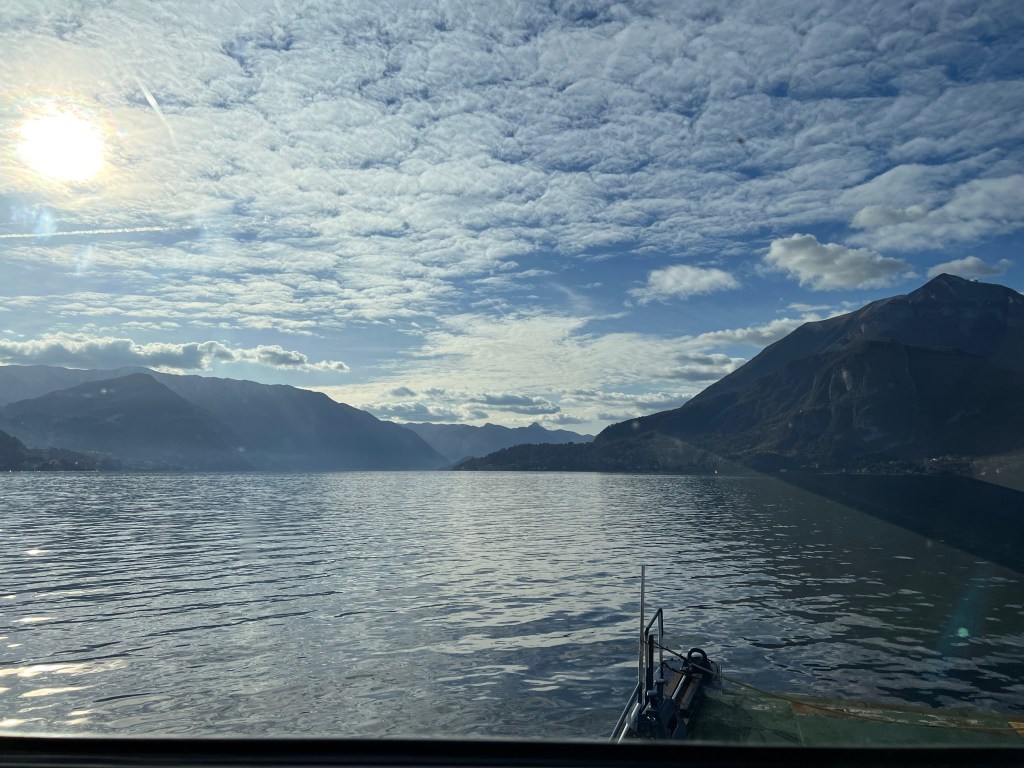
The ferry ride to Bellagio took about 25 mins from Varenna. We got front-row seats on the ferry, allowing us to take in the beautiful and tranquil scenery this part of Lake Como offers. As we were approaching Bellagio, we could see some differences between Bellagio and Varenna. The buildings in Bellagio are mainly painted in yellow and white, which is duller compared to the vibrant-coloured buildings in Varenna. These buildings seem to congregate mainly at the harbourfront, with a few on the hills behind the harbour, making this town look compact. There were more visitors at Bellagio compared to Varenna. Several restaurants with outdoor alfresco settings occupy the key real estate of the pier front, allowing visitors to enjoy the mountainous scenery as they dine. We would have dined here if not for our lunch in Varenna. From the pier, we can see Bellagio felt more enclosed by mountains, with a small waterway peeking right around the corner.

Our ferry approaching Bellagio

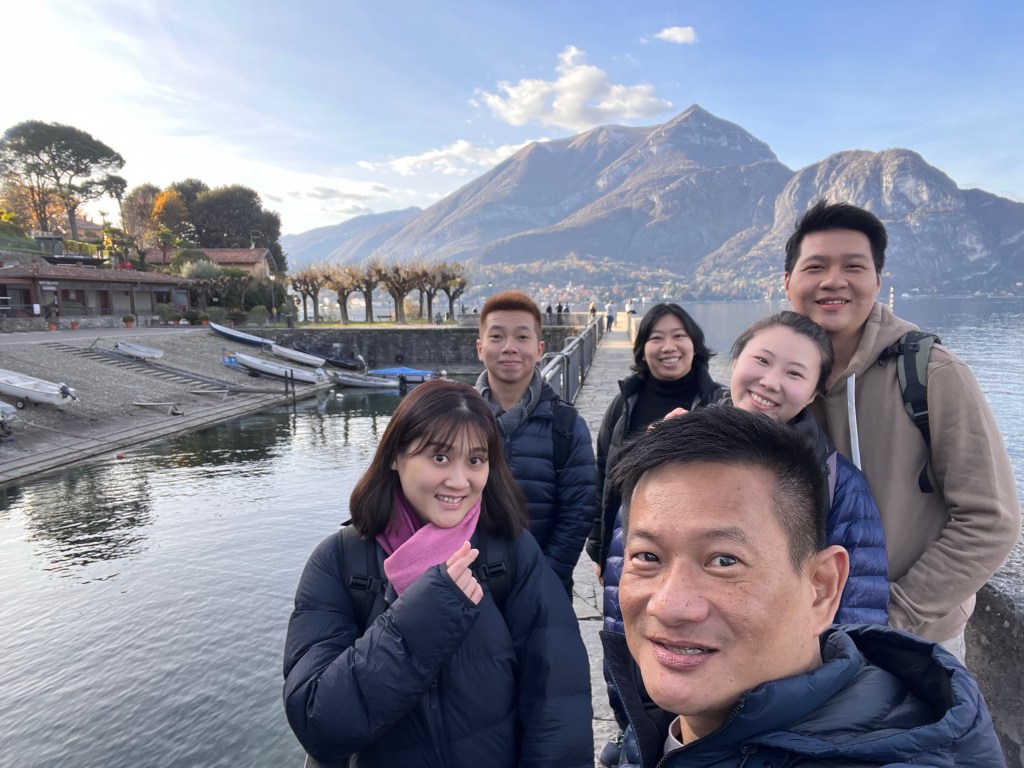
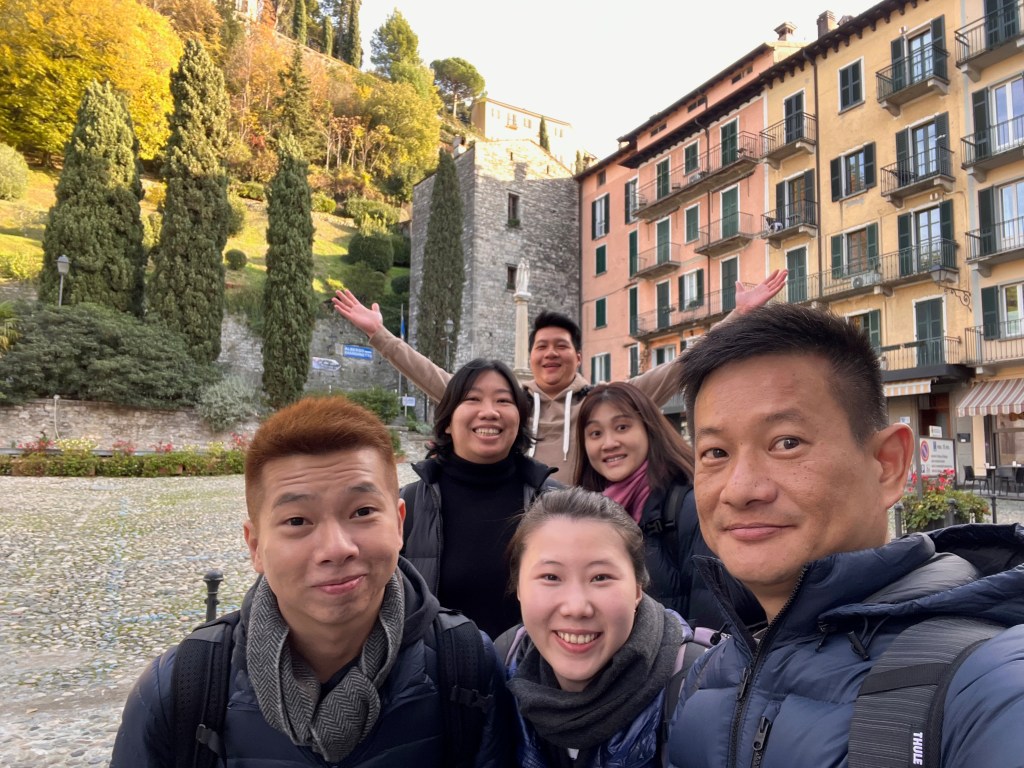
Wefie at Bellagio after disembarking from the ferry

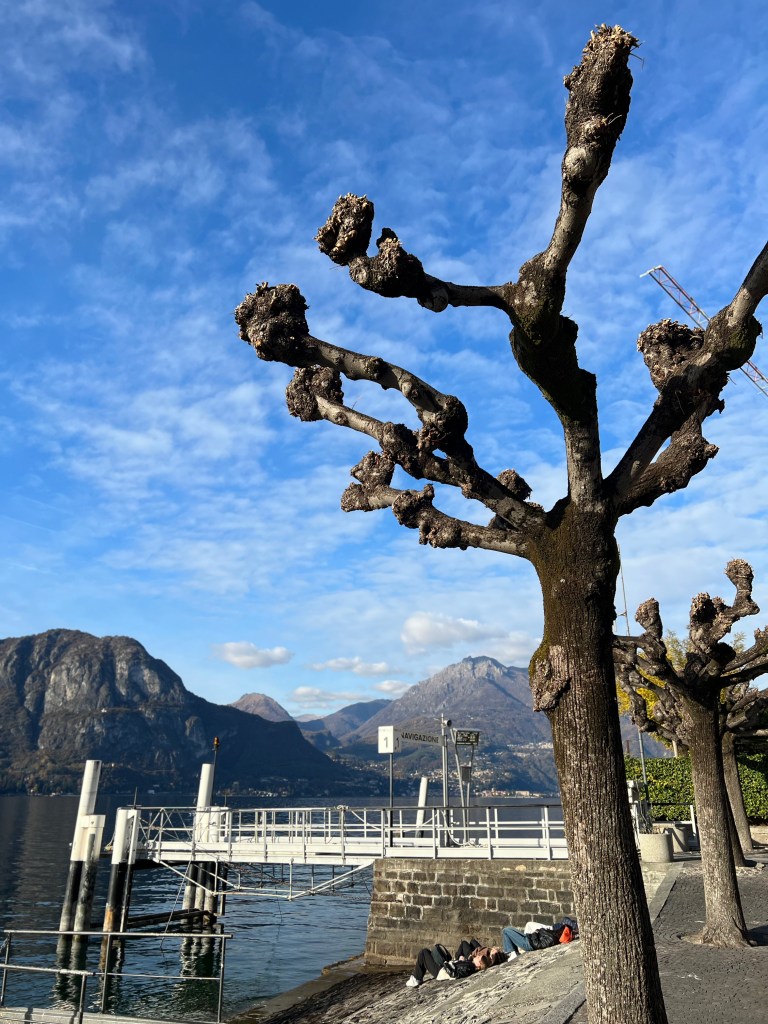
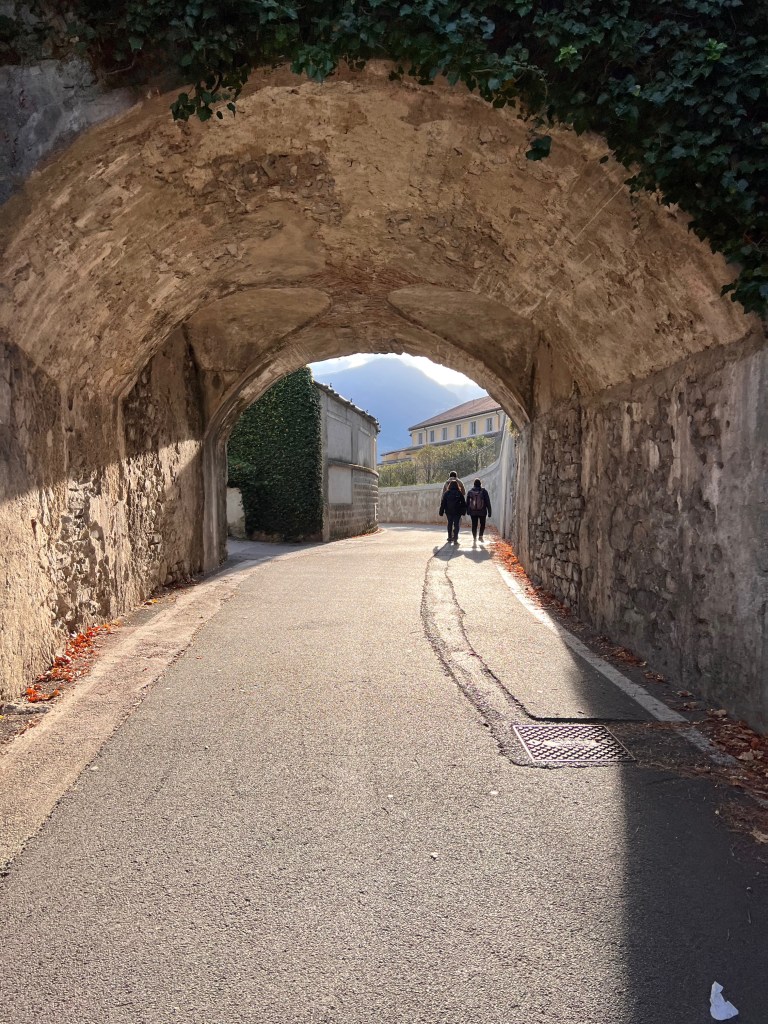
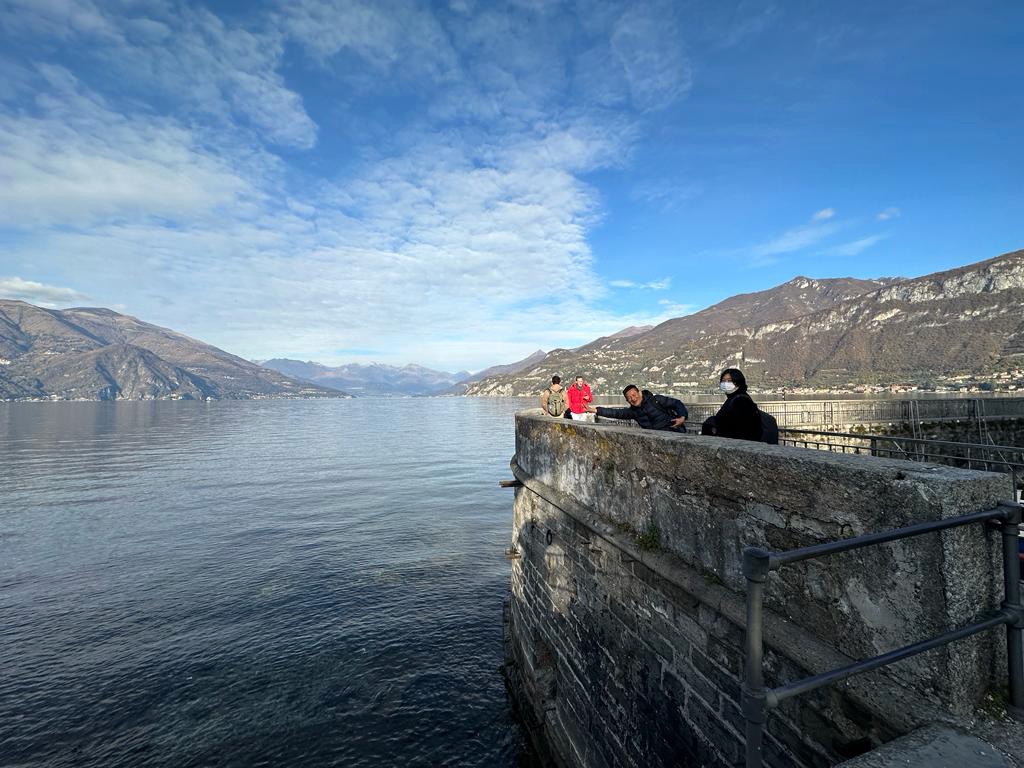
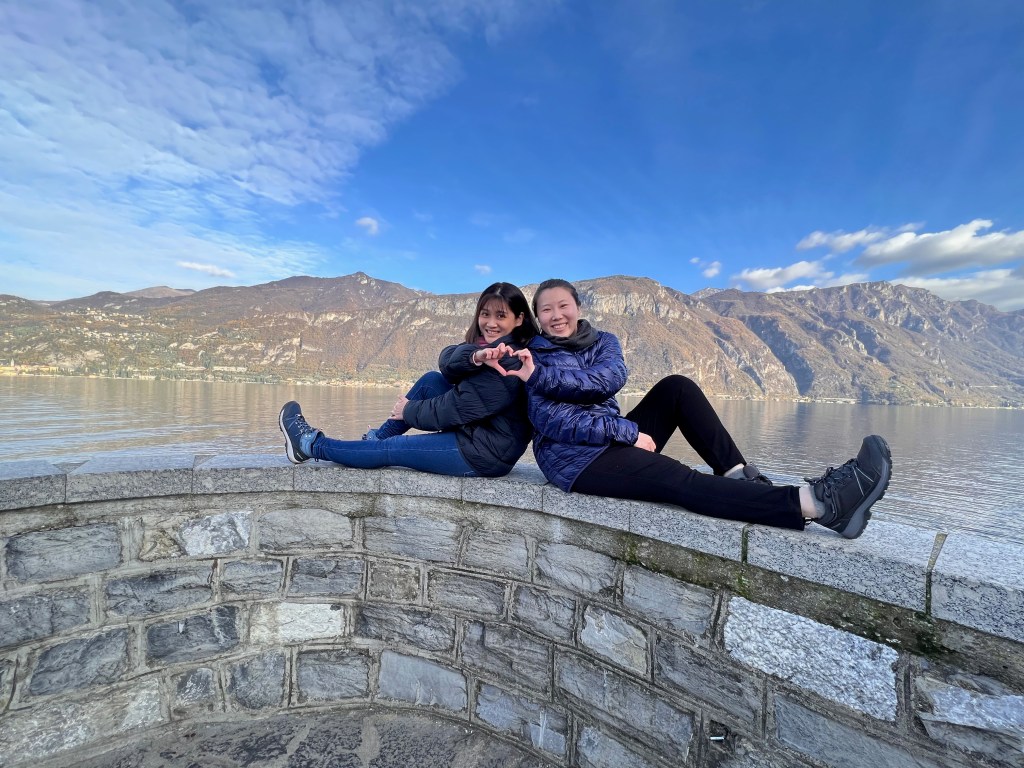
For us to get a better grasp of the time we had in Bellagio and to be able to reach Brunate before sunset, we went around finding out the next time for the fast ferry to Como. Two types of ferries ply between Bellagio and Como, the fast ferry takes around 37 mins, and the slower ferry takes around 1 hour 11 minutes. In the interest of time, we wanted to catch the fast ferry for Como. The ferry for Como leaves from a different pier from where we just alighted. We were greeted by an unmanned ticket booth with a piece of A4 paper sticking on the window of the ticket booth that stated “siesta”. There were ferry schedules pasted on the ticket booth window, and from there, we found out that the next ferry leaves for Como in 45 minutes. We waited a little longer for someone to appear so we could get our ferry tickets. After some wait later, we thought it would be a waste of time to continue waiting. With the time we had left, we could only visit Punta Spartivento, a breakwater on the northern end of the town about 8 minutes from the ferry station. As we walked towards Punta Spartivento, the scene turned from rows of shops (mainly occupying the harbour area) into residential villas. The bustling harbour front with restaurants and shops welcoming visitors’ tourist dollars turned into a tranquil village. The crowd gets thinner the further we peel away from the pier. The absence of cars on the road makes walking in Bellagio very pleasant.
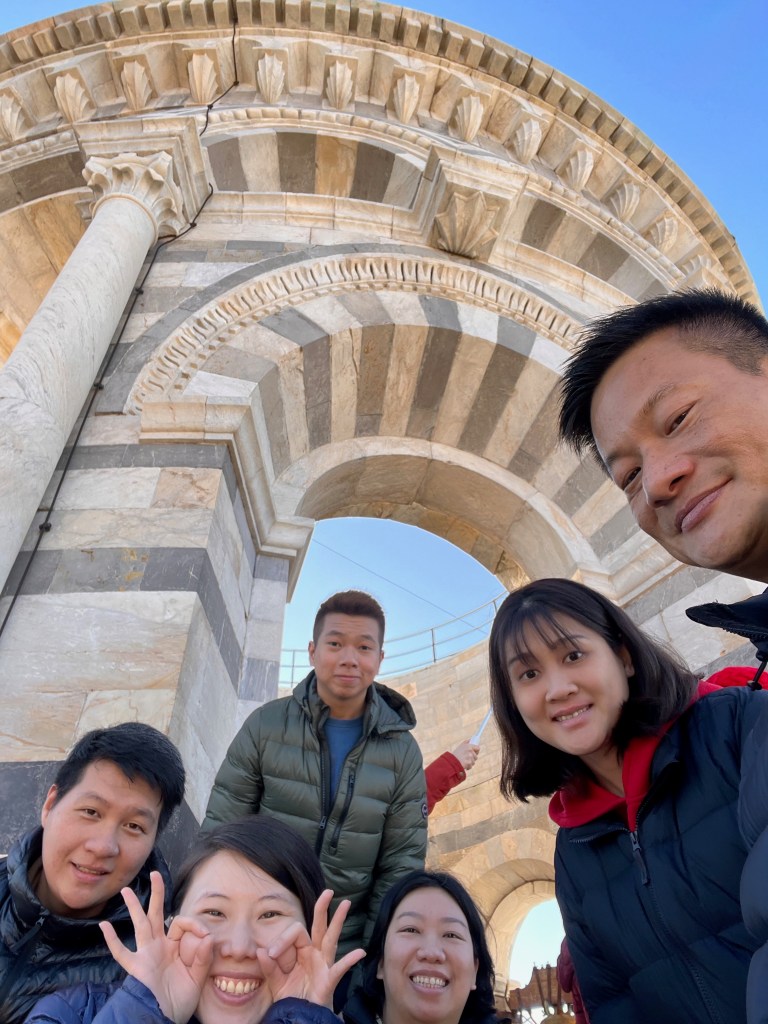
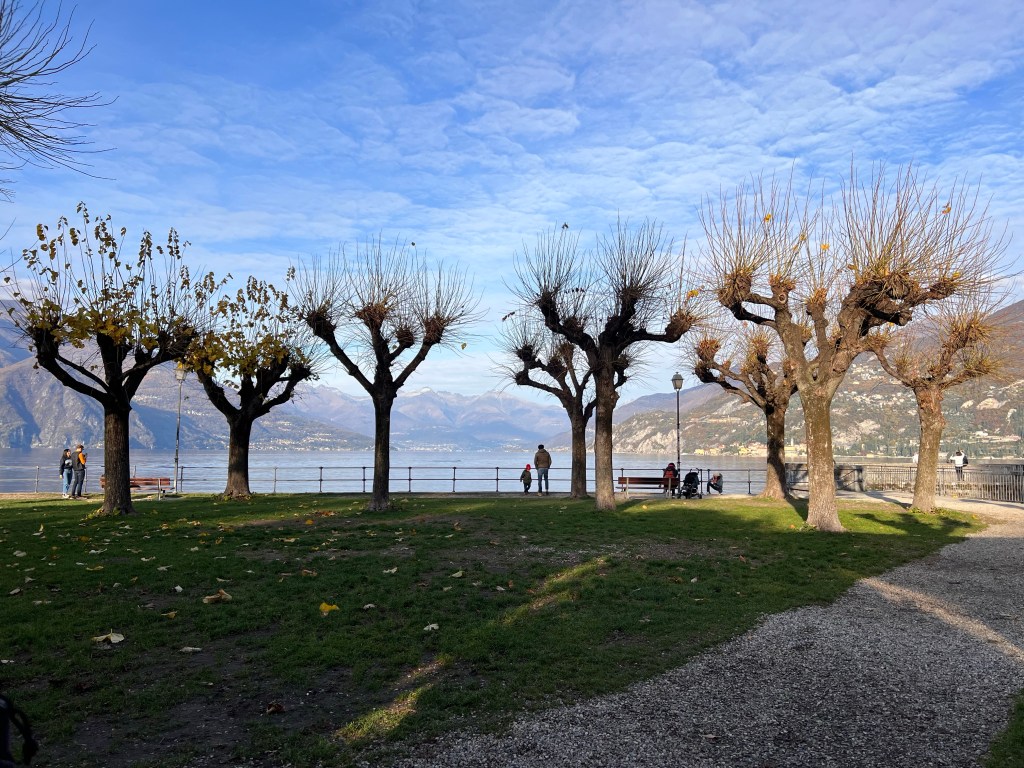
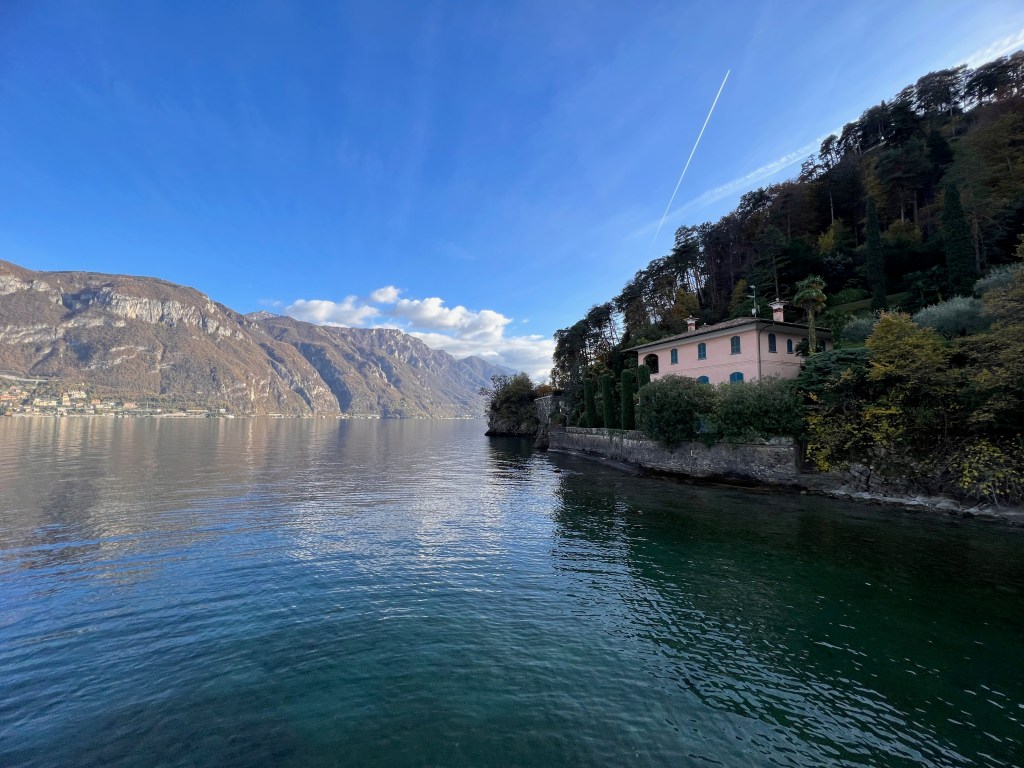
A gravel pavement marked the entrance to Punta Spartivento. A small park marked the end of the gravel road. The park is decked with benches dotting the coast, providing visitors with incredible views of the mountains and the lake, an ideal scenic spot for picnicking. Punto Spartivento is a breakwater. We walked to the end of the breakwater, where an amazing unobstructed view of the mountains sitting quietly behind the lake waters awaited us. A lone pink building rests amongst a forest of trees on the edge of Bellagio, facing the calm waters of Lake Como, draped by mountains in the far background under the blue sky lightly decorated by thin clouds, making the scene feel peaceful. We got busy snapping pictures of the awesome view. A while later, it is time for us to head back to the pier.

The picturesque Punta Spartivento

Taking one last wefie before we leave Punta Spartivento

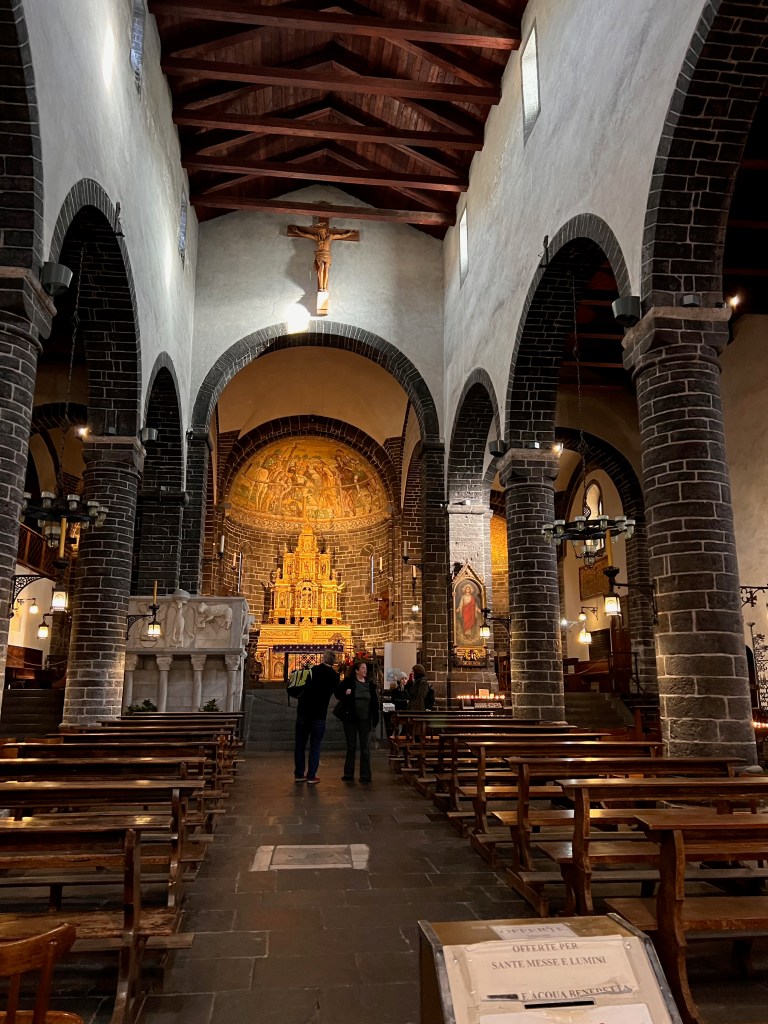
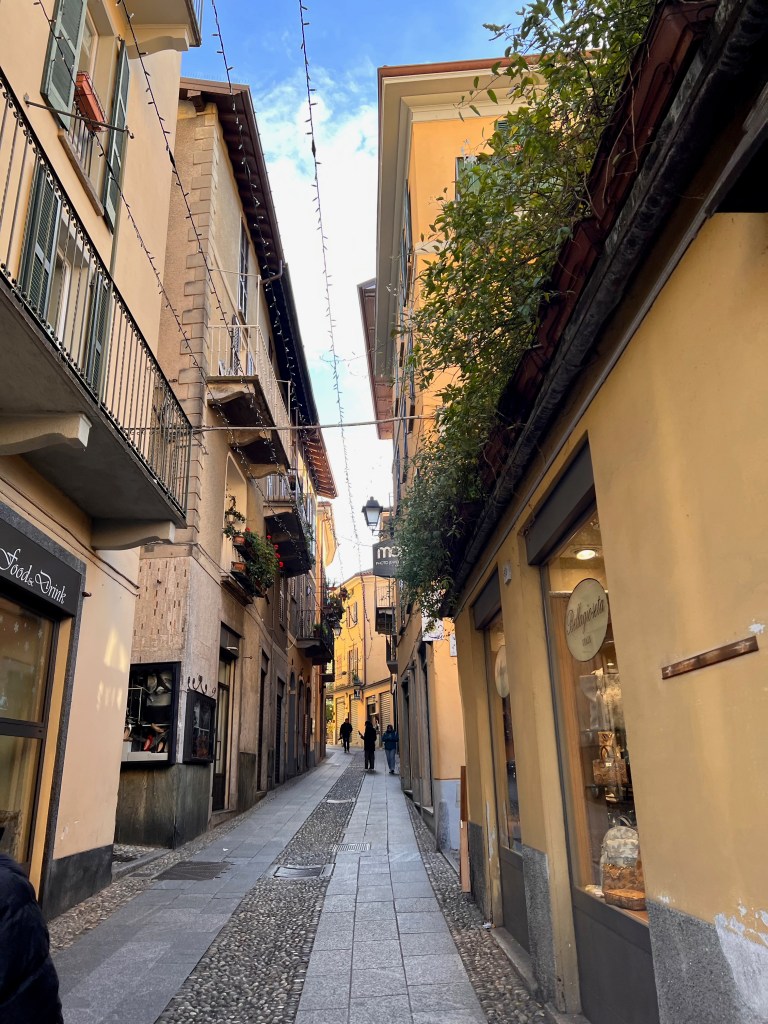
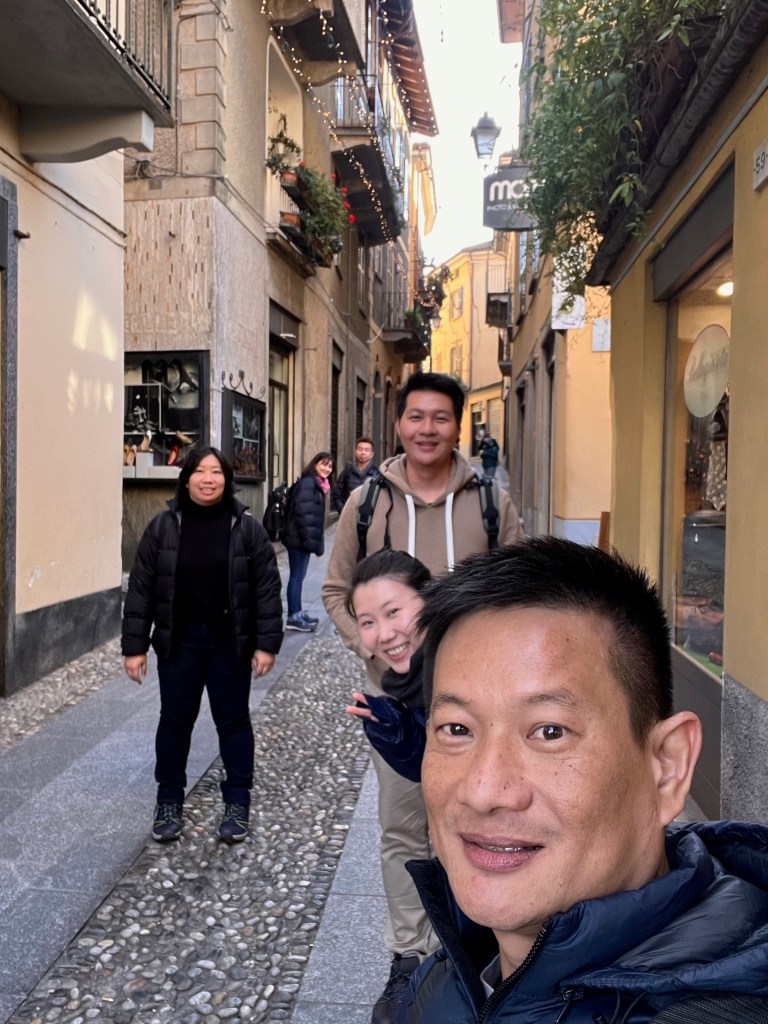
We traced the same path we came from to get back to the pier. Nearing the piers, we came across a split road leading up into some buildings while the other led down towards the pier. We wanted to experience walking amongst the narrow pavements in Bellagio with shops flanking both sides, so we took the upper road instead. I knew we could get to the pier using one of the stairways at some point. The first building we spotted from the split road was Basilica di San Giacomo, a small brick-built church in the middle of residential buildings. As the door was open, we popped in for a quick peek. Though modest, the church houses a painting of the Deposition and a large statue of the Dead Christ. We continued our walk to the pier as the ferry was about to depart in 10 minutes. We walked through the maze of cobble pavements, occasionally stopping for a quick picture. When we reached the pier, the ticket booth was again unmanned, and the ferry was about to leave. Lucky for us, the ferry crew allowed us to board and purchase tickets. We spent the next 45 mins on the uneventful ferry ride towards Como.

Como

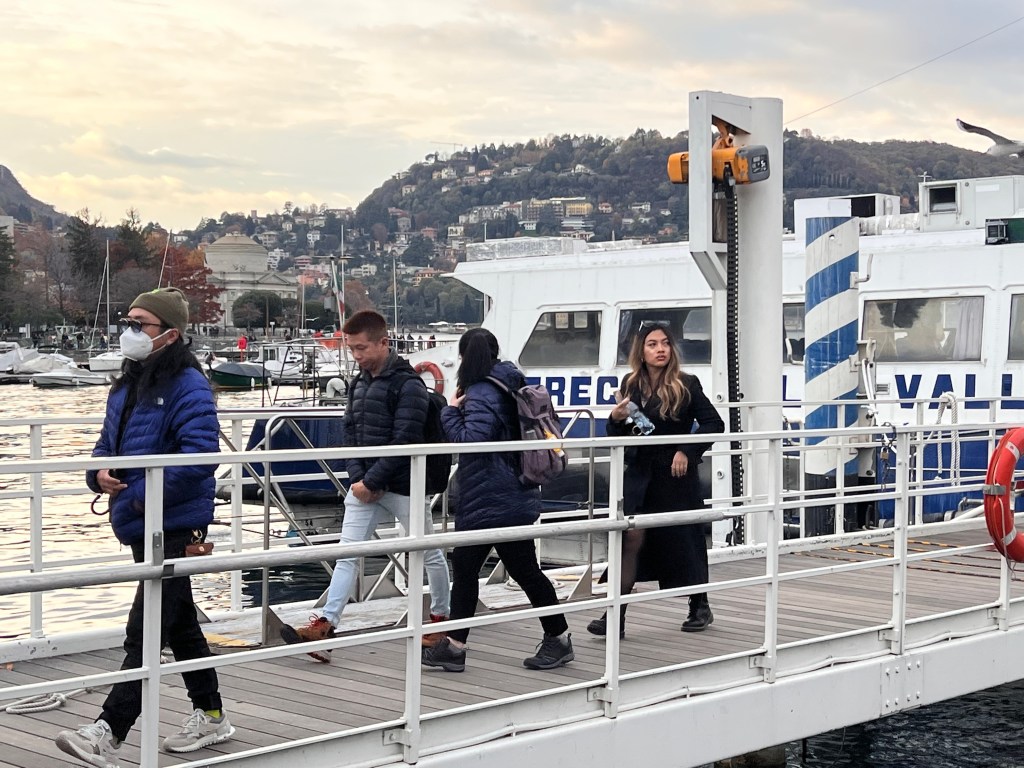
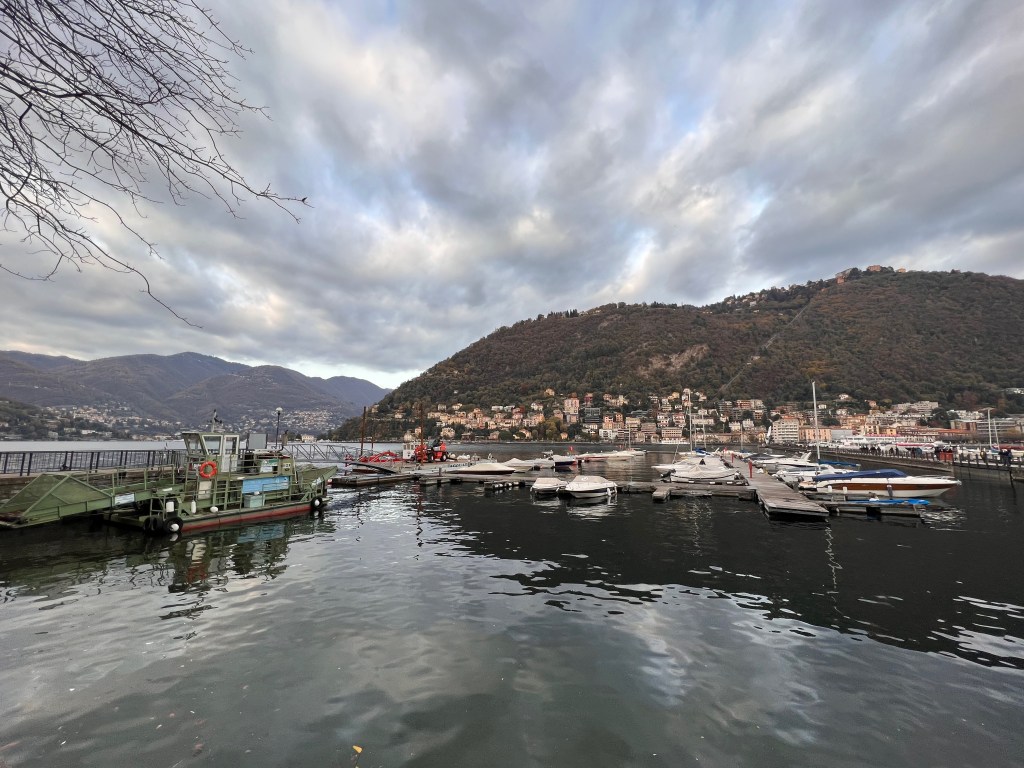
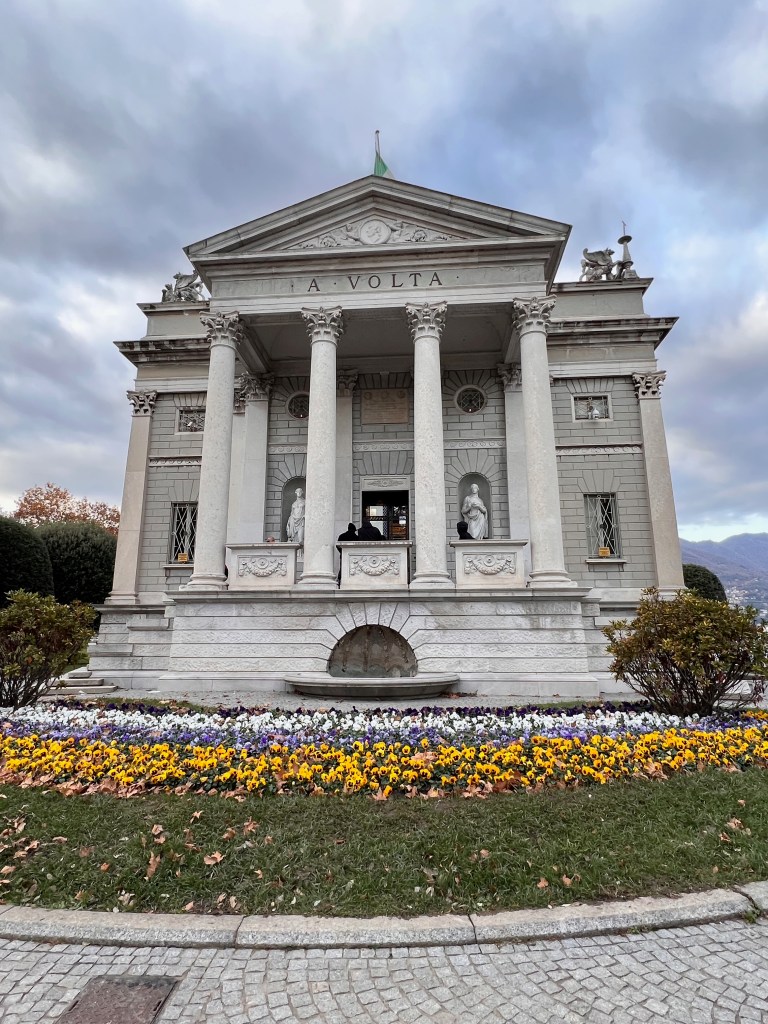
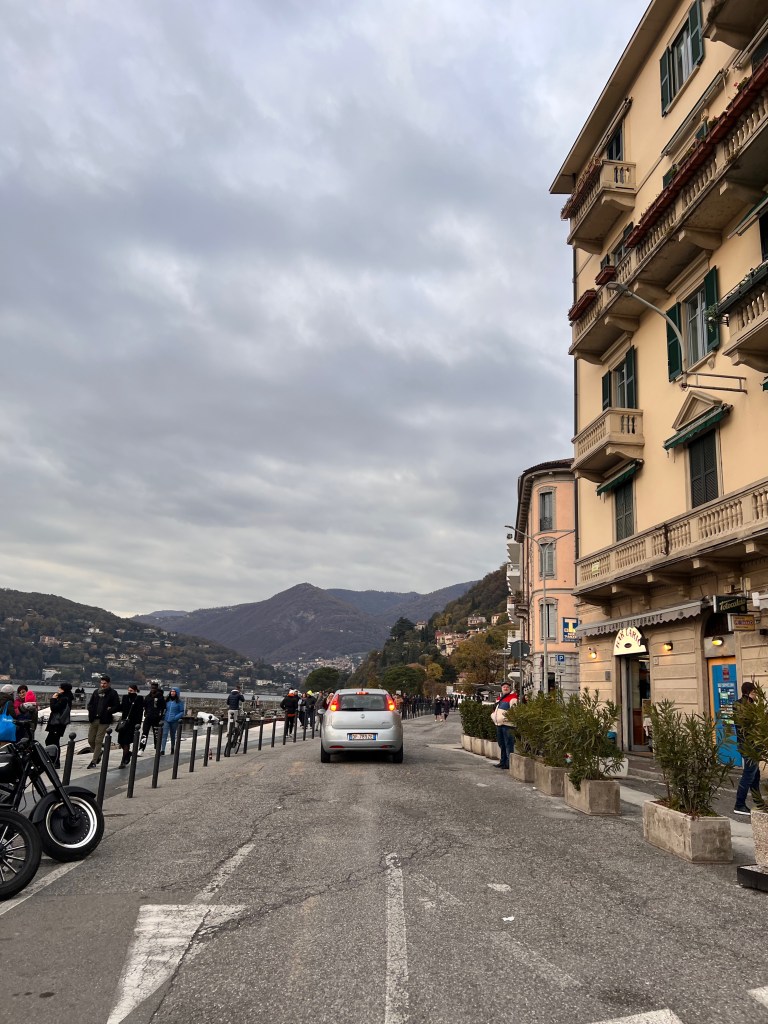
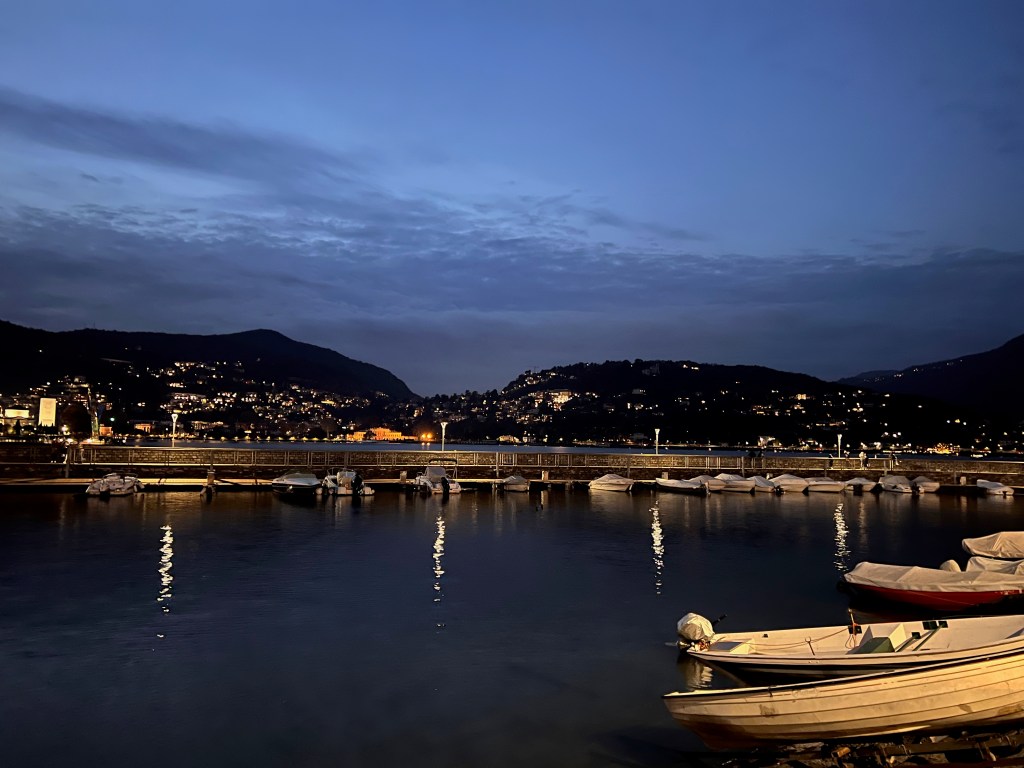
We reached Como 1 hour before sunset. Como is the innermost town on the southern end of Lake Como’s western branch, surrounded by hills. From the pier, we could hardly see the vastness of Lake Como as we had in Varenna and Bellagio. The town is bustling with activities such as Christmas markets and funfairs. Como was built by the Romans, serving as an important communication point between Rome and its northern territories. When we got off the ferry, I could spot one of the attractions we would visit. The small Tempio Valtiano sits by the shore of Como overlooking Lake Como and is dedicated to the inventor of the electric battery. At the entrance to the temple, we learnt there was an entrance fee to enter the temple. We thought the scale of the temple was not worth the price of the fee and decided to skip the temple. We took a quick wefie in front of the temple and headed for the funicular that would take us to Brunate for a scenic view of Lake Como and sunset.

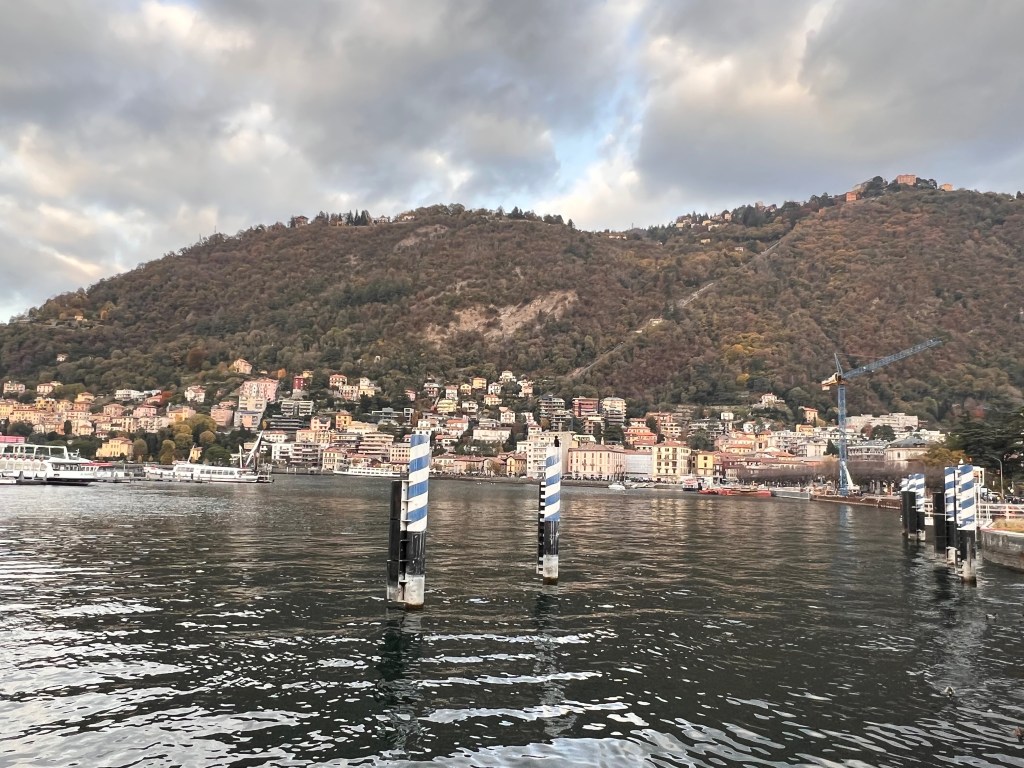
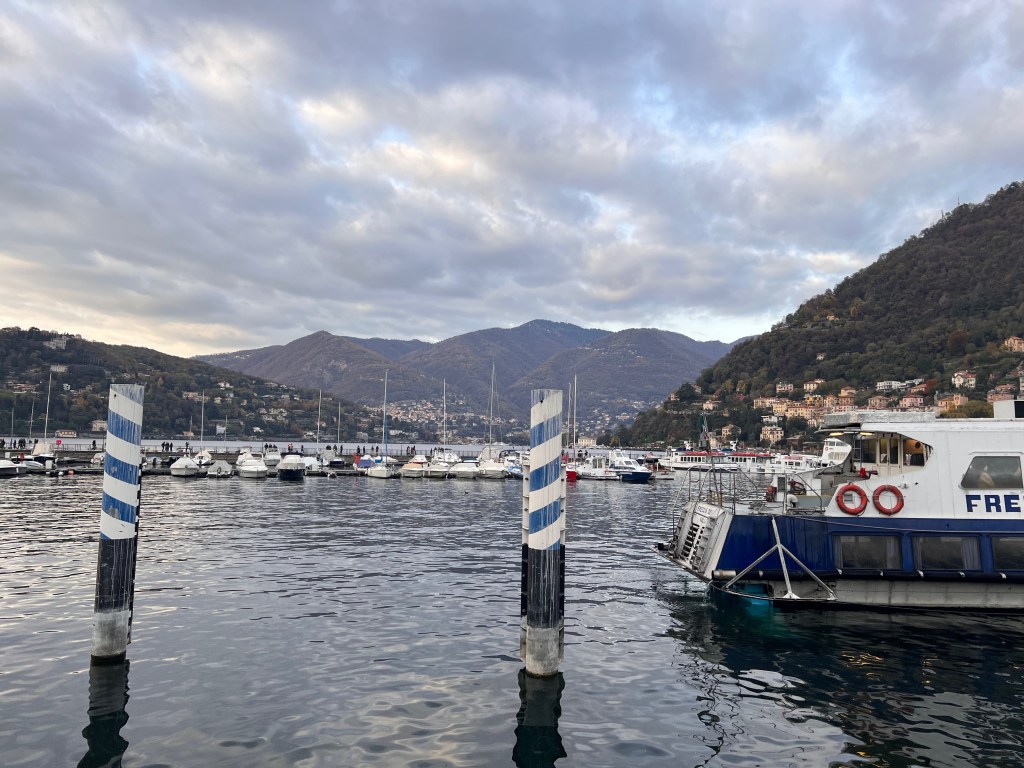
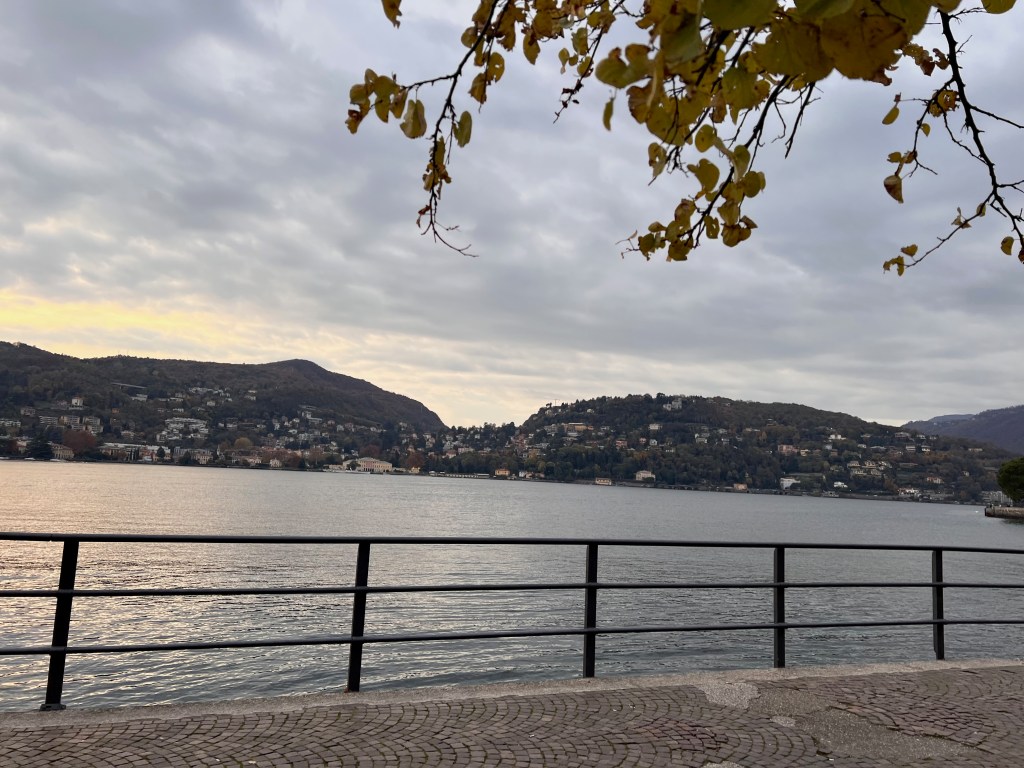
Lake Como viewed from Como.

Along the way, we spotted a bridge-like structure that suggested that we could cut across the lake to reach the station. We walked along the bridge and were soon met with a sculpture and a dead end. This is where we realised we had wasted 5 mins walking on the bridge that led to nowhere except for the Life Electric Sculpture, a huge piece of metallic sculpture dedicated to the inventor of electric battery. We traced back to where we came from and walked along the lakeside towards the funicular station.

Posing on the bridge that led to Life Electric Sculpture

Wefie with the Life Electric Sculpture

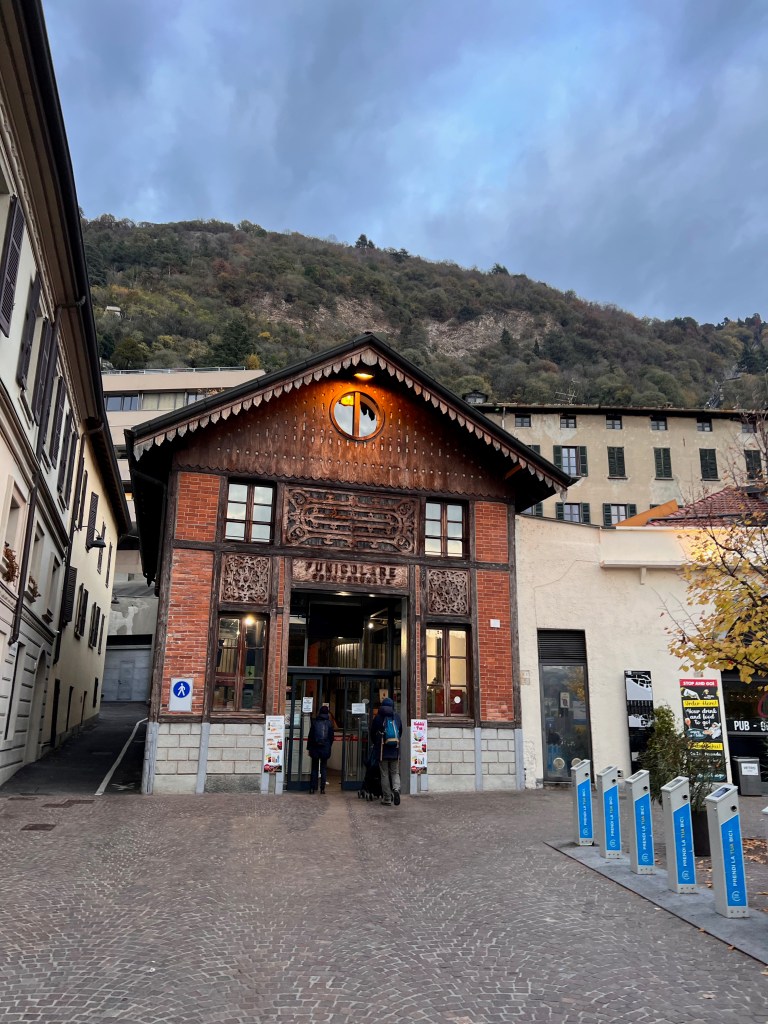
Some 15 mins later, we arrived at the funicular station. To our astonishment, the funicular was closed for maintenance till the end of November. We bumped into a family of three who was equally shocked to discover the funicular was not operational. The family told us we might still be able to get to Brunate via bus. As we spotted a bus terminal when we were walking towards the station, we decided to head there to see if anyone could point us to the bus that would take us to Brunate. We spent the next 30 mins trying to find out from locals and anyone who could point us to the right bus that could take us to Brunate. No one seemed to know how to get to Brunate from Como. Finally, we spotted a bus driver who told us there were no buses to Brunate near Como Nord Train station. By this time, the sky had turned dark, and we saw no point in getting to Brunate. We originally planned to visit Basilica di San Fedele and Piazza Vittoria, located in the heart of Como town; I guess we were too turned off by not being able to visit Brunate even to bother. We decided to head back to Milan after some retail therapy at the supermarket next to the bus terminal.

The funicular that would take us to Brunate if not for its closure

Naviglio Grande: Picking off what we left off yesterday

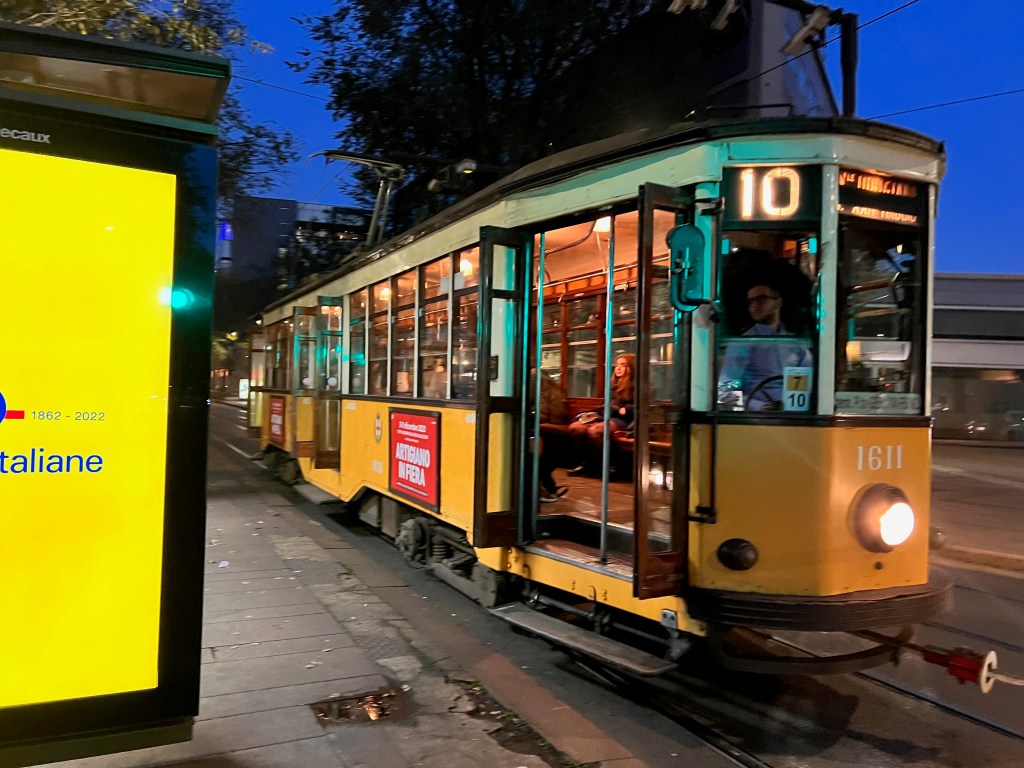
We took the next available train bound for Milan Central station. Since the night was still young, we decided to head back to the Duomo area and get some gloves to prepare for the cold weather later part of our trip. By the time we reached the Duomo area, we had learnt that most of the shops were closed or were closing. At this point, I suggested to my friends to visit Naviglio Grande via tram since we did not manage to do so the day before. So we hopped on the next tram and were happily underway. The tram passes through the city centre to a residential area. Sensing something was wrong, I took out my phone and started navigating using Google Maps. True enough, the tram service brought us further from Naviglio Grande. We got off the tram at the stop with a Metro station and took the Metro.

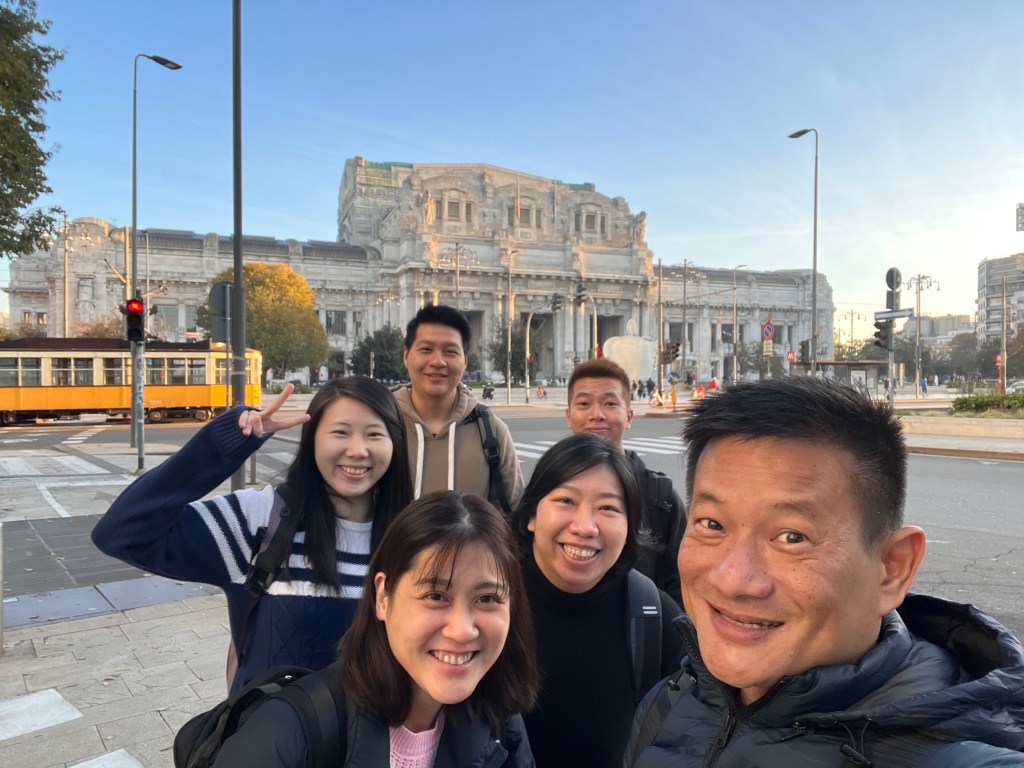
Posing a wefie somewhere in Milan

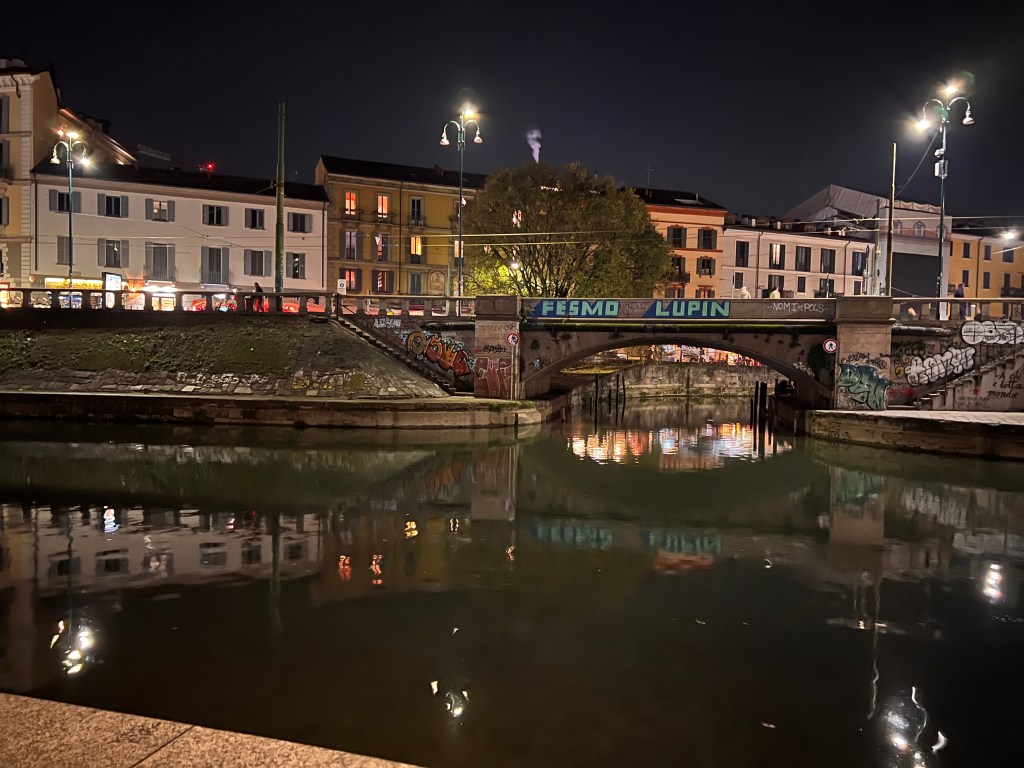
Genova FS metro station is the nearest station to Naviglio Grande. Exiting the station and after about 10 mins, we reached a body of water. We thought this was Naviglio Grande. The Milanese government created Naviglio Grande to transport marble during the construction of Duomo di Milano. My first impression of the canal was not as lively as I thought. From my research, restaurants dotted both sides of the canal bank where we could settle for dinner. So far, we only saw one eatery, and we thought there might be more eateries further down the canal. As we continued walking along the canal bank, we soon realised that is the end of the canal. I was a little disappointed that there were no restaurants where we could settle for our dinner. We ended up dining at McDonald’s. There was nothing much at Naviglio Granade; after eating, we headed back to the metro station. Walking towards the metro station, I noticed the canal split into another branch. I exclaimed to my friends, “this IS the Naviglio Grande I wanted to bring you guys to!”. By this time, we were tired even to bother walking across the road and confirm if this was the “real” Naviglio Grande. We returned to the hotel to pack our luggage for the next leg of our trip, Venice.

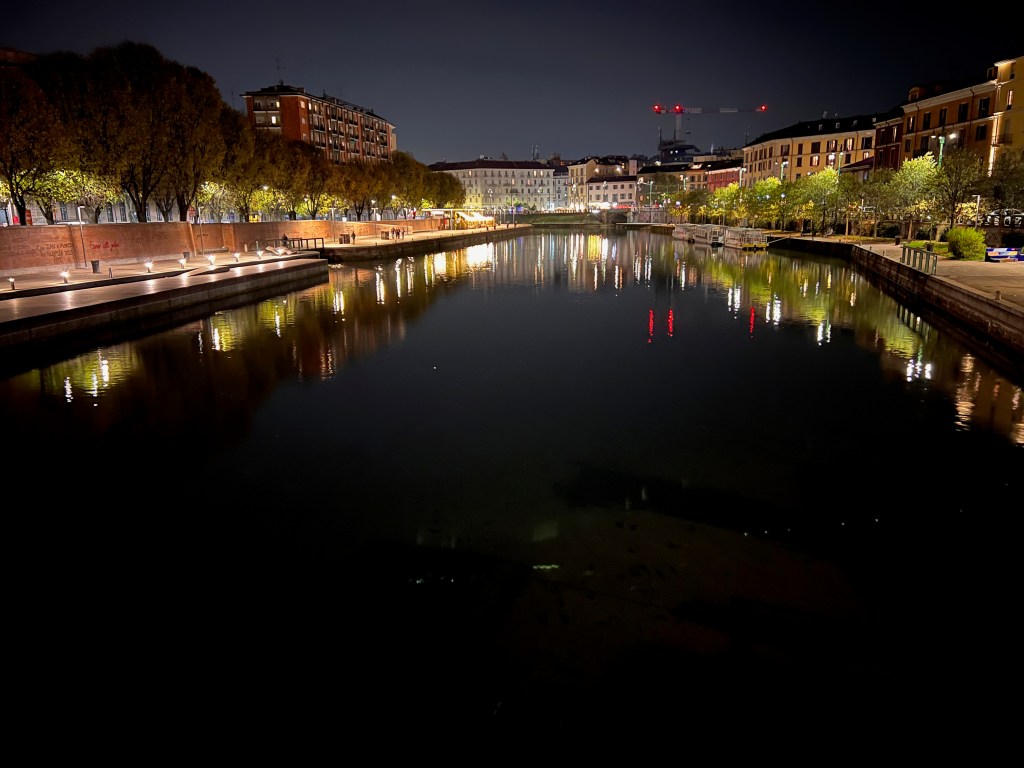
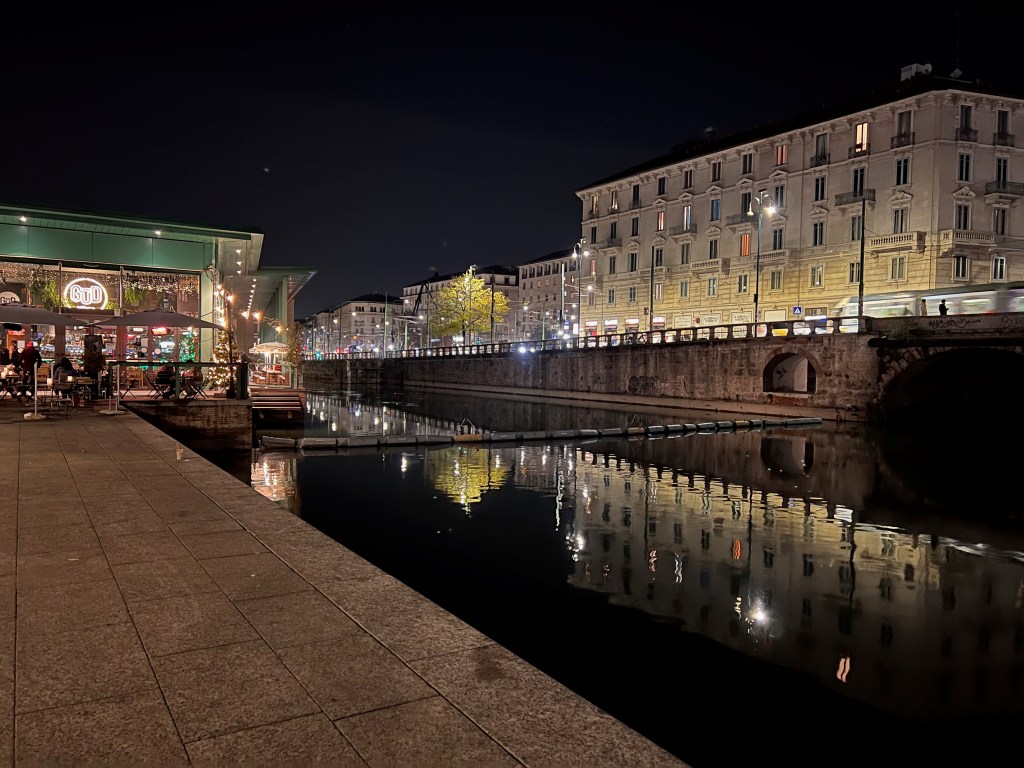
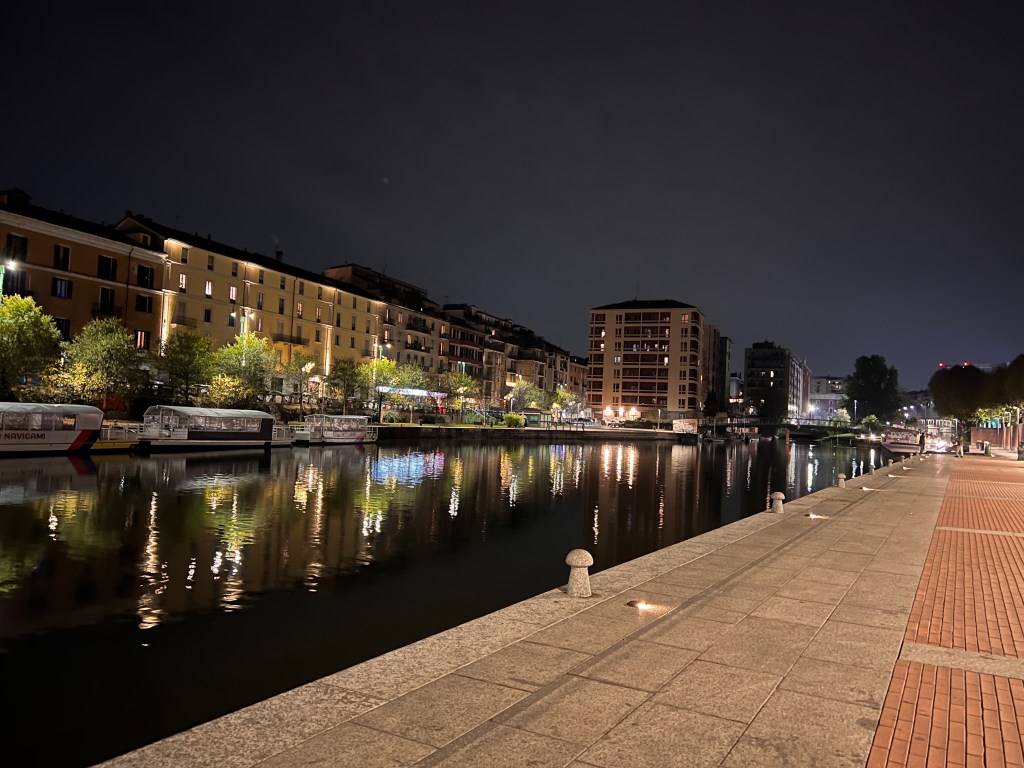
Naviglio Grande at night

The “real” Naviglio Grande is the stretch after this split.

Arco di Porta Ticinese honouring Napolean’s victory in Marengo next to Naviglio Grande

Italy Day 1 (26 Nov 22) – Climbing the Duomo Di Milano Rooftop in Milan: The Fashion Capital of the World

Planning for our Maiden Trip to Italy

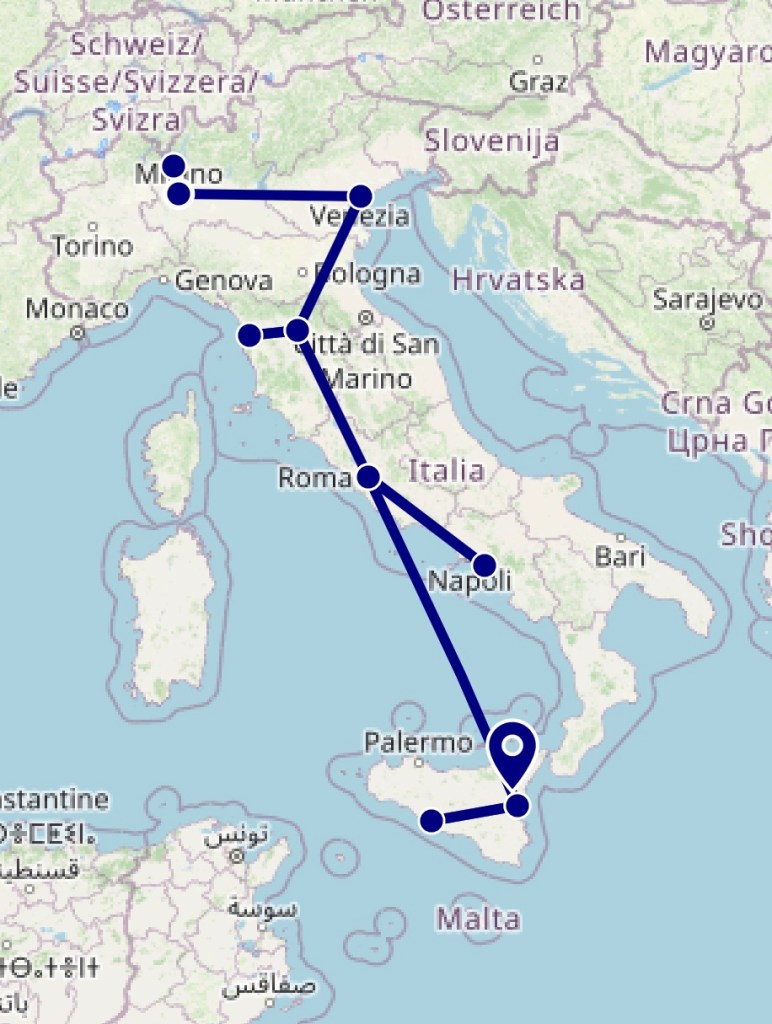
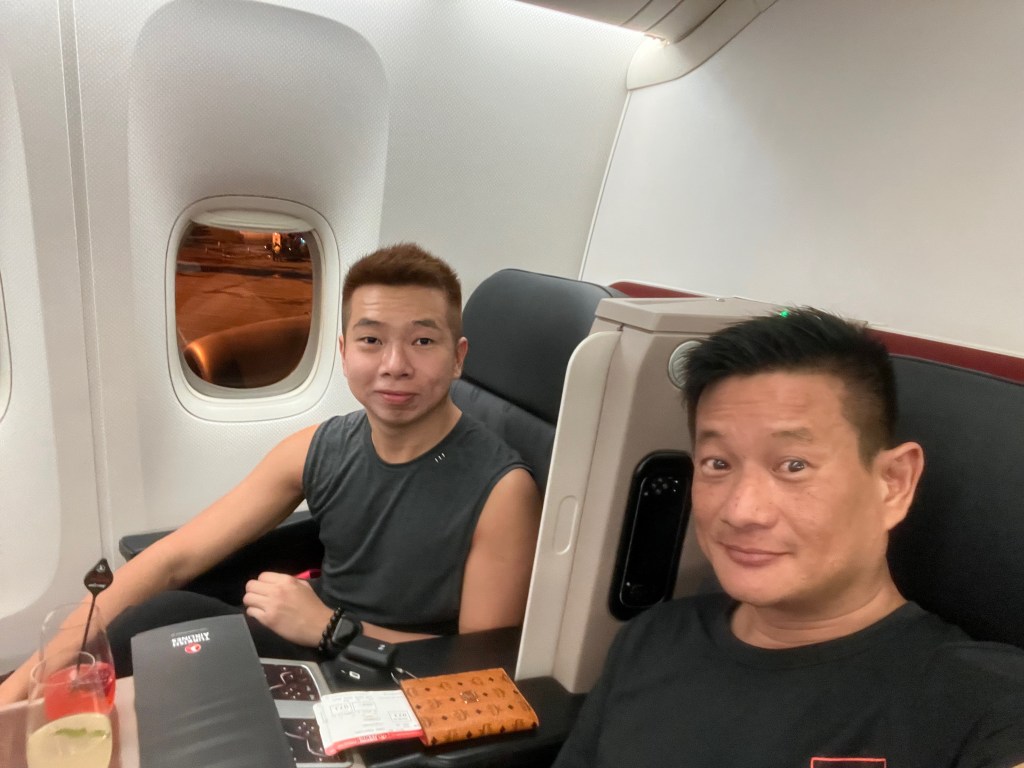
It has been two years since we embarked on a long trip overseas due to the pandemic. One of my friends asks, “where are you going to travel to at the end of the year?”. Without thinking much, I answered, “Italy?”. About ten years ago, I wanted to visit Italy and see the Colosseum. Unfortunately, I never got around to planning for that trip (yes, I got my Lonely Planet guidebook on Italy 10 years ago). We booked our air tickets in April 2022, when the world wakes up from the nightmares caused by COVID and before the Russian-Ukraine war. We managed to get our return tickets on Turkish Airlines Business Class for $2,400 per pax, which is a bargain. Return Business Class airfares from Singapore to Italy would have cost between $4,500 to $6,000. After settling the air tickets, I started to plan the places we would visit for this trip. As this was the first time we had been to Italy, we naturally wanted to see the touristy stuff. We were quite ambitious to cover from North to South for our maiden trip to Italy.

The places we will visit for our maiden trip to Italy

Flying to Milan

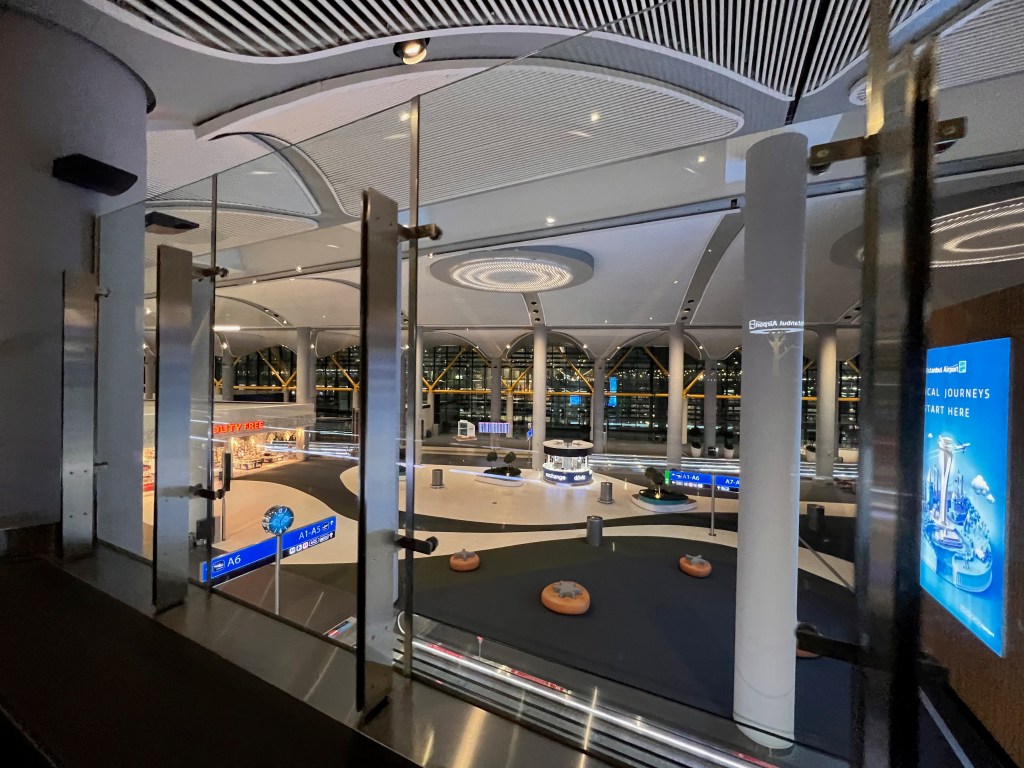
The wait for our trip seems to take forever from when we booked our tickets in April 2022. After looking forward to our trip for seven months, the day we embarked on our trip finally arrived. We met at Singapore Changi Airport Terminal 1, where Turkish Airlines operates, and boarded our flight to Milan. Our flight would take us from Singapore to Istanbul, then onward to Milan, which includes a six-hour layover at Istanbul Airport. , Although, initially, we thought the layover was a tad too long, as we disembarked from the aircraft after a 12-hour flight, we began to realise the massiveness of Istanbul Airport. The walk to the transfer gate alone took around 20 mins, and the need to clear the security at the gate can easily take up to 45 mins. During the long layover, we could stroll to the lounge for food, shower, and get some rest.

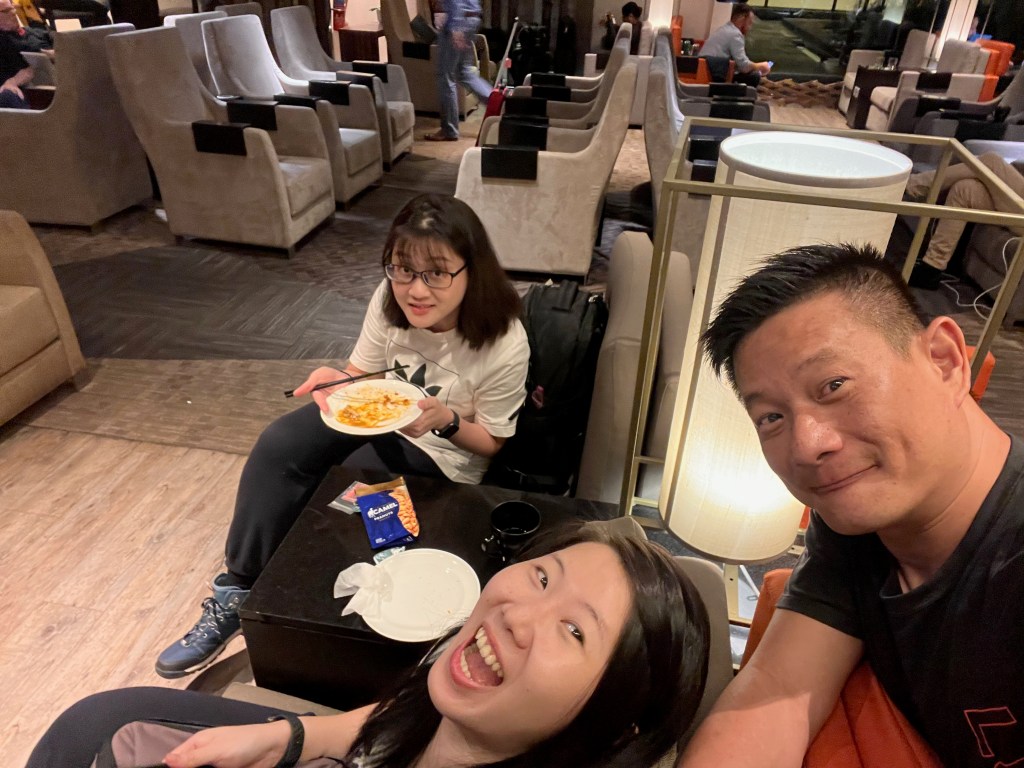
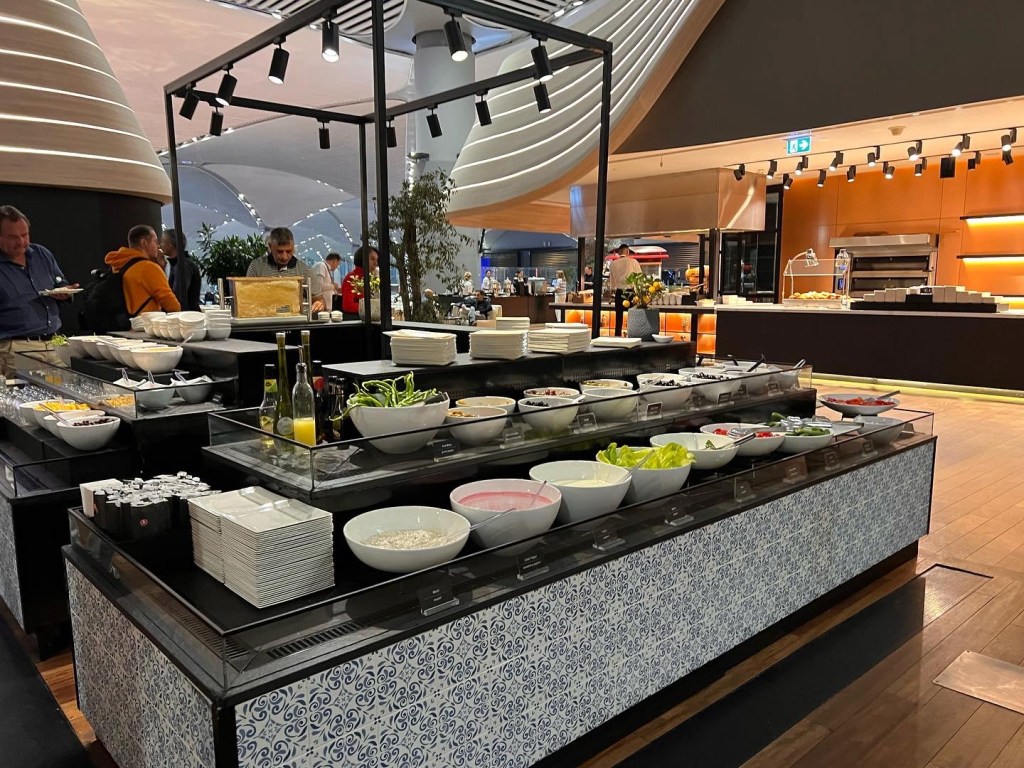
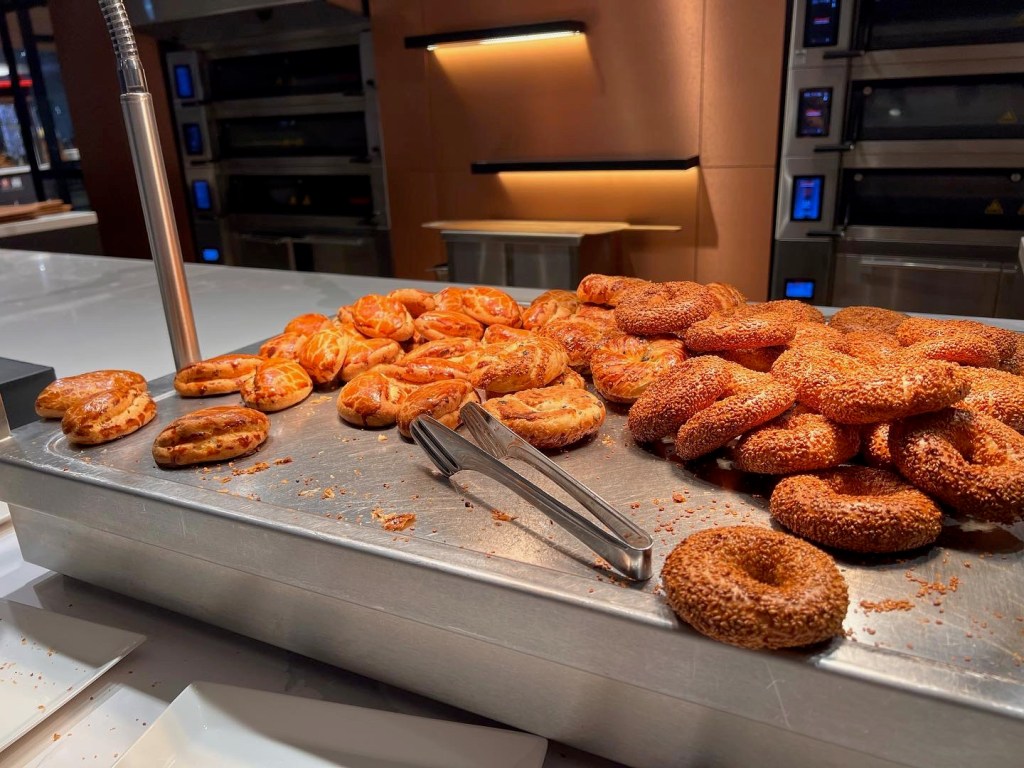
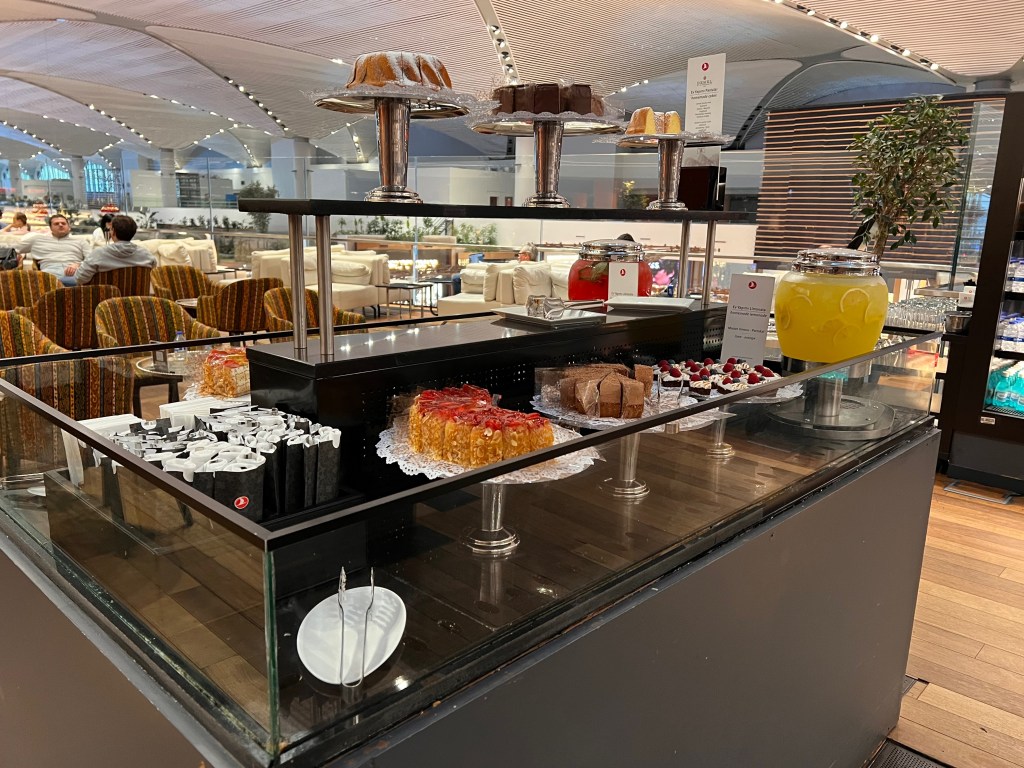
Turkish Airlines Business Class lounge was very busy in the morning. We can hardly find tables for dining. Luckily we managed to book a meeting room, accommodating the six of us. For the next three to four hours, we stuffed ourselves with the huge variety of food available at the lounge. Our next flight to Milan was scheduled to depart at around noon. Unfortunately, our flight to Milan was delayed for 30 mins, which meant we would arrive in Milan later than expected. At this point, I was glad that I booked the Duomo Di Milano rooftop climb at 4.30 pm.

Arrival at Milan

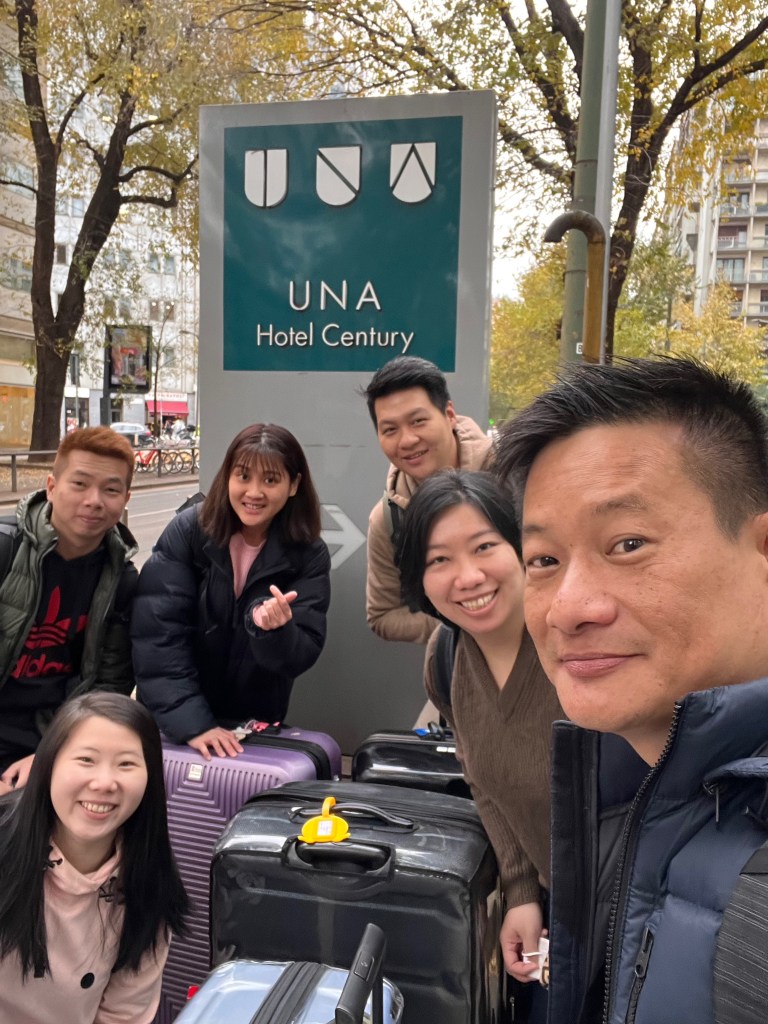
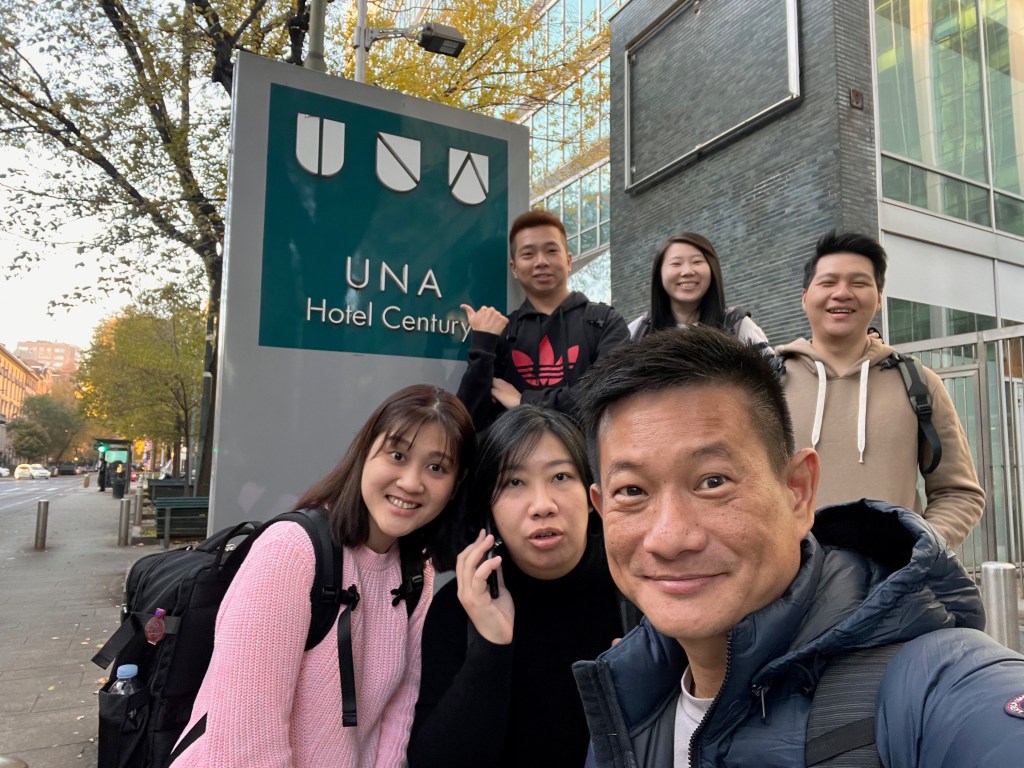
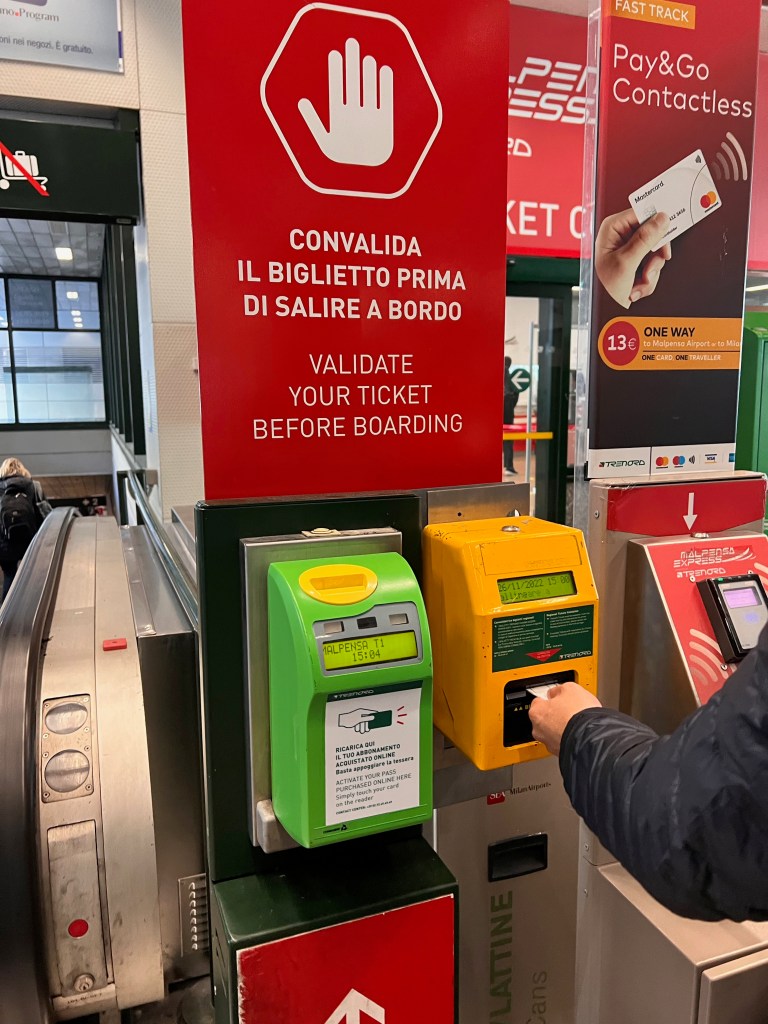
We arrived at Milan Malpensa Airport at around 2.20 pm. Custom clearance was fast as we had access to the automated gate clearance. However, our luggage took forever to arrive at the belt. We only managed to collect our luggage at 2.40 pm. I got a little worried as our time buffer for our Duomo rooftop climb was getting thinner. Moreover, we would still need around 1 hour to get to Milan Central train station and our hotel. Fortunately, directions to the train station were very well-marked. We had to follow the directions marked “Treni” to get to the station. After getting our tickets and validating them, we found the next Malpensa Express train towards Milano Centrale waiting for us. We reached Milano Centrale Station in good time. It is already 4.08 pm, and time is ticking. I whipped out my phone and started to navigate to our hotel. We were a tad lost at the moment we exited the station. Google Maps did not give us good directions to where our hotel was. After walking around the train station for 10 minutes, we finally got our bearings. We only managed to reach our hotel some 15 mins later (which was only 5 mins walk from the train station if we got our bearings right). It was already 5 pm by the time we got to our rooms; we quickly settled in and headed out for the Duomo, hoping we would still be able to access the rooftop.

Duomo Di Milano

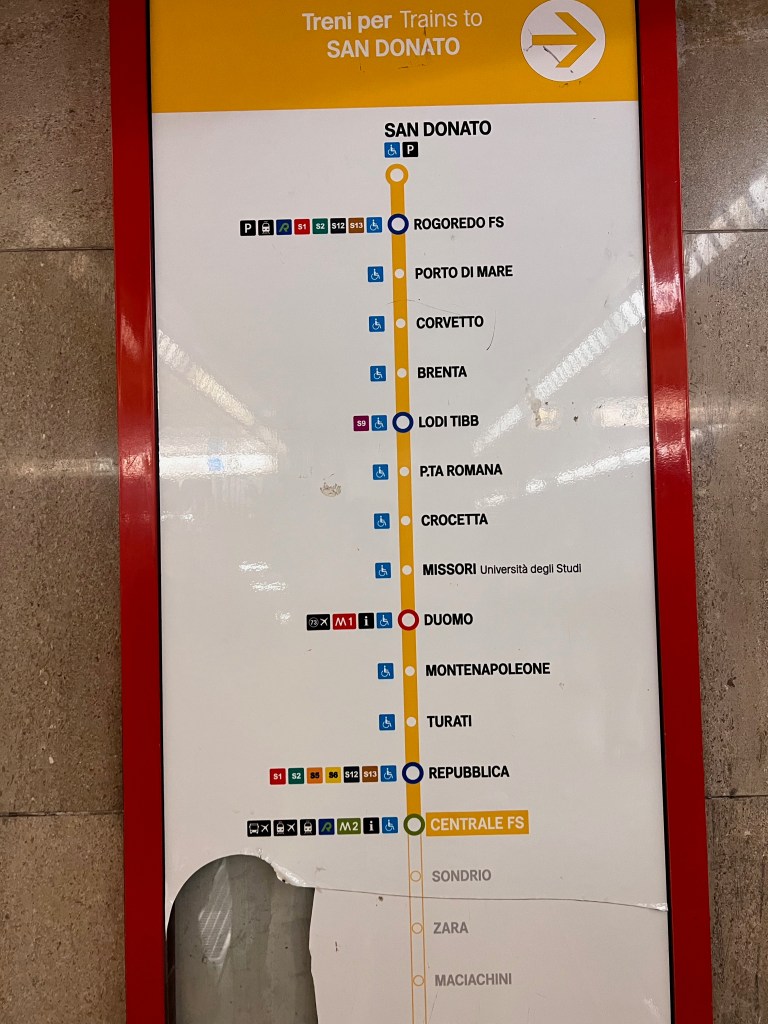
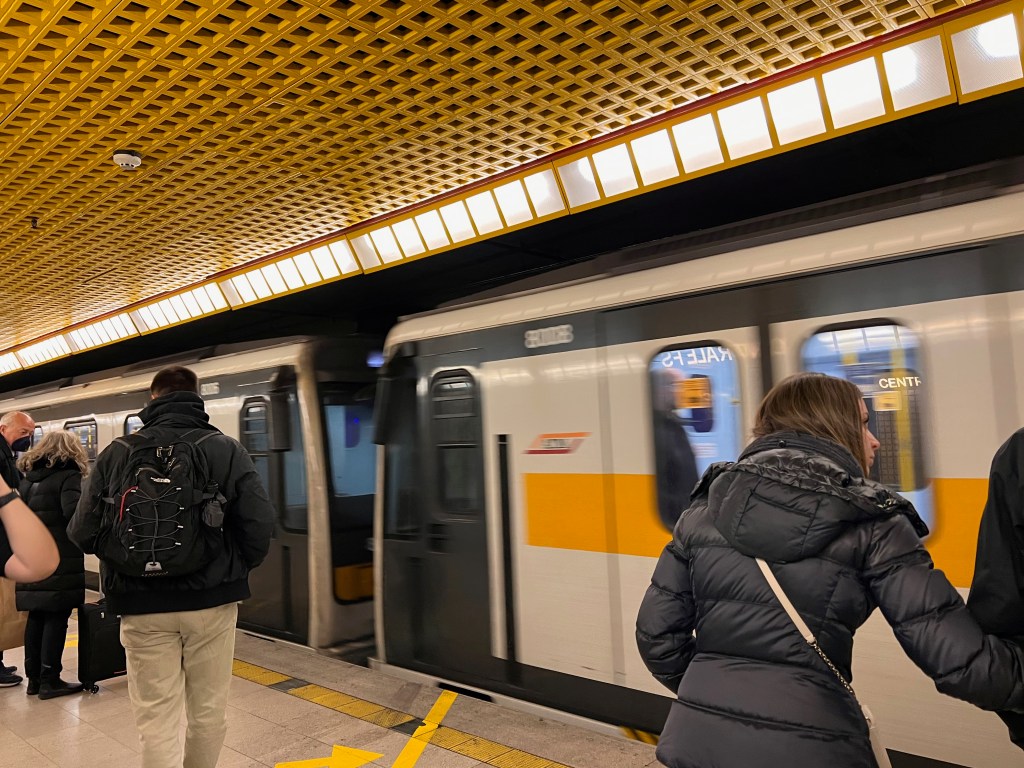
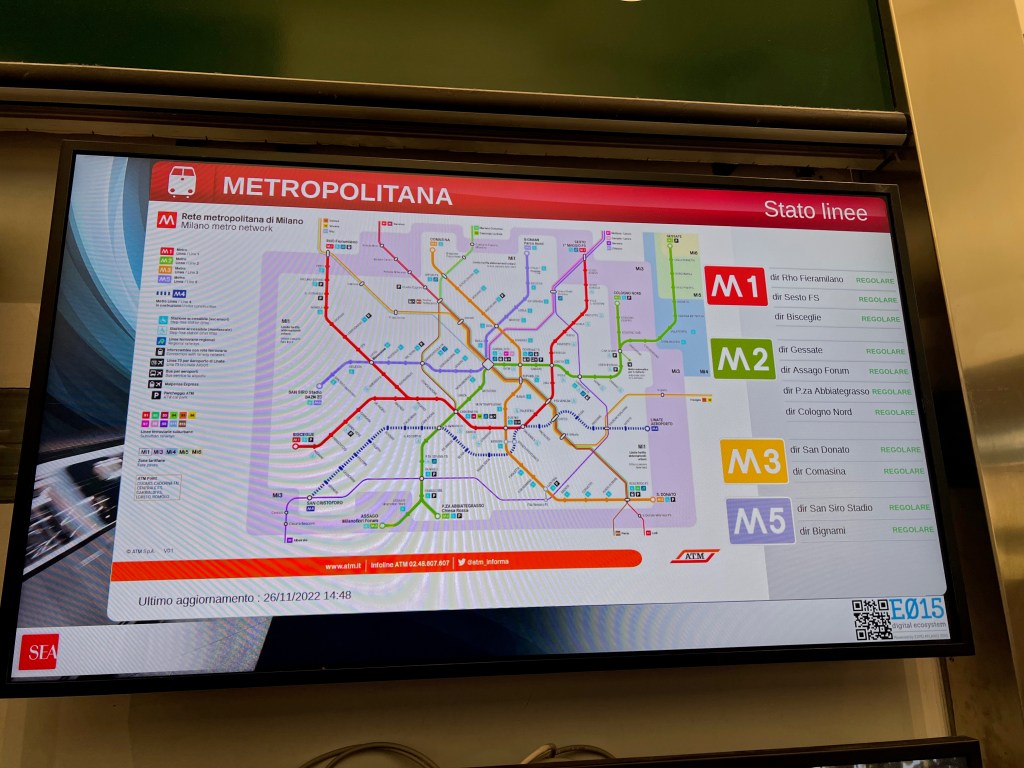
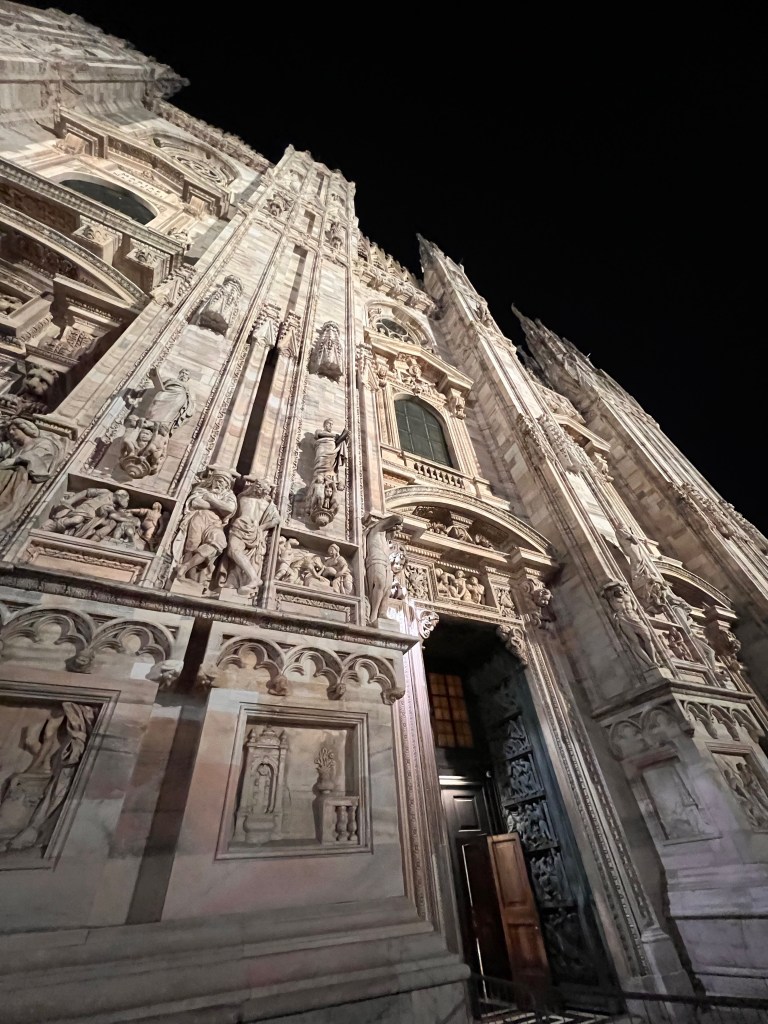
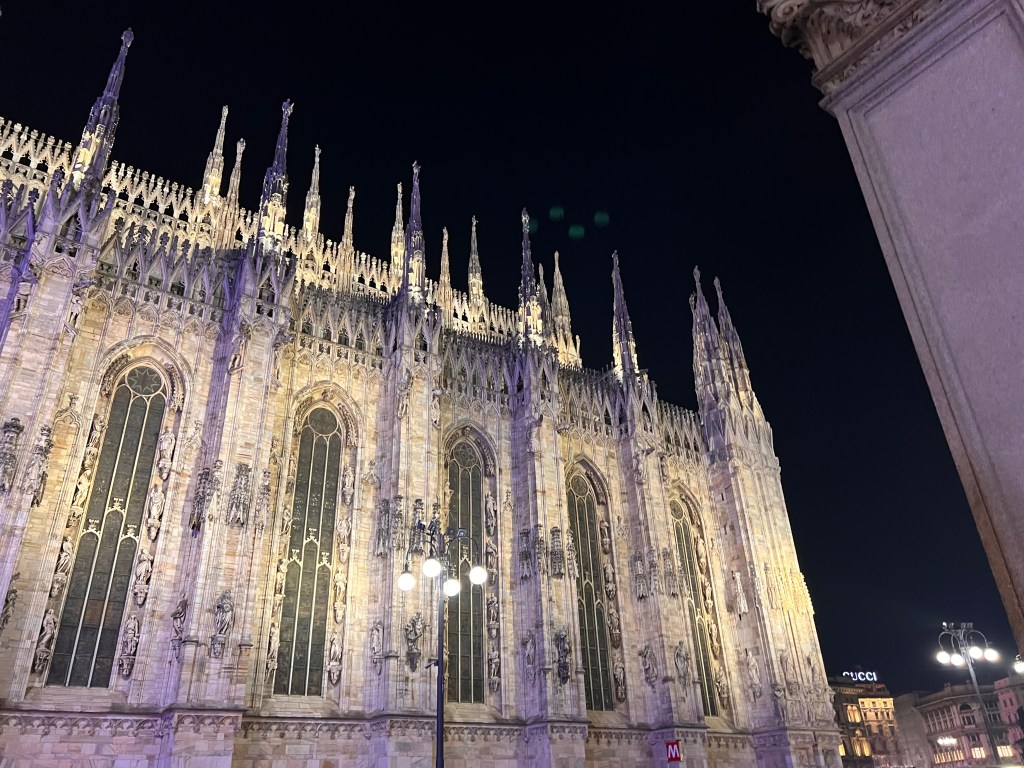
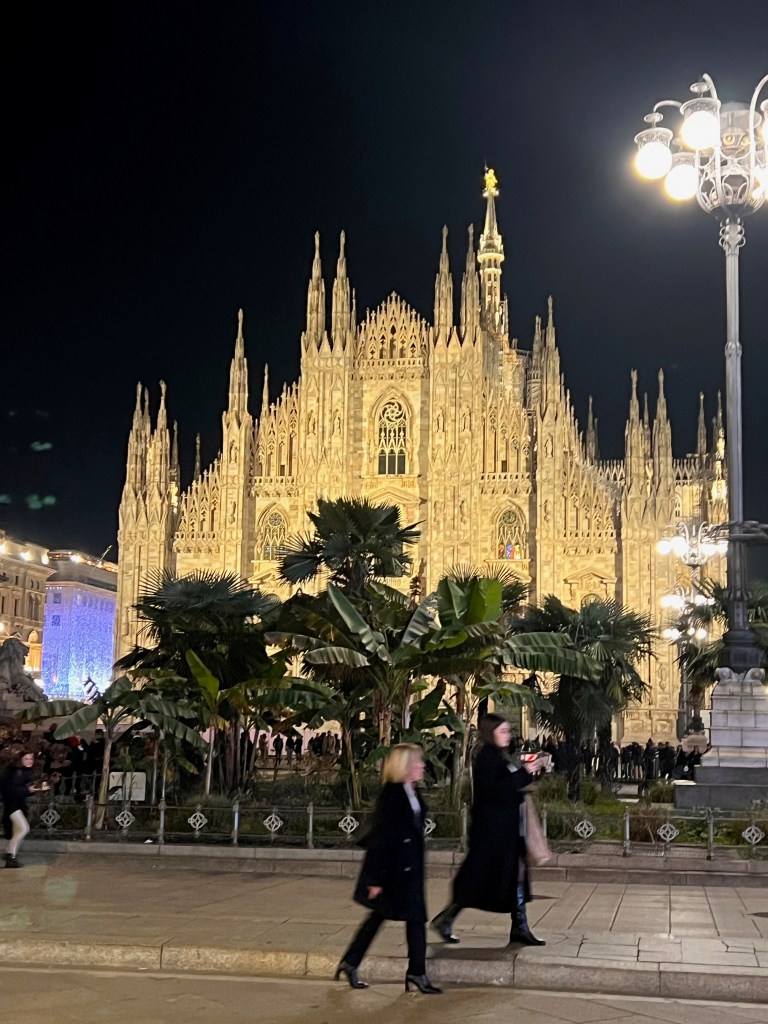
We took the metro from our hotel to the Duomo. The metro station is close to our hotel, located right next to Milano Centrale train station. The Duomo is only four stops from Centrale FS station on the M3 (yellow) line. We followed the signs at the metro station that pointed us to the right exit to the Duomo. Exiting the station, the magnificent Duomo was right before our eyes. Despite being at night, the lighting cast on the Duomo made it look grand and elegant. Coupled with the intricate carvings on the facade of the Duomo, no wonder it took the Italians 600 years to complete this piece of art. Unfortunately, we had little time to marvel at the Duomo’s facade as we had passed our original booking time for the rooftop climb.

The Duomo Di Milano was dedicated to the nativity of Saint Mary and is currently the largest church in Italy and the third-largest church in the world. The Duomo started construction in 1386 when the construction of Gothic-style cathedrals was at its peak and was completed in 1965. The Duomo was initially built with terracotta stone, but the designers then switched to marble when they realised the scale of the Duomo was bigger than they had planned. The Duomo was built by as many as 78 architects recruited from all over Europe. As a result, the Duomo blended different styles from neoclassic, baroque and decorative gothic.

Duomo di Milano at night

Duomo di Milano looks stunning at night.

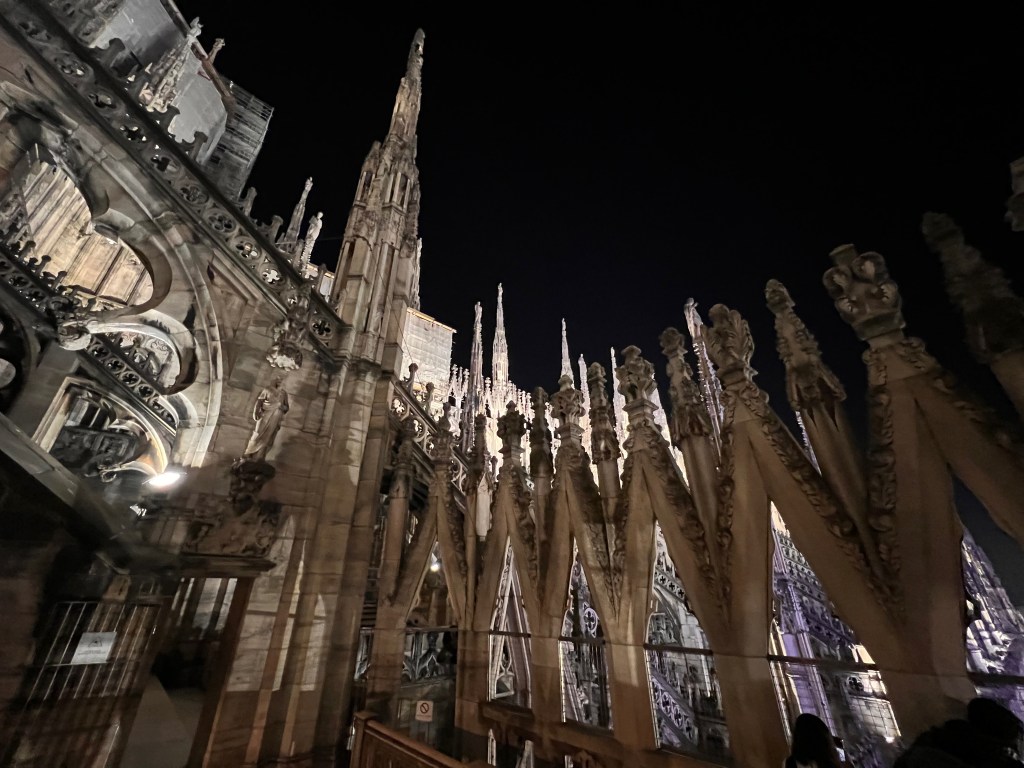
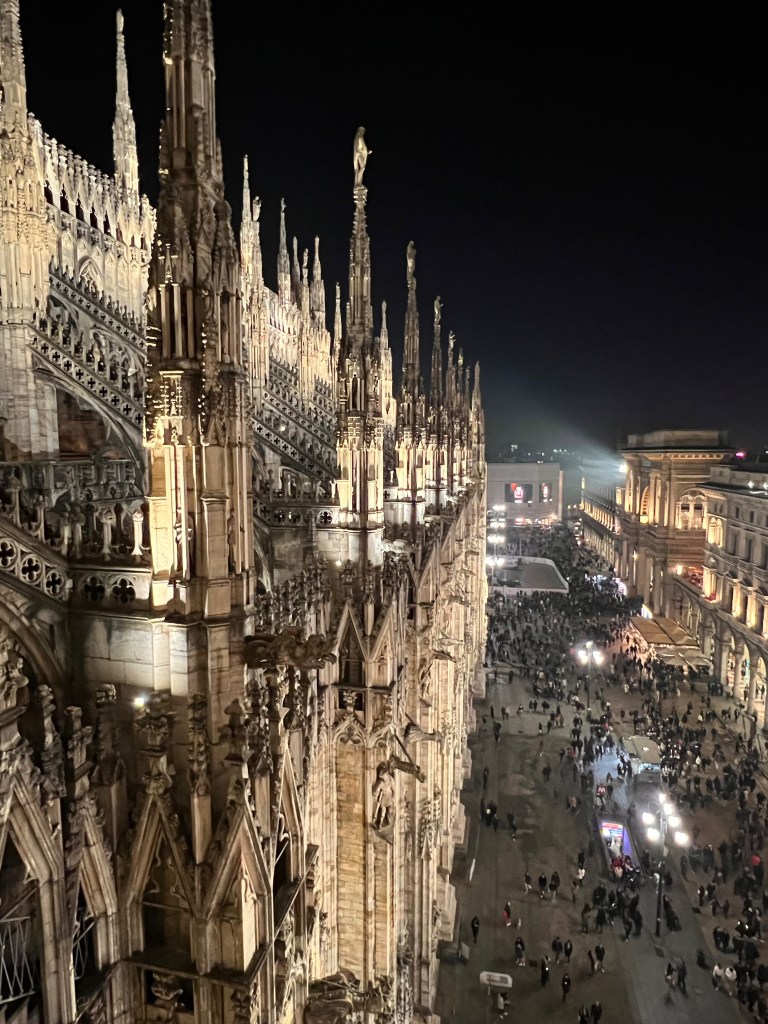
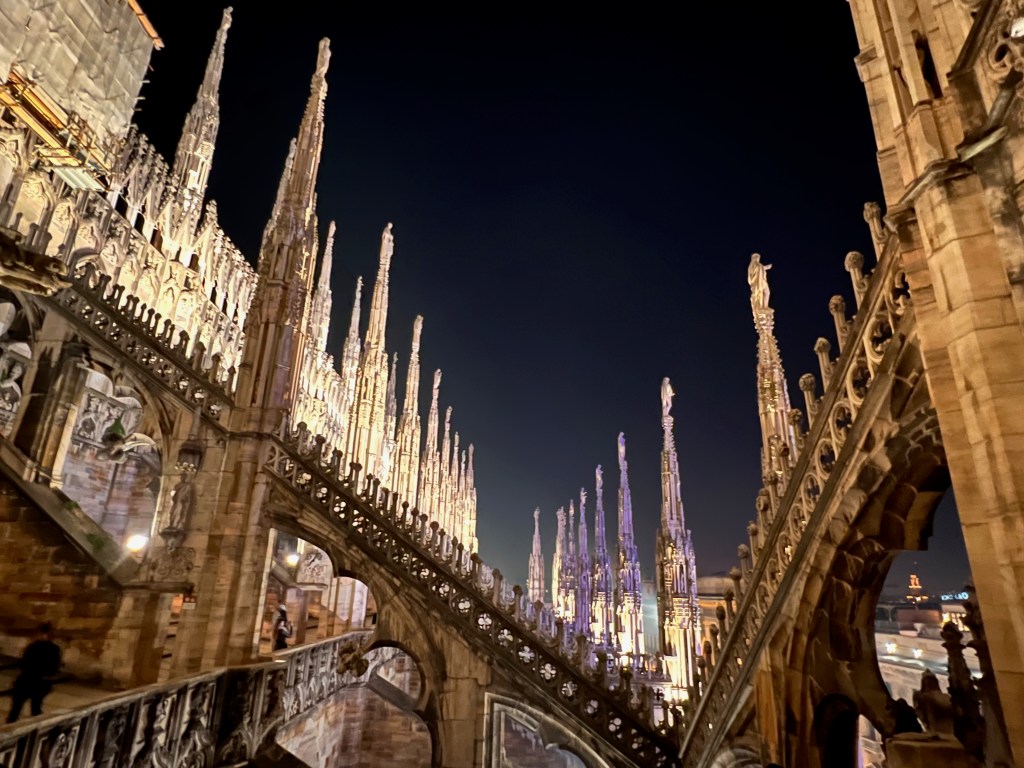
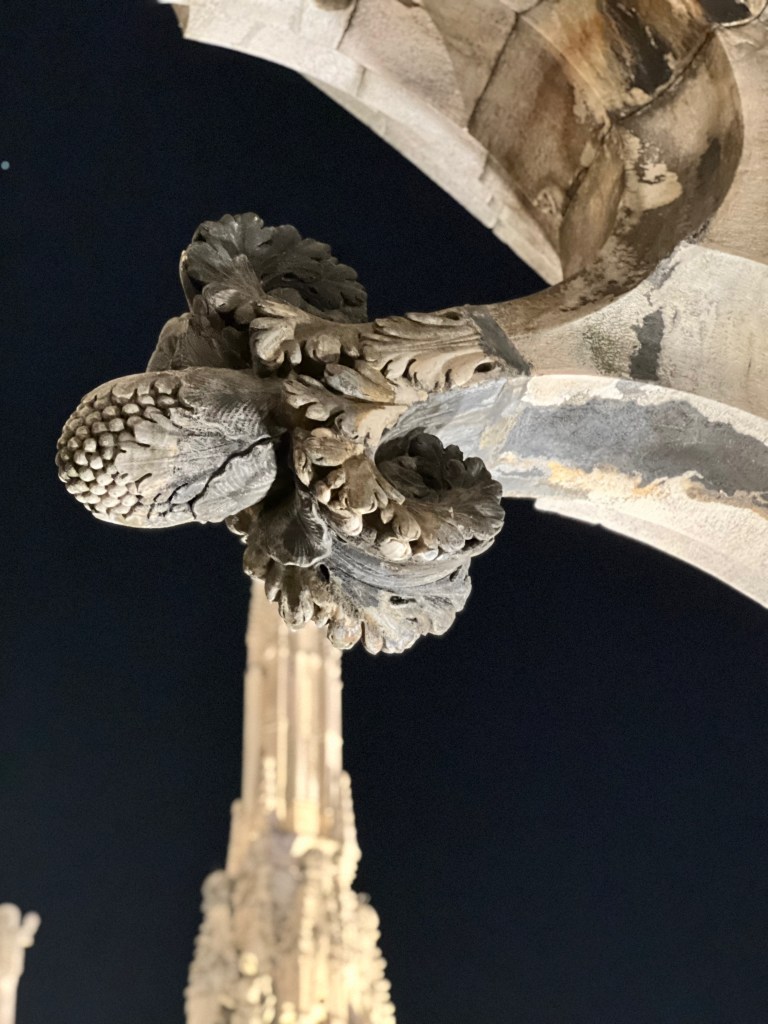
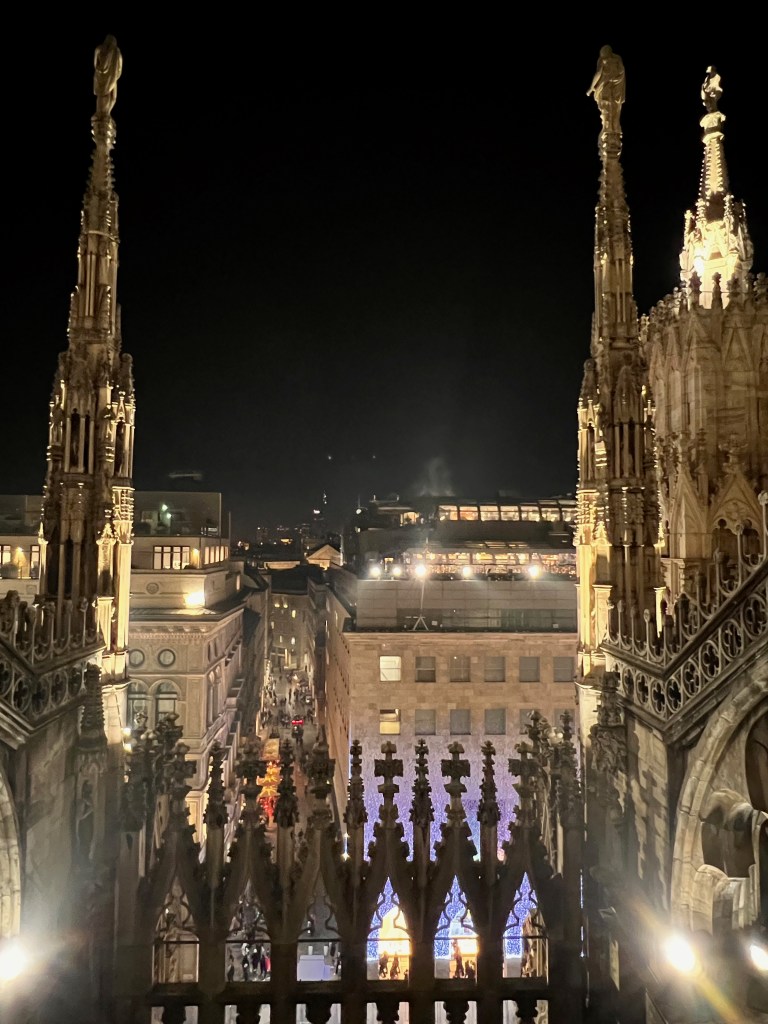
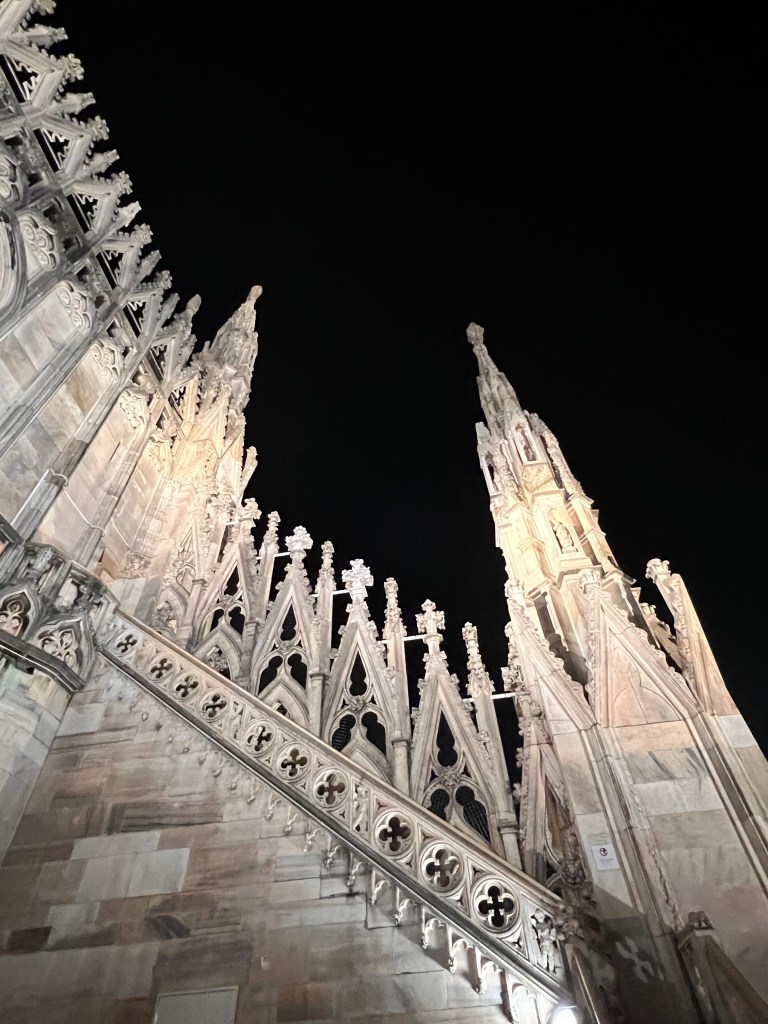
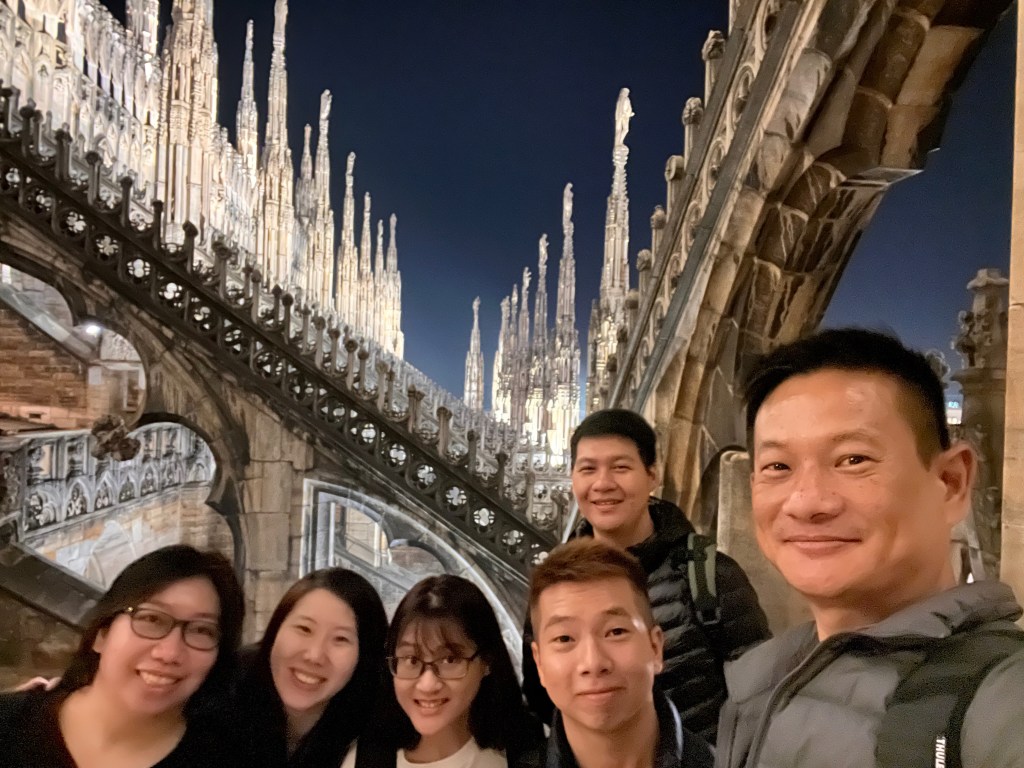
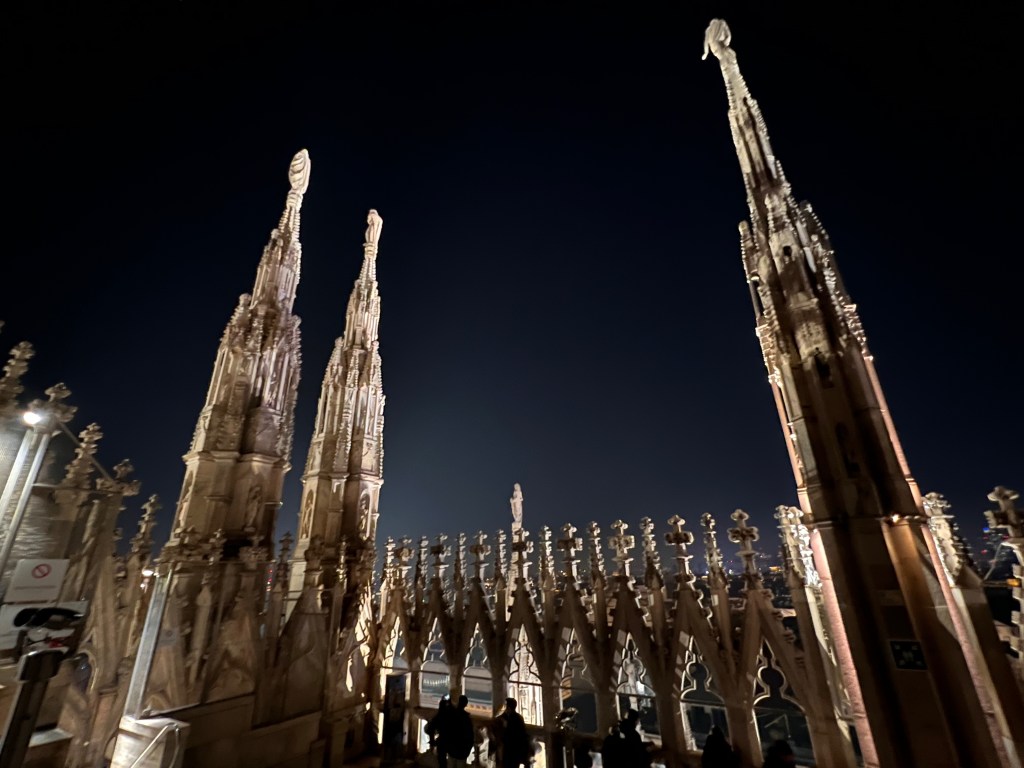
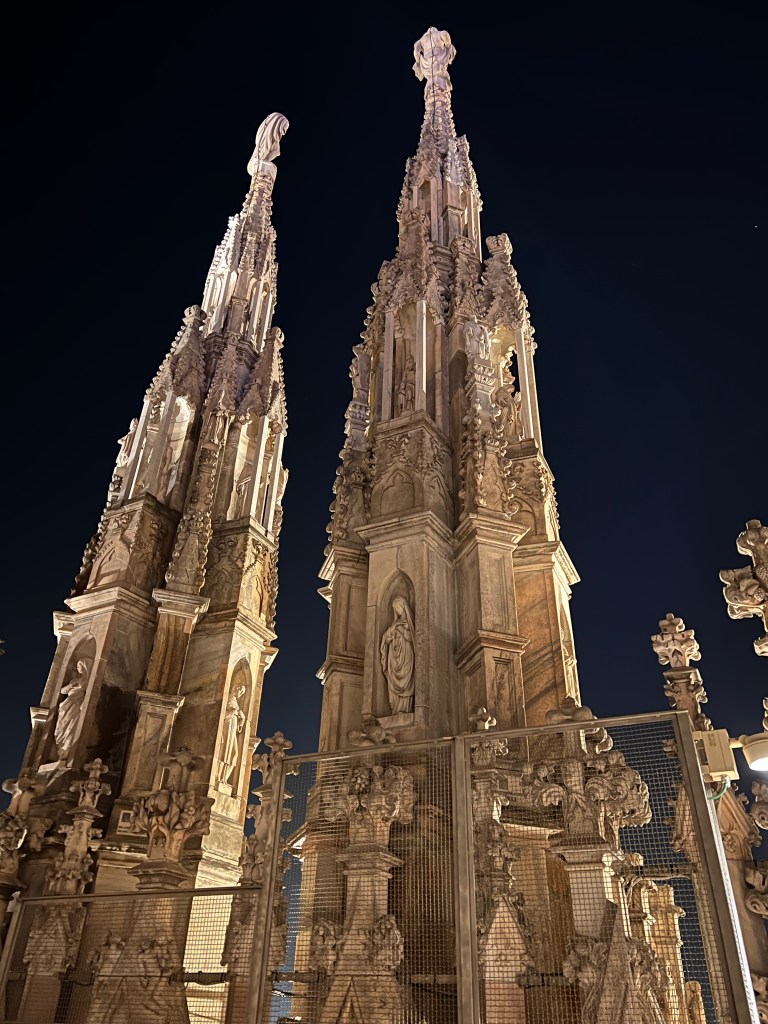
The entrance to the rooftop elevator is located at the back of the Duomo. The staff had no problem in admitting us for the rooftop climb. After some simple bag checks, we were granted access to the rooftop. The rooftop access closes at 6.30 pm, leaving us 45 minutes for the activity. We wasted no time and took the elevator to the roof. We walked up a small flight of stairs to reach the first floor of the rooftop. We were treated to endless intricate marble carvings on the roof of the Duomo. From the arches decorating the rooftop to the numerous statues on top of the 135 spires that seem to guard the marble-laden cathedral, we cannot help but admire the painstaking hours poured in by the sculptors who created this masterpiece. No wonder it took then 600 years to build the Duomo. From this part of the Duomo, we could look out into central Milan. I can imagine we would be able to see further in the day.

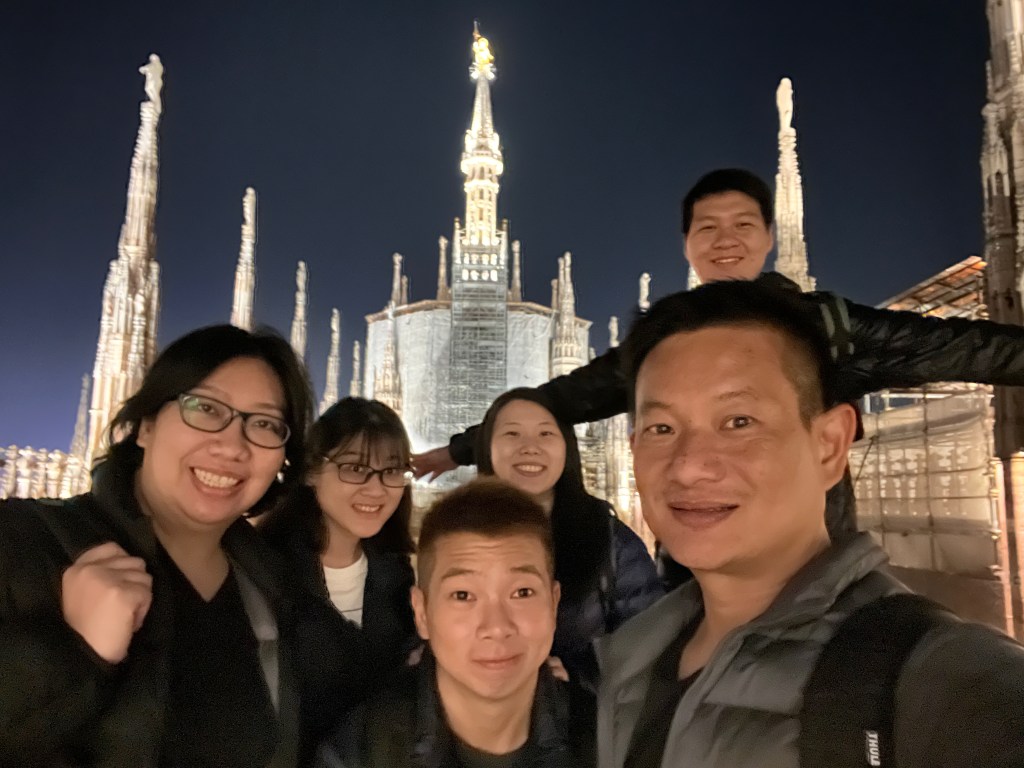
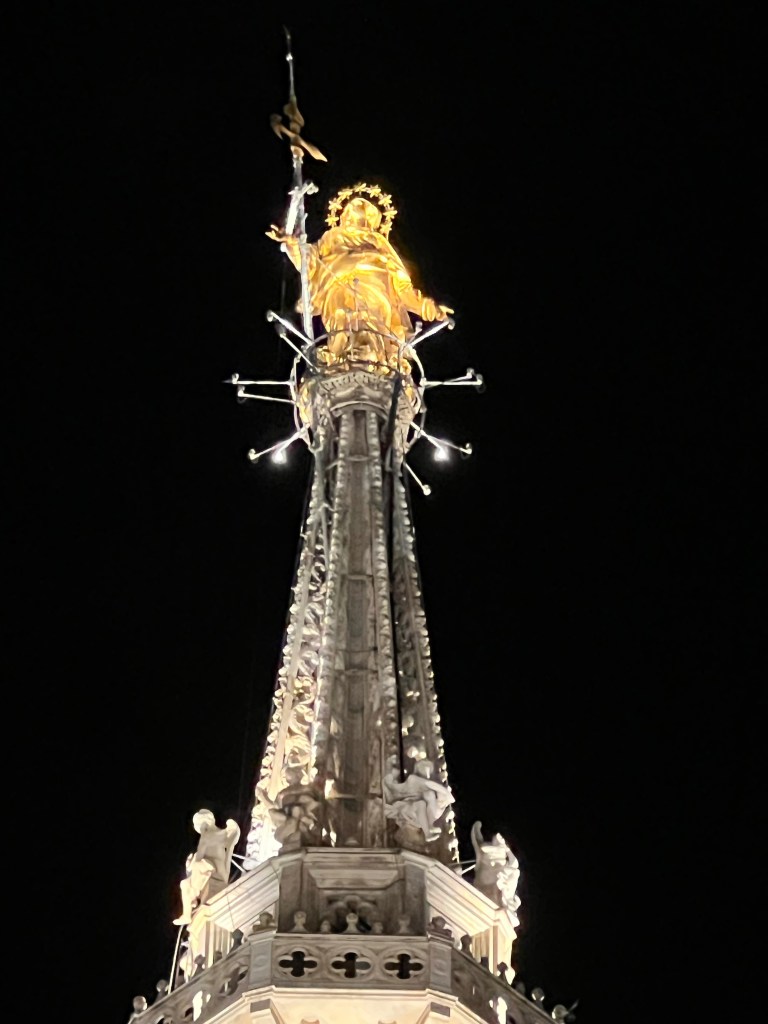
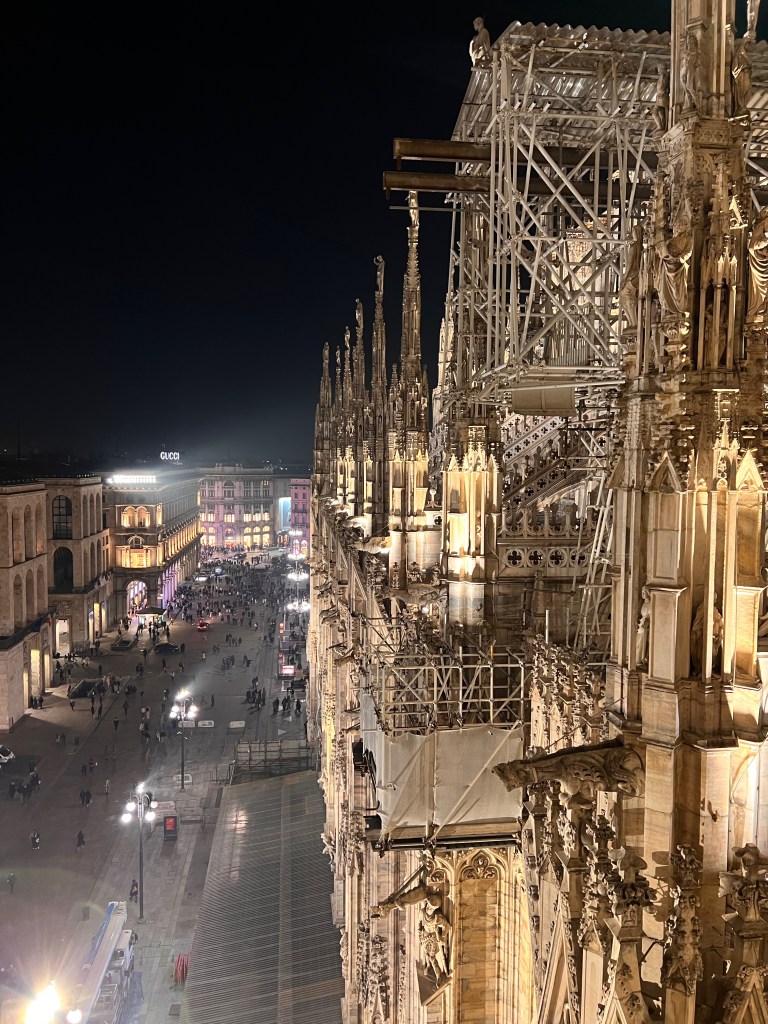
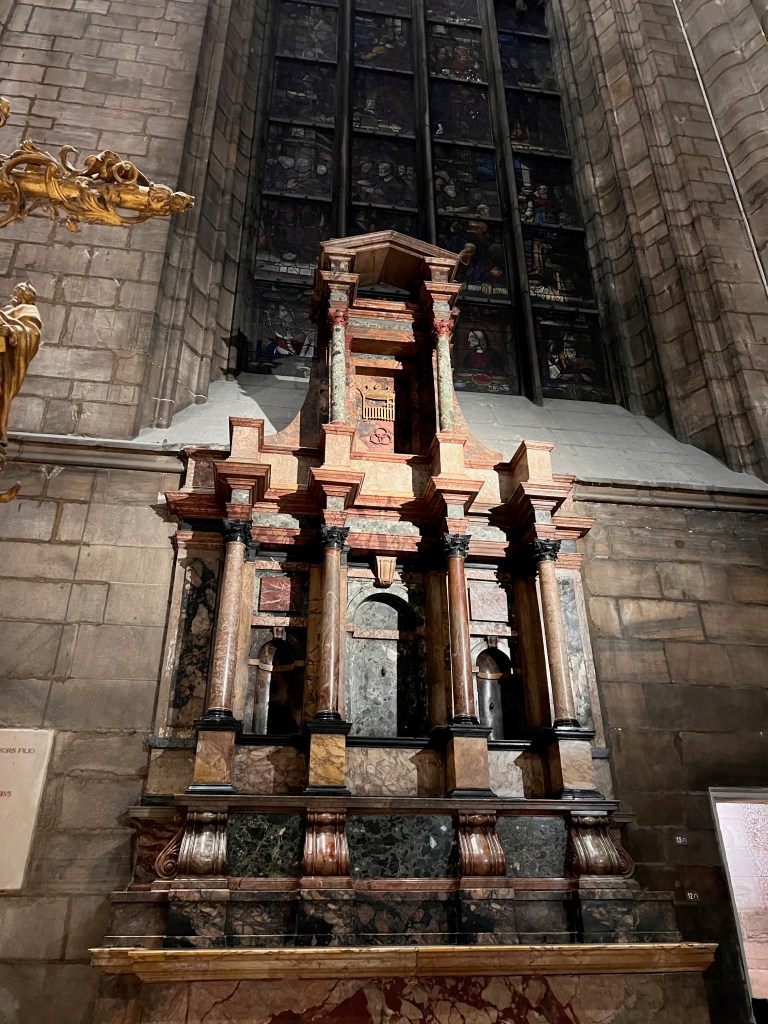
We walked along the corridor and came to another set of staircases, which brought us to the terrace of the Duomo. I could look out into the piazza in front of the Duomo along the way. There were still many people down below taking pictures and queuing to enter the Duomo. The terrace of the Duomo is the highest point visitors can gain access to. At night it seems too dark for anyone to admire the architecture and take decent photos. All the lighting was cast on the lower level of the Duomo, and there was no lighting on the terrace. A part of the Duomo was scaffolded off for maintenance works, which can be a bummer for photo taking. At the end of the terrace, where the scaffolding was, we could see the Gold Madonna statue sitting on the highest point of the Duomo. We decided to head back down after taking some photos on the terrace. Along the way, we took more photos and were met by a staff member chasing any visitors away. Looking at the time, it was already 6.30 pm when the rooftop visit closed. The only way down the rooftop of the Duomo was via a flight of stairs. At the bottom of the stairs, we found ourselves inside the Duomo. Though we were passing through, we could see the grandeur of the Duomo even from the inside. There were stained window panels that would be a beautiful sight during the day when the sun shone into the cathedral.

Piazza di Duomo from the rooftop of the Duomo

The highest structure of the Duomo

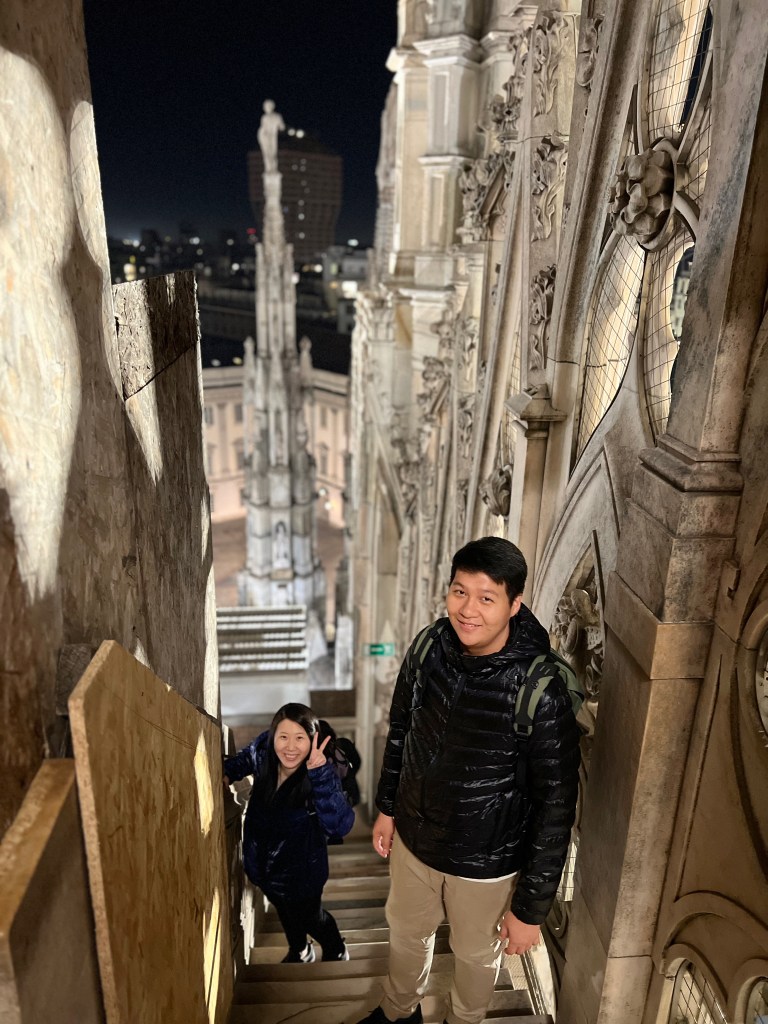
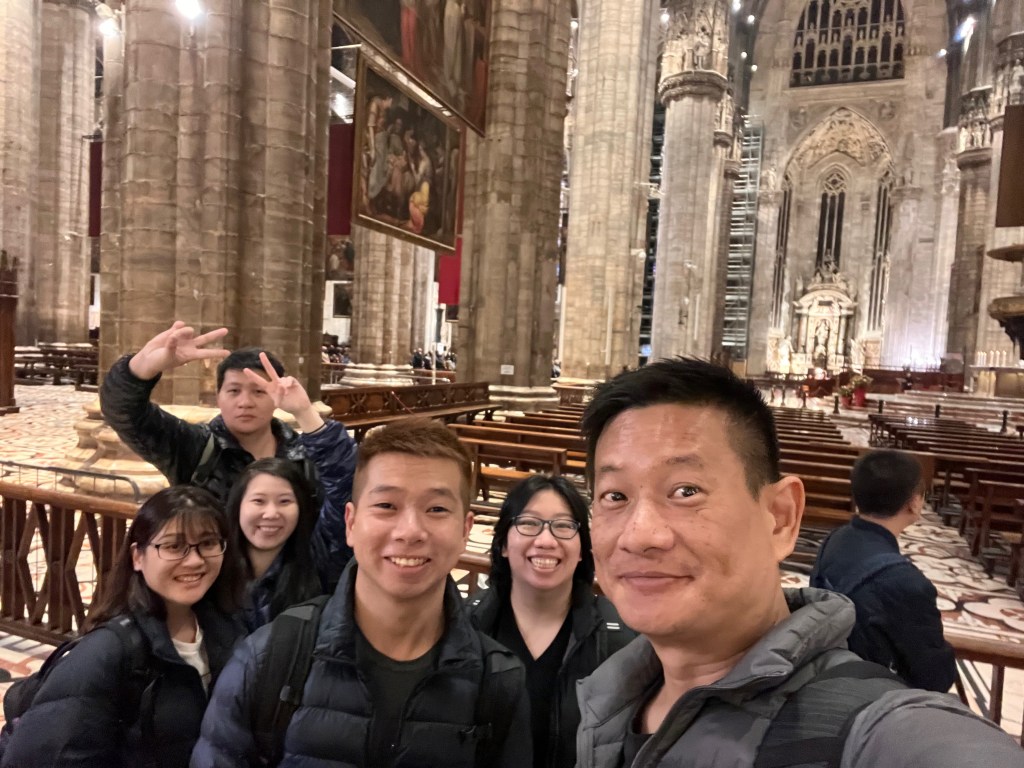
Quick wefie inside the Duomo

Galleria Vittorio Emanuele II

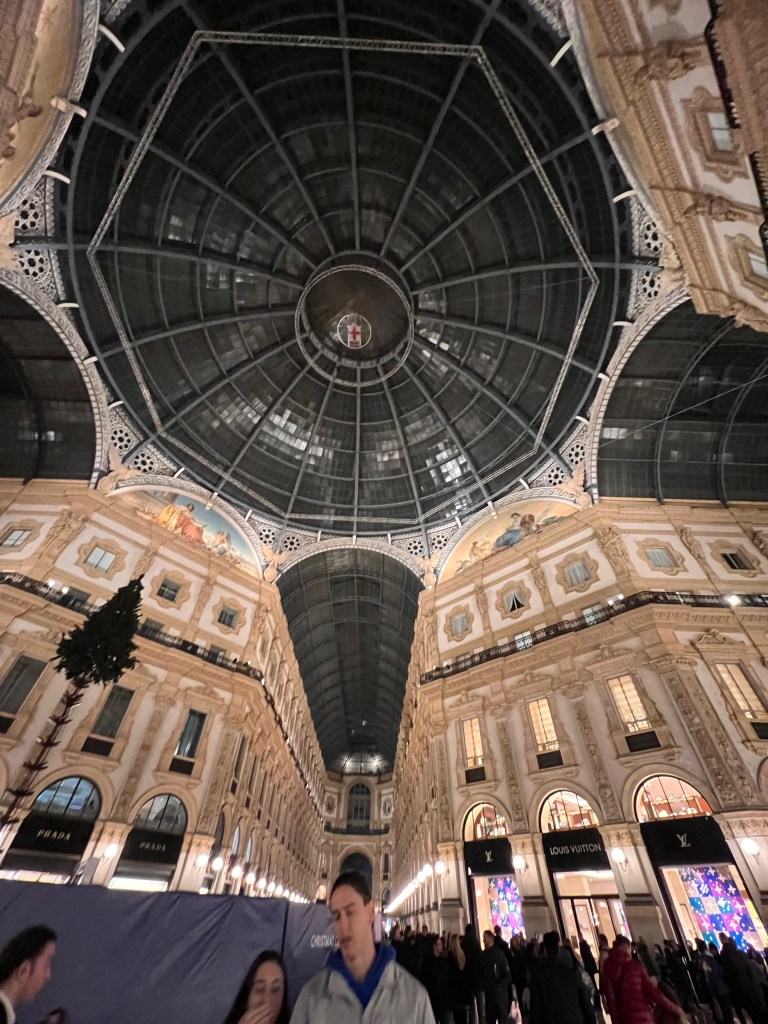
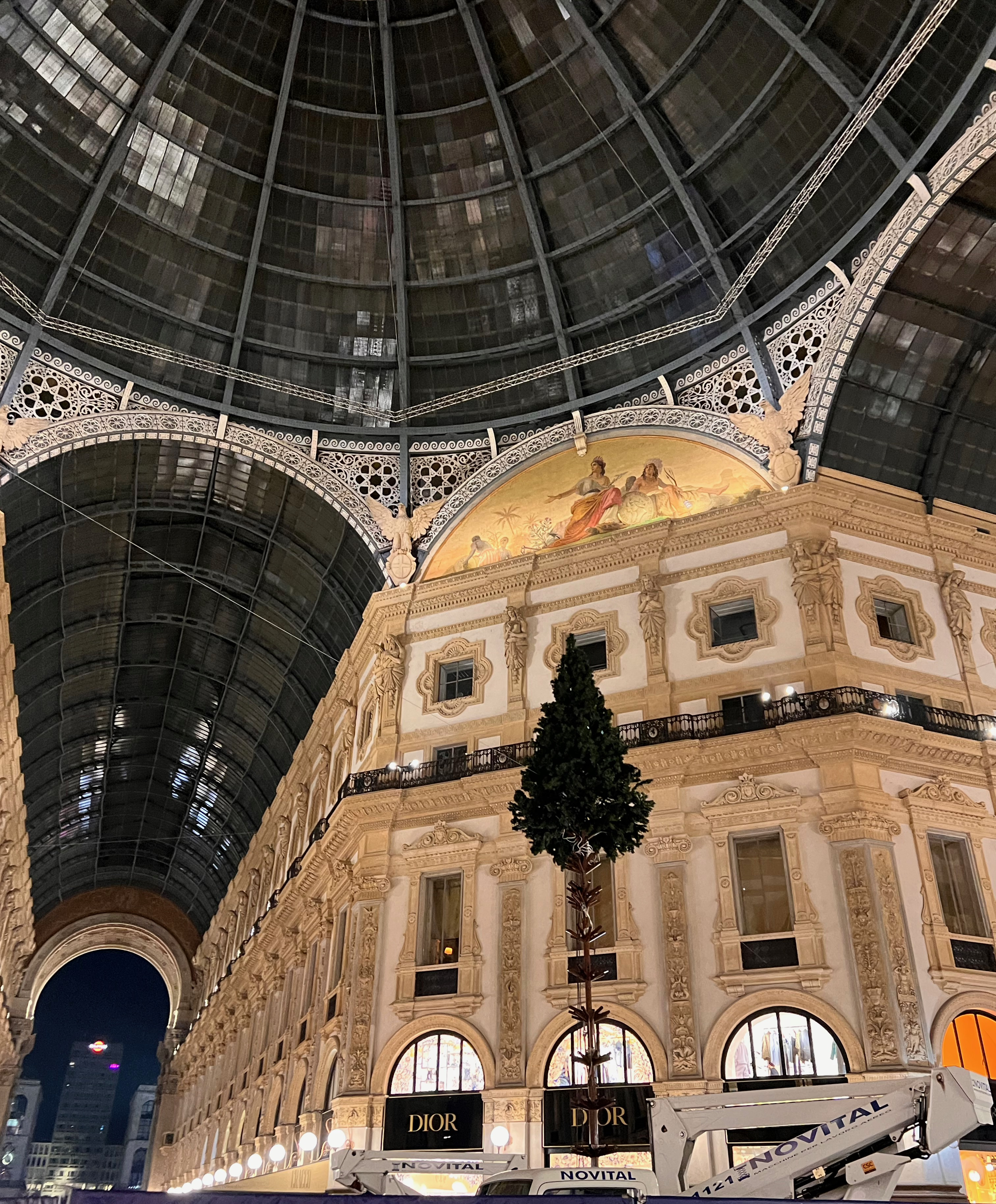
Exiting the Duomo, we went into the open-air shopping mall of Galleria Vittorio Emanuele II next to the Duomo. Several restaurants are near the shopping mall entrance, while numerous boutiques selling luxurious branded goods are found further into the mall’s centre. One of the highlights of this mall is the lucky bull mosaic at the centre of the mall. I saw numerous YouTubers mentioning it is a tradition for visitors to spin three rounds on the bull’s balls for good luck. Like most visitors, local or foreign, we joined in the fun, hoping for good luck for the trip. As it was already 8 pm, most of the boutiques were closing. We did not manage to shop at the fashion capital of the world.

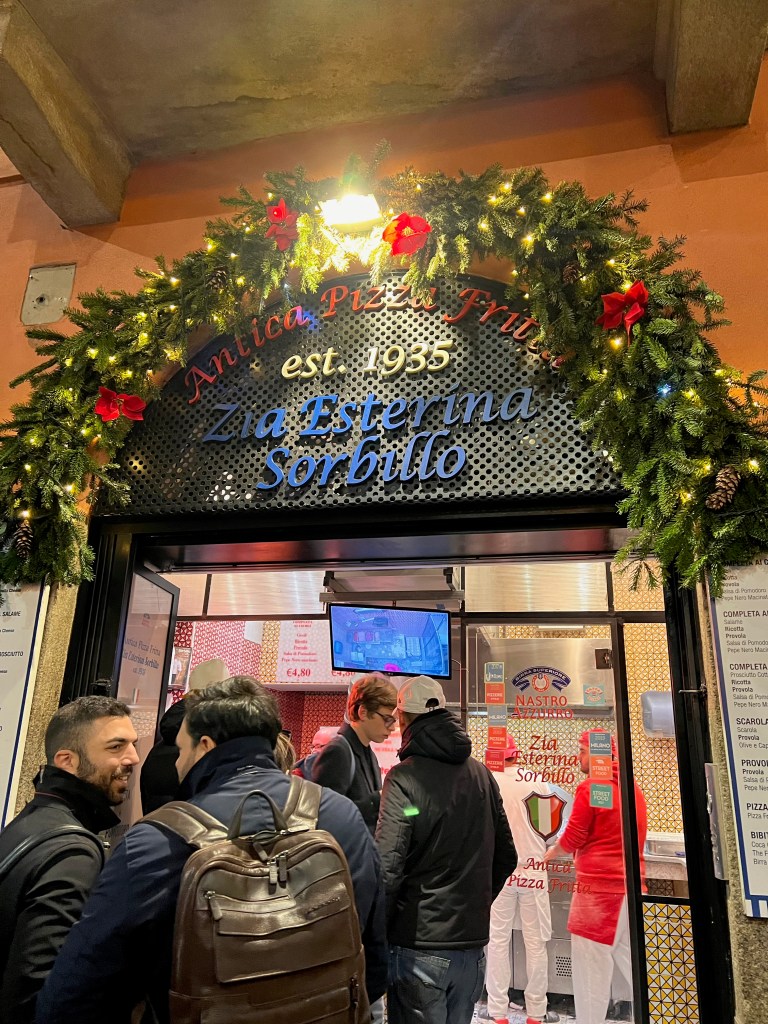
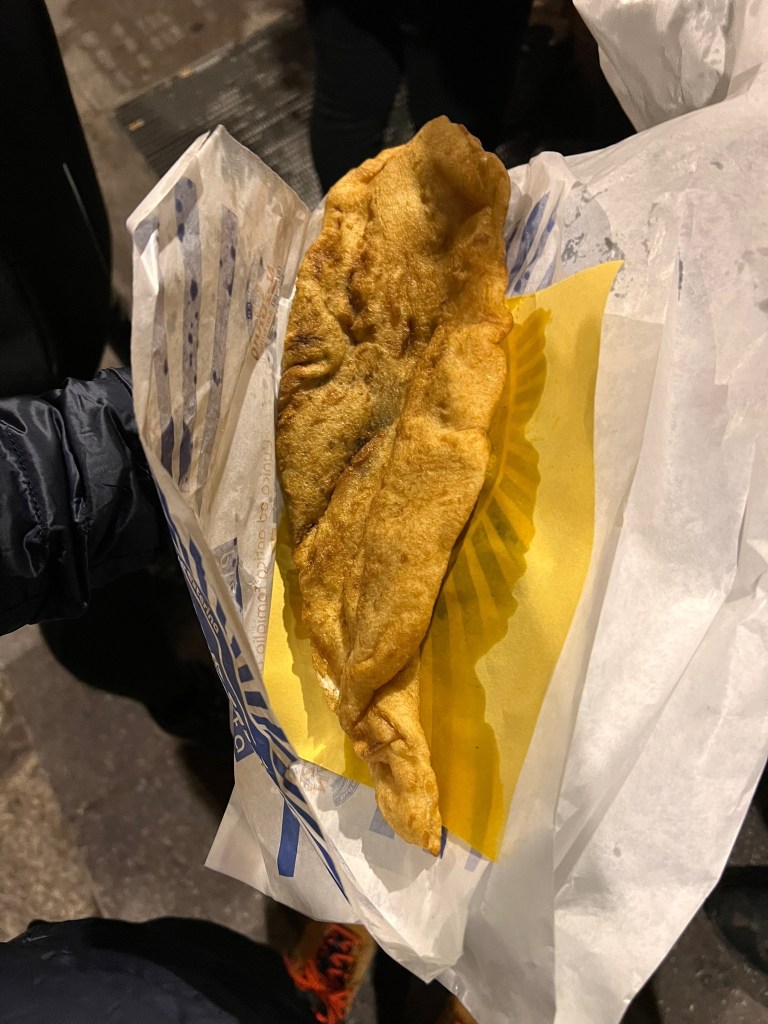
I asked my friends if they were interested in trying out the fried pizza, which I saw some YouTubers recommending whilst in Milan. I whipped out my Google map and started to navigate to the shop. After some time, we were led to a shop by Google Maps. This was not the one that I saw people recommending. We walked up and down the street and found this the only shop. We settled for this because the shop might be closed or shifted to another location. I have to admit that we were not adventurous enough to try the more local flavours. In the end, we all ended up having Nutella-flavoured fried pizza. Despite being the wrong shop, the fried pizza is still very tasty. Initially, I thought of having this as a snack before dinner. However, the big portion was enough to fill our stomachs. We were too full to have dinner.

The fried pizza is so large that we were full after eating it

A Change in Plan

After eating the fried pizza by the roadside, we were tired (perhaps due to the long flight). The initial plan was to have dinner at Nagvoli Grande. However, we were too full from the fried pizza plus fatigue started to set in. So, we gave up the idea of going to Nagvoli Grande and maybe visiting it tomorrow after our day trip to Lake Como. As we were walking towards the metro station, I spotted the “original” fried pizza shop that I wanted to bring my friends to try out. I had the urge to buy may one or two to share around, but the queue in front of the shop put us off. We decided to head back to the hotel and rest for the night; after all, we had a long day tomorrow at Lake Como.

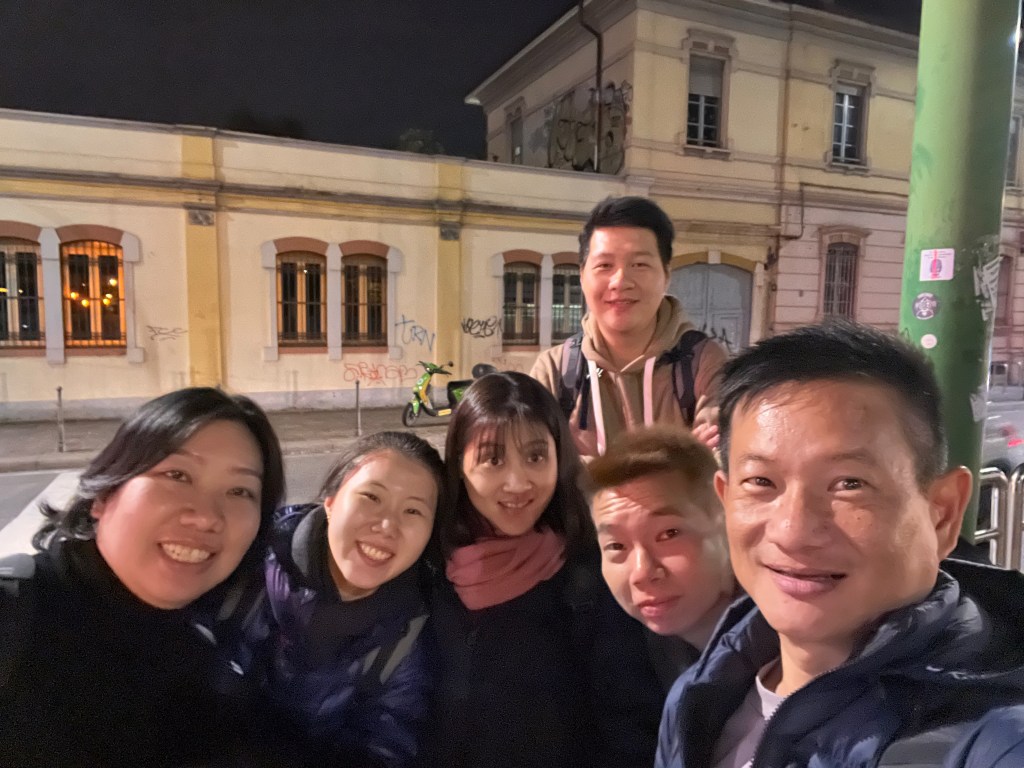
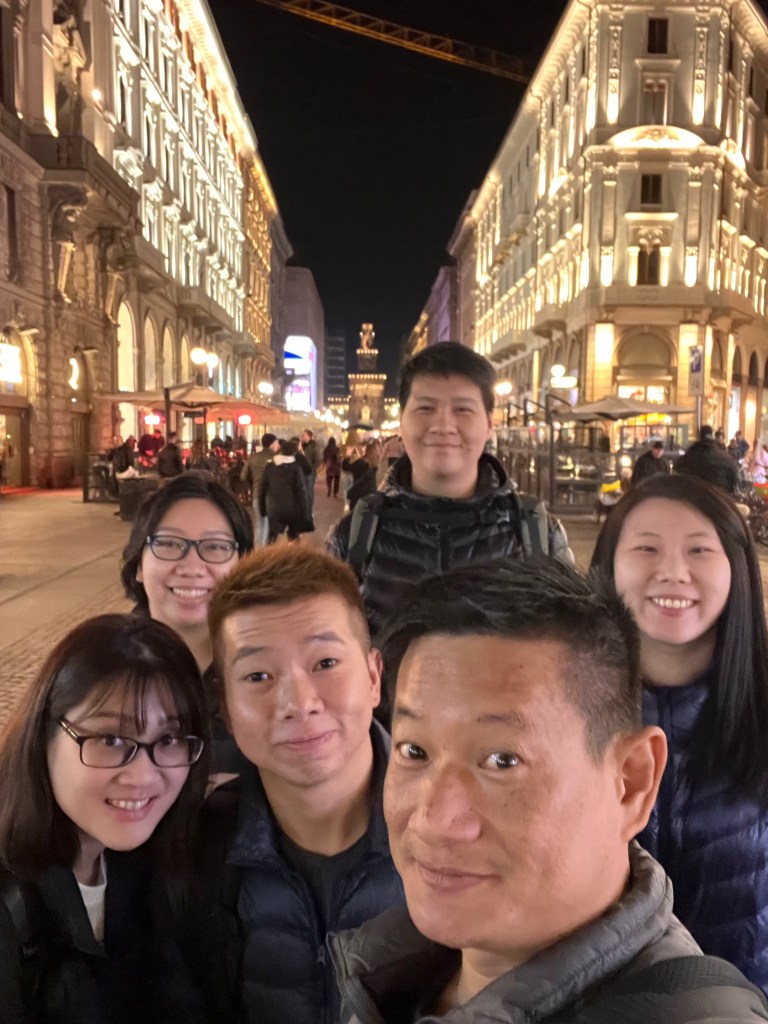
Taking a wefie on the streets of central Milan before we head back to the hotel

Jeju/Busan/Seoul Day 12 (6 Nov 19) – Bye Bye Seoul, Bye Bye South Korea: A Conclusion of our South Korea Trip

Final day in South Korea

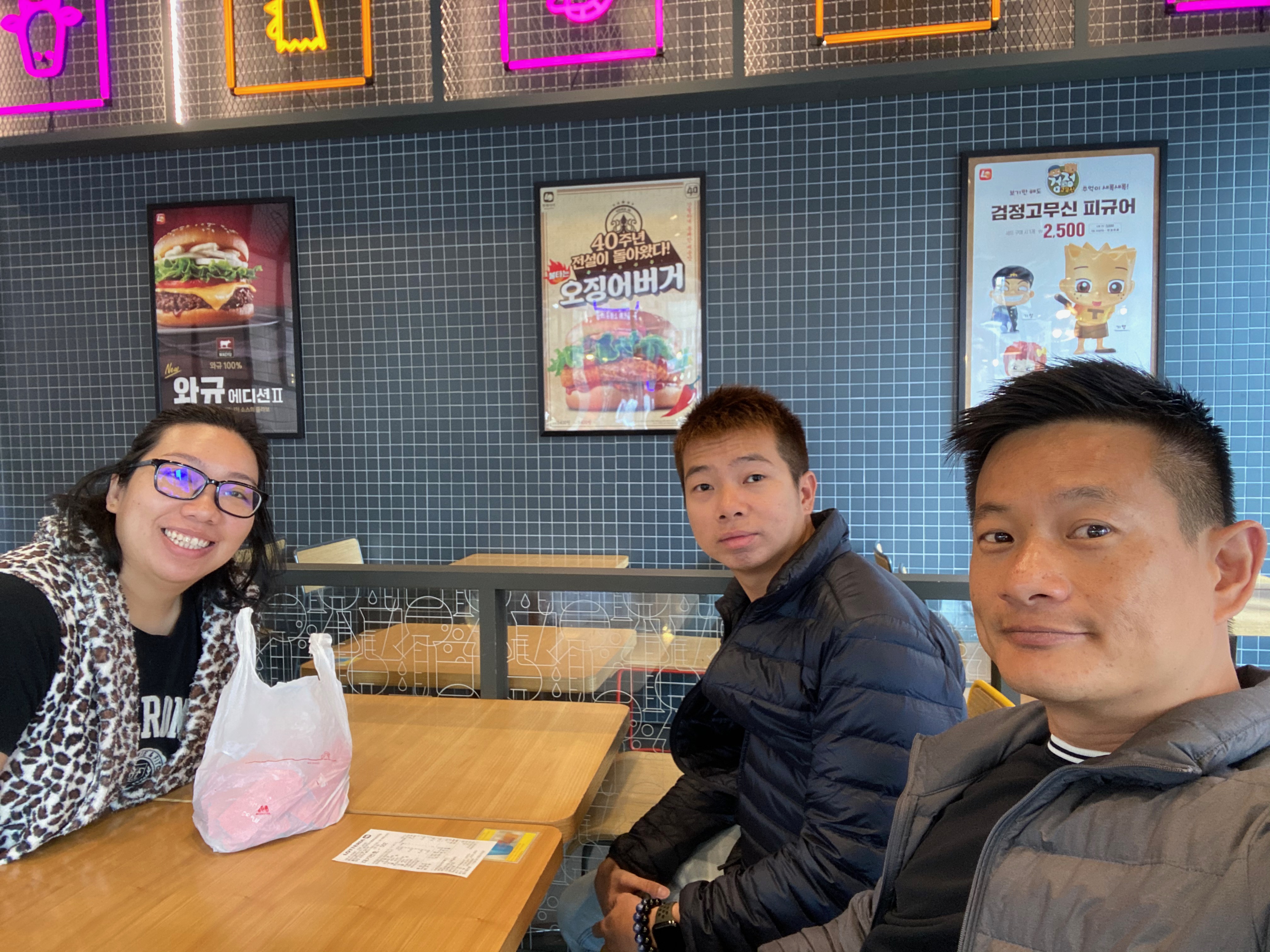
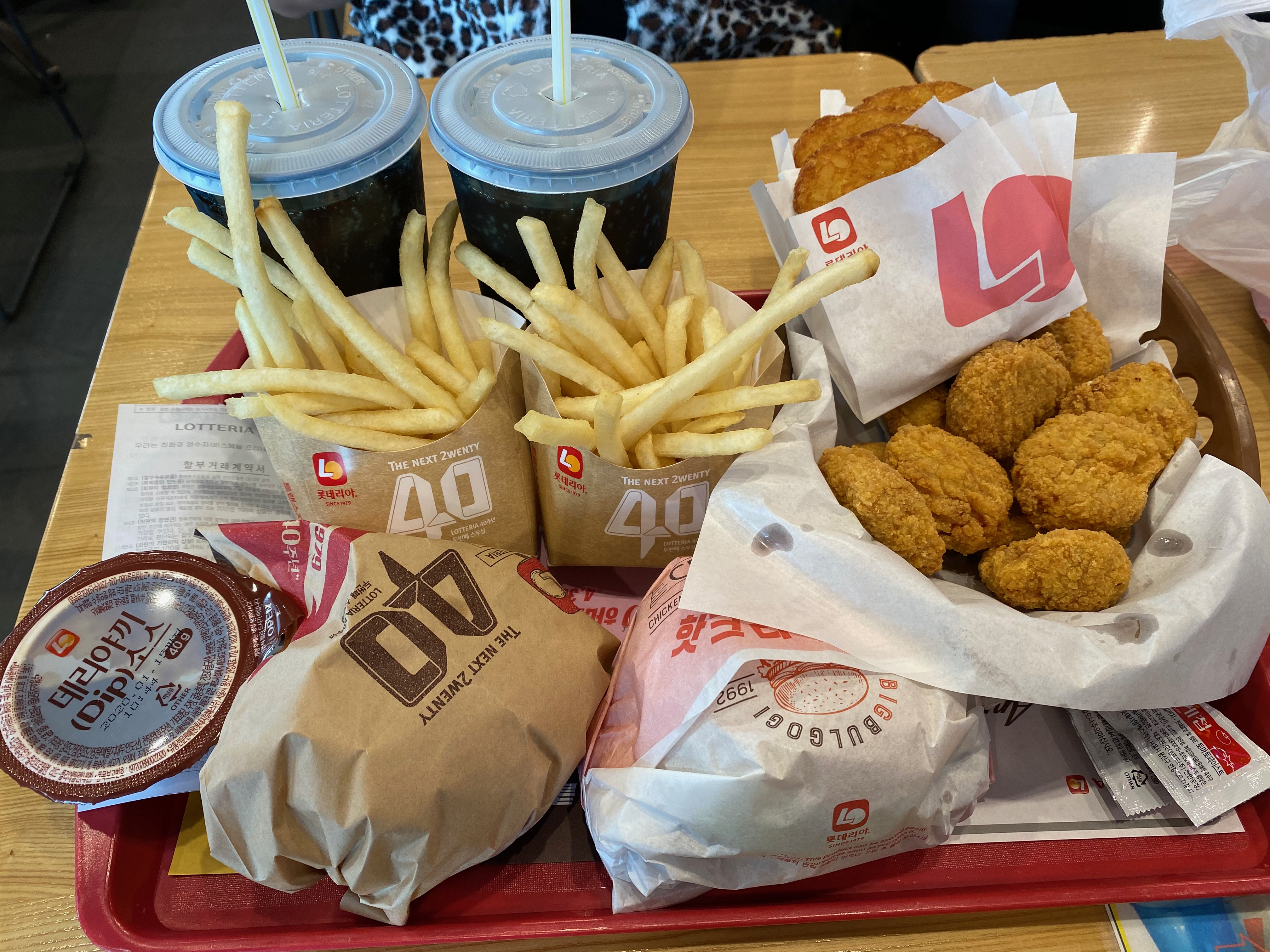
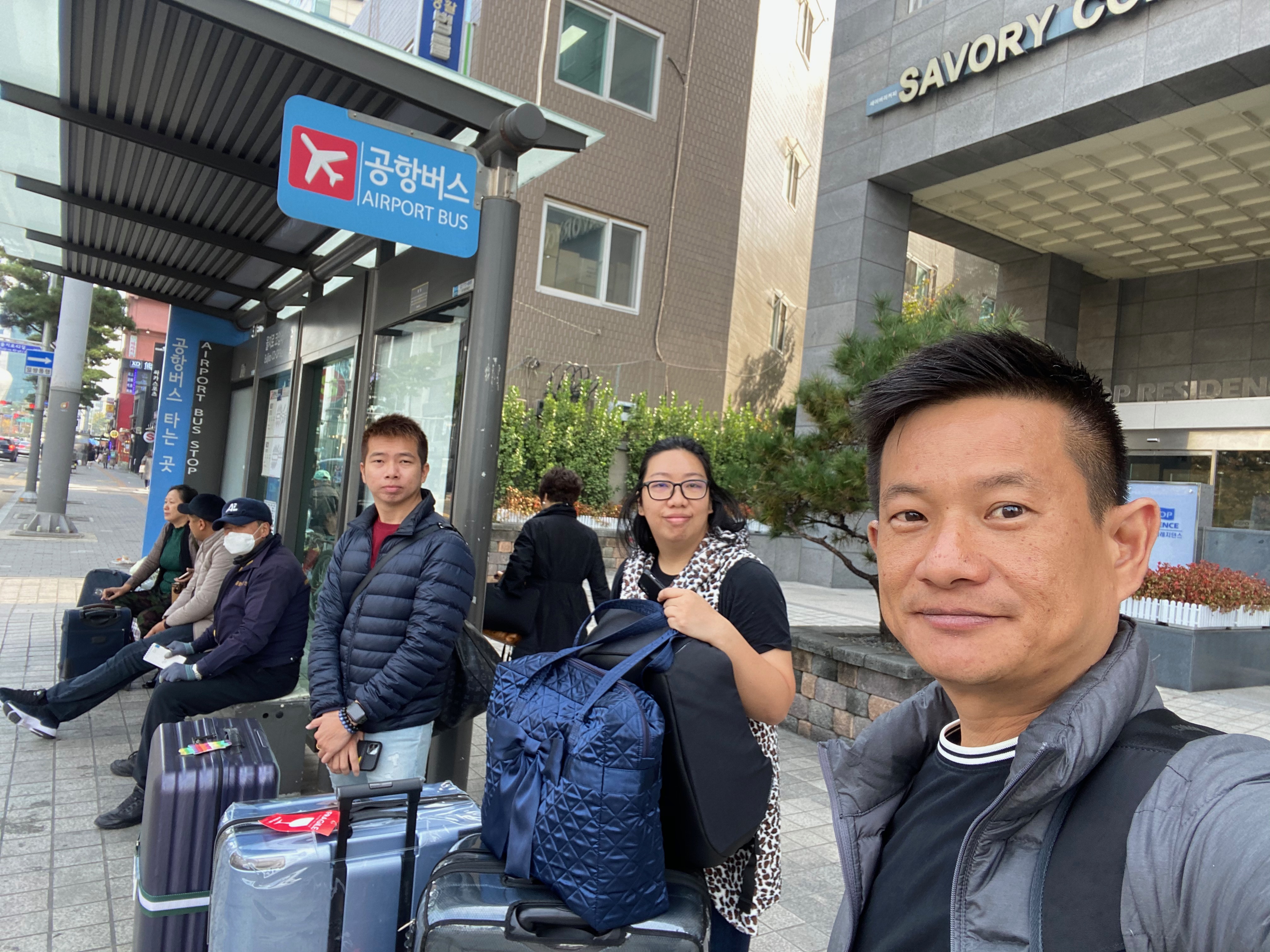
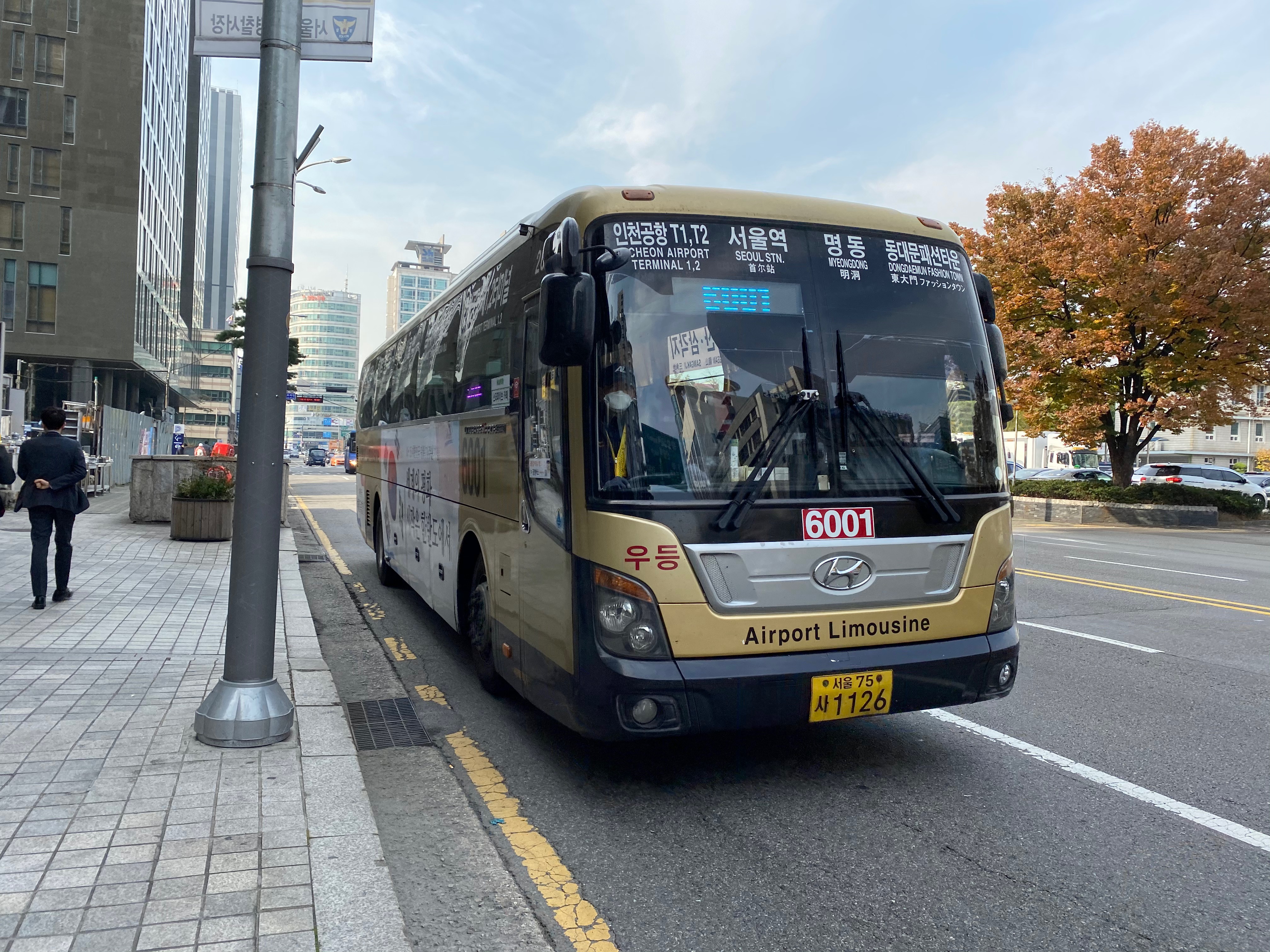
After some final packing of our luggage, my friends and I headed to the nearby Lotteria, a South Korean fast-food chain for brunch. Throughout our 12 days in South Korea, this is the first time we ate from Lotteria (my friend and I tried once three years ago when we visited Seoul). After our meal, we headed back to the hotel to freshen up and check-out. Fortunately, there is an airport limousine stop next to our hotel, getting to the airport was not a problem for us. We timed our departure from the hotel according to the airport limousine service scheduled timing. The bus came shortly at the time we arrived at the bus stop. The ride from Dongdaemun area to Incheon International Airport Terminal 1 (where our flight departs from) takes around 1 hour. The airport limousine has wide and comfortable seats which allowed us to take a snooze while being whizzed to the airport.
AFA0C503-F256-4787-A290-48D08D384082

This is the bus that will take us to the airport

6582BC93-92E0-4996-AE39-7E63060768A2

Taking a wefie on the airport limousine

C2C9524A-3B35-42F3-8075-FF3CDEA36FB7

We relaxed as we saw Seoul flash by

ED744378-3755-4A58-9298-5801B49F6BED

We are near the airport

4B88CF4A-038E-43FE-96A7-D97B30E68A53

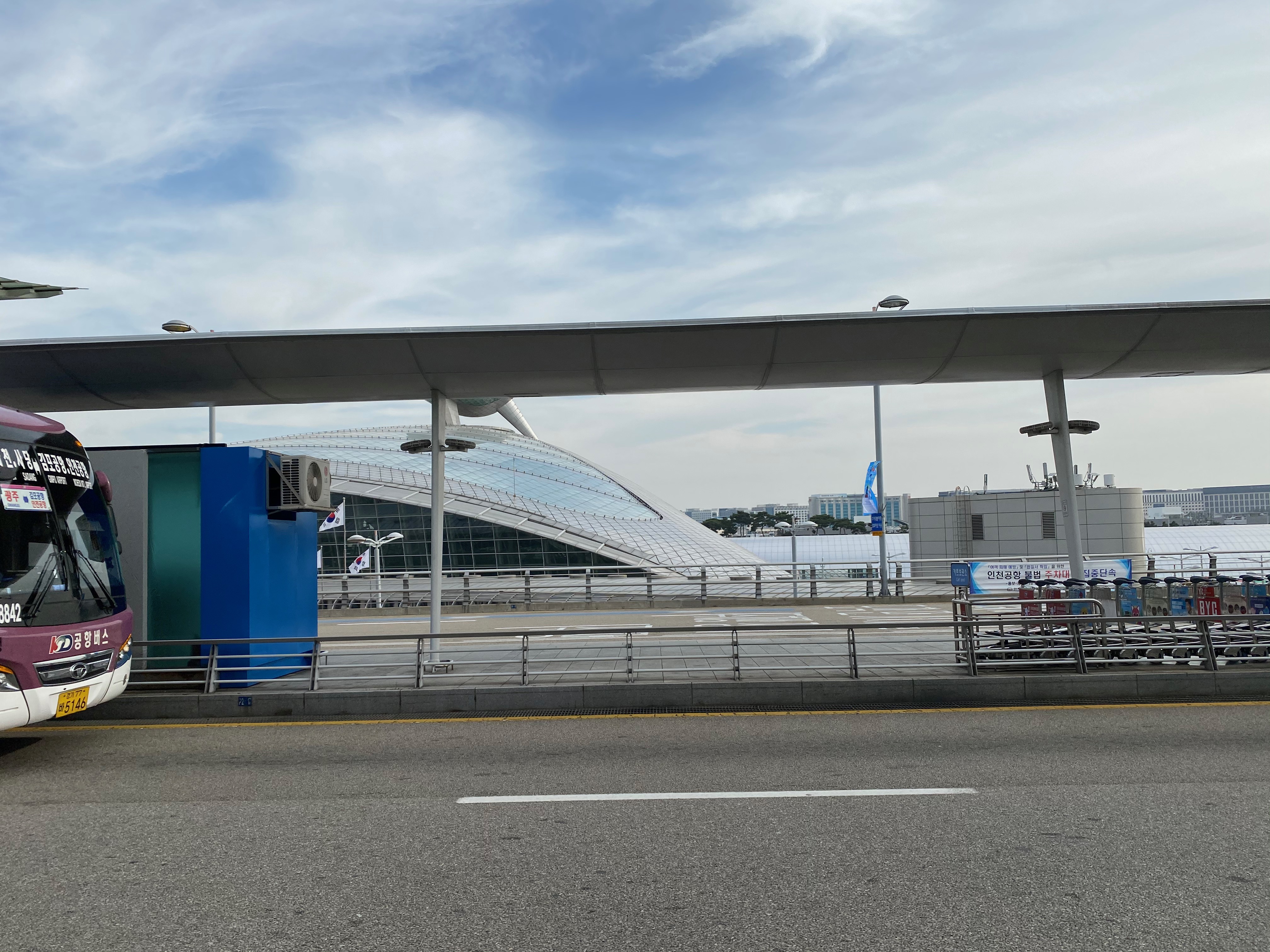
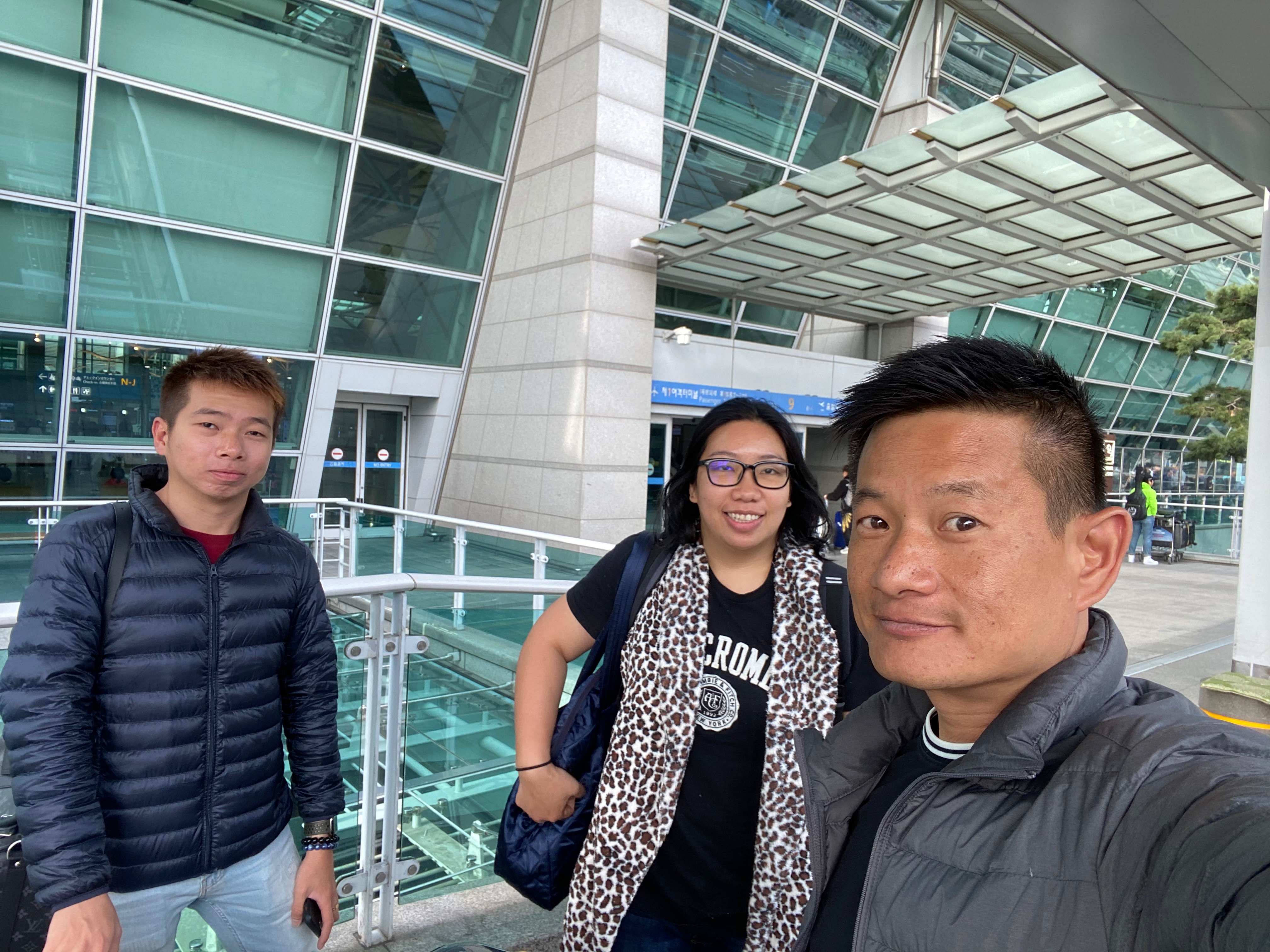
Arrival at Incheon International Airport Terminal 1

At Incheon Airport

The airport limousine only stops at one of the gates in Incheon International Airport Terminal 1. From there, passengers are to walk towards their check-in rows. Incheon International Airport is quite big, it took us around 5mins to locate and walk to our check-in row. Prior to checking in, I remembered there was a need for us to show the goods we purchased for a tax refund. However, this process has been automated. We discovered when we were at Incheon International Airport that there is no need to show proof of purchase. Foreigners claim tax refund can check-in our luggage first before heading to the automated kiosks to have the paperwork done up, we just have to produce the receipts for tax refund purposes. My friends and I headed to the airlines counter to process our check-in before proceeding to clear custom.

307782C1-2E1C-490B-9104-986B29E88E4A

Wefie at the airport

FD5A01CC-1811-4DE4-AE4C-DE8105E08DF8

Tax refund automated kiosks before custom clearance

129AE731-B5E4-4EE7-B62B-B7475BD8986C

Checking-in to our flight

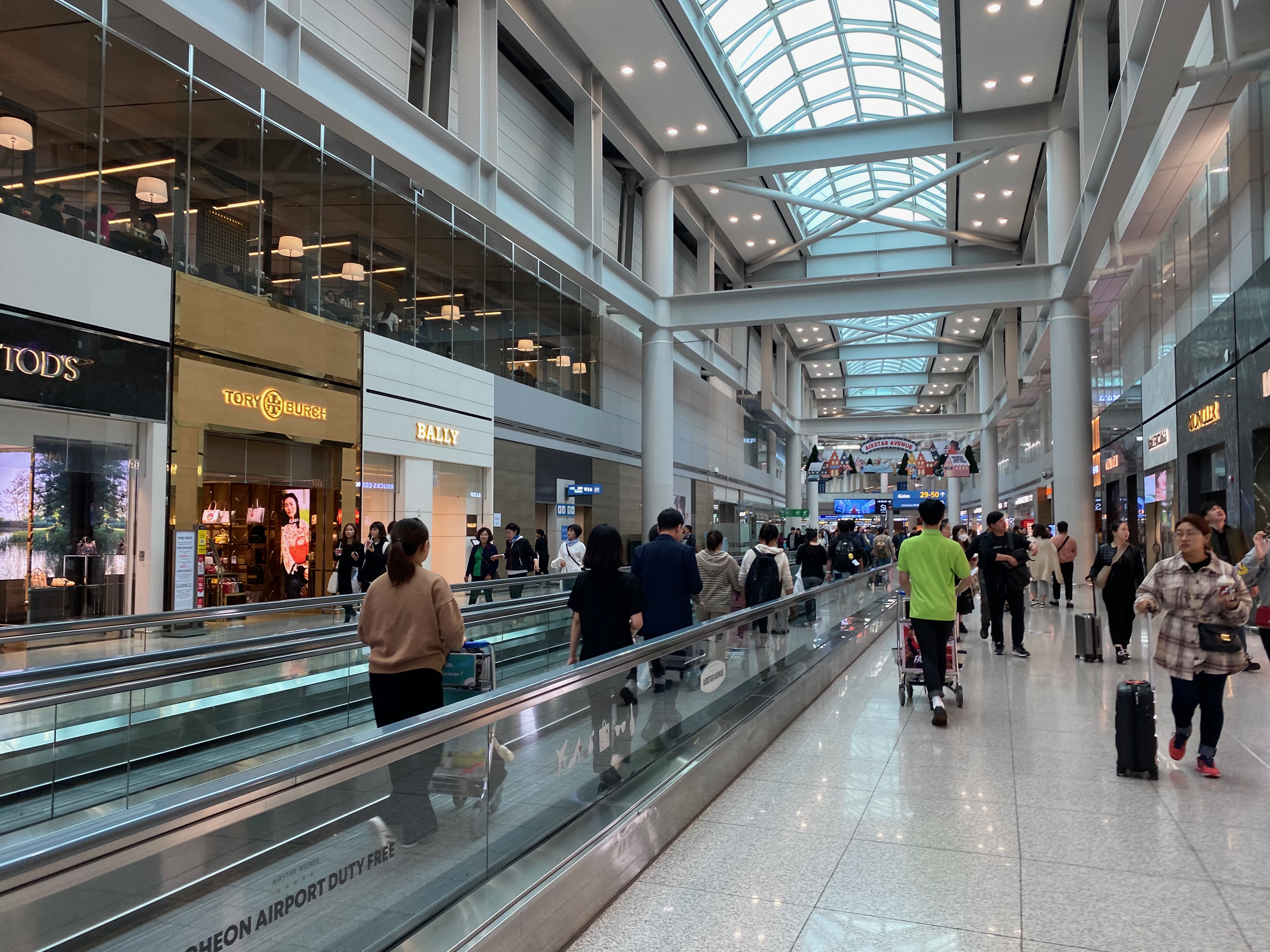
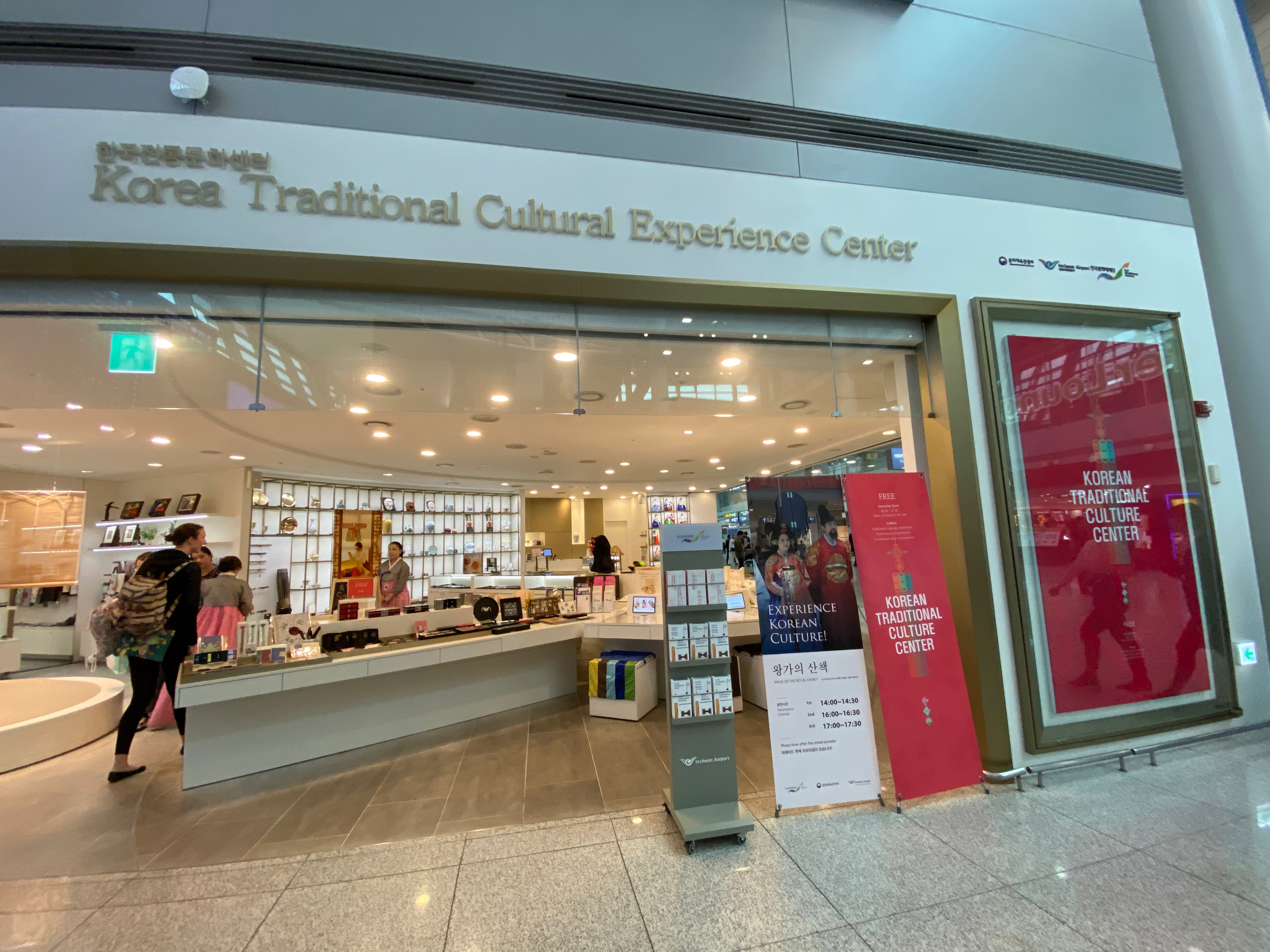
Once we cleared the custom, we proceeded to the tax refund counter to claim our tax. Tax refunds will be paid in either USD or KRW. As it is largely automated, akin to withdrawing money from ATM, the process is significantly faster compared to what we experienced three years ago. The airside of Incheon International Airport is another shopping mecca for passengers. There are numerous luxury brands setting up boutiques here for passengers to shop. There are even Korean Culture experience centres at the airside for passengers to understand the Korean Culture while waiting for their flight. My friends and I spent the rest of our time at the airport in the airport lounge while waiting for our boarding time.

8AA2AD99-E369-4C5A-AC0A-C5E90016D9A5

Cleared immigration

5684C40E-BF8F-4C12-8728-1305574EE87E

Our first stop after clearing custom is to head for tax refund

0282B98F-9207-48BE-907A-AA7CC8A941D4

Time for us to board our flight back home

A Lookback at our South Korea Trip

Today is the day we bid farewell to South Korea after travel around for 12 days from south to north of the country. Throughout the past 11 days, we have seen both the nature and the cultural part of the country, We had also explored places which has seen far less foreign tourists and been to places that we have never visited before. A recap of our itinerary for this trip:

Day 1 – Arrival at South Korea and onward to Jeju. Due to unexpected delays, we only managed to visit Dongmun Night Market and had dinner at Black Pork Street.

Day 2 – Exploring Jeju via the Southern Road. We visited the major sights in Jeju such as Seongsan Ilchulbong, Seopjikoji, Jeju Folk Village, Jeongbang Waterfall, Oedolgae Rock, Cheonjiyeon Waterfall and Seogwipo Olle Market.

Day 3 – Hiking Hallasan. We stopped by Mysterious Road on our way to Yeongsil Trail on Hallasan, where we took a half-day hike up the mountain. After the hike, we visited Jusangjeolli Cliff, Innisfree Jeju House and end up in Jeju-si.

Day 4 – Onward to Busan. We took a morning flight from Jeju to Busan. At Busan, we visited Gamcheong Cultural Village and head to Busan Train Station to get our train tickets to Seoul.

Day 5 – A road trip to Gyeongsangnam-do. We drove west of Busan visiting places like Mireuksan, Dara Park, Mundong Waterfall, Sinseondae Platform and Windy Hill.

Day 6 – Historic Gyeongju. We drove north of Busan to Gyeongju, visiting Gyeongju Gyochon Traditional Village, Woljeonggyo Bridge, Gyerim Forest, Cheomseongdae, Donggung Palace & Wolji Pond and Bulguksa Temple.

Day 7 – Eastern Busan. We made a quick stop at Haeundae Beach before heading to Haedong Yonggungsa Temple. We also did some shopping at Busan Premium Outlet and Centum City.

Day 8 – Onward to Seoul. We took a three-hour ride on the KTX from Busan to Seoul and spend the rest of the day shopping at Gangnam Garosugil and Myeongdong.

Day 9 – Day Trip to Suwon. Before making our way to Suwon, we made a pitstop at Namdaemun Market and Namdaemun Gate. In Suwon, we visited Hwaseong Haenggung followed by an evening stroll on Hwaseong Fortress. We ended our day with a visit to a Jjimjilbang.

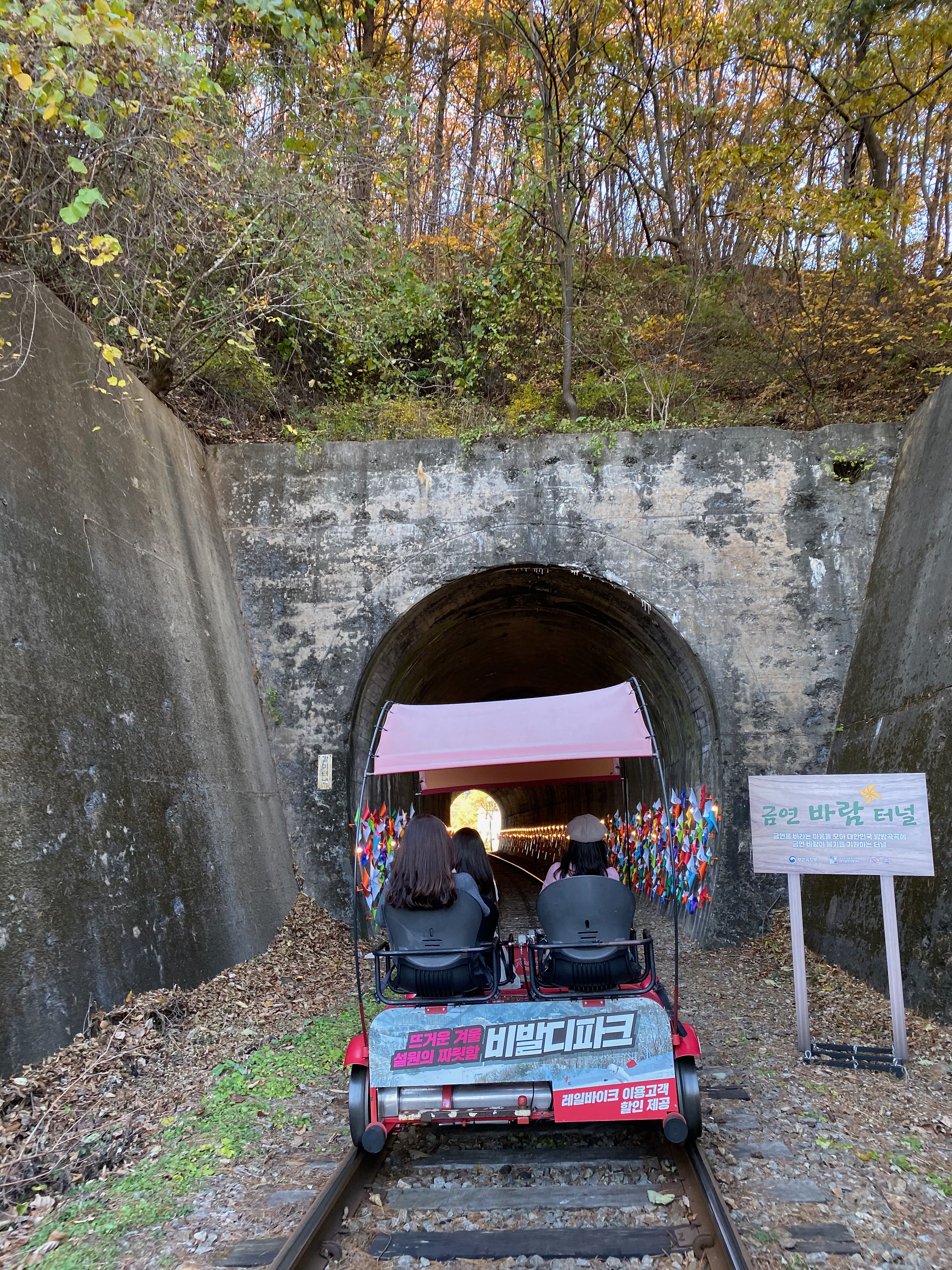
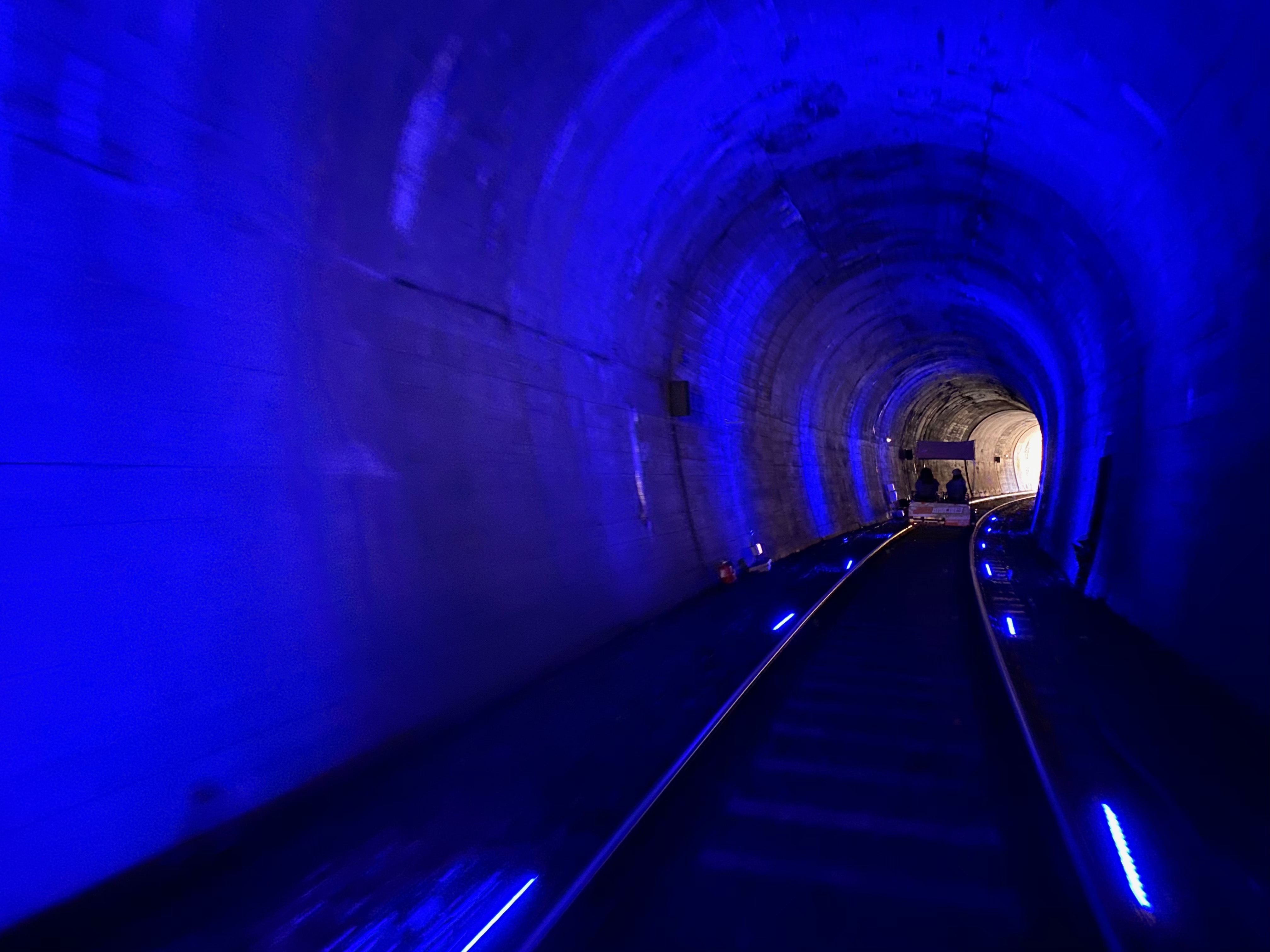
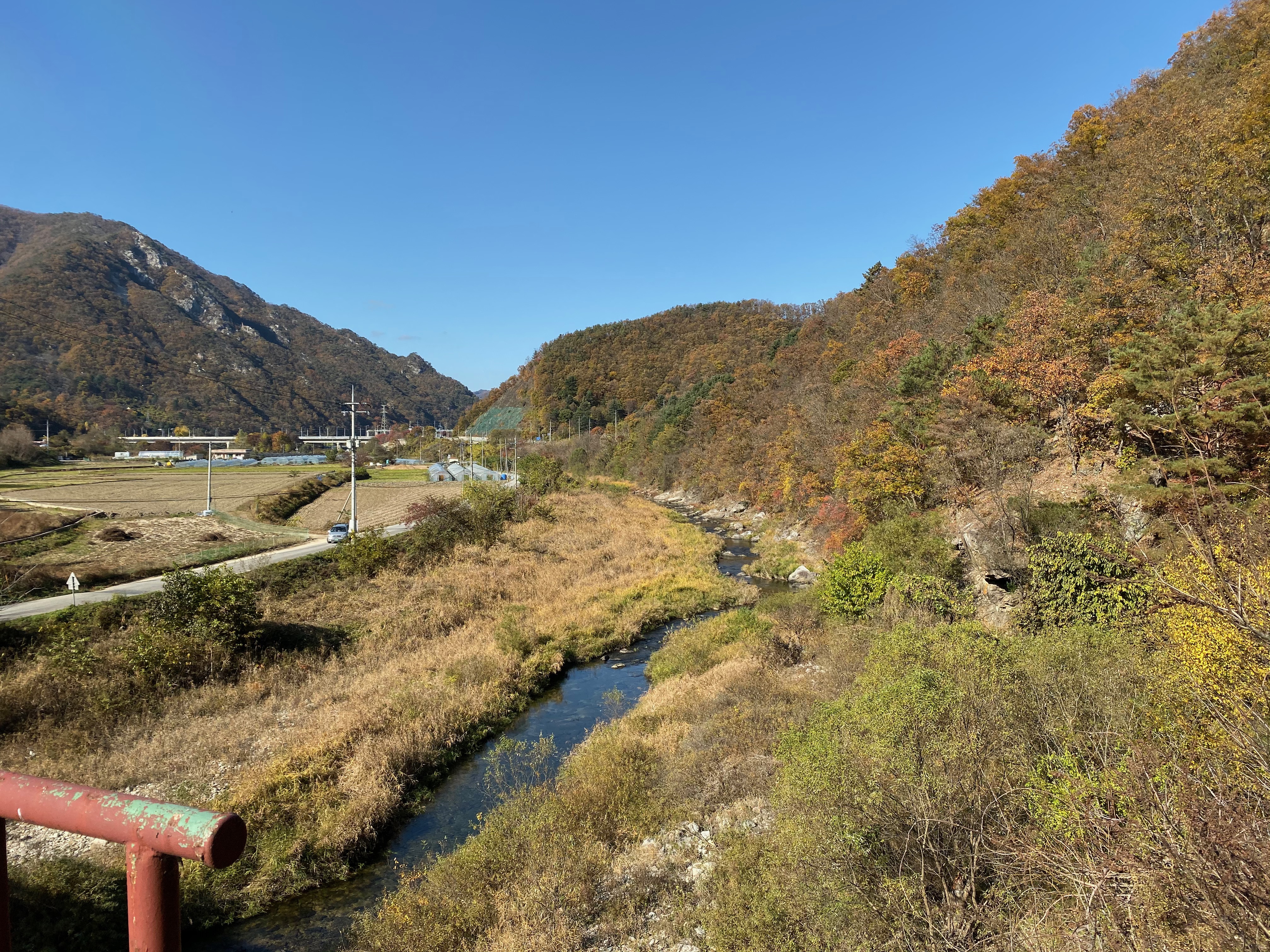
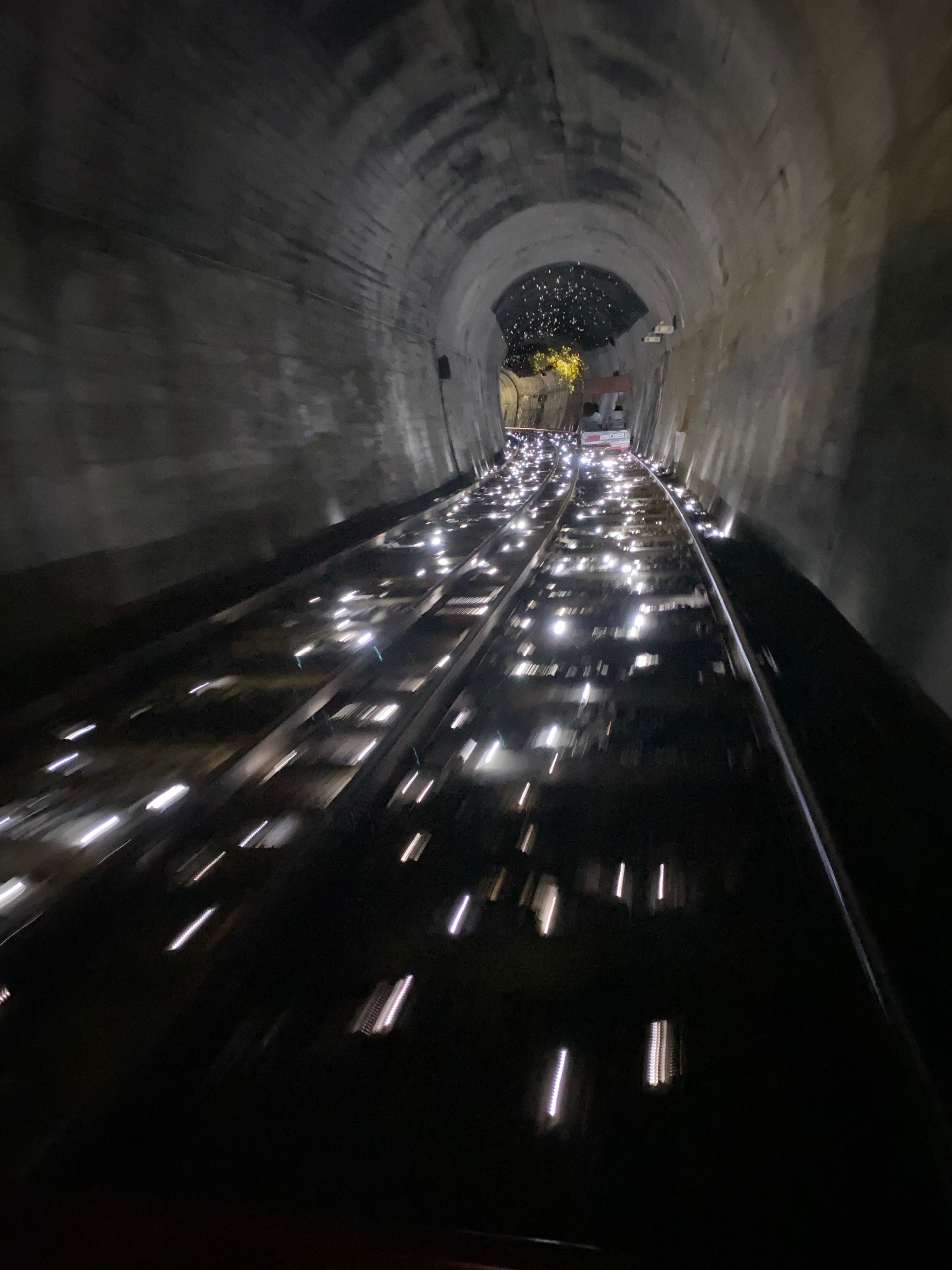
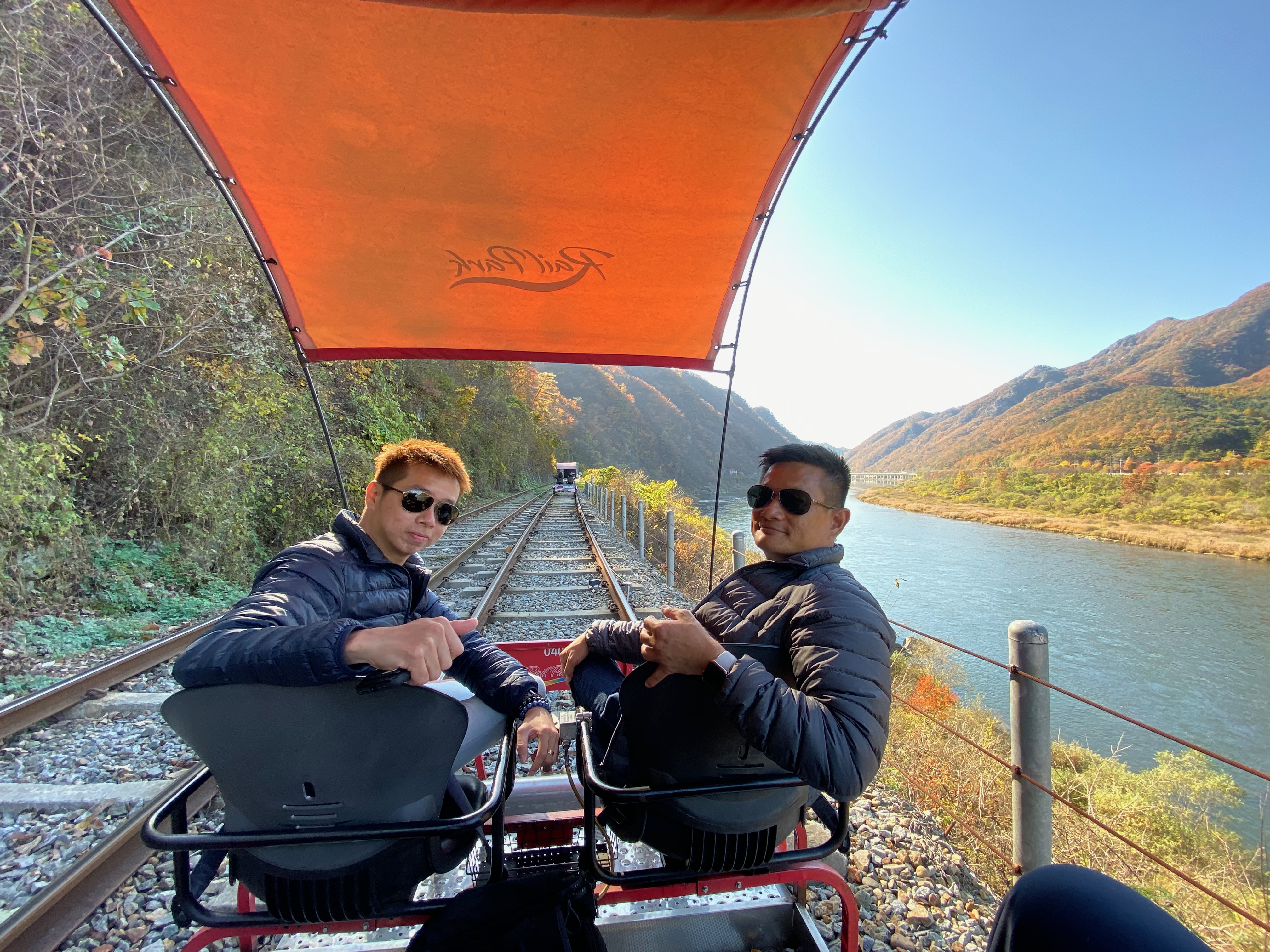
Day 10 – Gangchon and Nami Island. We rode on a railway bike at Gangchon before heading to Nami Island in the nearby province of Gangwon-do. While back at Seoul, we stopped by Cheonggyecheon Stream and did some night shopping at Myeongdong.

Day 11 – Historic Seoul. We visited sights in Seoul such as Seoul City Wall, Deoksugung Palace and ended our day with shopping trips to Hongdae and Myeongdong.

Afterthoughts

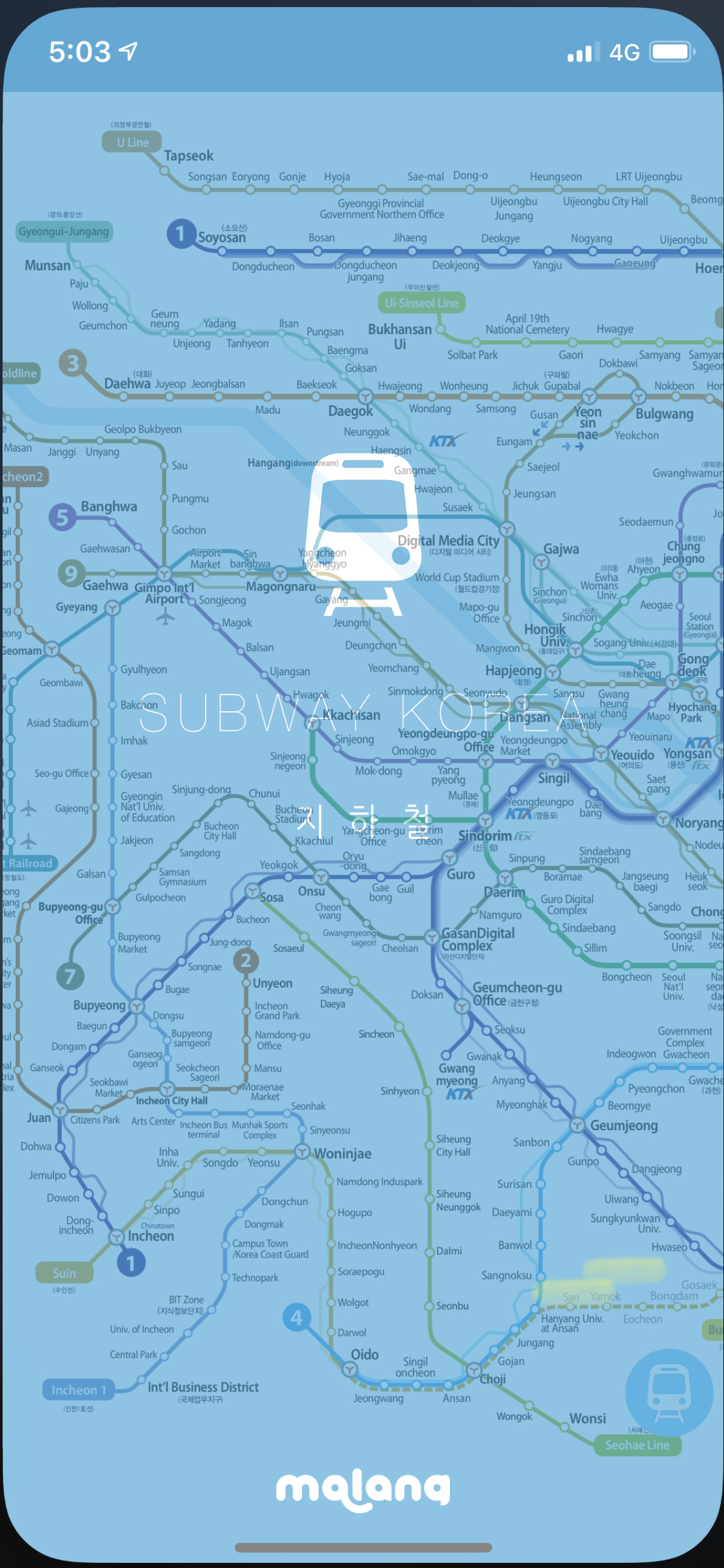
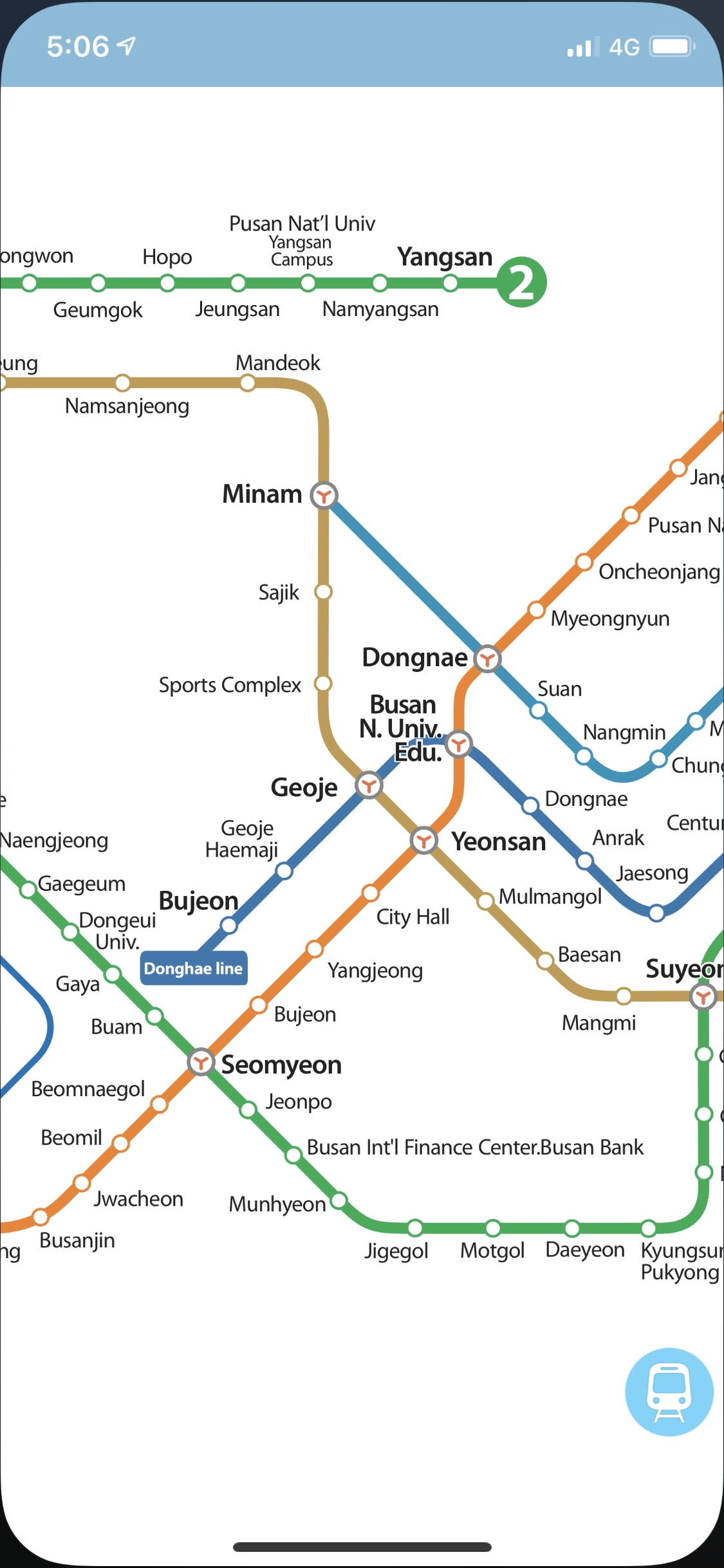
During our time in South Korea, I thought there are a couple of apps that I highly recommend to visitors to South Korea (I am not sponsored by them, just sharing useful apps during my travel in South Korea). The Naver Map App (more information here) is what we relied on largely in South Korea from driving to taking public transport. This app is similar to Google Map, only it works in South Korea. Google Map has limited functions in South Korea and it does not show driving routes. Naver Map App not only allowed me to plan my driving routes before coming to South Korea, but the driving routes recommended by the app is also very accurate. The app is also useful for those who do not drive in South Korea as it shows in real-time the public transport options. The second app that I relied on heavily while in South Korea is the Subway App. This app is excellent in navigating through the confusion subway map in South Korea. It is capable of showing us the subway to take and the real-time arrivals and departures of trains. This app gives us a good idea of the time required to travel on subways. The subway app not only displays the subway system in Seoul, but it also has options to display subway systems in major cities such as Busan. We managed to cover quite a bit of South Korea throughout our 12 days here. We also experienced a few firsts during this trip: driving a left-hand drive, climbing the highest mountain in South Korea, taking the KTX, taking the longest cable car system in South Korea, riding on the railway bike to name a few. Throughout this trip, we had a good mix of nature and culture aspect of South Korea and still managed to cater time for shopping.

Jeju/Busan/Seoul Day 11 (5 Nov 19) – The Ancient and Modern Faces of Seoul: From Strolling the Seoul City Wall to Visiting Deoksugung Palace to Shopping at Hongdae and Myeongdong

Seoul is not all about shopping districts, there are a few historical sites in Seoul such as the big five palaces. We planned to visit a couple of these historic sites today followed by finishing up our day with some shopping districts.

Viewing Seoul from Seoul City Wall – Naksan Section

We started our day today visiting part of the Seoul City Wall, which my friend and I did miss out the last time we came to Seoul three years ago. The 18km Seoul City Wall was built to protect Seoul from invasion, the entire wall was well preserved after standing on its spot for more than 600 years. Visitors to Seoul City Wall can choose to walk the entire 18km or do it in part. As we have little time today, we opted to do the shortest section of the wall, starting from Naksan and we would end up in Dongdaemun gate. To get to Naksan stretch of the Seoul City Wall, we took the subway to Hyehwa Station, which is a mere two stops away from where our hotel is. Exiting the subway station, the path to Naksan is a short 5 mins upslope stroll through a neighbourhood. There are some small shops near Hyehwa Station, where we made a short pit stop to check out their merchandise. We continued our walk towards the base of Naksan Park, which was very well marked with signs pointing visitors to the park. Soon we arrived at a flight of stairs which would take us up to Naksan Park. Naksan Park sits on top of 124m Naksan Hill, which has commanding views of parts of Seoul as well as N Seoul Tower and the surrounding Mountain ranges.

556AB978-E312-432B-9721-5A391E7B8AFC

Autumn street scene around Hyehwa Station

6B96DF3C-EF16-4F73-B6BD-209E66DAF75D

Walking from Hyehwa Station to Naksan Park

646F84AE-789A-4BFD-8E77-7ACCB50690BD

It is going to be an upslope walk to Naksan Park

324FD7E9-1ED3-481A-93C4-108AC7BD984D

Naksan Park lies on top of these stairs

As we climbed the stairs, we were able to see a quieter side of Seoul, a stark difference from places like Myeongdong and Gangnam. At the top of the stairs is an intersection, we took the road on the left that brought us to the  Seoul City wall in under 3 mins walk. The Seoul City Wall sits at the top of the hill with the inner-city side being shorter than the side that faces outside of the city it was meant to protect. Getting up close to Seoul City Wall, it is apparent that some parts of the wall are being from different time periods in Korean history. Some parts of the wall are built with more uniform stone blocks cut into similar dimensions, while there are parts of the wall being built with irregular shapes of stones. Most of the inner side of the wall shows signs of being recently restored with the stones looking newer than the others. This stretch of the Seoul City Wall from Naksan to Dongdaemun is a downslope walk, making it a very easy walk for visitors of all ages.  There weren’t many people around during our visit to the Seoul City Wall, the only people we saw are locals taking their morning stroll. Along the way, we were reminded of how vast the city of Seoul is with the magnificent views of the city constantly in our sight. After walking for around 30 mins, the serene view gave way to a busy street bustling with life. The moment we saw Dongdaemun Gate sitting majestically in the centre of a busy road, we know our walk along the Seoul City Wall came to an end. I would recommend people who wanted to take a stroll along the Seoul City Wall but do not have much time for it to go for this Naksan to Dongdaemun route. Reaching the main road, we headed for the nearest subway station – Dongdaemun Station and made our way to our next destination.

8B213C88-38F0-4CD3-8146-C1CB7073DEAA

Quiet Seoul from Naksan Park

2DAB14D3-C515-421C-9F27-C1E74A87DE4A

Seoul City Wall up close

D6DBE295-BAED-4B11-AB5B-9817FEF0C4F8

Taking a wefie at the end of our walk along Seoul City Wall

BCC9E058-B3FE-4840-A637-0800D612C62C

Dongdaemun gate sitting in the middle of a busy road

Deoksugung Palace

A visit to Seoul will not be complete without a visit to one of the five palaces in the city. Those with more time can opt to visit the bigger palaces of Gyeongbukgung or Changdeokgung, which would take up more than half a day. Since my friend and I visited these two palaces the last time we came to Seoul, coupled that we do not really have a lot of time today, we opted to visit one of the smaller palaces in Seoul – Deoksugung Palace. We took the subway to City Hall Station which is next to Deoksugung Palace. As it was approaching lunchtime, instead of heading into the palace, we crossed the busy road diagonally opposite the palace and settled lunch in a small family-run restaurant. Despite the owners of the restaurant only able to understand very basic English, we had no problems ordering the food (they do have an English menu). The food was inexpensive and delicious.

After lunch, we headed to Deoksugung Palace. After getting our tickets (KRW1,000 per adult), just when we were about to enter the palace, we were in time to witness the change of guard ceremony. The elaborate ceremony saw locals dressed up in ancient Korean soldier uniforms handing over the guard duties to the next group. The ceremony lasted around 5 mins and we were invited to taking pictures with the guards before heading into the palace. There is a small tentage by the side of the entrance where visitors can dress in Hanbok for the photo opportunity with the guards for free.

C54F195F-E5E9-4E42-82F4-FC7EF448EE9D

We were in time for the change of guard ceremony outside Deoksugung Palace

3CC9F2FE-C13E-4788-AC20-FC55E11BDEDC

Taking wefie with the guard commander outside Deoksugung Palace

Deoksugung Palace was first used as a temporary palace in 1592 during the Japanese invasion where the King stayed when he returned to Seoul after the invasion as the other palaces were burnt down during the invasion. The palace was reused as again in the 19th century where the later King of the Korean dynasty used it as a base to establish the Korean Empire and raised his status to Emperor. It is during this period when most of the buildings in Deoksugung Palace was added. Walking through the main gate of Deoksugung Palace, we came to a stone bridge that transports visitors over a small stream, similar to that of a moat found in most palaces around the world. My friends and I headed to the first building that is surrounded by a stoned corridor. This building is near the entrance of the palace and served as the sleeping chamber of the King when he resided in Deoksugung Palace. Taking a peep inside the sleeping chamber, a small throne sits in the centre of the building and the interior was relatively simple in design. A smaller building next to the King’s sleeping chamber closed for public viewing was used as a place where the Korean King used to receive foreign envoys.

743D934B-2256-44C9-AB0F-1912DCBD228C

The sleeping chamber of the Korean King

BF2E65EF-1768-4993-B7BF-89CF4EAA84E0

There is a simple throne inside the sleeping chamber

C053064F-029A-4F8A-8334-14166DB54A83

A small building next to the King’s sleeping chambers used to receive foreign envoys

My friends and I decided to visit the buildings at the back of the main palace building before returning to see the main palace building. As we were walking we came across a building that was not painted in any colours next to the King’s Sleeping Chambers. This is the only two-tiered building in Deoksugung Palace and served as the sleeping chambers of the queen. A little further into Deoksugung Palace, passing the queen’s sleeping chambers, is a row of brightly coloured semi-open buildings which was used for the coronation of the King. This is another venue in the palace where the Korean King receives foreign envoys. We peeped into this building and found the interior to be very simple in design, there are no elaborate motives nor was it painted in the bright colours as we were so used to see in Korean Palaces.

7B3B5EEC-3C6C-4FDD-9541-6DB32C6FC8C7

The only two-tiered building in Deoksugung Palace that serves as the sleeping chambers of the queen

4C8881B3-7525-4521-9423-171E359213C6

This is where the king receives foreign envoys

D20D6A87-6ECE-4972-81D8-5B0E3CD143A4

The interior is rather simple in design

After some photo shots, we returned to the building that sits in the middle of Deoksugung Palace. This lone building is the main palace building in Deoksugung Palace. This is where the official throne of the King resides. We were encouraged by the staffs in Deoksugung Palace to enter to view the throne hall. There do not seem to be any restoration works done in the throne hall. The wooden throne hall still retains the paint that was first coating when it was built 500 years ago. The ceiling of the throne hall has elaborate dragon carvings, decked in gold paint. In the centre of the hall, sits the king’s throne majestically on an elevated platform, seemingly displaying the might of the reigning Korean King. The high ceilings in the throne hall make it a very cooling hall. We were encouraged by a staff member stationed inside the throne hall to go closer to the throne for a better look of the artefact. There are, however, strict rules to be followed while inside the throne hall. The staff ensured that visitors do not use any form of flash photography or video while inside the throne hall. We even saw him telling visitors off for videoing inside the throne hall. The part of the throne hall open to visitors is relatively small, we got out in 5 mins. As we exited the hall, making our way to the entrance of the palace, we walked past a large square, installed with small stone tablets marking the place where the different ranked officials would stand during an audience with the king. This square is smaller compare to the ones that we have seen in bigger palaces such as Gyeongbukgung we visited three years ago. As Deoksugung Palace is a relatively smaller palace, my friends and I completed the tour of the palace in under 2 hours. As we were walking out, we saw some parts of the palace being cordoned off for preservation works.

9742249F-2510-4239-B3F9-E047CAF9F659

The throne hall in Deoksugung Palace

EA9CDADB-25E5-4981-98E5-DEF9999C26B0

Inside the throne hall

489BFFF9-7A22-4BAF-800B-E88C7FFE96E2

Taking wefie with the throne

Exiting Deoksugung Palace, we spotted some tentages being erected in the open field opposite the palace. My friends and I decided to head across to check out what is going on. There seems to be some apple harvesting festival event here. There are numerous stalls set up by farmers across South Korea selling the fruit of their labour. We got to try some apples, which is very sweet and crunchy.

The Young and Vibrant Hongdae Shopping District

Leaving Deoksugung Palace, our next stop is Hongdae Shopping District. My friend and I did not manage to visit Hongdae when we visited Seoul three years ago. We made it a point to plan a visit to Hongdae this time around. Access to Hongdae is very easy via the well-connected subway, we alighted at Hongik University station and the shopping district is just outside the station exit. The vibe at Hongdae is very different from that in Myeongdong. While Myeongdong sees mainly tourists, Hongdae is frequented by mainly by Seoulites. The entire Hongdae area has a very young and vibrant vibe, thanks to the nearby University. There are more shops selling clothing here compared to Myeongdong. As we walked around, we spotted a Bingsu restaurant and decided to enjoy some Korean Shaved ice dessert. The dessert was delicious and not too sweet. After dessert, we explored more of the Hongdae area. We do find here to be a better place for shopping compared to Myeongdong. However, due to seasonal changes, the clothing on sale are mainly winter wear, which we would have no use back at home. One would easily lose track of time just by walking around in Hongdae.

9B634F37-4A16-4070-87A8-5D62D124BD65

The very vibrant Hongdae

7D8572F0-4923-4903-8B94-324155B20C47

Hongdae is mainly frequented by locals

Last Dinner in Seoul and Back to Myeongdong

The sky soon got dark and it is time for us to hunt for dinner. For our last dinner in South Korea, we returned to Tosokchon Samgyetang Seoul for some Korean Ginseng Chicken. As we had already timed our visit, there was again no queue for the famous Korean Ginseng Chicken restaurant. After dinner, my friend and I returned to Myeongdong for some last-minute shopping of beauty products. As Myeongdong is mainly frequented by foreigners, I find the shops are more generous in giving discounts and free samples here in Myeongdong. After getting our stuff, we walked around Myeongdong a little and decided to return to the hotel as the shops are closing. My friend and I made a quick pitstop at Dongdaemun Design Plaza to take some photos before returning to the hotel to pack up for our trip home the next day.
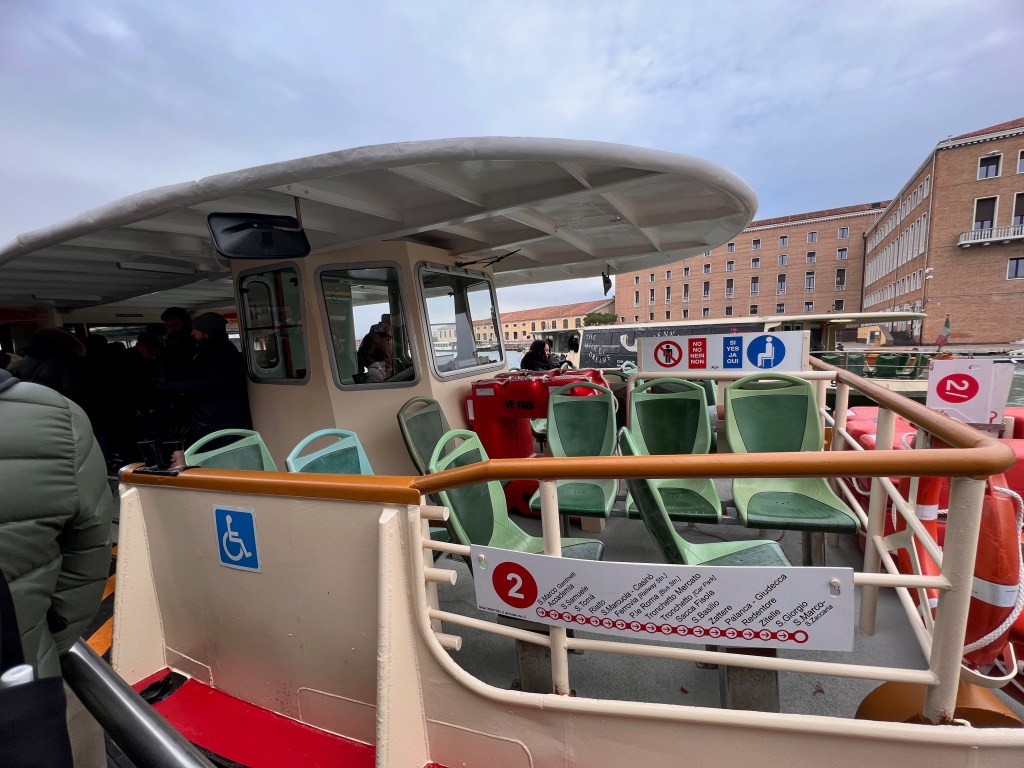
 

Jeju/Busan/Seoul Day 10 (4 Nov 19) – Gangchon and Nami Island: The Breathtaking Autumn Foliage in Gangwon-do

Our journey today brought us to yet another nearby province from Seoul. Today we headed out to Gangwon-do for our first time experience in riding the Railway as well as a visit to Nami Island that we did not do the last time we were here. As we returned to the hotel late the night before, we slept in a little and headed out at around 10.30am. Our first stop is the Railway Bike, located at Gangchon. The journey from Seoul to Gangchon in Gangwon-do took us 2 hours to reach via the subway.

Gangchon Railway Bike Ride

There are several railway bikes around in Gangwon-do, I chose to come to the one in Gangchon for a couple of reasons: firstly it is very near to the subway station which meant that we did not have to waste time in travelling from the subway station to the railway bike park; and secondly, it is a few stops away from the subway station which is nearest to Nami Island. We reached Gimyujeong subway station at around 1 pm. From the subway station, it is a mere 3 mins walk to the railway bike park, which is literally next to the subway station. There are only two types of railway bikes available: 2-seater and 4-seater railway bikes. There are scheduled departure timings for a ride on the railway bike. My friends and I wasted no time and headed straight to the ticketing counter. We were glad that we managed to get the tickets for the 1.30om departure on a 4-seater railway bike. Tickets on the railway bikes are charged based on the type of bike and not by the number of headcounts. We paid KRW40,000 for the 4-seater railway bike. Since there is some time left before our scheduled departure, my friends and I went around exploring the railway bike park. The park seems to exist for the sole purpose of boarding the railway bike. There are limited facilities at the park. We only found one cafe selling finger food and a few photo spots for visitors to take pictures at the railway bike park. There is also a very short zip line at the park, which does not interest us. As we still have some time left, we headed into the cafe, initially wanted to grab a bite. But the limited food on sale dissuaded us to even have our lunch there. We spotted a corner in the cafe where we spent the rest of our time taking pictures.

74A5B17C-4A15-482B-8F52-D29F52D6F4FD

Taking pictures inside the cafe

It is soon our time for boarding. We headed outside the cafe to join the queue to board the railway bikes. There are two queues already formed up at the boarding area. We made sure that we are queued in the 4-seater bike queue. Boarding was efficient, staffs at the railway bike station boarded visitors by groups and gave us a brief on the brakes and how to use the bike. We settled into our bikes and waited for the green light for us to start pedalling the railway bike. We did not have to wait for too long to be given the green light. Pedalling on the railway bike was easy and effortless (provided all the passenger chip into the pedalling of the bike. Along the way, we would pass through three tunnels. As the bike leaves the bike park, we were treated to sceneries of the countryside. We initially find the scenery rather refreshing, no tall buildings and a lot of greeneries on either side of the railway where we passed by. However, the scenery on this stretch became repetitive after a while as we were pedalling through farmlands. We have to follow the pace of the bike in front of us and the bike kept stopping, apparently for its riders to take pictures. My friends and I were having more fun in pedalling the bike and “plotting” to slam into the bike in front. At times we were slacking off and stopped pedalling leaving the friend sitting behind to do the hard work until she found out and busted us. Farmlands slowly turned into a wilderness, the railway track brought us under and over metal bridges, we soon came to the first tunnel about 10 mins after leaving the railway bike park. The first tunnel was a relatively short one lined with pinwheels on either side of the tunnel walls. These pinwheels seem to be powered by electric rather than wind. The Koreans did a fantastic job of turning an otherwise boring and dark tunnel into a spectacle of colour, bright and Instagram worthy tunnel.

intRail01_e

Map of the entire railway bike track

9EF33FAE-2DB2-49A2-8D33-8C021CEE8514

The Rail Bike tracks started with farmlands

B009D837-7CCE-4B3E-9344-D69734CA38FA

More farmlands on both side of the track

At the end of the first tunnel, the railway track bridged over an almost dried river, giving us a feeling of flying over the river. This part of the track seems to be predominately taken over by nature, there was wilderness all around us. Leaves on the trees are mainly green with a hint of yellow, grown on the small hills on the side of the track. The only sign of civilisation is the highway bridge at a distance next to the track and sporadic farmhouses at a distance from the track. This section of the Gangchon Railway Bike ride is pretty short, we arrive at the second tunnel about 5 mins later. The second tunnel was dark at the entrance. It got brighter the deeper we rode in it. We were treated to a colourful light show in the second tunnel. Strips of LED lights turned from green to blue to pink as we rode through the tunnel. Wow, two tunnels with completely different themes. This got us hyped on how the third and final tunnel will be when we come to it.

4DE7E6F8-36E4-4E4E-BB71-D92F07E2D207

Crossing a stream after exiting the first tunnel

18A7C33F-5698-498E-832E-832B2F4F56B1

Starting to see some hills

The second tunnel is slightly longer than the first one. The track continues over a small wooden bridge over a small stream. Hills form the backdrop over the farmlands and we started to see more trees donning on their red and yellow autumn outfits. There is a good mix of nature and farmlands with very little civilisation in sight. The distance between the second and the third tunnel is rather short. We came to the third tunnel after 10 mins of pedalling.  The third tunnel is again different from the first two. The third tunnel is a pitch dark. As we pedalled our railway bike in the tunnel, we begin to see white strips of LED lights illuminating the ground and at some parts, the ceiling of the tunnel. This tunnel is the VR tunnel, which I guess there would be some VR effects if we had forked out the extra KRW5,000 per pax. However, we were not given the option when we got our tickets.

5F5CC13A-42CD-4289-BBB4-16924B881B70

There are lesser farmlands from this part of the track onwards

F985FE1D-4F80-45E8-8D52-091E156D1658

Taking pictures on the rail bike

CA4A0E3B-4AA4-4E87-84AF-B9C83CD9504E

A small farm afar

3B554C90-F090-4CB8-9D5A-BDDEF7C38CE6

Not so scenic part of the rail

Coming out of the third tunnel, we were taken away by the beautiful scenery. The railway track hugged along a river which is decorated by endless mountain ranges on the opposite side of the river.  Parts of the mountain ranges displayed hues of red, constantly reminding us of the autumn season. Pedalling along the river, enjoying the gentle autumn breeze is a very tranquil affair. We were truly able to enjoy the moment, as it felt that we were the only people around the area. This stretch of the railway is the most scenic of the entire Railway Bike trail. This is the part that we make us feel coming all the way here, experiencing this unique activity is well worth the time invested.

9DE8846E-7DC2-42AC-95E3-49E80894238A

We were greeted by scenes of the river and mountain ranges coming out of the third tunnel

BD8DC0C8-D6F2-4748-8E34-E48CC96226A9

Taking a picture with the beautiful sceneries

FF78EA85-48F7-44F4-A167-8AE0E10410C4

It is very peaceful riding on this section of the track

8FA47D17-24EF-42F2-BDEF-F6D37DAD2DC1

The sceneries of river and mountains

41A99687-5EF4-4577-8CEB-140ADE955067

The mountains and river feels therapeutic

Another 15 mins of pedalling from the third tunnel, we arrived at our endpoint. There is a small rest area for visitors to grab some snacks while waiting for the rest of the group to arrive. My friends bought some Korean Street food, while they were enjoying their well-deserved snacks, I went around taking pictures of the river. One can never get enough of the picturesque view that was before us. Soon we were told to get onto a train that would bring us back to a nearby train station for a bus transfer back to where we started. There are several carriages on the train, one of which is an open carriage which was packed with visitors. We did not bother rushing for the open carriage and gotten ourselves some rather good spot – at the end of the train. We were still able to enjoy the scenic river views from where we stood. The train ride took around 15 mins where buses are already standing by to ferry visitors back to the railway park. We reached the railway park at around 3.20pm. We wasted no time and headed to the subway station and catch the next train to Nami Island.

744CC575-2C16-4D9B-9CB3-B18D62B1E73C

Taking a wefie on the suspension bridge that we had to cross to the bus stop

529E8FC5-1528-4D0F-B7A9-EF41A9D91D18_1_201_a

Red autumn leaves are everywhere

Nami Island

It is already 4pm when we arrived at Gapyeong Station, which is four stops away from Gangchon Railway Park. We approached the tourist information counter and checked where should we be taking the bus to Nami Island. We were informed by the staff that it would be cheaper and faster if we catch a cab to the ferry terminal. Indeed, we saved KRW2,000 by taking a cab to the ferry terminal. The cab ride took us only 5 mins to reach the ferry terminal. My friends and I headed straight to the ticketing counter and got ourselves the ferry ticket to Nami Island. The KRW13,000 cost includes return ferry journey and entrance to Nami Island. There weren’t many people at this time when we were queuing up for the ferry. We did not have to wait for too long for the next ferry to pull into the pier.

D4DFECA3-E3B8-4588-8B17-2A47708A1371

We arrived at Gapyeong Station

As the 5 min ride ferry approaches Nami Island, we can see the numerous trees with yellow and red leaves lined up along the coast of Nami Island. There are numerous paths on Nami Island that visitors can use to explore the crescent-shaped Nami Island, each of these paths are laid with different trees, which is best viewed in Autumn season. Before we stepped onto Nami Island, I had planned a specific path for us to take so we can cover most of the island. However as we stepped off the ferry, all the plans were thrown away. We were immediately attracted by a row of trees with the red maple leaves at the right of the pier on Nami Island. Lining up by the coast of the island with the river as the backdrop, my friends and I were captivated by the beautiful autumn scenery on this part of the island, so much so that we stayed here for quite some time taking pictures with the trees as though this is the only spot on Nami Island that is picture-worthy. After some time, we realised we had overextended our stay as the sun is setting, we continued on the path further into the island.

E024104E-BD2F-4D8D-BBA8-18A81D21E189

We arrived at Nami Island after 5 mins ride on the ferry

As we walked further into Nami Island, we spotted a small stream with a wooden bridge built across it. This is another great picture spot with the yellow, red and green trees in the background. After some photoshoots, we hurried to the other parts of Nami Island, hoping to cover more of the island before it gets dark. As we were walking along the path, we spotted more trees covered in yellow and orange trees. We were reminded of the autumn season in every corner we turned on Nami Island, these coloured leaves make Nami Island a great spot to visit during autumn. Soon we came to a forest of tall pine trees, entirely covered with red leaves. We attempted to take pictures of these trees, but the picture we took does not do it justice. The forest looks better on ground zero than in photos.

3F24721E-6FFD-462A-ACE7-DD4FE34D9AF6

We found this to be a great spot for photo taking on Nami Island

94ABDDFE-B717-4F57-8A1F-D8F6DD79A9D3

Taking a wefie with the tall pine trees

F77B2BAE-4A6C-4B98-A646-9446B345381B

All the leaves had turned red

C9705EC7-2DDE-46D3-BB4A-1E97DE89B776

Pine tree forest on Nami Island

The sun has set and it was getting dark. We figured we will not be able to enjoy the picturesque autumn sceneries on Nami Island compared when there is daylight. We started to make our way back to the pier for our ferry ride back to the mainland. Along the way, we spotted a small gift shop selling souvenirs in the middle of nowhere. After getting some souvenirs, we continued our walk back to the pier and left Nami Island. Reaching the mainland, we decided to settle our dinner here before taking the 2-hour train ride back to Seoul. There are numerous restaurants around the pier on the mainland. As we were a little hungry, we settled in one of the restaurants. The cost of food is not as expensive as we thought it would be, and yet the food is very delicious. After dinner, we took a cab and headed to the train station where we took our 2-hour train ride back to Seoul. We headed back to the hotel to change up as we kind of stink after having the Korean BBQ dinner.

8AC1C269-CA13-4595-844A-09965E22C61E

One last wefie before we leave Nami Island

37BB2701-8C26-4980-B487-51EB412EE599

One last shot of Nami Island

59B1C587-E36B-4AA5-BC92-C4C95A8BEA62

Nami Island at night taken from the ferry

6A74ABFF-019F-422F-948C-08EA8980AFD8

We settled for our dinner before heading back to Seoul

Cheonggyecheon Stream

One of my friends wanted to get some facial masks in Myeongdong, we headed out again for a late-night shopping at Myeongdong. Before we head to Myeongdong, we stopped by Cheonggyecheon Stream. The last time my friend and I came to Seoul, we mere overlooked Cheonggyecheon Stream and did not really stroll along the stream. Cheonggyecheon Stream is a 10km long stream in downtown Seoul. The Korean government spent millions to revitalise the once smelly and dirty sewage stream. These days, Cheonggyecheon Stream is a popular recreational space for locals and visitors to stroll along. We were in time for the annual lantern festival along Cheonggyecheon Stream when we visited, which takes place every year in November period. Visitors would be able to see Cheonggyecheon Stream lighted up with figurine lanterns installed in the middle the stream. There are lanterns from the Korean and Chinese folklore as well as some from Disney animated movies such as Aladdin, Peter Pan and Lion King to name a few. However, it was a shame that the lanterns were not lighted up at the time of our visit, we can only see these lanterns from the street lights. My friends and I strolled along Cheonggyecheon Stream for around 10 mins before calling it quits and headed to Myeongdong.

D27D9396-CD01-4EA9-B83E-F5A4EC96E520

Cheonggyecheon Stream Lantern Festival

CCA0CD65-EFB5-4D43-81B9-7D1C96C86E4E

Taking wefie at Cheonggyecheon Stream

AFD604F9-2DC6-4676-A8B8-811110B52D56

Cheonggyecheon Stream at night

55FDCB13-982C-4866-A84D-3923F15FA024

Some of the lanterns on Cheonggyecheon Stream

8FB427AD-C930-4ED9-ABBD-5F2FF41CF3D4

Korean folklore lanterns on Cheonggyecheon Stream

B4A41E25-97EC-40BD-B138-84AE389B86D9

Korean folklore lanterns on Cheonggyecheon Stream

A3C83715-9ED9-4D45-B504-6B9A49D9D52E

Taking a wefie at Cheonggyecheon Stream

15F463A3-6CFB-4365-A5D7-811C8002390D

Cheonggyecheon Stream at night

737C686E-AC63-44D6-8A80-AB157C9AB282

Cheonggyecheon Stream at night

778C1712-FD44-4A4E-8781-88966FA60218

We spotted this building near Cheonggyecheon Stream

Back to Myeongdong

Myeongdong is a mere two subway stops from Cheonggyecheon Stream. The vibe in Myeongdong is very different today being a weekday compared to weekends. There were significantly lesser people and most of the roadside stalls selling snacks were missing. Most of the shops seem to close early during weekdays at around 11pm whereas shops seem to open till midnight on weekends. We did not stay at Myeongdong for too long as my friend already got what she came here to get plus the fact that most of the shops are closed anyway. We walked around a little and headed back to the hotel. As our hotel is located opposite the Dongdaemun shopping district, we headed to check out the shopping in Dongdaemun, which was marketed as a place for late-night shopping with shops open till 5am. We found the price of the thing sold in the Dongdaemun area seem to be higher, and the face mask shops did not give as generous discounts compared to those found in Myeongdong. We headed back to the hotel to rest after 5 mins of walking around Dongdaemun area as we found nothing much to buy.

93A0CCA2-49C3-4B50-A364-A242977410DE

This is one of the iconic building in Seoul

DB29E28D-7D4A-4435-B46F-C86DEA2D56BD

Dongdaemun late night shopping district

8B2D22D2-C5D5-4A3C-8B76-3B87DA91C6D8

Dongdaemun late night shopping district