We were determined to make up for the time we lost yesterday and tried to cover some of the places that we did not manage to visit yesterday. The major sites in Jeju are situated to the East and South of the island, with the centre occupied by Hallasan. From my research during the planning of this trip, it seems that there is nothing much of the West part of Jeju, while Northern Jeju is where Jeju-si and Jeju Airport is located. There are some sites on the northern part of the island, however, this trip is mainly focusing on the major sites in the Eastern and Southern part of Jeju. Today is the first day of my driving left-hand drive car in Jeju, initially, I was a little concern. After my initial experience driving during peak hours, these concerns whittle away. I do find driving in Jeju quite relaxing.

Our journey around Jeju-do today
Seongsan Ilchulbong – The Sunrise Peak
We woke up pretty early today and got out on the roads of Jeju Island by 7am. The morning traffic is light, making driving in Jeju very relaxing. The journey from our Airbnb accommodation to our first stop, Seongsan Ilchulbong takes around 1 hour. We were treated to some nice scenery along the way, passing by some tranquil farmlands as though they are waking up to the next autumn Jeju morning. As we were near Seongsan Ilchulbong, we spotted a Starbucks and stopped for breakfast and coffee. I think this Starbucks offers the best view in South Korea and it overlooks Seongsan Ilchulbong. We had a relaxing time sipping our coffee and having a leisure breakfast, with the sunrise peak in front of us.
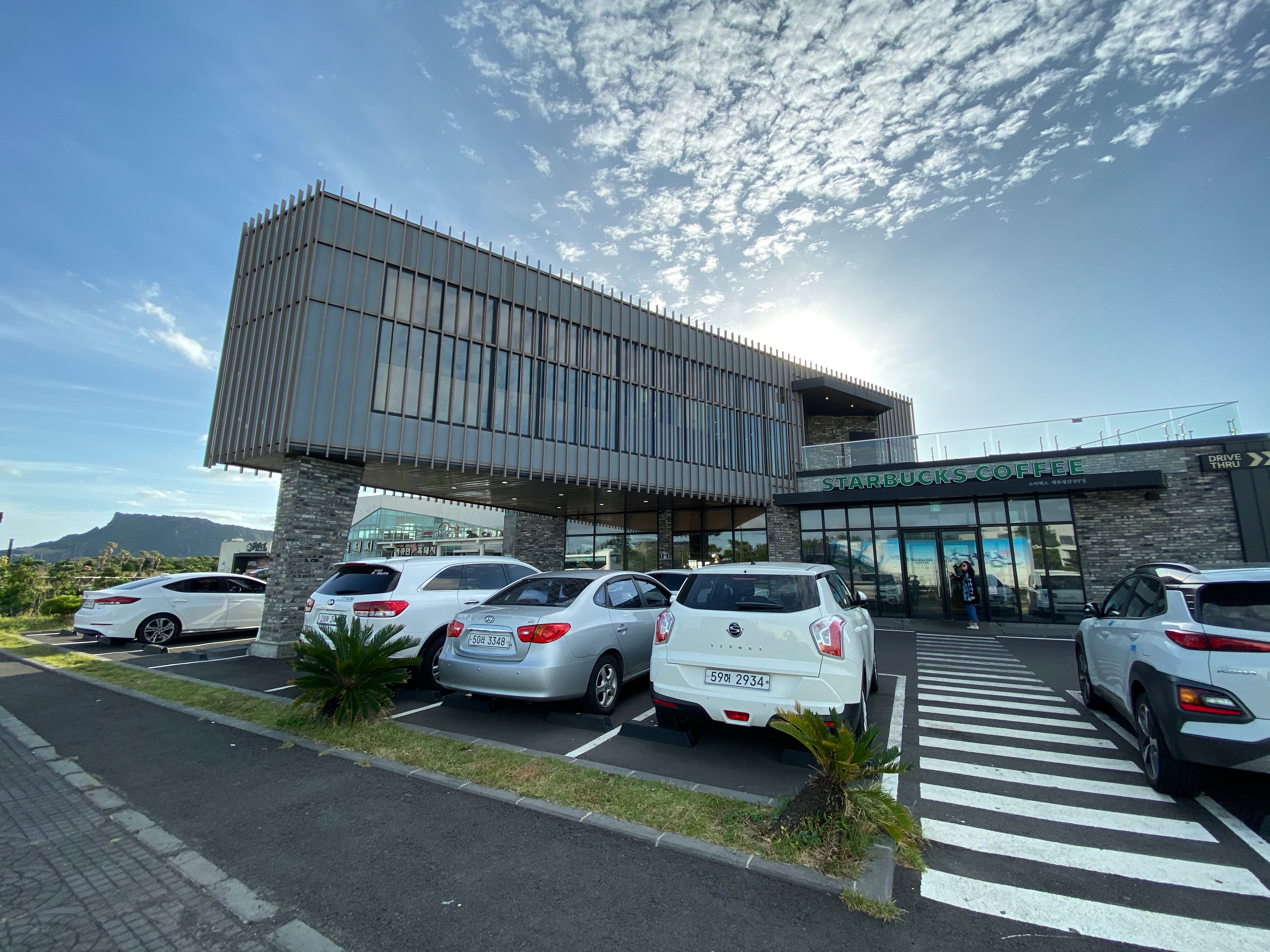
The Starbucks with a great view of Seongsan Ilchulbong
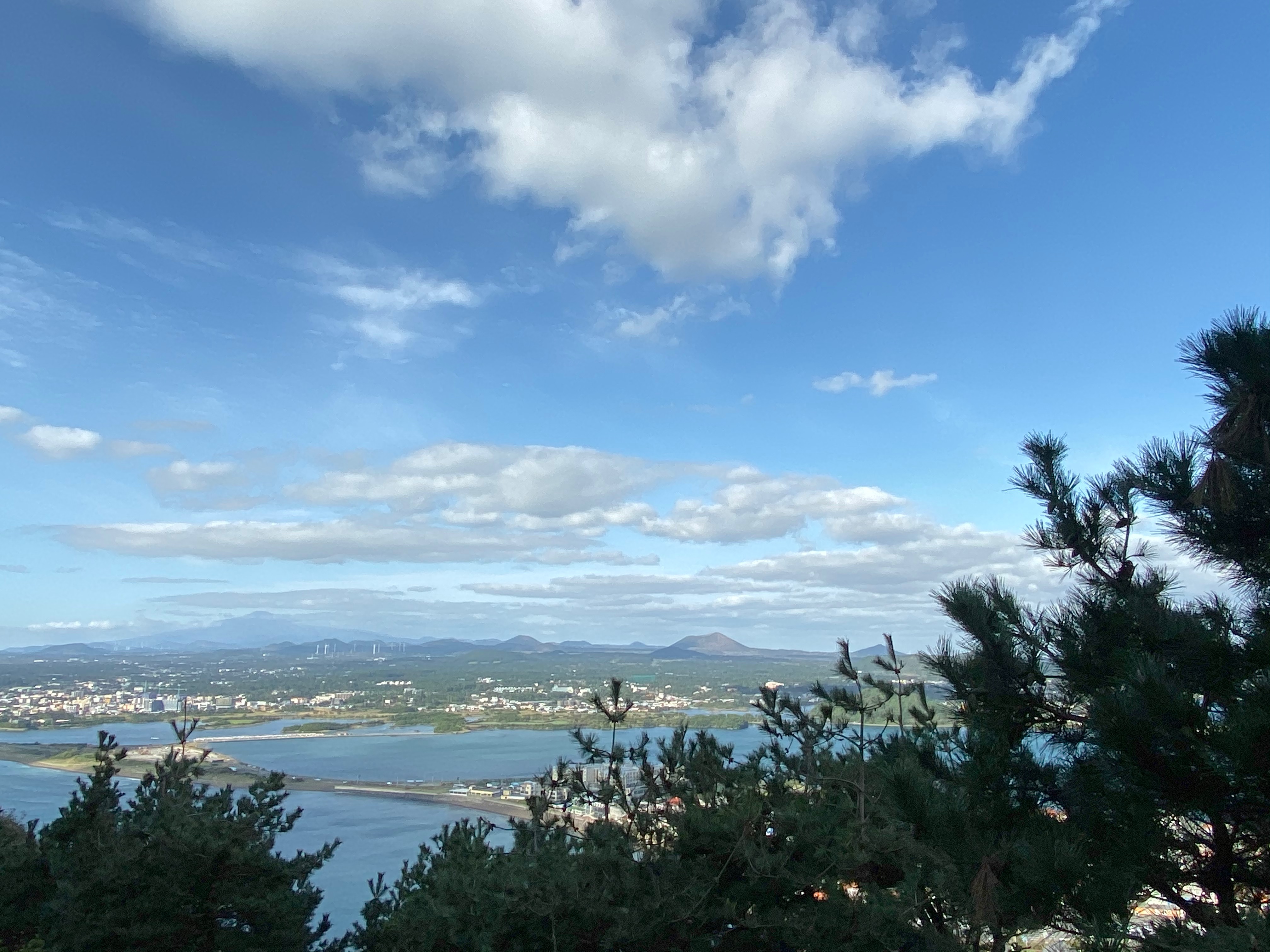
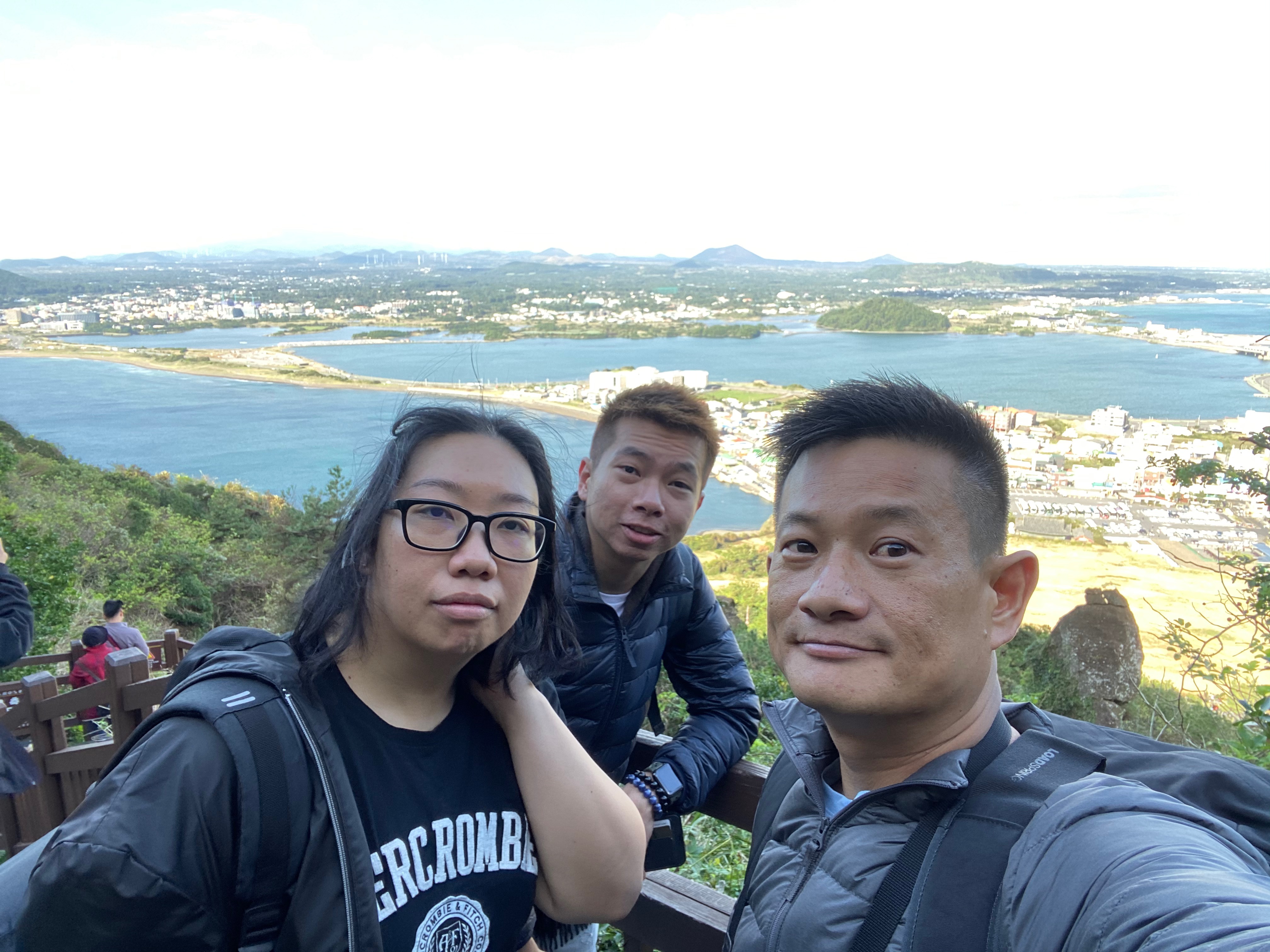
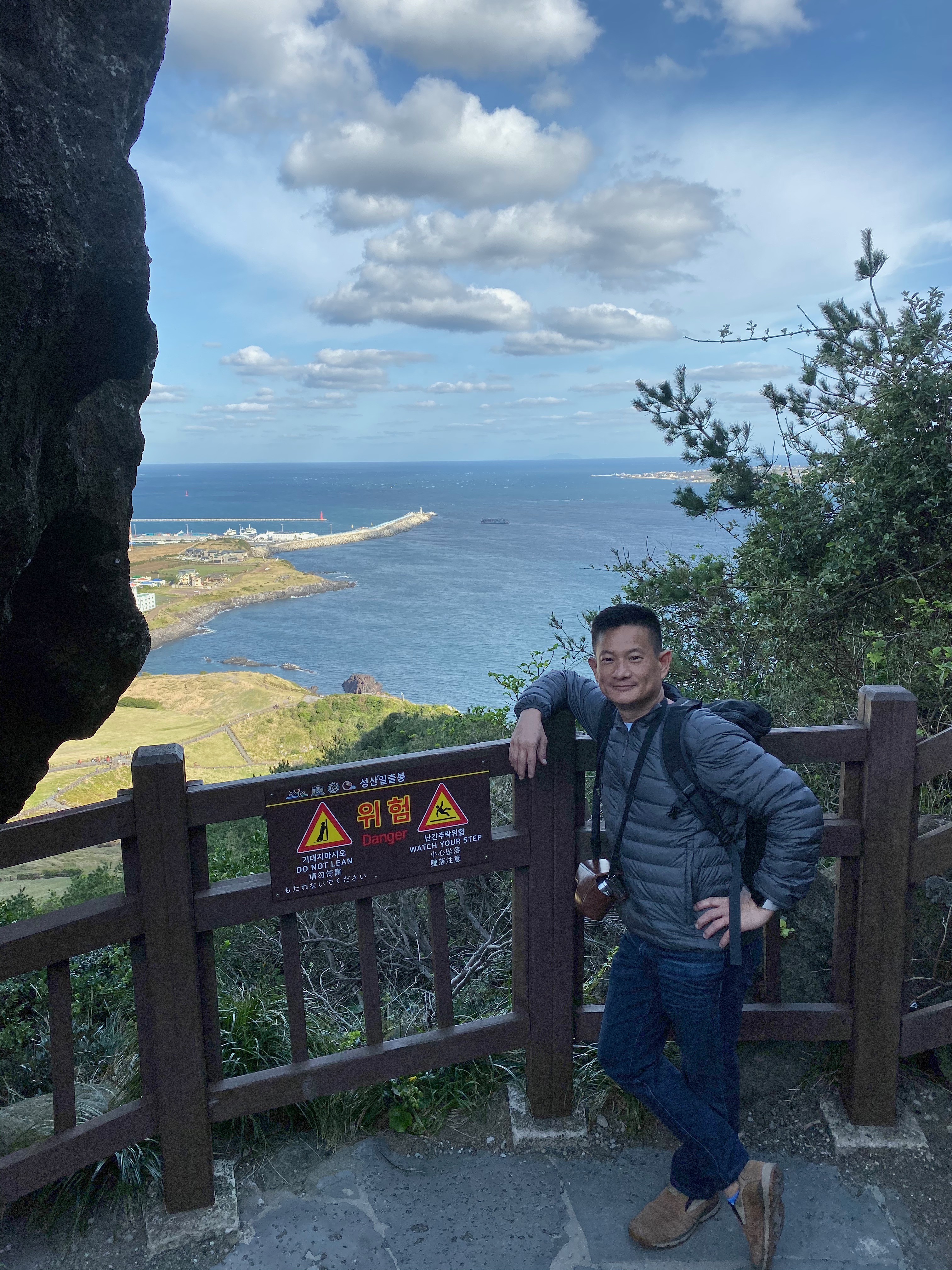
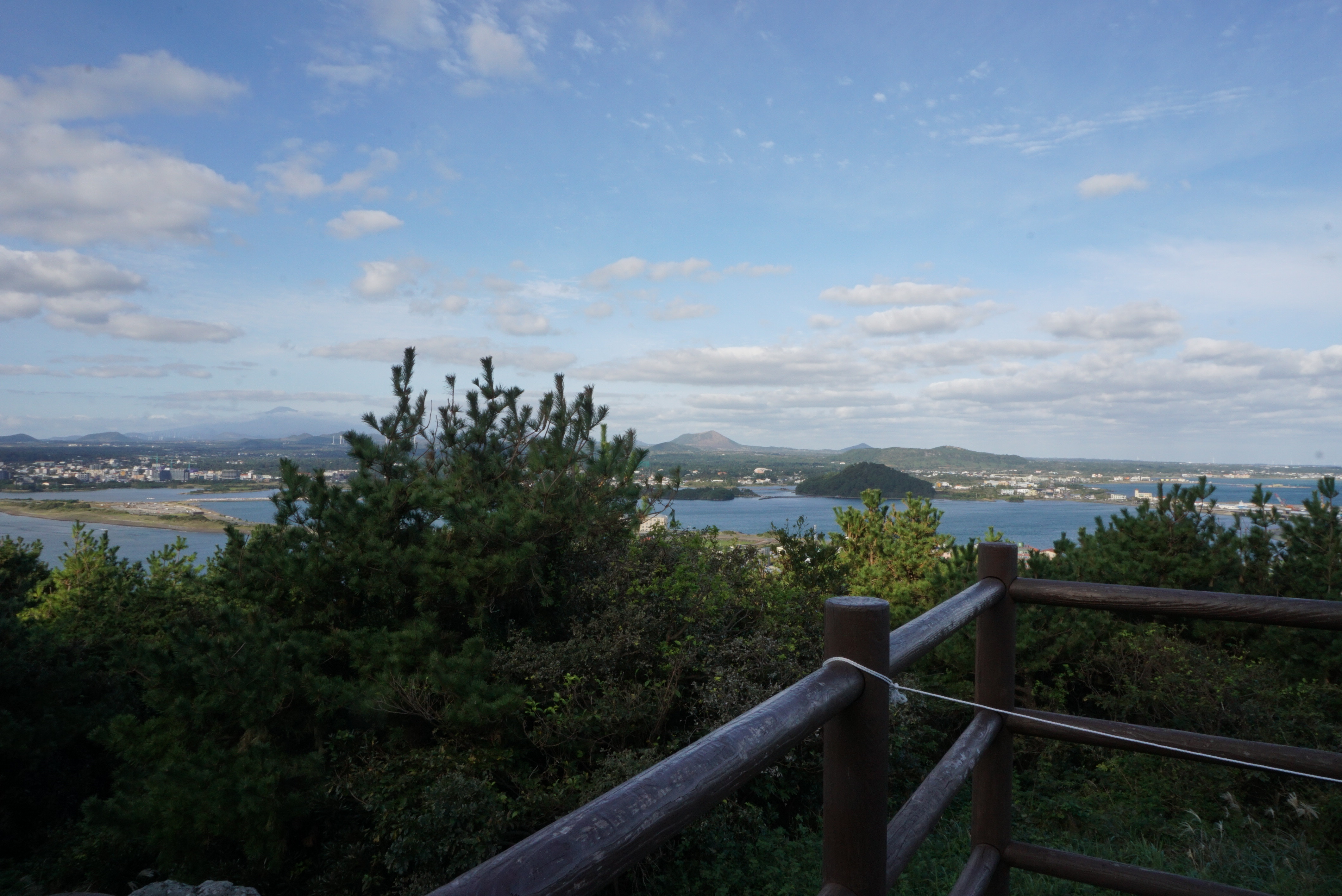
After breakfast, we resumed our journey to Seongsan Ilchulbong. It only took us 10 mins to drive from Starbucks to Seongsan Ilchulbong. After parking our car and paying KRW5,000 per adult, we are at the grounds of Seongsan Ilchulbong. Seongsan Ilchulbong is also known as the sunrise peak as it sits on the eastern edge of Jeju Island, a perfect spot to watch the sunrise over the sea. The path to Seongsan Ilchulbong spits into two about 50m from the ticket booth, one path leads to the coast and another leads to the peak of the extinct volcano. The paths at Seongsan Ilchulbong is very well laid, making visiting the Sun Rise Peak a leisure walk in the morning. The one-way path to the 182m peak consists of a series of stairs, ensuring a good flow of human traffic especially during busier times. We were mesmerised by the scenery that the blue ocean and the green mountain ranges unfold during our ascent to the peak. My friends and I constantly turn around to take in the breathtaking coastal scenery. From Seongsan Ilchulbong, it feels as though one is on an island off the coast of Jeju Island. The tombolo that links the volcano to Jeju constantly reminded us that we are still on Jeju Island. The higher we ascend to the peak, the more of Eastern Jeju we saw. We were able to even spot Hallasan sitting far in the centre of Jeju Island as though guarding over Jeju Island.
-
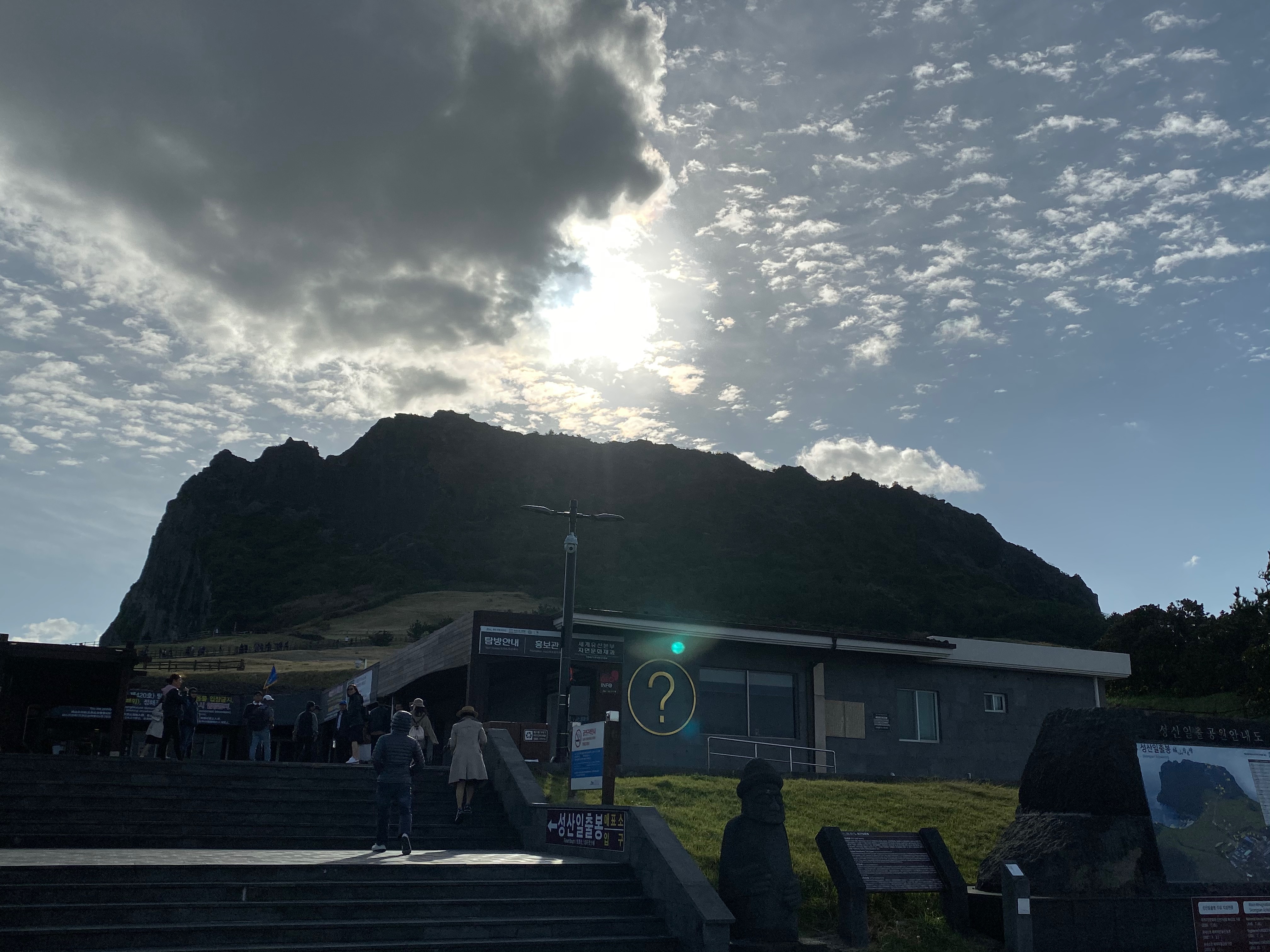
- Seongsan Ilchulbong up close
-
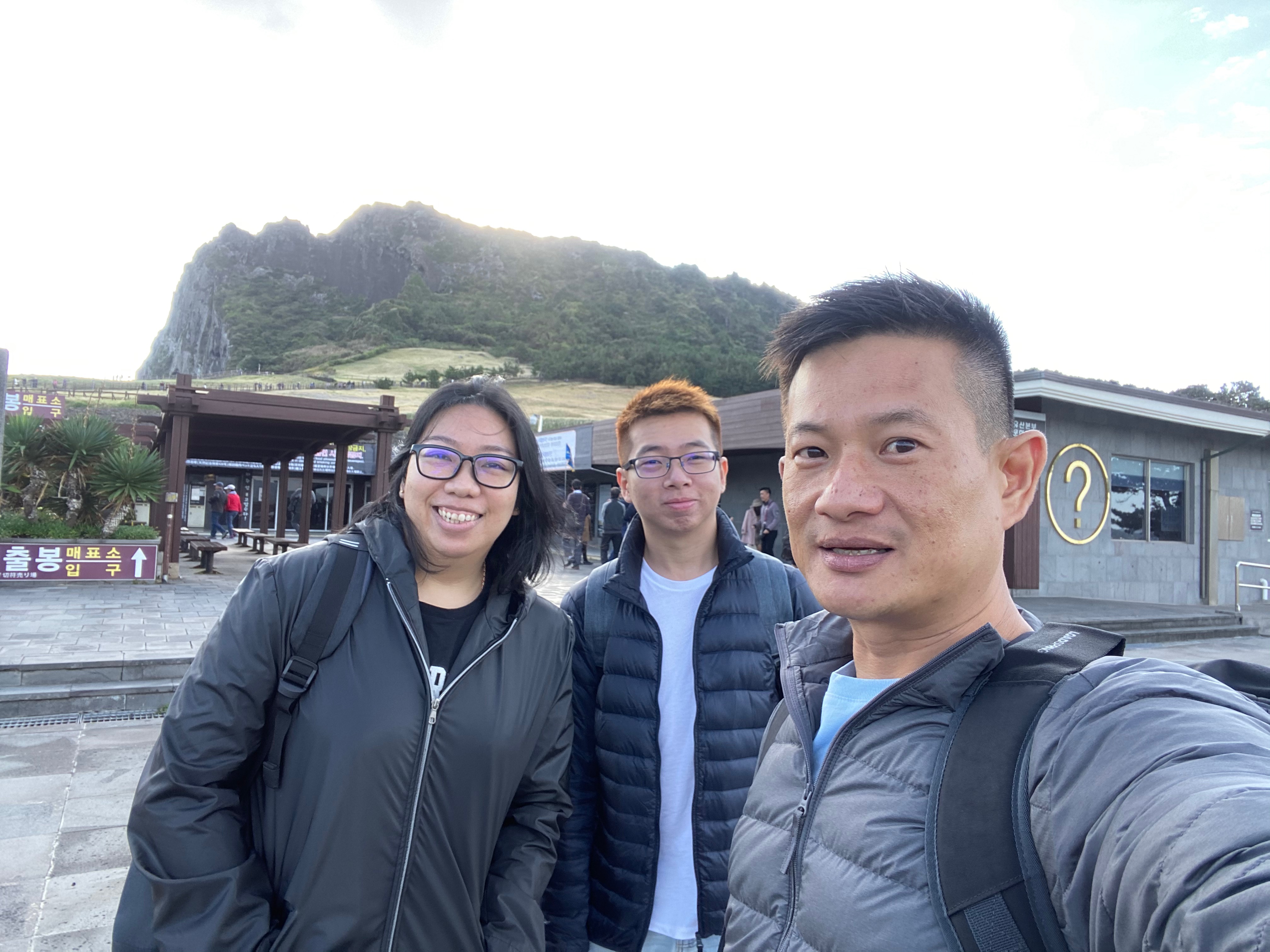
- Taking a wefie before our climb up Seongsan Ilchulbong
-

- Guardians at Seongsan Ilchulbong

View of Eastern Jeju from Seongsan Ilchulbong
The higher we climb, the better the scenery
-
- We are almost at the peak of Seongsan Ilchulbong
-
- Me at Seongsan Ilchulbong
-
- We were able to see clear blue sky and Hallasan afar
We reached the peak of the 182m Seongsan Ilchulbong after 20 mins of climbing up the stairs. From this peak, we were able to better appreciate the vastness of Jeju Island and the seas surrounding Seongsan Ilchulbong. We took more pictures with the scenery outside the crater than with the crater. At the peak of Seongsan Ilchulbong, a sunken piece of land which was the crater overgrown with plants is the only reminder of the Sunrise Peak was a volcano. The crater is cordoned off to visitors and we were only able to take pictures from the viewing platform that was built. Looking beyond the crater from the viewing platform we spotted the Eastern Sea off Jeju, stretching far into the horizon making us wonder what is at the other end of this sea. After 15 mins of enjoying the crisp fresh air and taking some pictures, we started our descent from the peak of Seongsan Ilchulbong. One can never get tired of the scenery at Seongsan Ilchulbong. Despite being the same scene, we were still being mesmerised by the seas, the mountains and the vast land of Jeju. The descent took another 15 mins or so. While I went for a smoke break, my friends took the opportunity to buy some local snacks from one of the few stalls next to the car park. We continued our journey to the next destination on our list today.

View of Jeju from the peak of Seongsan Ilchulbong
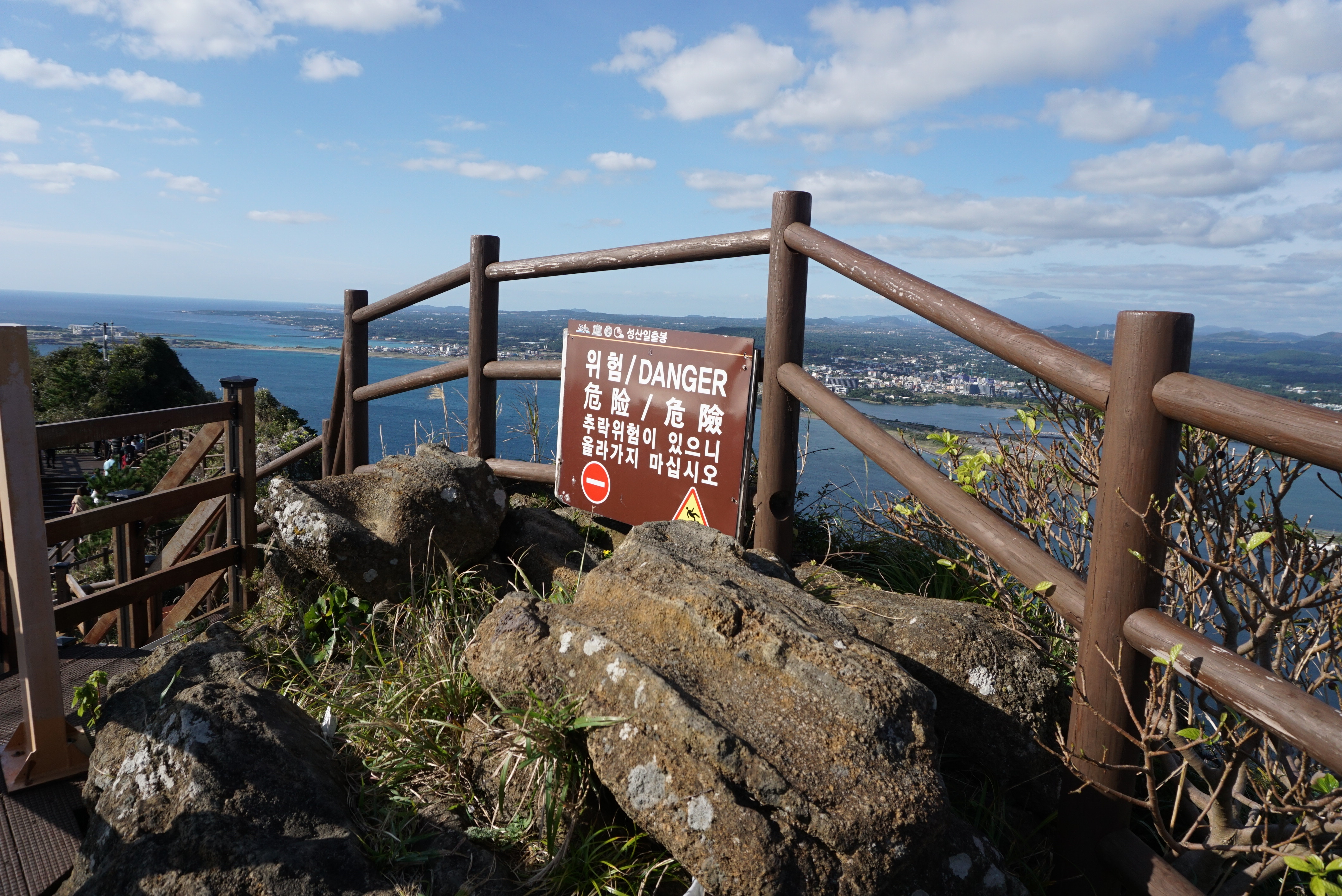
Took us 20 mins to reach the peak of Seongsan Ilchulbong

The crater at Seongsan Ilchulbong is overgrown with life
-

- Taking a wefie at the peak of Seongsan Ilchulbong
-
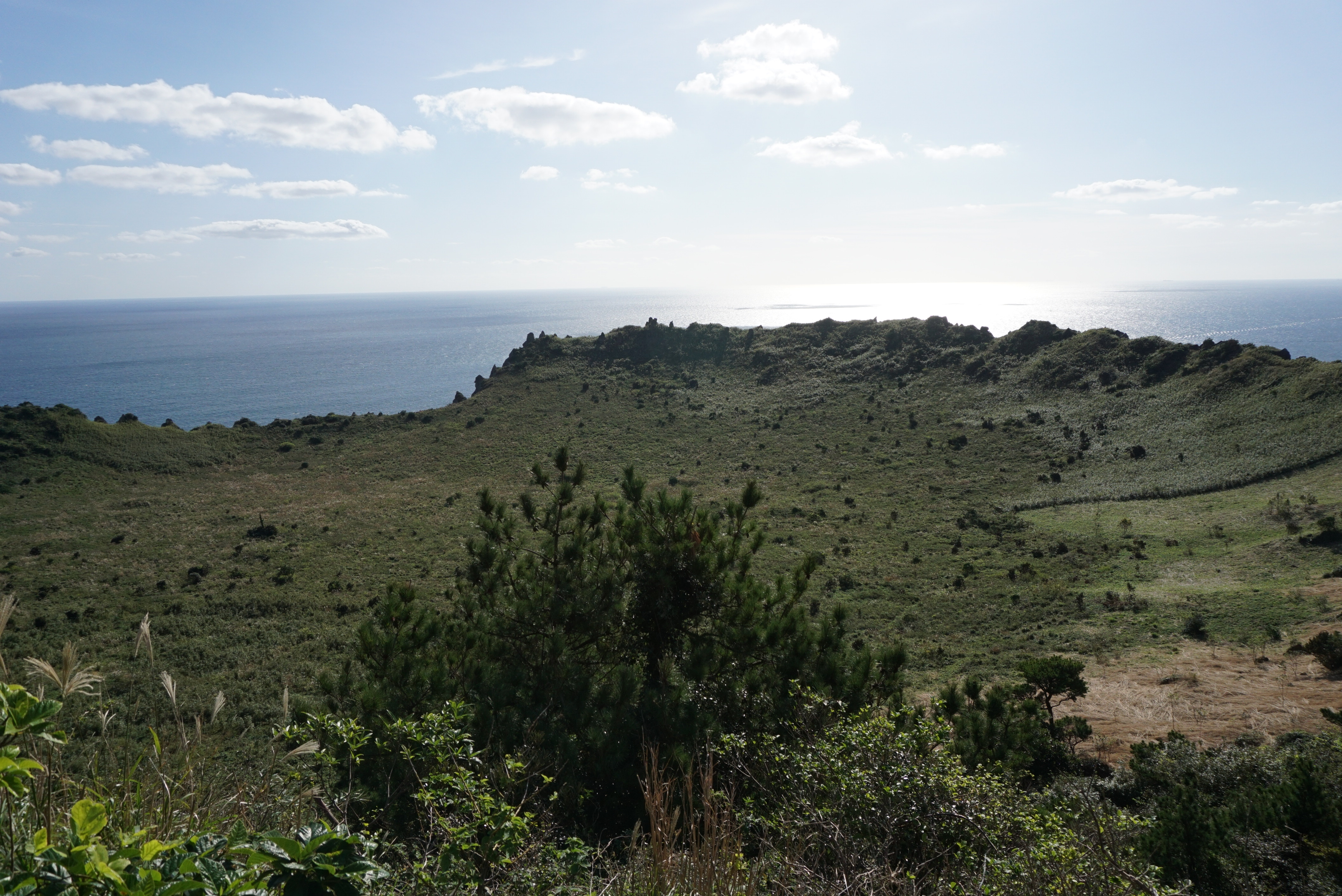
- This crater once spill lava
-
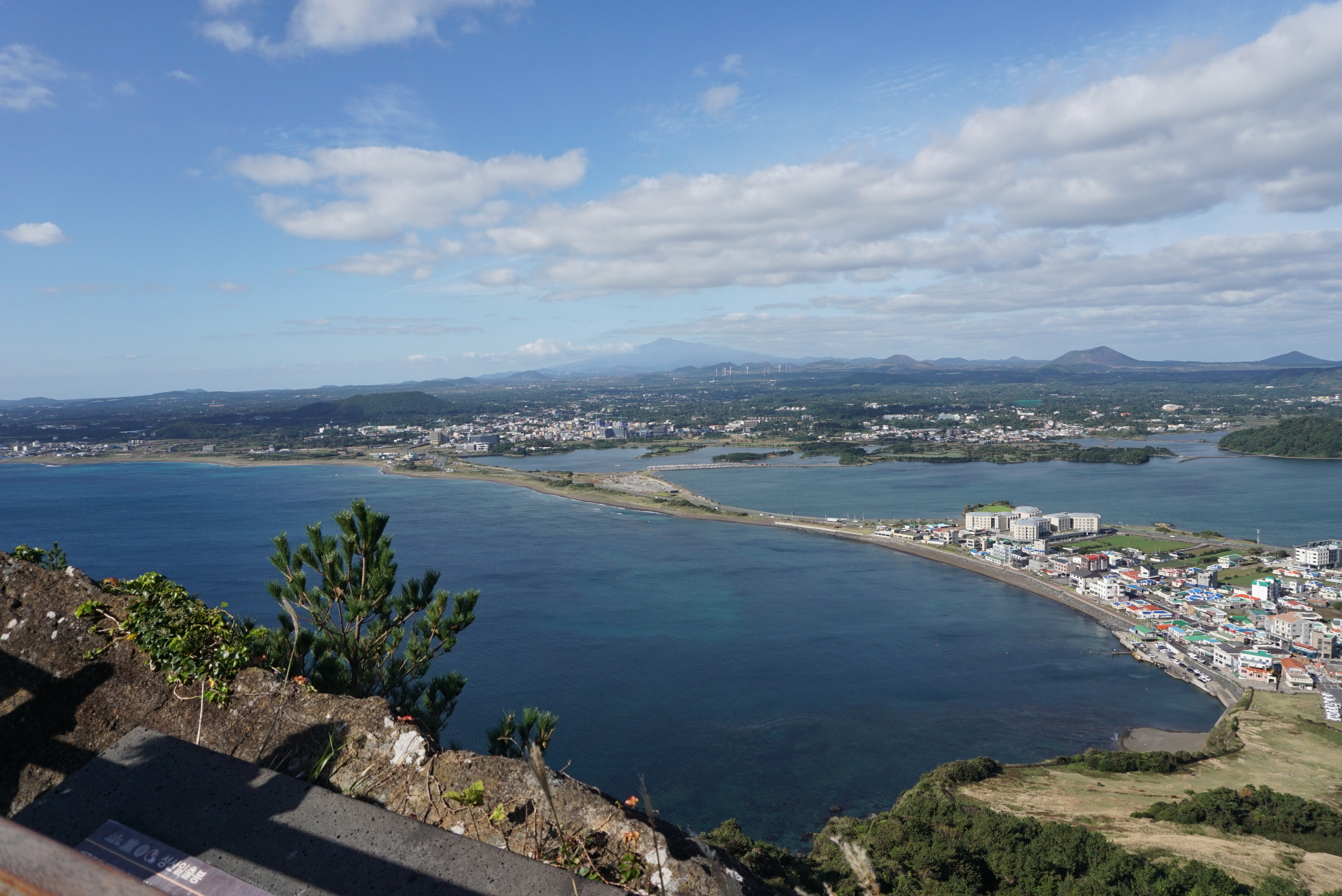
- Taking one last look at Jeju from the peak of Seongsan Ilchulbong
-
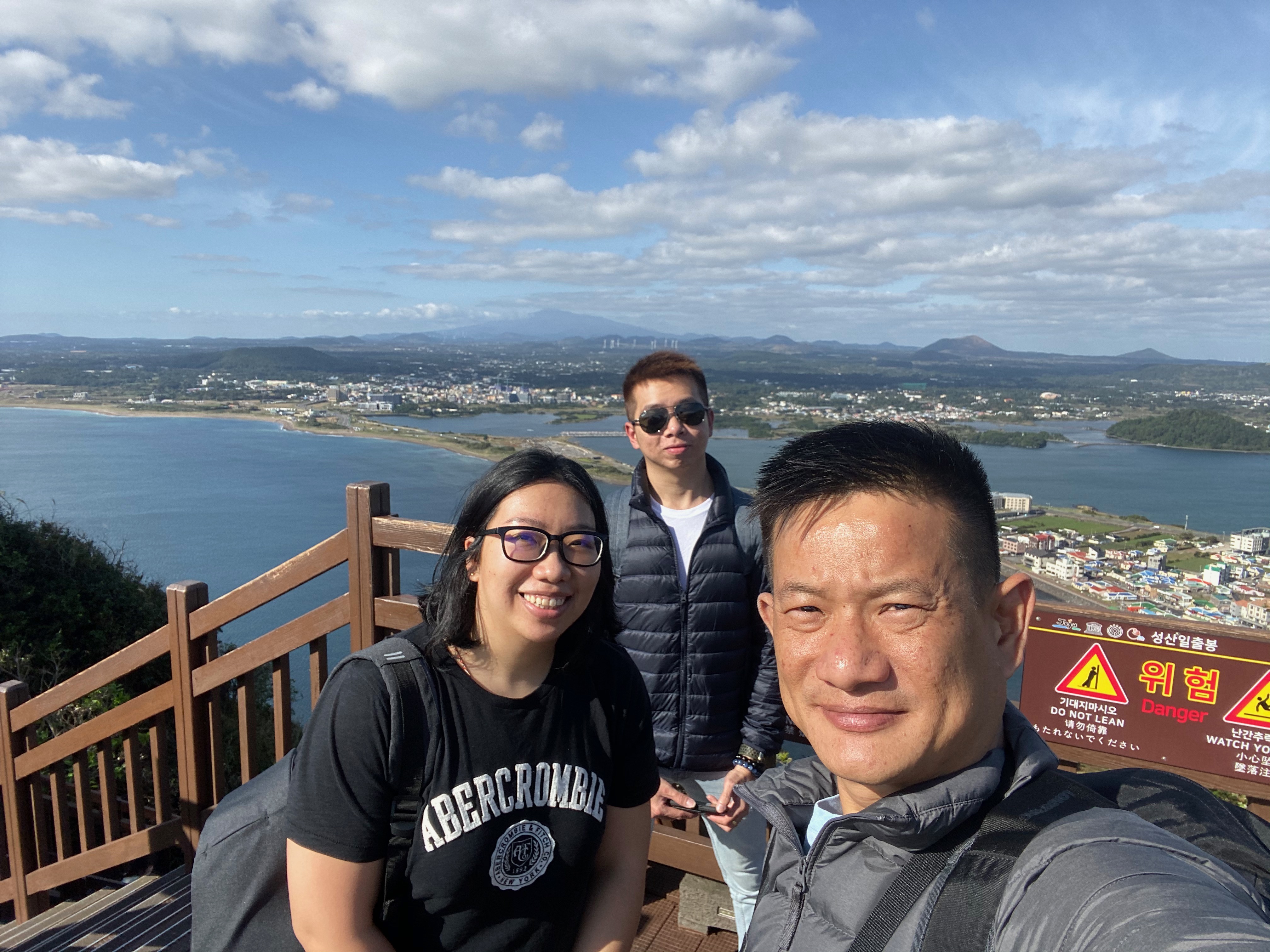
- One last wefie at the peak of Seongsan Ilchulbong before our descend

The view during the descent is equally amazing

One last look of the tombolo from Seongsan Ilchulbong
Seopjikoji – The Lighthouse Overlooking Seongsan Ilchulbong
Our next stop, Seopjikoji, is very near to Seongsan Ilchulbong. The scenic coastal drive only took us 15 mins from the Sunrise Peak. From my research, I read that we only need to cater 30 mins tops at Seopjikoji, but we spent a little over 1 hr here. Seopjikoji is landmarked by a lone lighthouse that seemingly guarding Seongsan Ilchulbong. Entrance to Seopjikoji is free, but parking is chargeable at KRW1,000 for the car we drove. We were already fascinated by the beach next to the car park at Seopjikoji. Instead of the usual brown sand, the beach at Seopjikoji is black, dotted with volcano rocks. We spent some time taking pictures by the beach before walking towards the lighthouse. Along the way, we were treated with a unique volcanic beach. The sea seems to stretch endlessly with the sun as its only companion. On the landward side of the path towards the lighthouse, wild plants are growing over all the crater, but in an orderly manner making this place very picturesque. There is no lack of photo opportunities at Seopjikoji, every corner seems to be Instagram worthy. As we were walking towards the lighthouse, we came across a deserted building that resembles a gingerbread house, which served as a set for several Korean dramas.
-

- My friend and I posing with our yoga poses
-

- The coastline at Seopjikoji is characterised by volcano rocks

The dramatic coastline at Seopjikoji
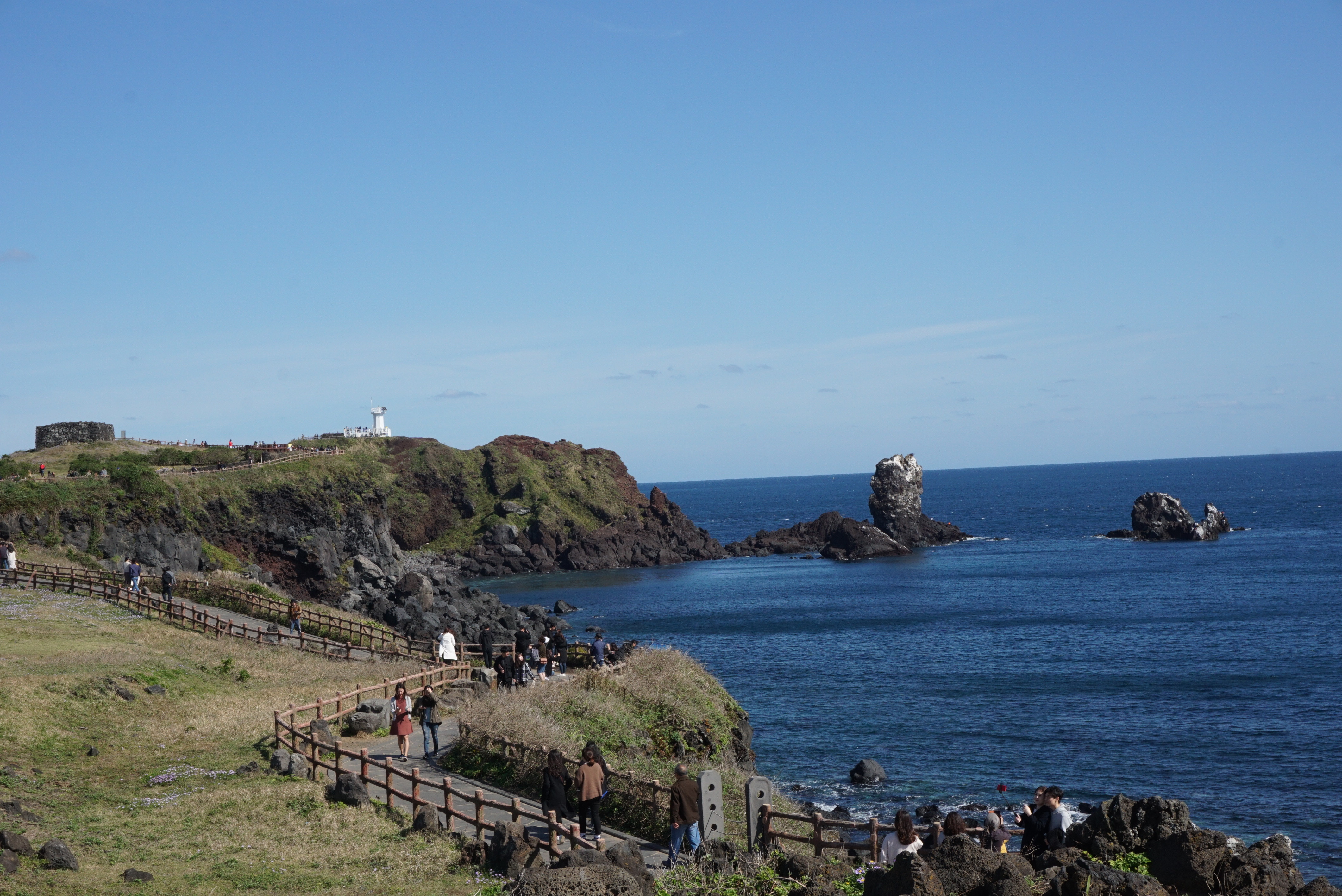
It is a pleasant and easy walk to Seopjikoji Lighthouse
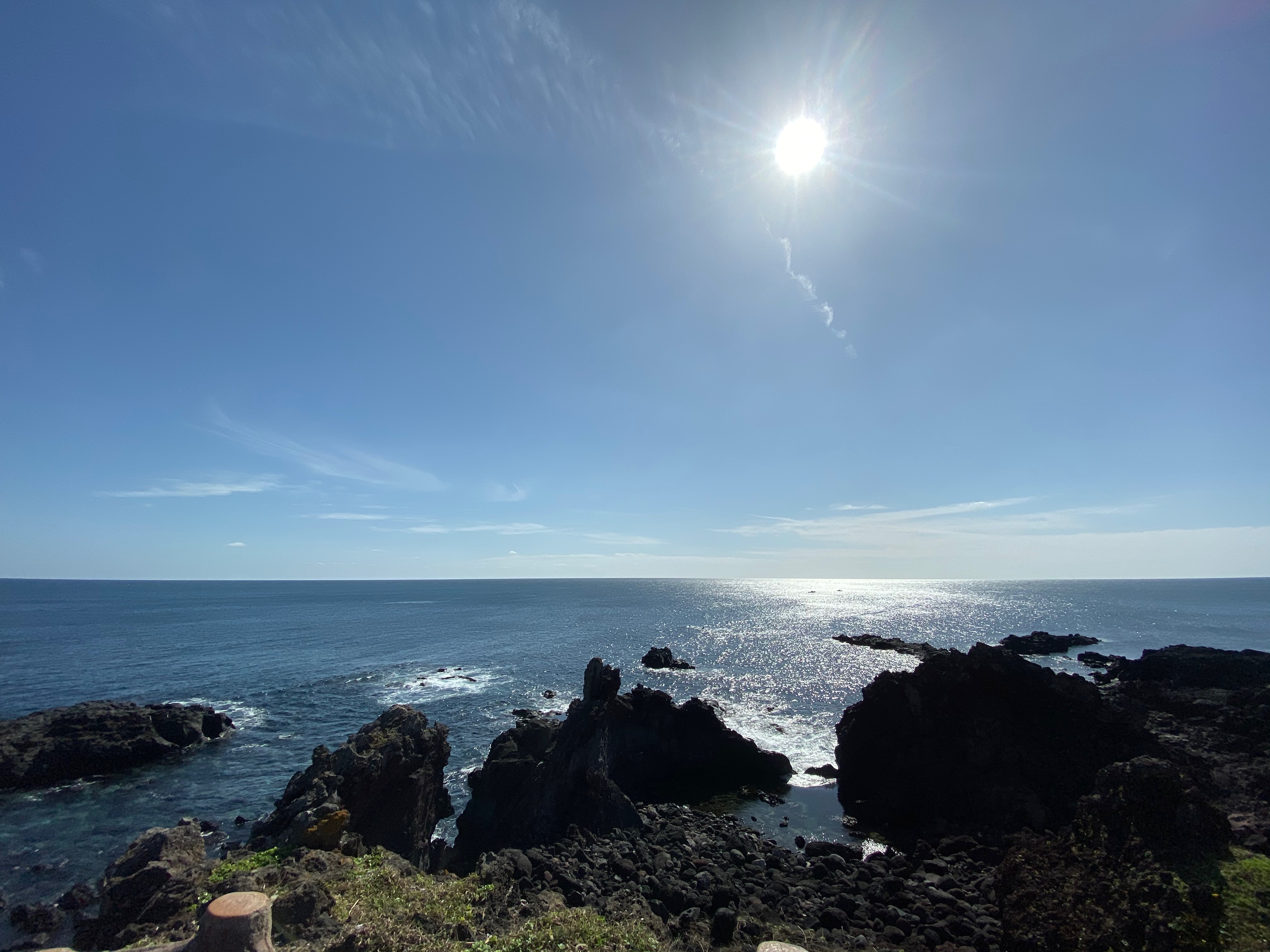
Wonder what is at the other end of the ocean
-
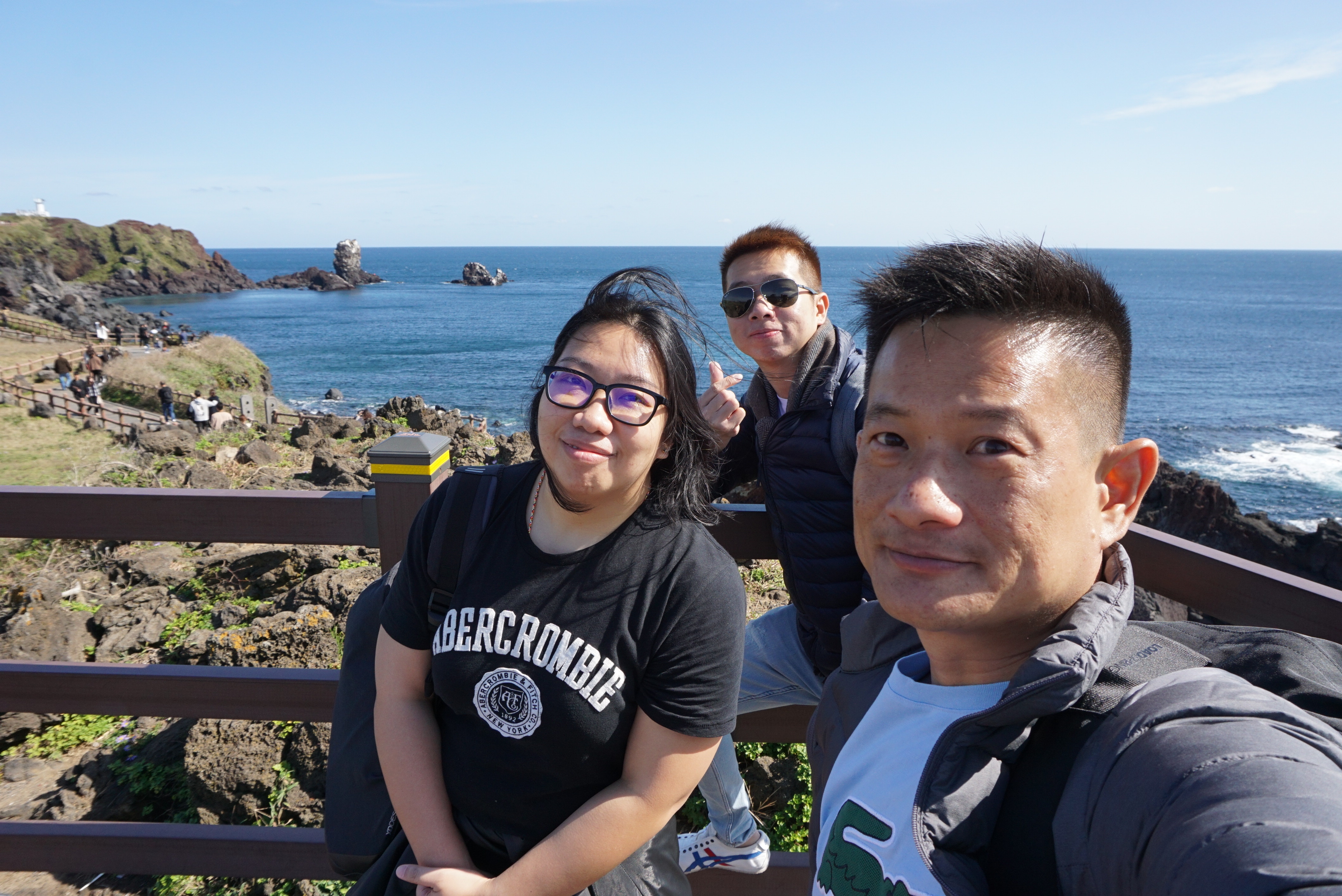
- Taking wefie at Seopjikoji
-
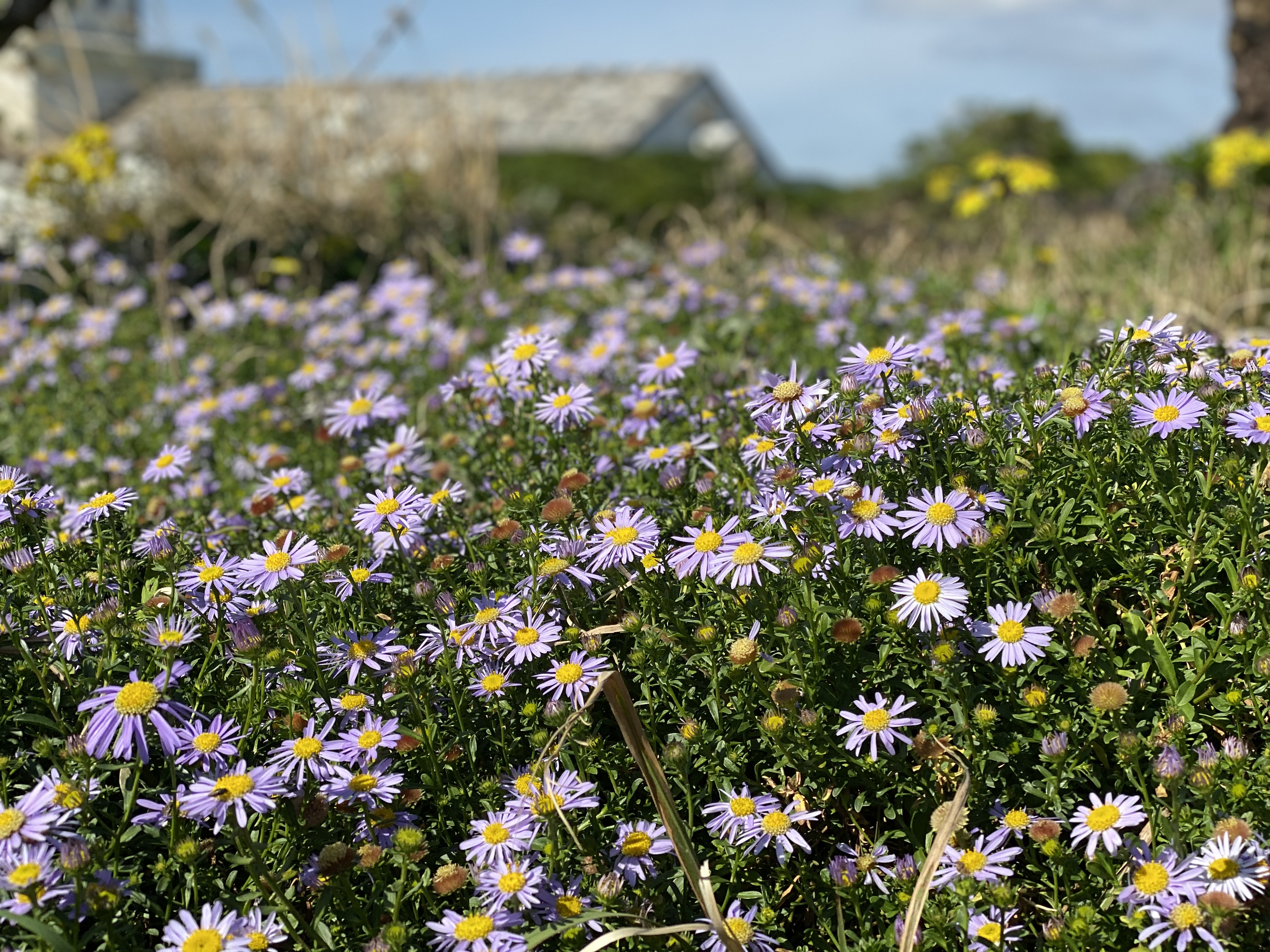
- Flower is in full bloom here
-
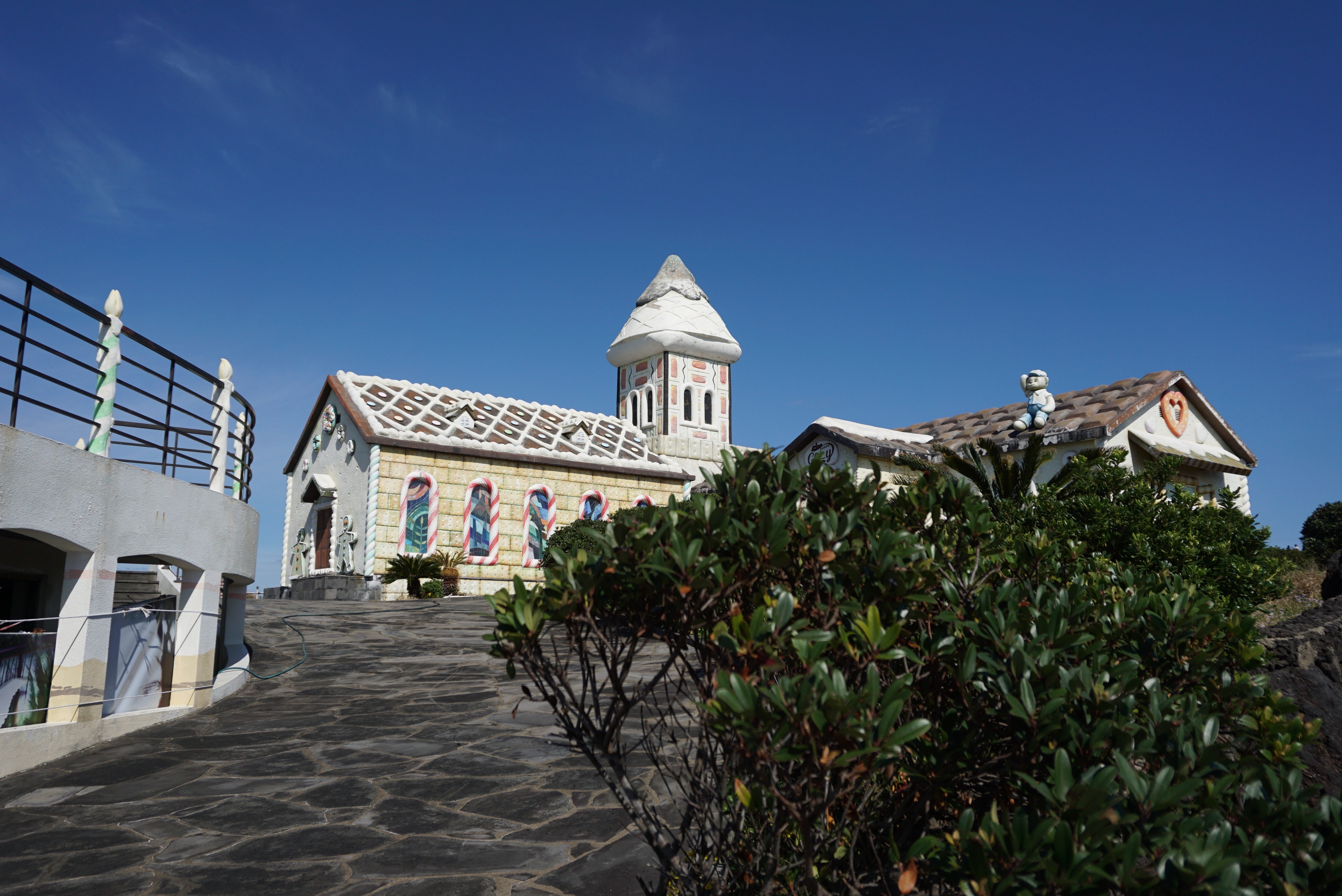
- One of the sets for a Korean drama
-
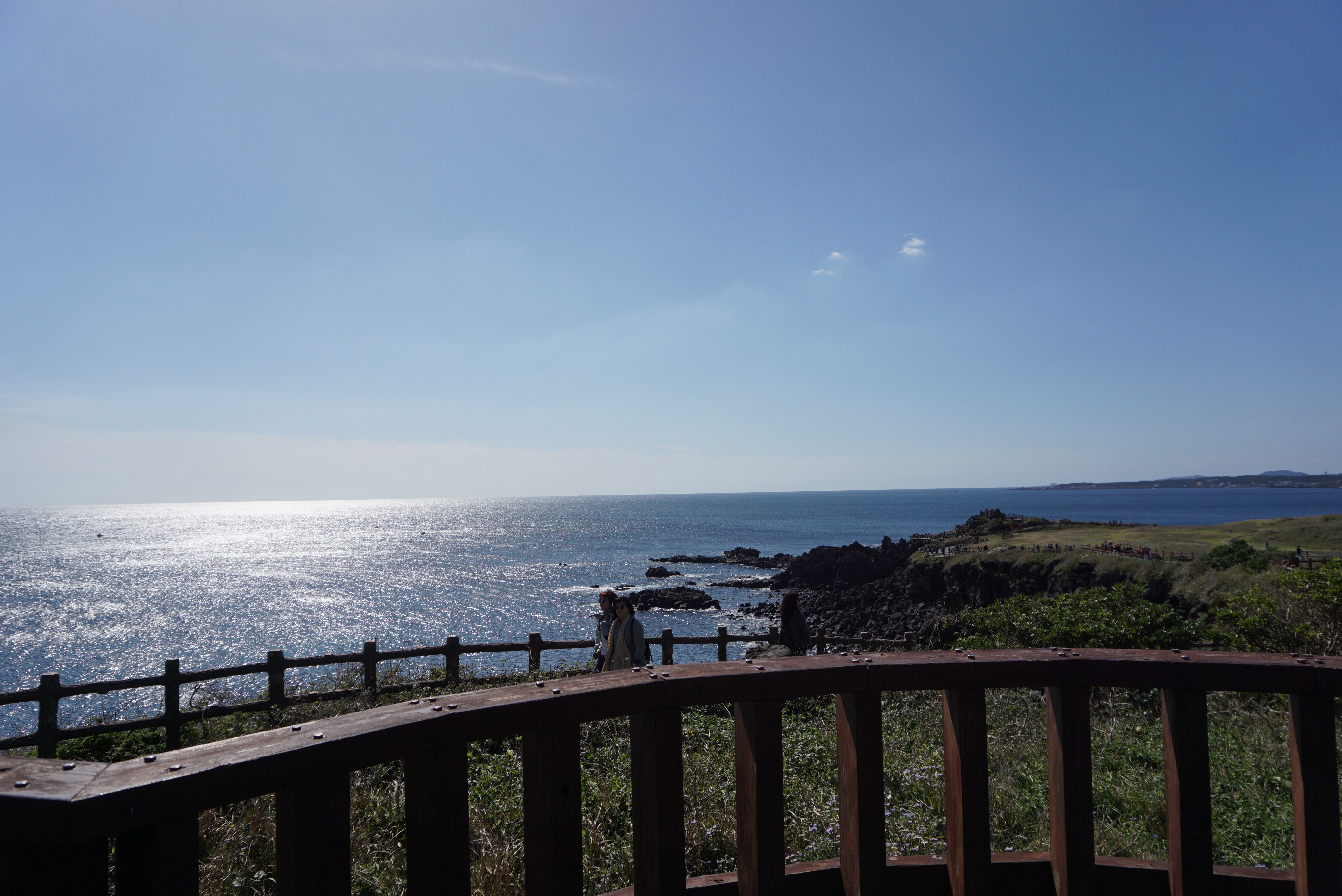
- The view of the coastline at Seopjikoji is simply amazing
-

- Some random rocks with Seongsan Ilchulbong in the background
The lighthouse is perched on top of a small hill accessible to visitors via a flight of stairs. The walk up to the lighthouse is very easy, which took us less than 3 mins to reach. Visitors can walk around the lighthouse to get an unobstructed view of the sea. The tranquillity at the lighthouse makes paying a visit to Seopjikoji well worth it. From the lighthouse, we can also get a great view of Seongsan Ilchulbong. We did not stay at the lighthouse for too long, as we spent most of our 1 hr here taking pictures along the coast towards the lighthouse. It is time for us to leave Seopjikoji and head to our next destination.
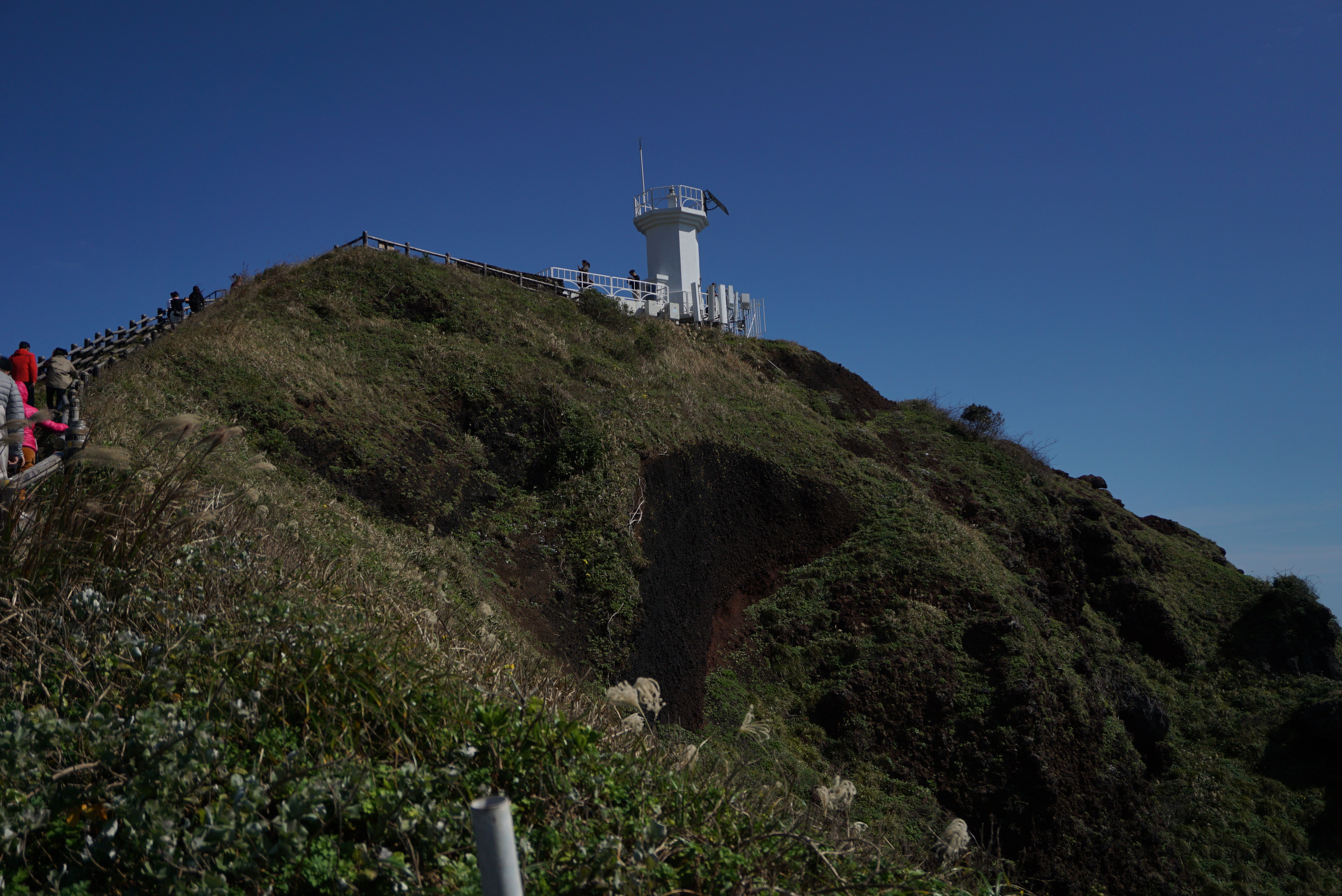
Our destination is the lighthouse at Seopjikoji

Climbing the stairs to the lighthouse at Seopjikoji
-
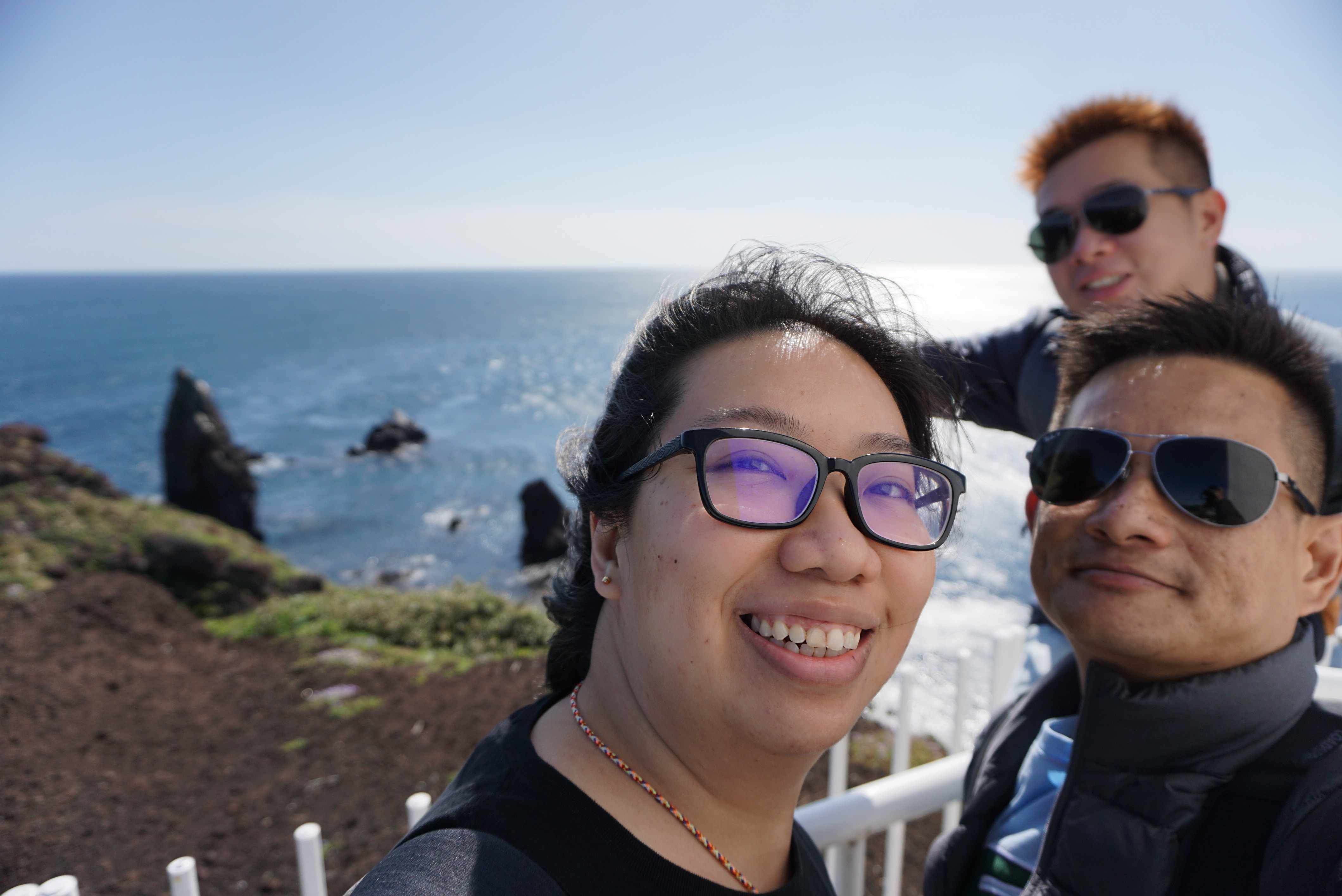
- Taking a wefie at the lighthouse
-
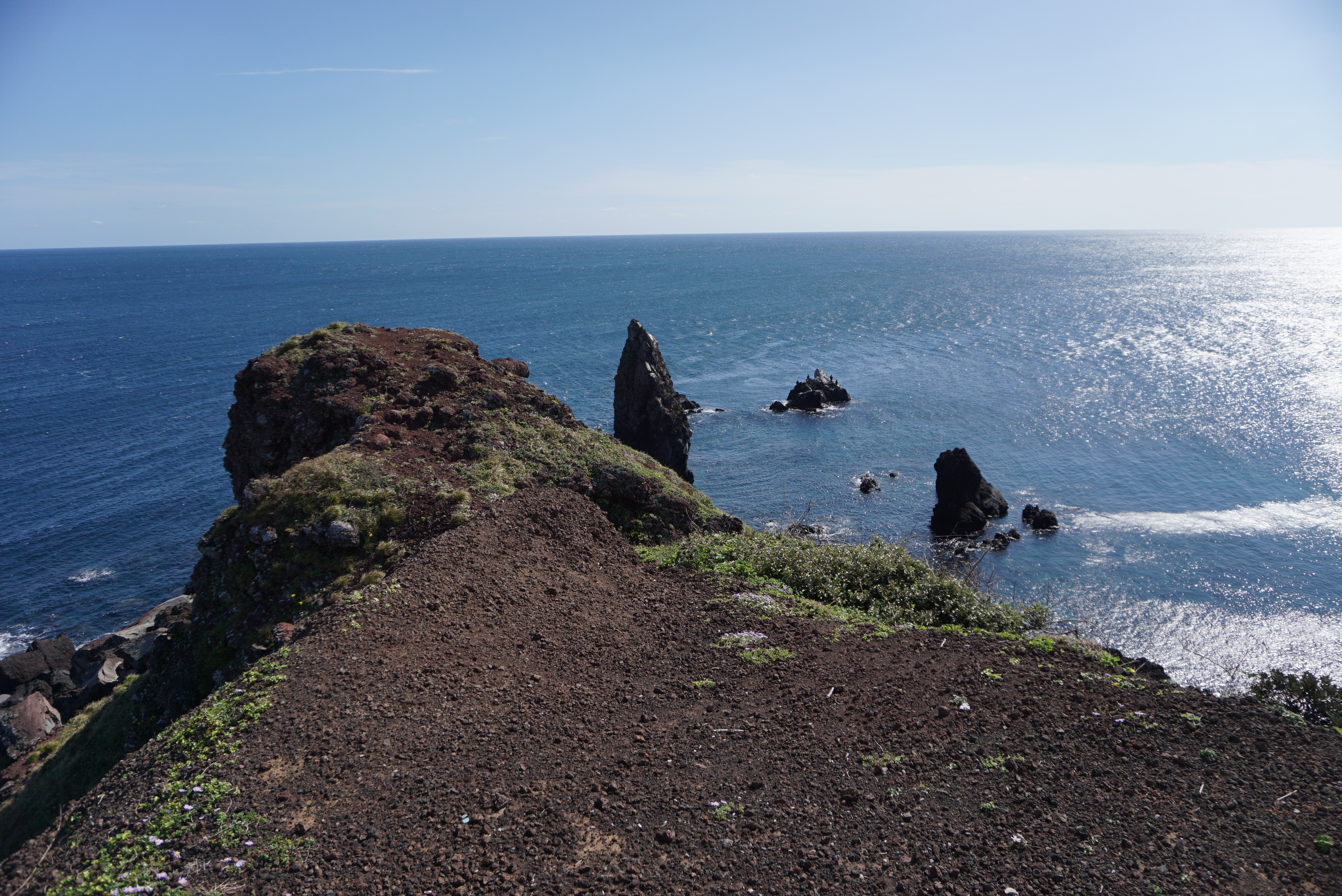
- View of the coastline at Seopjikoji Lighthouse
-
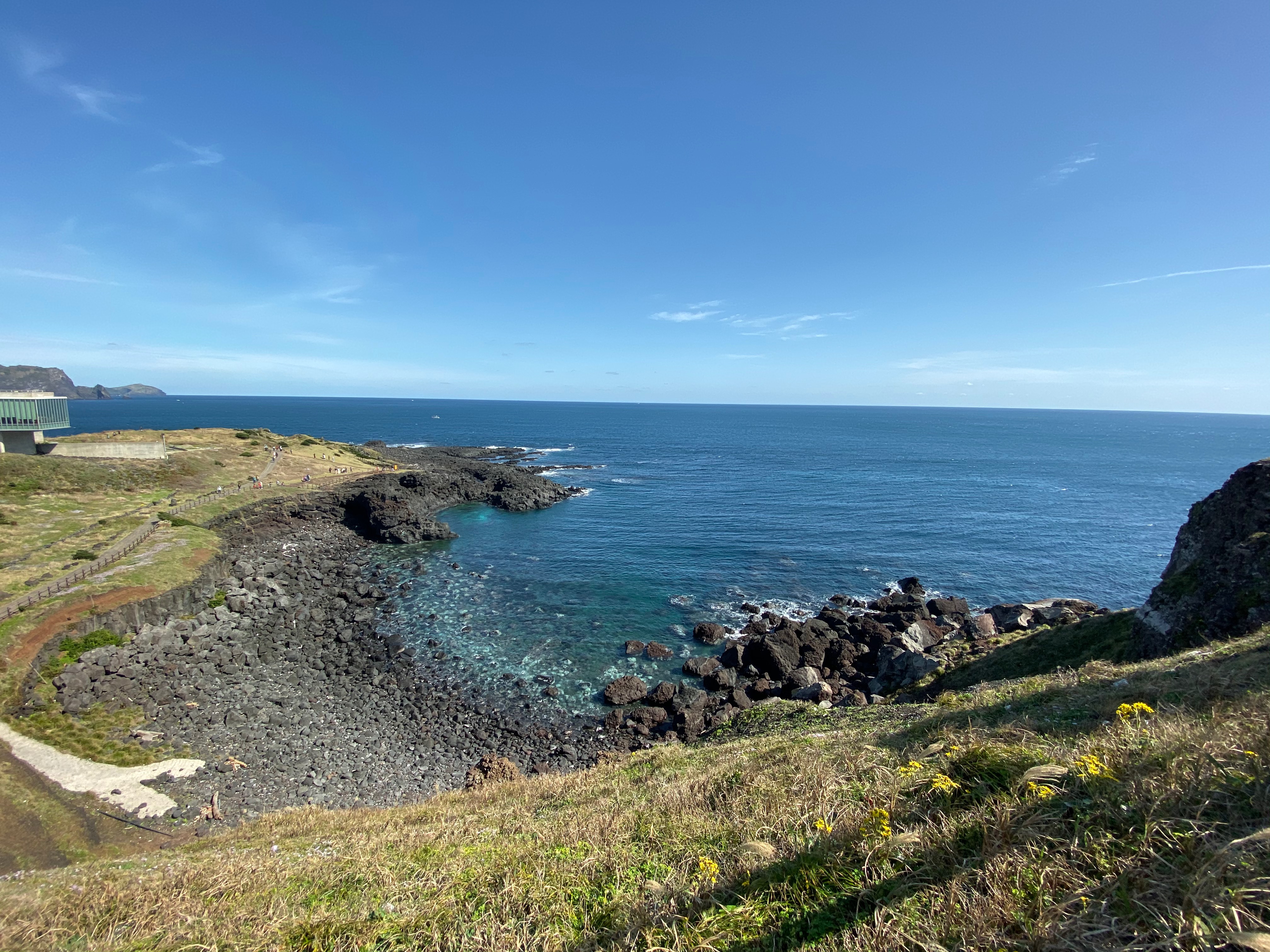
- More volcano rock beach
Jeju Folk Village – A Glimpse of the life of Jejuans
We wanted to visit Jeju Folk Village, which is located on the Southeastern part of Jeju, on the next day. Looking at the location, we thought it make sense for us to plan a visit to Jeju Folk Village after Seopjikoji as it is along the southern coastal road in Jeju. We drove around 40 mins from Seopjikoji to reach Jeju Folk Village. Parking here is free, however, entrance to Jeju Folk Village costs KRW11,000 per adult. Jeju Folk Village is a huge outdoor museum depicting the life of Jejuans (people living in Jeju island) from ancient time. The village is very quiet at the time of our visit and it seems that we were the only foreign visitors when we visited. Passing through the main entrance, we headed along the road which loops around the village and spotted a path on a small hill that leads us to the Yeongwoljeong pavilion on top. Thinking that we might be able to get a good view of the entire village from Yeongwoljeong pavilion as it is the highest structure in the village. Instead of getting a view, we did not manage to see anything. Nonetheless, it is very tranquil sitting in the pavilion enjoying the cool autumn breeze in Jeju. We did not stay at the pavilion for long, we headed back to the main road and started our walk around the village.
-

- Entrance to Jeju Folk Village
-

- Jeju Folk Village signage
-
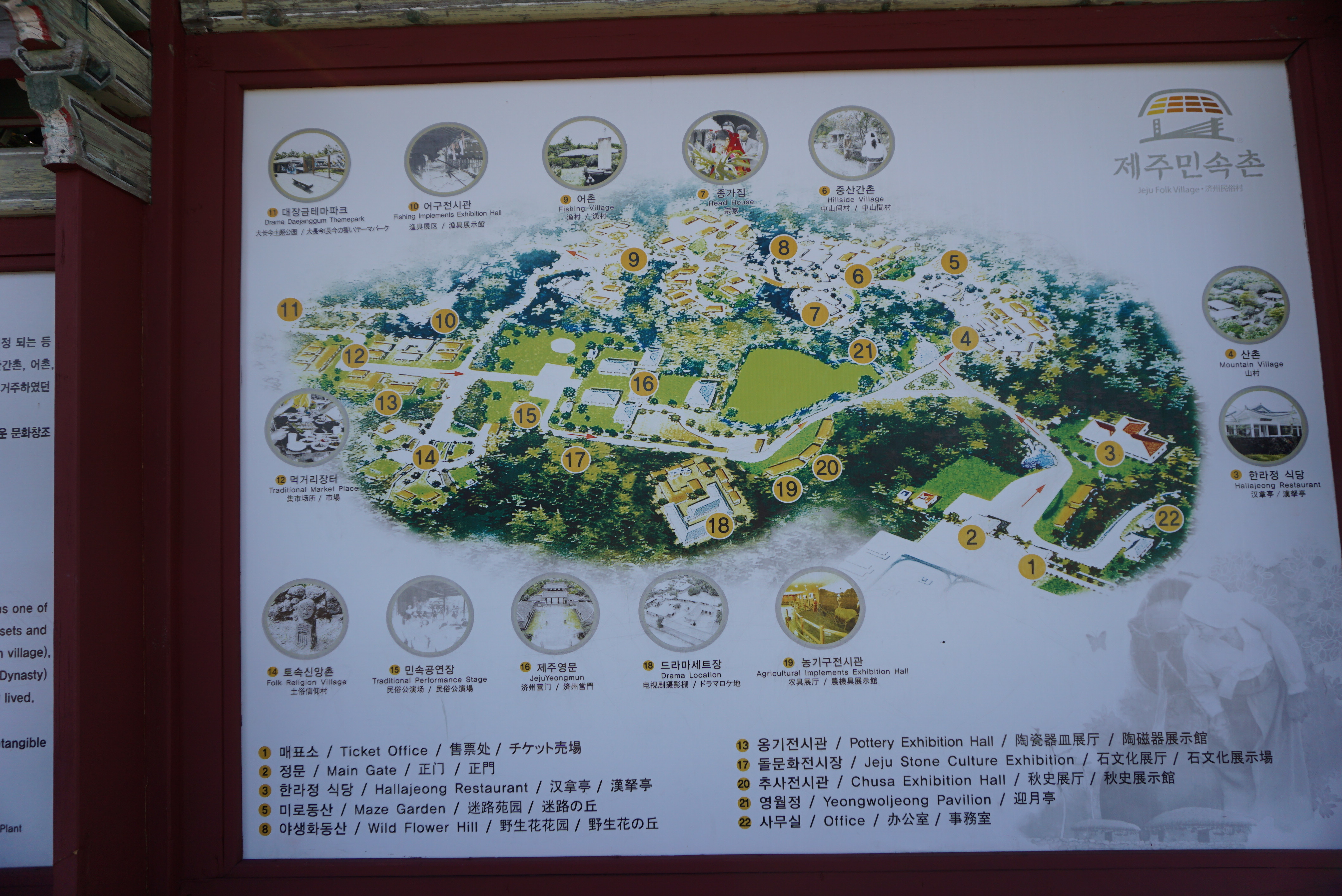
- Map of Jeju Folk Village at the entrance
-

- Taking a wefie at the entrance of Jeju Folk Village
-

- A small man made waterfall after the entrance in Jeju Folk Village
-
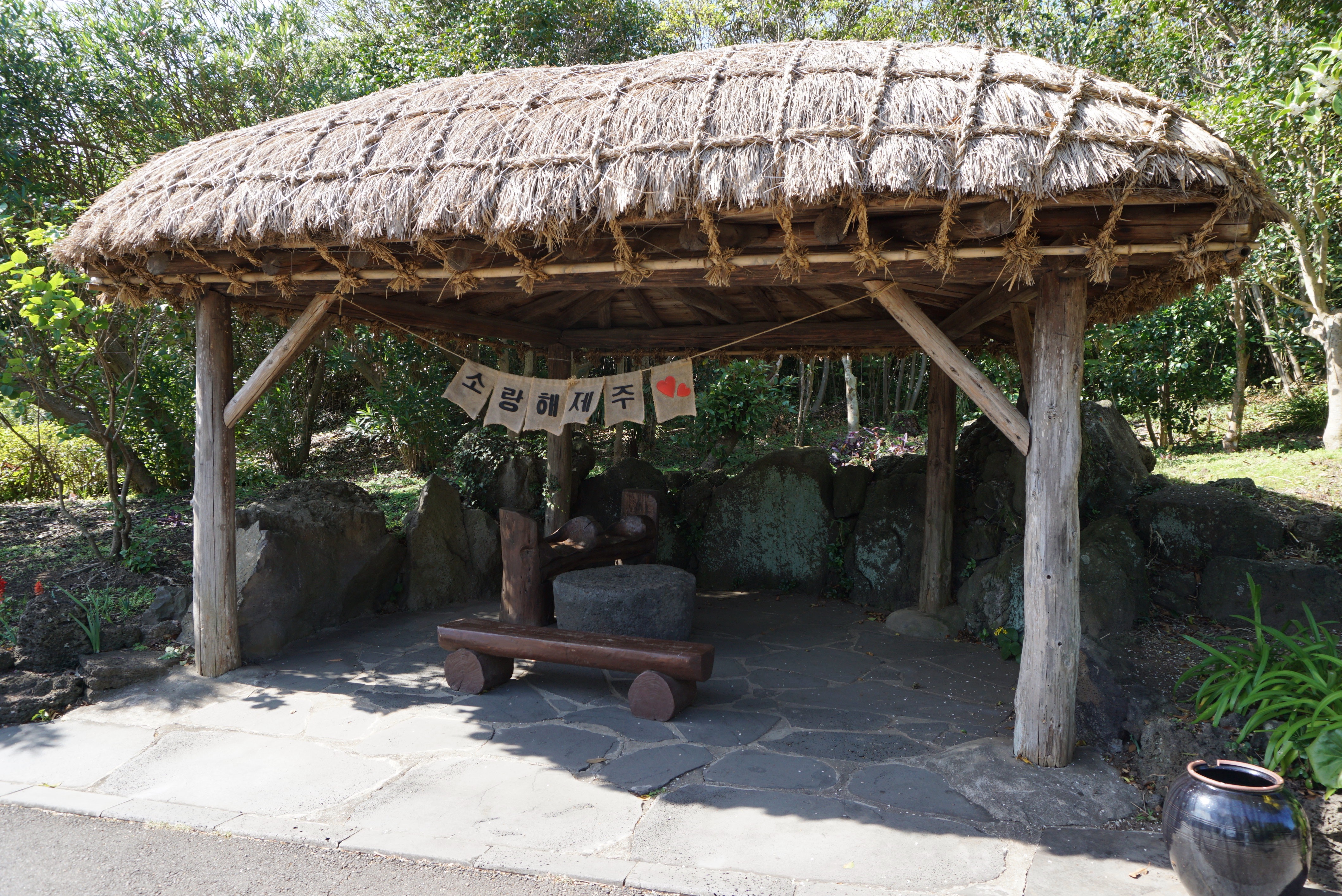
- A typical Jejuan farm house
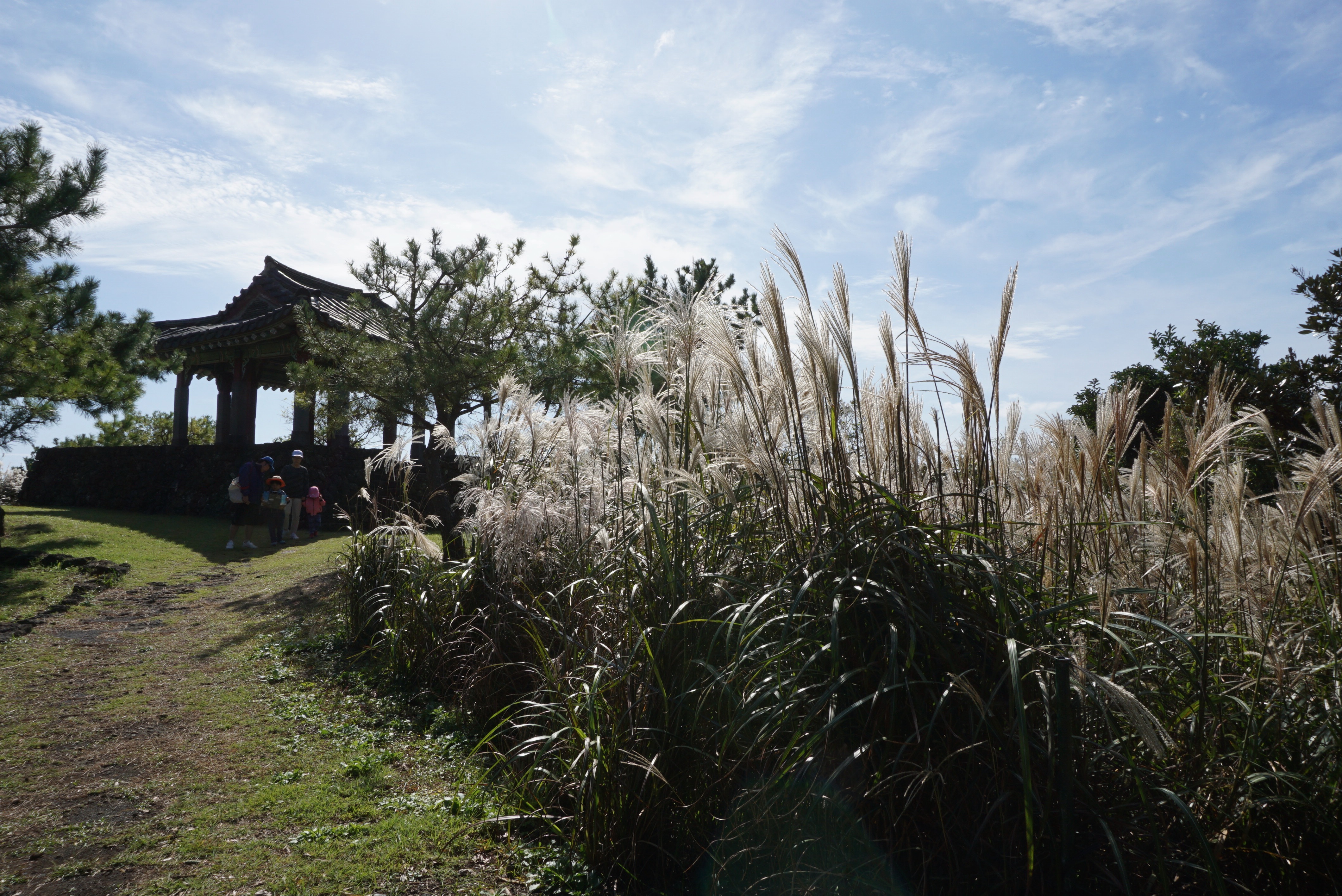
Yeongwoljeong pavilion is perched on top of a small hill in Jeju Folk Village
Jeju Folk Village is dotted with numerous stone houses thatched with straw roofs that were once actual residences of Jejuans since the 1890s. Most of these houses either retained the original stones facade or were painted in yellow. I was telling my friends the Jejuans used horse manure to hold these stones together that form the walls of their houses. One common feature of Jeju house is the low outer fence, with three logs as the gate. Jeju has been traditionally a very safe place, where the Jejuans do not lock their doors. The placement of the three logs relay information to visitors the whereabouts of the owners of the houses. When all three logs were in place, it meant no one is at home, two logs means the owner is going our for a long period and if only one log is in place, it meant the owner will be back shortly. We were in time to catch one of the three scheduled performance in the village, as we walked along the road heading to the performance hall, along the way, we spotted a poultry farm and an orange orchard with fake oranges pasted onto the tree. We entered one of the buildings opposite the poultry farm exhibiting livelihood of the Jejuans as farmers and the tools they used. A building next to the agriculture exhibit is the set location of one of the Korean dramas. At this point, we felt a little boring as the buildings all look the same. We headed straight to the performance hall and watched a performance. After watching the performance (literally just singing of some Korean songs and spinning off some plates on a stick), we started to get bored by this place and made our way out of the village to head to our next destination. I do find Jeju Folk Village a tad boring, visit if one really has the time.

A poultry farm in Jeju Folk Village

My friend inside a shed in the fake orange plantation

Structure of a typical Jeju house
-

- My friend posing to play the Korean drum
-
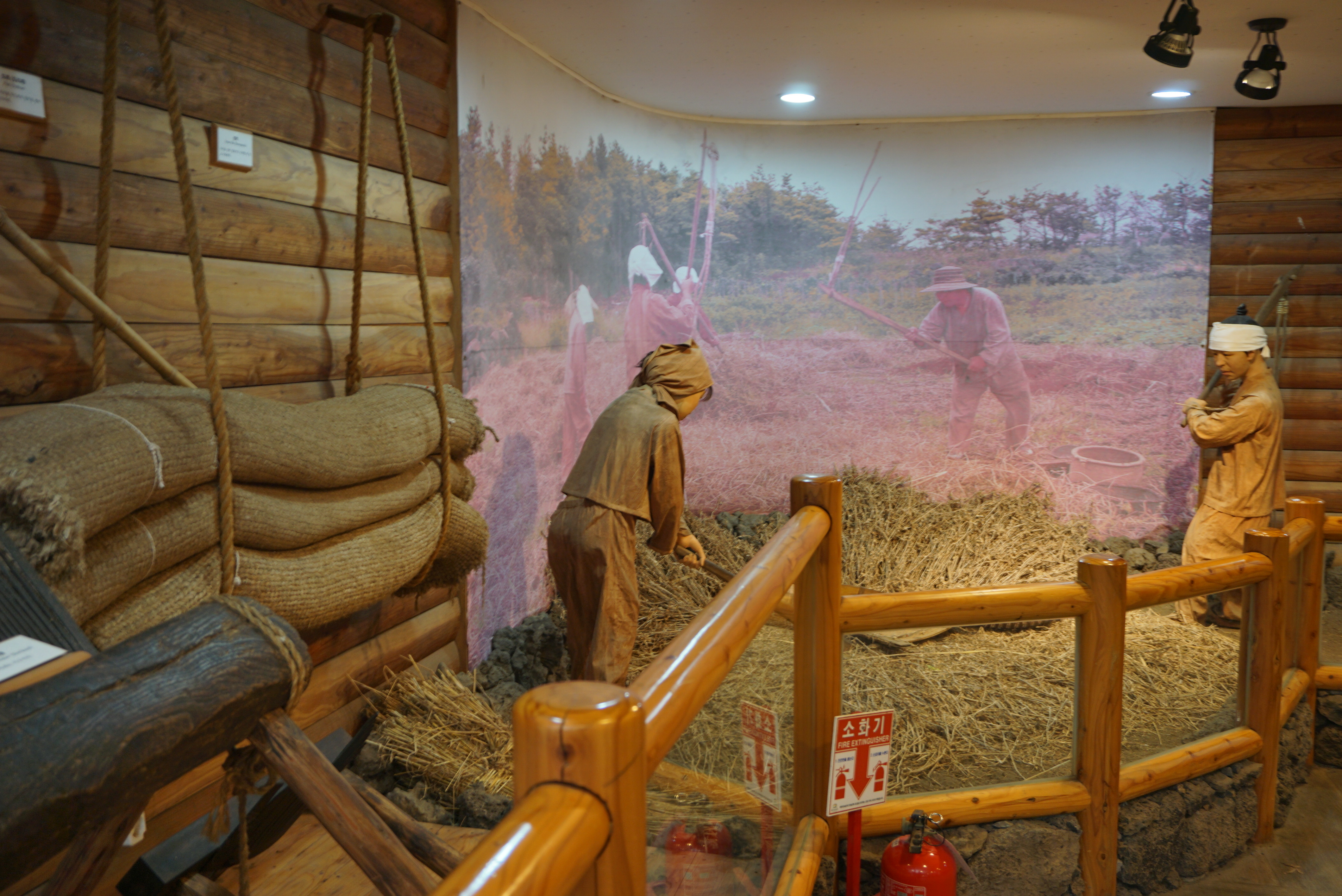
- Exhibit on the agriculture life of Jejuans

My friends playing a traditional Korean board game in Jeju Folk Village
-
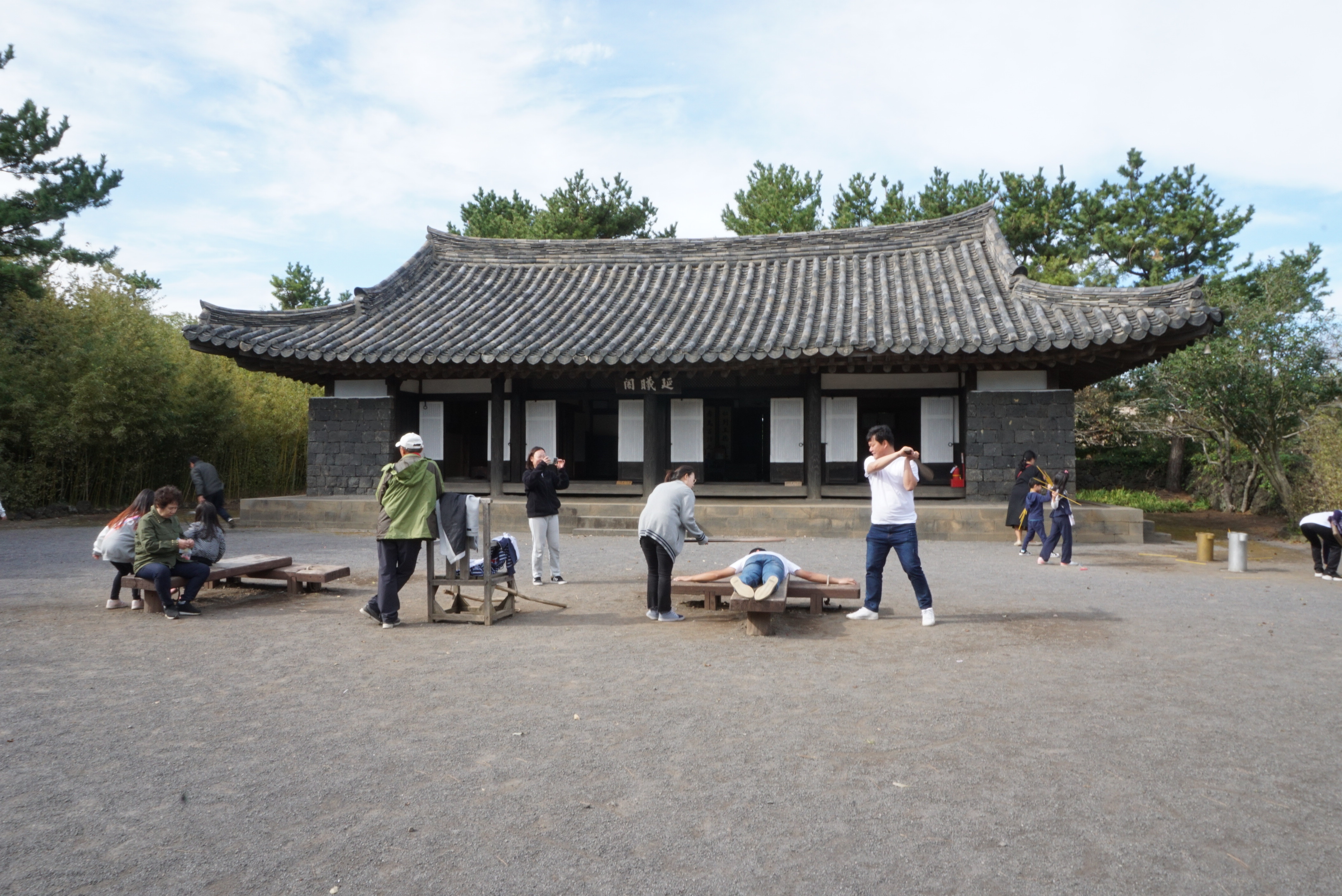
- There are some more traditional Korean games around for visitors to try out
-

- A typical Jejuan house in Jeju Folk Village
Jeongbang Waterfall – Where the Stream meets the Sea
Leaving Jeju Folk Village, we continue our drive on the southern part of Jeju-do towards Jeongbang Waterfall. The drive from Jeju Folk Village to Jeongbang Waterfall took around 20 mins. There is ample parking space at Jeongbang Waterfall and parking is free. Entrance to the waterfall costs us KRW2,000 per person. The walk from the car park to the waterfall took us only 5 mins, once pass the entrance, down a flight of well-paved stairs and a short stroll, the majestic Jeongbang Waterfall is just in front of us. Jeongbang Waterfall is one of the top three waterfalls in Jeju. The 23m waterfall is the only waterfall in South Korea where the stream falls directly into the ocean. At the end of the pathway, we came to some boulders where one would need to tread carefully to get nearer to the waterfall. There were quite a lot of people trying to get a shot with the waterfall at the time of our visit, however, few were willing to venture nearer to the waterfall where the most spectacular photos can be taken. In order for us to take pictures without people in it, we had to make clever use of angles to “edit” others out of the pictures. My friends and I stayed at the waterfall for around 30 mins to marvel this wonder of mother nature (and to take more pictures without people in it) and left for our next destination as it was about to get dark soon.

Jeongbang Waterfall from the entrance
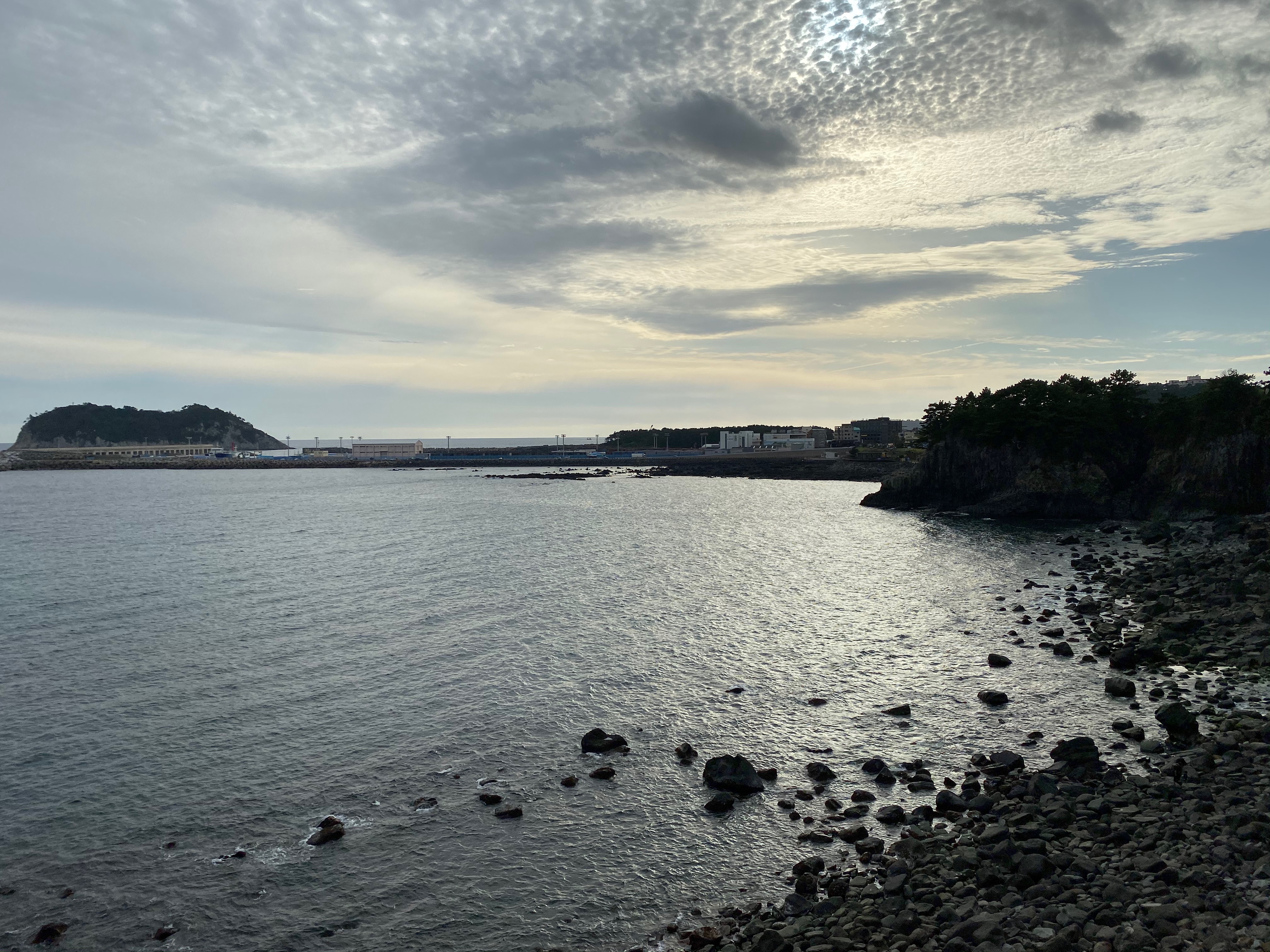
The sea where the stream from Jeongbang Waterfall flows into

Taking a wefie at Jeongbang Waterfall

The majestic Jeongbang Waterfall
Oedolgae Rock – The Lone Rock
Our next destination today is the Oedolgae Rock, which took us around 5 mins drive from Jeongbang Waterfall. I visited this lone rock some 10 years ago during my first trip to South Korea, however back then the battery in my camera had died off and I was not able to take pictures of Oedolgae Rock (back then cameras in mobile phones still suck). Admission to Oedolgae Rock is free, however, we paid KRW1,000 for parking our car at the car park. Leaving the car park, we walked around 5 mins through a well-paved section of the coastal forest to reach the Oedolgae Rock viewing platform. There she is, the 20m lone rock emerging from the sea, there are some trees growing on top of the rock. Oedolgae Rock is a lava rock formed by a volcanic eruption 150,000 years ago. Through the ages and the forces of mother nature, wave erosion on this lava rock separated it from the main coastline. We couldn’t have picked a better timing to arrive at Oedolgae Rock, we were treated with a spectacular view of the Oedolgae Rock draped with the orange sky, the crowd is also very thin at this time, giving us the enjoyment of a tranquil view of the sea where the rock sits. As we were taking photos, we spotted a trail that seems to lead to the cliff across from the viewing platform. The walk along the coast took us around 10 mins, it is here where we were treated with more stunning views of the Oedolgae Rock. My friends and I did not stay here for too long as we wanted to make it to our final destination for today before it closes.
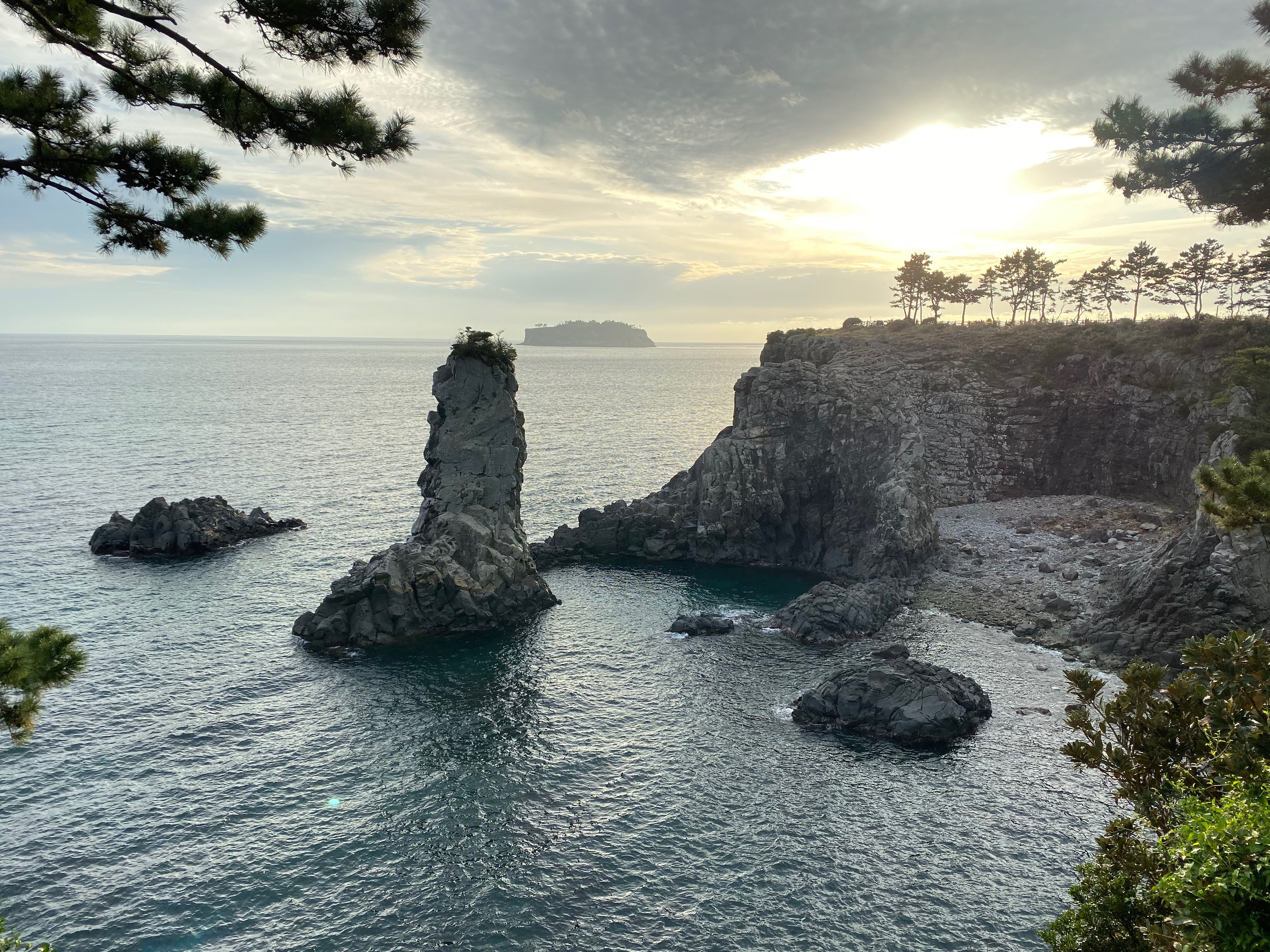
Oedolgae Rock near sunset

Wefie at the Oedolgae Rock viewing platform

A different angle of Oedolgae Rock
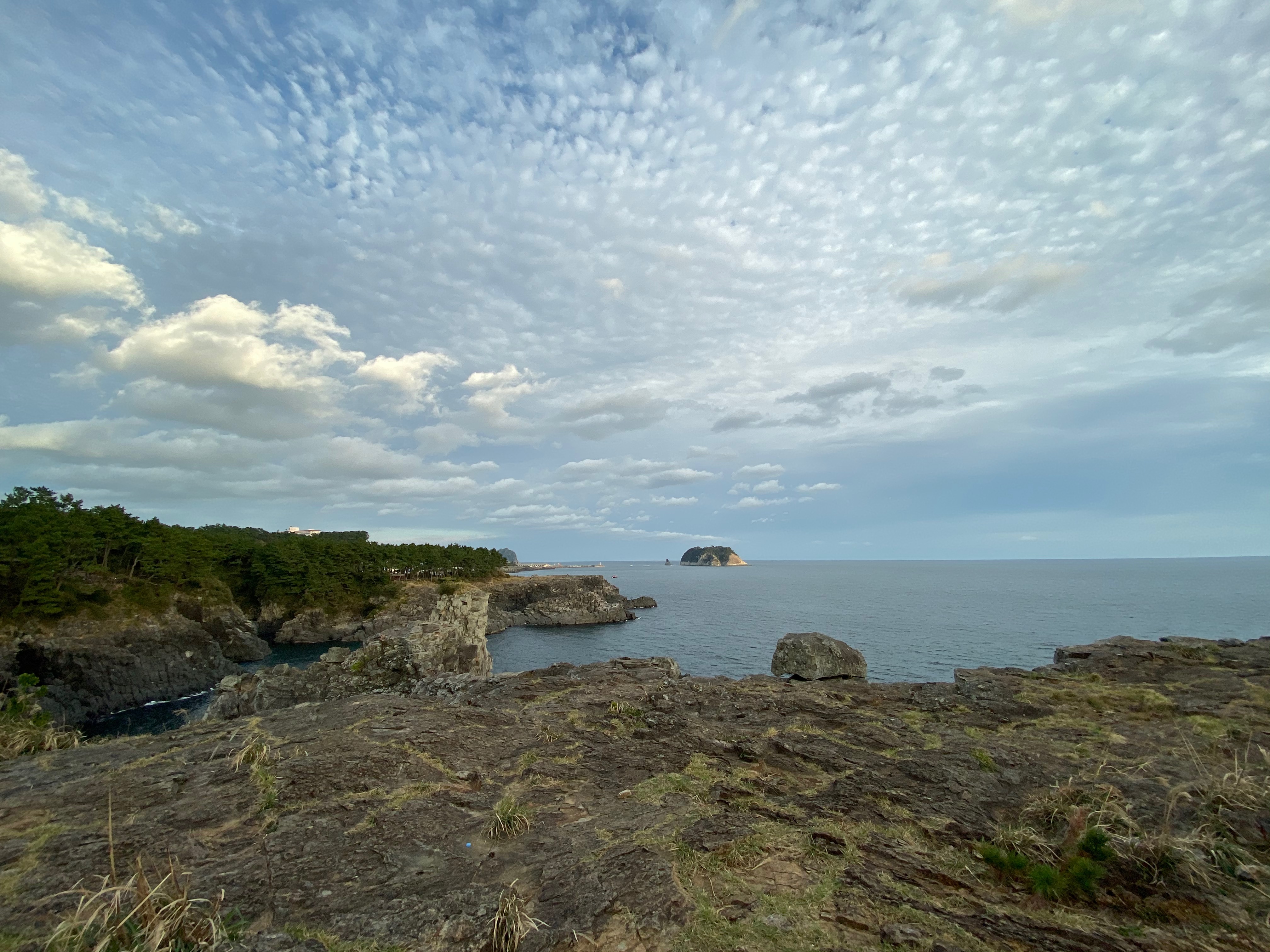
This is the part of the coast that I did not get to visit the last time I was here
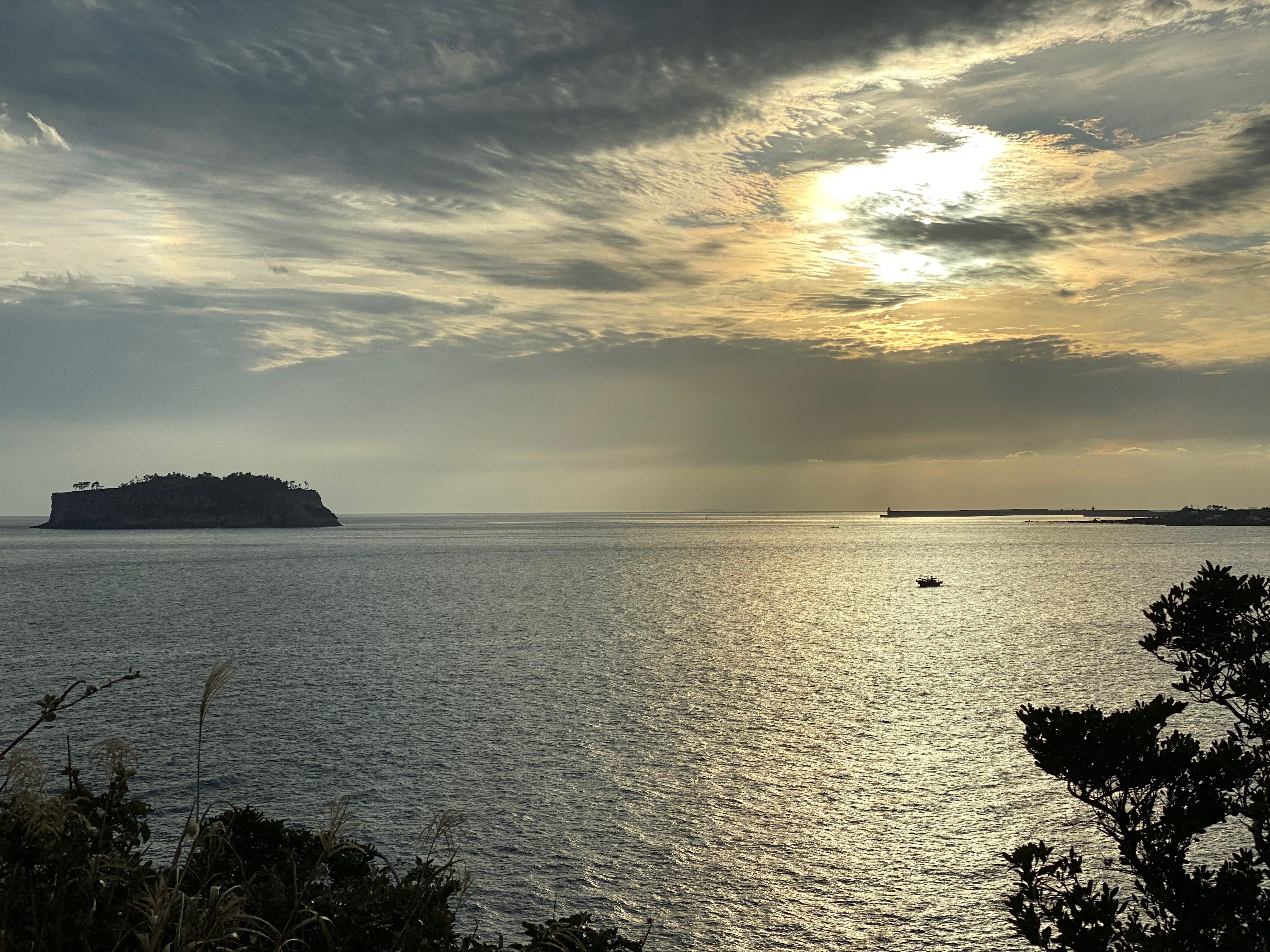
The sun setting over the sea at Oedolgae Rock

Taking wefie at Oedolgae Rock
Cheonjiyeon Waterfall – The Waterfall in the Park
The drive to Cheonjiyeon Waterfall took around 5 mins. There is a huge car park in front of the entrance to the waterfall. Parking is free and the admission to the waterfall costs KRW2,000 per person. It was about to get dark at the time of our arrival, we did a quick check and found that the waterfall is still open. Rather than calling it a waterfall where one would walk a short path to the waterfall, Cheonjiyeon felt more like a park with the waterfall at the end of the park. At the end of the 7 mins walk from the entrance, the 12m wide, 22m tall Cheonjiyeon Waterfall lies at the end of the footpath waiting for visitors to catch a glimpse. We were a tad disappointed with Cheonjiyeon Waterfall, as it does not look as majestic compared to Jeongbang Waterfall. Maybe it is due to the fact that visitors can only view the waterfall from a distance and perhaps due to the fact that it is already dark at the time we were there. Either way, we felt Jeongbang Waterfall is a better choice compared to Cheonjiyeon Waterfall. We did not stay for too long and left after taking some pictures.

Cheonjiyeon Waterfall

Taking wefie at Cheonjiyeon Waterfall

The garden where Cheonjiyeon Waterfall is located
Dinner at Seogwipo
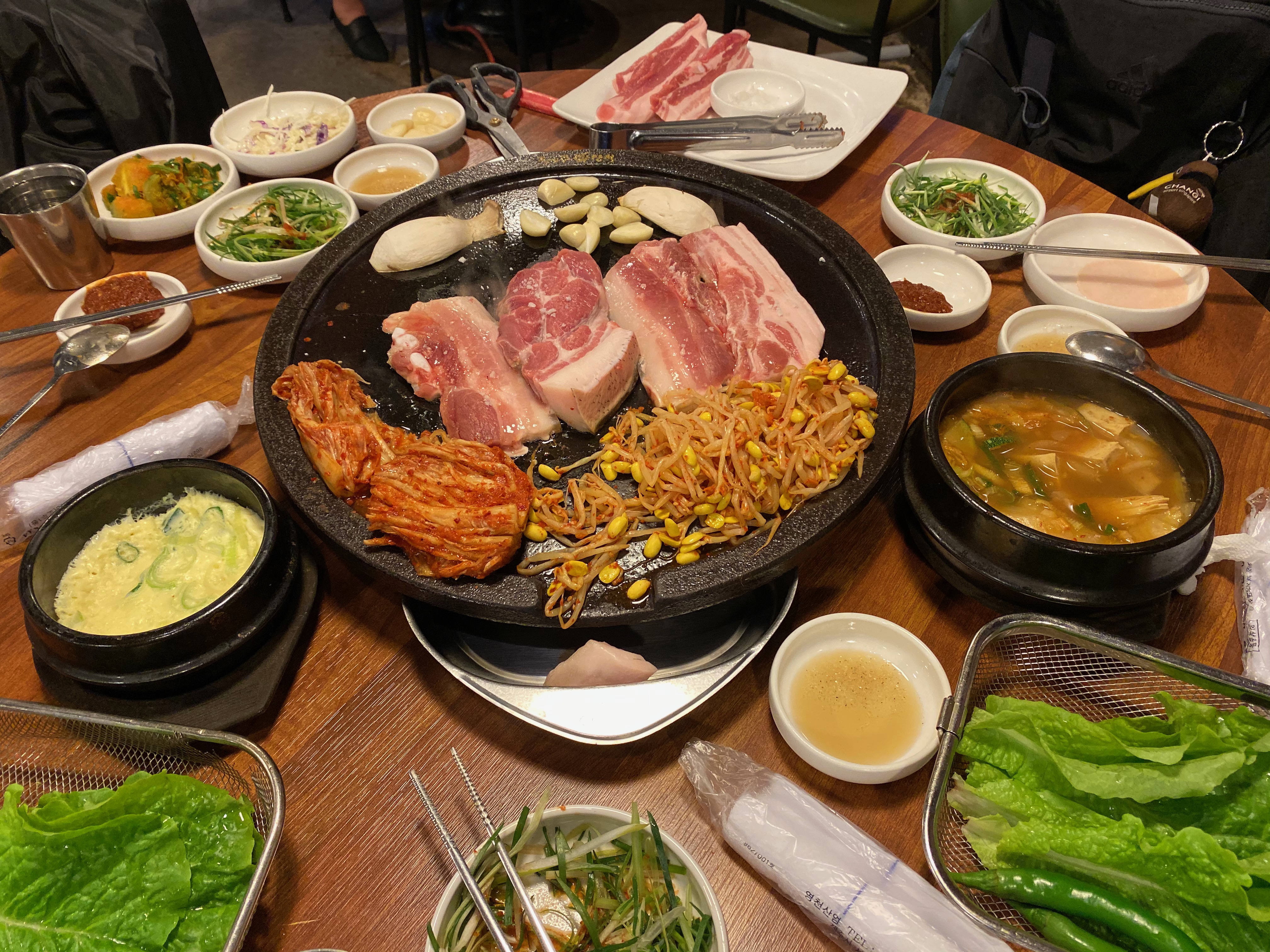
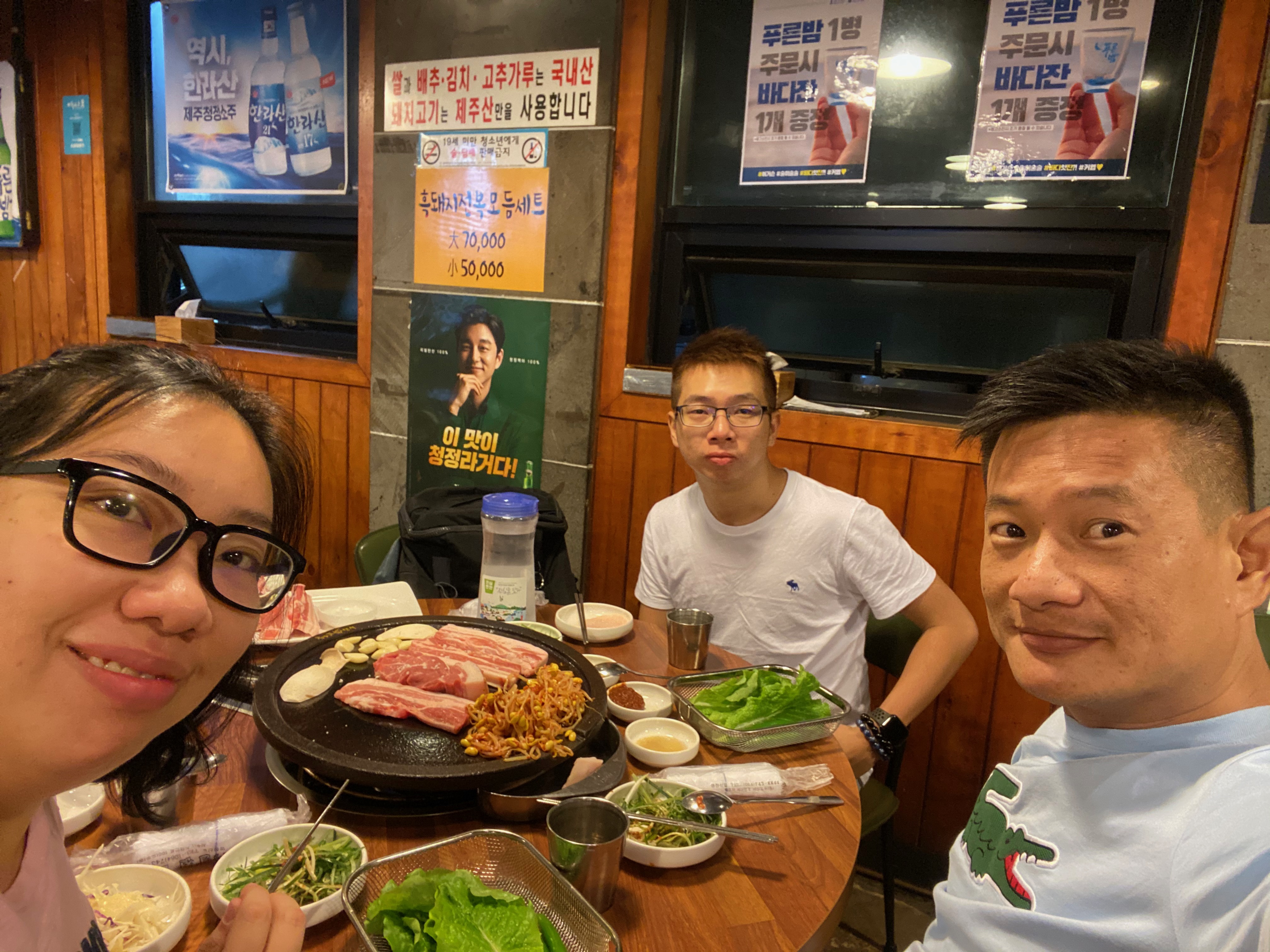
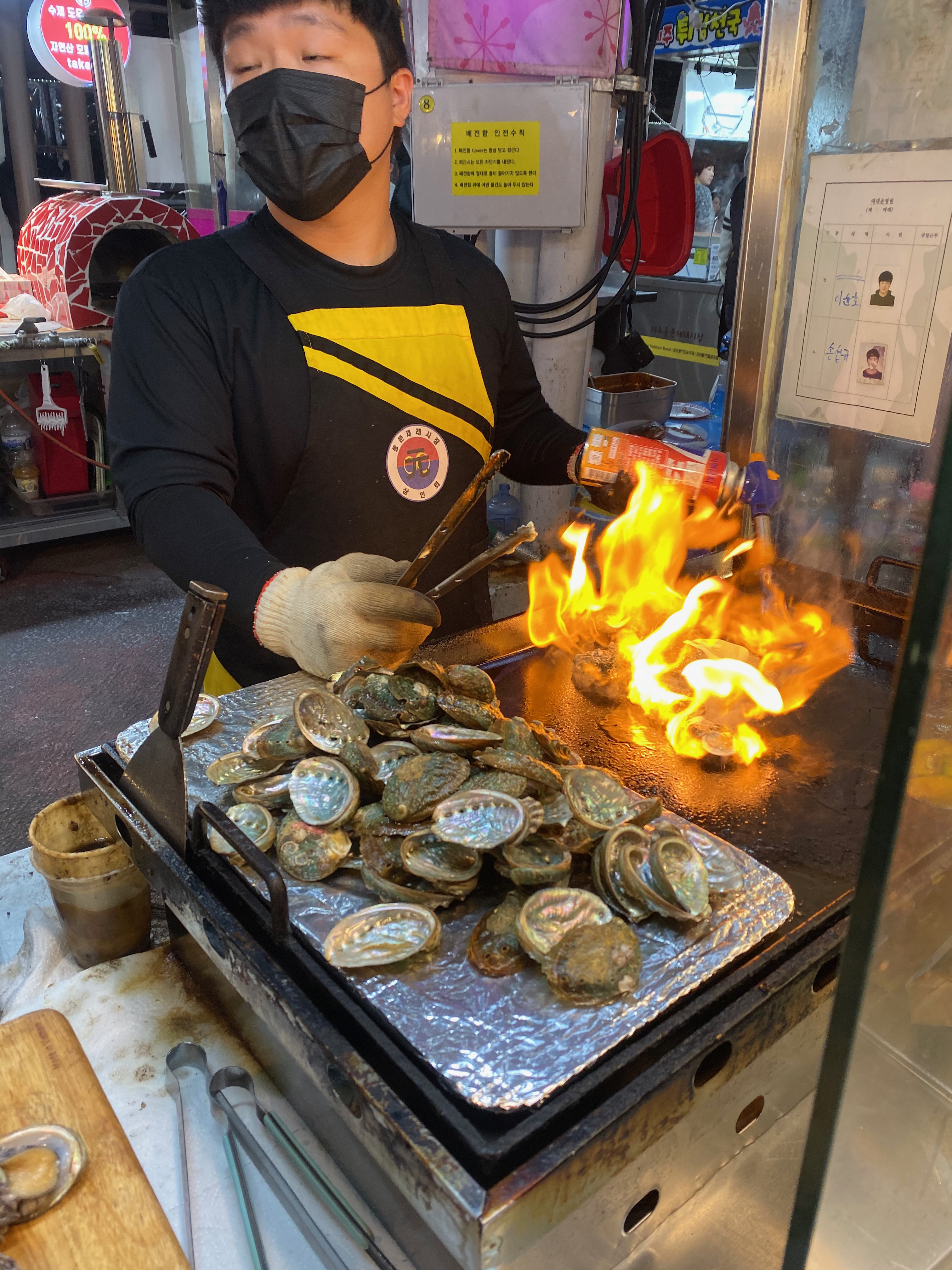
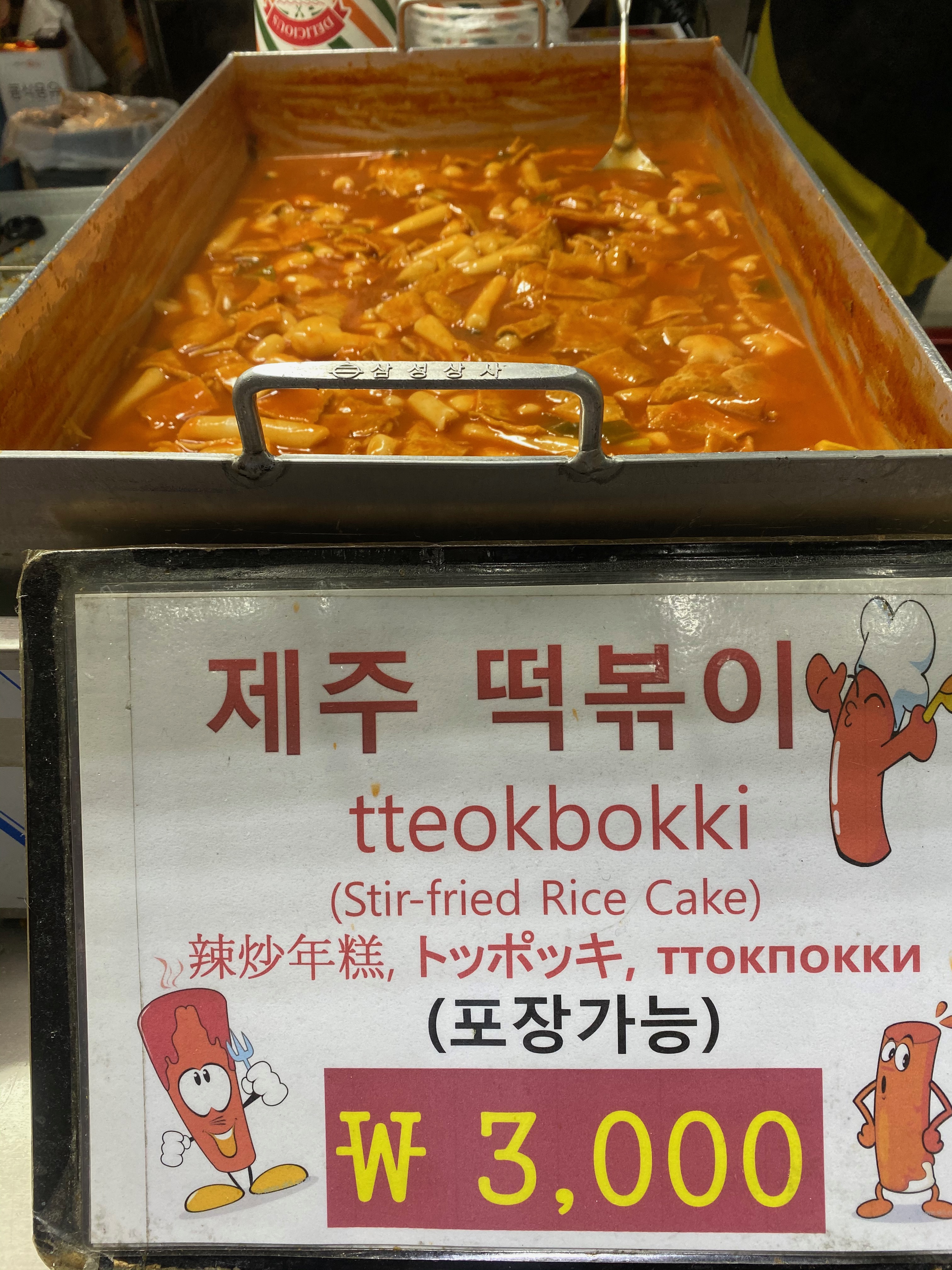
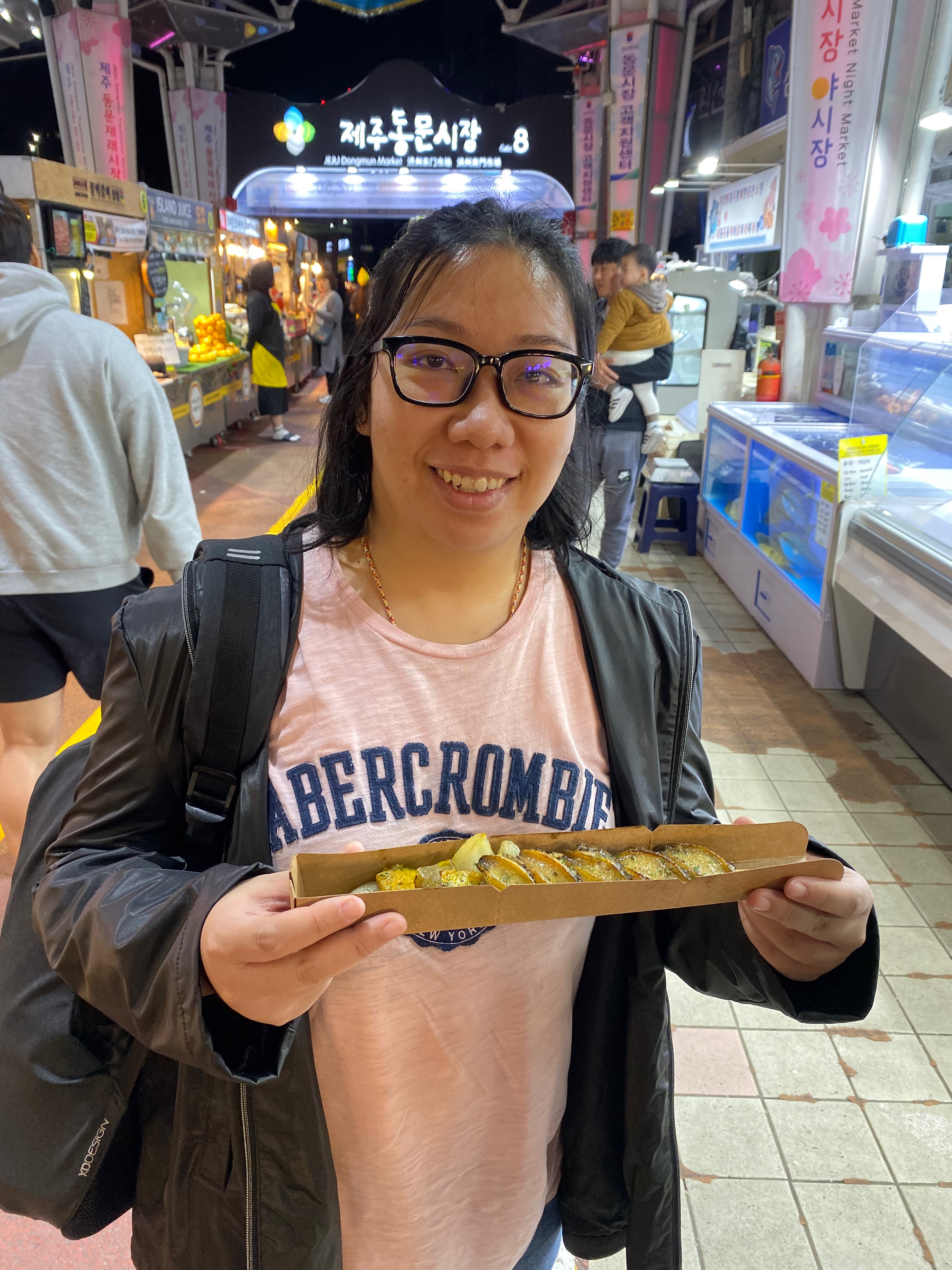
We left Cheonjiyeon Waterfall and search for dining options around in Seogwipo. As I wanted to have bibimbap for dinner, did a quick search on google and found a restaurant nearby that seem to serve bibimbap. When we arrived at the restaurant, we were told that they only serve vegetarian bibimbap. The very friendly staff understood what we wanted and gave us some directions for more dining options nearby. Following the directions given by the restaurant staff, we found ourselves to Seogwipo Olle Market. We almost strike this place out from our list of places to visit in Jeju due to time constraint, but fate brought us here incidentally. Seogwipo Olle Market is bustling with life at this time of the day (or night). It seems like people from Seogwipo is all gathered here for the night market. There are numerous stalls in Seogwipo Olle Market selling seafood, with some selling fruits and vegetable. We walked in the market in search of dining options to find ourselves ended up having Korean BBQ for dinner. As we had a long day today, we walked around Seogwipo Olle Market a little after dinner and head back to our Airbnb accommodation to rest for the night and prepare for the next highlight of this trip, trekking up Hallasan.
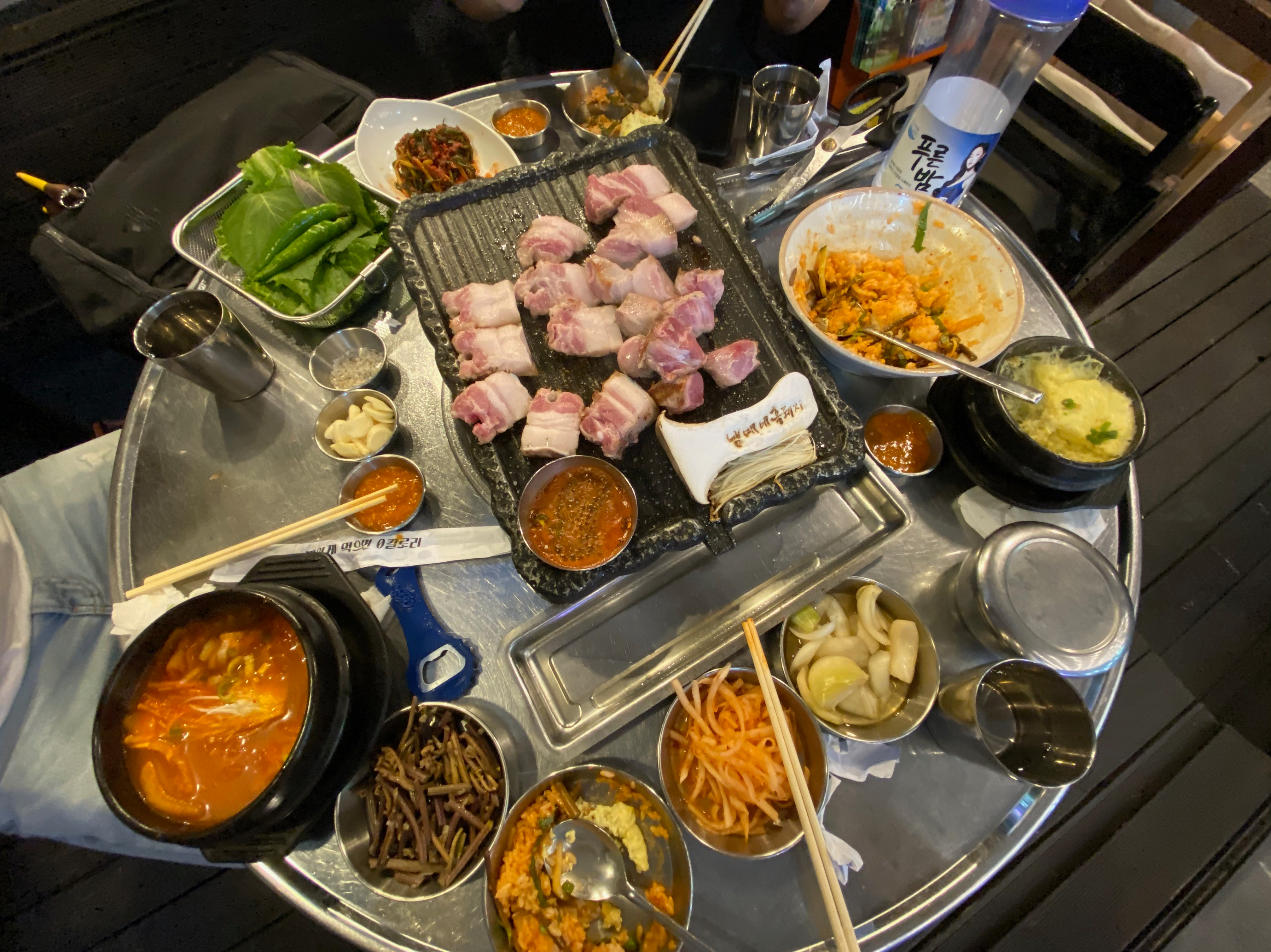
We ended up having Korean BBQ for dinner at Seogwipo Olle Market