Switzerland Day 3 (10 Jan 26) – Luzern: Mt. Stoos & Luzern Altstadt – From Riding the Steepest Funicular to Exploring the Historic Centre

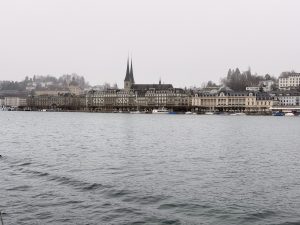
We visited the first mountain of our trip, Mt. Stoos, today. Going up the mountain on the world’s steepest funicular and coming down the mountain on another cable that would take us to another town near Luzern, where we took a cruise on Lake Luzern back to the city. We spent the afternoon exploring Luzern Altstadt and finished up our day with a visit to the Lion monument.

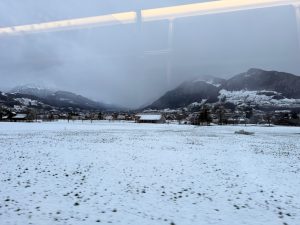
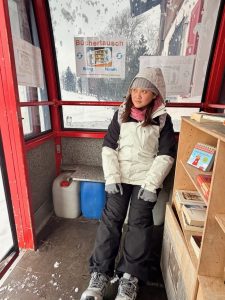
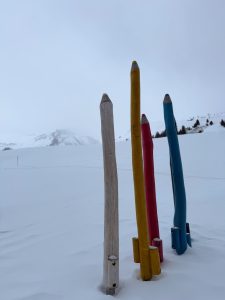
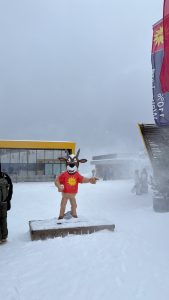
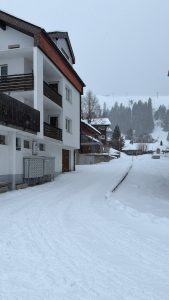
Snow Day on Mt. Stoos

Getting to the Stoosbahn from Luzern was very straightforward. We took a 40-minute train ride to Schwyz station, followed by a 20 min bus ride on Bus #501 from the bus stop at the side of the station. The bus ride to Stoosbahn was very frequent and timed with the arrival of the trains from Luzern. The total travel time took us about 1½ hours. All transportation, including the funicular and cable car rides, is included in our 2-day CHF120 Tell Pass regional card (Half-Fare Card does not give us additional discounts for the pass).

Stoosbahn – The Steepest Funicular on Earth

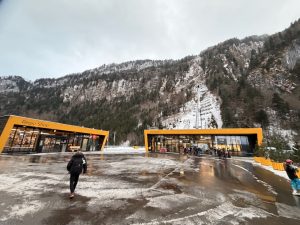
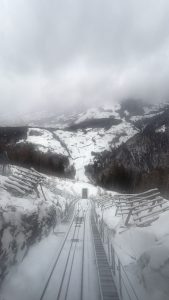
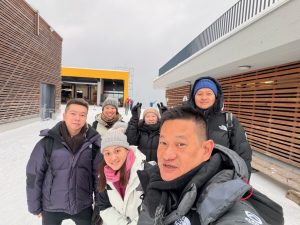
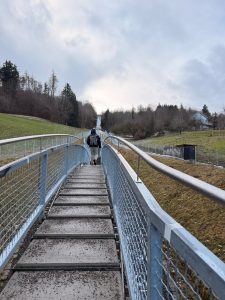
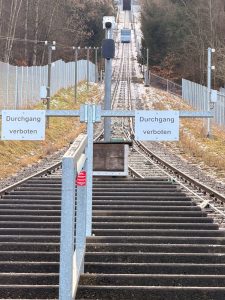
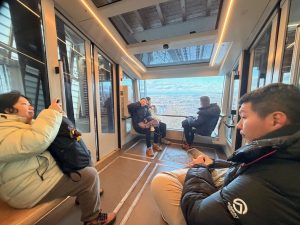
The purpose of coming to Mt. Stoos is to take the world’s steepest funicular, with an inclination of up to 47.7°. The Stoosbahn valley station is just steps away from the bus stop; one will not be able to miss the two bright yellow rimmed glass cubes sitting at the bottom of the mountain. If confused, just follow the crowd as we did. All the people who alighted at this stop come for the Stoosbahn. With our digital Tell Pass at hand, we approached the ticketing counter and were issued a card to access all the rides in Mt. Stoos. The Stoosbahn runs every 30 mins up and down the mountain. The Stoosbahn consists of four circular dome carriages, with the carriage nearest to the entrance of the valley station (eventually the bottommost carriage when the Stoosbahn scales up the mountain) being the one with the best view. As we climb up the mountain, the circular carriages will stack on top of each other according to the gradient of the tracks. What is fascinating is that we remain upright all the time without feeling how much the funicular has tilted.

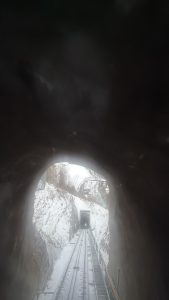
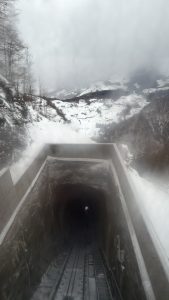
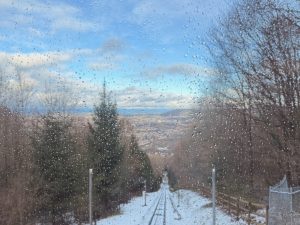
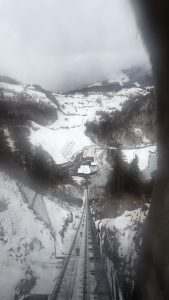
As the funicular pulled out of the station, the first thing that greeted us was the frozen River Muota below. At this point, the gradient was still quite gentle, almost level to the ground. As soon as we crossed the frozen river, the gradient quickly tilted to about 20°. But we did not feel any changes in the gradient inside the funicular due to the incredible engineering of the funicular. Soon, we came into the first of the three tunnels that the funicular would pass through. Coming out of the first tunnel, the view of the Stoosbahn gave way to a white, icy mountain cliffside. The distance between the first and second tunnel was not far; we were already entering the second tunnel before the first one left our sight. Emerging from the second tunnel, the Stoosbahn reaches a maximum steepness of 47.7°, and we began to see the neighbouring mountains standing mightily before our eyes. The third tunnel is the longest of all three tunnels. Coming out of the third tunnel, the Stoosbahn started to level to around 10° gradient and eventually levelled up to flatness as we were approaching the peak station. Amazingly, the Stoosbahn brought us up 744m on the surface of the mountain in merely 6 minutes. What an engineering marvel!
Stoos Village – Going Round and Round in the Village

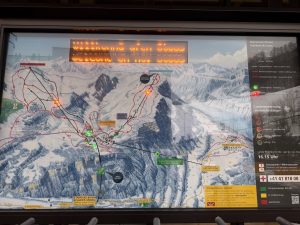
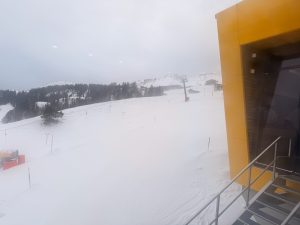
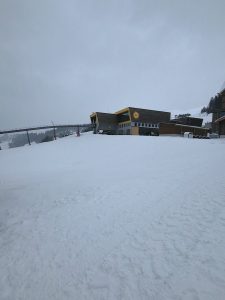
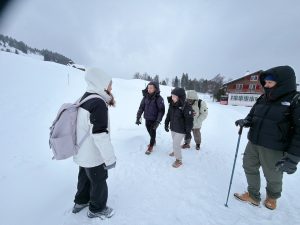
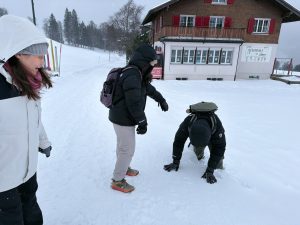
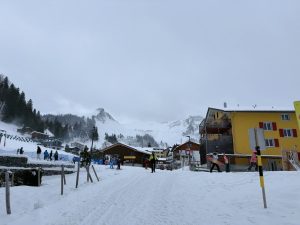
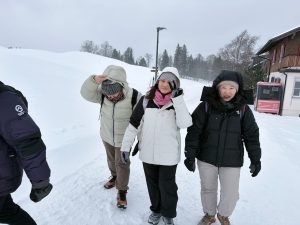
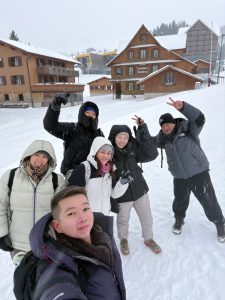
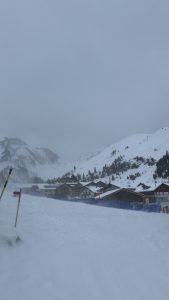
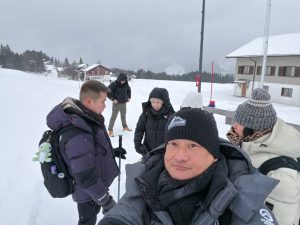
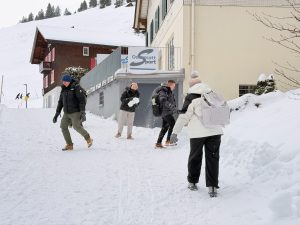
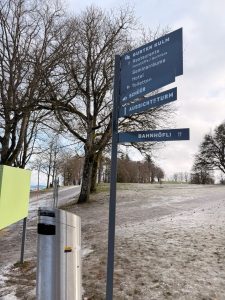
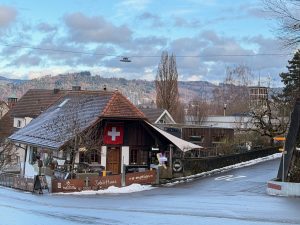
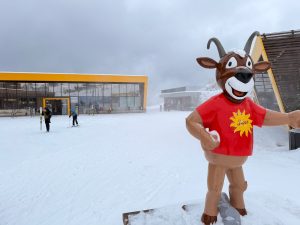
Coming out of the Stoosbahn peak station, we arrived at the Stoos village nestled about 1,300m up Mt. Stoos in the Alpine landscape of Central Switzerland. Stoos Village is the heart and centre of all activities on Mt. Stoos, where most amenities like restaurants, ski rentals, convenient shops and holiday chalets are located within mere steps from the Stoosbahn station. There is even a hotel next to the funicular station. Stoos Village is also home to numerous ski slopes for all levels of skiers. We originally planned to do a short hike at the top of Fronalpstock peak at 1,900m and reach the viewpoint where we would get a view of Lake Luzern below. After which, we would sledge down 500m in height from the peak to the middle station for a few runs. The first order of things is to find the chairlift that would bring us to the top of Fronalpstock. As we were walking around, looking for the chairlift, we were also playing in the snow. It was snowing, and we were excited to see snow (we came from a country that never snows). We had fun walking in the snowy trails, throwing snowballs at each other and admiring the snowy scenery that was so rare for us to see. In fact, we did not realise that we kept walking up and down the same path from the Stoosbahn station to where we thought the chairlift to Fronalpstock was. After spending some time walking up and down the same path, we decided to seek some directions from the ski rental. We were fortunate to have met a very friendly and welcoming lady at the ski rental. She told us that the chairlifts to Fronalpstock are not operational today due to the strong winds, but recommended that we go to the Snow Fun Park for some sledging.
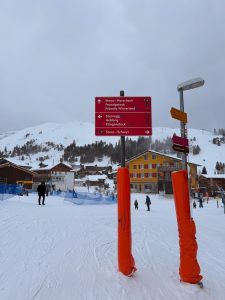
From Stoosbahns station, we seem to spot a “shortcut” to the Snow Fun Park. Little did we know the so-called shortcut had our legs sink into calf-deep snow and down a short snowy slope. We barely had any experience walking in snow (the last experience we had walking in snow was from our Austrian trip one year ago), and bashed through the thick snowy grounds, using houses in between and footprints that others had left behind to guide us to the Snow Fun Park. It took us about 20 minutes to reach the Snow Fun Park. Here we saw a few people playing sledging, and that really got our hopes up. As we were walking around to see where to rent a sledge (we did not want to walk all the way back to the ski rental by the Stoosbahn station), we spotted the chairlifts to Fronalpstock, and we actually saw people getting onto them. This means that we get to resume our plan. As we walked closer, a staff member at the chairlift approached us and smashed our hopes. He told us that the chairlift is only operational to the middle station and closed to the top station due to the winds. Seeing that there was nothing we could do, we resumed looking for a place to rent a sledge. We found a shop further down the path, but the only shopkeeper was busy helping two customers with their skis. As we were hungry, we headed for lunch and to return to the rental sledges later.

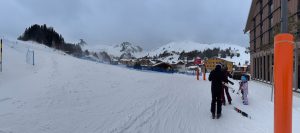
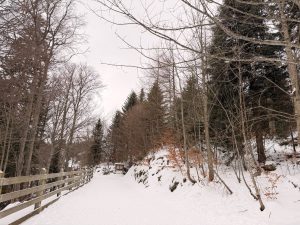
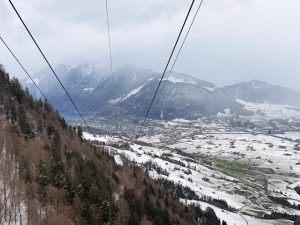
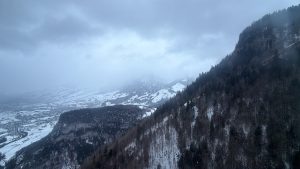
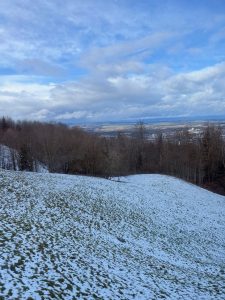
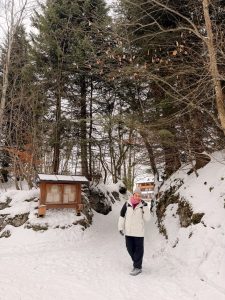
After lunch, we attempted to return to the shop, but the shopkeeper was again busy with yet another set of customers. As it was about time for us to descend the mountain to catch the ferry back to Luzern, we walked further down the path to the Morschach cableway station. This part of Stoos Village felt tranquil as it saw little footfall. We used the time while waiting for the cable car to explore this part of Stoos Village. The snow-covered forest and a cliffside with a viewpoint that gave us a partial view of Lake Luzern made this part of the Stoos Village feel magical and tranquil. There was no laughter and shouting of the people sledging and skiing; all we heard was the sound of our feet squashing onto the snow below. The snowy weather added a little more magic to this area. Soon it was time for us take the Morschach cableway down to the valley station.

Cruising Lake Luzern: An Alternate Way of Travelling to Luzern

To return to Luzern, we could either backtrack and take the Stoosbahn and train option or take the cable car and ferry options. One of the activities to do in Luzern is to take a cruise on Lake Luzern. To maximise our experience (and the Tell Pass value), I planned for us to take the cruise back to Luzern. To get to the cruise pier, we took the Morschach cableway from Stoos Village (a 25 min walk from the Stoosbahn peak station), and changed to Bus #504 at the Morschach cableway valley station to Brunnen See Schiffstation. From there, the pier is a 3 min walk across the road. As the bus drove around the windy mountain road to the shore of Lake Luzern, we were treated to stunning views of the lake. I saw a boat coming into Brunnen and commented to my friends that this might be the ferry that we would be taking.

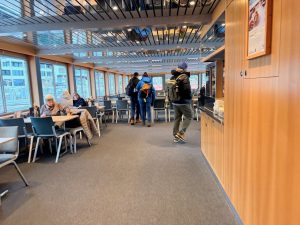
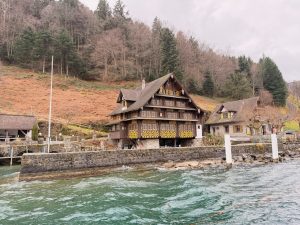
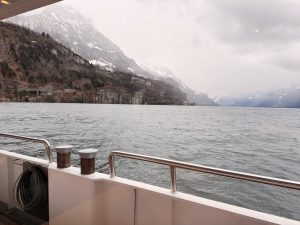
We were pleasantly surprised that the Swiss timed their public transport with perfect precision to the next transport. We made it in time to catch the ferry back to Luzern. With our Tell Pass at hand, we merely show our QR code to the ferry staff at the pier. The ferry ride back to Luzern took around 1½ hours. As the ferry slowly made its way on Lake Luzern, we saw dramatic mountains that merged into the lake, making them look like we were cruising in fjords. Cruising on Lake Luzern truly made us realise how large the lake is; we felt like a dwarf walking amongst the giants. The cruise stopped by a few other piers to pick up and disembark passengers. We occasionally head out to the outdoor decks to enjoy the breeze and the snow falling from the sky. I thought this cruise option also gave us some time to relax and recharge for the exploration of Luzern Altstadt later. As the cruise was nearing Luzern, the shallower depth of this part of the lake allowed us to see through to the lake floor.
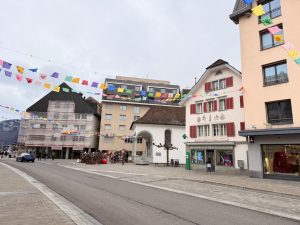
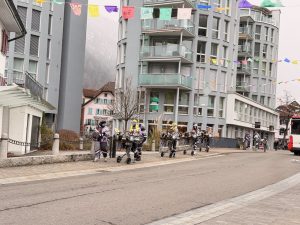
Luzern Altstadt: Walking into History

We originally wanted to join the complementary city tour of Luzern. However, the tour starts at 11 pm, which would mess up our plans for today. Thus, we opted to explore the old town on our own.
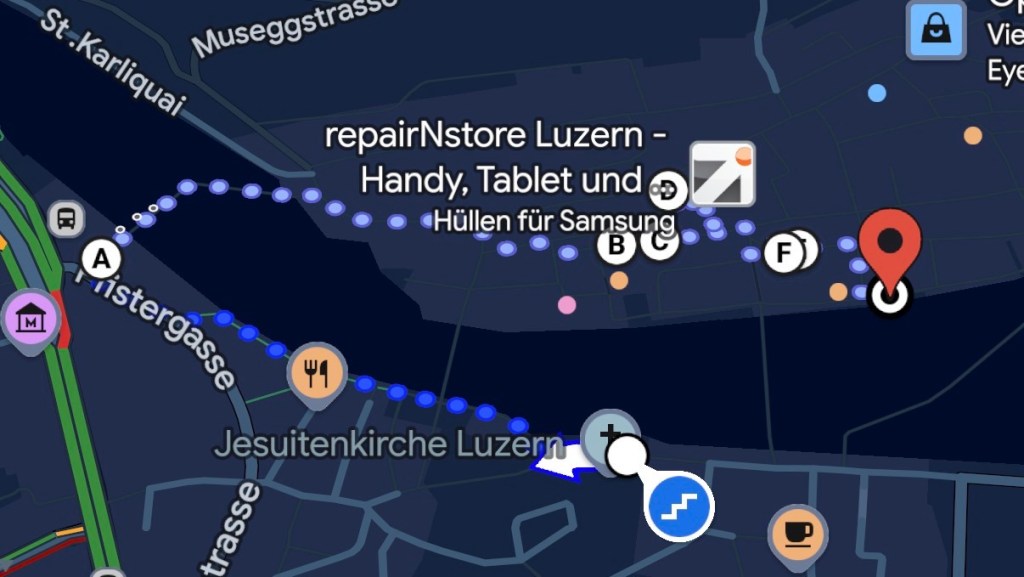
The sights we visited for our tour of Luzern Altstadt

Jesuitenkirche – The first Baroque Church in Luzern

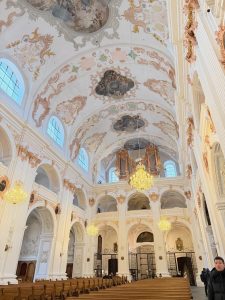
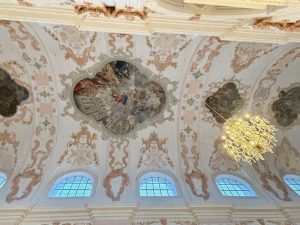
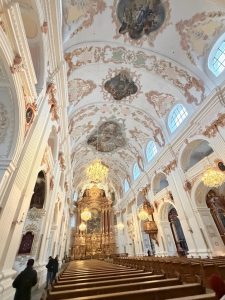
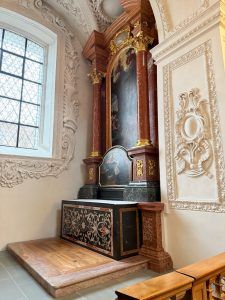
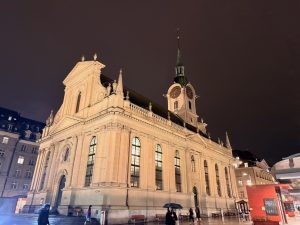
As the Jesuitenkirche is only very close to the ferry pier, it made sense for us to start our city walk from the church. The Jesuitenkirche was completed in 1677 and was originally intended to function as a college. However, as construction started, it was decided to build it into a church instead. With the two green-domed towers built beside the central building, one cannot miss the Jesuitenkirche when walking around Luzern Bahnhof or the Altstadt. Do not be deceived by the plain facade of the church; the beauty of the church lies in its interior. Instead of sitting in an elaborate square with a large foreyard, the church sits quietly on the riverside with a small church front real estate. Entering the church, we were immediately wowed by the complex and intricate baroque decor from the ceiling to the walls to the high altar. Other than the frescos painted on the white ceiling, what caught my eye was the intricate floral patterns that beautified the ceiling. The touch of the crystal chandeliers hanging from the ceiling gave it an elegant look. The walls of the church are predominantly white, which makes the church look clean and pure. At the end of the church sits the high altar. With marble columns and tiles and the gold trimmings, the high altar looked dignified. The painting of the Virgin Mary and Baby Jesus coming from the heavens to save people from their sufferings was vividly painted.
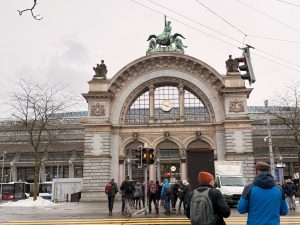
Spreuerbrücke – The Younger Brother of the Chapel Bridge

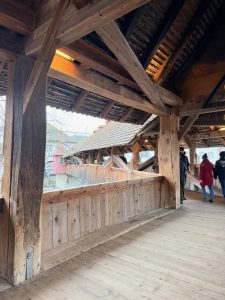
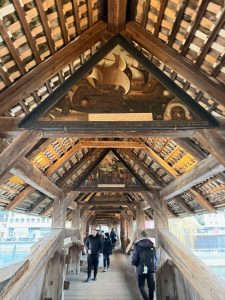
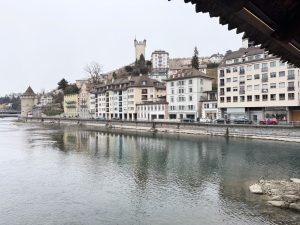
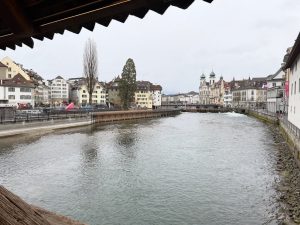
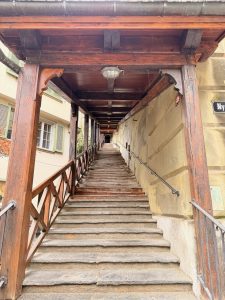
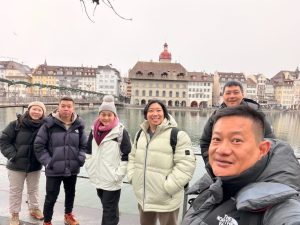
We left the church and walked along the riverbank, past the medieval riverside houses that are now mostly shops and restaurants, and we came to the Spreuerbrücke. Unlike the bigger Chapel Bridge, Spreuerbrücke receives little attention. The smaller wooden bridge was constructed in the 13th century to connect the mill on the right of the River Reuss to the mills in the middle of the river. The bridge only connected to the Altstadt on the left bank in 1408. Walking on Spreuerbrücke, we could see the resemblance to the Chapel Bridge. Similar to the bigger Chapel Bridge, Spreuerbrücke also has painted panels on the inner triangular frames of the roof and features a smaller tower at the side. Unlike the Chapel Bridge, this tower is connected to the bridge instead of rising from the riverbed. There are wooden benches on Spreuerbrücke for pedestrians to rest or sit and absorb the tranquillity that this part of the town brings. Crossing the Spreuerbrücke is a smaller bridge; our starting point, Luzern Altstadt, is at the other end of the bridge.
Luzern Altstadt – The Painted Buildings that Tell a Story

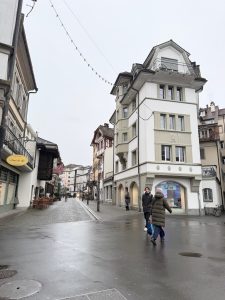
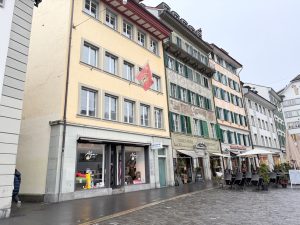
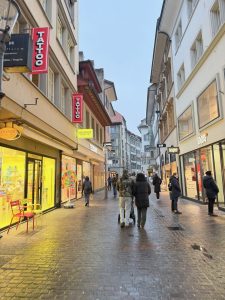
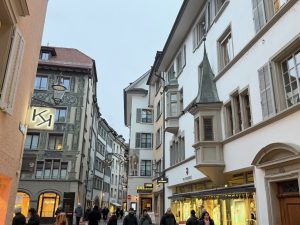
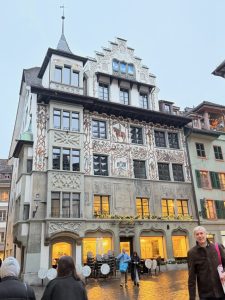
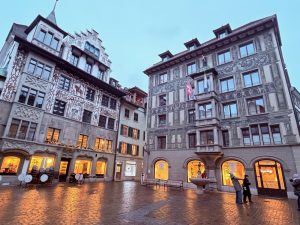
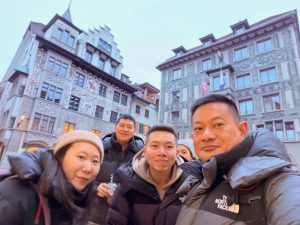
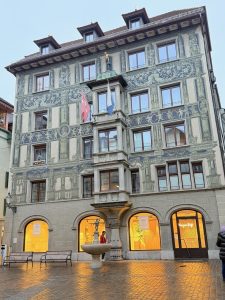
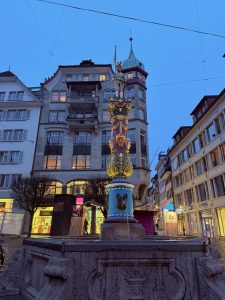
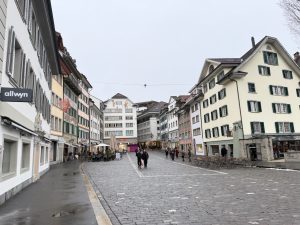
One of the highlights of Luzern Altstadt is the paintings on the walls of some of the medieval buildings. These murals recount stories of the city’s past, culture, trade traditions, and legends. They also served as advertisements for the former guild houses or commemorated important historical events. Entering the old town from Spreuerbrücke, we arrived at Mühlenplatz. This is where we saw one of the many painted houses. As this part of the old town is close to the mill, the painting on the buildings depicts mills in action. Walking on the cobblestone grounds of the Altstadt reminded us of the time we were in Italy. We were keeping a lookout for the murals on the walls of the buildings, other than looking into what the shops around had to offer. Not long after, we arrived at Weinmarkt. This part of the city has been the city’s food market, operating on Tuesdays and Saturdays, and it is also the venue for Christmas markets. The buildings around Weinmarkt were once guild halls, such as the Hotel des Balances, which had paintings of hunters. Sitting in the centre of Weinmarkt is the fountain Weinmarkt-Brunnen. The buildings around here feature the painting of the biblical feast of Canaan.

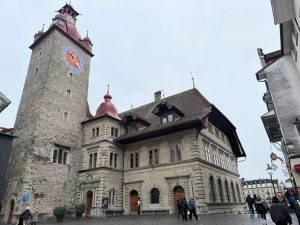
Our feet led us to the Rathaus Stadt Luzern, between the river and Weinmarkt. One cannot miss this old stone building with an attached clock tower. As we were walking around Luzern Altstadt, looking out for the next mural on the wall, we unknowingly came to Hirschenplatz. There are two buildings with paintings here, with one depicting the Battle of Dornach, and the other is merely an advertisement mural selling jewellery. Our walk through the old town ended with a visit to Fritschibrunnen, a colourful 12th-century fountain decorated with carnival friezes and masks. Luzern old town is very compact and can be completed in 2 hours at most. After our walk through Luzern Altstadt, we took a bus near our hotel for dinner. After all, our final destination is next to our hotel.

Lion Monument

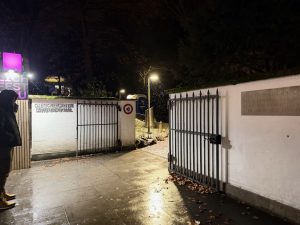
After dinner, we walked to the Lion Monument, our last sight of the day. The Lion Monument depicts a lion lying on the ground with a shield beside it. The monument is carved into the side of the cliff to commemorate the Swiss guardsmen who died defending the country during the French Revolution. Usually, there would be a fountain in front of the monument, but it was dry during our visit due to maintenance work. We headed back to our hotel to rest for the night after visiting the Lion Monument, after all, we have our second of the six mountains that we will be going on this trip.
Switzerland Day 2 (9 Jan 26) – Bern: Jewels of the Captial – From Altstadt to Gurten Kulm

Today is the day we truly start exploring Switzerland (yesterday was a preview). Bern is a small city and is extremely walkable, with most of the attractions in the old town. This was where we spent most of our time today. I planned to use the morning to explore the city, after which we would return to the hotel and pick up our luggage for our train to Luzern later in the afternoon. As the sights in Bern are under 7 minutes from each other, we had additional time to visit the bear park and took an excursion slightly outside the city to Guten Kulm.

Bern Alstadt – The Icons of the City

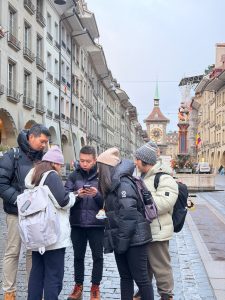
We originally wanted to head to the train station in the morning to deposit our luggage in one of the lockers at the train station, in case we were short on time. Afterall, I planned to start our Bern Altstadt walk from the train station. However, after our first night in Bern, we realised that the town is actually very compact, and that we would have the time to pick up our luggage after finishing all the sights in Bern. Since our hotel is just one tram stop away from Zytglogge, it only makes sense for us to start our old town walk from the clock tower.

The route of our visit in Altstadt Bern today

Zytglogge – The Iconic Clock Tower of Bern

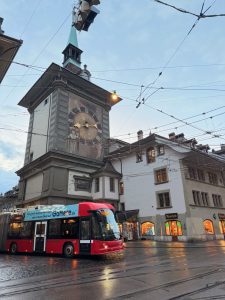
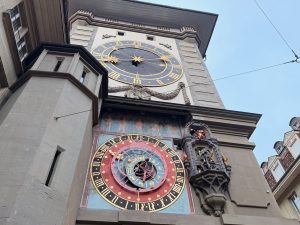
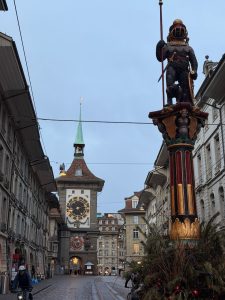
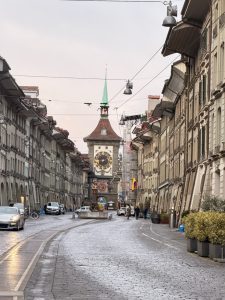
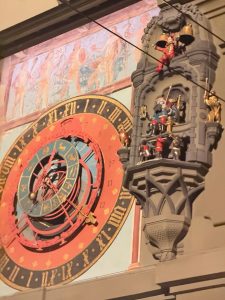
After checking out and depositing our luggage at the concierge of the hotel, we took a tram for one stop to Zytglogge, the icon of Bern. Every picture of Bern we saw online features the Zytglogge standing in the middle of medieval buildings. Zytglogge was built in the early 1200s as a gate tower of the city’s western fortifications. The tower was then converted to a women’s prison in the mid-1300s when the city expanded further. A fire in the 1400s destroyed the tower completely and was rebuilt into a clock tower in the 15th century, ranking as one of Switzerland’s oldest. The Zytglogge’s iconic astronomical clock was installed in 1530, allowing the clock to tell astronomical information such as the position of the sun, moon, and zodiac signs, in addition to the time. The city had a scheduled guided tour of the interiors of the Zytglogge, where visitors will be brought up to the tower and get a better understanding of the workings of the clocks inside the tower. As we were pressed for time, we did not join the tour. Nonetheless, we found some interesting exhibits, along with explanations of the workings of the tower and how to read the astronomical clock at the bottom of the tower.

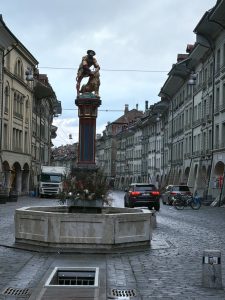
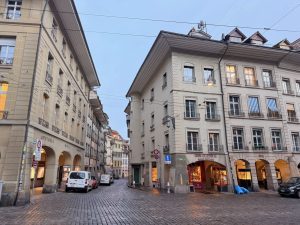
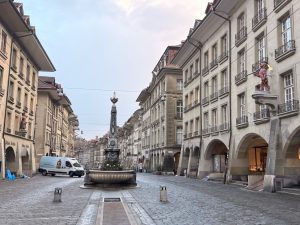
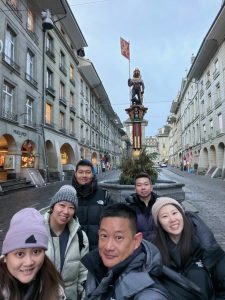
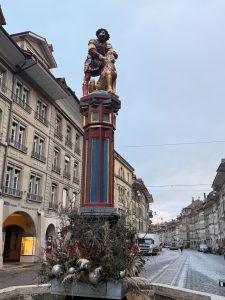
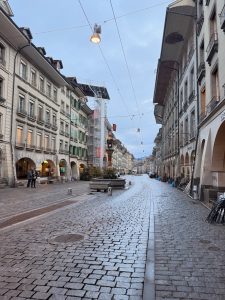
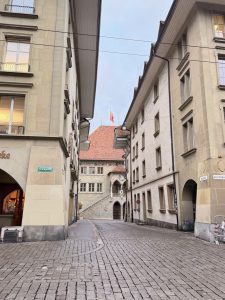
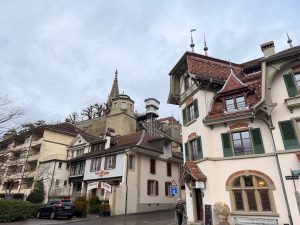
After visiting the Zytglogge, we walked along the street away from the main street towards the bridge that connects the old town to the bear park. We spotted the Zähringerbrunnen a few steps from Zytglogge. The Zähringerbrunnen is a monument honouring the city’s founder, depicting a standing bear with a shield and flag and a bear cub standing between its legs. As we walked further down the street of Kramgrasse, heading to our next stop of Münsterplatform, we were immersed in the medieval buildings that stood the test of time. These buildings, now being converted to shops, have a pseudo cellar opening in front, which seems to lead underground (we later got to know that these are actually basement access, as some businesses used this space to set up shop). However, most of the shops we saw were still closed as we were pretty early. As we walked past the post office, we urged our friend to buy a postcard and mail it there to prevent her fate three years ago, when she did not receive any of the postcards she sent from our Italian trip. We told her that by passing her postcards directly to the post office staff, she would definitely receive her postcards.

Rathausplatz – the Town Hall & the Church

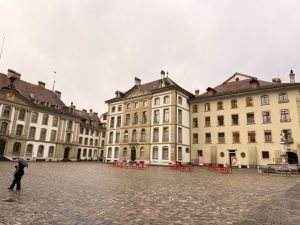
Walking amongst the medieval buildings seems to transport us back in time. As we were walking on Kramgrasse, I suddenly spotted a green building that seemed important. A quick check on Google Maps reveals this to be the Berner Rathaus. We did a quick detour into the alleyway that led to the Berner Rathaus and arrived at Rathausplatz. Other than the Rathaus, Rathausplatz is also home to the Kirche St. Peter & Paul and Vennerbrunnen. The three-storey sandstone square Berner Rathaus has a rather simple facade. We would have missed it if not for the two flights of stairs that led to the main entrance on the second level. The main entrance has a protruding structure that the staircases lead to. This structure is adorned with two female statues and a clock with golden arms. Looking up close, the Berner Rathaus has a row of 26 wooden shields, representing the 26 former districts of the canton, lined just below its red tiled roof on the main facade. It is a pity that the Berner Rathaus is closed to the public; if not, we would love to take a look inside.

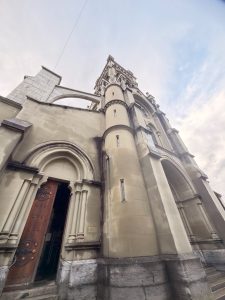
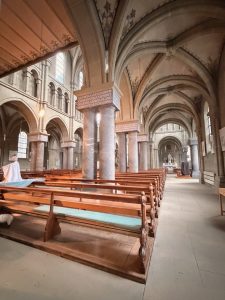
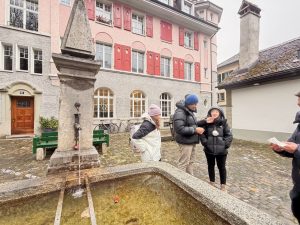
Next to the Berner Rathaus is the Kirche St. Peter & Paul. The sandstone church, built in the 1850s, is the city’s first church and has a single bell tower in front of it. The flying buttresses that seem to support the walls of the church from the outside reminded me of the Notre Dame de Paris. We wanted to visit the interior of the church. However, as we walked through the main wooden doors to the church, there was another closed metal gate that prevented us from venturing further beyond the foyer of the church. We can only catch a glimpse of the church’s interior through the gate. The interior looked simple and gloomy due to the natural colour of the materials used to construct the church. Seeing that we could not do much here, we headed outside and continued our exploration of the city. As we walked past the Rathausplatz, I spotted a fountain with a statue of a soldier sitting in one corner of the square. This is the Vennerbrunnen, which was installed in 1542, and with the buildings it stood in front of, standing here felt like we were being transported back in medieval times.

Münsterplatform – Balcony of Bern

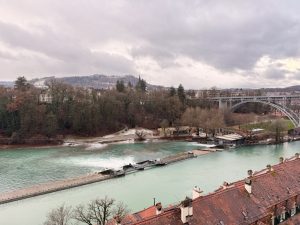
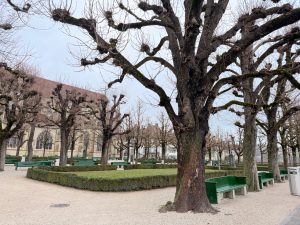
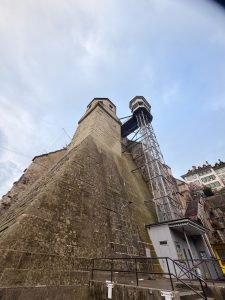
As we left Rathausplatz, wanting to continue our walk along Kramgrasse, my friend suddenly wanted to visit the toilet. A quick Google map showed the nearest toilet is at Münsterplatform. Since we were going to visit this place later, I did a quick switch of the sequence of our visit and headed for the Münsterplatform instead. The Münsterplatform is a rectangular park that sits 14m above the River Aare, offering us a view of the river and the nearby neighbourhood, as well as the Alps. The foundation of the platform was laid in 1334, and the construction of the walls was completed in 1514. Until 1531, the platform served as a cemetery before it was converted into a park. Today, the Münsterplatform is planted with chestnut trees with benches for locals and visitors to relax and take in the beautiful views of the surroundings. From the platform, we could see the river and Kirchenfeldbrücke, the bridge that links Altstadt Bern to the south of the city. After taking our fair share of pictures, we headed to the elevator, the Mattelift to the Mattequartier below.

Mattequartier – The Riverfront Medieval District

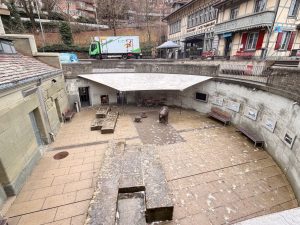
Exiting the lift, we spotted a booth with a lady sitting inside, collecting the CHF1.50 for the use of the lift. As my friends were looking for small change for the use of the lift, I checked with the friendly lady if the cost of using the Mattelift was covered under the Bern Welcome card. We were pleasantly surprised that it is covered. Bidding farewell to the friendly lady, we walked towards the River Aare, just mere minutes away from the Mattelift. We saw a bridge that we could get closer to the River Aare next to the artificial channel that was constructed in 1360 to divert the river water into one of the three watermills. However, upon reaching the structure, we found that it was closed to the public, meaning we were not able to get closer to the River Aare. We headed back to the main streets of Matterquartier and headed to the Bear Park. The Mattequartier is medieval Bern’s smallest neighbourhood, mainly housing workshops and mercantile activities. Walking in this peaceful neighbourhood allowed us to appreciate the beautiful medieval buildings and the sheer height of the Münsterplatform.

The Bear Park – Home of the Canton’s Mascots

Since we were already at the foot of Nydeggbrücke, the bridge that links Altstadt Bern to the eastern neighbourhood where the Bear Park is located, we made a quick pit stop at the park, knowing that we would not see any bears in the bear park as they would be hibernating for the winter. There are two pits in the centre where the bears would play during non-hibernation months. On top of that, there seem to be some cordoned-off areas at the side of the park next to the bank of the river. This would be the pen of the individual bears. After visiting the (empty) bear park, seeing that we have sufficient time to go a little further before our train to Luzern later in the afternoon, we decided to head outside the city to the nearest hill, Gurten Kulm, via bus.

Berner Münster – The Cathedral of Bern

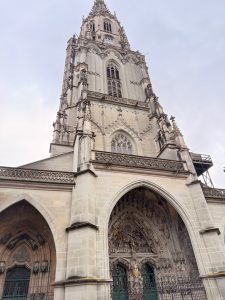
As the bus we took requires us to change to another line in the old town, we decided to make a quick stop in the old town to finish off the other two sights we wanted to visit. Our first stop is the Berner Münster. The Gothic-style Berner Münster started its constructionin 1421 and was completed in 1893. With its 100m tall tower, this cathedral is the tallest in Switzerland. A climb to the top of the tower would give us a great view of the city. However, as we were walking up to the cathedral’s main entrance, we saw visitors going up to it and turning away. We half suspected the cathedral might not be open since we saw some scaffolding on its side as we were walking up to it. To our dismay, the cathedral was bolted shut. It is a waste that the church only opened at noon, meaning we could either loiter around to wait for it to open or miss the tower climb and move on to our next destination. Since we were already deciding to head to Gurten Kulm, we gave the tower climb a miss. And since the cathedral is closed, we could only see it from the outside and take some pictures. After taking pictures, we headed to our final sight in Bern Altstadt.

Bundeshaus – The Place where important decisions are made

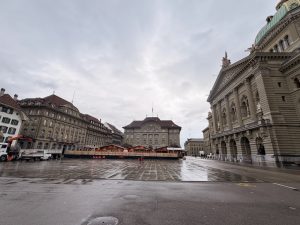
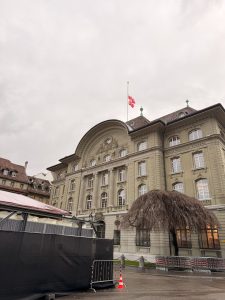
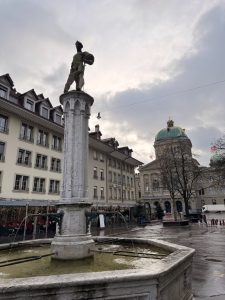
Our next stop is to visit the Bundeshaus (Parliament Building). Initially, I wanted to visit the interior of the building after our interesting experience in the Austrian Parliament in Vienna last year. The Swiss Parliament Building offers guided tours of the building in English and Dutch to visitors. However, there wasn’t any English guided tour on the day of our visit. We could only see the building from the outside. It felt pointless to see this beautiful building without seeing its interior or taking the guided tour to understand the workings of the Swiss parliament. We did not stay here for too long and headed to a nearby cafe for a coffee break before taking a bus to Gurten Kulm.

Gurten Kulm – The Roof of Bern

Getting to the top of the 858m Gurten Kulm from Bern Altstadt was very easy. There are multiple buses that run to the funicular station at the base of the hill, and the best thing is that the bus rides and the Gurtenbahn are included in the Bern Welcome Card. The fastest way for us to get to the hill, as recommended by Google Maps, was to take Bus #19 from the bus stop near the Parliament Building and change to Bus #16 with an 8 min walk to the funicular station. As we alighted from Bus #16, we followed a sign at the bus stop that pointed us to the funicular station. Little did we know that we had to take a short 400m climb up the hill through a “forested” track to an inconspicuous platform that sticks out in the middle of the track. What Google Maps led us to was Grünenboden, the mid-station for the funicular ride, instead of the valley station. At Grünenboden, we saw the Gurtenbahn coming our way, but did not stop. We later realised that we were supposed to press the top button on a box at the station for the Gurtenbahn to stop at the mid-station. Luckily, the next Gurtenbahn came 10 minutes later.
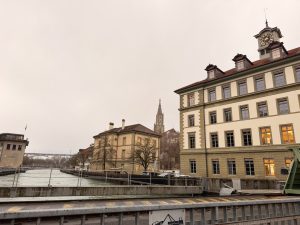
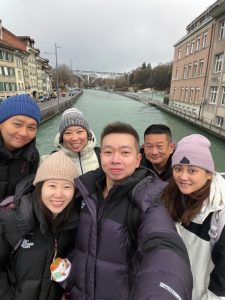
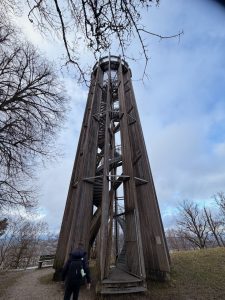
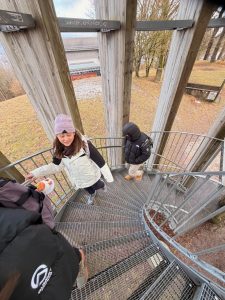
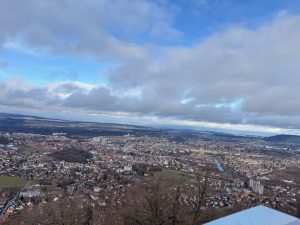
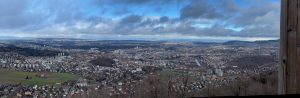
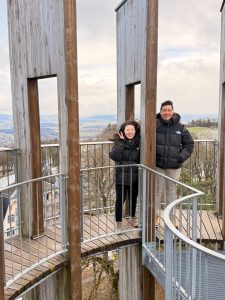
As the Gurtenbahn climbed up the hill, we saw more of the City of Bern. We were sure we would get a panoramic view of the city. Soon, we found ourselves on top of Gurten Kulm. Exiting the station, we came to a crossroad and a map of the attractions on Guten Kulm. There is a hotel, a restaurant and even a miniature train ride up here. Attracted by a Tower structure, Gurten Aussichtsturm, we made our way to the tower. Entry to the metallic 25m Gurten Aussichtsturm was free. A 121-step spiral staircase in the core of the open tower took us 5 mins to climb up. As we were climbing up the Gurten Aussichtsturm, the cold wind made climbing the tower difficult. But that does not deter us from reaching the observation deck at 22m of the tower. From here, we were treated to a panoramic view of Bern. The city of Bern suddenly looked small, but the view was great! We could see the River Aare that snakes around the Altstadt and even the mountains behind Bern. The only issue we had was the occasional strong winter wind that blows on the tower, shaking the tower so much that we felt it could topple anytime (it is perfectly safe), or we could be blown away by the wind. Despite the cold wind, we enjoyed the view the Gurten Aussichtsturm offers and were glad we made it up the tower. After spending 10 minutes up here taking pictures and soaking in the panoramic view of the city, we decided to head down the tower. However, with the constant wind blowing, we had to wait for the wind to turn weaker (so it wouldn’t shake the tower so much) to descend the tower.
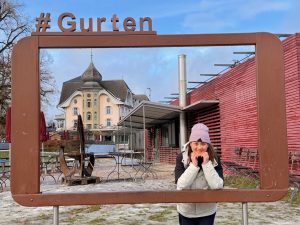
As it was near the time for our train ride to Luzern (after catering time for us to get back to our hotel to pick up our luggage and travel time to Bern Bahnhof), we had to return to Bern. Before heading down to the valley station by Gurtenbahn, we had time to take a wefie at the pavilion. After descending from Gurten Kulm, we took Bus #9, which directly brought us to our hotel to pick up our luggage.

Onward to Luzern

Time was a little tight, but we made it in time to pick up our luggage and took a tram to Bern Bahnhof to board our 2 pm train to our next city, Luzern. The train ride from Bern to Luzern was also rather uneventful, and we eventually reached Luzern after a 1-hour train ride.

Arrival at Luzern

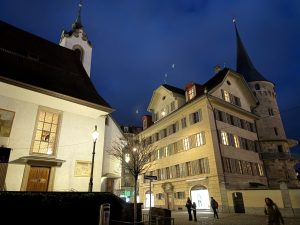
After arriving in Luzern, the first thing to do was to orient ourselves and get on the correct bus to our hotel. Like Bern, Luzern also offers guest cards to visitors staying in Luzern, which gives us complimentary public transport in the city. As we already bought the Tell Pass, which also includes all transport in and around the city, we did not have to bother too much about the transport cards. The bus ride to our hotel took under 10 mins. After checking into our rooms and settling down a little, we headed out to the city to buy breakfast for tomorrow and to hunt for dinner. Some sights in Luzern never close, such as the old town and the icon of the city, the Chapel Bridge. As the Chapel Bridge is near our hotel, we made it our only stop in Luzern for the evening before hunting for dinner.

Kapellbrücke – Chapel Bridge

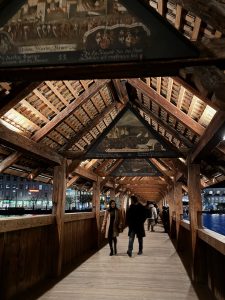
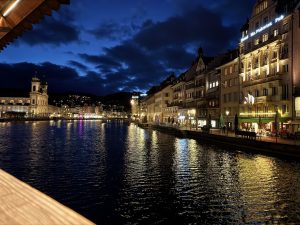
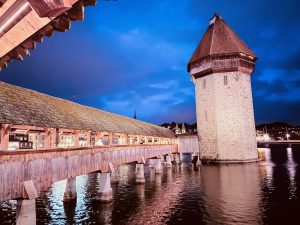
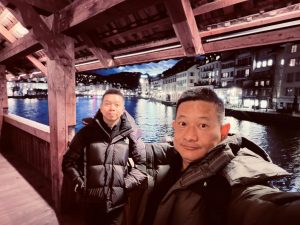
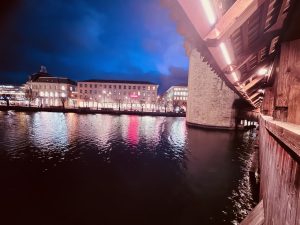
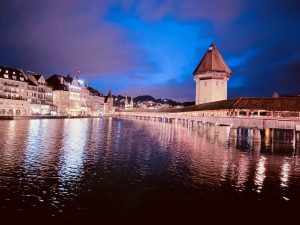
No visit to Luzern is complete without a walk on the iconic 204m Chapel Bridge, Europe’s oldest covered bridge. The Chapel Bridge was originally built in 1365 to link the old town to the new town and features paintings on triangular panels installed as part of the structure of the bridge. These paintings were created during the Counter-Reformation, featuring scenes that promote the Catholic Church. However, the wooden-covered pedestrian bridge was almost burnt down in 1993, destroying â…” of its interior paintings. Equally iconic as the Chapel Bridge, the Water Tower that protrudes out of the River Reuss is what gave the Chapel Bridge its identity. The 34 m octagonal water tower was built around 1300 as part of the city wall and used as an archive, treasury, prison and torture chamber. It is a shame that the Water Tower is not open to public visits; we would have gotten a good view of the Chapel Bridge and Luzern from the top of the tower. Walking on the Chapel Bridge is like walking in a piece of history, and offers a good view of the River Reuss and the riverside buildings on both sides of the bank. The paintings on the bridge brought a sense of uniqueness and history to the bridge. It is a pity that the explanations are only in German.

After crossing the bridge to the “new town”, we headed back to the old town side via Rathaussteg, an iron pedestrian bridge near the Chapel Bridge. The Rathaussteg offered us a good view of the entire Chapel Bridge and made a good spot for us to take pictures of the entire Chapel Bridge. We scouted the restaurants on the riverside and found one that offered good and reasonably priced food (we would expect the food near the river to be of “tourist” prices). The service at the restaurant was great, and the food was delicious. After a hearty meal, we headed to a nearby supermarket to get breakfast for tomorrow before returning to our hotel to rest for the night. After all, we would need the energy to have fun in our first mountain exursion, Mt. Stoos, in Switzerland.

Switzerland Day 1 (8 Jan 26) – Bern: Into Switzerland – The Plaground of Europe

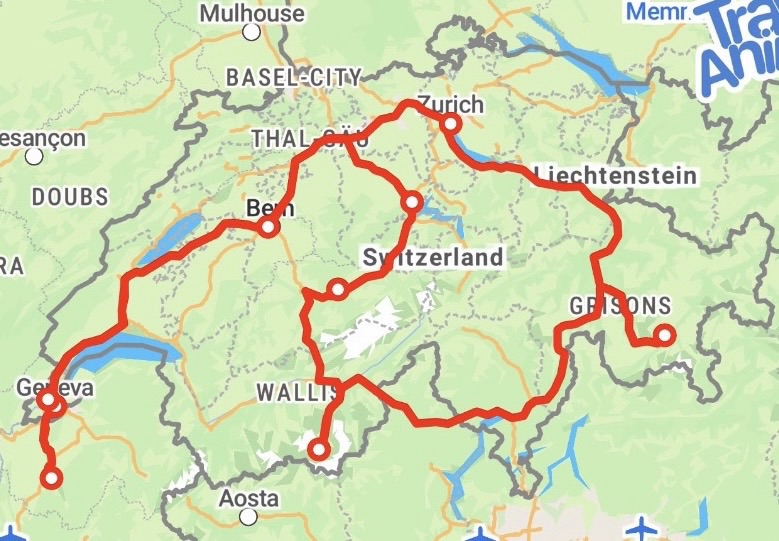
Switzerland, the neutral Central European nation, has been a bucket list for most of us. When we speak about Switzerland, the first thing that comes to our minds is the snow-covered alpine towns. As this is the first time any of us has travelled to Switzerland, we stuck to the “traditional” tourist towns and cities. We will start our journey from Geneva and end our journey in the same city. For the next 13 days, we will be basing ourselves in five cities (Bern, Luzern, Interlaken, Zermatt and Zurich) and visit six mountains.

Our Journey through Switzerland for the next 13 days

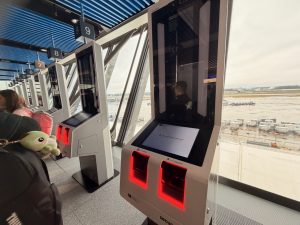
Our Swiss journey began with a 17-hour flight from Singapore with a 2½-hour transit in Jeddah. After deplaning, we followed the signs hanging from the ceiling of Geneva airport, which pointed us to “arrivals”. As we neared the immigration counters, we saw two queues forming. We joined the longer “international traveller” queue, which was piling up and didn’t seem to move at all (the other queue was for EU and Swiss citizens). We only saw immigration officers stationed near the immigration counters directing people to the correct line. We were glad we did not join the shorter queue, as it might be back to the start of the queue for us. Before arriving in Switzerland, we were expected to register our biometric data with the Entry/Exit System. However, it does seem to be the case today. Instead of directing us to the registration machines, we were told to queue for manual immigration. I asked a staff member at immigration and was told that the EES was in effect at Geneva airport, but they shut it down due to the long line. Despite the long queue for manual immigration clearance, we were not complaining. At least we get our “final” Switzerland border passport stamp (before it’s phased out).

After spending about 1 hour in line at immigration (a stark contrast to our experience at Vienna airport just 1 year ago), we headed to the carousel to collect our luggage. The brief moment of peace after clearing immigration ended at the luggage carousels. Geneva Airport felt like a fish market, where people were frantically looking for their carousel and luggage. We eventually found our carousel and collected our luggage. We headed to the train station, located in a separate but linked building on the left side of the arrivals hall, for our train to Bern. Rising from our lesson learnt last year in Vienna, where we spent 1 hour sitting around waiting for our train to the city, we decided not to purchase the train tickets in advance, as we had no idea how long immigration would take. I am glad we did not purchase train tickets in advance, as the immigration process in Geneva took longer than I planned for. We bought our tickets at the SBB counters for the 4.25 pm train to Bern. After getting the tickets, I realised the staff sold us a day ticket instead of a point-to-point ticket, which costs CHF 10 more, even with our Half Fare card. We should have used the machines or the app to get our point-to-point ticket. There was an hour before our ride, where we used the time to shop in the supermarket at the train station while waiting for our train.

Train to Bern

The uneventful train ride to Bern took about 1½ hours. Trains from Geneva Airport to Bern had only a small luggage rack, suitable only for cabin-sized luggage. We found seats on the lower floor of the double-decker train. Due to a lack of luggage space for larger bags, we had to place our luggage at our seats, trying not to obstruct the aisle. The train got crowded at Geneva, and it was becoming embarrassing that we were taking up additional space and partly obstructing the walkway. Fortunately, the Swiss were accommodating and understanding. Instead of making noise, they seem to understand our situation and work around our issues. As it was getting dark, we could not see much of the scenery between Geneva Airport and Bern.

Arrival at Bern

As guests of Bern, we were given unlimited rides on local public transport via the Bern app (available for download here). As we did not receive any codes before our arrival, I read that we could get free transport to our hotel using our hotel booking and prepared it in case of an inspection on the tram. Swiss public transport uses the honour system, where drivers do not check for tickets. It is easy to find the tram station coming out from the underground Bern Bahnhof, but we were confused about the direction the tram would travel. We initially stood at the tram stop, only to find that the trams were going in the opposite direction. Upon realising that we were on the wrong side, we hurried to the opposite stop and hopped onto the tram on the other side of the road. The tram ride from Bern train station to our hotel took about 6 minutes, with very frequent trams running between the two stops. At our hotel, the staff gave us a code to activate our guest card in the Bern App, which officially granted us complimentary transport within the city.

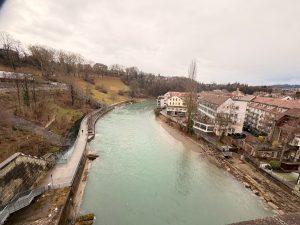
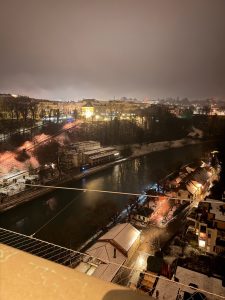
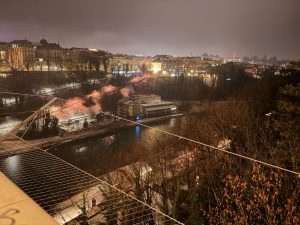
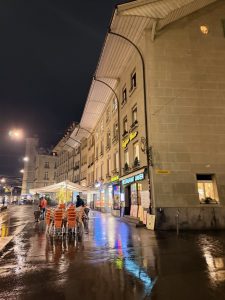
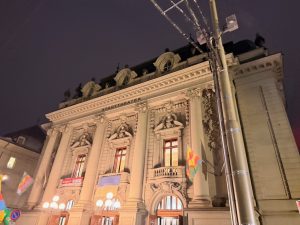
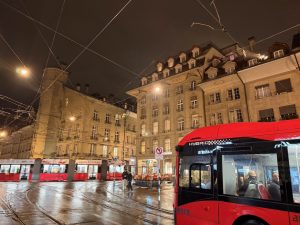
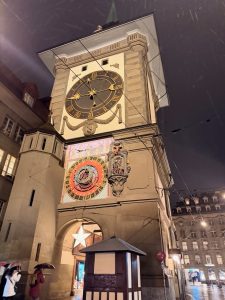
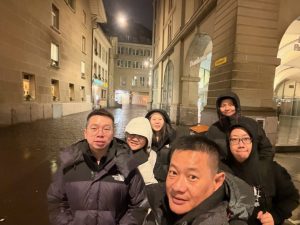
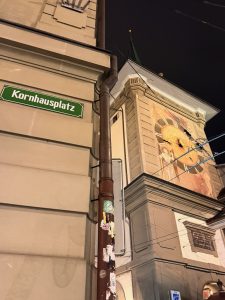
After settling down in our rooms, we headed out to the edge of the old town for dinner, which is only one stop across the river near our hotel. Walking on the Kornhausbrücke bridge over the River Aare in the northern part of Bern, we were treated to the night skyline of the city, spotting the Berner Munster towering over the city. Incidentally, we walked past the Bern Opera House, at the edge of the city, by the River Aare. As we waited for our dinner, I spotted the Zytgloggeturm right outside the McDonald’s where we were having dinner. I told my friends this was one of the world’s oldest working astronomical clocks, a sight we will see tomorrow when we officially tour the city.

The clock, despite being built in the early 13th century, still shines with its colourful facade even at night. There are two faces to the clock: one that tells time, facing Main Street, and the other, with both the clock and the astronomical face, showing the day of the year and aligning with the star signs. We were fortunate to witness the striking of the bell at the hour, during which we spotted the mechanical movements of the puppets installed on the astronomical side of the clock. As it was getting late and we were tired after a full day of travelling, we headed back to the hotel and rested for the night. We will see more of the clock (and the city) tomorrow before heading to Luzern.