Along the Suwon Hwaseong Fortress Wall
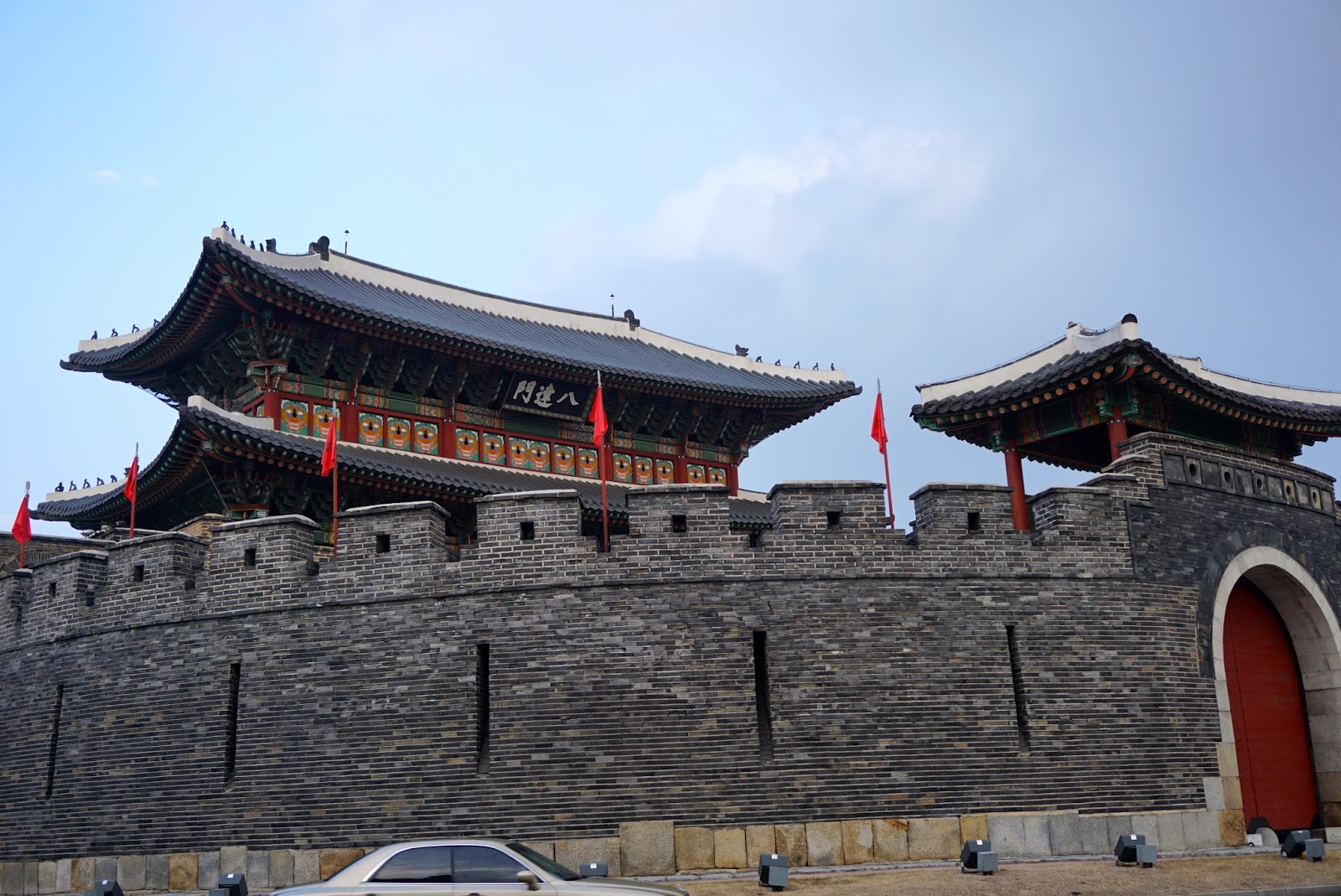
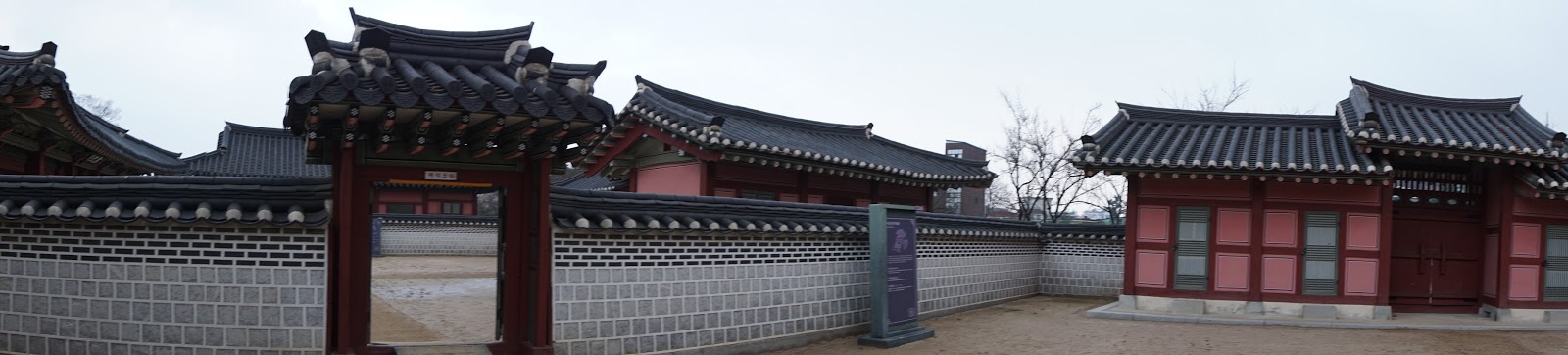
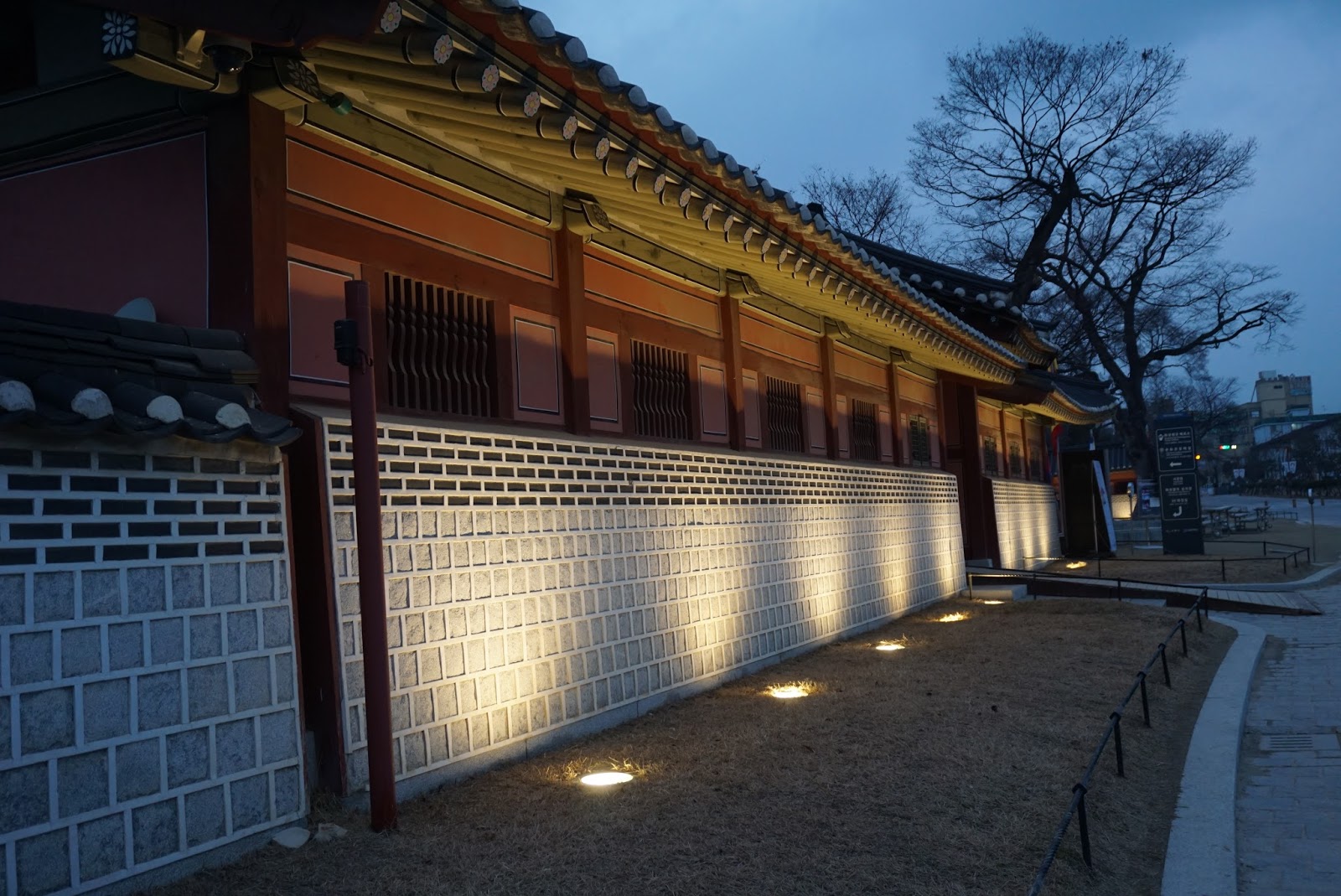
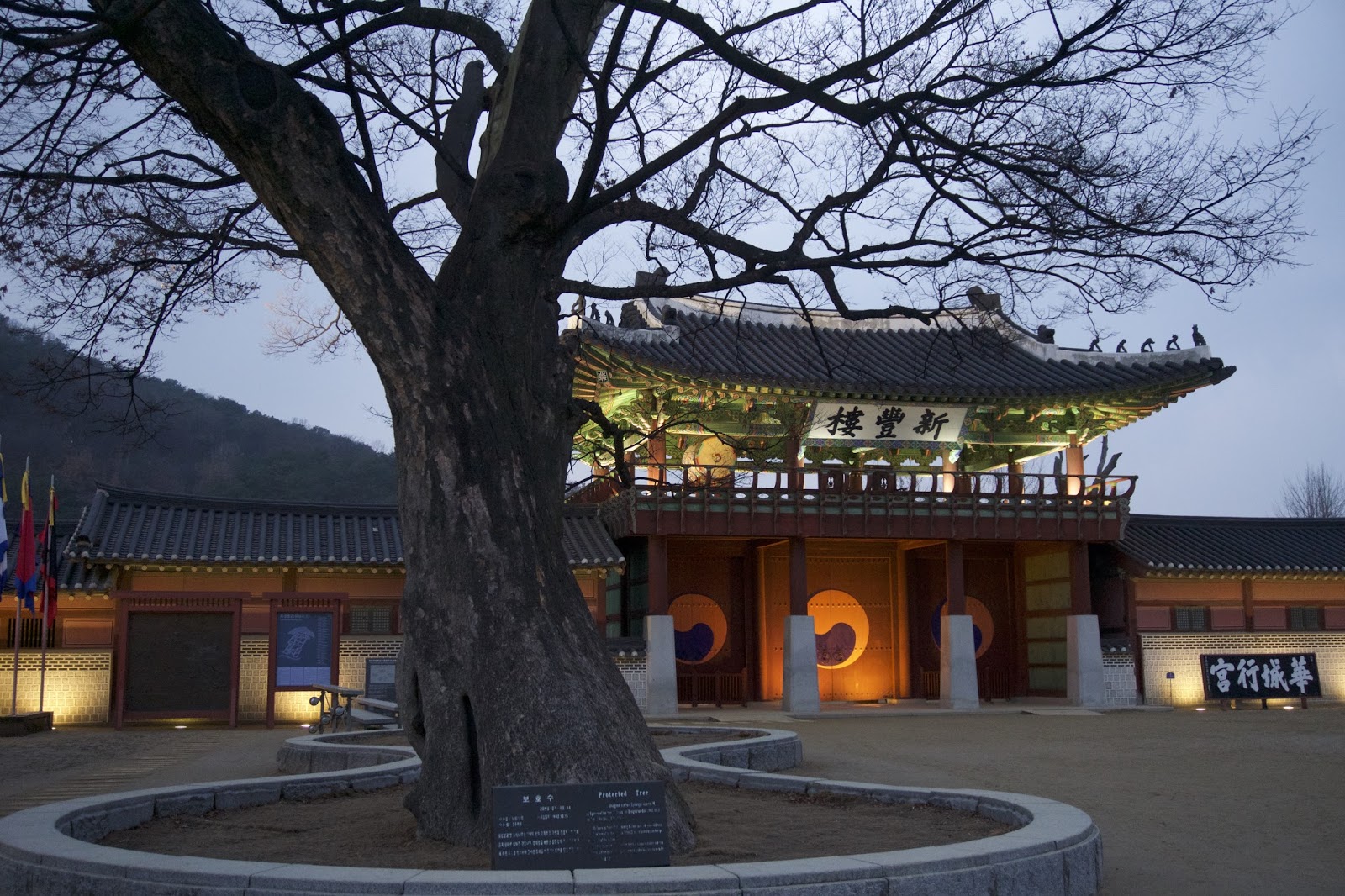
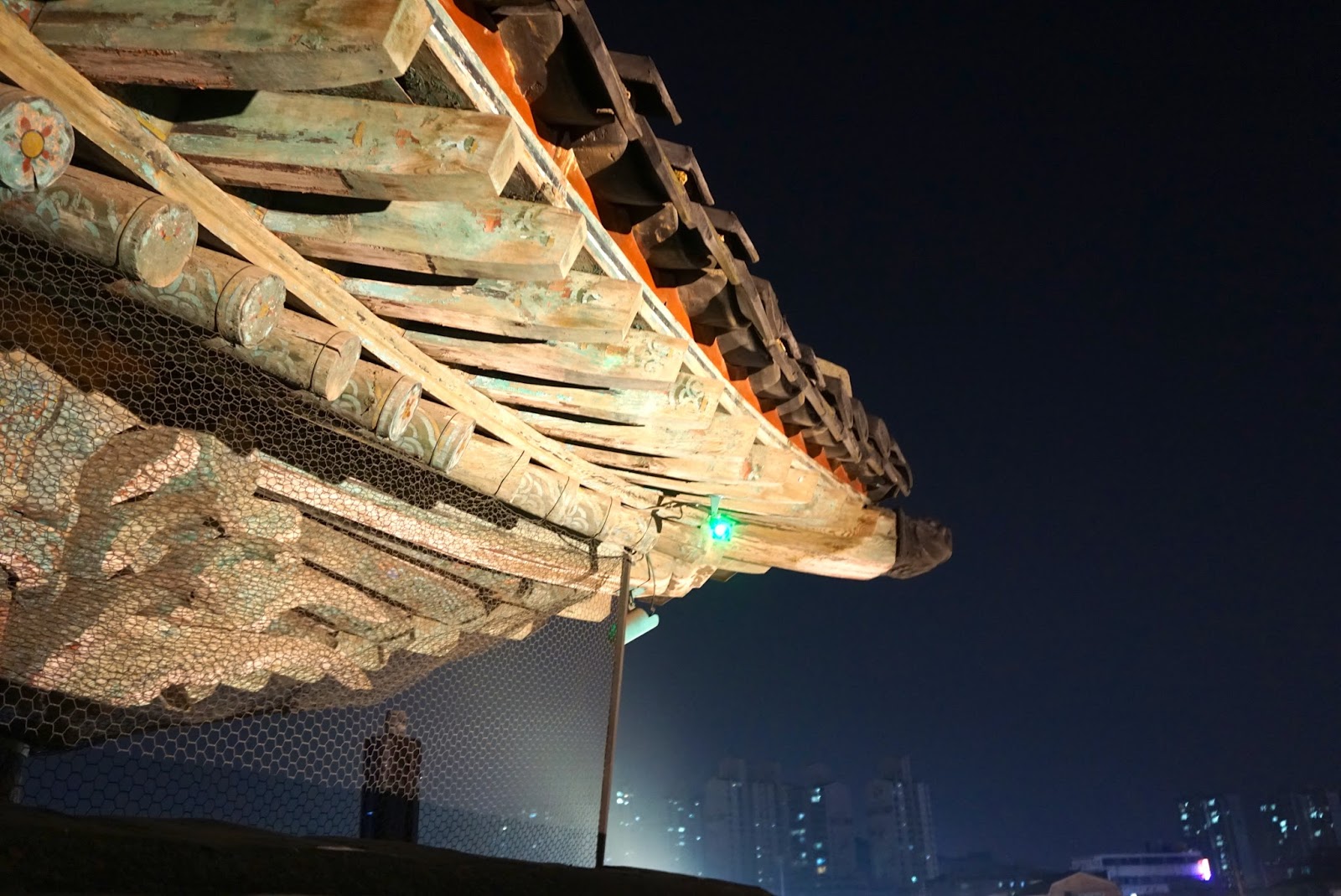
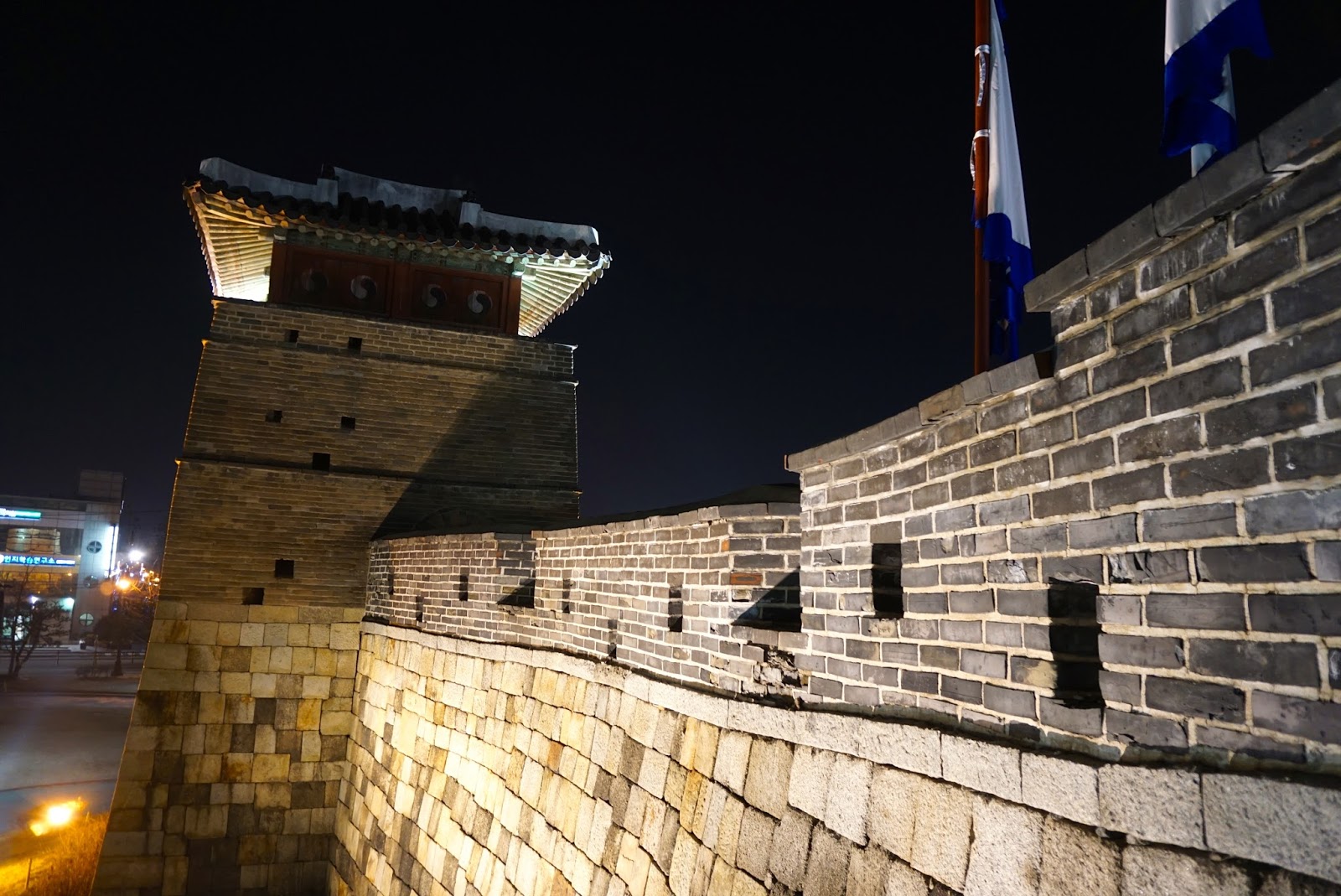
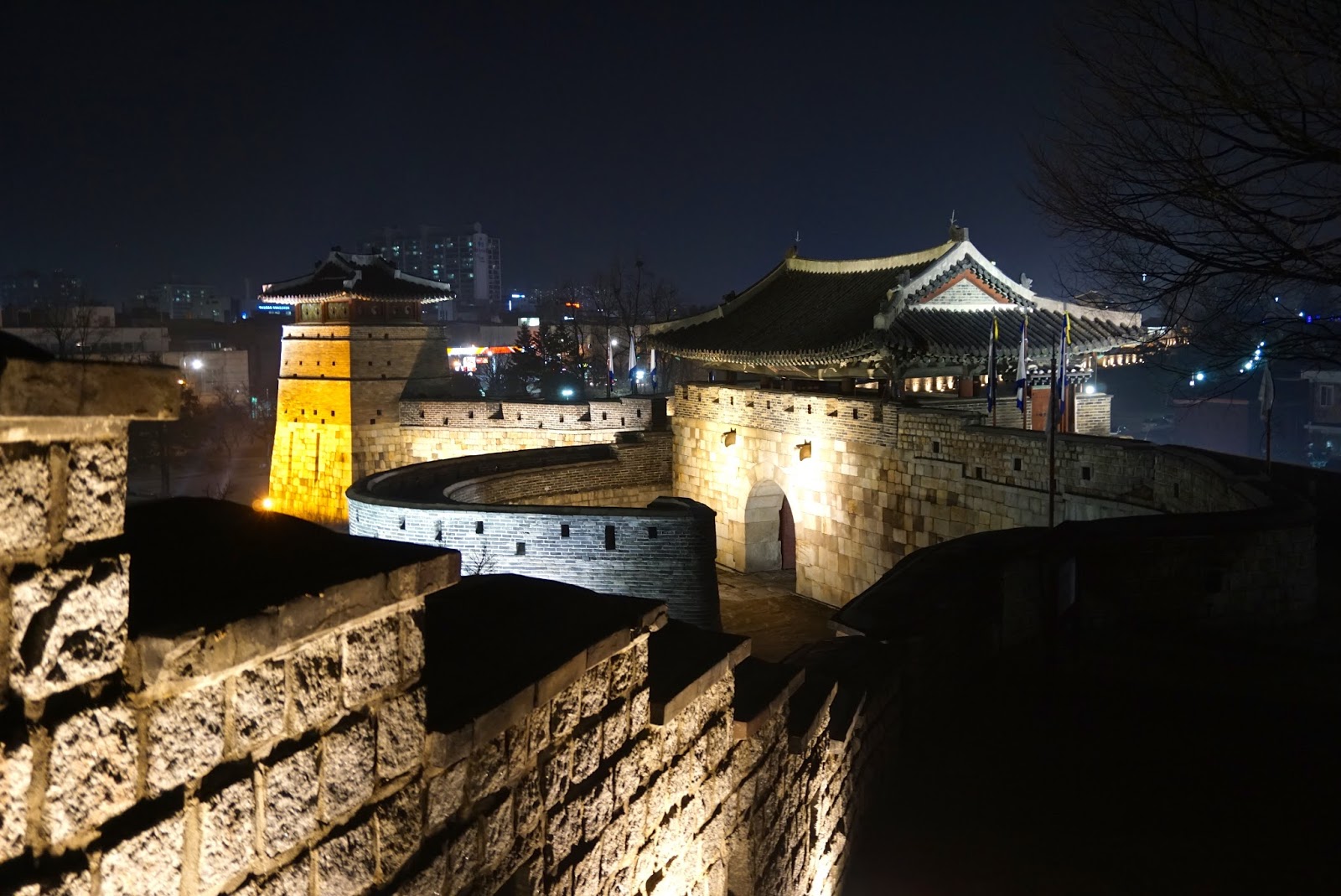
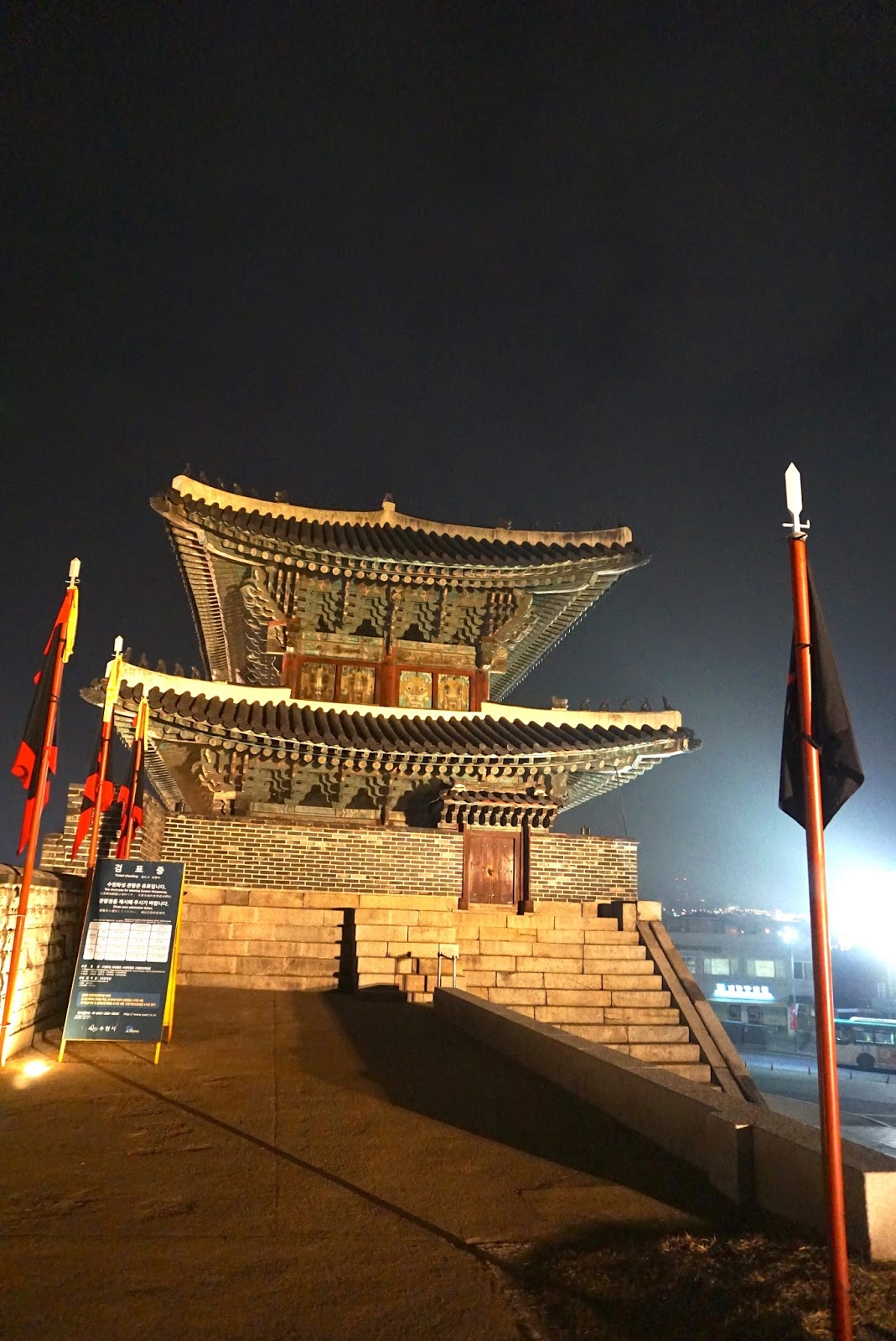
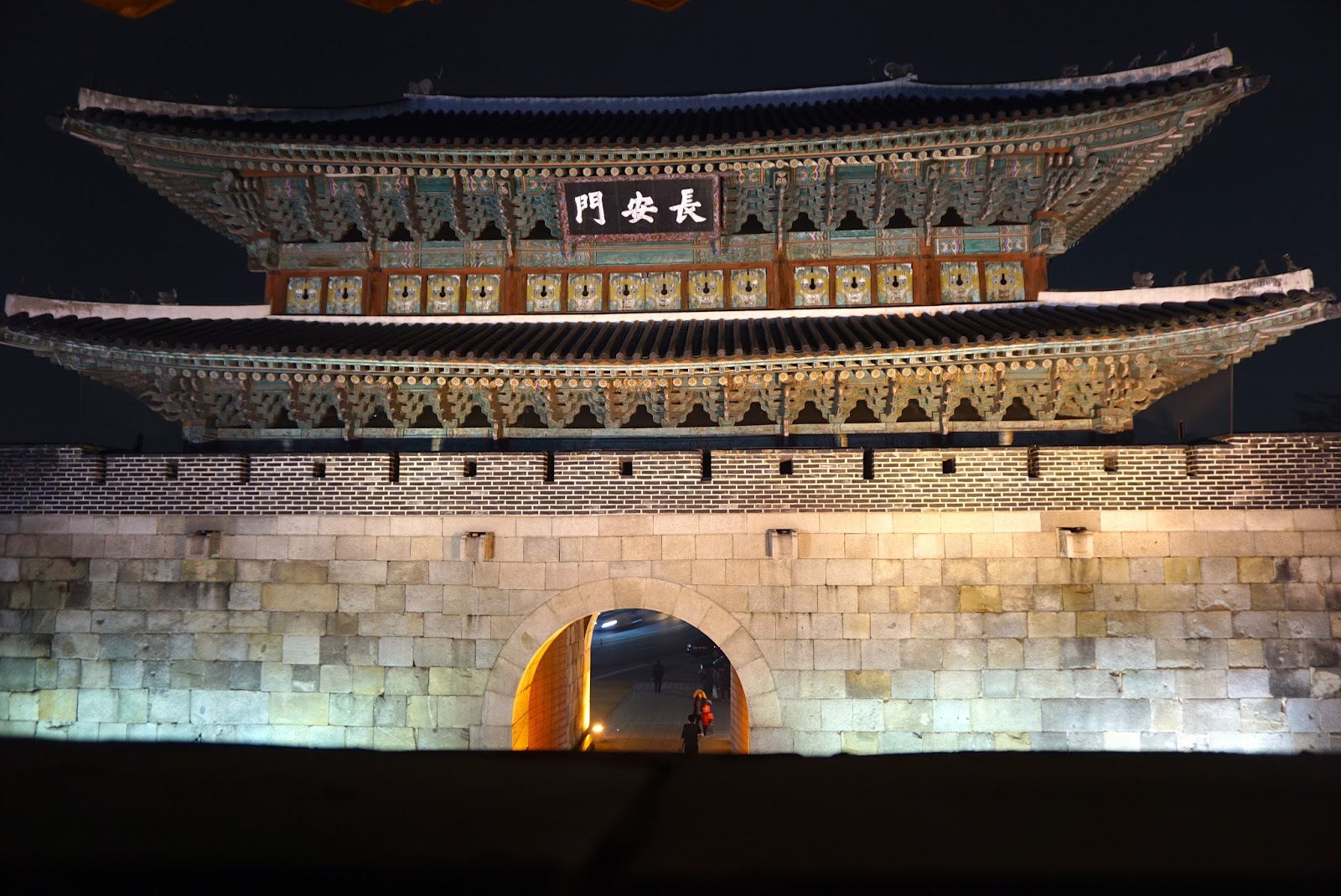
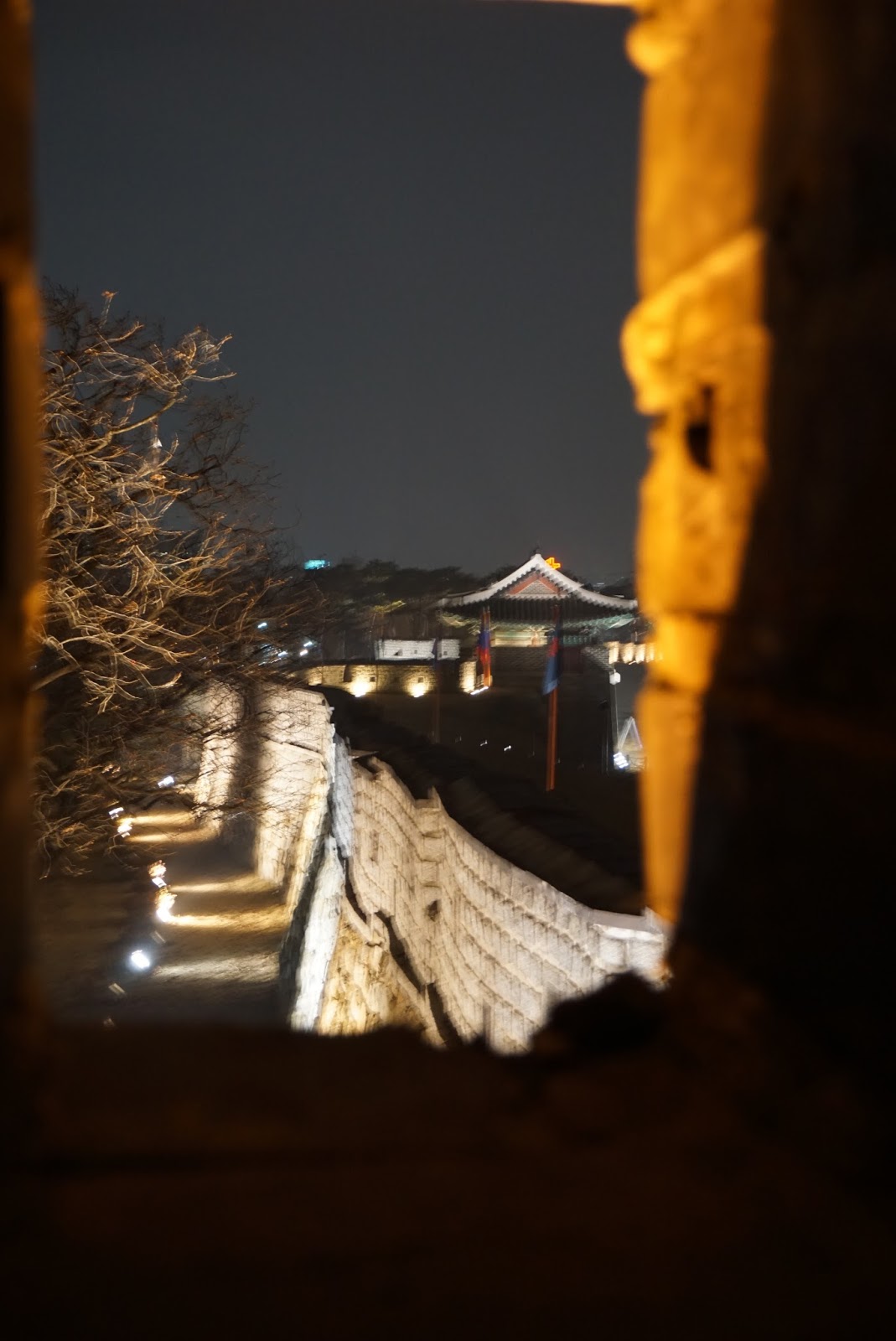
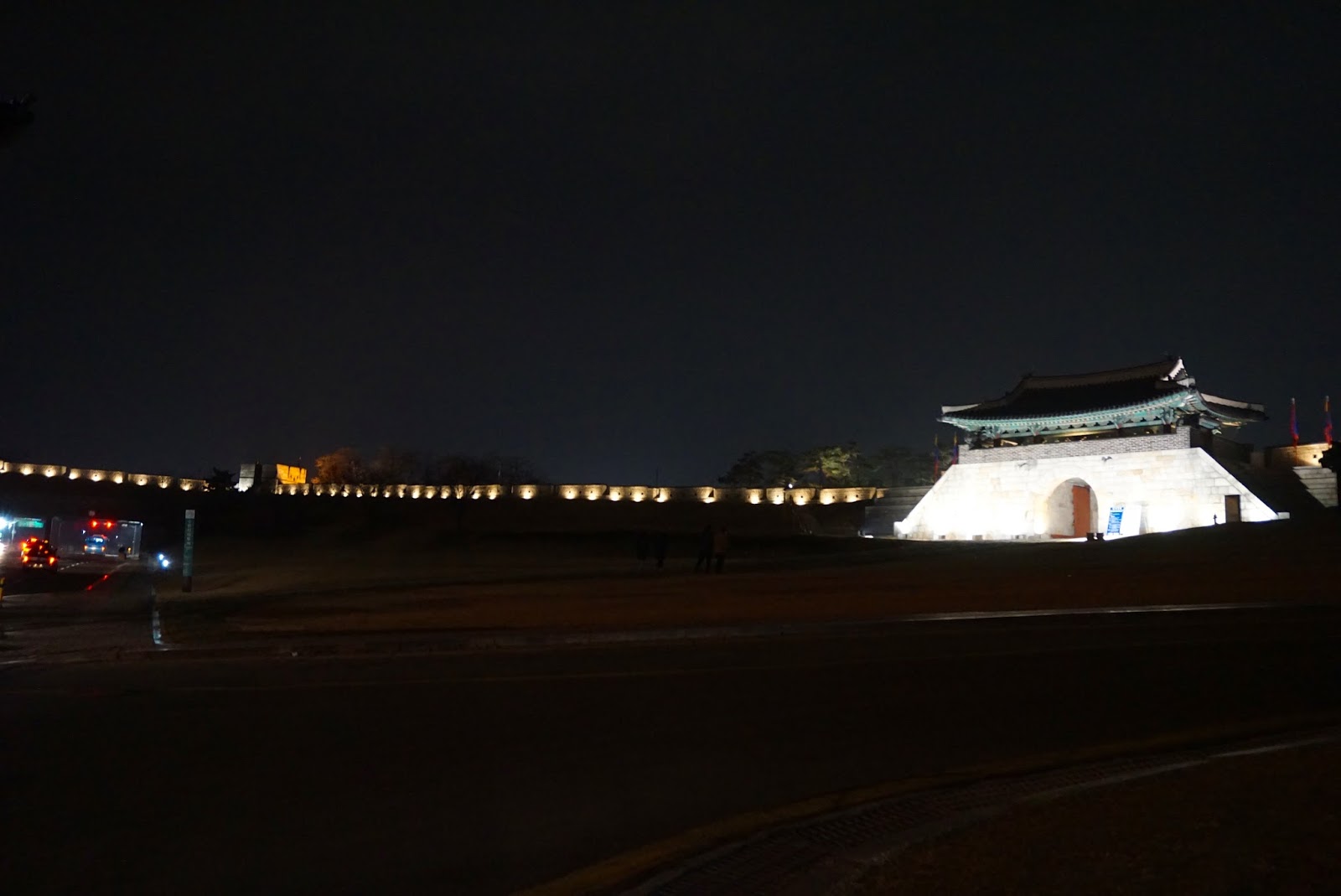
After dinner, we continued walking towards Hwaseomun, the Western Gate of the Suwon Fortress. The magnificent gate is just the beginning of a series of gates and guard posts awaiting for us to explore. We intended to move clockwise ending up in Hwahongmun before heading back to Seoul to rest for the night. As the sun has already set, when we arrived at Hwaseomun, the night lights have already been lit up, displaying the grandeur of the Western Gate and the walls that surround the city. From inside the city, Hwaseomun seems like an ordinary gate. This impression soon changes once I scaled to the top of the wall (it opens 24/7), where a crescent extension opened at one end can be seen from the top, facing the outside of the wall. The purpose of this crescent is to serve as a protective barrier to prevent intruders from entering the city gate. From the top of the gate, very distinct Korean architecture can be seen engraved onto the ceiling and the roof of the gate. Instead of heading clockwise, my friend suggested for us to visit the immediate anti-clockwise guard post, which is less than 100m from Hwaseomun.
 |
| Hwaseomun at night. From this view, the gate looks rather small |
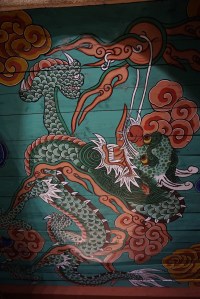 |
| Painting on the ceiling of Hwaseomun |
 |
| My friend at Hwaseomun, the wall at the background is the crescent extension |
 |
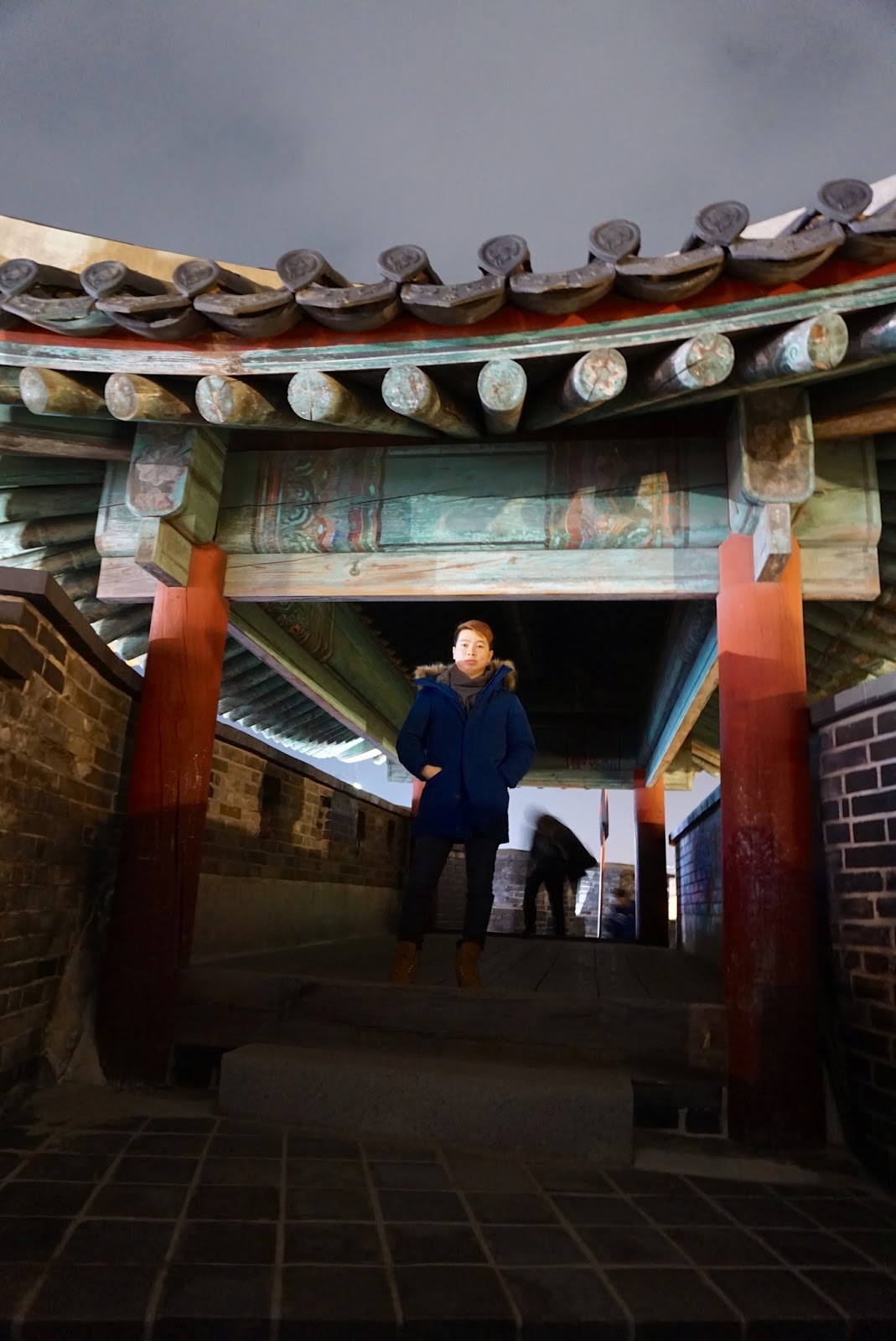
| My friend at the top of Hwaseomun |
 |
| Top of Hwaseomun |
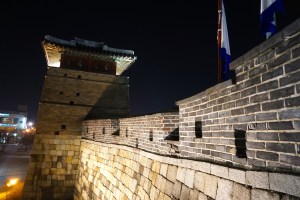 |
| Side view of Hwaseomun |
 |
| My friend at the side of Hwaseomun |
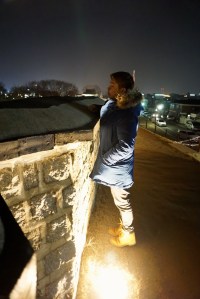 |
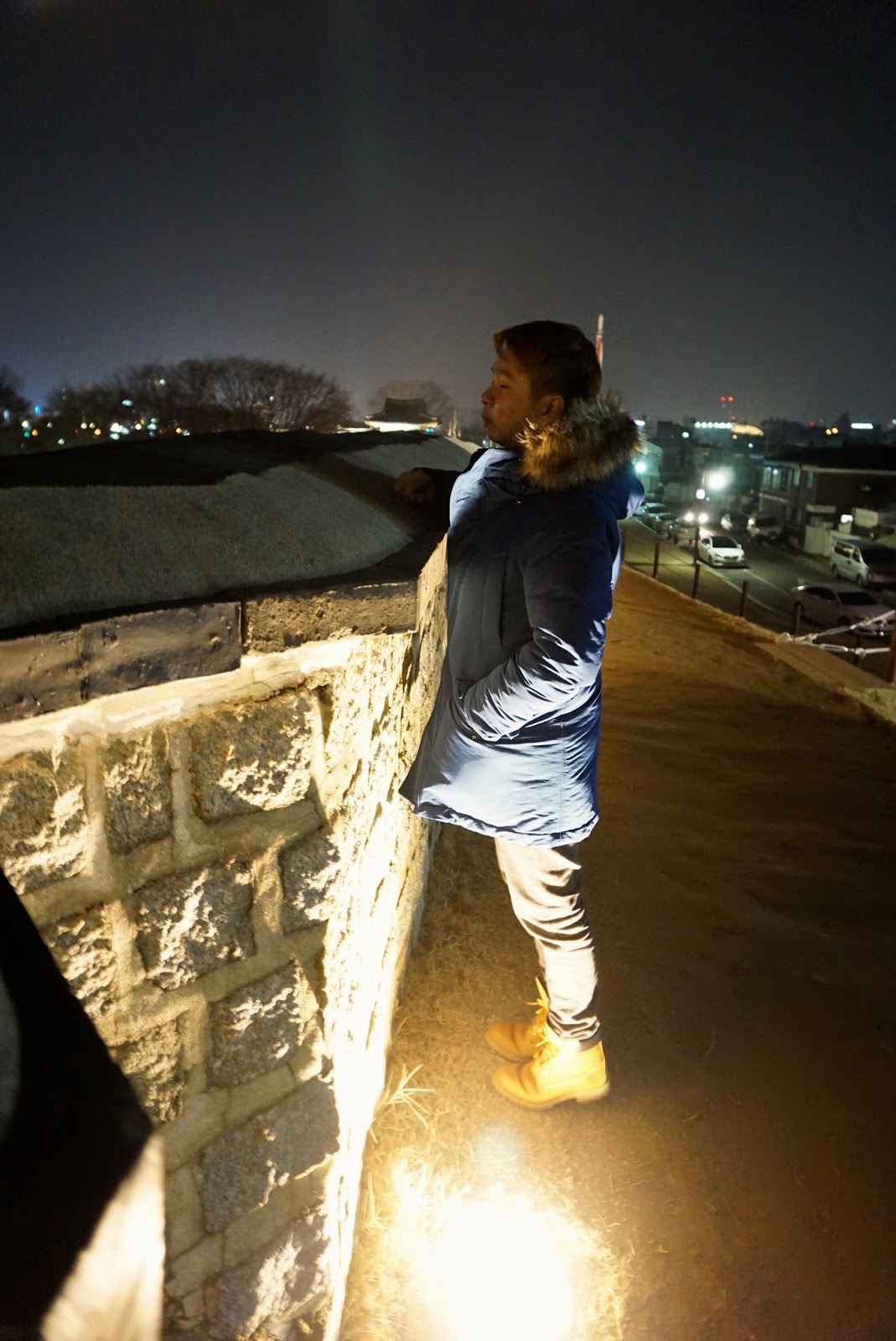
| Looking out of the Fortress wall |
 |
| Side view of Hwaseomun |
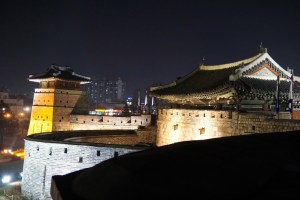 |
| Front view of Hwaseomu. The crescent wall can be seen from this view |
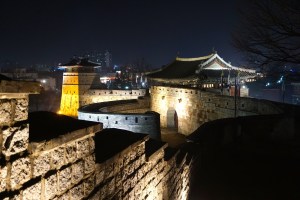 |
| Front view of Hwaseomun with its crescent wall |
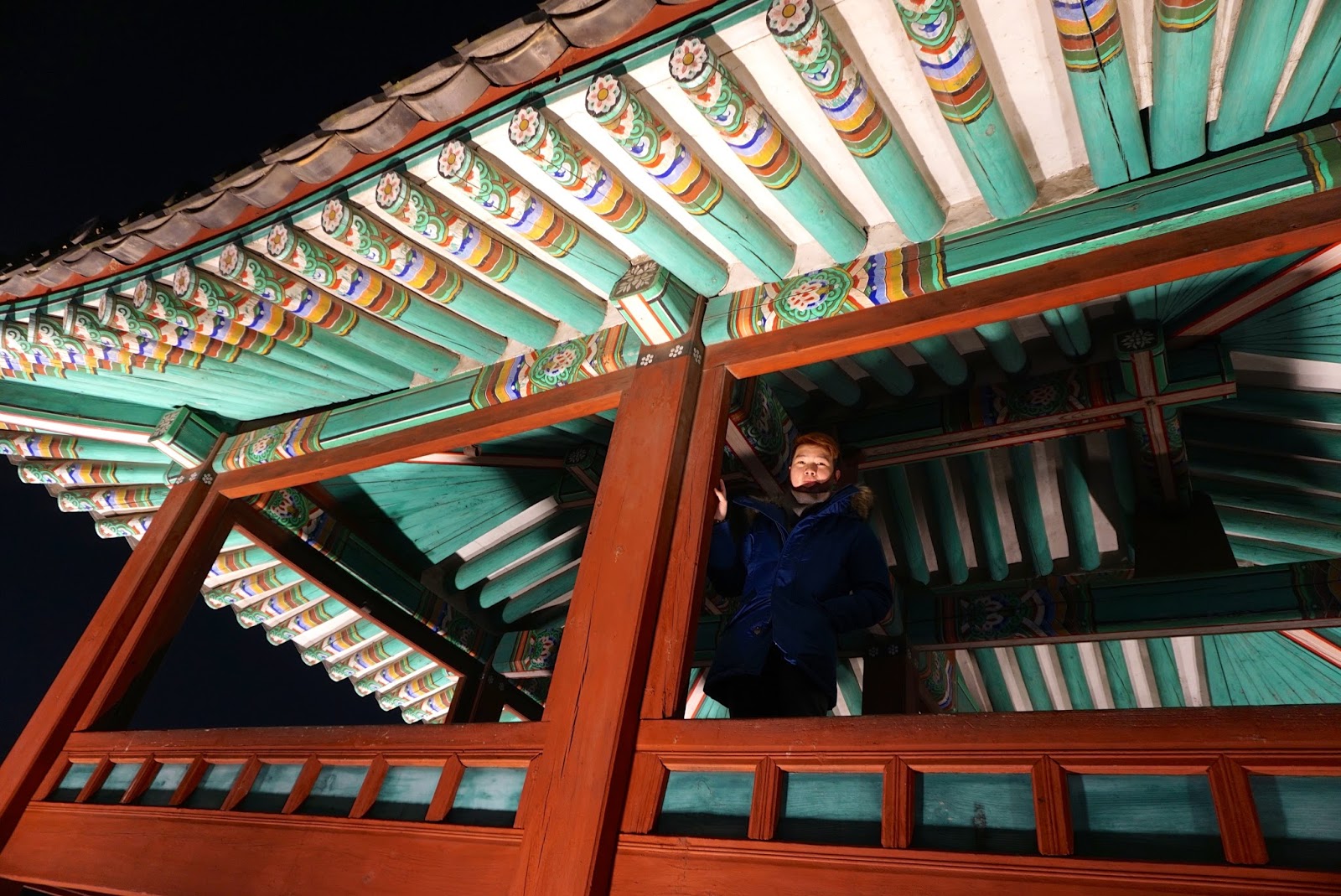
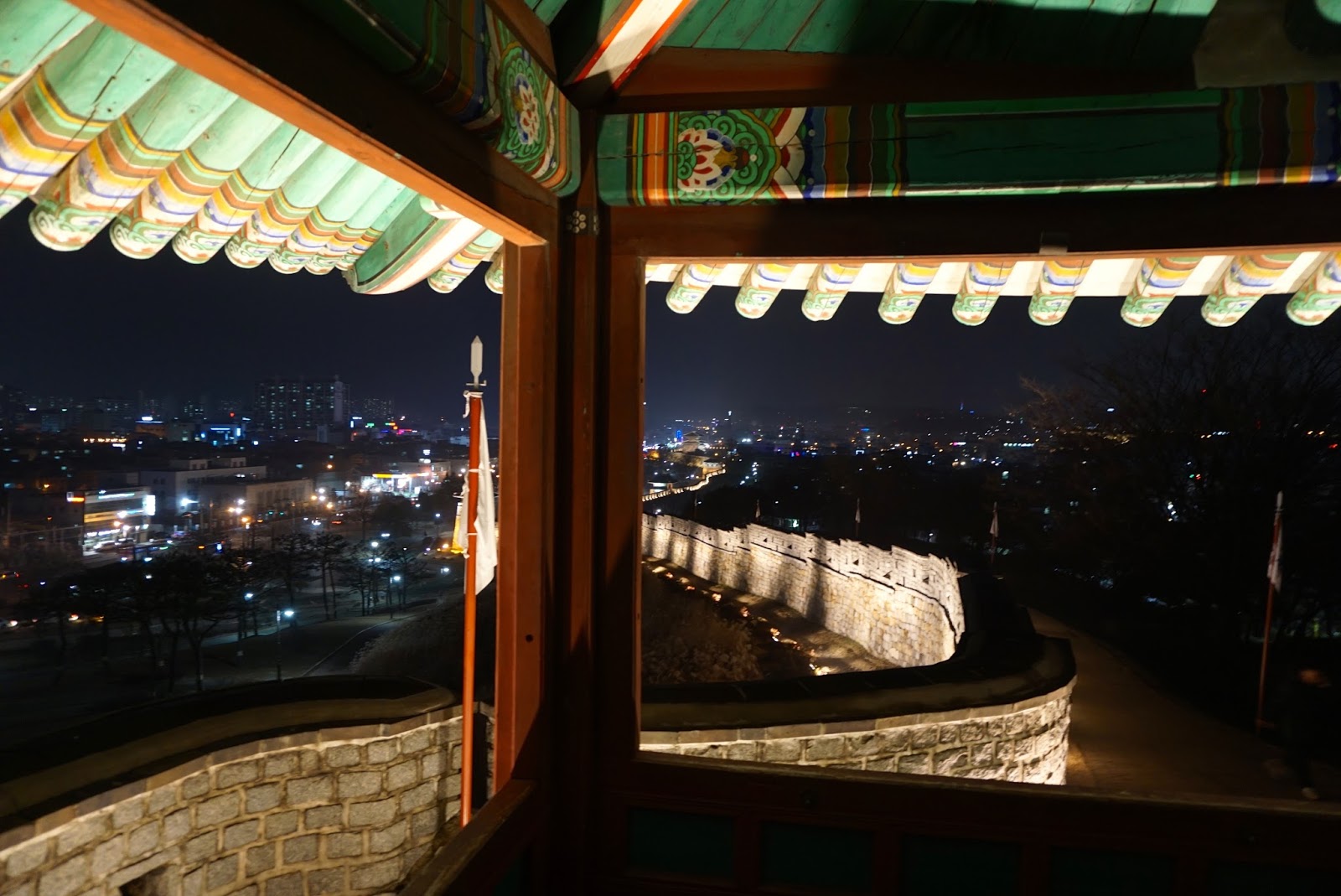
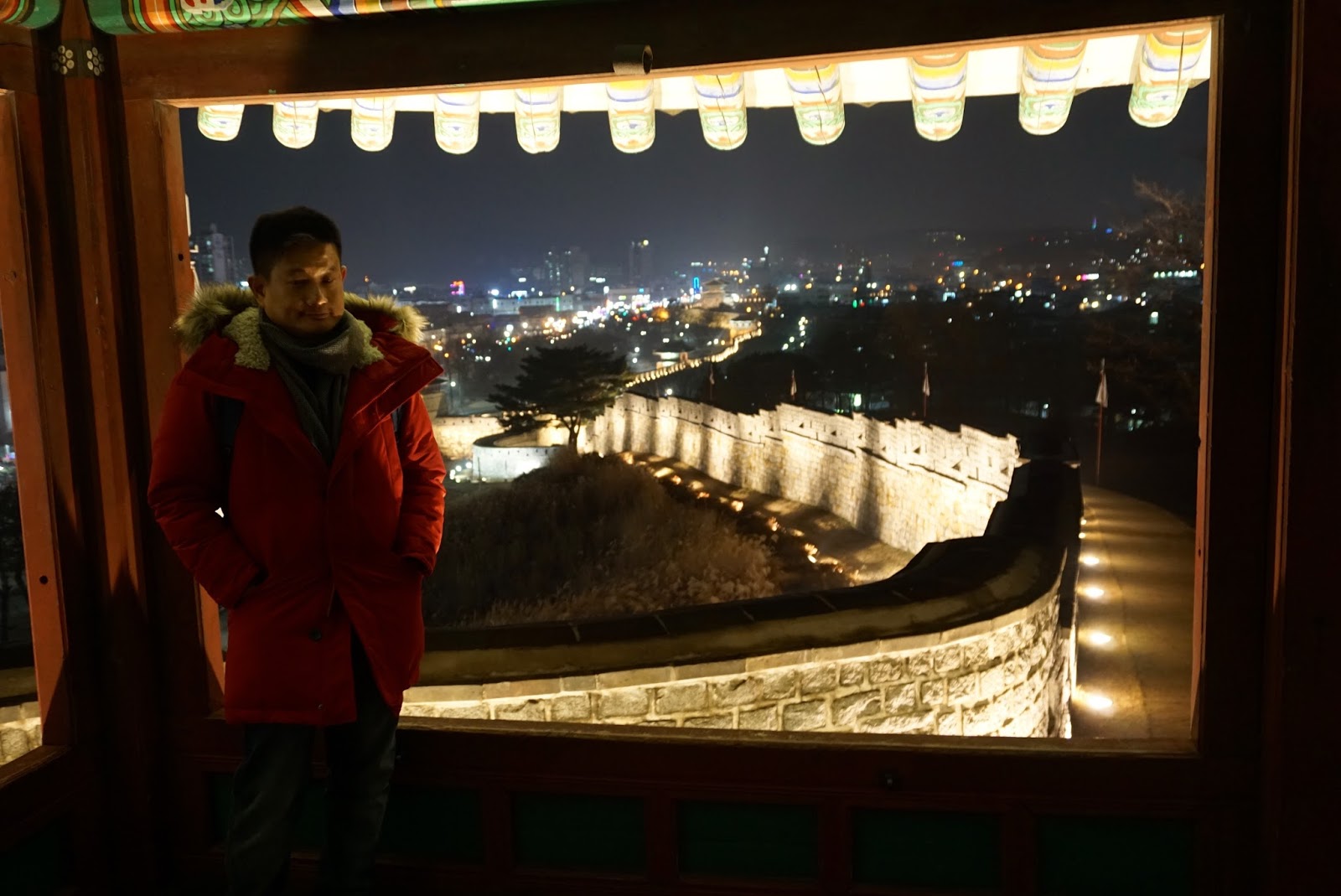
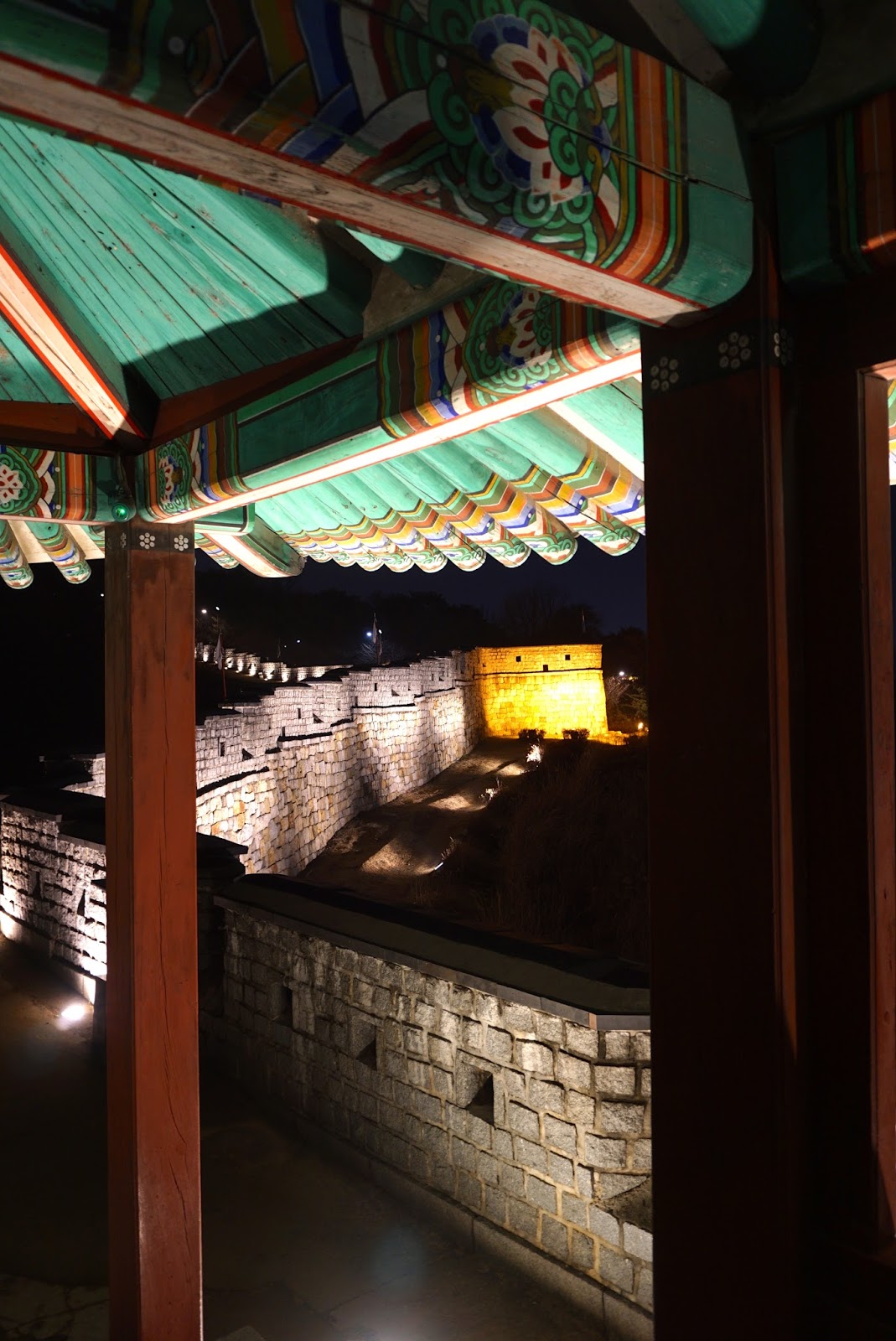
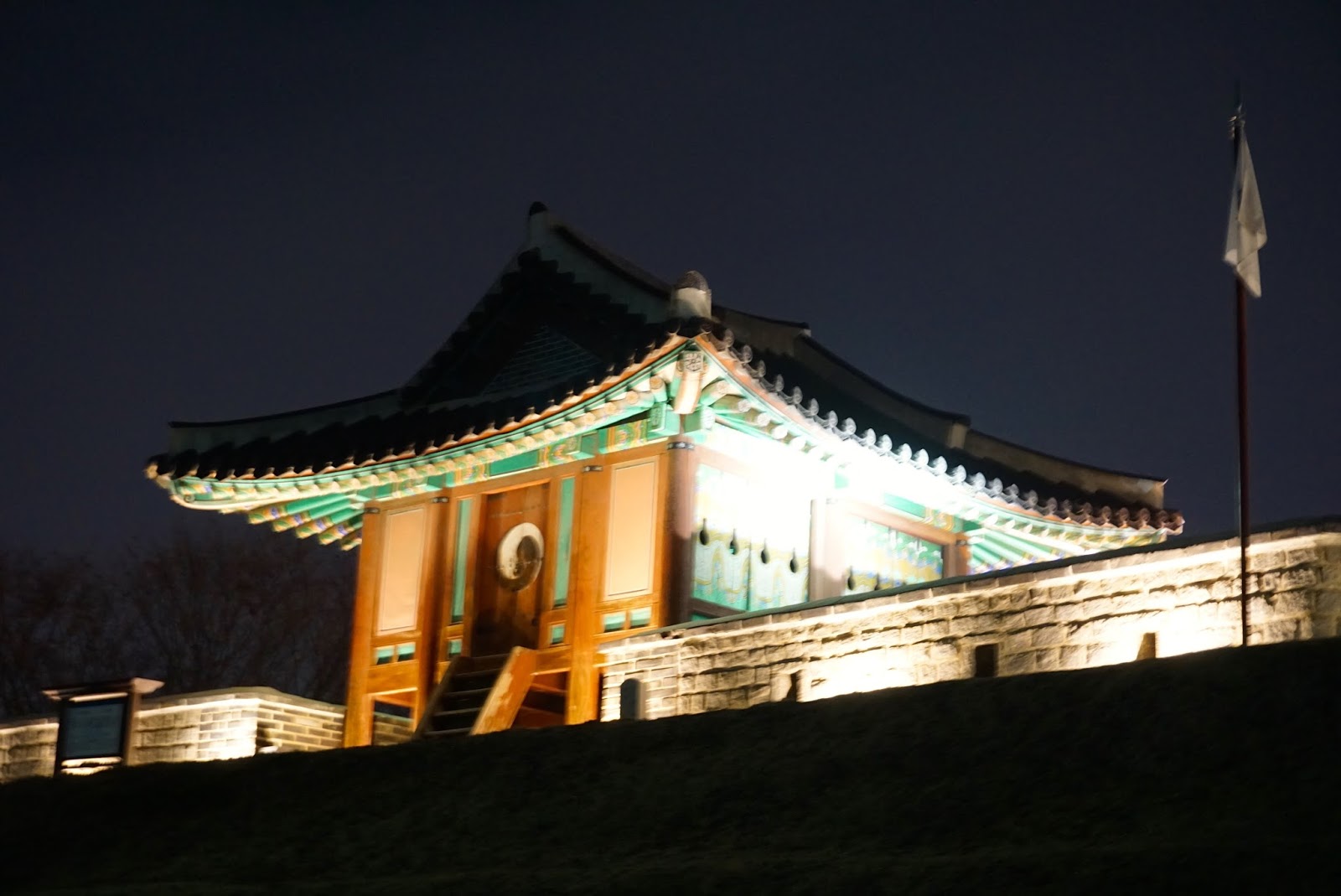
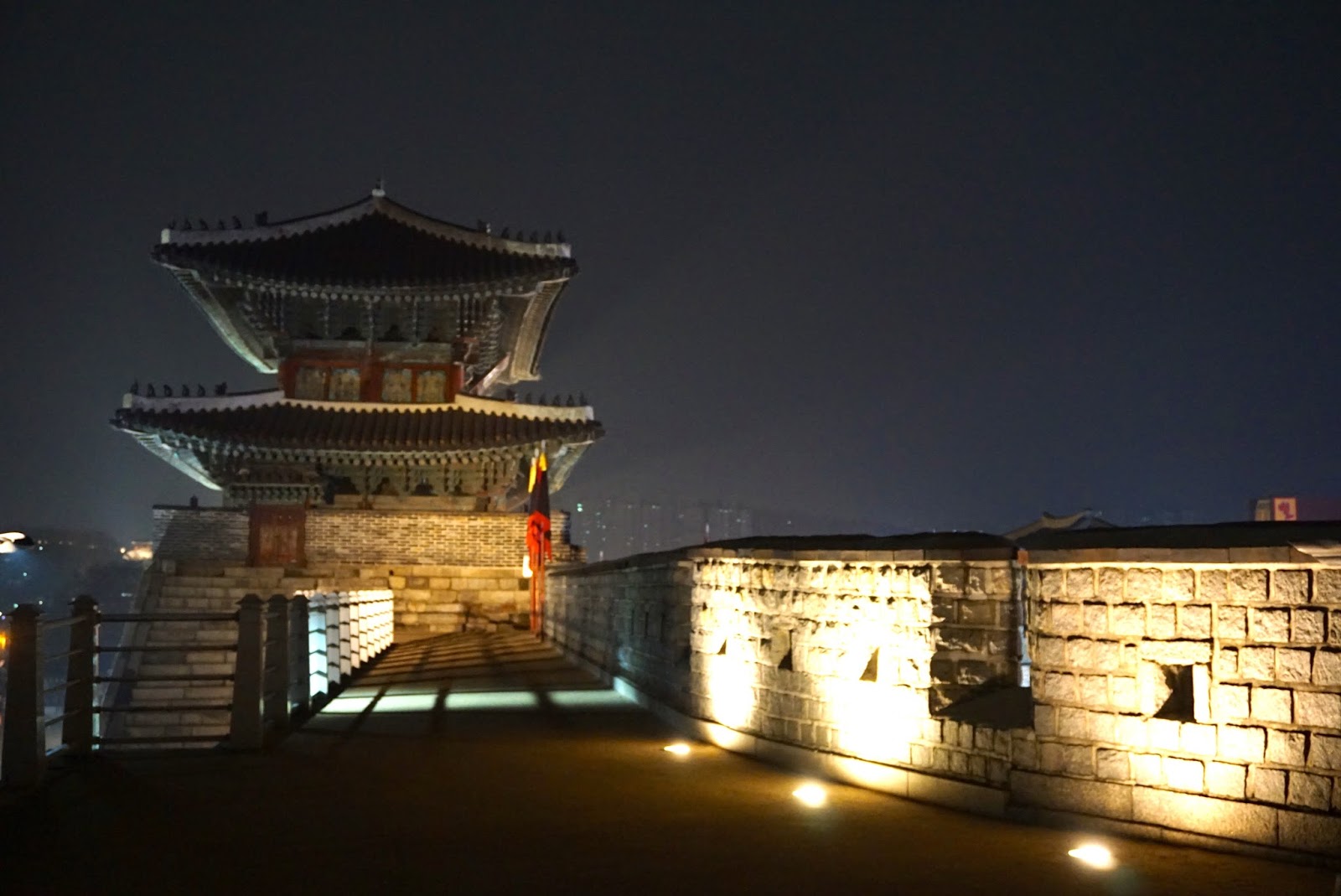
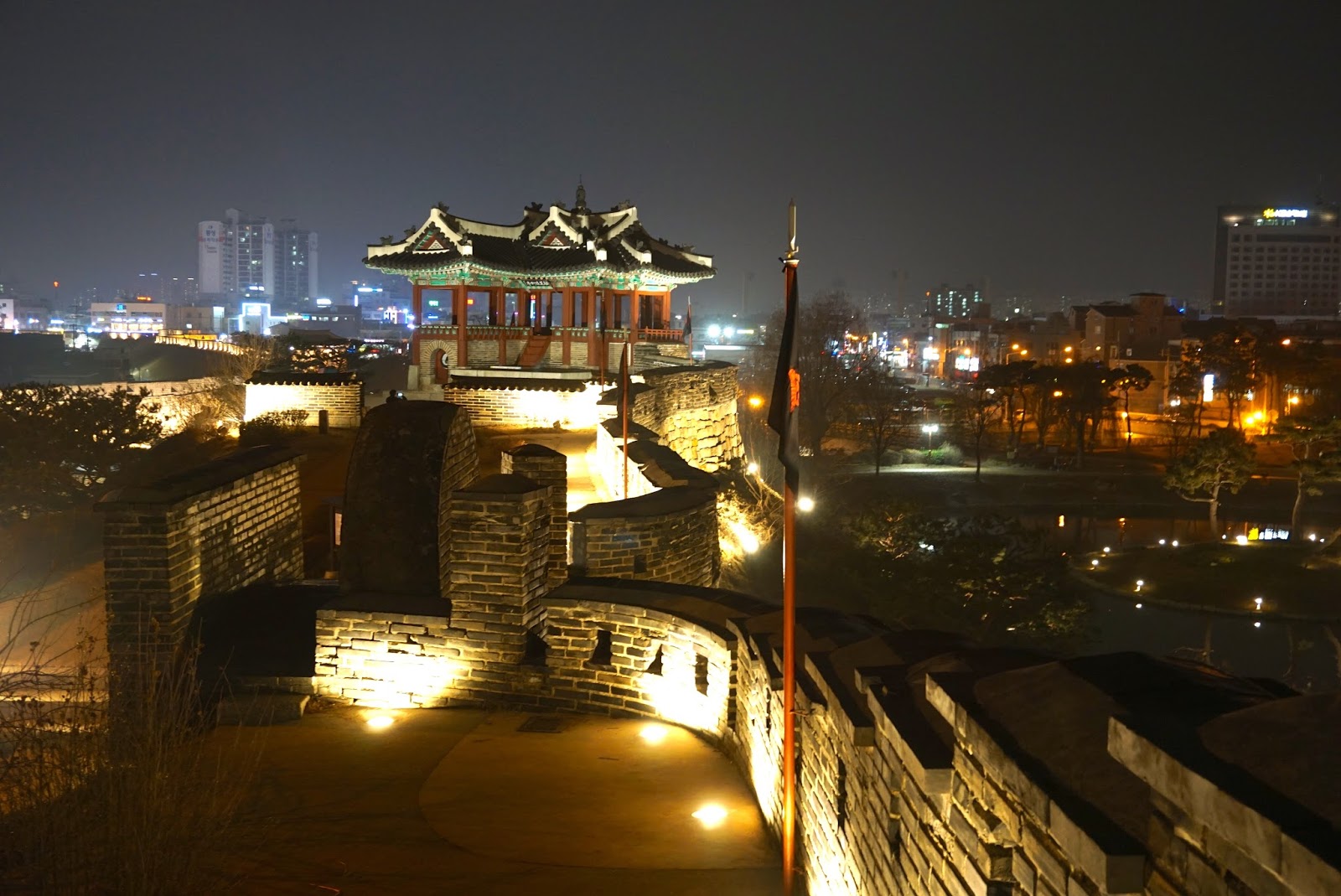
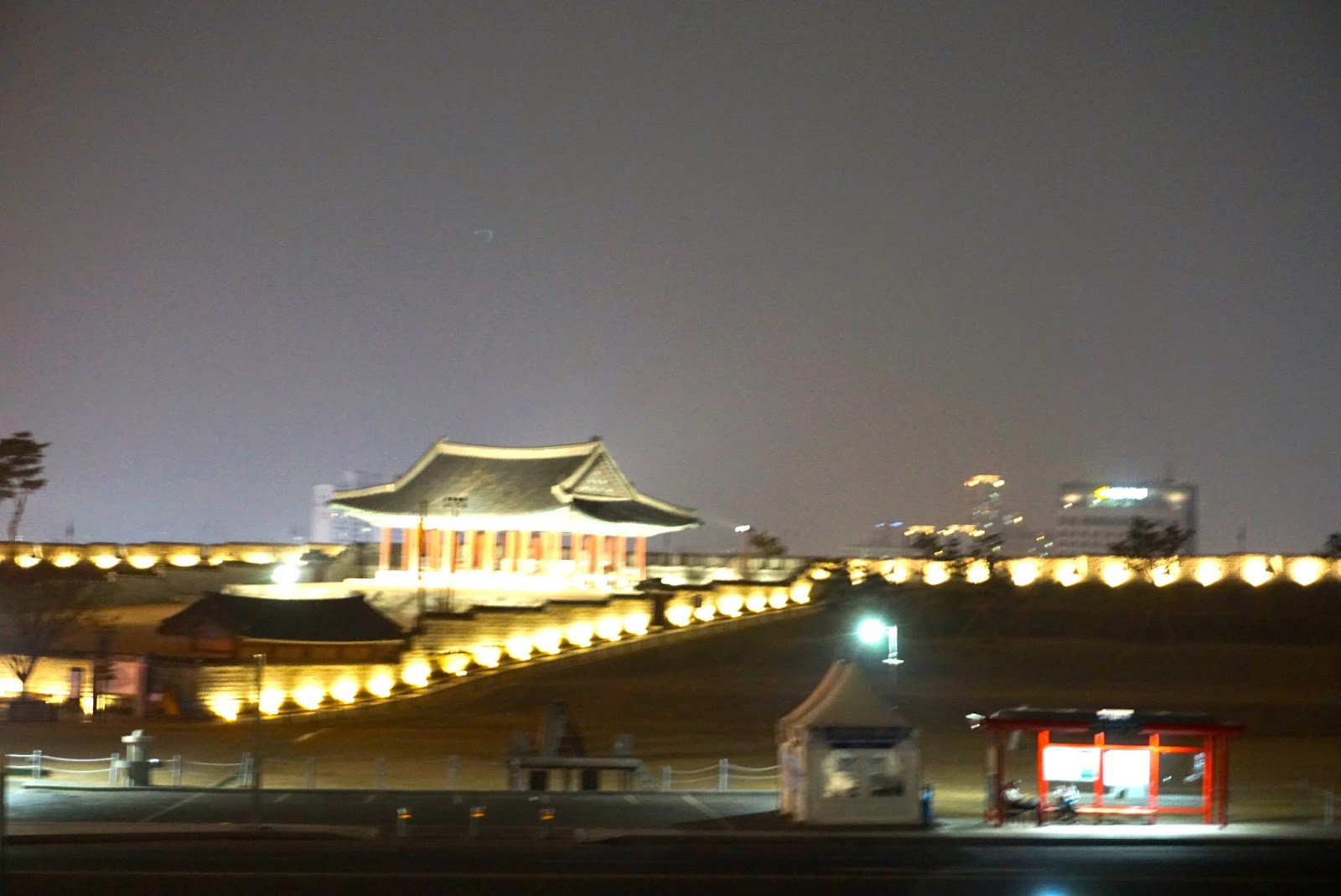
The Seobukgangnu Pavilion or the Northwestern is positioned on an elevated plain. It served as a watchtower as well as a resting point for troops in the olden days. The 2-storey open pavilion is painted in the traditional Korean green colour that is common in most older Korean buildings. The view from the second level of the pavilion gives the visitor a glimpse of a section of the fortress walls, especially at night where one can see the Fortress walls being illuminated for miles. The view is simply magnificent, coupled with the night time where the number of visitors dwindles to a mere handful, there is a sense of tranquil and zen here at Seobukgangnu. The pavilion remains open at night, however one is expected to remove ones’ footwear before getting on the stairs to the 2nd level of the pavilion.
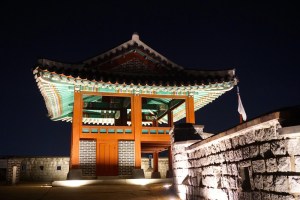 |
| Seobukgangnu at night |
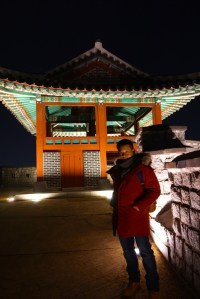 |
| Me at the 2-storey Seobukgangnu pavilion |
 |
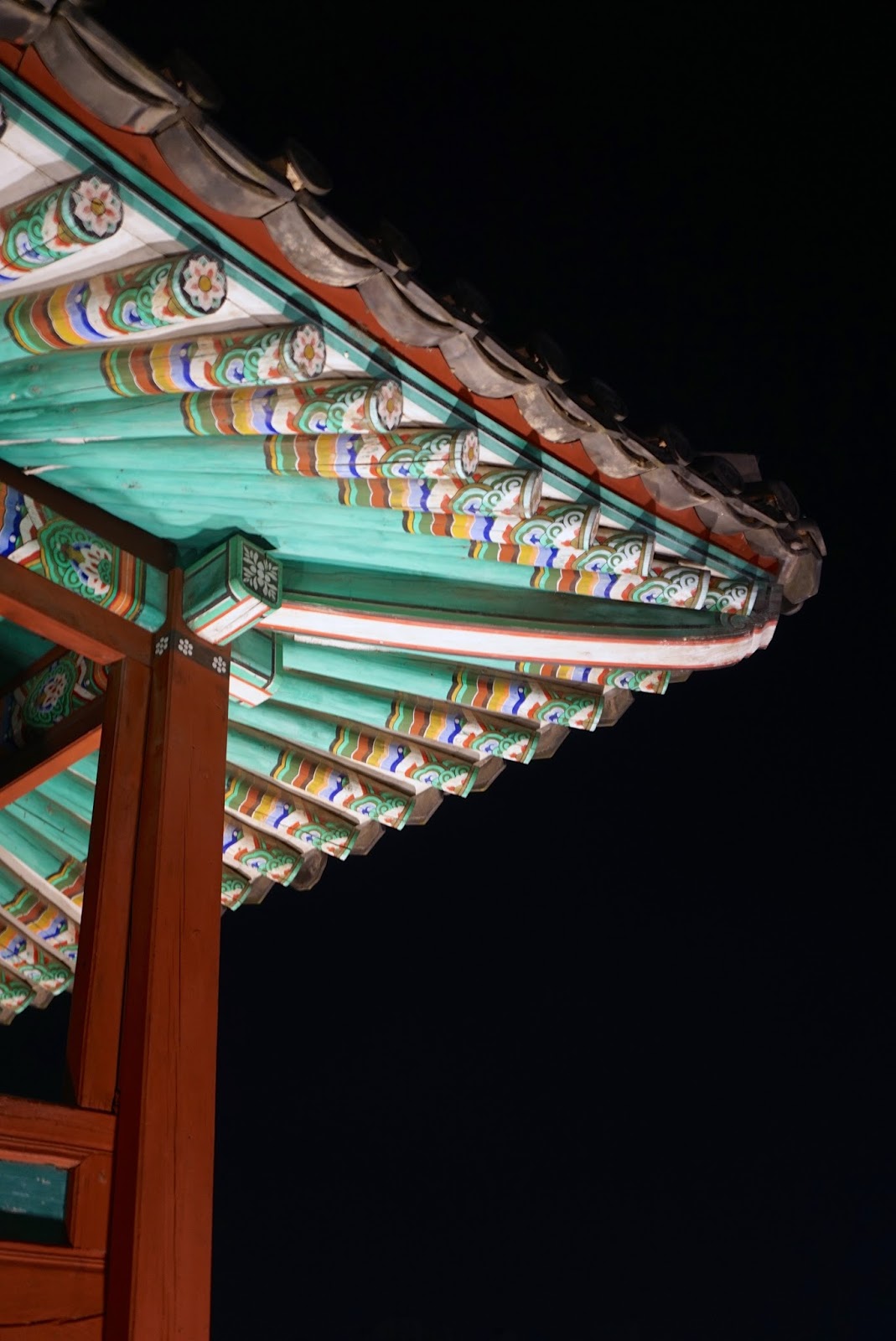
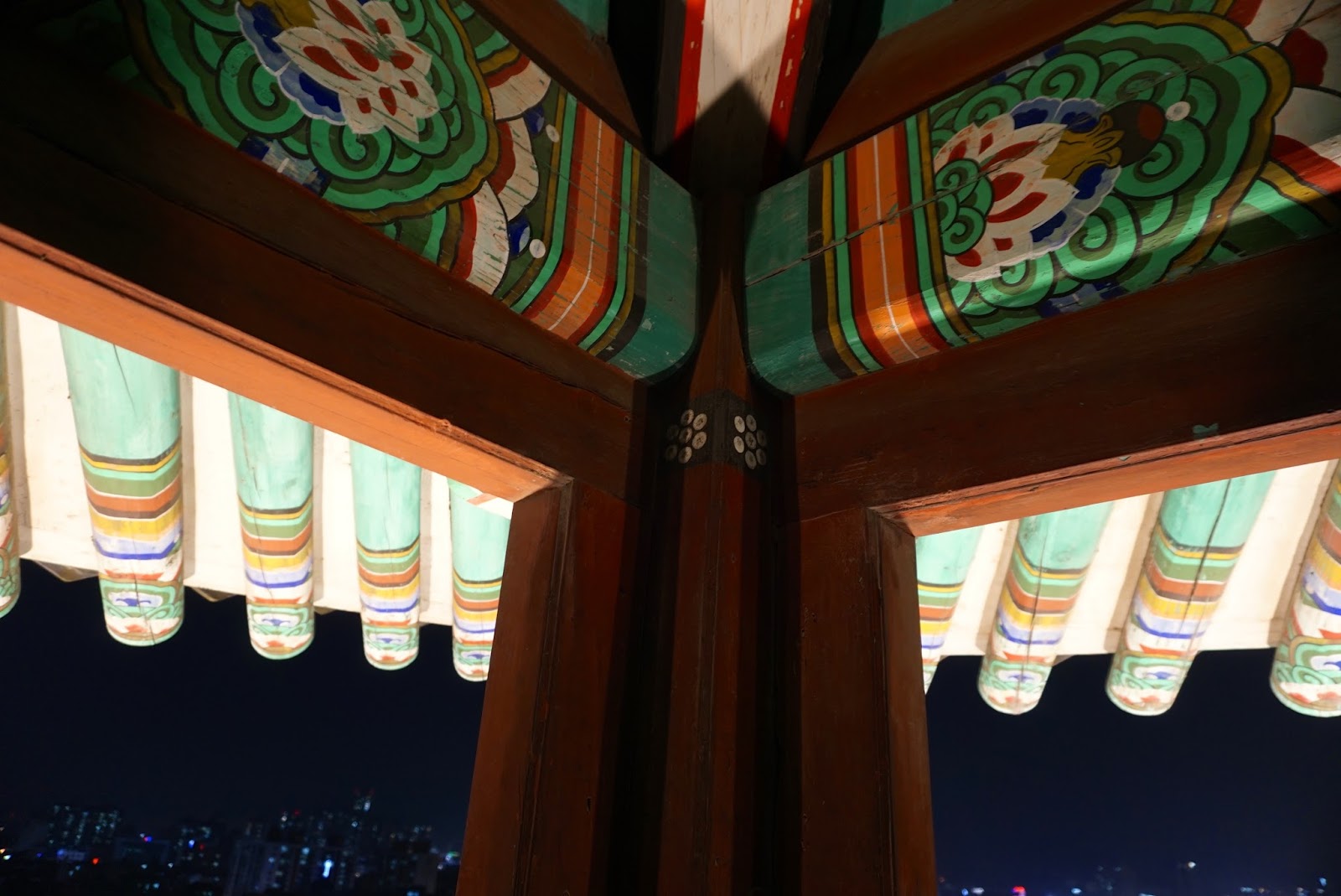
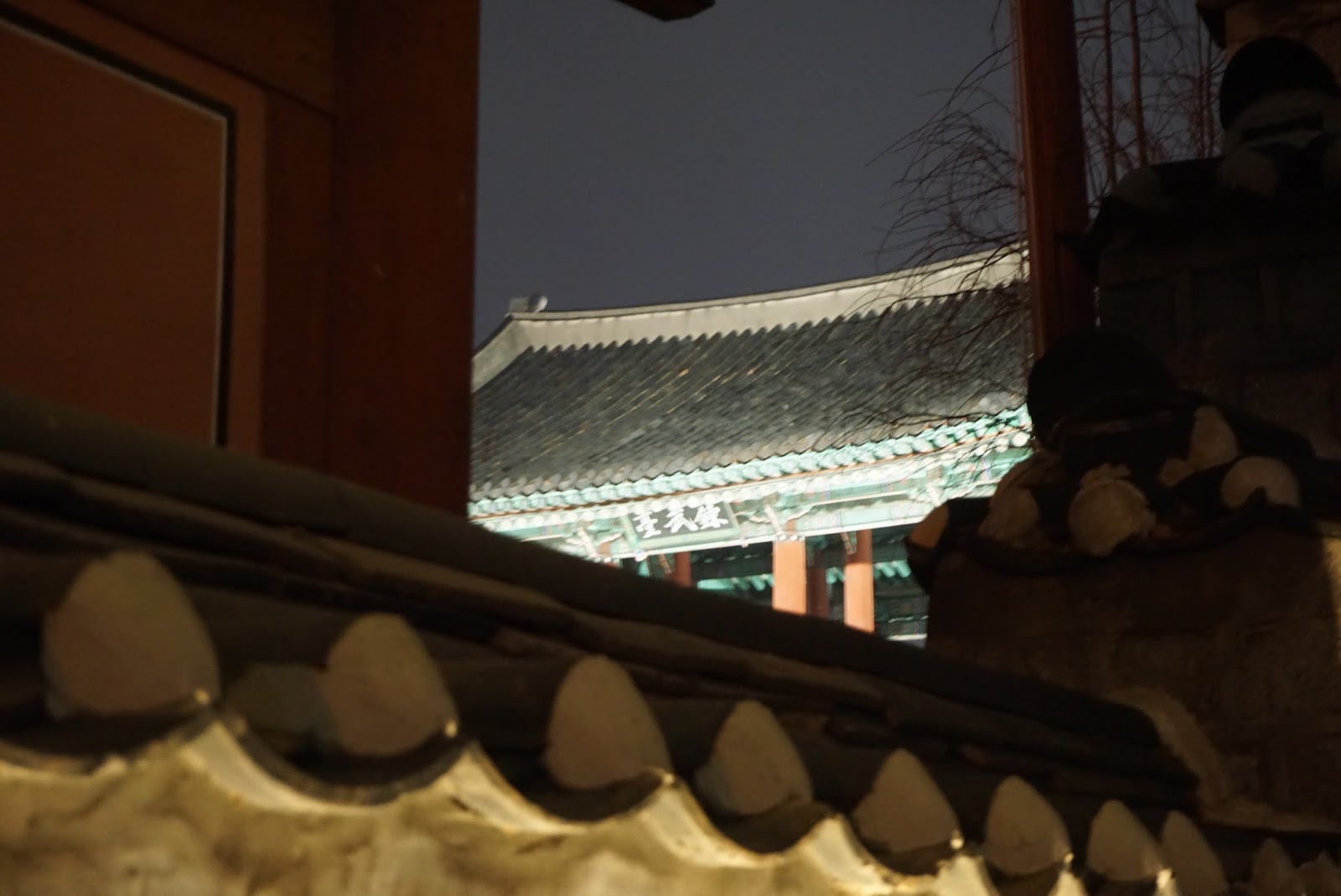
| Traditional Korean Roof decked out in bright green colour in the under roof and red |
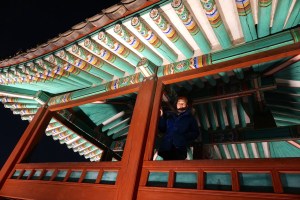 |
| My friend on the second level of Seobukgangnu |
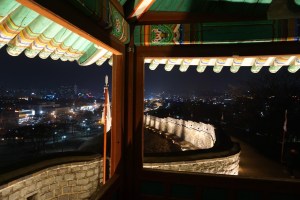 |
| View of the Fortress wall from Seobukgangnu |
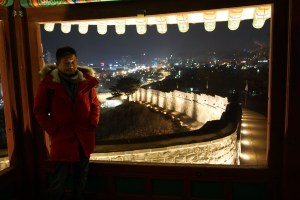 |
| Me at Seobukgangnu second storey |
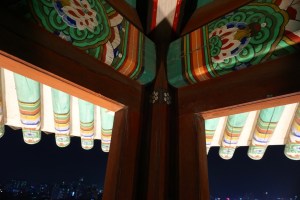 |
| Despite being a modest structure, Seobukgangnu was still painted with murals |
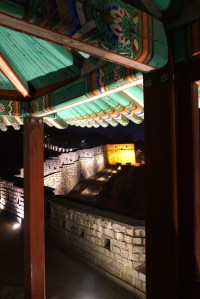 |
| View of the wall from Seobukgangnu |
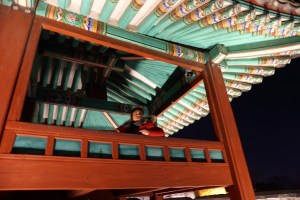 |
| Me on the second level of Seobukgangnu |
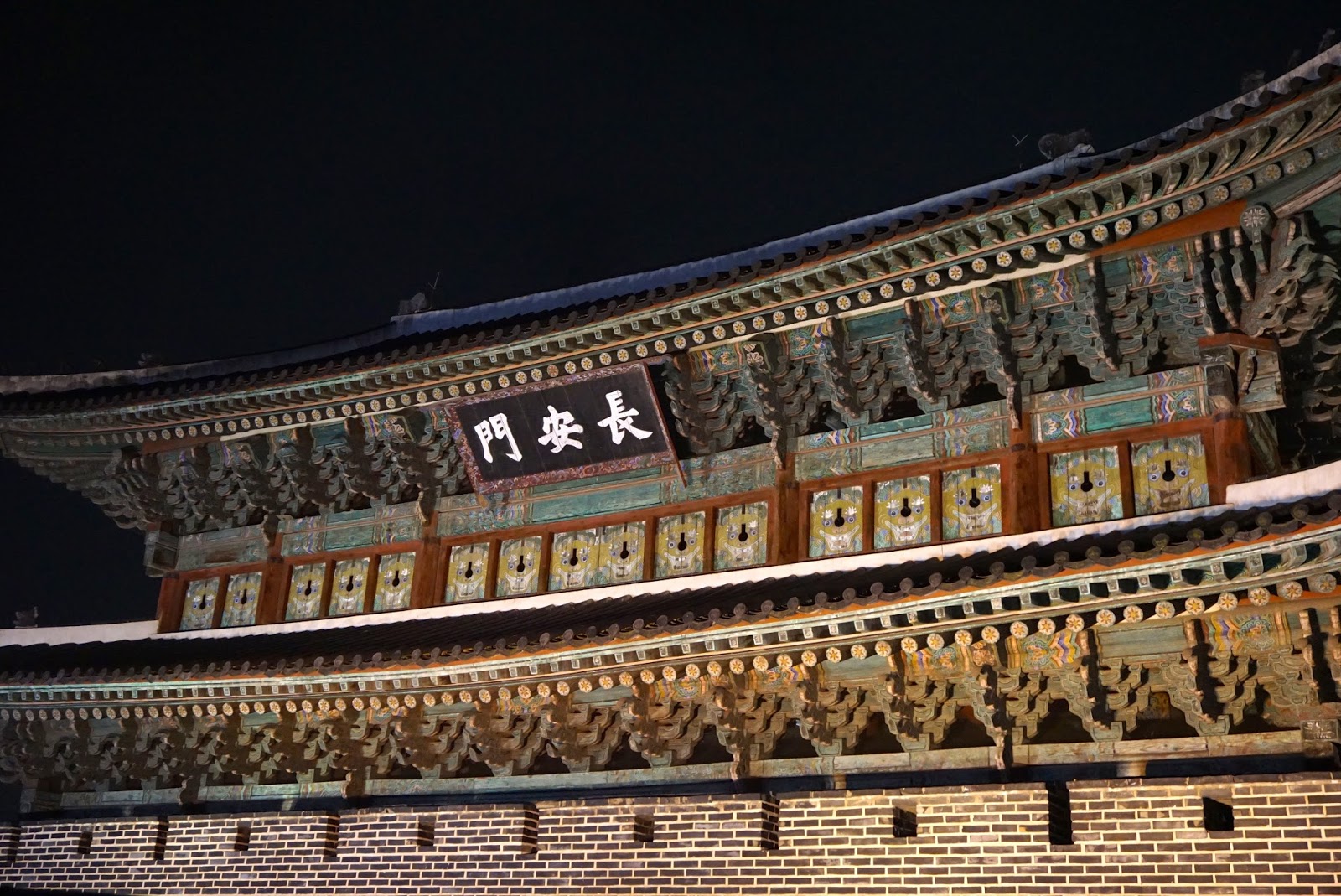
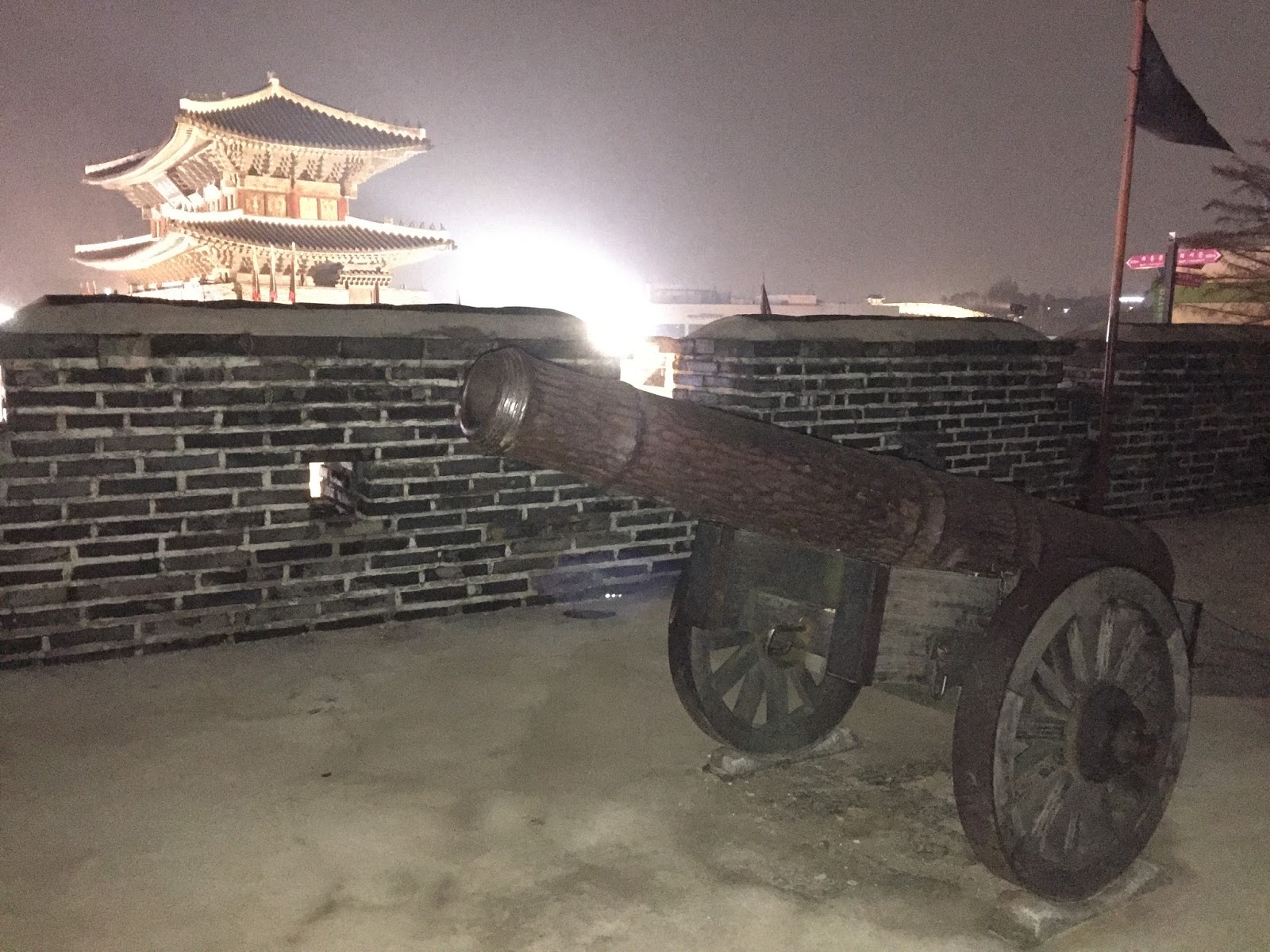
We continued our walk along the walls of the fortress, passing by Bukseoporu, the Northwestern Cannon Fort (which was closed at the time of our visit) and Bukseojeokdae, the Northwestern Guard Platform towards our next stop – Janganmun. There is a cannon at Bukseojeokdae. Janganmun is the Northern Gate and also the main entrance to the city, as the King would arrive from this entrance during his visit. The 3-storey Janganmun is largest of the four main gates to Suwon Hwaseong Fortress. This structure departs from the rest of the gates where in place of a crescent extension, a semi-circular extension complete with a pavilion serving as a watchtower was constructed before the main entrance of Janganmun. From the protruding extension, one can feel the grandeur of Janganmun gate. As the gate was closed during our visit, we could not enter the upper levels of Janganmun. Moving clockwise pass Janganmun is another Cannon Platform fortifying the Main entrance to Suwon. One can spot another cannon at Bukdongchi, the Northeastern Turret).
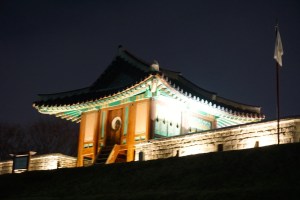 |
| Bukseoporu cannon fort |
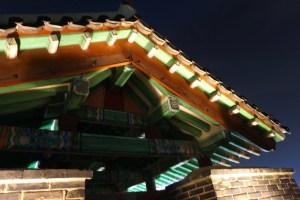 |
| Bukseoporu closed up |
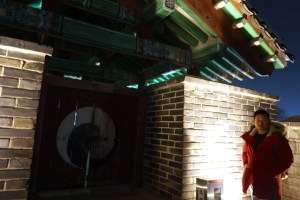 |
| Bukseoporu was closed a the time of our visit, we can only take pictures outside the cannon fort |
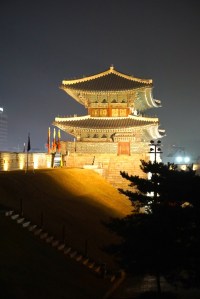 |
| Janganmun from afar |
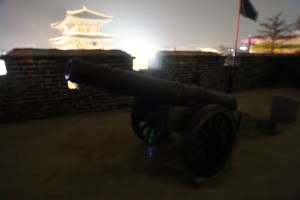 |
| Cannon platform next to Janganmun |
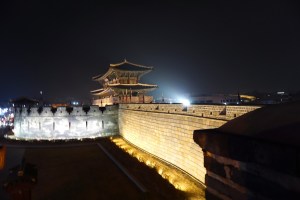 |
| Janganmun with its semicircular extension wall. Unlike the crescent wall design, there are no openings on this structure |
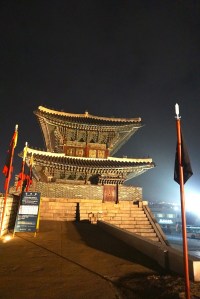 |
| Janganmun is the biggest gate and the solemnly stood in the middle of the night |
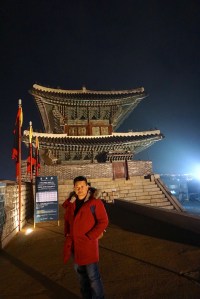 |
| Me with Janganmun in the background |
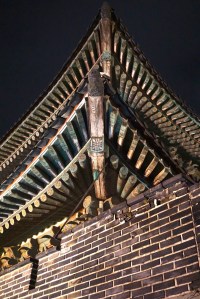 |
| Janganmun |
 |
| Top levels of Janganmun |
 |
| My friend on the pavilion at the semicircular extension of Janganmun |
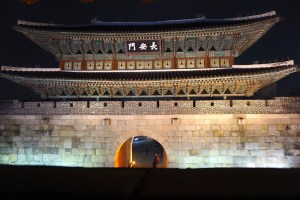 |
| Janganmun from the semicircular extension of the wall |
 |
| Janganmun at the background |
 |
| Janganmun at night |
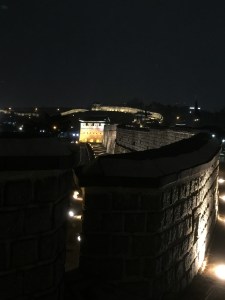 |
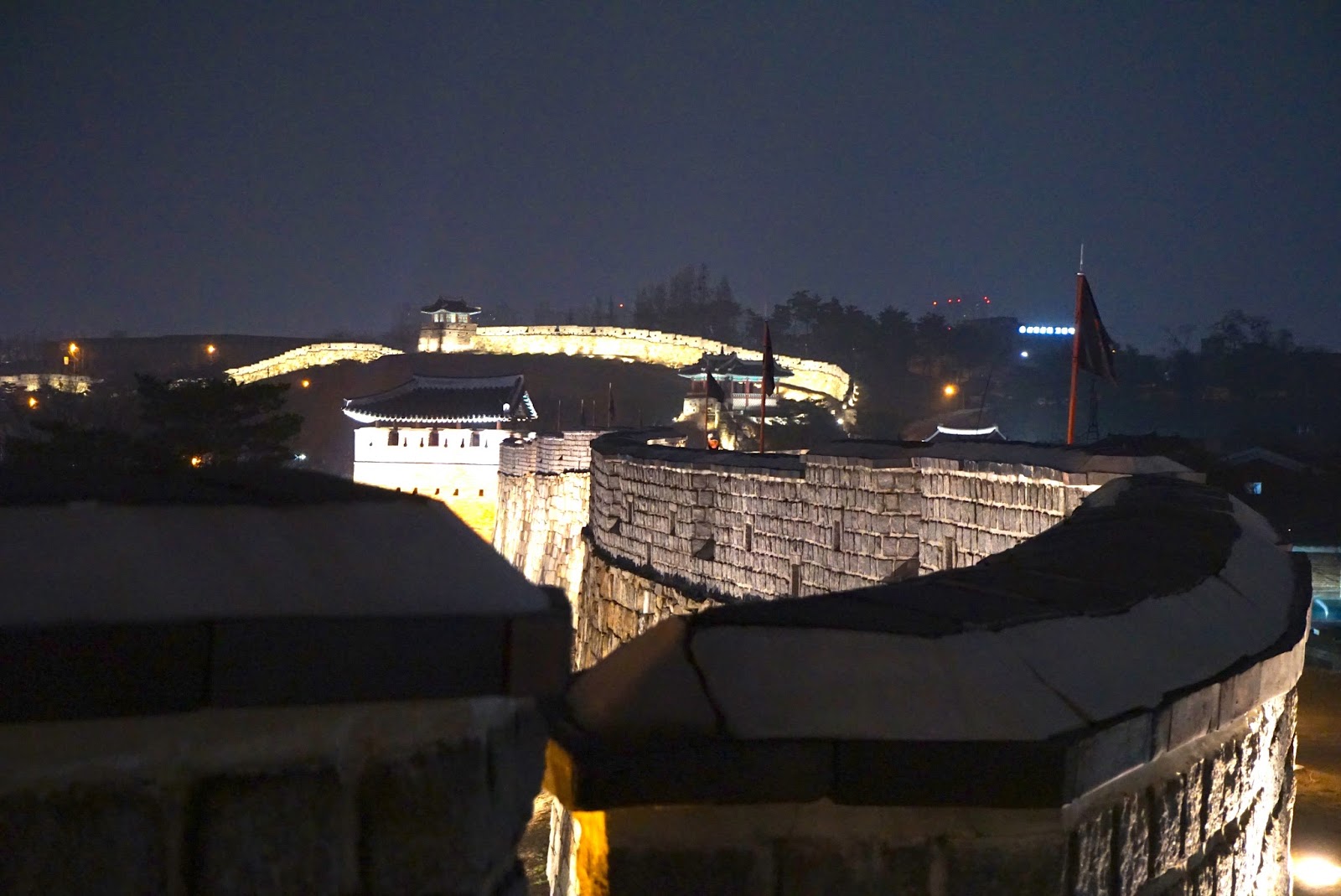
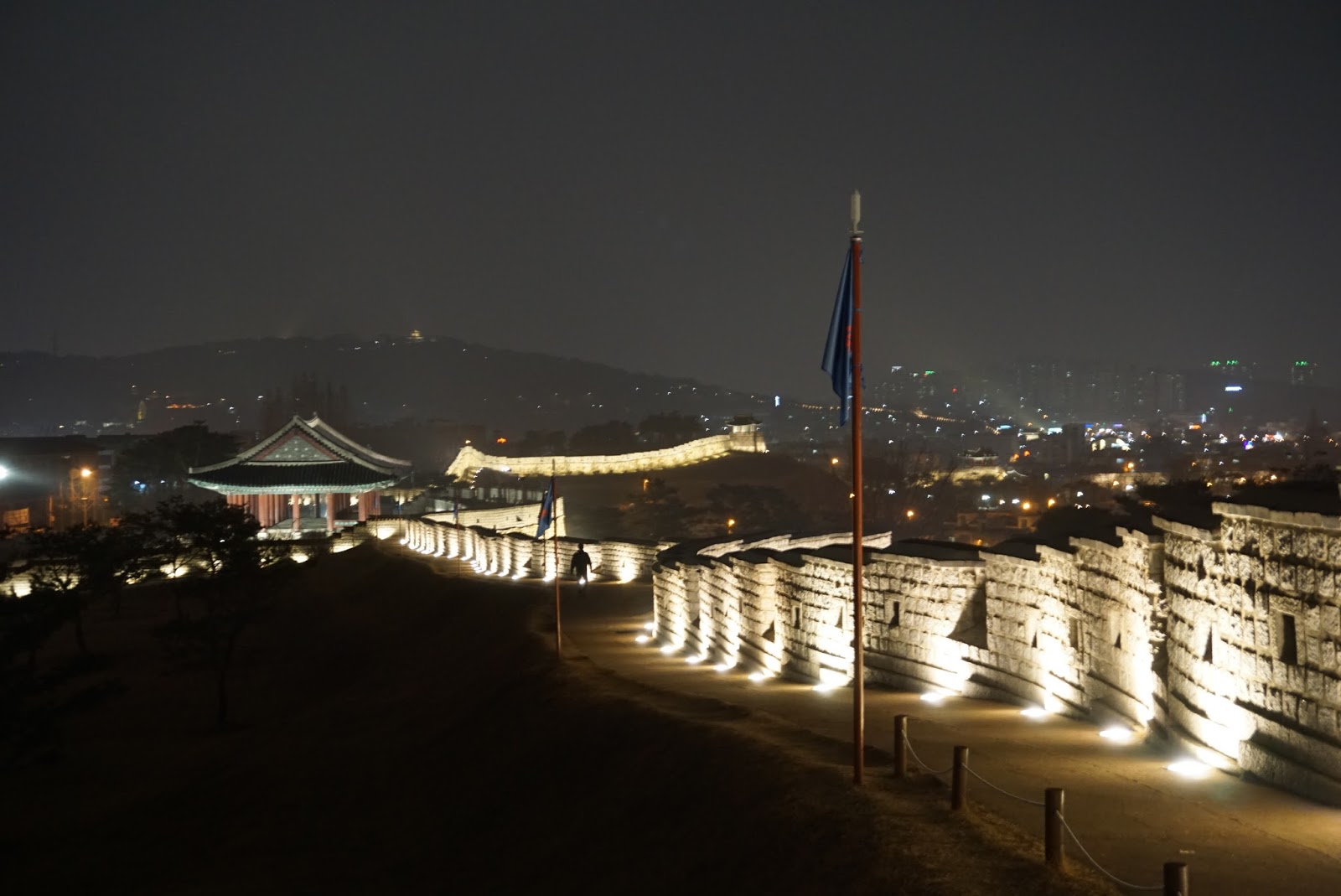
| Night view along the Suwon Hwaseong Fortress wall |
 |
| Janganmun |
 |
| Cannon Platform on the other side of Janganmun |
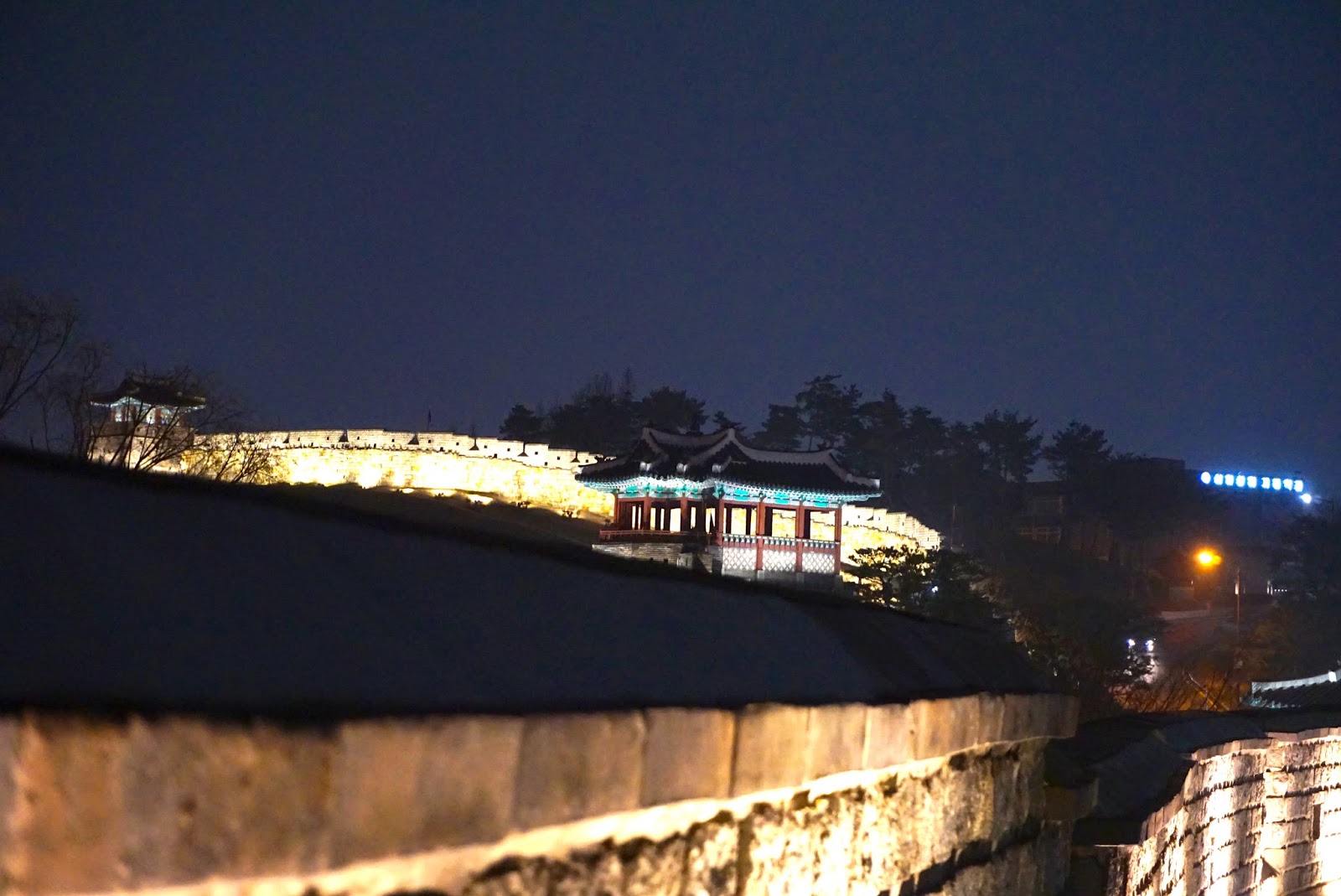
We continued our walk clockwise towards our next stop – Hwahongmun, which was supposed to be our final stop before heading back to Seoul. Instead after visiting Hwahongmun, we decided to continue walking towards the Archery centre as the walk was pleasant and more importantly the view of the night fortress wall is simply breathtaking. Hwahongmun is one of the two flood gates to the city, being the Northern one. This seven-arched structure is built across Suwon River allowing control of water into Suwon Fortress. As with Seobukgangnu, Hwahongmun has a 2-storey pavilion built on top of the floodgates. It is opened 24/7 however we did not go up to the pavilion as we would rather skip the hassle of taking off our shoes.
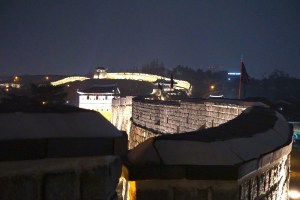 |
| The fortress walls remind me of the Great Wall of China |
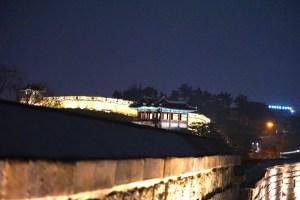 |
| Night view of the fortress walls |
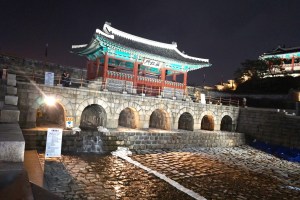 |
| Hwahongmun is used to control the amount of water that flows through Suwon Fortress. At the time of our visit, there isn’t much water flowing through |
 |
| Another view of Hwahongmun at night |
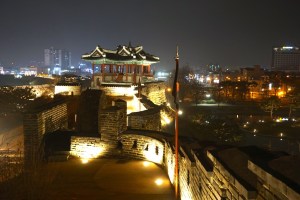
Continuing eastwards, a short distance from Hwahongmun is the Dongbukgangnu – the Northeastern pavilion. This 2 storey pavilion, similar design and structure as well as decor to that of Seobukgangnu, sits above a pond surrounded by a small garden. This structure was originally built as a command post. The view of the night fortress wall and the garden is fantastic. I like the view of the wall more than the garden. One can never get tired of seeing the lighted night scenery of the Suwon Fortress wall.
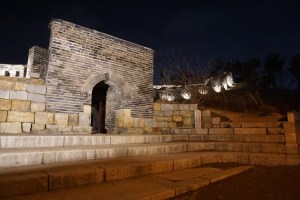 |
| This is one of the several secret gates spread throughout the fortress walls |
 |
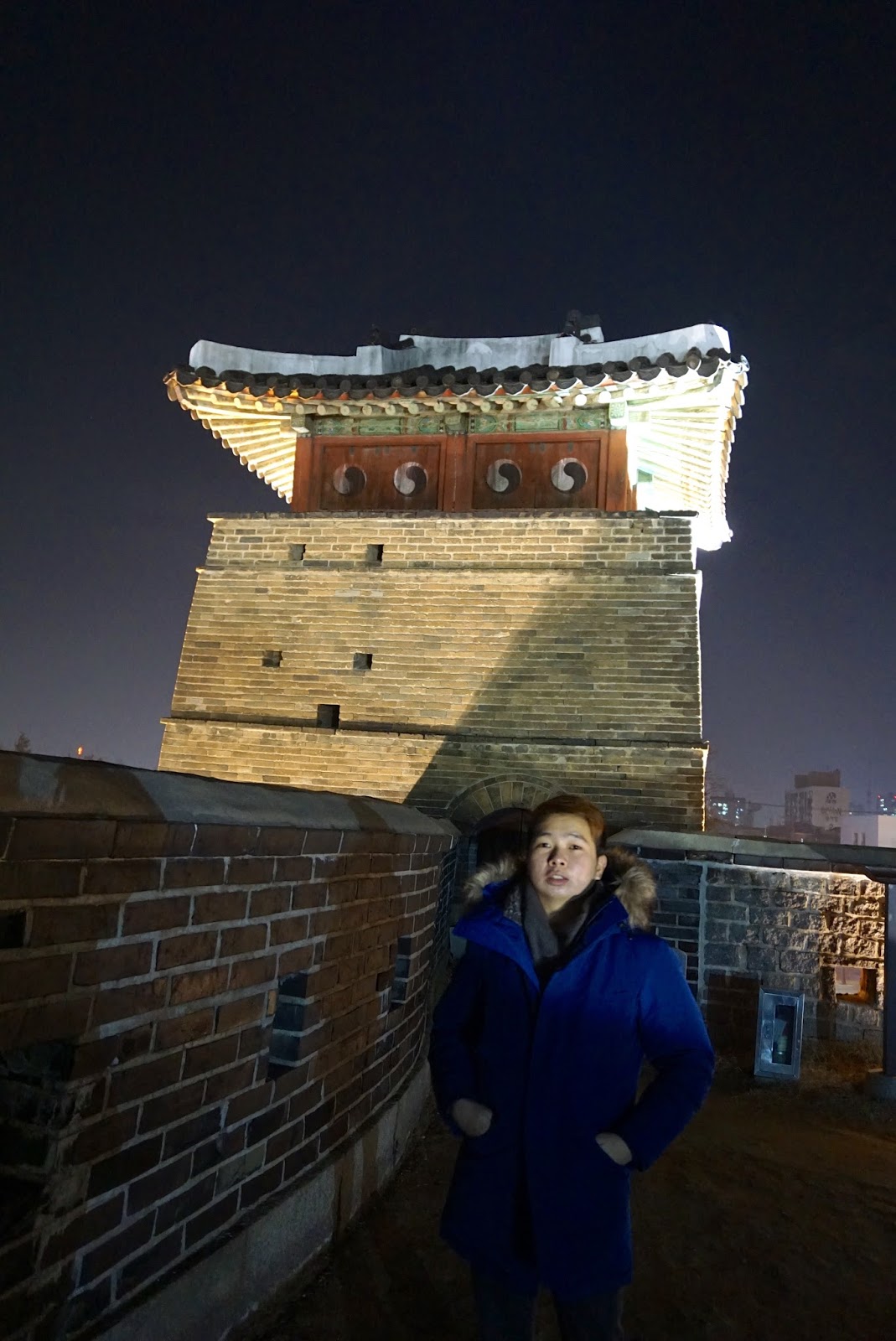
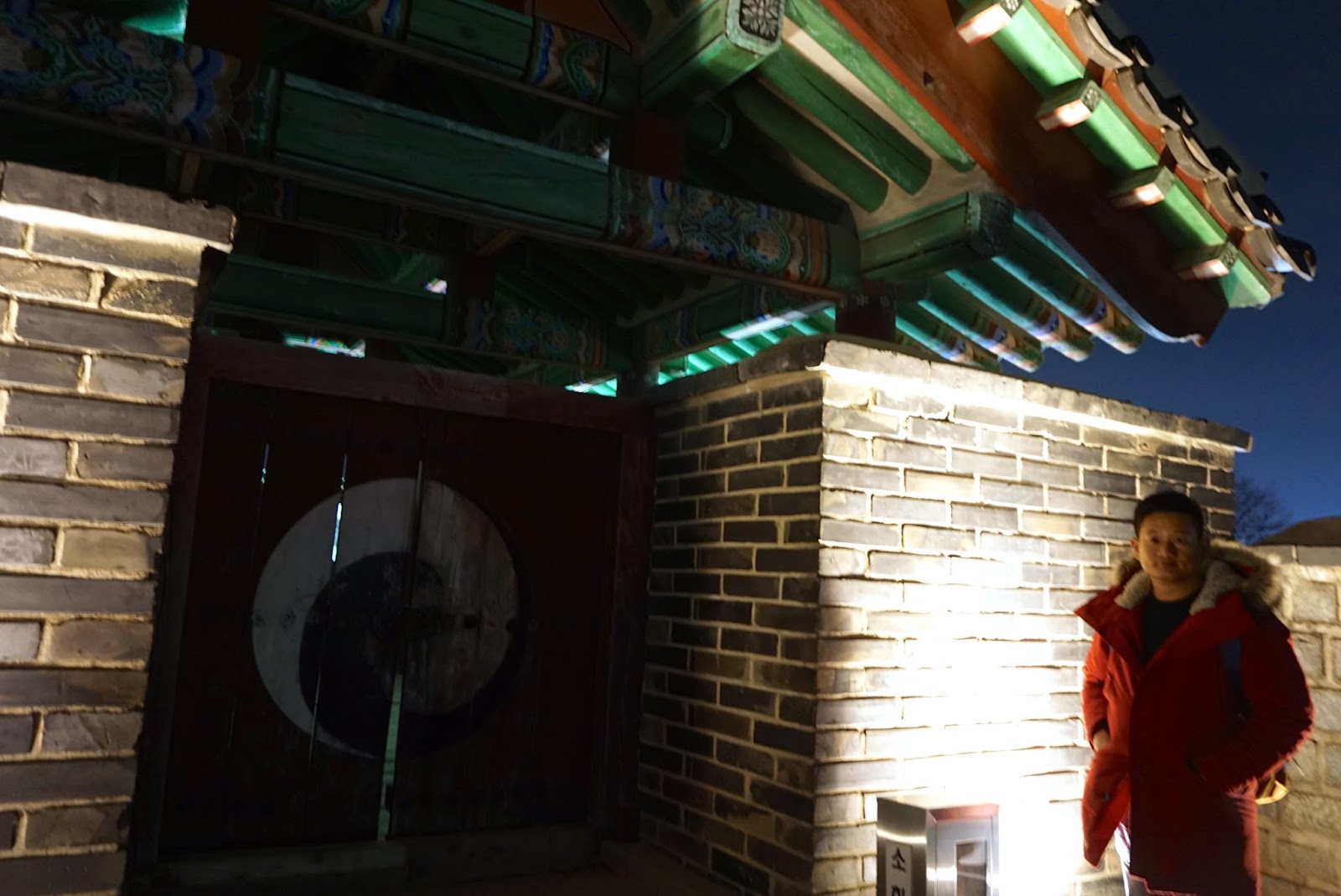
| Dongbukgangnu pavilion is a typical Korean structure with the Taichi sign on its doors |
 |
| View of Dongbukgangnu with the wall |
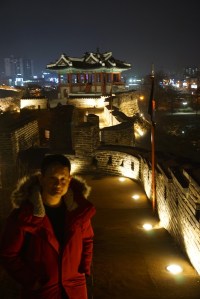 |
| Me with Dongbukgangnu in the background |
We strolled along the fortress wall towards Dongjangdae, the scenery opens up to an air of familiarity. It turns out that I have been here a few years ago whilst on a package tour. Little that I realise I been to only one small section of the entire Suwon Fortress. The thing about package tours is that they only bring you to one small section and that picks a tick in the list of the itinerary that says Suwon Fortress. This part whilst iconic did not do justice to the grandeur the entire Suwon Fortress (that is one of the reasons why I don’t like package tours). Dongjandae is a command post on the east side of the fortress as well as a training camp. Dongjangdae comprises of a huge sheltered platform and an open field enclosed by a short wall. As it was nightfall, the doors accessing Dongjangdae were closed. The Archery Centre is located outside Dongjangdae. We skirted around the parameters of Dongjangdae to continue walking along the fortress wall to get to our final destination – Changnyongmun.
 |
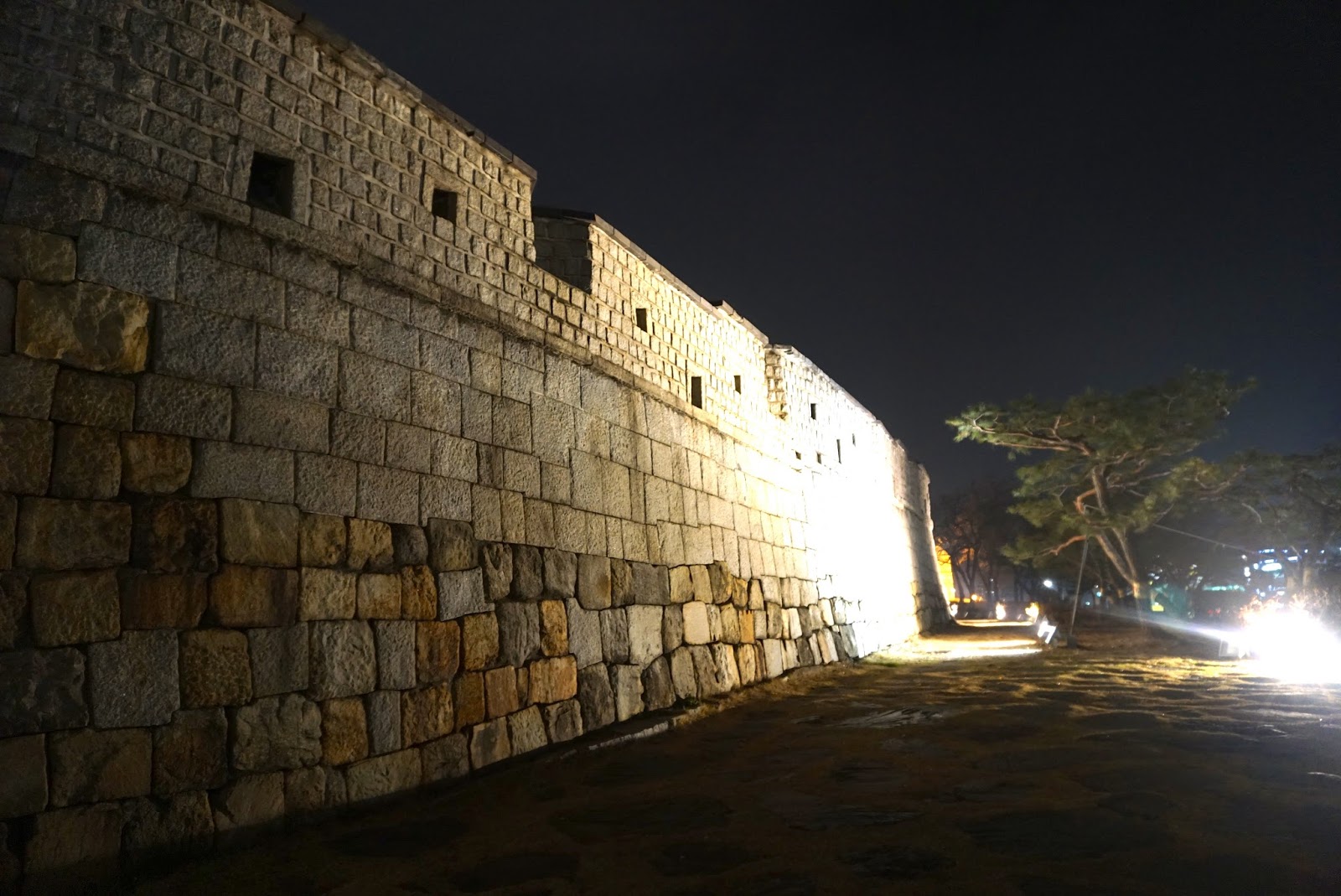
| Night view of the fortress walls |
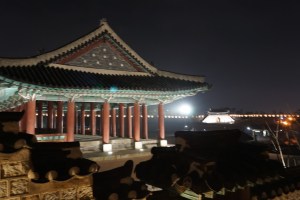 |
| Dongjangdae command post |
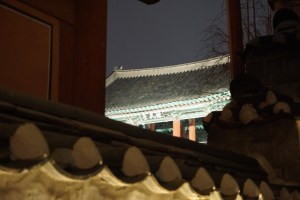 |
| Peeking at Dongjangdae |
 |
| Night view of Suwon Hwaseong Fortress Walls |
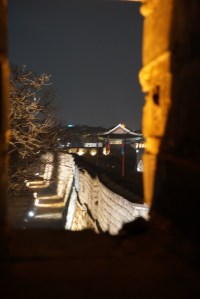 |
| Night stroll along the fortress wall is very tranquil |
 |
| Dongjangdae from Changnyongmun |
Changnyongmun is just right across the road from Dongjangdae, however, we saw a couple of buildings along the wall and decided to continue our journey along the wall rather than taking the short cut (after all we had been walking the whole night, a few more steps will not matter). The two buildings that we passed by along the along are Dongbuk Gongsimdon Observation tower and Dongbuknodae Crossbow platform. Dongbuk Gongsimdon Observation Tower is at the Northeastern edge of Suwon Fortress. The 3-storey oval observation tower was closed for preservation works when we visit. The next structure we came across is Dongbuknodae Crossbow platform, which is an open-air raised structure fortified area with small holes used by archers with crossbows to attack approaching enemies from all directions.
Changnyongmun – the Eastern Gate one of the four main gates of Suwon Fortress. It looked the same as Hwaseomun, the gate that we began our 2.8km walk along the fortress wall, with another platform on top of the gate (we did not scale up to the top of the gate). As the gate was not closed at the time of our visit, we ventured outside the gate and see how it looked like from outside the fortress. The walls of the fortress gave me an impression of guardedness and defensiveness. I guess this is the impression the designers of the fortress wanted to portray when constructing the fortress walls. We did not stay outside the gates for too long and headed back into the gate, crossing the road and took a bus back to Paldamun, where we started our entire Suwon Hwaseong Fortress trip.
 |
| Side of Changnyongmun |
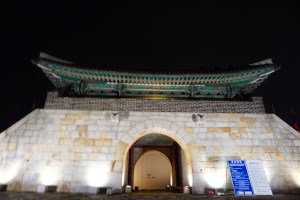 |
| Changnyongmun at night |
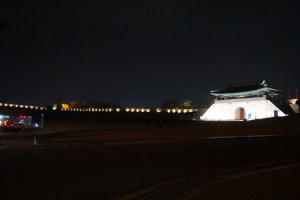 |
| Changnyongmun from Dongjangdae |
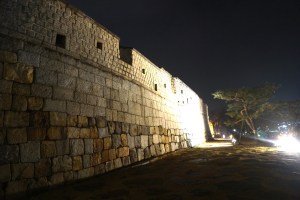 |
| Outside the Fortress |
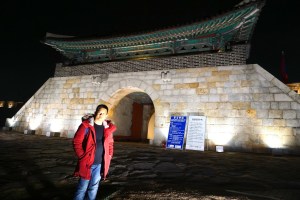 |
| Me at Changnyongmun |
 |
| My friend at Changnyongmun |
Suwon at Night
When we first arrived at Paldamun, we saw it was buzzing with life with all the shops and thought that it would be the same and perhaps there is some sort of night market in the vicinity. We wanted to head back to Paldamun area and do some night shopping before heading back to Seoul. When we alighted the bus at Paldamun, it seems as if the whole area went to sleep. The liveliness in the day we saw was nowhere to be found. Disappointed we strolled a bit and took a bus back to Suwon Station.
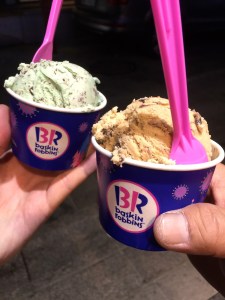 |
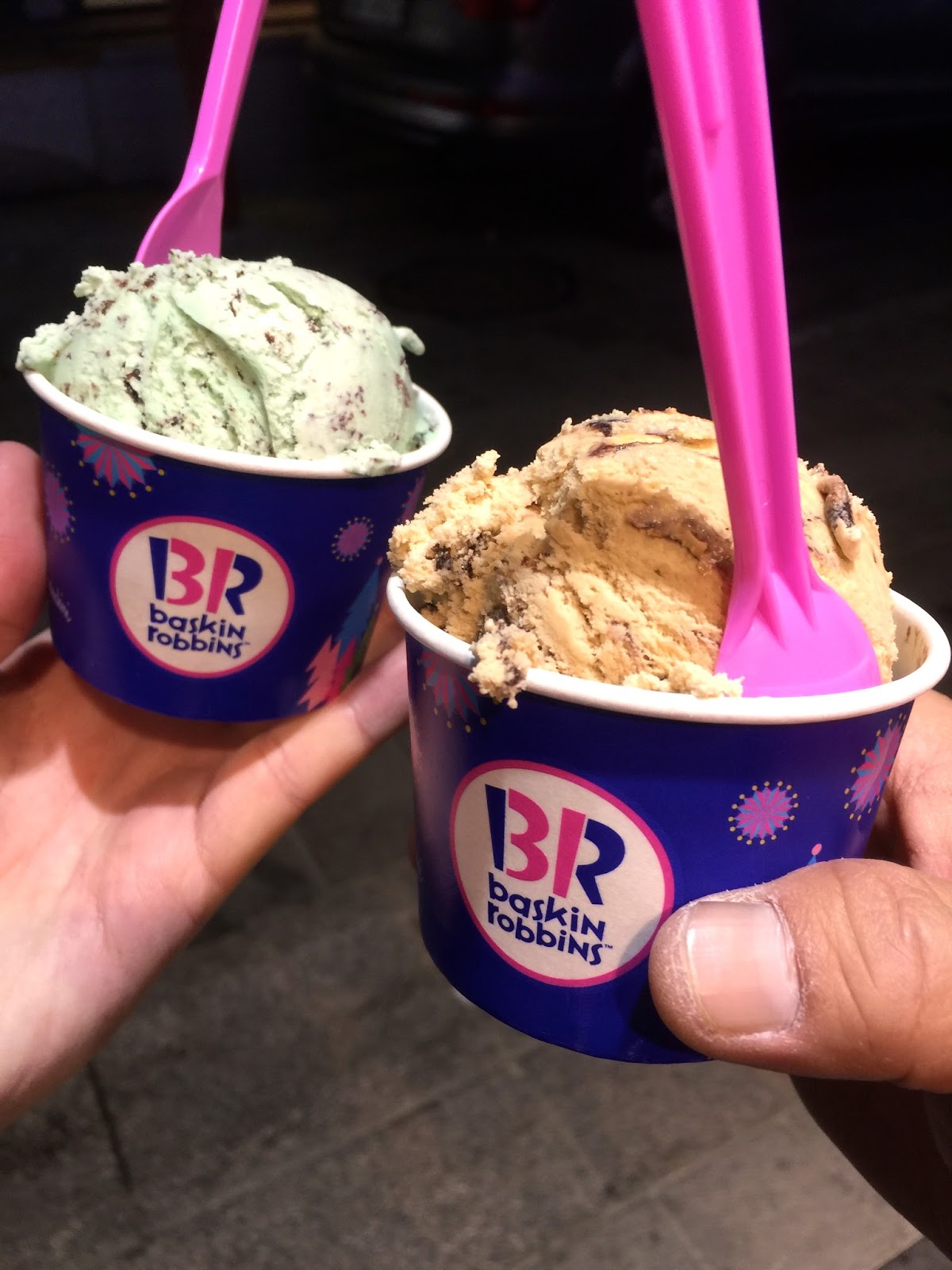
| The best thing about eating ice-cream in winter is it won’t melt and make a mess |
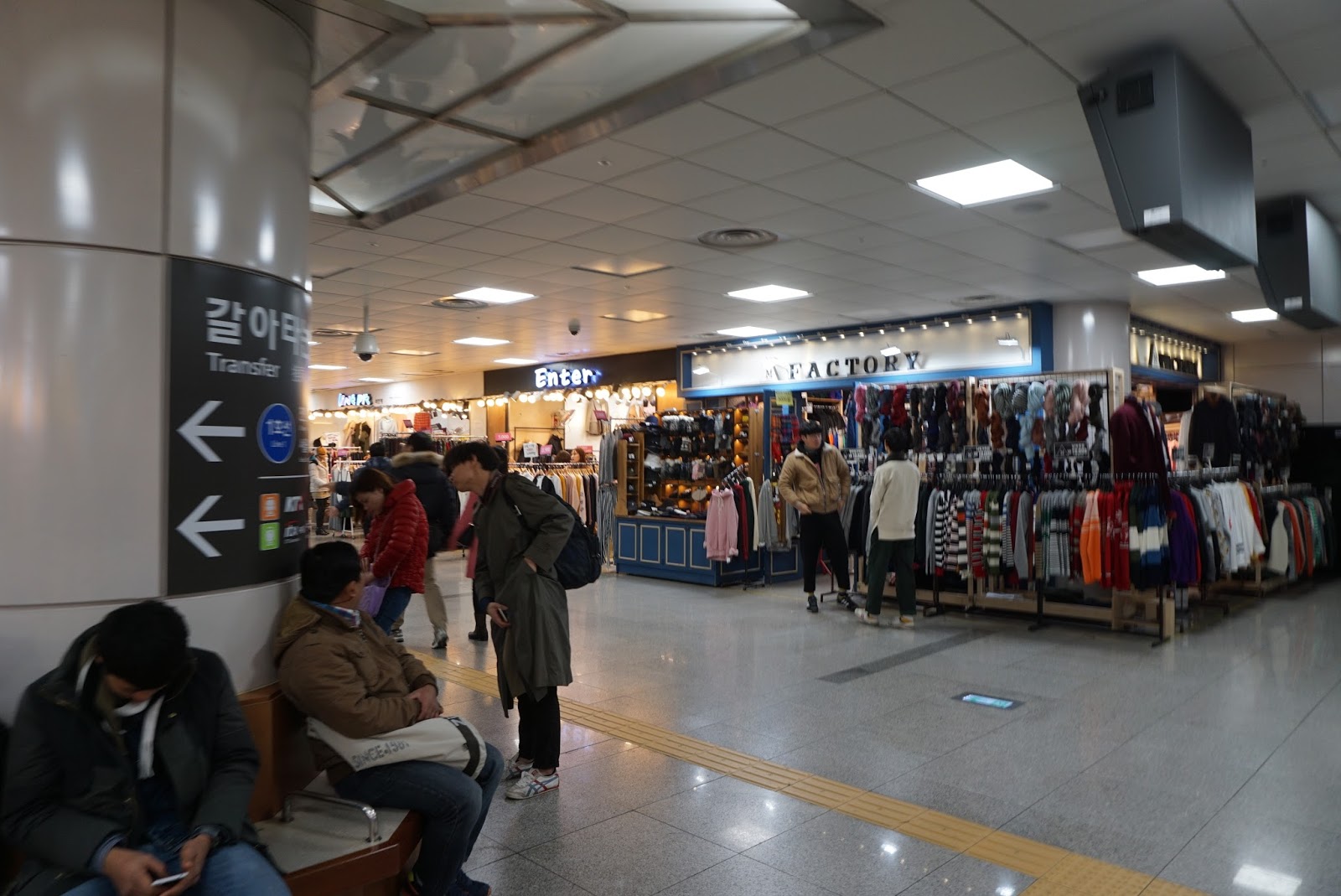
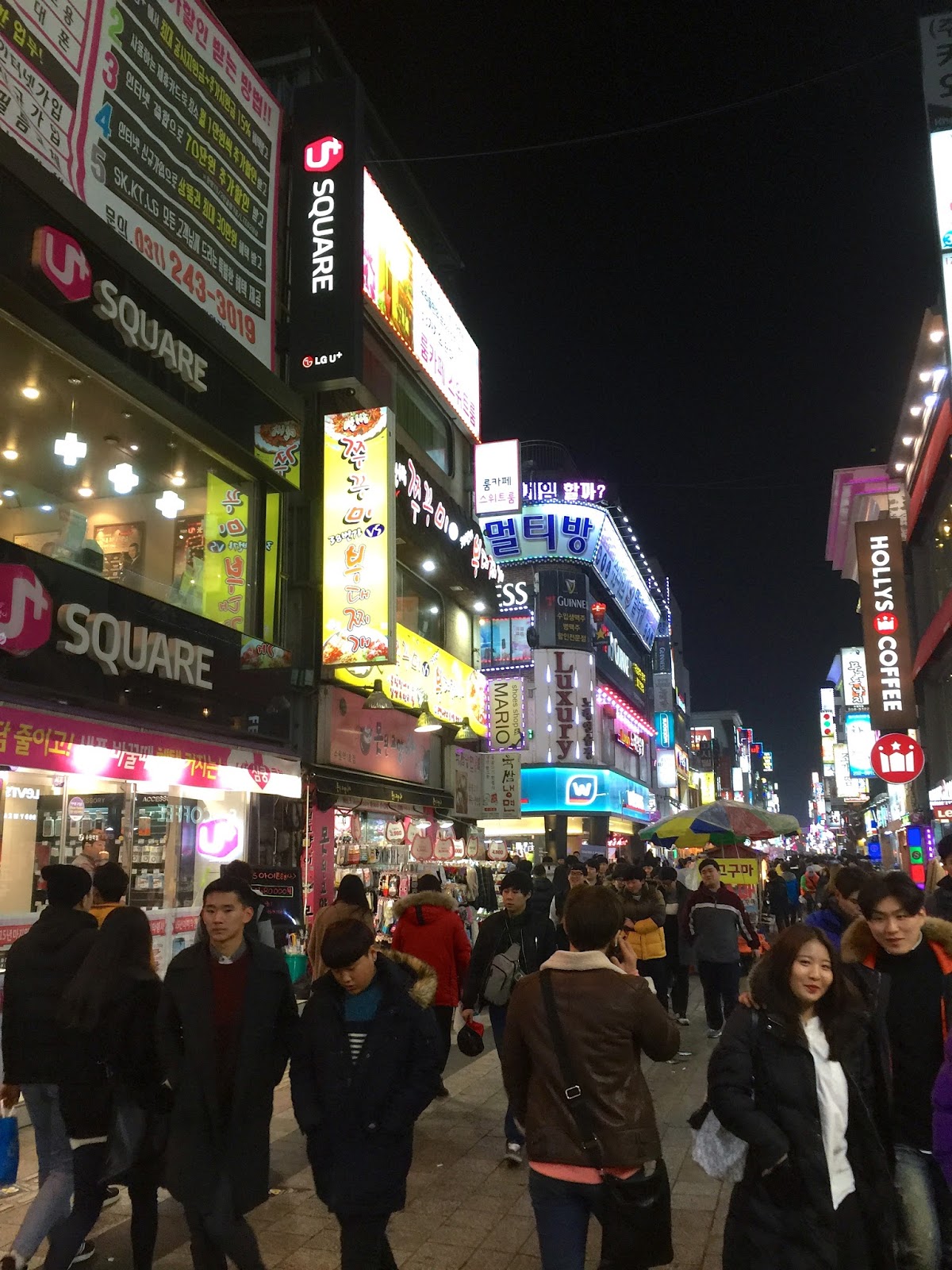
At Suwon station, the liveliness we wanted to see at Paldamun area was here at what seems like a shopping street full of youngsters right across Suwon Subway Station. The shops remained open (but mostly the facial skincare product shops) and restaurants and pubs occupy most of the street. It seems like this is an area to be at night in Suwon. We strolled down the street and back up before heading back to Seoul to rest for the night.
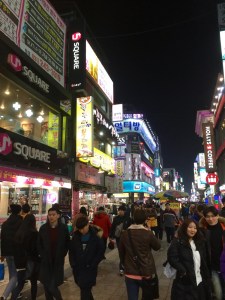 |
| Walking Street Opposite Suwon Subway Station |
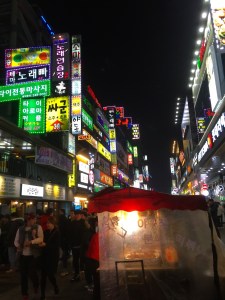 |
| There are no lack of choices for food and drinks |
 |
| A lot of youngsters hanging out here |