
Torii gates of Fushimi Inari-Taishi
Fumishi Inari-Taishi (伏見稲荷大社)
Visitors to Kyoto will bound to make a visit to Fushimi Inari-Taishi, a shrine that is dedicated to The God of Rice, Inari. The shrine was built in 711, just celebrated its 1300th anniversary recently. Our journey to Kansai today brought us to Eastern Kyoto, our first stop is The Temple of Thousand Torii Gates – Fumishi Inari-Taishi. We were hoping to get to the shrine early to avoid bumping into huge crowds, after all, Fushimi Inari-Taishi is one of the visited and photographed spots in Kyoto. I figured it would be boring (not mentioning mainstream) if we just visited the main shrine and walking through the very busy Senbon Torii, other than these sites, we planned to hike up to the top shrine in Mt Inari, hoping to get a good view of the surroundings from the top. The 4km hike up Mt Inari would take about 2 hours. Despite the drizzle, Fushimi Inari-Taishi is still packed with crowds. At Romon (樓門), the main gate of Fushimi Inari-Taishi, we spotted a single storey structure that is decked in bright red pillars and beams with white coloured walls, as the centre part built slightly higher than the side structures. A little further from Romon sits Honden (本殿), the main shrine of Fushimi Inari-Taishi. Visitors are only allowed to pay their respects to the 5 deities enshrined here at the entrance of the shrine, where 5 bells are installed for prayers to ring prior to their prayers.

We were greeted with hordes of visitors at Romon, the main entrance to Fushimi Inari-Taishi
-
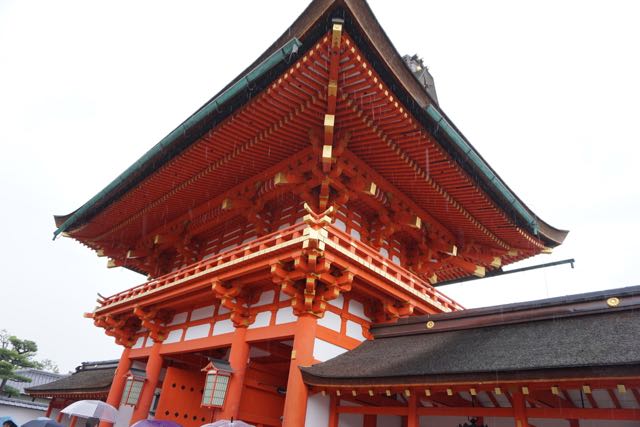
- Romon at Fushimi Inari-Taishi
-
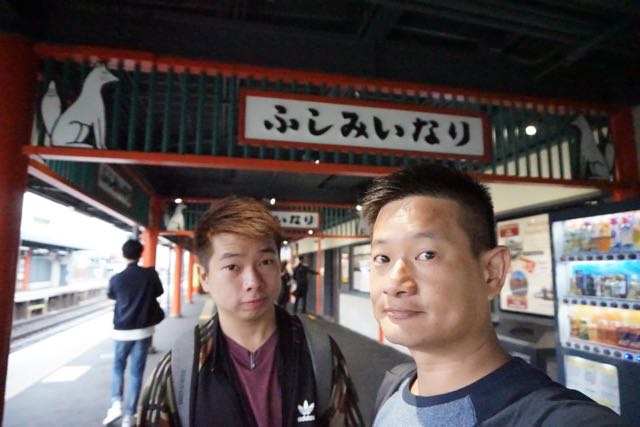
- The signages on the platform of Fushimi Station is very different
-
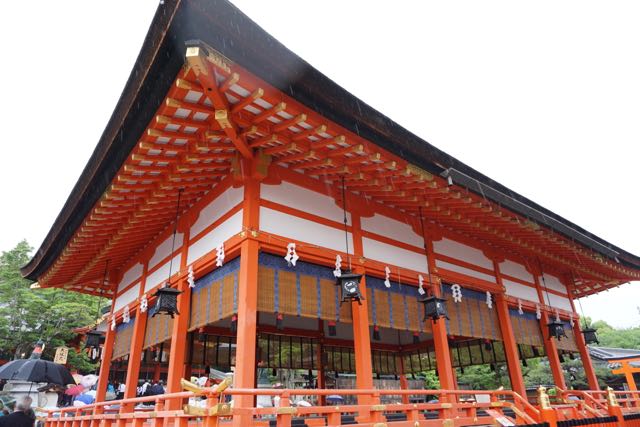
- One of the buildings behind Romon
-

- These are the first temple buildings we saw at Fushimi Inari-Taishi
-

- Taking a wefie with Romon
-
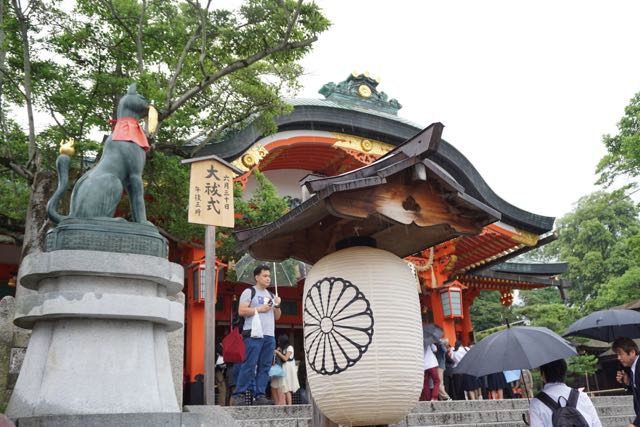
- Lantern at the main prayer hall
-

- A very brightly painted Hondo
-

- Hondo is where 5 deities are being enshrined
-
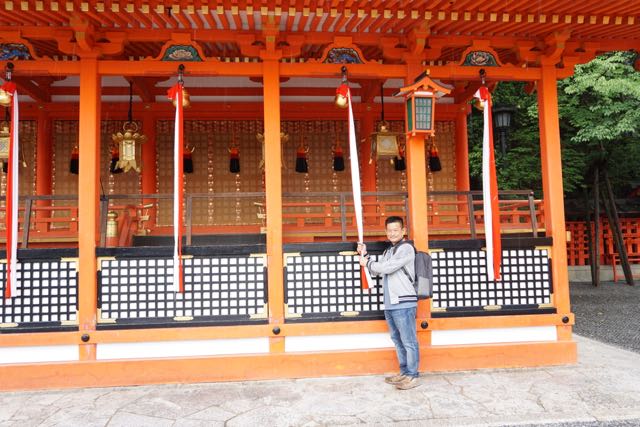
- Me at Hondo with the bell
-
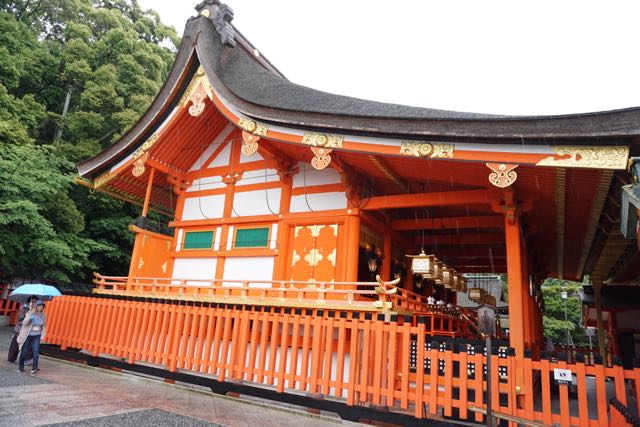
- Side view of one of the prayer halls in Hondo
After paying our respects at Honden, we started our hike up Mt Inari through the first stretch Torii Gates, know as Senbon Torii (千本鳥居). Senbon Torii has the highest concentration of torii gates, estimated to be thousands. The torii gates are lined up almost back to back with very little gaps. Walking through these bright red torii gates gives me an almost magical feeling. I have been seeing pictures of Senbon Torii, and now that I am here, it just feels so surreal. Owing to its fame, the number of visitors here is also the highest. It is very difficult to take pictures of the torii gates at Senbon Torii without capturing someone in the shot. My friend and I ended up walking through the torii gates, taking very few pictures. At one point under these torii gates, we came to a split path. The right side leads upwards towards the inner shrine, whereas the left path is for visitors to descend from the inner shrine. Moments later we arrived at the inner shrine of Okusha (奥社奉拝所). There are 3 buildings at Okusha, 2 for temple administrations and 1 is where the deity is enshrined. We also spotted a queue where people seem to be touching some stone. As the queue was rather long, plus we have to cater time to hike up Mt Inari, we did not join the queue.
-
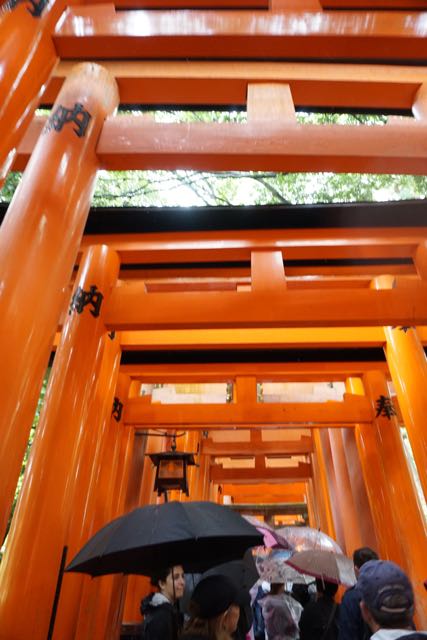
- Walking through the torii gates in Fushimi Inari-Taishi
-

- The first torii gates
-
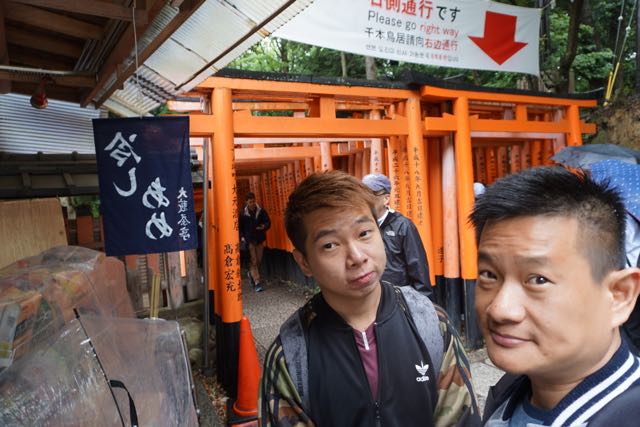
- My friend and I at the Senbon Torii Gates

The torii gates at Senbon Torii Gates
-
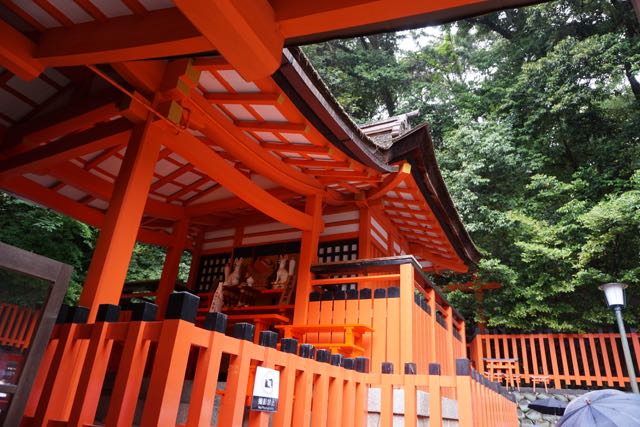
- Okusha
-
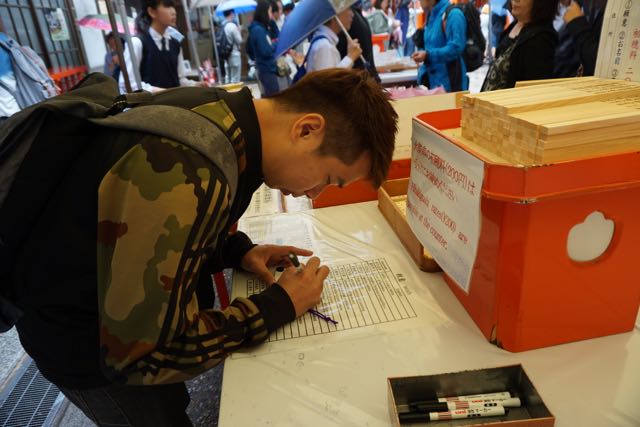
- My friend writing his wishes on the fox shaped charm
-

- Me hanging my charm on the wall in Okusha
Fushimi Inari-Taishi consists of many smaller shrines spreading on Mt Inari, which we spotted on the hike up to Mt Inari. The torii gates pass Okusha are much larger than those we have seen so far. This part of Fushimi Inari-Taishi is where the crowd started to thin out. From here onwards, we were able to take more pictures with no people in it. Along the way, we saw Kumatakasha (熊鷹社) shrine with a large lake behind it. Along the way, we also came to a rest area. There is a small tea house looking shop that sells food and drinks. I highly recommend people making a trip to Fushimi Inari-Taishi to make a hike up here. It is here we saw Kyoto city from a higher ground. We continued our way up the peak, along the way seeing more smaller shrines. Some shrines are bigger while others seem to be a cluster of smaller shrines. At some points of the path, it felt that the shrines have merged with nature. The forest air is crisp and fresh, possibly due to the rain. We finally reached the top of Mt Inari where the shrine Inchinomine (一ノ峰) is located. We were a tad disappointed that there are no viewpoints at the peak of Mt Inari. From Inchinomine, the path turns downhill. The shrines here are more spread out. We also spotted some torii gates that seem to be newly installed. We see more nature on our way down. Once at the base of Mt Inari, we headed to Kyoto JR Station for our next destination.
-
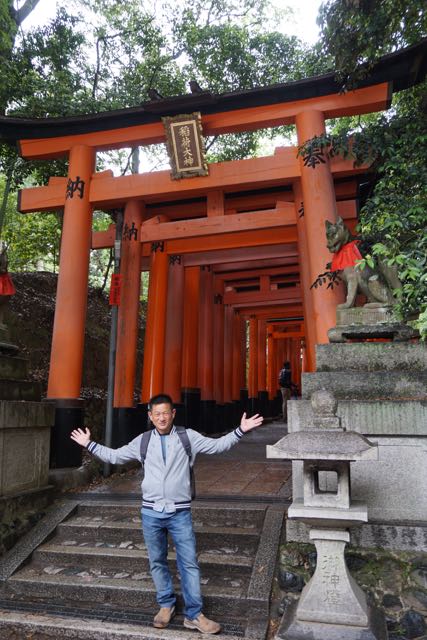
- Me at the torii gates before our hike to the top of Mt Inari
-

- Taking a wefie at the torii gates in Fushimi Inari-Taishi
-
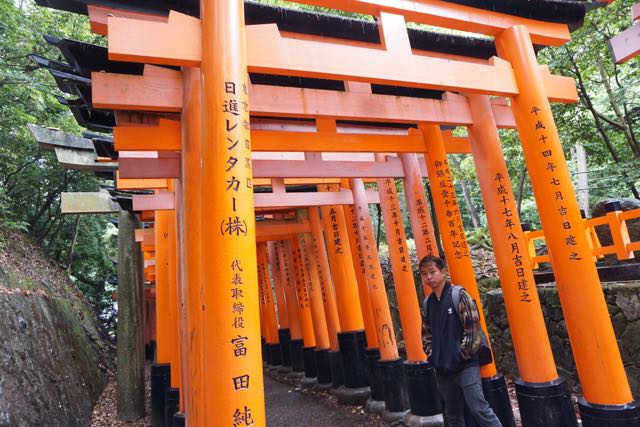
- My friend with the torii gates in Fushimi Inari-Taishi
-
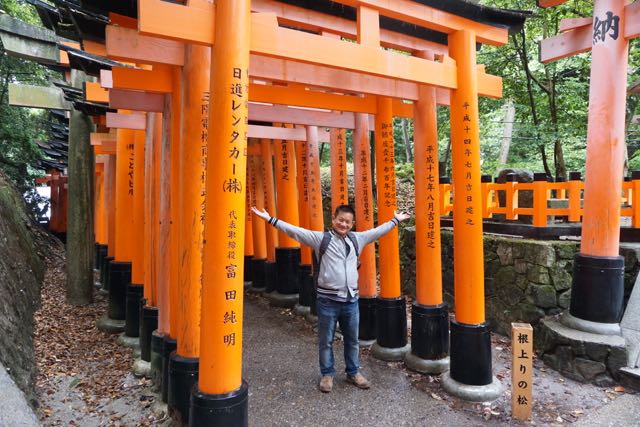
- Me at the torii gates of Fushimi Inari-Taishi
-
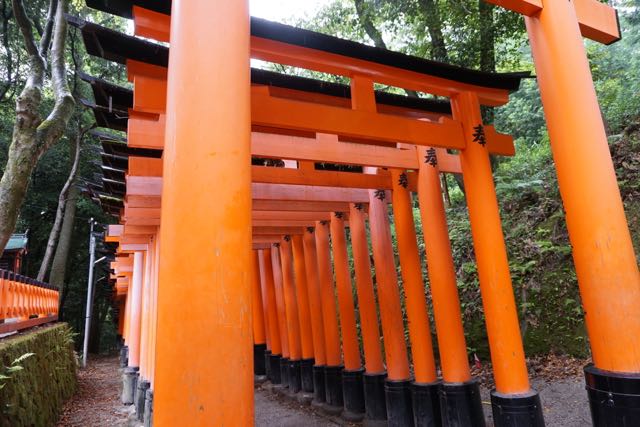
- There are lesser people at this part of Fushimi Inari-Taishi
-

- Walking under the torii gates in Fushimi Inari-Taishi
-
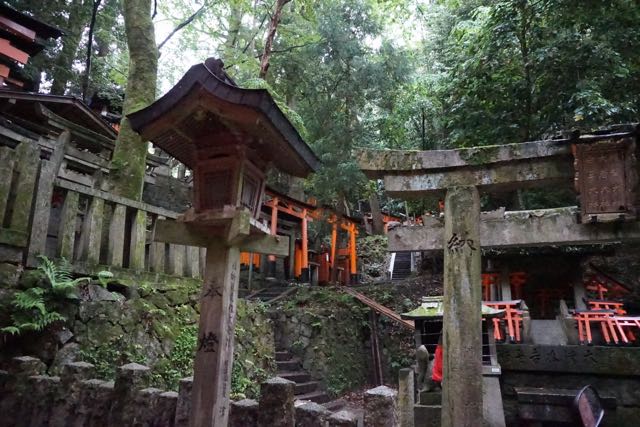
- There are shrines like these along the way to the top of Mt Inari
-

- Another cluster of shrines in Mt Inari
-
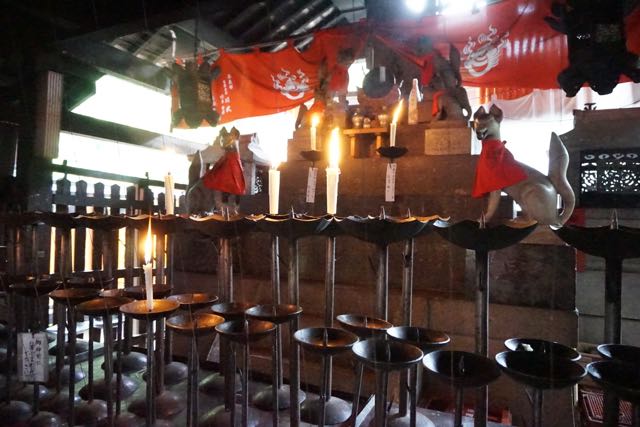
- Kumatakasha, one of the bigger shrines on Mt Inari
-

- My friend with the torii gates
-
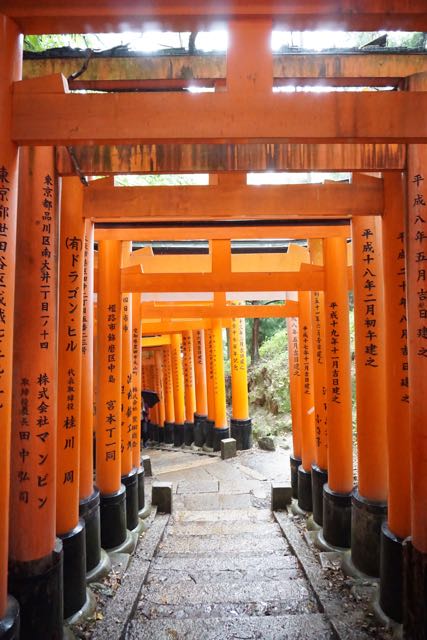
- Torii gates at Fushimi Inari-Taishi that are not crowded
-
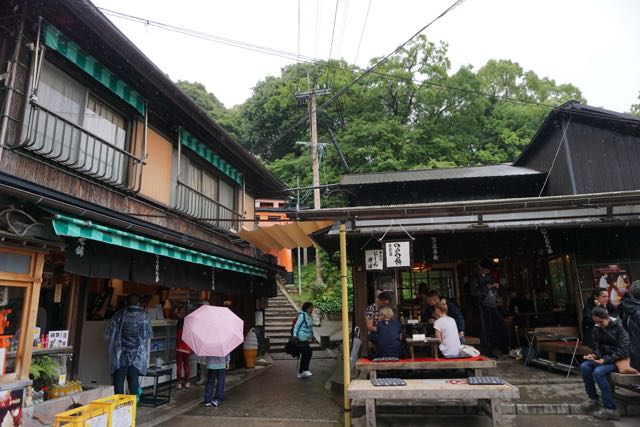
- A rest area on Mt Inari
-
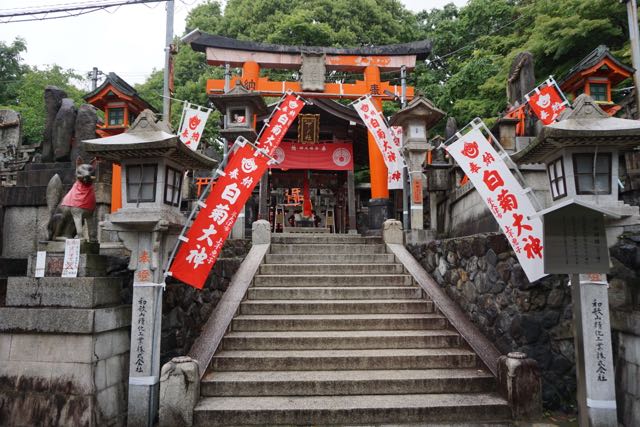
- Another shrine on Mt Inari
-
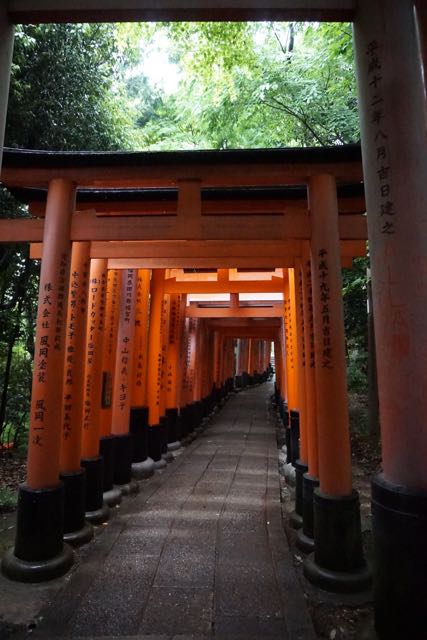
- The higher we go the less people
-

- Taking wefie near the top of Mt Inari
-

- We got good shots of the torii gates
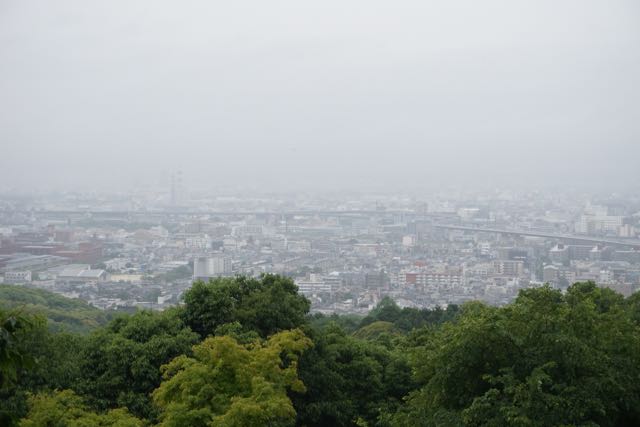
View of Southeastern Kyoto from Mt Inari
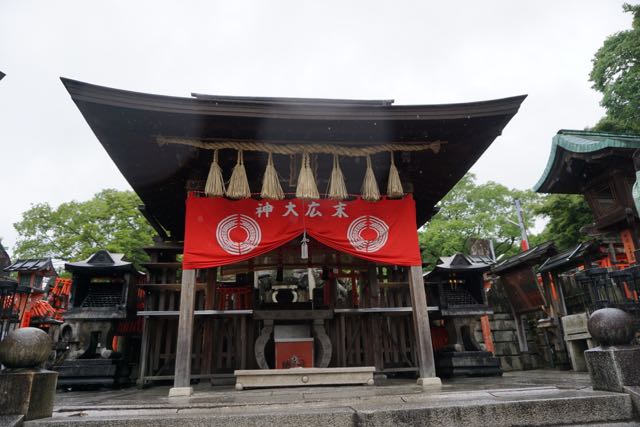
The Shrine on the top of Mt Inari
-

- One last glance of Fushimi Inari-Taishi
-
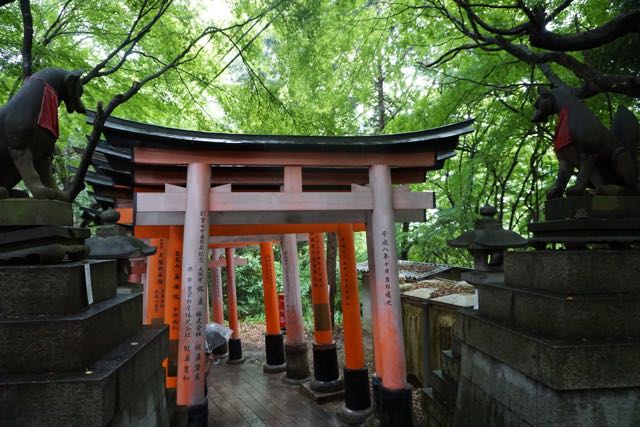
- Some of the torii gates on Mt Inari
-
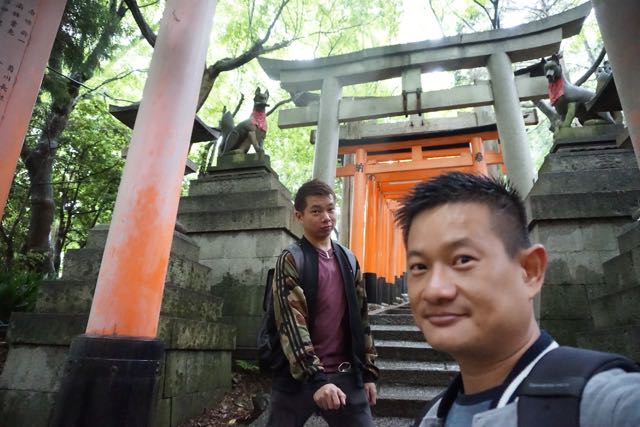
- Starting our descend on Mt Inari
-

- My friend with the torii gates on Mt Inari
-
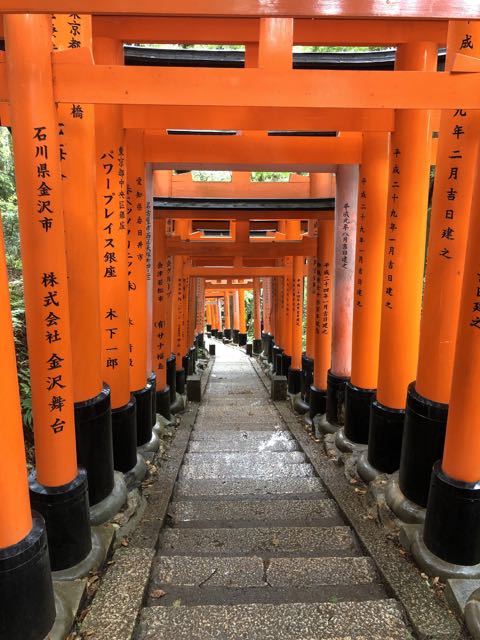
- Some of these torii gates are newly installed
-

- Finally we are at the top of Mt Inari
Ginkakuji (銀閣寺)
We originally planned to visit the Kyoto Imperial Palace after we are done with Fushimi Inari-Taishi. However, due to the downpour, we spent additional time at Fushimi Inari Taishi, which caused us to miss the English guided tour timing. We decided to change our destination and wanted to visit Kiyomizu-Dera. While queuing for the bus, we realised bus number 100 goes to both Kiyomizu-Dera and Ginkakuji. We decided to make a trip to Ginkakuji. Ginkakuji is a short walk from the bus stop we alighted. Along the way, we walked past the famed Philosopher’s walk. I told my friend we would take a look at Philosopher’s walk if we have the time after visiting Ginkakuji.
-
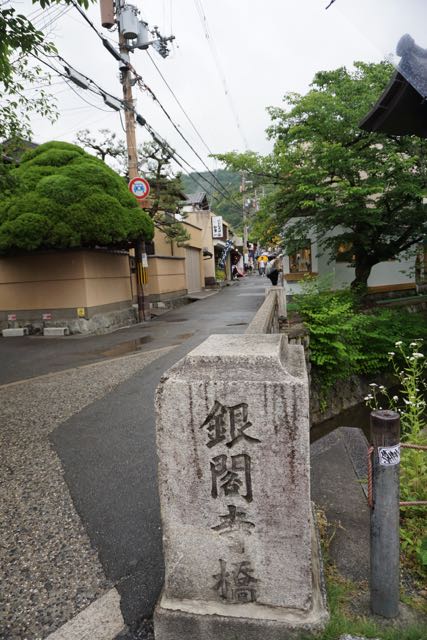
- Start of the street leading to Ginkakuji
-

- Setting out from Kyoto JR Station to Ginkakuji
-
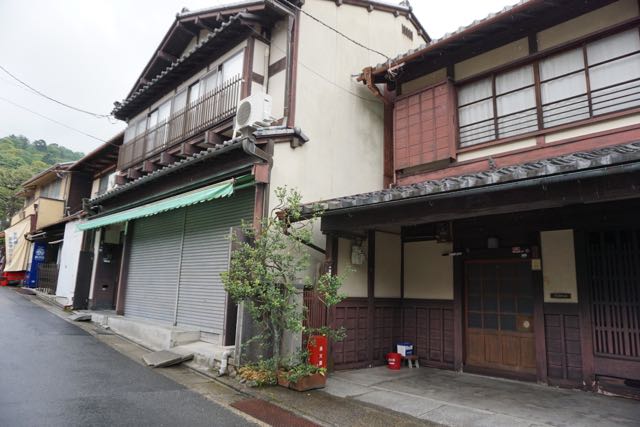
- There are a number of these wooden shops outside Ginkakuji
-

- On the streets outside Ginkakuji
Ginkakuji is built in 1482 and served as the retirement villa for the owner, mirroring the Kinkakuji which was built by the owner’s grandfather. Ginkakuji was converted to a temple after the owner’s death in 1490. The named Ginkaku was given when the owner wanted to cover the pavilion with silver foil, however, this did not materialise till the day the owner passed on. Entering Ginkakuji, there is a short walk from the main gate before we reach the inner gate. Passing the inner gate, the highlight of Ginkakuji, Kannon-den (観音殿)or Ginkaku (銀閣) was on the right of the entrance. Ginkaku is a 2 storey wooden structure sitting by a small pond. The silver pavilion is much simpler and smaller than Kinkakuji, perhaps due to the owner does not want to dwarf the works of his grandfather. Ginkaku still retains its original look (and colour) the day it was built. Similar to Kinkakuji, a silver phoenix taking flight stands on the roof of Ginkaku. Having visited Kinkakuji the day before, looking at Ginkakuji feels like a knockoff from its golden version. Afterall it is modelled after its famous golden version.
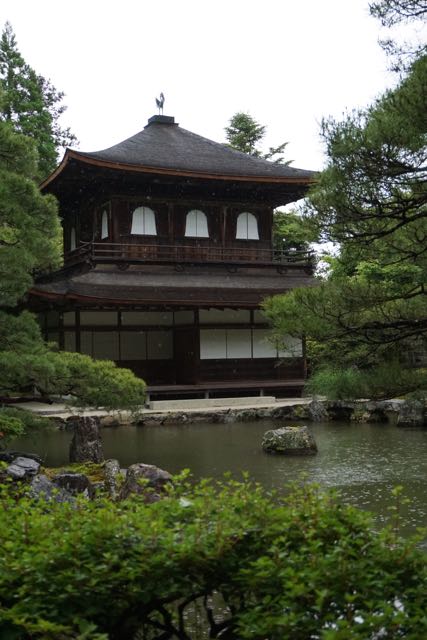
Ginkaku, the Silver Pavilion
-

- Map of Ginkakuji
-
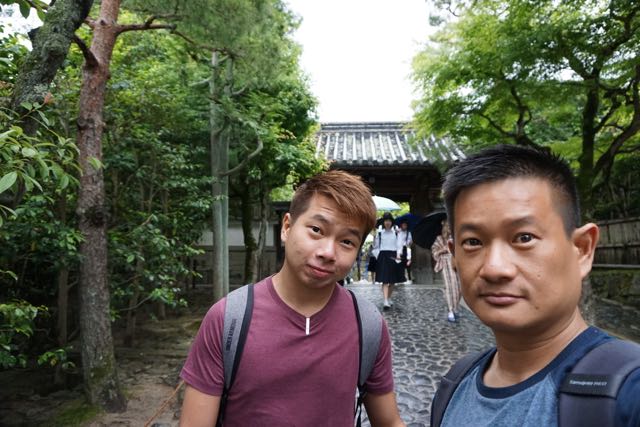
- Taking a wefie at the entrance of Ginkakuji
-
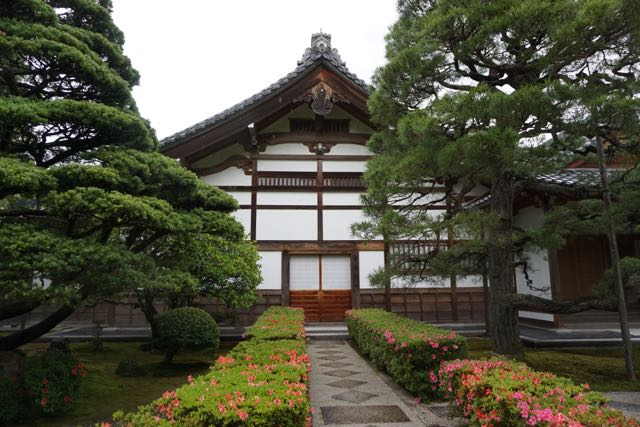
- One of the wooden buildings at the entrance of Ginkakuji
-
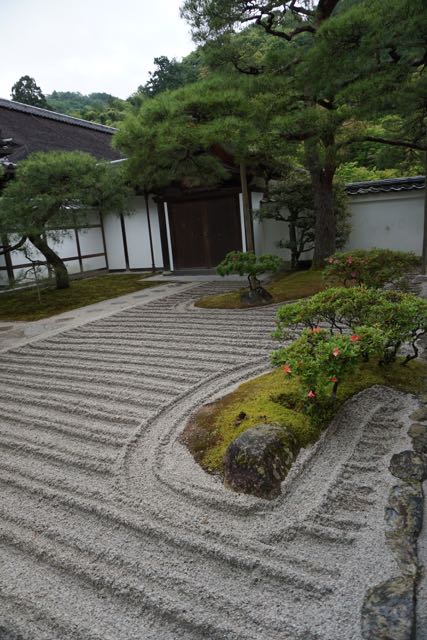
- There are a lot of such zen garden features in Ginkakuji
-
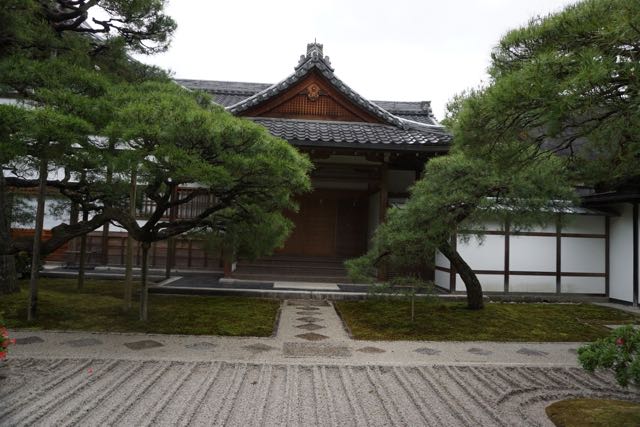
- Wooden buildings and zen gardens are features in Ginkakuji
-

- Ginkaku was supposed to be covered with silver foil
-
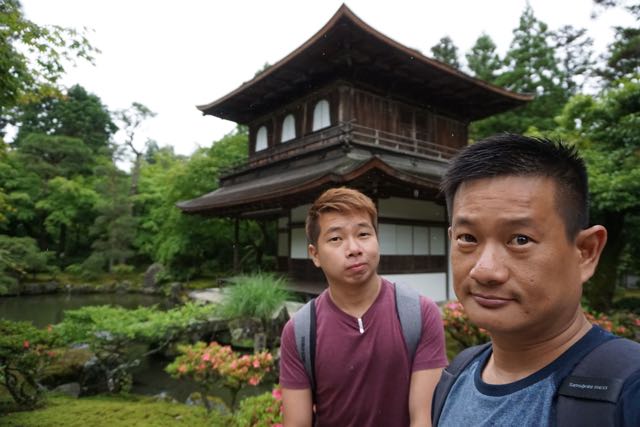
- My friend and I at Ginkaku
-
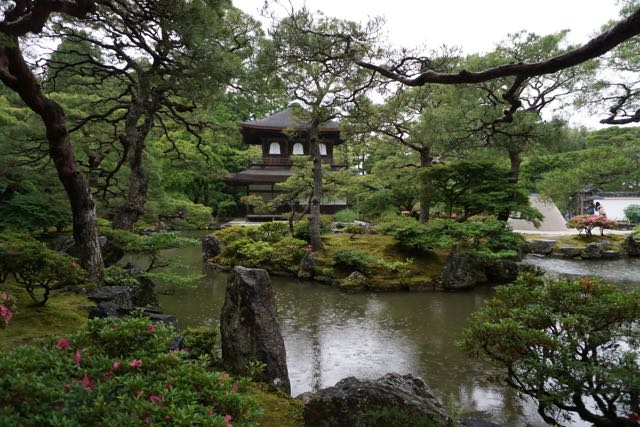
- Ginkaku by the lake
-
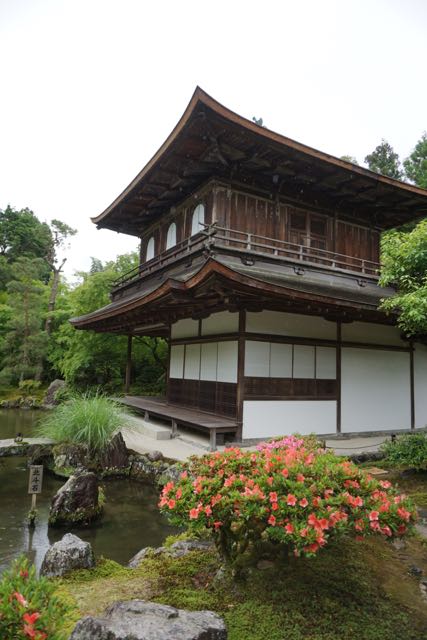
- Close up shot of Ginkaku
Next to Ginkakuji is where Kogetsudai (向月台) is located. The Kogetsudai is a large open space with a volcano structure made of white sand, which represents waves and Mt Fuji. Next to Kogetsudai sits the Hondo (本堂) and Togudo(東求堂) side by side. Built of wood, the Hondo is out of bounds and is one of the largest buildings in Ginkakuji. Similarly, the Togudo is also made of wood, this is the oldest Shoin style building that has survived earthquakes and fires throughout the centuries.
-

- The Mt Fuji shaped Kogetsudai
-
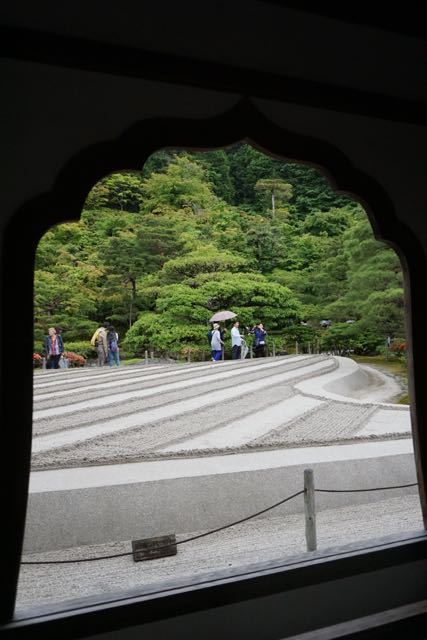
- The sea wave patterned Ginsyadan
-
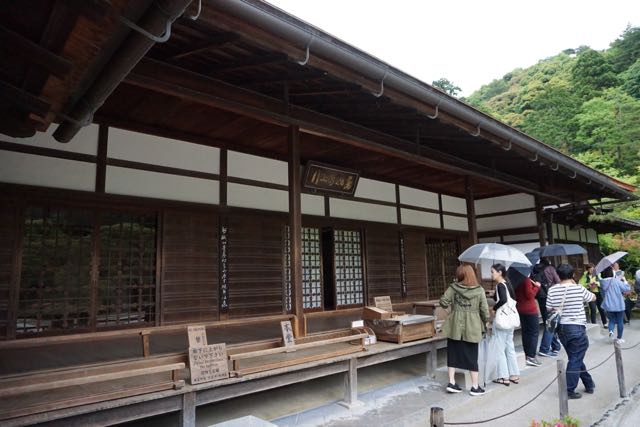
- Outside the main hall
-
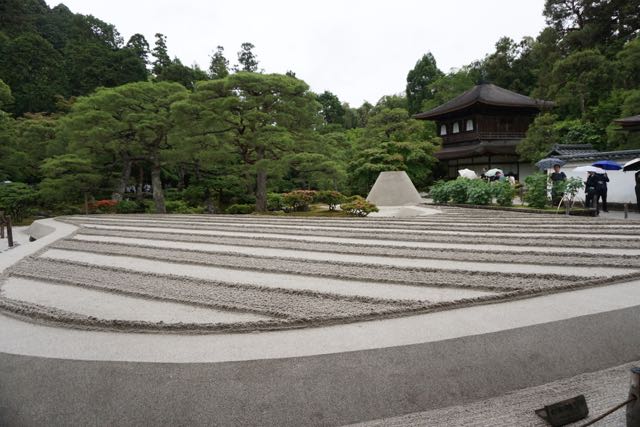
- Ginsyadan and Kogetsudai with Ginakaku
-
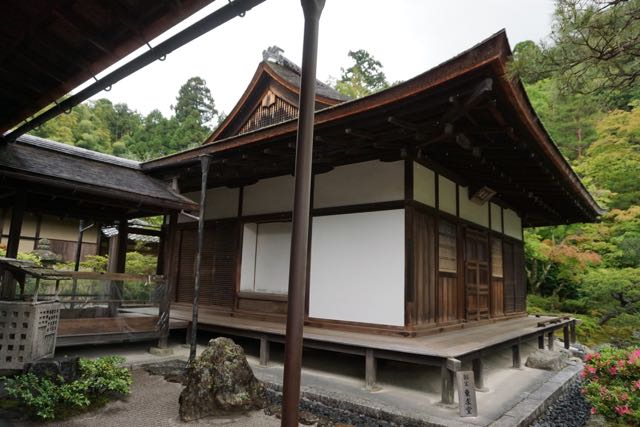
- Togu-do
-
- Taking a wefie at Togu-do
Perhaps the most iconic feature of Ginkakuji is its zen gardens. Almost half the area is dedicated to the zen gardens. There are 4 ponds in Ginkakuji in total, of which 3 are visible to visitors. Passing the Toguko, a path that leads to the moss gardens in Ginkakuji, which leads to a viewpoint up a small hill. Walking around the gardens feels therapeutic and peaceful. From the viewpoint up in the hills, we can see the whole of Ginkakuji and the town in Northeastern Kyoto. Ginkakuji is rather small, it took us 30 mins to finish walking around the grounds of Ginkakuji. Unless one is interested in zen gardens or happens to have spare time (like us), Ginkakuji is hardly worth the time to travel to this part of Kyoto. We originally wanted to take a walk down Philosopher’s Path, however, after walking past, it felt like walking behind someone’s backyard. We gave up the idea of walking down Philosopher’s Path and headed for our next destination in Kyoto.
-
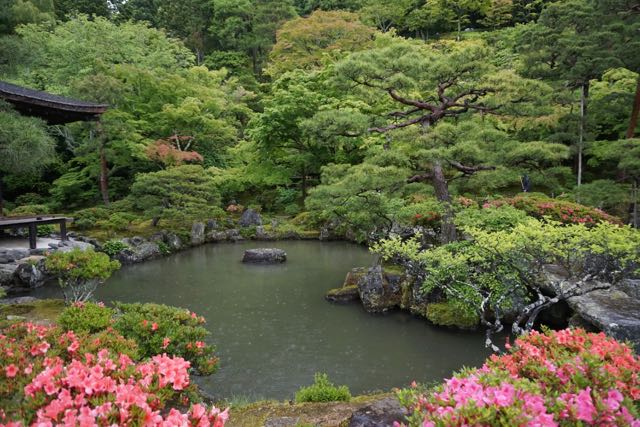
- The zen gardens of Ginkakuji
-

- One of the 3 ponds in Ginakakuji
-
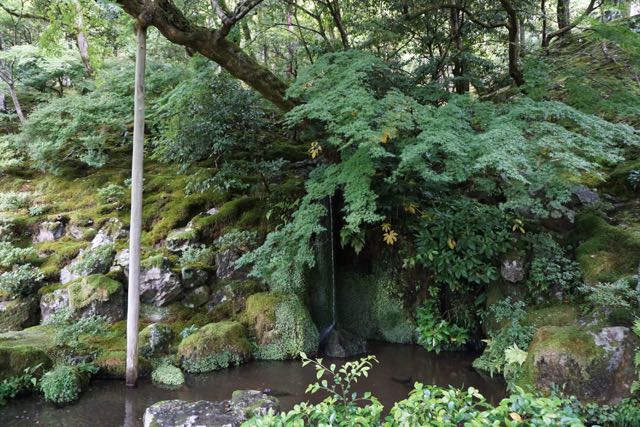
- A small waterfall in Ginkakuji
-
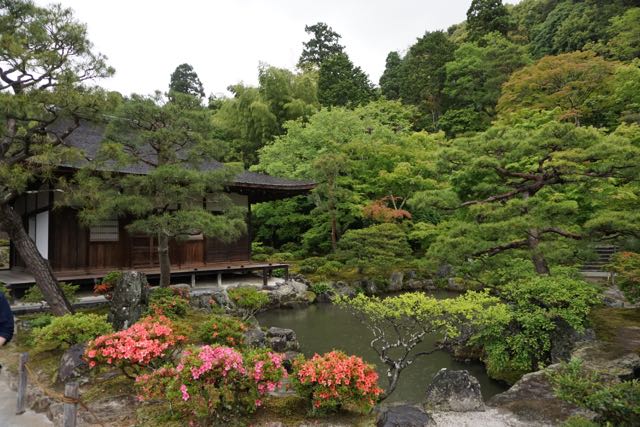
- The pond beside Togu-do
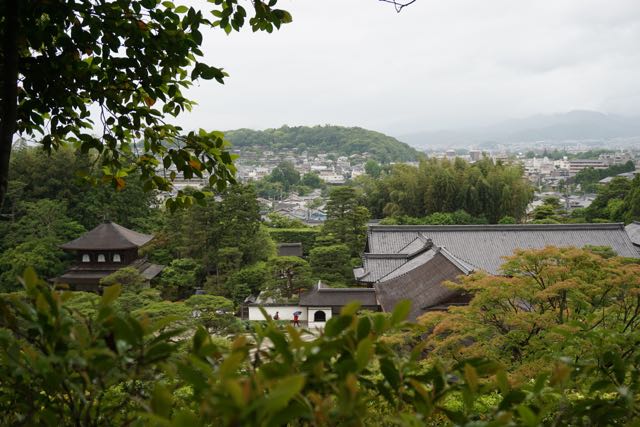
View of Ginkakuji and northeastern Kyoto from the hill in Ginkakuji
-
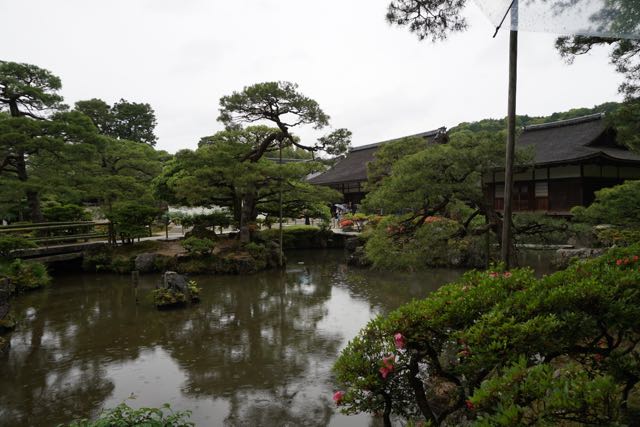
- One of the ponds in Ginkakuji
-
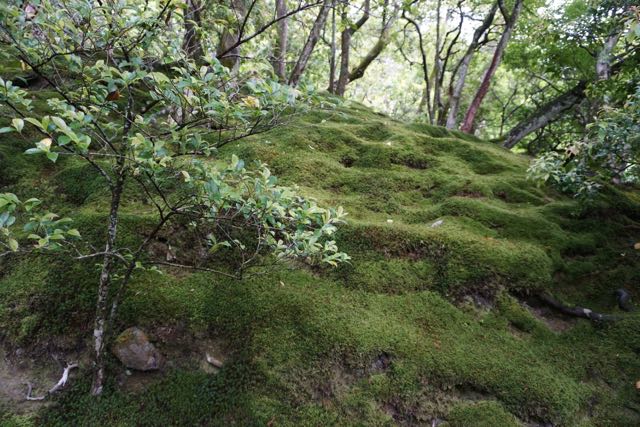
- The moss gardens in Ginkakuji
-

- View from the hill in Ginkakuji
-
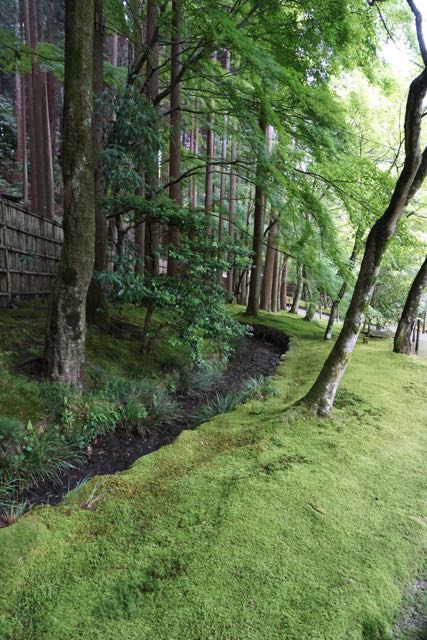
- There are streams like this that flow through Ginkakuji
-
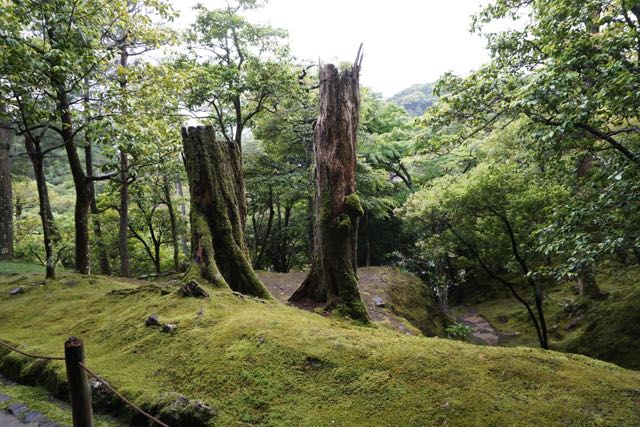
- Walking up the hill in Ginkakuji
-
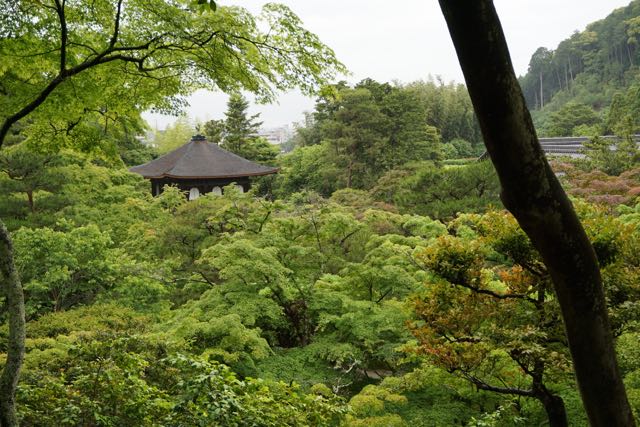
- Ginkaku seen from the gardens
-
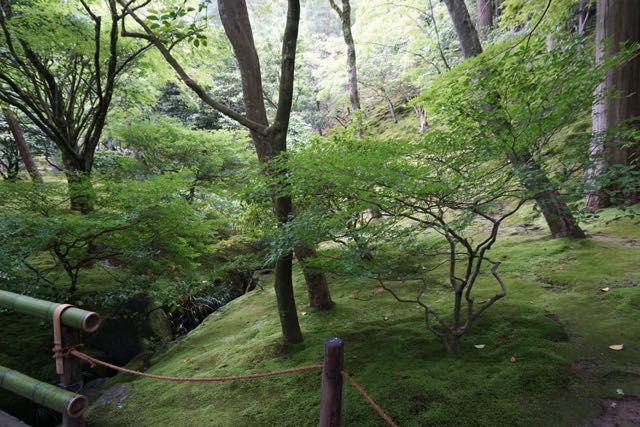
- The gardens in Ginkakuji
Kiyomizu-Dera (清水寺)
We took the same bus that brought us to Ginkakuji to Kiyomizu-Dera, which is one of the more iconic temples in Kyoto. It took us 7 mins to walk from the bus stop to Kiyomizu-Dera, passing by some wooden buildings along the way. Walking on this street feels as if we are being taken back in time. The street is now filled with shops selling souvenirs. Kiyomizu-Dera is at the end of this street, the first indication of arriving at the temple is the bright red 2 stories main gate. The 14m tall Nio-mon (仁王門) is the main gate that welcomes visitors daily. Sitting on top of a flight of stairs, Nio-mon looks commanding. Walking past Nio-mon, just right behind it, is where the Sai-mon (西門) is located. We were not particularly impressed with the Sai-mon, but are more captivated by the 3 stories red pagoda behind it. From Sai-mon, we spotted another pagoda across on the other side of Kiyomizu-Dera.
-
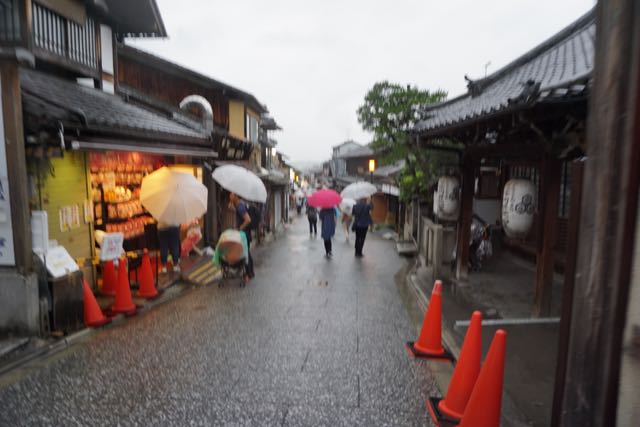
- The streets outside Kiyomizu-dera
-

- Wefie time
-

- The streets outside Kiyomizu-dera gives one a feel of olden Kyoto

Nio-mon, the main gate to Kiyomizu-Dera
-
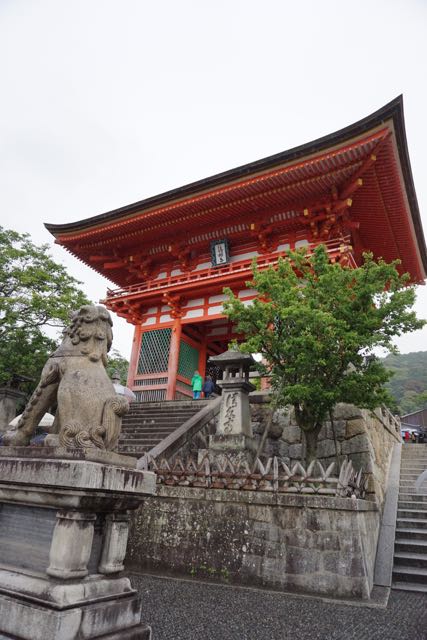
- Nio-mon
-
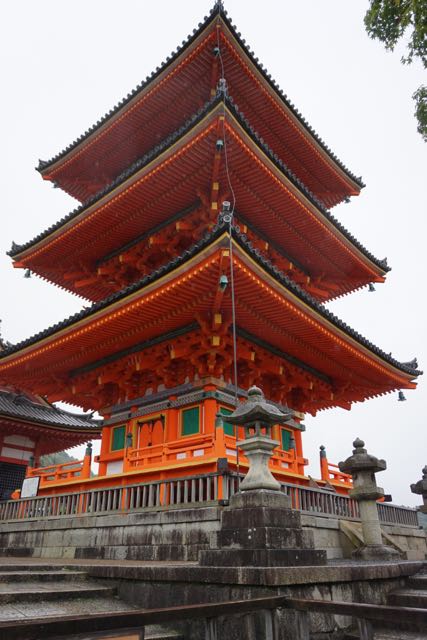
- 3 storey pagoda behind Nio-mon
-
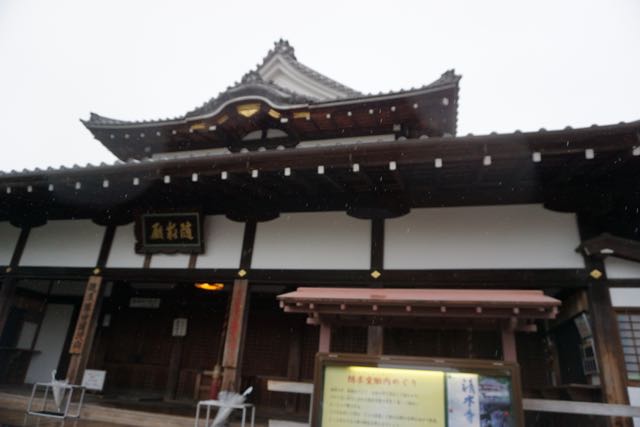
- Zuigu-do Hall behind Nio-mon
-
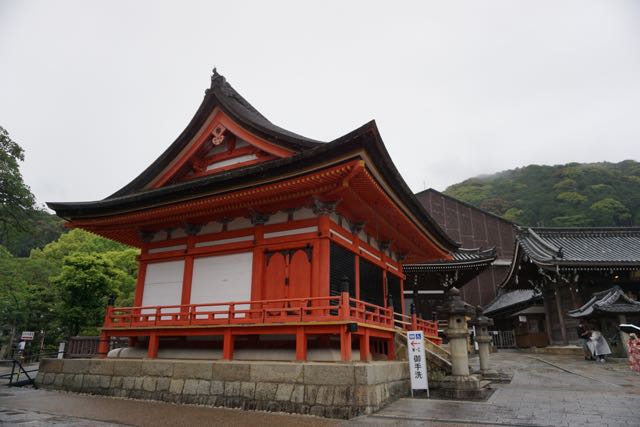
- Another prayer hall at Nio-mon
-

- We can spot another pagoda at Nio-mon
As it was approaching closing time (we only had 45 mins at the time we arrived at Kiyomizu-Dera). My friend and I wasted no time and headed into the main hall – Hondo (本堂). The Stage in Hondo is the most iconic feature in Kiyomizu-Dera, thanks to the location it is built on. The Stage is essentially a veranda, protruding out of the Hondo, built on the steep cliff, supported by 18 pillars that measure 13m tall. However we were a tad disappointed to learn that Kiyomizu-Dera is undergoing preservations works, most the iconic Kiyomizu Stage is covered in canvas and scaffolds, except for a small section that allowed us to take a peek down from the veranda. After offering our respects to the god in Hondo, my friend and I proceeded to the other parts of Kiyomizu-Dera.
-

- Entrance to the main prayer hall, Hondo
-

- Hondo is constructed entirely out of wood
-
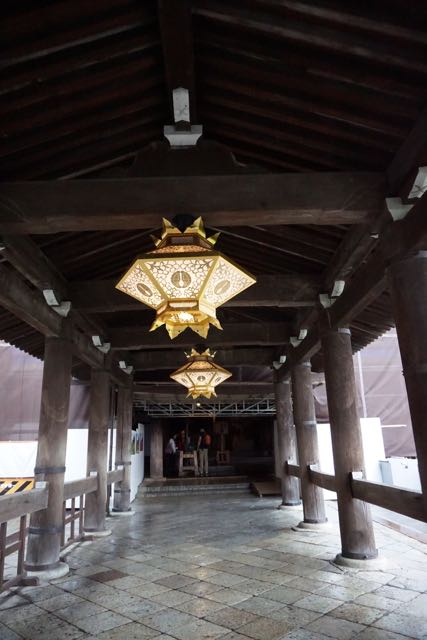
- The corridor leading into Hondo and the Kiyomizu Stage
-
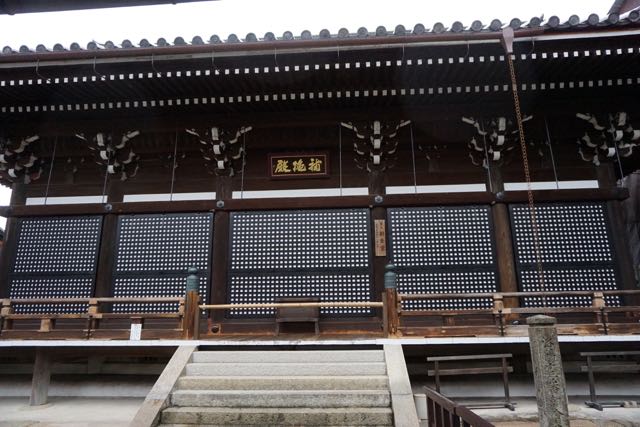
- Another prayer hall next to the entrance to Hondo
-

- Taking a wefie at the corridor towards Hondo
-

- Hondo in Kiyomizu-Dera
-

- The Kiyomizu Stage is under restoration works
-

- There is a small section that is still open for visitors to look down at the Kiyomizu Stage
-
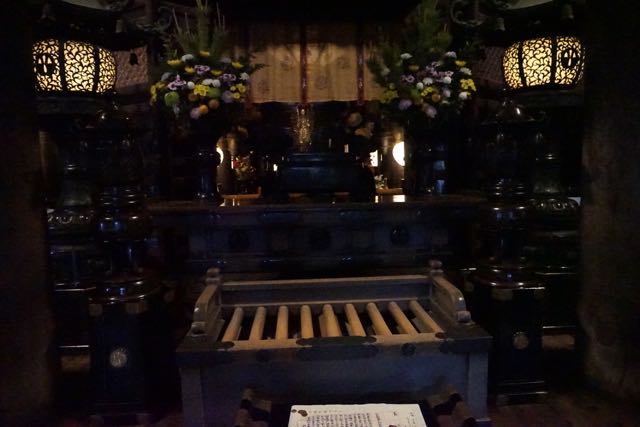
- Inside Hondo
-

- My friend with a gong in Hondo
From Hondo, there is a path that splits into lower and upper path in Kiyomizu-Dera. We took the upper path as this is where we can get a good view of Hondo. There are a couple of buildings on this side of Kiyomizu-Dera, the Okuno-in Hall (奧の院) resembles Hondo, but at a smaller scale. Similar to Hondo, there is a veranda at Okuno-in Hall where we got great shots of Hondo (if not for the hideous canvas). We continued on the path leading to the pagoda located opposite Hondo. From Hondo, this pagoda seems far, but the distance between the 2 structures is not as far as it seems. Arriving at this pagoda, it looks the same as the first pagoda next to Nio-mon. As Kiyomizu-Dera is closing soon (announcements were being made on its closing time), we headed for the waterfalls in the temple grounds.
-
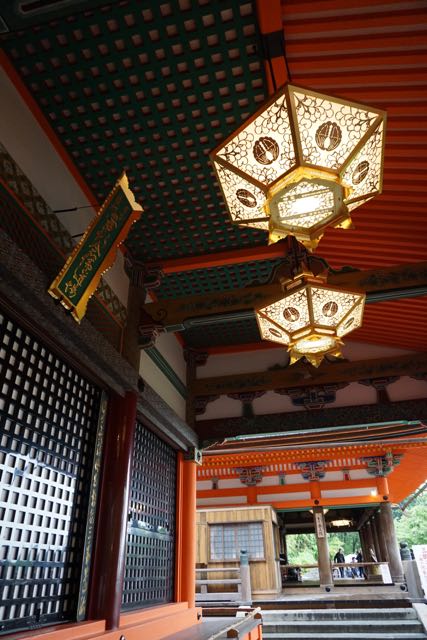
- Okuno-in Hall in Kiyomizu-Dera
-
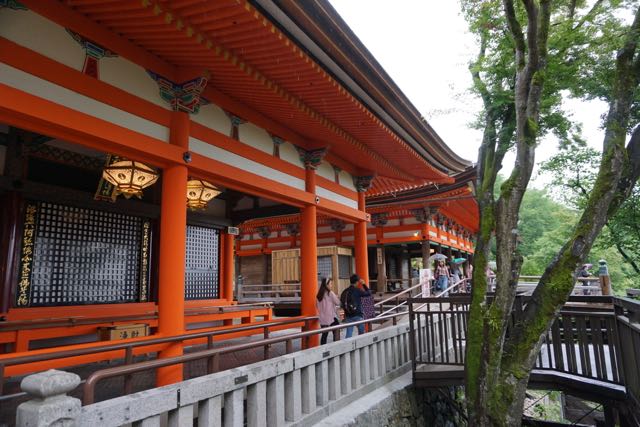
- Okuno-in Hall next to Hondo
-
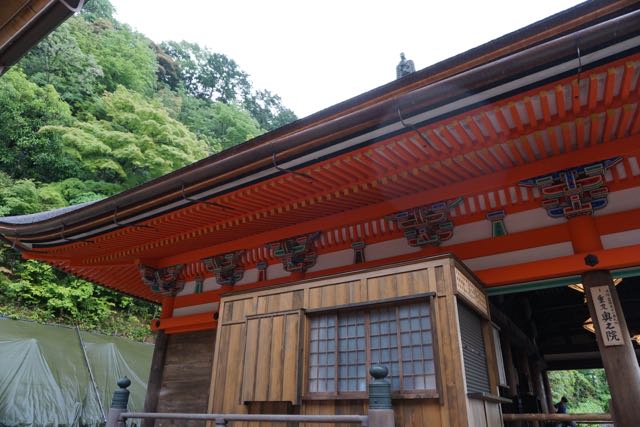
- Okuno-in Hall
-
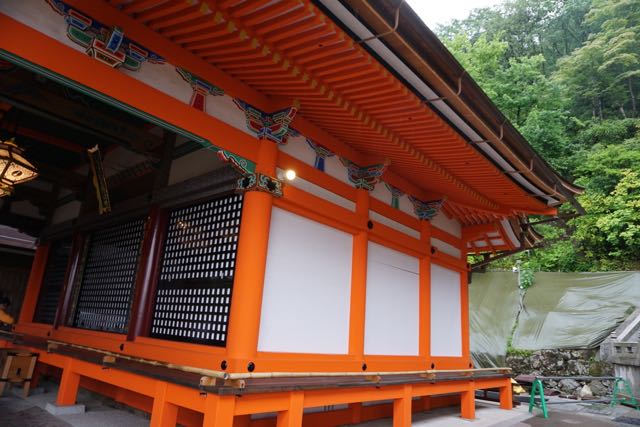
- Part of Okuno-in Hall
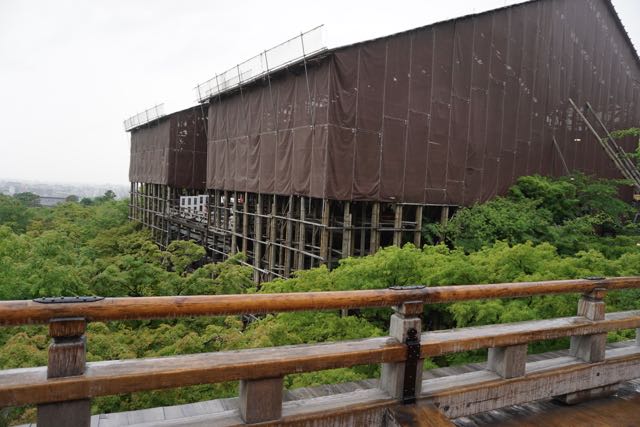
The veranda at Okuno-in Hall is a great picture spot of Hondo
-

- The veranda at Okuno-in Hall is where we area able to capture the entire Hondo
-

- Wefie at the veranda in Okuno-in Hall
-
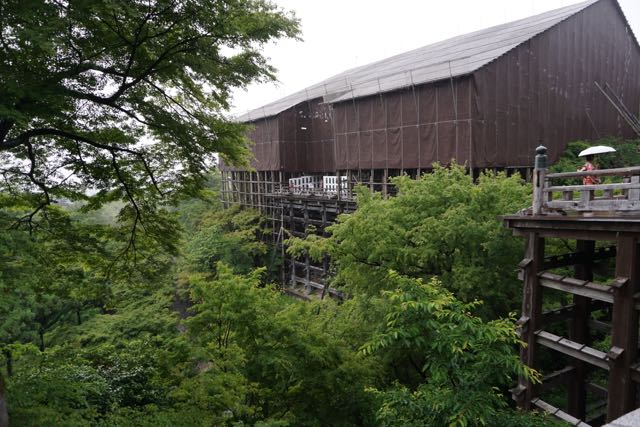
- I can imagine how beautiful Hondo is without the canvas
-
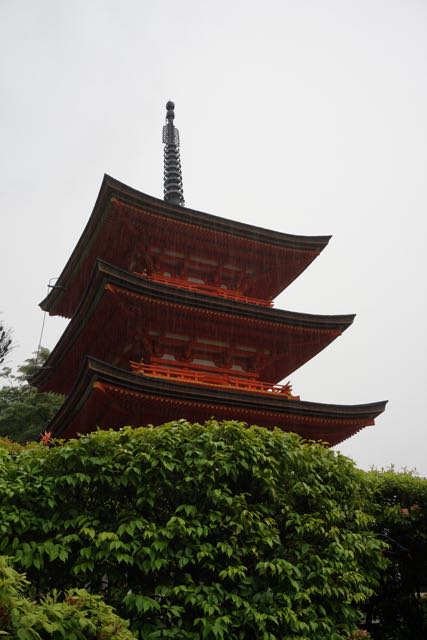
- Pagoda at the other end of Kiyomizu-Dera
-
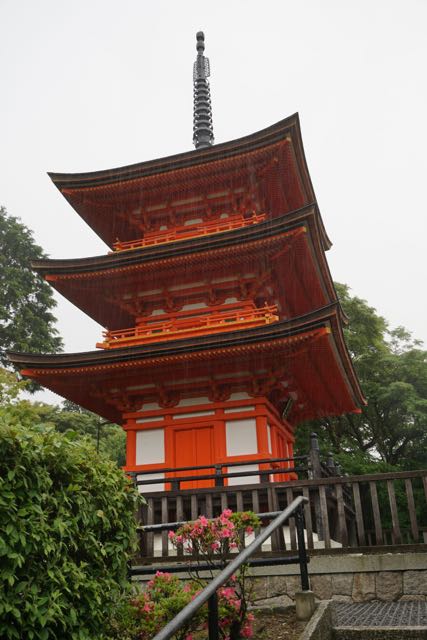
- The 3-storey pagoda opposite Hondo
-
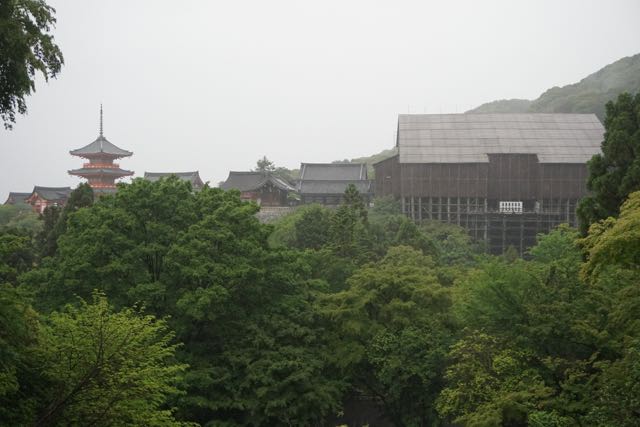
- View of Hondo from the Pagoda
Coming from the pagoda, we took the lower path that leads to the waterfall. Otowa no taki (音羽の瀧) is one the iconic features in Kiyomizu-Dera. It is the pure waters from the mountains here that gives the temple its name. Otowa no taki is a pavilion that has 3 streams of water flowing down from the mountains. It is believed that each of these streams grants different wishes, but drinking from all 3 streams will bring bad luck. I tried drinking from one of the streams, the water tasted like tap water and is very refreshing. One of the good thing about coming to Kiyomizu-Dera when it is about to close is the absence of large crowds, my friend and I did not have to queue for the spring water nor are there crowds that obscure us from taking pictures. If one were to come here when it is about to close (the temple closes at 6pm), do come at least 1½ hours before it closes.
-

- Me drinking from the water at Otowa no taki
-
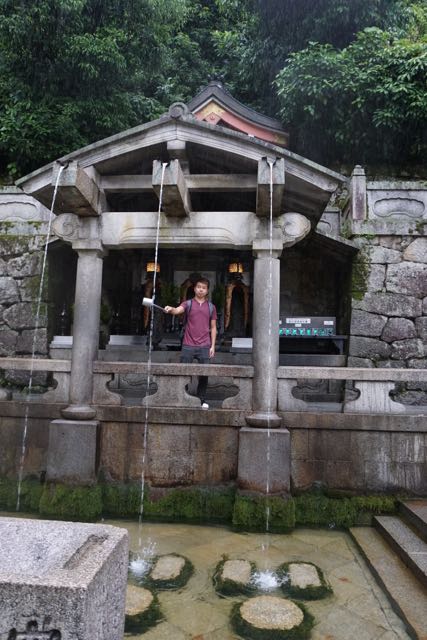
- My friend at Otowa no taki
-

- Hondo viewed from Otowa no taki
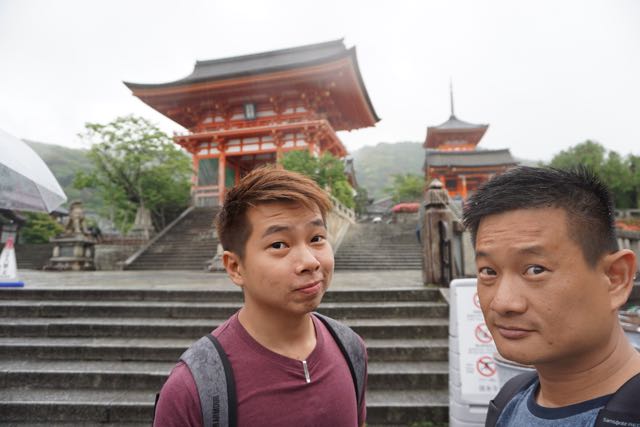
Taking the last wefie before we leave Kiyomizu-Dera
We hurried out Kiyomizu-Dera as it was about to close. As it was dinner time, my friend and I had dinner in one of the small bento eateries (they were delicious and not pricey at all). We spent the rest of the night shopping in Kyoto before heading back to Osaka.
-

- The Bento we ate
-

- Our dinner
On a double-decker train heading back to Osaka