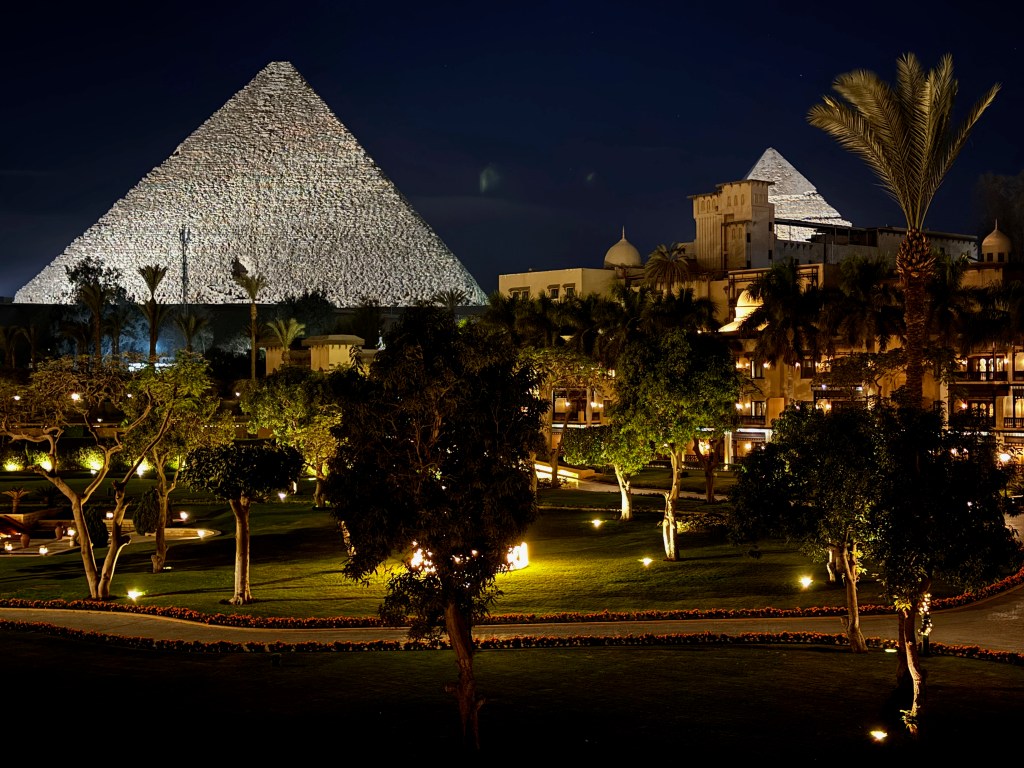
It was the first official day of our trip today, and it was a heavy day full of site visits. So, this will be a long post. We met up with our tour director, Ahmed, an Egyptologist and the rest of the tour group. Ahmed told us that he made some changes to the schedule as it would make more sense to visit Memphis first to set the context and bring us through the historical timeline of ancient Egypt.
Memphis – The First Capital of Egypt
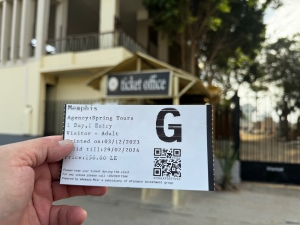
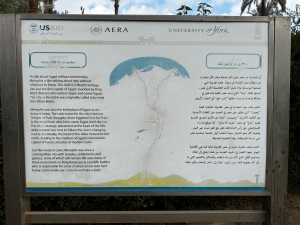
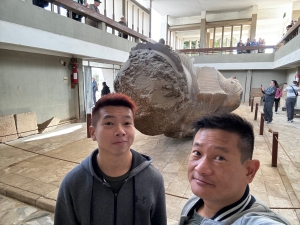
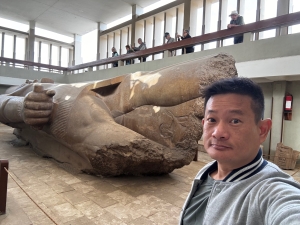
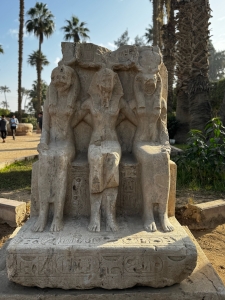
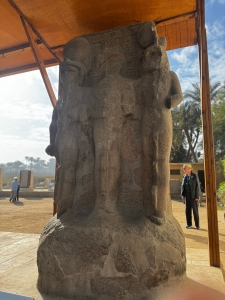
Memphis is essentially a relatively small plot of land with one single building. Memphis was the first capital of Egypt, where Ramesses the Great, aka Ramesses II, ruled Upper and Lower Egypt. This was once the capital of Egypt. Memphis was a metropolis with walls surrounding the city centre during its heyday. Today, we only saw farmlands and a plot of land surrounded by a single metal fencing. We were brought to the lone building, a stone’s throw from the main entrance. Ahmed explained Memphis was where the statue of Ramesses II was uncovered. This place used to be an open-air museum, with this colossal statue exposed to the elements. The building we were standing in was built later to protect the statue from the elements.
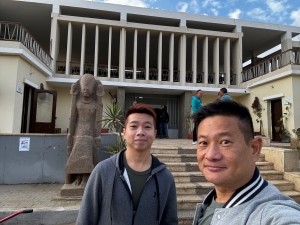
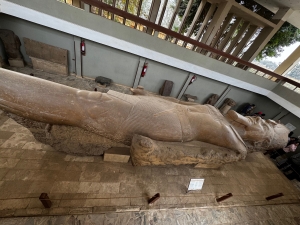
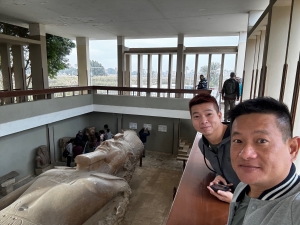
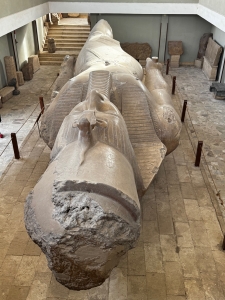
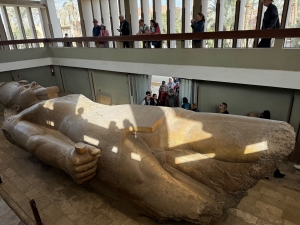
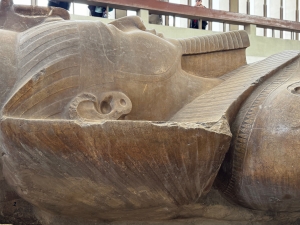
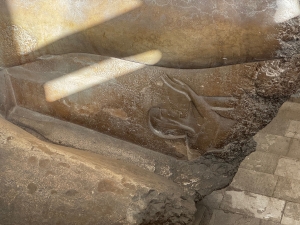
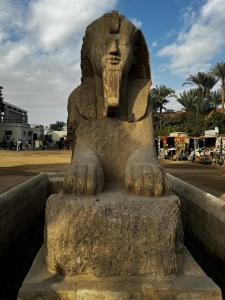
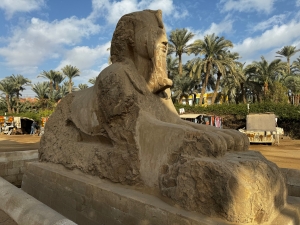
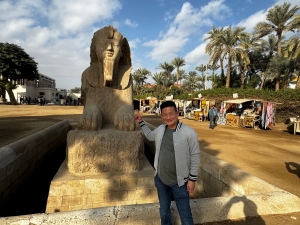
We were brought to the second floor of the building, where Ahmed brought our attention to the large statue with broken lower limbs and its weapons missing. This is the statue of Ramesses II. His facial features and some of the detailed engravings are still visible. The hilt of the weapon on the waist of Ramesses II was tilting to the right, meaning the king could only draw his weapon with his left hand. This is significant because Ramesses II was a benevolent ruler who would only resort to force as a last option. Ahmed narrated the significance of the false beard on his chin, which was braided with the hairs of his forefathers to signify wisdom. The straight beard on the chin of Ramesses II also meant this statue was made when the ruler was alive. We were also told to look out for the engravings of Nefertari, Ramesses II’s queen, on the inner thigh. Before giving us free time to wander in the rest of the museum, Ahmed reminded us about the world’s second-largest Sphinx displayed in the courtyard.


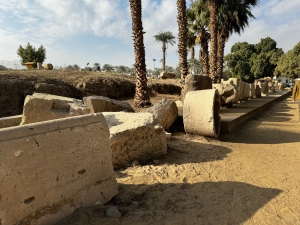
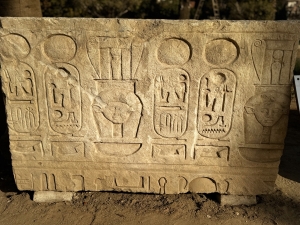
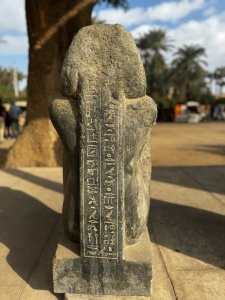
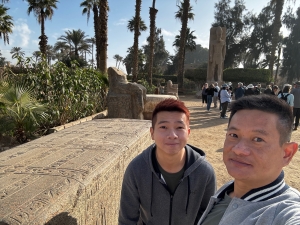
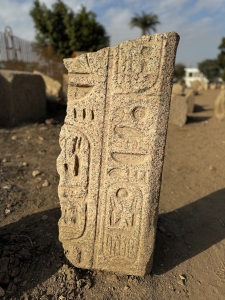
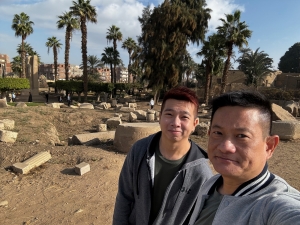
When we saw the Sphinx, we disbelieved that it was the world’s second-largest Sphinx, after the Sphinx at the Great Pyramids. From the looks of it, it did not strike us as large. The facial features on the Sphinx are still very clear, and the body is still intact, as though it was being produced yesterday. The rest of the courtyard was dotted with ruins and some whole statues, as though the Egyptologists were still trying to figure out which part of the puzzle these fit into. I thought the Ramesses II statue and the Sphinx were the two items worth looking at in Memphis. However, without a guide, it would be difficult for anyone to understand the significance of these statues.


A Short Stop at the Carpet School
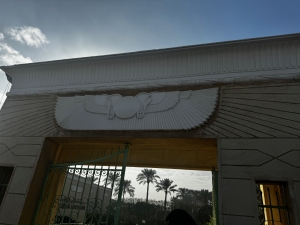
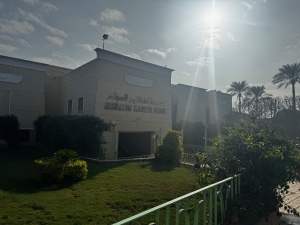
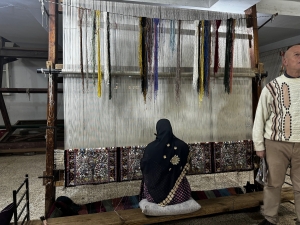
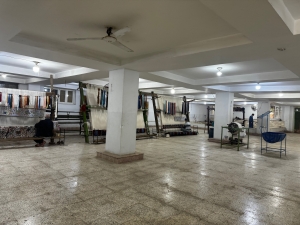
Our next destination after Memphis was the carpet school, where we were shown the different techniques used to weave a carpet. A student will spend three years on average on the most basic carpet technique before moving to more complex techniques. This carpet school also provided a skill set for the locals to gain employment. I was impressed by the speed and the time it took to weave just a simple design, let alone a more complex, dual-sided carpet. We were given a chance to purchase some carpets after the brief.
Pyramid of Teti – The Most Well-Preserved Tomb of a King
We were driven back to the deserts after a 30-minute stop at the Carpet School. Ahmed told us he would bring us to a bonus spot to see the interior of a pyramid. I liked how Ahmed was straightforward in telling us not to waste money to enter the crypts of the Great Pyramid as the tombs were not as well preserved, and there were no inscriptions on the walls. This tomb he will bring us still has the inscriptions and did not incur additional charges. As we drove up a plateau, we could see the distinction in vegetation in the surroundings. Below us was filled with lush greeneries, while the plateau we were on was desert with no signs of life. Ahmed indicated the spot we were in was the start of the Great Sahara Desert that stretches across the African Continent to the Atlantic Ocean. We saw the step pyramids and some piles of rocks as we were driving towards the carpark. According to Ahmed, the pile of rocks we saw were all pyramids but were blasted by an English explorer in search of the pharaoh’s treasures. It is a shame that these tombs were destroyed for one man’s greed.
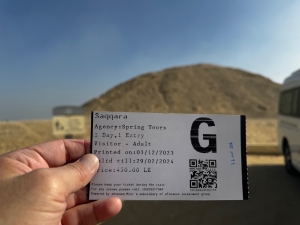
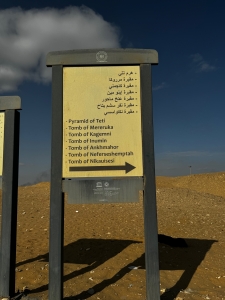
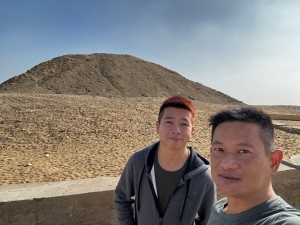
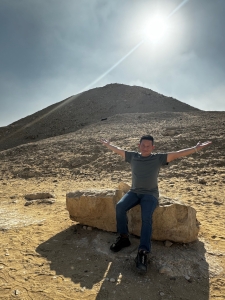
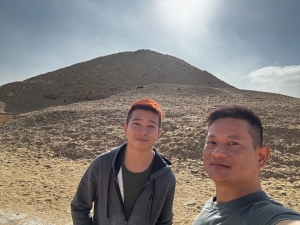
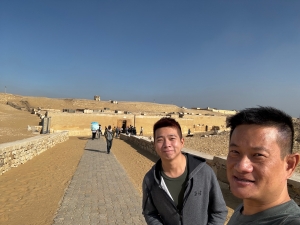
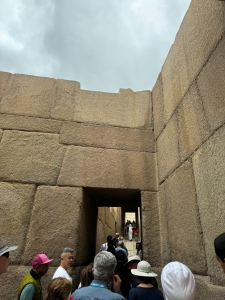
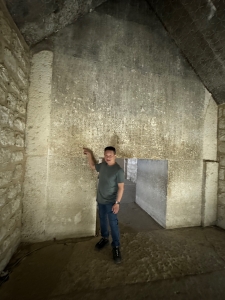
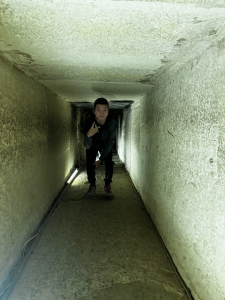
There is only one path from the carpark to the pyramid’s entrance. Despite being destroyed by explosives, we could still make out the general shape of the pyramid from the pile of rocks that sat above its entrance. A small door with a ramp leads to the interior of the pyramid with a gentle recline, but transversing the dark ramp, which was only illuminated by the light from the entrance and some lights in the chamber below, would require one to do a 90° bend. Definitely not for those with claustrophobia. A small room with lots of headroom awaits us at the end of the tunnel. This room has no inscriptions on the walls, making it difficult for anyone to determine who owns the tomb.
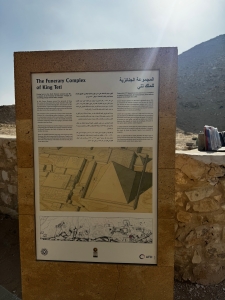

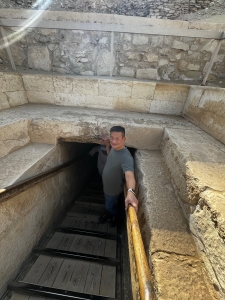
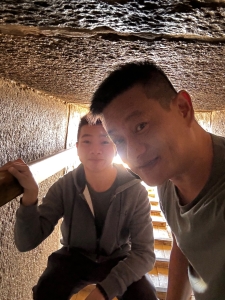
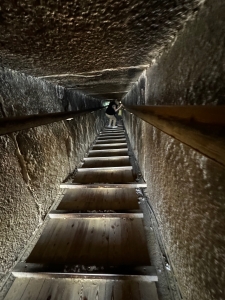
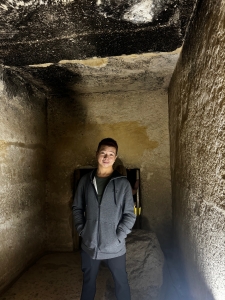
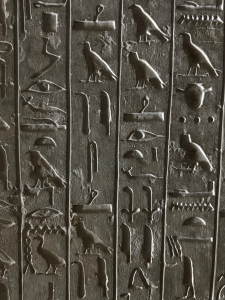
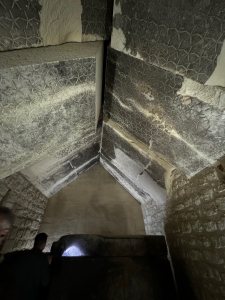
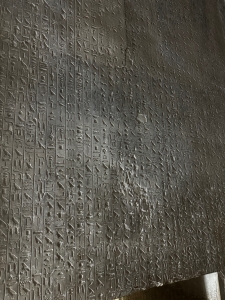
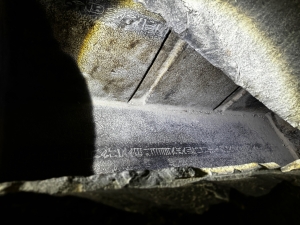
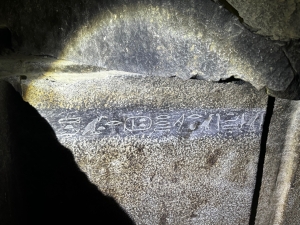
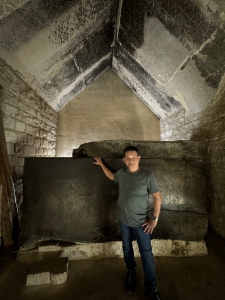
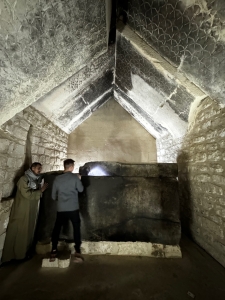
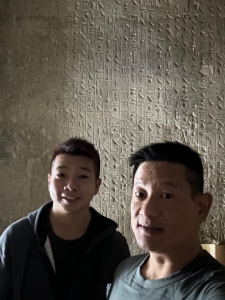
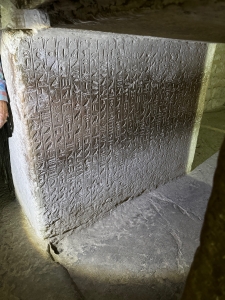
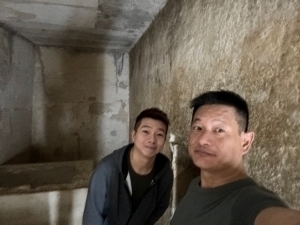
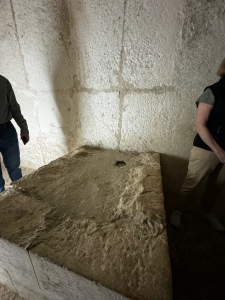
There are two small doors on either side of the room. It was amazing how the pyramid builders filled these two small corridors with hieroglyphic inscriptions. We were led through one of the small doors to the main chamber, where a sarcophagus sits at the end of the room. This would be where King Teti’s coffin was discovered. The roof of this chamber was engraved with stars as though allowing the late king to look into the night sky, and the walls were filled with hieroglyphs. The amount of hieroglyphs was massive, each detailing the life events of the late king. The exterior of the sarcophagus was simple; the staff at the tomb pointed out the hieroglyphs inside the sarcophagus, which had the name of the king engraved in hieroglyphs. We were led into the other door from the main chamber, which would store all the offerings for the king. This is a much simpler room with no hieroglyphs engraved into the walls. It is an amazing experience to have been able to enter a pyramid and see the well-preserved burial chambers of an Egyptian king.

The Step Pyramid of Saqqara – Predecessor of the Great Pyramids
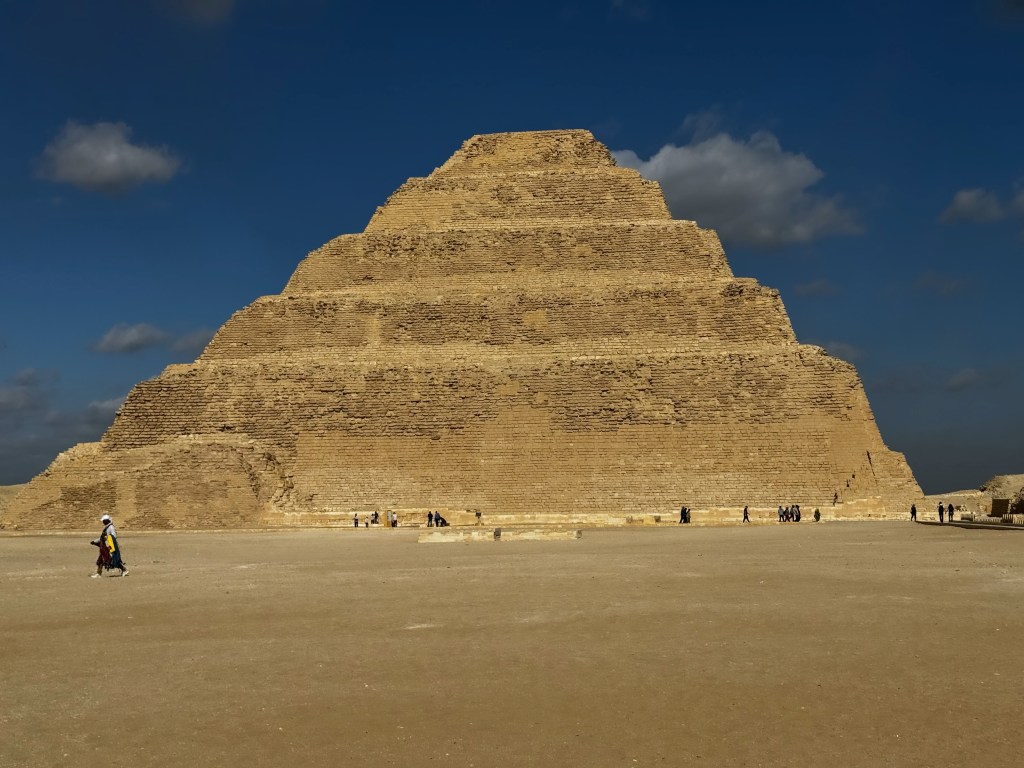
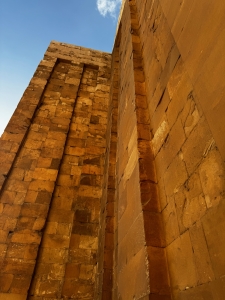
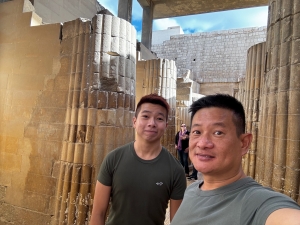
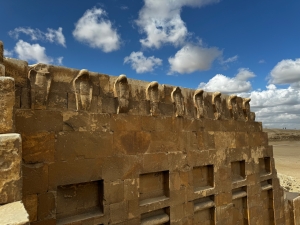
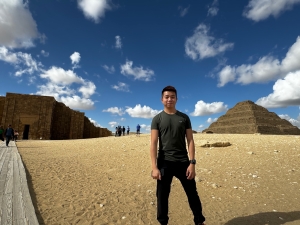
Our next stop is the Step Pyramid of King Djoser, a 5-minute drive from the Pyramid of King Teti. Before entering the complex that leads to the Step Pyramid of Saqqara, Ahmed led us to the complex’s exterior. He explained the wisdom of the ancient Egyptians and their smart engineering principles when building the pyramids and the buildings. All these buildings were built at about 80° inwards, so when an earthquake hits, these buildings stay intact as the force of the stone blocks acts against each other to prevent collapse. Ahmed led us into the complex building through a corridor with columns with a brick wall extending to the back wall, forming 24 individual semi-open spaces. Ahmed explained that these semi-open spaces were chambers used to install statues of the gods worshipped in each state of Egypt. During its heydays, this corridor will be filled with statues of gods.
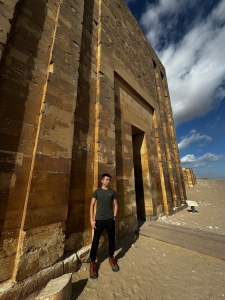
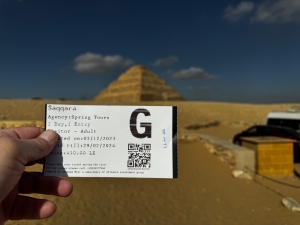

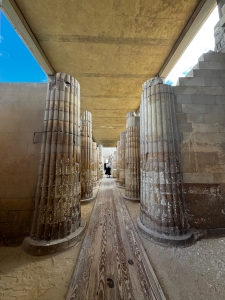
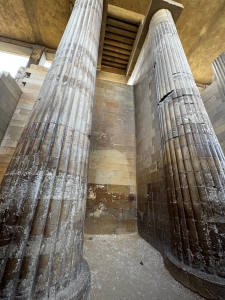
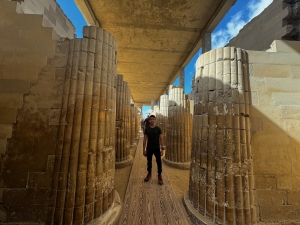
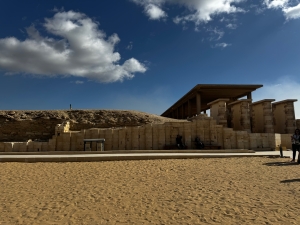
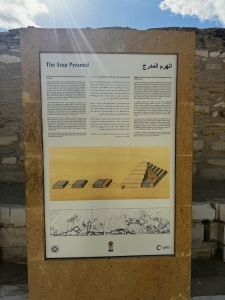
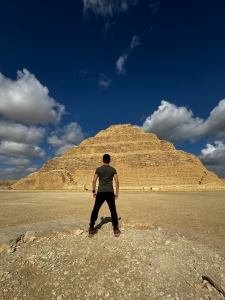
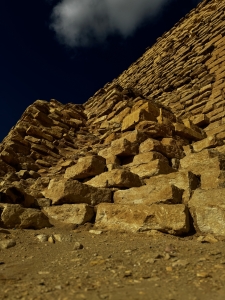
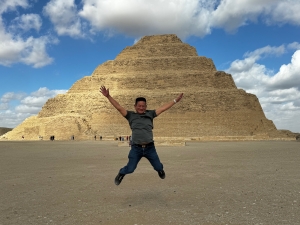
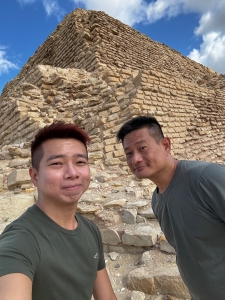
At the end of the corridor, we came to a huge open space, where the Step Pyramid of King Djoser sits at the back of the courtyard. This 4,700-year-old Step Pyramid is the oldest pyramid built by the ancient Egyptians, whose chief architect was Imhotep. Ahmed explained that traditionally, the pyramids were built in time for the death of kings, and the original Step Pyramid was smaller in size. However, when the Step Pyramid was completed, King Djoser was still healthy. Imhotep was an ambitious architect who wanted to challenge himself by building a larger pyramid. Instead of tearing down and rebuilding, Imhotep added to the pyramid’s dimensions from the base up, retained the 80° inward incline of the stone blocks, and made it in time to prepare for King Djoser’s demise. This Step Pyramid would subsequently be the basis for constructing the Great Pyramids of Giza. Looking at the six-layered Step Pyramids from the courtyard, I was truly impressed with the engineering feat achieved 4,700 years ago. Each stone block did not look that large from afar. But as we walked up to the pyramid, we were in awe of the sheer size of each block. Up close, the pyramid looks like a pile of rocks stacking on top of each other, but from afar, each stone block was stacked with a purpose and precision to form this megastructure of the ancient world. There was a ramp leading into the pyramid; I am not sure if we were required to pay additional to enter the pyramid. Also, in the interest of time, we explored the courtyard instead.
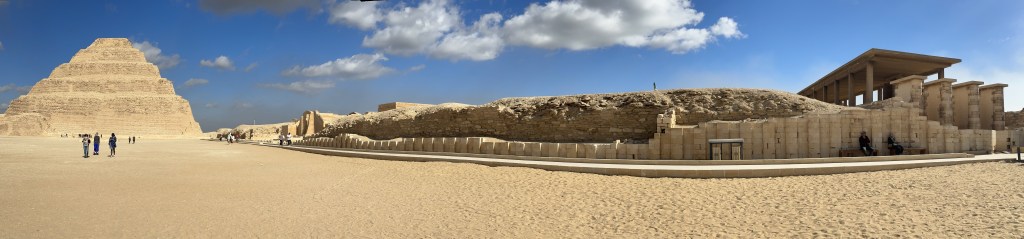
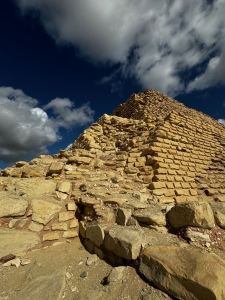
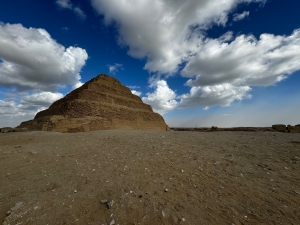
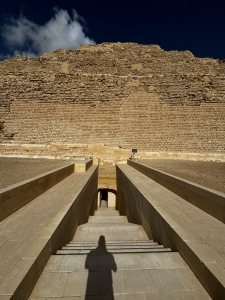
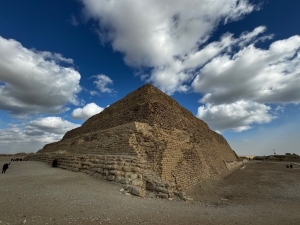
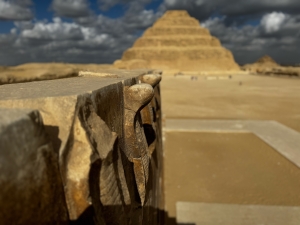
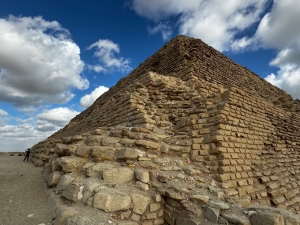
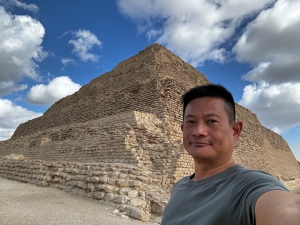
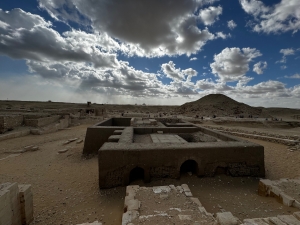
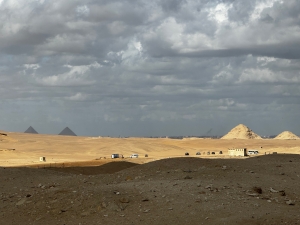
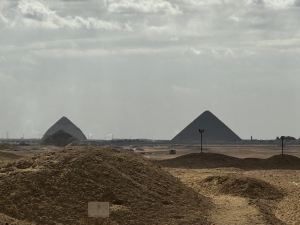
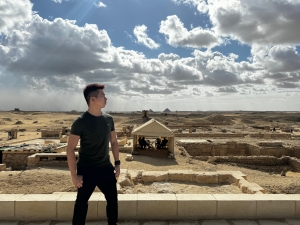
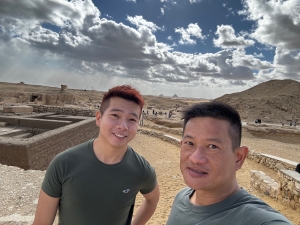
As we walked up a slope, we could see the Great Pyramids of Giza and numerous destroyed pyramids sitting in a distance. Miles and miles of sand stretch as far as our eye can see, seemingly with no end. We also spotted the Bent Pyramids sitting far into the desert. This Bent Pyramid was thought to be a transition from the Step Pyramids to the smooth-sided pyramids, such as those of King Khufu (aka the Great Pyramid in Giza). We spotted some building ruins at the side of the courtyard at Saqqara. What was interesting was a deep trench with a staircase leading deep into the earth. This could be where the ancient Egyptians entered the tomb to serve King Djoser after his death. After visiting the Step Pyramid of Kind Djoser, we head for a delicious Egyptian lunch before heading for the highlight of the entire trip – The Great Pyramids of Giza.


The Great Pyramids – The Wonder of the Ancient World
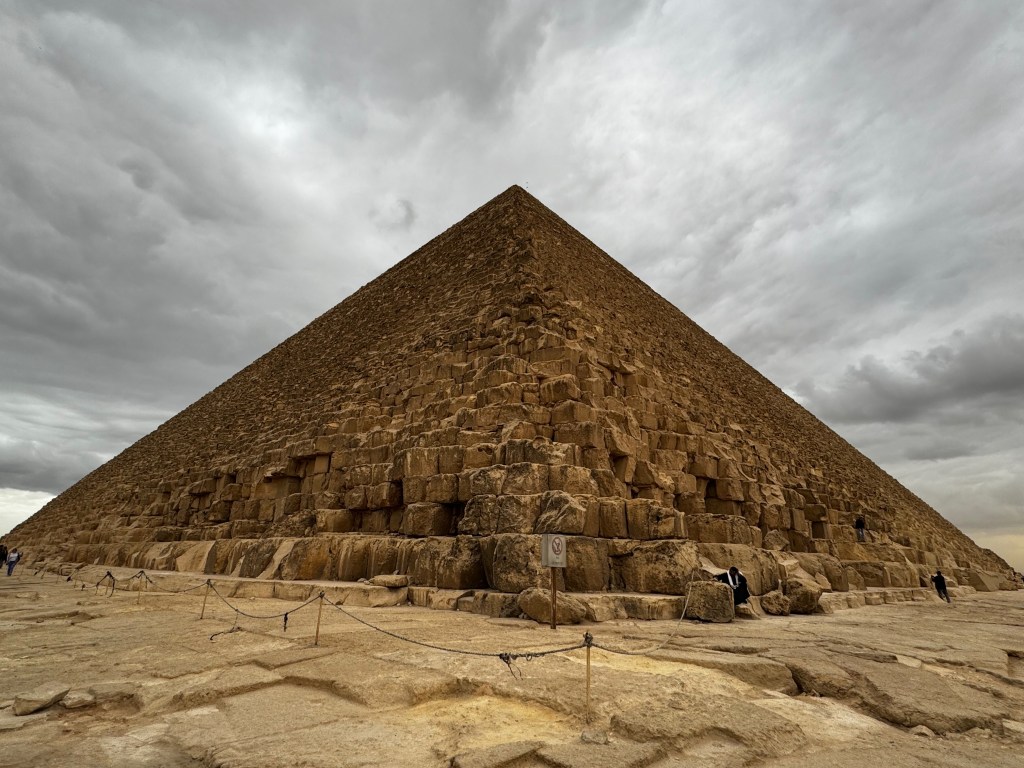
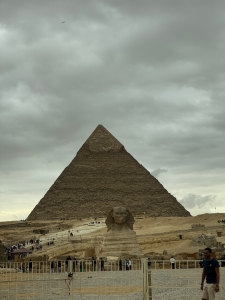
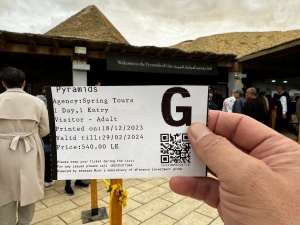
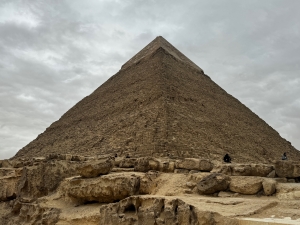
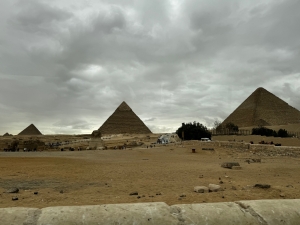
We were driven to the main entrance to the Great Pyramids of Giza (the one near our hotel). As with all monuments in Egypt, we would need to send our bags through X-ray machines and pass through metal detectors. As we were driving to the carpark, Ahmed told us that the 4,500-year-old Pyramid of Khufu, the world’s largest pyramid, soared 146m into the sky, with the next two pyramids being built smaller than the one before. This was done to respect their predecessor and their achievements for the country. The magnificent Pyramids of Khufu and Khafre were the skyscrapers of the ancient world. No wonder it clinched the title of one of the seven wonders of the ancient world til today. Ahmed guided our attention to the tip of the Pyramid of Khafre, where the top part was still covered in smooth stone, and this would be how the pyramids would look when they were completed. Due to erosion, we were left with the interior stone exposed to the world. We were also advised on how to deal with the touts around the pyramid grounds. Before long, we arrived at the carpark, where we were given some free time to wander around the Great Pyramids. The carpark wedges between the two larger pyramids, the Pyramid of Khufu (the largest) and the Pyramid of Khafre. We had spent some time sitting on a bench, drinking the tea our driver offered us, taking in the majestic sight these two pyramids offered. The feeling was so surreal that we couldn’t believe we were actually at ground zero, looking at these magnificent giants that have intrigued the world for centuries.
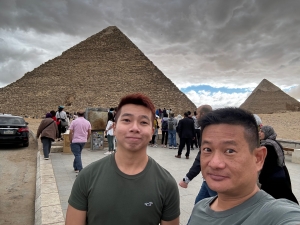
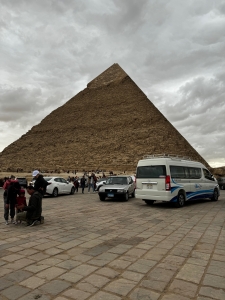
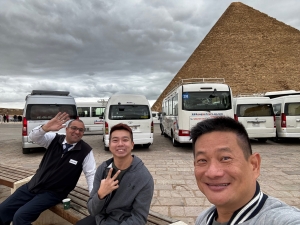
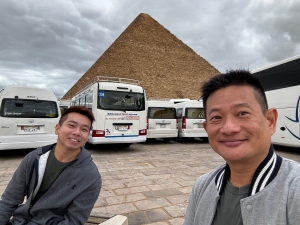
We were given 30 minutes to take pictures and explore the grounds of the two pyramids. We got going after drinking the tea. Our first stop was the Great Pyramid of Khufu. It is one thing to see the pyramid from a distance; it is another to get close to it. Each stone is as tall as a grown man, and from the base of the pyramid, looking up to the top, there were countless of these stones. We can’t help but wonder how the ancient Egyptians did it. How were they able to build something like it at the edge of the desert with no modern equipment, which has stood for nearly five millennia? We went up close to touch some of the stones at the base of the Pyramid of Khufu, marvelling at the extraordinary feat achieved by the ancient Egyptians. Along the way, we were approached by the touts asking if we wanted a camel ride or taking some photos with the camels. No wonder this area was titled the Tout Central of Egypt. As we were taking some photos, we were approached by one of these touts offering to show us a place to take some photos. As we were minding our business, the tout suddenly turned and asked for money, stating that we were taking photos at the spot he recommended. He hustled us for 10 minutes, and I told my friend to walk on and ignore him. I assertively told him no when he grabbed my friend by his arm and pulled him to walk next to me, with me sandwiched between the tout and my friend. This is when the tout gave up and went hunting for the next target. Most touts are not as aggressive here, and they would leave us alone when we politely told them no. Having shaken off the tour, we went around to take pictures of the Pyramid of Khufu. Ahmed told us the best spot to take pictures is the corners of the pyramids. We were glad that we followed his advice. We could capture the pyramid shape and majesty of the structure at its corners.
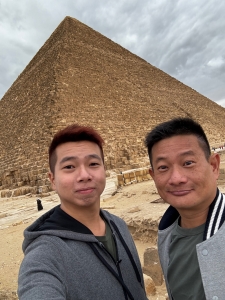
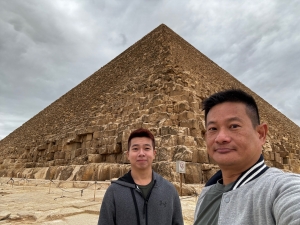

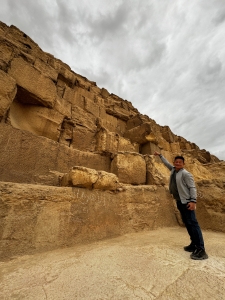
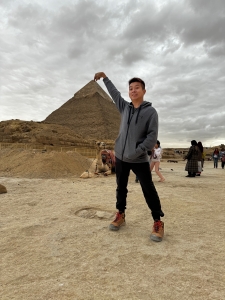
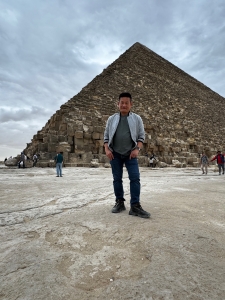
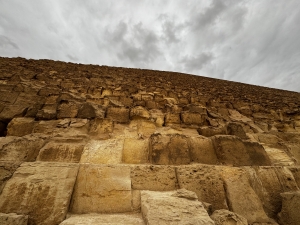
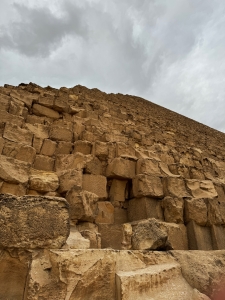
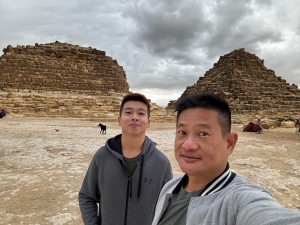
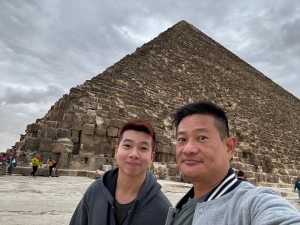
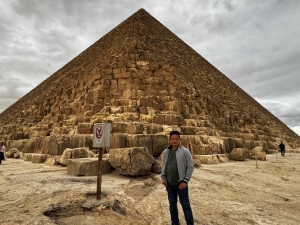
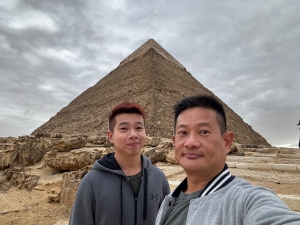
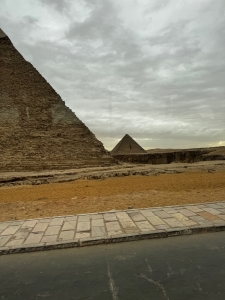
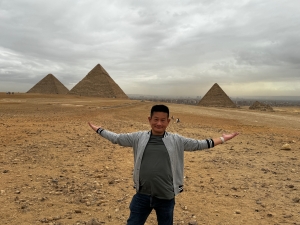
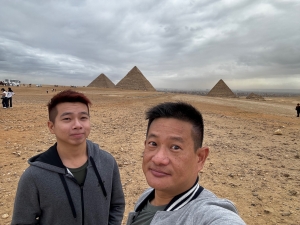
Walking one round by the parameters of the Pyramid of Khufu, dealing with the aggressive tout and taking pictures already took us 20 minutes. We were only left with minutes to take pictures of the Pyramid of Khafre (the one with the smooth top). We did not have sufficient time to go next to this pyramid, but we got close enough to see the smooth surface that still occupied the top of the pyramid, like the snow on a mountain. Despite not being the largest pyramid, the Pyramid of Khafre was still impressive. We went near enough to take pictures with the pyramid before returning to the bus. We were driven to a spot where we could take good shots of the three pyramids together. Standing beside the Pyramids of Khufu and Khafre, the last pyramid, the Pyramid of Menkaure, seem like a child. We were offered 5 mins of photo time, sufficient for us to take our pictures with the three pyramids in one shot.

The Sphinx – Guardian of the Great Pyramids
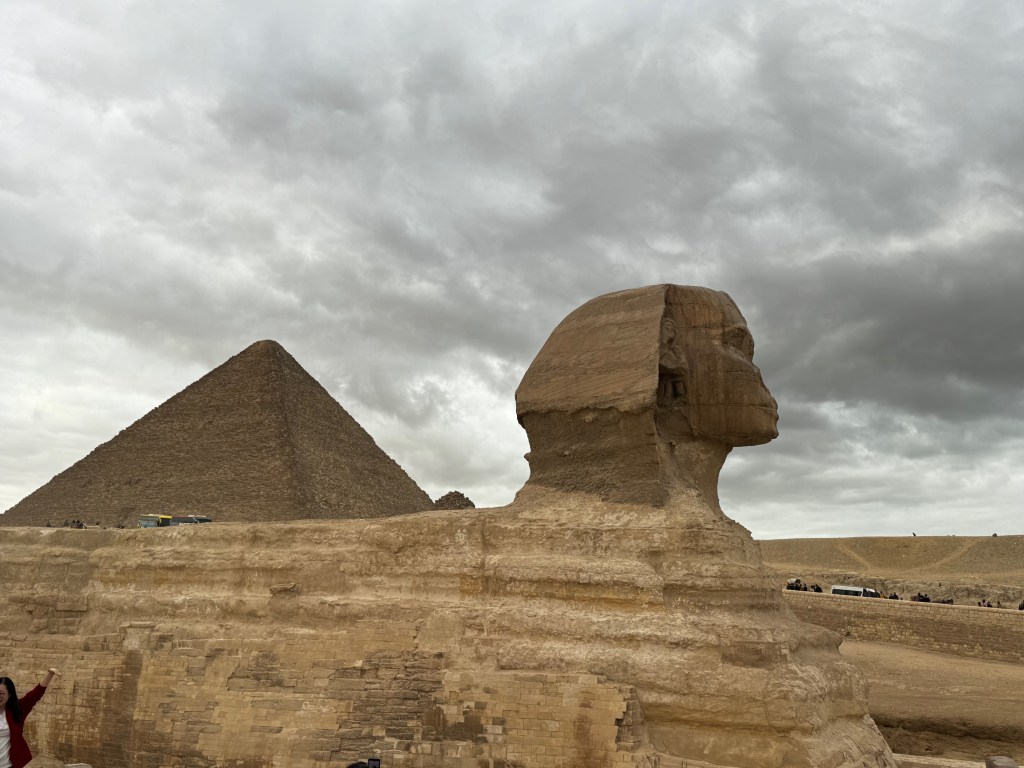
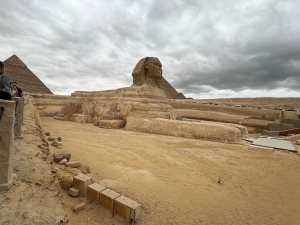
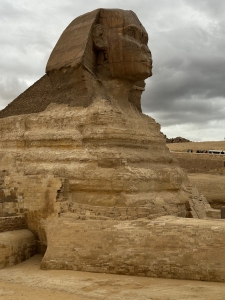
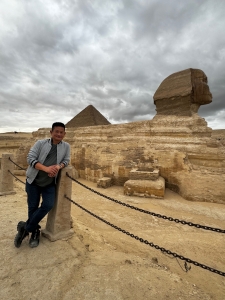
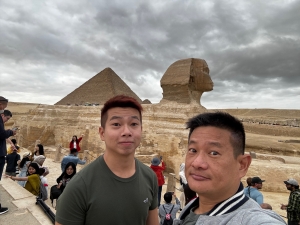
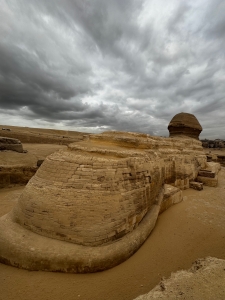
Our final stop of the day is the Sphinx, sitting in front of the Pyramids as though it was their guardian over the thousands of years. As we were driving towards the Sphinx, Ahmed told us to get our cameras ready as this was the only chance we could take pictures of the Sphinx in front of the Pyramid if we timed it correctly. We were given time to wander inside a complex and get next to the Sphinx. The complex was very plain and seemingly had nothing going on. We squeezed past a door, and there she was, the giant Sphinx guarding the pyramids. Despite not being as large as the pyramids, the structure was still impressive. We can only view it from a distance as some archaeological works are still ongoing at the Sphinx. The crowd at the Sphinx was massive, yet we managed to grab some great spots taking pictures of this giant structure. We could see an entrance leading into the Sphinx from where we stood. Soon, it was time for us to return to the bus. The number of tourists at the site and the small space allocated for visitors to see the Sphinx did not warrant too much time to be allocated here. We headed back to the hotel and spent the night dining at the restaurant in our hotel for the Christmas buffet dinner that the tour company had arranged, getting to know our group members better. We retired early to our respective rooms as we had an early flight to Luxor tomorrow.