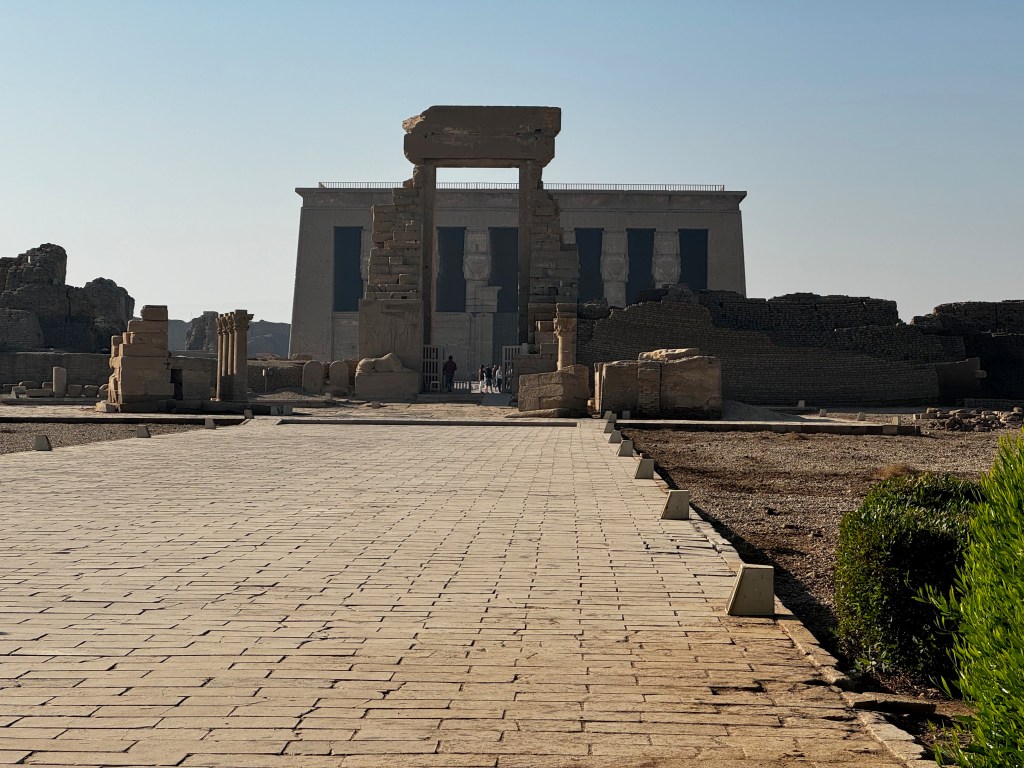
Today, we visited two sights in Luxor, Dendera and Luxor Temple. We had another early start, leaving the riverboat at 7.30 am for a 2-hour drive to the Dendera, otherwise known as the Temple of Hathor. We arrived at the temple before the huge crowds came in. In the afternoon, we sailed along the River Nile and docked back to Luxor for our visit to Luxor Temple in the evening.
Dendera Temple – A Temple Dedicated to the Nurturing Goddess of Hathor
Hathor is the Goddess of birth and motherhood when assuming the form of a cow. She is often seen with cow ears and sun disc in human form. When provoked, Hathor will turn into a lioness and attack.
The Engravings on the First Floor
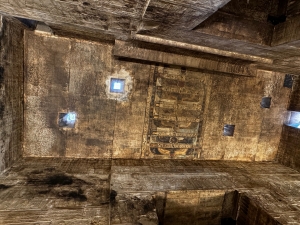
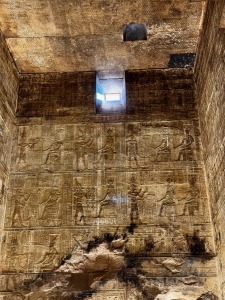
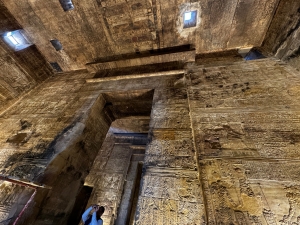
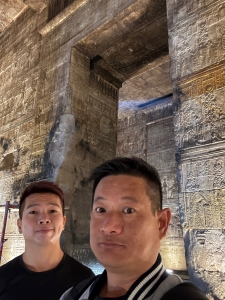
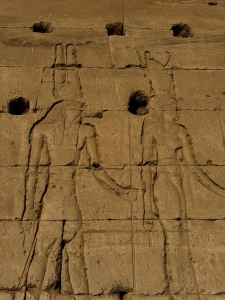
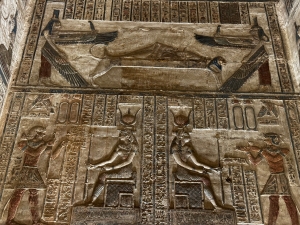
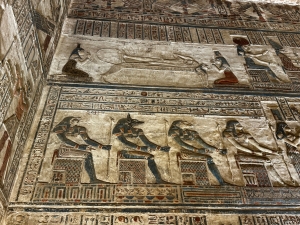
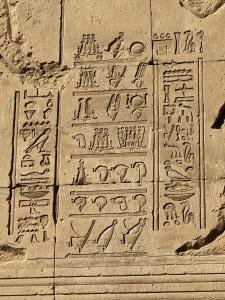
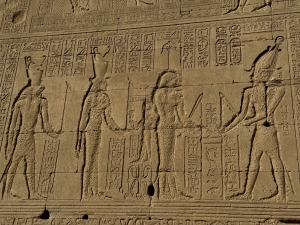
Our Toud Director, Ahmed, brought us straight through the outer hypostyle hall to a chamber that was covered with soot. This chamber is filled with inscriptions depicting the pharaohs paying tribute to Hathor. A common feature of these panels is that Hathor is always depicted sitting in the centre and her husband, Horus, sitting behind her, receiving tributes from Egyptian kings. According to Ahmed, in Egyptian society, the God/Goddess which the temple was built for will always take centre stage, regardless of sex. Our attention is brought to another panel of engraving that shows scenes of Hathor receiving tributes from the other gods. We could distinctively see some burnt marks across some of these wall panels. It was believed that tomb raiders set fire to this temple when they entered to empty its coffers. Ahmed brought our attention to the holes in the ceiling, explaining the ancient wisdom of including these holes to illuminate the temple and for air circulation, especially in the summer.


The Roof Level
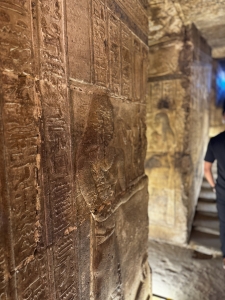
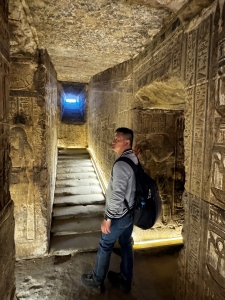
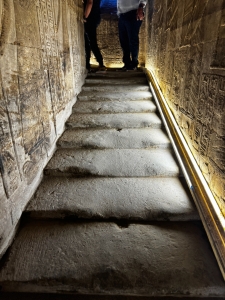
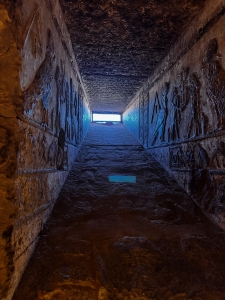
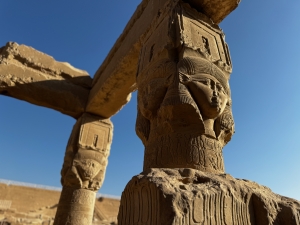
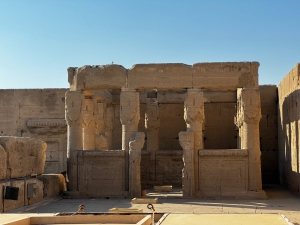
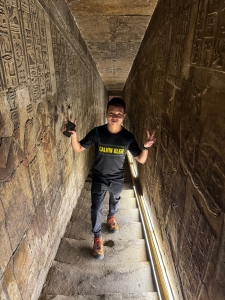
We were led up a flight of stairs, narrow enough for one person to pass through, consisting of a series of 90° turns. Hathor was so revered by the ancient Egyptians that they even adorned this staircase with engravings of the Goddess. We reached the rooftop level of Hathor Temple at the end of the staircase. Emerging from the staircase, Ahmed immediately brought our attention to the lining of the walls and the floor we were standing on. He pointed out that the inconsistent lining was done to prevent earthquakes, which allowed the stone blocks to lock in place for millennia. This was especially important for the flooring, which also formed the ceiling of the floor below. A small chamber sits a little further from the entrance to the rooftop floor, with its pillars engraved with the face of Hathor. The walls of this chamber depicted Egyptian kings paying tribute to Hathor and Horus. What is more interesting is an engraving on the walls behind this semi-open chamber depicting Hathor receiving blessings from Amun-Ra, with Horus standing behind Hathor as a supporting figure. Priests working in the temple would bring the statue of Hathor up to this chamber every new year for the goddess to receive blessing and be rejuvenated by the first sun ray of the year.


The Dendera Calendar
We were brought into another chamber on the roof level, a stone’s throw away from the chamber. This would be the most significant chamber of the entire temple. Our attention was directed to a blackened big stone slab above us on the ceiling. This was the Dendera zodiac calendar, which was how the ancient Egyptians viewed the cosmic. Ahmed guided our attention closely to the different figures depicted on this stone. Four women are standing, each precisely in the four cardinal directions (N, S, E and W), while the four pairs of falcon-head figures kneeling occupy the ordinal directions (NE, SE, NW and SW). In the centre of these characters lies a detailed map of all the zodiacs in the sky. Indeed, I could see zodiac signs such as Taurus, Pieces, Scorpio, etc. What impressed me was that this calendar was at least 2,000 years old. To our dismay, Ahmed told us that this was a replica and the real one was stolen and was being displayed in the Louvre in Paris (because of this, I was determined to give the Louvre a visit after my Egypt trip).
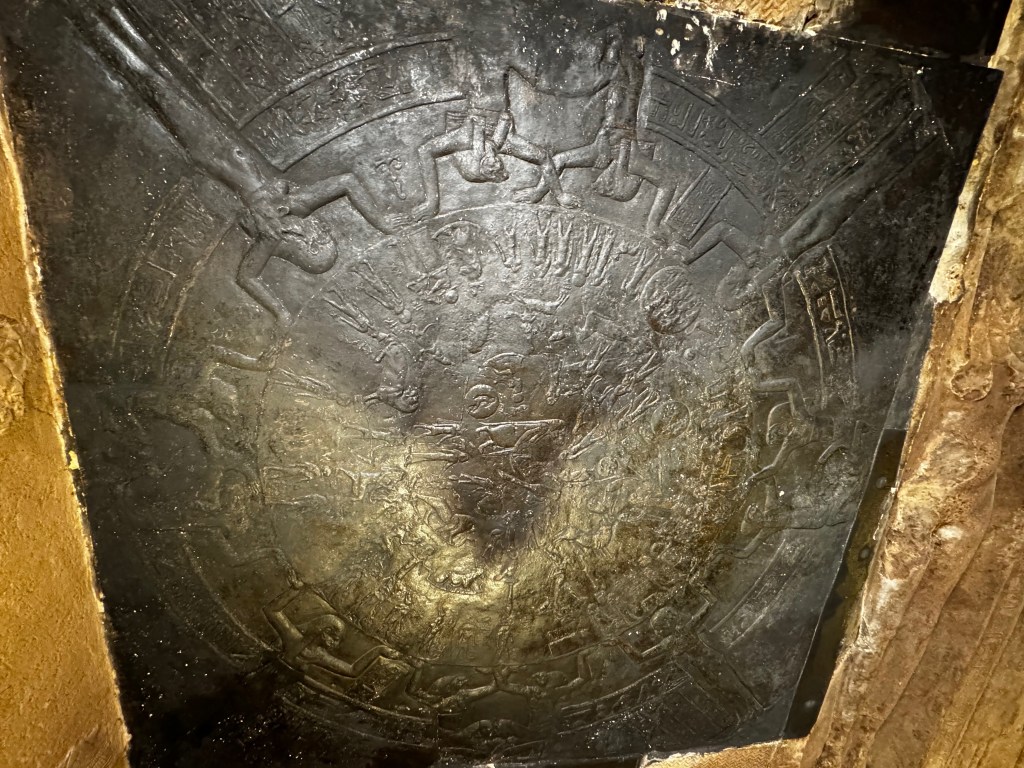
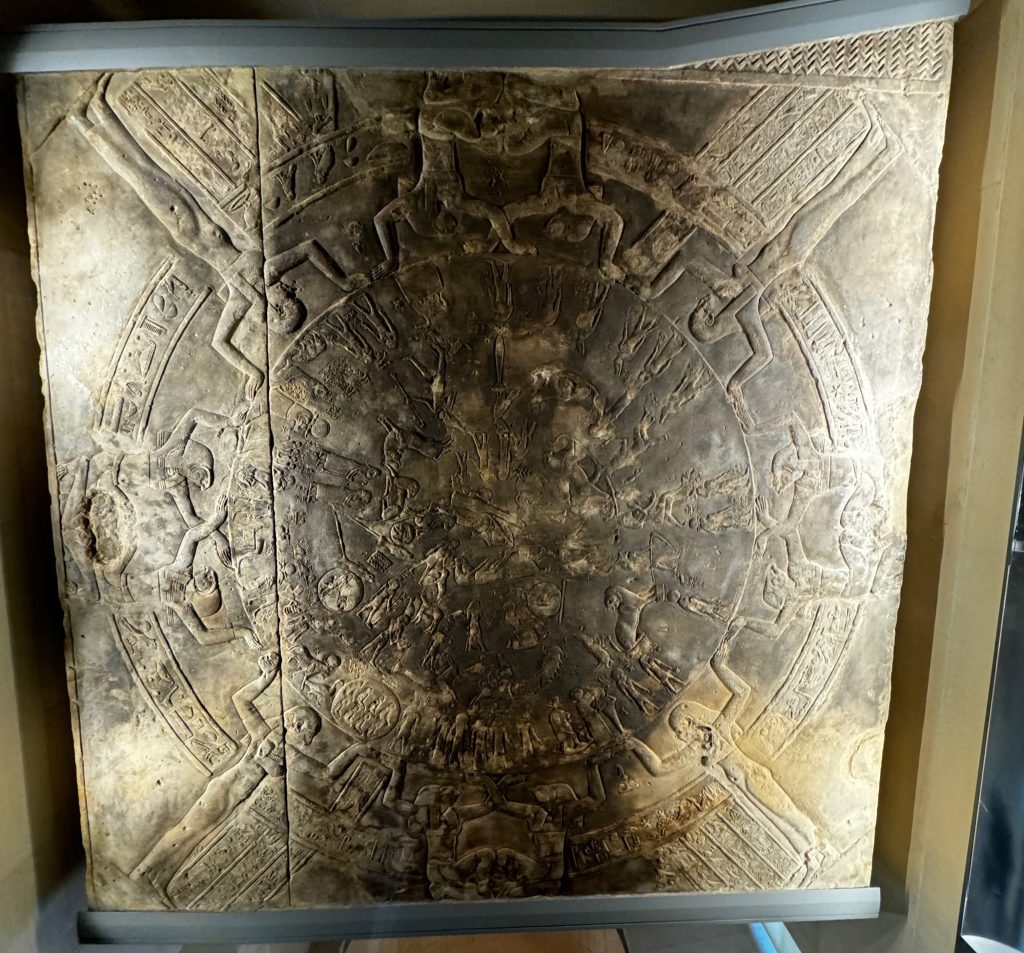
Back to the First Floor
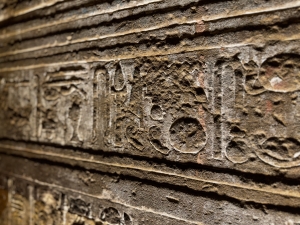
We were led down to the first floor via a long flight of stairs adorned with countless hieroglyphs engraved onto either side of the walls with colours that had existed since the temple was built. We were led into another room with reliefs depicting pharaohs making offerings to Hathor and scenes of pharaohs sitting on their throne receiving blessings from Hathor in the presence of other gods. There is even a scene showing Horus assuming the king of gods after his father Osiris’s death. This chamber is filled with stories of Egyptian mythological lore that, without the explanation by Ahmed, we would have seen it as merely some engraving.
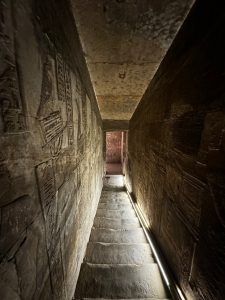
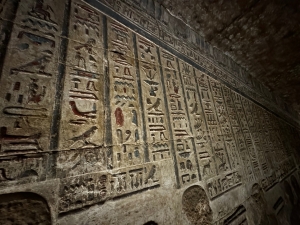
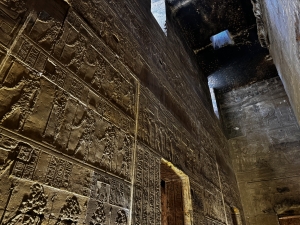
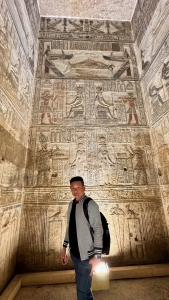
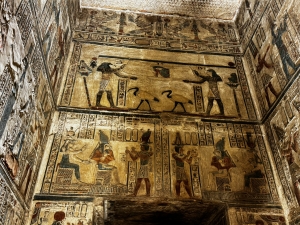
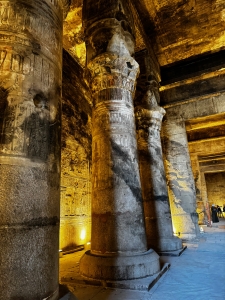
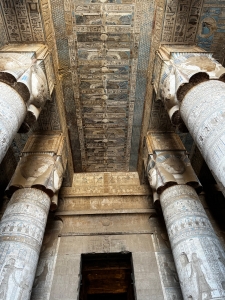
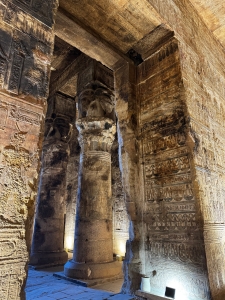
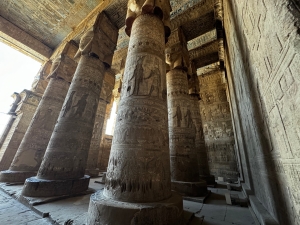
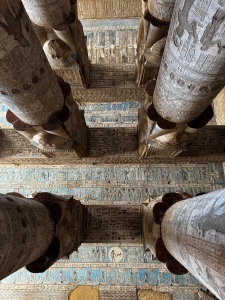
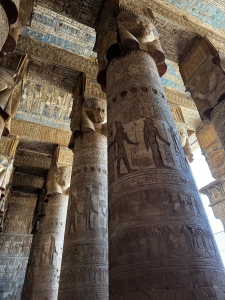
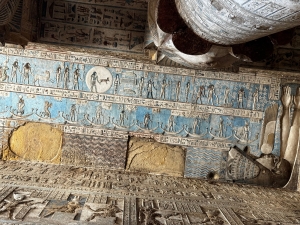
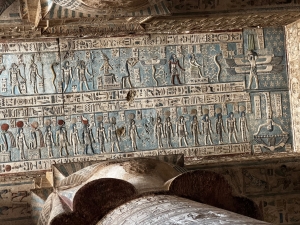
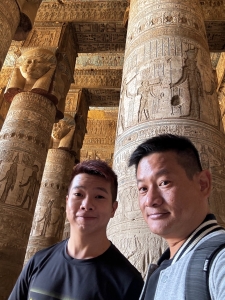
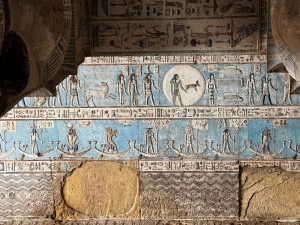
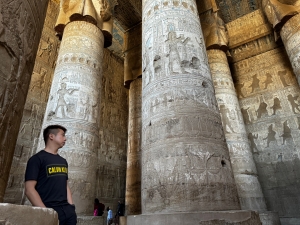
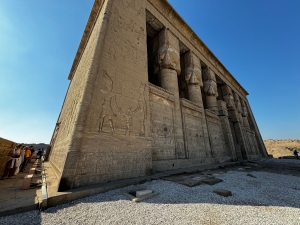
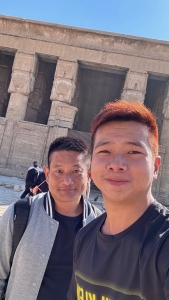
We stopped at the hypostyle hall in Hathor Temple before heading outside. The outer hypostyle hall was massive. Standing here amongst the gigantic pillars with the faces of Hathor carved on four sides of the pillars can certainly make one feel small. I couldn’t help but feel a sense of anger when I saw most of Hathor’s faces on these pillars were defaced. The pillars and the ceilings were dressed in vivid colours that had withstood the test of time and were painted since the building of this temple. There were so many stories that each of these pillars would tell, but what caught our attention was the engravings on the ceiling. The blue and colourful ceilings depict an Egyptian night sky with some constellations representing Egyptian Gods.

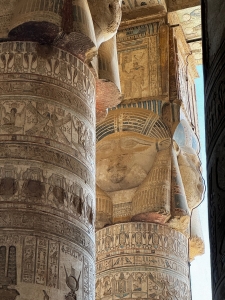
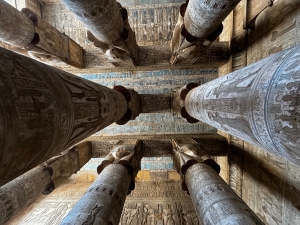
Outside the temple
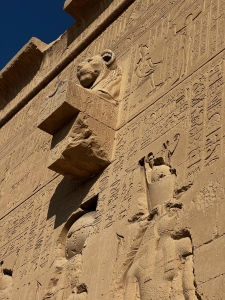
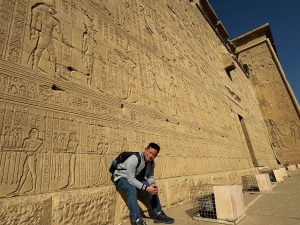
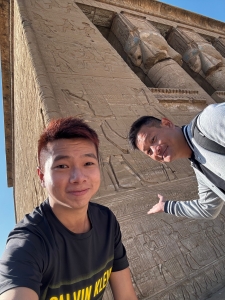
We were brought outside the temple and shown the gigantic engravings on the other walls of Hathor Temple. We saw depictions of Egyptian kings paying tribute to Hathor and Horus and a bust of Hathor in her lioness form sitting high up the temple’s wall. There were two inscriptions that Ahmed wanted to show us; the first one, depicting all the crowns worn by the kings of Egypt, was often missed by visitors to Hathor Temple. The second and more interesting engraving is the one that depicts Cleopatra as a Goddess (wearing the crown of Hathor) paying tribute to Hathor with her son. We were given some time to explore the temple grounds before returning to the riverboat.


Another Day of Cruising Along the Nile
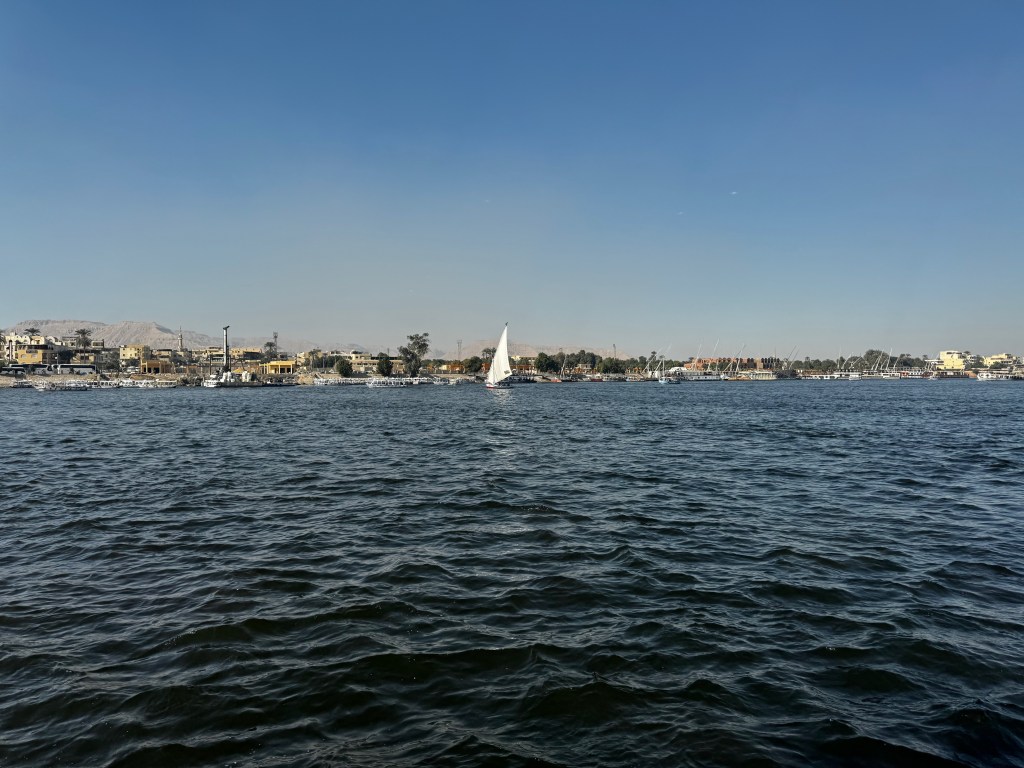
We returned to the riverboat around noon. The boat will spend the afternoon cruising on the River Nile while giving us time to rest (due to the early waking up). The boat also offered free massage for anyone who needed it. We just wandered around the boat and spent most of the time relaxing on the sundeck, watching life along the River Nile. Despite sailing on the same route as yesterday, cruising along the calm River Nile, listening to waves hitting the ship hull and occasionally children playing along the Nile was very relaxing. I can never get bored of the beautiful scenery the River Nile offers. We docked back to Luxor at around 4 pm, in time to visit our second site of the day – Luxor Temple.

Temple of Luxor – A Temple for the Sun God Amun
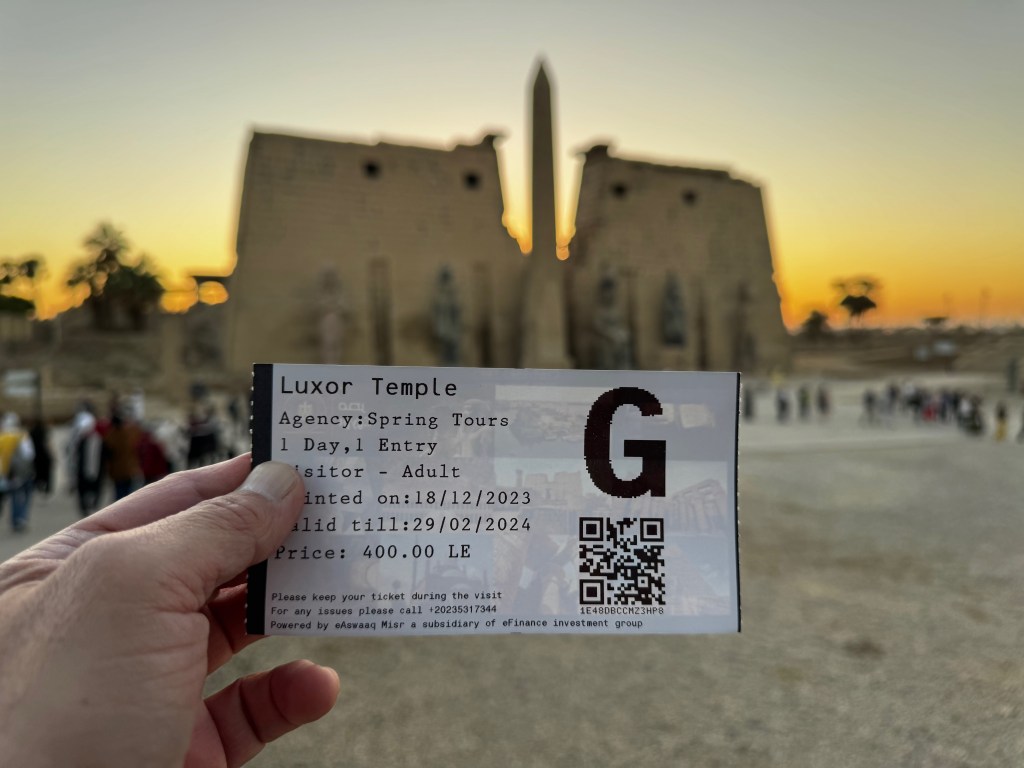
The Double Sanctuary of Luxor Temple
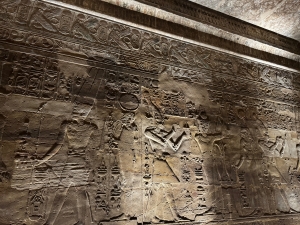
Luxor Temple is situated by the River Nile in the heart of Luxor. This temple is relatively small, compared to Karnak and Hathor Temples and was dedicated to the God Amun. Luxor Temple is connected to Karnak Temple by the 2km avenue of the Sphinxes. The moment we reached Luxor Temple, we marched straight to the sanctuary, which consists of a chamber within a larger chamber. The smaller chamber was later built by Alexander the Great when he assumed the King of Egypt, but this was not the chamber we were interested in. Ahmed brought us to the side of the larger chamber, which was the original sanctuary built by Amenhotep II. Our attention was directed to a relief (which was defaced) engraved onto the wall depicting Amenhotep III, wearing the crown of Upper Egypt, making offerings to the God Amun standing behind him. This was the original engraving in the temple, which was over 3,400 years old.
The Christian Chapel
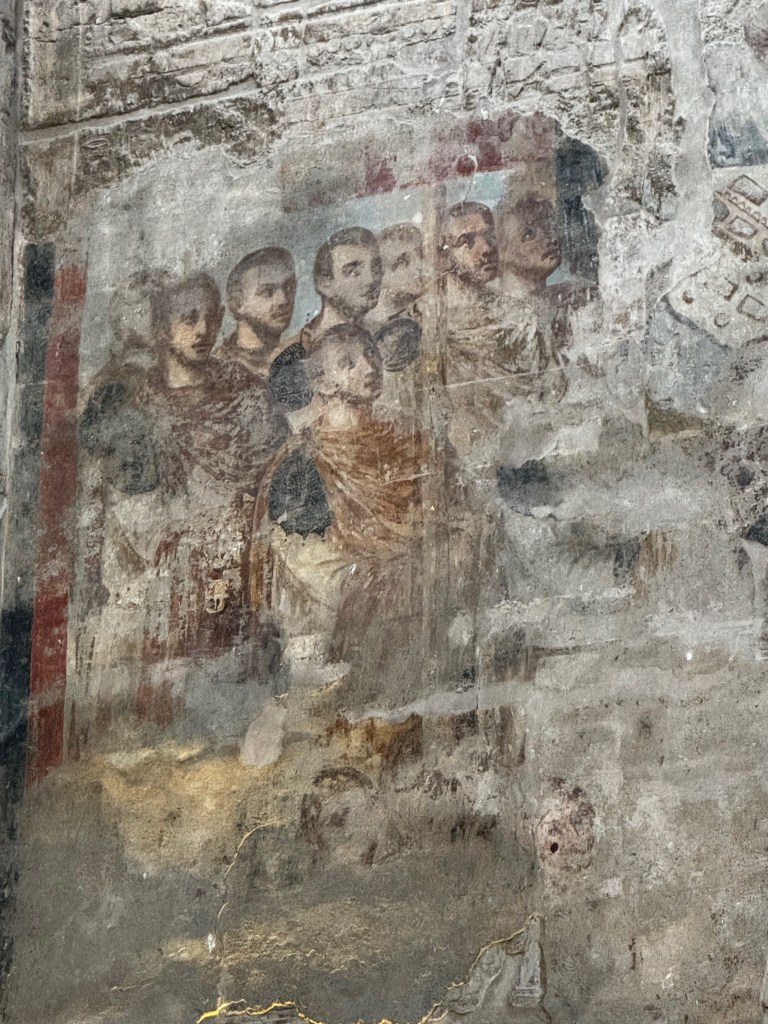
We retraced our footsteps, moving past a row of columns to a small open space. Here, Ahmed explained this area was converted to a church when the Romans occupied Egypt during Alexander the Great’s reign. The original reliefs were plastered over to make way for Christian artwork. He pointed to one corner, where we can see a group of men in Early European dress, and told us that these were the same men who attended Jesus’s last supper. Ahmed explained the best time to see these reliefs was at dusk (around the time we were in Luxor Temple); this is when we understood why he started from inside out. Ahmed then pointed to a concave structure above the doorway we had just come through and told us there were paintings of the four archangels.

The Courtyards
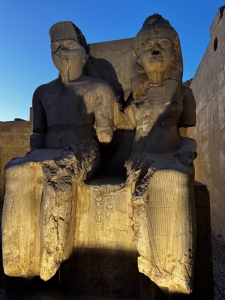
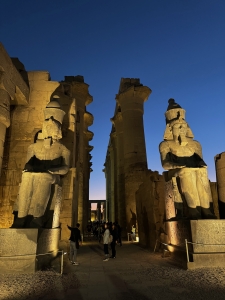
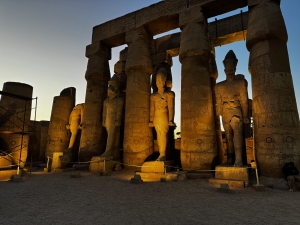
We retraced our footsteps to the inner (and larger) courtyard. This courtyard was filled with columns at the sides, and the builders seemed to leave the centre part open deliberately. The star of the show for this part of the temple was the statues of King Tutankhamun and his wife Ankhesenamun sitting on the throne. Despite having minor defacement on the statue of King Tut, we can see that the royal couple was relatively young from the facial features of the Queen (King Tut died at the age of 19 anyway).

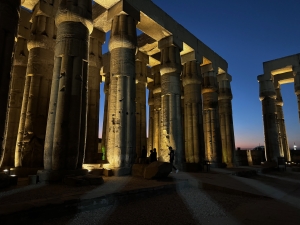
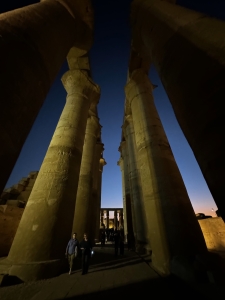
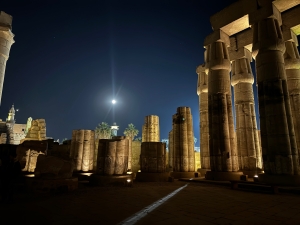
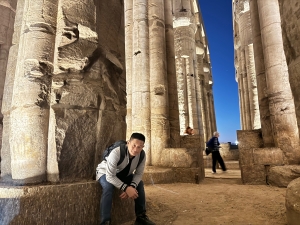
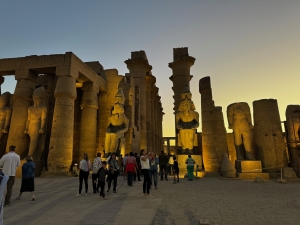
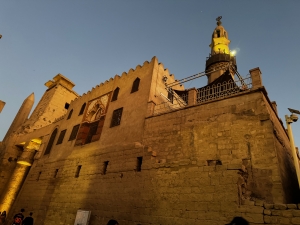
The outer courtyard, which is smaller than the inner courtyard, gave us clues about who was responsible for building this part of Luxor Temple. This area was filled with statues of Rameses II at the sides. What was interesting about this courtyard was the entrance to a mosque. Ahmed told us the mosque that we see up on the walls of Luxor Temple was built when the temple was buried underground. He pointed to what seemed like a larger window and told us that was the original entrance to the mosque! The entrance was high up from where we were, as though it was floating in the air.
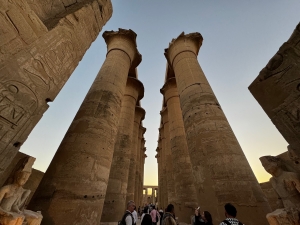
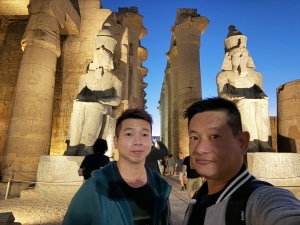
The Facade of Luxor Temple
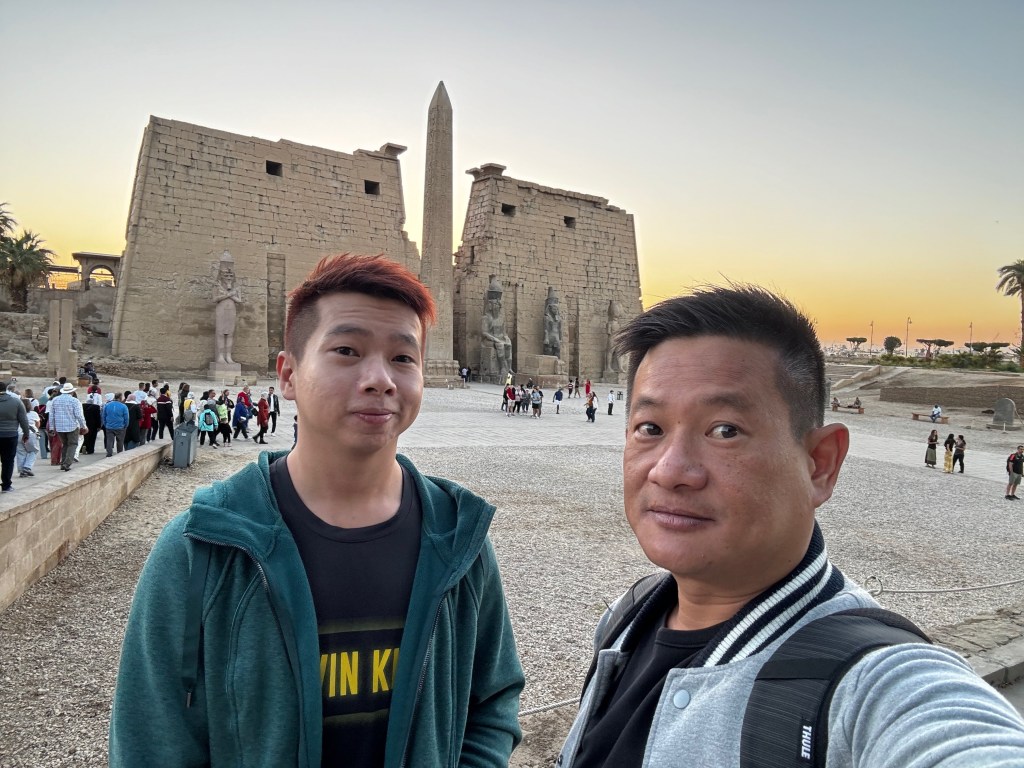
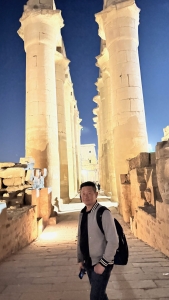
Our last stop was the facade of Luxor Temple. Here, we could see six statues of Rameses II statues. The more interesting fact that was told to us was the lone obelisk at the entrance to the temple. As with most Egyptian architecture, to achieve ma’at (balance), all things were supposed to be symmetrical. There were originally two obelisks sitting at the doorstep of Luxor Temple. The other obelisk was given by one to the king to the French King and is currently sitting in Place de la Concorde in Paris. After the explanations, Ahmed gave us time to reenter the temple and take as many pictures as we wanted. My friend and I headed back into the sanctuary to take more pictures of the relief we had missed out on earlier. We ended the day earlier as we would be required to wake up early the next morning for the optional hot air balloon ride over the West Bank of the Nile, seeing the necropolis of past kings and queens from the sky.
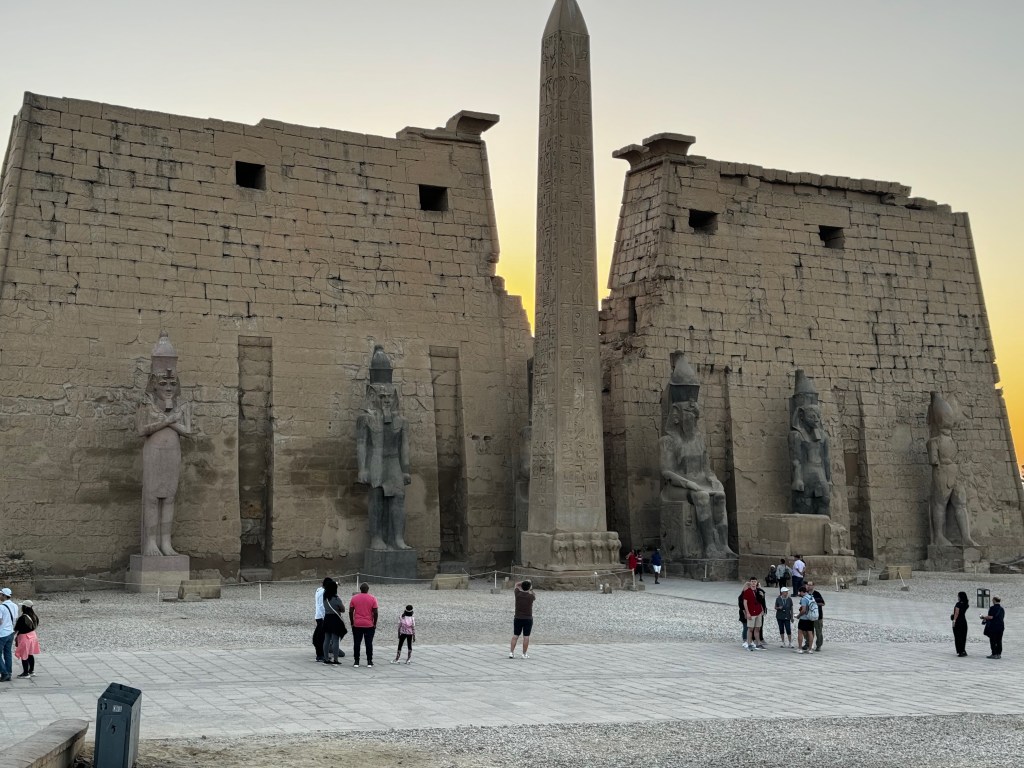
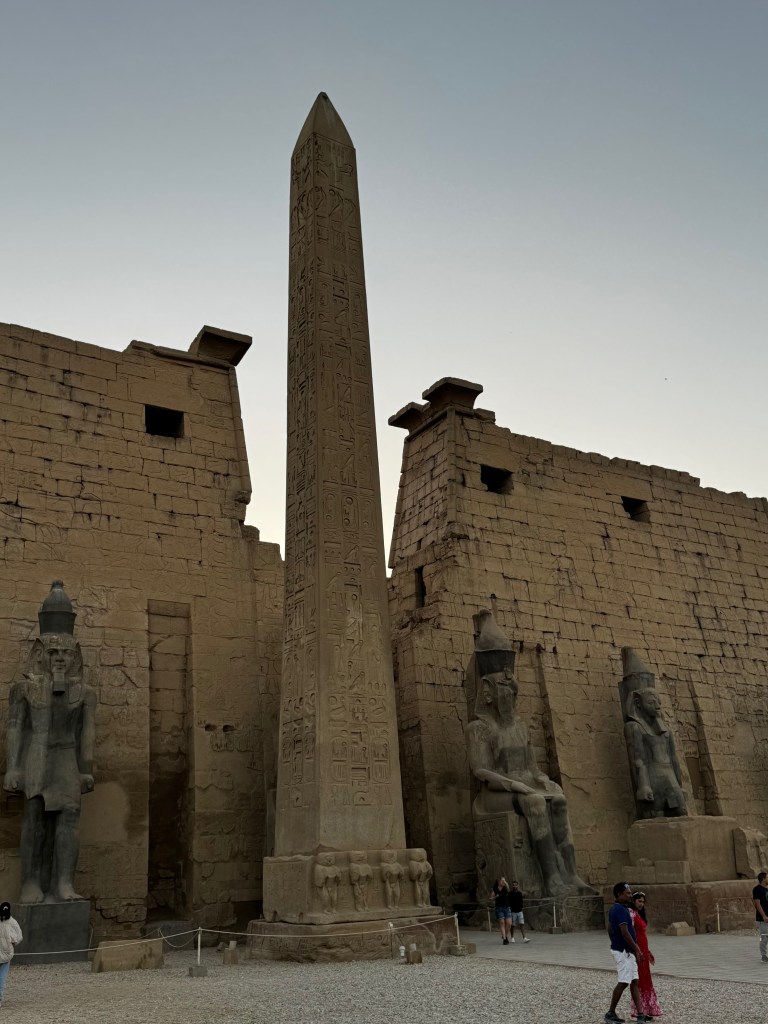
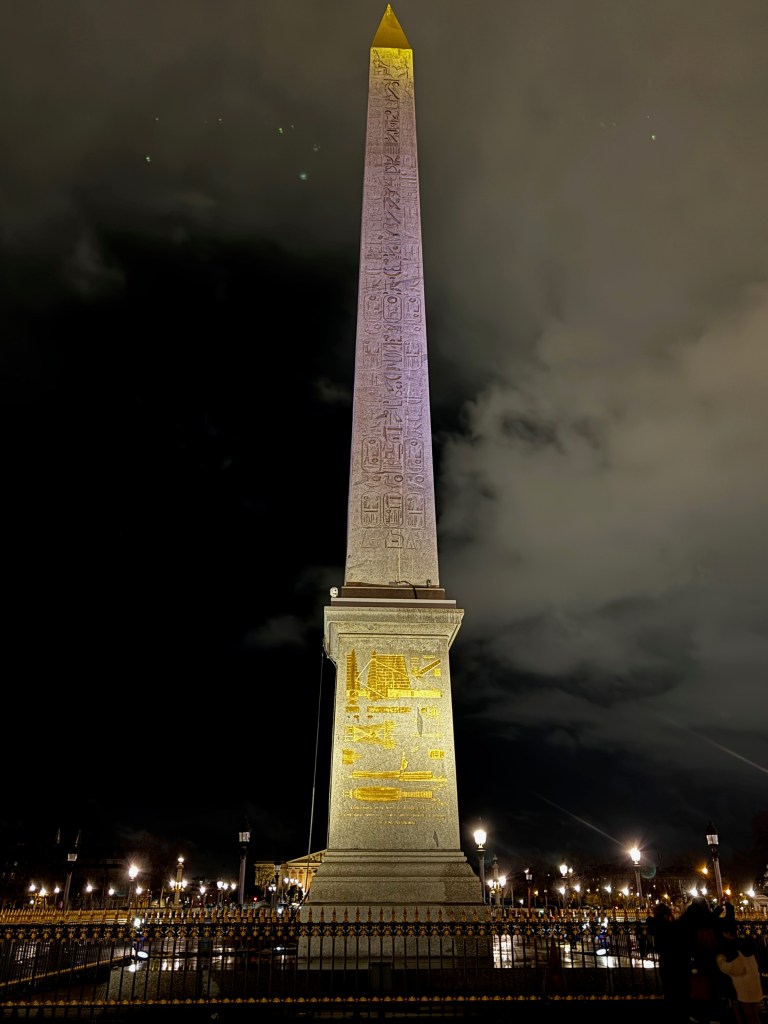
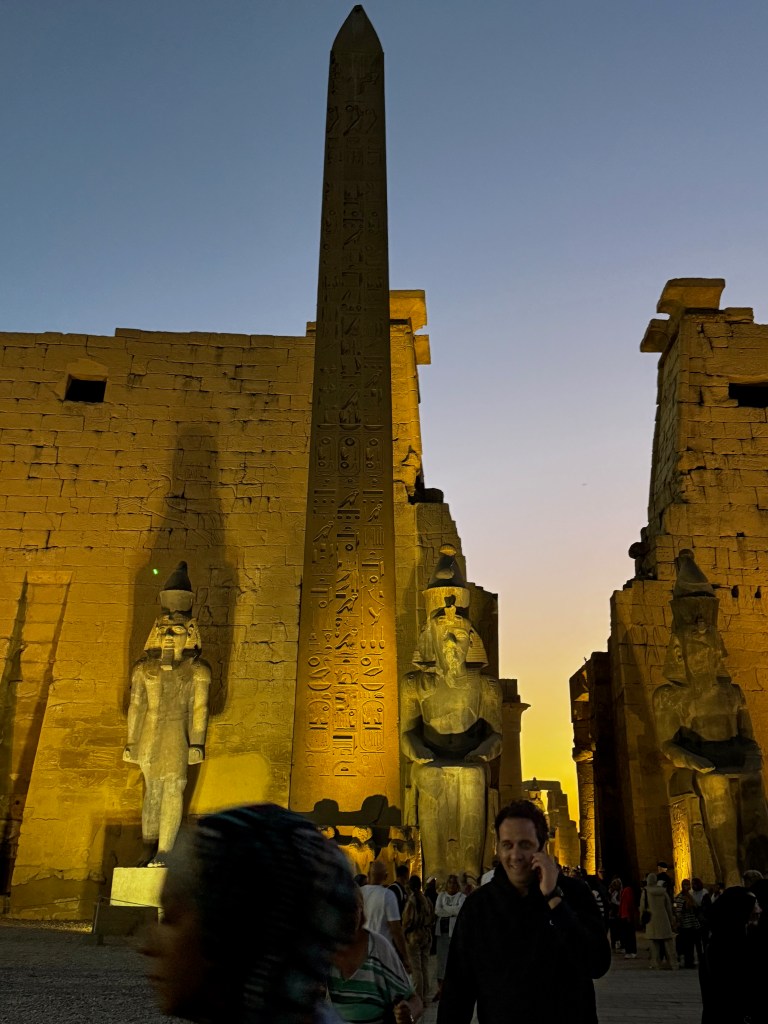
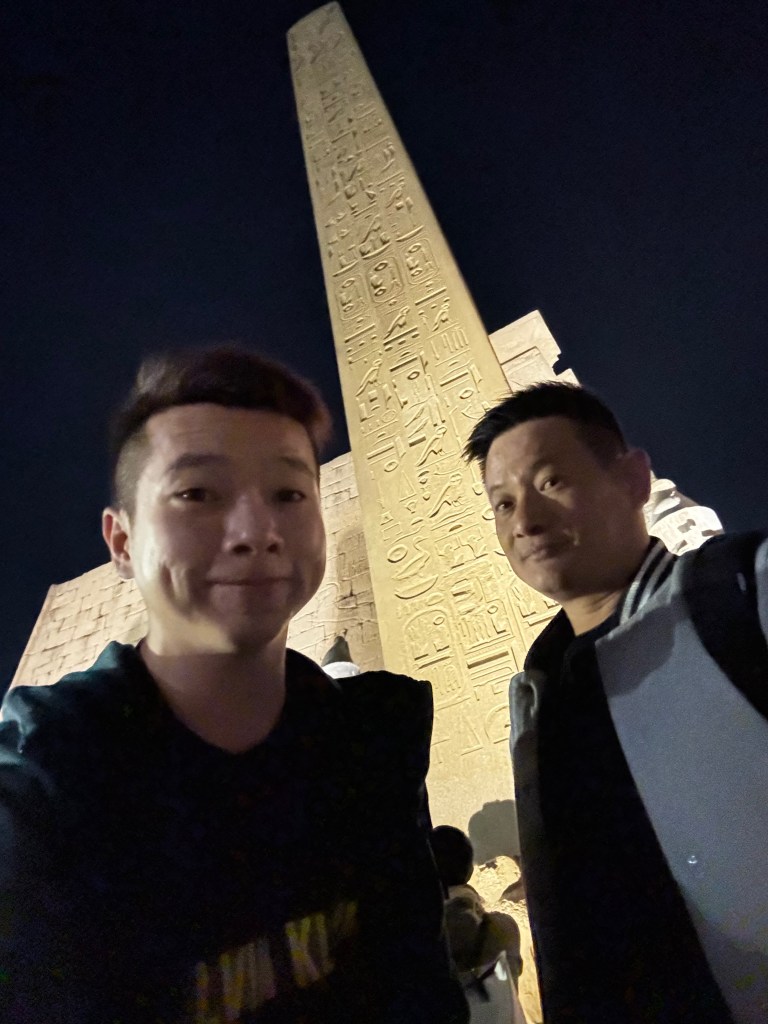
It’s a funny idea to bring the two Luxor obelisks together!