Our Alternate Plan to Kawaguchiko
Kawaguchiko is the nearest town in Japan to visit the Mt Fuji region. Two main ways to get to Kawaguchiko from Tokyo are via the JR or the interstate bus. For the train option, we could take the Fuji Excursion Express train, which whips travellers from Shinjuku to Kawaguchiko in under 2 hours, or the non-express services, mainly for those who did not manage to snag a ticket for the Limited Express trains. For the bus option, there are numerous services from Tokyo to Kawaguchiko daily, departing from the Bus Terminal opposite Shinjuku Station. These buses can be boarded from the bus station opposite Shinjuku Station.
We originally planned and booked seats on the Fuji Excursion Limited Express to Kawaguchiko. Limited Express trains to Kawaguchiko sell out very fast (ours sold out within 2 days of release). As we woke up late and missed the train we had booked, I had to look for alternatives to get to Kawaguchiko. We initially wanted to take the bus option to Kawaguchiko. At the Bus Terminal, we were told the next available bus would leave at 11.45 am, which meant we would arrive at Kawaguchiko close to 2 pm. The ticketing staff advised us to take the next non-express train and transfer to Otsuki, where we would reach Kawaguchiko earlier. We heeded her advice and managed to catch the 10.30 am train to Otuski.

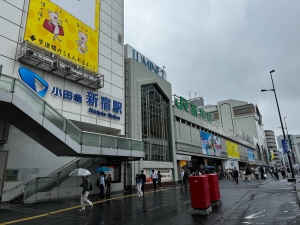
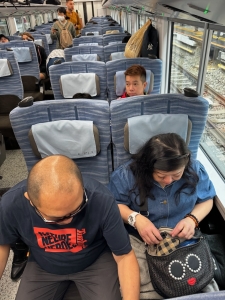

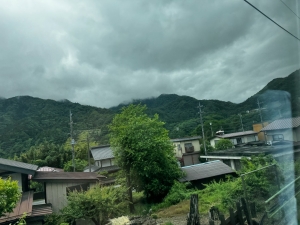
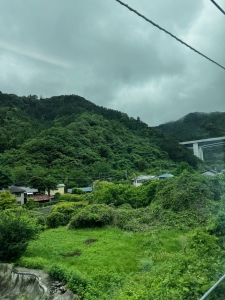

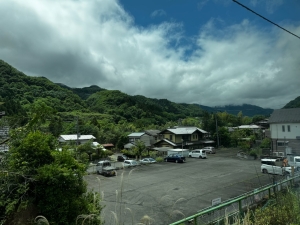
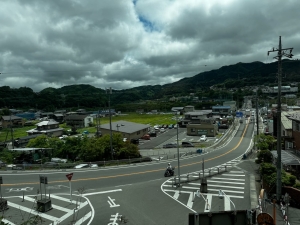
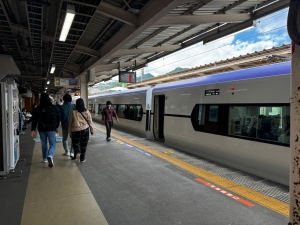
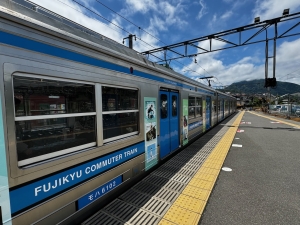
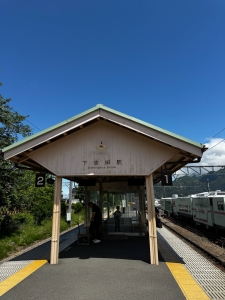
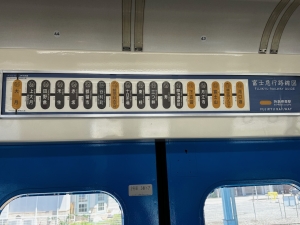
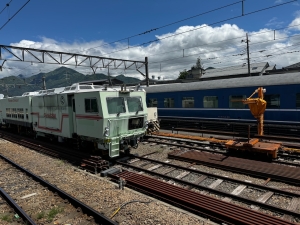
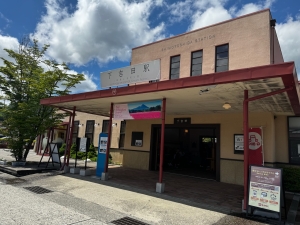
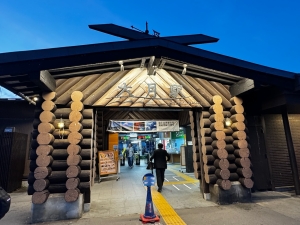
The non-express train took 1 hour to reach Otsuki Station. At Otsuki Station, the way to the platform for the local train to Kawaguchiko was very well marked. We followed the white sticker on the floor that said “Fujikyu Railway”, which brought us to another gantry where we just had to show the station staff our Tokyo Wide Pass for the ride on the local train. The local Fujikyu Railway took another 1 hour to reach ShimYoshida Station, our first to see Mt Fuji with the iconic Chureito Pagoda.


The Iconic View of Mt Fuji and Chureito Pagoda
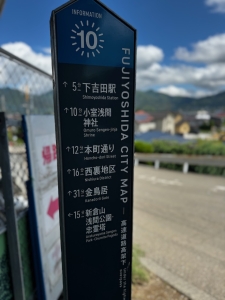
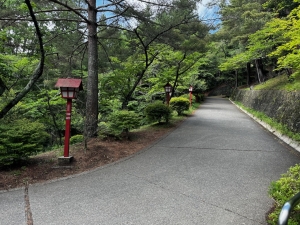
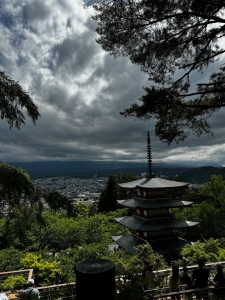
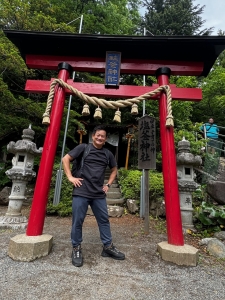
The viewing platform in Arakurayama Sengen Park is perched on top of 398 steps hill. Exiting ShimYoshida Station, we followed the well-marked signs to the park, about 5 minutes on foot to the base of the hill. The base of the hill was a gentle slope decorated with red lamps on either side of the path. Further up, we spotted a red Torii Gate, which splits into two paths to the top of the hill. The one on the left leads to the Arakura Fuji Sengen Shrine and a sloping path leading to the top of the hill for those who prefer a leisurely and not too strenuous stroll up. The path on the right leads to the faster 398-step climb to the viewing platform. Initially, I was worried that the climb was too much for my 8-year-old nephew, but it wasn’t as bad as I had thought. My nephew and I completed the climb in around 15 minutes (his parent took a little longer but completed it within 20 minutes). The iconic 5-storey Chureito Pagoda, a peace memorial built to commemorate the people of Fujiyoshida who died in wars from the mid-1800s (from the First Sino-Japanese War in 1868) to World War II, sits at the top of the stairs waiting for visitors.

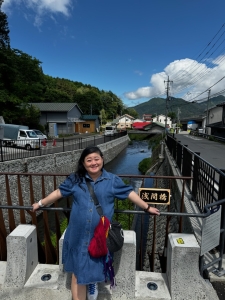

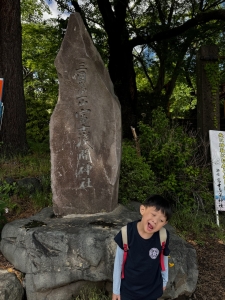
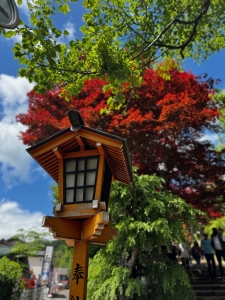

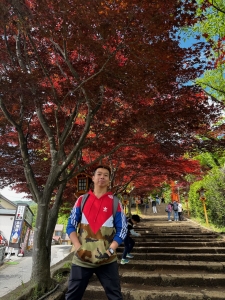
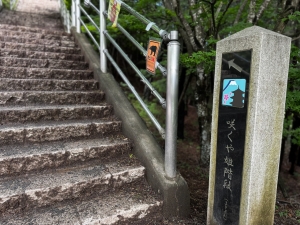
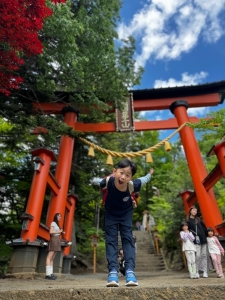
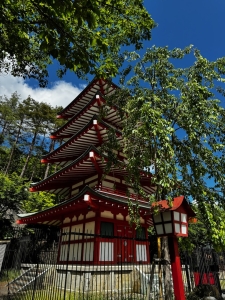
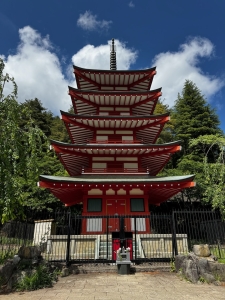
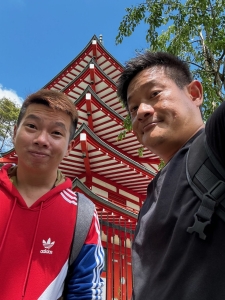
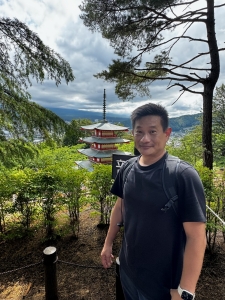
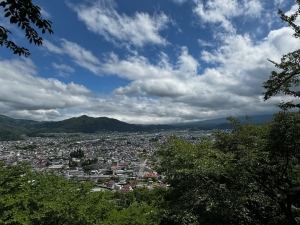
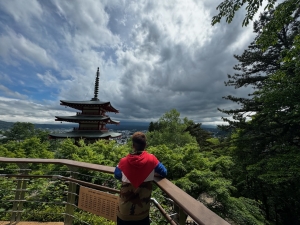
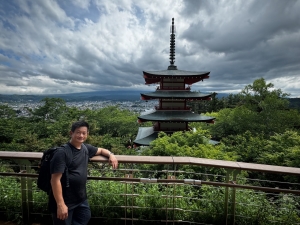
The platform where one could view Mt Fuji and the Chureito Pagoda is a short walk up the path on the right of the pagoda. We were sorely disappointed to learn that Mt Fuji was hiding from us. Due to the low clouds, we could not see the peak of the iconic volcano. We spotted some visitors sitting at the platform as though waiting for the clouds to dissipate to get the iconic pagoda and Mt Fuji shot. As it wasn’t overwhelmed with visitors at the time of our visit, we managed to get some shots with the pagoda with no people in it. Despite being unable to see the peak of Mt Fuji, we were still rewarded with a commanding view of the town below.



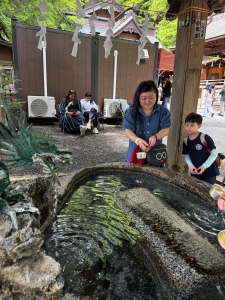
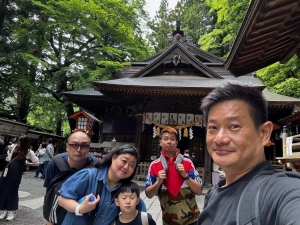
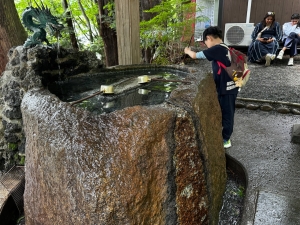
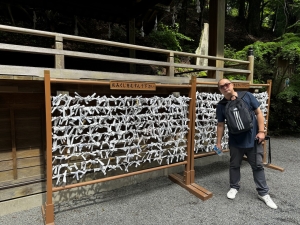
We decided to visit the Arakura Fuji Sengen Shrine, established in the 9th century as a place of worship dedicated to the Shinto goddess Konohanasakuya-hime. This deity, often associated with Mount Fuji and the blooming of cherry blossoms, symbolizes renewal, beauty, and the transient nature of life. The Arakura Fuji Sengen Shrine, built mainly with wood, wasn’t that massive of a shrine. The single-building shrine occupies a relatively small corner at the base of the hill. There was a small crowd here, and people mostly came to pray after visiting the viewing platform. I taught my nephew the rituals of hand cleansing and how the Japanese did their prayers at a shrine. After praying, we continued our journey towards Kawaguchiko.


The Lake and the Volcano – Kachi Kachi Ropeway
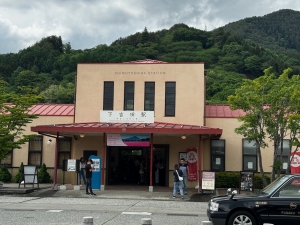
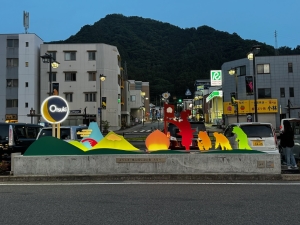
Returning to ShimYoshida Station, we took the next train (using our JR Tokyo Wide Pass) to Kawaguchiko. Originally, I planned to get tickets to the Fuji Shibazakura Festival, then head to Kachi Kachi Ropeway and return after the ropeway ride for the flower show. We arrived at Kawaguchiko Station at around 2 pm and tried to purchase the tickets to the festival from the ticketing booth next to the gantry at Kawaguchiko Station. However, we were saddened to learn that the tickets for the day had been sold out. We had to change our plan again to head to the Kachi-Kachi ropeway first and do a cruise on Lake Kawaguchiko afterwards. Kachi-Kachi Ropeway takes about 20 minutes on foot from the Kawaguchiko Station, and we used a combination of Google Maps and the signs posted around the area to find our way. Along the way, we stopped by a restaurant for lunch.
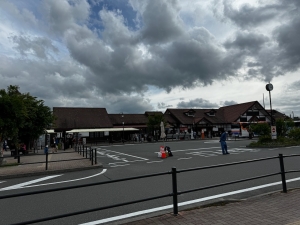
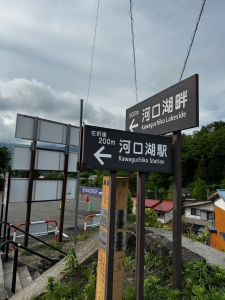
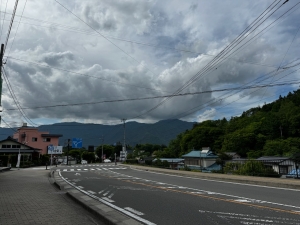
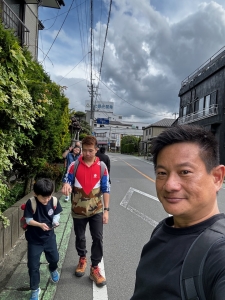
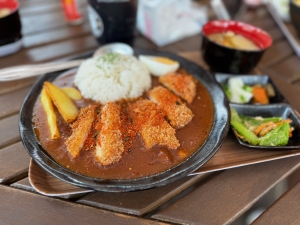
After our meal, we continued our walk towards Kachi-Kachi Ropeway. By the time we arrived at the base station, we learned that it was 30 minutes before closing time (the ropeway closes at 5.30 pm). I read online that the queue for the Kachi-Kachi Ropeway would take up to 1 hour during peak hours; we were lucky that there was no queue at the ropeway station. I guess it was a blessing in disguise that we missed our earlier train to Kawaguchiko. I thought the ride up Mt Kachikachi on the ropeway was superb. From ground zero, Lake Kawaguchiko looked like a body of water that seemed to stretch forever, and we had no idea what the entire lake looked like or how big it was. As the cable car slowly made its way up to the mountain, we were able to appreciate Lake Kawaguchiko. The mountain ranges surrounding Lake Kawaguchiko looked like they were protecting the lake. The view was peaceful and calming.
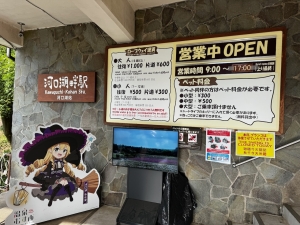
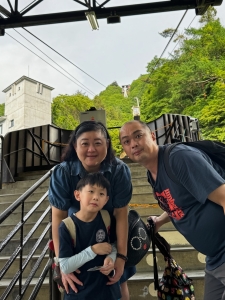
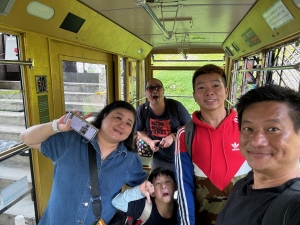
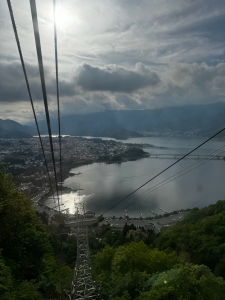
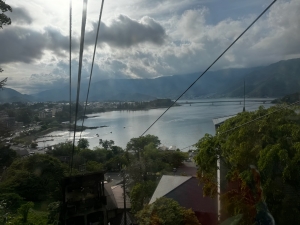

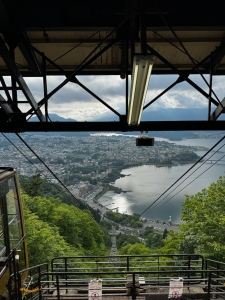

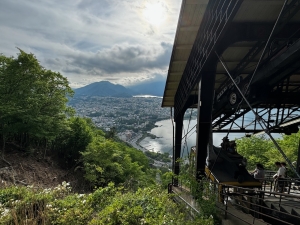

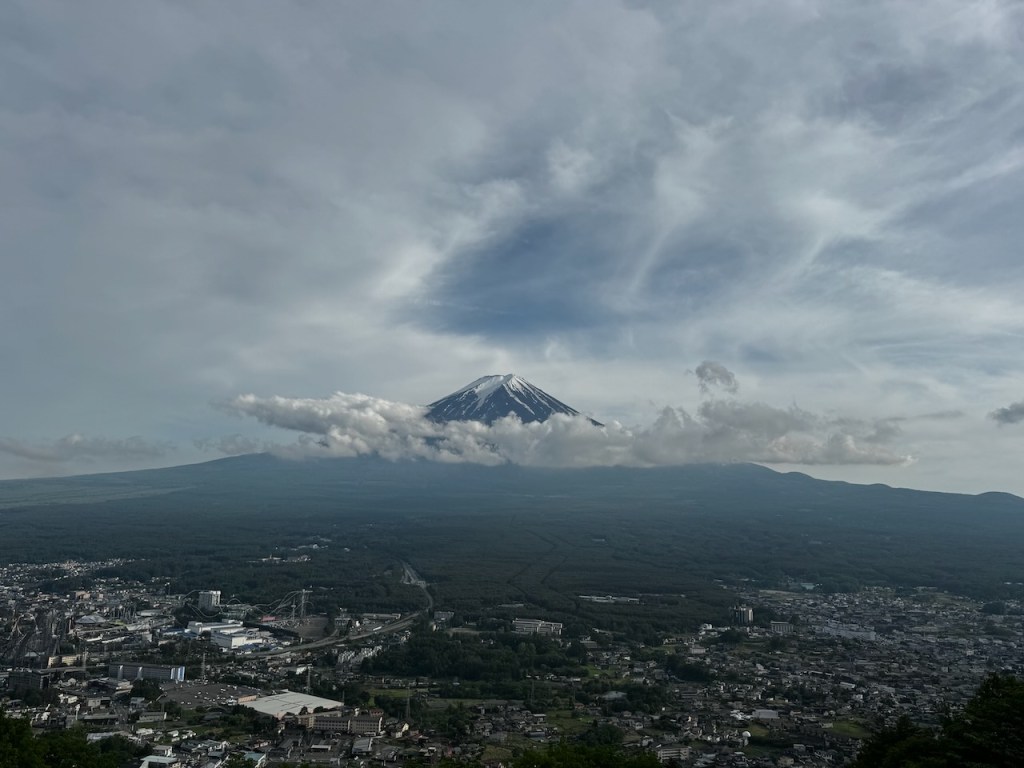
The ride up to the top station took about 3 minutes. As we walked out of the station towards the viewing platform, we were pleasantly surprised to see Mt Fuji’s snow-capped peak peeping out of the clouds, rewarding us with her full glory. Instead of taking the long walkway towards the viewing platform, we could not hold back our excitement for Mt Fuji and used the faster staircase route. Seeing Mt Fuji in her full glory felt like our trip here was well worth it. There are two viewing platforms at the top station of Kachi-Kachi Ropeway, and both platforms were constructed to face Mt Fuji. The lower platform is the larger one, where we saw many people gathering, busy taking pictures with the icon of Japan. However, the upper platform has a better view of Mt Fuji. Here, not only were we treated to an unobstructed view of the icon of Japan, but we were also able to get a 360° view of the surroundings, from Mt Fuji to the town below and Lake Kawaguchiko.
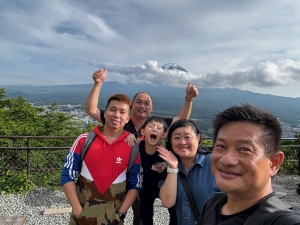
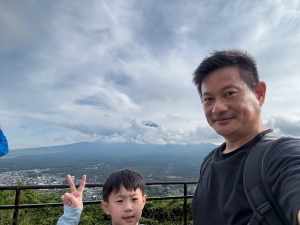
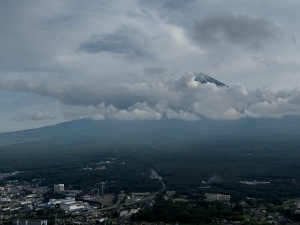

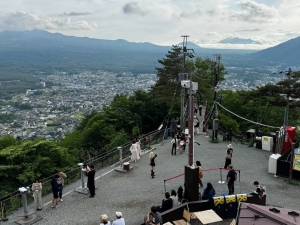
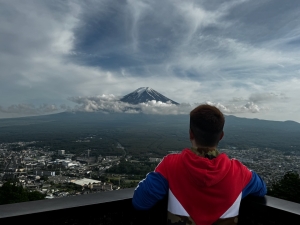
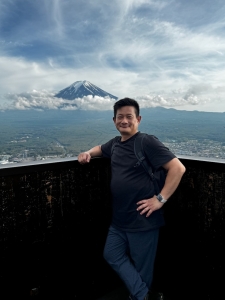


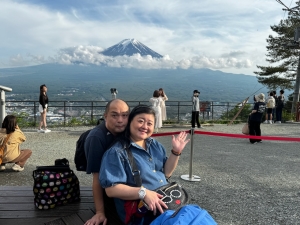
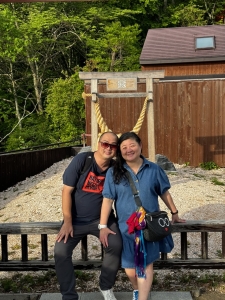

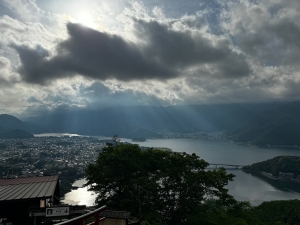

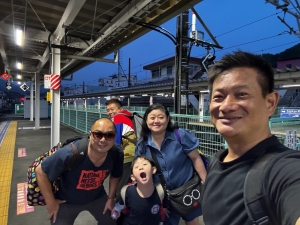
We rode down to the base station as it was approaching closing time. Shops around Kawaguchiko seem to close at around 5.30 pm. When we reached the base station, most shops were already closed. As we were too lazy to make that 20-minute walk back to Kawaguchiko Station, we took a bus (there is a bus stop right in front of Kachi Kachi Ropeway base station) instead. As we boarded our ride back to Tokyo on the Fujikyu Railway, we were still treated to the view of Mt Fuji. The last Limited Fuji Excursion trains left at around 4 pm, and we followed our original plan to take the longer train ride via Otsuki back to Tokyo.

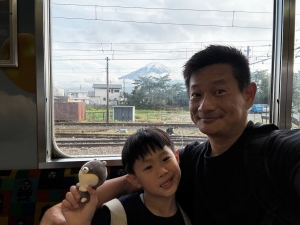


Mount Fuji is so deeply rooted in Japanese culture that it’s hard to ignore it when planning a trip to Japan. I caught a glimpse of Mount Fuji from the train, but as I was ill-prepared I wasn’t able to take a photo. Your organisation of the trip was excellent.