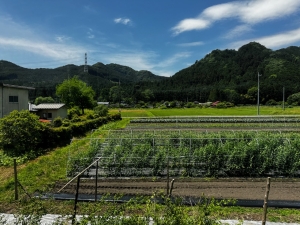
Nikko is a quaint mountain town about a 2½ hour train ride from Tokyo. This town is famed for its nature and historical sites and onsens. The two main areas in Nikko lie West and North of Nikko train stations. As we will only spend a day here, our trip focuses mainly on the sites west of Nikko train station.

Getting to Nikko
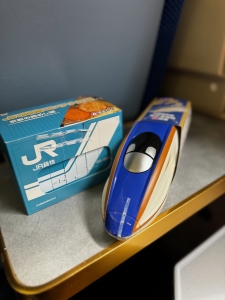
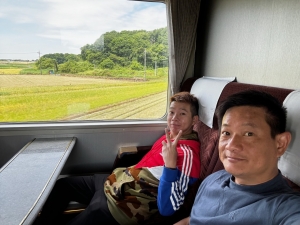
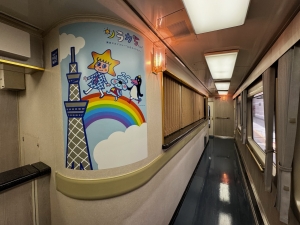
There are two ways to get to Nikko from Tokyo: using the Limited Express Trains or the Shinkansen. Two types of Limited Express trains depart for Nikko. The first one, the Spacia X Limited Express, departs from Asakusa Station. This newer train, with a variety of seating types and its caveated cockpit suite, whips travellers to Nikko in style. The other Spacia Limited Express (not to be confused with the newer Spacia X) uses an older train that seems to have been in use since the 80s and departs from platform 5 of Shinjuku Station. The JR Tokyo Wide pass that we have gotten is only valid on this older Spacia Limited Express. Nikko is also reachable by Shinkansen from Tokyo Station, but a transfer to a local train is required at Utsunomiya Station. The Shinkansen to Utsunomiya takes about 50 minutes, and the local train from Utsunomiya to Nikko Station takes around 30 minutes. The Shinkansen option, including the local train, is also covered by the JR Tokyo Wide Pass. We took the Spacia Limited Express for our trip to Nikko and the Shinkansen back from Nikko.


Getting Around Nikko
There are several bus lines that run to the popular tourist sights in Nikko. There are three main buses –
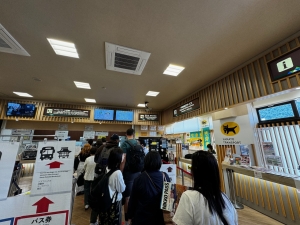
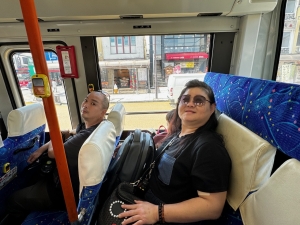
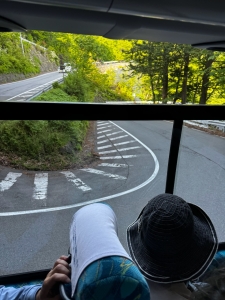
Y, YK, C and W that run to the sights to the west of Nikko Train Station. We mainly used YK and C for sights up to Lake Chuzenji, while the W bus line mainly runs to the three temples in Nikko and stops nearer them (compared to the Y, YK and C busses). Bus stops are marked with numbers and announced in Japanese, English, Mandarin and Korean at every stop, ensuring travellers do not miss our stops. The more significant stops for sights to the west of Nikko Station that we were alighted in were stop #24 – Akechidaira for Akechidaira Ropeway, stop #26 – Chuzenji Onsen for Lake Chuzenji and Kegan Falls, and stop #9 – Nishisando Iriguchi for Toshogu Shrine, Nikko Futarasan jinja Haiden and Nikkozan Rin’nōji Temple. There are two train stations in Nikko. Spacia Limited Express train stops at Tobu-Nikko Station, about a 3-minute walk from the Nikko Station. The first thing to do was to confirm whether the local buses accept Suica Card payments. We attempted to ask about the Tourist Information Centre in Tobu-Nikko Station but gave up due to the long queue.
Akechidaira Ropeway – Views of the Lake and the Waterfall
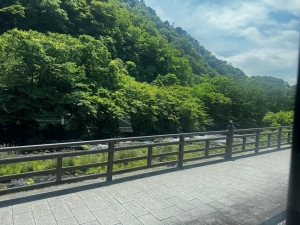
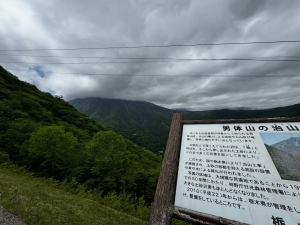
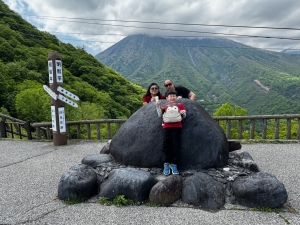
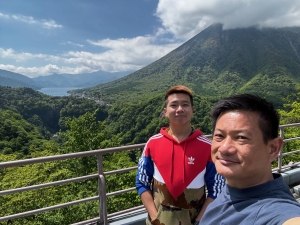
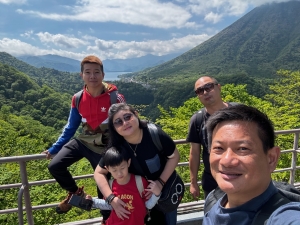
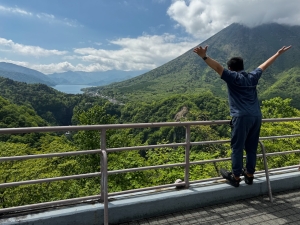
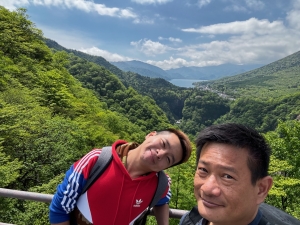
Nikko is a fairly large area with sights spread out in the town, as we have only one day at Nikko, we have to be very specific about the sights we want to visit. To avoid making the day too rushed, I picked out three sights to visit in Nikko. From my research before our trip to Japan, I matched the bus timetable to the sights we visited. I found the order to Akechidaira Ropeway, Kegan Falls, and Toshogu Shrine, which allowed us to maximise our time. We took the YK bus from the bus stop in front of Tobu-Nikko Station to Akechidaira Ropeway and alighted at stop #24. We took some time to admire the scenery before taking the ropeway. The gentle, cool mountain breeze with the cloud-covered views of the mountain ranges, coupled with the thin crowd, gave us a tranquil feel. The big rock with the mountain view behind gave us a great spot to take pictures.
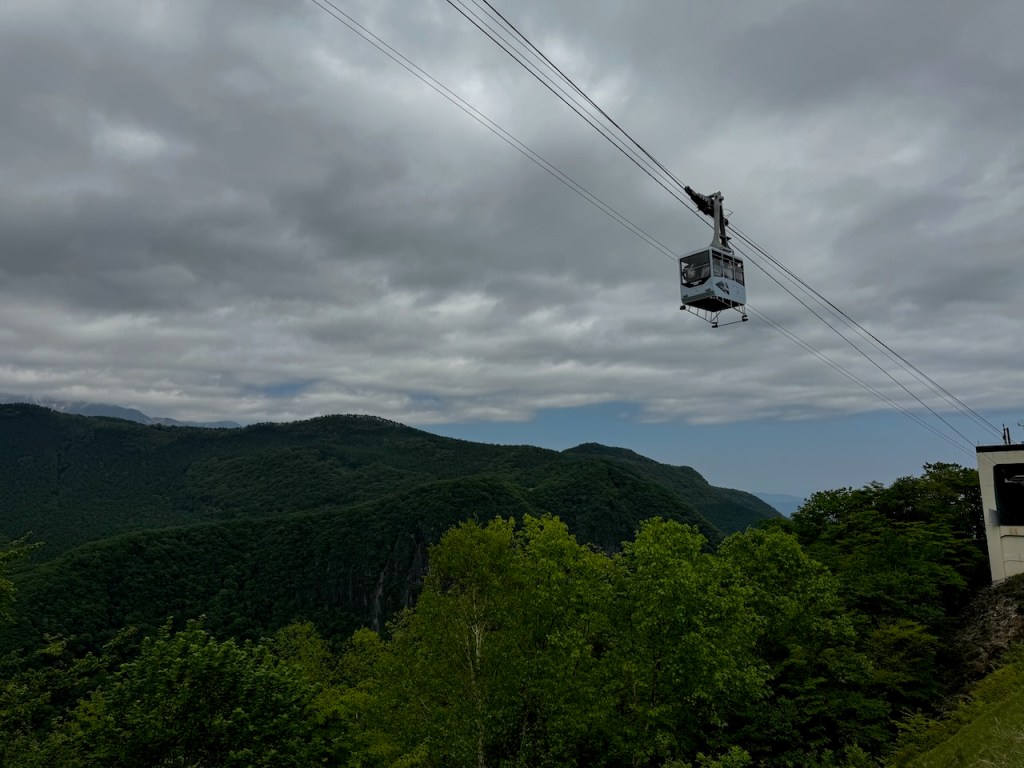


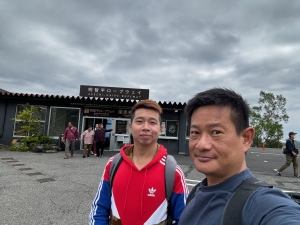
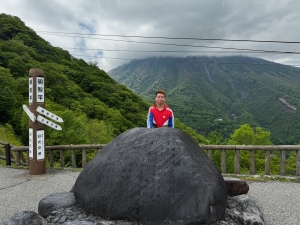
We proceeded to buy tickets for the ropeway. Staff at the ticketing booth informed us that views of Kegan Fall might be disappointing as there is not much water flowing from the lake. He helped us purchase the ropeway tickets from the vending machine after we told him we did not mind the water volume at Kegan Falls. Akechidaira Ropeway departs from the base station every 10 minutes, so we did not have to wait too long for our ride to the observation platform. The ride up to the observation platform took around 3 mins. Along the ride, we were treated to views of the surrounding mountain; I could even spot a waterfall amongst the mountain ranges.
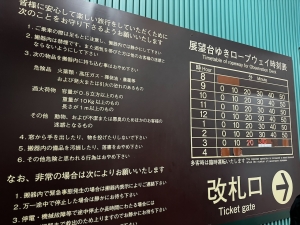
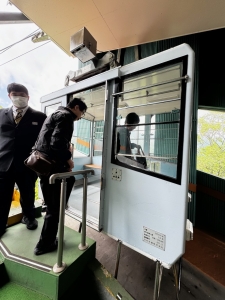
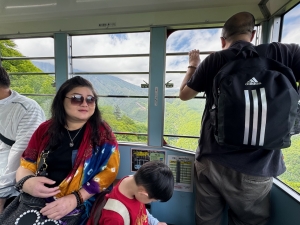

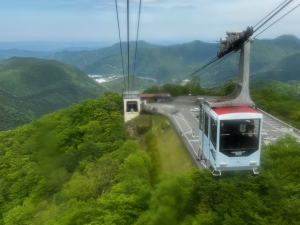
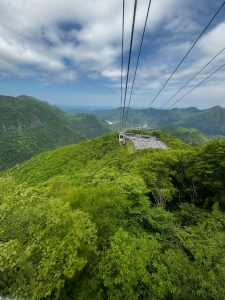
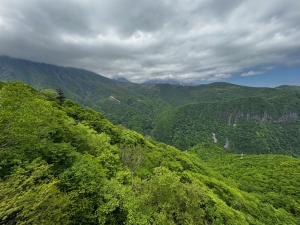
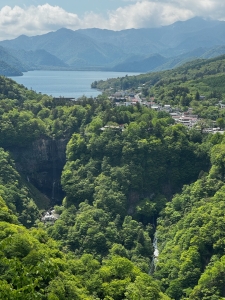
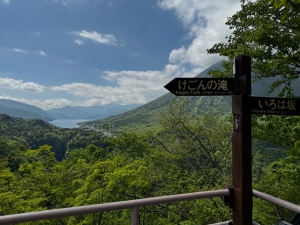
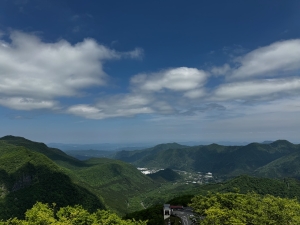
The observation deck is a small area offering 360° views of the surroundings. Other than Lake Chuzenji and Kegan Falls, we were also able to see the town that Nikko Station sits on and beyond. The main view we were after was the Lake and the waterfall. From the observation platform, we were able to see Lake Chuzenji sitting on a higher plain and feeding water to Kegan Falls. However, as we were told earlier, there is no water flowing at Kegan Falls; it appears as if someone placed a plug between the lake and the waterfall, causing little water flowing at Kegan Falls. I thought we were able to appreciate how tall Kegan Falls is without the water draining from Lake Chuzenji. As there were very few people here, we were able to enjoy the tranquillity the surroundings brought. The view opposite Lake Chuzenji was vast mountain ranges that seemed to stretch into the horizon. I liked the view of Lake Chuzenji’s side better. As the observation platform was small and there was nothing much to do besides looking at the views, we spent about 30 minutes here and left on the next cable car after taking some photos.


Chuzenji Onsen – Quiant Town next to Kegan Falls
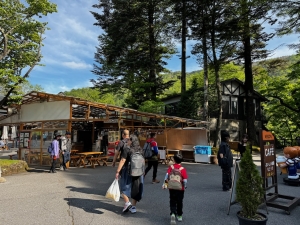
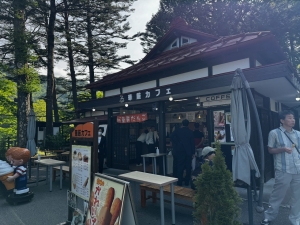
Our next stop is to visit Kegan Falls. From the Akechidaira Ropeway bus stop, we took the next bus that came along for two stops and alighted at stop #26 Chuzenji Onsen. The bus stop at Chuzenji Onsen looked more like a bus terminal. There are bus bays dedicated to each bus service that passes through here. There is even a terminal building where we were able to top up our Suica Card (as mine was running low). Chuzenji Onsen is the small town next to Lake Chuzenji, the lake we just saw from the Akechidaira observation platform. This town is also home to the famous Kegan. Chuzenji Onsen was very quiet, with a handful of travellers walking on the main streets, making their way to Kegan Falls. As we were walking on the streets of Chuzenji Onsen, we could spot Mt Nantai towering over the town. We settled our lunch at one of the restaurants in the town, opposite Kegan Falls.
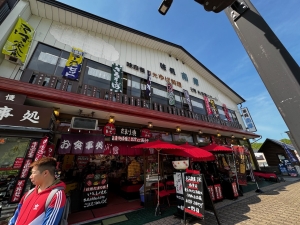

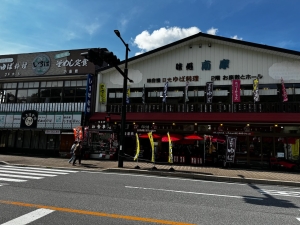

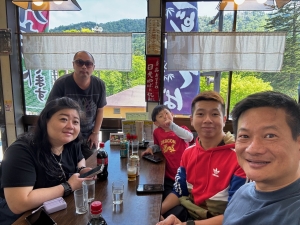

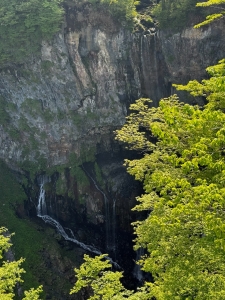
After lunch, we headed for Kegan Falls. There seem to be more people here at Kegan Falls. As we were already pre-empted that there wasn’t much water flowing down Kegan Falls, we forgo our original plan of taking the paid lift to the lower platform. The lower platform would be a perfect spot to view Kegan Falls when the waterfall flows. Since it wasn’t flowing today, we did not see a point in spending the money for the lift. The way to the upper viewpoint at Kegan Falls was very well-marked. We spotted a two-level concrete structure that seemed to jag into the waterfall. This upper platform is free of charge, and we were still able to catch a glimpse of the waterfall. We spotted water falling at the lower part of Kegan Falls, but it wasn’t anywhere near the majestic when the waterfall was in its full glory. As there was not much we could do here, we returned to the bus terminal and caught the next bus to the Shrines.



Toshogu Shrine – The Shrine in the Forest
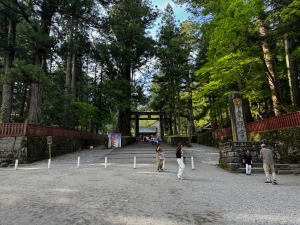
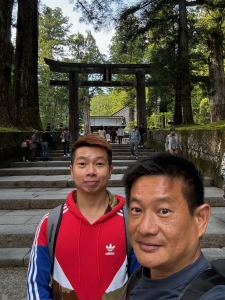
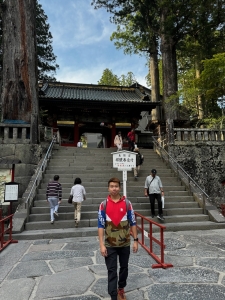
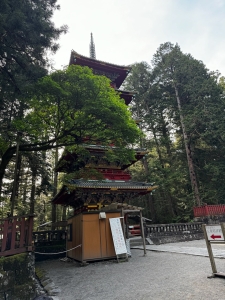
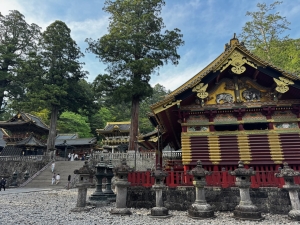
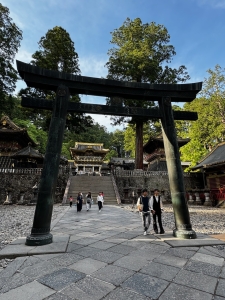
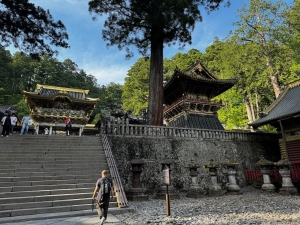
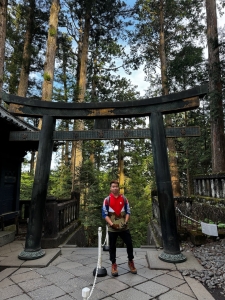
As we were walking to the bus terminus at Chuzenji Onsen, we spotted a bus route Y pulling into the stop. The driver indicated that it was going back to Nikko. We took the bus and alighted to stop #9 Nishisando Iriguchi, the nearest stop to Toshogu Shrine. Despite being the nearest, we were still required to walk 10 mins upslope to the shrine. Toshogu Shrine is a UNESCO World Heritage site; its stone main entrance, together with the stone Torii gate, gave it an ancient look. The forested surroundings gave us a sense of adventure, akin to going into some forest shrine looking for treasure. This flight of stairs towards the Torii gate was just the entrance to the forecourt of the shrine. Its entrance is after the ticketing booth.



The Fore Court – The Three Monkeys and the Elephants
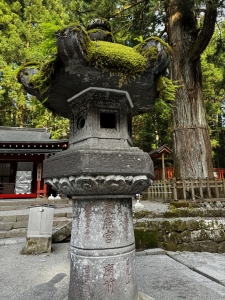
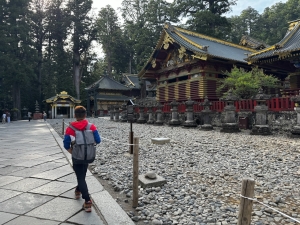
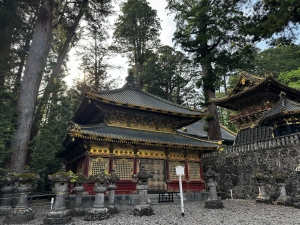
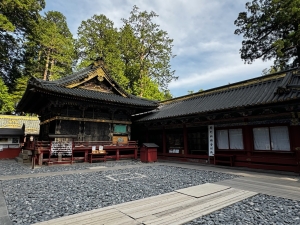
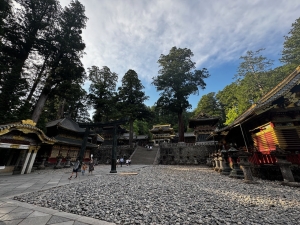
Pass the red wooden main entrance to Toshogu Shrine, and a pathway leads to the main shrine building. The forecourt of the shrine is a vast area with temple buildings built on both sides of the pathway. There are two buildings here that have interesting carvings. Walking towards the entrance, the building to the left had three monkeys carved onto the beam. This building looks unfinished with an unpainted basewood. However, the carving of these monkeys was vividly painted in a black and gold frame sitting above a window. The carvings of these monkeys can be easily missed if we are not deliberate in looking for them. Diagonally opposite the building with the three monkeys is another building with carvings of elephants. This building is decked in red and looks more vibrant than its neighbour opposite. Pass another Torii Gate, and after a short flight of stairs, we came to the iconic golden gate that is representative of Toshogu Shrine.



The Mausoleum Behind the Shrine
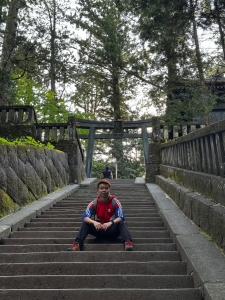
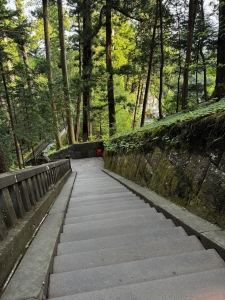
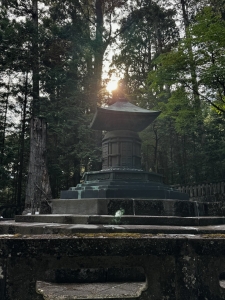
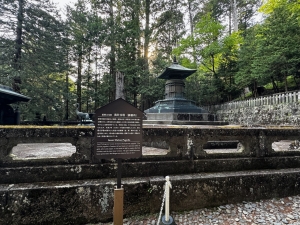
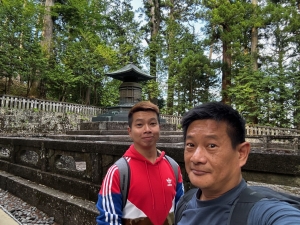
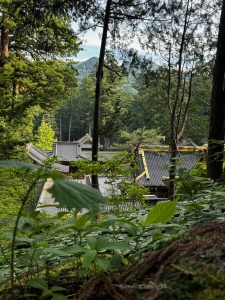
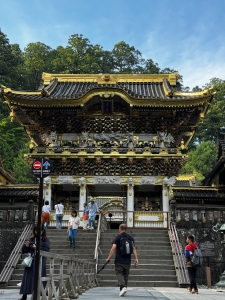
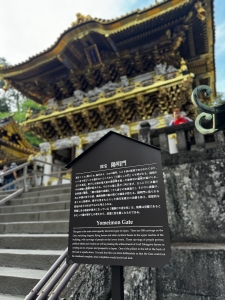
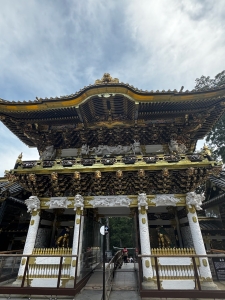
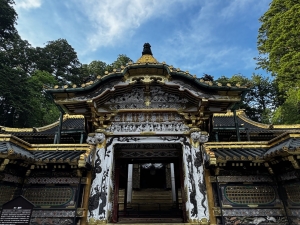
We did not pay much attention to this (Yomeimon) gate adorned with white walls and golden roofs. We walked past the Yomeimon Gate to the entrance to the main part of the Shrine. Instead of exploring the shrine, my friend and I followed a path that led to the right buildings of Toshogu Shrine. Here, we spotted a sign that guided our attention to the beam above it, where we spotted a carving of a sleeping cat. Here, we bumped into a staff that urged us to go through the gate as they closed. Not knowing what was behind this gate, we followed the instructions of the staff. After a small flight of stairs and a bend later, we saw a long flight of stairs. There are 207 steps up the back of the temple. As it was nearing closing time, just a handful of us were at the stairs. My friend and I scaled up the stone stairs and spotted a lone building perched at the top of the stairs in a large open area. A sign at the side of this short pagoda made from an alloy of gold, silver, and bronze informed us that this is the resting place of Lord Tokugawa, the founder of the Tokugawa dynasty of Shoguns.



The Golden Gate and the Main Shrine
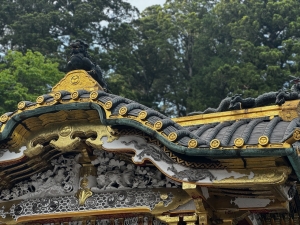
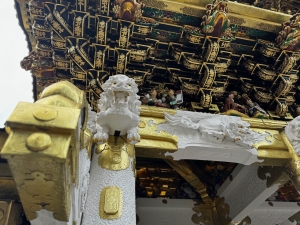
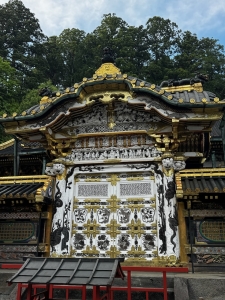
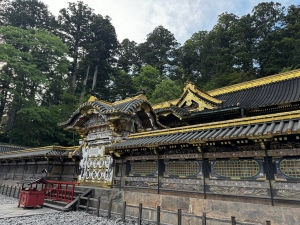
We descended the stone stairs from which we came to explore the main shrine. As it was closing time, plus we were too lazy to remove our shoes, we only saw the main shrine in Toshogu from the outside. The main shrine is enclosed by a set of short-walled fences. The front gate to the shrine was adorned in white and gold with elaborate carvings on its beam. As the front gate to the shrine was closed, we couldn’t really make out what was inside. After exploring another building to the left of the main shrine, we hastily headed for the main entrance of Toshogu Shrine (as the shrine was closing). As we were walking past the Yomeimon Gate, this time around, we paused momentarily to admire the intricate carvings on this gate. The lower level under the roof was decorated in black and gold; taking a closer look, we could spot some characters carved onto the beam. The carvings of the white dragons on the beam above looked very lively, as though they were fiercely guarding Toshogu Shrine. The roof of the top level was full of carvings of dragon heads adorned in gold and black. I can see the amount of hard work that went into creating such a beautiful piece of work.



Back to Tokyo
As the shrine was closing and seemingly most of the shops and attractions in Nikko were calling it a day, we headed to the nearest bus stop for our bus ride back to Nikko Station. There is a bus stop about a 3-minute walk from the main entrance of Toshogu Shrine. This was where Bus Route W stopped, the bus route I originally wanted to take. As we were taking the Shinkansen (the last Limited Express had already left) back to Tokyo, we boarded the local train from Nikko Station, the other station in the Nikko area about 3 min walk from the Tobu-Nikko Station we arrived in this morning. The local train took about 30 mins to reach Utsunomiya station, and transferring to our 50-minute Shinkansen ride back to Tokyo was a breeze. We settled for dinner at Tokyo Station before calling it a night. After all, we had Tokyo DisneySea planned for tomorrow.

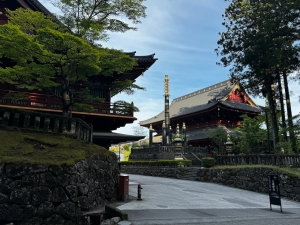
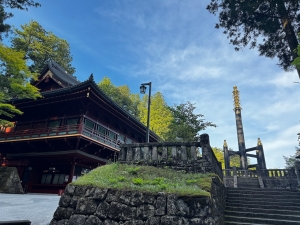
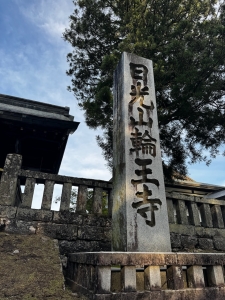
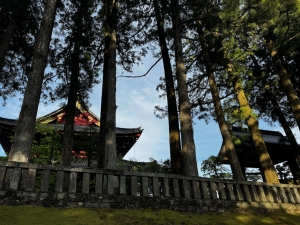

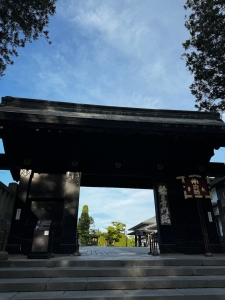


I also took a day trip to Nikko to take advantage of my Japan Pass. I stayed close to the town, mainly remembering visiting temples.