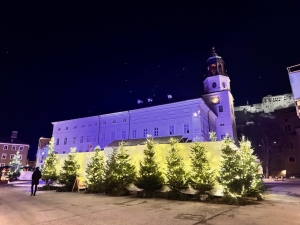
Austria – The Classical Music Capital of the World
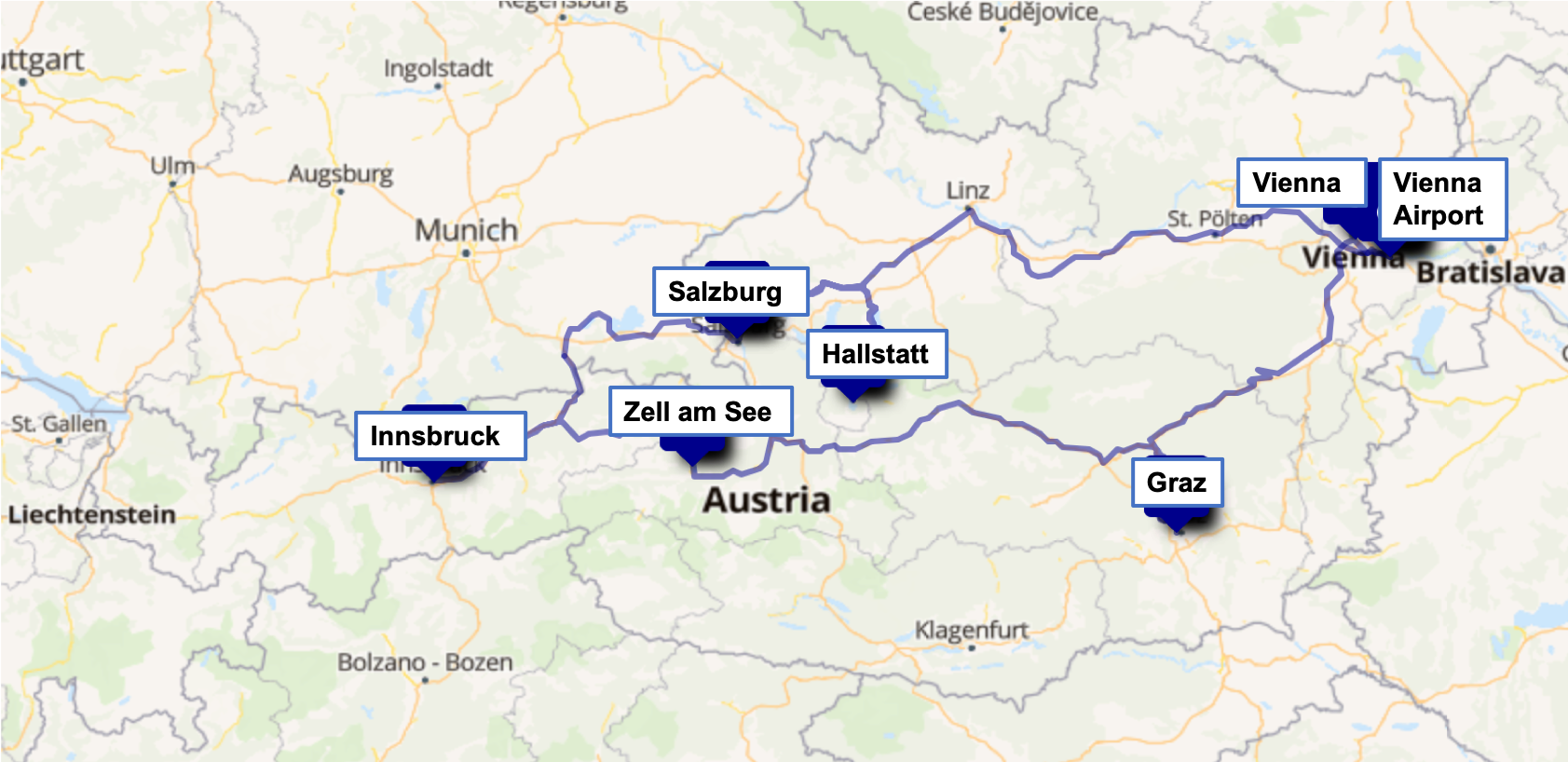
My motivation for visiting the Central European country of Austria stems from a photo I saw years ago on the tranquil picture of Hallstatt, a small quaint town sitting by a lake’s edge with towering mountains surrounding it as though they were protecting its residents. With Hallstatt as our must-visit destination, I expanded our Austrian Trip, starting with Vienna, our gateway to Austria. As I wanted to visit a few states and focus the trip on the country only, I looked into the capital cities of each of the states. For this trip, we visited the states of Salzburg (Salzburg City and Hallstatt), Tyrol (Innsbruck), Styria (Graz), and Burgenland (Vienna). As we had to travel from the west (Innsbruck) to the east (Graz) of the country, to avoid spending 6 hours on the train, I had to look for someplace in between to break the travel. As I researched where to stop for a couple of days, I chanced upon Zell am See, a lakeside town surrounded by mountains and included this town in my travels.
Custom Clearance
There aren’t any direct flights from Singapore to Austria. To get there, we can either transit to another neighbouring country from Singapore (such as Bangkok) with direct flight connections to Austria or another country nearer to Europe (such as Istanbul). We also had the option of flying into Munich, about two hours by train from Salzburg. We opted to fly into Vienna from Taipei as I always wanted to try EVA Air, which has direct flights to Vienna.
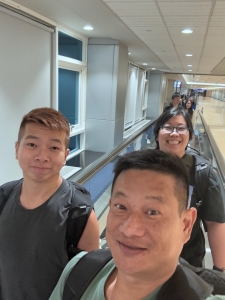
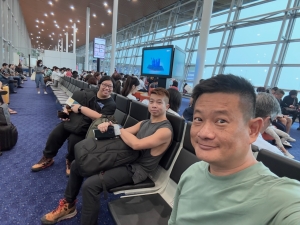

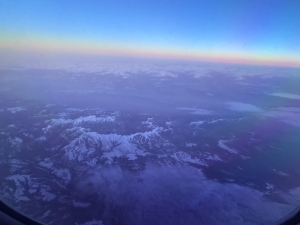
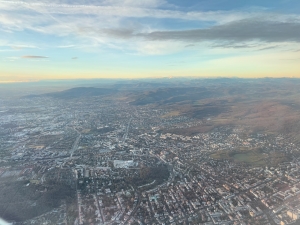
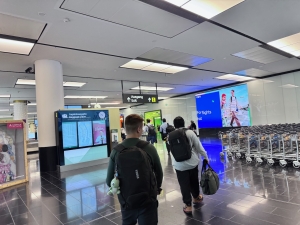
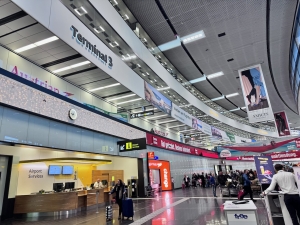
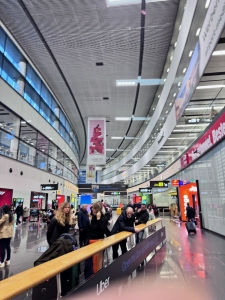
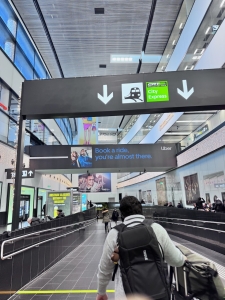
After a 14-hour flight from Singapore and stepping foot in four countries, we finally arrived at Vienna International Airport. I was rather surprised at the efficiency of the immigration clearance at Vienna International Airport. As many immigration counters opened this morning, we cleared immigration within 5 minutes of queuing. From deplaning to immigration clearance to collecting our luggage, it only took us about 30 minutes in total. As I had catered for 1 hour for immigration clearance and booked our train 2 hours after our arrival, we spent the rest of our time at the airport terminal waiting for our train. Fortunately, there are some shops and cafes where we can walk around and kill time. We used the extra time to settle our Vienna City Pass, which we will use when we arrive in Vienna. We headed to the OBB counter to purchase the pass, which gave us paper tickets. I prefer a physical card to a paper or online ticket, which we discovered was available at the Vienna City Pass counter in the centre of the arrival hall.
Our ride to Salzburg – Our first stop of the trip
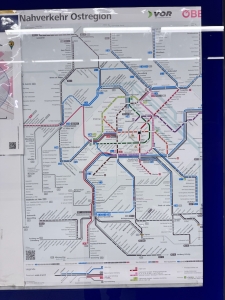
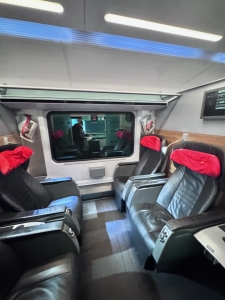
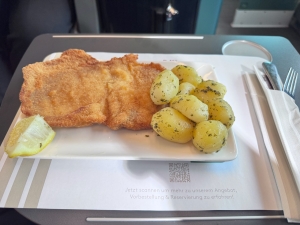
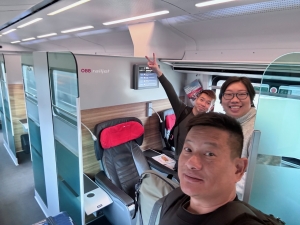
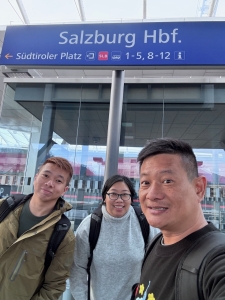
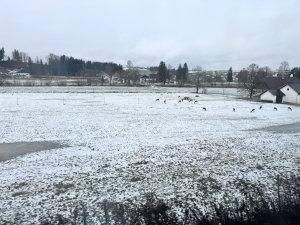
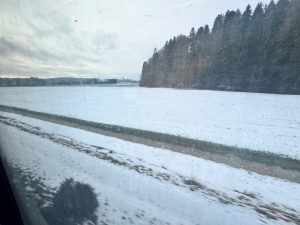
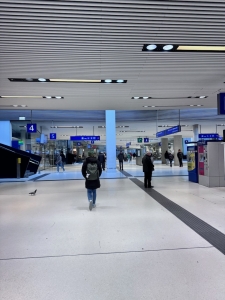
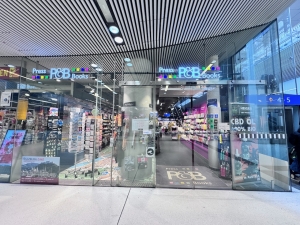
We originally booked First Class seats on the 3-hour ride from Vienna Airport to Salzburg City, but we upgraded to Business Class seats about 2 months before our trip. I find it whimsical how the Austrian National Railway – OBB termed the classes of their rides. Perhaps I was too used to the classification of onboard aircraft, where First Class is always the top passenger class. On OBB trains, the Business Class is a higher passenger class than the First Class. Getting from the airport arrival hall to the train station couldn’t be easier. We spotted a ramp from the customs exit that took us directly to the train station below the airport. Our train arrived on time, and we were surprised that we were the only ones in the carriage. We ordered lunch from the train menu, which was delivered to us by the friendly train attendant. Our 3½ hour train ride to Salzburg City whisks us through the countryside, from lush grassy patches to snow-capped fields. When arriving in Salzburg City, the first thing to do is to get our Salzburg Card, which not only offers free admission to most of the sights in Salzburg but also includes all the transportation in the city. We got our cards from the Press P&B bookstore in Salzburg Hauptbahnhof. After getting our cards, we were on our way to check into our hotel and freshen up before heading out to visit the sights in Salzburg. Fortunately, our hotel allowed us early check-in. Our initial plan was to visit Hohensalzburg Fortress in the afternoon, but the hotel’s reception staff advised against the visit as it was approaching closing time. With our tired bodies from travelling from Singapore to Vienna, we decided to start our trip easy and visited the Mirabell Palace and Gardens instead.


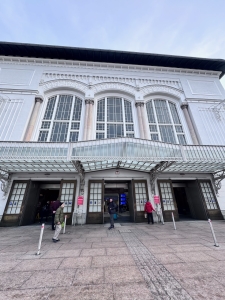

Schloss Mirabell and Gardens – Tracing the Steps of the Sound of Music
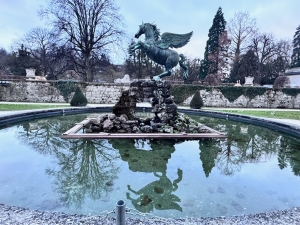
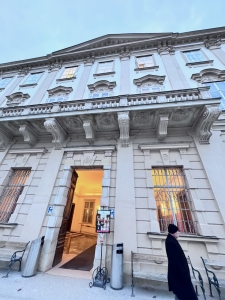
Mirabell Gardens was made famous by the movie “The Sound of Music” and has been one of the tourist attractions in Salzburg since the 1960s. Visitors come here for the famous Pegasus Fountain in the middle of the Gardens in front of Schloss Mirabell and would usually skip a visit inside the palace. The Prince-Archbishop originally built Schloss Mirabell for his mistress and their children. Today, the palace is a government building housing the office of Salzburg’s mayor and the municipal administration. During my research for the trip, the city’s travel site (click here for the site) recommended visiting the palace for the famed marble staircase. The best thing is a visit inside the Schloss Mirabell was free. The Marble Staircase, featuring baroque-style architecture, was one of the only two things opened to the public inside Schloss Mirabell.
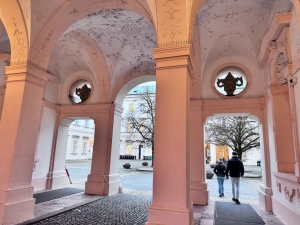
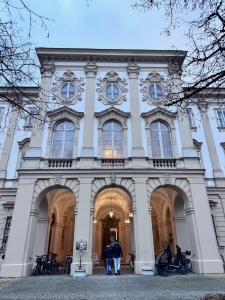
We had a hard time looking for the entrance to the staircase. When we finally found the staircase, we were greeted by a closed glass door, thinking the door was locked and closed to the public. Disappointed, we went around the building and attempted to take pictures of the staircase from the outside through a window. As we tried to pierce into the famous marble staircase from outside, we saw people walking inside the building. This is when we realise the inside of Mirabell Palace is not closed to the public, and we just have to pull the door to gain access. The famed Marble Staircase was a few steps from the glass door. We could see the opulent marble staircase with many angle carvings on the railings of the stairs that span three levels. Even the railings were carved from marble into some wavy patterns. More sculptures that looked like Greek characters (or maybe Gods?) carved out of marble are installed on the walls of the staircase. As we were the only ones at the Marble Staircase during our visit, we spent the next 30 minutes at the Marble Staircase taking as many pictures as we wanted.

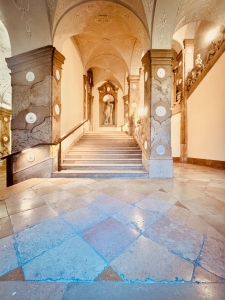
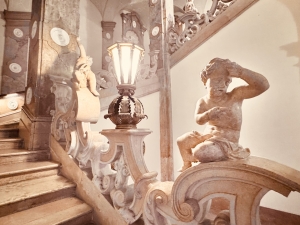

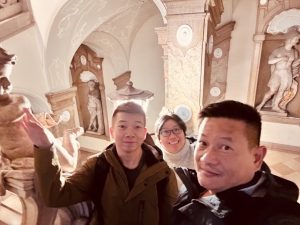
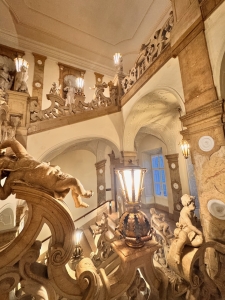
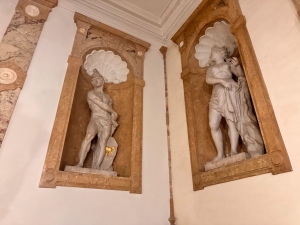
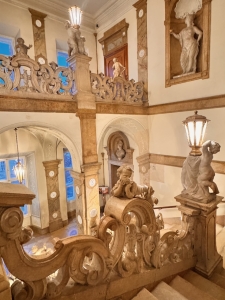
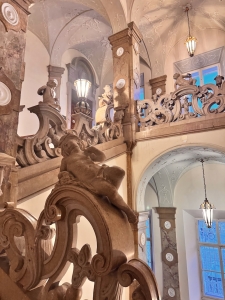
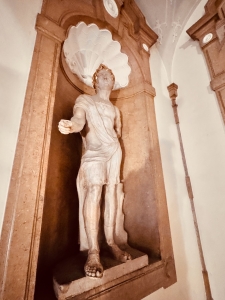

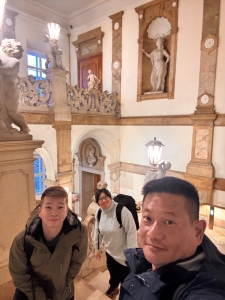
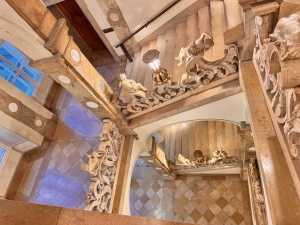
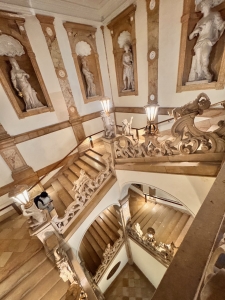
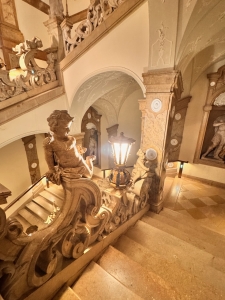
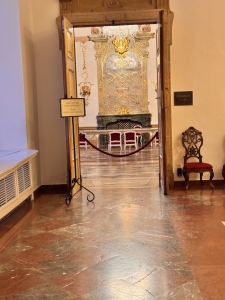
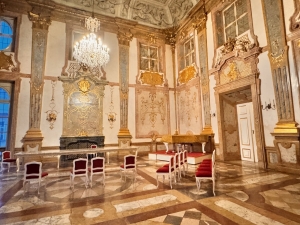
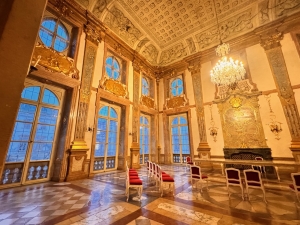
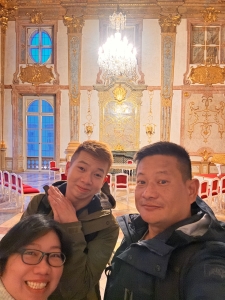
As we were leaving the Marble Staircase, I spotted a sign in front of a closed wooden door on the first floor that points to Marmorsaal (Marble Hall). I tried my luck opening the door and was surprised that it was unlocked, revealing an antechamber and another opened door with a red velvet rope after the chamber. Initially, we thought we could only see the Marble Hall from the first door. After some hesitation (plus there wasn’t anyone around to stop us), we snuck into the antechamber up to the velvet rope. We could see the opulent famed Marmorsaal, formerly the Prince-Archbishop’s banqueting hall, from the velvet rope. The hall was especially beautiful, with the warm lighting illuminated by the chandelier hanging in the middle. From the entrance, we could see the entire hall covered in marble with carvings on the walls covered in gold and intricate carvings on the ceiling. A grand white piano sits in the corner of the hall, with a long marble table occupying the space at the back and several chairs arranged neatly in the hall. Today, Marmorsaal is used for weddings and concerts and it was recorded that Mozart even performed in this very hall.

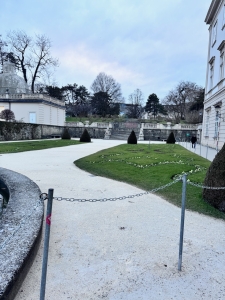
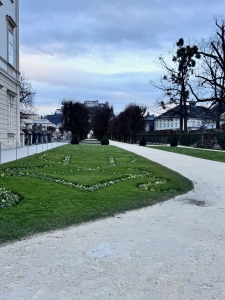
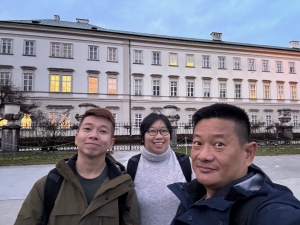
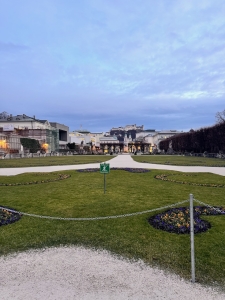
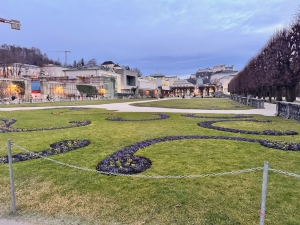
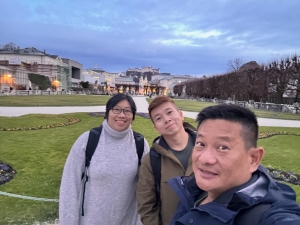
We exited Schloss Mirabell and headed back to the gardens. Sitting at the entrance to Schloss Palace was the famed Pegasus Fountain forged in copper. As it was winter, the gardens were barricaded off, and we could only see the garden from its parameters. Most of the trees were in slumber for the winter, but we could see some grass and flower patches in the gardens from a distance. There are two great photo spots at the gardens: the spot nearer to Schloss Mirabell allowed us to get a shot of the gardens with Hohensalzburg Fortress in the background, while the spot at the other end gave us a good shot of the gardens and its sculptures together with Schloss Mirabell. As we could not get into the gardens, we left after some photos.

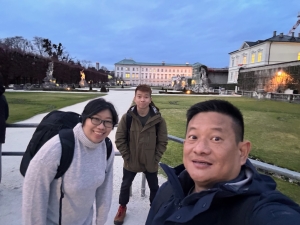
Dinner at Getreidegasse – The Shopping Street of Salzburg
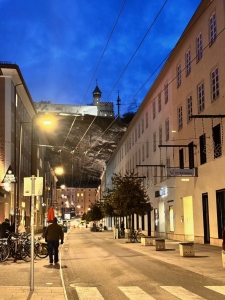
After visiting the gardens, we landed in the Markartplatz, where Mozart’s residence is just across the road. A Google search informed us that the place was still open. At the entrance, we were told by one of the staff that the Mozart Residence was closed for the installation of new exhibits. Seeing we could do nothing here, we headed across the Salzach River to the old town for dinner. Walking up to the banks of the Salzach River, we were treated to the scene of the old town with Hohensalzburg Fortress sitting at the top like a crown jewel. We were mesmerised by the scene and its reflection on Salzach. We crossed the Salzach River on the Marko-Feingold-Steg bridge, full of love locks on both sides. On the bridge, we could still see the night lights cast on the buildings and Hohensalzburg Fortress.
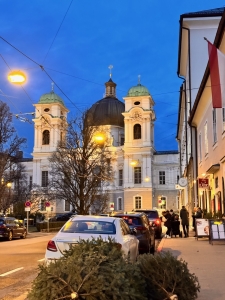
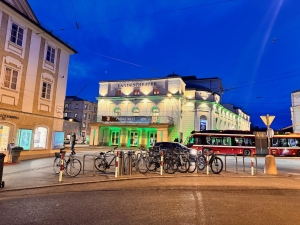
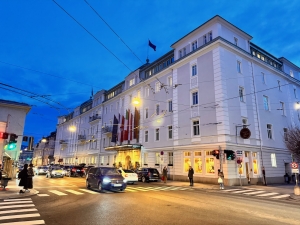
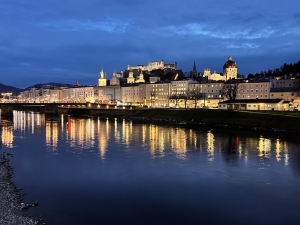
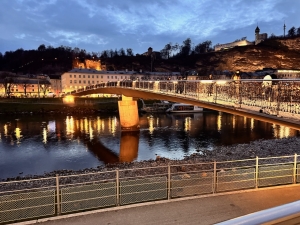
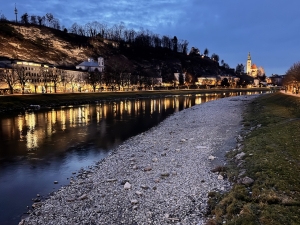
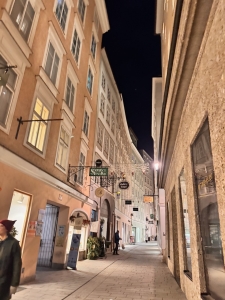
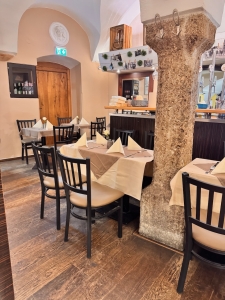
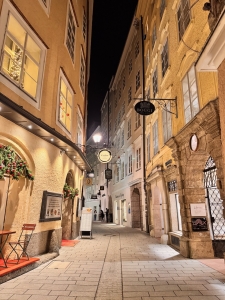
I usually do not plan places to eat for my trips, but I prefer to discover the food (plus, some restaurants can be overrated). We walked into one of the streets on Getreidegasse, the main shopping street in the Old Town of Salzburg City. I enjoyed the tranquil walk on Getreidegasse, a street that is not wide, surrounded by charming buildings that have seen and changed with the needs of the residents over time. Today, the buildings on Getreidegasse mainly houses shops and restaurants. We settled in a small rustic restaurant for dinner, serving delicious schnitzels. After dinner, we explored the old town a little more and stumbled into a square with a statue of Mozart. I was telling my friends that we were in Mozartplatz. Since we were a little tired, we returned to our hotel to recharge for our Salzburg exploration tomorrow.