We wanted to cover as much Salzburg as possible today to maximise the 48-hour Salzburg Card, which costs €36 per adult. The sights we visited today would cost us €74.90 (excluding the public transport we took), about double the amount we paid for the Salzburg Card. One thing good about the Salzburg Card is that it is valid for the entire 48 hours from the time we activated it and not by day. Since we activated it on 9 Jan at 9.30 am, it will remain valid until 11 Jan at 9.29 am, the entire 48 hours.
Untersberg – The Mountain that Spans into Germany
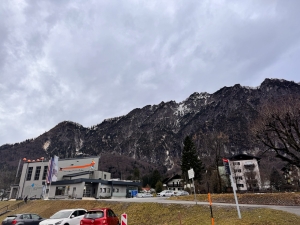
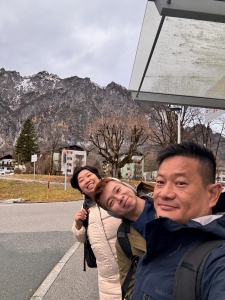
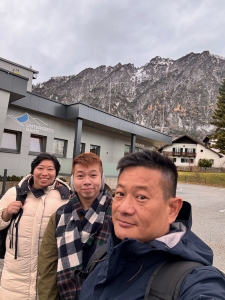
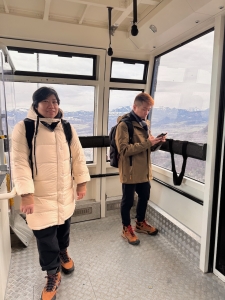
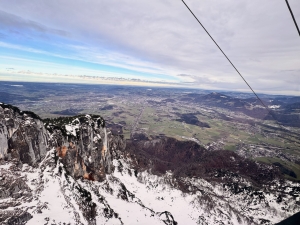
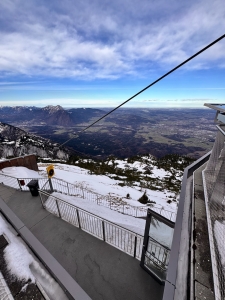
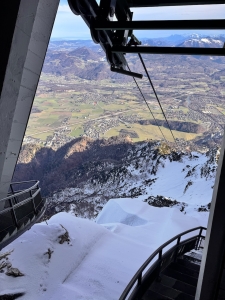
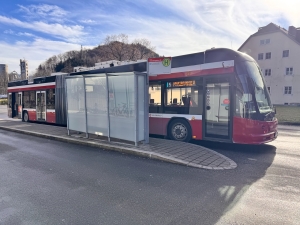
One of the ways to maximise the value of our Salzburg card is to visit Untersberg, the mountain ranges that span into neighbouring Germany. Our Salzburg card included a return cable car ride (€32 for a return cable car ride) to the summit station at Geiereck, about 1,776m in the Alps on the Salzburg side of the mountain ranges. To get to the base station of the Untersbergbahn, we took bus #5 from Salzburg Hauptbahnhof (€2.50 one way from Salzburg City) to the final stop of Untersbergbahn. Bus #25 also runs from Salzburg Hauptbahnhof to the base station. The cable car ride took about 8 mins up to the top. As we ascended the mountain, we saw the mighty surrounding mountain ranges sitting magnificently across the land in their white snow cap. As we approached the summit, the terrain below us turned from lush grassy plains to sharp mountain edges. Soon, we saw traces of snow draping on the mountain terrain below us. The snow coverage area increased as we were closer to the summit station. Passing the last cable car pylon, we were immersed in a snowy wonderland.



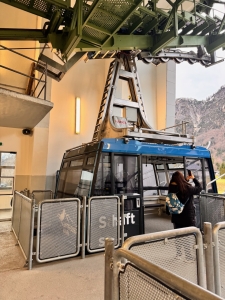

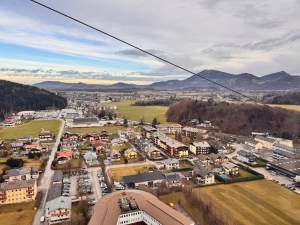
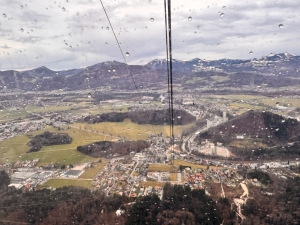

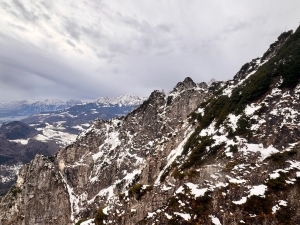
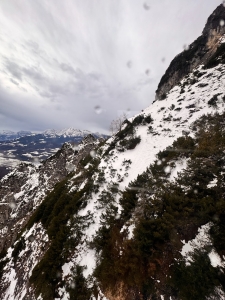
There weren’t many facilities in the Untersbergbahn summit station, other than the cable car, and only one restaurant called home here. We couldn’t hold our excitement at the sighting of snow and made our way outside. The view outside the station was breathtaking. We were treated to a vast landscape beyond the snowy grounds we were standing on. We could see Salzburg city and the nearby Salzburg airport from where we stood. However, the lack of railings and our uncertainty about the path prevented us from getting close to the mountain’s edge. There seem to be some trails that would lead us to a cross on top of the summit station. Having that in mind, we slowly navigated our way. The first few steps out of the station covered in snow were fine, but the icy path as we walked further uphill along the trail was slippery. There weren’t any railings around that we could use to ease our trek up the slope. We saw a wooden lodge housing a restaurant not far from the summit station that we had just exited. We carefully navigated our way to the cross above the cable car station, looking for the next step that did not result in us sliding backwards. Soon, we came to a crosspoint; the way up to the cross was steep, and with the icy path, we were not confident we could make it up. Or we could take a right on what seems to be an easier path up and down some slopes to another cross in the distance. We opted for this path. As we were walking up the slope, it became the icy path proved to be challenging. After the first slope, we thought it might be too challenging to press on despite seeing some groups easily passing us. We made a U-turn and headed back to the cable car station at the peak of the first slope (partly due to more sights we wanted to visit in the day).
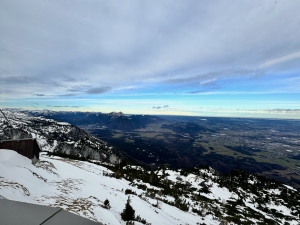
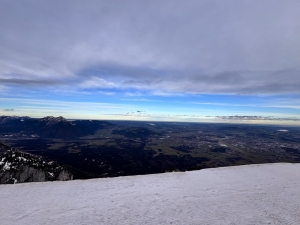
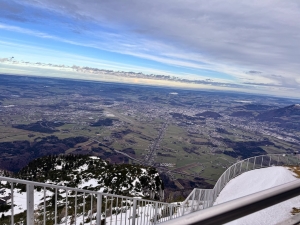


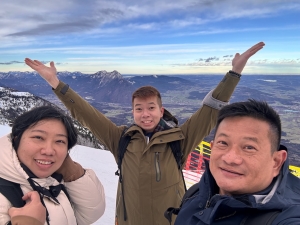

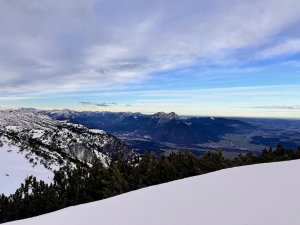

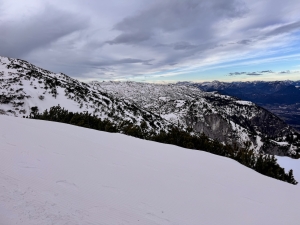


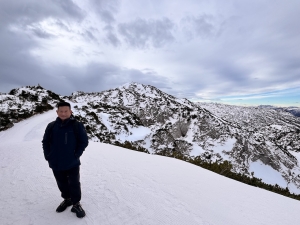

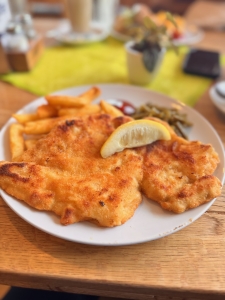
The walk back downslope on the icy path was very challenging. We were unsure if the next step would result in us tumbling down the slope or, worse, down the mountains. We thought the way down was exhausting, both psychologically and physically. After a few minutes of mental challenge in taking our next small step down, my friend and I decided to slide down the slope. It felt safer, but our bums suffered. Soon, we were at the same wooden lodge we had seen earlier and knew we were close to the summit station. The final stretch downslope to the summit station was very icy and slippery. Fortunately, we saw a path leading to the station’s terrace deck (the second floor), which was easier to walk on. We finally made it back to the station and had lunch in the restaurant to reward our efforts (partly because we were hungry) while waiting for the next cable car down (cable cars depart the station at the quarter of the hour).





Festung Hohensalzburg – One of the largest 11th-century Fortress in Europe
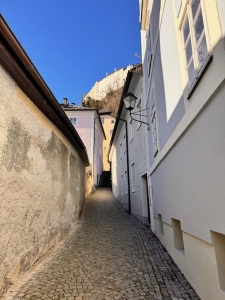
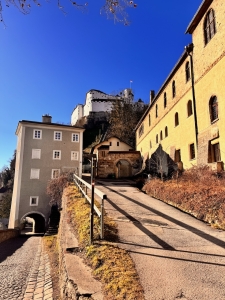
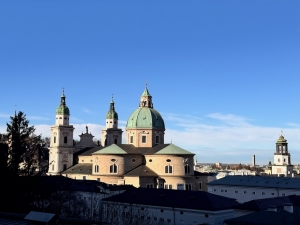
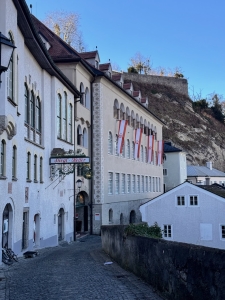
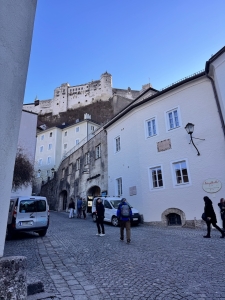
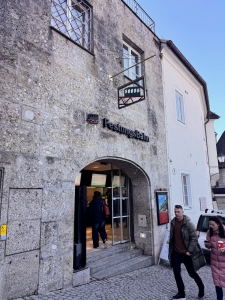
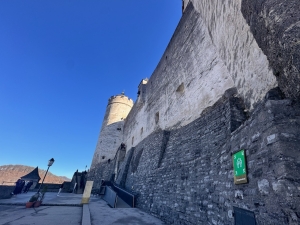
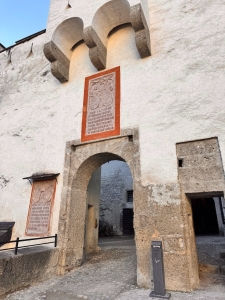
Since we did not have time to visit Hohensalzburg Fortress yesterday, we prioritised it after visiting Untersberg. Hohensalzburg Fortress is an 11th-century fortress that stood guard over Salzburg, perched on the 506m Festungsberg. The Fortress was initially built to protect the political interests of the archbishop of Salzburg. It was expanded over the next 600 years. The more significant expansion was in 1500 when the archbishop angered his people through his authoritarian ruling style by turning the Fortress from a defensive structure into a self-sufficient residence. Armed with our Salzburg card, which not only grants us the Basic Pathway tickets (€11.20 per pax) to the Fortress (which includes entrance to the castle area, the Panorama Tour and several fortress museums) but also includes a return ride on the FestungsBahn (€6 return). We took bus #25 from Untersburgbhahn base station to Petersbrunnstraße, and from the bus stop, we took a 16-minute walk upslope to the funicular station. The walk took us to the back of Altstadt, where we could see the old town from a different perspective. Along the walk, we saw St. Erhard church, a masterpiece of Salzburg architecture originating in a period dominated by the Italian baroque style and the Salzburg Cathedral, towering over the old town buildings.




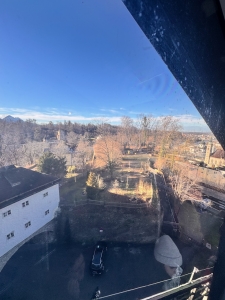
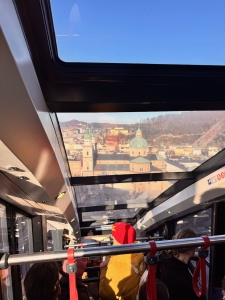
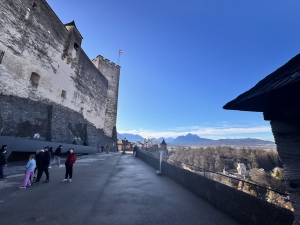
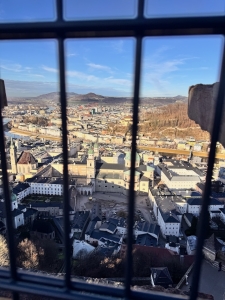
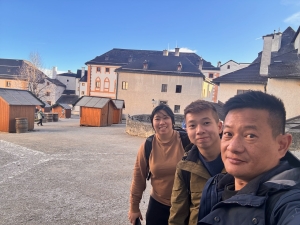
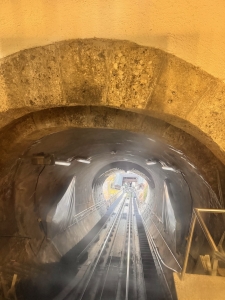
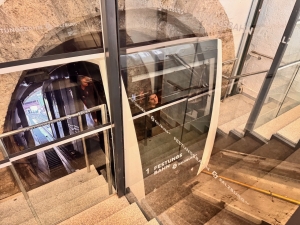
Taking the Festungsbahn is the fastest and easiest way to access Hohensalzburg Fortress (the other option was to walk up), which takes less than one minute to reach the top station. Exiting the station, we saw a German sign pointing us in two directions: to the left is “Tower Aussichtsturm”, and to the right is “Dinner & Konzert”. Not knowing what it meant, we assumed the right would bring us to some restaurant and took the left turn. This direction brought us to a large bastion where we got some really amazing views of Salzburg City. From here, we could see the Salzburg Cathedral towering over the buildings in Alstadt and the newer parts of the city further beyond, with the Salzach River running between the two areas. At this bastion, we could feel the graduere of the Fortress. We climbed the only stairs that seemingly led to the inner Fortress. While climbing the stairs, we realised the first landing gave us a better photo shot with Salzburg City below (highly recommended to take pictures here). The staircase landed us in the courtyards. Some unmarked buildings and small huts occupied the space in this courtyard, suggesting that Christmas markets might be operating here. From the staircase, we saw a sign marked “Panorama Tour” hanging from the side of the building wall, which was our next stop.



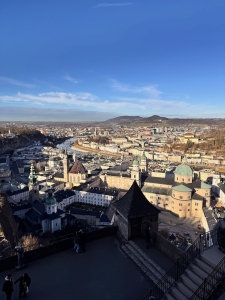

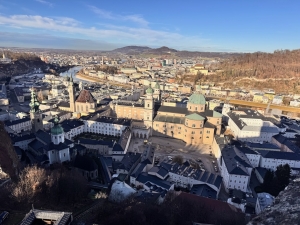
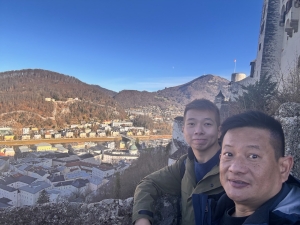

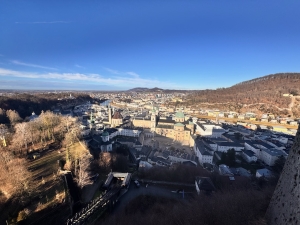

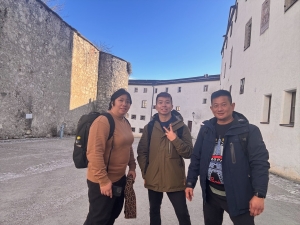
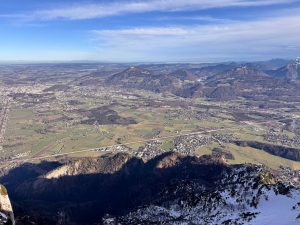
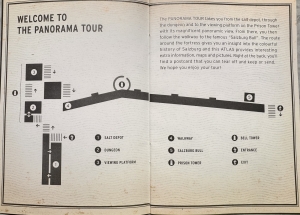
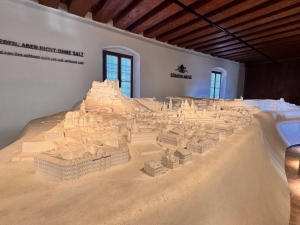
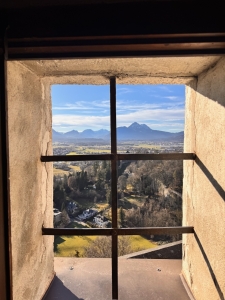
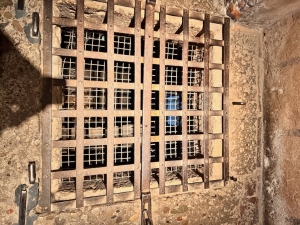
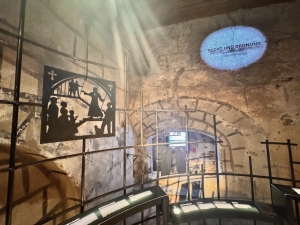
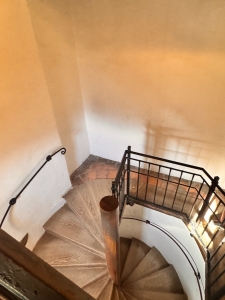
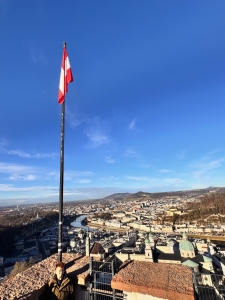
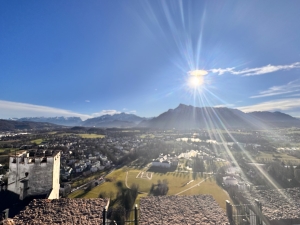
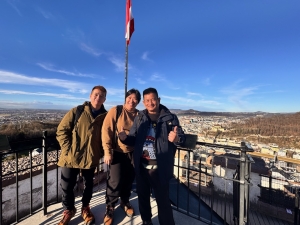
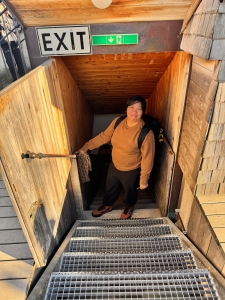
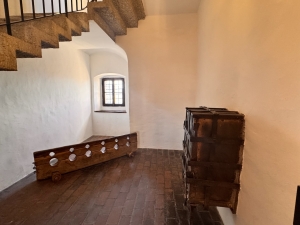
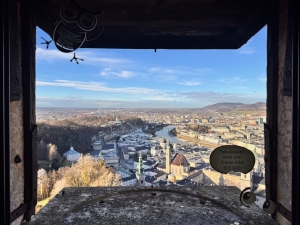
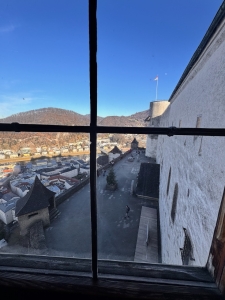
We headed inside the door for the Panorama Tour, which took us from the salt depot through the dungeon and finally to the viewing platform. The Panorama Tour is very easy to follow, there is only one way with stations and introduction of the various parts of the inner Fortress. First, we walked past a set of windows that gave us a good view of Salzburg City below, but I thought the views here paled in comparison to that from the bastion. The first room the walkway led us to was the Salt Depot, filled with a white table-like structure (which could be salt deposits) and a detailed model of Salzburg’s old town and the Fortress. There are panels explaining how Salzburg came to be and its connection with salt. Further on the path was the prison block. On the ground floor, the dungeon was visible through a metal grate on the floor. There are brief introductions about the prison cells and the dungeon in this room. Other than the grated floor and the exhibits, a wooden spiral staircase would lead us to the tower’s top deck. There were some empty rooms with nothing but a wooden chest on each floor of the tower. These would be prison cells. I thought the highlight of the Panorama Tour was the view from the platform above the prison cell block. From here, we can see the city of Salzburg and enjoy views of the surrounding Alps. We could also see Untersburg, which we visited in the morning. Descending from the tower, the rest of the tour was rather uneventful. We walked past some windows that gave us some good views of Salzburg from the Fortress. When we exited the building at the end of the walkway, we ended back in the courtyard, not far from where we entered the building earlier.







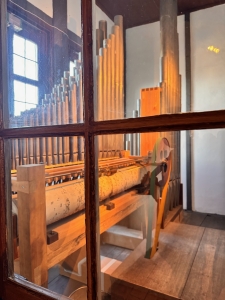
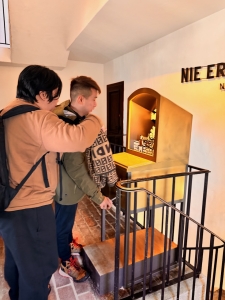
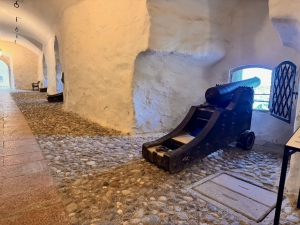
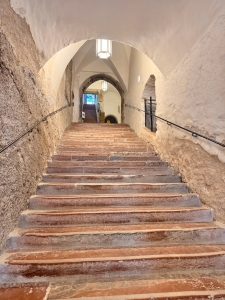
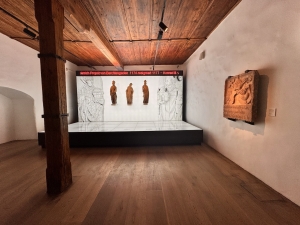
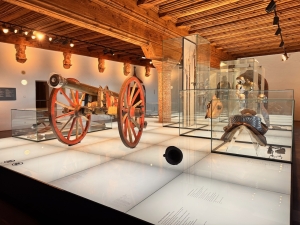
Through an archway, we came to another building—a staircase leading up to the fortress’s museums. These museums were segregated into different parts but were essentially one big hall. This is where we learned more about the fortress’s history and the way of life inside it. There is even a large hall displaying armour and cannons used in the Fortress’s heydays. As we were not museum-goers, we quickly skimmed through the museum and concluded our visit to the Hohensalzburg Fortress.



Salzburg Altstadt
Most of the attractions in the Salzburg area are situated in Altstadt. Since we were at Hohensalzburg Fortress, it made sense for us to visit some of the sights in the old town. Our first stop would be the Domquartier, a 5-minute walk from the funicular station.

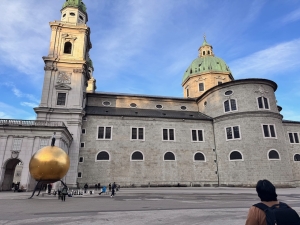
DomQuartier
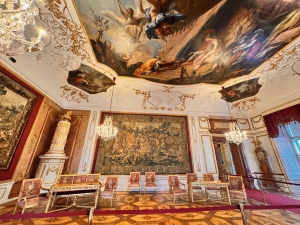
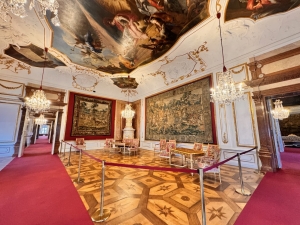
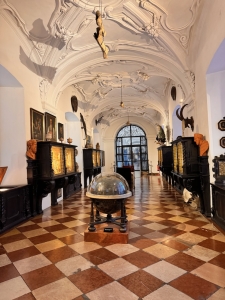
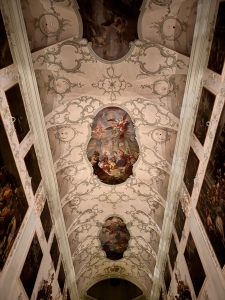
DomQuartier is a museum complex (€15 for full access) that displays secular and sacred art collections centred around the Salzburg Cathedral and Cathedral Square. The State Rooms, Archway Terrace, Salzburg Cathedral Organ loft, and the Cathedral Museum are the main parts of DomQuartier. Entrance to the DomQuartier required us to show our Salzburg Card to the ticketing counter in exchange for a ticket. A flight of stairs led us to a huge hall, the Carabinieri Hall, where another staff briefed us on using the audio guide from our phone as we walked through the State Rooms. The Carabinieri Hall was the largest room in the Residenz and was donned with impressive frescos painted on the ceiling. It seemed to serve as a concert hall today as we saw a small stage and some chairs in the centre of the hall. This is where we started and ended our tour of the DomQuartier.

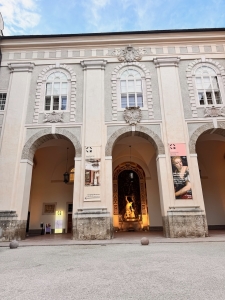
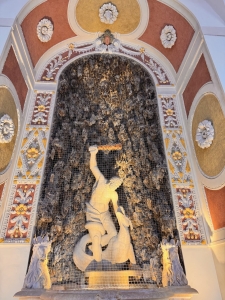
State Rooms
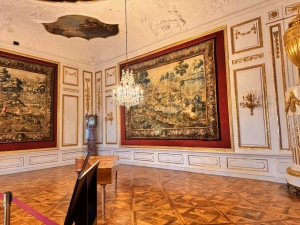
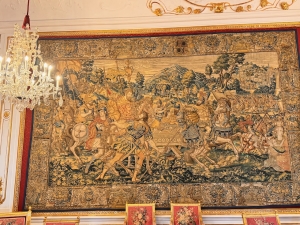
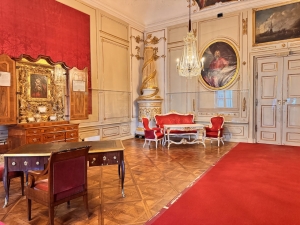
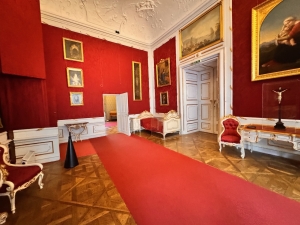
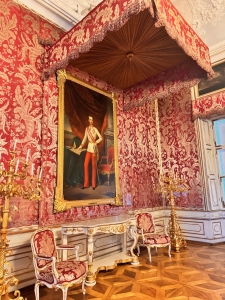
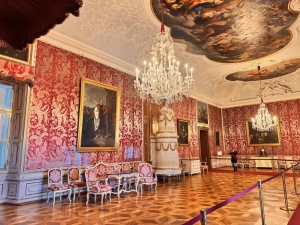
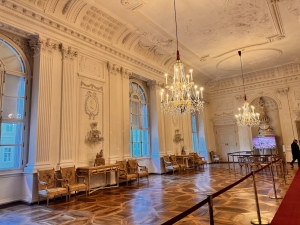
The State Rooms served as the prince-archbishop’s residence and was where he worked. There were 10 staterooms opened to the public, each serving a purpose, with the first few rooms serving as the guard’s room or waiting rooms for people who wanted an audience with the prince-archbishop. All of these rooms had different frescos painted on their ceilings, with some depicting the rulers claiming their success and some with paintings of the gods interacting with humans. Of these 10 rooms, I thought the Conference Hall (the second room from the Carabinieri Hall) and the Audience Hall (the fourth room from Carabinieri Hall) were the most interesting. The Conference Hall has a bright red velvet wall, which is more vibrant than most of the rooms we have seen. The four crystal chandeliers hanging from the ceiling and the elaborate ceiling frescos accompanied by the carvings on the ceiling made the room look posh. Here, Mozart first performed as a child at 7 (although we saw the piano Mozart used in the next room). The other significant room was the Audience Hall, filled with large, costly hand-woven tapestries from the era of Prince-Archbishop Wolf Dietrich. Here, we met a museum staff who generously shared some facts about the rooms (and the subsequent few rooms) and somewhat became our private guide. The staff told us that the Audience Hall is the most valuable room in the entire DomQuartier due to the antique tapestries and the Louis XVI furniture purchased in 1775 in the Audience Hall. The last door of the State Rooms opened up to the Cathedral Archway Terrace.

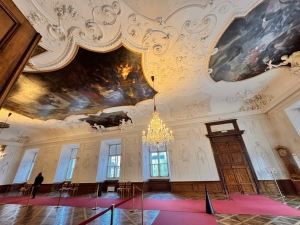




Cathedral Archway Terrace
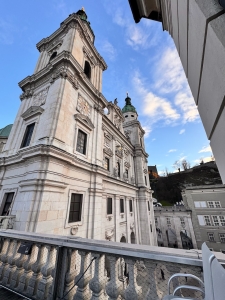
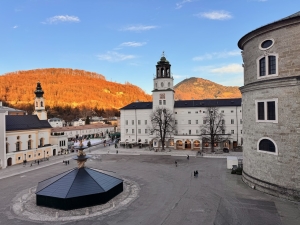
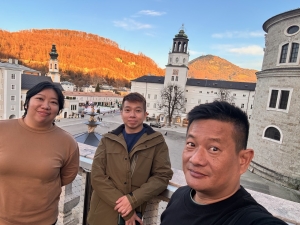
The Cathedral Archway Terrace links the Residenz to the Salzburg Cathedral. We mainly used this as a thoroughfare to the next building. From this terrace, we could see Domplatz, a square surrounded by the buildings of DomQuartier. Since there was nothing much going on here, we continued the path into Salzburg Cathedral.
Cathedral Organ Loft
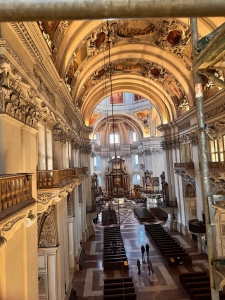
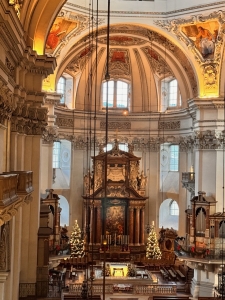
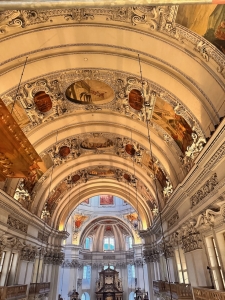
Our walk through the DomQuartier led us through the main organ loft. We originally wanted to visit the Salzburg Cathedral before coming to DomQuartier, but the entrance to the cathedral was not included in our Salzburg Card, which we eventually skipped. Little did we know that part of the DomQuartier included the entrance to the loft of Salzburg Cathedral. However, we were only allowed to stay at this loft at the cathedral. The highlight of the loft is our ability to get up close to the cathedral’s organ. However, we were more interested in the over-the-top baroque-style architecture inside the Salzburg Cathedral. From the loft, we were closer to the carvings on the pillars and the fresco painting on the ceiling. We were also able to see the altar from a distance.
Cathedral Museum
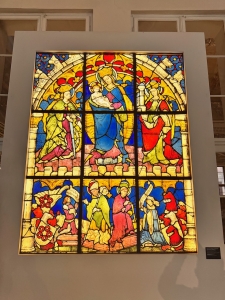
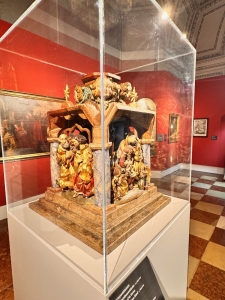
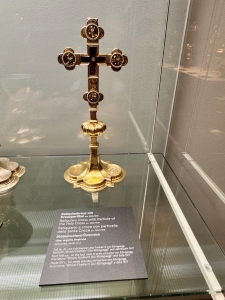
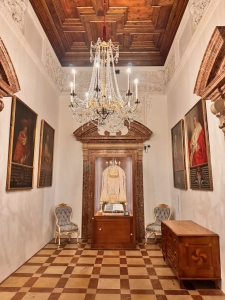
The door at the other end of the loft led us to the South Oratory, where the Cathedral Museum is located. On display here were statues of some of the saints, numerous crosses and chalices, as well as paintings and sculptures related to the Catholic religion. I am sure this museum would be a heaven for Catholics. As we were neither Catholics nor appreciative of arts, we spent our time inside the Cathedral Museum browsing through and seeing which artefacts were made of gold. The exit from the Cathedral Museum led us back to the Imperial Hall, part of the Residenz, which was subsequently linked to the Carabinieri Hall. It was time to head out to our next site.



Mozart’s Birthplace
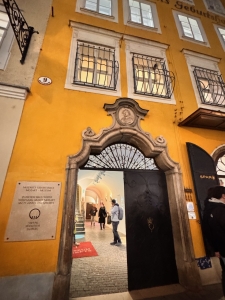
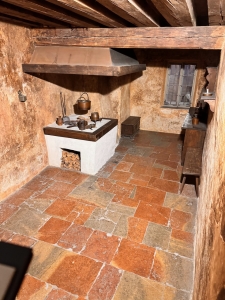
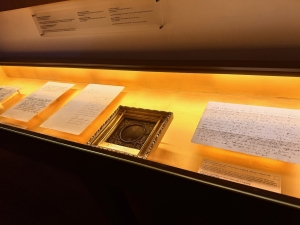
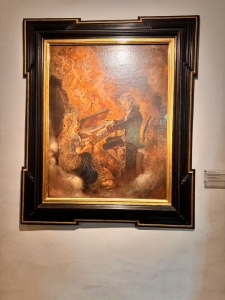
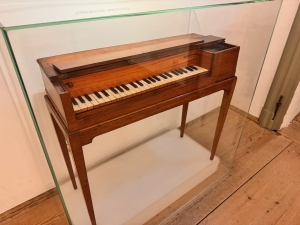
After Domquartier, I was looking at somewhere nearby to visit. Mozart’s Birthplace popped up to be the next nearest attraction to us. I read about how pointless it was to visit this sight before our trip to Austria, and since we were near, we decided to visit this museum. Mozart’s Birthplace is a little difficult to find, as it does not have the entrance of a regular museum, and there are no signs pointing to it. After searching for a while, we found it through a small entrance opposite the Mango clothing store. The entrance to Mozart’s Birthplace (€15 per adult) was included in our Salzburg Card. This museum has three storeys, mostly rooms filled with memorabilia, some musical notes and a statue of Mozart. The room where Mozart was born also has nothing much inside except for a few photos and some notes. I had thought this room was the museum’s highlight, and there should at least have a small bed (or its replica) where baby Mozart used to sleep. Guess most of the furniture must have been lost through the time. We saw a small piano that Mozart used to practice on as a child, which I thought was this museum’s highlight. For €15, I thought Mozart’s Birthplace was extremely expensive. We would have skipped this place if not for the Salzburg card, which included the entrance to this site.






St Peter’s Abbey
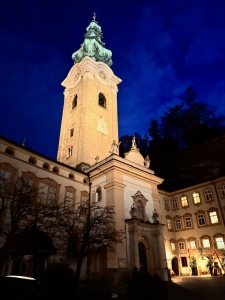
After Mozart’s Birthplace, St Peter’s Abbey is a mere 5-minute walk away. St Peter’s Abbey is one of the oldest monasteries in the German-speaking world, founded in the 7th century. The abbey is famous for its cemetery and catacomb, built into the mountain behind it. St. Peter’s Abbey seemed closed when we arrived, where we were met with a huge closed door that wouldn’t budge when we tried pushing it. We headed to a shop nearby and were told the abbey was still open, the friendly staff at the shop told us we just had to just more strength and pull the entrance door. We headed back and did what we were told, and we were able to let ourselves into the church. Once inside, the cathedral was not brightly lit, and no one was in the building. We could see the elaborate baroque-style carvings on the walls and the altar from the dim lighting. We couldn’t seem to find the entrance to the cemetery, and since there wasn’t much going on here, we left the abbey for our final sight of the day.

Mönchsberg – Night View of the Salzburg
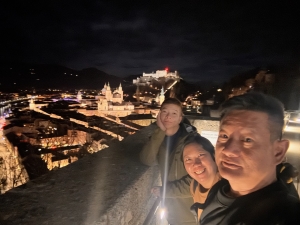
One of the places for the best night view of Salzburg (or so I read online) was the Mönchsberg, one of the five mountains in Salzburg. Mönchsberg is a popular local recreational area with nature and forest footpaths. At the top of Mönchsberg sits the Museum der Moderne, which was closed upon our arrival. However, we did not come for the museum but for the night view. The viewing platform is just outside the museum, accessible by an open elevator till 11 pm (costs €4.40 up and down and is included in the Salzburg Card). True to the recommendations I saw online, we were treated to a great night view of Altstadt and Hohensalzburg Fortress from afar. We could even see the Salzach River from up here. The warm night lighting cast upon the buildings in the Altstadt made them look like the city was built out of gold. The Hohensalzburg Fortress, sitting on the hill above Altstadt, looked as if it was guarding the city. The view was breathtaking, and to add icing to the cake, there weren’t many people around. After taking some pictures of the beautiful night view of the city, we left Mönchsberg for dinner near our hotel and returned to rest for the night. We have an early start tomorrow visiting the fairy tale town of Hallstatt.