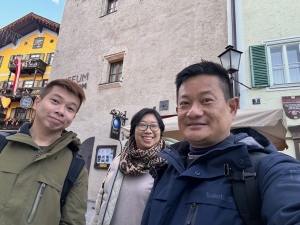
I devoted the morning to visiting the tourist sights around Innsbruck and taking the train to our next destination in the afternoon. With Innsbruck being a compact city and these sights being close to each other and located in Altstadt, a walking tour of the city is doable in one morning. When researching this trip, I found several Innsbruck walking tours online. I eventually went with the itinerary with historical sights on the Innsbruck Tourism website (click here for a list of recommended walking tours).
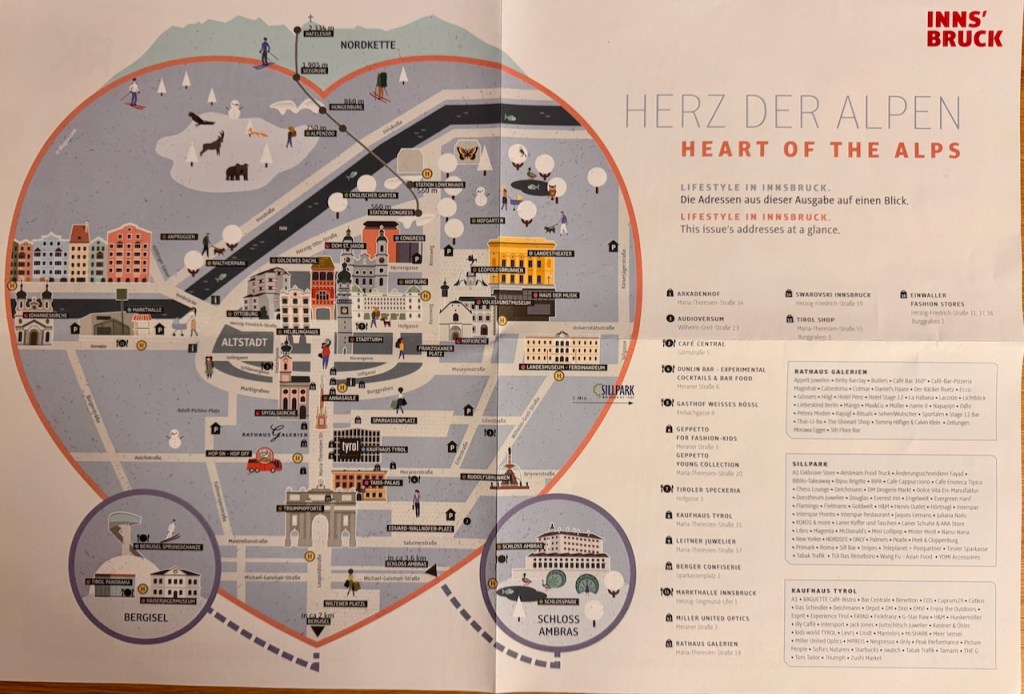
Innsbruck Altstadt – Soaking up the Historic Vibe of the City
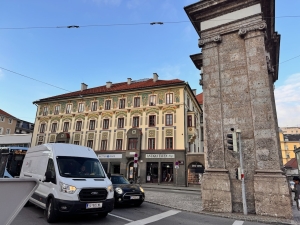
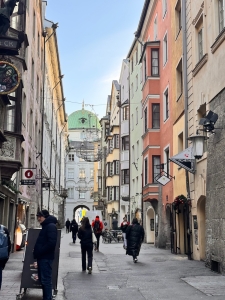
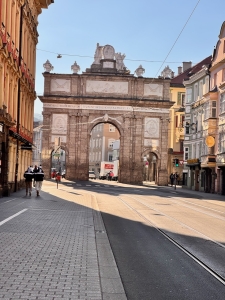
Our initial plan was to visit some of the sites, such as the Imperial Palace, Landestheatre, and some fountains. However, we walked past some the past two days, and some were not open during winter. For Triumpheforte, since it is next to our hotel and we walk past it every day, I struck this site off the list of places we will visit today. We also wanted to get winter jackets that we saw on sale yesterday (shops are closed on Sundays, so we only have this morning to shop). I reviewed my list of tourist sights and limited our list to St James’ Cathedral, Golded Roof and City Tower while catering some time to do shopping. After two days in Innsbruck, walking along Maria-Theresien-Straße has been our daily routine. This street is the one we used to look for food or to connect to Altstadt. The main street for shopping also lies on this street.

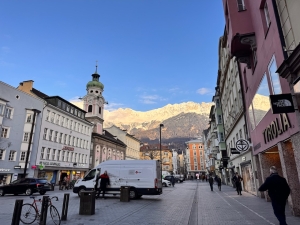
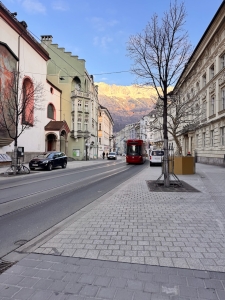
Golden Roof
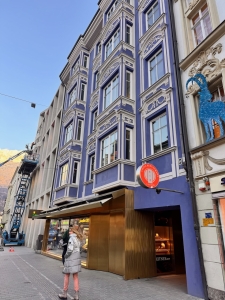
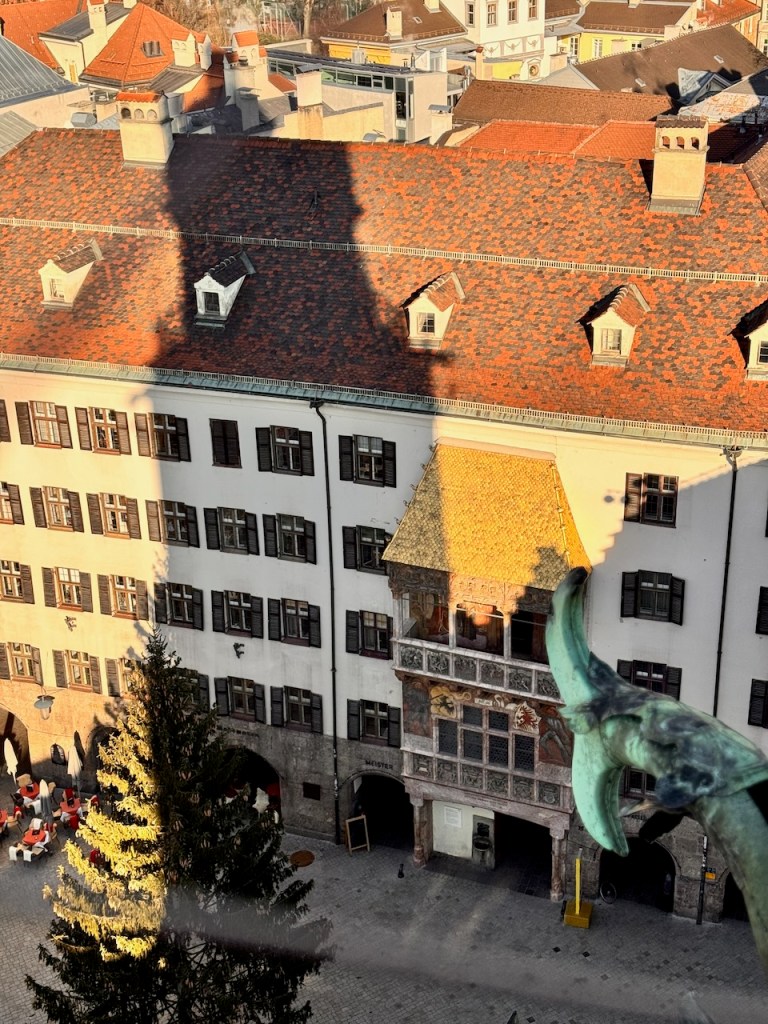
Originally, we wanted to visit the City Tower first, but we were met with a sign at the counter that said they were closed. A lady behind the counter avoided all forms of eye contact with us. We headed to the Golden Roof next door since there was nothing much to do here. The Golden Roof was not made of gold but copper. The sunlight reflected from the roof gave the roof a golden facade, hence the name Golden Roof. The Golden Roof is essentially a balcony made for Emperor Maximilian to mark his wedding anniversary with his wife. The Emperor and his wife used this balcony to observe events that took place from the square below. There are some paintings and sculptures made of wood on the balcony. I read there is a museum where we can understand more about the Golden Roof. When we walked up to the door, a sign was posted on the door stating that the Golden Roof Museum is closed on Mondays. Since there is nothing much we can do here, we headed for St James’ Cathedral.

St James’ Cathedral
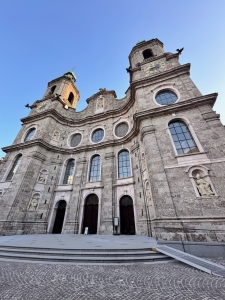
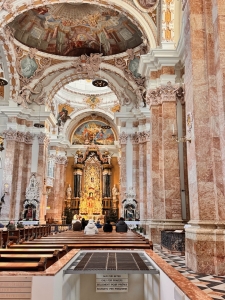
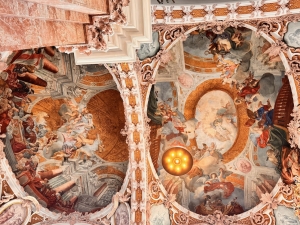
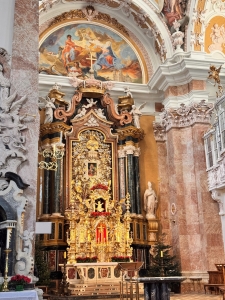
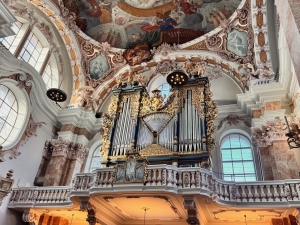
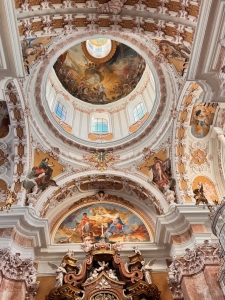
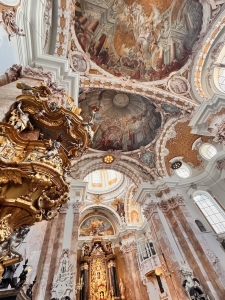
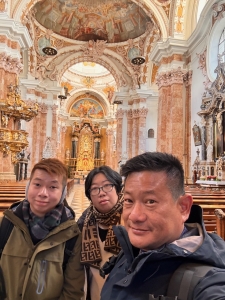
St James’ Cathedral is about a 5-minute walk from Golden Roof. We saw a sign at the door suggesting the cathedral was closed. We hesitated about going in and waited outside the cathedral till 10 am (Google suggested 10 am is the opening time). It was 9.55 am, and we were unsure if the cathedral would open by 10 am, so we decided to check to see if we could enter St James’ Cathedral. We walked up to the door and cautiously opened it. To our amazement, the cathedral was full of people during their prayers. As we did not want to bring attention to ourselves, we waited quietly by the entrance we came in from and waited for the prayers to finish. The cathedral’s interior is mostly covered with natural colour marble and elaborate carvings on the pillar. The colours of the frescos painted on the ceiling and the beams stood out amidst the naturally coloured interior of the cathedral. Looking at these paintings, it felt more like an art gallery rather than a place of worship. A large golden altar was at the back of the cathedral, occupying the centre. As we were looking around, I spotted a machine. A note on the machine stated that €1 was charged to take pictures inside the cathedral. After paying the €1, the service in the cathedral ended. This is when we could see the decorations in the cathedral closer. The frescos on the ceiling looked lifelike, and we could almost see the characters moving. The gold on the garb of the marble angel carvings on the walls stood out. The blue colour painted on the organ was visibly apparent from the silver and gold on the instrument. The cathedral was bright and beautiful.


City Tower
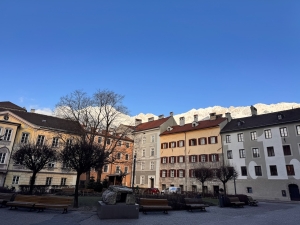
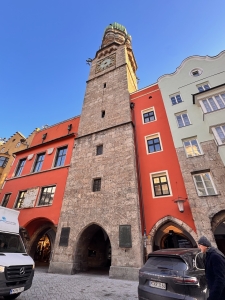
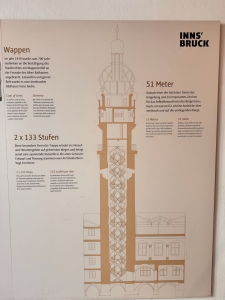
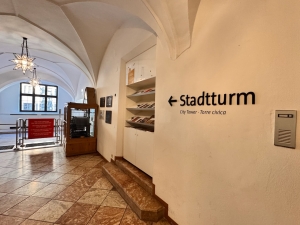
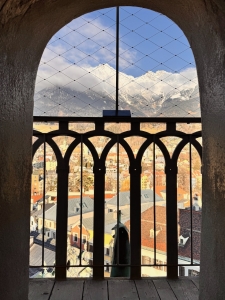
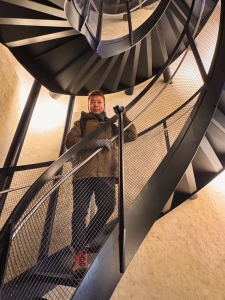
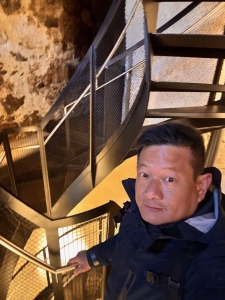
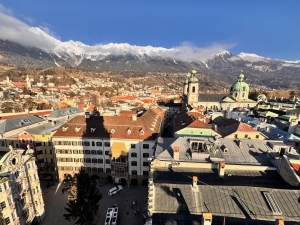
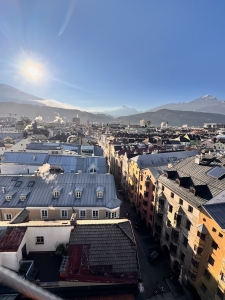
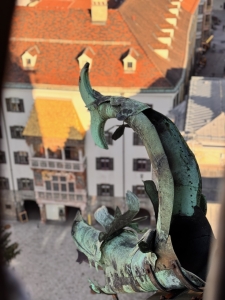
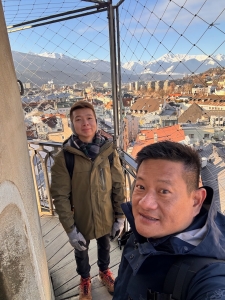
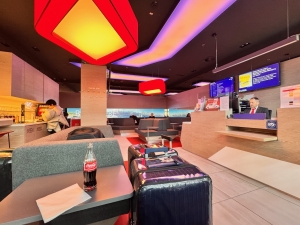
It was slightly past 10 am when we left St James’ Cathedral. As our train was at noon, we wanted to head back to the shops on Maria-Theresien-Straße to shop. We decided to check if the City Tower was open when we walked past it. The closed sign on the counter was still there, but this time round, the staff we saw earlier saw us approaching and removed the sign. The Innsbruck Card covers the entry to the City Tower. We got our tickets to the tower (which cost €4.50 per adult) after the staff scanned our Innsbruck Card and proceeded up the tower through a glass door. The ticket gantry to the City Tower sits one level above the ground level. Passing through the gantry, we were greeted by a pair of spiral staircases (one up and the other down) intertwining around a single pillar. The City Tower was used as a watch tower by the guards for nearly 450 years to warn citizens of fire and other dangers. Today, the 51m tower is a tourist attraction that offers visitors views of the city and the Alps. We walked up 133 steps on the spiral staircase to the viewing platform perched 31m on the tower. The viewing platform gave us a panorama rooftop view of the city. We could spot the colourful houses by the Inn River we were at yesterday. We were also able to see the Golden Roof from a higher elevation. The roof did look golden when cast by the sunlight. Donning on their white caps and occasionally hidden behind the low clouds, the mighty Nordkette mountain range appears to be guarding over Innsbruck. From the narrow platform, my friends and I spotted Seegrube and Hafalekar cable car stations on the Nordkette that we were on two days ago. We spent about 20 mins at the Clock Tower and the next 1½ hours shopping. My friend managed to get a jacket at a good deal in one of the shops. It was 11.45 am when we returned to our hotel, and we had not checked out our rooms yet. We quickly grabbed our luggage from our room and checked out at noon. Fortunately, the bus stop is only in front of the hotel, and most buses or trams that stop here go to Innsbruck Hauptbahnhof (a bus ride to the train station only takes 2 min). We arrived at the train station with some spare time to get a refreshment at the train lounge before we rode to our next town.







Onward to Zell am See
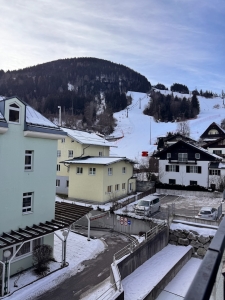
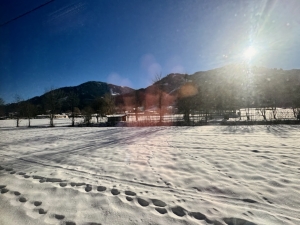
Our train to our next town in Austria, Zell am See, departs at 12.21 pm, and we made it to the platform in time with minutes to spare. The idea of stopping by Zell am See came about when I was planning our Austria trip. I noted it would take 5 hours on the train from Innsbruck to Graz. I am not keen to be stuck in a metal box for that long time, and I wanted to break the train ride down by planning a stay at a village or town between Innsbruck and Graz. During planning, I chanced upon the town of Zell am See, where the locals would come in summer or winter. When looking at what to do in Zell am See, I saw that we could visit not one but two mountains – Kitzsteinhorn and Schmittenhohe near Zell am See. Less touristy plus more mountains we can visit, so Zell am See here we come. The train ride to Zell am See took slightly under 2 hours. As our train zipped past the country, we saw green pastures slowly overtaken by white powdery snow. About 30 minutes into the train ride, the ground was covered in snow! We were ecstatic, which meant we would see snow in Zell am See.


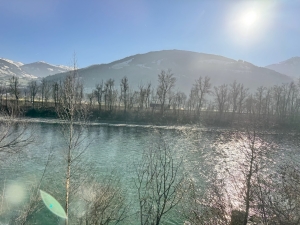

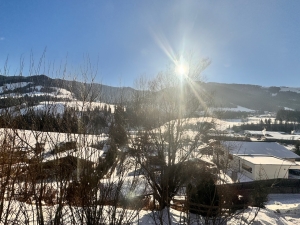
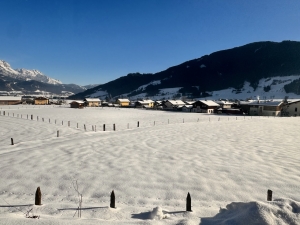
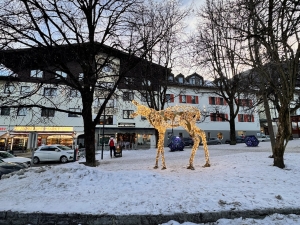
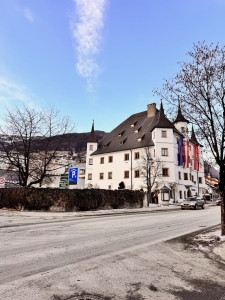
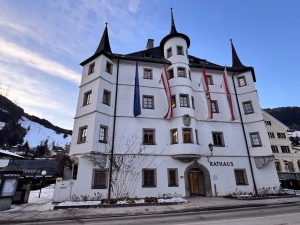
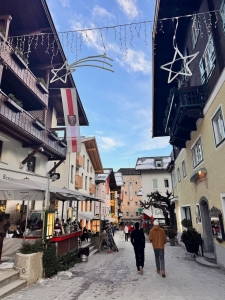
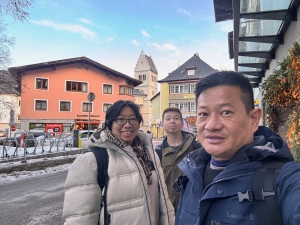
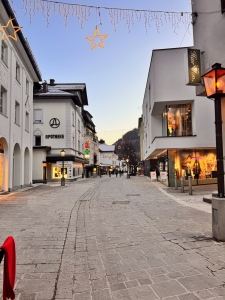
We arrived at Zell am See Bahnhof on time at 2:15 pm, and trains in Austria were extremely punctual (except for our ride to Hallstatt, where the train was delayed by over 1 hour). Like Innsbruck, our accommodation in Zell am See is about a 5-minute walk from the train station. But unlike Innsbruck, Zell am See is even smaller. Our check-in time was at 4 pm. Fortunately, the accommodation allowed us early check-in. We spent the next 1½ hours settling into our accommodation, exploring the facilities in our 2-bedroom apartment and lazing around. Originally, I planned to explore Zell am See, visit some of the major sites, and go to the promenade by Lake Zell. But we prioritised getting supplies from the supermarket and changed our plan to leisurely strolling in the town. Schloss Rosenberg was the first sight (after our supermarket trip) we saw in town. This nearly 400-year-old building, built by tradesmen in the town, is the office of the mayor of Zell am See today. The exterior of the building looked like a medieval castle with a large three-storey roof and pointy roofs in the four corners, which reminded me of the castles in Disneyland but on a smaller scale. We did not enter the building, so we were unsure if it was open to visitors. Opposite Schloss Rosenberg is a small garden, the Schloss Park, with a bar in the middle. As we walked around the town looking for dinner, we noticed the buildings in the centre of Zell am See have a small alpine town charm, with a good mix of wooden facades and brightly painted modern concrete buildings. Yet some buildings in the town centre still retained the medieval building facade, such as the clock tower and a bank in the centre of the shopping district. This clock tower is the bell tower of the St Hippolytus Church. As we were in an exploration rather than a visiting tourist sight mode, coupled with the fact that it was late afternoon when most of the sights would be closed, we did not bother attempting to find out if we could enter some of these sights we saw while strolling in the town. It was 6 pm when we finally found a place for dinner. We returned to our accommodation after dinner to rest for the night; after all, we would have an early start tomorrow.