The Top of Salzburg kept popping up as I researched what to see in Zell am See. Pictures online of the breathtaking mountain ranges from the viewing platform perched 3,029m on top of Kitzsteinhorn attracted me to this mountain. We can take a cable car ride to the Top of Salzburg in Kaprun from Maiskogel Talstation or Kitzsteinhorn Talstation. Getting to the Top of Salzburg from Kitzsteinhorn Talstation is faster as it only requires three cable car rides instead of four from Maiskogel Talstation. While planning my trip, an email correspondence from the visitor centre informed me that an Explorer Tour (costs €13 per adult) is held every Tuesday during the winter. I thought it would be interesting to understand more about the mountains rather than simply going up and looking at the view. We signed up for the tour two months before our trip to Austria (click here for the link to sign up).
Kaprun: Gateway to Kitzsteinhorn
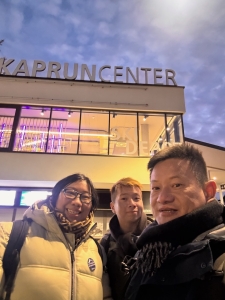
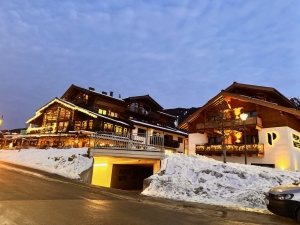
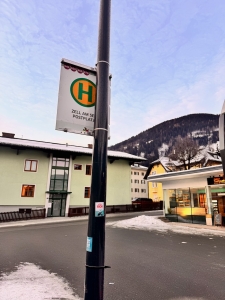
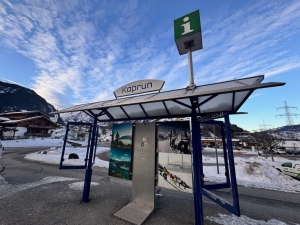
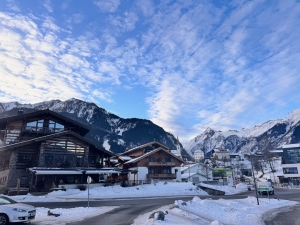
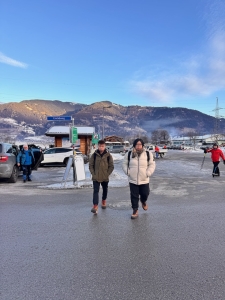
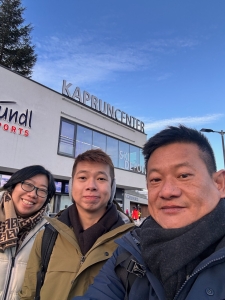
The Explorer Tour started at the Kaprun Centre in Kaprun village, about a 15-minute drive or the ½ hourly 25-minute bus ride on Bus #660 (€4.50 per pax one way) from Postplatz, the main bus terminal in Zell am See. We could also catch Bus #660 from the bus stop in front of Zell am See Bahnhof. We alighted at Kaprun Maiskogelbahn, where Kaprun Centre is about a 2 min walk from the main road. This part of Kaprun village looked lively; numerous accommodations, restaurants, and shops (mainly selling ski-related stuff and winter clothing) dotted around the village.



Explorer Tour: Getting to Know Kitzsteinhorn
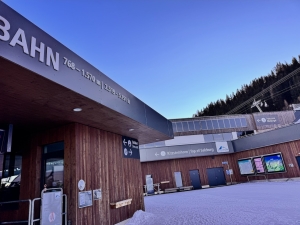
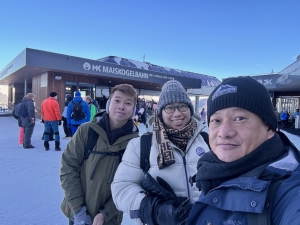
The 3½ hour guided Explorer Tour meeting point is at Kaprun Centre. During the tour, our guide introduced us to the flora/fauna and their features in the four climate zones, from the temperate to the arctic climate zones in Kitzsteinhorn, as we made our way up to the summit of the mountain. We were in the temperate climate zone at Kaprun Centre, seeing more animal species and lush green vegetation. The tour group comprised mostly German-speaking visitors, and we were the only English-speaking participants. Our guide had to explain the information in two languages. After the short brief, we were led to the cable car station and took the first of the four cable car rides up to the mountain.


Maiskogel: View of the Valley and Lake Zell
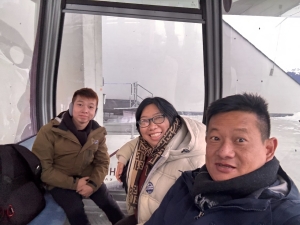
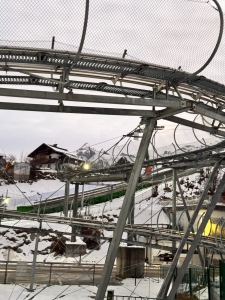
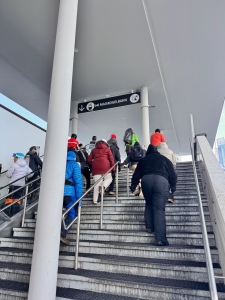
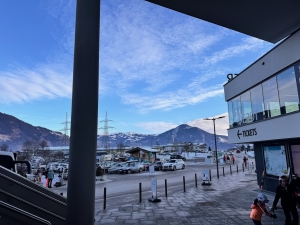
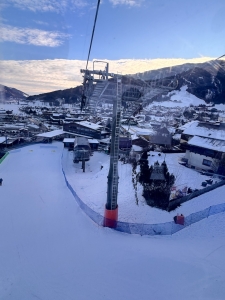
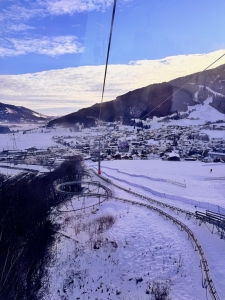
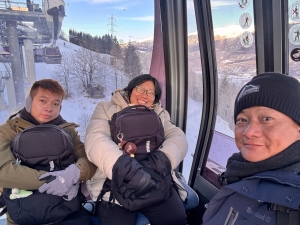
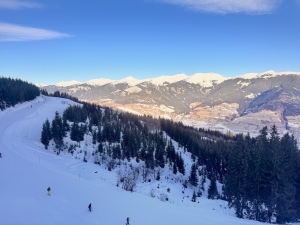
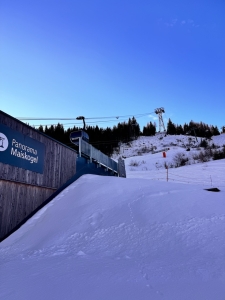
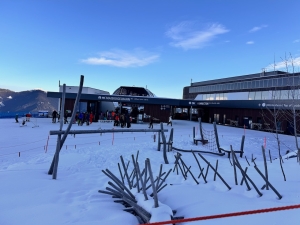
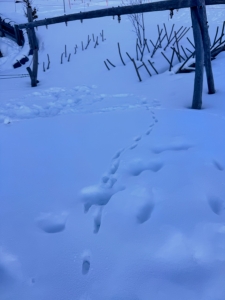
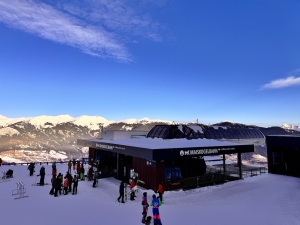
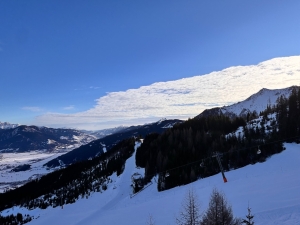
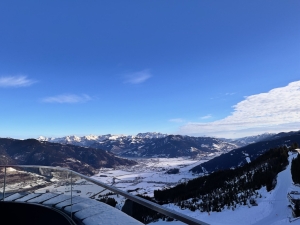
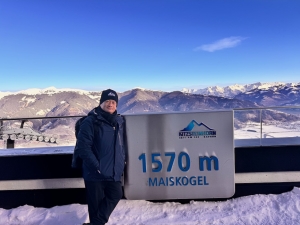
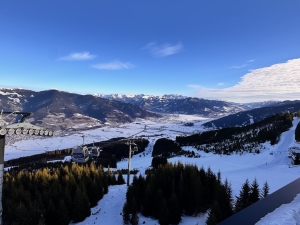
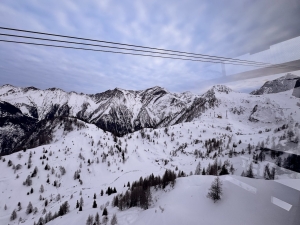
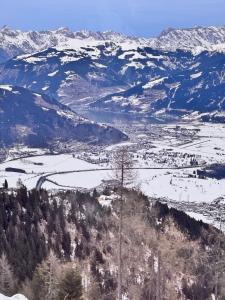
The MK Maiskogelbahn took us up to 1,570m from Kaprun Centre. On the ride, we saw the alpine coaster track and people skiing down the slope below the cable car. As our guide had previously told us that we were still in the temperate climate zone, we saw a lot of needle-leaf pine tree forest. Our guide continued to talk about the vegetation that we saw around. He then brought the group to a nearby slope with a set of footprints and explained that hares and foxes inhabit this area and will only come out at night. We were then brought to the Panorama Maiskogel viewing platform, where we got an impressive view of the valley covered in snow and Lake Zell in the distance between two mountains. We could see a sea of white snow covering most of the land, with villages and towns sparsely covering parts of the land, mainly near Lake Zell. Our guide brought our attention to the river that cuts across the land. This is the Salzach River, the same river we saw in Salzburg City days ago. He explained how the river was straightened decades ago to facilitate farming activities and how this human intervention created flooding. To fix the problem, the river is now bent. We walked to the next cable car station after being given some time to take pictures at Panorama Maiskogel.





Langwied: Riding 3K K-onnection, the Longest Continous Gondola Axis
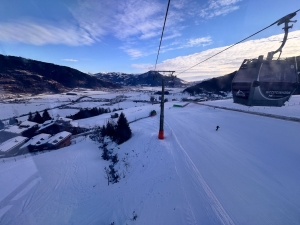
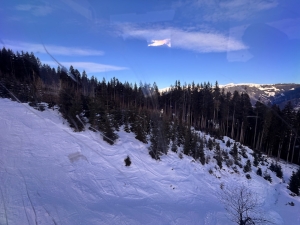
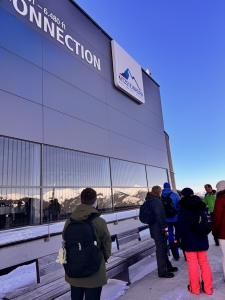
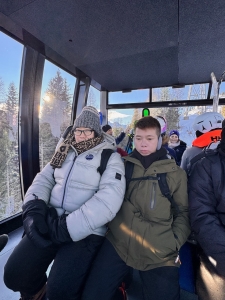
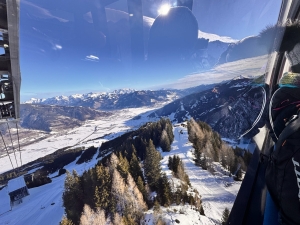
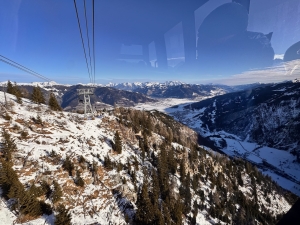
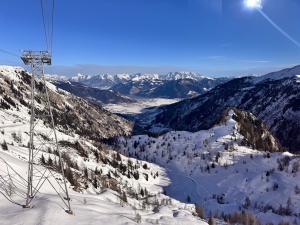
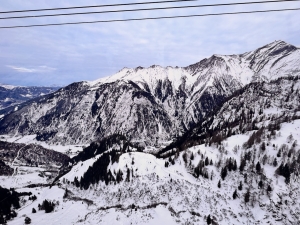
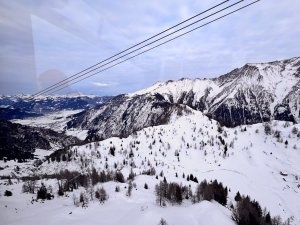
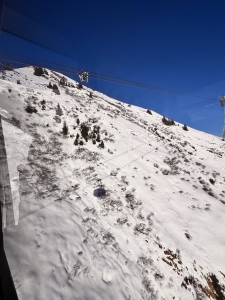
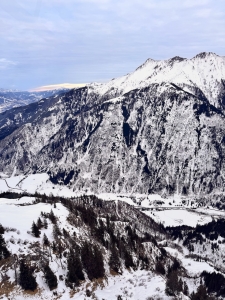
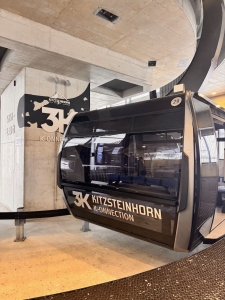
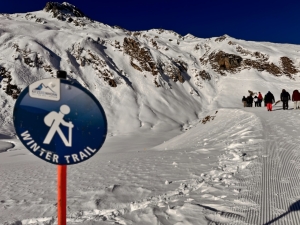
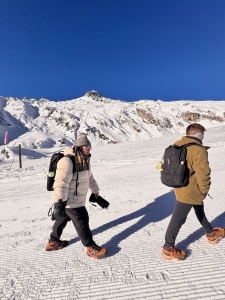
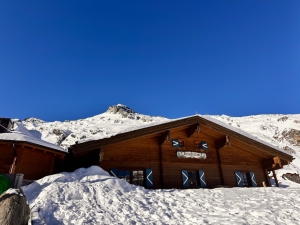
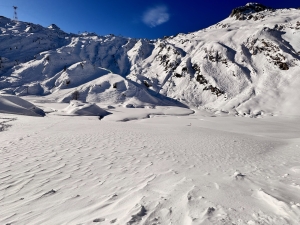
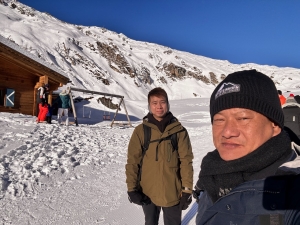
Our second cable car ride on the 3K K-onnection is the longest ride during this tour. The scenic cable car ride took us across the mountains. We could see fewer trees on the mountain, mostly bundled together, from the cable car. On one side of the cable car, jagged rocky mountainside occasionally popping out of the snow to reveal the true form of the mountain. Our guide explained that skiing is prohibited in this part of the mountain due to the high risk of avalanches. He even pointed out a part of the mountain where a recent avalanche activity was detected. On the other side of the cable car, we saw the towns sitting at the base of the mountain ranges below in the valley as though they were seeking protection from the mighty mountain ranges. The cable car ride brought us to Langwied at 1,975m above sea level. From the station, our guide led us on a short hike up a slope to a viewpoint where we could see the plains from an elevated perspective. Before his brief on the geological makeup of this area, our guide focused our attention up in the mountains and exclaimed, “That is the peak of Kitzsteinhorn”. He explained that we were in the tundra climate zone where frigid temperatures and short growing seasons hinder tree growth. We were also educated on the glacier activities in the mountains.







Alpincentre: Entering the Arctic Climate Zone
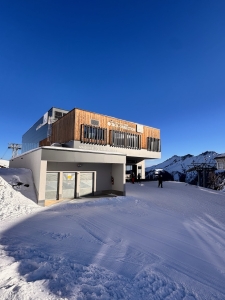
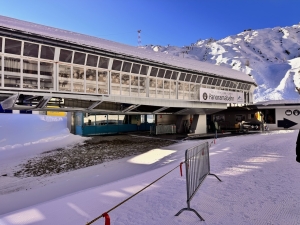
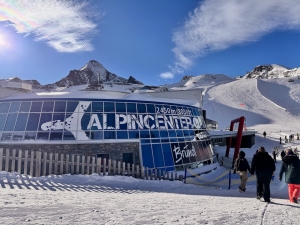
We headed back to the cable car station and walked to the next cable car station. The third cable car, Gletscherjet 2, took us from 1,975m to 2,450m. On this ride, we saw vast areas covered in snow and a couple of buildings sitting on the mountainside. Our guide brought us to another viewpoint at the end of the cable car ride. Here, he announced that we are officially in the arctic climate zone, where no tree growth and covered in snow and ice all year round. This is the same climate we will experience if we go to the North and South Pole. From this viewpoint, we got an even higher view of the villages near Lake Zell. Here, we felt as if we were on the same level as the peak of the mountain ranges before us. After a brief stay here, we headed for our final cable car ride on the Gipfelbahn to the Top of Salzburg.




Top of Salzburg: Magnificent Views of the Mountain Ranges
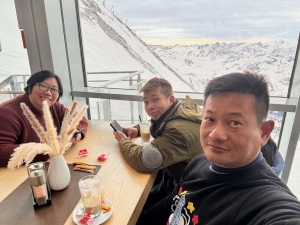
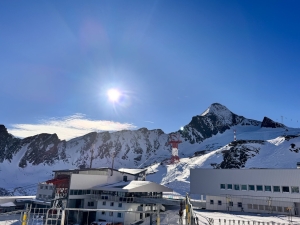
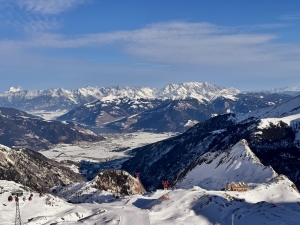
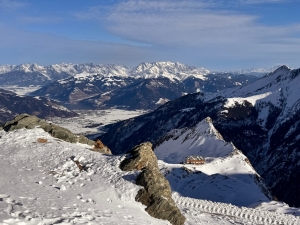
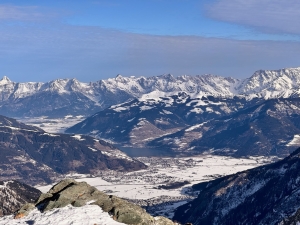
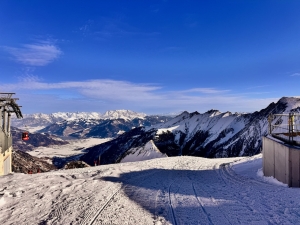
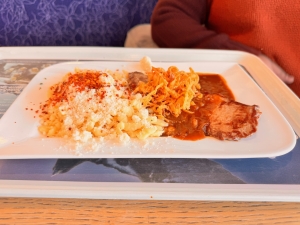
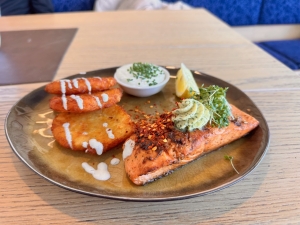
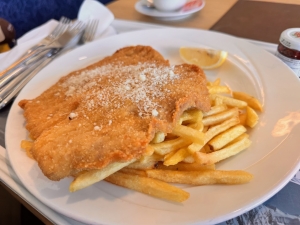
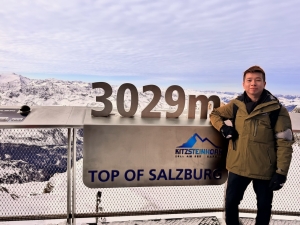
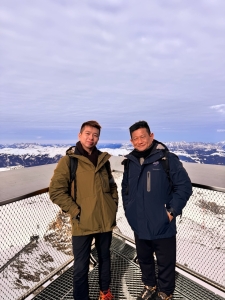
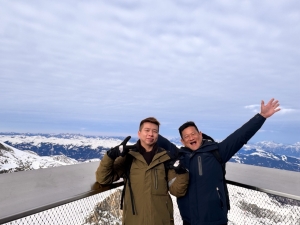
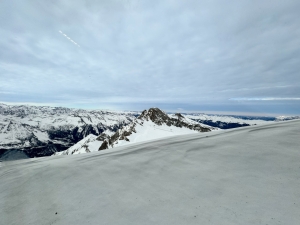
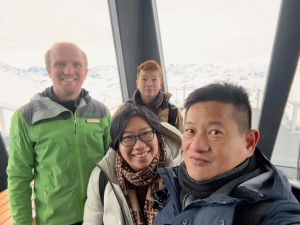
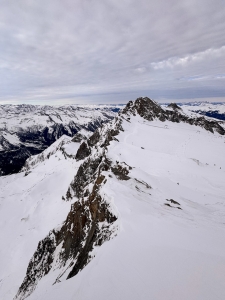
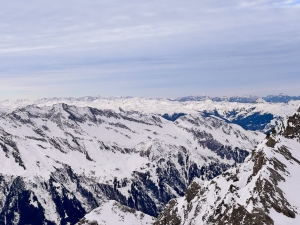
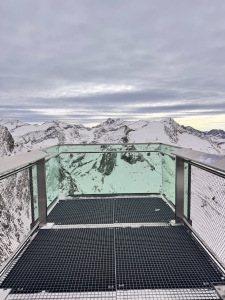
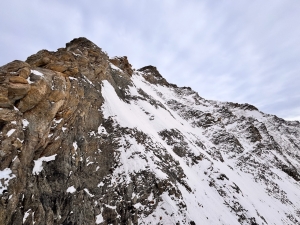
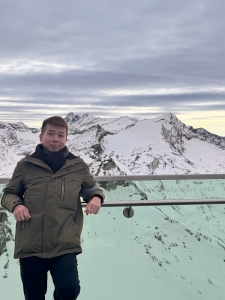
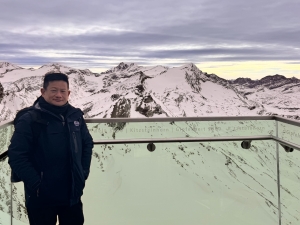
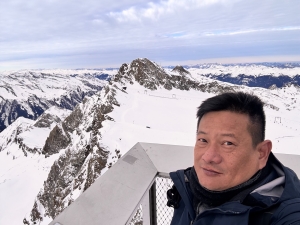
The final stop of the Explorer Tour is at the Top of Salzburg, perched at 3,029m. Our guide brought us to the Top of Salzburg viewing platform, where we were treated to a magnificent view of the mountain peaks and the glaciers below. Our guide explained the glacier activities on the mountaintop and how to differentiate between live and dead glaciers. He even pointed out Kitzsteinhorn’s peak, explaining that it is only open to very experienced climbers. We were dispersed at the platform and were told to gather back here for the National Park Gallery Tour 1½ hours later. After the dispersion, we wanted to get a picture with the “3029 Top of Salzburg” sign, but as many people from the tour were trying to snap pictures with this sign, we went for lunch in the only restaurant up here. After lunch, we returned to the viewing platform and took pictures with the sign (thanks to a Russian family queuing behind us, helping us chase people away from jumping the queue and those who tried to photobomb us). After taking some pictures, we finally had a good look at the view from the Top of Salzburg platform. The view here is out of this world! We saw mountain peaks after mountain peaks, covered in snow, that seemed to stretch forever into the horizon. We were at a point that was higher than any of the mountains before our eyes. It felt so surreal. Before, we could only see these majestic mountains like giants, but today, we see them as dwarves as we tower over them from the top of the Salzburg viewing platform. I reckon the best view would be that taken from the pointy corner of the platform. Here, we felt as if we were floating in the air, looking down into the peaks of the mountain ranges.








NationalPark Gallery Tour: The Tunnel in the Mountains
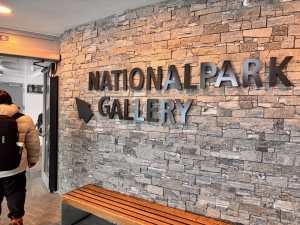
Our tour continues with a guided tour of the NationalPark Gallery on the top of Kitzsteinhorn. This tour is complimentary, even to those who did not join the Explorer Tour. The tour took us through a 360m tunnel used in the 60s for those who ascended the mountain to ski. We made five stops along the downslope tunnel. Our first stop was some artificial concrete slabs, which our guide explained only served to anchor the cables that the cable cars that ran up to Kitzsteinhorn. Our next stop was a crystallite, where our guide educated us on the formation of these crystals, mainly quartz, and how they were mined. These days, the mining of quartz was no longer a thing in Kitzsteinhorn.
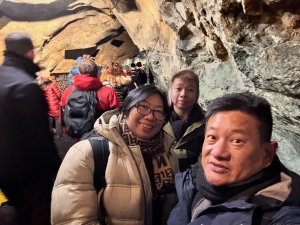

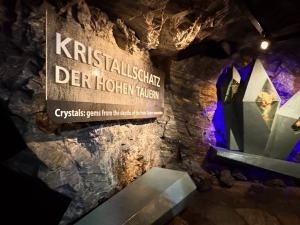

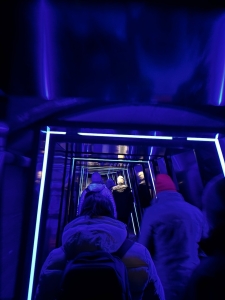

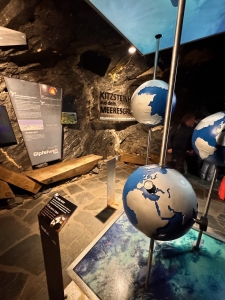
At the third stop, our guide explained the formation of mountains, particularly Kitzsteinhorn. The fourth stop showcased the mining of gold in Kitzsteinhorn. Our guide explained gold mining has ceased because the cost of gold outweighs the amount gained. He also narrated the purpose of the chest we saw on the ground. This chest used to contain part of the gold mined on this mountain, placed outside the mines. The miner’s wife could take an amount of gold from this chest if the miner met with a mishap during work. This is perhaps the earliest form of insurance. At our last stop before the viewing platform at the end of the tunnel, our guide explained the formation of glaciers and how these glaciers are melting due to man-induced pollution. After the brief at the final stop, we were dispersed and told we could stay at the NationalPark Gallery Platform as long as we wanted.
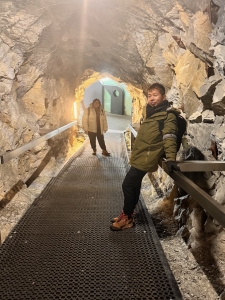
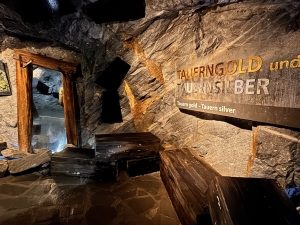

After bidding farewell to our guide, we were free to roam onto the outdoor viewing platform jagged out of the cliff that gave us a closer look at the mountain ranges. We can see the highest mountain in Austria, the Grossglockner. We could also see the “dead glaciers” nearer to the viewing platform and the “living glaciers” in the distance. The view here is as magnificent as we saw at the Top of Salzburg. We stayed here for the next 20 minutes, looking out into the snow-covered mountain peaks and listening to the whispers the mountain breeze brought. Soon, it was time to descend the mountain (the last ride down was at 4 pm). On our way down, we did some window shopping in the sports shop at Alpincentre and caught up on the photo ops we had missed out on earlier. At Langwied, we had the choice of taking the longer 3K K-onnection or the shorter Panoramabahn route. Both routes will land at different parts of the Kaprun, and since we wanted to try out the Alpine Coaster at Kaprun Centre, we took the longer 3K K-onnection route.






Alpine Coaster Fun
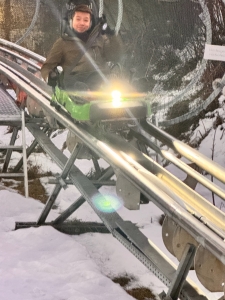
It was about 5 pm when we arrived back at the Kaprun Centre. Fortunately, the Alpine Coaster was still in operation. We got tickets (which cost €15 per adult) from the ticketing counters at Kaprun Centre to ride the Alpine Coaster. Entrance to the Alpine Coaster was just across the road from the ticketing counter, behind a bar. The Alpine Coaster started from the ground level. We sat on the coaster and hoisted along the tracks to the starting point, about 300m higher than the starting point. With a loop at the top, we were driven down the slopes at 40km/h by gravity. The Alpine Coaster was a fun activity to end our day.