This is a continuation of our cruise from Shanghai to Fukuoka. We were primarily in Shanghai for the cruise and decided to spend a few more days exploring the city after our cruise trip ended. The last time I was in Shanghai was almost three decades ago, and I thought it was a good time for me to return to the city. Our cruise ship was already docked when we woke up this morning. After having breakfast at one of the restaurants onboard, our Royal Genie (butler) met us at 8.30 am to escort us off the ship, ensuring that our disembarkation was smooth. After meeting the driver that we arranged with our hotel for land transfers within Shanghai, we made our way to the hotel for check-in. The plan today was to take it easy and visit the sites near our hotel.

The Bund
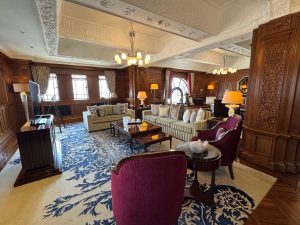
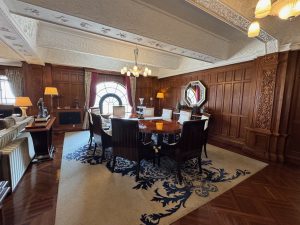
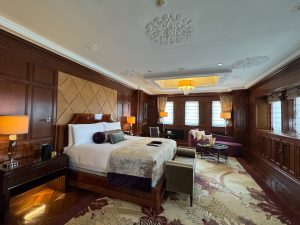
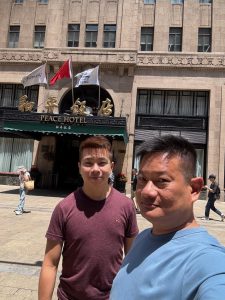
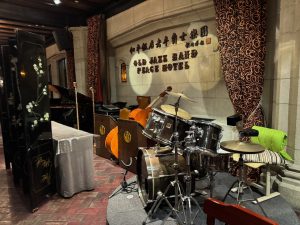
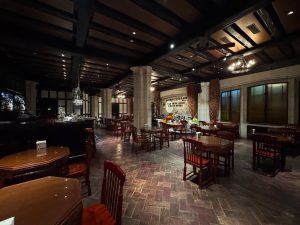
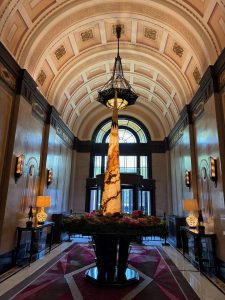
Our hotel is situated on the bank of the Huangpu River on the Bund. The Bund is an iconic stretch of Shanghai, where the old financial centre and activities for the rich and famous are located. Our driver pulled up at the iconic Peace Hotel, where we would call home for the next four nights. At the hotel, we met our butler, Gordon, who gave us a brief orientation of the hotel. Before heading to our room for in-room check-in, Gordon gave us a tour of several suites, including the River View Suite and the Japanese Suite, one of the seven national suites. The highlight of the brief tour was a visit to the Sassoon Suite, the hotel’s Presidential Suite. Perched on the 10th floor, the Sassoon Suite was originally the apartment of Victor Sassoon, the hotel’s original owner. This suite has a vantage point of the Huangpu River and directly faces the Pudong district across the river. Entering this suite, we felt immediately transported back in time to 1920s Shanghai. The suite is very well restored to its original setting. Gordon told us most of the decor we saw in this suite was restored based on the old photos of the suite. We were also told that this suite is the only one with a terrace and that President Obama was a guest in the Sassoon Suite during his visit to Shanghai. After the tour, we were escorted to our room for check-in, where our luggages were already being delivered to the suite.


Our Private Tour of the Iconic Peace Hotel
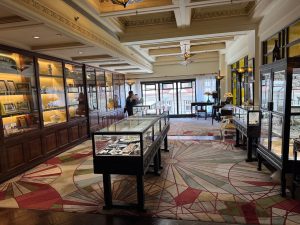
Fairmont Peace Hotel itself is an attraction on the Bund. Its green roof has been an icon on the Bund since the 1920s. Naturally, many significant events took place at the hotel. With such a rich history, the hotel offers complimentary scheduled historic tours of the hotel and its museum, conducted in both English and Chinese. Gordon organised a private historic tour of the hotel for us. We met up with our guide, Richard – the hotel’s historian, at the reception. Our tour began at the hotel’s museum, one floor above the reception. Richard took us through the exhibits in the small museum, from the famous persons who had stayed in the hotel and the suites they had occupied, to the silverware and menus crafted for specific events, to the important events and meetings hosted at Peace Hotel. Richard then brought our attention to a bill that was dated in the 1930s. Although the amount stated in the bill seems small compared to today’s standards, considering inflation and the cost of living at the time, Richard mentioned that the bill was easily equivalent to a year’s salary for a typical Shanghainese in the 1930s. Of the exhibits, the one that intrigued me the most was a small metallic disc. Richard pointed out this was a metallic vinyl record, which stored music played in the Jazz bar back in the days, and a memento for guests. I jokingly remarked that this was the predecessor of CDs.

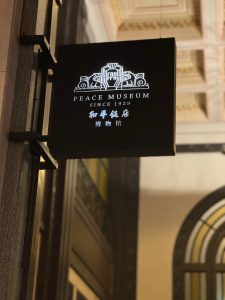
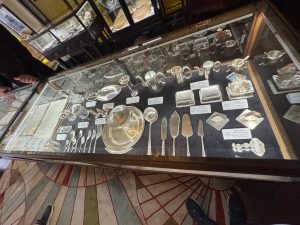
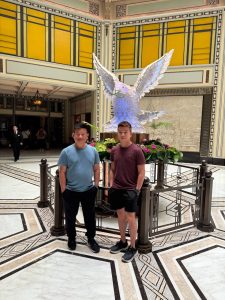
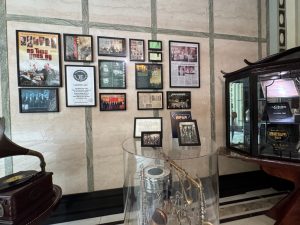
After the tour of the museum, we were brought to the octagon hall, where Richard directed our attention to the large dove sitting in the centre of the hall. This dove is made of 1,500 liuli (琉璃) crystal and weighs more than 1,000 kg to symbolise peace. We were drawn to the metallic murals hanging on the walls of the octagon hall, where Richard pointed out that they depicted the old times in Shanghai. Our tour continues through a hallway where a collection of movies and TV shows that were shot in the Peace Hotel. Our tour concludes at the small hall at the end of the corridor. Richard explained that this was the original main entrance of the hotel, but it had been closed permanently due to feng shui reasons. The significant structure in this original entrance was the split stairs, which are one of the original features since the hotel was built. We were shown a picture of Charlie Chaplin on the stairs.




East Nanjing Road – The Ever-Busy Street
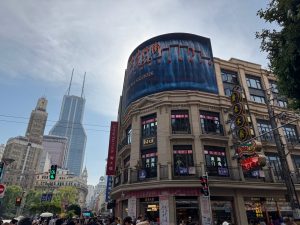
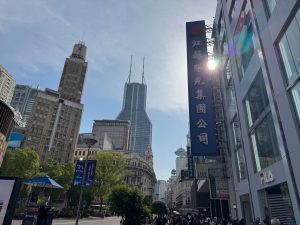
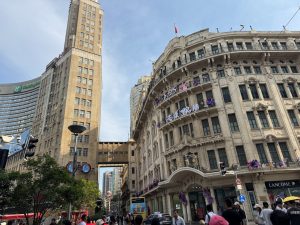
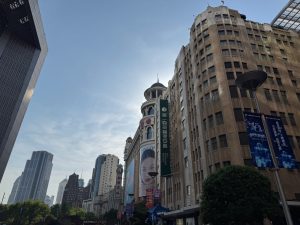
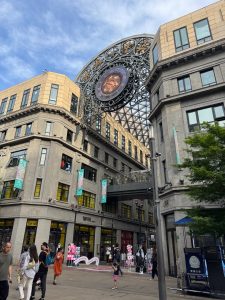
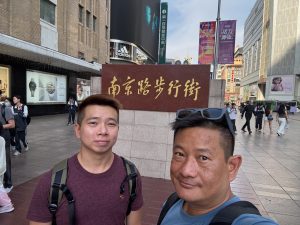
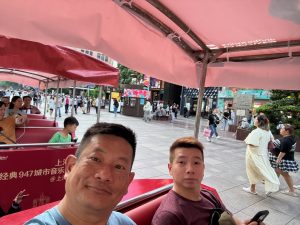
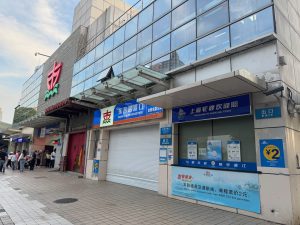
After our tour of the hotel, we returned to our room to rest a little. Soon, hunger pangs hit us, and we headed out to the restaurant that Gordon recommended near the hotel for lunch. After lunch, we wanted to purchase a stored-value metro ticket for Shanghai, which would provide convenience when taking the metro around the city. However, the nearest subway station to our hotel does not sell them, and we had to go one station further to People’s Square Station to get them, which is further down East Nanjing Road. Since we had the intention to stroll along East Nanjing Road, we took this opportunity to walk along the street towards People’s Square Station. East Nanjing Road is always crowded with people, regardless of the day of the week. East Nanjing Road is dotted with buildings that were left behind from the World War era, when the city was divided and ruled by different nations. As a result, we see some buildings with a distinctly European architectural style and others with a distinctly Chinese style. Walking along the street feels like walking in history. There are many smaller shops along East Nanjing Road, mainly selling famous Shanghai snacks and souvenirs, as well as eateries and cafes. We also spotted several larger department stores, where most of the luxury brand goods are housed, and fashion boutiques along the road. After getting our transport cards from People’s Square Station, we had the option of taking the metro one stop back to East Nanjing Road Station or walking back. As we were a bit tired after walking, we hopped onto one of the tourist tram rides (RMB 10 each) and saw East Nanjing Road from a different perspective.






Pudong (浦东) District
We wanted to catch the sunset on the Shanghai Tower, so we headed to the Pudong Area, Shanghai’s financial centre. There are two main ways to access the sights in Lujiazui (陆家嘴): by metro or ferry.
Crossing Huangpu River
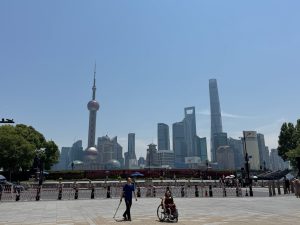
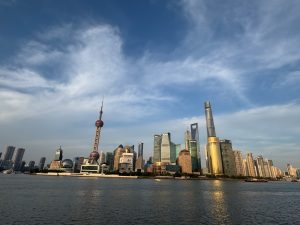
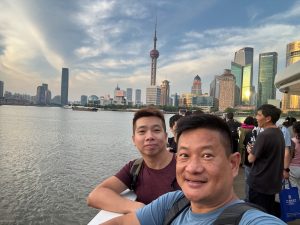
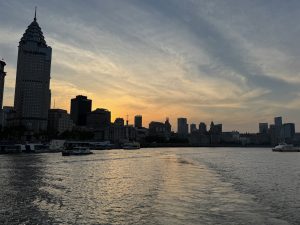
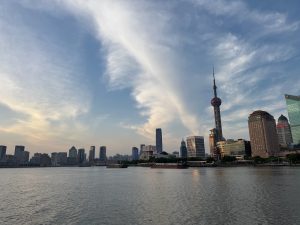
Instead of going underground, where we would miss the iconic sight of having both the Bund and Pudong area in one frame, we opted for the Shanghai Ferry ride across the Huangpu River to Lujiazui. Jingling East Road Ferry Terminal is the nearest ferry pier to East Nanjing Road. To get to the ferry terminal, we headed for the Bund and walked along the promenade. The ferry terminal is a stone’s throw from a lighthouse-looking tower along the promenade. Crossing the Huangpu River via the ferry costs RMB 2, payable with a Shanghai metro card or Alipay. Shanghai Ferry has been transporting Shanghainese since 1911, over 100 years ago. The ferry was the only means for Shanghainese to reach the Pudong area before the tunnels and bridges were built. Today, the Shanghai Ferry primarily serves sightseeing purposes, and the last ferry service across the river concludes at 6:30 pm. The best view of the Huangpu River from the ferry was from the back of the boat on the upper deck. We saw a beeline of people rushing for the upper deck and did likewise. Fortunately, we were able to secure a great spot at the back of the boat to enjoy the view of Shanghai’s iconic landmarks. As the ferry slowly pulled away from the pier, we were treated to a view of the buildings on the Bund. The view was the best in the middle of the river, where we were able to capture landmarks on the Bund and Pudong in one frame.







Shanghai Three Towers (上海三件套)
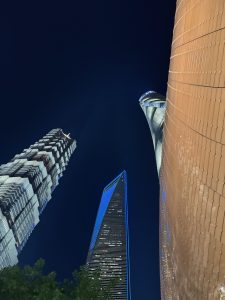
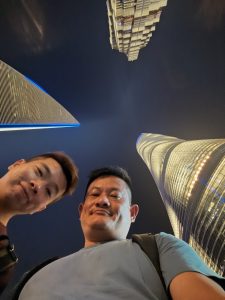
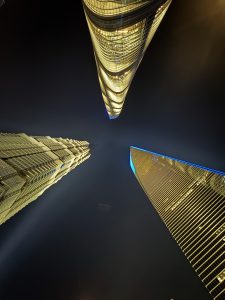
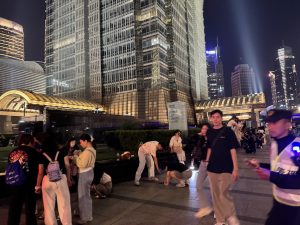
The ferry docked at Dongchang Road Ferry Terminal, and we are officially in the Pudong district. The Pudong area used to be farmland, where no one wanted to stay. Fast forward decades later, the Pudong area is one of the highly sought-after areas with skyrocketing property prices. Pudong had been transformed from farmlands to the city’s financial centre. In the centre of the financial centre lies the Shanghai Three Towers (上海三件套). Our original plan was to catch the sunset from the top of the Shanghai Tower and then return to take night shots of the three towers. Since we were walking past, we took the opportunity to take pictures of the iconic three towers. There is a specific spot where locals gather to take pictures of the three towers is the small open area adjacent to Jin Mao Tower. It is even charted on the Chinese equivalent of Google Maps, as Wang Hong da ka jing dian (网红打卡景点), which translates to a social media influencer’s picture-taking spot. One will not miss the spot, as we saw locals placing their phones on the ground, taking pictures of themselves with the three towers. This is the spot where we can capture the tops of all three buildings – Jin Mao Tower, Shanghai Tower, and Shanghai World Financial Centre, all pointing towards each other in one frame. We tried to follow the locals’ lead and took some pictures before dark. After taking our fair share of pictures, we headed to the Shanghai Tower to view the city from high up.


Shanghai Tower – Night View of the Icons at the Top of Shanghai
Several towers in the Pudong area offer a view of the Huangpu River and the Bund. On the one hand, I wanted to visit the Oriental Pearl Tower, as I had seen it for the first time 30 years ago. However, this shorter tower may not provide the best view of the Bund. The other tower is the taller Shanghai Tower, which features the highest observation deck in the country. The Shanghai Tower is approximately 632m tall, making it the third-tallest building in the world. Although it is not the tallest building in the world, the Shanghai Tower’s observation deck, at 546m, is higher than that of the Burj Khalifa in Dubai, at 452m. There are two prices for the entrance to the Shanghai Tower. RMB 180 only got us to the observation deck on level 118, while the more expensive RMB 268 ticket includes entrance to the light show on level 126. We bought the more expensive RMB 268 ticket, thinking we would be able to look out into the city at the tower’s highest vantage point. Our first stop was the observation deck at level 118, where a lift sped us up over 500m in under 3 minutes. The view from the observation deck on level 118 was stunning! The limits of Shanghai city seem to stretch beyond the horizon. From here, we were able to see the bend of the Huangpu River and the entire stretch of the Bund, as well as the Oriental Pearl Tower situated next to the river. The view of the city at night was especially beautiful. As we were walking around, we were telling ourselves, “This is just the beginning, the view on level 126 would be better”.

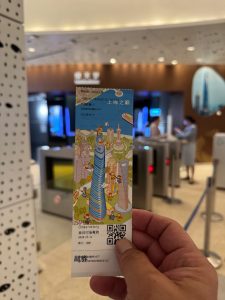


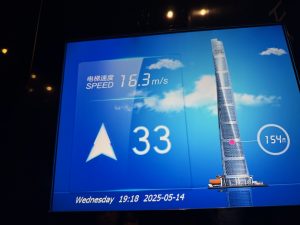
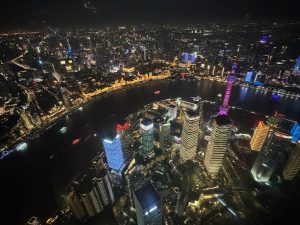
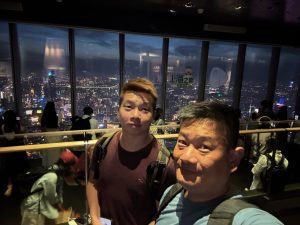

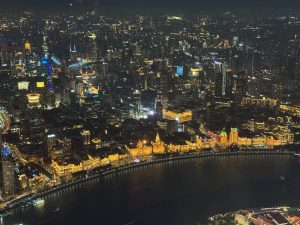
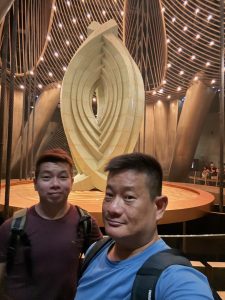
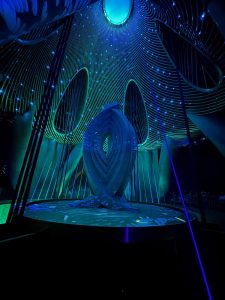
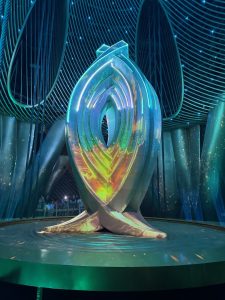
We took another lift up to level 126. Entrance to that level is scheduled at a specific time, probably for crowd control purposes. Our excitement for level 126 turned to disappointment upon arrival at level 126. Instead of the floor-to-ceiling windows we saw on level 118, there were walls enclosing this level. In the centre of the level was a large structure, dubbed the Intelligent Eye of Shanghai. This is the damper of the tower, installed to counter the lateral movement of the tower due to wind or earthquake. Unlike the damper in most buildings, which is typically spherical, the damper on the Shanghai Tower resembles the eye of a dragon. We were urged to spread out for a light show. This is when we realised the timed entrance to this floor is actually for the light show. As beautiful as it might be, we felt a little bored since we weren’t exactly into light shows. The light show lasted about 10 minutes. We felt paying the extra for access to level 126 without the view of the city was not worth the money. Unless one is into light shows, I’d rather spend the additional money on food.






We descended the tower for dinner after the light show. We only managed to find a restaurant at the tower that was still open. After dinner, we returned to the photo spot to take night shots of the Shanghai Three Towers before returning to our hotel via the metro to rest early. We had an early start tomorrow, catching the high-speed train to Hangzhou.