Shanghai is a large city with 18 districts. Today, we planned to visit the sights a little further away from the Bund where we were staying. As it was raining in the morning, we started our day around noon, after the rain stopped.
Jing’an Temple (静安寺) – The Golden Roof Temple
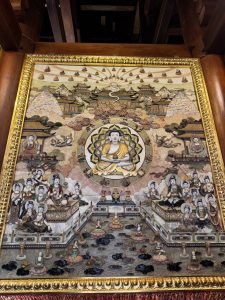
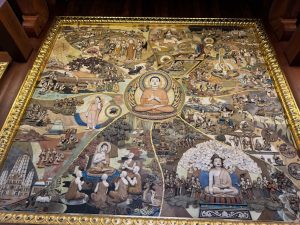
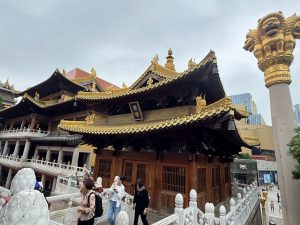
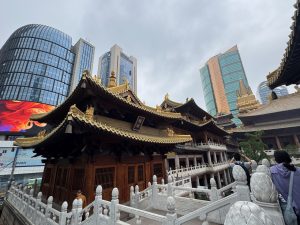
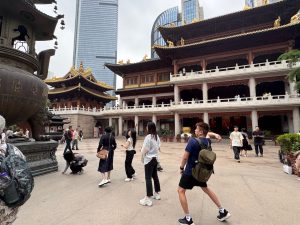
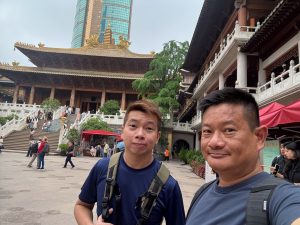
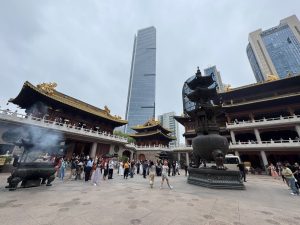
Our first sight today is Jing’an Temple, the principal temple regarded by the Shanghainese. Jing’an Temple is one of the most expensive temples in China, with a construction cost of RMB 2.8 billion. Jing’an Temple is well served by the Jing’an Temple Station, which is an interchange of Lines 2, 7 and 14. Admission to the temple costs RMB 50. Huge shopping malls and small shops surround the temple, creating a bustling scene. However, as we entered the temple grounds, the bustling of the surroundings faded into peace and tranquillity. The only sound came from visitors tossing coins into the two-storey tall furnace in the centre of the courtyard. The roofs of the temple and the mystical animal adorned on them were gold-plated. The bright yellow walls painted on the temple walls enhance the illusion that the temple is made of gold. After offering our prayers, we proceeded to the main prayer hall, which housed a 15-ton, pure silver Buddha. The Buddha statue sits in the middle of the hall, solemnly blessing those who came to offer their prayers. Behind the silver Buddha statue are three painted wood carvings of Buddha. I find the centre carving more significant as it depicts the birth and attainment of nirvana of Buddha.

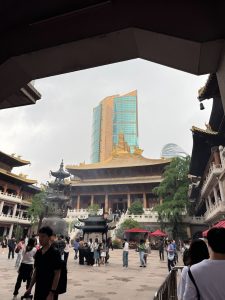

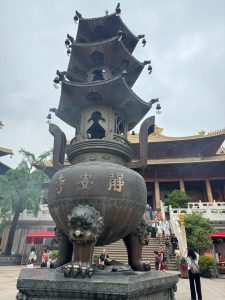


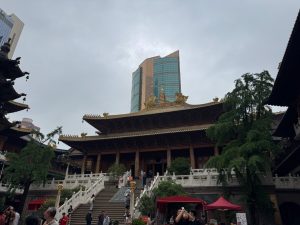
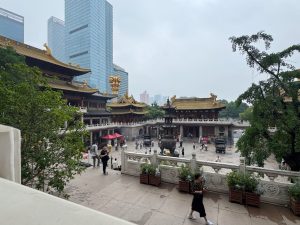
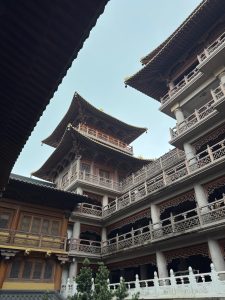

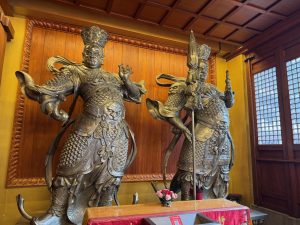
There are two towers on the facade of the temple: the left is the Drum Tower and the right is the Bell Tower, both of which are accessible from within the temple. Exiting the main prayer hall from the back, we walked on the second level of the adjacent building and came to the Bell Tower. Legend has it that a well is located beneath the Bell Tower, allegedly linked to the sea, with water sprouting from the well. It was believed that the water brought evil, and the locals built Jing’an Temple to ward off these evils. Both the Bell and Drum Towers are closed to the public these days. As the door to the Bell Tower was left ajar, we were able to peek inside the Bell Tower, where we saw a huge bell (hence the name Bell Tower) hanging over what seemed to be a well. The two towers were linked by a central structure, which was formerly used as the main entrance to Jing’an Temple. It is here that we got a great view of not only the inside of Jing’an Temple, but also the outside. The contrast between tranquillity and bustling is especially pronounced here. A gold-plated Laughing Buddha called the centre building on the second level home, together with the statues of the four heavenly kings, guardians of heaven in Chinese mythology. We felt a sense of happiness by looking at this Buddha. The drum tower occupies the left building (seen from the main road of the temple). Compared to the Bell Tower, the Drum Tower appears dull. Peeking through the windows, we could see the solo drum placed inside.






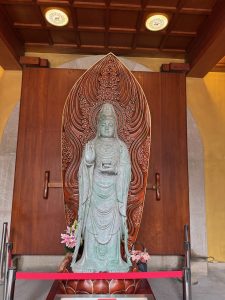
We headed back to the ground level of the temple and found a 3.8m Burmese white jade Buddha statue in a room along the Drum Tower side of the temple. The Buddha statue exudes a compassionate expression. At first glance, one would think that the robe on the jade Buddha was made of cloth, but this is actually part of the jade used for the statue. There is another hall opposite the Jade Buddha statue, where we find a 6.2m tall statue of Guanyin (the Goddess of Mercy), made from a 1000-year-old camphor wood. The lower level of the former entrance has another statue of Guanyin, installed in front of the now-closed entrance. We spent the rest of our time here at Jing’an Temple, exploring the many rooms open to the public, and discovered a prayer room with three Buddha statues located at the back of the temple. As this is a secluded part of the temple, we were the only ones here offering our prayers to the Buddha statues. Before leaving the temple, we spent some time tossing coins into the large furnace in the middle of the courtyard.




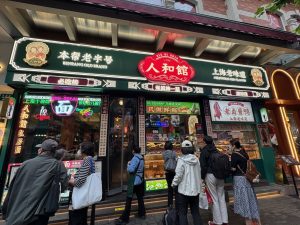
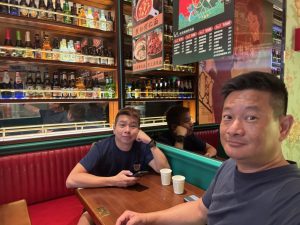
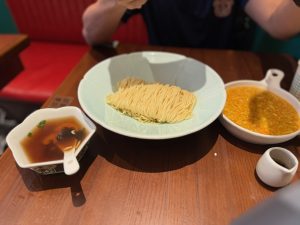
Before heading to our next sight, we had lunch in one of the restaurants nearby Jing’an Temple. We were initially attracted by the pastries and rice dumplings sold at the front of the restaurant. Since it was past lunchtime, we settled in for a meal at this restaurant. We only found out that this restaurant is a Michelin one-star establishment after eating there. With our stomachs filled, we are off to our next sight – the French Concession.
French Concession (法租界)
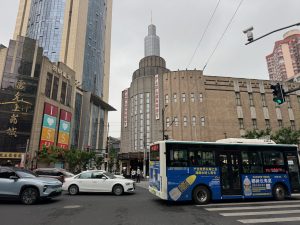
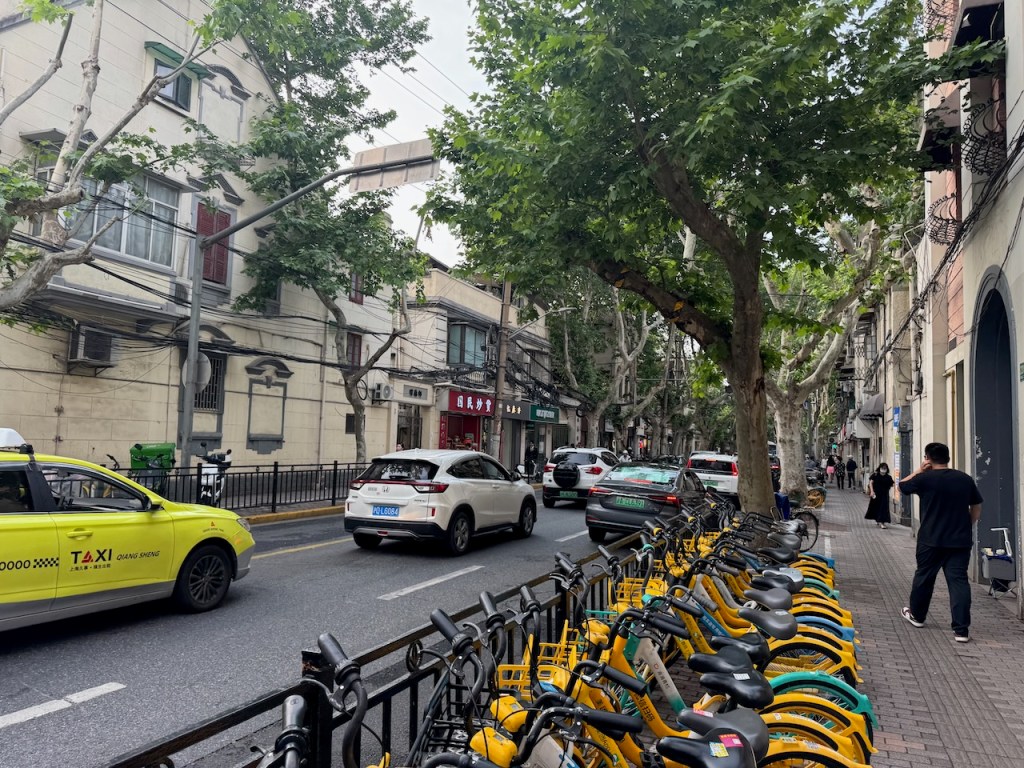
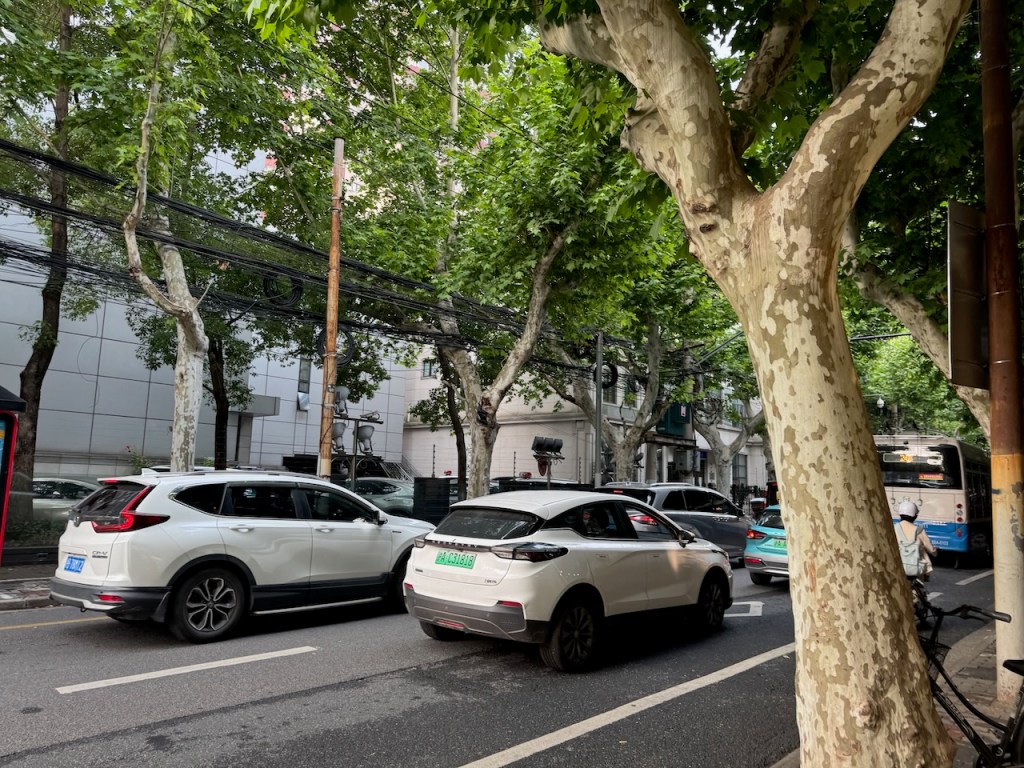
The French Concession was an area administered by the French Government for almost 100 years. To date, the area is still filled with buildings left behind by the French from yesteryear. We were drawn to this area by the former site of the French Concession Joint Courts (法租界公审会廨旧址), which appears to be the only notable attraction in this vicinity. Little did we know that there were more historical buildings in this area. We took the metro from Jian’an Temple Station to Dapuqiao Station and walked along the streets. Our first impression of the French Concession is that the streets in this area have a rustic charm reminiscent of China in the 50s. The trees planted on both sides of the street reminded us of the Champs-Élysées, which we had visited in Paris. Despite heavy traffic, the streets of the French Concession remained peaceful. Our plan was to visit the former site of the French Concession Joint Courts and then head to Tianzifang. As we were walking along the street, we discovered Tianzifang was just to our right. Since we were already here, we made some last-minute changes and took a detour to Tianzifang.
Tianzifang (田子坊)
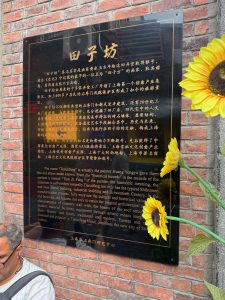
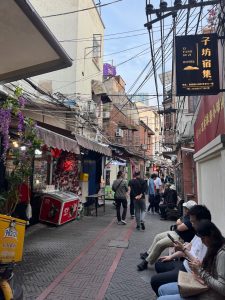
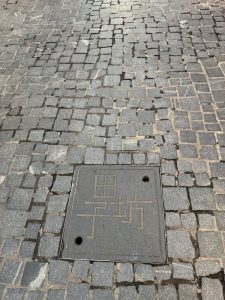
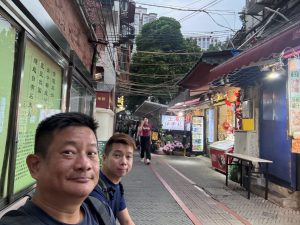
Tianzifang is very well concealed from the outside. Gates surround the area, giving it a residential appearance. We would have missed it if not for the sign hung on the outer gates. Tianzifang is essentially a shopping district comprised of traditional residential buildings that do not conform to any city planning regulations. Walking in Tianzifang gave us the impression that these former residential buildings were built on sites at the will of their former owners. These buildings were not uniform either; we saw different facades of these buildings, some with their bricks exposed, while others were plastered in cement. Some of these buildings even span across the pavement below. It is this irregularity that gave Tianzifang its character and charm. Relinquished of its former role as residential buildings, the buildings in Tianzifang have been repurposed to house boutique shops, souvenir stores, bars and restaurants. Walking in Tianzifang not only felt like strolling through old Shanghai, but it also felt like navigating a maze. Although we are not big shoppers, we still managed to spend an hour browsing through the shops and eventually found a shop selling locally designed T-shirts, which were reasonably priced for their high quality. Generally, we thought the prices in Tianzifang were lower compared to those on East Nanjing Road.




Sinan Open Air Museum (思南露天博物馆)
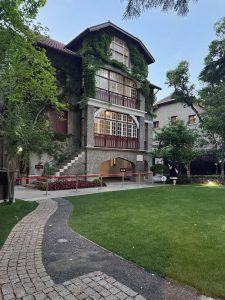
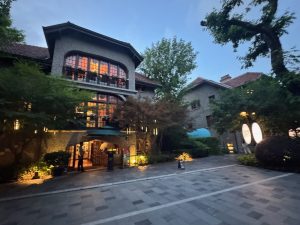
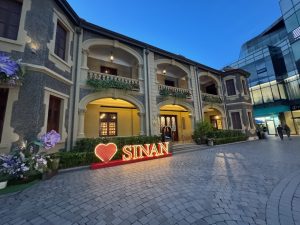
Leaving Tianzifang, we continued our leisure walk to the former site of the French Concession Joint Courts, which lies across the street. When we arrived at the building, it seemed to be a police station and closed to the public. We did not bother entering the premises or asking if the building was open to the public. Seeing it was getting late, we headed to our final destination for the day – Xintiandi. As we followed the directions on our AMap app (China’s equivalent of Google Maps) towards Xintiandi, we came across some European buildings that were very well-preserved. Unknowingly, we have wandered into the Sinan Open Air Museum. Walking amongst the buildings here felt like we were transported to some small town in Europe; we almost forgot we were in Shanghai. Sinan Open Air Museum does not display relics. Every building, every street lamp, every cobblestone street is a relic that showcases European influence in Shanghai’s history. These buildings were once residential mansions but have been converted into restaurants and cafes. As there were not many people walking in this area, the stroll in the Sinan Open Air Museum felt peaceful.



Xintiandi (新天地)
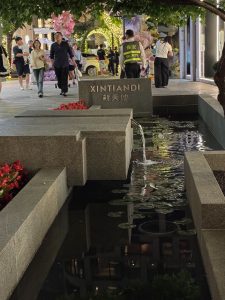
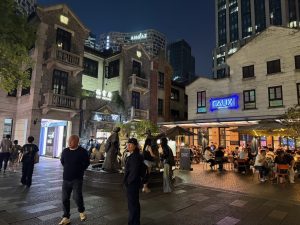
Leaving Sinan Open Air Museum and 15 minutes walk later, we arrived at Xintiandi. Xintiandi is a relatively small area compared to Tianzifang, primarily comprising restaurants and bars, as well as a handful of shops, housed in stone and brick buildings. As it was dinner time, Xintiandi was especially lively with diners chatting and the clinking of wine glasses. Several large shopping malls occupy the land adjacent to Xintiandi. Filled with luxury boutiques and billboards so bright that they illuminated the street. As there wasn’t much for us to do here, except watch people eating and drinking, we didn’t stay long and headed back to our hotel via the subway.





Night View of the Bund
We returned to the hotel around 8:30 pm, before the lounge in our hotel closed. Our butler had pre-arranged for us to visit the rooftop terrace. The staff at the lounge escorted us to the rooftop terrace, where we were treated to a stunning night view of the Bund and Pudong area. Being located on the Bund, facing the Pudong area, the rooftop terrace of our hotel provided an unobstructed view of the buildings in Pudong, illuminated by neon lights. From the roof terrace, we were also able to catch part of the buildings on the Bund dressed in their orange garb. In contrast to the large crowd below at the Bund, the view up here was peaceful.
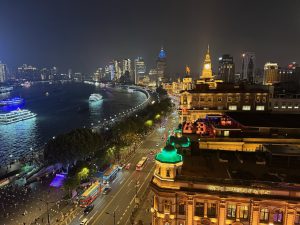


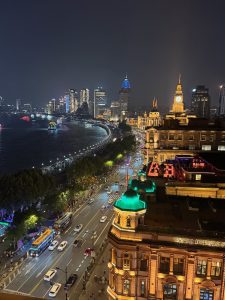
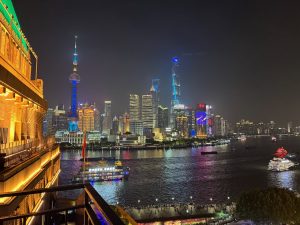
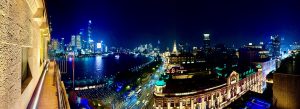


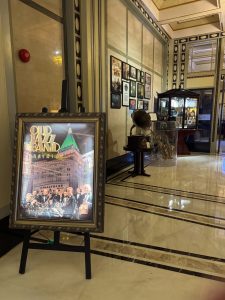
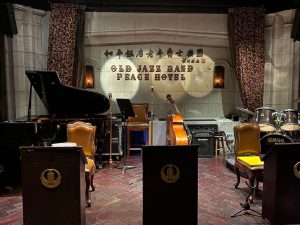
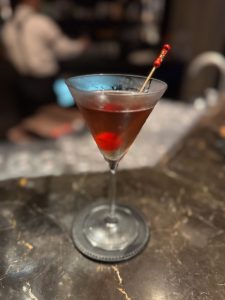
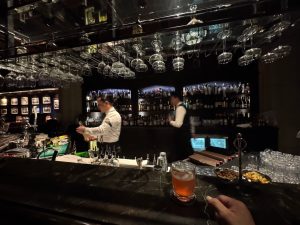
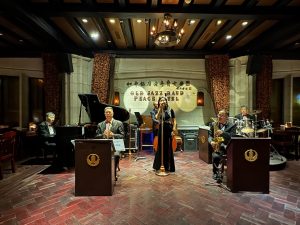
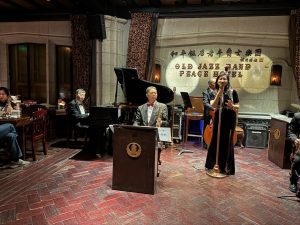
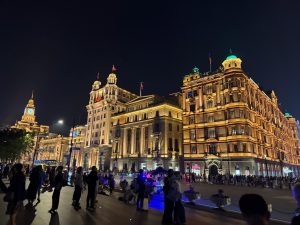
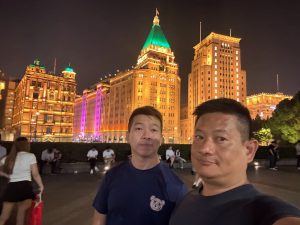
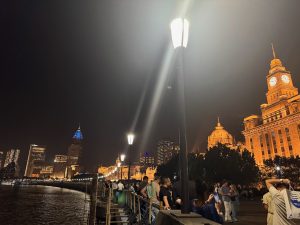
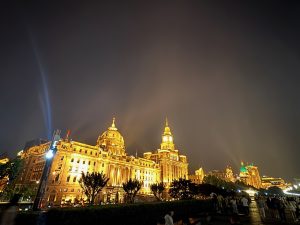
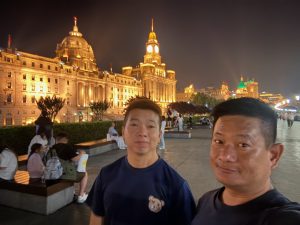
After visiting the roof terrace, we headed to the famed Jazz bar in the Peace Hotel. Our butler had made a reservation for us at the bar to watch the world’s oldest band perform. We were privileged to be given front row seats with an unobstructed view of the band performing. As we did not have a good shot of the Bund, we headed out to the promenade after the jazz performance to take some pictures of the Bund. The buildings on the Bund were especially beautiful at night with the orange light cast onto them. The promenade was bustling with life, with visitors taking pictures of the Pudong skyline and street vendors trying to sell their photography services despite being late at night. We returned to our hotel to rest for the night after taking our fair share of pictures.




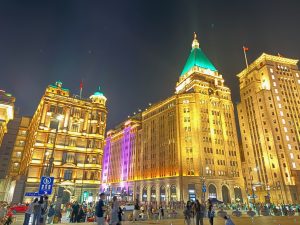
How fun to see a piece of Shanghai inspired by the French presence. I also love the views of the Bund at night.