We initially planned to visit Yuyuan (豫园) in the morning and spend some time strolling along Yuyuan Old Street before visiting People’s Square in the afternoon. The staff at our hotel’s lounge, whom we spoke to last night, highly recommended that we visit Longhua Temple, which is popular amongst the locals. We changed our plan today to prioritise Longhua Temple and leave Yuyuan as an option if we had the time.
Longhua Temple (龙华寺) – The Oldest Temple in Shanghai
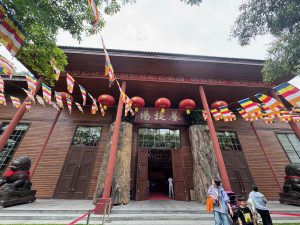
As Longhua Temple is slightly further away from our hotel, we made it our first stop of the day. Getting to Longhua Temple is a breeze; we hopped onto the metro Line 2 and changed at Jingsu for Line 11. Longhua Station is well served by both Lines 11 and 12. There are signs in the metro station that point to Longhua Temple (in both English and Chinese). One cannot miss the ancient wooden tower upon emerging from the metro station.
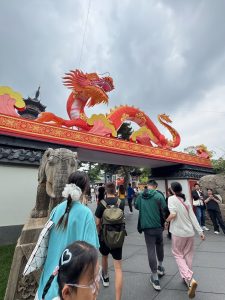
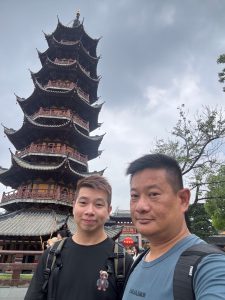
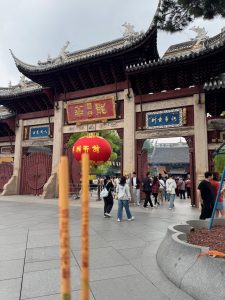
At 1,700 years old, Longhua Temple is the oldest temple in Shanghai and one of the oldest in China. The temple was first built during the Three Kingdoms era in 242 AD and has undergone several rebuilds over the years. Today, the present design of the temple was inherited from the Song Dynasty (960-1279), and Longhua Temple is the largest temple in Shanghai. Entry to Longhua Temple costs RMB 10, which includes a set of three incense sticks for devotees to use during prayers for prosperity and safety. Upon entering the grounds of Longhua Temple, the first thing we saw was the wooden seven-storey Longhua Pagoda. We saw locals walking around the pagoda with unlit incense in their hands. Upon asking, we were told this is a customary procedure when praying in the temple. When in Rome, do what the Romans do. We followed the locals in their prayer procedures. As we walked round the temple, I could catch a glimpse of the interior of the pagoda. The interior of the pagoda appears to retain its original structure, dating back to 977. Other than a set of stairs that lead to the upper level of the pagoda, there seems to be a statue of a man inside the pagoda. We entered the Longhua Temple grounds after doing our three rounds around Longhua Pagoda.

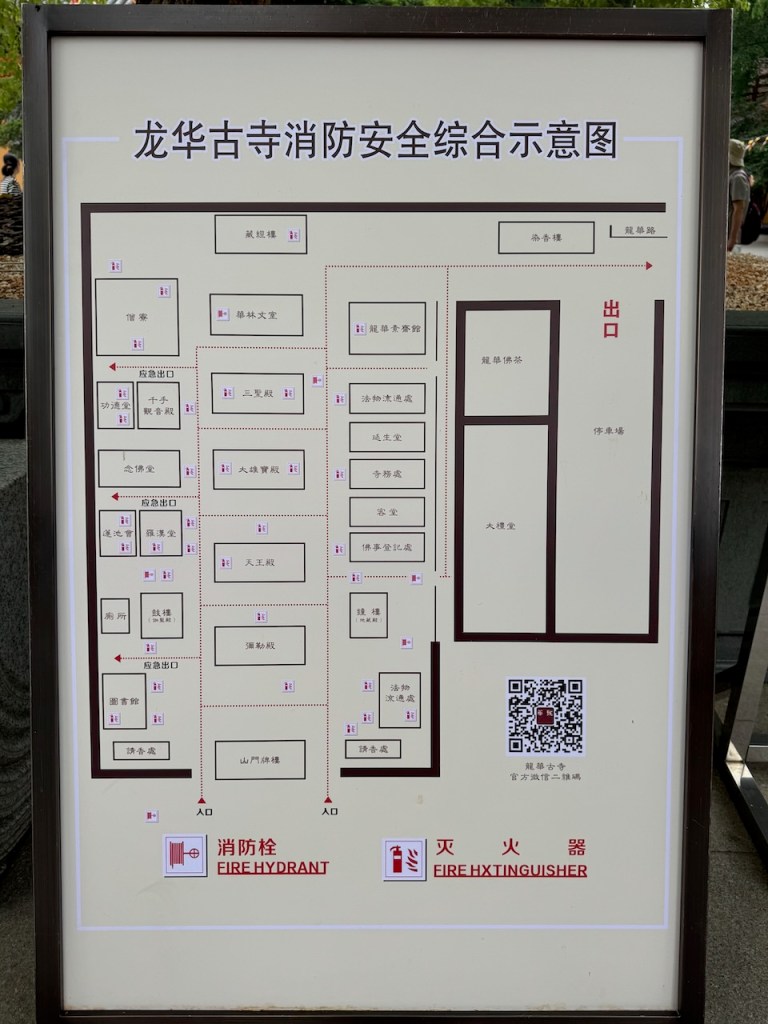
Longhua Temple comprises four main prayer halls, arranged in a straight line along a north-south axis, with several smaller prayer halls situated at the sides of the main halls. Legend has it that it is here the Laughing Buddha attained his Buddhahood. The first prayer hall, the Maitreya Hall (弥勒殿), houses the Maitreya Buddha (also known as the Laughing Buddha) in his manifestation as a monk wearing a cloth bag. The gold-painted Maitreya Buddha, with his signature kind smile, seems to welcome visitors to his temple. The next hall in line after the Maitreya Hall was the Four Heavenly Kings Hall (天王殿). The main Buddha installed in this hall is the Maitreya Buddha in his Buddhahood appearance. This version of the Maitreya Buddha features a calm and kind appearance, a notable departure from the Laughing Buddha image popular in Chinese culture. In addition to the Maitreya Buddha, this hall is also home to the Four Heavenly Kings. The third hall, located behind the Four Heavenly Kings Hall, is the Mahavira Hall (大雄宝殿). This is the main prayer hall in Longhua Temple, where the Buddha, seated on a lotus, and his two disciples, Manjusri Boddhisattva (文殊菩萨) and Samantabhadra (普贤菩萨), are installed at the centre of the prayer hall. The Buddha statues installed in this hall exude a calm and solemn look, as though they are patiently listening to the sorrows of visitors. The Three Sages Hall (三圣殿) is the final hall, the furthest away from the entrance of Longhua Temple. The Buddhas installed here are the Amitabha Buddha (阿弥陀佛), Guanyin Bodhisattva (观音菩萨) and Mahasthamaprapta Bodhisattva (大势至菩萨). The Buddha statues here had a gentle smile on their faces, as though reassuring visitors that everything will be alright.
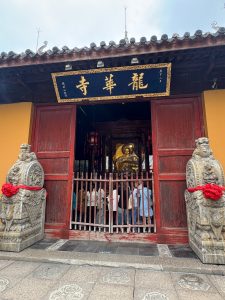

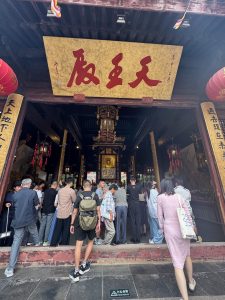
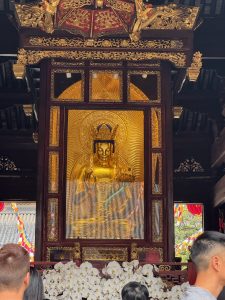


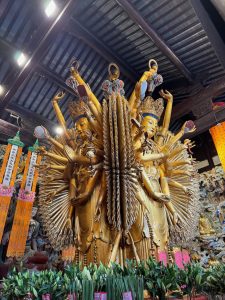
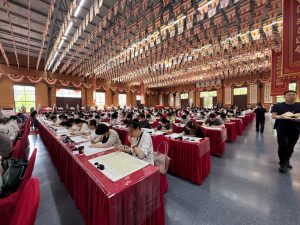
After visiting and offering our prayers in the four main halls, we spent the rest of our time at Longhua Temple retracing our footsteps back to the entrance and visiting the side prayer halls. A hall beside the Three Sages Hall had the statue of Thousand Hands Guanyin (千手观音) installed. Instead of having only one statue, there are three statues of the Thousand Hands Guanyin with their backs against each other, which seems to represent seeing all from all directions. In addition to the Guanyin statue, this hall is also adorned with carvings of Bodhisattvas and Gods cast on the walls of the hall. The other hall that I like is the Arhat Hall (罗汉堂). In the centre of the hall is a dark brown wooden statue of Guanyin, with her lifelike merciful appearance. There are an impressive 500 smaller arhats on the walls surrounding the Guanyin statue in the centre. The two side halls between the first and second main hall are the Drum and Bell Towers, where statues of Guangong (关公) and Earth Store Bodhisattva (地藏王菩萨) are installed respectively. After paying respects to all the Buddha and Bodhisattva statues in the prayer halls, we wandered around the grounds of Longhua Temple. We found a huge hall filled with people quietly sitting in rows copying Buddhist sculptures. Copying these sculptures is a Buddhist practice that trains one’s patience and a calm mind. It was a spectacular sight to see so many people sitting quietly in a large hall doing their things calmly. Leaving Longhua Temple after spending 1½ hours here praying and walking around, we headed for lunch in one of the shopping malls nearby.




City God Temple (城隍庙)- Temple of Guardian God
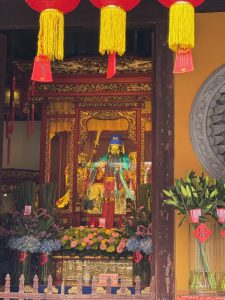
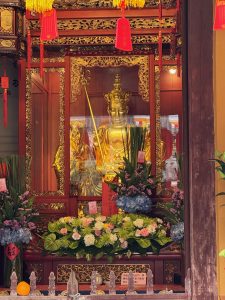
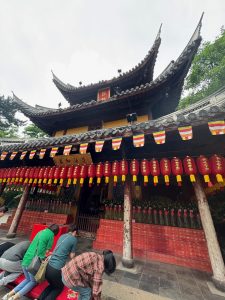
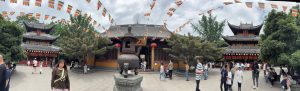
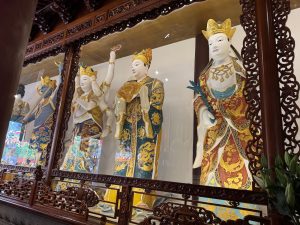
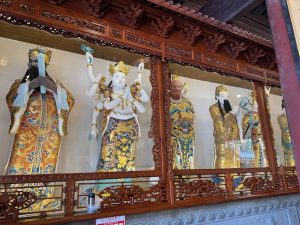
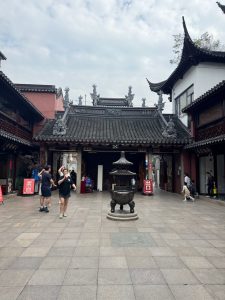
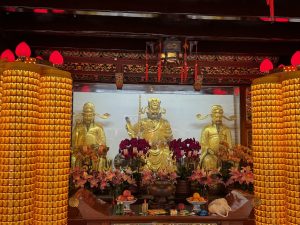
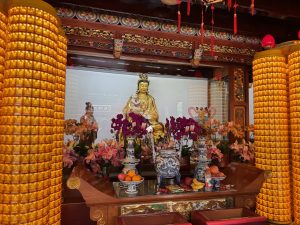
No visit to Shanghai is complete without visiting the City God Temple and Yuyuan Old Street. The City God Temple has been regarded as the guardian temple by the Shanghainese. Entry to City God Temple costs RMB 20. The City God Temple is served by Yu Garden Metro Station on Lines 10 and 14. The City God Temple is compact compared to Longhua Temple. There are three entrances to the City God Temple, the main entrance facing the road, the side entrance that is directly linked to the Yuyuan Old Street shopping arcade and a back entrance at the second prayer hall that serves more like an exit (we are not too sure if this is also used entrance as we did not went up close to explore this area). As we came from the Yuyuan Shopping Arcade, my friend and I used the side entrance. From the side entrance, we immediately arrived at the second and largest courtyard in the City God Temple. This is where the main prayer hall is located, housing one of the two City Gods in this temple. We later learned from one of the staff members that Shanghai has three City Gods, two of which are located in this City God Temple. After offering our prayers, we proceeded to the back of the temple and arrived at the third courtyard. In a relatively small prayer hall, the second City God is housed. At the sides, we found smaller shrines housing Guangong and WenCang (the God of Wisdom).


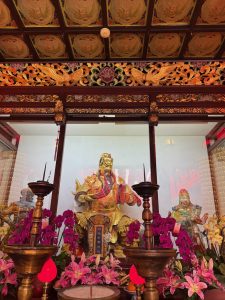
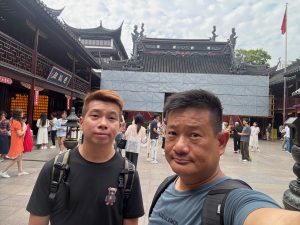
After offering our prayers, we retraced our footsteps and headed back to the second courtyard to offer our prayers to the gods installed in the side shrines there. The God of Fortune and Guanyin were among the more popular gods in the second courtyard, where we saw more people praying. We headed to the first courtyard after praying and shopped for some charms for my family members. The staff advised us to return to the ceremonial hall located between the two City God halls to have our charms blessed. The cleansing ceremony involves a Taoist priest chanting and sprinkling holy water onto our charms. We had pretty much covered everything in the City God Temple in about 45 minutes.


Yuyuan Old Street (豫园老街)
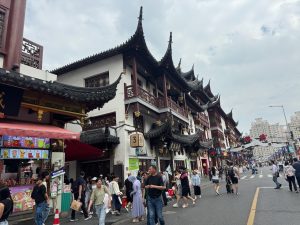
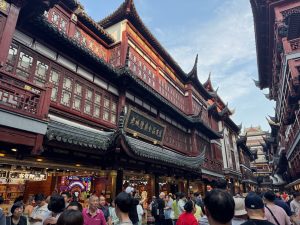
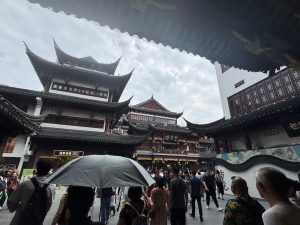
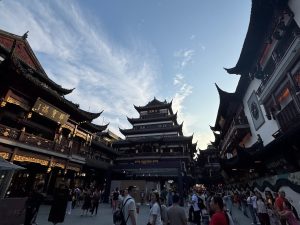
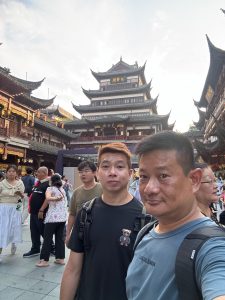
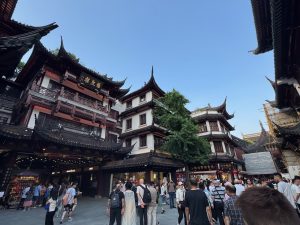
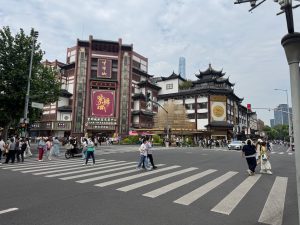
We spent the rest of the afternoon wandering through the labyrinth of Yuyuan Old Street. I thought this was a great place to dive into the vibrancy of Shanghai, with many locals coming here to spend their weekends wandering through shops to buy souvenirs or to eat from the many food street stalls. As we were here on a weekend, we even spotted some local artists coming here to promote their films and shows. We also saw a traditional Chinese dance performance in one of the many open spaces within the shopping arcade. The main Yuyuan Old Street is essentially a huge shopping arcade, housed in ancient Chinese buildings that feature numerous shops, mainly selling souvenirs and snacks, as well as a small number of gold shops. Yuyuan Old Street is also where the locals come to buy gold, where the gold price is generally lower. Most of the gold shops congregate in the area across the road from the main shopping arcade. Despite being a highly touristy spot, we found that the prices of items on Yuyuan Old Street are generally cheaper than those on East Nanjing Road.







Back to Pudong – Our Attempt to Visit Oriental Pearl Tower
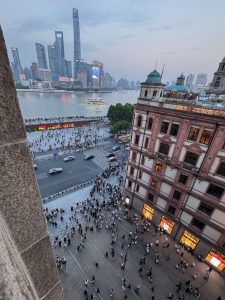
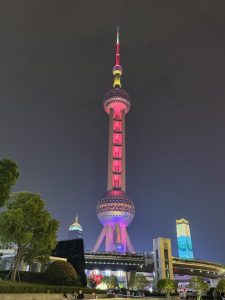
We returned to our hotel to offload some of the stuff we bought from Yuyuan Old Street and headed out across the Huangpu River via the metro to Pudong. Since we had some time before dinner, we wanted to visit the Oriental Pearl Tower, something I had wanted to do 30 years ago when I first visited Shanghai. Back then, the tower had just been completed and had not yet been opened to the public. To get to the Oriental Pearl Tower, we alighted at Lujiazhui Station (since the ferry service had stopped for the day), one stop along Line 2 from East Nanjing Road Station. We emerged from one of the shopping malls and walked the circular overhead pass connected to the mall to arrive at Oriental Pearl Tower. The ticketing booth for the tower is not located on the ground floor of the tower; instead, it is found about 20 m away from the tower. However, by the time we arrived at the tower, admissions had ceased as the tower was closing soon. Other than taking pictures with the tower up close, there was nothing much we could do here.
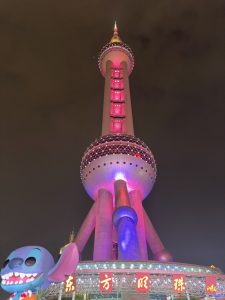

Dinner Hunting on East Nanjing Road
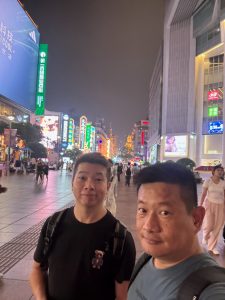
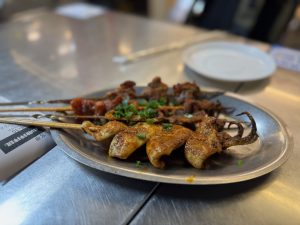
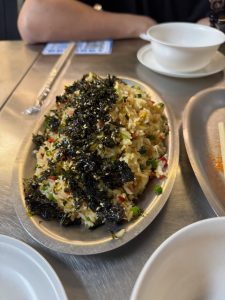
Since it was way past dinner time, we returned to the Western part of East Nanjing Road (opposite People’s Square Station) to look for dinner. I thought I saw some restaurants on this stretch of the road a few days ago when we walked to this part. We came across a stretch of roadside stalls selling snacks and purchased some tasty lobster dumplings. Most of the restaurants at this hour (it was already approaching 10 pm when we arrived) seem closed. We settled our dinner at a BBQ restaurant in one of the small alleyways; we spotted some restaurants that were still open till late at night. As it was getting late and we had an early flight the next day, we headed back to our hotel on the Bund after dinner. The shops below our hotel were still open, so we bought some street snacks to take back to our room to eat while we packed our luggage for our departure tomorrow morning.

Too bad for Pearl Tower. Shanghai seems to have many traditional buildings, which is surprising given the city’s modern development.