No trip to Macau is complete without paying a visit to the iconic Ruins of St. Paul, the poster child of Macau. The Ruins of St. Paul, along with the historic sights of Macau, are located in the central part of the Macau Peninsula, not far from our hotel. Since we missed all the sights I had planned for yesterday due to our late arrival in Macau, we started earlier than we had initially planned, hoping to catch up on some of the sights we had missed.
Senado Square – The Heart of Historic Macau
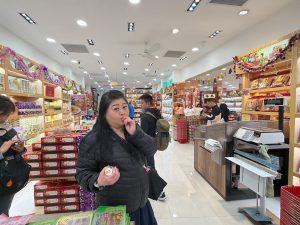
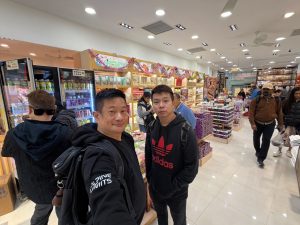
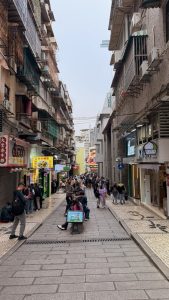
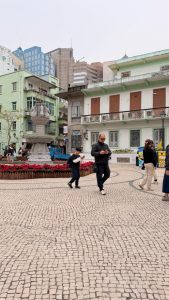
Our first stop of the day started at Senado Square, the centre of Macau Peninsula and where all the action is. The elongated, triangular-shaped Senado Square has been Macau’s urban centre for centuries and is one of the SAR’s top four squares. This square linked us to most of the historic sights on the Macau Peninsula, making it a great place to start visiting them. Aside from being a starting point for the World Heritage Sites of Macau, Senado Square is also a great spot for shopping. There are tons of shopping options, from individual boutiques to department stores to souvenir shops. We even found roadside stalls in one of the alleyways near the main road parallel to Senado Square. As it was the centre of action, Senado Square was jam-packed with people taking pictures, shopping, or simply resting on the many benches installed here. The presence of Christmas decorations installed in the middle of the square not only brings a festive mood but also attracts visitors to stay longer.
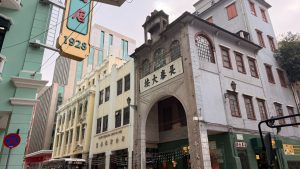
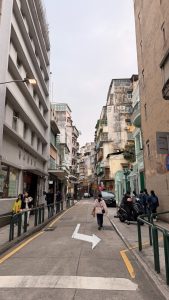


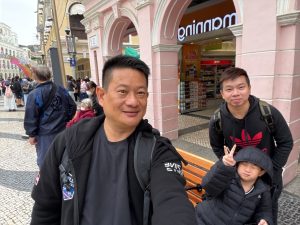

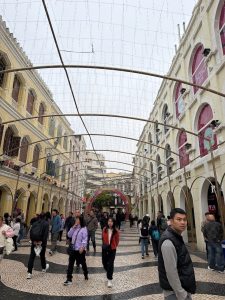
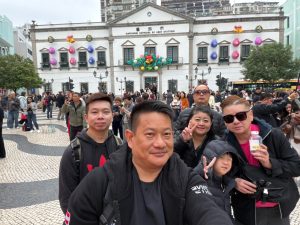
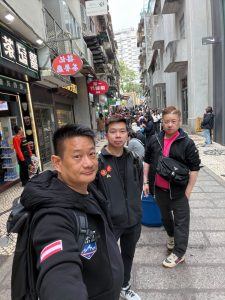
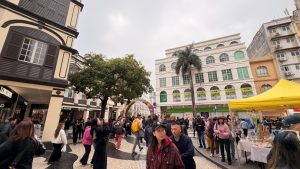
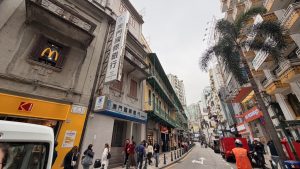


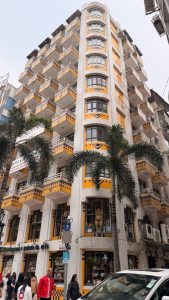

Standing on Senado Square, we spotted the Municipal Affairs Bureau across the road. We were unsure whether we could visit the building, as the doors were shut during our stay in Senado Square. We merely kept our distance and took pictures of the building across the road.

St. Dominic’s Church – The Yellow Church
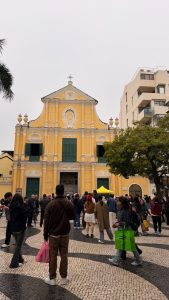
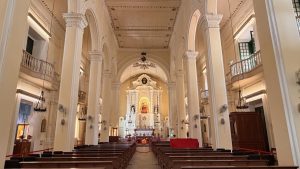
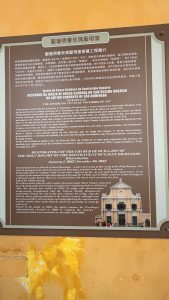
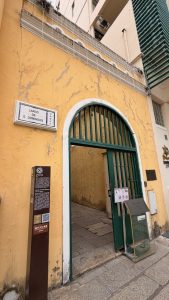
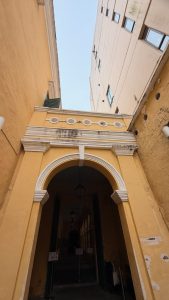
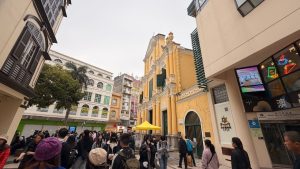
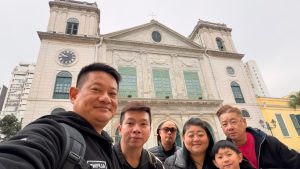
The yellow-coloured St. Dominic’s Church is just a stone’s throw from the centre of Senado Square, making it a perfect second stop. The Baroque-style church was founded in 1587 by three Spanish priests from Mexico and features a good mix of European and Macanese elements in its design, as seen in its Chinese-style roof. The white European floral patterns adorned on the facade of the church are especially pronounced against the yellow walls. The inside of the church was neither as massive as those we had seen in European countries nor as elaborately frescoed. Still, the simple ivory-white interior gave us a sense of peace, contrasting with the busy Senado Square we were in moments ago. We spotted an entrance at the side of the church and decided to check it out. The entrance led us to the back of the church, where a small museum now houses a collection of around 300 artefacts. As it would require us to climb up some stairs, we did not visit the museum and exited the church to continue our walk towards the Ruins of St. Paul.

Cathedral of the Nativity of Our Lady – The Church on the Hill
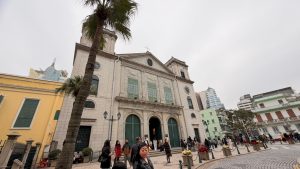
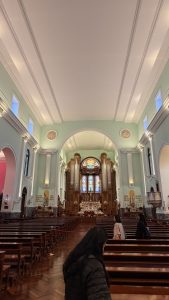
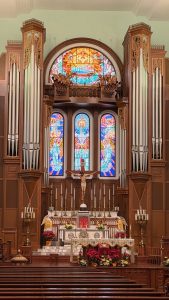
As we were walking around, half shopping and half looking at the sights in Senado Square, we spotted a plain-looking church perched on top of the slope. This is the Cathedral of the Nativity of Our Lady, also known as the Cathedral of Macau, first built in 1576 and redesigned in 1623 into a cathedral. This cathedral is the most influential church in Macau, housing the highest administrative division of Catholic affairs in the city. The interior of the church is painted a light green, with stained glass behind the main altar. Like St. Dominic’s church, the Cathedral of Macau also features a rather plain interior, without the carvings and frescoes seen in the larger cathedrals in Europe. The interior of the cathedral consists only of a large prayer hall. As we were not Catholics, we stayed here only briefly before heading to our next stop, the Ruins of St. Paul.


Lou Kau Mansion – The Accidental Find
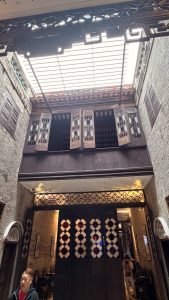
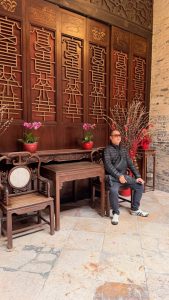
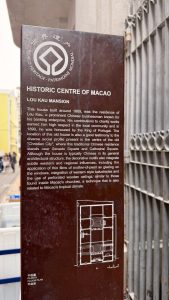
As we were walking towards the Ruins of St. Paul, following Google Maps directions, we stumbled upon a building with open doors, with visitors streaming in and out. Curious, we checked with a staff member standing by the door if the house was open to the public. The friendly staff welcomed us into the house. This is the Lou Kau Mansion, a traditional Chinese-style house built in 1889 in the middle of heavily European-influenced buildings of Senado Square. Despite its Chinese architectural style, traces of European influence can be seen in the house, including the use of stained glass and decorative motifs. Despite being a two-storey house, only a small portion of the house, such as the ground-level fore and aft halls, and a room that is converted into a projection room introducing the history of the house, was open to the public.

Ruins of St. Paul – Vatican of the East
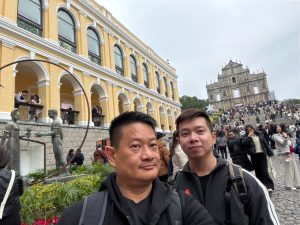
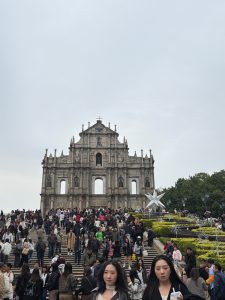
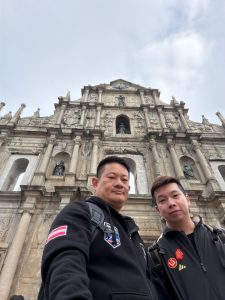
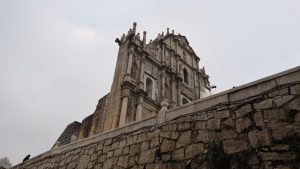
As I was navigating using Google Maps, I was given directions away from signage in Senado Square that pointed to the sight. My mistake was to trust Google Maps too much, so we were drifting in opposite directions. Only when we reached Senado Square did I realise that my position on the maps was erroneous. We spent a good 30 minutes walking around in circles before trusting the street signage pointing to the ruins. We finally reached the icon of Macau – The Ruins of St. Paul. The forever-crowded Ruins of St. Paul was constructed between 1602 and 1640. The church was the largest Catholic Church in East Asia at the time of completion and was given the title Vatican of the East. The original structure consists of five storeys with a large prayer hall. The church was destroyed by a fire during a typhoon in 1853, leaving only its facade. The surviving facade revealed its baroque architecture, with the statue of the Virgin Mary atop the main entrance to the church. The original name of the church, Mater Dei, was still visible on the beam of its main entrance.

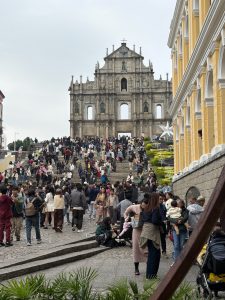



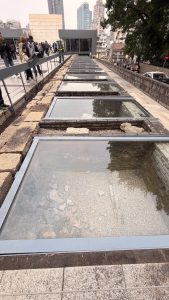
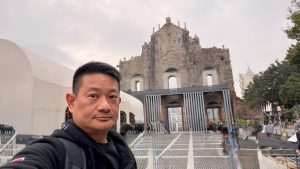
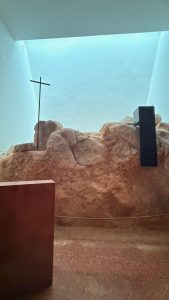
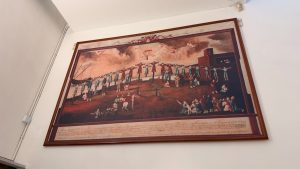
Walking past the facade, we arrived at a large open space where the church used to sit. The original structure of the church can still be visible through the glass floors on both sides of this area. A small building that leads to the lower floors sits at the end of the open area. As we descended the staircase to the lower floor, we could see the church’s surviving structure. A museum houses surviving artefacts used in the church’s everyday life. Compared to the church’s facade, the museum seems to see fewer people, but I thought it was worth a visit. We spent around 5 minutes inside the small museum.



Na Tcha Temple – The Hidden Gem
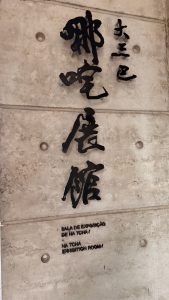
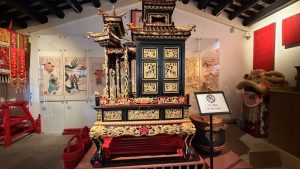
One sight near the Ruins of St. Paul that visitors often miss is the Na Tcha Temple. The single-chambered, small wooden shrine dedicated to the Child God Na Tcha was built in 1888 and has stood at the same spot for more than 100 years. The temple showcases traditional Chinese architecture and symbolises religious freedom during Portuguese rule in Macau. There is a modest Exhibition Room next to the temple, featuring paintings of the legends of the Na Tcha, alongside objects such as the sedan chair and lion heads used during the deity’s birthday celebration. I thought the small square where the exhibition room is situated provides an oasis of tranquillity for people who want a brief break amidst the hectic crowd at the Ruins of St. Paul.



Travessa da Paixao – The Love Lane
The next spot we visited isn’t really a sight; rather, it is an excellent place for those who want a less crowded spot to take pictures with the Ruins of St. Paul. Travessa da Paixão, or Love Lane, got its name from attracting couples who came here for wedding photo shoots. The small alley situated on the left of the ruins, just a few steps from Na Tcha temple, offers a different perspective on the Ruins of St. Paul.
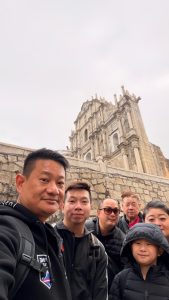

As we were walking to our next destination, the Guia Hill cable car, somehow my Google Maps started to screw me up again. We spent the next 20 minutes walking in circles. It does help that cabs are difficult to find in this part of Macau. As most of us were tired, we eventually gave up going to the hill. Instead, we wanted to head to our next destination, Macau Tower. We wanted to catch a bus to the tower but were told that the buses were travelling in the opposite direction. Eventually, we got directions from a cleaning staff member at a bus depot, who told us where to catch a bus to Macau Tower. Using the directions given to us, we eventually found ourselves in front of our hotel. We went back to put our stuff down and rest a little before hailing a cab from the hotel to Macau Tower.
Macau Tower – The Thrill Seeking Tower
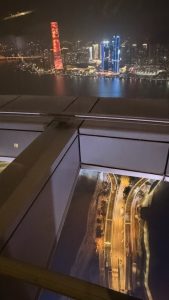
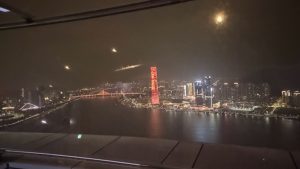
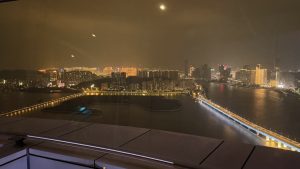
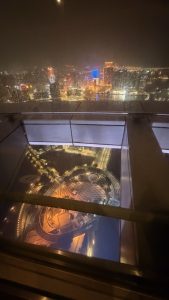
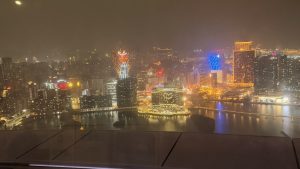
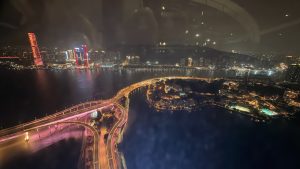
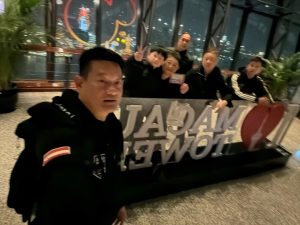
Macau Tower is one of Macau’s landmarks, standing 338m tall. The tower sits in the southern part of the Macau Peninsula, offering visitors a bird’s-eye view of the Pearl River Delta. By the time we arrived at Macau Tower, it was about 1 hour before it closed. We were perhaps one of the last few to be let up the tower. The staff at the bottom of the lift reassured us that we would have sufficient time to visit the tower. There are two observation decks on the tower, the indoor 58-storey and the outdoor 61-storey. Not knowing which floor to exit, we got out on the 58th storey when the lift arrived at that level. As we walked towards the edge of the tower, we figured the 61st floor would give us a better view and headed for the outdoor deck before coming back down. Level 61, being outdoors, was colder than the indoor level below, with the sea breeze constantly blowing in our direction. As level 61 protrudes out more over the edge, it felt as though we were standing without the glass protection. This level is also where thrill seekers can walk around the tower at its edge or even bungee jump off the tower. As it was already near closing time, the station that manages these activities was closed. From the level 61 observation deck, we were treated to a 360° view of the surrounding areas, from the Macau Peninsula on one side to the flashy Cotai area on the other. We could even see the nearby Chinese city of Zhuhai. We stayed here to take some pictures of the surroundings before heading back down to the observation deck on level 58. Back on level 58, the views were not as stunning as those on level 61, but the glass floor there gave us the impression of walking on thin air. However, the scratches visible when the light was pointed upwards from the tower made it difficult to see through. After visiting the tower, we took one of the casino-sponsored free shuttle buses and landed back in the Lisboa area, where we settled for dinner and headed back to the hotel to rest for the night.


I know very little about Macau, which is why this series interests me particularly. This is a very informative guide to Macau’s historical charm! Discovering the ruins of St. Paul’s and Senado Square offers a perfect blend of Portuguese and Chinese heritage. The tip about going to level 61 of the Macau Tower to enjoy a breathtaking view is particularly useful.