Having visited the sights on Macau Peninsula yesterday, today we are focused on the sights on the other island of Macau. We started our day by visiting the A-Ma temple, then headed to the south of Macau, and concluded the day with a visit to the Cotai Strip.
A-Ma Temple – The Temple that gave Macau its Name
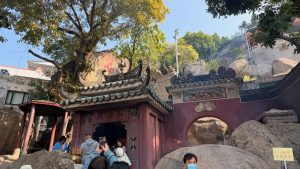
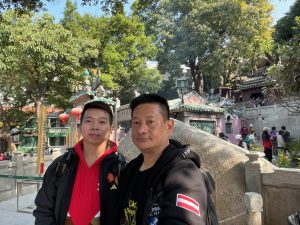
Since we are heading south, it makes sense to visit A-Ma Temple, which is on the southern part of the Macau Peninsula, about a 10-minute bus ride from our hotel. It was believed that the A-Ma Temple existed before Macau and that the territory’s name derives from the temple, which literally means “Bay of A-Ma.” Built in 1488, the temple is the oldest in Macau. The purpose of our visit to A-Ma Temple is to offer our prayers to the deities installed here for protection. The main deity worshipped at A-Ma Temple is the Sea Goddess, Mazu. There are technically four shrines in the temple grounds – two on the ground level and two perched on top of the hill. We first headed to the largest temple structure in A-Ma Temple, Zhengjue Chanlin, which is on the right as we enter. From here, we bought some incense and were guided through the prayer sequence. After going through one round of prayer, we visited the Prayer Hall, the small shrine right in front of the stone arch, to offer our prayers to another Mazu statue installed here.
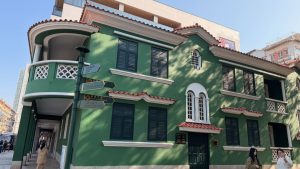
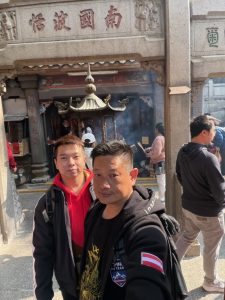
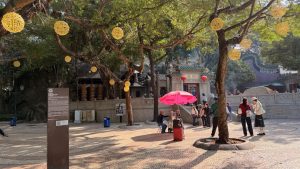
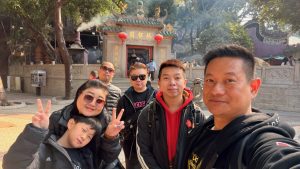

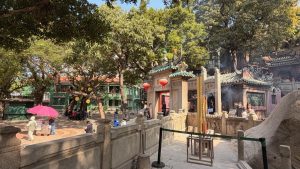

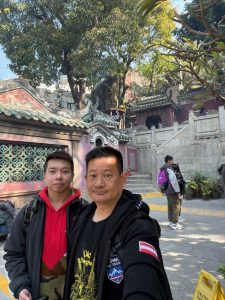
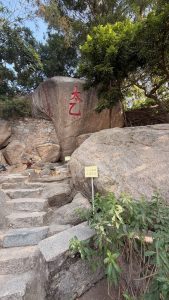
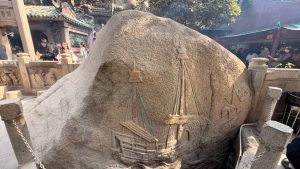
It is time to climb the stairs up the hill to offer our prayers in the remaining two shrines. Perched on the slope, a flight of stairs behind the Prayer Hall is the Benevolent Hall. This hall is believed to be the first and the original shrine in A-Ma Temple. This shrine is even smaller than the Prayer Hall just below, and it also only has the statue of Mazu. The next shrine, the Hall of Guanyin, is perched on the highest point of the temple grounds. This is a relatively large and open shrine that worships the Goddess of Mercy, Guanyin. Apart from offering our prayers here, the “balcony” of this shrine provided a good view of the surroundings. After visiting the four shrines, we headed back to Zhengjiao Chanlin to burn joss paper, where the temple staff offered a prayer for us. Before heading out, we spotted a large rock next to the stone arches. The boat carved into this rock is believed to be the one that brought Mazu to Macau.




Coloane Village – The Quaint Village
After offering our prayers at A-Ma Temple, we continued our sightseeing. The bus ride from A-Ma Temple to Coloane Village took about 30 minutes. Coloane Village is a laid-back village that was once a pirate hideout due to its many sheltered coastlines. Today, the sleepy village is a great place to escape the tourist-packed areas of Macau. This is also where we found the original Lord Stow Eggtart store, which is significantly less crowded than the one in Taipa.
Chapel of St. Francis Xavier
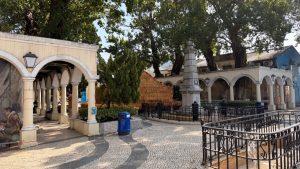
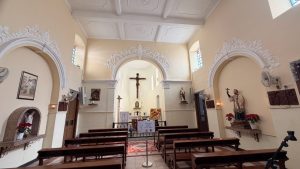
Walking along the coastal road in Coloane Village, our first stop was the Chapel of St. Francis Xavier. Built in 1928, the church is famed for its charming Baroque-style architecture. Adorned in bright yellow colour, this church reminds me of St. Dominic’s Church we visited in Senado Square yesterday. The interior of the church was modest, with only four rows of prayer benches. The square in front of the church is worth a visit. The monument, non-functional water fountains, and Portuguese-style surrounding buildings, the square seems to transport one to an idyllic European Village.

Kun Iam Temple
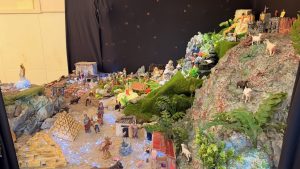
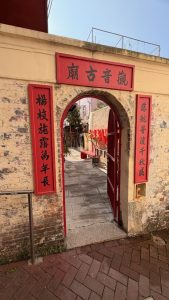
Our next destination is the Kun Iam Temple, situated 3 minutes’ walk down the lane behind the Chapel of St. Francis Xavier. The temple was built in 1800 and is one of the four temples in Coloane village. The temple was modest in size and could easily be missed if one was not looking for it. Unlike the temples we have visited, the Kun Iam Temple does not have elaborate signage pointing to it. Moreover, its entrance is not on the main thoroughfare. Though modest in size, the Kun Iam Temple, dedicated to the Goddess of Mercy, Guanyin, is also home to several other deities. A helpful temple staff member guided my sibling in the prayer sequence. There is a small gift shop on the side of Kun Iam Temple, where we spent some time looking through the cute Chinese ornaments on sale.



Walking around Coloane Village
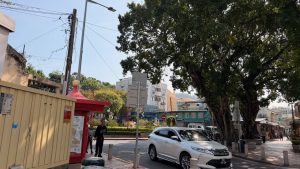
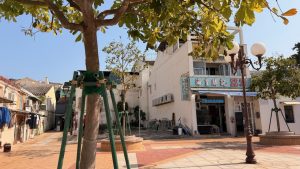
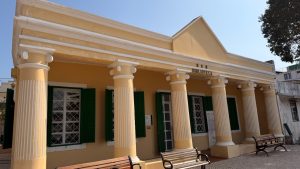
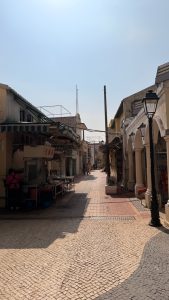
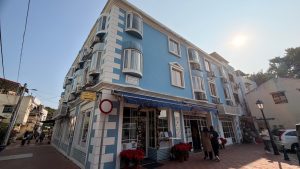
Seeing that there wasn’t much to see around Coloane Village, we decided to grab lunch at one of the two eateries near the bus stop where we alighted. We walked along the same coastal road, Avenida de Cinco de Outubro, that we walked on earlier. Here we found more Portuguese-style buildings, painted in bright, cheerful colours. Of these buildings, the Coloane Village Library stood out the most owing to its bright light yellow colour. Walking on Avenida de Cinco de Outubro, with the sea on one side, felt especially relaxing.



The Cotai Strip – Las Vegas of the East
No trip to Macau is complete without visiting the Vegas of the East along Cotai Strip, which is home to numerous large casinos built on reclaimed land. Cotai Strip got its name simply by combining the names of the two areas it was sandwiched between, Coloane and Taipa.
The Big Three of Cotai – The Parisian, The Venetian & The Londoner
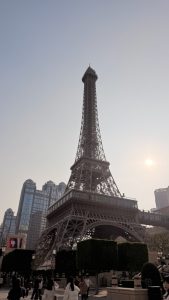
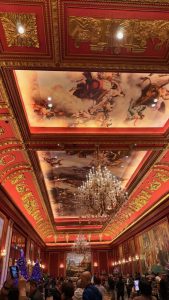
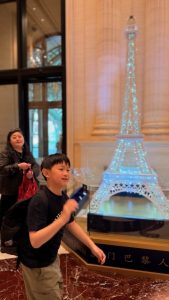
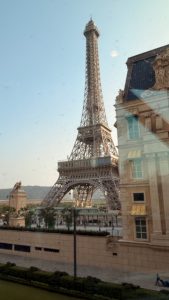
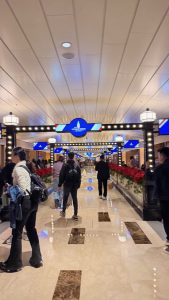
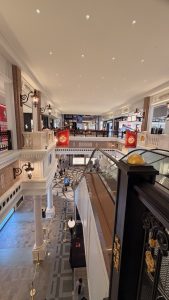
There are two bus stops that buses to Coloane Village pull into. The first one is the one we alighted at, in front of Lord Stow’s Bakery, and the other is slightly further across the road, about a 2-minute walk away. We took the bus to Cotai Strip from the farther bus stop, since everyone leaving the village at the nearer stop, making the chance of finding a seat on the bus slim. The bus ride from Coloane Village to Cotai took about 20 minutes. We started our Cotai Strip visit at the Parisian (on the same side as the bus stop we alighted from) and ended at the Londoner, which is opposite the road where the Sky Cab is. Pulling into the bus stop, the Eiffel Tower replica told us we are in Cotai Strip. Having visited the Eiffel Tower in Paris, I thought this scaled-down replica looked quite real. Inside the Parisian, we saw tons of shops, ranging from luxury boutiques to souvenir shops, lined up side by side. In the big three, casinos occupy the ground floor, while shops and restaurants occupy the floor above it. Other than the hotel check-in lobby, which has elaborate frescoes painted on the ceiling, resembling part of the Versailles. The rest of the Parisian looked like your run-of-the-mill shopping mall with not much character.
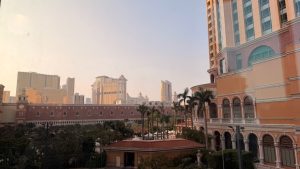
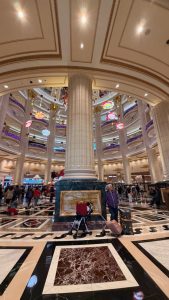

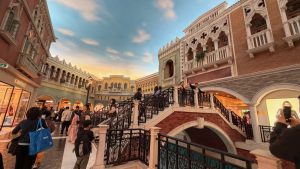
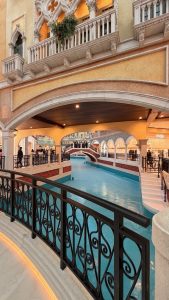
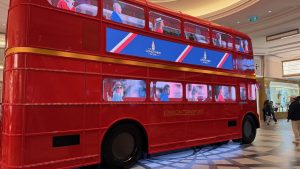
Compared to the Parisian, our next stop, the Venetian, had more characteristics. There is a replica of Venice’s canals and bridges inside the shopping mall, where people ride gondolas and occasionally the singing by the gondola paddler can be heard. The ceiling of the Venetian shopping mall is painted in bright blue skies with clouds, making the mall perpetually having clear skies all year round. The layout of the Venetian was akin to a maze. We spent hours walking round and round and couldn’t seem to exit the Venetian, and only managed to get out when we went to the casino floor. From there, we found signs pointing to the Londoner. Compared to the Venetian, the Londoner feels much plainer, except for a few archways that seem to mimic London Central Station, some London-style phone booths, and a London double-decker bus. The rest of the Londoner, like the Parisian and the Venetian is lined with luxury shops and restaurants.



Foiled Plan to take the Sky Cab
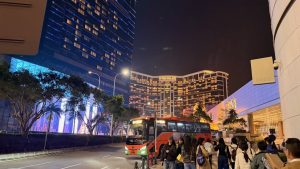
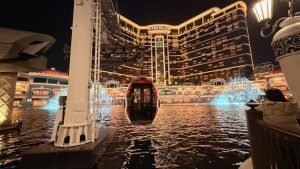
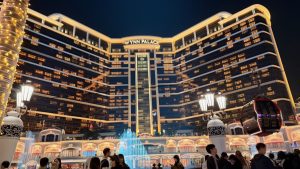
Our initial plan was to take the complimentary Sky Cab ride that loops around the fountain in front of the Wynn Palace in Cotai. However, the long queue for the cable car ride put us off. I learned about an alternative boarding area inside the hotel, but getting there requires more walking and exploring. Since everyone was tired after walking all day, we decided to cut our losses and head back to the Macau Peninsula for dinner.
Senado Square at Night
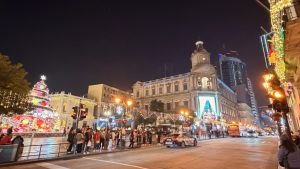
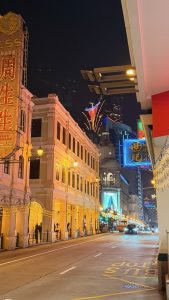
After dinner near our hotel, since the night was still young, we headed to Senado Square to buy some souvenirs before heading back to the hotel to rest.
Macau Night Market
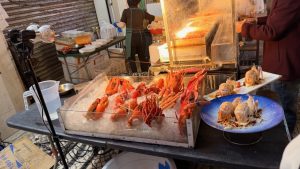
We stumbled upon a night market mainly selling street food in one of the alleyways near our hotel. This lively night market operates only on weekends. The street food on offer was another level. In addition to the usual finger food, we also saw some stalls selling BBQ Boston lobsters. The shops in the alley behind, where the street food stalls were still open, offered visitors the option of buying souvenirs rather than eating street food. Compared to Taiwan’s night markets, this one is really small, but it is worth a look.


Municipal Affairs Bureau
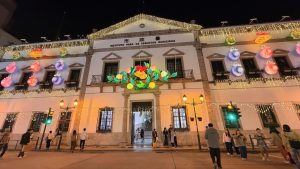
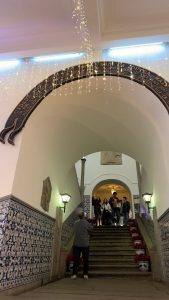
Our final stop for the day is at Senado Square, where we buy souvenirs in case we do not have time to get them tomorrow before we leave Macau. As it was near closing time, most of the shops on Senado Square were either closed or closing. However, we managed to get the stuff we wanted from the shop. Despite being late at night, there was still a crowd in Senado Square. As we were preparing to head back to our hotel, I spotted the Municipal Affairs Bureau doors open. This was the building we were unsure about visiting yesterday, and decided to take a look inside. Apart from a few vending machines and Christmas displays, there is nothing much going on inside the Municipal Affairs Bureau. From its main entrance, a straight path led us to a small courtyard, and that’s about it. However, the Portuguese-style tiles on the building’s walls reminded visitors of Macau’s Portuguese heritage. After staying in the Municipal Affairs Bureau momentarily, we headed back to the hotel to rest for the night.