We have a jam-packed day today, visiting three sights. Originally, I planned only to visit Schilthorn today. My friends initially wanted to go paragliding, but paragliding is out for me due to my recent knee surgery. Instead, I initially planned to either laze in the hotel to wait for them or to visit Thun, a city at the northern edge of Lake Thun. However, over the past few days, my friends got worried about the cold and the weather; they eventually cancelled the paragliding and joined me on a quick stop at Thun. We ended the day by visiting Lauterbrunnen, something that I initially planned for tomorrow. But it only makes sense for us to visit today, as we will be passing by Lauterbrunnen on the way to Schilthorn.
Thun – Gateway to the Bernese Oberland
Thun is a small town nestled on the northern edge of Lake Thun, famed for its Castle that offers visitors a sweeping view of the Alps. There are three options in getting to Thun from Interlaken: ferry across Lake Thun, or the faster train or bus options, all of which are covered under the Bernese Oberland Pass that we purchased. As I had made a booking for brunch buffet at 12.30 pm in Piz Gloria on Schilthorn, we needed to leave Thun by 10.30 am. Hence, we took the faster train option.





Obere Schleuse – A Lock, A Bridge and Stunning Views
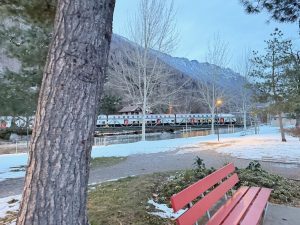
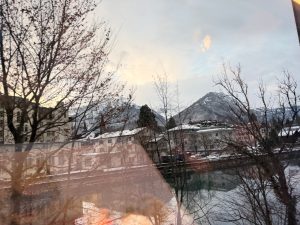
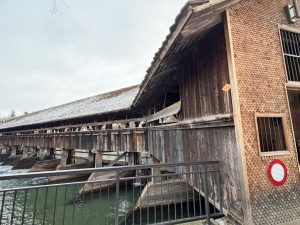
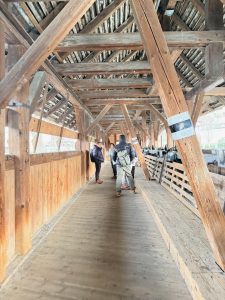
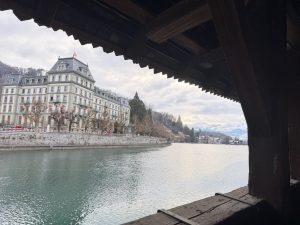
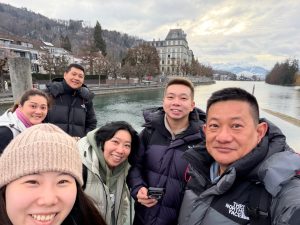
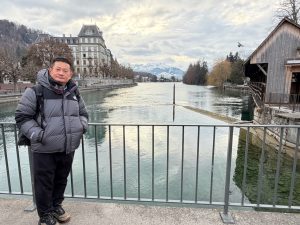
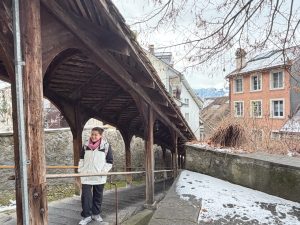
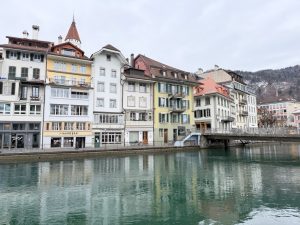
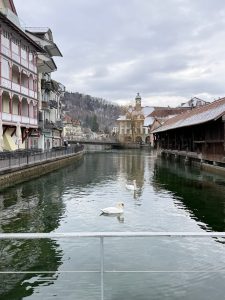
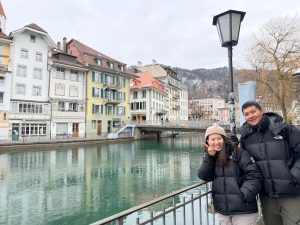
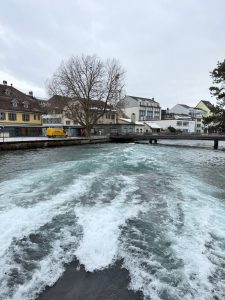
As our time in Thun is very limited, we focused on visiting Schloss Thun and the sights along the way. There are several ways of getting to the Castle from the train station; we could reach the Castle directly via the central artery of the town. However, we chose to do a slight detour via Obere Schleuse. Obere Schleuse is a lock built in 1723 to control the water level and prevent flooding, and it sits at the mouth of the River Aare. Today, it is still used as a lock on top of being a pedestrian bridge. Walking on the covered wooden bridge reminded me of the Chapel Bridge we saw in Luzern a few days ago, but without the painted murals. We could still see some pump mechanisms on the side of the bridge. What drew me to Obere Schleuse is the view it offers. Due to its location between the River Aare (the same river that runs to Bern and is the longest river in Switzerland at 295 km) and Lake Thun, Obere Schleuse offered us a fairy-tale-like view of the lake merging with the Swiss Alps, decorated with the neoclassical building style of Kunstmuseum in the foreground.




Kirchtreppe – The Link between Royalty and Commoner
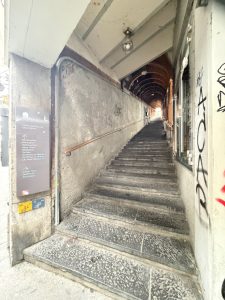
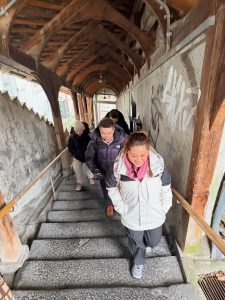
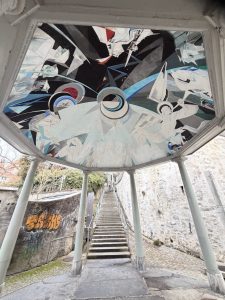
After a brief stop at Obere Schleuse, we made our way to Schloss Thun. Using the directions given by Google Maps, we walked along the banks of the River Aare and finally into the Altstadt Thun. Here we were looking for a set of stairs that would bring us uphill to the Castle. The entrance to Kirchtreppe merged with the shops on Obere Hauptgasse; if we were not looking for it, we would have thought it was just another shop front. Kirchtreppe is an old wooden covered staircase dating back to the 19th century with a total of 157 steps split into two sections by an octagonal pavilion. We welcomed the presence of the pavilion as it serves as a resting point for us. This pavilion didn’t offer any viewpoints, but the modern painting on the ceiling of angles and soldiers served to distract us from the climb. As we were climbing up the second section of the Kirchtreppe, we met a local who recommended that we take the elevator down to the main street after visiting the Castle (luckily, we heeded his advice; if not, we would have missed the rustic Thun old town).


Stadtkirche Thun – The White Church on Top of Thun
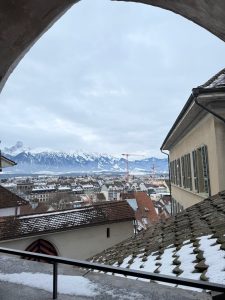
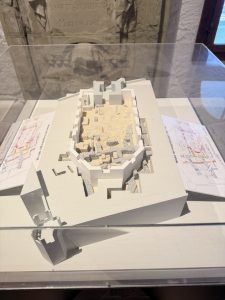
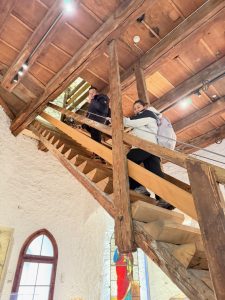
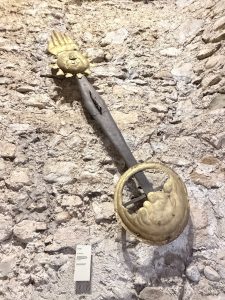
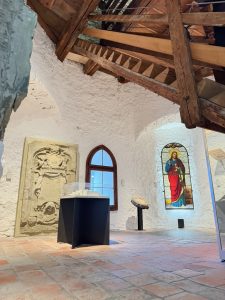
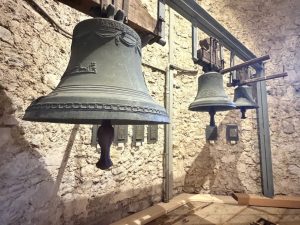
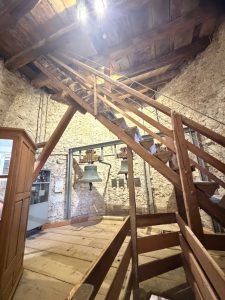
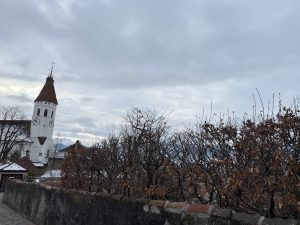
At the end of Kirchtreppe, we came to a road with the left leading to the Castle and the right leading to a church. We initially did not plan to visit the church. But since we were already here, we might as well pop in for a quick look. Stadtkirche Thun is the Reformed Church of Thun, with a tall single octagonal tower dating back to the 14th century in front of the church building. Like most of the churches we have seen in Switzerland, the Stadtkirche Thun has a plain facade. Before we could enter the church, we were captivated by the window that overlooks the roofs of the town and the stunning snowcapped mountainscape this window offers. We were glad we did the detour to visit the church. The interior of the church is simple but bright, thanks to the large windows that let in a lot of natural light. We did not see any high altars inside the church; instead, a table rests in the centre of a stage. As we were about to leave the church, we chanced upon a wooden door that stated “museum”. The museum in Stadtkirche Thun is situated on the lower floors of the clock tower, and the first floor is a relatively large room. Here we could see the octagonal shape of the room (that was how we knew we were in the clock tower), which was filled with a couple of stone tablets, a model of Stadtkirche Thun and a stained glass of Jesus. Seeing there wasn’t much going on here, we headed up the wooden staircases in the centre of the room. Emerging from the flight of stairs, we came to another room which exhibits bells and a golden clock hand that were used in the early days of the church. We also spotted a glass case with some mechanisms encased within. Due to the lack of English signage (and we were too lazy to whip out our phones for Google Translate), we can only assume this was the decommissioned clock mechanisms. There was another set of stairs also sitting in the centre of the room, like that one below, but the top of the staircase was bolted shut. We assumed this might lead to the clock mechanisms. Despite the absence of elaborate carvings and the smallish museum, I thought Stadtkirche Thun was worth a visit.



Schloss Thun – The Icon of Thun
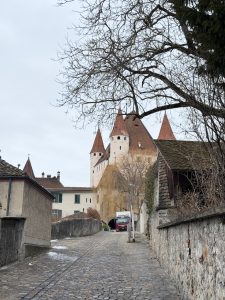
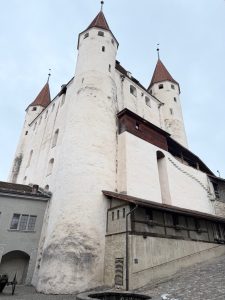
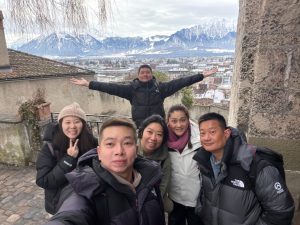
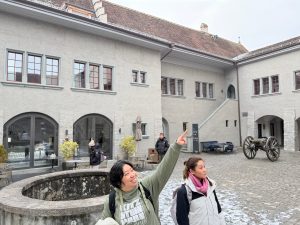
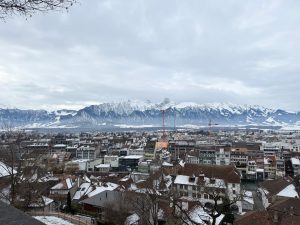
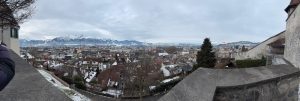
We headed to Schloss Thun after leaving the church, which is directly across on the other end of the road. The 800-year-old Castle was originally a fortress and a symbol of power over the region and local trading paths with its imposing tower. Schloss Thun has a very short opening hour during the winter months; in fact, the museum of the Castle is only open to visitors on Sundays between noon and 4 pm, which is outside the spare time we had. However, the castle grounds are open to the public. We were well aware that the Castle would not be open when we visited, and the purpose of visiting the Castle is for the panoramic views its terrace offers. Entering the main entrance of the Castle, we landed in a large courtyard. There are a couple of stairs that lead to the upper levels of the Castle. We headed to the terrace and were treated to a magnificent view of the town and the Swiss Alps. The view here is so vast and idyllic. Rows and rows of roofs partially covered with snow, with the river peeking out amongst them in the foreground, that seemed to give way to the forest, and eventually the Swiss Alps took over the land, and without hordes of tourists here, we felt the zen in the atmosphere. After taking our fair share of pictures of the picturesque view the terrace offers, we headed back to the old town via the elevator that was recommended to us earlier.






A Glimpse of Thun Old Town
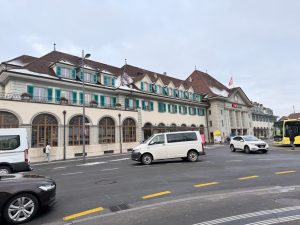
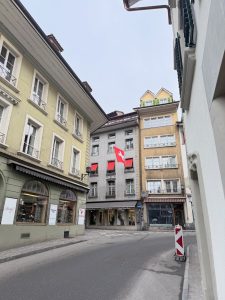
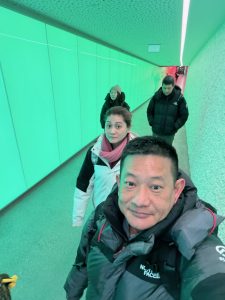
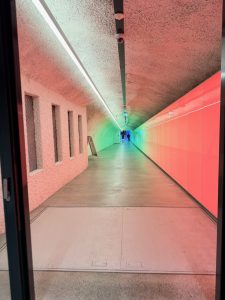
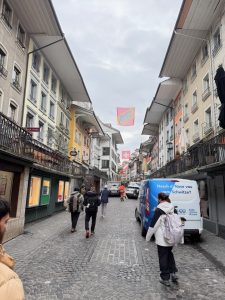
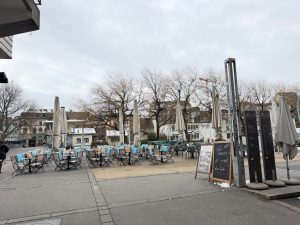
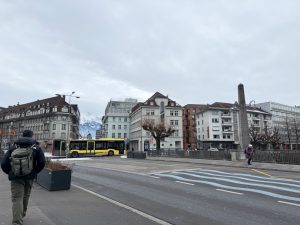
The lift sent us to basement 7 and into a carpark. We saw a door across the lift, which opens up to a neon coloured lighting tunnel. The tunnel led us to Obere Hauptgasse at the end, the main street in the heart of Altstadt Thun. Here, four-storey buildings with coloured facades lined up side by side along this main street. The lower floors of these buildings house shops, cafes and restaurants. The presence of the Bern Canton flag and Swiss flags overhead, hanging across buildings, constantly reminded us we were in Switzerland. In fact, I was joking with my friends that when posting a picture here, their friends will immediately know we were in Switzerland. We followed the directions by Google Maps and arrived at Mühleplatz, a square predominantly occupied by cafes and restaurants, after crossing one bridge. As it was still early, none of the business establishments in Mühleplatz was open. Passing the square, we followed the River Aare and headed to the train station via Frutigenstrasse. We made it in time to catch our 10.30 am train to Lauterbrunnen, where we got onto a bus bound for the Schilthorn valley station.




Schilthorn – The James Bond Mountain
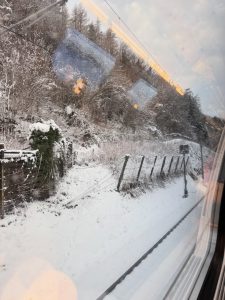
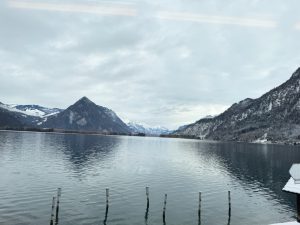
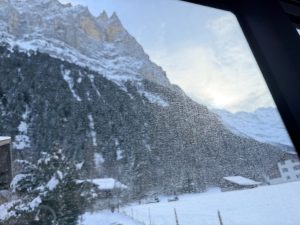
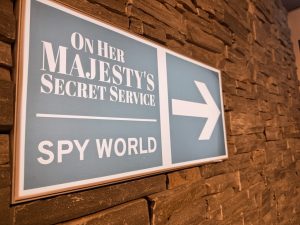
Schilthorn is located in Lauterbrunnen. Being home to the world’s steepest cable car is the pull factor that drew me to include a visit to this mountain for our Switzerland trip, in addition to the cable car ride being covered in our Bernese Oberland Pass. The mountain got its fame for being the set location for the 1969 James Bond Movie – On Her Majesty’s Secret Service. To get up to Schilthorn from Thun, we took a train to Lauterbrunnen with a change in Interlaken OST, and transferred to Bus #141 to Stechelberg (generally the stop that everyone alights). The bus from Lauterbrunnen Bahnhof drove through Lauterbrunnen, where we got a good view of some of the 72 waterfalls, which were mostly frozen.
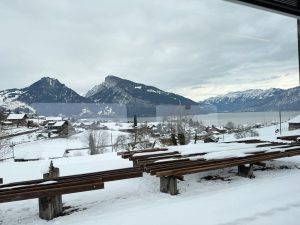
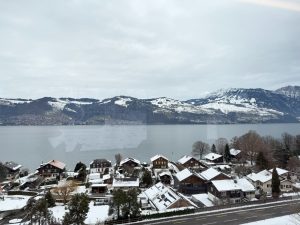
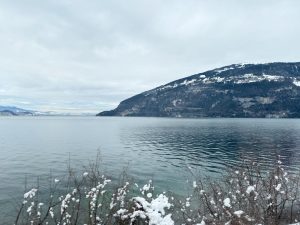


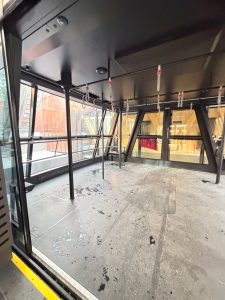
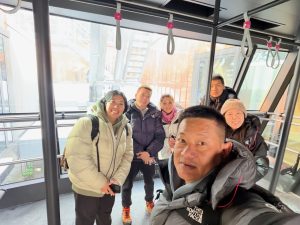
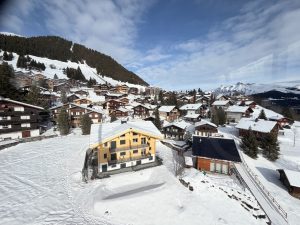
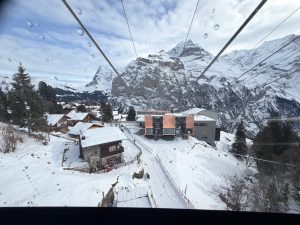
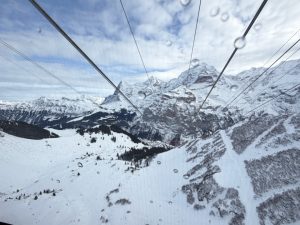
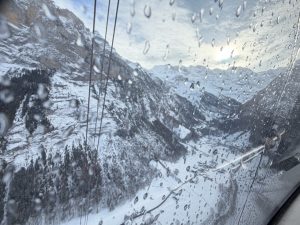
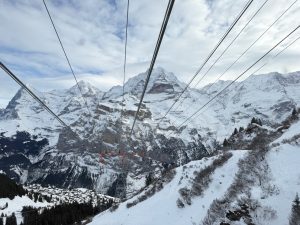
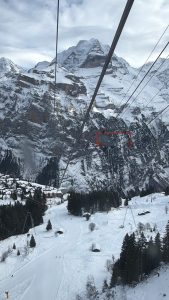
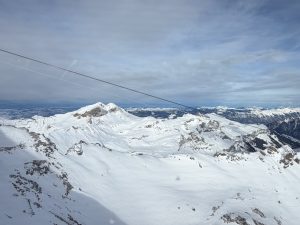
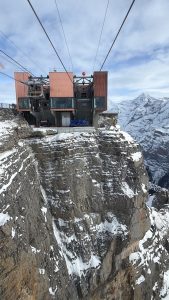
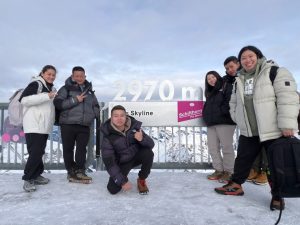
Getting to the peak of Schilthorn used to require four cable cars with a change of cable car in Grindelwald to Mürren, then onwards to Birg and Schilthorn summit (Piz Gloria), but things have changed since 2024. Under Schilthornbahn 20XX, there is now a direct connection between Stechelberg and Mürren, skipping Grindelwald. The redesigned cableway was divided into three Sections. Section 1 from Stechelberg and Mürren, Section 2 from Mürren to Brig, and the last section from Birg to Piz Gloria. Sections 1 and 2 have completed and opened since Nov 2024 and Dec 2025, respectively. The final section is still under construction and is scheduled to open on April 26. At the time of our visit, we were able to ride the new Sections 1 and 2 from Stechelberg to Birg. It is the Stechelberg to Mürren leg that has the steepest ropeway, with a gradient of almost 160% (about 58°). We did not feel the steepness during our ascent, but the steepness is felt on the return trip. We can immediately see (and feel) the steepness of the ropeway the moment the cable car makes its way past the last pylon and makes its way to the valley station. It felt like a roller coaster ride, but a lot gentler. I’d highly recommend people ride down to take the front window to feel the effect of the world’s steepest cable car. We were transported up to the summit at 2,970m in just 24 minutes.





Piz Gloria – Brunching in the 360° Revolving Restaurant
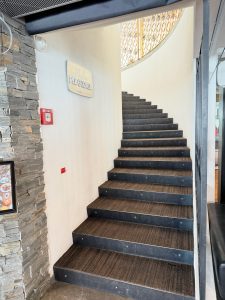
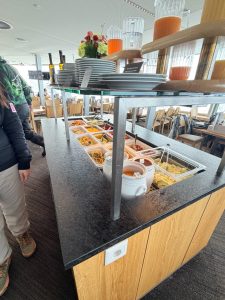
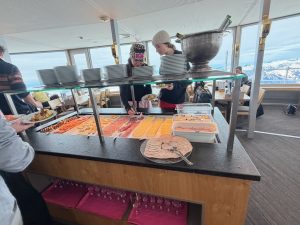
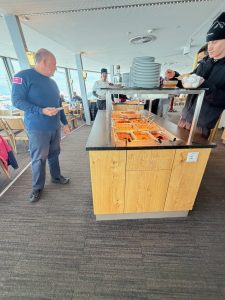
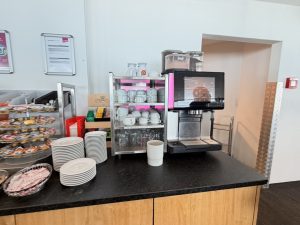
Piz Gloria is a two-storey building perched at 2,970m on the summit of Schilthorn. The first thing to do the moment we disembarked the cable car in Piz Gloria was to head to the 360° restaurant on the upper level for our buffet brunch that we booked for 12.30 pm. The brunch buffet costs CHF38 per person, which offered exceptional value for money (mains already cost between CHF26 and CHF30, excluding drinks), where we could help ourselves to unlimited servings. Once we made it to a flight of curved staircase, we were warmly welcomed by a staff member who happily showed us to the table he already reserved for us. Our table was placed by the large window panel, where we were treated to views of the 200 mountain peaks while we ate on the rotating platform. For those who might be concerned about the motion from the rotation, the rotation was so subtle that we did not feel it (if we did look out for the window). Speaking of food, several selections are waiting for us from the three buffet lines. The restaurant dedicated one line each for starters, cold food and warm food. For starters, we were given two soup choices, alongside the many types of bread. The cold buffet line features salads and cheese with a side of fruit in a takeaway cup. The warm food comprises pastas, sausages, stewed beef, and rosti. We could also help ourselves to the fruit juices, barista coffee and tea, which are also included in the buffet price. The buffet food was delicious and was kept topped up throughout our stay at the restaurant.

Skyline View Platform
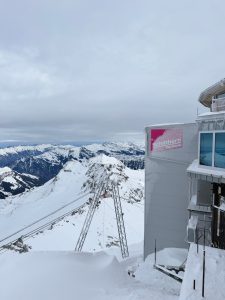
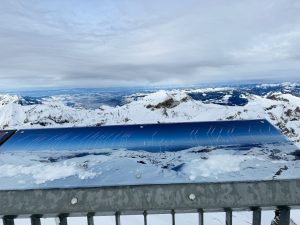
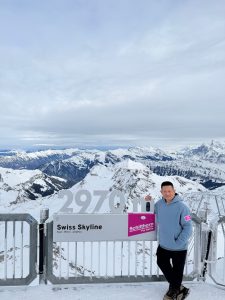
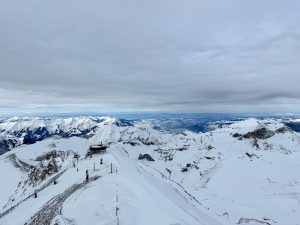
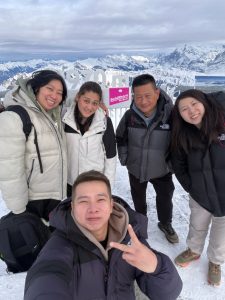
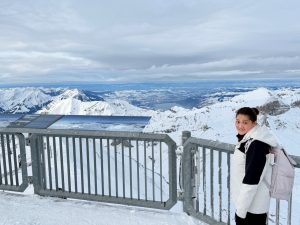
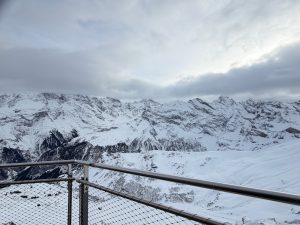
After brunch, we went to the panoramic viewing platform on the lower level of Piz Gloria. The Skyline View Platform offered us views of the same mountain ranges that we saw while we were having brunch in the 360° Restaurant. From here, we could see rows and rows of snow-capped mountain ranges that seemed to stretch forever into the horizon, as though each of the peaks was vying for our attention to take pictures with them. Standing out here on the platform looking out into the Swiss Alps can be very therapeutic. We even spotted Lake Thun on the Skyline View Platform. As we were taking pictures and immersing ourselves in the astonishing view of the mountain ranges, I spotted the Piz Gloria View Platform, sitting about one storey below the Skyline View Platform. To access the circular steel Piz Gloria View, we needed to walk on the mountain peak. The snow up here seemed thick, and we did not feel safe to get to the platform. We eventually gave up the idea of going to the Piz Gloria View platform.



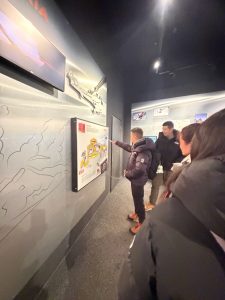
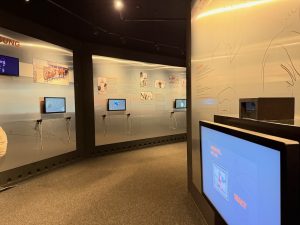
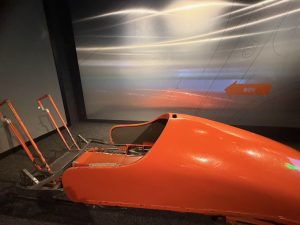
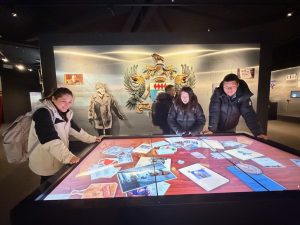
Spy World



Birg – The Thrill Walk
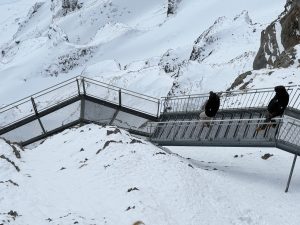
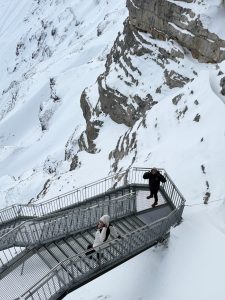
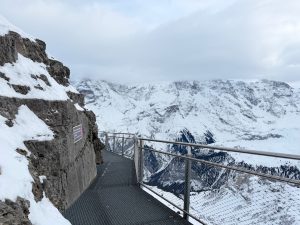
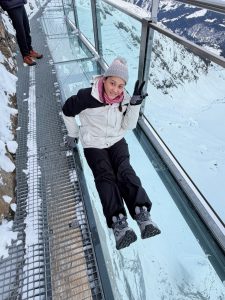
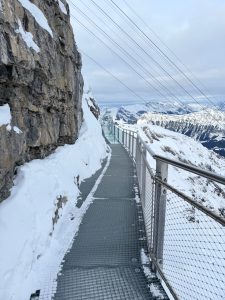
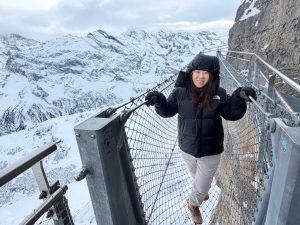
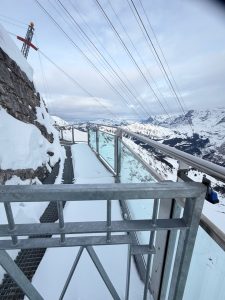
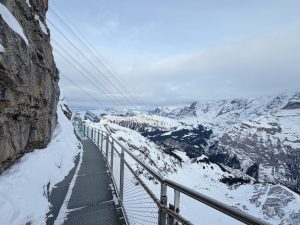
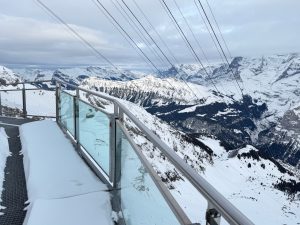
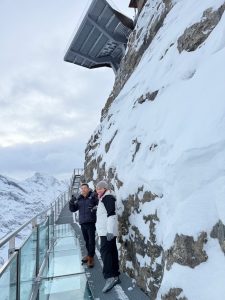
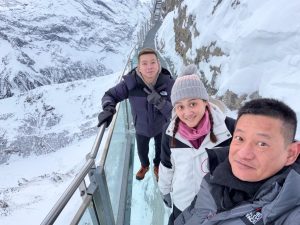
We stopped by Birg mainly for the thrill walk, which is a steel corridor that is being wedged into the mountain cliff. The Thrill Walk supposedly made us feel as if we were walking in thin air, looking out into mountain ranges ahead, above some 2,600m. There are two such walks in the region, one here and the other at Grindleward First, which is further from Interlaken. Since we are going up the Schilthorn, we took the one at Birg. Initially, we planned for 45 minutes at the Thrill Walk; however, when we arrived at the Thrill Walk, only a small section was opened, which only took us 8 minutes to complete a return trip. Despite the small section being opened, the thrill walk still allowed us to feel the thrill of walking on the side of the cliff, and the grated see-through flooring indeed made us feel as though we were walking on thin air. There is a section with tight ropes and a glass floor that gave us the additional kick of thrill. I thought this thrill walk was amazing, and the engineering that goes into wedging the platform onto the cliffside was incredible. I can imagine the amount of thrill one would get will double when the entire thrill walk opens.


Lauterbrunnen – The Valley of 72 Waterfalls
I originally planned to visit Lauterbrunnen, a Swiss mountain village that is famed for its stunning view of water pouring over the gigantic, near-vertical cliff. I made a last-minute insertion to stop by Lauterbrunnen this morning while taking the bus to Schilthornbahn through the village. The original plan was to start walking in the valley where Lauterbrunnen sits, from the train station to the self-serve cheese vending station some 1.6km outside of the village, and walk back to the station. Since we were passing by, we alighted at the stop near the cheese station, which saved us at least 20 mins of walking.
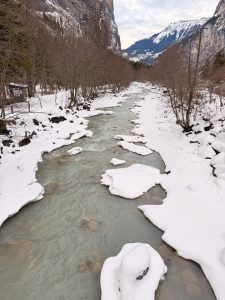
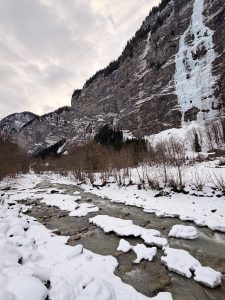
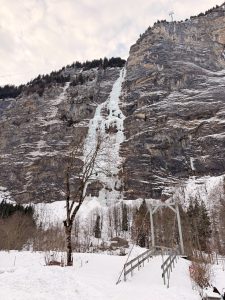
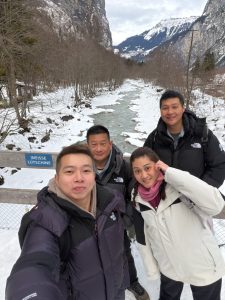
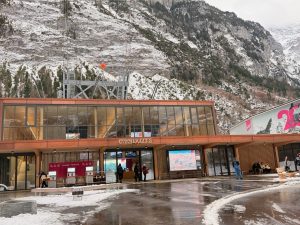
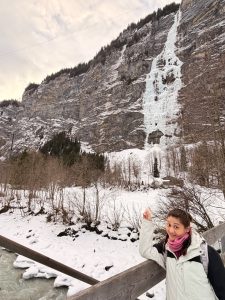
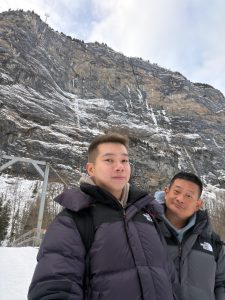
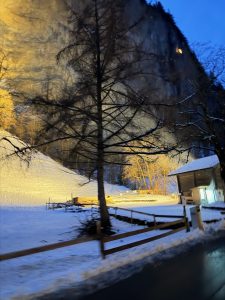
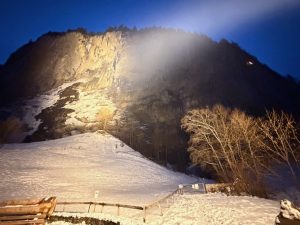
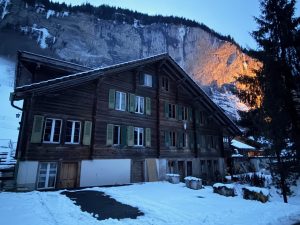
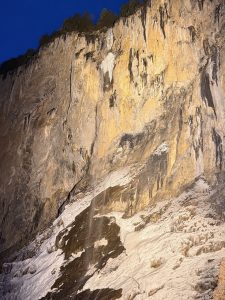
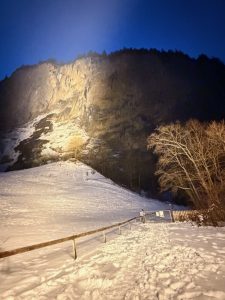
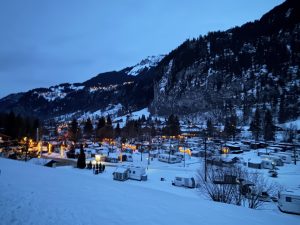
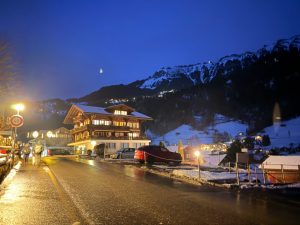
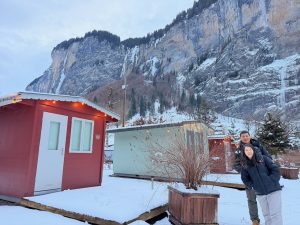
Lauterbrunnen is a village situated in a valley between Interlaken and the Jungfrau Massif, where it is one of the points to transfer to Jungfraujoch. It is famous for the 72 waterfalls and many hiking trails in the summer. I knew we had to cross the river, and I kept looking out to see if there were any bridges that we could use to cross the river on the bus. Finally, I saw one bridge over the river on Google Maps, and we alighted at the next stop, Schützenbach near Camping Jungfrau. We followed the directions on Google Maps and arrived at a wooden-covered pedestrian bridge, very much like the one we saw in Luzern and Thun, but on a smaller scale. Across the bridge, we entered Camping Jungfrau, which seems to cater to campervans. Despite looking small on the outside, these colourful wooden huts were furnished with a bed and a couch. I wanted to bring my friends ot the self-serve cheese vending machine, and we took a left turn at the main road from Camping Jungfrau that leads out of Lauterbrunnen village. This is when we saw the true beauty of Lauterbrunnen. With the majestic towering cliffs flanking on both sides, as if someone took a knife and chopped the mountains in two and placed Lauterbrunnen Village between the mountains. We could see remnants of waterfalls that would seem to flow from the mountain top, but mostly were all frozen except for one. I can imagine what a picturesque sight it would be in summer with waterfalls after waterfalls along this stretch of road. The only waterfall that remains flowing has a small stream of water falling over the top of the cliff; this is the Staubbach Falls. In summer, it would be dumping a massive amount of water over the very same cliff that we saw, but in winter, this mighty waterfall refuses to give in to the cold weather and continues to flow down the cliff.
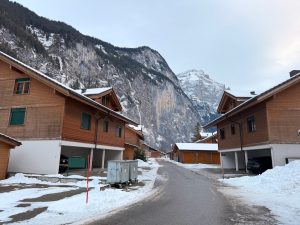
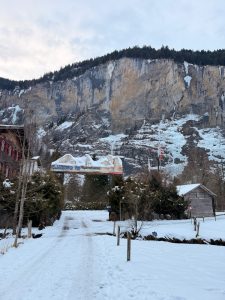
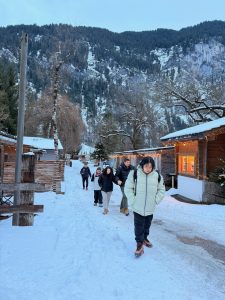

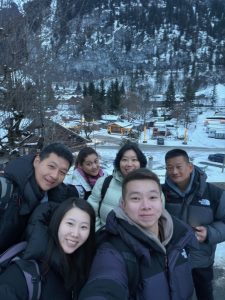

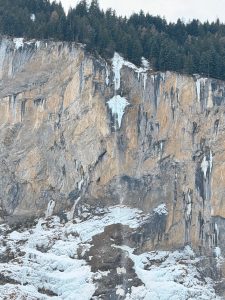
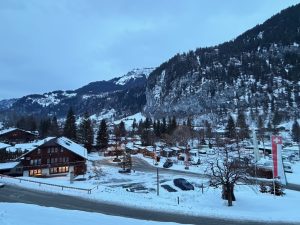


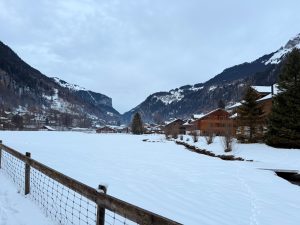
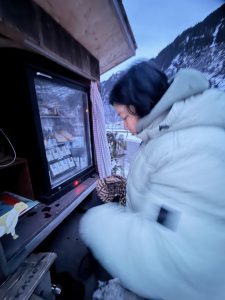
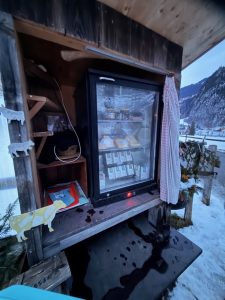
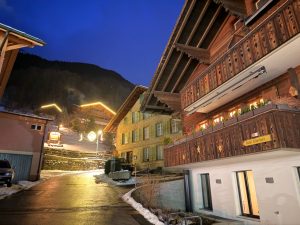
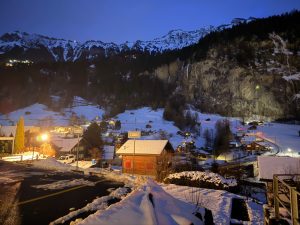
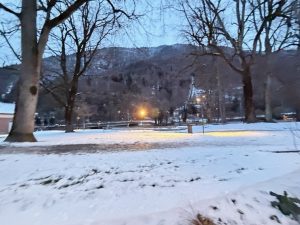
Along the road, we saw both sides covered in pure white snow, with a cattle barn and some goat farms. I can imagine these barn animals will be roaming freely within the premises of the farms, grazing on grass that is now covered with snow in summer. We chanced upon a cattle barn along the way, which we were very much interested in visiting, but gave up the idea as we did not see the owner for us to seek permission to enter. The self-service cheese station was not far from the cattle barn, about a 5-minute walk down the road. The unmanned self-service cheese station is essentially a fridge placed on the side of the road for locals and visitors to purchase farm-fresh cheese, using the honour system. What we did was to get the cheese we wanted from the fridge and place the stated cash amount into a wooden box next to it. My friend bought a block of cheese, which she subsequently said tasted delicious. After buying the cheese, we made a U-turn and walked back to Lauterbrunnen Bahnhof through Lauterbrunnen Village. Along the way back, we finally found out where the strong spotlight casting onto Staubbach Falls came from. The spotlight was mounted on top of the visitor centre to the Staubbach Falls hiking trail. This trail, which only opens during non-winter months, gave visitors an opportunity to walk behind the falls. Before my trip to Switzerland, one of my colleagues urged me to taste the Swiss milk, which tasted slightly sweeter, according to her. When we saw farm-fresh milk from the vending machine at the visitors centre, we had to get it. True to her words, the milk not only tasted fresh, but it was also slightly sweeter than what we had at home. We continued our walk along the road to Lauterbrunnen Bahnhof. Along the way, we were treated to scenes of towering cliffs with frozen waterfalls. As it was dusk, we were also treated to the tranquil view of the village slowly covered with warm yellow light set against the pure white snow. This is the scene that represents Switzerland in winter. We headed for the train station and took the next train back to Interlaken Ost after our brief stop at the supermarket opposite the train station. Despite not having much to do in Lauterbrunnen on a winter afternoon, we liked the tranquil walk along the way and the scenes of giant cliffs on both sides of the village.