Today is our last day of sightseeing in Switzerland. During my planning for sights in Geneva, I learnt that there are only a handful of sights in Geneva, which can be completed in half a day, leaving us with the other half of the day to fill. There are a couple of options available to us to fill the other half of the day: Château de Chillon at the eastern edge of Lake Geneva, or a trip to Annecy in France, located south of Geneva. We decided on Annecy as we thought the town is in one corner of France, which we would not have visited even if we travelled around France.
Geneva – Immensing in the Medieval Old Town
Most of the sights in the Geneva centre are around the old town. There are only a couple of major sights – Jet d’Eau and St. Pierre Cathedral, which are located near each other. Geneva is a compact city, where these sights are within walking distance of each other.
Pont du Mont-Blanc – View of the Iconic Jet d’Eau (or not)
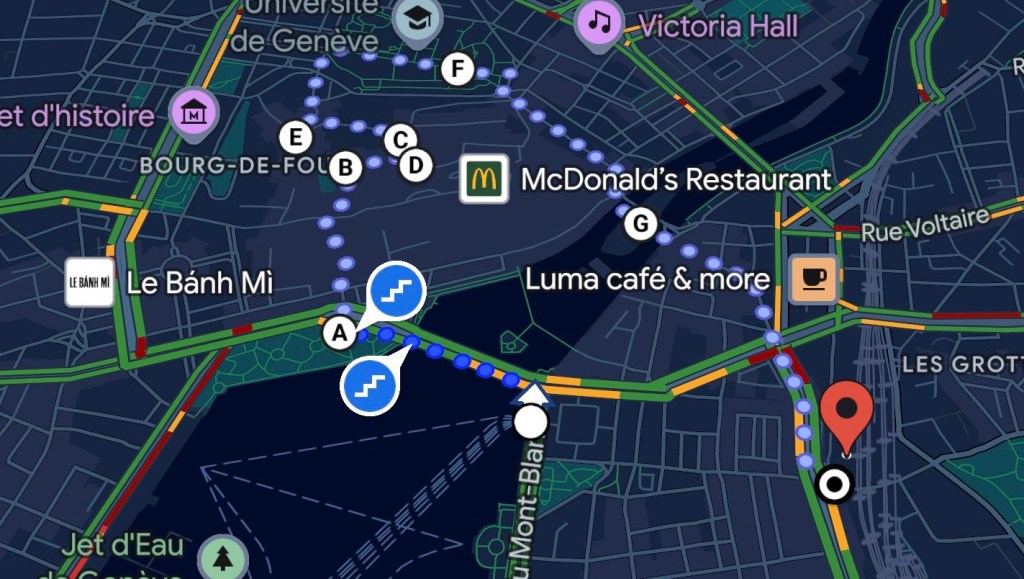
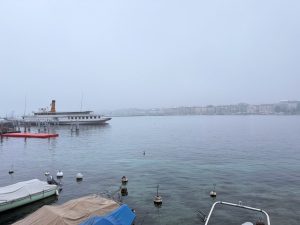
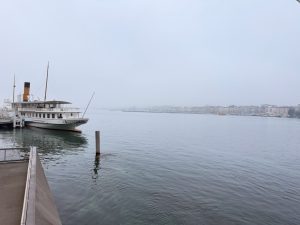
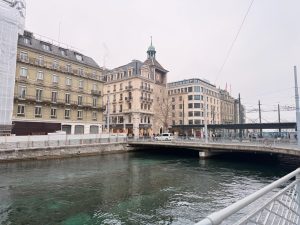
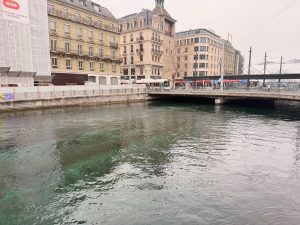
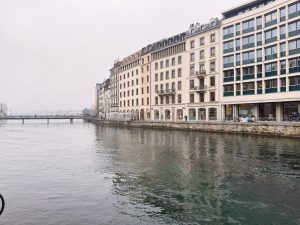
Jet d’Eau is one of the two famous sights in Geneva. It is essentially a fountain that shoots 500 litres of water per second up 140m into the sky. The fountain is especially beautiful at night when illuminated with colourful lights. Jet d’Eau is located on the south-western end of Lake Geneva, near the old town. The water taxi (which is covered in our Geneva Guest card provided by our hotel) that leaves from Mont-Blanc is a great way to view the fountain, as the public transport will pass by the fountain, allowing visitors a close-up view. The other places to get a good view of Jet d’Eau are either from Pont du Mont-Blanc, one of the major bridges that is situated at the mouth of Lake Geneva and the Rhône River that runs into Geneva, or from the waterfront promenade of Jardin Anglais. Since getting from our hotel to Geneva Altstadt requires us to cross the Rhône River, we headed to Pont du Mont-Blanc to see Jet d’Eau. As we were walking to the lake, we did not see any water being propelled into the air. Jet d’Eau was not turned on. Thinking we might be too early and the fountain might not have been turned on, we thought to come back later in the afternoon. Our walk would eventually land us back to one of the nearby bridges, slightly further upstream on the Rhône River.

Jardin Anglais – The Garden by the Lake
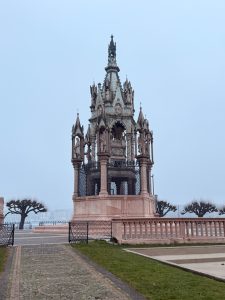
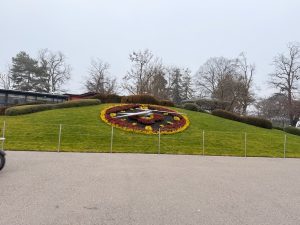
Rather than calling it a destination where we took time to walk around, Jardin Anglais is more of a thoroughfare for us walking towards St. Pierre Cathedral. As we were not great with gardens, plus the plants would have withered for the winter season, we did not plan to stop by Jardin Anglais. Rather, we were here for the Flower Clock, one of the city’s attractions. The Flower Clock is situated by the main road and not too far from Pont du Mont-Blanc, and is on the way to our next sight. The plants on the Flower Clock are being refreshed every time the season changes. During this winter season, the Flower Clock dons maroon and yellow flowers with some black plants in the centre of the clock face. It was interesting to see that the numbers on the clock were also made up of flowers. We saw the clock from a distance as we were waiting for our traffic light to turn green. Before we continued our way to our next stop, we stopped by Starbucks for our caffeine fix.
L’Ancien Arsenal – An Accidental Discovery
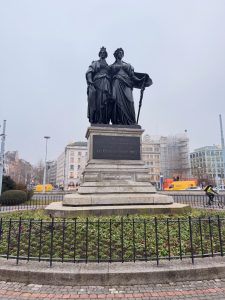
After a short coffee break, we headed to the cathedral. When we arrived, we saw some visitors walking away from the main door. This is when we realised that the cathedral only opens at 10 am, giving us 15 mins to loiter around. Since our time was a little tight today, instead of waiting around, we headed to our next stop. Our original next stop was supposed to be the Old Town Management building, thinking it might stand out from the rest of the buildings on the street. However, when we arrived at the Old Town Management building, we couldn’t differentiate it from its neighbouring buildings. The building has the same facade as the rest of the buildings, minus a small plaque that identifies it. Feeling disappointed, we headed back to the cathedral, as it would have opened by the time we arrived.
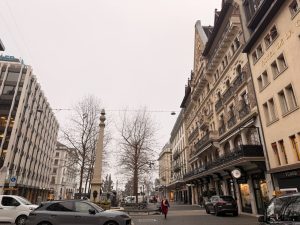

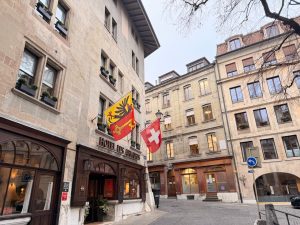
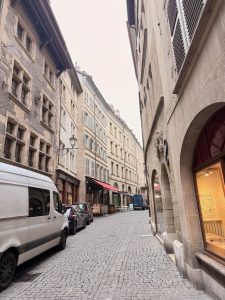
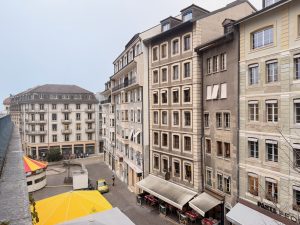
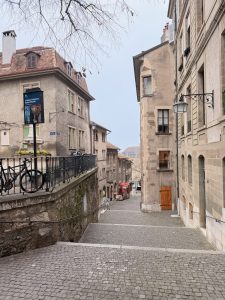
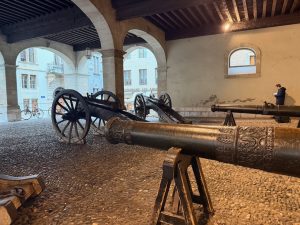
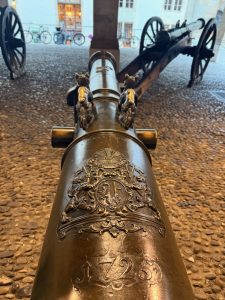
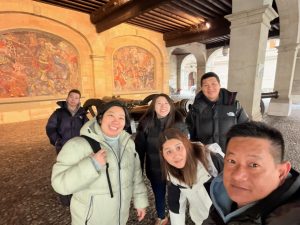
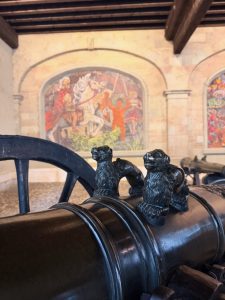
As we were walking back, we stumbled upon a building with an open ground floor. We could see some cannons being displayed on the open ground floor. Little did we know that we had stumbled into the L’Ancien Arsenal. L’Ancien Arsenal is an old armour that dates back to the 15th century and was used to store weapons and artillery needed to defend Geneva during war. In the foyer, we spotted a total of five cannons, three mounted on a wooden wheel cart, and two at the back near the walls. Based on the positioning of these two cannons, they seemed to be the reserve cannons. Behind the cannons, we spotted three mosaic walls that depicted someone riding a horse (later, we found out that these walls depict the key moments from Geneva’s history). We continued our sightseeing and headed back to St. Pierre’s Cathedral after taking some pictures at L’Ancien Arsenal.


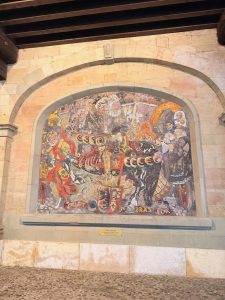
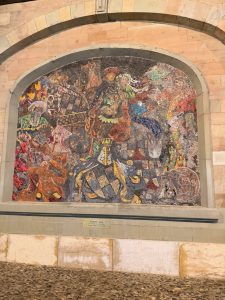
St. Pierre Cathedral – Birds’ Eye View of Geneva
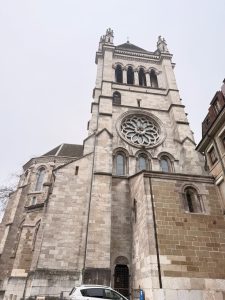
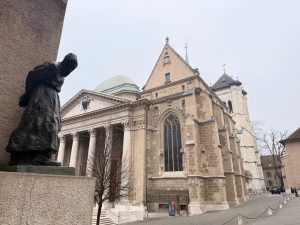
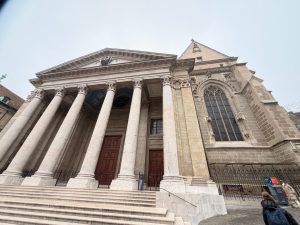
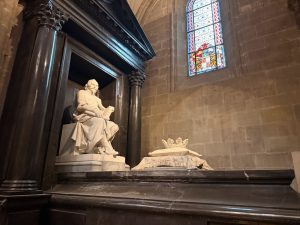
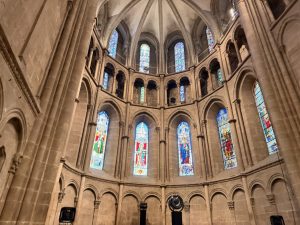
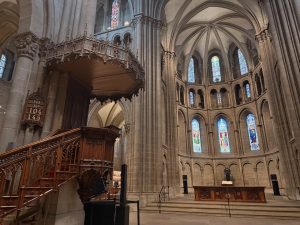
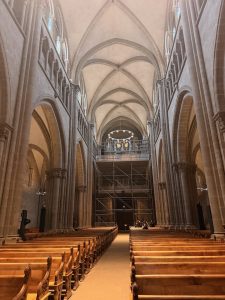
It was slightly after 10 am when we arrived at the cathedral, which was already open for visitors. The interior of St. Pierre Cathedral is plain, and we did not spot any elaborate carvings or paintings in the cathedral. The high ceiling in the cathedral made it look spacious and grand. Like the churches we’ve been to, St. Pierre Cathedral does not have a high altar, but merely a rostrum for the pastors to deliver their sermons. Behind the rostrum, stained window panels vie for visitors’ attention and bring light into the cathedral. The bottom stained window panels were the largest of these stained windows featuring St. James, St. Andrew, St. John and St. Paul, to name a few, that can be clearly seen from the cathedral’s entrance.

The Tower Climb – Viewing Geneva City from Above
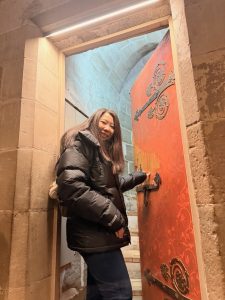
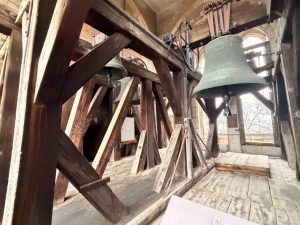
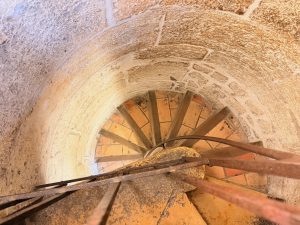
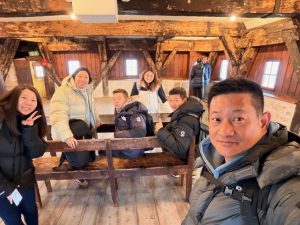
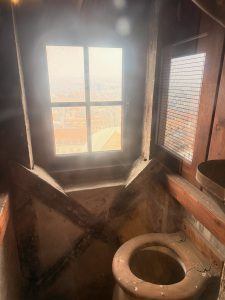
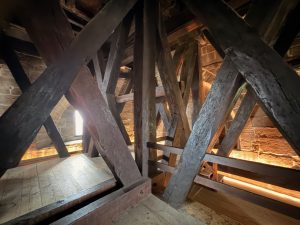
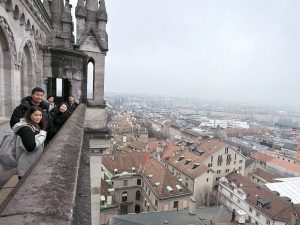
Our main purpose of visiting St. Pierre Cathedral is to climb up to the two towers, which would give us a panoramic view of Geneva. There is a fixed route that we were required to follow when climbing up the towers. The tower visit started with climbing 160 steps via a narrow spiral staircase to the top of the south tower, near the ticketing counter. Halfway through the climb, we came to a wooden open space with signs pointing us to the correct way to the top of the tower. Here is where we spotted an enclosed wooden room with some large bells. These bells, some dated back to 1481, were the bells that are responsible for the chimes we heard at the strike of the hour. There is a small balcony at this level that we can look out of into the city. We continued our climb to the top of the spiral staircase, which led us to a small wooden room. According to the ticketing staff below, this room was a watch tower to look out for fires back in the days. The views up here are great, but were somewhat affected by the stains on the glasses of the window. Despite being able to see the city below and parts of Lake Geneva, we couldn’t see much, partly due to the fog and partly due to the obstruction by the other towers of the cathedral.
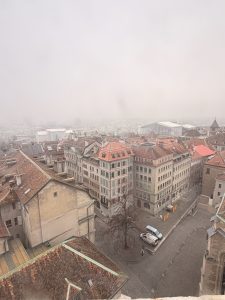
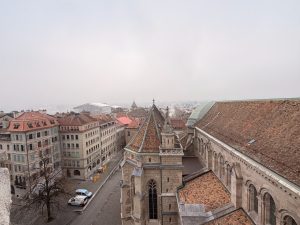
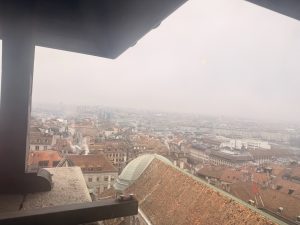
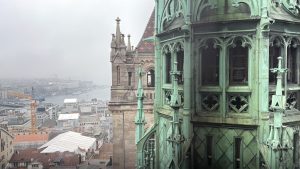
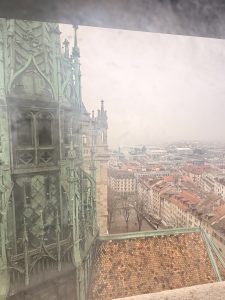
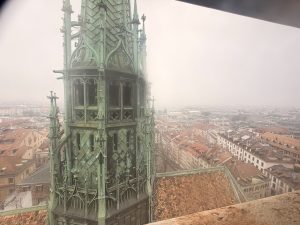
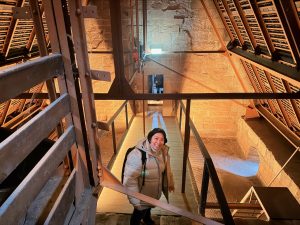
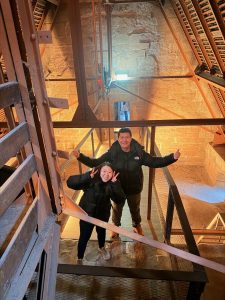
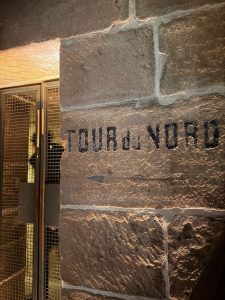
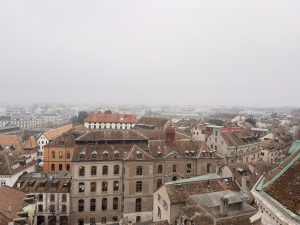
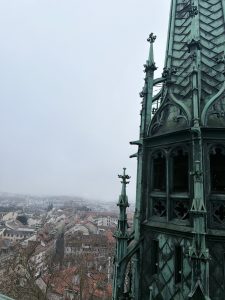
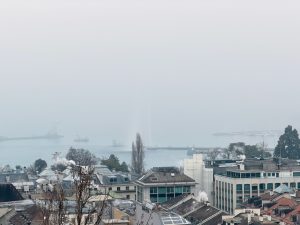
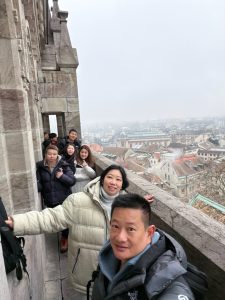
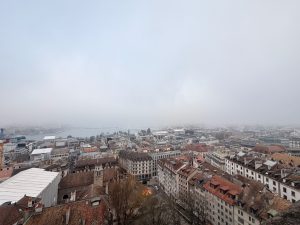
We continued our tower tour by descending the spiral staircase to the halfway point (where the bells were), from here we followed the signs and headed across a bridge linking both towers that is constructed just underneath the roof of the main cathedral building. This bridge brought us to another set of spiral staircases, which led us to the top of the north tower. At the top of the spiral staircase in the north tower is a wrap-around balcony that offered us a 360° panoramic view of the city and Lake Geneva. Seeing the medieval buildings in Geneva like blocks and blocks of LEGO building that span as far as the eye can see was an amazing sight. We could also vaguely see Jet d’Eau spouting out from Lake Geneva from here. On a clear day, we would be able to see Jet d’Eau more clearly and how large the city is. We spent a considerable amount of time up here looking at the city and the places where we will be visiting. Before long, it is time for us to descend the tower to our next destination.
Archaeological Site of St. Pierre – The Treasures Beneath
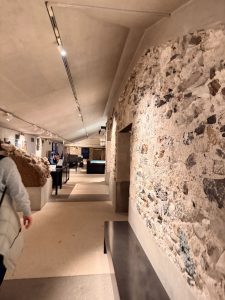
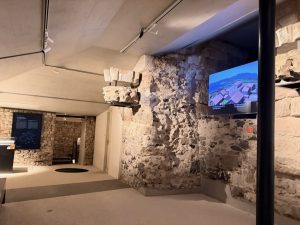
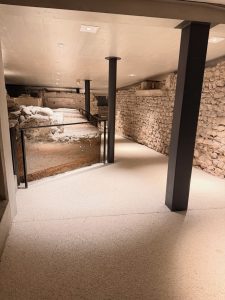
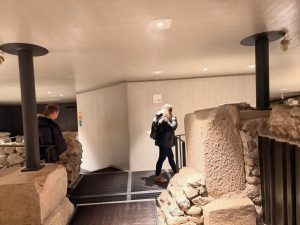
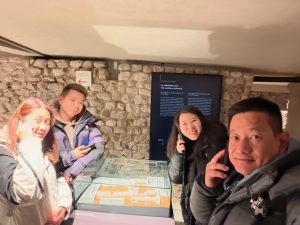
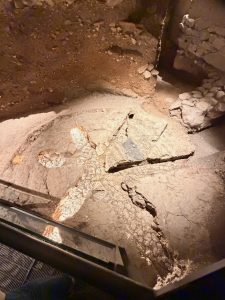
Our next destination was not far from the Towers of St. Pierre Cathedral. In fact, it is just underneath the cathedral. When we were buying the tickets to the tower, we had the option to include entrance to the archaeological site of the cathedral. The entry fee for the combined ticket costs CHF12 (it costs CHF7 to only visit the towers). Visiting the archaeological site is a self-guided tour where we would collect an audio guide from a staff at its entrance. The site sitting under the cathedral gave us a good introduction to the history of the cathedral and Geneva. There are ruins all over the basement that show the original foundation of the cathedral. We even spotted a 2,000-year-old skeleton that belonged to a chieftain of the tribe that was buried in 120 BC. It is fascinating to learnt that after so many reconstructions of the cathedral, some of the original layout of the cathedral still lies beneath it. I thought the audio guide was very informative on the things that we saw with our eyes when visiting the site.



Place du Bourg-de-Four – The Oldest Square in Geneva
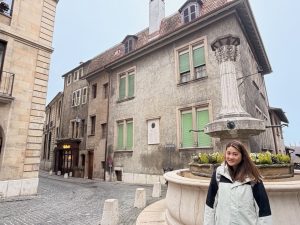
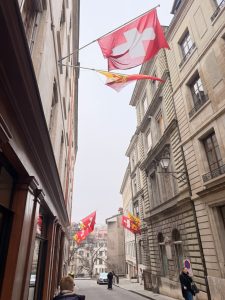
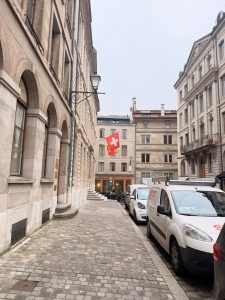
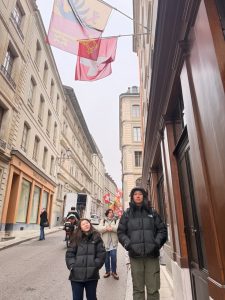
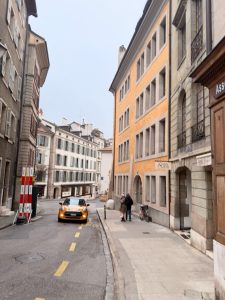
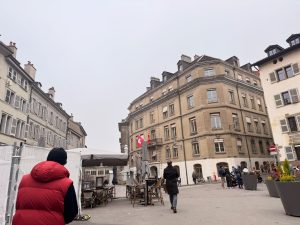
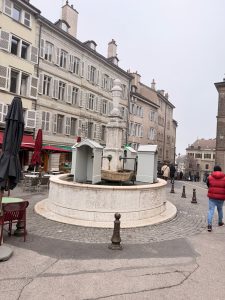
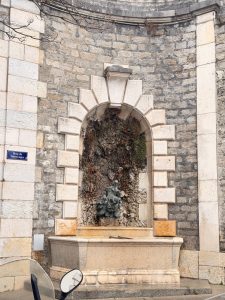
After spending about 30 minutes in the archaeological site under St. Pierre Cathedral, we continued our walk to Place du Bourg-de-Four, about 5 minutes from the cathedral. Place du Bourg-de-Four is a cobblestone square on the site of an old Roman forum and medieval market in the Altstadt of Geneva and is believed to be the oldest square in Geneva. This square, now a popular meeting square with restaurants and cafes, served as a coach stop in the 19th century. In the middle of Place du Bourg-de-Four is an 18th-century fountain that still runs water for visitors to quench their thirst. The surrounding restaurants and cafes offered visitors a great place to relax and people-watch. As we were at Place du Bourg-de-Four early, the cafes were not open for business. We left for our next sight after taking some photos at the square.

Parc des Bastions – The Lungs of Geneva
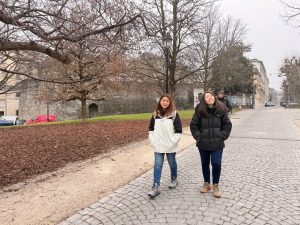
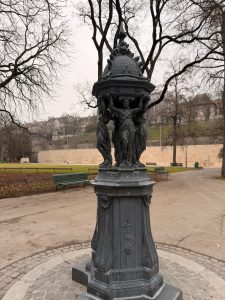
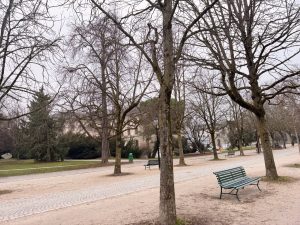
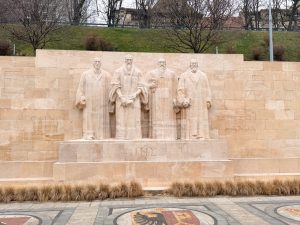
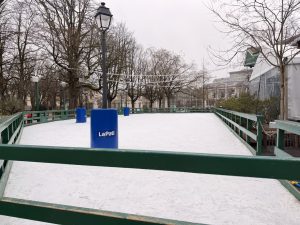
Our next stop is about a 10-minute walk from Place du Bourg-de-Four. Parc des Bastions is one of the many parks in Geneva. It is the oldest, dating back to the 1720s, and the largest park in the city. Often hosting many events, Parc des Bastions is where the locals come to relax and enjoy a stroll amidst the trees in the park. The park is also home to the oldest university in Geneva and the venue of a music festival. We even saw a small ice skating rink in the park. Other than being home to locals for a relaxing walk, and students from the university rushing from class to class, or people using it as a thoroughfare getting from one side of the city to another, Parc des Bastions is also home to the International Monument of the Reformation, also known as the Reformers’ Wall. The 160m wall with statues of the four reformers carved in the centre of the wall, who shaped the Calvinist Reformation, a belief that God’s absolute sovereignty and strict moral life. This reformation was critical for shaping modern Western theology, politics and economics. After taking pictures with the wall, we took a stroll and exited the park from the opposite entrance, heading towards our final destination in Geneva.

Tour De I ’lle – The Clock with Tales to Tell
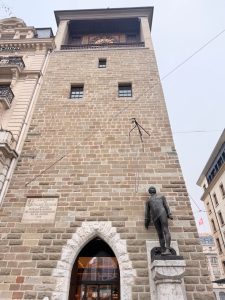
Our last stop is Tour de I’lle, a clock tower that is built on the island of the Rhône River. The clock tower was once part of a castle tower built on the island in 1219. The fortress was demolished in 1849, and only the tower remains. The clock on the tower was first installed in 1538, with its last replacement in 1954. The Tour de I ’lle, attached to another building (Bank of China), looked like a pair of conjoined twins that had witnessed the major historical moments of the city. We weren’t sure if there were any guided tours to the clock tower, and also in the interest of time, we stayed here momentarily until the tram that headed to the train station came by. We need to catch the 12.40 pm train to Annecy.


Annecy – The Quint French Village
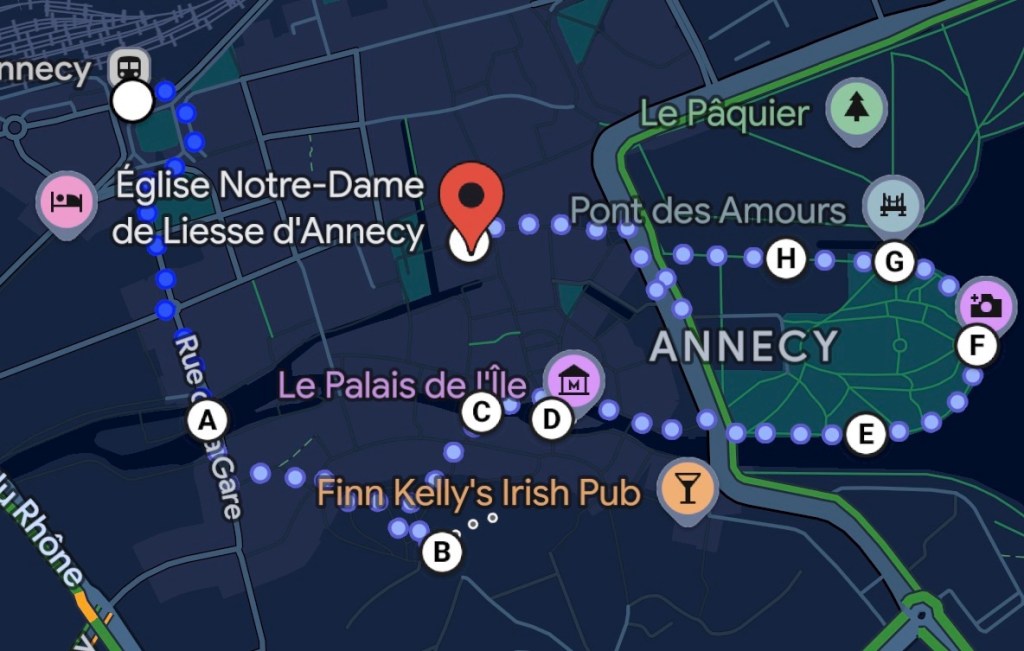
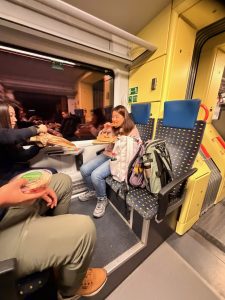
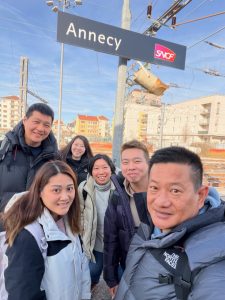
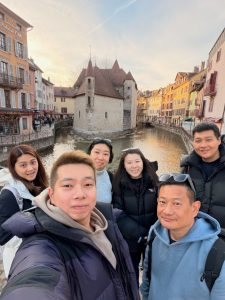
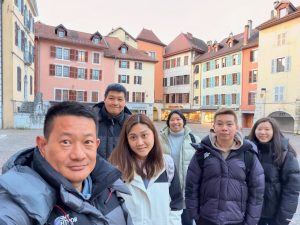
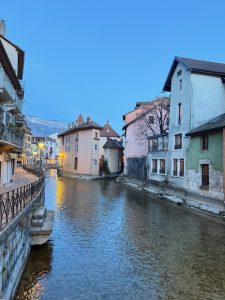
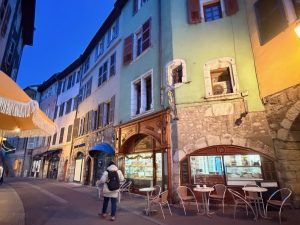
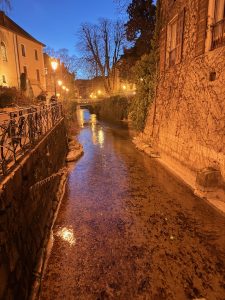
After our morning tour of Geneva, we hopped onto a train and headed to Annecy, a small French village about 1½ hrs by train from Geneva. We visited this village not only for its famed Venice of the Alps reputation, but also for its cheaper dining (compared to Geneva) and the fact that we will likely not visit this village when we travel to France in the future (as it is situated in the southeastern corner of France). Like most Swiss cities, Annecy is compact and extremely walkable. As we were walking from the Annecy train station to our first sight, we came across Le Thiou River and the buildings sitting on both sides of the riverbank and a lone building sitting in the middle of the river. This is the very sight that gave the town the nickname.


Château D’Annecy – Guardian of the Town
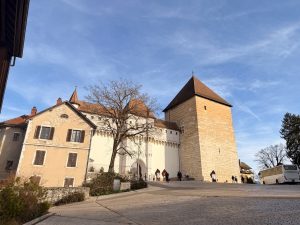
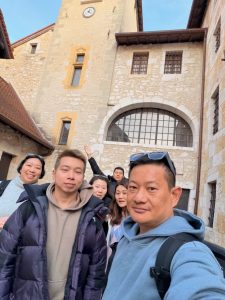
Perched on a hill, the Château D’Annecy dominates the skyline of Annecy. The castle is a key attraction and is what gave the town its fame. The tall castle walls and the thick Queen’s Tower are what we’d imagine a European castle looks like. Château D’Annecy is not large in scale like the Versailles or Schonbrunn Palaces, but its imposing structure is sufficient for the castle to command its presence. Château D’Annecy was initially built in the 8th century to guard the route from Geneva to Italy. In 1219, the Counts of Genevois made the castle their residence after being expelled from Geneva. Over the years, the ownership of the castle changed hands from duke to duke. Today, the castle houses a museum. Single site entry to the castles costs €6.50 per adult, but it costs €8 for a combined ticket with Palais de I ’lle (entry would cost €4). We got the combined ticket as we would visit Palais de I ’lle later. Upon entering Château D’Annecy grounds, we saw a large courtyard with the main castle building on the left side and another building sitting at the end of the courtyard facing Lake Annecy.
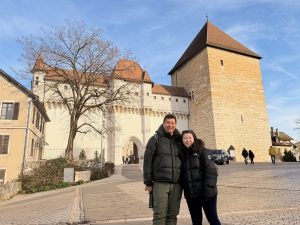
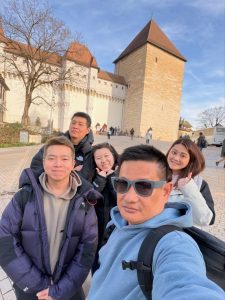
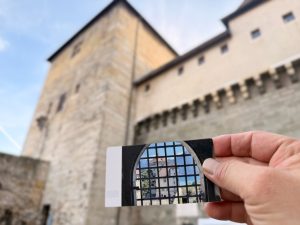
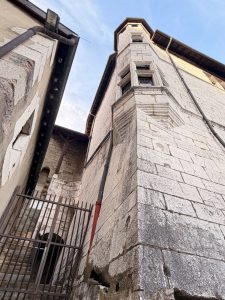

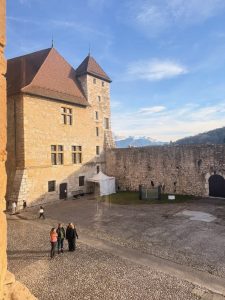

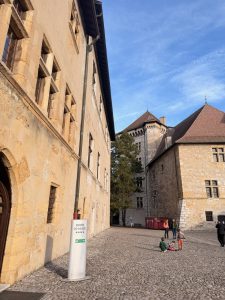
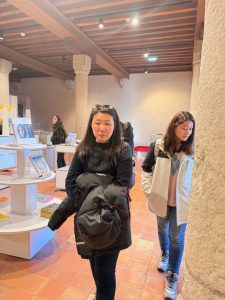
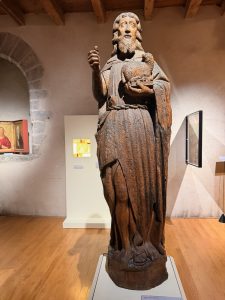
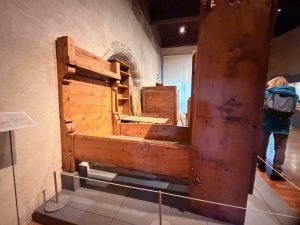
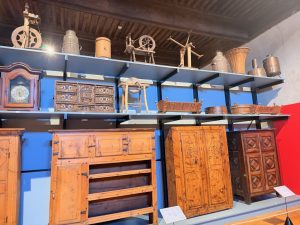
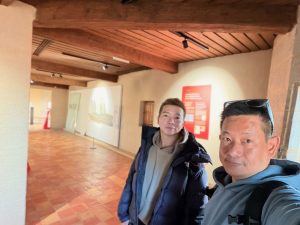
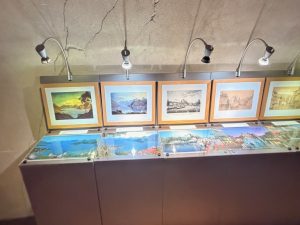
We entered the main castle building, which houses art exhibitions. As we do not have “arty-eyes”, we spent most of our time in the castle walking through the rooms, looking for signs of how the residents of the castle lived out their daily lives. The art museum mainly houses art pieces from sculptures to paintings. Passing through the first room with sculptures, we came into a large room with a sizeable fireplace in the centre. I imagined this would be the great hall where the dukes would entertain their guests and throw parties. The next few rooms that we walked by were spaces for the display of art. There is a room that is filled with furniture, which we assumed was used by the dukes back in the day. As we wandered around the castle, we came to a corridor that gave us a good view of the courtyard and the town of Annecy below. This corridor also linked the main castle building to the Queen’s Tower, the thick tower we saw at the entrance of the castle. The Queen’s Tower got its name in the 18th century, as legend has it that the tower was built to imprison a queen. Access to the top of the tower was closed to the public, but we got a good view of the castle’s surroundings.
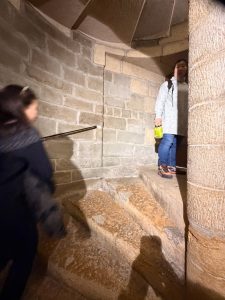
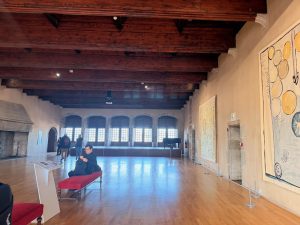
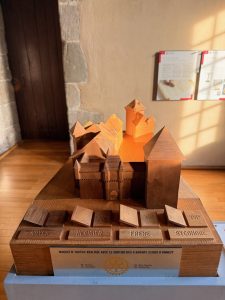

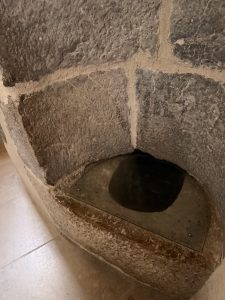
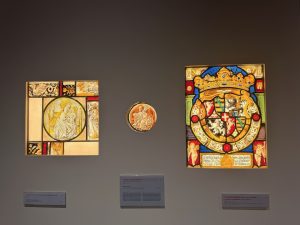


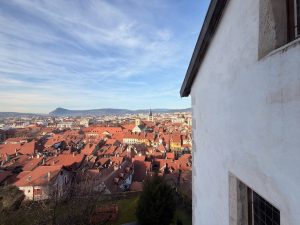
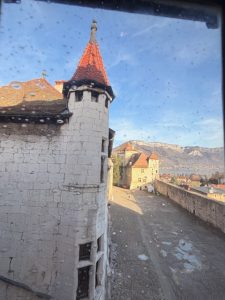
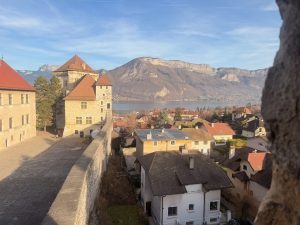
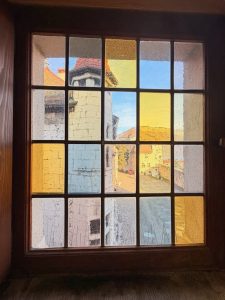
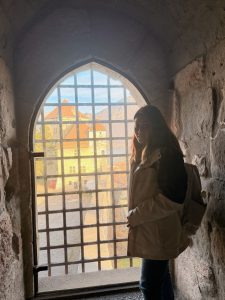
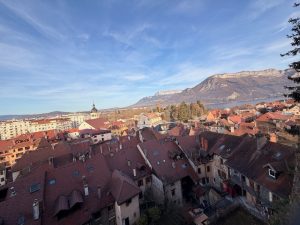
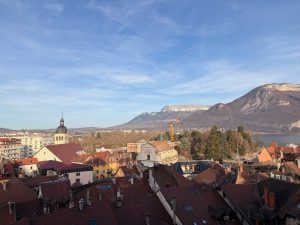
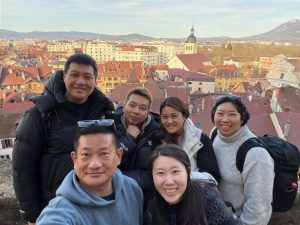
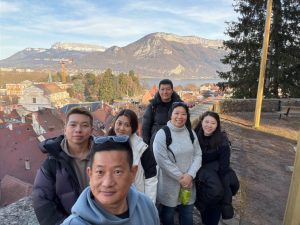
Other than the castle, the biggest reason visitors come to Château D’Annecy is for the view. At the end of the courtyard lies a viewing platform that looks out over the town of Annecy. From here, our sight was filled with red roofs and a few towers rising from the sea of red roofs. The platform also gave us a partial view of Lake Annecy and the mountain ranges across the lake.

Palais de I’lle – The Small Château
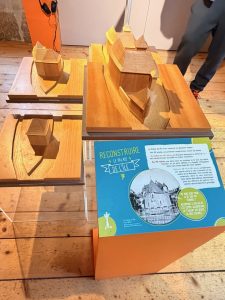
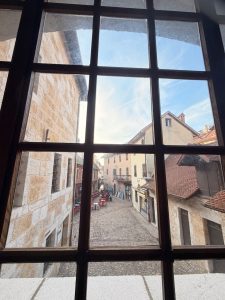
Exiting the Château D’Annecy, our next stop, Palais de I’lle, is a mere 7 mins walk away. Shaped like a ship, Palais de I ’lle sits on the largest island in the river, and affectionately known to the locals as The Island Palace. Built in the 12th century, Palais de I’lle was first used as a prison, a courthouse and an administrative centre. It even served as a residence to the Monthoux family in the 14th century. Today, the two-storey building houses exhibits on the recent history of Annecy and the development of the town since the 50s. Only the second storey is open to the public. Walking from room to room, we saw a prison cell, a kid’s playroom and a couple of rooms displaying art and history exhibits. As the Palais de I’lle is very small, we only spent 10 minutes in the castle. Due to its small scale and the lack of things to see (unless one is interested in the history of Annecy), I would not have paid to enter Palais de I’lle.


Church of St. Francis de Sale – The Italian Church
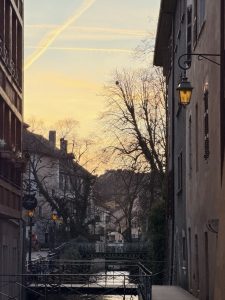
Le Thiou River is the main river that cuts Annecy into two. Lined with medieval houses that are not more than four storeys tall on both sides of the riverbank, and with three islets scattered in the smallish river from the lake to Rue de la Gare, the bridge marked the limits of Old Town Annecy. Coupled with six bridges that link both sides of the river bank within a short span of 650m, where we could see one bridge while standing on the other. It is this image that earned the town the title of Venice of the Alps. Strolling along Le Thiou River, especially on a quiet winter afternoon, was not only relaxing, but it also brought back memories of our trip to Venice several years ago.
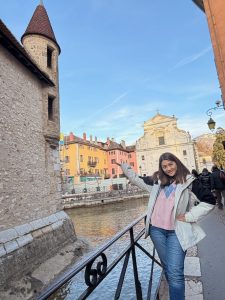
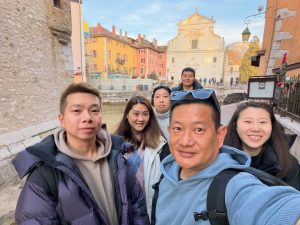
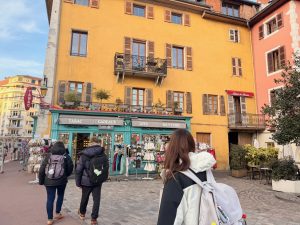
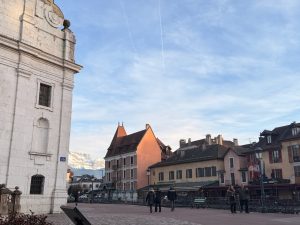
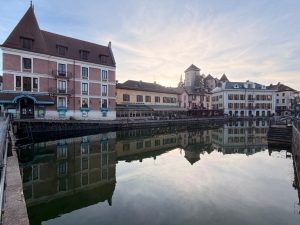

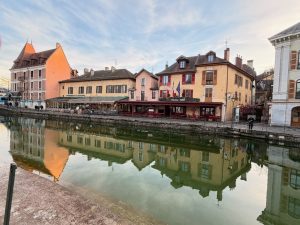
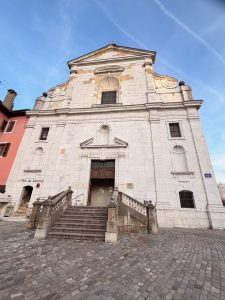
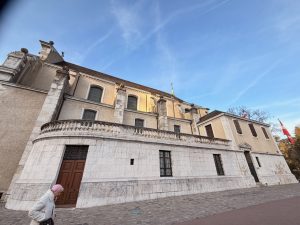
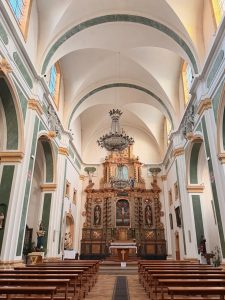
As we were strolling along the river, we came across a small church with a white facade sitting by the river. This is the Church of St. Francis de Sale. The exterior of the church looked plain with niches that seemed to house statues. Built in 1614, the church was transformed into a military barracks during the French Revolution. Today, Church of St. Francis de Sale mainly serve the local Italian community and is affectionately referred to by the locals as the Italian church. The interior of the church has a Roman Baroque decor with white walls and green marble tiles, and the high ceilings with windows above give the church a clean and bright look. The baroque elements were mainly seen in the high altar and the chandeliers.

Jardins de l’Europe – Tranquil Views of the Lake
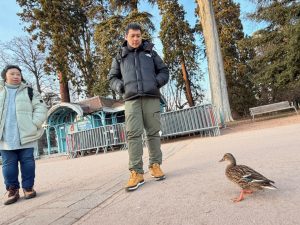
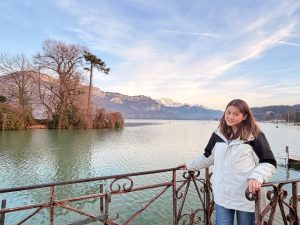
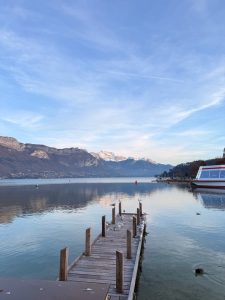
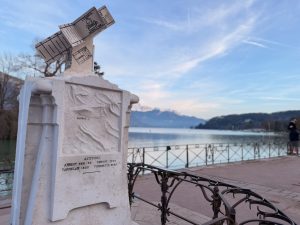
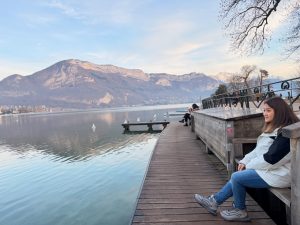
Leaving the church, we walked along the riverbank to arrive at Jardins de L’Europe, the largest park in Annecy. In summer, this is where boat cruises to Lake Annecy depart from, and we saw several boats berthed on the side of the Le Thiou River mouth. The reason why I brought my friends here was for the views of Lake Annecy. At the lake end of the park, sits Panorama du Lac, where we got a stunning view of the lake set alongside the mountain ranges. We even spotted several ducks swimming close to the shore of the lake. Looking out into the lake with the wooden piers stretching out amidst the calm waters felt especially tranquil. I am sure there are other facilities in the park, but we were mainly here for the views of the lake and did not explore the other parts of the park.



Pont des Amours – The Lovers’ Bridge
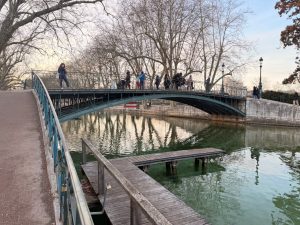
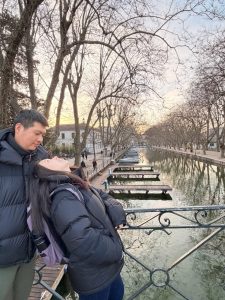
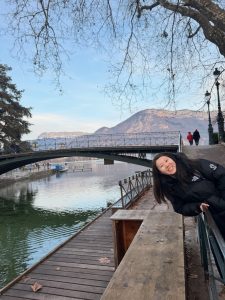
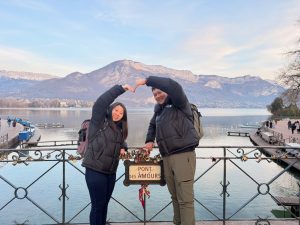
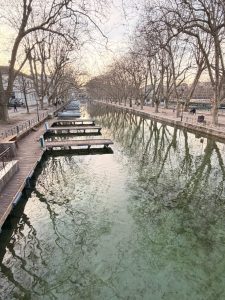
We continued our walk along the shores of the park to the other side of the park and came to a bridge. This is Pont des Amours, or the lovers’ bridge, as the locals call it. The bridge was first built in 1836 using wood. The bridge we saw today was built with iron in 1907. Pont des Amours is a favourite spot for a wedding photo shoot. Legend has it that lovers who kiss in the centre of the bridge will be united for life. Pont des Amours gave us great views no matter where we looked. Looking at the Lake Annecy side, the bridge gave us a vantage point of the lake and the mountains, as well as locals enjoying their day by the lakeside, and on the canal side, we were treated to a peaceful view of a canal lined with trees on both sides, with small piers for paddle boats.

Notre-Dame de Liesse – The Iconic Church of Annecy
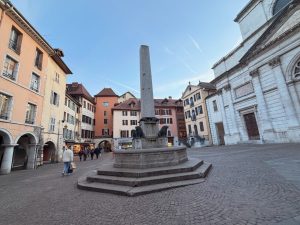
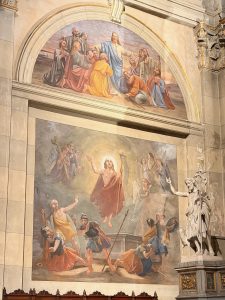
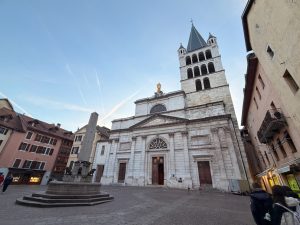
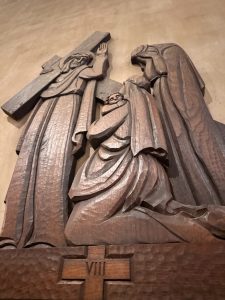
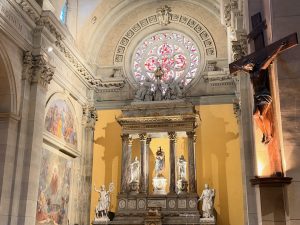
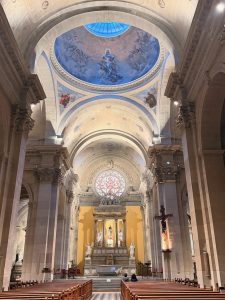
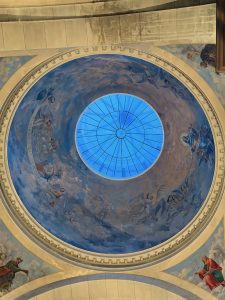
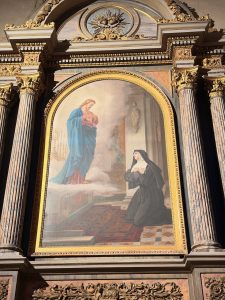
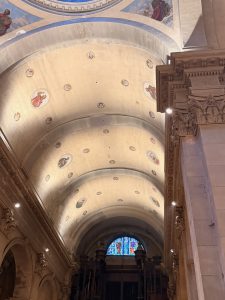
After taking pictures at Pont des Amours, we strolled along the canal and returned to the old town. As we were walking in the old town, we came to a square with a single fountain in the centre. Behind the fountain stands a white church with a six or seven-storey tower. This is the Notre-Dame de Liesse, the biggest and most iconic church in Annecy. Notre-Dame de Liesse was built in the second half of the 14th century by the Counts of Geneva, with the bell tower completed in 1530. The church boasts neoclassical architecture with elements from Roman antiquity. Notre-Dame de Liesse differs from the churches we have seen so far during this trip as it has the most elaborate interiors filled with paintings and frescoes. Right in the centre of the church was a dome topped with glass with frescoes of angels painted in the under dome. Other than the paintings, the interior of the church is adorned with statues and carvings that give the church an artistic flair. These statues, together with the paintings, made the church look colourful and cheerful.
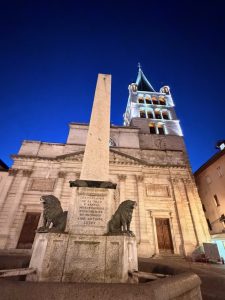

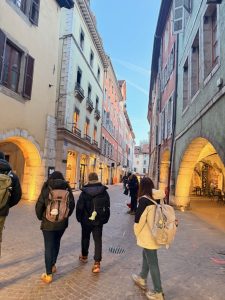
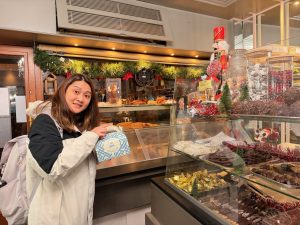
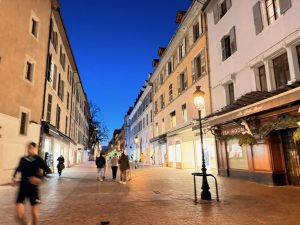
After our short stay at Notre-Dame de Liesse, we continued shopping on the streets of Old Town Annecy. We chanced upon a bakery selling French bread, which looked so delicious that we bought some back to the hotel to enjoy (they were indeed delicious and fresh). With the sky turning dark and our train timing approaching, we headed back in the direction of the train station in the hope of finding some authentic French food.

Our Final Dinner of the Trip
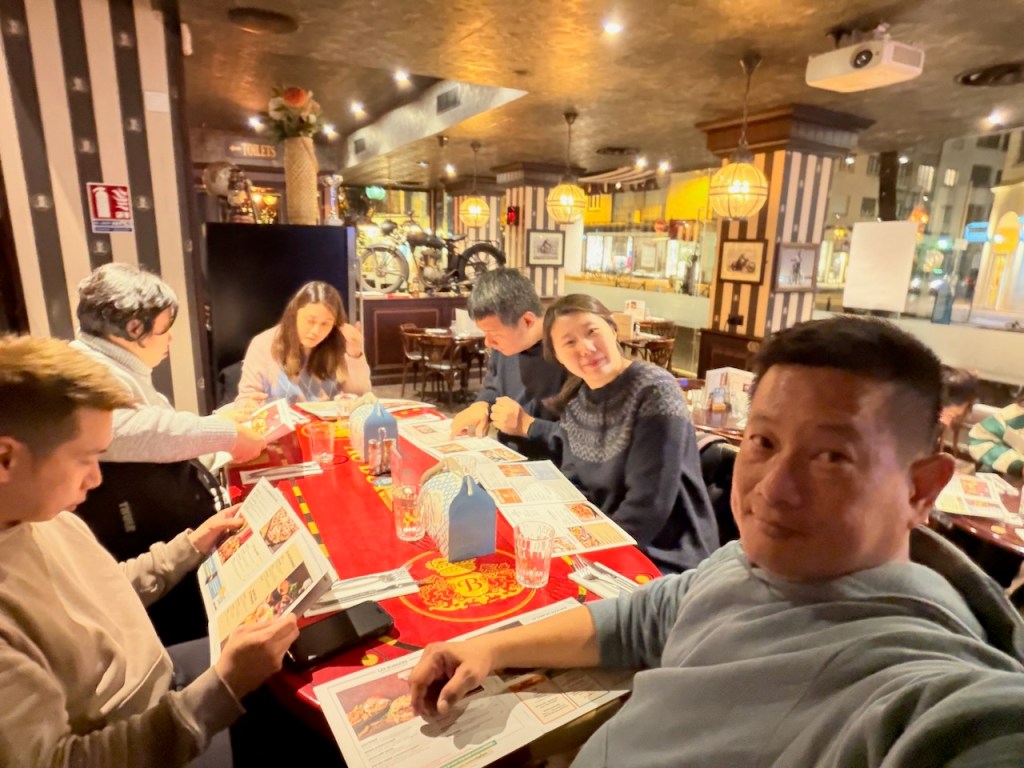
Ironically, the final dinner of our Switzerland trip was not taken in the country but in France. After all, it is cheaper to dine in France than in Switzerland. Our hopes of finding a French restaurant ended at the train station, and as it was getting late, we settled for dinner at an English pub restaurant opposite the train station. The food here was very affordable (by Swiss standards) and came in big portions. The friendly staff welcomed us into the restaurant and patiently introduced the menu to us. We enjoyed the dinner with the delicious food being served. After dinner, we made it in time for our 2-hour train ride back to Geneva. After all, we had to pack our luggage for our departure tomorrow.