Switzerland Day 7 (14 Jan 26) – Zermatt: Klein Matterhorn & Zermatt Village – From the Glacier Paradise to the Alpine Village

Matterhorn – The Toblerone Mountain

Matterhorn is perhaps most famed for its presence on Toblerone chocolate bars and was often used as a poster child for Switzerland. A visit to the country is not complete without a visit to the mountain. However, Matterhorn is not accessible unless we are experienced climbers (which we were not); the closest we can get is Matterhorn Glacier Paradise, located on Klein Matterhorn. Klein Matterhorn is separated from the Matterhorn by the Theodul Glacier and offers the closest, most direct, and spectacular views of the Matterhorn. 

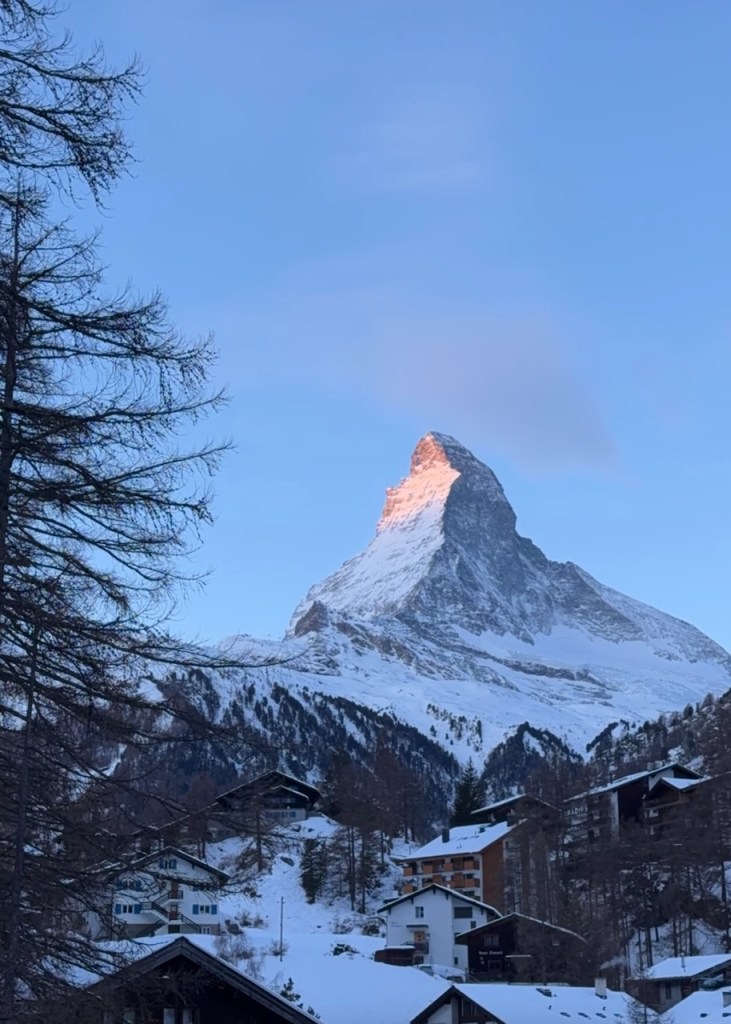
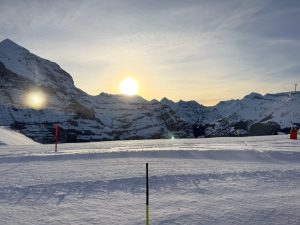
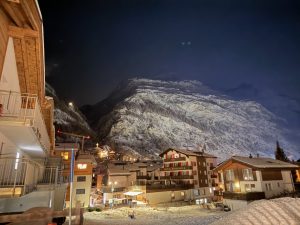
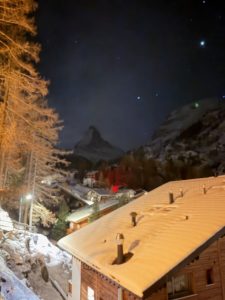
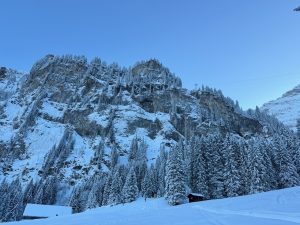
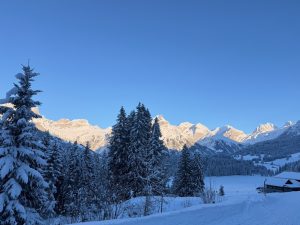
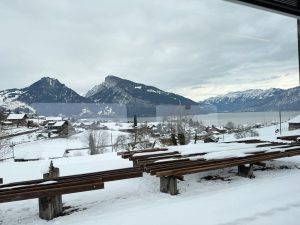
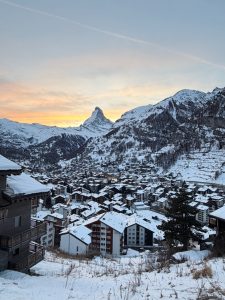
We woke up early to watch the sunrise over the Matterhorn from the balcony of our apartment.

Ascending to the top of Matterhorn Glacier Paradise at 3,883m

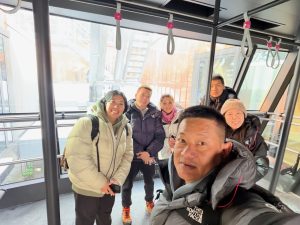
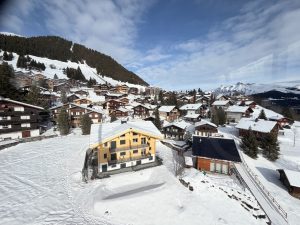
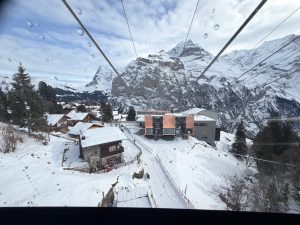
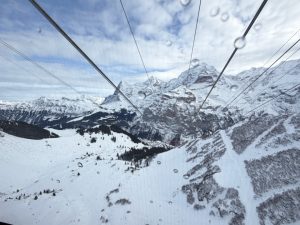
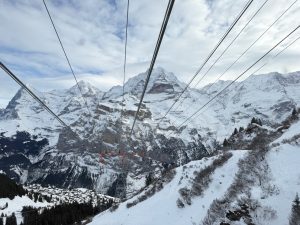
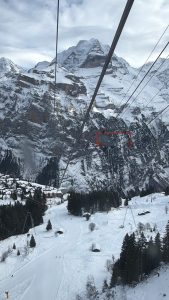
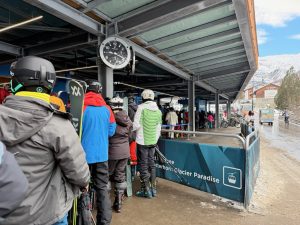
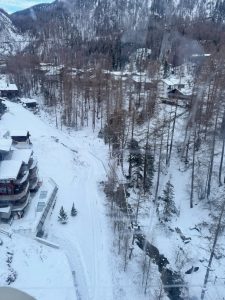
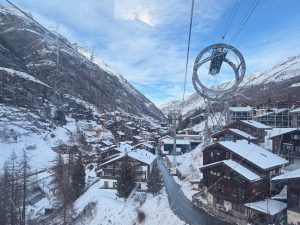
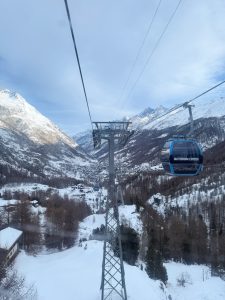
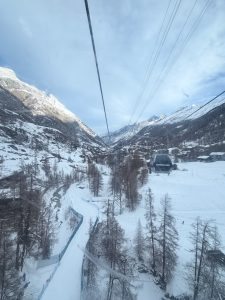
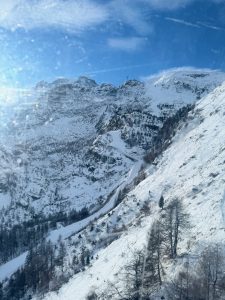
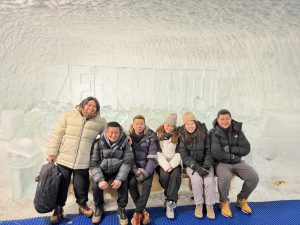
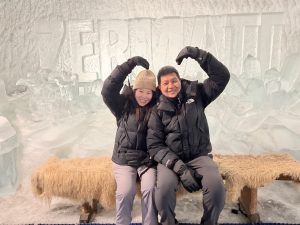
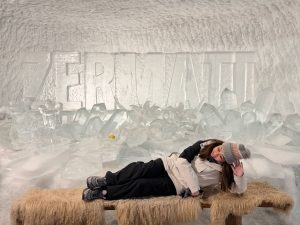
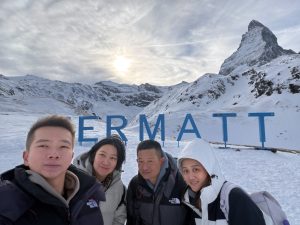
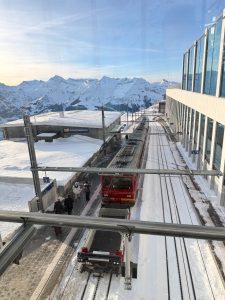
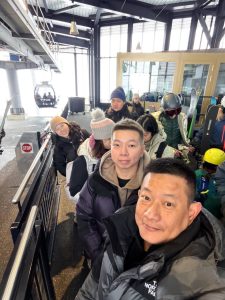
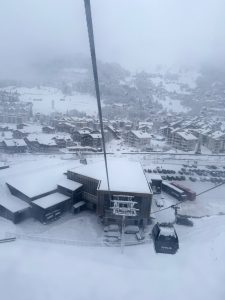
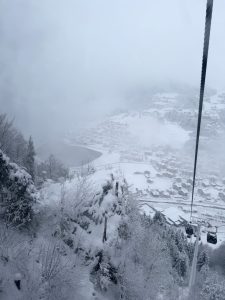
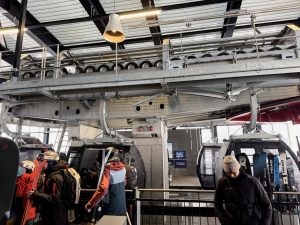
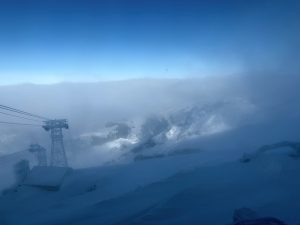
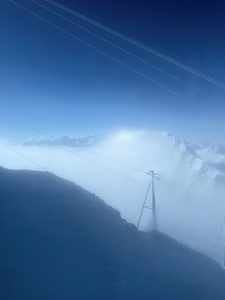
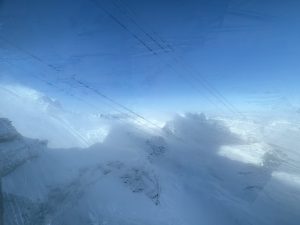
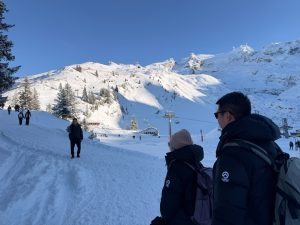
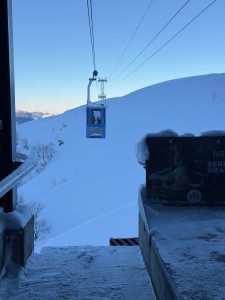
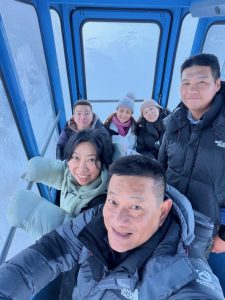
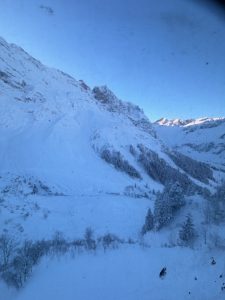
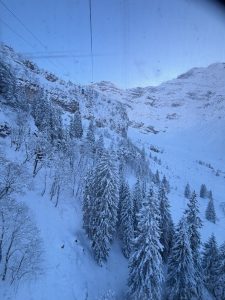
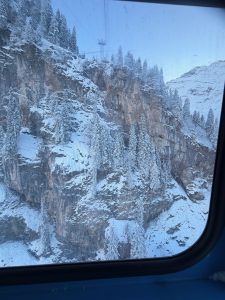
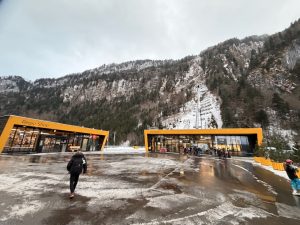
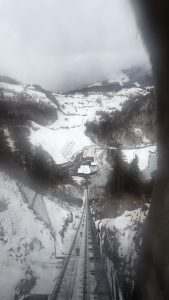
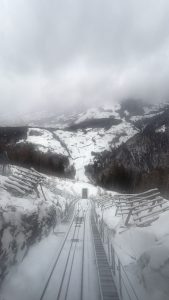
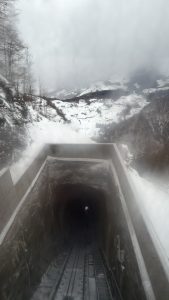
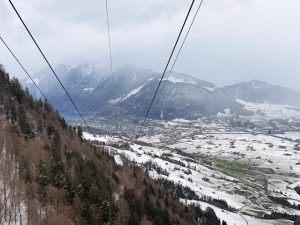
Getting to Matterhorn Glacier Paradise was a breeze, thanks to the engineering prowess of the Swiss in their cable car construction. We headed to the Glacier Paradise base station and got our tickets, which we were able to get half price using our Half Fare card. The base station was packed with skiers going up the mountain this morning. Despite the long line, the queue actually moved very fast. We found ourselves on the cable car going up to the mountain in under 5 minutes of queue time. The way up to the mountain was easy, with only one change of cable car in between. As we ascended up to the mountains, we were treated with views of the Zermatt Village and the Swiss Alps. And all these while, the pyramid-shaped Matterhorn never left our sight, as though the mountain was protecting us on our way up. The first cable car brought us up to 2,939m to Trockener Steg, passing by three cable car stops at Furi, Schwarzsee, and Furgg along the way. When we were riding past Schwarzsee, we spotted the huge “Zermatt” sign. This was the sign that I wanted to bring my friends to take pictures with, but I found it difficult to access when I was planning this trip. I was elated when I saw that this sign was so close to the cable car station. I told my friends about this sign and would return on our way down, as it would be difficult for us to get to the top with the amount of skiers going up the mountain. After another 15 minutes, we reached Trockener Steg, where we changed onto another cable car up to Matterhorn Glacier Paradise.

Glacier Paradise Top Station

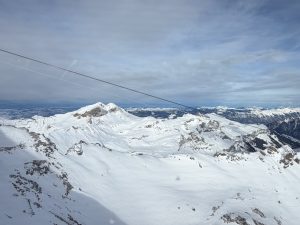
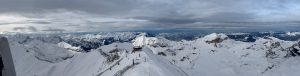
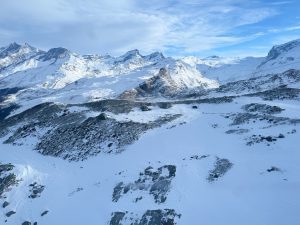
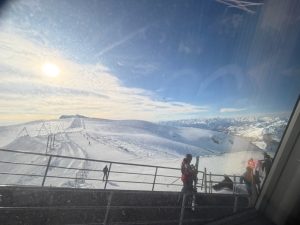
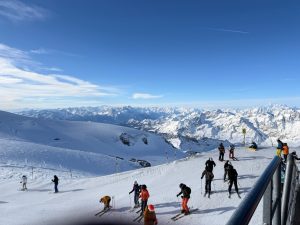
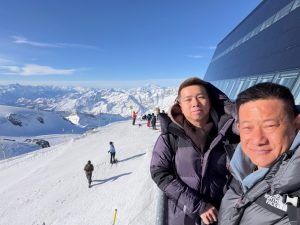
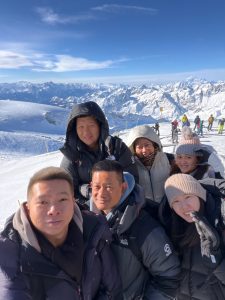
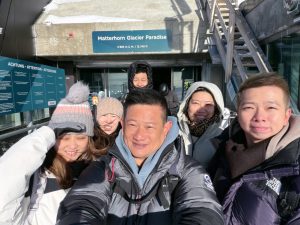
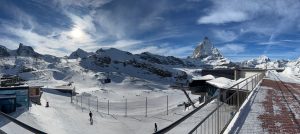
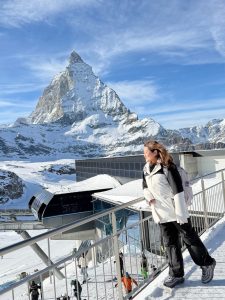
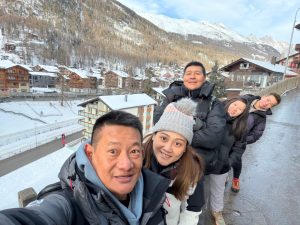
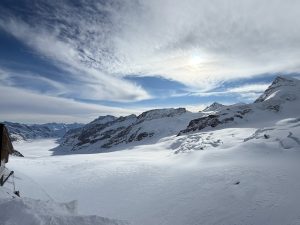
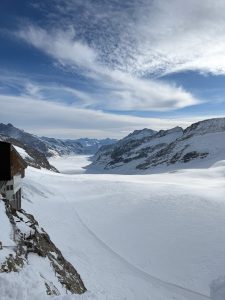
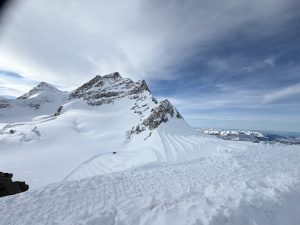
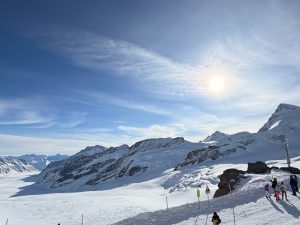
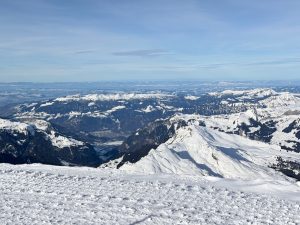
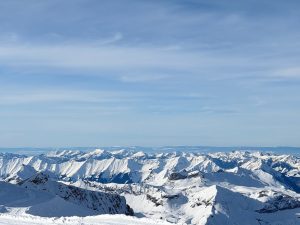
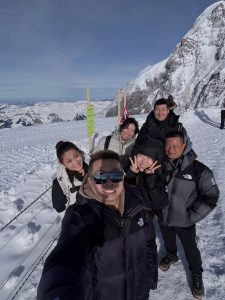
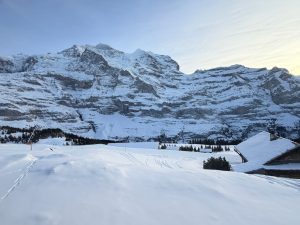
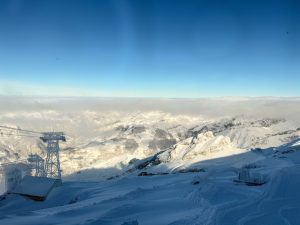
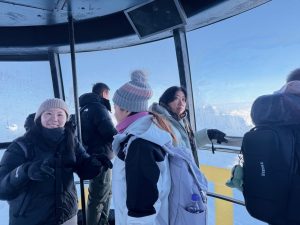
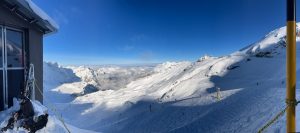
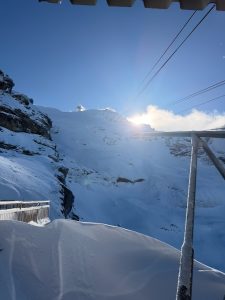
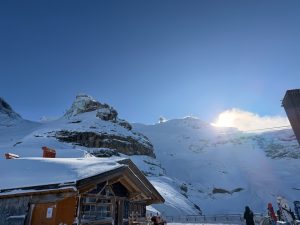
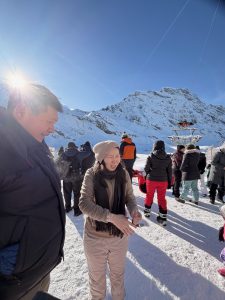
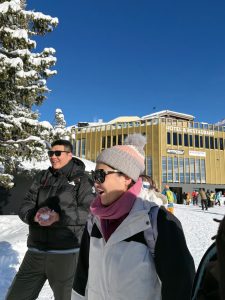
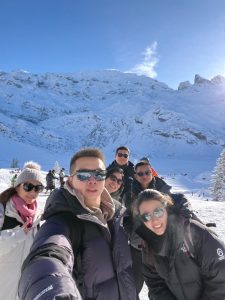
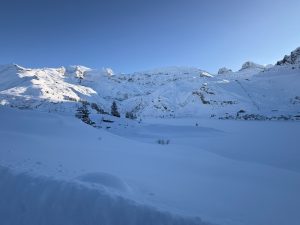
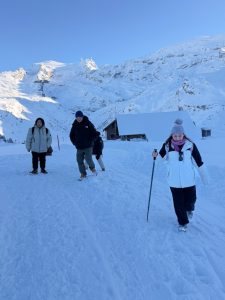
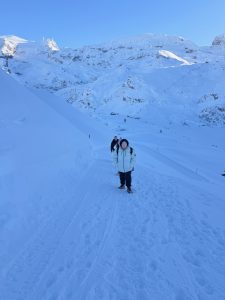
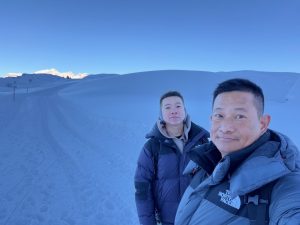
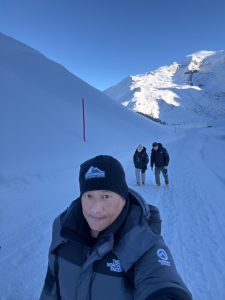
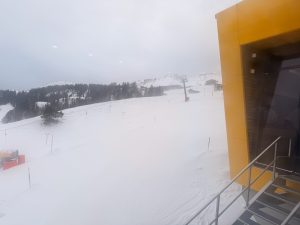
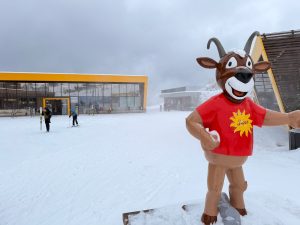
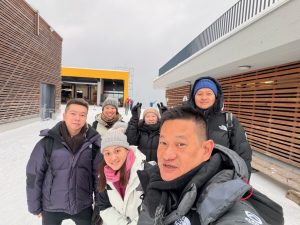
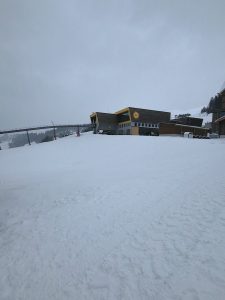
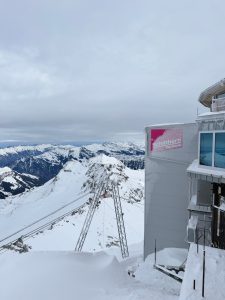
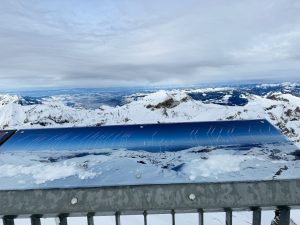
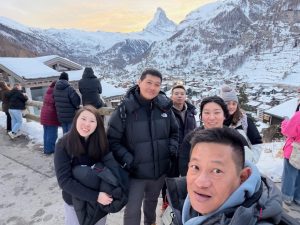
When arriving at the top station of Matterhorn Glacier Paradise, we originally wanted to visit the viewing platform, which promised us a spectacular view of the mountains. However, the viewing platform was under renovation during our time of arrival, and would only be opened at the end of January 2026. Since we couldn’t visit the viewing platform, the next best alternative was the skier’s start point next to the restaurant. It was chilly and very windy the moment we stepped out of the building. The chilly winter alpine wind kept blowing our way, making standing outside the building a torture. Despite the chilly winter wind, stepping outside the Glacier Paradise top station building treated to a view of the winter wonderland of the Swiss Alps. The viewing was spectacular. We shuttled in and out of the building to take in the views and a quick wefie before we gave up and headed to the Glacier Palace.

Glacier Palace

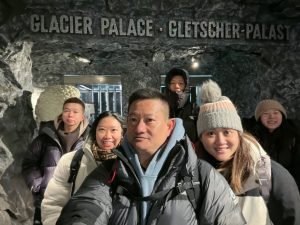
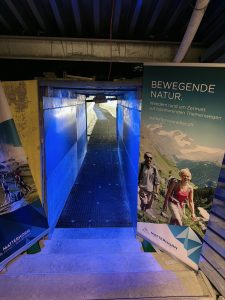
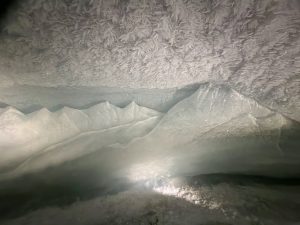
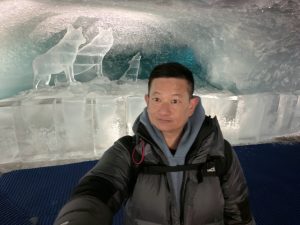
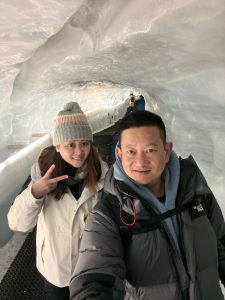
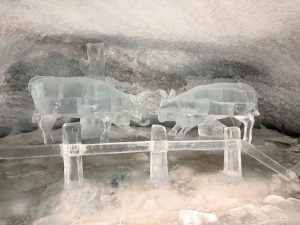
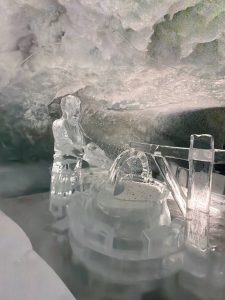
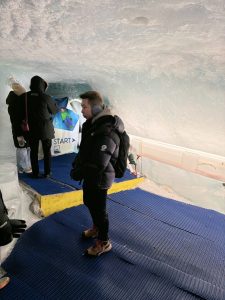
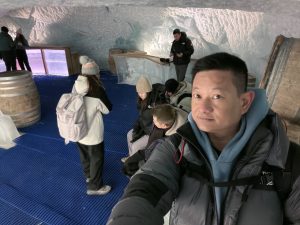
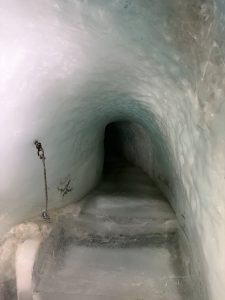
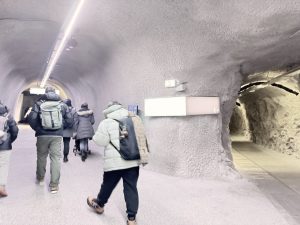
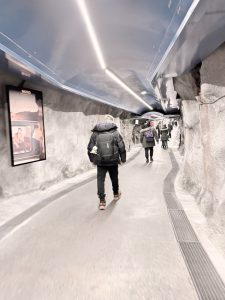
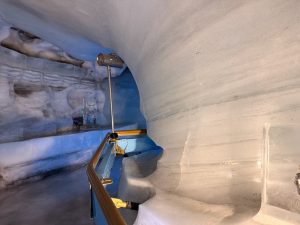
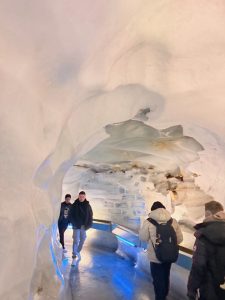
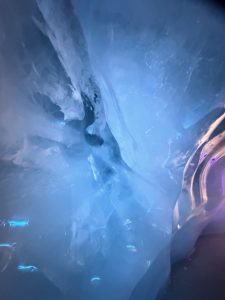
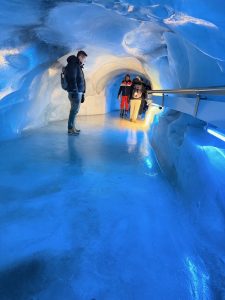
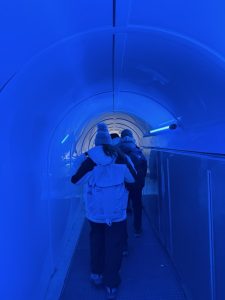
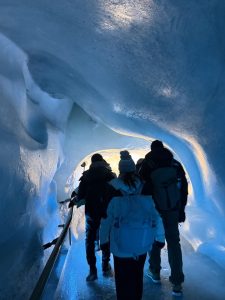
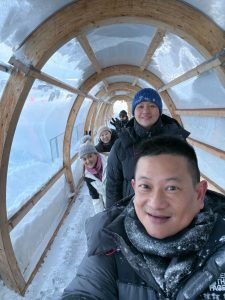
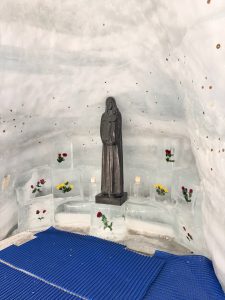
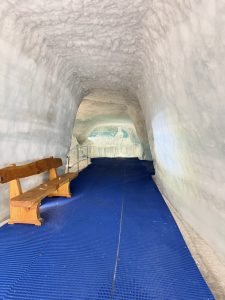
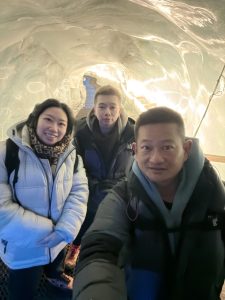
The other activity to do up here at the top station of Matterhorn Glacier Paradise for non-skiers was to visit the Glacier Palace (other than visiting the viewing platform). Perched 15m below the surface on top of the 3,883m Matterhorn Glacier Paradise, the centuries-old ice formations sit on the broad glacier between the Kleine Matterhorn and Breithorn, which is the highest Glacier Palace in the world. Our visit to the Glacier Palace started with a lift ride 15m below the surface to a tunnel of ice where we saw numerous ice sculptures ranging from bears to eagles to wolves and even ice sculptures of humans. There is even an ice bar and an ice slide. The ice slide was carved into a tunnel, which looked dark and claustrophobic. However, once we had a go, it was not as dark as it seemed, and it was quite fun. The only issue we found was that the slide was not slippery, especially with the mat that was provided. We thought it was better without the slide. After playing with the slide, we explored the rest of the ice cave and saw more ice sculptures. We spent a total of 30 minutes in the Glacier Palace.

Cinema Lounge

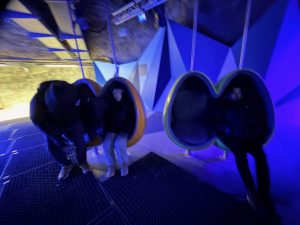
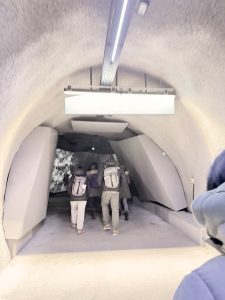
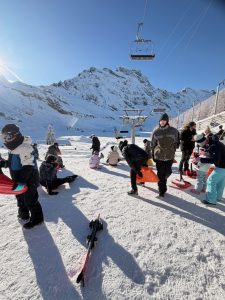
Our last stop at Matterhorn Glacier Paradise was the Cinema Lounge, which was situated at the entrance from the cable car station. Since we were here, we figured to take a look at what the Cinema Lounge offers. To our disappointment, we thought the film shown in the lounge was boring. There is a limited number of hanging chairs for visitors to sit and watch the replay run videos of people climbing to the top of the Matterhorn. I thought it was not worth the time coming to the Cinema Lounge, unless one has time to kill. Seeing there was nothing else to do up here (no snow fun park for us to sledge), we took the next cable car and descended the mountain.

The Lower Stations of Trockener Steg and Schwarzsee

Before heading back to Zermatt, we had lunch at the Trockener Steg. There are two types of dining available at Trockener Steg – the sit-down full-service and the canteen-style self-service restaurants. We opted for the canteen style and found the food to be reasonably priced and delicious. Other than dining, Trockener Steg offers visitors a great spot for pictures with the iconic Matterhorn.

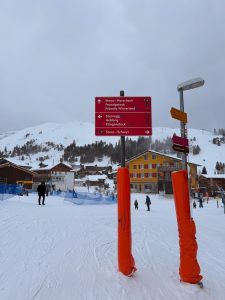
Schwarzsee is our last stop before we return to Zermatt. It is the second last station on the mountain before we reach Zermatt. We did a brief stop here to take pictures with the “Zermatt” sign. As the sign sits at the side of a ski slope, we had to walk down the slope to get to it. The “Zermatt” sign at Schwarzsee was a great spot as the letters were set against the Matterhorn.

Exploring Zermatt

It was already 2 pm when we arrived back at Zermatt. We originally planned to visit the Rothorn, but seeing that the last descent from Rothorn was at 3.30 pm, we figured it was not worth going up since we would not be spending much time on the mountain. We changed our plan to spend the rest of the afternoon visiting the sights in Zermatt.

Municipal Administration Office Viewpoint

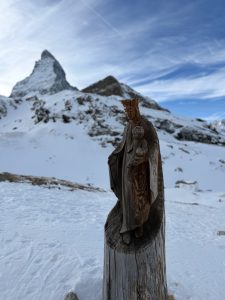
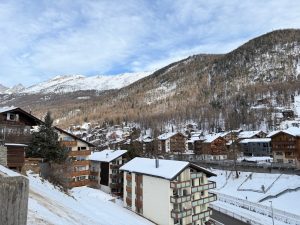
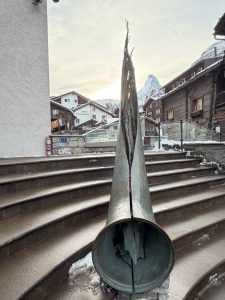
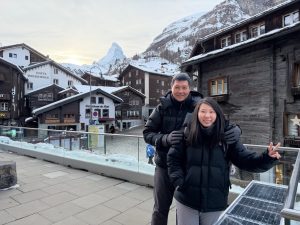
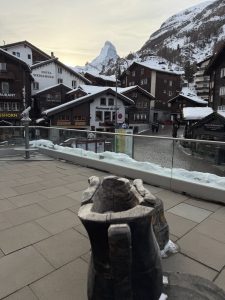
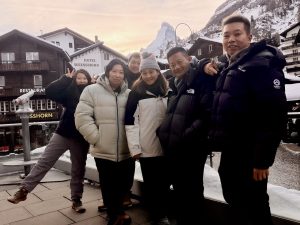
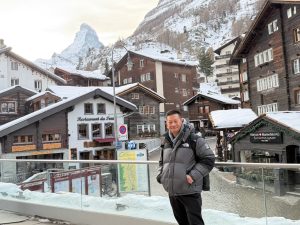
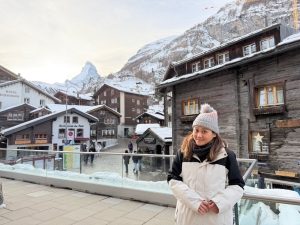
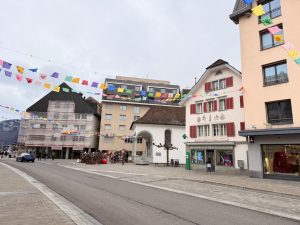
There are a handful of sights in the village of Zermatt which can be seen in one afternoon, due to the compact size of the town. We stopped by a viewpoint of the Matterhorn outside the Zermatt Municipal administration office. This viewpoint gave us a good view of the Matterhorn against the traditional Swiss alpine cottage. As it was situated on an elevated platform, we were not worried about blocking the human traffic on the main street. There are some benches placed here for people to rest and admire the beauty of the Matterhorn. With the wooden alpenhorn strategically placed on the stairs to the platform, I thought this was a good place for people to take pictures of the Matterhorn and the traditional long Swiss horn.

Pfarrkirche St. Mauritius

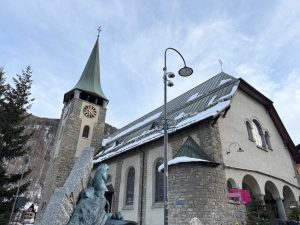
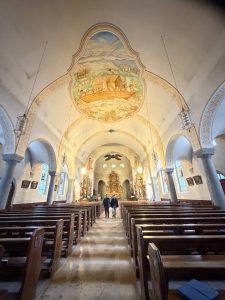
Our next destination is the Pfarrkirche St. Mauritius, situated in the centre of the village, just next to the Municipal administration office viewpoint. One cannot miss this church due to its location and its distinctive stone structure, bell tower, and green roof. The church, dating back to 1285, is the tallest structure in Zermatt. Unlike the churches we saw in Italy or Paris, the exterior of Pfarrkirche St. Mauritius is rather plain, with the exposed stone feature on the tower. As with its exterior, the interior of Pfarrkirche St. Mauritius looked equally clean, without elaborate carvings and frescoes. The only fresco is painted in the centre of its ceiling, depicting Noah and his ark. The main altar features a baroque style with elaborate carvings, with the statue of St. Maurice installed in the centre of the altar.

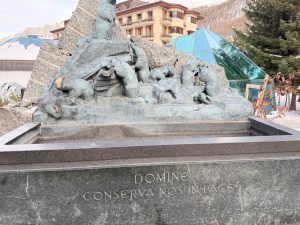
The Matterhorn Museum is another sight in the centre of Zermatt, next to Pfarrkirche St. Mauritius. The distinctive glass-domed building was a stark contrast to the traditional architectural style of the church. The museum archives how Zermatt changed from a sleepy farming village to a world-renowned alpine village. It also displayed wooden cottages and the effects of the first climbers of the Matterhorn. We did not enter the museum as it costs CHF 12 to visit. There is a cemetery behind the church (which we discover in the evening when walking past it), with graves of the mountaineers who scaled the Matterhorn.

Hinterdorfstrasse

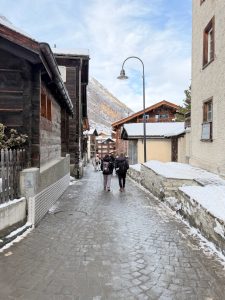
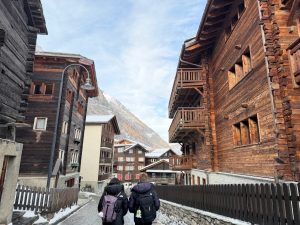
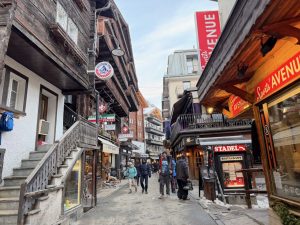
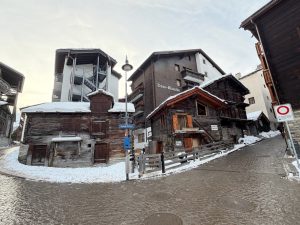
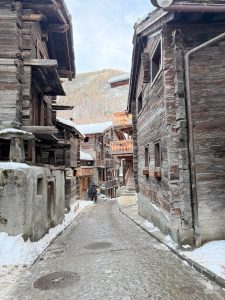
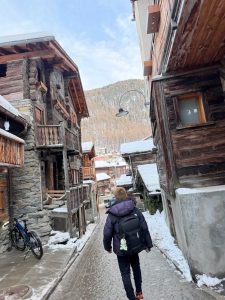
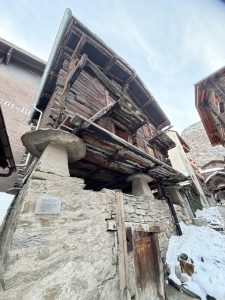
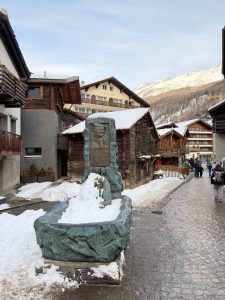
The main street of Zermatt, Bahnhofstrasse, ends at the train station, which is filled with shops selling from souvenirs to luxury items. Most of the restaurants and supermarkets are found on the Bahnhofstrasse. We made a detour off the Bahnhofstrasse into Hinterdorfstrasse. Often missed by visitors to Zermatt, the Hinterdorfstrasse is a small street with traditional Swiss wooden houses built on both sides of the street. These houses used to be barns and stores for the residents to store their harvests. The distinctive stone stabs these houses sat on were designed to keep mice out. Today, the facades of these houses have not changed, but their function changed. Most of these houses were converted to chalets and cafes. I even saw a plaque on one of these houses that dates the house back to the 17th century for the storage of sugarcane and bread. I thought Hinterdorfstrasse is a great spot to take in the historic vibe of the town and makes a great photograph spot, especially in winter when the houses are blanketed with snow.

Murini Hill – Sunset in Zermatt

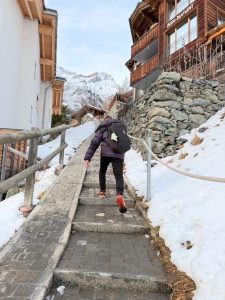
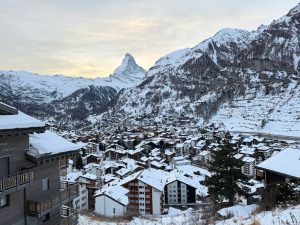
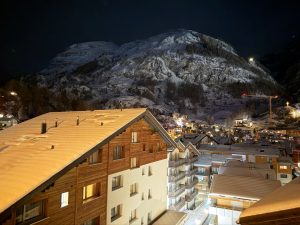
As it was approaching sunset, one of the things that we planned to do was to view the sunset and see the village of Zermatt light up from Murini Hill. Murini Hill is situated in northern Zermatt, past the Zermatt train station and Rothorn cable car station. The walk up the hill started with a climb up a gentle slope, and the walk up the hill ended with a 300-step staircase. There was a small crowd by the time we reached the viewpoint on Murini Hills, all waiting for the sunset and the village light up. This is the viewpoint from which the iconic photo of Zermatt glowing at night with the Matterhorn Mountain standing solemnly behind was taken. We watched the sky turn from light blue and eventually be taken over by darkness, and Zermatt slowly be taken over by warm orange light. The view was spectacular. We were glad that our patience paid off as we waited for sunset. We did not wait for the sky to turn completely dark; we headed to the supermarket to buy dinner and breakfast before heading back to our apartment to rest for the night.

Switzerland Day 6 (13 Jan 26) – Interlaken: Jungfraujoch – Top of Europe

We woke up to a hazy Interlaken today. Initially, I planned to visit Jungfraujoch, followed by Lauterbrunnen today. Since we visited Lauterbrunnen yesterday and had only one sight on the list, we can afford to wake up a little later. As we will be taking an evening train to Zermatt, we checked out of our hotel early in the morning and left our luggage with the hotel, where we will return in the evening to collect it for our onward journey.

Getting to Jungfraujoch

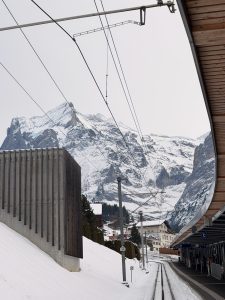
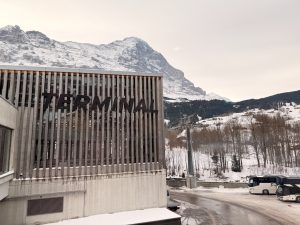
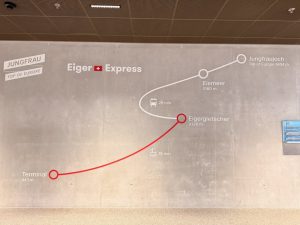
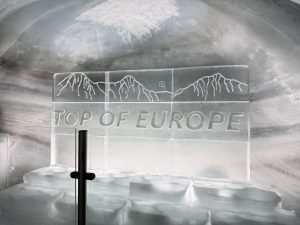
Jungfraujoch, with its nickname “Top of Europe”, is very misleading. Initially, I would have thought this meant the mountain would be the highest peak we would visit during this Switzerland trip. At 3,400m, Jungfraujoch certainly sounded like the highest peak. We would subsequently find out that the Matterhorn Paradise (that we will be visiting tomorrow) towers over Jungfraujoch by almost 500m, and that would be the highest peak we visited on this trip. Jungfraujoch was called the Top of Europe due to its housing the highest railway station in Europe. There are two ways to get up to Jungfraujoch from Interlaken: the all train option via Lauterbrunnen, or one leg with cable car via Grindelwald Terminal. For the first option, one would need to change trains three times, in Lauterbrunnen, Kleine Scheidegg, and Eigergletscher. The cable car option requires us to take a train to Grindelwald Terminal, and change to a cable car to Eigergletscher to catch another train to the Top of Europe. The cable car route is 30 mins faster compared to the all train route. As we wanted to try both routes, we took the cable car route during our ascent and the train option when descending. One point to note for those who got the Bernese Oberland Pass and Half Fare Card: the Bernese Oberland Pass also covers a partial train ride to Grindelwald Terminal and Lauterbrunnen. By booking our ticket from Grindelwald instead of Interlaken Ost Station (where we were staying), we saved CHF6 per person per way. We also found that booking tickets with the Half Fare Card gave us a larger discount than the Bernese Oberland Pass.

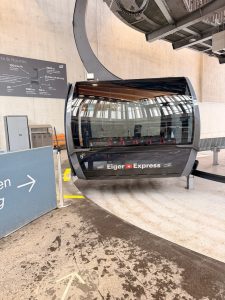
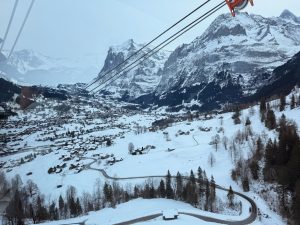
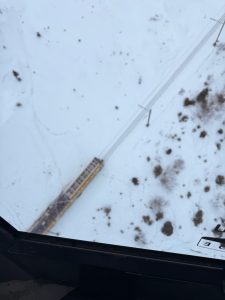
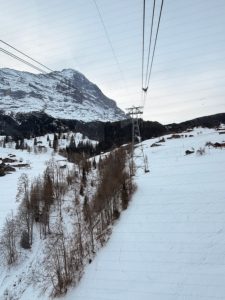
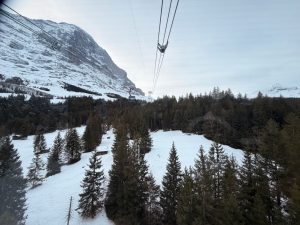
The train ride from Interlaken Ost to Grindelwald Terminal was uneventful, where we saw more winter scenery of the Jungfrau region. The beauty of this route lies in the cable car ride from Grindelwald Terminal to Eigergletscher. As the cable car pulled out of the station, we were mesmerised by the scenery of the land covered in white snow with huts concentrated at parts of the land, resting on the foot of the mighty mountain ranges in the region as though humans were seeking protection from these mountains. Occasionally, we would fly over skiers challenging themselves on the many ski slopes, having fun skiing down the mountain. At one point, we flew over forests of pine trees showing us their resilience, flourishing in the bitter winter cold. These trees looked as if they were competing with each other to reach for the sky. We even saw a train making its way up the mountain on the grounds below us. We could see the entire winter snowscape flashing past our eyes in the 15 mins Eiger Express ride.

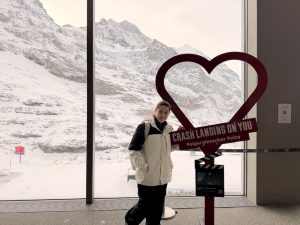
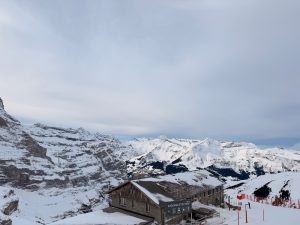
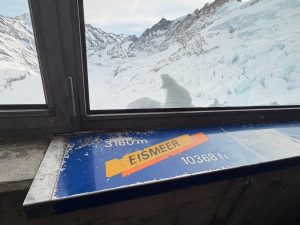
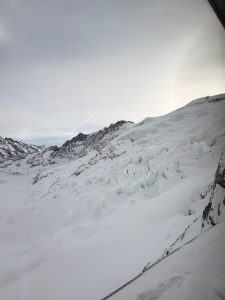
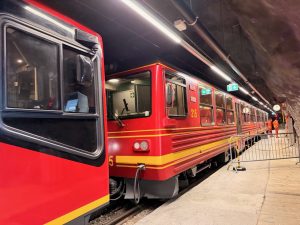
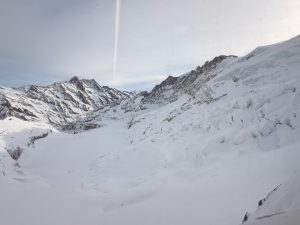
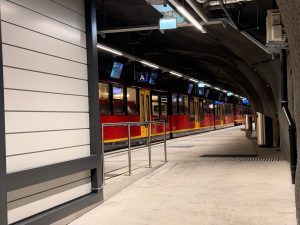
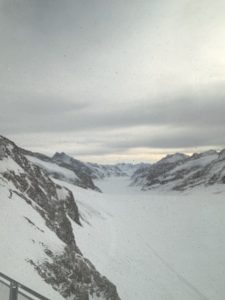
The next leg of the journey involves a train ride through a tunnel. As the train runs on a schedule, having arrived at Eigergletscher via cable car gave us some time to explore the outdoor area of the train station. From here, we could see the glaciers sitting on the side of the mountain top. Soon it was time for us to board the train. It doesn’t matter which side of the train we were sitting on, as the train would travel inside a tunnel that brought us up to the peak station, and there was nothing much to see. There was a brief stop at Eismeer viewpoint, 3,160m up the mountain, where we were given time to look out into the glacier. This part of the mountain was a relatively flat piece of land covered in snow that seemed to form a bridge between two mountain ranges. I would advise people to sit closer to the door of the train as everyone rushes out at Eismeer to get a good spot at the viewpoint. The rest of the journey from Eismeer to Jungfraujoch was pretty much uneventful.

Attractions in Junfraujoch

360° Cinema

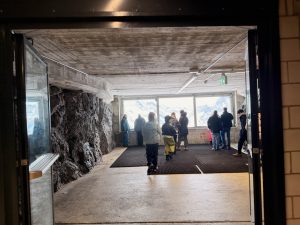
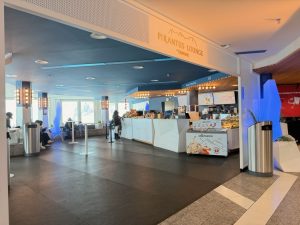
Once at the top of the mountain, we were greeted by a large cafe and a souvenir shop outside the exit to the train station. Here is where we saw people sitting around enjoying the views of the mountain. I found the view up here to be similar to that in Eismeer, with the exception that we were on a higher elevation. There is a fixed route for visitors to experience the six attractions at Jungfraujoch, which would end up returning us to the cafe and the souvenir shop. Following the signage, we arrived at the 360° Cinema. This cinema projects footage of climbers coming up to the summit of Jungfraujoch onto the wall. We did not find it particularly interesting as the film does not explain much about the formation of glaciers. We only stayed here momentarily and headed to the next attraction on the circular route.

Sphinx Terrace & Aletschgletscher

We skipped past the next two attractions along the route due to their closure. Technically, the next stop was supposed to be Sphinx terrace, an observation terrace outside the astronomical observatory on Jungfaujoch. When opened, the terrace would have treated us to the majestic views of the mountain ranges and a good view of the glacier below. The other attraction that was closed during our visit was the Aletschgletscher. This is the part where we would get to walk on the actual glaciers. I had initially planned to include a 1-hour walk on the Aletschgletscher to Mönchsjochhütte, a restaurant housed in a wooden hut. However, the path to the hut is only open from March to October, which means we were confined to the observation building. We were also disappointed to find that the snow fun park on Aletschgletscher was closed as well due to the closure of access to the glacier in the winter months.

Alpine Sensation

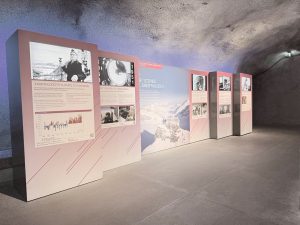
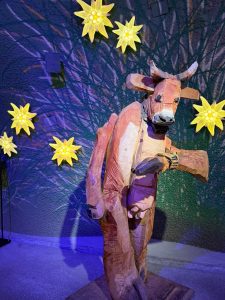
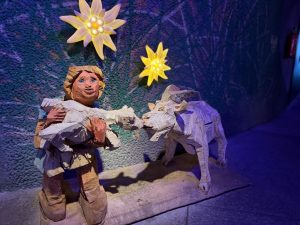
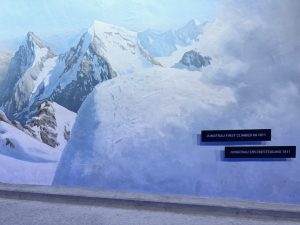
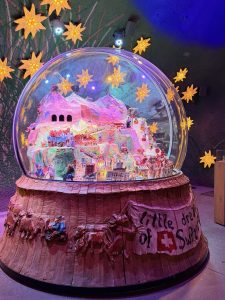
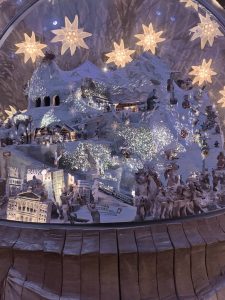
The next attraction on the route was the Alpine Sensation, a 250m corridor between the Sphinx Hall and the Ice Palace showcasing the development of Jungfraujoch. Entering the Alpine Sensation is like walking into a magical tunnel with the ceiling decorated with flowers; in winter, these look like snowflakes to me. I did not see much development of the area being displayed here, except for a couple of signboards talking about climate change and its effects on Jungfraujoch and another telling when the mountain was first climbed. I find the displays of wood sculptures of humans and benches dotted in this part of Jungfraujoch interesting. The large snow globe display gotta be the highlight in the Alpine Sensation and is what attracted me most here. With so many details, mainly carved out of wood, I spent at least 3 mins looking at the condensed version of Jungfraujoch, spotting things that are familiar to me, like the Eiger Express cable car that we rode on, and the train that we saw in the cable car. There was a natural stone tunnel after the giant snow globe with some vintage pictures of people climbing up Jungfrau from yesteryears, before the train was constructed. The tunnel led us to the next attraction, the Ice Palace.

Ice Palace

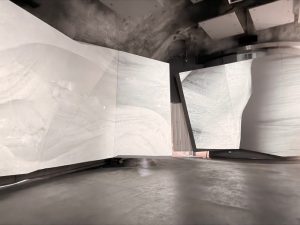
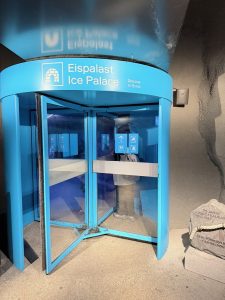
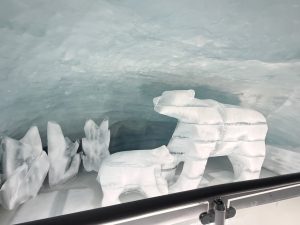
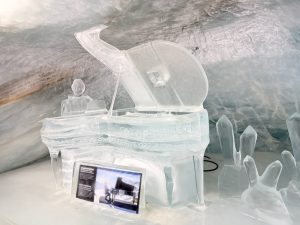
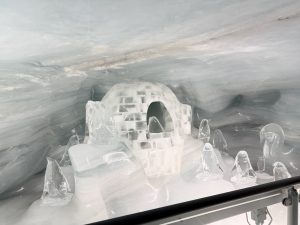
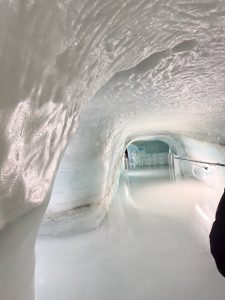
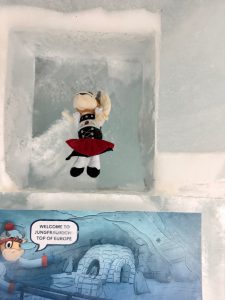
The Ice Palace in Jungfraujoch is essentially an ice tunnel carved out under the glacier in 1938. Entering the Ice Palace is like entering another world. The entire place is covered in ice, even the floor. Despite being made out of ice, the floor does not feel slippery. The highlights of the Ice Palace were the ice sculptures, where we saw a handful of sculptures like polar bears, penguins, eagles and a dragon. There is even a sculpture of a man playing piano and an ice bar. The ice palace wasn’t that big and took us only 7 mins to complete the tour.

Glacier Plateau

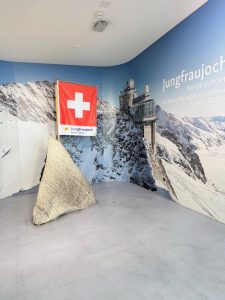
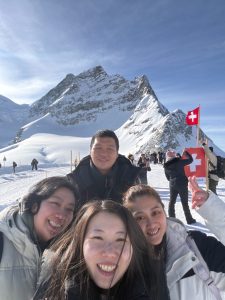
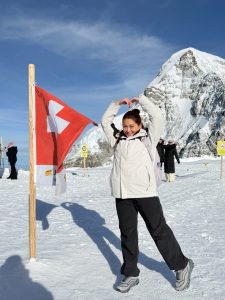
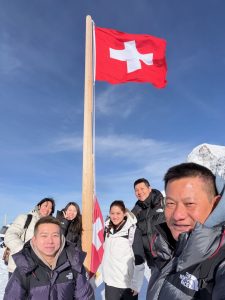
The highlight of our visit to Jungfraujoch would be a visit to the outdoor Glacier Plateau. This is where we found the famous twin Swiss flags with the peak of Jungfraujoch in the background, which everyone comes here to take. There was a short queue at the flag when we arrived. Everyone seems to have one objective here: take the mandatory “I was here” picture with the flag. We also joined the queue to take our pictures with the twin flags. As we spend more time here, we see more people coming to join the queue. If one wanted to take a picture with a Swiss flag, but did not want to join the queue, we saw another flag just further up the plateau. There was no queue for a picture with this flag, and yet it also offered the peak of Jungfraujoch.

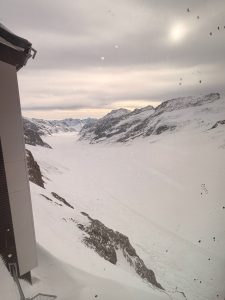
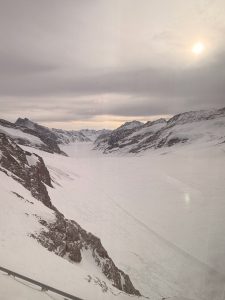
Most of the visitors to the Glacier Plateau are here just for the iconic picture; only a handful bothered to walk around the plateau to look out into the Swiss Alps. There are two sides that offer different views up here. There is the side where we walked up from the building that offered an outdoor viewpoint of the Aletschgletscher, the largest glacier in the Swiss Alps. Like the views we saw previously, inside the building, the Aletschgletscher looked like a large flat piece of snowscape that seemed to bridge between two mountain ranges, making these mountains look shorter than they actually are. Nonetheless, looking out into the snowy desert of Aletschgletscher felt liberating. The other side of the plateau offered views into the nearby mountain ranges rising above the land. Unlike the mountain ranges we saw on Mt. Titlis or Schilthorn, not all of the mountain ranges we saw here were fully covered with snow. Let’s say there are more rocks than snow on these mountains. As there is only one spot for us to look out into the glacier and the mountain ranges, we did not spend too much time here.

After visiting the attractions on Jungfraujoch, there is really nothing much we can do up here (since the Glacier walk and the snow fun park are closed during the winter months). We waited for the next train to take us back to Interlaken. For our descent, we opted for the all train route. Unlike the upwards trip, the train does not stop at Eismeer from Jungfraujoch to Eigergletscher. The train departing from Eigergletscher requires us to change to another train in Kleine Scheidegg. For the descent route, we found the views on the left side of the carriage more scenic as we were able to see the mountain ranges and the ski tracks. We were also able to see the village of Wengen on the left side of the train, one stop before Lauterbrunnen. I thought the Glacier Plateau existed only for tourists to take their Instagram photos or TikTok videos of them holding up the Swiss flags. There are better views of the Swiss Alps for places that cost a fraction of the price; the “Top of Europe” marketed was not exactly at the highest point in Europe, but only refers to the highest train station in Europe. People are attracted here only for their “I was here” photo. Perhaps my perspective might change if we had the Sphinx terrace and the Aletschgletscher open.

Next Stop – Zermatt

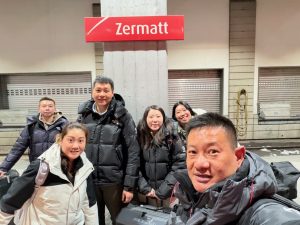
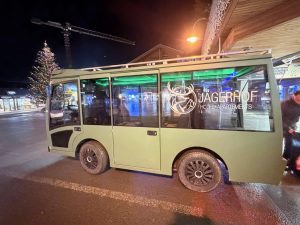
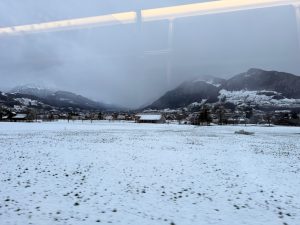
Our train to our next town, Zermatt, departs at 6.07 pm. We made it back to Interlaken in time to pick up our luggage from the hotel concierge and headed to the train station. Fortunately, our hotel offered to send us to the train station. Getting to Zermatt from Interlaken Ost is rather inconvenient as it involves two train transfers in Spiez and Visp. However, the transfer was rather seamless. The train ride was rather uneventful, and due to the darkness outside the train window, we were unable to see any views. We reached Zermatt at 8.17 pm and hopped on the transfer to our apartment provided by the hotel and rested for the night.

Switzerland Day 5 (12 Jan 26) – Interlaken: Thun, Schilthorn & Lauterbrunnen – From the Gateway to Bernese Oberland to the 007 Mountain to the Valley of 72 Waterfalls

We have a jam-packed day today, visiting three sights. Originally, I planned only to visit Schilthorn today. My friends initially wanted to go paragliding, but paragliding is out for me due to my recent knee surgery. Instead, I initially planned to either laze in the hotel to wait for them or to visit Thun, a city at the northern edge of Lake Thun. However, over the past few days, my friends got worried about the cold and the weather; they eventually cancelled the paragliding and joined me on a quick stop at Thun. We ended the day by visiting Lauterbrunnen, something that I initially planned for tomorrow. But it only makes sense for us to visit today, as we will be passing by Lauterbrunnen on the way to Schilthorn.

Thun – Gateway to the Bernese Oberland

Thun is a small town nestled on the northern edge of Lake Thun, famed for its Castle that offers visitors a sweeping view of the Alps. There are three options in getting to Thun from Interlaken: ferry across Lake Thun, or the faster train or bus options, all of which are covered under the Bernese Oberland Pass that we purchased. As I had made a booking for brunch buffet at 12.30 pm in Piz Gloria on Schilthorn, we needed to leave Thun by 10.30 am. Hence, we took the faster train option.
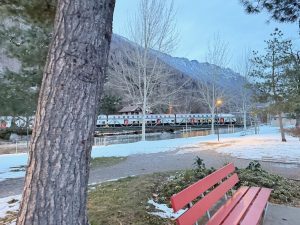
Obere Schleuse – A Lock, A Bridge and Stunning Views

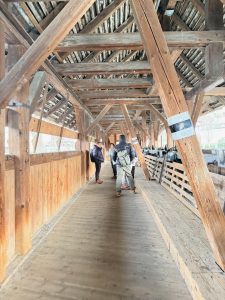
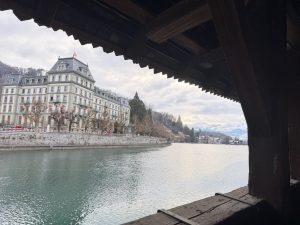
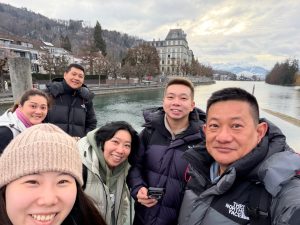
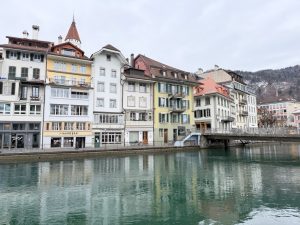
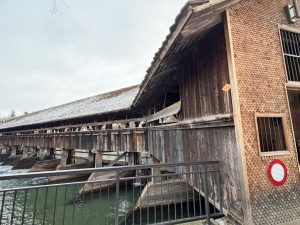
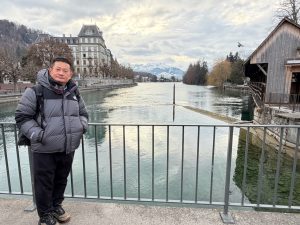
As our time in Thun is very limited, we focused on visiting Schloss Thun and the sights along the way. There are several ways of getting to the Castle from the train station; we could reach the Castle directly via the central artery of the town. However, we chose to do a slight detour via Obere Schleuse. Obere Schleuse is a lock built in 1723 to control the water level and prevent flooding, and it sits at the mouth of the River Aare. Today, it is still used as a lock on top of being a pedestrian bridge. Walking on the covered wooden bridge reminded me of the Chapel Bridge we saw in Luzern a few days ago, but without the painted murals. We could still see some pump mechanisms on the side of the bridge. What drew me to Obere Schleuse is the view it offers. Due to its location between the River Aare (the same river that runs to Bern and is the longest river in Switzerland at 295 km) and Lake Thun, Obere Schleuse offered us a fairy-tale-like view of the lake merging with the Swiss Alps, decorated with the neoclassical building style of Kunstmuseum in the foreground.

Kirchtreppe – The Link between Royalty and Commoner

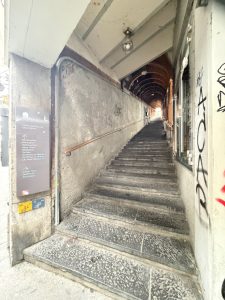
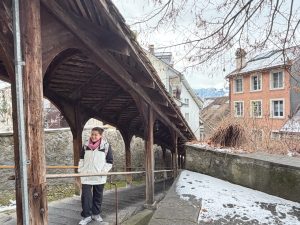
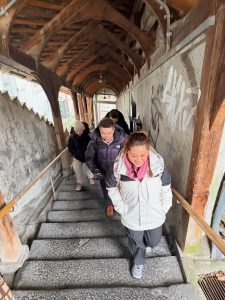
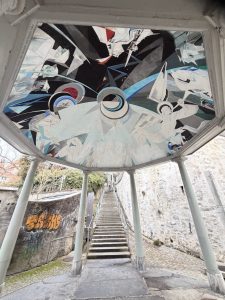
After a brief stop at Obere Schleuse, we made our way to Schloss Thun. Using the directions given by Google Maps, we walked along the banks of the River Aare and finally into the Altstadt Thun. Here we were looking for a set of stairs that would bring us uphill to the Castle. The entrance to Kirchtreppe merged with the shops on Obere Hauptgasse; if we were not looking for it, we would have thought it was just another shop front. Kirchtreppe is an old wooden covered staircase dating back to the 19th century with a total of 157 steps split into two sections by an octagonal pavilion. We welcomed the presence of the pavilion as it serves as a resting point for us. This pavilion didn’t offer any viewpoints, but the modern painting on the ceiling of angles and soldiers served to distract us from the climb. As we were climbing up the second section of the Kirchtreppe, we met a local who recommended that we take the elevator down to the main street after visiting the Castle (luckily, we heeded his advice; if not, we would have missed the rustic Thun old town).
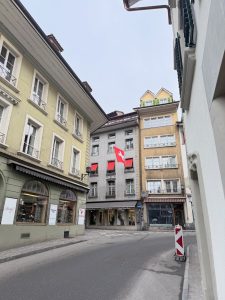
Stadtkirche Thun – The White Church on Top of Thun

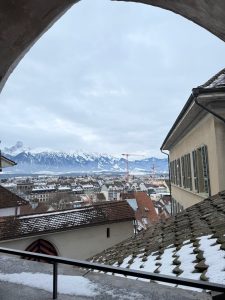
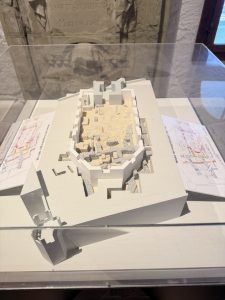
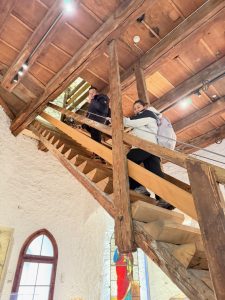
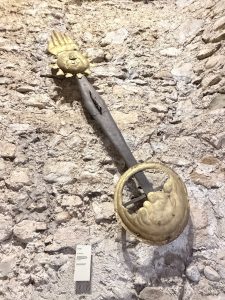
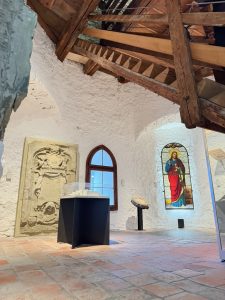
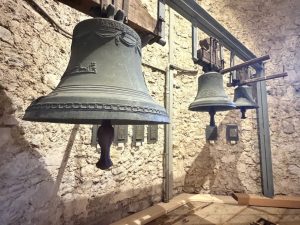
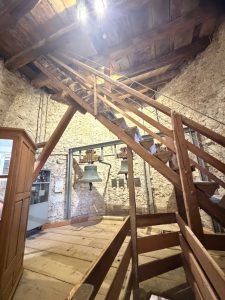
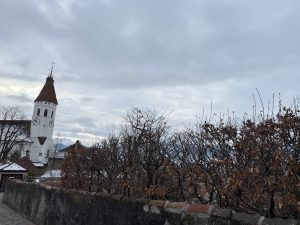
At the end of Kirchtreppe, we came to a road with the left leading to the Castle and the right leading to a church. We initially did not plan to visit the church. But since we were already here, we might as well pop in for a quick look. Stadtkirche Thun is the Reformed Church of Thun, with a tall single octagonal tower dating back to the 14th century in front of the church building. Like most of the churches we have seen in Switzerland, the Stadtkirche Thun has a plain facade. Before we could enter the church, we were captivated by the window that overlooks the roofs of the town and the stunning snowcapped mountainscape this window offers. We were glad we did the detour to visit the church. The interior of the church is simple but bright, thanks to the large windows that let in a lot of natural light. We did not see any high altars inside the church; instead, a table rests in the centre of a stage. As we were about to leave the church, we chanced upon a wooden door that stated “museum”. The museum in Stadtkirche Thun is situated on the lower floors of the clock tower, and the first floor is a relatively large room. Here we could see the octagonal shape of the room (that was how we knew we were in the clock tower), which was filled with a couple of stone tablets, a model of Stadtkirche Thun and a stained glass of Jesus. Seeing there wasn’t much going on here, we headed up the wooden staircases in the centre of the room. Emerging from the flight of stairs, we came to another room which exhibits bells and a golden clock hand that were used in the early days of the church. We also spotted a glass case with some mechanisms encased within. Due to the lack of English signage (and we were too lazy to whip out our phones for Google Translate), we can only assume this was the decommissioned clock mechanisms. There was another set of stairs also sitting in the centre of the room, like that one below, but the top of the staircase was bolted shut. We assumed this might lead to the clock mechanisms. Despite the absence of elaborate carvings and the smallish museum, I thought Stadtkirche Thun was worth a visit.

Schloss Thun – The Icon of Thun

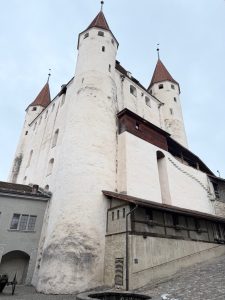
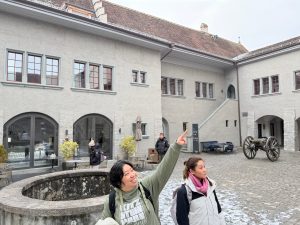
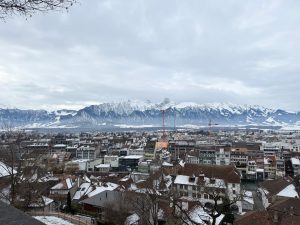
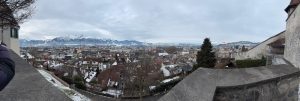
We headed to Schloss Thun after leaving the church, which is directly across on the other end of the road. The 800-year-old Castle was originally a fortress and a symbol of power over the region and local trading paths with its imposing tower. Schloss Thun has a very short opening hour during the winter months; in fact, the museum of the Castle is only open to visitors on Sundays between noon and 4 pm, which is outside the spare time we had. However, the castle grounds are open to the public. We were well aware that the Castle would not be open when we visited, and the purpose of visiting the Castle is for the panoramic views its terrace offers. Entering the main entrance of the Castle, we landed in a large courtyard. There are a couple of stairs that lead to the upper levels of the Castle. We headed to the terrace and were treated to a magnificent view of the town and the Swiss Alps. The view here is so vast and idyllic. Rows and rows of roofs partially covered with snow, with the river peeking out amongst them in the foreground, that seemed to give way to the forest, and eventually the Swiss Alps took over the land, and without hordes of tourists here, we felt the zen in the atmosphere. After taking our fair share of pictures of the picturesque view the terrace offers, we headed back to the old town via the elevator that was recommended to us earlier.
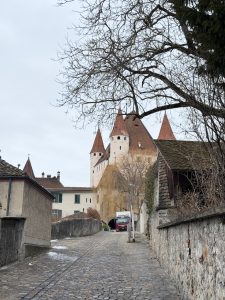
A Glimpse of Thun Old Town

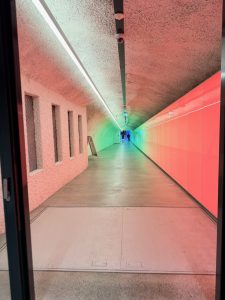
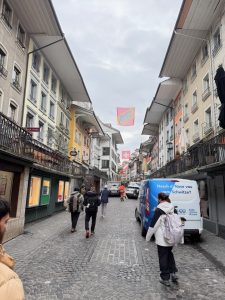
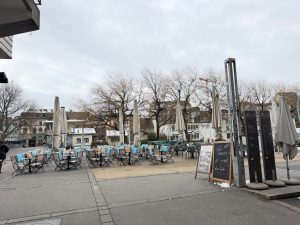
The lift sent us to basement 7 and into a carpark. We saw a door across the lift, which opens up to a neon coloured lighting tunnel. The tunnel led us to Obere Hauptgasse at the end, the main street in the heart of Altstadt Thun. Here, four-storey buildings with coloured facades lined up side by side along this main street. The lower floors of these buildings house shops, cafes and restaurants. The presence of the Bern Canton flag and Swiss flags overhead, hanging across buildings, constantly reminded us we were in Switzerland. In fact, I was joking with my friends that when posting a picture here, their friends will immediately know we were in Switzerland. We followed the directions by Google Maps and arrived at Mühleplatz, a square predominantly occupied by cafes and restaurants, after crossing one bridge. As it was still early, none of the business establishments in Mühleplatz was open. Passing the square, we followed the River Aare and headed to the train station via Frutigenstrasse. We made it in time to catch our 10.30 am train to Lauterbrunnen, where we got onto a bus bound for the Schilthorn valley station.
Schilthorn – The James Bond Mountain

Schilthorn is located in Lauterbrunnen. Being home to the world’s steepest cable car is the pull factor that drew me to include a visit to this mountain for our Switzerland trip, in addition to the cable car ride being covered in our Bernese Oberland Pass. The mountain got its fame for being the set location for the 1969 James Bond Movie – On Her Majesty’s Secret Service. To get up to Schilthorn from Thun, we took a train to Lauterbrunnen with a change in Interlaken OST, and transferred to Bus #141 to Stechelberg (generally the stop that everyone alights). The bus from Lauterbrunnen Bahnhof drove through Lauterbrunnen, where we got a good view of some of the 72 waterfalls, which were mostly frozen.
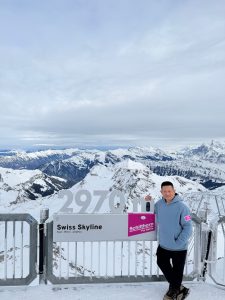
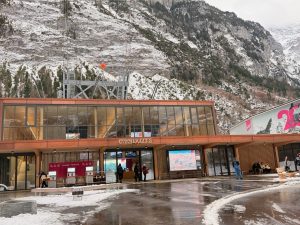
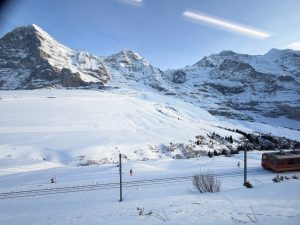
Getting to the peak of Schilthorn used to require four cable cars with a change of cable car in Grindelwald to Mürren, then onwards to Birg and Schilthorn summit (Piz Gloria), but things have changed since 2024. Under Schilthornbahn 20XX, there is now a direct connection between Stechelberg and Mürren, skipping Grindelwald. The redesigned cableway was divided into three Sections. Section 1 from Stechelberg and Mürren, Section 2 from Mürren to Brig, and the last section from Birg to Piz Gloria. Sections 1 and 2 have completed and opened since Nov 2024 and Dec 2025, respectively. The final section is still under construction and is scheduled to open on April 26. At the time of our visit, we were able to ride the new Sections 1 and 2 from Stechelberg to Birg. It is the Stechelberg to Mürren leg that has the steepest ropeway, with a gradient of almost 160% (about 58°). We did not feel the steepness during our ascent, but the steepness is felt on the return trip. We can immediately see (and feel) the steepness of the ropeway the moment the cable car makes its way past the last pylon and makes its way to the valley station. It felt like a roller coaster ride, but a lot gentler. I’d highly recommend people ride down to take the front window to feel the effect of the world’s steepest cable car. We were transported up to the summit at 2,970m in just 24 minutes.
Piz Gloria – Brunching in the 360° Revolving Restaurant

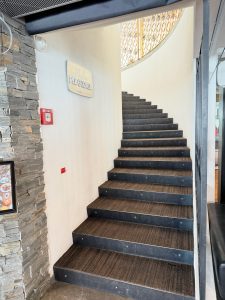
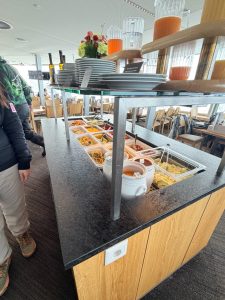
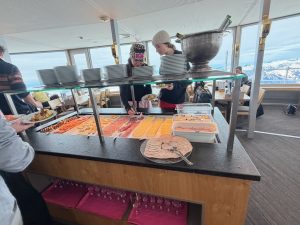
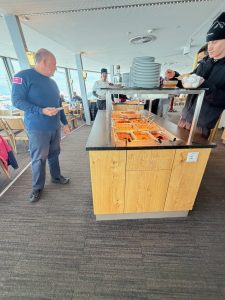
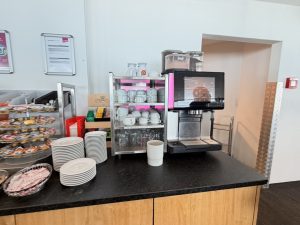
Piz Gloria is a two-storey building perched at 2,970m on the summit of Schilthorn. The first thing to do the moment we disembarked the cable car in Piz Gloria was to head to the 360° restaurant on the upper level for our buffet brunch that we booked for 12.30 pm. The brunch buffet costs CHF38 per person, which offered exceptional value for money (mains already cost between CHF26 and CHF30, excluding drinks), where we could help ourselves to unlimited servings. Once we made it to a flight of curved staircase, we were warmly welcomed by a staff member who happily showed us to the table he already reserved for us. Our table was placed by the large window panel, where we were treated to views of the 200 mountain peaks while we ate on the rotating platform. For those who might be concerned about the motion from the rotation, the rotation was so subtle that we did not feel it (if we did look out for the window). Speaking of food, several selections are waiting for us from the three buffet lines. The restaurant dedicated one line each for starters, cold food and warm food. For starters, we were given two soup choices, alongside the many types of bread. The cold buffet line features salads and cheese with a side of fruit in a takeaway cup. The warm food comprises pastas, sausages, stewed beef, and rosti. We could also help ourselves to the fruit juices, barista coffee and tea, which are also included in the buffet price. The buffet food was delicious and was kept topped up throughout our stay at the restaurant.
Skyline View Platform

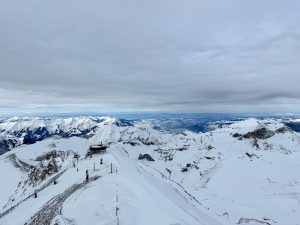
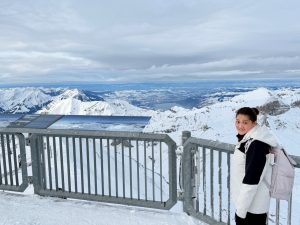
After brunch, we went to the panoramic viewing platform on the lower level of Piz Gloria. The Skyline View Platform offered us views of the same mountain ranges that we saw while we were having brunch in the 360° Restaurant. From here, we could see rows and rows of snow-capped mountain ranges that seemed to stretch forever into the horizon, as though each of the peaks was vying for our attention to take pictures with them. Standing out here on the platform looking out into the Swiss Alps can be very therapeutic. We even spotted Lake Thun on the Skyline View Platform. As we were taking pictures and immersing ourselves in the astonishing view of the mountain ranges, I spotted the Piz Gloria View Platform, sitting about one storey below the Skyline View Platform. To access the circular steel Piz Gloria View, we needed to walk on the mountain peak. The snow up here seemed thick, and we did not feel safe to get to the platform. We eventually gave up the idea of going to the Piz Gloria View platform.
Spy World

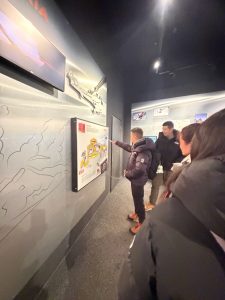
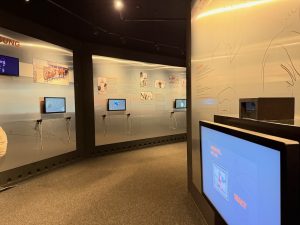
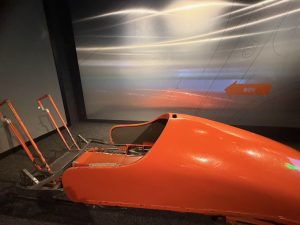
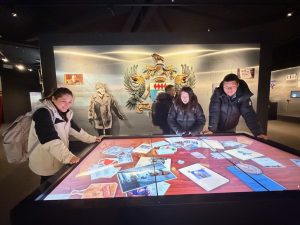
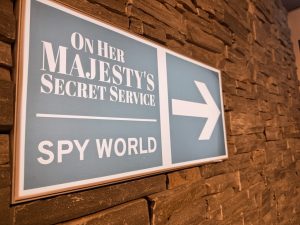
The only other thing left for us to do up here is to visit the Spy World. Located on the lower level of Piz Gloria, Spy World lives off the James Bond association from yesteryears that showcases some of the props that were used in the 1969 film. There is some information about the filming locations in Schilthorn and interactive games that attempt to keep us engaged. Perhaps the most interesting exhibit here is the helicopter simulator, where we could sit in the cockpit of the helicopter and fly it from Lauterbrunnen up to Schilthorn. We did not find the museum particularly interesting to visit. After spending some time shopping in the souvenir shop across, seeing that there was nothing else we could do up here, we headed down one cable car stop to Birg.
Birg – The Thrill Walk

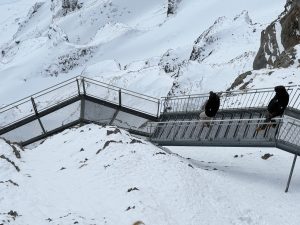
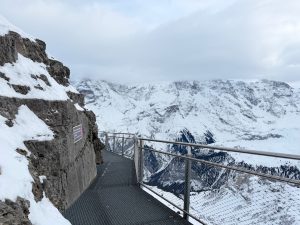
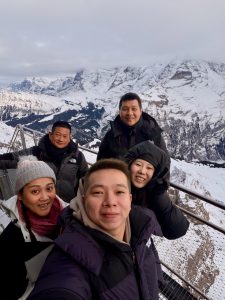
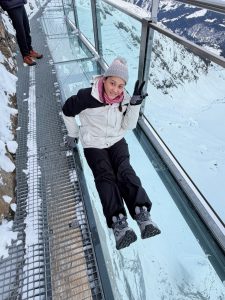
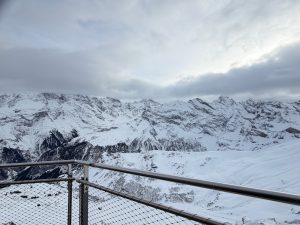
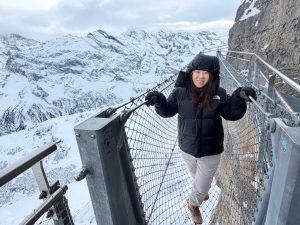
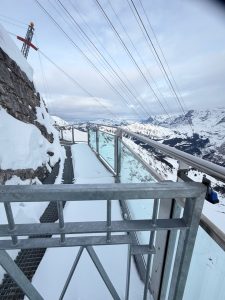
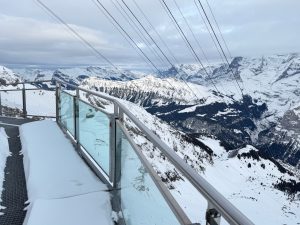
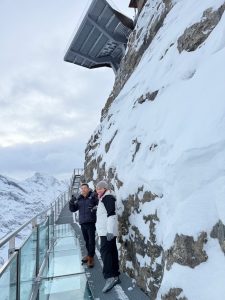
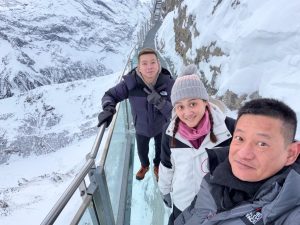
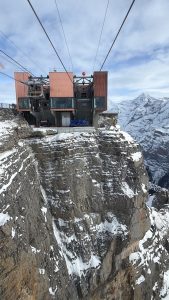
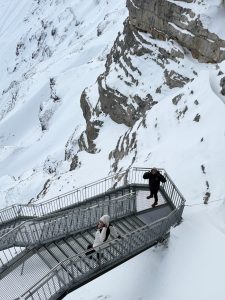
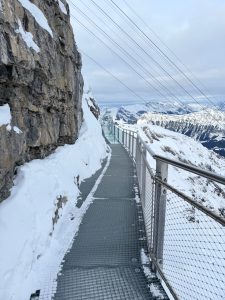
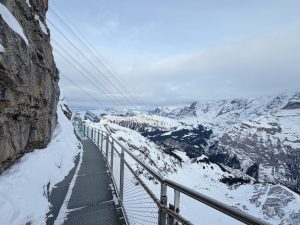
We stopped by Birg mainly for the thrill walk, which is a steel corridor that is being wedged into the mountain cliff. The Thrill Walk supposedly made us feel as if we were walking in thin air, looking out into mountain ranges ahead, above some 2,600m. There are two such walks in the region, one here and the other at Grindleward First, which is further from Interlaken. Since we are going up the Schilthorn, we took the one at Birg. Initially, we planned for 45 minutes at the Thrill Walk; however, when we arrived at the Thrill Walk, only a small section was opened, which only took us 8 minutes to complete a return trip. Despite the small section being opened, the thrill walk still allowed us to feel the thrill of walking on the side of the cliff, and the grated see-through flooring indeed made us feel as though we were walking on thin air. There is a section with tight ropes and a glass floor that gave us the additional kick of thrill. I thought this thrill walk was amazing, and the engineering that goes into wedging the platform onto the cliffside was incredible. I can imagine the amount of thrill one would get will double when the entire thrill walk opens.

Lauterbrunnen – The Valley of 72 Waterfalls

I originally planned to visit Lauterbrunnen, a Swiss mountain village that is famed for its stunning view of water pouring over the gigantic, near-vertical cliff. I made a last-minute insertion to stop by Lauterbrunnen this morning while taking the bus to Schilthornbahn through the village. The original plan was to start walking in the valley where Lauterbrunnen sits, from the train station to the self-serve cheese vending station some 1.6km outside of the village, and walk back to the station. Since we were passing by, we alighted at the stop near the cheese station, which saved us at least 20 mins of walking.
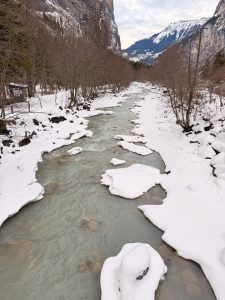
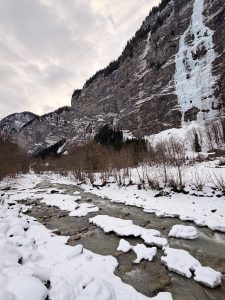
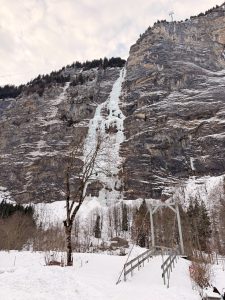
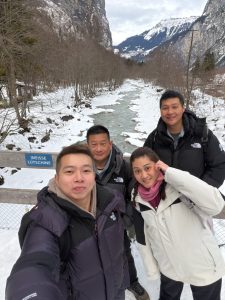
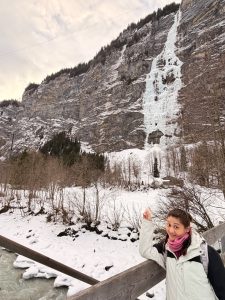
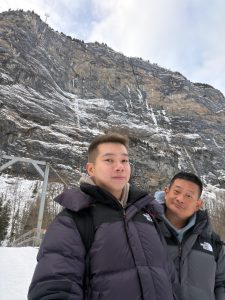
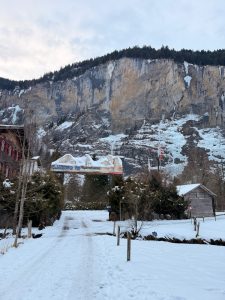
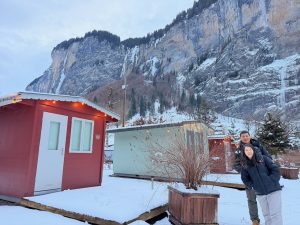
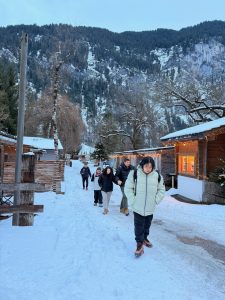
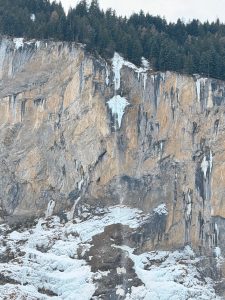
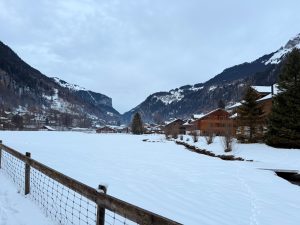
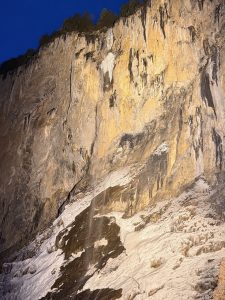
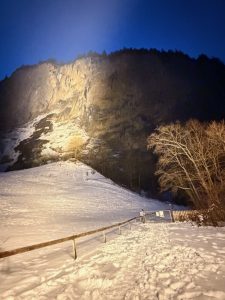
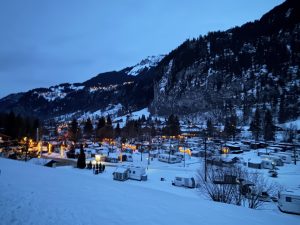
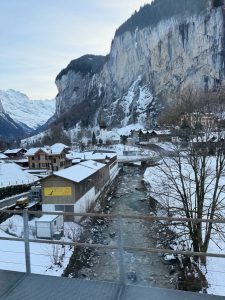
Lauterbrunnen is a village situated in a valley between Interlaken and the Jungfrau Massif, where it is one of the points to transfer to Jungfraujoch. It is famous for the 72 waterfalls and many hiking trails in the summer. I knew we had to cross the river, and I kept looking out to see if there were any bridges that we could use to cross the river on the bus. Finally, I saw one bridge over the river on Google Maps, and we alighted at the next stop, Schützenbach near Camping Jungfrau. We followed the directions on Google Maps and arrived at a wooden-covered pedestrian bridge, very much like the one we saw in Luzern and Thun, but on a smaller scale. Across the bridge, we entered Camping Jungfrau, which seems to cater to campervans. Despite looking small on the outside, these colourful wooden huts were furnished with a bed and a couch. I wanted to bring my friends ot the self-serve cheese vending machine, and we took a left turn at the main road from Camping Jungfrau that leads out of Lauterbrunnen village. This is when we saw the true beauty of Lauterbrunnen. With the majestic towering cliffs flanking on both sides, as if someone took a knife and chopped the mountains in two and placed Lauterbrunnen Village between the mountains. We could see remnants of waterfalls that would seem to flow from the mountain top, but mostly were all frozen except for one. I can imagine what a picturesque sight it would be in summer with waterfalls after waterfalls along this stretch of road. The only waterfall that remains flowing has a small stream of water falling over the top of the cliff; this is the Staubbach Falls. In summer, it would be dumping a massive amount of water over the very same cliff that we saw, but in winter, this mighty waterfall refuses to give in to the cold weather and continues to flow down the cliff.
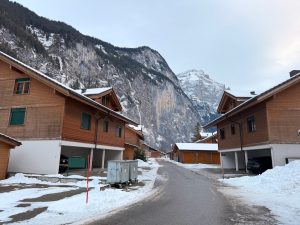
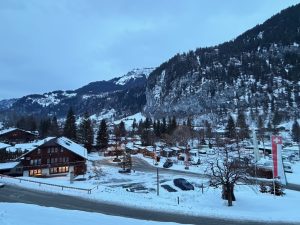
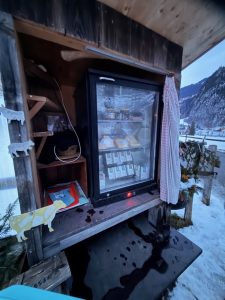
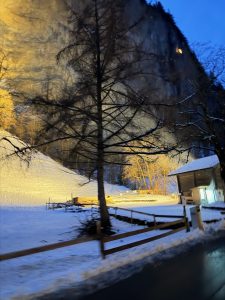
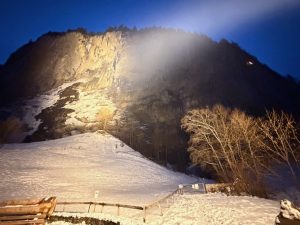
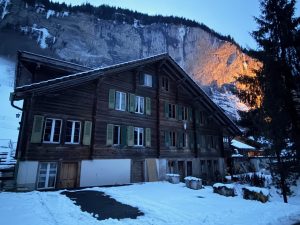
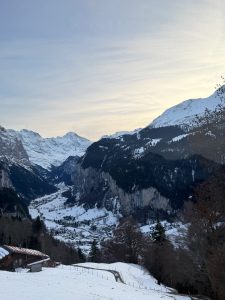
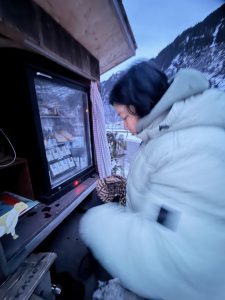
Along the road, we saw both sides covered in pure white snow, with a cattle barn and some goat farms. I can imagine these barn animals will be roaming freely within the premises of the farms, grazing on grass that is now covered with snow in summer. We chanced upon a cattle barn along the way, which we were very much interested in visiting, but gave up the idea as we did not see the owner for us to seek permission to enter. The self-service cheese station was not far from the cattle barn, about a 5-minute walk down the road. The unmanned self-service cheese station is essentially a fridge placed on the side of the road for locals and visitors to purchase farm-fresh cheese, using the honour system. What we did was to get the cheese we wanted from the fridge and place the stated cash amount into a wooden box next to it. My friend bought a block of cheese, which she subsequently said tasted delicious. After buying the cheese, we made a U-turn and walked back to Lauterbrunnen Bahnhof through Lauterbrunnen Village. Along the way back, we finally found out where the strong spotlight casting onto Staubbach Falls came from. The spotlight was mounted on top of the visitor centre to the Staubbach Falls hiking trail. This trail, which only opens during non-winter months, gave visitors an opportunity to walk behind the falls. Before my trip to Switzerland, one of my colleagues urged me to taste the Swiss milk, which tasted slightly sweeter, according to her. When we saw farm-fresh milk from the vending machine at the visitors centre, we had to get it. True to her words, the milk not only tasted fresh, but it was also slightly sweeter than what we had at home. We continued our walk along the road to Lauterbrunnen Bahnhof. Along the way, we were treated to scenes of towering cliffs with frozen waterfalls. As it was dusk, we were also treated to the tranquil view of the village slowly covered with warm yellow light set against the pure white snow. This is the scene that represents Switzerland in winter. We headed for the train station and took the next train back to Interlaken Ost after our brief stop at the supermarket opposite the train station. Despite not having much to do in Lauterbrunnen on a winter afternoon, we liked the tranquil walk along the way and the scenes of giant cliffs on both sides of the village.
Switzerland Day 4 (11 Jan 26) – Lucern: Mt Titlis – Our Little Adventure on the “Heimlifeisser” Summit

Mt Pilatus (2,132m), Mt Titlis (3,020m) and Mt Rigi (1,798m) are three mountains near Luzern that can be easily done as a day trip. Our Tell Pass, a Luzern regional pass, covers all three mountains. We opted for Mt Titlis as it is the tallest of the three nearby mountains and has a unique revolving cable car.

Mt. Titlis – The “Heimlifeisser” (Foggy) Summit

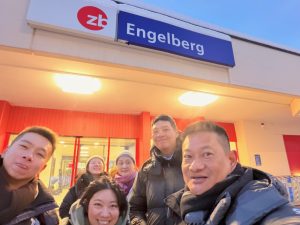
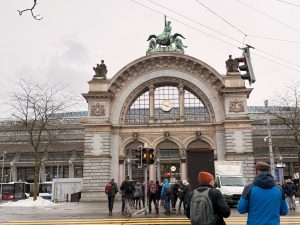
The locals nicknamed Mt Titlis the “Heimlifeisser” (meaning foggy) due to its height, with its peak being covered with clouds most of the time. We started our day by checking out of our hotel early in the morning and heading to the train station to leave our luggage at the lockers, as we would be catching the evening train to Interlaken. We spoke to the hotel reception staff last night and were told that the luggage lockers are on Platform 1 and Platform 13, the two ends of Luzern Bahnhof. A quick check on the SBB indicated that our train departs from Platform 12, and our evening train to Interlaken leaves from Platform 11. We headed to Platform 13, where we found lots of lockers of various sizes to store our luggage. where we. Luggage storage in Switzerland costs CHF12 for 6 hours, which would be collected upfront, with the access timing being paid when we collect our luggage in the evening. Getting to Titlis is easy; we took a train to Engelberg, where the cable car station is just a 5 min walk from the train station.
Riding the World’s First Rotating Cable Car to the top of Mt. Titlis

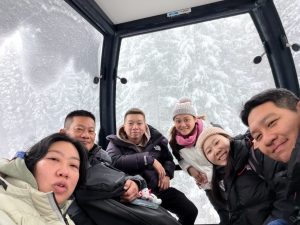
Once at the valley station, we redeemed a cable car ticket from the counter staff using our Tell Pass. Passing through a walkway towards the cable car ridge, we were met with hordes of skiers going up the mountain. There are so many people that there were four queues forming, and the escalators stopped working. Despite the crowd, we got to our first cable car in under 10 minutes. The first cable car is an eight-seater cable car that brought us up to 2,428m, through Trübsee and terminated at the Stand. As most of the skiers came in large groups, we got the whole cable car to ourselves. After the initial climb, the cable car inclines gradually above a pine tree forest. At Trübsee, as the cable car was pulling into the station, a local and her son hopped into our cable car. She was very friendly and recommended that we check out the frozen lake at Trübsee if we have the time later (we followed her recommendation, which led us to our little adventure hiking in the snow). The ride up to Stand took around 20 mins. At Stand, we followed the signs posted around that said “Titlis” and got the rotating cable car – The Rotair. This is one of the reasons that pulled us to visit Mt. Titlis, apart from the higher mountain peak, this mountain also features the world’s first rotating cable car. This ride took another 5 mins to reach the top. As the Rotair ascend another 1,000m up into the mountain, the cabin gently rotates without much motion being felt. It is this rotation that would give us a 360° view of the Swiss Alps without us having to move around inside the cabin. Having said that, it is a pity that the floor-to-ceiling glass of the cabin was covered in snow and had some heavy scratches, which prevented us from getting any views on our way up. Nonetheless, it was interesting to have ridden the world’s first (and only) rotating cable car.

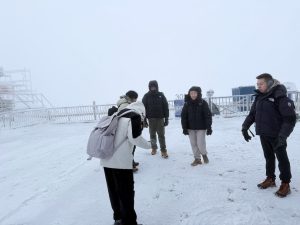
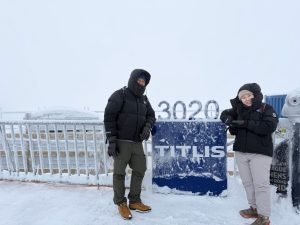
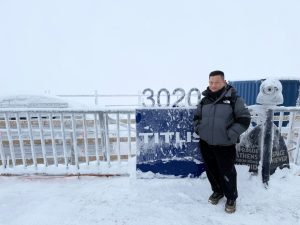
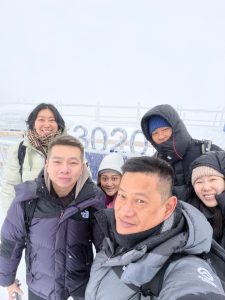
The Rotair pulled into the building at the peak of the mountain, and we were greeted by some friendly staff asking where we wanted to go. The first thing on our minds was to do the Cliff Walk and the Glacier Ice Flyer. The Cliff Walk is Europe’s highest suspension bridge, perched at 3,041m, the 100m long suspension bridge offers a view of the Swiss Alps and a 500m deep chasm. The bridge would then bring us to our next activity, the Ice Flyer, where we would take a chairlift over the glaciers with crevasses of up to 10m deep. Well, at least that was what we planned to do. Upon taking the elevator up to the top floor of the building, our hopes of experiencing the Cliff Walk and Ice Flyer were dashed. On the top floor, we saw a make-shift metal container tunnel with a side opening that leads to the viewing platform, but access to the other end of the tunnel was sealed with tape. At this point, we thought we might have gotten the access to the Cliff Walk wrong and headed out to the panorama terrace. We were again disappointed as we were not able to see the mountains or anything else due to the clouds. The construction of the Titlis tower also did not add to the beauty of the place. The whole small terrace felt like a construction site. All we could do up here was to take some pictures with the “3,020m” logo.

We headed down to the cafe for a light meal and some coffee, and also to find out where the entrance to the Cliff Walk is. The cafe staff informed us that the Cliff Walk was closed due to a snowstorm last night. After eating, the clouds seemed to dissipate, and we were able to see the grandeur of the Swiss Alps.

Titlis Glacier Cave

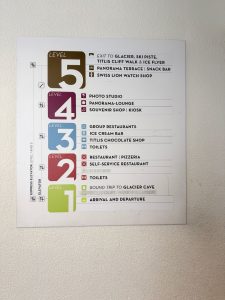
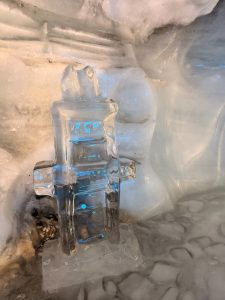
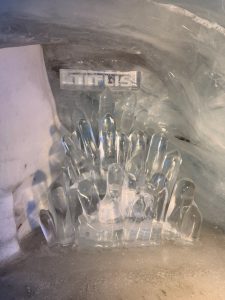
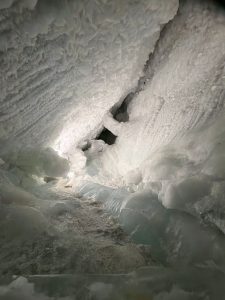
The only thing to do up here, other than going out to the panorama terrace, is to visit the Titlis Glacier Cave, on the third floor of the building. Passing through the entrance, the Titlis Glacier Cave, formed 5,000 years ago, is an ice tunnel about 10m under the glacier on top of the mountain. Though we were in an icy cave, the floor did not feel slippery. Inside the cave, we saw the thick ice formation on the ceiling and the walls. Other than the ice tunnel, there are displays of things such as cowbells, wooden cows and even a bottle of Gin being frozen inside blocks of clear ice. On top of these frozen things, there are some ice sculptures, such as the Titlis Logo and a robot. The biggest ice sculpture was an ice chair. Other than that, I thought the Glacier Cave was quite boring. We spent less than 10 mins inside, with most of the time used to take pictures.

Sledging Fun at Trübsee Snow Park

After the Glacier cave, we headed out to the panorama terrace once again to see if the Cliff Walk was open. But to our disappointment, it remains closed (for the rest of the day). Seeing there was nothing else we could do here, we took the cable cars down Trübsee, the centre of action on Mt. Titlis.

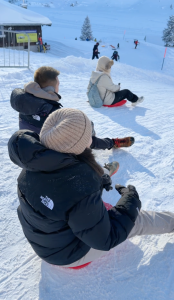
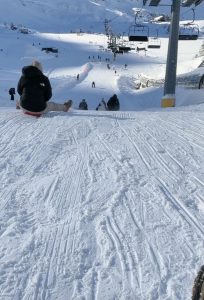
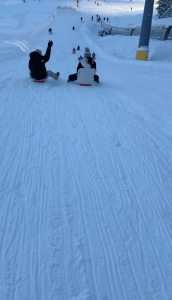
There is a snow fun park at Trübsee, where we can do some sledging. The signs to the snow fun park were not very well marked, but we found it eventually. Titlis placed some plastic sledges at the exit of the tunnel to the park, where visitors can help themselves to this equipment at no charge. We first used the “beginner” type, which is essentially flat pieces of plastic. We tried sledging in Innsbruck last year when we were in Austria, and are quite excited to introduce our friends to this activity. Unlike the slopes in Austria, the slope here is longer. As we sledge down the slope, the slope starts with a steeper gradient and eventually tapers off to a flat surface. The initial drop was exciting and certainly generated more speed. As our feet were on the snowy surface, we generated a lot of snow backsplashes that affected our sight. But that does not affect us having fun sledging. My first-timer friends like the adrenaline rush from the sledge, and we ended up spending one hour having fun sledging. In between, we encouraged our friends to try the “more advanced” sledge, the upright ones. They were initially sceptical but eventually got used to it.

Trübsee to Untertrübsee – Our Little Adventure on Mt. Titlis

After spending an hour sledging, we had some time before our train ride back to Interlaken. At this point, I suggested to my friends that we take a walk to the frozen lake that the local lady told us about earlier. The walk was relatively easy, mostly on flat ground. We followed the path on the higher grounds, occasionally littered with signs that pointed out where we were. We were expecting to see a sign that pointed to “Lake Trübsee” later on the road. We saw people skiing at a distance and a ski lift operating, and occasionally a structure or two popping out along the path covered in thick snow. The Rotair that we were on this morning was constantly in our sight, assuring us the peak of Mt. Titlis was still with us. Walking on the snow with the towering mountains felt like hiking in Antarctica, but with more people around. We were not worried about getting lost, as long as we still saw people walking our way and there were still signs around that pointed the direction. Halfway on our walk, we came across a sign that said “Trübsee 🚠 – 35mins; Untertrübsee 🚠 – 20 mins”. This is when I opened up Google Maps and realised that we were walking on the perimeter of Lake Trübsee, and the area on the lower elevation is the lake. However, there was no way we could reach the lake surface. Seeing the sign, I thought that since the Untertrübsee cable car station takes a shorter time to reach, it must be closer to us. We followed the sign and headed towards Untertrübsee station. As we were walking on the path, which turned from a flat surface to a gradient. This is when we saw the poles that we were following lined up to the top of a hill, and my friends remarked, “Do we have to go all the way up?” At this point, we were already 10 minutes into the walk, which meant we just had to walk another 10 minutes to reach the cable car station. We persisted and made our climb up a small hill. The climb technically wasn’t difficult, but the thick snow and the high altitude (at 1,900m asl) made it challenging for us. We finally reached the top of the hill, and the path went downwards from here. It took us 10 minutes to climb up the hill, and we did not see any signs since the crossroads 10 minutes ago, plus there were no cable car stations around. We suspected we might be on the wrong path, after all, if there is a cable car station, the structure would be large and would be full of people. After a 5-minute walk, I saw a cableway at a distance and a blue box coming up the mountain attached to it. I announced to my friends the direction to the cable car station. Most of them did not see it initially, but as we got closer, they eventually did. We finally reached the Untertrübsee cable car station, which is just a small hut, and we were the only ones here. This cable car station was automated. The cable car was small, despite stating a maximum capacity of eight, and with the six of us, we already felt the tightness. The cable car ride started with a glide over the forested mountains filled with pine trees, but the real fun comes after the last pylon in the forest, where the cable car drops down some 500 m over the cliff surface. We can’t help but admire the ingenuity of the Swiss cable car engineering.

At the base station of the Älplerseil Untertrübsee-Trübsee cableway, we thought we would see the large cable car station that we had taken earlier in the morning up Mt. Titlis. But what greeted us was a snowy path that led to a large hut. We did not see any large cable car station or train station. We headed to the hut (which is a restaurant and a rest place for skiers) and asked for directions. To our horror, we were far from being close to the end of our walk. The staff at the restaurant gave us directions to the train station and told us, “It is just a 40 min walk”. Well, since we were already here, we can’t possibly go back up and walk another 1 hour to the Trübsee cable station. The only way was forward. As we were resting outside the restaurant, we bumped into the lady we met in the cable car earlier this morning. She asked if we had found the lake and admired us for making it all the way here, as there are few non-skiers here (later, we found out what she meant). The start of the walk was relatively straightforward and flat. But this is when we realised that we were actually walking on a ski slope. As this was a ski slope, it meant we would be going downhill most of the time. We were well aware that we were walking on a ski slope and stuck to the side of the path as much as we could so as not to be a nuisance and get in the way of the skiers (I’ll be super annoyed if I were skiing and some tourists just walk in the middle of the ski track). Although it was a downhill path, the walk was equally challenging as we had to avoid the skiers and at times crossed the ski path (when it was clear), at the same time looking for a solid snow path so our feet wouldn’t sink too deep into the snow. The scenery was stunning as we were walking down: the snow-covered forest on one side, the afternoon sun rays hitting the top of the Swiss Alps on the other side, and the snow-covered buildings below looked like some Lego models. Alas, we were too busy focusing on each step we took and being mindful not to impede on the skiers that we did not have the time to admire the breathtaking scenery that was before our eyes. It took us 45 mins to reach the bottom of the slope and the end of our little adventure on Mt. Titlis. Time to head back to Luzern for our train to Interlaken.

Onward to Interlaken

Due to our little adventure on Mt. Titlis, we were late for our original connection between Luzern and Interlaken. Fortunately, there is another Luzern-Interlaken Express train service plying between the two cities, and we ended up taking the train 1 hour later than our original schedule. After collecting our luggage, since we still had some time before our train ride to Interlaken, we bought some to-go dinner at the train station to eat on board. Whilst on the train, we sat on the right side of the train as advised by the Luzern tourism website for some great views of Lake Luzern. However, we can’t see anything out of the large windows due to the darkness outside and the reflection of the lights inside the train. We used this 1-hour travel time to rest after a long hike on Mt. Titlis. Upon reaching Interlaken, our hotel had transport waiting for us at the train station. We checked into the hotel and rested for the night to recover the energy we would need to explore the Jungfrau region tomorrow.
Switzerland Day 3 (10 Jan 26) – Luzern: Mt. Stoos & Luzern Altstadt – From Riding the Steepest Funicular to Exploring the Historic Centre

We visited the first mountain of our trip, Mt. Stoos, today. Going up the mountain on the world’s steepest funicular and coming down the mountain on another cable that would take us to another town near Luzern, where we took a cruise on Lake Luzern back to the city. We spent the afternoon exploring Luzern Altstadt and finished up our day with a visit to the Lion monument.

Snow Day on Mt. Stoos

Getting to the Stoosbahn from Luzern was very straightforward. We took a 40-minute train ride to Schwyz station, followed by a 20 min bus ride on Bus #501 from the bus stop at the side of the station. The bus ride to Stoosbahn was very frequent and timed with the arrival of the trains from Luzern. The total travel time took us about 1½ hours. All transportation, including the funicular and cable car rides, is included in our 2-day CHF120 Tell Pass regional card (Half-Fare Card does not give us additional discounts for the pass).

Stoosbahn – The Steepest Funicular on Earth

The purpose of coming to Mt. Stoos is to take the world’s steepest funicular, with an inclination of up to 47.7°. The Stoosbahn valley station is just steps away from the bus stop; one will not be able to miss the two bright yellow rimmed glass cubes sitting at the bottom of the mountain. If confused, just follow the crowd as we did. All the people who alighted at this stop come for the Stoosbahn. With our digital Tell Pass at hand, we approached the ticketing counter and were issued a card to access all the rides in Mt. Stoos. The Stoosbahn runs every 30 mins up and down the mountain. The Stoosbahn consists of four circular dome carriages, with the carriage nearest to the entrance of the valley station (eventually the bottommost carriage when the Stoosbahn scales up the mountain) being the one with the best view. As we climb up the mountain, the circular carriages will stack on top of each other according to the gradient of the tracks. What is fascinating is that we remain upright all the time without feeling how much the funicular has tilted.
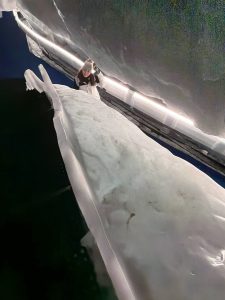
As the funicular pulled out of the station, the first thing that greeted us was the frozen River Muota below. At this point, the gradient was still quite gentle, almost level to the ground. As soon as we crossed the frozen river, the gradient quickly tilted to about 20°. But we did not feel any changes in the gradient inside the funicular due to the incredible engineering of the funicular. Soon, we came into the first of the three tunnels that the funicular would pass through. Coming out of the first tunnel, the view of the Stoosbahn gave way to a white, icy mountain cliffside. The distance between the first and second tunnel was not far; we were already entering the second tunnel before the first one left our sight. Emerging from the second tunnel, the Stoosbahn reaches a maximum steepness of 47.7°, and we began to see the neighbouring mountains standing mightily before our eyes. The third tunnel is the longest of all three tunnels. Coming out of the third tunnel, the Stoosbahn started to level to around 10° gradient and eventually levelled up to flatness as we were approaching the peak station. Amazingly, the Stoosbahn brought us up 744m on the surface of the mountain in merely 6 minutes. What an engineering marvel!
Stoos Village – Going Round and Round in the Village

Coming out of the Stoosbahn peak station, we arrived at the Stoos village nestled about 1,300m up Mt. Stoos in the Alpine landscape of Central Switzerland. Stoos Village is the heart and centre of all activities on Mt. Stoos, where most amenities like restaurants, ski rentals, convenient shops and holiday chalets are located within mere steps from the Stoosbahn station. There is even a hotel next to the funicular station. Stoos Village is also home to numerous ski slopes for all levels of skiers. We originally planned to do a short hike at the top of Fronalpstock peak at 1,900m and reach the viewpoint where we would get a view of Lake Luzern below. After which, we would sledge down 500m in height from the peak to the middle station for a few runs. The first order of things is to find the chairlift that would bring us to the top of Fronalpstock. As we were walking around, looking for the chairlift, we were also playing in the snow. It was snowing, and we were excited to see snow (we came from a country that never snows). We had fun walking in the snowy trails, throwing snowballs at each other and admiring the snowy scenery that was so rare for us to see. In fact, we did not realise that we kept walking up and down the same path from the Stoosbahn station to where we thought the chairlift to Fronalpstock was. After spending some time walking up and down the same path, we decided to seek some directions from the ski rental. We were fortunate to have met a very friendly and welcoming lady at the ski rental. She told us that the chairlifts to Fronalpstock are not operational today due to the strong winds, but recommended that we go to the Snow Fun Park for some sledging.

From Stoosbahns station, we seem to spot a “shortcut” to the Snow Fun Park. Little did we know the so-called shortcut had our legs sink into calf-deep snow and down a short snowy slope. We barely had any experience walking in snow (the last experience we had walking in snow was from our Austrian trip one year ago), and bashed through the thick snowy grounds, using houses in between and footprints that others had left behind to guide us to the Snow Fun Park. It took us about 20 minutes to reach the Snow Fun Park. Here we saw a few people playing sledging, and that really got our hopes up. As we were walking around to see where to rent a sledge (we did not want to walk all the way back to the ski rental by the Stoosbahn station), we spotted the chairlifts to Fronalpstock, and we actually saw people getting onto them. This means that we get to resume our plan. As we walked closer, a staff member at the chairlift approached us and smashed our hopes. He told us that the chairlift is only operational to the middle station and closed to the top station due to the winds. Seeing that there was nothing we could do, we resumed looking for a place to rent a sledge. We found a shop further down the path, but the only shopkeeper was busy helping two customers with their skis. As we were hungry, we headed for lunch and to return to the rental sledges later.

After lunch, we attempted to return to the shop, but the shopkeeper was again busy with yet another set of customers. As it was about time for us to descend the mountain to catch the ferry back to Luzern, we walked further down the path to the Morschach cableway station. This part of Stoos Village felt tranquil as it saw little footfall. We used the time while waiting for the cable car to explore this part of Stoos Village. The snow-covered forest and a cliffside with a viewpoint that gave us a partial view of Lake Luzern made this part of the Stoos Village feel magical and tranquil. There was no laughter and shouting of the people sledging and skiing; all we heard was the sound of our feet squashing onto the snow below. The snowy weather added a little more magic to this area. Soon it was time for us take the Morschach cableway down to the valley station.

Cruising Lake Luzern: An Alternate Way of Travelling to Luzern

To return to Luzern, we could either backtrack and take the Stoosbahn and train option or take the cable car and ferry options. One of the activities to do in Luzern is to take a cruise on Lake Luzern. To maximise our experience (and the Tell Pass value), I planned for us to take the cruise back to Luzern. To get to the cruise pier, we took the Morschach cableway from Stoos Village (a 25 min walk from the Stoosbahn peak station), and changed to Bus #504 at the Morschach cableway valley station to Brunnen See Schiffstation. From there, the pier is a 3 min walk across the road. As the bus drove around the windy mountain road to the shore of Lake Luzern, we were treated to stunning views of the lake. I saw a boat coming into Brunnen and commented to my friends that this might be the ferry that we would be taking.

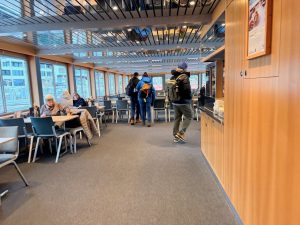
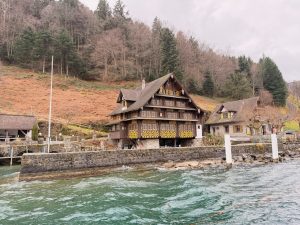
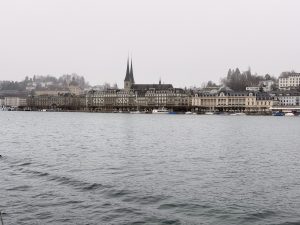
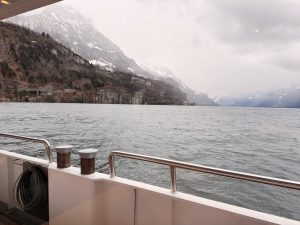
We were pleasantly surprised that the Swiss timed their public transport with perfect precision to the next transport. We made it in time to catch the ferry back to Luzern. With our Tell Pass at hand, we merely show our QR code to the ferry staff at the pier. The ferry ride back to Luzern took around 1½ hours. As the ferry slowly made its way on Lake Luzern, we saw dramatic mountains that merged into the lake, making them look like we were cruising in fjords. Cruising on Lake Luzern truly made us realise how large the lake is; we felt like a dwarf walking amongst the giants. The cruise stopped by a few other piers to pick up and disembark passengers. We occasionally head out to the outdoor decks to enjoy the breeze and the snow falling from the sky. I thought this cruise option also gave us some time to relax and recharge for the exploration of Luzern Altstadt later. As the cruise was nearing Luzern, the shallower depth of this part of the lake allowed us to see through to the lake floor.

Luzern Altstadt: Walking into History

We originally wanted to join the complementary city tour of Luzern. However, the tour starts at 11 pm, which would mess up our plans for today. Thus, we opted to explore the old town on our own.

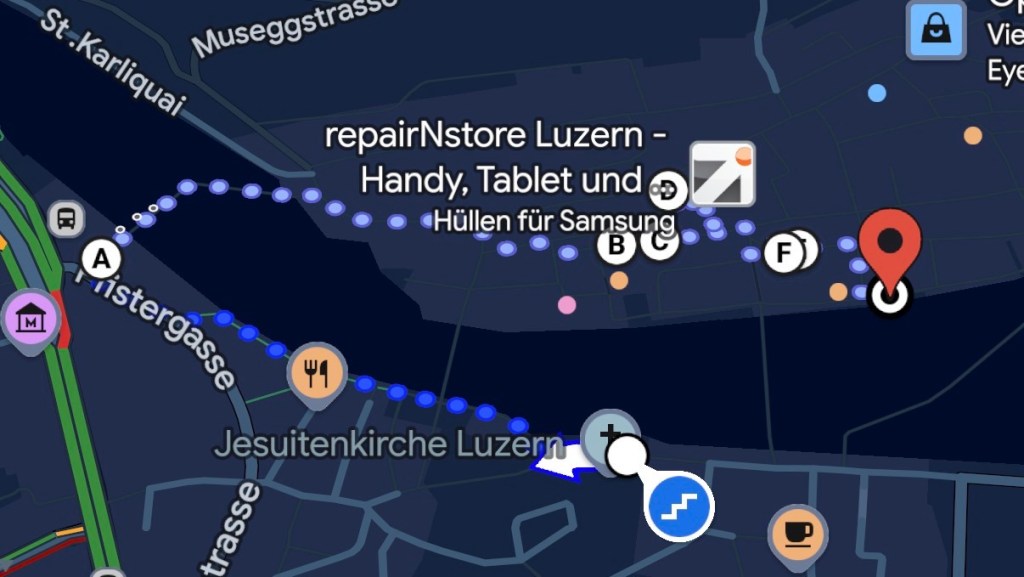
The sights we visited for our tour of Luzern Altstadt

Jesuitenkirche – The first Baroque Church in Luzern

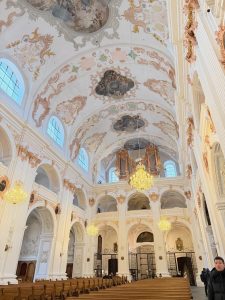
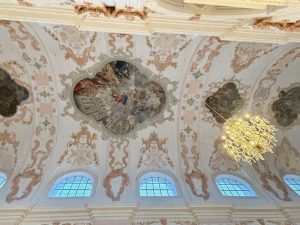
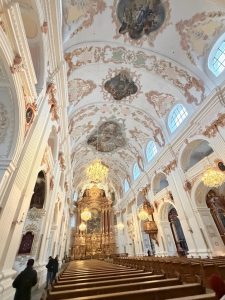
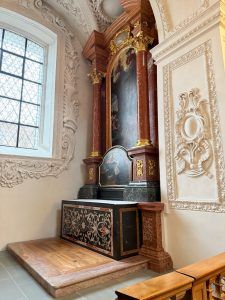
As the Jesuitenkirche is only very close to the ferry pier, it made sense for us to start our city walk from the church. The Jesuitenkirche was completed in 1677 and was originally intended to function as a college. However, as construction started, it was decided to build it into a church instead. With the two green-domed towers built beside the central building, one cannot miss the Jesuitenkirche when walking around Luzern Bahnhof or the Altstadt. Do not be deceived by the plain facade of the church; the beauty of the church lies in its interior. Instead of sitting in an elaborate square with a large foreyard, the church sits quietly on the riverside with a small church front real estate. Entering the church, we were immediately wowed by the complex and intricate baroque decor from the ceiling to the walls to the high altar. Other than the frescos painted on the white ceiling, what caught my eye was the intricate floral patterns that beautified the ceiling. The touch of the crystal chandeliers hanging from the ceiling gave it an elegant look. The walls of the church are predominantly white, which makes the church look clean and pure. At the end of the church sits the high altar. With marble columns and tiles and the gold trimmings, the high altar looked dignified. The painting of the Virgin Mary and Baby Jesus coming from the heavens to save people from their sufferings was vividly painted.

Spreuerbrücke – The Younger Brother of the Chapel Bridge

We left the church and walked along the riverbank, past the medieval riverside houses that are now mostly shops and restaurants, and we came to the Spreuerbrücke. Unlike the bigger Chapel Bridge, Spreuerbrücke receives little attention. The smaller wooden bridge was constructed in the 13th century to connect the mill on the right of the River Reuss to the mills in the middle of the river. The bridge only connected to the Altstadt on the left bank in 1408. Walking on Spreuerbrücke, we could see the resemblance to the Chapel Bridge. Similar to the bigger Chapel Bridge, Spreuerbrücke also has painted panels on the inner triangular frames of the roof and features a smaller tower at the side. Unlike the Chapel Bridge, this tower is connected to the bridge instead of rising from the riverbed. There are wooden benches on Spreuerbrücke for pedestrians to rest or sit and absorb the tranquillity that this part of the town brings. Crossing the Spreuerbrücke is a smaller bridge; our starting point, Luzern Altstadt, is at the other end of the bridge.

Luzern Altstadt – The Painted Buildings that Tell a Story

One of the highlights of Luzern Altstadt is the paintings on the walls of some of the medieval buildings. These murals recount stories of the city’s past, culture, trade traditions, and legends. They also served as advertisements for the former guild houses or commemorated important historical events. Entering the old town from Spreuerbrücke, we arrived at Mühlenplatz. This is where we saw one of the many painted houses. As this part of the old town is close to the mill, the painting on the buildings depicts mills in action. Walking on the cobblestone grounds of the Altstadt reminded us of the time we were in Italy. We were keeping a lookout for the murals on the walls of the buildings, other than looking into what the shops around had to offer. Not long after, we arrived at Weinmarkt. This part of the city has been the city’s food market, operating on Tuesdays and Saturdays, and it is also the venue for Christmas markets. The buildings around Weinmarkt were once guild halls, such as the Hotel des Balances, which had paintings of hunters. Sitting in the centre of Weinmarkt is the fountain Weinmarkt-Brunnen. The buildings around here feature the painting of the biblical feast of Canaan.

Our feet led us to the Rathaus Stadt Luzern, between the river and Weinmarkt. One cannot miss this old stone building with an attached clock tower. As we were walking around Luzern Altstadt, looking out for the next mural on the wall, we unknowingly came to Hirschenplatz. There are two buildings with paintings here, with one depicting the Battle of Dornach, and the other is merely an advertisement mural selling jewellery. Our walk through the old town ended with a visit to Fritschibrunnen, a colourful 12th-century fountain decorated with carnival friezes and masks. Luzern old town is very compact and can be completed in 2 hours at most. After our walk through Luzern Altstadt, we took a bus near our hotel for dinner. After all, our final destination is next to our hotel.

Lion Monument

After dinner, we walked to the Lion Monument, our last sight of the day. The Lion Monument depicts a lion lying on the ground with a shield beside it. The monument is carved into the side of the cliff to commemorate the Swiss guardsmen who died defending the country during the French Revolution. Usually, there would be a fountain in front of the monument, but it was dry during our visit due to maintenance work. We headed back to our hotel to rest for the night after visiting the Lion Monument, after all, we have our second of the six mountains that we will be going on this trip.
Switzerland Day 2 (9 Jan 26) – Bern: Jewels of the Captial – From Altstadt to Gurten Kulm

Today is the day we truly start exploring Switzerland (yesterday was a preview). Bern is a small city and is extremely walkable, with most of the attractions in the old town. This was where we spent most of our time today. I planned to use the morning to explore the city, after which we would return to the hotel and pick up our luggage for our train to Luzern later in the afternoon. As the sights in Bern are under 7 minutes from each other, we had additional time to visit the bear park and took an excursion slightly outside the city to Guten Kulm.

Bern Alstadt – The Icons of the City

We originally wanted to head to the train station in the morning to deposit our luggage in one of the lockers at the train station, in case we were short on time. Afterall, I planned to start our Bern Altstadt walk from the train station. However, after our first night in Bern, we realised that the town is actually very compact, and that we would have the time to pick up our luggage after finishing all the sights in Bern. Since our hotel is just one tram stop away from Zytglogge, it only makes sense for us to start our old town walk from the clock tower.
The route of our visit in Altstadt Bern today

Zytglogge – The Iconic Clock Tower of Bern

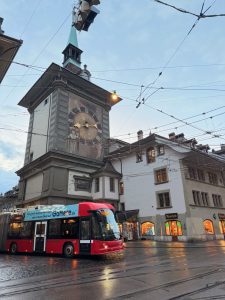
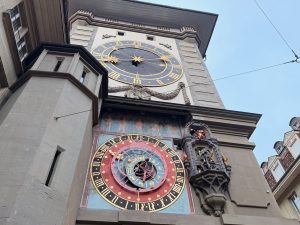
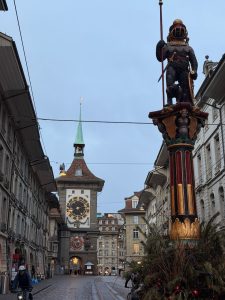
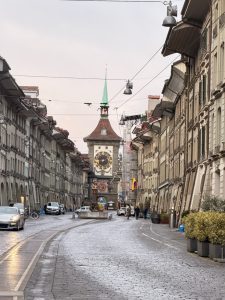
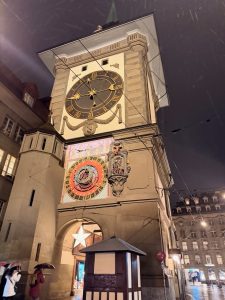
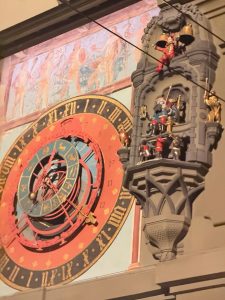
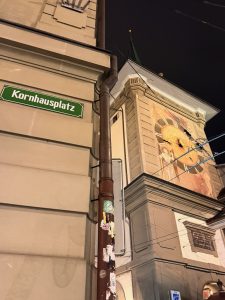
After checking out and depositing our luggage at the concierge of the hotel, we took a tram for one stop to Zytglogge, the icon of Bern. Every picture of Bern we saw online features the Zytglogge standing in the middle of medieval buildings. Zytglogge was built in the early 1200s as a gate tower of the city’s western fortifications. The tower was then converted to a women’s prison in the mid-1300s when the city expanded further. A fire in the 1400s destroyed the tower completely and was rebuilt into a clock tower in the 15th century, ranking as one of Switzerland’s oldest. The Zytglogge’s iconic astronomical clock was installed in 1530, allowing the clock to tell astronomical information such as the position of the sun, moon, and zodiac signs, in addition to the time. The city had a scheduled guided tour of the interiors of the Zytglogge, where visitors will be brought up to the tower and get a better understanding of the workings of the clocks inside the tower. As we were pressed for time, we did not join the tour. Nonetheless, we found some interesting exhibits, along with explanations of the workings of the tower and how to read the astronomical clock at the bottom of the tower.

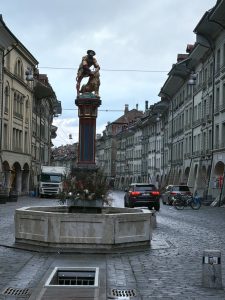
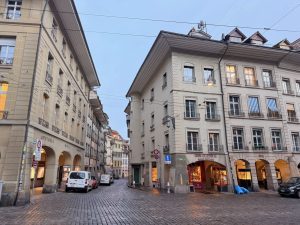
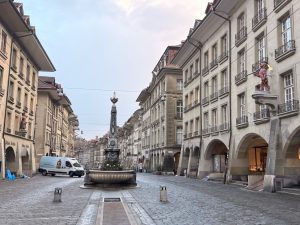
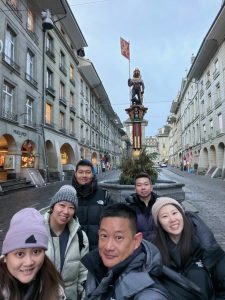
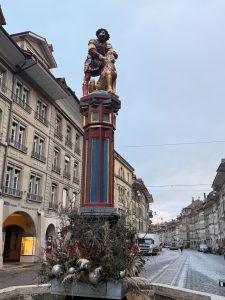
After visiting the Zytglogge, we walked along the street away from the main street towards the bridge that connects the old town to the bear park. We spotted the Zähringerbrunnen a few steps from Zytglogge. The Zähringerbrunnen is a monument honouring the city’s founder, depicting a standing bear with a shield and flag and a bear cub standing between its legs. As we walked further down the street of Kramgrasse, heading to our next stop of Münsterplatform, we were immersed in the medieval buildings that stood the test of time. These buildings, now being converted to shops, have a pseudo cellar opening in front, which seems to lead underground (we later got to know that these are actually basement access, as some businesses used this space to set up shop). However, most of the shops we saw were still closed as we were pretty early. As we walked past the post office, we urged our friend to buy a postcard and mail it there to prevent her fate three years ago, when she did not receive any of the postcards she sent from our Italian trip. We told her that by passing her postcards directly to the post office staff, she would definitely receive her postcards.

Rathausplatz – the Town Hall & the Church

Walking amongst the medieval buildings seems to transport us back in time. As we were walking on Kramgrasse, I suddenly spotted a green building that seemed important. A quick check on Google Maps reveals this to be the Berner Rathaus. We did a quick detour into the alleyway that led to the Berner Rathaus and arrived at Rathausplatz. Other than the Rathaus, Rathausplatz is also home to the Kirche St. Peter & Paul and Vennerbrunnen. The three-storey sandstone square Berner Rathaus has a rather simple facade. We would have missed it if not for the two flights of stairs that led to the main entrance on the second level. The main entrance has a protruding structure that the staircases lead to. This structure is adorned with two female statues and a clock with golden arms. Looking up close, the Berner Rathaus has a row of 26 wooden shields, representing the 26 former districts of the canton, lined just below its red tiled roof on the main facade. It is a pity that the Berner Rathaus is closed to the public; if not, we would love to take a look inside.

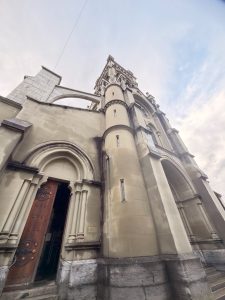
Next to the Berner Rathaus is the Kirche St. Peter & Paul. The sandstone church, built in the 1850s, is the city’s first church and has a single bell tower in front of it. The flying buttresses that seem to support the walls of the church from the outside reminded me of the Notre Dame de Paris. We wanted to visit the interior of the church. However, as we walked through the main wooden doors to the church, there was another closed metal gate that prevented us from venturing further beyond the foyer of the church. We can only catch a glimpse of the church’s interior through the gate. The interior looked simple and gloomy due to the natural colour of the materials used to construct the church. Seeing that we could not do much here, we headed outside and continued our exploration of the city. As we walked past the Rathausplatz, I spotted a fountain with a statue of a soldier sitting in one corner of the square. This is the Vennerbrunnen, which was installed in 1542, and with the buildings it stood in front of, standing here felt like we were being transported back in medieval times.

Münsterplatform – Balcony of Bern

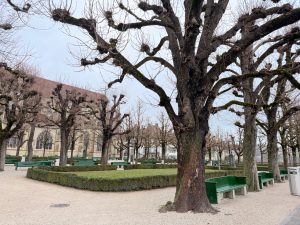
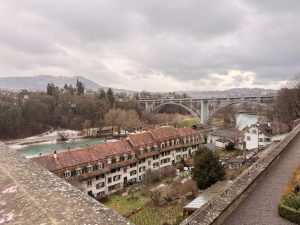
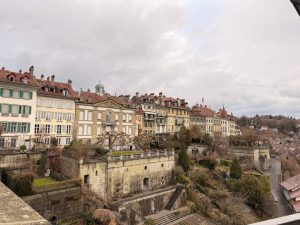
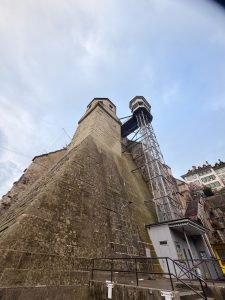
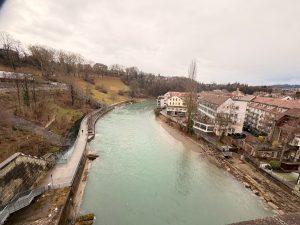
As we left Rathausplatz, wanting to continue our walk along Kramgrasse, my friend suddenly wanted to visit the toilet. A quick Google map showed the nearest toilet is at Münsterplatform. Since we were going to visit this place later, I did a quick switch of the sequence of our visit and headed for the Münsterplatform instead. The Münsterplatform is a rectangular park that sits 14m above the River Aare, offering us a view of the river and the nearby neighbourhood, as well as the Alps. The foundation of the platform was laid in 1334, and the construction of the walls was completed in 1514. Until 1531, the platform served as a cemetery before it was converted into a park. Today, the Münsterplatform is planted with chestnut trees with benches for locals and visitors to relax and take in the beautiful views of the surroundings. From the platform, we could see the river and Kirchenfeldbrücke, the bridge that links Altstadt Bern to the south of the city. After taking our fair share of pictures, we headed to the elevator, the Mattelift to the Mattequartier below.

Mattequartier – The Riverfront Medieval District

Exiting the lift, we spotted a booth with a lady sitting inside, collecting the CHF1.50 for the use of the lift. As my friends were looking for small change for the use of the lift, I checked with the friendly lady if the cost of using the Mattelift was covered under the Bern Welcome card. We were pleasantly surprised that it is covered. Bidding farewell to the friendly lady, we walked towards the River Aare, just mere minutes away from the Mattelift. We saw a bridge that we could get closer to the River Aare next to the artificial channel that was constructed in 1360 to divert the river water into one of the three watermills. However, upon reaching the structure, we found that it was closed to the public, meaning we were not able to get closer to the River Aare. We headed back to the main streets of Matterquartier and headed to the Bear Park. The Mattequartier is medieval Bern’s smallest neighbourhood, mainly housing workshops and mercantile activities. Walking in this peaceful neighbourhood allowed us to appreciate the beautiful medieval buildings and the sheer height of the Münsterplatform.
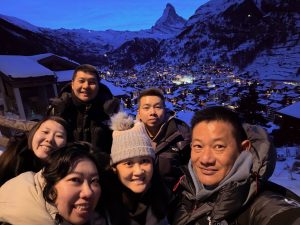
The Bear Park – Home of the Canton’s Mascots

Since we were already at the foot of Nydeggbrücke, the bridge that links Altstadt Bern to the eastern neighbourhood where the Bear Park is located, we made a quick pit stop at the park, knowing that we would not see any bears in the bear park as they would be hibernating for the winter. There are two pits in the centre where the bears would play during non-hibernation months. On top of that, there seem to be some cordoned-off areas at the side of the park next to the bank of the river. This would be the pen of the individual bears. After visiting the (empty) bear park, seeing that we have sufficient time to go a little further before our train to Luzern later in the afternoon, we decided to head outside the city to the nearest hill, Gurten Kulm, via bus.

Berner Münster – The Cathedral of Bern

As the bus we took requires us to change to another line in the old town, we decided to make a quick stop in the old town to finish off the other two sights we wanted to visit. Our first stop is the Berner Münster. The Gothic-style Berner Münster started its constructionin 1421 and was completed in 1893. With its 100m tall tower, this cathedral is the tallest in Switzerland. A climb to the top of the tower would give us a great view of the city. However, as we were walking up to the cathedral’s main entrance, we saw visitors going up to it and turning away. We half suspected the cathedral might not be open since we saw some scaffolding on its side as we were walking up to it. To our dismay, the cathedral was bolted shut. It is a waste that the church only opened at noon, meaning we could either loiter around to wait for it to open or miss the tower climb and move on to our next destination. Since we were already deciding to head to Gurten Kulm, we gave the tower climb a miss. And since the cathedral is closed, we could only see it from the outside and take some pictures. After taking pictures, we headed to our final sight in Bern Altstadt.
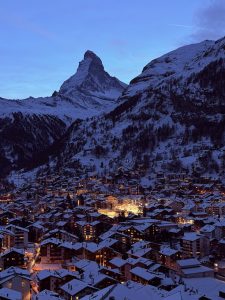
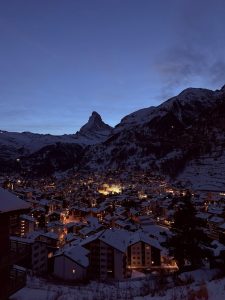
Bundeshaus – The Place where important decisions are made

Our next stop is to visit the Bundeshaus (Parliament Building). Initially, I wanted to visit the interior of the building after our interesting experience in the Austrian Parliament in Vienna last year. The Swiss Parliament Building offers guided tours of the building in English and Dutch to visitors. However, there wasn’t any English guided tour on the day of our visit. We could only see the building from the outside. It felt pointless to see this beautiful building without seeing its interior or taking the guided tour to understand the workings of the Swiss parliament. We did not stay here for too long and headed to a nearby cafe for a coffee break before taking a bus to Gurten Kulm.

Gurten Kulm – The Roof of Bern

Getting to the top of the 858m Gurten Kulm from Bern Altstadt was very easy. There are multiple buses that run to the funicular station at the base of the hill, and the best thing is that the bus rides and the Gurtenbahn are included in the Bern Welcome Card. The fastest way for us to get to the hill, as recommended by Google Maps, was to take Bus #19 from the bus stop near the Parliament Building and change to Bus #16 with an 8 min walk to the funicular station. As we alighted from Bus #16, we followed a sign at the bus stop that pointed us to the funicular station. Little did we know that we had to take a short 400m climb up the hill through a “forested” track to an inconspicuous platform that sticks out in the middle of the track. What Google Maps led us to was Grünenboden, the mid-station for the funicular ride, instead of the valley station. At Grünenboden, we saw the Gurtenbahn coming our way, but did not stop. We later realised that we were supposed to press the top button on a box at the station for the Gurtenbahn to stop at the mid-station. Luckily, the next Gurtenbahn came 10 minutes later.

As the Gurtenbahn climbed up the hill, we saw more of the City of Bern. We were sure we would get a panoramic view of the city. Soon, we found ourselves on top of Gurten Kulm. Exiting the station, we came to a crossroad and a map of the attractions on Guten Kulm. There is a hotel, a restaurant and even a miniature train ride up here. Attracted by a Tower structure, Gurten Aussichtsturm, we made our way to the tower. Entry to the metallic 25m Gurten Aussichtsturm was free. A 121-step spiral staircase in the core of the open tower took us 5 mins to climb up. As we were climbing up the Gurten Aussichtsturm, the cold wind made climbing the tower difficult. But that does not deter us from reaching the observation deck at 22m of the tower. From here, we were treated to a panoramic view of Bern. The city of Bern suddenly looked small, but the view was great! We could see the River Aare that snakes around the Altstadt and even the mountains behind Bern. The only issue we had was the occasional strong winter wind that blows on the tower, shaking the tower so much that we felt it could topple anytime (it is perfectly safe), or we could be blown away by the wind. Despite the cold wind, we enjoyed the view the Gurten Aussichtsturm offers and were glad we made it up the tower. After spending 10 minutes up here taking pictures and soaking in the panoramic view of the city, we decided to head down the tower. However, with the constant wind blowing, we had to wait for the wind to turn weaker (so it wouldn’t shake the tower so much) to descend the tower.

As it was near the time for our train ride to Luzern (after catering time for us to get back to our hotel to pick up our luggage and travel time to Bern Bahnhof), we had to return to Bern. Before heading down to the valley station by Gurtenbahn, we had time to take a wefie at the pavilion. After descending from Gurten Kulm, we took Bus #9, which directly brought us to our hotel to pick up our luggage.

Onward to Luzern

Time was a little tight, but we made it in time to pick up our luggage and took a tram to Bern Bahnhof to board our 2 pm train to our next city, Luzern. The train ride from Bern to Luzern was also rather uneventful, and we eventually reached Luzern after a 1-hour train ride.

Arrival at Luzern

After arriving in Luzern, the first thing to do was to orient ourselves and get on the correct bus to our hotel. Like Bern, Luzern also offers guest cards to visitors staying in Luzern, which gives us complimentary public transport in the city. As we already bought the Tell Pass, which also includes all transport in and around the city, we did not have to bother too much about the transport cards. The bus ride to our hotel took under 10 mins. After checking into our rooms and settling down a little, we headed out to the city to buy breakfast for tomorrow and to hunt for dinner. Some sights in Luzern never close, such as the old town and the icon of the city, the Chapel Bridge. As the Chapel Bridge is near our hotel, we made it our only stop in Luzern for the evening before hunting for dinner.

Kapellbrücke – Chapel Bridge

No visit to Luzern is complete without a walk on the iconic 204m Chapel Bridge, Europe’s oldest covered bridge. The Chapel Bridge was originally built in 1365 to link the old town to the new town and features paintings on triangular panels installed as part of the structure of the bridge. These paintings were created during the Counter-Reformation, featuring scenes that promote the Catholic Church. However, the wooden-covered pedestrian bridge was almost burnt down in 1993, destroying â…” of its interior paintings. Equally iconic as the Chapel Bridge, the Water Tower that protrudes out of the River Reuss is what gave the Chapel Bridge its identity. The 34 m octagonal water tower was built around 1300 as part of the city wall and used as an archive, treasury, prison and torture chamber. It is a shame that the Water Tower is not open to public visits; we would have gotten a good view of the Chapel Bridge and Luzern from the top of the tower. Walking on the Chapel Bridge is like walking in a piece of history, and offers a good view of the River Reuss and the riverside buildings on both sides of the bank. The paintings on the bridge brought a sense of uniqueness and history to the bridge. It is a pity that the explanations are only in German.

After crossing the bridge to the “new town”, we headed back to the old town side via Rathaussteg, an iron pedestrian bridge near the Chapel Bridge. The Rathaussteg offered us a good view of the entire Chapel Bridge and made a good spot for us to take pictures of the entire Chapel Bridge. We scouted the restaurants on the riverside and found one that offered good and reasonably priced food (we would expect the food near the river to be of “tourist” prices). The service at the restaurant was great, and the food was delicious. After a hearty meal, we headed to a nearby supermarket to get breakfast for tomorrow before returning to our hotel to rest for the night. After all, we would need the energy to have fun in our first mountain exursion, Mt. Stoos, in Switzerland.

Switzerland Day 1 (8 Jan 26) – Bern: Into Switzerland – The Plaground of Europe

Switzerland, the neutral Central European nation, has been a bucket list for most of us. When we speak about Switzerland, the first thing that comes to our minds is the snow-covered alpine towns. As this is the first time any of us has travelled to Switzerland, we stuck to the “traditional” tourist towns and cities. We will start our journey from Geneva and end our journey in the same city. For the next 13 days, we will be basing ourselves in five cities (Bern, Luzern, Interlaken, Zermatt and Zurich) and visit six mountains.

Our Journey through Switzerland for the next 13 days

Our Swiss journey began with a 17-hour flight from Singapore with a 2½-hour transit in Jeddah. After deplaning, we followed the signs hanging from the ceiling of Geneva airport, which pointed us to “arrivals”. As we neared the immigration counters, we saw two queues forming. We joined the longer “international traveller” queue, which was piling up and didn’t seem to move at all (the other queue was for EU and Swiss citizens). We only saw immigration officers stationed near the immigration counters directing people to the correct line. We were glad we did not join the shorter queue, as it might be back to the start of the queue for us. Before arriving in Switzerland, we were expected to register our biometric data with the Entry/Exit System. However, it does seem to be the case today. Instead of directing us to the registration machines, we were told to queue for manual immigration. I asked a staff member at immigration and was told that the EES was in effect at Geneva airport, but they shut it down due to the long line. Despite the long queue for manual immigration clearance, we were not complaining. At least we get our “final” Switzerland border passport stamp (before it’s phased out).

After spending about 1 hour in line at immigration (a stark contrast to our experience at Vienna airport just 1 year ago), we headed to the carousel to collect our luggage. The brief moment of peace after clearing immigration ended at the luggage carousels. Geneva Airport felt like a fish market, where people were frantically looking for their carousel and luggage. We eventually found our carousel and collected our luggage. We headed to the train station, located in a separate but linked building on the left side of the arrivals hall, for our train to Bern. Rising from our lesson learnt last year in Vienna, where we spent 1 hour sitting around waiting for our train to the city, we decided not to purchase the train tickets in advance, as we had no idea how long immigration would take. I am glad we did not purchase train tickets in advance, as the immigration process in Geneva took longer than I planned for. We bought our tickets at the SBB counters for the 4.25 pm train to Bern. After getting the tickets, I realised the staff sold us a day ticket instead of a point-to-point ticket, which costs CHF 10 more, even with our Half Fare card. We should have used the machines or the app to get our point-to-point ticket. There was an hour before our ride, where we used the time to shop in the supermarket at the train station while waiting for our train.

Train to Bern

The uneventful train ride to Bern took about 1½ hours. Trains from Geneva Airport to Bern had only a small luggage rack, suitable only for cabin-sized luggage. We found seats on the lower floor of the double-decker train. Due to a lack of luggage space for larger bags, we had to place our luggage at our seats, trying not to obstruct the aisle. The train got crowded at Geneva, and it was becoming embarrassing that we were taking up additional space and partly obstructing the walkway. Fortunately, the Swiss were accommodating and understanding. Instead of making noise, they seem to understand our situation and work around our issues. As it was getting dark, we could not see much of the scenery between Geneva Airport and Bern.

Arrival at Bern

As guests of Bern, we were given unlimited rides on local public transport via the Bern app (available for download here). As we did not receive any codes before our arrival, I read that we could get free transport to our hotel using our hotel booking and prepared it in case of an inspection on the tram. Swiss public transport uses the honour system, where drivers do not check for tickets. It is easy to find the tram station coming out from the underground Bern Bahnhof, but we were confused about the direction the tram would travel. We initially stood at the tram stop, only to find that the trams were going in the opposite direction. Upon realising that we were on the wrong side, we hurried to the opposite stop and hopped onto the tram on the other side of the road. The tram ride from Bern train station to our hotel took about 6 minutes, with very frequent trams running between the two stops. At our hotel, the staff gave us a code to activate our guest card in the Bern App, which officially granted us complimentary transport within the city.

After settling down in our rooms, we headed out to the edge of the old town for dinner, which is only one stop across the river near our hotel. Walking on the Kornhausbrücke bridge over the River Aare in the northern part of Bern, we were treated to the night skyline of the city, spotting the Berner Munster towering over the city. Incidentally, we walked past the Bern Opera House, at the edge of the city, by the River Aare. As we waited for our dinner, I spotted the Zytgloggeturm right outside the McDonald’s where we were having dinner. I told my friends this was one of the world’s oldest working astronomical clocks, a sight we will see tomorrow when we officially tour the city.

The clock, despite being built in the early 13th century, still shines with its colourful facade even at night. There are two faces to the clock: one that tells time, facing Main Street, and the other, with both the clock and the astronomical face, showing the day of the year and aligning with the star signs. We were fortunate to witness the striking of the bell at the hour, during which we spotted the mechanical movements of the puppets installed on the astronomical side of the clock. As it was getting late and we were tired after a full day of travelling, we headed back to the hotel and rested for the night. We will see more of the clock (and the city) tomorrow before heading to Luzern.

Macau Day 4 (28 Dec 25): Last Minute Shopping & Departing Macau

This is our final day in Macau, and since our flight departs from Hong Kong International Airport in the evening, we had the flexibility to relax in the hotel or head out for some last-minute shopping. Since our pre-booked bus to Hong Kong is at 3.30 pm, we had a good 3 hours before we needed to leave for the Hong Kong-Zhuhai-Macau Bridge (HZMB) border to catch our bus to Hong Kong International Airport.

Last Minute Shopping at Senado Square

After breakfast, my sister wanted to head out for some last-minute shopping. To make the most of the time we had, we went to Senado Square, which is a stone’s throw from our hotel. Senado Square seemed to be more crowded than on the second day we were here. We spent the remaining 3 hours we had shopping for souvenirs and clothing in Senado Square, making it a great spot for both shopping and sightseeing.

Macau to Hong Kong Airport

As we flew out of Hong Kong International Airport, we added an additional hour to the airport from Macau. Departing from Macau via bus, only a few airlines allow check-in at the HZMB border. As the airline we are flying is not on this list, we were required to bring our luggage to Hong Kong International Airport and check in at the Sky Pier Terminal (Click here for more information on the airlines eligible for check-in at the HZMB border). Like our entry to Macau, we cleared immigration at the HZMB border relatively fast. Soon, we found ourselves in the immigration area of the border control building, looking for the bus to Hong Kong International Airport. However, after we had found our bus, we were told we were late for check-in. Turns out that we needed to check in for our bus ride 45 minutes before our scheduled departure (we were at the bus at 3.15 pm for our 3.30 pm departure). Fortunately, the next bus departs at 4 pm, 30 minutes after our original bus departs. The helpful staff quickly helped us change our bus tickets and took our luggage. At the Hong Kong International Airport Sky Pier Terminal, check-in was a breeze. After we checked in for our flight and obtained our boarding pass, we were given instructions on where to clear immigration and where to collect our airport tax refund since we technically did not enter Hong Kong.

Afterthought

Macau can be an easy day trip from Hong Kong, provided one leaves early and returns late at night. Given our two full days, there are still areas that we planned for but did not cover. For a slower pace and fuller Macau experience, I thought three full days would be ideal. There are activities such as Go-karting and the Panda conservation centre that are suitable for families. In terms of where to stay, I thought Cotai is suitable for those who are attracted to the glitz and glamour, as well as luxury shopping and casino gaming. For those who want a more authentic Macau experience that is close to the historical attractions, the Macau Peninsula is a great option. In terms of food, I thought Macau’s was not as good as Hong Kong’s. Half the time, we had trouble finding decent food. Perhaps we limited ourselves to Macau Peninsula, where the food is more influenced by Mainland China, or perhaps we did not bother Googling for better restaurants.

Macau Day 3 (27 Dec 25): Coloane Village & Cotai Strip – From the Laidback Village to the Flashy Las Vegas of the East

Having visited the sights on Macau Peninsula yesterday, today we are focused on the sights on the other island of Macau. We started our day by visiting the A-Ma temple, then headed to the south of Macau, and concluded the day with a visit to the Cotai Strip.

A-Ma Temple – The Temple that gave Macau its Name

Since we are heading south, it makes sense to visit A-Ma Temple, which is on the southern part of the Macau Peninsula, about a 10-minute bus ride from our hotel. It was believed that the A-Ma Temple existed before Macau and that the territory’s name derives from the temple, which literally means “Bay of A-Ma.” Built in 1488, the temple is the oldest in Macau. The purpose of our visit to A-Ma Temple is to offer our prayers to the deities installed here for protection. The main deity worshipped at A-Ma Temple is the Sea Goddess, Mazu. There are technically four shrines in the temple grounds – two on the ground level and two perched on top of the hill. We first headed to the largest temple structure in A-Ma Temple, Zhengjue Chanlin, which is on the right as we enter. From here, we bought some incense and were guided through the prayer sequence. After going through one round of prayer, we visited the Prayer Hall, the small shrine right in front of the stone arch, to offer our prayers to another Mazu statue installed here.

It is time to climb the stairs up the hill to offer our prayers in the remaining two shrines. Perched on the slope, a flight of stairs behind the Prayer Hall is the Benevolent Hall. This hall is believed to be the first and the original shrine in A-Ma Temple. This shrine is even smaller than the Prayer Hall just below, and it also only has the statue of Mazu. The next shrine, the Hall of Guanyin, is perched on the highest point of the temple grounds. This is a relatively large and open shrine that worships the Goddess of Mercy, Guanyin. Apart from offering our prayers here, the “balcony” of this shrine provided a good view of the surroundings. After visiting the four shrines, we headed back to Zhengjiao Chanlin to burn joss paper, where the temple staff offered a prayer for us. Before heading out, we spotted a large rock next to the stone arches. The boat carved into this rock is believed to be the one that brought Mazu to Macau.

Coloane Village – The Quaint Village

After offering our prayers at A-Ma Temple, we continued our sightseeing. The bus ride from A-Ma Temple to Coloane Village took about 30 minutes. Coloane Village is a laid-back village that was once a pirate hideout due to its many sheltered coastlines. Today, the sleepy village is a great place to escape the tourist-packed areas of Macau. This is also where we found the original Lord Stow Eggtart store, which is significantly less crowded than the one in Taipa.

Chapel of St. Francis Xavier

Walking along the coastal road in Coloane Village, our first stop was the Chapel of St. Francis Xavier. Built in 1928, the church is famed for its charming Baroque-style architecture. Adorned in bright yellow colour, this church reminds me of St. Dominic’s Church we visited in Senado Square yesterday. The interior of the church was modest, with only four rows of prayer benches. The square in front of the church is worth a visit. The monument, non-functional water fountains, and Portuguese-style surrounding buildings, the square seems to transport one to an idyllic European Village.

Kun Iam Temple

Our next destination is the Kun Iam Temple, situated 3 minutes’ walk down the lane behind the Chapel of St. Francis Xavier. The temple was built in 1800 and is one of the four temples in Coloane village. The temple was modest in size and could easily be missed if one was not looking for it. Unlike the temples we have visited, the Kun Iam Temple does not have elaborate signage pointing to it. Moreover, its entrance is not on the main thoroughfare. Though modest in size, the Kun Iam Temple, dedicated to the Goddess of Mercy, Guanyin, is also home to several other deities. A helpful temple staff member guided my sibling in the prayer sequence. There is a small gift shop on the side of Kun Iam Temple, where we spent some time looking through the cute Chinese ornaments on sale.

Walking around Coloane Village

Seeing that there wasn’t much to see around Coloane Village, we decided to grab lunch at one of the two eateries near the bus stop where we alighted. We walked along the same coastal road, Avenida de Cinco de Outubro, that we walked on earlier. Here we found more Portuguese-style buildings, painted in bright, cheerful colours. Of these buildings, the Coloane Village Library stood out the most owing to its bright light yellow colour. Walking on Avenida de Cinco de Outubro, with the sea on one side, felt especially relaxing.

The Cotai Strip – Las Vegas of the East

No trip to Macau is complete without visiting the Vegas of the East along Cotai Strip, which is home to numerous large casinos built on reclaimed land. Cotai Strip got its name simply by combining the names of the two areas it was sandwiched between, Coloane and Taipa.

The Big Three of Cotai – The Parisian, The Venetian & The Londoner

There are two bus stops that buses to Coloane Village pull into. The first one is the one we alighted at, in front of Lord Stow’s Bakery, and the other is slightly further across the road, about a 2-minute walk away. We took the bus to Cotai Strip from the farther bus stop, since everyone leaving the village at the nearer stop, making the chance of finding a seat on the bus slim. The bus ride from Coloane Village to Cotai took about 20 minutes. We started our Cotai Strip visit at the Parisian (on the same side as the bus stop we alighted from) and ended at the Londoner, which is opposite the road where the Sky Cab is. Pulling into the bus stop, the Eiffel Tower replica told us we are in Cotai Strip. Having visited the Eiffel Tower in Paris, I thought this scaled-down replica looked quite real. Inside the Parisian, we saw tons of shops, ranging from luxury boutiques to souvenir shops, lined up side by side. In the big three, casinos occupy the ground floor, while shops and restaurants occupy the floor above it. Other than the hotel check-in lobby, which has elaborate frescoes painted on the ceiling, resembling part of the Versailles. The rest of the Parisian looked like your run-of-the-mill shopping mall with not much character.

Compared to the Parisian, our next stop, the Venetian, had more characteristics. There is a replica of Venice’s canals and bridges inside the shopping mall, where people ride gondolas and occasionally the singing by the gondola paddler can be heard. The ceiling of the Venetian shopping mall is painted in bright blue skies with clouds, making the mall perpetually having clear skies all year round. The layout of the Venetian was akin to a maze. We spent hours walking round and round and couldn’t seem to exit the Venetian, and only managed to get out when we went to the casino floor. From there, we found signs pointing to the Londoner. Compared to the Venetian, the Londoner feels much plainer, except for a few archways that seem to mimic London Central Station, some London-style phone booths, and a London double-decker bus. The rest of the Londoner, like the Parisian and the Venetian is lined with luxury shops and restaurants.

Foiled Plan to take the Sky Cab

Our initial plan was to take the complimentary Sky Cab ride that loops around the fountain in front of the Wynn Palace in Cotai. However, the long queue for the cable car ride put us off. I learned about an alternative boarding area inside the hotel, but getting there requires more walking and exploring. Since everyone was tired after walking all day, we decided to cut our losses and head back to the Macau Peninsula for dinner.

Senado Square at Night

After dinner near our hotel, since the night was still young, we headed to Senado Square to buy some souvenirs before heading back to the hotel to rest.

Macau Night Market

We stumbled upon a night market mainly selling street food in one of the alleyways near our hotel. This lively night market operates only on weekends. The street food on offer was another level. In addition to the usual finger food, we also saw some stalls selling BBQ Boston lobsters. The shops in the alley behind, where the street food stalls were still open, offered visitors the option of buying souvenirs rather than eating street food. Compared to Taiwan’s night markets, this one is really small, but it is worth a look.

Municipal Affairs Bureau

Our final stop for the day is at Senado Square, where we buy souvenirs in case we do not have time to get them tomorrow before we leave Macau. As it was near closing time, most of the shops on Senado Square were either closed or closing. However, we managed to get the stuff we wanted from the shop. Despite being late at night, there was still a crowd in Senado Square. As we were preparing to head back to our hotel, I spotted the Municipal Affairs Bureau doors open. This was the building we were unsure about visiting yesterday, and decided to take a look inside. Apart from a few vending machines and Christmas displays, there is nothing much going on inside the Municipal Affairs Bureau. From its main entrance, a straight path led us to a small courtyard, and that’s about it. However, the Portuguese-style tiles on the building’s walls reminded visitors of Macau’s Portuguese heritage. After staying in the Municipal Affairs Bureau momentarily, we headed back to the hotel to rest for the night.

Macau Day 2 (26 Dec 25): Macau Peninsula – The Historic Centre of Macau & Macau Tower

No trip to Macau is complete without paying a visit to the iconic Ruins of St. Paul, the poster child of Macau. The Ruins of St. Paul, along with the historic sights of Macau, are located in the central part of the Macau Peninsula, not far from our hotel. Since we missed all the sights I had planned for yesterday due to our late arrival in Macau, we started earlier than we had initially planned, hoping to catch up on some of the sights we had missed.

Senado Square – The Heart of Historic Macau

Our first stop of the day started at Senado Square, the centre of Macau Peninsula and where all the action is. The elongated, triangular-shaped Senado Square has been Macau’s urban centre for centuries and is one of the SAR’s top four squares. This square linked us to most of the historic sights on the Macau Peninsula, making it a great place to start visiting them. Aside from being a starting point for the World Heritage Sites of Macau, Senado Square is also a great spot for shopping. There are tons of shopping options, from individual boutiques to department stores to souvenir shops. We even found roadside stalls in one of the alleyways near the main road parallel to Senado Square. As it was the centre of action, Senado Square was jam-packed with people taking pictures, shopping, or simply resting on the many benches installed here. The presence of Christmas decorations installed in the middle of the square not only brings a festive mood but also attracts visitors to stay longer.

Standing on Senado Square, we spotted the Municipal Affairs Bureau across the road. We were unsure whether we could visit the building, as the doors were shut during our stay in Senado Square. We merely kept our distance and took pictures of the building across the road.

Municipal Affairs Bureau opposite Senado Square

St. Dominic’s Church – The Yellow Church

The yellow-coloured St. Dominic’s Church is just a stone’s throw from the centre of Senado Square, making it a perfect second stop. The Baroque-style church was founded in 1587 by three Spanish priests from Mexico and features a good mix of European and Macanese elements in its design, as seen in its Chinese-style roof. The white European floral patterns adorned on the facade of the church are especially pronounced against the yellow walls. The inside of the church was neither as massive as those we had seen in European countries nor as elaborately frescoed. Still, the simple ivory-white interior gave us a sense of peace, contrasting with the busy Senado Square we were in moments ago. We spotted an entrance at the side of the church and decided to check it out. The entrance led us to the back of the church, where a small museum now houses a collection of around 300 artefacts. As it would require us to climb up some stairs, we did not visit the museum and exited the church to continue our walk towards the Ruins of St. Paul.

Cathedral of the Nativity of Our Lady – The Church on the Hill

As we were walking around, half shopping and half looking at the sights in Senado Square, we spotted a plain-looking church perched on top of the slope. This is the Cathedral of the Nativity of Our Lady, also known as the Cathedral of Macau, first built in 1576 and redesigned in 1623 into a cathedral. This cathedral is the most influential church in Macau, housing the highest administrative division of Catholic affairs in the city. The interior of the church is painted a light green, with stained glass behind the main altar. Like St. Dominic’s church, the Cathedral of Macau also features a rather plain interior, without the carvings and frescoes seen in the larger cathedrals in Europe. The interior of the cathedral consists only of a large prayer hall. As we were not Catholics, we stayed here only briefly before heading to our next stop, the Ruins of St. Paul.

Lou Kau Mansion – The Accidental Find

As we were walking towards the Ruins of St. Paul, following Google Maps directions, we stumbled upon a building with open doors, with visitors streaming in and out. Curious, we checked with a staff member standing by the door if the house was open to the public. The friendly staff welcomed us into the house. This is the Lou Kau Mansion, a traditional Chinese-style house built in 1889 in the middle of heavily European-influenced buildings of Senado Square. Despite its Chinese architectural style, traces of European influence can be seen in the house, including the use of stained glass and decorative motifs. Despite being a two-storey house, only a small portion of the house, such as the ground-level fore and aft halls, and a room that is converted into a projection room introducing the history of the house, was open to the public.

Ruins of St. Paul – Vatican of the East

As I was navigating using Google Maps, I was given directions away from signage in Senado Square that pointed to the sight. My mistake was to trust Google Maps too much, so we were drifting in opposite directions. Only when we reached Senado Square did I realise that my position on the maps was erroneous. We spent a good 30 minutes walking around in circles before trusting the street signage pointing to the ruins. We finally reached the icon of Macau – The Ruins of St. Paul. The forever-crowded Ruins of St. Paul was constructed between 1602 and 1640. The church was the largest Catholic Church in East Asia at the time of completion and was given the title Vatican of the East. The original structure consists of five storeys with a large prayer hall. The church was destroyed by a fire during a typhoon in 1853, leaving only its facade. The surviving facade revealed its baroque architecture, with the statue of the Virgin Mary atop the main entrance to the church. The original name of the church, Mater Dei, was still visible on the beam of its main entrance.

Walking past the facade, we arrived at a large open space where the church used to sit. The original structure of the church can still be visible through the glass floors on both sides of this area. A small building that leads to the lower floors sits at the end of the open area. As we descended the staircase to the lower floor, we could see the church’s surviving structure. A museum houses surviving artefacts used in the church’s everyday life. Compared to the church’s facade, the museum seems to see fewer people, but I thought it was worth a visit. We spent around 5 minutes inside the small museum.

Na Tcha Temple – The Hidden Gem

One sight near the Ruins of St. Paul that visitors often miss is the Na Tcha Temple. The single-chambered, small wooden shrine dedicated to the Child God Na Tcha was built in 1888 and has stood at the same spot for more than 100 years. The temple showcases traditional Chinese architecture and symbolises religious freedom during Portuguese rule in Macau. There is a modest Exhibition Room next to the temple, featuring paintings of the legends of the Na Tcha, alongside objects such as the sedan chair and lion heads used during the deity’s birthday celebration. I thought the small square where the exhibition room is situated provides an oasis of tranquillity for people who want a brief break amidst the hectic crowd at the Ruins of St. Paul.

Travessa da Paixao – The Love Lane

The next spot we visited isn’t really a sight; rather, it is an excellent place for those who want a less crowded spot to take pictures with the Ruins of St. Paul. Travessa da Paixão, or Love Lane, got its name from attracting couples who came here for wedding photo shoots. The small alley situated on the left of the ruins, just a few steps from Na Tcha temple, offers a different perspective on the Ruins of St. Paul.

As we were walking to our next destination, the Guia Hill cable car, somehow my Google Maps started to screw me up again. We spent the next 20 minutes walking in circles. It does help that cabs are difficult to find in this part of Macau. As most of us were tired, we eventually gave up going to the hill. Instead, we wanted to head to our next destination, Macau Tower. We wanted to catch a bus to the tower but were told that the buses were travelling in the opposite direction. Eventually, we got directions from a cleaning staff member at a bus depot, who told us where to catch a bus to Macau Tower. Using the directions given to us, we eventually found ourselves in front of our hotel. We went back to put our stuff down and rest a little before hailing a cab from the hotel to Macau Tower.

Macau Tower – The Thrill Seeking Tower

Macau Tower is one of Macau’s landmarks, standing 338m tall. The tower sits in the southern part of the Macau Peninsula, offering visitors a bird’s-eye view of the Pearl River Delta. By the time we arrived at Macau Tower, it was about 1 hour before it closed. We were perhaps one of the last few to be let up the tower. The staff at the bottom of the lift reassured us that we would have sufficient time to visit the tower. There are two observation decks on the tower, the indoor 58-storey and the outdoor 61-storey. Not knowing which floor to exit, we got out on the 58th storey when the lift arrived at that level. As we walked towards the edge of the tower, we figured the 61st floor would give us a better view and headed for the outdoor deck before coming back down. Level 61, being outdoors, was colder than the indoor level below, with the sea breeze constantly blowing in our direction. As level 61 protrudes out more over the edge, it felt as though we were standing without the glass protection. This level is also where thrill seekers can walk around the tower at its edge or even bungee jump off the tower. As it was already near closing time, the station that manages these activities was closed. From the level 61 observation deck, we were treated to a 360° view of the surrounding areas, from the Macau Peninsula on one side to the flashy Cotai area on the other. We could even see the nearby Chinese city of Zhuhai. We stayed here to take some pictures of the surroundings before heading back down to the observation deck on level 58. Back on level 58, the views were not as stunning as those on level 61, but the glass floor there gave us the impression of walking on thin air. However, the scratches visible when the light was pointed upwards from the tower made it difficult to see through. After visiting the tower, we took one of the casino-sponsored free shuttle buses and landed back in the Lisboa area, where we settled for dinner and headed back to the hotel to rest for the night.