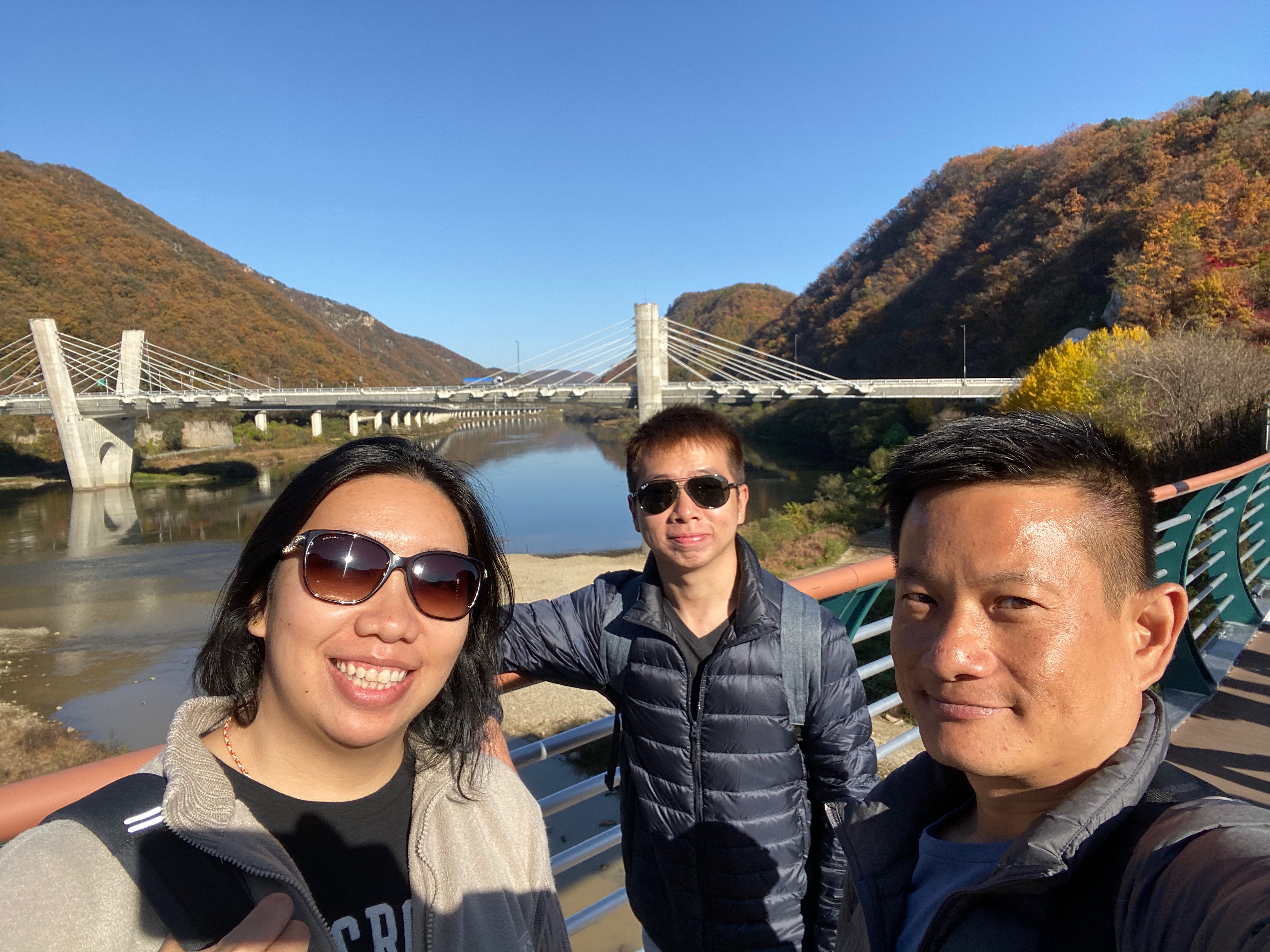
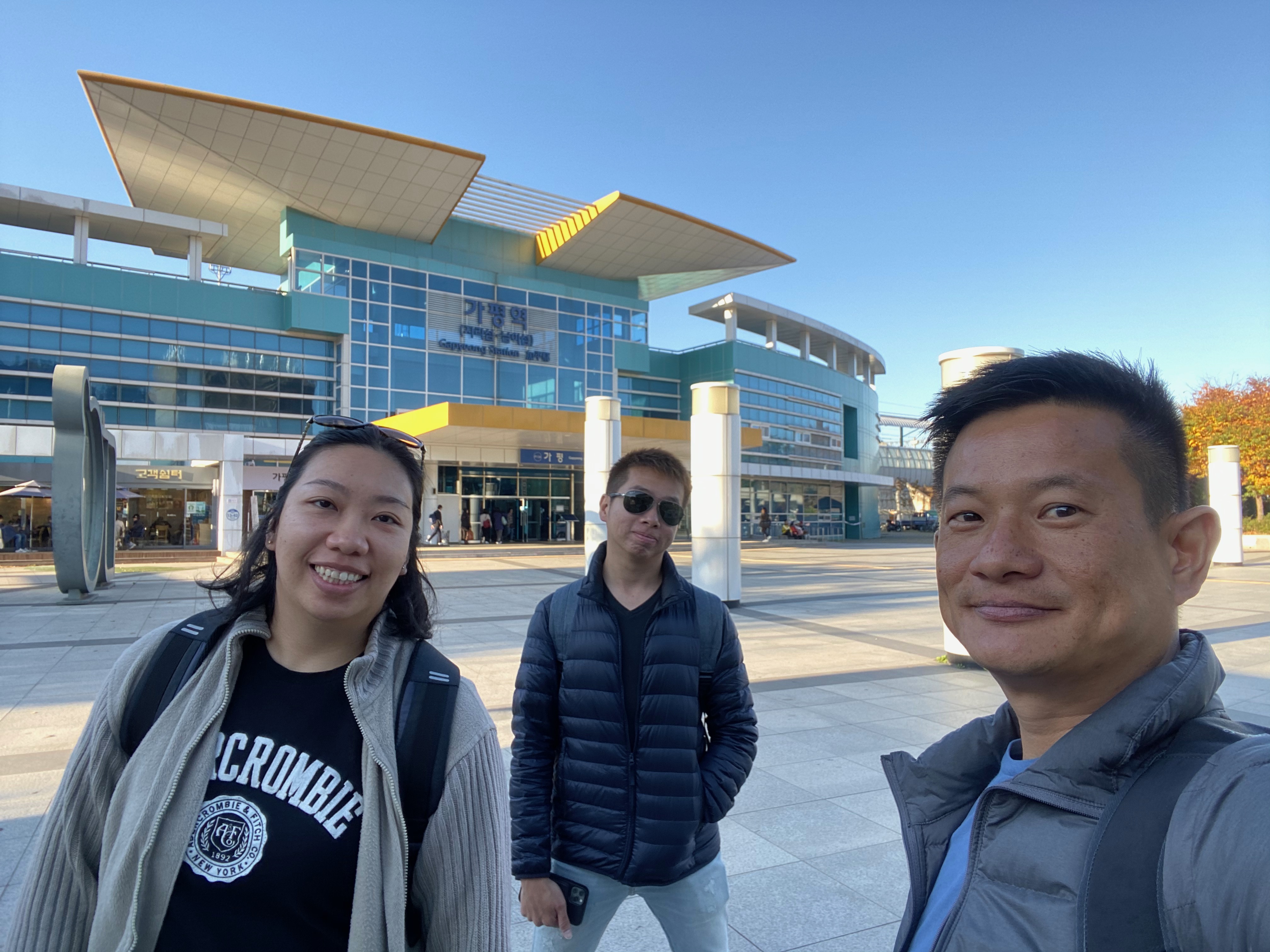
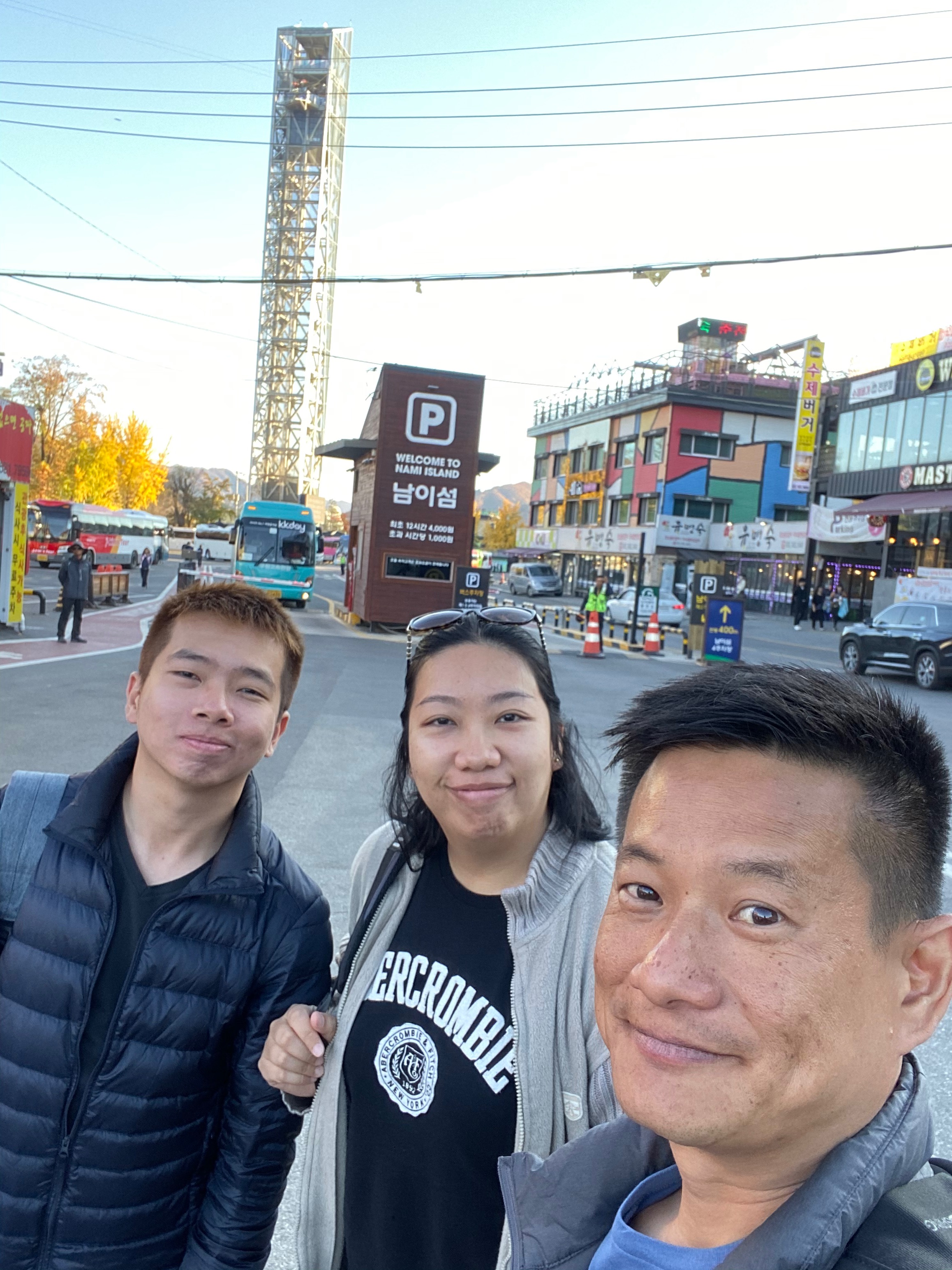
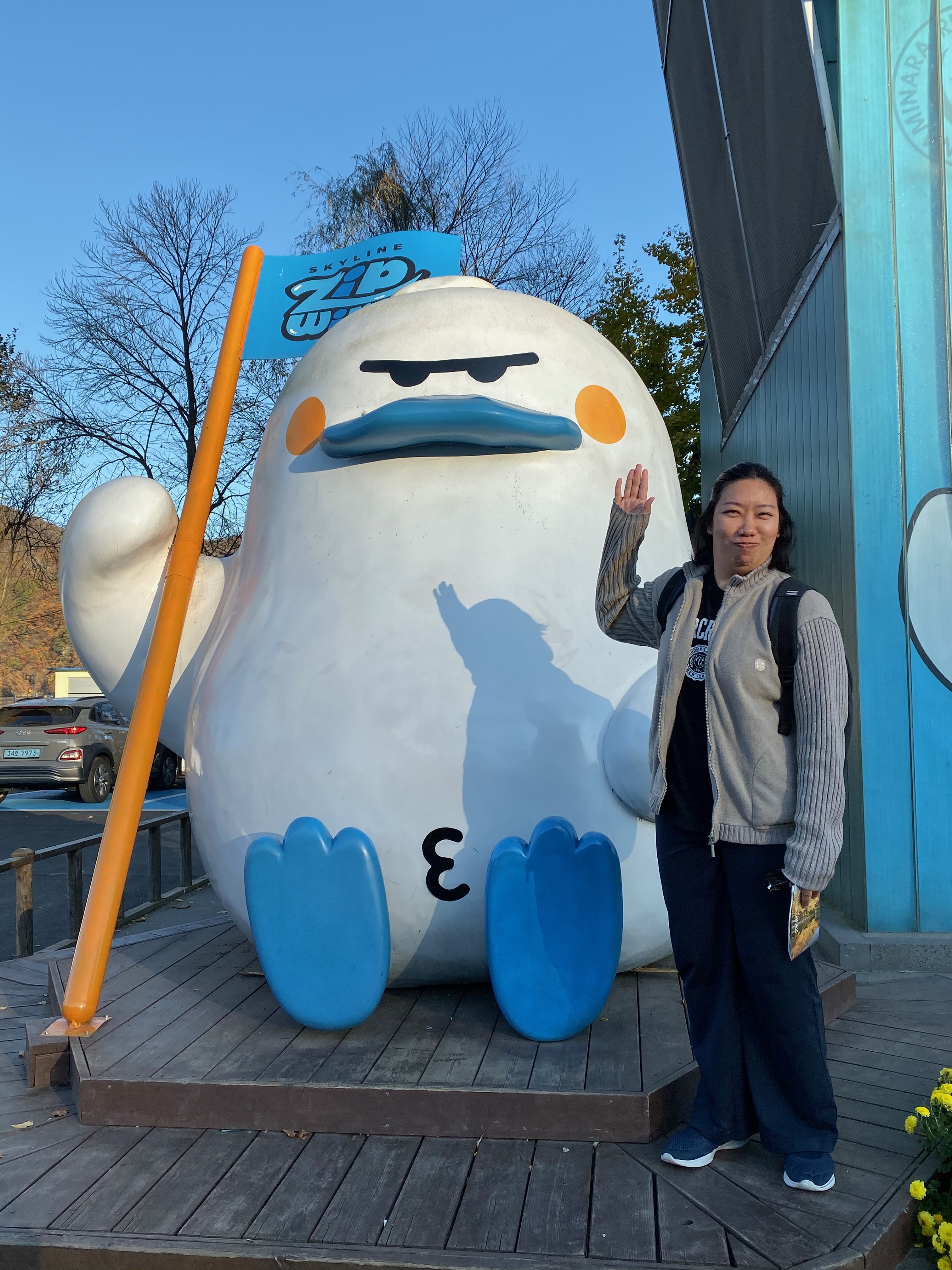
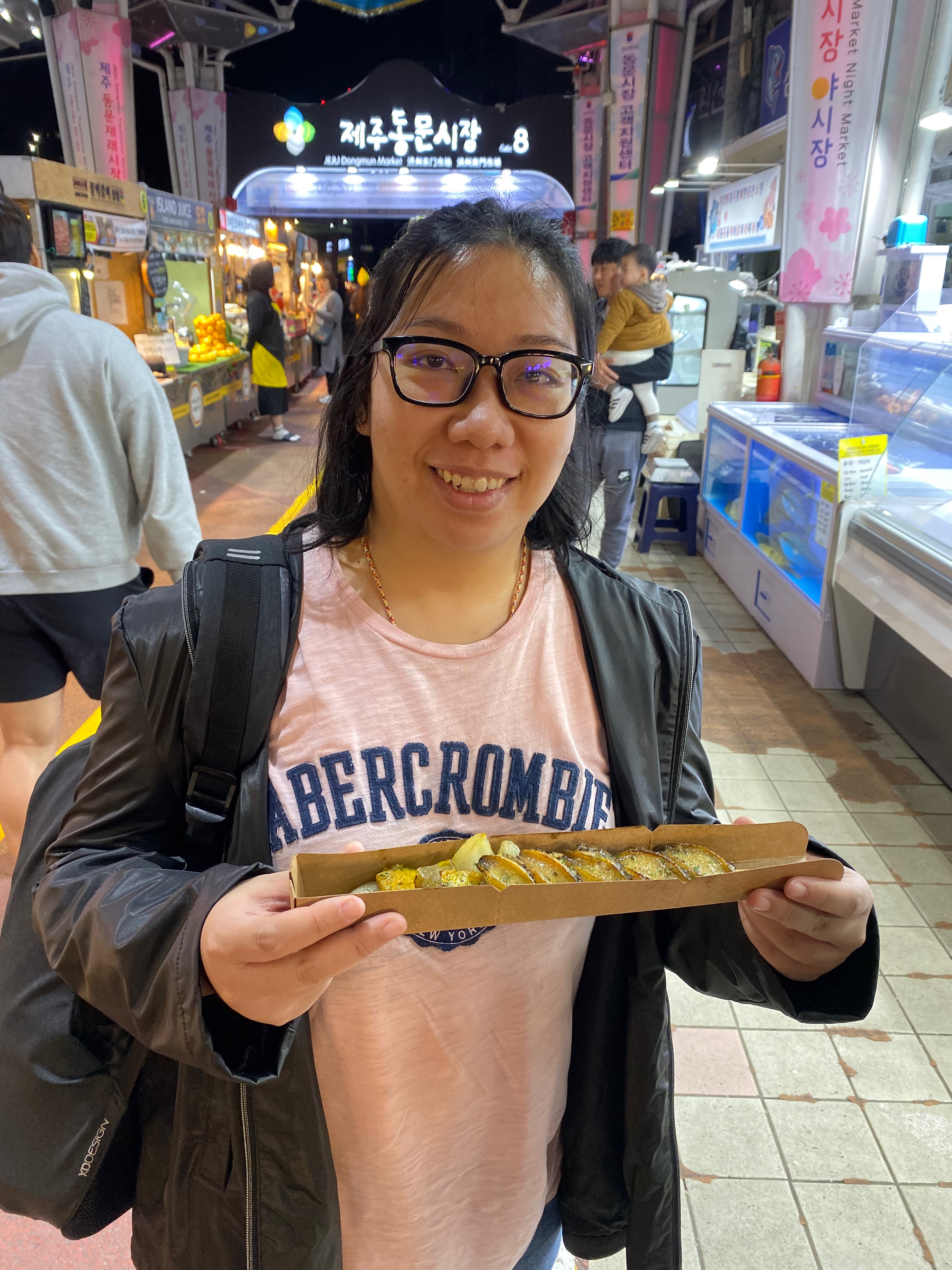
Jeju/Busan/Seoul Day 12 (6 Nov 19) – Bye Bye Seoul, Bye Bye South Korea: A Conclusion of our South Korea Trip

Final day in South Korea

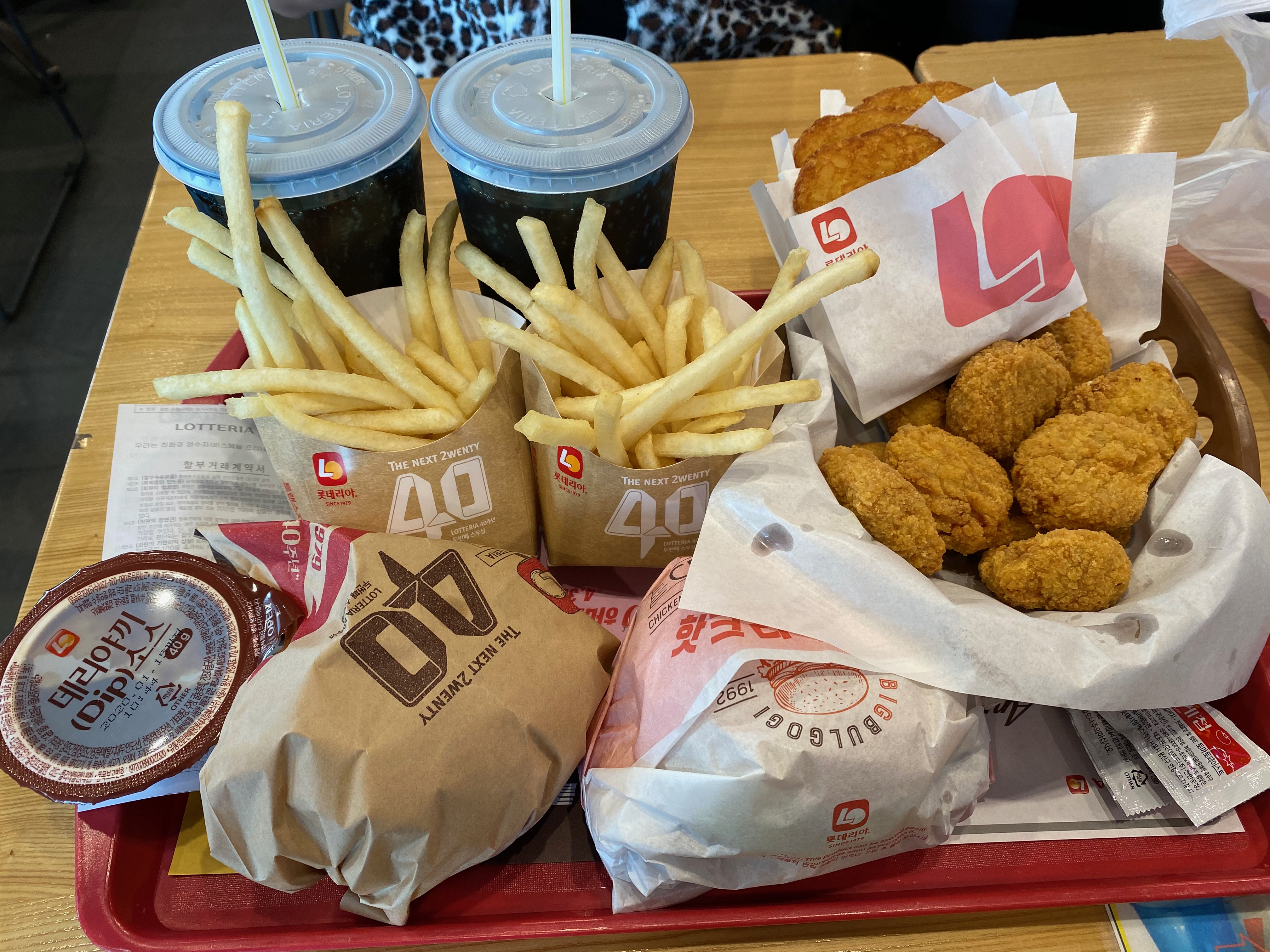
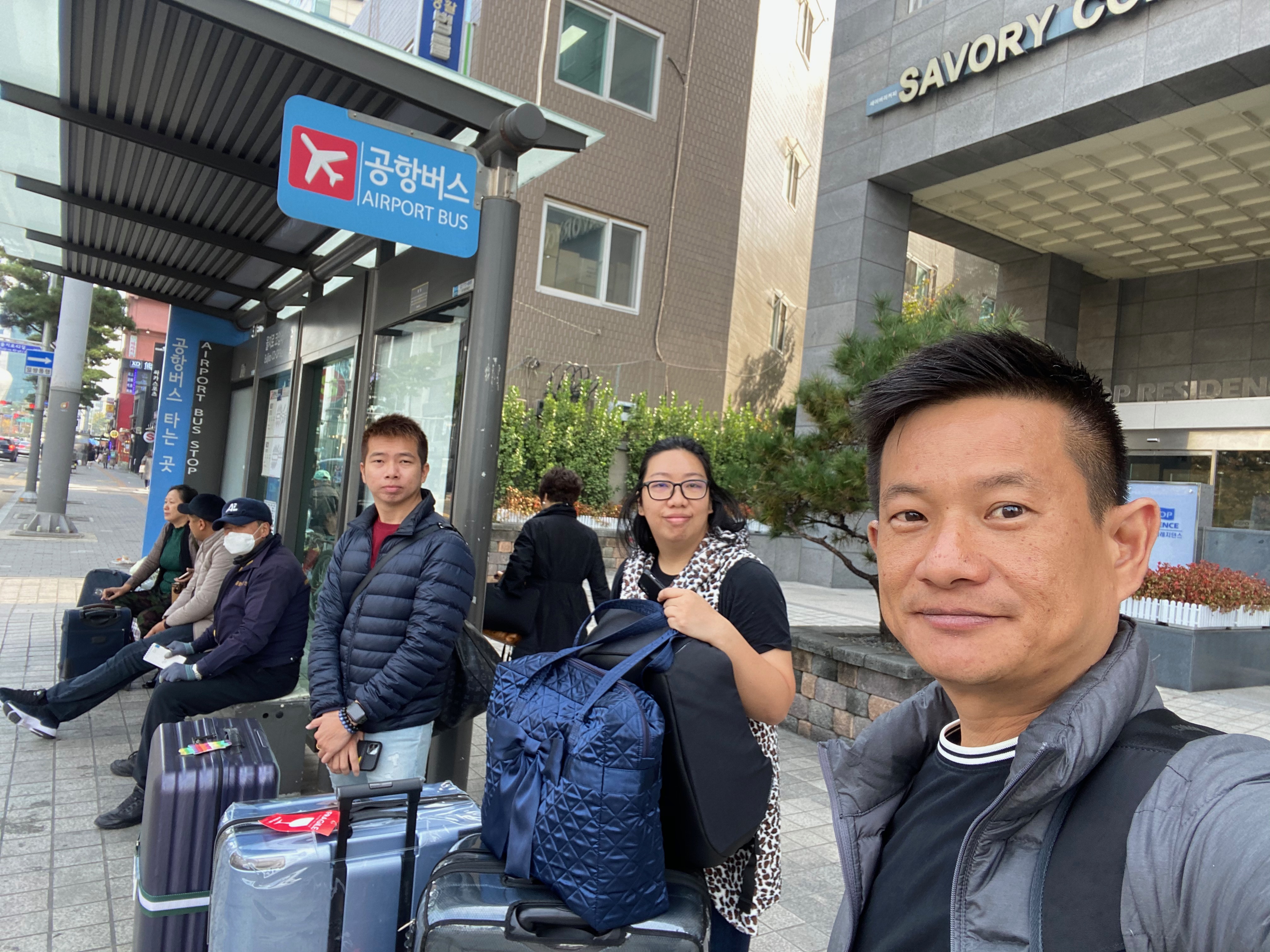
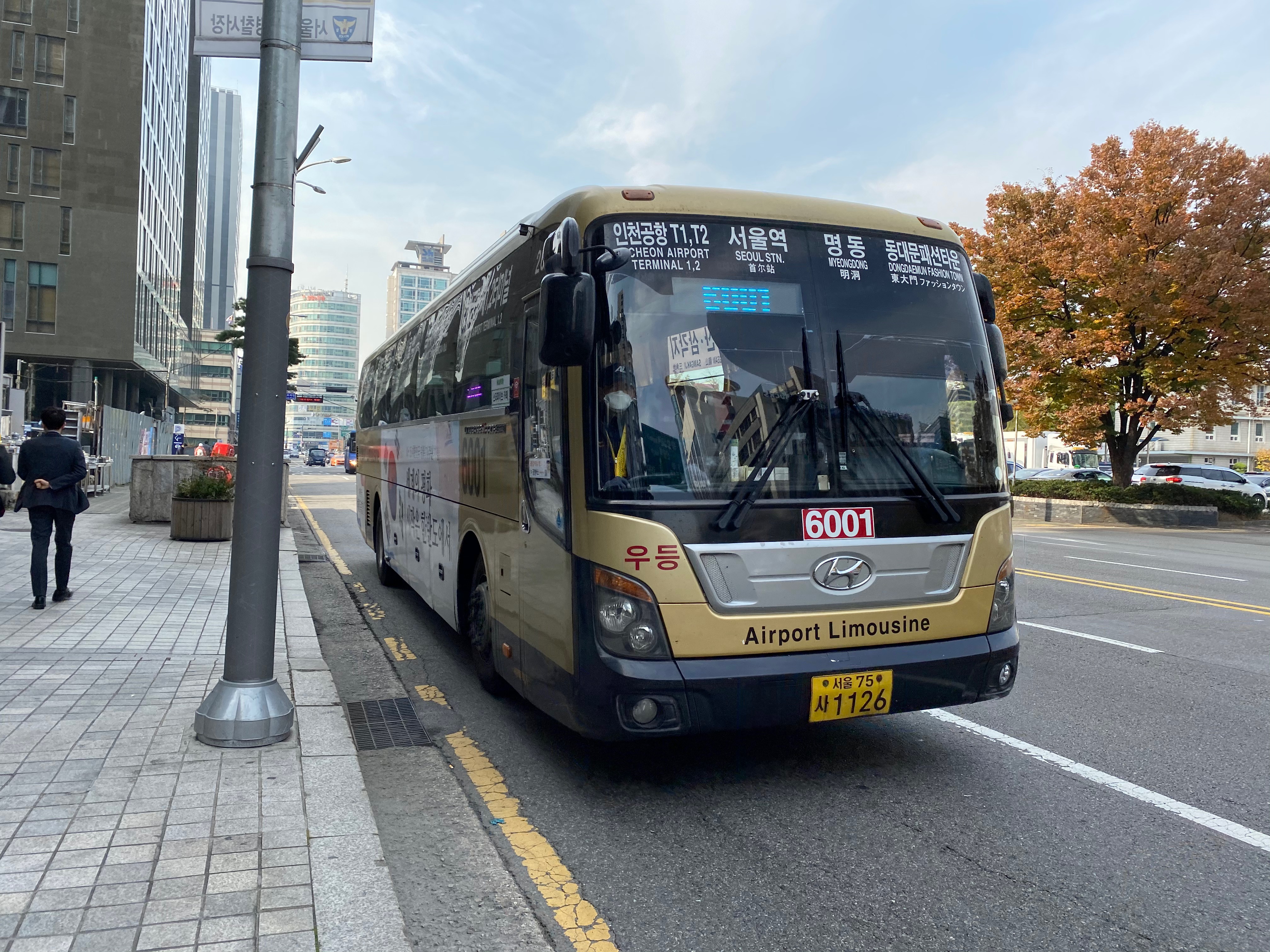
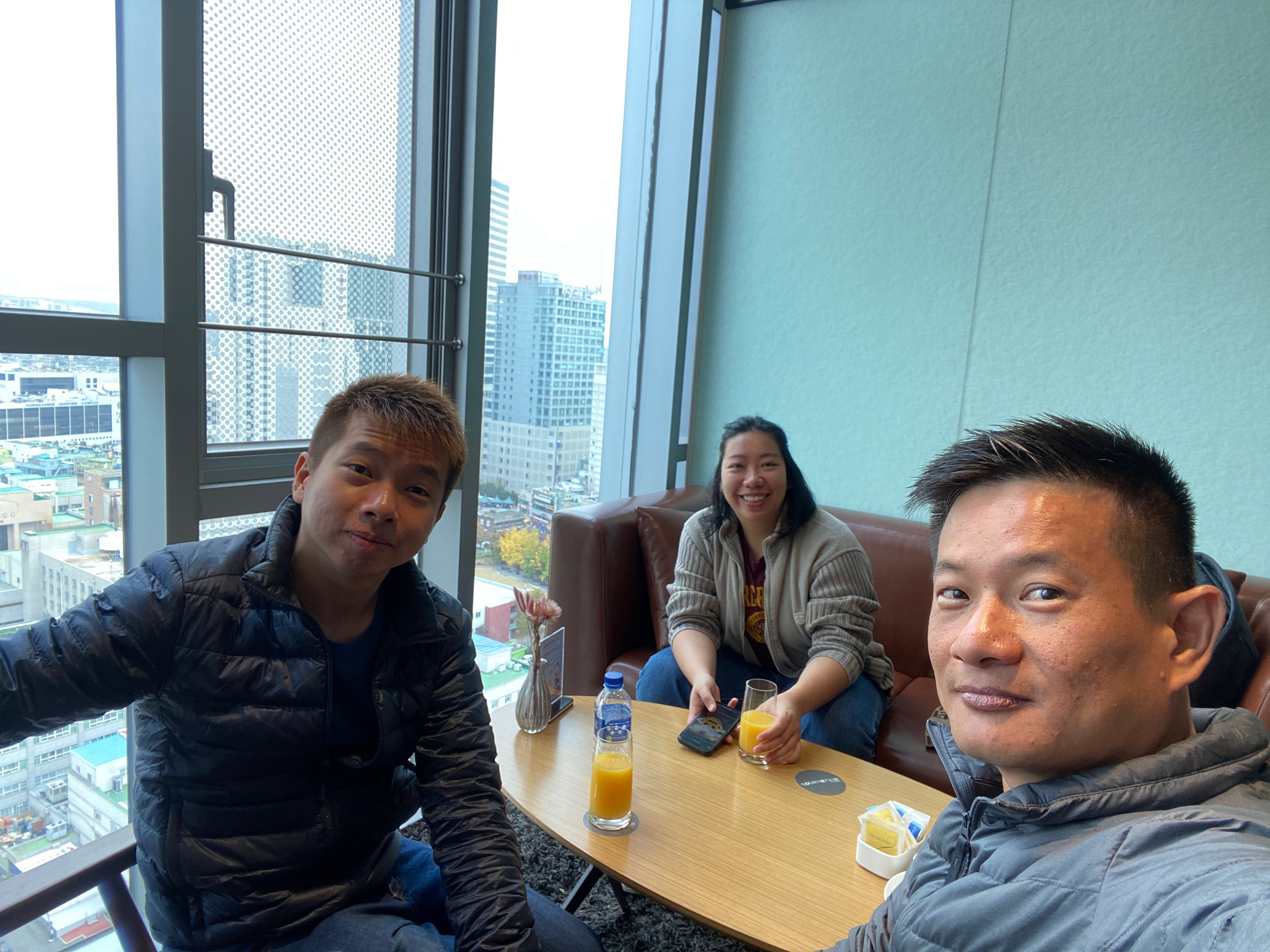
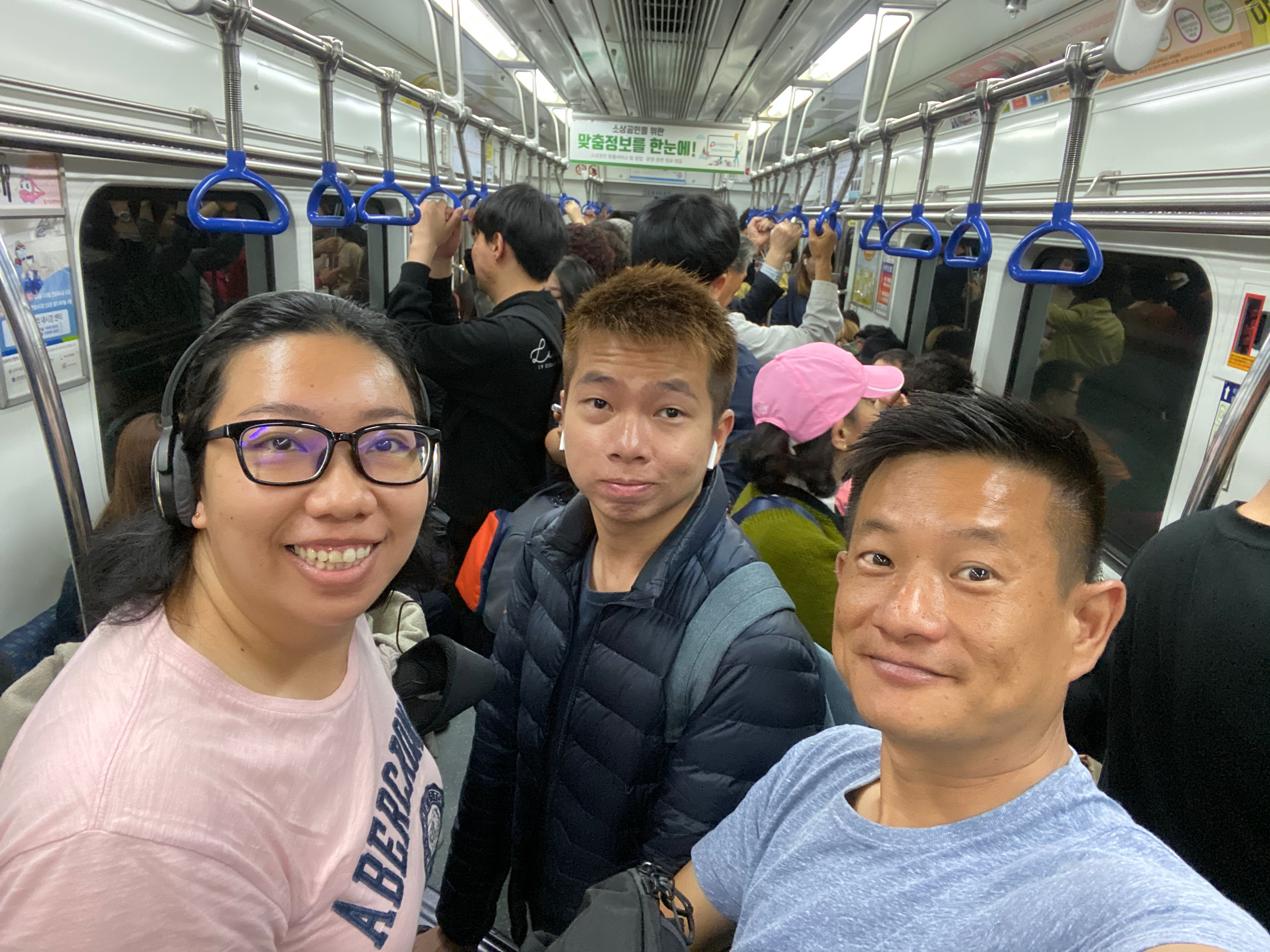
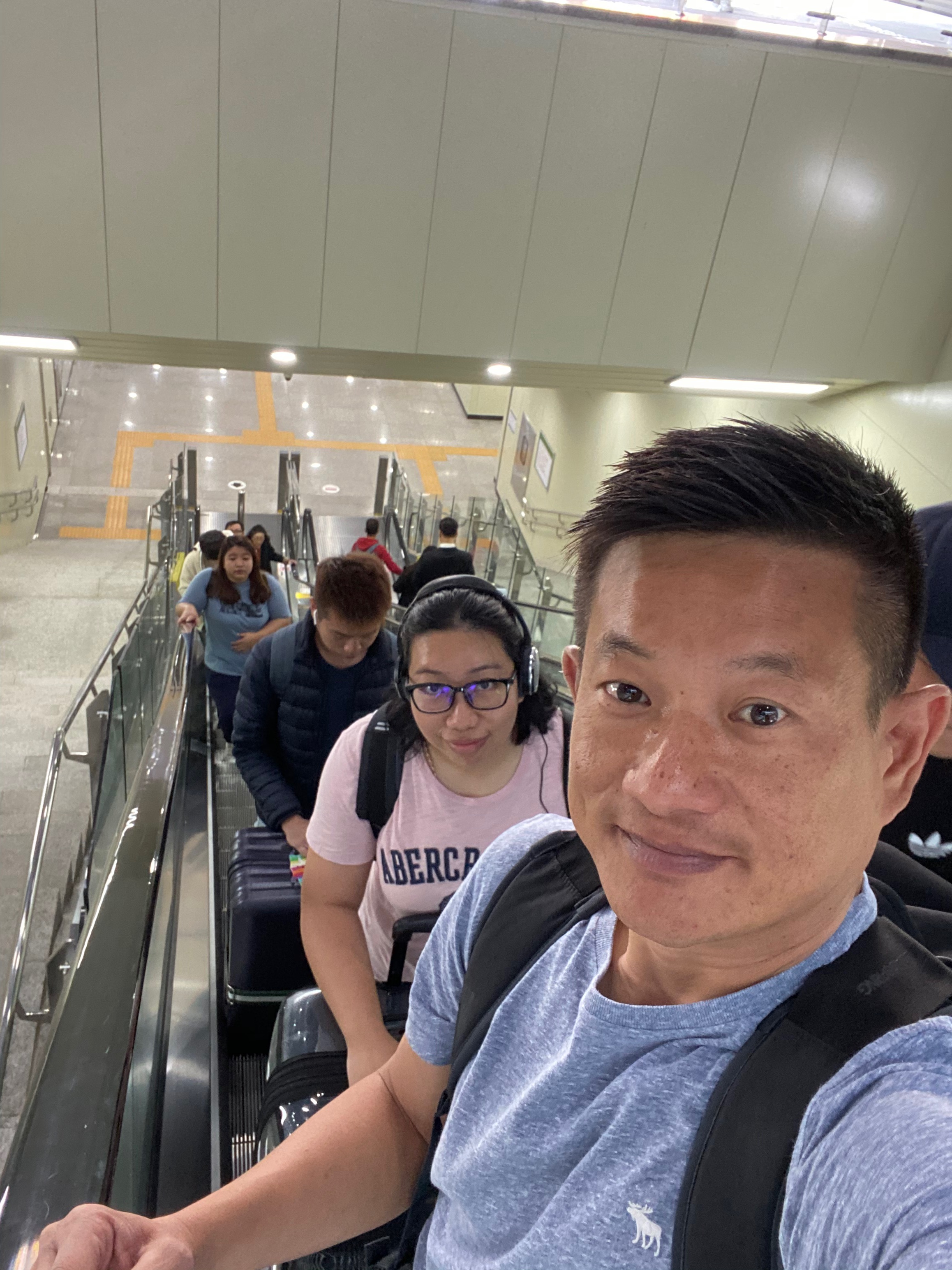
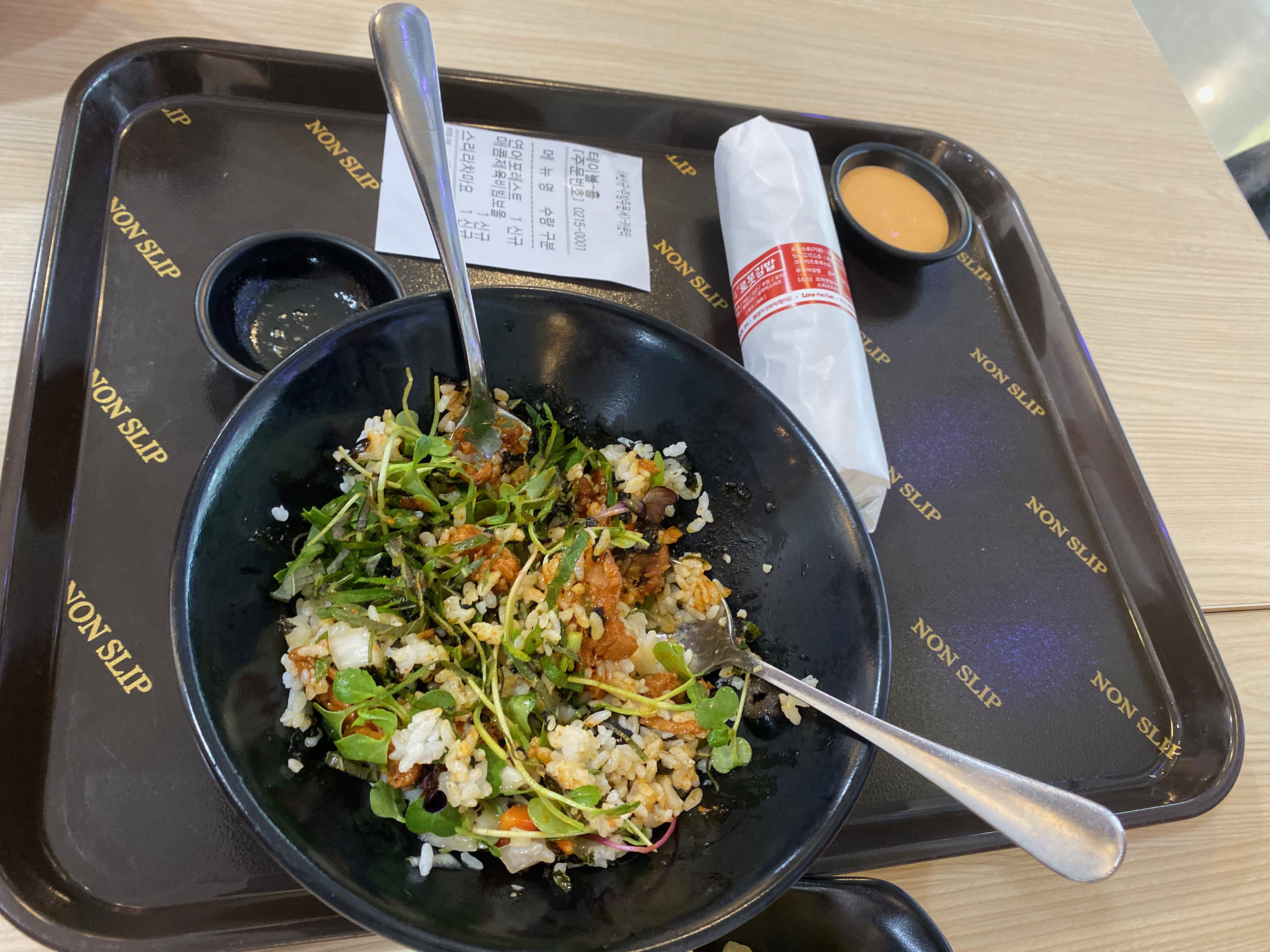
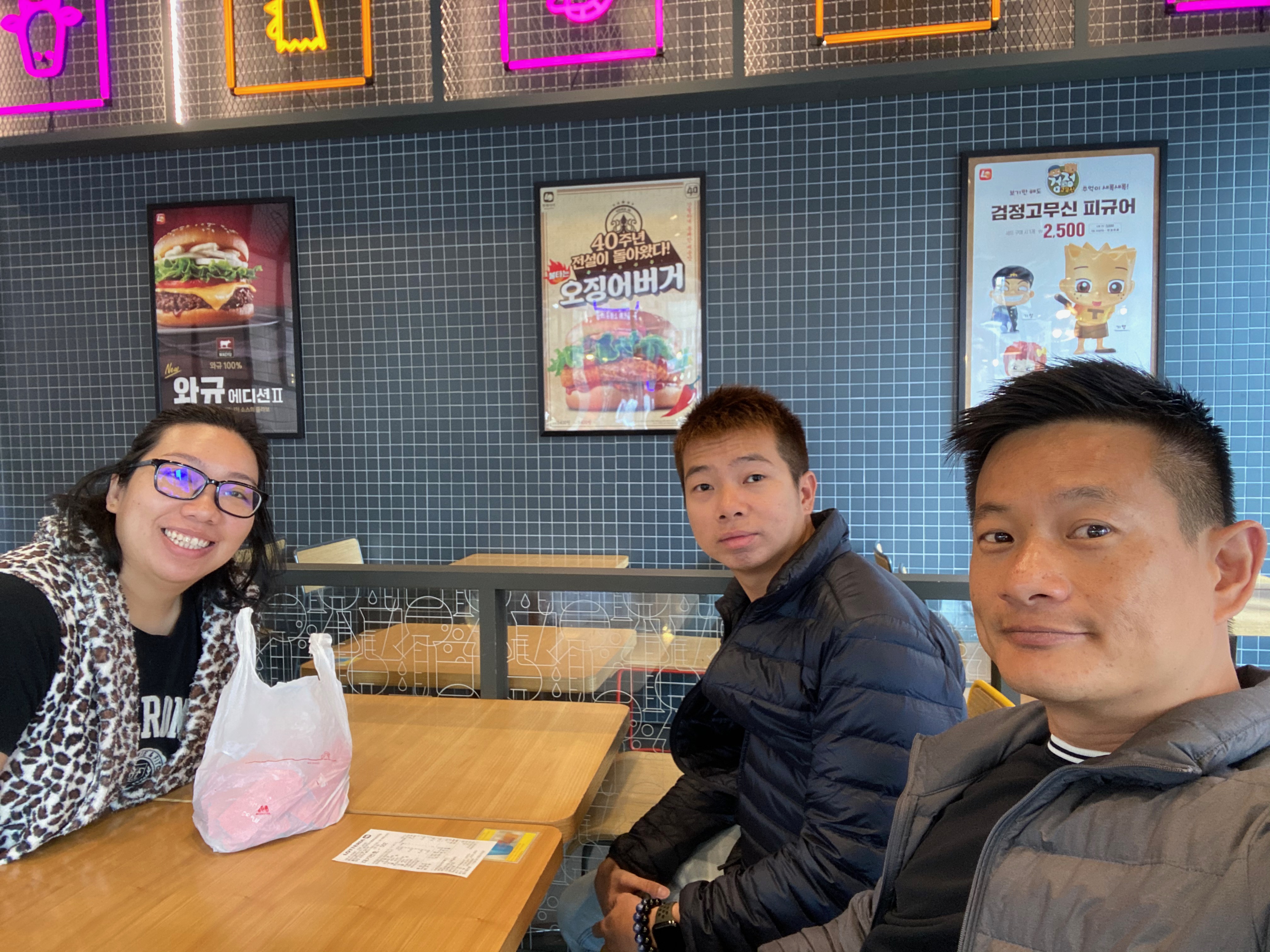
After some final packing of our luggage, my friends and I headed to the nearby Lotteria, a South Korean fast-food chain for brunch. Throughout our 12 days in South Korea, this is the first time we ate from Lotteria (my friend and I tried once three years ago when we visited Seoul). After our meal, we headed back to the hotel to freshen up and check-out. Fortunately, there is an airport limousine stop next to our hotel, getting to the airport was not a problem for us. We timed our departure from the hotel according to the airport limousine service scheduled timing. The bus came shortly at the time we arrived at the bus stop. The ride from Dongdaemun area to Incheon International Airport Terminal 1 (where our flight departs from) takes around 1 hour. The airport limousine has wide and comfortable seats which allowed us to take a snooze while being whizzed to the airport.

AFA0C503-F256-4787-A290-48D08D384082

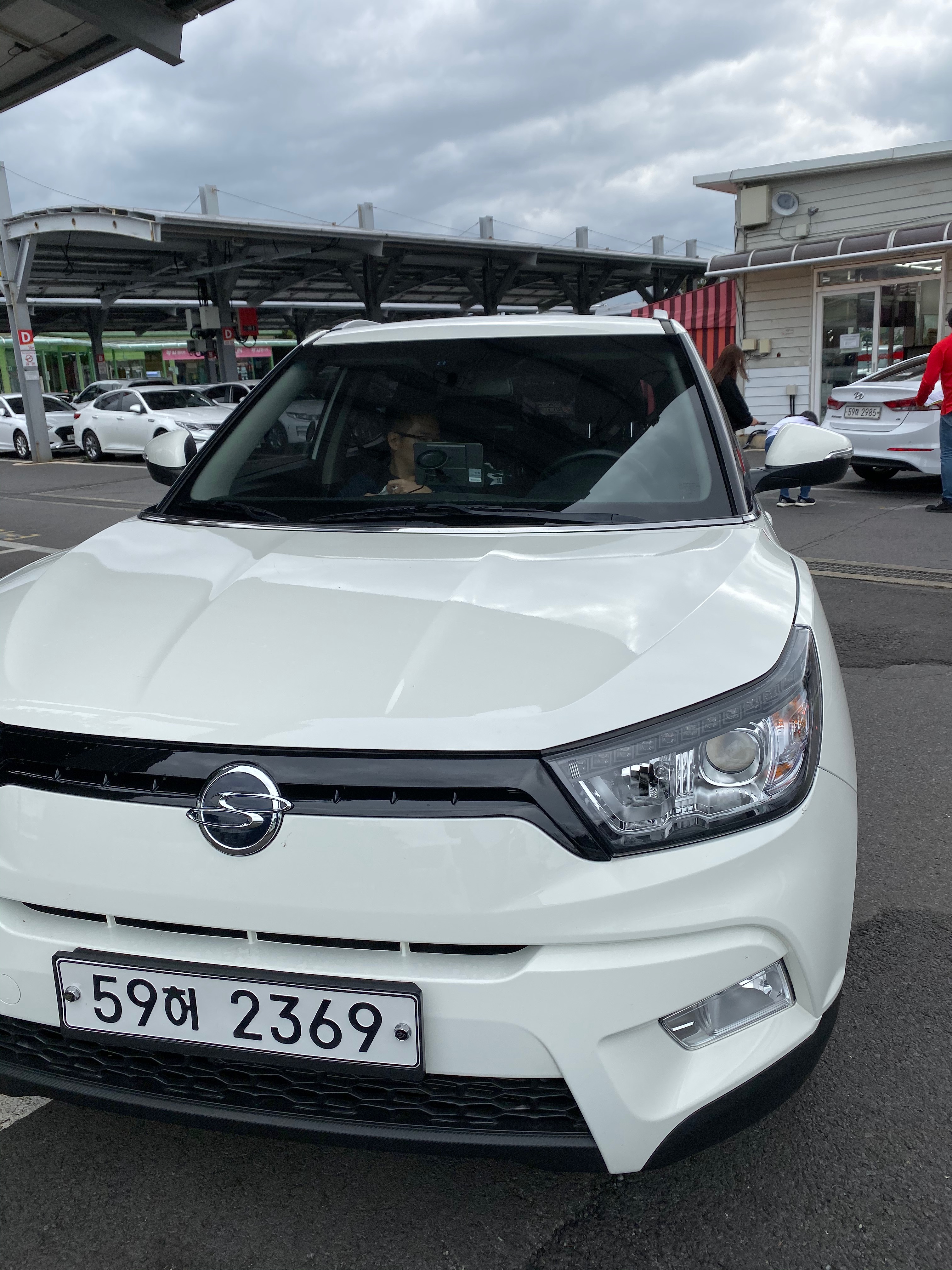
This is the bus that will take us to the airport

6582BC93-92E0-4996-AE39-7E63060768A2

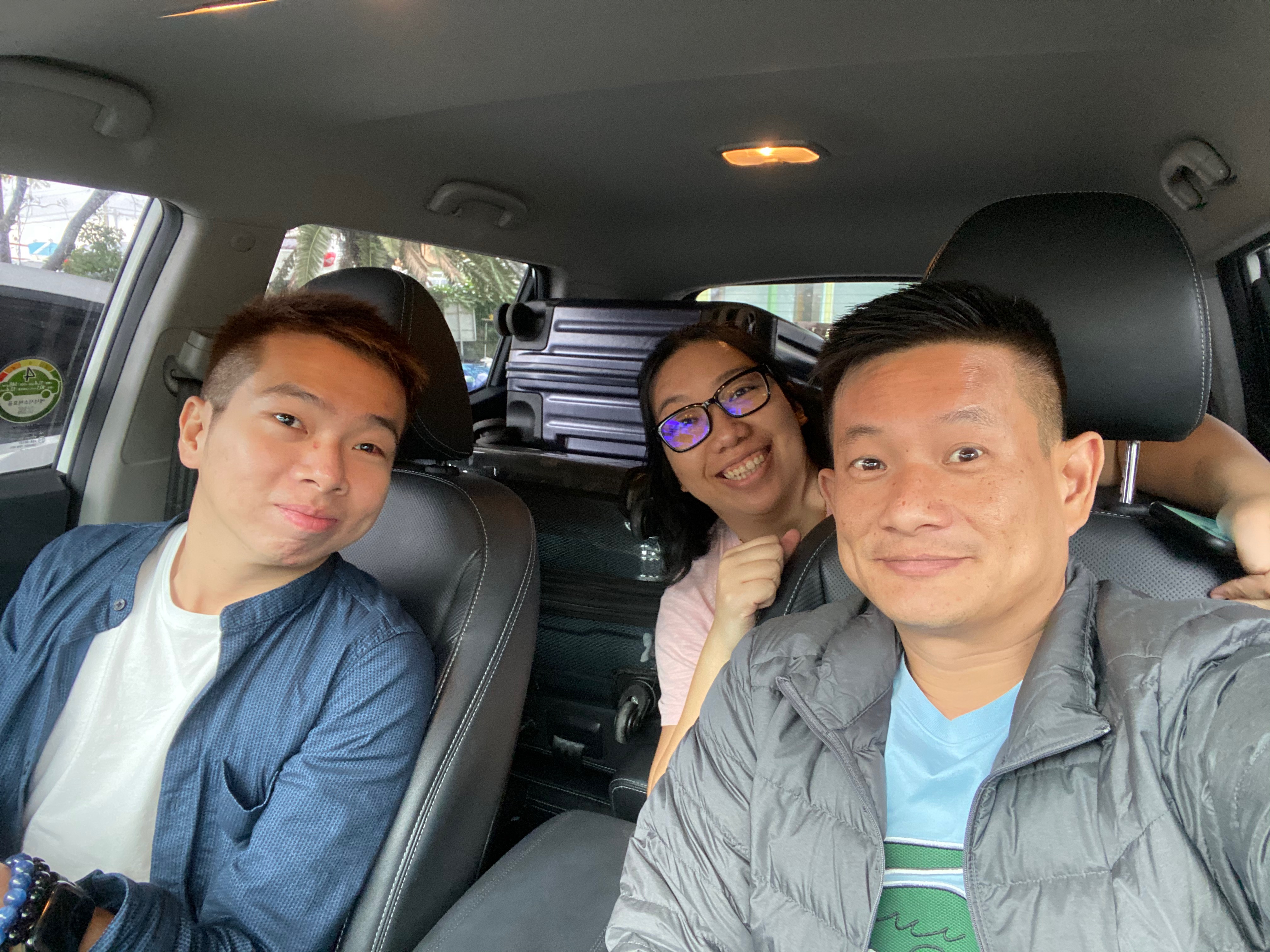
Taking a wefie on the airport limousine

C2C9524A-3B35-42F3-8075-FF3CDEA36FB7

We relaxed as we saw Seoul flash by

ED744378-3755-4A58-9298-5801B49F6BED

We are near the airport

4B88CF4A-038E-43FE-96A7-D97B30E68A53

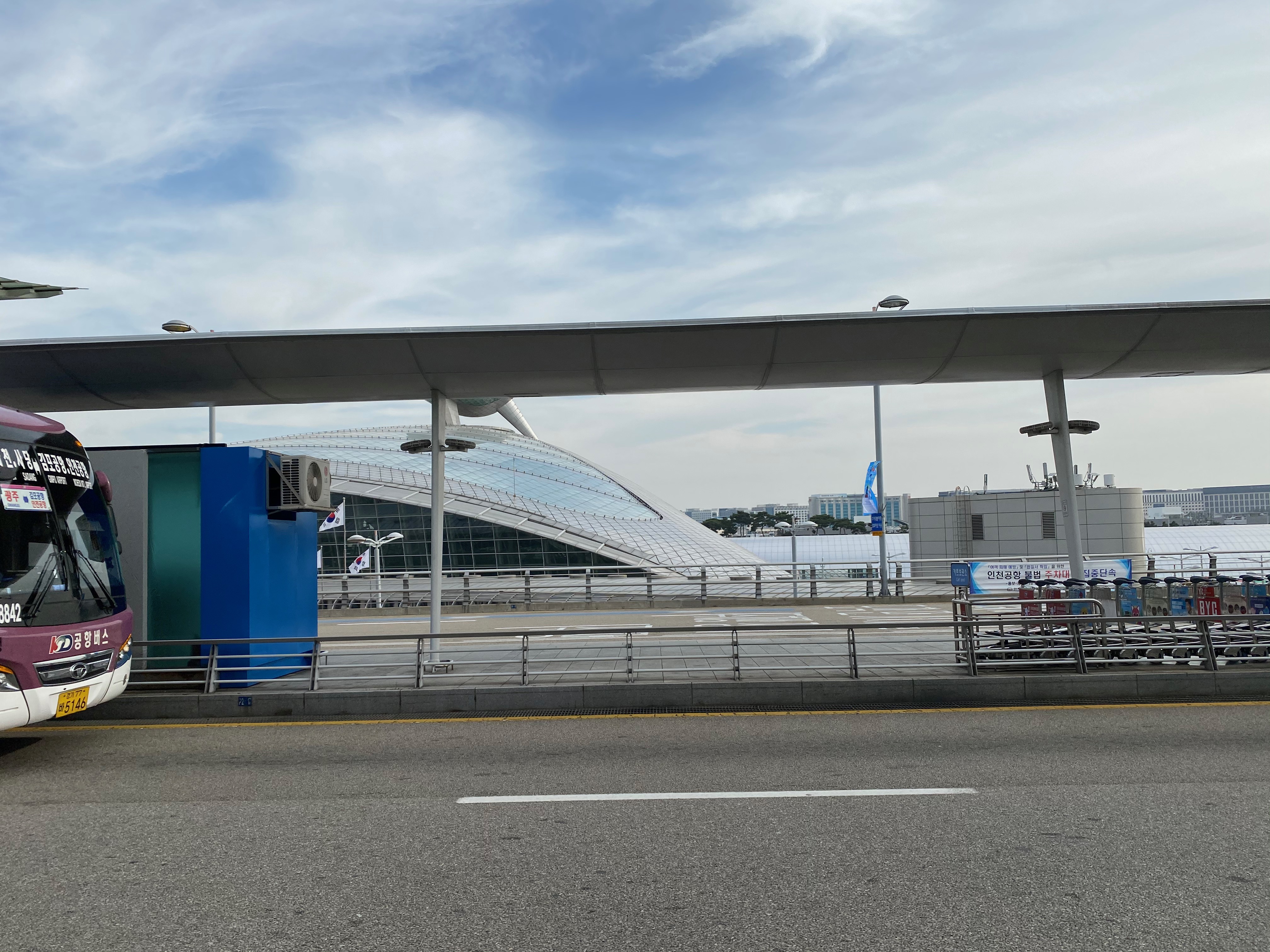
Arrival at Incheon International Airport Terminal 1

At Incheon Airport

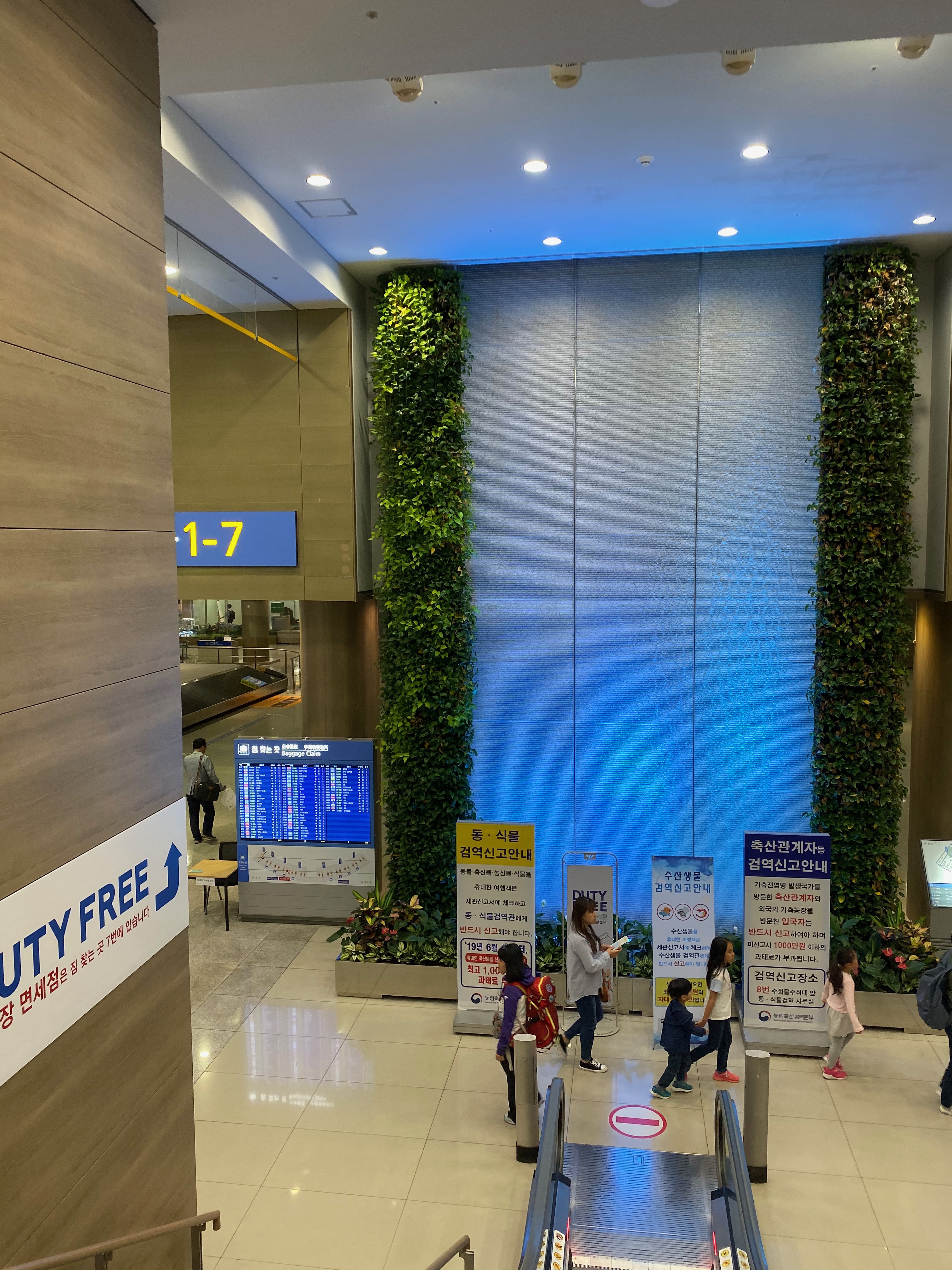
The airport limousine only stops at one of the gates in Incheon International Airport Terminal 1. From there, passengers are to walk towards their check-in rows. Incheon International Airport is quite big, it took us around 5mins to locate and walk to our check-in row. Prior to checking in, I remembered there was a need for us to show the goods we purchased for a tax refund. However, this process has been automated. We discovered when we were at Incheon International Airport that there is no need to show proof of purchase. Foreigners claim tax refund can check-in our luggage first before heading to the automated kiosks to have the paperwork done up, we just have to produce the receipts for tax refund purposes. My friends and I headed to the airlines counter to process our check-in before proceeding to clear custom.

307782C1-2E1C-490B-9104-986B29E88E4A

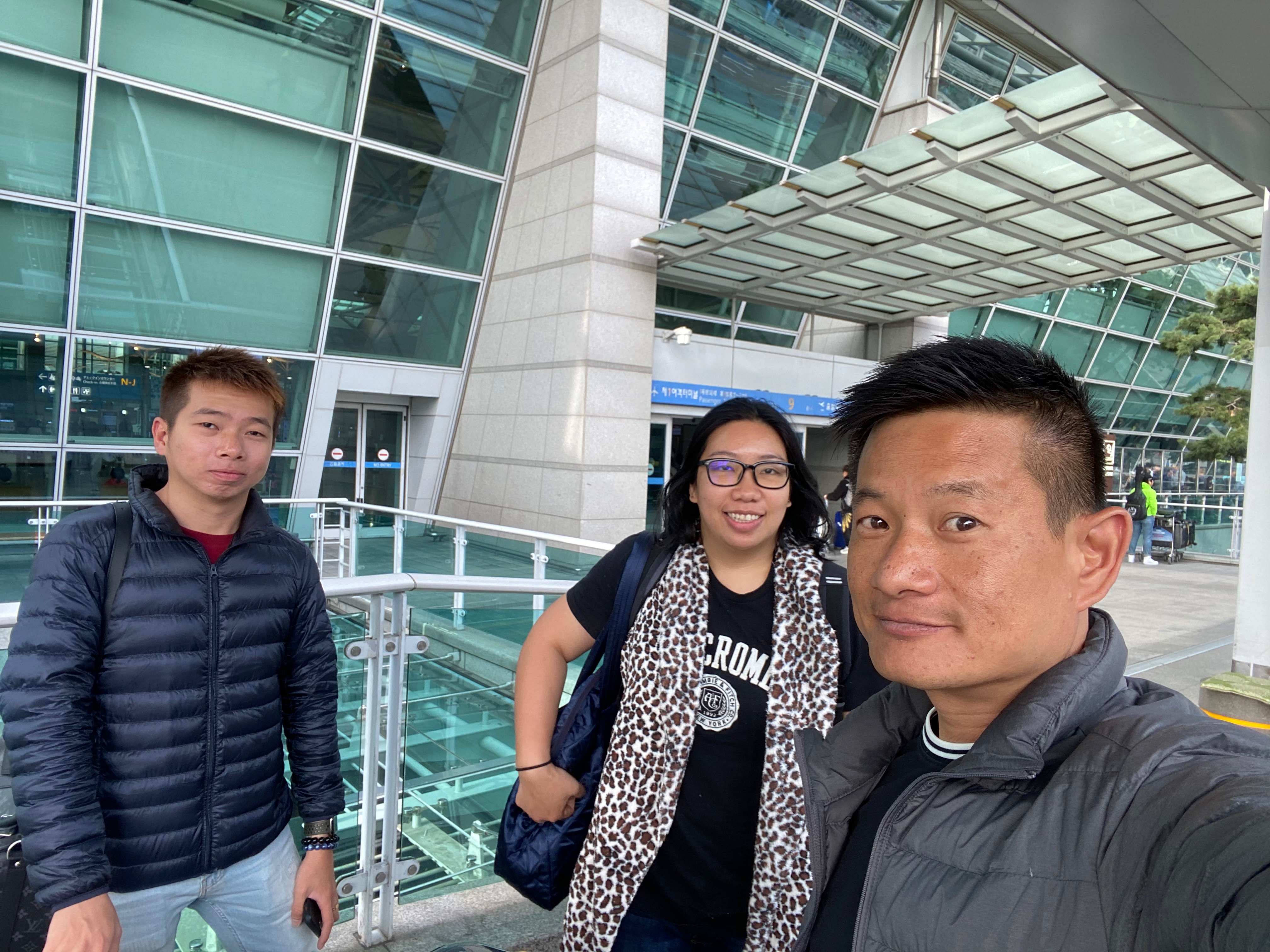
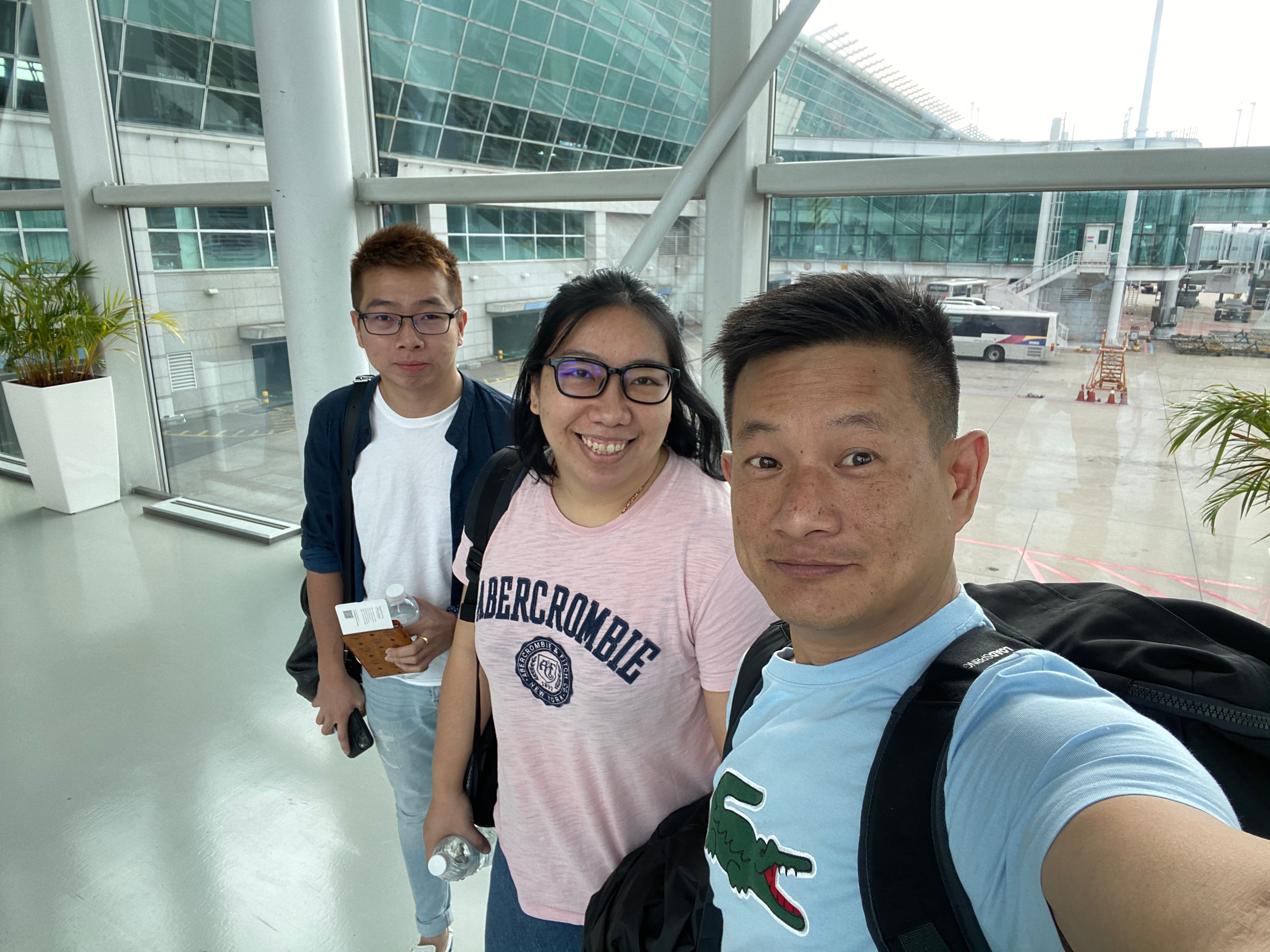
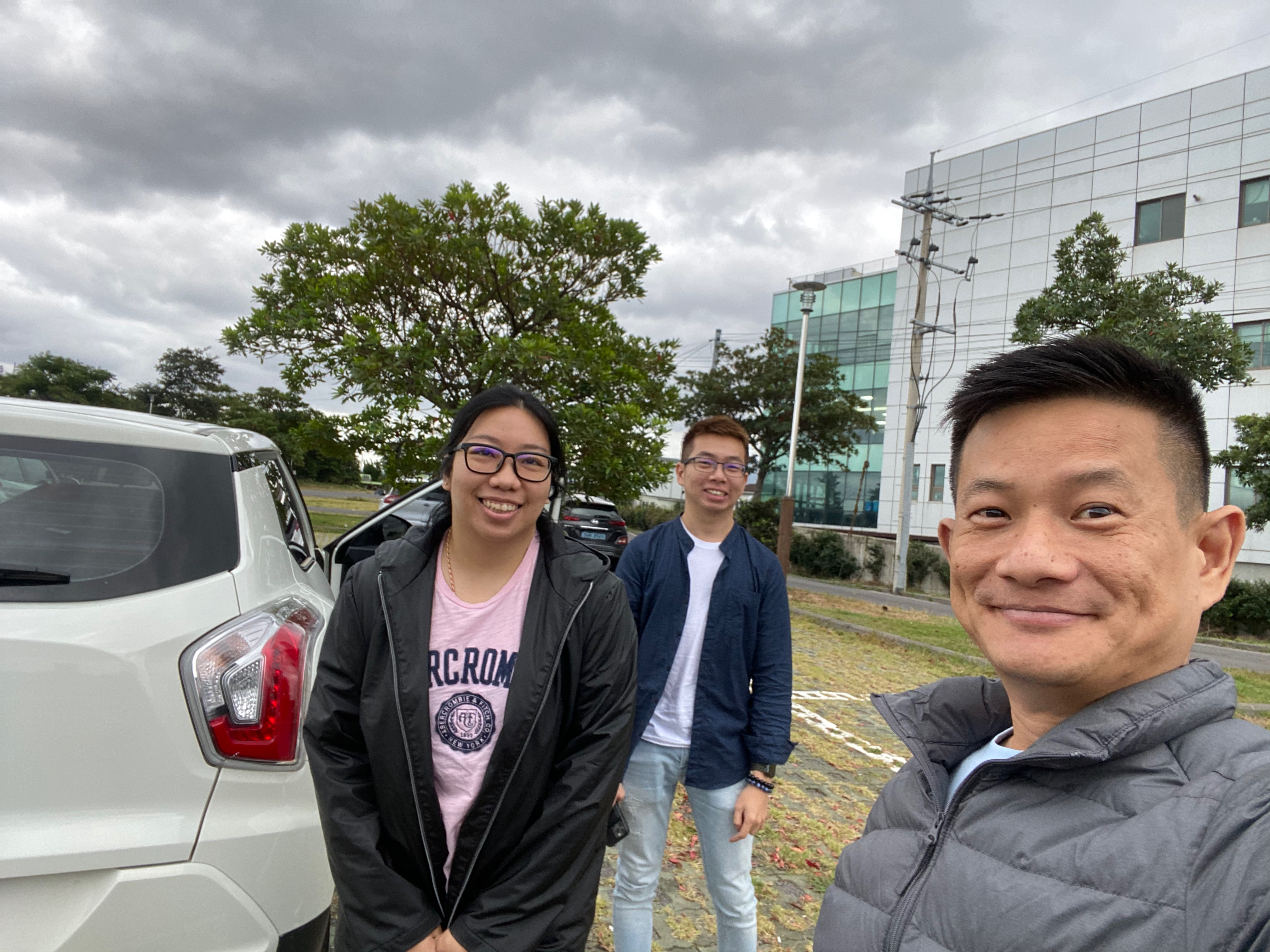
Wefie at the airport

FD5A01CC-1811-4DE4-AE4C-DE8105E08DF8

Tax refund automated kiosks before custom clearance

129AE731-B5E4-4EE7-B62B-B7475BD8986C

Checking-in to our flight

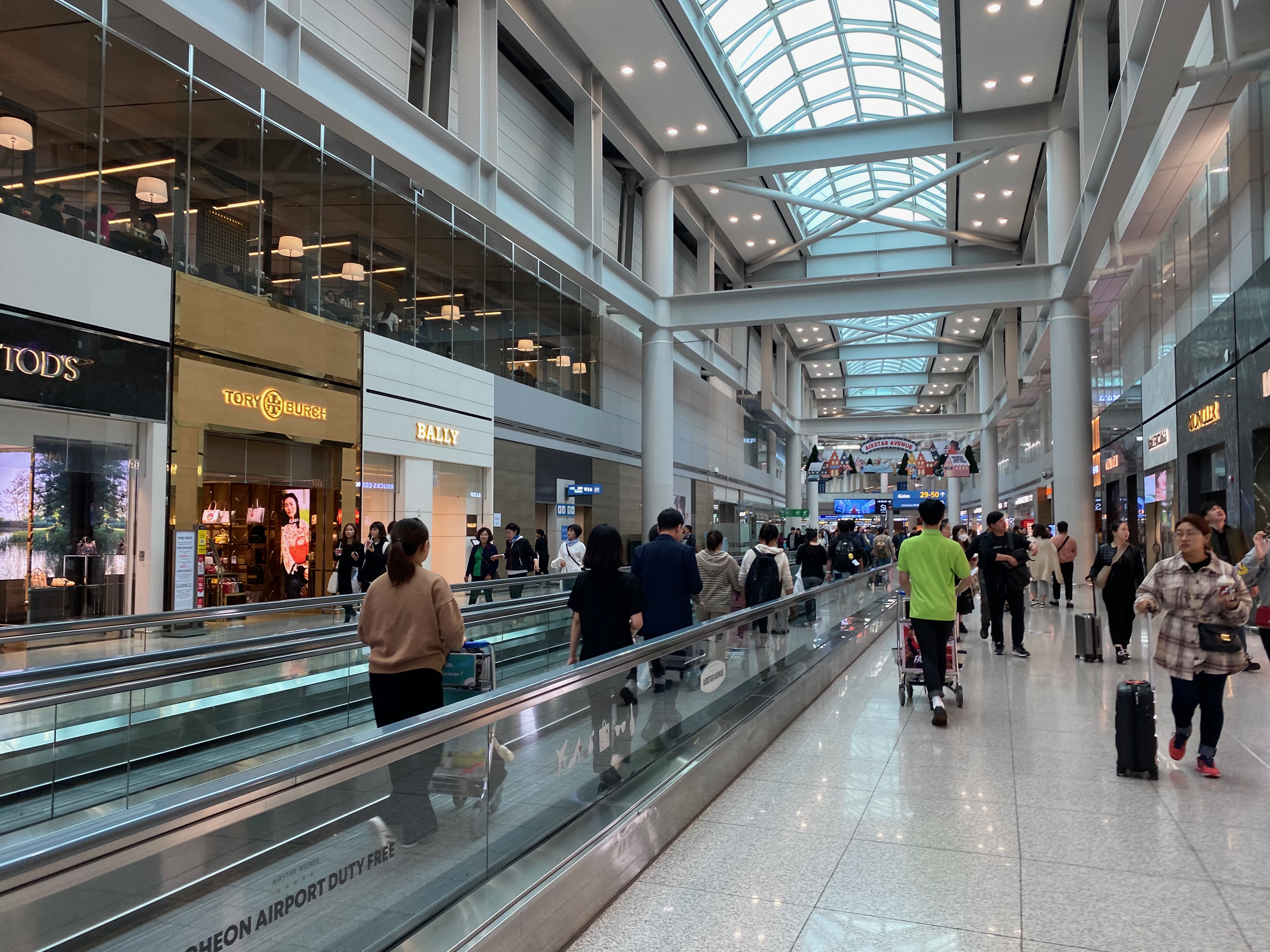
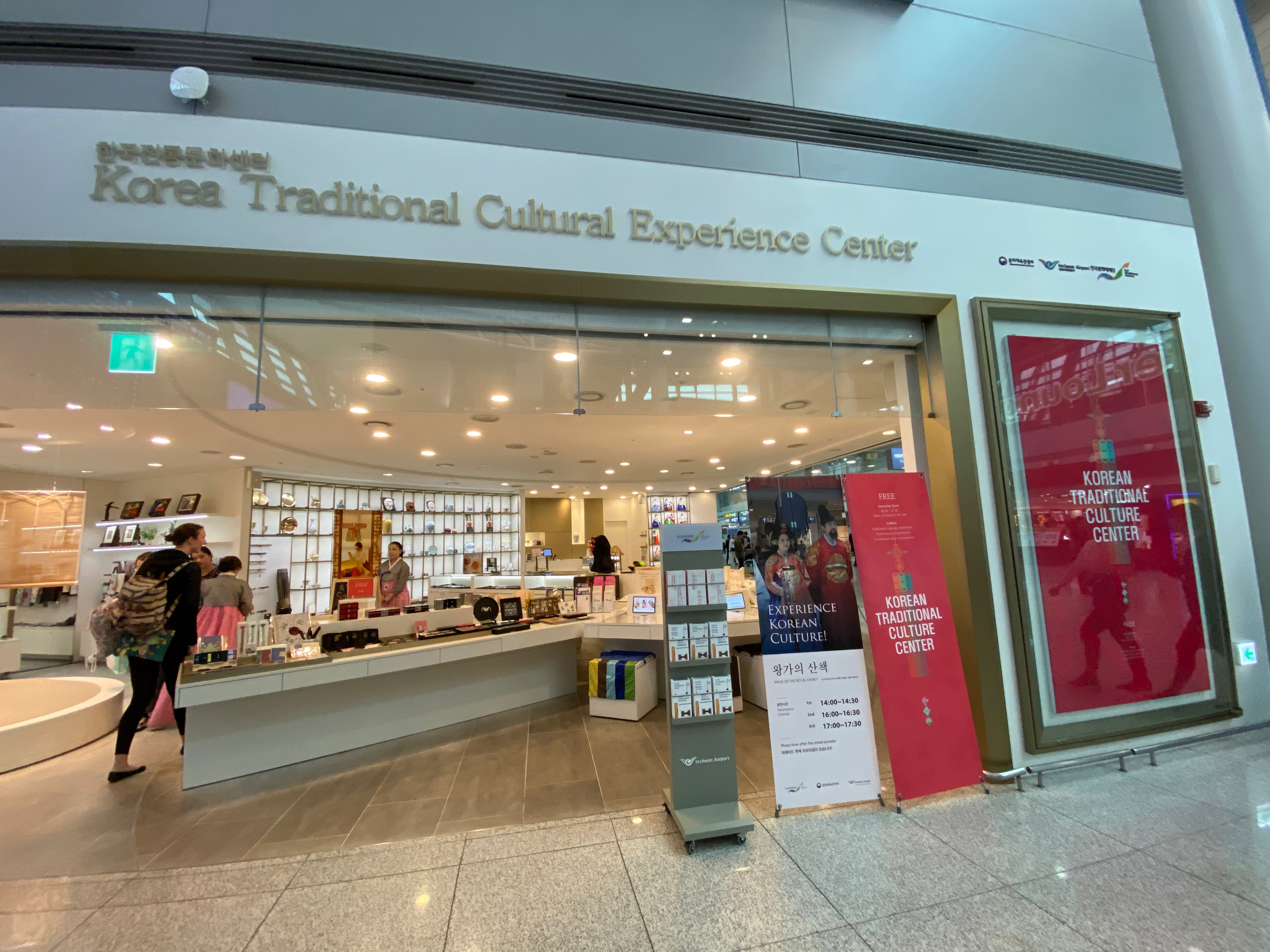
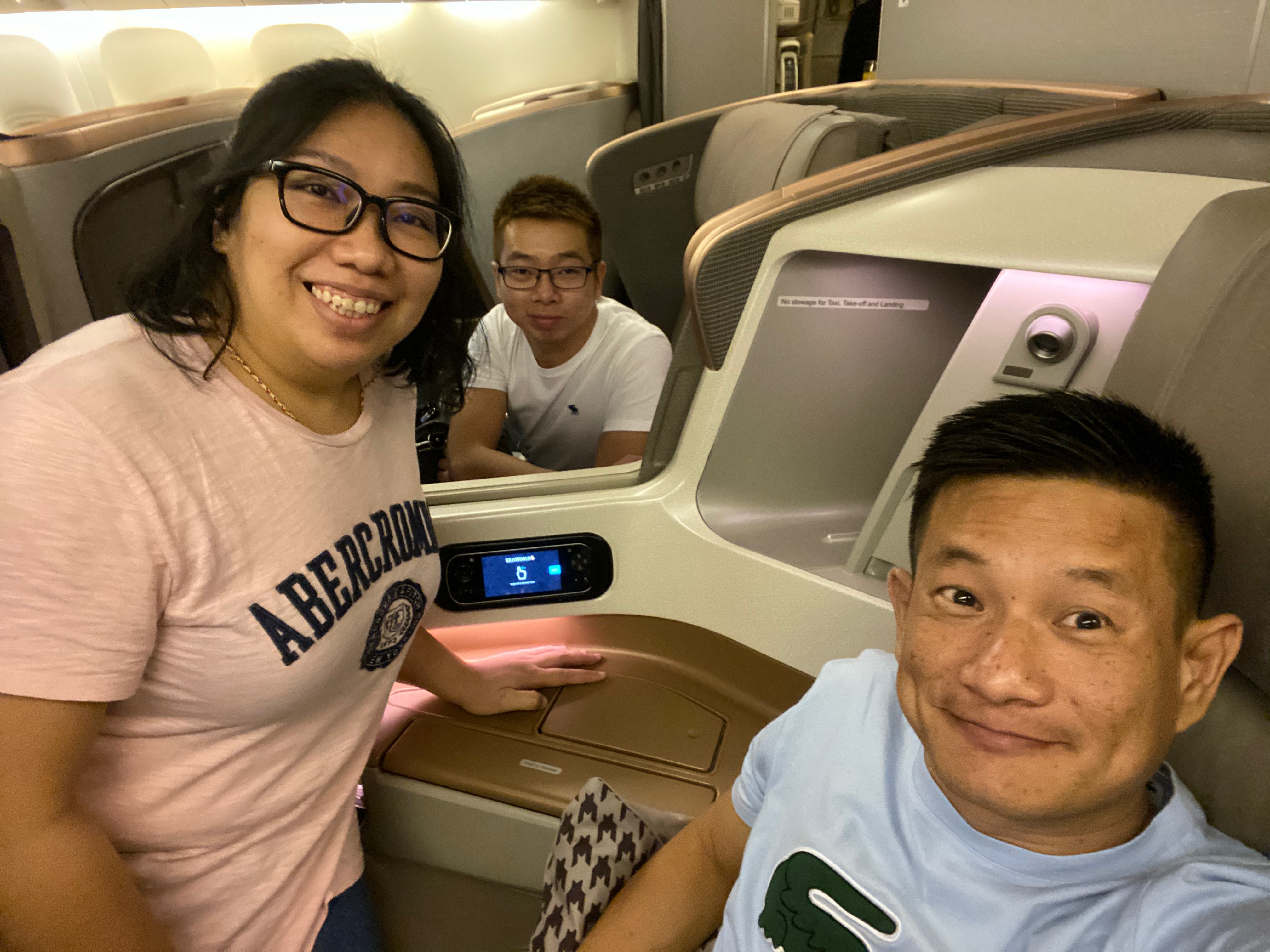
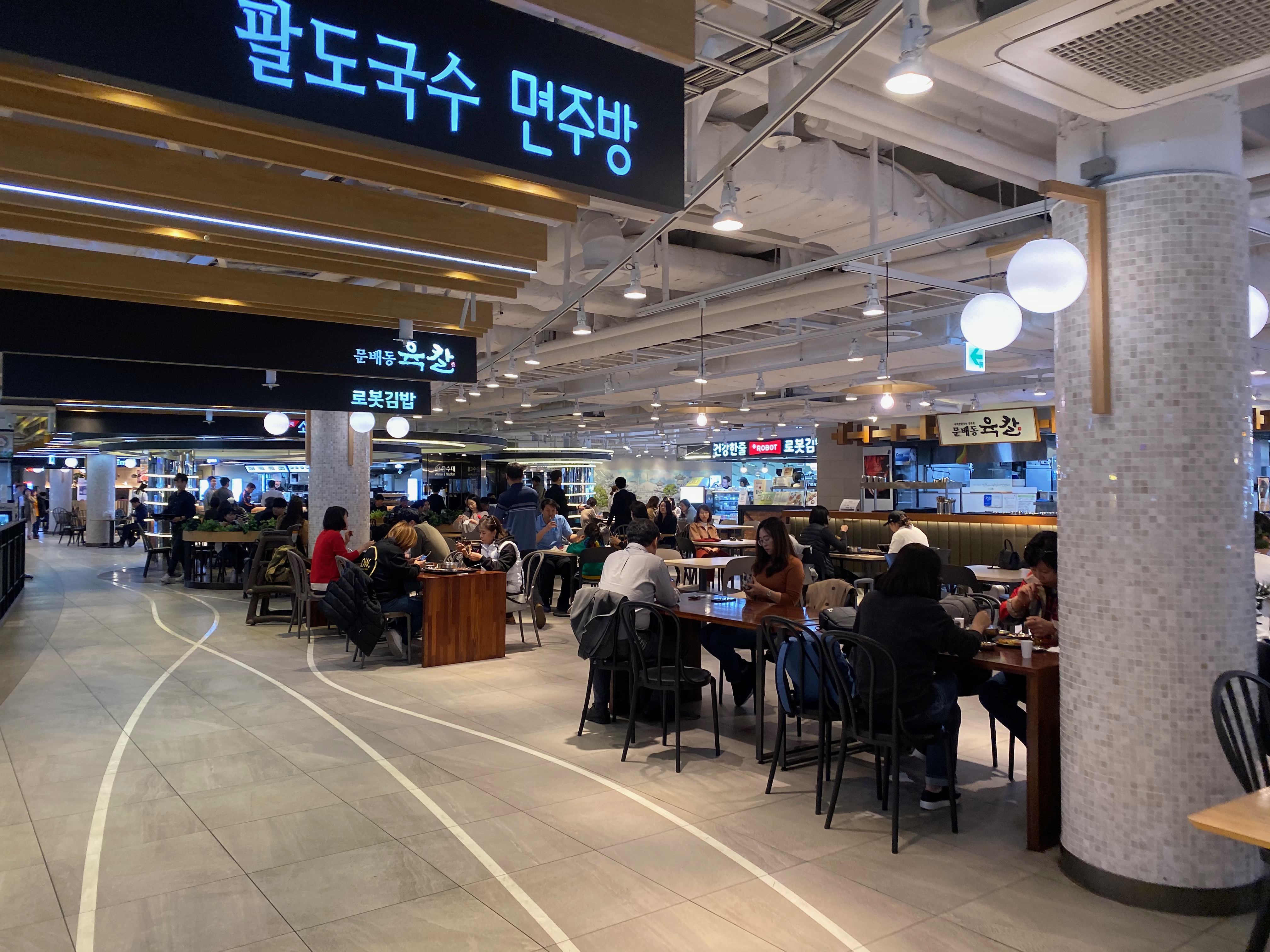
Once we cleared the custom, we proceeded to the tax refund counter to claim our tax. Tax refunds will be paid in either USD or KRW. As it is largely automated, akin to withdrawing money from ATM, the process is significantly faster compared to what we experienced three years ago. The airside of Incheon International Airport is another shopping mecca for passengers. There are numerous luxury brands setting up boutiques here for passengers to shop. There are even Korean Culture experience centres at the airside for passengers to understand the Korean Culture while waiting for their flight. My friends and I spent the rest of our time at the airport in the airport lounge while waiting for our boarding time.

8AA2AD99-E369-4C5A-AC0A-C5E90016D9A5

Cleared immigration

5684C40E-BF8F-4C12-8728-1305574EE87E

Our first stop after clearing custom is to head for tax refund

0282B98F-9207-48BE-907A-AA7CC8A941D4

Time for us to board our flight back home

A Lookback at our South Korea Trip

Today is the day we bid farewell to South Korea after travel around for 12 days from south to north of the country. Throughout the past 11 days, we have seen both the nature and the cultural part of the country, We had also explored places which has seen far less foreign tourists and been to places that we have never visited before. A recap of our itinerary for this trip:

Day 1 – Arrival at South Korea and onward to Jeju. Due to unexpected delays, we only managed to visit Dongmun Night Market and had dinner at Black Pork Street.

Day 2 – Exploring Jeju via the Southern Road. We visited the major sights in Jeju such as Seongsan Ilchulbong, Seopjikoji, Jeju Folk Village, Jeongbang Waterfall, Oedolgae Rock, Cheonjiyeon Waterfall and Seogwipo Olle Market.

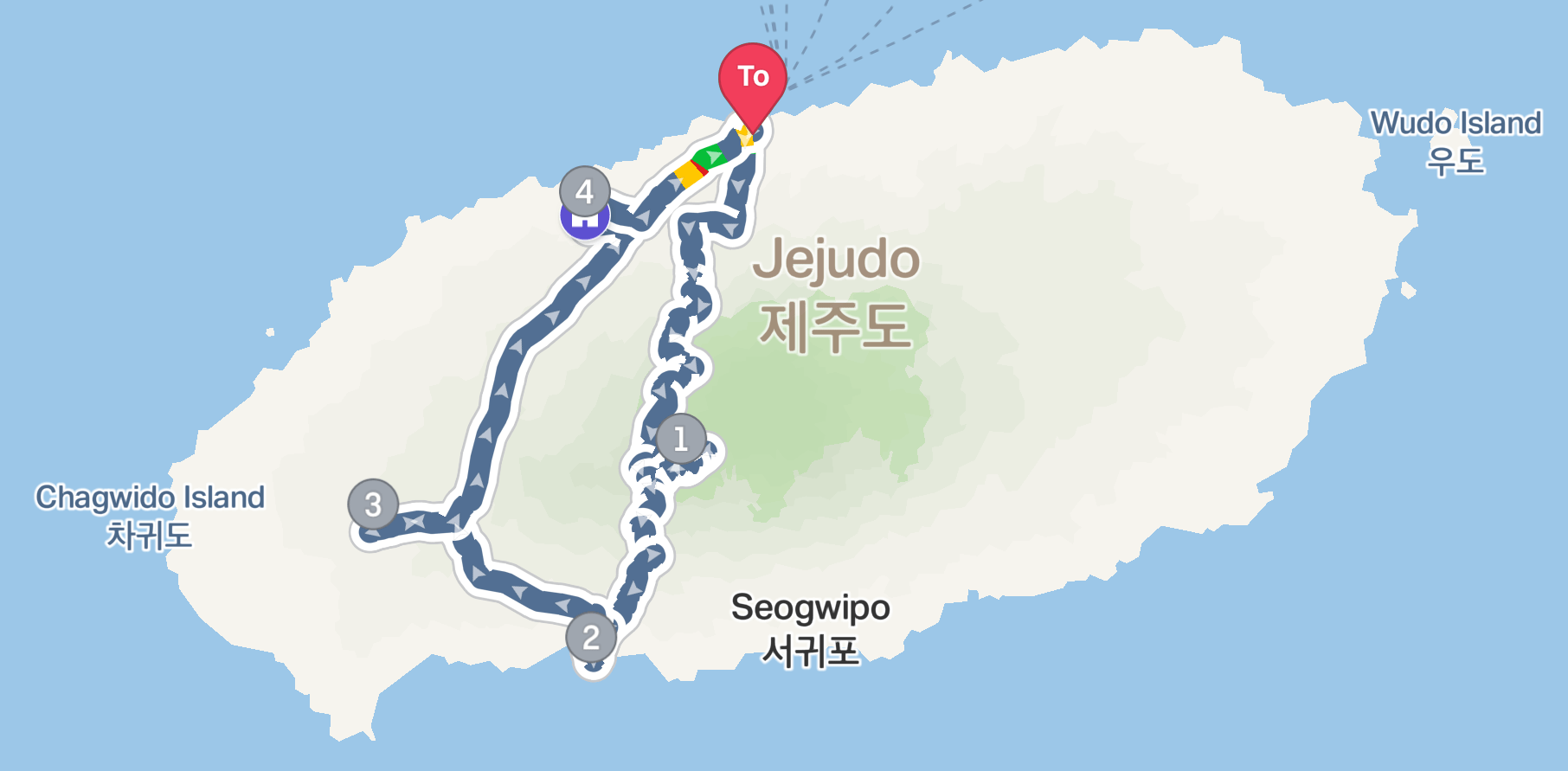
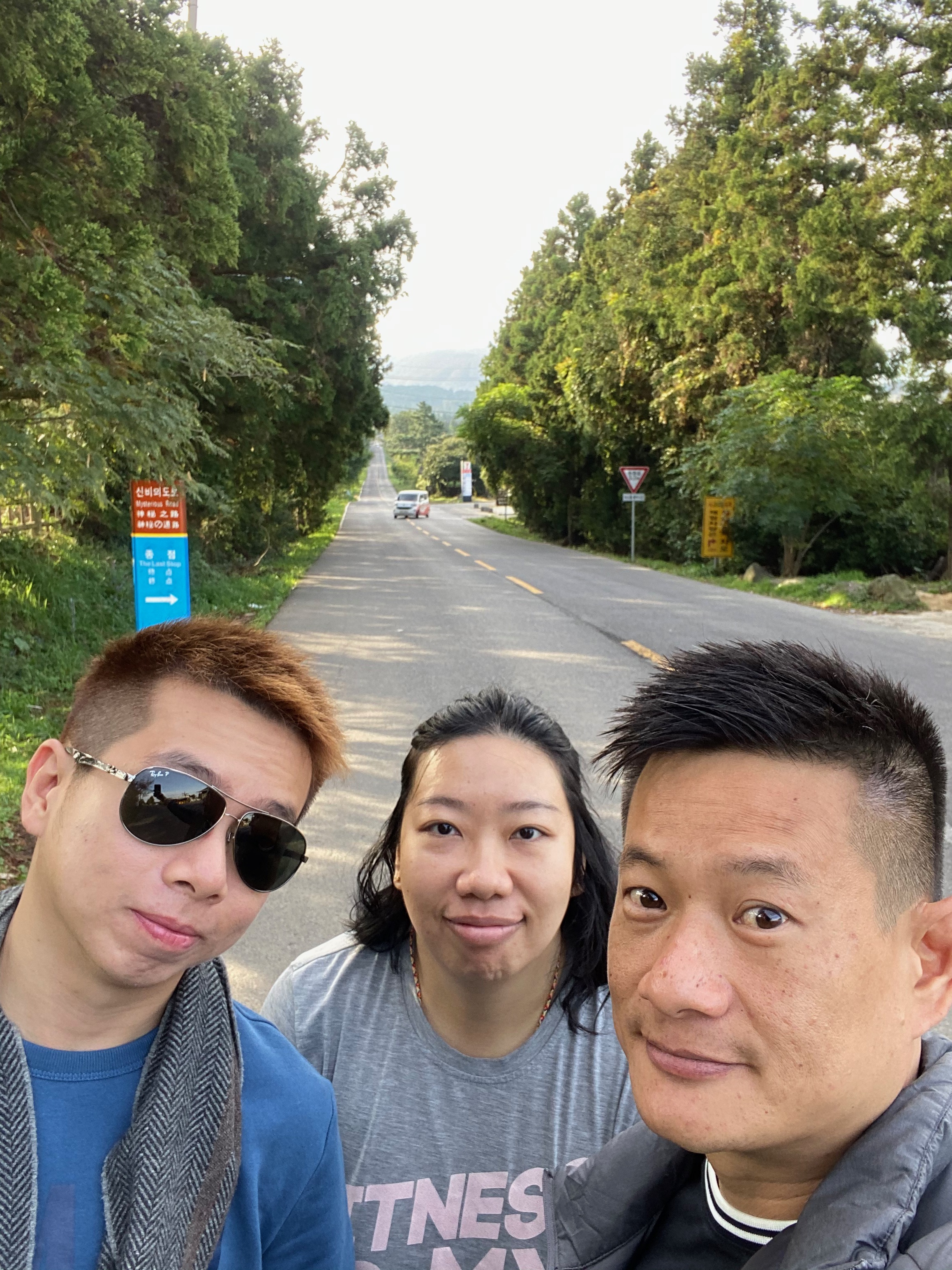
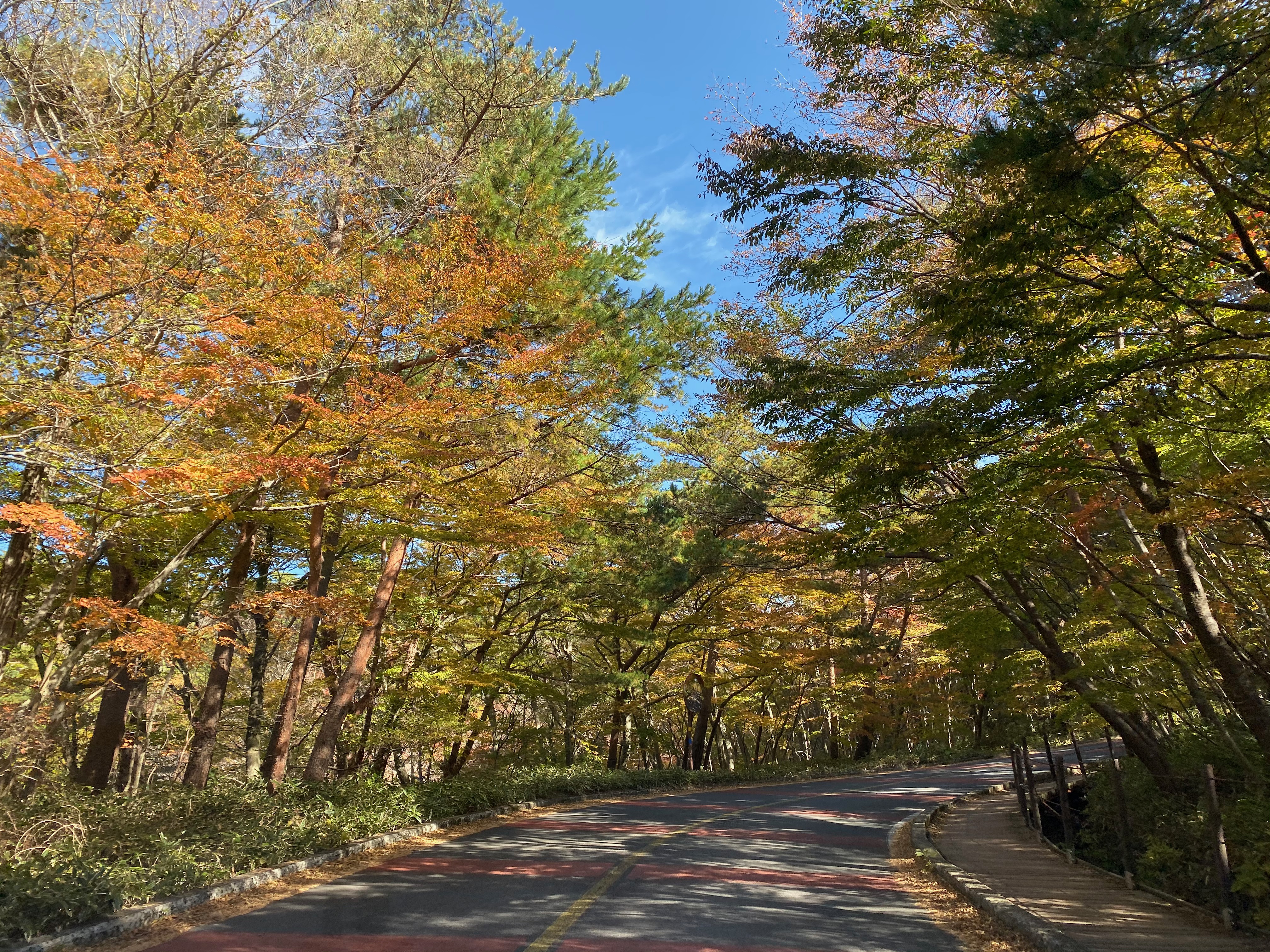
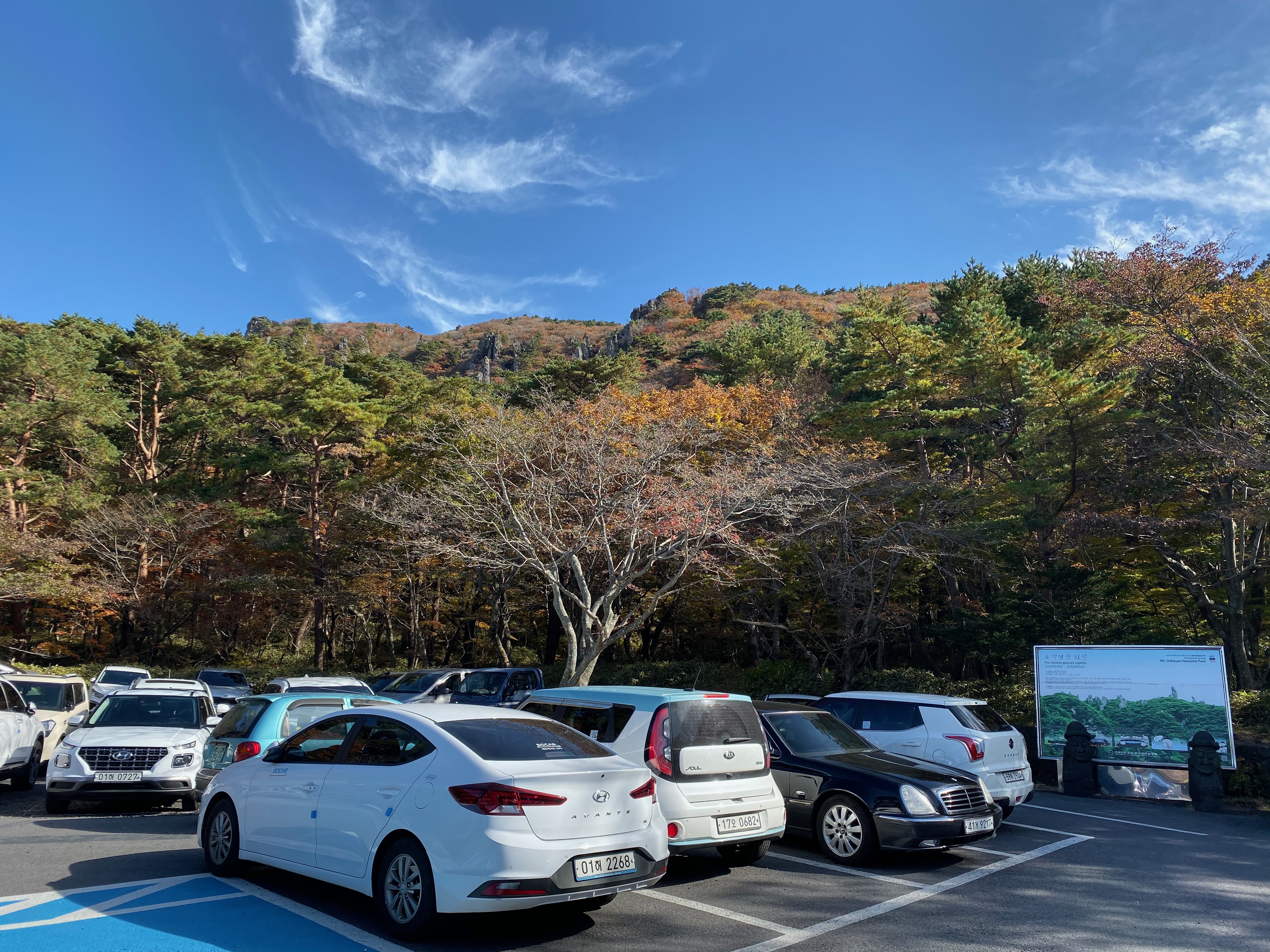
Day 3 – Hiking Hallasan. We stopped by Mysterious Road on our way to Yeongsil Trail on Hallasan, where we took a half-day hike up the mountain. After the hike, we visited Jusangjeolli Cliff, Innisfree Jeju House and end up in Jeju-si.

Day 4 – Onward to Busan. We took a morning flight from Jeju to Busan. At Busan, we visited Gamcheong Cultural Village and head to Busan Train Station to get our train tickets to Seoul.

Day 5 – A road trip to Gyeongsangnam-do. We drove west of Busan visiting places like Mireuksan, Dara Park, Mundong Waterfall, Sinseondae Platform and Windy Hill.

Day 6 – Historic Gyeongju. We drove north of Busan to Gyeongju, visiting Gyeongju Gyochon Traditional Village, Woljeonggyo Bridge, Gyerim Forest, Cheomseongdae, Donggung Palace & Wolji Pond and Bulguksa Temple.

Day 7 – Eastern Busan. We made a quick stop at Haeundae Beach before heading to Haedong Yonggungsa Temple. We also did some shopping at Busan Premium Outlet and Centum City.

Day 8 – Onward to Seoul. We took a three-hour ride on the KTX from Busan to Seoul and spend the rest of the day shopping at Gangnam Garosugil and Myeongdong.

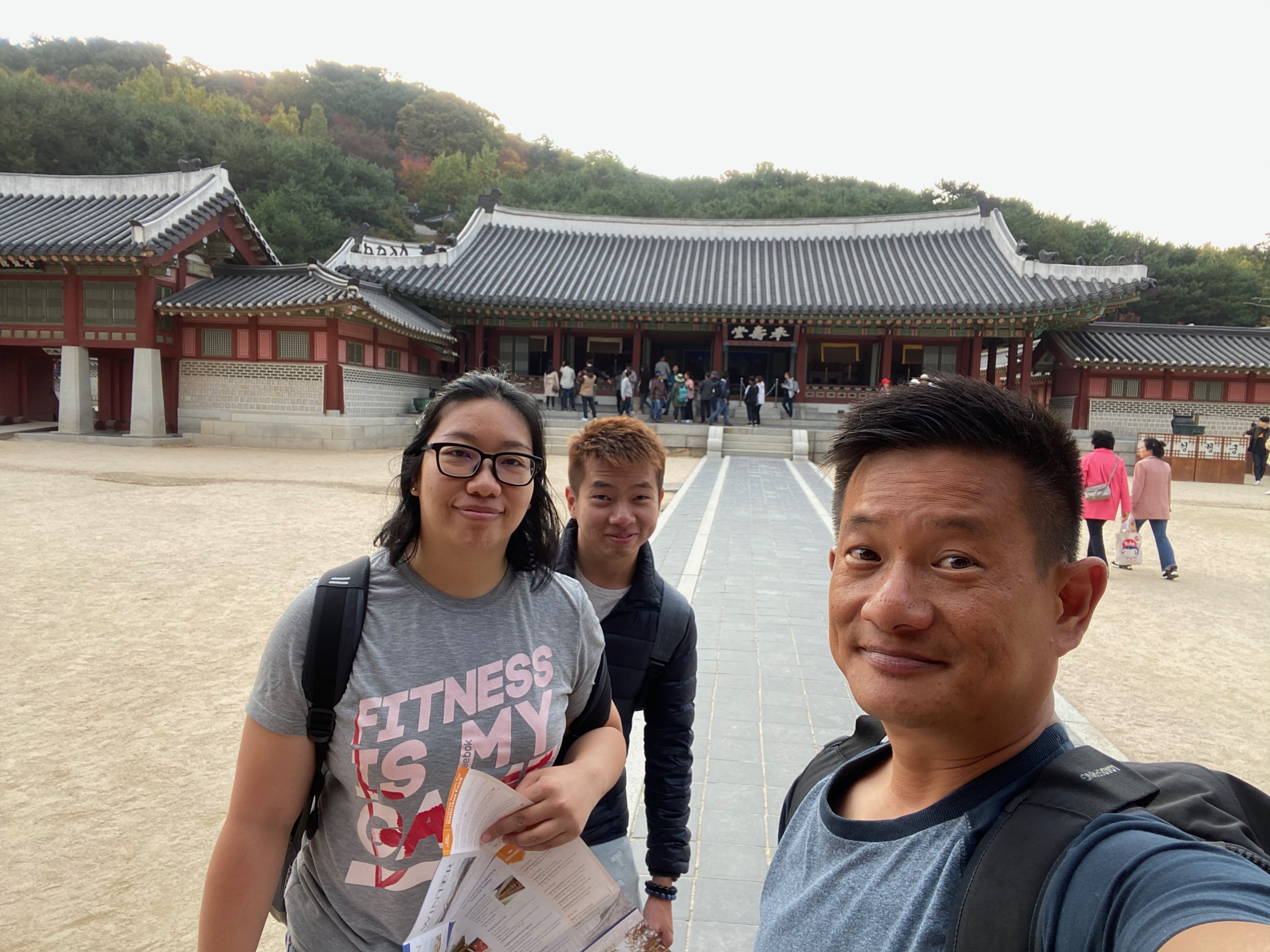
Day 9 – Day Trip to Suwon. Before making our way to Suwon, we made a pitstop at Namdaemun Market and Namdaemun Gate. In Suwon, we visited Hwaseong Haenggung followed by an evening stroll on Hwaseong Fortress. We ended our day with a visit to a Jjimjilbang.

Day 10 – Gangchon and Nami Island. We rode on a railway bike at Gangchon before heading to Nami Island in the nearby province of Gangwon-do. While back at Seoul, we stopped by Cheonggyecheon Stream and did some night shopping at Myeongdong.

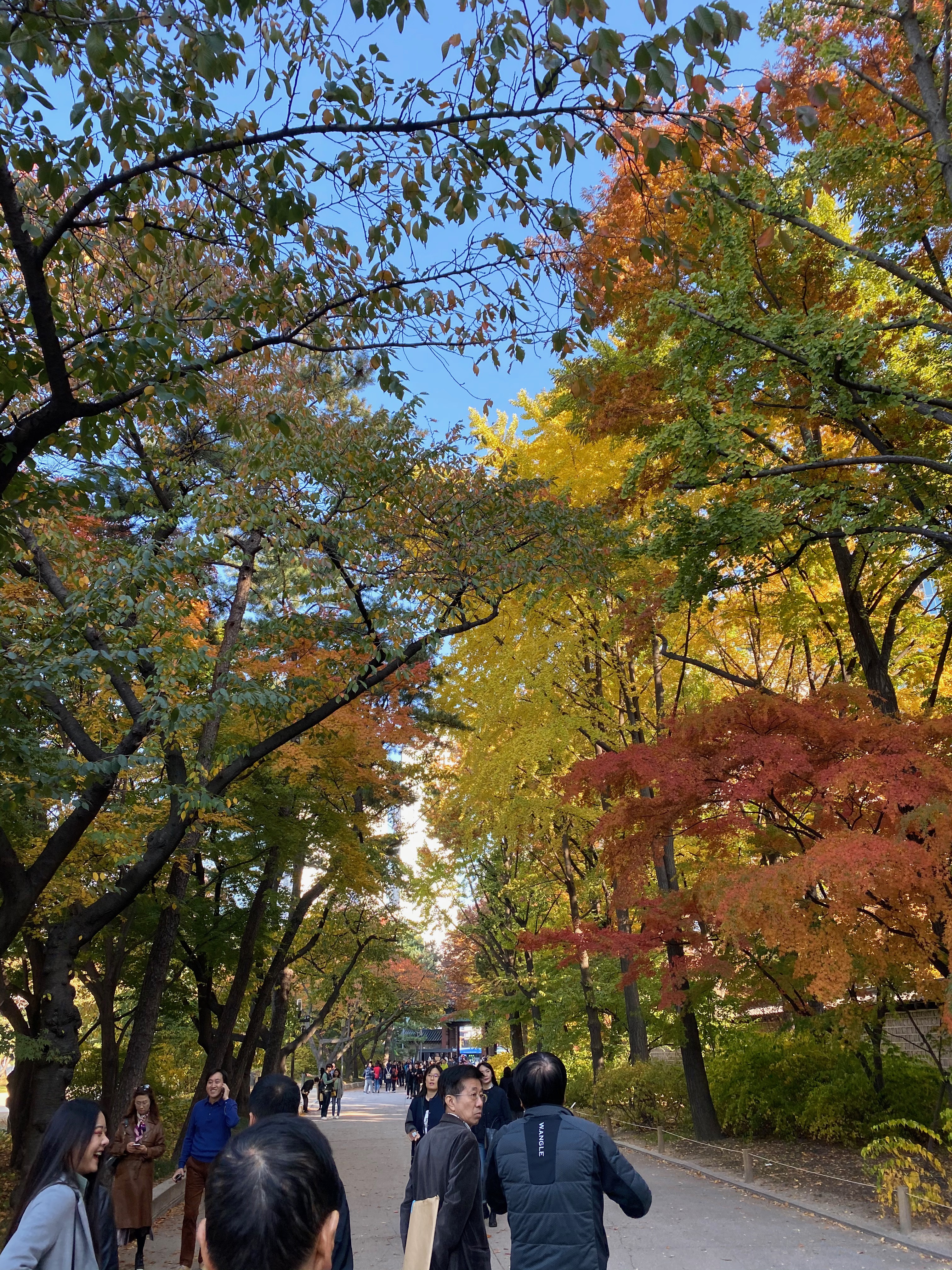
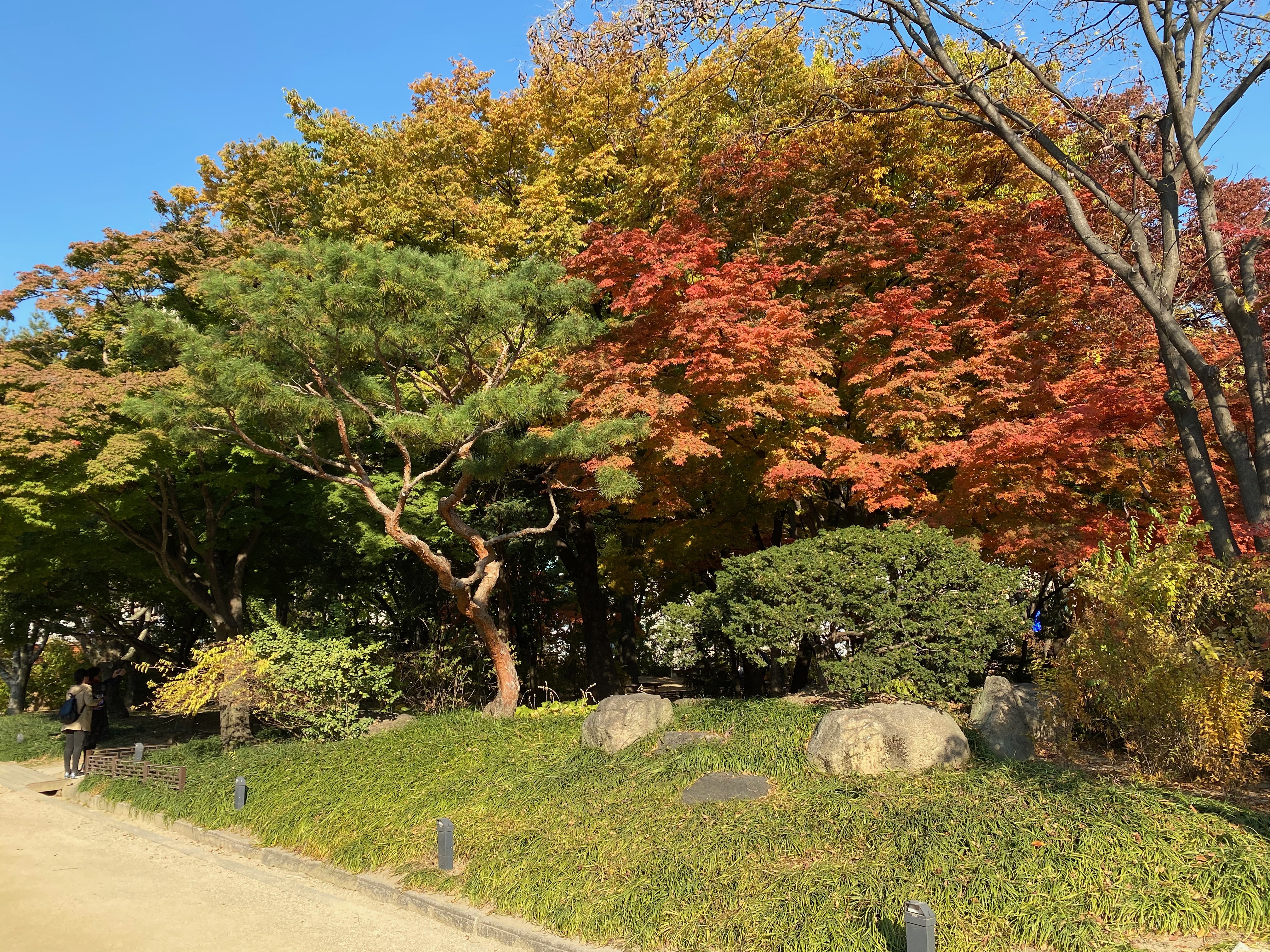
Day 11 – Historic Seoul. We visited sights in Seoul such as Seoul City Wall, Deoksugung Palace and ended our day with shopping trips to Hongdae and Myeongdong.

Afterthoughts

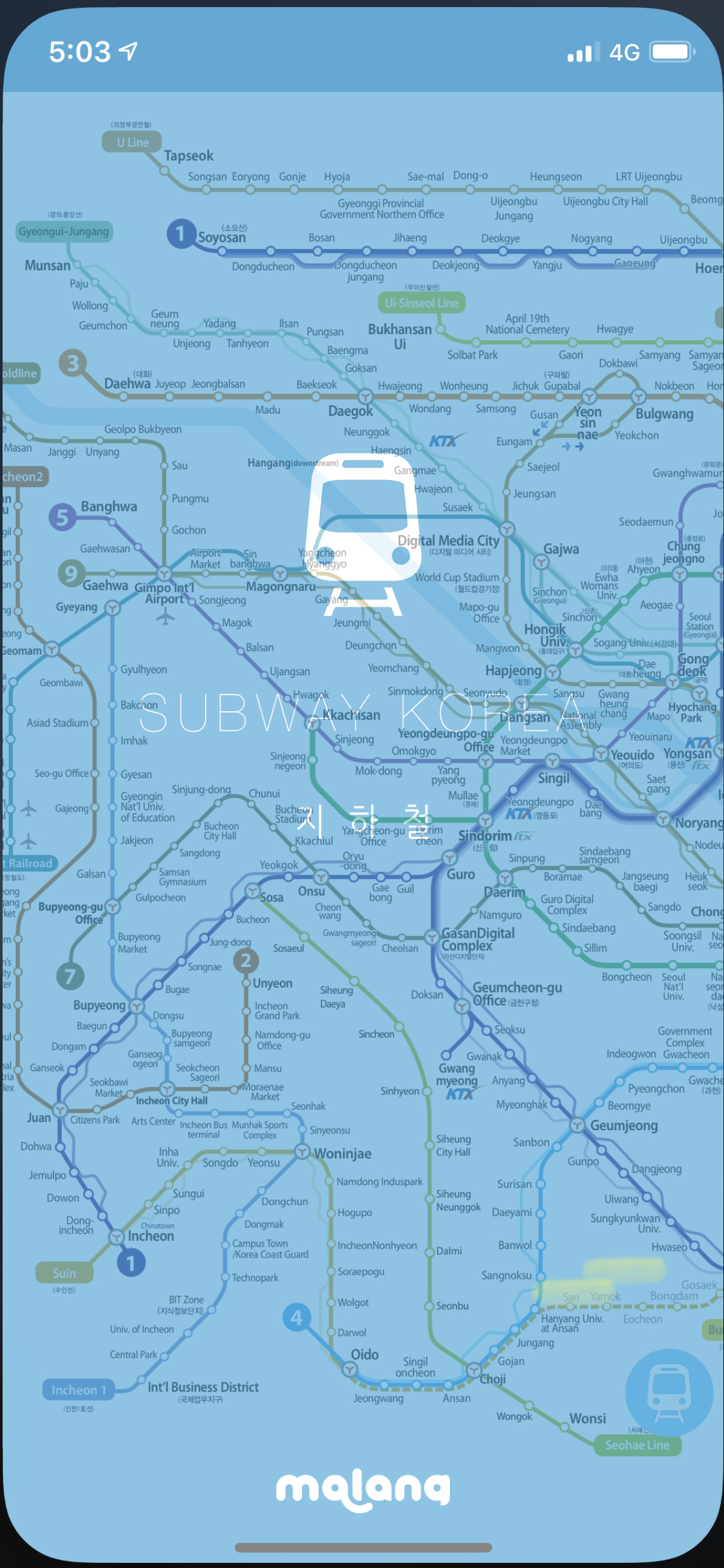
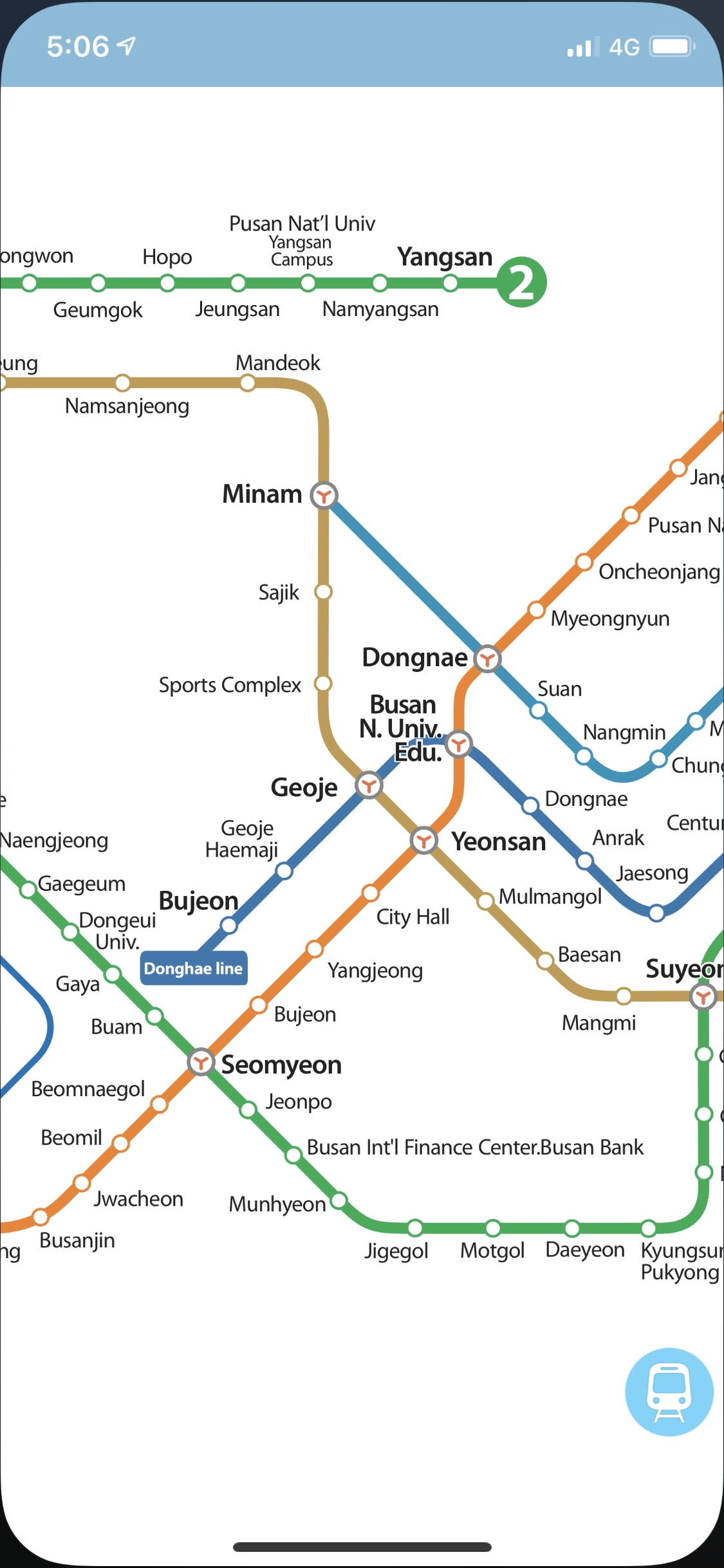
During our time in South Korea, I thought there are a couple of apps that I highly recommend to visitors to South Korea (I am not sponsored by them, just sharing useful apps during my travel in South Korea). The Naver Map App (more information here) is what we relied on largely in South Korea from driving to taking public transport. This app is similar to Google Map, only it works in South Korea. Google Map has limited functions in South Korea and it does not show driving routes. Naver Map App not only allowed me to plan my driving routes before coming to South Korea, but the driving routes recommended by the app is also very accurate. The app is also useful for those who do not drive in South Korea as it shows in real-time the public transport options. The second app that I relied on heavily while in South Korea is the Subway App. This app is excellent in navigating through the confusion subway map in South Korea. It is capable of showing us the subway to take and the real-time arrivals and departures of trains. This app gives us a good idea of the time required to travel on subways. The subway app not only displays the subway system in Seoul, but it also has options to display subway systems in major cities such as Busan. We managed to cover quite a bit of South Korea throughout our 12 days here. We also experienced a few firsts during this trip: driving a left-hand drive, climbing the highest mountain in South Korea, taking the KTX, taking the longest cable car system in South Korea, riding on the railway bike to name a few. Throughout this trip, we had a good mix of nature and culture aspect of South Korea and still managed to cater time for shopping.

Jeju/Busan/Seoul Day 11 (5 Nov 19) – The Ancient and Modern Faces of Seoul: From Strolling the Seoul City Wall to Visiting Deoksugung Palace to Shopping at Hongdae and Myeongdong

Seoul is not all about shopping districts, there are a few historical sites in Seoul such as the big five palaces. We planned to visit a couple of these historic sites today followed by finishing up our day with some shopping districts.

Viewing Seoul from Seoul City Wall – Naksan Section

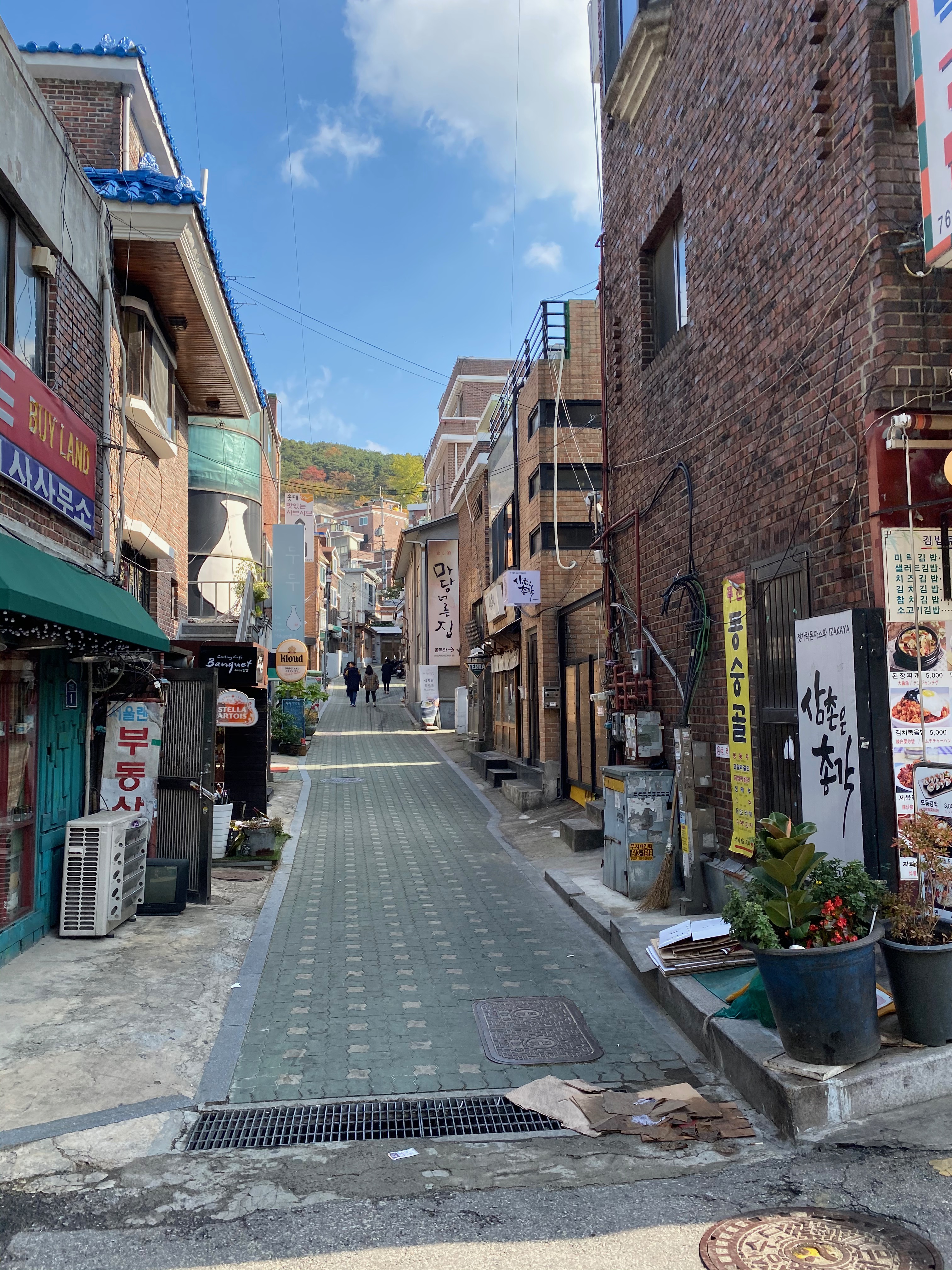
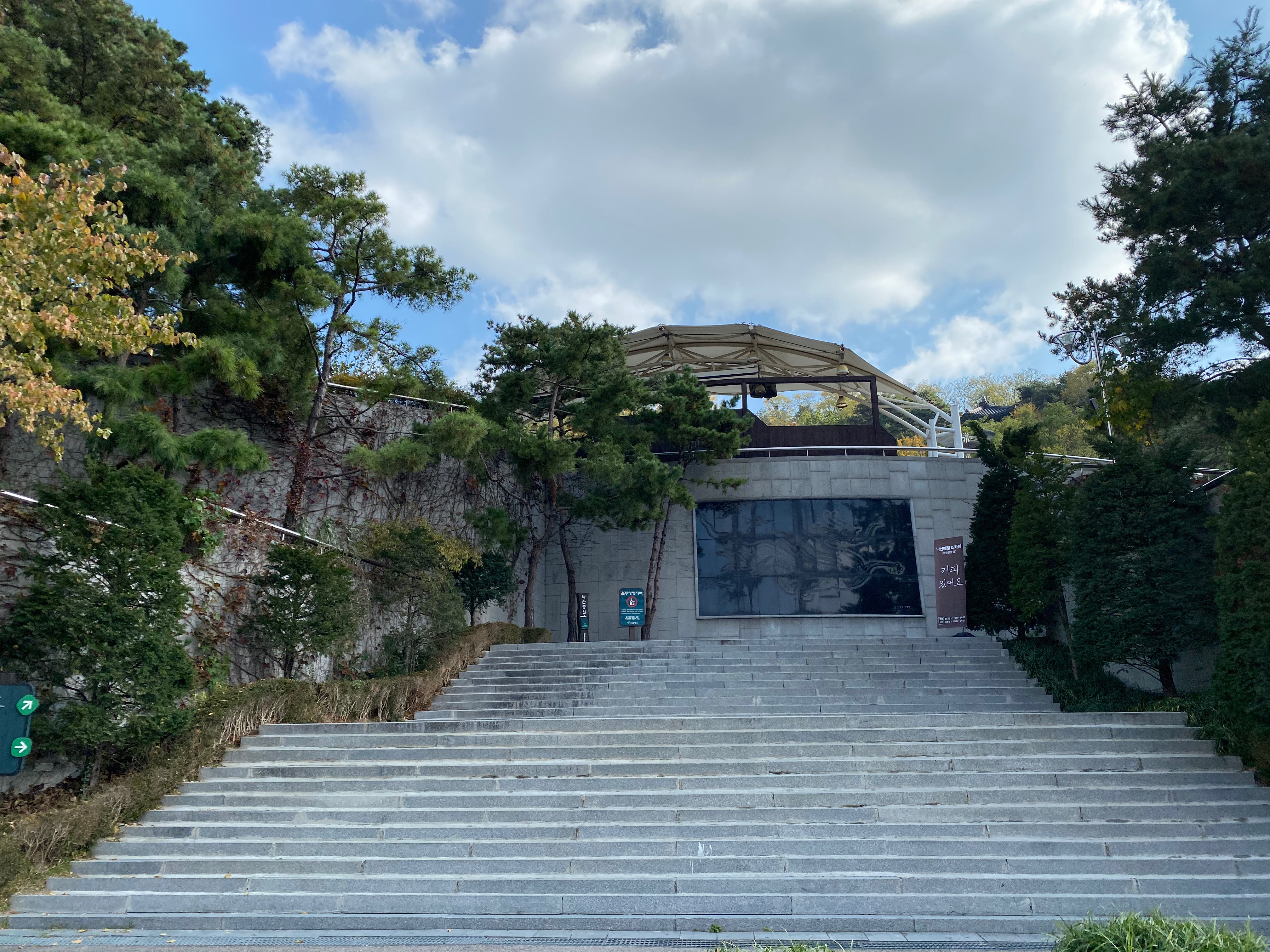
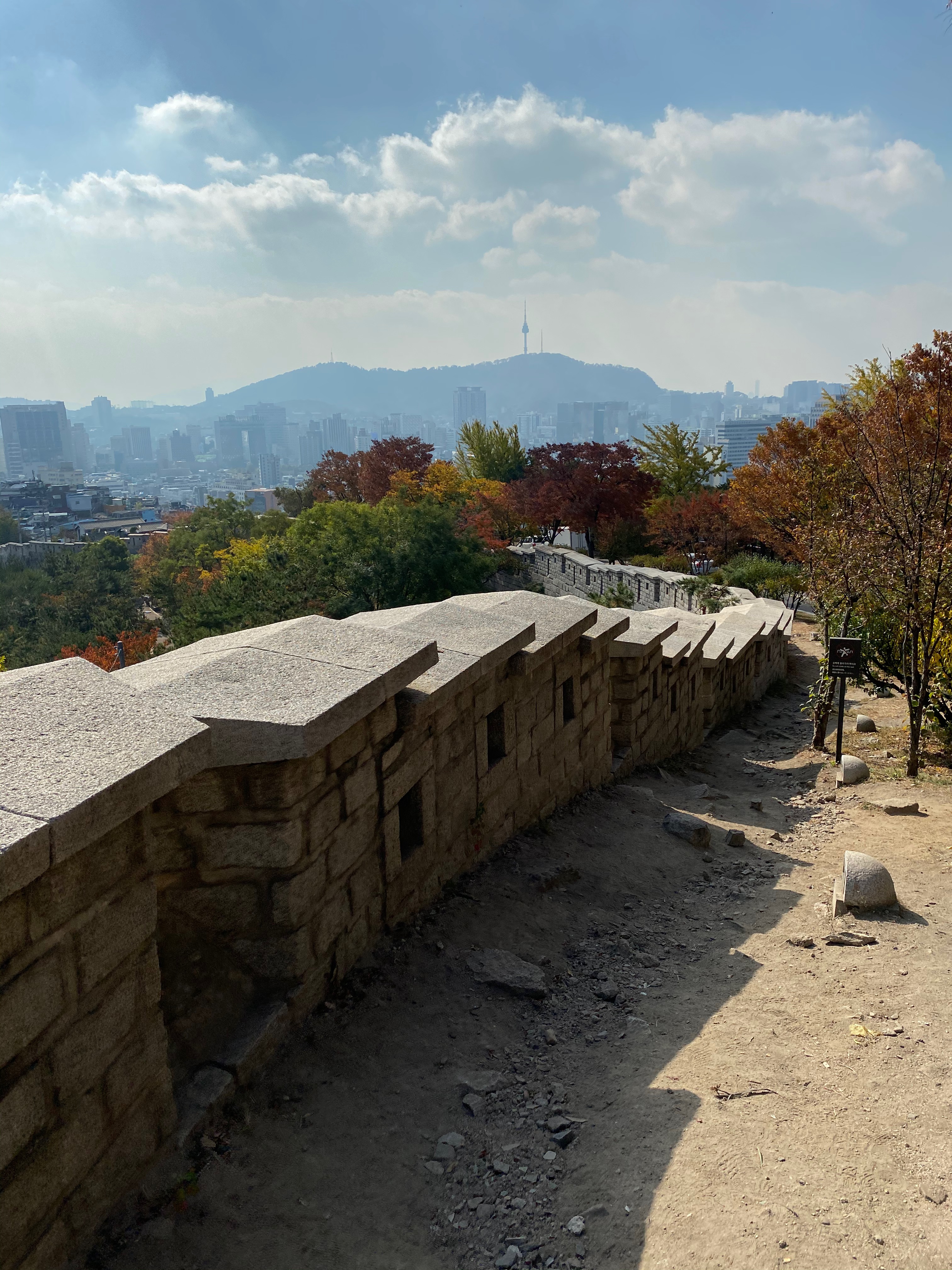
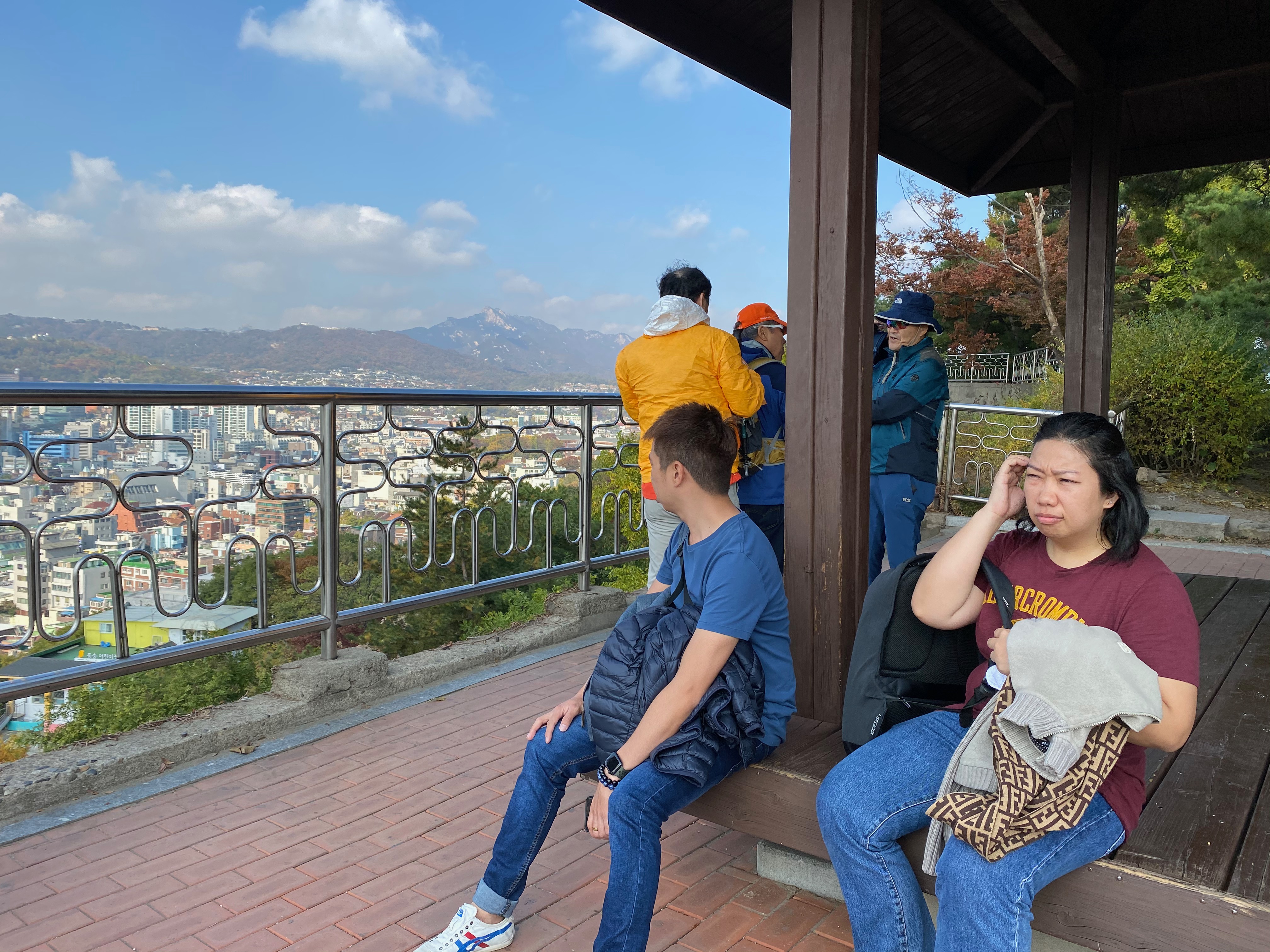
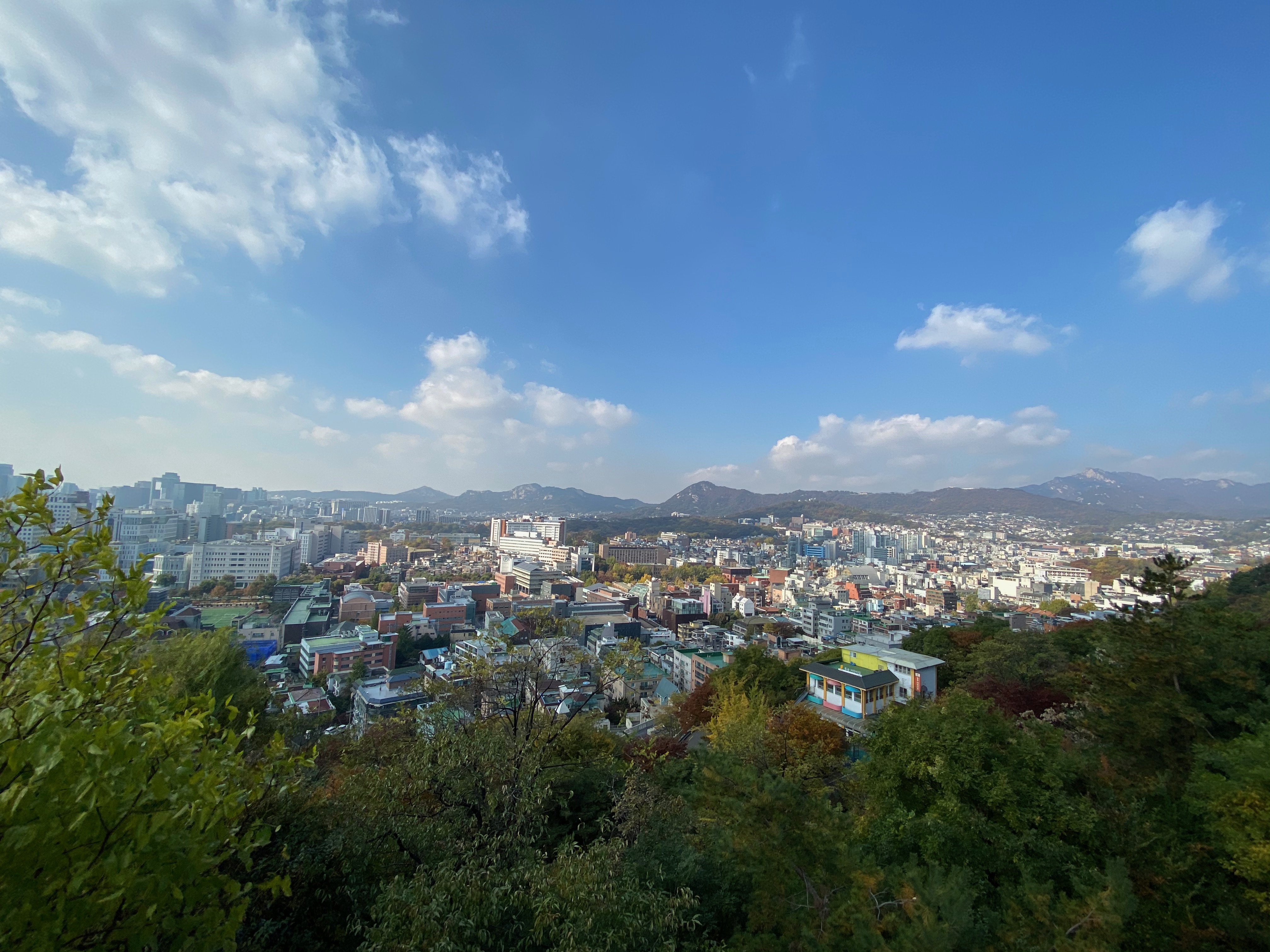
We started our day today visiting part of the Seoul City Wall, which my friend and I did miss out the last time we came to Seoul three years ago. The 18km Seoul City Wall was built to protect Seoul from invasion, the entire wall was well preserved after standing on its spot for more than 600 years. Visitors to Seoul City Wall can choose to walk the entire 18km or do it in part. As we have little time today, we opted to do the shortest section of the wall, starting from Naksan and we would end up in Dongdaemun gate. To get to Naksan stretch of the Seoul City Wall, we took the subway to Hyehwa Station, which is a mere two stops away from where our hotel is. Exiting the subway station, the path to Naksan is a short 5 mins upslope stroll through a neighbourhood. There are some small shops near Hyehwa Station, where we made a short pit stop to check out their merchandise. We continued our walk towards the base of Naksan Park, which was very well marked with signs pointing visitors to the park. Soon we arrived at a flight of stairs which would take us up to Naksan Park. Naksan Park sits on top of 124m Naksan Hill, which has commanding views of parts of Seoul as well as N Seoul Tower and the surrounding Mountain ranges.

556AB978-E312-432B-9721-5A391E7B8AFC

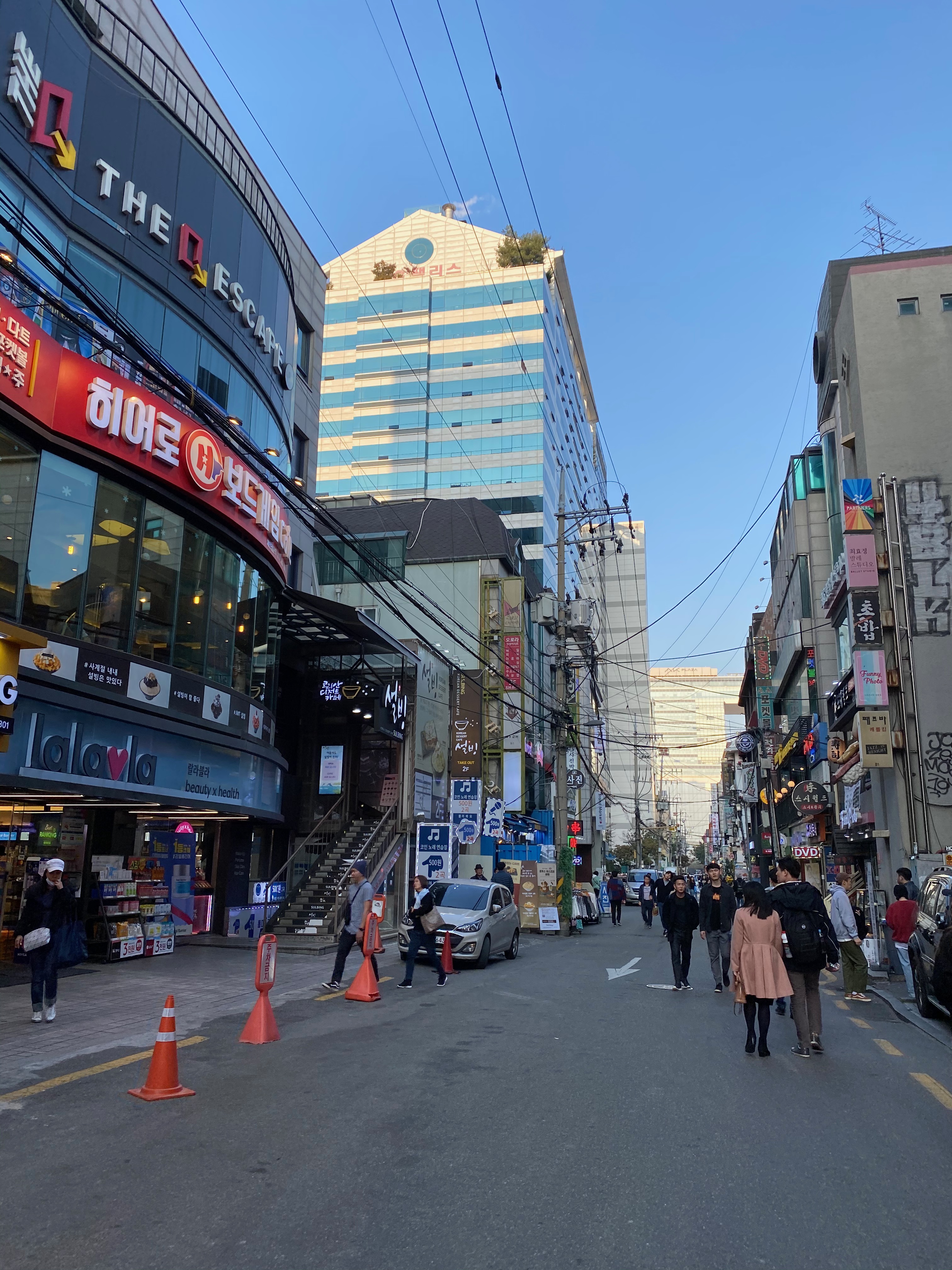
Autumn street scene around Hyehwa Station

6B96DF3C-EF16-4F73-B6BD-209E66DAF75D

Walking from Hyehwa Station to Naksan Park

646F84AE-789A-4BFD-8E77-7ACCB50690BD

It is going to be an upslope walk to Naksan Park

324FD7E9-1ED3-481A-93C4-108AC7BD984D

Naksan Park lies on top of these stairs

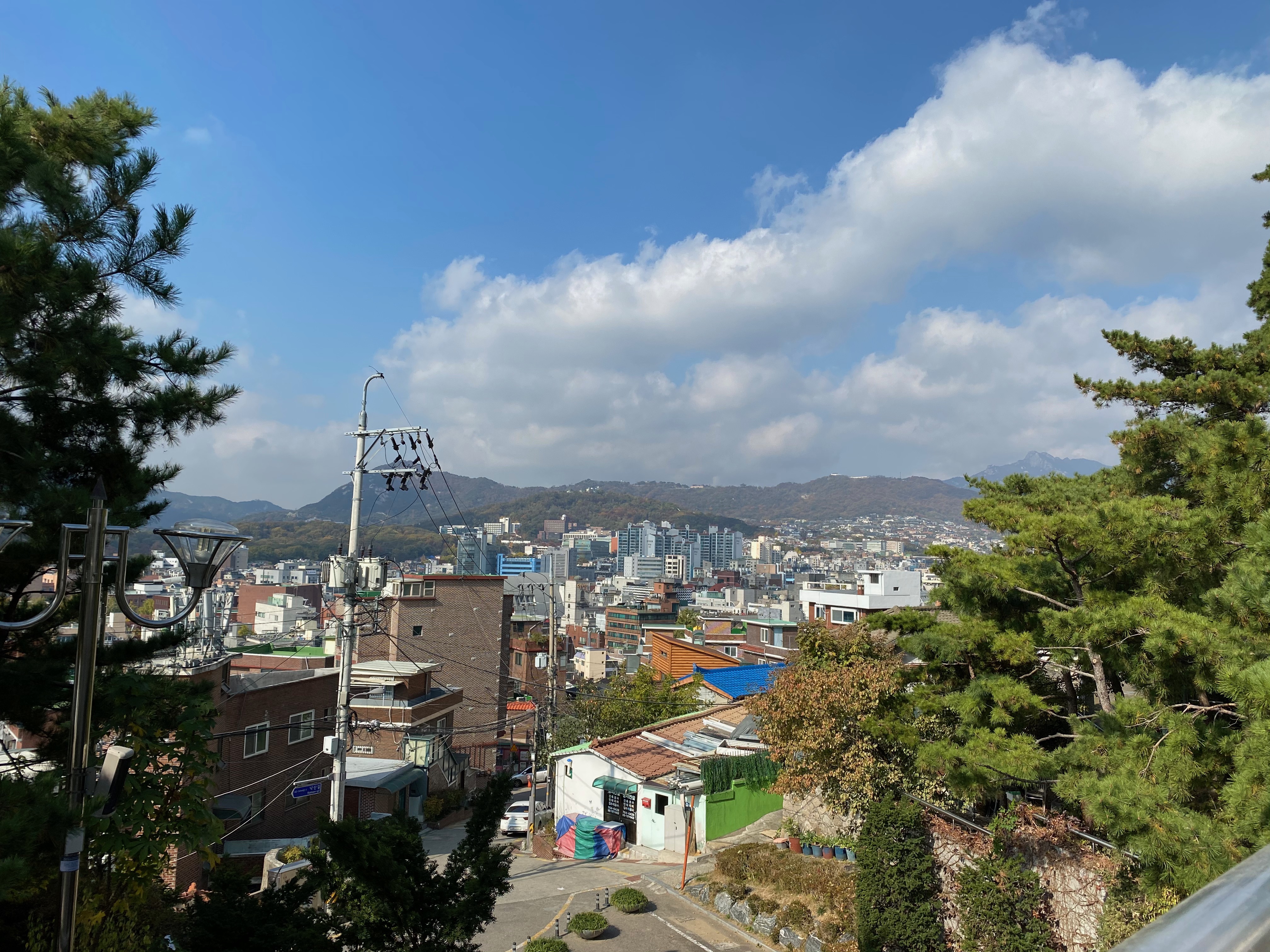
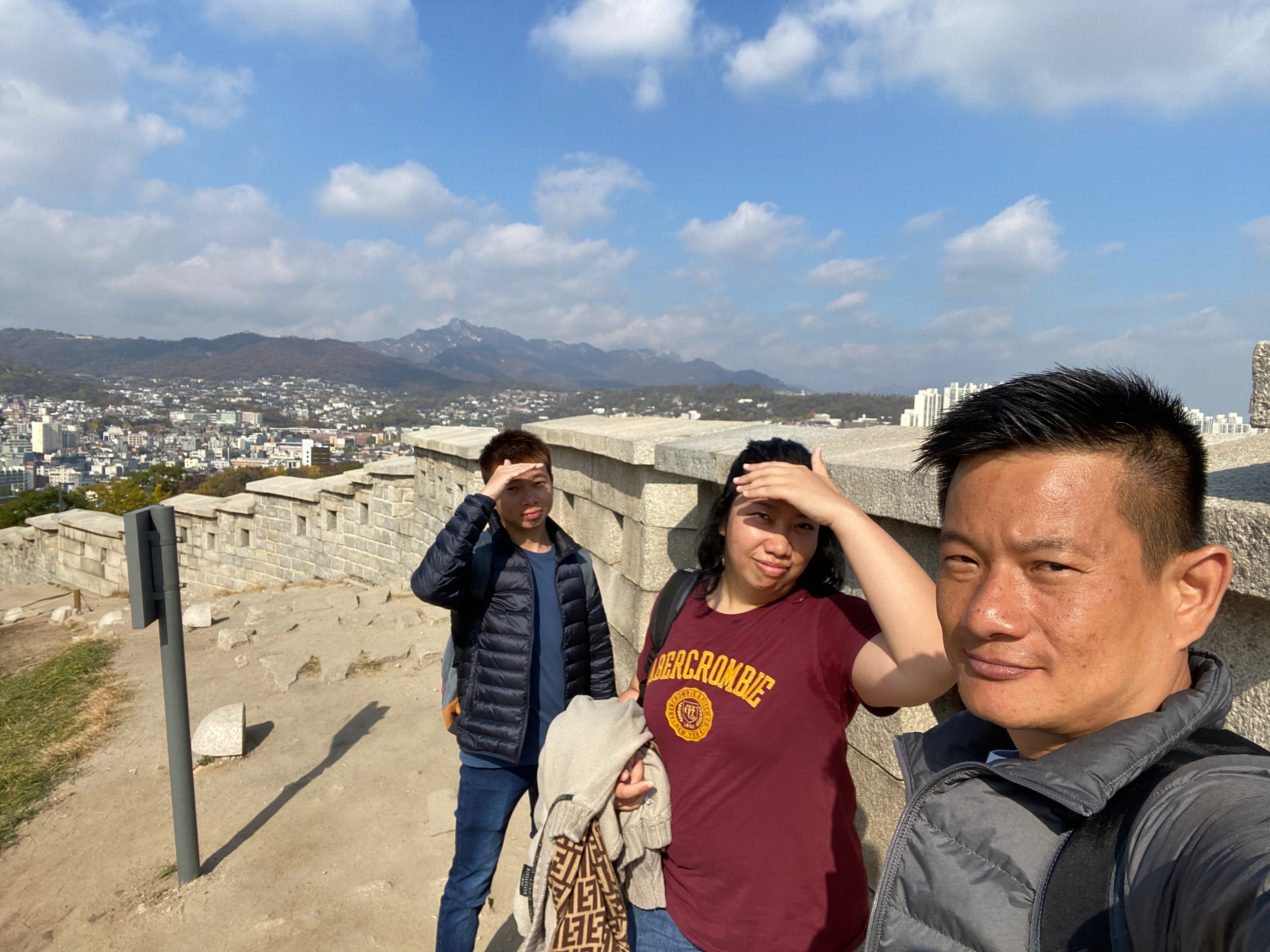
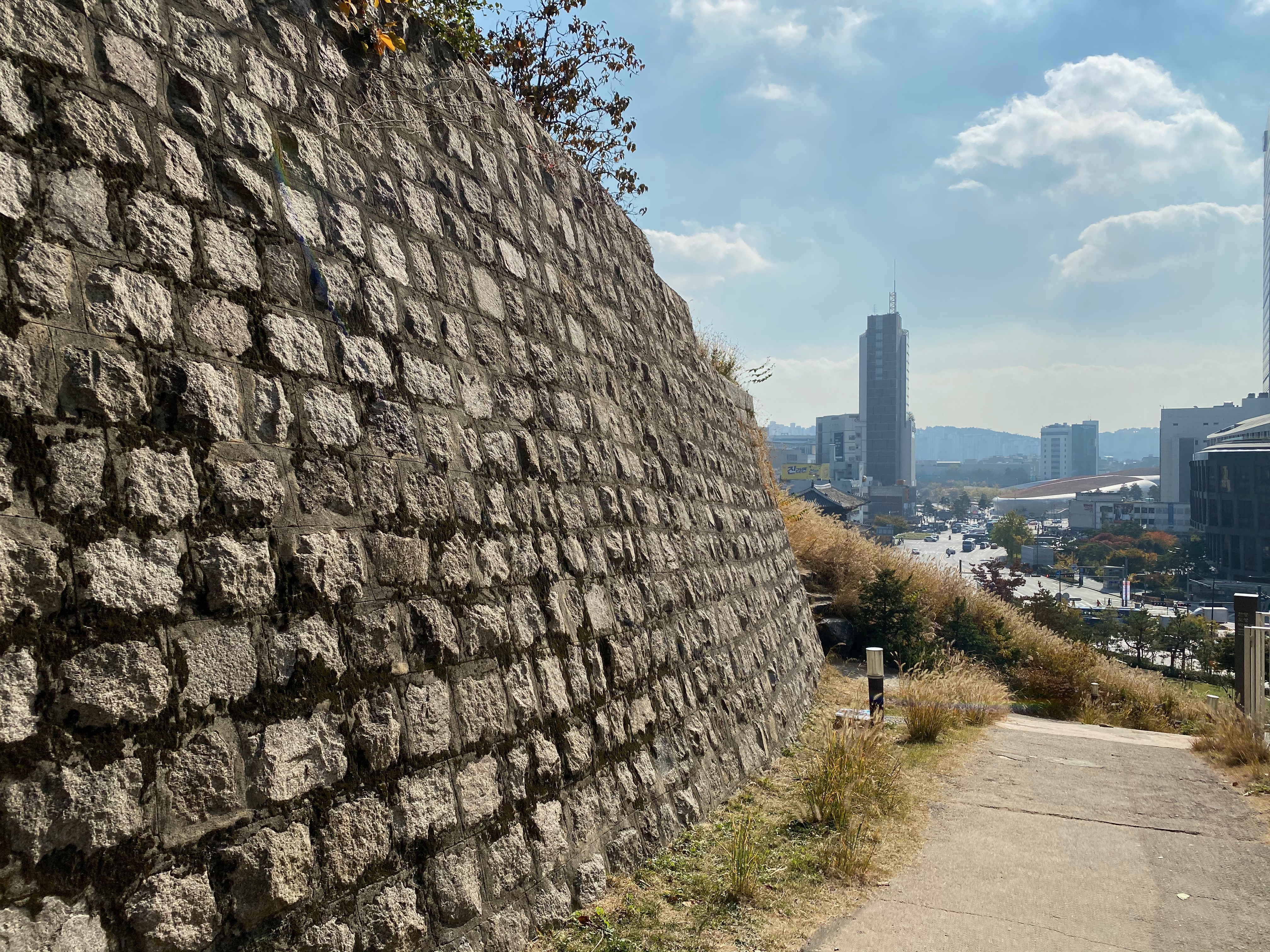
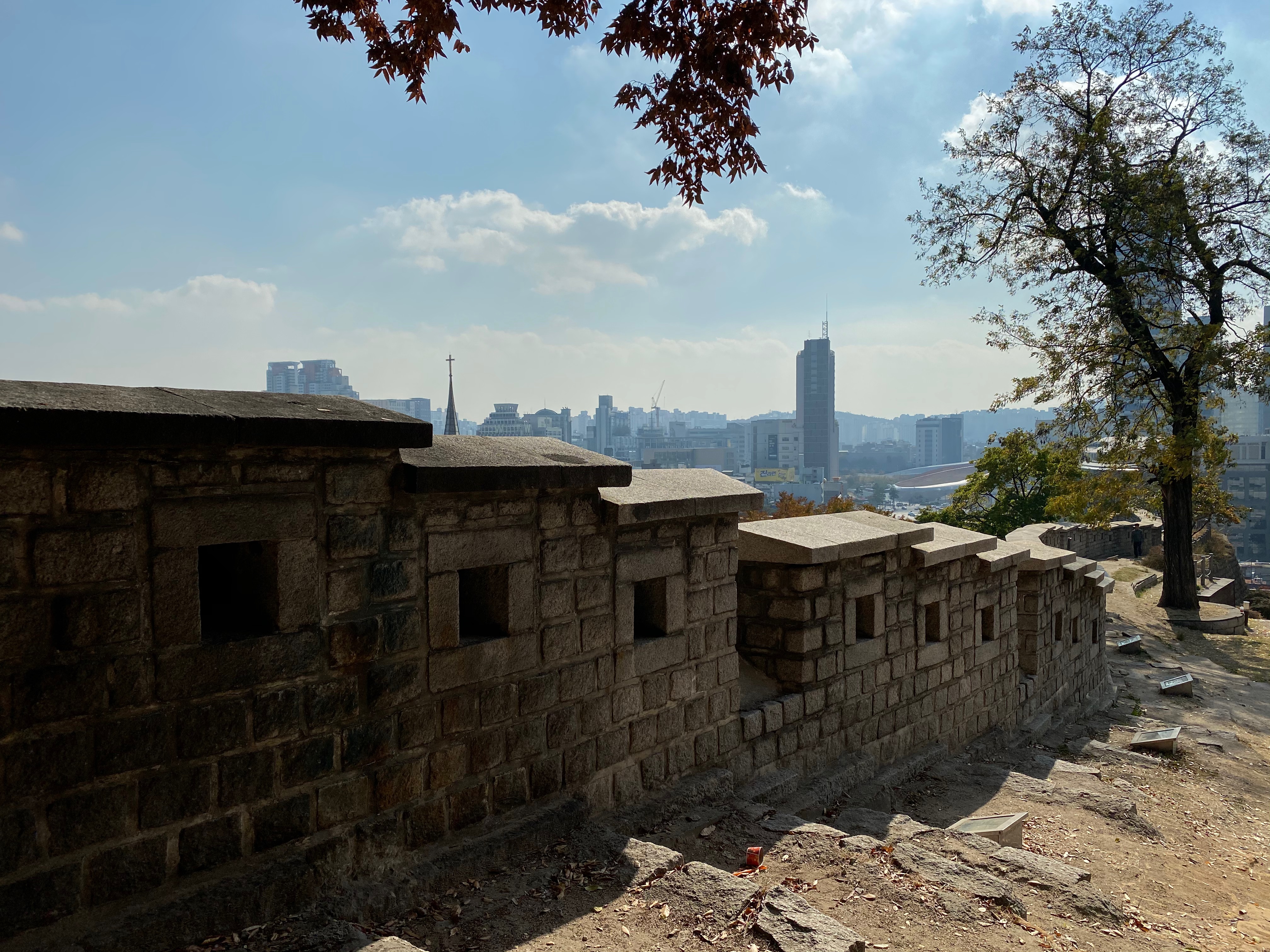
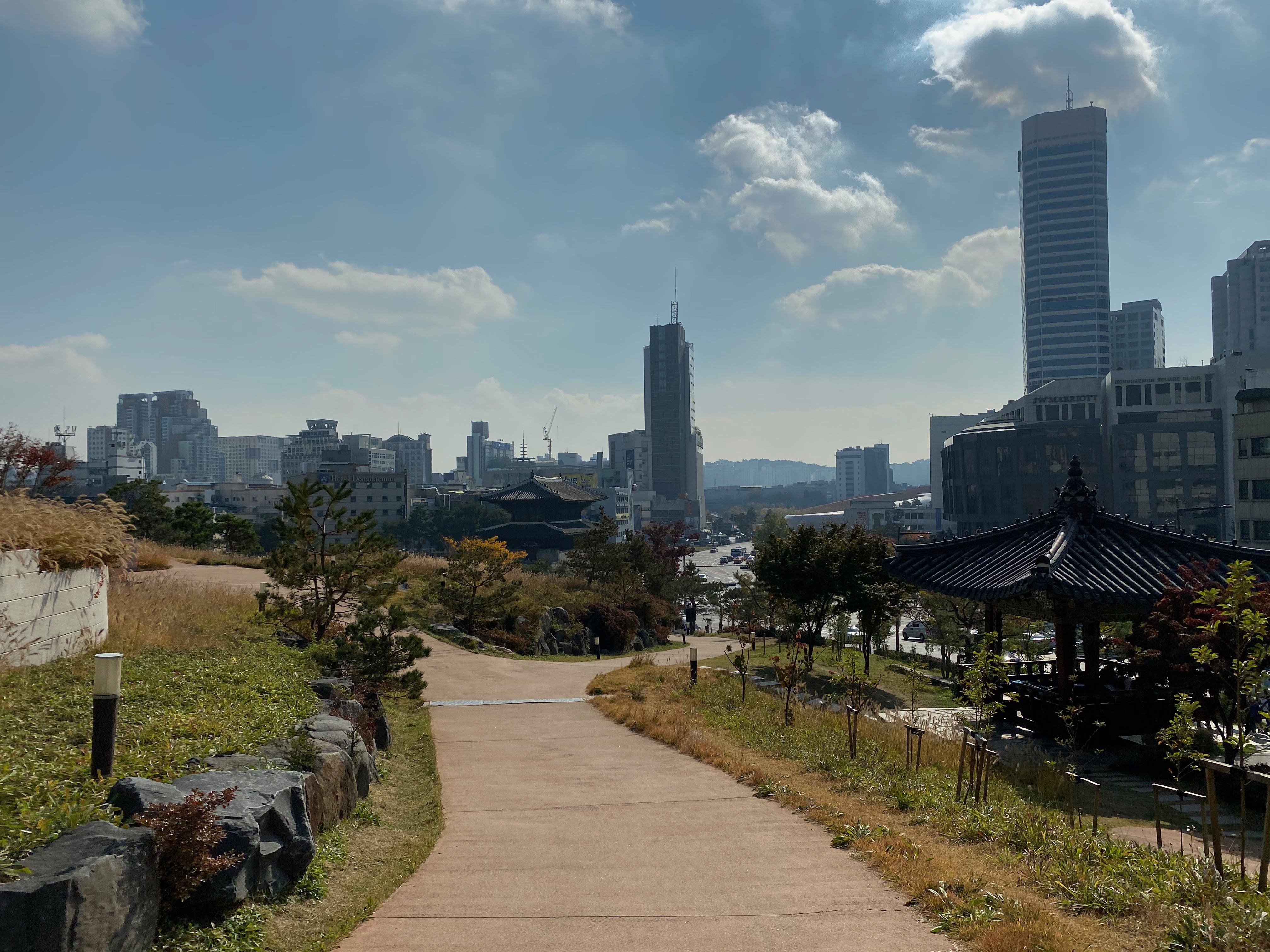
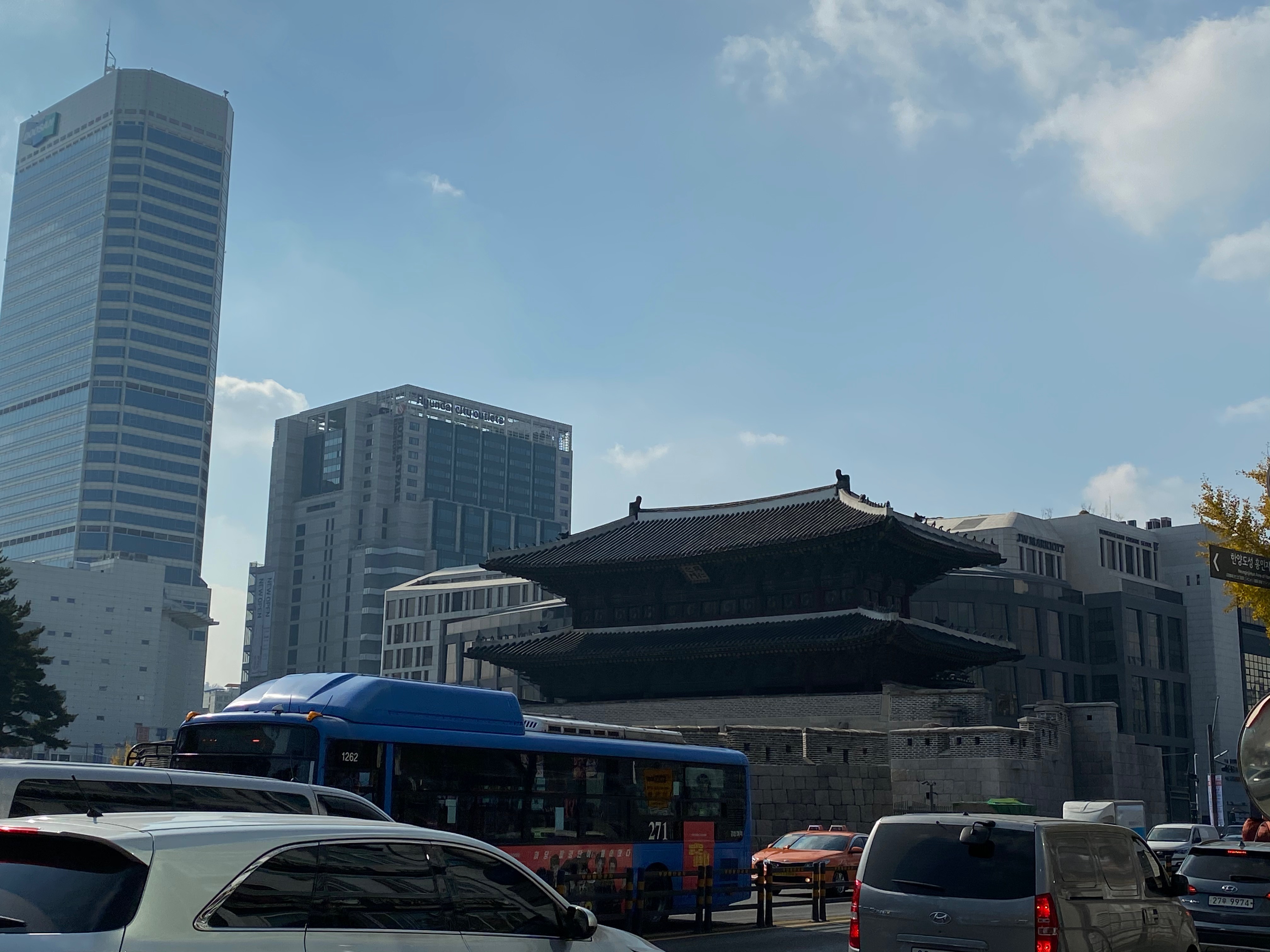
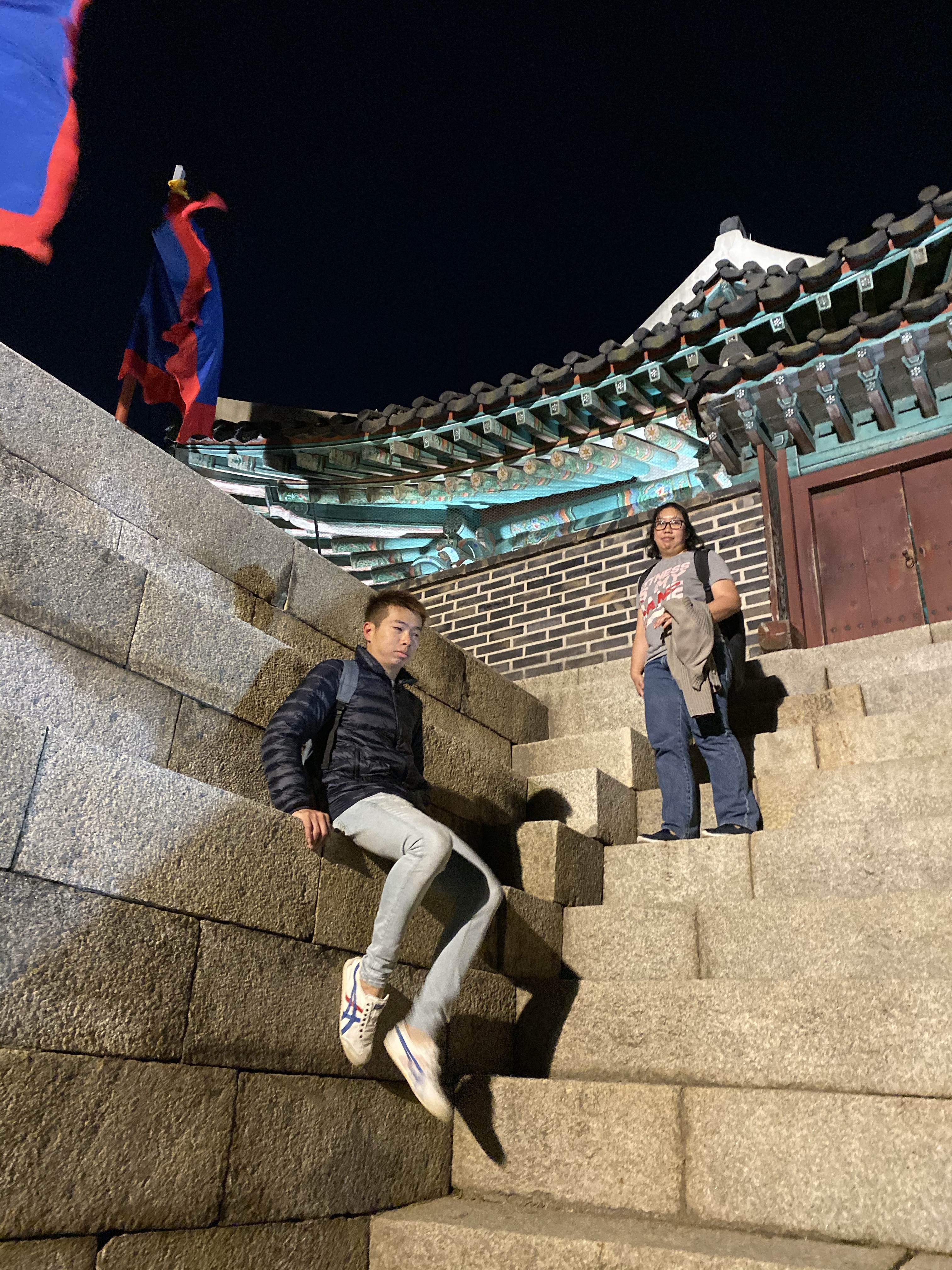
As we climbed the stairs, we were able to see a quieter side of Seoul, a stark difference from places like Myeongdong and Gangnam. At the top of the stairs is an intersection, we took the road on the left that brought us to the  Seoul City wall in under 3 mins walk. The Seoul City Wall sits at the top of the hill with the inner-city side being shorter than the side that faces outside of the city it was meant to protect. Getting up close to Seoul City Wall, it is apparent that some parts of the wall are being from different time periods in Korean history. Some parts of the wall are built with more uniform stone blocks cut into similar dimensions, while there are parts of the wall being built with irregular shapes of stones. Most of the inner side of the wall shows signs of being recently restored with the stones looking newer than the others. This stretch of the Seoul City Wall from Naksan to Dongdaemun is a downslope walk, making it a very easy walk for visitors of all ages.  There weren’t many people around during our visit to the Seoul City Wall, the only people we saw are locals taking their morning stroll. Along the way, we were reminded of how vast the city of Seoul is with the magnificent views of the city constantly in our sight. After walking for around 30 mins, the serene view gave way to a busy street bustling with life. The moment we saw Dongdaemun Gate sitting majestically in the centre of a busy road, we know our walk along the Seoul City Wall came to an end. I would recommend people who wanted to take a stroll along the Seoul City Wall but do not have much time for it to go for this Naksan to Dongdaemun route. Reaching the main road, we headed for the nearest subway station – Dongdaemun Station and made our way to our next destination.

8B213C88-38F0-4CD3-8146-C1CB7073DEAA

Quiet Seoul from Naksan Park

2DAB14D3-C515-421C-9F27-C1E74A87DE4A

Seoul City Wall up close

D6DBE295-BAED-4B11-AB5B-9817FEF0C4F8

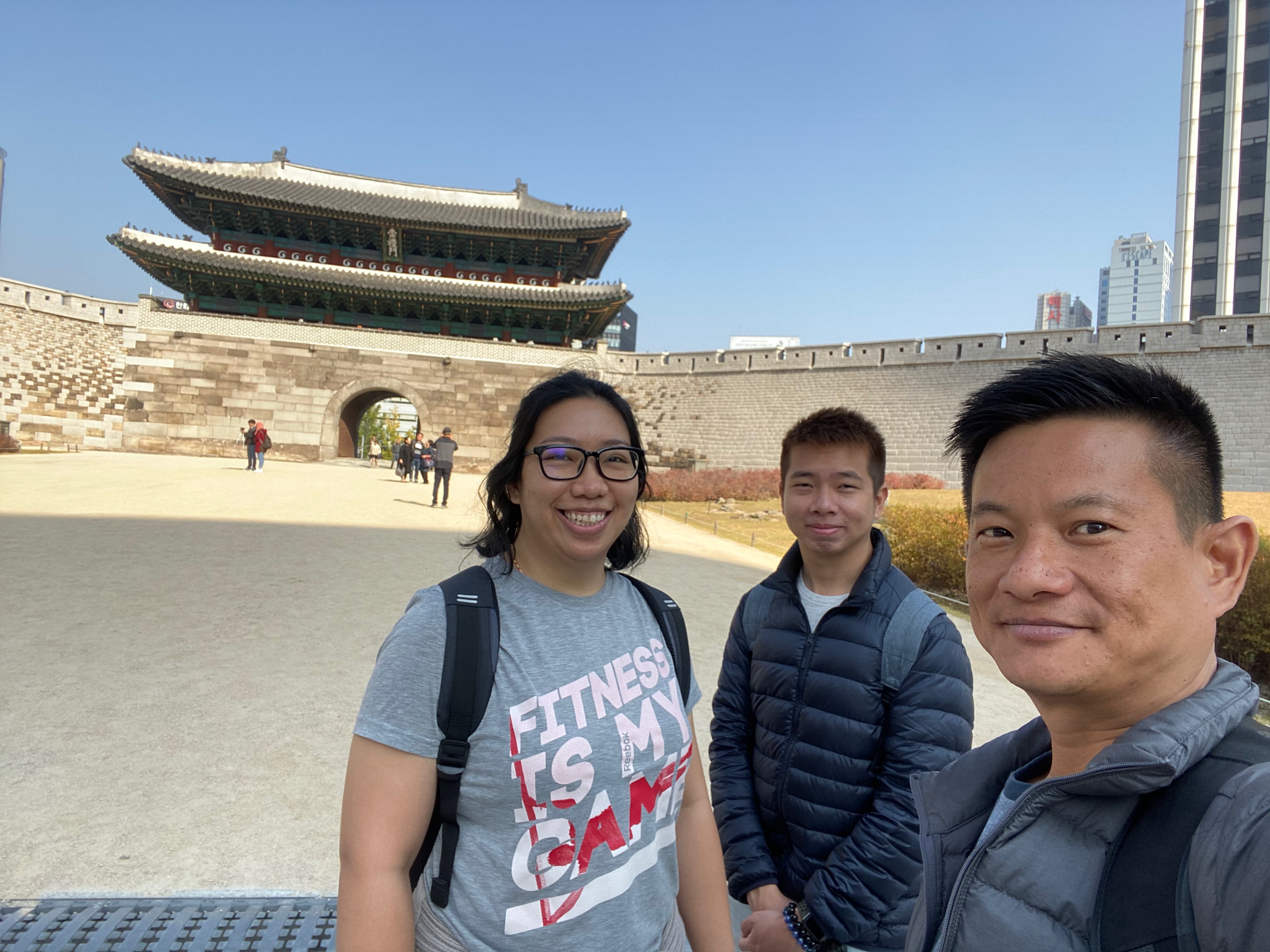
Taking a wefie at the end of our walk along Seoul City Wall

BCC9E058-B3FE-4840-A637-0800D612C62C

Dongdaemun gate sitting in the middle of a busy road

Deoksugung Palace

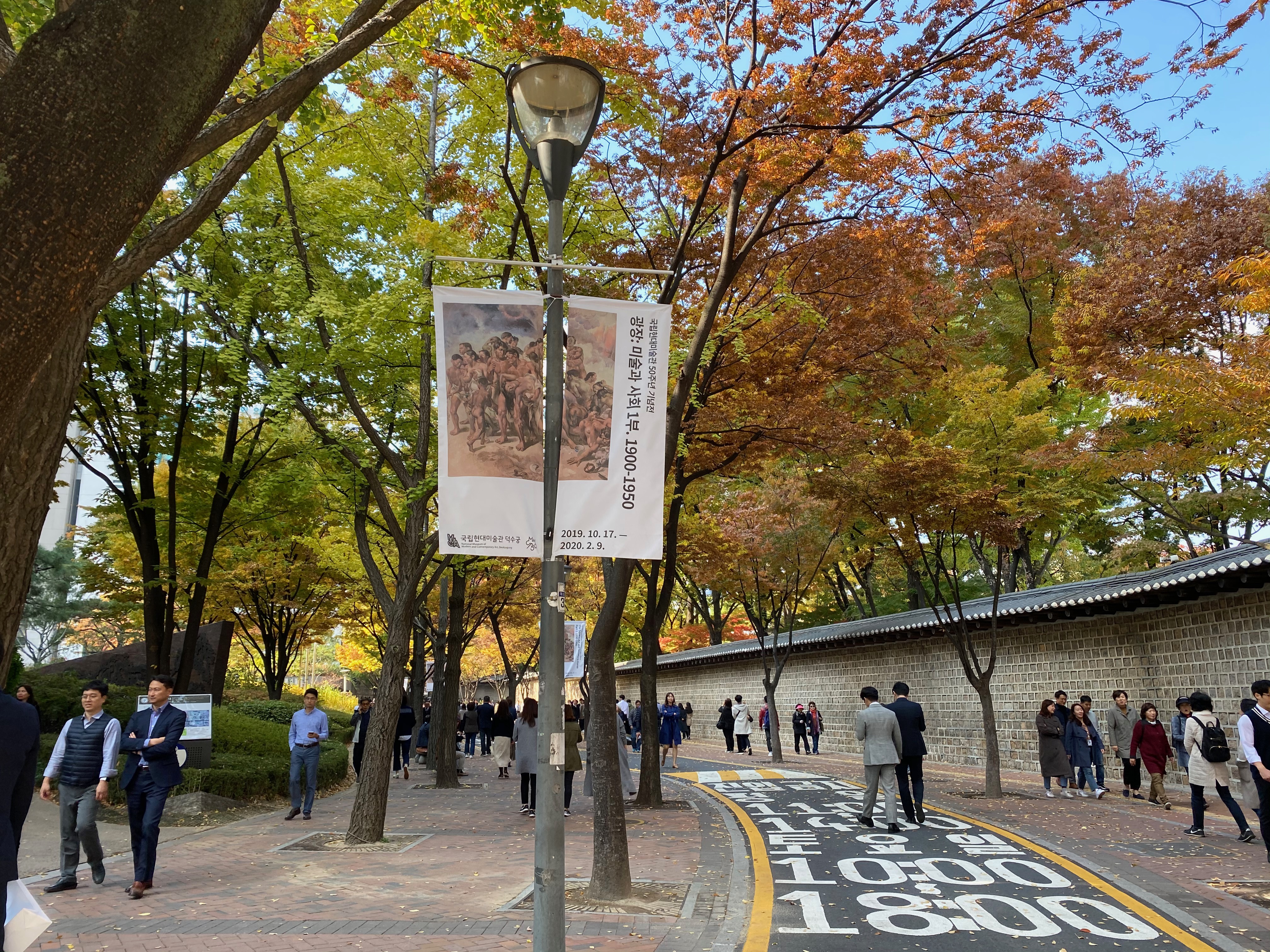
A visit to Seoul will not be complete without a visit to one of the five palaces in the city. Those with more time can opt to visit the bigger palaces of Gyeongbukgung or Changdeokgung, which would take up more than half a day. Since my friend and I visited these two palaces the last time we came to Seoul, coupled that we do not really have a lot of time today, we opted to visit one of the smaller palaces in Seoul – Deoksugung Palace. We took the subway to City Hall Station which is next to Deoksugung Palace. As it was approaching lunchtime, instead of heading into the palace, we crossed the busy road diagonally opposite the palace and settled lunch in a small family-run restaurant. Despite the owners of the restaurant only able to understand very basic English, we had no problems ordering the food (they do have an English menu). The food was inexpensive and delicious.

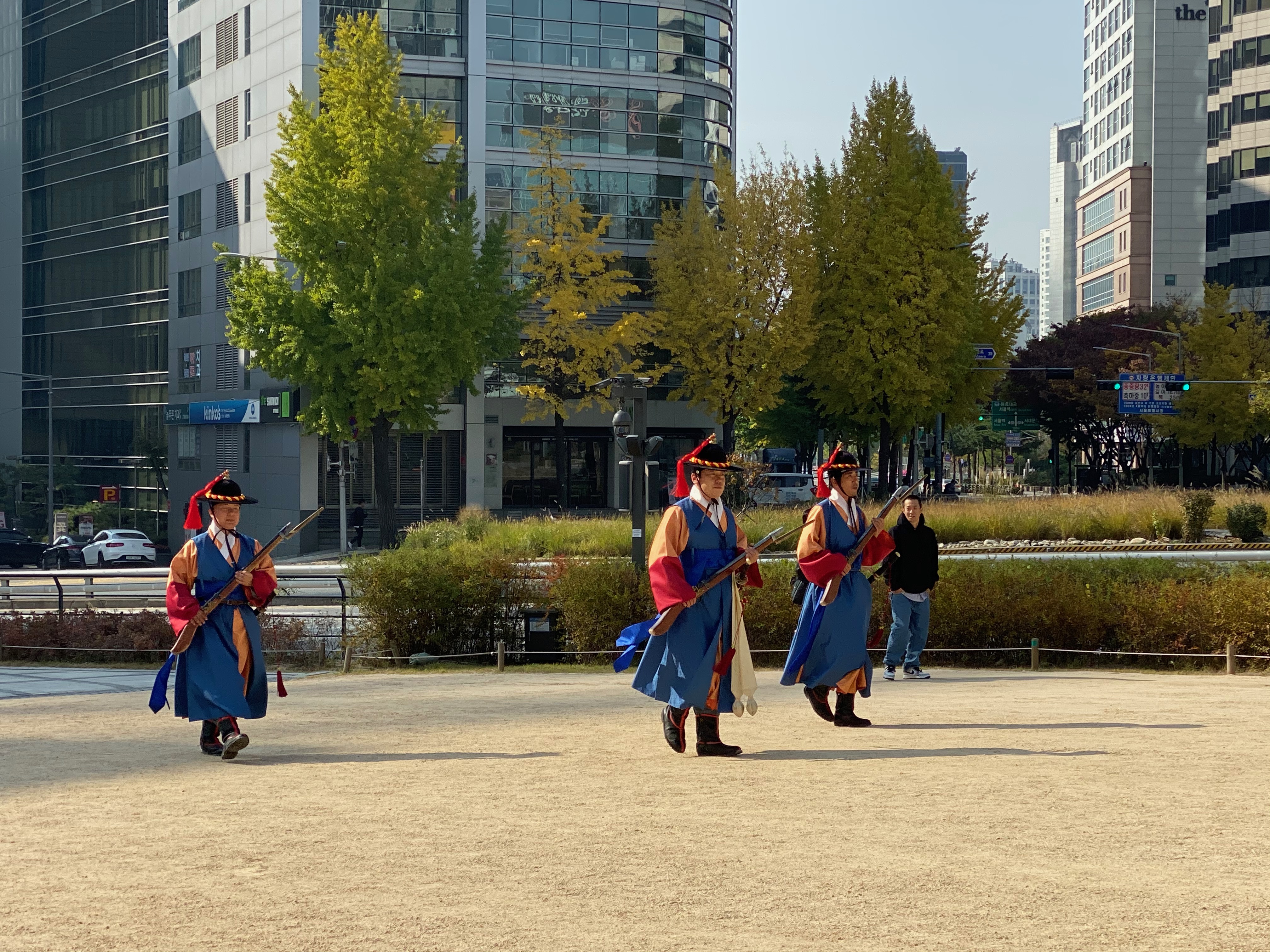
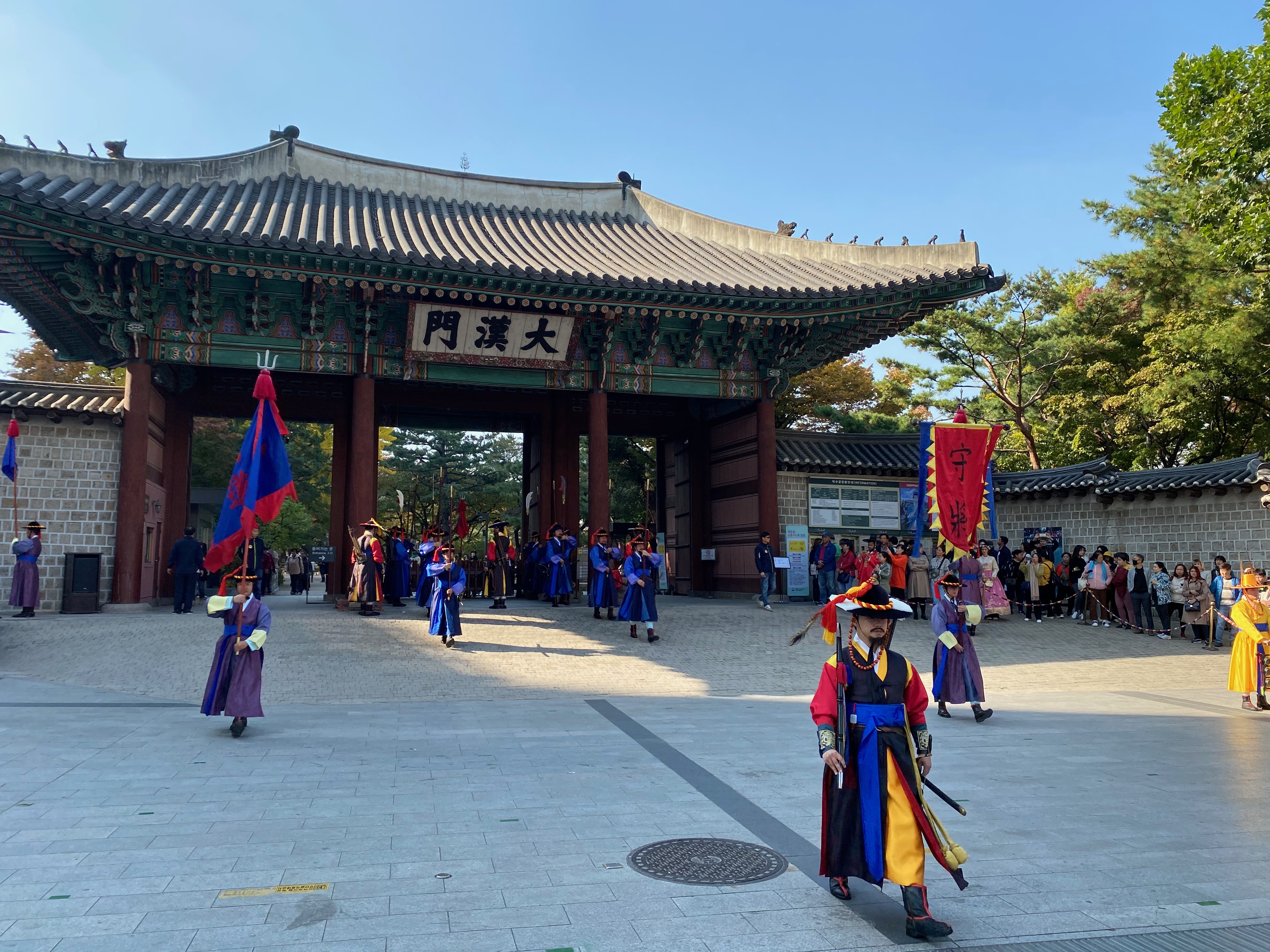
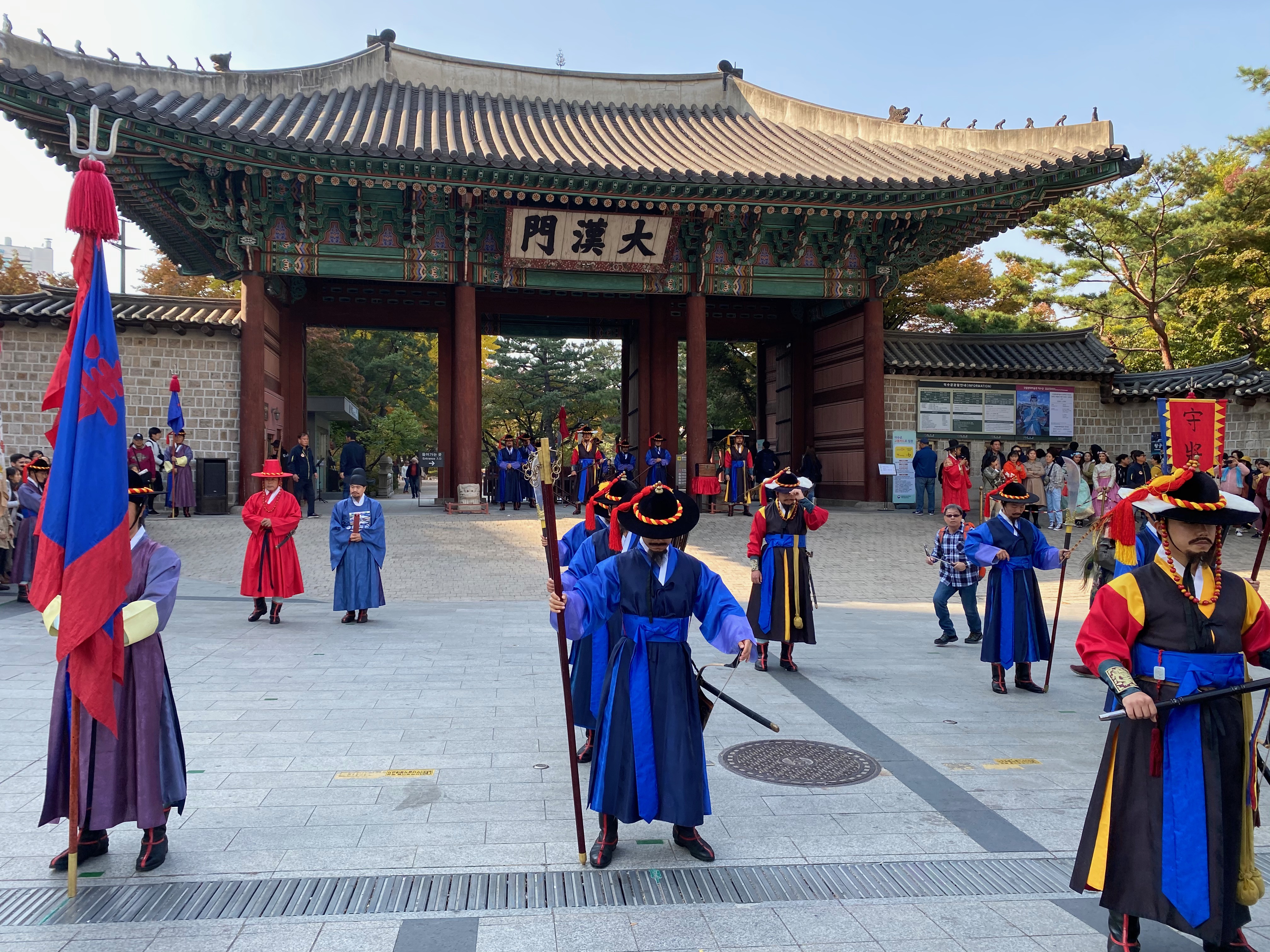
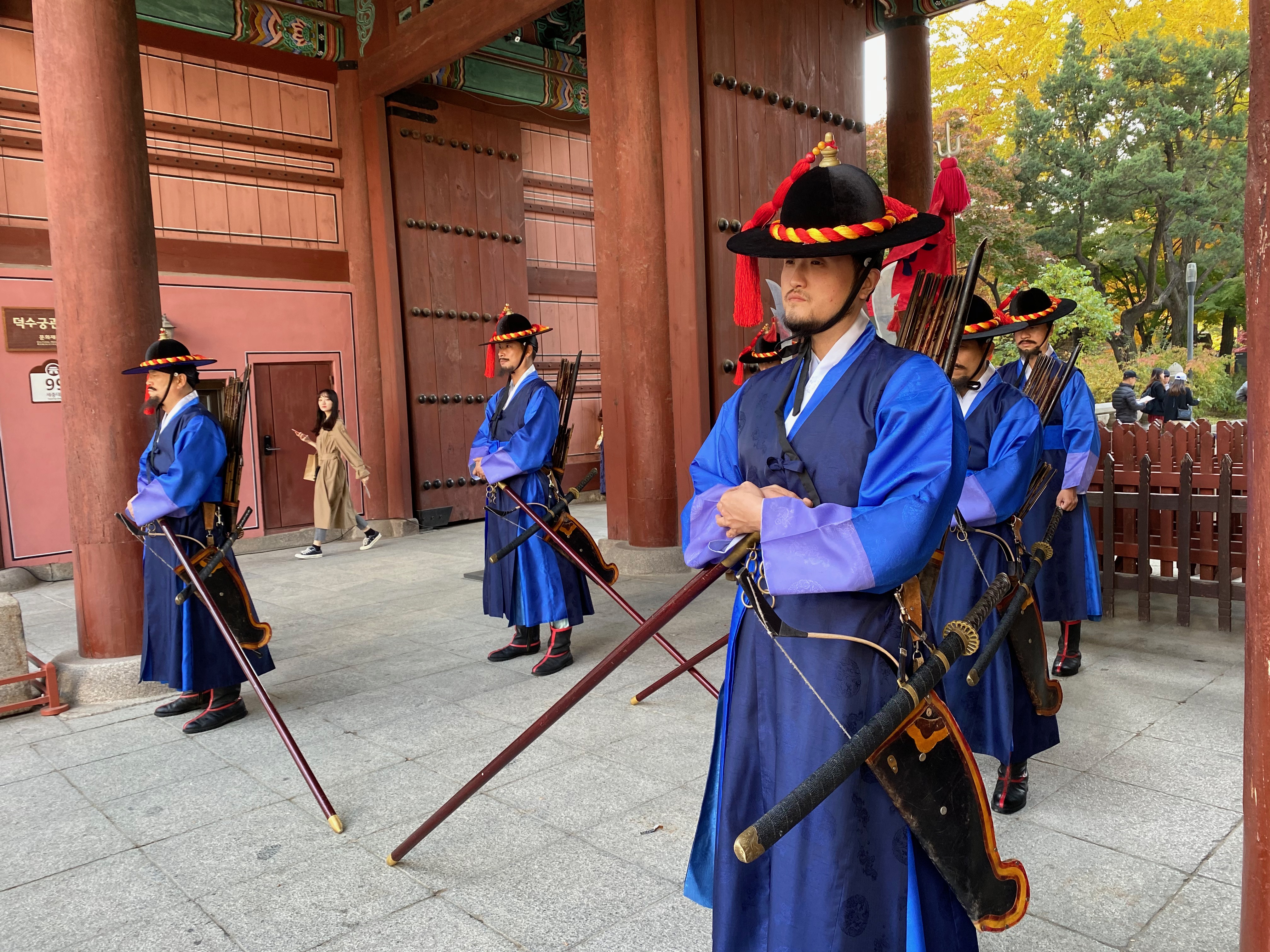
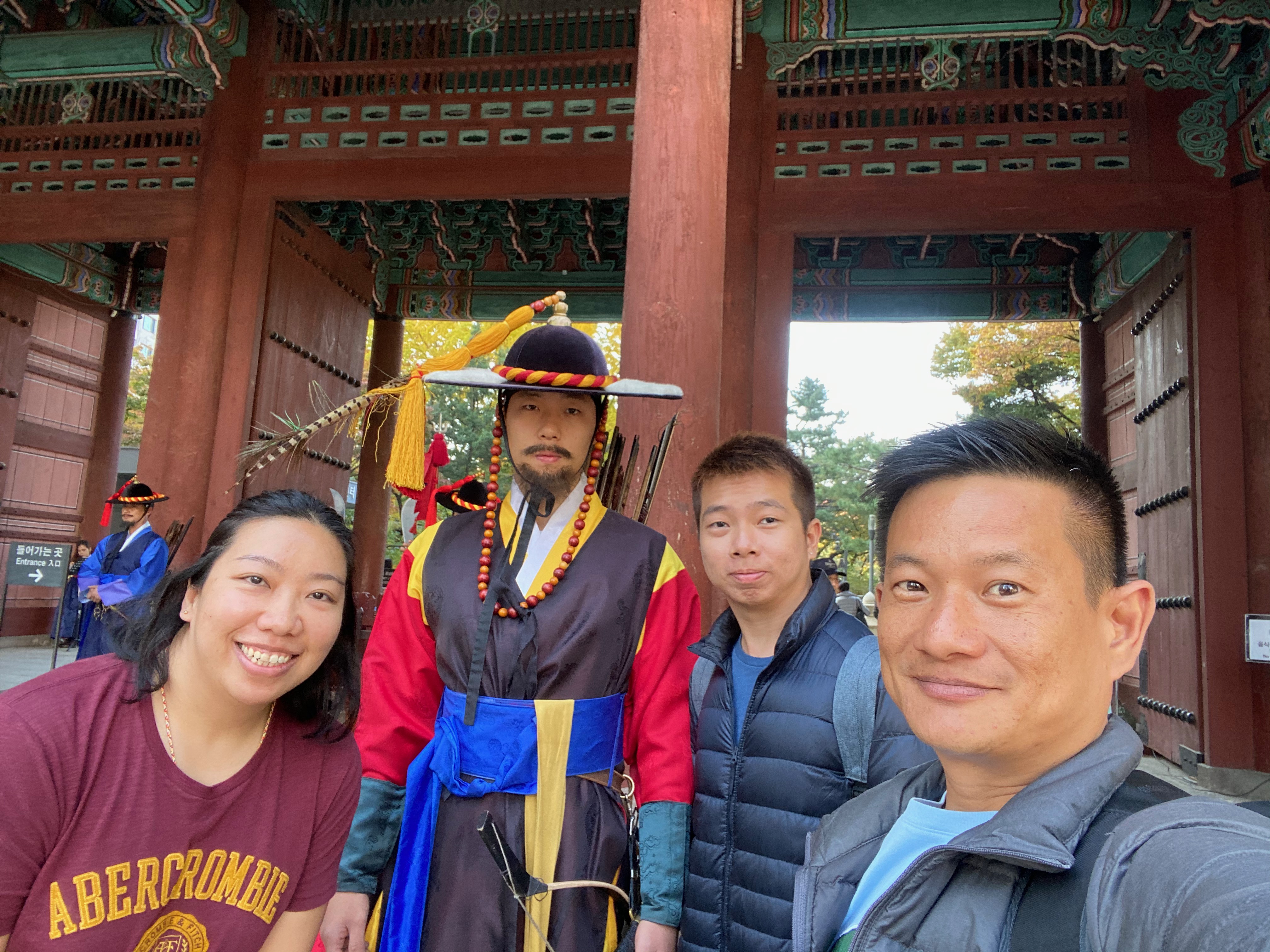
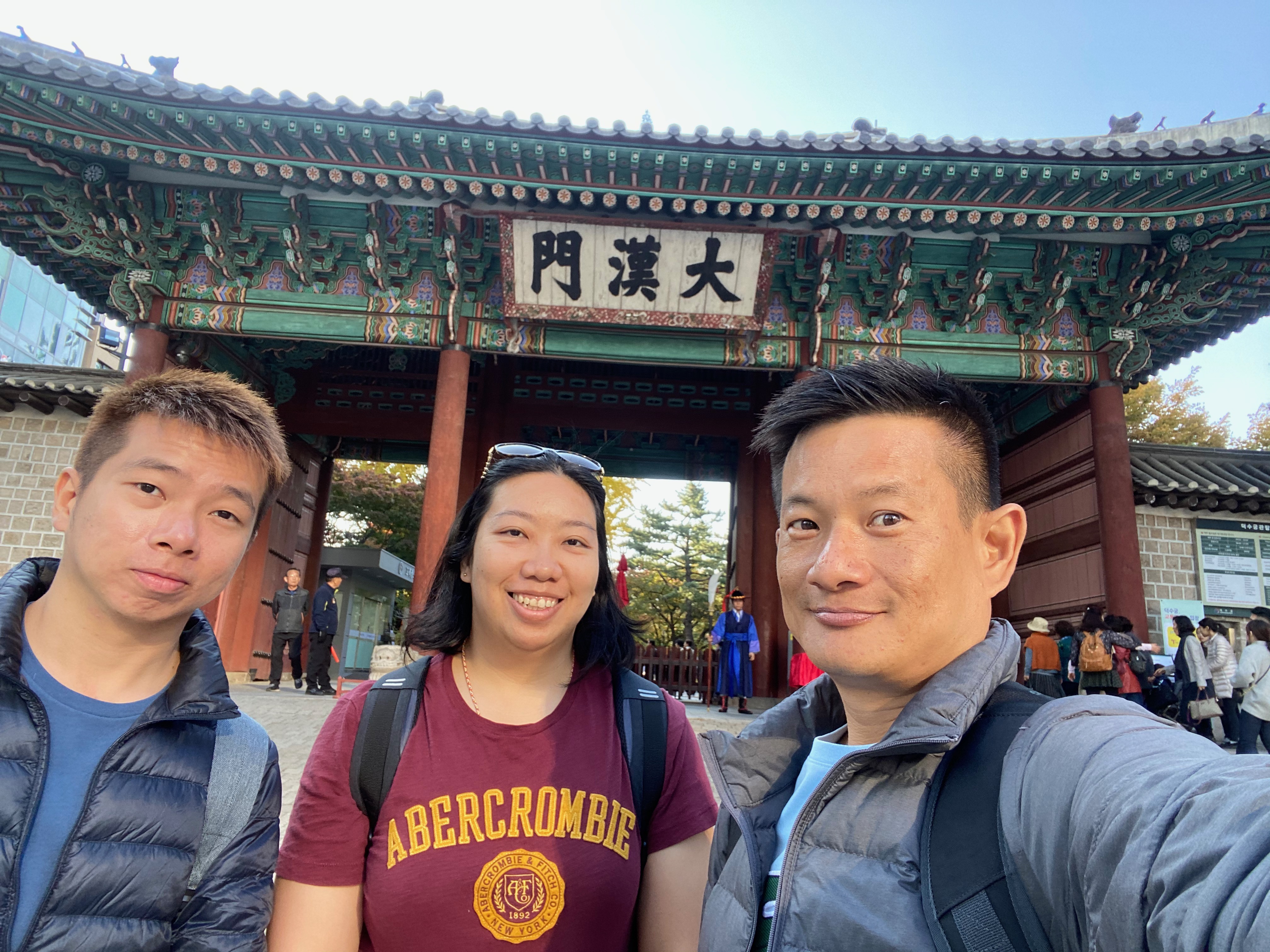
After lunch, we headed to Deoksugung Palace. After getting our tickets (KRW1,000 per adult), just when we were about to enter the palace, we were in time to witness the change of guard ceremony. The elaborate ceremony saw locals dressed up in ancient Korean soldier uniforms handing over the guard duties to the next group. The ceremony lasted around 5 mins and we were invited to taking pictures with the guards before heading into the palace. There is a small tentage by the side of the entrance where visitors can dress in Hanbok for the photo opportunity with the guards for free.

C54F195F-E5E9-4E42-82F4-FC7EF448EE9D

We were in time for the change of guard ceremony outside Deoksugung Palace

3CC9F2FE-C13E-4788-AC20-FC55E11BDEDC

Taking wefie with the guard commander outside Deoksugung Palace

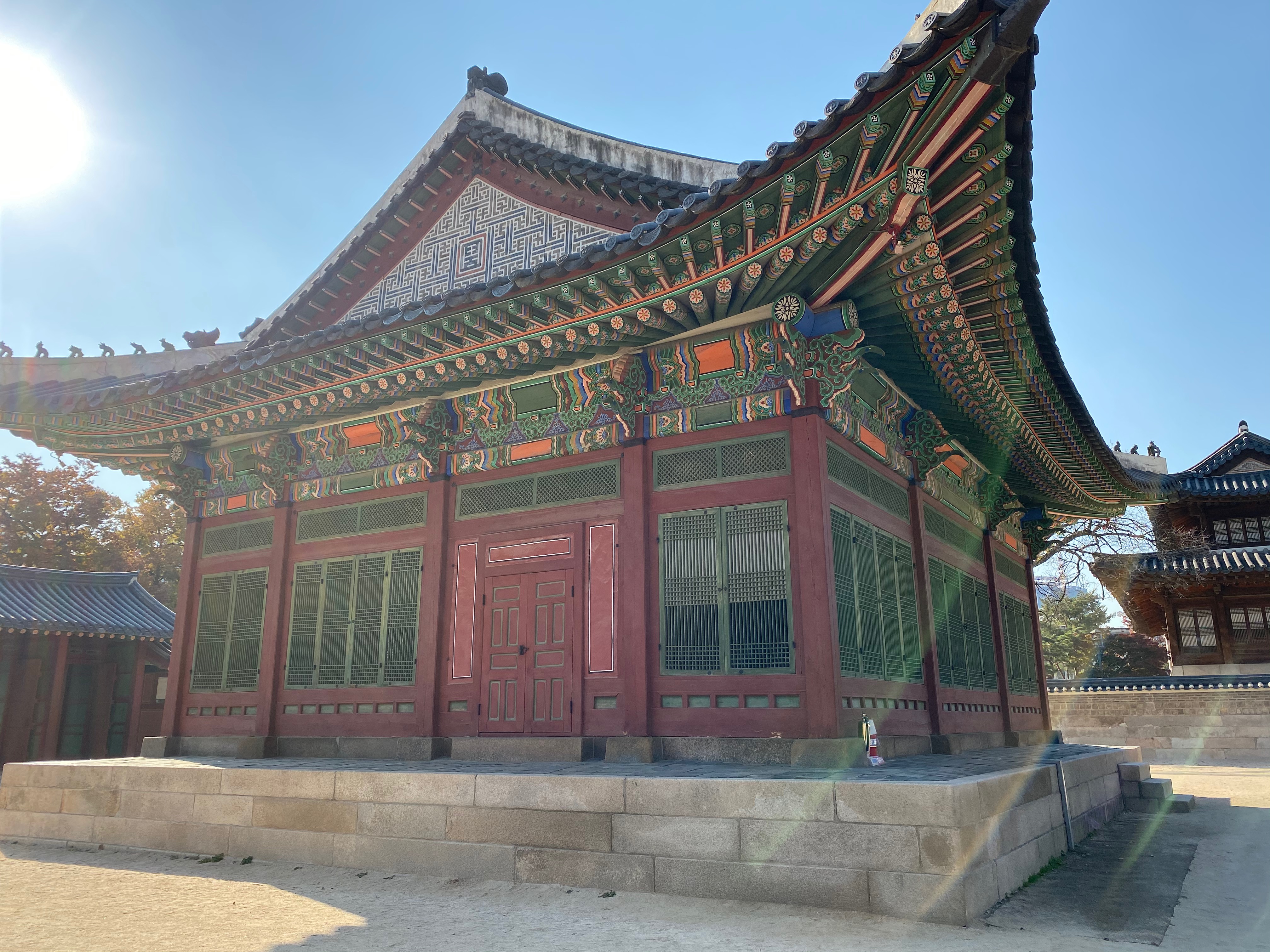
Deoksugung Palace was first used as a temporary palace in 1592 during the Japanese invasion where the King stayed when he returned to Seoul after the invasion as the other palaces were burnt down during the invasion. The palace was reused as again in the 19th century where the later King of the Korean dynasty used it as a base to establish the Korean Empire and raised his status to Emperor. It is during this period when most of the buildings in Deoksugung Palace was added. Walking through the main gate of Deoksugung Palace, we came to a stone bridge that transports visitors over a small stream, similar to that of a moat found in most palaces around the world. My friends and I headed to the first building that is surrounded by a stoned corridor. This building is near the entrance of the palace and served as the sleeping chamber of the King when he resided in Deoksugung Palace. Taking a peep inside the sleeping chamber, a small throne sits in the centre of the building and the interior was relatively simple in design. A smaller building next to the King’s sleeping chamber closed for public viewing was used as a place where the Korean King used to receive foreign envoys.

743D934B-2256-44C9-AB0F-1912DCBD228C

The sleeping chamber of the Korean King

BF2E65EF-1768-4993-B7BF-89CF4EAA84E0

There is a simple throne inside the sleeping chamber

C053064F-029A-4F8A-8334-14166DB54A83

A small building next to the King’s sleeping chambers used to receive foreign envoys

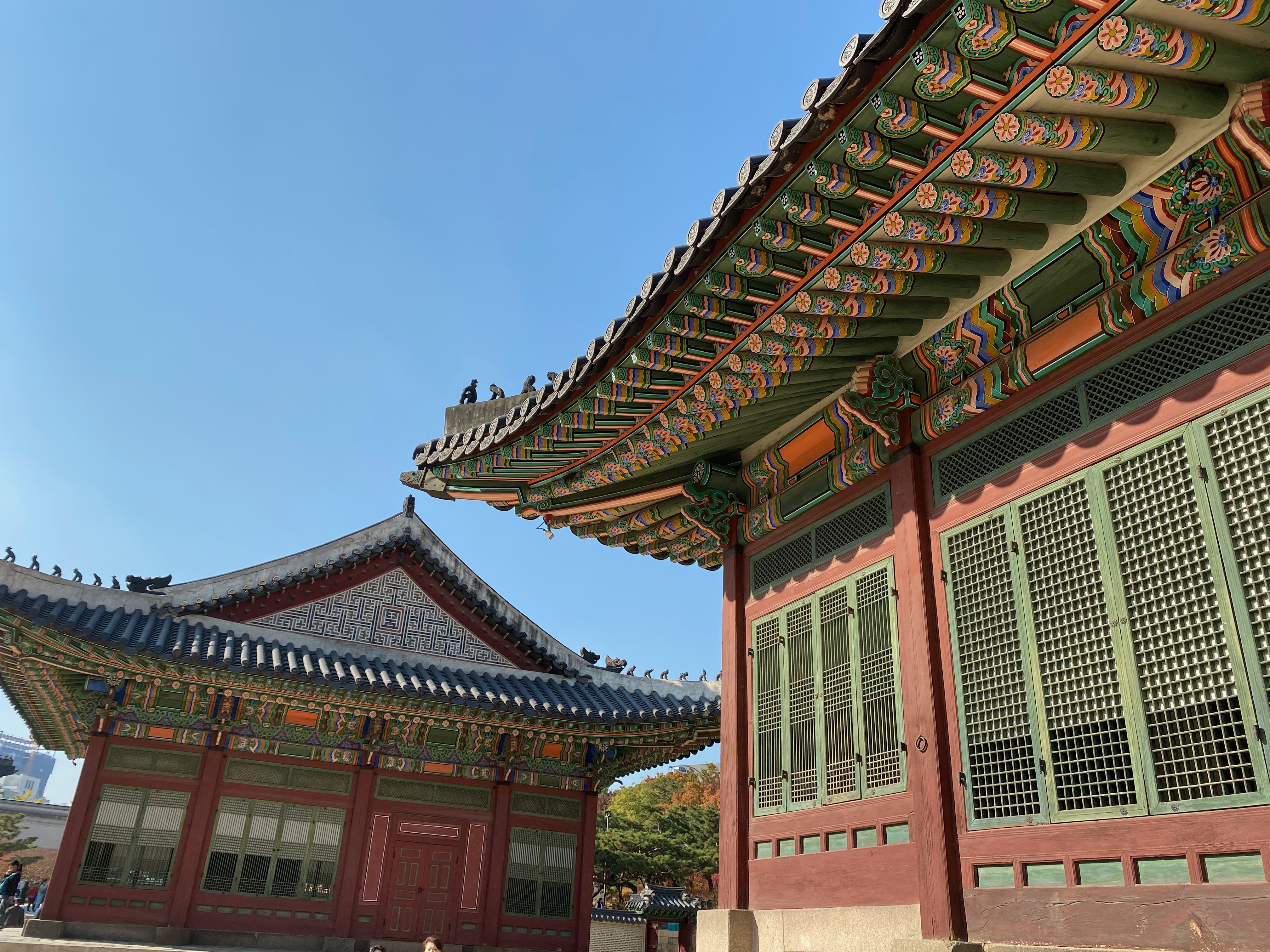
My friends and I decided to visit the buildings at the back of the main palace building before returning to see the main palace building. As we were walking we came across a building that was not painted in any colours next to the King’s Sleeping Chambers. This is the only two-tiered building in Deoksugung Palace and served as the sleeping chambers of the queen. A little further into Deoksugung Palace, passing the queen’s sleeping chambers, is a row of brightly coloured semi-open buildings which was used for the coronation of the King. This is another venue in the palace where the Korean King receives foreign envoys. We peeped into this building and found the interior to be very simple in design, there are no elaborate motives nor was it painted in the bright colours as we were so used to see in Korean Palaces.

7B3B5EEC-3C6C-4FDD-9541-6DB32C6FC8C7

The only two-tiered building in Deoksugung Palace that serves as the sleeping chambers of the queen

4C8881B3-7525-4521-9423-171E359213C6

This is where the king receives foreign envoys

D20D6A87-6ECE-4972-81D8-5B0E3CD143A4

The interior is rather simple in design

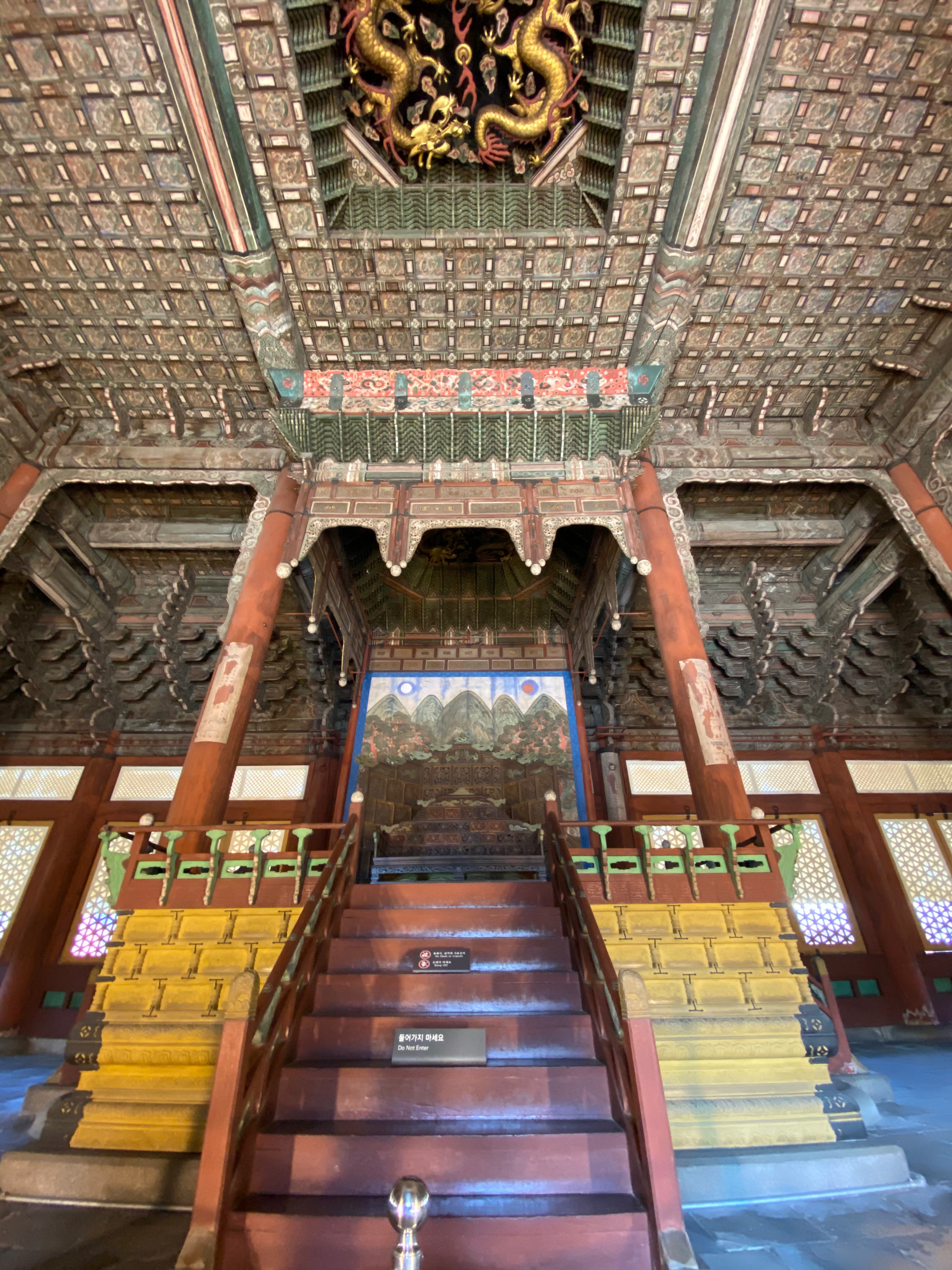
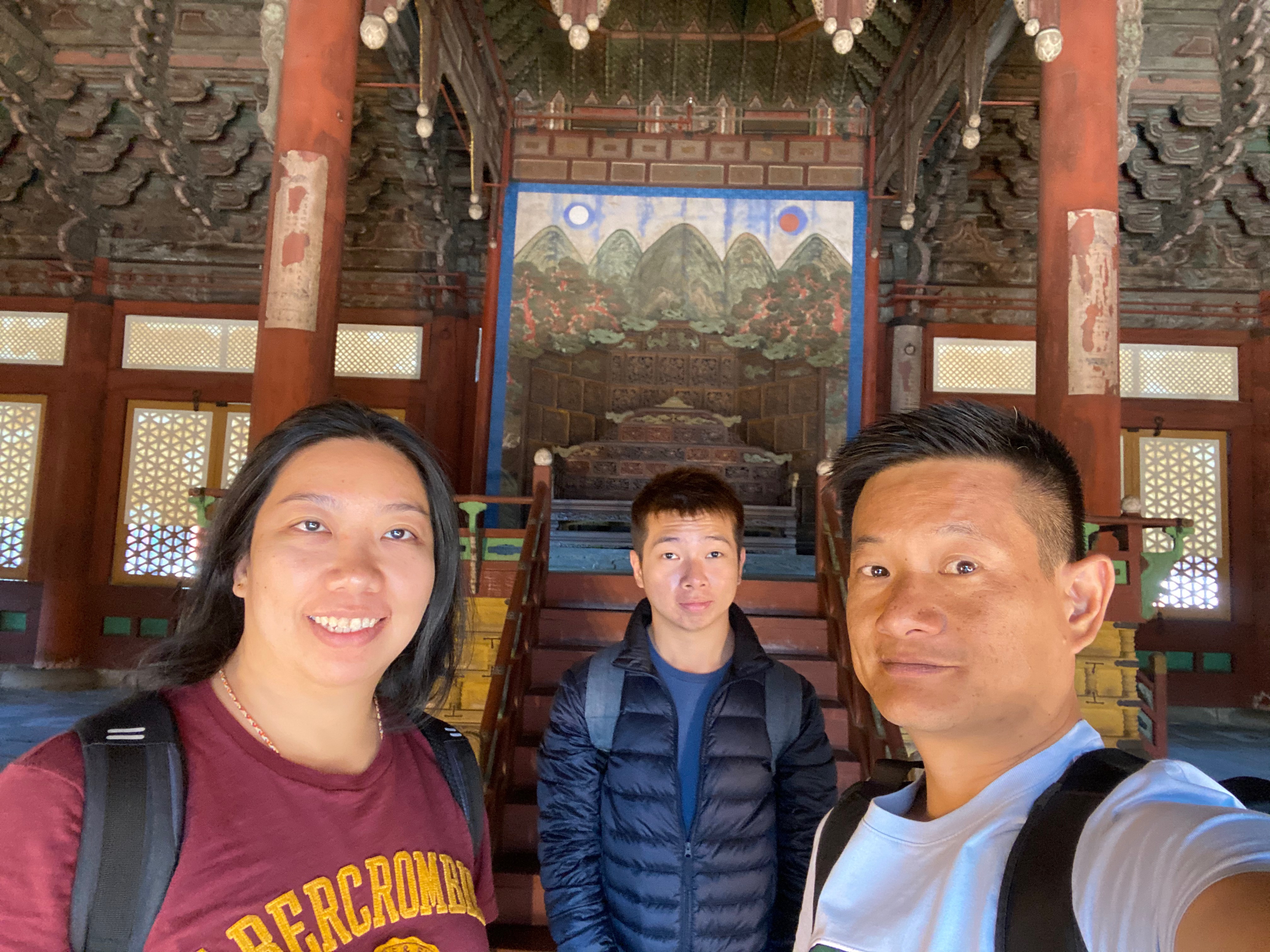
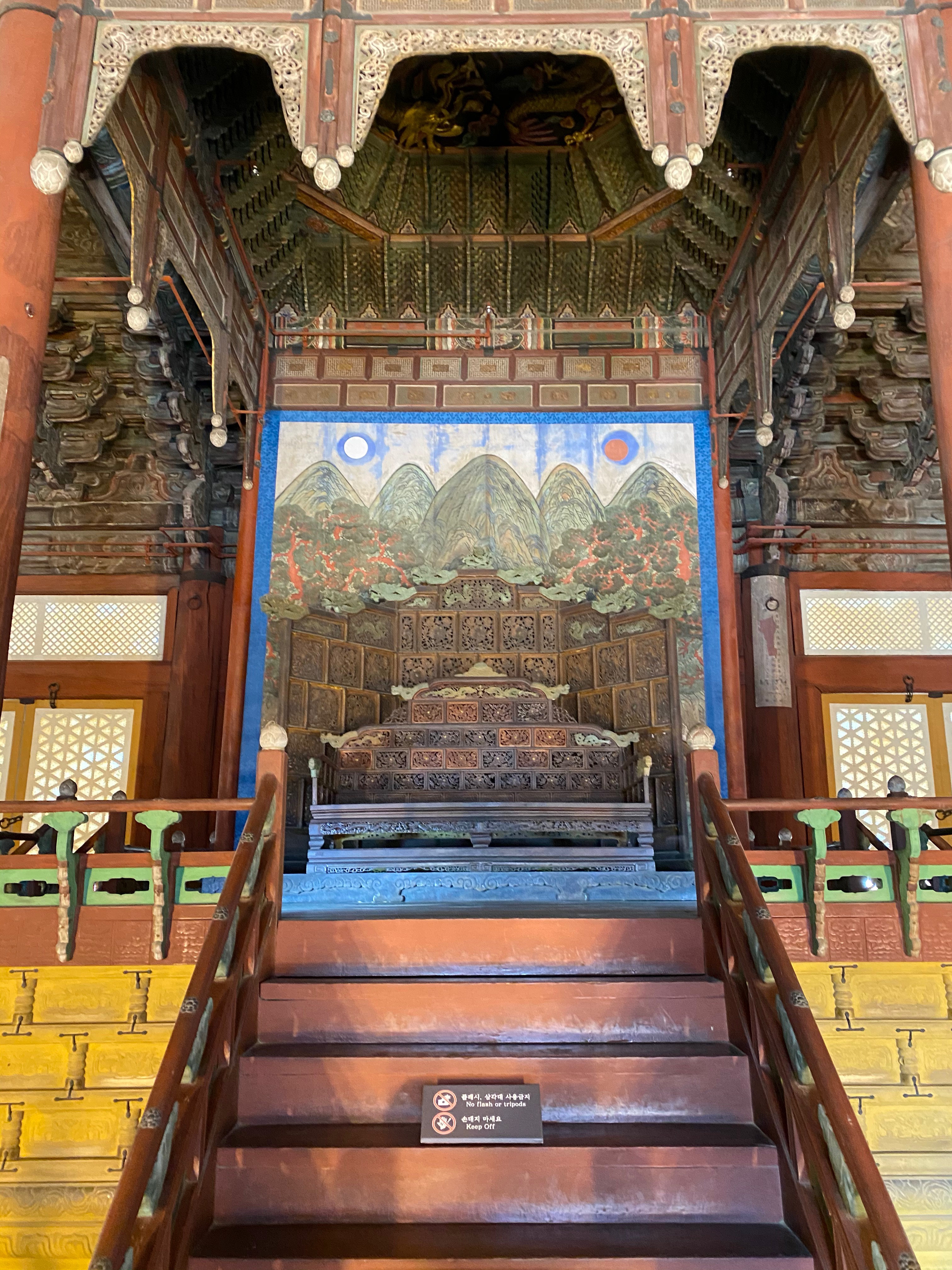
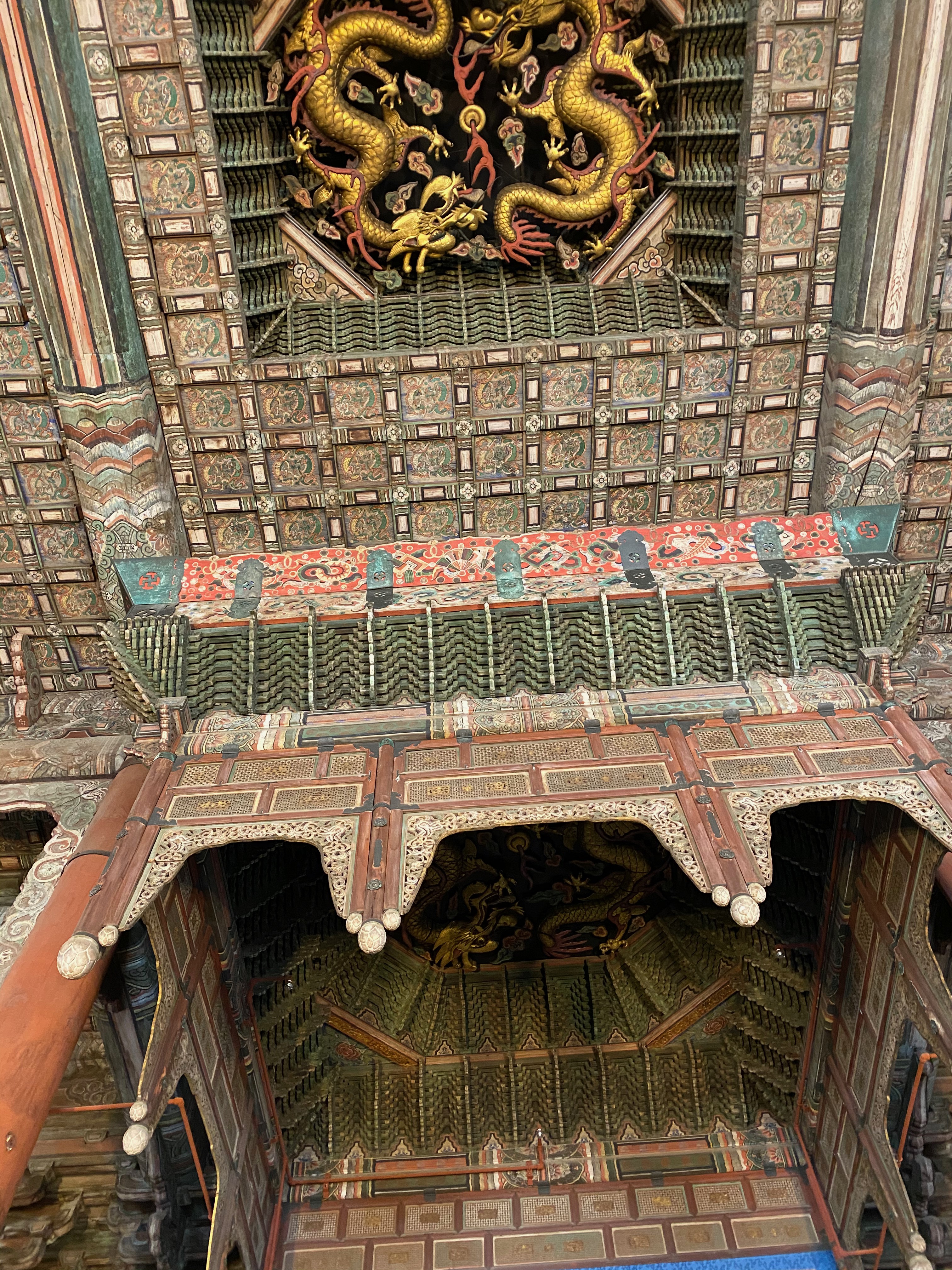
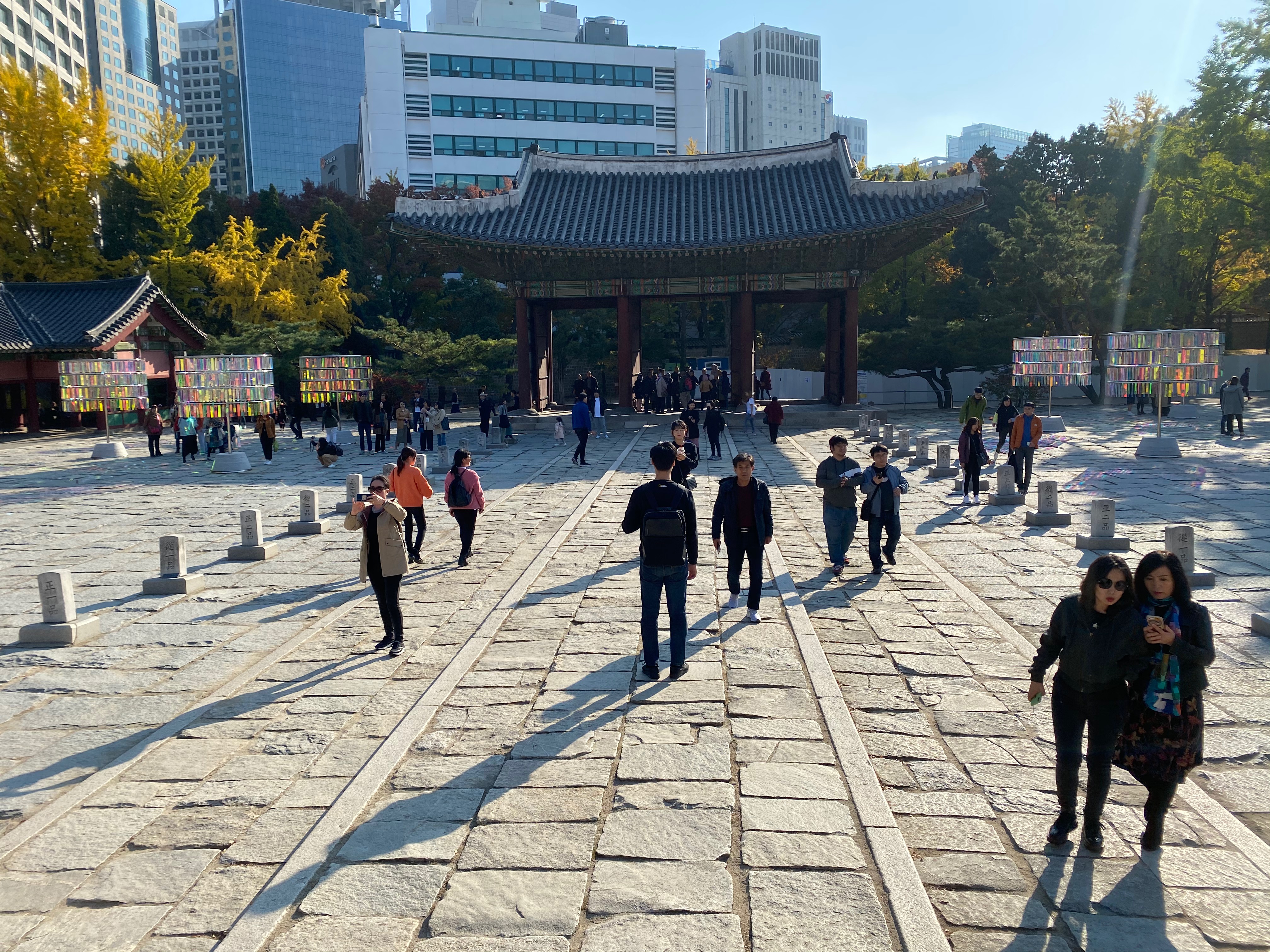
After some photo shots, we returned to the building that sits in the middle of Deoksugung Palace. This lone building is the main palace building in Deoksugung Palace. This is where the official throne of the King resides. We were encouraged by the staffs in Deoksugung Palace to enter to view the throne hall. There do not seem to be any restoration works done in the throne hall. The wooden throne hall still retains the paint that was first coating when it was built 500 years ago. The ceiling of the throne hall has elaborate dragon carvings, decked in gold paint. In the centre of the hall, sits the king’s throne majestically on an elevated platform, seemingly displaying the might of the reigning Korean King. The high ceilings in the throne hall make it a very cooling hall. We were encouraged by a staff member stationed inside the throne hall to go closer to the throne for a better look of the artefact. There are, however, strict rules to be followed while inside the throne hall. The staff ensured that visitors do not use any form of flash photography or video while inside the throne hall. We even saw him telling visitors off for videoing inside the throne hall. The part of the throne hall open to visitors is relatively small, we got out in 5 mins. As we exited the hall, making our way to the entrance of the palace, we walked past a large square, installed with small stone tablets marking the place where the different ranked officials would stand during an audience with the king. This square is smaller compare to the ones that we have seen in bigger palaces such as Gyeongbukgung we visited three years ago. As Deoksugung Palace is a relatively smaller palace, my friends and I completed the tour of the palace in under 2 hours. As we were walking out, we saw some parts of the palace being cordoned off for preservation works.

9742249F-2510-4239-B3F9-E047CAF9F659

The throne hall in Deoksugung Palace

EA9CDADB-25E5-4981-98E5-DEF9999C26B0

Inside the throne hall

489BFFF9-7A22-4BAF-800B-E88C7FFE96E2

Taking wefie with the throne

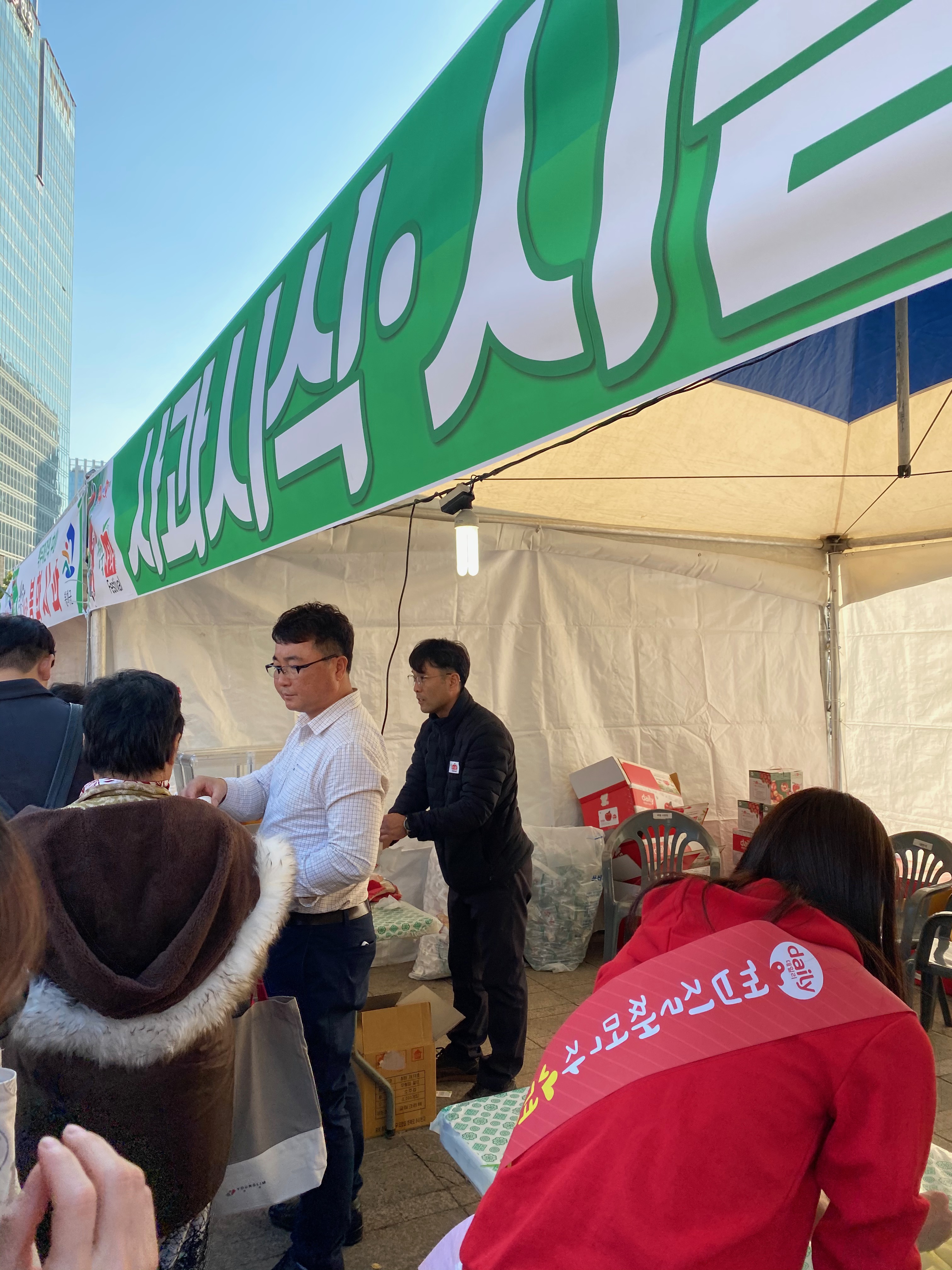
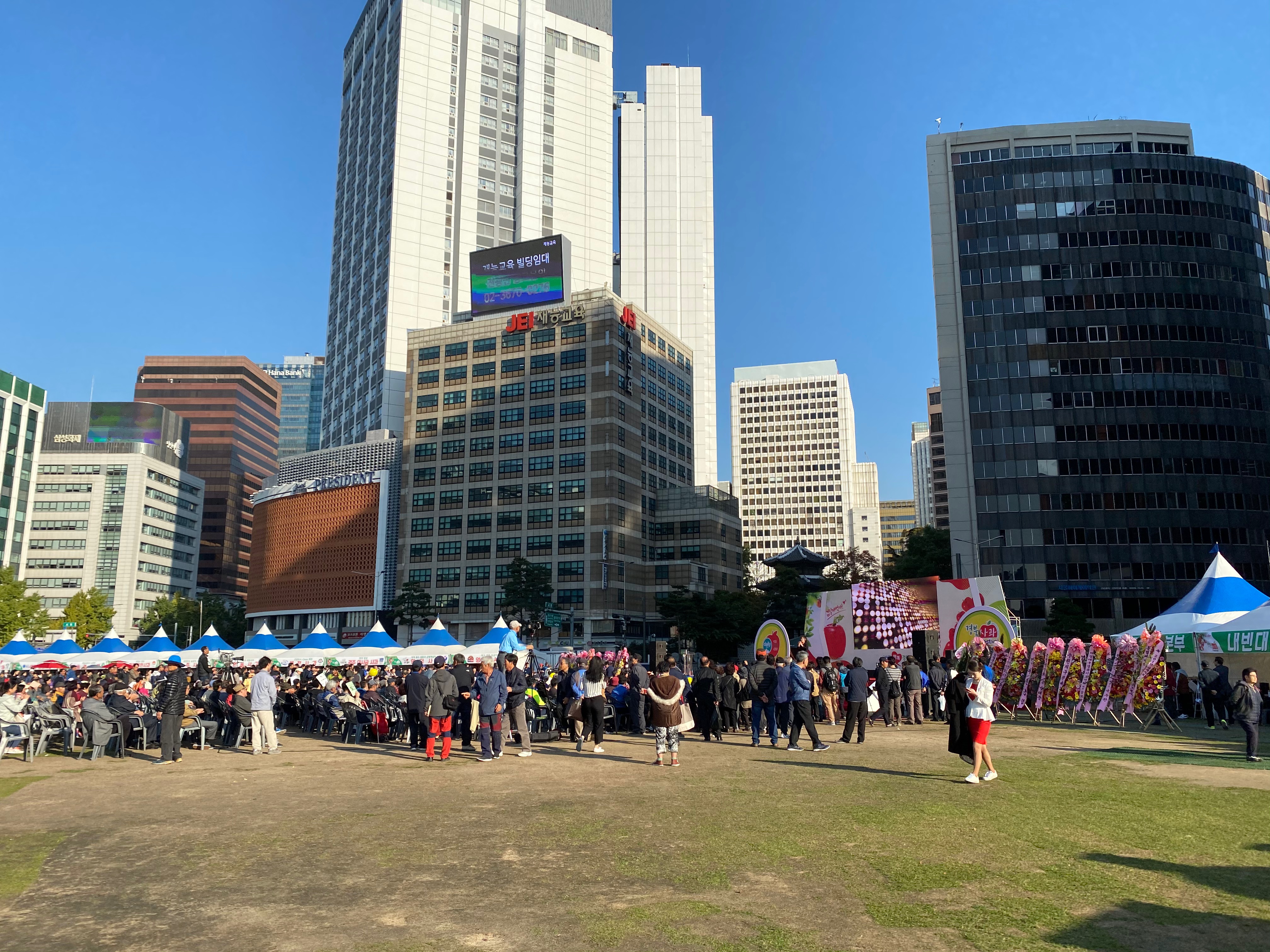
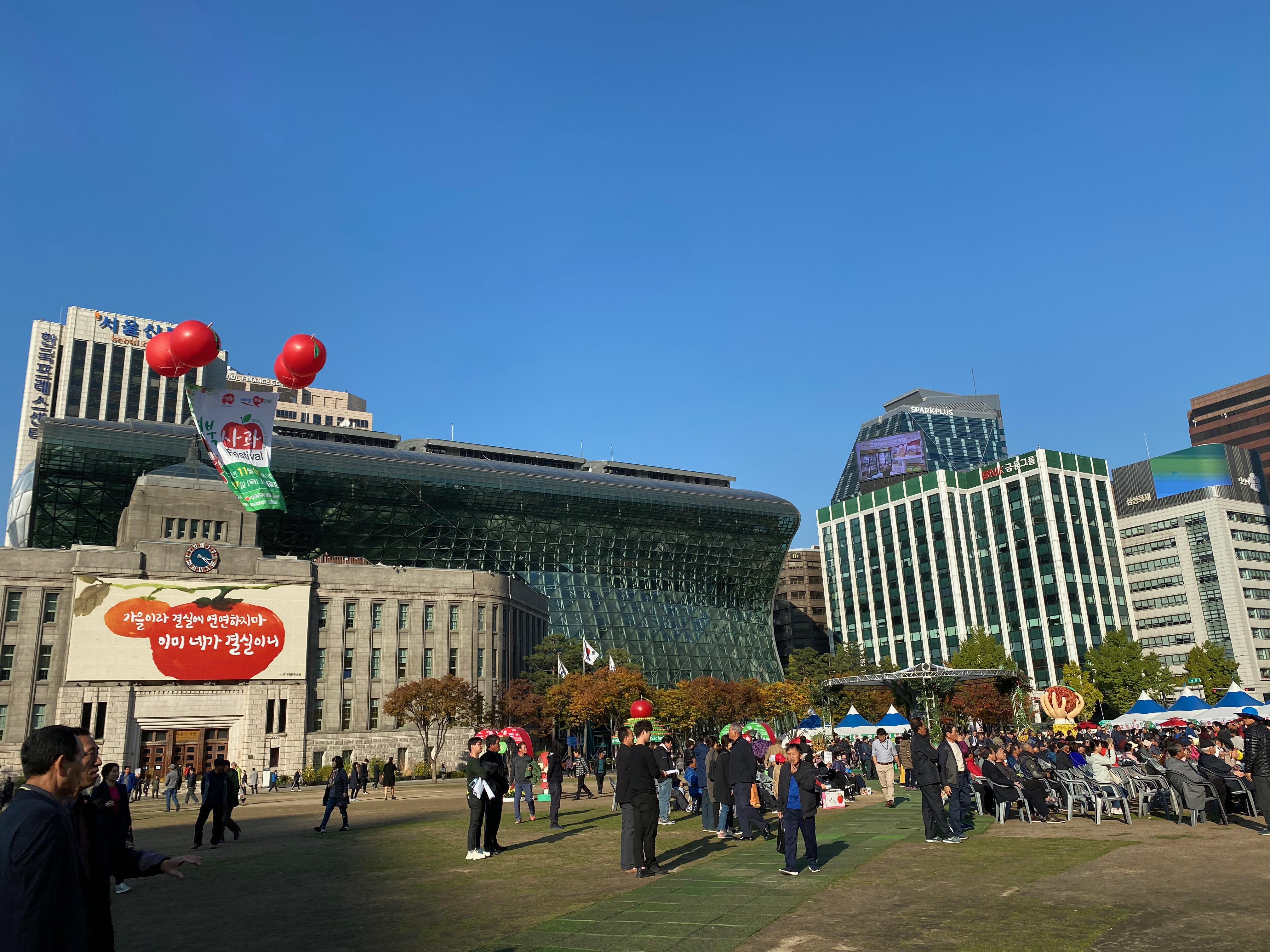
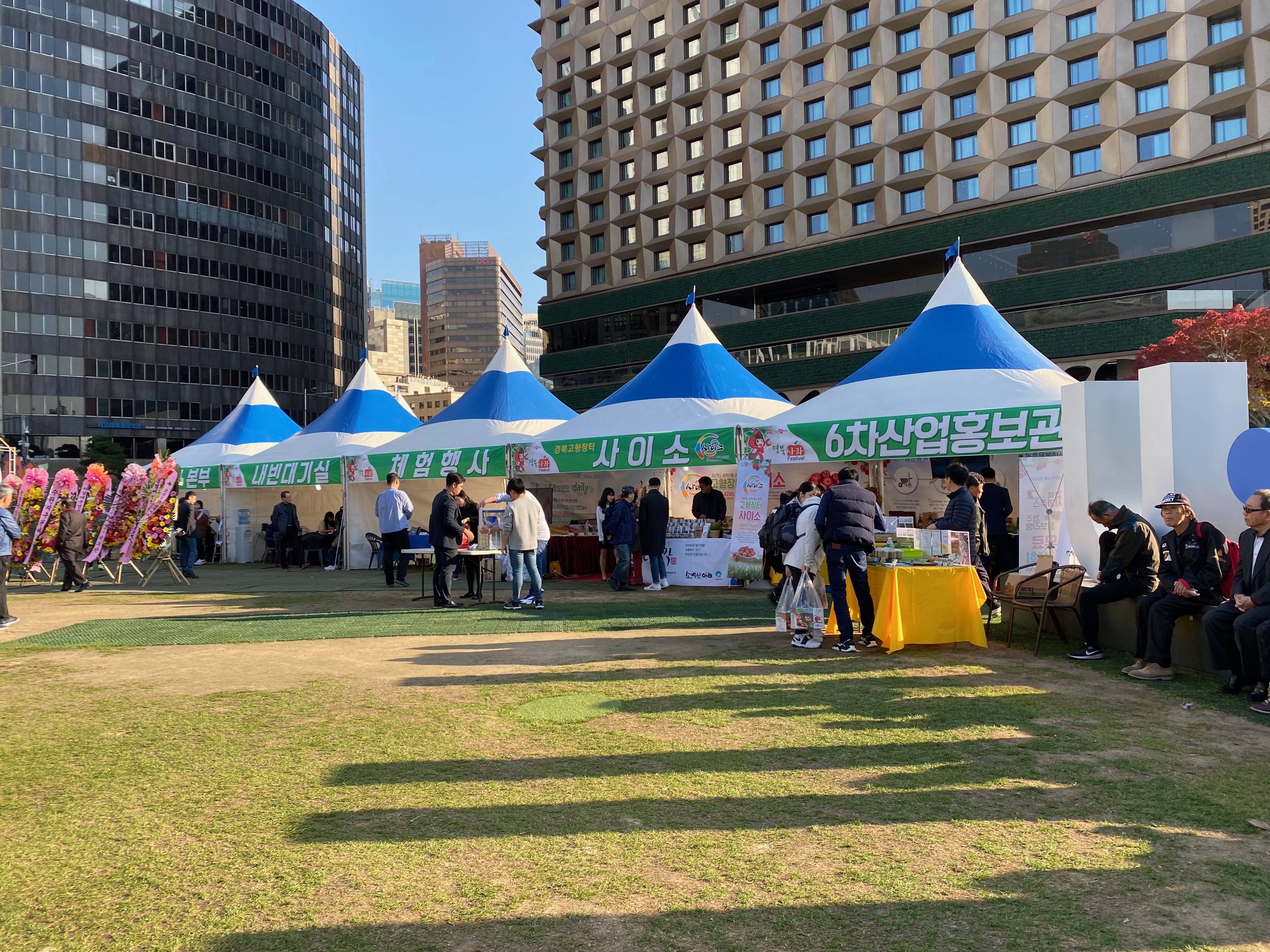
Exiting Deoksugung Palace, we spotted some tentages being erected in the open field opposite the palace. My friends and I decided to head across to check out what is going on. There seems to be some apple harvesting festival event here. There are numerous stalls set up by farmers across South Korea selling the fruit of their labour. We got to try some apples, which is very sweet and crunchy.

The Young and Vibrant Hongdae Shopping District

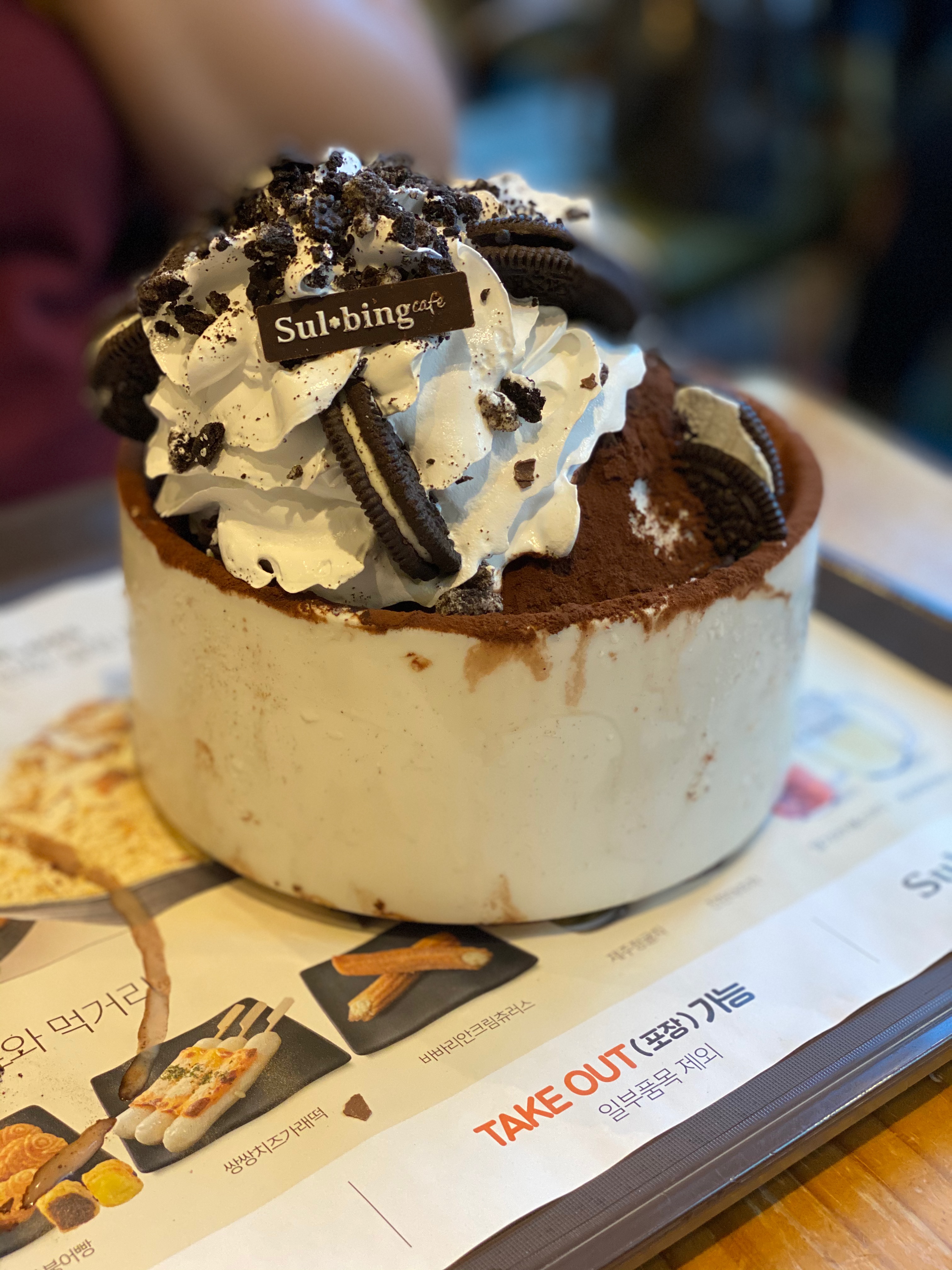
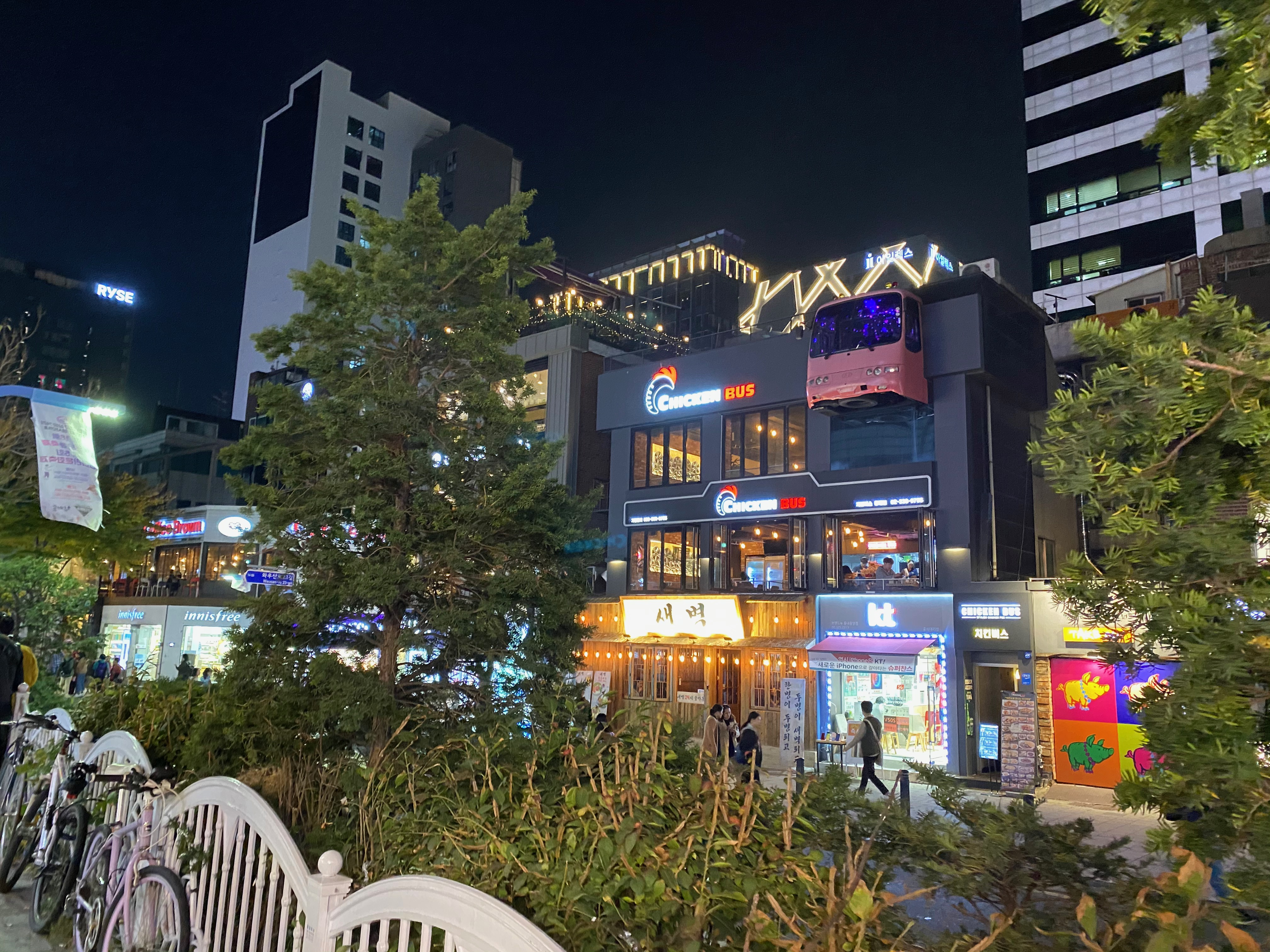
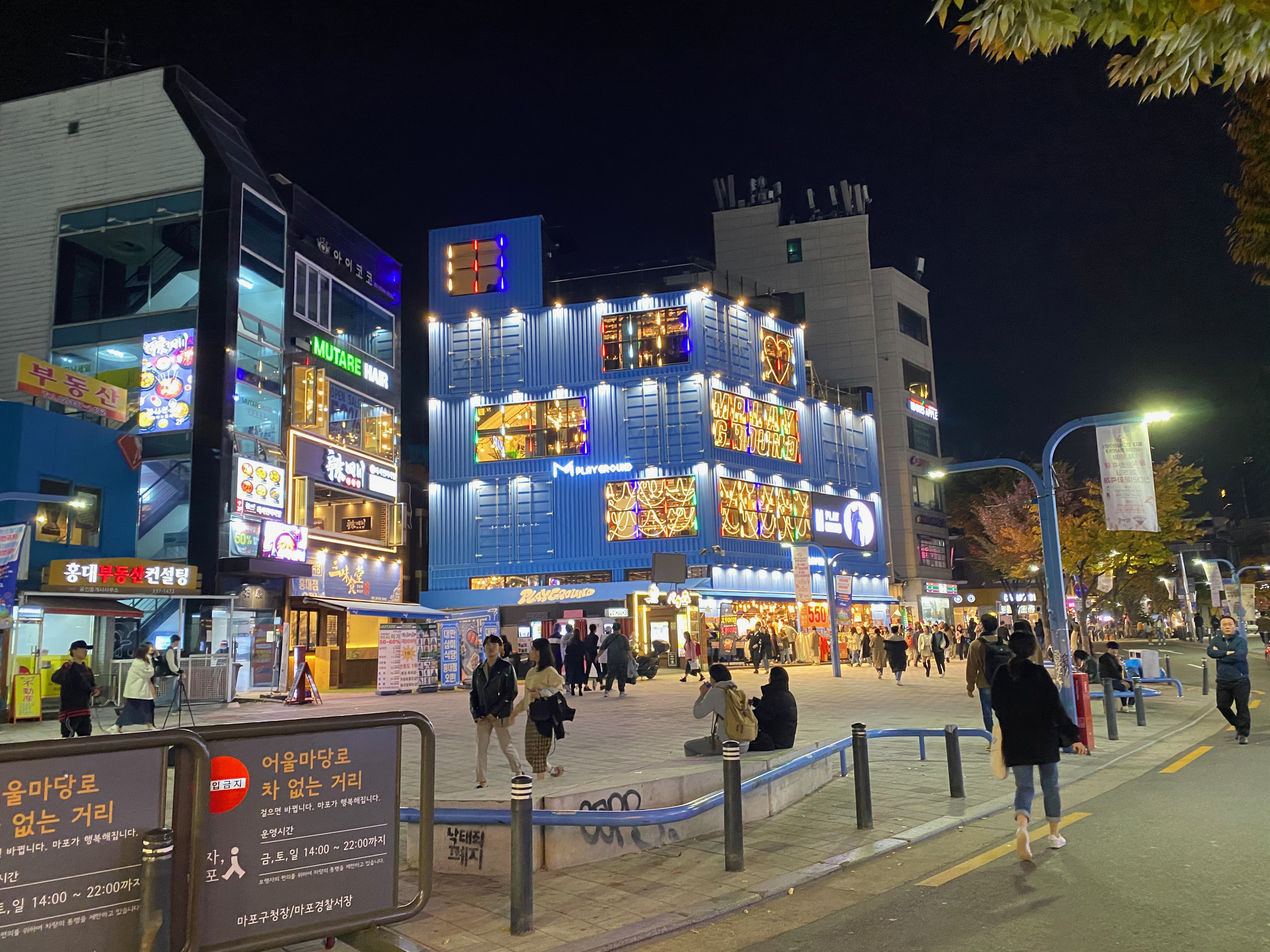
Leaving Deoksugung Palace, our next stop is Hongdae Shopping District. My friend and I did not manage to visit Hongdae when we visited Seoul three years ago. We made it a point to plan a visit to Hongdae this time around. Access to Hongdae is very easy via the well-connected subway, we alighted at Hongik University station and the shopping district is just outside the station exit. The vibe at Hongdae is very different from that in Myeongdong. While Myeongdong sees mainly tourists, Hongdae is frequented by mainly by Seoulites. The entire Hongdae area has a very young and vibrant vibe, thanks to the nearby University. There are more shops selling clothing here compared to Myeongdong. As we walked around, we spotted a Bingsu restaurant and decided to enjoy some Korean Shaved ice dessert. The dessert was delicious and not too sweet. After dessert, we explored more of the Hongdae area. We do find here to be a better place for shopping compared to Myeongdong. However, due to seasonal changes, the clothing on sale are mainly winter wear, which we would have no use back at home. One would easily lose track of time just by walking around in Hongdae.

9B634F37-4A16-4070-87A8-5D62D124BD65

The very vibrant Hongdae

7D8572F0-4923-4903-8B94-324155B20C47

Hongdae is mainly frequented by locals

Last Dinner in Seoul and Back to Myeongdong

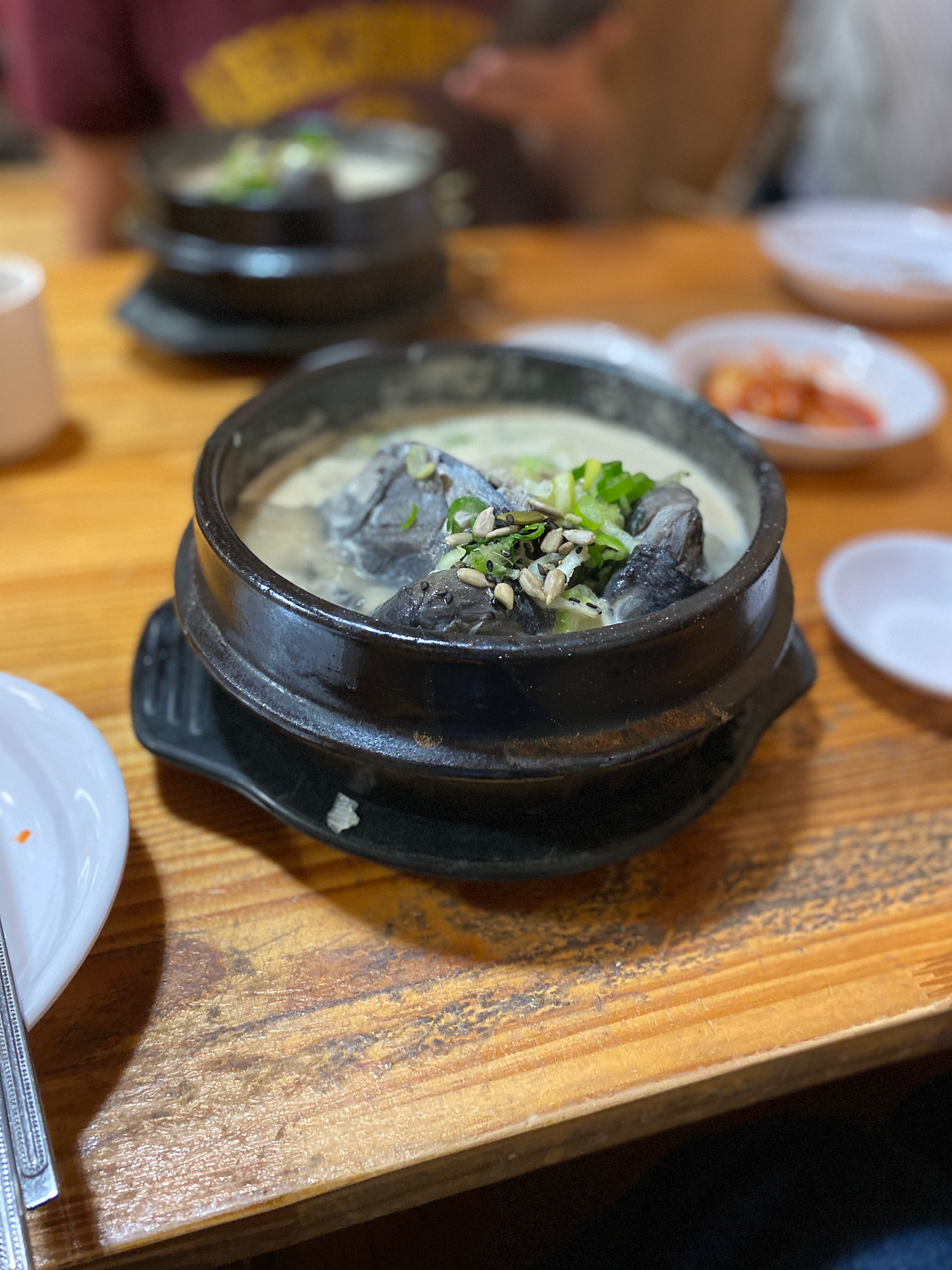
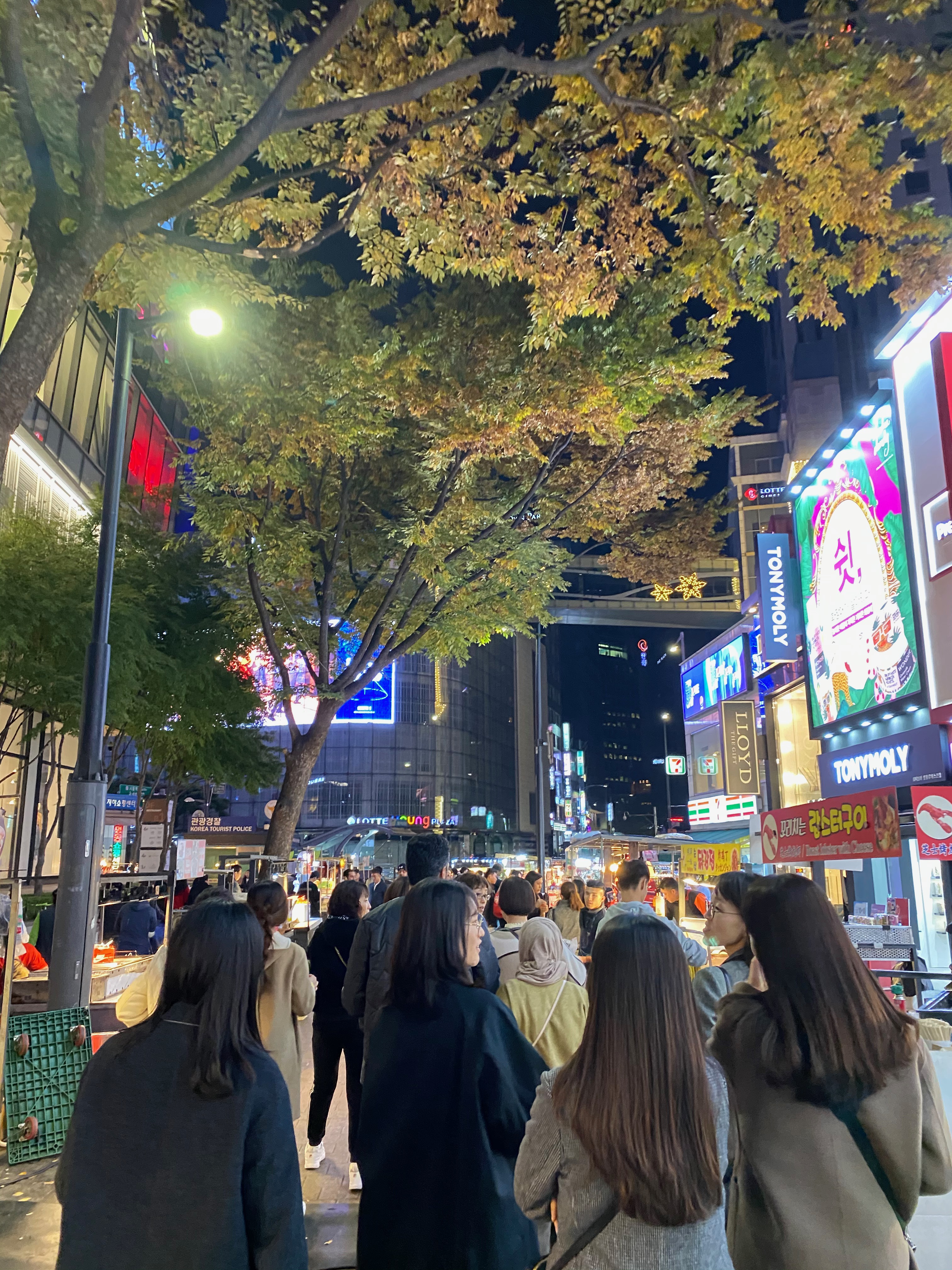
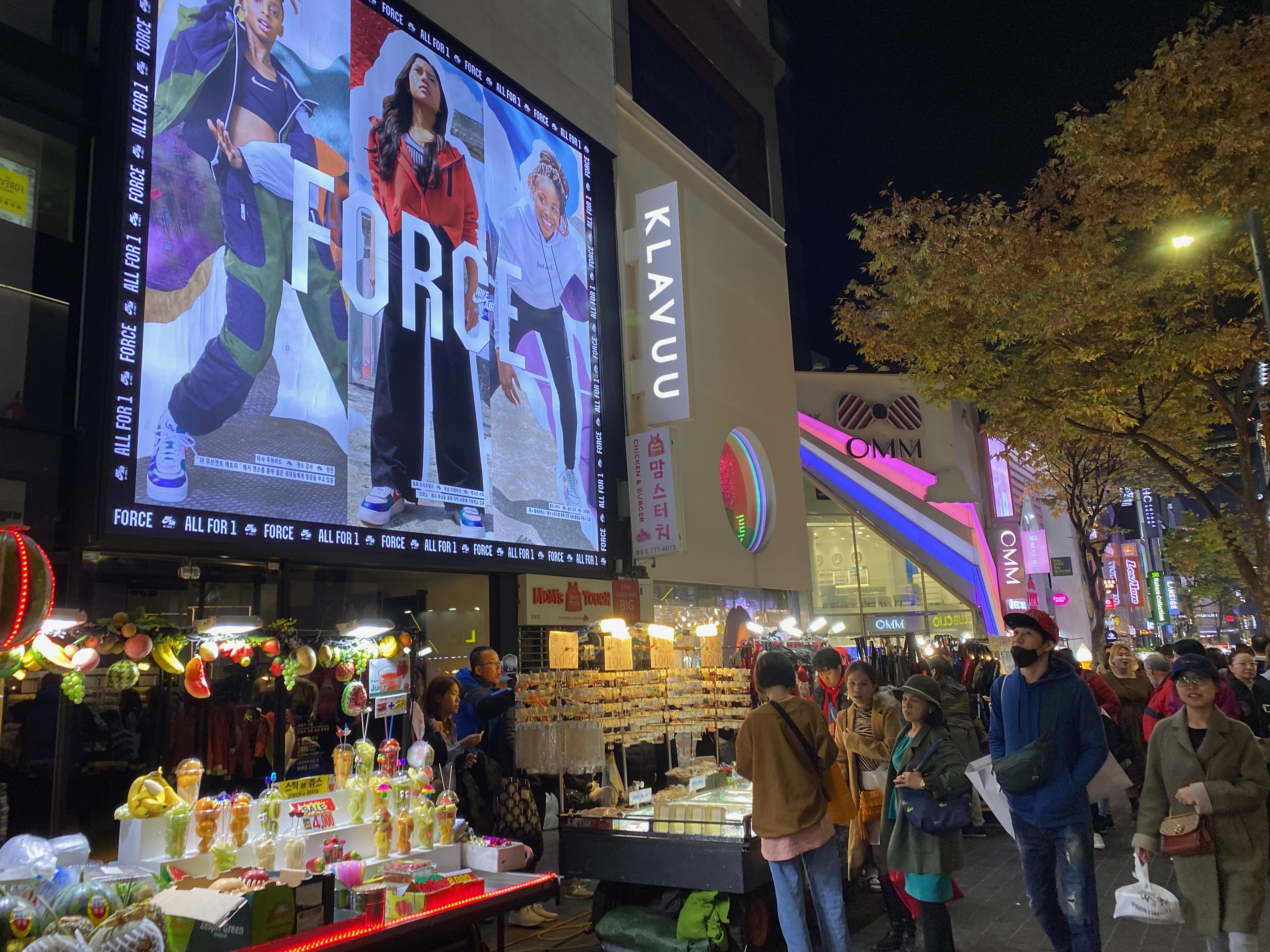
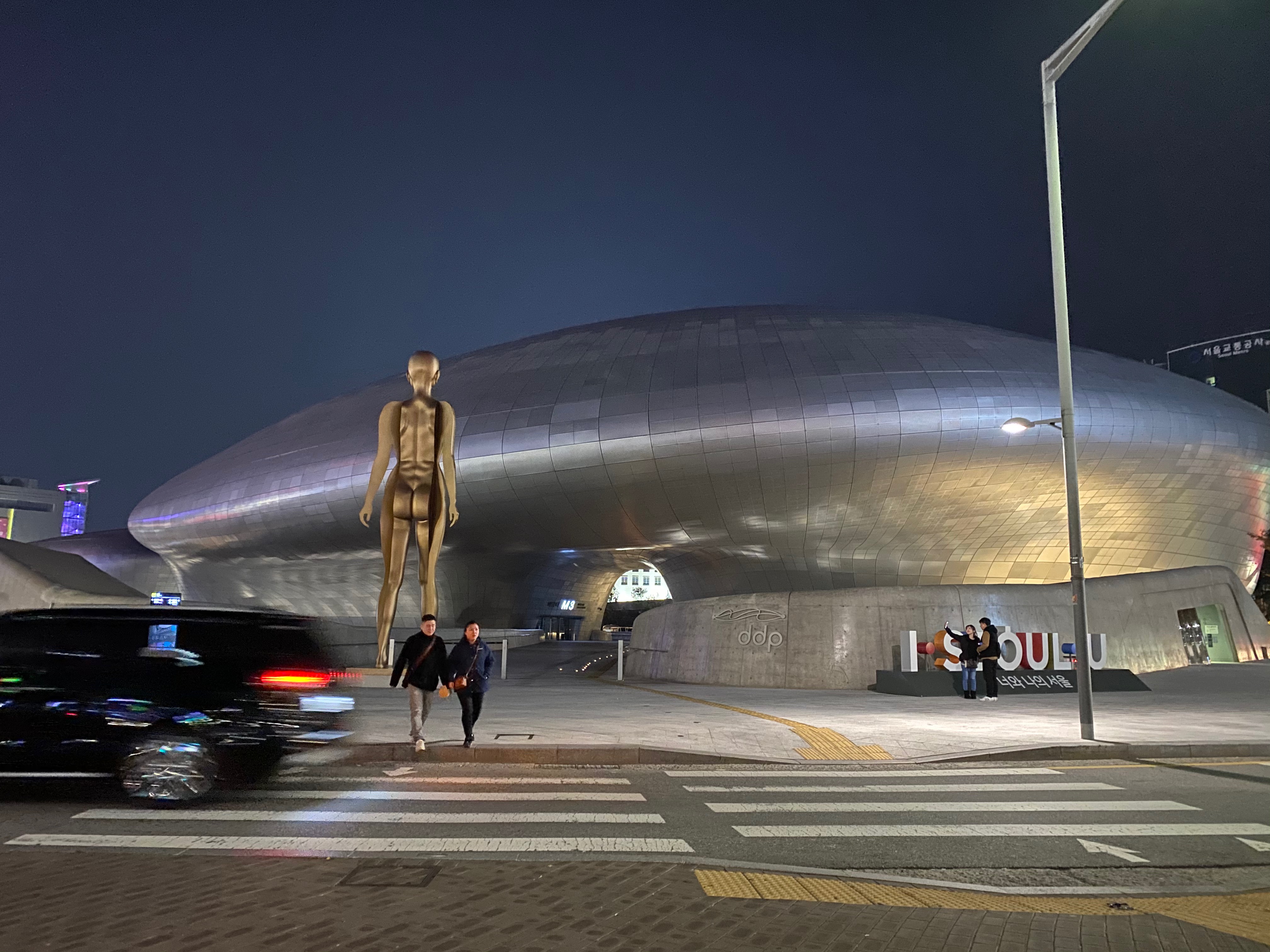
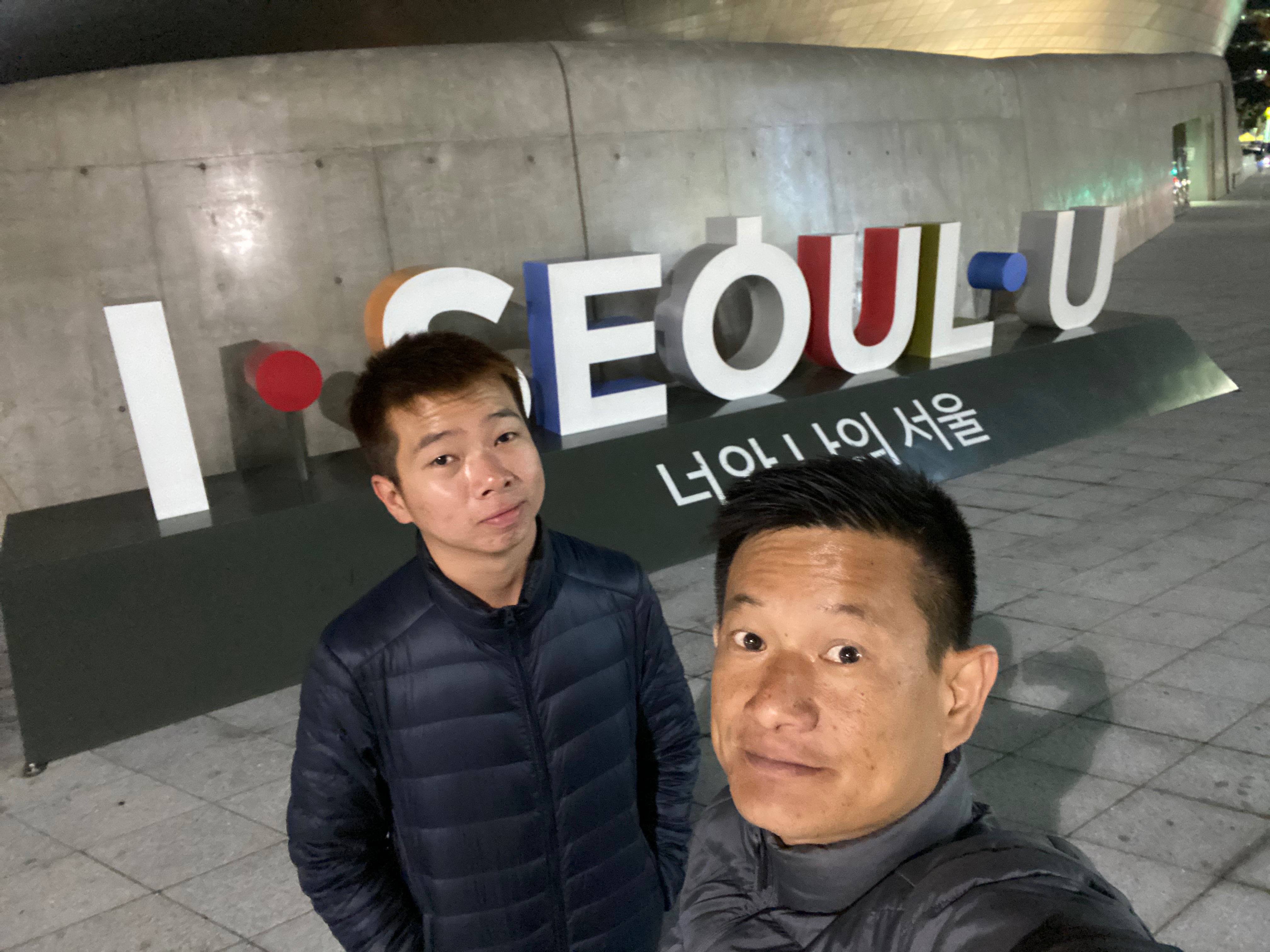
The sky soon got dark and it is time for us to hunt for dinner. For our last dinner in South Korea, we returned to Tosokchon Samgyetang Seoul for some Korean Ginseng Chicken. As we had already timed our visit, there was again no queue for the famous Korean Ginseng Chicken restaurant. After dinner, my friend and I returned to Myeongdong for some last-minute shopping of beauty products. As Myeongdong is mainly frequented by foreigners, I find the shops are more generous in giving discounts and free samples here in Myeongdong. After getting our stuff, we walked around Myeongdong a little and decided to return to the hotel as the shops are closing. My friend and I made a quick pitstop at Dongdaemun Design Plaza to take some photos before returning to the hotel to pack up for our trip home the next day.


Jeju/Busan/Seoul Day 10 (4 Nov 19) – Gangchon and Nami Island: The Breathtaking Autumn Foliage in Gangwon-do

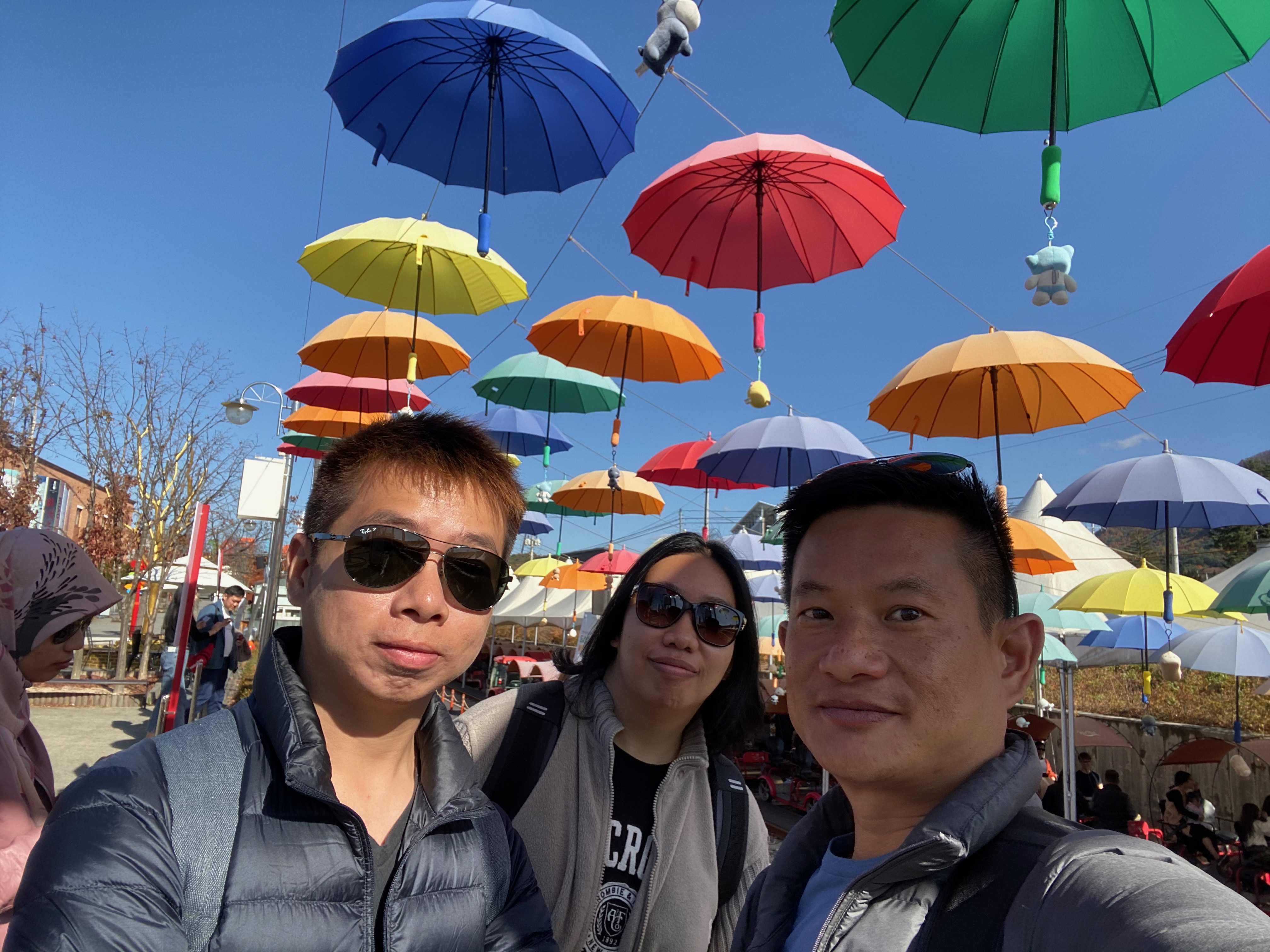
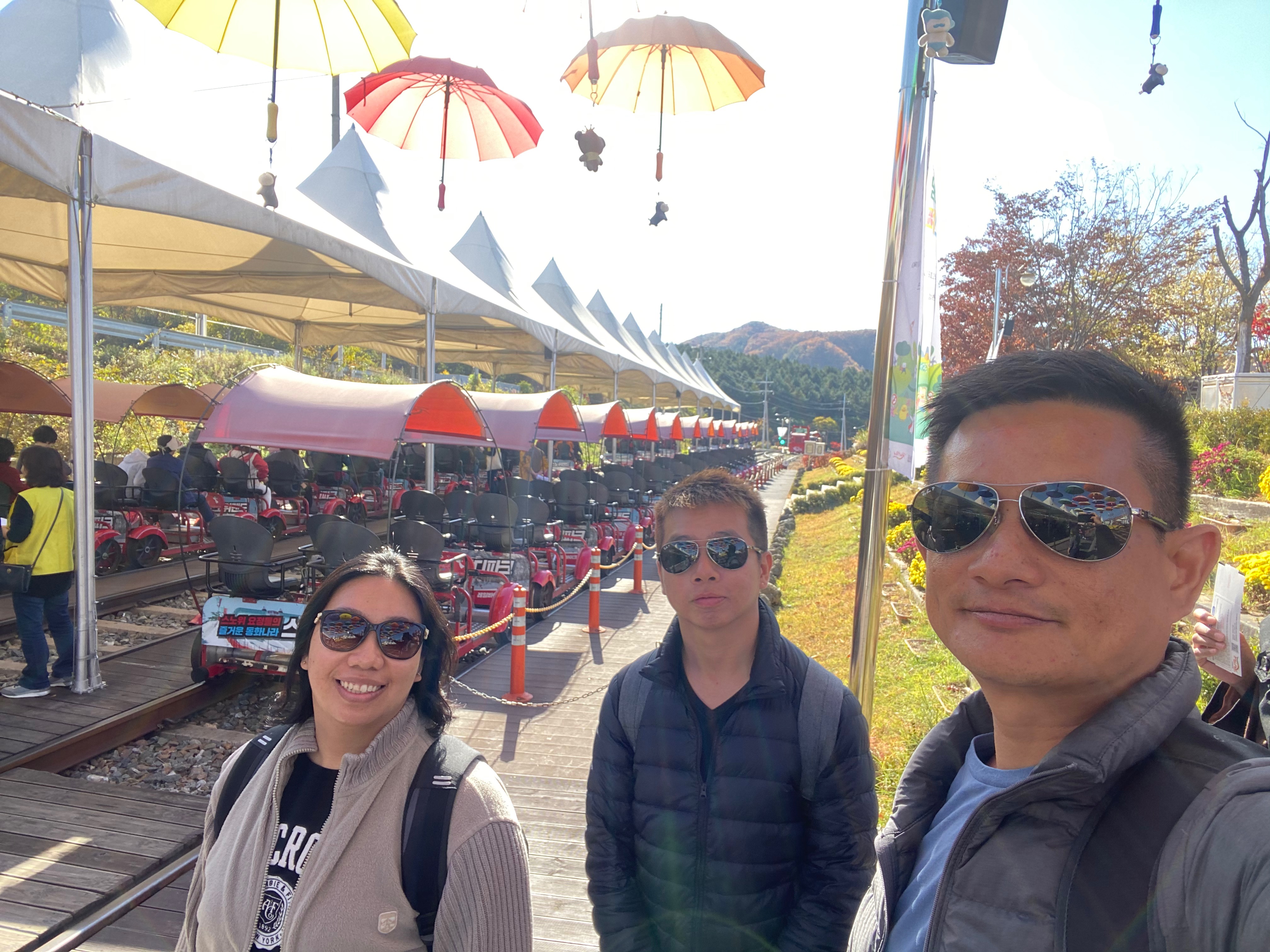
Our journey today brought us to yet another nearby province from Seoul. Today we headed out to Gangwon-do for our first time experience in riding the Railway as well as a visit to Nami Island that we did not do the last time we were here. As we returned to the hotel late the night before, we slept in a little and headed out at around 10.30am. Our first stop is the Railway Bike, located at Gangchon. The journey from Seoul to Gangchon in Gangwon-do took us 2 hours to reach via the subway.

Gangchon Railway Bike Ride

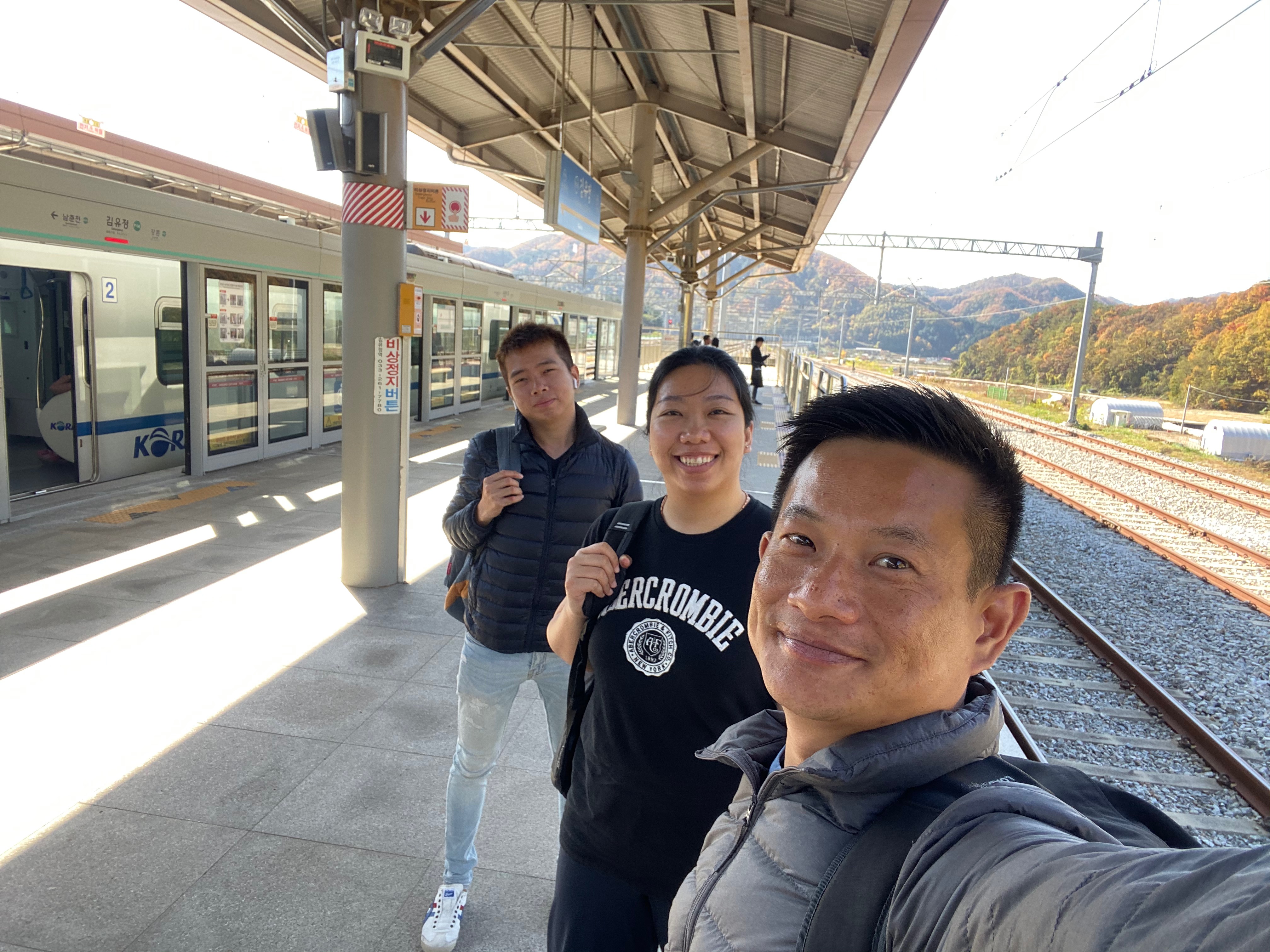
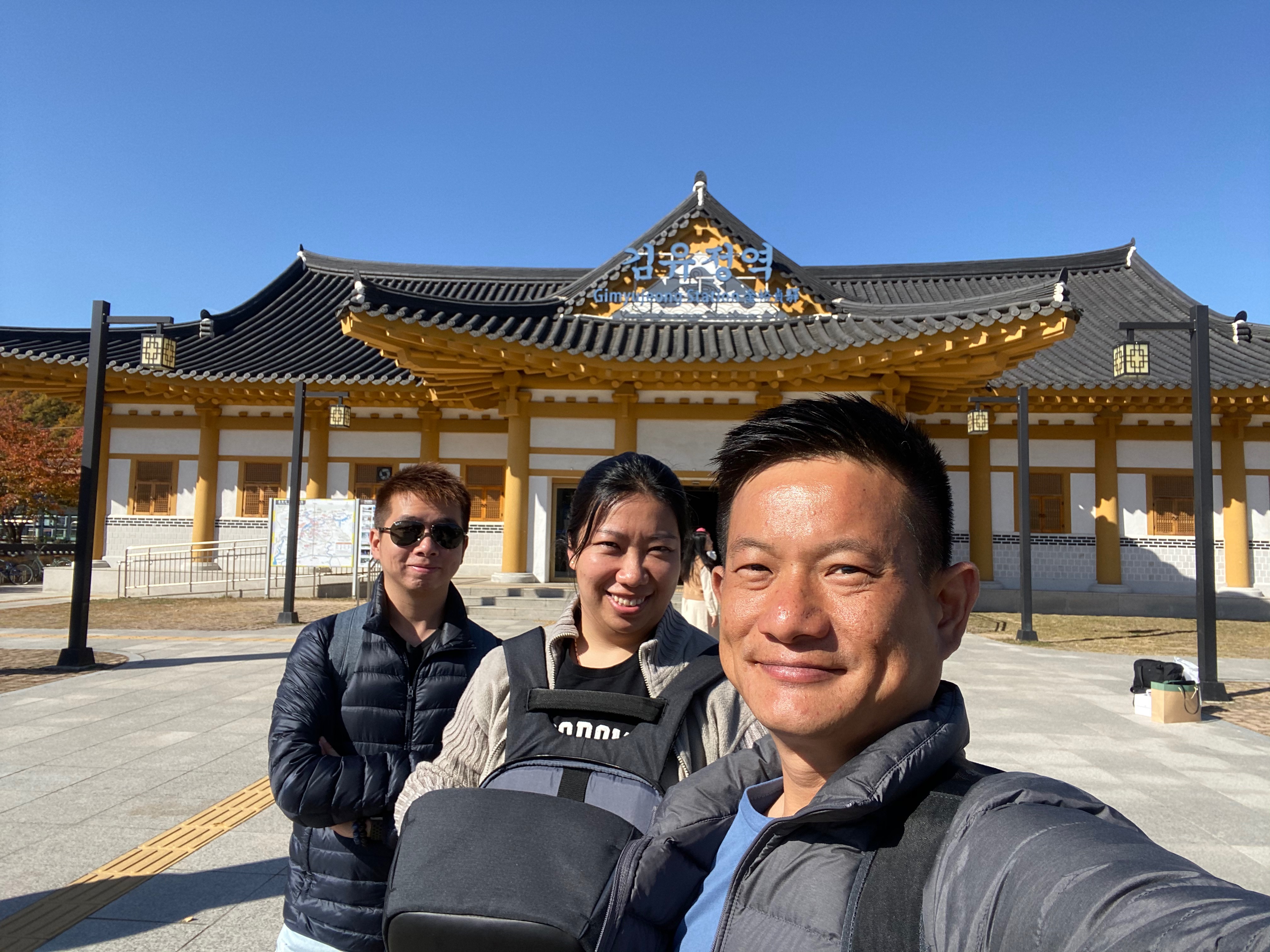
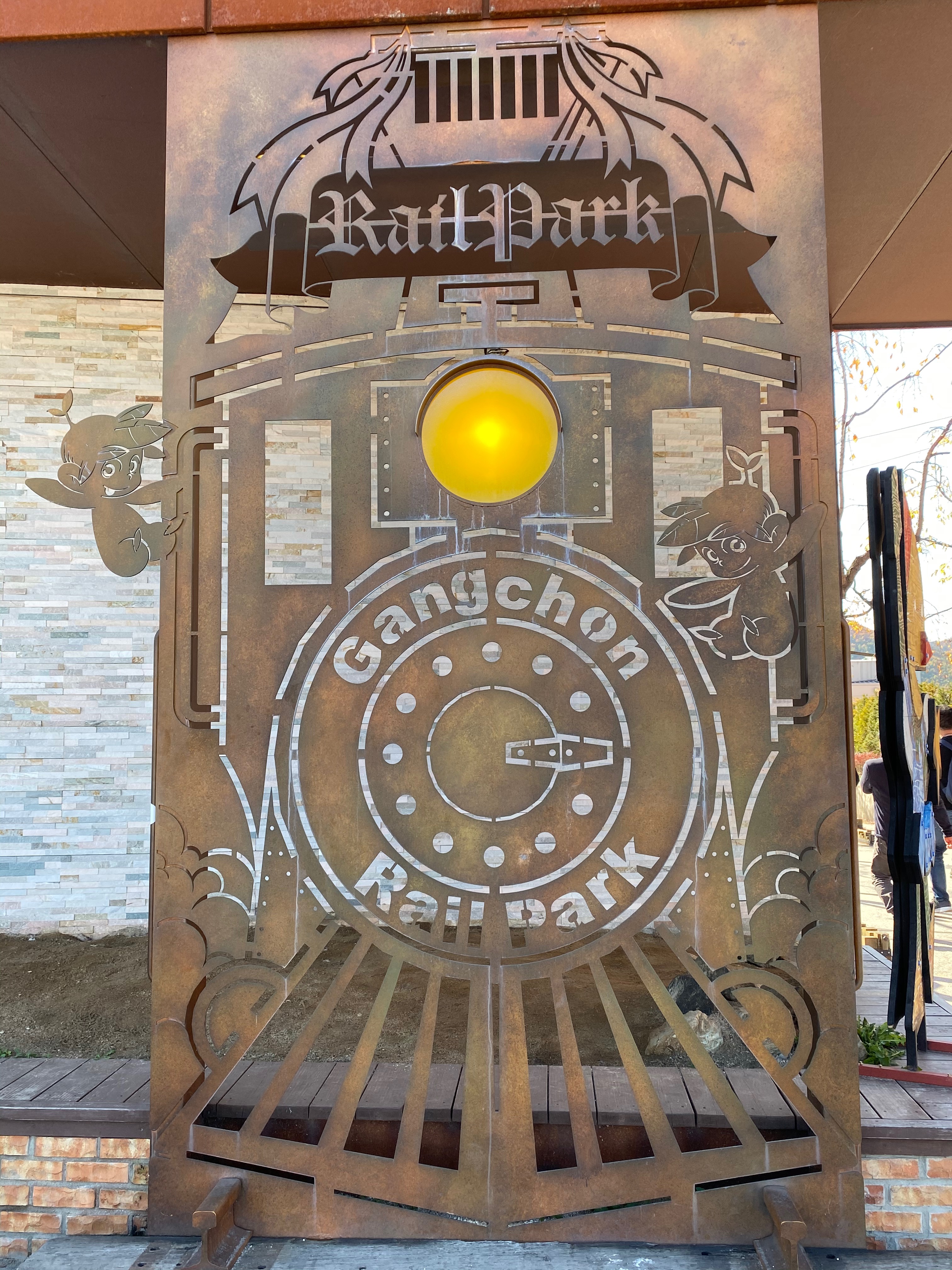
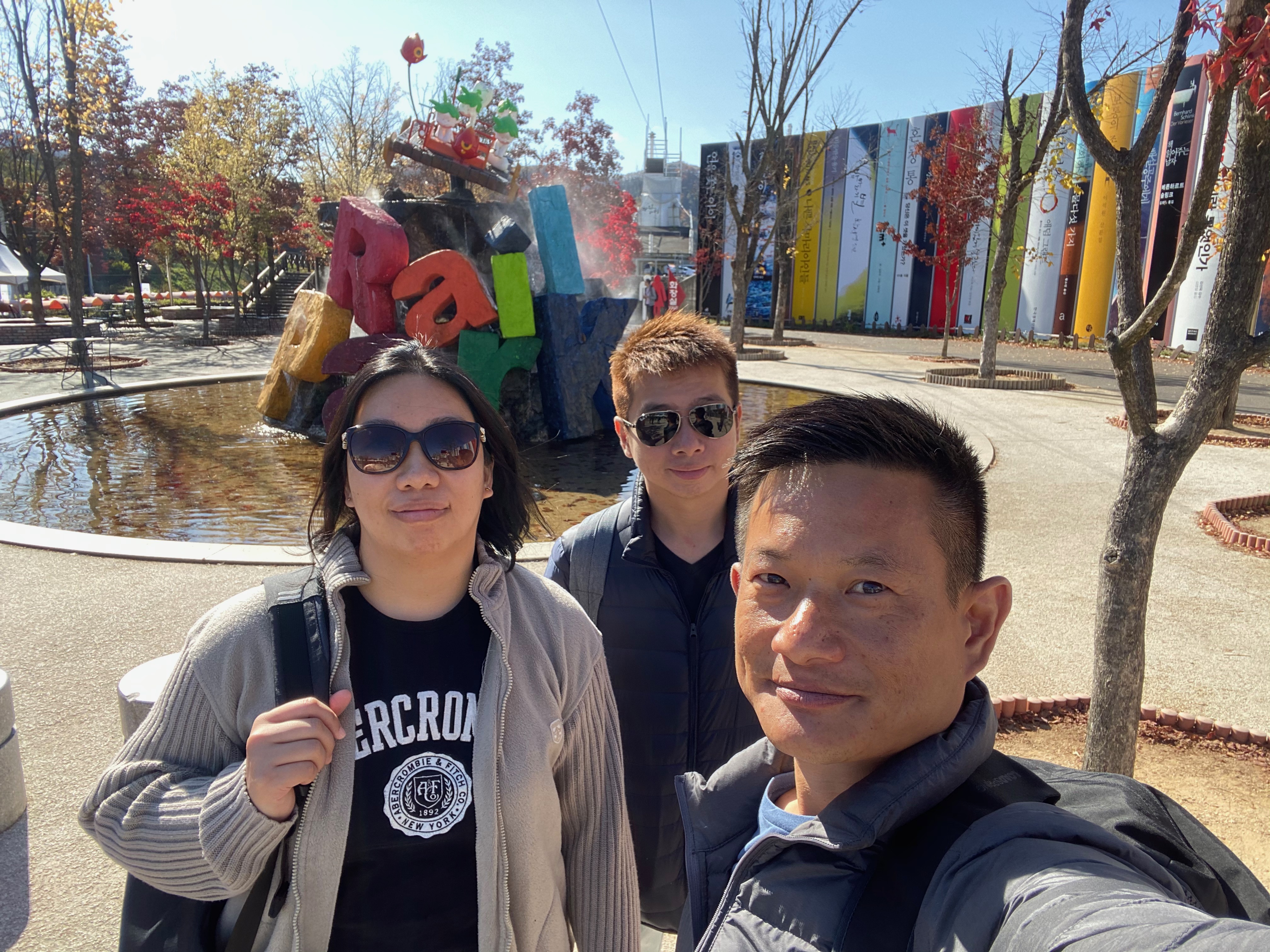
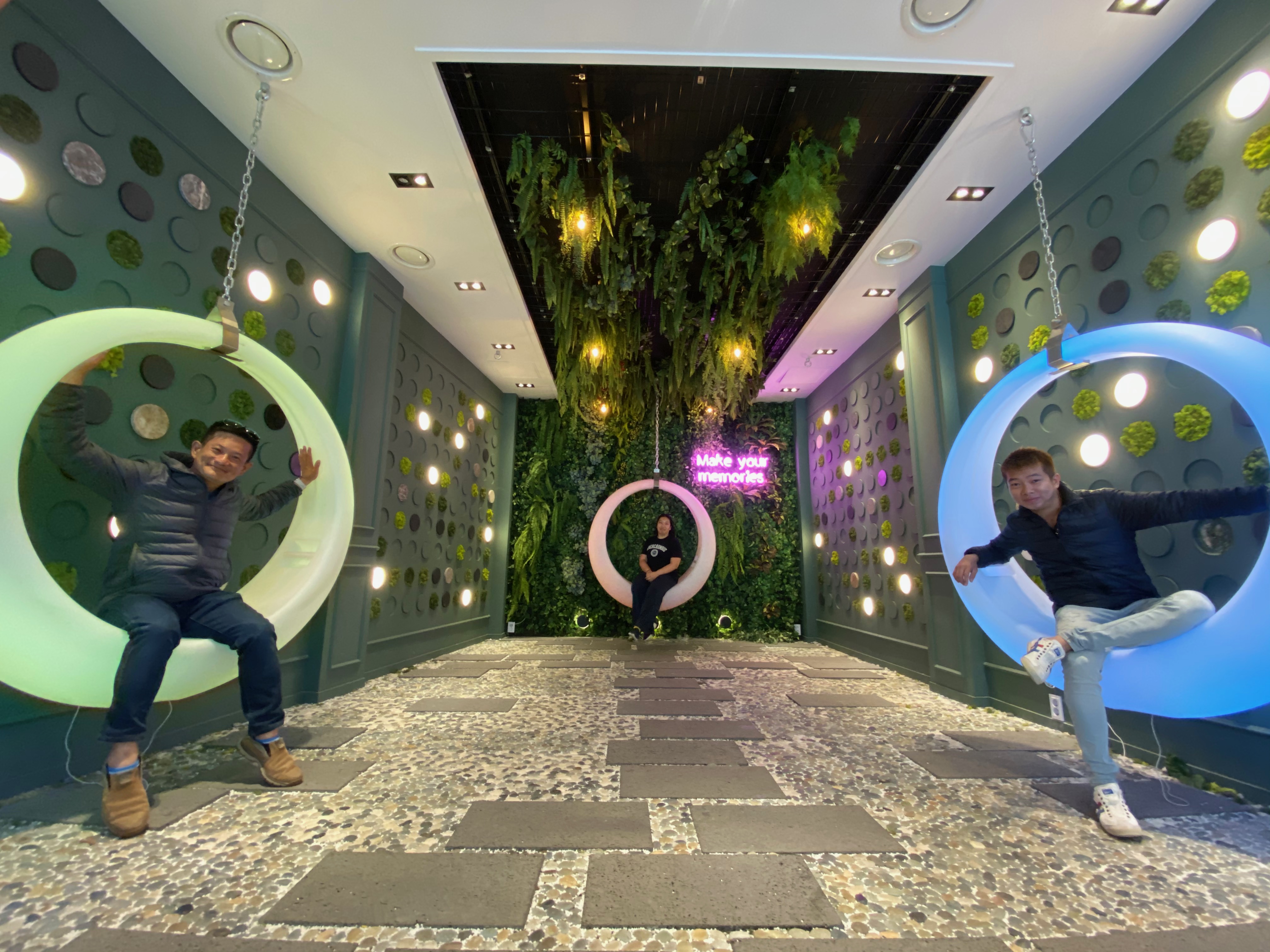
There are several railway bikes around in Gangwon-do, I chose to come to the one in Gangchon for a couple of reasons: firstly it is very near to the subway station which meant that we did not have to waste time in travelling from the subway station to the railway bike park; and secondly, it is a few stops away from the subway station which is nearest to Nami Island. We reached Gimyujeong subway station at around 1 pm. From the subway station, it is a mere 3 mins walk to the railway bike park, which is literally next to the subway station. There are only two types of railway bikes available: 2-seater and 4-seater railway bikes. There are scheduled departure timings for a ride on the railway bike. My friends and I wasted no time and headed straight to the ticketing counter. We were glad that we managed to get the tickets for the 1.30om departure on a 4-seater railway bike. Tickets on the railway bikes are charged based on the type of bike and not by the number of headcounts. We paid KRW40,000 for the 4-seater railway bike. Since there is some time left before our scheduled departure, my friends and I went around exploring the railway bike park. The park seems to exist for the sole purpose of boarding the railway bike. There are limited facilities at the park. We only found one cafe selling finger food and a few photo spots for visitors to take pictures at the railway bike park. There is also a very short zip line at the park, which does not interest us. As we still have some time left, we headed into the cafe, initially wanted to grab a bite. But the limited food on sale dissuaded us to even have our lunch there. We spotted a corner in the cafe where we spent the rest of our time taking pictures.

74A5B17C-4A15-482B-8F52-D29F52D6F4FD

Taking pictures inside the cafe

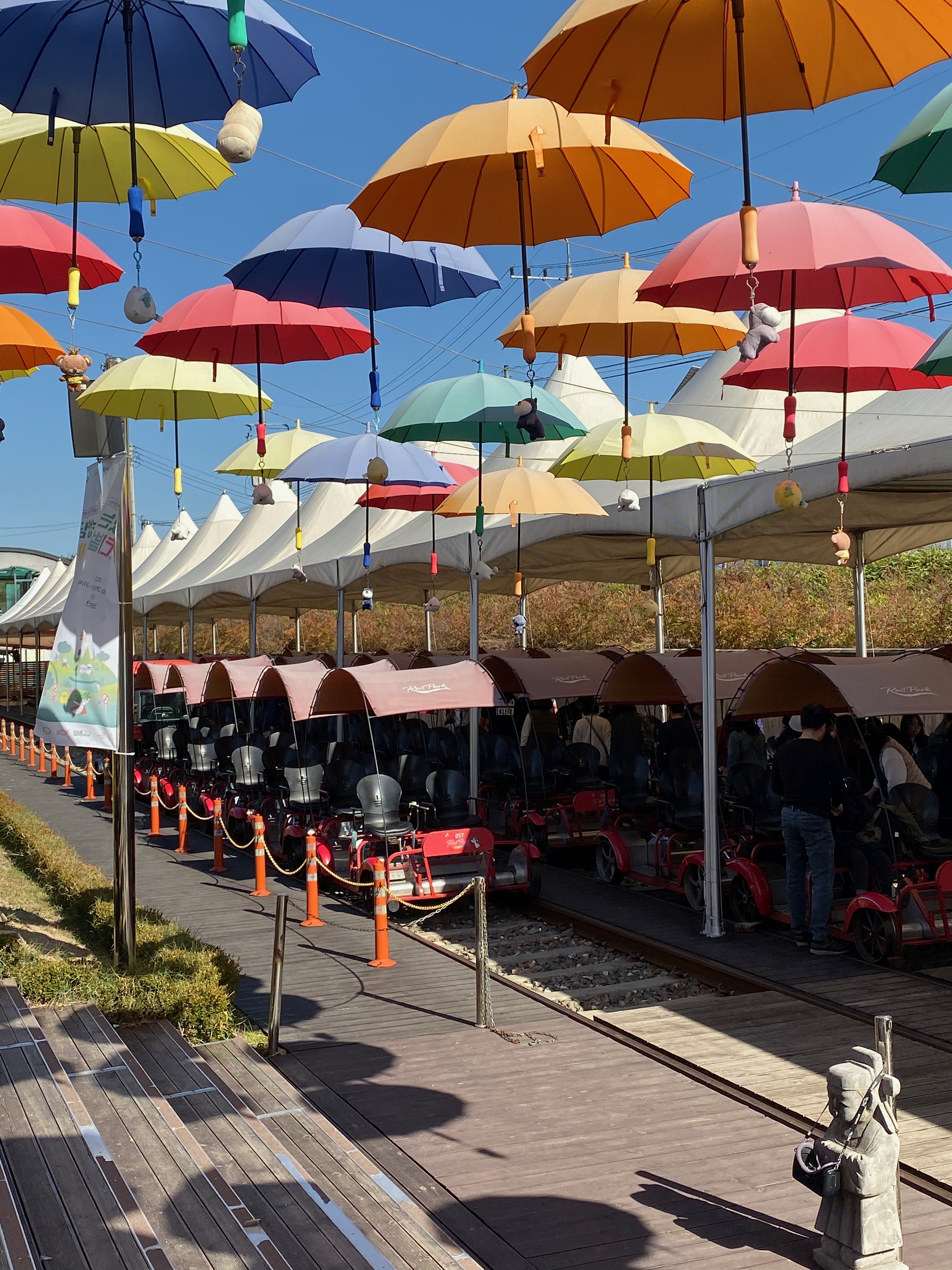
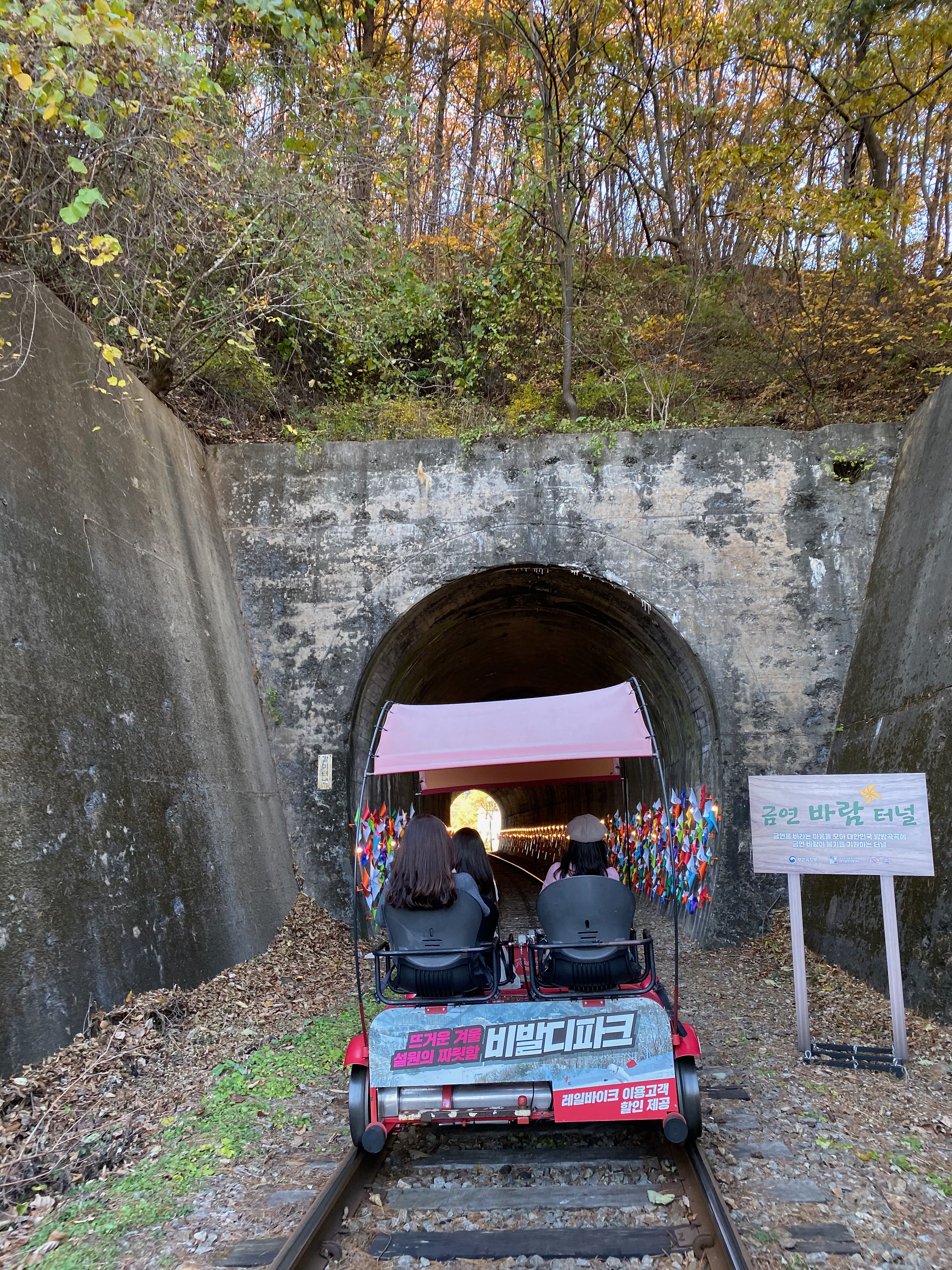
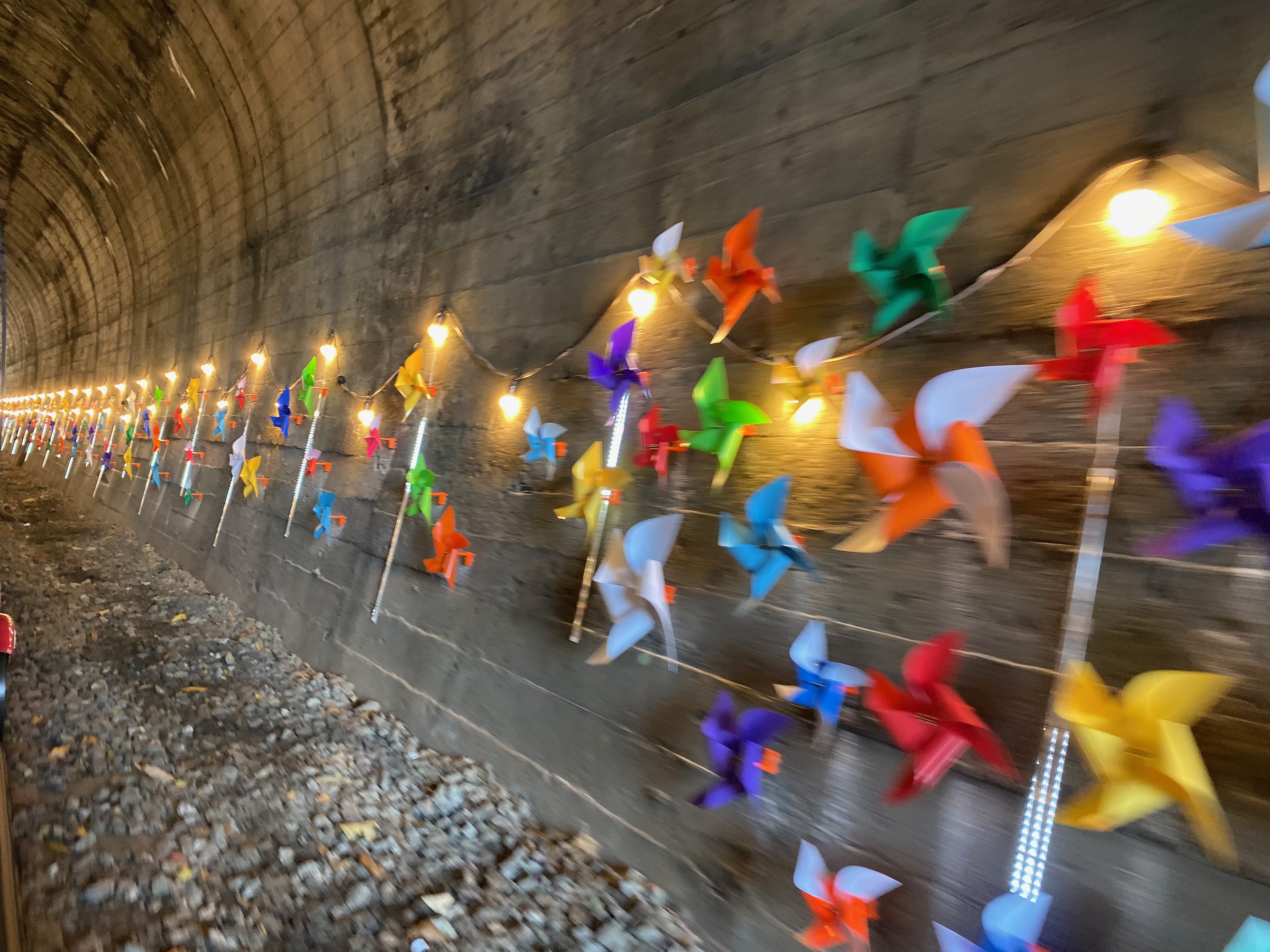
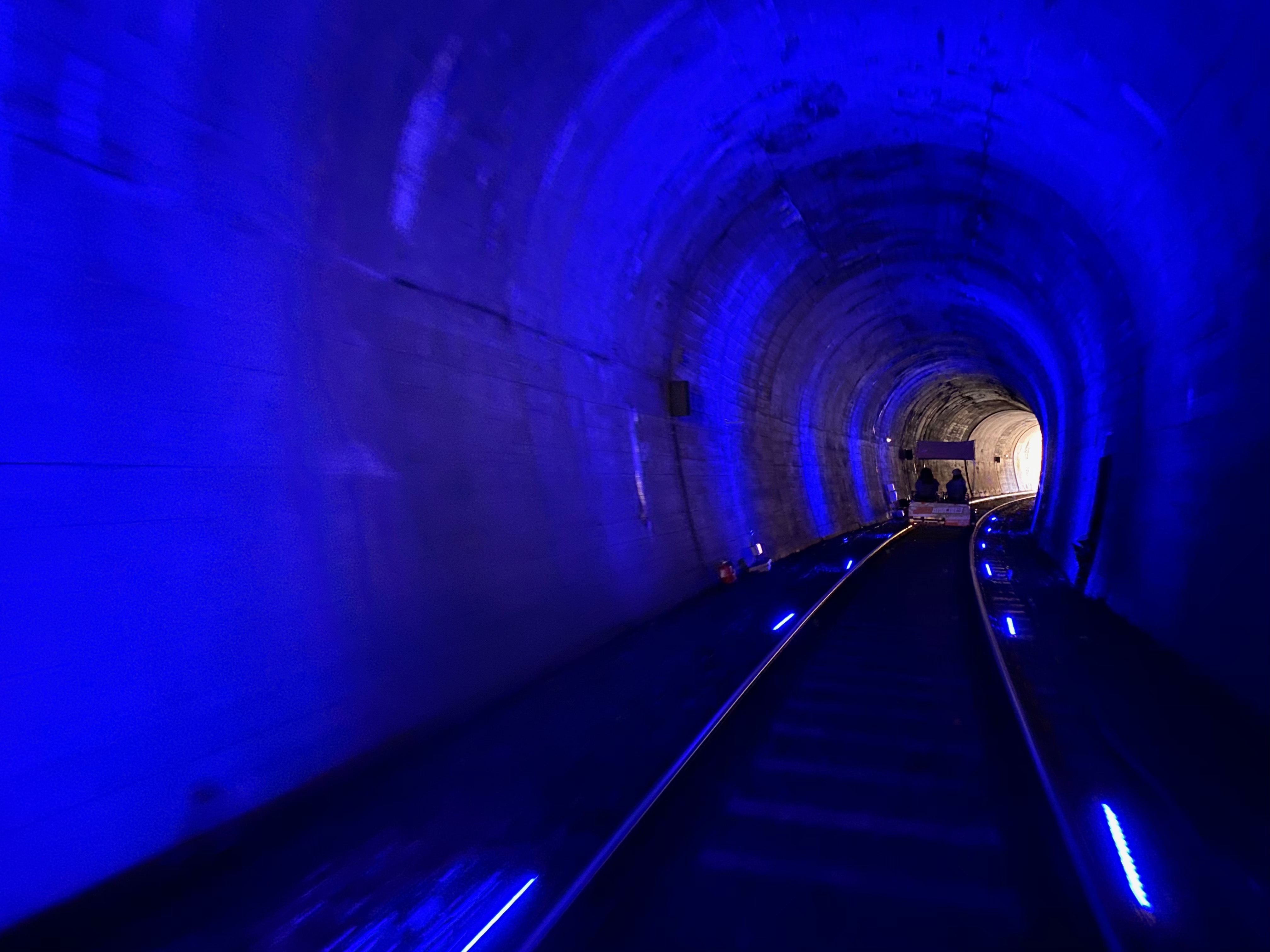
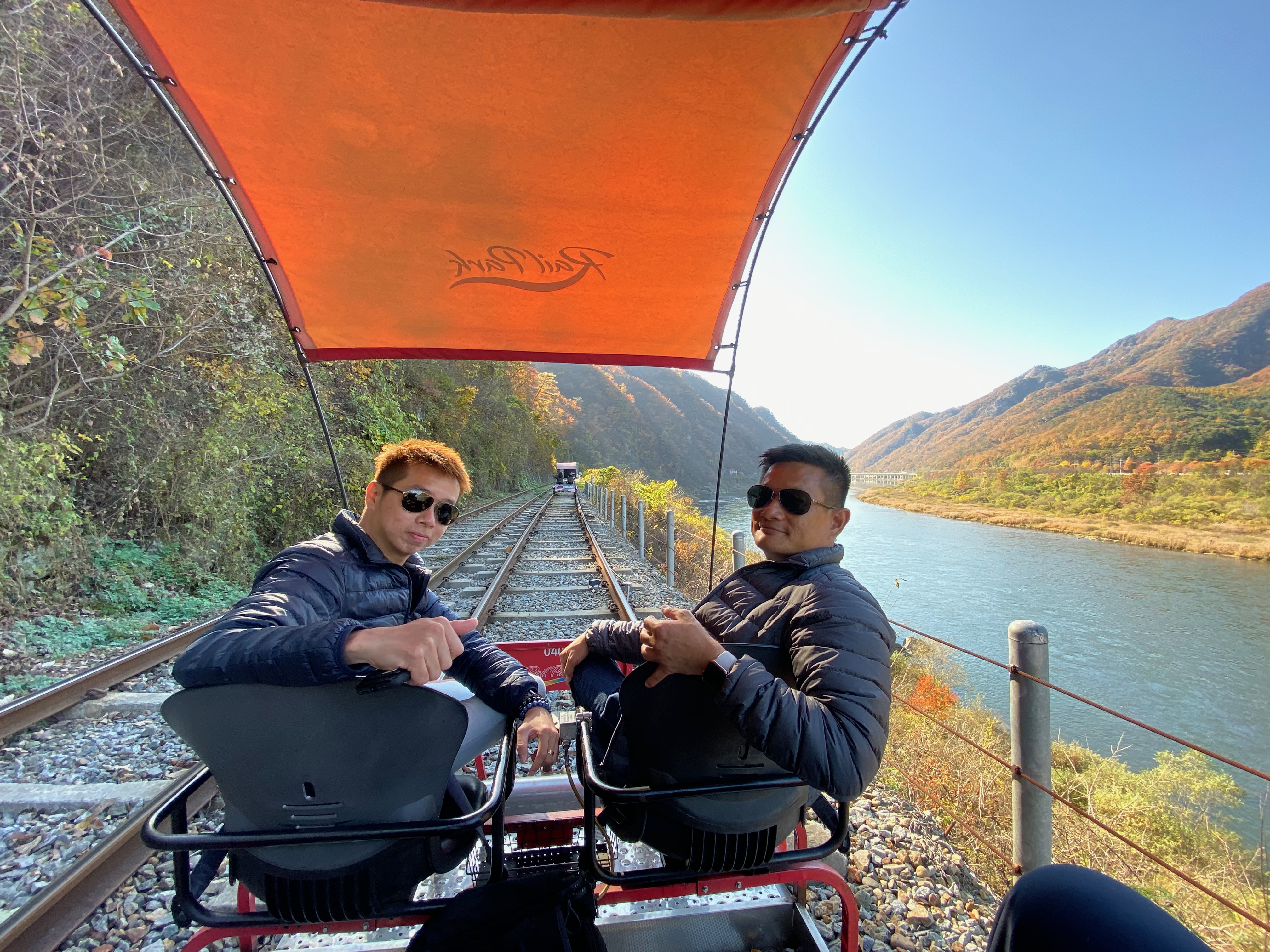
It is soon our time for boarding. We headed outside the cafe to join the queue to board the railway bikes. There are two queues already formed up at the boarding area. We made sure that we are queued in the 4-seater bike queue. Boarding was efficient, staffs at the railway bike station boarded visitors by groups and gave us a brief on the brakes and how to use the bike. We settled into our bikes and waited for the green light for us to start pedalling the railway bike. We did not have to wait for too long to be given the green light. Pedalling on the railway bike was easy and effortless (provided all the passenger chip into the pedalling of the bike. Along the way, we would pass through three tunnels. As the bike leaves the bike park, we were treated to sceneries of the countryside. We initially find the scenery rather refreshing, no tall buildings and a lot of greeneries on either side of the railway where we passed by. However, the scenery on this stretch became repetitive after a while as we were pedalling through farmlands. We have to follow the pace of the bike in front of us and the bike kept stopping, apparently for its riders to take pictures. My friends and I were having more fun in pedalling the bike and “plotting” to slam into the bike in front. At times we were slacking off and stopped pedalling leaving the friend sitting behind to do the hard work until she found out and busted us. Farmlands slowly turned into a wilderness, the railway track brought us under and over metal bridges, we soon came to the first tunnel about 10 mins after leaving the railway bike park. The first tunnel was a relatively short one lined with pinwheels on either side of the tunnel walls. These pinwheels seem to be powered by electric rather than wind. The Koreans did a fantastic job of turning an otherwise boring and dark tunnel into a spectacle of colour, bright and Instagram worthy tunnel.

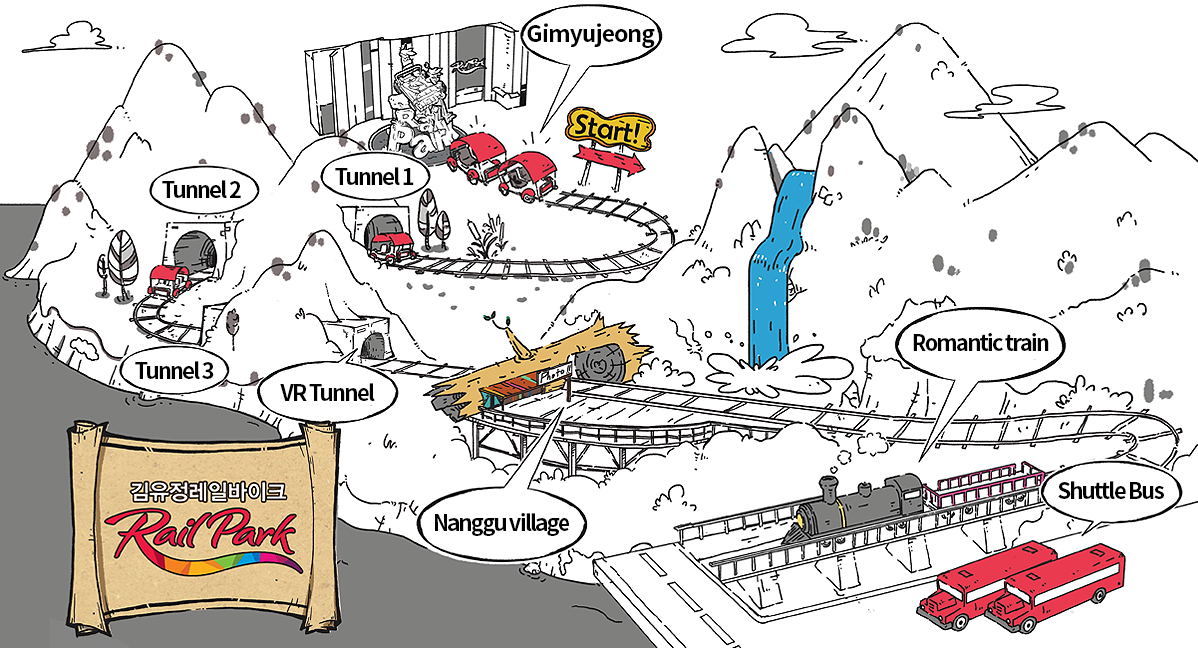
intRail01_e

Map of the entire railway bike track

9EF33FAE-2DB2-49A2-8D33-8C021CEE8514

The Rail Bike tracks started with farmlands

B009D837-7CCE-4B3E-9344-D69734CA38FA

More farmlands on both side of the track

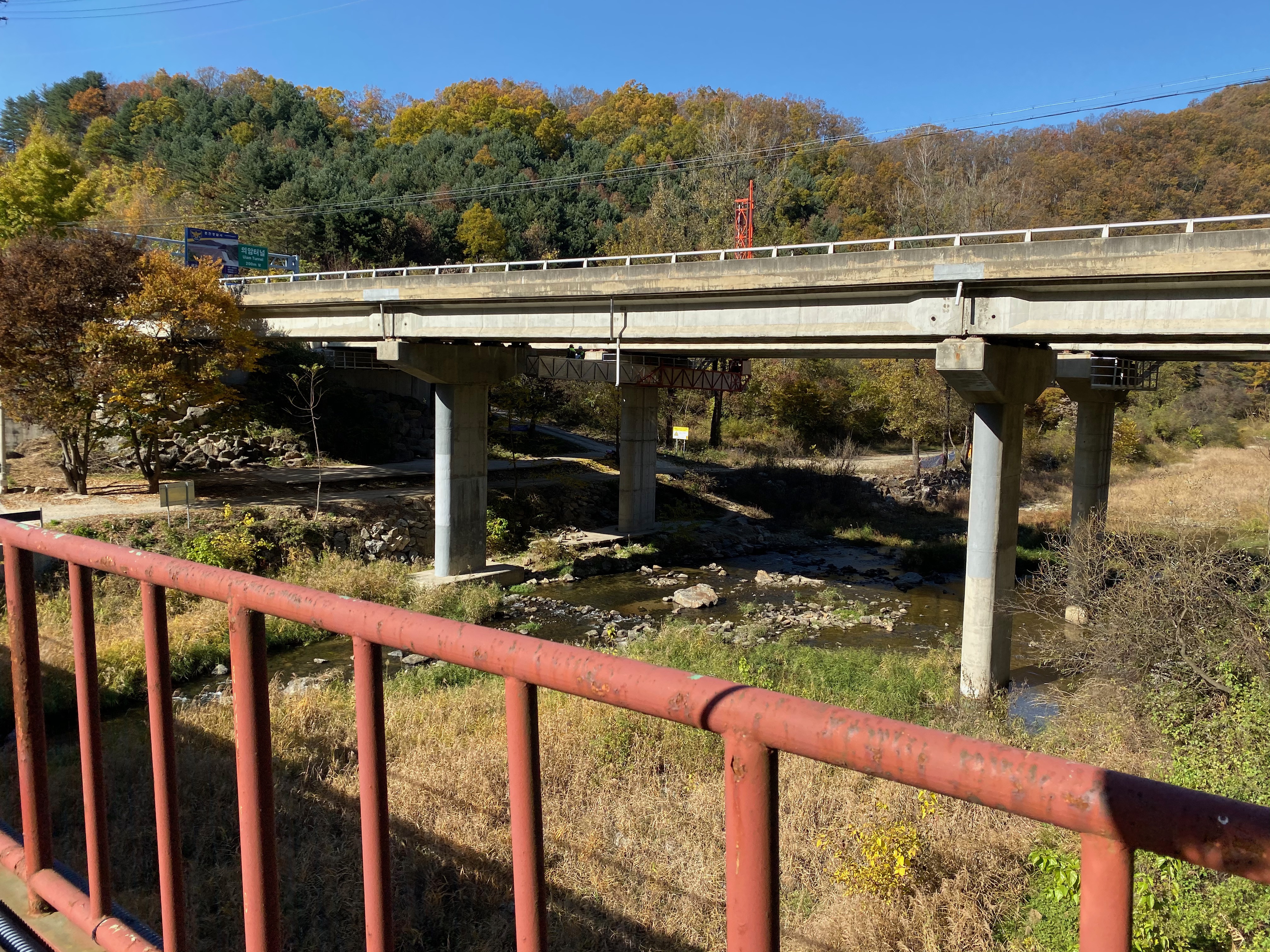
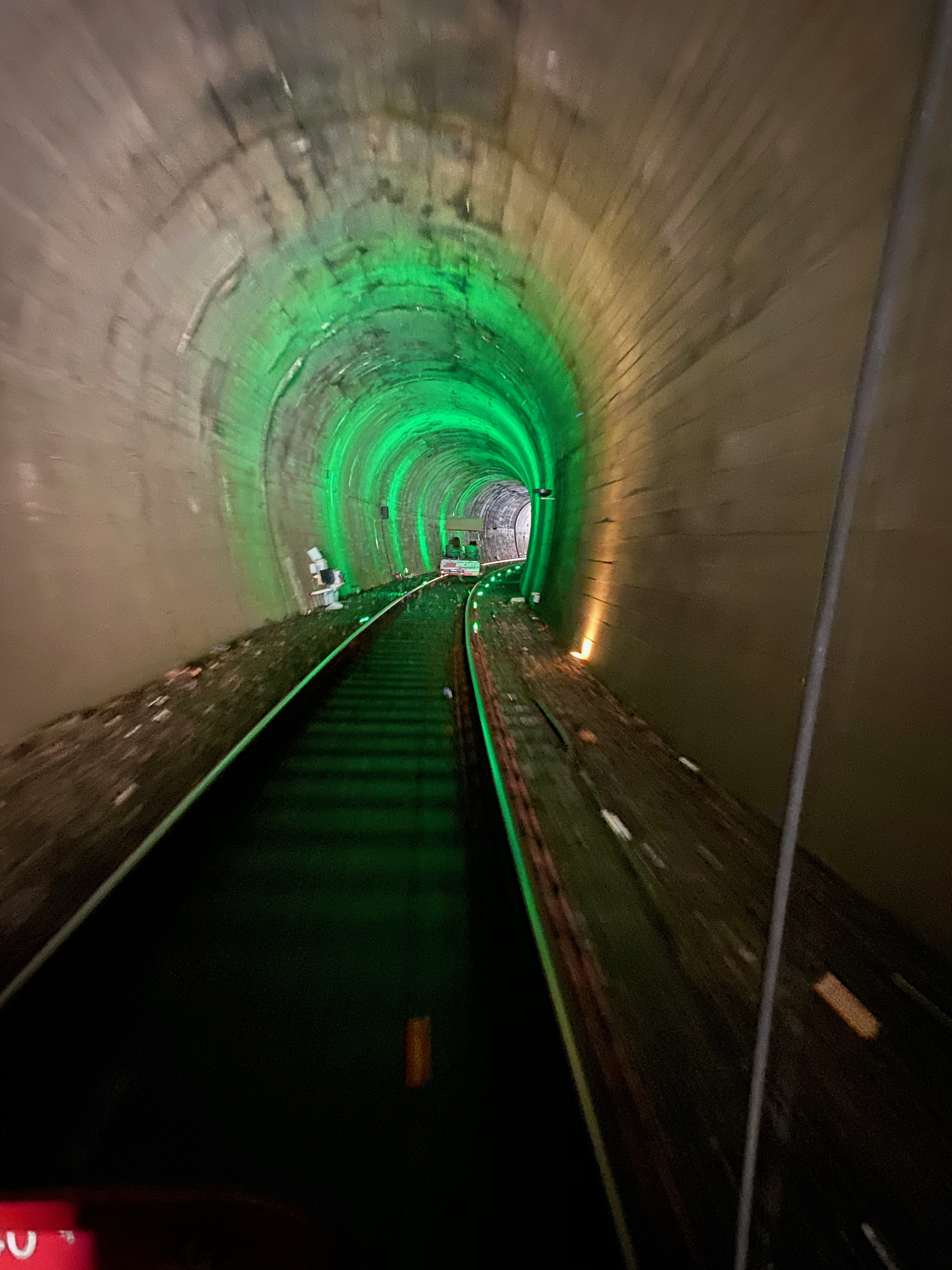
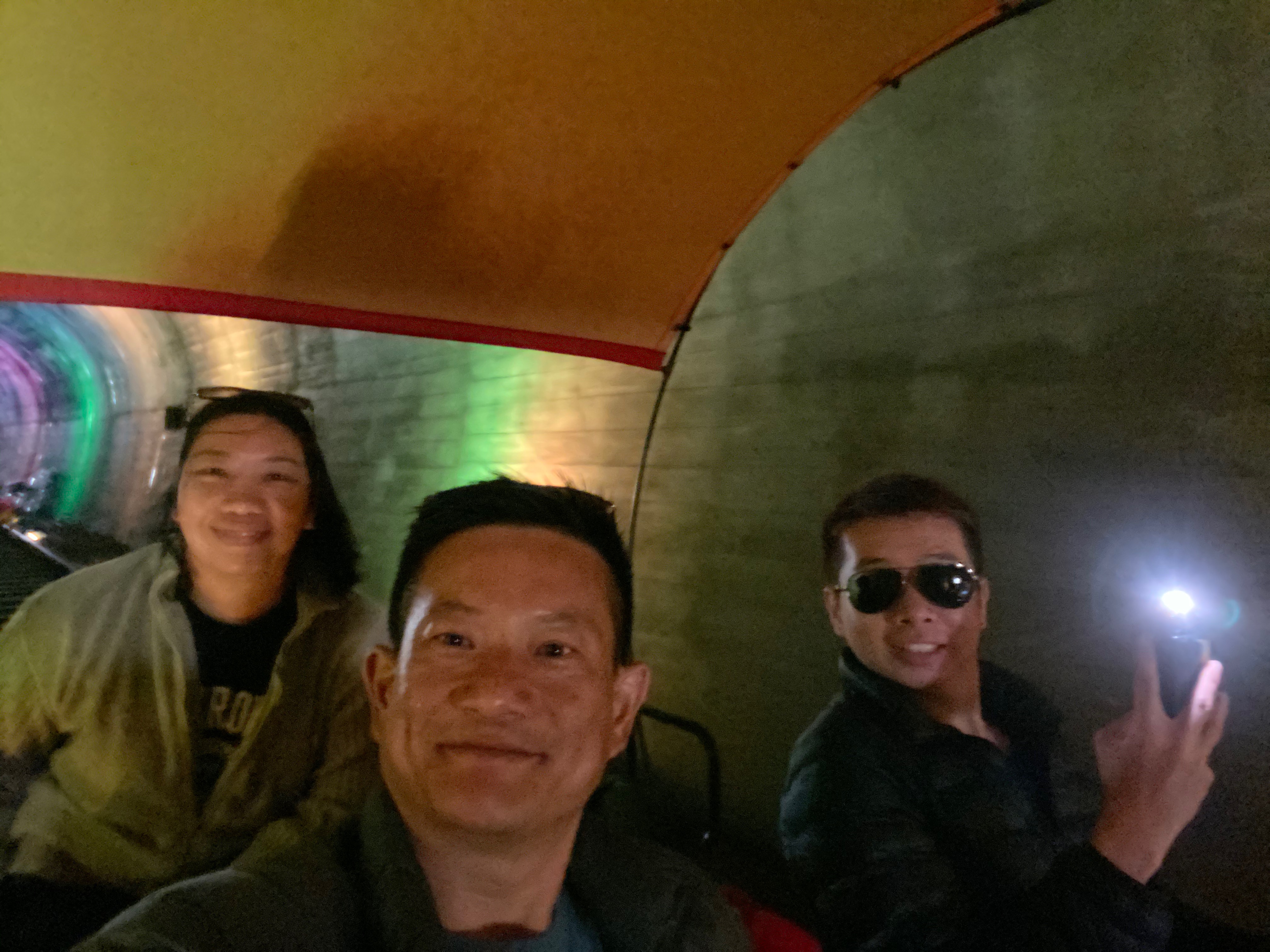
At the end of the first tunnel, the railway track bridged over an almost dried river, giving us a feeling of flying over the river. This part of the track seems to be predominately taken over by nature, there was wilderness all around us. Leaves on the trees are mainly green with a hint of yellow, grown on the small hills on the side of the track. The only sign of civilisation is the highway bridge at a distance next to the track and sporadic farmhouses at a distance from the track. This section of the Gangchon Railway Bike ride is pretty short, we arrive at the second tunnel about 5 mins later. The second tunnel was dark at the entrance. It got brighter the deeper we rode in it. We were treated to a colourful light show in the second tunnel. Strips of LED lights turned from green to blue to pink as we rode through the tunnel. Wow, two tunnels with completely different themes. This got us hyped on how the third and final tunnel will be when we come to it.

4DE7E6F8-36E4-4E4E-BB71-D92F07E2D207

Crossing a stream after exiting the first tunnel

18A7C33F-5698-498E-832E-832B2F4F56B1

Starting to see some hills

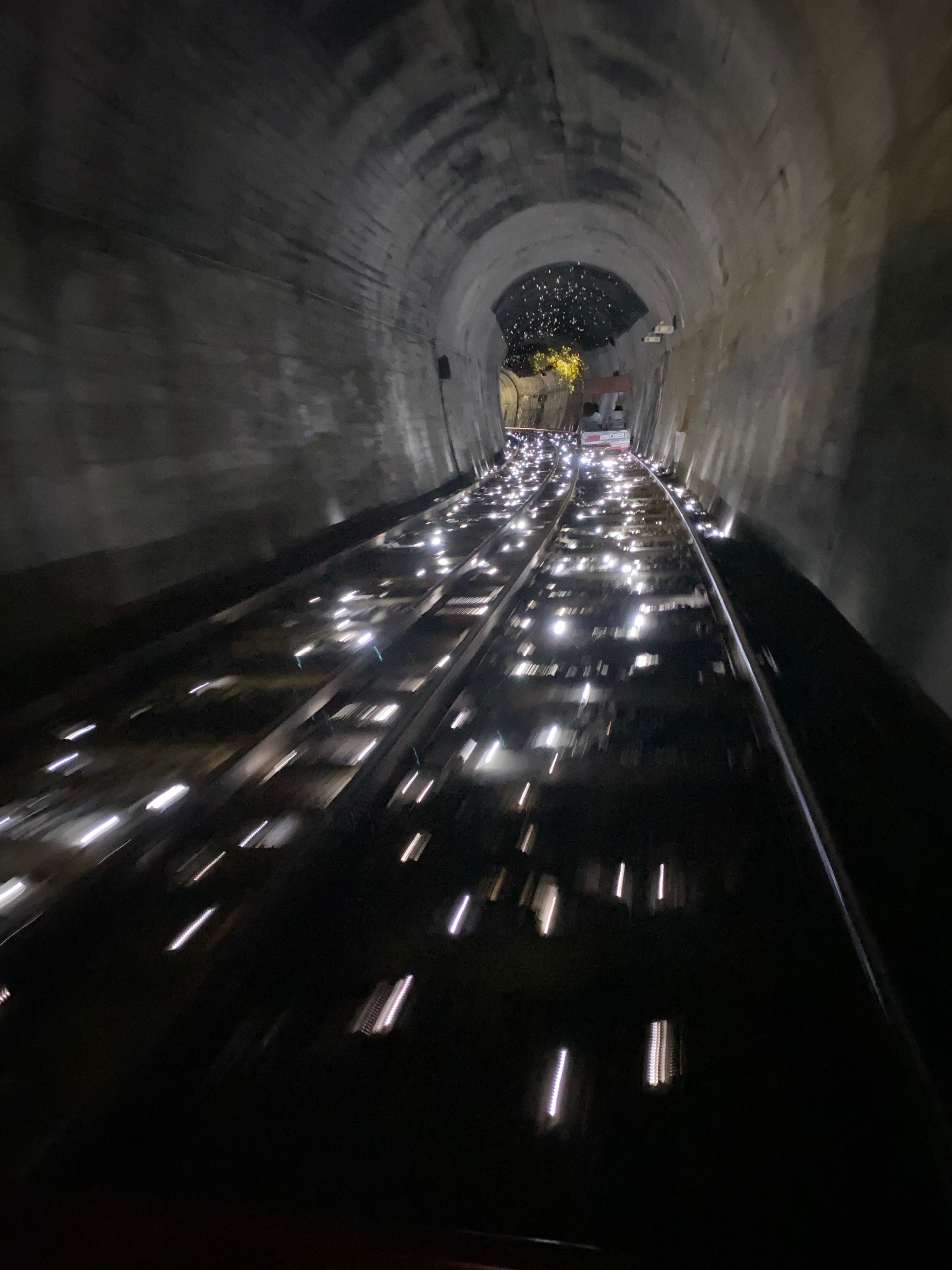
The second tunnel is slightly longer than the first one. The track continues over a small wooden bridge over a small stream. Hills form the backdrop over the farmlands and we started to see more trees donning on their red and yellow autumn outfits. There is a good mix of nature and farmlands with very little civilisation in sight. The distance between the second and the third tunnel is rather short. We came to the third tunnel after 10 mins of pedalling.  The third tunnel is again different from the first two. The third tunnel is a pitch dark. As we pedalled our railway bike in the tunnel, we begin to see white strips of LED lights illuminating the ground and at some parts, the ceiling of the tunnel. This tunnel is the VR tunnel, which I guess there would be some VR effects if we had forked out the extra KRW5,000 per pax. However, we were not given the option when we got our tickets.

5F5CC13A-42CD-4289-BBB4-16924B881B70

There are lesser farmlands from this part of the track onwards

F985FE1D-4F80-45E8-8D52-091E156D1658

Taking pictures on the rail bike

CA4A0E3B-4AA4-4E87-84AF-B9C83CD9504E

A small farm afar

3B554C90-F090-4CB8-9D5A-BDDEF7C38CE6

Not so scenic part of the rail

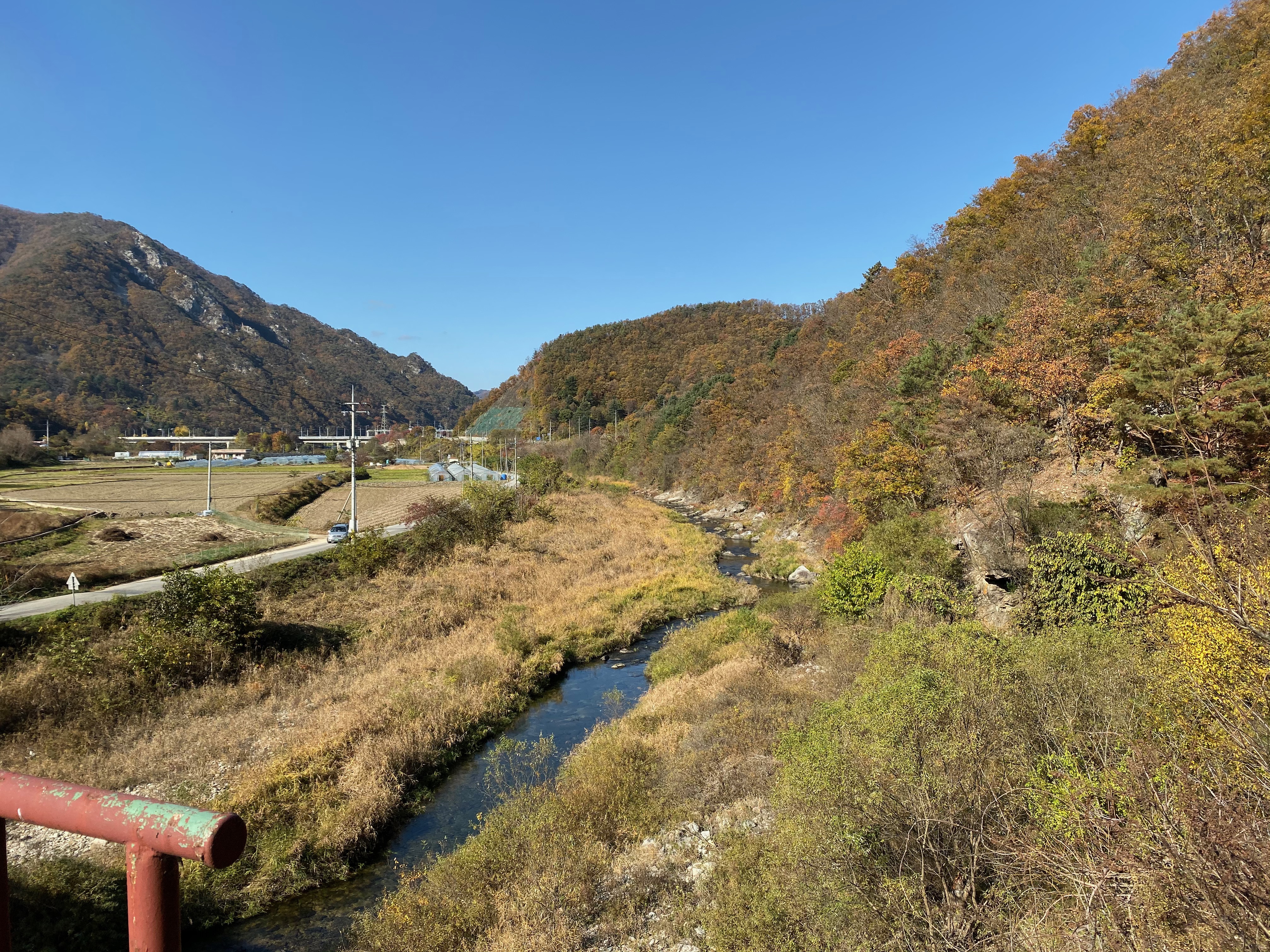
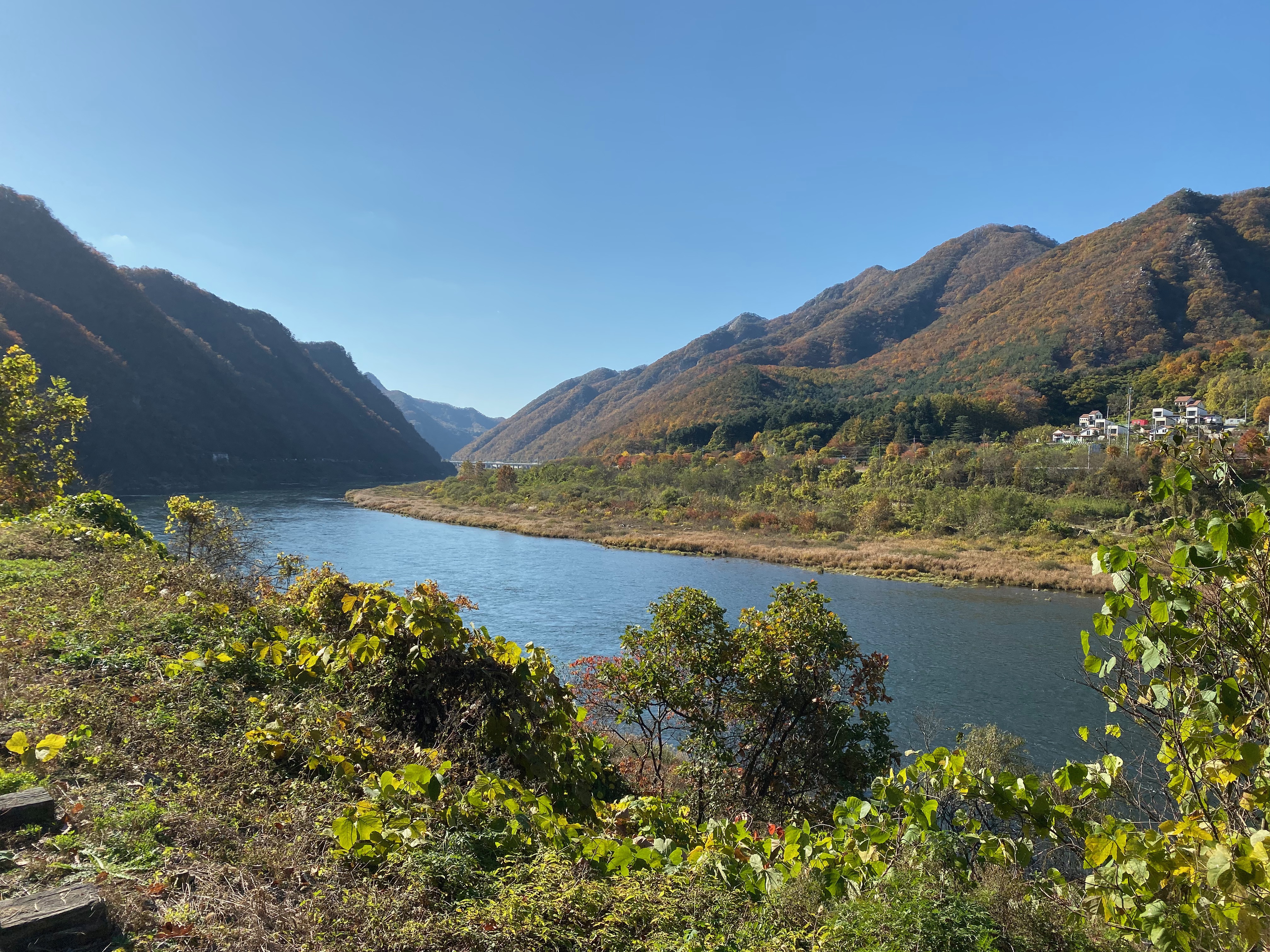
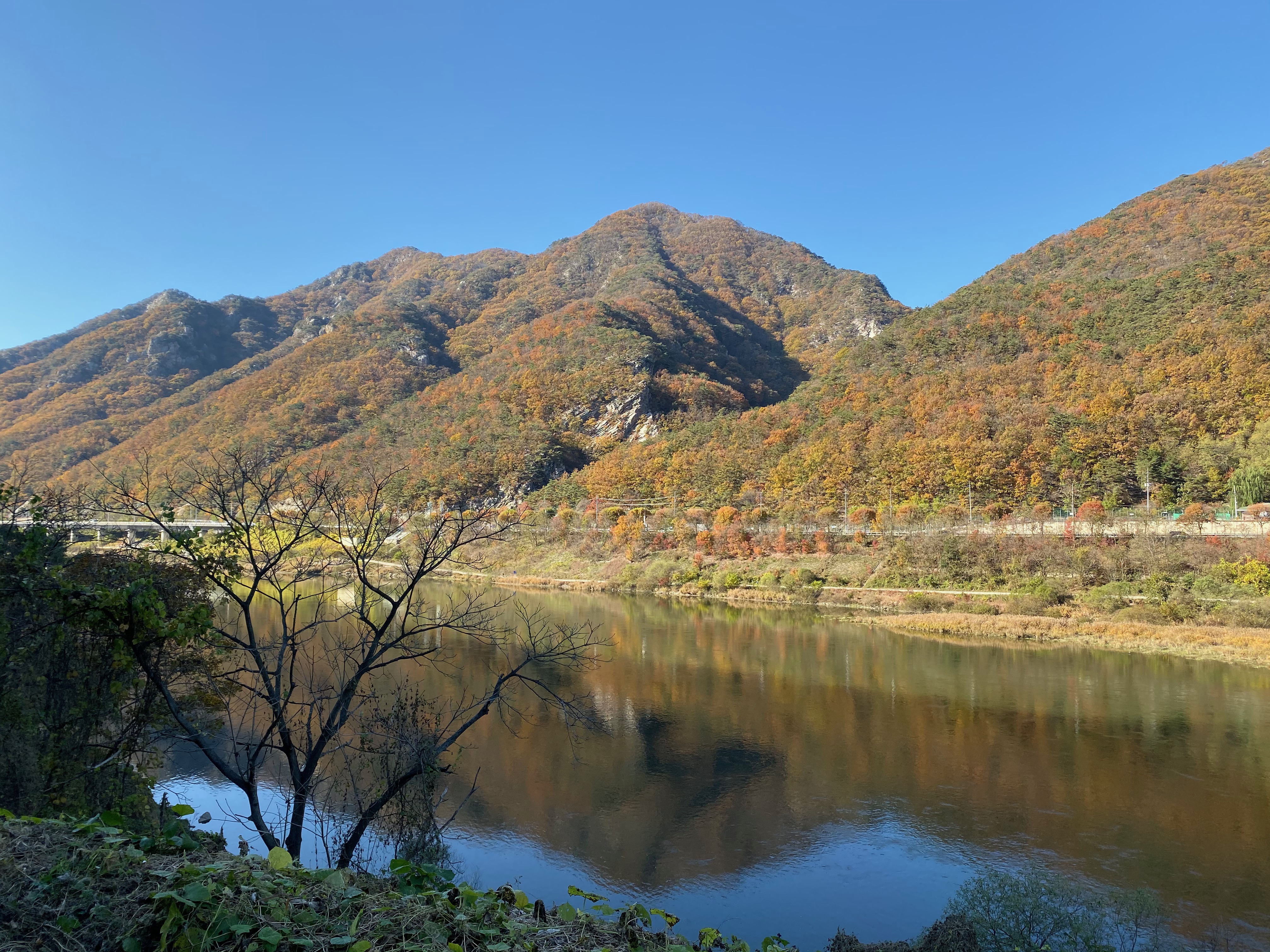
Coming out of the third tunnel, we were taken away by the beautiful scenery. The railway track hugged along a river which is decorated by endless mountain ranges on the opposite side of the river.  Parts of the mountain ranges displayed hues of red, constantly reminding us of the autumn season. Pedalling along the river, enjoying the gentle autumn breeze is a very tranquil affair. We were truly able to enjoy the moment, as it felt that we were the only people around the area. This stretch of the railway is the most scenic of the entire Railway Bike trail. This is the part that we make us feel coming all the way here, experiencing this unique activity is well worth the time invested.

9DE8846E-7DC2-42AC-95E3-49E80894238A

We were greeted by scenes of the river and mountain ranges coming out of the third tunnel

BD8DC0C8-D6F2-4748-8E34-E48CC96226A9

Taking a picture with the beautiful sceneries

FF78EA85-48F7-44F4-A167-8AE0E10410C4

It is very peaceful riding on this section of the track

8FA47D17-24EF-42F2-BDEF-F6D37DAD2DC1

The sceneries of river and mountains

41A99687-5EF4-4577-8CEB-140ADE955067

The mountains and river feels therapeutic

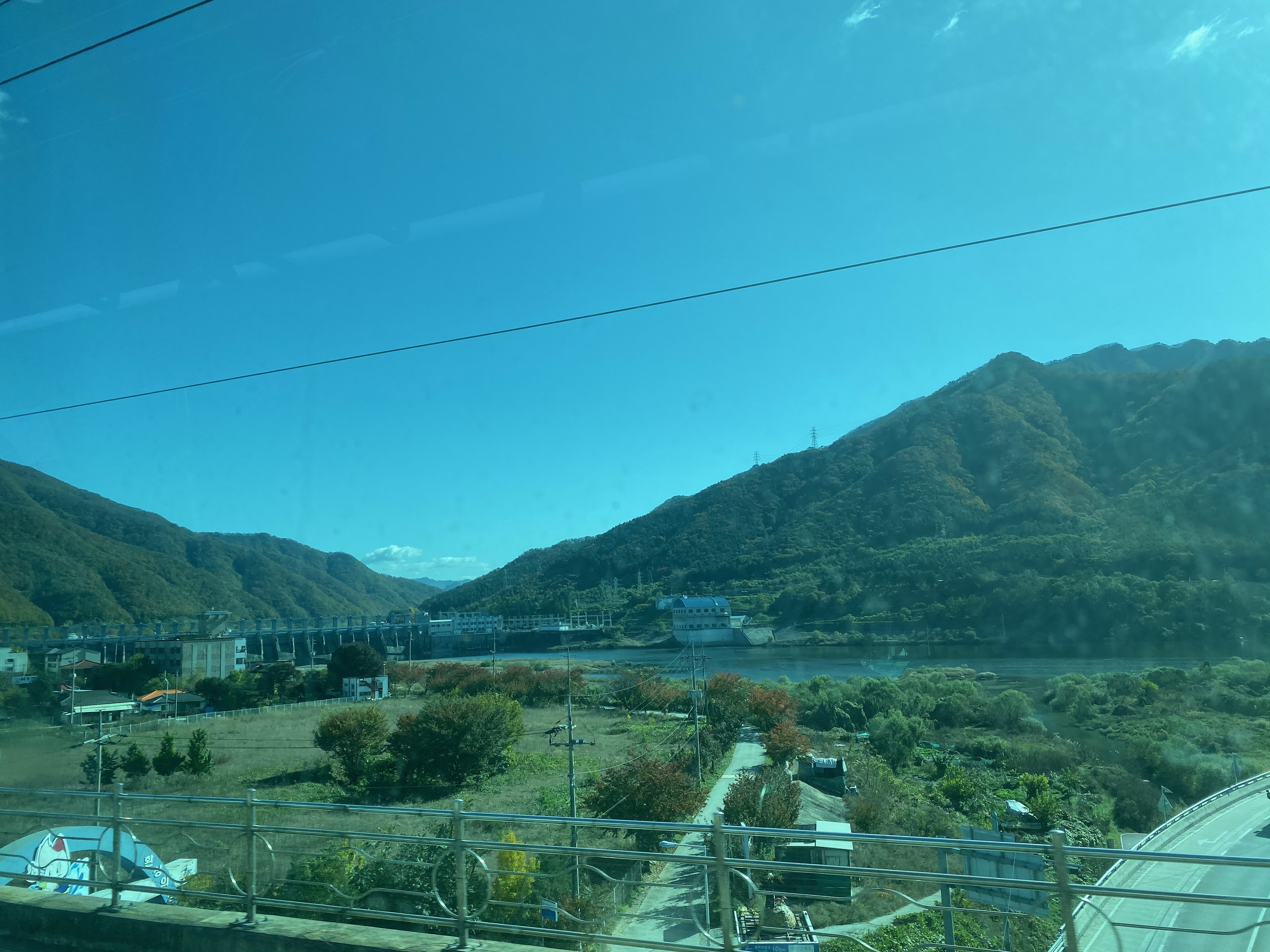
Another 15 mins of pedalling from the third tunnel, we arrived at our endpoint. There is a small rest area for visitors to grab some snacks while waiting for the rest of the group to arrive. My friends bought some Korean Street food, while they were enjoying their well-deserved snacks, I went around taking pictures of the river. One can never get enough of the picturesque view that was before us. Soon we were told to get onto a train that would bring us back to a nearby train station for a bus transfer back to where we started. There are several carriages on the train, one of which is an open carriage which was packed with visitors. We did not bother rushing for the open carriage and gotten ourselves some rather good spot – at the end of the train. We were still able to enjoy the scenic river views from where we stood. The train ride took around 15 mins where buses are already standing by to ferry visitors back to the railway park. We reached the railway park at around 3.20pm. We wasted no time and headed to the subway station and catch the next train to Nami Island.

744CC575-2C16-4D9B-9CB3-B18D62B1E73C

Taking a wefie on the suspension bridge that we had to cross to the bus stop

529E8FC5-1528-4D0F-B7A9-EF41A9D91D18_1_201_a

Red autumn leaves are everywhere

Nami Island

It is already 4pm when we arrived at Gapyeong Station, which is four stops away from Gangchon Railway Park. We approached the tourist information counter and checked where should we be taking the bus to Nami Island. We were informed by the staff that it would be cheaper and faster if we catch a cab to the ferry terminal. Indeed, we saved KRW2,000 by taking a cab to the ferry terminal. The cab ride took us only 5 mins to reach the ferry terminal. My friends and I headed straight to the ticketing counter and got ourselves the ferry ticket to Nami Island. The KRW13,000 cost includes return ferry journey and entrance to Nami Island. There weren’t many people at this time when we were queuing up for the ferry. We did not have to wait for too long for the next ferry to pull into the pier.

D4DFECA3-E3B8-4588-8B17-2A47708A1371

We arrived at Gapyeong Station

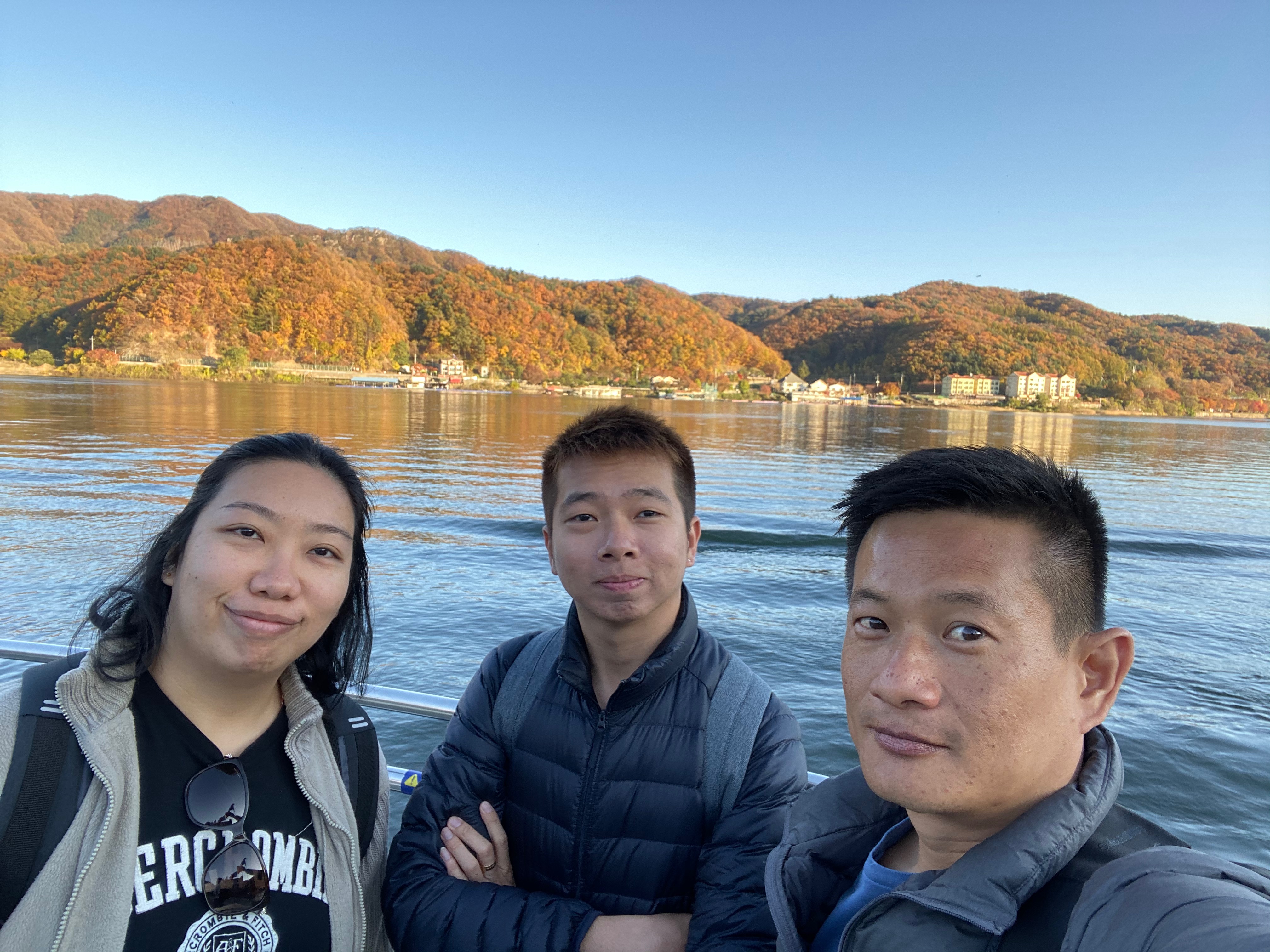
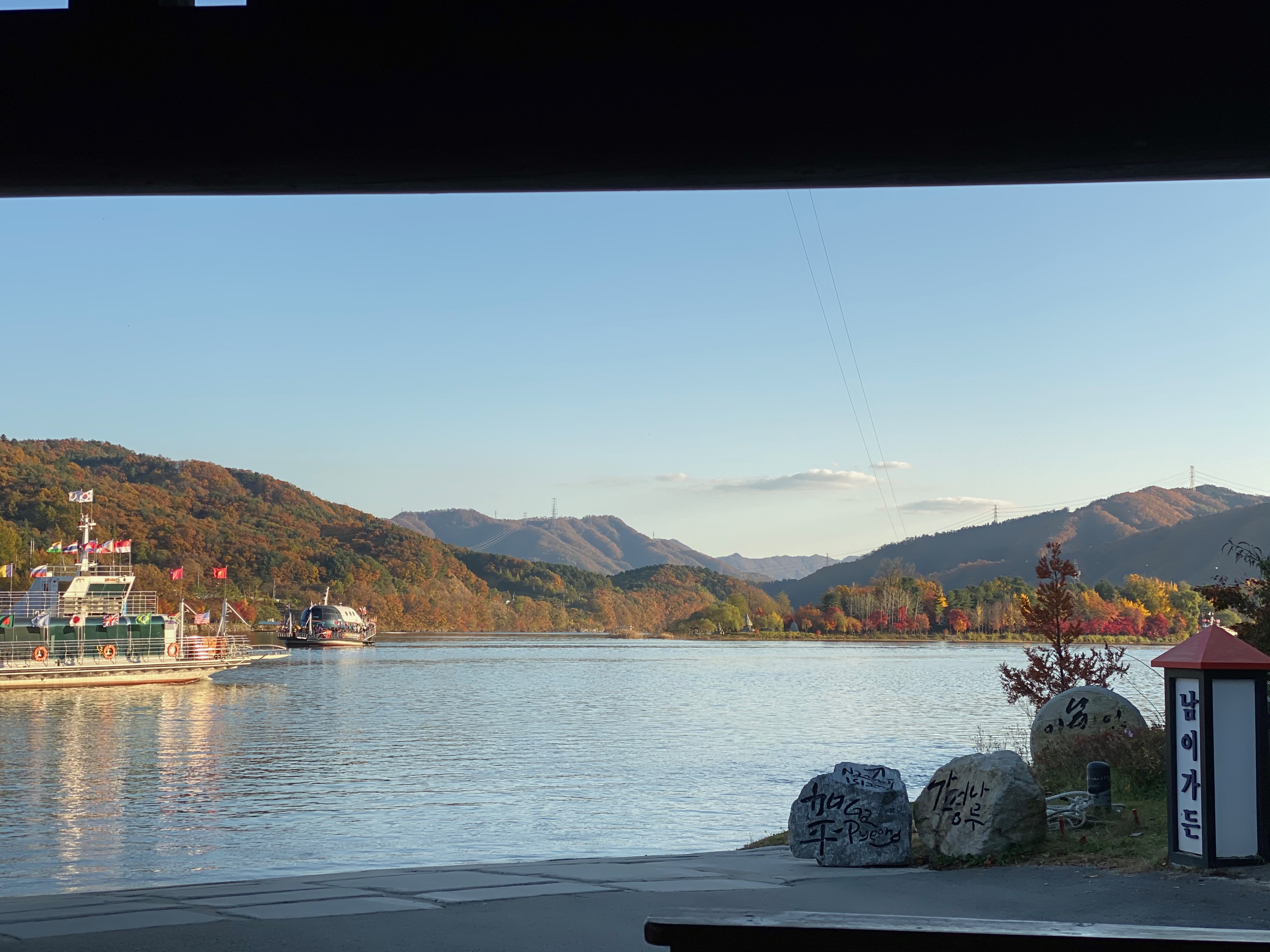
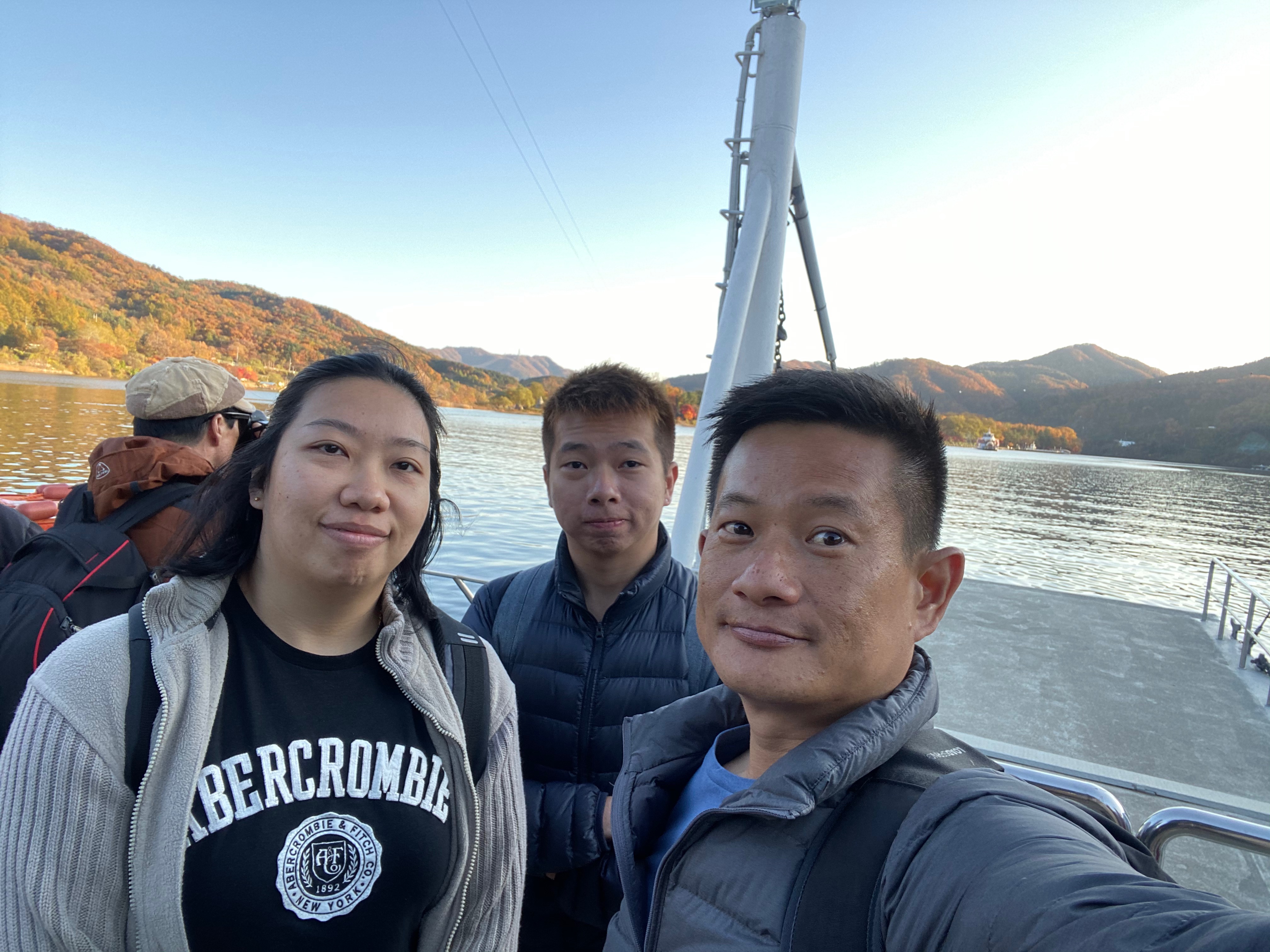
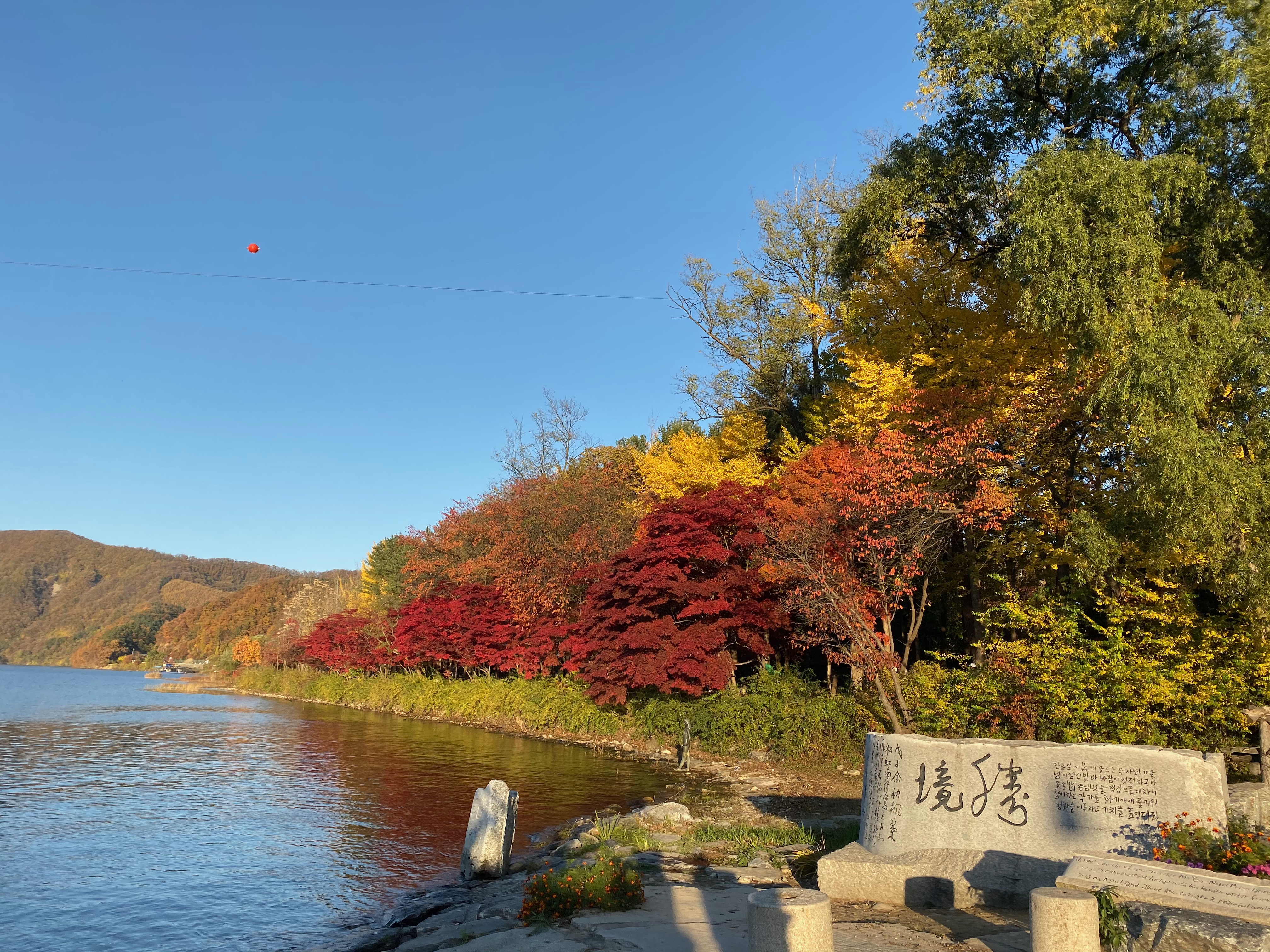
As the 5 min ride ferry approaches Nami Island, we can see the numerous trees with yellow and red leaves lined up along the coast of Nami Island. There are numerous paths on Nami Island that visitors can use to explore the crescent-shaped Nami Island, each of these paths are laid with different trees, which is best viewed in Autumn season. Before we stepped onto Nami Island, I had planned a specific path for us to take so we can cover most of the island. However as we stepped off the ferry, all the plans were thrown away. We were immediately attracted by a row of trees with the red maple leaves at the right of the pier on Nami Island. Lining up by the coast of the island with the river as the backdrop, my friends and I were captivated by the beautiful autumn scenery on this part of the island, so much so that we stayed here for quite some time taking pictures with the trees as though this is the only spot on Nami Island that is picture-worthy. After some time, we realised we had overextended our stay as the sun is setting, we continued on the path further into the island.

E024104E-BD2F-4D8D-BBA8-18A81D21E189

We arrived at Nami Island after 5 mins ride on the ferry

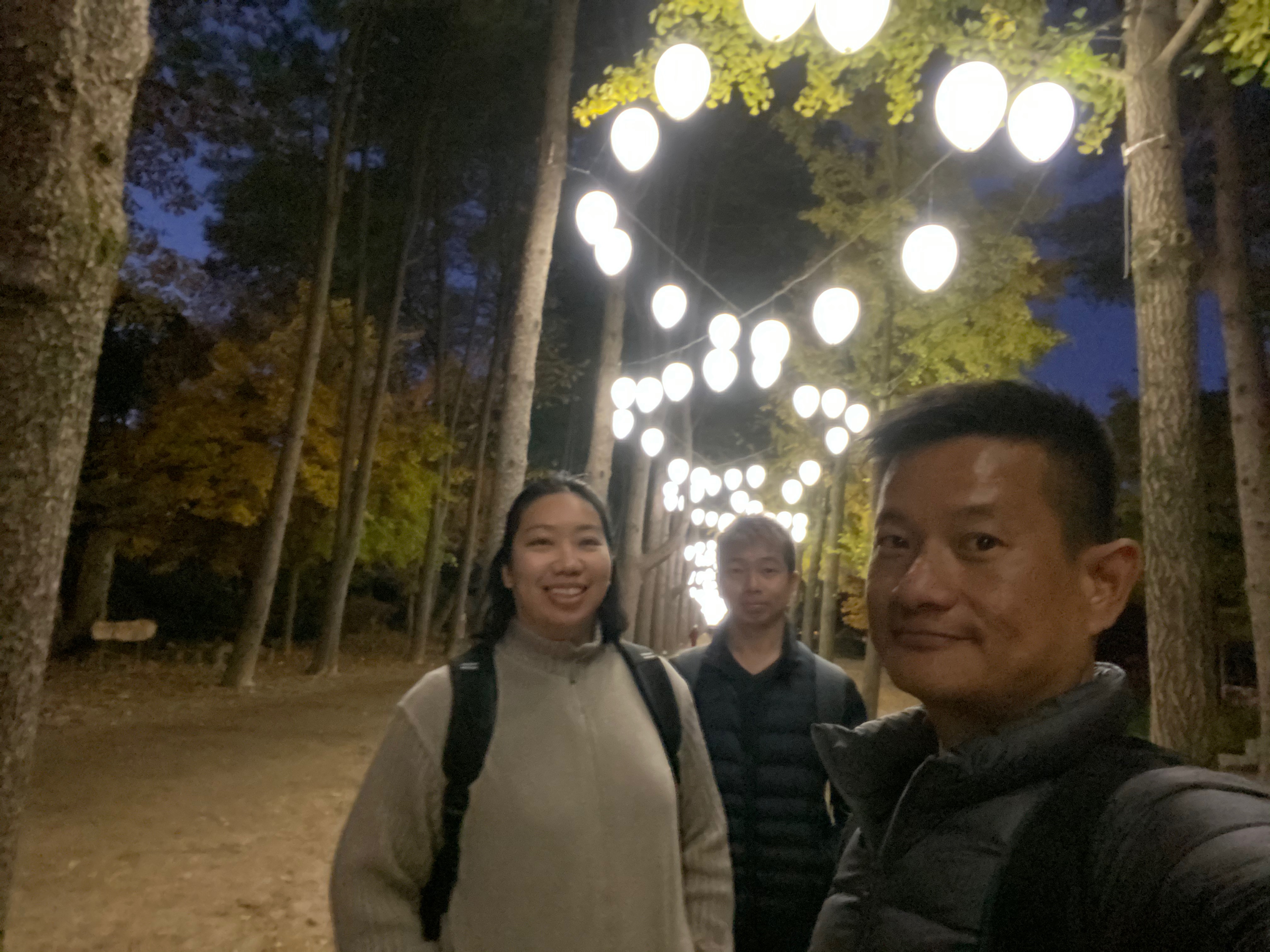
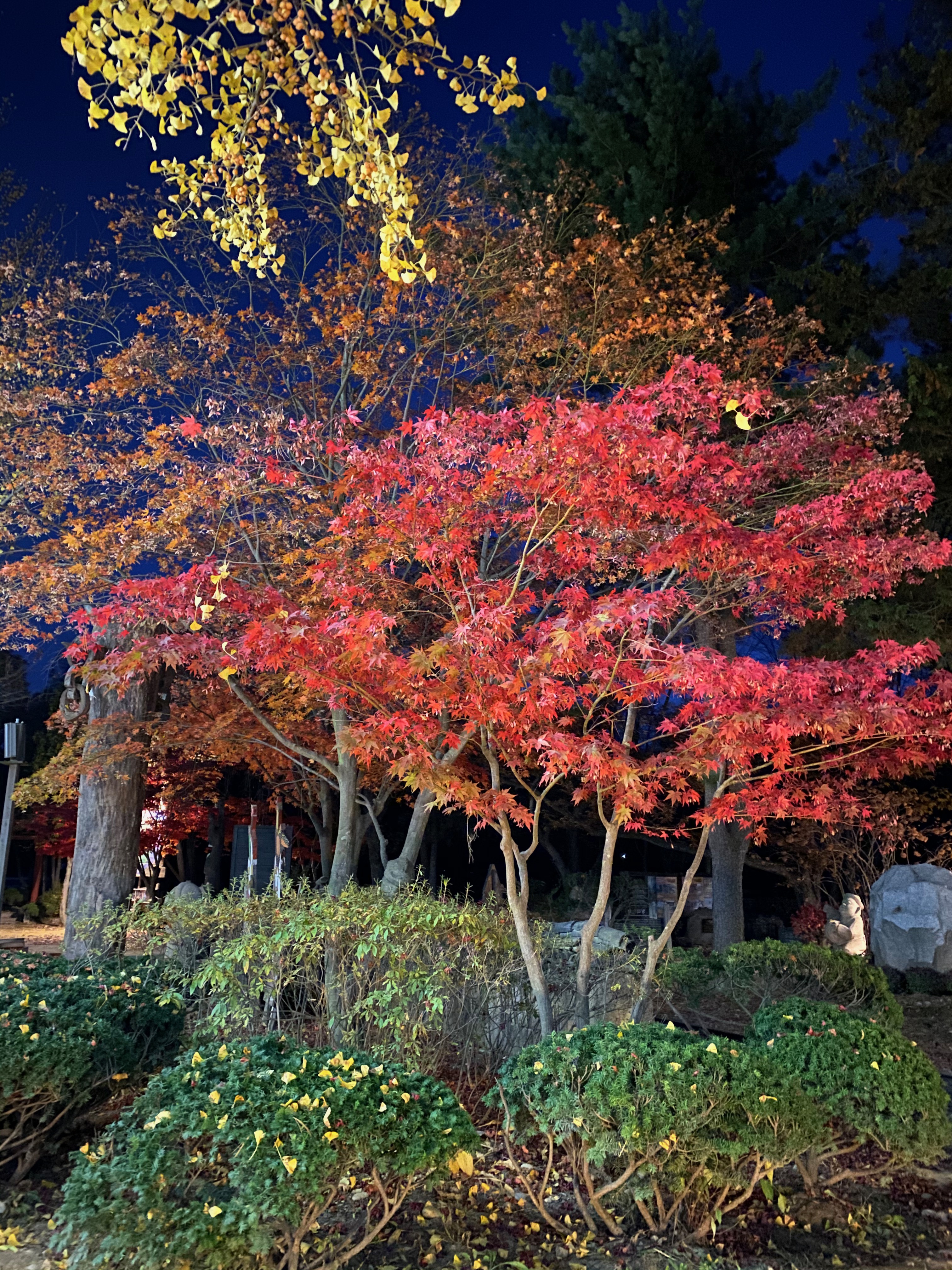
As we walked further into Nami Island, we spotted a small stream with a wooden bridge built across it. This is another great picture spot with the yellow, red and green trees in the background. After some photoshoots, we hurried to the other parts of Nami Island, hoping to cover more of the island before it gets dark. As we were walking along the path, we spotted more trees covered in yellow and orange trees. We were reminded of the autumn season in every corner we turned on Nami Island, these coloured leaves make Nami Island a great spot to visit during autumn. Soon we came to a forest of tall pine trees, entirely covered with red leaves. We attempted to take pictures of these trees, but the picture we took does not do it justice. The forest looks better on ground zero than in photos.

3F24721E-6FFD-462A-ACE7-DD4FE34D9AF6

We found this to be a great spot for photo taking on Nami Island

94ABDDFE-B717-4F57-8A1F-D8F6DD79A9D3

Taking a wefie with the tall pine trees

F77B2BAE-4A6C-4B98-A646-9446B345381B

All the leaves had turned red

C9705EC7-2DDE-46D3-BB4A-1E97DE89B776

Pine tree forest on Nami Island

The sun has set and it was getting dark. We figured we will not be able to enjoy the picturesque autumn sceneries on Nami Island compared when there is daylight. We started to make our way back to the pier for our ferry ride back to the mainland. Along the way, we spotted a small gift shop selling souvenirs in the middle of nowhere. After getting some souvenirs, we continued our walk back to the pier and left Nami Island. Reaching the mainland, we decided to settle our dinner here before taking the 2-hour train ride back to Seoul. There are numerous restaurants around the pier on the mainland. As we were a little hungry, we settled in one of the restaurants. The cost of food is not as expensive as we thought it would be, and yet the food is very delicious. After dinner, we took a cab and headed to the train station where we took our 2-hour train ride back to Seoul. We headed back to the hotel to change up as we kind of stink after having the Korean BBQ dinner.

8AC1C269-CA13-4595-844A-09965E22C61E

One last wefie before we leave Nami Island

37BB2701-8C26-4980-B487-51EB412EE599

One last shot of Nami Island

59B1C587-E36B-4AA5-BC92-C4C95A8BEA62

Nami Island at night taken from the ferry

6A74ABFF-019F-422F-948C-08EA8980AFD8

We settled for our dinner before heading back to Seoul

Cheonggyecheon Stream

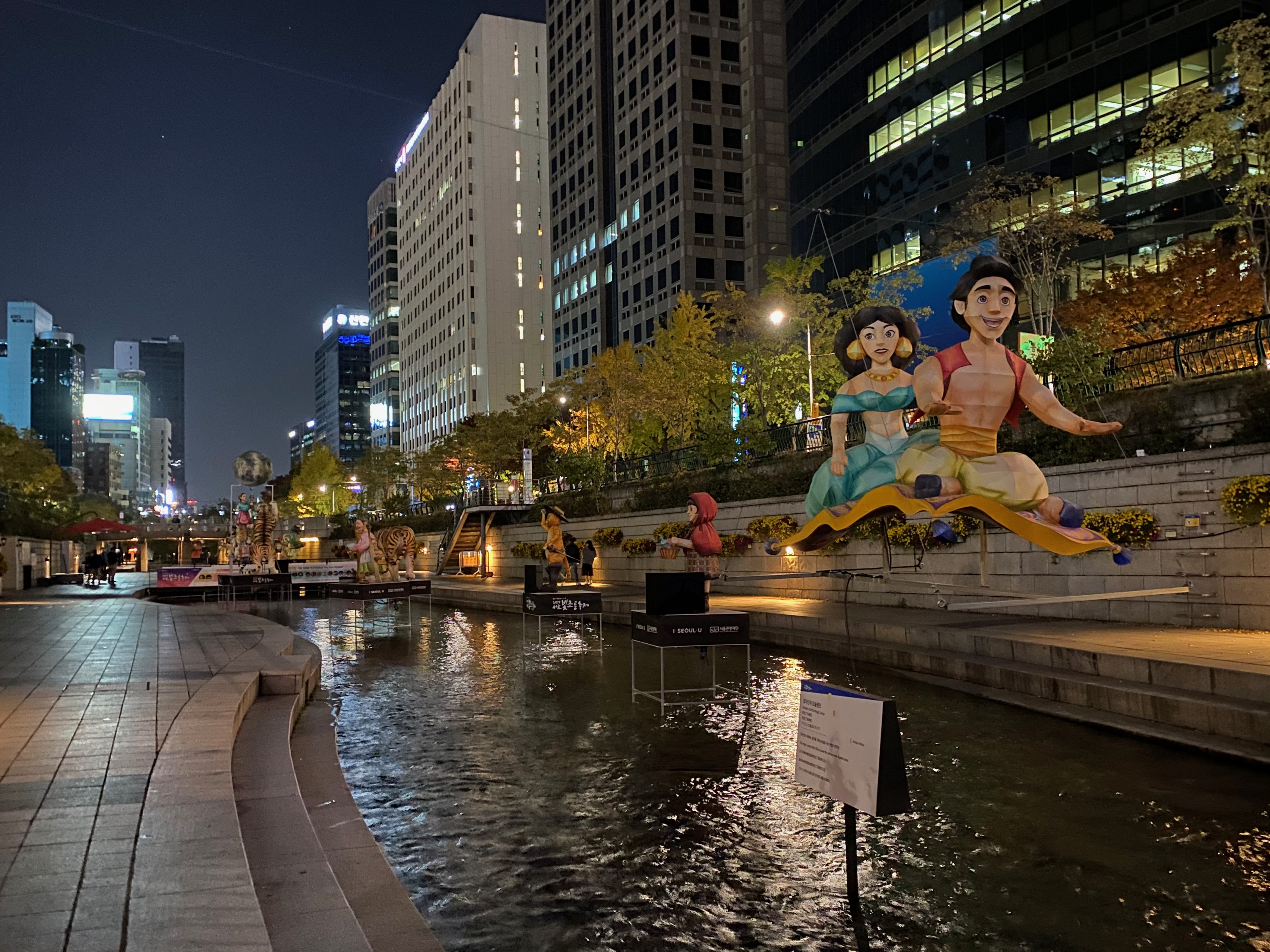
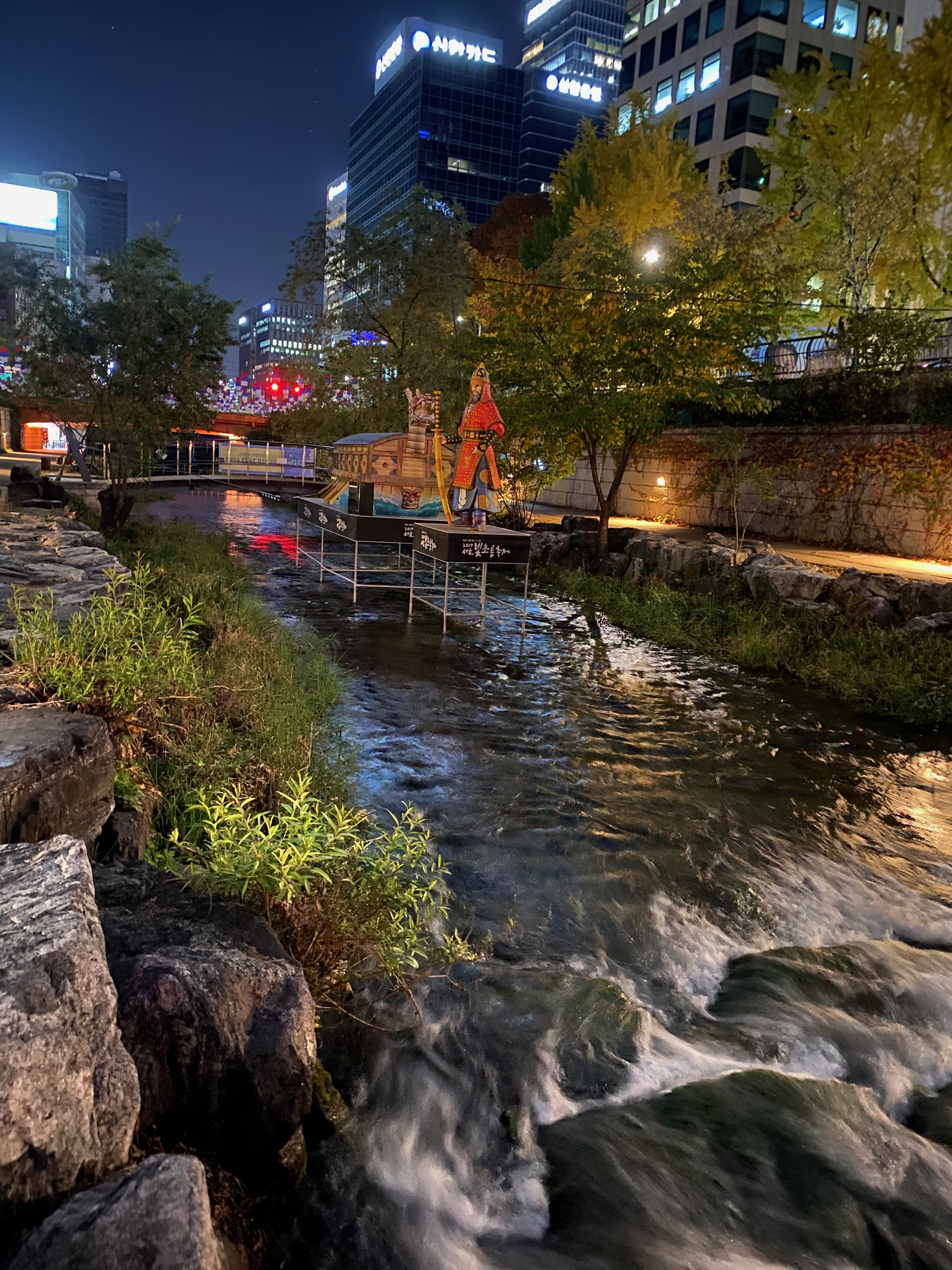
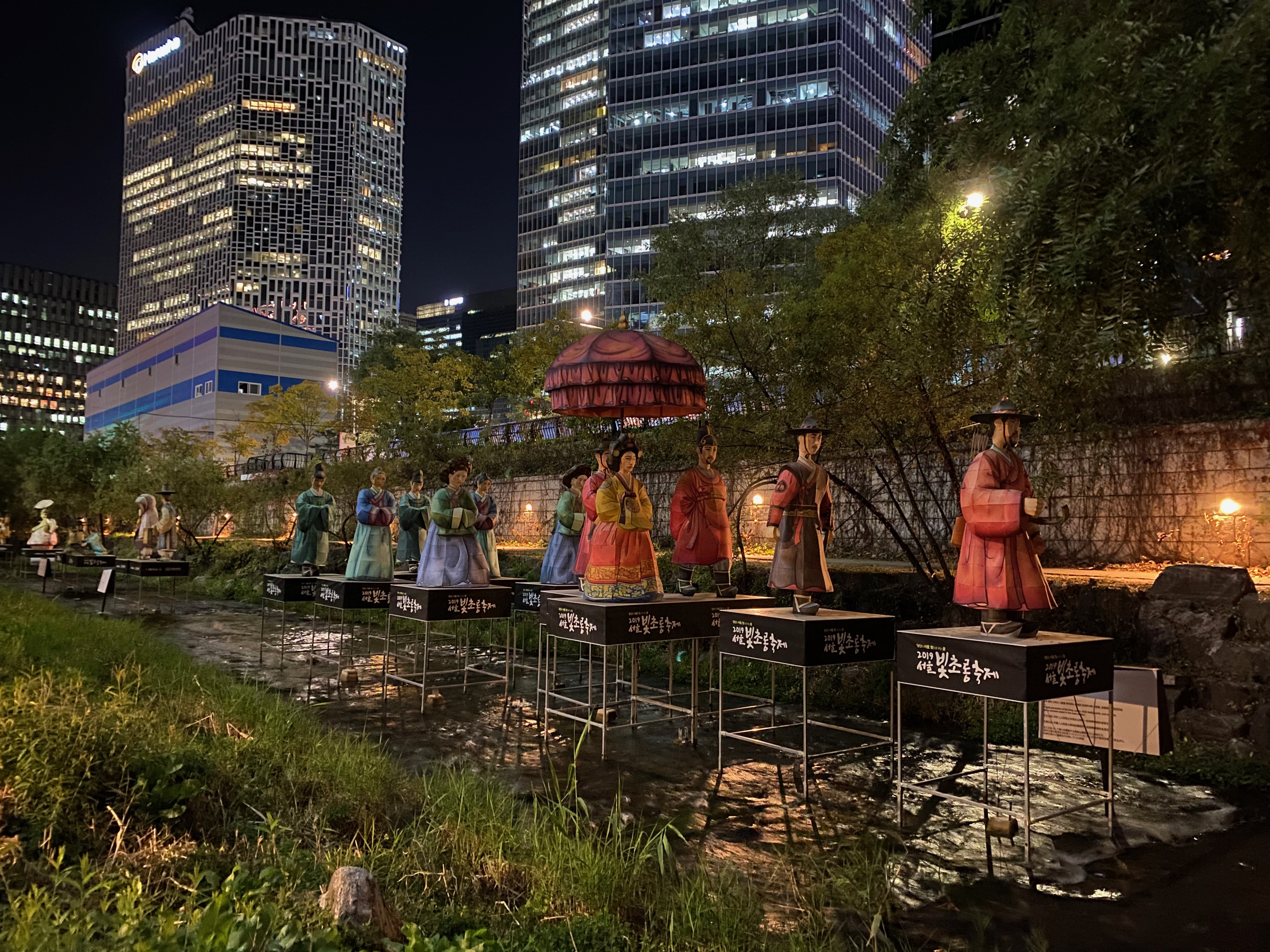
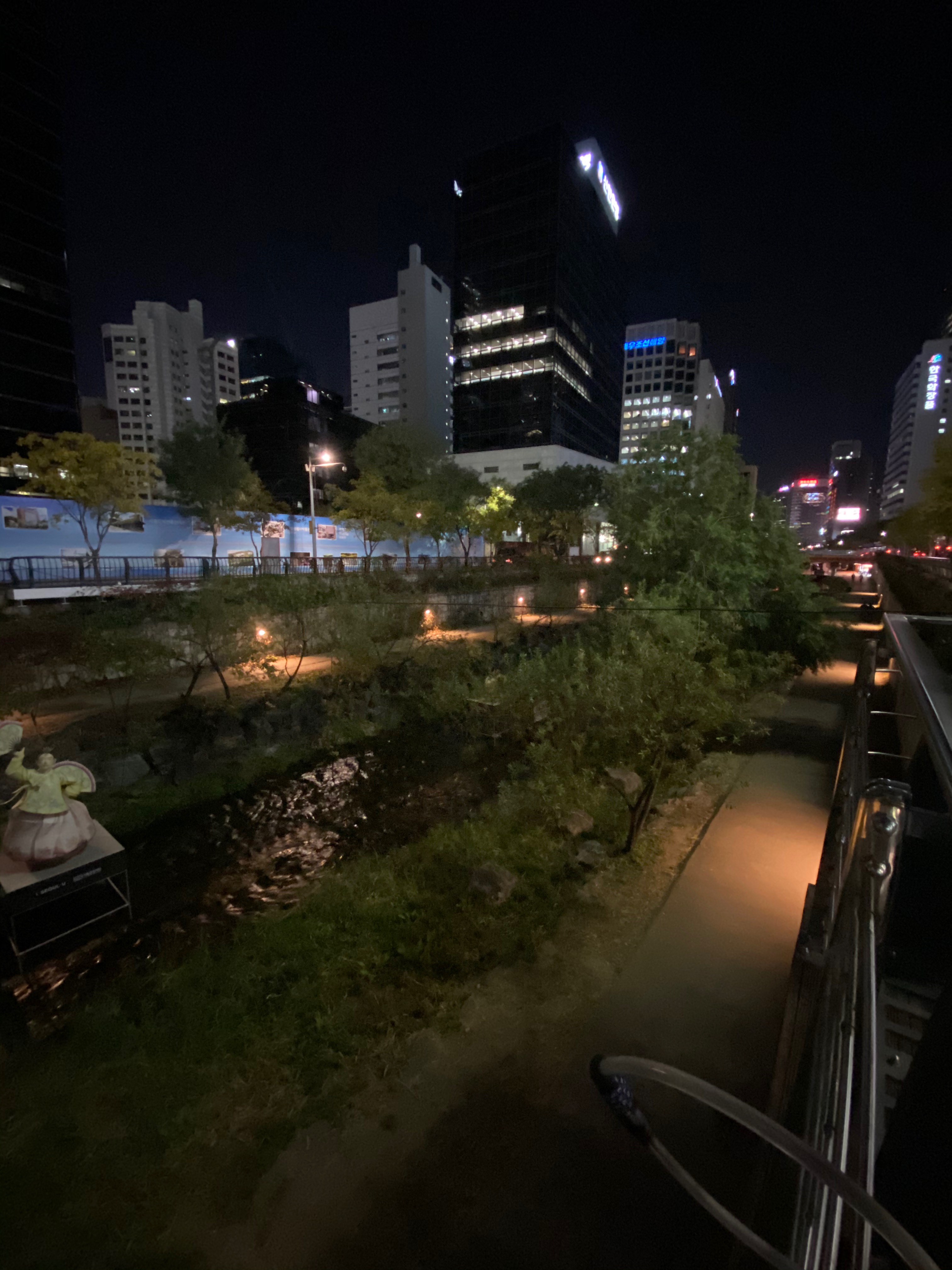
One of my friends wanted to get some facial masks in Myeongdong, we headed out again for a late-night shopping at Myeongdong. Before we head to Myeongdong, we stopped by Cheonggyecheon Stream. The last time my friend and I came to Seoul, we mere overlooked Cheonggyecheon Stream and did not really stroll along the stream. Cheonggyecheon Stream is a 10km long stream in downtown Seoul. The Korean government spent millions to revitalise the once smelly and dirty sewage stream. These days, Cheonggyecheon Stream is a popular recreational space for locals and visitors to stroll along. We were in time for the annual lantern festival along Cheonggyecheon Stream when we visited, which takes place every year in November period. Visitors would be able to see Cheonggyecheon Stream lighted up with figurine lanterns installed in the middle the stream. There are lanterns from the Korean and Chinese folklore as well as some from Disney animated movies such as Aladdin, Peter Pan and Lion King to name a few. However, it was a shame that the lanterns were not lighted up at the time of our visit, we can only see these lanterns from the street lights. My friends and I strolled along Cheonggyecheon Stream for around 10 mins before calling it quits and headed to Myeongdong.

D27D9396-CD01-4EA9-B83E-F5A4EC96E520

Cheonggyecheon Stream Lantern Festival

CCA0CD65-EFB5-4D43-81B9-7D1C96C86E4E

Taking wefie at Cheonggyecheon Stream

AFD604F9-2DC6-4676-A8B8-811110B52D56

Cheonggyecheon Stream at night

55FDCB13-982C-4866-A84D-3923F15FA024

Some of the lanterns on Cheonggyecheon Stream

8FB427AD-C930-4ED9-ABBD-5F2FF41CF3D4

Korean folklore lanterns on Cheonggyecheon Stream

B4A41E25-97EC-40BD-B138-84AE389B86D9

Korean folklore lanterns on Cheonggyecheon Stream

A3C83715-9ED9-4D45-B504-6B9A49D9D52E

Taking a wefie at Cheonggyecheon Stream

15F463A3-6CFB-4365-A5D7-811C8002390D

Cheonggyecheon Stream at night

737C686E-AC63-44D6-8A80-AB157C9AB282

Cheonggyecheon Stream at night

778C1712-FD44-4A4E-8781-88966FA60218

We spotted this building near Cheonggyecheon Stream

Back to Myeongdong

Myeongdong is a mere two subway stops from Cheonggyecheon Stream. The vibe in Myeongdong is very different today being a weekday compared to weekends. There were significantly lesser people and most of the roadside stalls selling snacks were missing. Most of the shops seem to close early during weekdays at around 11pm whereas shops seem to open till midnight on weekends. We did not stay at Myeongdong for too long as my friend already got what she came here to get plus the fact that most of the shops are closed anyway. We walked around a little and headed back to the hotel. As our hotel is located opposite the Dongdaemun shopping district, we headed to check out the shopping in Dongdaemun, which was marketed as a place for late-night shopping with shops open till 5am. We found the price of the thing sold in the Dongdaemun area seem to be higher, and the face mask shops did not give as generous discounts compared to those found in Myeongdong. We headed back to the hotel to rest after 5 mins of walking around Dongdaemun area as we found nothing much to buy.

93A0CCA2-49C3-4B50-A364-A242977410DE

This is one of the iconic building in Seoul

DB29E28D-7D4A-4435-B46F-C86DEA2D56BD

Dongdaemun late night shopping district

8B2D22D2-C5D5-4A3C-8B76-3B87DA91C6D8

Dongdaemun late night shopping district

Jeju/Busan/Seoul Day 9 (3 Nov 19) – From Namdaemun to Gyeonggi-do: The Morning Market and The Tranquil Night Stroll in Suwon

Our plan today is to visit Suwon and walked along the Hwaseong Fortress in Suwon at night. This is something that my friend and I did three years ago when we came to South Korea. We liked the experience and found strolling along the wall at night to be quite enjoyable. The plan is to visit the Hwaseong Haengung before sunset and head out to walk on the wall in the evening.

Walking around Namdaemun Market 

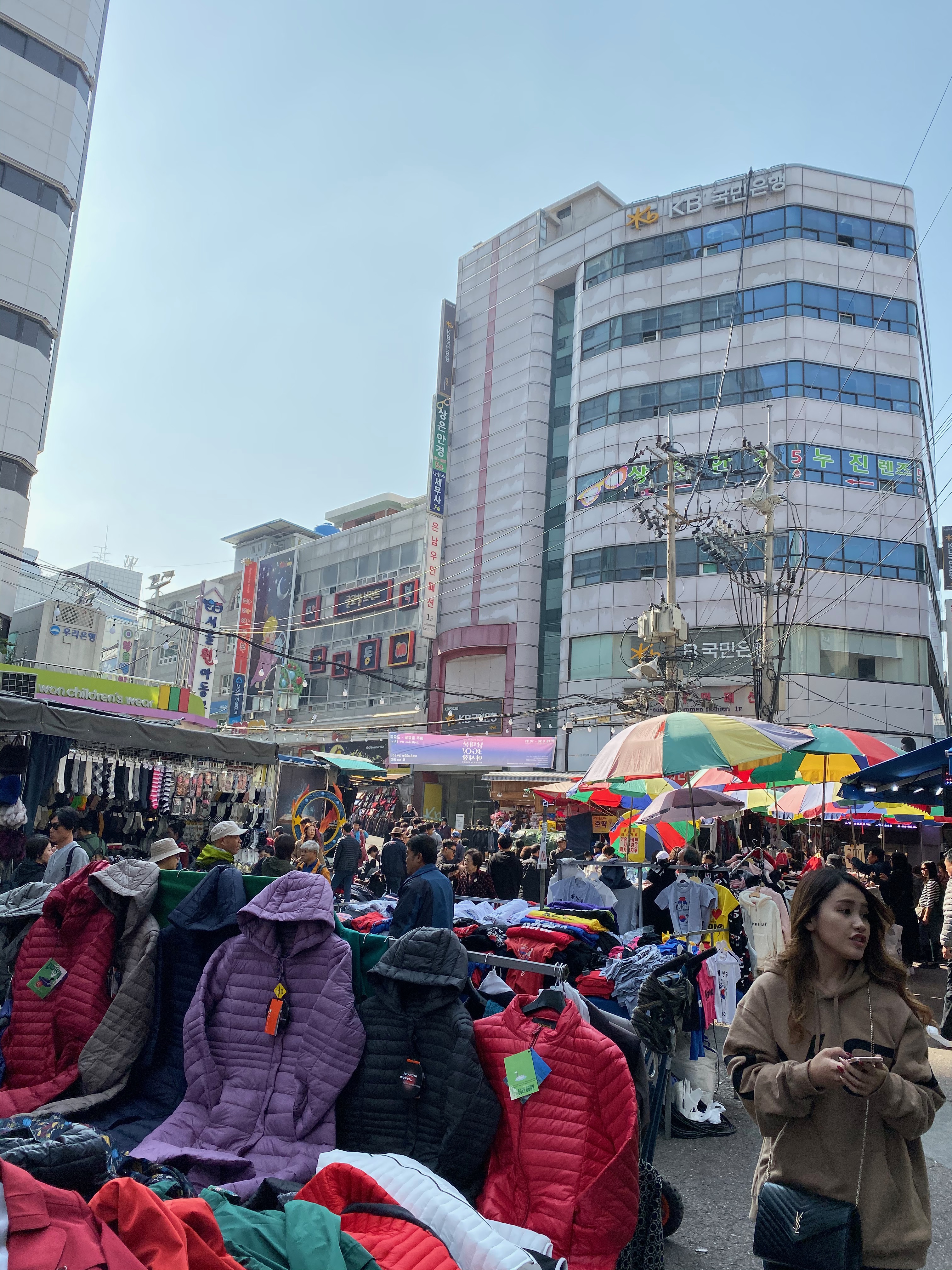
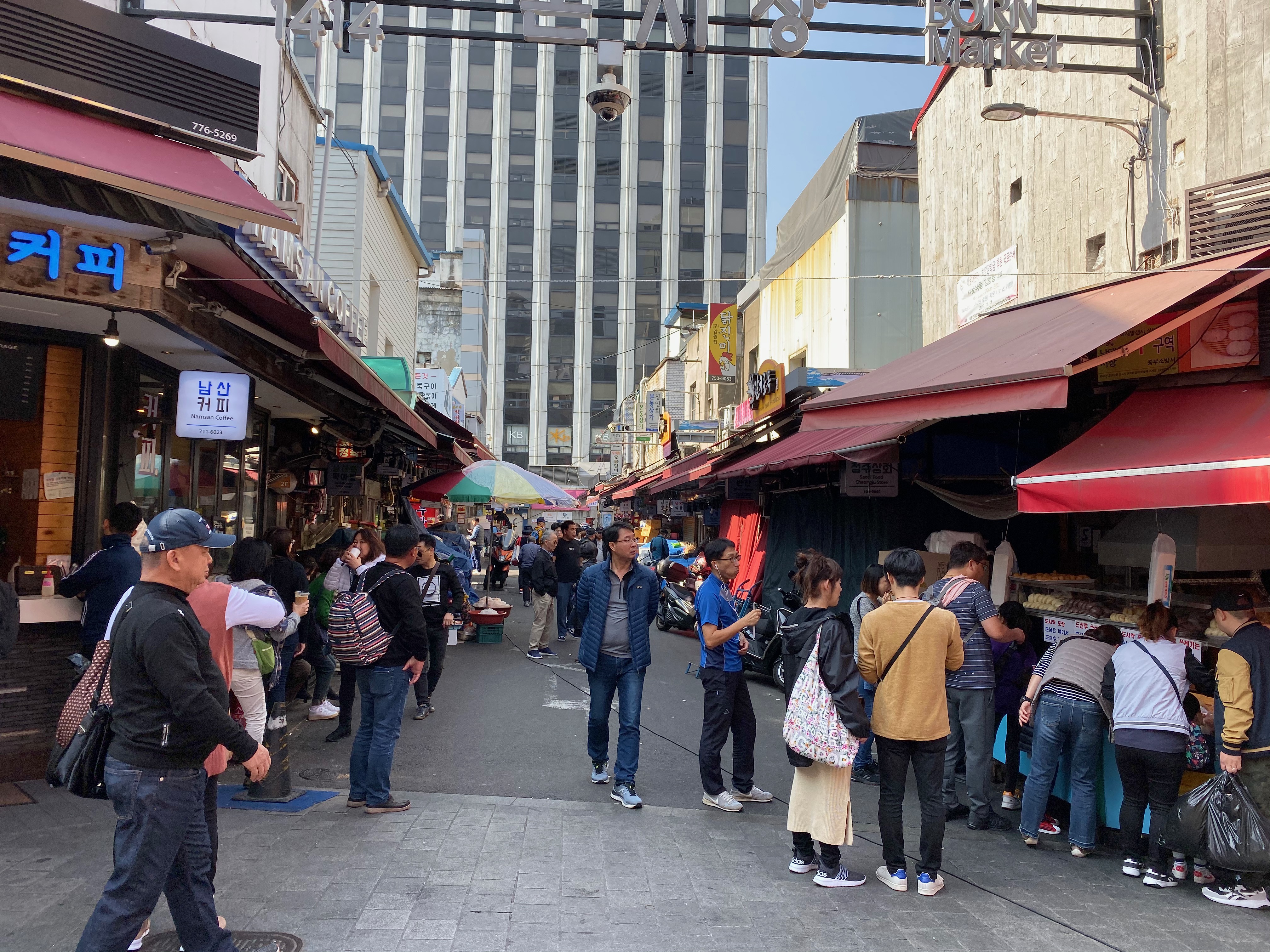
As we still have some time today, we stopped by Namdaemun Market which we did not have the time to visit the last time we came to Seoul. We make it a point to plan it into our itinerary during this trip to South Korea. We heard that Namdaemun Market is a great place to shop, with lots of things to buy and are generally cheaper compared to Dongdaemun or Myeongdong. Arriving at Namdaemun Station, we followed the signs in the station to get to Namdaemun Market which puts us right in front of the market. The large Namdaemun Market is an open-air market that seems to branch out in all the roads in the area. There are hundreds of stalls here, spreading from the shops on the sides of the road and even the centre of the road. It seems that the roads are closed to traffic to allow stalls and visitors are safe to stroll on these roads. The shops on the side of the roads sell mostly souvenirs and Korean ginseng, while those in the centre of the road sells a variety of items ranging from clothing to souvenirs and even pots and pans. The whole market feels disorganised with stalls and shops randomly set up. We walked around a little and due to the change in season from autumn to winter, most of the clothing on sale at Namdaemun Market are mainly winter wear. We ended up merely browsing through the market did not find anything suitable to buy as the items on sale are not suitable for us to bring home plus we have doubts about the authenticity of the branded clothing on sale. After walking around for a little, we felt a little bored at Namdaemun Market and left the market.

61BE60A9-4101-4F66-AD76-624D1FE3E98C

Namdaemun Market is full of locals and tourists
BFDCBB09-1D4A-4B5D-B108-235A8B6093A6

Namdaemun Market has both shops and stalls

Namdaemun Gate – Southern Gate of Seoul

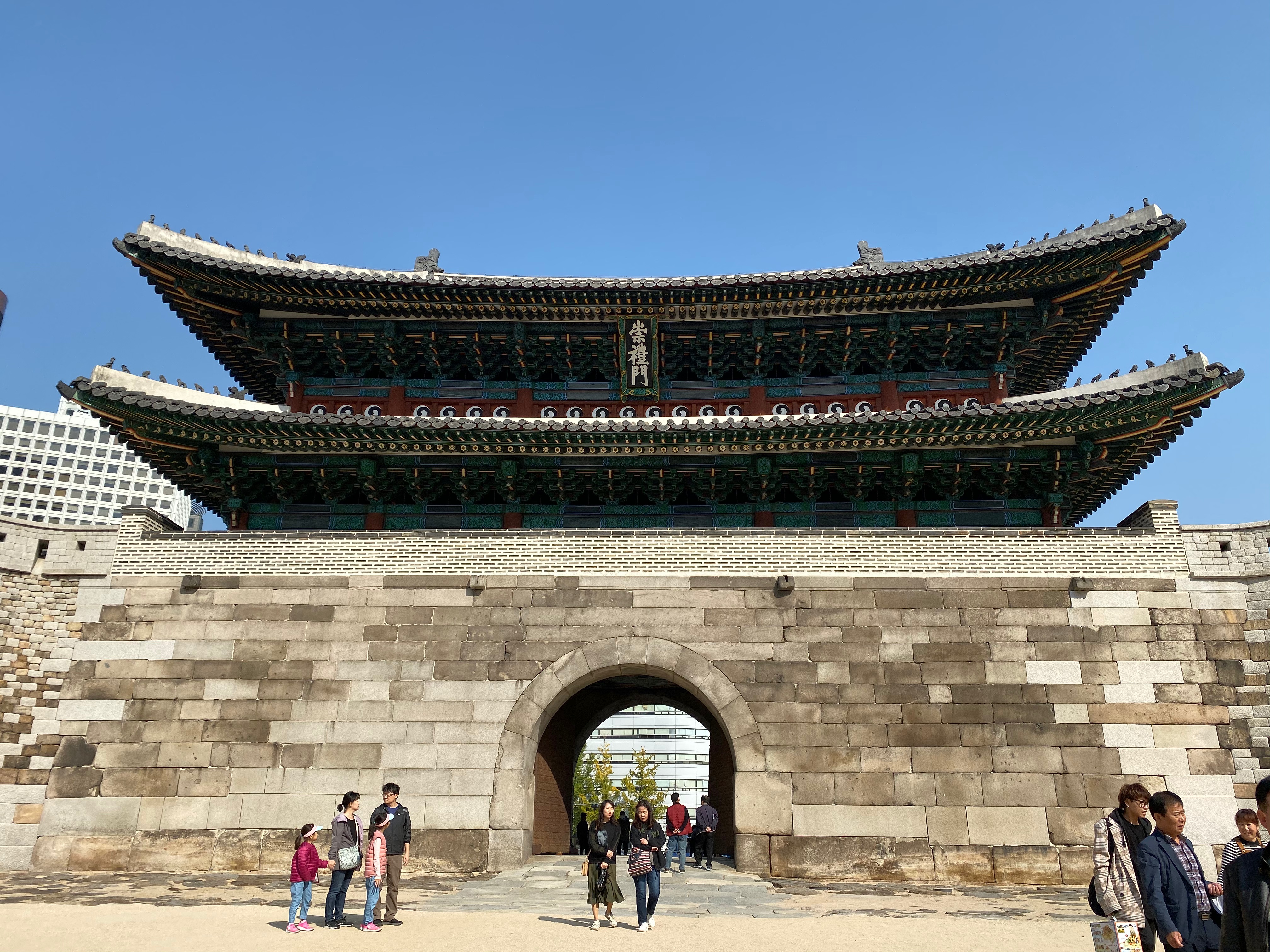
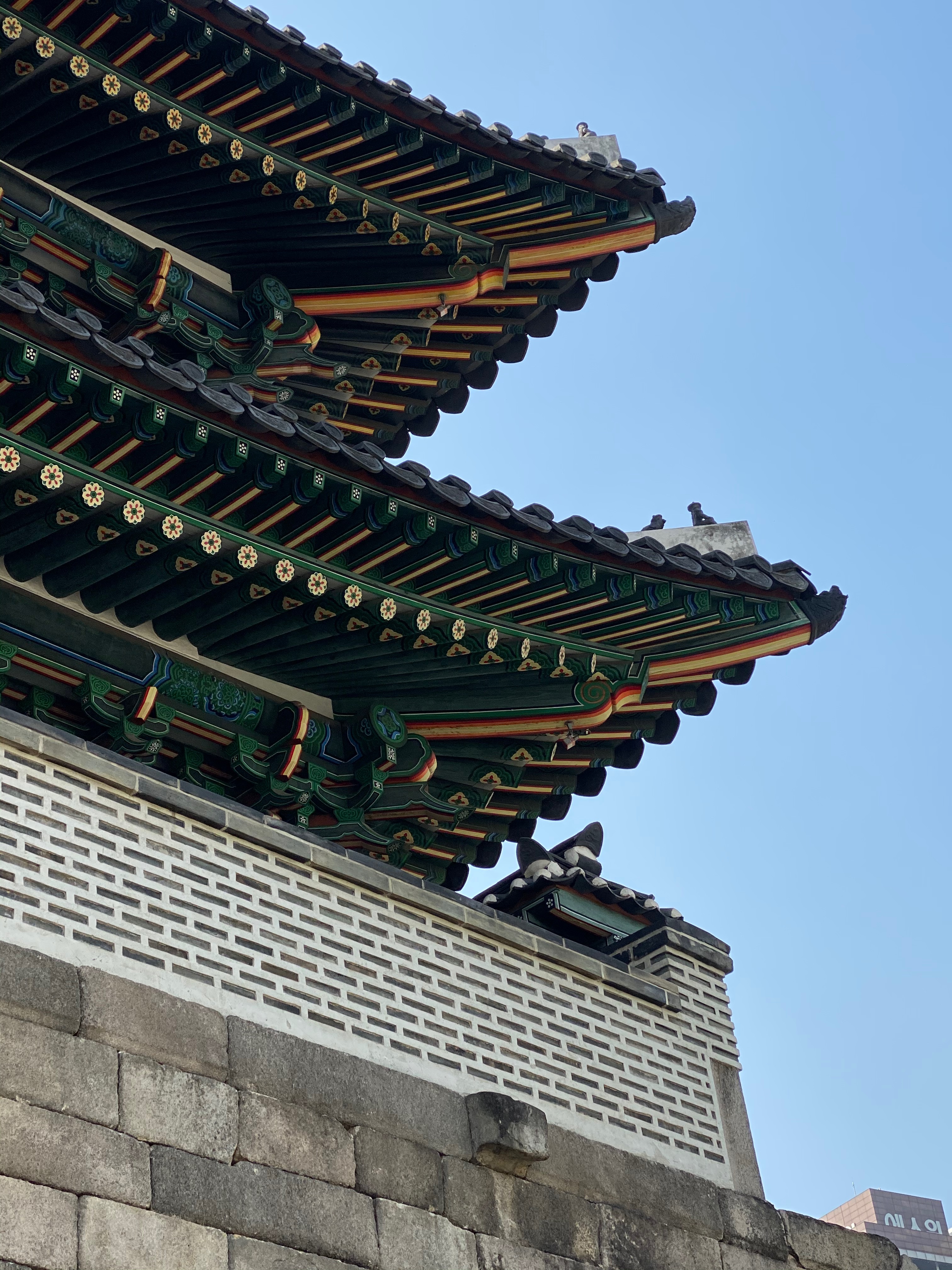
Namdaemun Gate, one of the eight gates along with the ancient fortress of Seoul in Joseon Dynasty, is only 5 mins walk from Namdaemun Market. Since we are in the vicinity, we decided to pop by Namdaemun Gate to take a look. There are signs along the road that leads visitors to Namdaemun Gate, which is the largest of the eight stone gates in Seoul. The double-tiered roof Namdaemun Gate was built in 1398 and was restored in 2013 following the infamous arson of the gate in 2008. The gate sits majestically in the southern part of Seoul, relinquishing its role from the main gate that welcomes the King’s return to the city in the ancient days to serving as a symbol of the Korean history. Visitors can get up close to Namdaemun Gate, walking through the gates like how previous Kings has done. However, the top levels of the gate are closed to visitors. Going up close to Namdaemun Gate, we can see the intricacies in the design of Namdaemun Gate, the top tiers of the gate are made of wood, brightly painted in traditional colours of green and mahogany found in Korean Palaces. There are some stone carvings of animals sitting on each of the two roofs of Namdaemun Gate, visible from the arch. We were in time for the change of guard ceremony at the time of our visit when we saw three Koreans dressed up in ancient guard uniforms crossing the road and heading towards Namdaemun Gate. As soon as they arrived, these guards matched towards the gate waiting for their colleagues to take over guarding of the gate. We stayed a little, wanting to watch the ceremony. But later learnt that the guards are not stationed at Namdaemun Gate, unlike those in Palaces such as Gyeongbokgung or Deoksugung. Moreover, the change of guard ceremony feels more like a show to entertain visitors with no commentaries, we decided not to wait for the change of guard ceremony and left for Suwon.

32D2FA4E-6AC9-41B2-A2F8-FAD077A5BA87

The majestic Namdaemun Gate

86B9BE1E-9B93-4E73-B73E-95AD44BE45F8

Namdaemun Gate up close

535677EB-D35C-4EFF-9893-46FC5A123A2B

Taking a wefie with Namdaemun Gate

Suwon Market – A Surprise Find

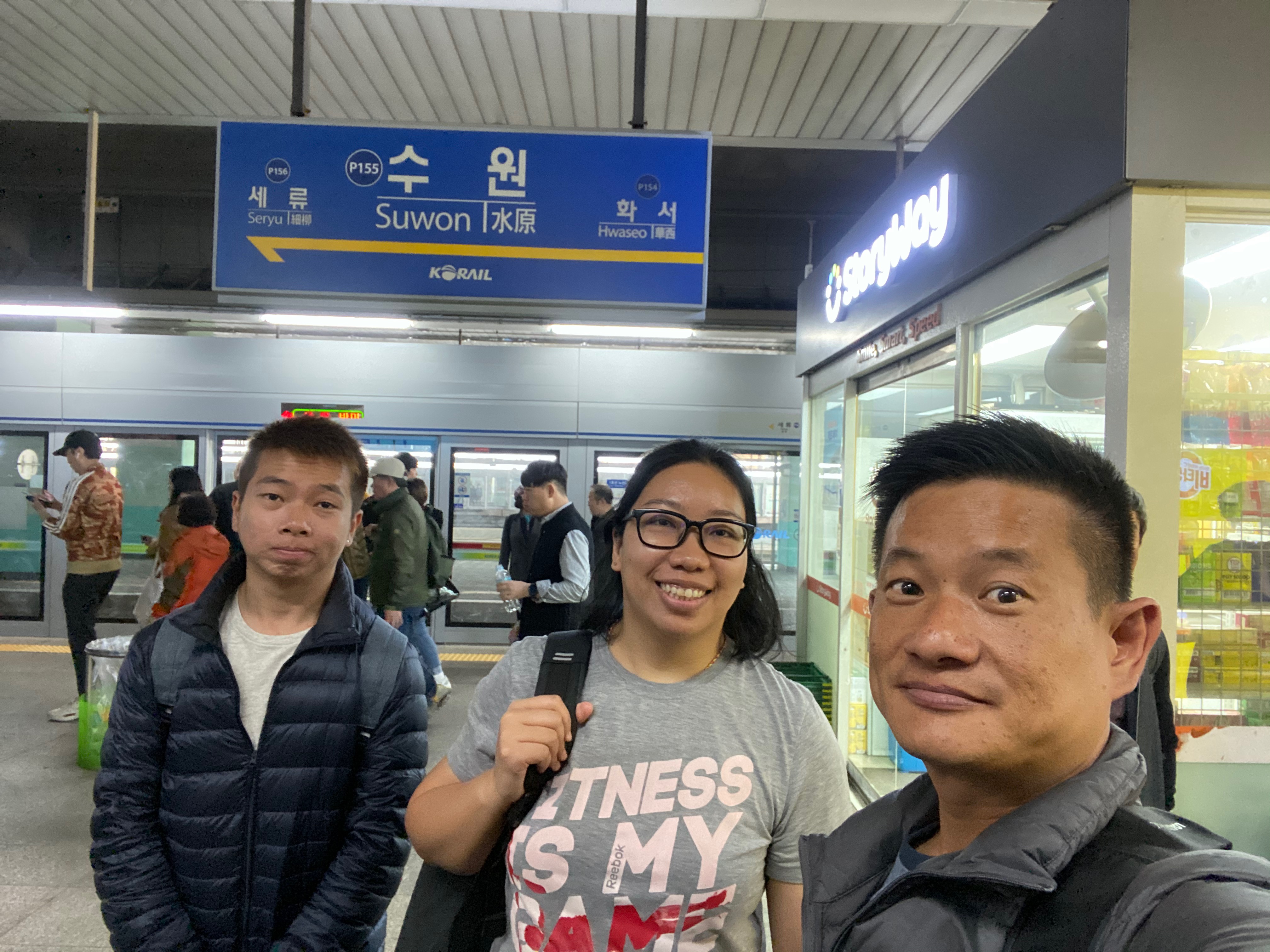
To get to Suwon, we took the 1½ hr subway ride from Seoul Station to Suwon Station. Suwon is in a neighbouring Gyeonggi province south of Seoul. Suwon Station is bustling with life with locals going about their daily life. As we felt a little hungry, we wanted to get lunch before we head over to Hwaseong Haenggung. My friend and I was here three years ago and stumbled into a night market and some shops on either side of the night market, we knew we might find some food there. We crossed the road came to the street where we remembered where the night market was. We were glad that the market is open in the day and the street is very lively with mostly young Koreans hanging out in this area. There are shops on either side of the street with some of them being restaurants. In the centre of the street, there are some roadside stalls set up selling street food. We walked around to check what our lunch options are and ended up in a street that sells fresh produces from meat to fruits and even seafood. Looks like we have stumbled into a local market. As we saw no restaurants are in sight, we headed back towards the street opposite Suwon Station and settled for KFC instead. There were simply too many restaurants here.
F9D6CF56-C3C0-4D3A-A65B-7C8D9DA801C1

We arrived at Suwon Station after the 1½ hr ride on the subway from Seoul

Hwaseong Haenggung – The Temporary Palace

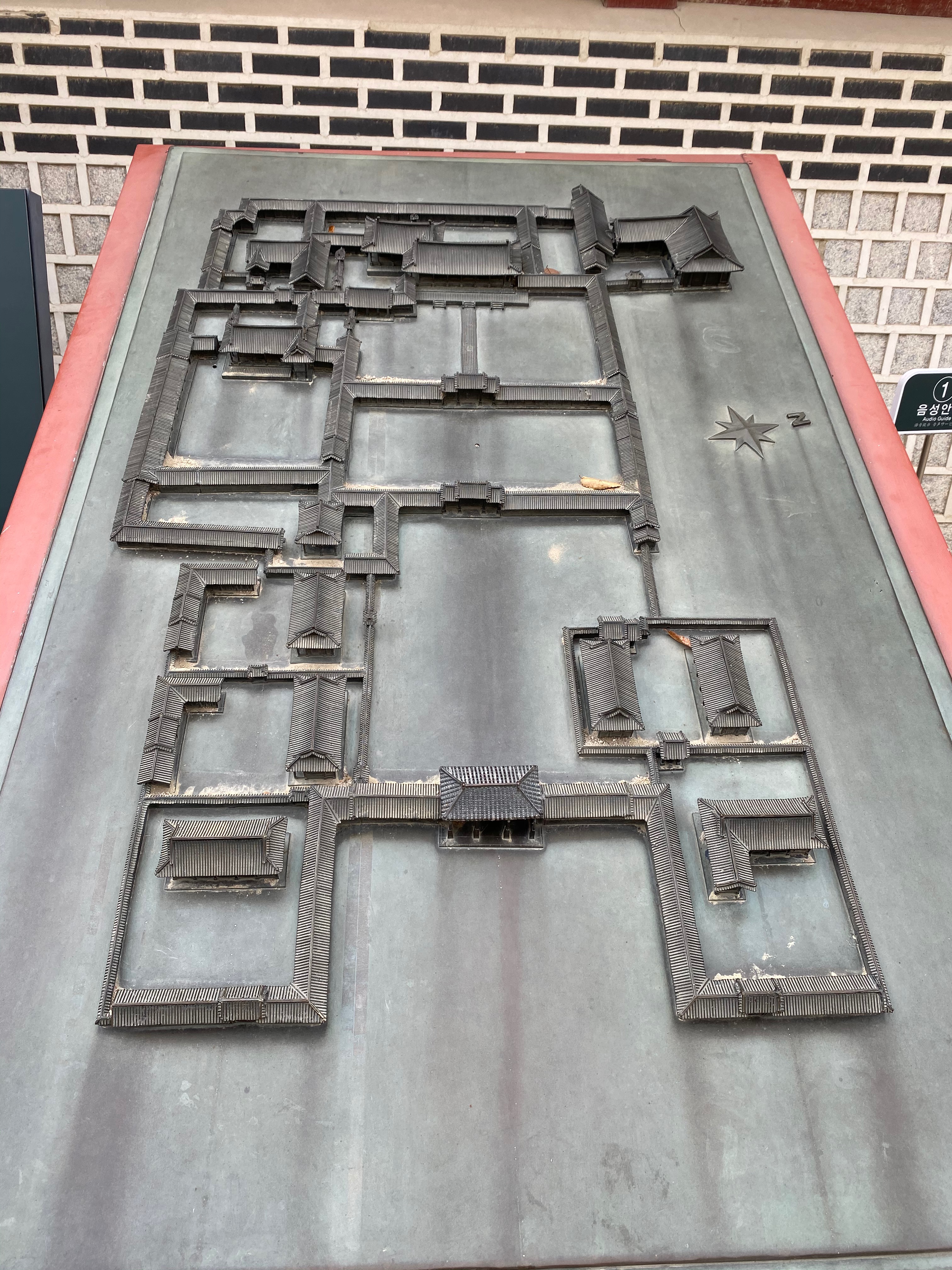
After lunch, we headed to Hwaseong Haenggung, which is the largest temporary palace outside of Seoul, used by the Korean King in Joseon dynasty during war or whenever he visits the tomb of his father. We took a 10 mins bus from outside Suwon Station to Hwaseong Haenggung. The Naver Map app (I can’t recommend this app enough for travels in South Korea, whether one is driving or not) indicated the number of bus stops before we arrive at Hwaseong Haenggung, and I conscientiously counted the number of stops to prevent history from repeating.  The last time my friend and I were here we missed the bus stop and ended up getting lost in Suwon. Three years ago my friend and I did not manage to visit Hwaseong Haenggung as it was about to close when we arrive at the palace. This time around, we ensured that we cater enough time before it closes to visit the palace. Looking at the main entrance, my first impression of Hwaseong Haenggung is that it is a very small palace. The main entrance to the palace is a two-tiered wooden gate that seems inconspicuous with the building around it. It does not command the majesticness that the other palaces in Seoul do. Passing through the main gate, we came into a large empty courtyard surrounded by short walls. This is the largest single space in the entire Hwaseong Haenggung. The sanded courtyard is laid with flags and a couple of cheesy standees of characters from the Korean drama which was shot here at one corner. At the end of the courtyard is set of three wooden doors which led us to a very small second courtyard with another set of wooden doors literally steps away. Passing through the second set of doors, we come to another courtyard, smaller than the first one, with the main audience hall sitting at the end of the courtyard. This audience hall is a small building with a large opening looking out into the courtyard. Inside the audience hall, there is only space for the king’s throne and small tables with four cushions. I can imagine the king’s officials would speak to him from outside the audience hall, after all, Hwaseong Haenggung is not used as a main residence for the king. Hwaseong Haenggung is also used by the king to celebrate his mother’s 60th birthday, in fact, there are displays near the audience hall to give visitors an idea of the food being prepared for the celebration. We went around exploring the different parts of Hwaseong Haenggung, there is a sleeping quarter next to the audience hall where the king and the queen used. The sleeping quarters for guards and servants are located to the front left part of the palace. Each quarter is no large then a pod where the residences used to do other things like sewing and preparing court documents other than using it to sleep.
3DEC7584-FD72-4CC2-A58F-DACD11F0FA08

Model of Hwaseong Haenggung

EF2AD4C7-5D0C-4AF3-A4C0-3C8182ACE04F

The main entrance to Hwaseong Haenggung

350602FA-E370-4CBC-8EF1-AF908F7661E6

Main audience hall in Hwaseong Haenggung

B9D7D767-0A1B-492E-B36E-BC3EC9CD50FF

Interior of the main audience hall in Hwaseong Haenggung

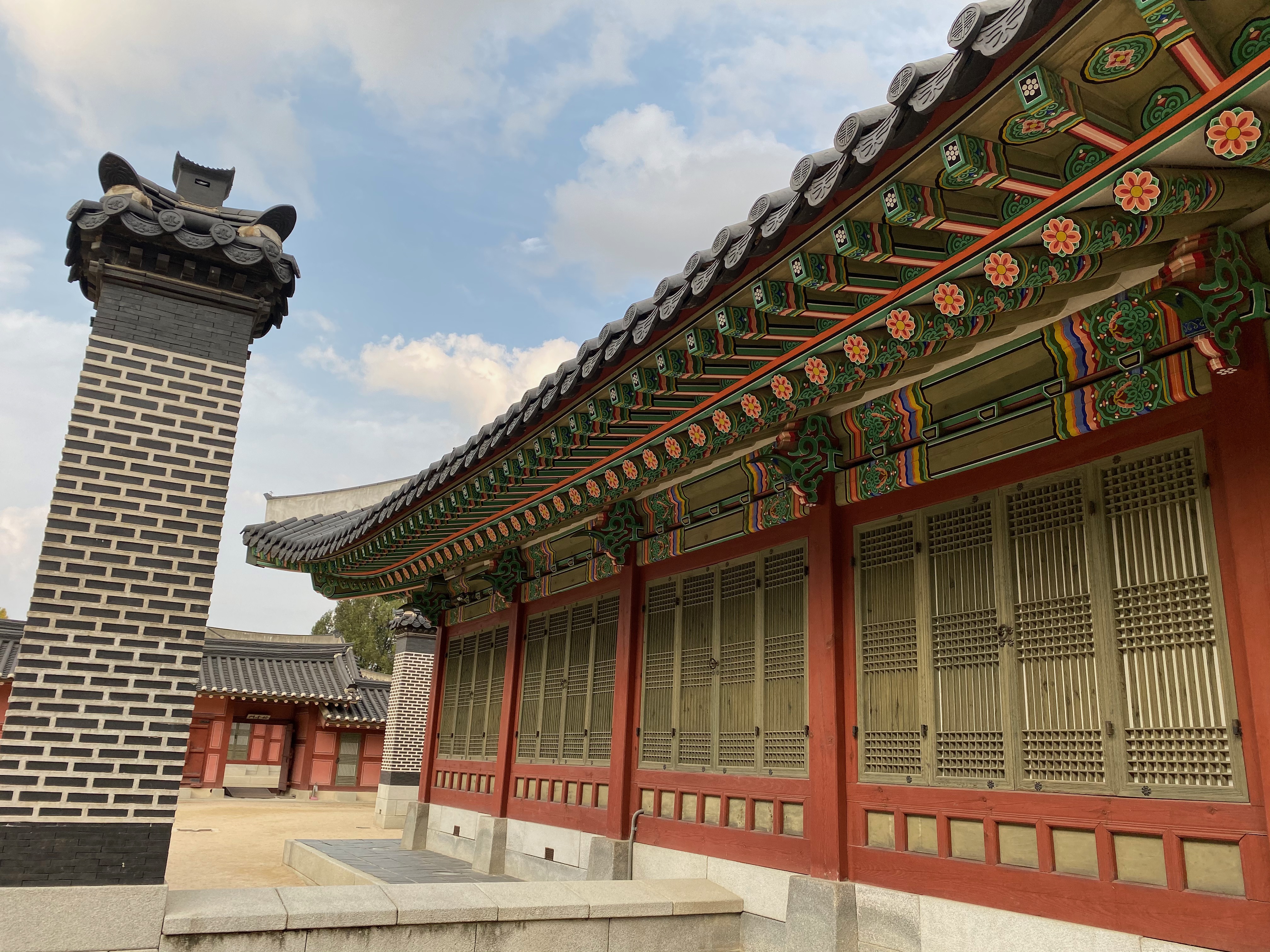
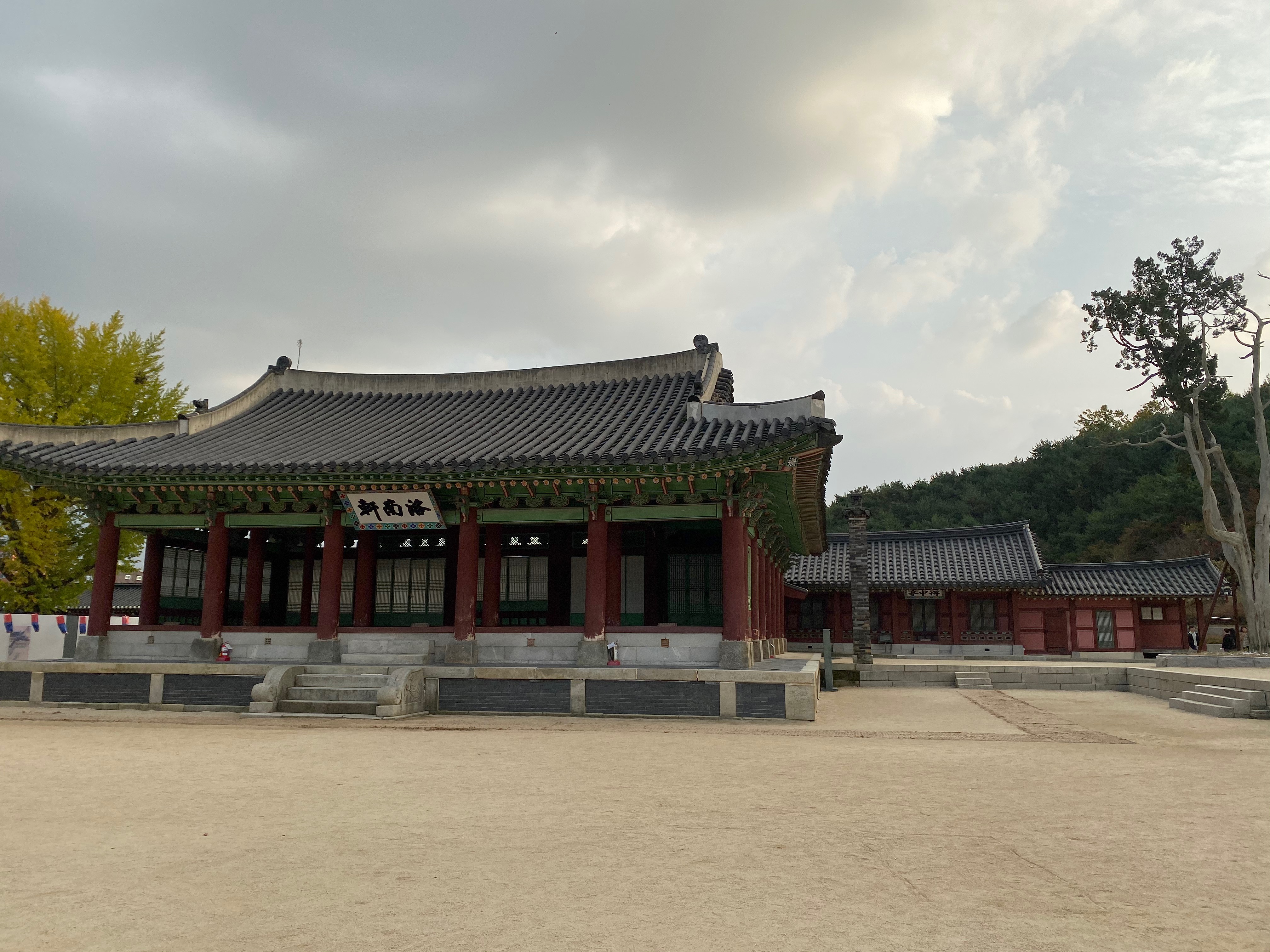
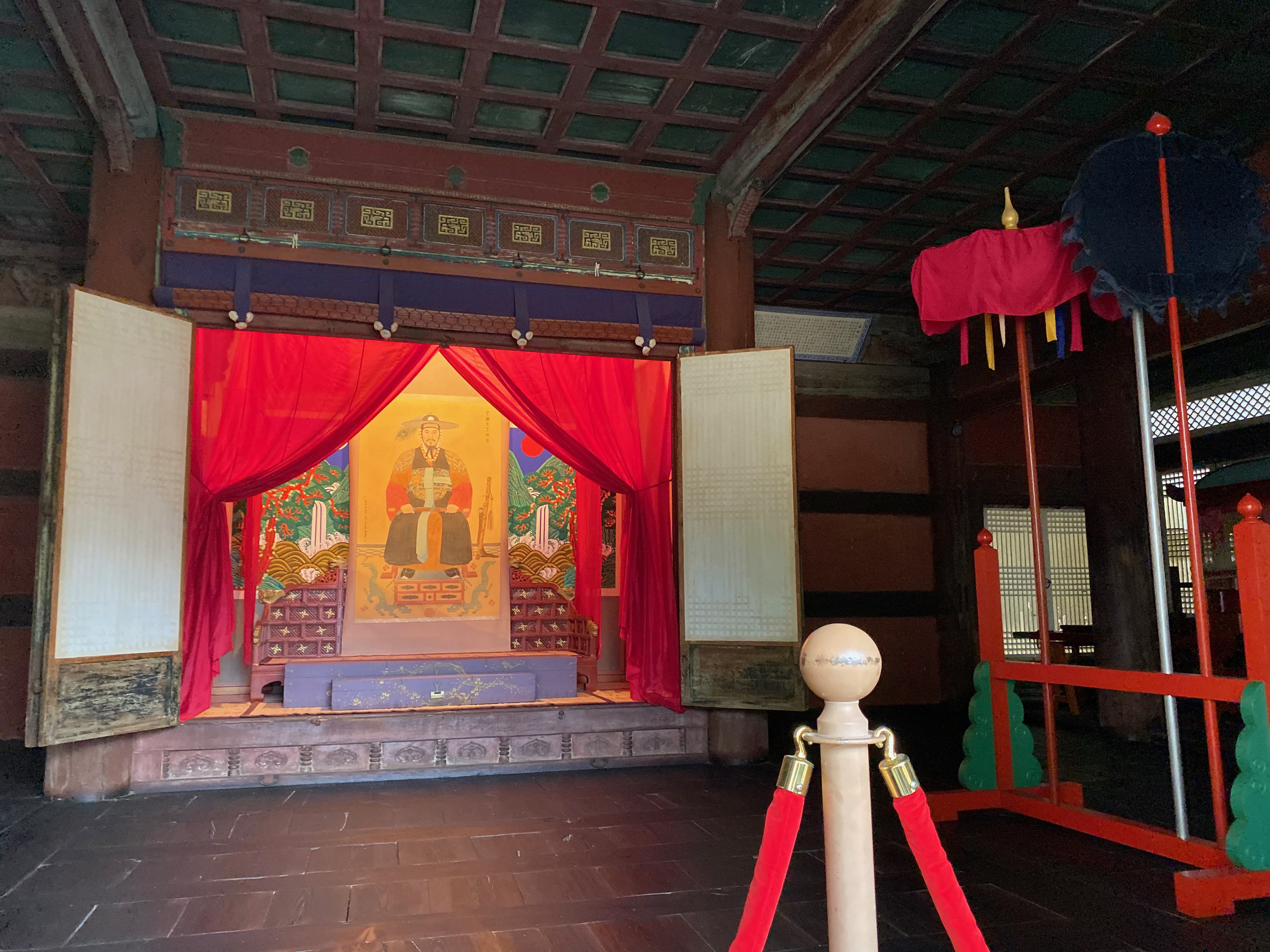
Just went we thought we were done with Hwaseong Haenggung, we spotted an exit that leads us to the annexe of Hwaseong Haenggung. This is part of Hwaseong Haenggung mainly houses the main sleeping chamber of the king and the queen whenever they visited the palace. The biggest building in the annexe of the palace is used for morning assemblies with his officials when the king visited. Similar to the main palace grounds, some buildings were used as sleeping quarters for the palace workers. Most of these buildings have their doors shut or are left empty which did not give us a good context what these buildings are meant for. My friends and I did however enjoyed the autumn scenery around Hwaseong Haenggung, especially the annexe. The annexe to the palace is relatively open and less crowded, giving us a good view of the hills behind Hwaseong Haenggung. The annexe is also a great place to take pictures with the trees growing in the palace grounds and on the hill donned on their red autumn gowns. As the palace was closing, my friends and I left Hwaseong Haenggung. We wanted to wait for dusk to visit Hwaseong Fortress and since it is still early, we decided to go for early dinner. Three years ago when we visited, we chanced into a local restaurant and wanted to go back there. However, we were disappointed to know that it was closed down. My friends and I ended up in a nearby cafe for a drink while waiting for the sun to set.
E5851C53-E005-47EB-96E3-AFC1938F551E

One of the buildings in the annexe of Hwaseong Haenggung

A344A0FA-046A-41A6-95CC-84DB75D55BE2

This is the largest building in the annexe of Hwaseong Haenggung
94F0A82D-A46F-4303-9558-E1E33D5B7527

Inside the building in the annexe of Hwaseong Haenggung where morning assembly was held

AEE7E915-0858-4F12-8073-7CE8108244A0

We rested here for coffee while waiting for dusk

The Tranquil Night Stroll along Hwaseong Fortress 

As the day turned dark after our coffee, we decided it is time for us to commence our walk along the Hwaseong Fortress. I always recommend my friends to take a walk along Hwaseong Fortress when at night as not only the walk is tranquil, the night light along the fortress wall is amazing. There isn’t much crowd and we can take our time to take pictures. Hwaseong Fortress is the official fortress surrounding the centre of Suwon and stretches 5.5km with a variety of command posts. There are four gates to the city of Suwon, of which we visited three along the walk.

Hwaseomun – Start of our Stroll

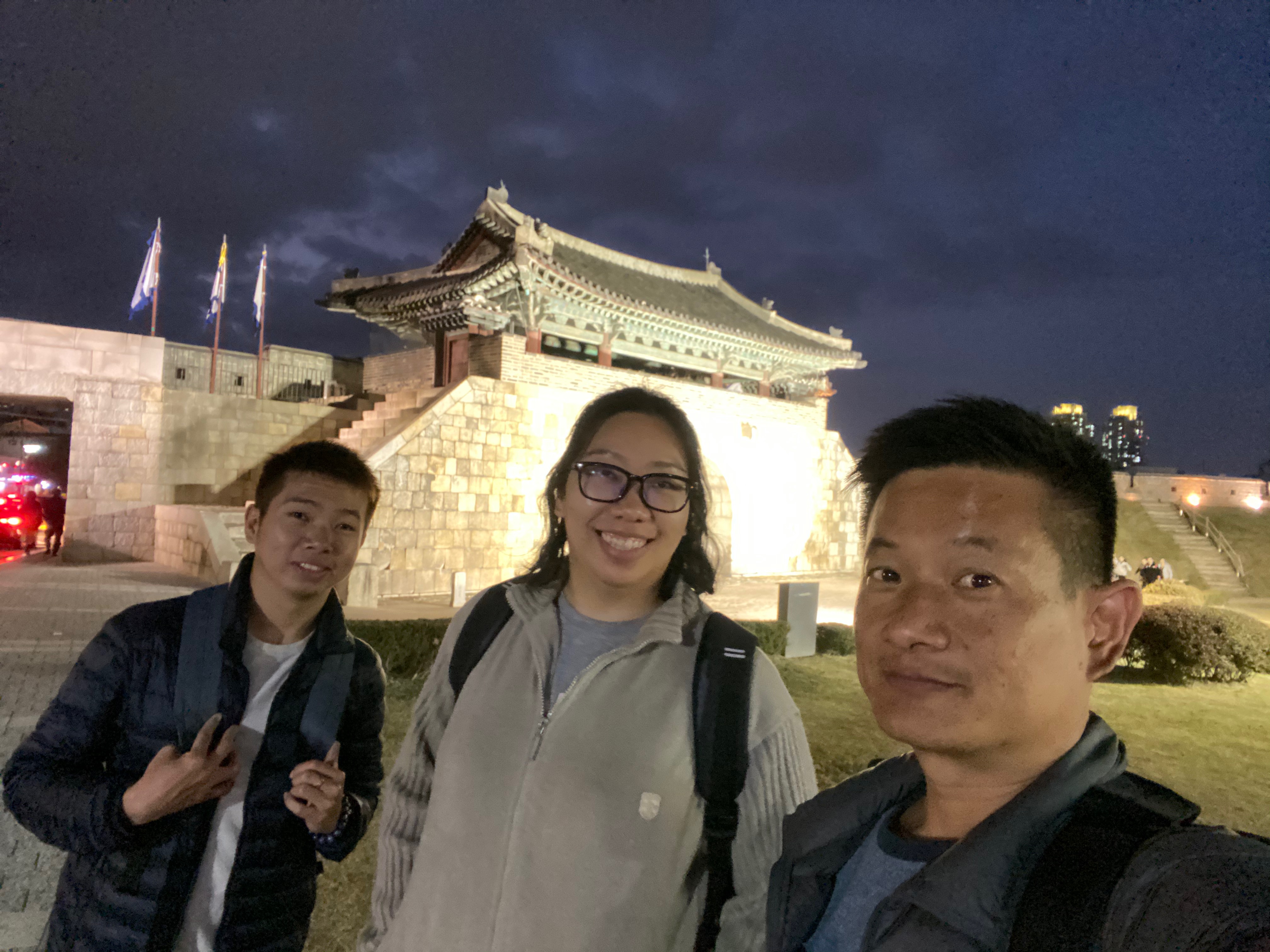
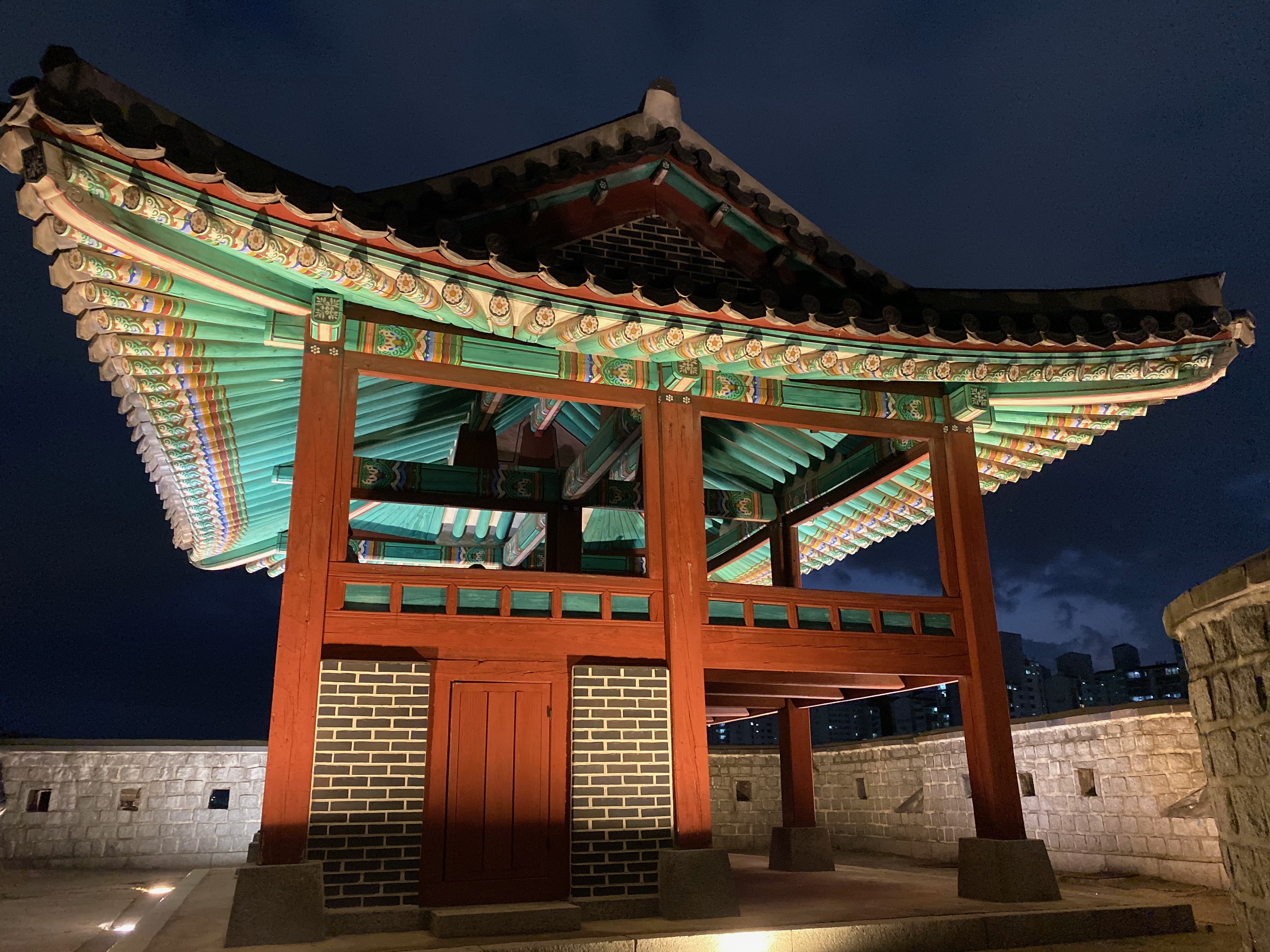
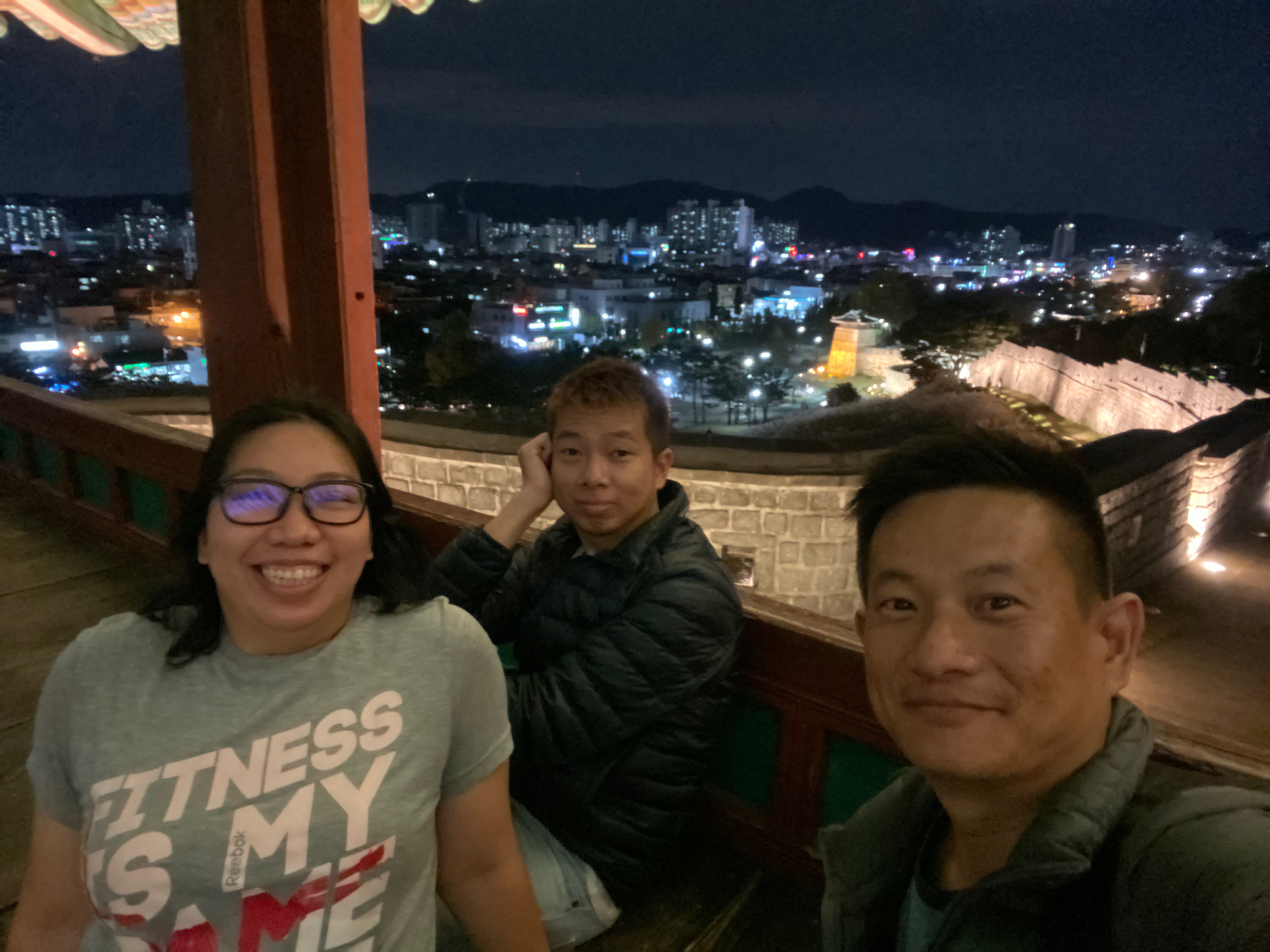
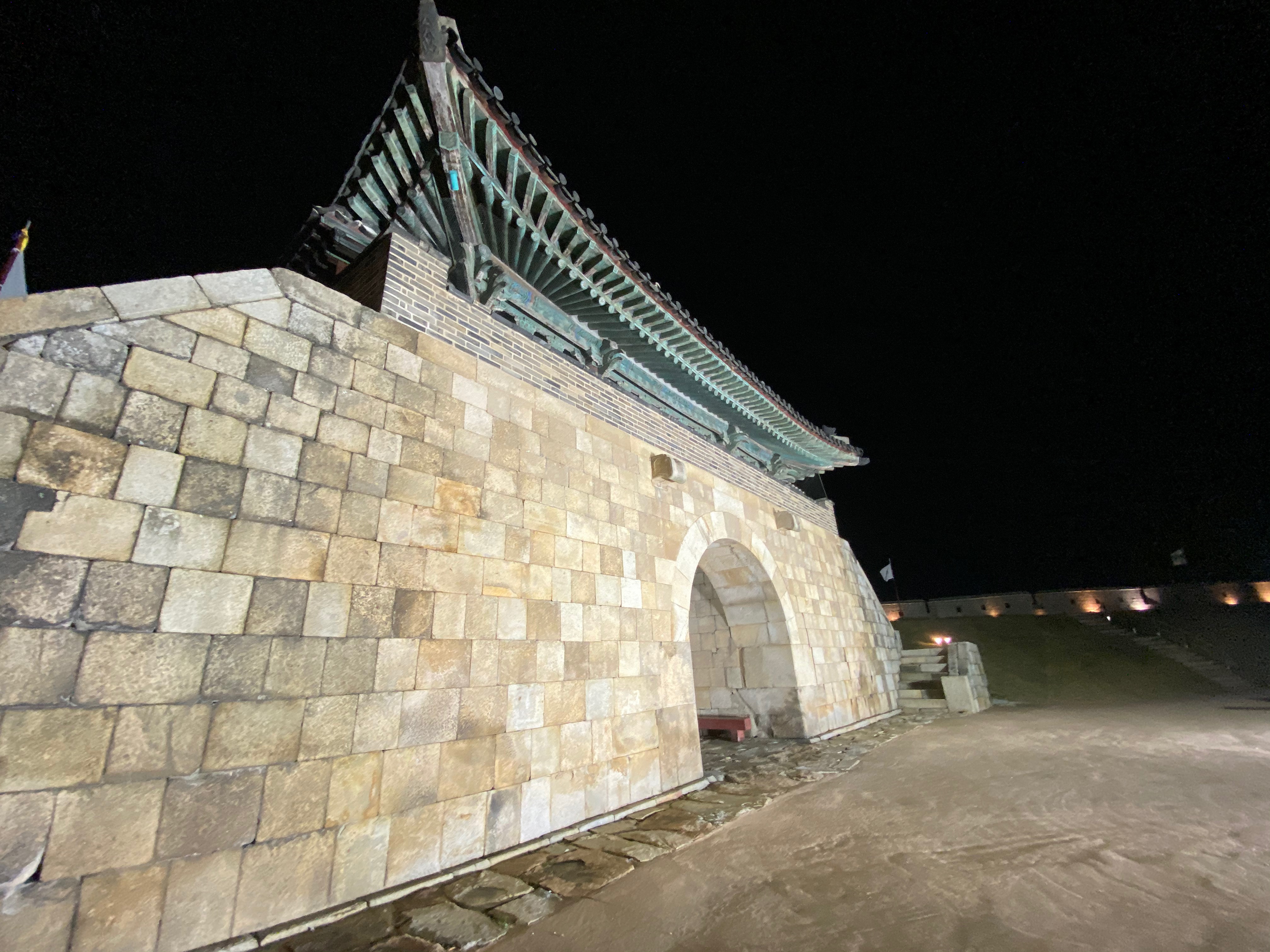
The gate nearest to Hwaseong Haenggung is Hwaseomun, a two-storey stone gate with a semi-circular extension in front.  From Hwaseomun, we crossed the road and walked along the walls up to the hill that was behind Hwaseong Haenggung, we came to the first pavilion we saw along the wall and wanted to go up. However, it seems crowded and we continued our walk up the hill to a military outpost. The outpost was closed at this time. From here we got a good view of the first pavilion that we just walked past. This is where we made a u-turn and traced back our footsteps towards the first pavilion we just went past. The two-storey open-air pavilion welcomes visitors to take a rest when walking along the wall 24hrs a day. As it was no longer crowded, we went up the pavilion to enjoy the peacefulness and the cool autumn breeze and got a great view of Hwaseomun with its semi-circular front from the top level of the pavilion. After taking a few pictures, we headed back towards Hwaseomun and continued our stroll along Hwaseong Fortress. 
CAE9C562-78BF-4502-9717-AAC78E40A7D9

Hwaseongmun at night

15715E6B-769E-4179-9F51-77D33E185B15

Wefie at Hwaseongmun

Janganmun – The Gate that was used by Kings

From Hwaseomun, it took us 20 mins of casual strolling plus the time we stopped to take pictures, passing another military outpost, we were near the main gate to ancient Suwon city – Janganmun. As we walked along the fortress walls we got closer to Janganmun, before reaching the gate, we passed by a canon platform. My friend and I were here three years ago, having the same scenery before our eyes. Back then I had difficulty capturing a picture of this canon with Janganmun as the background, due to the low light at the platform. This time around, I managed to take a picture of the canon with Janganmun in the background. As we walked up to Janganmun, we were again awed by the sheer size of Janganmun. The stone wall of Janganmun is topped with a two-tiered wooden structure, meticulously painted with the green and red colours appearing in palace buildings. Janganmun is significantly taller and larger than Hwaseomun. To continue our path on Hwaseong Fortress, the pathway skirts in front of  Janganmun, which through the opening, we were able to see the majestic Janganmun, as though it is still protecting the people staying inside Suwon City.

8E264786-88F0-41E6-8DD9-D2F03FF29B39

One of the two canon platforms at Janganmun

587E587A-3D26-4CE5-A694-B95B9AC64080

Wefie with Janganmun

E107CE70-DAC9-4B20-B4C8-C3D37A27E27E

Janganmun – the main gate that the kings of Korea used to enter Suwon

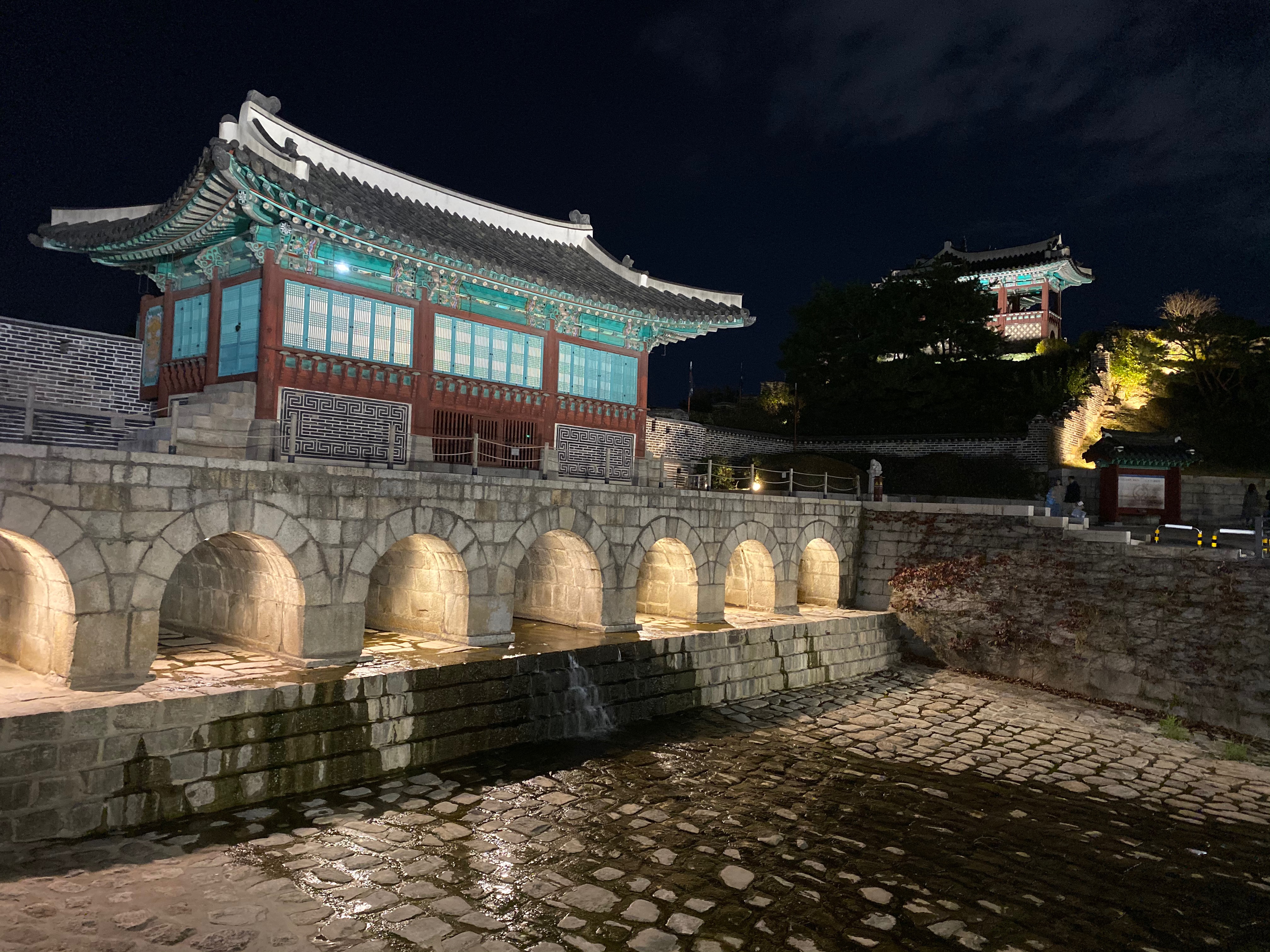
We walked past Janganmun along Hwaseong Fortress wall and arrived one of the two flood gates in Suwon City – Buksumun Flood Gate about 20 mins later. Buksumun is dressed in the typical Korean palace colours of green and mahogany, with a building built over stone foundations above a stream. The doors leading into Buksumun was closed at the time of our visit. It is here that my friends and I stepped off the wall for a view of Buksumun, which stood solitary performing its role as a defence wall and as a flood gate. We headed under the fortress wall to get a good view of Buksumun from the front of the fortress wall, which is as impressive as the view from inside of Hwaseong Fortress.
D6F7AB47-3183-4D5E-A9C0-56AF946F9E3F

Buksumun is the prettiest at night

A2BF5D23-64ED-41B5-AC03-D455E1FBF0D4

The front side of Buksumun

B17622BE-EF06-4F28-A5B0-58551D6A76C2

Night view of another pavilion and Buksumun

C3023DDE-D6E0-4684-AC15-1B82CBCB689A

Wefie with Buksumun

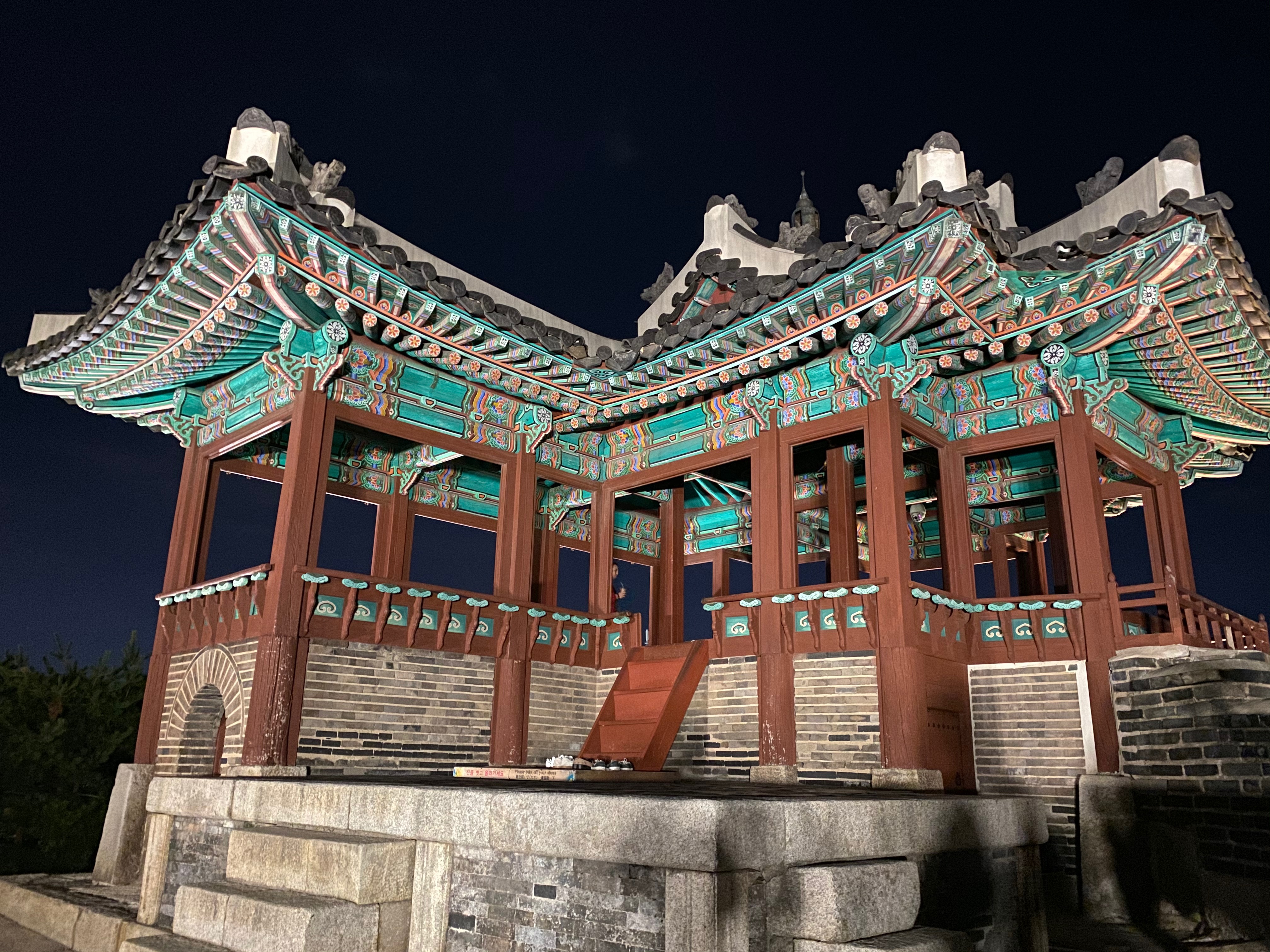
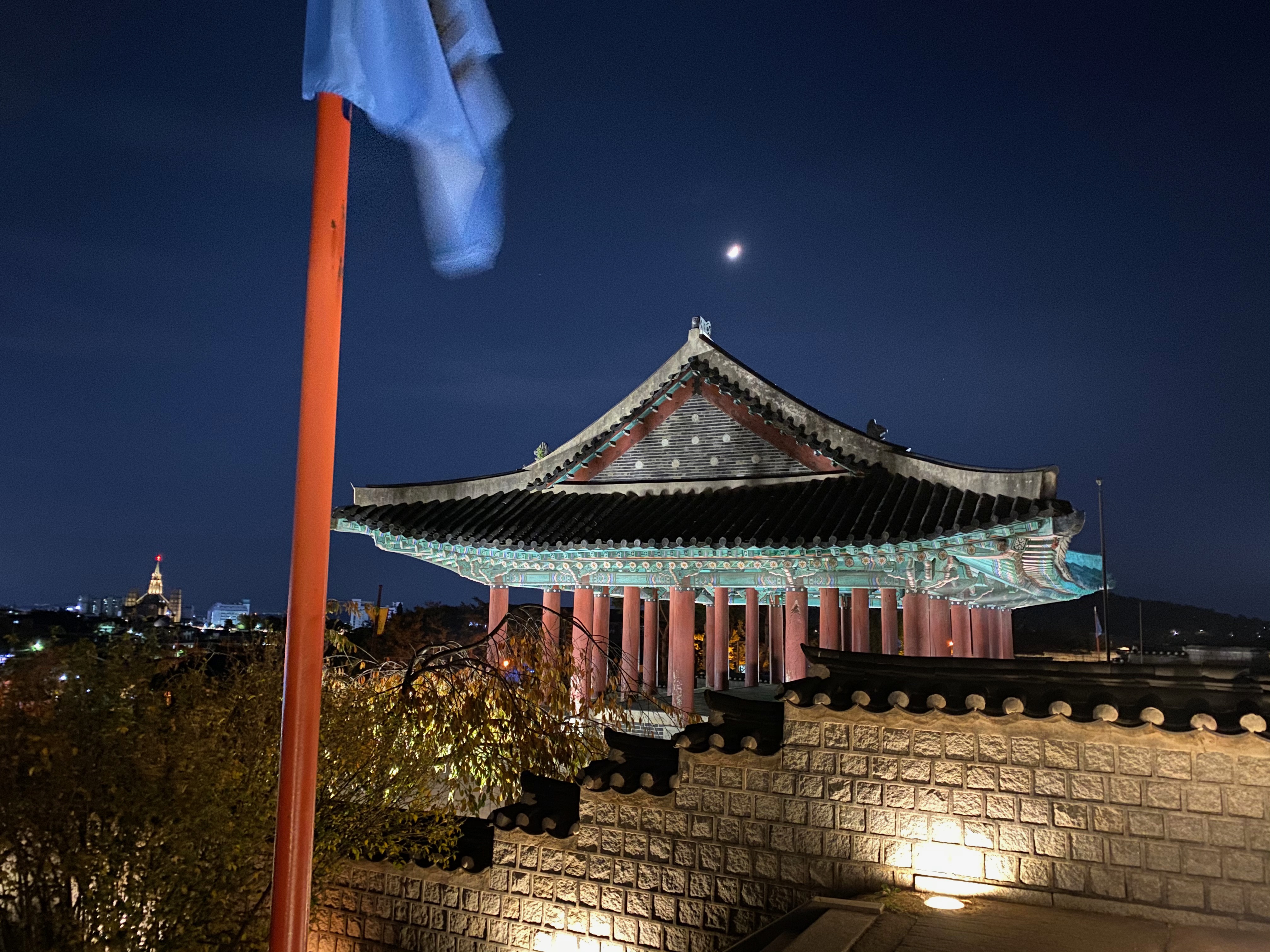
My friends and I headed back onto the wall and continued our stroll along Hwaseong Fortress. Some 5 mins later we came to another sentry post. This sentry post is built on higher grounds, which gave us a good view of Buksumun and parts of the Hwaseong Fortress. There are some very good photo spots in this sentry post, where we spent quite a bit of time to take photos. From the open-air pavilion-like sentry post, Hwaseong Fortress resembles a mini Great Wall of China. After taking photos we continued our walk on Hwaseong Fortress towards the next landmark on the wall. Some 30 mins of uphill and downhill walk, we arrived at Dongjangdae, which was used as a training ground for the Korean troops for over two centuries. Dongjangdae is enclosed with stones walls and was closed at the time of our visit. These stone walls surrounding Dongjangdae was low enough for us to peep over and see the command post inside the wall. Beside Dongjangdae, there is a large open area which was used these days for tourists to experience archery training of Korean troopers.
A92493A6-078D-4CFE-842E-0088491766B0

Sentry Post past Buksumun

E7BBDBEE-0773-4C17-964F-E91A0C70D849

Wefie at the Sentry Post

899ACFD6-4C1E-429E-A321-CBB2512D2930

Part of Hwaseong Fortress seen from the Sentry Post

12856FF9-E8FB-4A95-8635-A08BE1BD7A42

Taking a peep over the wall surrounding Dongjangdae
25F83C2C-34D1-4B81-92C3-385FF9E7802D

Dongjangdae at night

Towards Changnyongmun – Our End Point

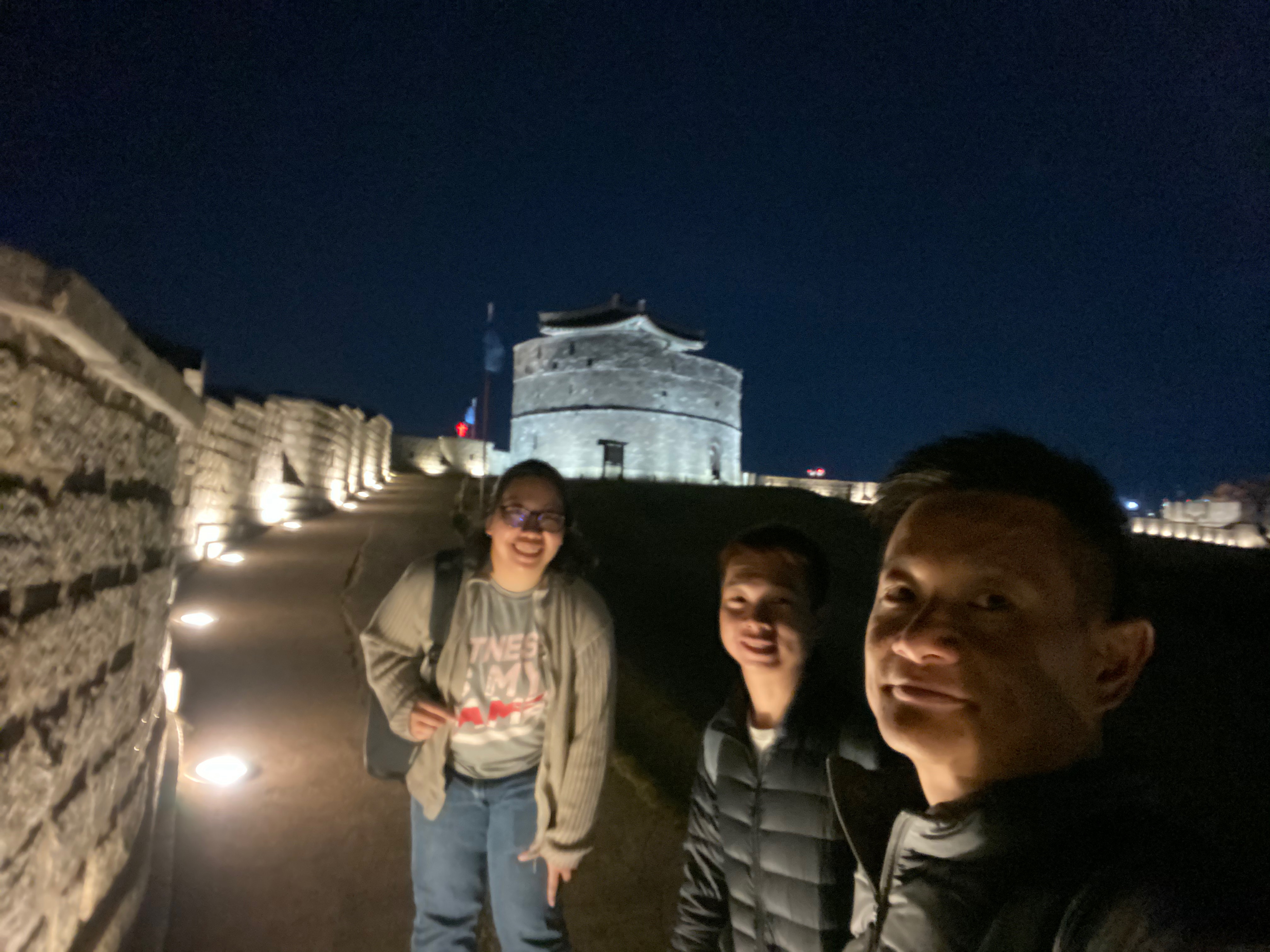
From Dongjangdae, we could see our endpoint, Changnyongmun, across the road. I told my friends that seeing Dongjangdae is an indication that our walk along Hwaseong Fortress is coming to an end and pointed to our endpoint across the road. We skirted around Dongjangdae and resumed our stroll along the wall. The next structure we came across along Hwaseong Fortress is a three-storey circular-shaped watchtower. The watchtower is rather plain with no patterns or designs engraved onto any part of the tower. It was also closed at the time we arrived it. My friends and I took some pictures and left the watchtower. Not far from the watchtower (about 2 mins walk), we reached the crossbow platform. The lighting here is not as great as some parts of the wall, making the crossbow platform a tad difficult to visit. There is an opening to allow visitors to access the crossbow platform, however, due to the poor lighting, we merely took some quick pictures of the structure. 
A8A83635-A631-4045-B4AF-D35A5866B734

Wefie with the watchtower

13FE44B3-152D-4DC6-8A50-05A0B57B5CD4

Watchtower up close

img_5278

We only took pictures of the Crossbow Platform as we were walking past it

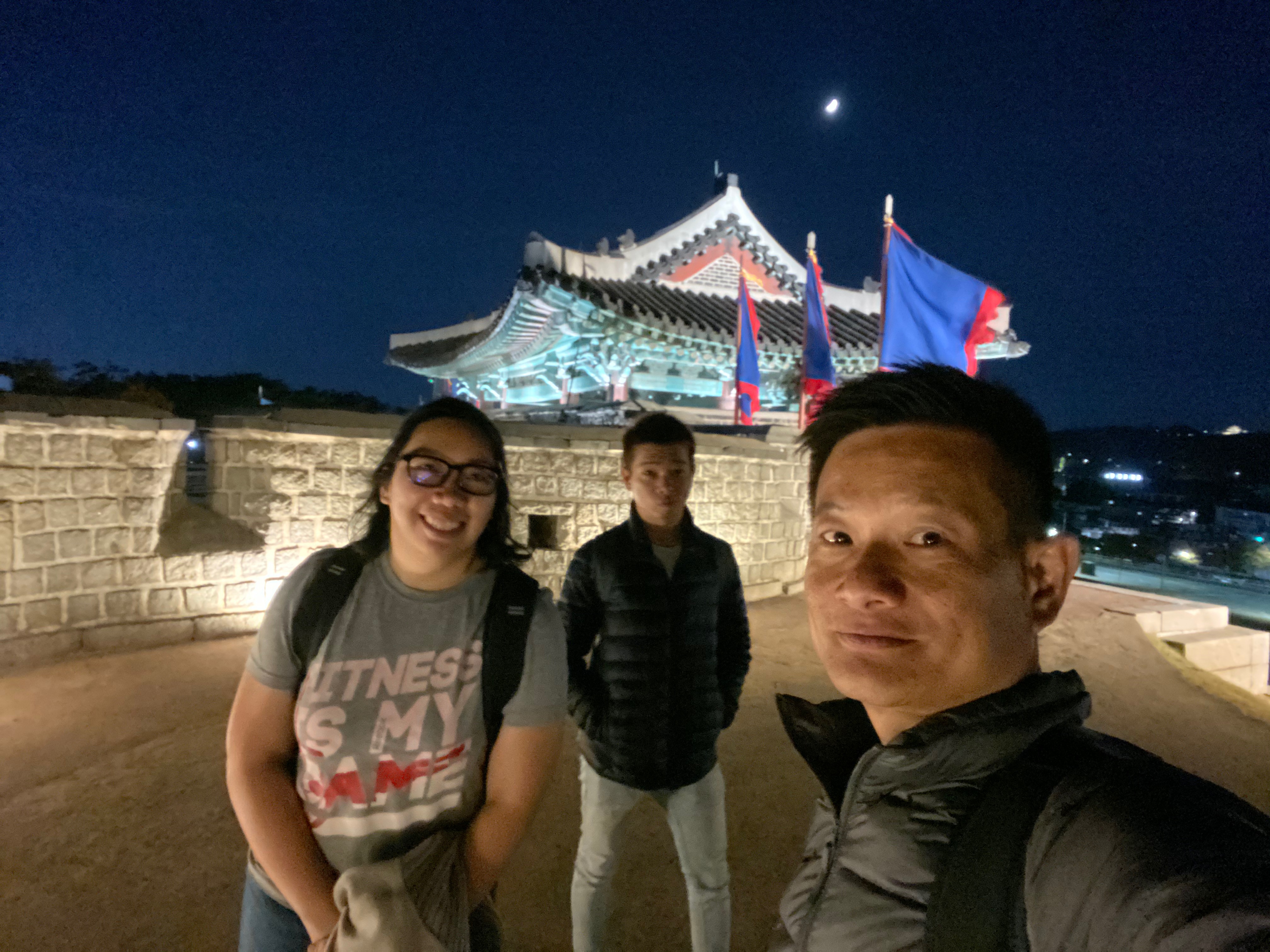
It is another 2 mins walk from the crossbow platform to our final destination on Hwaseong Fortress – Changnyongmun. Changnyongmun is one of the four gates into Suwon city and this marks the end of our 2 hrs stroll along Hwaseong Fortress. Similar to  Hwaseomun, Changnyongmun is a smaller gate and has a semi-circular wall with an opening in front of the gate outside the fortress. The architecture is very similar to Hwaseomun, decked with a wooden building on top of the stone fortress wall. The wooden building in Changnyongmun is painted with the familiar green and mahogany colour, prevalent in most ancient Korean buildings we have seen so far on this trip. We went outside of Hwaseong Fortress at Changnyongmun. The gate looks almost hidden and the entrance is difficult to spot from the front of the gate outside of the fortress. After some photos, my friend and I went through Changnyongmun and headed to the bus stop between Changnyongmun and  Dongjangdae where we caught the next bus to Suwon Station and headed back to Seoul.
3C5DFAAF-C9CE-4F0D-8D5A-DD91801742F8

Wefie on Hwaseong Fortress with Changnyongmun

BFCFFB69-E828-47A7-9AAC-01D6F739BE63

Changnyongmun from inside of Hwaseong Fortress
img_5284

My friends on Changnyongmun

img_5289

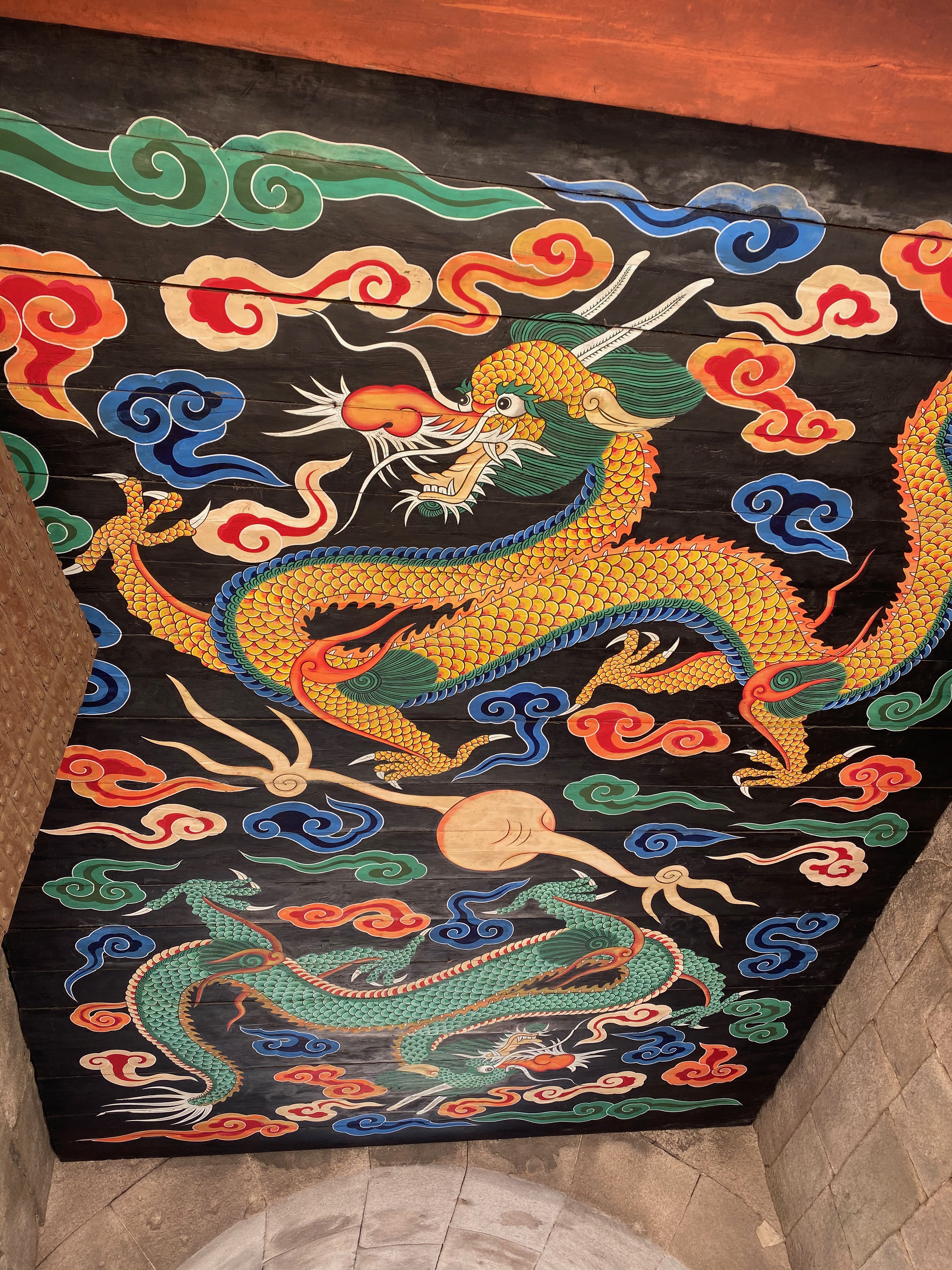
The underside of Changnyongmun is painted with a dragon mural

img_5291

Changnyongmun from outside of HWaseong Fortress

img_5292

Wefie with Changnyongmun outside Hwaseong Fortress

Experience Jjimjilbang – The Korean Sauna

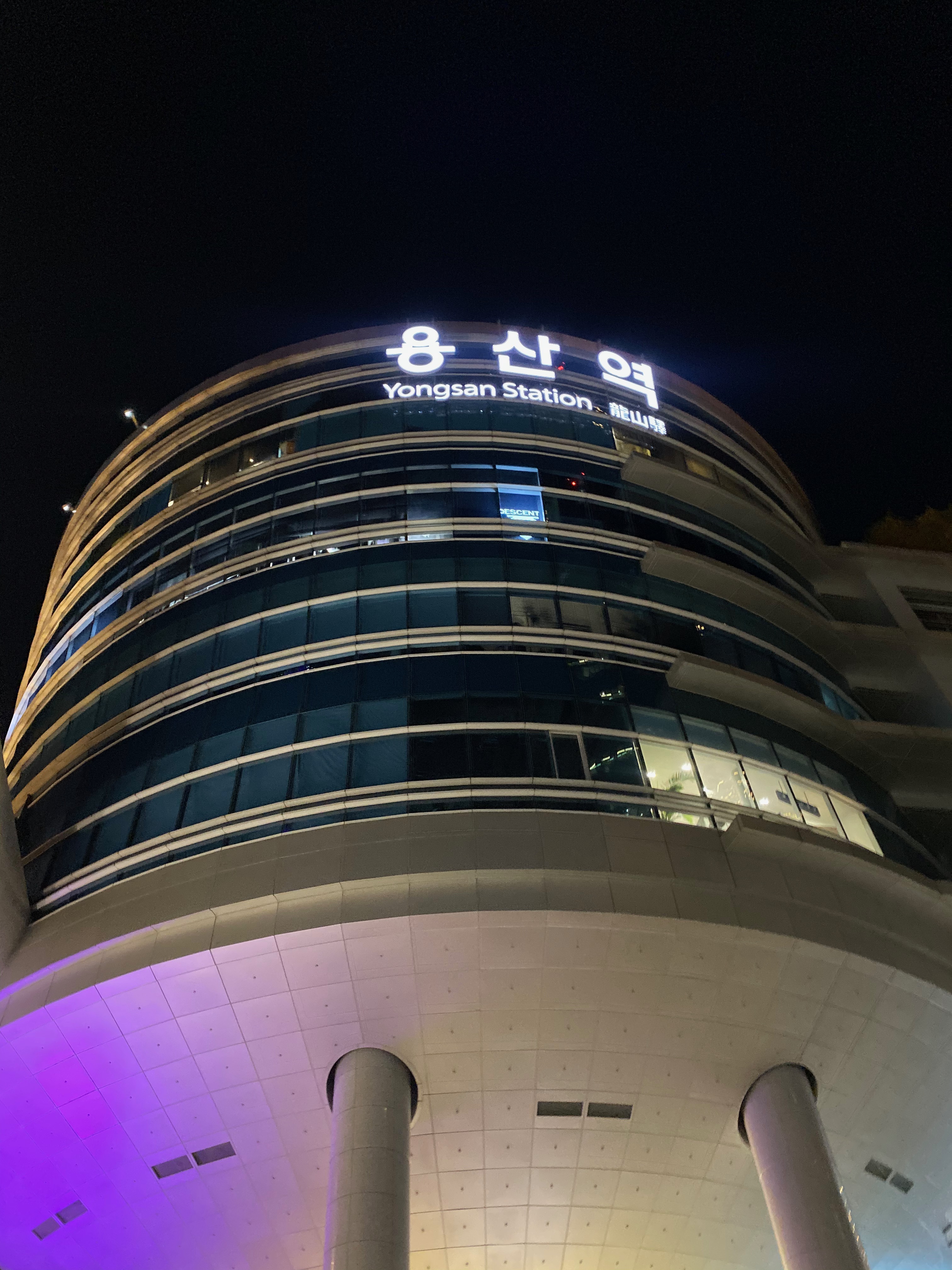
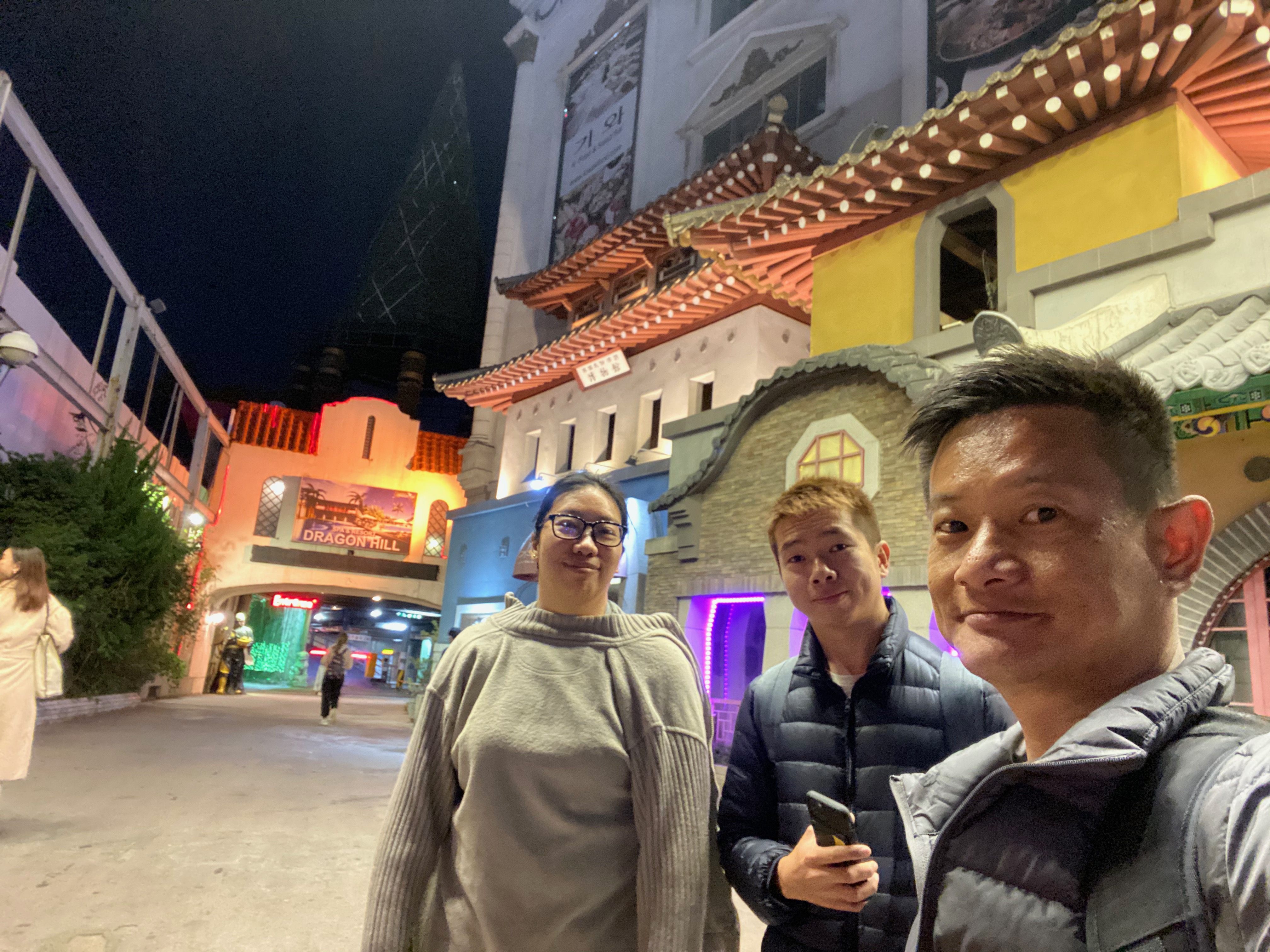
As we were on the subway, I noticed that we would pass through the station where Dragon Hill Spa is. A quick insertion of activity, we decided to stop at the station for the spa. One of the experiences that we set out to do when planning this trip is to try out the Jjimjilbang, the traditional Korean sauna. Dragon Hill Spa is a Korean jjimjilbang caters more for tourists than locals, nonetheless, it is a good place for us to try out jjimjilbang. We alighted the subway at Yongsan Station and made our way on foot to Dragon Hill Spa, which is located next to the station. The moment we enter Dragon Hill Spa, we were taken aback by the number of people waiting in line. There is a crowd of at least 30 people at the entrance, part of a tour group waiting for their turn to enter the jjimjilbang. One of the staff saw us and waved us to go around the crowd and immediately served us. The jjimjilbang costs KRW16,000 per adult and we were given a key tag that also doubles up as a credit tag which we used to buy things from and settle the bill when we exit. We got into the front area of the jjimjilbang and had to take off our shoes and place them in the locker provided. The locker number corresponds to the number on the tag we were given. Male and female changing rooms are separated by level, I gave direction to one of our friends on where to go and what to do and made our way up to the male changing room. In the male changing room, there is a locker for us to put our clothing and a counter for us to take the size of the clothing that we would wear when going in the main sauna area. We took a shower at the wet area and spent some time soaking in the hot spring water. The hot spring soak was very effective in relieving the aches from our travels in South Korea so far. After soaking for 10 mins, we got dressed and went to the main area to meet our other friend.

Before we went to the main hall, we headed to the restaurant in the jjimjilbang to have dinner. After dinner, we headed to the main hall for the treatment rooms. There are several treatment rooms: ice room, kiln sauna, Nephrite jade energy room, and pyramid mediation room. The last time I came to the jjimjilbang was 10 years ago when I first visited Korea as part of an escorted tour. Back then the tour guide told us that Koreans believe going to hot and cold treatments rooms will force our pores to open and close for detox purposes. My friends and I went to the ice room (temperature was -15°C) and stay for around 5 mins, followed by one of the five kilns with 88°C temperature. We did this a few times, alternating between hot and cold rooms for the next 30 mins. As it was getting late, we changed up and headed back to the hotel. As it was already past midnight, the subway service has ceased for the day. We originally wanted to grab a cab back to the hotel, however, there was a long queue at the taxi stand and with no cabs in sight. This is when I whip out my mobile phone and used the Naver Map App to guide us. The app pointed us to a nearby bus stop and the bus to be taken. True enough, the bus came exactly at the timing shown on the app and we got back to the hotel without any incident. When I checked the app again, I realise the bus we just alighted is the last bus.  

55EF6E7C-19A3-401D-9683-4578BBE1823C

Wefie at the main hall in Dragon Hill Spa

90B46CCE-2A71-4F18-A7BB-BEFEDDE6E7AB

We were in the Ice room

9F3F3631-10DD-4266-B997-D90909C3B145

Taking a wefie in one of the hot kilns
Jeju/Busan/Seoul Day 8 (2 Nov 19) – From Busan to Seoul: Our Journey Continues in Seoul

8D46E687-70B2-4C61-932B-8D6B8C79B588

Onward to our next destination Seoul via KTX

Riding the KTX to Seoul

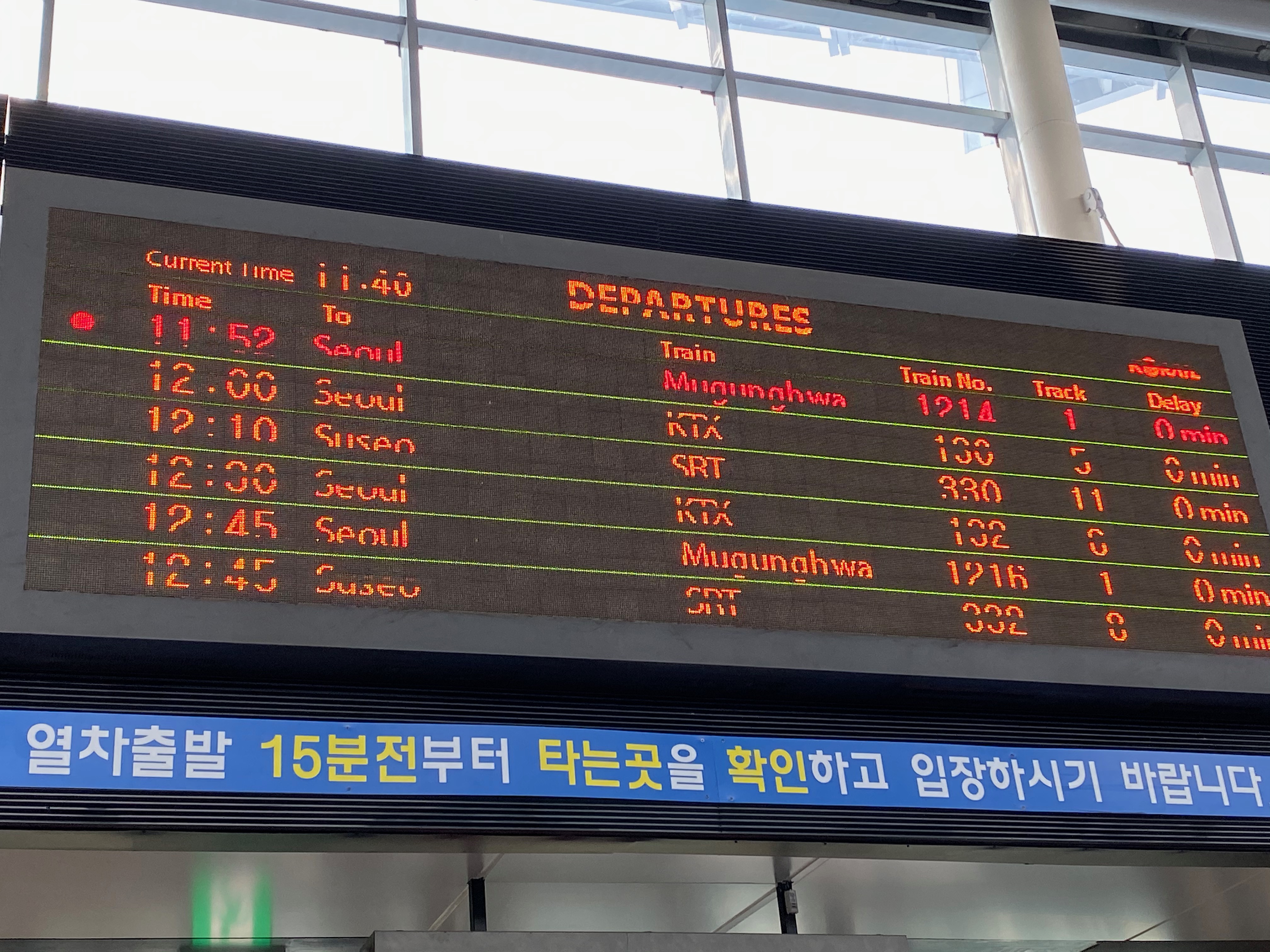
Today we take things down a notch and had our second travel break day. Much of today is spent on travelling from Busan to Seoul, our final destination of the trip, via the highspeed KTX train. We would spend the day orientating around in Seoul and watching one of the non-verbal comedy that South Korea is so famous for other than kimchi and K-pop. We woke up later than the previous days and checked out of the hotel in Busan at 10am to catch the train departing at 12 noon. We wanted to get to Seoul by 3 pm to catch our 5pm show. We wanted to get to the train station early to prevent the episode of missing our train my friend and I faced with three years ago. As a result of that, we got lost in the middle of nowhere. I did research on Naver Map App the night before and got to know that the train ride from Haeundae Station to Busan Train Station takes around 1 hr. After checking out, we dragged our luggage and headed to Haeundae Station, which is around 5 mins walk from the hotel, at the end of Gunam Street in the Haeundae area. The subway ride includes a change of train at Seomyeon Station. 1 hr later we arrived at Busan Train Station. We still have a bit of time to get some food to be consumed onboard the KTX. Unlike countries like Japan or Taiwan, there aren’t any shops selling bento sets for long-distance train commuters. The only shops that sell food are bakeries near the boarding platforms at Busan Train Station. From our recce two days ago, we have already identified the food we wanted to get which cut short our time in going around and see what is for sale.

3BCA891F-62BC-476A-B670-6EA06325CDBA

Taking a wefie at Busan Train Station before we leave for Seoul

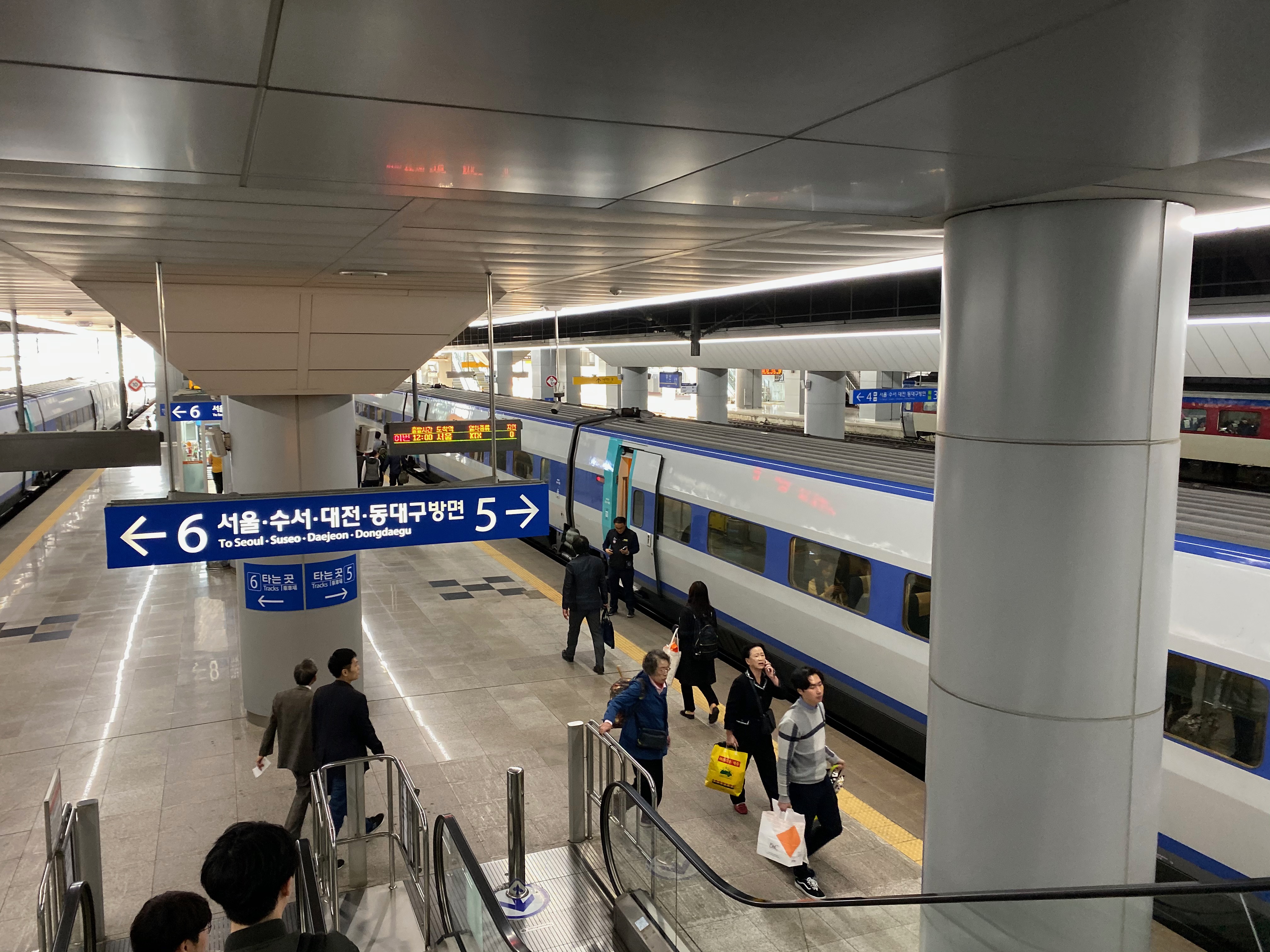
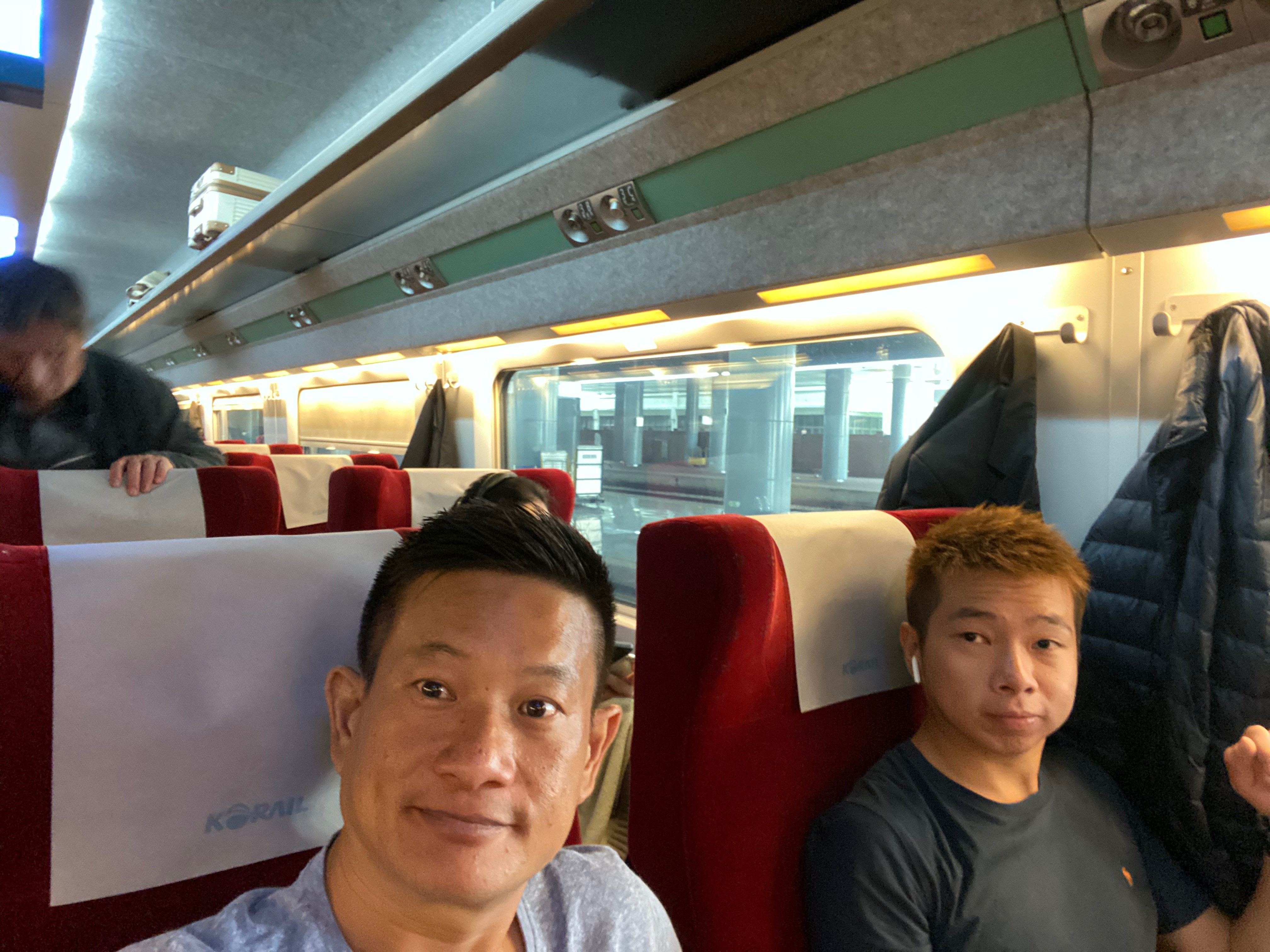
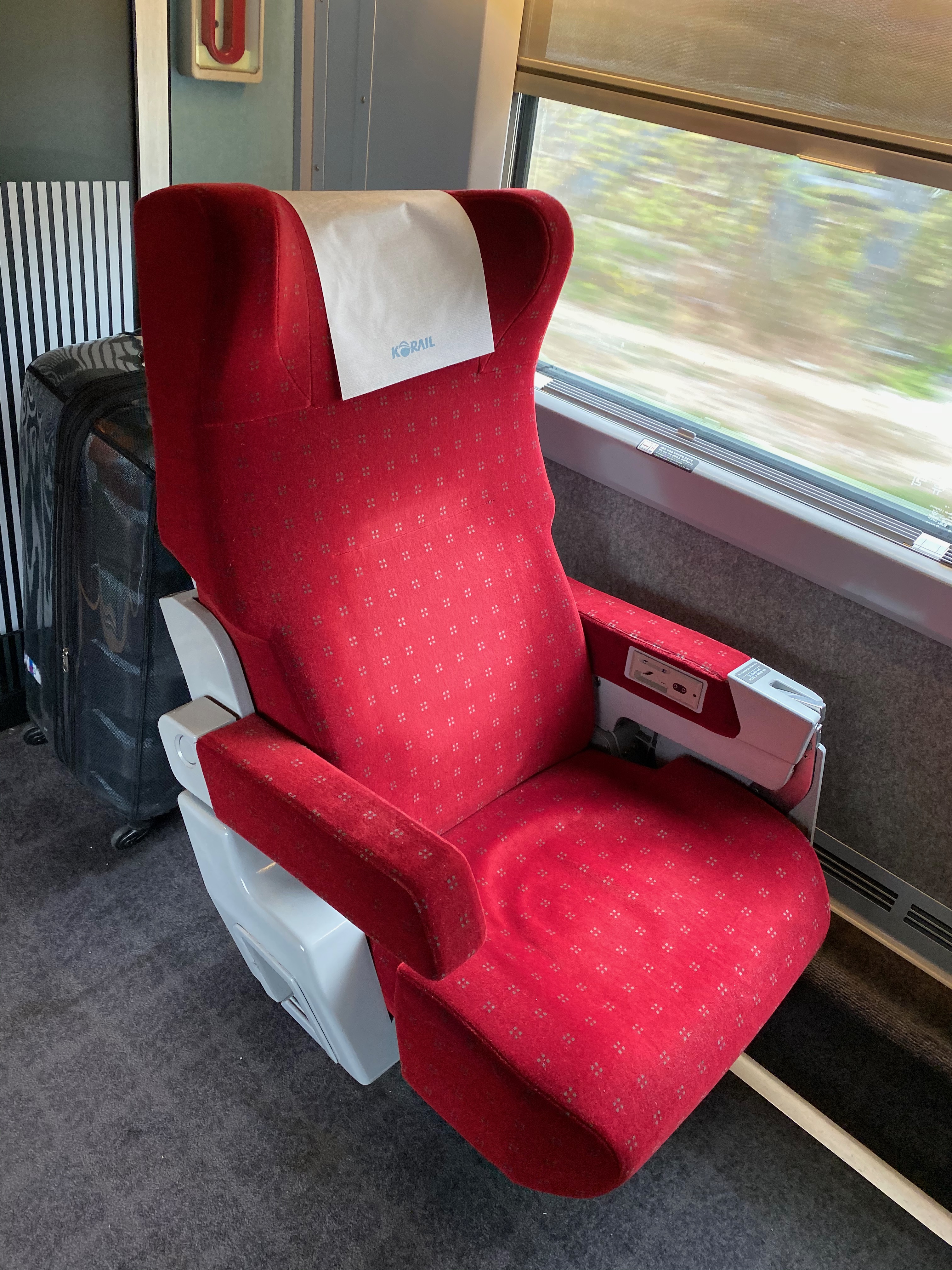
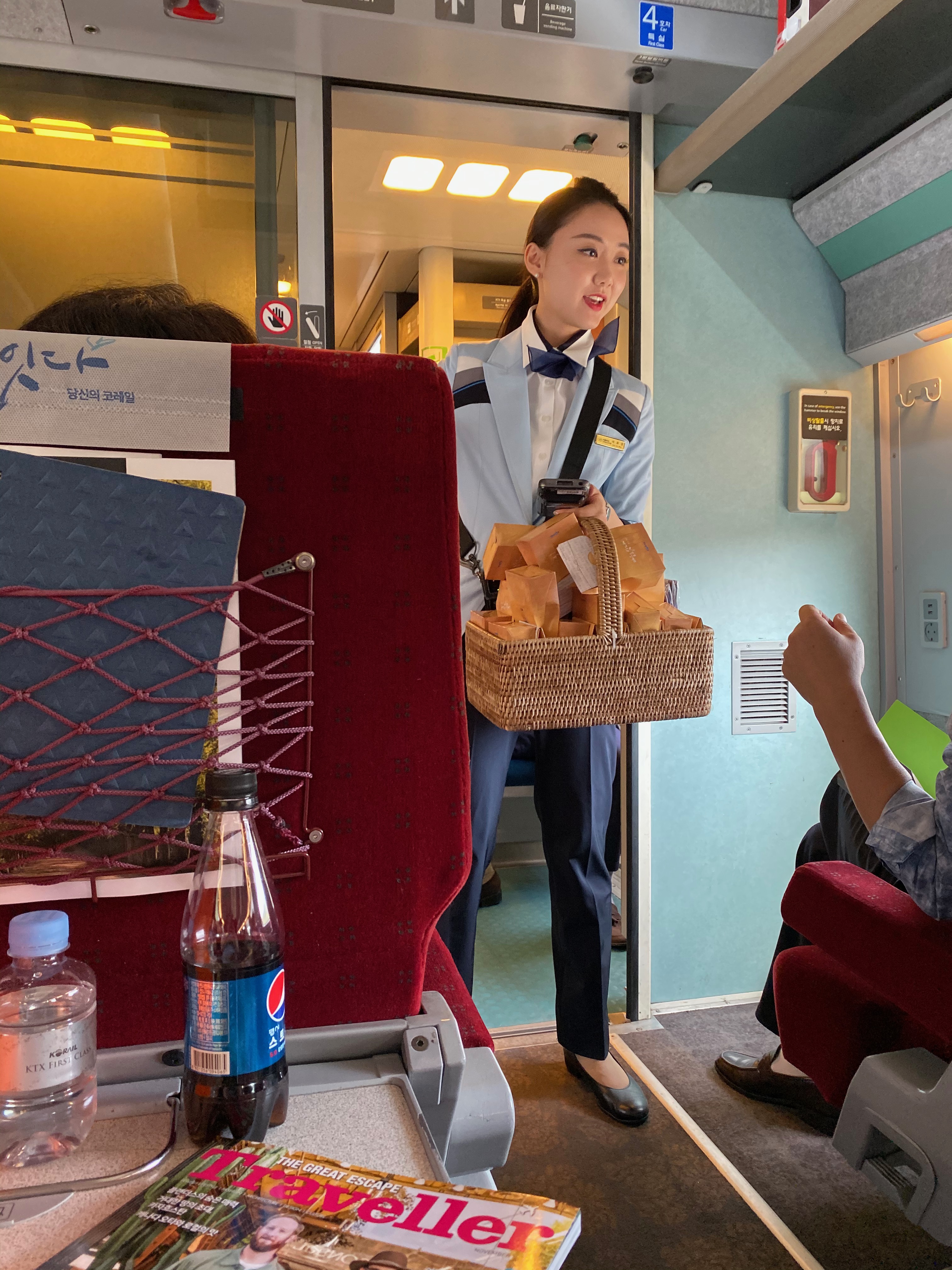
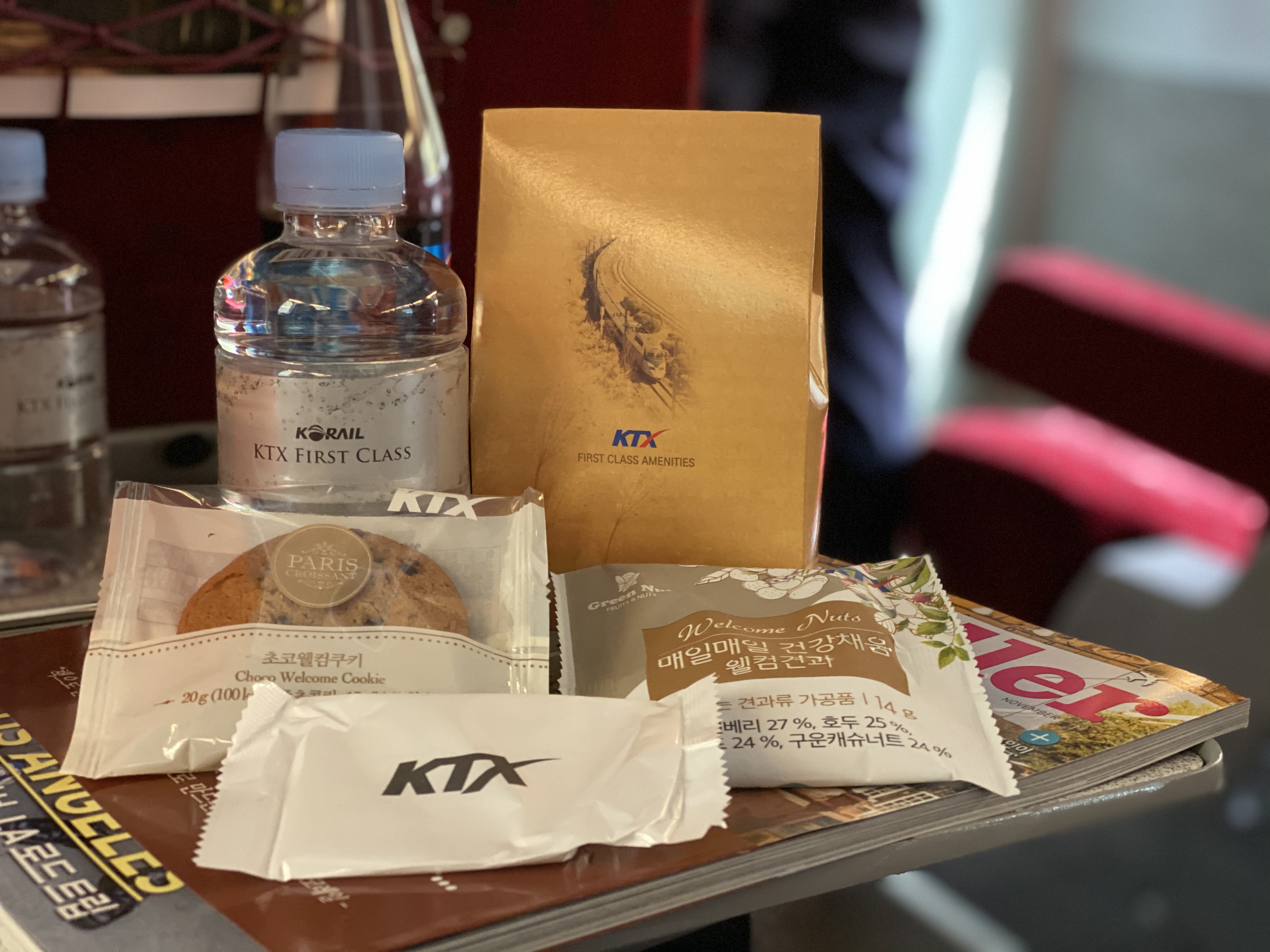
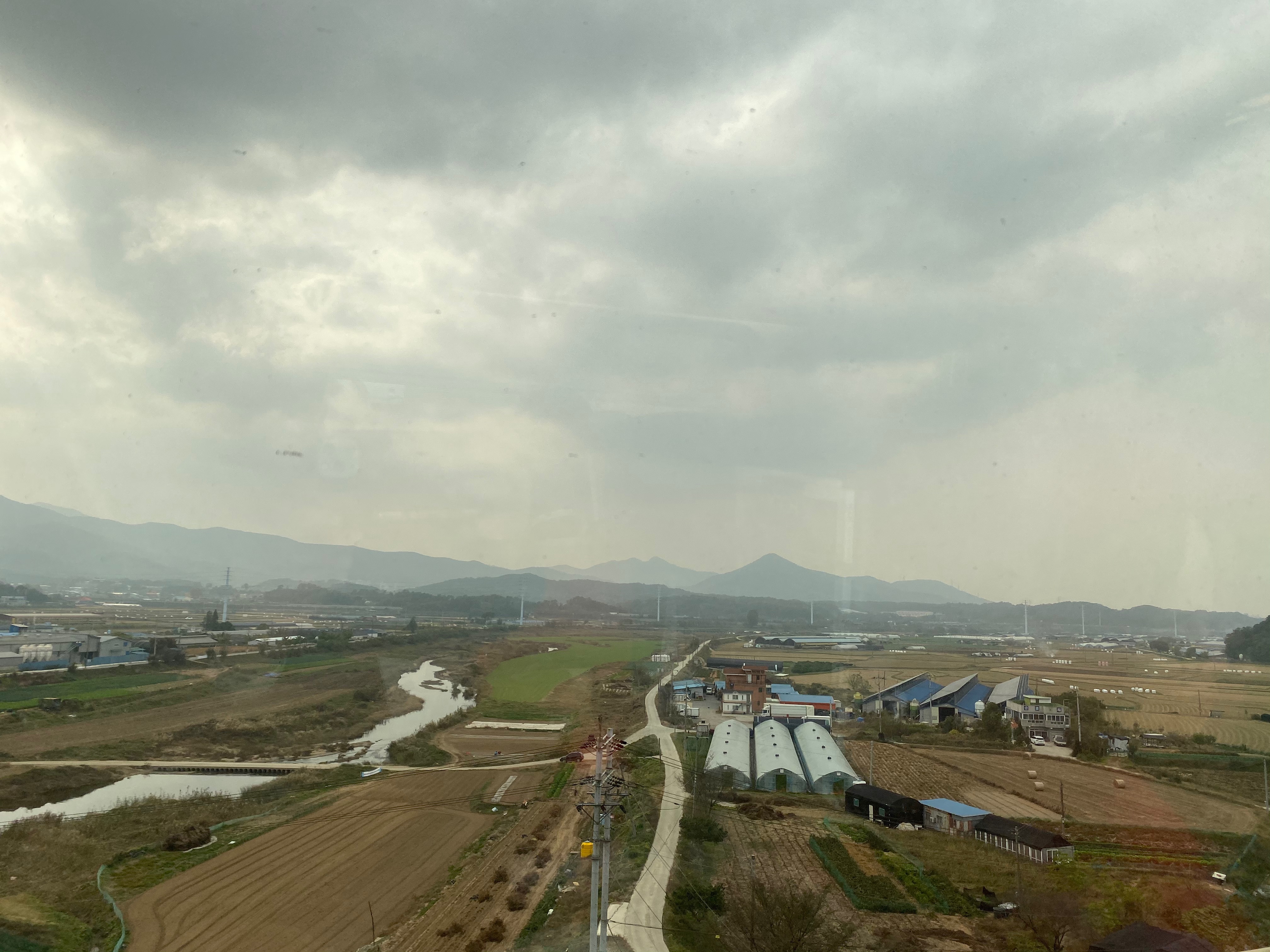
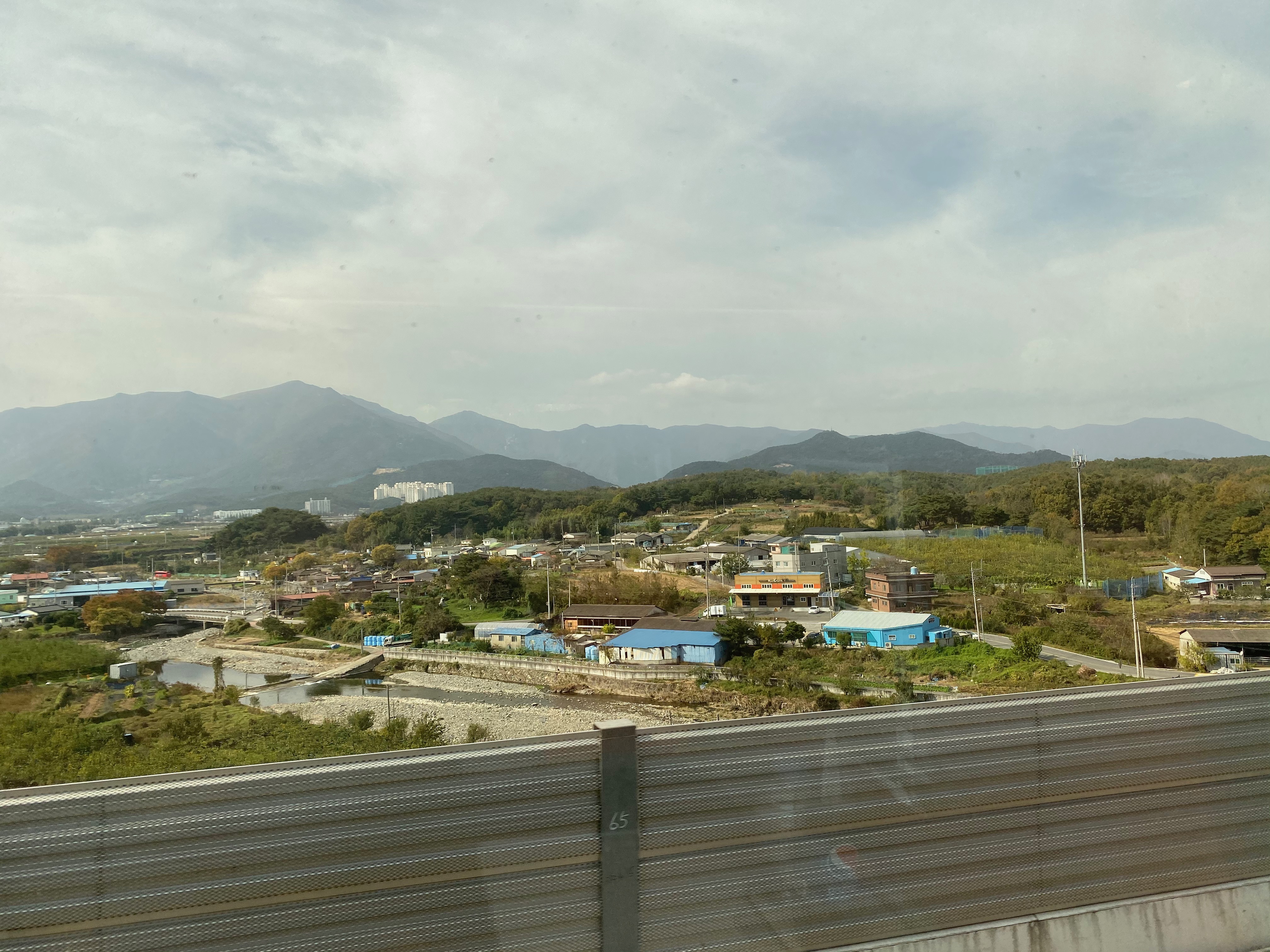
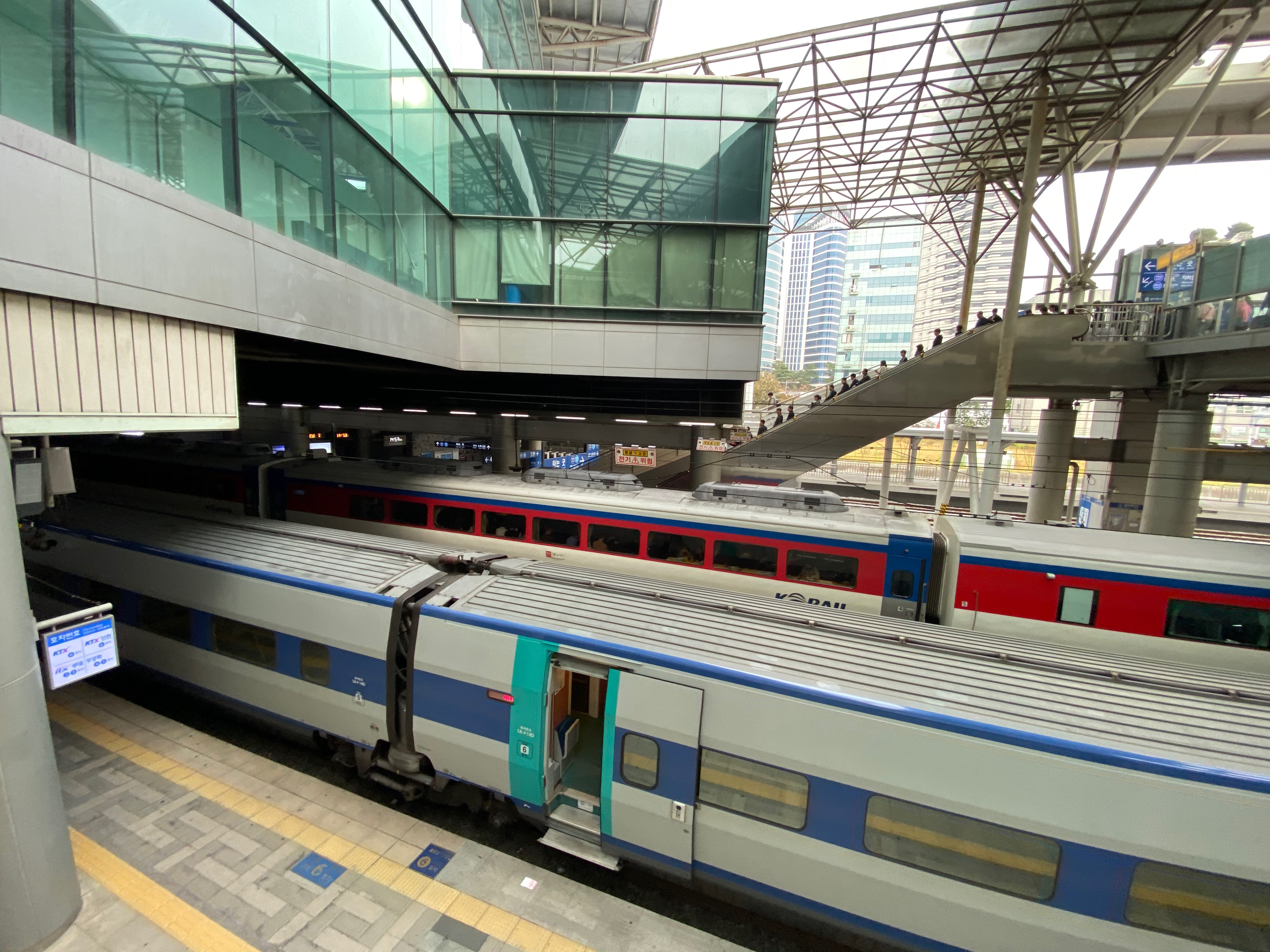
After getting our takeaways, we headed to the platform where our KTX train is waiting for passengers to board. We had trouble looking for a spot to stow our luggage for the journey. There are very limited luggage storage space in between train carriages and all of them were occupied at the time we boarded the train. We had to place one of our luggage in the seat with us, while the other in the space behind the last seat in the carriage. We got settled into our seats and the train commenced the 3 hr journey from Busan to Seoul with a few stops in between. We wanted to pamper ourselves a little and gotten First Class seat tickets on the KTX. Instead of four seats across in the Economy Class, First Class seats only have three seats across each row. The seats are very comfortable and resemble a large armchair. The seats are so comfortable that we got a good rest onboard. About 30 mins after the train leave the station, a train attendant comes around and distributes a snack pack to passengers in the First Class section of the train. First Class passengers can also obtain an unlimited number of bottles of spring water from the vending machine between carriages for free. We watched South Korea zoom pass the large windows from our seats, the view from the train was amazing. Mountains after mountains, cities after cities and rivers after rivers. This is the joy of riding a train instead of flying. Halfway through the train ride, we settled on the food we bought before we board the train. The 3 hrs train ride just whiz pass like the scenery of South Korea before our eyes as the highspeed train made its way from south to north of South Korea. The train soon pulls into Seoul Station before we know it.
9B1C049A-4153-4E93-A145-6D63050F77C2

Taking a wefie with the KTX train that would bring us to Seoul

4FE985A4-371F-4640-92E4-7F2A3F347085

My other friend is sitting behind us

CBC8E375-9B83-41F6-BC47-D5501DE4EFF2

Onboard in the First Class seat

Return to Seoul – A Sense of Familiarity

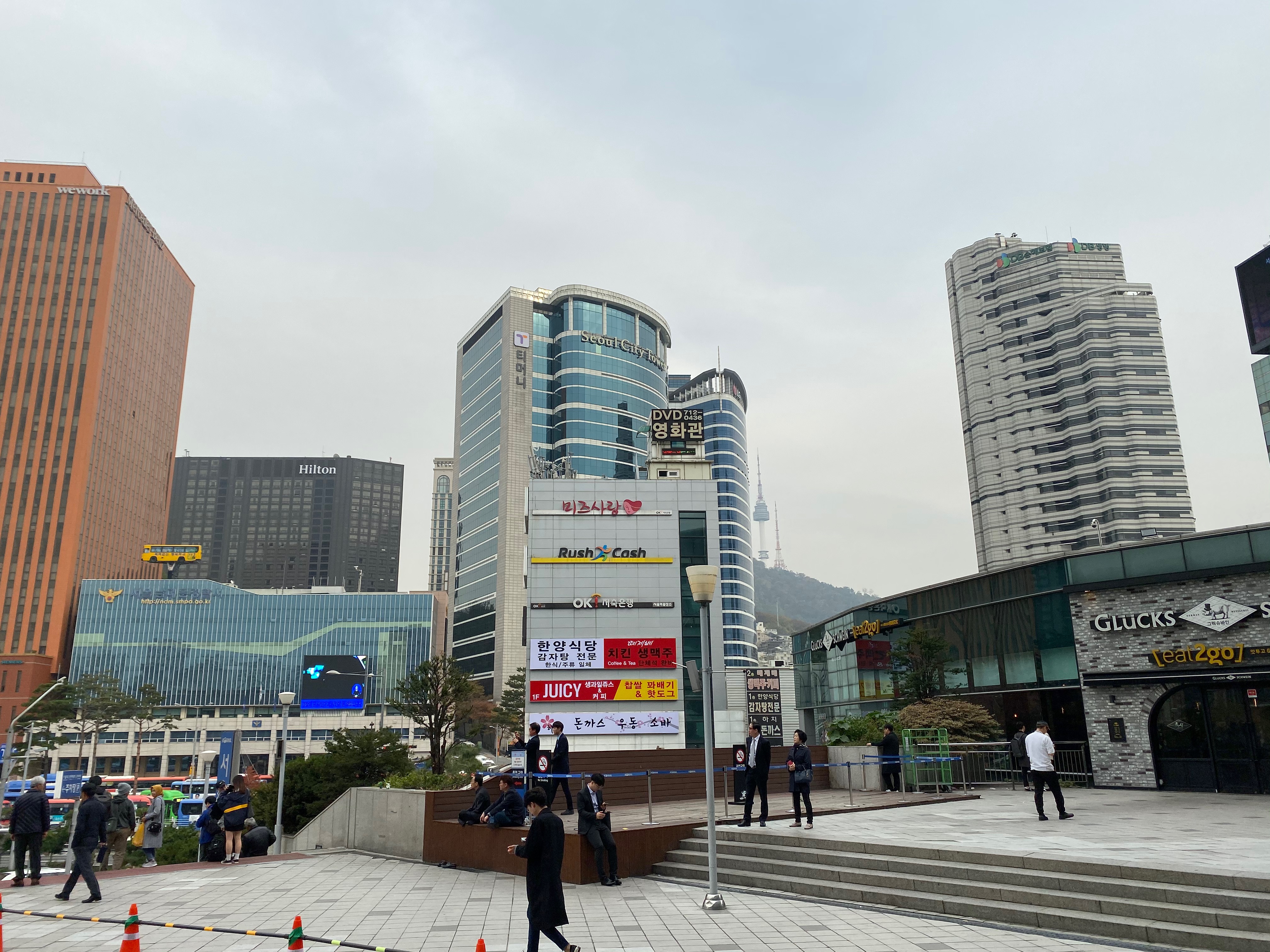
As we exited the station, the streets suddenly became familiar. My friend and I were here three years ago. Nothing much as change. As we were standing in front of Seoul Station, we begin to relate to our other friend where we stayed the last time we came to South Korea and the supermarket where they were giving out new year rice cakes to customers who walked into the supermarket. We had no troubles finding the entrance to the subway station in Seoul Station and managed to find the subway line that would take us to the hotel we would call home for the remaining days we have in South Korea. The hotel we stayed is a mere four stops away from Seoul Station. We arrived at the hotel and checked into our rooms. My friends and I settled in for a while and headed out to watch the Korean Non-verbal performance – Fantastick. We made our booking through KLOOK, however, when we arrived at the address that KLOOK gave us through the vouchers, we were surprised there weren’t any theatre buildings around. We begin asking some locals on the Fantastick theatre, although there was some communication difficulty, the Seoulites we met were very helpful. Using a translation app and their limited knowledge of English, we were told that the address given was the wrong address. One of the Seoulites that we met even googled the address on his mobile phone and showed us the correct place of the theatre. As we were already late for the show (the show would have started even if we head over to the theatre), we gave up the idea of watching the show and headed to Gangnam.

6DCD54F3-DEEB-4A98-9279-39D7C19E2B71

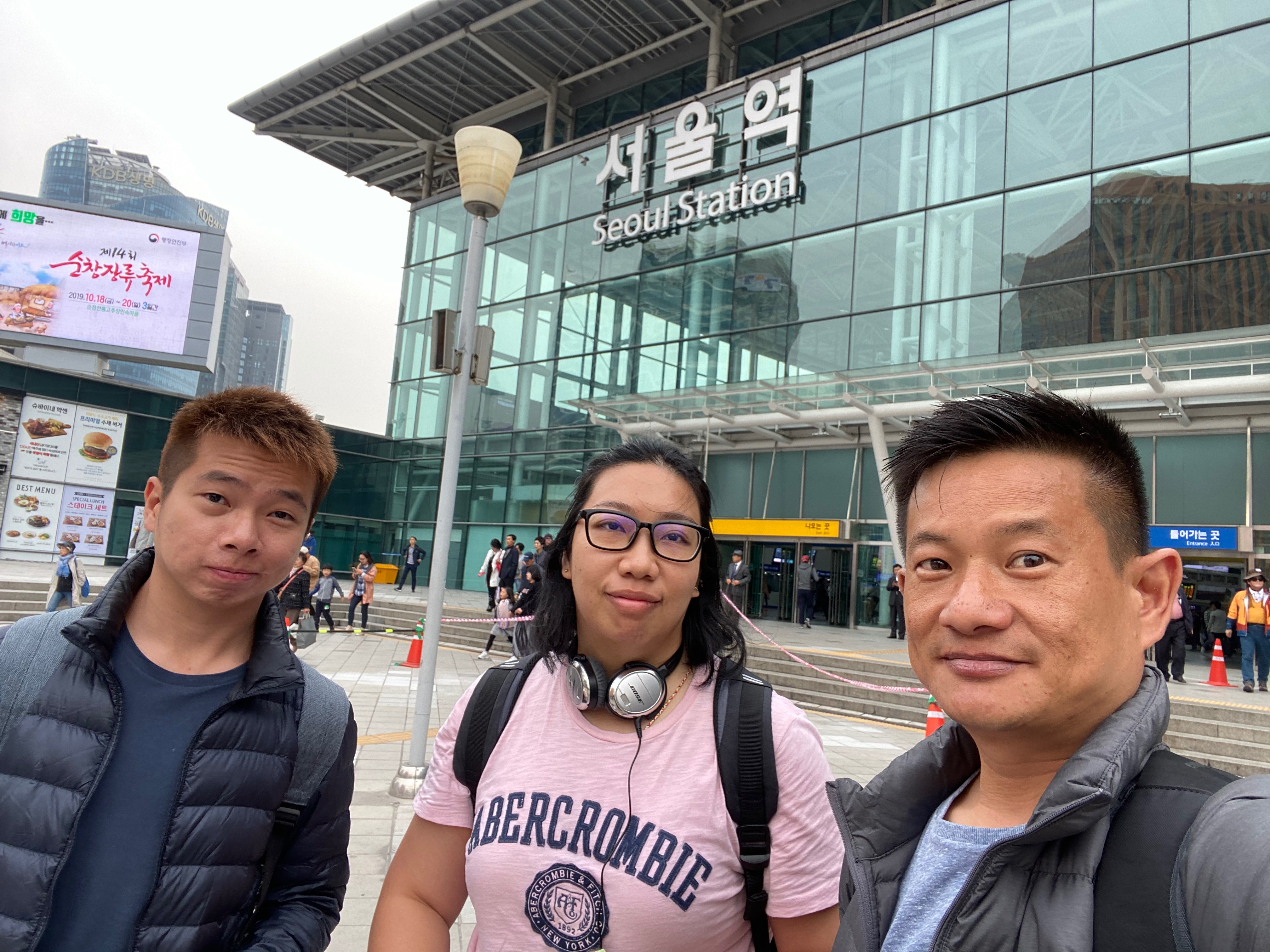
Taking a wefie in front of Seoul Station

B61A1422-A88C-4667-AB97-A532A7E78E1D

Seoul as I remembered it

Gangnam Garosugil

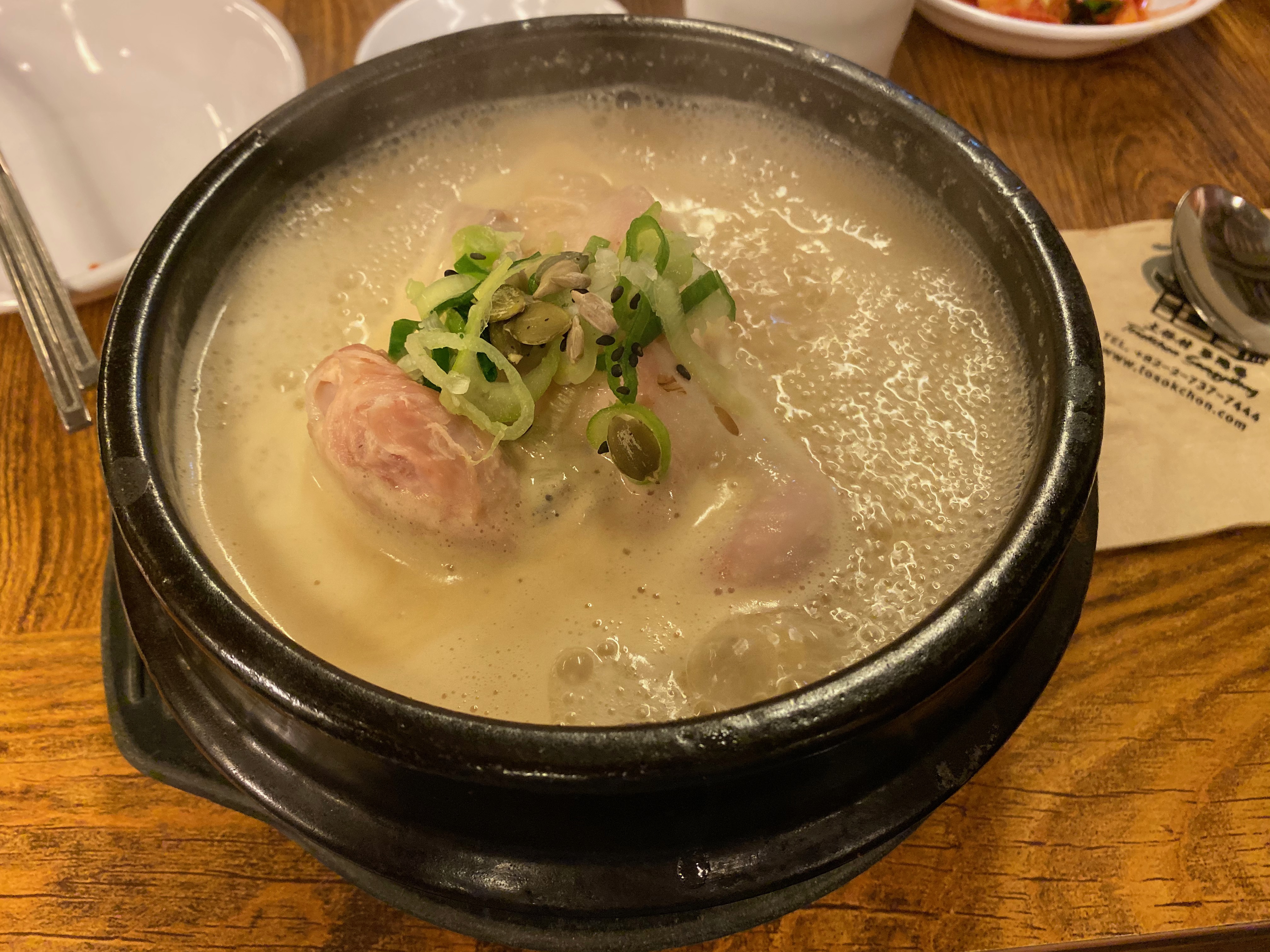
My friend and I visited Gangnam Garosugil three years ago when we came here. Back then we were here to explore the area, however, this time around, we were here to get some mobile protectors (Spigen shop is here). As we exited the subway station, the sense of familiarity kicked in. We did not even have to rely on the map to tell us where to go. Gangnam Garosugil got its name as trees are planted on both sides of the road, almost like soldiers in a parade. Gangnam Garosugil is a relatively short street with shops, restaurants and cafes lining on both sides of the street. There are not many tourists here, mainly Seoulites visit this place. The place is as we remembered it three years ago. All sorts of luxury branded shops as well as local designer shops lined on both sides of the streets in Gangnam Garosugil. Some shops we saw three years ago are still there, others have been replaced. There is even an Apple Shop in Gangnam Garosugil. The Seoulites coming to Gangnam Garosugil are all dressed up as if they are trying to match the upmarket Gangnam Garosugil. After getting our mobile phone protectors, we took the subway to Gyeongbokgung Station for the Ginseng Chicken we had three years ago when we came. My friend still can’t forget the Ginseng Chicken we had from the restaurant three years ago. The restaurant, Tosokchon Samgyetang, is very popular with tourists and locals alike. We had to time our visit to the restaurant to avoid the long queue, which is very common in this restaurant. We reached Tosokchon Samgyetang at around 7.30pm, where the crowd had died down and we did not even have to wait in a queue.

Myeongdong – Shopping Mecca of Tourists

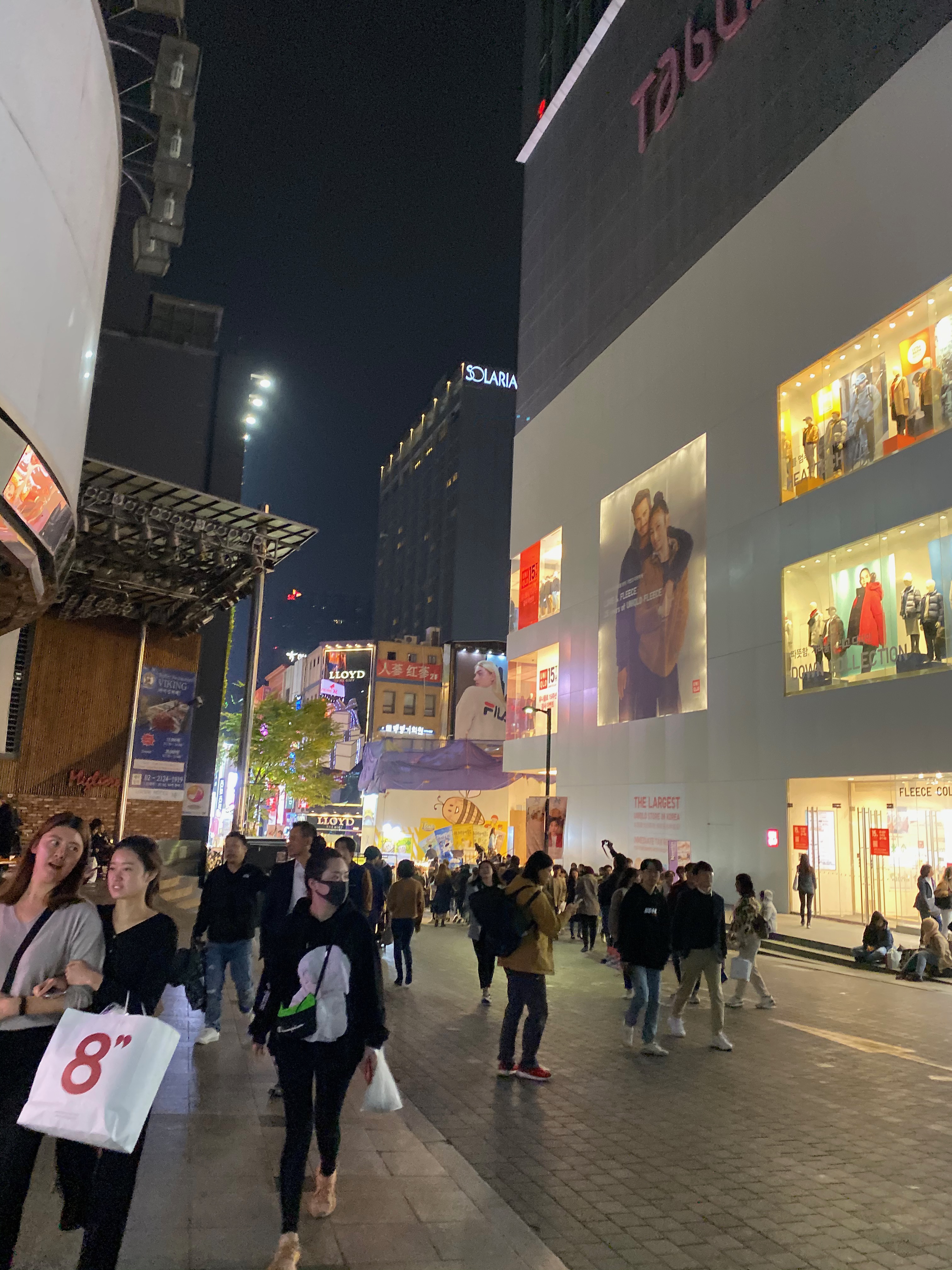
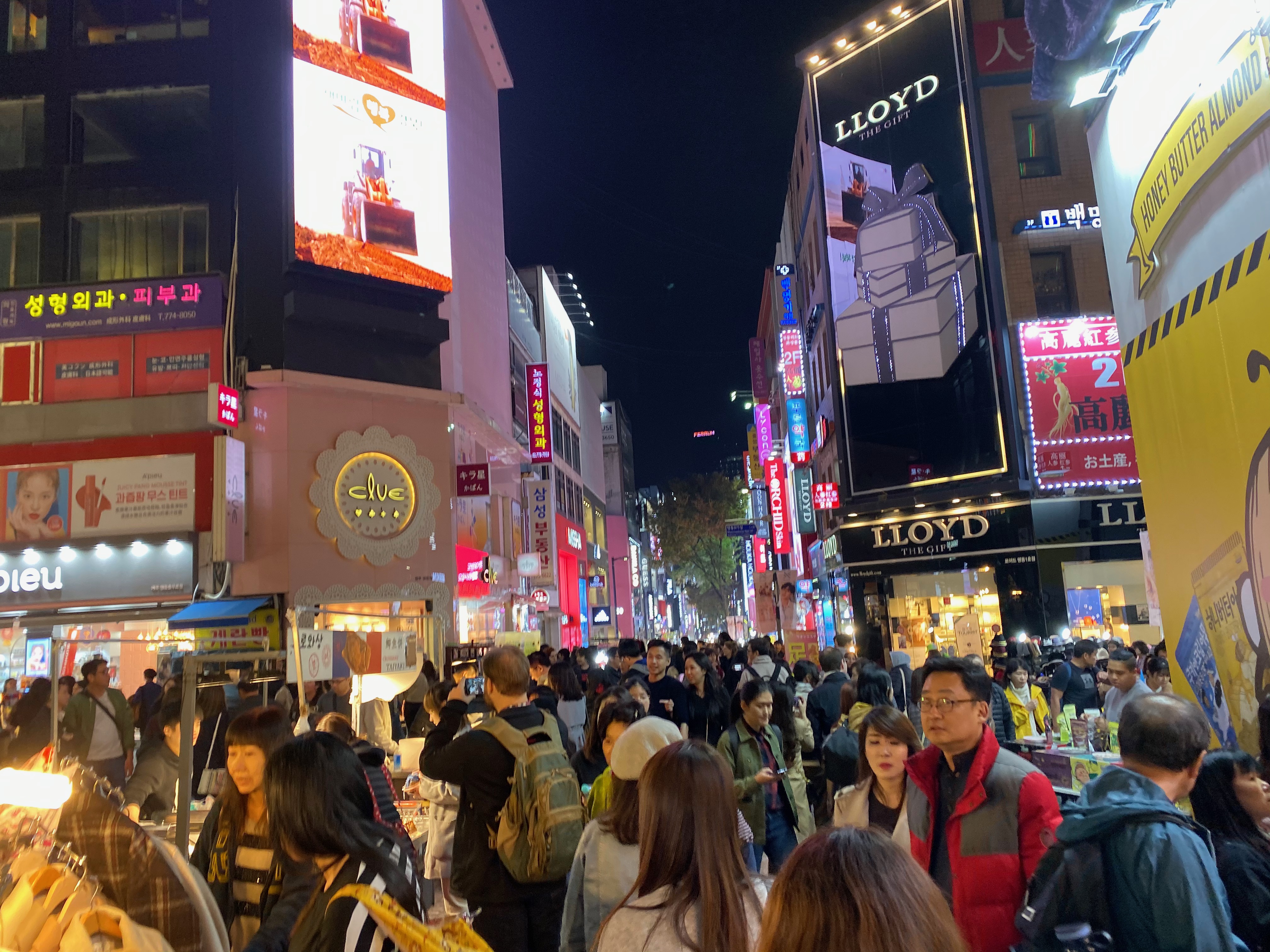
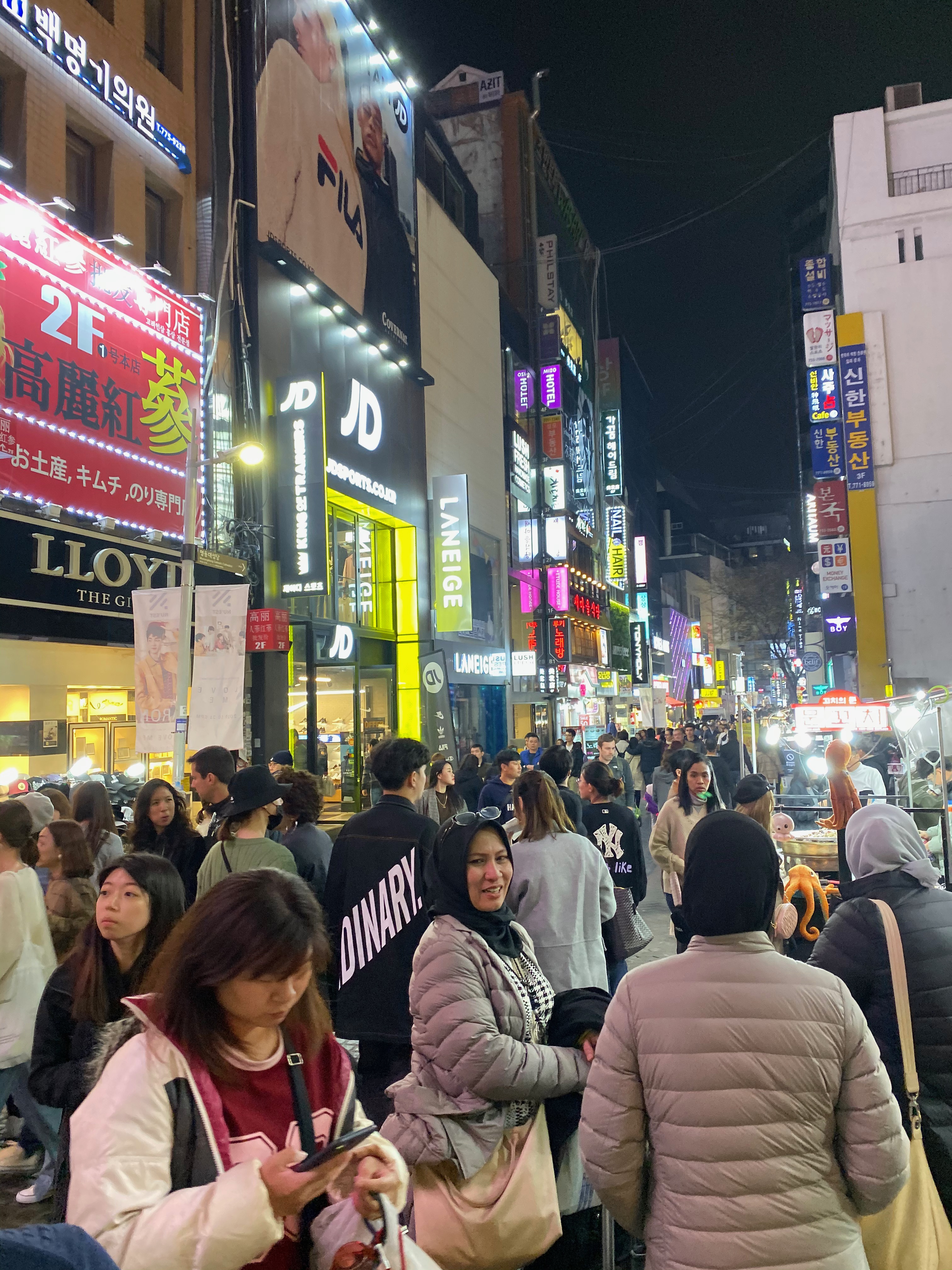
After having the delicious and flavourful Ginseng Chicken Soup, we headed to the shopping mecca for tourists in Seoul – Myeongdong. Myeongdong is a shopping area, nearby to Seoul Station, with a lot of shops. It is highly popular with tourists as most of the shops here offer on the spot VAT refund for tourists. Exiting the subway station, we were faced with hordes of tourists coming here to shop at Myeongdong. Nothing much has changed here since our visit three years ago. The same shops are still there. One thing nice about Myeongdong is that not only it is packed with Korean brand shops, there are also street food stalls lined up in the middle of the walking street. What I like about Myeongdong is that most of the staffs in the shops can speak fluent mandarin or good amount of English. Some of the shops here even offer good discounts for tourists and are very generous in their gifts to tourists. Myeongdong is a one-stop area for tourists as it has everything that tourists usually come to Seoul to shop for. After getting the things we were here to buy, my friends and I went back to the hotel to rest for the night.

1E2D1967-D5B1-4A72-B3F6-DBBFF72AD80F

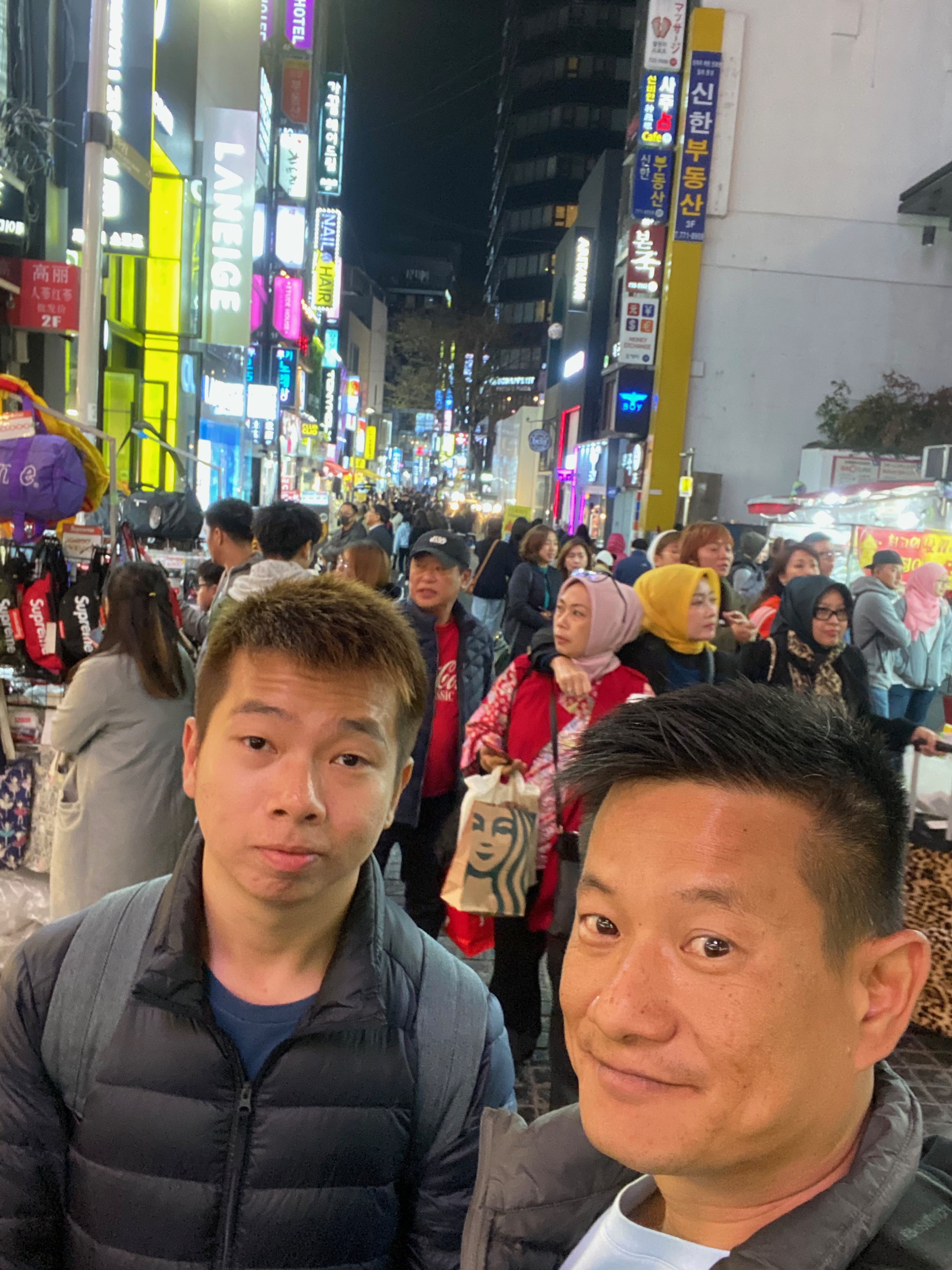
Myeongdong is always crowded with tourists

8E138C79-6259-461E-91E0-D67407744BA6

Taking a wefie in Myeongdong

C6E5D3DF-20DC-4A5B-935A-48AE1CA3D89E

Myeongdong is very crowded especially on a weekend

54C5283F-D6B2-4485-B2CF-DDB9CA2A1603

Myeongdong is full of tourists

Jeju/Busan/Seoul Day 5 (30 Oct 19) – Tongyeong and Geoje in Gyeongsangnam-do: The Naples of Asia

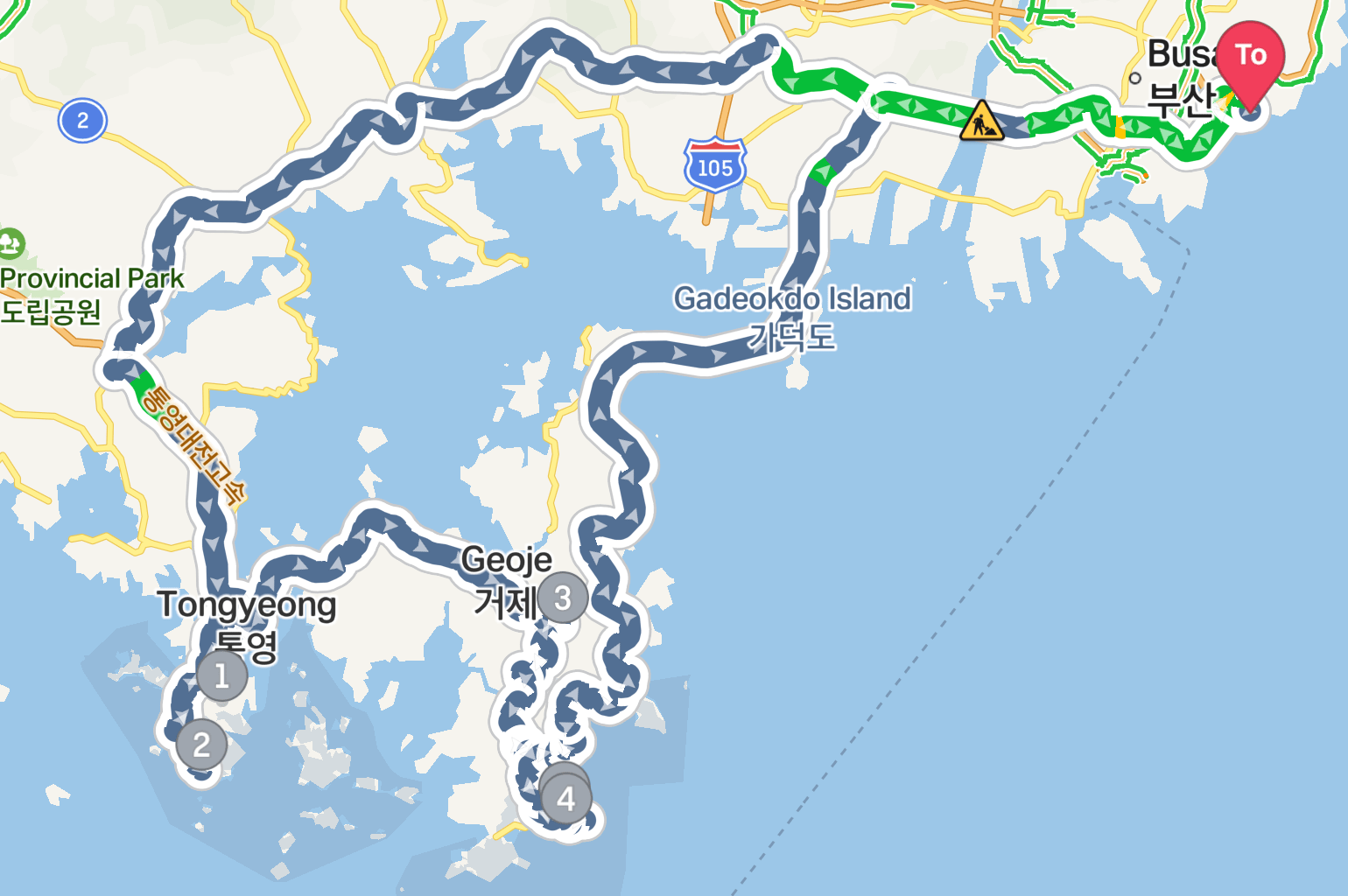
d372364c-7fe6-4223-b3e5-ce8cebb3bfbf.png

Our road trip to Tongyeong and Geoje in Gyeongsangnam-do

Journey to the Naples of Asia – Tongyeong and Geoje

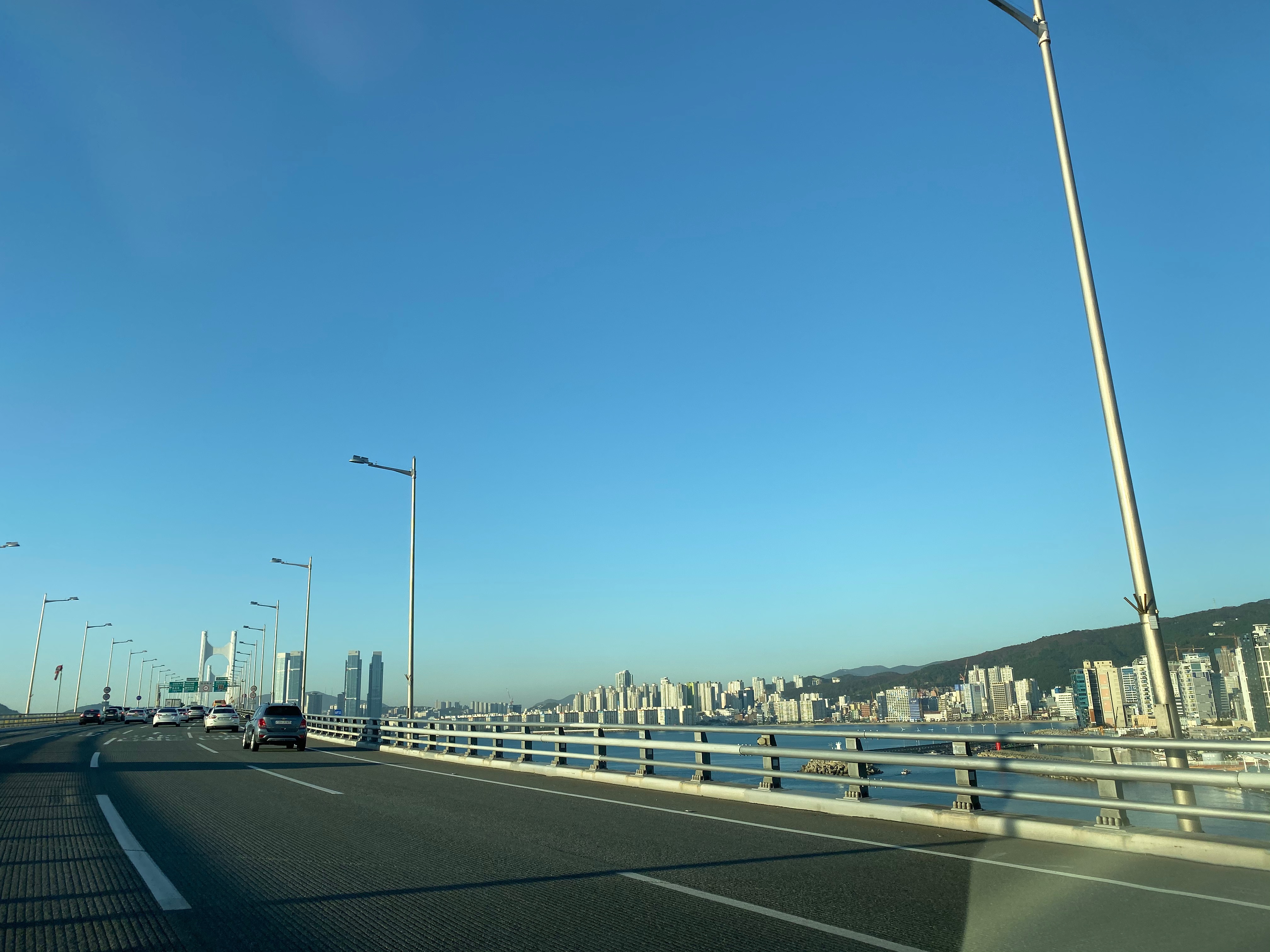
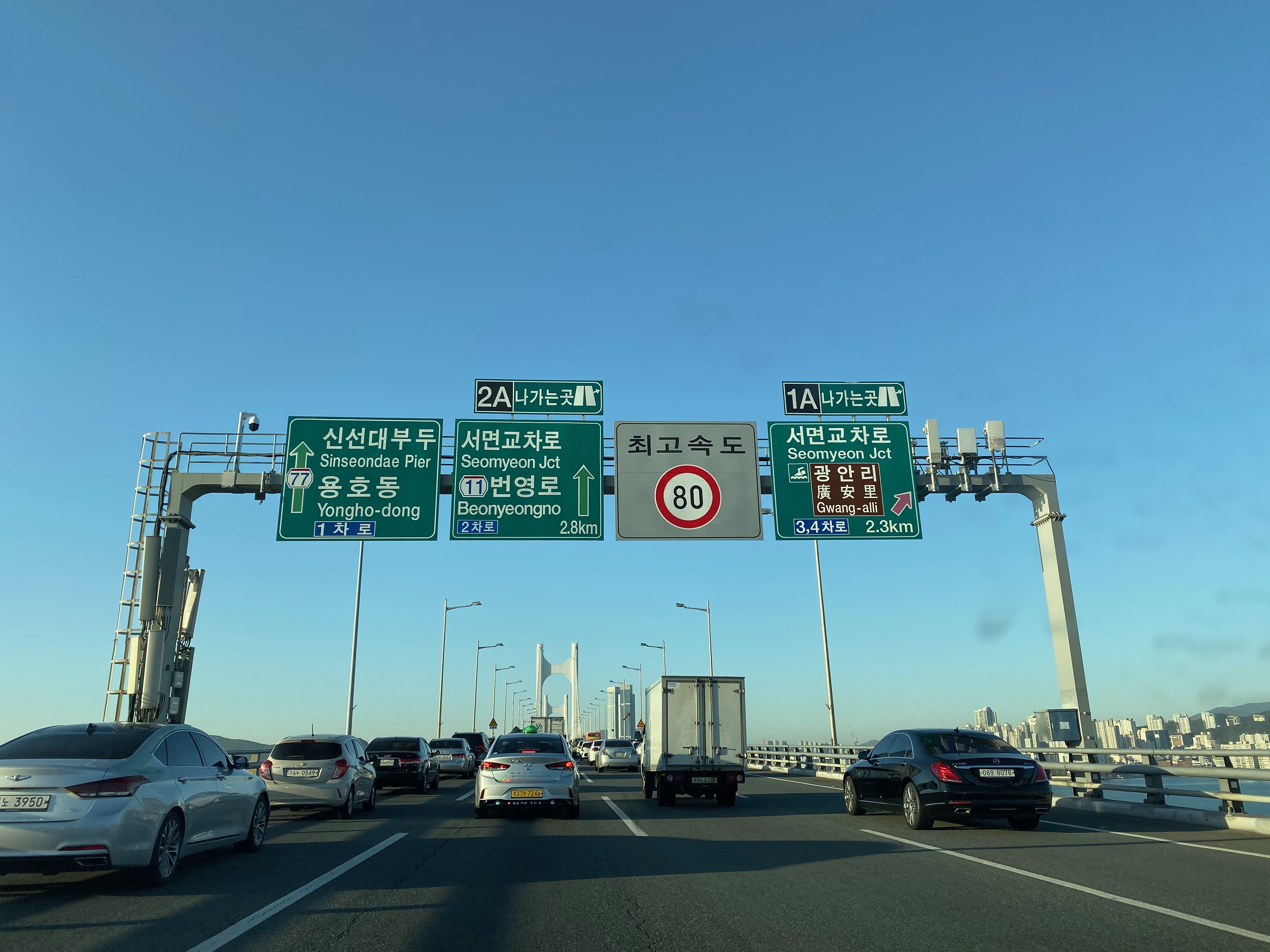
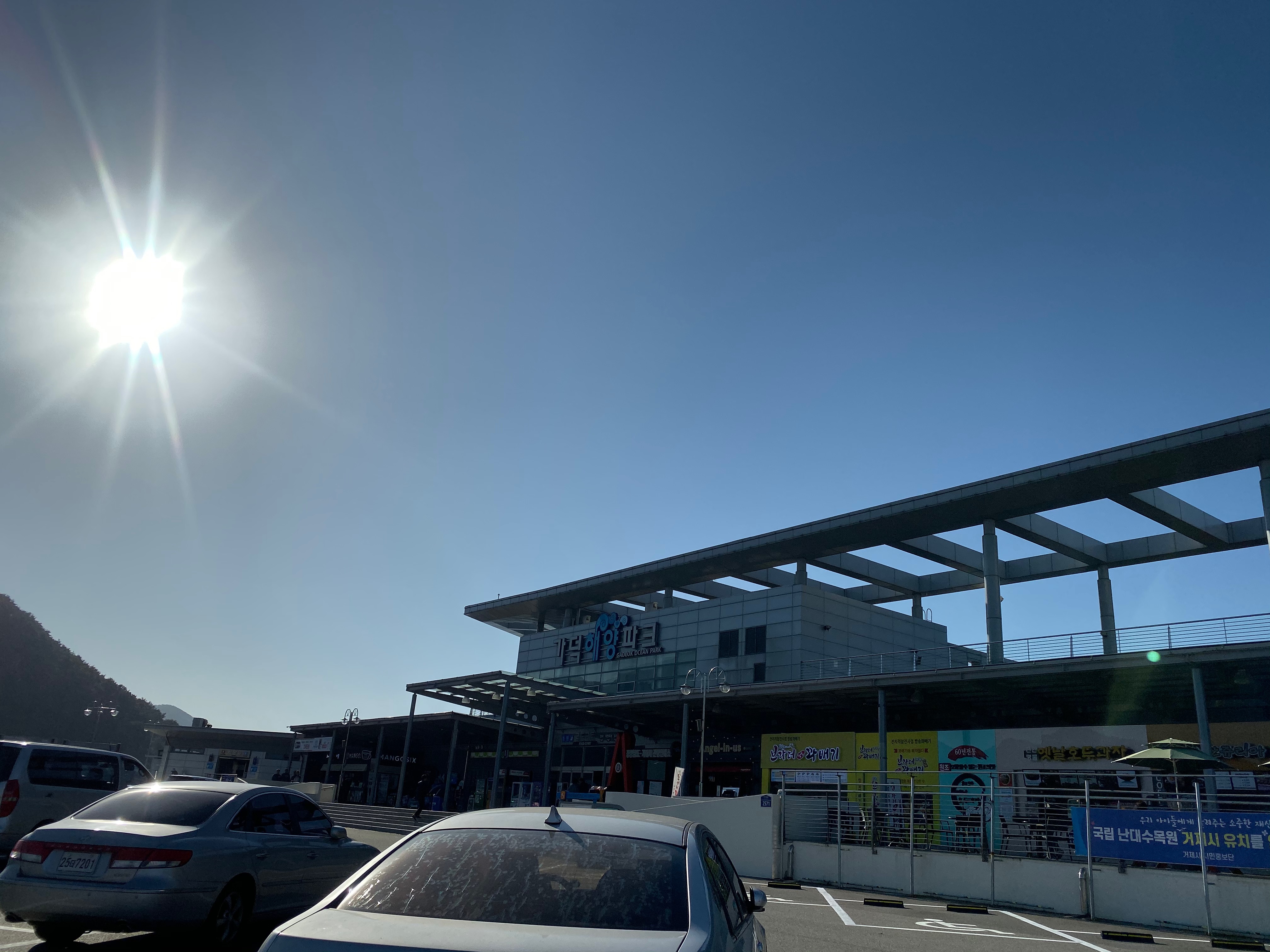
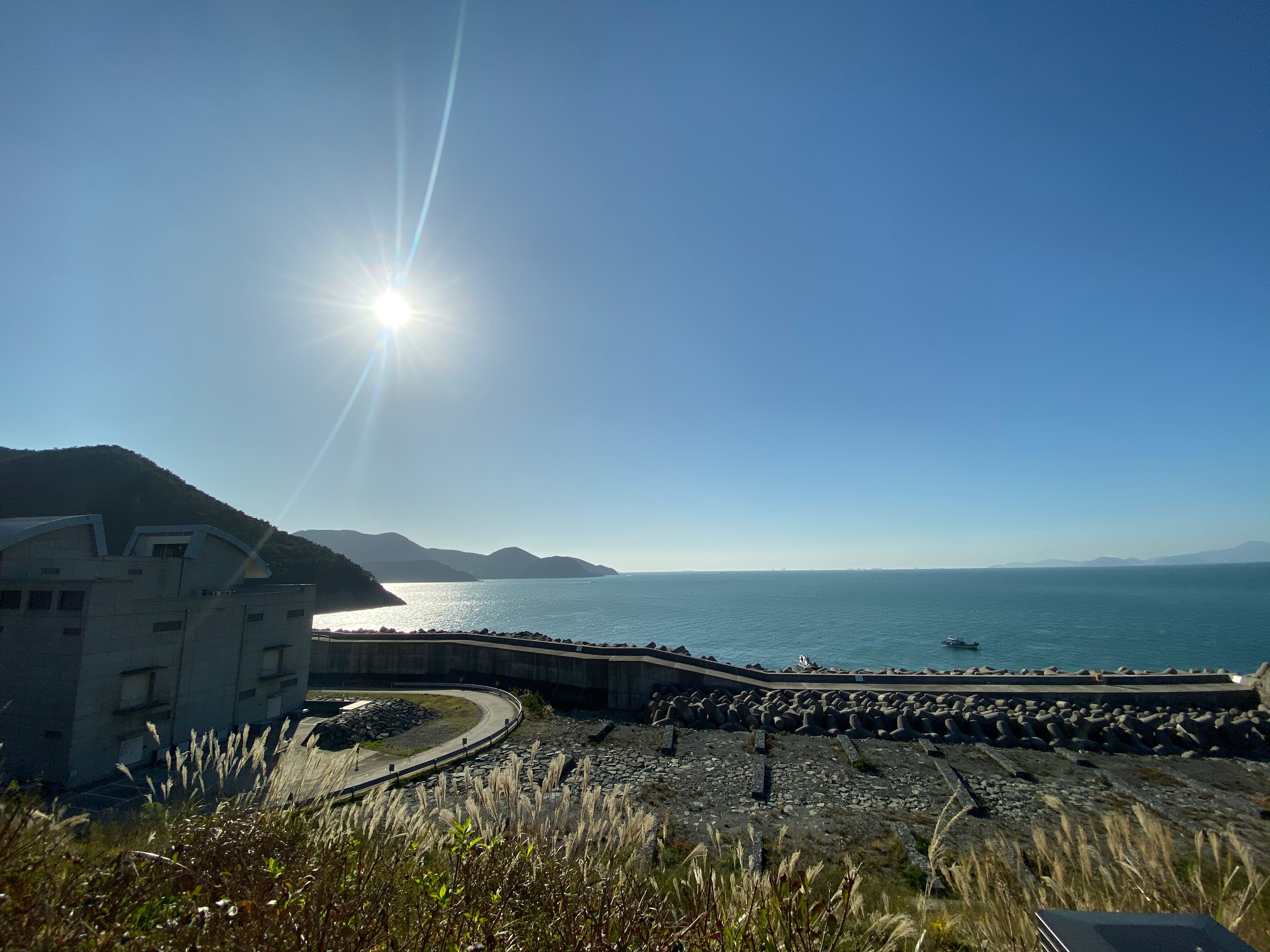
We started our day early today again. We set off from Busan at 7.30 am partly due to the long drive from Busan to Tongyeong and partly to avoid the morning rush hour in Busan. The plan is to visit Tongyeong first as it is further away from Busan, followed by Geoje before returning to Busan. The drive to Tongyeong from Busan takes around 3½ hrs. My biggest worry about driving on this trip is Busan. I read that Busan has narrow roads and traffic jams are very common. Having little experience in left-hand drive, I figured we should leave early. The traffic condition was light at the time we set off, however as we drove westwards towards Tongyeong, traffic starts to build up. It is still manageable. About 1 hr into the journey, we are already out of the city of Busan. Our GPS app led us to drive on the bridge and tunnels that pass through several islands, with amazing scenery. About 1½ hrs into the journey, after passing the first bridge over the sea, we spotted a sign that points to Gadeok Ocean Park rest area. This is a good time for me to take a break and for us to grab some snacks. We found a statue of Le Petit Prince at the back of the building facing the surrounding sea and the best thing is there is no one queuing up to take pictures with it. I told my friends I thought Gamcheon Culture Village is the only place that has this statue. We also discovered a small park behind the rest area building that overlooks the sea dotted with small islands afar. It feels very peaceful looking out while the sea breeze gently brushes against our faces. There is a pavilion here for visitors to rest or even picnic while looking out into the sea. After getting our food and coffee we continued driving to Tongyeong. We drove on Geogadaegyo Bridge that links the several islands in this region together.

223509D1-4076-422D-B8EC-8EAF33B218C3

The blue sky and the calm sea makes this scenery feels peaceful

Tongyeong – The Port City of Islands

Mireuksan and the Longest Cable Car in South Korea

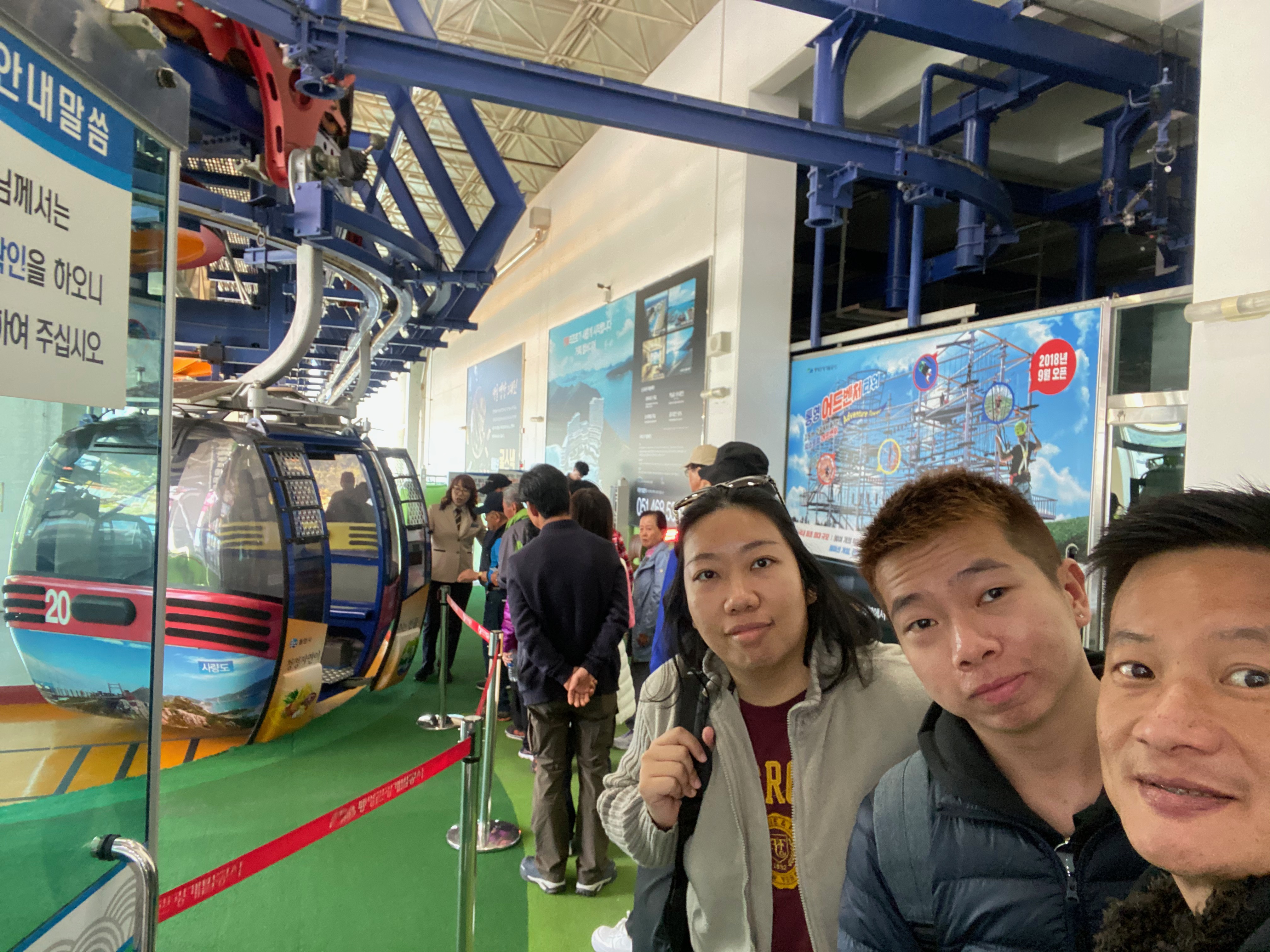
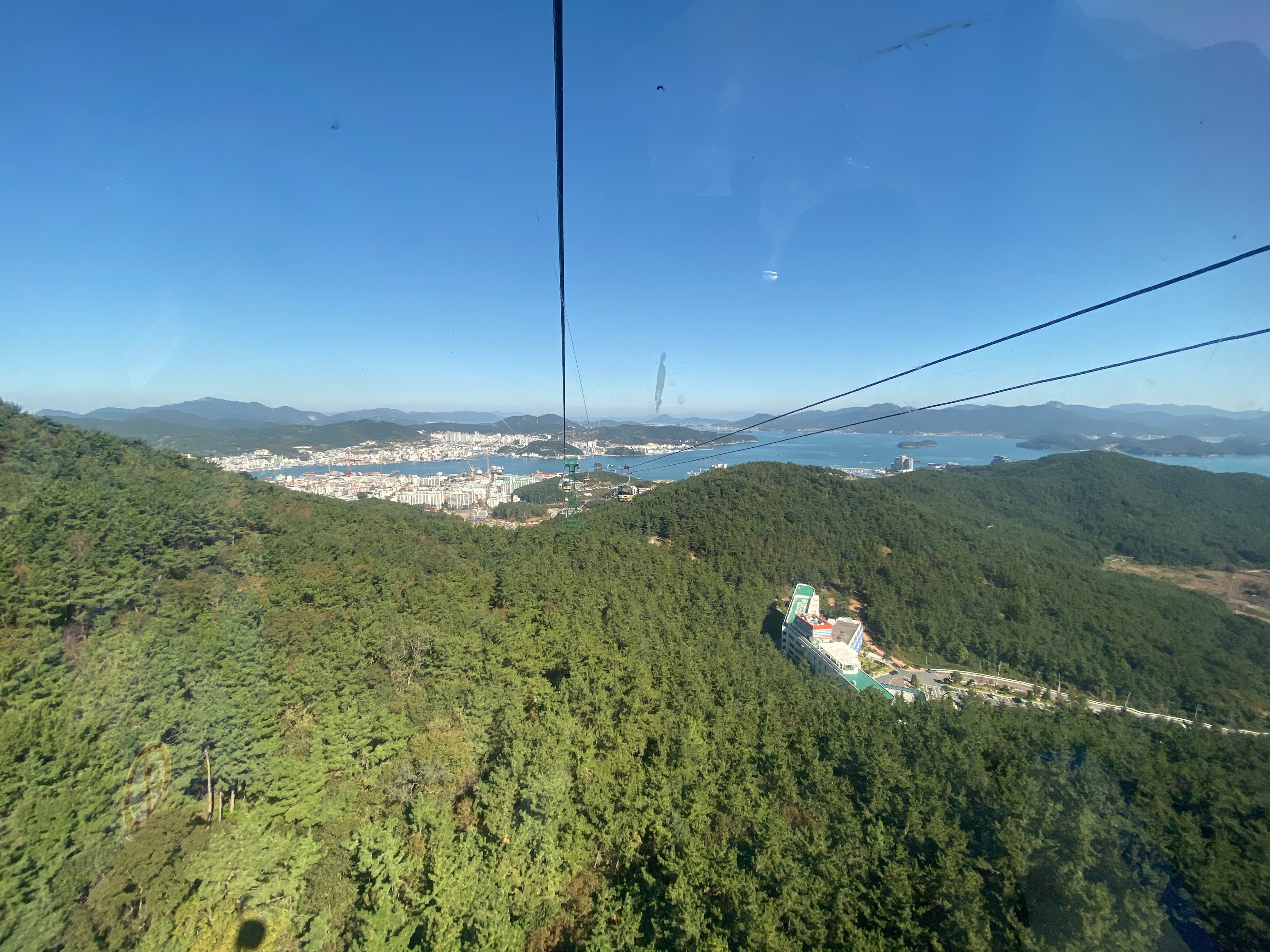
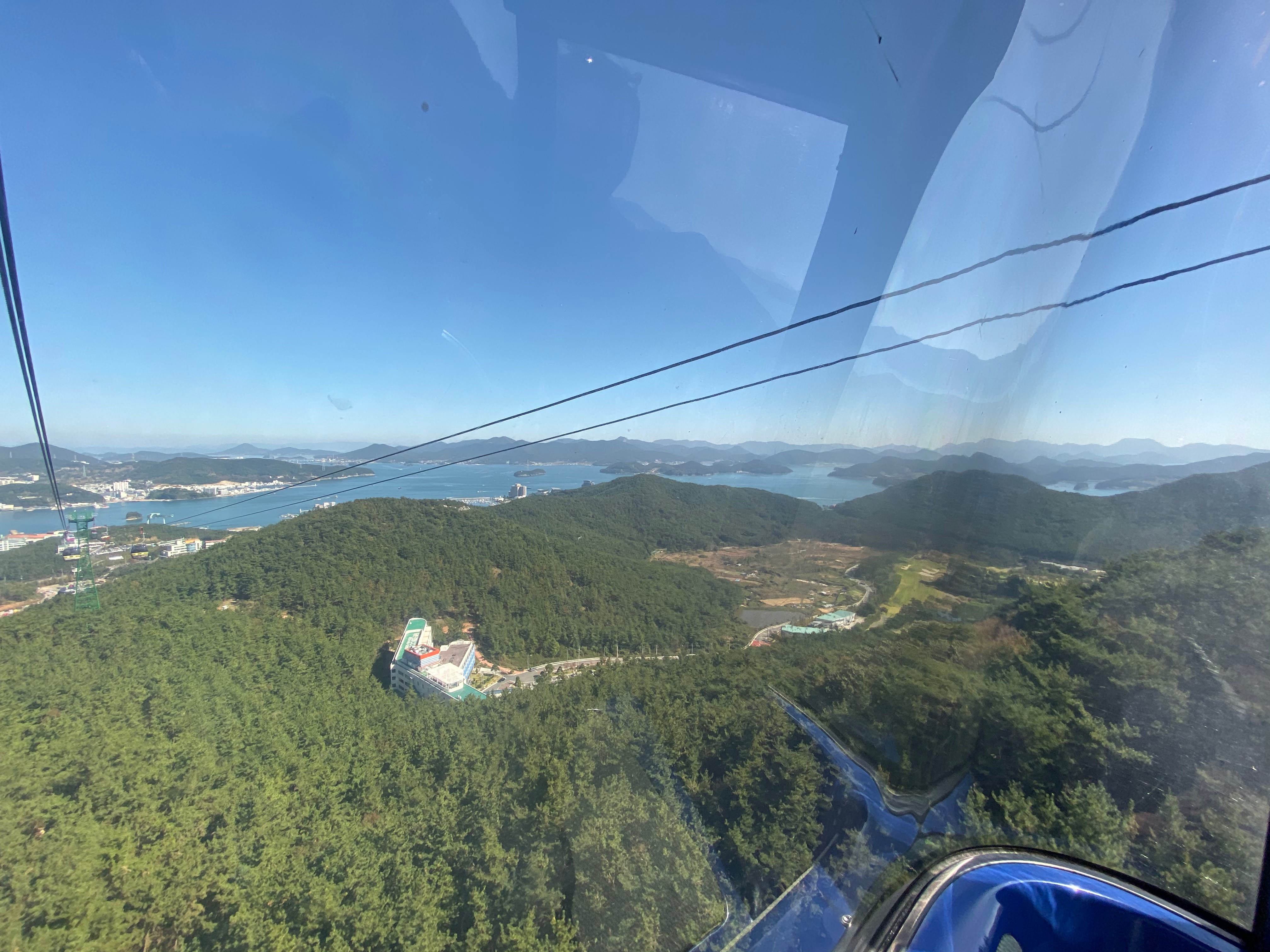
We drove for another 2 hrs to finally reach our first destination in Tongyeong, Mireuksan. Mireuksan is one of South Korea’s top 100 mountains which boasts a view of the numerous islands in the surrounding. To get to the summit of Mireuksan, we did not have to trek like we did in Hallasan. Here we embarked onto our third experience on this trip, riding on South Korea’s longest cable car system. The cable car ride costs KRW10,000 per person for a return ride. Tongyeong Hallyeosudo Cable Car is 1,975m long and 10 mins ride whisks us to the summit station of Mireuksan. As the cable car hovers above the thick forest of Mireuksan beneath us, I can’t help but wonder the hike up Mireuksan would be tedious if not for this cable car system. The higher the cable car climbs up Mireuksan, the more we get to see the magnificent view of the surroundings. We got a good glimpse of the entire Port City of Tongyeong and islands beyond Tongyeong from the cable car ride. This got us excited about the view of Hallyeosudo islands from the summit of Mireuksan.

C6E42432-BE89-412A-AB55-03F601FDA7C7

Riding the cable car allows us to see the surroundings

114FF94D-B5E5-400B-8119-970E677B738B

View of the Port City of Tongyeong from the cable car

C89395A6-322B-40DA-8B9C-49D848BCD168

View from the cable car

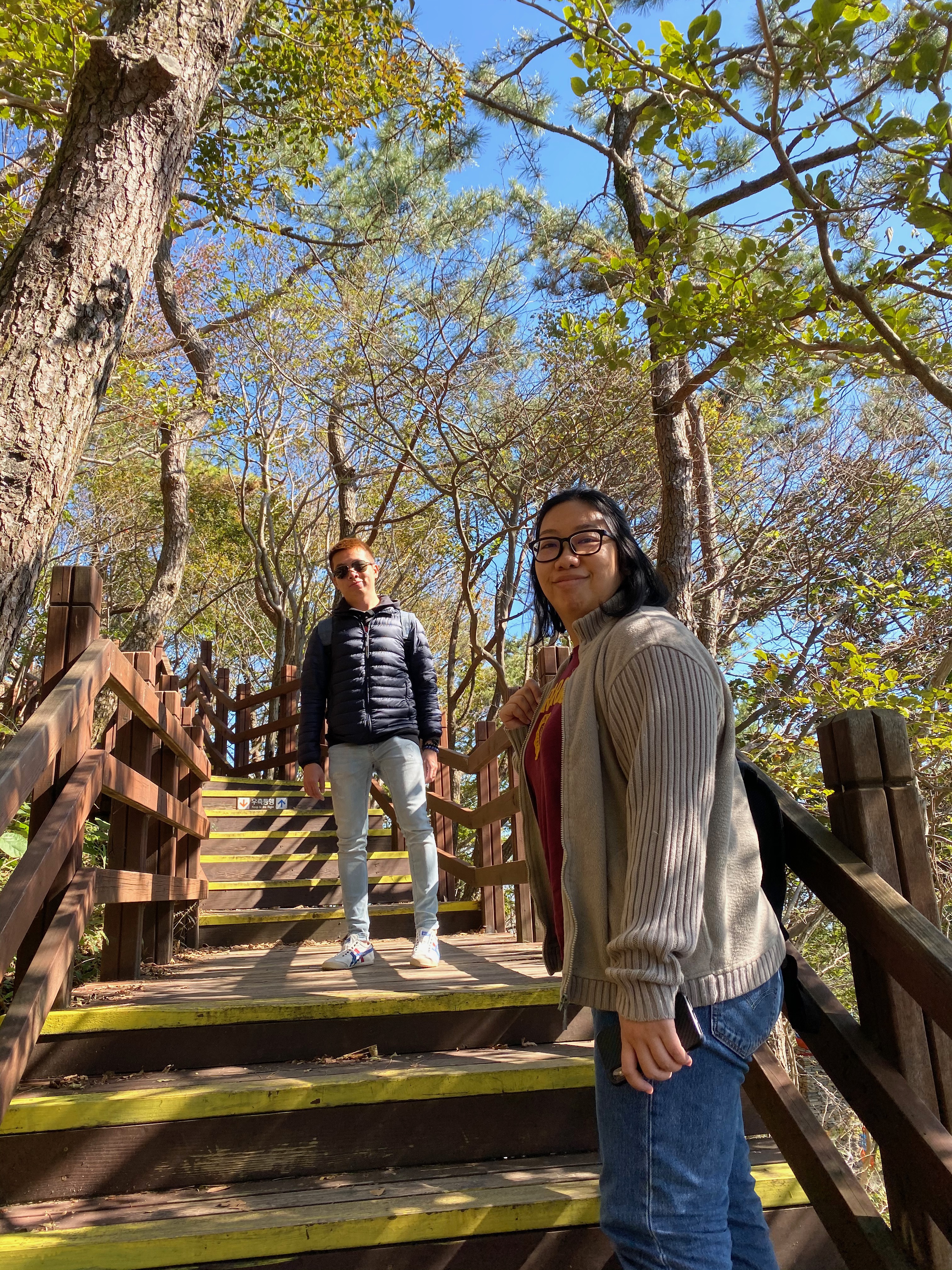
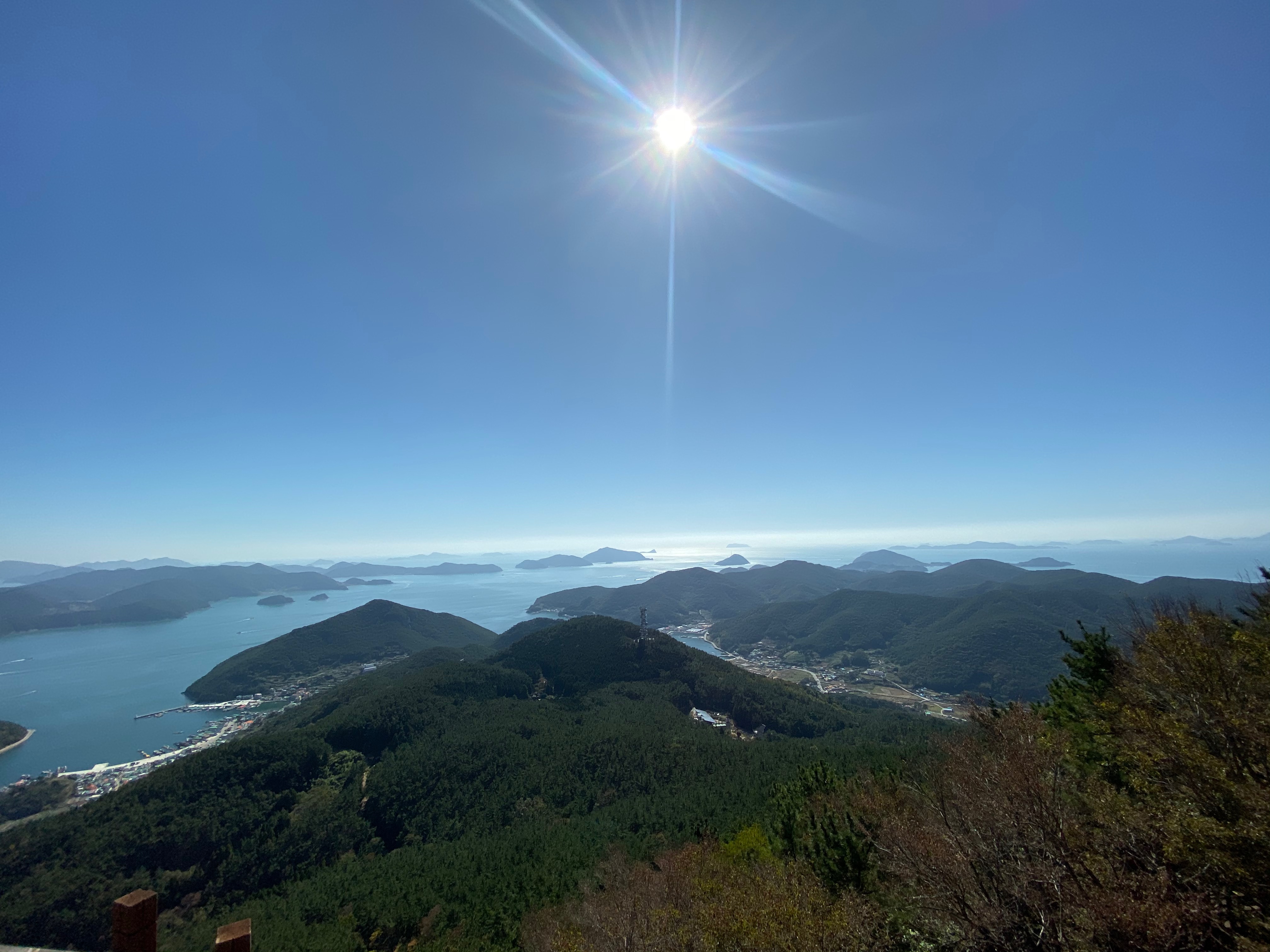
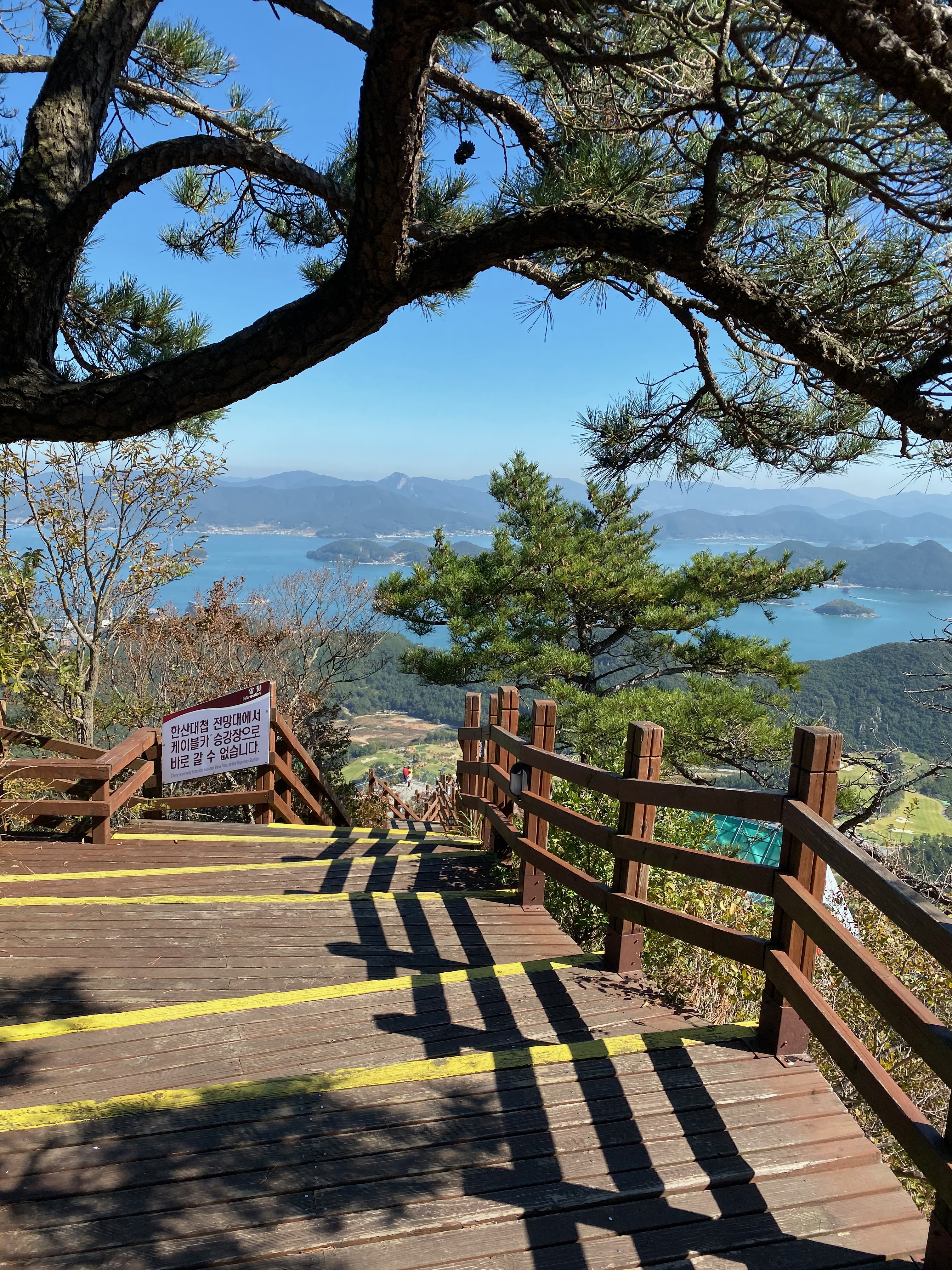
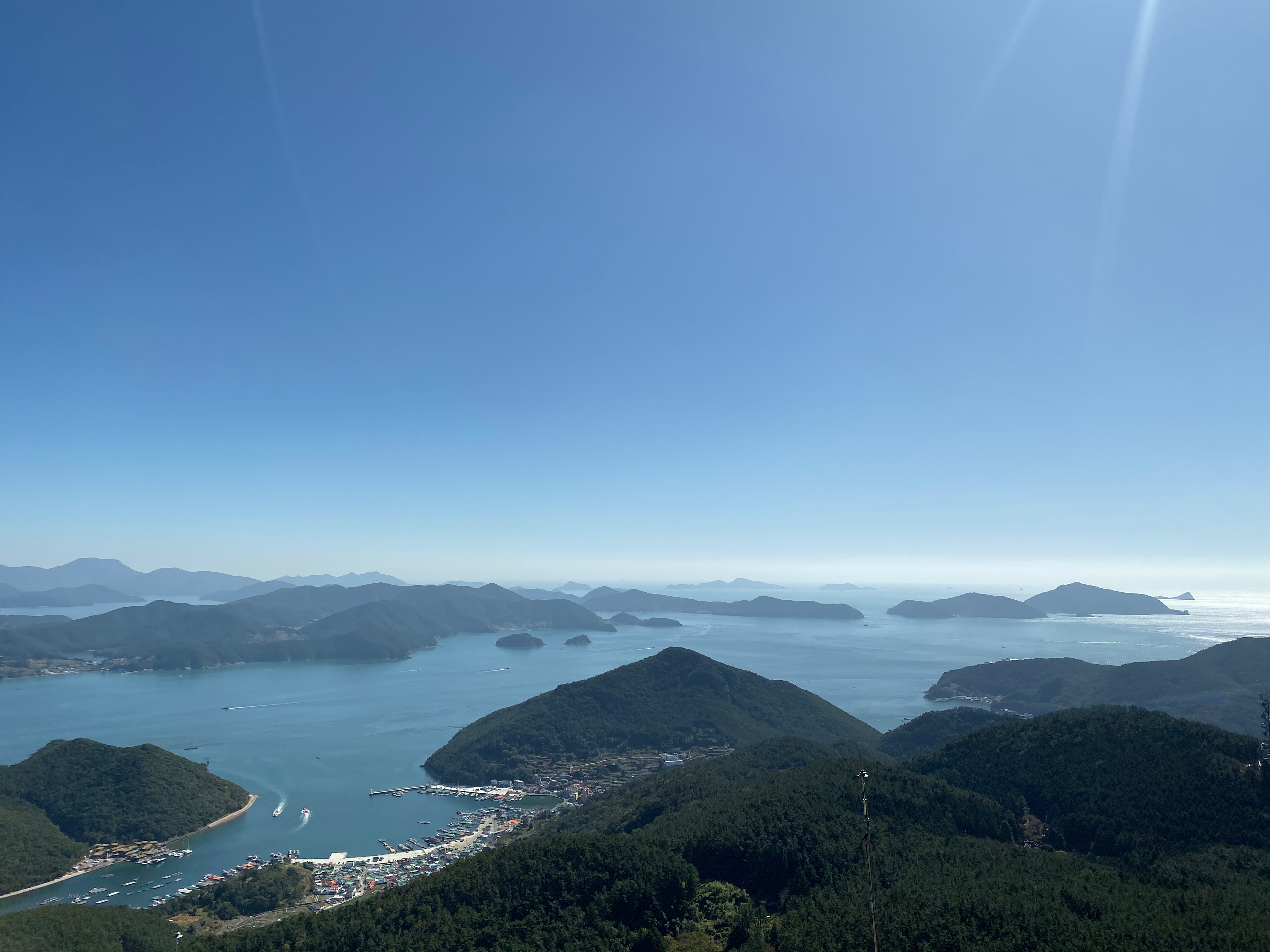
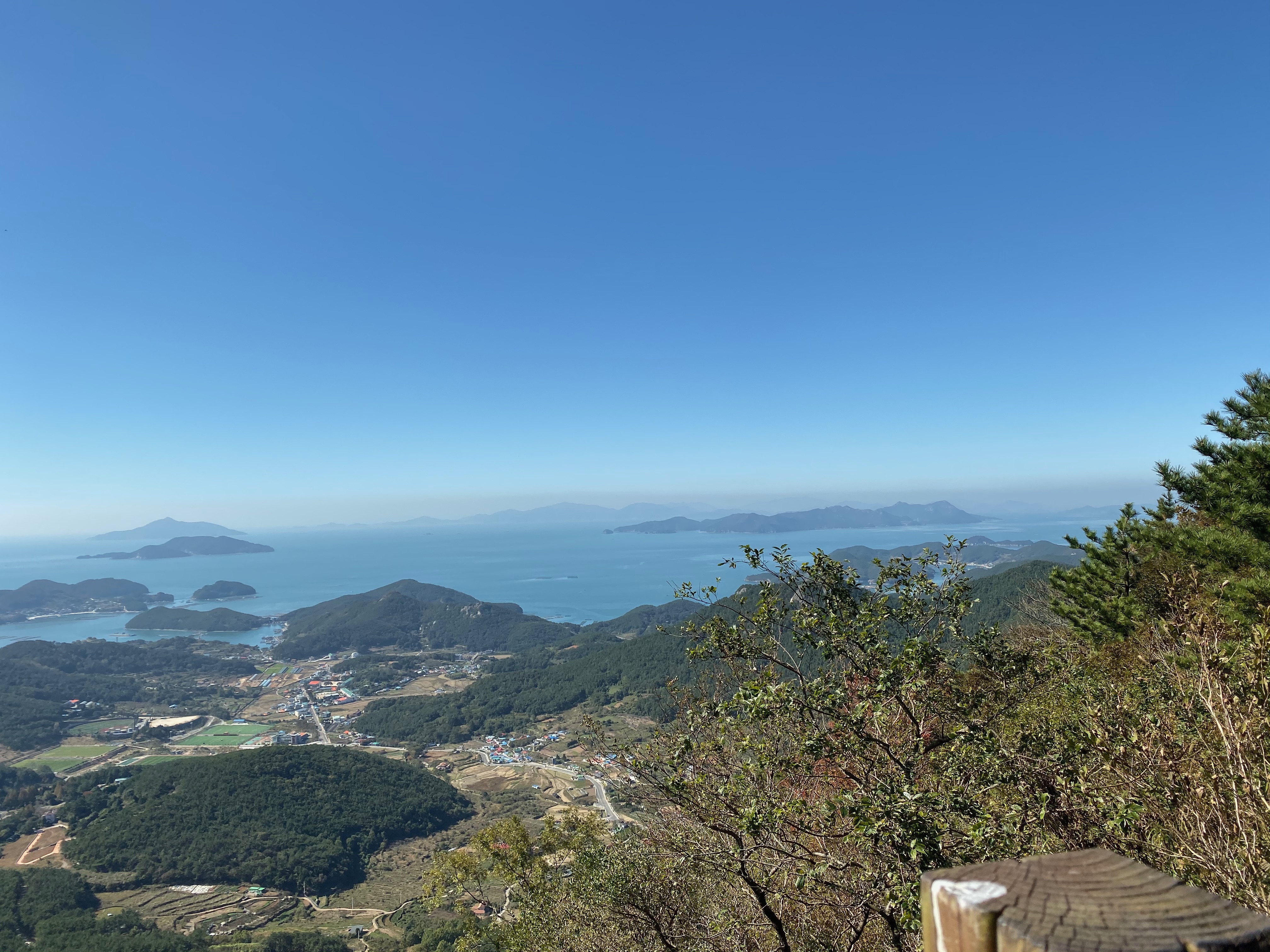
The cable car calls into the summit station, exiting the station, we already got a good view of the surroundings. We could see the numerous islands dotting all over the bay. The clear blue cloudless sky seems to merge with the sea, if not for the islands we would not be able to differentiate the sky from the sea. The walk up to the summit of Mireuksan is very easy. The path is well built and consists of a series of well-paved steps with up and down ways well segregated to prevent congestion. At one point up to the summit, the pave splits into two. The path up to the summit is a loop, it does not matter which way we go as we will end up on the summit anyways. We chose the path on the route, where it took us to the viewpoint of the Great Battle of Hansan. The viewpoint of the Great Battle of Hansan is a short way down from the main pathway. Standing at the top of the pathway, the view here is liberating, the islands in the surroundings looked like jewels spreading all over the bay. My friend and I headed down to the viewpoint, other than the surroundings, we could also see the summit cable car station we were at a few minutes ago.

AADBB839-4B1E-4B64-A772-63875F972973

View of Hallyeosudo from the cable station

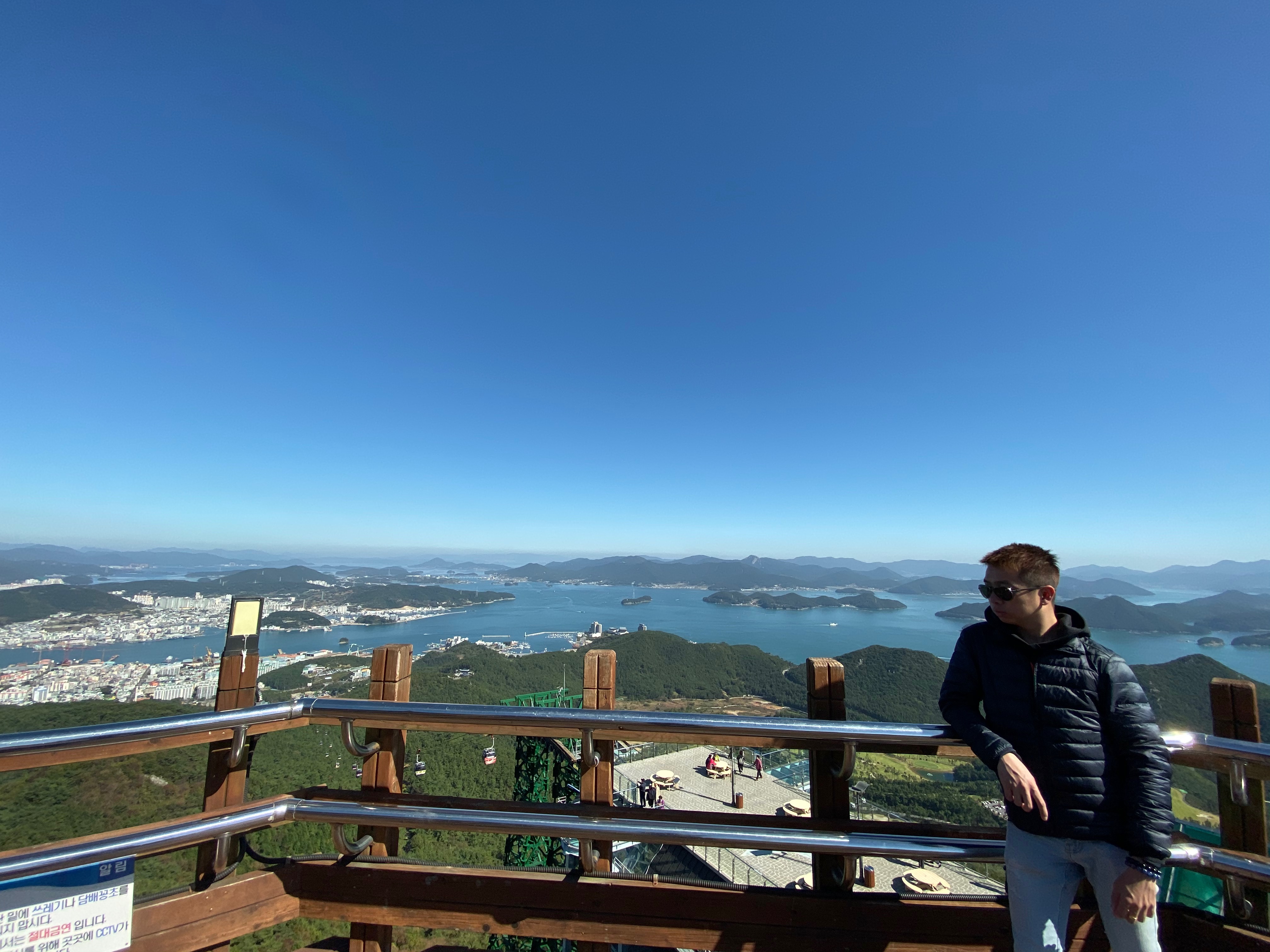
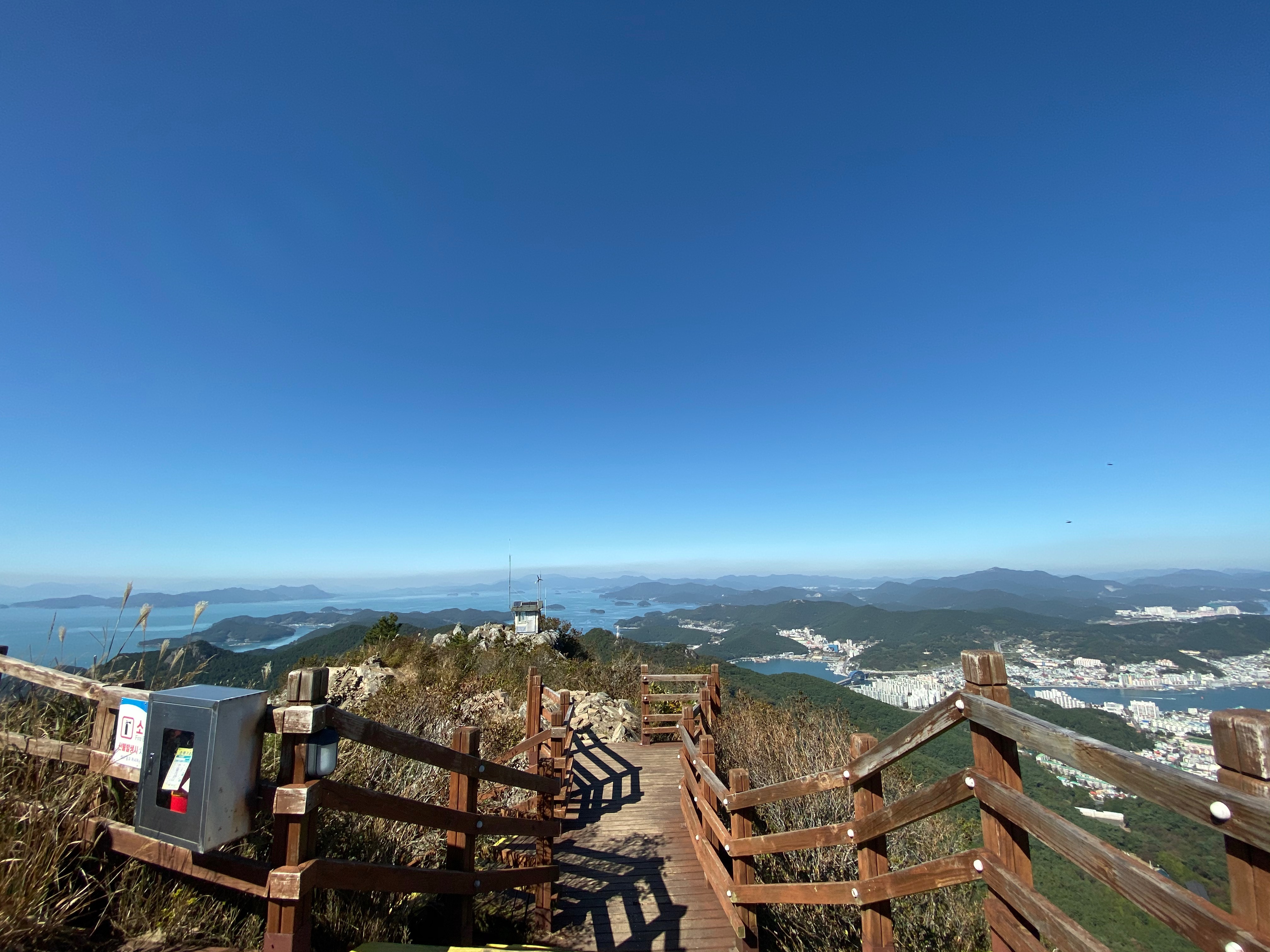
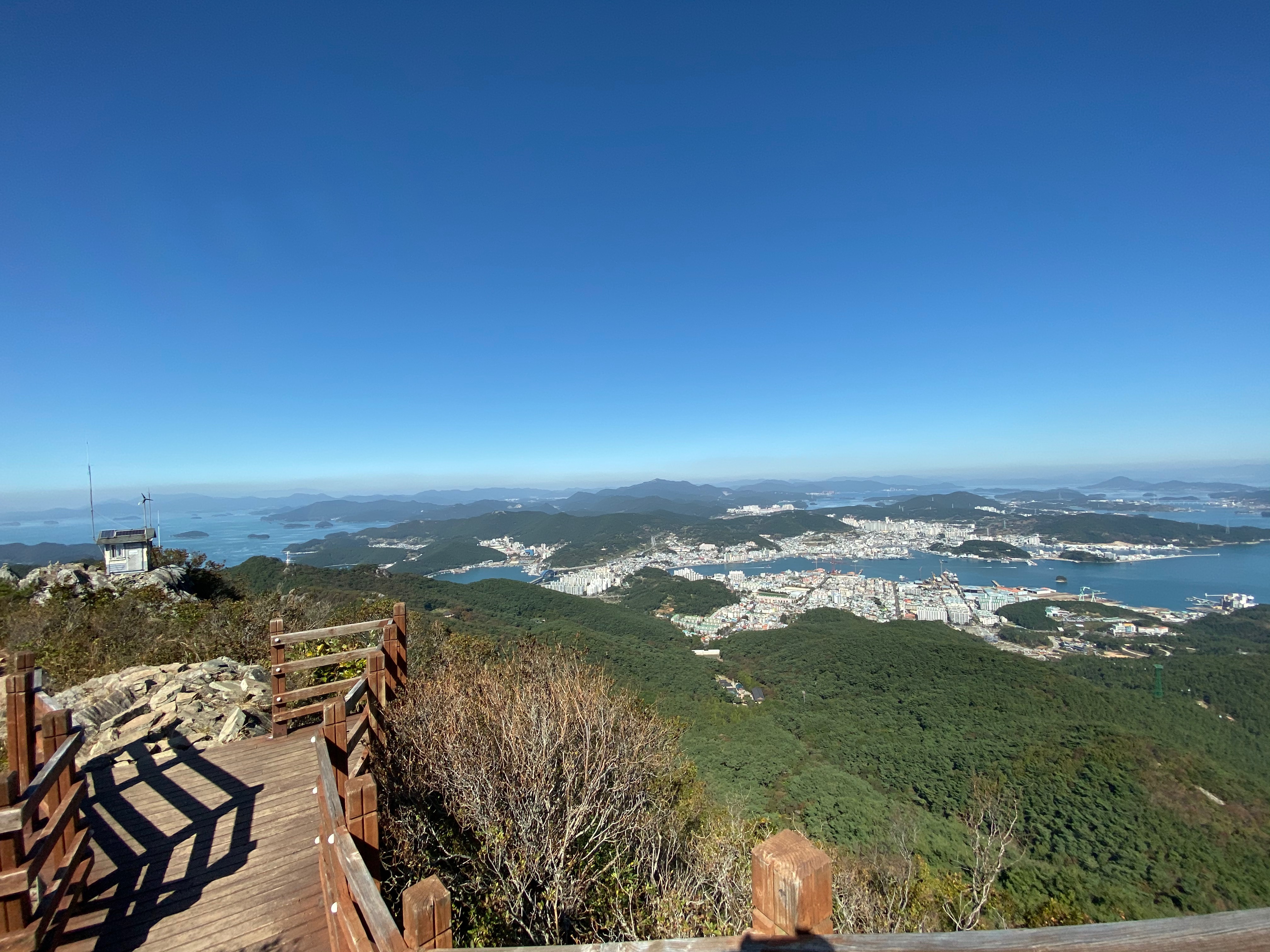
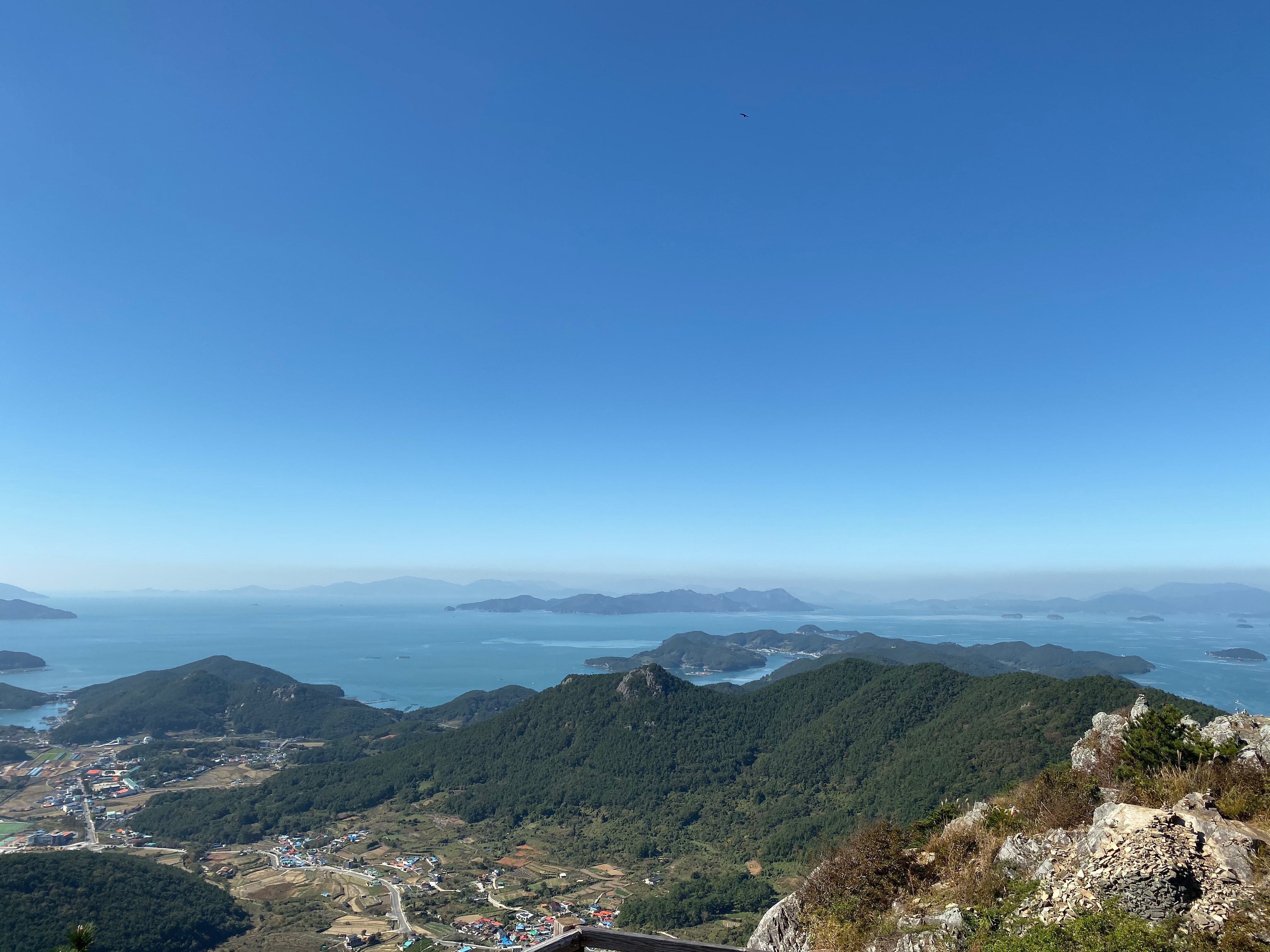
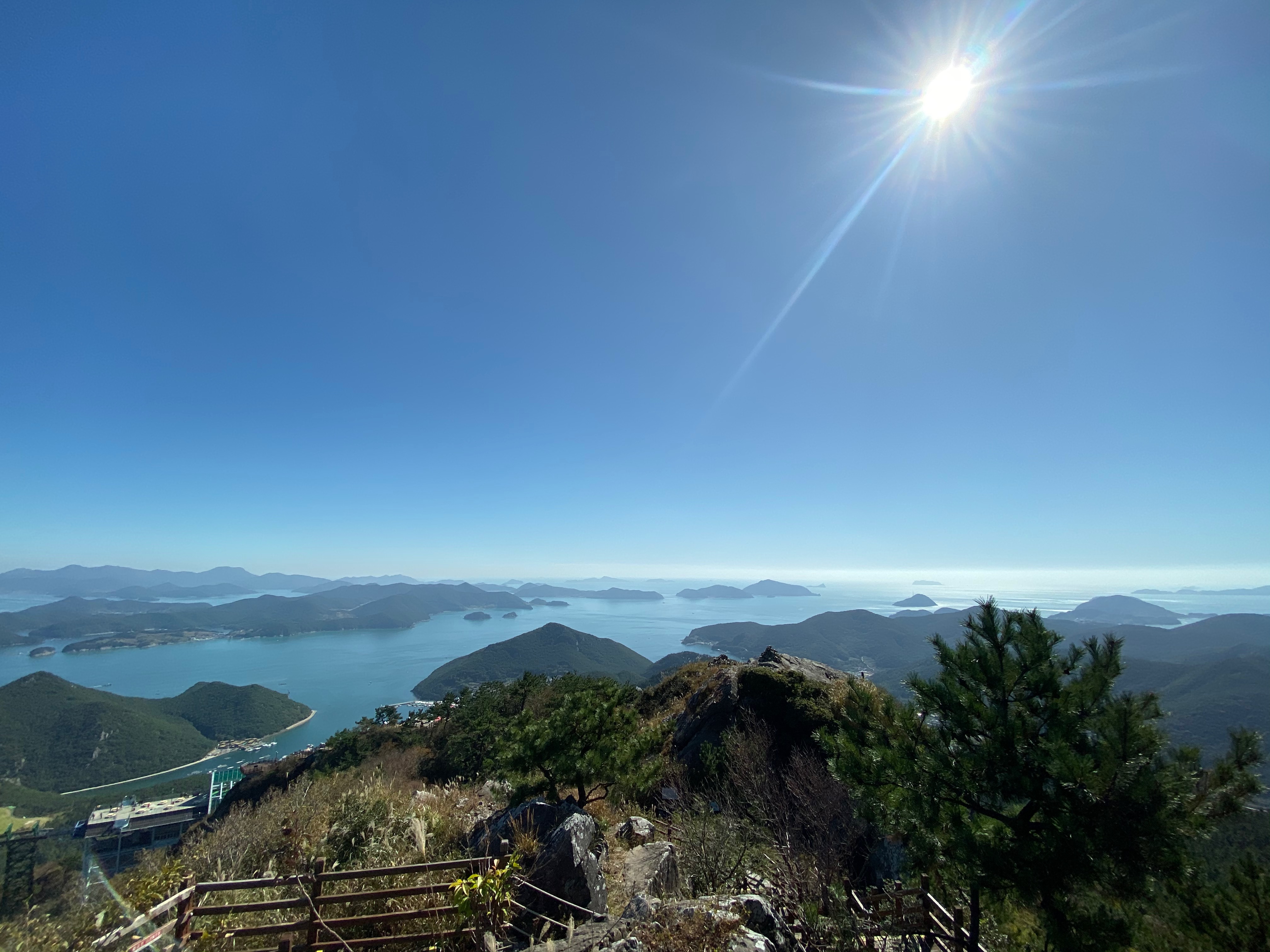
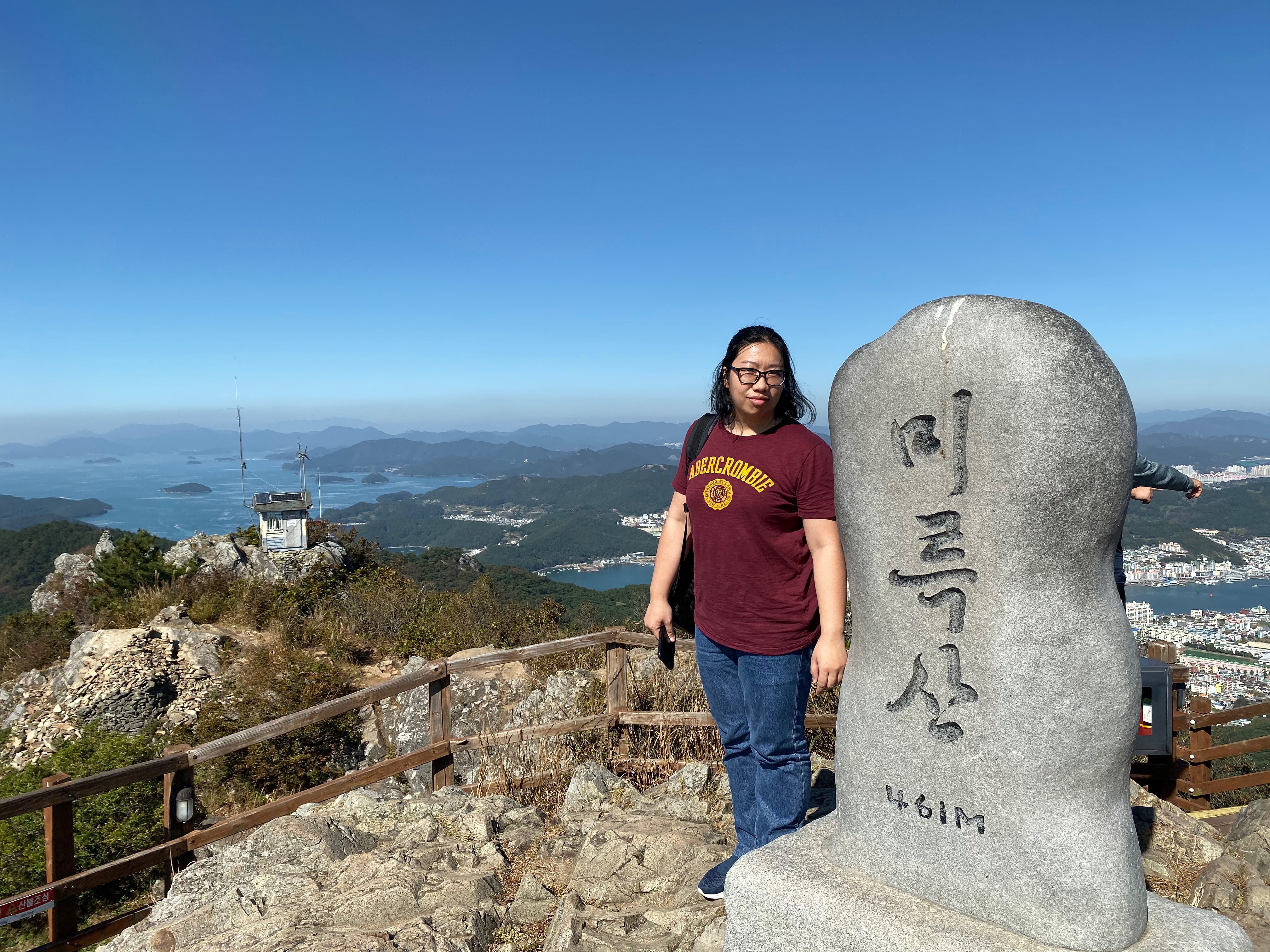
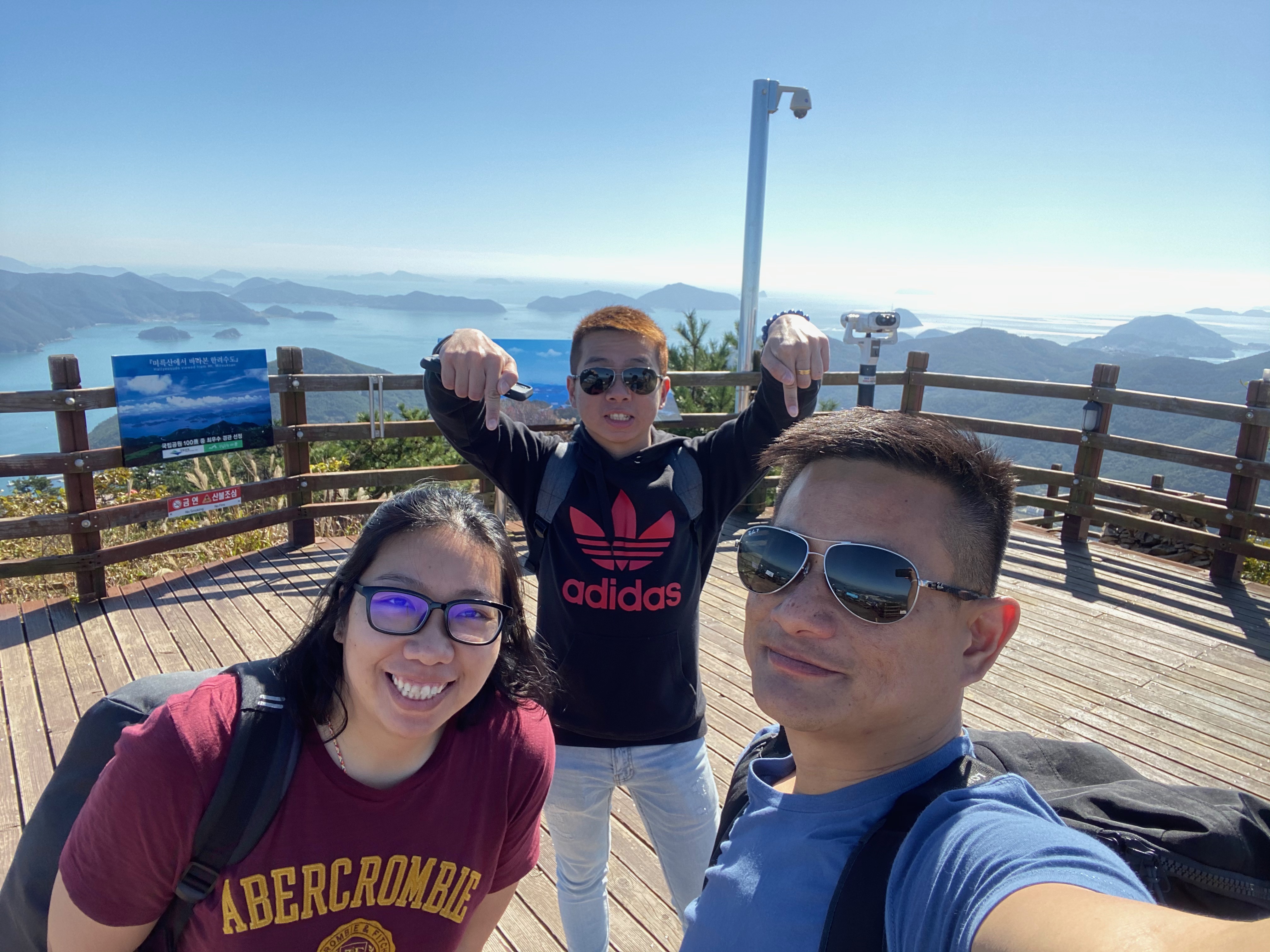
We continued our way to the summit of Mireuksan and reached Sinseondae Viewpoint. The view from Sinseondae viewpoint is the best on Mireuksan. This is where we got the full view of the entire Hallyeosudo area. The view here is simply breathtaking! It is a very short walk from Sinseondae to the summit of Mireuksan. Mireuksan is 461m above sea level and at the summit, there is a tablet marking the summit of the mountain. The summit offers a 360° view of the entire area, including a view of the Port City of Tongyeong and beyond. It was a tad crowded at the summit, looking around, I realised we were the only foreigners here at the summit of Mireuksan.

99949B17-DCE8-41E7-8B87-D6A41A64E3E4

View from the summit of Mireuksan

19271A77-4637-451D-8B19-0ABB6C0C3BAA

At the summit of Mireuksan

0CCF2A77-944C-4DF5-89AC-CBF97F611BDA

View of Hallyeosudo from the summit of Mireuksan

0FC63926-987C-4167-AD28-FAF803CC1045

The view at the summit of Mireuksan is stunning

After taking more pictures at the summit and at the Sinseondae viewpoint, we headed back to the cable car via the other route. Coming down from the summit of Mireuksan, the only other viewpoint on this route is the Sea Battle of Dangpo Viewpoint. From this viewpoint, we see more of the mountain ranges below Mireuksan and a small glimpse of the sea. Despite not as impressive as the view from the summit of Mireuksan, the view here is still breathtaking with some islands spreading across the sea below. It is another 5 mins to walk back to the cable car station, where we took the cable car back to the base station and head on to our next destination.

4B7EDC46-BBC8-4714-9330-D9F9BEFD9A30

Sea Battle of Dangpo Viewpoint

792FA917-6A9A-4723-B97B-D64BCCE542E0

View at Sea Battle of Dangpo Viewpoint

6390A805-EBEB-4D2B-B77F-4F0EB8C9B4A3

One last wefie on Mireuksan before heading down

Dara Park

Our next destination in Tongyeong is Dara Park, which is located south of Mireuksan. The drive to Dara Park took us about 20 mins. Along the way, we spotted a car stopping by the side of the road. Curious we also stopped behind the car and spotted an unmarked lookout that offers a great view of the bay below. From here we were able to see some of the islands off the coast of Tongyeong. There seems to be some sort of farm in the sea near the coast. We were glad to have stopped here (thanks to the car we spotted when driving) as this unmarked lookout is totally Instagram worthy. After taking some pictures, we continued our drive to Dara Park. We parked our car at the nearby paid car park and walked to the entrance of Dara Park. There is a restaurant at the entrance, however, it looks deserted. It is here that we found out there are some parking lots that in front of the restaurant that we could have parked for free. Entrance to Dara Park is free. The walk from the entrance to Dara Park takes around 3 mins and at the end of the walk, there is a single bench that looks out into the bay. We were a tad disappointed with the view of Dara Park. We could only see a small portion of the bay and some islands in the sea, mainly due to Dara Park is not situated in an elevation high enough to offer an unobstructed view of the bay and partly due to the view being blocked by the vegetation between the park and the sea. People usually come to Dara Park for sunset and I have no doubt we would be able to see some beautiful sunset today due to the cloudless sky. I did not plan to come here during sunset as the drive back to Busan from Dara Park would take us around 3 hrs. We left soon after taking some obligatory photos.

4A1AB837-FC49-4FF6-8BB5-2BA8F5DEB2D0

Partial view of the bay at Dara Park

21A157F7-B6B9-4F8F-BF7C-5269EF12C018

My friends checking their mobile phones on the bench at Dara Park

3E07FCD1-BD1D-49DD-AD80-667EF92A25A9

6906C4DC-CB84-483B-8433-7F6126C7705C

Geoje – The Blue City and South Korea’s Second Largest Island

After spending the morning on the island of Tongyeong, we headed over to South Korea’s second-largest island, Geoje where we stopped by three sites on this island.

Mundong Waterfall

When I was planning for this trip, I chanced upon a waterfall on the island of Geoje between our previous stop Dara Park and our next stop Sinseondae Platform. According to my planning on Naver Map app (South Korea’s Google Map equivalent), we would have some time for this waterfall. The drive from Dara Park to the entrance of Mundong Waterfall took us 1 hr pass the city of Tongyeong. Driving to the entrance of Mundong Waterfall requires some caution as part of the road became a one-laned road cater for traffic going in and coming out. Fortunately, no cars were plying along this road when we were there. Entrance and car parking at Mundong Waterfall is free. After parking our car, we followed the signs (in Korean, and we roughly knew it is the way to the waterfall) and made our 7 mins walk to the waterfall. My friends and I were shocked when we reached the waterfall. There was hardly any water falling from the waterfall. We only saw a small stream of water flowing down from the cliff on top, as if someone had forgotten to turn off the tap. The among of water is so little that we could walk on the almost dried up stream beneath the waterfall. On the plus side, we could get really close to the waterfall. I guess we were not in season to see the waterfall, no wonder there was hardly anyone when we walked in from the car park. Rather than feeling disappointed, we took this opportunity to lighten ourselves by taking some silly photos. We left Mundong Waterfall for our next stop after spending 3 mins here.

2071CE76-31CD-4784-9247-CD95D287C963

Instead of a waterfall, we only saw a small stream of water flowing down at Mundong Waterfall

2C8512C9-56E1-468A-A025-4840512595B1

My friend reaching out to the small stream of water from Mundong Waterfall

3B6F49A1-D128-4077-A9F4-E0C7B5BEE03E

It is so dried up that we can walk on the river bed

Sinseondae Platform

The drive to Sinseondae Platform on Geoje takes us around 45 mins. Along the way, we passed by Gucheon Reservoir. The scenery of the reservoir is so nice that we stopped on the side of the road and took some pictures with it. Gucheon Reservoir is surrounded by mountains that make this reservoir looks more like a picturesque lake instead of a reservoir.

40E0A1FE-F82F-4661-B0E6-ECF54D694C6E

Gucheon Reservoir looks more like a lake than a reservoir

27881141-D2CB-48DB-AB39-BEF83455280C

Me at Gucheon Reservoir

20099B7C-8C7E-4688-AEBE-286564941536

My friend at Gucheon Reservoir

We continued our drive to Sinseondae Cliff Observatory car park and was disappointed to learn that the area was closed for some works when we arrive. We tried to make good of the situation by getting close enough to the side of the cliff without encroaching into the work area. My friends and I decided to take some pictures and then bunk off to our next destination. Just when we were about to leave, we spotted afar there seem to be a route that we can walk down to Sinseondae Platform and there are some people at the platform. Not giving up, we turned off our GPS app and drove along the road towards where we spotted people going down to the beach. Not wanting to miss the beach, we spotted a small parking lot in front of Angel in Us Cafe and parked our car there. We then walked across the road to the entrance of Haegeumgang Theme Museum that looked abandoned where we spotted a pathway that leads to the beach. Following the pathway, we reached Sinseondae Platform which is essentially huge rocks that extends into the sea. The view from Sinseondae Platform is amazing as we were literally standing on the sea looking out into a scene with islands and mountains popping out from the sea. It is around sunset at the time of our visit, making this place looks picturesque. The walk onto the rocks is a small adventure itself as we were exploring which rock we can walk onto to get as close to the sea and yet gives us a vantage view of the surroundings. Although these rocks, eroded by the forces of nature, seems uneven they are very safe to walk on as most of the top of the rocks are flat.

89618D80-90A9-4C70-8ECF-87B263F83678

This is the closest we can get at Sinseondae Cliff Observatory

3F63BF25-ED09-4781-9C0B-9D55884D4A05

Taking a wefie at Sinseondae Cliff Observatory

A3FD5AE2-6557-4FB4-A569-2383F1BA9927

Taking a wefie on the way to Sinseondae Platform

A12A256F-5AA5-4DA4-BDD2-382BFF2A02FC

My friend at the path to Sinseondae Platform

AE9E3AD3-075E-4727-B5EB-27E12FDBE034

View from the path to Sinseondae Platform

21C5AAED-391E-4588-98D9-8FA11679A0AB

My friend at Sinseondae Platform

D1E349E3-B40C-4980-ADC8-EC0CD7BBFD57

Me at Sinseondae Platform looking out into the sunset

5CBAC6F2-D922-4B59-988C-B0610368B2BB

My friend at Sinseondae Platform

1E13F75D-05CF-4F59-8E1F-49C08A660257

Taking a wefie at Sinseondae Platform before we leave

7133021A-DDDD-47B6-A3F2-91CF9C74640E

View of the town from Sinseondae Platform

Windy Hills

After spending some time on Sinseondae Platform, we headed to our last destination of the day in Gyeongsangnam-do, Windy Hills. The drive to Windy Hills from Sinseondae Platform takes less than 5 mins. For this short drive, we rely on the street signs instead of our GPS (as it points us to take a longer route). Entrance and parking at Windy Hills are free. After parking our car, we took a short walk up to the windmill. Looking out into the sea from Windy Hills, this place looks more like some lake in a European country rather than South Korea. There is a windmill on top of Windy Hill that was used as a set in a Korean drama. Sitting on the bench in front of the windmill looking out at the sea is very therapeutic. This is a good end to the long day we had today. We enjoyed the sea breeze and the tranquillity this place brings and would love to stay here longer. However, as the sun is about to set and considering that we had to drive over some windy roads on our way back, we left Windy Hills and embarked on our drive back to Busan. Along the way back to Busan, we stopped by Gadeok Ocean Park rest area for a break.

458139EF-31B9-4D3F-9D2C-866F0CE0C0DC

This does not seem like we are in South Korea

E2771B30-968E-4A25-AA5D-B4CF758800A7

View of the sea at Windy Hill

F70BD62F-020D-4ACD-81B4-916CFAE39FB4

The sun is setting over Windy Hill

404D7664-D212-46D9-9A62-4FCE5540429A

Taking a wefie at Windy Hill

67220BFB-069F-4406-9151-C0DADCF28523

The windmill on Windy Hill

0769D3A0-812D-472E-8D7C-C564C67456CD

Dusk at Windy Hill

03BED76A-ED77-407D-9209-6F59EDC62498

Night view of Geoje at Ocean Park Rest Area

Back to Busan Gunam Street

The drive from Geoje to Busan took around 3 hrs. We headed back to the hotel and parked our car there. Instead of going back to our rooms, we headed out to the nearby Gunam Street for dinner. We did not want to have too full a dinner as we wanted to buy some street food back to the hotel to eat. We settled our dinner at a Korea BBQ restaurant, after which we headed to Haeundae Market nearby to get some Korean fish cake, tteokbokki and Korean fried chicken back to the hotel to eat. It is a long day and tomorrow we will be having another long day in Gyeongju. We rested for the night soon after eating the food we bought from Haeundae Market.

E6D58EA2-FD7E-4DE6-9CF4-5E88A5EA9FC4

My friends buying street food at Haeundae Market


Jeju/Busan/Seoul Day 4 (29 Oct 19) – Onward to Busan and the Colourful Gamcheon Culture Village

Our itinerary is deliberately kept very light today, we catered time to travel from Jeju to Busan and also to take a break from the hectic schedule in the past two days in Jeju to prevent travel fatigue. After all, this is our 4th day in South Korea and we still have another eight days to go.

062B0670-45A6-4363-ABB3-ACC333D40663

Flying from Jeju to Busan

Bye Bye Jeju

Today we bid our farewells to Jeju and embarked on the second leg of our trip. We woke up early to ensure that we have sufficient time to return our rental car and make it to the airport. I was a little worried that we might be cutting the time a little fine as the car rental company only opens at 8am and our flight is at 8.50am. Nonetheless, we tried our luck and left our accommodation early to see if the car rental company opens early. We reached the rental car return at 7.45am and was pleasantly surprised that the car rental company had already opened. The process of car return is very swift. The staff took our car and did a quick inspection, before long we were given the green light that everything was fine with the car. The staff even pointed us to the shuttle bus stop to Jeju Airport and informed us that the bus will be leaving soon. We made it to the 7.50am bus leaving for Jeju Airport. A short  10 mins ride whipped us to the airport in no time. We arrived at Jeju Airport at 8am, giving us ample time to check-in (luckily there were a lot of Korean Air counters and the queue was very thin). Check-in was done in under 5 mins, however, we were struck with a long immigration queue. Foreign visitors travelling out of Jeju Airport, even on domestic flights, are subjected to immigration check. Despite the long queue, the queue moved very fast and we were at airside in under 15 mins. By the time we reached our boarding gate, our flight had just commenced boarding.

My friends and I managed to get some rest onboard the 1 hr flight from Jeju to Busan. After touching down and collected our luggage, we headed to the airport limousine bus stop, which is on the right from the exit of the airport terminal. We managed to catch the 10.20am bus which was just about to depart from the terminal. We arrived at Haeundae each to and the plan was to check into our hotel, freshen up and head out to Busan Gamcheon Village. We had a rude shock at the hotel as we have previously communicated with a hotel staff who ensured that we can check-in early at 11am when we arrive. The check-in staff did not even bother to check and declined our early check-in. At this time, we saw no point in arguing with her (a waste of our time anyway). We did a quick change in plan, left our luggage at the hotel concierge and headed out to Busan Gamcheon Village.

Gamcheon Culture Village –  Colourful Village on the Hills

We headed to the nearby subway station, which is about 5 mins walk from the hotel to get to Gamcheon Culture Village. We took the subway from Haeundae Station to Toseong Station, which takes us 1 hr to reach. Exiting the station, the next 20 mins walk is rather daunting. It felt like forever as the walk to Gamcheon Culture Village is literally an uphill walk, nonetheless, it is a good workout for the three of us. We knew we arrived at the Gamcheon Culture Village when we spotted an overhead bridge with very small signage that states the name of the place. Instead of crossing the bridge, we walked a little further where the entrance to the village is. The entrance is already crowded with tourists at the time of our arrival. Gamcheon Culture Village is a residential village that is built on the side of the slopes, most of the buildings here are decked in bright cheerful colours that gave this village its own character. This character also draws tourists to visit. In fact, Gamcheon Culture Village feels very touristy and seems like its sole existence is for tourism at the time of our visit. There are more shops along the main streets then residential buildings. These shops exist for the purpose of tourism selling all sorts of souvenirs, street food and cafes rather than catering to the needs of the residences in Gamcheon Culture Village. There is even a shop that rents Habok for tourists. As we were walking along the street, we noticed the residential units are tucked away either high up away from the main walking street or further down the valley.

57182FAB-A151-4C31-BFC4-8F107634E518

Walking up the slope to Gamcheon Culture Village

B5AD9E08-7875-4369-B979-1A3F77CC7A36

We knew we arrived at Gamcheon Culture Village when we saw this bridge

It did not take us too long to walk to an open platform where we got a full view of Gamcheon Culture Village. The houses in Gamcheon Culture Village seems to be stacked on top of each other, spreading across the entire valley. From the platform, it seems there is only one small opening that peeps into the sea. The bright colour brings a cheerful character to the village. Standing here looking out into the entire village, the feeling is exhilarating. No wonder tourists flock to this village. Coupled with the clear blue sky and the mountains sitting afar into the sea in Busan, Gamcheon Culture Village is an instagramble place. As we were walking along, we spotted a statue looking out into Gamcheon Culture Village. I read that tourists usually come here to take a picture with this statue of Le Petit Prince and queues for taking a picture with Le Petit Prince can be as long as 30 mins. We originally did not want to take pictures with it, but seeing the queue was relatively short (only 4 people in front of us), we joined the queue. As my friend was taking pictures of me with Le Petit Prince, I spotted a platform below which seem to be able to take great pictures of Gamcheon Culture Village and the best thing is there are no people there. We headed down to this platform through the building next to Le Petit Prince and got our cameras snapping away. After walking for a while more, I spotted a cafe that faces the village. We settled into the cafe for some coffee and desserts before continuing on. The scenery here feels a tad repetitive after a while (well we spent some 3 hrs here) and we decided we had enough of Gamcheon Culture Village. As we were walking back to the entrance of Gamcheon Culture Village, we spotted a bus stop and took a bus down to the subway station. At this point, my friends were relieved there is a bus service up. Their eyes literally rolled when I told them I knew of the bus service and purposely make them walk all the way up.

62DE355D-2CC5-426D-A584-82E867B11392

Full view of Gamcheon Culture Village

8A7C1609-A6E0-4D26-9D4D-52CFB44B9FE7

The houses at Gamcheon Culture Village gives off a bright and cheerful vibe

51C26E90-1679-4582-835A-45870E5D22ED

Feels like we are at the top of the world

30AAF8B1-7E04-452C-ADB7-C54BF092A7FD

Looking out at Gamcheon Culture Village

F7D31100-C495-4AC4-B737-3862438DCDFD

Munching away on street food in Gamcheon Culture Village

5F9C2478-3EBE-4C84-A495-9C58F40E3E7D

Sunset over Gamcheon Culture Village

Busan Station

Before we head back to the hotel to check into our rooms, we stopped by Busan Station to collect the car we rented for the next two days for the excursion out of Busan. Before we collect our car, we headed inside Busan Station to get our express train ticket to Seoul, fearing we might not be able to get tickets if we buy it on our departure date. We took the chance to familiarise ourselves with the station, saving us the trouble to hunt for the platform should we get delayed on our day of departure. We also checked out what food is sold at the train station for our train ride three days later. We headed to collect our car and drove back to the hotel to park for the night. I was concerned about driving in Busan, mainly due to the traffic, thus planned to drive as little as possible in Busan City.

C346A284-30A7-4AAA-A1DC-58E99AB8C6D7

At Busan Station to get our tickets to Seoul

DA5C394C-F9C8-41A4-9804-7ABB5E89B57C

Wefie at Busan Station

76379E41-671D-4CC9-B12D-F61A9C762A94

Our recce of Busan Station

Eating Street in Haeundae

We headed back to our hotel at Haeundae beach after we picked up the car. It is already 8.30pm when we reached the hotel. After checking in and settled into our rooms a bit, we headed out to the nearby Gunam Street where numerous restaurants are located for dinner. After dinner we headed back to the hotel to rest for the night, after all, we have to wake up early the next day for our road trip to Tongyeong and Geoje in Gyeongsangnamdo.


Jeju/Busan/Seoul Day 3 (28 Oct 19) – Hiking Hallasan, The Tallest Mountain in South Korea

On Day 3 of our trip to South Korea, we had another first experience – hiking up Hallasan, the tallest mountain in South Korea. The drive around Jeju would be relatively shorter compared to yesterday, as a bulk of today is spent trekking up Hallasan.

7d6e7118-4ca5-4383-a17e-0cfb496d7379.png

Our journey today focuses on the central and southwestern part of Jeju-do

The not-so Mysterious Road

The first destination today is to stop by at the Mysterious Road, whilst driving towards Hallasan. The road got its name for the fact that visitors can see water flowing upslope. I was here 10 years ago and witness how the water flows up to the slope and was excited to show my friends this phenomenon. Before heading out from our Airbnb accommodation, we prepared a bottle of water for that purpose. The drive to Mysterious Road from our accommodation took a mere 15 mins. After parking our car, we spotted a sign that says “Start of Mysterious Road”. We quickly whipped out our water bottle and start pouring a small amount of water. We observed. The water did not flow upslope, instead, it flowed downslope. Thinking maybe we might have the wrong section of the road and walked up further. We tried again, the water still flows downslope. Again we walked further up and tried. Same results. Eventually, we reached another road sign that says “End of Mysterious Road”, this is the point where we gave up and thought the Mysterious Road is no longer mysterious. We ended up the 7-Eleven next to the road and got ourselves some coffee and Onigiri for our hike up Hallsan and left for Yeongsil Trial on Hallasan.

Hallasan – Hiking on the Back of The Sleeping Giant

When I was planning for this trip to South Korea, standing at 1,950m tall, Hallasan is an extinct volcano and the tallest mountain in South Korea. It towers over Jeju Island like a guardian angel watching over Jejuans and its visitors. It would be a pity not to scale it since we are already in Jeju. There are seven hiking trails in Hallasan with some taking hikers to the peak of the mountain, ranging from as short as 1.5km (about 30 mins hike) to as long as 9.6km (about 5 hours one way). I wanted to hike a trail that does not take too much time and yet allowing us to get scenic views of the mountain. Yeongsil Trail fits the bill perfectly. The estimated hike up Yeongsil Trail takes around 4 hours in total, which will leave us with some time to explore the other parts of Jeju.

climbing_map.jpg

The hiking trails on Hallasan

It takes us around 1hour to drive up to Yeongsil Trail entrance from Mysterious Road. As we were driving up to Yeongsil Trail, the winding road took us past rows and rows of forest trees that were starting to show their autumn foliage, some decked in red and other in yellow, the drive was both soothing and therapeutic. Soon we reached the first car park at Yeongsil Trail. There are two car parks at Yeongsil Trail, the first car park has more parking lots, but requires one to walk another 2.5km to reach the entrance of the trail. There is a second car park right in front of Yeongsil Trail entrance. There was already a queue forming up for the second car park at the time we arrived at the first car park. We were stuck in the queue for around 30 mins. My friends and I were discussing our options while we wait for our turn to drive to the second car park. There are limited parking lots at the second car park and traffic to the second car park is controlled. Soon we were moving as some cars ahead of us left the queue. With no signs of any vehicles coming out, and just when we were about to give up waiting and leave the queue to park our car in the first car park, the staff opens up the boom gate and let us in. The drive to the second car park took another 5 mins through some windy mountain roads. Entrance to Hallasan is free, but parking is chargeable at KRW1,800 per car.

The First Leg – Hiking Through the Forest

Yeongsil Trail entrance starts at 1200m above sea level. There are some eateries and souvenir shops next to the car park at Yeongsil Trail entrance. There is a booth at the start of the trail apprising hikers of the route and the time required. Here is where they distribute maps in various languages for hikers. The entrance of Yeongsil Trail took us into a forest. his part of the trail is an easy walk, with roads well marked out. The fresh and crisp morning forest air coupled with birds chirping to the morning air, and absence of flying insects make hiking here a pleasant experience. TAs we were walking on the trail, we spotted some leaves on the trees starting to don on their autumn clothing. A good portion of the trees have turned yellow and some even in red. We hear water flowing from a distance, seemingly playing the symphony of mother nature, but can’t seem to point out where the stream flows along. We can even seem part of Hallasan peeking out at us through the canopy of the forest the further we walked in Yeongsil Trail. At this point, we were totally clueless on exactly which part of the trail we are at and how long more to go. We kept on hiking along the trail, following the general flow of human traffic. Occasionally we spot a map telling us where we are, but that does not give us a good enough indication of our exact location. About 30 mins into Yeongsil Trail from the entrance, we came to a steep staircase made out of the rocks. This is where we know we arrived at the second leg of the trail.

D17041E4-776F-41F5-A821-C9D99D783D59

Taking a wefie before our hike up South Korea’s tallest mountain – Hallasan

CFE07BD8-BC4E-4AEB-9C2F-C1A7BC3D865E

More views of the forested area along Yeongsil Trail

7B85CCB3-DED7-49D6-B32C-15540630C724

We see Hallasan peeking out from the forest canopy occasionally

The Second Leg – Dramatic View of the Land Below

After the climb over the steep staircase, the forest canopy starts to thin out and eventually gave way to reveal the clear blue sky and the majestic Hallasan. From here, it is a series of stairs climbing to our final destination on Hallasan. It is here that we started to realise the hike up to Hallasan seems long and daunting. Along the way, we kept wondering where would our final destination is on the mountain. We half suspect we were only at the beginning of the hike. The higher we climb up Hallasan, the thinner the vegetation is, and the more we can see over the land below us. Yeongsil Trail is at the southern part of Hallasan, we got a good view of southern Jeju Island. The view was magnificent and makes one feels so small in this world. There are several viewing platforms along the Yeongsil Trail for hikers to rest or to take pictures of the vast land below. We stopped occasionally both on these platforms as well as along the stairs to take photos and admire the vastness of the land. Looking down below from this leg of Yeongsil Trail makes one forget all the troubles. The other highlight of this leg is the views of the Byeongpung Bawi Rocks or the Folding Screen Rocks, which got its name as the appearance of this part Hallasan resembles folding screens. Our hike was slightly delayed as we stopped numerous times to take pictures, we couldn’t get enough of the views offered on this leg of the trail. Some parts of this trail were so close to the edge of the cliff that it felt like one can fall off anytime. However, hiking on this trail is absolutely safe as the trail is well paved with handle ropes to aid visitors when climbing up Hallasan. The parts that are close to the edge of the mountain are erected with high fences to ensure hikers have a safe journey up and down Hallasan.

45161C13-0F34-4D85-8AAD-1850DB05918B

Panoramic view of Hallasan

265A5433-A69F-423B-87B2-F2FEC0171682

Hallasan on Yeongsil Trail

79211A86-2516-4D42-B182-A6A2041F9E07

At this point, we are able to see the vast lands below

FA881F83-67E5-496F-B39A-693FC8A647EE

My friend on the platform looking out into the vast lands below

3FE90659-28DD-44A6-A67F-D9BAE329CF3F

Byeongpung Bawi Rock on Hallasan

The Final Leg – The Alpine Flatland and End Point Witseoreum Shelter

After 1½ hours of climbing from the steep staircase, the elevation of the slope became gentle once more. From here it is an easy walk to the end of Yeongsil Trail. The vegetation started to get thicker along the trail and soon we found ourselves walking on flat land. At this point, we were still wondering if we were near the end of the trail. We walked for another 20 mins and saw the path folks off to a huge platform. We decided to stop for a rest and had our mini picnic here with the onigiri and the coffee we bought from the 7-Eleven at Mysterious Road earlier on. Due to the flat alpine land, we can easily forget that we are actually at 1750m above sea level and we are actually on an extinct volcano. It is definitely an interesting experience picnicking on Hallasan, we wish we had bought more food to have a proper picnic. While we were resting, we saw a flight of staircase that seems to lead to an elevated peak of Hallasan. We thought that could be our endpoint and headed over. There is another viewing platform at the end of this staircase. We could see the western part of Jeju Island from this platform, and the view is exceptional. It is here that we realise we were very high up the mountain as we saw clouds below us. I highly recommend hikers on Yeongsil Trail to make a short stop here as the view is stunning. Just when we started to pat ourselves on our back for reaching the endpoint of Yeongsil Trail, I half suspected that this platform might not be the endpoint after all. We checked with a local hiker and was told our endpoint is another 10 mins walk away. My friends and I thought since we made it this far, what are another 10 mins walk.

1EF7820A-64A1-4733-925A-2CB29EA02315

Stopping for a mini picnic on Hallasan

955AC0DE-D57A-492C-88F4-112107E9CBD5

With the Peak of Hallasan in the background

2E2D006E-2EA3-4EF2-AEC4-A89F4326DE8E

This could be the peak of Hallasan

6B65324F-C70C-469E-919C-2CE4458BDF62

Panoramic shot from the elevated platform

0833139C-77A8-49A1-8BCD-67E6C855A0D8

We are above the clouds on Hallasan

4DBB7C43-4202-4FD8-84C6-5DDA308CA69B

We can see part of the land below from here

We headed down from the platform and followed the crowd on the boardwalk. Some 10 mins later the trail led us to a huge wooden platform with several wooden houses. This seems to be a place where all the hikers from the other trails on Hallasan converge. At this point, we can confirm that we had reached our destination on Hallasan, Witseoreum Shelter which is situated at 1700m above sea level. As we were walking around, we saw several elderly Koreans picnicking here. It took us about 3 hours to reach our endpoint on Hallasan. At Witseoreum Shelter, there are paths that lead to other trails on Hallasan. There is even a trail that leads to the peak of Hallasan. After some pictures with a stone that states the elevation, we started to hike back down from where we came from to our car.

The Return Leg – Same Scenery but a Different Feel

We headed back the same way we came up from. Although it is the same path, the scenery appears different. Maybe it is because we were back facing the vast lands below when we climbed up (that did not allow us to fully appreciate the scenery) or maybe our focus is on where is the endpoint on our way up that distracted us from appreciating the scenery that is before us. On our second time on the trail, we got to see more of Hallasan that we did not notice on the way up. Nonetheless, my friends and I can never get tired of the scenery that was before our eyes.  We stopped occasionally to take pictures of the surroundings. The hike down Yeongsil Trail took us 1½ hours to reach the car park. We were surprised that the hike down took significantly lesser time compared to the way up. After a short toilet break, we felt hungry and drove to nearby our next destination for lunch.

5DAB4B6D-66EA-4630-96F6-DB9EBFEC5FBE

Taking a wefie on our way down

7A9E665C-CC8B-422E-809B-9B3E8AC53CD6

One last look of Jeju from Hallasan

24E26A50-5620-4949-80B0-38C73D0A754D

The Byeongpung Bawi Rock on Hallasan

BDCFEEDB-8FD6-4582-A8F5-5C15D023CA41

Posing for a shot on the stairs we climbed

Jusangjeolli Cliff – Nature’s Wonder Hexagonal Coast

We settled our lunch at a Mcdonald’s near our next destination. After lunch, it is a 15 mins drive to the Jusangjeolli Cliff. Entrance to Jusangjeolli Cliff costs KRW2,000 per person and car parking is chargeable at KRW1,000 per car. It took us a mere 5 mins walk from the car park to the viewing platform at Jusangjeolli Cliff. Jusangjeolli Cliff is characterised by its unique pillar hexagonal coastal rocks are formed when the volcanic lava from Hallasan erupted and cooled by the sea 250,000 years ago. There is only a small stretch of the viewing platform that allows visitors to get a good view of Jusangjeolli Cliff. It is a little crowded at the time of our visit as everyone congregates on this platform to marvel at this masterpiece of Mother Nature. Despite the crowded, my friends and I were still able to get a good view of Jusangjeolli Cliff. What makes this place worth visiting is the view of the southern sea which seems to stretch forever. The view is especially tranquil and we felt we could stay here for a few more moments. The hexagon coast of Jusangjeolli Cliff is just a small part of this area. We only stayed here for around 5 mins and left for our next destination.

FF5EA9D7-7FBA-4A56-9D74-52CD6758C23F

The hexagon pillar Jusangjeolli Cliff

193CE8B7-AB19-42D1-9EE6-D67895A144E4

Sun is almost setting at Jusangjeolli Cliff

B98757CD-EB91-4643-ACBF-01551B4D3A1A

One last wefie before we leave Jusangjeolli Cliff

Innisfree Jeju House

We originally planned to visit Cheonjeyeon Waterfall, we decided to give this a miss partly due to the disappointing Cheonjiyeon Waterfall we visited yesterday, and partly due to our tiredness after the hike on Hallasan. Instead, we decided to head west and visit the Innisfree Jeju House. Initially, we thought we can do some shopping at Innisfree Jeju House, we were soon disappointed upon arriving. The merchandise on sale is very limited, as though selling their products is not the main purpose here. The main attractions in Innisfree Jeju House are the tea plantation and the cafe. We left after staying 5 mins here and bought a green tea lava cake as well as some coffee. Innisfree Jeju House is not worth visiting unless one has ample time on their hands in Jeju or wanted to try their green tea lava cake, which is quite delicious.

Back to Jeju-si

Although the sun has set, however, it is still relatively early. We took the 1hr drive to Dongmun market area in Jeju-si for dinner and to buy breakfast for tomorrow as we would have to wake up early to catch our flight to Busan the next day. After parking our car, we strolled along the underground shopping street and the shopping street on the surface. Jeju-si is deserted today. There are hardly anyone on the streets. After strolling for around 30 mins (with nothing to buy), we packed some food and brought back to our Airbnb accommodation. We rested early tonight for an early flight out of Jeju tomorrow. In the short span of 3 days, we managed to cover most of the attractions in Jeju. We thought 3 days is just nice for a road trip in Jeju.

Jeju/Busan/Seoul Day 2 (27 Oct 19) – Exploring Southern Jeju on Wheels, From Seongsan Ilchulbong to Seogwipo Olle Market

We were determined to make up for the time we lost yesterday and tried to cover some of the places that we did not manage to visit yesterday. The major sites in Jeju are situated to the East and South of the island, with the centre occupied by Hallasan. From my research during the planning of this trip, it seems that there is nothing much of the West part of Jeju, while Northern Jeju is where Jeju-si and Jeju Airport is located. There are some sites on the northern part of the island, however, this trip is mainly focusing on the major sites in the Eastern and Southern part of Jeju. Today is the first day of my driving left-hand drive car in Jeju, initially, I was a little concern. After my initial experience driving during peak hours, these concerns whittle away. I do find driving in Jeju quite relaxing.

3884184A-412F-4E5A-A3E9-4AA4EF690EA3

Our journey around Jeju-do today

Seongsan Ilchulbong – The Sunrise Peak

We woke up pretty early today and got out on the roads of Jeju Island by 7am. The morning traffic is light, making driving in Jeju very relaxing. The journey from our Airbnb accommodation to our first stop, Seongsan Ilchulbong takes around 1 hour. We were treated to some nice scenery along the way, passing by some tranquil farmlands as though they are waking up to the next autumn Jeju morning. As we were near Seongsan Ilchulbong, we spotted a Starbucks and stopped for breakfast and coffee. I think this Starbucks offers the best view in South Korea and it overlooks Seongsan Ilchulbong. We had a relaxing time sipping our coffee and having a leisure breakfast, with the sunrise peak in front of us.

1EF522D4-9E95-4A30-B576-0E2839BD3D16

The Starbucks with a great view of Seongsan Ilchulbong

After breakfast, we resumed our journey to Seongsan Ilchulbong. It only took us 10 mins to drive from Starbucks to Seongsan Ilchulbong. After parking our car and paying  KRW5,000 per adult, we are at the grounds of Seongsan Ilchulbong. Seongsan Ilchulbong is also known as the sunrise peak as it sits on the eastern edge of Jeju Island, a perfect spot to watch the sunrise over the sea. The path to Seongsan Ilchulbong spits into two about 50m from the ticket booth, one path leads to the coast and another leads to the peak of the extinct volcano. The paths at Seongsan Ilchulbong is very well laid, making visiting the Sun Rise Peak a leisure walk in the morning. The one-way path to the 182m peak consists of a series of stairs, ensuring a good flow of human traffic especially during busier times. We were mesmerised by the scenery that the blue ocean and the green mountain ranges unfold during our ascent to the peak. My friends and I constantly turn around to take in the breathtaking coastal scenery. From Seongsan Ilchulbong, it feels as though one is on an island off the coast of Jeju Island. The tombolo that links the volcano to Jeju constantly reminded us that we are still on Jeju Island. The higher we ascend to the peak, the more of Eastern Jeju we saw. We were able to even spot Hallasan sitting far in the centre of Jeju Island as though guarding over Jeju Island.

D403F04F-9FB0-4362-832A-A7C6C987C970

View of Eastern Jeju from Seongsan Ilchulbong

790E0924-BD20-40D5-A267-F4F51E193B6B

The higher we climb, the better the scenery

We reached the peak of the 182m Seongsan Ilchulbong after 20 mins of climbing up the stairs. From this peak, we were able to better appreciate the vastness of Jeju Island and the seas surrounding Seongsan Ilchulbong. We took more pictures with the scenery outside the crater than with the crater. At the peak of Seongsan Ilchulbong, a sunken piece of land which was the crater overgrown with plants is the only reminder of the Sunrise Peak was a volcano. The crater is cordoned off to visitors and we were only able to take pictures from the viewing platform that was built. Looking beyond the crater from the viewing platform we spotted the Eastern Sea off Jeju, stretching far into the horizon making us wonder what is at the other end of this sea. After 15 mins of enjoying the crisp fresh air and taking some pictures, we started our descent from the peak of Seongsan Ilchulbong. One can never get tired of the scenery at Seongsan Ilchulbong. Despite being the same scene, we were still being mesmerised by the seas, the mountains and the vast land of Jeju. The descent took another 15 mins or so. While I went for a smoke break, my friends took the opportunity to buy some local snacks from one of the few stalls next to the car park. We continued our journey to the next destination on our list today.

B6F5C3C9-CA4B-40D0-A85F-71A4E84DECAE

View of Jeju from the peak of Seongsan Ilchulbong

8830E14E-0EE2-4187-A92C-5DD47EE71183

Took us 20 mins to reach the peak of Seongsan Ilchulbong

A9641A12-B3A6-45B3-9AE9-A81762048AE1

The crater at Seongsan Ilchulbong is overgrown with life

5831990F-5376-4041-A160-16CC325BAC23

The view during the descent is equally amazing

B1B32874-44BD-4389-8BEC-124A52288DE4

One last look of the tombolo from Seongsan Ilchulbong

Seopjikoji – The Lighthouse Overlooking Seongsan Ilchulbong

Our next stop, Seopjikoji, is very near to Seongsan Ilchulbong. The scenic coastal drive only took us 15 mins from the Sunrise Peak. From my research, I read that we only need to cater 30 mins tops at Seopjikoji, but we spent a little over 1 hr here. Seopjikoji is landmarked by a lone lighthouse that seemingly guarding Seongsan Ilchulbong. Entrance to Seopjikoji is free, but parking is chargeable at KRW1,000 for the car we drove. We were already fascinated by the beach next to the car park at Seopjikoji. Instead of the usual brown sand, the beach at Seopjikoji is black, dotted with volcano rocks. We spent some time taking pictures by the beach before walking towards the lighthouse. Along the way, we were treated with a unique volcanic beach. The sea seems to stretch endlessly with the sun as its only companion. On the landward side of the path towards the lighthouse, wild plants are growing over all the crater, but in an orderly manner making this place very picturesque. There is no lack of photo opportunities at Seopjikoji, every corner seems to be Instagram worthy. As we were walking towards the lighthouse, we came across a deserted building that resembles a gingerbread house, which served as a set for several Korean dramas.

0C2F2551-F656-496E-A641-A99446804D14

The dramatic coastline at Seopjikoji

E50972EA-95DA-49BB-8BEE-8286F727E8F6

It is a pleasant and easy walk to Seopjikoji Lighthouse

2695B19E-66A0-4025-AE64-E3DF036CE02F

Wonder what is at the other end of the ocean

The lighthouse is perched on top of a small hill accessible to visitors via a flight of stairs. The walk up to the lighthouse is very easy, which took us less than 3 mins to reach. Visitors can walk around the lighthouse to get an unobstructed view of the sea. The tranquillity at the lighthouse makes paying a visit to Seopjikoji well worth it. From the lighthouse, we can also get a great view of Seongsan Ilchulbong. We did not stay at the lighthouse for too long, as we spent most of our 1 hr here taking pictures along the coast towards the lighthouse. It is time for us to leave Seopjikoji and head to our next destination.

F5E53734-05EF-4BBD-B3E6-949154586E77

Our destination is the lighthouse at Seopjikoji

83A8D4A4-1208-497E-8596-4B7469961649

Climbing the stairs to the lighthouse at Seopjikoji

Jeju Folk Village – A Glimpse of the life of  Jejuans

We wanted to visit Jeju Folk Village, which is located on the Southeastern part of Jeju, on the next day. Looking at the location, we thought it make sense for us to plan a visit to Jeju Folk Village after Seopjikoji as it is along the southern coastal road in Jeju. We drove around 40 mins from Seopjikoji to reach Jeju Folk Village. Parking here is free, however, entrance to Jeju Folk Village costs KRW11,000 per adult. Jeju Folk Village is a huge outdoor museum depicting the life of Jejuans (people living in Jeju island) from ancient time. The village is very quiet at the time of our visit and it seems that we were the only foreign visitors when we visited. Passing through the main entrance, we headed along the road which loops around the village and spotted a path on a small hill that leads us to the Yeongwoljeong pavilion on top. Thinking that we might be able to get a good view of the entire village from Yeongwoljeong pavilion as it is the highest structure in the village. Instead of getting a view, we did not manage to see anything. Nonetheless, it is very tranquil sitting in the pavilion enjoying the cool autumn breeze in Jeju. We did not stay at the pavilion for long, we headed back to the main road and started our walk around the village.

35D7D08D-10B2-4906-9199-7B93D1322827

Yeongwoljeong pavilion is perched on top of a small hill in Jeju Folk Village

Jeju Folk Village is dotted with numerous stone houses thatched with straw roofs that were once actual residences of Jejuans since the 1890s. Most of these houses either retained the original stones facade or were painted in yellow. I was telling my friends the Jejuans used horse manure to hold these stones together that form the walls of their houses. One common feature of Jeju house is the low outer fence, with three logs as the gate. Jeju has been traditionally a very safe place, where the Jejuans do not lock their doors. The placement of the three logs relay information to visitors the whereabouts of the owners of the houses. When all three logs were in place, it meant no one is at home, two logs means the owner is going our for a long period and if only one log is in place, it meant the owner will be back shortly. We were in time to catch one of the three scheduled performance in the village, as we walked along the road heading to the performance hall, along the way, we spotted a poultry farm and an orange orchard with fake oranges pasted onto the tree. We entered one of the buildings opposite the poultry farm exhibiting livelihood of the Jejuans as farmers and the tools they used. A building next to the agriculture exhibit is the set location of one of the Korean dramas. At this point, we felt a little boring as the buildings all look the same. We headed straight to the performance hall and watched a performance. After watching the performance (literally just singing of some Korean songs and spinning off some plates on a stick), we started to get bored by this place and made our way out of the village to head to our next destination. I do find Jeju Folk Village a tad boring, visit if one really has the time.

3BF6E325-E296-4678-B0DF-7BA38EBF0C08

A poultry farm in Jeju Folk Village

8A8CC39C-2D56-433B-9D24-84DE5F7447BB

My friend inside a shed in the fake orange plantation

FD1173B1-FA03-4E2C-B63A-A501C7D33213

Structure of a typical Jeju house

0DB72BB2-ABC1-49EB-BA0E-5654CD21F6EA

My friends playing a traditional Korean board game in Jeju Folk Village

Jeongbang Waterfall – Where the Stream meets the Sea

Leaving Jeju Folk Village, we continue our drive on the southern part of Jeju-do towards Jeongbang Waterfall. The drive from Jeju Folk Village to Jeongbang Waterfall took around 20 mins. There is ample parking space at Jeongbang Waterfall and parking is free. Entrance to the waterfall costs us  KRW2,000 per person. The walk from the car park to the waterfall took us only 5 mins, once pass the entrance, down a flight of well-paved stairs and a short stroll, the majestic Jeongbang Waterfall is just in front of us. Jeongbang Waterfall is one of the top three waterfalls in Jeju. The 23m waterfall is the only waterfall in South Korea where the stream falls directly into the ocean. At the end of the pathway, we came to some boulders where one would need to tread carefully to get nearer to the waterfall. There were quite a lot of people trying to get a shot with the waterfall at the time of our visit, however, few were willing to venture nearer to the waterfall where the most spectacular photos can be taken. In order for us to take pictures without people in it, we had to make clever use of angles to “edit” others out of the pictures. My friends and I stayed at the waterfall for around 30 mins to marvel this wonder of mother nature (and to take more pictures without people in it) and left for our next destination as it was about to get dark soon.

86EAA89D-B48F-4E70-B6D6-8138571B744D

Jeongbang Waterfall from the entrance

2650F359-077A-45FD-90A4-5A98DDE96308

The sea where the stream from Jeongbang Waterfall flows into

DBDC221F-8721-40C8-9D3C-26549806D78E

Taking a wefie at Jeongbang Waterfall

A54A0484-B0DF-4602-83CE-9E10A17F689D

The majestic Jeongbang Waterfall

Oedolgae Rock – The Lone Rock

Our next destination today is the Oedolgae Rock, which took us around 5 mins drive from Jeongbang Waterfall. I visited this lone rock some 10 years ago during my first trip to South Korea, however back then the battery in my camera had died off and I was not able to take pictures of Oedolgae Rock (back then cameras in mobile phones still suck). Admission to Oedolgae Rock is free, however, we paid KRW1,000 for parking our car at the car park. Leaving the car park, we walked around 5 mins through a well-paved section of the coastal forest to reach the Oedolgae Rock viewing platform. There she is, the 20m lone rock emerging from the sea, there are some trees growing on top of the rock. Oedolgae Rock is a lava rock formed by a volcanic eruption 150,000 years ago. Through the ages and the forces of mother nature, wave erosion on this lava rock separated it from the main coastline.  We couldn’t have picked a better timing to arrive at Oedolgae Rock, we were treated with a spectacular view of the Oedolgae Rock draped with the orange sky, the crowd is also very thin at this time, giving us the enjoyment of a tranquil view of the sea where the rock sits. As we were taking photos, we spotted a trail that seems to lead to the cliff across from the viewing platform. The walk along the coast took us around 10 mins, it is here where we were treated with more stunning views of the Oedolgae Rock. My friends and I did not stay here for too long as we wanted to make it to our final destination for today before it closes.

48F689C6-C62B-4E5C-B7D5-50D5AD83F60E

Oedolgae Rock near sunset

C75060CA-4BF5-424A-8F2B-273B937B4AE0

Wefie at the Oedolgae Rock viewing platform

B40616CA-D558-4155-A31B-8414BE68DFB9

A different angle of Oedolgae Rock

12A4651A-D355-41D7-A4C9-4492438038D3

This is the part of the coast that I did not get to visit the last time I was here

E832CBE1-4669-4B07-A2D9-D942FFE94358

The sun setting over the sea at Oedolgae Rock

45F49A8A-2A72-4FD9-94ED-C4546E21647E

Taking wefie at Oedolgae Rock

Cheonjiyeon Waterfall – The Waterfall in the Park

The drive to Cheonjiyeon Waterfall took around 5 mins. There is a huge car park in front of the entrance to the waterfall. Parking is free and the admission to the waterfall costs KRW2,000 per person. It was about to get dark at the time of our arrival, we did a quick check and found that the waterfall is still open. Rather than calling it a waterfall where one would walk a short path to the waterfall, Cheonjiyeon felt more like a park with the waterfall at the end of the park. At the end of the 7 mins walk from the entrance, the 12m wide, 22m tall Cheonjiyeon Waterfall lies at the end of the footpath waiting for visitors to catch a glimpse. We were a tad disappointed with Cheonjiyeon Waterfall, as it does not look as majestic compared to Jeongbang Waterfall. Maybe it is due to the fact that visitors can only view the waterfall from a distance and perhaps due to the fact that it is already dark at the time we were there. Either way, we felt Jeongbang Waterfall is a better choice compared to Cheonjiyeon Waterfall. We did not stay for too long and left after taking some pictures.

F34E752C-CE38-4AFF-B873-A54512AA468A

Cheonjiyeon Waterfall

3432A13A-A3B8-4788-9E37-DEC913C91461

Taking wefie at Cheonjiyeon Waterfall

CD72FB72-D02A-42D3-B06B-414EB8153BF4

The garden where Cheonjiyeon Waterfall is located

Dinner at Seogwipo

We left Cheonjiyeon Waterfall and search for dining options around in Seogwipo. As I wanted to have bibimbap for dinner, did a quick search on google and found a restaurant nearby that seem to serve bibimbap. When we arrived at the restaurant, we were told that they only serve vegetarian bibimbap. The very friendly staff understood what we wanted and gave us some directions for more dining options nearby. Following the directions given by the restaurant staff, we found ourselves to Seogwipo Olle Market. We almost strike this place out from our list of places to visit in Jeju due to time constraint, but fate brought us here incidentally. Seogwipo Olle Market is bustling with life at this time of the day (or night). It seems like people from Seogwipo is all gathered here for the night market. There are numerous stalls in Seogwipo Olle Market selling seafood, with some selling fruits and vegetable. We walked in the market in search of dining options to find ourselves ended up having Korean BBQ for dinner. As we had a long day today, we walked around Seogwipo Olle Market a little after dinner and head back to our Airbnb accommodation to rest for the night and prepare for the next highlight of this trip, trekking up Hallasan.

E66C4FC9-CE03-4FBD-B3E8-37017D1EB30A

We ended up having Korean BBQ for dinner at Seogwipo Olle Market

Jeju/Busan/Seoul Day 1 (26 Oct 19) – Start of Our Adventure in the Land of Kimchi

My last trip to South Korea was three years ago. That time my friend and I restricted ourselves to Seoul and some of the provinces nearby Seoul. Incidentally, as I was browsing through my blog, I realised that the first time I visited South Korea was in 2009, some 10 years ago. At the end of my blog, I wrote that one of these days I would return to South Korea and explore other parts of the country on a free and easy trip. Here we are, some 10 years later, I actually returned to South Korea and planned to visit other parts of the country. As I was telling my friends, the theme of this trip is Experience. We will be experiencing things that we have not done before. Our journey will bring us to three major stops in South Korea, Jeju, Busan and Seoul. The best way to visit Jeju is to drive around. This is my first experience – driving on the left-hand drive in a country that I hardly know their language. This trip is going to be interesting.

F3BE4C44-2E7F-48CB-8206-3632908BD47B

My friends and I getting ready to board our overnight flight that bound for Incheon, South Korea

7AD127A4-15E2-4265-A225-09A2411010AE

Getting comfortable on our flight to Incheon

Arrival At Incheon Airport  –  Gateway to South Korea

After an overnight flight from Singapore, our flight landed slightly ahead of time. Just when we thought we had more time for our connecting flight to Jeju, we met with a snaking queue at the immigration which resulted in only 30 mins ahead of our planned timing. Our flight from Gimpo Airport, where domestic flights in South Korea departs, to Jeju was brought forward by 15 mins, I was a little concern that we might not make it in time for the onward flight.

After clearing custom and collecting our luggage, we originally wanted to get SIM cards for our travels in South Korea, the KAL limousine bus to Gimpo Airport leaves in 10 mins. We changed our plan and rush for the bus instead of getting the SIM cards, thinking that we will be able to get some at Gimpo Airport. Travellers can take either the train or the limousine bus to Gimpo Airport. The train option is half the price of that of the bus option and takes only 45 mins vis-a-vis 1 hour by bus. We opted for the bus as it meant resting on the bus all the way to Gimpo Airport. Several buses are operating between the two airports, we went for the service operated by Korean Air, which departs from entrance number 4. The bus departs at 10.55am, with mere minutes to spare, my friends and I quickly bought our tickets and made our way to Gimpo Airport.

Our First Destination in South Korea – The Volcanic Province of Jeju

The bus pulled into Gimpo Airport at 11.40am, which was 15 mins ahead of time. We proceeded to Level 2 where the check-in counters are located. We had no problems looking for Korean Air counters and got ourselves checked in for our flight to Jeju. Having some time left, we inquired at the information counter to see if we can buy some SIM cards. However, to our dismay, we were informed that we will not be able to get SIM cards in Gimpo Airport and only do so in Jeju. Before our flight, we headed to a food court on level 3 of the airport terminal for brunch. There were a lot of food options at the food court, ranging from Japanese to Western and Korean cuisines. It took us 10 mins to decide what to eat. The food was inexpensive and tasted great. After having our food, we noticed we only have 30 mins before our flight departs and made our way to the boarding gate. Soon we found ourselves on the flight bound for Jeju. We managed to get some rest on the 80 mins flight.

Our flight touched down at 2.40pm. After collecting our luggage, we hunted in the terminal building for SIM cards and were able to get some. We then headed to the car rental counters to collect our rented car but was told that our car collection is at another location, 15 mins bus ride from Jeju Airport. We were given instructions on where the complimentary shuttle is and made our way to the bus. We planned to visit some of the sites in Southern Jeju today, however, we were delayed when we collected our car. Apparently, the car that we were initially assigned seems to be problematic during our walkthrough with the staffs. It took them 35 mins to bring us another car. It is already 4pm when we headed to our Airbnb accommodation. We were further delayed on our way to our accommodation as we keyed in the wrong address. I had to drive carefully in Jeju as this is the first time I am driving left-hand drive car. We reached our accommodation at 5pm, which is too late for us to visit any sites in Jeju. After settling down and freshening up, we make do with the rest of our time in Jeju today and checked out Dongmun Night Market, which I have visited 10 years ago.

470C5C4E-9422-45CF-93D3-2C641BA68EC1

A wefie in Jeju Airport after collecting our luggage

Downtown Jeju – Black Pork Street and Dongmun Night Market

The drive to Jeju-si from our accommodation took around 30 mins. We spent a considerable amount of time looking for a carpark lot as it was a weekend and all the carparks seem full. After waiting for another 20 mins at the entrance of the carpark, we finally parked our car. Our first stop is the Black Pork Street for dinner. This place came highly recommended by our Airbnb host who was thoughtful enough to send me a picture of the area. Black Pork Street is 5 mins walk from the entrance of Dongmun Market across the road. One will not miss this street as it is very well marked with an arch. The Black Pork Street is where a small number of Korea BBQ restaurants selling Jeju black pork congregates. There are not a lot of restaurants here and every one of them seem to sell about the same thing, the price did not differ much. My friends and I picked one and headed inside for our dinner. We ordered black pork set for three pax. Korean cuisines always come with numerous side dishes known as Banchan, this restaurant is no exception. We always determine if the food in the restaurant is nice by tasting their kimchi. The kimchi served in this restaurant is no exception, it is tasty and well marinated. The black pork is tender and delicious, our BBQ dishes are done by the staff who helped us cook the meat over the heated metal plate.

4871D387-45BF-42A2-80D6-C2DEDCCB9750

Arch marking the Black Pork Street in Jeju-si

F80F5F9B-41E0-4464-8CE1-28505D9D09F7

One of those “we have been here” photo with the arch of Black Pork Street

38CFCAAA-4C70-4E8A-8A72-AA69FBB6620E

Sumptuous BBQ Black Pork for dinner

84A86058-9563-4269-A2F7-889E23F33173

Taking a wefie with our dinner

After dinner, we headed back to Dongmun Night Market where we briefly past through while making our way to Black Pork Street. The Night Market is full of life and seems like the whole of Jeju is here for the weekend night market. Dongmun Night Market is not only a market that attracts tourists, but locals also seem to gather here for the food and the atmosphere. There are two parts to the sizable Dongmun Night Market, the larger market part sells local produce from Jeju orange (which was in season at the time of our visit) to live seafood freshly caught off the coast of Jeju Island to souvenirs catering to tourists. This part of the market is dotted with vibrant colours from these produces but is less crowded. We spotted some people, mainly tourists, shopping in the fresh produce part of Dongmun Night Market.

E8D67954-74BE-43E5-AA33-6729BE1212AF

We are about to explore this Dongmun Night Market, which I have been to 10 years ago

The other smaller part of the night market is the street food part, where most people gather. There is no lack of option of street food here with stalls selling black pork ribs, BBQ abalones, tteokbokki, stir fry beef and freshly squeezed orange juice. One can get pretty much settle their dinner from these street food options alone, lucky we did not have too full a dinner to enjoy some of this inexpensive street food. We did not stay here too long as this part of the market is rather small plus we had a long day travelling from Singapore to Jeju, we headed back to our accommodation to readjust our plan for tomorrow to make up for the lost time today and to rest early as we have to wake up early the next day.