[Accommodation Review] – Marriott Mena House Cairo (Deluxe Pyramid View Room), Cairo, Egypt (23 -25 Dec 23)

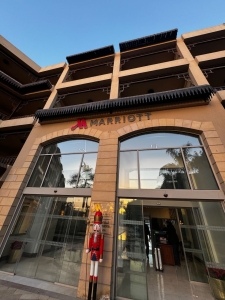
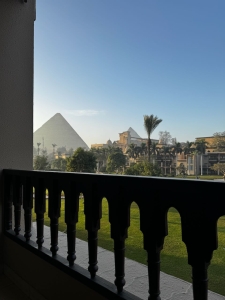
Marriott Mena House Cairo has front-row seats to the view of the Great Pyramids

Location

Marriott Mena House Cairo is located close to the Great Pyramids of Giza, which is the main benefit of staying at the hotel. Its proximity to the Great Pyramids offers views of the monument in some rooms and is the hotel’s biggest selling point. Besides a few small provision shops at the hotel’s doorstep and a gas station about 3 minutes from the hotel, there are few choices for food and shopping around the hotel. The nearest shopping mall, Mall of Egypt, is about a 30-minute drive from the Marriott Mena House Cairo.
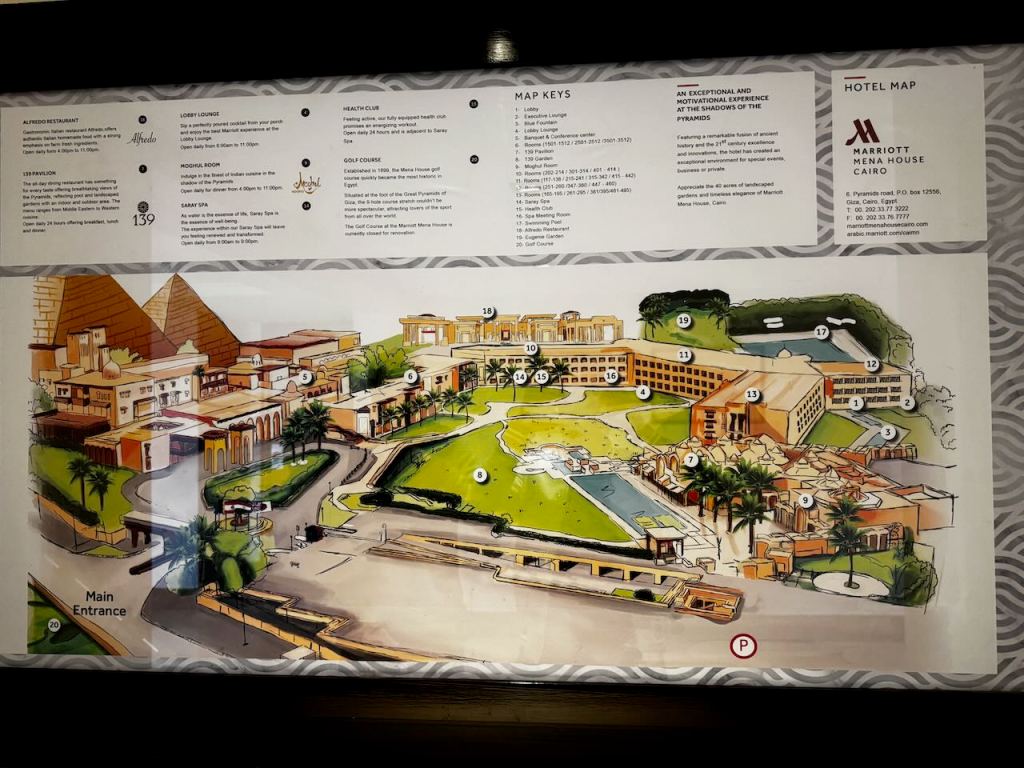
Map of Marriott Mena House Cairo

The Room

We checked into the 35m2 Deluxe Pyramid View Room at Marriott Mena House Cairo, the hotel’s most basic room. The hotel has three prices for their Deluxe Room, depending on how much we see the pyramids from the balcony. We got a room that had an unobstructed view of the great pyramids.

Entryway

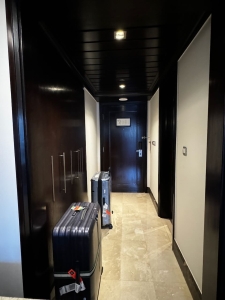
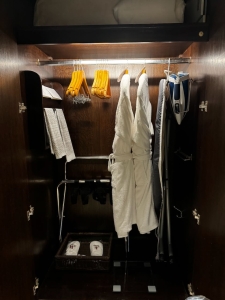
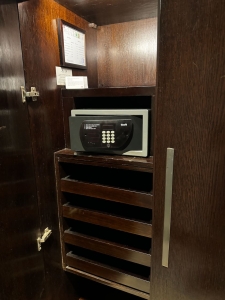
Marriott Mena House Cairo’s luxury vibe can be felt when we enter the room’s entryway. The entryway merely serves as a pathway from the main door to the sleeping area of the Deluxe Pyramid View Room. Marriott Mena House Cairo uses dark brown timber and marble flooring that exudes a sense of calmness and elegance. The wardrobe and bathroom entrance are located in the entryway. The three-door wardrobe has two sections. The bigger two-door part of the wardrobe is allocated for hanging clothing with sufficient space to hang at least five days of clothing, though the number of hangers is limited. We found the ironing equipment and an additional luggage rack in this part of the wardrobe. The other part of the wardrobe has a single-door panel, which houses a four-tier drawer, perfect for us to stow our smaller clothing items. The in-room safe is also nicely hidden in this part of the wardrobe.

Bathroom

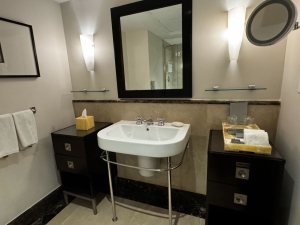
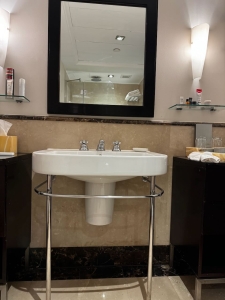
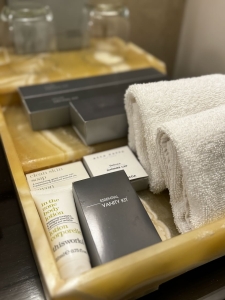
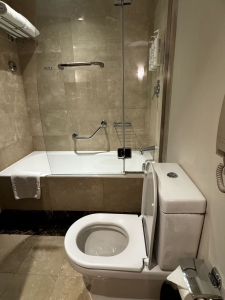
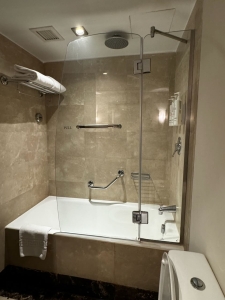
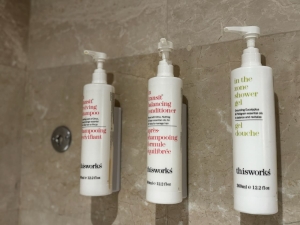
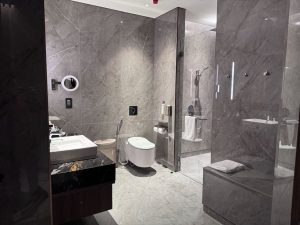
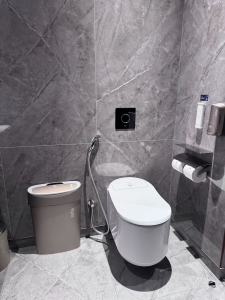
The marble-laden bathroom is nothing short of luxury. A single oversized sink sits by the wall next to the entrance to the bathroom. I like how Marriott Mena House Cairo did not overfit a dual sink in the bathroom to sacrifice the space allotted to the sink area. Two drawers on either side of the sink allowed us space to stow our toiletry bags. The space on top of these drawers also allowed us to place our facial care items and shavers. However, the large marble holder the hotel used to place some of the amenities on one of these drawers took up a huge amount of space. Fortunately, a glass ledge fixed on both sides of the mirror by the sink did not affect the space usage at the sink.

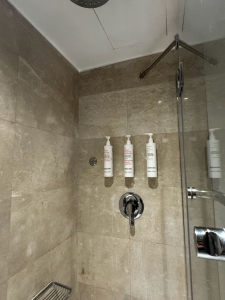
The toilet is wedged between the sink area and the bathtub. The placement of the porcelain throne does not affect the useable space in the bathroom. Marriott Mena House Cairo fitted the Deluxe Pyramid View Room bathroom with a shower/tub combination. I am not a fan of the shower/tub combination as I find getting in and out of the shower a hassle, and potentially, one might slip and fall, especially guests with mobility issues and children. The bathtub in the room was a tad small, and the sealing for the glass panel was questionable. I always see water seeping through the moveable glass panel whenever I shower.

Sleeping Area

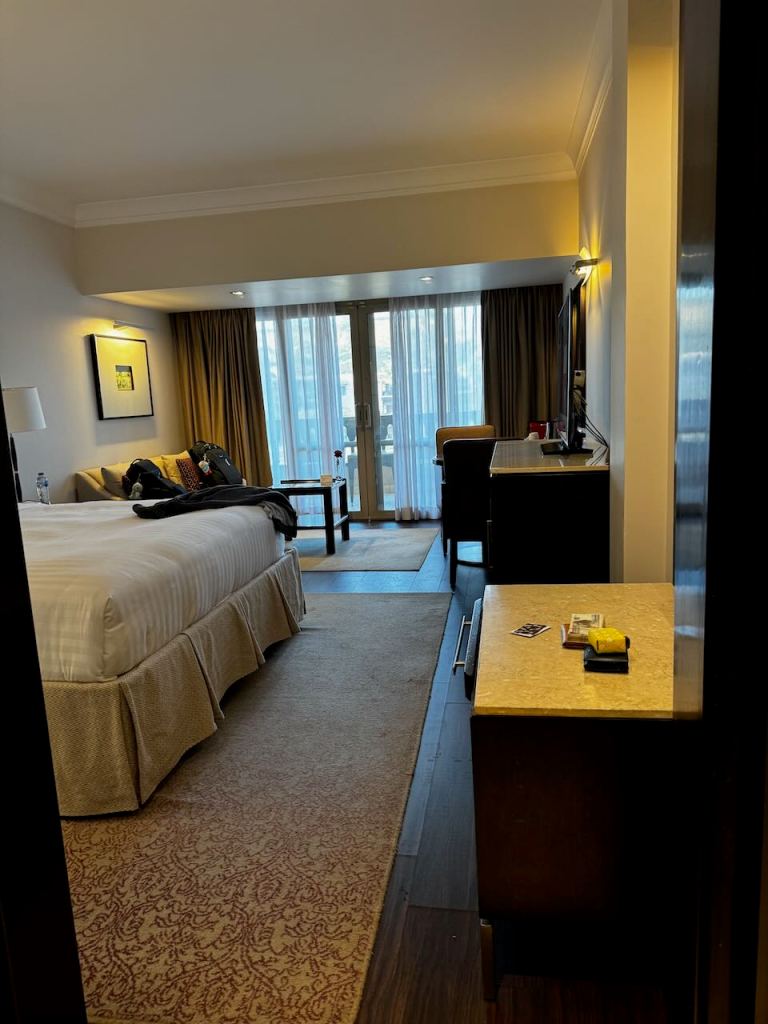
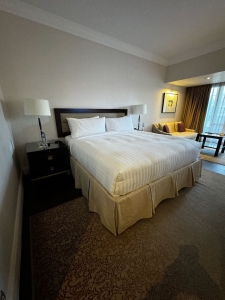
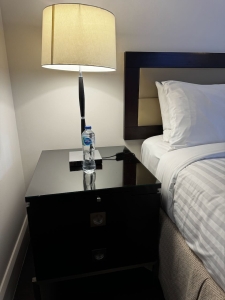
The Marriott Mena House Cairo allocated most of the floor space to the sleeping area. The room looks bigger than most of the entry-level rooms in other hotels. The centrepiece of the sleeping area is the king bed, which occupies about ½ of the sleeping area. I find the mattress used for the king bed to be of the correct level of firmness and very comfortable to sleep on. I had no problems getting excellent sleep quality on the king bed. However, the pillows supplied by the hotel are a tad too soft for my liking. On either side of the bed sits a bedside table, which I find ample space to place my mobile phone and power bank, despite being furnished with a table lamp. The two drawers on the bedside tables gave me more space to put away more stuff. The only flaw in the design of the bedside table is the lack of power sockets on the left table. There was no way for me to charge my mobile devices, and I ended up charging my mobile phone using a power bank. The situation on the right bedside table is better because it has two USB-A charging outlets.

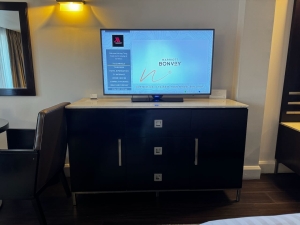
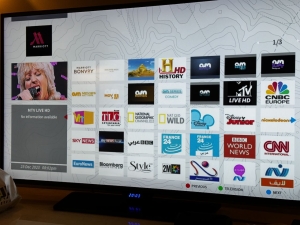
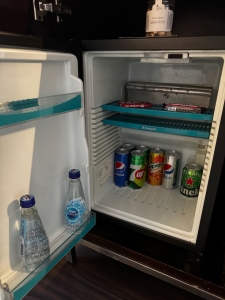
A large cabinet sits opposite the king bed, flushed to the wall. This cabinet houses a large 49″ flatscreen TV. I like the size of the cabinet. Despite placing a large TV, we still found space to stow small items on top of the cabinet. The three drawers at the TV cabinet allowed us to throw whatever we bought inside without worrying about aesthetics. We found a mini fridge hiding inside the left cabinet of the TV console. There are tons of entertainment options on the TV. We could select from various local and international channels to keep us entertained when we were not admiring the pyramids on the balcony.

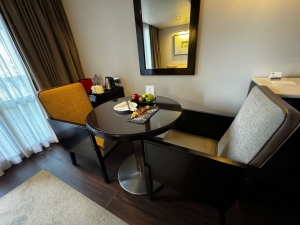
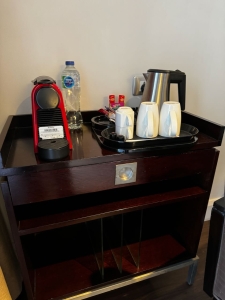
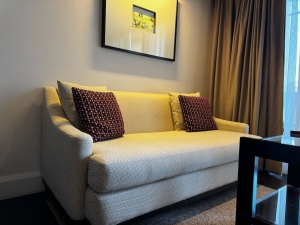
Marriott Mena House Cairo seems to want their guests to relax and not work while staying with them. Instead of finding a work desk, we found a small dining table with two matching chairs. A minibar station is beside the dining table, tucked in a corner of the room. We found a Nespresso machine and the usual coffee capsules and tea bags. As the room lacked power outlets, I used one outlet here to charge my power bank and lifestyle devices. I was amazed at how Marriott Mena House Cairo could fit a two-seater couch in their Deluxe Pyramid View Room and yet afford us space to move around the room. The fabric couch is a great place to relax (although we use it mainly to put on our backpacks) and watch TV without messing up the bed.

Balcony

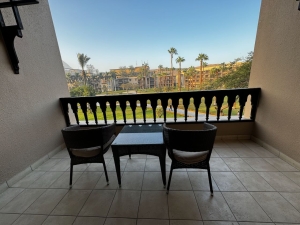
The part of the Deluxe Pyramid View Room we like the most is its balcony. The balcony space is fairly large and gives us a great view of the Great Pyramids of Giza. Furnished with a table and two chairs, we found ourselves hanging out here when we returned to our room. The table on the balcony is large enough for us to dine.

Service

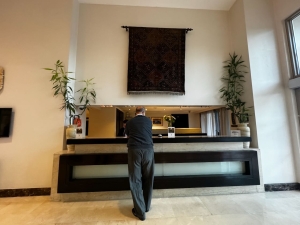
Service in Marriott Mena House Cairo was exceptional. We were warmly welcomed by the staff member who took care of the check-in for us when we arrived. The staff at the check-in counter gave us a verbal orientation on the hotel facilities. They even volunteered to show us to our room and deliver our luggage. All the staff at Marriott Mena House Cairo, including the security team at the main and side entrances to the hotel, were fantastic. They were warm and welcoming, and everyone always smiled when guests walked past them.

In particular, our housekeeper, Islam, was amazing. He would always greet us with a smile whenever we bumped into him along the corridor. When we first entered our room, Islam knocked on our door to check if we needed anything else. Islam would check in with us during turndown service to see if we had sufficient supplies. There was an occasion when I saw Islam working in other rooms along the corridor and requested extra bottled water from him. Islam dropped down his work and focused on our request with a smile.

Our check-out was processed by Hazem, who did so efficiently. Perhaps it is the SOP of the hotel; Hazem checked with us on our stay. I gave him feedback regarding the water seepage issue in our bathroom. Instead of making excuses (which most hotels do), Hazem was not defensive and apologised for the hardware issue (though it was no fault of his). I saw him taking notes of our issue description, and he assured us he would get his engineering team to look into it. Hazem even thanked us for bringing up this issue to him.

Hotel Facilities

139 Pavilion Restaurant

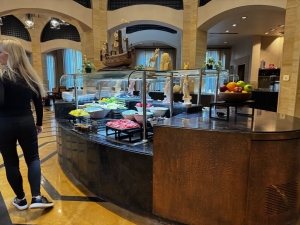
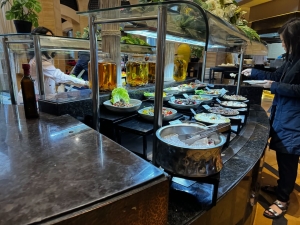
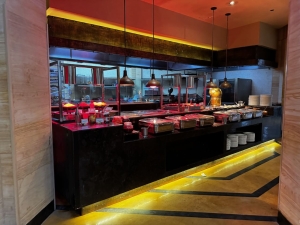
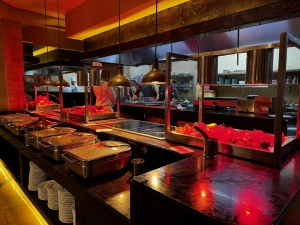
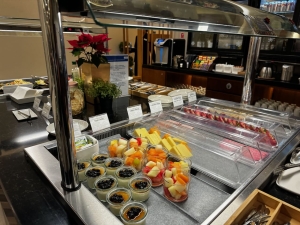
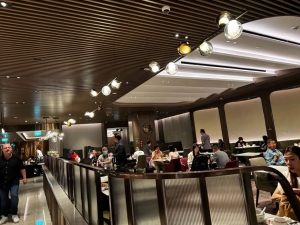
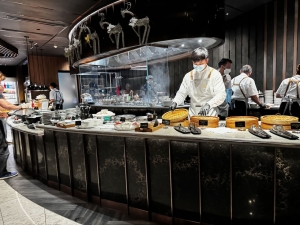
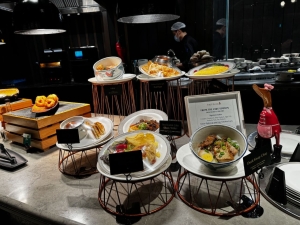
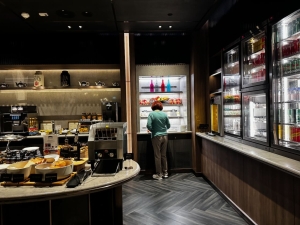
The 139 Pavilion Restaurant is our go-to restaurant for meals, open 24/7 serving breakfast and supper. Breakfast is served buffet style, with a huge selection of food spread across several stations but concentrated near the kitchen side of the restaurant. There is a station with cold food such as salad and fruit. The bread section is placed at the end of the cold station. There is a hot food section that serves your usual continental breakfast options. There is also a station where food is cooked ala minute like pasta and eggs. The food served during breakfast was tasty and high quality.

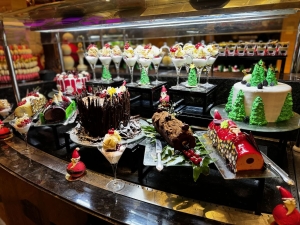
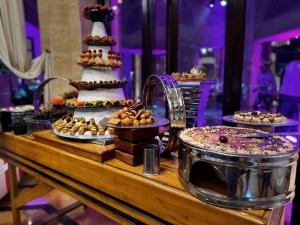
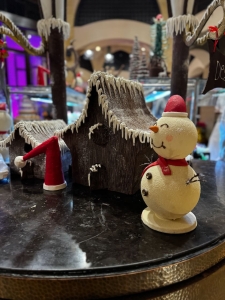
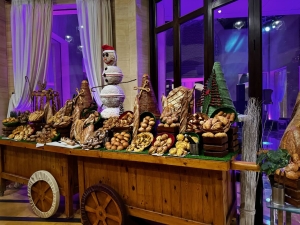
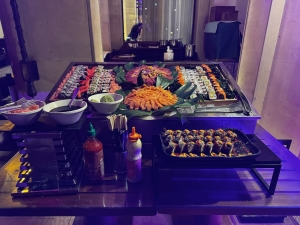
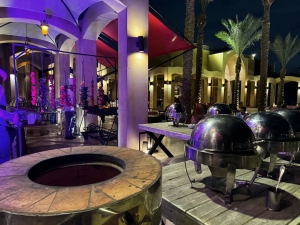
We also had our Christmas dinner at 139 Pavilion Restaurant, arranged by our tour operator. For dinner, there is an even larger selection of food. The restaurant set up its food offerings in both indoor and outdoor stations. The indoor stations include the usual salad bar, fruit section, and a huge selection of meats and cooked vegetables at the hot station. There was also a station where pasta was cooked a la minute and served to guests. There is even a large counter set up for bread and Christmas puddings. But what intrigued me the most was the huge selection of pastries and desserts. These pastries looked too pretty to be consumed, and all came in relatively large portions. Besides the pre-prepared sushi station in the outdoor section, we were treated to a wide choice of grilled seafood and meat cooked on order. There is also a station that serves Indian naan. The food was delicious, and we were spoilt for choice for the Christmas Dinner.

Gym

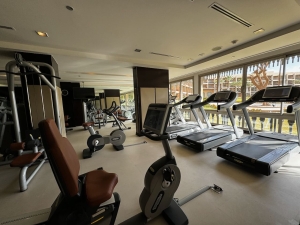
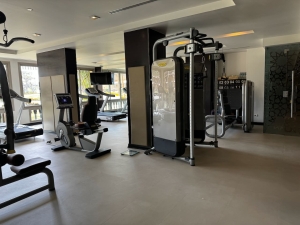
The gym at Marriott Mena House Cairo is located on the ground floor of Marriott Mena House Cairo. The gym occupies a large area and is well-equipped with machines typically found in commercial gyms. There are strength training machines that work out almost every major muscle group of the body, as well as cardio training machines such as treadmills, stationary bikes and ellipticals. These cardio machines are placed facing the gardens of Marriott Mena House Cairo and the Great Pyramids of Giza. There is a corner set aside for guests who want to practise yoga. Towels and water are available in the gym.
Swimming Pool

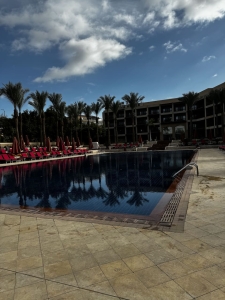
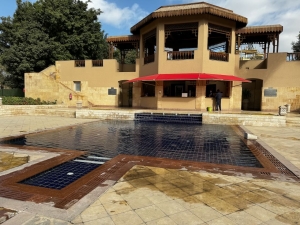
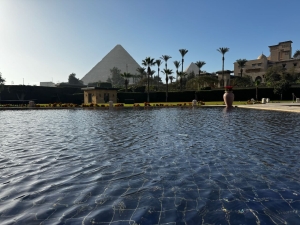
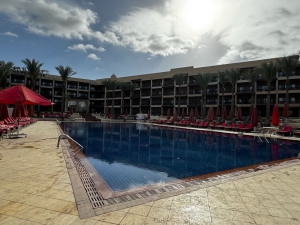
Marriott Mena House Cairo has a large swimming pool in the northeastern part of the hotel in a separate courtyard. The heated pool is capable of allowing guests to do some serious laps. There is no lack of sundeck chairs around the swimming pool for guests to enjoy the sun or to relax by the pool. Aside from the main pool, there is a smaller wading pool for the hotel’s younger guests. There is a bar at the pool, and the staff are seen stationed at the bar, regardless of whether people are using the pool.

Overall

We had a positive experience staying in Marriott Mena House Cairo. The staff we met were very friendly and welcoming. The Deluxe Pyramid View Room was spacious and well-designed. The sleep quality on the king bed was nothing but excellent. We like the gardens and the view of the Great Pyramids from the hotel grounds, especially from our room’s balcony. Other than the views of the pyramids, there is not much going on outside the hotel. Apart from the few provision shops and a gas station, all other amenities and shopping are far from the hotel. Nonetheless, I would return to the hotel for its comfort, emphasis on safety, impeccable service and, most importantly, the magical view of the Great Pyramids.
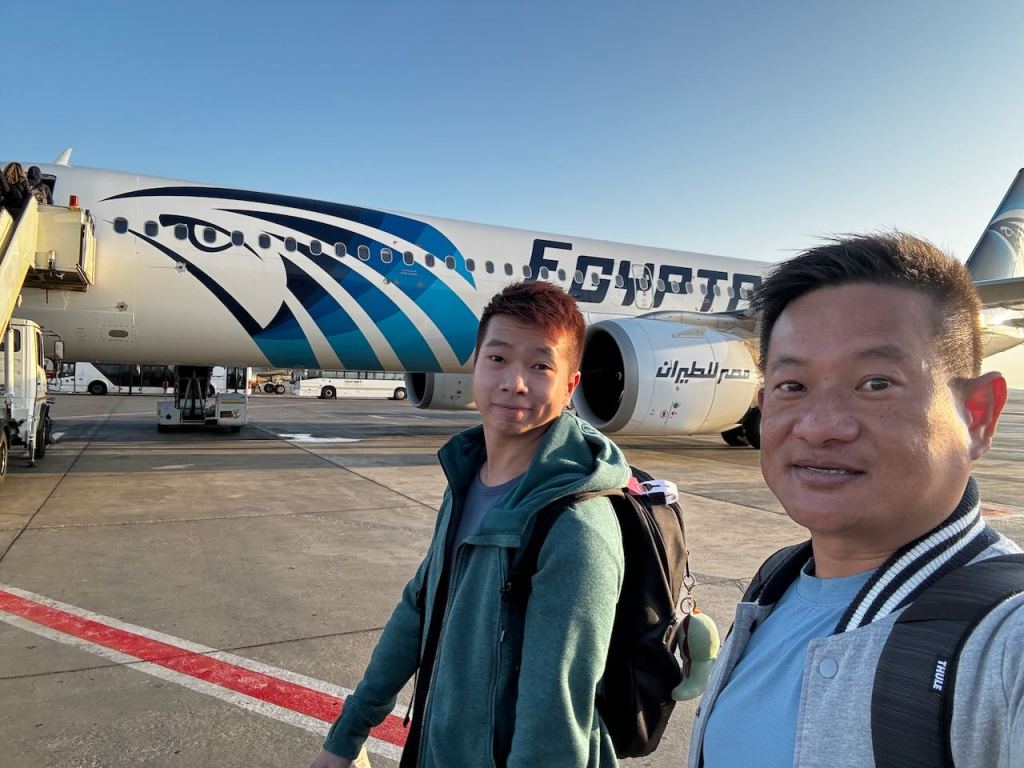
[Airline Review] – EgyptAir A330-300 (MS780) – Business Class, LHR – CAI (22 Dec 23)

At the Airport

Check-in Counters

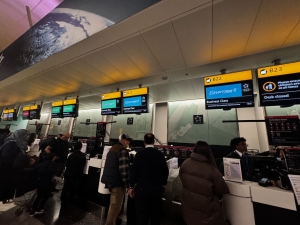
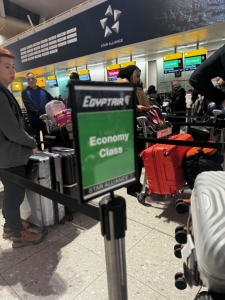
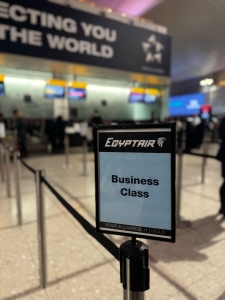
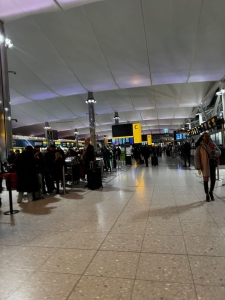
EgyptAir departs from London Heathrow Terminal 2, the Star Alliance Airlines hub. EgyptAir check-in counters are located at Zone B, in the terminal’s centre. The five EgyptAir check-in and ticketing counters do not operate 24/7; they are open at 6.30 pm for our 10.30 pm flight. Two of these five counters, from B18 to B22, are dedicated to Business Class. There was no separate queue for passengers who had already performed their check-in online. Despite only one passenger ahead of us in the queue at the Business Class counter, we still had to wait for 10 minutes to be checked in. The ground manager operating the counter was very busy multitasking, performing check-ins and sorting out any issues (which seemed to pop up every now and then) with passengers flying out that evening. The ground manager was very friendly and apologetic for the delay in check-in. She gave us directions to the nearest lounge to wait for our gate to be announced. She even reminded us as Business Class passengers, we were able to use the Gold Track immigration lane, which has a much shorter queue and granted us access to the airside within minutes.

Our flight departed from Gate B42 at the satellite terminal

Lounges

Lufthansa Business Lounge

Lufthansa Lounges in London Heathrow Thermina 2

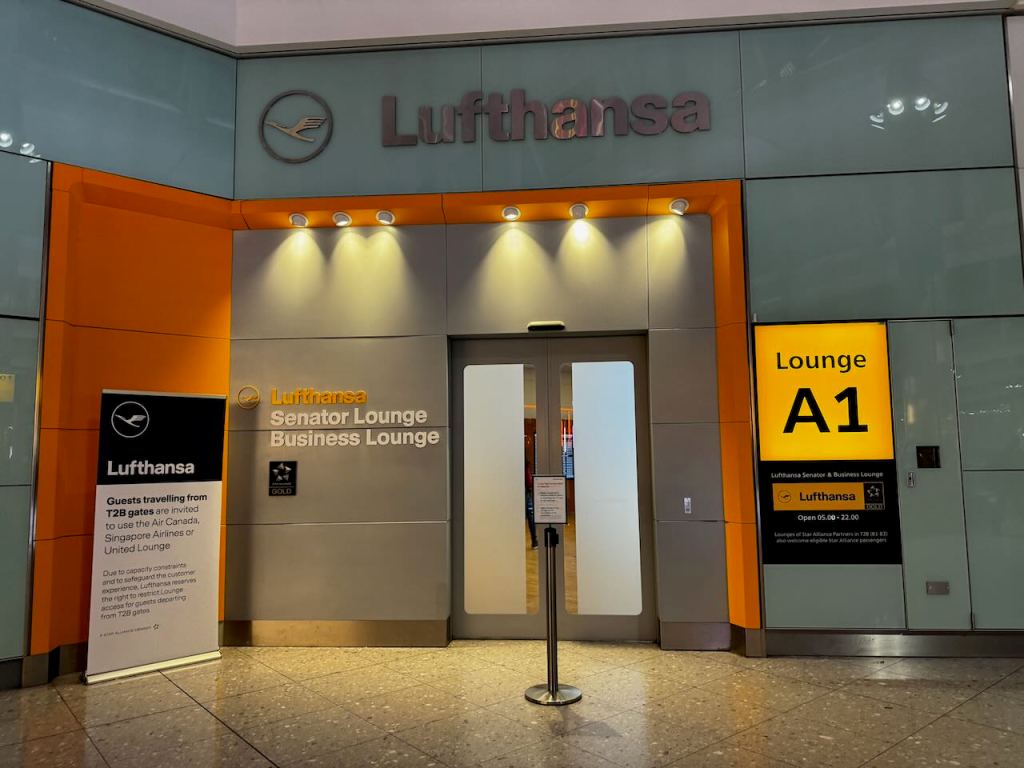
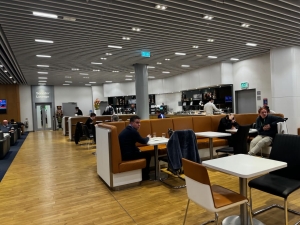
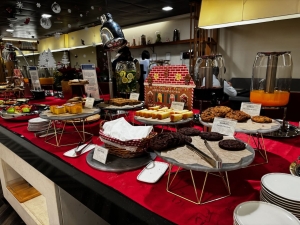
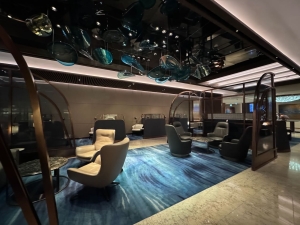
The Lufthansa lounges are located in the main terminal building at London Heathrow Airport, to the right after immigration, about a 5-minute walk away. There are two lounges past the main door of the Lufthansa Lounges: the Lufthansa Business Lounge, serving passengers flying Business Class on all Star Alliance Airlines, and the Lufthansa Senator Lounge further in from the main Business Lounge, which mainly serves First Class passengers flying on Star Alliance Airlines and passengers with gold status in the Star Alliance network. The Business Lounge was about 60% full. The lounge has three distinct sections: the blue carpeted area in the main lounge space with armchairs for passengers to lounge around; the wooden parqueted flooring with dining tables and buffet spreads for passengers to dine; and another carpeted area behind a wall panel, just after the reception for passengers to work on. The lounge layout was rather open, except for the work area. The Lufthansa Business Lounge felt more functional than luxury. Food was limited, with only five hot foods in the buffet zone, but sufficient to fill our stomachs before our next flight. A separate counter with finger food, such as biscuits and a salad bar. Drinks are conveniently placed in both the hot and finger food sections. As it was the Christmas festive season, Lufthansa Business Lounge set up another counter serving Christmas treats for passengers. The lounge does not have any showering facilities.

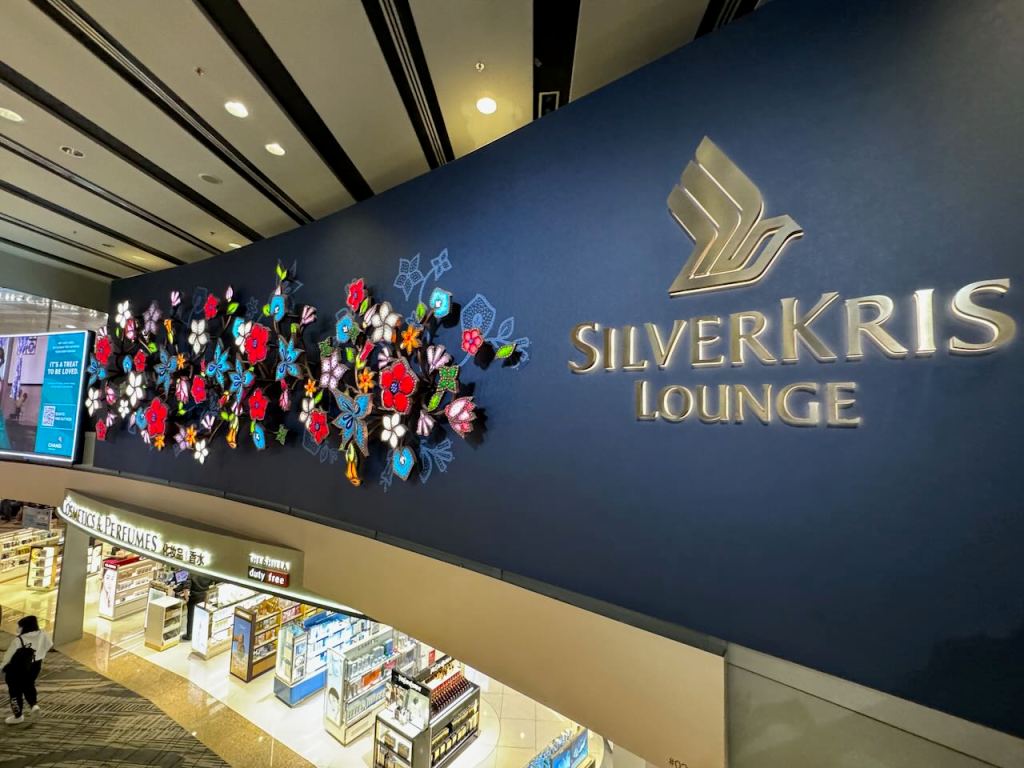
Singapore Airlines SilverKris Lounge

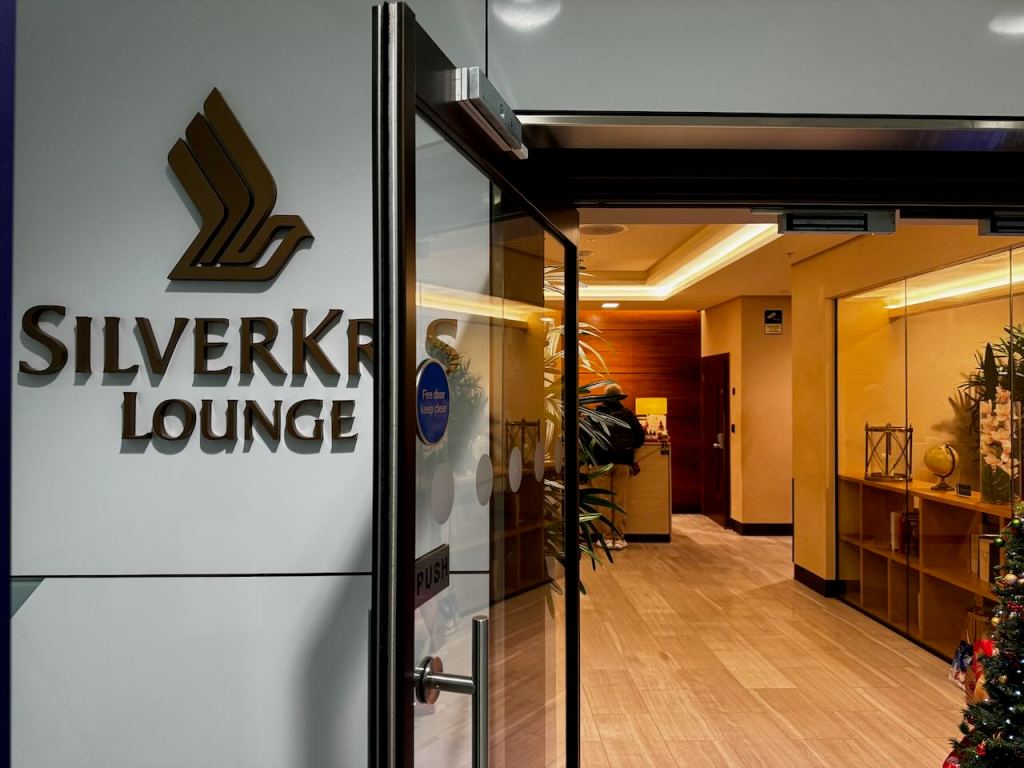
Singapore Airlines SilverKris Lounge in the satellite terminal

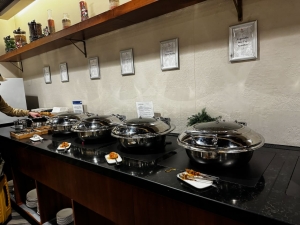
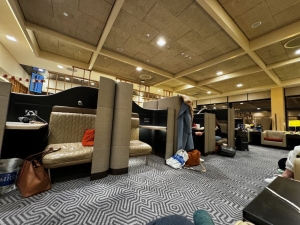
There are three more Star Alliance Lounges in the Satellite Terminal, about a 15-minute walk from the main terminal, operated by Air Canada, Singapore Airlines and United Airlines. Air Canada Maple Lounge and Singapore Airlines SilverKris Lounge were opposite each other. During our visit, the Air Canada Maple Lounge was closed, and we did not check if United Airlines was open as it was some distance away. We went to Singapore Airlines SilverKris Lounge mainly to use their shower facilities. The Singapore Airlines SilverKris Lounge felt a little dated; the wooded furnishing used in the lounge looked old, and there were signs that the lounge lacked maintenance. Despite the dated design, Singapore Airlines SilverKris Lounge is a great place to relax and wait for flights. The dining areas in the Singapore Airlines SilverKris Lounge are tucked to the sides, facing the walls near the main buffet area. The lounging area was filled with armchairs and booths that looked like the long-haul Business Class seats onboard Singapore Airlines in a rather sizeable area further into the lounge. There is only one showering room in the Singapore Airlines SilverKris Lounge. We had to register with the staff outside the shower room to use the shower facilities. The shower room was nothing luxurious and felt dated, and the dental kit was only available upon request. Compared to the Lufthansa Business Lounge, there seems to be more food offered in the Singapore Airlines SilverKris Lounge. The hot food section had up to six selections of mainly Asian food, while the cold food section was stocked with fruits, cheese, and sandwiches. Singapore Airlines SilverKris Lounge also has a large table of Christmas puddings and pies in the food section. Drinks are conveniently located in the food and lounge areas for passengers to help themselves. A bar in the lounge area serves cocktails and the famous Singapore Sling in the Singapore Airlines SilverKris Lounge.

The Aircraft

There have been equipment changes over the months since we booked our flight. EgyptAir originally assigned B787-9 for this LHR-CAI leg. However, sometime on Mar 23, the airlines changed their aircraft to their latest addition of the A320neo but then changed the aircraft type again to A330-300.

The Cabin

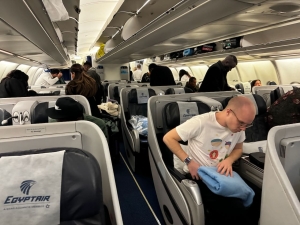
EgyptAir A330-300 has 301 seats in two cabins, with 36 in Business Class and 265 in Economy Class. The Business Class cabin onboard EgyptAir A330-300 looked dated, mainly due to the cabin’s layout and the dark blue leather seats. The white-coloured walls and the white lights used during boarding made the Business Class cabin look bright and airy. The white bulkhead at the front of the cabin was painted with papyrus motifs, giving the cabin an Egyptian identity. The airline’s signature blue colour scheme reinforces the product identity as it has the same colour as the Horus logo painted on its fuselage.

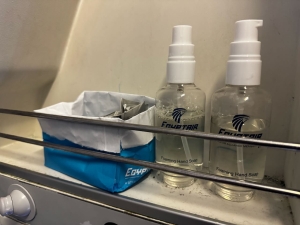
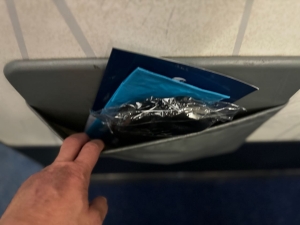
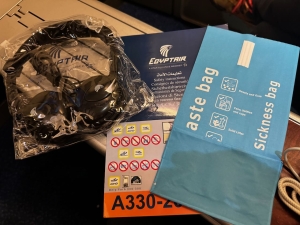
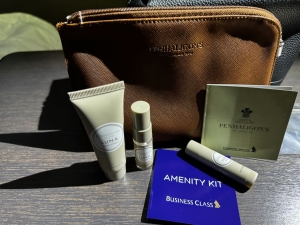
EgyptAir allocated two lavatories serving 36 Business Class passengers in the front and between the aircraft’s Business Class and Economy Class sections. The lavatories are decently sized and were kept clean throughout the flight. The only amenities in the Business Class lavatories are limited to hand soap and a box of disinfectant wipes. EgyptAir did not stock their lavatories with additional dental kits or air sickness bags, as the dental kits are already inside the amenity kit distributed during boarding, and the air sickness bags are placed in the seat pockets.

The Seat

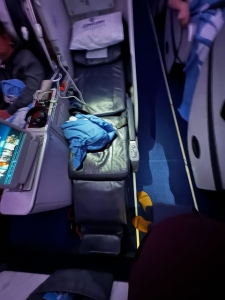
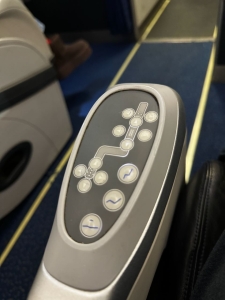
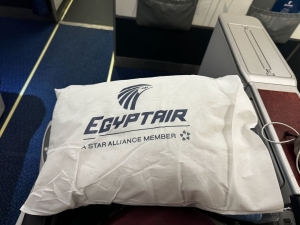
Business Class seats onboard EgyptAir A330-300 are arranged in a 2-2-2 configuration, each of the 36 seats having a seat pitch of 60″ and measuring 25″ wide. The Business Class seats have three set modes: upright mode for take-offs and landings, lounge mode for a slightly more reclined position, and flatbed mode for sleeping. I found the seat very comfortable due to its thick padding and the comfortable headrest. EgyptAir’s website advertised that its Business Class seats were fitted with a massaging function, but this function seemed out of order for my seat. I favour the lounge mode the best, which is between the upright and flatbed positions and is perfect for watching movies and dining. I was also able to adjust the angle of the recline for the lounge mode to my liking with the buttons on the side of the seat. EgyptAir A330-300 Business Class seats can be reclined into flatbeds but at an angle of about 160°. Despite not being a true flatbed, I still find the Business Class seats surprisingly comfortable when in flatbed mode, partially due to my tiredness and the thick cushioning on the seats. EgyptAir provided their Business Class passengers with a thick pillow and comfortable fleece blanket. I like the firmness of the pillow. I managed to doze off for 2 hours after a meal on the comfortable seat.

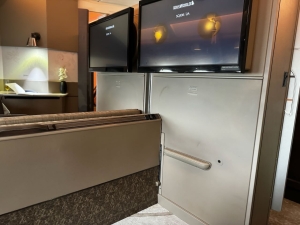
EgyptAir A330-300 Business Class seats are fitted with a personal reading light on top of the seat shell, in addition to the overhead reading light. A small centre divider was fitted between the two Business Class seats, which only provided partial privacy for the passenger sitting in the window seat. Else, the other seats felt rather open. As the A330-300 was an older aircraft (over 12 years old), the only avenue to charge our mobile devices was via the only USB-A socket fitted between the two seats. There are no power sockets for passengers to charge their laptops or devices that use USB-C. EgyptAir A330-300 Business Class seats also suffer from a lack of storage space. Besides the seat pocket fitted onto the bulkhead, we can only rely on the cubby under the IFE controller for storage. Fortunately, the small cocktail table between the two seats offered some form of storage space, but we would have to hold our stuff during take-off/landings.

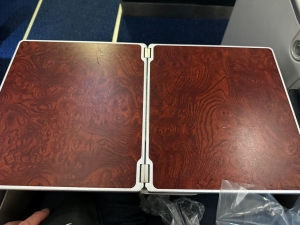
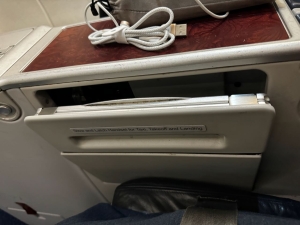
The EgyptAir A330-300 Business Class table is stowed inside the consoles between the seats. To access the table, we would have to open the drawer-like latch and pull out the table. The table was folded when we fished it out of the latch, but it could expand to a full size for passengers to work on their laptops.

Inflight Entertainment

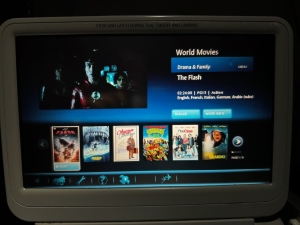
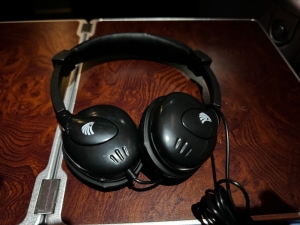
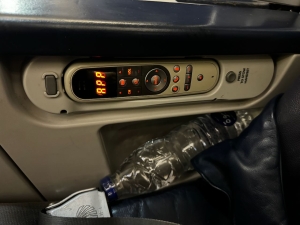
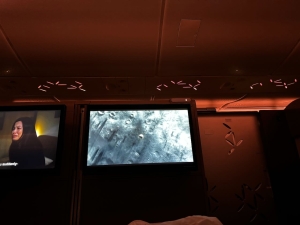
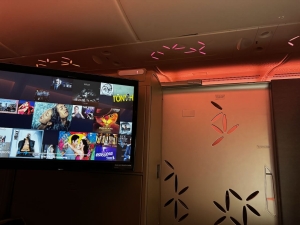
Each Business Class seat on EgyptAir A330-300 was fitted with a 15.4” TV screen stowed inside the centre consoles between the seats for the bulkhead seats that we occupied. The TV can be deployed with the push of a button. These personal TVs do not have a touchscreen function; scrolling through the menu relies on the IFE controller stowed in the cubby inside the seat’s armrest. Despite being an older aircraft and IFE system, I did not experience any lag on the system. Besides controlling the IFE menu, the call attendant and lighting buttons are also fitted into the controller. EgyptAir provided its Business Class passengers with over-the-head headphones that do not come with noise-cancellation functions. However, it does the job of providing audio on the movies that we were watching. EgyptAir has a very intuitively designed IFE menu, which is well laid out in menus that are easy to scroll through. The airlines loaded its IFE system with the latest Hollywood blockbusters and TV shows, to name a few.

Meal Service

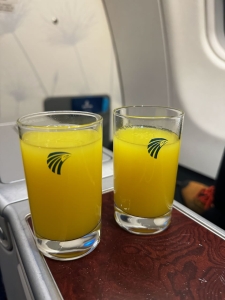
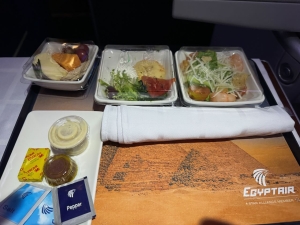
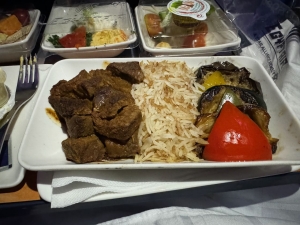
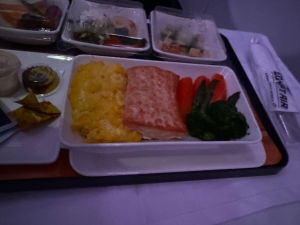
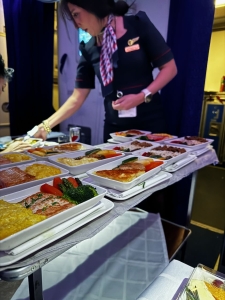
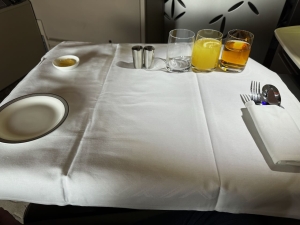
Wblockbustersd welcome drinks the moment we got settled into our seats. Despite being a short 4-hour red-eye flight, EgyptAir surprises me with its full dinner catering. The cabin crew sprung into action immediately to prepare for dinner service as soon as the aircraft reached cruising altitude. One of the flight attendants went around laying tablecloths in each seat and another serving a tray of appetisers. Shortly after, yet another cabin crew approached us for our choice of drinks. Instead of giving out menus and taking orders, EgyptAir flight attendants went around the cabin in a trolley with all three options for mains for passengers to choose from. Pushing mains on a trolley is getting rare these days. For mains, we were given three options: beef, salmon and cWet for the beef with basmati rice, and my friend opted for the Salmon with scrambled egg and vegetables. The portions for the meals served were rather huge. I found the beef very tender and flavourful, complementing well with the rice. However, my friend commented the salmon was a tad salty. There might be dessert after the mains. However, we fell asleep after finishing our mains.

Service

The service onboard was surprisingly good. After reading reviews, I had low expectations for the services onboard EgyptAir flights, which generally ranked the service onboard as poor to mediocre. However, this was not the case for my experience onboard this flight. The flight attendants were welcoming and wore their smiles greeting passengers, despite already working for 4 hours when the aircraft flew into London (this is a turn-around flight). As soon as we settled into our seats, the flight attendant would come by almost immediately and serve us the welcome drink, and another would come around, presenting us with the amenity kit. As my seat did not come with a pillow and blanket, I requested them with the cabin crew, who was serving us a welcome drink. I understand she was busy serving welcome drinks to other passengers and was willing to wait until she finished her assignment. To my surprise, the cabin crew kept updating me that she was about to finish her task every time she walked past me. I thought this was a very good gesture (though unnecessary) in assuring me that she still remembers to bring me a set of bedding. Indeed, the said cabin crew immediately came to me with a set of bedding the moment she was done with welcome drinks.

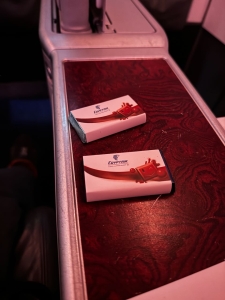
After finishing my meal, I held on to my drinks to ensure they did not spill over as there was turbulence. I dozed off while still holding onto the glasses. To my surprise, I found the glasses and my table was cleared carefully by the cabin crew (I was asleep throughout). They even kept the table and placed two chocolates on the cocktail table. I thought this was a very nice touch. I observed the cabin crew diligently patrolling the cabin and even worked through turbulence to ensure dinner was pushed out quickly and passengers could have more time to rest. The cabin crew was seen smiling constantly to passengers despite feeling tired from the previous flight. I thought the service onboard was great, unlike what I had read before my first experience with EgyptAir.

Afterthought

Despite being an old product, I found Business Class seats on EgyptAir A330-300 very comfortable and great for sleeping and lounging. Food was generous in terms of portion size and choices. For a short flight, airlines these days give passengers two choices, whereas EgyptAir gives us three choices. I find it refreshing to see main courses being pushed down the aisle for passengers to see and decide which option they want. The biggest surprise for me was the service onboard. I found the cabin crew on this EgyptAir flight very friendly and attentive. The cabin crew also came across as being sincere and warm. I had a great time on this flight with EgyptAir and looked forward to my return flight with the airline to Paris.

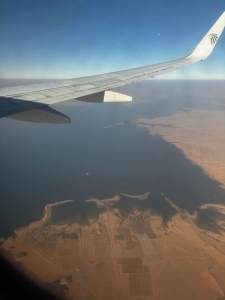
Flying into Cairo

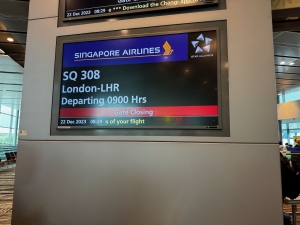
[Airline Review] – Singapore Airlines A380-800 (SQ308) – Suites Class, SIN – LHR (22 Dec 23) Part 2: The Onboard Experience

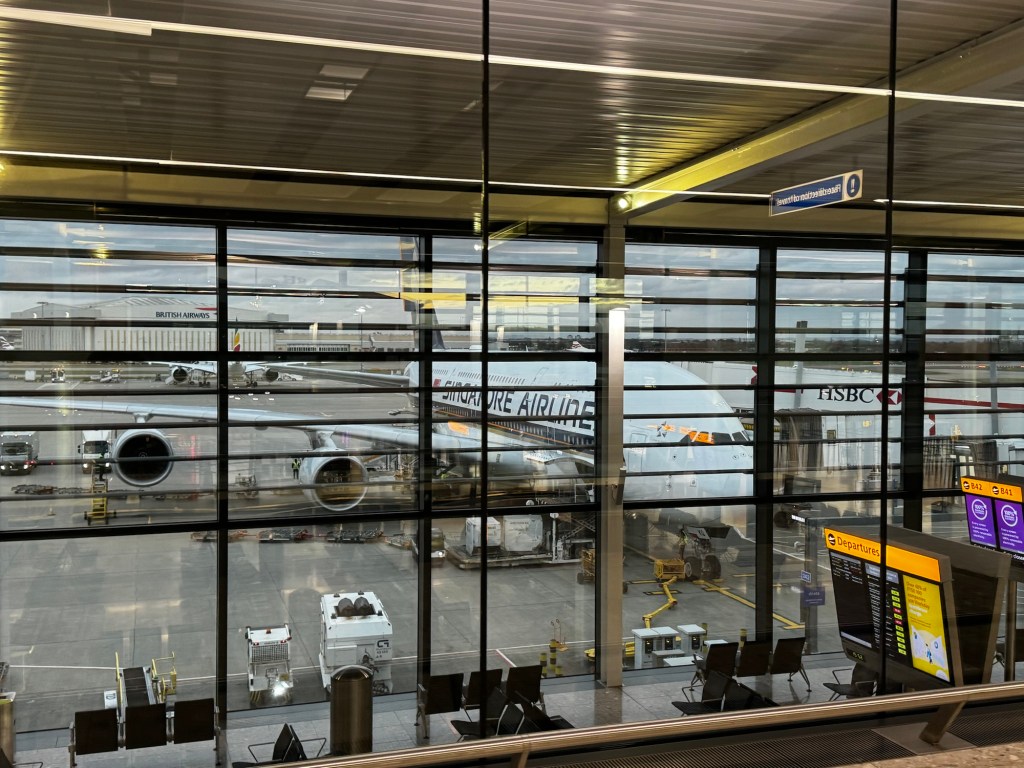
This review focuses on my inflight experience in the Singapore Airlines Suites Class. Singapore Airlines Suites Class is only found on their A380 aircraft, with each passenger given a cabin instead of a standard seat. Singapore Airlines flies from Singapore to London four times a day. Two of these four daily flights were serviced by the super jumbo A380-800, featuring the renowned Singapore Airlines Suites Class. The other two flights were serviced by the B777-300ER, which was installed with spacious seats.

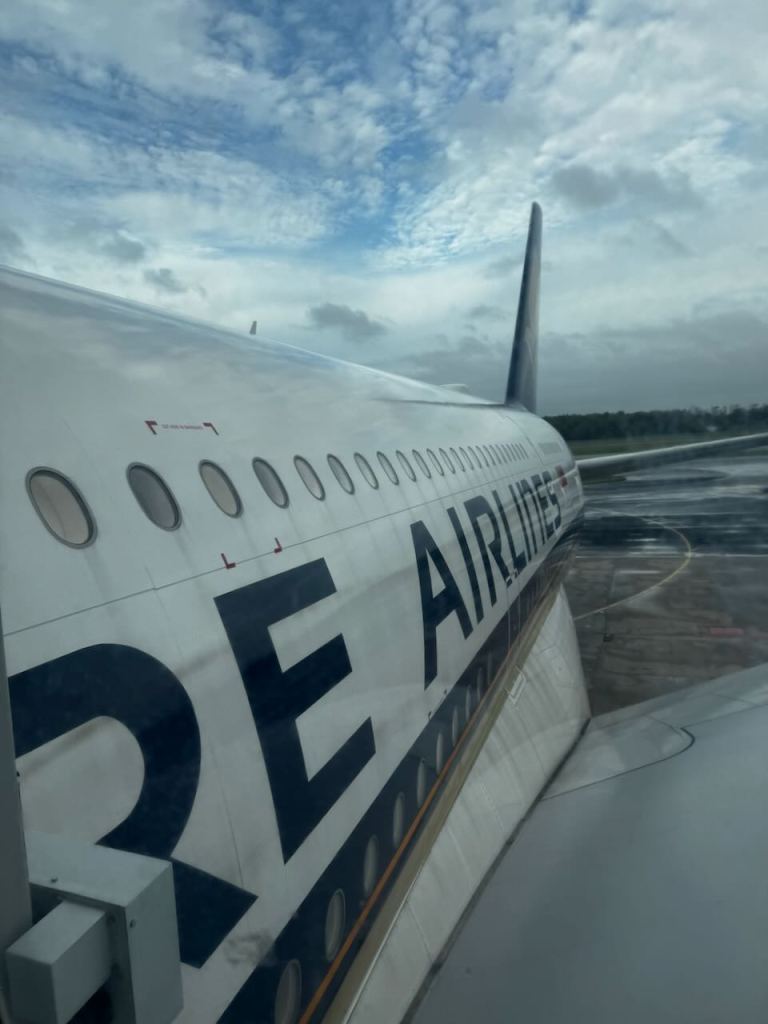
The Singapore Airlines A380-800 that flew us from Singapore to London

The Cabin

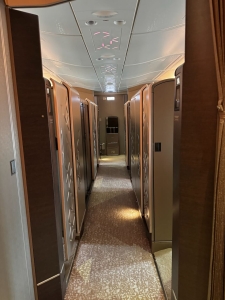
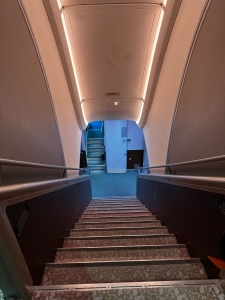
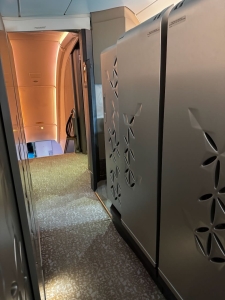
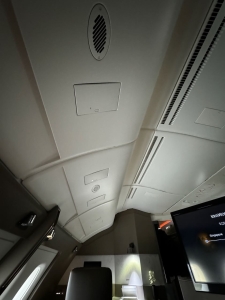
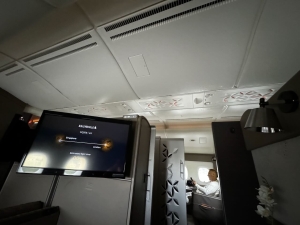
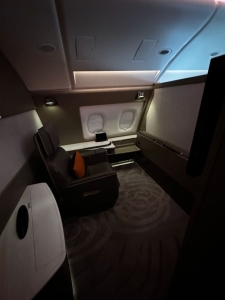
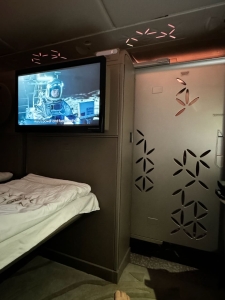
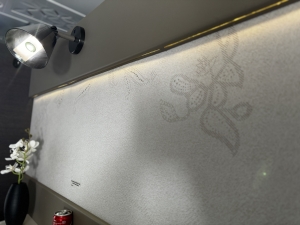
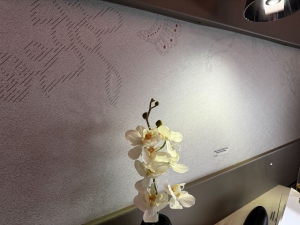
Singapore Airlines Suites Class cabin occupies the forward upper deck of the super jumbo A380-800 aircraft. There are six suites arranged in a 1-1 configuration. The Suites Class cabin feels very cosy and intimate, decked with earthy tones matched with silver doors and beige walls. Singapore Airlines Suites Class cabin is laid with sand colour carpet that is consistent with the colour scheme of the entire cabin. The flower motifs on the ceiling and the doors of each suite were consistent with the theme we spotted in The Private Room (click here to read about my review of The Private Room). The Suites Class cabin resembles the private cabins onboard sleeper trains, which gives Suites Class passengers some form of privacy. The cut holes on the cabin doors, in the shape of a flower design, somewhat reduce the privacy we got in the Suites Class cabins.

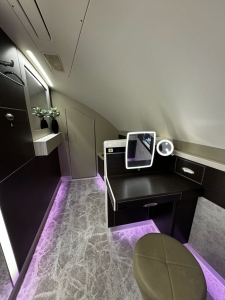
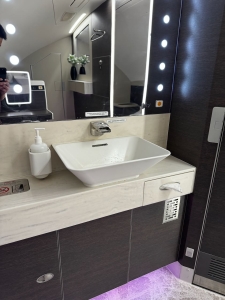
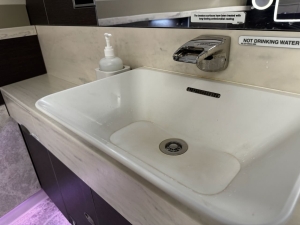
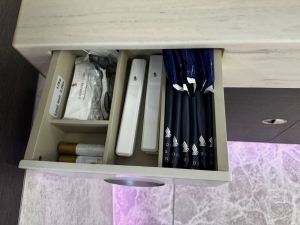
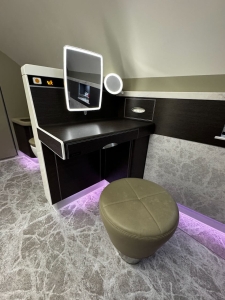
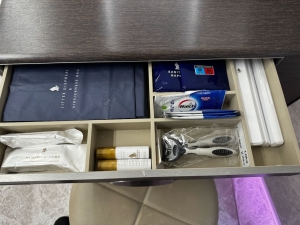
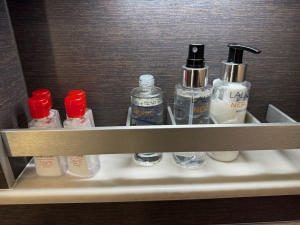
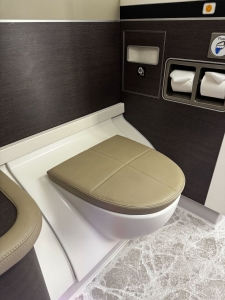
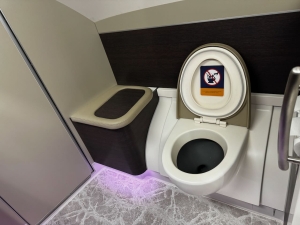
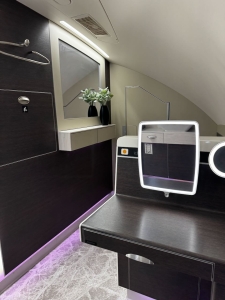
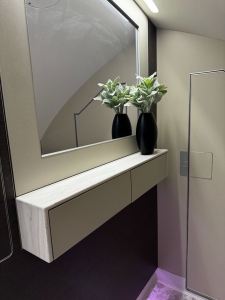
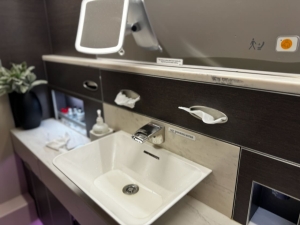
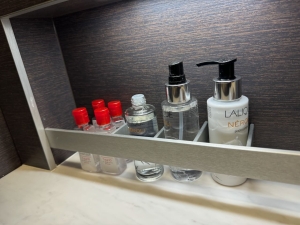
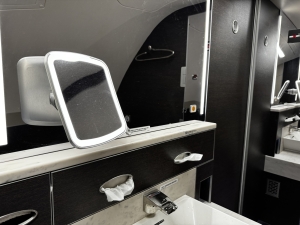
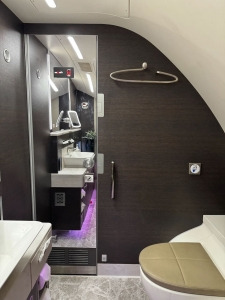
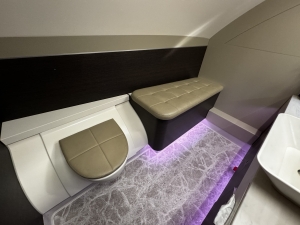
There are two lavatories at the front of the aircraft catering to the six Suites Class passengers. Despite not being fitted with showering facilities found in the A380s of Emirates or Etihad, the lavatories onboard Singapore Airlines A380 Suites Class are equally luxurious. The lavatory on the right is the bigger of the two. With the dark brown wooden furnishing and the beige walls alongside the grey flooring and a marble sink countertop, the lavatory exudes a sense of luxury. The sink in the lavatory rivals that in the bathroom of a 5-star hotel. The right lavatory is large enough for Singapore Airlines to install a vanity table between the toilet and the sink, which comes with a posh leather stool. On top of a regular mirror, there is even a magnifying mirror for passengers to glam up before disembarking. Decked with a leather cover doubling as a seat, even the toilet feels luxurious. There is plenty of space in this lavatory for passengers to change into the Lalique pyjamas provided to Suites Class passengers. Singapore Airlines did not skim on the amenities in the Suites Class lavatories. The lavatories are filled with amenities such as dental kits (different from those offered in Business Class lavatories), sanitary napkins, razors and foam, and a hairbrush. Singapore Airlines also stocked their Suites Class lavatories with Lalique amenities like eau de toilette, facial mist and body lotion.

The lavatory on the left was smaller but no less luxurious. It carries the same luxurious design of dark wooden cabinet panels, beige walls, and grey flooring as the larger lavatory. Similarly, the toilet is covered with leather, which can double as a stool. Passengers using this lavatory can still find it spacious to change in and out of their pyjamas. This lavatory still provides the same amenities as the larger lavatory. The only difference is that the left lavatory has no vanity table, and the toilet can be immediately seen when one enters the lavatory. This lavatory has sufficient mirrors for passengers to put on their make-up.

The Suite

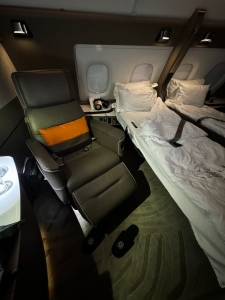
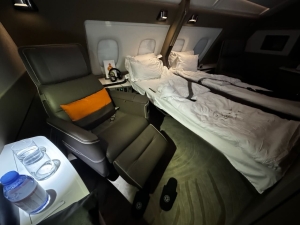
Regarding the Singapore Airlines Suites Class, it isn’t very meaningful to talk about seat pitch as the Suites Class passengers occupy a cabin onboard. Despite being in the same class, not all suites have the same size. The biggest are the foremost Suites (1A and 1F), about 5m2; the smallest (3A and 3F) are the aftmost Suites measuring 3.3m2. I occupy the middle Suite (2A) with 4m2 of real estate. Suites 1A and 2A (and similarly (1F and 2F)) can be combined to form a double bed. Each Suite is fitted with both a chair and a bed. The interior of the Suite gave me a soft and cosy feel, with the use of light shades of brown and beige colour schemes on the walls and the carpet. Using leather to furnish parts of the walls enhances the luxe vibe in the Suite. The walls of the Suite were printed with floral designs that enhanced the luxurious vibe and did not come across as being too loud or over the top, consistent with the design language of the cabin.

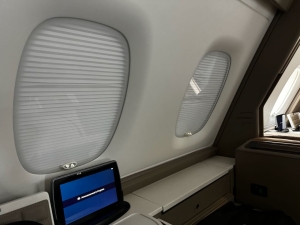
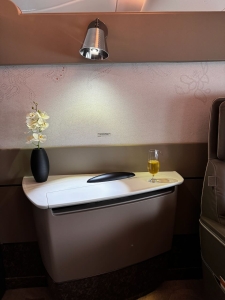
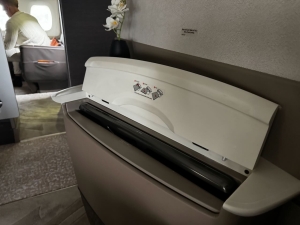
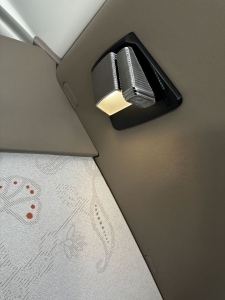
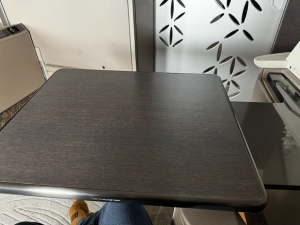
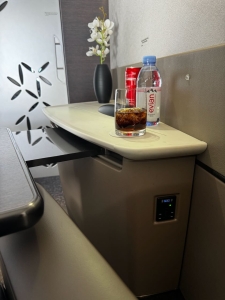
A side table, furnished tastefully with a vase of orchid, sits by the entrance of the Suite. The flight attendants use This side table to place our drinks or snacks without needing to deploy the table. Other than being the side table for the convenience of passengers, the side table is where the large table in the Suite is stowed during take-off and landings. The table is solid and huge, providing tons of space for Suites Class passengers to work on their laptops and for the cabin crew to serve the multi-course meals during the flight. The table can be swivelled for passengers to get in and out of the seat without stowing it away. The lighting further enhances the sense of comfort and cosiness of the Suite. There are two reading lights, one above the chair in the corner of the Suite and another above the bed, that provide soft, warm lighting for passengers to read on the chair or the bed. Another reading light is strategically placed above the side table to illuminate the entrance and side table. Each Suites Class passenger is treated to two window panels to look out into the sky from their bed. These window panels come with two-layered electronic control shades for passengers to control the amount of natural light they want to let into the cabin.

The Seat

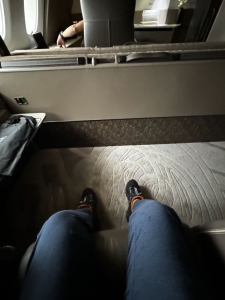
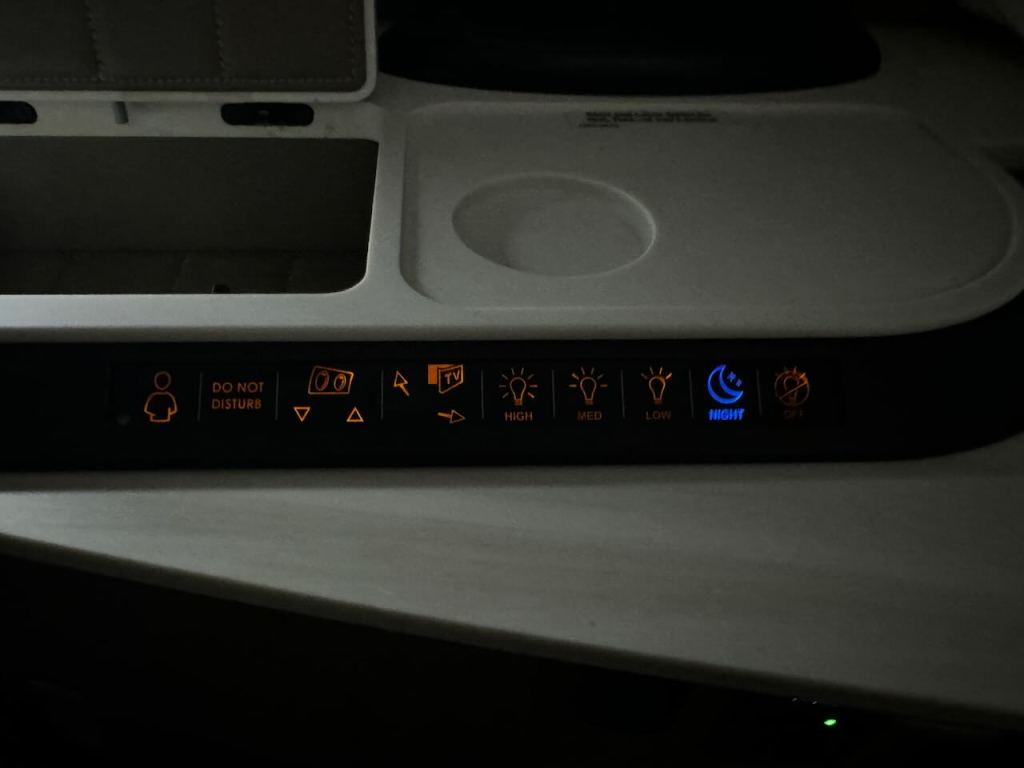
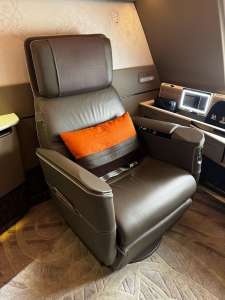
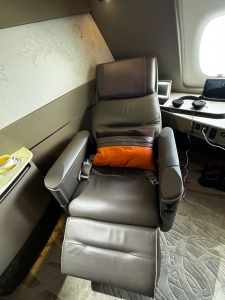
The seat was the first thing that caught my eye when I entered my Suite. Decked in soft brown leather with thickly padded cushioning, the seat is very comfortable. An oversized pillow is placed onto the seat to provide passengers with greater comfort, especially in reclined mode. The seat measures 35″ wide and can recline up to 45°. During boarding, the seat is adjusted to face the front of the aircraft. The seat in the Suites Class onboard Singapore Airlines A380 can be swivelled to face the window or the TV. We are required to swivel the seat to face the front for take-offs and landings. The calf rest of the seat can only be deployed when the seat is swivelled to face the TV or the front of the aircraft (the green light on the control panel would light up to indicate calf rests can be deployed). Swivelling of the seat is controlled electronically via the control panel built into the left side of its armrest or the tablet provided in the Suite. I find the soft leather of the seat very comfortable, and I could sit on it for prolonged periods (just not at 45° recline) when I am not in bed. There are two power sockets that came fitted with USB-A charging outlets in the Suite, one at the side of the side table at the entrance of the Suite and another on the storage cubby by the window.

The Bed

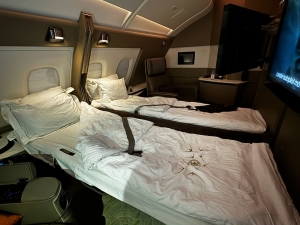
Singapore Airlines Suites Class features a bed in the Suite on top of the comfortable seat. The bed was folded into the wall when we boarded the aircraft. The cabin crew would deploy and make up the bed for us after the breakfast service. Each bed in the Suite measures 27″ wide and 76″ in length. Singapore Airlines uses Lalique bedding for the bed. I found the bed was very sturdy, lacking in terms of comfort. The mattress padding was a tad thin and lacked cushioning. The two pillows that came with the bed were too soft for my liking. I like to sleep with my head raised, but sleeping on the pillows feels like my head is sinking into the pillows. I napped on and off for the 14½-hour flight from Singapore to London. I thought the duvet provided was comfortable, but it does a very good job of keeping us warm.

Storage Spaces

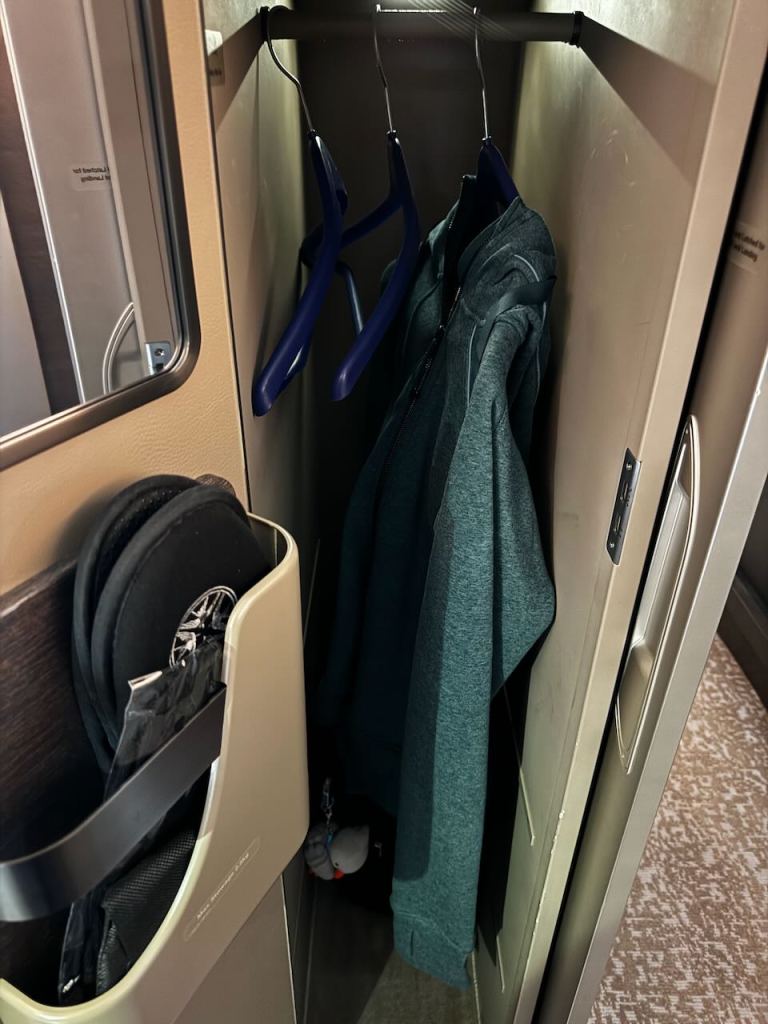
There is no lack of storage space in the Suites Class onboard Singapore Airlines. Besides the pockets and shelving on the bulkheads and the seat, there is a small wardrobe by the door. Due to the slim design of the wardrobe, a limited amount of things can be stowed here. There is space in the wardrobe for passengers to hang their jackets. Singapore Airlines places three hangers in the wardrobe, which is slightly excessive. When hanging my jacket, I noticed it had already taken up ¾ length of the wardrobe. The bottom part of the wardrobe allowed me to stow away my backpack. On top of the hanging rod is another shelf perfect for stowing smaller items for easy access. To enhance the wardrobe’s storage capacity, Singapore Airlines fitted a small pocket on the wardrobe door, where the cabin crew placed the Lalique slippers and socks.

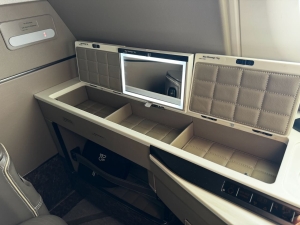
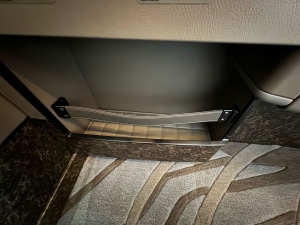
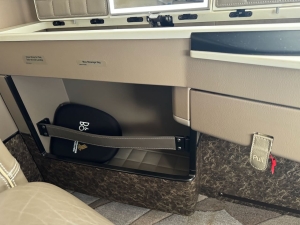
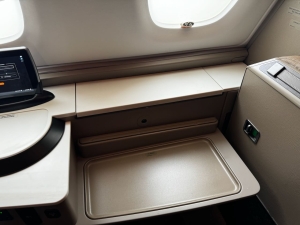
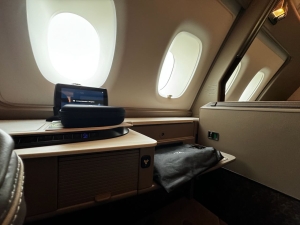
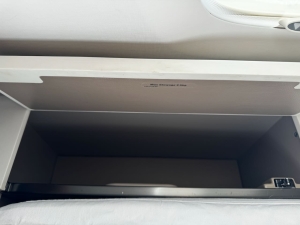
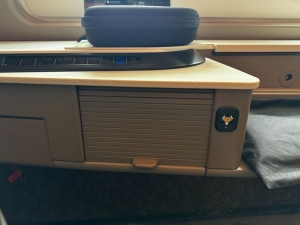
More storage is fitted into the bulkhead of the Suite. The three leathered cubby holes fitted on top of a cabinet-like structure by the bulkhead next to the seat, on which the Singapore Airlines crew placed the amenity kit and the headphones, provided some space for storage. However, due to the shallow design of these cubbies, I thought they could only be used to store smaller items such as mobile phones, passports and perhaps make-up pouches. There is another mirror fitted onto the lid of the middle cubby hole, which I guess these cubby holes are designed to store make-up pouches. Singapore Airlines designed an open shelving space with a single leather strap beneath the cubby holes. I am unsure what can be stored here, as I did not find any of my carry-ons fitted into this space. A fourth cubby hole is fitted on the bulkhead where the bed is placed. I knew it was there but only discovered how to open the cubby lid when we were about to reach London.

The literature pocket is fitted onto the bulkhead behind the seat (when facing forward), which affords limited space for storage. Due to the slim design and the placement of the seat pocket, making it somewhat difficult to access, I found little use of the literature pocket for storage.

The Amenities

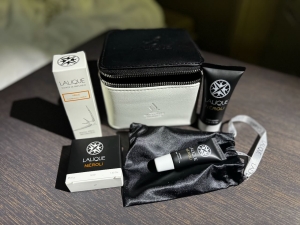
Sitting in the in-suite vanity area is a Lalique amenities kit. This kit that we received in the Suites was for male passengers. The amenities kit, presented in a leather Lalique pouch, was well stocked with lip balm, hand lotion and facial mist. It even comes with a bottle of eau de toilette. There is a separate amenities for female passengers by Lalique as well. Suites Class passengers were also offered Lalique pyjamas, which were very soft and comfortable, and Lalique branded slippers.

Inflight Entertainment

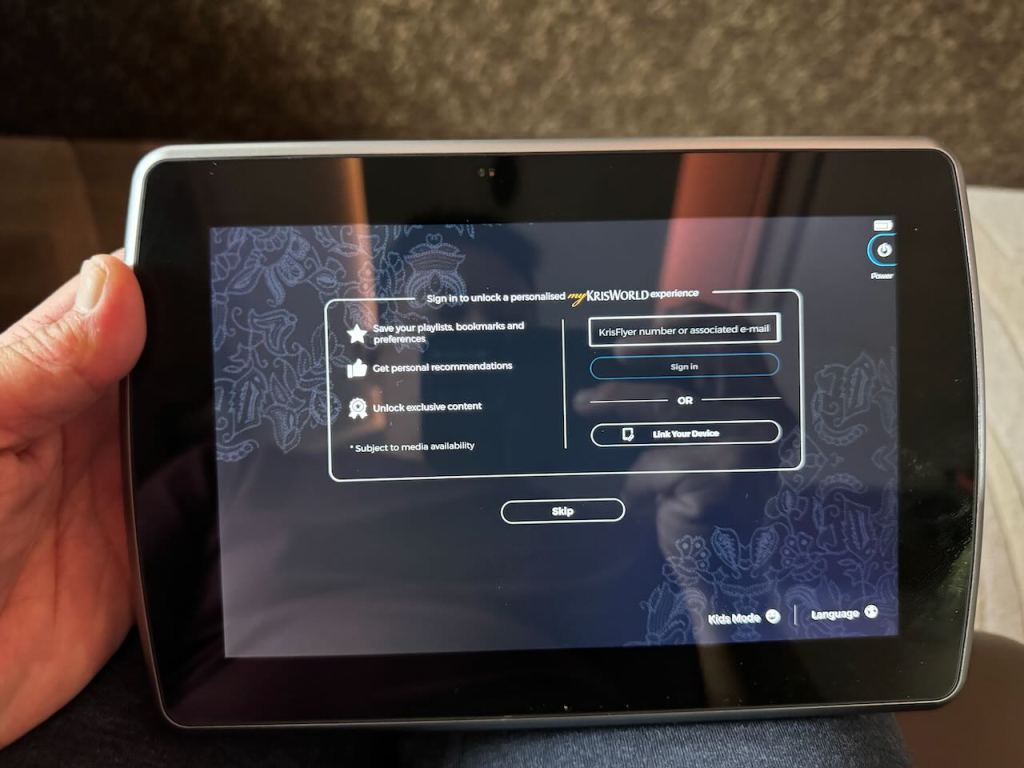
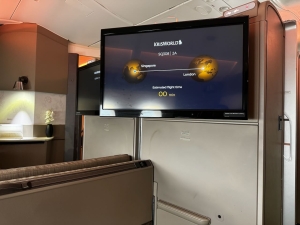
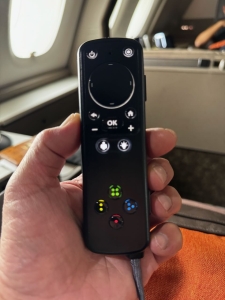
In terms of hardware, Singapore Airlines fitted a 32″ HD touchscreen TV in the Suite. The TV can be swivelled with a touch of a button either on the seat or from the tablet to face the passengers when sitting on the seat. The picture quality was excellent on the HD TV, which produced sharp images and was very pleasing to obtain entertainment from. Another small TV in the forward Suites (1A and 1F) allows passengers to watch TV during landings and take-offs. Due to the placement of the seat and the requirement to face forward, passengers will not be able to use the 32″ TV during these periods of the flight. There are two IFE controllers in the Suite; a smaller one is stowed in the seat’s armrest, which I found very intuitive to use. The other IFE controller is via tablet in the Suite.

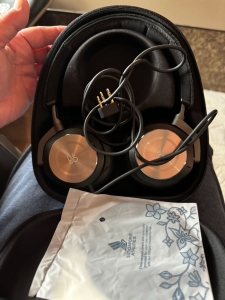
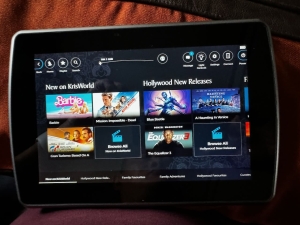
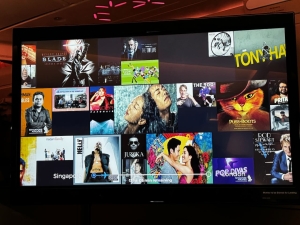
As part of the entertainment offerings, Singapore Airlines supplies its Suites Class guests with Bang & Olufsen noise-cancelling headphones, which I find very comfortable to use due to the thick padding. The two headphone jacks in the Suite, one next to the bed and another on the side of the seat, allowed passengers to use the supplied headphones without the wire daggling all over the place. Singapore Airlines loads the KrisWorld, their inflight entertainment system, with many options to keep guests entertained. There is something for everyone, from the latest Hollywood blockbusters to cinematic classics to TV shows and even games. The menu of KrisWorld is very easy to navigate, creating a positive user experience. Singapore Airlines also has complementary wifi onboard for its Suites passengers. However, the network was a bit slow, and for most of our flight, we could not connect to wifi to surf the internet.

The Food

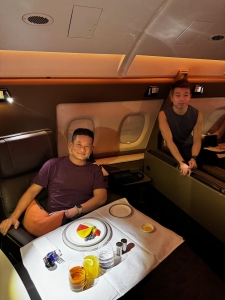
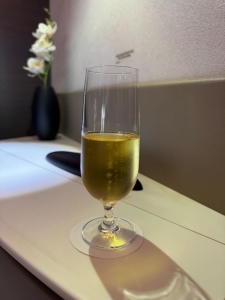
I was very well fed by the cabin crew in Suites Class. The catering tasted delicious and hardly tasted like airline food. A cabin crew came over to my suite to take order of my welcome drink the moment I settled into the Suite. I asked for Krug, which the cabin crew returned with a bottle and poured into the champagne flute before me.

Suites Class menu

Breakfast

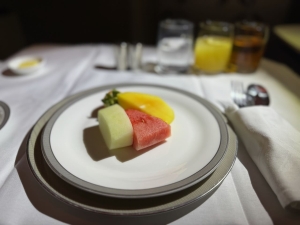
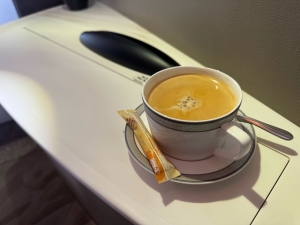
Breakfast was served shortly after we reached cruising altitude. The meal started with the cabin crew taking orders for drinks. I opted for Jamaican Blue Mountain coffee, which was aromatic and flavourful. After the table was set up, fresh fruits were served as an appetiser. The fruits tasted fresh and juicy, especially the watermelon and honeydew. I pre-ordered the Nasi Lemak from Singapore Airlines’ Book-the-cook service. The rice was fragrant, and I could taste the coconut flavour in the rice. Though well seasoned, the fried chicken wasn’t as crispy as I would like. The sambal chilli that came with the rice was divine; it is mildly spicy and adds a punch to the coconut-flavoured rice. There is a menu of light bites between meals in the Suites Class. I wanted to try the carrot cake but was too full from the breakfast and the laksa I had earlier at The Private Room that I had to skip the light bites—in between, I asked for warm nuts to munch on while watching a movie.

Dinner

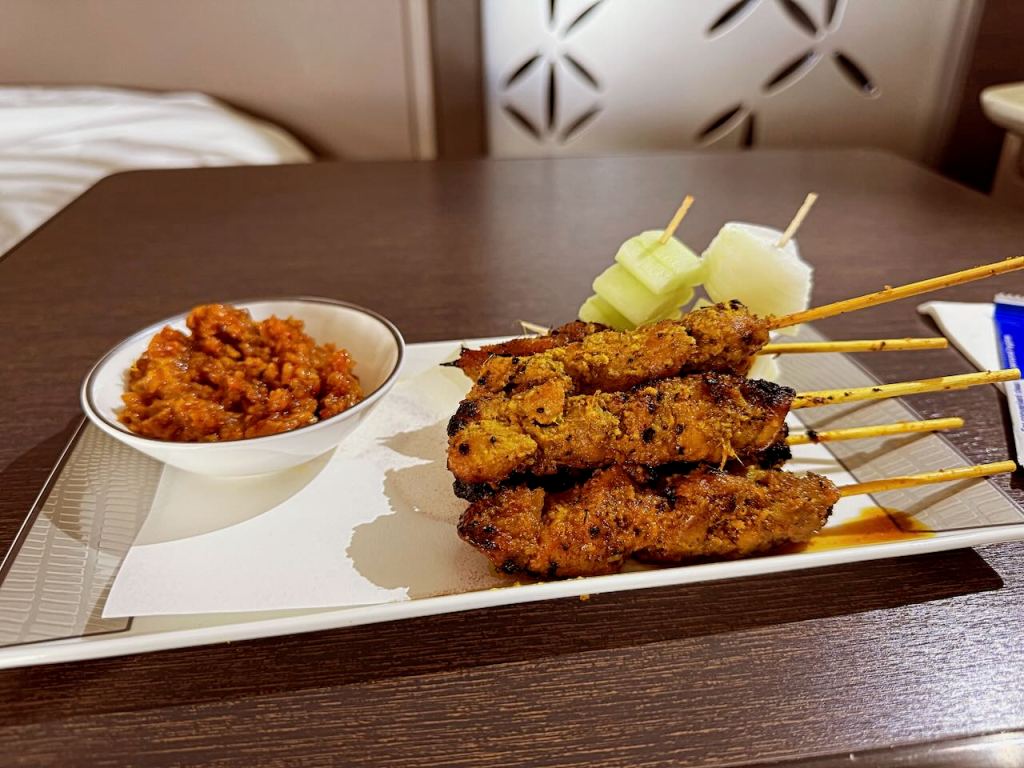
Dinner service began about 9 hours into the flight. The meals were beautifully presented and tasted great. I could see the ingredients used were of high quality. Dinner service begins with Singapore Airlines’ satay service. I am a huge fan of their satay and requested a double portion from the cabin crew. The chicken on the satay was tender and succulent, but the satay sauce was a tad too thick. At the same time, I requested my favourite mocktail – Midsummer Breeze, introduced to me by the Leading Stewardess from my Male to Singapore flight. The mocktail is thirst-quenching and refreshing.

The dinner service started with the famous Chicken Satay.

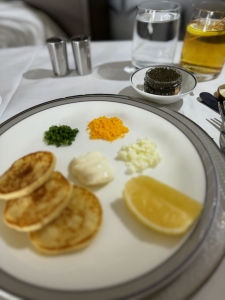
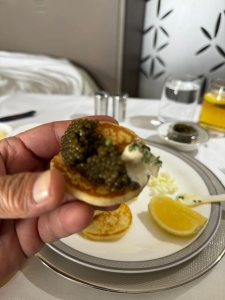
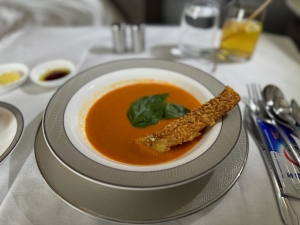
The next course, the appetiser, served is the Osetra Caviar. This was my first time having caviar, and the first taste I got from the first bite of the fish roe was saltiness. But after some time, the taste of ocean freshness dominated my palette. The caviar was served with an assortment of garnishes and some mini pancakes. When paired with these garnishes and the pancake, the caviar tasted delicious. After the caviar, the cabin crew brought the second appetiser, which I opted for, the tomato soup. The soup was flavourful, and I could taste the tomato flavour bursting in my mouth. The soup was topped with cheese toasted, which complemented the soup perfectly. As my soup was being served, another cabin crew brought the bread basket for me to choose from. I wouldn’t say no to the garlic bread, which Singapore Airlines serves as one of the tastiest garlic breads in the sky.

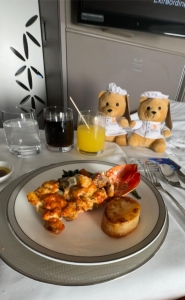
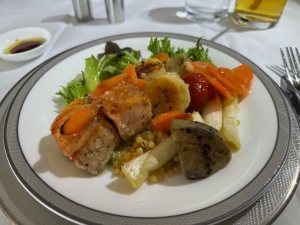
Seeing my empty glass, the cabin crew offered another Midsummer Breeze, and I requested Coke instead. Next up was the course – Hokkaido Scallop and Atlantic Salmon- beautifully presented in exquisite china. The main course comes with two pieces of grilled salmon and two pieces of grilled scallops sitting on a bed of couscous and some greens at the side. The salmon was perfectly done, and the seasoning was spot on. The scallop was also done perfectly, tender and not chewy. The proteins were well complemented by the couscous. The cabin crew cleared my plate and asked my choice of desserts. I asked if ice cream was served in the other cabin classes (ice cream was not on the menu for the Suites Class). After checking, ice cream was not served, but the cabin crew recommended the Chocolate and Earl Grey Cream. I went with her recommendation, which turned out to be very tasty. The Chocolate and Earl Grey Cream has the texture of a mouse but the shape of a cake. I could taste the Earl Grey used for the dessert, and the taste was not too overpowering. The dessert also did not taste overpowering sweet. At this point, I felt full and had to reject the fruit platter the cabin crew offered.

Service

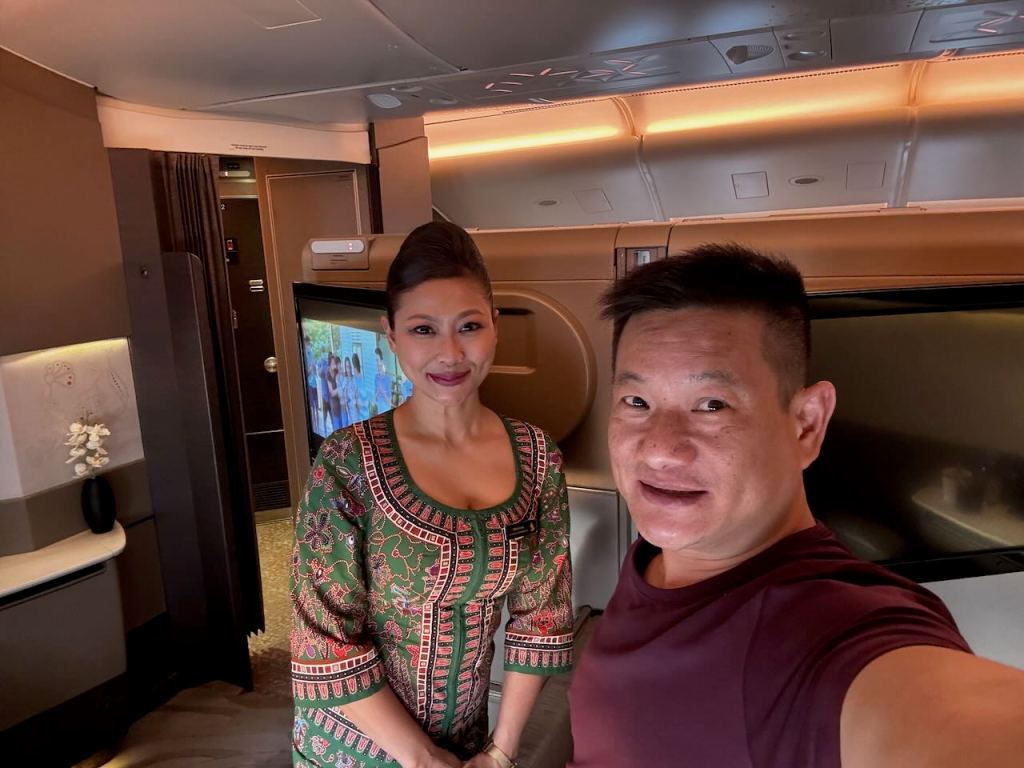
The service on Singapore Airlines Suites Class was nothing but excellent. The cabin crew was warm and friendly and, most importantly, came across as sincere and genuine. We were taken care of by the Inflight Manager Lee Chuen Thim, Chief Steward Kueh Joo Tong, Leading Steward Rahaizad and Leading Stewardess Sharifah. The cabin crew warmly greeted us, and Sharifah ushered us to our Suite. She gave us a brief on the facilities in our Suite and recommended using the larger lavatory on the right. As we were settling into our Suite, Sharifah returned and presented us with our Lalique pyjamas, while Rahaizad came by with our order of Krug champagne. As we sipped our champagne, the inflight manager welcomed each passenger flying in Suites Class today.

Throughout the flight, I interacted with Sharifah the most. She was very caring and went all the way out to ensure we were comfortable and well taken care of. I saw her patrolling the cabin consistently to check if we needed anything (I could see her looking into the Suite), and she was always ready to assist us. No request is too troublesome for Sharifah, who was observed to strive to fulfil the requests. Sharifah would always volunteer extra drinks and anything we wanted to eat without us having to ask for it. She even offered to make up our bed after the breakfast run so that we could rest. When I asked if I could walk around both decks of the aircraft, Sharifah volunteered to show me around. She was very knowledgeable about the configurations in the A380 aircraft and even pointed to the best seats in each cabin class as we walked through. Sharifah was very sociable and very pleasant to talk to.

Comparatively, my interactions with Rahaizad were limited (perhaps due to their shift cycle). Despite the limited interaction opportunities, Rahaizad was sincere and constantly looked out for us. We were equally well taken care of by Rahaizad when Sharifah was on her rest cycle.

Afterthought

Singapore Airlines Suites Class was comfortable to fly in. The hardware of the product was great, giving us a lot of space to stretch and rest during the long 14½-hour flight from Singapore to London. The seats in the Suite were very comfortable to lounge in, work or watch movies on the 32″ HD TV. Though I find a tad uncomfortable, the bed still afforded us some good rest. Besides having solid hardware, the service rendered by the cabin crew was exceptional. Sharifah took care of me well during the flight and went all out to fulfil my requests. She constantly looked out for us and ensured we had a great flight. The hardware and the service make flying Singapore Airlines Suites Class so memorable.

[Airline Review] – Singapore Airlines A380-800 (SQ308) – Suites Class, SIN – LHR (22 Dec 23) Part 1: The Ground Experience – The Private Room and First Class Lounge

Flying Suites Class on Singapore Airlines means we would get pampered from the ground experience to the flight. This post focuses on the ground experience, and Part 2 will focus on my inflight experience. The excellent experience started with our exclusive access to The Private Room, the lounge only open to passengers flying on Singapore Airlines First and Suites Class.

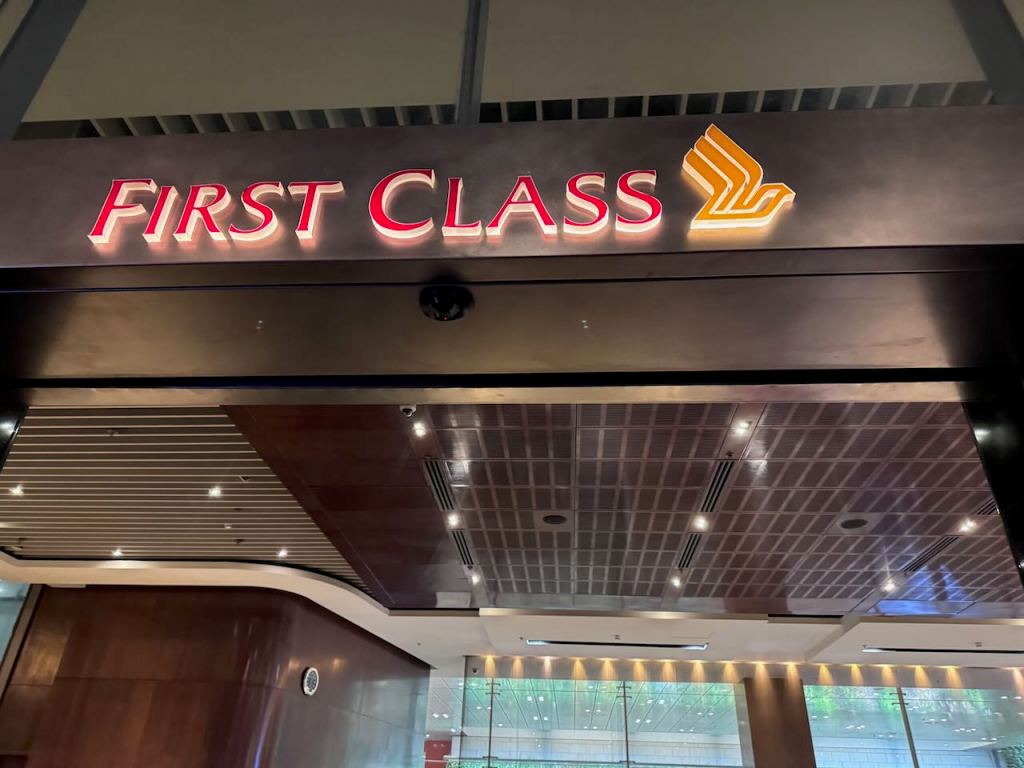
Singapore Airlines First Class Check-in Reception

First Class Check-in Reception

All Singapore Airlines A380-800 aircraft depart from Singapore Changi Airport Terminal 3. Passengers flying in their Suites Class can check in at the First Class Check-in Reception Lounge, located right before Door 1 of the airport terminal. The First Class Check-in Reception Lounge makes passengers feel as though they are flying from a private airport. The lounge was elegantly designed and exuded a sense of luxury and exclusivity. The moment our ride pulled up at the door, staff welcomed us while the porter took care of unloading our luggage from the trunk of our ride. We were ushered into the check-in counter by the staff, who took our passports and handed them to another ground staff member at one of the eight check-in counters. The only flaw of these check-in counters is only one chair. The check-in process was efficient, and the friendly staff gave us directions to the dedicated immigration clearance channel and the lounge. The dedicated immigration channel is just behind the Singapore Airlines First Class Check-in Reception Lounge.

Singapore Airlines Exclusive The Private Room

The Private Room signage at the entrance

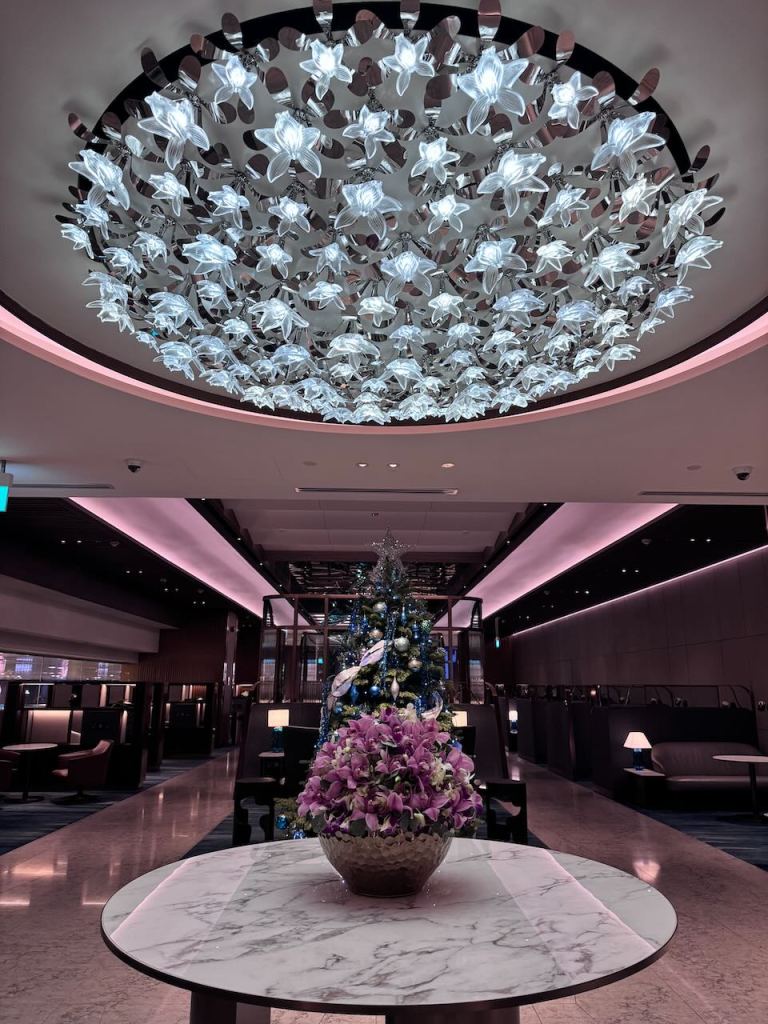
The Private Room is Singapore Airlines’ coveted lounge, exclusive to passengers flying on Singapore Airlines First Class or Suites Class; passengers with status or flying First Class on partnering airlines are not admissible to The Private Room. Due to the exclusivity, the lounge feels quiet and very private. Passengers to The Private Room would pass through a tunnel adorned with bronze walls that opened up to a large earthy-toned main lounge area. A large chandelier made up of crystal flowers fills a circular patterned ceiling at the reception area of the lounge, illuminating a marble top table. The main area in The Private Room comprises the lounging and dining area. The lounging area occupies most of the real estate in The Private Room, decked out in sky blue carpet. The lounging area houses leather couches and armchairs, mainly in the centre and right side of the lounge, where larger parties sit. The left row of The Private Room caters to smaller groups or individuals with a view of the Singapore Changi Airport Terminal 3 airside. There are power sockets dotted around the lounging area of The Private Room.

The centrepiece of The Private Room

The dining area in The Private Room is characterised by marble flooring and white and black chairs tucked into the back of the lounge. There are seatings catering for any group size. Sitting in the dining area feels like dining in an upscale restaurant. There are no buffet tables in The Private Room; we were presented with a menu, and a staff would take our orders. The breakfast options were a tad limited. However, there is a great selection of beverages, including freshly squeezed juices. We ordered the Lobster Laksa; while the flavour of the broth was tasty, I found the lobster tail to be a little tough.

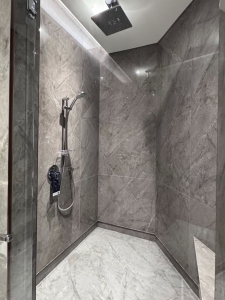
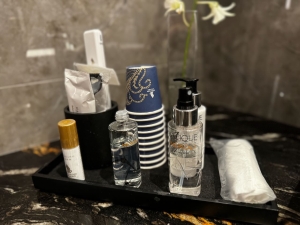
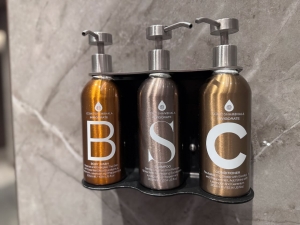
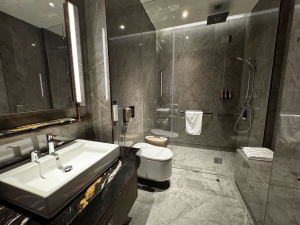
The shower facilities and toilets are situated after the entrance of The Private Room. There are four shower suites in The Private Room, with suite #4 being the biggest amongst all. The luxurious decor and light grey marble tiles with white lighting make the shower suite feel like the bathroom of a 5-star hotel instead of an airport lounge shower stall. The walk-in shower has a handheld and a rain shower head. Singapore Airlines provided passengers using the shower suite in The Private Room with COMO Shambhala shower amenities that smelled great and kept my skin feeling soft. On top of the shower amenities, other bath amenities commonly provided in 5-star hotels are also available in the shower suite.

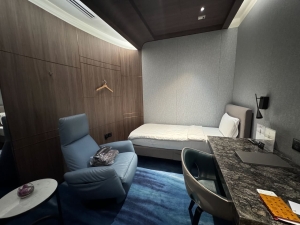
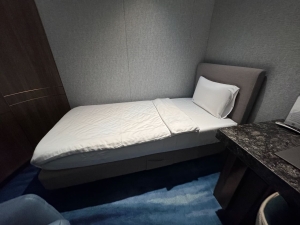
The Private Room has four private resting cabins for the passengers to nap while waiting for our flights. Each cabin is furnished with a bed, an armchair and a work desk. The brown and blue theme in the main lounge extends into these soundproof cabins, giving it a very cosy feel. We could control the amount of mood lighting that aids in relaxation while resting in these cabins. I like the Tempur bedding installed in the cabin, which is designed to reduce the fatigue passengers feel during our time in the air. There is a “zero gravity” mode in the bed that gently “vibrates” one to sleep. It is very comfortable and effective in reducing aches and pains. The sky-blue leather armchair is equally comfortable to sit on; with several reclining angles, one can also easily fall while sitting in the body-hugging chair. The marble-top desk tucked by the wall provided a space for passengers wanting to do some work. The only flaw I spotted in the sleeping cabins is the existence of a window panel, which does not seem to provide privacy for cabin users.

Singapore Airlines First Class Lounge

Singapore Airlines First Class Lounge entrance

We took a quick tour of Singapore Airlines First Class Lounge, which is open to passengers travelling in First Class on Star Alliance carriers and status members. The Singapore Airlines First Class Lounge is located between The Private Room and the SilverKris Lounge, sharing the same entrance as The Private Room. Singapore Airlines First Class Lounge looks classy and sophisticated from its entrance, which is laid with light grey marble tiles that match the cream-coloured walls. The brown-coloured wooden walls in Singapore Airlines First Class Lounge gave it a cosy feel. At the end of this corridor, a round bar was spotted. This is where passengers can order spirits, wines and cocktails from the bartender. The bar is adorned with the same floral patterned lighting we saw in The Private Room.

The cosy and classy vibe flows into the main part of the lounge, decked in light grey marble tiles with light brown walls and topped with a dark brown ceiling. The first look of the First Class Lounge gives one a relaxing feel despite being rather full during my visit. About ⅔ of the lounge space is seating space for passengers to rest and relax while waiting for their flights. The main dining space, resembling a restaurant, occupies the centre of the lounge. Decked in light grey tiles, plenty of dining tables cater mainly to two passengers in this part of the lounge. The location of the dining area gave passengers the convenience of accessing food. The lounging area mainly occupies the forward part of the First Class Lounge, demarcated by dark brown carpeting and black armchairs. Despite the armchairs being very comfortable, the proximity between the chairs might make relaxing challenging. There seem to be limited armchairs to cater to the number of passengers using this part of the lounge. During our visit, the Singapore Airlines First Class lounge was packed. More lounging areas are flushed to the wall toward the lounge entrance, just before the bar. This area, while quieter, offers little privacy to its users.

Food is served in a semi-buffet style at the counters to the right of the First Class Lounge. Unlike The Private Room, there are no staff taking orders at the table. Passengers in the First Class Lounge are to grab their choice from the buffet table. There is a section of food on offer that is made to order. I like how the ingredients are displayed at the buffet table for passengers to view. A section of pre-prepared food, consisting mainly of dim sum and congee, is served in a buffet style. Further into the lounge, fruits and sandwiches are displayed in the chiller. There is also a table of bread where passengers can help themselves. The food offered is probably the same as that in The Private Room, except for table services. Singapore Airlines First Class Lounge is significantly more crowded, which can hamper relaxation. I also did not see any empty seats around, which is a far cry from The Private Room.

Service

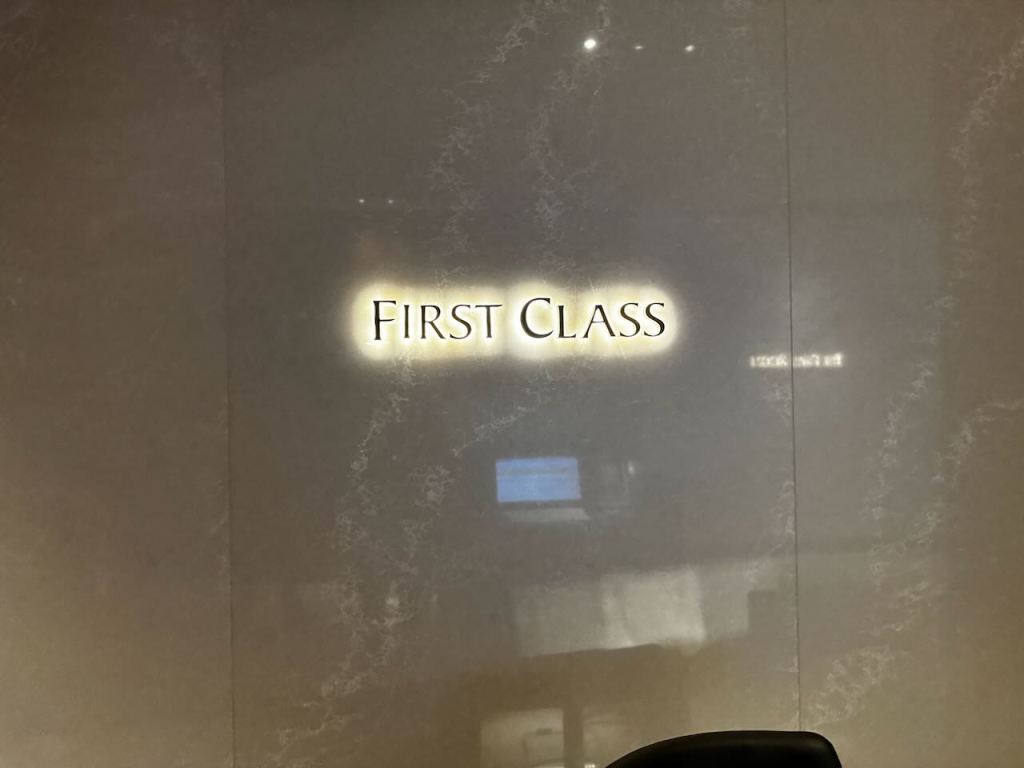
The ground services are a mixed bag. On the one hand, we had excellent service at the check-in reception, where staff stood ready to help passengers. The check-in staff was very efficient in processing our check-in and was generous with information about the location of the gate vis-a-vis the lounge location. The Private Room service was good. The moment we arrived at the entrance, we were escorted into the lounge and handed over to the waiting staff in the dining area, who promptly presented us the menu and took our orders. Most of the staff at The Private Room know how to treat a guest. However, the service by the staff at the reception in The Private Room came across as subpar. Her attention was not on the passengers but rather on her computer. We had to wait for her to finish whatever she was doing on the computer before she would turn her attention to us. Her tone also came across as rude when enquiring about the cabins. The service in the First Class lounge was somehow lacking. There were no staff around to welcome or assist passengers with looking for a seat. If not for the “First Class” signage, I would have thought this was one of the paid lounges. One point to note: Singapore Airlines does not provide escort services from check-in to gate. This meant we had to stand in the long queue for security screening at the gate. There are no separate queues for premium passengers here.

Afterthought

The ground experience for Singapore Airlines was good. The first contact with the First Class Check-in Reception set the tone for the service we would enjoy in the skies. The dedicated check-in area was private, and the staff were warm and friendly. The Private Room was a great place to be before boarding. The quiet lounge was relaxing and comfortable. The amenities in The Private Room were top-notch. The service was lacking in the First Class Lounge, with no staff insight to assist passengers in the packed lounge. The second part of this review will focus on the inflight experience with Singapore Airlines A380 Suite.

Egypt Day 10 (1 Jan 24) – Cairo: The Ottoman Inspired Muhammad Ali Mosque of Salah El-Din Citadel; Egyptian Museum-Marvelling at the Priceless Treasures; & The Colourful Khan El-Khalili

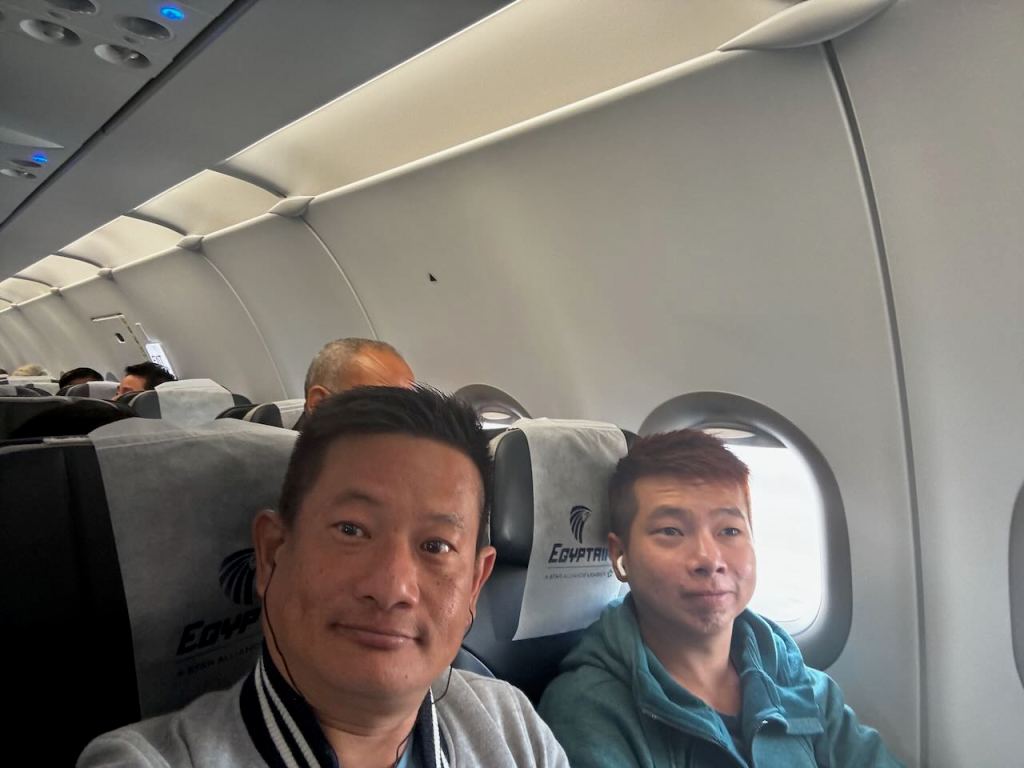
It is our last day visiting sights in Egypt, and we had two sights on the list today. After landing in Cairo, we headed straight to the sights from the airport. We visited the Citadel of Salah El-Din and the Egyptian Museum before bidding farewell to our Tour Director, Ahmed. As we had the rest of the day to ourselves, my friend and I visited Khan El-Khalili Bazaar at night.

Salah El-Din Citadel – Home to the Egyptian Rulers and the Alabaster Mohamed Ali Mosque

Alabaster Mosque in Salah El-Din Citadel

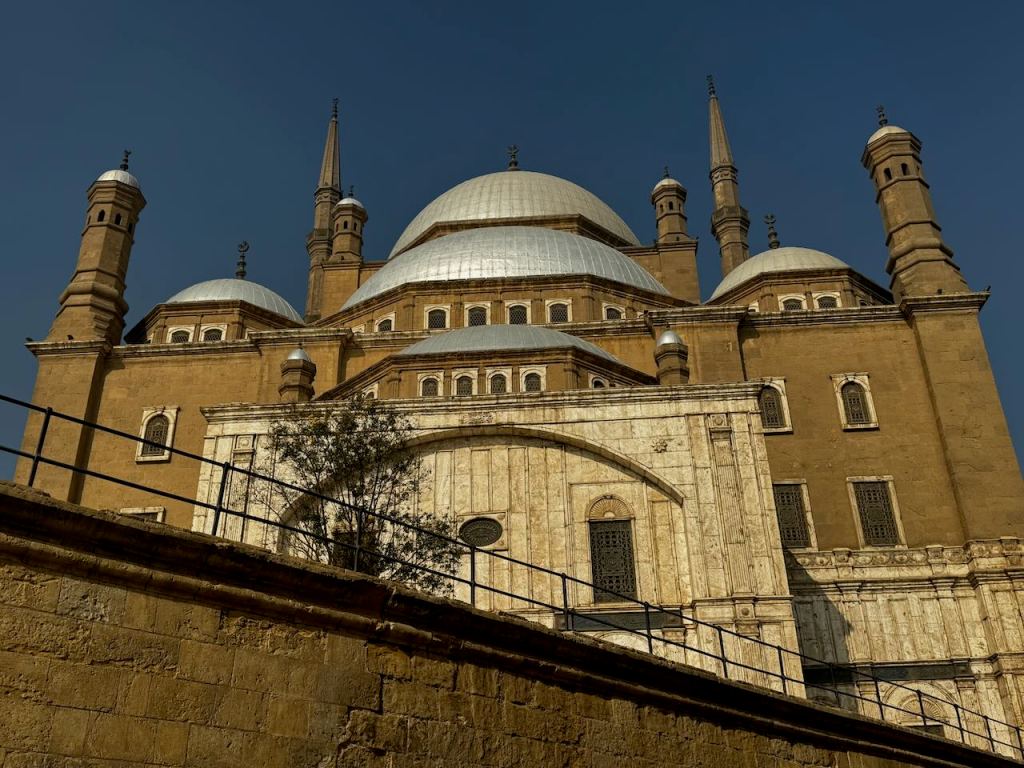
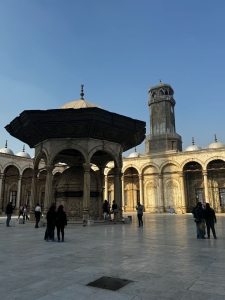
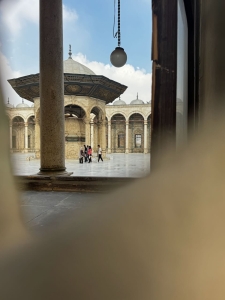
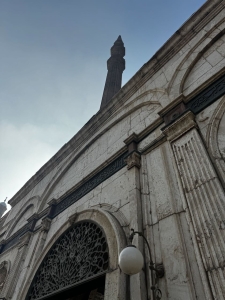
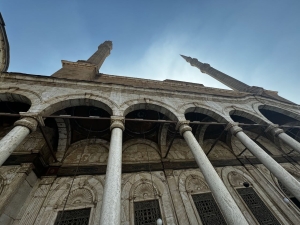
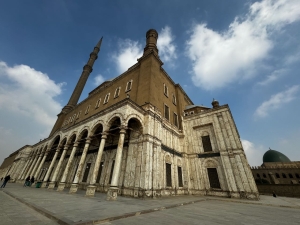
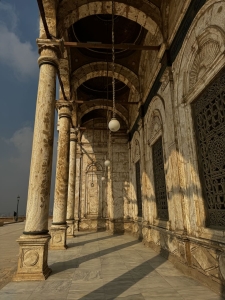
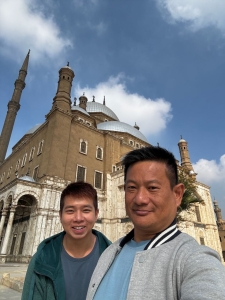
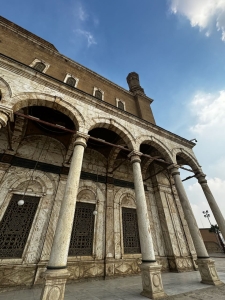
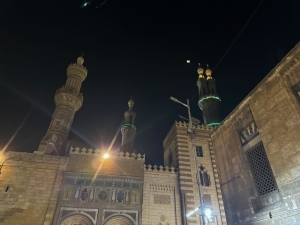
Our day started early, catching the first flight from Luxor to Cairo. We headed straight to the first sight of the day – Salah El-Din Citadel, after landing in Cairo. The Salah El-Din Citadel was the home of the Egyptian kings in Cairo for more than 700 years. Due to its location, being perched on steep rocky hills, this place made it perfect for the Egyptian rulers to rule the country. Ahmed told us numerous attempts to scale the walls and attack the royals had been planned, but all failed. The fort walls and some watch towers that once protected the citadel were iconic of this sight. In the centre of the citadel sites sits the Muhammad Ali Mosque, commonly known as the Alabaster Mosque. Ahmed took us on a buggy to the mosque resembling the Blue Mosque in Istanbul. According to Ahmed, the Alabaster Mosque was heavily influenced by the Ottoman architectural style. The floor of the courtyard of the Alabaster Mosque was decked out in what seemed like marble. We spotted a lone pavilion in the centre of the courtyard, a fountain with an elaborately carved wooden roof. Perched on top of one of the colonnades is a clock tower. According to Ahmed, this clock tower was given by the French in exchange for the obelisk in front of Luxor Temple. The clock tower never worked, while the obelisk still sits in Place de la Concorde in Paris. Ahmed jokingly commented the Egyptians got the shorter end of the bargain.

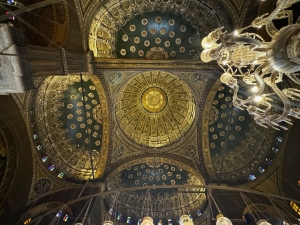
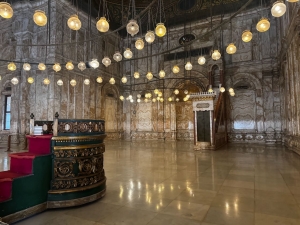
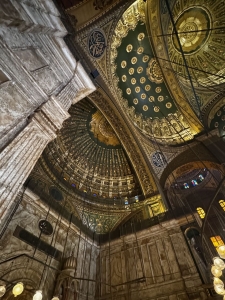
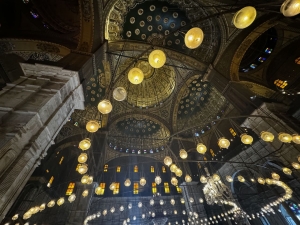
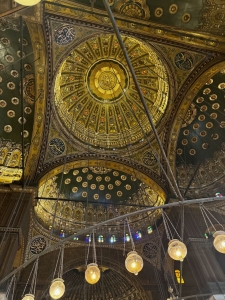
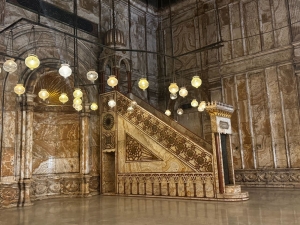
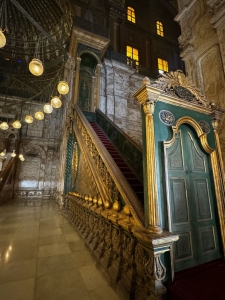
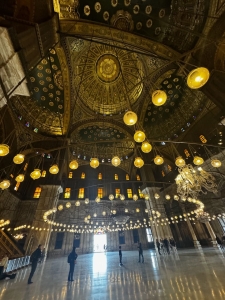
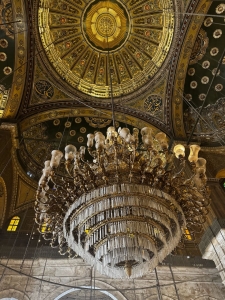
We entered the Alabaster Mosque, where the grandeur of the mosque was immediately felt the moment we stepped inside. Looking up at the ceiling, we could see the central dome that seemed to reach the sky, accompanied by four semi-circular shorter domes. The ceiling was impressive and colourful. The main dome was decked out in golden colours, while the four semi-circular domes were painted green. Intricate and beautiful Islamic artworks are decorated on these domes. Apart from the rustic, gigantic chandelier hanging from the top of the main dome, Ahmed told us there are 365 globe-shaped lights in the mosque, each representing a day of the year. We were brought near the mosque’s Mihrab, where the Imam would lead the prayer. Ahmed demonstrated how the sound reflected off the Mihrah, amplifying to the entire mosque. Beside the Mihrab sits two minbars (a platform with a staircase), one made of alabaster decked in white and another taller one made of wood in green. Ahmed brought our attention to the catwalk on the second floor of the mosque. This catwalk was built so that women, who usually pray on the second level due to modesty issues, disagreeing with the preaching of the Imam could walk to the minbar and challenge the Imam, signally gender equality in Egypt.

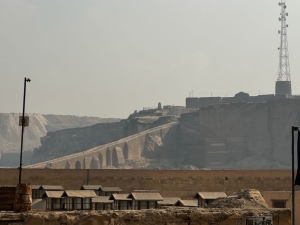
We were given some time to wander around the mosque. My friend and I went outside the mosque, where the best pictures of the mosque can be taken. We came to a lookout point, which Ahmed told us was an aqueduct that used to supply the Salah El-din Citadel with water.

Old Egyptian Museum – Home of Millenia of Egyptian Treasures

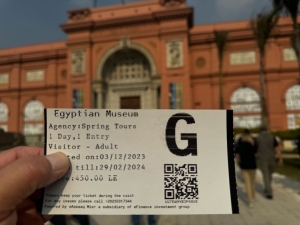
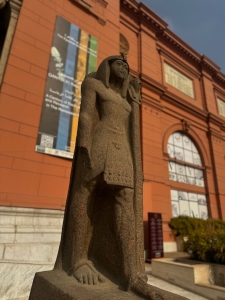
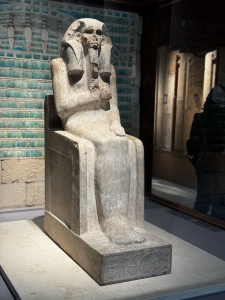
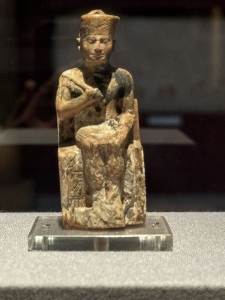
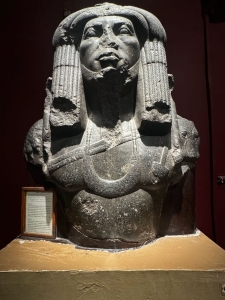
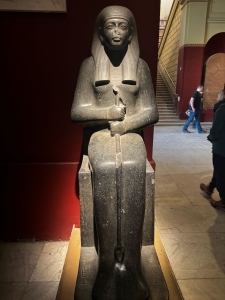
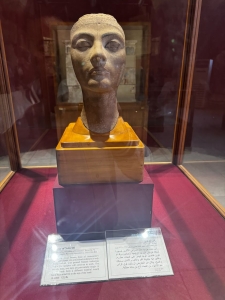
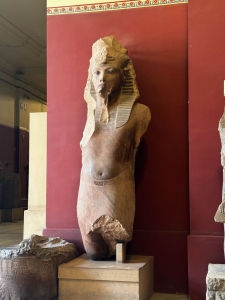
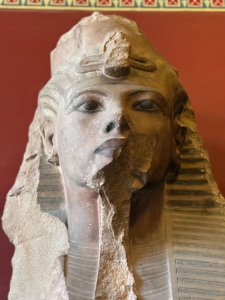
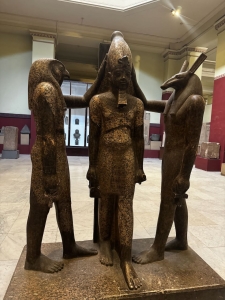
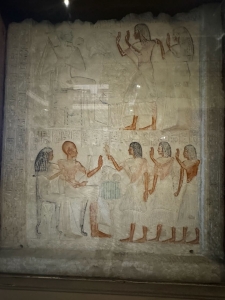
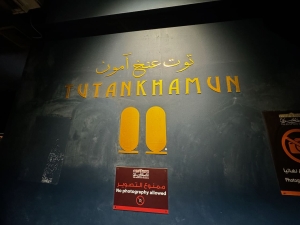
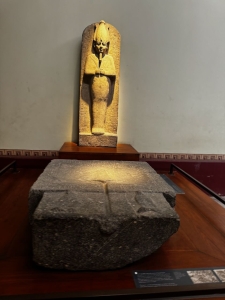
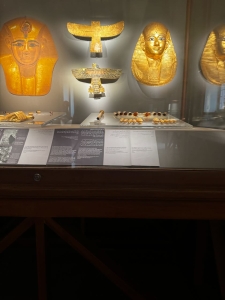
We left the Alabaster Mosque for our next (and last) stop of the trip – the Old Egyptian Museum. This museum is situated in the heart of downtown Cairo and houses a majority of the Egyptian artefacts recovered from the tombs of the pharaohs. According to Ahmed, the Old Egyptian Museum has the largest collection of Egyptian antiquities, and it would take several months to finish viewing all the exhibits. The important treasures are all on display here in the Old Egyptian Museum, including a collection of King Tutankhamun. Ahmed showed us the more significant collections in the museum, including a statue of Queen Hatshepsut depicted as a man, which was important for her to be taken seriously. Ahmed warned us about the staff of King Tutankhamun aggressively enforcing the no-picture rule in the exhibition hall.

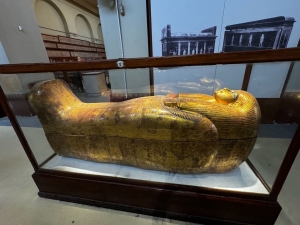
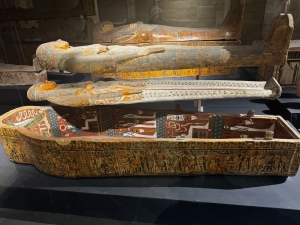
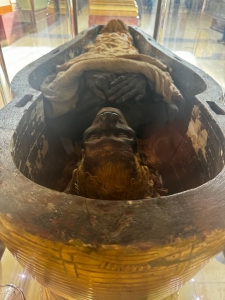
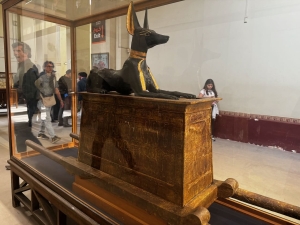
We were allowed to wander around the museum to view the exhibits. My friend and I headed to King Tutankhamun’s exhibit. I saw two staff members in the enclosure aggressively, ensuring visitors did not take pictures inside. We saw a few visitors being shouted at for even touching their cameras. We spent the next 20 mins looking at mummies, coffins and other exhibits. My friend and I are not museum-goers (although we like to listen to the history of the sights we visit), so we left the museum and spent the rest of the time in a cafe outside the museum.

As we had an early start today, the group opted not to visit the bazaar and return to the hotel for rest. That would make the Old Egyptian Museum the last item on the list of sights that the tour company planned. We bid farewell to Ahmed, who was knowledgeable and with whom we learned so much about Egyptian history, culture and evolution. We waited till 3 pm for our rooms to be ready and checked into our room.

Evening Stroll Through the Colourful Khan El-Khalili Bazaar

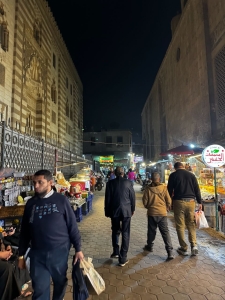
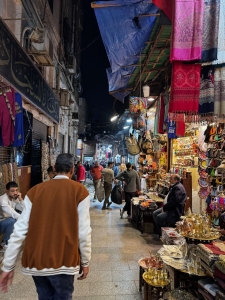
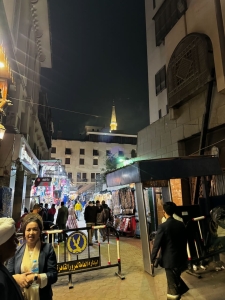
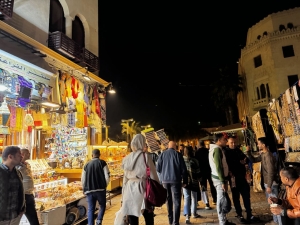
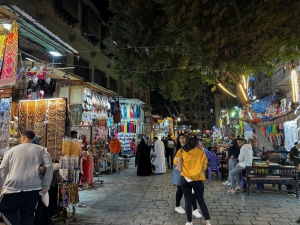
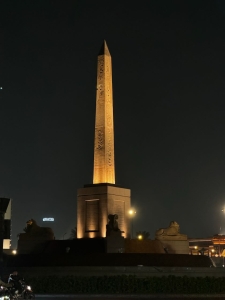
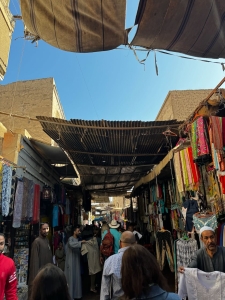
As the day was still young, my friend and I headed to a nearby shopping mall. However, the hotel we stayed in was nowhere near any shopping mall. We checked with the concierge, who recommended visiting Khan El-Khalili bazaar. My first impression of the bazaar was lively. The Egyptians only came out shopping or hanging out with their friends at night. We were approached by a shopkeeper asking if we wanted to buy some wares and where we were going. We told him we were looking around. To our surprise, instead of pushing his wares and bugging us, the very friendly shopkeeper gave us a simple orientation of the bazaar and some directions on parts of the bazaar that we should visit. We walked around the shops and saw this part of the bazaar mainly caters to the daily grocery needs of the locals. We saw shops selling spices and even a market selling fresh produce. We heeded the directions from the shopkeeper we met earlier and crossed the road to the other part of the bazaar. This part of the bazaar is even livelier, with locals and tourists walking around shopping. Some restaurants in this part of the bazaar are where we see locals dining or hanging out with their friends. The brightly lit shops and street and shopkeepers promoting their wares make this place lively. However, only tourists bought stuff from this part of the bazaar. The bazaar sells mainly Egyptian souvenirs, which I thought the Khan El-Khalili bazaar seems like a bazaar catered for tourists. Despite the crowd and the noise, we found walking around in Khan El-Khalili bazaar very safe. We made a short stop at Tahir Square before returning to our hotel to pack up and rest early for the night, as we had an early flight to catch tomorrow.

Conclusion to our Madien Trip to Egypt

Today marks our final day in Egypt. Throughout the trip, I was glad that we did not travel the country independently. We chose to take up a package tour (which I tried to avoid for the longest time) as there are too many things to see in Egypt, even for one sight. Without a guide to explain and guide us where and what to look at, we would have been overwhelmed by the number of hieroglyphs and engraving on the walls of the temple. Without a guide, we would not be able to understand what we saw. Moreover, most sights are very far from each other, and if we were to travel independently, we would not see as many sights as we did. The guide also advised us on the price and how to deal with touts, which were very useful during our trip. I thought Egypt was a very safe country to travel to. We did not have to worry about thefts and pickpockets, and we did not feel we had to guard against pickpockets throughout our trip. The locals are ready to help travellers if they are lost or can’t communicate in Egyptian. There are touts and paddlers, but these only appear in tourist sights and represent a small portion of the population. We found the Egyptians to be sincere and helpful. My friend and I enjoyed our maiden trip to Egypt.

Egypt Day 9 (31 Dec 23) – Esna: Temple of Khnum – The Temple Buried in Sediments

Today is another light day with only one sight to visit. We spent 1 hour visiting the Temple of Khnum (more commonly known as Esna Temple) and a short walk around the bazaar in Esna Town. The rest of the day was spent sailing back to Luxor.

Esna Temple – The Temple of The God of Creation, Khnum

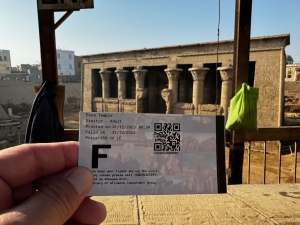
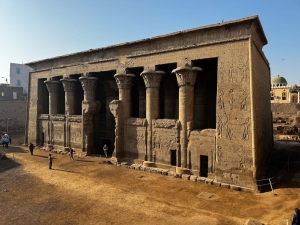
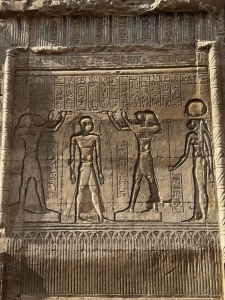
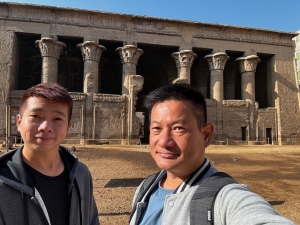
We started our day at 8.30 am, visiting the Esna Temple dedicated to Khnum, the ram-headed God of Creation. The temple was a mere 5-minute walk from the dock through a bazaar and sits in a large pit about 10m from the street level. Esna Temple is unlike the other temples we visited; it has only one rectangular building. The temple’s facade was decorated with reliefs of Khnum, his consort Menhyt and their son Heka. There are also reliefs of the king making offerings to the gods.

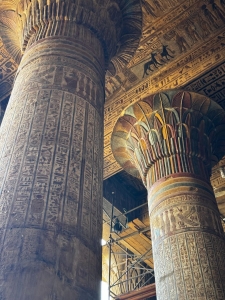
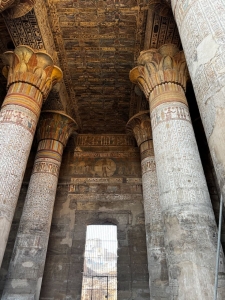
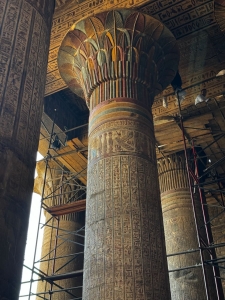
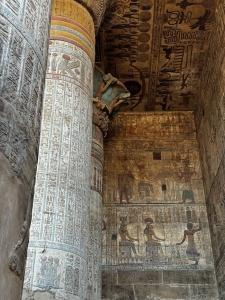
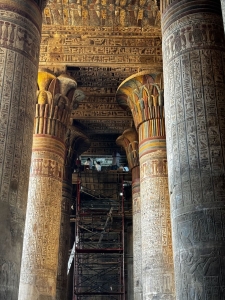
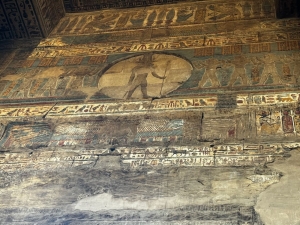
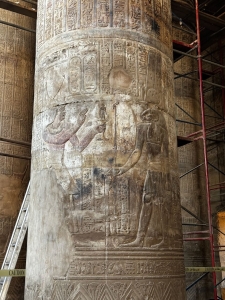
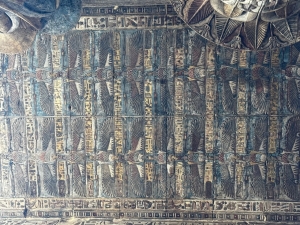
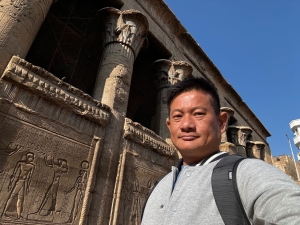
The whole Esna Temple seems to only consist of the hypostyle hall, and I saw another door opposite the main entrance to Esna Temple that leads to an open space behind the temple. We were told that the temple was buried under sediments for thousands of years, and most parts of the temple were still being discovered. Despite not having the sanctuary or rooms like the other Egyptian temples did, I was still blown away by the vibrant colours and the amount of work that went into the construction of the hypostyle hall. Ahmed told us the colours we saw on the ceilings and the pillars were original since the temple’s construction. Restoration works are still ongoing to preserve the temple interior. A relief of Khnum was visible over the beam of the door that led to the open space, seemingly telling visitors who the boss of this temple was.

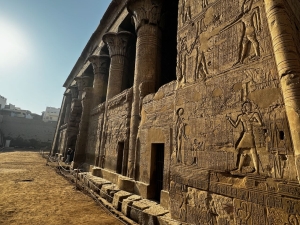
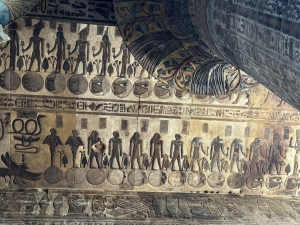
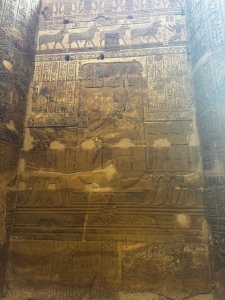
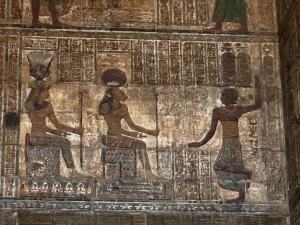
Ahmed brought us to a side of the temple and directed our attention to a relief on the high up on the wall. This relief showed a lion-headed Goddess, Menhyt, being entertained by Heka with Isis sitting behind her. Menhyt was believed to be the consort of Khnum, and Heka was their child. Our attention was then directed to the ceiling above us, with a relief depicting all the Gods in Egyptian mythology, with moon phases carved below these gods. The carving was intricate, and despite being high up on the ceiling, we could still make out which gods were being represented here. Ahmed pointed to another relief on the ceiling depicting Heka on a boat with Isis, Hathor, Thott and Ma’at being pulled by three dogs. Ahmed next brought our attention to the pillars that supported the ceiling of the hypostyle hall. Unlike the pillars of the temples we have seen so far, each of these 18 pillars inside the temple had different designs on the top, and the hieroglyphs engraved onto them provided detailed instructions on the rituals performed. We spent a few minutes spotting the differences between these pillars and admiring the reliefs on the ceiling.

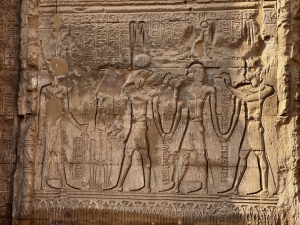
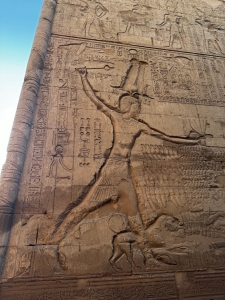
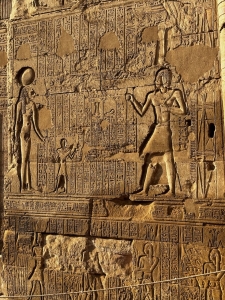
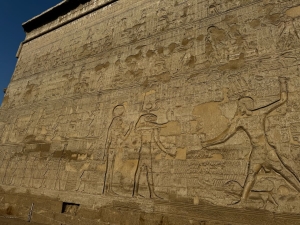
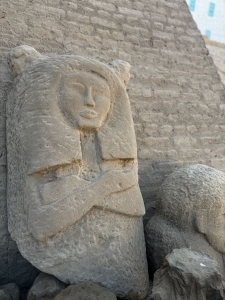
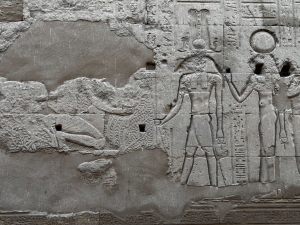
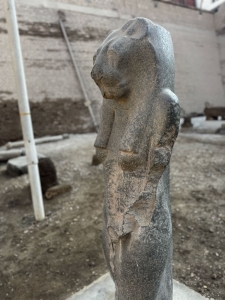
We headed outside the temple, where Ahmed explained the reliefs on the temple’s outer walls. There is a relief depicting Menhyt and Hathor blessing the king of Egypt with Khnum looking on. But the most interesting relief is the one where the king was being purified by Gods Thoth and Horus with Menhyt looking on. Yet another relief depicts the king slaying his enemy with Khnum and Menhyt by his side. This is not the first time we have seen such reliefs; these reliefs were repeated in the other temples, but this time, the main deities of Esna Temple – Khnum and Menhyt were with the king. We explored the temple grounds a little before hitting the streets; after all, there was nothing much to see in the temple. We saw a couple of statues of Hathor and Menhyt placed in one corner of the temple grounds and some locals who seemed to be excavating to look for more parts of Esna Temple.

Esna Bazaar

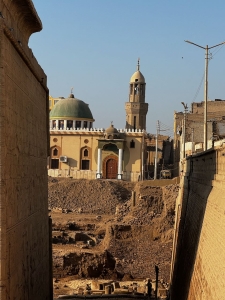
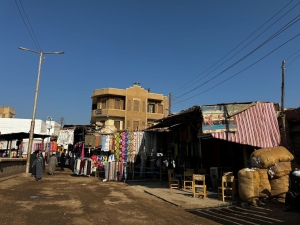
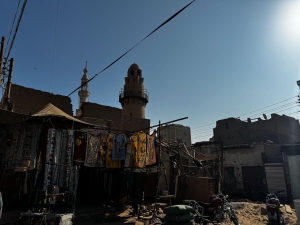
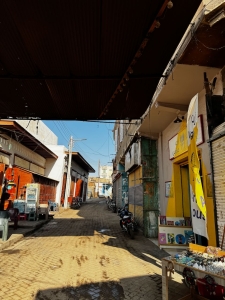
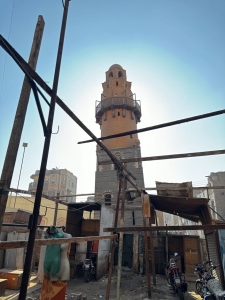
It did not take us too long to realise there was nothing much for us to see in Esna Temple. We headed to look around this part of Esna Town that surrounds Esna Temple. This part of the town is mostly occupied by shops selling souvenirs to tourists visiting the Esna Temple. The things sold were not too much different from the other tourist sights we have seen. Walking around the bazaar, I noticed some buildings, particularly a mosque minaret, leaning toward one side. According to Ahmed, these buildings were built on soft ground that caused them to lean to one side. The new buildings around the bazaar were built using donations from the USA. We were not keen on buying souvenirs, so we returned to our riverboat, preparing to slip off towards Luxor.

Cruising Back to Luxor

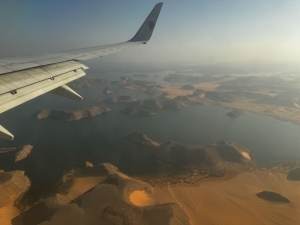
Our riverboat left Esna at around 10 am. We would spend the rest of the day relaxing by the Nile, watching the ever-changing scenery past us as we sailed back to Luxor. Along the way, we again sailed through the Esna Lock and saw how the water was being drained within the lock so we could continue our passage northwards. While the lock operations were interesting, I found the vendors more interesting. These vendors paddled on small boats near our riverboat to sell wares. These vendors had very good aim and strength to throw their wares up four decks of the boat. They would paddle near the lock and climb up to the lock to secure sales. After passing through Esna Lock, we relaxed by the sundeck a little before heading to the restaurant for lunch. We spent some time packing as we would need to leave our luggage at our door by 5.30 am tomorrow for our flight back to Cairo.

Egypt Day 8 (30 Dec 23) – Abu Simbel: Grandiose Temples of Rameses II and Nefertari – The Unique Egyptian Temples that are Carved into Caves

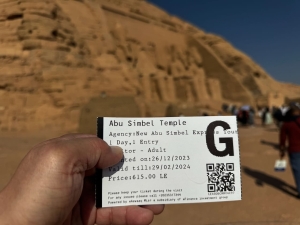
It was a light day today as we only had one sight to visit. Today is when the riverboat turned around to sail back north towards Luxor. We had the whole morning free and were given the option (at additional cost) to visit the ancient temples of Abu Simbel.

Abu Simbel Temples – Temple of Rameses II with Colossal Statues and A Temple for Queen Nefertari

Great Temple of Rameses II and Temple of Nefertari in Abu Simbel

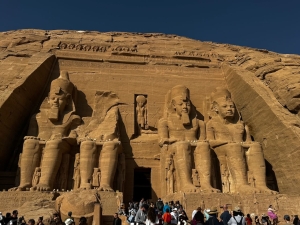
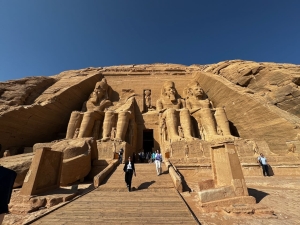
Abu Simbel Temples are as iconic as the Great Pyramids of Giza in Egypt, characterised by the four colossal statues on its facade. Before this trip, I had thought the temple with the four statues was the only one in Abu Simbel. However, I learned there are two temples in Abu Simbel.

The Southern Egypt Icon – The Great Temple of Rameses II

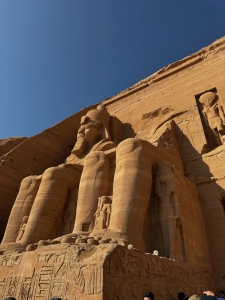
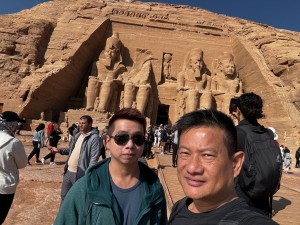
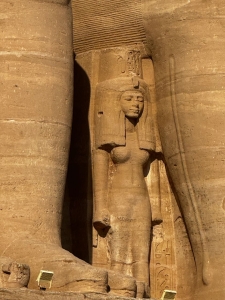
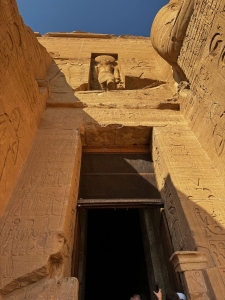
The four colossal statues sitting against a mountain backdrop come into mind when mentioning Abu Simbel. This is the bigger of the two temples in Abu Simbel, the Great Temple of Rameses II. The four statues, sitting next to each other facing Lake Nasser, were statues of Rameses II. The statues were very well preserved, and the smiling features of Rameses II were still visible after 3,000 years since its construction. The temple was shifted about 200m back from its original location as the building of Aswan High Dam would have submerged the temple. One of the four Rameses II statues suffered damage from the waist up (due to an earthquake), giving the temple facade an iconic character. Our guide told us there was an attempt to restore the statue during the shift, but it was not done as not all the parts of the statue were found. Today, we can see the damaged parts of the statue placed in front of it, exactly how it was when the temple was nearer Lake Nasser. Next to the shin of the Rameses II statues stood a smaller statue of his beloved queen, Nefertari. There are some other statues further in, which we were told are some of the king’s children. The temple is dedicated to the Egyptian God Re-Horakhty, whose statue can be seen standing above the main entrance to the temple. Tour guides are not allowed into the temple with us like the tombs in the Valley of the Kings. Our guide brought us to the front of the temple and explained the key features we should look for when we entered the temple grounds.

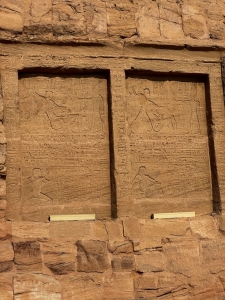
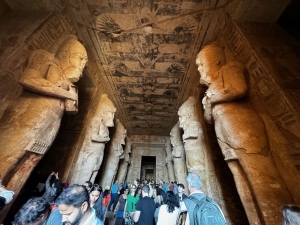
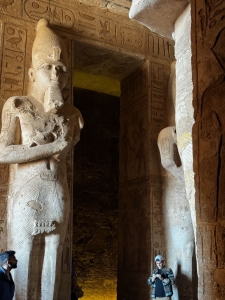
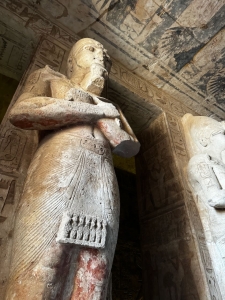
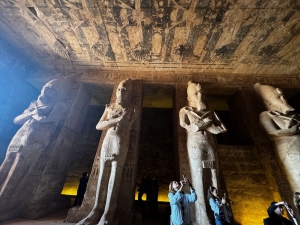
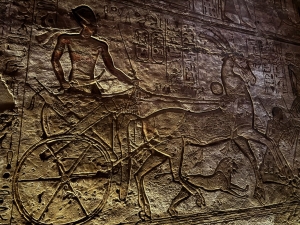
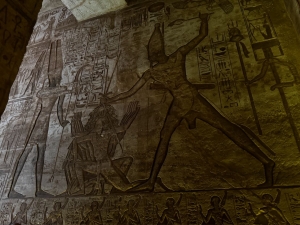
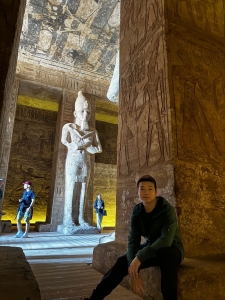
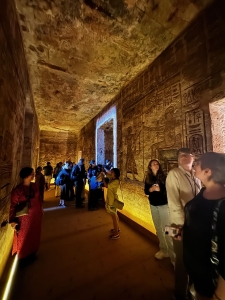
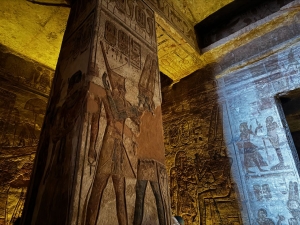
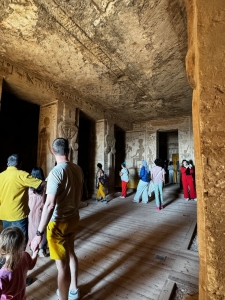
The first room that we came into when entering the temple was the hypostyle hall. Unlike those we have seen in the Step Pyramids or Karnak Temple, the hypostyle hall was just two rows of pillars supporting the temple’s roof. Also unique to the Great Temple of Rameses II, the pillars are not the usual columns with open or closed flower buds. Instead, we saw statues of Rameses II as the pillar of the hypostyle hall. These statues were in great shape with facial features, and even the linings on his kilt were still visible. It is in this hypostyle hall that we see how big an ego Rameses II has. The hall is filled with reliefs of his victories over his enemies, slaying his enemies, or ruling over his subjects. There is no relief showing him making offers to any gods here in the hypostyle hall.

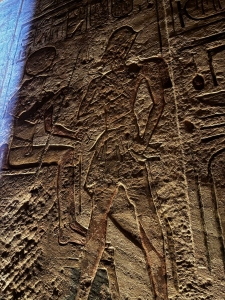
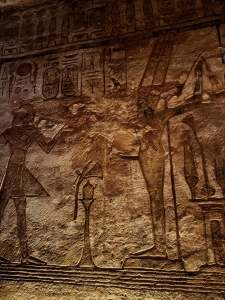
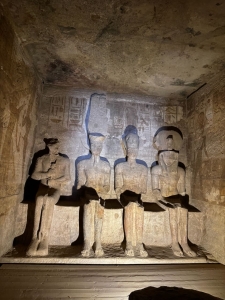
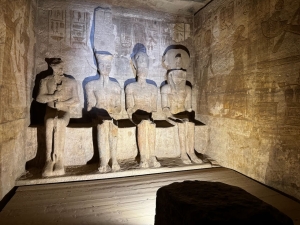
A small room is held by four pillars between the hypostyle hall and the sanctuary. This room is filled with detailed carvings of Rameses II standing next to the god Osiris, who seems to be blessing the king as though Osiris is legitimising his rule over Egypt. We headed into the temple sanctuary, where our guide had told us about the four statues sitting in the sanctuary. Rameses II saw himself as a deity and was seen sitting side-by-side with the other three gods to which this temple was dedicated. We saw the statues of Ptah, Amun-Ra, Rameses II as a god, and Re-Horakthy from left to right. Our guide told us that the temple was built to align with the sunlight and that on 22 Feb and 22 Oct every year, sunlight will enter the temple straight into the sanctuary and shine onto the statues of Amun-Ra, Rameses II, and Ra-Horakthy, leaving Ptah in the dark as he was the god of the underworld.

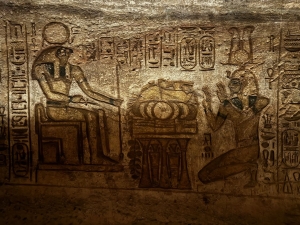
After taking pictures of the sanctuary, we visited the rooms on the sides of the hypostyle hall. These rooms were used as storerooms. The reliefs in these storerooms showed a humble side of Rameses II making offerings to the various Egyptian Gods. These rooms are the only parts of the temple where we saw Rameses II kneeling before these gods and respecting them as divine beings. The Great Temple of Rameses II was impressive on the exterior, but I found the space inside was modest compared to Karnak Temple, Hathor Temple and even Kom Ombo Temple. We tried to stay here as long as possible, taking pictures and looking for the reliefs our guide had told us before. However, the temple was full of visitors, which put us off from staying any longer. We headed out of the temple to take pictures of the temple from the exterior and of Lake Nasser. After all, the temple outside looks more impressive.

The Temple of Nefertari

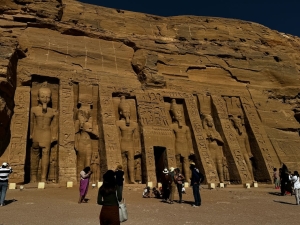
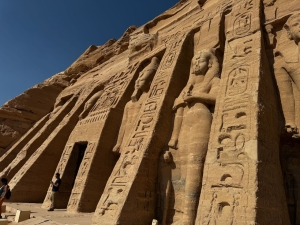
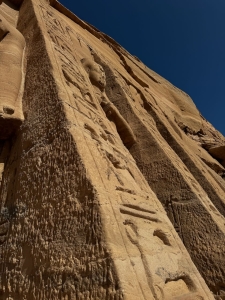
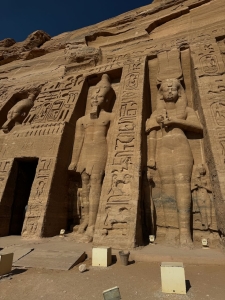
We headed to the smaller temple next to the Great Temple of Rameses II, which Rameses II built for his queen Nefertari. The temple’s facade is similar to his Great Temple in that the facade is adorned with six statues carved out from the walls. On each side of the entrance are two statues of Rameses II, with the statue of Nefertari in between. Rameses II was portrayed on these statues as being taller than Nefertari. Our guide mentioned that Rameses II had such a big ego that he even installed two statues of himself on the face of the temple he built for his queen. These six statues were in excellent condition, and we could see the detailed facial expressions and how the king and queen looked from these statues. The children they had together were the smaller statues by the legs of the Rameses II and Nefertari.

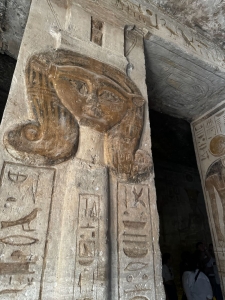
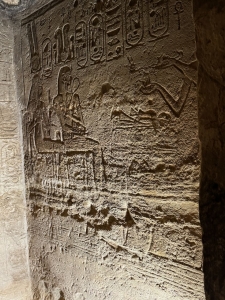
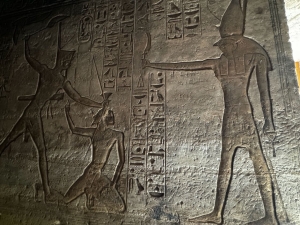
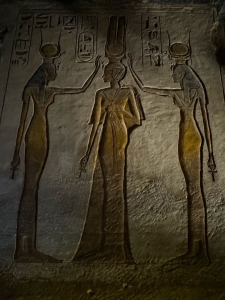
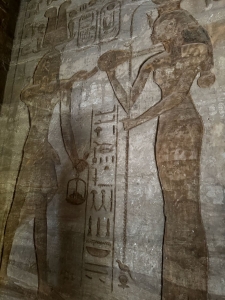
The Temple of Nefertari is much smaller than the Great Temple, consisting of a small six-pillared hypostyle hall and the sanctuary. This temple was dedicated to the Goddess Hathor, where we can see her face carved into the pillar, like those we saw in Dendera. There are some interesting murals engraved in the hypostyle hall of the wall. We saw one depicting Rameses II slaying his enemy, with Horus presenting him with a weapon to do so. There is an engraving on the wall depicting the cornation of Nefertari as a queen by Hathor and Isis. Other murals depicted either Rameses II making offerings to Horus or Nefertari making offerings to Hathor and Isis.

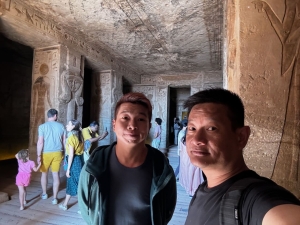
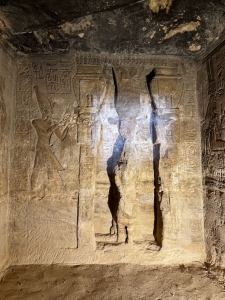
The sanctuary lies in the innermost part of the temple, flanked by two storerooms on each side. The sanctuary housed the sacred statue and an image that depicts the king making offerings to the statue. We even spotted an image of Nefertari receiving Hathor in her cow form on a boat. The size of the temple is so small that we only spent 6 mins to finish touring the temple. We met up with our group for our flight back to Aswan.

Cruising Back to Luxor

The rest of the day was planned to turn the riverboat around and sail back to Luxor with a short pitstop at Esna. As we woke up rather early today, we took a short nap after lunch and spent the rest of the day on the sundeck, watching the scenery of the Nile as we sailed back north. As there were limited things we could do onboard (the TV had limited entertainment), we went up to the sundeck to watch the sunset and moonrise in the evening. Our riverboat reached Esna at around midnight in good time for our early morning excursion to the Esna Temple the next day.

Egypt Day 7 (29 Dec 23) – Aswan: Marvelling the Detailed Reliefs in the Last Temple of Ancient Egypt Philae Temple; Stunning View of the Nile and the Lake at Aswan High Dam; and Listening to the Tales of Isis at Philae Island

We had another light day today. We started the morning with a boat ride to the Temple of Isis on Philae Island, then drove to Aswan High Dam. After a couple of stops for shopping, we continued our tour with a visit to the unfinished obelisk and spent the afternoon on a boat ride around Elephantine Island for bird watching. We ended the day at Philae Island for a Sound and Light show of the Temple of Isis.

The Last Temple of Ancient Egypt – Temple of Isis, Mother of Egyptian Gods

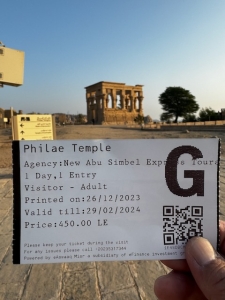
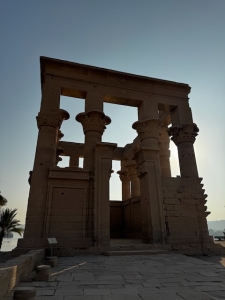
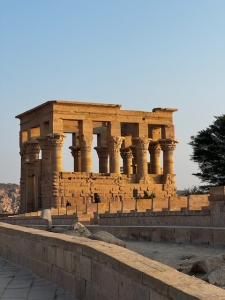
Kiosk of Trajan, a symbol of the Temple of Isis

Temple of Isis

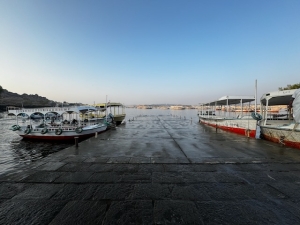
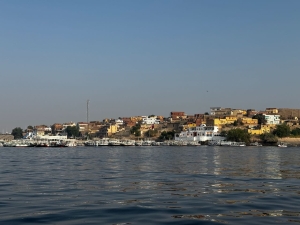
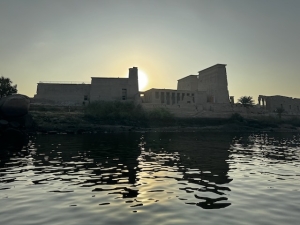
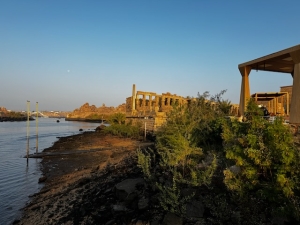
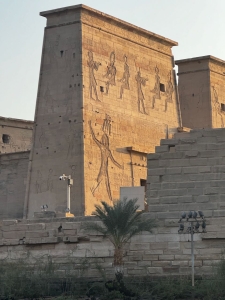
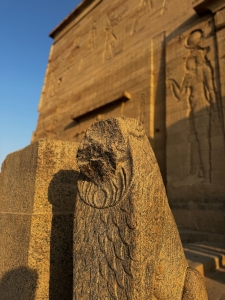
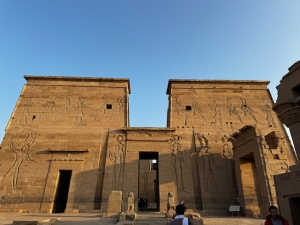
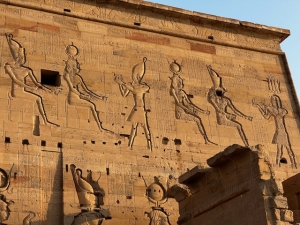
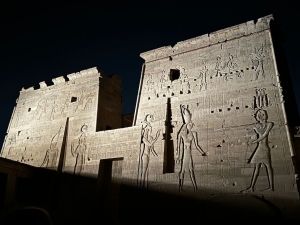
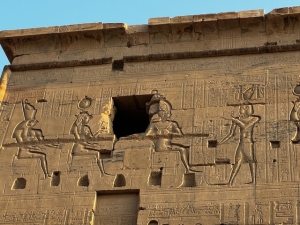
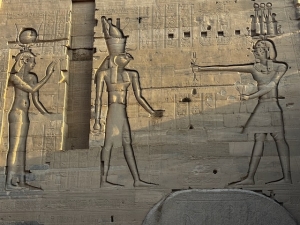
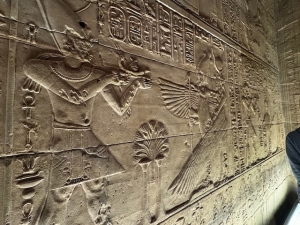
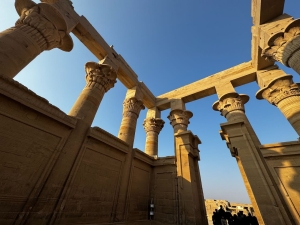
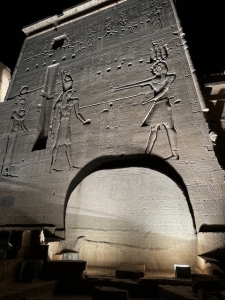
Our first stop of the day was the Temple of Isis on Philae Island. The island can only be accessible via boat, which can be boarded past the ticketing counter on the mainland. However, the ticket price for the temple did not include the boat ride. Getting a boat ride to the temple requires huggling with one of the many boatmen at the ramp. The boat ride took around 10 minutes; we passed by Nubian houses painted in bright colours that reminded me of the houses in Burano in Venice we visited last year. The ancient Egyptians believe the Goddess Isis scattered this part of the Nile with cataracts that broke up the forces of the current, offering them protection. Hence, they also regarded Isis as the Goddess of Protection and built a temple here to worship her. From Philae Island’s landing point, the first thing that caught my attention was a tall pylon standing majestically with reliefs showing which Egyptian God was in charge at this temple. Amongst all the reliefs, the largest relief portrayed the king of Egypt slaying his enemies in the presence of Isis. On top of this were reliefs portraying the king making offerings to Osiris, Isis, Horus and Hathor. A couple of stone lions are standing guard by the entrance of the first pylon, welcoming guests to the Temple dedicated to Isis.

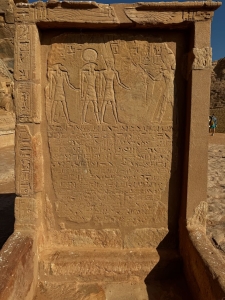
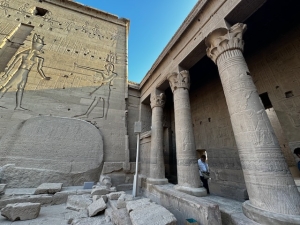
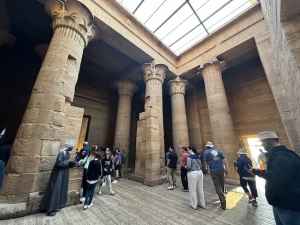
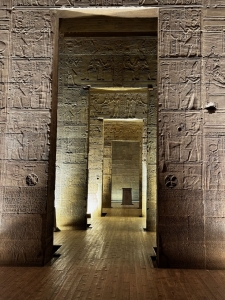
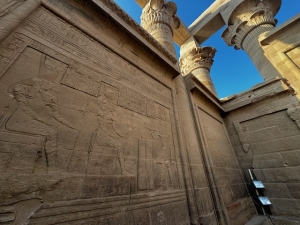
Passing through the first pylon brought us to a small courtyard, where the second pylon was immediately visible. Here, we saw the pharaoh making offerings to Osiris with Isis standing behind him and another relief depicting the king making offerings to Horus with Hathor standing behind him. Our tour director, Ahmed, brought our attention to a large stone sitting to the right of the entrance of the second pylon and told us this piece of rock served as a notice board in ancient times for the temple, which recorded the rules for entering the temple.

As we were walking towards the sanctuary, Ahmed focused our attention on an altar with a square hole cut into the wall. The cross on the altar and above the depression on the wall were signs that Christians once carved a space in the temple; after the temple was built, they occupied a corner of the temple to worship their God alongside the Egyptians. The two innermost rooms on either side of the sanctuary had murals depicting the king making offerings to Isis. The sanctuary room in the centre has a huge stone altar in the centre and was adorned with more murals of the king making offerings to the various gods on the side walls. There is even a relief showing Isis breastfeeding the king with her face chipped away. The centre wall of the sanctuary was filled with reliefs of the king making offerings to Isis. We walked around the interior of the Temple of Isis and found some spots that were not crowded to take pictures. We found an entrance that we thought allowed us to take some nice pictures of the temple’s interior.

Kiosk of Trajan

We exited the temple to take pictures of its exterior. There weren’t many engravings on the temple’s exterior (where we stood). The right side of the temple was scattered with ruins that seemed to be chambers or rooms for the priests. However, a lone structure caught our attention with its unique structure. The Kiosk of Trajan sits in what seems to be an isolated part of the temple grounds. The lower half of the Kiosk of Trajan was constructed with stones that had similar building techniques as the Temple of Hathor we saw a few days ago, and the top part of the kiosk had pillars supporting the beam. The top part of the Kiosk of Trajan reminded me of the Greek-styled Temple of Concordia that we visited in Sicily, Italy, last year, but with the Egyptian elements of open lotus buds typical of the pillars in a hypostyle hall. The Kiosk of Trajan was never unfinished during the temple’s heyday, which could be why we did not see any traces of the roof. The engravings on the kiosk, mainly on its interior, depicted the king making offerings to Hathor with Horus sitting behind her. One side of the Kiosk of Trajan afforded us a spectacular view of the Nile. This part of the Nile was very peaceful. We could see some of the small cataracts and lush greenery by the banks of the Nile. There weren’t any boats plying on this part of the Nile, a stunning view.

The High Dam – Preventor of the Floods (and Crocodiles)

We made three brief shopping stops after Philae Island. The first shop sells papyrus, and we were shown how papyrus was made. The art pieces on sale were beautifully painted, some depicting scenes of famous sights in Egypt, such as the pyramids. I got a papyrus art portraying the sky goddess Nut, and my friend got the Dendera Calendar and a painting of the Ankh, the ancient Egyptian symbol of life. We also stopped at a perfume shop and an Egyptian cotton shop.

After the brief stops at the shops, we continued our journey and headed to our next sight – the Aswan High Dam. Life along the Nile was plagued with annual floods before the dam was built. The building of this dam not only controlled the flood but also provided the country with hydroelectric power. The building of the dam also controls the crocodiles that used to swim up and down the River Nile. Today, there are hardly any traces of crocodiles on the Nile north of the dam. Ahmed said the crocodiles are now kept in a crocodile sanctuary south of the dam. The drive to the dam was not that long, but we had to wait a while as the number of vehicles allowed there was controlled. There is only one spot where all the vehicles seem to be gathered for their visit to Aswan High Dam. This spot offered us the view of the Nile on one side and the view of Lake Nasser, where the river continues to flow to Kenya. Standing on the dam, looking down the Nile side, gave me the impression that this is where the Nile ends (but the river continues several thousand kilometres south). I saw barren lands on either side of the river bank that snakes its way towards the north of Egypt, with very sparse vegetation. On the southern side of the dam, the Lake Nasser side, the wide-bodied Nile looked more like a lake that stretched beyond the horizon.

Unfinished Obelisk – A Stone Stuck in the Rocks

The Unfinished Obelisk rests in what seems like a quarry. From the outside of the gated compound, we can only see a flat piece of rock lying on its back. This obelisk was believed to have been commissioned by Queen Hatshepsut for Karnak Temple, but work was not performed on it as the multiple cracks would render this stone unusable as an obelisk. The stone has been resting in this spot for 3,500 years. Our visit to the Unfinished Obelisk was brief as well. There is one staired pathway that leads visitors around and to the spot that overlooks the obelisk and back down to the entrance. At this spot, we could see the shape of the raw Obelisk with its rough, unpolished, unmarked surface. Other than the obelisk, there is nothing much here for anyone to see. I wouldn’t have come here if I was travelling on my own. We left the obelisk after a short 10-minute stay. Leaving the Unfinished obelisk, we headed back to the boat for lunch.

Birding Watching on the Nile with an Expert Naturalist

We were apprehensive about joining the bird-watching tour, which was arranged as part of the tour package. After all, what is there to see about birds on the Nile? My friend suggested we join the tour since it has already been included in our package. Our expectations for this itinerary are quite low to begin with. We were taken on a motorboat to the cataracts near where our riverboat was docked. The naturalist narrated what bird species usually come to this part of the country and told us about the governor’s house and the nearby tomb. The boat took us around Elephantine Island and Kitchener Island (the two islands nearest to our riverboat). We spotted mainly herons hunting on the banks of the River Nile and perching on the rocks sticking out of the river. Our guide excited whenever he spotted a kingfisher; it could be that kingfishers were in a difficult spot on the Nile. He signalled the boat’s coxswain to slow down and not startle the birds while trying to drift close enough for us to see the bird. Actually, this is not too bad of a tour. We got to see some birds, but what sold me more was the scenery of the sand dunes of the Sahara Desert that we got so close to that I enjoyed more. To me, it is more of a joy ride on the Nile.

Sound and Light Show at Philae Temple – Listening to the Tales of Isis

Our last stop of the day is the Sound and Light show at the Temple of Isis back at Philae Island. Since we had already seen what we needed to see of the temple in the morning, I came onto this itinerary mainly for the night light of the temple. The show started at the colonnades in front of the first pylon of the Temple of Isis. After some narrating, we were guided to the courtyard between the first and second pylons. After the narration in this part of the temple, we were ushered into the temple, past the sanctuary to the next venue of the show, the open-air auditorium facing the Kiosk of Trajan. The show is more of some lighting randomly shining on the temple walls and voice actors role-playing Egyptian Gods such as Isis, Osiris, Horus, etc. The show told the tales of Isis and how the temple came to be. I thought the story was interesting but a little lengthy. After all, I came for the night lights on the various structures at Philae Island and did not pay much attention to the storytelling part. I am not a fan of the sound and light show and would not have come if I were to travel to Egypt independently. We rested early tonight after dinner as we would have to wake up early for our excursion to Abu Simbel tomorrow.