Today is another light day with only one sight to visit. We spent 1 hour visiting the Temple of Khnum (more commonly known as Esna Temple) and a short walk around the bazaar in Esna Town. The rest of the day was spent sailing back to Luxor.
Esna Temple – The Temple of The God of Creation, Khnum
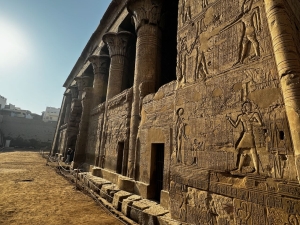
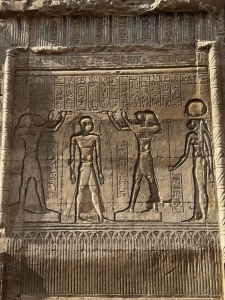
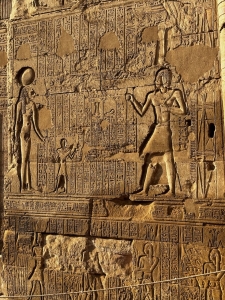
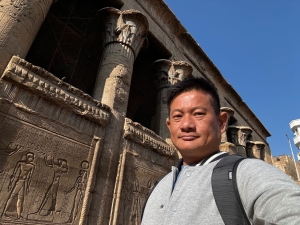
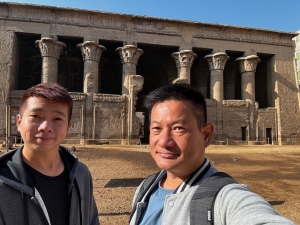
We started our day at 8.30 am, visiting the Esna Temple dedicated to Khnum, the ram-headed God of Creation. The temple was a mere 5-minute walk from the dock through a bazaar and sits in a large pit about 10m from the street level. Esna Temple is unlike the other temples we visited; it has only one rectangular building. The temple’s facade was decorated with reliefs of Khnum, his consort Menhyt and their son Heka. There are also reliefs of the king making offerings to the gods.
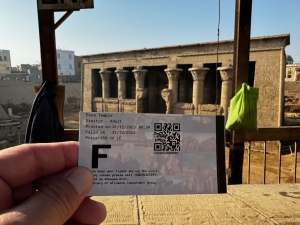
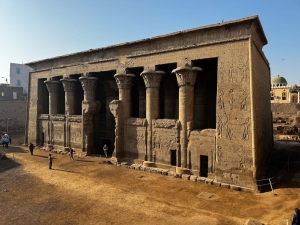
The whole Esna Temple seems to only consist of the hypostyle hall, and I saw another door opposite the main entrance to Esna Temple that leads to an open space behind the temple. We were told that the temple was buried under sediments for thousands of years, and most parts of the temple were still being discovered. Despite not having the sanctuary or rooms like the other Egyptian temples did, I was still blown away by the vibrant colours and the amount of work that went into the construction of the hypostyle hall. Ahmed told us the colours we saw on the ceilings and the pillars were original since the temple’s construction. Restoration works are still ongoing to preserve the temple interior. A relief of Khnum was visible over the beam of the door that led to the open space, seemingly telling visitors who the boss of this temple was.
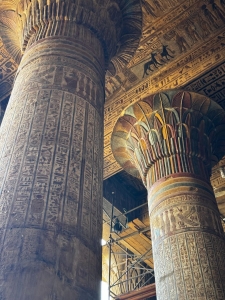
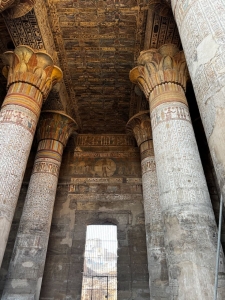
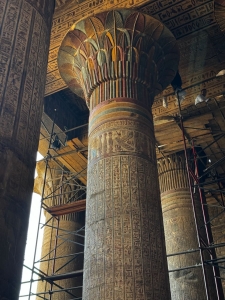
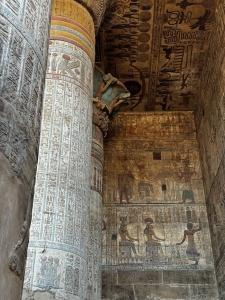
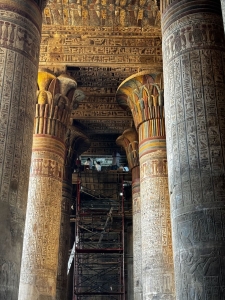
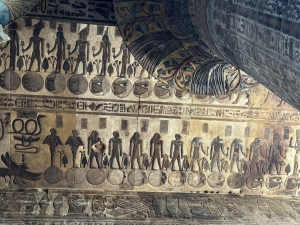
Ahmed brought us to a side of the temple and directed our attention to a relief on the high up on the wall. This relief showed a lion-headed Goddess, Menhyt, being entertained by Heka with Isis sitting behind her. Menhyt was believed to be the consort of Khnum, and Heka was their child. Our attention was then directed to the ceiling above us, with a relief depicting all the Gods in Egyptian mythology, with moon phases carved below these gods. The carving was intricate, and despite being high up on the ceiling, we could still make out which gods were being represented here. Ahmed pointed to another relief on the ceiling depicting Heka on a boat with Isis, Hathor, Thott and Ma’at being pulled by three dogs. Ahmed next brought our attention to the pillars that supported the ceiling of the hypostyle hall. Unlike the pillars of the temples we have seen so far, each of these 18 pillars inside the temple had different designs on the top, and the hieroglyphs engraved onto them provided detailed instructions on the rituals performed. We spent a few minutes spotting the differences between these pillars and admiring the reliefs on the ceiling.

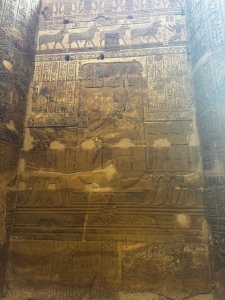
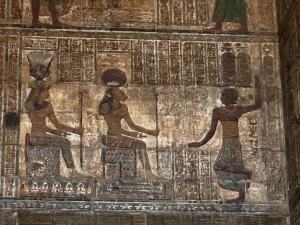
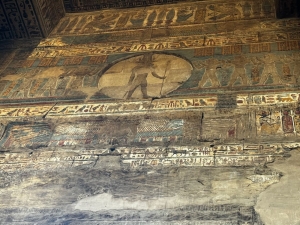
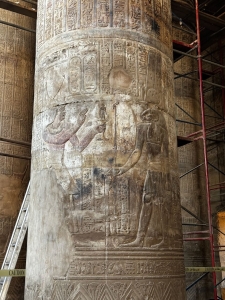
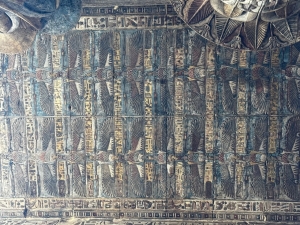
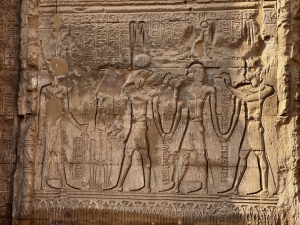
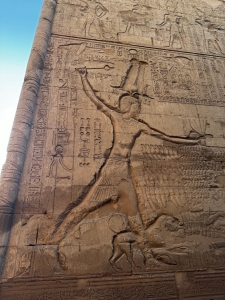
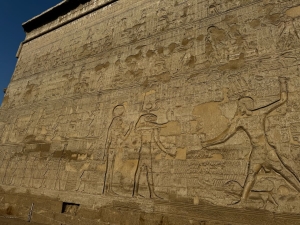
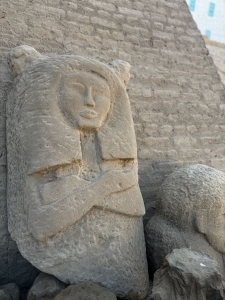
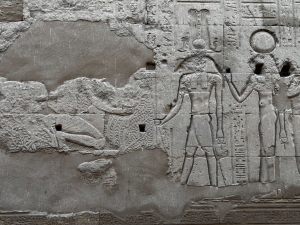
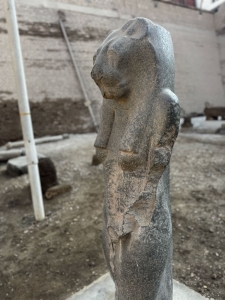
We headed outside the temple, where Ahmed explained the reliefs on the temple’s outer walls. There is a relief depicting Menhyt and Hathor blessing the king of Egypt with Khnum looking on. But the most interesting relief is the one where the king was being purified by Gods Thoth and Horus with Menhyt looking on. Yet another relief depicts the king slaying his enemy with Khnum and Menhyt by his side. This is not the first time we have seen such reliefs; these reliefs were repeated in the other temples, but this time, the main deities of Esna Temple – Khnum and Menhyt were with the king. We explored the temple grounds a little before hitting the streets; after all, there was nothing much to see in the temple. We saw a couple of statues of Hathor and Menhyt placed in one corner of the temple grounds and some locals who seemed to be excavating to look for more parts of Esna Temple.

Esna Bazaar
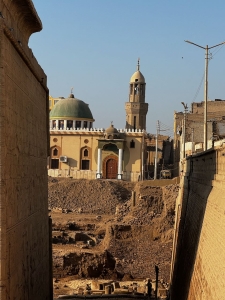
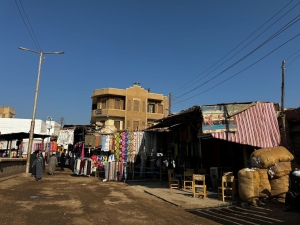
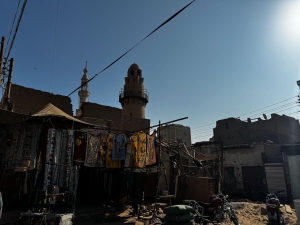
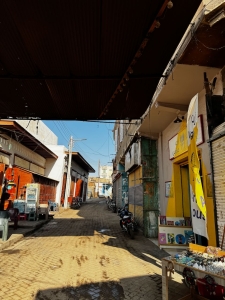
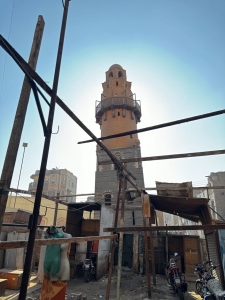
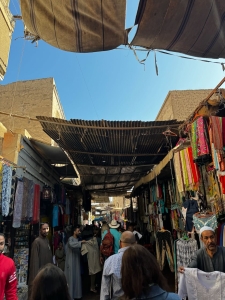
It did not take us too long to realise there was nothing much for us to see in Esna Temple. We headed to look around this part of Esna Town that surrounds Esna Temple. This part of the town is mostly occupied by shops selling souvenirs to tourists visiting the Esna Temple. The things sold were not too much different from the other tourist sights we have seen. Walking around the bazaar, I noticed some buildings, particularly a mosque minaret, leaning toward one side. According to Ahmed, these buildings were built on soft ground that caused them to lean to one side. The new buildings around the bazaar were built using donations from the USA. We were not keen on buying souvenirs, so we returned to our riverboat, preparing to slip off towards Luxor.
Cruising Back to Luxor
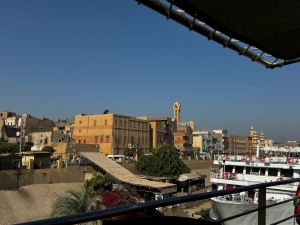
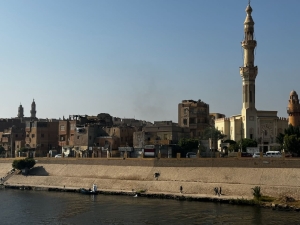
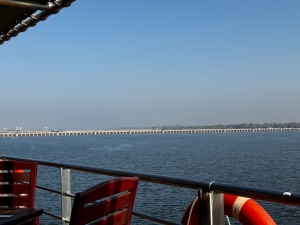
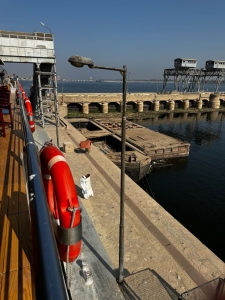
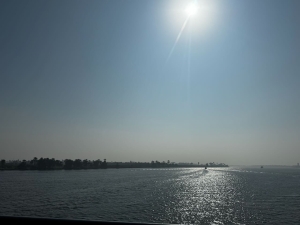
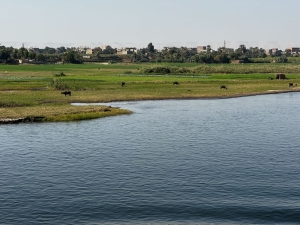
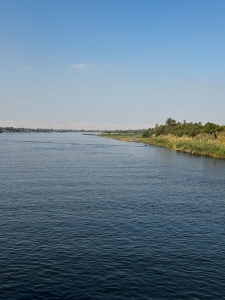
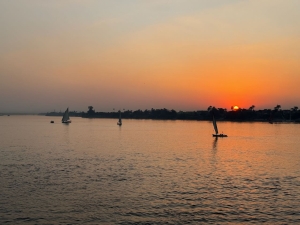
Our riverboat left Esna at around 10 am. We would spend the rest of the day relaxing by the Nile, watching the ever-changing scenery past us as we sailed back to Luxor. Along the way, we again sailed through the Esna Lock and saw how the water was being drained within the lock so we could continue our passage northwards. While the lock operations were interesting, I found the vendors more interesting. These vendors paddled on small boats near our riverboat to sell wares. These vendors had very good aim and strength to throw their wares up four decks of the boat. They would paddle near the lock and climb up to the lock to secure sales. After passing through Esna Lock, we relaxed by the sundeck a little before heading to the restaurant for lunch. We spent some time packing as we would need to leave our luggage at our door by 5.30 am tomorrow for our flight back to Cairo.




I remember visiting the Esna temple, but the interior was too dark for the photos, your technology looks better.