It is our last day visiting sights in Egypt, and we had two sights on the list today. After landing in Cairo, we headed straight to the sights from the airport. We visited the Citadel of Salah El-Din and the Egyptian Museum before bidding farewell to our Tour Director, Ahmed. As we had the rest of the day to ourselves, my friend and I visited Khan El-Khalili Bazaar at night.

Salah El-Din Citadel – Home to the Egyptian Rulers and the Alabaster Mohamed Ali Mosque
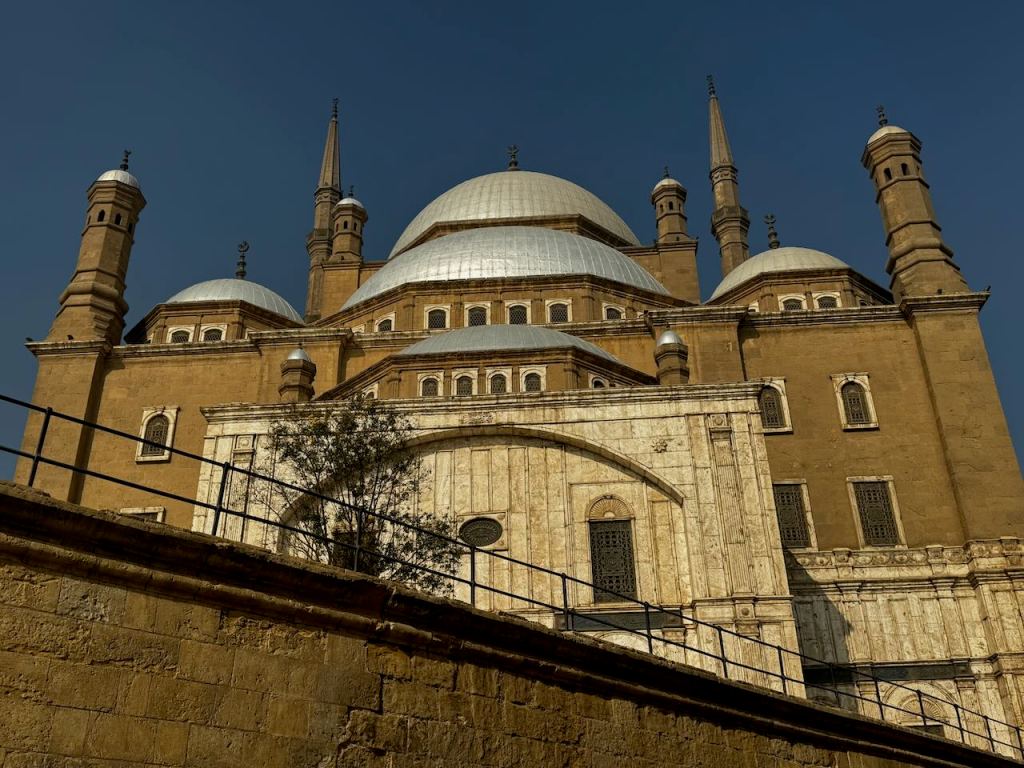
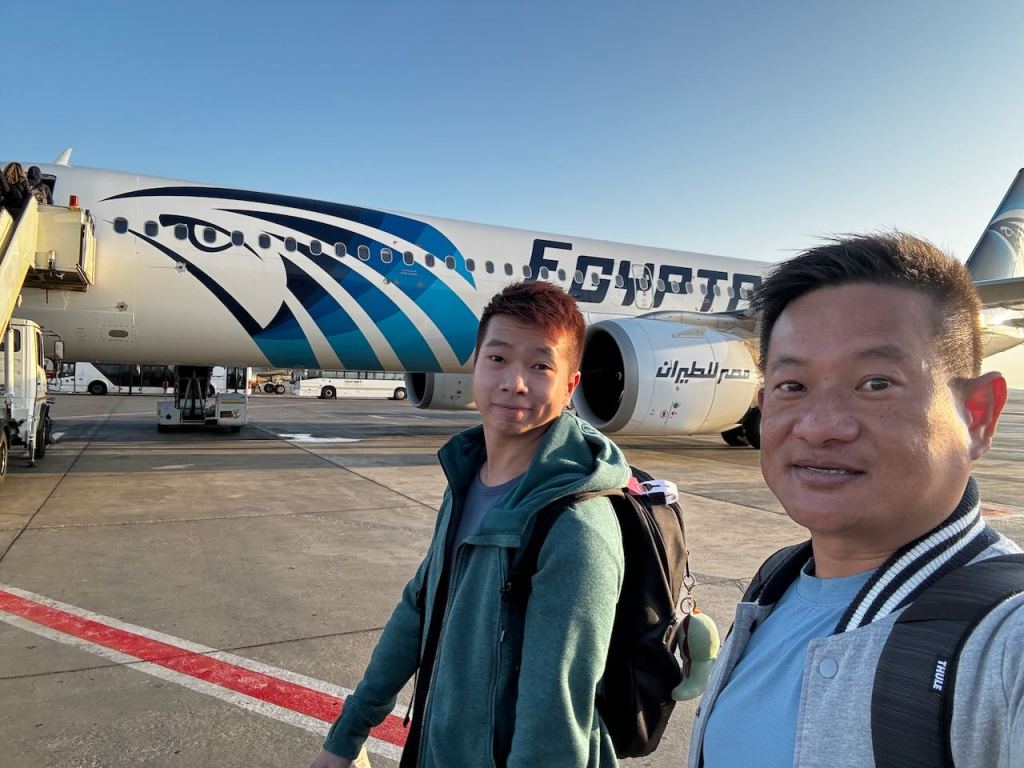
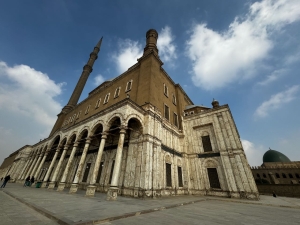
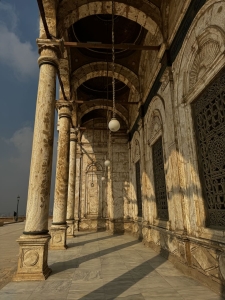
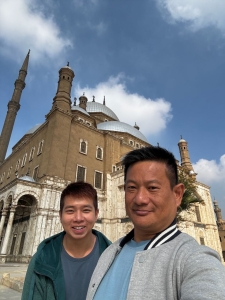
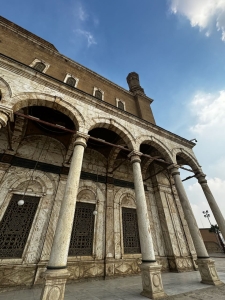
Our day started early, catching the first flight from Luxor to Cairo. We headed straight to the first sight of the day – Salah El-Din Citadel, after landing in Cairo. The Salah El-Din Citadel was the home of the Egyptian kings in Cairo for more than 700 years. Due to its location, being perched on steep rocky hills, this place made it perfect for the Egyptian rulers to rule the country. Ahmed told us numerous attempts to scale the walls and attack the royals had been planned, but all failed. The fort walls and some watch towers that once protected the citadel were iconic of this sight. In the centre of the citadel sites sits the Muhammad Ali Mosque, commonly known as the Alabaster Mosque. Ahmed took us on a buggy to the mosque resembling the Blue Mosque in Istanbul. According to Ahmed, the Alabaster Mosque was heavily influenced by the Ottoman architectural style. The floor of the courtyard of the Alabaster Mosque was decked out in what seemed like marble. We spotted a lone pavilion in the centre of the courtyard, a fountain with an elaborately carved wooden roof. Perched on top of one of the colonnades is a clock tower. According to Ahmed, this clock tower was given by the French in exchange for the obelisk in front of Luxor Temple. The clock tower never worked, while the obelisk still sits in Place de la Concorde in Paris. Ahmed jokingly commented the Egyptians got the shorter end of the bargain.


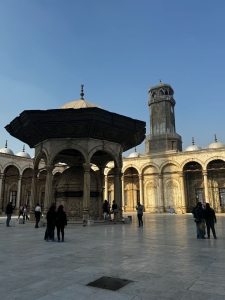
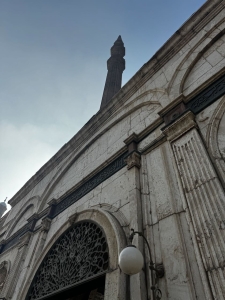
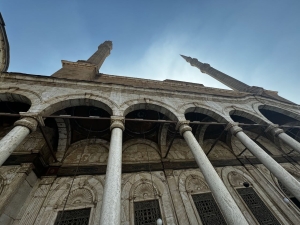
We entered the Alabaster Mosque, where the grandeur of the mosque was immediately felt the moment we stepped inside. Looking up at the ceiling, we could see the central dome that seemed to reach the sky, accompanied by four semi-circular shorter domes. The ceiling was impressive and colourful. The main dome was decked out in golden colours, while the four semi-circular domes were painted green. Intricate and beautiful Islamic artworks are decorated on these domes. Apart from the rustic, gigantic chandelier hanging from the top of the main dome, Ahmed told us there are 365 globe-shaped lights in the mosque, each representing a day of the year. We were brought near the mosque’s Mihrab, where the Imam would lead the prayer. Ahmed demonstrated how the sound reflected off the Mihrah, amplifying to the entire mosque. Beside the Mihrab sits two minbars (a platform with a staircase), one made of alabaster decked in white and another taller one made of wood in green. Ahmed brought our attention to the catwalk on the second floor of the mosque. This catwalk was built so that women, who usually pray on the second level due to modesty issues, disagreeing with the preaching of the Imam could walk to the minbar and challenge the Imam, signally gender equality in Egypt.
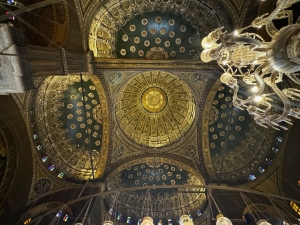
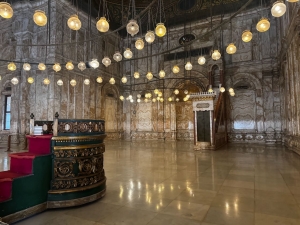
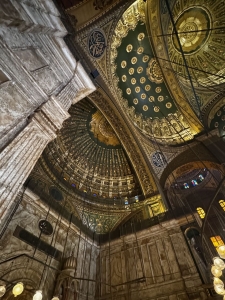
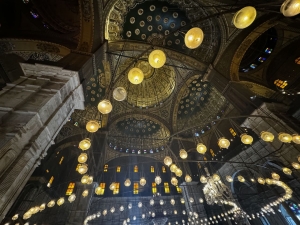
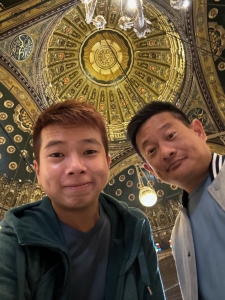
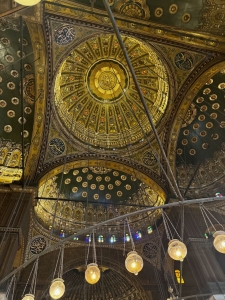
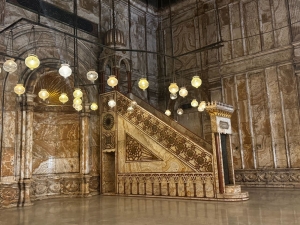
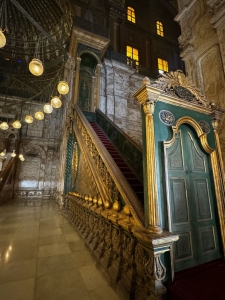
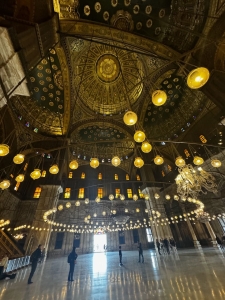
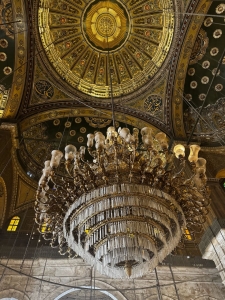
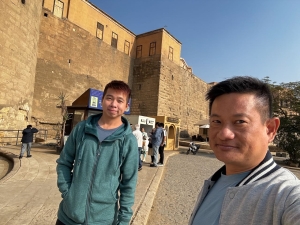
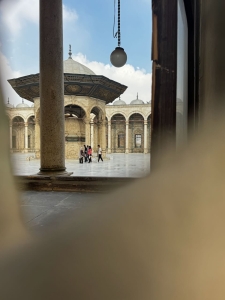
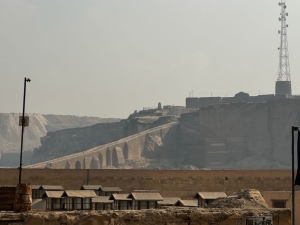
We were given some time to wander around the mosque. My friend and I went outside the mosque, where the best pictures of the mosque can be taken. We came to a lookout point, which Ahmed told us was an aqueduct that used to supply the Salah El-din Citadel with water.


Old Egyptian Museum – Home of Millenia of Egyptian Treasures
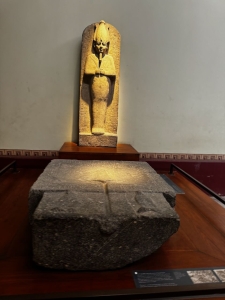
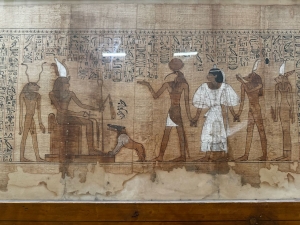
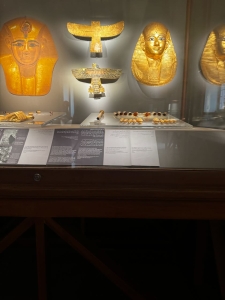
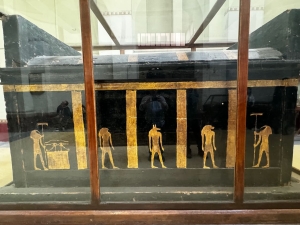
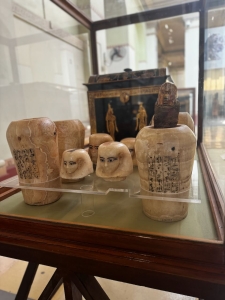
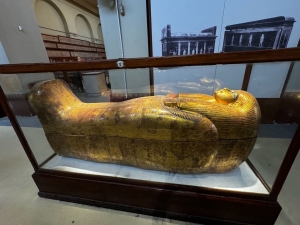
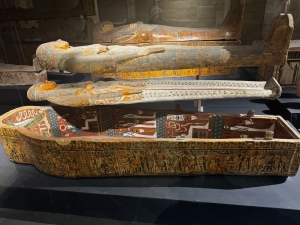
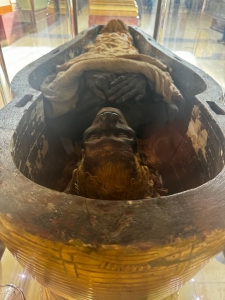
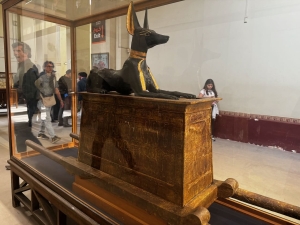
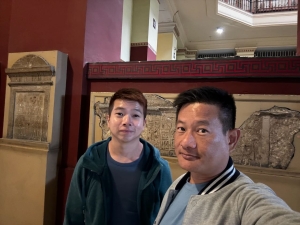
We left the Alabaster Mosque for our next (and last) stop of the trip – the Old Egyptian Museum. This museum is situated in the heart of downtown Cairo and houses a majority of the Egyptian artefacts recovered from the tombs of the pharaohs. According to Ahmed, the Old Egyptian Museum has the largest collection of Egyptian antiquities, and it would take several months to finish viewing all the exhibits. The important treasures are all on display here in the Old Egyptian Museum, including a collection of King Tutankhamun. Ahmed showed us the more significant collections in the museum, including a statue of Queen Hatshepsut depicted as a man, which was important for her to be taken seriously. Ahmed warned us about the staff of King Tutankhamun aggressively enforcing the no-picture rule in the exhibition hall.
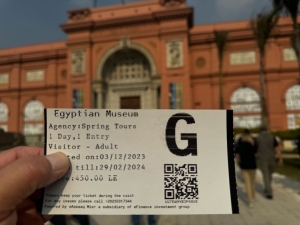
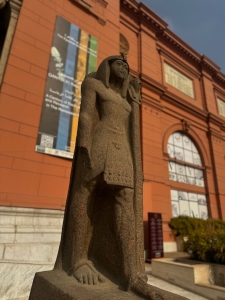
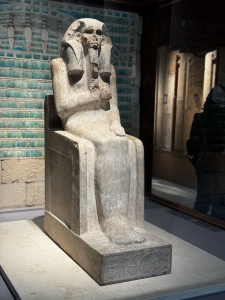
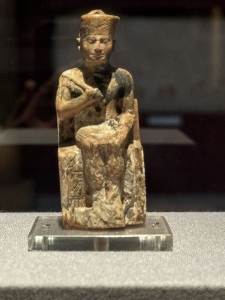
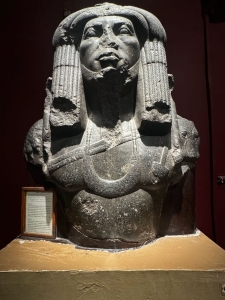
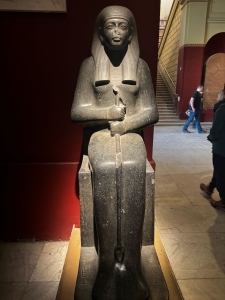
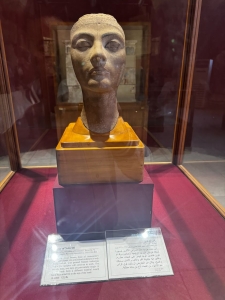

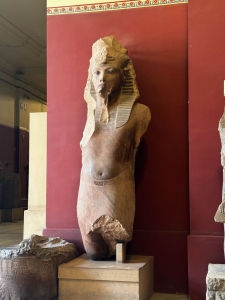
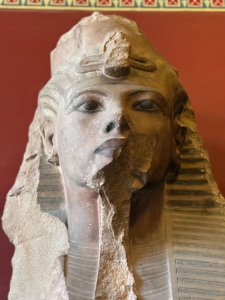
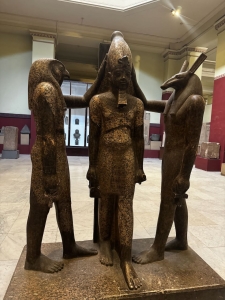
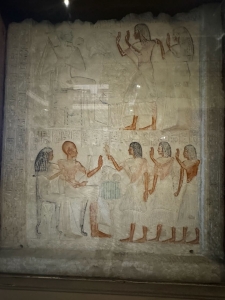
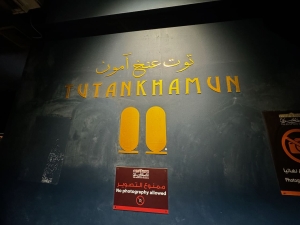
We were allowed to wander around the museum to view the exhibits. My friend and I headed to King Tutankhamun’s exhibit. I saw two staff members in the enclosure aggressively, ensuring visitors did not take pictures inside. We saw a few visitors being shouted at for even touching their cameras. We spent the next 20 mins looking at mummies, coffins and other exhibits. My friend and I are not museum-goers (although we like to listen to the history of the sights we visit), so we left the museum and spent the rest of the time in a cafe outside the museum.

As we had an early start today, the group opted not to visit the bazaar and return to the hotel for rest. That would make the Old Egyptian Museum the last item on the list of sights that the tour company planned. We bid farewell to Ahmed, who was knowledgeable and with whom we learned so much about Egyptian history, culture and evolution. We waited till 3 pm for our rooms to be ready and checked into our room.
Evening Stroll Through the Colourful Khan El-Khalili Bazaar
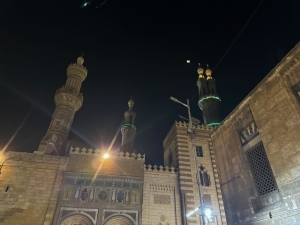
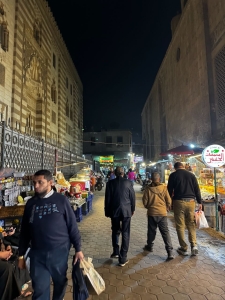
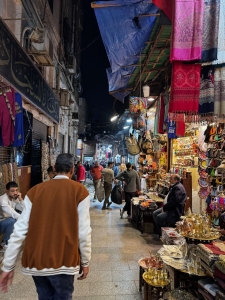
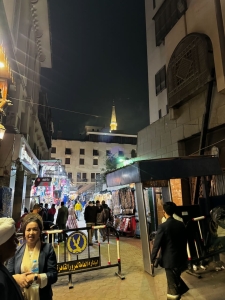
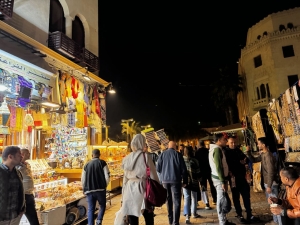
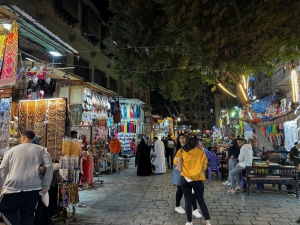
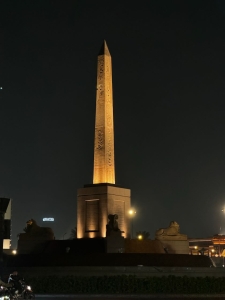
As the day was still young, my friend and I headed to a nearby shopping mall. However, the hotel we stayed in was nowhere near any shopping mall. We checked with the concierge, who recommended visiting Khan El-Khalili bazaar. My first impression of the bazaar was lively. The Egyptians only came out shopping or hanging out with their friends at night. We were approached by a shopkeeper asking if we wanted to buy some wares and where we were going. We told him we were looking around. To our surprise, instead of pushing his wares and bugging us, the very friendly shopkeeper gave us a simple orientation of the bazaar and some directions on parts of the bazaar that we should visit. We walked around the shops and saw this part of the bazaar mainly caters to the daily grocery needs of the locals. We saw shops selling spices and even a market selling fresh produce. We heeded the directions from the shopkeeper we met earlier and crossed the road to the other part of the bazaar. This part of the bazaar is even livelier, with locals and tourists walking around shopping. Some restaurants in this part of the bazaar are where we see locals dining or hanging out with their friends. The brightly lit shops and street and shopkeepers promoting their wares make this place lively. However, only tourists bought stuff from this part of the bazaar. The bazaar sells mainly Egyptian souvenirs, which I thought the Khan El-Khalili bazaar seems like a bazaar catered for tourists. Despite the crowd and the noise, we found walking around in Khan El-Khalili bazaar very safe. We made a short stop at Tahir Square before returning to our hotel to pack up and rest early for the night, as we had an early flight to catch tomorrow.






Conclusion to our Madien Trip to Egypt
Today marks our final day in Egypt. Throughout the trip, I was glad that we did not travel the country independently. We chose to take up a package tour (which I tried to avoid for the longest time) as there are too many things to see in Egypt, even for one sight. Without a guide to explain and guide us where and what to look at, we would have been overwhelmed by the number of hieroglyphs and engraving on the walls of the temple. Without a guide, we would not be able to understand what we saw. Moreover, most sights are very far from each other, and if we were to travel independently, we would not see as many sights as we did. The guide also advised us on the price and how to deal with touts, which were very useful during our trip. I thought Egypt was a very safe country to travel to. We did not have to worry about thefts and pickpockets, and we did not feel we had to guard against pickpockets throughout our trip. The locals are ready to help travellers if they are lost or can’t communicate in Egyptian. There are touts and paddlers, but these only appear in tourist sights and represent a small portion of the population. We found the Egyptians to be sincere and helpful. My friend and I enjoyed our maiden trip to Egypt.
It was a great tour with all the main sites, more or less what I had experienced myself. However, I’m thinking of returning to Egypt on my own, concentrating on Cairo and Luxor where the most striking sites are grouped.