It was a light day today as we only had one sight to visit. Today is when the riverboat turned around to sail back north towards Luxor. We had the whole morning free and were given the option (at additional cost) to visit the ancient temples of Abu Simbel.

Abu Simbel Temples – Temple of Rameses II with Colossal Statues and A Temple for Queen Nefertari

Abu Simbel Temples are as iconic as the Great Pyramids of Giza in Egypt, characterised by the four colossal statues on its facade. Before this trip, I had thought the temple with the four statues was the only one in Abu Simbel. However, I learned there are two temples in Abu Simbel.
The Southern Egypt Icon – The Great Temple of Rameses II
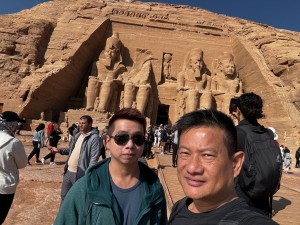
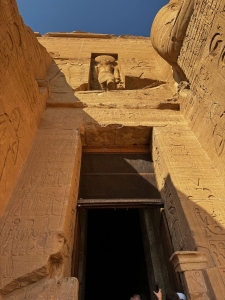
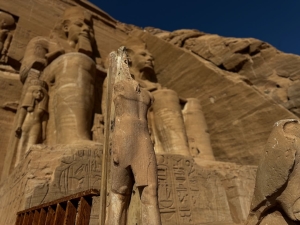
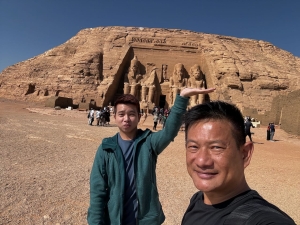
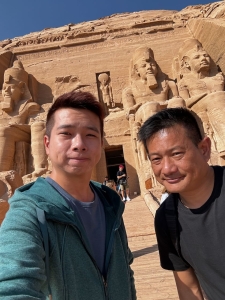
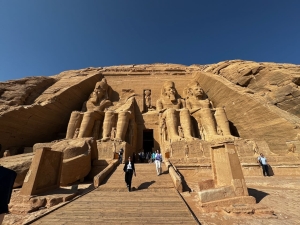
The four colossal statues sitting against a mountain backdrop come into mind when mentioning Abu Simbel. This is the bigger of the two temples in Abu Simbel, the Great Temple of Rameses II. The four statues, sitting next to each other facing Lake Nasser, were statues of Rameses II. The statues were very well preserved, and the smiling features of Rameses II were still visible after 3,000 years since its construction. The temple was shifted about 200m back from its original location as the building of Aswan High Dam would have submerged the temple. One of the four Rameses II statues suffered damage from the waist up (due to an earthquake), giving the temple facade an iconic character. Our guide told us there was an attempt to restore the statue during the shift, but it was not done as not all the parts of the statue were found. Today, we can see the damaged parts of the statue placed in front of it, exactly how it was when the temple was nearer Lake Nasser. Next to the shin of the Rameses II statues stood a smaller statue of his beloved queen, Nefertari. There are some other statues further in, which we were told are some of the king’s children. The temple is dedicated to the Egyptian God Re-Horakhty, whose statue can be seen standing above the main entrance to the temple. Tour guides are not allowed into the temple with us like the tombs in the Valley of the Kings. Our guide brought us to the front of the temple and explained the key features we should look for when we entered the temple grounds.
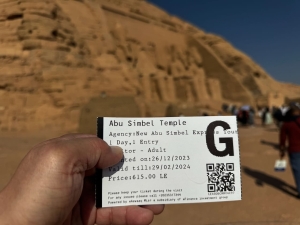

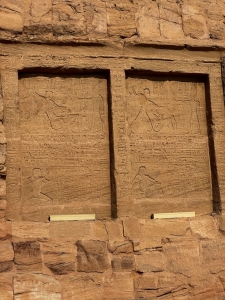
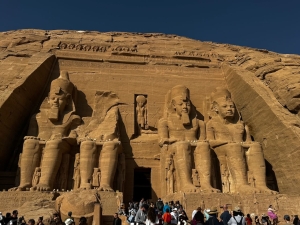
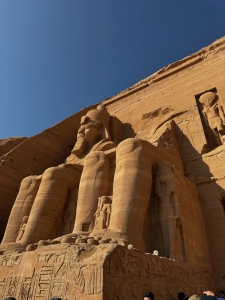

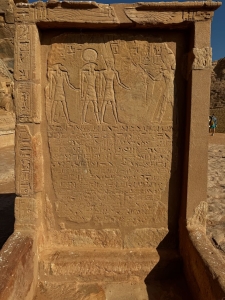
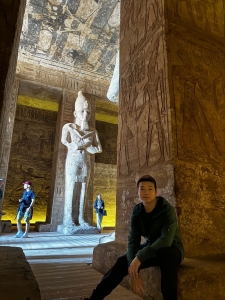
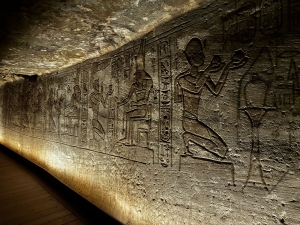
The first room that we came into when entering the temple was the hypostyle hall. Unlike those we have seen in the Step Pyramids or Karnak Temple, the hypostyle hall was just two rows of pillars supporting the temple’s roof. Also unique to the Great Temple of Rameses II, the pillars are not the usual columns with open or closed flower buds. Instead, we saw statues of Rameses II as the pillar of the hypostyle hall. These statues were in great shape with facial features, and even the linings on his kilt were still visible. It is in this hypostyle hall that we see how big an ego Rameses II has. The hall is filled with reliefs of his victories over his enemies, slaying his enemies, or ruling over his subjects. There is no relief showing him making offers to any gods here in the hypostyle hall.
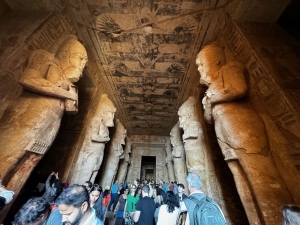
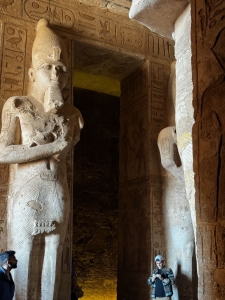
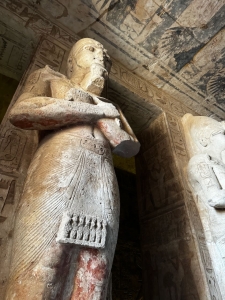


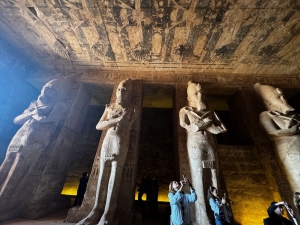
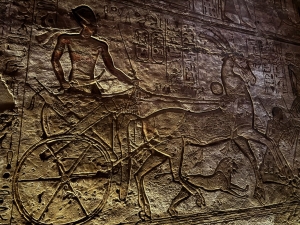
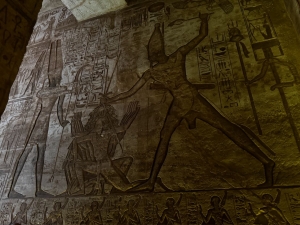
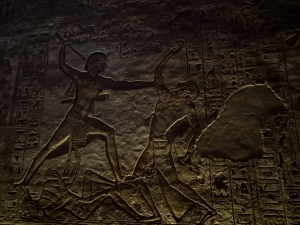
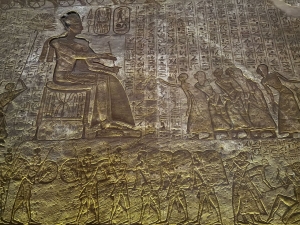

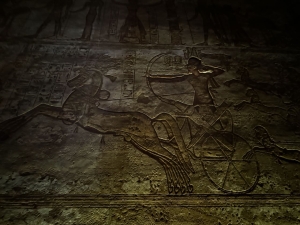
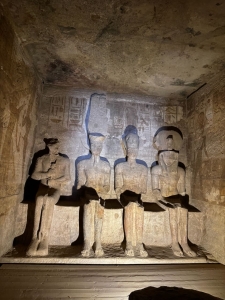
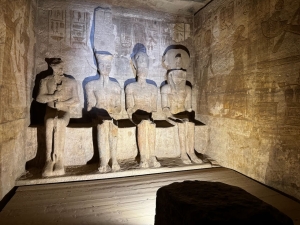
A small room is held by four pillars between the hypostyle hall and the sanctuary. This room is filled with detailed carvings of Rameses II standing next to the god Osiris, who seems to be blessing the king as though Osiris is legitimising his rule over Egypt. We headed into the temple sanctuary, where our guide had told us about the four statues sitting in the sanctuary. Rameses II saw himself as a deity and was seen sitting side-by-side with the other three gods to which this temple was dedicated. We saw the statues of Ptah, Amun-Ra, Rameses II as a god, and Re-Horakthy from left to right. Our guide told us that the temple was built to align with the sunlight and that on 22 Feb and 22 Oct every year, sunlight will enter the temple straight into the sanctuary and shine onto the statues of Amun-Ra, Rameses II, and Ra-Horakthy, leaving Ptah in the dark as he was the god of the underworld.
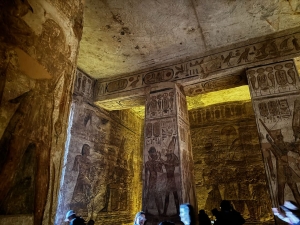


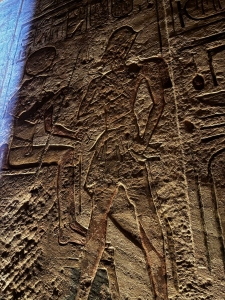
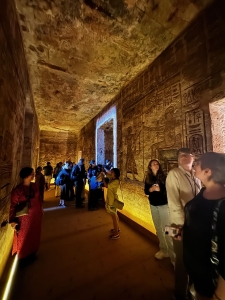

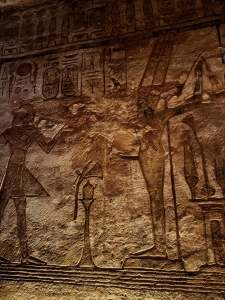
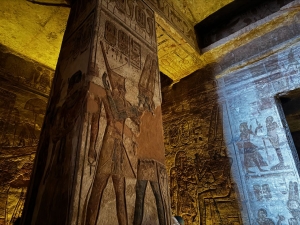
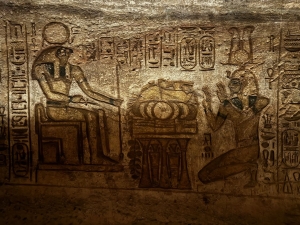
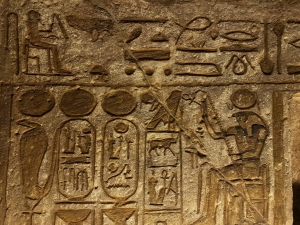
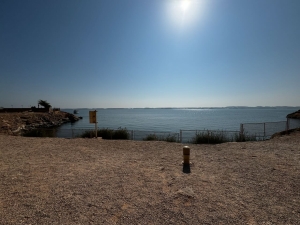
After taking pictures of the sanctuary, we visited the rooms on the sides of the hypostyle hall. These rooms were used as storerooms. The reliefs in these storerooms showed a humble side of Rameses II making offerings to the various Egyptian Gods. These rooms are the only parts of the temple where we saw Rameses II kneeling before these gods and respecting them as divine beings. The Great Temple of Rameses II was impressive on the exterior, but I found the space inside was modest compared to Karnak Temple, Hathor Temple and even Kom Ombo Temple. We tried to stay here as long as possible, taking pictures and looking for the reliefs our guide had told us before. However, the temple was full of visitors, which put us off from staying any longer. We headed out of the temple to take pictures of the temple from the exterior and of Lake Nasser. After all, the temple outside looks more impressive.


The Temple of Nefertari
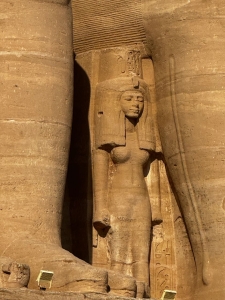
We headed to the smaller temple next to the Great Temple of Rameses II, which Rameses II built for his queen Nefertari. The temple’s facade is similar to his Great Temple in that the facade is adorned with six statues carved out from the walls. On each side of the entrance are two statues of Rameses II, with the statue of Nefertari in between. Rameses II was portrayed on these statues as being taller than Nefertari. Our guide mentioned that Rameses II had such a big ego that he even installed two statues of himself on the face of the temple he built for his queen. These six statues were in excellent condition, and we could see the detailed facial expressions and how the king and queen looked from these statues. The children they had together were the smaller statues by the legs of the Rameses II and Nefertari.
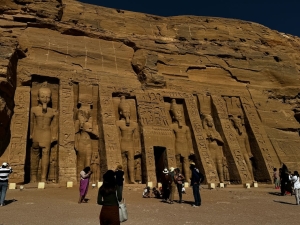
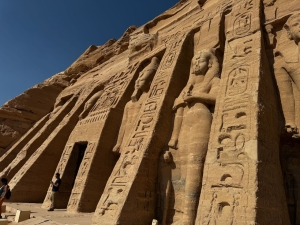
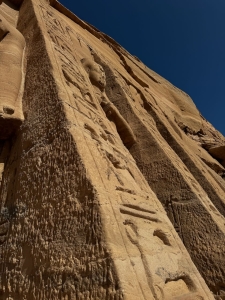
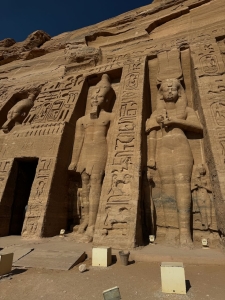
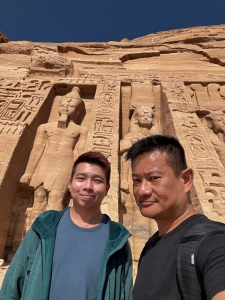
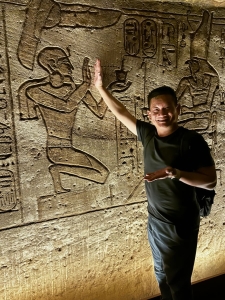
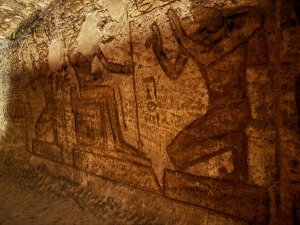
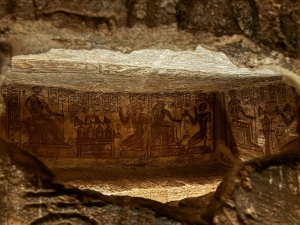
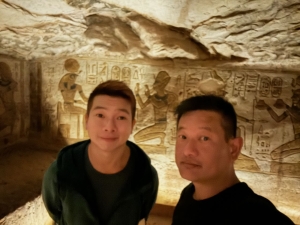
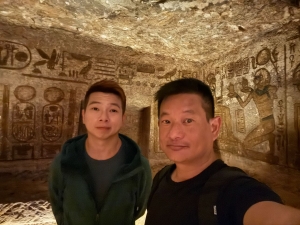
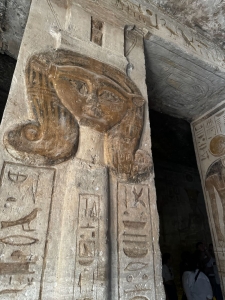
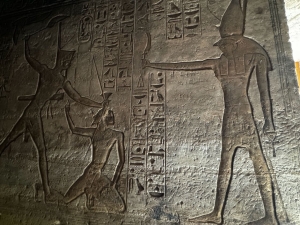
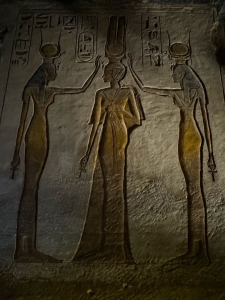
The Temple of Nefertari is much smaller than the Great Temple, consisting of a small six-pillared hypostyle hall and the sanctuary. This temple was dedicated to the Goddess Hathor, where we can see her face carved into the pillar, like those we saw in Dendera. There are some interesting murals engraved in the hypostyle hall of the wall. We saw one depicting Rameses II slaying his enemy, with Horus presenting him with a weapon to do so. There is an engraving on the wall depicting the cornation of Nefertari as a queen by Hathor and Isis. Other murals depicted either Rameses II making offerings to Horus or Nefertari making offerings to Hathor and Isis.
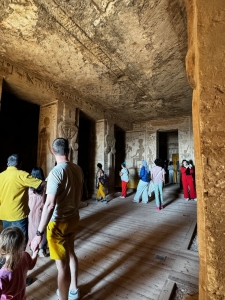
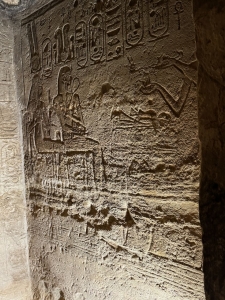


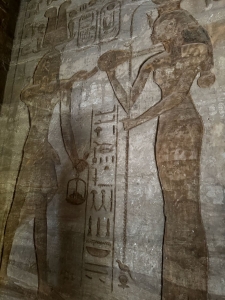
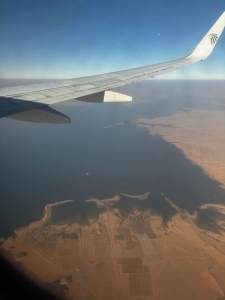
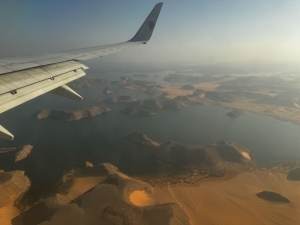
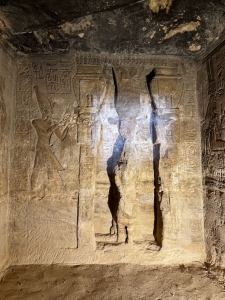
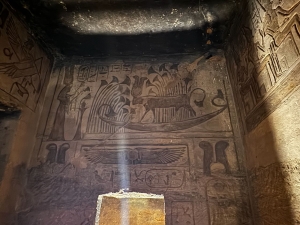
The sanctuary lies in the innermost part of the temple, flanked by two storerooms on each side. The sanctuary housed the sacred statue and an image that depicts the king making offerings to the statue. We even spotted an image of Nefertari receiving Hathor in her cow form on a boat. The size of the temple is so small that we only spent 6 mins to finish touring the temple. We met up with our group for our flight back to Aswan.
Cruising Back to Luxor
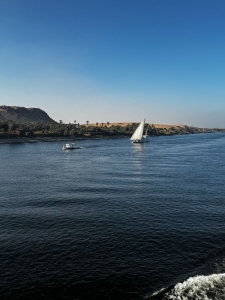
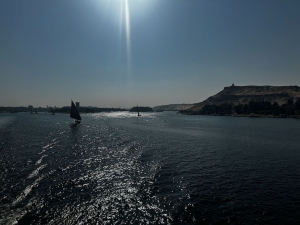
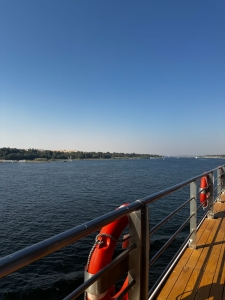
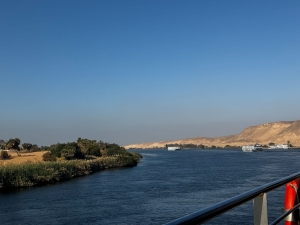
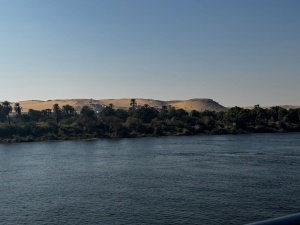
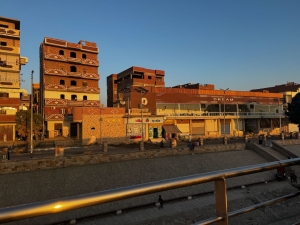
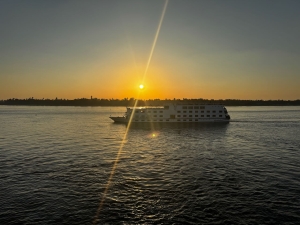
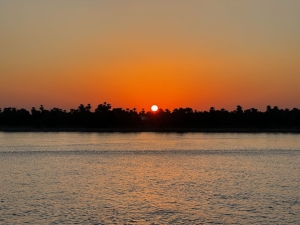
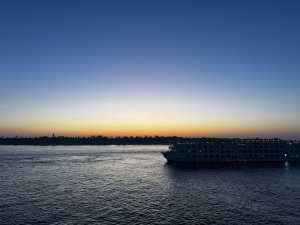
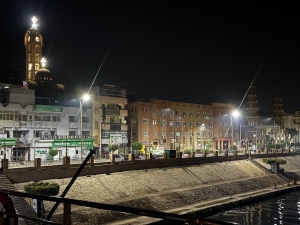
The rest of the day was planned to turn the riverboat around and sail back to Luxor with a short pitstop at Esna. As we woke up rather early today, we took a short nap after lunch and spent the rest of the day on the sundeck, watching the scenery of the Nile as we sailed back north. As there were limited things we could do onboard (the TV had limited entertainment), we went up to the sundeck to watch the sunset and moonrise in the evening. Our riverboat reached Esna at around midnight in good time for our early morning excursion to the Esna Temple the next day.






You give a good description of the visit to Abu Simbel temple. I remember mostly the heat and the size of the statues, the interior was more difficult to photograph for lack of light, so I appreciate your detailed description.