Versailles is highly recommended to anyone visiting Paris for the first time. As the Chateau was relatively large, we opted for a guided tour of Versailles so we would not be lost in the numerous artworks within the Chateau. We planned to visit Versailles in the morning and spent the afternoon checking out the Latin Quarters in the 5th arrondissement. While waiting for our dinner cruise along the Seine River, we wandered into the edge of La Marais in the 4th arrondissement. We ended our day with a bad experience on the dinner cruise.
Versailles – The Chateau Behind the Golden Gate
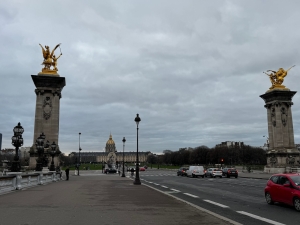
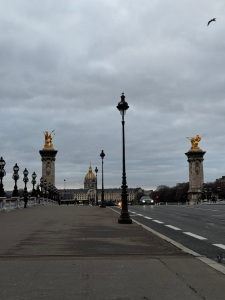
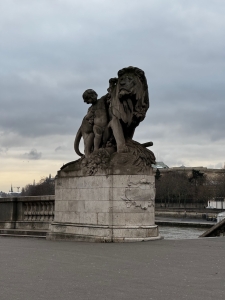
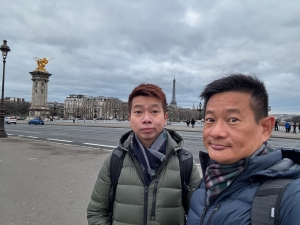
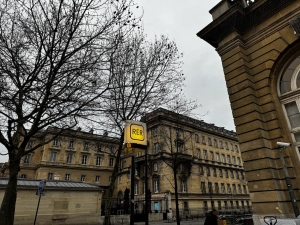
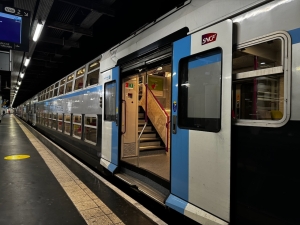
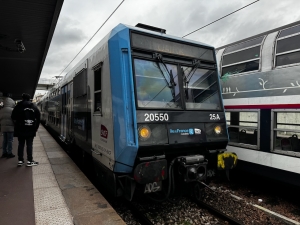
We had an early start as our meeting time with the tour group was 10.45 am in front of Versailles. The metro station where we would catch the RER to Versailles was about a 15-minute walk from our hotel. On the way, we walked past the Grand Palais and onto Pont Alexandre III. Pont Alexandre III is one of the many bridges across the Seine River. The bridge is adorned with golden statues, and we got a great view of the Eiffel Tower from it. As we were rushing to catch the 9.45 am train, we did not have the time to stay and admire the artwork installed on the bridge or the scenic view that the bridge offers. We arrived at the RER station and found that we just missed the train. The RER does not run as frequently as the metro, and we had to wait about 20 minutes for the next train. We managed to catch the 10.05 am train, which meant we had to rush when we reached Gare de Versailles Chateau station.




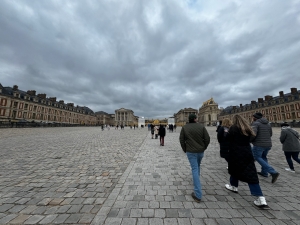
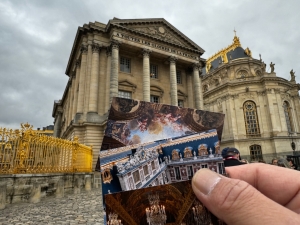
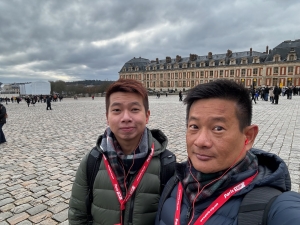
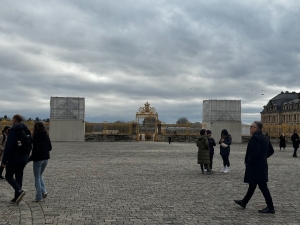
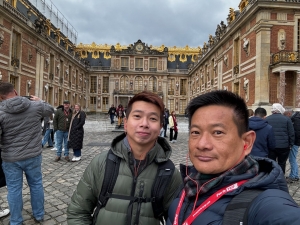
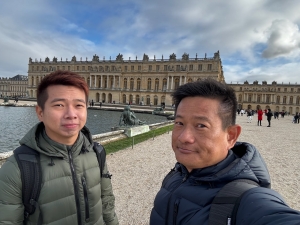
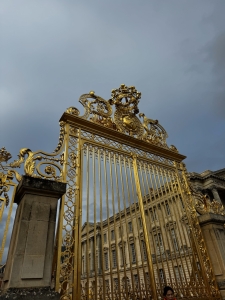
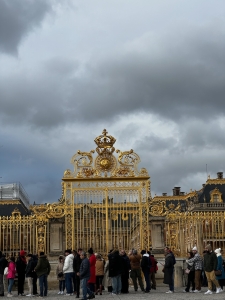
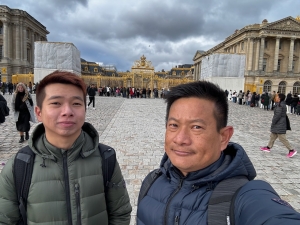
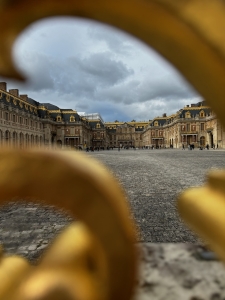
We made it just in time for the meeting. Versailles looked like a huge estate with many, many rooms sitting majestically behind a golden gate. The golden cap on the roof captivated my attention. A large empty square (now filled with tourists) sits at the front of the central building of the Chateau, where the rest of the rooms seem to branch out.

The Interior of Versailles – Touring the Apartments
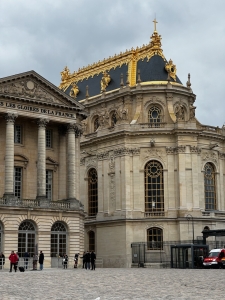
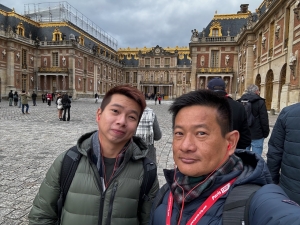
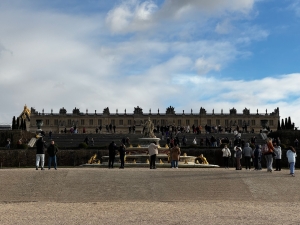
Our guide led us to the (empty) queue line, where we were given immediate access to the Chateau. On the grounds of Versailles, our guide brought our attention to the golden roof caps and explained these caps were made of gold plating, not solid gold. He then directed our attention to the large square in front of Versailles. According to our guide, this square is made of marble and is the original courtyard of the palace. Our guide then gave us time to take pictures of the Marble Courtyard. Our tour officially started with our guide taking us to the second level of the Chateau.
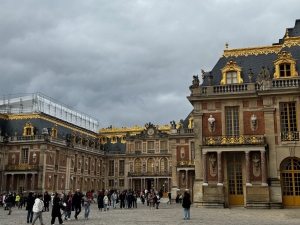
This part of the tour consists of us going through rooms and rooms in the central part of the main building of Versailles. We walked past the first room, the Hercules Salon, and were led to a room with an opening. This is the Royal Chapel. We were only allowed to view the chapel from the outside. Peeking from outside, we could see the intricate artwork on the chapel’s ceiling, which reminds me of the Sistine Chapel we visited in Vatican City. The gold colour in the painting contrasted with the white background, and the large amount of natural light let in through the windows near the ceiling gave it a clean and pure look. The gold on the painting, the organ, and the sculpture on the far end gave it a royal look. It is a shame that we were not able to enter the chapel.
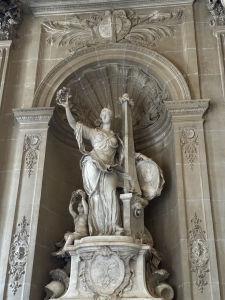

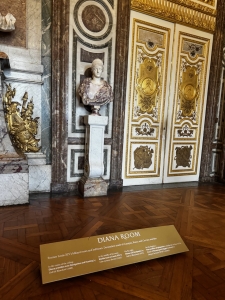
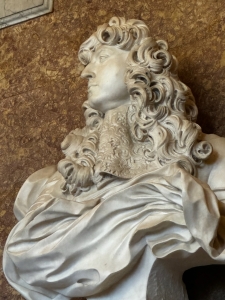
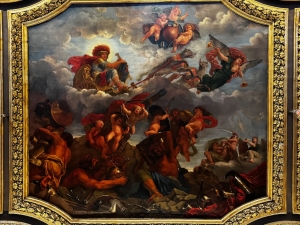
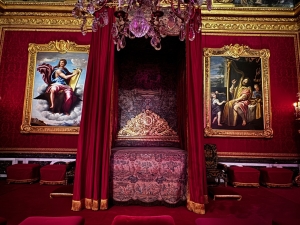
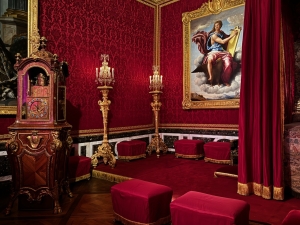
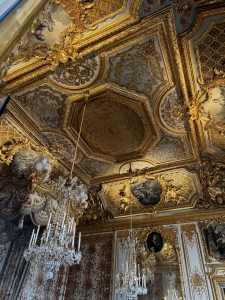
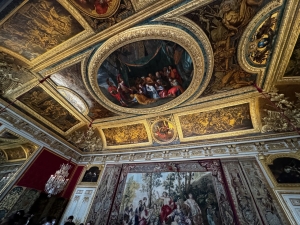
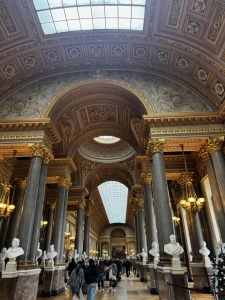
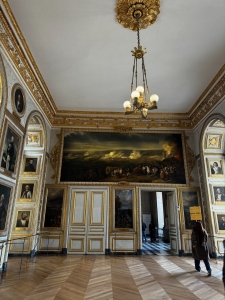
After the Royal Chapel, we would walk past several rooms, each with different colours painted on their walls and differentiated by the frescos on the ceiling. These apartments before the Hall of Mirrors were named after Greek gods, where the room that was named after a particular god had their image painted on the ceiling. Such as, in the Hercules Salon, we saw a scene of Hercules visiting his father, Zeus, painted on the ceiling of the salon. Most of these rooms were large empty spaces used either as a ballroom or a social space where Louis XIV used to entertain guests. These rooms had a common feature: their ceilings were adorned with gold-plated trimmings and crystal chandeliers, giving them a luxurious and opulent look. Some rooms had statues of Louis XIV, such as the Venus Salon, where we saw a life-size statue of Louis XIV dressed in his war tunic and his bust in the Diana Salon. Of these rooms we visited, we saw a bed in the velvet red Mercury Salon. The red velvet colour and the golden trimming on the ceiling gave this room a very cosy vibe. Our guide told us this was not the actual bedroom where Louis XIV slept. This room was a temporary bedroom used by his grandson before he travelled back to Spain. We passed two more rooms before reaching the Hall of Mirrors.
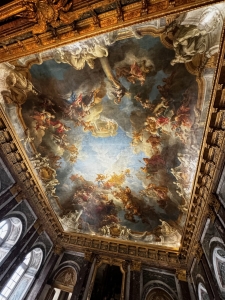
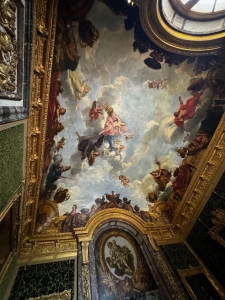
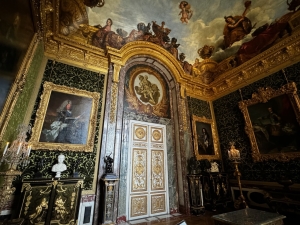

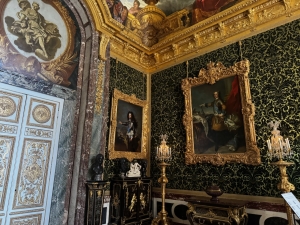
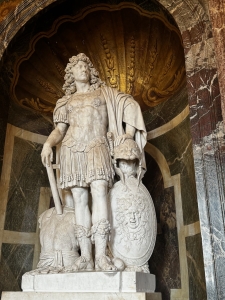

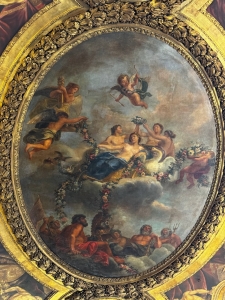
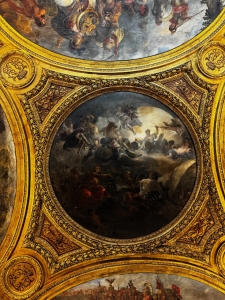
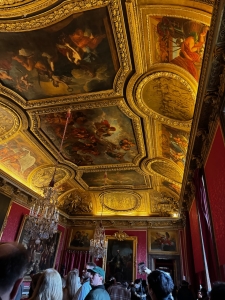

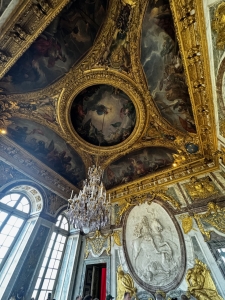
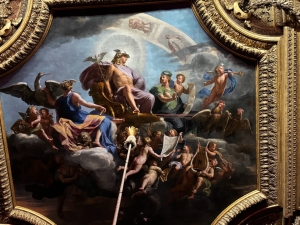
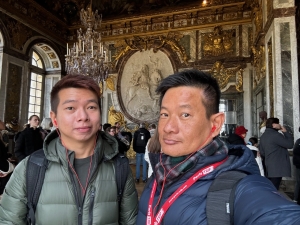
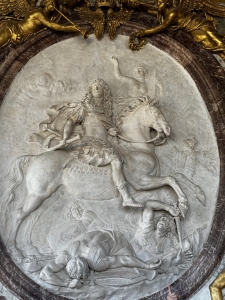

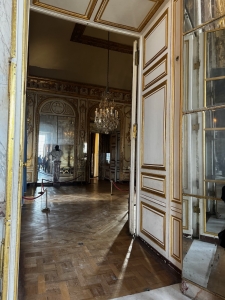
Many people who came to Versailles agreed that the Hall of Mirrors was the highlight of the Chateau. The Hall of Mirrors has mirrors decked out on the walls on the inner side of the hall. The other side of the hall is built with floor-to-ceiling window panels that look out into the gardens, giving it an indoor-outdoor look and allowing plentiful natural light in. Together with the mirrors, this made the Hall of Mirrors look very bright and airy. The Hall of Mirrors is also painted with bright-coloured frescos on the ceiling with numerous crystal chandeliers hanging from it, illuminating the hall at night. The gold trimming on the ceilings enhances the elegance of the hall and, at the same time, gives it a royalty vibe. Our guide brought our attention to an open doorway, sealed off to visitors in the middle of the Hall of Mirrors, where we could see another empty hallway. He explained beyond this hallway lies the King’s chambers. We couldn’t see any traces of the chamber from the hall. Our guide also told us the best photo spot would be the other end of the hall, where most visitors would rush off to see the other parts of the Chateau.

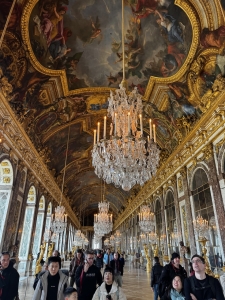
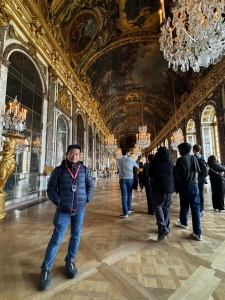

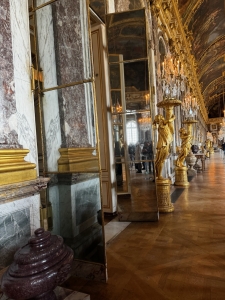
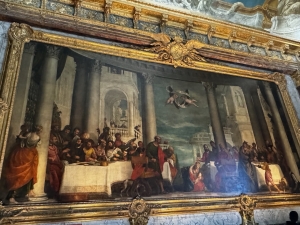
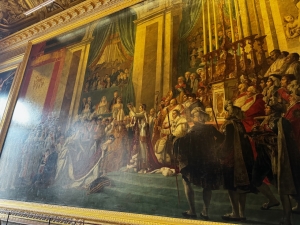
Passing the hall of mirrors, we visited four other rooms. Like most of the rooms we went through, these rooms were empty, mainly used by Louis XIV as a social space and decked with artworks and beautifully painted frescos on the ceiling, except for the second room after the Hall of Mirrors, where we saw a bed sitting by the wall in the centre of the room. This room was the Queen’s Chamber, with white walls filled with red and pink floral prints. The gold-plated ceilings and two chandeliers gave the chamber a royalty feel. After the four rooms, we were led down to the Chateau’s ground floor, where our guided tour of the Versailles ended. Our guide reminded us that our ticket includes access to the gardens. Having toured the apartments in the Versailles, I thought the palace was a little disappointing. The parts that are opened to the public are the rooms we have walked past, representing a small part of the palace. Most of the palace, including the King’s chambers or offices, were not open to the public. The paintings and frescos in the Versailles, though they were beautifully painted, were not as impressive as the ones we saw in the Vatican Museum and the Sistine Chapel in Vatican City.



Green Behind the Versailles
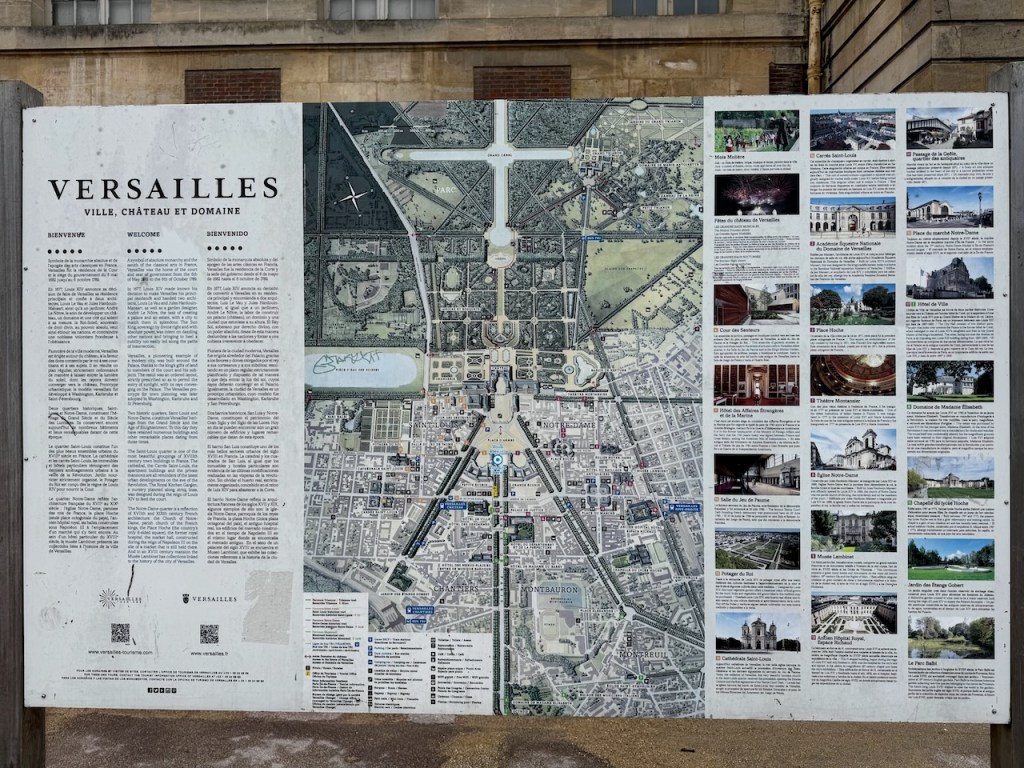
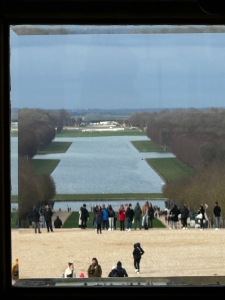
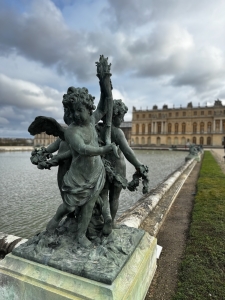
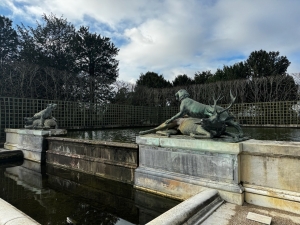
Besides the main building with the apartments in Versailles, the palace grounds also have a huge green landscape behind the main building. The greenery space, covering 800 hectares, comprises the Gardens, the Estate of Trianon, and the Park. Exiting the main building in Versailles, we came to the palace gardens. We were expecting someone to check out tickets for the Gardens of Versailles entrance, but we saw a large passageway under the main building leading to the open garden. This garden is the starting point for the greenery space behind Versailles. Covered with brown gravel paths, the Gardens of Versailles is split into two levels. The upper terrace has two large ponds, each adorned with numerous bronze statues, which can be seen from the Hall of Mirrors. We spotted some water features at the edge of the upper level, decorated with bronze statues of dogs, wolves, and deer. The water feature was not turned on during our visit. The lower part of the Gardens of Versailles stretches to the Grand Canal in the Park. Despite being the smallest area in the entire estate, this part of the gardens is still fairly large. It took us about 15 minutes to walk the entire garden length at the lower terrace. A large four-tiered fountain adorned with gold-plated statues welcomes visitors to the lower terrace of the Gardens. The fountain was also not turned on at the time of our visit. We took a stroll down towards the Grand Canal, and on the way, we saw “forests” of some sort on either side of the gardens. There seem to be some mazes and cafes situated in this green space, which was planted with trees in an orderly manner. At the end of the Gardens, we spotted another pond. I like how there are benches facing the pond and the Grand Canal at this spot for visitors to rest or relax and take in the grand view of this greenery space.
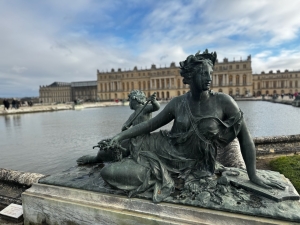
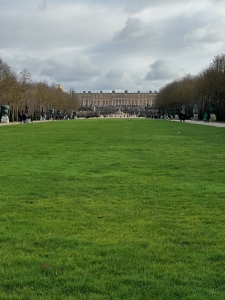
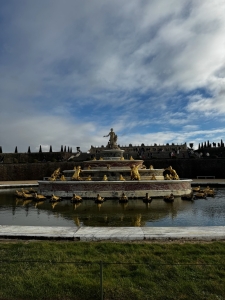
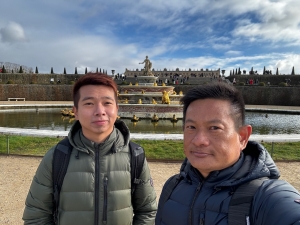
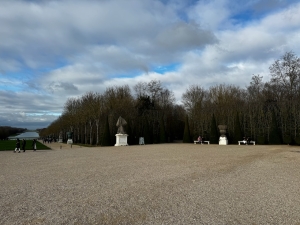
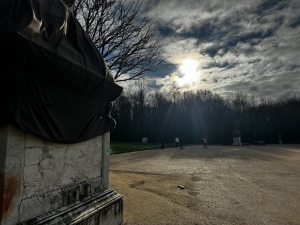
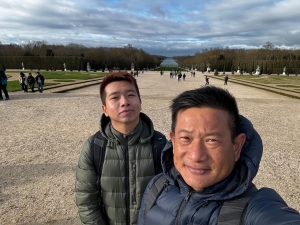

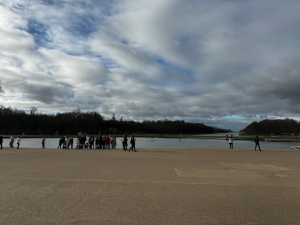
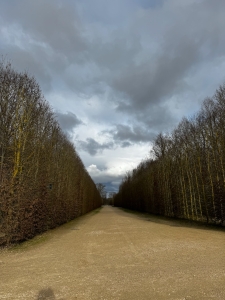

We did not visit the other two parts, the Park and the Estate of Trianon, in the greenery space behind Versailles. We figured it would probably take another half a day to visit them. The Park stretches as far as our eyes could see. The Grand Canal signifies the Park of Versailles as the Park’s centrepiece. The Grand Canal is this large pond with a cross design in the park’s centre. There seemed to be more greenery on either side of the Grand Canal, which would take us a long time to visit them. From where we were, there seemed to be fewer visitors to this part of the Versailles. We couldn’t see the Estate of Trianon from the border between the Gardens and the Park. According to the official Versailles website, the estate lies to the right of the Grand Canal. We were worried we might not make it in time for our dinner cruise and visit the Latin Quarters, so we left the Versailles after walking to the edge of the Gardens of Versailles.

The 5th Arrondissement – The Charming Latin Quarter
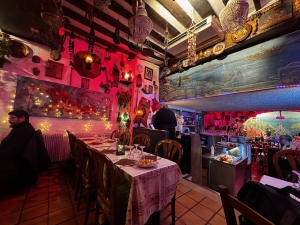
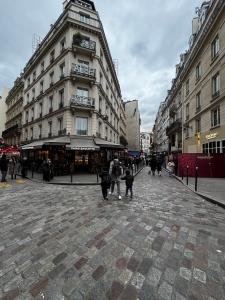
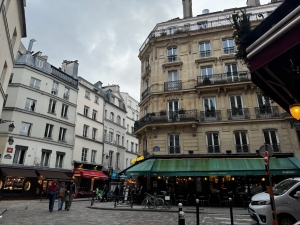
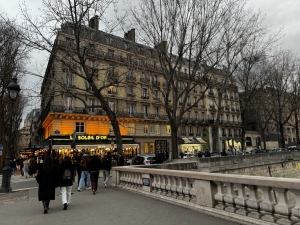
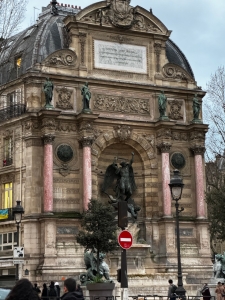
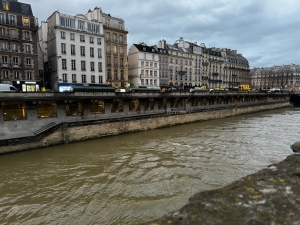
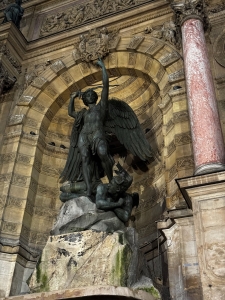
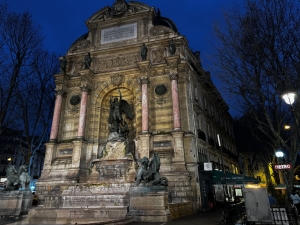
Getting to the Latin Quarter from Versailles was very easy. The RER C service runs straight from Versailles station to the nearest station in the Latin Quarter. As it was around lunchtime, the first thing in order was to hunt for lunch in the Latin quarter. We chanced upon a restaurant, which seemed to be run by three personable elderly French gentlemen. The decor of the restaurant has a nautical theme. The food was delicious, and the pricing was inexpensive. We had a great time having lunch at this restaurant. There do not seem to be a lot of tourist sites in the Latin Quarter. We mainly saw restaurants populating the small alleys in the 5th arrondissement, and the shopping options were thin. All we could do was walk around admiring the beautiful French architectural style buildings with their iconic six-storey characteristics, the bold roof structure and French balconies adorning almost all the window panels on these buildings. We saw the Fontaine Saint Michel, which has a statue of the archangel Micheal raising his sword. As there was still some daylight, we crossed the Seine River to visit the Notre Dame de Paris.
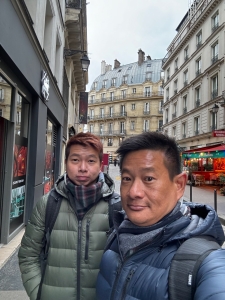
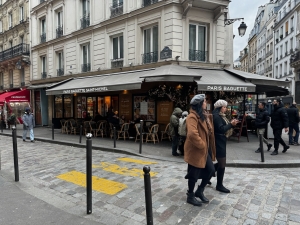
Into the 4th Arrondissement for Notre Dame
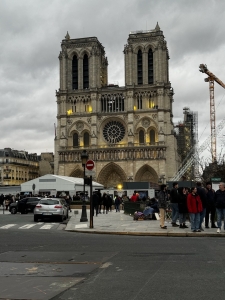
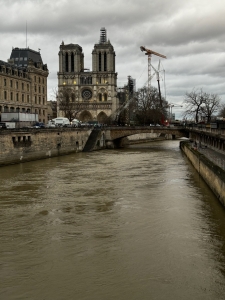
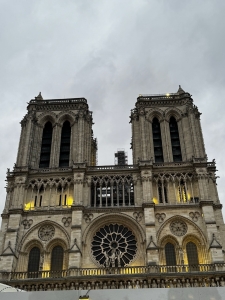
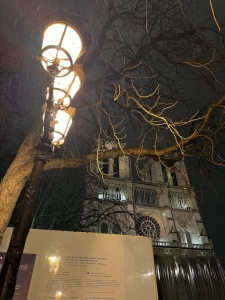
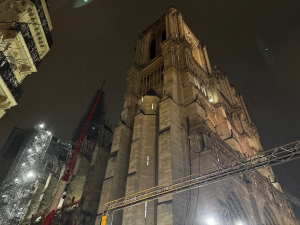
At the time of our planning for this trip, we already knew that the Cathedral of Notre-Dame de Paris would not be opened for visitors yet. The unfortunate event at the cathedral rendered it closed for years for restoration. Walking along the Seine River on the Islands in the 4th arrondissement towards the cathedral, we could see the scaffolding on the top level of the cathedral from afar, where repair work is still taking place. The Notre Dame was as impressive from afar as it is up close. At the front of the cathedral, we could see panels barricading the cathedral off to the public for work to be done on the cathedral. A makeshift flight of stairs is installed in front of the cathedral so visitors can sit around and admire the Gothic-style cathedral. The iconic twin-towered facade of the church was still stunting despite being “hurt”. The cathedral still stands majestically awaiting repairs to be completed to welcome visitors once again. There was nothing much more we could do here. After taking pictures of the cathedral, we returned to the 5th arrondissement via the Petit Pont – Cardinal Lustiger in front of the Notre Dame.


Transversing Between 4th & 5th Arrondissement
We had about 3 hours to kill before our dinner cruise, we explored the 5th arrondissement further. We walked one block over to Pont Saint-Michel on the 5th arrondissement side of the river through a street filled with restaurants. My friend and I were just strolling in the 5th arrondissement without any agenda of what to see here. We spotted an old structure, Thermes de Cluny – an ancient bath complex and archaeological site guarded by iron gates not far from the Pon Saint-Michel. The buildings along this main road are mainly filled with theatres, supermarkets and second-hand bookstores. This part of the Latine Quarter felt more like a neighbourhood area where the locals went around in their daily activities. We did not venture far into the rest of the Latin Quarter. Near the river, we went up close to the Fontaine Saint Michel. The fountain was not turned on at the time of our visit, and it seemed to be added to the end of a building that a restaurant and some residential premises mainly occupy. The two bronze gryphons flanked on both sides of the sculpture brought might to the archangel St Micheal.
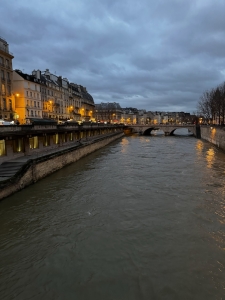
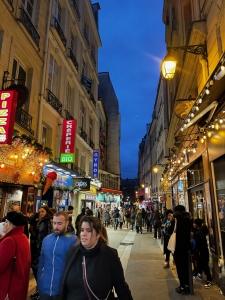

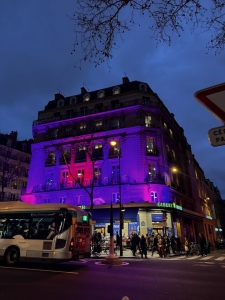
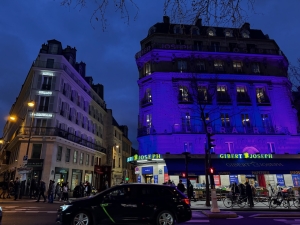
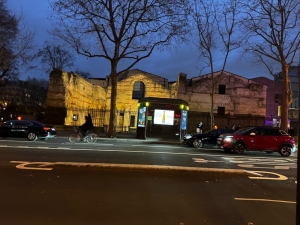
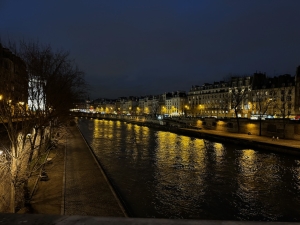
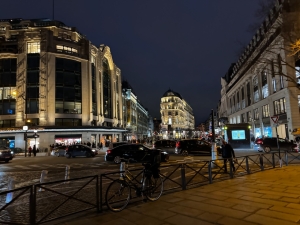
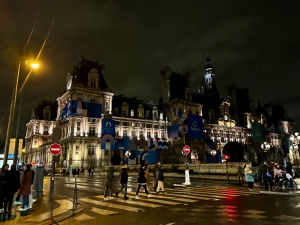
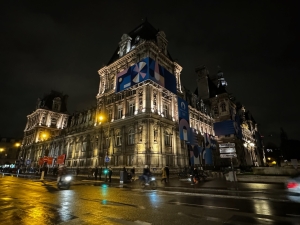
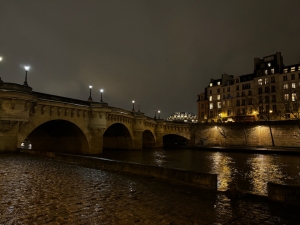
At this point, we still had 2 hours to spare. We headed to Pont Neuf and crossed the Seine into the edge of the 4th arrondissement. This part of the city is filled with budget-friendly boutiques and departmental stores, making it feel like a shopping district. Along the road, we spotted a single tower at the edge of the road. The Saint-Jacques was the only remaining part of a 16th-century church destroyed during the French Revolution. With only 30 minutes, we started returning to the dinner cruise pier along the Seine River. We opted to walk along the street outside Hôtel de Ville towards the Seine, which led us back to Notre-Dame de Paris. Compared to a few hours ago, the crowd at the cathedral was thinner. We took the opportunity to take more pictures with Notre Dame de Paris before crossing the Petit Pont-Cardinal Lustiger back to the 5th arrondissement. Making our way to the pier for our dinner cruise, we walked along the banks of the river. This part of the 5th arrondissement felt so peaceful due to the absence of people, making strolling along the river banks pleasant.



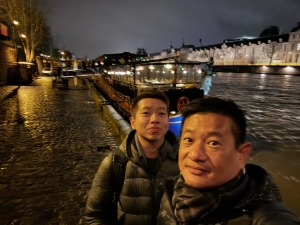
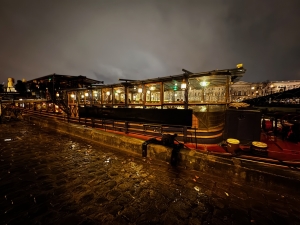
The Unpleasant Dinner Cruise
When planning this trip, I came across numerous recommendations that a dinner cruise along the Seine was a must when visiting Paris. There are several operators providing dinner cruises on the Seine River. During my research, La Calife, the river dining cruise, came highly recommended for its food and service onboard. Despite being a little more expensive than other operators, we opted for La Calife as we wanted a good time during our trip. We boarded the riverboat and were seated in a very bad location. This was a bad start for our cruise, and things went downhill. We were served by an Asian waiter who was rude and obnoxious. We witnessed him addressing our caucasian counterparts as Sir/Mdm, but he never used the same term to address us and simply addressed us as “you”. The same staff did not bother placing our food on our table but passed the plate to us. This was a different treatment from our Caucasian counterparts, where he would squeeze through the tight spots and make an effort to lay the food on their tables. Our experience was destroyed by the waiter even before the boat slipped off. The food was good on board, but the service was terrible. Every single minute of interaction with the server was torture.

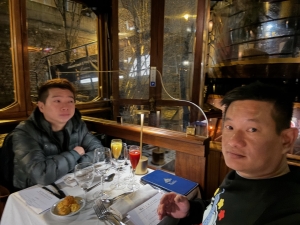
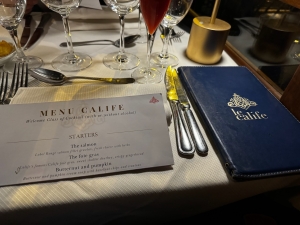
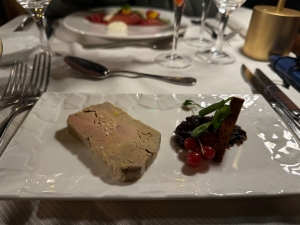
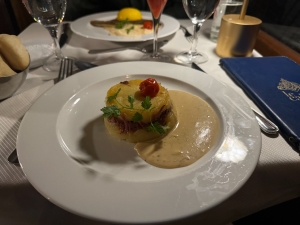

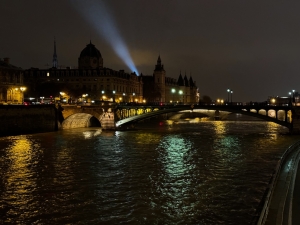
Due to the spot we were sitting in, we did not get to enjoy the view along the Seine River. The cruise sailed down the Seine River from near Pont du Arts in the 5th arrondissement to the 15th arrondissement, passing the Eiffel Tower in the 8th arrondissement. We merely saw some buildings along the river and passed under some bridges. The highlight would have been the light show at the Eiffel Tower, which we could only see when standing on the outdoor part of the boat. The boat made a U-turn at the 15th arrondissement, near an island with the Statue of Liberty. We passed by the Eiffel Tower in time to see it glitter. We really did not enjoy the cruise and can’t wait for it to end soon. The moment we hit the docks, we disembarked without looking back or thanking anyone. After all, why bother to thank them for the mistreatment? For the price we paid for a dinner cruise on La Calife, it was definitely not worth the buck!
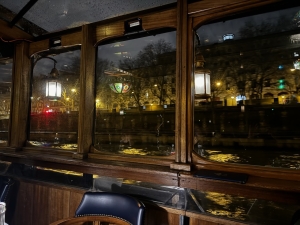


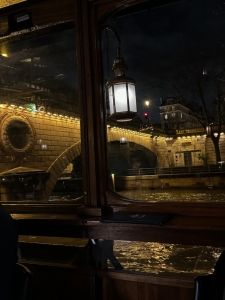
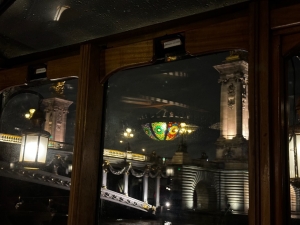
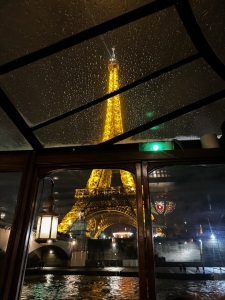
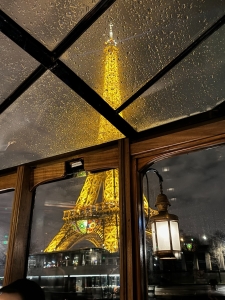
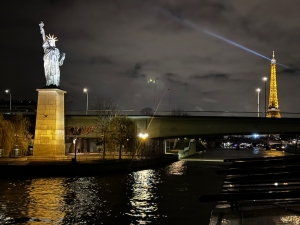


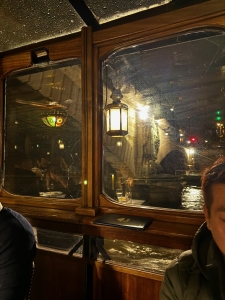

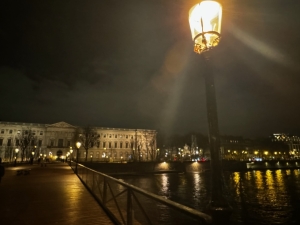
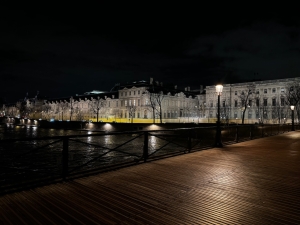
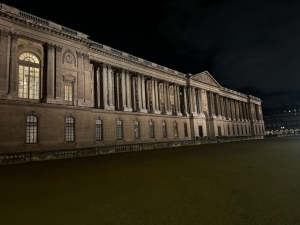
Our night was spoilt by the cruise. Having no mood for any more sightseeing, we crossed the Pont du Arts towards the Louvre for the metro station. The Pont Du Arts is a pedestrian bridge that is laid with wooden flooring. I would have to say that at this hour, the Pont du Arts feels very tranquil, with scenic views of the Louvre by the Seine River. We only stayed here momentarily to take some pictures and continued our way to catch the metro back to our hotel.


Versailles is so big that it’s hard to see everything to fully appreciate it. A visit that is too long would be boring too. The best thing is to come back several times to see different parts. But even without seeing everything, it is possible to imagine that this was a moment of the apogee of French power and its expression in the accumulation of works of art. Your description of the visit is very accurate and pertinent.
I wanted to visit the Chateaus in Loire and Mont Saint Michel the next time I visit France. Looking forward to plan a trip for France (instead of only Paris)
Mont Saint-Michel and the Loire Valley can technically be visited as part of a daytrip from Paris, but it’s a shame as it leaves little time on site and the tiredness of the journey makes it harder to appreciate the visit. The best thing is at least to arrive the evening before, which is what I do.