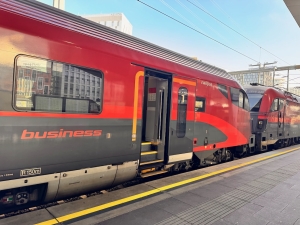
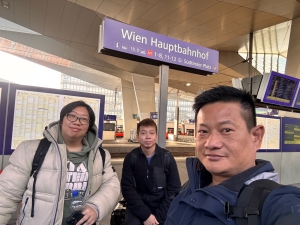
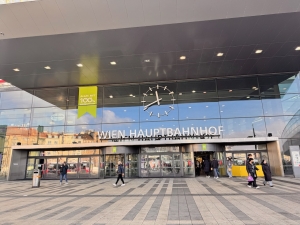
We booked the 8 am train from Graz to Vienna today so that we would have the afternoon to visit the sites in Vienna. Despite the walk from the hotel to Graz Hauptbahnhof being a short 15-minute walk, dragging our luggage through the streets of Graz was not a pleasant experience due to the occasional presence of gravel on the street (plus we were a little lazy). We opted to take the bus to the train station instead, which was the main reason for getting the 24-hour transport ticket yesterday. The bus ride from our hotel to the train station took us about 5 mins (vs the 15 mins on foot). On reaching Graz Hauptbahnhof, we made our way to the OBB lounge to have some light breakfast before heading to our platform for our 3-hour train ride to Vienna, the capital of Austria. It was nearly noon when we arrived at Wien Hauptbahnhof, and we transferred to the local tram to our hotel. Fortunately, the hotel allowed us early check-in, and we could start exploring Vienna sights after settling down.

Parliament Austria: A Guided Tour of the House of Power
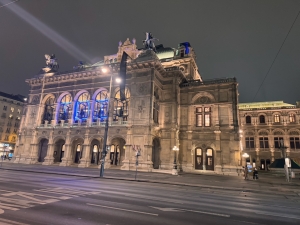
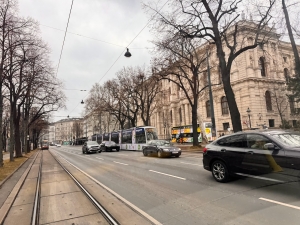
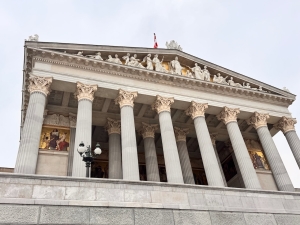
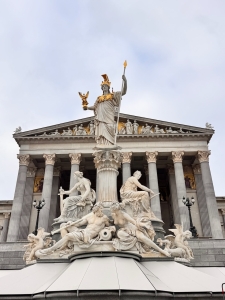
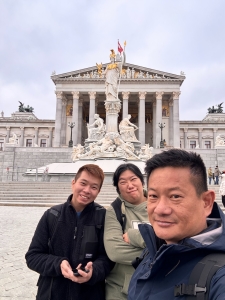
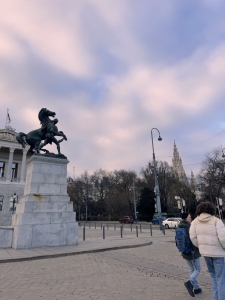
Parliament Austria is one of Vienna’s landmarks in the Innere Stadt, together with other landmarks such as the Austria State Opera and Hofburg Palace. Parliament Austria conducts several complimentary 55 minutes in English and German daily (click here for the various tours in Parliament Austria). Going on the guided tour would be a unique experience and give us a good understanding of the history and political scene in the country. Getting to Parliament Austria was easy, as the building sits on the Ringstraße in the first district, and most trams would stop by Parliament Austria. The tram stop we alighted was directly opposite the Greek-inspired Parliament Austria. A statue of Athena, an appropriate symbol for a place where laws are made and important decisions are taken, stood guard in front of Parliament Austria. The golden parts on her crown and part of her dress stood out from the white marble she was carved from, giving her an authoritative yet elegant look. After a few pictures of the beautiful building, we headed inside the building for our guided tour.
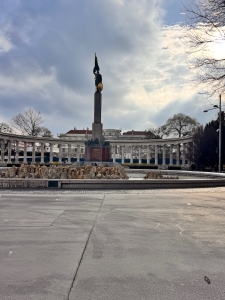
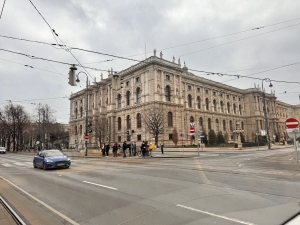
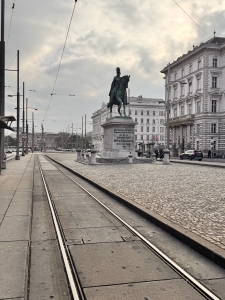
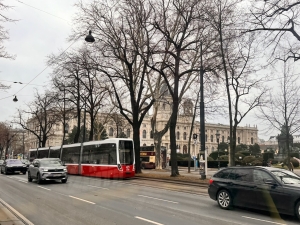
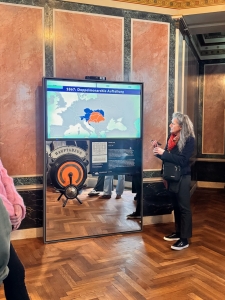
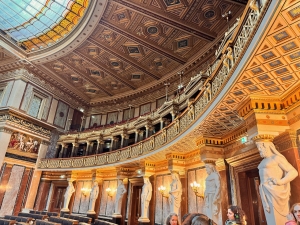
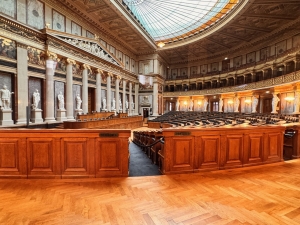
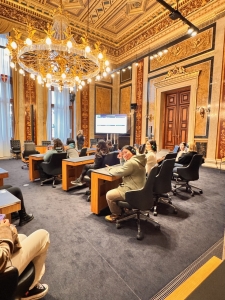
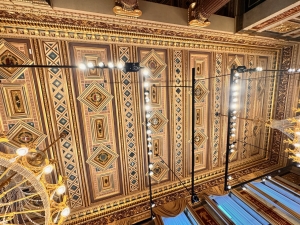
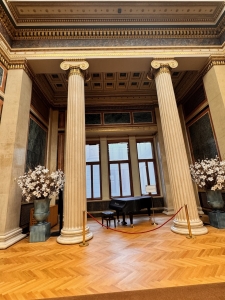
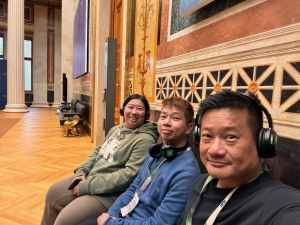
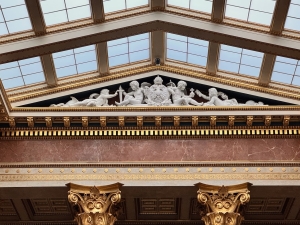
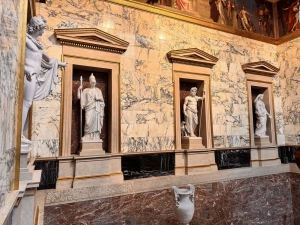
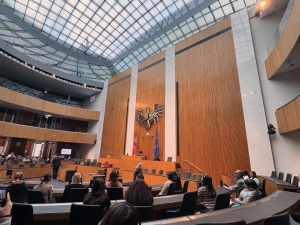
The Parliament Austria tour started with an introduction to the history of the Austrian Parliament on the first floor, where the Federal Assembly Hall is. We were told of how the political system in Austria transformed from monarchy to democracy and the Parliament’s representation of the different Austrian states. We did not pay too much attention to the narration as we were captivated by the Federal Assembly Hall behind the enclosed door. After the narration, we were brought to the hall we looked into a while ago. The Federal Assembly Hall hosts joint sessions of the two houses and presidential inaugurations. The semi-circular hall has a row of Roman columns and statues housed under a Greek-inspired roof as the backdrop of the main table. There are frescos painted on a gold background under the triangular roof-like structure. A large glass adorned the hall’s ceiling, allowing natural lights in. At the back of the hall was a row of alternating male and female statues seemingly holding up the second level of the hall. After being introduced to the Assembly Hall, we were brought to another room down the corridor, the Federal Council Chamber, which is used as the Federal Council meeting room. After we took our seats in the room (where Austrian politicians sit during meetings), our guide explained the purpose of this room and the composition of the parties within the Austrian Parliament. This chamber has a marble interior with two large Romanesque chandeliers hanging from the ceiling. The coat of arms of the nine Austrian states was painted across the ceiling.
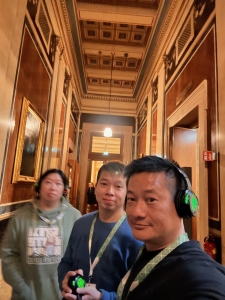
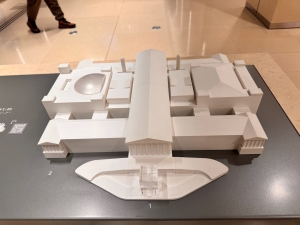
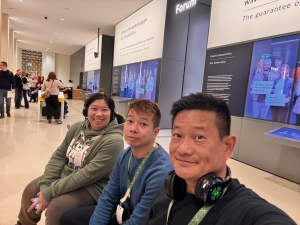
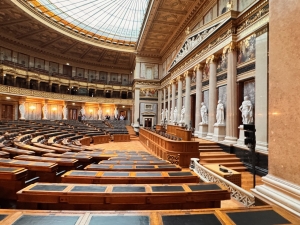
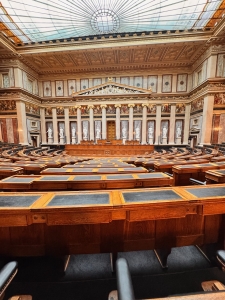
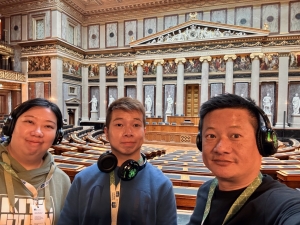
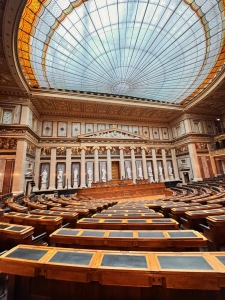

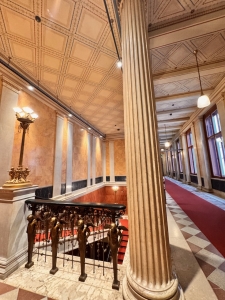

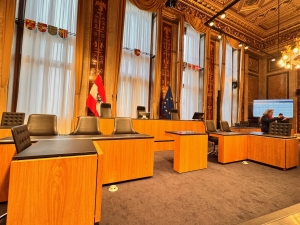
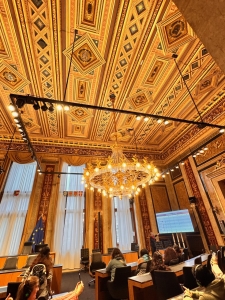
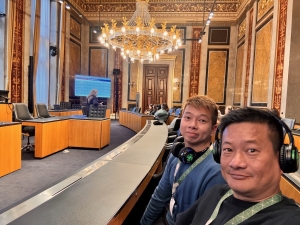
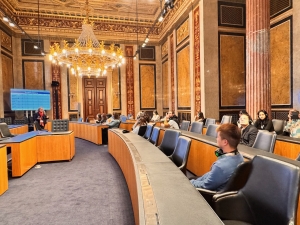
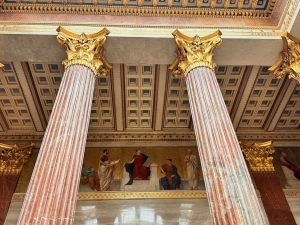
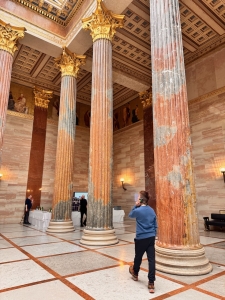
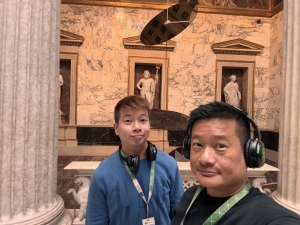
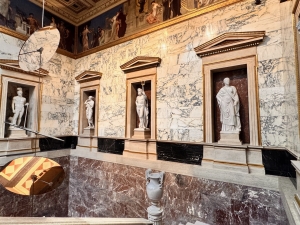
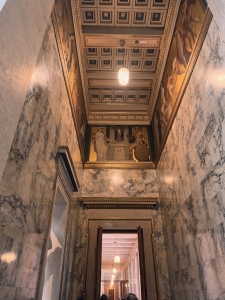
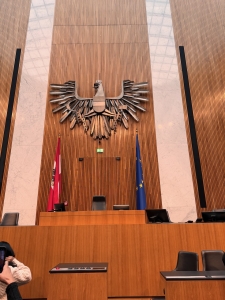
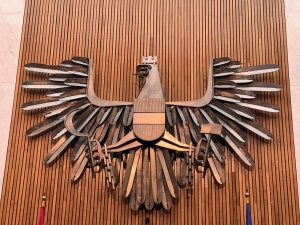
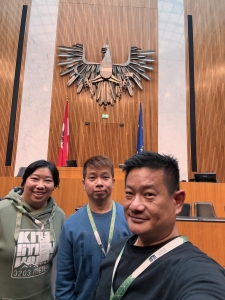
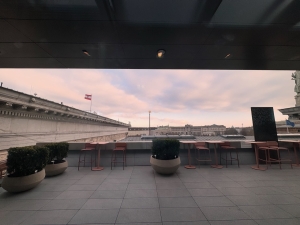
Our next destination on the Parliament Austria tour was the Colonnaded Hall through an antechamber, the Upper Vestibule. The Colonnaded Hall is a large hall with 24 marble pillars, topped with a glass roof, and is used as a venue for receptions. Through the Colonnaded Hall, we arrived at the Atrium, which connects to the main entrance to the Colonnaded Hall. There are two staircases on each side of the Atrium that link to the lower floors of the building. The left staircase (from the main door) is installed with statues of Zeus and four other Greek gods, while the right staircase has the statue of Posiden and four other Greek gods. From the opulent marbled tiles to these statues, the Atrium looked like an art museum. Through the Atrium and one corridor later, we arrived at the tour’s final stop – the National Council Chamber. This three-level chamber holds meetings of the National Council, and members of the public can sit in for these meetings. A large metallic Coat of Arms of Austria is hanging by the wall in front of the chamber. At the end of the tour, our guide encouraged us to take pictures at the speaker’s table in the centre of the room. Before the tour officially ended, our guide invited us to explore the parliament building. As we were a little hungry, we headed to the cafe on the top floor of the building to look for lunch. However, the cafe here only serves pastries and not proper meals, so we headed out of the building to look for lunch. The tour was interesting and unique, and definitely worth a visit.

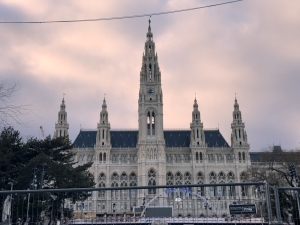
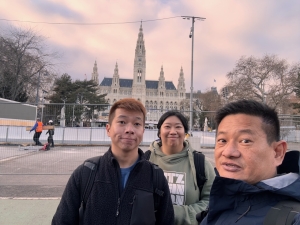
After the tour, we had the option of visiting St Charle’s church and then Naschmarkt. However, based on what we were told in Innsbruck, shops in Austria usually close on Sundays and close early on Saturdays. As we did not want to miss out on the shopping in Vienna, we swapped things around and went shopping in Graben near Stephansplatz. From Parliament, we took a bus to Graben. As we walked towards the bus stop, we walked by the Vienna City Hall, next to the Parliament Austria. The neo-gothic building houses the office of the Mayor of Vienna and the city council’s chambers. The City Hall also conducts a complimentary tour of the building on weekdays, and the tickets are distributed at 10 am on site (we cannot book through their webpage). According to my correspondence with the City Hall, I was told that all tickets are usually distributed by 10.30 am. We only arrived in Vienna at 11 pm, so we missed the chance to go for the tour. There is a square in front of the City Hall, where Christmas markets are usually held. However, the Rathuasplatz was out of bounds during our visit. We can only take pictures outside the fenced-up area with the City Hall in the distance.
Shopping in Stephansplatz
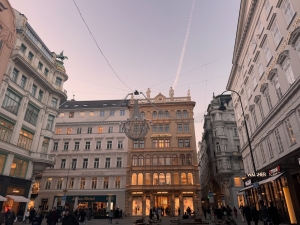
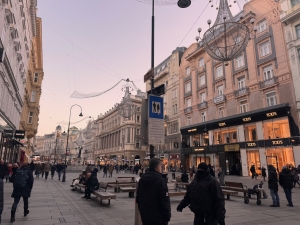
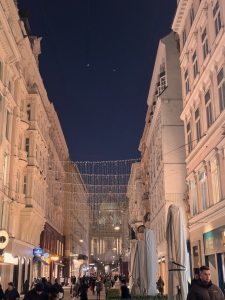
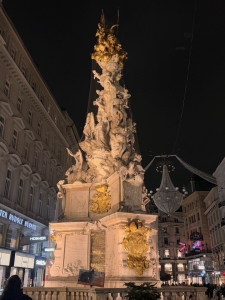
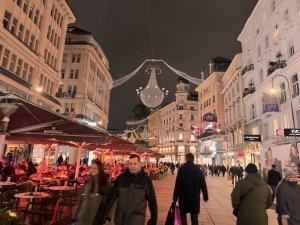
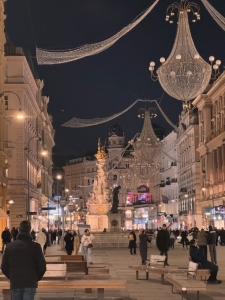
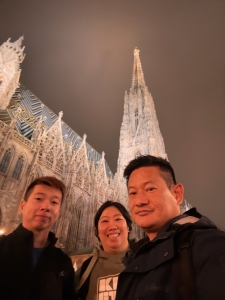
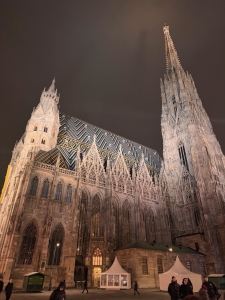
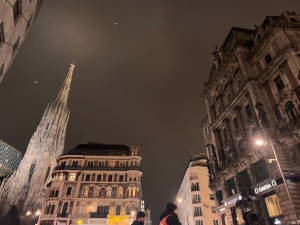
We spent the rest of the day shopping in Graben. Other than luxury brands, most of the international brands would set up shop in Graben. There are small alleys that branched out from Graben that are worth exploring. After doing some shopping, we headed to the main square of St Stephan’s Cathedral to take a look at the cathedral at night. She was sitting in the middle of the square, with lights casting on her, likened to a superstar standing on the stage. St Stephan’s Cathedral looked grand from the outside. The shops in the buildings next to the cathedral are mainly restaurants and souvenir shops. We returned to the hotel (via the subway U-bahn) to leave our stuff and headed nearby our hotel for dinner.