I initially planned two attractions for today: a visit to Schönbrunn Palace and a guided tour of the Austrian State Opera. As we had some time after visiting the two sites, we also went to St. Charles’ Church, which is not too far from the State Opera and ended our day with a ride on the Vienna Giant Ferris Wheel.
Schönbrunn Palace and Gardens: The Habsburg’s Summer Residence
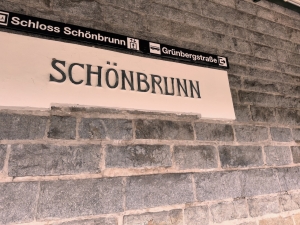
While Paris has Versailles, Vienna has Schönbrunn Palace, the summer residence of the Habsburg family and the largest of Vienna’s three palaces. The palace contains more than 1400 rooms and a large garden, but only 40 rooms are open to visitors. Schönbrunn Palace is very well connected to the local transit system, and there is a U-bahn Station (Schönbrunn Station) just across the road from the palace. The Grant Tour of Schönbrunn Palace’s ticket price is €32 (click here for ticketing), which includes an audio guide device for visitors to use for self-guided tour of the palace.


The Schönbrunn Palace
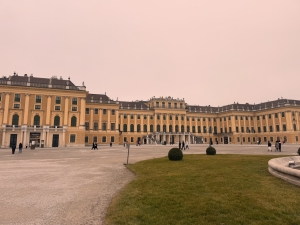
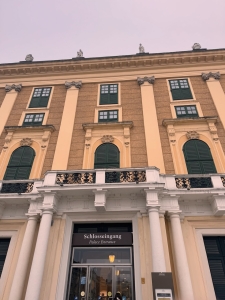
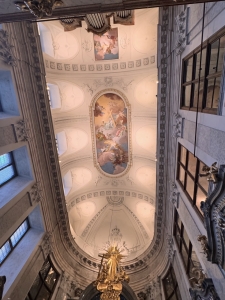
Passing through the palace’s main gates, we were immediately greeted by a large open space. The palace courtyard gave us a great view of the grandeur and the size of Schönbrunn Palace. Those who did not pre-purchase their tickets can be bought on the spot from a building to the left of the main gate. The entrance to the state apartments in Schönbrunn Palace is on the left of the main palace building. After the mandatory depositing of our bags at the cloak counter, we spotted a small chapel before the turnstiles to the state apartments. This is the Palace Chapel, which has marble interiors and golden statues that make it look grand and fitting for royalty. The chapel looked bright and airy, thanks to the high ceiling and windows fitted here, which let in natural light. The audio guide that came with the tickets to Schönbrunn Palace is very easy to use and can be collected at the counter beside the turnstile. The self-guided audio Grand Tour of the Palace covers all 40 staterooms, starting from the East Wing.




East Wing: Apartments of Emperor Franz Joseph and Empress Sisi
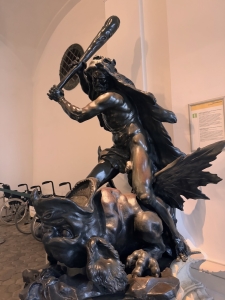
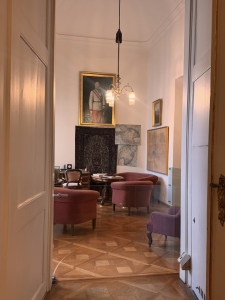
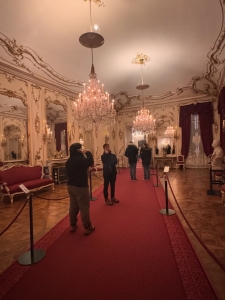
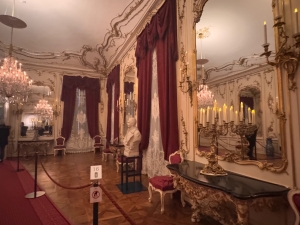
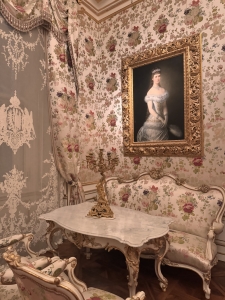
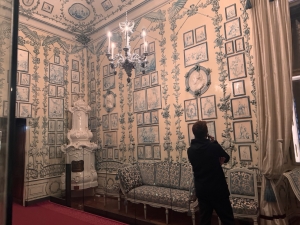
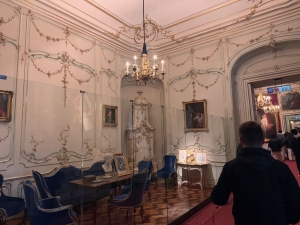
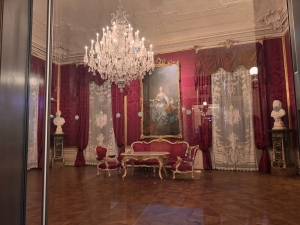
The East Wing mainly contains the apartments and office space of Emperor Franz Joseph and Empress Sisi, with the first few rooms used as waiting and audience chambers. The Audience Chambers are decked in brown marble, complementing the red velvet chairs. Here, we saw a table that Emperor Franz Joseph used when reading the report submitted by officials. The interesting part about this wing is the contrast between the Emperor and the Empress in the bedroom. Emperor Franz Joseph was a practical ruler and had a modestly decorated bedroom. There were no opulent engravings, golden plastered walls, or decorative furniture. The Emperor merely had a bed and a couch set in his bedroom, as well as portraits of his wife and his family. There was a painting in the Emperor’s bedroom depicting his demise on the bed on display here. In contrast, Empress Sis has three rooms: a dressing room, a study and her private chambers. These rooms were decorated with bright-coloured walls and gold-trimmed plasters on the walls. A statue on display in her dressing room shows guests the length of her hair.


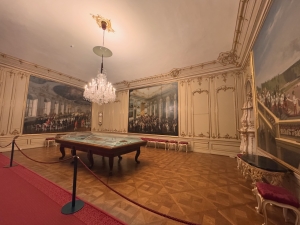


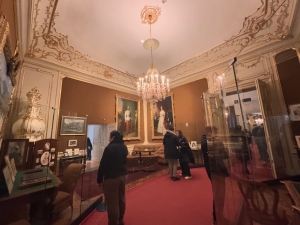
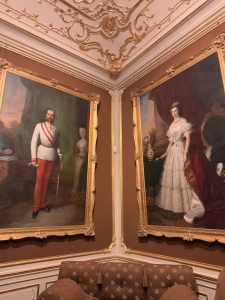
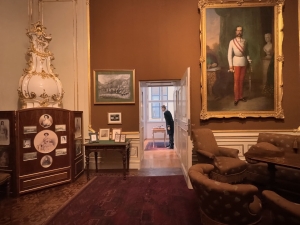


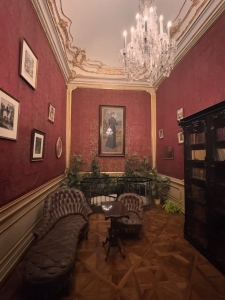
The other significant room in this wing was the Imperial couple’s bedroom, which the Emperor and Empress shared during the initial years of their marriage. The seating and wall panels are covered in a deep blue silk damask with white floral garlands, making the bedroom stand out. The Hall of Mirrors was perhaps the most decorated room in this wing. This Hall of Mirrors was where the Emperor granted Public Audiences, where any subject of the empire could seek an audience with the Emperor. I think this hall got its name due to the numerous large mirrors hanging on the walls of this hall.



North Parade Court Wing: The Place where the Royals Entertain
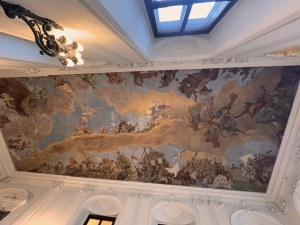
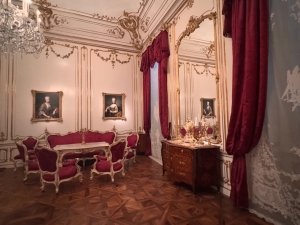
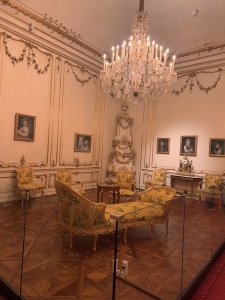
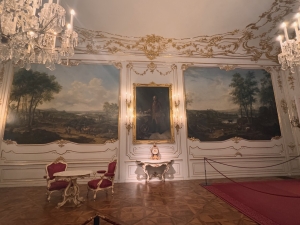
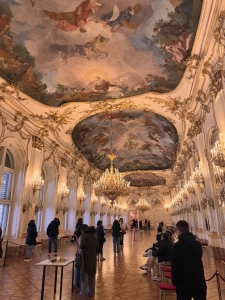
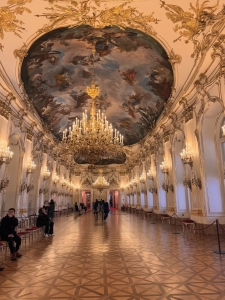
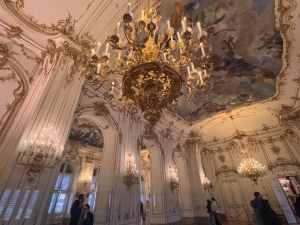
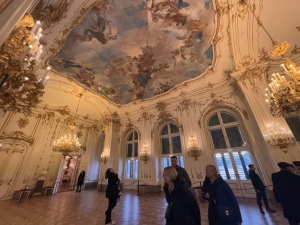
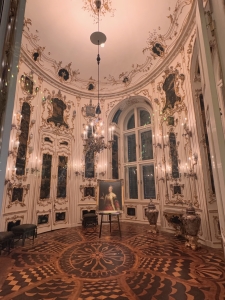
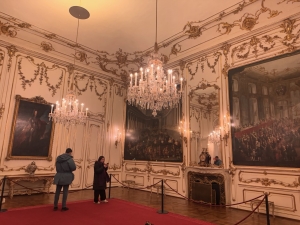
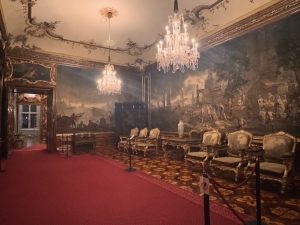
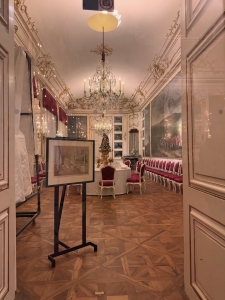
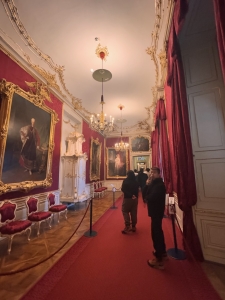
I thought the Great Gallery would be the most impressive hall in the entire Schönbrunn Palace. This large hall, mainly used as the palace’s ceremonial hall, is decked with gold trimmings on the walls and the ceiling and adorned with three large frescos on the ceiling. The golden chandeliers hanging from the ceiling reinforce the baroque-style decoration in this hall and contribute to the luxurious vibe. This is the most beautiful hall in the entire palace, and we could stay here longer to admire the detailed massive frescos painted on the ceilings. Though not as grand as the Great Gallery, the Small Gallery felt like an extension of the Great Gallery. Here, we could look out into the Schönbrunn Gardens through one of the windows.





West Wing: Chambers of Empress Maria Theresia
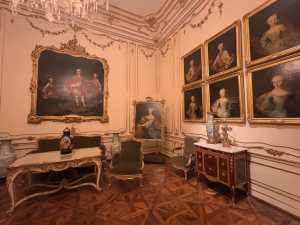
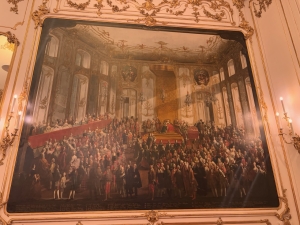
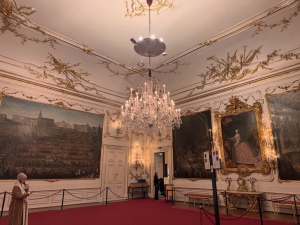
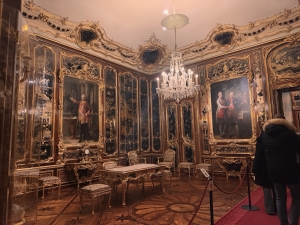
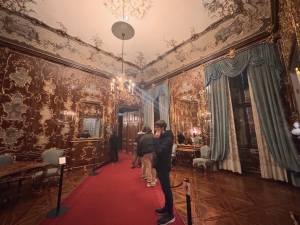
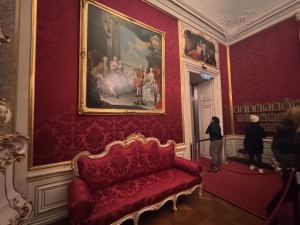
The West Wing was the apartments used by Empress Maria Theresia, the great-great-grandmother of Emperor Franz Joseph. The rooms in this wing were equally opulent, mostly painted in white with gold trimmings on the walls. Most rooms here had huge paintings depicting Empress Maria Theresia and her husband on the walls. Through some of these rooms, we can see the love of Chinese-influenced art by the Empress, as seen in the Vieux Laque Room, a reception room used by Emperor Franz I Stephan. The other significant room in this wing was the Rich Room, Empress Maria Theresia’s bedroom. Covered in bright red walls, the centrepiece of this room was the restored bed of the Empress. The lace artwork on the bedframe was intricate and showed the effort that had gone into making the bedframe worthy of the Empress.

The Schönbrunn Gardens
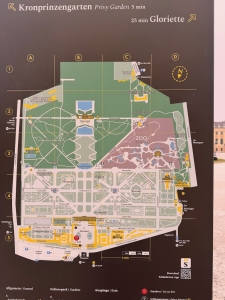
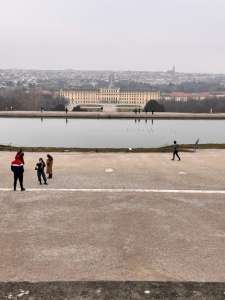
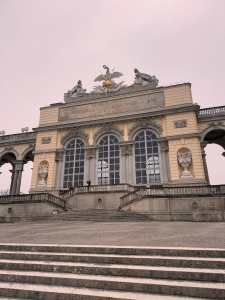
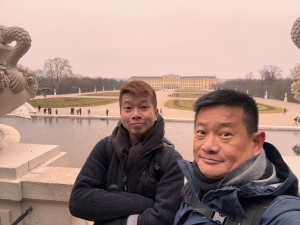
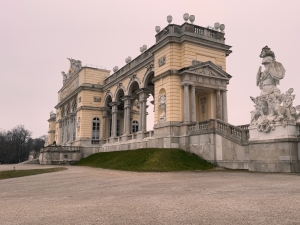
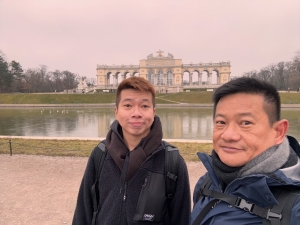
After spending about 1 hour doing the self-guided tour of the state apartments, we went to the Schönbrunn Gardens behind the palace. Visiting the 160ha garden is free, but there are charges for visiting the palm house, zoo and garden maze, all located within the garden grounds. We came to the Schönbrunn Gardens to visit the Gloriette, a pavilion perched on top of a small hill like a crown on the head of royalty. To get to the Gloriette, we first walked through the Great Parterre, a large open space with symmetrical beds. But these beds were under maintenance during the winter time when we visited. Numerous Roman statues aligned both sides of the Great Parterre, which looked like guards welcoming the royalties whenever they stepped foot into the gardens. The Neptune Fountains sit between the Great Parterre and the Gloriette. I feel most people skipped stopping at the Neptune Fountains, where we found some great vantage points at the back of the fountains to take pictures with Schönbrunn Palace. We were nearer to the Gloriette from Neptune Fountains; after a short walk uphill, we arrived at the crown jewel of the Schönbrunn Gardens – The Gloriette. Built in 1775 as the last building constructed in the garden, the Gloriette was built to serve as both a focal point and a lookout point for the garden. It was used as the Emperor’s dining hall, festival hall, and breakfast room. Today, a cafe occupied the Gloriette. On top of the Gloriette sits a lookout terrace looking out into the gardens and Vienna, which was closed during winter. Nonetheless, we were treated to a splendid view of Schönbrunn Palace and the Gardens from the Gloriette.





Vienna State Opera
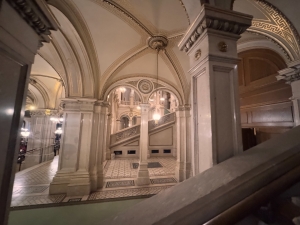
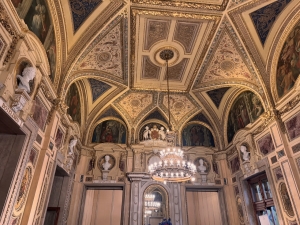
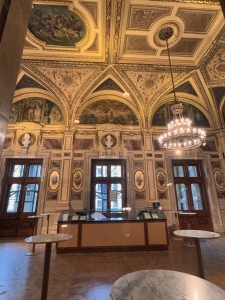
The Vienna State Opera organised regular tours of the building at €15 per pax in various languages, with more in English and German (click here for booking the tour). We booked our tour about 1 month before our trip to Austria. We arrived at the Vienna State Opera about 15 minutes before our tour and were surprised to see two queues at the entrance, one for those who had booked our slots online and the other for walk-ins (leftover tickets will be sold to walk-ins). There were no signs telling us which queue we should be standing in. Eventually, one of the staff members at the door gave directions to the queuing situation. As several language-guided tours were happening at the same time slot, each group was shown the parts of the State Opera in different sequences. Ours started from the side stairways to transit to the first floor of the building (while some others used the main Grand Staircase). We stopped by the Grand Staircase in the middle of the hallway, where our guide introduced us to the baroque architecture and the paintings we saw here. The marble Grand Staircase was indeed grand. The detailed carvings on the walls, some tastefully ornamented in gold, the two statues, and the paintings beautifully decorated this part of the building, giving it a posh and grand vibe. We were told the Vienna State Opera was bombed during World War II. Fortunately, part of the building survived the bombing. We were then brought to a small room behind the Grand Staircase. Decorated with gold trimmings, elaborate carvings on the walls and ceilings, and a fresco on the ceiling with bright colours, the Tea Salon was formerly reserved only for the Emperor and his guests. Today, anyone with the money can reserve the Tea Salon.
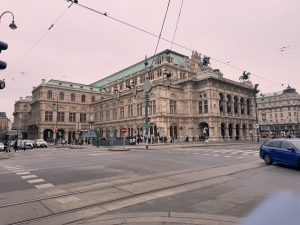


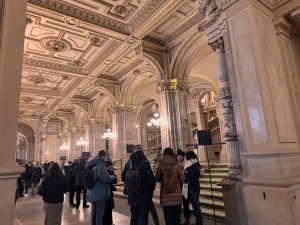


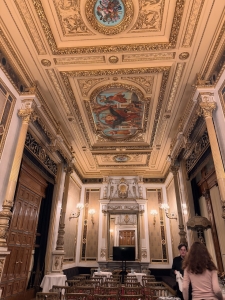
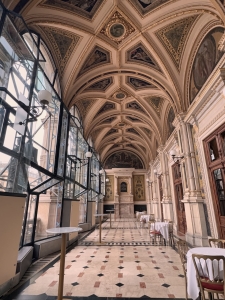
The next area we were shown was Marble Hall, a large space with relatively simple decor. Our guide told us this hall was rebuilt after WWII as it was one of the casualties of the war. The Royal Box was our next stop on this tour. The Royal Box was reserved exclusively for the royalty, which offered a spectacular view of the stage. We were invited to sit in the Royal Box while our guide narrated the purpose of the Royal Box and the reconstruction of the auditorium. After the Royal Box, we were guided to the Gustav Mahler Hall, a room for intermissions, concerts and special events. This room houses 13 tapestries produced over six years, depicting scenes from Mozart’s The Magic Flute. A short walk from Gustav Mahler Hall, we came to the Schwindfoyer, a small annexe beside the first floor of the Grand Staircase. Our guide told us this room was one of the surviving original parts of the Vienna State Opera. This room was elegantly decorated with paintings and carvings, most covered in gold, that left no empty spaces on the ceilings and parts of the wall. Hanging above each door that leads to the balcony are busts of famous composers. We found the busts of Mozart and Beethoven over some of these doors. Equally impressive is the balcony, which looked out into Ringstraße and served as the facade of the State Opera.


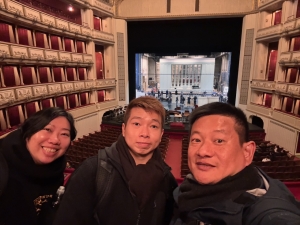
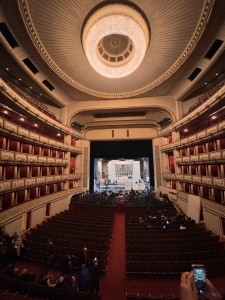
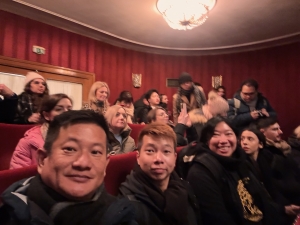
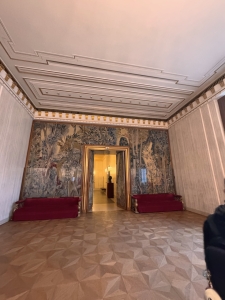
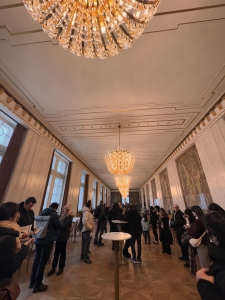



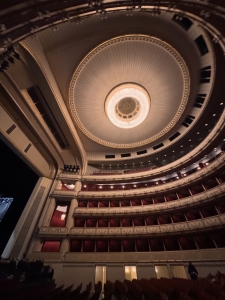
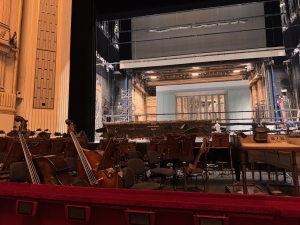
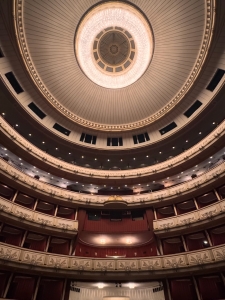
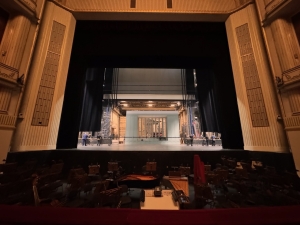
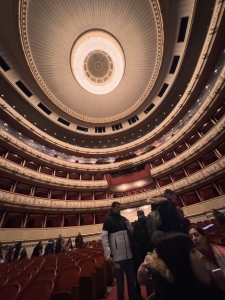
Our final stop at the Vienna State Opera was the Great Hall, the auditorium of the building. The Great Hall, decked with red velvets on the walls, looked grand and elegant. We were led to the front row of the horseshoe-shaped auditorium, where our guide told us about the different seating options and some standing rooms on the uppermost floor of the Great Hall. From where we were seated, we could see the orchestra pit lowered before our eyes (not sure if we were there at the right time or if it was raised and lowered as part of the tour). Our guide also told us that there are different performances daily, so the crew had to constantly change the setting of the stage daily. Our guided tour of the Vienna State Opera ended after the Great Hall, where we were led back to the foyer. Having gone through a guided tour of Parliament Austria, we expected the State Opera tour to be informative and insightful. However, we thought the tour was not as enjoyable. Due to the many tours taking place at the same time and the soft voice of our guide, we missed out on the narrations of our guide most of the time. While the tour of Parliament Austria issued each tour member a wireless headset to hear the guide better, the Vienna State Opera did not.


Karlskirche
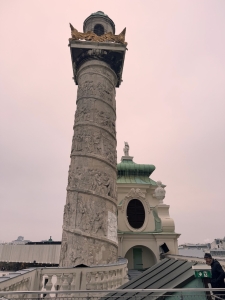
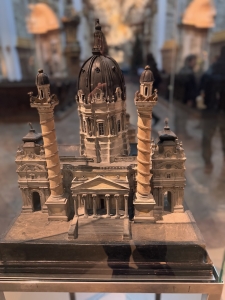
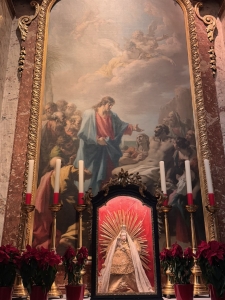
As Karlskirche (St Charles’ Church) was very near to the Vienna State Opera, we visited the church after our State Opera tour. Sitting behind a large pit, the 18th-century green domed baroque church with two tall pillars by its side towers over Karlsplatz. As we walked closer to Karlskirche, we could see the engravings on the two pillars. Karlskirche was built after the last great plague epidemic, after Charles Borromeo, who was revered as a healer for plague sufferers. The entrance to the church is at its side. Entrance to the church costs €9.50, and we got a €1 discount by flashing our Vienna City Pass. Besides the church, the entrance fee gave us access to the terrace, the Church model, the Treasury and the Organ. Our strategy was first to make the 120 steps climb to the terrace and work our way down.


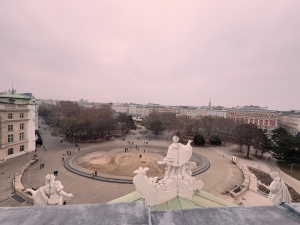
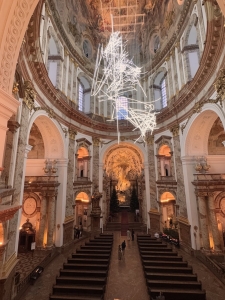
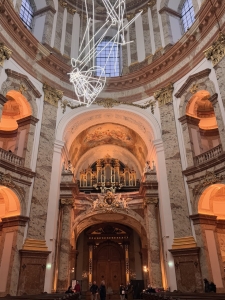
Despite being at an elevated point, we could only see part of Vienna from the terrace. The furthest we could see was the towers of St Stephan’s Cathedral. The park (Karlsplatz) and the pit we were on a while ago in front of Karlskirche dominated our view from the terrace. However, as we were rather close to the pillars, we could see the parts of the pillars that were being restored on top of the detailed carvings on them. Since there wasn’t much of a view, we left the terrace for the other parts of the church. We next headed to the treasury, where a small collection of relics and clothing of Charles Borromeo were being displayed. We did not stay at the treasury for too long and headed to the organ loft. Here, we were up close to the organ but were more attracted to the view of the church’s interior from the loft. Up there, we could see the carvings and the frescos on the inside of the dome clearer. Next, we headed to the ground floor of the church. The amount of artwork spread across the ceiling and the pillars made the church’s interior feel more like an art museum. Countless life-like angel statues were mounted on top of the pillars inside the church. Even the altar was a masterpiece. We did not stay in Karlsskirche for too long, as it was still early and Karlskirche was next to the U-Bahn station, so we took the U-Bahn to Prater Park to ride the world’s oldest Ferris wheel.





Prater Park: Home to the World’s Oldest Ferris Wheel
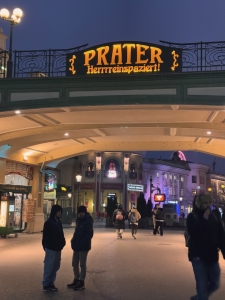
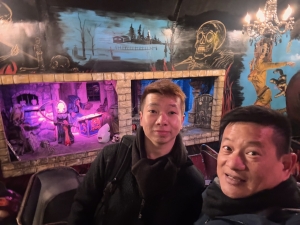
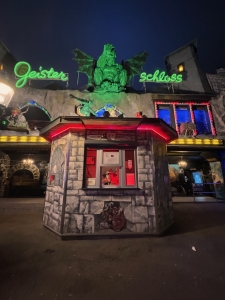
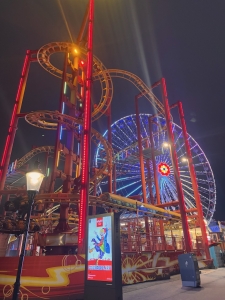
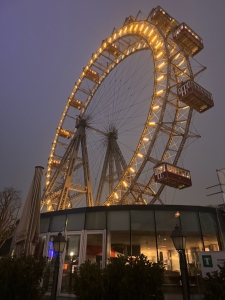
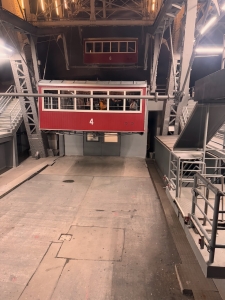
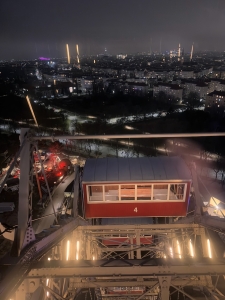
Prater Park is one of the oldest amusement parks in Vienna and opens till late at night. The park is easily accessible by the U-bahn, with Prater station being the closest to the park. Admission to the park is free, and visitors only pay for the rides they want to take. At the time of our visit, most of the outdoor rides were closed, and only a handful remained open. My friend and I first went on the haunted house ride, which is entertaining (rather than scary) at best. Our purpose for coming to Prater Park is to ride the iconic Viennese Giant Ferris Wheel. There are two Ferris wheels in Prater Park, a newer and taller one next to some roller coasters and the older one near the entrance. The 65m Vienna Giant Ferris Wheel is the world’s oldest ferris wheel, operating since 1897. Tickets cost €14 per adult (Vienna City card gave us €1 discount). Before the ride, we were made to walk through a small exhibition using the wooden cars on the ferris wheel. Sitting in one of the wooden cars, as we were slowly being hoisted up to the top of the wheel, the view of the park slowly became smaller, and views of Vienna City in the distance occupied our attention. We were treated to a great night view of Vienna at the top of the wheel. As we did not want to ride on the roller coasters in the winter, we left Prater Park after the Ferris Wheel ride.







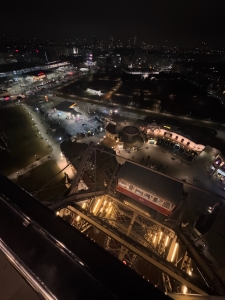

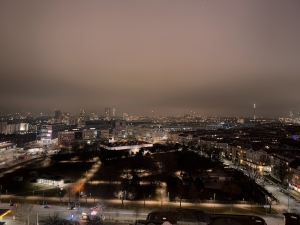
Night View of Vienna
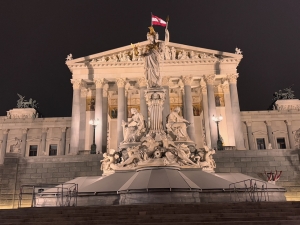
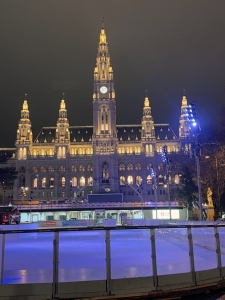
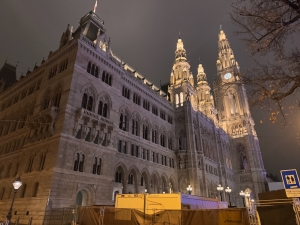
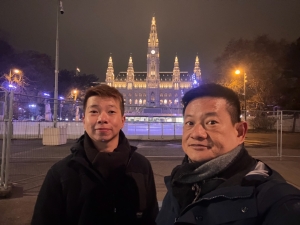
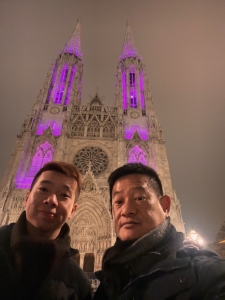
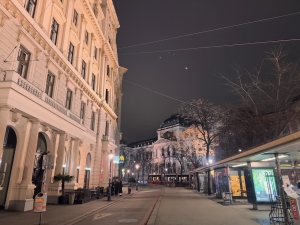
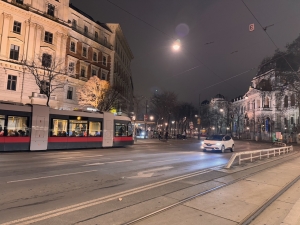
Vienna has a lot of beautiful buildings. As the night was still young, my friend and I wanted to see these buildings at night. There used to be a complimentary tram service around the Ringstraße, where most sights are located. However, this service has since ceased when we visited the city. A Google search revealed alternate trams around Ringstraße, which involves changing trams halfway through the Ringstraße. We took Tram #2 from near our hotel and somewhat missed the stop to change trams. The tram turned in from the Vienna City Hall and went further into a residential area. At the end of the line, we hopped onto the next tram and alighted at the City Hall. From here, we walked around to see some of the buildings further from the main Ringstraße. We called it a night and returned to the hotel after seeing these buildings.