Hundertwasserhaus: The Unconventional Building
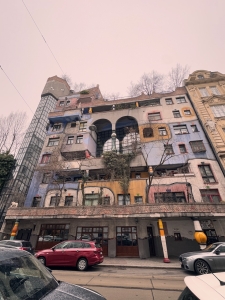
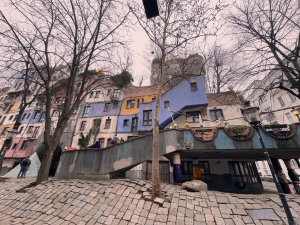
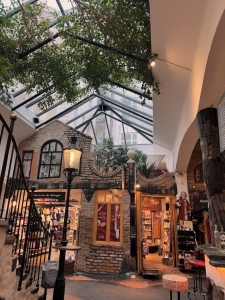
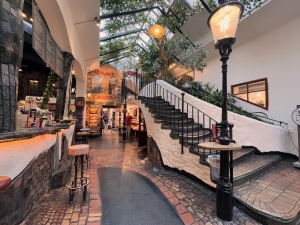
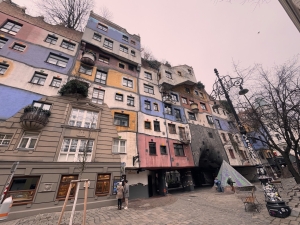
We started our final day in Austria with a bus ride to Hundertwasserhaus. The artistic and quirky building uses bold colours and irregular structure, making the building very Instagrammable. A direct bus #4 from our hotel took us to Hundertwasserhaus in under 30 minutes. We were captivated by the bold architectural style that Hundertwasserhaus offered. The building stood out from the rest of the buildings in the neighbourhood, with bright blue, yellow, and maroon colours. Parts of the building were adorned with mosaic-like tiles, although they did not form a picture, they were coherent. The Hundertwasserhaus is a small block of houses that did not take too long to visit. We also visited the Hundertwasser village opposite, an indoor space filled with souvenir shops and cafes. We hoped to get more information about Hundertwasserhaus from the village information centre, but it was closed on Sundays. After snapping a few more pictures, we left the house. Unique it may be, but I thought travelling to this part of the suburb just for the building was hardly worth the time. There weren’t any attractions in the vicinity, and the Hundertwasserhaus is just a block of private residences.




Austrian National Library State Hall: The World’s Most Beautiful Library
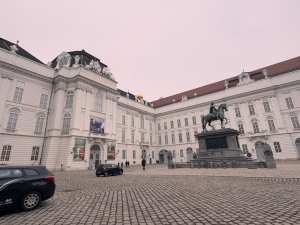
We were supposed to head to Hofburg Palace in the Innere Stadt, but I forgot to bring the printout of our tickets to Hofburg Palace. We hopped onto the next Bus #4 and returned to our hotel. After getting our tickets and since we still had some time before our guided tour of the Sisi Museum and Hofburg Palace, we could squeeze in some time for the Austrian National Library. The crown jewel of the Austrian National Library is the Baroque State Hall. I came to know of a guided tour to the State Hall organised by the library, and I wanted to join the tour (the tour booking can be found here). However, tours in English were not conducted in January during our visit; only German tours were conducted during this period. Entrance to the Austrian National Library costs €10, and we got €1 discount from our Vienna City Pass. The guided tour costs an additional €4.50.



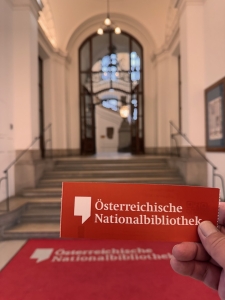
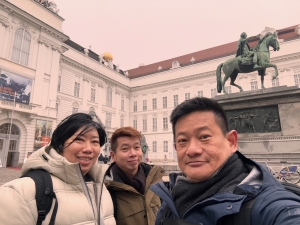
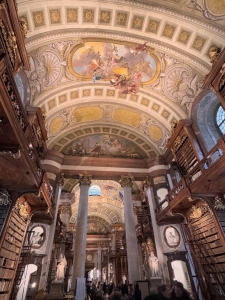
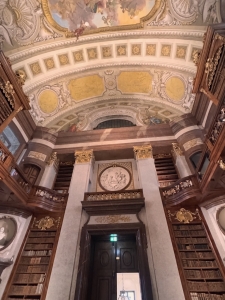
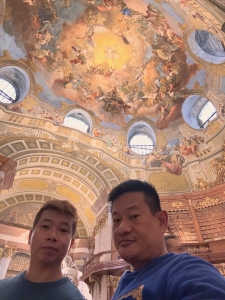
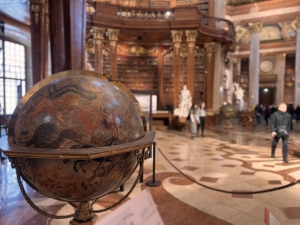
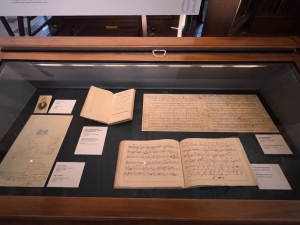
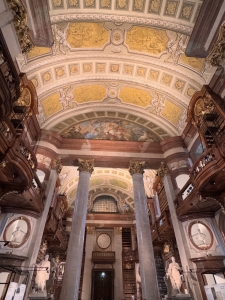
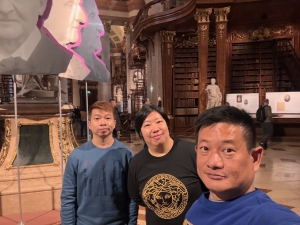
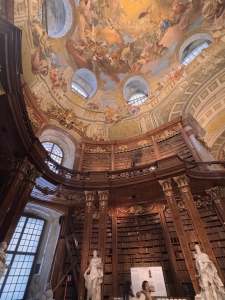
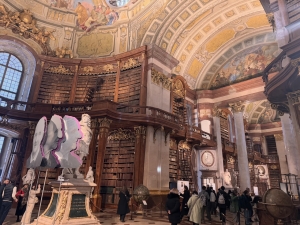
People came to the Austrian National Library for its State Hall. Built in the 18th century as part of the court library, the State Hall is Europe’s largest Baroque library, housing over 200,000 books on its richly decorated wooden shelves. Walking into the State Hall is like walking into the library featured in Disney’s animated “Beauty and the Beast”. High wooden shelves filled with books lined both sides of the hall; occasionally, we would spot a marble spiral staircase that led to the mezzanine level of the shelves. The walkway’s ceiling in the State Hall is beautifully painted with frescos alongside the patterned carvings. In the centre of the State Hall is a dome, where the frescos painted here blended in very well with the windows. There are some displays of relics and precious books along the walkway of the State Hall. However, few who came here stopped to read them. Most of us in the State Hall came for that Instagram picture of the library. As beautiful as it may be, the visit to the Austrian Library was only limited to the State Hall. I’d recommend joining the guided tour to understand more about the library or visiting only if one has the time to kill.






Cafe Demel: Experiencing the Viennese Cafe Culture
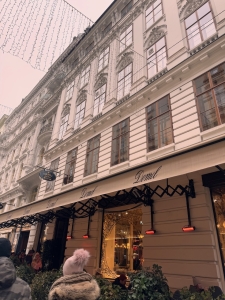
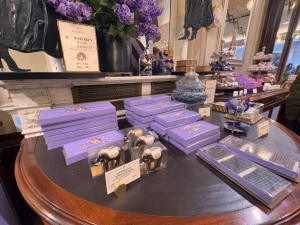
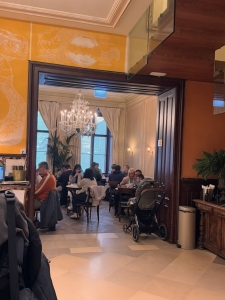
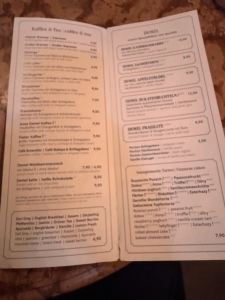
We had about 1 hour before our guided tour of the Sisi Museum in Hofburg Palace after we visited the Austrian National Library. We had time to experience the Viennese cafe culture. We walked along the street near the palace to hunt for a cafe and chanced upon Cafe Demel, which seemed to be a decent cafe with a crowd. We spotted a snaking queue that seemed to originate from the upper floors of the shop at the back of the shop on the ground floor. This queue is for those who came here to enjoy a cup of coffee and some pastries. We subsequently learnt that the cafe does not accept reservations and only entertains walk-ins. We stood in the line for about 5 minutes, and it did not seem to move. I recalled some empty tables at the front of the shop as we walked in earlier. I went up to a staff and checked on the tables. The friendly staff recommended taking the indoor seating as the cafe’s interior was worth the wait, plus sitting outdoors would be very cold in the middle of winter. The staff also told me the queue would move quickly, as a batch of 20 patrons is being let in at a time. True enough, we waited for the next 10 minutes to be shown to our table.
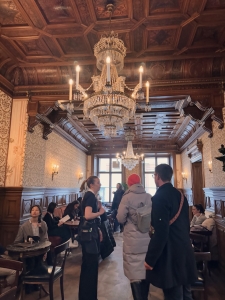
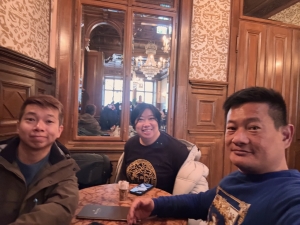
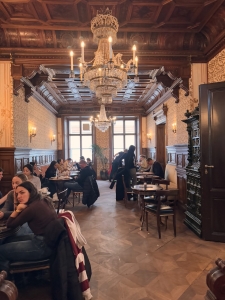
We were given a table on the second floor of the cafe. The staff recommended we take the table in the corner, as it has more space and would be better for photo taking. The room where our table is located has a rustic and cosy vibe (there seem to be different themes in each room in the cafe). Most of this room is decked with dark brown lacquered wooden walls and the ceiling. The chandelier that hangs from the ceiling adds a luxurious touch. We ordered some coffee and pastries, which tasted very good. I particularly like the walnut cake and the Kaiserschmarrn (an Austrian pancake). The vibe in the cafe was very good, with most people coming here for the Instagram-worthy shot. We left the cafe about 15 minutes before our tour of Hofburg Palace.




Hofburg Palace: The Primary Habsburg Palace
The Habsburgs, rulers of the Austrian-Hungarian empire, used the Hofburg Palace as their primary imperial residence. Today, the Hofburg Palace is the official residence and workplace of the Austrian President. There are two parts to the Hofburg Palace: the Sisi Museum and the Imperial Apartments. The tickets cost €19.50 for a self-guided tour with an audio guide and €24.50 for a guided tour through both the Sisi Museum and the Imperial Apartments. There is a €1.50 discount for both tickets by flashing our Vienna City Card. We went for the guided tour, thinking we might be able to see and understand more of the palace.
Sisi Museum: The Life of Empress Sisi
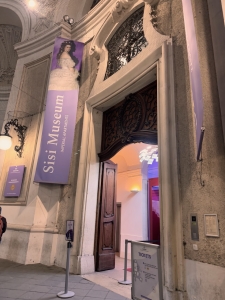
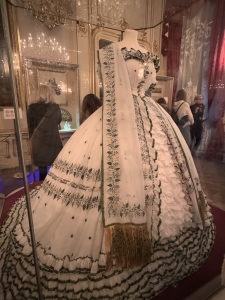
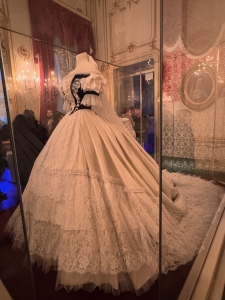
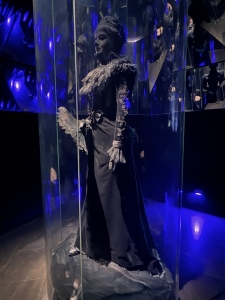
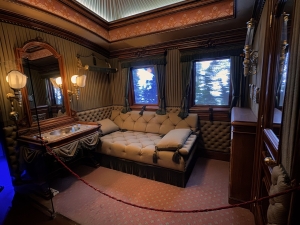
Our tour started with the Sisi Museum, which is the first part of the palace. The Sisi Museum displays artefacts and objects used by the Empress during her lifetime, from a replica of the diamond stars that we see in most of the pictures of her to her inauguration gown. There is even a replica of her train carriage. From our guide’s narration, we learned that Sisi was not happy in the court and often travelled to escape the politics of the palace. From our guide, we also learned about Empress Sisi’s daily routine and how she maintained her slender figure to maintain her title of being the most beautiful woman in the Austrian-Hungarian empire. In the last room, we were brought to an illustration of a man stabbing Empress Sisi, where our guide retold the story of how the Empress was assassinated by a psychopath in Geneva whose target was not Empress Sisi in the first place. The Sisi Museum was a small place with limited space. More often than not, we were battling standing space with self-guided tour visitors, dampening the museum visit experience. The guided tour of the Sisi Museum took about 30 minutes, and we transited to the Imperial Apartments.





Imperial Apartments: Where the Habsburgs Lived and Worked
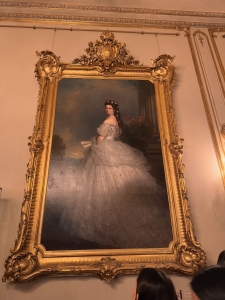
For the next 30 minutes, we were taken through the 16 rooms of the Imperial Apartments of the Hofburg Palace, with our guide narrating the significance of each room. We started with the Audience Waiting Room, where we saw huge paintings hung on the walls, two of which depicted political events during the time and one showing the emperor returning from Bolivia. The rest of the rooms displayed the audience chamber, working space, and living spaces of the royalty when they called Hofburg Palace home. Most of these rooms were filled with furniture that served the required functions and was opulently decorated with crystal chandeliers, paintings and statues. From Emperor Franz Joseph’s Study, we can see how much he loved Empress Sisi, with numerous paintings of her in her long untied hair. Whilst in the bedroom, which Empress Sisi occupied in later years, our guide mentioned how the Empress would eat small meals in her chambers to maintain her figure. The Imperial Apartments also showcased the Empress’s dressing and exercise room, where the Empress spent most of her time. Here, we could see the simple exercise equipment like bars and rings, which our guide mentioned the Empress was very disciplined in spending hours working out daily. We were also shown a passageway being sealed off with brick walls, and our guide told us that behind the sealed-off brick walls was part of the President’s workplace. Our tour ended at the Dining Room, a large room with a long table where the imperial family would gather every Sunday for dinner. This is also where the royal banquet was held. Our guide mentioned that the table setting displayed on the dining table was exactly how they were set up during the reign of Emperor Franz Joseph.
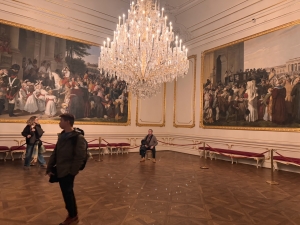
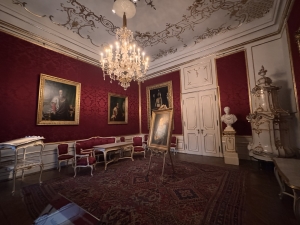
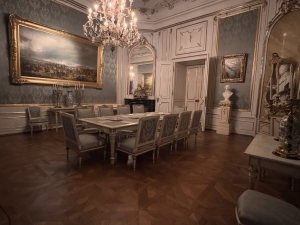

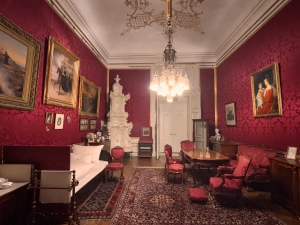

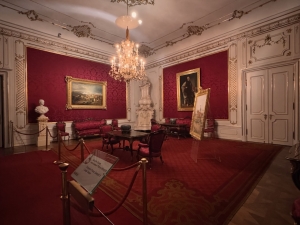
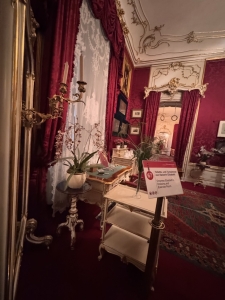


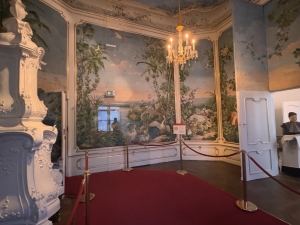
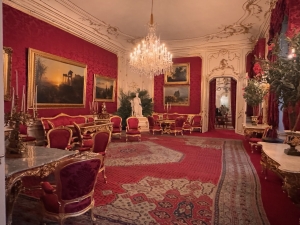

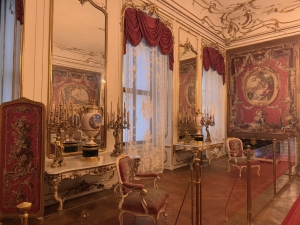


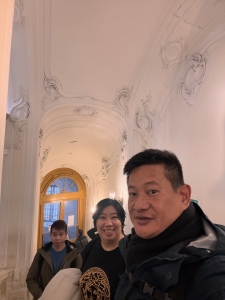
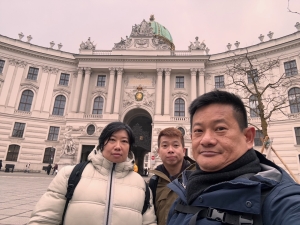
I was a tad disappointed with the Hofburg Palace visit. The palace felt a little small compared to the Schönbrunn Palace, and there were no big halls for Royal events like the Great Gallery we saw in Schönbrunn Palace. The guided tour of the palace felt a little redundant in that the guide did not offer any additional information, nor were we shown parts of the palace exclusive to the guided tour. All the guide did was replace the audio guide. I’d save the additional €5 charged for the guided tour and went with the audio-guided tour (we could have saved at least €15 if we bought the bundled Sisi Pass, which included Schönbrunn Palace, Hofburg Palace and the Furniture Museum).
St Peter’s Catholic Church: A Short Stop to the Artistic Church
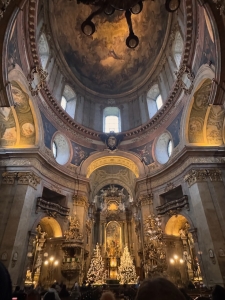
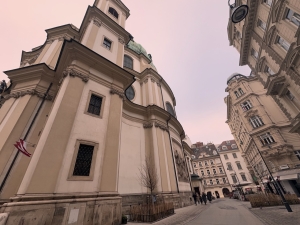
After leaving Hofburg Palace, we spotted a green dome church that sat at the end of a quiet side street along Graben while walking towards St Stephan’s Cathedral. We walked past this church two days ago. Since we had some time today, we decided to make a short detour to the church. The church’s facade is adorned with statues above its entrance and on its wall. The interior of the church surprises us. Despite its rather simple exterior, the inside of the church is decked with numerous delicately painted frescos coupled with detailed carvings on its ceilings. Every inch of the ceiling is either covered with paintings or carvings. The golden main altar stood out from the dark sand-coloured marble interiors; its lighting gave it a holy glow. As the church was not too big, we did not stay here for too long.


St Stephan’s Cathedral: The Icon of Vienna
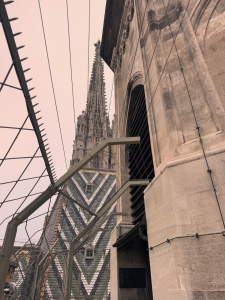
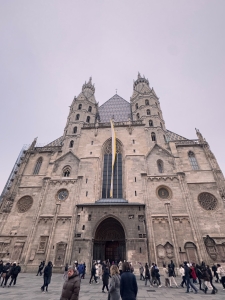
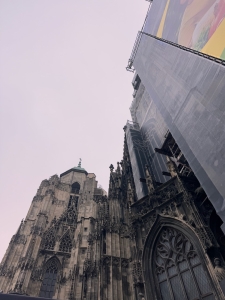
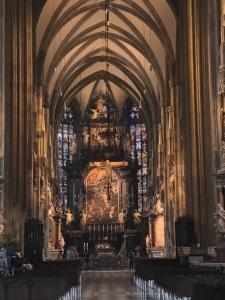
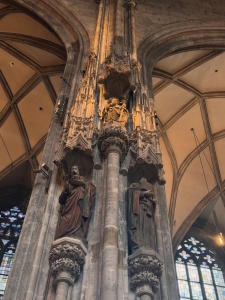
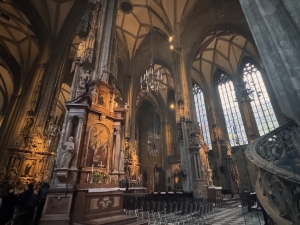
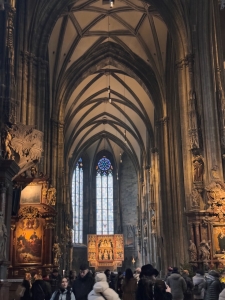
We continued our walk to the final attraction of the trip – St Stephan’s Cathedral. This was the first time we saw St Stephan’s Cathedral in the daytime. Standing by the square on which the cathedral sits, we can see the complicated exterior, as though someone has pasted different patterns on most of its facade. The exterior reminded me of the Duomo di Milano we visited two years ago. The St Stephan’s Cathedral has two towers, with the taller south tower (we jokingly referred to this south tower as the Eiffel Tower of Vienna when we first saw it last night). Legend has it that the original design of the cathedral would have the north tower being the taller of both towers. However, as the south tower was being completed, it was discovered that there was not enough funding and space to complete the north tower. There is no charge for entering the cathedral, but it would cost €7 to scale up the south tower and €6.50 for the north tower. No discount is offered for holders of the Vienna City Pass when going up the towers. The entrance to the south tower is located outside the cathedral, while the north tower is inside. We came to St Stephan’s Cathedral for the bird’s eye view of Vienna from one of these towers. While researching which tower to visit, I saw recommendations for the north tower as there is an outdoor platform on the top of this tower, while we can only look out into Vienna from small windows on the south tower. As a bonus, the north tower is the only one fitted with a lift. We were impressed with the gothic interior of St. Stephan’s Cathedral. Despite not having brightly painted frescos or carvings on the ceilings, the relatively simple interior made the stained glass on the windows stand out. We could focus our attention instantly on the cathedral’s main altar.

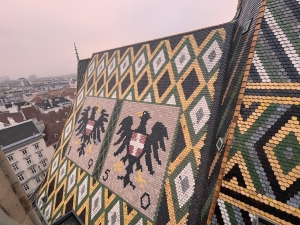
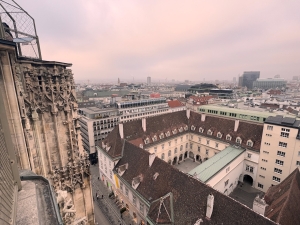
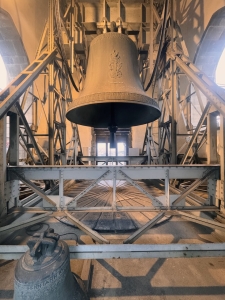
We got our tickets from the ticketing counter at the entrance of the lift to the viewing platform on the north tower. A short lift ride later, we were transported to the top of the north tower. The platform is not very large; we were able to walk from one end to the other in under 3 minutes. The first thing that caught our eyes from here was the two eagle mosaics on the cathedral’s roof, symbolising the Habsburg empire. We could see Vienna from a vantage point, from the Stephansplatz below to the Vienna Giant Ferris Wheel afar. The view up here is indeed breathtaking. A giant bell is installed at the top of the north tower. My friend and I attempted to wait for the half-hour mark to hear the bell strike. However, it did not happen. As the winter breeze was cold and we had seen what we had come here for, we headed back down and returned to our hotel to pack for our departure tomorrow.