Ho Chi Minh City Day 2 (30 May 26): Excursion into the History and Culture – From Ba Den Mountain to Cu Chi Tunnel

When it comes to attractions, those in Ho Chi Minh City can be completed within a day. Unlike other cities in Vietnam, like Danang and Hanoi, there are not many day trip attractions outside of Ho Chi Minh City. Cu Chi Tunnel is one of the most famous day trip destinations from Ho Chi Minh City. Most of the day trips to Cu Chi Tunnels usually combine with a river cruise down the Mekong River. However, the day trip we embarked on is one that combined Ba Den Mountains instead.

Ba Den Mountain – The Roof of South Vietnam

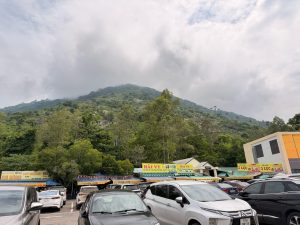
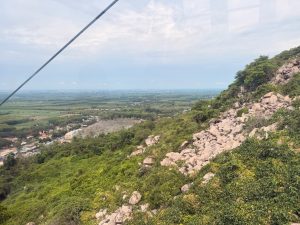
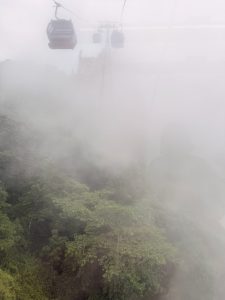
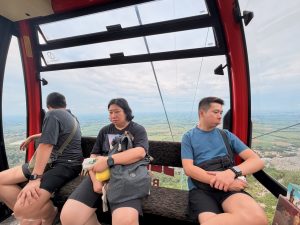
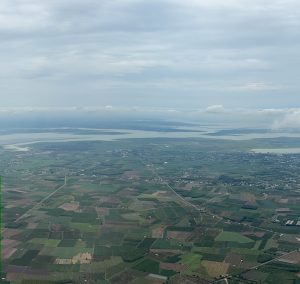
The drive to Ba Den Mountain took about 2½ hours from Ho Chi Minh City. Ba Den Mountain, dubbed as the roof of South Vietnam, is the highest mountain in this part of the country, standing at 986 m. There are two cableways to get to the top of the mountain: the Van Son route, the direct and faster route; and the Tam An route, where visitors are required to change cable car halfway at Hang Pagoda. We took the Van Son route, which took us about 10 minutes to scale to the top of the mountain. As we ascended from the base station, we were treated to endless farmlands in this part of Vietnam, as well as a large lake – Dau Tieng Lake, which is the largest reservoir that spans across three provinces of South Vietnam.

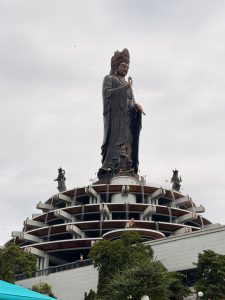
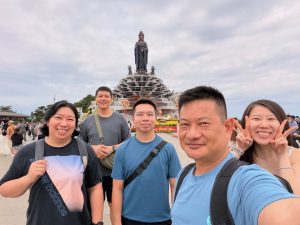
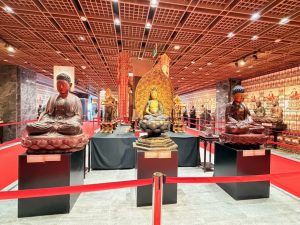
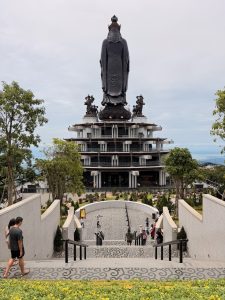
Coming out of the Van Son cable car station, we were greeted by a large 72m tall bronze Goddess of Mercy statue. The Goddess of Mercy, with her benevolent looks, seem to be blessing the landing under the mountain and those of us who came all the way here to visit the mountain. Before giving us our free time to wander around, our guide brought us to the edge of the viewing platform, introducing us to the surroundings while we looked out into this part of Southern Vietnam. We were given one hour to explore the mountains. After the storytelling, and before he gave us the time to roam around, our guide oriented us to the three major sights in Ba Den Mountain. Unlike similar mountains like Ba Na Mountain near Danang, Ba Den Mountain has no amusement parks; this mountain seems to be built for Buddhism.

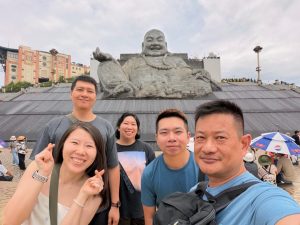
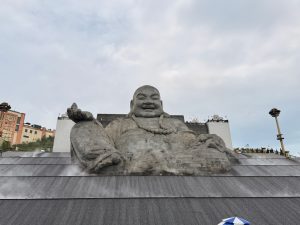
The first sight on the mountain that we went to was the Laughing Buddha Statue that our guide recommended. To get to the lower platform, we had to take a total of 10 escalators that passed through the inside of the stone Laughing Buddha Statue. The interior is especially apparent when at the bottom of the few escalators, where we could see the layers and layers of stone that stacked up to form the Buddha statue. At the bottom of the escalators is a path that leads to the outdoor lower platform. This is where we could see how big the Laughing Buddha Statue was. We waited briefly for the water show, as our guide recommended. The water show is merely a water fountain display with water sprouting out to the rhythm of the music. The show lasted about 3 minutes. There was nothing much to do at this lower platform, and we headed back up to the main level after the show. As we only had 1 hour here, we used about 20 mins to get to the lower platform and watch the water show, and we made the decision to head straight to the Golden Buddha Statue behind the Goddess of Mercy Statue.

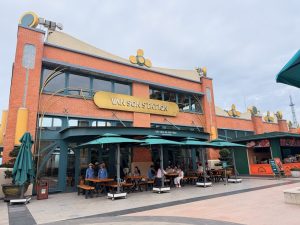
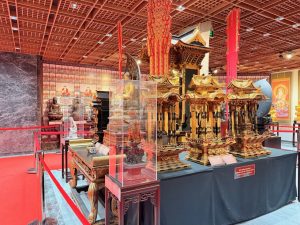
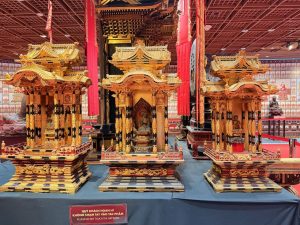
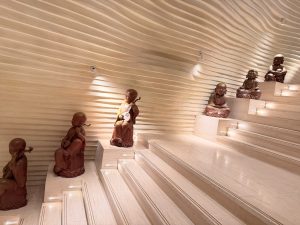
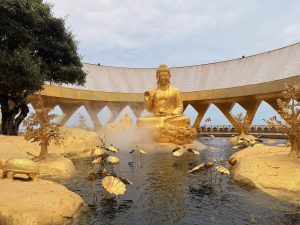
Along the way, we spotted the 5-storey building, at the base of the Goddess of Mercy Statue, housing Buddhist sculptures and art pieces. We would return to visit the gallery if we had sufficient time after the Golden Statue. The Golden Statue sits on top of a small hill behind the gigantic Goddess of Mercy Statue, with very well-marked signs leading us to it along the way. At the top of the hill, the Golden Buddha statue sits solemnly in the middle of an artificial pond. Not just the statue of the Buddha is covered in gold, all the other ornaments like the turtle, lotus flowers and even the rocks are covered in gold. There is nothing much to do here other than offering our prayers to the Buddha. Our 1-hour allocated time is almost up, so we hurried back to Van Son Station, where we met up with our guide and the rest of the tour group. Before heading to our next stop, we stopped by a local restaurant for lunch that is included in the tour price.

Cao Dai Temple – First Temple of Caodaism

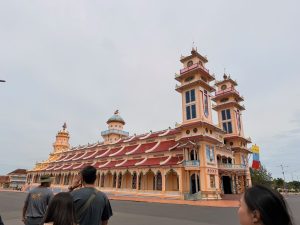
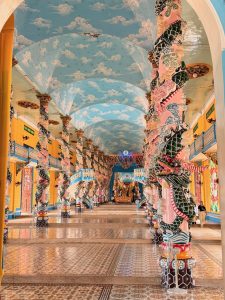
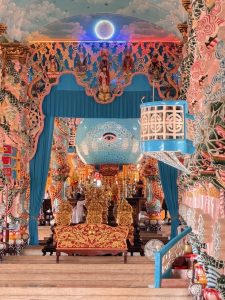
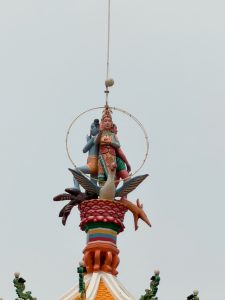
Our next stop, Cao Dai Temple, is a short 30-minute drive away. Caodaism is a religion that was established in Southern Vietnam in 1926. The religion, now has over 1000 followers, blends the teachings of Buddhism, Taoism, Confucianism, and Catholicism. The main object of worship for this young religion is the Left Eye of God. The Cao Dai Temple is situated in a large compound surrounded by fences and controlled entrance gates. The exterior of the temple blends a little of each religion. The twin towers at the front, the tallest feature of the temple, reminded me of the twin towers of Notre-Dame de Paris. However, it differs from the towers of the original Notre-Dame Cathedral in that these towers are topped with Chinese elements, usually found in Pagodas instead of French Gothic elements. The main structure of the temple, with its three-layered roof design, topped with small Chinese Dragon sculptures, seemed to borrow inspiration from Chinese Temples. The tower in the centre of the temple is a weird one, but it seems like a European design structure. There is another single tower at the end of the temple that resembles the top of a Chinese Pagoda. What is interesting here is the statues of the Big Three in Hinduism: Brahma, Vishnu and Shiva, sitting atop this pagoda structure. The interior of the is decorated with rows and rows of columns with Chinese dragon sculptures. Blue sky with clouds decorated with reflective glasses that symbolise stars is the main fresco on the ceiling. The centre area is only accessible to devotees of Caodaism; visitors would have to walk around the temple by its walls. We were brought one round inside the temple by our guide, who explained that the big spherical structure at the end of the temple is the main object of worship. He also mentioned that there is a celluar at the back of the temple under the sphere where past religious leaders were buried. As interesting as the religion is, I had a weird vibe here. Fortunately, we only stopped here for 15 minutes and were on our way to the highlight of this day tour – Cu Chi Tunnel.

Cu Chi Tunnel – The Resilience of the Vietnamese

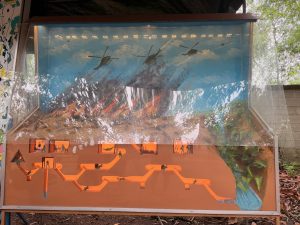
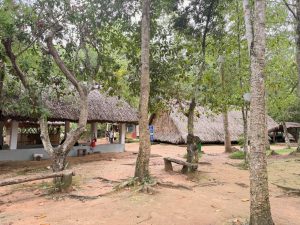
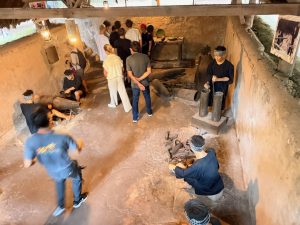
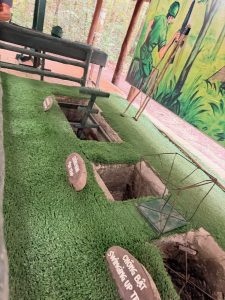
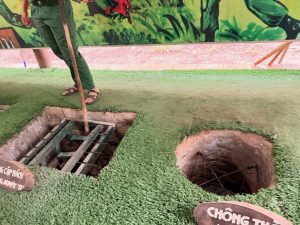
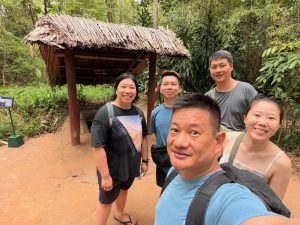
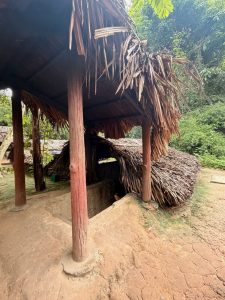
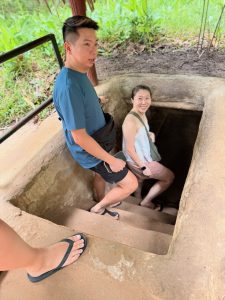
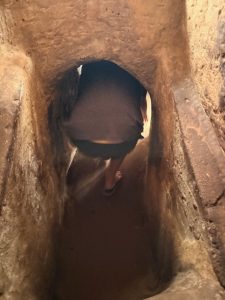
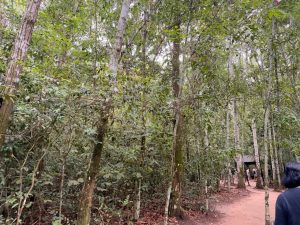
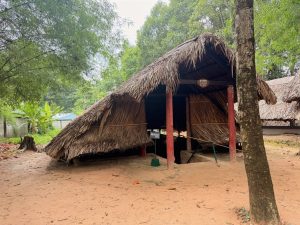
Our next stop, the Cu Chi Tunnel, sits in a forest and is about a 1-hour drive from Cao Dai Temple. Most first-timers to Ho Chi Minh City would make this 2-hour drive trip out of the city to visit the tunnels. Cu Chi Tunnel is a complex tunnel system that stretches 250km underground, which the Vietnamese used to defeat the US military forces during the Vietnam War. The Vietnamese dug the famous tunnels in the middle of the forest to stay hidden, with movements restricted mainly to night. They would live inside the tunnel throughout the duration of the war. The tunnel has facilities such as a kitchen, bedrooms, a war command centre and bunkers, which enabled the Viet Cong to stay hidden in the tunnels for months. After alighting from our van, our guide led us to his giant board that showed the tunnel system on a map. The tunnel network is more complex than I imagined, as not all the tunnels have been discovered to date. There is a model beside the map showcasing the various facilities and how the Viet Cong lived inside the tunnel. We were then brought to a small opening in the ground that could only fit one slim person. This would be where the Viet Congs got in and out of the tunnel and also served as an ambush point.

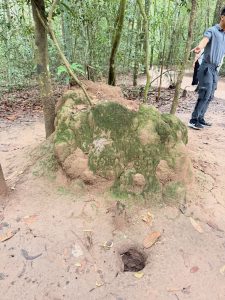
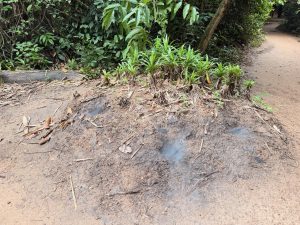
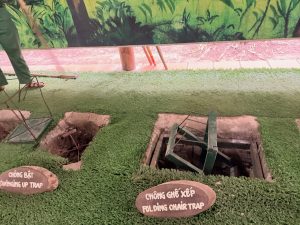
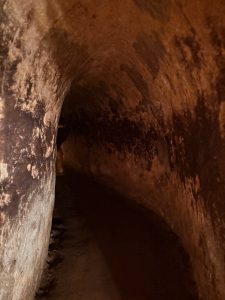
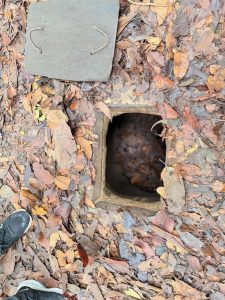
During the tour of the tunnels, we were also shown the various types of traps that were deployed in defence. These deadly traps were made using materials that were found in this forest and seem very effective. The highlight of the trip is the experience of crawling in one of the tunnels. Our guide told us that this tunnel was enlarged for tourists, and the actual tunnel is a lot smaller. The whole tunnel would take us 5 minutes to crawl through, but we came out from the first exit, which is about 50m from the entrance. There are four exits along the way for tourists who do not want to make it to the end of the experiential tunnel. Throughout our time in Cu Chi Tunnel, we saw small holes on the forest floor that seemed like ant holes were actually ventilation points and a number of chimneys disguised as ant mounds. Although this was my second time visiting the tunnels, I was still fascinated by the resilience of the Vietnamese, living underground for years for survival and in the defence of their land. The tunnel is worth a visit. After visiting Cu Chi Tunnel, we made our way back to Ho Chi Minh City. It was raining heavily by the time we reached the city, but the heavy rain did not really affect us since we wanted to eat at the hotel for their seafood buffet dinner.

Ho Chi Minh City Day 1 (29 May 26): Pearl of the Far East – Visiting the Historic Sights in District 1

Our flight from Singapore landed in Ho Chi Minh City around noon, which gave us time to visit the sites in the city in the afternoon. As some of the more significant sights in District 1 were very close to each other, they make for a great group to visit. The airport around noon was busy. As we neared the immigration, we were taken aback by the number of tourists in line clearing customs. True to what we saw on social media prior to our trip, the immigration was packed like sardines. We estimated it would take around 2 hours to clear immigration. We were unsure what had caused the long wait time, as we saw quite a number of counters were opened (unlike our trip to Tokyo a few years ago, where only two counters were opened to clear immigration), and immigration clearance was as fast as it gets. The only logical explanation was the number of passengers coming into the city. Fortunately, we had purchased Fast Track Service that allowed us to join the queue for expats, which saw significantly shorter lines. We cleared immigration in 20 minutes. As we were being driven to our hotel, it suddenly rained cats and dogs. At this point, we were discussing our options for the afternoon and changes to the plans. There was no way we would want to walk around the city in the heavy downpours. The month of May is the transition month between the dry and wet seasons in Ho Chi Minh City, with frequent sudden heavy downpours and blazing hot weather. We were very lucky during this trip, as it was either overcast most of the time, making the weather pleasant, or somehow we avoided the rain when shopping indoors.
The Historic District 1 Circuit

Fortunately, the rain had stopped after we got to our rooms and settled in. Our historic circuit in District 1 started with Independence Palace, then to Notre-Dame of Saigon, Saigon Central Post Office, Book Street and ended with Cafe Apartment.

Independence Palace – Where the Unification Happened

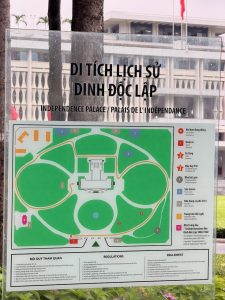
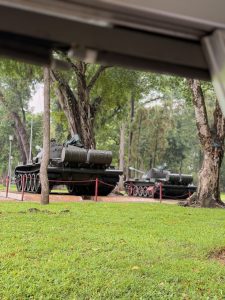
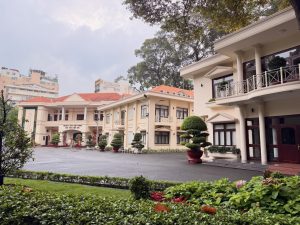
Our first stop of the day is the Independence Palace. This historical landmark witnessed and is the centre of action, playing a significant role in the unification history of Vietnam. Up until 1975, Vietnam was split into two: South Vietnam, with the support of the USA, operated under a republic model; and North Vietnam, with the support of Russia, adopted a communist regime. Thus, the birth of the Vietnam War. The Independence Palace was the centre of action and where important decisions were made during the Vietnam War. The war ended when the North Vietnamese army tank crushed through the front gate of the palace, marking the fall of the South Vietnamese government, unifying the country into one communist regime to this day. The entry fee to the Palace varies, depending on how much one wants to see. The base price for only the Independence Palace costs VND 40,000; Palace and Exhibition (curating the history of Independence Palace) costs VND 80,000; and the all-inclusive price of VND 100,000 includes both entry fee to the Independence Palace and Exhibition as well as an Electric Car ride around the Palace grounds. Initially, we thought the electric car service was a ferrying service around the palace grounds. We were guided to hop onto one car, which brought us around the palace grounds, giving us narrations of the significance of the facilities in the palace grounds. The electric car tour took about 10 minutes, and we were dropped off at the entrance of the palace. I would not recommend this service for those who are short on time or just want to visit the palace.
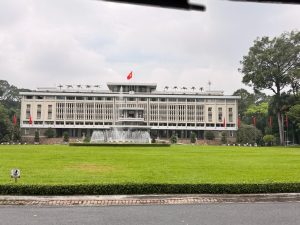
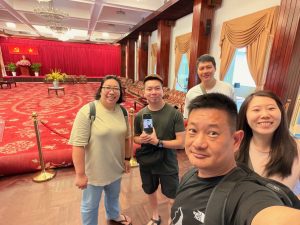
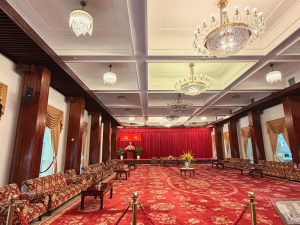
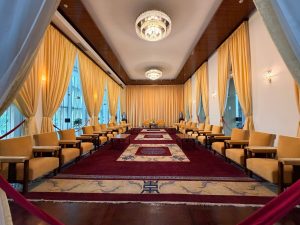
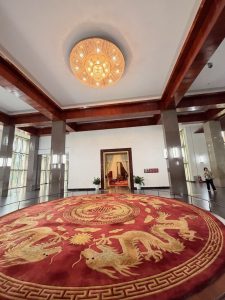
After the electric car tour around the Independence Palace grounds, we headed to the main building. The Independence Palace was the office of the President of South Vietnam and showcased room after room when the palace functioned as the Presidential Office. We started our visit with the rooms on the first floor. On this floor, the first rooms we saw were the State Banquet Hall and the Conference Hall, situated next to the entrance. Both rooms were filled with furniture from the 70s, but in a more elaborate setting. Imagine large rooms with long tables and chairs laid next to each other with chandeliers hanging on top. These rooms look like a page from yesteryears. Despite its age, I thought this furniture was very well preserved. The highlight on the first floor is the Conference Hall in the centre, occupying part of the palace at the back. The Conference Hall is decked in maroon red from carpet to the backdrop on the stage and decorated with multiple chandeliers hanging from the ceiling. This is where the president declared his resignation after the Americans withdrew their support during the Vietnam War. A painting of the Hung Kings, regarded as the first rulers of Vietnam, hung on the wall of the Conference Hall to link the modern Vietnamese State to its ancient origins.
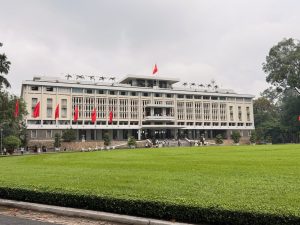
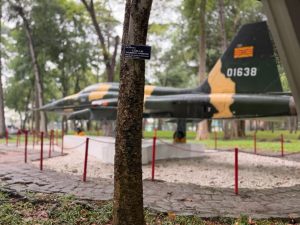
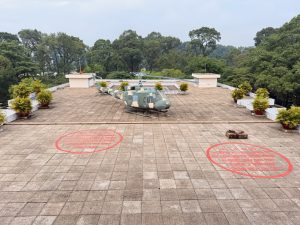
There was nothing much else we could see on the first floor, so we headed to the top floors before making our way down in the building to visit the other rooms. As we were walking towards the 4th floor (the lift only stops on the 3rd floor), we walked past the Cabinet room and the First Lady’s Reception Room. Other than looking at the furniture from the 70s, there seemed to be nothing too interesting on this floor. As we were walking towards the stairs that led to the top floor of the Independence Palace, we saw a small room in a cinema layout. There wasn’t much explanation here, and we can only assume this was used to play movies or propaganda films. The top floor of the palace consists of an air-conditioned room and the rooftop area. Here we saw a helicopter and two red ring markings, which marked the area when bombs were dropped by the North Vietnamese Air Force during the Vietnam War, leading to the subsequent surrender of the South and unification of the country. It is a pity that this significant historic event was not recorded anywhere on this floor. Today, the pavilion on this floor has turned into a place to sell souvenirs and hang out for local visitors to rest and enjoy the air conditioning.
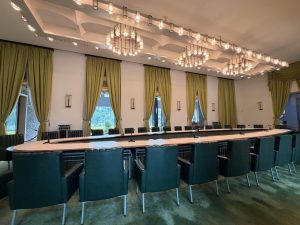
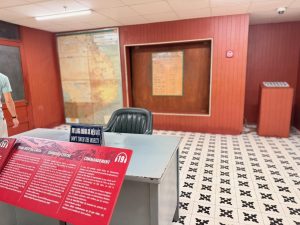
We continued our visit to the Independence Palace on the second floor, where we saw the president’s office, national security council chambers, the vice president’s reception room and some private apartments. At this point, we felt the rooms looked similar and just filled with furniture from yesteryears, so we brushed through the rest of the rooms in the palace. After seeing the rooms on the second floor, we subsequently followed the sign to the bunker in Basement 1. This was the heart of operations during the Vietnam War. There is a president’s office, a bedroom, and rooms and rooms of communications equipment, and also a war room. I reckon visiting the palace is best done with an audio guide, which can be rented at the ticketing counter. The explanations on the walls only mentioned what the rooms are used for, but did not detail the significance of these rooms. Without such a context, we cannot feel the significance of the palace and just see it as another tourist attraction. Our ticket also included entrance to the Exhibition that recorded the transformation of the palace from the Nodorom Palace to the Independent Palace. As we were getting a little “bored” with this place, we skipped the Exhibition and headed to our next stop.
Notre-Dame Cathedral of Saigon – A Little Bit of French Outside France

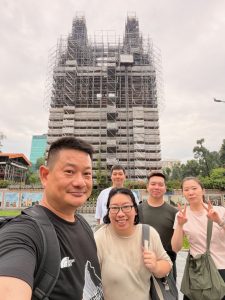
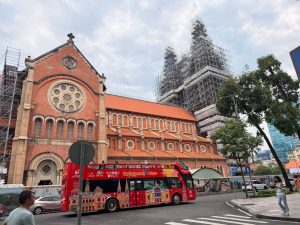
Leaving the Independence Palace, we headed to our next destination in District 1, Notre Dame of Saigon. The cathedral was not far from the palace and took us only 7 minutes from its main entrance. As we were walking along the side of the cathedral, we saw some scaffolding, mainly in the front facade of the cathedral. I read online that the cathedral has been under renovation since 2017 and will not be completed until 2027. However, the cathedral was still open to the public during this 10-year renovation period. To our dismay, the cathedral was closed during our visit. Other than taking the “we were here” pictures, there was nothing much we could do here.
Saigon Central Post Office – Oldest Working Post Office

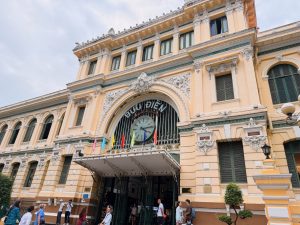
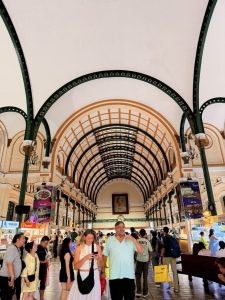
Our next stop is just across from Notre Dame of Saigon, the Saigon Central Post Office. The post office is one of the oldest post offices in Southeast Asia, and it is still functioning today. The facade of the post office looked like some train station in Europe, with European-style casting occupying most of its facade. The beige colour used in the facade made the building look clean and fresh. The interior of the post office looked clean and bright, thanks to the beige colour used and the natural light that would shine through the glass in the central atrium. The interior that is open to the public is relatively small, given how large the post office is. The counters that still serve the locals in their mailing and tax payment needs took up the perimeter of the rectangular concourse. A large portrait of Ho Chi Minh hangs in the centre of the post office, constantly reminding us that this city is named after this legendary leader of Vietnam. Despite the overcast weather, the humid climate motivated us to head into one of the two shops at the wings of the post office in search of air conditioning to cool us off. These shops mainly sell souvenirs representing Vietnam and Ho Chi Minh City. After cooling ourselves down, we headed back out to the main concourse. This is when we saw a booth selling customised stamps. We were able to make stamps with our pictures, either using the instant camera booth or uploading through a link given by the staff. A check with the staff (and subsequently the post office staff) that these stamps can be used as postage. We thought this was a very good souvenir.
Book Street – An Overhyped Street

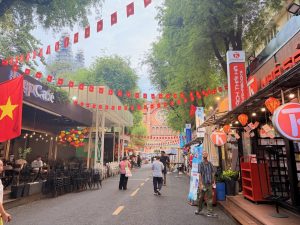
We did not stay in the Central Post Office for too long, as there was nothing much we could do here, other than posting letters and postcards. We headed out to our next destination, the Book Street. Book Street is just next to the Saigon Central Post Office, and as its name suggests, it is a short street selling books. Visitors, foreign and locals alike, come here for the Instagram photo. We did not see anyone buying or even browsing the books on sale here. The trees overshading the two rows of bookshops on the side of the road, coupled with the numerous Vietnamese flags hanging overhead across the road, indeed made this place very Instagrammable. As this is a very short street, it only took us 2 minutes to walk through it (we did not bother taking Instagram pictures here).
Nguyen Hue Walking Street & Cafe Apartment – Coffee in the Centre of District 1

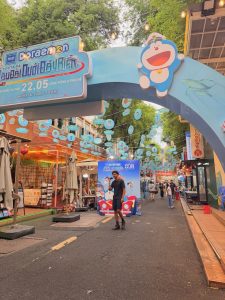
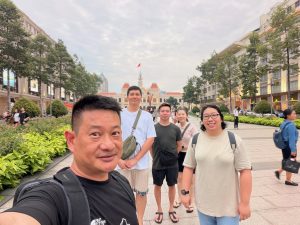
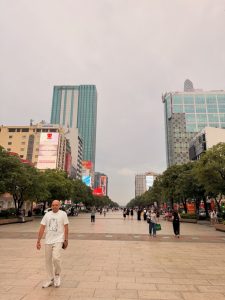
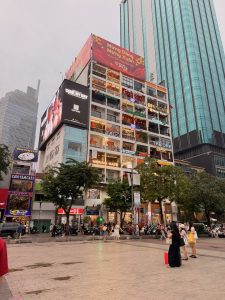
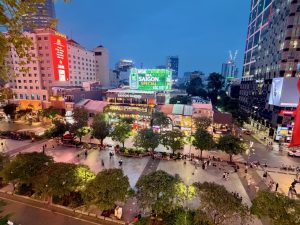
Our next stop, the Cafe Apartment, is a 10 min walk from Book Street. As we were making our way, we unknowingly walked past the Saigon Opera House, sitting quietly in the corner of the road, seemingly waiting for people to discover it. The Opera House is where the famous AO show is performed. We would love to watch this performance that combines acrobatic and dance moves, contrasting the lives of the locals between the country and the city. It is a pity that the show is not on during the period that we were in Ho Chi Minh City. Nguyen Hue Walking Street is the main boulevard in Vietnam, which is an open space with shops and restaurants on both sides of the road. The Cafe Apartment, a nine-storey building filled with cafes, soon came into our sight. It is not hard to spot the apartment building with most of the cafes facing Nguyen Hue Walking Street. From the street, it appears that not all the premises are being occupied. There are several empty properties that face Nguyen Hue Walking Street. The cafe that we wanted to visit sits on the 5th floor of the apartment building. We were initially excited to find a lift that we could use to access the 5th floor. However, using the lift requires a payment of VND5,000. I find it weird that a public facility that we took for granted is chargeable. Since the cafe sits on the 5th floor, we decided to walk up the narrow staircase. We took a rest at the cafe, having some Vietnamese coffee (I had the egg coffee) and some snacks while enjoying the air conditioning in the cafe. There is also an outdoor balcony seating option that overlooks Nguyen Hue Walking Street at the cafe.

Dinner at Secret Garden

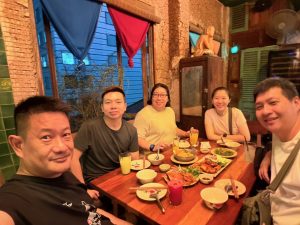
After our fair share of coffee break, it is time for our dinner. I had made a booking on day 3 at this off-the-beaten-path restaurant, Secret Garden. However, a couple of our friends will be on a vegetarian diet on day 3. Seeing that we were near the Secret Garden, we made our way to the restaurant for our first dinner in Ho Chi Minh City. The Secret Garden is only a 7-minute walk from Cafe Apartment. The rooftop restaurant serves authentic Vietnamese cuisine that is also reasonably priced. Weirdly, the restaurant sits atop the residential building, hiding in one corner of District 1, where we would have missed it if not for Google Maps. The restaurant is mainly patronised by locals with a handful of foreigners. The staff were friendly, and the food was delicious. After dinner, we headed back to our hotel to rest for the night.
Bui Vien Walking Street – A Sensory Overload Street

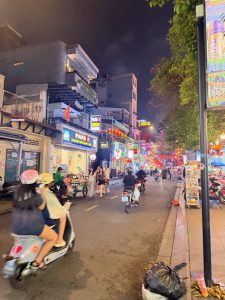
We wanted to pop into one of the few convenience stores near our hotel to get some breakfast, as we will be having an early start tomorrow for our day trip to Cu Chi Tunnel. Using Google Maps, we spotted a shop on the side street opposite our hotel. Unknowingly, we wandered into the famed Bui Vien Walking Street, one of the two main walking streets in Ho Chi Minh City. Unlike Nguyen Hue Walking Street, Bui Vien Walking Street is louder and flashier. The end of the street where we entered from was quieter with cafes, convenience stores and restaurants. But as we walked further into the street, the seemingly peaceful street seemed to be overtaken by pubs and clubs with loud music and girls dancing on the tables outside the pubs under neon lights that constantly shine into our eyes every now and then. Walking on Bui Vien Walking Street, especially at the pub stretch, was a challenge. We were constantly approached by pub staff trying to pull us into their pub for a drink. We did not like this part of the street as it was very noisy with constant irritation from the neon lights. We headed back to our hotel to rest for the night, as we would have an early start and a long day tomorrow.

[Airline Review] – Singapore Airlines A350-900 (Medium Haul Variant)(SQ178) – Business Class, SIN-SGN (29 May 26)

At the Airport

Check-in

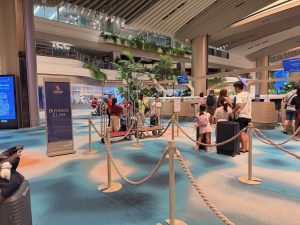
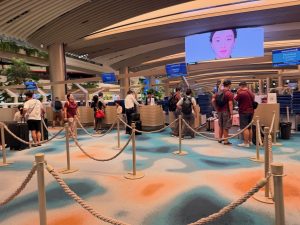
Singapore Airlines departs from both Singapore Changi Airport Terminal 2 and Terminal 3 with dedicated check-in counters in both terminals. Terminal 3 mainly serves longer routes, and our 2-hour flight, which is classified as a regional flight, departs from Terminal 2. The check-in counters are spread across Rows 3, 5 and 6, with Row 3 serving Business Class and Star Alliance Gold members and Rows 5 and 6 serving Economy Class passengers. Economy Class passengers who hold KrisFlyer Elite Silver status can use the dedicated check-in counter in Row 6. Passengers who want to use the self-check-in kiosks can use the many kiosks located in Row 5. We used the check-in counters in Row 3, with the nearest door being Door 2. There was a small queue at the check-in counter during our arrival, but we did not have to wait for too long for our turn to be checked in, as Singapore Airlines had all four counters manned. Check-in was a breeze, and the ground staff performed our check-in with much efficiency. Before long, we had all four luggage checked in, and the ground staff gave us the usual information on our boarding gate and the time of boarding.

Singapore Airlines SilverKris Lounge (Terminal 2)

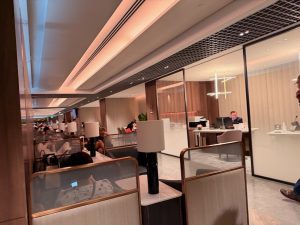
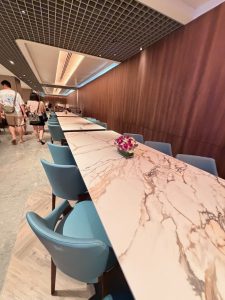
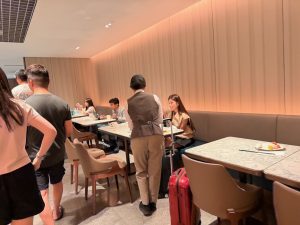
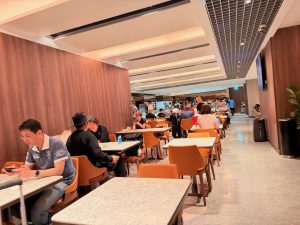
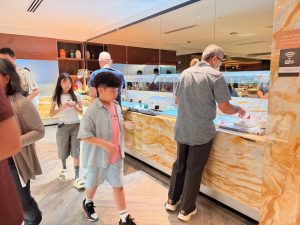
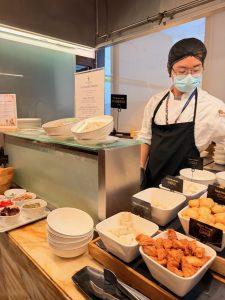
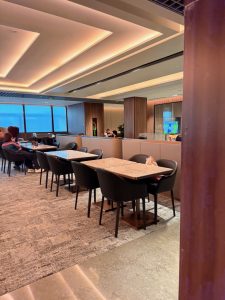
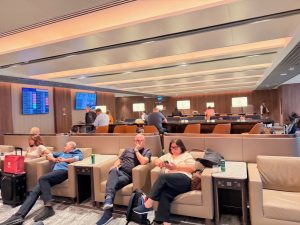
Singapore Changi Airport, being Singapore Airlines’ home port, has two SilverKris Lounges, the larger flagship in Terminal 3 and the more intimate in Terminal 2. As our flight departed from Terminal 2, we headed to the recently renovated SilverKris Lounge in Terminal 2. We were approached at the entrance by the ground staff and welcomed to the lounge after scanning our boarding passes. SilverKris Lounge is decked in earthy colours exuding a relaxing vibe, coupled with the light classical music playing in the background, the lounge felt polished. A T-shaped corridor extended from the entrance to the toilet at the end and also links to a corridor that leads to the main part of the lounge. The part of the lounge that is closer to the entrance is designed to be a lounging area and is furnished with armchairs that extend from the entrance to this part of the lounge. The back part of the lounge is designated as the buffet area, where Singapore Airlines treats passengers with local cuisine and some Western options. There is a small counter opening that serves made-to-order noodles and the Singapore Airlines’ signature laksa. Sitting between the buffet and lounging areas is the main dining area, decked out in dining tables for two. Other than this main dining area, dining tables that can accommodate four to six passengers are also spotted along the wall from the entrance and the side lounge area.
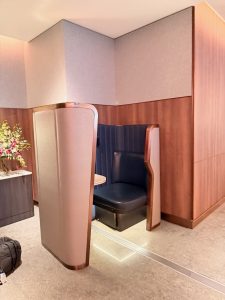
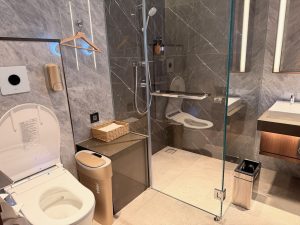
There is another larger lounging area at the side of the buffet and dining area. Here is where we found more lounging armchairs for passengers to relax while waiting for their flight. Some high-back chairs were found sitting against the wall at the back of this lounging area, great for passengers who wanted to find a quiet place to work. The lighting and colour scheme at this part of the lounge created a conducive ambience for relaxing. The SilverKris Lounge in Terminal 2 is fitted with 10 shower rooms, near the lounge’s entrance. Each of these shower rooms, decked in light grey tiles and bright lights, is fitted with a toilet and a walk-in shower. I like that the shower room has a dedicated space for us to stow our carry-on.
The Aircraft

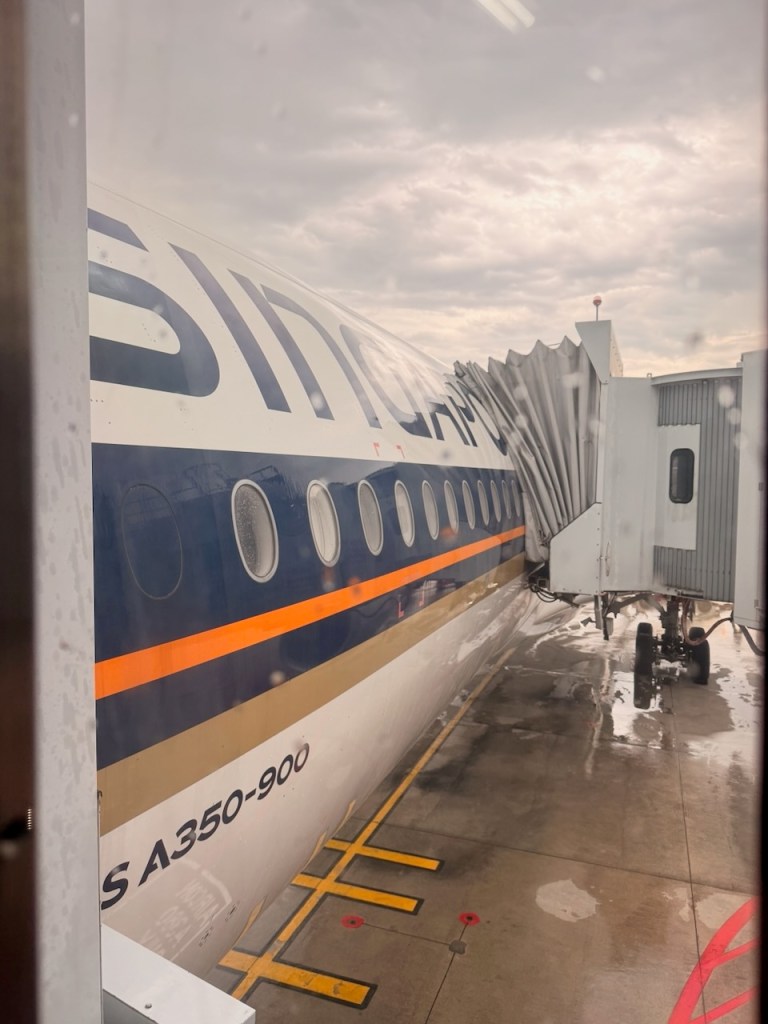
Singapore Airlines operates three daily flights using its A350-900, both Medium Haul and Long Haul variants, as well as its B787-10 aircraft between Singapore and Ho Chi Minh City. For this leg, Singapore Airlines deployed its A350-900 Medium Haul aircraft featuring Stelia Aerospace Symphony Business Class seat.

Cabin

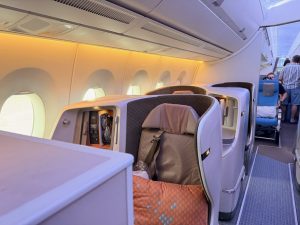
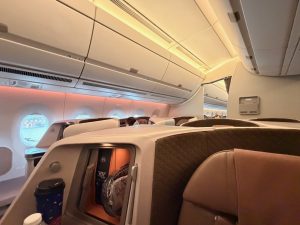
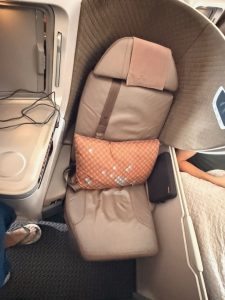
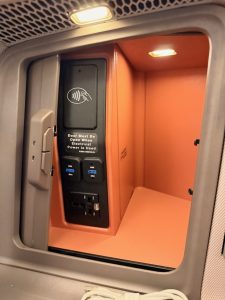
Singapore Airlines A350-900 Medium Haul Business Class cabin retains the familiar earthy palette, mainly decked in brown on cream and warm neutral colours seen in their A380 and A350 Long Haul products. However, these palettes felt more streamlined with lighter colours used, such as mocha and orange, exuding a relaxing and yet premium vibe. The earthy colour schemes are the main colour used in its seats, from the mocha inner seat shell to the light brown leathered seats and the seat trimmings, while terracotta colour fills the inner shells of the side cabinet and the pillow. The light grey used in the side cabinet door and the side table matches the cream colour used in the seat shell very well. The overall colour scheme used in this cabin screams of coherence and harmony, very well suited for a regional daytime flight. The cabin ambience is further enhanced by the light tint of lilac lighting used during boarding, giving off a relaxing and airy sensation. The spaciousness of the cabin is further accentuated by the spreading out of the 40 Business Class seats into two cabins instead of cramming all 40 seats in one single cabin, which can look busy. The larger forward cabin houses 28 seats, giving off a spacious vibe, while the rear cabin houses 12 seats, feeling more intimate, but no less cramped.
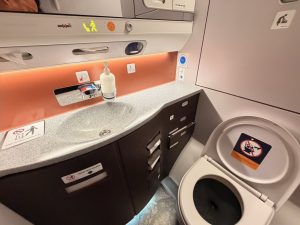
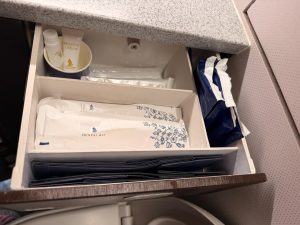
Like its long-haul variant, Singapore Airlines A350-900 Medium Haul Business Class is served by three lavatories, one upfront just a little shy of the cockpit and the other two between the two Business Class cabins. The premium vibe also flowed into these Business Class lavatories, seen in the dark brown wooden laminate used in the sink cabinet and marble-looking laminate used in its floor. The brown backsplash at the sink enhances the premium look. Singapore Airlines stocked its Business Class lavatories with Payot amenities such as lotion, eau de toilette and facial mist. The standard amenities like the dental kits and shavers are more premium than those found in Economy Class lavatories.

Seat Features

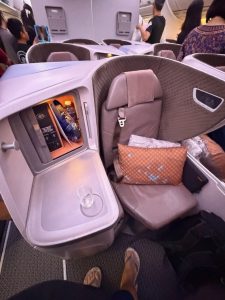
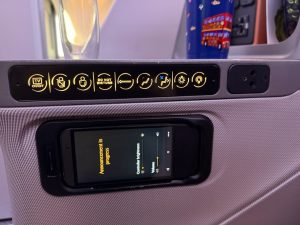
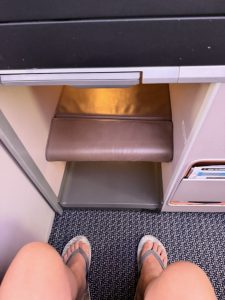
Singapore Airlines A350-900 Medium Haul Business Class seats are arranged in a 1-2-1 configuration, ensuring passengers get direct aisle access. With a pitch of 60”, the Singapore Airlines regional Business Class seats provided a good amount of leg room. However, compared to its long haul cousin, the seat width of 20” (expandable to 22” with armrests lowered) felt a little tight. For passengers sitting next to the window or in one of their “honeymoon” seats might find the entrance to their seat a little narrow with a gap of only 9” having to navigate past the side table. However, when settled into the seats, the soft leather and the thick cushioning made these seats feel very comfortable even in the default take-off/landing mode. Singapore Airlines promises a lie-flat Business Class seat in all of its aircraft. True to their promise, Singapore Airlines Medium Haul Business Class seats are capable of reclining 180°, turning the seat into a flat bed, which I find comfortable for short or even longer naps. Despite the lack of a sliding door, these Business Class seats provide a good amount of privacy in bed mode due to the high shell back adopted. The soft velvet inner linings of the seat shell felt comfortable and premium. I find a good amount of space for my feet in the footwell, but passengers with larger feet might find it a little cramped. I find the in-between “Lounge” mode to be the most comfortable. Other than the preset angle with a touch of the seat control button, I was able to customise the angle of the seat back recline to find the most comfortable position, while propping up my feet into the footwell. This is the best mode for dining and movie bingeing.

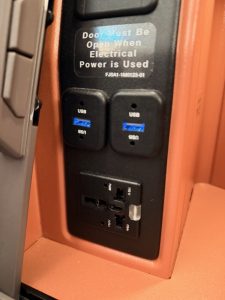
Singapore Airlines’ regional Business Class seats rival its long-haul variant in terms of storage. Passengers would appreciate the small cabinet above the side table, which is great for storing the smaller items that we wanna keep in reach for the duration of the flight. Although a little tight, I was still able to fit in my 11” iPad and loose small items like my passport and charging cables. The sliding door fitted in this small cabinet also meant we were allowed to use this cabinet even during take-offs, landings and taxi. Other than the side cabinet, I was also able to use the space under the footwell to stow my carry-on instead of placing it in the overhead bin. I find the seat pocket a little hard to reach, being positioned near the floor at the entrance to the seat. However, this seat pocket can also be potentially an alternative storage space for slimmer items like a tablet or a magazine. When it comes to power supply, I was able to use the two USB-A power outlets and the international power outlet, which are conveniently fitted into the side cabinet, to have my devices juiced up and ready to use when I deplane. However, I find the charging speed on the USB-A ports a little slow.

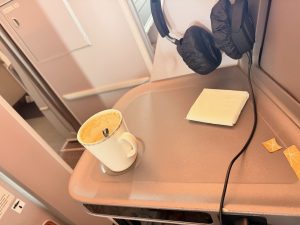
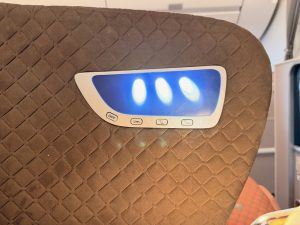
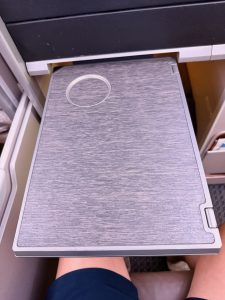
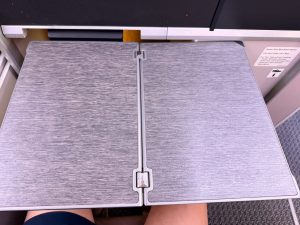
Singapore Airlines Business Class seats onboard their A350-900 Medium Haul aircraft are fitted with a sizeable and sturdy table. Deploying the seat table was a breeze with the lifting of a lever under the table. The bifold table is stowed under the personal TV and is folded in half when in storage. When fully deployed, the seat table is large enough for passengers to work on their laptops or dine. Apart from the overhead reading light, Singapore Airlines’ regional Business Class seats are also installed with a set of three reading lights on top of the inner seat shell to correspond to the three seat modes.

Inflight Entertainment

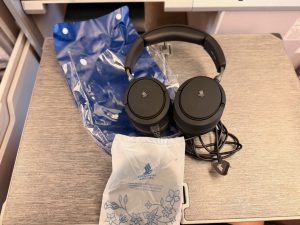
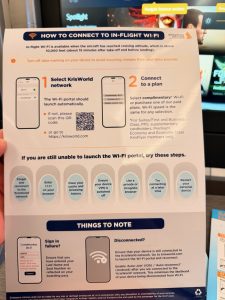
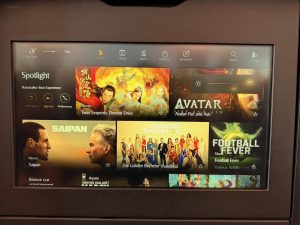
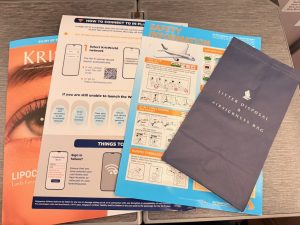
Singapore Airlines A350-900 Medium Haul Business Class seat is fitted with an 18″ HD touch screen personal TV. The picture quality on these TVs is sharp and crisp, making watching movies on them enjoyable. With the tilt function built into the TV, the picture quality remains sharp even when watching it in bed mode. Singapore Airlines provides its Business Class passengers with noise-cancelling headphones, which are very effective in blocking out ambient noises. In fact, it is so effective that I had to remove my headphones when conversing with the cabin crew. The soft padding in the ear muffs made it comfortable to wear for a prolonged period of time. Each Business Class seat is fitted with a touchscreen IFE controller that resembles a mobile phone. The interface on these IFE controllers is very well designed, enabling a shallow learning curve for their usage. When it comes to entertainment, KrisWorld is decked with hundreds of entertainment options from movies to TV shows to games. The flight time felt short when we were spoilt for entertainment options. Singapore Airlines provides complimentary Wi-Fi to all its Business Class and loyalty club passengers. However, the internet speed is only capable of supporting social media and chatting functions; one would find it frustrating when streaming videos on YouTube.

Meal Services

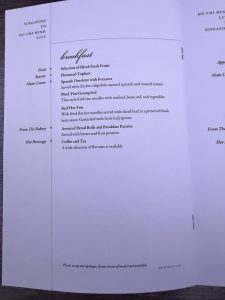
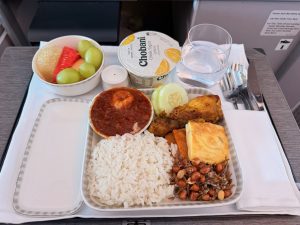
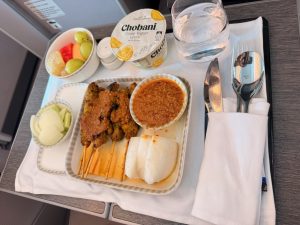
The three main course options for this flight out of Singapore were Seafood Phad Thai, Omelette with Potatoes and Beef Hor Fun. On top of these three mains, we were offered six additional options from their “Book the Cook” service. The “Book the Cook” service is an additional meal options that the airlines offers for flights above 1½ hours and from selected departure airports. Of the six additional options, three are Singaporean dishes, and the other three are Western cuisine. I opted for the Singaporean Nasi Lemak from the “Book the Cook” menu. Meal services commenced about 30 minutes after take-off. The Nasi Lemak is delicious and full of flavour. The Sambal Chilli was delicious and flavourful with a generous amount. Other than the fried chicken drumstick, an egg and two pieces of Otah, I also found three prawns swimming in the Sambal Chilli that came with the rice dish. As this was a short flight, all the courses were served in a single tray with fruits as dessert and yoghurt as an appetiser.

Service

The service we received on board was nothing short of impeccable. We were given the usual welcome by the cabin crew at the door during boarding, directing us to the correct aisle for our seats. The crew on board were very friendly and welcoming. I was taken care of by Eunice, who was responsible for my aisle. As soon as I was settled into my seat, Eunice appeared with a tray of welcome drinks, followed by confirmation of the “Book the Cook” meal that I had pre-booked online. Throughout our interactions, Eunice was always wearing a smile and came across as sincere. She addressed me by my first name whenever we met. Despite the short flight time, Eunice was seen patrolling the cabin, jumping into action to clear the tray when she spotted that the passengers were done having their meal. The other cabin crew working in this part of the plane were also very friendly and observant. One would come around with a basket of bread with the widest smile in the sky, while another male cabin crew member jumped into action the moment he saw me having difficulty in retrieving my carry-on from the overhead bin.

Afterthought

Singapore Airlines A350-900 (Medium Haul) was a solid product. The seat was very comfortable for a short two-hour hop from Singapore to Ho Chi Minh City, though a little narrow. I was able to get a short nap after take off and before the meal, reclining the seat into flat bed mode. In lounge mode, the seat is most comfortable and further customising the degree of recline of the seat made it more comfortable. There were sufficient entertainment options on KrisWorld that made the flight time whizz past quickly. The meal from the “Book the Cook” was flavourful and came in a generous portion. The cabin crew were both professional and welcoming. They were seen wearing their smiles and patrolling the cabin throughout the flight. I had an enjoyable flight with Singapore Airlines.