When it comes to attractions, those in Ho Chi Minh City can be completed within a day. Unlike other cities in Vietnam, like Danang and Hanoi, there are not many day trip attractions outside of Ho Chi Minh City. Cu Chi Tunnel is one of the most famous day trip destinations from Ho Chi Minh City. Most of the day trips to Cu Chi Tunnels usually combine with a river cruise down the Mekong River. However, the day trip we embarked on is one that combined Ba Den Mountains instead.
Ba Den Mountain – The Roof of South Vietnam
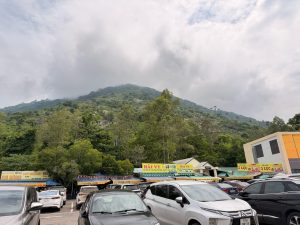
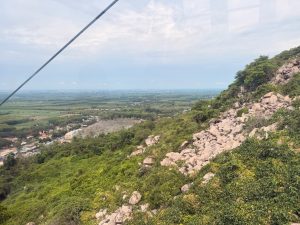
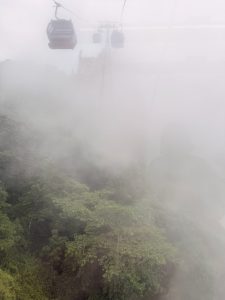
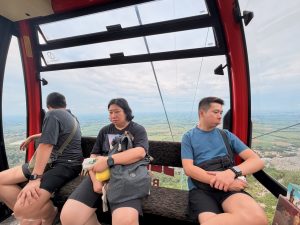
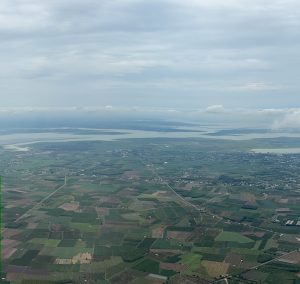
The drive to Ba Den Mountain took about 2½ hours from Ho Chi Minh City. Ba Den Mountain, dubbed as the roof of South Vietnam, is the highest mountain in this part of the country, standing at 986 m. There are two cableways to get to the top of the mountain: the Van Son route, the direct and faster route; and the Tam An route, where visitors are required to change cable car halfway at Hang Pagoda. We took the Van Son route, which took us about 10 minutes to scale to the top of the mountain. As we ascended from the base station, we were treated to endless farmlands in this part of Vietnam, as well as a large lake – Dau Tieng Lake, which is the largest reservoir that spans across three provinces of South Vietnam.


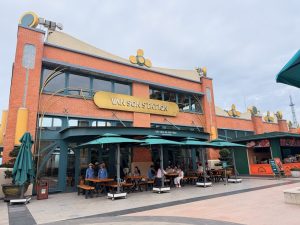
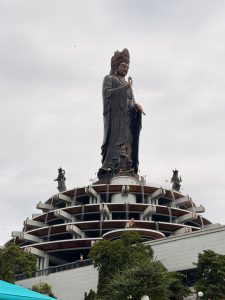
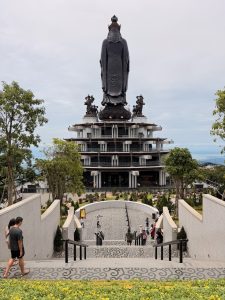
Coming out of the Van Son cable car station, we were greeted by a large 72m tall bronze Goddess of Mercy statue. The Goddess of Mercy, with her benevolent looks, seem to be blessing the landing under the mountain and those of us who came all the way here to visit the mountain. Before giving us our free time to wander around, our guide brought us to the edge of the viewing platform, introducing us to the surroundings while we looked out into this part of Southern Vietnam. We were given one hour to explore the mountains. After the storytelling, and before he gave us the time to roam around, our guide oriented us to the three major sights in Ba Den Mountain. Unlike similar mountains like Ba Na Mountain near Danang, Ba Den Mountain has no amusement parks; this mountain seems to be built for Buddhism.


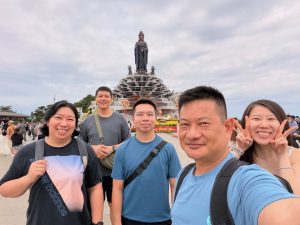


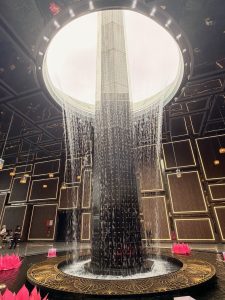
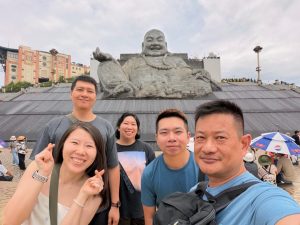
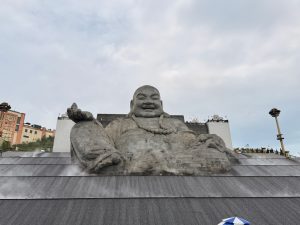
The first sight on the mountain that we went to was the Laughing Buddha Statue that our guide recommended. To get to the lower platform, we had to take a total of 10 escalators that passed through the inside of the stone Laughing Buddha Statue. The interior is especially apparent when at the bottom of the few escalators, where we could see the layers and layers of stone that stacked up to form the Buddha statue. At the bottom of the escalators is a path that leads to the outdoor lower platform. This is where we could see how big the Laughing Buddha Statue was. We waited briefly for the water show, as our guide recommended. The water show is merely a water fountain display with water sprouting out to the rhythm of the music. The show lasted about 3 minutes. There was nothing much to do at this lower platform, and we headed back up to the main level after the show. As we only had 1 hour here, we used about 20 mins to get to the lower platform and watch the water show, and we made the decision to head straight to the Golden Buddha Statue behind the Goddess of Mercy Statue.

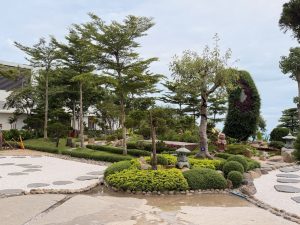
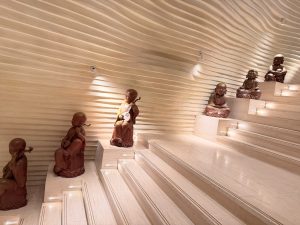

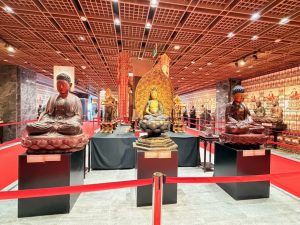
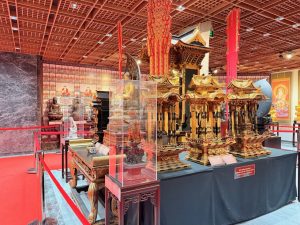
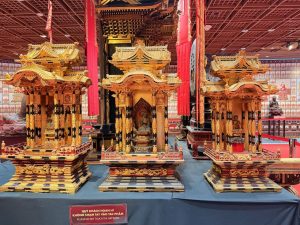
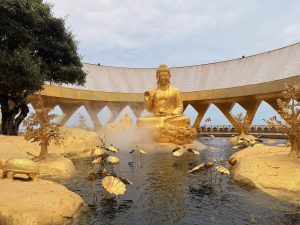
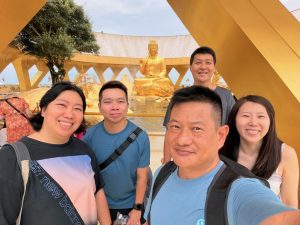
Along the way, we spotted the 5-storey building, at the base of the Goddess of Mercy Statue, housing Buddhist sculptures and art pieces. We would return to visit the gallery if we had sufficient time after the Golden Statue. The Golden Statue sits on top of a small hill behind the gigantic Goddess of Mercy Statue, with very well-marked signs leading us to it along the way. At the top of the hill, the Golden Buddha statue sits solemnly in the middle of an artificial pond. Not just the statue of the Buddha is covered in gold, all the other ornaments like the turtle, lotus flowers and even the rocks are covered in gold. There is nothing much to do here other than offering our prayers to the Buddha. Our 1-hour allocated time is almost up, so we hurried back to Van Son Station, where we met up with our guide and the rest of the tour group. Before heading to our next stop, we stopped by a local restaurant for lunch that is included in the tour price.
Cao Dai Temple – First Temple of Caodaism
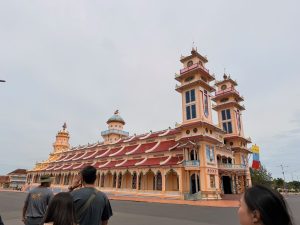
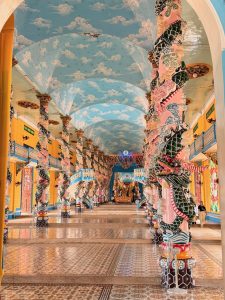
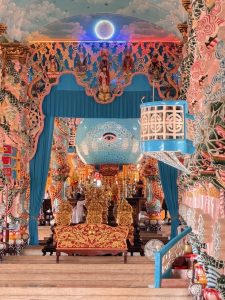
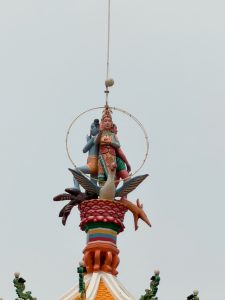
Our next stop, Cao Dai Temple, is a short 30-minute drive away. Caodaism is a religion that was established in Southern Vietnam in 1926. The religion, now has over 1000 followers, blends the teachings of Buddhism, Taoism, Confucianism, and Catholicism. The main object of worship for this young religion is the Left Eye of God. The Cao Dai Temple is situated in a large compound surrounded by fences and controlled entrance gates. The exterior of the temple blends a little of each religion. The twin towers at the front, the tallest feature of the temple, reminded me of the twin towers of Notre-Dame de Paris. However, it differs from the towers of the original Notre-Dame Cathedral in that these towers are topped with Chinese elements, usually found in Pagodas instead of French Gothic elements. The main structure of the temple, with its three-layered roof design, topped with small Chinese Dragon sculptures, seemed to borrow inspiration from Chinese Temples. The tower in the centre of the temple is a weird one, but it seems like a European design structure. There is another single tower at the end of the temple that resembles the top of a Chinese Pagoda. What is interesting here is the statues of the Big Three in Hinduism: Brahma, Vishnu and Shiva, sitting atop this pagoda structure. The interior of the is decorated with rows and rows of columns with Chinese dragon sculptures. Blue sky with clouds decorated with reflective glasses that symbolise stars is the main fresco on the ceiling. The centre area is only accessible to devotees of Caodaism; visitors would have to walk around the temple by its walls. We were brought one round inside the temple by our guide, who explained that the big spherical structure at the end of the temple is the main object of worship. He also mentioned that there is a celluar at the back of the temple under the sphere where past religious leaders were buried. As interesting as the religion is, I had a weird vibe here. Fortunately, we only stopped here for 15 minutes and were on our way to the highlight of this day tour – Cu Chi Tunnel.
Cu Chi Tunnel – The Resilience of the Vietnamese
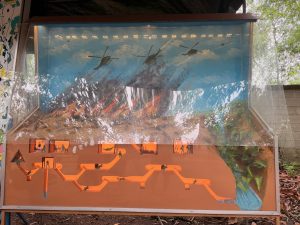
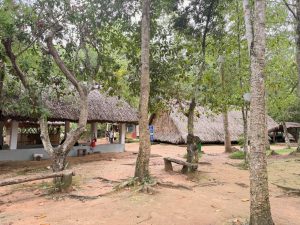
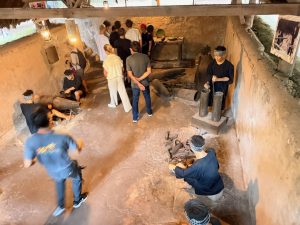
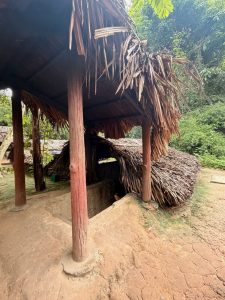
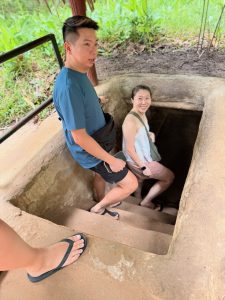
Our next stop, the Cu Chi Tunnel, sits in a forest and is about a 1-hour drive from Cao Dai Temple. Most first-timers to Ho Chi Minh City would make this 2-hour drive trip out of the city to visit the tunnels. Cu Chi Tunnel is a complex tunnel system that stretches 250km underground, which the Vietnamese used to defeat the US military forces during the Vietnam War. The Vietnamese dug the famous tunnels in the middle of the forest to stay hidden, with movements restricted mainly to night. They would live inside the tunnel throughout the duration of the war. The tunnel has facilities such as a kitchen, bedrooms, a war command centre and bunkers, which enabled the Viet Cong to stay hidden in the tunnels for months. After alighting from our van, our guide led us to his giant board that showed the tunnel system on a map. The tunnel network is more complex than I imagined, as not all the tunnels have been discovered to date. There is a model beside the map showcasing the various facilities and how the Viet Cong lived inside the tunnel. We were then brought to a small opening in the ground that could only fit one slim person. This would be where the Viet Congs got in and out of the tunnel and also served as an ambush point.



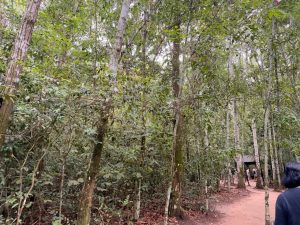
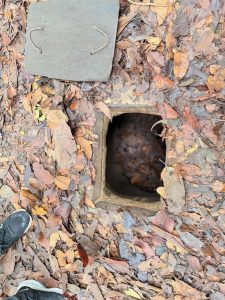
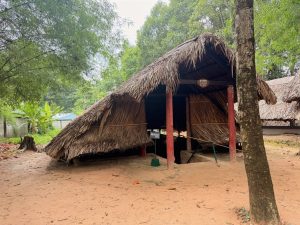

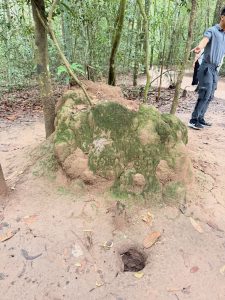
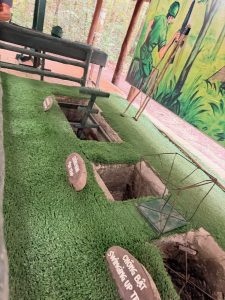
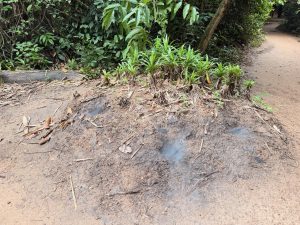
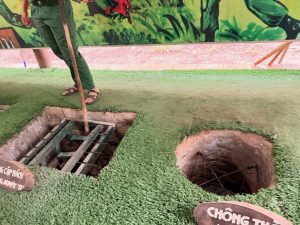
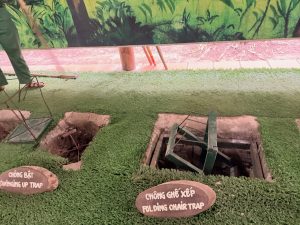
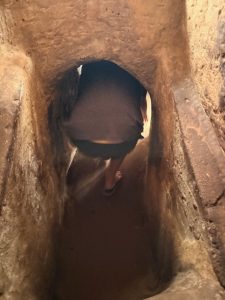
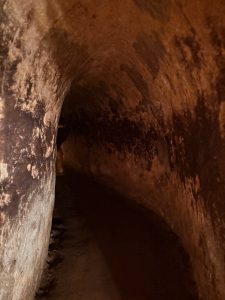
During the tour of the tunnels, we were also shown the various types of traps that were deployed in defence. These deadly traps were made using materials that were found in this forest and seem very effective. The highlight of the trip is the experience of crawling in one of the tunnels. Our guide told us that this tunnel was enlarged for tourists, and the actual tunnel is a lot smaller. The whole tunnel would take us 5 minutes to crawl through, but we came out from the first exit, which is about 50m from the entrance. There are four exits along the way for tourists who do not want to make it to the end of the experiential tunnel. Throughout our time in Cu Chi Tunnel, we saw small holes on the forest floor that seemed like ant holes were actually ventilation points and a number of chimneys disguised as ant mounds. Although this was my second time visiting the tunnels, I was still fascinated by the resilience of the Vietnamese, living underground for years for survival and in the defence of their land. The tunnel is worth a visit. After visiting Cu Chi Tunnel, we made our way back to Ho Chi Minh City. It was raining heavily by the time we reached the city, but the heavy rain did not really affect us since we wanted to eat at the hotel for their seafood buffet dinner.


Thank you for sharing your experience of the city tour.