Austria Day 3 (10 Jan 25): Hallstatt – The Heavy Snow on Dachstein Krippenstein and The Fairy Tale Quaint Town

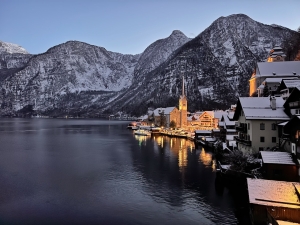
The very reason that made Austria our travel destination was a picture of Hallstatt in winter at night. The snow-covered town with the night light cast on the houses by the lake made this town look charming. Hallstatt is located near Salzburg, and it took about 2 hours to get to Hallstatt from Salzburg and 3 hours from Vienna.

Getting to Hallstatt

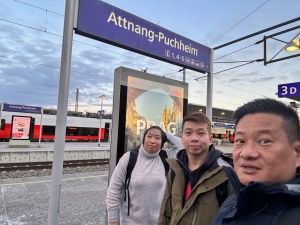
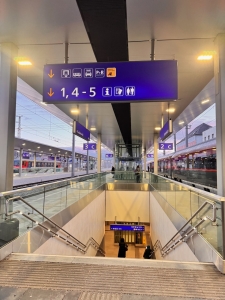
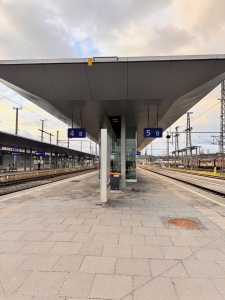
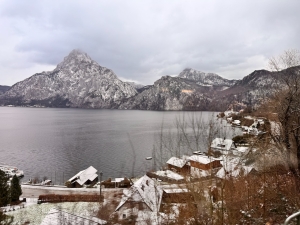
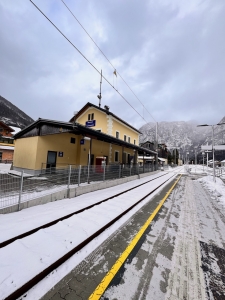
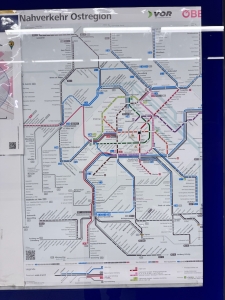
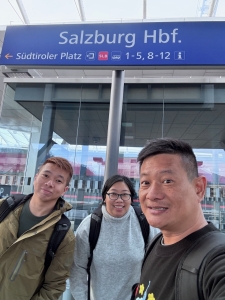
There are two main ways (other than self-drive) to get to Hallstatt: by train or bus. We initially wanted to take a bus from Salzburg train station, as I read that the bus option would take us directly into Hallstatt without the need to take the ferry ride across Lake Hallstatt. The bus option offered a more scenic view compared to the train. The downside of taking the bus is we will be required to change three buses, which are not as frequent (and are about 1 hour apart). Not knowing if we would make it in time since the timing between buses is mere minutes apart, we opted for the easier train option. We took the train from Salzburg Hauptbahnhof and switched to another in Attnang Purcchiem for Hallstatt.

Change in Plan

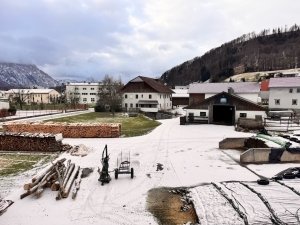
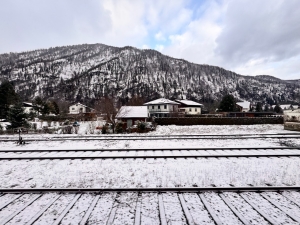
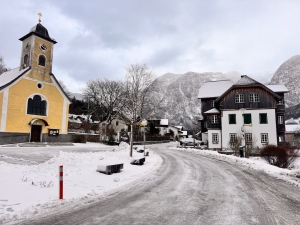
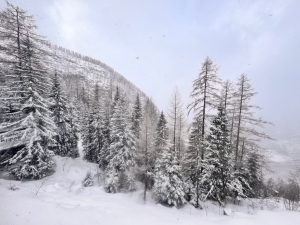
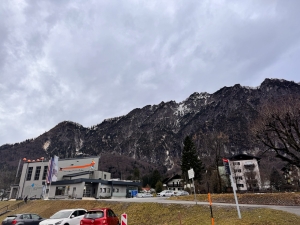
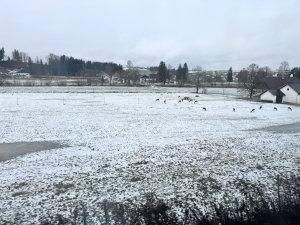
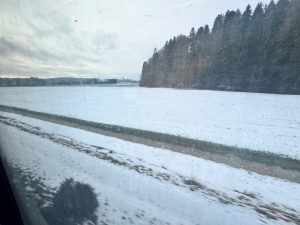
Days after we purchased non-cancellable train tickets to Hallstatt, an email correspondence with the Hallstatt Salt Mine notified us that the path to the Hallstatt skywalk would be closed due to the amount of snow in January. Since the skywalk is closed and allocating a full day to the Hallstatt will be excessive, the other place we could get a bird’s eye view of Hallstatt would be 5-Fingers on Dachstein Krippenstein. We changed our plan and carved out the morning for 5-Fingers. To get to Dachstein Krippenstein, we took the train to Obertraun Dachsteinhöhlen Bahnhof and transferred to a 7-minute bus ride on #542 (the bus stop is outside a church opposite the train station). It was snowing when we arrived at Obertraun Dachsteinhöhlen Bahnhof. We were very excited to see snow in this part of Austria.

Dachstein Krippenstein – Top of Hallstatt

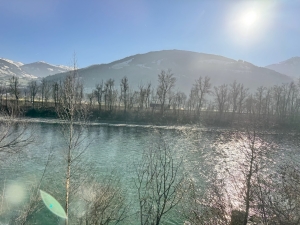
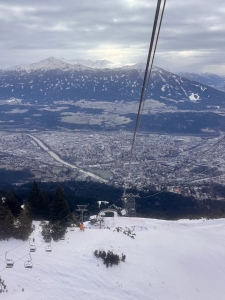
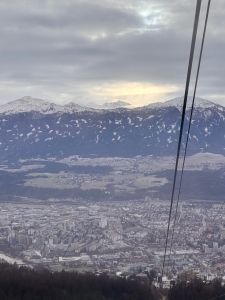
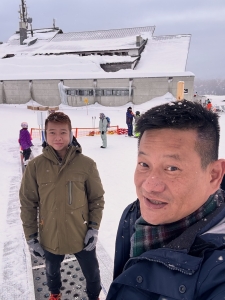
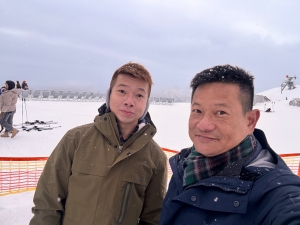
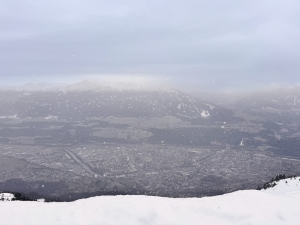
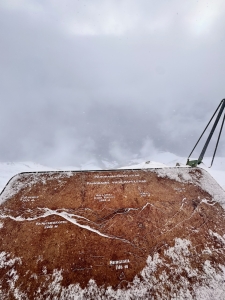
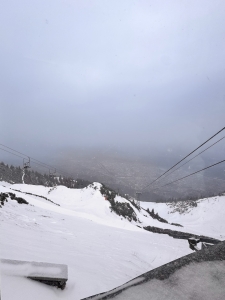
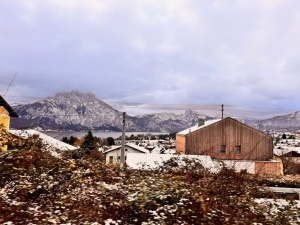
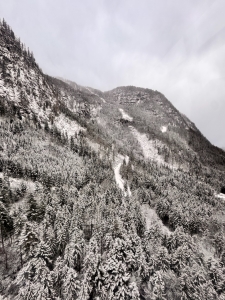
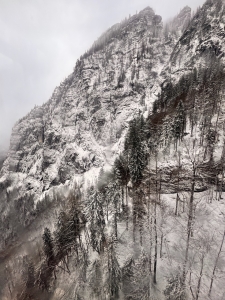
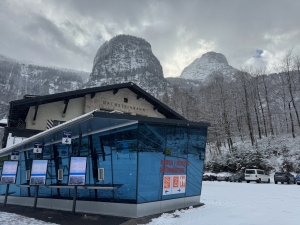
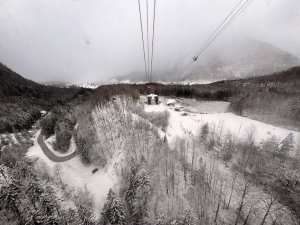
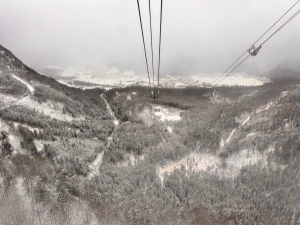
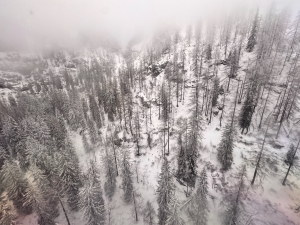
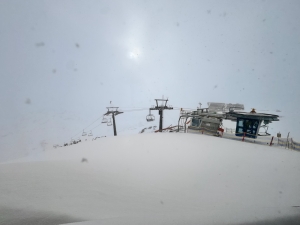
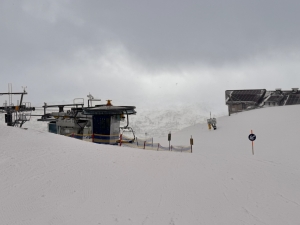
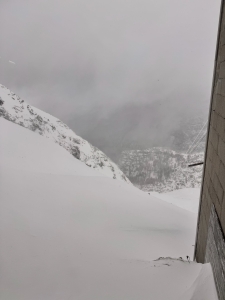
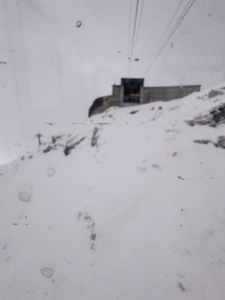
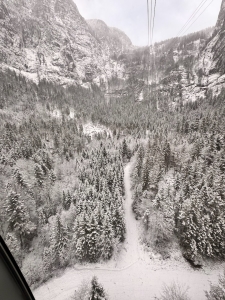
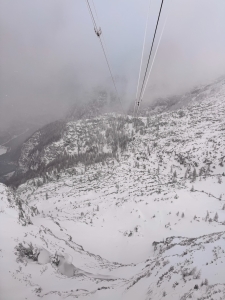
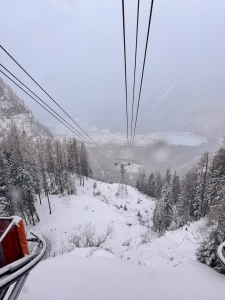
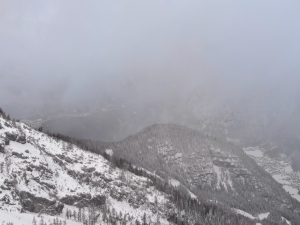
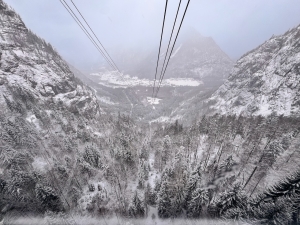
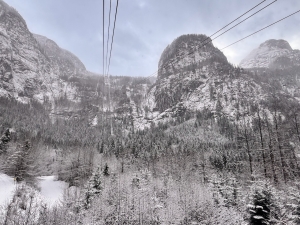
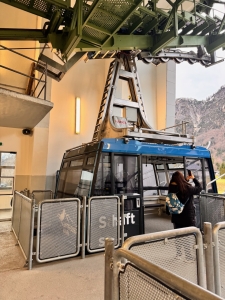
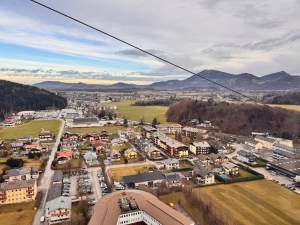
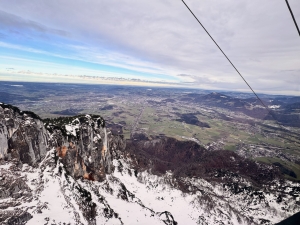
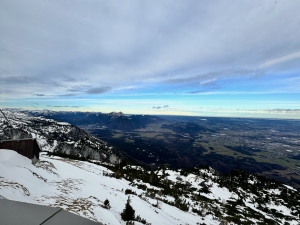
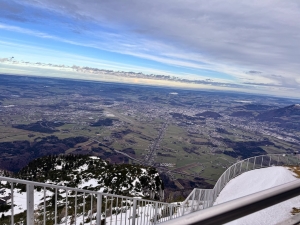
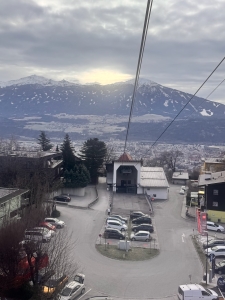
When we arrived at the Dachstein Krippenstein cable car base station, we were told that the 5-fingers attraction was closed due to the heavy snowfall. Our only option is to get the Panorama Ticket and ride the cable car up the mountains for a meal. Since we were already here, we bought the Panorama Ticket (which cost €46.40 on site), including the return gondola ride from the base station to the highest mountain station (2,200m). The snowfall made the scenery we saw on the ride up to the top of the mountain magnificent. We were able to see Lake Hallstatt on the way up. To get to the top of the mountain, we were required to change cable cars at the first station (about 1,300m) to the highest point. Our view of the mountain started obscuring by the low clouds as we approached the second station.

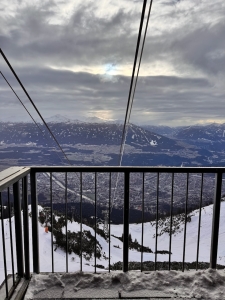
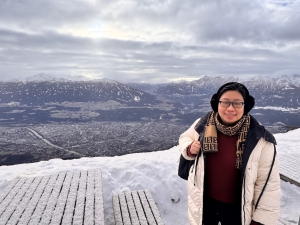
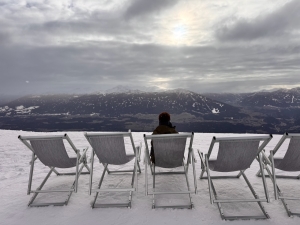
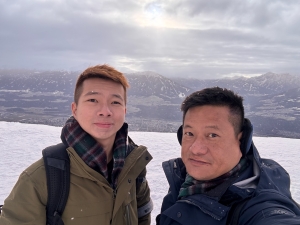
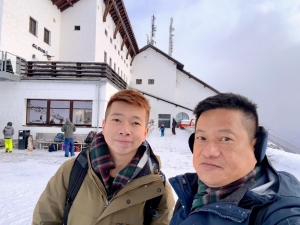
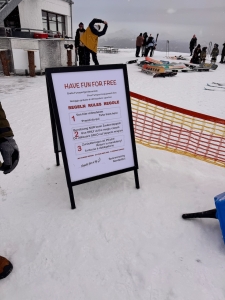
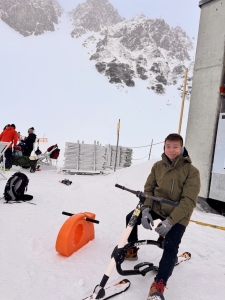
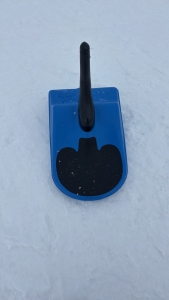
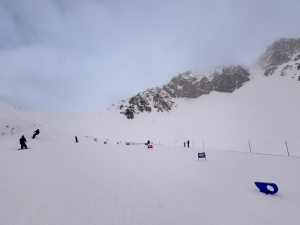
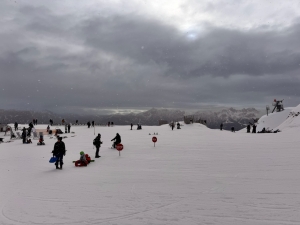
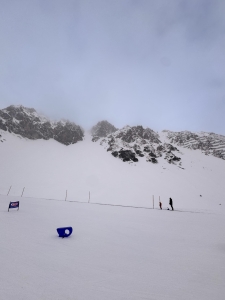
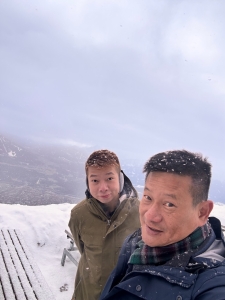
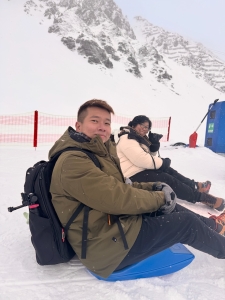
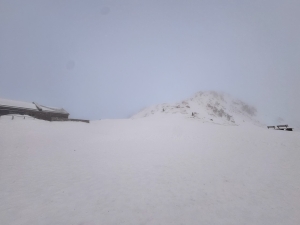
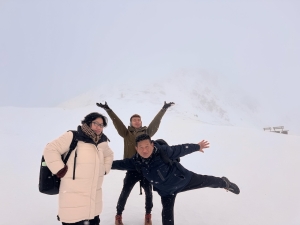
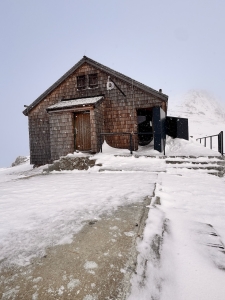
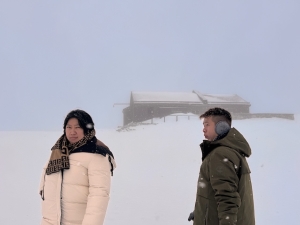
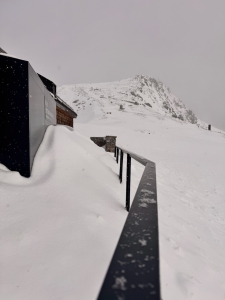
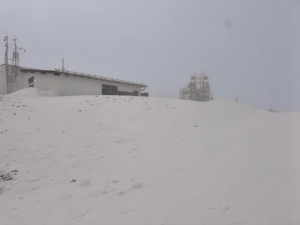
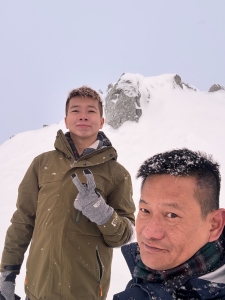
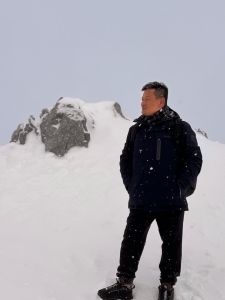
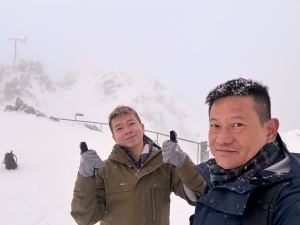
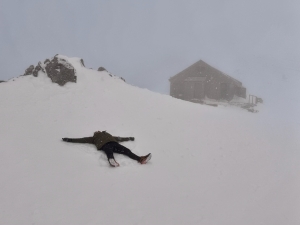
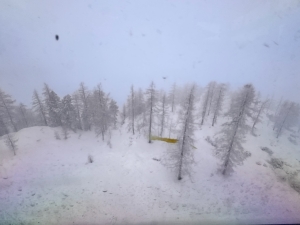
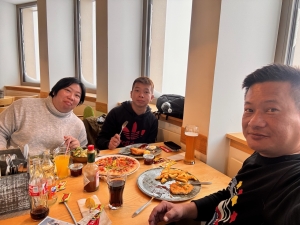
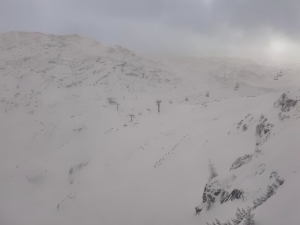
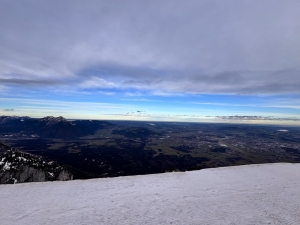
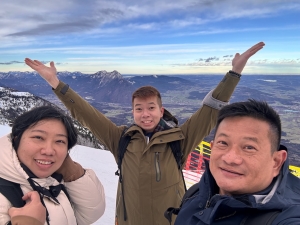
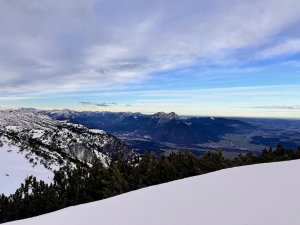
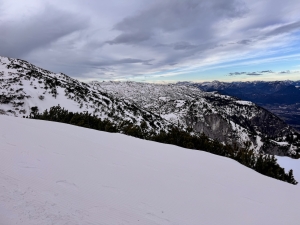
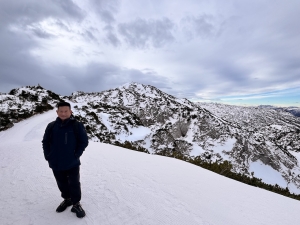
As soon as we reached the peak station, the snowfall got heavier, and the temperature dropped to -12.2°C, making it tough for us to even step outside the cable car station. There is a restaurant at the peak station, and we thought the price was quite reasonable given its location. We settled our lunch here while watching the heavy snowfall and occasionally skiers setting off from the starting point for their way down to the base of the mountain. At times, the clouds gave way to the sun, giving us a good view of the ski slope from the restaurant. After lunch, we headed into the open area to feel the snowfall. And since there is not much we can do here (we don’t ski, nor were there sledging facilities), we decided to descend the mountain and head to Hallstatt.

Spending the Afternoon in the Fairy Tale Town of Hallstatt

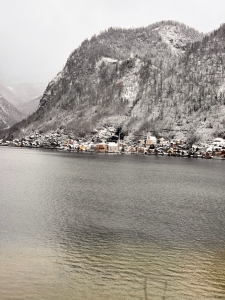
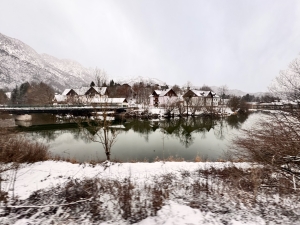
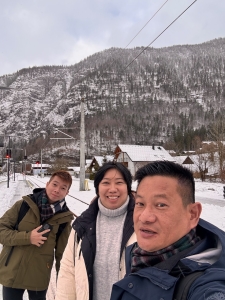
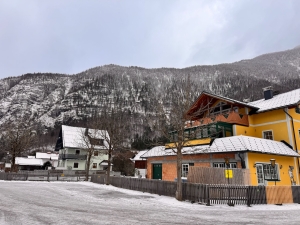
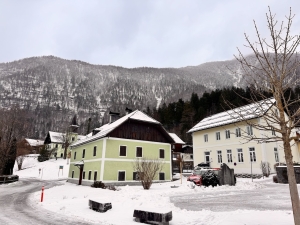
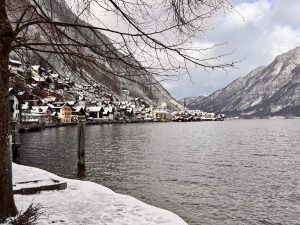
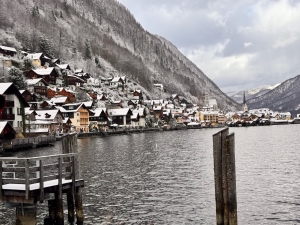
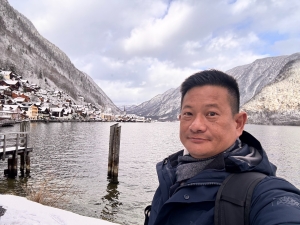
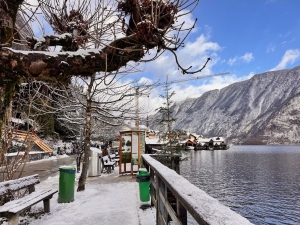
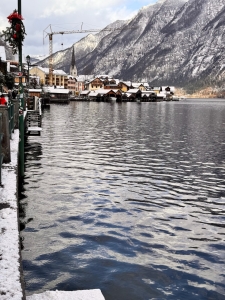
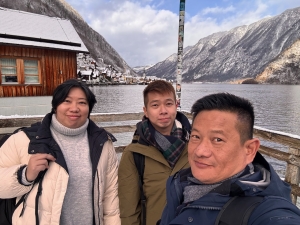
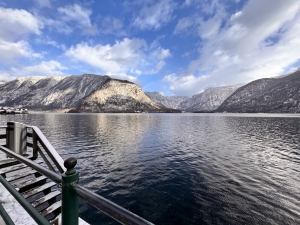
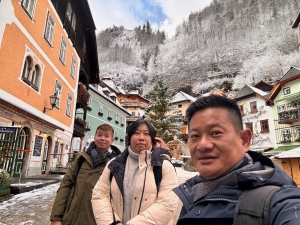
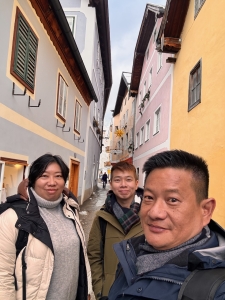
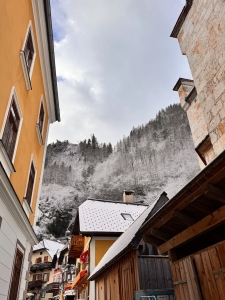
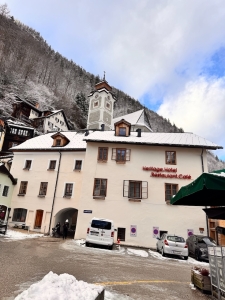
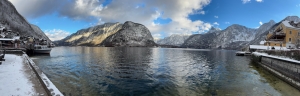
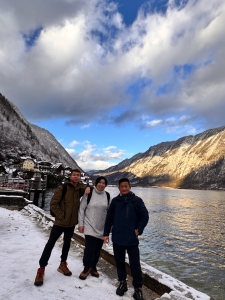
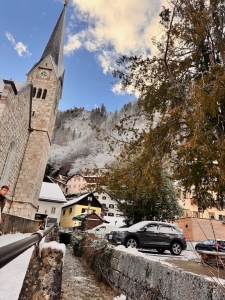
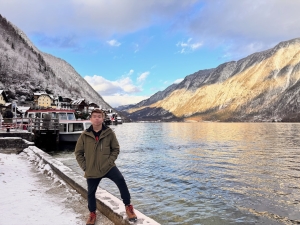
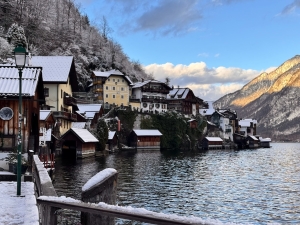
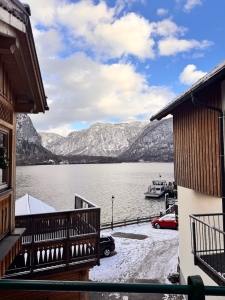
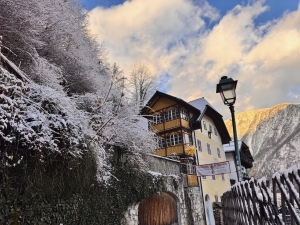
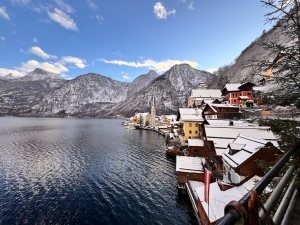
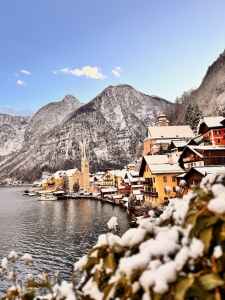
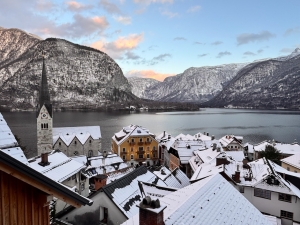
We took bus #543 from Dachstein Krippenstein base station to Hallstatt, which dropped us off at the carpark just outside town. As the bus stop outside town was next to the lake, we were already treated to the postcard view of Hallstatt the moment we alighted from the bus. We were surprised at the relatively thin crowd in Hallstatt. After all, Hallstatt is a tourist town that people flock to because of the view. Hallstatt exists due to the salt mine in the mountains behind the town. Salt has been mined here 7,000 years ago, even older than the pyramids of Egypt. There is only one path which cuts through the whole town (I told my friends we would not go wrong by following the crowd), where we saw houses seemingly stacking on each other (as some were built on the higher slopes). The pavement into the town was next to the lake, giving us a great view of the lake and the surrounding mountain ranges. It was snowing when we arrived at Hallstatt, and the snow-covered ground made this fairy-tale town even more charming. This is the view we came for and the reason why we wanted to visit Hallstatt in winter.

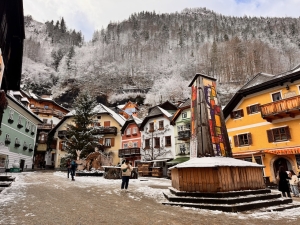
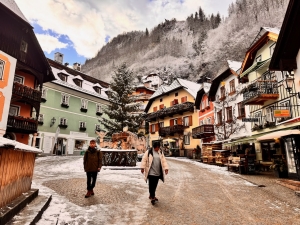
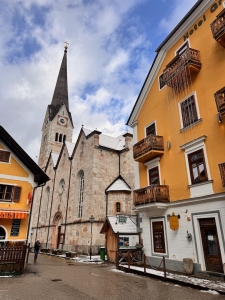
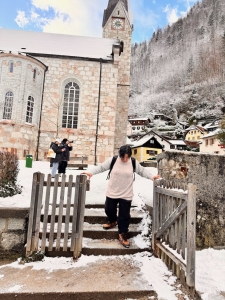
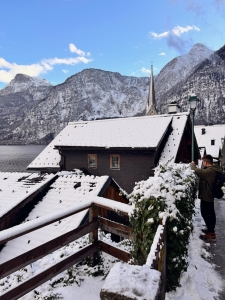
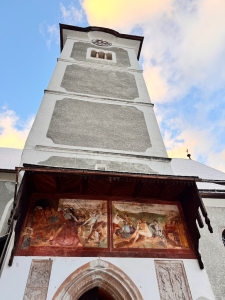
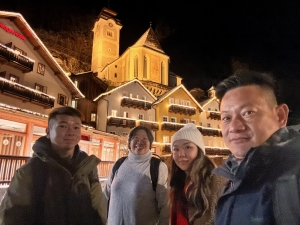
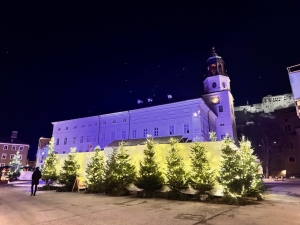
After about 20 minutes of walking (and photo-taking), we came to an open space surrounded by houses with a wooden monument in the centre. This is Central Marktplatz – the town square of Hallstatt. We saw colourful houses surrounding the monument, snow-covered pine trees in the mountains behind, and snow on the ground. This is a perfect picture of a snowy town in winter. The absence of the crowd added a sense of tranquillity to Central Marktplatz, making it even more charming and relaxing. We spotted a church not far from the Central Marktplatz, sitting by the lakeside. The grounds the church sits on are covered with snow, making it a perfect place to take winter pictures. A small platform extends into the lake, a great spot to take pictures. We did not enter the church as we did not find the entrance.

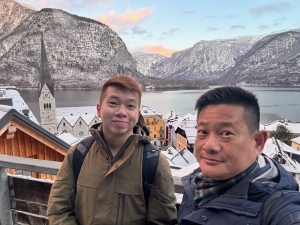
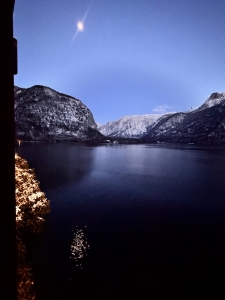
The walk to the viewpoint took about 15 minutes up some slopes and stairs. The view here was stunting. We could see why this is the perfect spot to take pictures of the town, especially in winter. I highly recommend not to miss this spot when coming to Hallstatt. From this viewpoint, we were able to get to the town, the lake, and the mountains in one frame. It wasn’t too crowded at the time we arrived at the viewpoint. We had about 1 hour before sunset (sunset at 5.30 pm), and I wanted to return to this viewpoint to take capture night shots of the town. I thought the snow-covered Hallstatt would be especially beautiful when lights were cast at the building.

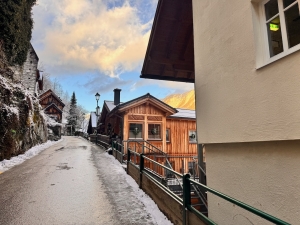
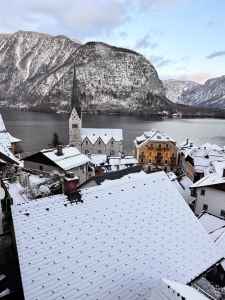
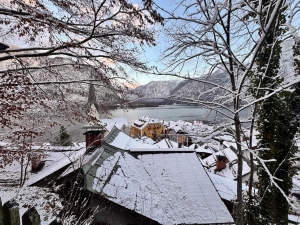
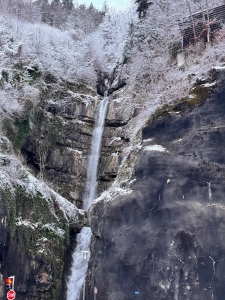
As we walked through the town earlier on, I saw a street behind some of the houses that seemed to be perched high up on the side of the hill earlier today (I call this street the “Roof of Hallstatt”). I thought it would be interesting to see Hallstatt from a different perspective, and since we had 1 hour to spend before sunset, my friend and I went to this “Roof of Hallstatt”. Seeing the snow-covered roofs of Hallstatt, facing the lake with the houses in between us, I thought Hallstatt looked equally beautiful here. We even spotted a waterfall up here on the walkway. We returned to the viewpoint as it was near sunset and waited for the right moment when the sky was sufficiently dark and the lights in the town were bright enough for the contrast. After waiting for about 30 minutes, we got our shot.

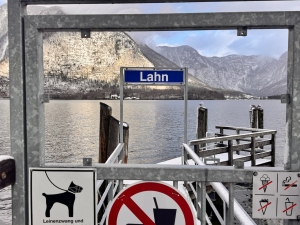
The last ferry to Hallstatt Bahnhof, across the lake, was timed to the last train that ran through the station. Tickets for the ferry ride (€4 one way) will only be sold at the time of boarding (i.e., we cannot book or purchase in advance). We saw Hallstatt getting smaller from the ferry as we moved towards the other side of the coast. Soon, it was time for us to bid farewell to Hallstatt as we boarded our train back to Salzburg. The train ride from Hallstatt to Salzburg took around 2 hours. I thought spending ½ day in Hallstatt was sufficient (provided the Salt Mine and funicular were closed). Other than the view from the viewpoint, there is nothing much anyone can do in Hallstatt, although I might spend 1 day if the Salt mines were opened. I thought we made the right decision by spending the morning in Dachstein Krippenstein, although there was nothing much we could do there when 5-fingers were closed.

Austria Day 2 (9 Jan 25): Salzburg – Untersberg and Festung Hohensalzburg: Seeing Salzburg in One Day

We wanted to cover as much Salzburg as possible today to maximise the 48-hour Salzburg Card, which costs €36 per adult. The sights we visited today would cost us €74.90 (excluding the public transport we took), about double the amount we paid for the Salzburg Card. One thing good about the Salzburg Card is that it is valid for the entire 48 hours from the time we activated it and not by day. Since we activated it on 9 Jan at 9.30 am, it will remain valid until 11 Jan at 9.29 am, the entire 48 hours.

Untersberg – The Mountain that Spans into Germany

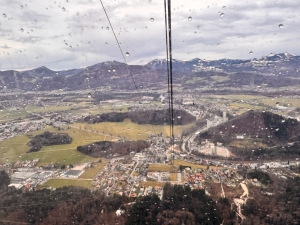
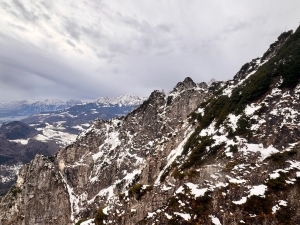
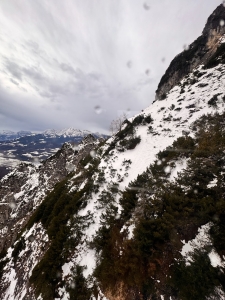
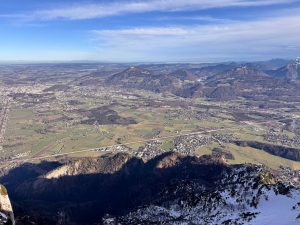
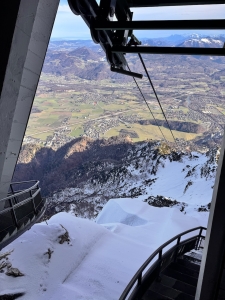
One of the ways to maximise the value of our Salzburg card is to visit Untersberg, the mountain ranges that span into neighbouring Germany. Our Salzburg card included a return cable car ride (€32 for a return cable car ride) to the summit station at Geiereck, about 1,776m in the Alps on the Salzburg side of the mountain ranges. To get to the base station of the Untersbergbahn, we took bus #5 from Salzburg Hauptbahnhof (€2.50 one way from Salzburg City) to the final stop of Untersbergbahn. Bus #25 also runs from Salzburg Hauptbahnhof to the base station. The cable car ride took about 8 mins up to the top. As we ascended the mountain, we saw the mighty surrounding mountain ranges sitting magnificently across the land in their white snow cap. As we approached the summit, the terrain below us turned from lush grassy plains to sharp mountain edges. Soon, we saw traces of snow draping on the mountain terrain below us. The snow coverage area increased as we were closer to the summit station. Passing the last cable car pylon, we were immersed in a snowy wonderland.

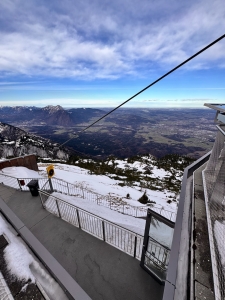
There weren’t many facilities in the Untersbergbahn summit station, other than the cable car, and only one restaurant called home here. We couldn’t hold our excitement at the sighting of snow and made our way outside. The view outside the station was breathtaking. We were treated to a vast landscape beyond the snowy grounds we were standing on. We could see Salzburg city and the nearby Salzburg airport from where we stood. However, the lack of railings and our uncertainty about the path prevented us from getting close to the mountain’s edge. There seem to be some trails that would lead us to a cross on top of the summit station. Having that in mind, we slowly navigated our way. The first few steps out of the station covered in snow were fine, but the icy path as we walked further uphill along the trail was slippery. There weren’t any railings around that we could use to ease our trek up the slope. We saw a wooden lodge housing a restaurant not far from the summit station that we had just exited. We carefully navigated our way to the cross above the cable car station, looking for the next step that did not result in us sliding backwards. Soon, we came to a crosspoint; the way up to the cross was steep, and with the icy path, we were not confident we could make it up. Or we could take a right on what seems to be an easier path up and down some slopes to another cross in the distance. We opted for this path. As we were walking up the slope, it became the icy path proved to be challenging. After the first slope, we thought it might be too challenging to press on despite seeing some groups easily passing us. We made a U-turn and headed back to the cable car station at the peak of the first slope (partly due to more sights we wanted to visit in the day).

The walk back downslope on the icy path was very challenging. We were unsure if the next step would result in us tumbling down the slope or, worse, down the mountains. We thought the way down was exhausting, both psychologically and physically. After a few minutes of mental challenge in taking our next small step down, my friend and I decided to slide down the slope. It felt safer, but our bums suffered. Soon, we were at the same wooden lodge we had seen earlier and knew we were close to the summit station. The final stretch downslope to the summit station was very icy and slippery. Fortunately, we saw a path leading to the station’s terrace deck (the second floor), which was easier to walk on. We finally made it back to the station and had lunch in the restaurant to reward our efforts (partly because we were hungry) while waiting for the next cable car down (cable cars depart the station at the quarter of the hour).

Festung Hohensalzburg – One of the largest 11th-century Fortress in Europe

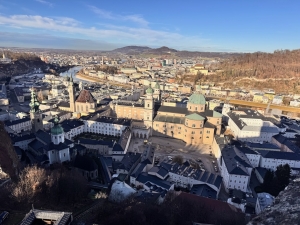
Since we did not have time to visit Hohensalzburg Fortress yesterday, we prioritised it after visiting Untersberg. Hohensalzburg Fortress is an 11th-century fortress that stood guard over Salzburg, perched on the 506m Festungsberg. The Fortress was initially built to protect the political interests of the archbishop of Salzburg. It was expanded over the next 600 years. The more significant expansion was in 1500 when the archbishop angered his people through his authoritarian ruling style by turning the Fortress from a defensive structure into a self-sufficient residence. Armed with our Salzburg card, which not only grants us the Basic Pathway tickets (€11.20 per pax) to the Fortress (which includes entrance to the castle area, the Panorama Tour and several fortress museums) but also includes a return ride on the FestungsBahn (€6 return). We took bus #25 from Untersburgbhahn base station to Petersbrunnstraße, and from the bus stop, we took a 16-minute walk upslope to the funicular station. The walk took us to the back of Altstadt, where we could see the old town from a different perspective. Along the walk, we saw St. Erhard church, a masterpiece of Salzburg architecture originating in a period dominated by the Italian baroque style and the Salzburg Cathedral, towering over the old town buildings.

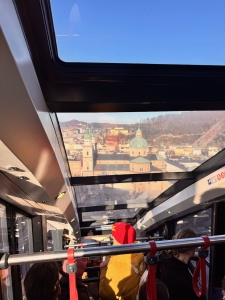
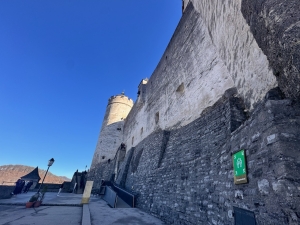
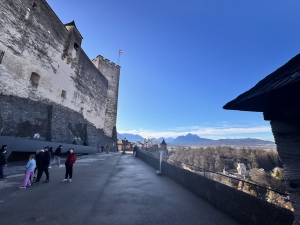
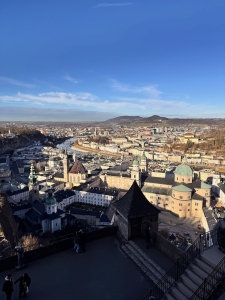
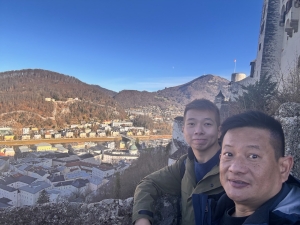
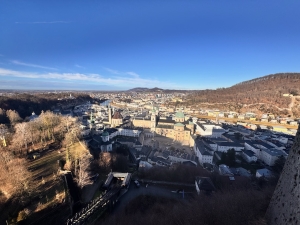
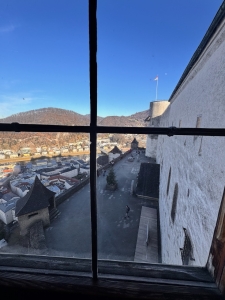
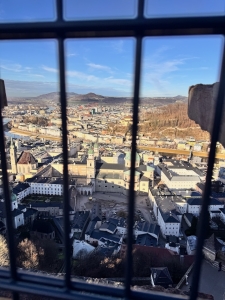
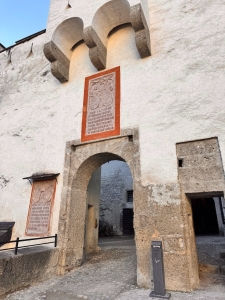
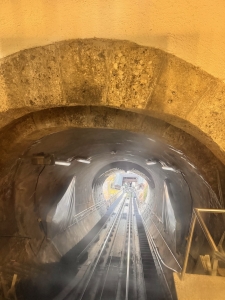
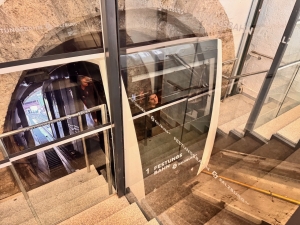
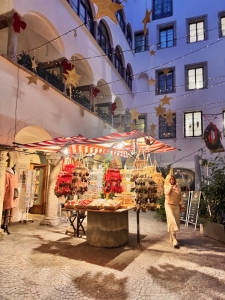
Taking the Festungsbahn is the fastest and easiest way to access Hohensalzburg Fortress (the other option was to walk up), which takes less than one minute to reach the top station. Exiting the station, we saw a German sign pointing us in two directions: to the left is “Tower Aussichtsturm”, and to the right is “Dinner & Konzert”. Not knowing what it meant, we assumed the right would bring us to some restaurant and took the left turn. This direction brought us to a large bastion where we got some really amazing views of Salzburg City. From here, we could see the Salzburg Cathedral towering over the buildings in Alstadt and the newer parts of the city further beyond, with the Salzach River running between the two areas. At this bastion, we could feel the graduere of the Fortress. We climbed the only stairs that seemingly led to the inner Fortress. While climbing the stairs, we realised the first landing gave us a better photo shot with Salzburg City below (highly recommended to take pictures here). The staircase landed us in the courtyards. Some unmarked buildings and small huts occupied the space in this courtyard, suggesting that Christmas markets might be operating here. From the staircase, we saw a sign marked “Panorama Tour” hanging from the side of the building wall, which was our next stop.

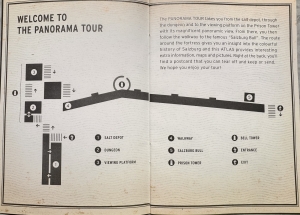
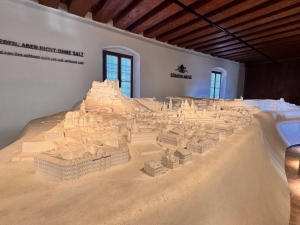
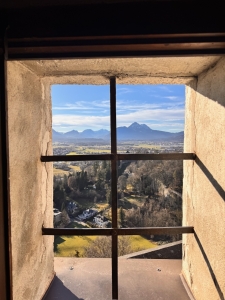
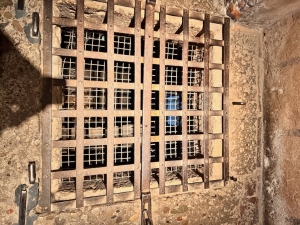
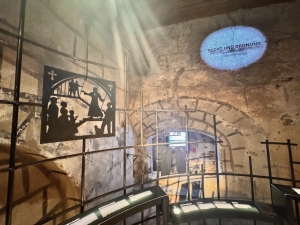
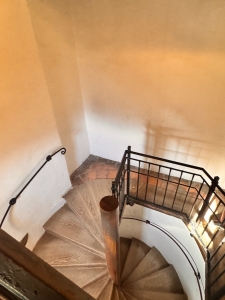
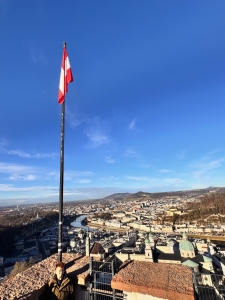
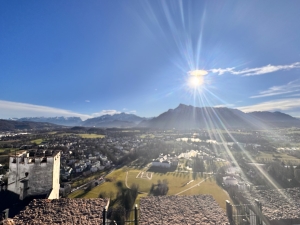
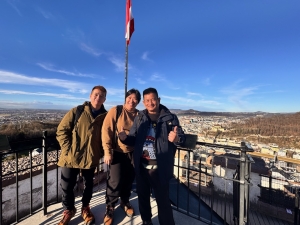
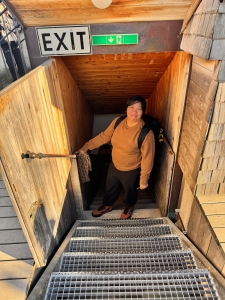
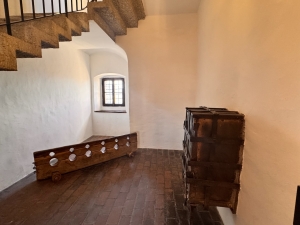
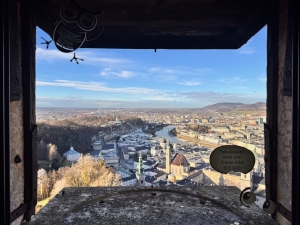
We headed inside the door for the Panorama Tour, which took us from the salt depot through the dungeon and finally to the viewing platform. The Panorama Tour is very easy to follow, there is only one way with stations and introduction of the various parts of the inner Fortress. First, we walked past a set of windows that gave us a good view of Salzburg City below, but I thought the views here paled in comparison to that from the bastion. The first room the walkway led us to was the Salt Depot, filled with a white table-like structure (which could be salt deposits) and a detailed model of Salzburg’s old town and the Fortress. There are panels explaining how Salzburg came to be and its connection with salt. Further on the path was the prison block. On the ground floor, the dungeon was visible through a metal grate on the floor. There are brief introductions about the prison cells and the dungeon in this room. Other than the grated floor and the exhibits, a wooden spiral staircase would lead us to the tower’s top deck. There were some empty rooms with nothing but a wooden chest on each floor of the tower. These would be prison cells. I thought the highlight of the Panorama Tour was the view from the platform above the prison cell block. From here, we can see the city of Salzburg and enjoy views of the surrounding Alps. We could also see Untersburg, which we visited in the morning. Descending from the tower, the rest of the tour was rather uneventful. We walked past some windows that gave us some good views of Salzburg from the Fortress. When we exited the building at the end of the walkway, we ended back in the courtyard, not far from where we entered the building earlier.

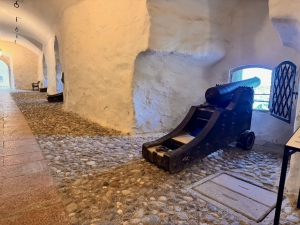
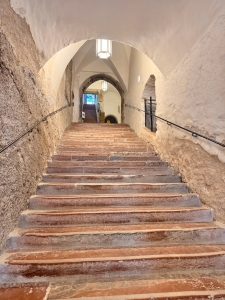
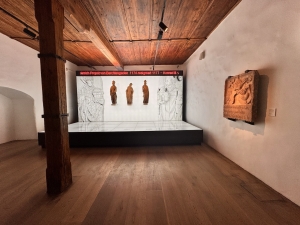
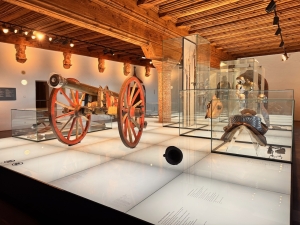
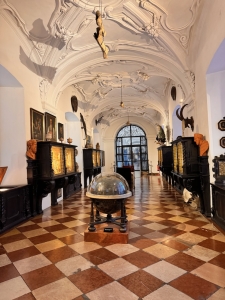
Through an archway, we came to another building—a staircase leading up to the fortress’s museums. These museums were segregated into different parts but were essentially one big hall. This is where we learned more about the fortress’s history and the way of life inside it. There is even a large hall displaying armour and cannons used in the Fortress’s heydays. As we were not museum-goers, we quickly skimmed through the museum and concluded our visit to the Hohensalzburg Fortress.

Salzburg Altstadt

Most of the attractions in the Salzburg area are situated in Altstadt. Since we were at Hohensalzburg Fortress, it made sense for us to visit some of the sights in the old town. Our first stop would be the Domquartier, a 5-minute walk from the funicular station.

DomQuartier

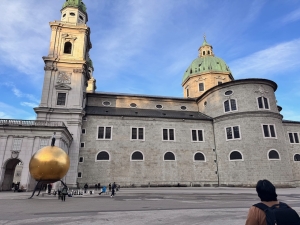
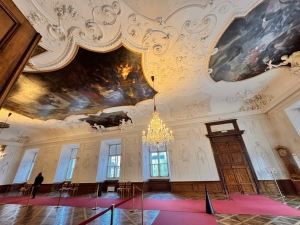
DomQuartier is a museum complex (€15 for full access) that displays secular and sacred art collections centred around the Salzburg Cathedral and Cathedral Square. The State Rooms, Archway Terrace, Salzburg Cathedral Organ loft, and the Cathedral Museum are the main parts of DomQuartier. Entrance to the DomQuartier required us to show our Salzburg Card to the ticketing counter in exchange for a ticket. A flight of stairs led us to a huge hall, the Carabinieri Hall, where another staff briefed us on using the audio guide from our phone as we walked through the State Rooms. The Carabinieri Hall was the largest room in the Residenz and was donned with impressive frescos painted on the ceiling. It seemed to serve as a concert hall today as we saw a small stage and some chairs in the centre of the hall. This is where we started and ended our tour of the DomQuartier.

State Rooms

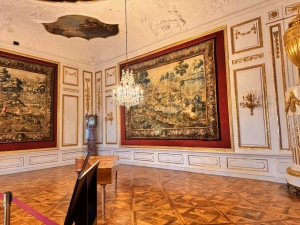
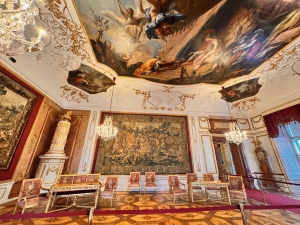
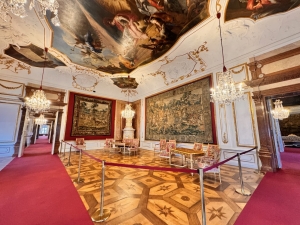
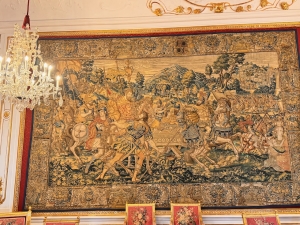
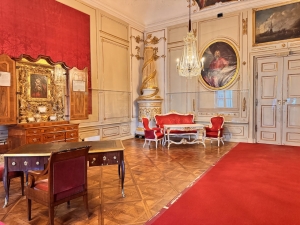
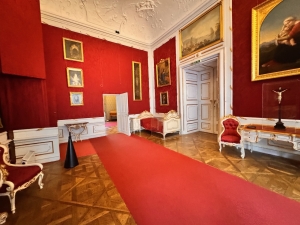
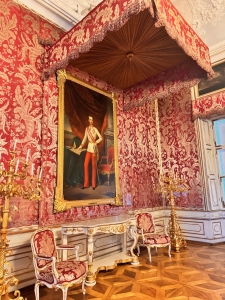
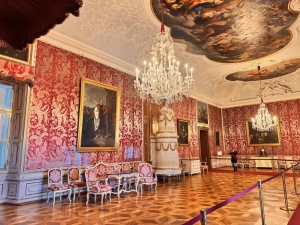
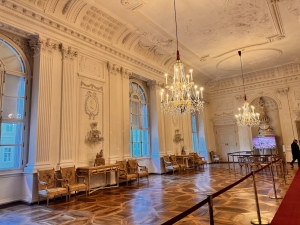
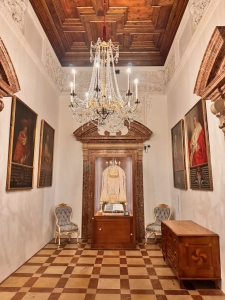
The State Rooms served as the prince-archbishop’s residence and was where he worked. There were 10 staterooms opened to the public, each serving a purpose, with the first few rooms serving as the guard’s room or waiting rooms for people who wanted an audience with the prince-archbishop. All of these rooms had different frescos painted on their ceilings, with some depicting the rulers claiming their success and some with paintings of the gods interacting with humans. Of these 10 rooms, I thought the Conference Hall (the second room from the Carabinieri Hall) and the Audience Hall (the fourth room from Carabinieri Hall) were the most interesting. The Conference Hall has a bright red velvet wall, which is more vibrant than most of the rooms we have seen. The four crystal chandeliers hanging from the ceiling and the elaborate ceiling frescos accompanied by the carvings on the ceiling made the room look posh. Here, Mozart first performed as a child at 7 (although we saw the piano Mozart used in the next room). The other significant room was the Audience Hall, filled with large, costly hand-woven tapestries from the era of Prince-Archbishop Wolf Dietrich. Here, we met a museum staff who generously shared some facts about the rooms (and the subsequent few rooms) and somewhat became our private guide. The staff told us that the Audience Hall is the most valuable room in the entire DomQuartier due to the antique tapestries and the Louis XVI furniture purchased in 1775 in the Audience Hall. The last door of the State Rooms opened up to the Cathedral Archway Terrace.

Cathedral Archway Terrace 

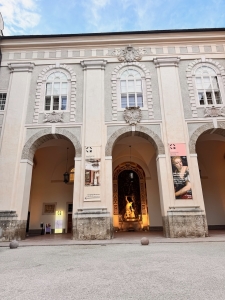
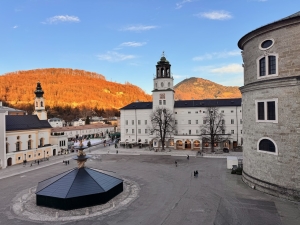
The Cathedral Archway Terrace links the Residenz to the Salzburg Cathedral. We mainly used this as a thoroughfare to the next building. From this terrace, we could see Domplatz, a square surrounded by the buildings of DomQuartier. Since there was nothing much going on here, we continued the path into Salzburg Cathedral.

Cathedral Organ Loft

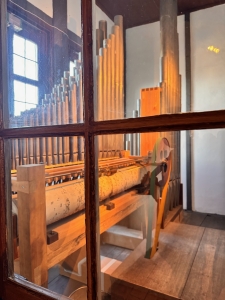
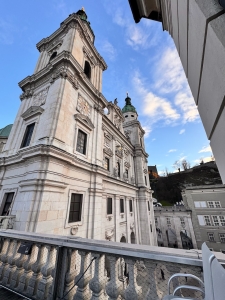
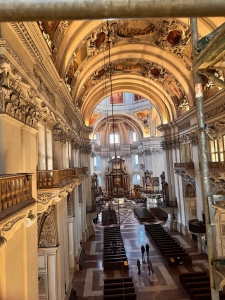
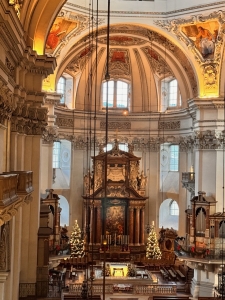
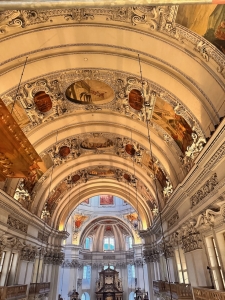
Our walk through the DomQuartier led us through the main organ loft. We originally wanted to visit the Salzburg Cathedral before coming to DomQuartier, but the entrance to the cathedral was not included in our Salzburg Card, which we eventually skipped. Little did we know that part of the DomQuartier included the entrance to the loft of Salzburg Cathedral. However, we were only allowed to stay at this loft at the cathedral. The highlight of the loft is our ability to get up close to the cathedral’s organ. However, we were more interested in the over-the-top baroque-style architecture inside the Salzburg Cathedral. From the loft, we were closer to the carvings on the pillars and the fresco painting on the ceiling. We were also able to see the altar from a distance.

Cathedral Museum

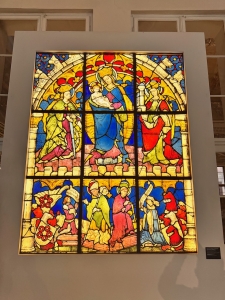
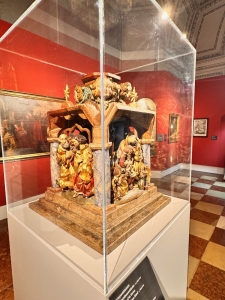
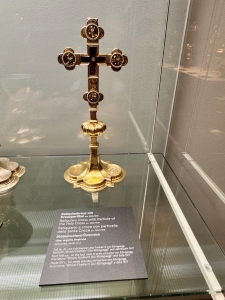
The door at the other end of the loft led us to the South Oratory, where the Cathedral Museum is located. On display here were statues of some of the saints, numerous crosses and chalices, as well as paintings and sculptures related to the Catholic religion. I am sure this museum would be a heaven for Catholics. As we were neither Catholics nor appreciative of arts, we spent our time inside the Cathedral Museum browsing through and seeing which artefacts were made of gold. The exit from the Cathedral Museum led us back to the Imperial Hall, part of the Residenz, which was subsequently linked to the Carabinieri Hall. It was time to head out to our next site.

Mozart’s Birthplace

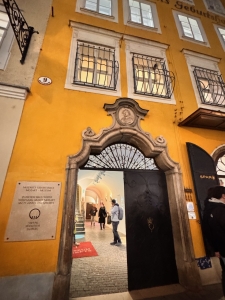
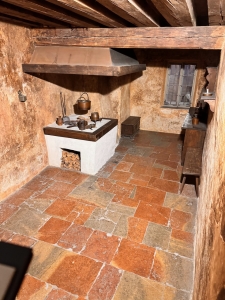
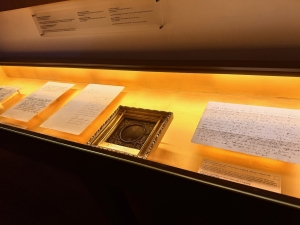
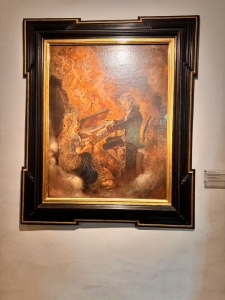
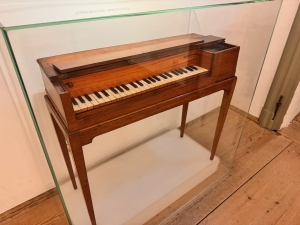
After Domquartier, I was looking at somewhere nearby to visit. Mozart’s Birthplace popped up to be the next nearest attraction to us. I read about how pointless it was to visit this sight before our trip to Austria, and since we were near, we decided to visit this museum. Mozart’s Birthplace is a little difficult to find, as it does not have the entrance of a regular museum, and there are no signs pointing to it. After searching for a while, we found it through a small entrance opposite the Mango clothing store. The entrance to Mozart’s Birthplace (€15 per adult) was included in our Salzburg Card. This museum has three storeys, mostly rooms filled with memorabilia, some musical notes and a statue of Mozart. The room where Mozart was born also has nothing much inside except for a few photos and some notes. I had thought this room was the museum’s highlight, and there should at least have a small bed (or its replica) where baby Mozart used to sleep. Guess most of the furniture must have been lost through the time. We saw a small piano that Mozart used to practice on as a child, which I thought was this museum’s highlight. For €15, I thought Mozart’s Birthplace was extremely expensive. We would have skipped this place if not for the Salzburg card, which included the entrance to this site.

St Peter’s Abbey

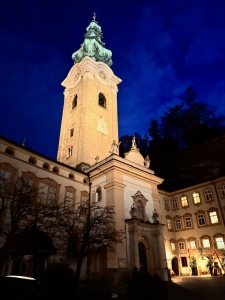
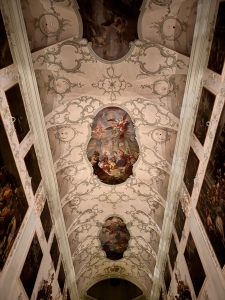
After Mozart’s Birthplace, St Peter’s Abbey is a mere 5-minute walk away. St Peter’s Abbey is one of the oldest monasteries in the German-speaking world, founded in the 7th century. The abbey is famous for its cemetery and catacomb, built into the mountain behind it. St. Peter’s Abbey seemed closed when we arrived, where we were met with a huge closed door that wouldn’t budge when we tried pushing it. We headed to a shop nearby and were told the abbey was still open, the friendly staff at the shop told us we just had to just more strength and pull the entrance door. We headed back and did what we were told, and we were able to let ourselves into the church. Once inside, the cathedral was not brightly lit, and no one was in the building. We could see the elaborate baroque-style carvings on the walls and the altar from the dim lighting. We couldn’t seem to find the entrance to the cemetery, and since there wasn’t much going on here, we left the abbey for our final sight of the day.

Mönchsberg – Night View of the Salzburg

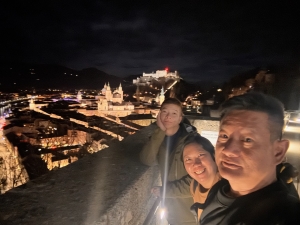
One of the places for the best night view of Salzburg (or so I read online) was the Mönchsberg, one of the five mountains in Salzburg. Mönchsberg is a popular local recreational area with nature and forest footpaths. At the top of Mönchsberg sits the Museum der Moderne, which was closed upon our arrival. However, we did not come for the museum but for the night view. The viewing platform is just outside the museum, accessible by an open elevator till 11 pm (costs €4.40 up and down and is included in the Salzburg Card). True to the recommendations I saw online, we were treated to a great night view of Altstadt and Hohensalzburg Fortress from afar. We could even see the Salzach River from up here. The warm night lighting cast upon the buildings in the Altstadt made them look like the city was built out of gold. The Hohensalzburg Fortress, sitting on the hill above Altstadt, looked as if it was guarding the city. The view was breathtaking, and to add icing to the cake, there weren’t many people around. After taking some pictures of the beautiful night view of the city, we left Mönchsberg for dinner near our hotel and returned to rest for the night. We have an early start tomorrow visiting the fairy tale town of Hallstatt.

Austria Day 1 (8 Jan 25): Salzburg – Schloss Mirabell: The Baroque Palace and Gardens

Austria – The Classical Music Capital of the World

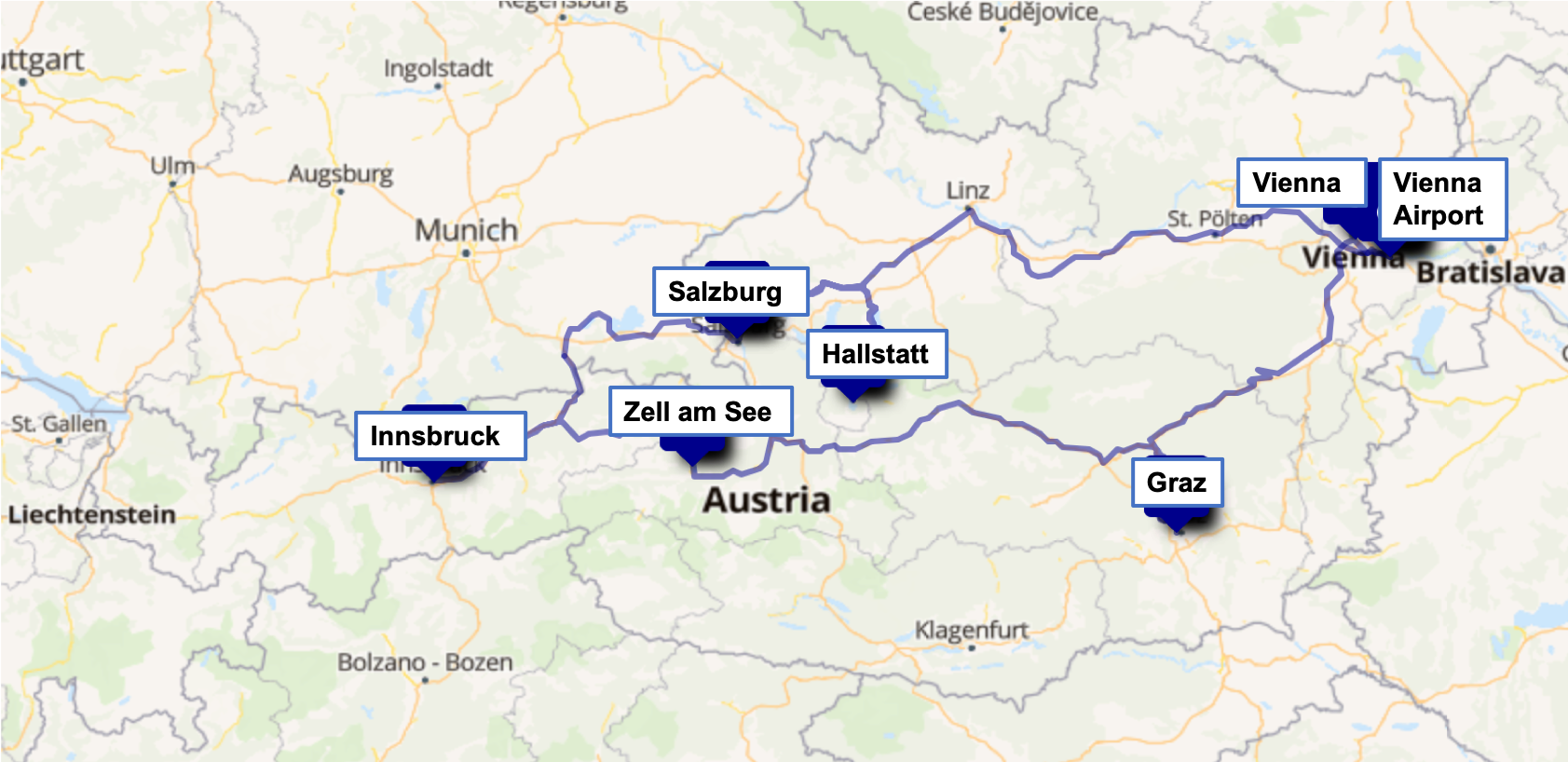
My motivation for visiting the Central European country of Austria stems from a photo I saw years ago on the tranquil picture of Hallstatt, a small quaint town sitting by a lake’s edge with towering mountains surrounding it as though they were protecting its residents. With Hallstatt as our must-visit destination, I expanded our Austrian Trip, starting with Vienna, our gateway to Austria. As I wanted to visit a few states and focus the trip on the country only, I looked into the capital cities of each of the states. For this trip, we visited the states of Salzburg (Salzburg City and Hallstatt), Tyrol (Innsbruck), Styria (Graz), and Burgenland (Vienna). As we had to travel from the west (Innsbruck) to the east (Graz) of the country, to avoid spending 6 hours on the train, I had to look for someplace in between to break the travel. As I researched where to stop for a couple of days, I chanced upon Zell am See, a lakeside town surrounded by mountains and included this town in my travels.

Cities/Towns that we will be visiting in Austria for the next 12 days

Custom Clearance

There aren’t any direct flights from Singapore to Austria. To get there, we can either transit to another neighbouring country from Singapore (such as Bangkok) with direct flight connections to Austria or another country nearer to Europe (such as Istanbul). We also had the option of flying into Munich, about two hours by train from Salzburg. We opted to fly into Vienna from Taipei as I always wanted to try EVA Air, which has direct flights to Vienna.

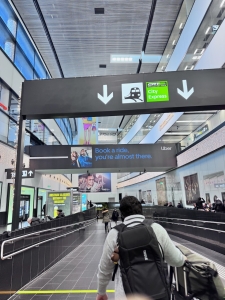
After a 14-hour flight from Singapore and stepping foot in four countries, we finally arrived at Vienna International Airport. I was rather surprised at the efficiency of the immigration clearance at Vienna International Airport. As many immigration counters opened this morning, we cleared immigration within 5 minutes of queuing. From deplaning to immigration clearance to collecting our luggage, it only took us about 30 minutes in total. As I had catered for 1 hour for immigration clearance and booked our train 2 hours after our arrival, we spent the rest of our time at the airport terminal waiting for our train. Fortunately, there are some shops and cafes where we can walk around and kill time. We used the extra time to settle our Vienna City Pass, which we will use when we arrive in Vienna. We headed to the OBB counter to purchase the pass, which gave us paper tickets. I prefer a physical card to a paper or online ticket, which we discovered was available at the Vienna City Pass counter in the centre of the arrival hall.

Our ride to Salzburg – Our first stop of the trip

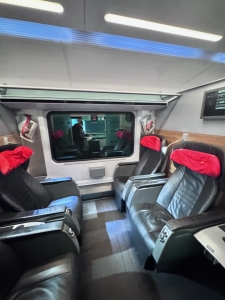
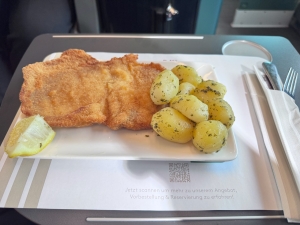
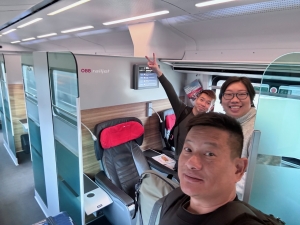
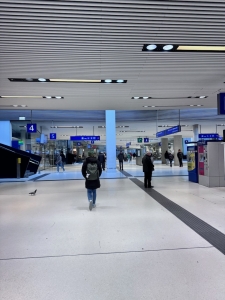
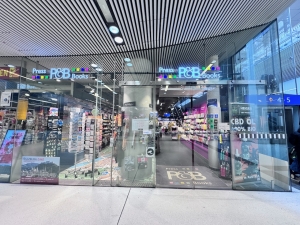
We originally booked First Class seats on the 3-hour ride from Vienna Airport to Salzburg City, but we upgraded to Business Class seats about 2 months before our trip. I find it whimsical how the Austrian National Railway – OBB termed the classes of their rides. Perhaps I was too used to the classification of onboard aircraft, where First Class is always the top passenger class. On OBB trains, the Business Class is a higher passenger class than the First Class. Getting from the airport arrival hall to the train station couldn’t be easier. We spotted a ramp from the customs exit that took us directly to the train station below the airport. Our train arrived on time, and we were surprised that we were the only ones in the carriage. We ordered lunch from the train menu, which was delivered to us by the friendly train attendant. Our 3½ hour train ride to Salzburg City whisks us through the countryside, from lush grassy patches to snow-capped fields. When arriving in Salzburg City, the first thing to do is to get our Salzburg Card, which not only offers free admission to most of the sights in Salzburg but also includes all the transportation in the city. We got our cards from the Press P&B bookstore in Salzburg Hauptbahnhof. After getting our cards, we were on our way to check into our hotel and freshen up before heading out to visit the sights in Salzburg. Fortunately, our hotel allowed us early check-in. Our initial plan was to visit Hohensalzburg Fortress in the afternoon, but the hotel’s reception staff advised against the visit as it was approaching closing time. With our tired bodies from travelling from Singapore to Vienna, we decided to start our trip easy and visited the Mirabell Palace and Gardens instead.

Schloss Mirabell and Gardens – Tracing the Steps of the Sound of Music

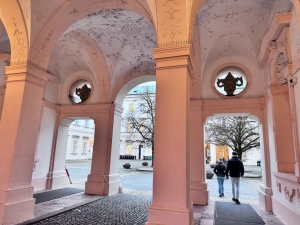
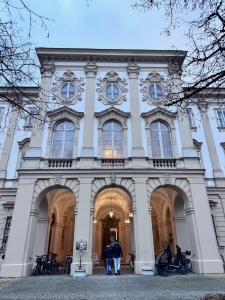
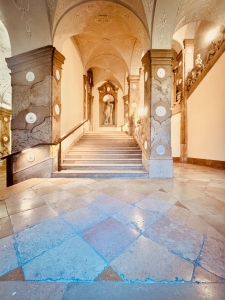
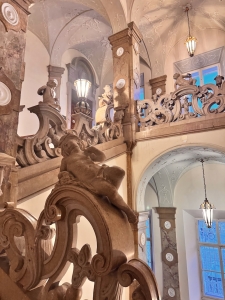
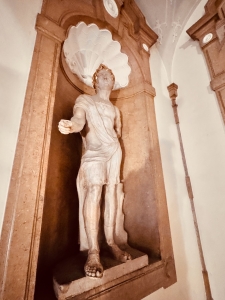
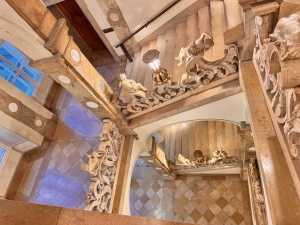
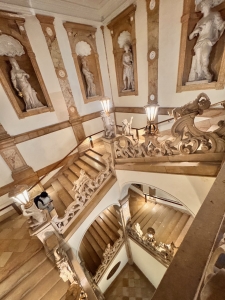
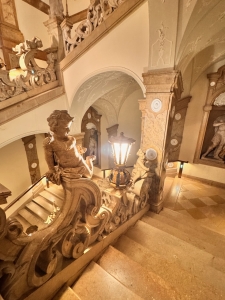
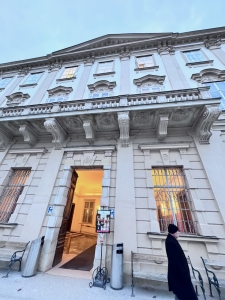
Mirabell Gardens was made famous by the movie “The Sound of Music” and has been one of the tourist attractions in Salzburg since the 1960s. Visitors come here for the famous Pegasus Fountain in the middle of the Gardens in front of Schloss Mirabell and would usually skip a visit inside the palace. The Prince-Archbishop originally built Schloss Mirabell for his mistress and their children. Today, the palace is a government building housing the office of Salzburg’s mayor and the municipal administration. During my research for the trip, the city’s travel site (click here for the site) recommended visiting the palace for the famed marble staircase. The best thing is a visit inside the Schloss Mirabell was free. The Marble Staircase, featuring baroque-style architecture, was one of the only two things opened to the public inside Schloss Mirabell.

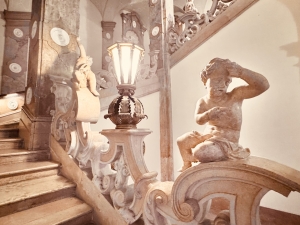
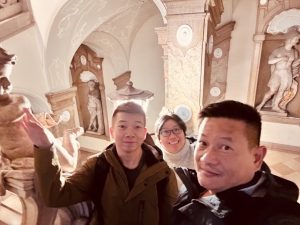
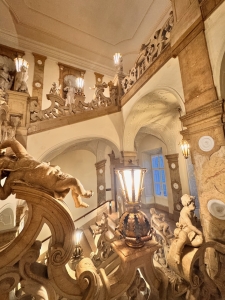
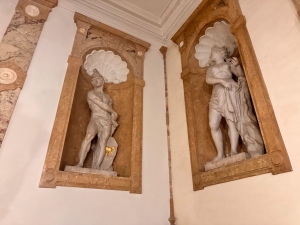
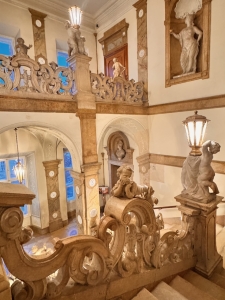
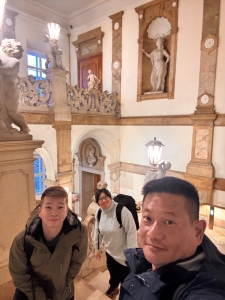
We had a hard time looking for the entrance to the staircase. When we finally found the staircase, we were greeted by a closed glass door, thinking the door was locked and closed to the public. Disappointed, we went around the building and attempted to take pictures of the staircase from the outside through a window. As we tried to pierce into the famous marble staircase from outside, we saw people walking inside the building. This is when we realise the inside of Mirabell Palace is not closed to the public, and we just have to pull the door to gain access. The famed Marble Staircase was a few steps from the glass door. We could see the opulent marble staircase with many angle carvings on the railings of the stairs that span three levels. Even the railings were carved from marble into some wavy patterns. More sculptures that looked like Greek characters (or maybe Gods?) carved out of marble are installed on the walls of the staircase. As we were the only ones at the Marble Staircase during our visit, we spent the next 30 minutes at the Marble Staircase taking as many pictures as we wanted.

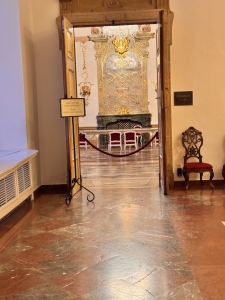
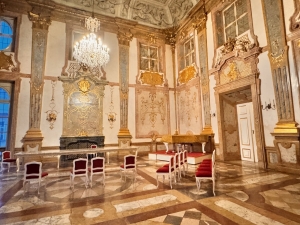
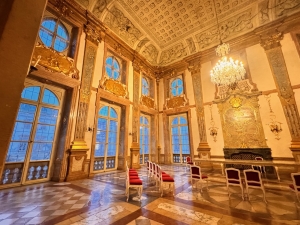
As we were leaving the Marble Staircase, I spotted a sign in front of a closed wooden door on the first floor that points to Marmorsaal (Marble Hall). I tried my luck opening the door and was surprised that it was unlocked, revealing an antechamber and another opened door with a red velvet rope after the chamber. Initially, we thought we could only see the Marble Hall from the first door. After some hesitation (plus there wasn’t anyone around to stop us), we snuck into the antechamber up to the velvet rope. We could see the opulent famed Marmorsaal, formerly the Prince-Archbishop’s banqueting hall, from the velvet rope. The hall was especially beautiful, with the warm lighting illuminated by the chandelier hanging in the middle. From the entrance, we could see the entire hall covered in marble with carvings on the walls covered in gold and intricate carvings on the ceiling. A grand white piano sits in the corner of the hall, with a long marble table occupying the space at the back and several chairs arranged neatly in the hall. Today, Marmorsaal is used for weddings and concerts and it was recorded that Mozart even performed in this very hall.

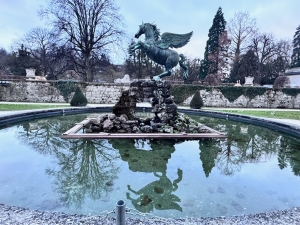
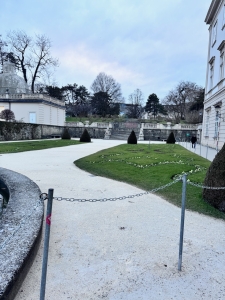
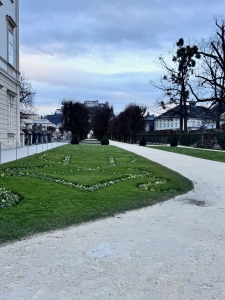
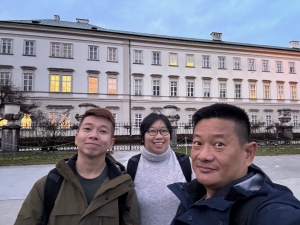
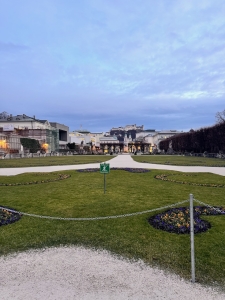
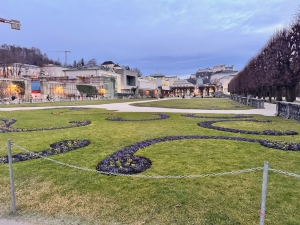
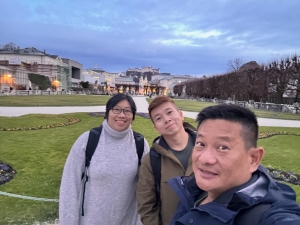
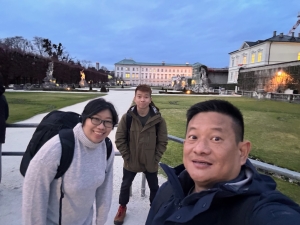
We exited Schloss Mirabell and headed back to the gardens. Sitting at the entrance to Schloss Palace was the famed Pegasus Fountain forged in copper. As it was winter, the gardens were barricaded off, and we could only see the garden from its parameters. Most of the trees were in slumber for the winter, but we could see some grass and flower patches in the gardens from a distance. There are two great photo spots at the gardens: the spot nearer to Schloss Mirabell allowed us to get a shot of the gardens with Hohensalzburg Fortress in the background, while the spot at the other end gave us a good shot of the gardens and its sculptures together with Schloss Mirabell. As we could not get into the gardens, we left after some photos.

Dinner at Getreidegasse – The Shopping Street of Salzburg

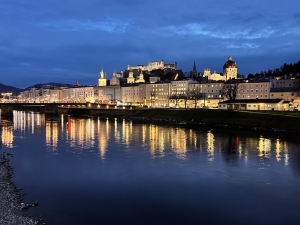
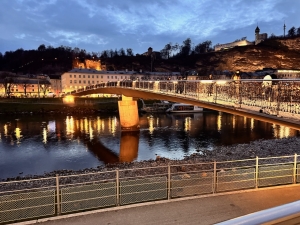
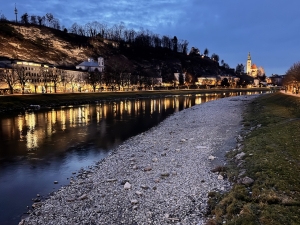
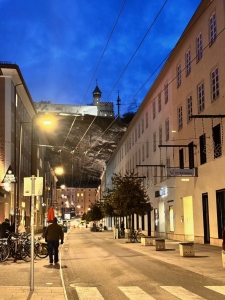
After visiting the gardens, we landed in the Markartplatz, where Mozart’s residence is just across the road. A Google search informed us that the place was still open. At the entrance, we were told by one of the staff that the Mozart Residence was closed for the installation of new exhibits. Seeing we could do nothing here, we headed across the Salzach River to the old town for dinner. Walking up to the banks of the Salzach River, we were treated to the scene of the old town with Hohensalzburg Fortress sitting at the top like a crown jewel. We were mesmerised by the scene and its reflection on Salzach. We crossed the Salzach River on the Marko-Feingold-Steg bridge, full of love locks on both sides. On the bridge, we could still see the night lights cast on the buildings and Hohensalzburg Fortress.

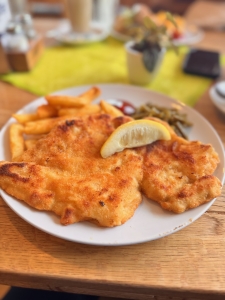
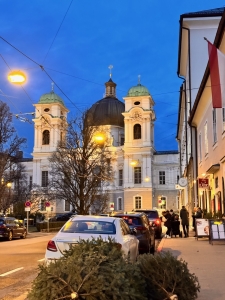
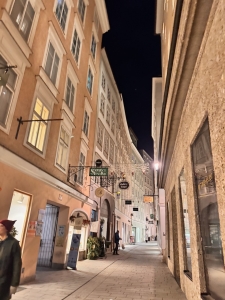
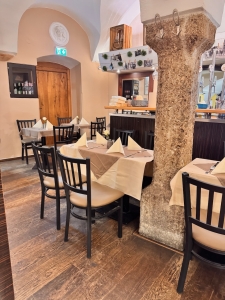
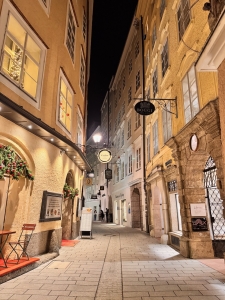
I usually do not plan places to eat for my trips, but I prefer to discover the food (plus, some restaurants can be overrated). We walked into one of the streets on Getreidegasse, the main shopping street in the Old Town of Salzburg City. I enjoyed the tranquil walk on Getreidegasse, a street that is not wide, surrounded by charming buildings that have seen and changed with the needs of the residents over time. Today, the buildings on Getreidegasse mainly houses shops and restaurants. We settled in a small rustic restaurant for dinner, serving delicious schnitzels. After dinner, we explored the old town a little more and stumbled into a square with a statue of Mozart. I was telling my friends that we were in Mozartplatz. Since we were a little tired, we returned to our hotel to recharge for our Salzburg exploration tomorrow.
Da Nang Day 5 (21 Jul 24): Relaxing Last Day in Da Nang

Relaxing Last Morning in Da Nang

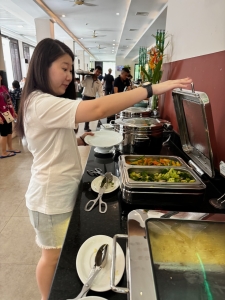
As our flight departs at 4.35 pm, I did not have anything planned for today. We wanted to take the time to enjoy a relaxing day at the resort and recharge before we head home. Originally, we wanted to skip breakfast, sleep in and go for lunch. My friends started to wake up at around 9 am, and since breakfast runs at the resort would only stop at 10.30 am, we went for breakfast. We spent the next few hours before our check out of our villa lazing and packing our luggage. Since there were another 2 hours before our airport transfer after we checked out at noon, we spent the next couple of hours at the Kid’s Club, playing some card games, till our pick up at 2 pm. Our airport transfer came on time, and we were transported to the airport in under 20 minutes. After checking into our flight, we spent the rest of our time at the airport while waiting for our flight back home.

My Thoughts on Our Maiden Da Nang Trip

We enjoyed Da Nang despite this city not having a lot going on for tourist sights. A trip to the city was very relaxing, and the people were friendly and hospitable. We reckon Da Nang is a great place to relax and wind down, and we are considering returning and spending more time at the resort since we have already visited the sights there are to see in the city.

We thought Ba Na Hills was great and worth revisiting. Most of the rides were included in the ticket price, and the cooler weather was a true escape to the hot and humid climate of Da Nang. It was a shame that we did not manage to ride on the Alpine Coaster. Ba Na Hills is also very easy to move around with the excellent transportation built in the resort. We felt a guide was unnecessary when visiting Ba Na Hills, but allocating one day was insufficient. We spent 1 hour getting there from the My Khe Beach area, and the cable car system down the hills ceased operation by 6 pm. We felt that spending a night in Ba Na Hills would allow us to enjoy the resort better since there is a hotel on Ba Na Hills.

We did not enjoy our day trip to Hoi An. It was not that the guide was not good, but the issue lies with the overtourism in the town. While a refreshing experience, the basket boat ride feels like something planned specifically for tourists. As much as Hoi An was vibrant, we felt its purpose was to attract tourists. Shops selling souvenirs and restaurants selling international cuisines now occupy the traditional buildings in the town. Hoi An also felt very crowded, and we spent more time trying to squeeze past people when we were there. The Hoi An Night Market was similar to those in Bangkok but on a smaller scale, selling mostly souvenirs and knock-off products and had nothing that stood out. We did not enjoy Hoi An as the whole town felt very touristy.

We liked Marble Mountains and thought it was unique and worth a visit. Seeing the locals turn the caves in the Water Mountain into places of worship was refreshing. Despite missing some caves, we thought we had seen everything on the mountain. Our trip to Hai Van Pass offered some great views of the peninsular and we enjoyed the tranquillity with the great views. The Lady Buddha was magnificent. Not only did the statue look tranquil, but the sight of the peninsular’s edge treated us with a great view of the coastal area and Da Nang city. We thought visiting here during sunset was perfect. Not only did we avoid the heat, but we also got beautiful views at dusk. Despite having covered most of the sights in Da Nang, my friends and I talked about returning to Da Nang. We planned to spend one night in Ba Na Hills and the next two to three nights in the resort.

Da Nang Day 4 (20 Jul 24): From Marble Mountains to Hai Van Pass and a Surprise Visit to the Lady Buddha Statue

Visiting the Marble Mountains is a must for anyone coming to Da Nang for the first time. Most tours I have found online combine Marble Mountain with My Son or Hoi An. Besides the Marble Mountains, I also wanted to visit Hai Van Pass, where we would see the Peninsular. However, very few tours combine these two sights in one day. I managed to find one tour operator, Explore My Vietnam, that combines these two sights in one day at a reasonable price.

Marble Mountains – Water Mountain of The Five Elemental Mountains

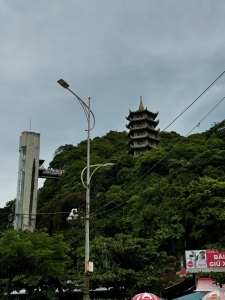
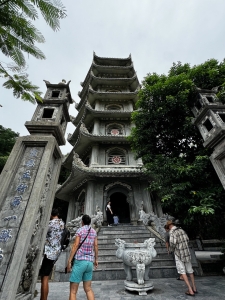
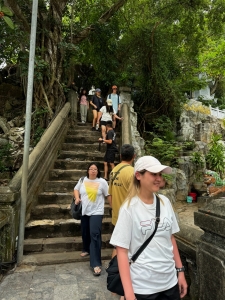
We met our guide at the main entrance of our resort, who brought us to the Marble Mountains, about a 15-minute drive from our resort. Having passed the Marble Mountains several times over the last few days, we are finally visiting this iconic sight of Da Nang. The Marble Mountains is a group of five marble and limestone hills, each representing an element of Water, Fire, Earth, Wood and Metal. Standing 105m tall, the Water Mountain is the biggest and the most beautiful. We started our Water Mountain from the eastern side of the hill, where an elevator system sits, saving us the climb of 150 steps. We exited the elevator at the top, followed the well-paved pathway and arrived at our first stop – Xa Loi Tower. Xa Loi Tower is a seven-storey stone pagoda visible from the base of the hill. The pagoda has a small surface area, and despite having 200 stone statues in the pagoda, we only saw one statue of Buddha installed in it. There was little to see at the Xa Loi Tower.

Linh Ung Pagoda

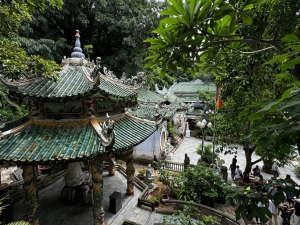
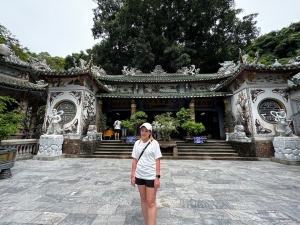
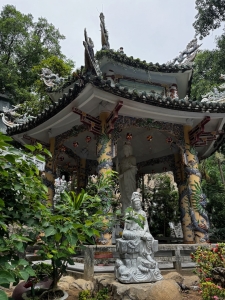
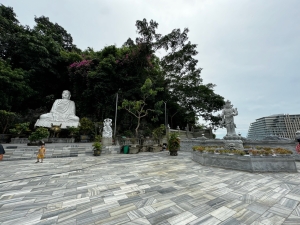
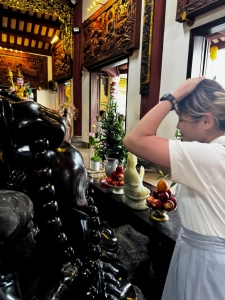
Following the pathway, we came to a crossroads and took the pathway to Linh Ung Pagoda. Rather than an actual towering pagoda, Linh Ung Pagoda is a huge compound with a temple building and a pavilion beside it. The main temple building has distinct Chinese architecture and is covered in white topped with green roofs. Despite its plain colour scheme, the carvings on Linh Ung Pagoda were intricate. There were three buddha stations installed Inside the temple. In front of the temple is a large open deck, where we found a huge marble Buddha statue sitting at the side of the deck. The view of the My Khe Beach area was amazing from this deck, where visitors could get a great photo shot of the beach area. The Pavilion beside the main temple houses a large statue of the Goddess of Mercy (or Lady Buddha, as the locals termed it). We left Linh Ung Pagoda after praying to the Buddha statues here.

Tang Chon Cave

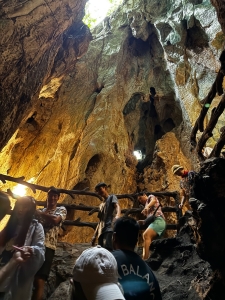
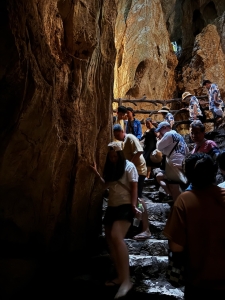
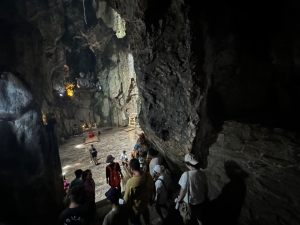
Tracing back from where we came from, we saw a sign that pointed to Tang Chon Cave. The cave is situated on top of a series of staircases. Tang Chon Cave is one of the smaller caves at the top of the Water Mountain. The path that we followed led us to the cave entrance that seems to have collapsed over the years. There is one flight of stairs inside the cave that leads us to the innermost part of the cave. This staircase creates a bottleneck where everyone congregates, with people going up and coming out from the inner cave. Despite not being a large cave, we spent most of our time here waiting for our turn to use the staircase. There are two Buddha statues inside the cave: a statue of a Buddha, sitting cross-legged with his eye closed in a meditation stance placed in one corner of the cave, and another statue of a standing Buddha at the other corner.

Heaven Gate

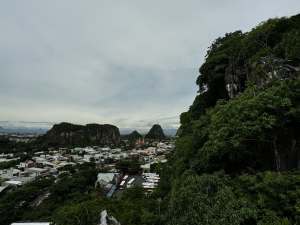
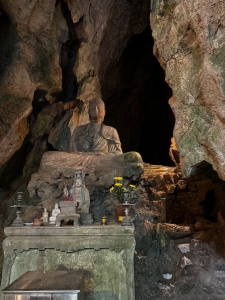
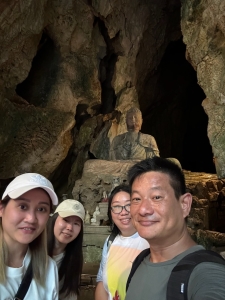
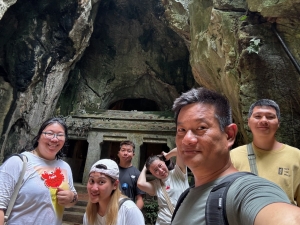
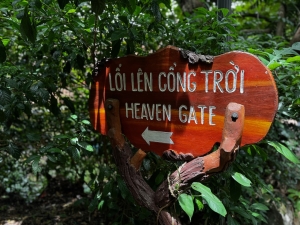
As Tang Chon Cave sits at the dead end, we traced our steps back to Ling Ung Pagoda and took the other path from the crossroad. Along the way, we saw another large cave that seemed to be packed with visitors. Thinking that we would pass by this cave again on our way back, we continued our walk on the path with a sign that said “Heaven Gate”. Thinking that this sign would lead us to the highest peak on Water Mountain, we followed the path this sign pointed to. The initial climb to the Heaven Gate was easy as it was well-paved with stairs that seemed to go on forever. Suddenly, we were met with a rugged natural staircase that seemed to suggest work on the staircase had stopped. Climbing up this set of rugged natural stairways was a tad more challenging. We had to negotiate with people coming down from the top while trying to find balance on whatever flat surface we could step on. Some of the steps were waist height tall, which would be torturous for people with knee issues. Fortunately, these rugged steps were only a short flight. Soon, we find ourselves on the top of the steps. We were treated to more unobstructed views of the sea and parts of the nearby peaks that form the Marble Mountains. The area at the top was rather small, and we had to balance finding whatever flat surface could accommodate our feet while negotiating with the crowd gathering at this small viewing spot. As people were coming up, we made our way down after taking some pictures. Back from where we came from, we took a short rest at a large resting area in the middle of the Water Mountain before continuing our walk to the last cave.

Huyen Khong Cave

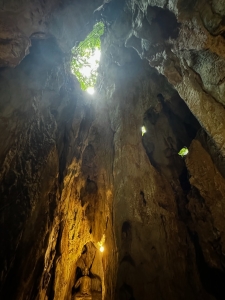
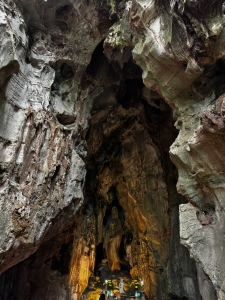
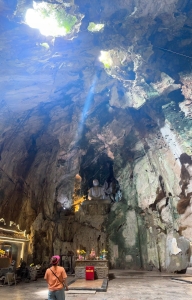
After our short rest, we followed the pathway to our next stop, Huyen Khong Cave, the largest cave in the Water Mountain. The entrance to Huyen Khong Cave is decorated with a well-carved stone archway., which led us to the cave entrance after a short walk. Huyen Khong Cave looked different from the other caves we have seen. Apart from its significantly large size, the flooring in Huyen Khong Cave was decked in deliberately polished marble, creating a flat surface. Sitting high on the cave walls was a Buddha statue in a meditation posture, blessing visitors who made it to this cave. Due to its sheer size, Huyen Khong Cave felt rather empty, with a couple of smaller shrines on both sides of the Buddha. The natural hole on the cave roof lets in rays of sunlight, giving it a mystical vibe. Despite its large size, there is not much going on inside this cave. Looking at the time, we realised we had spent almost 2 hours on Water Mountain. As we were a little behind time, we followed our guide’s instructions and made it to the staircase that marked Gate 1 to meet our guide at the base of the hill.

Tham Thai Pagoda and our way down

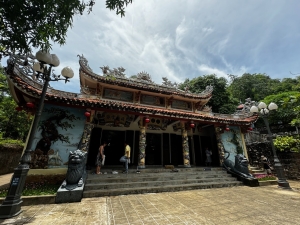
Gate No. 1 was a short walk from Huyen Khong Cave. Along the way, we passed by Tham Thai Pagoda. This so-called pagoda is a smaller temple building similar to the Linh Ung Pagoda. Unlike Linh Ung Pagoda, Tham Thai Pagoda is more colourful, decked in light blue, orange and green roofs. As this is a smaller temple, we did not enter the temple and made our way towards Gate No.1 at the base of the stairs. The way down was much easier as the 150-step staircase was well maintained. It took us 10 minutes to walk down the stairs, where we met up with our guide and continued our tour to Hai Van Pass.

The Breathtaking Hai Van Pass

Hai Van Pass is a mountainous road that rose to almost 500m up the mountains between Da Nang and Hue City. However, this mountainous road was less used after the construction of the Hai Van tunnel, which cut the journey by more than 1 hour. Today, Hai Van Pass is mainly used by tourists who want to get scenic views of the bay areas of Central Vietnam. As the road winds up the mountain, our guide stopped at a scenic point where we got a beautiful view of an unspoiled beach and the islands near Da Nang. It felt very tranquil here, with no crowd on the roads, the beach, or ships plying on this part of the bay. From the side we were on, we could see some low clouds brushing the mountain’s peak that we would be driving up. And this is just the beginning of the gorgeous view that awaits us further up the pass.

After a few pictures, we continued to drive up the mountain. As we were being driven up the windy roads, our guide pulled over in front of a cafe. This is our second stop on Hai Van Pass, where we stopped for a coffee break. Rather than calling it a coffee break, our guide wanted to show us the views from this cafe. As he ordered our drinks, our guide encouraged us to walk down the steps onto a rock that jags out into the air for some nice pictures. Taken from a correct angle, it felt that the rock was hanging out into the air. We could see Da Nang City and My Khe Beach sitting across the bay from here. Standing on the rock, looking out into the bay, gave us a sense of liberation.

We continued our drive up Hai Van Pass after a cooling iced Vietnamese coffee. Our next stop on Hai Van Pass was another cafe. Our guide told us this is the highest point of the Hai Van Pass road, and from here on, the road winds down to sea level. At this cafe, we were treated to the views of Lang Co Bay, sitting on the other side of the mountain. The cafe has a private lookout that extends into the air. While we could see the Bay Area and the part of Vietnam stretching to Hanoi in the North, I thought the views here weren’t as great. Due to the vegetation and the shape of the terrain, we can only see part of the bay and the sea. After resting and enjoying another cool drink, we descended Hai Van Pass towards Lang Co Bay.

On our way to the Lang Co Bay area, our guide made a brief stop near the base of the Hai Van Pass when he observed we were taking some pictures in the car. The body of water in front of our eye, protected by a natural sandbar, forms the lagoon of Lang Co. Our guide mentioned that the locals stay by the lagoon and farm oysters in it. From this viewpoint, we caught the picturesque view of the mountains seemingly guarding the lagoon and a bridge that ran across the lagoon. Our guide told us this bridge leads to the Hai Van Pass Tunnel, the route we would take when we return to Da Nang later in the day. After taking our fair share of pictures, our guide drove us to a seafood restaurant by the beach, where we had a sumptuous and fresh seafood lunch.

Thac Do Stream – The Secret Waterfall

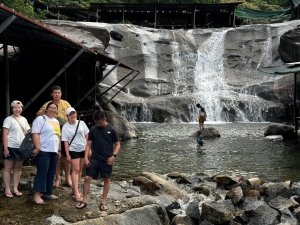
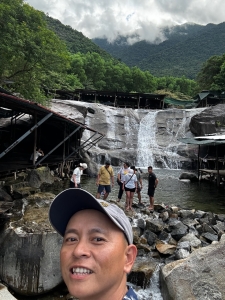
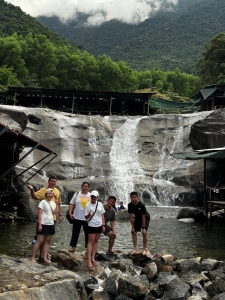
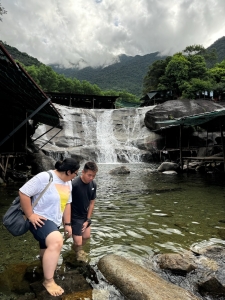
After lunch, we drove on a narrow road next to the lagoon, where we could see oyster farms. The coastal road soon turned into forest roads and a single-lane gravel road leading us into a small town. After we had parked the car, our guide led us through a small forest road on foot, and after about 3 minutes of walking, we arrived at Thac Do Stream. At the end of Thac Do Stream sits a small waterfall, the waterfall was so secluded that only locals know of its existence. The natural wall (due to the terrain formation), no taller than 3 storeys high, with streams of water rushing down from the higher terrain. There is a shallow waterhole in front of the wall where we saw some children swimming. I like the tranquillity here as few people are around. Listening to the water flow gushing down the waterfall and the occasional laughter of children playing in the cooling water hole, immediately a sense of relaxation ensued. We left the secret waterfall after taking some pictures.

Our Bonus Stop – Linh Ung Pagoda: Home of the Lady Buddha Statue

Our day trip was supposed to end at 3.30 pm, but we left the waterfall at 4.20 pm. Thinking that we would be driven back to Da Nang (I had requested our guide to drop us off at Da Nang City), our guide suddenly turned to me and told me he would bring us to the Lady Buddha Statue. This was a pleasant surprise, as this stop was not on our itinerary.

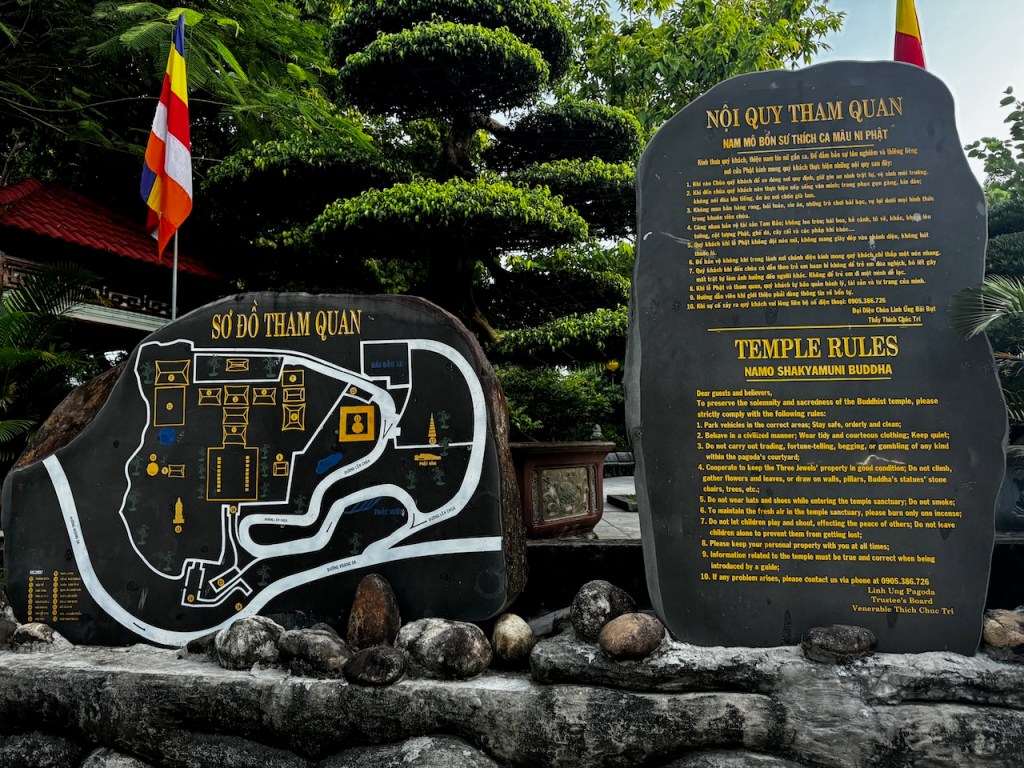
Map of Linh Ung Pagoda

Lady Buddha

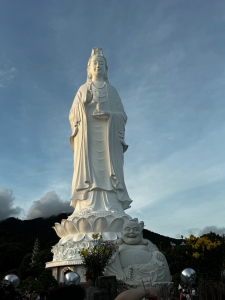
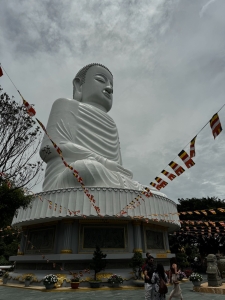
Standing in front of the 67m marble Lady Buddha Statue, the peaceful and benevolent nature of the Lady Buddha was very well captured on her face. The Lady Buddha looked like she was watching over visitors who came here to pray to her, ensuring we were protected. Our guide told us Da Nang used to be hit by typhoons before the statue was built. Miracles happened after the statue was built, and several times, typhoons died down when they neared the statue. The locals believed the mystical powers of the Lady Buddha protected the city from typhoons. As the Lady Buddha was situated near the coastal line, we found a viewpoint in front of the statue that offered us a stunning view of Da Nang Bay and the city. It is especially beautiful during dusk when the purple sky matches the night lighting around the Linh Ung Pagoda.

Main temple

After offering our prayers to the Lady Buddha, we walked past a stone gate and came to the main temple of Linh Ung Pagoda. 18 stone Arhats, disciples of Buddha were installed in the large main square in front of the Main Temple. Each statue has life-like expressions as though they are protecting visitors who walk past this square from evil. Our guide told us the Smiling Buddha installed in the Main Temple was especially efficacious and encouraged us to rub his tummy for good luck. We would not say no to good luck. The Main Temple is home to the Buddha in the centre of the temple, with the Goddess of Mercy on his right and the Manjushri Bodhisattva on his left. The temple exudes a sense of serenity and calm.

Reclining Buddha and Xa Loi Pagoda

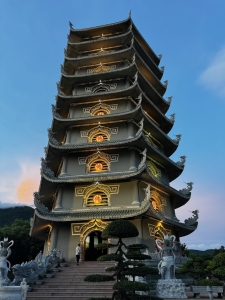
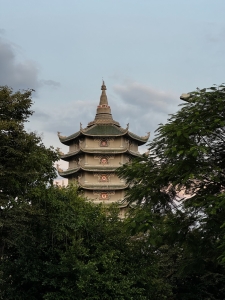
Our last stop in Linh Ung Pagoda was Reclining Buddha, a stone’s throw away from the Main Temple. The 48m long marble Reclining Buddha, though smaller than the Lady Buddha statue, was still impressive. The stone masons capture the peaceful expression of the Buddha as he enters his final resting position after achieving enlightenment. Standing behind the Reclining Buddha is the 9-storey olive-coloured Xa Loi Pagoda. As it was approaching closing time, we only visited the ground floor of the pagoda to pray to yet another Laughing Buddha inside the ground floor of the Pagoda.

Spending the Evening in Da Nang City

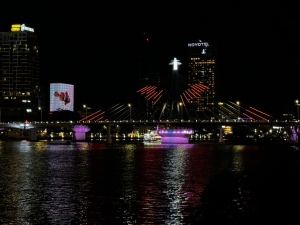
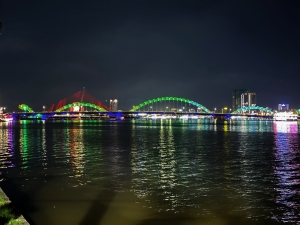
Linh Ung Pagoda was our last stop on this private day trip. We got our guide to drop us off at VinPlaza Mall, the largest shopping mall in Da Nang. After spending a day in the scorching Vietnamese sun, we wanted to cool ourselves off and spent the evening in the air-conditioned mall. Despite being the largest shopping mall in the city, I thought the shops were a tad limited. The mall only has 4 levels, with restaurants occupying the top floor. We spent a fair bit of time shopping in the supermarket on level 2. After shopping, we wanted to spend the night watching the Fire and Water show on the Dragon Bridge, one of the few tourist attractions in Da Nang City. We walked to Han River at around 8.15 pm and waited by the bank for the show. As 9 pm came by, there was no show on the bridge. Upon checking with our resort hostess, we were informed the show was cancelled due to the demise of the Vietnamese Party Chief. Seeing that there was nothing much we could do in Da Nang City, plus we had a long day visiting the sites, we returned to our resort to rest.
Da Nang Day 3 (19 Jul 24): Spending Our Day on My Khe Beach and Evening in the Ancient Port City of Hoi An

I originally left this day empty to relax around the resort and enjoy the beach. However, while planning this trip, I found many web pages recommending visiting Hoi An. People visit Da Nang to visit the ancient port city of Hoi An or the Imperial Palace of Hue. Comparing the two sights, I thought Hoi An had more to see, so we visited Hoi An.

Relaxing Day in the Resort

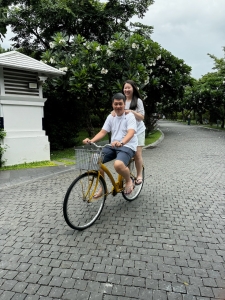
As our tour only started at 3 pm, we spent the morning relaxing around the resort. Today’s aim was to start our day slightly later, relax in our private swimming pool, and perhaps head to the beach. We borrowed the bicycles the resort made available to guests to ride for breakfast. After a hearty breakfast at the resort restaurant, we found that five of the six borrowed bicycles were missing. We managed to recover three bicycles, leaving some of us having to return to our villa on foot. As we were about to walk to our villa, a resort staff member driving a buggy offered to give us a lift back. They promptly gave us three other bicycles after informing the Kid’s Club staff of our stolen bicycles. We spent the next 45 minutes riding around the resort on our bikes to digest our breakfast.

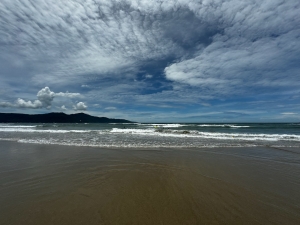
The waters in our private pool and the sunny weather proved too tempting for us to sit around our villa. We spent some time playing in the pool, enjoying the weather and the warm waters of our pool to cool us off. Dipping in our pool, looking out into the fine white sand and the gentle waves on My Khe Beach in front of our villa, we headed for the beach to have fun. As this part of My Khe Beach is privately owned by the resort, there weren’t many people at the beach. The fine sands of the beach made walking on it very comfortable. The resort provided some beach-related activities we could do, such as beach volleyball, beach soccer and even beach badminton. But before we borrowed the items from the manned counter by the beach, we headed into the sea off My Khe Beach. The warm seawater and the occasionally pounding waves made swimming very comfortable. We were well assured that we would swim safely in the sea as the resort had a lifeguard to watch out for our safety at the beach. We also spent some time playing beach volleyball. After some beach volleyball games, we headed to the resort’s main swimming pool to redeem our welcome drink and relax by the pool. Time seems to pass by quickly as we were relaxing, we headed back to our villa to wash up for our evening trip to Hoi An.

Cam Thanh Village – Home of Palm Forest

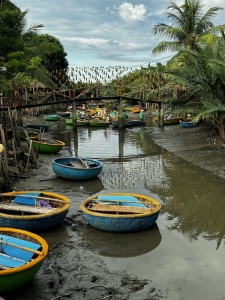
We met our guide at the resort’s front gate (this is the one other thing I like about the resort; they took security very seriously and would not let anyone other than guests into the premises of the resort). The plan for today was to ride on the iconic Basket Boat in Cam Thanh Village before heading to the ancient city of Hoi An. It took us about a 30-minute drive from our resort to Cam Thanh Village. The Basket Boats were believed to date back to the French Colonial era when the French levied taxes on fishing boats. The Vietnamese fishermen could not afford these taxes, so they designed circular woven baskets used as boats for fishing. When we arrived at Cam Thanh Village, our guide informed us due to the low tide, we could only board the Basket Boats further into the village. He arranged motorcycles to give us a lift to the inner landing point.

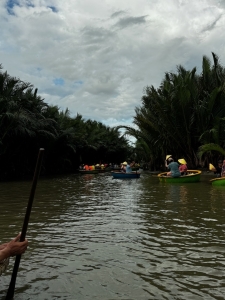
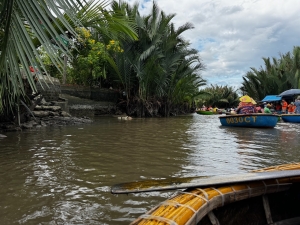
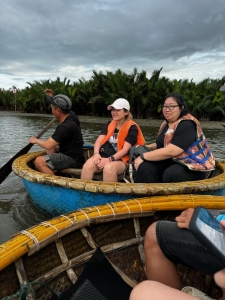
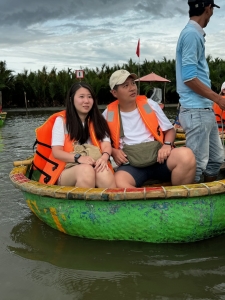
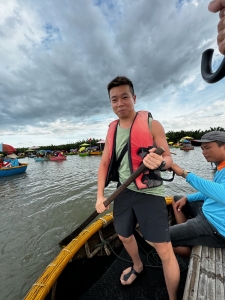
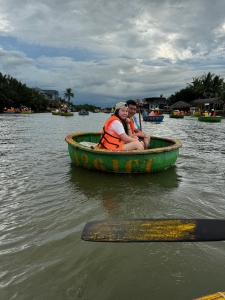
We saw many Basket Boats ferrying tourists rowing on the stream at this landing point. Stepping into the Basket Boat, it felt a little unstable at first. However, the skilful coxswain assured us that they were in control of the boat. Sitting in the Basket Boat, we rowed down a palm forest lined up on both sides of the stream. These palm trees were brought down from the Mekong Delta about 200 years ago. Its ability to protect the coast from erosion and strong waves encouraged the locals to plant more palm trees. The palm tree forest here once sheltered Vietnamese troops from shelling and raids during the Vietnam War. The initial excitement of riding on the Basket Boat quickly dissipated. I guess our coxswain felt we were a little bored and started to do the Basket Boat dance. This dance involves the coxswain skillfully turning the Basket Boat on the spot, using centrifugal forces and balance to keep the boat steady while spinning with us on it simultaneously. The experience was fun and exciting.

We continued our boat ride down the stream, and soon, we were out of the Palm forest and in a fairly open river. We met up with our friends on the other two boats. This is where the ride gets a little touristy. Our boat coxswains paddled all three boats to a bigger basket boat moored in the river with huge Karaoke sound boxes. We were made to listen to them singing popular Chinese songs from Mainland China (they must have thought we were from China), seemingly waiting for us to tip the singer. We thought this was more of a tourist trap and did not bother to tip the singer. After 5 minutes, they seemed to realise we were not tipping (or maybe due to time), and we were paddled back to the landing point. We met our guide and headed for Hoi An.

Spending the Evening in Hoi An

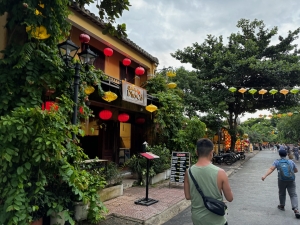
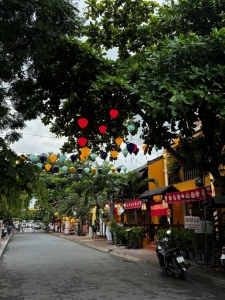
The ancient port town of Hoi An was about a 20-minute drive from Cam Thanh Village. Hoi An dates back to the 16th century, when it was the busiest trade port in Southeast Asia for shipping between China, Japan, and Western nations. Due to the narrow channels, bigger ships would anchor off the coast, and the goods were transported via smaller boats to be disembarked at Hoi An. The town reflects a fusion of local and foreign cultures (mainly Chinese and Japanese with later European influences), as witnessed in the buildings around the town. Our guide informed us that the Japanese Covered Bridge segregates the Chinese and Japanese areas in the town. The buildings in Hoi An are painted mostly in yellow, and most are two storeys tall. Today, most of these buildings have been converted into shops.

Best Coffee in Hoi An – Coconut Coffee of Cong Cafe

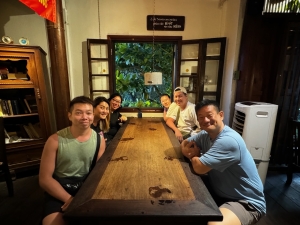
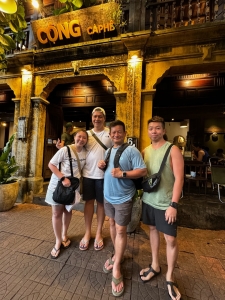
We started our evening in Hoi An with a Vietnamese Coffee. Our guide brought us to Cong Cafe, the most famous cafe. Our guide said the cafe was converted from a wealthy family house. There are hints of its former form around in the cafe. Our guide urged us to try the Coconut Milk ice-blended coffee, which he claims to be the best he had drank. True to his words, the coffee was very aromatic, and the taste of coconut was not overpowering. We enjoyed the coffee and the cafe’s atmosphere, occasionally looking out into the busy street of Hoi An from the window seat our guide had picked for us. After our coffee, our tour of Hoi An began.

Japanese Culture Gallery

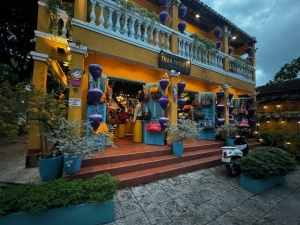
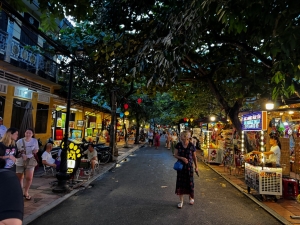
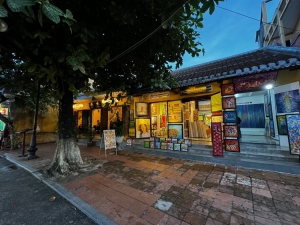
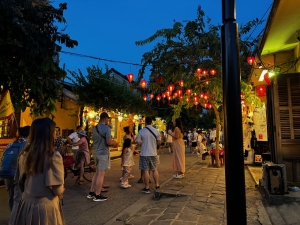
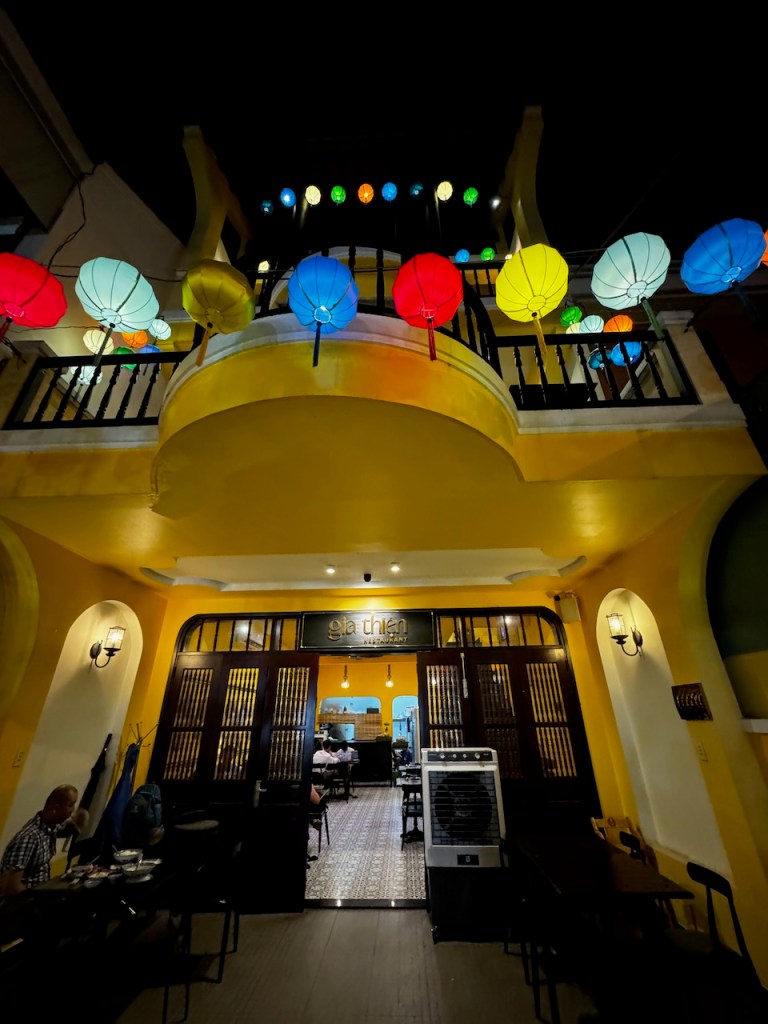
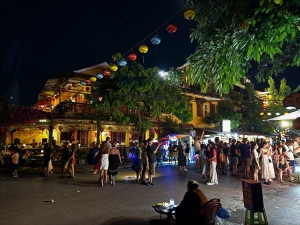
Having purchased the tickets (which might be the tickets for the lantern release), our guide walked us on the streets of Hoi An towards our next destination in Hoi An. The streets of Hoi An look colourful despite only having one uniform yellow colour painted on the buildings. The lighting and the many red lanterns made Hoi An look very vibrant. The town is bustling with tourists roaming the streets, some just walking past while others were looking at the goods the shops were selling. We were led through a small alley to a plain-looking wooden house, which stood out from the other buildings we had seen in Hoi An. This is the Japanese Culture Gallery, modelled after the traditional Japanese architecture style. The first floor of the house was proportionally higher than the second level. The gallery displayed Japanese artefacts that gave us an idea of how the Japanese lived in Hoi An back in the day. Our guide led us to the second floor, which seemed to be some sleeping quarters of the house owners, with tatami mats in most of the rooms. The balcony, facing the facade of the building, gave us a different perspective of the streets of Hoi An. I thought this gallery was interesting but not a must-visit spot for those visiting Hoi An, but it gave us a break from the crowded street of Hoi An.

One of the icons of Hoi An is the Japanese-covered bridge. This bridge was built based on the Japanese architectural style but with Chinese elements in its decor. In addition to marrying the Japanese and Chinese cultures, the bridge also links the Japanese and Chinese Quarters in Hoi An. The bridge was so significant to the Vietnamese heritage that it was printed on the back of the 20,000 bill of the Vietnamese Dong that our guide showed. It was unfortunate that the bridge was under preservation at the time of our visit, and we were not able to cross it and see it up close.

Lantern Releasing on Hoai River

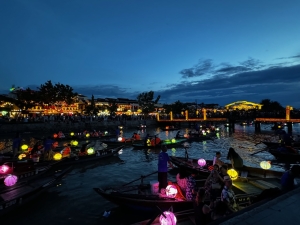
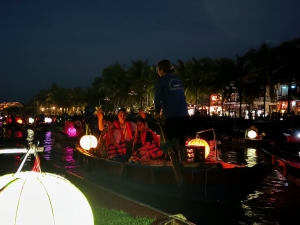
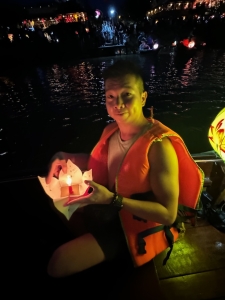
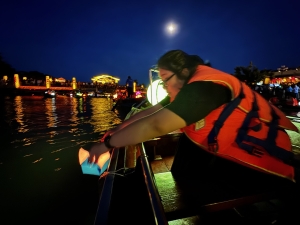
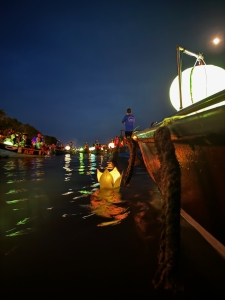
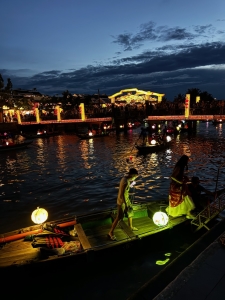
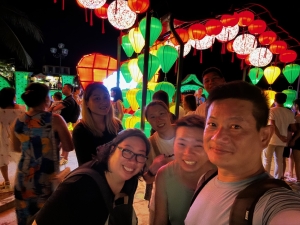
Since we were near Hoai River, the main river used to transport goods from the bigger trading ships to be unloaded in Vietnam, our guide led us to the next itinerary on the list, Lantern Release on the river. The Vietnamese light lanterns are used for good fortune, wealth, joy, and health, and they are seen in almost every building in Hoi An. The locals also release lanterns on the river to make wishes. There seems to be a long queue at the river bank for releasing lanterns. We saw many boats paddling on the river with tourists releasing lanterns. Fortunately, the queue moved fairly quickly. As we were queuing, our guide taught us how to release the paper lanterns on the river. After embarking on the boat, the boatmen paddled us to the middle of the river and told us to write our wishes onto the lanterns. He leisurely paddled his boat so we could release our lanterns safely while avoiding contact with the nearby boats. After releasing our lanterns, our boatsman took us on a 30-minute boat ride on the Hoai River. I’d say releasing lanterns on the river felt touristy; however, I enjoyed the leisure cruise along the river. We were treated to the night view of Hoi An from the river.

Dinner in Hoi An

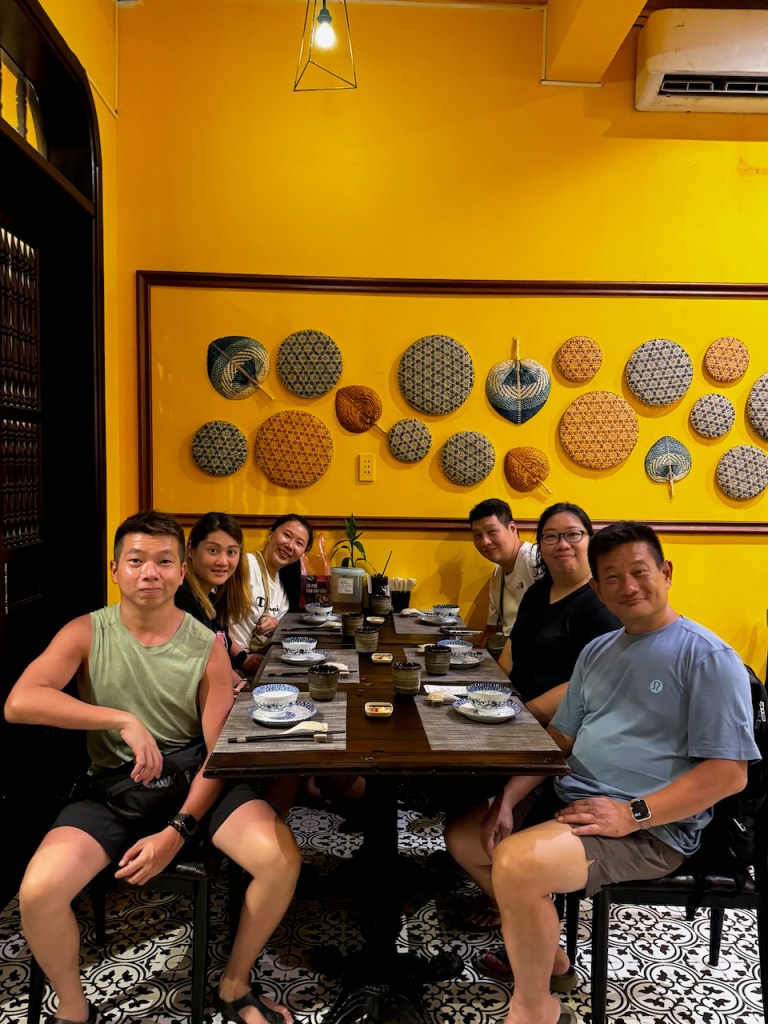
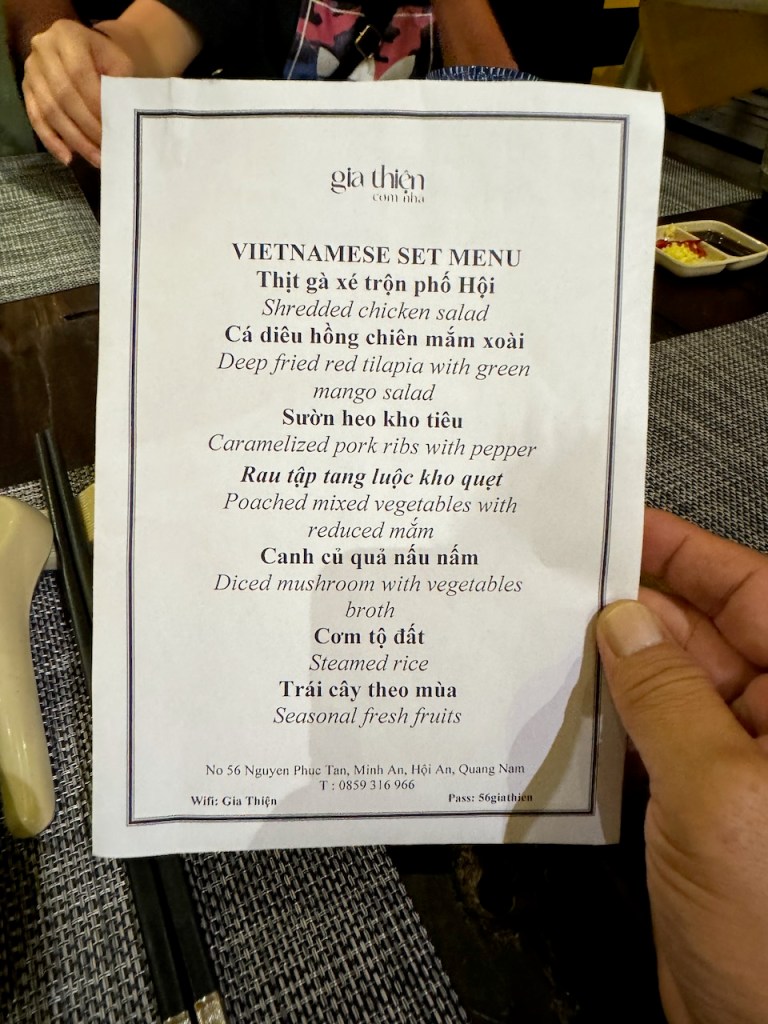
After alighting from the boat, we met up with our guide, who asked if we wanted to have dinner or head to the night market first. We opted for dinner as we were a little hungry. We were led to a quieter part of Hoi An, away from the main streets and the river banks where most tourists would loiter, to a restaurant for dinner. The dinner was simple Vietnamese food, which was delicious and homely. The staff at the restaurant introduced us to the food on the set menu, and like clockwork, the food was served very quickly.

Hoi An Night Market

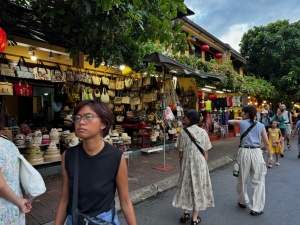
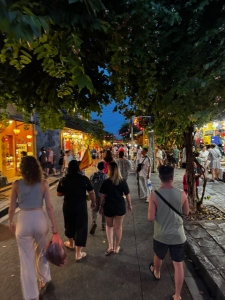
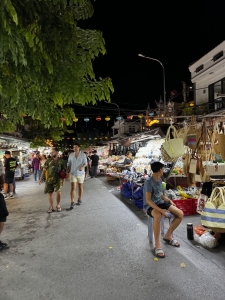
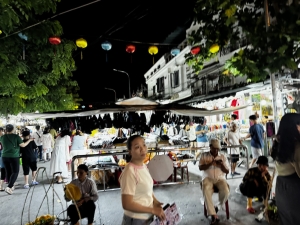
After the hearty dinner, our guide brought us to Hoi An Night Market. This is a small stretch of the street selling souvenirs and foodstuff. There was a crowd at the market when we arrived. Most of the time, we tried to get past people walking along the night market. I thought this market was underwhelming and was no different from those we saw in Bangkok. We spent the next 10 minutes browsing through the stalls in the night market before meeting up with our guide for our return trip to our Villa. We did not like the programme today. The Basket Boat ride, while interesting, felt very touristy. I’m not too fond of the part where we were made to listen to the karaoke singing to get tips. Hoi An felt touristy and crowded with tourists. While the buildings retained their original facade, most were converted to shops and restaurants. The night market was not particularly exciting. Hoi An just felt overcrowded.

Da Nang Day 2 (18 Jul 24): Ba Na Hills – The French Resort and Home to the Golden Bridge

I planned to take day trips across the next three days to explore the sights around Da Nang. To explore what Da Nang had to offer, we joined a day trip to Ba Na Hills.

The Marble Workshop – A Short Tourist Shopping Stop

After researching day trips to Ba Na Hills, we decided on the day trip organised by the resort as it seemed to cover more sights. After breakfast, we made our way to the resort’s main gate to meet our guide. We were pleasantly surprised that we were the only ones on today’s day trip, making it a private tour. Our first stop was a nearby marble workshop at the foot of the famous Marble Mountains (which we will visit two days later). I thought this was one of the tourist shopping stops that comes with day trips. We were given a short brief on how the masters turned an unassuming piece of rock into a remarkable marble artwork. After the very short brief, we were led into the shop selling the marble works. As we did not intend to get anything from here, we spent the next 5 mins walking through the shop. The staff at the shop seemed to know that we were not interested in getting anything from them; they were not pushy and merely walked behind us. After a brief 10-minute stop, we left the workshop and headed to Ba Na Hills.

Ba Na Hills – The French Resort Getaway

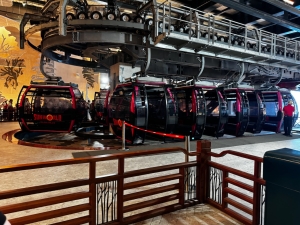
On our way to Ba Na Hills, our guide narrated that the French built a resort there during their occupation to escape the heat in Da Nang. Before the cable car system was installed, it would have taken eight Vietnamese to transport one Frenchman up the hills through the windy and treacherous mountain roads. The Vietnamese government redeveloped Ba Na Hills in the 1990s and installed a network of five cable car systems. Today, Ba Na Hills houses the world’s longest cable car system, which was completed in 2013 to ferry visitors to the mountaintop. The base station was crowded when we arrived at Ba Na Hills. As we walked to the cable car station, our guide explained that parts of the architecture we saw along the way were modelled after the houses in Hoi An, an ancient port city near Da Nang.

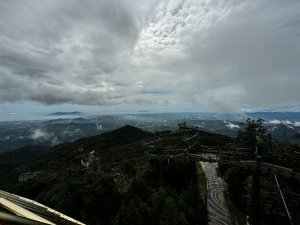
Despite the long queue, our knowledgeable guide seemed to know the way around the long queues, and we boarded the cable with a very short waiting time. The cable car transported us up 1,500m to the top of Ba Na Hills in around 20 minutes. Along the way, we were treated to the beautiful coastal lines of My Khe Beach and the city of Da Nang. At the top, our guide whizzed us through the resort to another cable car system. This 3-minute cable car ride took us to our first stop on Ba Na Hills—the iconic Golden Bridge.

Golden Bridge – the Icon of Da Nang

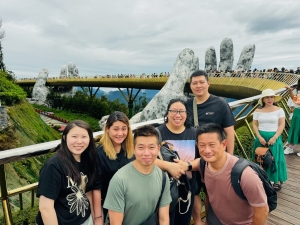
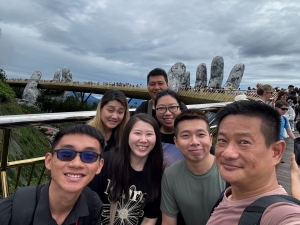
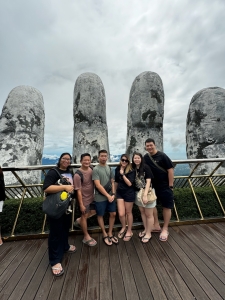
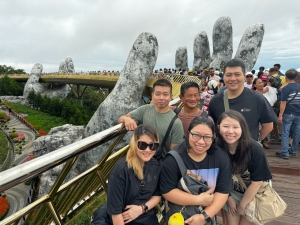
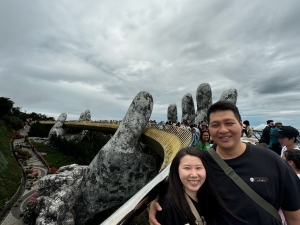
Exiting the cable car station, the iconic Golden Bridge is immediately in sight after a short flight of stairs. The Golden Bridge is a 150m curved bridge seemingly supported by two giant hands situated at the edge of the mountain. The two giant hands supporting the curved bridge symbolise the hands of the Mountain God supporting the bridge to carry visitors to the Paradise Garden. It is these two giant hands that gave Da Nang its icon. Despite the bridge being completed only in 2018, the architects purposely gave it an ancient look. There was a crowd at the Golden Bridge at the time of our visit. Our guide brought us to the best photo spots on the bridge, helped us take perfect pictures, and even shooed other visitors on the bridge to help us take the perfect shots. As we walked along the bridge, our guide took us to the spot where we were treated to the best views on the bridge – views of Da Nang City and My Khe Beach area. We were lucky that the sky was clear and visibility was excellent. Our guide told us such views were not guaranteed based on his experience at the Golden Bridge. There were times when the clouds were low; visitors would not be able to see such great views. We did not stay at the bridge for too long and headed over to our next destination.

The Gardens of Ba Na Hill

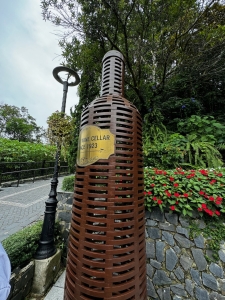
A short walk from the Golden Bridge, our guide took us to the Debay Wine Cellar. As this paid attraction was not part of our tour, we were given the option to spend some time in the cellar. Our guide informed us that the ticket price includes a glass of wine and a spot on the balcony overlooking the flower garden. As we do not drink wine, we gave this spot a pass.

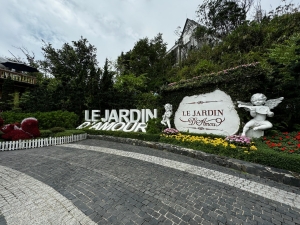
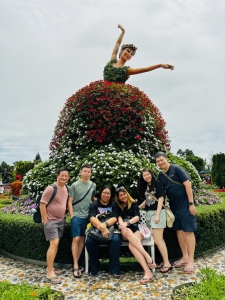
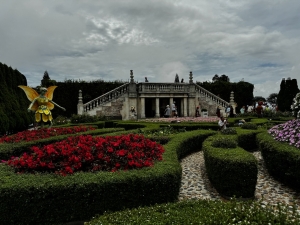
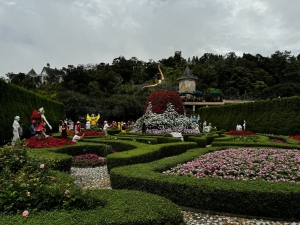
The Le Jardin D’Amour, or the Garden of Love, was our next spot, just next to the wine cellar. The Le Jardin D’Amour is a small garden with vibrantly coloured flowers dotted in a small plot of land. The garden’s centrepiece was a Cinderella-like character with flowers as her dress. Due to the small scale of the garden, coupled with the fact that we were not really into flowers, we only spent mere minutes here and left after taking some pictures. Our guide led us to a garden maze next, sitting at the end of the garden. He then challenged us to break the record of 1 min 20 min set by an Aussie couple. We had some fun walking in the small garden maze, with half the time hastening our steps to see if we could break the record. We thought we had beaten the record at the maze exit when we met our guide. We were told we had spent about 3 mins 15 mins. Not exactly a record-breaking speed.

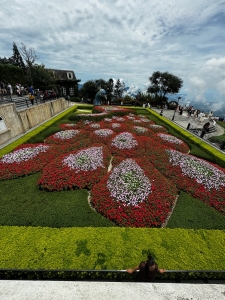
The Garden of Eden was next to the Le Jardin D’Amour and the garden maze. The Garden of Eden is a small plot of land planted with vibrant and colourful flowers. The main feature in this garden is the huge peacock head sitting at the end of the bed of flowers, with these flowers forming the peacock’s tail feathers. There is a terrace that is crowded with visitors taking pictures of the garden. However, we found the terrace at the opposite end of the peacock head to be a better photo spot. There were no visitors here, and we were also able to capture the entire garden with the peacock head.

The Giant Buddha Statue at Linh Ung Pagoda

Passing by the Peacock Garden, we arrived at our next stop—the Giant Buddha Statue next to Linh Ung Pagoda. Our guide told us the 27-meter-tall Buddha statue was crafted from marbles mined from the Marble Mountains. With a serene face, the white marble Buddha seemed to overlook the city of Da Nang as though he were watching over and protecting the city. We did not spend a lot of time here and left after offering our prayers and taking some photos.

Movie Time at the Luna Castle

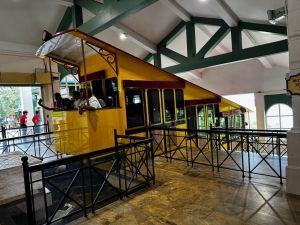
To get to our next stop on Ba Na Hills, we traced back our steps to the Le Jardin D’Amour and were led to a funicular station, which we took to the cable car station. The funicular ride to the cable car station gave us great views of the city. After a short cable car ride, we arrived at our next stop—the buffet lunch restaurant, Arapang Restaurant. Our lunch was included in the price of the ticket.

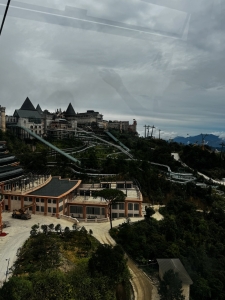
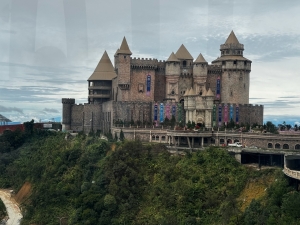
Our guide took us to another funicular not far from Arapang Restaurant after lunch to the Luna Castle. This funicular would have treated us to the mountainous views around Ba Na Hills if not for the low clouds. The Luna Castle houses two theatres. Our guide told us that the European-inspired Luna Castle was a COVID baby built during the pandemic. I thought the Luna Castle was big and empty, with a lot of unused space. My friend and I were commenting about how many rooms this castle could fit if converted into a hotel. The purpose that our guide brought us here was to watch two short animated shows. The first short film, Flying Eyes, brought us around the world to see some of the landmarks. My friend and I were counting the number of landmarks we visited while watching the short film. The second film, Happy Family, was a 4D film about a family’s outing to a theme park. The film brought us through the roller coaster ride that the family was riding on.

Fantasy Park and French Village

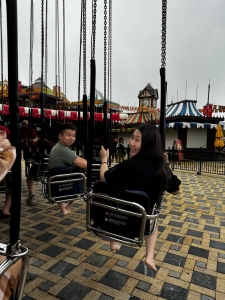
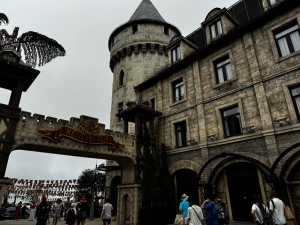
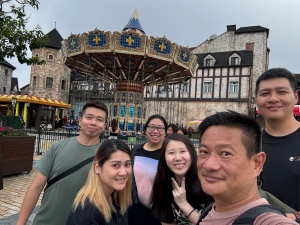
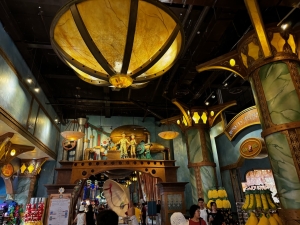
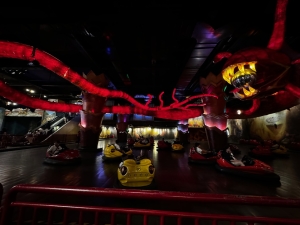
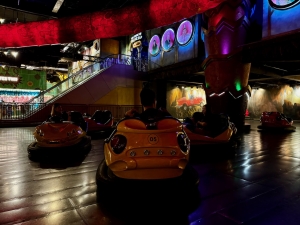
After the films, we headed back to the French Village and Fantasy Park, where we were given some free time to wander around the main area of Ba Na Hills. Our guide brought us back to the funicular that took us back to the French Village. The first item on our list was to walk around the French Village, which our guide told us was model after buildings in France. Walking in French Village, I thought it looked more medieval than French. We stopped by a food truck for a Vietnamese coffee break before exploring the area more. As we were walking, we saw a carousel, but by mistake, we couldn’t seem to find our way to the carousel. We ended up on the flying chair rides, which were included in the ticket price to Ba Na Hills. There was a queue for the flying chair ride, but we did not have to wait too long for our turn. Although the ride just went around in a circle, we enjoyed it. After the ride, we went into the indoor Fantasy Park area for a bumper car ride we had passed by earlier. We had great fun on the bumper car and even ganged up together to bump others.

After the bumper car, we wanted to take the alpine coaster ride (cost VND70,000). The Alpine coaster has two lines; the first is next to the cable car station we arrived in. We constantly saw long queues for this line as it was very centrally located. The second line seemed more exciting and was a tad difficult to find. There was a short queue at the ticketing counter, which did not seem to be moving at the time of our arrival. Initially I thought the couple at the front of the queue was being difficult. We subsequently learnt that the staff stopped selling the tickets due to the bad visibility caused by the low clouds. We gave up waiting after another 10 minutes and returned to meet our guide.

After meeting our guide, he whisked us to the descending cable car station as he was concerned that it might rain due to the low clouds. Our guide told us that one of the groups he took was stuck in the cable car for 30 minutes due to heavy rain. By the time we reached the base cable car station, it was raining cats and dogs. Our guide mentioned we were lucky that the rain came in the evening and not during the day when we were having fun at Ba Na Hills. We arrived back at the resort at around 6 pm. We were too lazy to get out of our villa as it was raining and the long day we had. We ordered Grab Food for dinner and spent the rest of the evening chilling out in our villa. We like Ba Na Hills so much that we even talked about only visiting and perhaps spending a night on the hills when we return to Da Nang.

Da Nang Day 1 (17 Jul 24): Xin Chao Vietnam, Relaxing Day in Our Resort on My Khe Beach

Our trip to Da Nang started early in the morning. We had an early headstart today as our flight is scheduled at 9.30 a.m. To beat the morning rush hour, we reached the airport at 6.30 a.m. to give us some buffer for our flight. Due to our early start today, I deliberately kept our first day in Da Nang rather empty. The plan was to relax in the resort and walk around the area of My Khe beach outside the resort if we were bored.

Arrival at Da Nang

We touched down at Da Nang a little after 11 a.m. The immigration process at Da Nang International Airport was rather slow, with only four immigration counters open at our arrival to process the four flights arriving around the same time. We spend the next 45 minutes clearing immigration. After collecting our luggage, our pre-arranged airport transfer was already outside the airport terminal waiting for us. It took us about 20 minutes to reach our resort from the airport. Along the way, we passed by the edge of Da Nang City. Compared to the busy Hanoi I visited several years ago, Da Nang was a lot quieter. There weren’t hordes of motorcycles or packs of cars making their way into the city, nor were loud honking sounds on the street. I am begining to like Da Nang.

Checking into our Resort

We arrived at the resort, which we called home for five days, around noon. Our villa would not be ready until 1.30 p.m. Our host suggested we relax around the lobby or head to the main pool bar area for a small bite while waiting for our villa to be ready. At first, we just wanted to wait at the resort’s reception until our villa was ready; after all, our host had arranged a private area for us to sit around. However, we got a little bored after sitting around for 15 minutes and started to explore the resort a little.

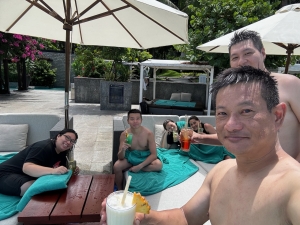
We wandered to the main pool at the resort, which our host told us was just a mere minute’s walk from the reception. We originally just wanted to hang around at the pool area and peep at our location next to the main pool area). Since there is nothing we can do here besides people-watching, we ordered some things to share. As our food was being served, we got a call from our host, who informed us that our villa was ready, and she was on the way to the pool bar to meet us. We were escorted to our villa, and our host took us on a tour around the villa. We fell in love with the villa assigned to us for its functionality and how it was designed for communal living. We were excited to see the swimming pool and the close proximity to the famous My Khe Beach, the most beautiful beach in Vietnam. As we were getting bored and everyone seemed still energic, we headed outside the resort to get some drinks at the nearby minimart.

Exploring the My Khe Beach Area

After a buggy ride later, we were outside the resort. Instead of just heading opposite the villa, we explored the My Khe beachfront area. We walked along the street directly in front of the My Khe beach and spotted numerous eateries along the beachfront area and the countless hotels across the road facing the beach. As it was still early, the beachfront seemed sleepy. We spotted a handful of tourists suntanning on the beach while the eateries were preparing for the evening crowd. The beach seemed quiet at this time. Looking across the road from where we were, we saw some restaurants and minimarts dotted along the roadside. After walking about 30 mins from our resort, we made a U-turn and returned to the minimart in front of our resort.

BBQ in the Villa

After getting our drinks, we returned to our villa to laze around. We organised a birthday BBQ dinner for our friend at our villa at 6 p.m. The resort staff came to set up around 4 p.m., and the BBQ dinner started promptly at 6 p.m. We were not required to do the BBQ ourselves. Instead, the staff would cook the food, and we just sat around in the dining room of our villa while another staff served us food fresh from the BBQ pit. The staff treated us like VIPs and constantly filled our plates with food.

As we were very well fed by the staff from the BBQ session, we wanted to walk around the resort to digest. But we ended up strolling along My Khe Beach. We discovered a shorter way to the beachfront area we were at a few hours ago. Strolling along the My Khe beach at night, we were treated to the bright neon lights from the hotels lined the beachfront. Despite being at night, the beach was still dotted with locals enjoying the beach, kids playing on the beach and numerous others who came out to enjoy the sea breeze on My Khe Beach like us. The eateries along the beach were as quiet as earlier in the day. I guess this period is the tourism off-peak session. After about 1 hour of walking along the beach, we returned to our villa the same way we came to rest for the night. We will have another early start tomorrow when we visit Ba Na Hills.

Tokyo Day 7 (25 May 24): Asakusa – The Oldest Temple in Tokyo; and Ginza – Home of Upscale Shopping

As our flight leaves at 10 pm tonight, we have the whole day to cover the sights we have yet to see in Tokyo. I planned to visit the iconic Sensoji Temple in the morning and Ginza in the afternoon, leaving us some time to get back to our hotel before making our way to the airport.

Koami Shrine – Washing Our Money for Luck

Before our trip to Japan, I saw a clip on social media about this unassuming temple in Tokyo that was believed to bring luck and ward off evil. Koami Shrine is located in the Ningyocho district, near the Asakusa area. We took the Tokyo Subway from Mita Station and alighted at Ningyocho Station. The shrine is a 3-minute walk from Ningyocho Station Exit A6. Koami Shrine is a small shrine tucked in a residential neighbourhood, sandwiched between two buildings. The wooden structured shrine follows a typical Japanese shrine architecture, coated mainly in the natural colour of the wood used to construct the shrine. We spotted some gold platings on the under roof of the shrine; despite the small number of golden platings, the plainness of the shrine made the golden parts stand out. There are very few carvings on the shrine structure, with only a phoenix at the topmost beam and some dragons. The main deity enshrined in Koami Shrine is the god of wealth and asset protection. Hence, the locals flocked to this shrine for good luck. One of the interesting rituals here is the washing of money, which is believed to bring wealth and fortune. After offering our prayers, we participated in the money-washing ritual in the well beside the shrine. It was an interesting experience, and hopefully, it would bring us luck.

Asakusa – The Iconic Temple in Tokyo

Our next destination is the iconic Sensoji Temple, the oldest temple in Tokyo. To get there, we took the Asakusa Line to Asakusa Station. Well-marked signs guide us to Exit A4, the nearest exit to Sensoji Temple.

Kaminarimon Gate – The Iconic Red Gate

The metro exit to Sensoji Temple is situated across the road. After a short walk from the exit of the metro station, we spotted the iconic red Kaminarimon Gate to Sensoji Temple. The predominantly red wooden building against the white walls is the entrance to Sensoji Temple. Statues of Thunder and Wind Gods stand were seen guarding both sides of the gate. Hanging in the centre is the iconic huge lantern, believed to weigh about 700kg, with the words “Thunder Gate” on the side facing the main road, while “Wind and Thunder Gods Gate” was inscribed at its back. Underneath the lantern, we could spot a dragon engraved into a circular wooden panel.

Nakamisedori Street – The Shopping Street in Front of the Temple

Our nightmare began after we walked past Kaminarimon Gate. We were greeted by a large horde of tourists visiting this iconic temple. To get to Sensoji Temple, we had to walk through Nakamisedori Street, the main shopping street in front of the temple. On both sides of Nakamisedori Street, we spotted numerous shops selling souvenirs, charms, clothing and some stores selling food and snacks. However, at the time of our visit, Nakamisedori Street was packed with travellers and was too crowded for us to do any meaningful shopping. Half the time, we were tussling with fellow visitors for a spot to advance closer to Sensoji Temple. The warm weather added to the discomfort we felt while walking through this gauntlet filled with stores on either side. We were not looking forward to bashing through this crowd again on our way out later in the day.

Sensoji Temple – The Oldest Temple in Tokyo

It took us 10 minutes to navigate through the sea of visitors on the 250m Nakamisedori Street. Once past the crowded street, we arrived at an open area which marks the grounds of Sensoji Temple. We could see the five-storey pagoda sitting at the left of the temple. In front of us was the inner gate to Sensoji Temple. The Hozomon Gate has a similar structure and colouring palette to that of the outer gate of Kaminarimon. Unlike the Kaminarimon Gate, the Hozomon Gate is wider and features three lanterns. The red lantern in the centre, weighing about 400kg, displays the name of the town Kobunacho. Two smaller copper lanterns, each weighing about 1,000kg, hang on either side of the centre red lantern.

A short walk from Hozomon Gate, we arrived at the main hall of Sensoji Temple. The main hall has an unusually high roof and uses the same architectural style as most Japanese temples. The main hall is decked mainly in white with red-coloured pillars. Despite being packed with visitors, the large outer sanctum of the main hall in Sensoji Temple did not feel crowded. We were able to peek into the temple’s inner sanctum from the large mash in front of the inner sanctum. A large golden altar dominated the views of visitors. As the Bodhisattva is a national treasure, it is housed deep within the inner sanctum, away from the view of visitors. All I could only see was a large painting of a peacock from the outer sanctum. I found the outer sanctum a great spot for photos with the temple grounds and the five-storey pagoda. There are several stations placed around the outer sanctum for visitors to draw paper fortune (simply drop Â¥100 into the box in each station). We spent time drawing fortune and buying charms at the outer sanctum before meeting with my sister and her family. As we were leaving the temple, I did not want to go through the sea of crowds in the gauntlet of Nakamisedori Street. Looking around, I noticed a road that seemed to lead to the adjacent main road. This way into the temple is less crowded, though one would miss out on walking under the Kaminarimon and Hozomon Gates.

Ginza – Home to Upscale Shopping

Our next destination was the Ginza area, home to luxury boutiques and upscale shopping. To get to Ginza from Sensoji Temple (or Asakusa area), we took the metro from Asakusa Station to Ginza Station. The main street in Ginza was closed to traffic on Saturdays to provide more space for shoppers to roam around. There are random chairs and tables on the main road for visitors to rest, although we saw more people using them for photos. All the luxury brands seem to find a spot in the Ginza area, and numerous shopping malls are on either side of the street. Ginza is also home to the flagship store of the Japanese brand Uniqlo, occupying a 12-storey building by itself. Perhaps we were not in the mood to shop in malls or had already bought the stuff we had set out to buy, we found Ginza a little boring. We did not spend too much time here. We returned to the hotel around 5 pm to repack our stuff and prepare to leave for the airport for our 10 pm flight tonight. We spent some time at the hotel lounge for evening cocktails and relaxation before heading for the airport.

Bye Bye Tokyo

We were in good time to check in for our flight home and had some time to spare in the airport lounge before our flight. After spending 7 days in Tokyo, I thought a few things could be better.

Not Spending More Time in Kawaguchiko and Nikko

While both Kawaguchiko and Nikko can be done as a day trip from Tokyo, I thought we were a little too rushed during our time in these outskirt towns. The journey already takes 2 to 3 hours, leaving us little time to explore the places we want. We also did not expect attractions and shops to close at around 5 pm, which further limited our time to enjoy these cities. To cover more attractions and at a more leisurely pace, I thought spending a night in each of these cities would be ideal. For Nikko, we only have time to explore part of the attractions in the western part of the town (and even that we did not have sufficient time to cover these attractions fully), there is the northeastern part of Nikko that we did not manage to cover. Hence, spending a night at Nikko would allow us to cover more of the city.

Shopping Timings are Limited

Shopping malls in Tokyo open from 10 am – 10.30 am and close at around 7.30 pm – 8 pm, which means we do not have time to enjoy shopping in the malls and department stores. We did not see any night markets (like those in Taiwan or Bangkok) that open till late for us to shop, other than the medical shops and Don Quijote, which are open 24 hours. We also realised that only restaurants are open till late, while the shops close early. Perhaps the next time we return to Tokyo, we might leave shopping at Don Quijote late at night while exploring the shopping malls in the day.

Not Spending More Time in Tokyo City

As we were trying to maximise our JR Tokyo Wide Pass and catering a day for Tokyo DisneySea, we were only 2½ days in Tokyo. This meant we were limited in the areas in Tokyo we could visit. We only managed to visit part of Asakusa and Shinjuku while missing out on places like Shibuya and some attractions such as Tokyo Tower, Tokyo Skytree and Team Labs. Perhaps the next time we visit, we will have more time to explore Tokyo City leisurely.

Tokyo Day 6 (24 May 24): Shinjuku – The Shopping Mecca of Tokyo

We spent the next two days exploring the different districts of downtown Tokyo, and today, we explored the Shinjuku area.

Tokyo Metropolitan Government Building – Tokyo from Above

We started our day with a visit to the Tokyo Metropolitan Government Building. To get to the Tokyo Metropolitan Government Building, we took the subway to Tochomae Station on the Asakusa subway line. The Tokyo Metropolitan Government Building is right at the doorstep of Tochomae Station. There is an underground link from the subway station directly to the basement of the building. Tourism officials on the ground floor were ready to assist travellers with our visit to the observation deck. The 243m tall Tokyo Metropolitan Government Building has two towers, each with an observatory deck. Visit to the observation decks of the building are complementary, and we were advised that the views from the South Tower were better. There wasn’t a queue at the South Tower lift queue when we were there; few people seemed to visit this complementary sight. The lift whizzed us up to the observation deck on the 45th floor of the building swiftly. There wasn’t too much of a crowd at the observation deck when we were there, where we were treated to a view of the entire Tokyo city. Seeing the numerous buildings in Tokyo that looked like giants when we were standing on the ground level, suddenly looked like dwarves from the observation deck. The observation deck faces the four cardinal directions of the compass, each with well-marked signs to tell us what we can see from each side. We saw how compact the city is from all sides, with countless buildings packed closely to each other, except for the view from the east window where our attention was captured by the large greenery space of Shinjuku Gyoen National Gardens as if this space was carved out as the lung of Tokyo. Despite being a sunny day, the low clouds obstructed our view of My Fuji from the north windows, and we also hardly saw Tokyo Skytree from the East Windows. There is a cafe and souvenir shop on the observation deck where we bought inexpensive souvenirs.

East of Shinjuku Station – The Lively Side of Tokyo

We dedicated this day to shopping around the Shinjuku area. Shinjuku is a large area, and we mainly shopped around the streets and in the shops east of Shinjuku Station. We had two options for getting to the Shinjuku area from the Tokyo Metropolitan Government Building: riding the subway for one stop or walking over. We opted for the walking option. Surprisingly, the walk from the Tokyo Metropolitan Government Building to the Shinjuku area was rather effortless. The underground walkway had travelators along the tunnel, making walking over a breeze.

Hotel Gracery Shinjuku – Getting up close with Godzilla

The Godzilla building, also known as Hotel Gracery Shinjuku, lies to the East of Shinjuku Station. We exited Shinjuku Station from the East exit and came to a cross junction. Little did we know this junction is also where the 3D cat advertising billboard was (also known as Cross Shinjuku Vision on Google Maps). This was one of the sights I wanted to see but I kept it as an option. We stayed at the junction watching the 3D cat come alive on the billboard, but we were disappointed that the cat did not seem very 3D when we saw it live. The cat only came on for about 10 sec, and the billboard would switch to some advertisement. I thought it wasn’t as special as I had seen on social media.

Crossing the road, we approached the Godzilla building via a small street. This small street, accessible to both pedestrians and cars, is filled with shops and a handful of restaurants. I have a feeling that people use this street as a thoroughfare to the Godzilla building and Kabukicho. We could see the Godzilla head popping up from the top of a building within minutes, which excited my nephew. We stopped at the Don Quijote at the road’s junction on our way to the Godzilla Building. There are several storeys in this 24-hour Don Quijote selling all sorts of goods, from souvenirs to medical items and even branded luxury goods. There is a tax refund counter inside the building, located on the 4th floor.
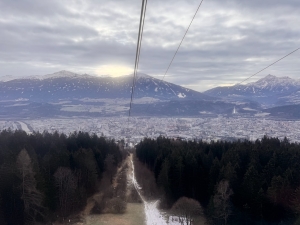
My nephew was even more excited as we got close to his favourite character. We initially entered the building via the cinema side, hoping to see the Godzilla head terrace. After asking the cinema staff, we were told the Godzilla head terrace is accessible from the Hotel Gracery Shinjuku entrance around the back of the building. The Godzilla head terrace is in the hotel’s lobby, on level 8. We saw a model scene of Godzilla fighting off some alien the moment we stepped out of the elevator, which made my nephew very happy. The Godzilla terrace was closed to the public, perhaps due to over-tourism in the hotel. Nonetheless, my nephew was still very happy to come so close to his “idol”. We spent some time in the cafe next to the terrace and ordered a Godzilla-themed pancake with Godzilla chocolate (it was rather expensive). The pancake and Godzilla chocolate tasted normal, which I thought was not worth the price. There is a Godzilla figurine and movie posters displayed in the hotel lobby. There is even a small shop selling a small selection of Godzilla memorabilia.

Shopping on the East of Shinjuku Station

Our next stop was the Godzilla shop at Shinjuku Marui Annex, about a 15-minute from Hotel Gracery Shinjuku. There was a small market outside the Godzilla building with locals dressed in cosplay characters, which made this already lively part of the Shinjuku area even livelier. As we walked towards the Shinjuku Marui Annex, we stumbled into the Kabukicho, Tokyo’s entertainment and red-light district due to its high concentration of nightclubs. Instead of looking like a red-light district, Kabukicho looked like any other shopping street in Tokyo. Perhaps we came here during the day, which might be different at night.

The way to Shinjuku Marui Annex was very busy with tourists and locals. We stopped by several shops to do some shopping and even spotted a Disney Store along the way. When we reached the Shinjuku Marui Annex, my nephew was ecstatic with the number of Godzilla figurines and merchandise he could choose. My nephew was happy to see a gigantic Godzilla figurine at the shop entrance. There are some gachapon machines at this department store, and we had a great time playing on them. We stopped by some shops after getting Godzilla merchandise while walking towards Takashimaya near Shinjuku Station.

Unknowingly, we came to Musashino Street, just across from Shinjuku Station. This area has a concentration of shops selling figurines and toys and is home to some bigger brands, such as Uniqlo, other than numerous restaurants and pubs. The neon street signs made this area very colourful at night. After getting what we wanted from Takashimaya, we headed back to Musashino Street for dinner, where we saw a good variety of restaurants. One thing I noticed in the restaurants in Tokyo is that most restaurants here do not seem to cater to families or large groups. These restaurants only have seats for two pax, perhaps due to the limited space in Tokyo and partly due to the expensive rental, making it challenging for us to find out who can seat our party of five. We finally found a ramen restaurant that could accommodate us. The food here is delicious, and we had a great meal to end our shopping day in Shinjuku.