Austria Day 13 (20 Jan 25): Goodbye Vienna, Goodbye Austria

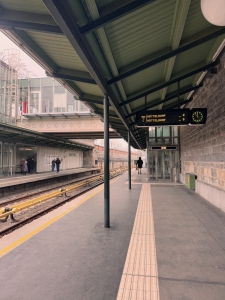
We fly out of Austria at noon today and leave for the airport at 8 am, as we were unsure about the traffic conditions and the time it would take to complete our VAT refund. There are two train options for getting to the airport from Vienna Hauptbahnhof: the cheaper, slightly longer OBB (costing €4.50) or the faster and costing three times more than the OBB (€15). We took an Uber instead, as we did not want to drag our luggage to the tram station and fumble to find the train platform in Wien Hauptbahnhof. The 30-minute Uber ride from the 3rd district to the airport costs us about €37.

VAT Refund at Vienna International Airport

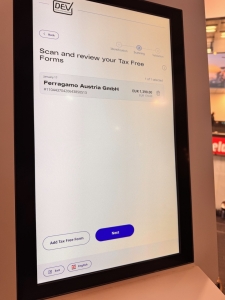
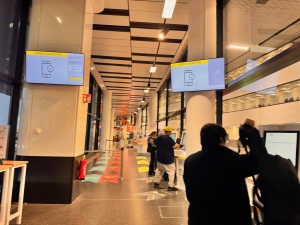
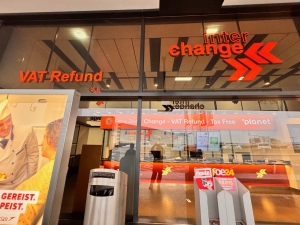
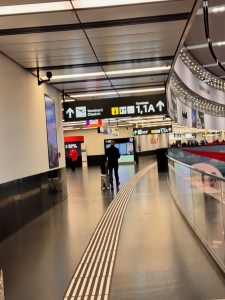
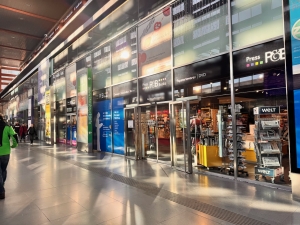
There are very few resources online on the tax refund process at Vienna International Airport. We were unsure if the VAT refund would be easy, like what we experienced at Paris Airport last year, or complicated, like what we experienced at Catania Airport two years ago. I catered additional time for our VAT refund. We had to complete our VAT refund before reporting to the check-in counters for our flight, as the customs may want to inspect the goods for which we are claiming a tax refund. To get our VAT refunded, we found the VAT refund counters (marked by a bright yellow DEV sign) by the second last door from the rightmost part of Terminal 3. For VAT refunds, we can scan a QR code at the DEV counters on our mobile phones (we need to connect to the airport wifi first) or use the kiosks. My friends and I tried using our mobile phones but found the wifi rather weak. We ended up using the kiosk, which was faster.

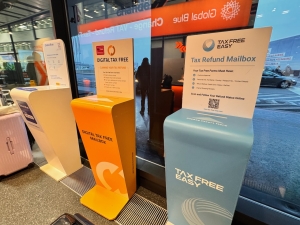
After scanning our receipts, we proceeded to the customs counter further down the lane to get our receipts validated electronically. Based on our experience, we found that the customs officer will only inspect the more expensive items. I got a Ferragamo bag for €1,350 and was not required to be inspected, whereas my friend was asked to present the €7,000 LV bag she bought. After getting our electronic stamps, for purchases that do not require inspection, we can either drop the VAT refund forms in the respective VAT refund company’s boxes (bring a pen along or fill up the receipts before coming to the airport) or claim cash from the inter-change counters after the validation counter. A small fee is charged for cash refunds. As for the items that required to be inspected, my friend had to hand carry the bag, clear immigration to the non-Schengen zone and present her bag to the DEV counter near our boarding gate. She only gets her validation stamp after the inspection.

Our Thoughts on Austria

For our 12-day trip around Austria, we thought it was more than Salzburg and Vienna, which most people used as a thoroughfare between Hungary and Germany. It was certainly more than the picturesque Hallstatt, which inspired our trip to the country in the first place. Austria is a country of musical culture, beautiful architecture, and magnificent Alps. The locals we met on our trip were mostly friendly, but some took some time to warm up. We learned a lot from this trip through the guided tours of the Alps and the museums, the different climate zones and the artefacts we saw. Perhaps we came in the low season, the towns we visited were peaceful (except Vienna), and most importantly, they were very safe. We had no problems walking at night. Most of the cities we visited offered some sort of city card that covered most of the sights and all the transportation in the city, but not all of them are worth getting (such as Graz).

Our Summarised Itinerary

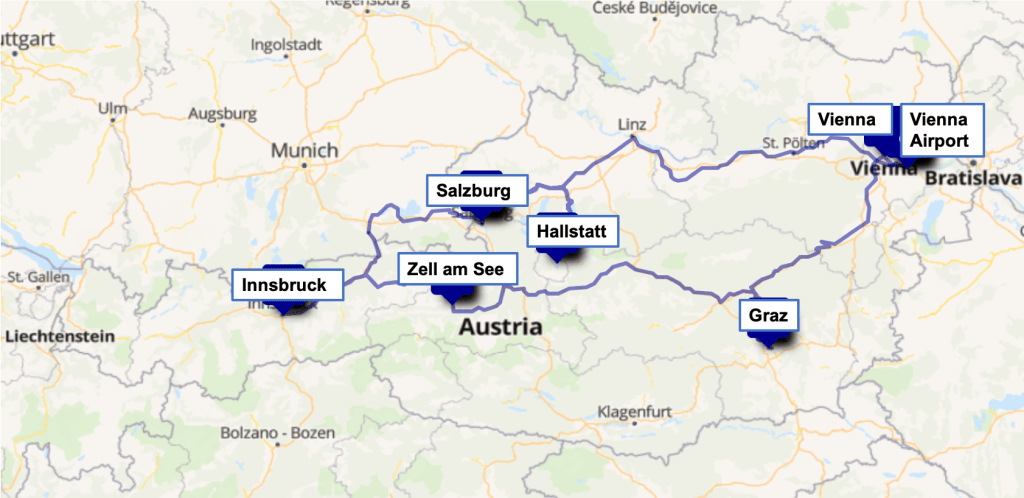
During our 12 days in Austria, we visited five towns and cities. Not all attractions are open in winter, so we went with our eyes open, knowing some of the sites would be closed. Winter in Austria is about fun in the Alps, where we see larger crowds skiing, snowboarding, or simply having fun in the snow.

Our Journey in Austria

Day 1 to 3: Salzburg

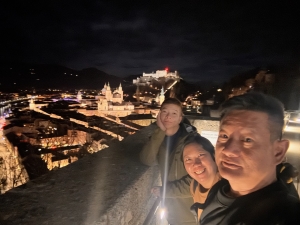
We started our trip from Salzburg, where we visited Schloss Mirabell and the gardens. We spent one full day visiting the sites in Salzburg, including Untersberg, about a 30-minute bus ride from the heart of Salzburg. I felt the sites in Salzburg city can be seen within one day as they are close to each other and the city is highly walkable. Starting from Hohensalzburg Fortress, we visited DomQuaritier, Mozart’s Birthplace, and St Peter’s Abbey and ended the night at Mönchsberg, which offered excellent night views of the city. We spent the third day in Hallstatt. The original plan was to get to Hallstatt before the closing of the Salt Mines and Skywalk. However, these attractions closed for annual maintenance before we arrived in Austria. In replacement, we went to Dachstein Krippenstein, hoping to get a bird’s eye view of Hallstatt and the lake. But the snowfall was too heavy that the attraction was closed. Hallstatt is a small town, and with the Salt Mine closed, I reckon half a day would be sufficient to see the town.

Day 4 to 6: Innsbruck

We visited Innsbruck for the Top of Innsbruck, one of the mountains easily accessible from the town. We started our Innsbruck trip with a visit to the Swarovski Crystal World. I thought the site could be skipped unless one is passionate about crystals or has an eye for art. We spent Day 5 in the Nordkette Mountains, having fun in the snow and getting a great view of the city from Seegrube. We also took the time to visit Alpenzoo, which I felt was a little boring. Before leaving Innsbruck for Zell am See on Day 6, we visited the City Tower and St. James’s Cathedral in the morning.

Day 6 to 8: Zell am See

Zell am See was a stop we visited to break the otherwise long train ride from Innsbruck to Graz. This charming lakeside town was the most enjoyable town we visited. We spent the afternoon of Day 6 strolling in the town centre but missed out on the view of the lake from the promenade (which we never got to visit throughout our stay in Zell am See). Day 7 was dedicated to visiting Kitzsteinhorn, and we felt joining the guided tour was very insightful. Not only did we visit the mountains, but we also got to know Kitzsteinhorn better. We spent the morning on Day 8 on a snowshoe hike on Schmittenhöhe. However, the snowshoe hike with our knowledgeable guide was a refreshing experience; I would think visiting the mountain peak and seeing Lake Zell from above would be ideal (which we did not have time for).

Day 9: Graz

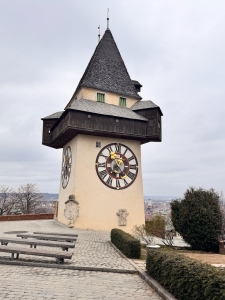
The second-largest city in Austria was often missed by visitors to the city. Graz was charming and compact, with sites within walking distance from each other. The people in the city were genuine and friendly. We thought Schlossberg gave us a great view of the city and the iconic Clock Tower. Joining the Walking Tour through the Historic City Centre gave us a good perspective of the city and the sites we saw. We would have missed out on some of the details if not for our guide. I reckon one full day is sufficient to cover the sites in Graz.

Day 10 to 12: Vienna

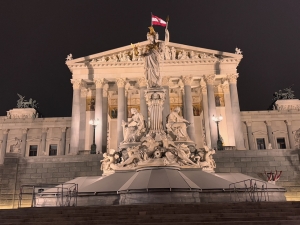
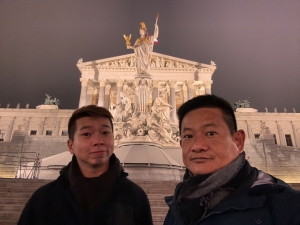
We spent our last three days in Vienna, the capital of Austria. I highly recommend joining the complimentary tour of Parliament Austria, where we learned about the country’s road to democracy and were shown places in the Parliament. We spent the rest of the evening shopping at Graben in Stephensplatz, and we were glad we did that. Shops closed earlier on Saturdays and were not open on Sundays. We had a busy day visiting the attractions on Day 11, starting with Schönbrunn Palace and Gardens, where we learned how the Habsburgs used this palace for the summer. In the afternoon, we joined a guided tour of the Vienna State Opera, visited Karlskirche and rode on the World’s Oldest Ferris Wheel in Prater Park. We started our Day 12 with a visit to the Hundertwasserhaus, followed by the Austrian National Library. In the afternoon, we joined a guided tour of Hofburg Palace; I thought touring the palace with the audio guide included in the ticket price would suffice as the guide did not add additional information about the palace. We ended our day with a visit to St Stephan’s Cathedral, where we went up the north tower, which offered a better view of Vienna from the terrace.

Austria Day 12 (19 Jan 25): Vienna – The Quirky and the Old: Hundertwasserhaus, Hofburg Palace, and St Stephan’s Cathedral

Hundertwasserhaus: The Unconventional Building

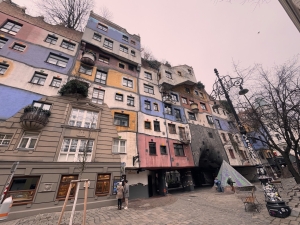
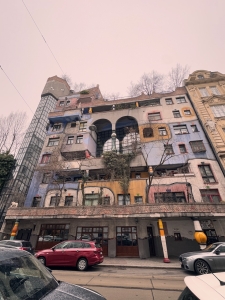
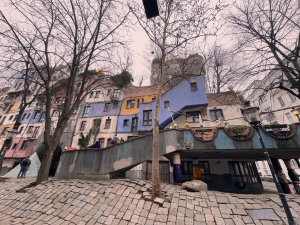
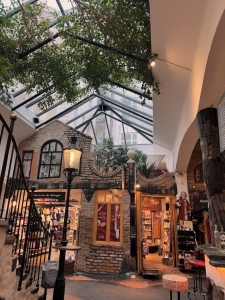
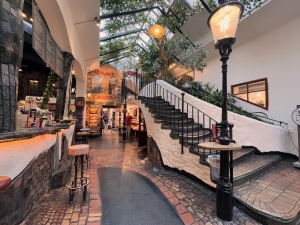
We started our final day in Austria with a bus ride to Hundertwasserhaus. The artistic and quirky building uses bold colours and irregular structure, making the building very Instagrammable. A direct bus #4 from our hotel took us to Hundertwasserhaus in under 30 minutes. We were captivated by the bold architectural style that Hundertwasserhaus offered. The building stood out from the rest of the buildings in the neighbourhood, with bright blue, yellow, and maroon colours. Parts of the building were adorned with mosaic-like tiles, although they did not form a picture, they were coherent. The Hundertwasserhaus is a small block of houses that did not take too long to visit. We also visited the Hundertwasser village opposite, an indoor space filled with souvenir shops and cafes. We hoped to get more information about Hundertwasserhaus from the village information centre, but it was closed on Sundays. After snapping a few more pictures, we left the house. Unique it may be, but I thought travelling to this part of the suburb just for the building was hardly worth the time. There weren’t any attractions in the vicinity, and the Hundertwasserhaus is just a block of private residences.

Austrian National Library State Hall: The World’s Most Beautiful Library

We were supposed to head to Hofburg Palace in the Innere Stadt, but I forgot to bring the printout of our tickets to Hofburg Palace. We hopped onto the next Bus #4 and returned to our hotel. After getting our tickets and since we still had some time before our guided tour of the Sisi Museum and Hofburg Palace, we could squeeze in some time for the Austrian National Library. The crown jewel of the Austrian National Library is the Baroque State Hall. I came to know of a guided tour to the State Hall organised by the library, and I wanted to join the tour (the tour booking can be found here). However, tours in English were not conducted in January during our visit; only German tours were conducted during this period. Entrance to the Austrian National Library costs €10, and we got €1 discount from our Vienna City Pass. The guided tour costs an additional €4.50.

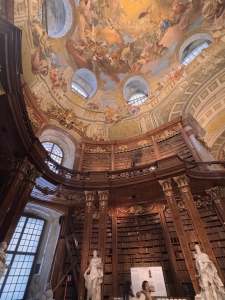
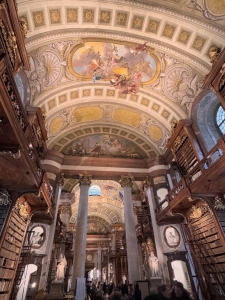
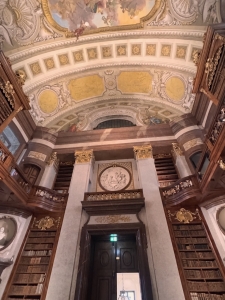
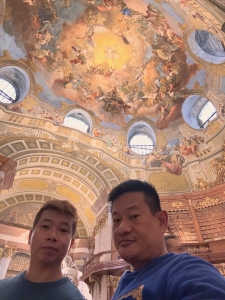
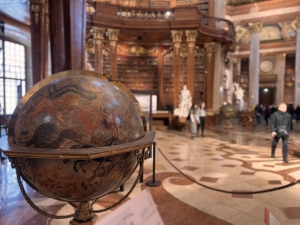
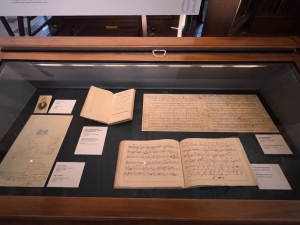
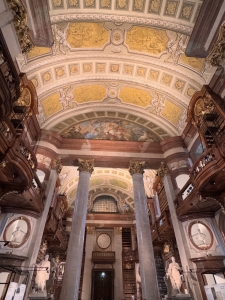
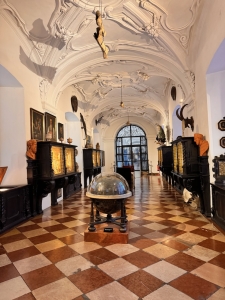
People came to the Austrian National Library for its State Hall. Built in the 18th century as part of the court library, the State Hall is Europe’s largest Baroque library, housing over 200,000 books on its richly decorated wooden shelves. Walking into the State Hall is like walking into the library featured in Disney’s animated “Beauty and the Beast”. High wooden shelves filled with books lined both sides of the hall; occasionally, we would spot a marble spiral staircase that led to the mezzanine level of the shelves. The walkway’s ceiling in the State Hall is beautifully painted with frescos alongside the patterned carvings. In the centre of the State Hall is a dome, where the frescos painted here blended in very well with the windows. There are some displays of relics and precious books along the walkway of the State Hall. However, few who came here stopped to read them. Most of us in the State Hall came for that Instagram picture of the library. As beautiful as it may be, the visit to the Austrian Library was only limited to the State Hall. I’d recommend joining the guided tour to understand more about the library or visiting only if one has the time to kill.

Cafe Demel: Experiencing the Viennese Cafe Culture

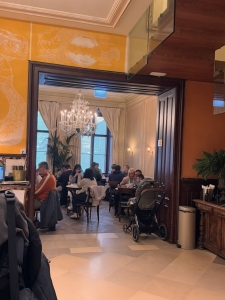
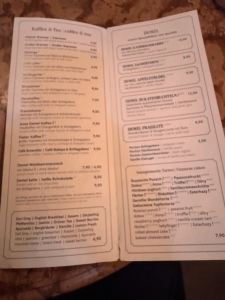
We had about 1 hour before our guided tour of the Sisi Museum in Hofburg Palace after we visited the Austrian National Library. We had time to experience the Viennese cafe culture. We walked along the street near the palace to hunt for a cafe and chanced upon Cafe Demel, which seemed to be a decent cafe with a crowd. We spotted a snaking queue that seemed to originate from the upper floors of the shop at the back of the shop on the ground floor. This queue is for those who came here to enjoy a cup of coffee and some pastries. We subsequently learnt that the cafe does not accept reservations and only entertains walk-ins. We stood in the line for about 5 minutes, and it did not seem to move. I recalled some empty tables at the front of the shop as we walked in earlier. I went up to a staff and checked on the tables. The friendly staff recommended taking the indoor seating as the cafe’s interior was worth the wait, plus sitting outdoors would be very cold in the middle of winter. The staff also told me the queue would move quickly, as a batch of 20 patrons is being let in at a time. True enough, we waited for the next 10 minutes to be shown to our table.

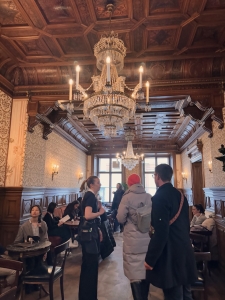
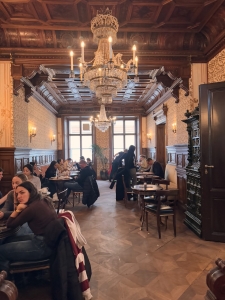
We were given a table on the second floor of the cafe. The staff recommended we take the table in the corner, as it has more space and would be better for photo taking. The room where our table is located has a rustic and cosy vibe (there seem to be different themes in each room in the cafe). Most of this room is decked with dark brown lacquered wooden walls and the ceiling. The chandelier that hangs from the ceiling adds a luxurious touch. We ordered some coffee and pastries, which tasted very good. I particularly like the walnut cake and the Kaiserschmarrn (an Austrian pancake). The vibe in the cafe was very good, with most people coming here for the Instagram-worthy shot. We left the cafe about 15 minutes before our tour of Hofburg Palace.

Hofburg Palace: The Primary Habsburg Palace

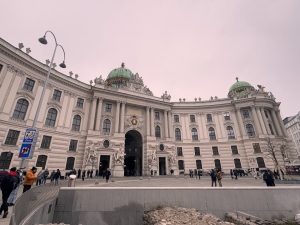
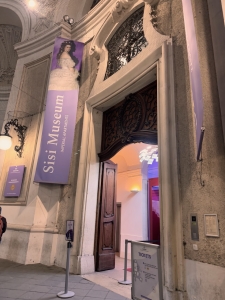
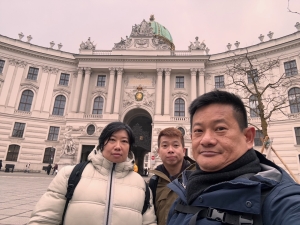
The Habsburgs, rulers of the Austrian-Hungarian empire, used the Hofburg Palace as their primary imperial residence. Today, the Hofburg Palace is the official residence and workplace of the Austrian President. There are two parts to the Hofburg Palace: the Sisi Museum and the Imperial Apartments. The tickets cost €19.50 for a self-guided tour with an audio guide and €24.50 for a guided tour through both the Sisi Museum and the Imperial Apartments. There is a €1.50 discount for both tickets by flashing our Vienna City Card. We went for the guided tour, thinking we might be able to see and understand more of the palace.

Sisi Museum: The Life of Empress Sisi

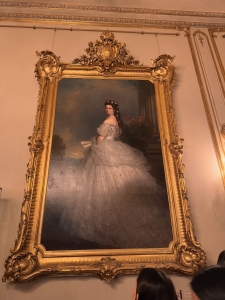
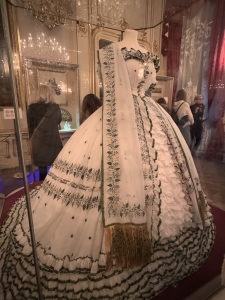
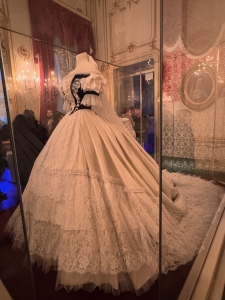
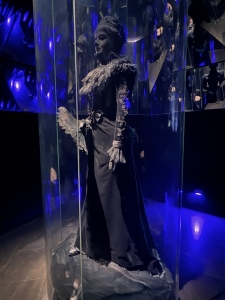
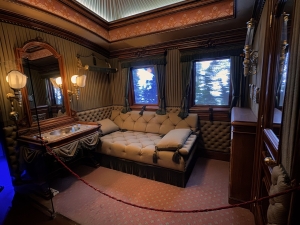
Our tour started with the Sisi Museum, which is the first part of the palace. The Sisi Museum displays artefacts and objects used by the Empress during her lifetime, from a replica of the diamond stars that we see in most of the pictures of her to her inauguration gown. There is even a replica of her train carriage. From our guide’s narration, we learned that Sisi was not happy in the court and often travelled to escape the politics of the palace. From our guide, we also learned about Empress Sisi’s daily routine and how she maintained her slender figure to maintain her title of being the most beautiful woman in the Austrian-Hungarian empire. In the last room, we were brought to an illustration of a man stabbing Empress Sisi, where our guide retold the story of how the Empress was assassinated by a psychopath in Geneva whose target was not Empress Sisi in the first place. The Sisi Museum was a small place with limited space. More often than not, we were battling standing space with self-guided tour visitors, dampening the museum visit experience. The guided tour of the Sisi Museum took about 30 minutes, and we transited to the Imperial Apartments.

Imperial Apartments: Where the Habsburgs Lived and Worked

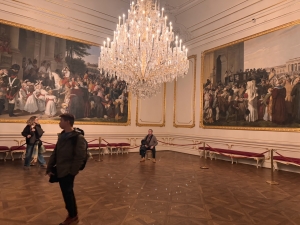
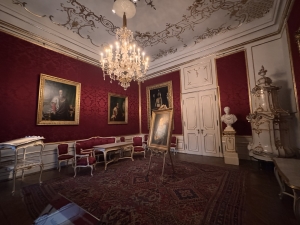
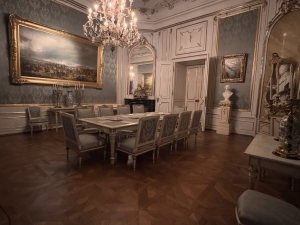
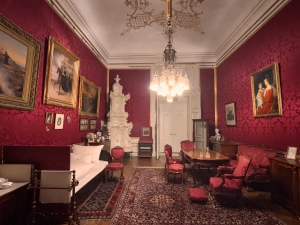
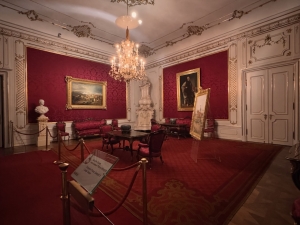
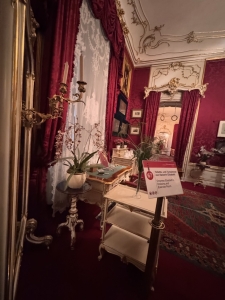
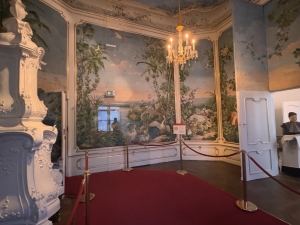
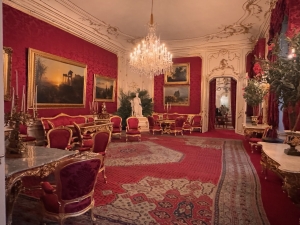
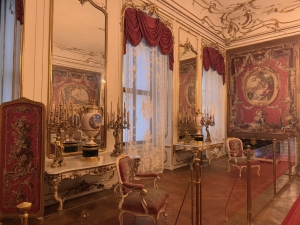
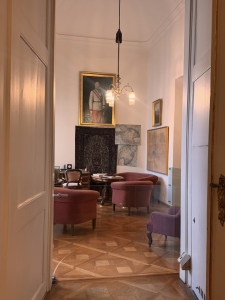
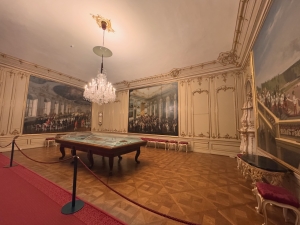
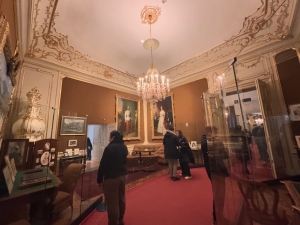
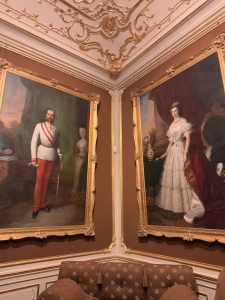
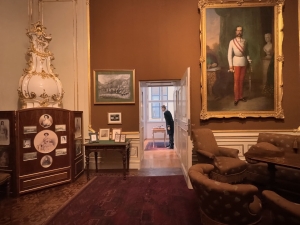
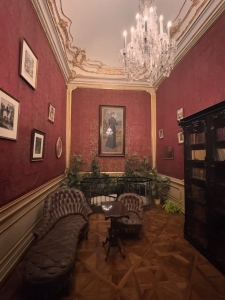
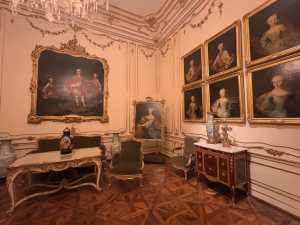
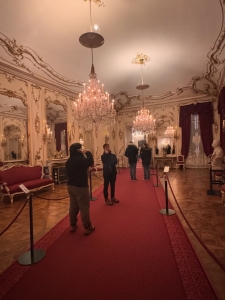
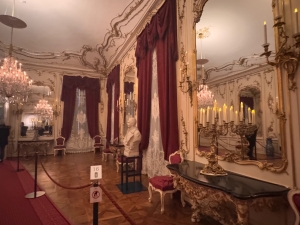
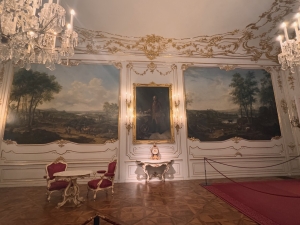
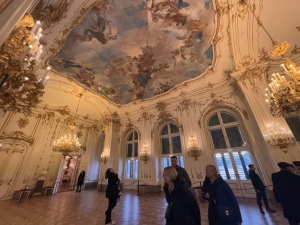
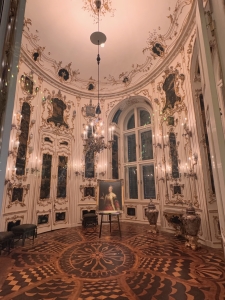
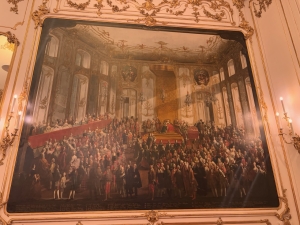
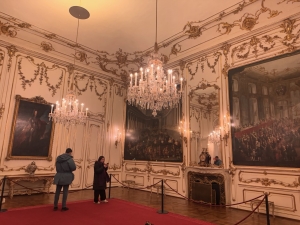
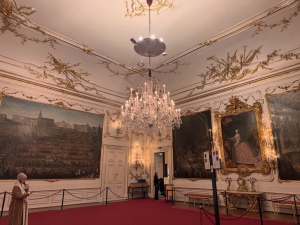
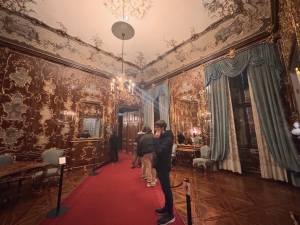
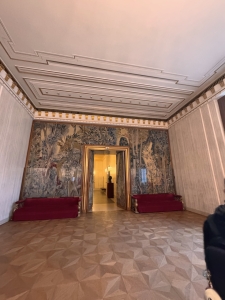
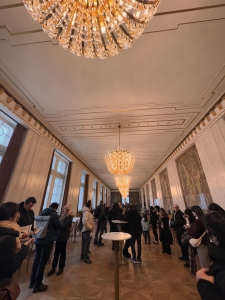
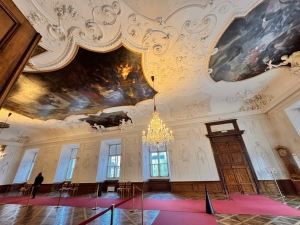
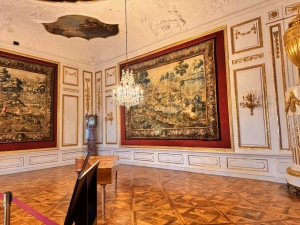
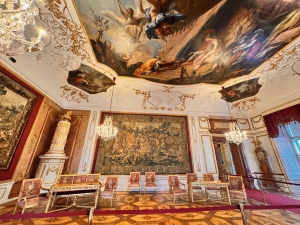
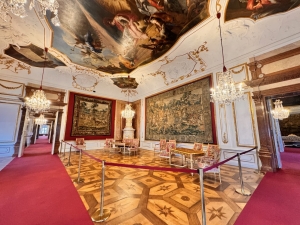
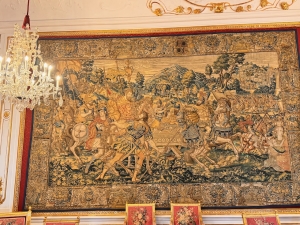
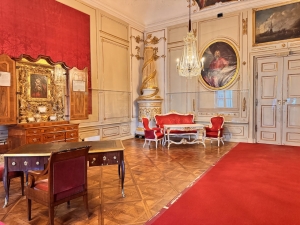
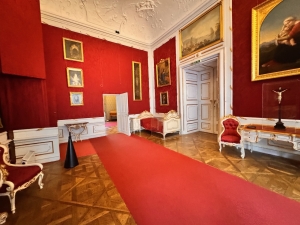
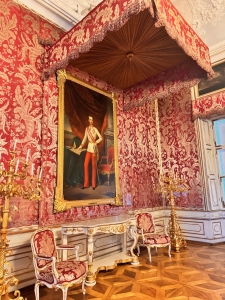
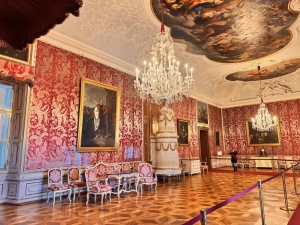
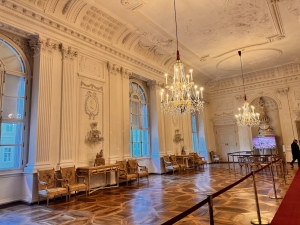
For the next 30 minutes, we were taken through the 16 rooms of the Imperial Apartments of the Hofburg Palace, with our guide narrating the significance of each room. We started with the Audience Waiting Room, where we saw huge paintings hung on the walls, two of which depicted political events during the time and one showing the emperor returning from Bolivia. The rest of the rooms displayed the audience chamber, working space, and living spaces of the royalty when they called Hofburg Palace home. Most of these rooms were filled with furniture that served the required functions and was opulently decorated with crystal chandeliers, paintings and statues. From Emperor Franz Joseph’s Study, we can see how much he loved Empress Sisi, with numerous paintings of her in her long untied hair. Whilst in the bedroom, which Empress Sisi occupied in later years, our guide mentioned how the Empress would eat small meals in her chambers to maintain her figure. The Imperial Apartments also showcased the Empress’s dressing and exercise room, where the Empress spent most of her time. Here, we could see the simple exercise equipment like bars and rings, which our guide mentioned the Empress was very disciplined in spending hours working out daily. We were also shown a passageway being sealed off with brick walls, and our guide told us that behind the sealed-off brick walls was part of the President’s workplace. Our tour ended at the Dining Room, a large room with a long table where the imperial family would gather every Sunday for dinner. This is also where the royal banquet was held. Our guide mentioned that the table setting displayed on the dining table was exactly how they were set up during the reign of Emperor Franz Joseph.

I was a tad disappointed with the Hofburg Palace visit. The palace felt a little small compared to the Schönbrunn Palace, and there were no big halls for Royal events like the Great Gallery we saw in Schönbrunn Palace. The guided tour of the palace felt a little redundant in that the guide did not offer any additional information, nor were we shown parts of the palace exclusive to the guided tour. All the guide did was replace the audio guide. I’d save the additional €5 charged for the guided tour and went with the audio-guided tour (we could have saved at least €15 if we bought the bundled Sisi Pass, which included Schönbrunn Palace, Hofburg Palace and the Furniture Museum).

St Peter’s Catholic Church: A Short Stop to the Artistic Church

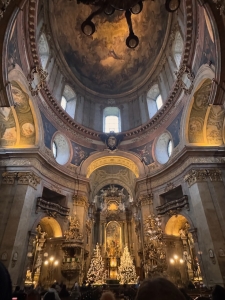
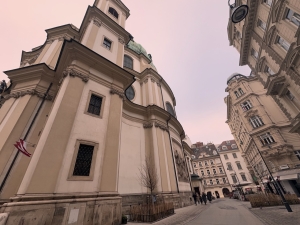
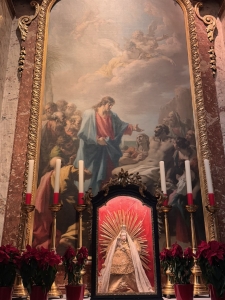
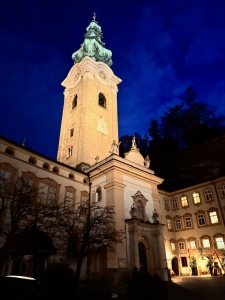
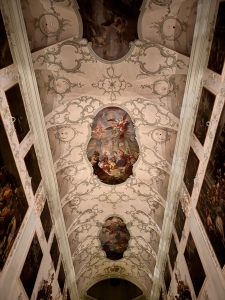
After leaving Hofburg Palace, we spotted a green dome church that sat at the end of a quiet side street along Graben while walking towards St Stephan’s Cathedral. We walked past this church two days ago. Since we had some time today, we decided to make a short detour to the church. The church’s facade is adorned with statues above its entrance and on its wall. The interior of the church surprises us. Despite its rather simple exterior, the inside of the church is decked with numerous delicately painted frescos coupled with detailed carvings on its ceilings. Every inch of the ceiling is either covered with paintings or carvings. The golden main altar stood out from the dark sand-coloured marble interiors; its lighting gave it a holy glow. As the church was not too big, we did not stay here for too long.

St Stephan’s Cathedral: The Icon of Vienna

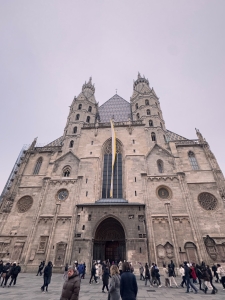
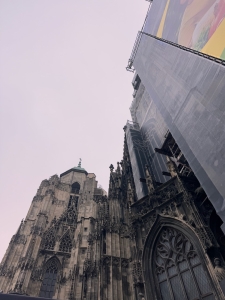
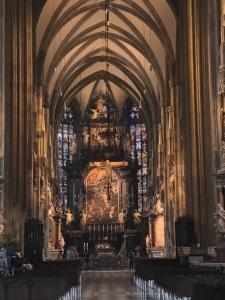
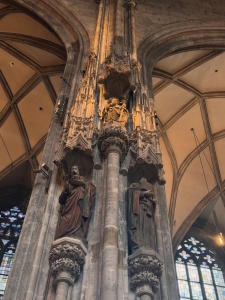
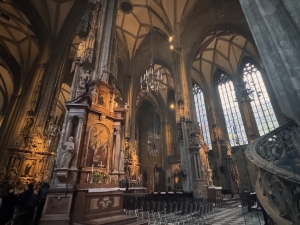
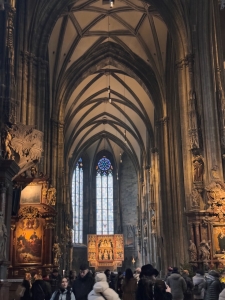
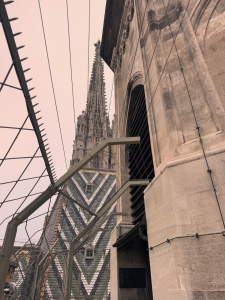
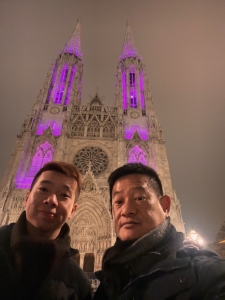
We continued our walk to the final attraction of the trip – St Stephan’s Cathedral. This was the first time we saw St Stephan’s Cathedral in the daytime. Standing by the square on which the cathedral sits, we can see the complicated exterior, as though someone has pasted different patterns on most of its facade. The exterior reminded me of the Duomo di Milano we visited two years ago. The St Stephan’s Cathedral has two towers, with the taller south tower (we jokingly referred to this south tower as the Eiffel Tower of Vienna when we first saw it last night). Legend has it that the original design of the cathedral would have the north tower being the taller of both towers. However, as the south tower was being completed, it was discovered that there was not enough funding and space to complete the north tower. There is no charge for entering the cathedral, but it would cost €7 to scale up the south tower and €6.50 for the north tower. No discount is offered for holders of the Vienna City Pass when going up the towers. The entrance to the south tower is located outside the cathedral, while the north tower is inside. We came to St Stephan’s Cathedral for the bird’s eye view of Vienna from one of these towers. While researching which tower to visit, I saw recommendations for the north tower as there is an outdoor platform on the top of this tower, while we can only look out into Vienna from small windows on the south tower. As a bonus, the north tower is the only one fitted with a lift. We were impressed with the gothic interior of St. Stephan’s Cathedral. Despite not having brightly painted frescos or carvings on the ceilings, the relatively simple interior made the stained glass on the windows stand out. We could focus our attention instantly on the cathedral’s main altar.

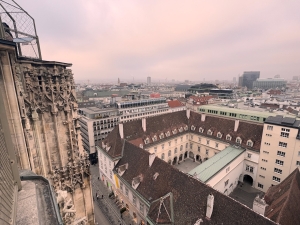
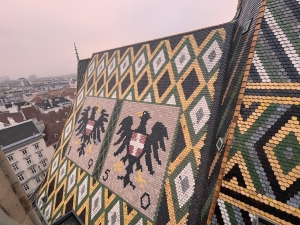
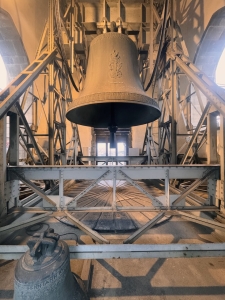
We got our tickets from the ticketing counter at the entrance of the lift to the viewing platform on the north tower. A short lift ride later, we were transported to the top of the north tower. The platform is not very large; we were able to walk from one end to the other in under 3 minutes. The first thing that caught our eyes from here was the two eagle mosaics on the cathedral’s roof, symbolising the Habsburg empire. We could see Vienna from a vantage point, from the Stephansplatz below to the Vienna Giant Ferris Wheel afar. The view up here is indeed breathtaking. A giant bell is installed at the top of the north tower. My friend and I attempted to wait for the half-hour mark to hear the bell strike. However, it did not happen. As the winter breeze was cold and we had seen what we had come here for, we headed back down and returned to our hotel to pack for our departure tomorrow.

Austria Day 11 (18 Jan 25): Vienna – Visiting the Icons in The Capital of Music: From Schönbrunn Palace to Prater

I initially planned two attractions for today: a visit to Schönbrunn Palace and a guided tour of the Austrian State Opera. As we had some time after visiting the two sites, we also went to St. Charles’ Church, which is not too far from the State Opera and ended our day with a ride on the Vienna Giant Ferris Wheel.

Schönbrunn Palace and Gardens: The Habsburg’s Summer Residence

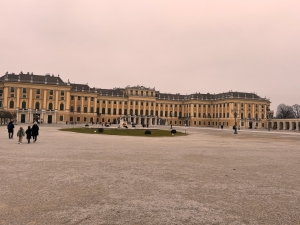
While Paris has Versailles, Vienna has Schönbrunn Palace, the summer residence of the Habsburg family and the largest of Vienna’s three palaces. The palace contains more than 1400 rooms and a large garden, but only 40 rooms are open to visitors. Schönbrunn Palace is very well connected to the local transit system, and there is a U-bahn Station (Schönbrunn Station) just across the road from the palace. The Grant Tour of Schönbrunn Palace’s ticket price is €32 (click here for ticketing), which includes an audio guide device for visitors to use for self-guided tour of the palace.

The Schönbrunn Palace

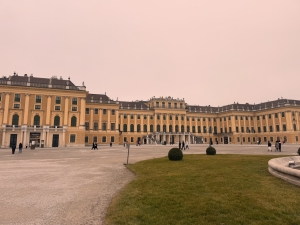
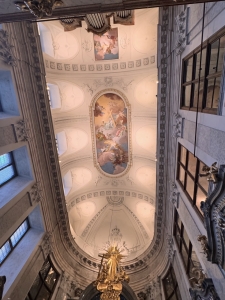
Passing through the palace’s main gates, we were immediately greeted by a large open space. The palace courtyard gave us a great view of the grandeur and the size of Schönbrunn Palace. Those who did not pre-purchase their tickets can be bought on the spot from a building to the left of the main gate. The entrance to the state apartments in Schönbrunn Palace is on the left of the main palace building. After the mandatory depositing of our bags at the cloak counter, we spotted a small chapel before the turnstiles to the state apartments. This is the Palace Chapel, which has marble interiors and golden statues that make it look grand and fitting for royalty. The chapel looked bright and airy, thanks to the high ceiling and windows fitted here, which let in natural light. The audio guide that came with the tickets to Schönbrunn Palace is very easy to use and can be collected at the counter beside the turnstile. The self-guided audio Grand Tour of the Palace covers all 40 staterooms, starting from the East Wing.

East Wing: Apartments of Emperor Franz Joseph and Empress Sisi

The East Wing mainly contains the apartments and office space of Emperor Franz Joseph and Empress Sisi, with the first few rooms used as waiting and audience chambers. The Audience Chambers are decked in brown marble, complementing the red velvet chairs. Here, we saw a table that Emperor Franz Joseph used when reading the report submitted by officials. The interesting part about this wing is the contrast between the Emperor and the Empress in the bedroom. Emperor Franz Joseph was a practical ruler and had a modestly decorated bedroom. There were no opulent engravings, golden plastered walls, or decorative furniture. The Emperor merely had a bed and a couch set in his bedroom, as well as portraits of his wife and his family. There was a painting in the Emperor’s bedroom depicting his demise on the bed on display here. In contrast, Empress Sis has three rooms: a dressing room, a study and her private chambers. These rooms were decorated with bright-coloured walls and gold-trimmed plasters on the walls. A statue on display in her dressing room shows guests the length of her hair.

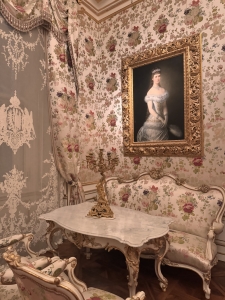
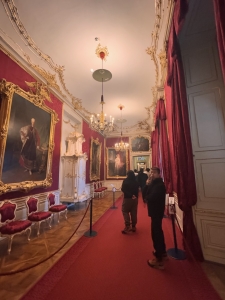
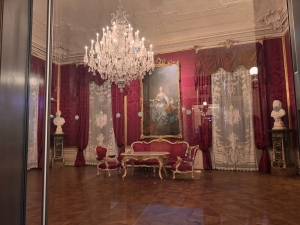
The other significant room in this wing was the Imperial couple’s bedroom, which the Emperor and Empress shared during the initial years of their marriage. The seating and wall panels are covered in a deep blue silk damask with white floral garlands, making the bedroom stand out. The Hall of Mirrors was perhaps the most decorated room in this wing. This Hall of Mirrors was where the Emperor granted Public Audiences, where any subject of the empire could seek an audience with the Emperor. I think this hall got its name due to the numerous large mirrors hanging on the walls of this hall.

North Parade Court Wing: The Place where the Royals Entertain

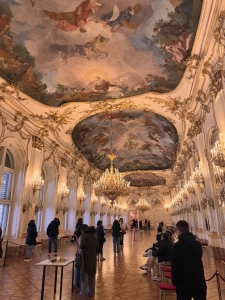
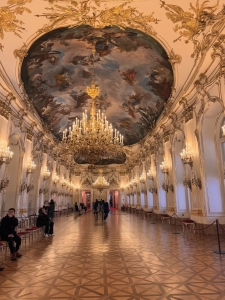
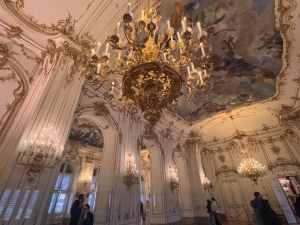
I thought the Great Gallery would be the most impressive hall in the entire Schönbrunn Palace. This large hall, mainly used as the palace’s ceremonial hall, is decked with gold trimmings on the walls and the ceiling and adorned with three large frescos on the ceiling. The golden chandeliers hanging from the ceiling reinforce the baroque-style decoration in this hall and contribute to the luxurious vibe. This is the most beautiful hall in the entire palace, and we could stay here longer to admire the detailed massive frescos painted on the ceilings. Though not as grand as the Great Gallery, the Small Gallery felt like an extension of the Great Gallery. Here, we could look out into the Schönbrunn Gardens through one of the windows.

West Wing: Chambers of Empress Maria Theresia

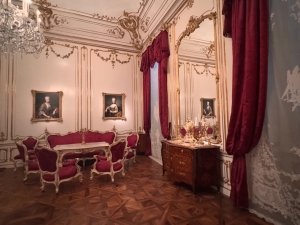
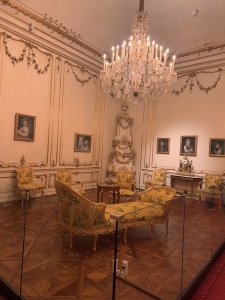
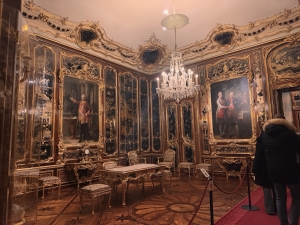
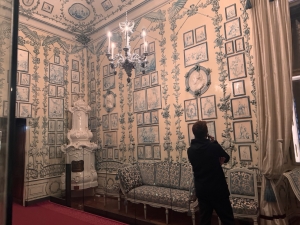
The West Wing was the apartments used by Empress Maria Theresia, the great-great-grandmother of Emperor Franz Joseph. The rooms in this wing were equally opulent, mostly painted in white with gold trimmings on the walls. Most rooms here had huge paintings depicting Empress Maria Theresia and her husband on the walls. Through some of these rooms, we can see the love of Chinese-influenced art by the Empress, as seen in the Vieux Laque Room, a reception room used by Emperor Franz I Stephan. The other significant room in this wing was the Rich Room, Empress Maria Theresia’s bedroom. Covered in bright red walls, the centrepiece of this room was the restored bed of the Empress. The lace artwork on the bedframe was intricate and showed the effort that had gone into making the bedframe worthy of the Empress.

The Schönbrunn Gardens

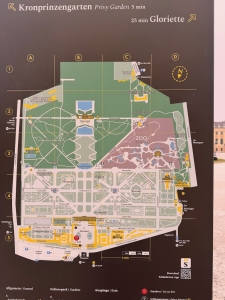
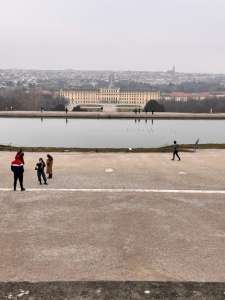
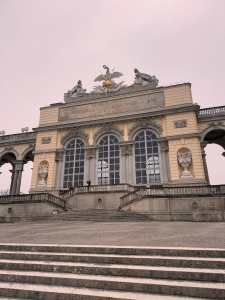
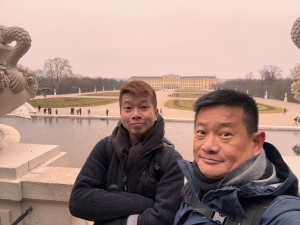
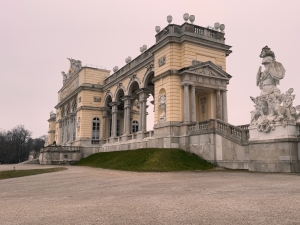
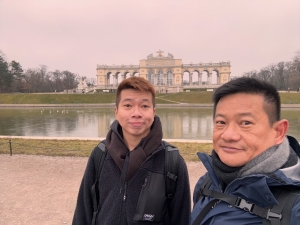
After spending about 1 hour doing the self-guided tour of the state apartments, we went to the Schönbrunn Gardens behind the palace. Visiting the 160ha garden is free, but there are charges for visiting the palm house, zoo and garden maze, all located within the garden grounds. We came to the Schönbrunn Gardens to visit the Gloriette, a pavilion perched on top of a small hill like a crown on the head of royalty. To get to the Gloriette, we first walked through the Great Parterre, a large open space with symmetrical beds. But these beds were under maintenance during the winter time when we visited. Numerous Roman statues aligned both sides of the Great Parterre, which looked like guards welcoming the royalties whenever they stepped foot into the gardens. The Neptune Fountains sit between the Great Parterre and the Gloriette. I feel most people skipped stopping at the Neptune Fountains, where we found some great vantage points at the back of the fountains to take pictures with Schönbrunn Palace. We were nearer to the Gloriette from Neptune Fountains; after a short walk uphill, we arrived at the crown jewel of the Schönbrunn Gardens – The Gloriette. Built in 1775 as the last building constructed in the garden, the Gloriette was built to serve as both a focal point and a lookout point for the garden. It was used as the Emperor’s dining hall, festival hall, and breakfast room. Today, a cafe occupied the Gloriette. On top of the Gloriette sits a lookout terrace looking out into the gardens and Vienna, which was closed during winter. Nonetheless, we were treated to a splendid view of Schönbrunn Palace and the Gardens from the Gloriette.

Vienna State Opera

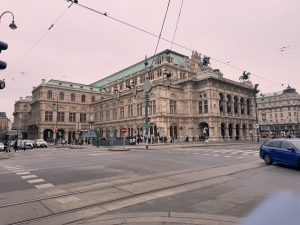
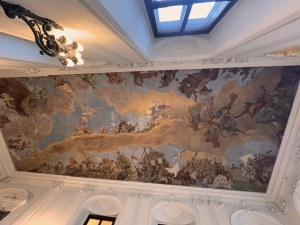
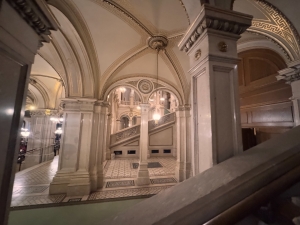
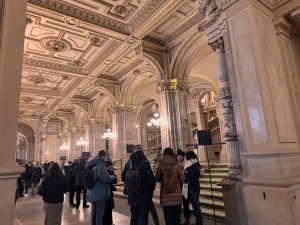
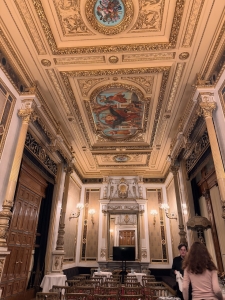
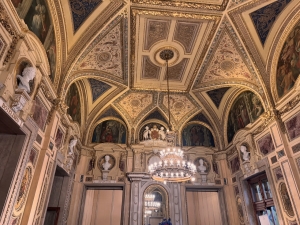
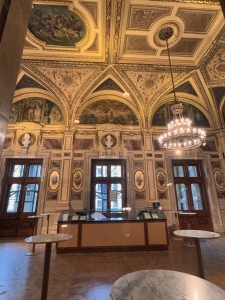
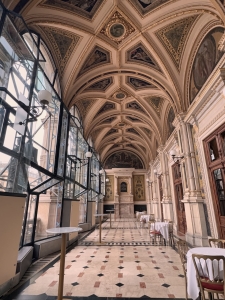
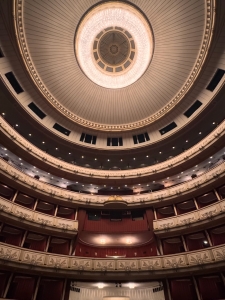
The Vienna State Opera organised regular tours of the building at €15 per pax in various languages, with more in English and German (click here for booking the tour). We booked our tour about 1 month before our trip to Austria. We arrived at the Vienna State Opera about 15 minutes before our tour and were surprised to see two queues at the entrance, one for those who had booked our slots online and the other for walk-ins (leftover tickets will be sold to walk-ins). There were no signs telling us which queue we should be standing in. Eventually, one of the staff members at the door gave directions to the queuing situation. As several language-guided tours were happening at the same time slot, each group was shown the parts of the State Opera in different sequences. Ours started from the side stairways to transit to the first floor of the building (while some others used the main Grand Staircase). We stopped by the Grand Staircase in the middle of the hallway, where our guide introduced us to the baroque architecture and the paintings we saw here. The marble Grand Staircase was indeed grand. The detailed carvings on the walls, some tastefully ornamented in gold, the two statues, and the paintings beautifully decorated this part of the building, giving it a posh and grand vibe. We were told the Vienna State Opera was bombed during World War II. Fortunately, part of the building survived the bombing. We were then brought to a small room behind the Grand Staircase. Decorated with gold trimmings, elaborate carvings on the walls and ceilings, and a fresco on the ceiling with bright colours, the Tea Salon was formerly reserved only for the Emperor and his guests. Today, anyone with the money can reserve the Tea Salon.

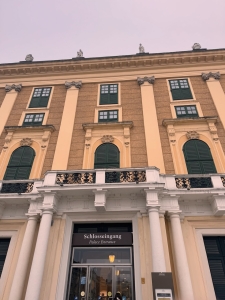
The next area we were shown was Marble Hall, a large space with relatively simple decor. Our guide told us this hall was rebuilt after WWII as it was one of the casualties of the war. The Royal Box was our next stop on this tour. The Royal Box was reserved exclusively for the royalty, which offered a spectacular view of the stage. We were invited to sit in the Royal Box while our guide narrated the purpose of the Royal Box and the reconstruction of the auditorium. After the Royal Box, we were guided to the Gustav Mahler Hall, a room for intermissions, concerts and special events. This room houses 13 tapestries produced over six years, depicting scenes from Mozart’s The Magic Flute. A short walk from Gustav Mahler Hall, we came to the Schwindfoyer, a small annexe beside the first floor of the Grand Staircase. Our guide told us this room was one of the surviving original parts of the Vienna State Opera. This room was elegantly decorated with paintings and carvings, most covered in gold, that left no empty spaces on the ceilings and parts of the wall. Hanging above each door that leads to the balcony are busts of famous composers. We found the busts of Mozart and Beethoven over some of these doors. Equally impressive is the balcony, which looked out into Ringstraße and served as the facade of the State Opera.

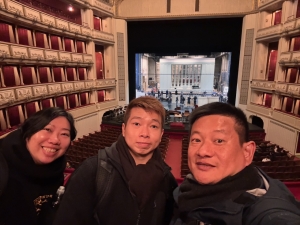
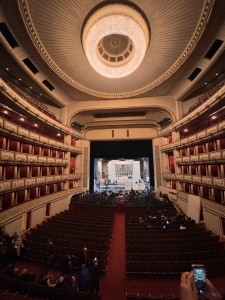
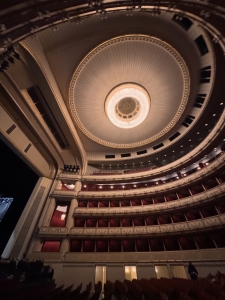
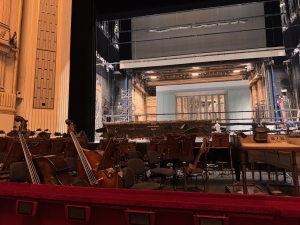
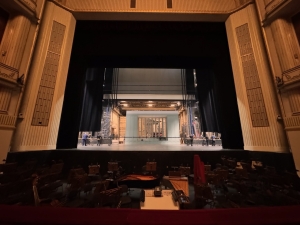
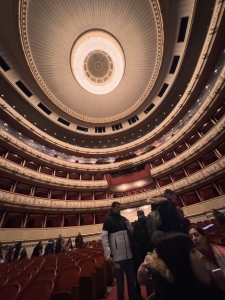
Our final stop at the Vienna State Opera was the Great Hall, the auditorium of the building. The Great Hall, decked with red velvets on the walls, looked grand and elegant. We were led to the front row of the horseshoe-shaped auditorium, where our guide told us about the different seating options and some standing rooms on the uppermost floor of the Great Hall. From where we were seated, we could see the orchestra pit lowered before our eyes (not sure if we were there at the right time or if it was raised and lowered as part of the tour). Our guide also told us that there are different performances daily, so the crew had to constantly change the setting of the stage daily. Our guided tour of the Vienna State Opera ended after the Great Hall, where we were led back to the foyer. Having gone through a guided tour of Parliament Austria, we expected the State Opera tour to be informative and insightful. However, we thought the tour was not as enjoyable. Due to the many tours taking place at the same time and the soft voice of our guide, we missed out on the narrations of our guide most of the time. While the tour of Parliament Austria issued each tour member a wireless headset to hear the guide better, the Vienna State Opera did not.

Karlskirche

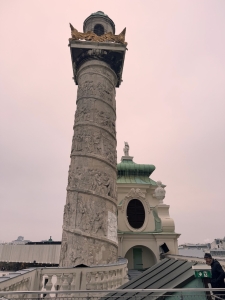
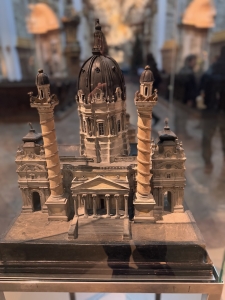
As Karlskirche (St Charles’ Church) was very near to the Vienna State Opera, we visited the church after our State Opera tour. Sitting behind a large pit, the 18th-century green domed baroque church with two tall pillars by its side towers over Karlsplatz. As we walked closer to Karlskirche, we could see the engravings on the two pillars. Karlskirche was built after the last great plague epidemic, after Charles Borromeo, who was revered as a healer for plague sufferers. The entrance to the church is at its side. Entrance to the church costs €9.50, and we got a €1 discount by flashing our Vienna City Pass. Besides the church, the entrance fee gave us access to the terrace, the Church model, the Treasury and the Organ. Our strategy was first to make the 120 steps climb to the terrace and work our way down.

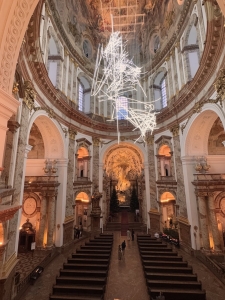
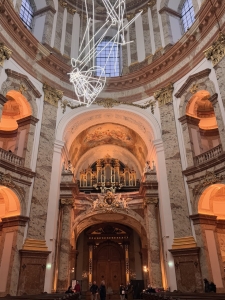
Despite being at an elevated point, we could only see part of Vienna from the terrace. The furthest we could see was the towers of St Stephan’s Cathedral. The park (Karlsplatz) and the pit we were on a while ago in front of Karlskirche dominated our view from the terrace. However, as we were rather close to the pillars, we could see the parts of the pillars that were being restored on top of the detailed carvings on them. Since there wasn’t much of a view, we left the terrace for the other parts of the church. We next headed to the treasury, where a small collection of relics and clothing of Charles Borromeo were being displayed. We did not stay at the treasury for too long and headed to the organ loft. Here, we were up close to the organ but were more attracted to the view of the church’s interior from the loft. Up there, we could see the carvings and the frescos on the inside of the dome clearer. Next, we headed to the ground floor of the church. The amount of artwork spread across the ceiling and the pillars made the church’s interior feel more like an art museum. Countless life-like angel statues were mounted on top of the pillars inside the church. Even the altar was a masterpiece. We did not stay in Karlsskirche for too long, as it was still early and Karlskirche was next to the U-Bahn station, so we took the U-Bahn to Prater Park to ride the world’s oldest Ferris wheel.

Prater Park: Home to the World’s Oldest Ferris Wheel

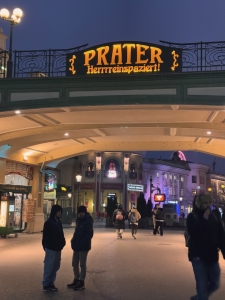
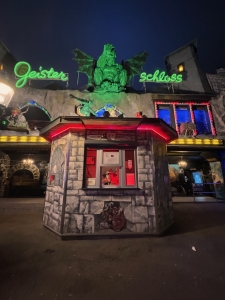
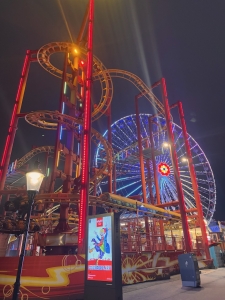
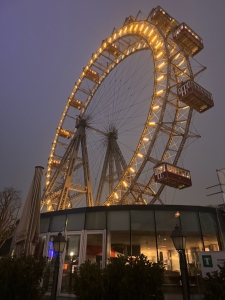
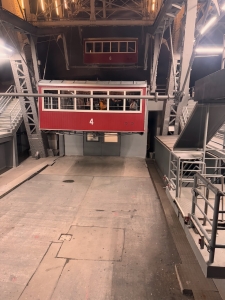
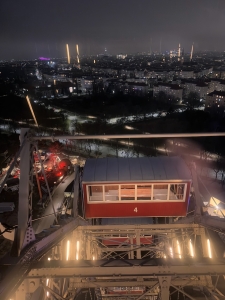
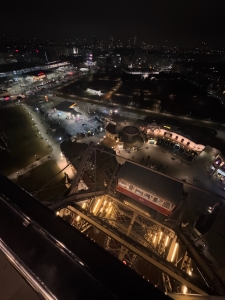
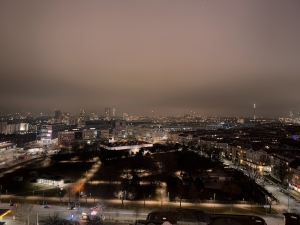
Prater Park is one of the oldest amusement parks in Vienna and opens till late at night. The park is easily accessible by the U-bahn, with Prater station being the closest to the park. Admission to the park is free, and visitors only pay for the rides they want to take. At the time of our visit, most of the outdoor rides were closed, and only a handful remained open. My friend and I first went on the haunted house ride, which is entertaining (rather than scary) at best. Our purpose for coming to Prater Park is to ride the iconic Viennese Giant Ferris Wheel. There are two Ferris wheels in Prater Park, a newer and taller one next to some roller coasters and the older one near the entrance. The 65m Vienna Giant Ferris Wheel is the world’s oldest ferris wheel, operating since 1897. Tickets cost €14 per adult (Vienna City card gave us €1 discount). Before the ride, we were made to walk through a small exhibition using the wooden cars on the ferris wheel. Sitting in one of the wooden cars, as we were slowly being hoisted up to the top of the wheel, the view of the park slowly became smaller, and views of Vienna City in the distance occupied our attention. We were treated to a great night view of Vienna at the top of the wheel. As we did not want to ride on the roller coasters in the winter, we left Prater Park after the Ferris Wheel ride.

Night View of Vienna

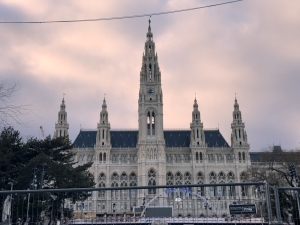
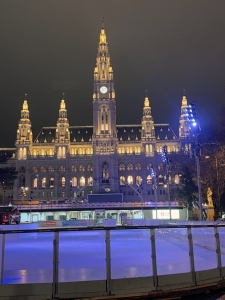
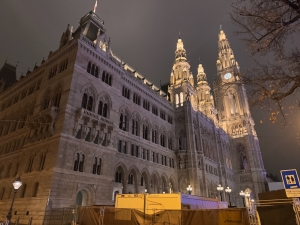
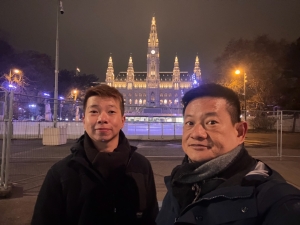
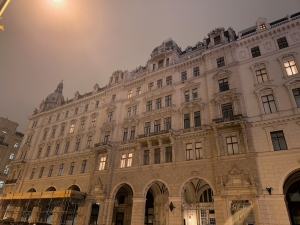
Vienna has a lot of beautiful buildings. As the night was still young, my friend and I wanted to see these buildings at night. There used to be a complimentary tram service around the Ringstraße, where most sights are located. However, this service has since ceased when we visited the city. A Google search revealed alternate trams around Ringstraße, which involves changing trams halfway through the Ringstraße. We took Tram #2 from near our hotel and somewhat missed the stop to change trams. The tram turned in from the Vienna City Hall and went further into a residential area. At the end of the line, we hopped onto the next tram and alighted at the City Hall. From here, we walked around to see some of the buildings further from the main Ringstraße. We called it a night and returned to the hotel after seeing these buildings.

Austria Day 9 (16 Jan 25): Graz – The City of Delight, Austria’s Second Largest City

Being Austria’s second-largest city, the sights in Graz can be seen within one full day. We started our day by visiting the Schlossberg in the morning and joined a guided tour of the city in the afternoon to understand more about the city. Like the other cities in Austria we have visited so far, Graz also offers a city card that covers all attractions and transportation within the city. The Graz card costs €30 for 24 hours, €39 for 48 hours, and €44 for 72 hours. However, we did not get the Graz card for this trip as the cost of the attractions we will be visiting is less than the cost of the card.

Murinsel: The Shell on the River

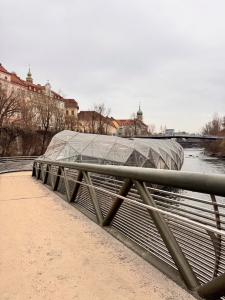
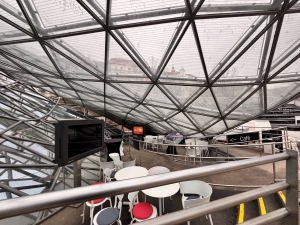
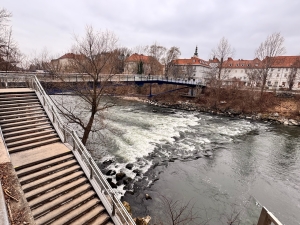
Most of the attractions in Graz lie east of River Mur, the river that divides the city into the old town and the modern town. As our hotel is west of River Mur, we had to cross the river to visit the sights in Altstadt. Several bridges along the river link the old and the new, and Murinsel is one of them. Murinsel is a landmark in the middle of River Mur, taking the form of a shell linked by footbridges. As it was near our hotel, we crossed the River Mur via the Murinsel and took the opportunity to visit this site. There doesn’t seem to be anything happening on the bridge. We saw a cafe and an amphitheatre, but the cafe was closed (it felt like it was abandoned). As the Murinsel sits near the water level of River Mur, looking out into the river, it feels as though we are directly on the river’s water.

Schlossberg: Above the Roofs of Graz

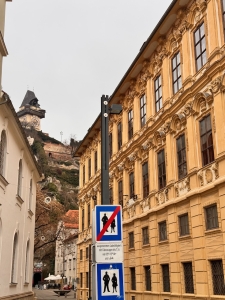
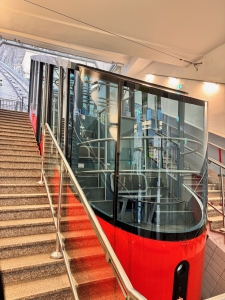
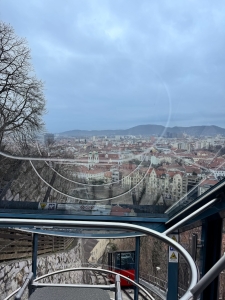
While Salzburg has Festung Hohensalzburg, Graz was watched over by the Schlossberg over 1,000 years ago when a small fortress was built on this hill. One cannot miss Schlossberg, the hill with the clock tower that dominates the city’s skyline. There are several ways to get to the top of Schlossberg: funicular, walking or using the lift. We took the funicular up Schlossberg. The ticketing was a little different from the other funiculars we have taken. Instead of charging per use on the funicular, the ticket goes by the hour, including all public transport in Graz. There are only two options for the ticket: €3.10 for one hour or €6.80 for 24 hours. We got the 24-hour ticket, as we wouldn’t want to drag our luggage 15 mins from our hotel to the train station tomorrow. We appreciate the staff’s patience in explaining the different pricing to us when selling the tickets (she was also the funicular operator). She also mentioned that the tram line stopped in front of the funicular station, which was free, even without tickets. The ride on the funicular took about 2 min.

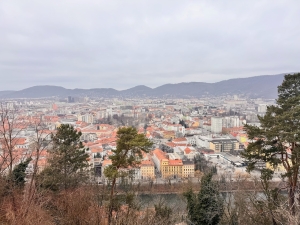
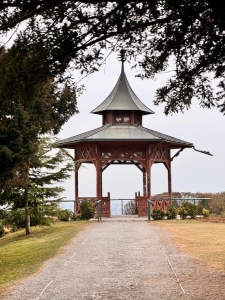
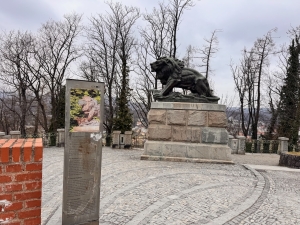
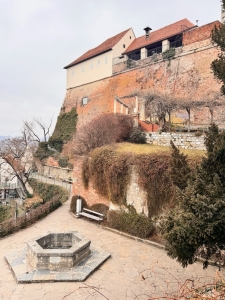
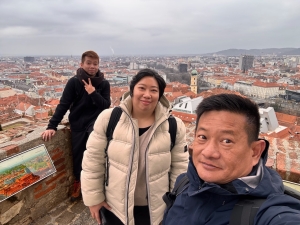
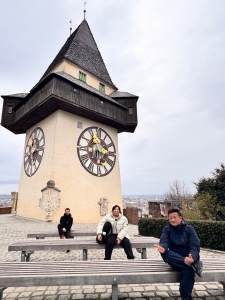
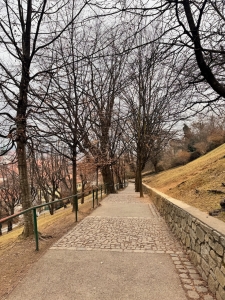
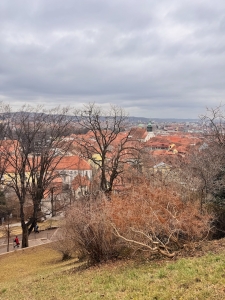
The sights on Schlossberg are very close to each other. We originally allocated the entire morning to visit the sites but finished seeing them all in 1 hour. We skipped the Graz museum, as we thought it did not make sense to pay for the museum to see four cannons. Exiting the funicular station, we first saw the Bell Tower, home to the city’s famous 5-ton bell. We did not see the bell as this four-storey tall white tower that greets visitors coming up the hill was locked during our visit (not sure if it will ever be accessible). We followed the footpath and came to the Hacker Lion, a stone lion on the western part of the hill. The lion was installed here to honour the commander who led a handful of soldiers to defend Graz Fortress against the French invaders. The viewpoint at the Hacker Lion treated us to the “modern” part of the city. After the Hacker Lion, we walked along the path and came to the Chinese Pavilion, a shelter with vaguely Chinese architecture. There was nothing much here besides a resting point, but we could see the Clock Tower and Turkish Well from here. Our final site on Schlossberg was the Clock Tower, the symbol of Graz and the oldest building in the city. The Clock Tower was built as part of the fortification of the fortress in 1265, possibly serving as a watch tower. The tower was given its clock function in 1569 and also served as a fire alarm tower in 1645. The clock today still retains its medieval structure with a wooden corridor perched near its roof and the golden clock arms look as if they were polished every day. The view of the old town from the Clock Tower terrace was magnificent. We could see the City Hall and standing tall amongst the buildings from here. We originally planned to take the world’s tallest underground slide down to the Altstadt. However, the entrance was to be shut, and Google suggested that the slide only open at 1 pm during winter. No way we were sitting around for 2 hours to wait for the slide to open, so we opted to walk down the hill from the Clock Tower side.

Graz Historic Centre Walking Tour: Getting to Know Graz from Our Guide

Graz Tourism organised a two-hour Historic Centre Walking Tour of Graz, in English and German, at 2.30 pm daily. The tour costs €16 per adult and is covered under the Graz Card (tours can be booked here). This tour took us to the important landmarks in Altstadt, and the guide’s explanations gave us a good understanding of these sights in the city. As there was some time before the start of our tour, we headed into the city centre for lunch and had a leisure stroll of the city after picking up our tickets from the Graz Tourism Information Centre.

Landhaus Courtyard and Schlossberg – Houses of Power Now and Then

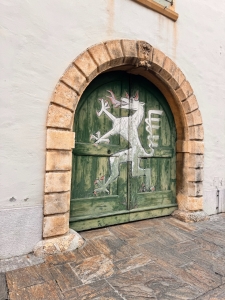
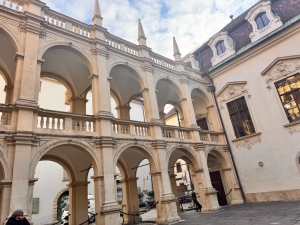
We met our guide at 2.30 pm at the Graz Tourism Information Centre. Our tour started from the Landhaus Courtyard behind the Graz Tourism Information Centre. Our guide directed our attention to a painting of a white dragon on a green wooden door in the courtyard. She explained this is the symbol of Styria, and Graz is the second largest city by population in Austria, after Vienna. She then guided us to the architectural style we saw in the courtyard behind us. Graz is very close to Italy, so we would find mostly Roman-influenced architecture in the buildings there. We were also told the Graz Parliament was housed in one of the buildings we see in the courtyard.

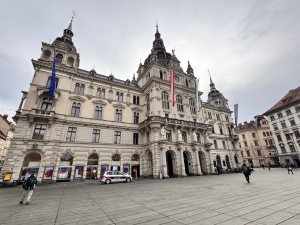
We were brought round the corner to the main square of Graz, in front of the City Hall, a large baroque-style building that one cannot miss. Looking towards Schlossberg, our guide narrated how there was a fortress up Schlossberg and how this fortress defended the city of Graz. For centuries, no one managed to conquer the fortress. Even Napoleon failed to conquer the fortress with 4,000 soldiers, which 800 men defended. The fortress was destroyed due to a condition in a peace treaty signed with Napleon when he captured Austria. Our guide then jokingly said the fortress was not destroyed in war but in peace. Today, we do not see the fortress any more.

We were told the story of the fortress on Schlossberg

Painted House and Glockenspiel – Houses of the Citizens

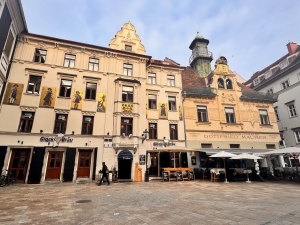
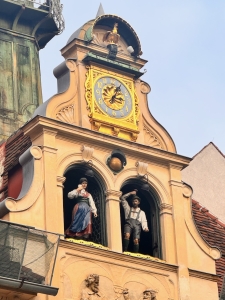
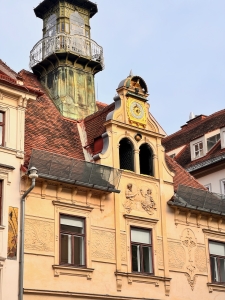
After the story of the fortress and looking at the City Hall in the main square, we were brought in front of the Painted House. Our guide told us this is one of the few houses in Graz with a painted facade. Our attention was drawn to a man with wooden sticks on a black horse, who was supposed to be Zeus. Our guide said that originally, thunderbolts were painted in his hand. However, during a restoration in ancient times, the painter couldn’t make out who the man was and painted a bunch of wooden sticks, replacing the thunderbolts on Zeus’s hands, which is how Zeus got wooden sticks instead. An interesting story. We winded through a few small streets and arrived at our next stop – Glockenspiel. We were in time to watch the clock performance. When the clock struck (it would strike at 11 am, 3 pm and 6 pm), the windows opened to reveal two wooden carved figures in traditional Austrian clothing dancing. Our guide told us this clock was made by a merchant who owned a booze shop in medieval times as a marketing tool to attract the locals’ attention to his shop to buy booze. After watching the figures dancing, we thought it was the end, but our guide again brought our attention to the golden chicken above the two figures. We saw the chicken flap its wings. Our guide then told us this is done to call the two figures “home”. Indeed, after flapping wings, the two figures retreated into the window, and the doors closed. Pointing to the green tower behind the clock, our guide told us the music we heard came from the tower and that different songs would be played at different times of the year. We would have missed these small details if not for our guide.

Graz Cathedral – The Royal Cathedral

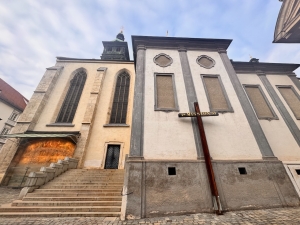
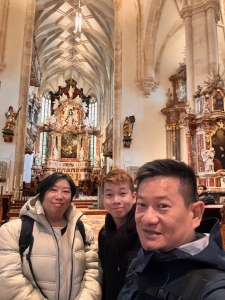
Our walking tour continued to the Mausoleum of Emperor Ferdinand and the Graz Cathedral. Our guide told us that Emperor Ferdinand, the ruler of Austria in the 1800s, was called to Vienna to take over the throne when his uncle passed on. The Emperor wanted to be buried in Graz and built this mausoleum for himself. Today, Ferdinand was the only Emperor in Austria with his own tomb instead of burying together with the other royalties. It is a shame that the mausoleum was not open to the public during our visit, and we can only see the green roof of the mausoleum popping out of the surrounding buildings. Our attention was then turned to the cathedral next door. The Graz Cathedral was built as a court church for the dukes and looked plain from the outside, other than the colourful fresco on the wall next to its entrance. Our guide told us that this cathedral was built with a Gothic style of architecture similar to what we would see in Notre Dame in Paris. We were then given some time to look around the cathedral. The cathedral looked grand and elegant on the inside, a stark contrast to its facade. The ceilings of the cathedral were painted with flowers, and pillars were donned with dark brown wooden staircases ornated with gold. Stained glass panels were used in every window opening.

Double Spiral – The Unique Staircase

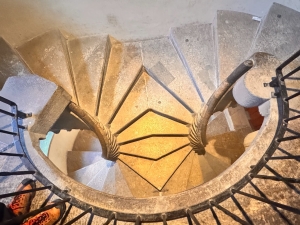
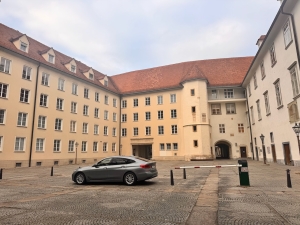
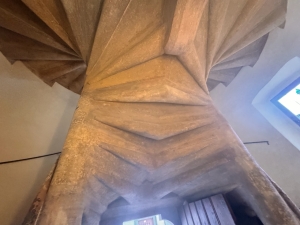
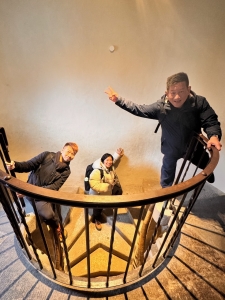
Exiting the Graz Cathedral, we took a short walk opposite the road to our next stop, the Graz castle. Unlike most palaces we have seen on this trip or any other European building, the Graz Castle looked like any other building. It can be mistaken for a normal office building as there are no guards standing outside, nor is it barricaded. Our guide told us this castle was where the dukes ruled Graz from; today, it is the office of the Mayor of Graz. We spotted a glassed-up panel and were told this was the original artwork since the castle was built. No one knows what this panel is used for and what it symbolises. The whole point of coming to this castle was the double spiral staircase. This unique structure comprises two spiral staircases that meet in the middle before every floor. Our attention was brought to the pillar, which our guide told us only the ground floor set of stairs has a pillar, and the rest of the levels do not have pillars. We spent some time walking up the staircase and taking pictures of it.

The Streets of Graz

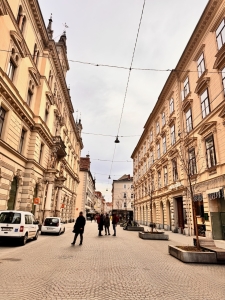
After the double spiral staircase, we walked towards the Mur River through the oldest street in Graz. Covered with cobblestones and medieval-looking buildings, this street reminds me of Italy. We spotted a bakery with an elaborate wooden facade and a double-headed eagle crest hanging above the main entrance. Our guide told us this bakery was visited by one of the emperors of Austria once, and since then, they were qualified to use the “Hof” title in the shop name. She recommended that we try out the bread from the shop. Our guide pointed out some of her favourite shops and eateries along the street as we walked past them.

Our last stop on the tour was a bridge over River Mur. Here, our guide explained that the area we had been walking in was the old town, and the district across River Mur was the new town. In medieval times, the river was used as a defence mechanism. The duke protected people living in the old town, while the area across the bridge was left to their own defences. As such, that was where the poorer people stayed. As a result, it was filled with red-light districts with poorer living conditions. In an attempt to change the image of the new town, the government pumped in money and developed arts and culture in this new area. Most of the art museums are found in the new area. This is where our tour of the old town ended, and we bid our guide farewell. After the tour, we returned to the shops that our guide mentioned to do some shopping before returning to the hotel early. We had an early train to catch up tomorrow to our final destination for the trip – Vienna.

Austria Day 7 (14 Jan 25): Zell am See – Day on the Mighty Kitzsteinhorn

The Top of Salzburg kept popping up as I researched what to see in Zell am See. Pictures online of the breathtaking mountain ranges from the viewing platform perched 3,029m on top of Kitzsteinhorn attracted me to this mountain. We can take a cable car ride to the Top of Salzburg in Kaprun from Maiskogel Talstation or Kitzsteinhorn Talstation. Getting to the Top of Salzburg from Kitzsteinhorn Talstation is faster as it only requires three cable car rides instead of four from Maiskogel Talstation. While planning my trip, an email correspondence from the visitor centre informed me that an Explorer Tour (costs €13 per adult) is held every Tuesday during the winter. I thought it would be interesting to understand more about the mountains rather than simply going up and looking at the view. We signed up for the tour two months before our trip to Austria (click here for the link to sign up).

Kaprun: Gateway to Kitzsteinhorn

The Explorer Tour started at the Kaprun Centre in Kaprun village, about a 15-minute drive or the ½ hourly 25-minute bus ride on Bus #660 (€4.50 per pax one way) from Postplatz, the main bus terminal in Zell am See. We could also catch Bus #660 from the bus stop in front of Zell am See Bahnhof. We alighted at Kaprun Maiskogelbahn, where Kaprun Centre is about a 2 min walk from the main road. This part of Kaprun village looked lively; numerous accommodations, restaurants, and shops (mainly selling ski-related stuff and winter clothing) dotted around the village.

Explorer Tour: Getting to Know Kitzsteinhorn

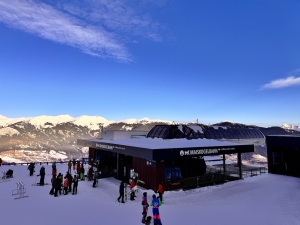
The 3½ hour guided Explorer Tour meeting point is at Kaprun Centre. During the tour, our guide introduced us to the flora/fauna and their features in the four climate zones, from the temperate to the arctic climate zones in Kitzsteinhorn, as we made our way up to the summit of the mountain. We were in the temperate climate zone at Kaprun Centre, seeing more animal species and lush green vegetation. The tour group comprised mostly German-speaking visitors, and we were the only English-speaking participants. Our guide had to explain the information in two languages. After the short brief, we were led to the cable car station and took the first of the four cable car rides up to the mountain.

Map of the cable cars at Kitzsteinhorn

Maiskogel: View of the Valley and Lake Zell

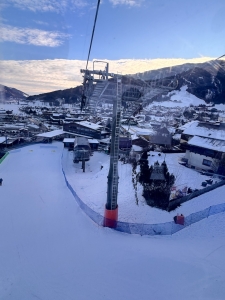
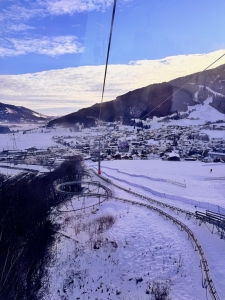
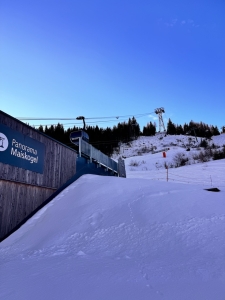
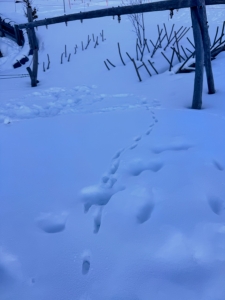
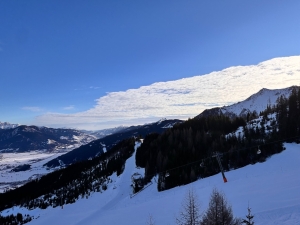
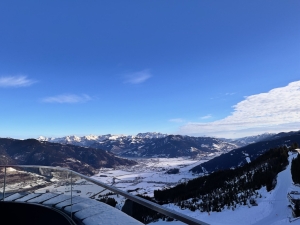
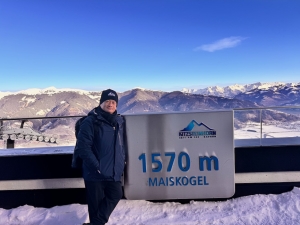
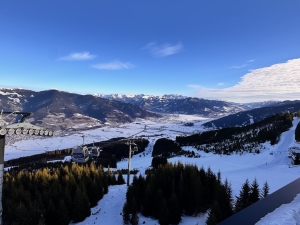
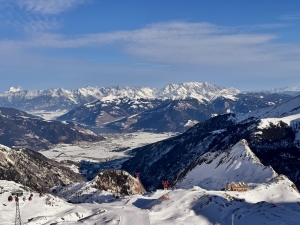
The MK Maiskogelbahn took us up to 1,570m from Kaprun Centre. On the ride, we saw the alpine coaster track and people skiing down the slope below the cable car. As our guide had previously told us that we were still in the temperate climate zone, we saw a lot of needle-leaf pine tree forest. Our guide continued to talk about the vegetation that we saw around. He then brought the group to a nearby slope with a set of footprints and explained that hares and foxes inhabit this area and will only come out at night. We were then brought to the Panorama Maiskogel viewing platform, where we got an impressive view of the valley covered in snow and Lake Zell in the distance between two mountains. We could see a sea of white snow covering most of the land, with villages and towns sparsely covering parts of the land, mainly near Lake Zell. Our guide brought our attention to the river that cuts across the land. This is the Salzach River, the same river we saw in Salzburg City days ago. He explained how the river was straightened decades ago to facilitate farming activities and how this human intervention created flooding. To fix the problem, the river is now bent. We walked to the next cable car station after being given some time to take pictures at Panorama Maiskogel.

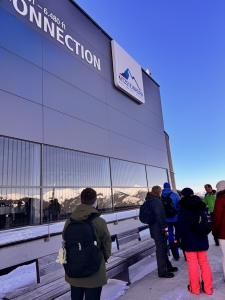
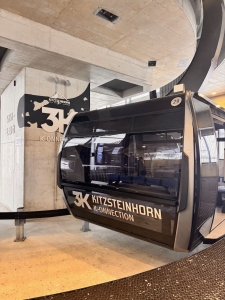
Langwied: Riding 3K K-onnection, the Longest Continous Gondola Axis

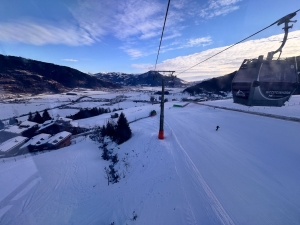
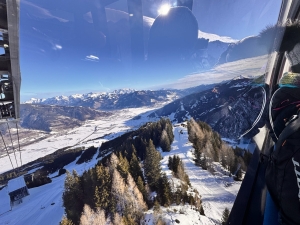
Our second cable car ride on the 3K K-onnection is the longest ride during this tour. The scenic cable car ride took us across the mountains. We could see fewer trees on the mountain, mostly bundled together, from the cable car. On one side of the cable car, jagged rocky mountainside occasionally popping out of the snow to reveal the true form of the mountain. Our guide explained that skiing is prohibited in this part of the mountain due to the high risk of avalanches. He even pointed out a part of the mountain where a recent avalanche activity was detected. On the other side of the cable car, we saw the towns sitting at the base of the mountain ranges below in the valley as though they were seeking protection from the mighty mountain ranges. The cable car ride brought us to Langwied at 1,975m above sea level. From the station, our guide led us on a short hike up a slope to a viewpoint where we could see the plains from an elevated perspective. Before his brief on the geological makeup of this area, our guide focused our attention up in the mountains and exclaimed, “That is the peak of Kitzsteinhorn”. He explained that we were in the tundra climate zone where frigid temperatures and short growing seasons hinder tree growth. We were also educated on the glacier activities in the mountains.

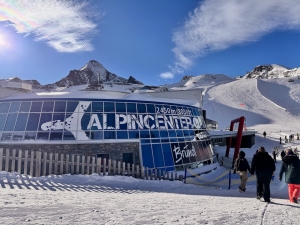
Alpincentre: Entering the Arctic Climate Zone

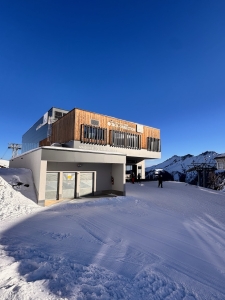
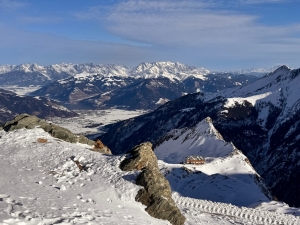
We headed back to the cable car station and walked to the next cable car station. The third cable car, Gletscherjet 2, took us from 1,975m to 2,450m. On this ride, we saw vast areas covered in snow and a couple of buildings sitting on the mountainside. Our guide brought us to another viewpoint at the end of the cable car ride. Here, he announced that we are officially in the arctic climate zone, where no tree growth and covered in snow and ice all year round. This is the same climate we will experience if we go to the North and South Pole. From this viewpoint, we got an even higher view of the villages near Lake Zell. Here, we felt as if we were on the same level as the peak of the mountain ranges before us. After a brief stay here, we headed for our final cable car ride on the Gipfelbahn to the Top of Salzburg.

Top of Salzburg: Magnificent Views of the Mountain Ranges

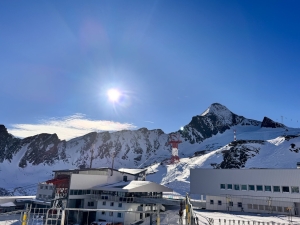
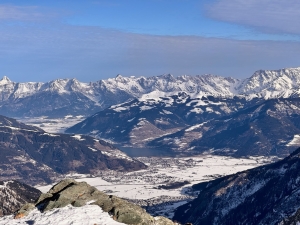
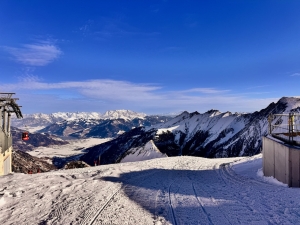
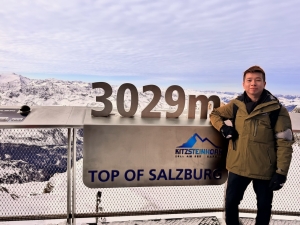
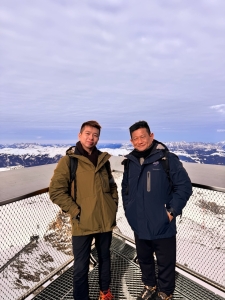
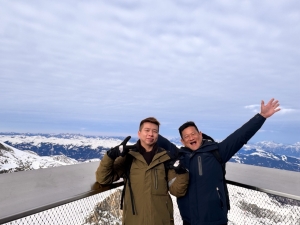
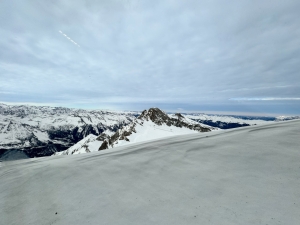
The final stop of the Explorer Tour is at the Top of Salzburg, perched at 3,029m. Our guide brought us to the Top of Salzburg viewing platform, where we were treated to a magnificent view of the mountain peaks and the glaciers below. Our guide explained the glacier activities on the mountaintop and how to differentiate between live and dead glaciers. He even pointed out Kitzsteinhorn’s peak, explaining that it is only open to very experienced climbers. We were dispersed at the platform and were told to gather back here for the National Park Gallery Tour 1½ hours later. After the dispersion, we wanted to get a picture with the “3029 Top of Salzburg” sign, but as many people from the tour were trying to snap pictures with this sign, we went for lunch in the only restaurant up here. After lunch, we returned to the viewing platform and took pictures with the sign (thanks to a Russian family queuing behind us, helping us chase people away from jumping the queue and those who tried to photobomb us). After taking some pictures, we finally had a good look at the view from the Top of Salzburg platform. The view here is out of this world! We saw mountain peaks after mountain peaks, covered in snow, that seemed to stretch forever into the horizon. We were at a point that was higher than any of the mountains before our eyes. It felt so surreal. Before, we could only see these majestic mountains like giants, but today, we see them as dwarves as we tower over them from the top of the Salzburg viewing platform. I reckon the best view would be that taken from the pointy corner of the platform. Here, we felt as if we were floating in the air, looking down into the peaks of the mountain ranges.

NationalPark Gallery Tour: The Tunnel in the Mountains

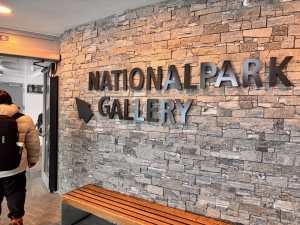
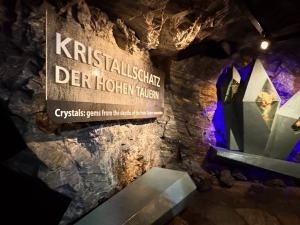
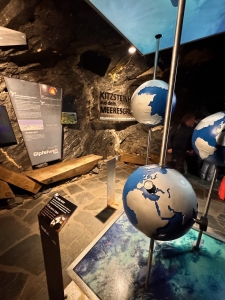
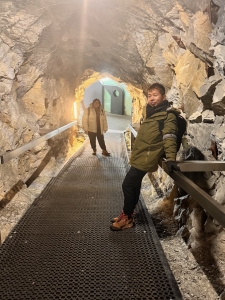
Our tour continues with a guided tour of the NationalPark Gallery on the top of Kitzsteinhorn. This tour is complimentary, even to those who did not join the Explorer Tour. The tour took us through a 360m tunnel used in the 60s for those who ascended the mountain to ski. We made five stops along the downslope tunnel. Our first stop was some artificial concrete slabs, which our guide explained only served to anchor the cables that the cable cars that ran up to Kitzsteinhorn. Our next stop was a crystallite, where our guide educated us on the formation of these crystals, mainly quartz, and how they were mined. These days, the mining of quartz was no longer a thing in Kitzsteinhorn.

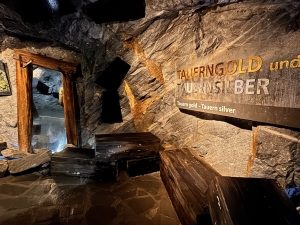
At the third stop, our guide explained the formation of mountains, particularly Kitzsteinhorn. The fourth stop showcased the mining of gold in Kitzsteinhorn. Our guide explained gold mining has ceased because the cost of gold outweighs the amount gained. He also narrated the purpose of the chest we saw on the ground. This chest used to contain part of the gold mined on this mountain, placed outside the mines. The miner’s wife could take an amount of gold from this chest if the miner met with a mishap during work. This is perhaps the earliest form of insurance. At our last stop before the viewing platform at the end of the tunnel, our guide explained the formation of glaciers and how these glaciers are melting due to man-induced pollution. After the brief at the final stop, we were dispersed and told we could stay at the NationalPark Gallery Platform as long as we wanted.

After bidding farewell to our guide, we were free to roam onto the outdoor viewing platform jagged out of the cliff that gave us a closer look at the mountain ranges. We can see the highest mountain in Austria, the Grossglockner. We could also see the “dead glaciers” nearer to the viewing platform and the “living glaciers” in the distance. The view here is as magnificent as we saw at the Top of Salzburg. We stayed here for the next 20 minutes, looking out into the snow-covered mountain peaks and listening to the whispers the mountain breeze brought. Soon, it was time to descend the mountain (the last ride down was at 4 pm). On our way down, we did some window shopping in the sports shop at Alpincentre and caught up on the photo ops we had missed out on earlier. At Langwied, we had the choice of taking the longer 3K K-onnection or the shorter Panoramabahn route. Both routes will land at different parts of the Kaprun, and since we wanted to try out the Alpine Coaster at Kaprun Centre, we took the longer 3K K-onnection route.

Alpine Coaster Fun

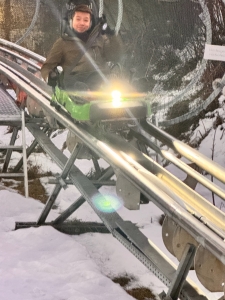
It was about 5 pm when we arrived back at the Kaprun Centre. Fortunately, the Alpine Coaster was still in operation. We got tickets (which cost €15 per adult) from the ticketing counters at Kaprun Centre to ride the Alpine Coaster. Entrance to the Alpine Coaster was just across the road from the ticketing counter, behind a bar. The Alpine Coaster started from the ground level. We sat on the coaster and hoisted along the tracks to the starting point, about 300m higher than the starting point. With a loop at the top, we were driven down the slopes at 40km/h by gravity. The Alpine Coaster was a fun activity to end our day.

Austria Day 6 (13 Jan 25): Innsbruck: Exploring the Historic Altstadt; Zell am See: The Tranquil Lakeside Town

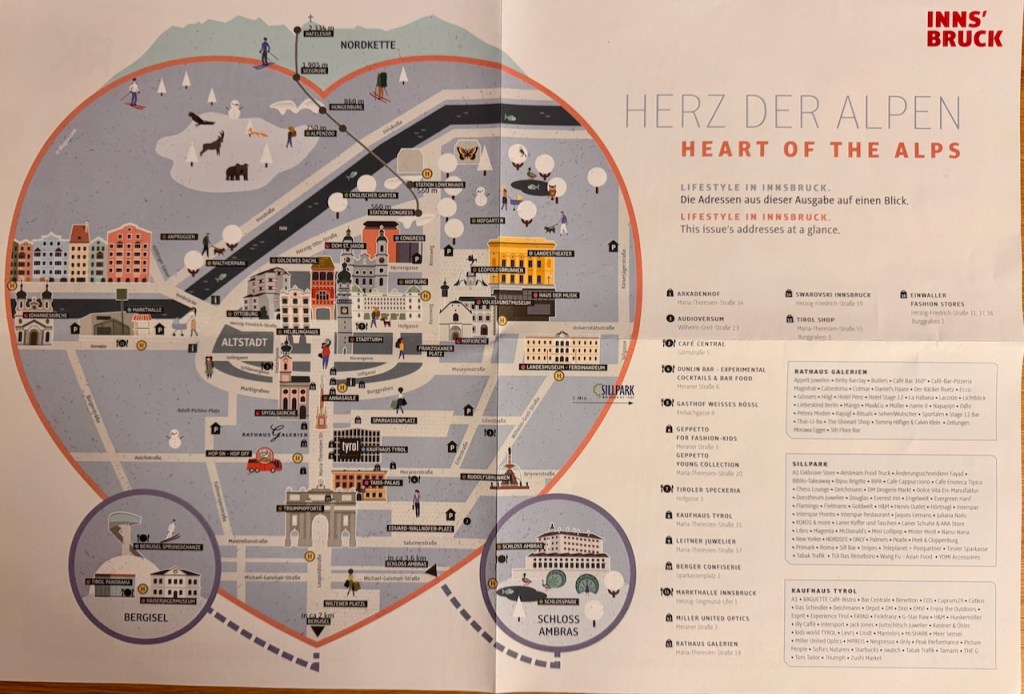
I devoted the morning to visiting the tourist sights around Innsbruck and taking the train to our next destination in the afternoon. With Innsbruck being a compact city and these sights being close to each other and located in Altstadt, a walking tour of the city is doable in one morning. When researching this trip, I found several Innsbruck walking tours online. I eventually went with the itinerary with historical sights on the Innsbruck Tourism website (click here for a list of recommended walking tours).

Map of tourist sights in Innsbruck

Innsbruck Altstadt – Soaking up the Historic Vibe of the City

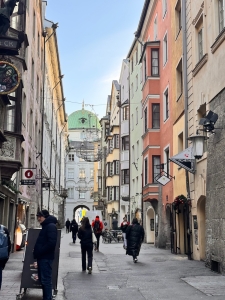
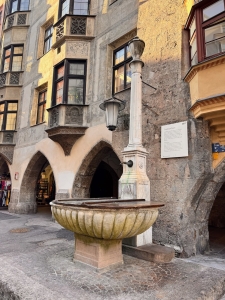
Our initial plan was to visit some of the sites, such as the Imperial Palace, Landestheatre, and some fountains. However, we walked past some the past two days, and some were not open during winter. For Triumpheforte, since it is next to our hotel and we walk past it every day, I struck this site off the list of places we will visit today. We also wanted to get winter jackets that we saw on sale yesterday (shops are closed on Sundays, so we only have this morning to shop). I reviewed my list of tourist sights and limited our list to St James’ Cathedral, Golded Roof and City Tower while catering some time to do shopping. After two days in Innsbruck, walking along Maria-Theresien-Straße has been our daily routine. This street is the one we used to look for food or to connect to Altstadt. The main street for shopping also lies on this street.

Golden Roof

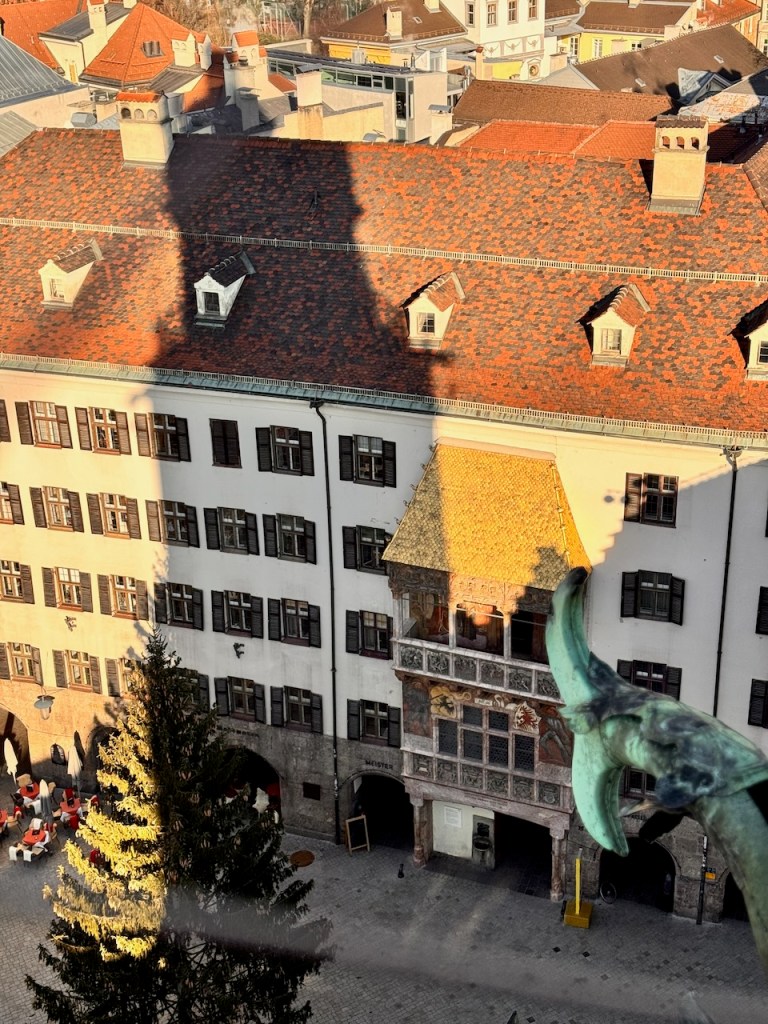
Originally, we wanted to visit the City Tower first, but we were met with a sign at the counter that said they were closed. A lady behind the counter avoided all forms of eye contact with us. We headed to the Golden Roof next door since there was nothing much to do here. The Golden Roof was not made of gold but copper. The sunlight reflected from the roof gave the roof a golden facade, hence the name Golden Roof. The Golden Roof is essentially a balcony made for Emperor Maximilian to mark his wedding anniversary with his wife. The Emperor and his wife used this balcony to observe events that took place from the square below. There are some paintings and sculptures made of wood on the balcony. I read there is a museum where we can understand more about the Golden Roof. When we walked up to the door, a sign was posted on the door stating that the Golden Roof Museum is closed on Mondays. Since there is nothing much we can do here, we headed for St James’ Cathedral.

St James’ Cathedral

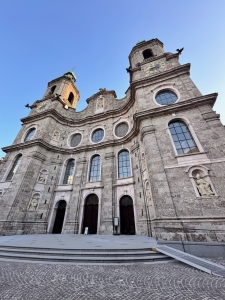
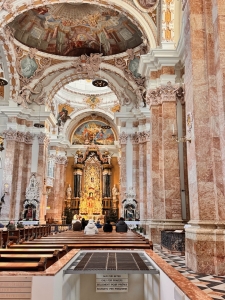
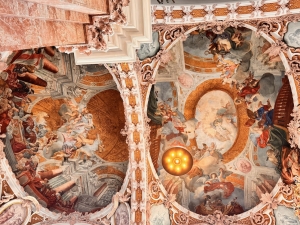
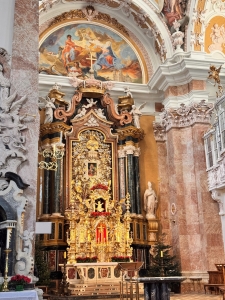
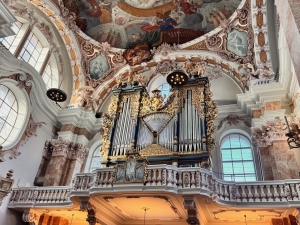
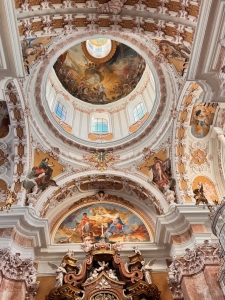
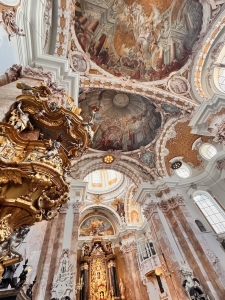
St James’ Cathedral is about a 5-minute walk from Golden Roof. We saw a sign at the door suggesting the cathedral was closed. We hesitated about going in and waited outside the cathedral till 10 am (Google suggested 10 am is the opening time). It was 9.55 am, and we were unsure if the cathedral would open by 10 am, so we decided to check to see if we could enter St James’ Cathedral. We walked up to the door and cautiously opened it. To our amazement, the cathedral was full of people during their prayers. As we did not want to bring attention to ourselves, we waited quietly by the entrance we came in from and waited for the prayers to finish. The cathedral’s interior is mostly covered with natural colour marble and elaborate carvings on the pillar. The colours of the frescos painted on the ceiling and the beams stood out amidst the naturally coloured interior of the cathedral. Looking at these paintings, it felt more like an art gallery rather than a place of worship. A large golden altar was at the back of the cathedral, occupying the centre. As we were looking around, I spotted a machine. A note on the machine stated that €1 was charged to take pictures inside the cathedral. After paying the €1, the service in the cathedral ended. This is when we could see the decorations in the cathedral closer. The frescos on the ceiling looked lifelike, and we could almost see the characters moving. The gold on the garb of the marble angel carvings on the walls stood out. The blue colour painted on the organ was visibly apparent from the silver and gold on the instrument. The cathedral was bright and beautiful.

City Tower

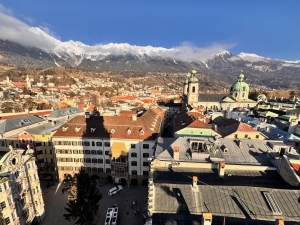
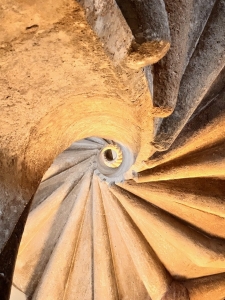
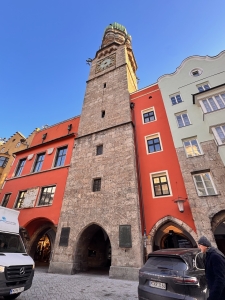
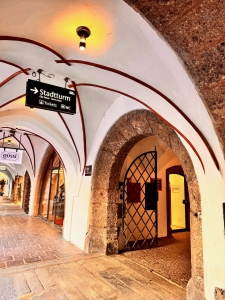
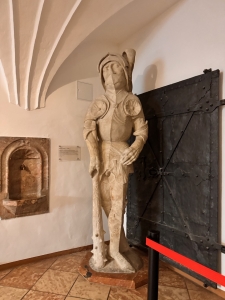
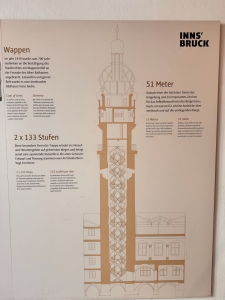
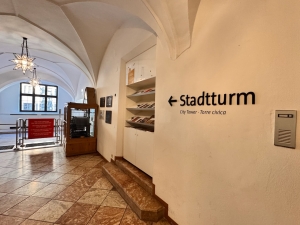
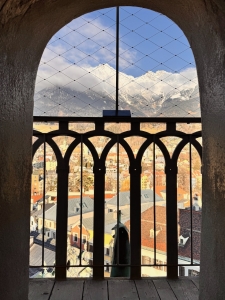
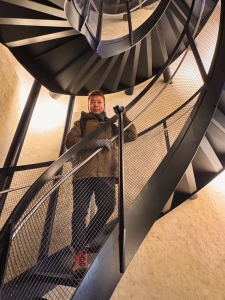
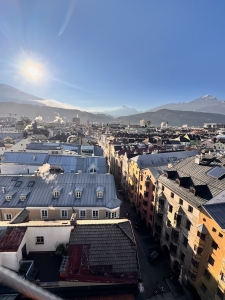
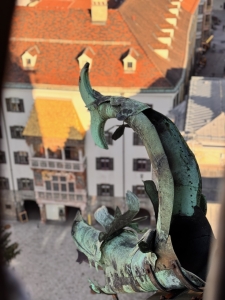
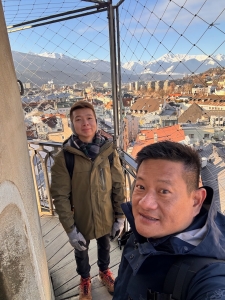
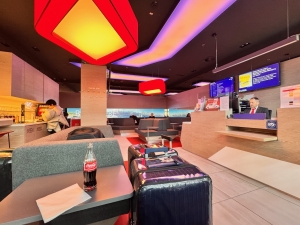
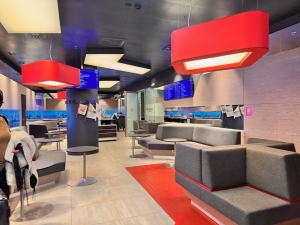
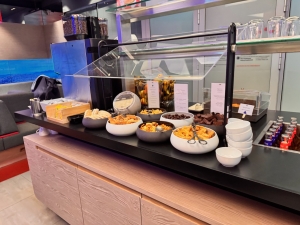
It was slightly past 10 am when we left St James’ Cathedral. As our train was at noon, we wanted to head back to the shops on Maria-Theresien-Straße to shop. We decided to check if the City Tower was open when we walked past it. The closed sign on the counter was still there, but this time round, the staff we saw earlier saw us approaching and removed the sign. The Innsbruck Card covers the entry to the City Tower. We got our tickets to the tower (which cost €4.50 per adult) after the staff scanned our Innsbruck Card and proceeded up the tower through a glass door. The ticket gantry to the City Tower sits one level above the ground level. Passing through the gantry, we were greeted by a pair of spiral staircases (one up and the other down) intertwining around a single pillar. The City Tower was used as a watch tower by the guards for nearly 450 years to warn citizens of fire and other dangers. Today, the 51m tower is a tourist attraction that offers visitors views of the city and the Alps. We walked up 133 steps on the spiral staircase to the viewing platform perched 31m on the tower. The viewing platform gave us a panorama rooftop view of the city. We could spot the colourful houses by the Inn River we were at yesterday. We were also able to see the Golden Roof from a higher elevation. The roof did look golden when cast by the sunlight. Donning on their white caps and occasionally hidden behind the low clouds, the mighty Nordkette mountain range appears to be guarding over Innsbruck. From the narrow platform, my friends and I spotted Seegrube and Hafalekar cable car stations on the Nordkette that we were on two days ago. We spent about 20 mins at the Clock Tower and the next 1½ hours shopping. My friend managed to get a jacket at a good deal in one of the shops. It was 11.45 am when we returned to our hotel, and we had not checked out our rooms yet. We quickly grabbed our luggage from our room and checked out at noon. Fortunately, the bus stop is only in front of the hotel, and most buses or trams that stop here go to Innsbruck Hauptbahnhof (a bus ride to the train station only takes 2 min). We arrived at the train station with some spare time to get a refreshment at the train lounge before we rode to our next town.

Onward to Zell am See

Our train to our next town in Austria, Zell am See, departs at 12.21 pm, and we made it to the platform in time with minutes to spare. The idea of stopping by Zell am See came about when I was planning our Austria trip. I noted it would take 5 hours on the train from Innsbruck to Graz. I am not keen to be stuck in a metal box for that long time, and I wanted to break the train ride down by planning a stay at a village or town between Innsbruck and Graz. During planning, I chanced upon the town of Zell am See, where the locals would come in summer or winter. When looking at what to do in Zell am See, I saw that we could visit not one but two mountains – Kitzsteinhorn and Schmittenhohe near Zell am See. Less touristy plus more mountains we can visit, so Zell am See here we come. The train ride to Zell am See took slightly under 2 hours. As our train zipped past the country, we saw green pastures slowly overtaken by white powdery snow. About 30 minutes into the train ride, the ground was covered in snow! We were ecstatic, which meant we would see snow in Zell am See.

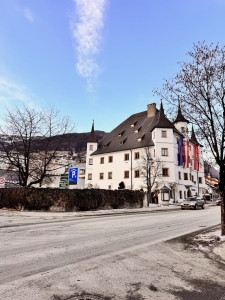
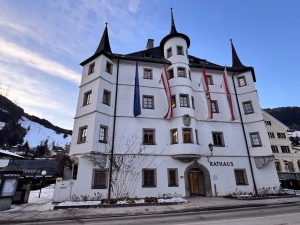
We arrived at Zell am See Bahnhof on time at 2:15 pm, and trains in Austria were extremely punctual (except for our ride to Hallstatt, where the train was delayed by over 1 hour). Like Innsbruck, our accommodation in Zell am See is about a 5-minute walk from the train station. But unlike Innsbruck, Zell am See is even smaller. Our check-in time was at 4 pm. Fortunately, the accommodation allowed us early check-in. We spent the next 1½ hours settling into our accommodation, exploring the facilities in our 2-bedroom apartment and lazing around. Originally, I planned to explore Zell am See, visit some of the major sites, and go to the promenade by Lake Zell. But we prioritised getting supplies from the supermarket and changed our plan to leisurely strolling in the town. Schloss Rosenberg was the first sight (after our supermarket trip) we saw in town. This nearly 400-year-old building, built by tradesmen in the town, is the office of the mayor of Zell am See today. The exterior of the building looked like a medieval castle with a large three-storey roof and pointy roofs in the four corners, which reminded me of the castles in Disneyland but on a smaller scale. We did not enter the building, so we were unsure if it was open to visitors. Opposite Schloss Rosenberg is a small garden, the Schloss Park, with a bar in the middle. As we walked around the town looking for dinner, we noticed the buildings in the centre of Zell am See have a small alpine town charm, with a good mix of wooden facades and brightly painted modern concrete buildings. Yet some buildings in the town centre still retained the medieval building facade, such as the clock tower and a bank in the centre of the shopping district. This clock tower is the bell tower of the St Hippolytus Church. As we were in an exploration rather than a visiting tourist sight mode, coupled with the fact that it was late afternoon when most of the sights would be closed, we did not bother attempting to find out if we could enter some of these sights we saw while strolling in the town. It was 6 pm when we finally found a place for dinner. We returned to our accommodation after dinner to rest for the night; after all, we would have an early start tomorrow.

Austria Day 5 (12 Jan 25): Innsbruck – Nordkette: Snow Fun on the Top of Innsbruck

No visit to Innsbruck is complete without a visit to the Top of Innsbruck, the mountain closest to the city. The mountain offered visitors a panorama view of the city and the surrounding mountains. The whole point of coming to Innsbruck is to visit the Nordkette.

Making our way to the Top of Innsbruck

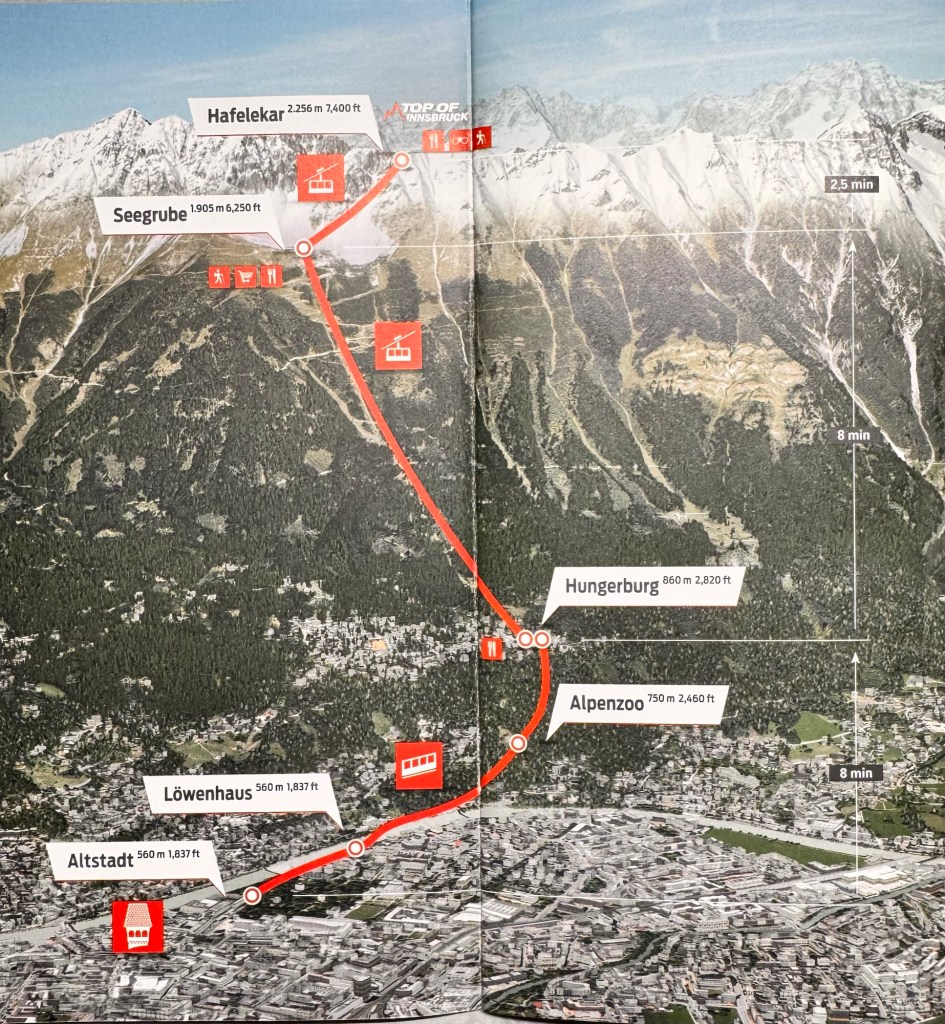
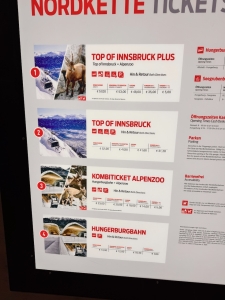
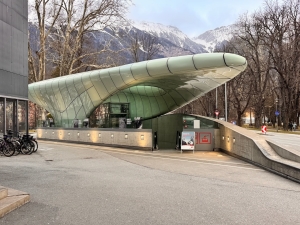
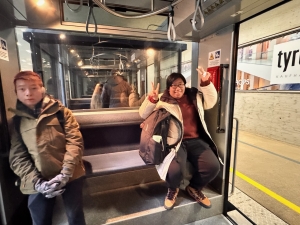
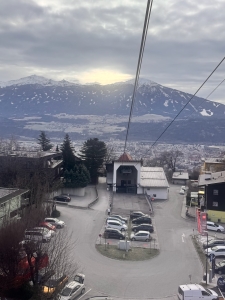
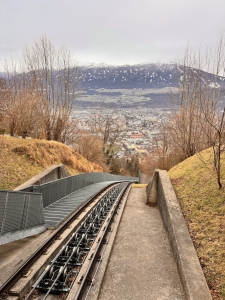
The Nordkette is perhaps one of the easiest mountains to get to from the city centre. A system of funicular and cable cars (costs €52 for a round trip ticket) transports visitors up 2,200m to the Nordkette from Congress Station in Innsbruck Atlstadt. The way to the top of the mountain requires us to take three modes of transport. We started our trip up the mountains with a funicular ride and changed to two cable car systems. To get to Congress station, we took a bus towards the train station (also covered in our Innsbruck Card) from the stop in front of our hotel (casino) and alighted at Innsbruck University. The funicular took us across the River Inn as we transited higher up the mountain. We got off at the final station, Hungerburg.

The ride to the Top of Innsbruck

Hungerburg – Our Prelude to the View of Innsbruck

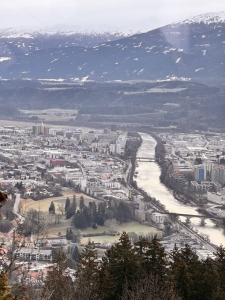
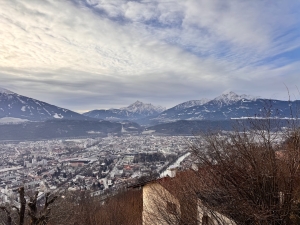
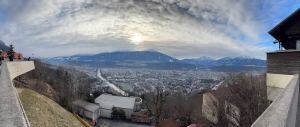
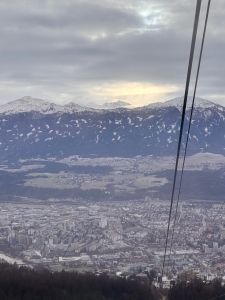
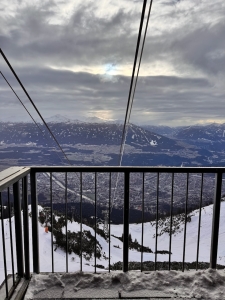
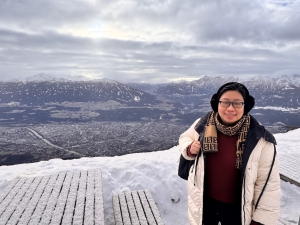
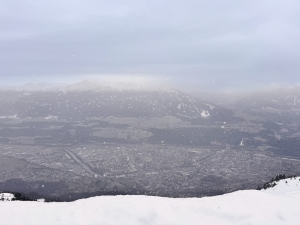
Technically, the funicular was not directly linked to the cable cars that run up the mountain. There is a short walk from the funicular station to the cable station. Along the way, we stopped by a viewing platform, where we were able to see the entire Innsbruck City and the mountain ranges beyond the city. The view was magnificent here, and I highly recommend visitors stop by for the scenery. The snow-capped mountains beyond Innsbruck formed a very scenic backdrop for the city. We also spent some time identifying places like our hotel, the ski jump and Innsbruck Hauptbahnhof, among other attractions (apart from taking numerous photos at this spot) that we had visited or will be visiting. A small museum inside the cable car station at Hungerburg displays the history of this cable car system and the mountain ranges on Nordkette. Though modest, this museum was a great way to kill time while waiting for the cable car.

Seegrube – Fun in the Snow in the Mountains

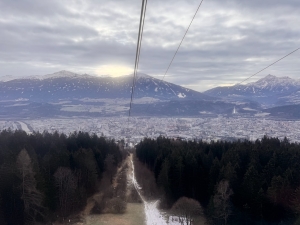
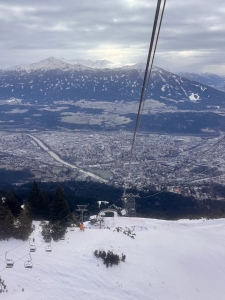
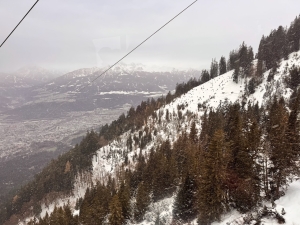
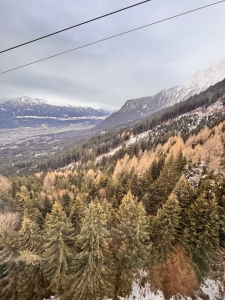
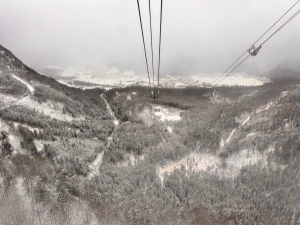
The next cable car up to the Top of Innsbruck took 8 minutes to hoist us from 680m to 1,900m, the longest cable on the Nordkettebahn. As we ascended the mountain, the landmarks we previously saw at the viewing platform became increasingly unrecognisable. In exchange, we got a better view of the entire city, the neighbouring cities, and more mountain ranges at the back of Innsbruck. Mountains after mountains, seemingly donning white beanies, start to pop up as we ascend. The view was breathtaking. The scenery underneath the cable car also changed from concrete buildings to a sea of pine trees that called this mountain home. We started to see trails of snow on the forest ground the higher we ascended. Soon, most of the green pine tree forest ground was covered with snow.

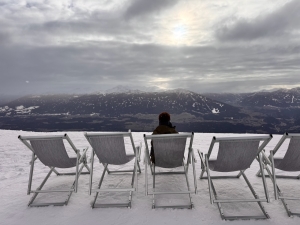
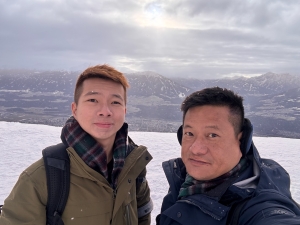
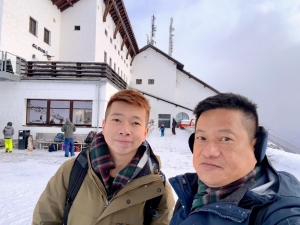
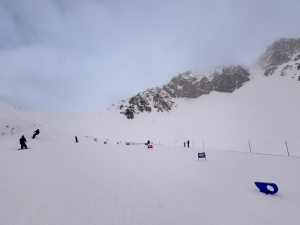
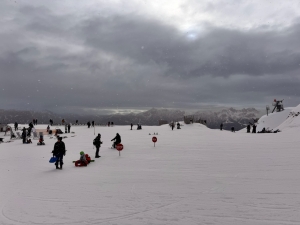
Our initial plan was to stay in Seegrube for 1 hour for breakfast and see the view of the city from the Cloud 9 Terrace. Unknowingly, our stay got extended to 3 hours. We were captivated by the amount of snow and the spectacular view that was before us the moment we stepped outside the Seegrube cable car station. We could see more cities and almost the top of the mountains afar, coupled with the snowy ground forming the foreground of our photos; the terrace is an excellent place to take pictures. We saw a staff setting up deckchairs near the edge of the mountain. I told my friends that this was the Cloud 9 Terrace I read online, and the purpose was to let visitors relax and enjoy the view of Innsbruck from Nordkette. Shortly, the snowflakes we felt falling from the sky got us even more excited. We came to Austria in winter to experience snowfall (we don’t get snow in Singapore), which is exactly what we got. We were enticed to stay at Seegrube longer, playing in the snow, feeling the snow from the sky touching our faces.

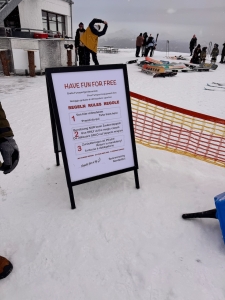
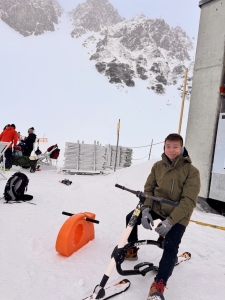
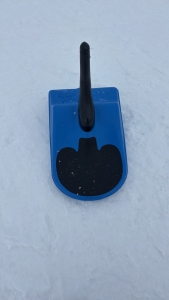
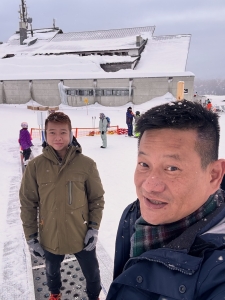
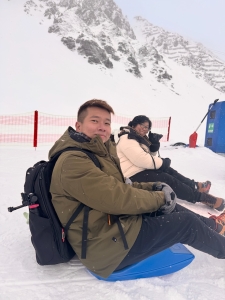
We headed inside the restaurant for a warm cup of drink. As it was 1 hour before the restaurant started taking orders for lunch, we decided to have our lunch here before going up to the Top of Innsbruck (we were merely giving ourselves excuses to enjoy the snowy weather). After coffee, my friend and I went outside to play in the snow and take pictures. As we played in the snow, we spotted a small cordoned-off area. A sign beside it told us we could play on the sledges and snow bikes we saw here for free. Unsure what to do with it, a family we met showed us how to use it and encouraged us to join them. And I am glad we did that. We were cautious on our first try on the sledge, partly unsure how it worked, if we could brake in time or if we would do something embarrassing. However, the family we met was very encouraging and told us not to worry and just have fun. Our first try was indeed fun. Though we had sledged in Hokkaido some years back, the sledging was in a relatively more controlled environment. Staff were around to tell us when to brake, and barriers were set up to ensure we braked in time. Sledging up here feels like sledging in the wild, and the snow with people around enjoying the fun with us was a different experience. My friend and I initially wanted to do just three rounds. After the third round, we told ourselves, this is just too fun to stop at three. We ended up spending 1 hour sledging. We returned to the restaurant to meet with our friend and have lunch. After lunch, we encouraged our friend who had not sledged before to go sledging (partly because we wanted to play more). Unwillingly, she joined us after assuring her that it was safe and that we would be beside her. She also had fun sledging in the snow. We went for another three more rounds before heading to the Top of Innsbruck.

Hafelekar – The Top of Innsbruck

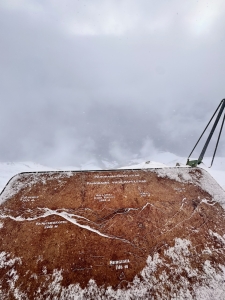
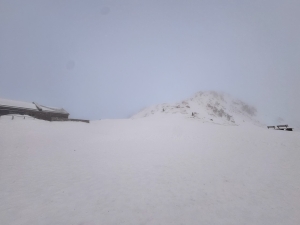
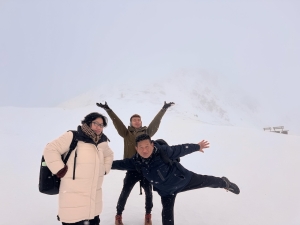
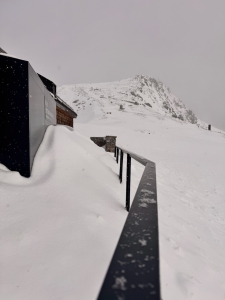
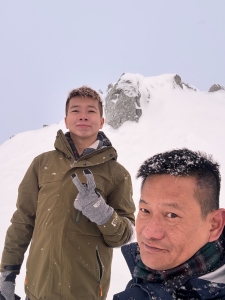
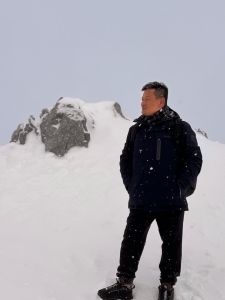
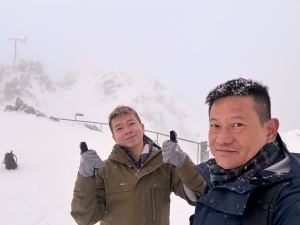
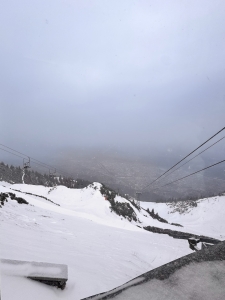
We took another cable car to the Top of Innsbruck, perched at 2,256m up the mountains. This is the highest point accessible to visitors on Nordkette. On a clear day, we will not only be able to catch a panorama view of Innsbruck but also be treated to the view of the mountain ranges. The cable car ride from Seegrube to Hafelekar took about 2 minutes to cover the 300m altitude. It was still snowing outside, and I was telling my friends we might not be able to see what we came for. True enough, we were soon disappointed to find out that we would not be able to see the city due to the low clouds and snowfall. The snowfall up here was heavier than we experienced at Seegrube minutes earlier.

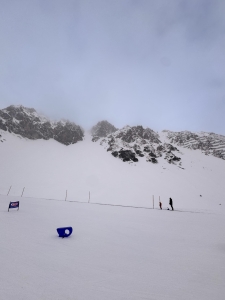
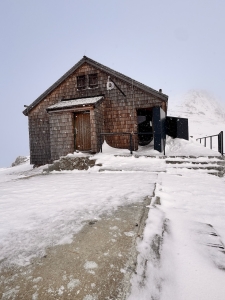
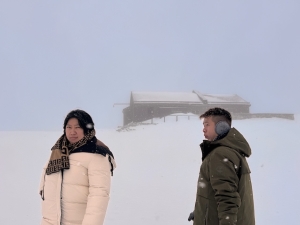
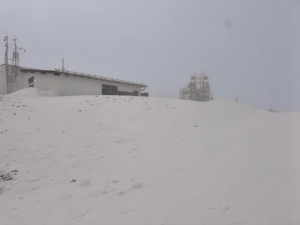
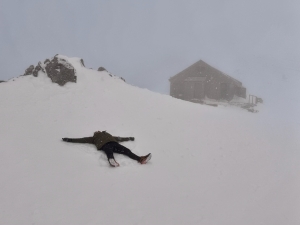
We exited the cable car station and only saw a sea of white. We spotted a building up a slope not far from the cable car station and decided to go near it. This is the Victor Franz Hess Observatory, the world’s first high-altitude cosmic ray observatory. Walking up the slope near the observatory was another challenge due to the icy path. We wanted more time in the snow out here, but one of our friends was cold and headed inside the cable car station. Meanwhile, my other friend and I explored the place near the cable car station to take more photos. We spotted a railing that might be the viewpoint from which we looked into the mountain ranges. But we barely see the mountain peak due to the snowfall and the low clouds. After some pictures, we returned to the cable car station to join our friend. We took the next cable car back to Seegrube after spending about 20 minutes up here since there was nothing much we could do here. At Seegrube, we went a few more rounds of sledging because we had so much fun. This time, my friend and I used another sledge that looked somewhere between a sledge and a ski bike. We thought this sledgebike was more fun as it was more slippery.

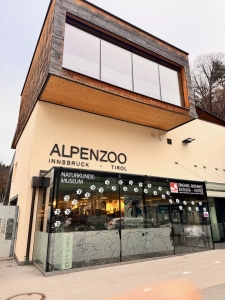
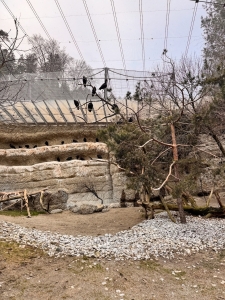
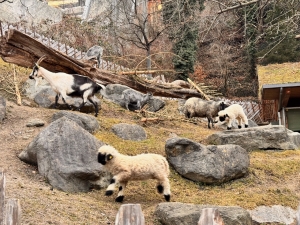
The Alpenzoo – The Highest Themed Zoo in Europe

We took the 3 pm cable car from Seegrube to Hungerburg. Since we had some time, we decided to visit the Alpenzoo (costs €15, opens till 5 pm) to maximise the value of our Innsbruck. The alpine-themed zoo has 150 animal species, mainly curating animals living in the Alps. To get to the AlpenZoo, we took the funicular from Hungerburg towards Altstadt for one stop and alighted at Alpenzoo station. It took us about 5 min walk from the funicular to the zoo. The first exhibit had a beaver sign, but we did not see any beavers when we tried looking for them. Most of the animals we saw were birds and marine animals in the aquarium section of the zoo. The only interesting animal we saw was the Lynx; even the snakes were nowhere to be seen in their tanks, perhaps enjoying winter hibernation. We felt the zoo was boring and lifeless. Even the biggest animal we saw, the moose, does not have their antlers. We left the zoo after walking around for 1 hour and thought it wasn’t worth paying €15 to visit the zoo.

Iconic Photo Spot at Marktplatz and Evening in Altstadt

We spotted a bus stop in front of the zoo as we exited. Considering the funicular might be crowded, we took the 4.50 pm bus back to Innsbruck. Incidentally, the bus’s final stop was Marktplatz, located next to River Inn. This was the place I wanted to bring my friends to, where the iconic photo of Innsbruck featuring a row of colourful houses in front of the river could be taken. We stopped by to take some photos with the houses by the river and Nordkette as the backdrop. The Marktplatz was about a 7-minute walk to Maria-Theresien-Straße. We strolled in the Old Town, looking for dinner, and eventually settled dinner in a Chinese Restaurant. After dinner, we returned to Maria-Theresien-Straße, looking at and taking pictures of the St Anne’s Column and enjoying the tranquillity the quiet Sunday night brought.

Austria Day 4 (11 Jan 25): Innsbruck – Heart of the Alps: The Crystal Arts in Swarovski Crystal Worlds

Onward to Innsbruck

We checked out of our hotel at 8 am, in time to catch our train to our next city, Innsbruck. As the Salzburg Card is still valid, we took a bus to the Salzburg train station. We waited for the train in the OBB lounge, which serves some simple breakfast and drinks. Since we had breakfast at the hotel, we only had some drinks in the lounge.

We arrived at Innsbruck at around 10.45 am. The first thing on our minds was to get the Innsbruck Card, available for sale at selected hotels or the tourist information centre in the old town centre. Like many cities in Austria, the Innsbruck Card (€69 for a 48-hour card) allows access to most tourist attractions and all public transport in Innsbruck. In my research, while planning this trip, the attractions we plan to visit would cost us €94.50. We thought the Innsbruck Card was value for money, as it also included all public transport within Innsbruck. From my research before our trip, I learned that the Word & Press shop at the train station sells the Innsbruck Card. We checked with a friendly staff member at the shop and were informed that they do not sell Innsbruck cards. The staff told us we could get the card from Ibis Hotel, which is next to the train station. After getting our Innsbruck Card from Ibis Hotel, we headed for our hotel, about a 5-minute walk from the train station. We were relieved that the hotel granted us early check-in. We settled into our rooms and visited our first sight in Innsbruck.

Swarovski Crystal Worlds: The Art of Crystals

We returned to Innsbruck train station, where we caught the 12.40 pm bus to Swarovski Crystal Worlds (return trip from Innsbruck by shuttle bus costs €12). One of the benefits of the Innsbruck Card is that it not only gave us access to many attractions in Innsbruck, including Swarovski Crystal Worlds, but it also covered the bus ride to this attraction. The ride from the train station to Swarovski Crystal Worlds (costs €26) took about 28 mins. We were initially quite neutral about visiting the Swarovski Crystal Worlds, thinking it was an exhibition to promote the brand’s products. The front of the museum was a face with water flowing out of the mouth. I thought the face looked creepy.

The indoor exhibits of Swarovski Crystal Worlds have numerous crystal art in different shapes and sizes displayed across the 18 chambers. Some of these exhibits showcased the crystals hanging from the ceiling or mounted into the walls, but most of the displays have these crystals turned into artworks and some as part of the clothing (mainly for celebrities). When I saw these crystal-made garments, I wondered why anyone would wear these uncomfortable-looking clothing. After looking at the first few chambers, the wow factor dissipated. We rushed through the rest of the exhibits and walked towards the exit. My friends and I were lukewarm about these exhibits and spent only 1 hour through the 18 chambers. We weren’t interested in the rest of the park, where we skipped the outdoor grounds comprising a maze and a crystal forest. We waited for the 3.35 pm shuttle bus back to the city. I find the price was not worth visiting, maybe except for crystal enthusiasts. I wouldn’t have come here if not for the included from the Innsbruck card.

Night Stroll in Innsbruck

It was about 4 pm when we returned to Innsbruck, and we wanted to find some food as we only had breakfast. We explored the city of Innsbruck, hunting for food and some shopping. The city of Innsbruck is compact and very walkable. The walk from the train station to the old town, where most of the attractions in the city are located, took about 15 mins. There are restaurants and cafes dotted around the city, with more choices of cuisines for food. We started our hunt for luncheon from the train station and strolled into Maria-Theresien-Straße, the main street in Innsbruck, where most of the shopping and restaurants are housed in baroque-styled buildings. Along the Maria-Theresien-Straße, we saw the Triumphpforte, an archway built by Empress Maria Theresa in the 18th century using the stones from the old city gate. This archway marks the entrance to Innsbruck city. Further towards the Altstadt along Maria-Theresien-Straße, we spotted St Anne’s column (Annasäule), built in 1703 to mark the liberation of Tyrol from Bavarian troops. At the top of St Anne’s column stands the statue of St. Mary. We walked further along the Maria-Theresien-Straße and arrived at the Golden Roof. At night, the Golden Roof lost its “golden glitter”, revealing its bronze nature. The buildings around the Golden Roof had a strong baroque architecture style. Most of the shops in Innsbruck close at 6 pm, this part of the town seems quiet. We settled for dinner and returned to our hotel.

Austria Day 3 (10 Jan 25): Hallstatt – The Heavy Snow on Dachstein Krippenstein and The Fairy Tale Quaint Town

The very reason that made Austria our travel destination was a picture of Hallstatt in winter at night. The snow-covered town with the night light cast on the houses by the lake made this town look charming. Hallstatt is located near Salzburg, and it took about 2 hours to get to Hallstatt from Salzburg and 3 hours from Vienna.

Getting to Hallstatt

There are two main ways (other than self-drive) to get to Hallstatt: by train or bus. We initially wanted to take a bus from Salzburg train station, as I read that the bus option would take us directly into Hallstatt without the need to take the ferry ride across Lake Hallstatt. The bus option offered a more scenic view compared to the train. The downside of taking the bus is we will be required to change three buses, which are not as frequent (and are about 1 hour apart). Not knowing if we would make it in time since the timing between buses is mere minutes apart, we opted for the easier train option. We took the train from Salzburg Hauptbahnhof and switched to another in Attnang Purcchiem for Hallstatt.

Change in Plan

Days after we purchased non-cancellable train tickets to Hallstatt, an email correspondence with the Hallstatt Salt Mine notified us that the path to the Hallstatt skywalk would be closed due to the amount of snow in January. Since the skywalk is closed and allocating a full day to the Hallstatt will be excessive, the other place we could get a bird’s eye view of Hallstatt would be 5-Fingers on Dachstein Krippenstein. We changed our plan and carved out the morning for 5-Fingers. To get to Dachstein Krippenstein, we took the train to Obertraun Dachsteinhöhlen Bahnhof and transferred to a 7-minute bus ride on #542 (the bus stop is outside a church opposite the train station). It was snowing when we arrived at Obertraun Dachsteinhöhlen Bahnhof. We were very excited to see snow in this part of Austria.

Dachstein Krippenstein – Top of Hallstatt

When we arrived at the Dachstein Krippenstein cable car base station, we were told that the 5-fingers attraction was closed due to the heavy snowfall. Our only option is to get the Panorama Ticket and ride the cable car up the mountains for a meal. Since we were already here, we bought the Panorama Ticket (which cost €46.40 on site), including the return gondola ride from the base station to the highest mountain station (2,200m). The snowfall made the scenery we saw on the ride up to the top of the mountain magnificent. We were able to see Lake Hallstatt on the way up. To get to the top of the mountain, we were required to change cable cars at the first station (about 1,300m) to the highest point. Our view of the mountain started obscuring by the low clouds as we approached the second station.

As soon as we reached the peak station, the snowfall got heavier, and the temperature dropped to -12.2°C, making it tough for us to even step outside the cable car station. There is a restaurant at the peak station, and we thought the price was quite reasonable given its location. We settled our lunch here while watching the heavy snowfall and occasionally skiers setting off from the starting point for their way down to the base of the mountain. At times, the clouds gave way to the sun, giving us a good view of the ski slope from the restaurant. After lunch, we headed into the open area to feel the snowfall. And since there is not much we can do here (we don’t ski, nor were there sledging facilities), we decided to descend the mountain and head to Hallstatt.

Spending the Afternoon in the Fairy Tale Town of Hallstatt

We took bus #543 from Dachstein Krippenstein base station to Hallstatt, which dropped us off at the carpark just outside town. As the bus stop outside town was next to the lake, we were already treated to the postcard view of Hallstatt the moment we alighted from the bus. We were surprised at the relatively thin crowd in Hallstatt. After all, Hallstatt is a tourist town that people flock to because of the view. Hallstatt exists due to the salt mine in the mountains behind the town. Salt has been mined here 7,000 years ago, even older than the pyramids of Egypt. There is only one path which cuts through the whole town (I told my friends we would not go wrong by following the crowd), where we saw houses seemingly stacking on each other (as some were built on the higher slopes). The pavement into the town was next to the lake, giving us a great view of the lake and the surrounding mountain ranges. It was snowing when we arrived at Hallstatt, and the snow-covered ground made this fairy-tale town even more charming. This is the view we came for and the reason why we wanted to visit Hallstatt in winter.

After about 20 minutes of walking (and photo-taking), we came to an open space surrounded by houses with a wooden monument in the centre. This is Central Marktplatz – the town square of Hallstatt. We saw colourful houses surrounding the monument, snow-covered pine trees in the mountains behind, and snow on the ground. This is a perfect picture of a snowy town in winter. The absence of the crowd added a sense of tranquillity to Central Marktplatz, making it even more charming and relaxing. We spotted a church not far from the Central Marktplatz, sitting by the lakeside. The grounds the church sits on are covered with snow, making it a perfect place to take winter pictures. A small platform extends into the lake, a great spot to take pictures. We did not enter the church as we did not find the entrance.
The walk to the viewpoint took about 15 minutes up some slopes and stairs. The view here was stunting. We could see why this is the perfect spot to take pictures of the town, especially in winter. I highly recommend not to miss this spot when coming to Hallstatt. From this viewpoint, we were able to get to the town, the lake, and the mountains in one frame. It wasn’t too crowded at the time we arrived at the viewpoint. We had about 1 hour before sunset (sunset at 5.30 pm), and I wanted to return to this viewpoint to take capture night shots of the town. I thought the snow-covered Hallstatt would be especially beautiful when lights were cast at the building.
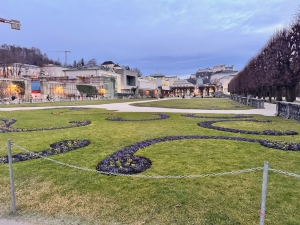
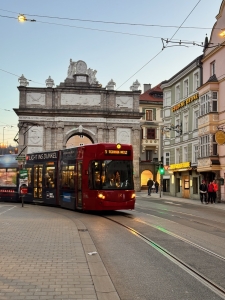
As we walked through the town earlier on, I saw a street behind some of the houses that seemed to be perched high up on the side of the hill earlier today (I call this street the “Roof of Hallstatt”). I thought it would be interesting to see Hallstatt from a different perspective, and since we had 1 hour to spend before sunset, my friend and I went to this “Roof of Hallstatt”. Seeing the snow-covered roofs of Hallstatt, facing the lake with the houses in between us, I thought Hallstatt looked equally beautiful here. We even spotted a waterfall up here on the walkway. We returned to the viewpoint as it was near sunset and waited for the right moment when the sky was sufficiently dark and the lights in the town were bright enough for the contrast. After waiting for about 30 minutes, we got our shot.
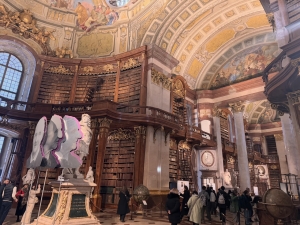
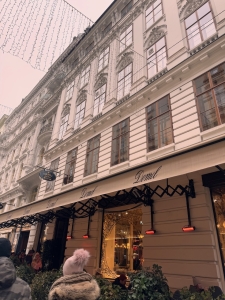
The last ferry to Hallstatt Bahnhof, across the lake, was timed to the last train that ran through the station. Tickets for the ferry ride (€4 one way) will only be sold at the time of boarding (i.e., we cannot book or purchase in advance). We saw Hallstatt getting smaller from the ferry as we moved towards the other side of the coast. Soon, it was time for us to bid farewell to Hallstatt as we boarded our train back to Salzburg. The train ride from Hallstatt to Salzburg took around 2 hours. I thought spending ½ day in Hallstatt was sufficient (provided the Salt Mine and funicular were closed). Other than the view from the viewpoint, there is nothing much anyone can do in Hallstatt, although I might spend 1 day if the Salt mines were opened. I thought we made the right decision by spending the morning in Dachstein Krippenstein, although there was nothing much we could do there when 5-fingers were closed.

Austria Day 2 (9 Jan 25): Salzburg – Untersberg and Festung Hohensalzburg: Seeing Salzburg in One Day

We wanted to cover as much Salzburg as possible today to maximise the 48-hour Salzburg Card, which costs €36 per adult. The sights we visited today would cost us €74.90 (excluding the public transport we took), about double the amount we paid for the Salzburg Card. One thing good about the Salzburg Card is that it is valid for the entire 48 hours from the time we activated it and not by day. Since we activated it on 9 Jan at 9.30 am, it will remain valid until 11 Jan at 9.29 am, the entire 48 hours.

Untersberg – The Mountain that Spans into Germany

One of the ways to maximise the value of our Salzburg card is to visit Untersberg, the mountain ranges that span into neighbouring Germany. Our Salzburg card included a return cable car ride (€32 for a return cable car ride) to the summit station at Geiereck, about 1,776m in the Alps on the Salzburg side of the mountain ranges. To get to the base station of the Untersbergbahn, we took bus #5 from Salzburg Hauptbahnhof (€2.50 one way from Salzburg City) to the final stop of Untersbergbahn. Bus #25 also runs from Salzburg Hauptbahnhof to the base station. The cable car ride took about 8 mins up to the top. As we ascended the mountain, we saw the mighty surrounding mountain ranges sitting magnificently across the land in their white snow cap. As we approached the summit, the terrain below us turned from lush grassy plains to sharp mountain edges. Soon, we saw traces of snow draping on the mountain terrain below us. The snow coverage area increased as we were closer to the summit station. Passing the last cable car pylon, we were immersed in a snowy wonderland.

There weren’t many facilities in the Untersbergbahn summit station, other than the cable car, and only one restaurant called home here. We couldn’t hold our excitement at the sighting of snow and made our way outside. The view outside the station was breathtaking. We were treated to a vast landscape beyond the snowy grounds we were standing on. We could see Salzburg city and the nearby Salzburg airport from where we stood. However, the lack of railings and our uncertainty about the path prevented us from getting close to the mountain’s edge. There seem to be some trails that would lead us to a cross on top of the summit station. Having that in mind, we slowly navigated our way. The first few steps out of the station covered in snow were fine, but the icy path as we walked further uphill along the trail was slippery. There weren’t any railings around that we could use to ease our trek up the slope. We saw a wooden lodge housing a restaurant not far from the summit station that we had just exited. We carefully navigated our way to the cross above the cable car station, looking for the next step that did not result in us sliding backwards. Soon, we came to a crosspoint; the way up to the cross was steep, and with the icy path, we were not confident we could make it up. Or we could take a right on what seems to be an easier path up and down some slopes to another cross in the distance. We opted for this path. As we were walking up the slope, it became the icy path proved to be challenging. After the first slope, we thought it might be too challenging to press on despite seeing some groups easily passing us. We made a U-turn and headed back to the cable car station at the peak of the first slope (partly due to more sights we wanted to visit in the day).

The walk back downslope on the icy path was very challenging. We were unsure if the next step would result in us tumbling down the slope or, worse, down the mountains. We thought the way down was exhausting, both psychologically and physically. After a few minutes of mental challenge in taking our next small step down, my friend and I decided to slide down the slope. It felt safer, but our bums suffered. Soon, we were at the same wooden lodge we had seen earlier and knew we were close to the summit station. The final stretch downslope to the summit station was very icy and slippery. Fortunately, we saw a path leading to the station’s terrace deck (the second floor), which was easier to walk on. We finally made it back to the station and had lunch in the restaurant to reward our efforts (partly because we were hungry) while waiting for the next cable car down (cable cars depart the station at the quarter of the hour).

Festung Hohensalzburg – One of the largest 11th-century Fortress in Europe

Since we did not have time to visit Hohensalzburg Fortress yesterday, we prioritised it after visiting Untersberg. Hohensalzburg Fortress is an 11th-century fortress that stood guard over Salzburg, perched on the 506m Festungsberg. The Fortress was initially built to protect the political interests of the archbishop of Salzburg. It was expanded over the next 600 years. The more significant expansion was in 1500 when the archbishop angered his people through his authoritarian ruling style by turning the Fortress from a defensive structure into a self-sufficient residence. Armed with our Salzburg card, which not only grants us the Basic Pathway tickets (€11.20 per pax) to the Fortress (which includes entrance to the castle area, the Panorama Tour and several fortress museums) but also includes a return ride on the FestungsBahn (€6 return). We took bus #25 from Untersburgbhahn base station to Petersbrunnstraße, and from the bus stop, we took a 16-minute walk upslope to the funicular station. The walk took us to the back of Altstadt, where we could see the old town from a different perspective. Along the walk, we saw St. Erhard church, a masterpiece of Salzburg architecture originating in a period dominated by the Italian baroque style and the Salzburg Cathedral, towering over the old town buildings.

Taking the Festungsbahn is the fastest and easiest way to access Hohensalzburg Fortress (the other option was to walk up), which takes less than one minute to reach the top station. Exiting the station, we saw a German sign pointing us in two directions: to the left is “Tower Aussichtsturm”, and to the right is “Dinner & Konzert”. Not knowing what it meant, we assumed the right would bring us to some restaurant and took the left turn. This direction brought us to a large bastion where we got some really amazing views of Salzburg City. From here, we could see the Salzburg Cathedral towering over the buildings in Alstadt and the newer parts of the city further beyond, with the Salzach River running between the two areas. At this bastion, we could feel the graduere of the Fortress. We climbed the only stairs that seemingly led to the inner Fortress. While climbing the stairs, we realised the first landing gave us a better photo shot with Salzburg City below (highly recommended to take pictures here). The staircase landed us in the courtyards. Some unmarked buildings and small huts occupied the space in this courtyard, suggesting that Christmas markets might be operating here. From the staircase, we saw a sign marked “Panorama Tour” hanging from the side of the building wall, which was our next stop.

We headed inside the door for the Panorama Tour, which took us from the salt depot through the dungeon and finally to the viewing platform. The Panorama Tour is very easy to follow, there is only one way with stations and introduction of the various parts of the inner Fortress. First, we walked past a set of windows that gave us a good view of Salzburg City below, but I thought the views here paled in comparison to that from the bastion. The first room the walkway led us to was the Salt Depot, filled with a white table-like structure (which could be salt deposits) and a detailed model of Salzburg’s old town and the Fortress. There are panels explaining how Salzburg came to be and its connection with salt. Further on the path was the prison block. On the ground floor, the dungeon was visible through a metal grate on the floor. There are brief introductions about the prison cells and the dungeon in this room. Other than the grated floor and the exhibits, a wooden spiral staircase would lead us to the tower’s top deck. There were some empty rooms with nothing but a wooden chest on each floor of the tower. These would be prison cells. I thought the highlight of the Panorama Tour was the view from the platform above the prison cell block. From here, we can see the city of Salzburg and enjoy views of the surrounding Alps. We could also see Untersburg, which we visited in the morning. Descending from the tower, the rest of the tour was rather uneventful. We walked past some windows that gave us some good views of Salzburg from the Fortress. When we exited the building at the end of the walkway, we ended back in the courtyard, not far from where we entered the building earlier.

Through an archway, we came to another building—a staircase leading up to the fortress’s museums. These museums were segregated into different parts but were essentially one big hall. This is where we learned more about the fortress’s history and the way of life inside it. There is even a large hall displaying armour and cannons used in the Fortress’s heydays. As we were not museum-goers, we quickly skimmed through the museum and concluded our visit to the Hohensalzburg Fortress.

Salzburg Altstadt

Most of the attractions in the Salzburg area are situated in Altstadt. Since we were at Hohensalzburg Fortress, it made sense for us to visit some of the sights in the old town. Our first stop would be the Domquartier, a 5-minute walk from the funicular station.

DomQuartier

DomQuartier is a museum complex (€15 for full access) that displays secular and sacred art collections centred around the Salzburg Cathedral and Cathedral Square. The State Rooms, Archway Terrace, Salzburg Cathedral Organ loft, and the Cathedral Museum are the main parts of DomQuartier. Entrance to the DomQuartier required us to show our Salzburg Card to the ticketing counter in exchange for a ticket. A flight of stairs led us to a huge hall, the Carabinieri Hall, where another staff briefed us on using the audio guide from our phone as we walked through the State Rooms. The Carabinieri Hall was the largest room in the Residenz and was donned with impressive frescos painted on the ceiling. It seemed to serve as a concert hall today as we saw a small stage and some chairs in the centre of the hall. This is where we started and ended our tour of the DomQuartier.

State Rooms

The State Rooms served as the prince-archbishop’s residence and was where he worked. There were 10 staterooms opened to the public, each serving a purpose, with the first few rooms serving as the guard’s room or waiting rooms for people who wanted an audience with the prince-archbishop. All of these rooms had different frescos painted on their ceilings, with some depicting the rulers claiming their success and some with paintings of the gods interacting with humans. Of these 10 rooms, I thought the Conference Hall (the second room from the Carabinieri Hall) and the Audience Hall (the fourth room from Carabinieri Hall) were the most interesting. The Conference Hall has a bright red velvet wall, which is more vibrant than most of the rooms we have seen. The four crystal chandeliers hanging from the ceiling and the elaborate ceiling frescos accompanied by the carvings on the ceiling made the room look posh. Here, Mozart first performed as a child at 7 (although we saw the piano Mozart used in the next room). The other significant room was the Audience Hall, filled with large, costly hand-woven tapestries from the era of Prince-Archbishop Wolf Dietrich. Here, we met a museum staff who generously shared some facts about the rooms (and the subsequent few rooms) and somewhat became our private guide. The staff told us that the Audience Hall is the most valuable room in the entire DomQuartier due to the antique tapestries and the Louis XVI furniture purchased in 1775 in the Audience Hall. The last door of the State Rooms opened up to the Cathedral Archway Terrace.

Cathedral Archway Terrace 

The Cathedral Archway Terrace links the Residenz to the Salzburg Cathedral. We mainly used this as a thoroughfare to the next building. From this terrace, we could see Domplatz, a square surrounded by the buildings of DomQuartier. Since there was nothing much going on here, we continued the path into Salzburg Cathedral.

Cathedral Organ Loft

Our walk through the DomQuartier led us through the main organ loft. We originally wanted to visit the Salzburg Cathedral before coming to DomQuartier, but the entrance to the cathedral was not included in our Salzburg Card, which we eventually skipped. Little did we know that part of the DomQuartier included the entrance to the loft of Salzburg Cathedral. However, we were only allowed to stay at this loft at the cathedral. The highlight of the loft is our ability to get up close to the cathedral’s organ. However, we were more interested in the over-the-top baroque-style architecture inside the Salzburg Cathedral. From the loft, we were closer to the carvings on the pillars and the fresco painting on the ceiling. We were also able to see the altar from a distance.

Cathedral Museum

The door at the other end of the loft led us to the South Oratory, where the Cathedral Museum is located. On display here were statues of some of the saints, numerous crosses and chalices, as well as paintings and sculptures related to the Catholic religion. I am sure this museum would be a heaven for Catholics. As we were neither Catholics nor appreciative of arts, we spent our time inside the Cathedral Museum browsing through and seeing which artefacts were made of gold. The exit from the Cathedral Museum led us back to the Imperial Hall, part of the Residenz, which was subsequently linked to the Carabinieri Hall. It was time to head out to our next site.

Mozart’s Birthplace

After Domquartier, I was looking at somewhere nearby to visit. Mozart’s Birthplace popped up to be the next nearest attraction to us. I read about how pointless it was to visit this sight before our trip to Austria, and since we were near, we decided to visit this museum. Mozart’s Birthplace is a little difficult to find, as it does not have the entrance of a regular museum, and there are no signs pointing to it. After searching for a while, we found it through a small entrance opposite the Mango clothing store. The entrance to Mozart’s Birthplace (€15 per adult) was included in our Salzburg Card. This museum has three storeys, mostly rooms filled with memorabilia, some musical notes and a statue of Mozart. The room where Mozart was born also has nothing much inside except for a few photos and some notes. I had thought this room was the museum’s highlight, and there should at least have a small bed (or its replica) where baby Mozart used to sleep. Guess most of the furniture must have been lost through the time. We saw a small piano that Mozart used to practice on as a child, which I thought was this museum’s highlight. For €15, I thought Mozart’s Birthplace was extremely expensive. We would have skipped this place if not for the Salzburg card, which included the entrance to this site.

St Peter’s Abbey

After Mozart’s Birthplace, St Peter’s Abbey is a mere 5-minute walk away. St Peter’s Abbey is one of the oldest monasteries in the German-speaking world, founded in the 7th century. The abbey is famous for its cemetery and catacomb, built into the mountain behind it. St. Peter’s Abbey seemed closed when we arrived, where we were met with a huge closed door that wouldn’t budge when we tried pushing it. We headed to a shop nearby and were told the abbey was still open, the friendly staff at the shop told us we just had to just more strength and pull the entrance door. We headed back and did what we were told, and we were able to let ourselves into the church. Once inside, the cathedral was not brightly lit, and no one was in the building. We could see the elaborate baroque-style carvings on the walls and the altar from the dim lighting. We couldn’t seem to find the entrance to the cemetery, and since there wasn’t much going on here, we left the abbey for our final sight of the day.

Mönchsberg – Night View of the Salzburg

One of the places for the best night view of Salzburg (or so I read online) was the Mönchsberg, one of the five mountains in Salzburg. Mönchsberg is a popular local recreational area with nature and forest footpaths. At the top of Mönchsberg sits the Museum der Moderne, which was closed upon our arrival. However, we did not come for the museum but for the night view. The viewing platform is just outside the museum, accessible by an open elevator till 11 pm (costs €4.40 up and down and is included in the Salzburg Card). True to the recommendations I saw online, we were treated to a great night view of Altstadt and Hohensalzburg Fortress from afar. We could even see the Salzach River from up here. The warm night lighting cast upon the buildings in the Altstadt made them look like the city was built out of gold. The Hohensalzburg Fortress, sitting on the hill above Altstadt, looked as if it was guarding the city. The view was breathtaking, and to add icing to the cake, there weren’t many people around. After taking some pictures of the beautiful night view of the city, we left Mönchsberg for dinner near our hotel and returned to rest for the night. We have an early start tomorrow visiting the fairy tale town of Hallstatt.